To apologise, or not to apologise (for slavery), that is the question.

I am already anticipating a deeply divided and critical response to the recent announcement that Charlie Gladstone and five members of his family, all descendants of the Victorian-era prime minister William Gladstone, are travelling to Guyana to apologise for the significant role one of their ancestors played in the slave trade. But I’d like to ask those who are cynical of such a trip to consider what the alternatives might be.

John Gladstone, William’s father, was one of the largest slave owners in the British West Indies. You can read all about him in the links at the end, but basically he made a fortune as a Demerara sugar planter enslaving hundreds of Africans to work in his plantations until slavery was abolished in 1833. He then became the fifth-largest beneficiary of the £20m fund (about £16 billion today) set aside by the British government in 1837 to compensate planters for loss of income. The final instalments of this compensation were paid out in 2015.

Charlie Gladstone is roughly the same age as me and, though the ‘crimes against humanity’ perpetrated by his family member were nearly 200 years ago whereas those my German grandfather was involved in were a mere eighty, the burden of shame may well weigh as heavily. As I describe in detail in my book, In My Grandfather’s Shadow, the unresolved deeds of our forefathers remain in a family blood line, in our roots. Whether you are ignorant of or choose to engage with them, there will be an impact that needs resolution of some sort. 

Apology is one of many steps that can be taken to try to repair wrongdoing, and personally I think it is good that people such as those in the group Heirs of Slavery, including David Lascelles 8th Earl of Harewood, are finally beginning to address not only the sources of their family’s wealth, but also our collective colonial history and the traumatic consequences that can still be witnessed all too clearly in racism, inequalities in health, wealth, education and opportunity. In their cases it is about apology and accountability, with some of them making financial contributions towards charitable institutions and – in the Gladstone’s case – further research into the impact of the slave trade.

Harewood House, built between 1759-71 with the profits made from plantations and slavery

Others are at it too. Back in July, the Dutch King, Willem-Alexander, apologised on behalf of his country for the Netherland’s historical involvement in slavery and asked for forgiveness. It’s of course a flawed gesture in its incompleteness, but isn’t a heartfelt apology, whether possible or not so long after the event, at least a gesture of recognition of wrongdoing that can lead to a willingness to redress the former total loss of humanity? So many victim groups would attest to the immense value of a genuine ‘I’m sorry’.

King Willem-Alexander apologising on 160th anniversary of the abolition of slavery in the Netherlands

Our prime minister doesn’t think so. Back in April, Rishi Sunak refused to apologise for UK’s role in slavery saying that ‘trying to unpick our history is not the right way forward’ and that the focus, ‘while of course understanding our history in all its parts and not running away from it, is making sure that we have a society that is inclusive and tolerant of people from all backgrounds.’

Fair point about looking forwards. But how can you truly ‘understand’ such a horrific history, underpinned by past government policy, without being moved to demonstrate some direct expression of remorse to those it continues to affect? Or is that precisely what we are scared of? That an apology equates to an admission of culpability and therefore an obligation to compensate?

In his series of essays based on lectures delivered at Oxford University and bound into the 2009 book Guilt about the Past, Bernard Schlink, German author of the 1997 bestseller The Reader and various other literature, tackles not only German guilt about the past, but other long shadows of collective and global past guilt. (I am well aware we can’t actually be guilty of something we didn’t do, but we can still feel guilt.)
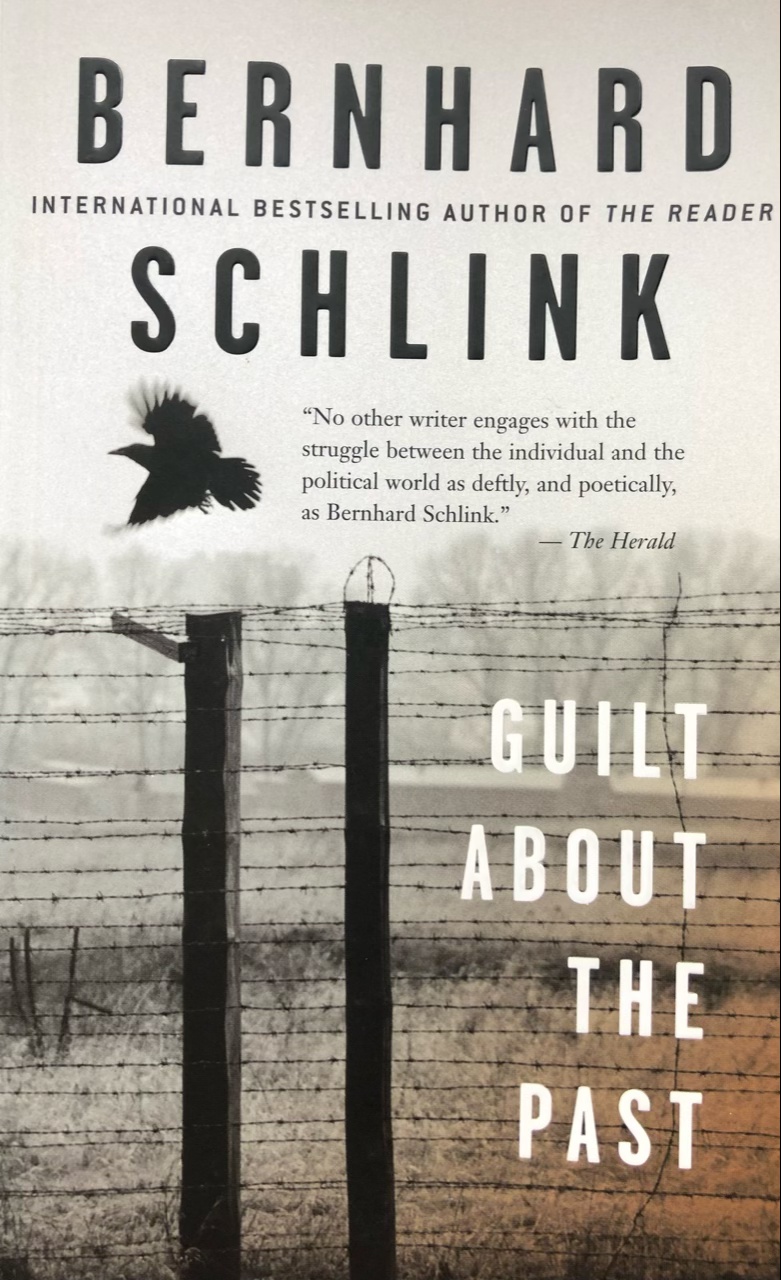
In the essay entitled ‘The Presence of the Past’, he addresses the issue of remembering or forgetting a traumatic past. “A collective past, like that of an individual, is traumatic when it is not allowed to be remembered and is just as much so if it has to be remembered… Detraumatisation is the process of becoming able to both remember and forget; it is leaving the past in the past, in a way that embraces remembrance as well as forgetting. This applies in the same way to the victims and their descendants as to the perpetrators and their descendants.” (p.36)

We need to find that balance.

One of Schlink’s claims that struck me most while exploring my own sense of guilt for my German family’s past was in the chapter on ‘Forgiveness and Reconciliation.’ He says that if someone seeks forgiveness for their own guilt it has weight, but “to ask for forgiveness for someone else’s guilt is cheap.” (p.73) 

Cheap… So where does that leave those of us living today and the question of apology for things that happened decades or even centuries ago? 
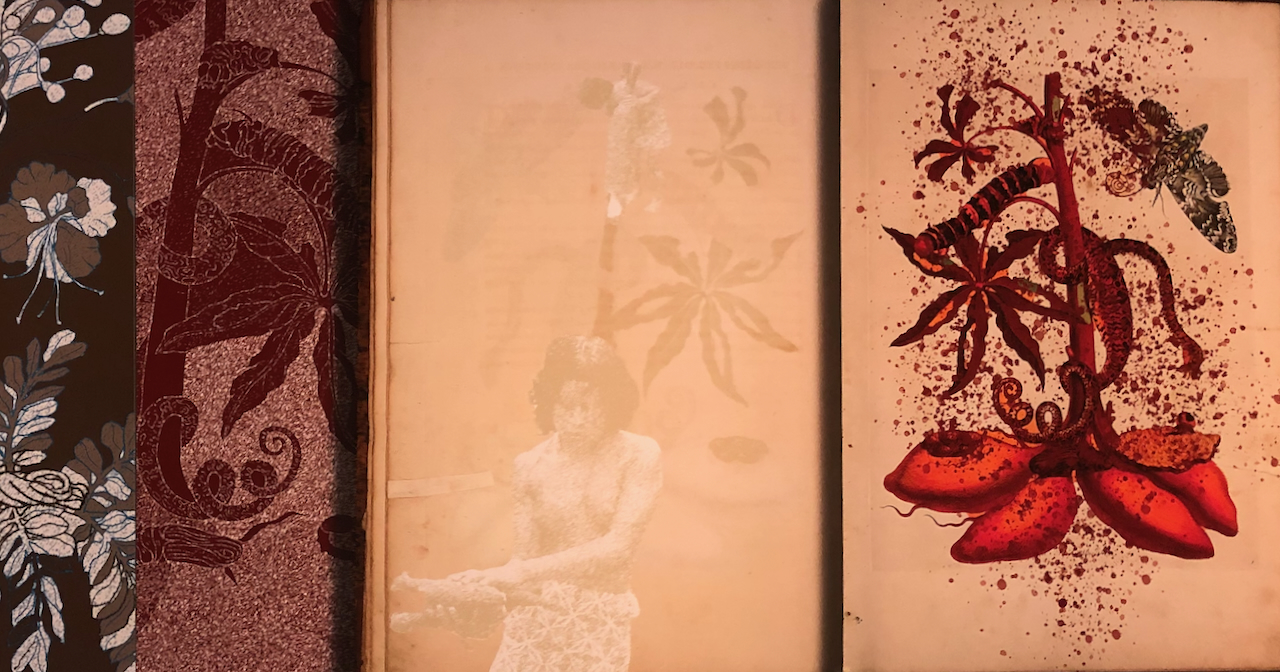
Detail from Patricia Kaersenhout’s ‘Of Palimpsests and Erasure’ (2021) (https://www.pkaersenhout.com)

Schlink and I come to a similar conclusion. It’s about understanding. He says, any kind of reconciliation requires “a truth that can be understood.” And “true understanding is more than searching for and finding causes. It includes putting yourself in someone else’s place, putting yourself in someone else’s thoughts and someone else’s feelings and seeing the world through that person’s eyes.” Doing this, he says, establishes equality. “We make [the other person] equal to us and us to them; we build up society when we understand.” (p.82)

This form of ‘understanding’ goes way beyond the slightly glib understanding the current leader of our country suggests. It requires engaging in the truth of what happened and feeling it. Feeling how appalling it was and being moved to act to heal and make good the wrongs that still poison our national veins and those of the human beings living today whose forefathers were harmed.

Further reading, as always not all links reflect my own opinions:

William Gladstone: family of former British PM to apologise for links to slavery 
William Gladstone’s family to apologise for historic links to slavery

‘I felt absolutely sick’: John Gladstone’s heir on his family’s role in slavery

Rishi Sunak rejects calls for slavery reparations from UK

When will Britain face up to its crimes against humanity?

Dutch king apologises for country’s historical involvement in slavery

Campaigners urge king to do more to acknowledge UK’s slavery role

The British aristocratic families reckoning with their slave owning past

The German translation of In My Grandfather’s Shadow will be published in Germany in September. Please contact me for details of forthcoming events relating to in Germany.

Title painting: ‘Salt of the African earth‘ by Angela Findlay, 1994

PRISON: Part 3. I challenge anybody to sit through 3 days of listening to 20 prisoners’ stories as I have just done and come out saying a punishing prison regime is the right solution.

A ten-year-old boy haunted by the face of his mother as she was stabbed multiple times in front of his eyes; a seven-year-old boy sexually abused by a family friend, then repeatedly while in care; an eight-year-old boy in charge of his younger siblings, regularly punched in the face by his terrifying mother… I could go on. These are some of the people I have just met in HMP Parc while participating in The Forgiveness Project’s RESTORE programme. And it beggars the question: is it right to be punishing people who themselves were originally the victims of primary life experiences that were so overwhelming, traumatic and desperately sad?

Feltham - the team (2).jpg

Read More »

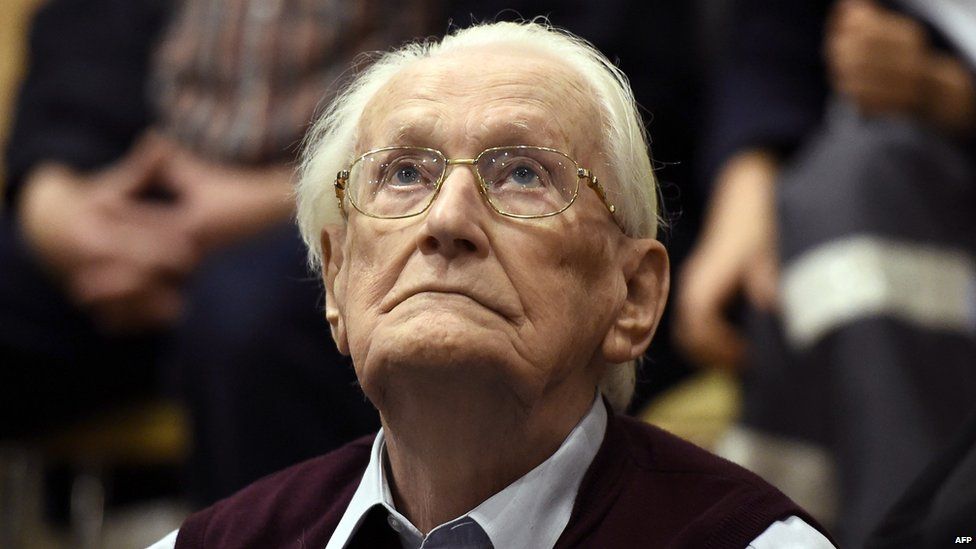
“German court sentences 94-year-old ‘Bookkeeper of Auschwitz’ to four years in prison.” Is this Justice? Or is this the German Judicial System’s attempt to atone for its appalling failure since WW2 to bring more of the real culprits to justice?

_84281791_84281790

This is an obvious choice of topic for my July blog for it touches on all my main themes: WW2 Germany, prison, punishment, forgiveness, redemption.

What we have here is a 94-year-old former SS officer whose job at the age of 21 was to sort the luggage of the new arrivals to Auschwitz and register the prisoners’ goods and valuables. Oskar Gröning was not a guard but a bookkeeper who counted the money the Nazis stole from the Jews. During the trial that started in May in the German city of Lüneburg he admitted: “It is without question that I am morally complicit in the murder of millions of Jews through my activities at Auschwitz. Before the victims, I also admit to this moral guilt here, with regret and humility. But as to the question whether I am criminally culpable, that’s for you to decide.” Today he was sentenced to 4 years in prison after the German Courts found him guilty of being accessory to murder of 300,000 people.

Read More »

‘Sorry’ does indeed seem to be the hardest word to say

February 2015 saw the 70th anniversary of the bombing of Dresden, a contentious and highly debated element of the British and American war campaign. The deaths of 25,000 civilians and the destruction of the medieval city of Dresden known as the “Jewel of the Elbe” was without doubt one of the low points in the British military strategy.

25A64E0500000578-2952892-Solidarity_10_000_people_joined_hands_to_form_a_giant_human_chai-a-9_1423864324864

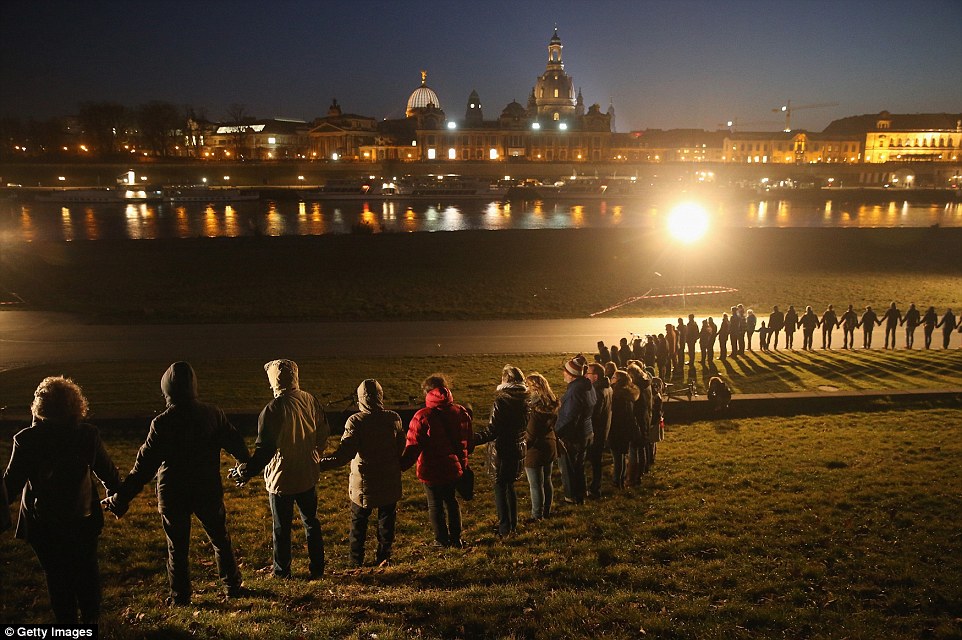
On 13th February this year Germany held one of their rare commemorations for their own dead. It started with a service in the re-built Frauenkirche / Church of our Lady and continued later in the streets when up to 10,000 people formed a human chain along Dresden’s riverfront, holding hands to commemorate the dead and call for peace.

With my on-going interest in World War commemorations, this was of course a significant one, for two reasons really. On the one hand it remembers German victims of war and on the other it remembers an event that many people see as a British war crime.

Read More »

Holocaust Memorial Day, 27th January 2015


IMG_3702

Today was Holocaust Memorial Day, commemorating the day Auschwitz-Birkenau was liberated by the advancing Soviet army seventy years ago. Today Jews and non-Jews alike were reminded to remember what so many of us have no personal recollection of. Reminded how important it is to remember so that it will never happen again.

Today was also the launch of my talk on German Memorials and Counter Memorials, the second in my trilogy of talks “The other side” about World War II from a German point of view. It was a happy coincidence that King William’s College on the Isle of Man invited me to give this particular talk on this particular day, for it encouraged me and my audience not only to think about the victims of the Nazi policies of annihilation but also about the perpetrators and Germany’s ongoing and thorough process of apology on behalf of them.

Read More »

Remembrance Sunday: “David Cameron was close to tears and bit his lip…” For goodness sake, that sounds like something out of Fifty Shades of Grey.

It’s 11am on 11.11.14 and that makes it time to write down my thoughts and reflections on what has been going on recently in terms of Remembrance.

Watching the Albert Hall Festival of Remembrance on Saturday night, I was struck once again by how well we British do pomp, symbolism and ceremony. It was truly powerful and with its combination of stirring music, potent narrative, and visual spectacle it has become an art form. Developed and refined over decades, it is designed to move you. And these days, I am quite sure, to make you cry.

Which is why I came away once again feeling slightly irritated by it. Irritated by the format that we are used to seeing  in the films of Spielberg and other directors of sentimental, patriotic films, designed to manipulate your heart strings and tear ducts  Nothing necessarily wrong with that, except that we seem to be living in a era where showing emotions, and watching other people showing their emotions in order to make us show our emotions, is not only de rigueur but essential to good viewing.

Read More »

Children of the Third Reich: A critical moral debate


Image

It’s Valentine’s Day and I am writing about the Nazis… again. “Will she ever let up?” I can almost hear people asking. But I’m afraid I can’t… won’t. Not yet. It is still too relevant a topic, as was proved by last night’s debate at the Southbank Centre where not one person in the packed hall moved, let alone left, even after 2.5 hours of listening to two elderly men, children of high-ranking Nazis, as they revealed their opposing relationships with their long-dead fathers.

To voluntarily exchange views and answer questions publically on this delicate and sensitive subject makes Niklas Frank and Horst von Wächter very brave and admirable men in my eyes.

Niklas, whose controversial book of 1987 “Der Vater” (The Father) broke taboos in Germany by admitting categorically that his father was a bad man, has always been determined to “acknowledge the crimes”. This led to a total rejection of his father. “But don’t you want to make peace?” Horst asks, driven by a strong sense of “duty” and “moral obligation” to find the good in his father. “I have. By acknowledging his crimes”, responded Niklas.

Read More »

What relationship do we expect young Germans today to have to their country’s past?

Image

I was very interested in two of the questions I was asked in a recent talk to the sixth formers of a London boy’s school. Both were similar and in response to some statistics I showed about German students’ relationships to their country’s past. And both touched on one of my on-going questions in relation to young Germans today: Do we expect them to feel guilt and shame for what their great grandparents were caught up or directly involved in, or can they now be proud of their country and say with genuine conviction “It has nothing to do with me”?

The statistics from a Zeit Magazine survey of 14-19 year olds revealed, among other things, that:

80% believe remembrance of the Nazi times is important

67% believe it is their generation’s duty to make sure that Nazi Germany and the Holocaust aren’t forgotten

60% said they were ashamed of what Germans did in Nazi times

Read More »

What are we “remembering” on Remembrance Day?

I found it symbolically pleasing to be planting bulbs as yesterday’s two-minute silence hummed over the radio waves across the UK. Sitting in the quiet sunshine, I started to “remember”, only to immediately bump into the questions: what and who am I remembering? And to what end? After all I have no personal “memories” of the First and Second World Wars, nor even of Iraq or Afghanistan. Relatives yes, but in the World Wars they were on opposite sides.

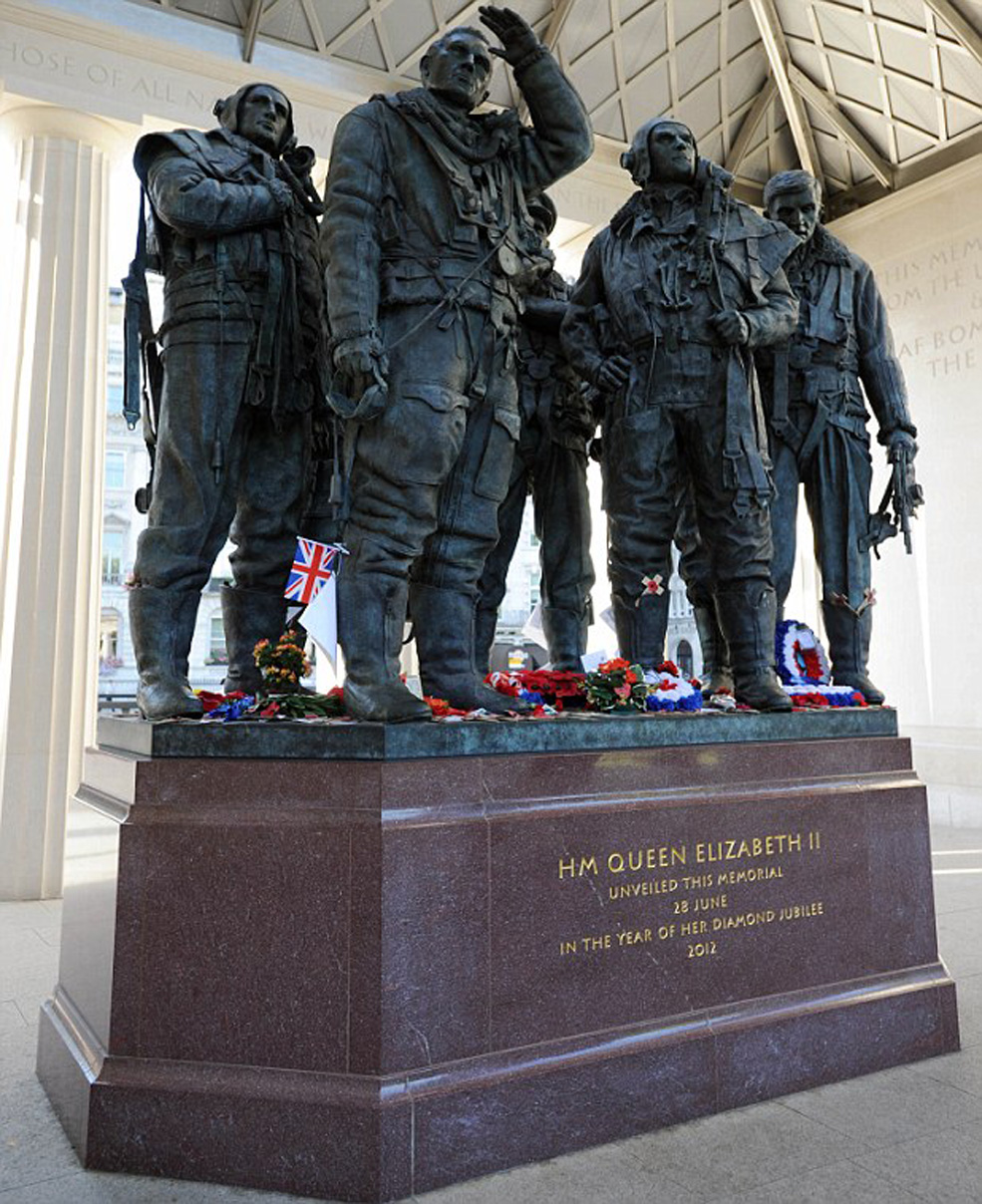
Bomber Harris memorial

Bomber Harris Memorial, (1992) London

Read More »

Is there a point in still talking about Second World War Germany ?

lowresKvG9_2

I found it almost impossible to write over the summer or to organise my thoughts into some sort of coherent flow while the sun shone outside producing the intrepid army of courgettes that now lies liquidized in my freezer. Instead I hung out in Nazi Germany, trying to organise 9 years of research into a 40 minute talk for schools and as yet unknown audiences. It was a process of willing black and white photographs to come to life to reveal what has been lurking in the corners of Germany’s post-war national silence for 50 years. But I also found myself wondering (with regular twangs of self-doubt) what the point is of still talking about this subject? And is it still relevant and important for today’s younger generations of English and Germans to engage with Hitler and the Holocaust, or have Bin Laden & other contemporary despots taken his place as ‘Dr Evil’?

Read More »