Japan’s heartfelt call for peace… but could it be even stronger?

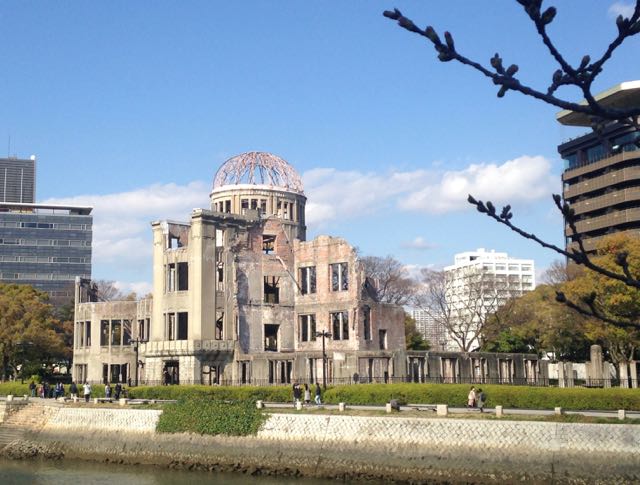
Whose call to peace is stronger? The call made by victims of conflict, or the call made by former perpetrators? That was the question I found myself asking as I wandered Hiroshima’s Peace Memorial Park earlier this month. 
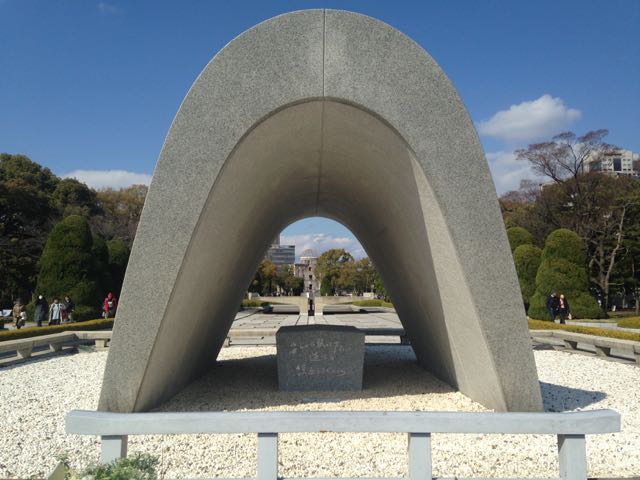
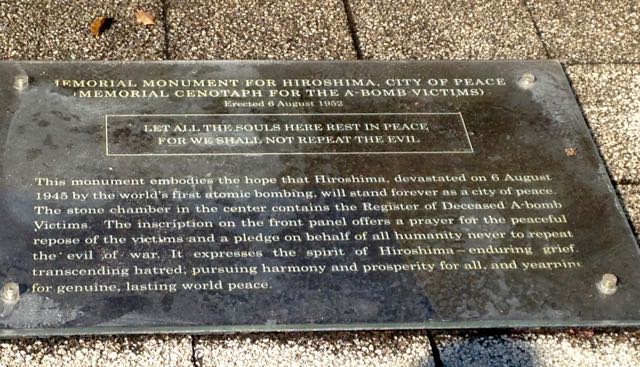
Memorial Cenotaph
Hiroshima Peace Park
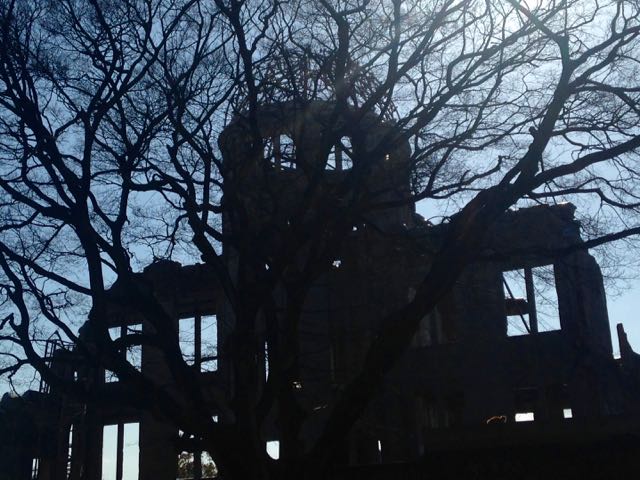
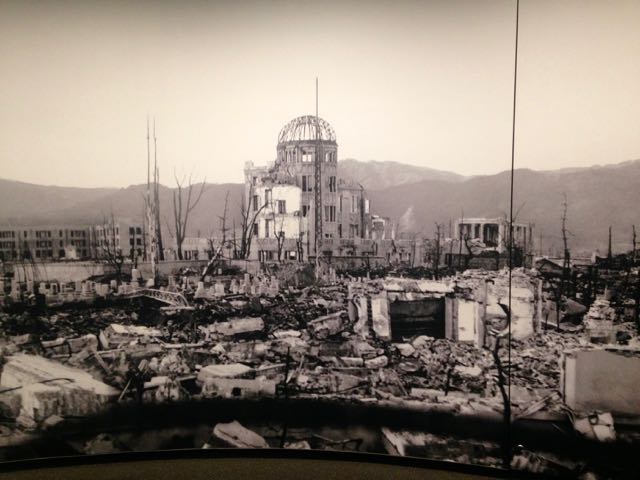
The A-Bomb Dome
The A-Bomb Dome

Japan is unique in so many ways. It’s a fascinating place of extremes and contradictions, where sublime beauty and attention to detail exist beside mass-produced, plastic-wrapped ugliness. I don’t think I have ever been to a place where so many things feel completely alien.

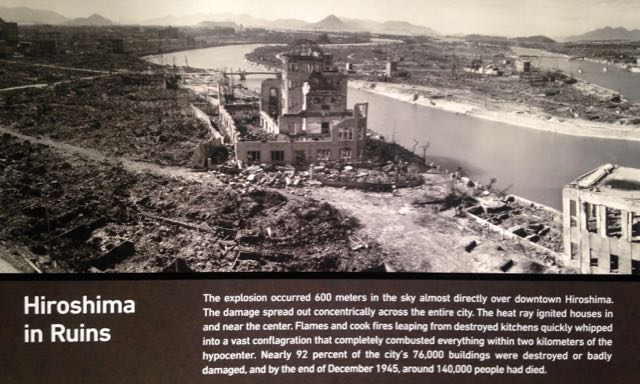
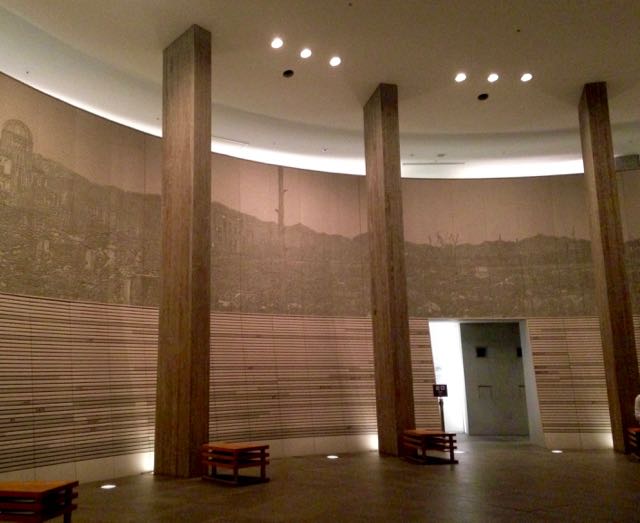
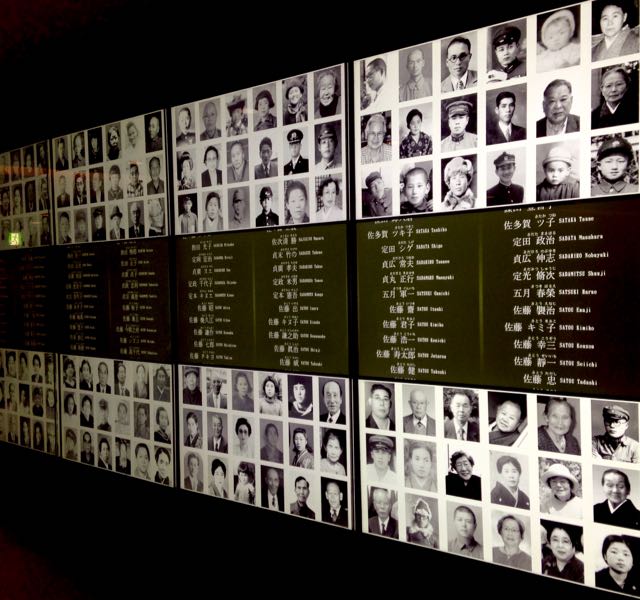
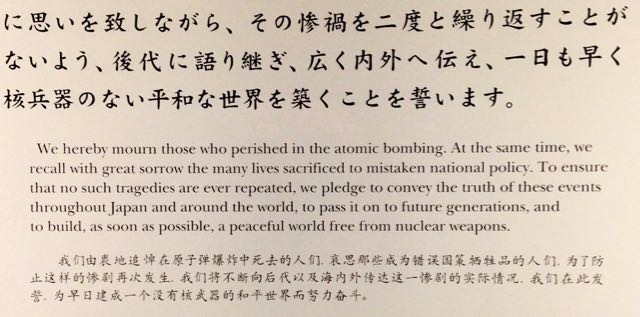
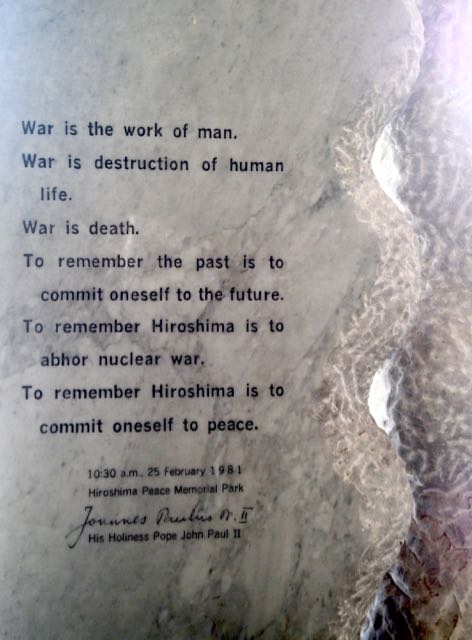
Of course Japan is also unique for being the only country in the world to have been victim not just to one, but two nuclear bombings. And it is very clear from the messages in Hiroshima Peace Memorial Museum that that narrative has played a strong role in defining how Japan sees itself today. Throughout the park were heartfelt messages offering pacifism and reconciliation as a path forward. 
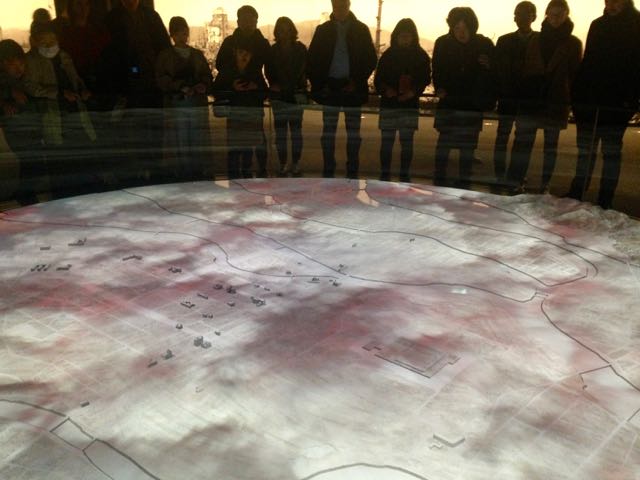
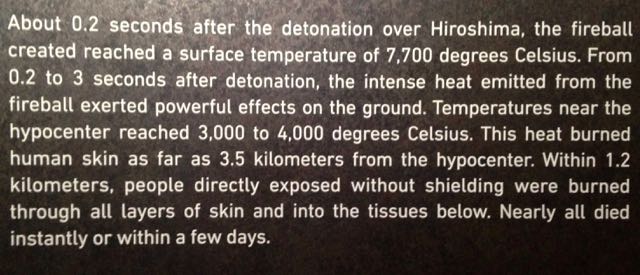
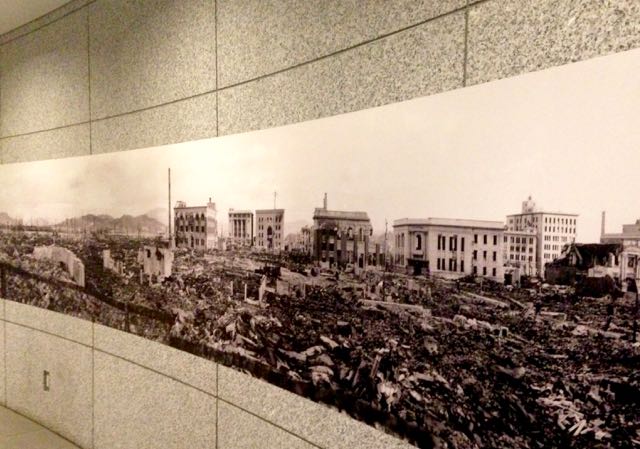
I honestly can’t imagine how anybody could emerge from the Peace Museum’s collection of photographs and preserved artefacts untouched by the epic tragedy. Twisted clocks stopped in their tracks at 8.15am and the charred remains of a lunch box or child’s tricycle serve as illustrations to the deeply moving and disturbing testimonies of eyewitnesses or parents, whose children blistered and bubbled to their deaths. Surely nobody can think atomic warfare is a good idea. 
And yet, as I wandered the park, I found a “but” forming in my mind. Not about the inarguable suffering of the inhabitants of Hiroshima and Nagasaki, but about the fact that the Japanese were also known for being the aggressors of ruthless cruelty, particularly in the Pacific theatre. For their call for peace to be truly effective, I needed ‘Japan the perpetrator of huge suffering’ to stand hand in hand with ‘Japan the victim’. But this admission of guilt is largely lacking. And maybe it is wrong of me to expect Japan to respond as honestly as Germany in this regard. After all, is it not just responding the same way as all countries… in fact, most perpetrators of crime… well actually, most of us as individuals when it comes to our own misdeeds?

Over the years there have been expressions of remorse, such as Prime Minister Shinzō Abe expressing “deep repentance” for Japan’s actions during World War II at a Joint Session of the United States Congress in 2015. But one could see this through a cynical lens, as a strategic move designed to emphasise Japan’s reconciliation and alliance with the USA: Two former enemies turned staunch allies become leaders in the promotion of free value and the rules of engagement in the international community. Meanwhile, Japanese textbooks focus on the suffering the Japanese public had to endure and gloss over Japan’s own devastating actions as an imperial power. Even when they do acknowledge them, it is again as a victim. They look at Japanese foot soldiers’ suffering in Burma, Thailand and Indonesia, ignoring the perspective of the countries colonised or attacked by Japanese forces, like China, Korea and South East Asia.
After my talks on Germany’s culture of apology and atonement, I am often told stories of parents who had fought in WW2 and been able to forgive the Germans… but not the Japanese. Germany was, of course, every bit as cruel albeit in a different way, but it has long held up its national hands in the most unconditional admission of culpability and display of penitence any nation has ever shown towards its own deeds. When people wonder why Japan hasn’t done the same, it could be argued that the answer lies in the reversal of the question: Why has Germany done so much? For Germany is utterly unique in this regard and Japan is merely following the tradition of all other nations around the world. 

The idea of national guilt and the potential need for a nation to apologise is a newish one. And, having been a staunch supporter of apology as a way to forge a new identity, I am actually questioning its importance as a gesture long after the event. True apology is deeply transformative, but when it comes to retrospectively apologising on behalf of a nation, can an apology by people who didn’t do anything to people to whom something wasn’t done have any real effect? So I think my question is now taking the shape of: How can a nation acknowledge its misdeeds and actively dismantle their negative legacy? This could be in relation to slavery, colonialism, war crimes, discrimination… By doing so, we open up the possibility of having dialogues that are less binary than the divisive, fact-based discourses about perpetrators and victims, right or wrong, good or bad etc. and rather focus on the experiences of individuals now; how they have been impacted and what would help them.

So, in answer to my opening question ‘Whose call to peace is stronger?’ I think I would answer, that of the former perpetrator. Because, in order to arrive there, they have had to pass though a deeper process of unflinching honesty, self-reflection, humility and genuine transformation.
For 27.1. – a Holocaust Memorial Day tribute to my audience last week

Nothing on the booking form or accompanying correspondence gave any clue as to who my audience would be on Thursday morning last week. I just turned up at Kenwood House on the edge of Hampstead Heath ready to give my German memorial talk to the monthly Arts Society. As we stood in the frosty sunshine waiting for the house to open, the Chair mentioned almost in passing, “This is North London, so most of our members are Jewish.

Read More »

Could the question to start 2019 be: What can we, Great Britain, put in? rather than: What can we get out?

I’d like to focus my last blog of 2018 on a single question that arose out of a letter written by a German citizen and published in The Guardian. It is addressed to all of us here in Britain and I feel it captures the essence of the principles we celebrate and/or practice in some form or other over the Christmas period: family and giving.

It says: “Dear friends in Britain. Maybe you are not aware of what Europe will miss when you leave. We will miss your refreshing views, because living on the continent can give a blinkered viewpoint. We will miss your international experience and networks. We will miss your calmness and pragmatism. We will miss your long democratic experience in developing the future EU. Together we are strong! Please stay. We are waiting for you with open arms.

Read More »

‘Shot’ for what you represent

I had a funny experience the other day… not sure if I mean funny-ha-ha or funny as in quite strange. Or maybe it simply made something visible that usually remains disguised or hidden.

I had just arrived at the theatre where I was due to give my talk on German WW2 counter memorials. The woman, who had booked me on the recommendation of several other art societies, greeted me warmly, bought us each a coffee and sat down opposite me in the café.

Read More »

Light at the end of the tunnel…

Yesterday I wrote two words that I have frequently thought I would never get to write: THE END. Of course it is not The End by any stretch, but nonetheless this week, for the very first time, I caught sight of a teeny-weeny light at the end of the tunnel; just enough to be able to acknowledge its reality, in writing. I am talking about my book; the book that I have been writing for the past three years and researching for well over ten.

To be honest, I have never known a task so challenging. The idea arose out of my talks to schools and Arts Societies all over the country in which I present the Second World War and its aftermath “through the eyes of an ordinary German family”; my family to be precise. “I had no idea,” is the usual, unanimous response. And here in Britain, we actually don’t. So when audience members started asking me with such regularity “Have you written a book?” or told me in no uncertain terms “You must write a book”, I decided to seize the gauntlet. I’ll just stretch the contents of the talks, I thought naively.

Read More »

Am I the only person who found ‘Darkest Hour’ slightly tedious?

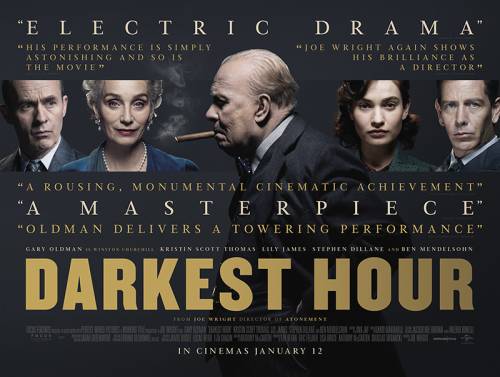
Darkest Hour’s depiction of Churchill in May 1940 is getting standing ovations in cinemas across Britain and America. It will no doubt sweep a mantleshelf of awards into its lap too. Am I the only audience member who was a little bored and slightly sickened by it?

Yes of course, Gary Oldman is truly great as the blatantly alcoholic, often fowl-mouthed, war-mongering Churchill, and the film is beautifully shot and directed etc. etc. And of course winning the war and defeating Hitler was a good and essential thing, something to be celebrated. BUT this black and white, reductionist, at times sentimental, ‘Hero beats Villain’ narrative has now been re-hashed ad nauseam.

fid17838.jpg

Can the British not come up with a more original, nuanced take on the World War Two story?

Read More »

What if, just ‘what if’, death isn’t quite the full stop many think it is…?

The end of October / beginning of November is traditionally the time of year when people from all different cultures think of, and remember, the dead. For Pagans it is Samhain; for Christians, All Souls; for Mexicans, the Day of the Dead. It was / is believed that the veils between the living and the dead become thinnest now, allowing people to gain access to their dead loved ones. In modern, western, secular societies, it generally morphs into a black and orange bonanza of carved pumpkins and ghouls, a commercial excuse for a bright explosion of fireworks and increasingly terrifying costumes.

Death, in our culture, is widely seen as a negative; the Grim Reaper to be feared or fought. Or it is an ending to be deferred, as long as possible, at whatever cost. It is the opposite of birth, and not to be celebrated as a portal between what we call ‘life’ and a different form of life beyond. For so many people, it is just one final curtain fall, an over and out… THE END.

Image0351.jpg

Of course none of us know though! The most inevitable aspect of life is also the least knowable… such a wonderful design. However, I believe we are missing out on a hugely important level to life by relegating death to the role of a big full stop.

Read More »

Remember…

Having spent the past two weeks in France enjoying everything that France has to offer and so much of what I love in life, it is hard to write my monthly blog on my slightly sombre themes of memorials, World War II, the Nazis, remembrance and all that stuff. And particularly on an iPhone from a campervan! But today, as we were driving past anyway, I went to a memorial that has to be one of the most memorable in terms of its immediate and tangible connection to Nazi atrocities.

IMG_1931

Read More »

Standing in their footprints…

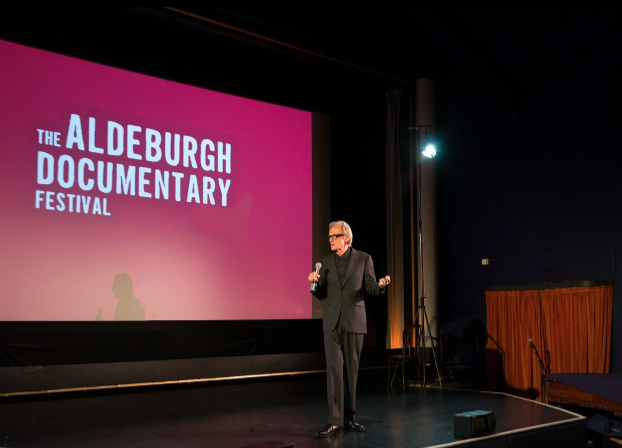
What is it that makes standing in the exact location of something historical, momentous or simply in the footprints of someone famous, so thrilling? Or horrifying? On Tuesday I was standing on a stage in the beautiful east coastal town of Aldeburgh ready to give one of my talks on Germany’s WW2 memorial culture when someone said, “You’re standing exactly where Bill Nighy stood last night”. It was tiny but there it was, a subtle tingle, a flutter of excitement. I like Bill Nighy and I liked knowing that I was so hot on his heels, talking in a venue in which he too had talked. But what’s really happening, what are our bodies or minds reacting to when we are in the presence even of such tenuous claims to fame or significance?

Screen Shot 2017-04-28 at 10.57.55.png

Read More »

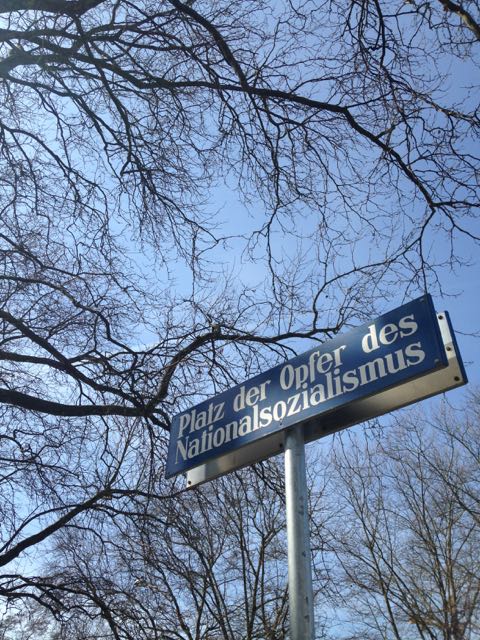
Munich in March

A city in which the ruins of history survive to serve as warnings for the present and pointers to a different future…

German memorials honour the brave resistors of Nazism, unreservedly condemn the perpetrators, apologise to the victims and warn us all to remain vigilant so these things can never happen again.

IMG_0356.jpg

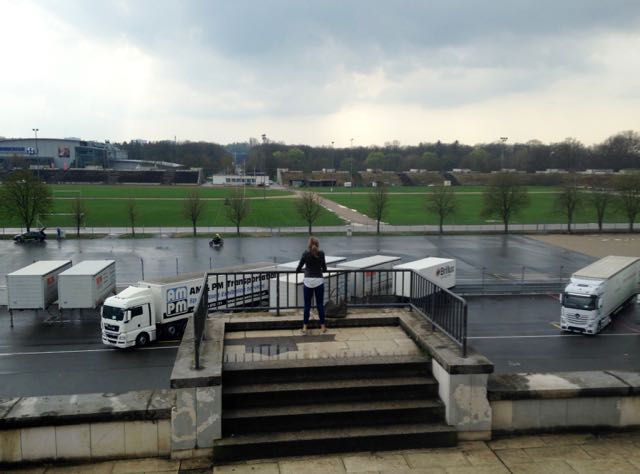
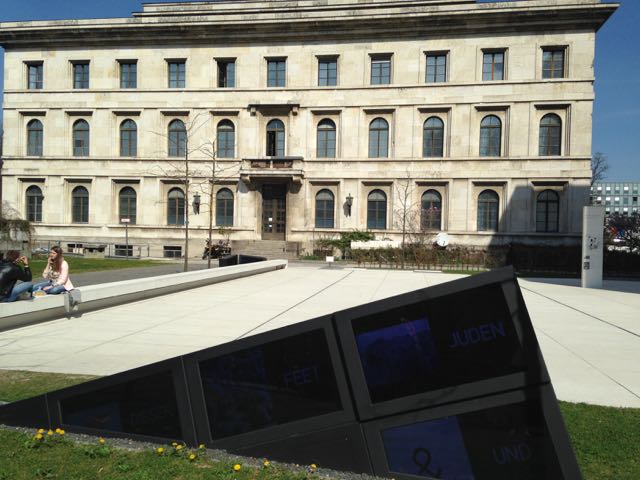
A video installation outside the former Nazi headquarters

Read More »