Standing in their footprints…

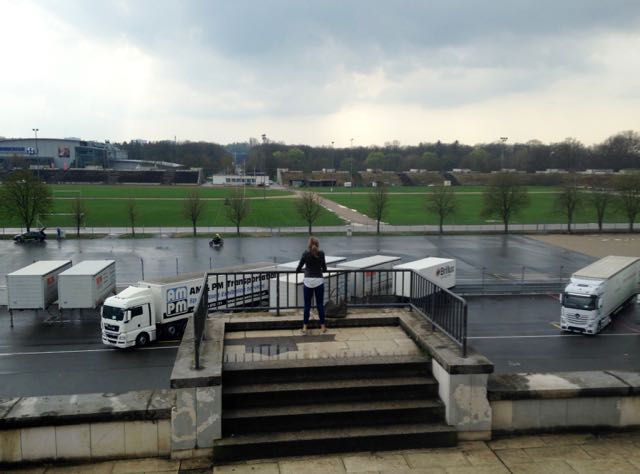
What is it that makes standing in the exact location of something historical, momentous or simply in the footprints of someone famous, so thrilling? Or horrifying? On Tuesday I was standing on a stage in the beautiful east coastal town of Aldeburgh ready to give one of my talks on Germany’s WW2 memorial culture when someone said, “You’re standing exactly where Bill Nighy stood last night”. It was tiny but there it was, a subtle tingle, a flutter of excitement. I like Bill Nighy and I liked knowing that I was so hot on his heels, talking in a venue in which he too had talked. But what’s really happening, what are our bodies or minds reacting to when we are in the presence even of such tenuous claims to fame or significance?

Screen Shot 2017-04-28 at 10.57.55.png

Read More »

There’s an unhelpful form of Tourette Syndrome lurking within certain British men…

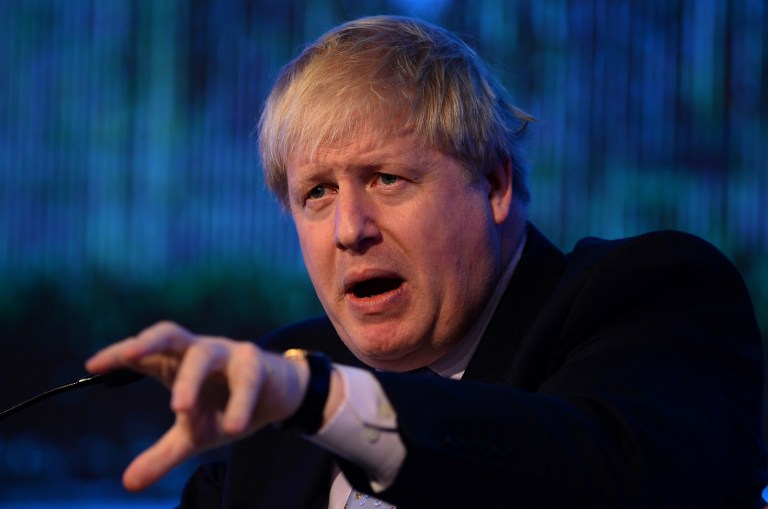
What is it about some British men? It’s as if they have a form of Tourette’s that makes it impossible for them not to heed Basil’s advice and not mention the war. Smug winner syndrome, even 70 years on. I mean is it really a good idea, Boris Johnson, is it remotely mature or diplomatic to respond to a perfectly reasonable suggestion that Britain could not expect to get a better deal outside the EU than it enjoyed inside, by equating such an approach to “punishment beatings… in the manner of some world war two movie”? (The Guardian, 18.01.17)

f1c8a09b8dc2c845d413acc6a7525daa3e3ac06a4553eade79040d0b2bd9c0bc.jpg

It honestly makes me wince, not because it’s insensitive, antagonistic or unnecessary, but because it is so unbelievably, pathetically childish. I once laughed at Will Self’s brilliant verbal portrait of Boris as “an enigma wrapped up in a whoopee cushion” but I don’t find him remotely enigmatic or amusing anymore. Just dangerously out of date and out of touch.

Read More »

What purpose does Holocaust Memorial Day serve for those generations who can’t “remember”?

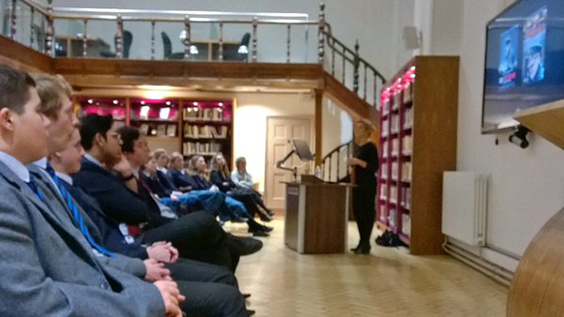
On Monday I was invited to give my talk about Germany’s memorial culture of apology and atonement (read more) at Brighton College as part of their Holocaust Studies Week. One student asked a question being debated by current historians: “When can we let WW2 recede into the past like other episodes of history do?”
6c682644-29fd-46de-9a95-e49714cdda9e.jpg

Today, 27th January, is International Holocaust Memorial Day, the date that marks the day Auschwitz-Birkenau was liberated by Soviet troops in 1945. It is the day on which we are asked to remember the 11 million victims killed in the Holocaust – 6 million Jews and 5 million Soviet POWs, homosexuals, Sinti and Roma, mentally or physically disabled, Roman Catholics, political dissidents, ethnic Poles, Slavs and Ukrainians. All had become victims of the Nazi hatred that deemed them to be “Untermenschen”, literally ‘beneath’ or ‘below’ human; sub-humans. They were killed because they were seen to be a threat to the ideal world image that Hitler and his followers were striving to manifest.

Read More »
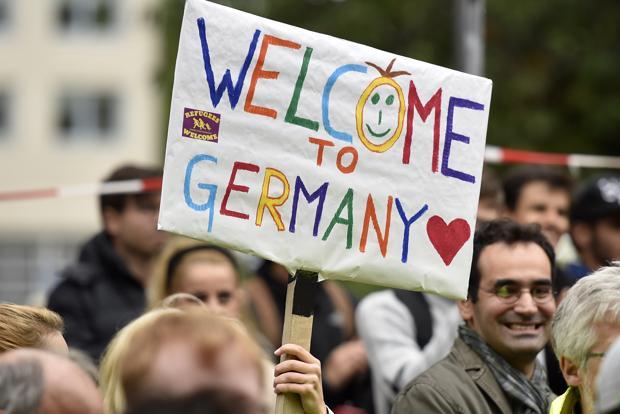
Germany’s welcoming response to the refugee crisis doesn’t surprise me. The more Germans are allowed to acknowledge their own WW2 traumas, the more their personal and collective memories of the horrors of the 1944-50 flights and expulsions come to light.

germanysyria-kkmD--621x414@LiveMint

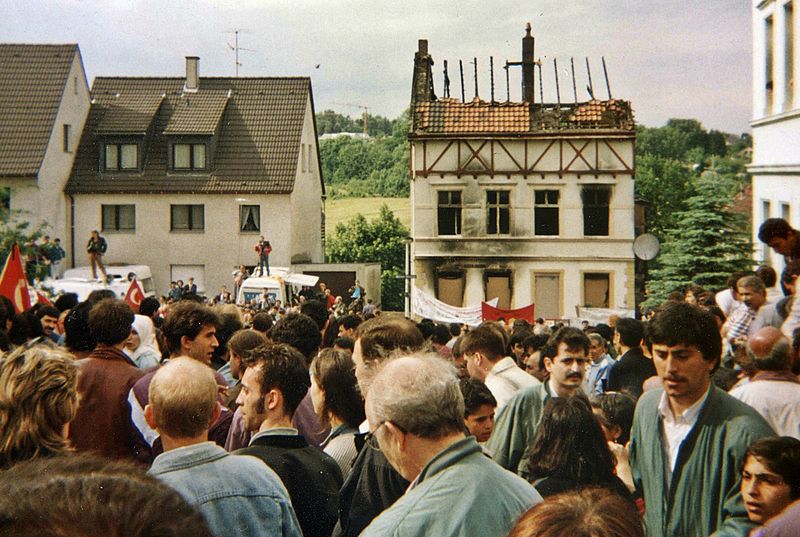
Germany’s ‘open house’ policy and newly attributed “moral leadership” within the mounting refugee crisis was indeed initially surprising. It certainly wasn’t always so. I’m remembering the 17-year-old boy I met in the nineties when I was working as an artist in Cologne Prison. His name was Christian and he had been placed in the special segregated unit there because his crime was so contentious on a national scale. He was one of four young Neo-Nazis responsible for burning down the house of a large Turkish family in Solingen in May 1993, killing three girls and two women and injuring fourteen other family members. It was the most severe instance of anti-foreigner violence in modern Germany and in 1995, Christian was found guilty of murder, attempted murder and arson and sentenced to 10 years.

800px-1993_Solingen_Brandanschlag_2Read More »

VE Day 70 years on – a time to celebrate victory or a time to also to look more closely at the price of war to women and girls?  

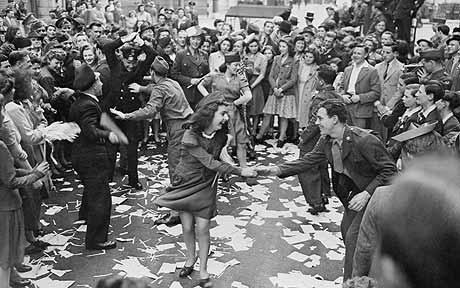
Within the context of my interest in WW2 Remembrance, May offers a welcome break from the misery and darkness. It is indeed a time to celebrate, for on May 8th 1945 Churchill was finally able to announce that the war was over in Europe. The jubilation was naturally boundless and Britain threw the biggest street party the country had ever seen. The Allies had triumphed over the Nazi enemy, Germany had unconditionally surrendered, and it would be the end of death and destruction.

ve460_1631804cRead More »

“Tell your story… until your past stops tearing you apart”

2009_0922Russia090290

Tell your story.
Let it nourish you, sustain you and claim you.
Tell your story.
Let it feed you, heal you and release you.
Tell your story.
Let it twist and re-mix your shadowed heart.
Tell your story,
Until your past stops tearing your present apart.

I heard the above words recently on Radio 4’s Spoken Word programme “Writing a new South Africa”. You can hear it here at 14.38 minutes: http://www.bbc.co.uk/programmes/b053bsfm
Spoken aloud, with all the power of someone who knows the potency of the words, it struck me that this is precisely what I have been doing in the past years.

Read More »

‘Sorry’ does indeed seem to be the hardest word to say

February 2015 saw the 70th anniversary of the bombing of Dresden, a contentious and highly debated element of the British and American war campaign. The deaths of 25,000 civilians and the destruction of the medieval city of Dresden known as the “Jewel of the Elbe” was without doubt one of the low points in the British military strategy.

25A64E0500000578-2952892-Solidarity_10_000_people_joined_hands_to_form_a_giant_human_chai-a-9_1423864324864

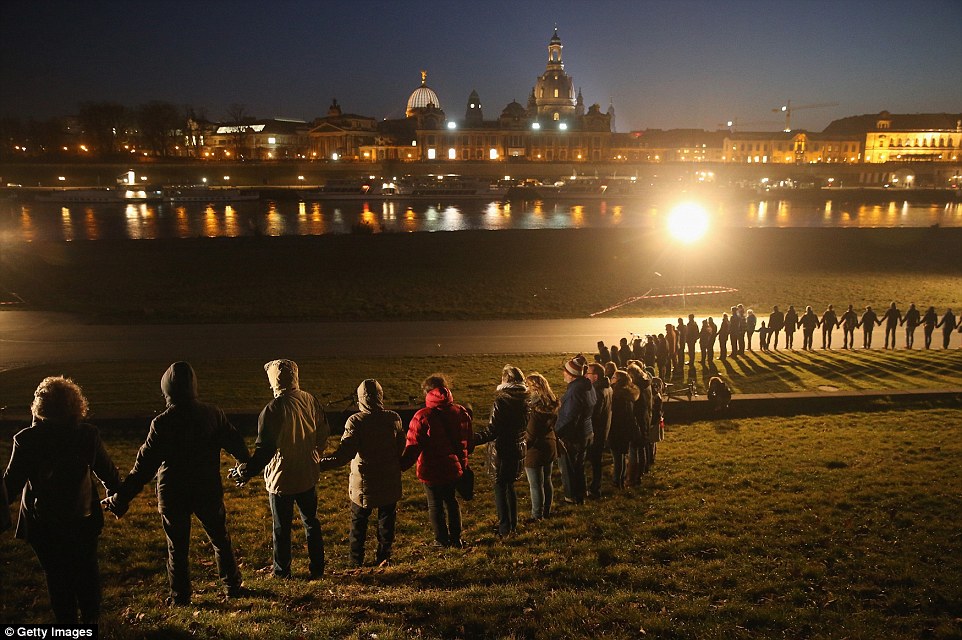
On 13th February this year Germany held one of their rare commemorations for their own dead. It started with a service in the re-built Frauenkirche / Church of our Lady and continued later in the streets when up to 10,000 people formed a human chain along Dresden’s riverfront, holding hands to commemorate the dead and call for peace.

With my on-going interest in World War commemorations, this was of course a significant one, for two reasons really. On the one hand it remembers German victims of war and on the other it remembers an event that many people see as a British war crime.

Read More »

Holocaust Memorial Day, 27th January 2015


IMG_3702

Today was Holocaust Memorial Day, commemorating the day Auschwitz-Birkenau was liberated by the advancing Soviet army seventy years ago. Today Jews and non-Jews alike were reminded to remember what so many of us have no personal recollection of. Reminded how important it is to remember so that it will never happen again.

Today was also the launch of my talk on German Memorials and Counter Memorials, the second in my trilogy of talks “The other side” about World War II from a German point of view. It was a happy coincidence that King William’s College on the Isle of Man invited me to give this particular talk on this particular day, for it encouraged me and my audience not only to think about the victims of the Nazi policies of annihilation but also about the perpetrators and Germany’s ongoing and thorough process of apology on behalf of them.

Read More »

Simon Jenkins I would kiss you, if I could…

  Image

…for your refreshing article on 30.01.14 in the Guardian:

Germany, I apologise for this sickening avalanche of first world war worship. The festival of self-congratulation will be the British at their worst, and there are still years to endure. A tragedy for both our nations.

http://www.theguardian.com/commentisfree/2014/jan/30/first-world-war-worship-sickening-avalanche?commentpage=1

I too would like to apologise to the Germans for the largely immature, thoughtless, self-centred approach we seem to be taking towards this 4-year centenary. What on earth do we think we are doing? To what end are we striving with all this emphasis on ourselves as a nation of heroes, victims, winners? Our obsession with our victory a century ago is being seen with bemusement on the continent. Read some of Germany’s responses to Michael Gove’s renewed attempts to push the whole blame for the start of WWI on the Germans. Every parent knows that finger-pointing is childish. And yet the Minister of Education (of children no less) is still doing it 100 years after the event??! It’s not as if we are an otherwise innocent and peaceful nation that is regularly and reluctantly dragged into wars. Our leaders are gung-ho and ready to go. Look at Blair and Cameron chafing at the bit to get back into battle at the first opportunity.

Read More »

Frieze London’13… should this piece be there?

Walking the labyrinth of this year’s Frieze London was a bit like exploring a huge playground for adults… or children actually. Lots of bright colours, smiley faces, flower-power daisies, a dog seemingly made of balloons twisted together and Jeff Koons’s  vast, kitsch (hideous) sculptures surrounded by bodyguards… Image

There were also many collage-based works, which of course interested me. Paint applied over photographic and printed material, transporting the literal reality of a photograph into another, more imaginative sphere. Several fun, beautifully crafted, clever and witty pieces too – large embroidered till receipts raising everyday rubbish into a grander sphere.  And a few pieces by some of my favourites – Cornelia Parker, Francis Alys, Tacita Dean – that added a depth and authenticity that I know I can trust.

Read More »