Question to self: Is speaking out still the right thing to do?

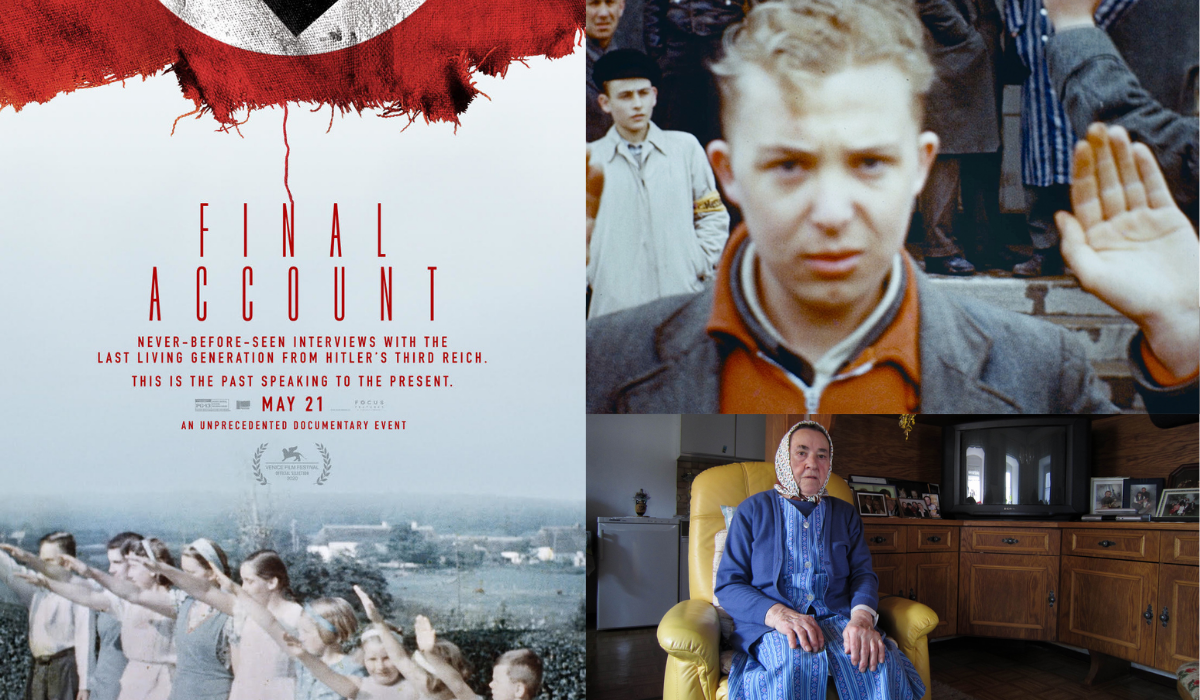
If you haven’t yet seen Jesse Eisenberg’s latest film, ‘A Real Pain,’ I can only urge you to do so. Starring himself and Kieran Culkin [youngest son in Succession!], the pair play two estranged cousins who travel to Poland to fulfil the wish of their recently deceased, concentration camp survivor grandmother for them to visit her former home. It’s essentially a road movie and extremely funny. But the context of the Holocaust and the attempts of third-generation Americans to come to terms with it, makes it also profoundly moving, thought-provoking and important. 

Millions of people world-wide are still grappling with the aftermath of those appalling years of Nazi rule. More, rather than fewer, stories of survivors and first-hand witnesses are coming to light told by descendants who have finally found ways to articulate what their forebears couldn’t. My own, In My Grandfather’s Shadow, published in 2022, is testament to the painful process of peeling back the layers of incredulity in which the extremes of both cruelty and suffering are wrapped. For many, it is justifiable to judge or blame ordinary Germans for not speaking out or revolting against the wrongness of what was happening in clear sight. Despite acknowledging their justified fears, it would have been the right thing to do.
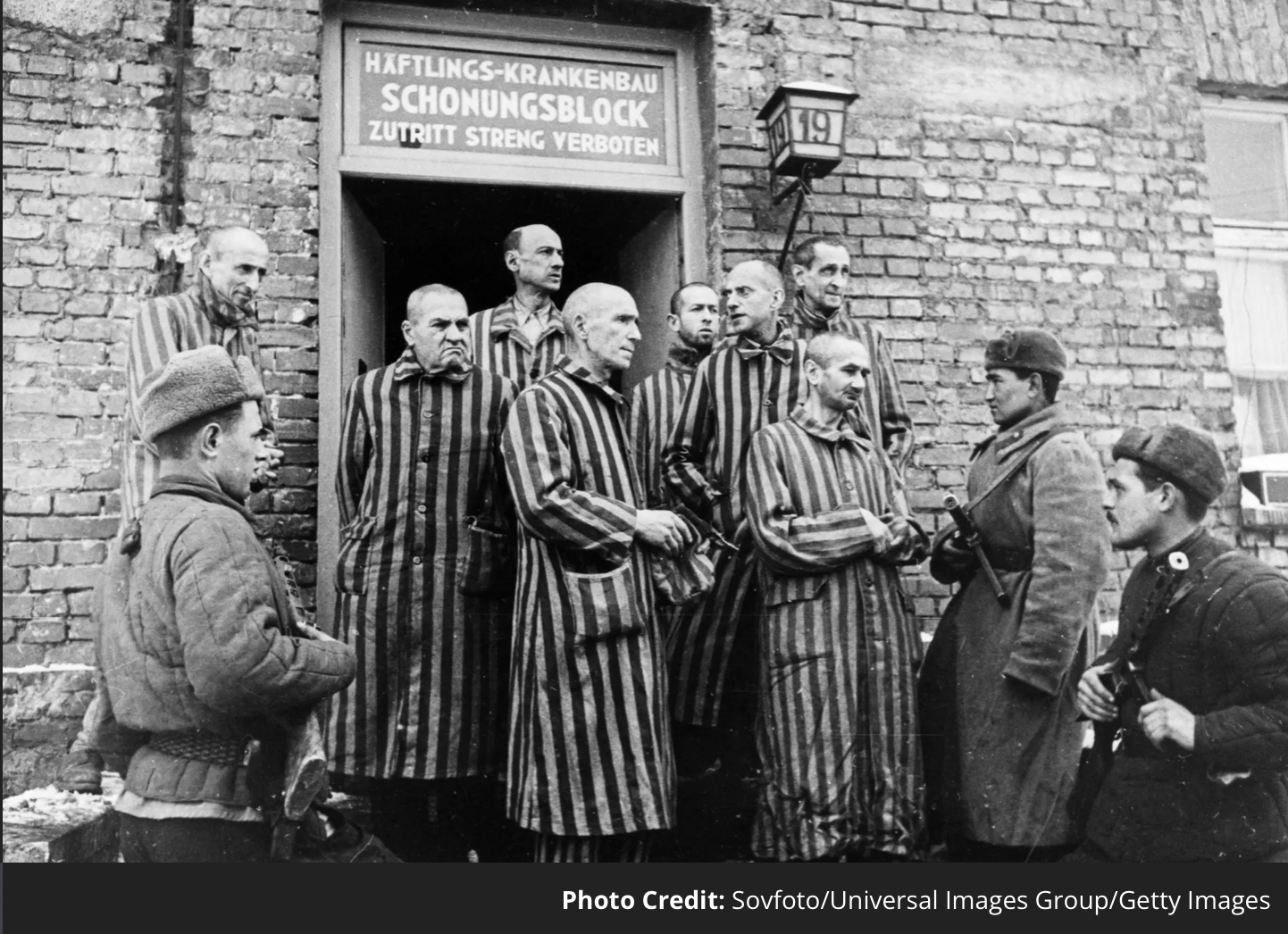
As we approach Holocaust Memorial Day marking the 80th anniversary of the liberation of Auschwitz by Soviet forces in 1945, we are asked to remember the horrific consequences of the crimes that, in part, were enabled because people did not speak out. We will once again repeat the heartfelt ‘Never Again’ that has been chanted like a mantra over the decades. But is it enough?
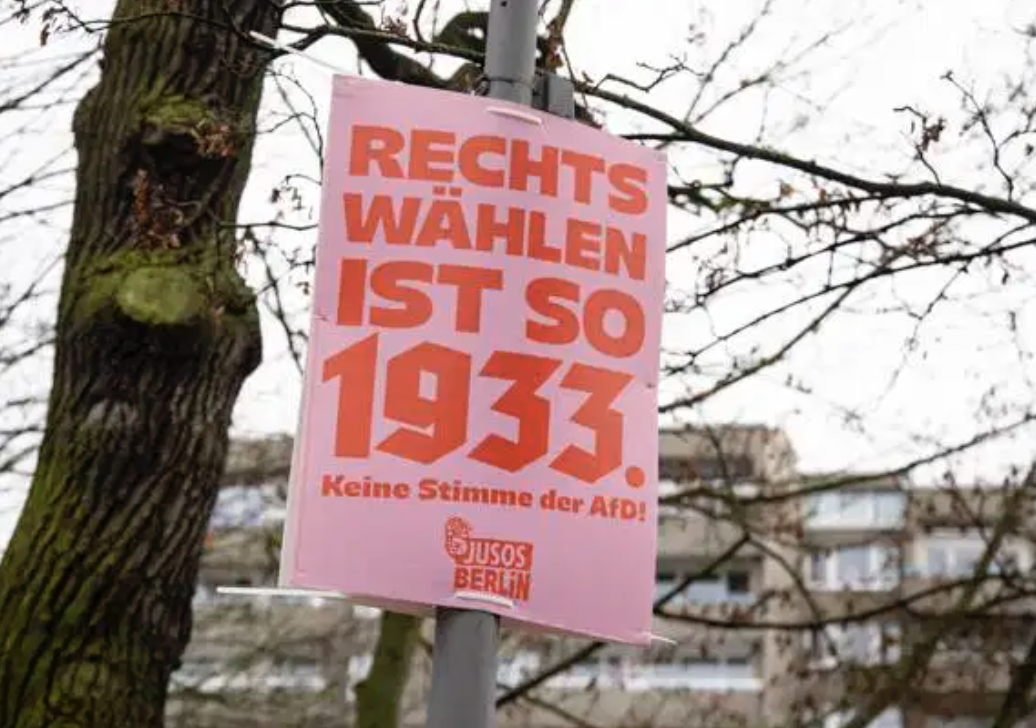
“Voting right-wing is so 1933”

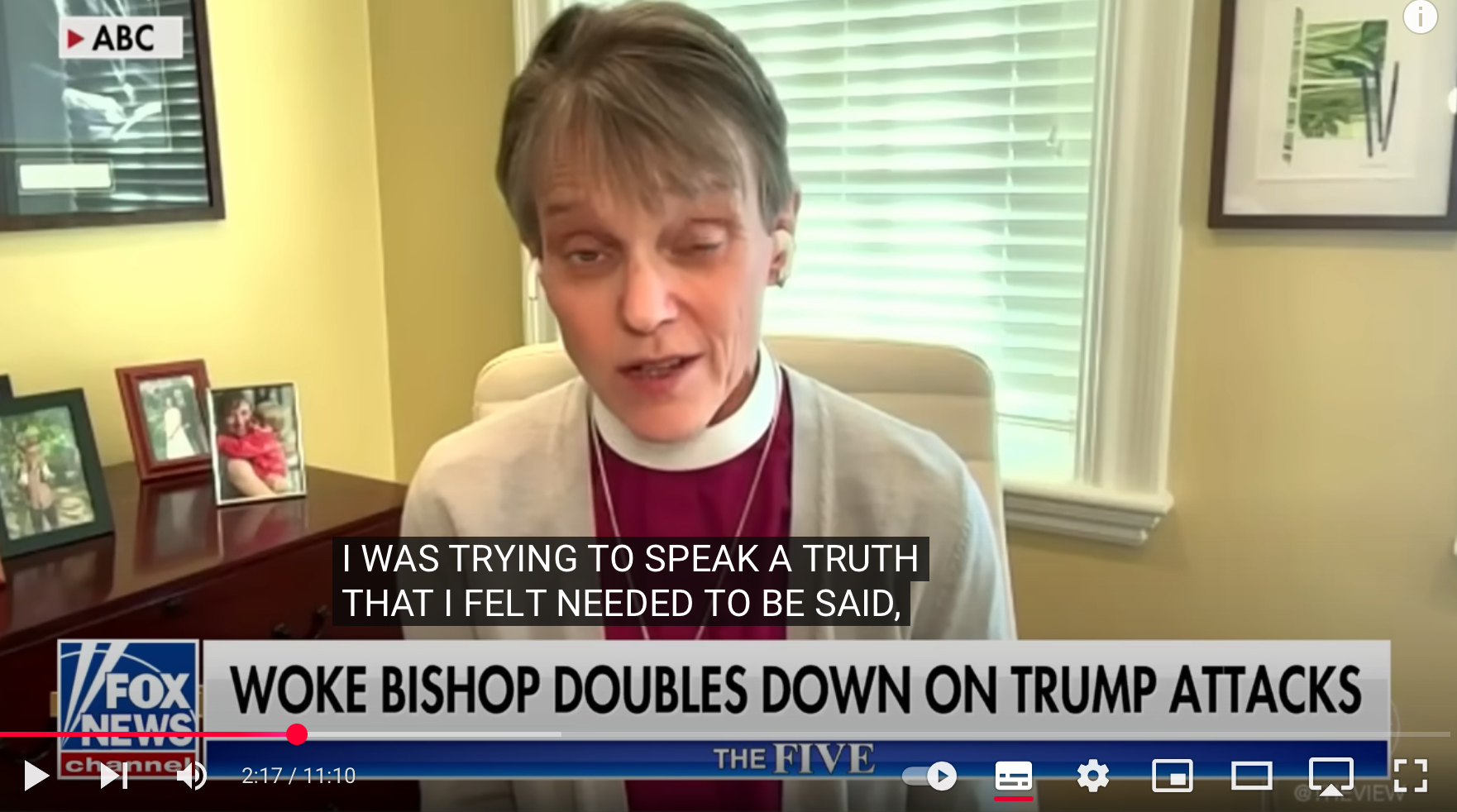
Across the globe, the roots and shoots of far-right policies are taking hold with renewed vigour. In highly vigilant Germany, ‘Voting right-wing is so 1933’ is a campaign slogan for left-wingers. But calling out discrimination and anti-immigrant policies, becoming an ‘upstander’ rather than a bystander has become increasingly perilous, even a danger to life. I wonder how Bishop Mariann Budde’s recent controversial sermon at the inaugural prayer service at Washington National Cathedral will play out. Referencing immigrants and LGBTQ+ individuals among others, she calmly but directly asked President Trump “to have mercy on the people in our country who are scared now.” Will she be cancelled, trolled, fired, discreetly removed from her post? So far she is refusing to apologise for speaking her truth. Was it brave, wise, right? Or, as he and his supporters claim, ‘nasty, woke, inappropriate’ and she a “Radical left hard line Trump hater”? Bizarre as it sounds, by seeking a path of compassion, did she inadvertently shame and dent an ego as big as the world?

As someone with (non-Jewish) German roots, I feel like it is both in my DNA and a conscious personal responsibility to speak out in the face of a perceived injustice or wrongdoing. However, I am beginning to feel an even stronger impulse. In these times of widespread latent and reactive vitriol and rage, I have started to listen into the other side’s point of view rather than – or at least before(!) – slating it. To create a tiny pause, a space between the attack and counter-attack model so many discussions rapidly descend into. It’s like stepping back from an easel when you have been immersed in some detail in order to see the whole picture. For when we speak out against something with conviction but without seeing the back story behind the other’s conviction, we are basically assuming a moral and intellectual high-ground that imparts the message that ‘they’ are wrong (inferior) and ‘we’ are right? This never goes well! Trump’s return to the White House proves that.

Decades of trying to comprehend the behaviour of ordinary Germans eighty or ninety years ago have revealed to me that many of them won’t have been so different to many of us today, i.e. more concerned with their own lives – milking cows, running businesses, keeping children warm and fed – than politics. Looking away, keeping stumm becomes a basic survival tactic. But the outrage humans feel in the face of endless discrimination, inequality, injustice, harm can rapidly turn to despondency and disaffection when we realise we can do little more than sign a petition or share a rant on social media or among friends. Eventually we might become numb, at worst immune to the wrongdoing. I know that I personally read, watch and listen to the news far less than I used to because the drip-feed of madness, badness and sadness feels toxic and induces inertia. I have no idea if this is maturity, complacency, disheartenment, a nauseating lack of humour or an equally nauseating sense of self-righteousness, but I have lost some of my more outspoken tendencies and anger at the world and replaced them with something that is hopefully more productive but still relevant to these times.

My prison work showed me that the most valuable action I could offer prisoners was to listen and to hear them. Not just their stories, excuses and justifications, but what came before. The drivers of their behaviour. With their defences down, trust, compassion and understanding could grow. Attitudes and actions quietly changed without them being shown to be wrong.

I am not sure if this is the right way to go in general life. The story of the Zen / Chinese Farmer comes to mind with its ‘We’ll see…’

It’s certainly not a quick-fix solution. But maybe it’s a tiny antidote to the constant stoking of anger? A drop towards the creation of a kinder world in which wider discourse and a greater tolerance of difference are possible. And ‘Never Again’ regains its urgency and weight. 

A few links to that don’t necessarily reflect my views, but are accessible sources to pursue your own research.

A Real Pain Review

A Real Pain Trailer

Germany’s present is not Germany’s past by Katya Hoyer

Who is Mariann Edgar Budde, the bishop who angered Trump with inaugural sermon?

I am not going to apologise’: The Bishop who confronted Trump speaks out
For 27.1. – a Holocaust Memorial Day tribute to my audience last week

Nothing on the booking form or accompanying correspondence gave any clue as to who my audience would be on Thursday morning last week. I just turned up at Kenwood House on the edge of Hampstead Heath ready to give my German memorial talk to the monthly Arts Society. As we stood in the frosty sunshine waiting for the house to open, the Chair mentioned almost in passing, “This is North London, so most of our members are Jewish.

Read More »

What purpose does Holocaust Memorial Day serve for those generations who can’t “remember”?

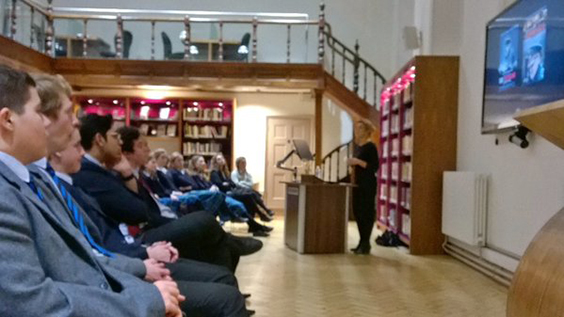
On Monday I was invited to give my talk about Germany’s memorial culture of apology and atonement (read more) at Brighton College as part of their Holocaust Studies Week. One student asked a question being debated by current historians: “When can we let WW2 recede into the past like other episodes of history do?”

6c682644-29fd-46de-9a95-e49714cdda9e.jpg

Today, 27th January, is International Holocaust Memorial Day, the date that marks the day Auschwitz-Birkenau was liberated by Soviet troops in 1945. It is the day on which we are asked to remember the 11 million victims killed in the Holocaust – 6 million Jews and 5 million Soviet POWs, homosexuals, Sinti and Roma, mentally or physically disabled, Roman Catholics, political dissidents, ethnic Poles, Slavs and Ukrainians. All had become victims of the Nazi hatred that deemed them to be “Untermenschen”, literally ‘beneath’ or ‘below’ human; sub-humans. They were killed because they were seen to be a threat to the ideal world image that Hitler and his followers were striving to manifest.

Read More »

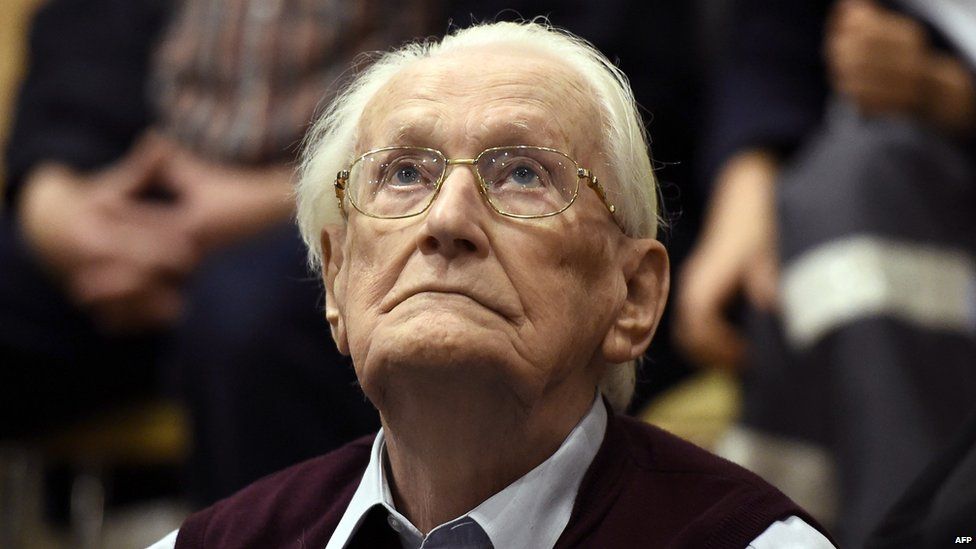
“German court sentences 94-year-old ‘Bookkeeper of Auschwitz’ to four years in prison.” Is this Justice? Or is this the German Judicial System’s attempt to atone for its appalling failure since WW2 to bring more of the real culprits to justice?

_84281791_84281790

This is an obvious choice of topic for my July blog for it touches on all my main themes: WW2 Germany, prison, punishment, forgiveness, redemption.

What we have here is a 94-year-old former SS officer whose job at the age of 21 was to sort the luggage of the new arrivals to Auschwitz and register the prisoners’ goods and valuables. Oskar Gröning was not a guard but a bookkeeper who counted the money the Nazis stole from the Jews. During the trial that started in May in the German city of Lüneburg he admitted: “It is without question that I am morally complicit in the murder of millions of Jews through my activities at Auschwitz. Before the victims, I also admit to this moral guilt here, with regret and humility. But as to the question whether I am criminally culpable, that’s for you to decide.” Today he was sentenced to 4 years in prison after the German Courts found him guilty of being accessory to murder of 300,000 people.

Read More »

The Queen’s visit to Germany – “politically motivated” or her gesture of “complete reconciliation”?

queen-belsen-wreat_3355422k

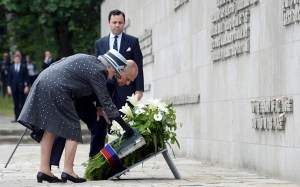
As I started writing this month’s blog this morning, the Queen was visiting Bergen-Belsen Concentration Camp for the first time, apparently at her request.

Much has been criticised or mocked about her State visit in the press: the timing – the eve of a summit where David Cameron is expected to begin new negotiations in relation to Britain’s EU membership; her apparently politically-biased speech in which she referred to a division in Europe being “dangerous” and that guarding against it “remains a common endeavour”; the Queen’s unenthusiastic reception of the German president’s gift of a portrait of her as a child on a blue horse with her father; even the reason for her going was apparently to put Angela Merkel, who is often referred to as Queen of Europe, back in her place…!

Read More »

Holocaust Memorial Day, 27th January 2015


IMG_3702

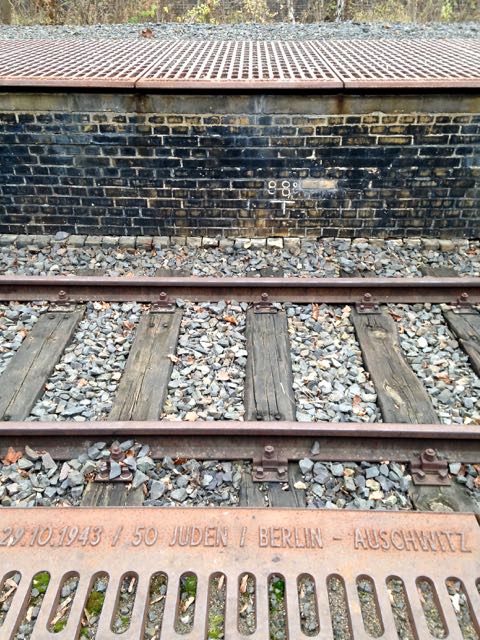
Today was Holocaust Memorial Day, commemorating the day Auschwitz-Birkenau was liberated by the advancing Soviet army seventy years ago. Today Jews and non-Jews alike were reminded to remember what so many of us have no personal recollection of. Reminded how important it is to remember so that it will never happen again.

Today was also the launch of my talk on German Memorials and Counter Memorials, the second in my trilogy of talks “The other side” about World War II from a German point of view. It was a happy coincidence that King William’s College on the Isle of Man invited me to give this particular talk on this particular day, for it encouraged me and my audience not only to think about the victims of the Nazi policies of annihilation but also about the perpetrators and Germany’s ongoing and thorough process of apology on behalf of them.

Read More »

What are we “remembering” on Remembrance Day?

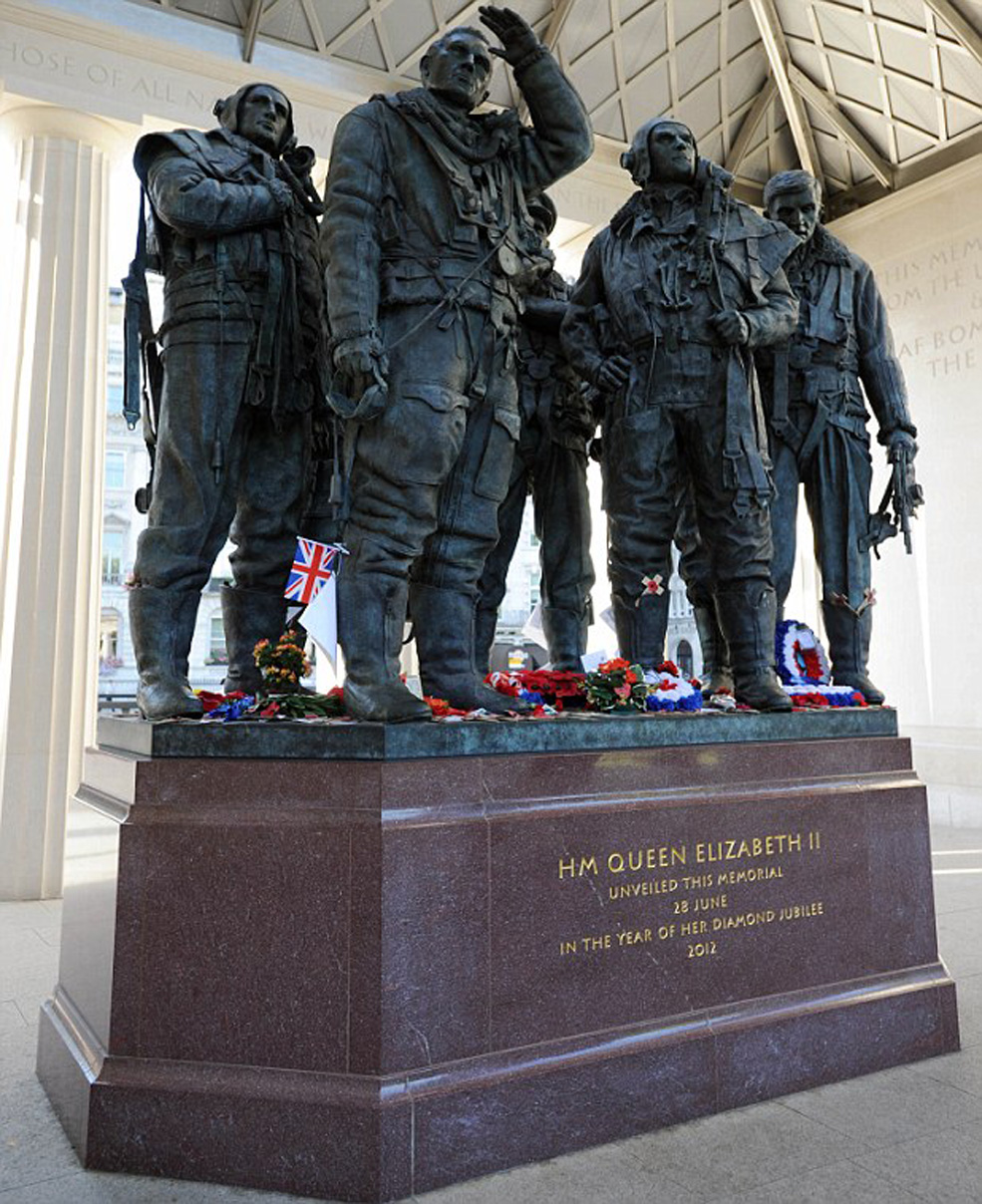
I found it symbolically pleasing to be planting bulbs as yesterday’s two-minute silence hummed over the radio waves across the UK. Sitting in the quiet sunshine, I started to “remember”, only to immediately bump into the questions: what and who am I remembering? And to what end? After all I have no personal “memories” of the First and Second World Wars, nor even of Iraq or Afghanistan. Relatives yes, but in the World Wars they were on opposite sides.

Bomber Harris memorial

Bomber Harris Memorial, (1992) London

Read More »

Frieze London’13… should this piece be there?

Walking the labyrinth of this year’s Frieze London was a bit like exploring a huge playground for adults… or children actually. Lots of bright colours, smiley faces, flower-power daisies, a dog seemingly made of balloons twisted together and Jeff Koons’s  vast, kitsch (hideous) sculptures surrounded by bodyguards… Image

There were also many collage-based works, which of course interested me. Paint applied over photographic and printed material, transporting the literal reality of a photograph into another, more imaginative sphere. Several fun, beautifully crafted, clever and witty pieces too – large embroidered till receipts raising everyday rubbish into a grander sphere.  And a few pieces by some of my favourites – Cornelia Parker, Francis Alys, Tacita Dean – that added a depth and authenticity that I know I can trust.

Read More »