Unconditional obedience or conscientious disobedience? Which should it be for a soldier?

Interesting things are happening in Germany in relation to the army. Did you know that in early 2020 the British will close the last British garrisons in Germany and all units will be transferred to the UK? Some training areas will remain in British hands, but this will be the end of an era – more than 70 years, to be precise, of British presence in Germany since the end of the Second World War. I have to admit I had no idea that we were still there.

But that isn’t the only way in which, on a military level, things are changing. Just on Wednesday the German Defense Minister, Ursula von der Leyen, signed a new “Traditionserlass” at an army barracks in Hannover. An almost impossible word to translate, it is a form of proclamation, or edict, defining the traditions that a soldier in Germany’s Bundeswehr (federal armed forces) can refer to, and which they cannot.

Screen Shot 2018-03-30 at 08.31.17.png

Read More »

Brötchen and Brexit

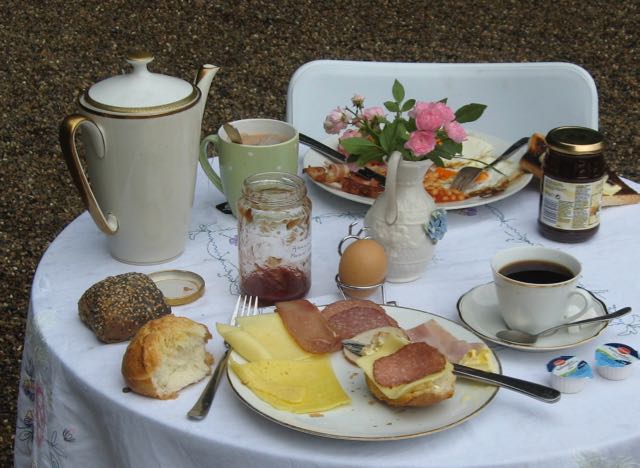
Just back from a trip to visit family and friends in Hamburg and Cologne. Whenever I am in Germany, I find myself indulging in the familiar, yet distinctly different, smells and tastes of fresh brötchen and good coffee; my body relaxes into the warmth of the modern apartments while my mind clicks into a different gear, re-structuring sentences and dusting down long-unused words and concepts that don’t exist in English. It’s a funny kind of home-coming feeling, away from home.

IMG_4766.jpg

I was, of course, asked about Brexit. It has dwindled in significance since the German elections, for Angela Merkel’s ensuing demise has given Germany a headache of its own. It felt strange being in a Germany that is punishing her for her open-arm policy to refugees. ‘Mutti’ has, after all, been such a solid rock and island of hope to us all in the choppy European waters. Nonetheless, the people I met – from bank managers to former colleagues and elderly relatives – all wondered how Brexit was going to work. “I don’t know, I can’t see it yet,” I’d say, trying not to be disloyal to the choices made by the ‘British people’. “The country is very divided on almost every issue involved,” I’d continue, and then change the subject. The impending split always pushes me into a bit of a national vacuum.

Read More »

Standing in their footprints…

What is it that makes standing in the exact location of something historical, momentous or simply in the footprints of someone famous, so thrilling? Or horrifying? On Tuesday I was standing on a stage in the beautiful east coastal town of Aldeburgh ready to give one of my talks on Germany’s WW2 memorial culture when someone said, “You’re standing exactly where Bill Nighy stood last night”. It was tiny but there it was, a subtle tingle, a flutter of excitement. I like Bill Nighy and I liked knowing that I was so hot on his heels, talking in a venue in which he too had talked. But what’s really happening, what are our bodies or minds reacting to when we are in the presence even of such tenuous claims to fame or significance?

Screen Shot 2017-04-28 at 10.57.55.png

Read More »

Munich in March

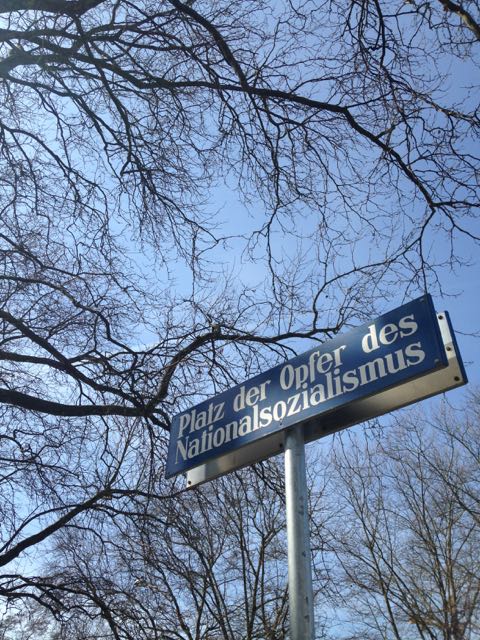
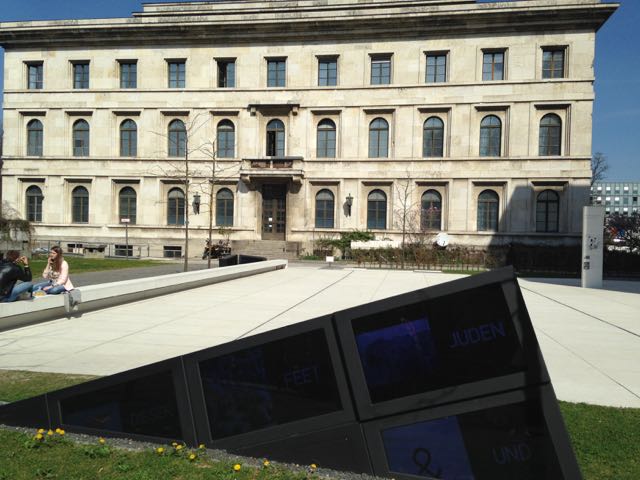
A city in which the ruins of history survive to serve as warnings for the present and pointers to a different future…

German memorials honour the brave resistors of Nazism, unreservedly condemn the perpetrators, apologise to the victims and warn us all to remain vigilant so these things can never happen again.

IMG_0356.jpg

A video installation outside the former Nazi headquarters

Read More »

“We write to understand…”

As I write my February blog, Sir Anthony Beevor, historian and bestselling author of epics such as “Berlin” and “Stalingrad”, is talking on Radio 4’s Desert Island Discs. I am humbled by his ongoing questioning of the facts in spite of his already huge achievements in bringing World War 2 to life in extraordinary detail. And I’m grateful for his admission of how hard it is to research this horrendous episode of history. His voice wobbles as he talks of reading the gruesome accounts of the rapes, murders and infinite human suffering. “We write to understand,” he says, emphasising the necessity for us to “learn the lessons of history”.

beevor

Read More »

The Queen’s visit to Germany – “politically motivated” or her gesture of “complete reconciliation”?

queen-belsen-wreat_3355422k

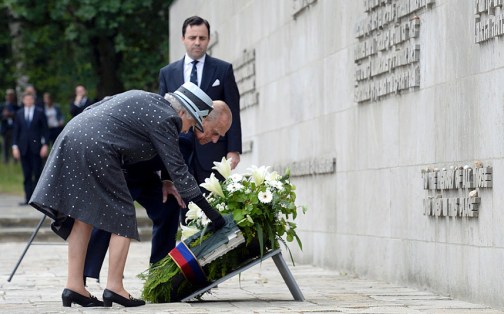
As I started writing this month’s blog this morning, the Queen was visiting Bergen-Belsen Concentration Camp for the first time, apparently at her request.

Much has been criticised or mocked about her State visit in the press: the timing – the eve of a summit where David Cameron is expected to begin new negotiations in relation to Britain’s EU membership; her apparently politically-biased speech in which she referred to a division in Europe being “dangerous” and that guarding against it “remains a common endeavour”; the Queen’s unenthusiastic reception of the German president’s gift of a portrait of her as a child on a blue horse with her father; even the reason for her going was apparently to put Angela Merkel, who is often referred to as Queen of Europe, back in her place…!

Read More »

“Tell your story… until your past stops tearing you apart”

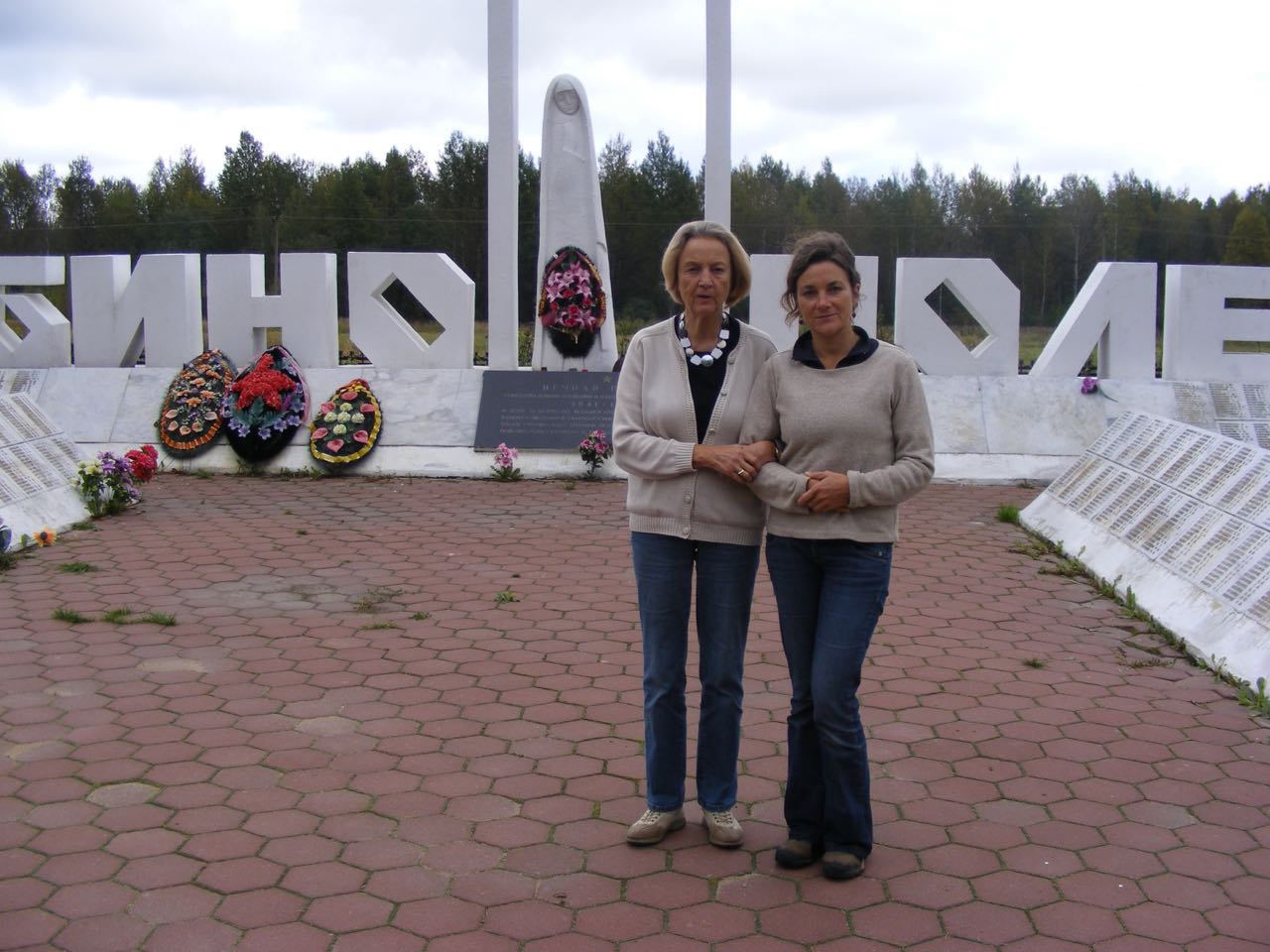
2009_0922Russia090290

Tell your story.
Let it nourish you, sustain you and claim you.
Tell your story.
Let it feed you, heal you and release you.
Tell your story.
Let it twist and re-mix your shadowed heart.
Tell your story,
Until your past stops tearing your present apart.

I heard the above words recently on Radio 4’s Spoken Word programme “Writing a new South Africa”. You can hear it here at 14.38 minutes: http://www.bbc.co.uk/programmes/b053bsfm
Spoken aloud, with all the power of someone who knows the potency of the words, it struck me that this is precisely what I have been doing in the past years.

Read More »

Holocaust Memorial Day, 27th January 2015


IMG_3702

Today was Holocaust Memorial Day, commemorating the day Auschwitz-Birkenau was liberated by the advancing Soviet army seventy years ago. Today Jews and non-Jews alike were reminded to remember what so many of us have no personal recollection of. Reminded how important it is to remember so that it will never happen again.

Today was also the launch of my talk on German Memorials and Counter Memorials, the second in my trilogy of talks “The other side” about World War II from a German point of view. It was a happy coincidence that King William’s College on the Isle of Man invited me to give this particular talk on this particular day, for it encouraged me and my audience not only to think about the victims of the Nazi policies of annihilation but also about the perpetrators and Germany’s ongoing and thorough process of apology on behalf of them.

Read More »

Generation War: Our Mothers, Our Fathers. Does it go far enough?

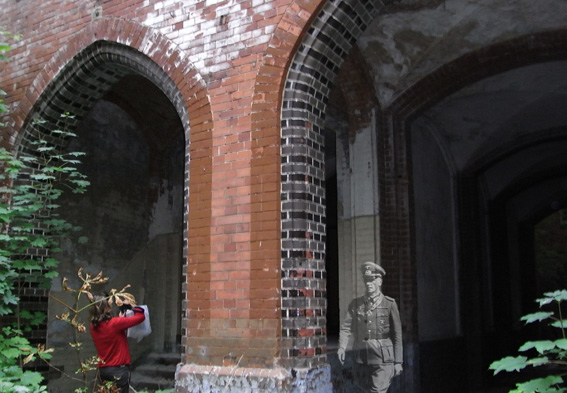
ImagePeering into the crater of my own family history, Jüterbog 2008

I don’t imagine 7.6 million viewers are watching this series as in Germany last year, but judging by the reviews and conflicting opinions expressed in online discussions, it is nonetheless making waves. Many people find it “brilliant”, with its focus on the personal within the wider historical context (as in Downfall and The Lives of Others). Some find it ‘unlikely’, that the 5 main characters’ paths would cross “as if all of Eastern Europe were no bigger than a park in Berlin”[1] or that they would be so openly friendly with a Jew in 1941 Germany. And some criticize how the drama of the story lines are often cliché and distract from the bigger questions – all hazards of portraying historical characters through a contemporary medium.

Read More »

Children of the Third Reich: A critical moral debate


Image

It’s Valentine’s Day and I am writing about the Nazis… again. “Will she ever let up?” I can almost hear people asking. But I’m afraid I can’t… won’t. Not yet. It is still too relevant a topic, as was proved by last night’s debate at the Southbank Centre where not one person in the packed hall moved, let alone left, even after 2.5 hours of listening to two elderly men, children of high-ranking Nazis, as they revealed their opposing relationships with their long-dead fathers.

To voluntarily exchange views and answer questions publically on this delicate and sensitive subject makes Niklas Frank and Horst von Wächter very brave and admirable men in my eyes.

Niklas, whose controversial book of 1987 “Der Vater” (The Father) broke taboos in Germany by admitting categorically that his father was a bad man, has always been determined to “acknowledge the crimes”. This led to a total rejection of his father. “But don’t you want to make peace?” Horst asks, driven by a strong sense of “duty” and “moral obligation” to find the good in his father. “I have. By acknowledging his crimes”, responded Niklas.

Read More »