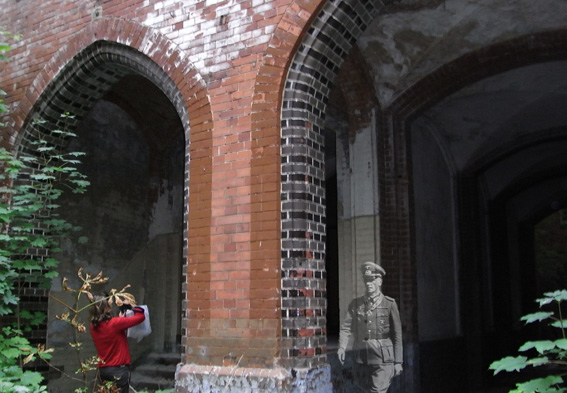
I am on a very long walk – 600km so far – and as my legs go through the motions of left right, left right, left right I find myself thinking about my German grandfather going through the same physical motions as he marched into Russia with his Wehrmacht troops in 1941. I am walking West across the north of Spain on a pilgrimage to the spiritual destination of Santiago de Compostela. He was marching East across Russia to capture the strategically important destination of Moscow.
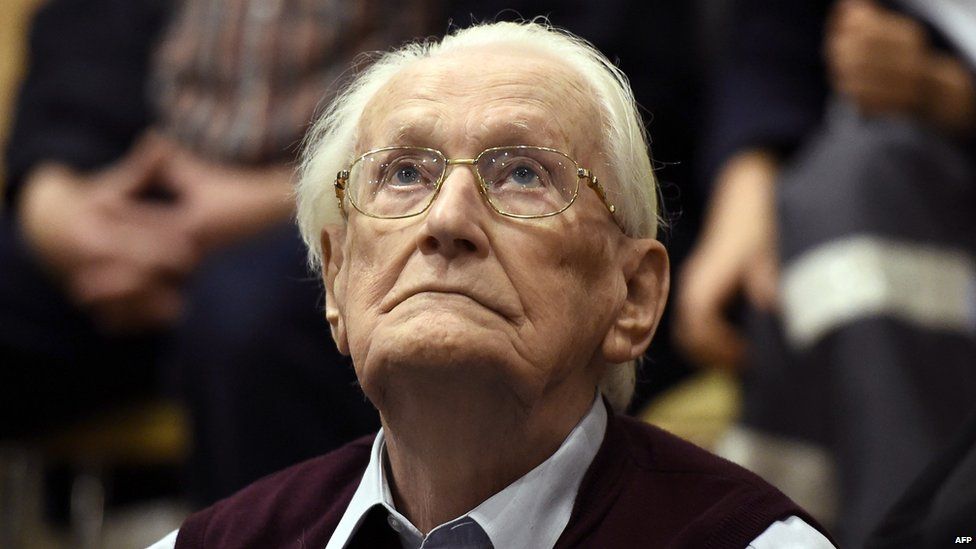
“German court sentences 94-year-old ‘Bookkeeper of Auschwitz’ to four years in prison.” Is this Justice? Or is this the German Judicial System’s attempt to atone for its appalling failure since WW2 to bring more of the real culprits to justice?
This is an obvious choice of topic for my July blog for it touches on all my main themes: WW2 Germany, prison, punishment, forgiveness, redemption.
What we have here is a 94-year-old former SS officer whose job at the age of 21 was to sort the luggage of the new arrivals to Auschwitz and register the prisoners’ goods and valuables. Oskar Gröning was not a guard but a bookkeeper who counted the money the Nazis stole from the Jews. During the trial that started in May in the German city of Lüneburg he admitted: “It is without question that I am morally complicit in the murder of millions of Jews through my activities at Auschwitz. Before the victims, I also admit to this moral guilt here, with regret and humility. But as to the question whether I am criminally culpable, that’s for you to decide.” Today he was sentenced to 4 years in prison after the German Courts found him guilty of being accessory to murder of 300,000 people.
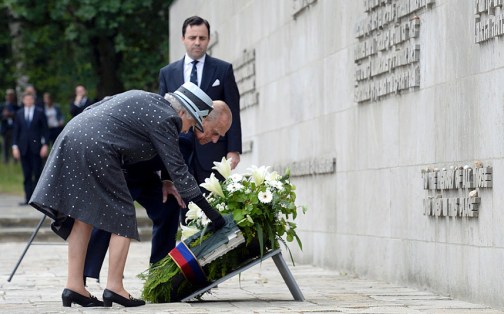
The Queen’s visit to Germany – “politically motivated” or her gesture of “complete reconciliation”?

As I started writing this month’s blog this morning, the Queen was visiting Bergen-Belsen Concentration Camp for the first time, apparently at her request.
Much has been criticised or mocked about her State visit in the press: the timing – the eve of a summit where David Cameron is expected to begin new negotiations in relation to Britain’s EU membership; her apparently politically-biased speech in which she referred to a division in Europe being “dangerous” and that guarding against it “remains a common endeavour”; the Queen’s unenthusiastic reception of the German president’s gift of a portrait of her as a child on a blue horse with her father; even the reason for her going was apparently to put Angela Merkel, who is often referred to as Queen of Europe, back in her place…!
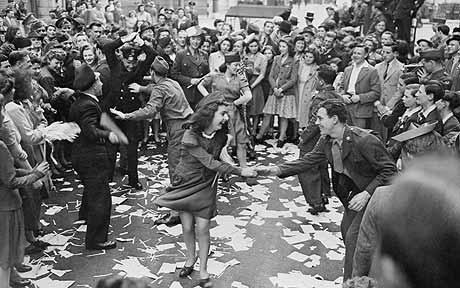
VE Day 70 years on – a time to celebrate victory or a time to also to look more closely at the price of war to women and girls?
Within the context of my interest in WW2 Remembrance, May offers a welcome break from the misery and darkness. It is indeed a time to celebrate, for on May 8th 1945 Churchill was finally able to announce that the war was over in Europe. The jubilation was naturally boundless and Britain threw the biggest street party the country had ever seen. The Allies had triumphed over the Nazi enemy, Germany had unconditionally surrendered, and it would be the end of death and destruction.
What makes us act, or not act, in a violent way?
In the first half of this month I had an experience that showed me first hand what lies behind so many acts of violence, malice, destruction and aggression. What drives a person to put a seductively dark thought into action? And what stops them from actually doing so?
I felt badly wronged by someone close to me; disrespected and unfairly treated. The innate need to right the wrong sent my mind into overdrive plotting delicious forms of revenge with the creativity (or should I say destructivity?) and imagination that goes into producing an artwork. By indulging my dark fantasies I could re-write the narrative allowing my character to emerge in tact instead of in tatters.
“Tell your story… until your past stops tearing you apart”
Tell your story.
Let it nourish you, sustain you and claim you.
Tell your story.
Let it feed you, heal you and release you.
Tell your story.
Let it twist and re-mix your shadowed heart.
Tell your story,
Until your past stops tearing your present apart.
I heard the above words recently on Radio 4’s Spoken Word programme “Writing a new South Africa”. You can hear it here at 14.38 minutes: http://www.bbc.co.uk/programmes/b053bsfm
Spoken aloud, with all the power of someone who knows the potency of the words, it struck me that this is precisely what I have been doing in the past years.
‘Sorry’ does indeed seem to be the hardest word to say
February 2015 saw the 70th anniversary of the bombing of Dresden, a contentious and highly debated element of the British and American war campaign. The deaths of 25,000 civilians and the destruction of the medieval city of Dresden known as the “Jewel of the Elbe” was without doubt one of the low points in the British military strategy.
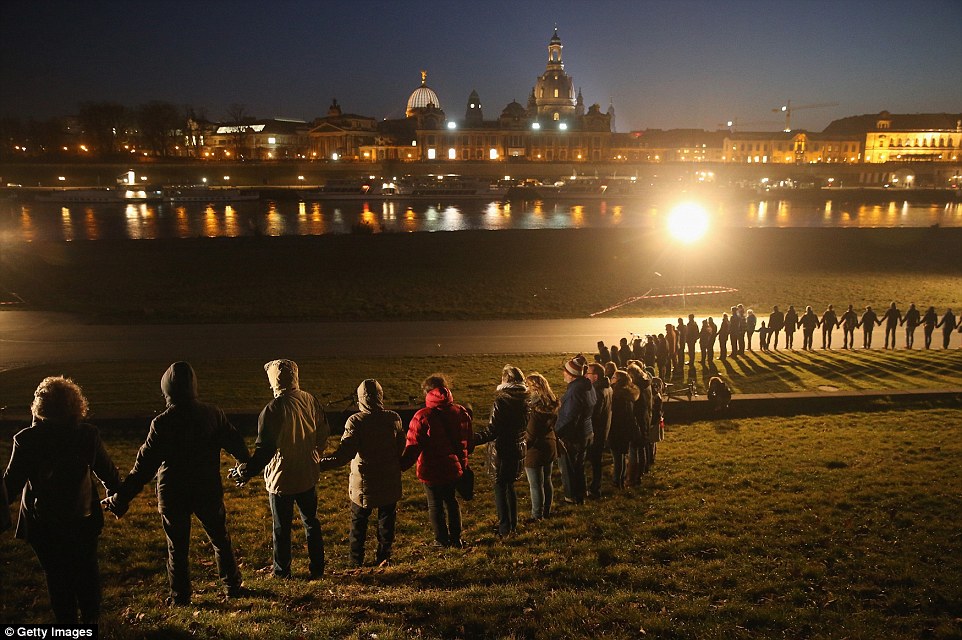
On 13th February this year Germany held one of their rare commemorations for their own dead. It started with a service in the re-built Frauenkirche / Church of our Lady and continued later in the streets when up to 10,000 people formed a human chain along Dresden’s riverfront, holding hands to commemorate the dead and call for peace.
With my on-going interest in World War commemorations, this was of course a significant one, for two reasons really. On the one hand it remembers German victims of war and on the other it remembers an event that many people see as a British war crime.
Holocaust Memorial Day, 27th January 2015

Today was Holocaust Memorial Day, commemorating the day Auschwitz-Birkenau was liberated by the advancing Soviet army seventy years ago. Today Jews and non-Jews alike were reminded to remember what so many of us have no personal recollection of. Reminded how important it is to remember so that it will never happen again.
Today was also the launch of my talk on German Memorials and Counter Memorials, the second in my trilogy of talks “The other side” about World War II from a German point of view. It was a happy coincidence that King William’s College on the Isle of Man invited me to give this particular talk on this particular day, for it encouraged me and my audience not only to think about the victims of the Nazi policies of annihilation but also about the perpetrators and Germany’s ongoing and thorough process of apology on behalf of them.
Remembrance Sunday: “David Cameron was close to tears and bit his lip…” For goodness sake, that sounds like something out of Fifty Shades of Grey.
It’s 11am on 11.11.14 and that makes it time to write down my thoughts and reflections on what has been going on recently in terms of Remembrance.
Watching the Albert Hall Festival of Remembrance on Saturday night, I was struck once again by how well we British do pomp, symbolism and ceremony. It was truly powerful and with its combination of stirring music, potent narrative, and visual spectacle it has become an art form. Developed and refined over decades, it is designed to move you. And these days, I am quite sure, to make you cry.
Which is why I came away once again feeling slightly irritated by it. Irritated by the format that we are used to seeing in the films of Spielberg and other directors of sentimental, patriotic films, designed to manipulate your heart strings and tear ducts Nothing necessarily wrong with that, except that we seem to be living in a era where showing emotions, and watching other people showing their emotions in order to make us show our emotions, is not only de rigueur but essential to good viewing.
Generation War: Our Mothers, Our Fathers. Does it go far enough?
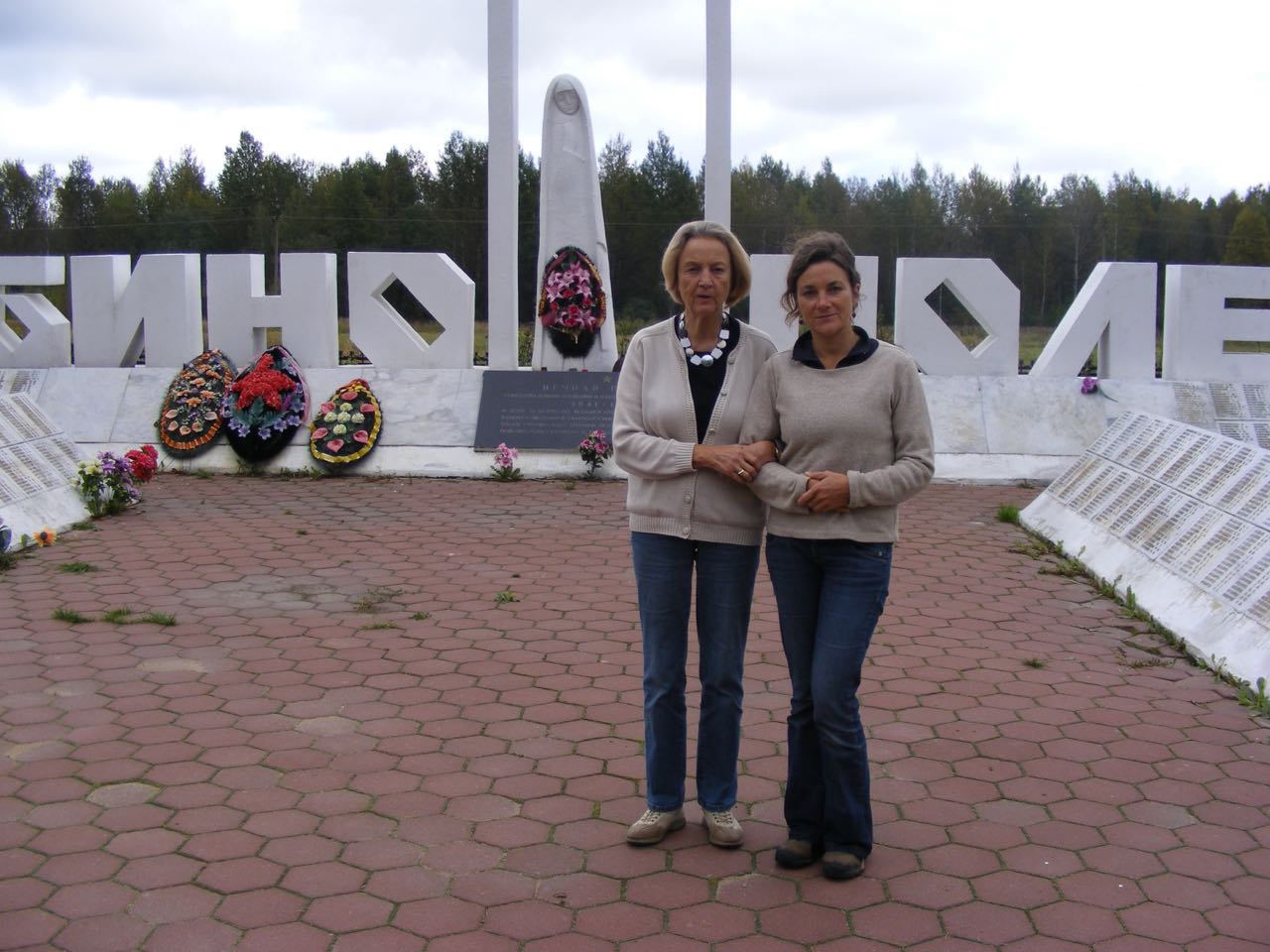
Peering into the crater of my own family history, Jüterbog 2008
I don’t imagine 7.6 million viewers are watching this series as in Germany last year, but judging by the reviews and conflicting opinions expressed in online discussions, it is nonetheless making waves. Many people find it “brilliant”, with its focus on the personal within the wider historical context (as in Downfall and The Lives of Others). Some find it ‘unlikely’, that the 5 main characters’ paths would cross “as if all of Eastern Europe were no bigger than a park in Berlin”[1] or that they would be so openly friendly with a Jew in 1941 Germany. And some criticize how the drama of the story lines are often cliché and distract from the bigger questions – all hazards of portraying historical characters through a contemporary medium.