What if, just ‘what if’, death isn’t quite the full stop many think it is…?

The end of October / beginning of November is traditionally the time of year when people from all different cultures think of, and remember, the dead. For Pagans it is Samhain; for Christians, All Souls; for Mexicans, the Day of the Dead. It was / is believed that the veils between the living and the dead become thinnest now, allowing people to gain access to their dead loved ones. In modern, western, secular societies, it generally morphs into a black and orange bonanza of carved pumpkins and ghouls, a commercial excuse for a bright explosion of fireworks and increasingly terrifying costumes.

Death, in our culture, is widely seen as a negative; the Grim Reaper to be feared or fought. Or it is an ending to be deferred, as long as possible, at whatever cost. It is the opposite of birth, and not to be celebrated as a portal between what we call ‘life’ and a different form of life beyond. For so many people, it is just one final curtain fall, an over and out… THE END.

Image0351.jpg

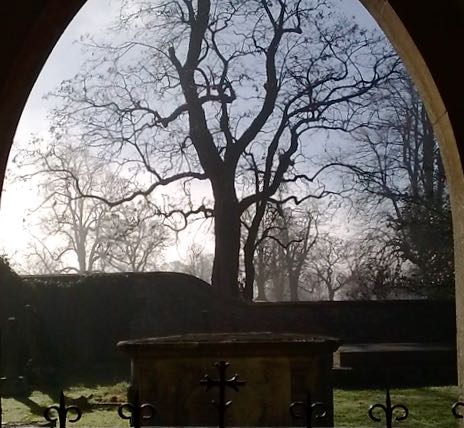
Of course none of us know though! The most inevitable aspect of life is also the least knowable… such a wonderful design. However, I believe we are missing out on a hugely important level to life by relegating death to the role of a big full stop.

Read More »

What can we do? What can I do? What can you do?

“What is the most important thing we can do?” That is the question I am so often asked at the end of my ‘arts in prison’ talk. Yet I have never been able to give an answer that feels satisfactory.

Through pictures, stories, statistics and facts, my audiences get a glimpse into our prison system, into the minds and lives of offenders, and into what role the arts can play in the process of rehabilitation. “I had no idea!” is the most common response, and then,  with their new insight, people across the country, from sixth formers to retirees, want to know what they personally can do to help solve the increasingly dire situation that is our criminal justice system (CJS).

Read More »

In memory of a remarkable man who knew instinctively the power of forgiveness

My blogger’s brain seems to be in recess along with parliament and my own little ‘bong’ has been temporarily silenced along with Big Ben’s. August has not been the time to focus on any of my usual themes – prisons, rehabilitation, Art, WW2 Germany, Remembrance, memorials and forgiveness – so I will not waffle simply for the sake of fulfilling my goal to publish a monthly blog.

IMG_9420

Instead I would like to use this platform to share the following heartfelt TRIBUTE by Marina Cantacuzino, founder of The Forgiveness Project, to Shad Ali who died unexpectedly and suddenly earlier this month. As you will read, he was a truly remarkable, beautiful and inspirational human being who I had the honour of meeting and working with last May at HMP Parc while he was co-facilitating one of the Forgiveness Project’s prison RESTORE programmes. I wrote about the experience back in my May 2016 blog.

Read More »

Remember…

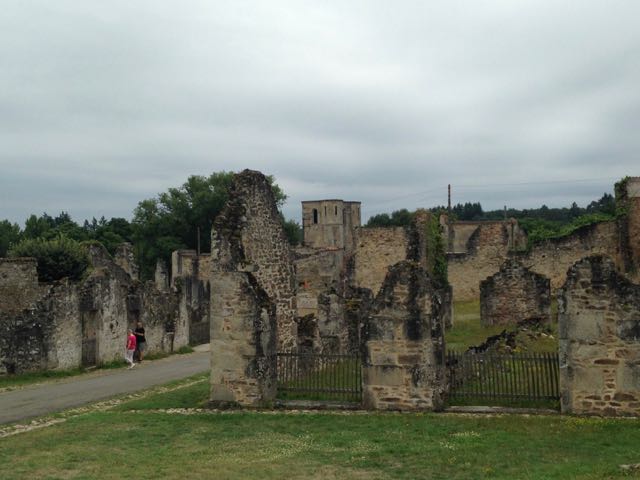
Having spent the past two weeks in France enjoying everything that France has to offer and so much of what I love in life, it is hard to write my monthly blog on my slightly sombre themes of memorials, World War II, the Nazis, remembrance and all that stuff. And particularly on an iPhone from a campervan! But today, as we were driving past anyway, I went to a memorial that has to be one of the most memorable in terms of its immediate and tangible connection to Nazi atrocities.

IMG_1931

Read More »

“Britain’s Shame” – the price for trying to be “Great”?

Last month I wrote about how the words “Britain” and “shame” rarely appear in the same sentence. This month the two words have been inseparable. “Britain’s Shame” even became the title for BBC’s Panorama programme on the horrifying and heartbreaking fire at Grenfell Tower on 14th June. The programme opens with the accusation that shoved these two words together to sit unwillingly and uncomfortably side by side for all the world to see: “They were warned several times, countless times; they were warned probably until the day before the fire…”

IMG_1336.jpg‘Falling on deaf ears’, Koestler Trust entry from HMP Standford Hill

I don’t feel in any position to write about the tragedy that has ended or blighted so many innocent peoples’ lives. It is too sad and it is too soon. But I do feel in a position to talk about the shame that surrounds it, the shame that needs to be looked at and above all felt so that vital changes can be swiftly made before another tinderbox of neglect ignites.

Read More »

‘Shame’ and ‘Britain’ aren’t usually words we put together, but is that changing?

I have been uncharacteristically struck by a form of blog-writer’s block this month. My usual (dark) themes seemed weirdly irrelevant in this sun and blossom-filled May and most other areas of life have been hijacked by the impending elections and Brexit. And added to that I feel like I’m flat-lining, like my political passions are all but extinguished by my successive losses in all the things I voted for… or against.

Inspiration came just in time though, in the form of a passing conversation with one of my studio neighbours. Totally unprompted he quietly confessed to me that he had begun to feel ashamed of being English, to feel increasing shame in relation to Britain, his own country. “Shame”, well that’s something I can do, it is one of my prime subjects in fact. And asking him further, I discovered his shame was very related to my involuntary growing despondency in the face of our politics.
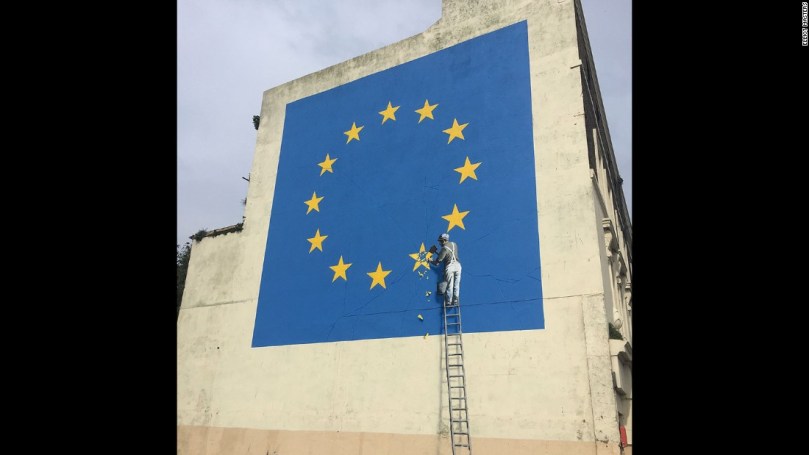
170508152731-banksy-on-brexit-super-169.jpgBanksy Artwork in Dover, May, 2017


With so many hideous Tory attitudes and policies in almost unhindered free flow, with Brexit uncertainties hanging like fog waiting to descend on top of us, Britain has all of a sudden become like a docked ship whose destination we don’t want to reach; a country whose values we can no longer identify with, let alone fully respect. The rhetoric is too self-centered and self-serving, almost embarrassing in the face of the team- and solidarity-building discussions going on between our European neighbours. Theresa May’s aggressive and alienating approach to getting the best Brexit deal – “FOR US” – is sickening in these times when random terrorist attacks and unpredictable world leaders could instead be bringing us all closer together than ever. Neither of us like her indiscriminate, hand-holding alignment with the twitter/trigger-happy Trump. And I am baffled by the unashamed hypocrisy of our morally impoverished, profit-focused arms sales to Saudi, compared to our distracted, feeble lament of the plight of the Yemenis.

I understand my neighbour’s unwanted but encroaching sense of shame. I feel it in my strange longing for the Mutti (Mum) they have in Germany; for Angela Merkel, a genuinely ‘strong and stable’ leader who, in my opinion, makes brave decisions that are individual but not all about “us”. Just like the German Remembrance culture is not only about their fallen soldiers but about victims and the fallen everywhere. I wish we had some of her ideas for what makes a country great. I wish we had opted for her policy of shutting down all nuclear power stations rather than teaming up with the Chinese to build Hinkley Point…

So as we all approach June 9th, where should we place our crosses, my neighbour and I asked each other? Follow your heart knowing your vote will not win, vote tactically to stop the Conservatives…? Most of the main parties have sides that are either plain nasty, slightly lost, idealistic, unreliable or weak. They play tug of war with old policies, pulling and stretching them to fit manifestos that promise little more than to sticky-tape together some sort of status quo. All promise to chuck (often non-existent) money at the ailing areas of our society – the NHS, social care, prisons, schools, infrastructure, railways – while expensive debates on Trident, Heathrow, HS2 drag on unresolved. But where’s the long-term vision, the Grand Plan? I wish the humane ideas that some of the smaller parties have for spending time getting to the root of the problems in order to build up a fairer and more equal society, would become more prominent. The Tory emphasis on profit and wealth for a small minority continues to sicken but in so many areas this country needs to stop and reflect, to think more out of the box on what will really make us great. Because right now I don’t think we are and we need to change radically, above all in attitudes, so we can travel in a direction that really will benefit us all – as human beings.

I’m not angry like I was after Brexit; I’m not really horrified, sad or even disappointed either. I’m just slightly detached and a little deflated, maybe disillusioned, in relation to our politics and politicians. And I think if there was a box called “Wha’eva”, it’s probably the one I would now tick.

Standing in their footprints…

What is it that makes standing in the exact location of something historical, momentous or simply in the footprints of someone famous, so thrilling? Or horrifying? On Tuesday I was standing on a stage in the beautiful east coastal town of Aldeburgh ready to give one of my talks on Germany’s WW2 memorial culture when someone said, “You’re standing exactly where Bill Nighy stood last night”. It was tiny but there it was, a subtle tingle, a flutter of excitement. I like Bill Nighy and I liked knowing that I was so hot on his heels, talking in a venue in which he too had talked. But what’s really happening, what are our bodies or minds reacting to when we are in the presence even of such tenuous claims to fame or significance?

Screen Shot 2017-04-28 at 10.57.55.png

Read More »

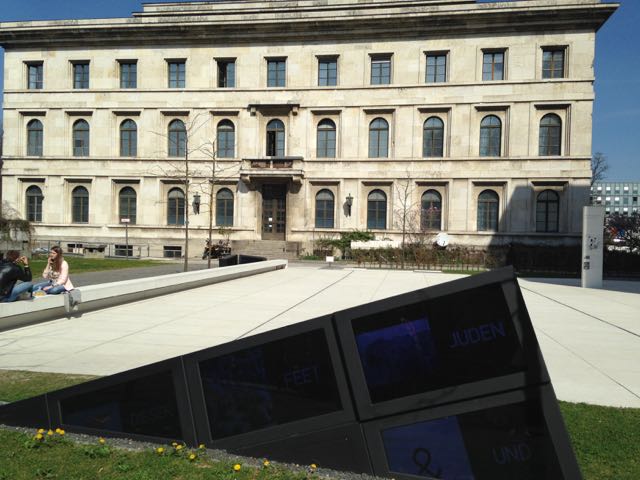
Munich in March

A city in which the ruins of history survive to serve as warnings for the present and pointers to a different future…

German memorials honour the brave resistors of Nazism, unreservedly condemn the perpetrators, apologise to the victims and warn us all to remain vigilant so these things can never happen again.

IMG_0356.jpg

A video installation outside the former Nazi headquarters

Read More »

“We write to understand…”

As I write my February blog, Sir Anthony Beevor, historian and bestselling author of epics such as “Berlin” and “Stalingrad”, is talking on Radio 4’s Desert Island Discs. I am humbled by his ongoing questioning of the facts in spite of his already huge achievements in bringing World War 2 to life in extraordinary detail. And I’m grateful for his admission of how hard it is to research this horrendous episode of history. His voice wobbles as he talks of reading the gruesome accounts of the rapes, murders and infinite human suffering. “We write to understand,” he says, emphasising the necessity for us to “learn the lessons of history”.

beevor

Read More »

There’s an unhelpful form of Tourette Syndrome lurking within certain British men…

What is it about some British men? It’s as if they have a form of Tourette’s that makes it impossible for them not to heed Basil’s advice and not mention the war. Smug winner syndrome, even 70 years on. I mean is it really a good idea, Boris Johnson, is it remotely mature or diplomatic to respond to a perfectly reasonable suggestion that Britain could not expect to get a better deal outside the EU than it enjoyed inside, by equating such an approach to “punishment beatings… in the manner of some world war two movie”? (The Guardian, 18.01.17)

f1c8a09b8dc2c845d413acc6a7525daa3e3ac06a4553eade79040d0b2bd9c0bc.jpg

It honestly makes me wince, not because it’s insensitive, antagonistic or unnecessary, but because it is so unbelievably, pathetically childish. I once laughed at Will Self’s brilliant verbal portrait of Boris as “an enigma wrapped up in a whoopee cushion” but I don’t find him remotely enigmatic or amusing anymore. Just dangerously out of date and out of touch.

Read More »