Light at the end of the tunnel…

Yesterday I wrote two words that I have frequently thought I would never get to write: THE END. Of course it is not The End by any stretch, but nonetheless this week, for the very first time, I caught sight of a teeny-weeny light at the end of the tunnel; just enough to be able to acknowledge its reality, in writing. I am talking about my book; the book that I have been writing for the past three years and researching for well over ten.

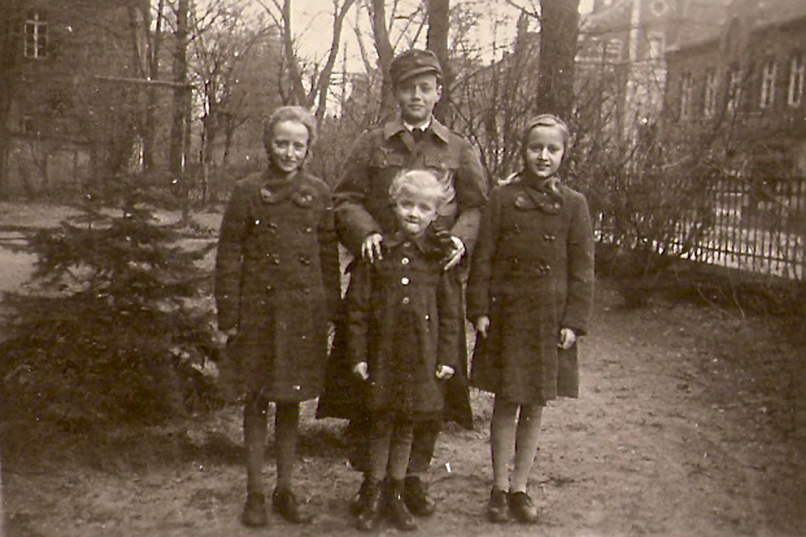
To be honest, I have never known a task so challenging. The idea arose out of my talks to schools and Arts Societies all over the country in which I present the Second World War and its aftermath “through the eyes of an ordinary German family”; my family to be precise. “I had no idea,” is the usual, unanimous response. And here in Britain, we actually don’t. So when audience members started asking me with such regularity “Have you written a book?” or told me in no uncertain terms “You must write a book”, I decided to seize the gauntlet. I’ll just stretch the contents of the talks, I thought naively.
Read More »

What purpose does Holocaust Memorial Day serve for those generations who can’t “remember”?

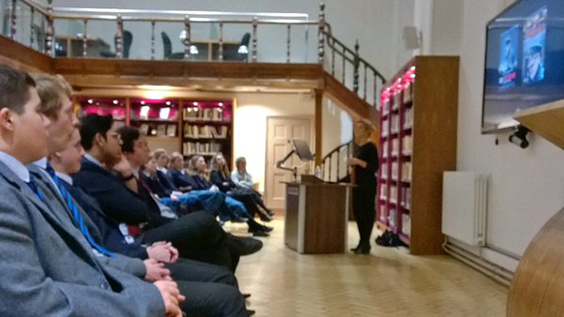
On Monday I was invited to give my talk about Germany’s memorial culture of apology and atonement (read more) at Brighton College as part of their Holocaust Studies Week. One student asked a question being debated by current historians: “When can we let WW2 recede into the past like other episodes of history do?”

6c682644-29fd-46de-9a95-e49714cdda9e.jpg

Today, 27th January, is International Holocaust Memorial Day, the date that marks the day Auschwitz-Birkenau was liberated by Soviet troops in 1945. It is the day on which we are asked to remember the 11 million victims killed in the Holocaust – 6 million Jews and 5 million Soviet POWs, homosexuals, Sinti and Roma, mentally or physically disabled, Roman Catholics, political dissidents, ethnic Poles, Slavs and Ukrainians. All had become victims of the Nazi hatred that deemed them to be “Untermenschen”, literally ‘beneath’ or ‘below’ human; sub-humans. They were killed because they were seen to be a threat to the ideal world image that Hitler and his followers were striving to manifest.

Read More »

Daring to look your family’s past in the face

Last week a Chinese schoolboy approached me after my talk The other side: The Second World War through the eyes of an ordinary German family. Slightly trembling and in broken English he asked me if I had been frightened looking into my family’s past. In my talk I describe the journey I started 10 years ago, of peering deep into the darkest episode of modern history to discover what role my family, above all my German grandfather, a decorated Wehrmacht General, had played, or may have played. I knew the boy was asking this question for a personal reason, the shadows of his own family demons were almost visible, passing like clouds over his terrified face.

My grasp of Chinese history is woefully thin. I wracked my brains for atrocities or events that this boy’s family member(s) could have been involved in. Tiananmen Square in 1989 sprang to mind along with the general sense of horrors perpetrated by Chairman Mao’s regime. But actually it didn’t matter whether I knew the precise what, when, where and who of his story. What mattered was the impact it was having on his life.

Read More »

“Tell your story… until your past stops tearing you apart”

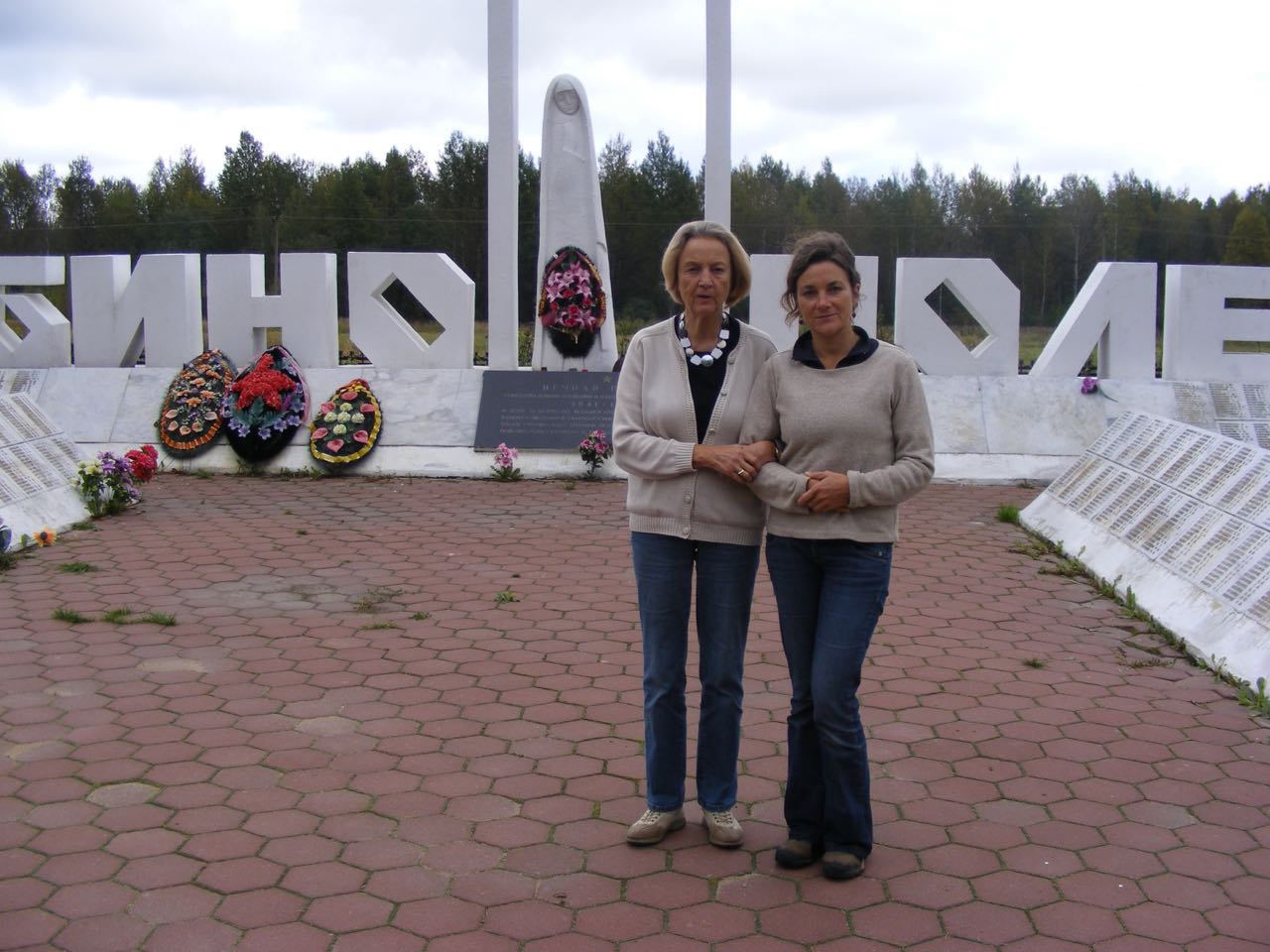
2009_0922Russia090290

Tell your story.
Let it nourish you, sustain you and claim you.
Tell your story.
Let it feed you, heal you and release you.
Tell your story.
Let it twist and re-mix your shadowed heart.
Tell your story,
Until your past stops tearing your present apart.

I heard the above words recently on Radio 4’s Spoken Word programme “Writing a new South Africa”. You can hear it here at 14.38 minutes: http://www.bbc.co.uk/programmes/b053bsfm
Spoken aloud, with all the power of someone who knows the potency of the words, it struck me that this is precisely what I have been doing in the past years.

Read More »

Holocaust Memorial Day, 27th January 2015


IMG_3702

Today was Holocaust Memorial Day, commemorating the day Auschwitz-Birkenau was liberated by the advancing Soviet army seventy years ago. Today Jews and non-Jews alike were reminded to remember what so many of us have no personal recollection of. Reminded how important it is to remember so that it will never happen again.

Today was also the launch of my talk on German Memorials and Counter Memorials, the second in my trilogy of talks “The other side” about World War II from a German point of view. It was a happy coincidence that King William’s College on the Isle of Man invited me to give this particular talk on this particular day, for it encouraged me and my audience not only to think about the victims of the Nazi policies of annihilation but also about the perpetrators and Germany’s ongoing and thorough process of apology on behalf of them.

Read More »

What relationship do we expect young Germans today to have to their country’s past?

Image

I was very interested in two of the questions I was asked in a recent talk to the sixth formers of a London boy’s school. Both were similar and in response to some statistics I showed about German students’ relationships to their country’s past. And both touched on one of my on-going questions in relation to young Germans today: Do we expect them to feel guilt and shame for what their great grandparents were caught up or directly involved in, or can they now be proud of their country and say with genuine conviction “It has nothing to do with me”?

The statistics from a Zeit Magazine survey of 14-19 year olds revealed, among other things, that:

80% believe remembrance of the Nazi times is important

67% believe it is their generation’s duty to make sure that Nazi Germany and the Holocaust aren’t forgotten

60% said they were ashamed of what Germans did in Nazi times

Read More »

What are we “remembering” on Remembrance Day?

I found it symbolically pleasing to be planting bulbs as yesterday’s two-minute silence hummed over the radio waves across the UK. Sitting in the quiet sunshine, I started to “remember”, only to immediately bump into the questions: what and who am I remembering? And to what end? After all I have no personal “memories” of the First and Second World Wars, nor even of Iraq or Afghanistan. Relatives yes, but in the World Wars they were on opposite sides.

Bomber Harris memorial

Bomber Harris Memorial, (1992) London

Read More »

Is there a point in still talking about Second World War Germany ?

lowresKvG9_2

I found it almost impossible to write over the summer or to organise my thoughts into some sort of coherent flow while the sun shone outside producing the intrepid army of courgettes that now lies liquidized in my freezer. Instead I hung out in Nazi Germany, trying to organise 9 years of research into a 40 minute talk for schools and as yet unknown audiences. It was a process of willing black and white photographs to come to life to reveal what has been lurking in the corners of Germany’s post-war national silence for 50 years. But I also found myself wondering (with regular twangs of self-doubt) what the point is of still talking about this subject? And is it still relevant and important for today’s younger generations of English and Germans to engage with Hitler and the Holocaust, or have Bin Laden & other contemporary despots taken his place as ‘Dr Evil’?

Read More »

Having to tell people you are good… the joys of being self-employed

The week ahead is a dauntingly big ‘Admin Week’ for me. Daunting because, for the self-employed, “admin” basically involves telling people that you are good; that they want you and need you. This doesn’t come naturally to the artist in me, precisely because I see my paintings as a way of saying what I want to say without having to say it. And the other parts of me don’t like it either, because they just don’t.

Sure, I have been known to get on my soapbox and spout off about things I believe in, that’s no problem: the huge defects of our prison system; the benefits of the arts to offenders; the potential power of apology within Restorative Justice, the un-funnyness of out of date anti-German jokes; recycling; growing potatoes; the music of The Cat Empire… I clearly spout off about a lot of things. But I find it harder to tell people how good my paintings are and why they should buy one, or how well my talks have been received by schools and why they should book one, or  how great my forthcoming art course on the Greek Island of Skyros will be and that they really should enrol. And yet that is precisely what this admin week requires me to do.

Let’s see if I can make it less painful for myself.

Read More »

“How do you tame the prisoners in your art class?”

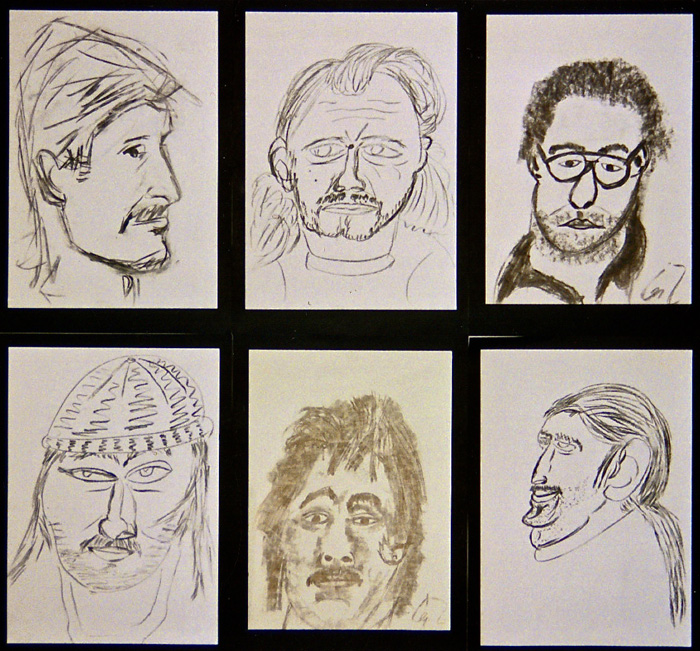
low res 009 prisonPortraits by prisoners in my art class, Cologne Prison’96

I was asked a very interesting question in one of my talks to sixth formers last week. I had just delivered my lecture on ‘Crime, prisons and offenders – the role the arts can play’ describing why prisons aren’t working and what art projects with inmates can contribute towards their rehabilitation. As usual the questions were all interesting, but one in particular struck me. A young man asked me what I did in my initial classes to “tame” the prisoners with whom I was locked in a room. A brilliant question in that it seemed to highlight precisely the misconception so many people have about who prisoners are and what they are like.

Read More »