We love commemorating our victories and losses… but not our declarations of war it seems?

Could it be that even the British have become weary of commemorating the World Wars? Or was the lack of fanfare around the 80th anniversary of the outbreak of the Second World War earlier this month down to having a selective national memory? Do we only like to remember the bits where we emerge as clear heroes, victors or victims?

To my surprise, nothing, or very little, happened in this country on 3rd September 2019. Yet, at 11.15am on that day in 1939, Prime Minister Neville Chamberlain, in a somber broadcast to the nation made from the Cabinet room in 10 Downing Street, announced with regret that his efforts to ensure peace had failed and that “this country is at war with Germany.” The ensuing conflict lasted six years and cost around 50 million lives.

For Poland this anniversary was obviously a huge deal. Germany’s invasion was the catalyst for Britain’s and France’s declaration of war and few places suffered the same level of death and destruction between 1939 and 1945. It lost about a fifth – that’s six million – of its population including the vast majority of its three million Jewish citizens. Wielun, the first city to be bombarded by the Luftwaffe, was the chosen location for forty world leaders and representatives of other countries to gather together for a dawn ceremony on Sunday 1st September at 4am (2am GMT). Polish President Andrzej Duda, German Chancellor Angela Merkel, French Prime Minister Edouard Philippe, US Vice President Mike Pence were all present. (President Trump cancelled citing the approach of Hurricane Dorian as his reason for basically spending the day on the golf course.) President Putin wasn’t invited. But, why wasn’t our Prime Minister there? I think we sent our Foreign Secretary, Dominic Raab, to a subsequent ceremony in Warsaw but…? 

Surely a bit more than just a nod to our role in the unfolding of the most momentous episode in modern history would have been appropriate? Maybe a moment where we press pause on all justifications and humbly reflect on the regrettable escalation of the horrors that our declaration of war unleashed? Or a clearly stated renewed commitment to peace in Europe? Or an informed and respectful acknowledgment of the far greater losses suffered by so many other nations? I recently asked friends how many people they thought died in WW2. “Seven million Soviets? Two million Germans? Two million British?” they guessed. “Actually we have no idea,” they admitted. And they didn’t. Most British people don’t. It was between 20 and 27 million Soviets, 7 million Germans and 450,000 British… that’s including Crown Colonies.

To be fair, Boris Johnson, in a videoed speech that circulated on Twitter, praised the “dogged and unconquerable resistance” Poland displayed during the Second World War and how it “never succumbed to tyranny…” But he also couldn’t help slipping in a quick pat on the UK’s back for standing with Poland “in times of triumph and tragedy.” Hmmmh, you just have to listen to Neil Macgregor’s excellent series on Radio 4 As others see us to realise that this is not quite how Poland sees things. Part of their otherwise generally positive national memory of us is of ‘betrayal’, not once but three times! (This relates to the Katyn massacre, ignoring the plight of Polish Jews and Britain’s role at the Yalta Conference in 1945 when it was decided that Poland would be given to the Soviets.

British Defence Secretary, Ben Wallace, just rolled out the same old tired stuff about Britain going to war to “defend our values and our allies from the Nazis”. (Defending ones values and friends is how all sides justify conflict, however small or large.) He added, “Even though nearly every family in the UK still possessed the memories and hurt of the First World War, they were prepared again to make the ultimate sacrifice. The incredible courage of that generation who fought for our freedom must never be forgotten.” Aaaagh, they just can’t help themselves, these men! It is always all about usOur heroism, our sacrifice, our justified defence. Wouldn’t this have been the perfect time to engage with Polish history? The imbalance between what we know about others and what others know about us is embarrassing. Our narrative that “We went to war for Poland” is, for example, in Polish minds “We declared war for Poland” because the much hoped for military support didn’t actually follow. We really need to start embracing a wider-angled view of history! (This podcast is a great start)

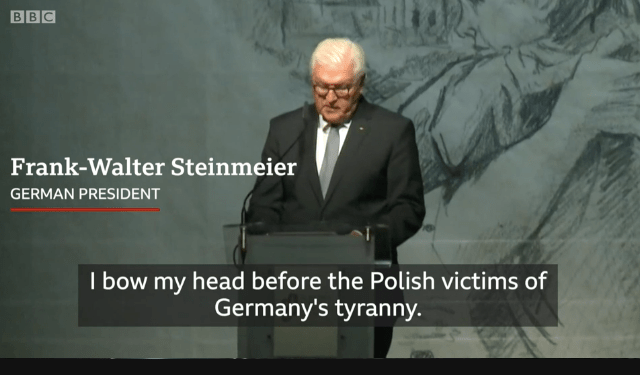
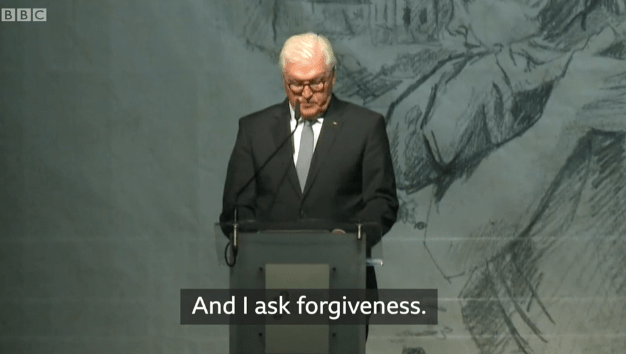
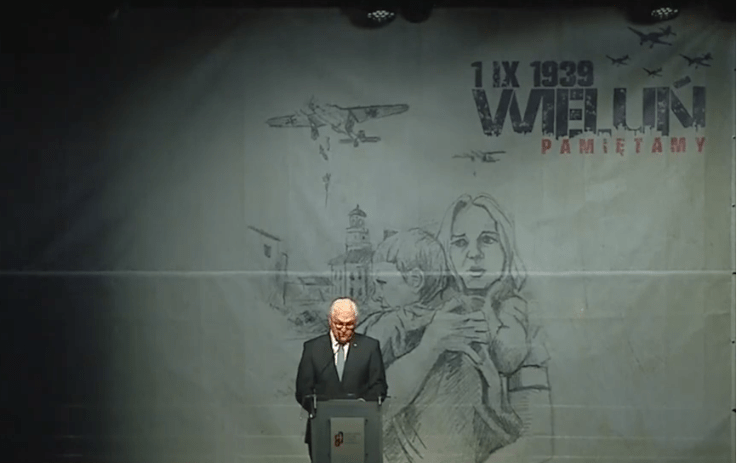
For me it was once again the German contribution that lit a way forward for us all. Speaking with typical unreserved apologetic candour, President Frank-Walter Steinmeier described how “Eighty years ago, at this very moment, all hell rained down on Wielun, fueled by German racist barbarity and the desire to annihilate… My country unleashed a horrific war that would cost more than 50 million people – among them millions of Polish citizens – their lives. This war was a German crime… I, along with [Merkel], want to tell all Poles today that we will not forget. We will not forget the wounds that Germans inflicted on Poland. We will not forget the suffering of Polish families and nor will we forget the courage of their resistance.” He then went on, with a bowed head and speaking in both German and Polish, to ask for Polish forgiveness. “I bow my head before the victims of the attack on Wielun. I bow my head before the Polish victims of Germany’s tyranny. And I ask for your forgiveness.”  
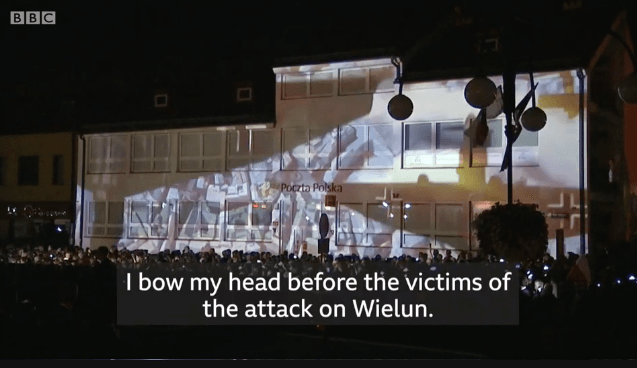
Wow! I know, this is not new. Germany has been publicly apologising for years, starting back in 1970 with Willy Brandt’s silent ‘Kniefall‘. Nevertheless, can we just pause and reflect a moment. The president of a powerful country holding up his hands in surrender and basically saying: “What we did was shit. We were shits. There are no words to describe just how shit we were and nothing can ever change that.” Just imagine how difficult that is to do. And how different the world would be if more people did that. The power of apology. The power of asking for forgiveness. (Whether it is possible to ask for forgiveness on behalf of another / others is debatable as Bernard Schlink does so well in his book ‘Guilt about the past’. But still…)

I’m glad that in a return speech, President Duda thanked Steinmeier for his presence at the painful anniversary before continuing to rightly denounce Nazi Germany’s attack on Poland as “an act of barbarity” and list other massacres and atrocities on Polish soil. He also drew attention to the genocide and mass murder continuing around the world today, and underlined the importance of international alliances like NATO and the European Union. (The question of further compensation was also raised later on… but you can read a fuller summary of the speeches here.) The pain still lingering between these countries that were so utterly destroyed on so many levels is visceral. As is the will for lasting reconciliation.

As much as I am frustrated and disappointed by our on-going and often unimaginative, inward-looking and lop-sided to the point of ignorant rhetoric on the World Wars, I am also optimistic. Younger generations are asking awkward questions that force a re-evaluation of the dusty, airbrushed pictures of our ‘glorious’ Empire. And the answers they are finding are uncomfortable. Maybe when we stop hiding our misdeeds behind the undisputedly ghastly deeds of the Nazis and the Holocaust and finally acknowledge our own national shadow, when we admit that the whole British Empire was based on the genocide of indigenous people and a forcing of our values on others, maybe then we can be genuinely better in the present and the future. 

Further reading:

https://www.dw.com/en/german-president-asks-for-polish-forgiveness-on-wwii-anniversary/a-50247207
https://www.telegraph.co.uk/news/2019/09/01/german-president-asks-forgiveness-80th-anniversary-start-second/?WT.mc_id=tmg_share_em

https://www.theguardian.com/world/2019/aug/30/truth-is-a-casualty-80-years-after-start-of-second-world-war

D-Day was mind-boggling in every way. So how should we ‘remember’ it when we have no more firsthand witnesses?

With all the D-Day commemorations and talk of heroes of the past week, I have to think of my naval English grandfather. His contribution to D-Day was possibly a little less than heroic. He had been invited to give a naval lecture at his son’s prep school and somehow, failing to realise they were still under security wraps, told a room full of enthralled, wide-eyed boys about the Mulberry Harbours. It was only when he spotted two even wider-eyed parental marines in the audience that he realised the top-secrecy of the information he had just imparted. Convinced he would be court-martialled, he emerged from a sleepless night hugely relieved to find the allied landings splashed all over the morning papers’ front pages.

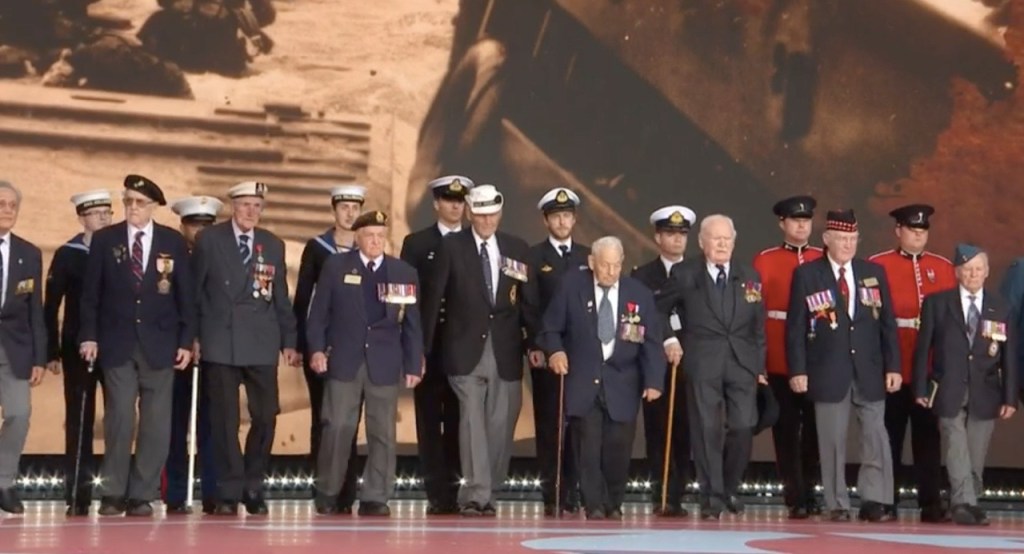
I have to admit I have been profoundly moved by the commemorative ceremonies of D-Day’s 75th anniversary. It’s of course a well-known story but the BBC’s live coverage of events, first by Huw Edwards in Portsmouth and then by Sophie Raworth in Bayeux cemetery, felt particularly fresh. With the help of original footage, the incredible story of Operation Overlord was brought to life by historians Dan Snow and James Holland and some of the 300 or so nonagenarian veterans who had travelled there for the occasion.

What struck me anew was the sheer scale of the invasion. It is unsurprising that it is still considered the most ambitious and biggest land, air and sea operation ever in history. Every aspect of the assault is almost impossible to imagine, not least the out-of-the-box thinking, off the scale planning and coordination that lay behind it. As one of my single father friends said, “organising a picnic for two is hard enough, so I cannot begin to imagine how they organised…” – and here I’ll give you a few facts – 7000 ships and landing craft, 10,000 vehicles and 156,000 troops to land on a fifty-mile stretch of French beaches within a tiny window of good-enough weather. For the ensuing Battle of Normandy, they had to design and construct two harbours the size of Dover and then somehow get them across the channel. 442,000 cubic meters of concrete had to be transported; breakwaters were created out of old scuttled transport ships and warships of allied countries; they had to build jetties for the millions of tons of supplies and the two million men that would be needed over the next months: an estimated 8000 tons of fuel per day, half a million tanks, gliders, undersea pipelines, self-heating soup cans, air-portable motorbikes…. it’s utterly mind-boggling.

Veterans at Portsmouth

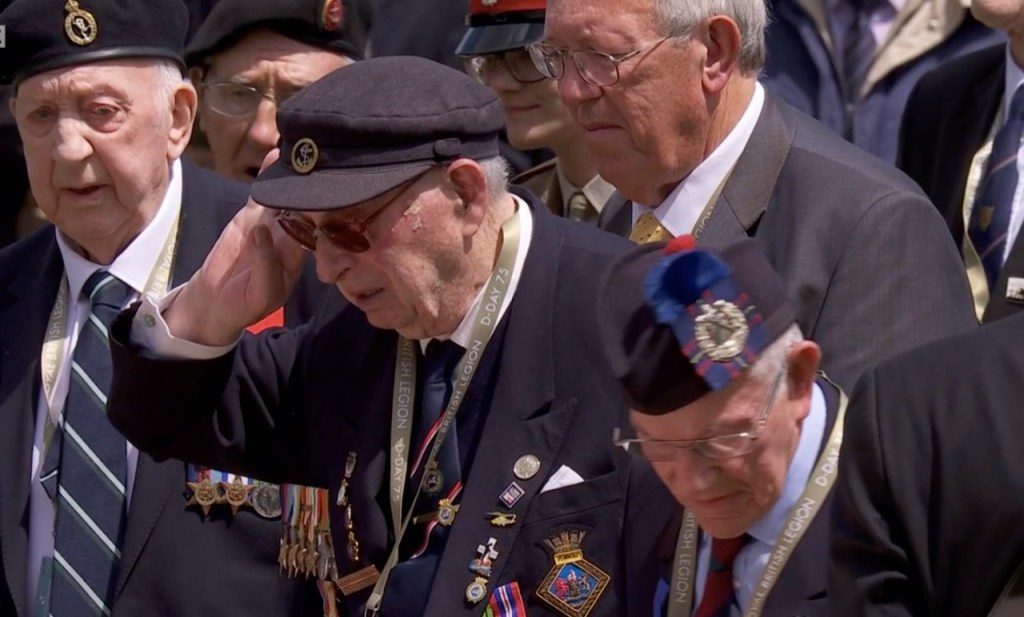
But facts and logistics aside, if that’s possible, the focus of these two days of commemoration was undoubtedly on the raw courage of the men involved. Approximately 4,400 allied soldiers were killed in the Normandy landings of June 6th 1944 and a total of 22,442 men and women died in the subsequent months of the Battle of Normandy. Many of those who fought were mere teenagers; many were conscripts who didn’t want to be there; none of them had any idea if they would return. Seventy-five years on, the last witnesses were returning to the sites of their nightmares to remember their mates who didn’t come back. In spite of the rows of medals proudly displayed across their chests, most don’t see themselves, nor do they want to be seen, as heroes. “A hero is someone who does something they don’t have to do,” said one. “I just had a job to do and I did it.” Instead, it was the friend “who gave his most precious gift, his unfinished life” who was the hero.

Veterans lay wreaths in Bayeux Cemetery

We have followed many veterans over the past decades, but watching and listening to these men had more poignancy than anything I have ever seen in terms of remembrance. Shrunken by age and accompanied by young serving personnel, they tottered across stages or among gleaming rows of beautifully kept war graves to lay wreaths or share their stories. The emotion was tangible even through the television screen as cameras moved in on old faces of men staring into a far distance where the roar of battle still resounds, their usually stiff upper lips wobbling as they wistfully recall their friends or quietly re-live the memories of carnage and gunfire that have privately haunted them for the past seven decades. I can’t think of a more powerful tribute than seeing a 95-year-old veteran with tears in his eyes, saluting.

Veterans in Bayeux Cemetery

Through them, we can touch history. But what happens when they are gone? I already feel a sense of nostalgia for the old-school dignity, modesty and courage that defined them. And what about the lessons they implore us to learn: Keep away from war, resolve for it never to happen again and remember. This Channel 4 footage of two British and German veterans meeting for a beer makes it clear just how painful, to the point of impossible, it has been for some of them to extend the hand of friendship to their former enemy. But when they are gone, I think that kind of future-orientated reconciliation is precisely what our remembrance culture should focus on rather than past victory, heroism and ‘triumph over evil’. “Too much remembering is a dangerous business,” Simon Jenkins says here and I agree.

As is always so clear on such occasions, our current world war commemorations are also designed for the families of those who served. Every soldier or casualty of war is someone’s son or grandfather, wife or mother, so could we from now on extend the healing attributes of honour, gratitude, pride and remembrance to others beyond ‘our own’ and re-dress the imbalance of our history books by broadening our victor’s narrative to include a far bigger picture of what actually went on for us to win the war?

It’s good that the 40,000 French civilians shot for resisting were included in these celebrations. There was also acknowledgment of the occupied French living in daily terror of the Nazi regime and the vital roles of the millions of men and women working behind the scenes in factories, hospitals, Bletchley Park as well as all those who risked their lives to report on the front lines. But President Putin, who wasn’t invited, reminded us that the Russians are also worthy of remembrance and gratitude for the three years and gargantuan losses they endured fighting German forces both prior to and after D-Day. And American friends, whose grandfathers had fought just as bravely in Italian campaigns, told me they wanted them be given the same level of acknowledgment as the D-Day heroes.

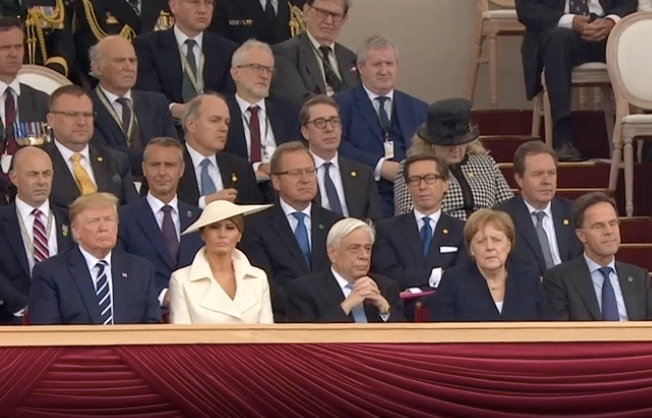
Angela Merkel in Portsmouth

I don’t expect anyone to share my thoughts for German soldiers, but on this day I found myself imagining those young German men who woke up in their bunkers on June 6th 1944 to the terrifying spectacle of 1,700 enemy ships rolling towards them like a tsunami from hell. Many of them were conscripts and “just doing their job”; many of them didn’t want to be there; many had instant psychiatric breakdowns and up to 9,000 became D-Day casualties. Many of them will be the fathers and grandfathers of our German friends today.

Other articles on the subject:

It’s time to move on from these overblown commemorations of war | Simon Jenkins | Opinion | The Guardian

The Latest: German ambassador talks of war ‘we provoked’            

75 years after D-Day we’re still astounded by the sheer scale of Operation Overlord

For 27.1. – a Holocaust Memorial Day tribute to my audience last week

Nothing on the booking form or accompanying correspondence gave any clue as to who my audience would be on Thursday morning last week. I just turned up at Kenwood House on the edge of Hampstead Heath ready to give my German memorial talk to the monthly Arts Society. As we stood in the frosty sunshine waiting for the house to open, the Chair mentioned almost in passing, “This is North London, so most of our members are Jewish.

Read More »

100 years on – remembering to learn the lessons of history

It’s the eleventh of the eleventh, one hundred years on from the day when three signatures scribbled urgently on a piece of paper in a train carriage in France, finally brought the horrors of the First World War to an end.

Read More »

It’s time to remember… and this year even German footballers wore poppies

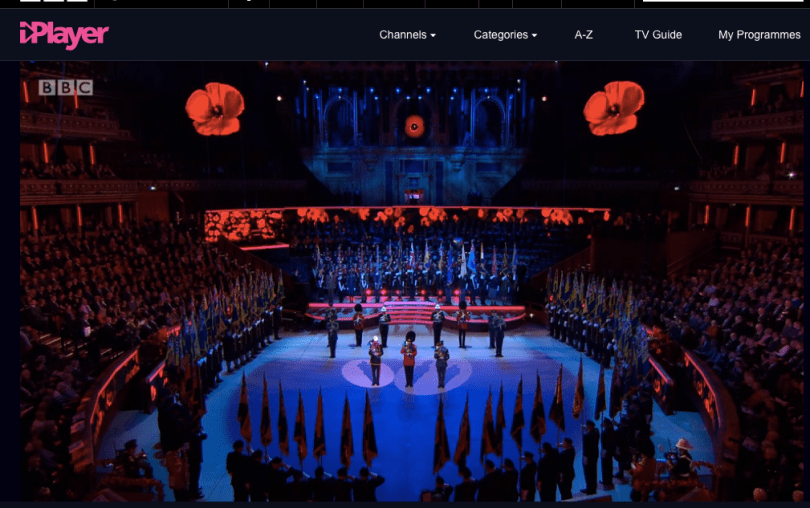
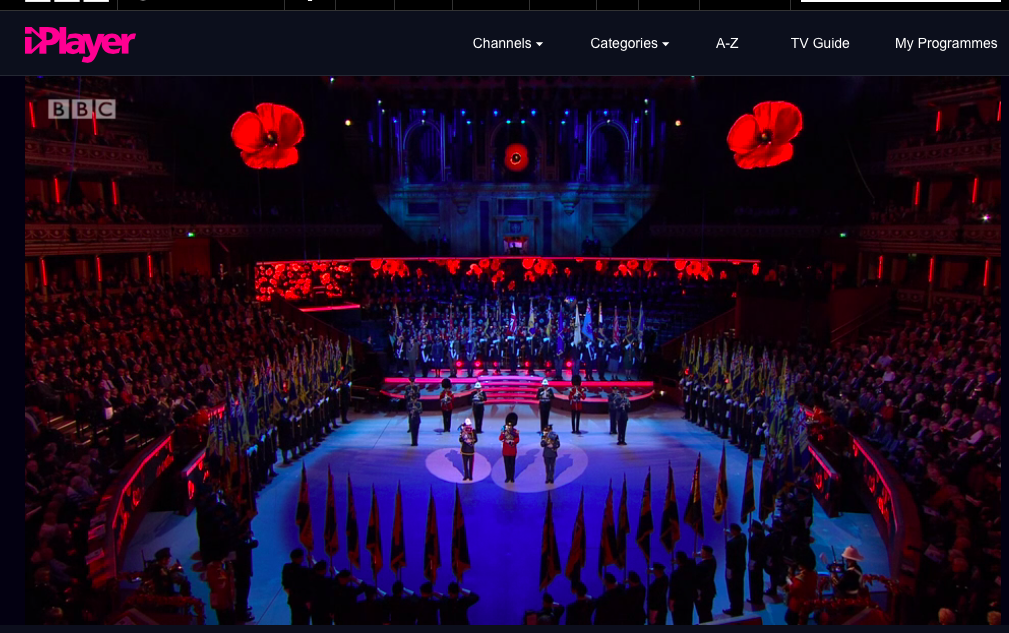
It’s Remembrance time. Red paper and enamel poppies are blooming on lapels all over the nation as people remember those who fought in conflict, and the huge sacrifices they made. Last night, the Festival of Remembrance at the Royal Albert Hall opened with a stunning rendition of “I vow to thee my country”. First, just three slow and quiet brass instruments; then violins joined in; then drums, voices, and finally the whole orchestra played, while flag- and oversized headwear-bearing members of the forces, marched into the hall in step with the music. We were only four minutes into the hundred-minute programme and the lump in my throat was already swollen and wobbling out of control. Gosh we do this so well.

Screen Shot 2017-11-12 at 11.04.17.png

Read More »

What if, just ‘what if’, death isn’t quite the full stop many think it is…?

The end of October / beginning of November is traditionally the time of year when people from all different cultures think of, and remember, the dead. For Pagans it is Samhain; for Christians, All Souls; for Mexicans, the Day of the Dead. It was / is believed that the veils between the living and the dead become thinnest now, allowing people to gain access to their dead loved ones. In modern, western, secular societies, it generally morphs into a black and orange bonanza of carved pumpkins and ghouls, a commercial excuse for a bright explosion of fireworks and increasingly terrifying costumes.

Death, in our culture, is widely seen as a negative; the Grim Reaper to be feared or fought. Or it is an ending to be deferred, as long as possible, at whatever cost. It is the opposite of birth, and not to be celebrated as a portal between what we call ‘life’ and a different form of life beyond. For so many people, it is just one final curtain fall, an over and out… THE END.

Image0351.jpg

Of course none of us know though! The most inevitable aspect of life is also the least knowable… such a wonderful design. However, I believe we are missing out on a hugely important level to life by relegating death to the role of a big full stop.

Read More »

I don’t wear a red poppy, not deliberately to make a point, nor out of disrespect – it just isn’t the symbol that captures enough of what, how and to what end I want remember.

3000

It is Remembrance season and once again I find myself feeling slightly uncomfortable, a bit pedantic, no doubt irritating and at worst offensively unpatriotic. And yet Remembrance is one of my favourite themes and both my grandfathers fought in the World Wars. So why can’t I jump whole-heartedly into the seas of poppies and poppy wearers, dignitaries and wreaths, that stream through our streets to lap up against memorials and into churches each November? Of course I want to ‘remember’ and acknowledge all the soldiers who died or were wounded serving their country, but discordant questions waft like dried leaves or ghosts through the architecture of British Remembrance rituals. So once again I ask myself and all of us collectively: what exactly are we remembering, and to what end? Remembrance is by nature vital, solemn, beautiful, meaningful… in many ways we do it so well. But beneath the tradition, ceremony and ritual conveyed through a distinctly military visual language, the message has also, in today’s world, become slightly flawed, inadequate and at times hypocritical.

Read More »

Left right, left right, left right…

IMG_5425

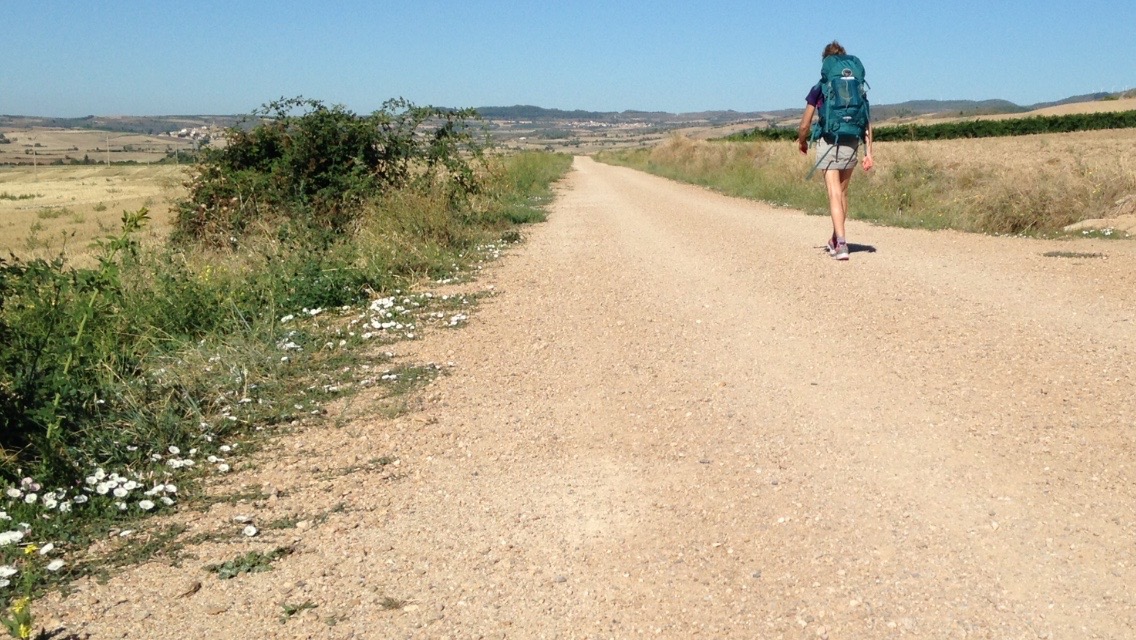
I am on a very long walk – 600km so far – and as my legs go through the motions of left right, left right, left right I find myself thinking about my German grandfather going through the same physical motions as he marched into Russia with his Wehrmacht troops in 1941. I am walking West across the north of Spain on a pilgrimage to the spiritual destination of Santiago de Compostela. He was marching East across Russia to capture the strategically important destination of Moscow.

Read More »

The Queen’s visit to Germany – “politically motivated” or her gesture of “complete reconciliation”?

queen-belsen-wreat_3355422k

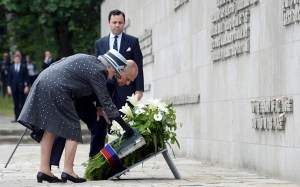
As I started writing this month’s blog this morning, the Queen was visiting Bergen-Belsen Concentration Camp for the first time, apparently at her request.

Much has been criticised or mocked about her State visit in the press: the timing – the eve of a summit where David Cameron is expected to begin new negotiations in relation to Britain’s EU membership; her apparently politically-biased speech in which she referred to a division in Europe being “dangerous” and that guarding against it “remains a common endeavour”; the Queen’s unenthusiastic reception of the German president’s gift of a portrait of her as a child on a blue horse with her father; even the reason for her going was apparently to put Angela Merkel, who is often referred to as Queen of Europe, back in her place…!

Read More »

VE Day 70 years on – a time to celebrate victory or a time to also to look more closely at the price of war to women and girls?  

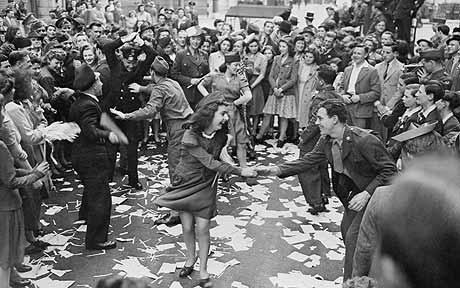
Within the context of my interest in WW2 Remembrance, May offers a welcome break from the misery and darkness. It is indeed a time to celebrate, for on May 8th 1945 Churchill was finally able to announce that the war was over in Europe. The jubilation was naturally boundless and Britain threw the biggest street party the country had ever seen. The Allies had triumphed over the Nazi enemy, Germany had unconditionally surrendered, and it would be the end of death and destruction.

ve460_1631804cRead More »