PRISON Part 2: People are calling it “the biggest shakeup in prisons since Victorian times”? It’s certainly a welcome start…

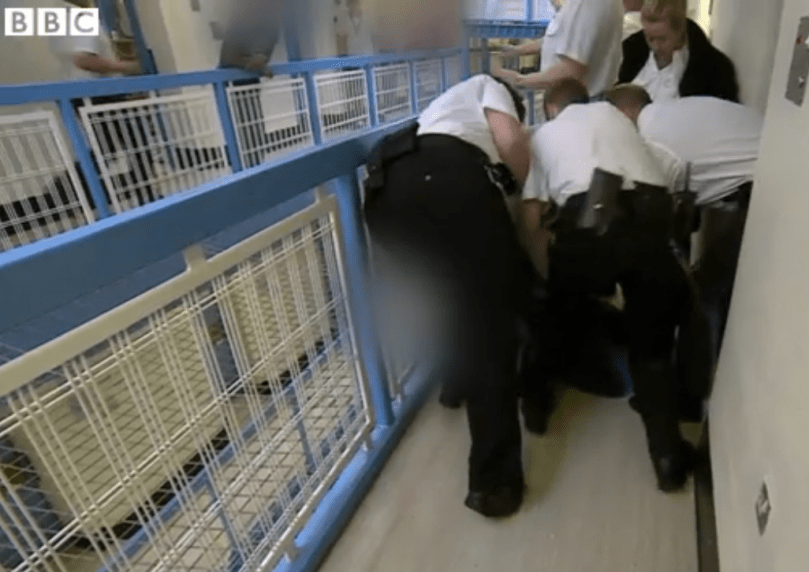
Finally, finally, the news is exposing what an appalling mess our prison service is in. For the first time ever the Queen, a Tory Prime Minister, the Justice Secretary, the BBC, both  prisoners and staff alike are all singing the same tune the pesky Inspectors of Prisons and irritating campaigners – once dismissed as idealistic, bleeding heart liberals and ‘soft’ on crime – have been singing for decades. There’s no going back now and I am in my element!

Screen Shot 2016-05-21 at 12.40.02.png

Read More »

PRISON Part 1: From victim to perpetrator, perpetrator to victim – blurry roles except in the eyes of the Law – just look at Helen and Rob…

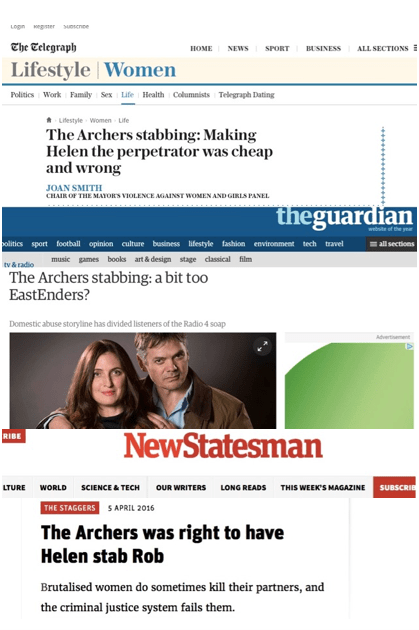
Having disclosed earlier this year, albeit unwittingly, that I listen to The Archer’s, I might as well go further and write about the incident back in April that was so dramatic it hit the headlines. For months listeners had has been pursuing a story line about domestic abuse, which then escalated into a stabbing and prison – topics far closer, I have to say, to my areas of interest than crop rotation.Screen Shot 2016-05-19 at 07.46.17.png

The details are unimportant here except to say that the woman being abused, Helen, did the stabbing, transforming her in an instant from victim to perpetrator and the abuser, Rob, from perpetrator to victim. Of course stabbing someone is, in the eyes of the Law, a clean-cut case of wrongdoing, a serious and punishable crime. But the law can be clunky, a heavy-handed waiter in mittens trying to extract dirty glasses from a dinner table.

Read More »

I applaud these Prison Reforms, but the crucial element to bringing about real change is still missing

I am no fan of David Cameron and the Tories, but I’d like to give credit where it is due. And his Prison Reform speech on Monday, though flawed in places, does deserve applause. After decades of Michael Howard’s delusional “Prisons work!” approach, we finally have a prime minister who is talking some sense.

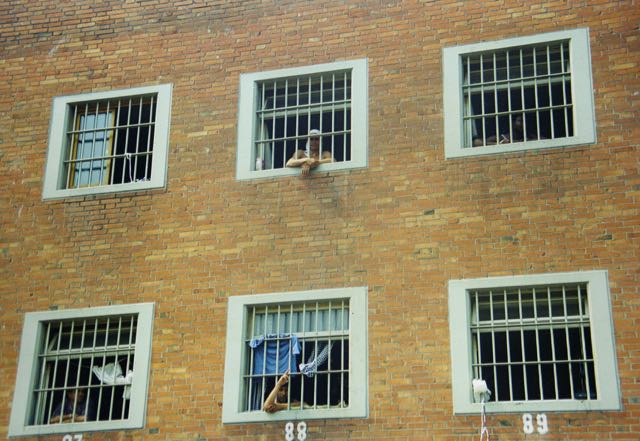
008 prison.jpg

I started working in prisons back in 1987 and the same backward ‘hang’em, flog’em’ method of dealing with offenders has largely prevailed until now. The terror of appearing “soft” on crime has led to our system being the “scandalous failure” that it is now proclaimed to be, even by the very government that has contributed to prisons being “at their worst level for 10 years”. Successive governments have preferred to continue pumping more than £13 billion a year into an over-crowded, under-staffed, under-funded, violent and ineffective system, which even fails its primary goal of helping prisoners “to lead law-abiding and useful lives in custody and after release” in more than half of all cases it handles.

Read More »

I haven’t worked with many terrorists during my prison years but there was one who for years I, and my class of eight male prisoners, called ‘Habibi’ – the word for ‘my darling’ as we later found out.

Behind every terrorist act is a human being with a grievance. Some will probably call me a ‘terrorist sympathiser’ for saying that, but one of the most important lessons I learnt from working and talking with countless criminals is that people themselves are not innately evil. Their deeds might be, but they themselves are not. That’s why many of the over-simplified, dualistic discourses in the recent ‘To bomb or not to bomb in Syria?’ debate really got under my skin. Action vs. Non-Action, Good vs. Evil, Right vs. Wrong…

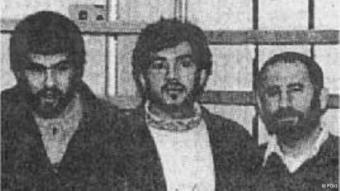
team_terror.jpg

I have no first-hand experience of today’s terrorists (thank goodness) but in the nineties I did work closely with a Lebanese man awaiting trial for his major role in one of Germany’s biggest terrorist attacks in which five Kurdish politicians were blown up in a restaurant in Berlin in 1992. As a terrorist he was considered a potential danger and security hazard and kept in enforced isolation. So for him my art class became his only excursion from his cell. Why the authorities found it fitting to place him in my care when I myself was locked in the room with no beeper, no key, no guard, still puzzles me! He asked the group to call him Habibi, so obligingly we did. It was only many years later that I discovered that was the word for “my darling”.

Read More »

Germany’s welcoming response to the refugee crisis doesn’t surprise me. The more Germans are allowed to acknowledge their own WW2 traumas, the more their personal and collective memories of the horrors of the 1944-50 flights and expulsions come to light.

germanysyria-kkmD--621x414@LiveMint

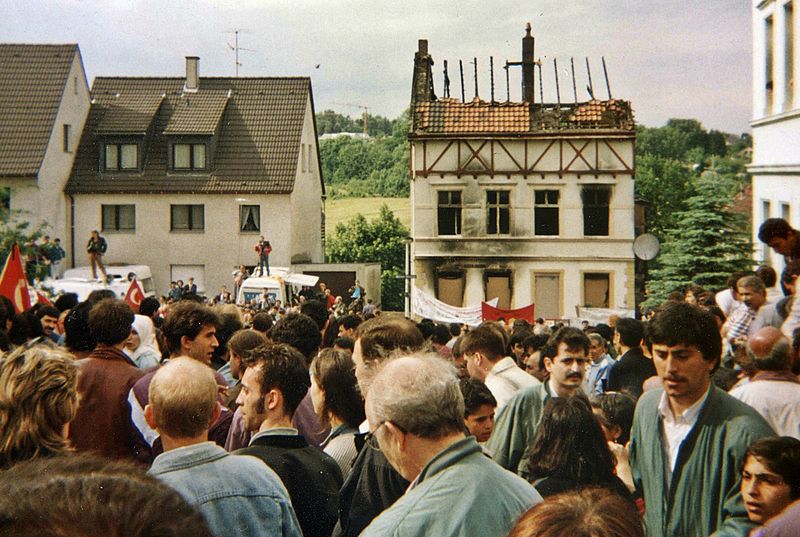
Germany’s ‘open house’ policy and newly attributed “moral leadership” within the mounting refugee crisis was indeed initially surprising. It certainly wasn’t always so. I’m remembering the 17-year-old boy I met in the nineties when I was working as an artist in Cologne Prison. His name was Christian and he had been placed in the special segregated unit there because his crime was so contentious on a national scale. He was one of four young Neo-Nazis responsible for burning down the house of a large Turkish family in Solingen in May 1993, killing three girls and two women and injuring fourteen other family members. It was the most severe instance of anti-foreigner violence in modern Germany and in 1995, Christian was found guilty of murder, attempted murder and arson and sentenced to 10 years.

800px-1993_Solingen_Brandanschlag_2Read More »

What makes us act, or not act, in a violent way?

In the first half of this month I had an experience that showed me first hand what lies behind so many acts of violence, malice, destruction and aggression. What drives a person to put a seductively dark thought into action? And what stops them from actually doing so?

I felt badly wronged by someone close to me; disrespected and unfairly treated. The innate need to right the wrong sent my mind into overdrive plotting delicious forms of revenge with the creativity (or should I say destructivity?) and imagination that goes into producing an artwork. By indulging my dark fantasies I could re-write the narrative allowing my character to emerge in tact instead of in tatters.

Read More »

Having to tell people you are good… the joys of being self-employed

The week ahead is a dauntingly big ‘Admin Week’ for me. Daunting because, for the self-employed, “admin” basically involves telling people that you are good; that they want you and need you. This doesn’t come naturally to the artist in me, precisely because I see my paintings as a way of saying what I want to say without having to say it. And the other parts of me don’t like it either, because they just don’t.

Sure, I have been known to get on my soapbox and spout off about things I believe in, that’s no problem: the huge defects of our prison system; the benefits of the arts to offenders; the potential power of apology within Restorative Justice, the un-funnyness of out of date anti-German jokes; recycling; growing potatoes; the music of The Cat Empire… I clearly spout off about a lot of things. But I find it harder to tell people how good my paintings are and why they should buy one, or how well my talks have been received by schools and why they should book one, or  how great my forthcoming art course on the Greek Island of Skyros will be and that they really should enrol. And yet that is precisely what this admin week requires me to do.

Let’s see if I can make it less painful for myself.

Read More »
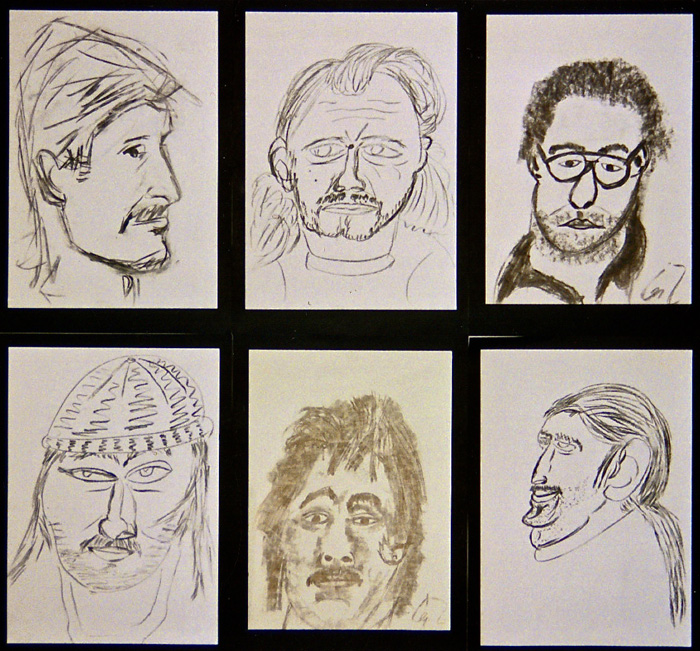
“How do you tame the prisoners in your art class?”

low res 009 prisonPortraits by prisoners in my art class, Cologne Prison’96

I was asked a very interesting question in one of my talks to sixth formers last week. I had just delivered my lecture on ‘Crime, prisons and offenders – the role the arts can play’ describing why prisons aren’t working and what art projects with inmates can contribute towards their rehabilitation. As usual the questions were all interesting, but one in particular struck me. A young man asked me what I did in my initial classes to “tame” the prisoners with whom I was locked in a room. A brilliant question in that it seemed to highlight precisely the misconception so many people have about who prisoners are and what they are like.

Read More »

Searching for identity, through art and dance

Akram Khan’s solo dance production “Desh” has to be one of the most beautiful and moving pieces I have ever seen. It is a visceral exploration of and search for identity; an attempt to bridge the gulf between two vastly differing cultures – Bangladesh and the UK – and a personal quest by Khan to find resolution within his own family and indeed himself. (http://www.akramkhancompany.net/)

Image

Akram Khan in Desh, Sadler’s Wells, 2013

I had a triple hit of identity issues on Friday. It all started with my being rudely awoken by unexpectedly urgent and slightly panicked questions into who I am and what on earth my life is about.

Read More »

Why is Restorative Justice and the power of apology not fully integrated into our justice system?

low res 041

I never seem to stop being baffled by aspects of our society. But more than anything else, I’ve been baffled by the illogic of our criminal justice system since I was able to think for myself. Last night I co-facilitated a Restorative Justice conference that brought it home to me once more how important a role apology has in the process of repairing the harm caused to another.

In so many cases the victim, the most important person within the context of a committed crime, can be hugely helped by the “simple” act of a genuine apology. Isn’t that precisely what we are taught to do as children when we have done something bad? And yet as we grow up and do more seriously bad things, the role of apology is largely replaced by punishment, a revenge of sort that responds to and feeds a victims’s natural and justified anger but contributes little to the easing of their pain. We’ve seen examples of apology countless times in politics: Ireland’s decades of pain-filled longing for an apology from the British government for Bloody Sunday in contrast to the hugely powerful yet simple gesture in Germany in 1970 when Willy Brandt spontaneously knelt at the memorial to the Warsaw Jewish Ghetto. No words were needed and it was accepted by the world as a public acknowledgment of wrong – no excuses, no justifications, just a silent and humble act of apology.

Read More »