We generally think of mud as something negative. It sticks, soils, hinders. We trample or wade through mud. Make detours to avoid it.
Its many onomatopoeic variations evoke slight disgust: sludge, dirt, slime, muck, mire, slush, ooze, bog, gloop.
Mud demands patience. We must wait for it to dry before we can brush it off.
It can be utterly devastating in mudslides, burying whole villages and communities. It evoked horror in the fields and trenches of World War One. And it thwarted both Napoleon in 1812 and the German soldiers on the eastern front in World War Two, as it turned unpaved Russian roads into quagmires, drowning horses and engulfing supply wagons.
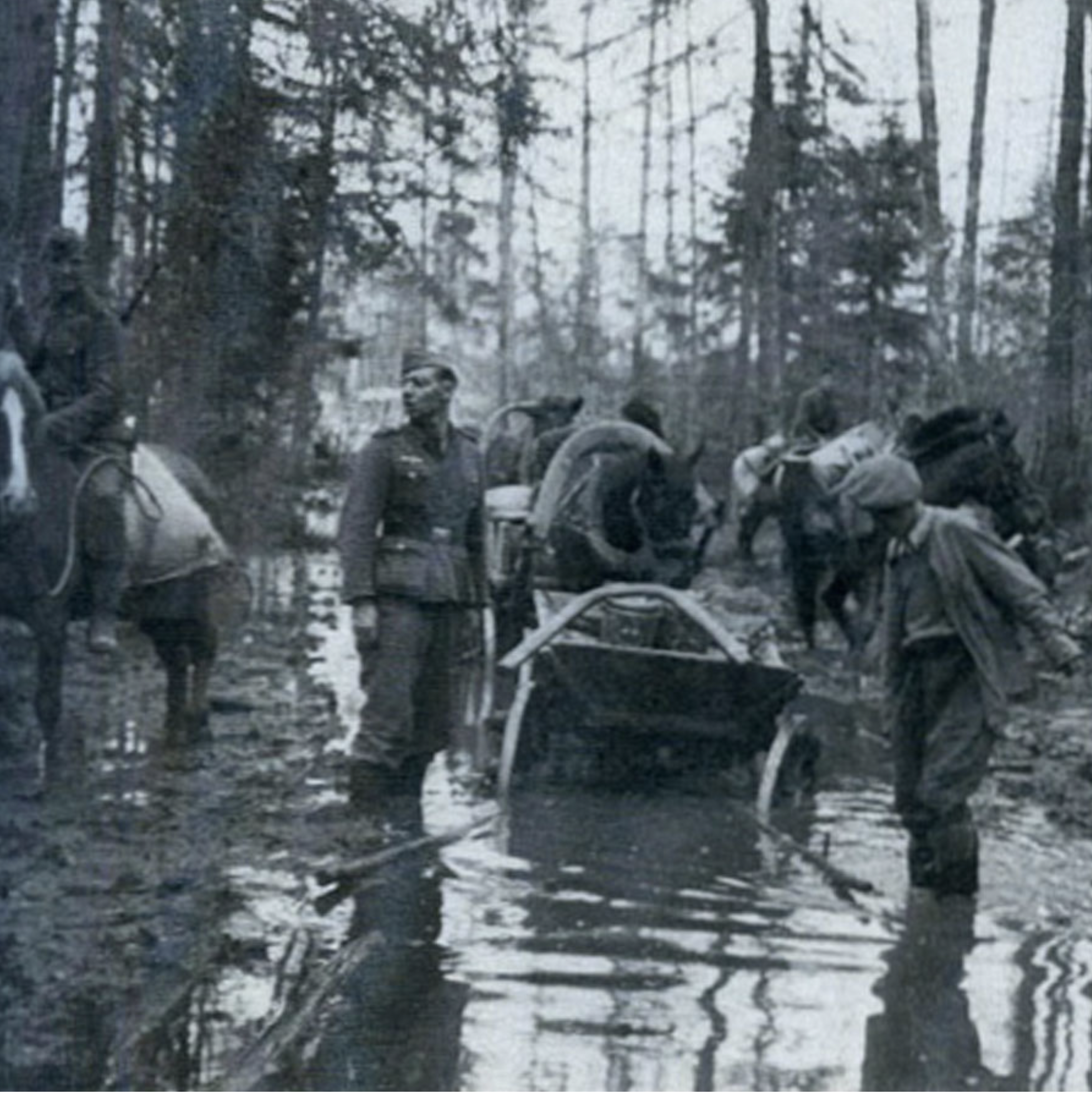
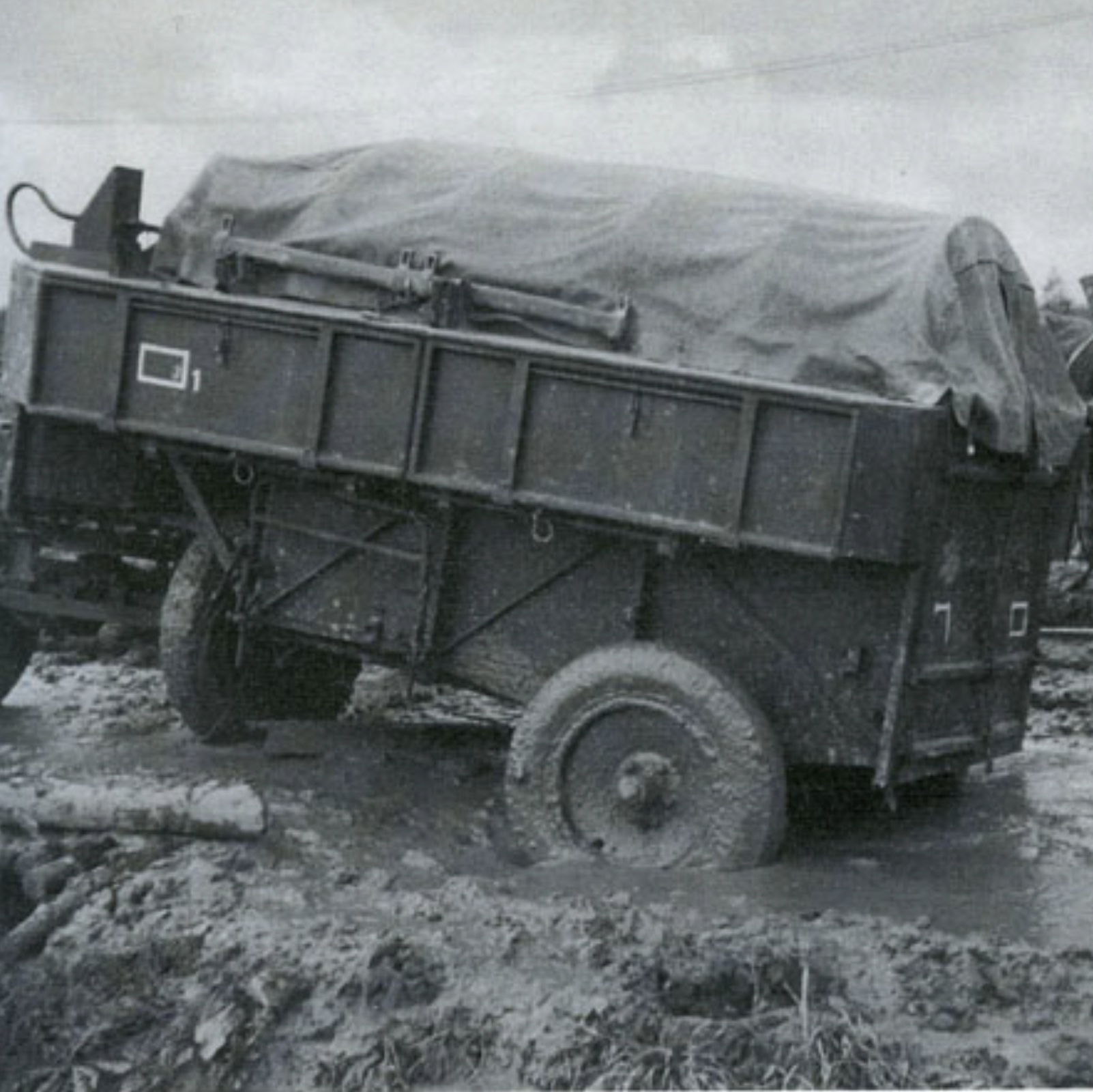
It terrifies as a quivering brown monster that sucks and paralyses, disappearing you as it swallows you whole into its depths.
In language, mud metaphors tend to be abusive, humiliating, derogatory, damaging. Something is ‘clear as mud’. You ‘drag someone’s name through the mud’ or ‘sling mud’ at them. You may be a ‘stick-in-the-mud’ in your old-fashioned attitudes. Your contribution to a situation may merely ‘muddy the waters’. Someone might describe your impoverished background as being ‘born in the mud’. We get bogged down… we muck things up…
It’s not a pretty picture and when weeks of rain once again render my walks into soggy tramps through mud, I am quite sure I won’t be coming to its defence. But today I will.
For mud is full of contradictions and paradoxes.
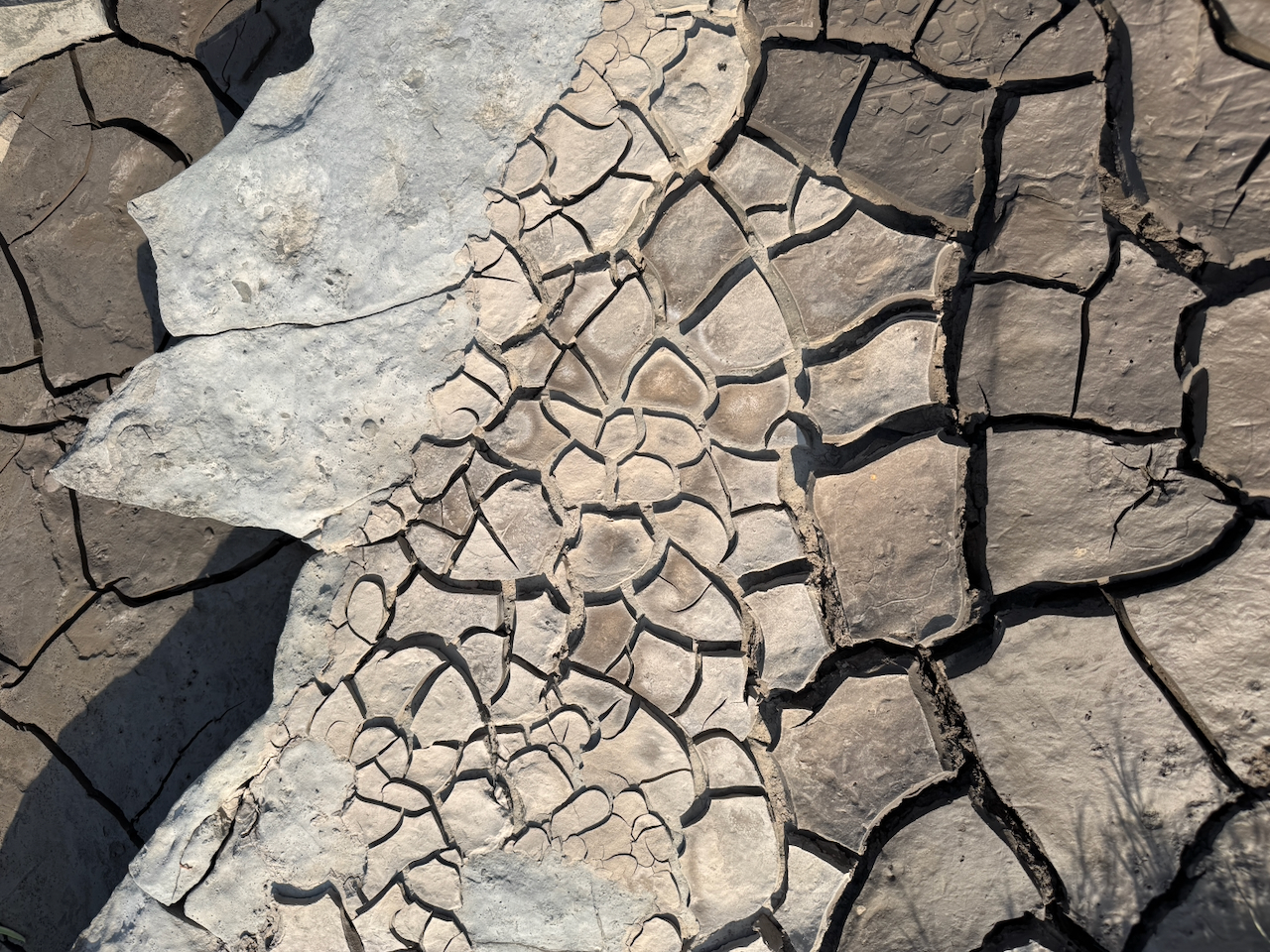
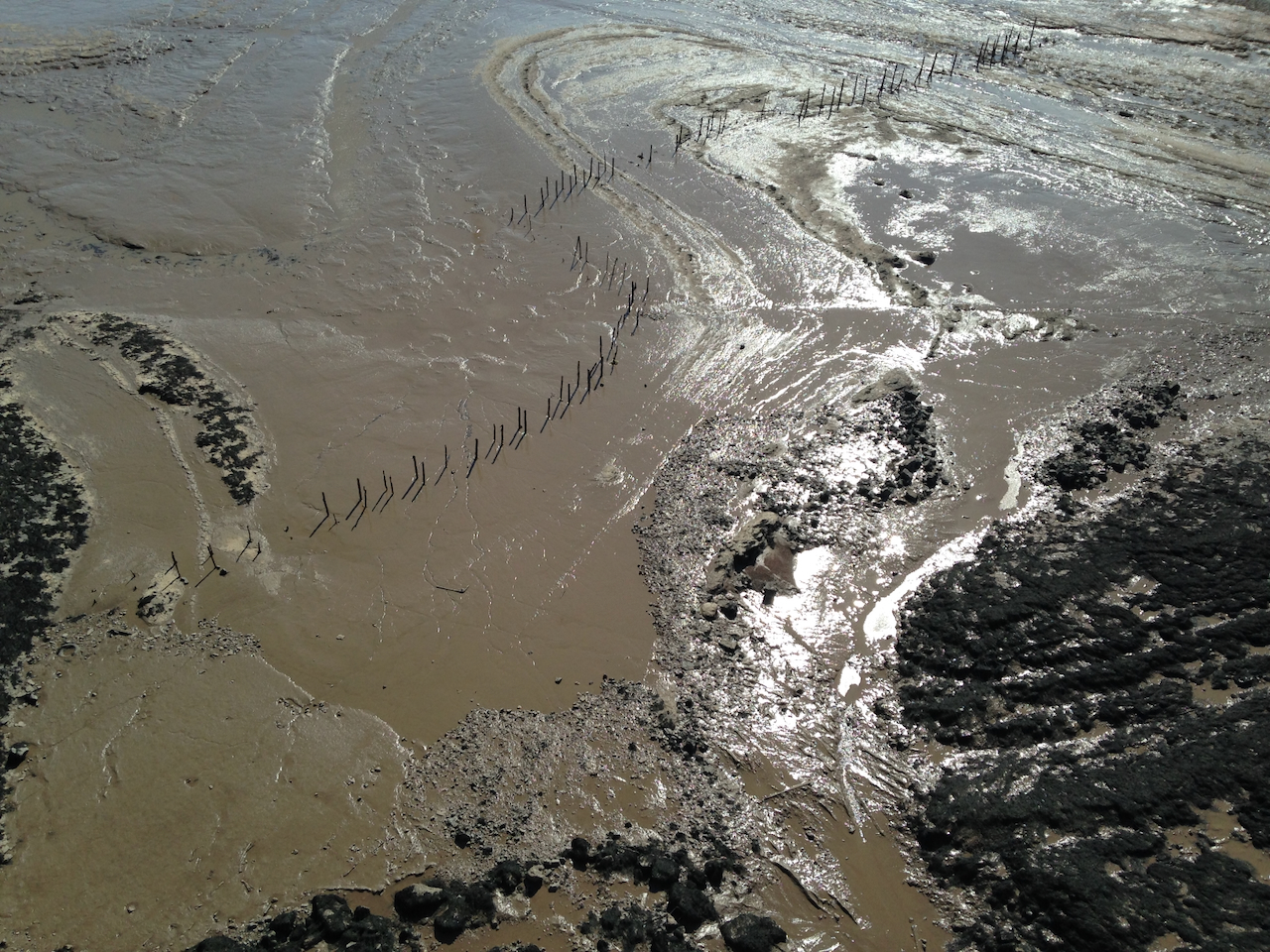
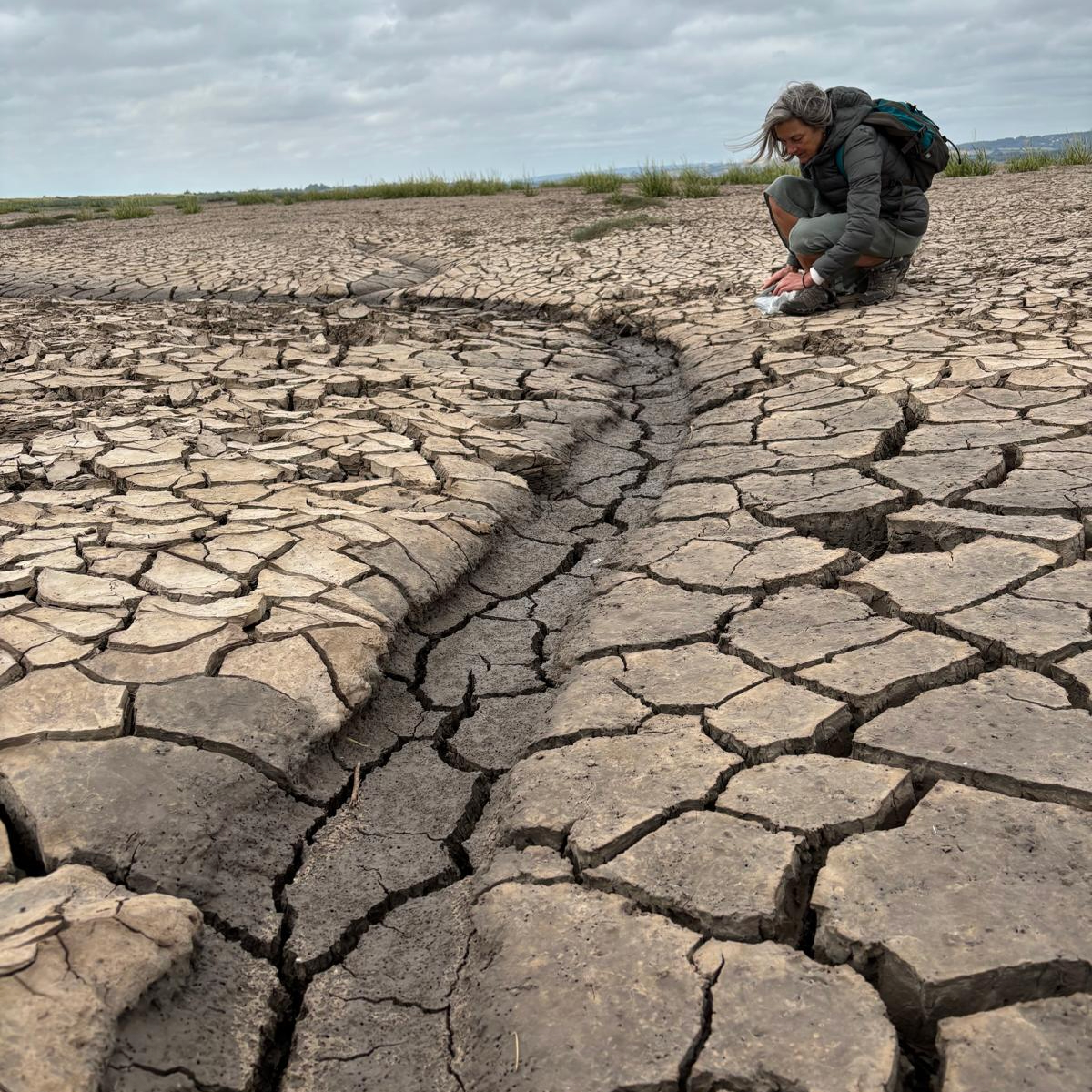
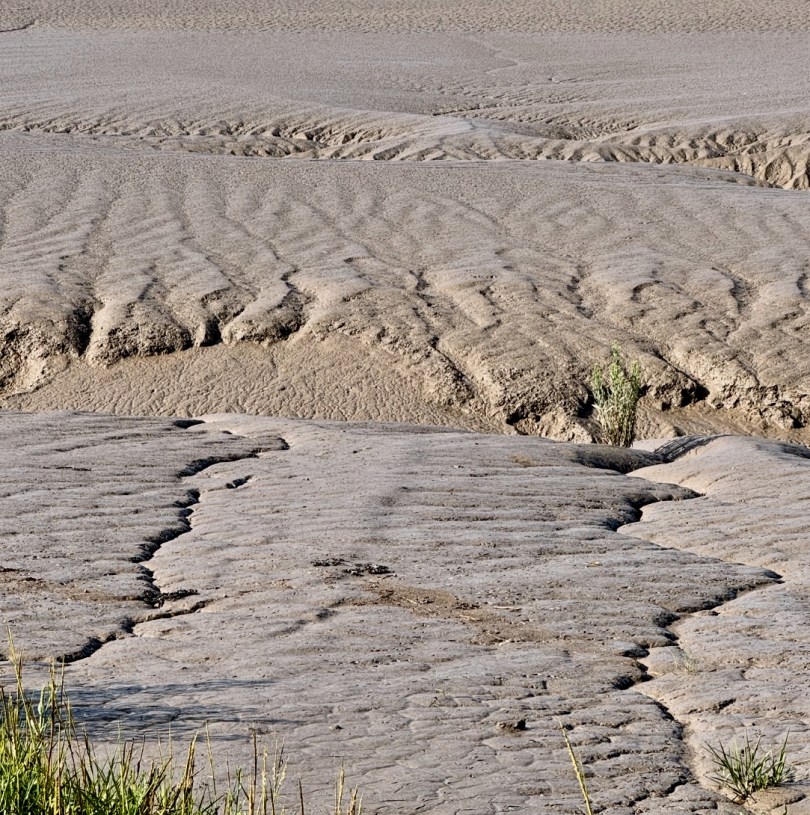
Its in-between-ness is part of what fascinates me. It’s melted earth – neither solid nor liquid. It dries to dust – weightless, airborne. It can be caked and baked into useful, beautiful or priceless artefacts and vessels.
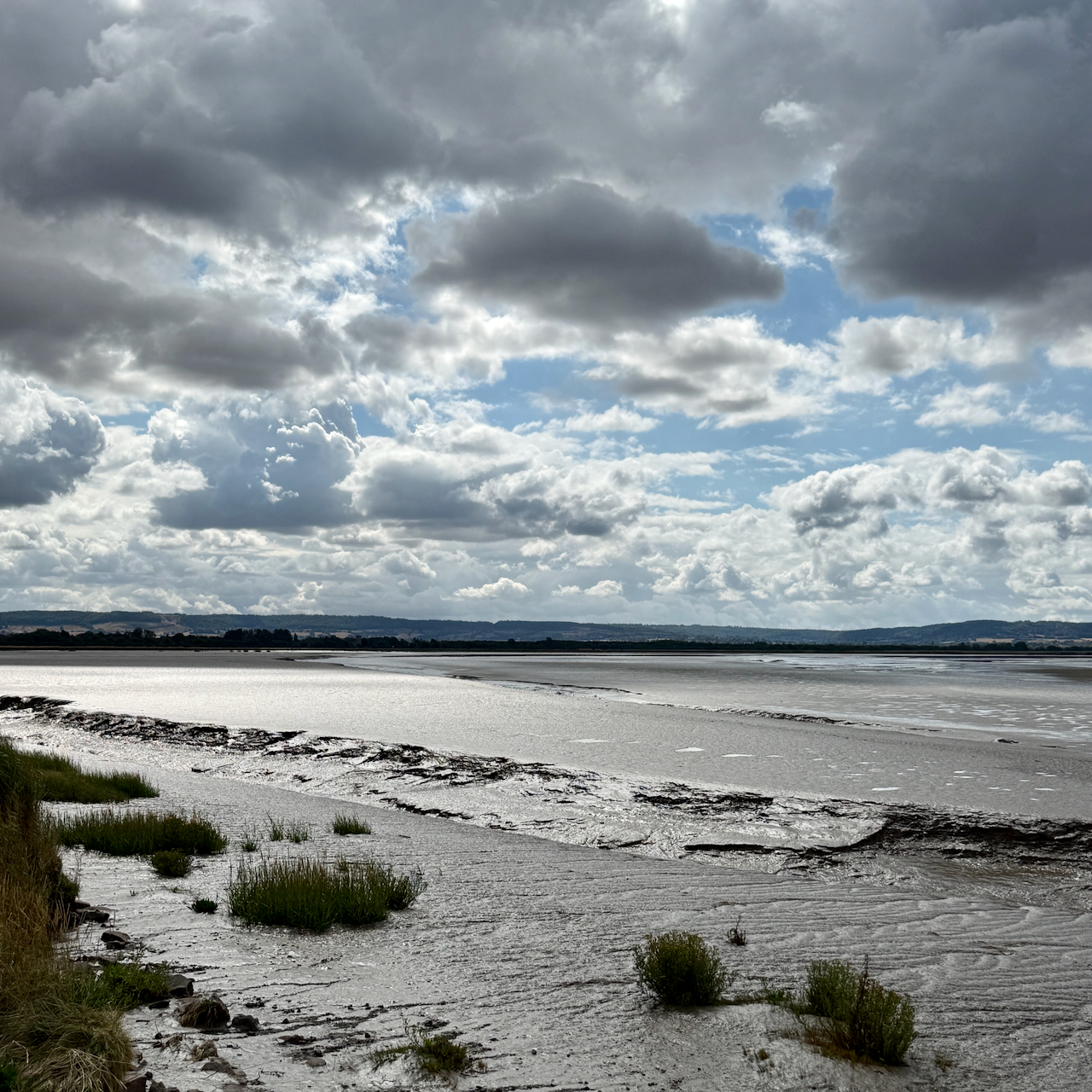
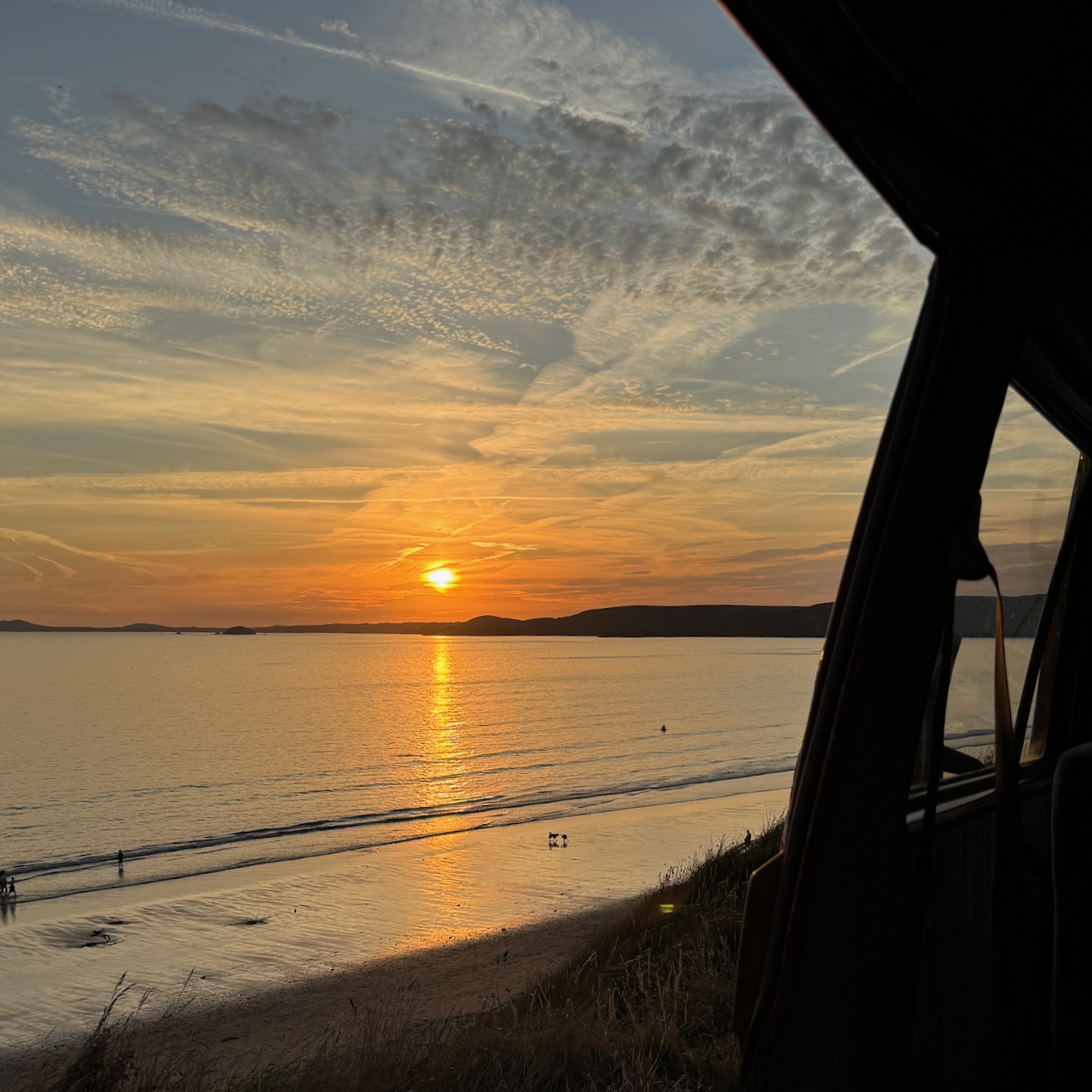
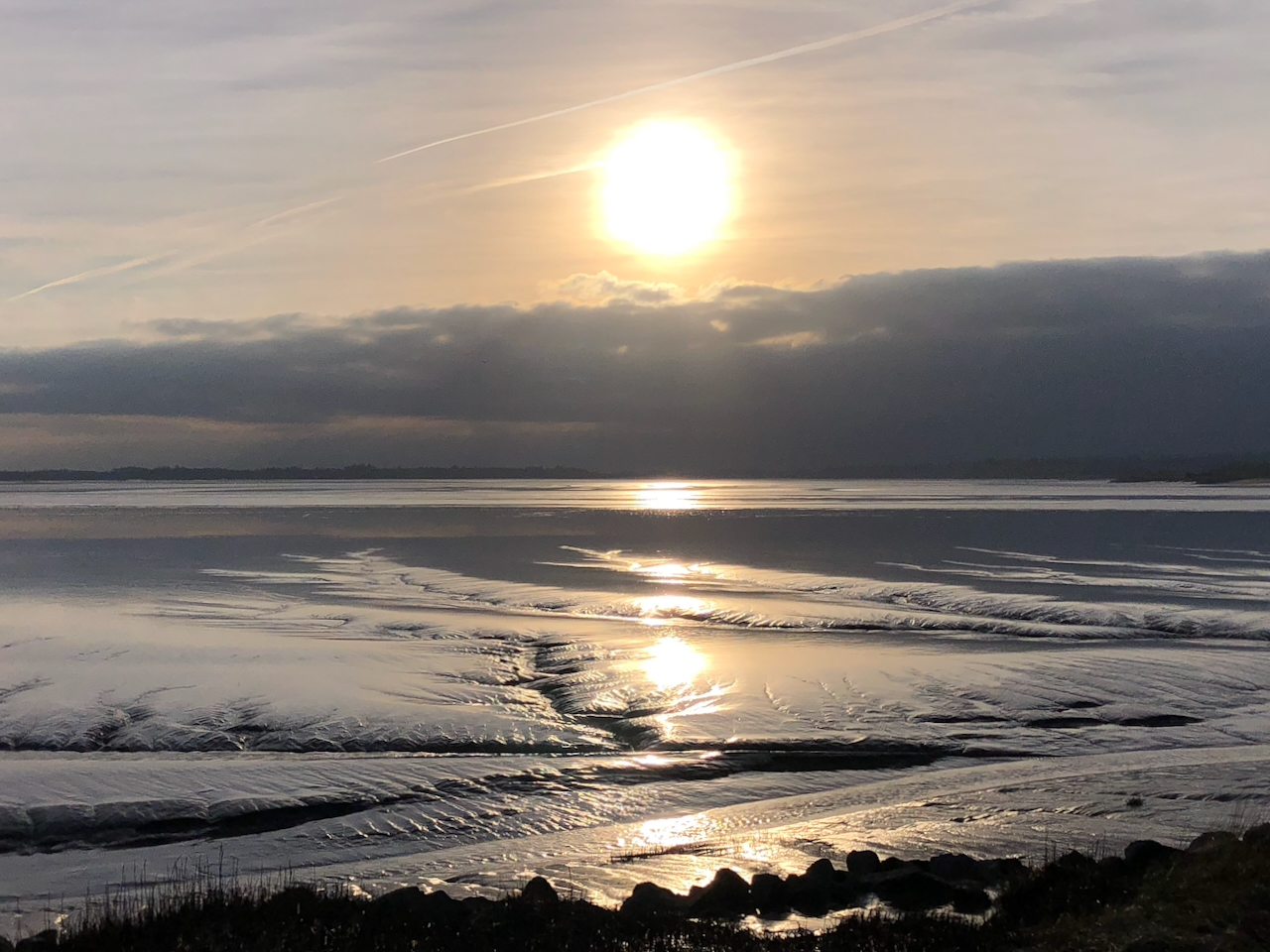
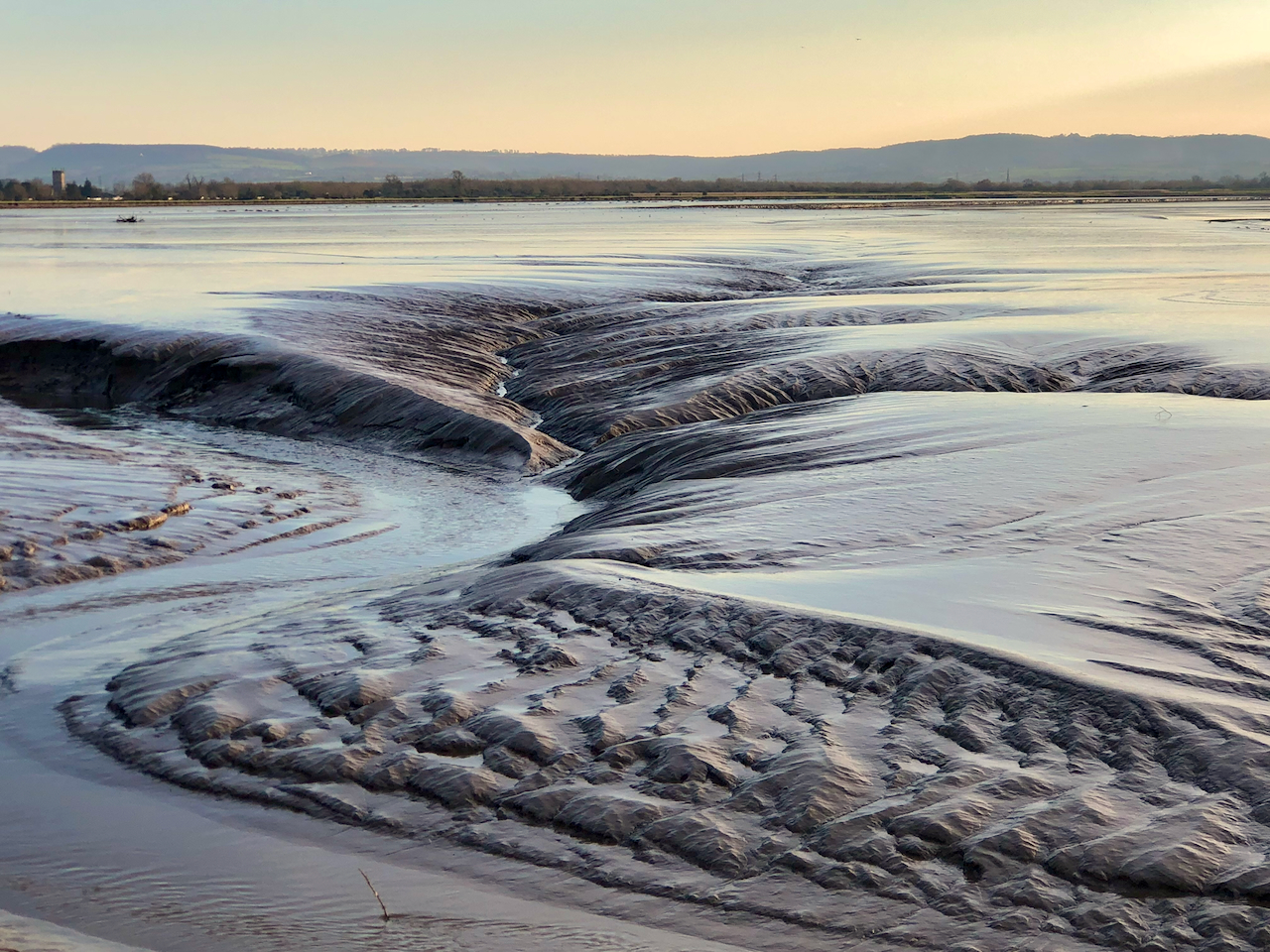
What two of my favourite places in the world – by the Severn and in Pembrokeshire – share is that they are canvases and alchemical blending pots for this in-between-ness. They are meeting places of the four elements: where water, earth, air and fire interact, wrestle, dance, blend and blur. Where the sun sparkles on liquid ripples infusing all it touches with heat. Where hard earth dissolves into softness as water ebbs and flows across its surface. Where tidal flow nibbles persistently at solid edges, and evaporates into sky to later fall as rain.
Mud is the womb of humanity. And its grave.
Earth to Earth. Ashes to Ashes. Dust to Dust.
In the beginning… we emerged from the mud.
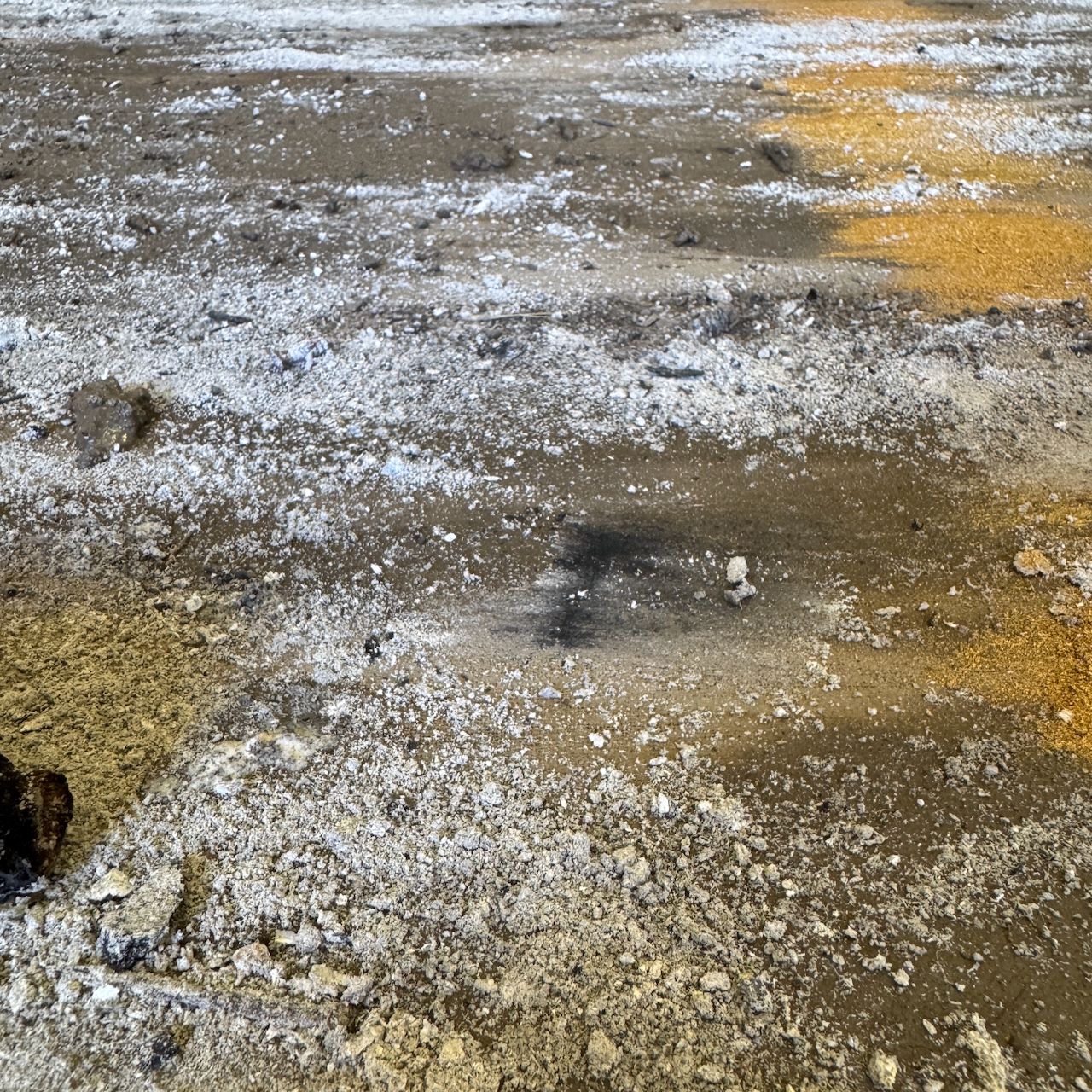
Rebecca Stott gave a brilliant summary of the origins of mud in her recent Radio 4 series.
Back in ‘deep time’ and for most of Earth’s history, there was virtually no mud on land. Before the dinosaurs, the earth was made up of vast sandy plains. In the oxygenated waters of the sea, microbes, jelly fish, sponges and fish lived, but other than clusters of bacteria and algae clinging to wettened coastal rocks, there was no life on land.
458 million years ago, however, something huge happened. Heavy rainfall and rivers swept silt and clay from the barren landmasses into the sea to gather on continental shelves and deltas where they transformed into thick layers of mud. This has become known as the “Mud Transition”. From then on things happened relatively fast. To cut a very long story short, plants began to grow… and the rest is history!
Charles Darwin kept mud in a breakfast cup and made the significant discovery that dormant seeds trapped inside dried mud could germinate. Mud is life-giving not inert. Snails and earthworms pass through it in a reciprocated exchange as mud passes through them.
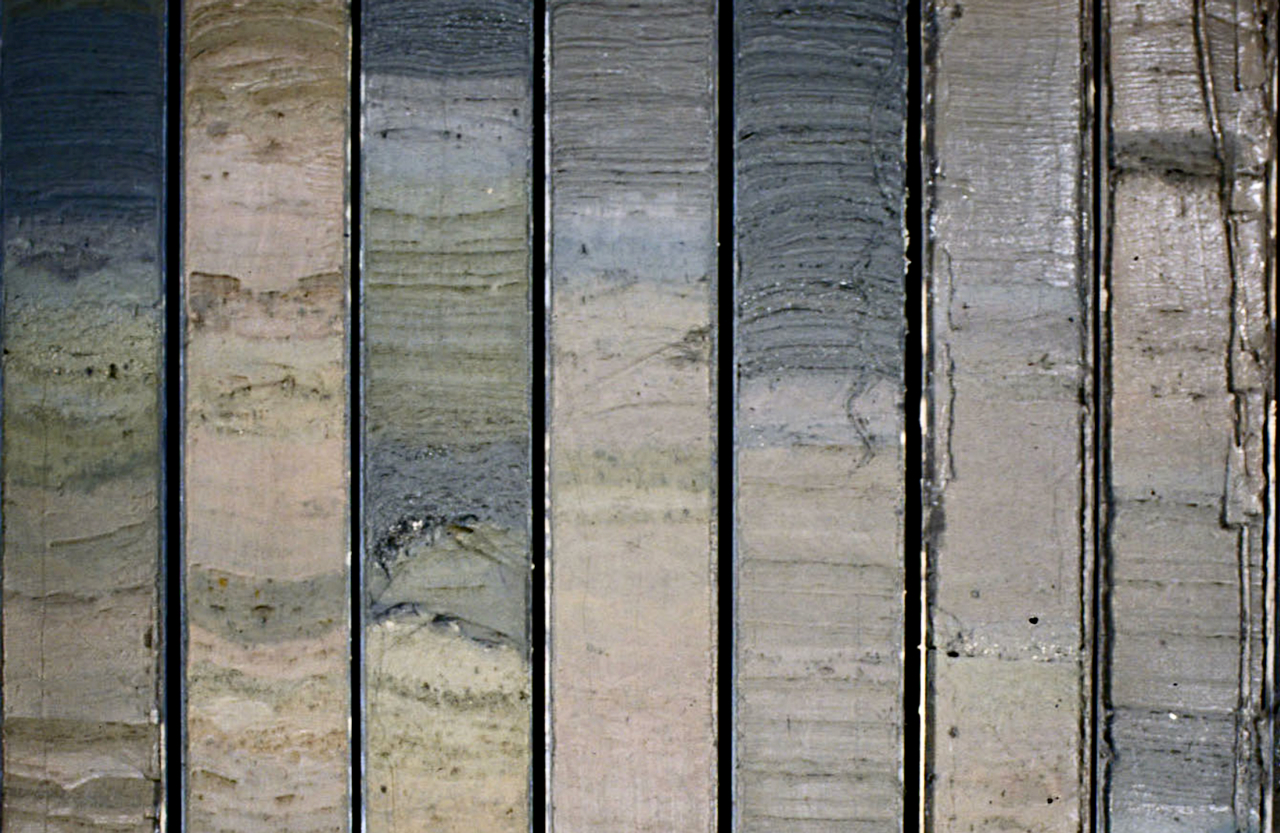
Mud is the archive of the emergence of life on earth. Sediment corers – the deepest one bored 228 meters through Antarctic ice in February this year – can extract samples to read climate changes and natural disasters that occurred up to 23 million years ago.
All this within lowly mud.
This is the subject of my next exhibition and forthcoming Pecha Kucha talk Ode to Mud: My quarter-century love affair with the River Severn. I will be one of eight presenters using the strict format of 20 slides, each slide lasting just 20 seconds.
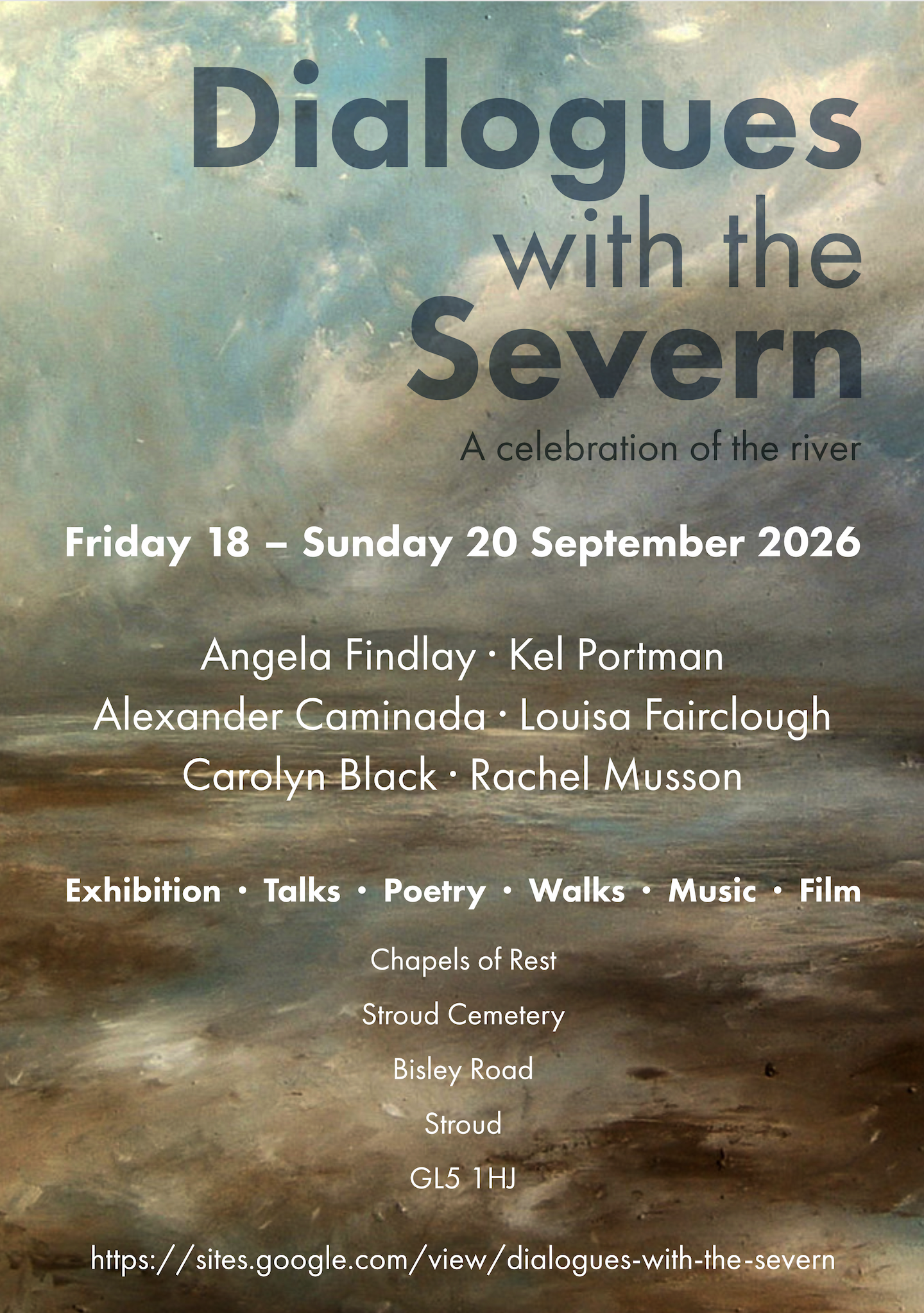
Dialogues with the Severn is a weekend [18th-20th September] celebration of the River Severn dreamed up and organised by Kel Portman, Alexander Caminada and me. Over the past year, we have gathered together a wonderfully diverse selection of people who share our love of the Severn, to exhibit their art, talk about their experiences and/or work on the river, read their poetry and play their music. We have put together an exciting programme, which you can find here.
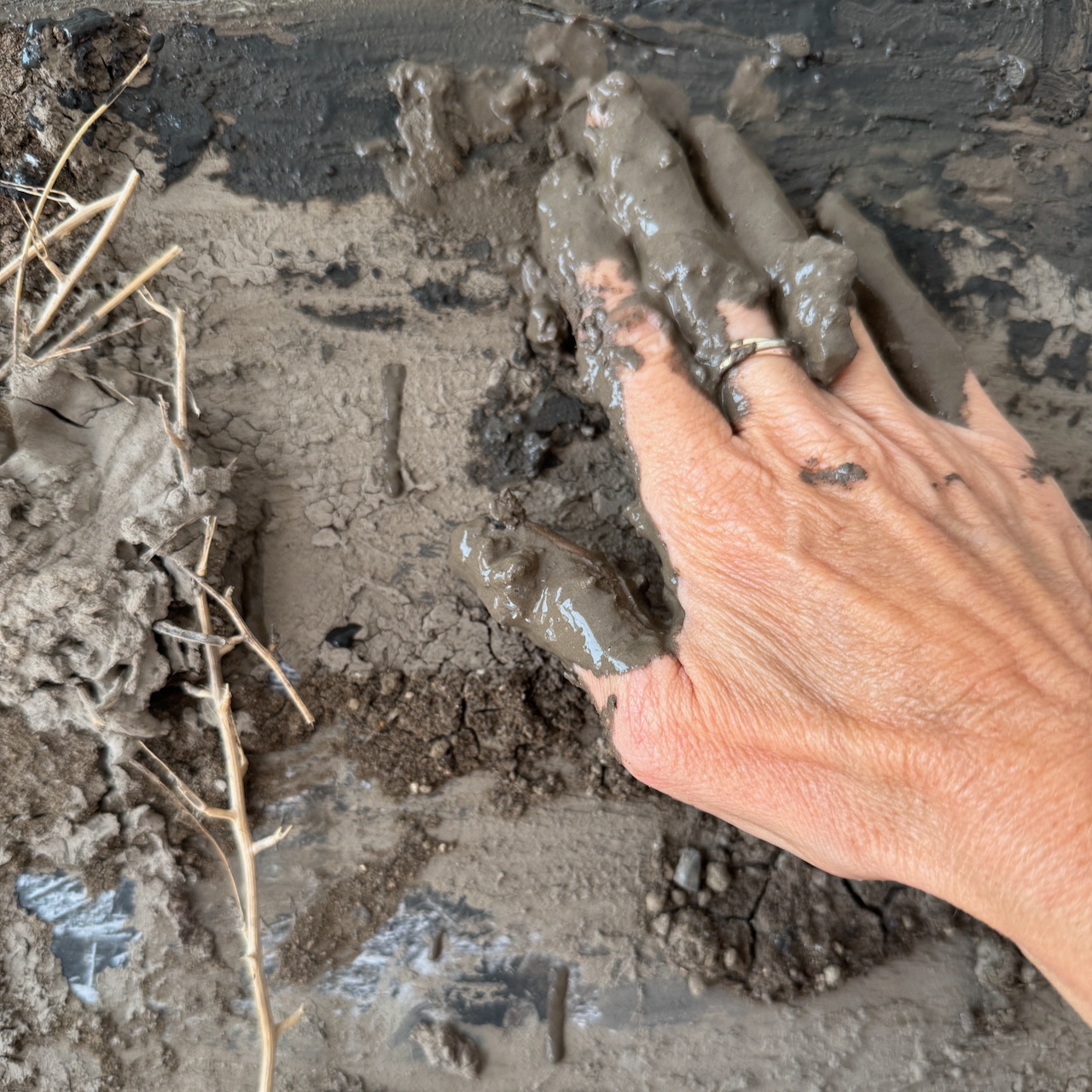
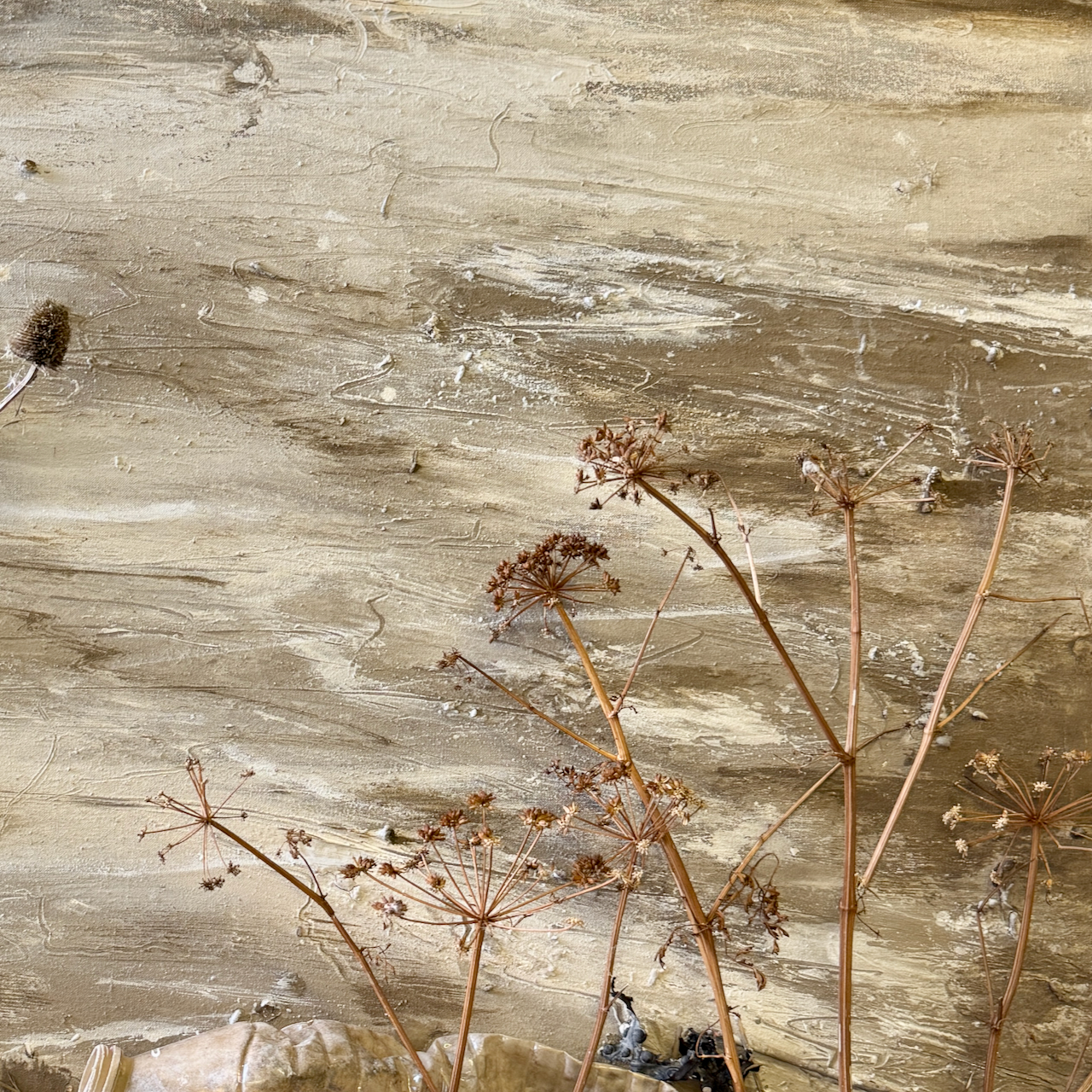
I will be exhibiting brand new work – mud paintings and installations – inspired by my renewed engagement with the Severn and its ‘rich, melted-chocolate mud’ as I described it in my 2024 blog: In the Flow: Ode to the River Severn.
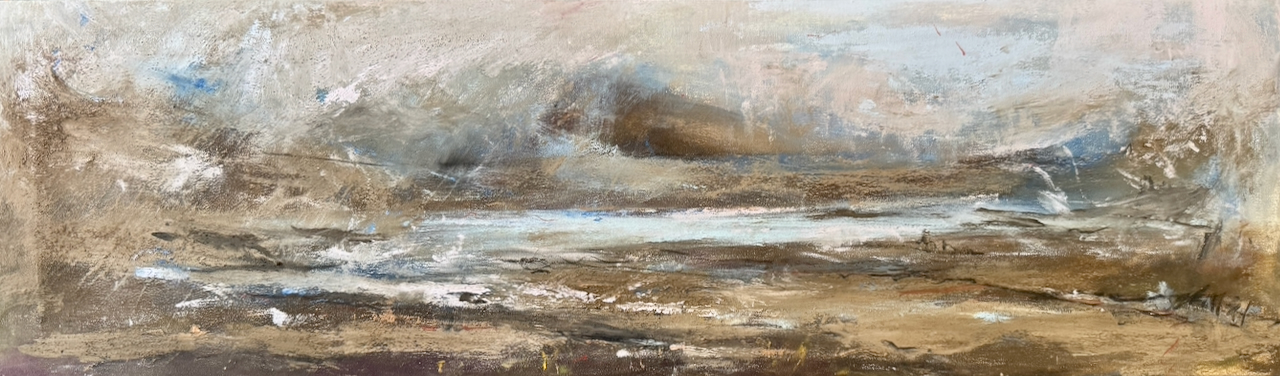
The final remaining older mud sky- and seascapes from the early 2000s, plus new works will be for sale. But more of that in my September BLOG or NEWSLETTER.
For now, I return to the mud: ancient, elemental, unruly and alive. The stuff beneath our feet, from which, in one form or another, we all began.