Following Joan… Part Three

(If you are joining Joan’s story now, you might want to read Following Joan… Parts One and Two first.) 

‘Do you think she jumped… or did she fall?’

It’s 2020 and I am sitting opposite my uncle, a grandfather clock tick-tocking the present into the past.

That question has always lingered around the name of my Great Great Aunt Joan. She was said to have been troubled, never having recovered from the death of her beloved older brother, Gerald, killed at Gallipoli in the First World War. Ill health had dogged her. And as another war loomed on the horizon, perhaps she could not bear to witness more loss. 

I sometimes wish I could type ‘Joan Legge’ into the search box of my life’s hard drive to locate the exact moment her story began to intrigue me. Perhaps it was a conversation with my grandmother, Joan’s niece. Both she and her younger sister had believed, independently, that Joan would not return from her trip to the Himalayas in 1939. Their mother was said to have ‘the gift’ – an unfathomable intuition, a form of knowing that slips past reason. 

That fascinated me, for even as a child I sensed there were hidden channels of communication and knowledge beneath the surface of ordinary life. Perhaps their foreboding of no return planted the idea that Joan’s death had been deliberate.

Joan 1905

Or maybe it came from the anecdotes I gleaned over time from my father and uncle about this eccentric spinster who, after Gerald’s death, cast off the frills and trappings of aristocracy and privilege to forge a life of farming, service and adventure. A life that ended in solitude, in a remote valley half a world away. 

Some lives close with a sense of completeness, even peace. Death may be welcomed after a struggle with illness or the slow wear of age. Others remain unfinished, wrapped in mystery, unresolved, tugging at the conscience of descendants like a child clutching at its mother’s apron strings. 

Joan’s sudden death was of that latter kind. It sent shock waves through the generations, softening with distance into small ripples. Even now they lap at the shores of my own soul. 

Map of the Valley of Flowers, the site of Joan’s camp, death & grave marked in red
©Staffordshire History Centre

It was only last year, travelling to the Valley of Flowers with three of Joan’s descendants, that I fully grasped the scale of her courage. And the violence of her end. The monsoon rains offered us just a fleeting glimpse of the place she fell, its position traced on a map sketched in the days after her death. Yet it was enough to shatter the gentler image I had long created of her tumbling down a wooded slope. The truth was starker. Joan had fallen clean over the edge of a sheer granite cliff.
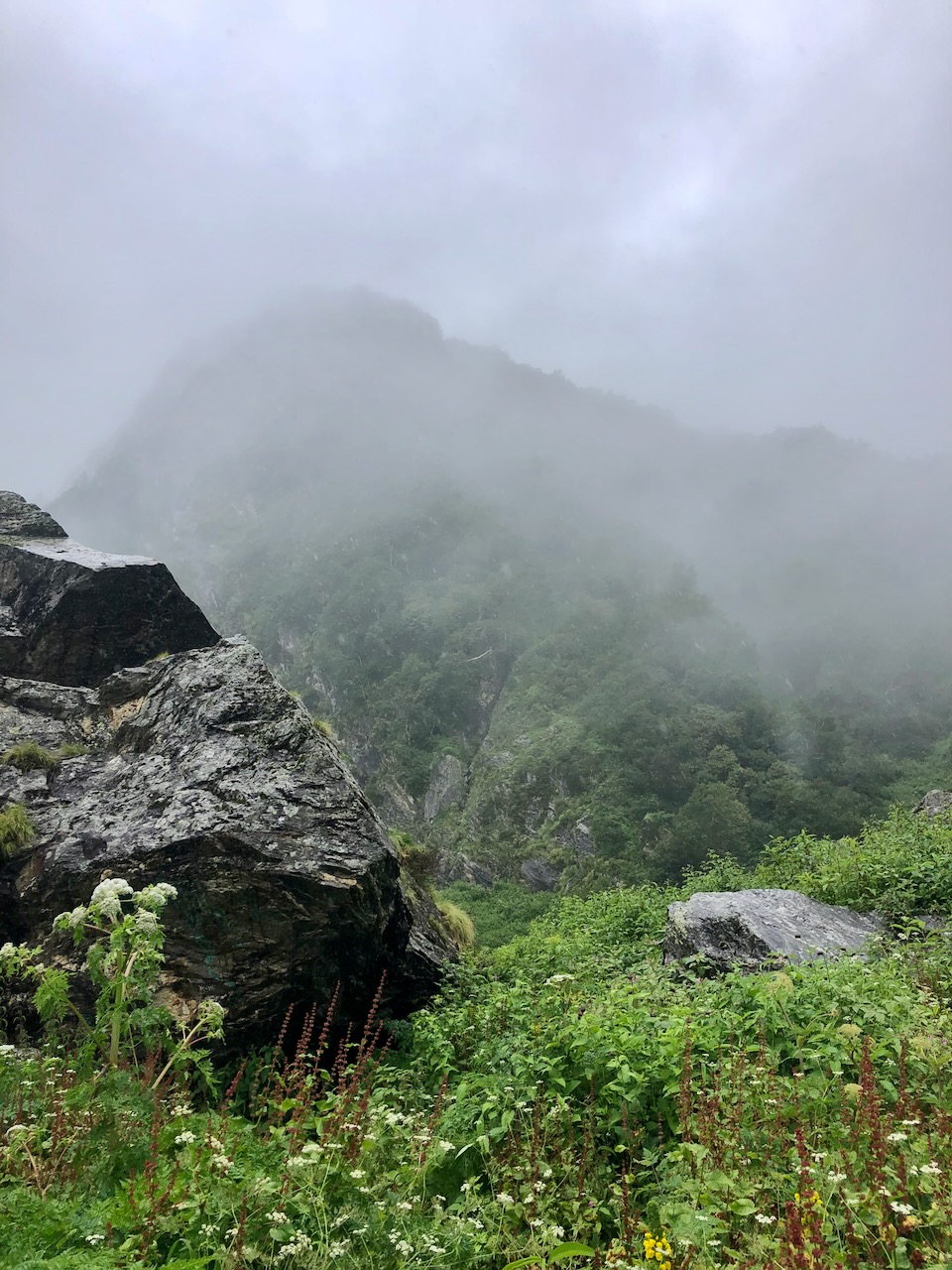
Her fall haunts me. Those unthinkable seconds of awareness, knowing you are hurtling toward your end. How different from a death that comes inch by inch, offering time to prepare, to resist, to rage, or to reconcile. In July 2024, when I left the Valley of Flowers and Joan’s remote grave, a sudden grief overwhelmed me, buckling my legs and landing me in a pile of donkey droppings. Yet Joan’s own words leave no room for doubt. Her diaries brimmed with excitement for the months ahead, with awe for the surrounding peaks, and with delight in her adventure. She did not choose death. She was very much alive.

So why does her story touch me so deeply? Why not my great grandmother, killed in a car crash?  Why not my grandfather, the ‘muck and magic man’, pioneer of organic farming? Why Joan? And why me – the only one in the family drawn, again and again, to the lives behind us rather than those unfolding ahead? Is it because I have no children to anchor my gaze forward? Or is it that I have no children precisely because the voices behind me insisted on my attention?

Gerald (far left), Joan’s father (seated left), Joan (centre) and others, 1907

Perhaps neither, or both. What I do know is that the dead have enriched my life. And in honouring them, in breaking the silence of the unspoken, in unravelling the mysteries and untangling the knots they left behind, I believe their presence has enriched the lives of others’ too. 

Through my recent studies in Family Constellations, I have increasingly come to experience life as a river, flowing on with or without us. We step into its current for longer or shorter spans, mingling in the same waters where our predecessors once moved. What matters is not the length of time, but the resonance we leave behind. Not quantity, but quality.

Birth is the one beginning we all share. But our endings are as varied as our lives. Accident, chance, destiny, choice… no one can know death’s moment or manner, only its inevitability.

So was Joan’s death a tragedy as her obituaries mourned? Or was it a brilliant ending to a life lived fully right into its final breath? 

Draft for Joan’s eulogy by her sister: ‘If in another world kindred spirits dwell together there Joan & her brother Gerald will be found, I think, among a happy throng of pioneers and explorers of all ages. Courage, endurance and an indomitable will were possessed by this devoted brother and sister and both lie buried in a mountain grave & as one of her friends wrote, ‘”already halfway to Heaven”. She started on her greatest hazardous adventure joyfully and she died as she had lived, unafraid –

Joan and Gerald, 1907

I dedicate this blog to my dear friend in Australia, Tas. Over the past six years, corticobasal syndrome (CBS) has been claiming his body, his movement, his speech. And yet his spirit, his humour, his integrity and his enduring delight in friends, family and life itself still blaze. To know him is both an inspiration and a gift I deeply treasure.  

Further details of my exhibition / event on Joan will follow in my next Blog.  

Remember, Remember… we all lost

‘Tis the season to remember. In our progression through the grey gloom of this autumn [just 18 minutes of sunshine since 28th October apparently!] and the celebrations of Halloween, All Souls, Samhain, Guy Fawkes and November 11th, the dead take centre stage. Leaves and forest floors redden while poppies bloom on jacket lapels, village monuments and shop counters. This Sunday in London, as on all Remembrance Sundays, red wreaths will be laid by royalties, senior politicians and Commonwealth High Commissioners before some of the last surviving WW2 veterans march or are wheeled past the Cenotaph.

We have been collectively remembering Armistice Day since 1919, the first anniversary of peace at the end of World War One. Remembrance has since been extended to both World Wars and all those who have given their lives in service to defend our freedoms. It is a hugely important day for the British, the Commonwealth and many other countries around the world, albeit not in Germany. There, since the Middle Ages, 11am on 11.11 has marked the start of the carnival season and, on a more serious note, Armistice Day is not considered to have welcomed the beginning of peace but years of intense unrest and far worse horrors to come. 

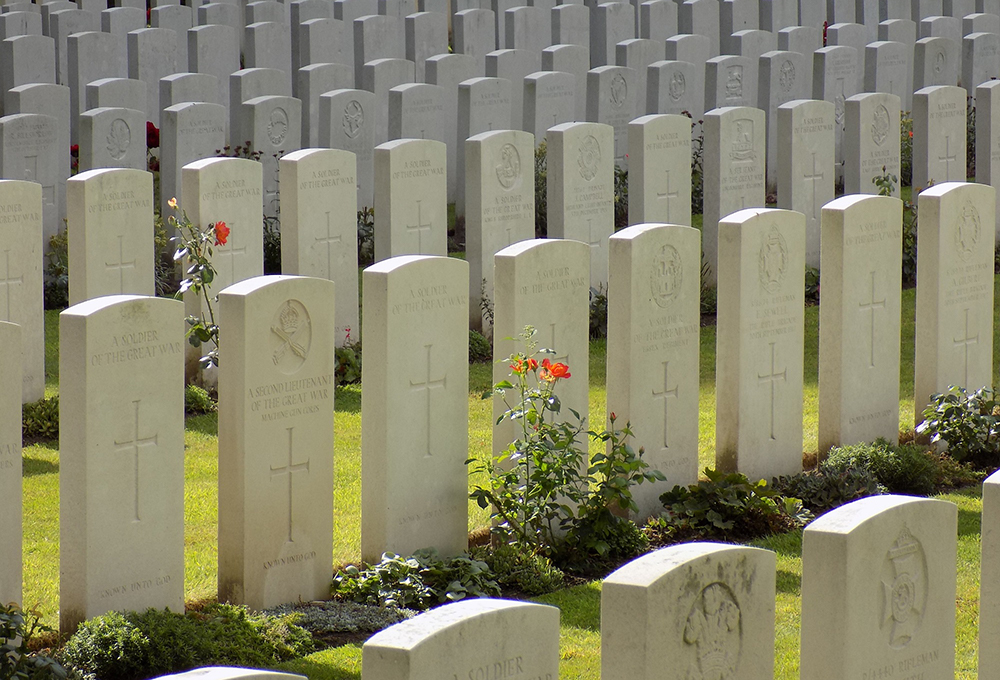
British and Commonwealth dead

I often dedicate my November blog to our traditional, deeply moving and impeccably executed rituals of remembrance, but not always without a little questioning too. Through the 15 years of research for In My Grandfather’s Shadow, I came to appreciate a far broader narrative of WW2 remembrance than that which Britain generally embraces and teaches. Granted there has been welcome progress over the decades with the inclusion of women as well as the huge contributions and sacrifices made by Gurkha, Indian, Sikh, African and Caribbean servicemen, among others. But there is still widespread ignorance of the bigger context.

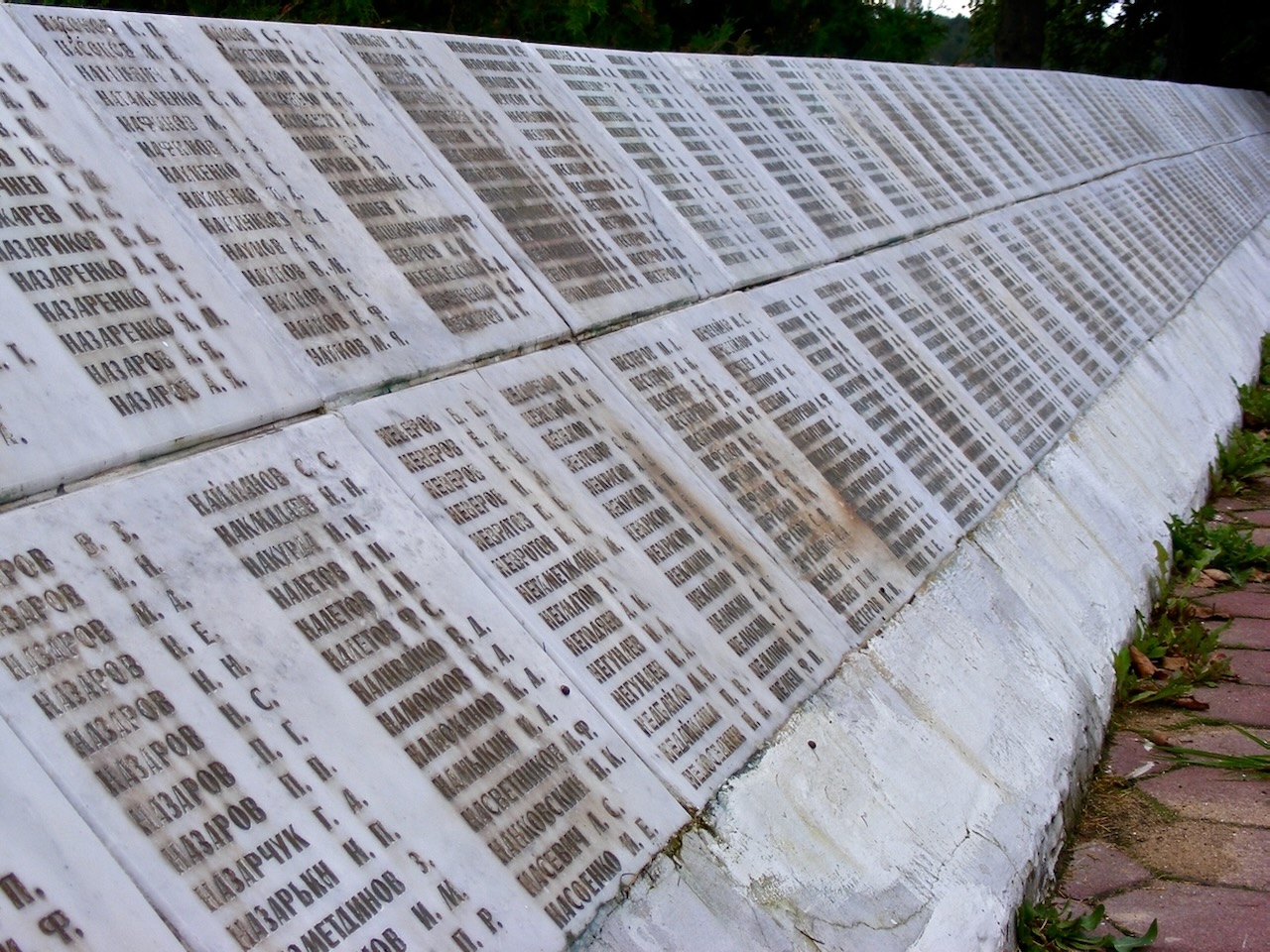
Russian dead

When I give my talks, I often use statistics. They provide a solid, black and white foundation of fact to my more psychological / philosophical ponderings. So often these figures shock. For example, when I ask people to guess the total losses, including civilians, of say Russia, Germany and Britain in the Second World War they are usually so far out that they themselves are horrified. I challenge you to make a guess… I’ll put the answers at the end of the blog. One man literally went white when he realised how wrong he had been in his thinking or, by his own admission, his lack of thinking. Another woman recently wrote to tell me how my book had opened her eyes in so many ways. “First off,” she said, “the big realisation of how little I have understood of the two world wars, my ignorance of those times and the aftermath.” This despite attending remembrance services all her life. 

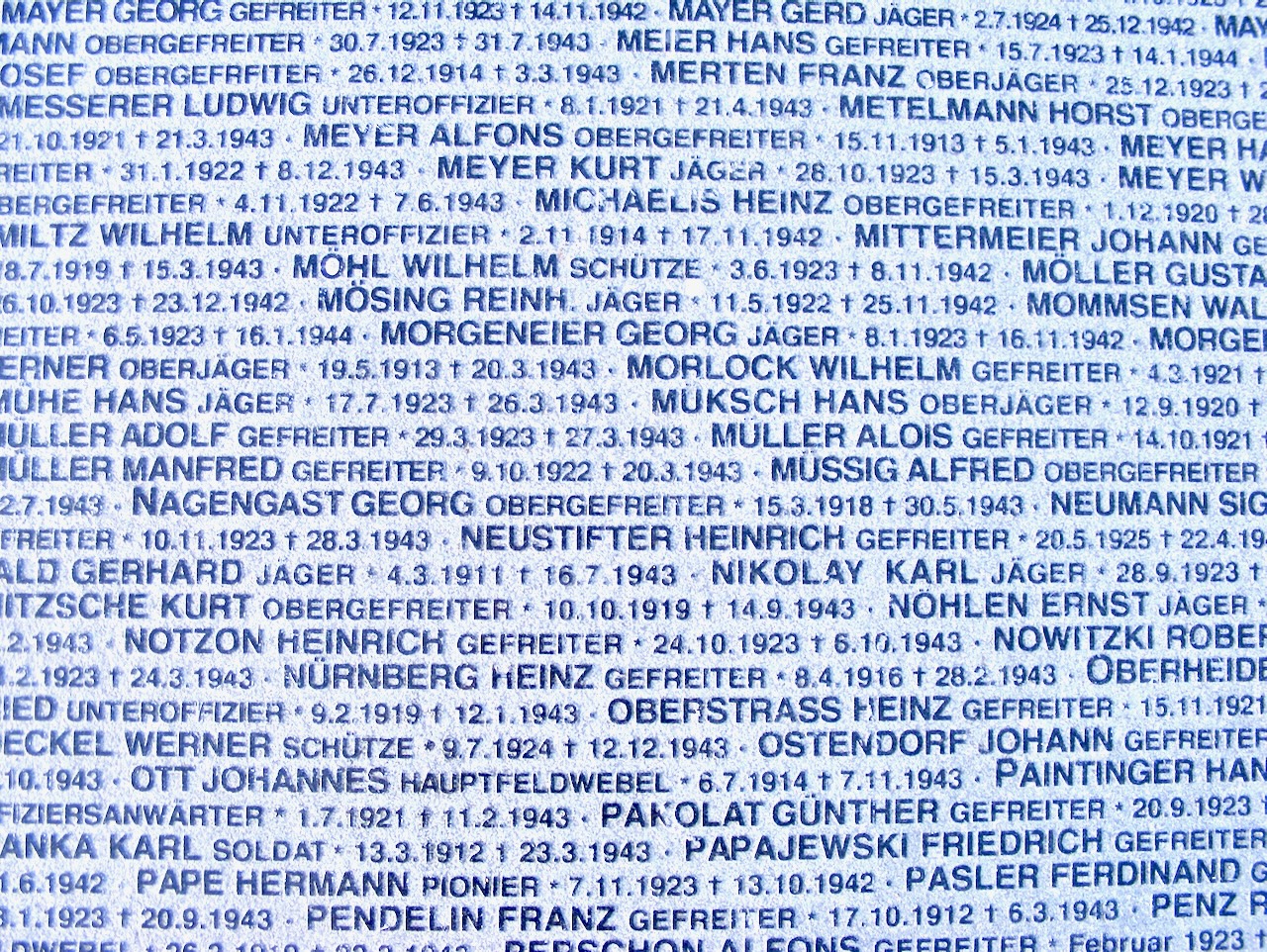
German dead

The quantity of deaths doesn’t mean each death was any less keenly felt. But I think she voices what is probably true of most of us. I certainly was ignorant of the broader landscape of loss and destruction, and no doubt still would be if I hadn’t had German roots that needed excavating and hadn’t made trips through Germany and Russia that exposed me to other ways of looking. The World Wars are the episode in history with which the British are often accused of being unnaturally obsessed. And yet, as a nation, we often present it as a deceptively straightforward story of good triumphing over evil. The victors write history after all. 

Every nation has its ‘chosen traumas’ and ‘chosen victories’ which serve as cornerstones to its identity and prevent true healing from the past as they continue to play out in the present. We frequently have binary views of how we should feel based on – to use the reader’s words again – “simplistic, reductionist understanding… goodies and baddies…” Rarely have we “considered what it must feel like to have a different identity…” 

I really appreciate and admire this woman’s soul-searching honesty. The humility and gentle opening to hearing the other sides’ stories gives me huge hope.   

Healing, reconciliation, peace, forgiveness… all goals we strive for within our culture of Remembrance… can best come about when we become familiar with and find some understanding for the other side’s experience. Maybe, with our greater distance from both the acute trauma and the impassioned jubilation of our forebears, that is what generations now and in the future can strive to do more of. 

Answer to my statistics question: Out of the around 60 million people killed in WW2, 26 million were Russian, approx. one third of them military and two thirds civilians. Between 7-9 million Germans died, roughly 6 million were soldiers and 3 million civilians. In the United Kingdom, just under 451,000 were killed. That’s 383,800 military, including combatants from overseas territories (Crown Colonies and the Indian Empire), and 67,200 civilians.

What if, just ‘what if’, death isn’t quite the full stop many think it is…?

The end of October / beginning of November is traditionally the time of year when people from all different cultures think of, and remember, the dead. For Pagans it is Samhain; for Christians, All Souls; for Mexicans, the Day of the Dead. It was / is believed that the veils between the living and the dead become thinnest now, allowing people to gain access to their dead loved ones. In modern, western, secular societies, it generally morphs into a black and orange bonanza of carved pumpkins and ghouls, a commercial excuse for a bright explosion of fireworks and increasingly terrifying costumes.

Death, in our culture, is widely seen as a negative; the Grim Reaper to be feared or fought. Or it is an ending to be deferred, as long as possible, at whatever cost. It is the opposite of birth, and not to be celebrated as a portal between what we call ‘life’ and a different form of life beyond. For so many people, it is just one final curtain fall, an over and out… THE END.

Image0351.jpg

Of course none of us know though! The most inevitable aspect of life is also the least knowable… such a wonderful design. However, I believe we are missing out on a hugely important level to life by relegating death to the role of a big full stop.

Read More »

Loss… just that. A little exploration of losing.

Since my father’s death exactly a year ago I have experienced an extraordinary storm of additional albeit unrelated losses in almost every area of my life. His death became like a bullet ricocheting around the architecture of my world felling furnishings and humans alike. I now look around me and see a distinctly changed landscape, a series of voids in the shapes of people, things, plans; a mini war zone of collapsed structures through which I find myself wandering dazed and dusty, functioning but exhausted.

What is Loss? The Oxford Dictionary definition says it is “the fact or process of losing something or someone”. As far as definitions go that really doesn’t say much. It makes loss sound so harmless, kind of accidental, the result of a moment of absent-mindedness or brief neglect. It imparts nothing of the potentially huge and devastating impact loss can have, nor of the vast range of subjective responses to it. It doesn’t suggest loss’s innate and prominent role in Life and Death, in war and crime, in love and faith – all existential foundation stones of our human world.

Read More »