Doing time… or simply wasting time?

When you work in prisons or other extreme situations, certain snapshot images ink themselves on the walls of your memory. Hidden from view for much of the time, they appear like a tattoo when a sleeve is rolled up. I have one such image that often causes me to stop and think. 
Doing time

It came about on one of my morning rounds, walking from wing to wing gathering up the participants of my art class to accompany them to the art studio. I had a key for all the locked gates through which you had to travel to get anywhere in the prison, but not a key for the cells. Casting his eye over my list of names, a prison officer stuck his metal key into a cell door, turned twice and pulled. The door opened to reveal a small, wiry man sitting on a neatly made, metal-framed bed just staring at the narrow space in front of him. He was dressed and ready for another day of… nothing; of waiting for time to pass. The slight slump of his body and thin, grey hair combed back from his forehead accentuated his pallor as he slowly turned his head to face us. Blank eyes betrayed a hint of the resigned surprise of someone who had got used to the loss of all privacy and power. For a tiny moment our eyes met. Was it a flash of hope I saw before the officer, realising his mistake, pulled the door closed without a word and locked it once again? I stood motionless as he studied the list and moved towards another cell, imagining the tiny man turning back his head to continue staring through the tidy arrangement of objects on the table opposite him: a single mug, a jar of cheap instant coffee, a toothbrush and a roll of toilet paper. 

I still see this man when I am running though wild garlic-filled beech forests or soaking in the exuberance of my mother’s colourful flower beds; when I feel the warmth of sunshine or the heat of a bath. I think of him still sitting there alone, just quietly waiting… wasting. And that basically sums up what our prisons are. One big waste: of time, of money, of opportunity, but, worst of all, of human lives. If you put aside questions of whether a person is guilty and deserving of punishment and, for one minute, place yourself into his cell and slip on his shoes… what do you feel? 

I know I bang on about it, but I hate waste. And the illogic of locking people up in increasingly depraved conditions with nothing purposeful to do, and then ejecting them back into society with the expectancy that they will somehow be changed for the better, urgently needs to be addressed. We all know the benefits of exposure to nature, the arts, colour, fresh air, exercise, work, self-discipline, being listened to… the list is long. So why, why are we systemically depriving the people in our prisons of all those things? The prison service’s self-declared mission is to help offenders lead “law-abiding and useful lives on release.” Yet in practice, it too often does the opposite.

As Brexit procrastinations continue to drag minds and resources away from pretty much all other societal issues and constant changes in Justice Secretaries and Prison Ministers prevent anything from getting done, our prisons are becoming even more overcrowded, understaffed, drug-infested, inhumane, dangerous and failing institutions. There are thousands of my ‘small, wiry man’ sitting on beds in tiny cells, over half of them with literary skills of an eleven year old, many of them victims of violence, neglect and abuse as children, each costing £38,000 per year, each just waiting and wasting while we become increasingly guilty of ‘looking away’. 

So what can you do? There are lots of wonderful initiatives, charities and people trying to make our prisons better places. Let the government know the current situation is unacceptable by supporting their work. Here are a few suggestions: Prison Reform Trust or Howard League for Penal Reform or The Forgiveness Project or The Koestler Trust or contact your local prison and offer to teach literacy, become a prison visitor or mentor to someone on their release. You will probably find it incredibly rewarding!
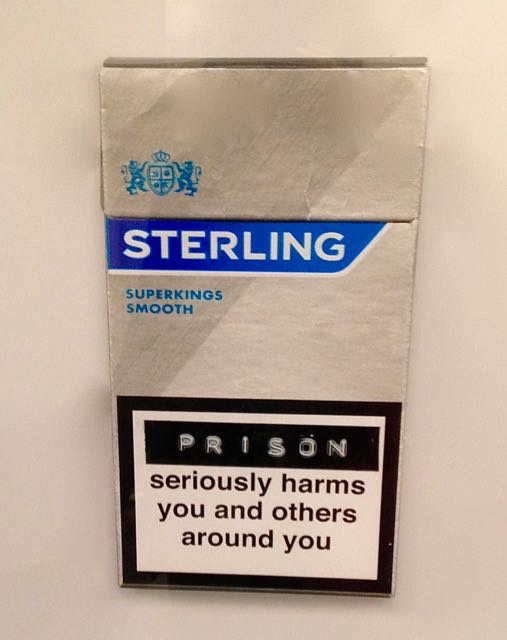
Minefields of ticking time bombs just waiting to explode

Pentonville Prison is “crumbling and rife with vermin”. HMP Birmingham is in a “state of crisis”. Prison staff protest over “unprecedented violence” in jails. “Biggest UK prison riot in decades could and should have been prevented,” report finds.

We have been reading one such headline after another for months now, actually years, probably decades. Almost everything about our prison system is failing and contributing to this dire state: chronic overcrowding, understaffing, lack of purposeful activity, easily available drugs, squalor, rises in violence, self-harm, suicide… they are all interlinking, poisonous contributors to what is becoming a system wholly unfit for purpose. Yet still nothing substantial is done.

Read More »

Good news and great ideas… or just bleedin’ obvious and long overdue?


So there’s good news and bad news on the prison front this month.

The good news is that the Justice Secretary, David Gauke, has declared that “there is a role for the arts” in criminal justice. He believes it’s a good idea. In an interview with The Times on May 25th, Mr Gauke said “the creative sector is a big employer, you hear stories of someone involved in a prison production who ends up in the West End as a lighting technician…” He wants “a culture of rehabilitation” that encourages “drama, writing and painting in prisons.”

Feltham - Christopher copy.jpg


Read More »

What can we do? What can I do? What can you do?

“What is the most important thing we can do?” That is the question I am so often asked at the end of my ‘arts in prison’ talk. Yet I have never been able to give an answer that feels satisfactory.

Through pictures, stories, statistics and facts, my audiences get a glimpse into our prison system, into the minds and lives of offenders, and into what role the arts can play in the process of rehabilitation. “I had no idea!” is the most common response, and then,  with their new insight, people across the country, from sixth formers to retirees, want to know what they personally can do to help solve the increasingly dire situation that is our criminal justice system (CJS).

Read More »

“Britain’s Shame” – the price for trying to be “Great”?

Last month I wrote about how the words “Britain” and “shame” rarely appear in the same sentence. This month the two words have been inseparable. “Britain’s Shame” even became the title for BBC’s Panorama programme on the horrifying and heartbreaking fire at Grenfell Tower on 14th June. The programme opens with the accusation that shoved these two words together to sit unwillingly and uncomfortably side by side for all the world to see: “They were warned several times, countless times; they were warned probably until the day before the fire…”

IMG_1336.jpg‘Falling on deaf ears’, Koestler Trust entry from HMP Standford Hill
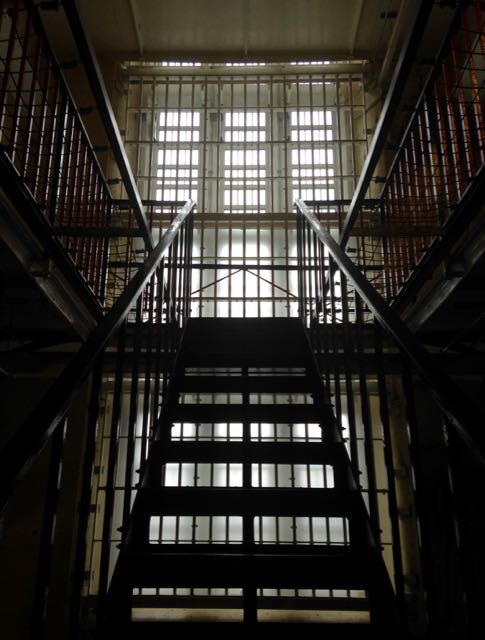
I don’t feel in any position to write about the tragedy that has ended or blighted so many innocent peoples’ lives. It is too sad and it is too soon. But I do feel in a position to talk about the shame that surrounds it, the shame that needs to be looked at and above all felt so that vital changes can be swiftly made before another tinderbox of neglect ignites.

Read More »

Wish for 2017: Keeping alive Winston Churchill’s unfaltering faith “that there is a treasure, if you can only find it, in the heart of every man.”

A last minute blog before the curtains fall on 2016. As a year, will it get a rapturous applause and an encore I wonder? No, I don’t think it will. Not from the point of view of one of my main blog themes – prisons – at least. A re-wind to the beginning and a second chance…? Well that would be wonderful.

This time last year I was excited. I think all those who work in the Criminal Justice System (CJS) were. We were facing unprecedented possibilities of genuine reform within the sector. As Justice Secretary, Michael Gove had done his homework thoroughly, rather ironically consulting and listening to the experts more than most of his predecessors had done. He commissioned Dame Sally Coates to create the Education ReviewUnlocking Potential to which even individuals like me were given an opportunity to contribute. My ambition to make the case for the arts at government level was looking set to be realized.

Read More »

INSIDE – an exhibition where art replaces prisoners and visitors can feel how tiny a cell is

“Outside the day may be blue and gold, but the light that creeps down through the thickly-muffled glass of the small iron-barred window beneath which one sits is grey and niggard. It is always twilight in one’s cell, as it is always midnight in one’s heart.” Oscar Wilde, de Profundis, 1897

IMG_9031.jpgReading Prison

People were moving around the building as if it were an ancient site, a relic of times long past. Tentatively they stepped into the tiny cells, their barred windows raised to a height designed to deprive. Metal bunks, the squeak of their springs still echoing in the silence of long nights past; a painted table, names etched into the surface, reminders of identities transformed into numbers; and toilets tucked behind waist-high partitions separating toothbrushes and washing-up from another’s piss and shit.

Read More »

What are the collective nouns for a mass of unknowns or a pile of question marks?

I think I am politically depressed!

As a new academic year kicks off for another round of the seasonal clock, I find myself back behind the steering wheel and darting all over the country to deliver my talks. A busy lifestyle but it has always felt worthwhile. Even just knowing the next generation of school leavers will launch themselves into the world with at least a tiny awareness that our prison system is a disaster and most prisoners are not monsters but people, with stories and needs for help rather than punishment. That’s always been enough.

Something has changed though.

Read More »

An abundance of plays at the Edinburgh Festival revealing the shadow side of the alpha male psyche

Two shows at this year’s Edinburgh Festival left me feeling… well, strange. One was about a male ex-prisoner, the other about a female victim of rape. Light, cheery subject matters for me as always, but actually, intense and personal story telling abounded.

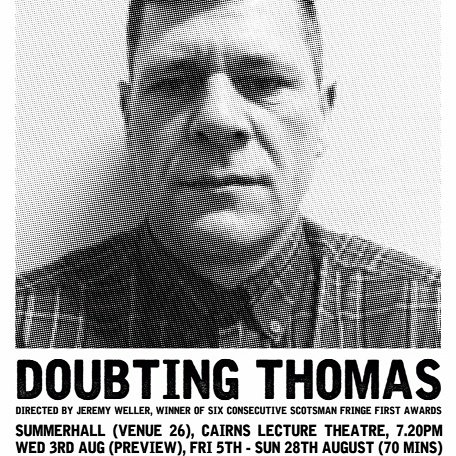
The first play was Doubting Thomas, created by multi-award winning director Jeremy Weller. The listings said: Thomas McCrudden, a man with a tortured and violent past but with hope for a different future, tells his own complex and moving story about abandonment and the stress of being forced to take on multiple roles, in Thomas’s own words, “…none of which were me! When I was growing up, I wasn’t able to accept love, and that created not just a man without a conscience or empathy. It created a monster.” 

Doubting-Thomas-Summerhall.jpg

Read More »

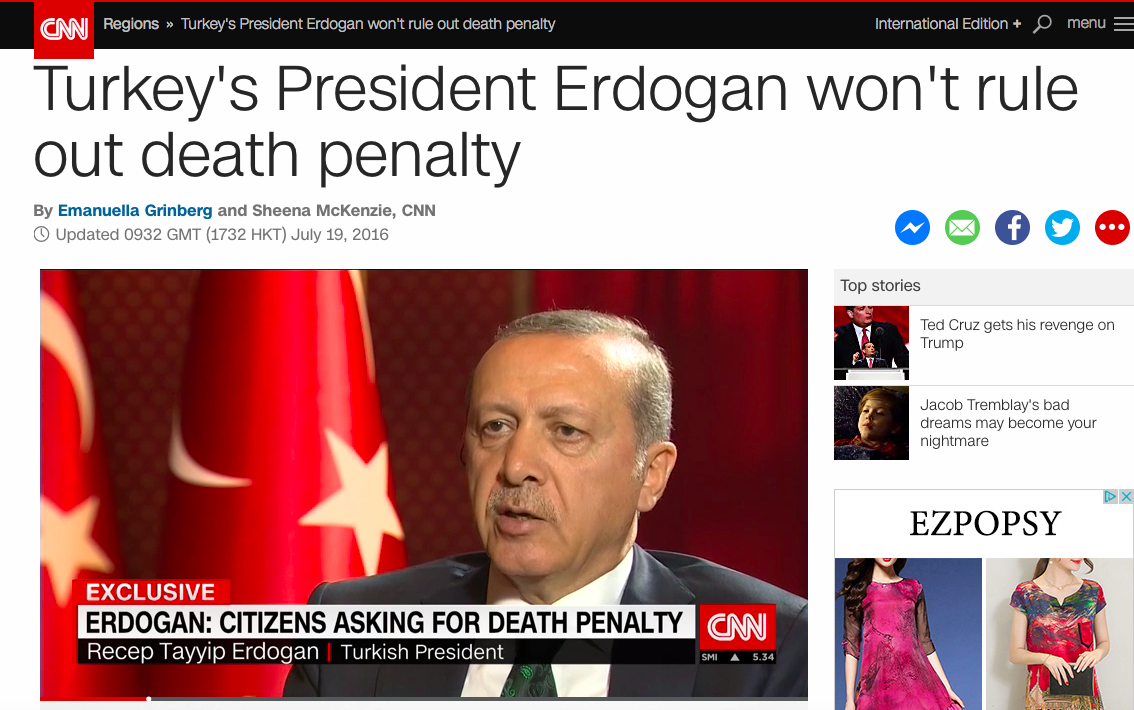
If a majority in Turkey votes to re-instate the Death Penalty, what does that say about the concept of democracy?

My last blog, a gentle exploration of the IN/OUT decision that faced the UK in June, now resembles the deceptive calm before the storm. It displays the totally misplaced confidence in a ‘Remain’ outcome anticipated by so many around the world. Collectively we have since been tumbled in a political maelstrom, gradually washing up tangled and disorientated on unknown beaches. And as journalists and political commentators create mind jams of informational traffic and kaleidoscopes of emotion, it is the assurance of Democracy that urges us to our feet to take the first wobbly steps towards the blurry horizon of our new destiny.

With so much that could be said I will stick to the general themes of my blogs, for there is a particular issue on which I have questions, but no answers. It’s to do with the whole abstract concept of “democracy”. Does, can, or should the view of the majority always guarantee that the action to be taken is the right thing to do?

Screen Shot 2016-07-23 at 14.19.54.png

Read More »