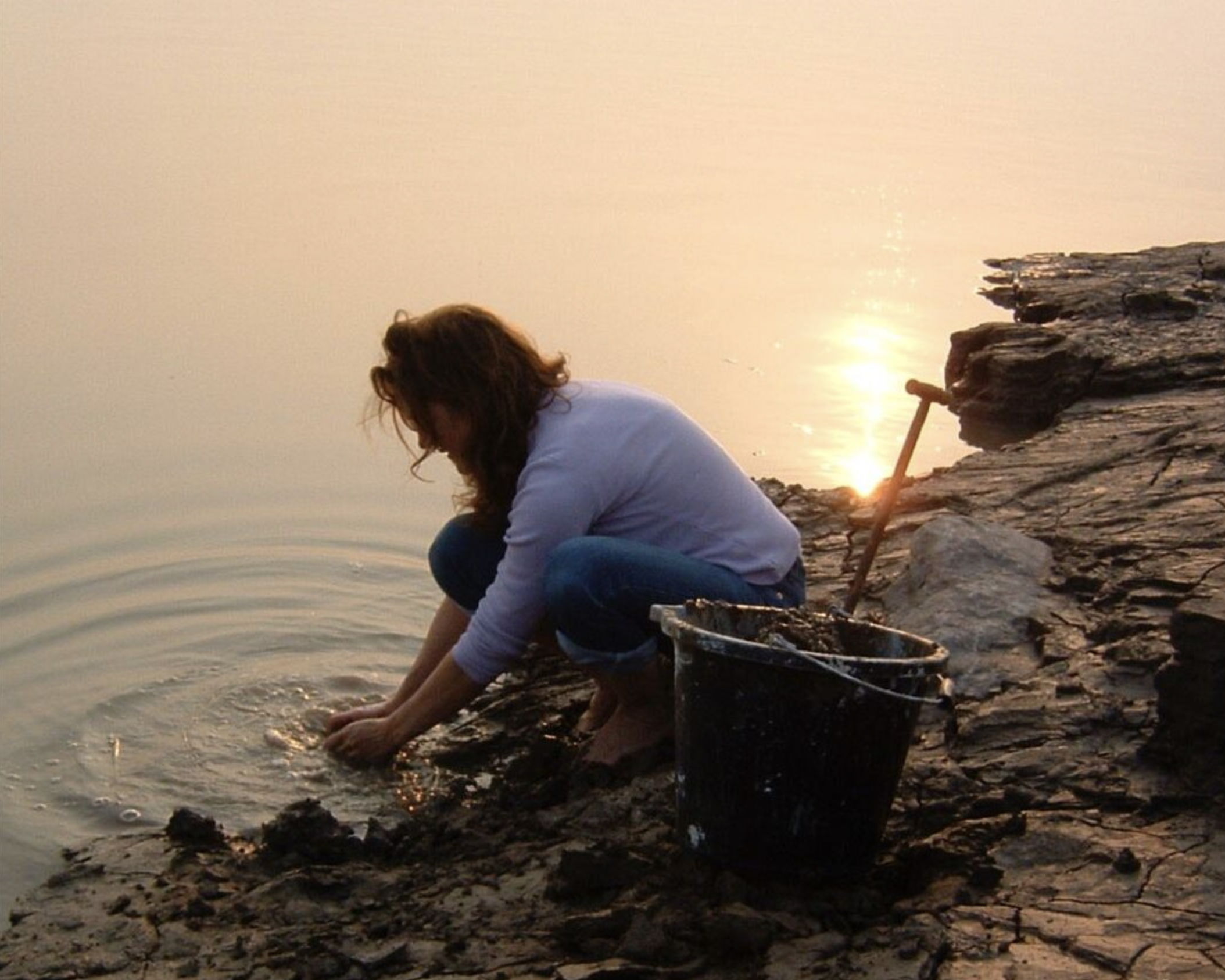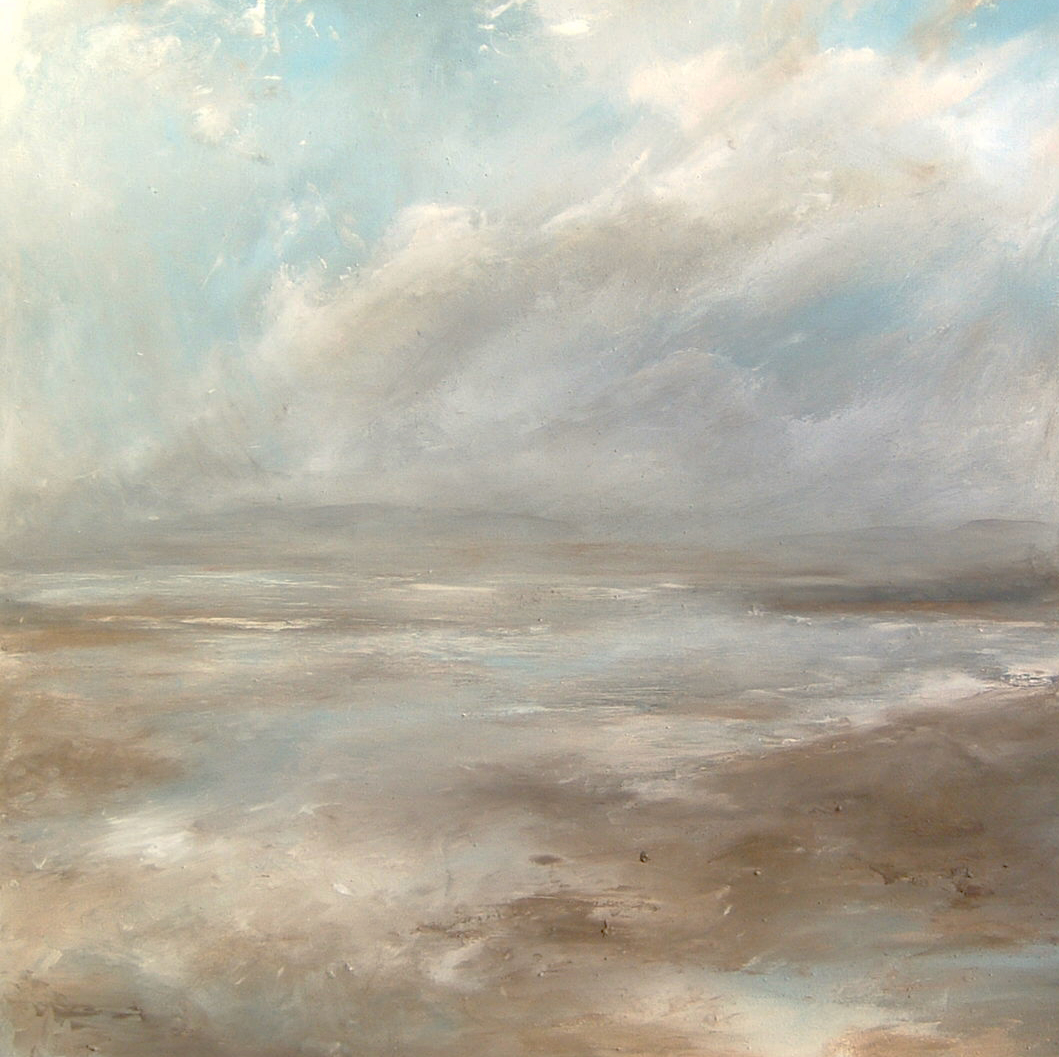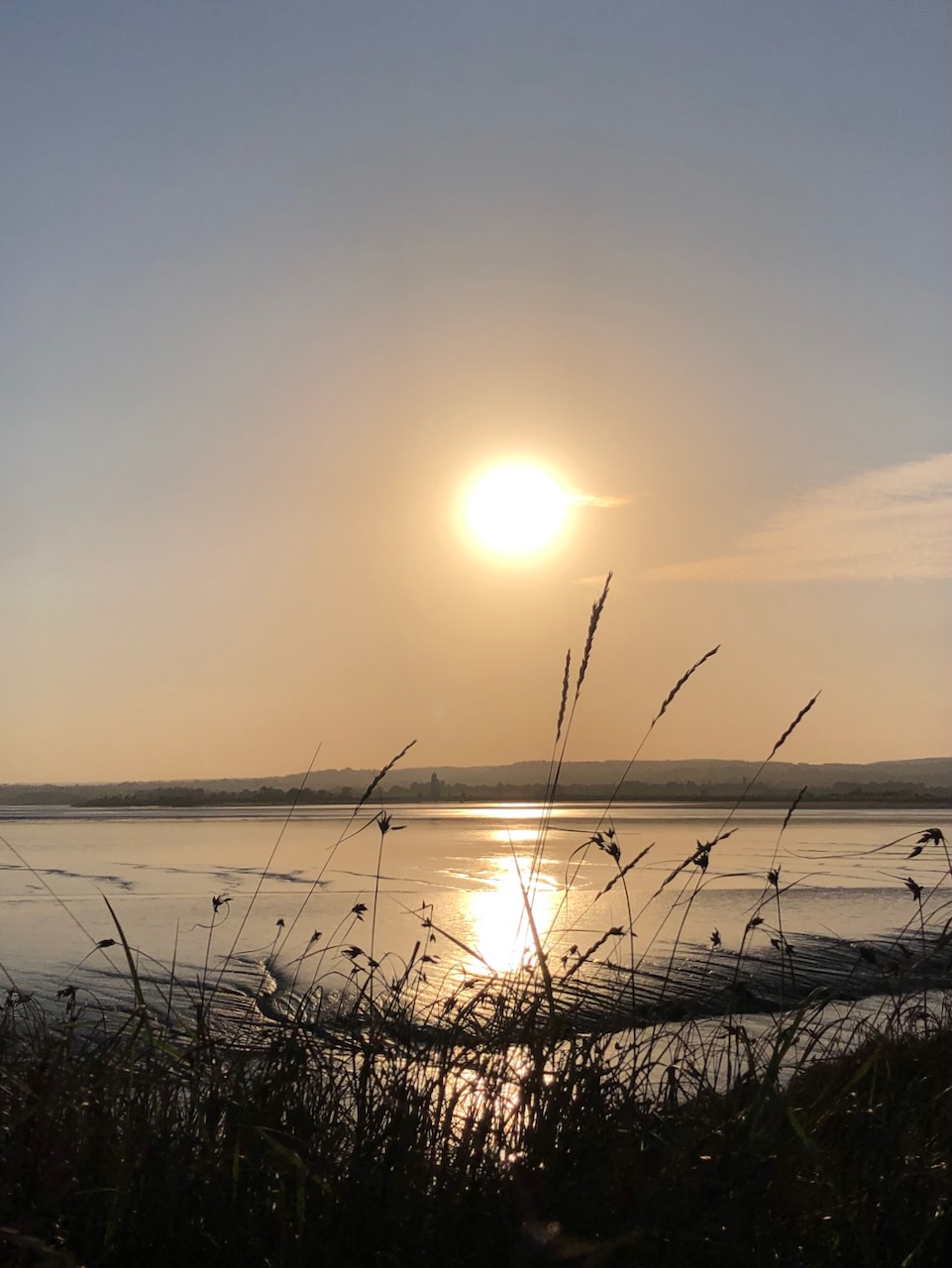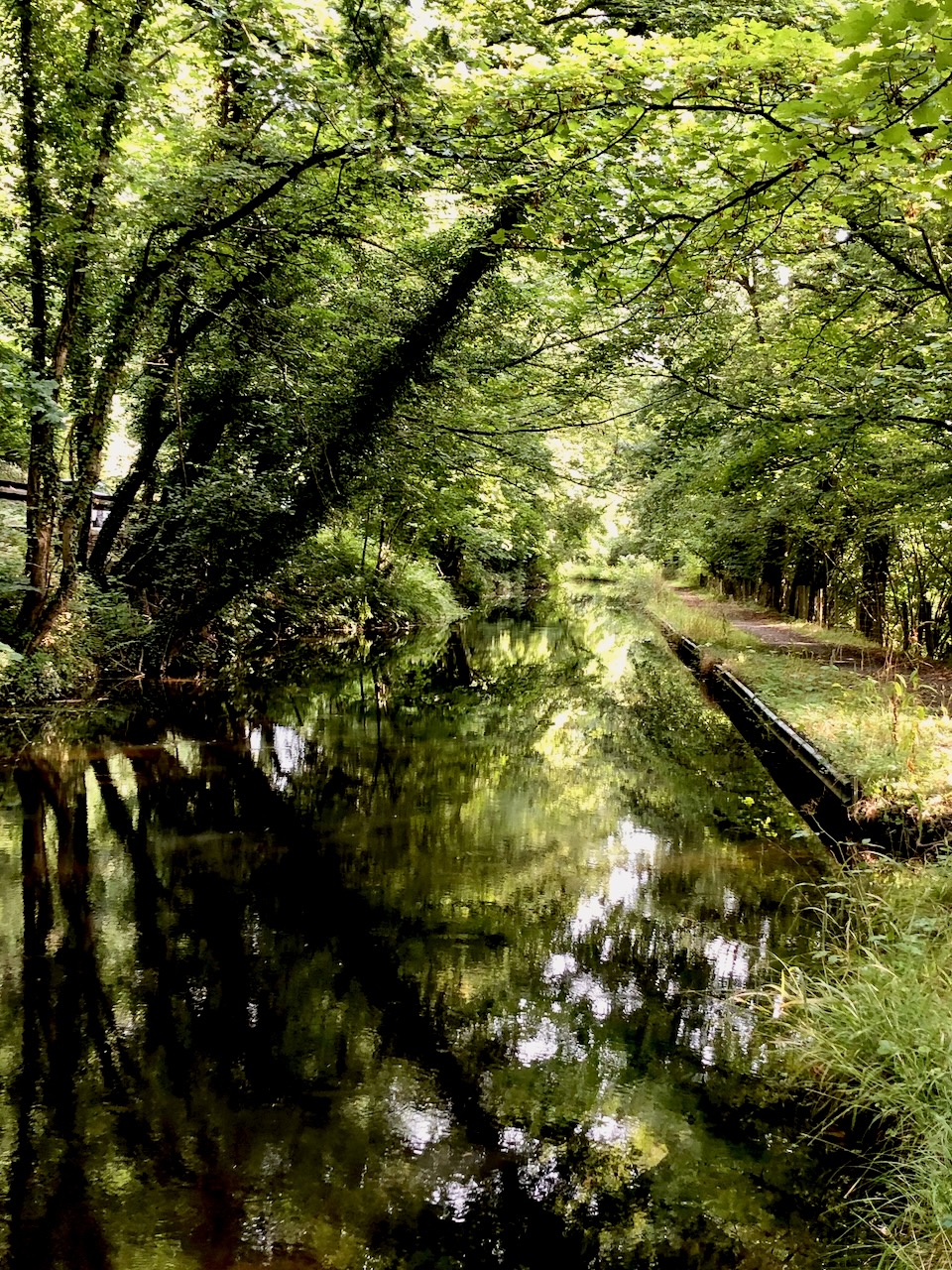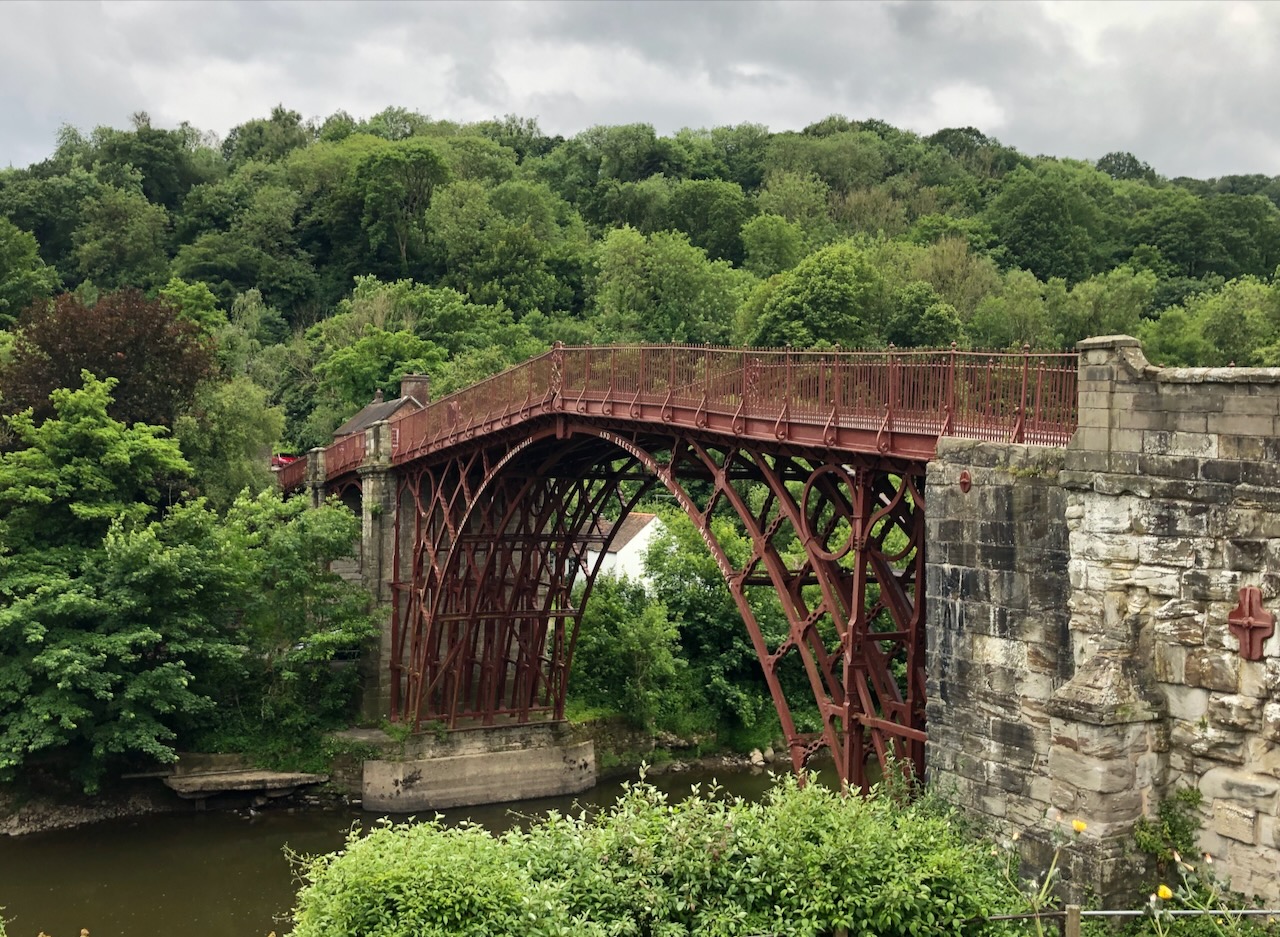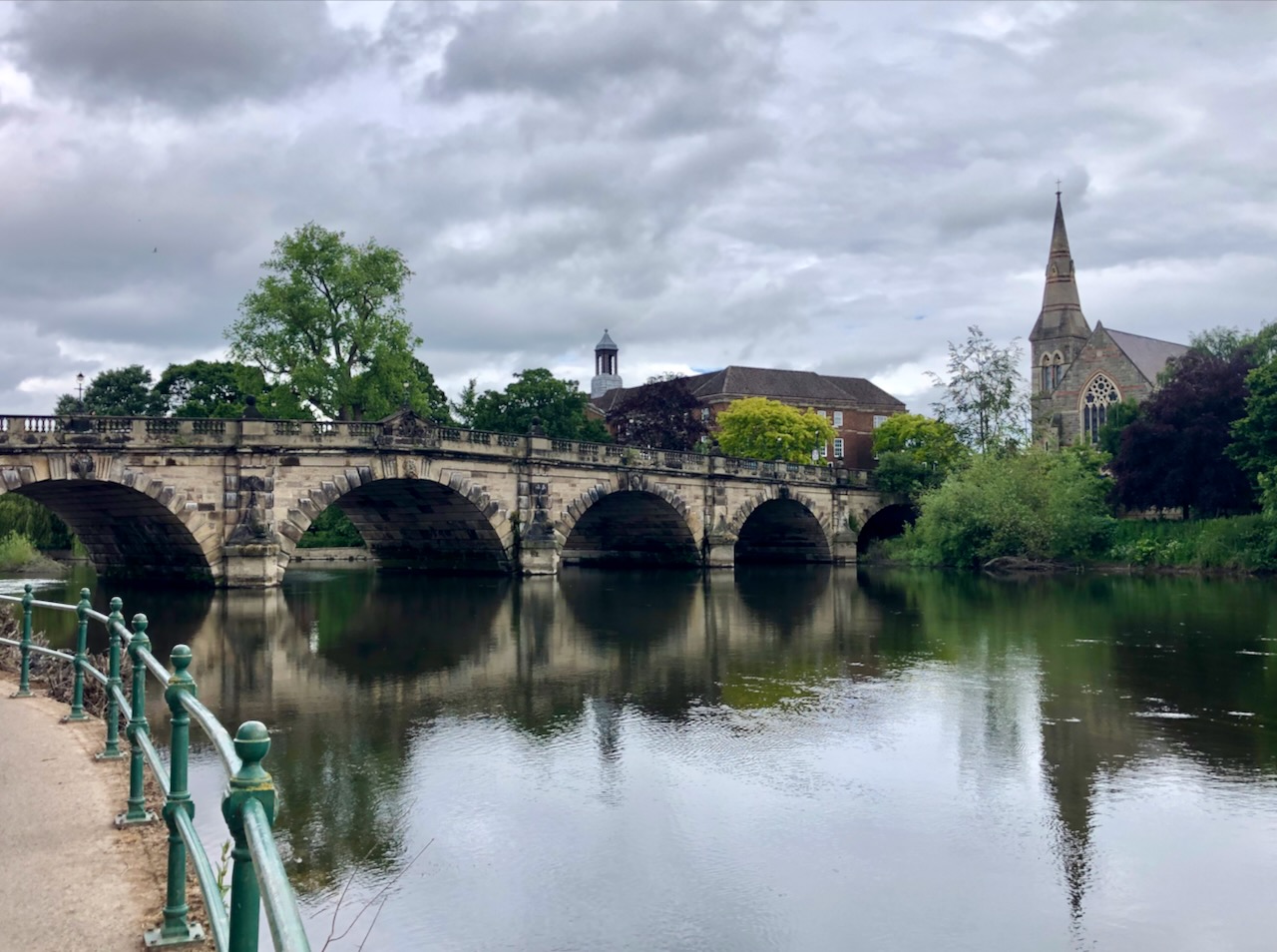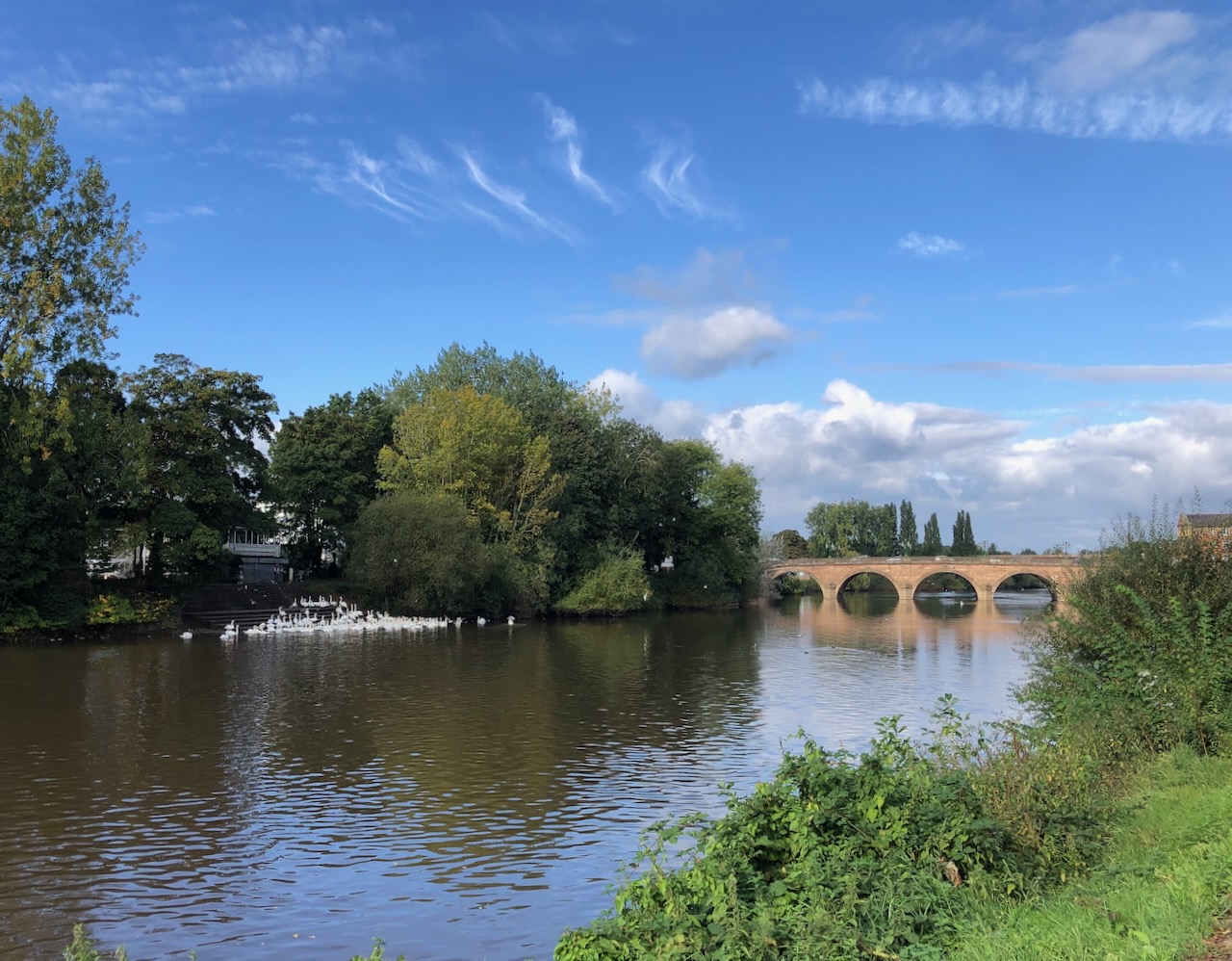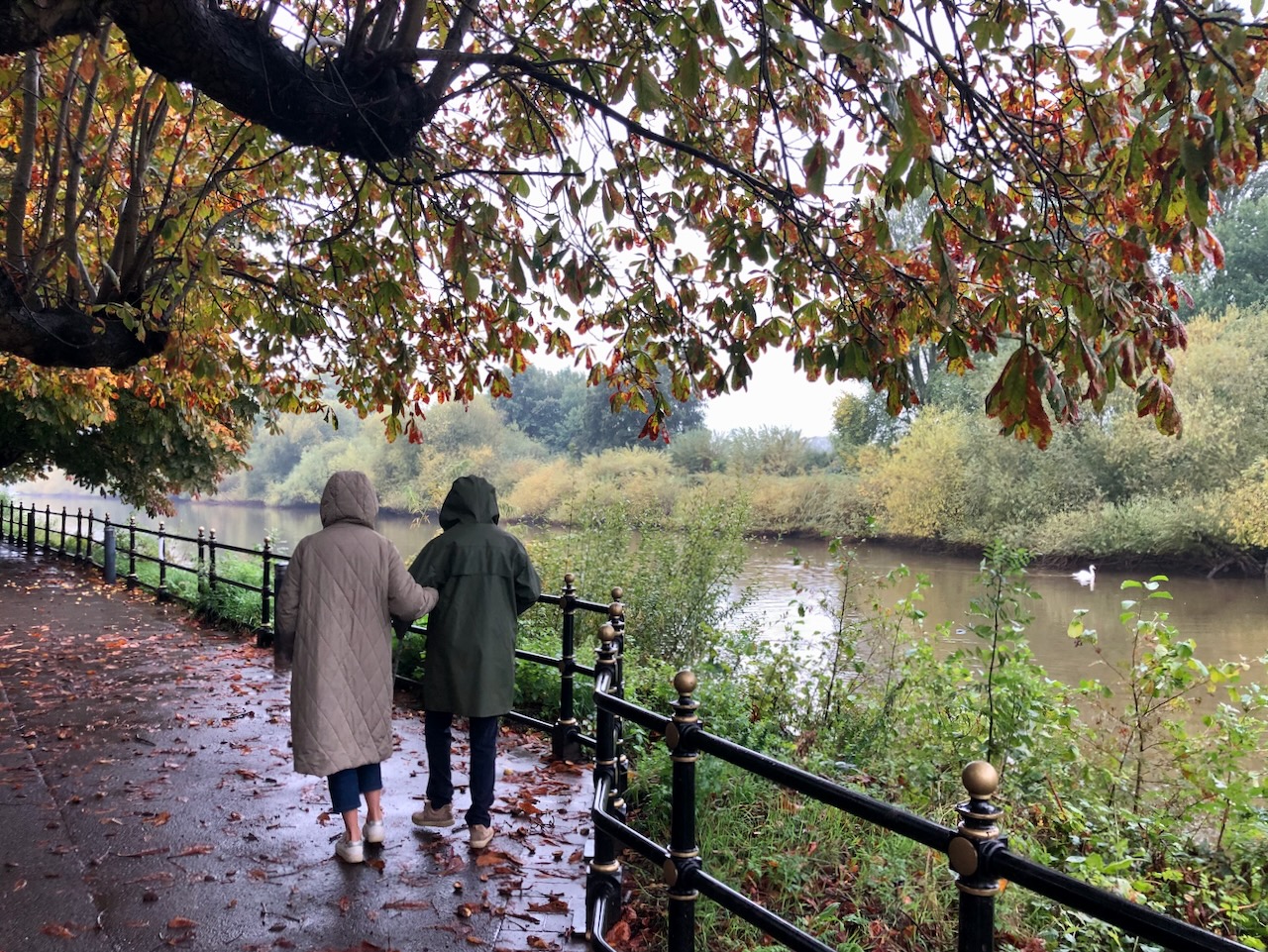
I associate the first half of September with painful muscle memories of returning to school for the start of the new academic year. That dreaded countdown to the end of the summer holidays… a slow but intense process of loss. Now it’s the waning warmth and hours of daylight. The demise of peaceful silence as the hum of activity and traffic re-clutter mornings. Leaves, not long ago the fresh green of youth, yellow and fall like aging teeth while flower heads darken and shrivel shedding their petals like hair.
(As you can see, my mood and thoughts plummet in September! Early September that is. It gets better though, if you care to read on…)
Expanded thoughts stretching lazily into the great outdoors are reined in. Earth’s gravitational pull sucks sap and life forces back into its bosom, simultaneously draining me of mine. I grieve the death of summer. My optimism falters. It requires an act of will to stop my spirits from sinking into a deep, weary sigh.
Dying… death, the sole inevitable event in each of our lives, yet about which we know so little and only talk reluctantly.
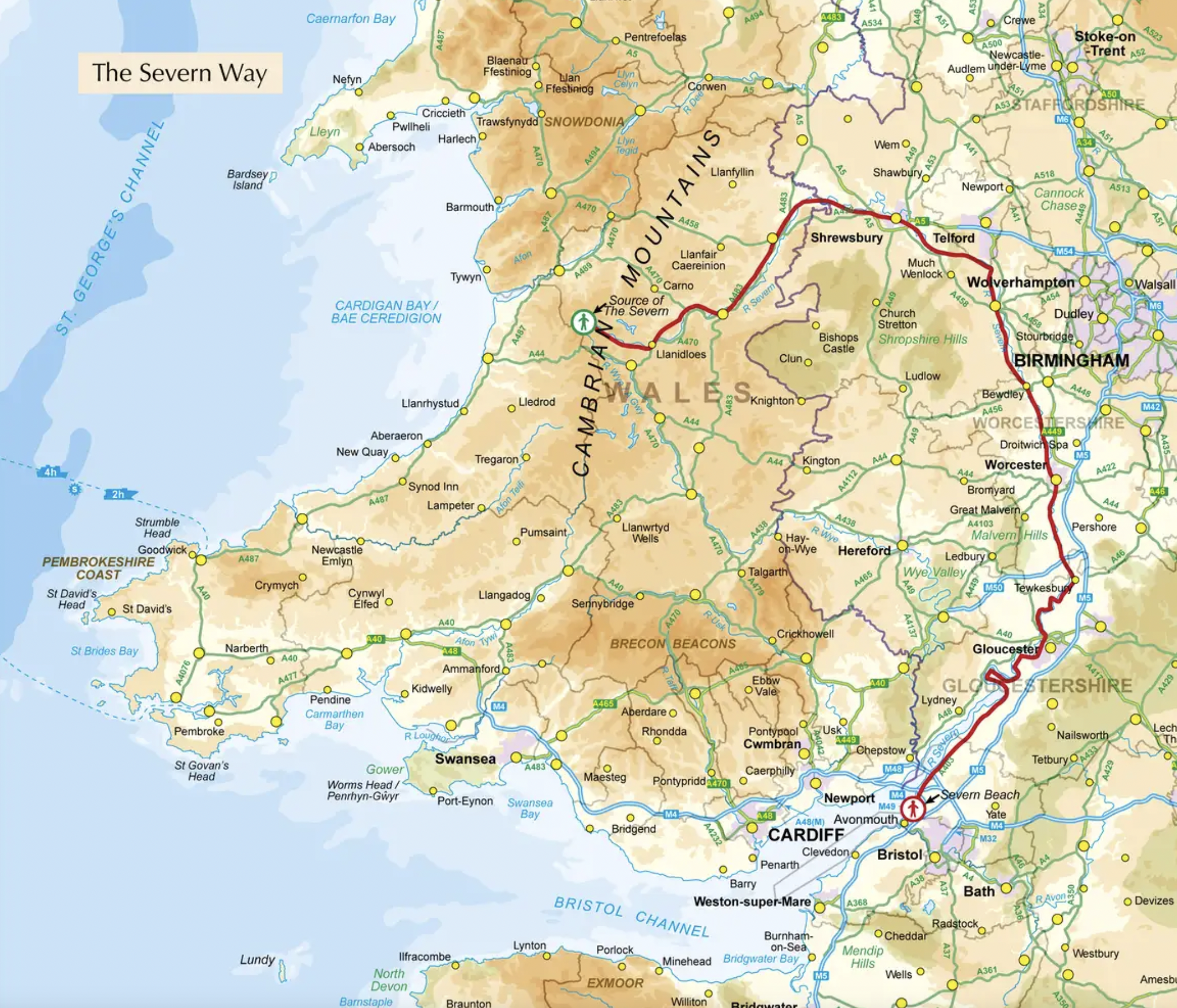
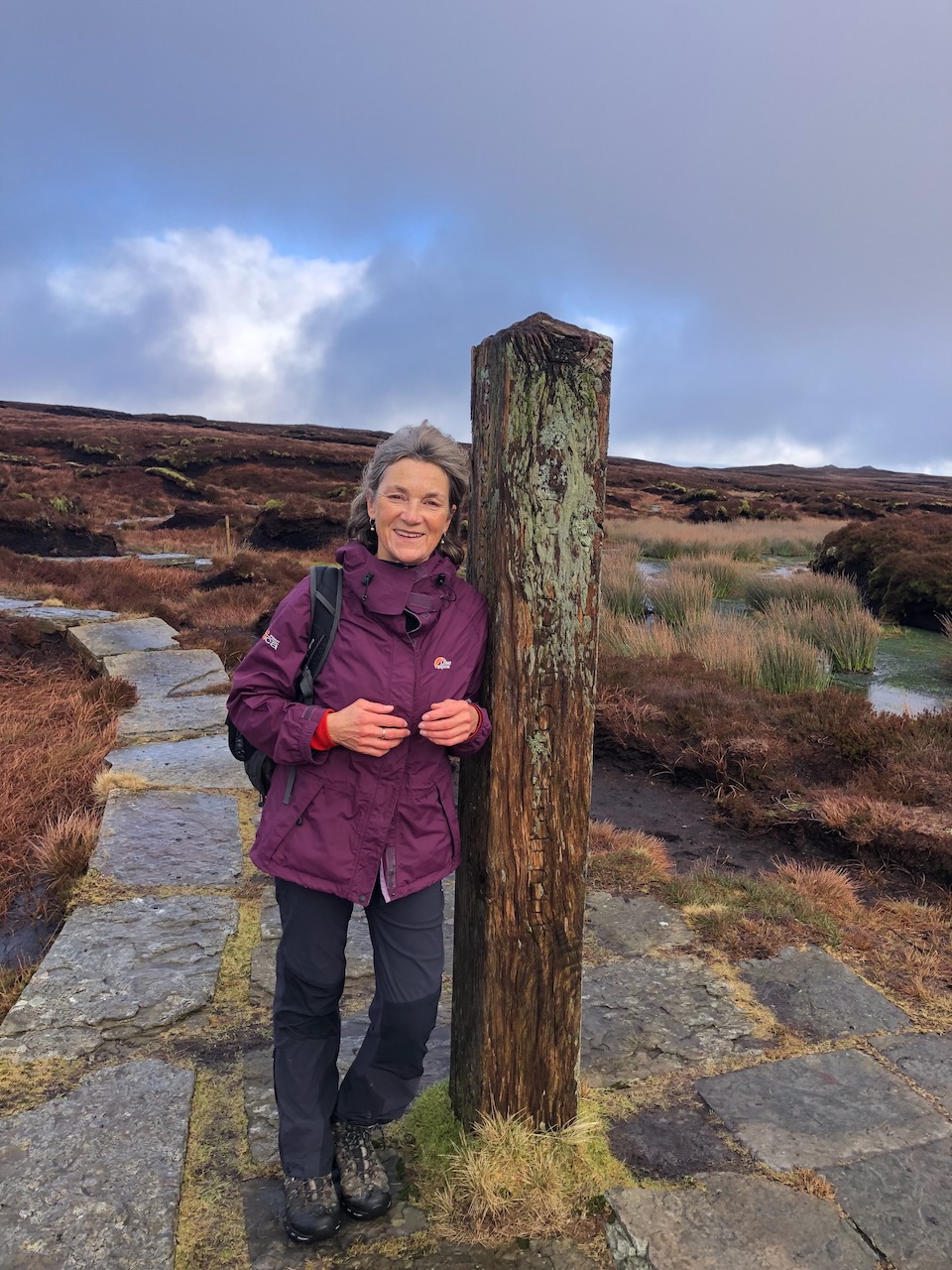
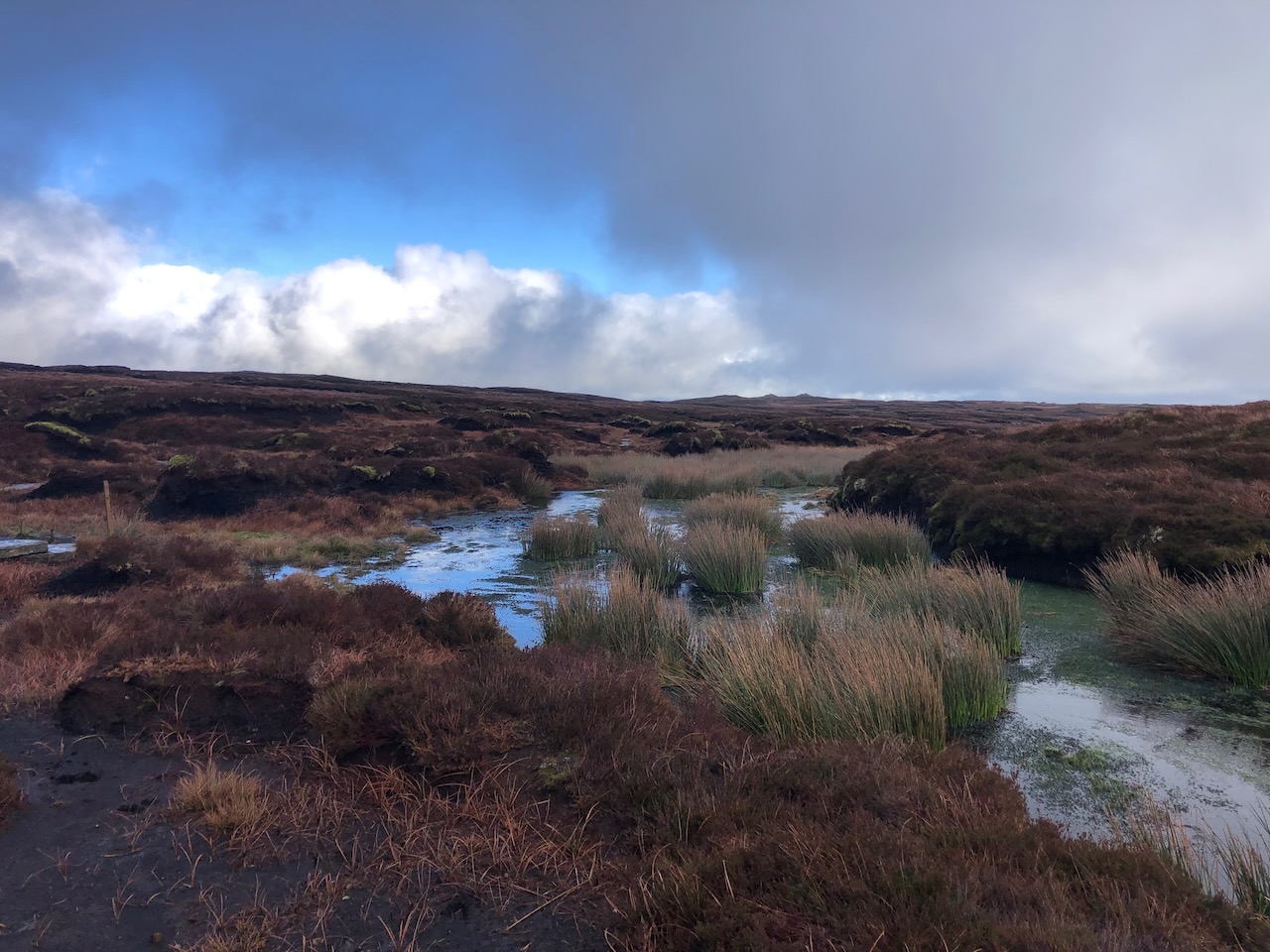
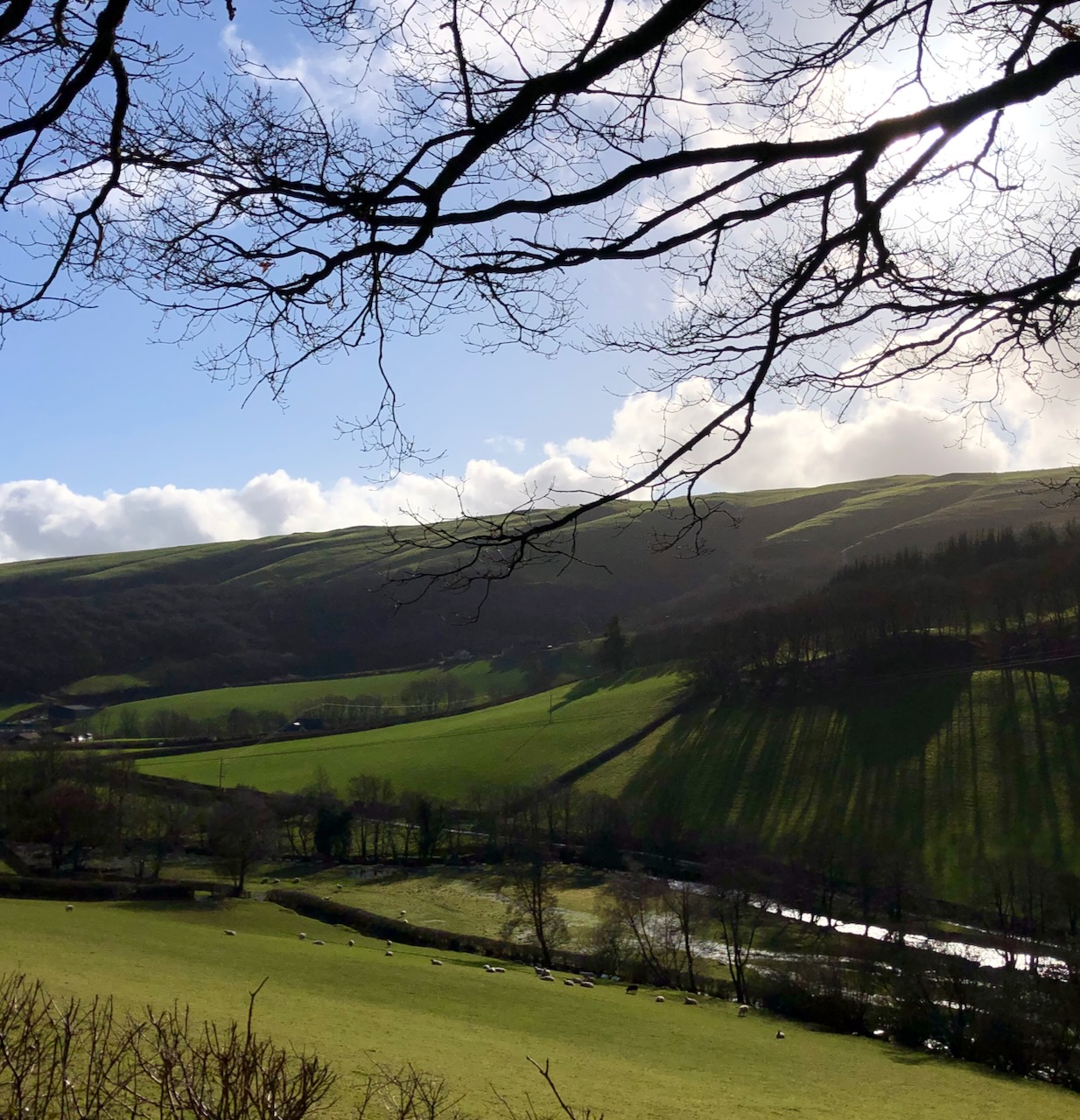
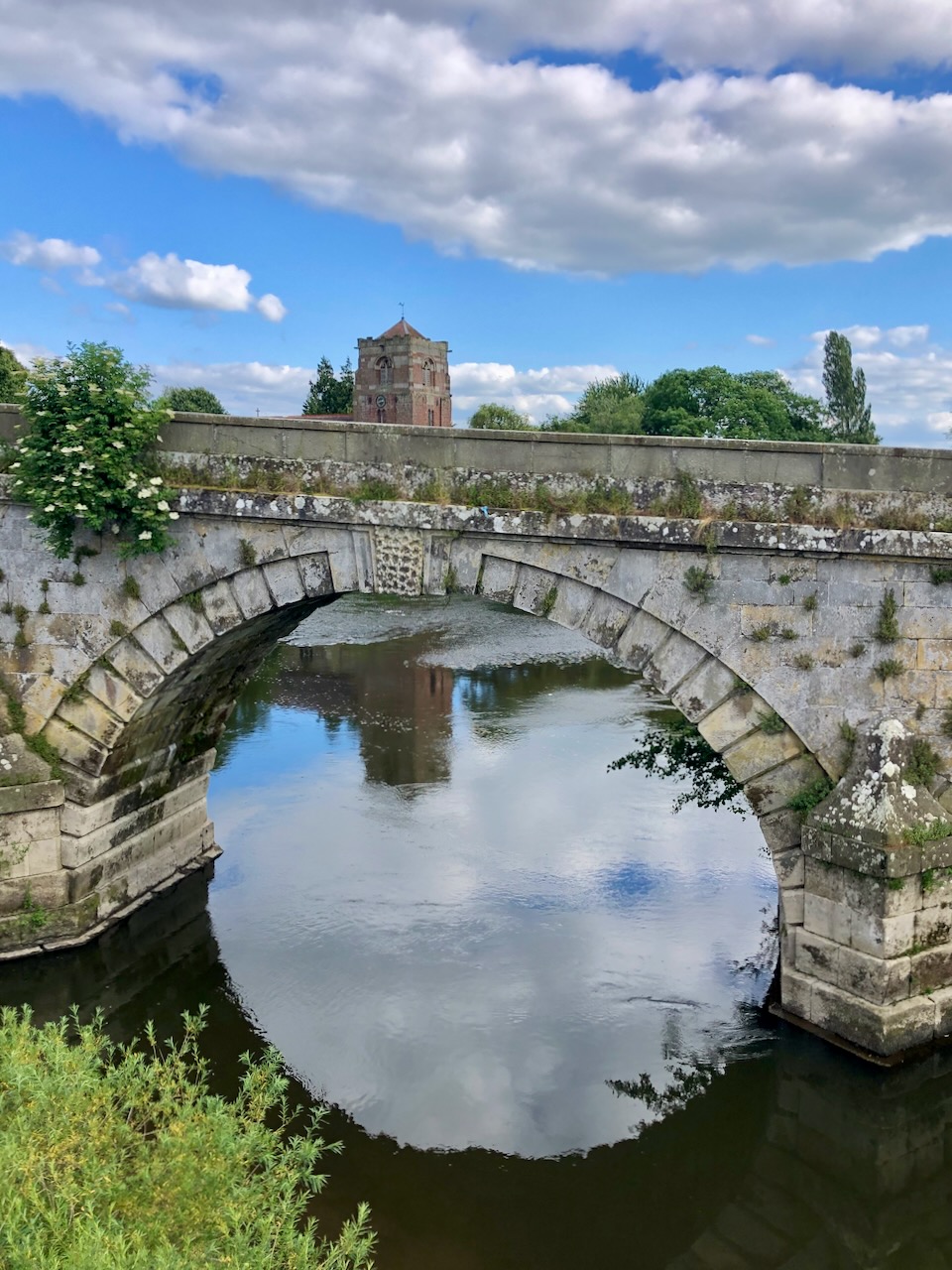
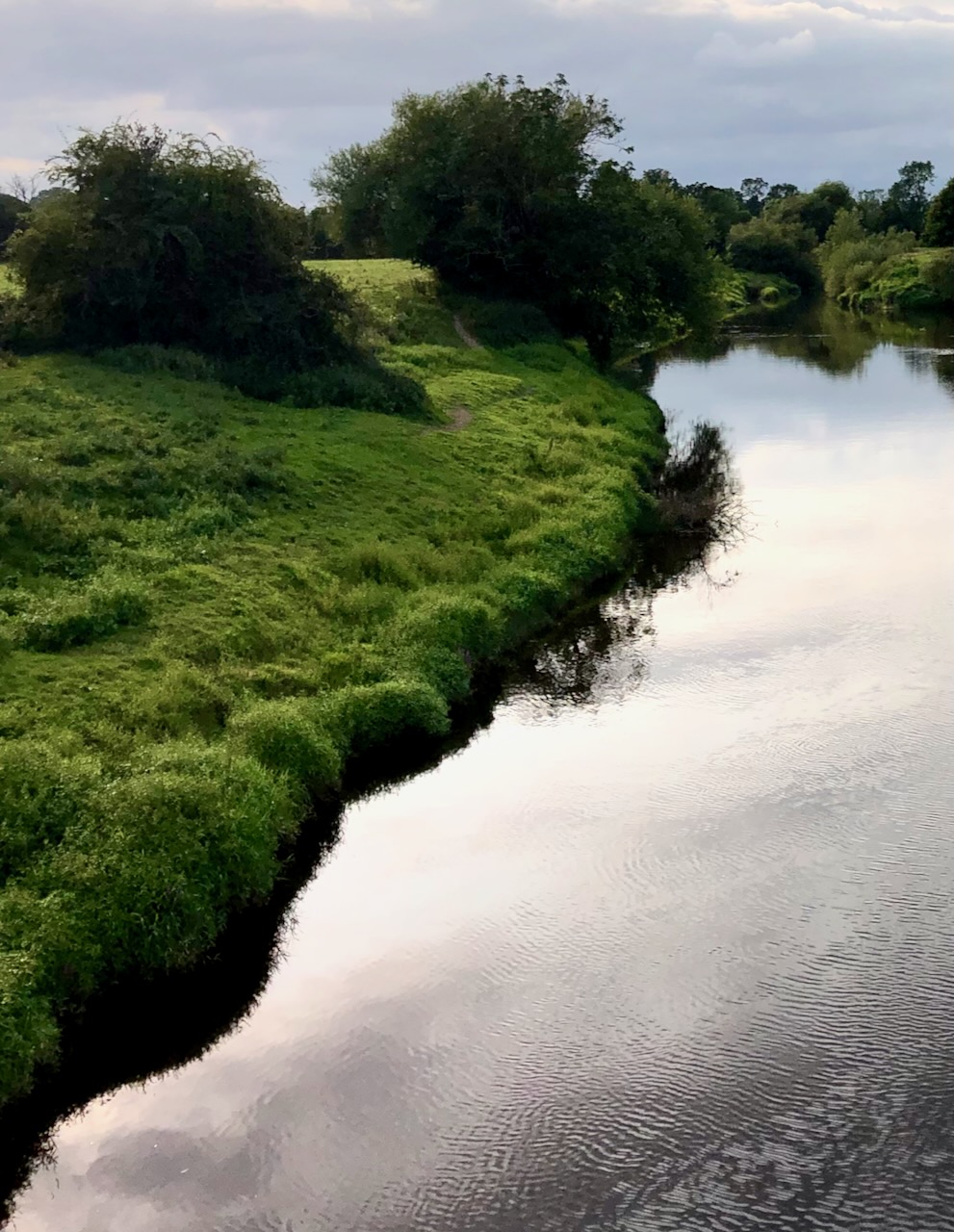
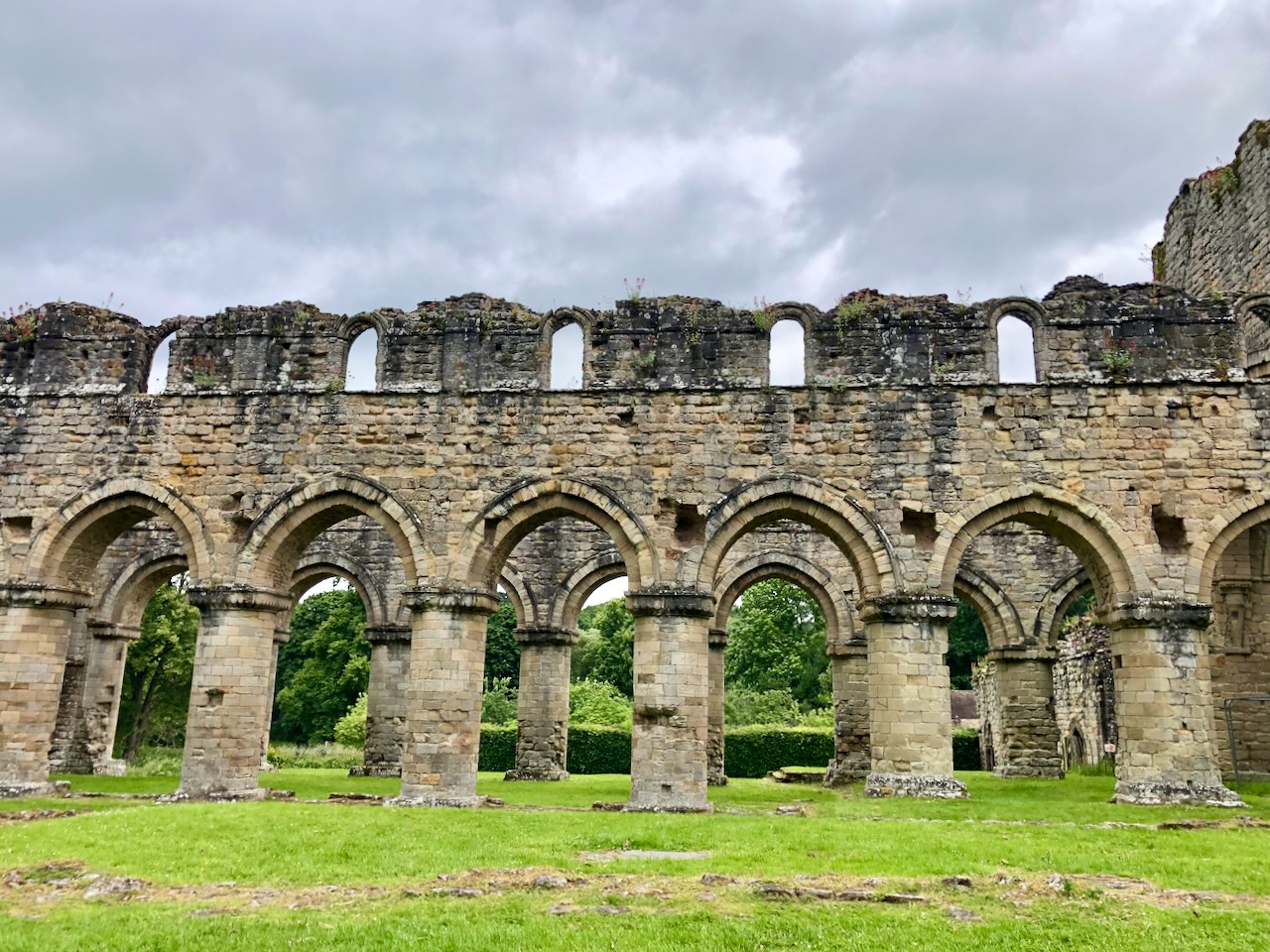
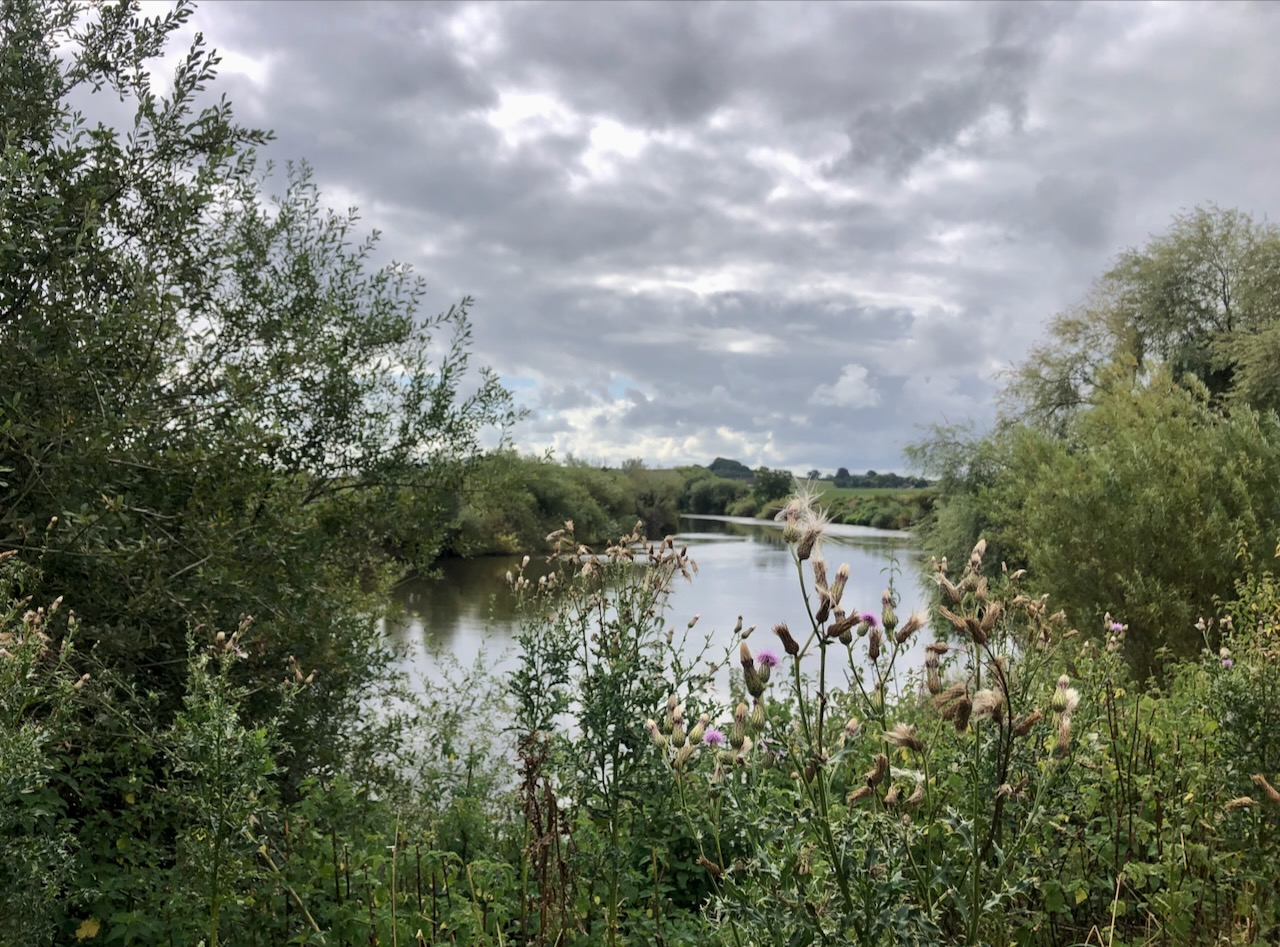
As if mirroring the fading light and life in nature, death in various guises fell close to home during the last months. The natural passing of a dear, elderly godfather. The sudden, wholly tragic demise of the 14-year-old son of close friends of my sister’s family. Further afield but landing in our days nonetheless, the nameless numbers of violent deaths from conflicts or upturned boats. And in my regular dips into churches and cathedrals while walking the 215-mile Severn Way, I encounter those who have long gone, some preserved in perpetuity in grand tombs, others lost in overgrown cemeteries.
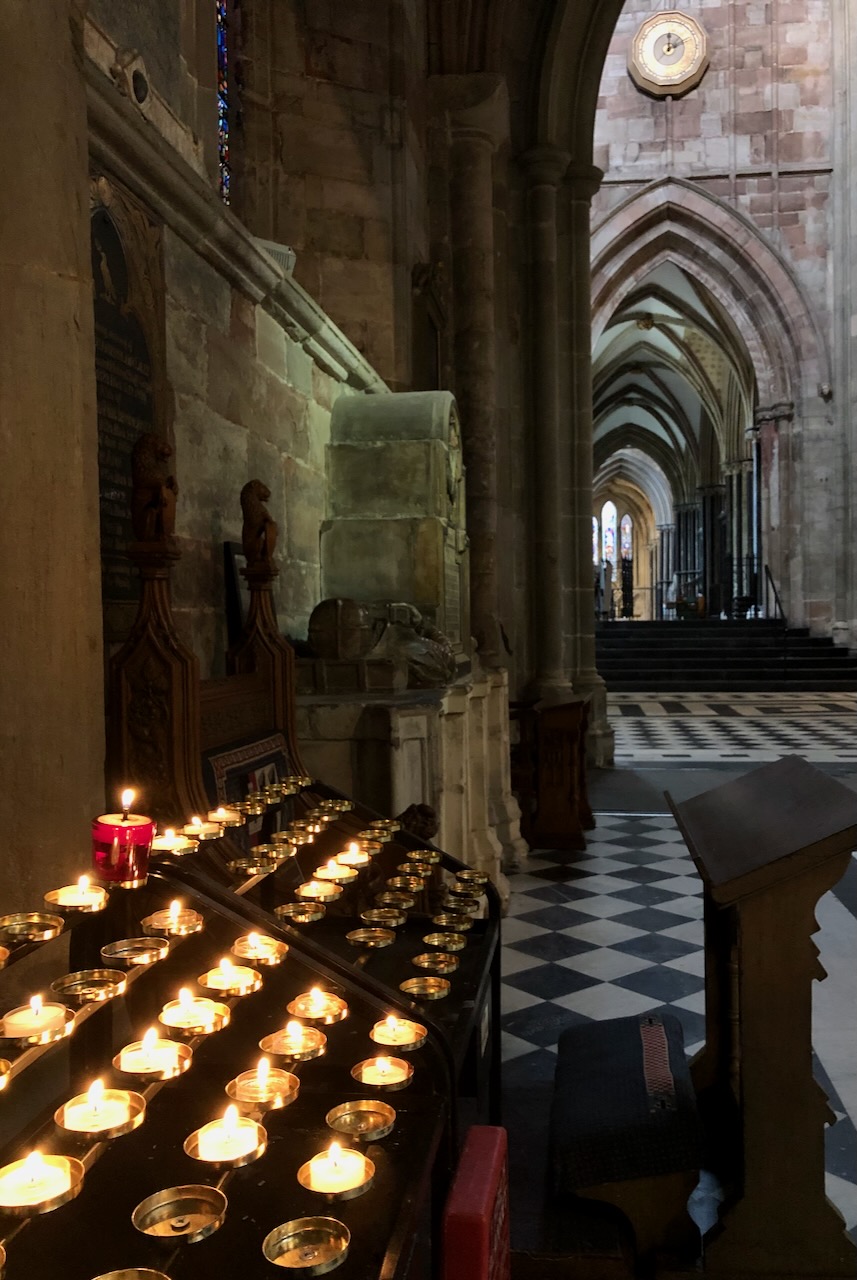
Worcester Cathedral
Still clinging to my scanty summer wardrobe while shivering in stubborn refusal to turn on the heating, everything changes for me as we pass through the portal of the Equinox and turn the corner into autumn. The sense of loss and gradual dying shift into a graceful letting go; an embracing of our interior worlds and the gifts of the encroaching darkness that, like the tide, cannot be stopped. The worst period of mourning is over.
Earlier this week I was privileged to witness a beautiful example of joy and laughter in the wake of loss and grief. It came in the form of a fellow visitor to the Museum of Royal Worcester. Cabinets of china artefacts do not belong to my usual aesthetic, but I was there with my 90-year-old mother for whom they do. In a far room, sitting at a table covered in brushes and bottles of ceramic paints, a woman, maybe in her sixties, sat with her head bent over a bare clay mug impressed with an owl design. I soon learned that she had come here to honour her late parents, with whom she had always lived, in the most profound way she could think of. As lovers of porcelain themselves, they would have been beyond overjoyed to see the cups, bowls, vases and ornaments on display. Now, she was painting an owl mug for each of them, carefully outlining the wings in darker slip and stopping her excited chat to concentrate on the beak or pupils. She shone with the simplicity and profundity of her action. It touched me deeply. She was doing a far better job of overcoming a far greater loss than I had been with my summertime blues.
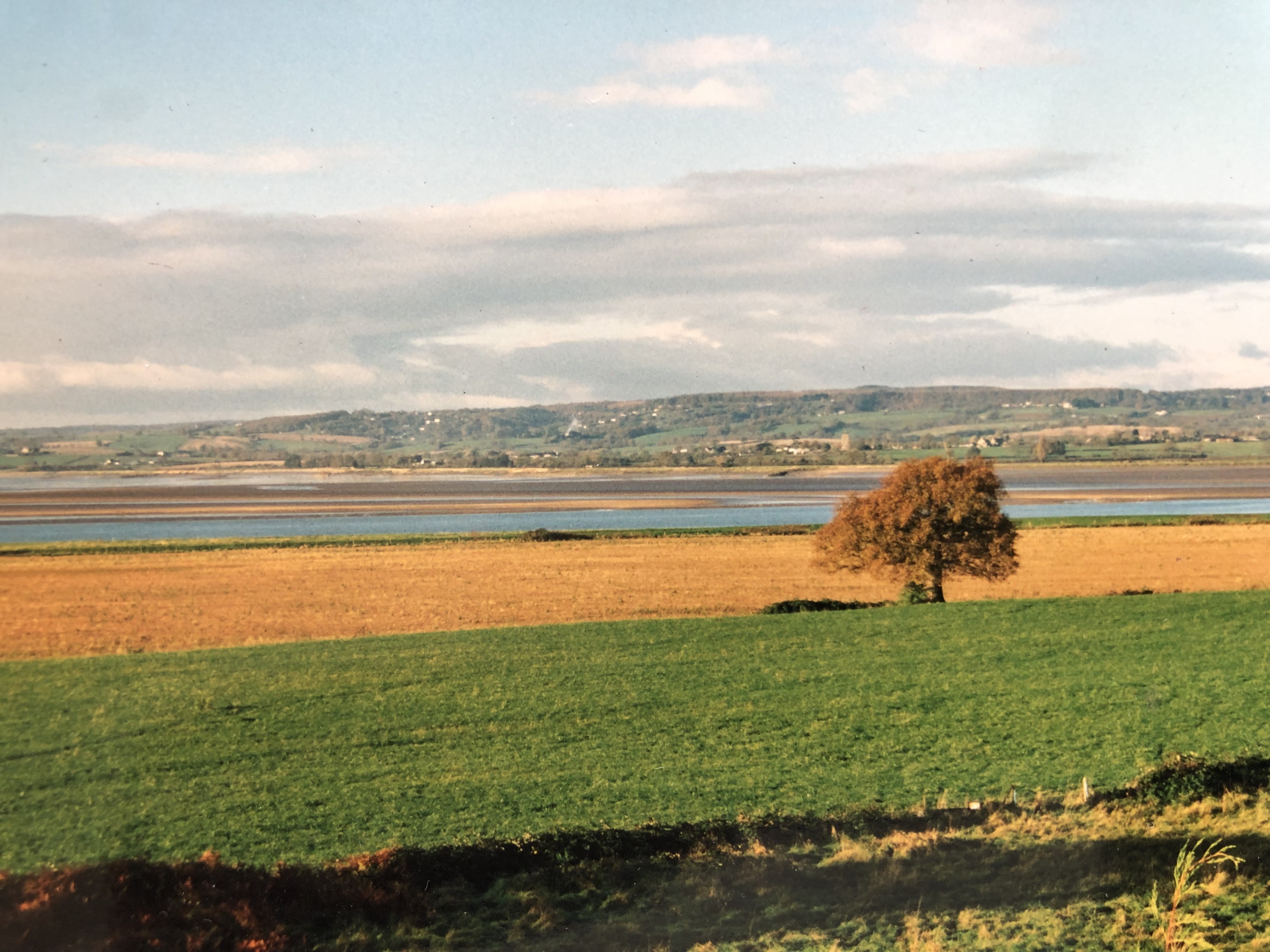
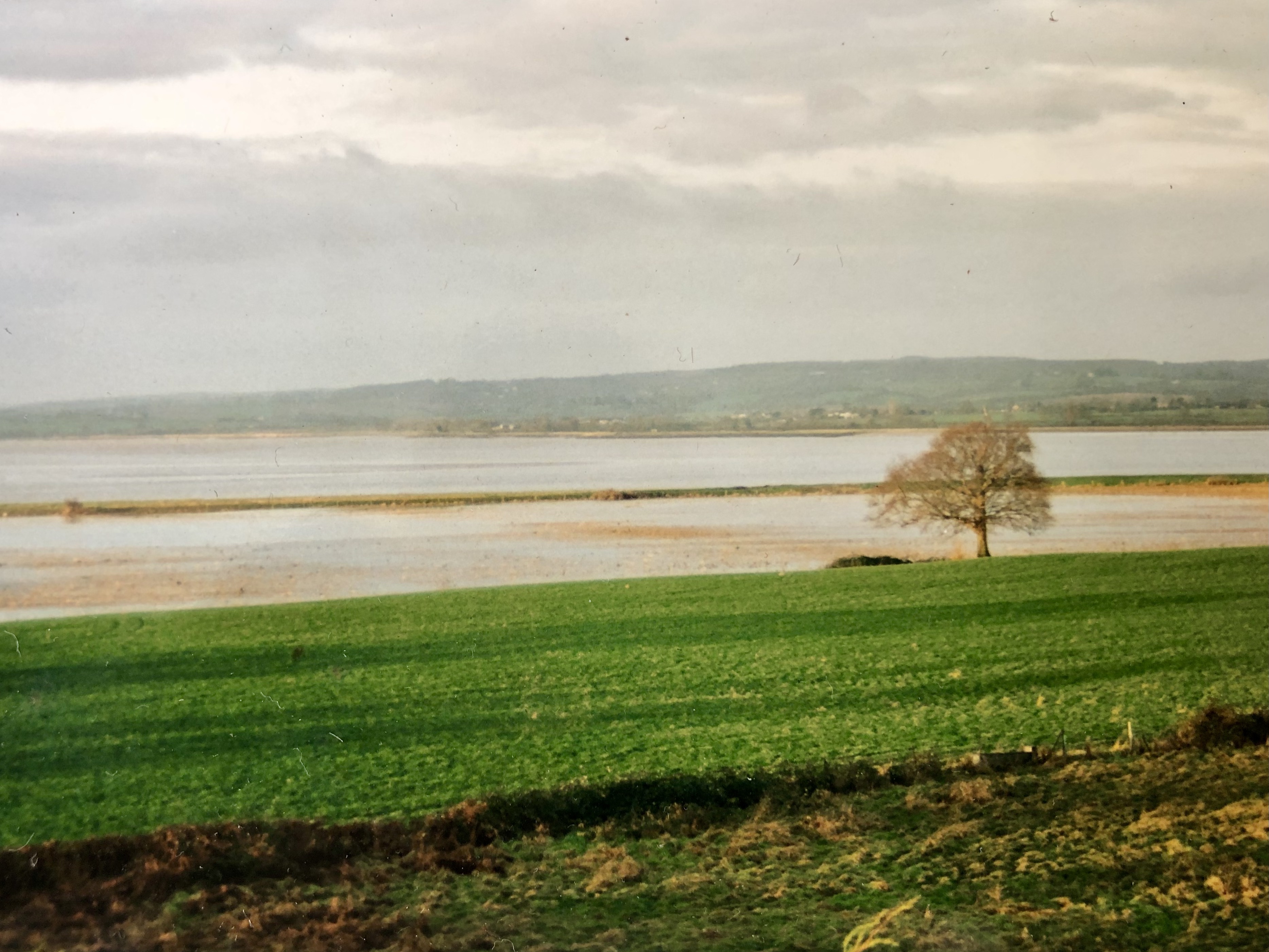
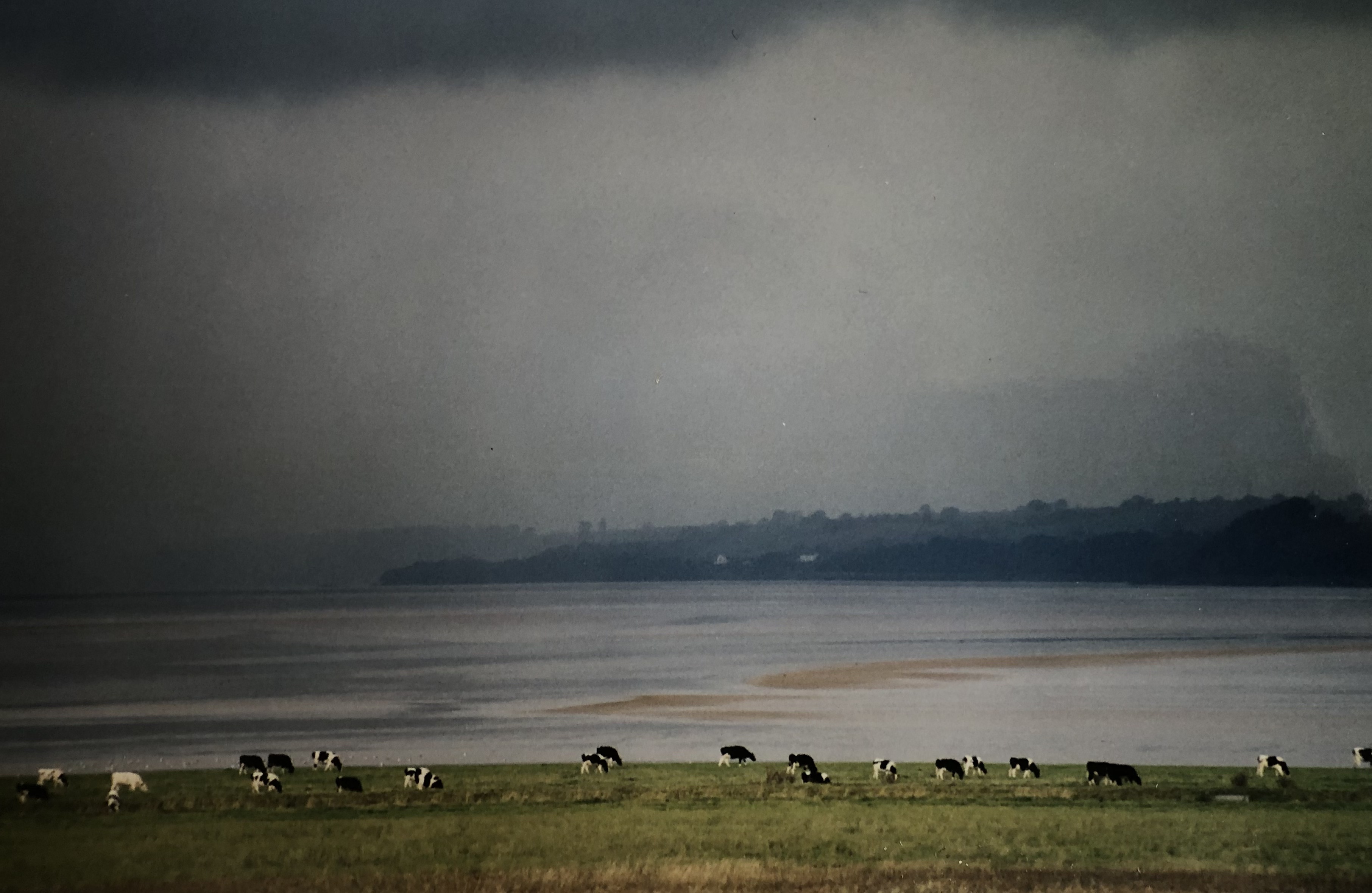
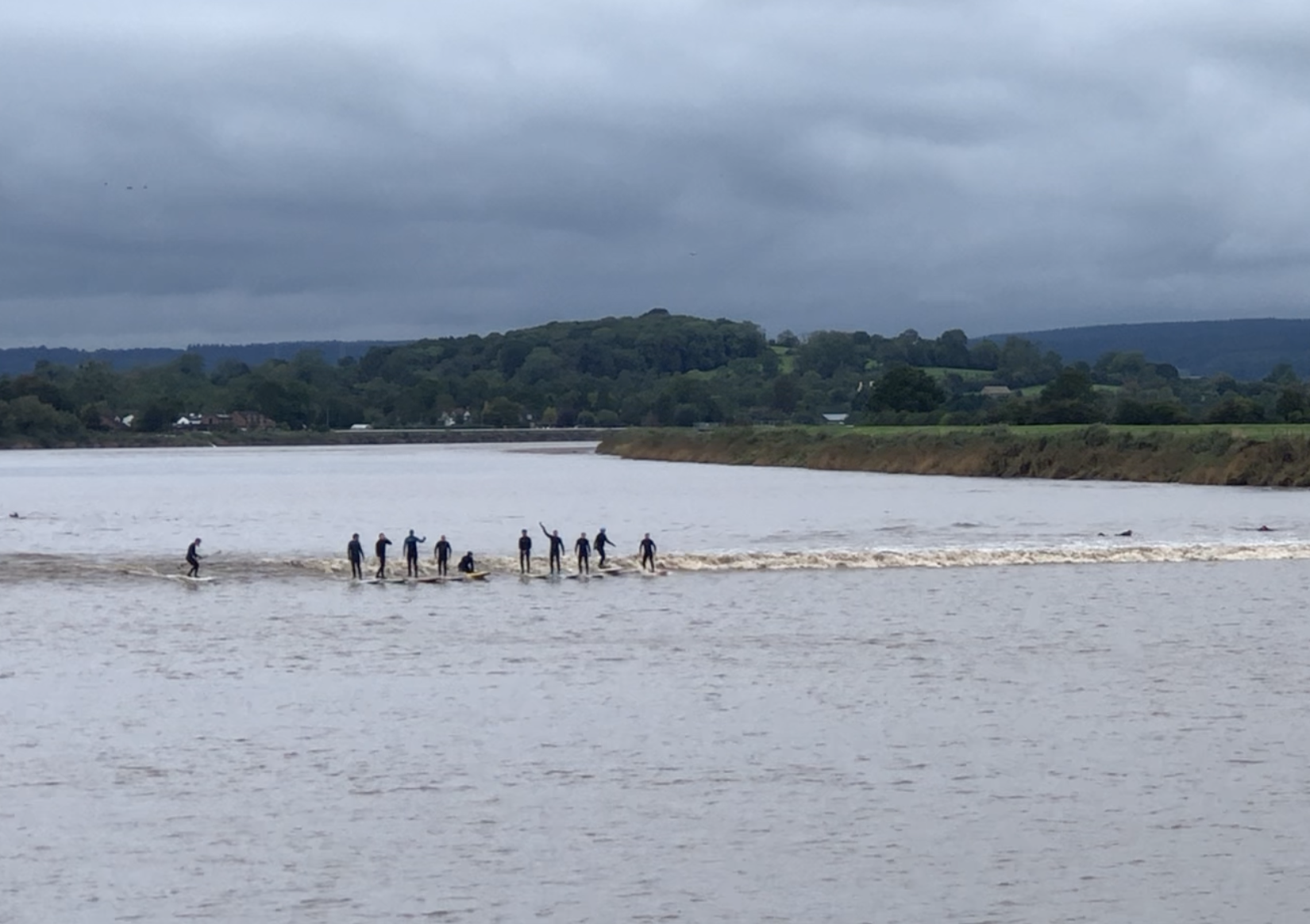
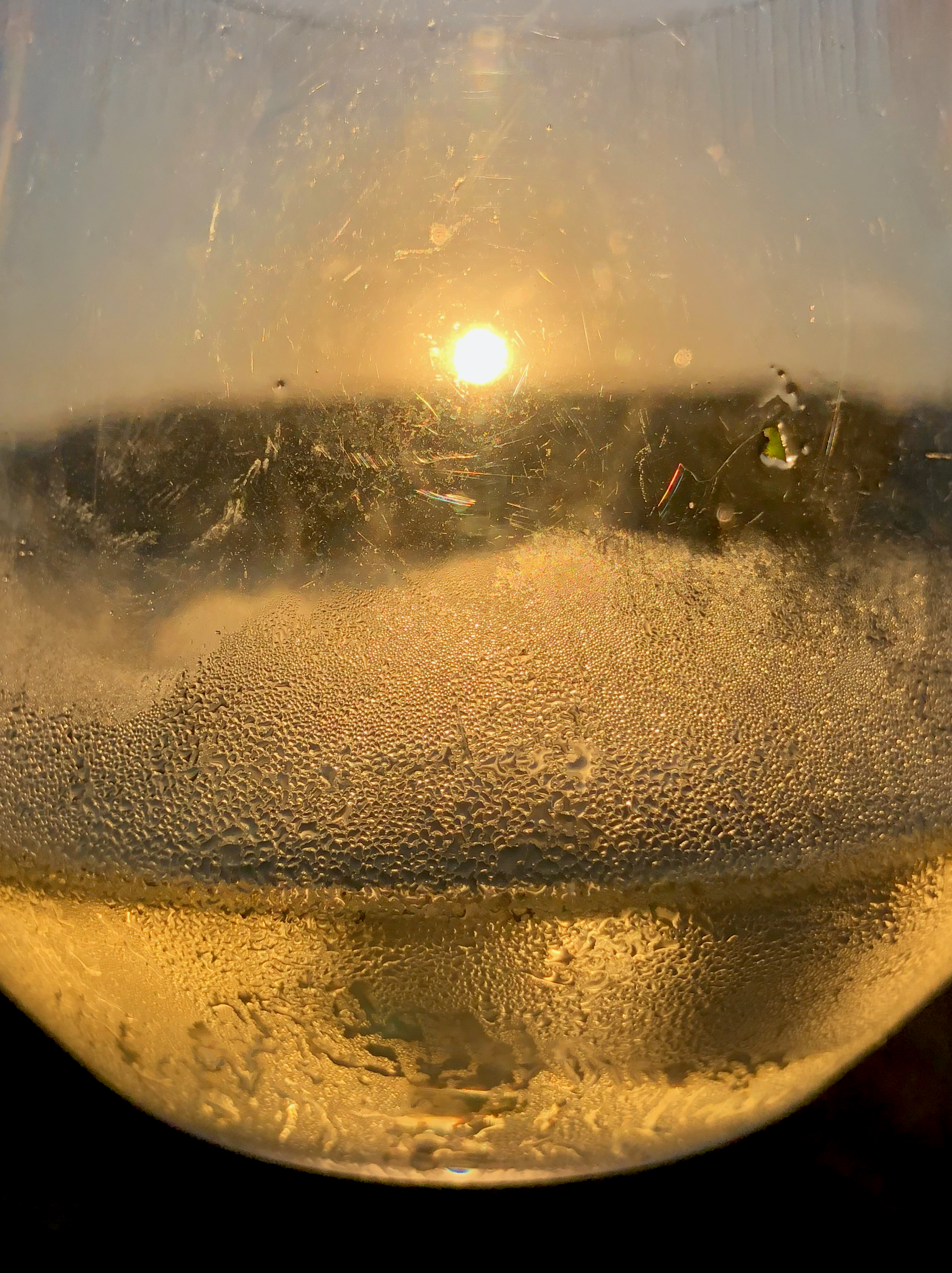
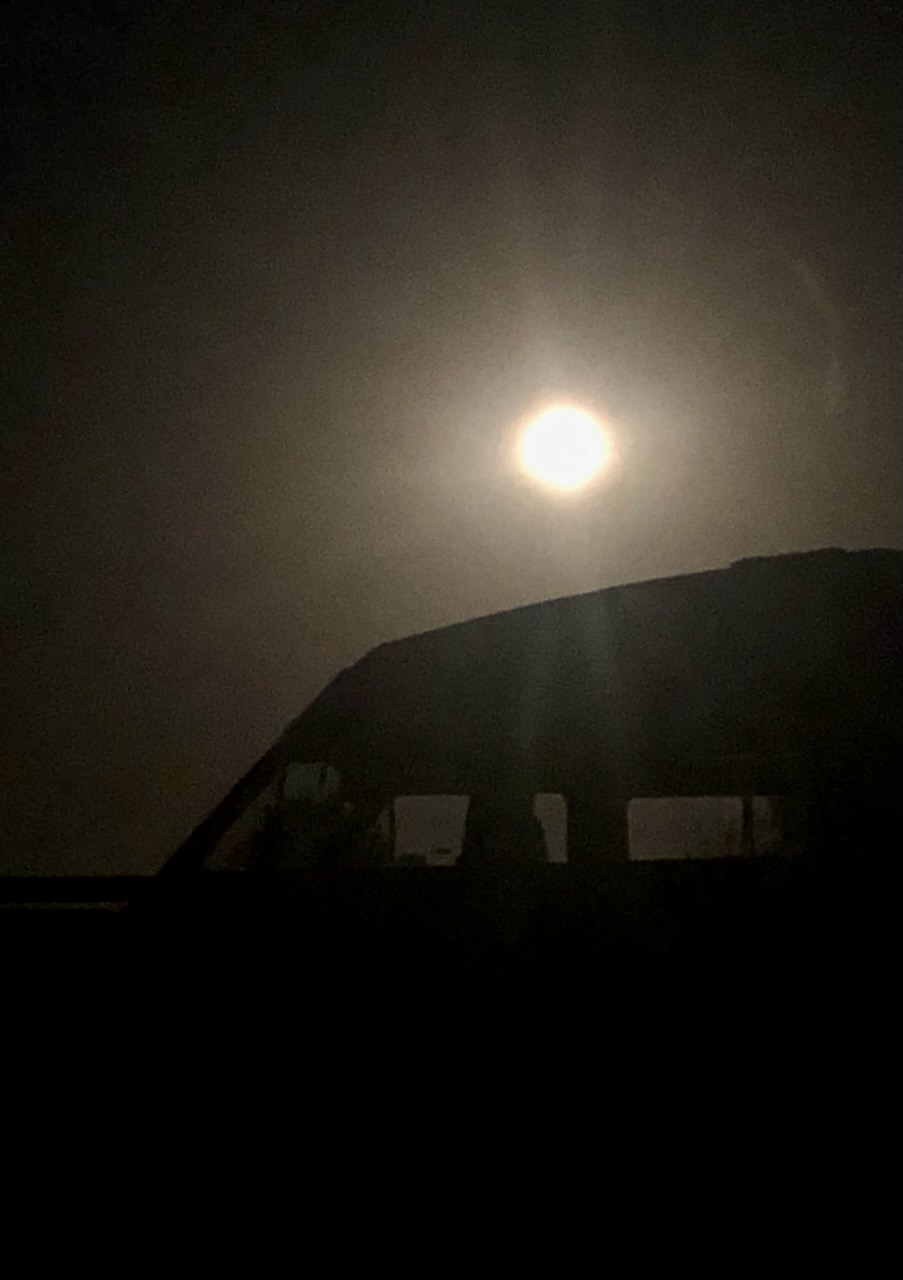
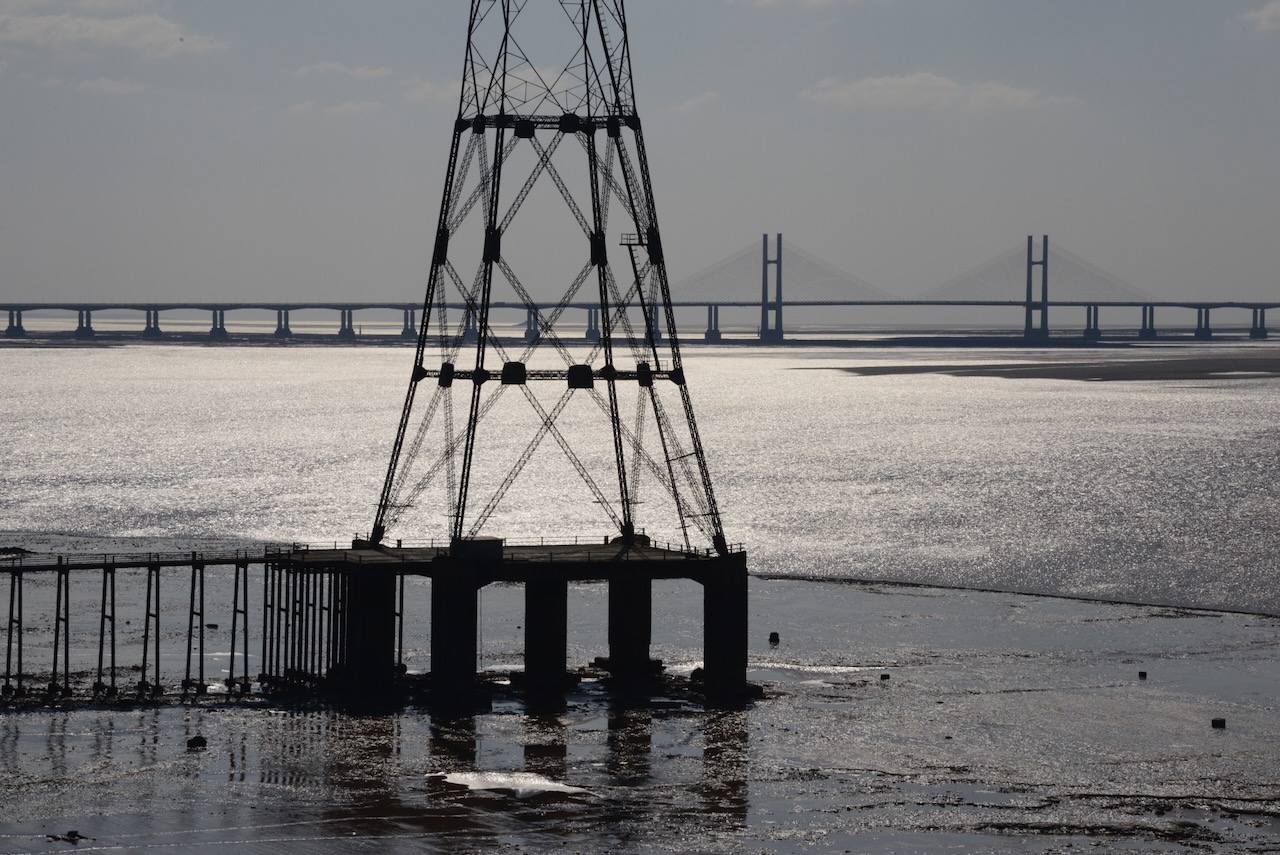
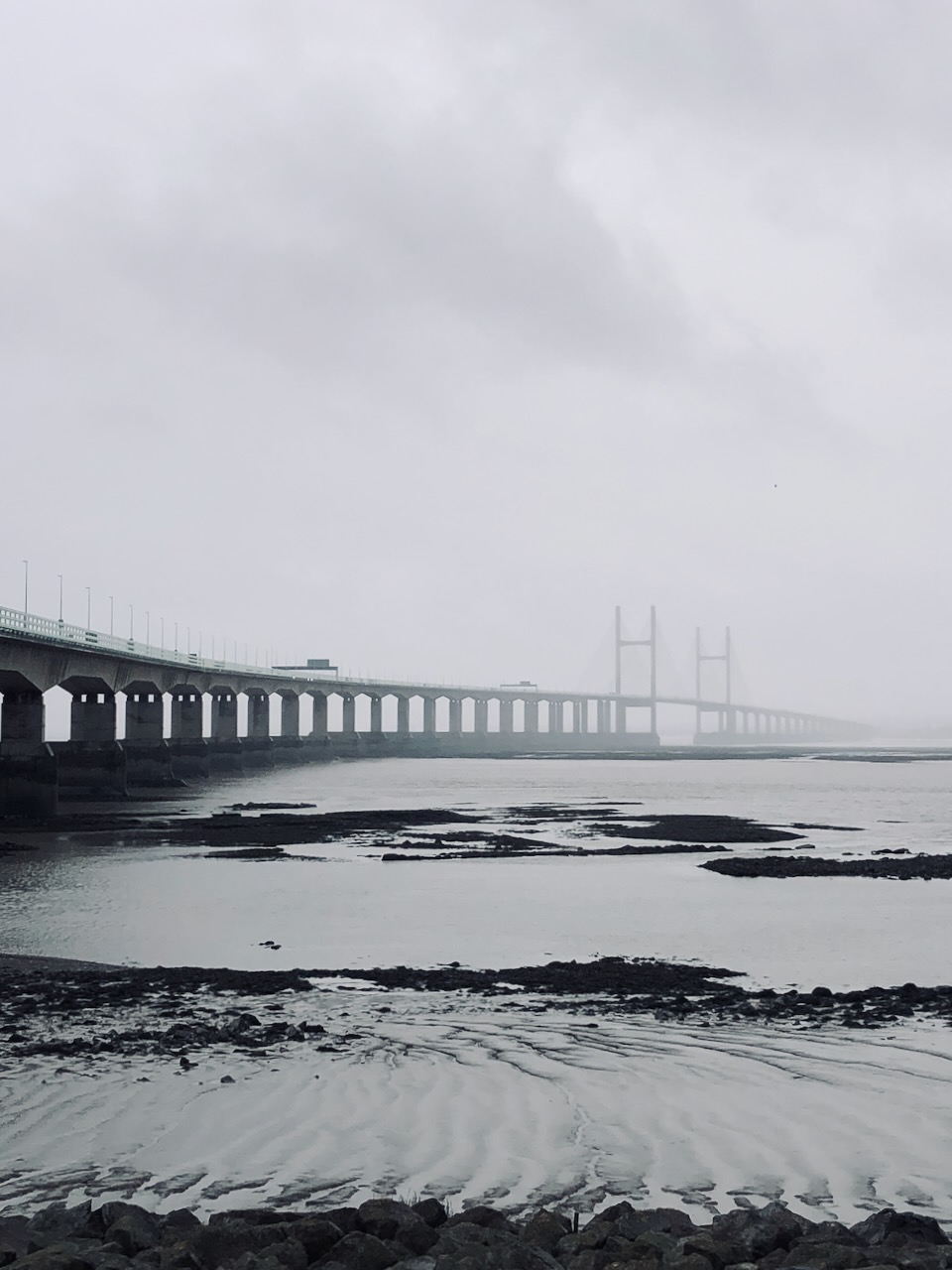
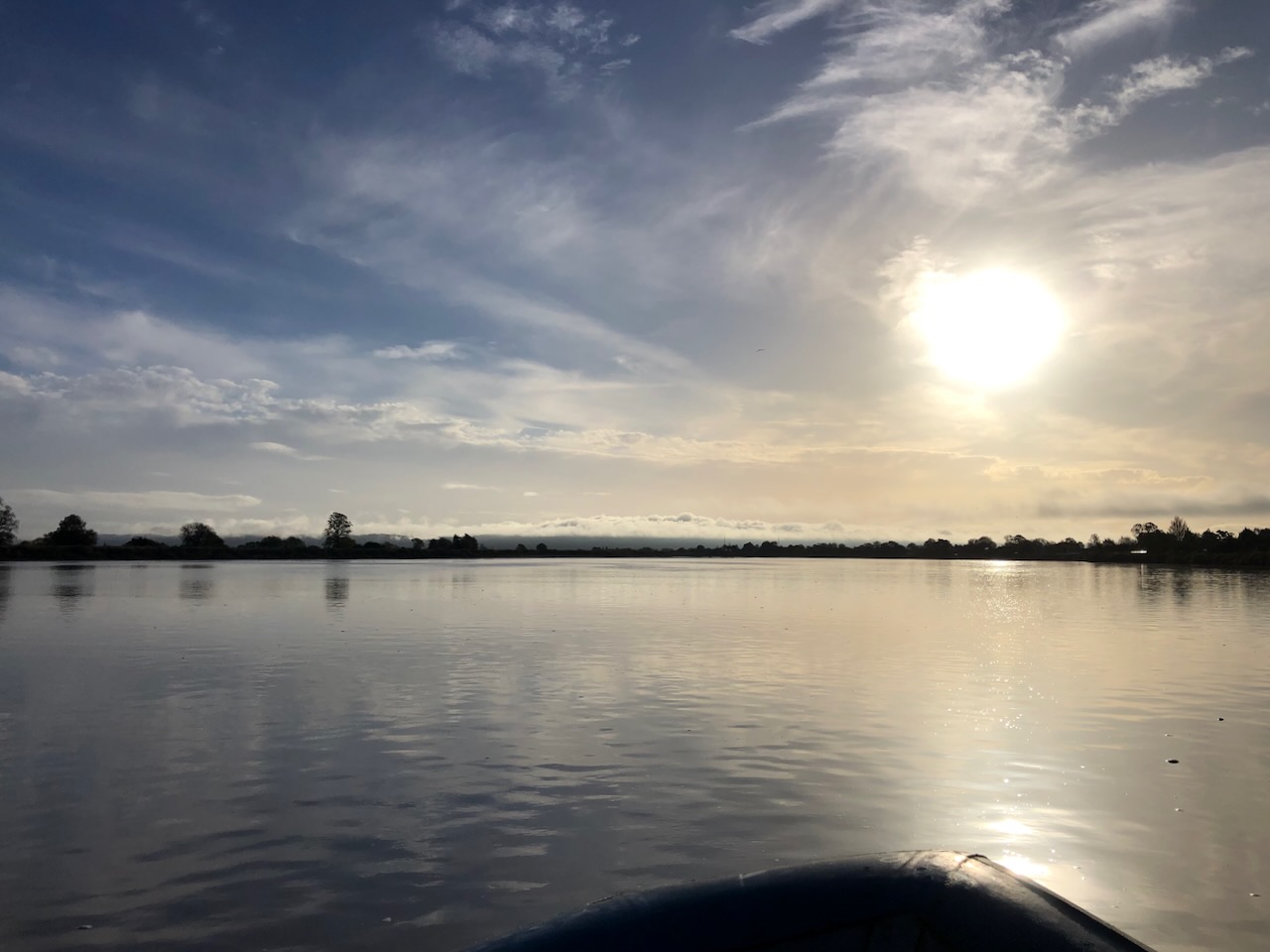
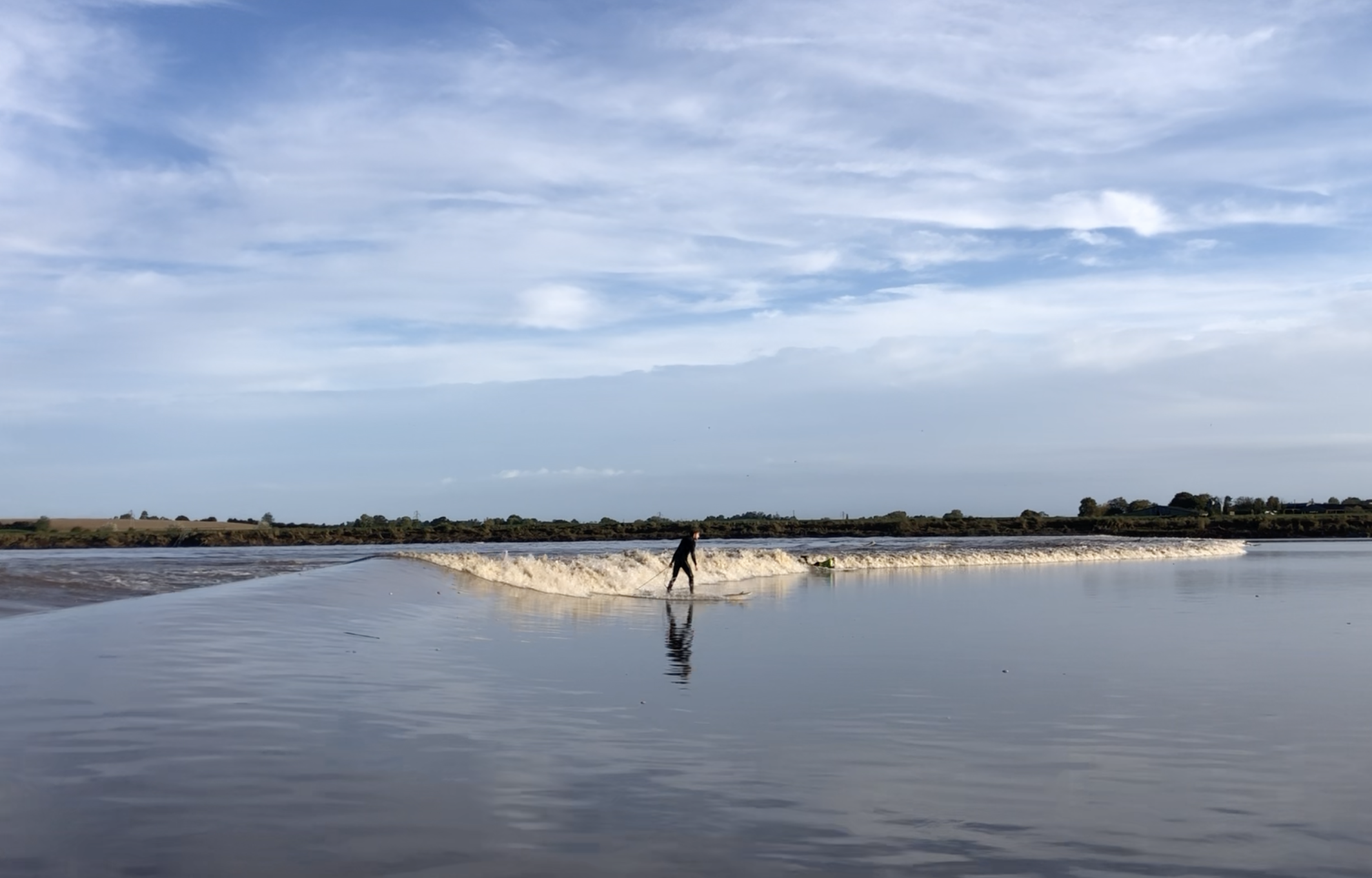
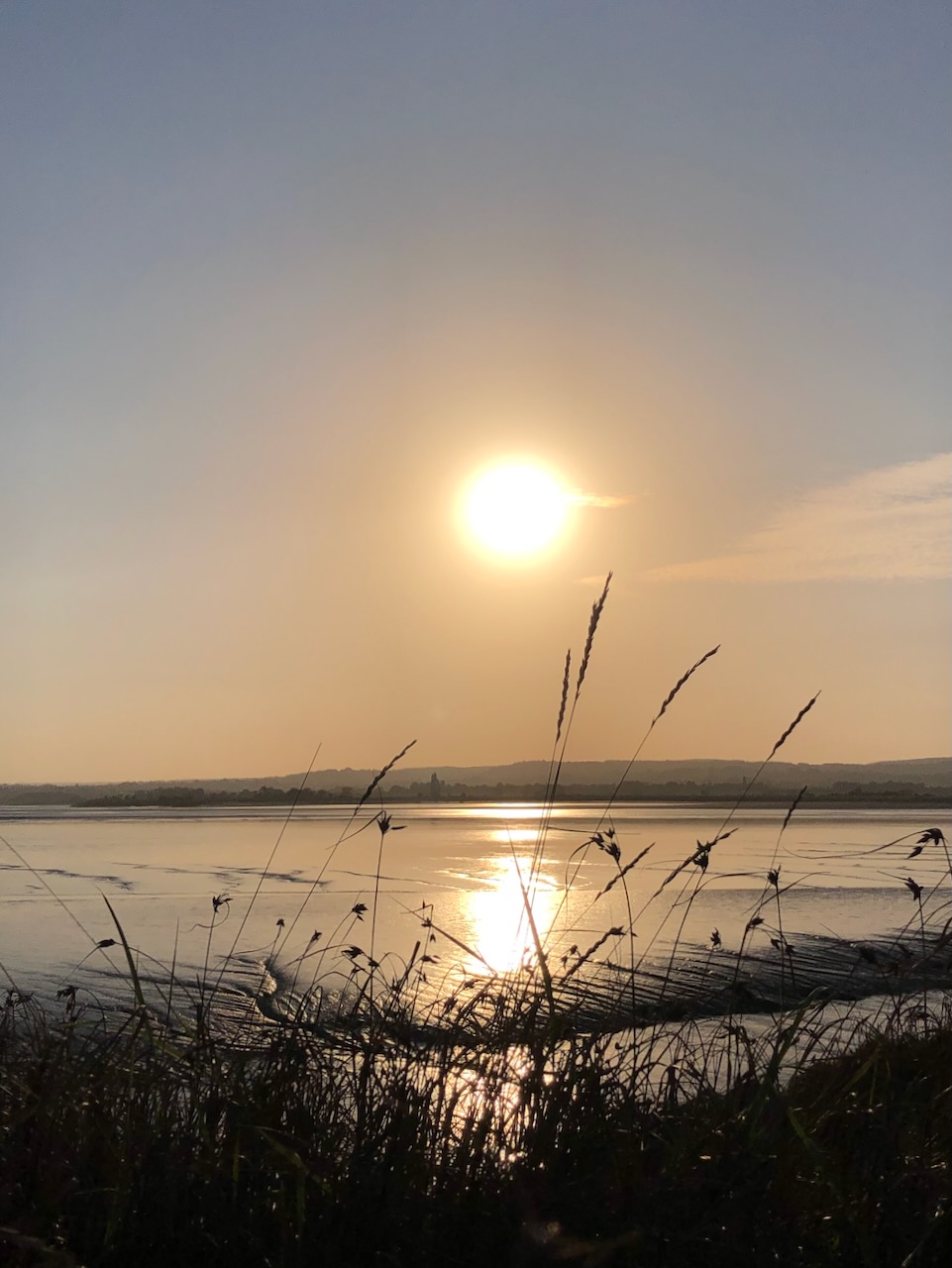
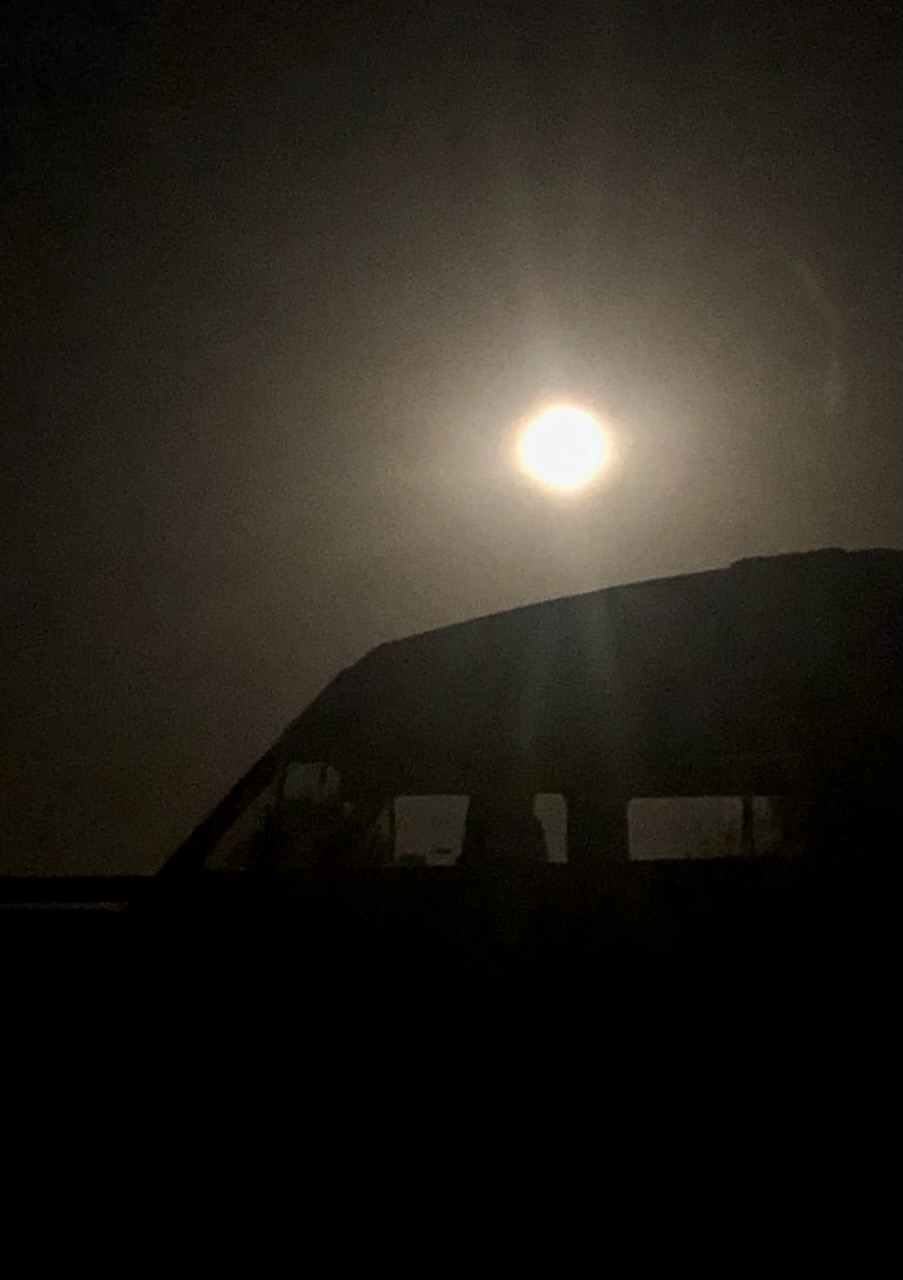
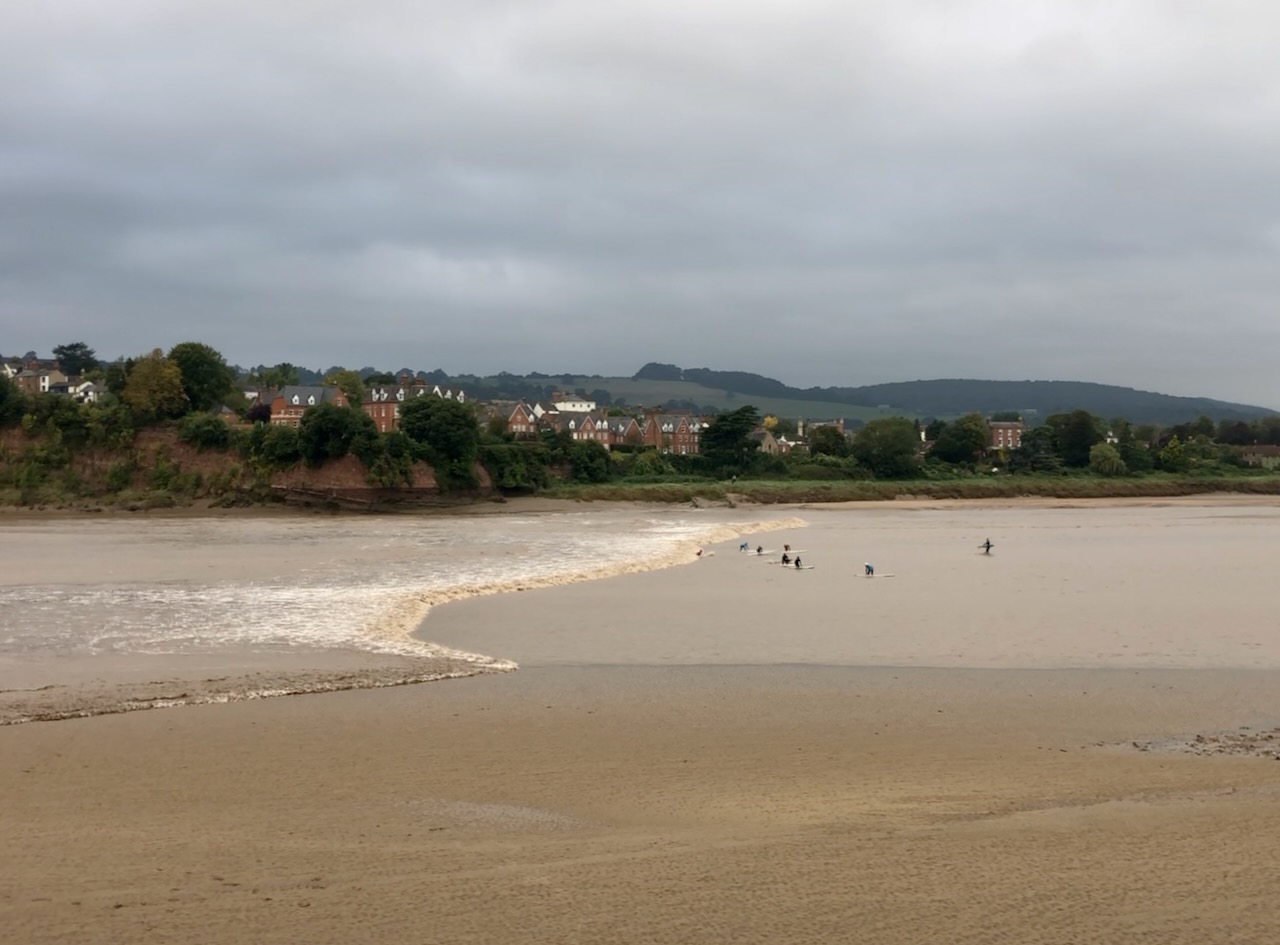
Then a cool night in my camper van with the visceral thrust of Severn Bores pushed and pulled upstream and over the banks by a full moon boldly rising in defiance of the descending sun. Reminders that the deep in- and out- breaths of the tidal river are part of the larger breaths of the Earth, the Seasons, Nature, Life… and Death.
Reminders that nothing is either lost or dead. That all is well and all will come again.
A small 3* Severn Bore
Welcome to you, Autumn, with all your outer splendour and inner hope!
“Sometimes in moral philosophy it’s important to think about plants.” I heard these words in last week’s In Our Time and they chimed with my current shift of focus from war to flowers. They were said by the leading philosopher, Philippa Foot, to a room full of Oxford males. She was basically saying that moral evaluation should be see as a continuum of the way in which we see other living things.
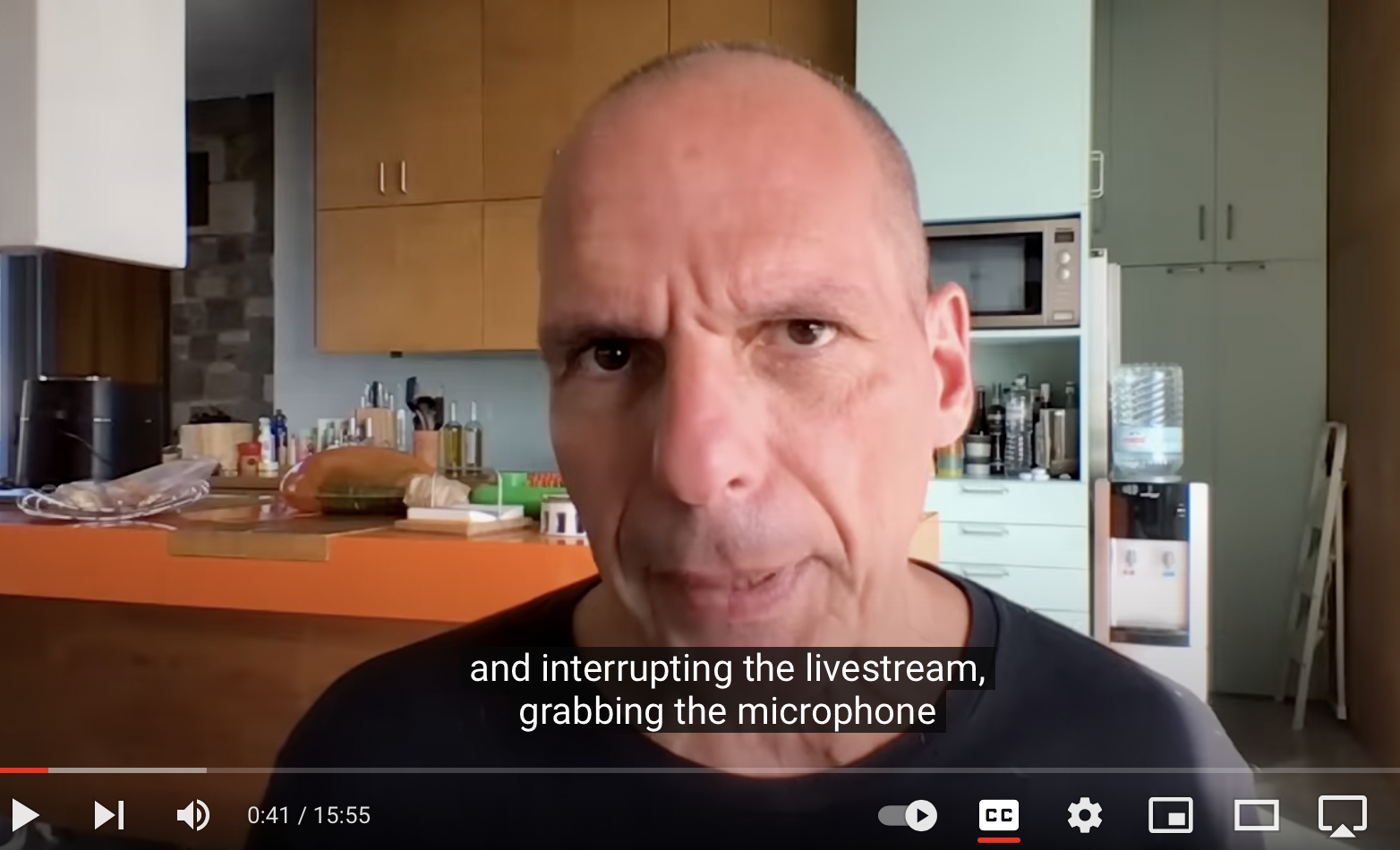
A week earlier, I was sent a link to a video by Yanis Varoufakis, former finance minister of Greece, whose proposed speech in April at the Palestine Congress in Berlin was stormed by police and banned. [You can have a listen to his reconstruction of it here.] Somehow I found the two were connected.
So what is happening in Germany in relation to Israel’s war on Gaza? Some reports are pretty concerning. It is understandable that Israel’s security and right to exist has long been Germany’s ‘Staatsräson’ (reason of state). However, since the Hamas-instigated horrors of October 7th, the belief in Israel’s right to defend itself has evolved into a fairly uncompromising pro-Israel position that seems to equate any criticism of Benjamin Netanyahu’s policies with anti-Semitism. Friends in Germany relate how alarmed people are by the shutting down of debate and silencing of different voices, both painfully reminiscent of the authoritarianism and loss of democracy of Nazi Germany.
The German government’s unswayable support of Israel in whatever it does is a result of Germany’s past. It is seen as morally the right thing to do. But could nearly eighty years of the world’s media placing Germany and Guilt in the same sentence to explain everything, from its open-arm policy towards refugees to its hesitancy to supply weapons for use against Russia, now be backfiring?
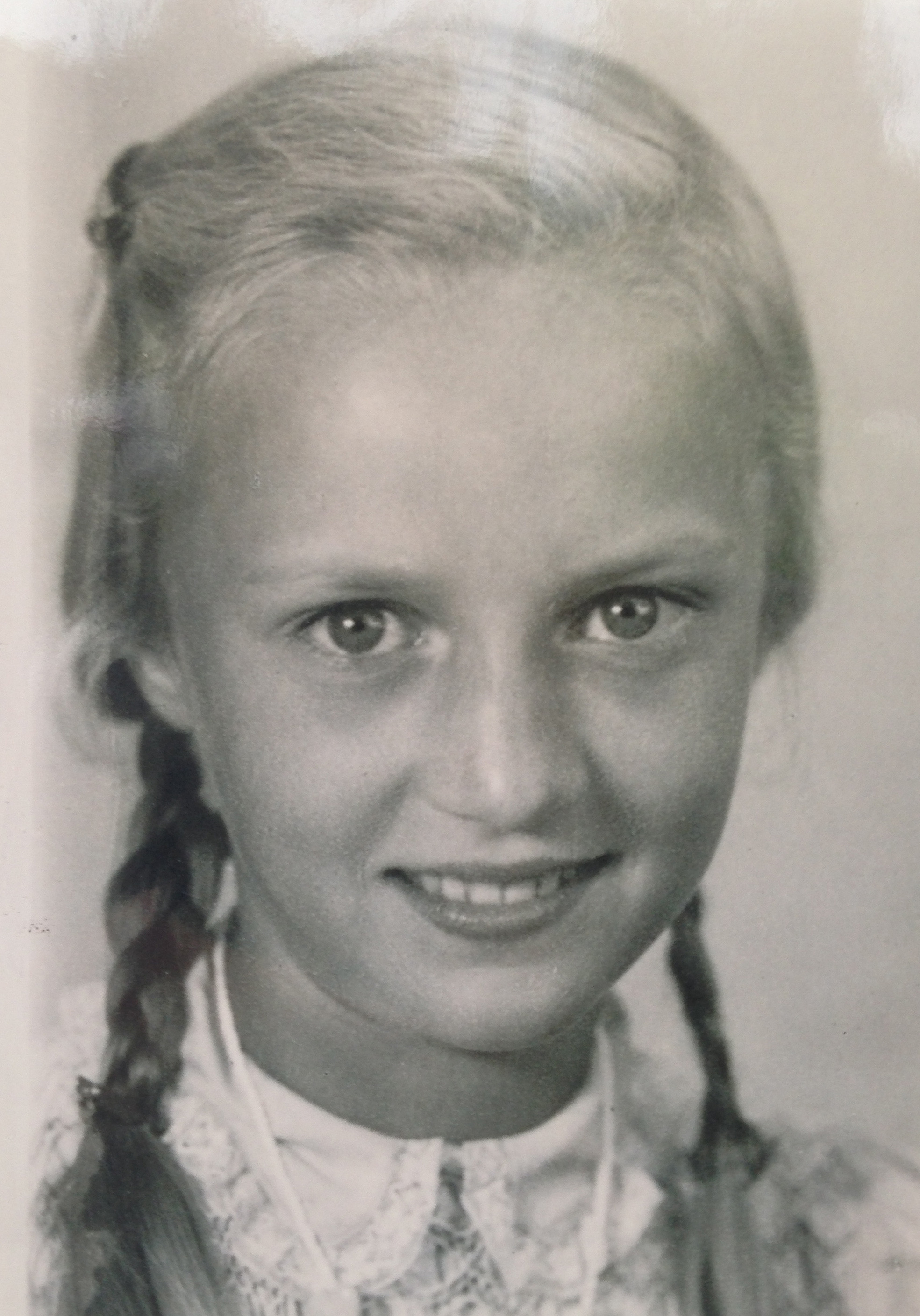
My German mother will be 90 this weekend. She was 11 years old when the Second World War ended and is one of increasingly few Germans who experienced Nazism first hand.
My mother, Jutta, aged 11
In the post-war decades, collective guilt and accusations of complicity in the Nazi atrocities were attributed to the entire German population. Plenty of people consider subsequent generations guilty too, by way of blood / nationality / family association. You might remember my 2018 blog ‘Shot for what you represent’ with the incident of the English woman who, on hearing I was half-German, picked up her hand off the table, turned her fingers into a gun and shot me in the face! In her eyes, all Germans are unquestionably guilty and “jolly well should feel guilty” too.
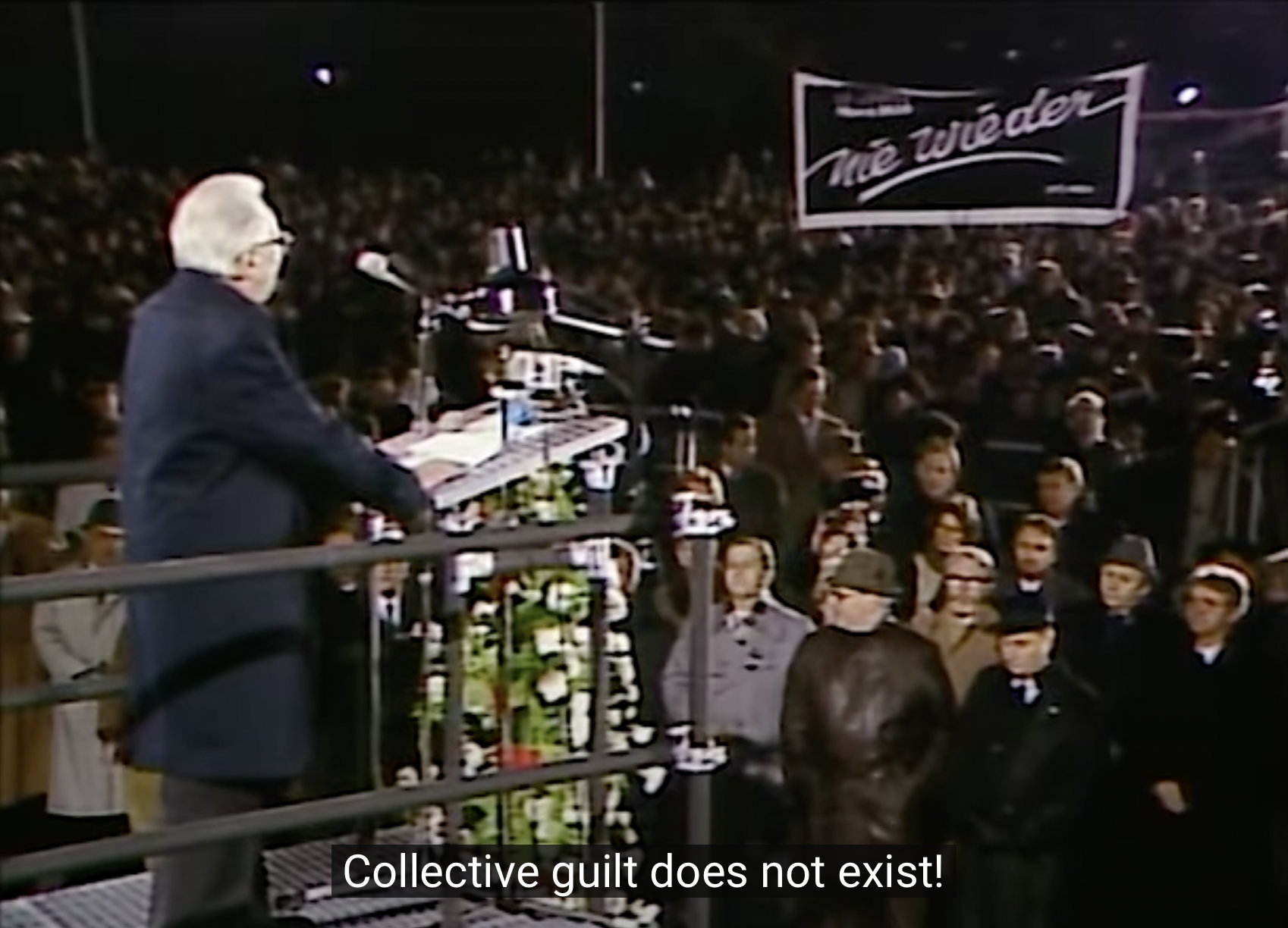
This is in stark contrast to many Holocaust survivors such as Sabina Wolanski, who said at the inauguration of Berlin’s Holocaust Memorial in 2005: I do not believe in collective guilt. The children of the killers are not killers. We must never blame them for what the elders did, but we can hold them responsible for what they do with the memory of their elders’ crime. Similarly Viktor Frankl, author of the seminal book “Man’s Search for Meaning”, who in a 1988 speech spoke out against the very concept of ‘collective guilt’ describing it as a continuation of Nazi-ideology.
I believe they are right. I understand how Germans, myself included, might feel shame for being part of a group who allowed genocide to happen. Many also feel a deep sense of responsibility for not allowing it to be forgotten and making sure it doesn’t happen again. But guilt?
Let’s explore the dynamics of this word for a moment.
Guilt is the result of an action within our control and responsibility. To be guilty, you have to have done (or failed to do) something that falls out of the framework of what is socially acceptable by the group with consequences of harm to an ‘other’. Frequently ‘guilty’ parties will not feel guilt or shame as they see their actions as having been justified, necessary, righteous even, within the context in which they were committed. Resentment and retaliation for being deemed ‘guilty’ can follow.
In Who’s to Blame? Collective Guilt on Trial, Coline Covington describes how Judeo-Christian cultures place particular emphasis on guilt, forgiveness and atonement alongside rituals that are supposed to restore moral order, cleanse the groups of shame and hatred, and prevent or close cycles of vengeance. For a long time, I have believed this was right and Germany’s culture of Vergangenheitsaufarbeitung (working through the past) and counter memorials was an example to all of us of how things could (and should?) be done. I am no longer sure that is what’s needed now.
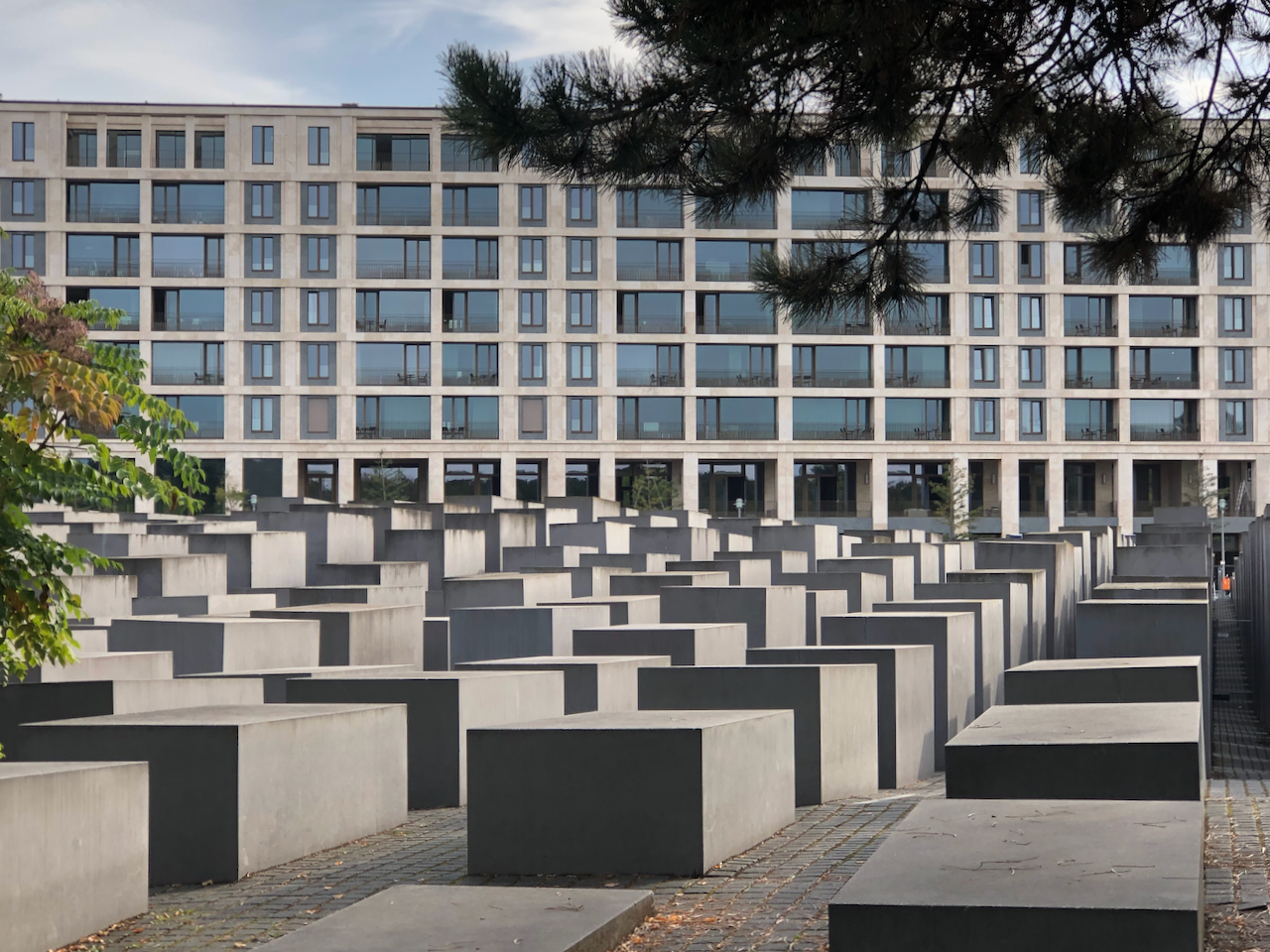
Memorial to the Murdered Jews of Europe by Peter Eisenman, Berlin
The problem is, Covington says, that most restorative rituals for peace-building are built on a binary understanding of good and evil, right and wrong, victims and offenders. “The finger of blame is pointed and yet true healing is meant to eradicate blame. This inherent contradiction contains the seeds of failure.” Could it be that we are witnessing this failure in Germany, Israel/Gaza, Russia/ Ukraine and elsewhere, resulting in new perpetrators and victims of atrocity and trauma?
If so, how do we overcome binaries? I tried a couple of weeks ago in an online group of Jews, non-Jewish Germans, my own Anglo-German mix and others. Someone had been talking about the frightening increase in anti-Semitic acts and some members of the group had dismissed those behind them as ‘idiots’. A common reaction to unacceptable behaviour, and I have said the same many times in relation to certain members of the Tory party! But it got me thinking… because when we proclaim a shocked judgment: “How could they!” How stupid!” “How awful / evil / weak!”, we are basically believing: If I were them, I wouldn’t do what they are doing. We are seeing ourselves as morally superior, stronger, more intelligent and right, while ‘they’ are inferior, guilty, ignorant, wrong.
Does this dynamic not replicate, in an initially small but precise way, the dynamics behind the Nazi, or indeed any, discriminations and judgments against apparent ‘lesser mortals’?
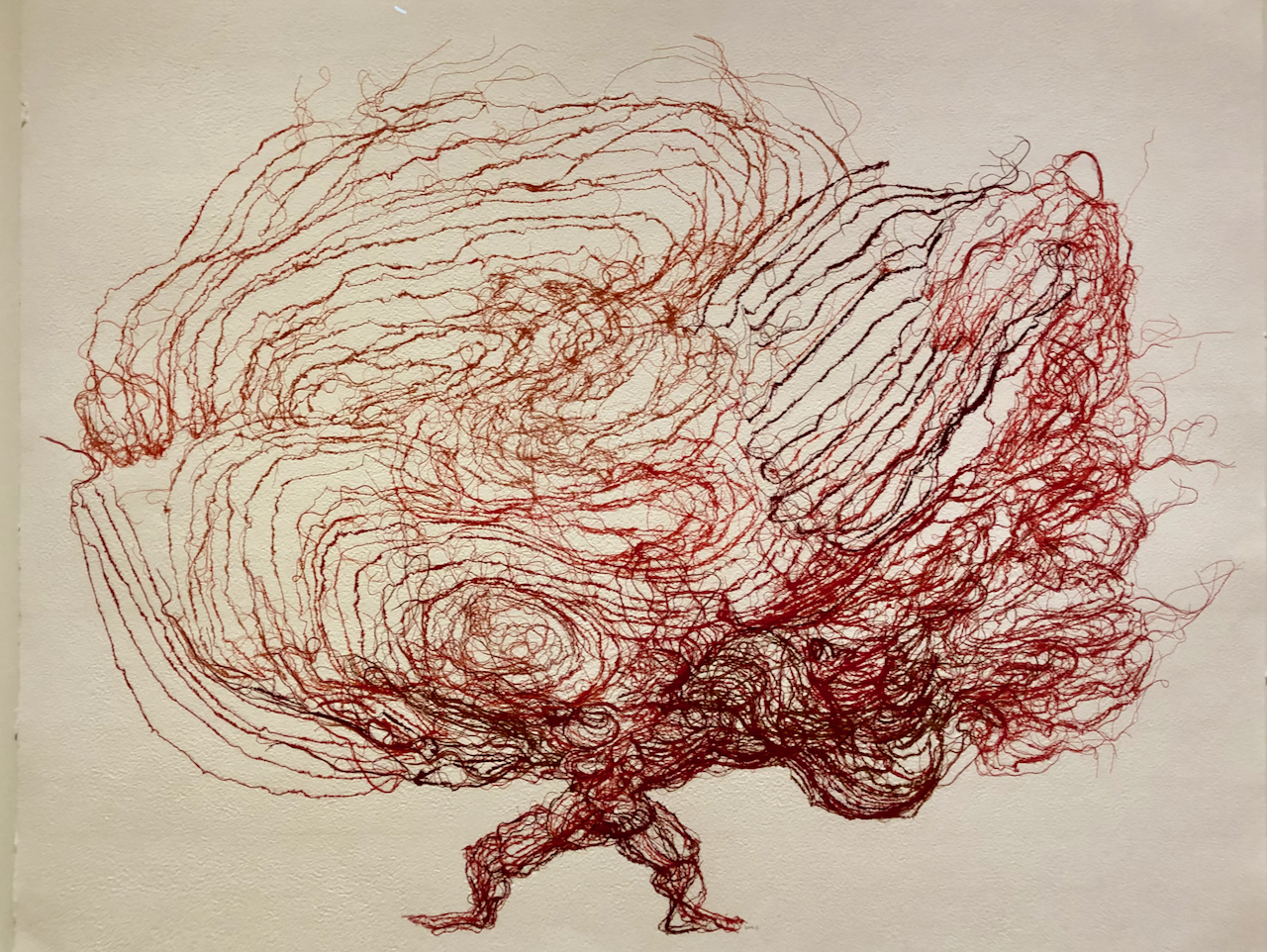
Do Ho Suh, Karma Juggler, Thread embedded in cotton paper
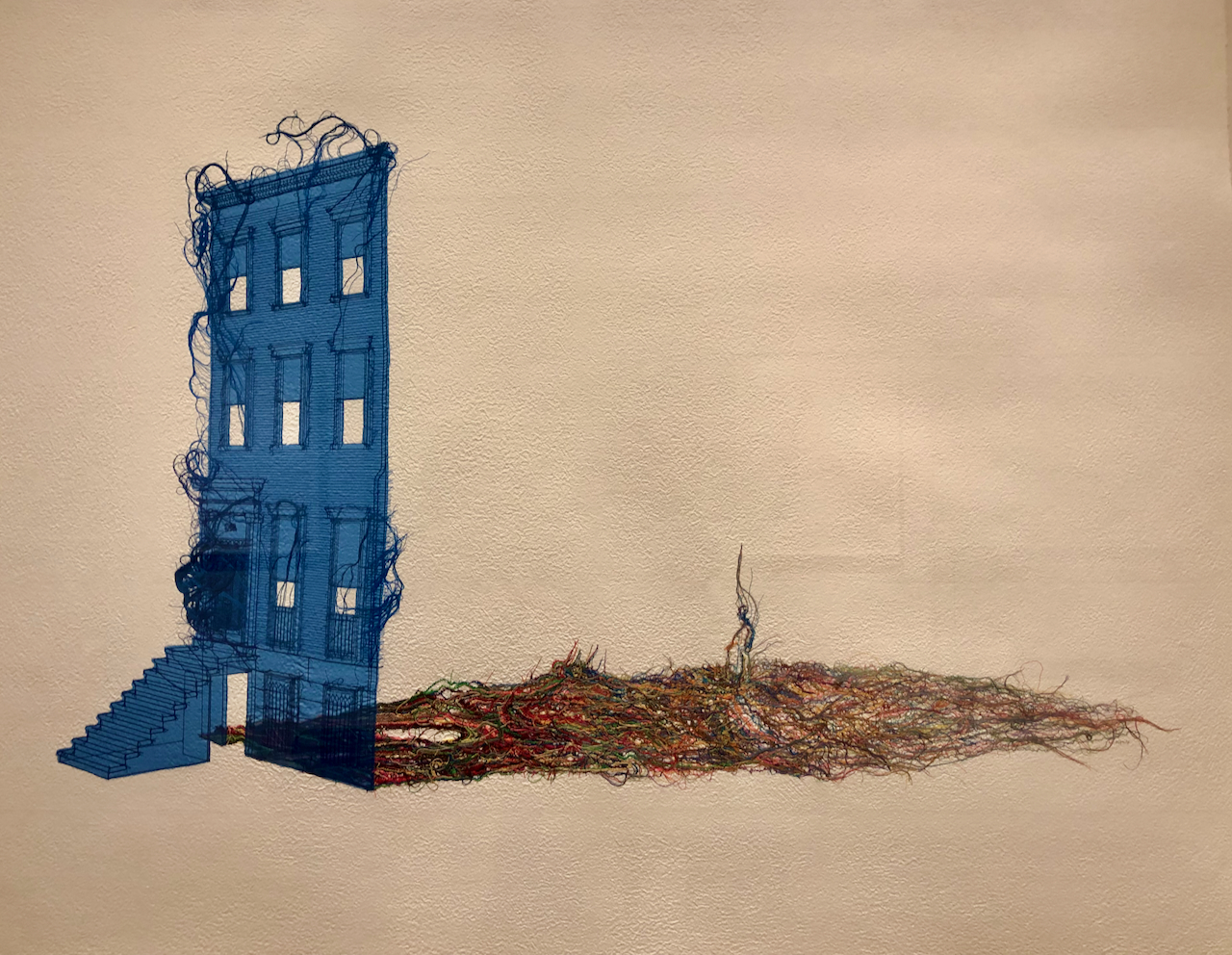
In this particular constellation, I naturally belonged in the ‘German perpetrator’ rather than the ‘Jewish victim’ category. It’s an uncomfortable place to be, but I have noticed that since finishing my book, the label no longer sticks as well. My grandfather’s shadow that once draped over my identity like a huge cloak has been so comprehensively unpicked, understood, transformed and woven into the fabric of my whole being that I can no longer see people in such binary terms. Like the beautiful art of the Korean artist, Do Ho Suh, whose exhibition Tracing Time I saw on a recent trip to Edinburgh, I can see how we are all threaded together into a colourful tangle of humanity, each one necessary and part of the whole.
Do Ho Suh: Blueprint (2013), Thread embedded in cotton paper
There were people in the group who suggested I was ‘absolving’ myself and wanting to free myself of the burden of guilt, almost as if this was utterly impossible or prohibited. I do understand that response and how for descendants of survivors, this could feel an affront. But, without diminishing any of the suffering of and compassion for the descendants of survivors, I myself choose to no longer see people in terms of “my side/your side”, as one member put it. I believe that in order to overcome the judgmental binaries of ‘us-good’ and ‘them-bad’, we all need to make a greater effort to understand what lies behind bad or evil deeds. We not only need to step into the other person’s shoes, but into their entire situation. Only then can we recognise that if we were in the totality of their internal and external life, we would act, or would have acted in exactly the same way as them. The results of Milgram’s 1961 experiment with obedience to authority suggested something similar. Apparently good people, like us, can also become capable of extreme bad.
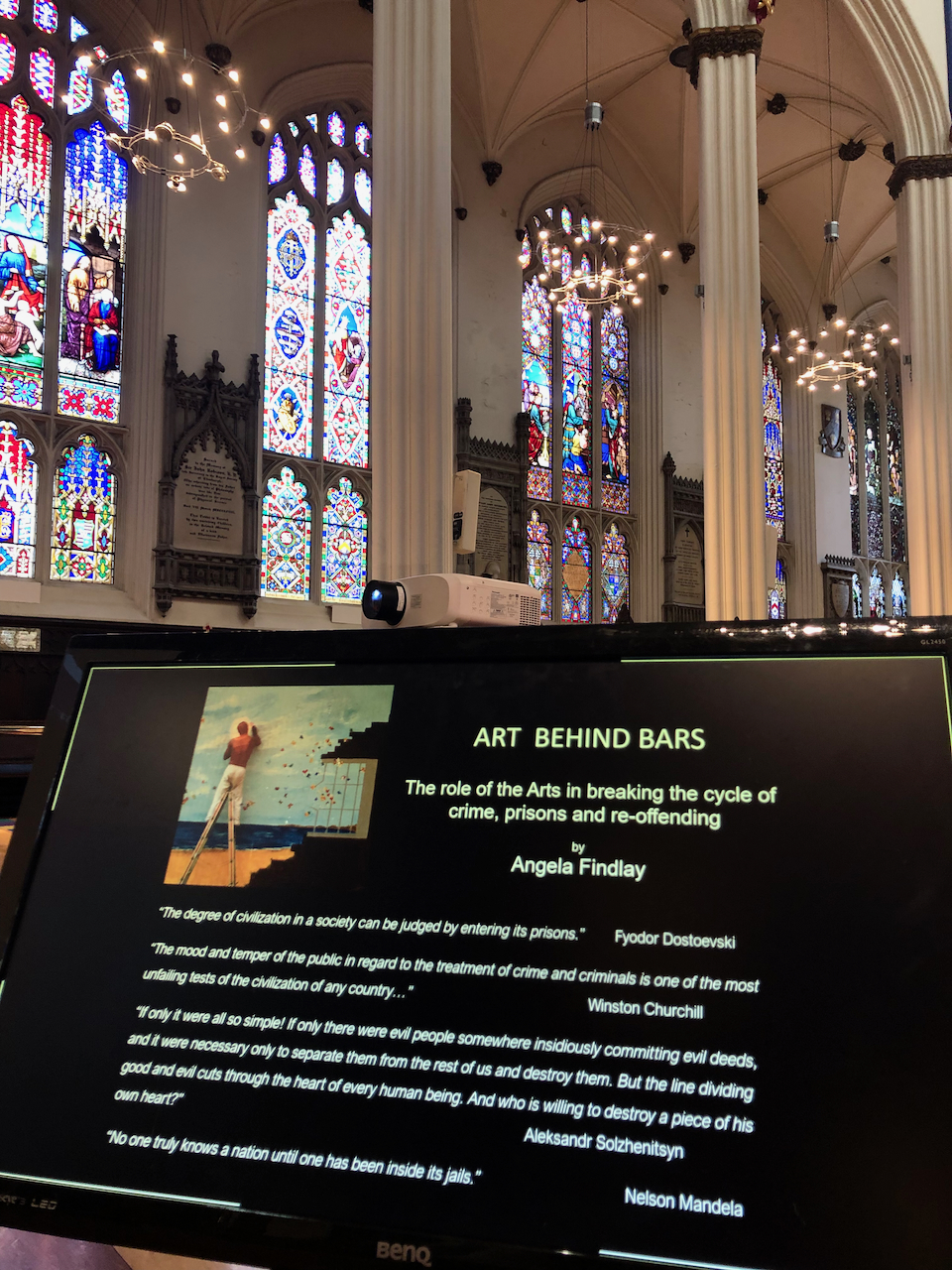
You will all I am sure now know about the horrendous, inhumane conditions of HMP Wandsworth and so many of Britain’s jails, and the decades of glaring failures of our Criminal Justice System in general. (If not, you can get an impression here and here and here) None of us live very far away from a jail, and yet so many of my Art Behind Bars talk audiences say they had “no idea.” Will we too one day be judged and found guilty of the stigmatisation of offenders that enables this shamefully degrading system to exist in our name as a fulfillment of our wish for governments to be ‘tough on crime’? Will we be accused of turning a blind eye, not acting and later claiming ‘we didn’t know’?
I am deliberately being a little provocative to make a point. Because as far as I can see, the only way we have a chance of breaking the catastrophic cycles of blaming and shaming, violence, retribution – all outcomes of seeing each other as ‘other’, separate and different from ourselves – is to create a level playing field of mutual respect where both (or all) sides are treated equally. And it can start within each one of us. In everyday situations. Now.
This is the African concept of ‘Ubuntu’, a philosophy of interconnectedness, sometimes translated as ‘humanity towards others’ or ‘I am because we are’. The most recent definition provided by the African Journal of Social Work (AJSW) describes Ubuntu as: A collection of values and practices that people of Africa or of African origin view as making people authentic human beings. While the nuances of these values and practices vary across different ethnic groups, they all point to one thing – an authentic individual human being is part of a larger and more significant relational, communal, societal, environmental and spiritual world.
According to Charles Eisenstein, author of The More Beautiful World Our Hearts Know is Possible, aligning ourselves with the truth that ‘if I were in the totality of your circumstances, I wouldn’t do differently from you,’ and the compassion that arises from putting ourselves in another’s shoes and seeing us as one, is “perhaps the most powerful way to magnify our effectiveness as agents of change.” I think I agree.
Further Reading / Listening (as always, not necessarily my opinion)
For the past month I have been immersed in the sights and sensations of Northern India… not literally but in my head, psyche and the screen of my desktop.
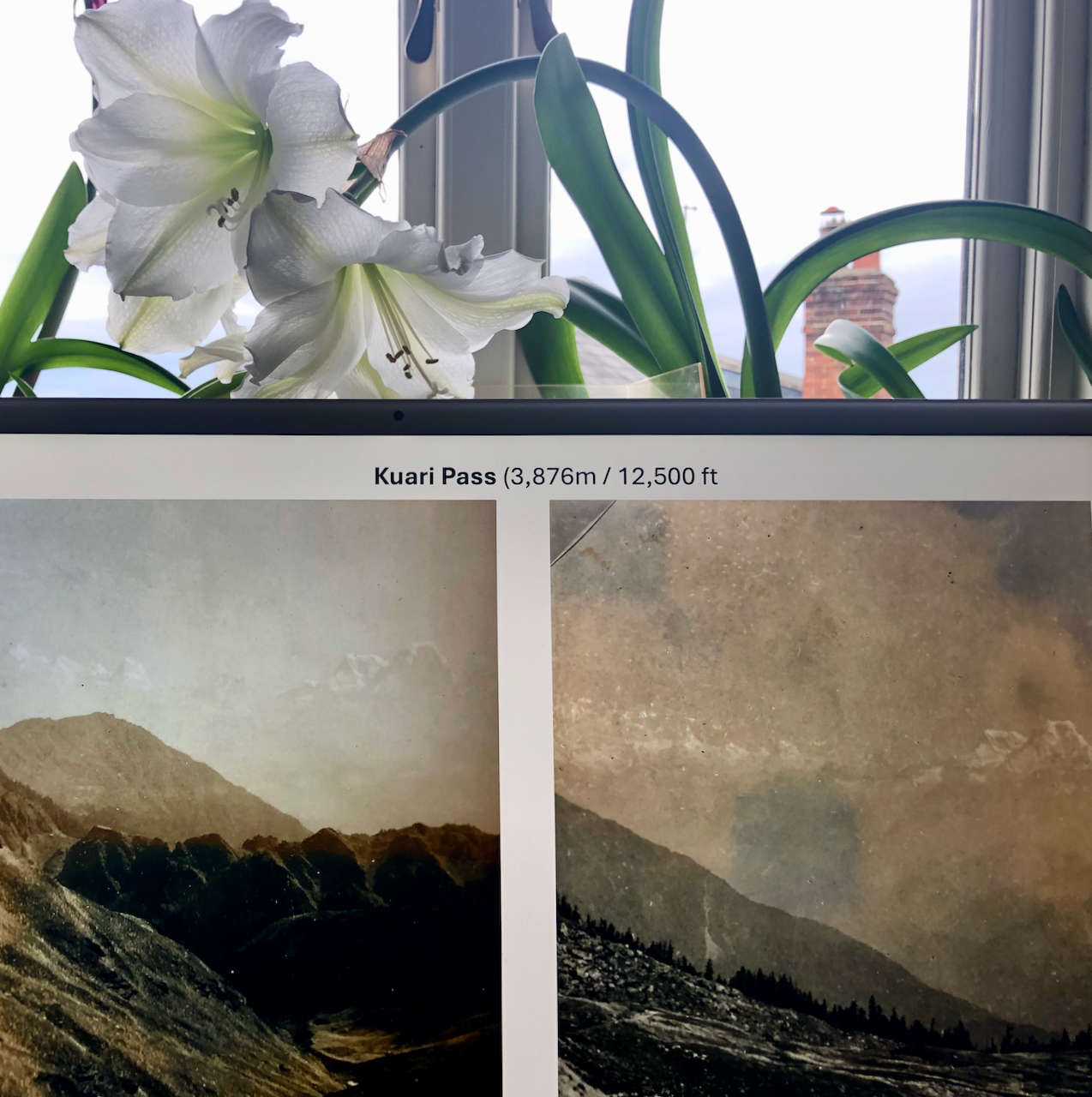
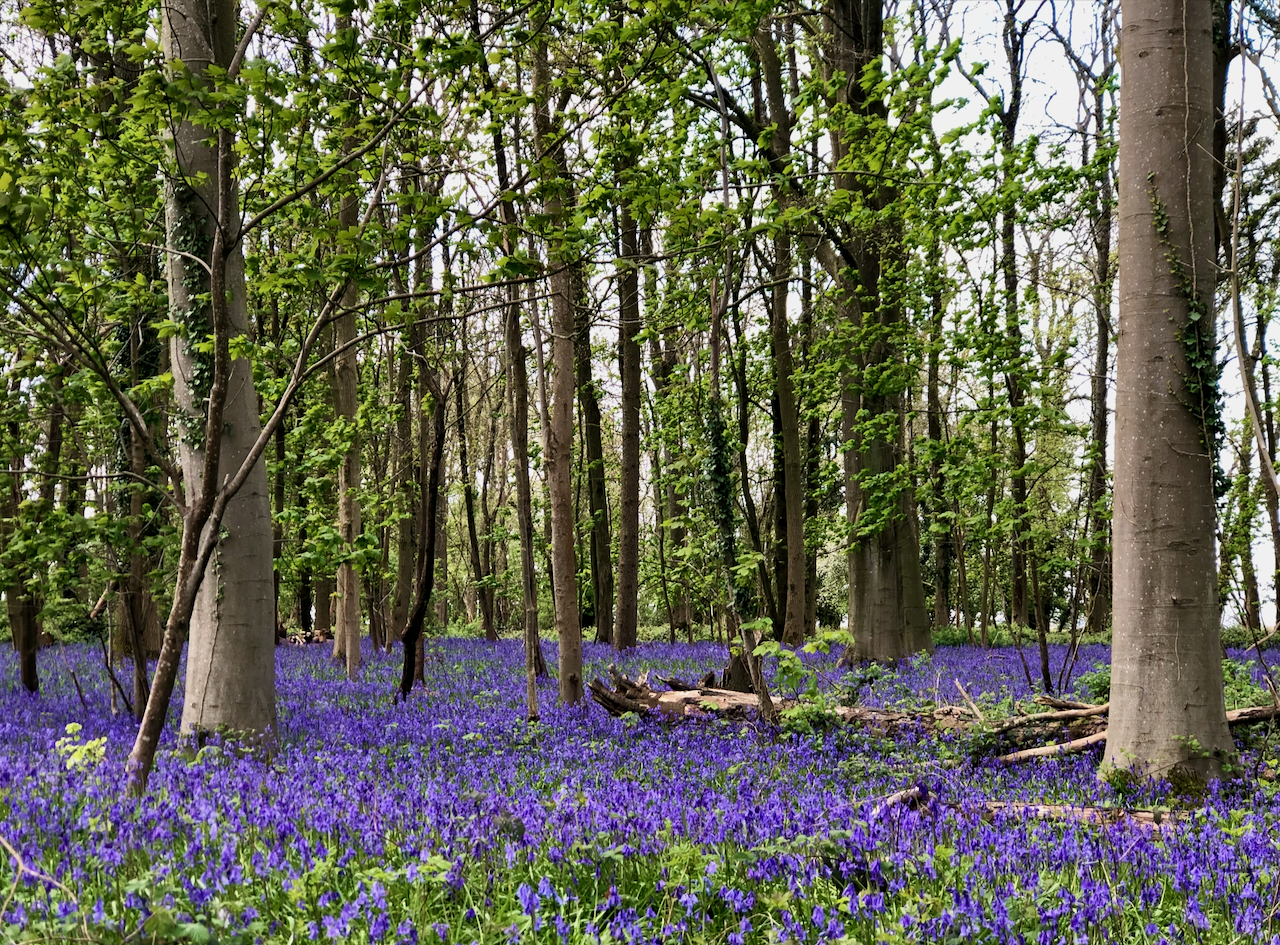
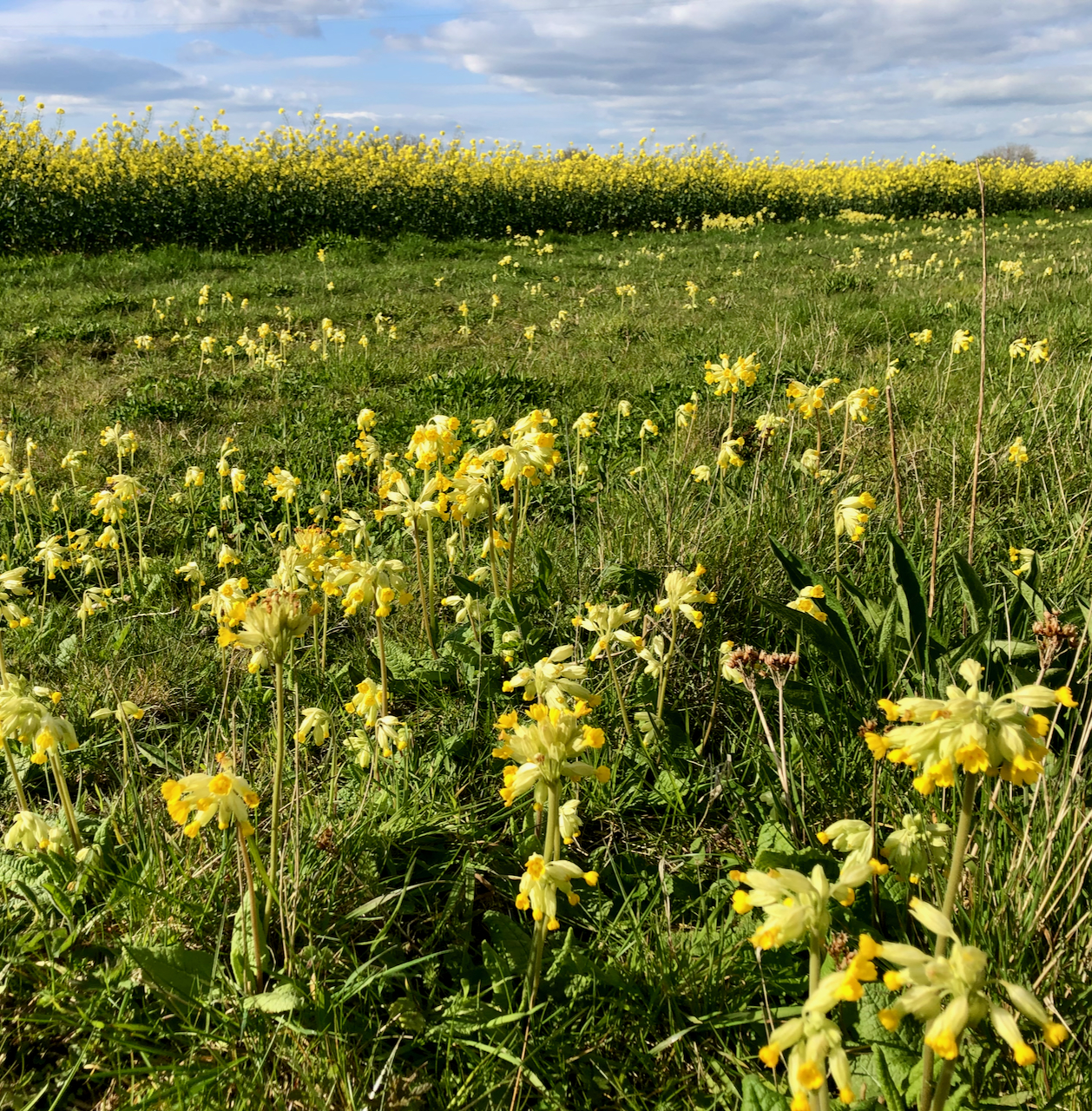
Having stepped out of my German ‘grandfather’s shadow’ and the darkness of the times in which he was embroiled, I am now switching families to walk in the footsteps of my English Great Great Aunt, who travelled to the Himalayas to gather flower seeds and specimens for Kew Gardens. Surrounded by the blooms of Spring and regularly soaked by rains, just as she was, it has not been difficult to feel my way into her world. And it’s a great deal more enjoyable than marching across Russia in 1941.
A friend recently asked me, what is it that makes you research your predecessors? Why do you feel a need to look back? I couldn’t come up with an off-the-cuff answer, just an interest in the question and a strong sense that ‘looking back’ wasn’t really what I was doing.
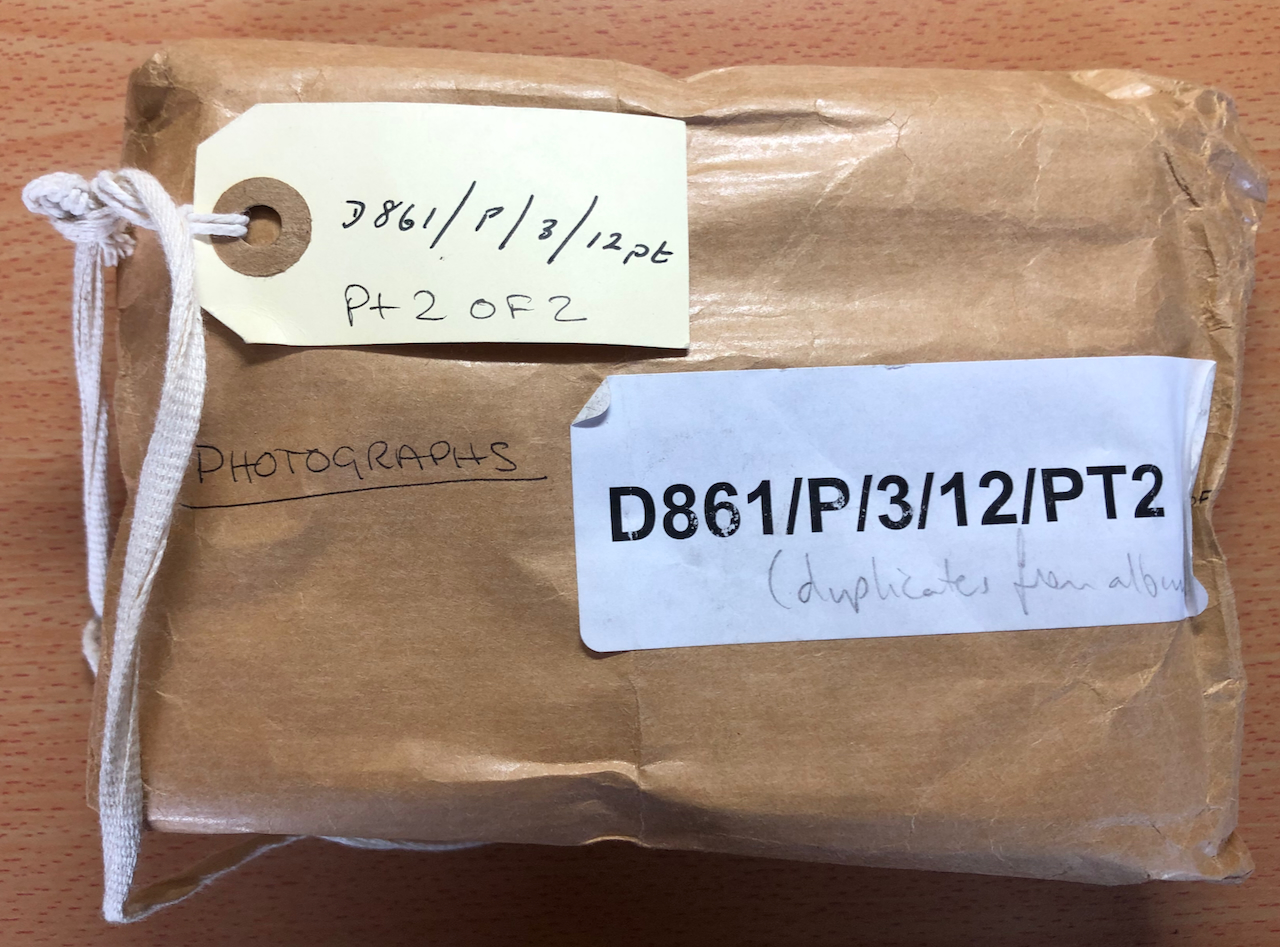
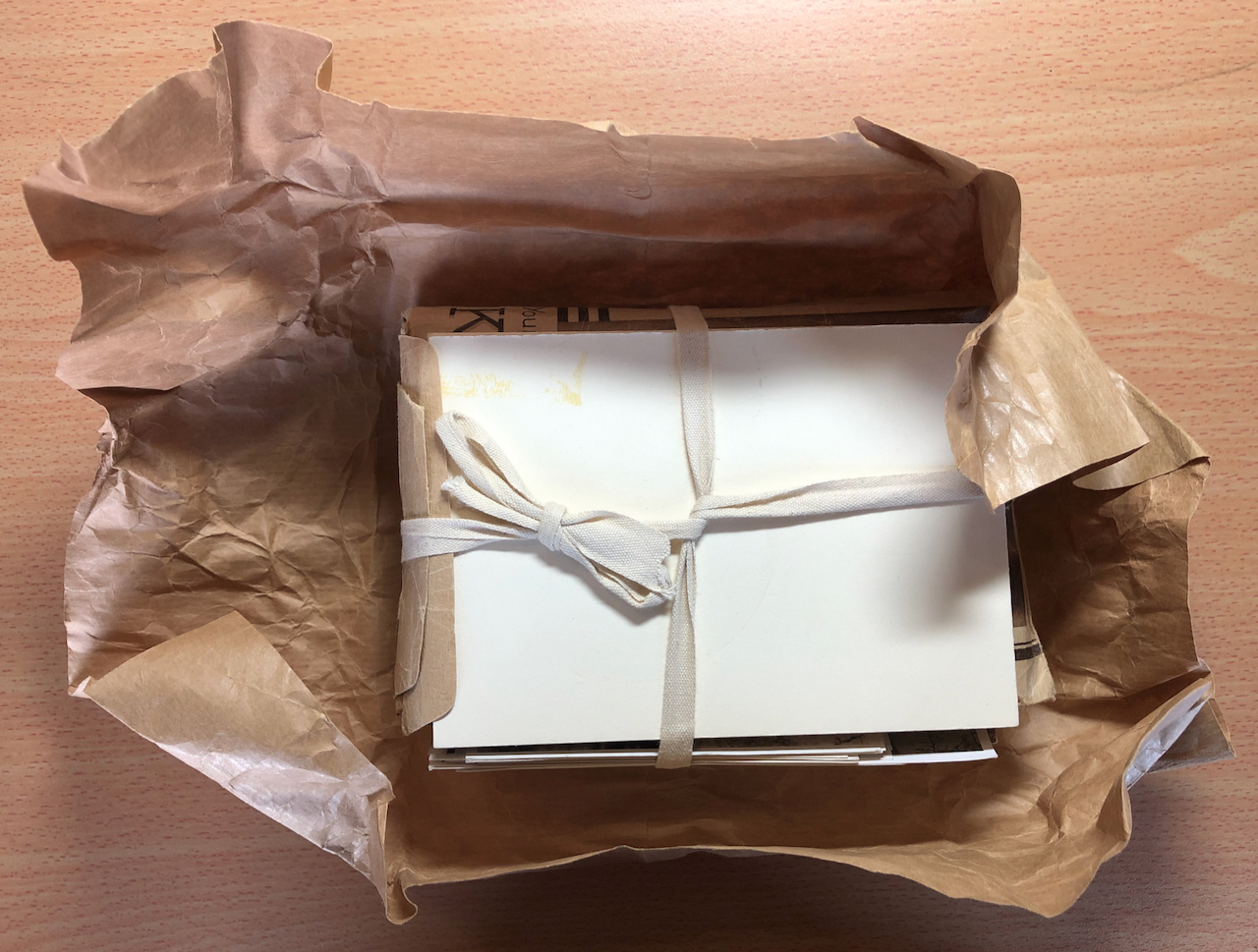
You will hear more about my Great Great Aunt Joan in the future for she is the subject of my current research. I don’t yet know where it will lead, I just love unpacking ‘brown paper packages tied up with string’ stored away in archives, reading diaries and letters, and scouring black and white images for visual details that will help me create a picture of a once living person long since buried in the annals of time.
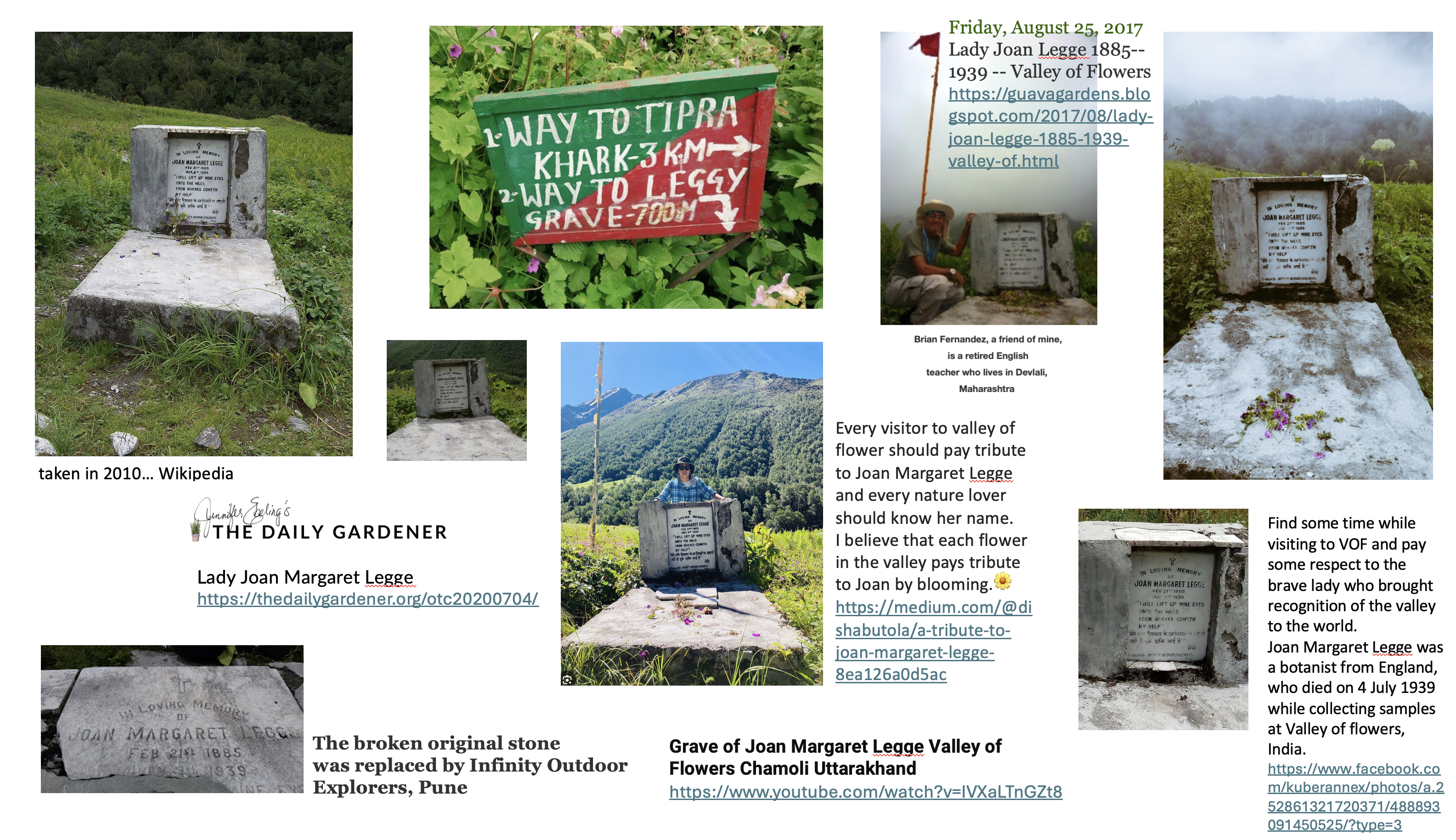
Joan’s grave lies in the Himalayan ‘Valley of Flowers’, 3,600 metres above sea level just west of Nepal and flanking the Tibetan border. She died there in 1939 aged 54. For many months of the year it is concealed by the snows but in the few months between June and September when they melt and the valley becomes accessible, a small rectangular gravestone emerges in the verdant meadows like a baby’s first tooth. Nestled below a range of snow-capped ‘glories’ that zigzag a skyline into the rarefied air, it captures the imagination of trekkers. Google search ‘Joan Legge’ and you will find she features in many a social media post or blog. People are touched by the story of this solitary British woman who found her end in such a remote and beautiful place.
I too have long been fascinated by Joan though I can’t explain why. Her name just twinkled like a star when I first heard it in my late teens or early twenties. I knew few details other than that she was a spinster who had opted out of the trappings of aristocratic society and travelled to India; a woman who bucked the expectations and trends of the time in favour of independence and adventure. Like the tip of an iceberg her grave is just the beginning of a story I would like to find a way of telling.
As for my friend’s question of ‘looking back’, I don’t actually feel the past lies ‘behind’ us. I am certainly interested in looking at history, most specifically Nazism, the Holocaust and the Second World War, for clues on how we can best learn the lessons of the past. And with that it mind I have explored the roles of memorials, apology, restorative justice, punishment and prisons, not least in my blogs. And yet, while they all can and do work to a degree, none of them seem to prevent cycles of violence, conflict, discrimination and trauma from repeating themselves over and over as we can witness all too frequently in the world.
There must be something else… some other way, but we are unable to see, or even think it within the limitations of our current belief systems and knowledge of life.
My sense is that we need to go way beyond the specifics of each conflict to the very root of what leads to all of them. ‘Othering’ and seeing things is terms of clear-cut binaries that justify violent actions are clear causes. But could our fundamental, albeit often unconscious linear-based depiction of time, evolution, even ‘progress’ also be part of the problem with their goal-oriented focus on the future and belief that the past is largely done and dusted and trailing inanimately behind?
It feels increasingly like an (erroneous) modern construct (and I’m talking thousands of years ago not ten) that sees humanity as collectively shuffling forwards towards an ideal state lying in some distant future. Admittedly the present moment is where it’s all at in many belief systems, but nonetheless there is usually a destination towards which to strive. In Yogic or Buddhist practices, it might be Enlightenment, in Christian terms, Heaven or Eternal Life on the other side of death. In economics, it can be seen in politicians’ relentless chase for ‘growth’, in technology, it’s ‘progress’, in the environment, net-zero, in health, a perfect body, in leisure, a chase for something bigger, better, faster, further…
Darwinian theories of the ‘survival of the fittest’ lead to competition with winners and losers, an increasing separation of weak and strong, good and bad, rich and poor; a sense of lack, of being left behind, of missing out, of not being good enough or being better… and so many more of the psychological states that can be found behind the widespread symptoms of mental health, poverty, addictions, injustice… and war.
How well has this outlook served us? Not too well if I look around at where we are today with most problems failing to be solved using the same thinking that created them.
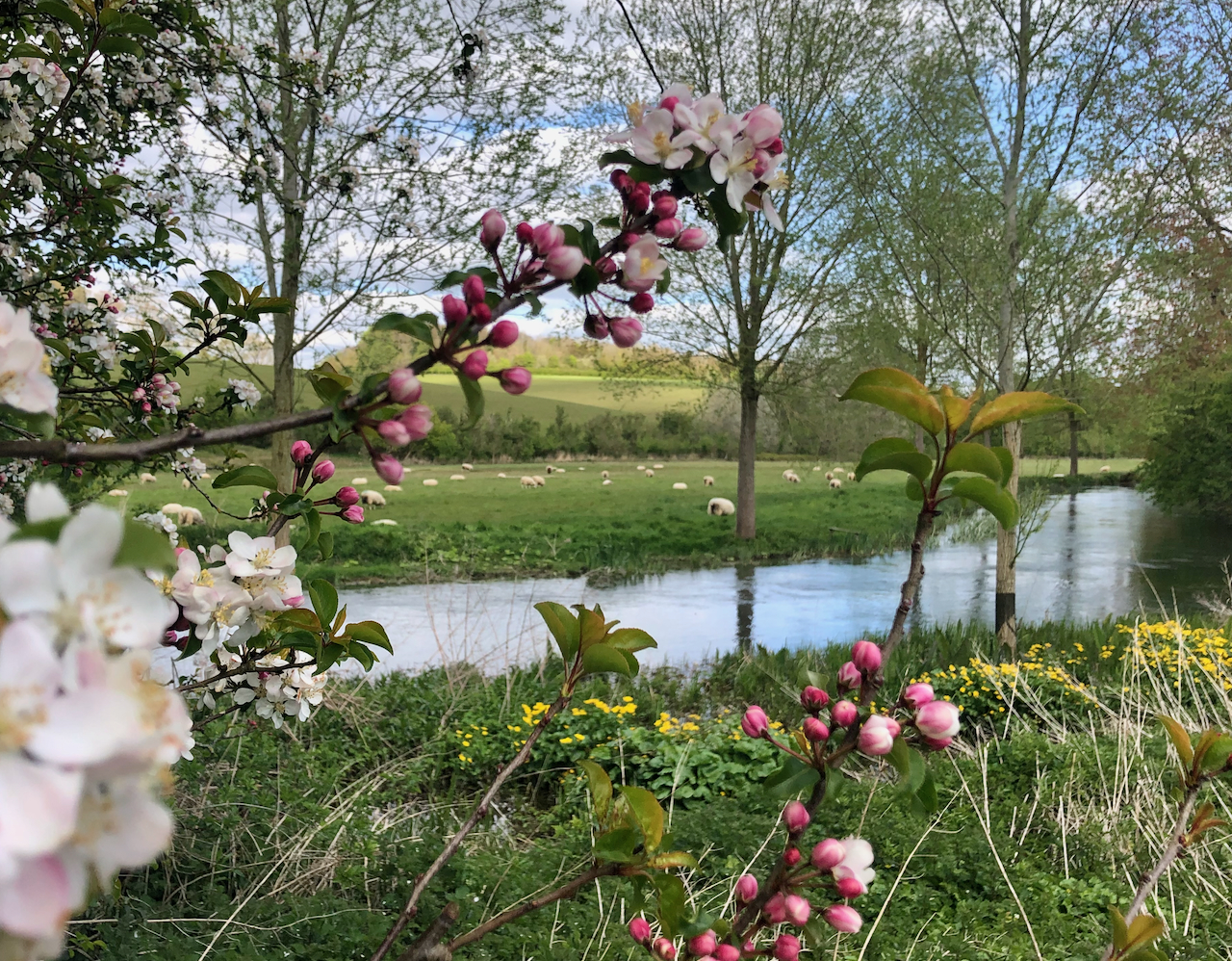
My most recent attempt to find solutions has been to duck out of the continuous stream of bad news and surround myself with flowers and sepia photos of breath-taking mountains, to inhale the extraordinary, albeit understated bravery of my great great aunt and to do a deep-dive into the contents of three inspirational books that landed in my hands as gifts with the kind of serendipitous timing that, in my experience, portends something magical.
I can feel something shifting far below the surface of the present chaos. Possibilities for improvement and lasting change… in our present, not some distant future. They have not yet flowered in my mind, so you might have to wait a little while for me to articulate what they look like!
Being away in Germany for much of June and July has got me thinking about the relationship of past, present and future. It keeps coming up as a theme, each time confirming to me that they are not separate, not relegated to positions behind or in front of us as we live that one moment we can call ‘now.’ (My TEDx talk referred to this too)
Just a couple of examples of what I mean.
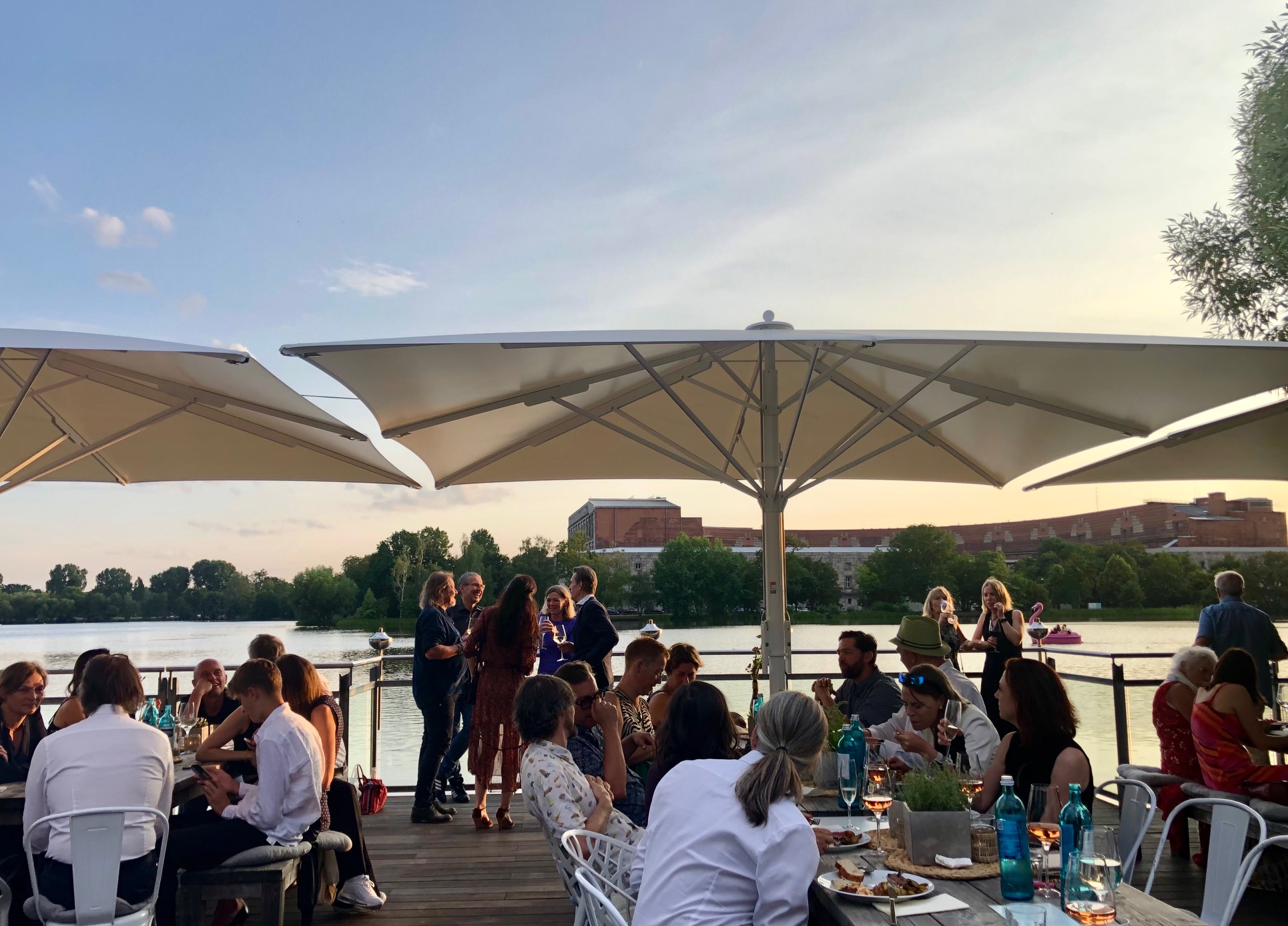
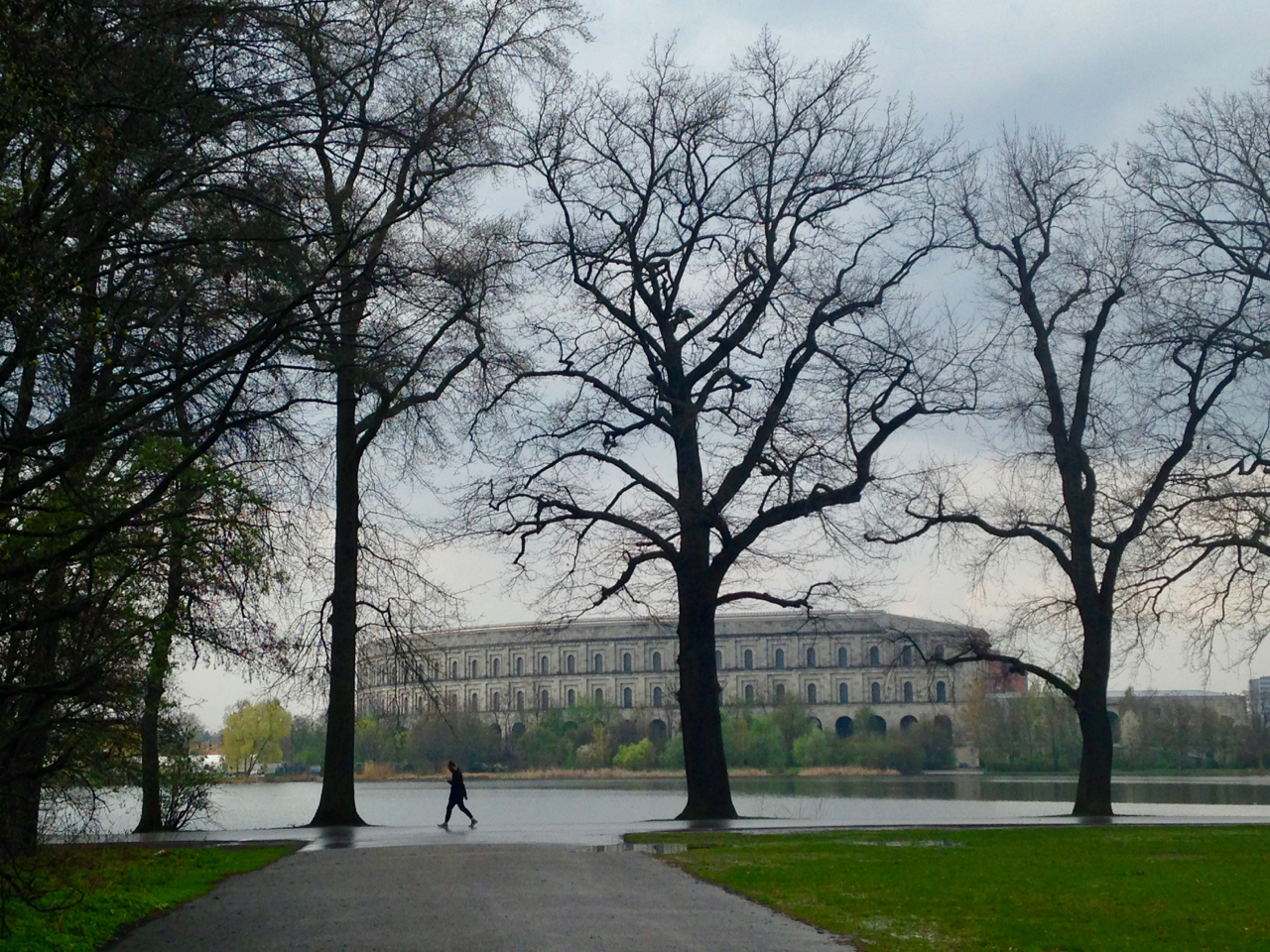
At a lakeside party in Nuremberg where elegantly dressed guests sipped bubbly from slender glasses and a massive, pink rubber flamingo glided an elderly couple and their granddaughter across the water, everybody appeared unaware of, or simply used to the historical monster that lay across the water.
Today it is the biggest preserved National Socialist monument. Ninety years ago it was the unfinished, semi-circular Congress Hall of the Nuremberg Rally Grounds, part of the 11 square kilometre grounds, mostly designed by Albert Speer, that hosted six Nazi party rallies between 1933 and 1938.
The unfinished Congress Hall, of the Reichsparteitagsgelände, Nuremberg
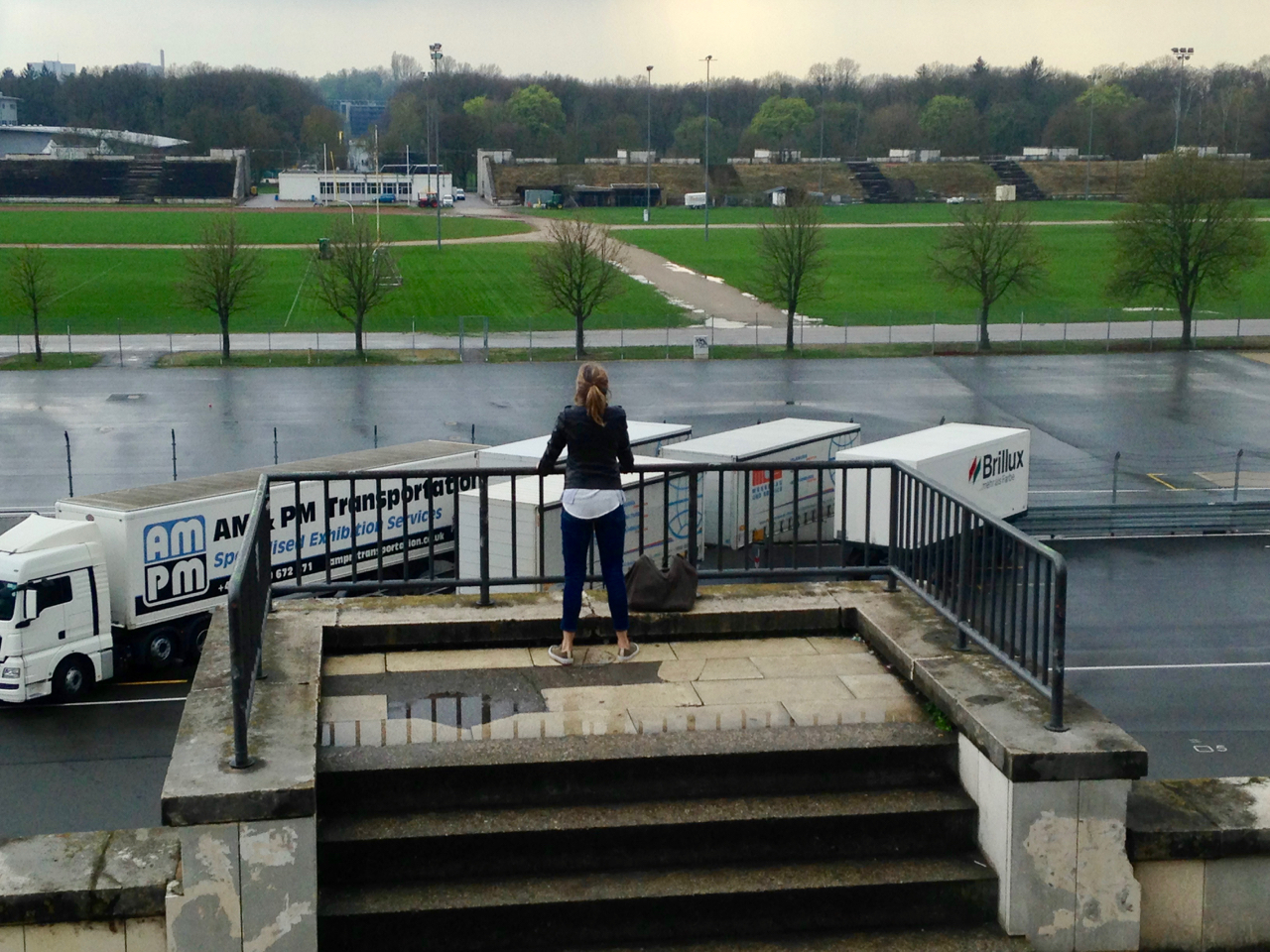
I hadn’t known I would be dancing with my dear friend from Cologne just 500 meters from the Zeppelin Field where I had stood in 2016 on the very rostrum from which Hitler himself had delivered his ‘hypnotic sermons of hate… to rapt audiences in the hundreds and thousands…’ But the visceral memory of the sickening terror I had felt then returned instantly. In spite of the site now being strewn with parked lorries, ‘Never had I been able to visualise the scale of the Nazi movement in all its ugly, popular power with such devastating clarity.’ (In My Grandfather’s Shadow, pp.359-360)
Yet here I was, one minute laughing, the next engaged in debate with people who have been deeply involved in the complexities of what to do with this hideous phantom of the Third Reich. Artist studios seems to be the current preferred proposal, bringing creativity, transformation and a more constructive future into what was one of the centres of past destruction.
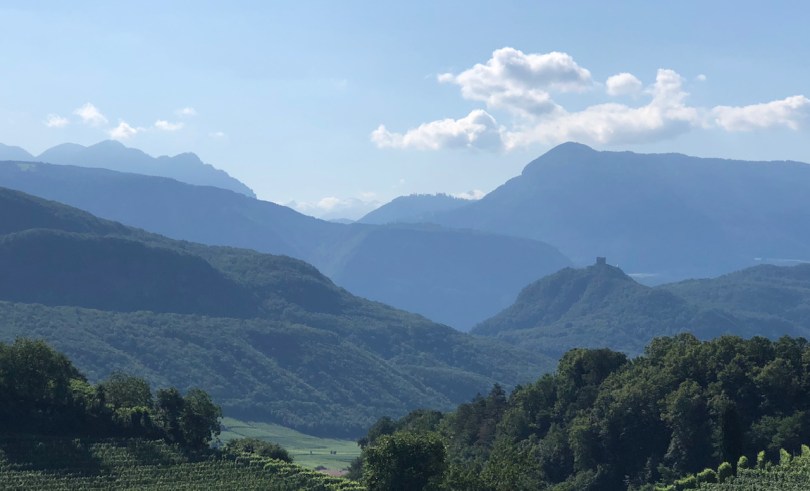
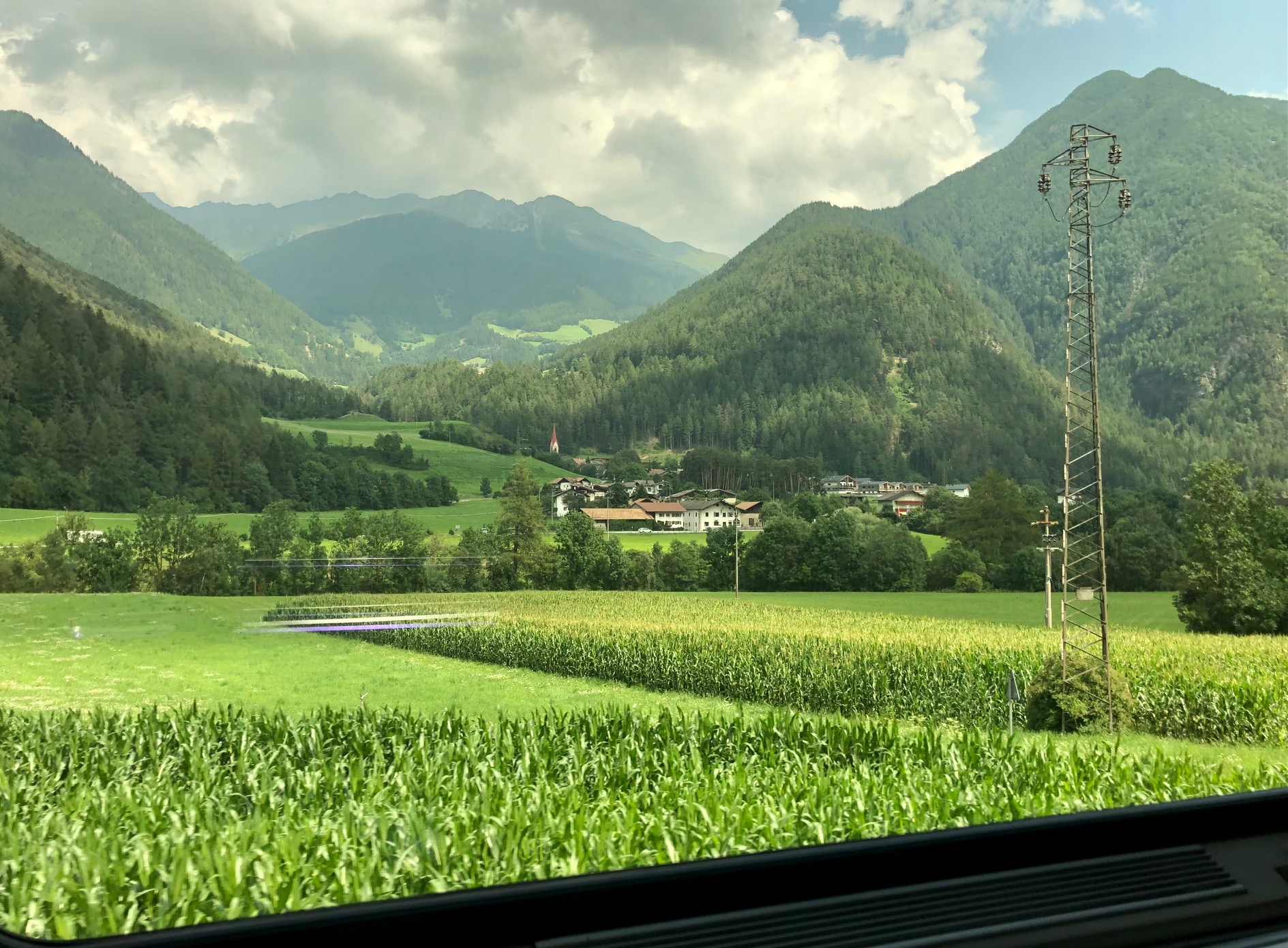
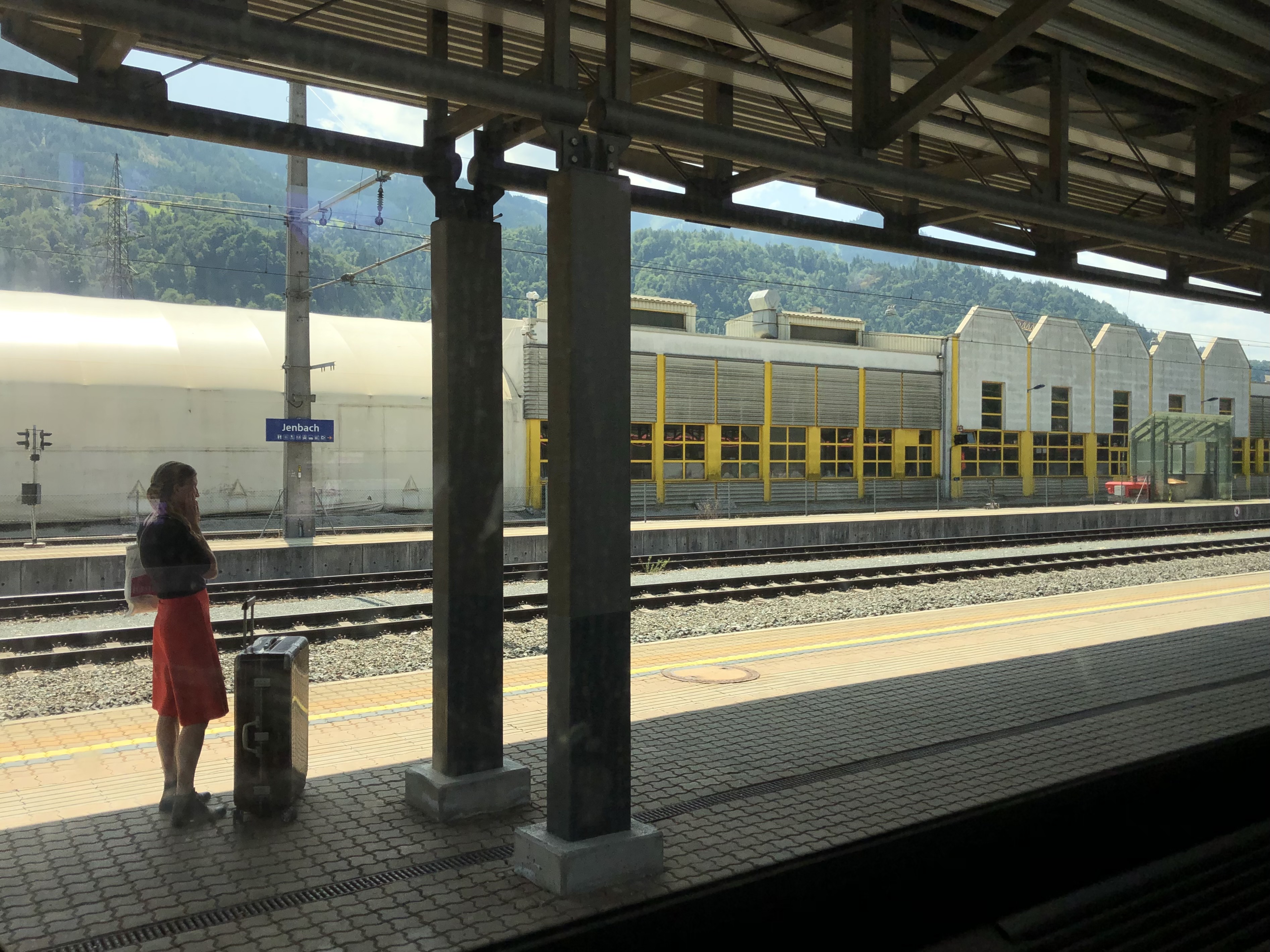
A second example happened on a packed train heading to the mountains of South Tyrol. Settled happily by the window, a young woman entered the compartment with an enormous suitcase, a cloth bag and a delighted smile at having found a space for her and them. As she arranged herself, I watched the dawning of a stricken panic as she began frantically searching under the seats for something. Her rucksack, as I soon learnt, with everything in it: passport, money, phone, ticket…
As the train pulled out of the station, she pushed her way down the carriage only to return a short while later empty handed and distraught. Once again, the past became instantly present as I felt a visceral memory from 1987 when my bag was stolen on a train in India. It too had everything in it, including all my Kodak films and diaries. I remembered the sense of suddenly not existing, of life stuttering to a halt as the bureaucratic fuel needed to move our lives forward was gone. Suddenly I had nothing, and no way of getting anything or anywhere, least of all home.
With her beautiful smile now strained, the young traveller got off at the next station in order to return to the only place she might still find her bag. I gave her 30 Euros and told her things would work out somehow. They always do. She returned the same anxious gratitude I too had offered the kind stranger who gave me some money in India. But for the next stage of my journey, that episode from my past was fully present, just as I trusted her present would swiftly pass and resume its course into the future.
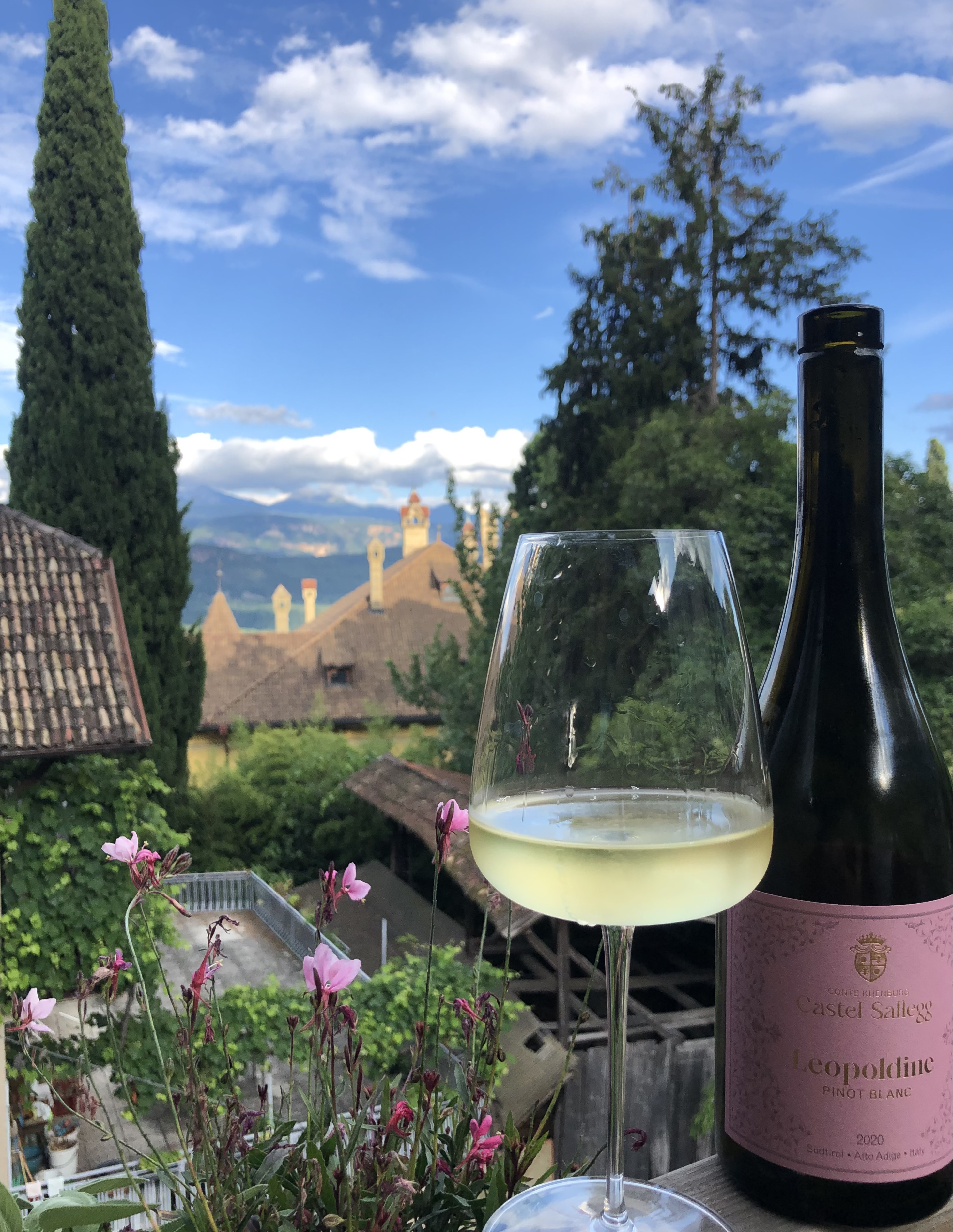
Living in the space between the launch of In My Grandfather’s Shadow last July and the impending publication of Im Schatten Meines Großvaters coming up in September, the present, devoid of a busy schedule and deadlines, has rarely felt as potent and expanded in its not-knowingness. My original 10-day trip packed with travel and planned visits both to German friends and book-related people, evolved through a series of spontaneous decisions and the generous offer of a first cousin’s apartment, first leading me to South Tyrol and then into a week of moment-to-moment unfolding. My days’ questions revolved around whether to hike up that mountain, swim in the big or smaller lake, e-bike to the nearest village, read or taste a different local Weißburgunder/Pino Bianco…
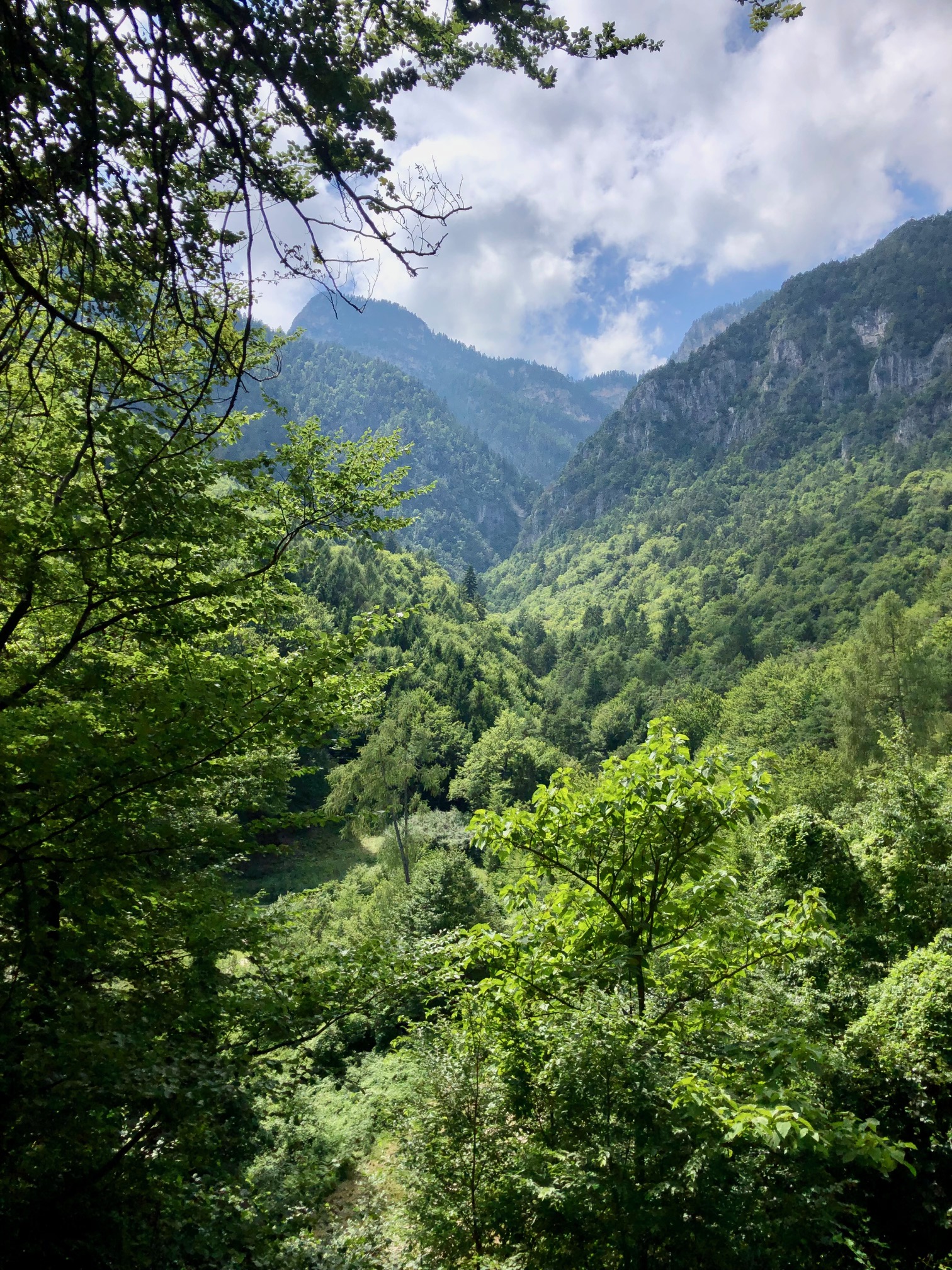
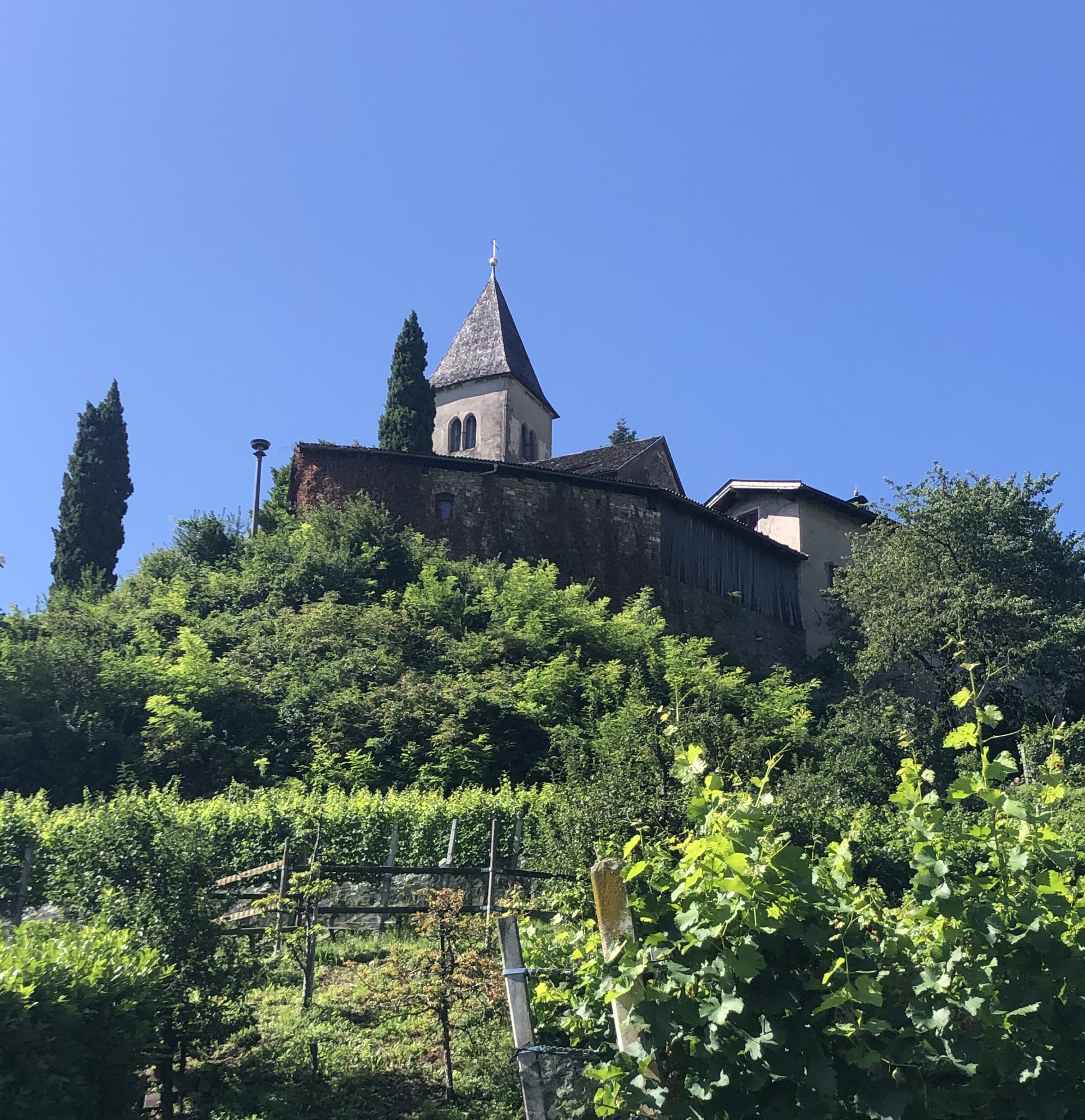
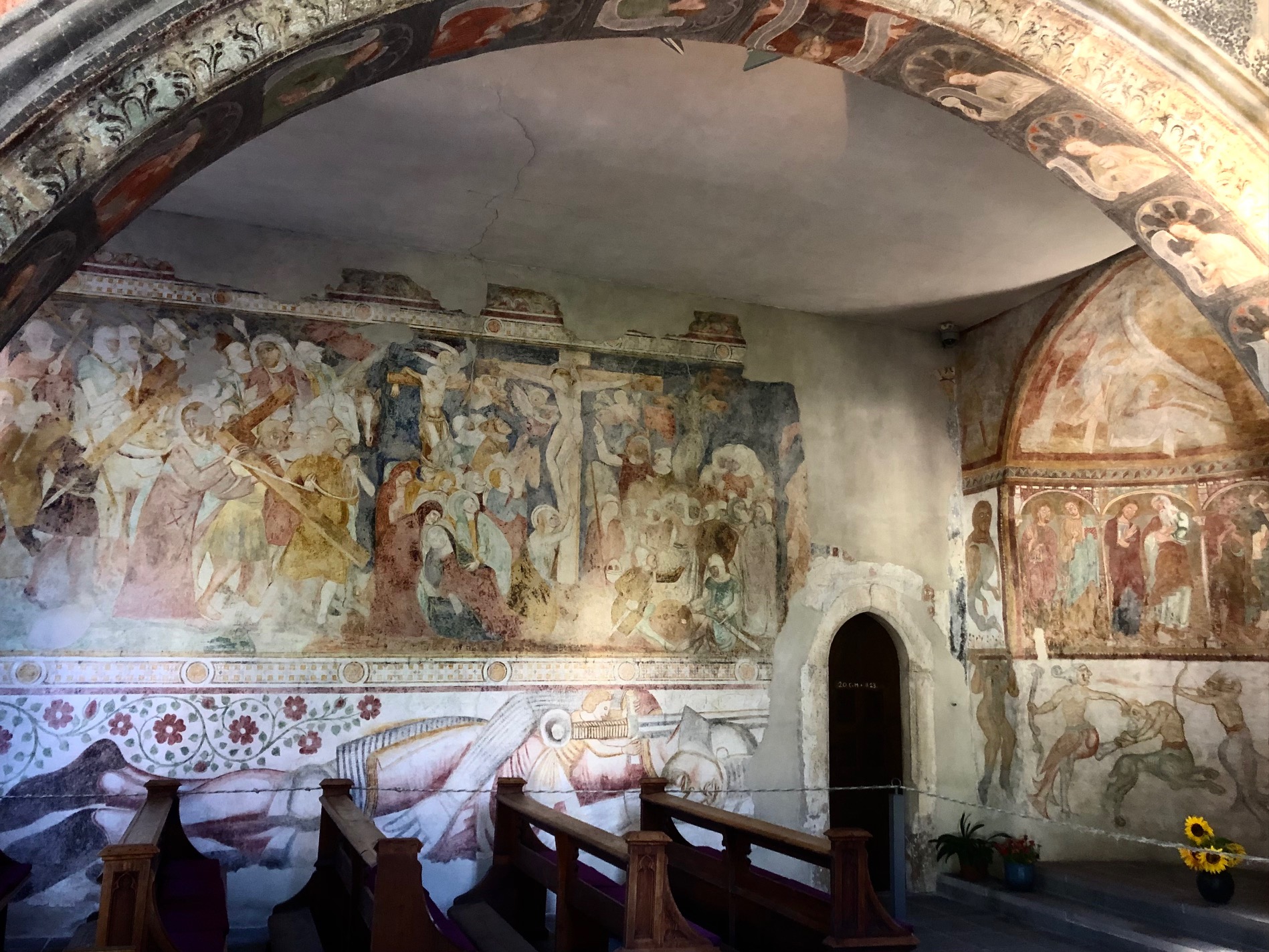
It’s typical happy holiday stuff for some. But there were times when I literally stepped out of the hot sunlight and into the cool past. Italy does that effortlessly through its barely signposted, little Romanesque churches adorned with glorious early 13th century frescoes. The continuity and shared spatiality of past, present and future tangible to those who are open to feel it.
St Jakob in Kastelaz near Tramin
Deliberately avoiding all news and social media and without a task to accomplish, I experienced a strong sense of how the past constantly accompanies and informs us – albeit often subconsciously – as we are drawn by an unknowable future through our present moment. And I have to say, right now, mine is a present that I am really enjoying.
Wishing you a very happy summer wherever you are… and whatever the weather!
In a radical departure from my usual darker themes, I’ve got something special for you. (You may find it more rewarding to view April’s blog on my blog site rather than as an email where the layout sometimes gets a little garbled.)
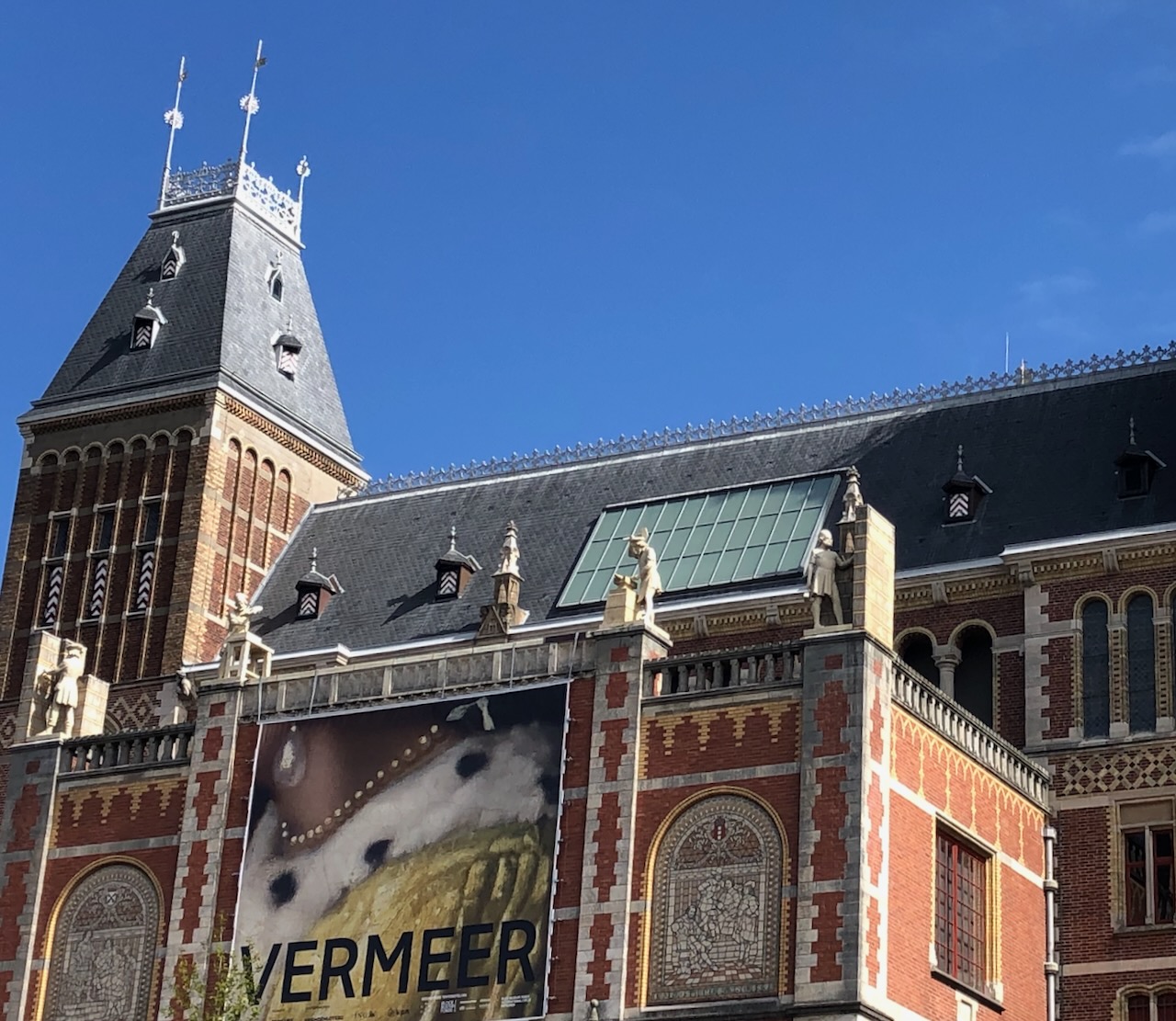
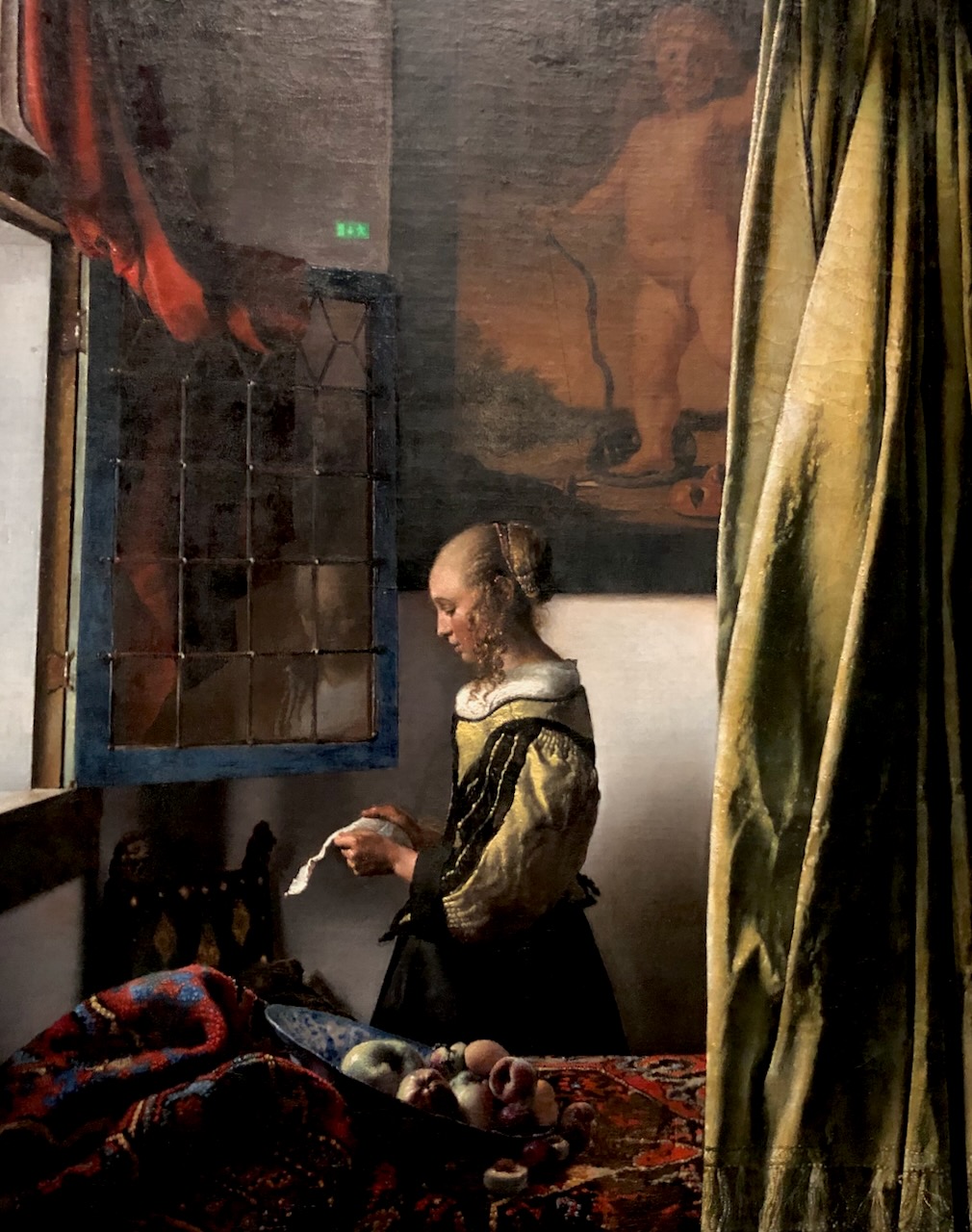
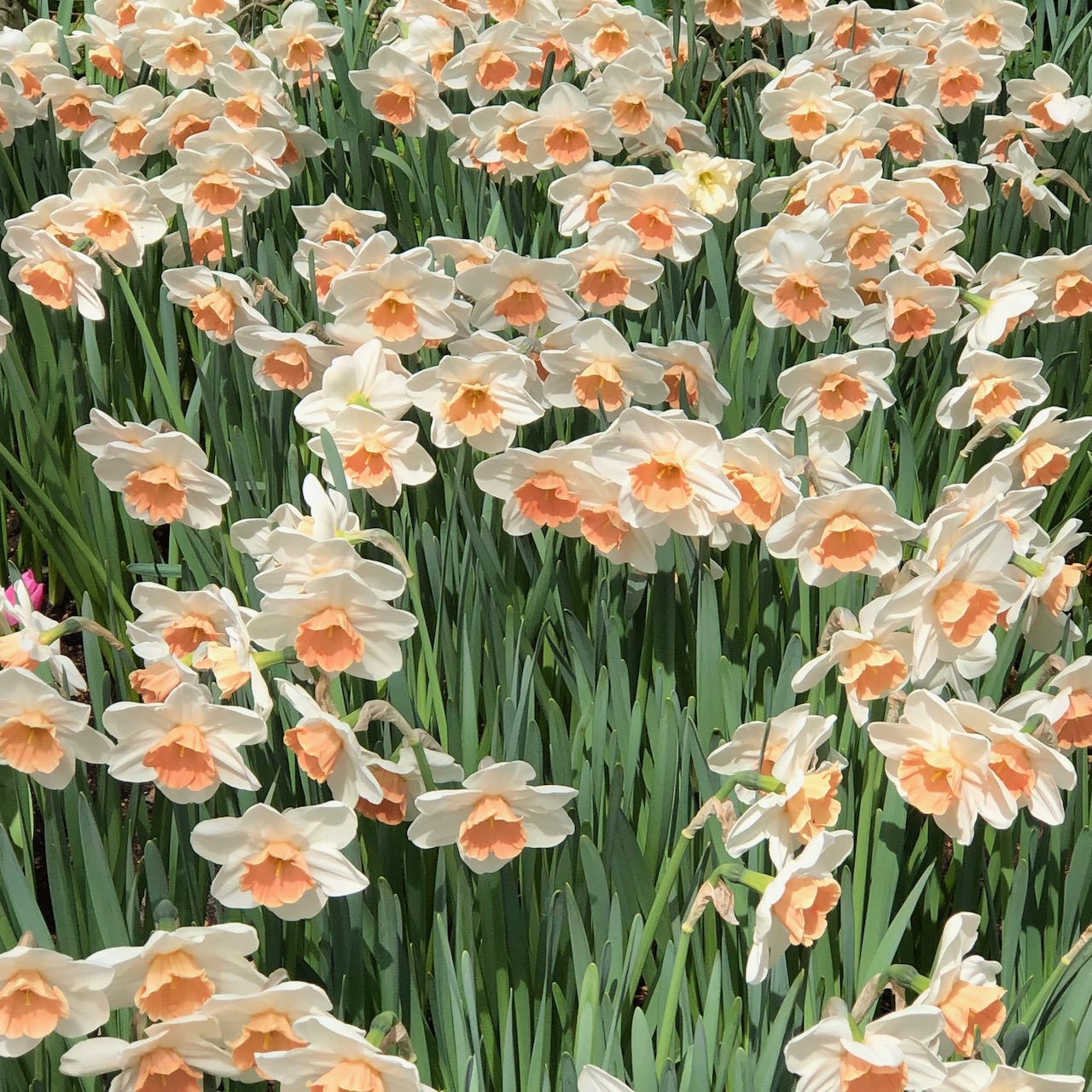
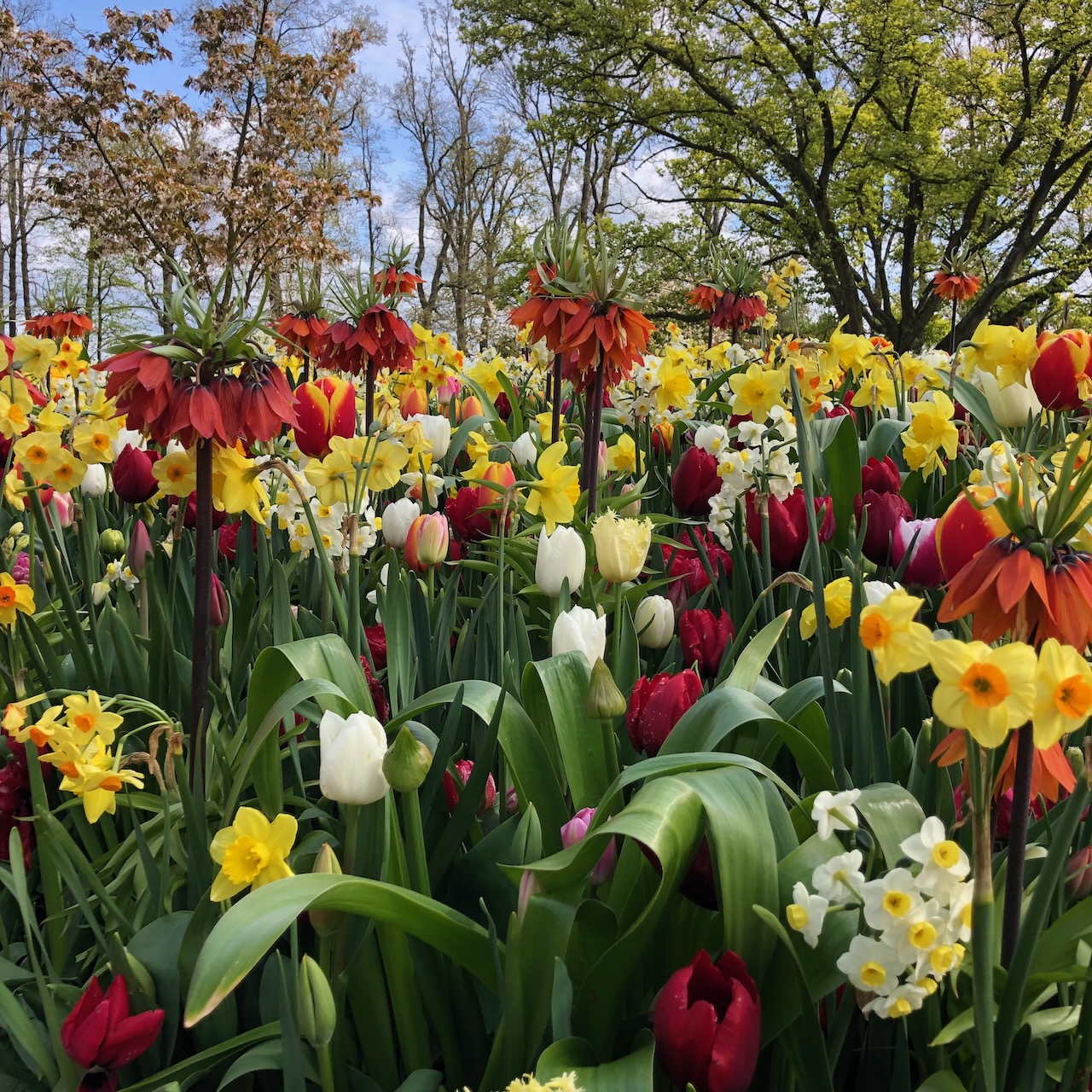
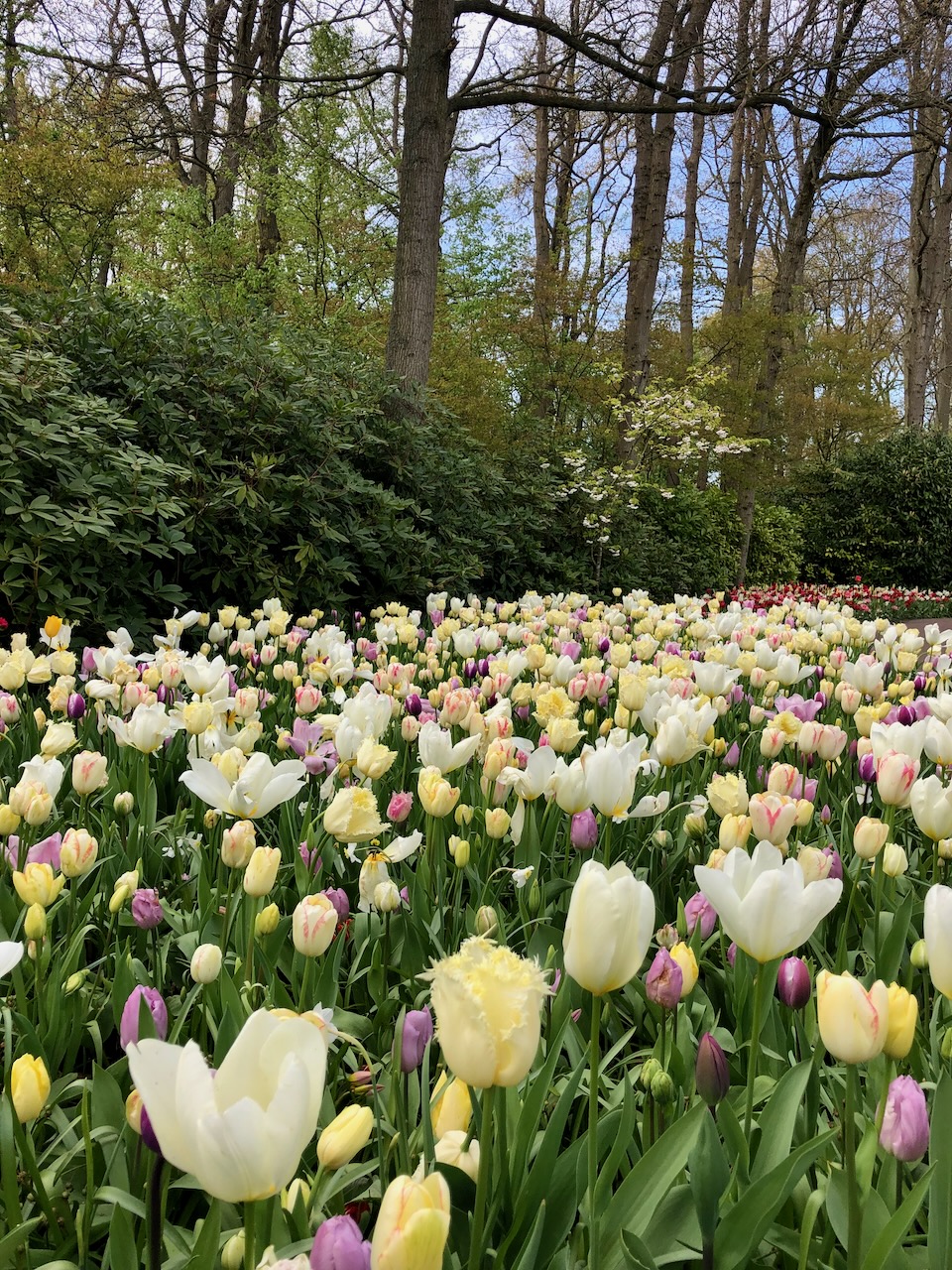
I have just returned from a three-day trip to Amsterdam with my nearly 89-year-old mother. After her stroke in 2016, talking and understanding became difficult, at times impossible. This trip was designed to bypass both and provide delightful experiences in some of the areas of life we both love – art and flowers. The main components would be the Vermeer exhibition at the Rijksmuseum and the Keukenhof Tulip Festival. Both exceeded our already high expectations as we were treated to a visual and sensory bonanza. We bathed in beauty, feasted on colour, immersed ourselves in the scents and sounds of sunlit spring…
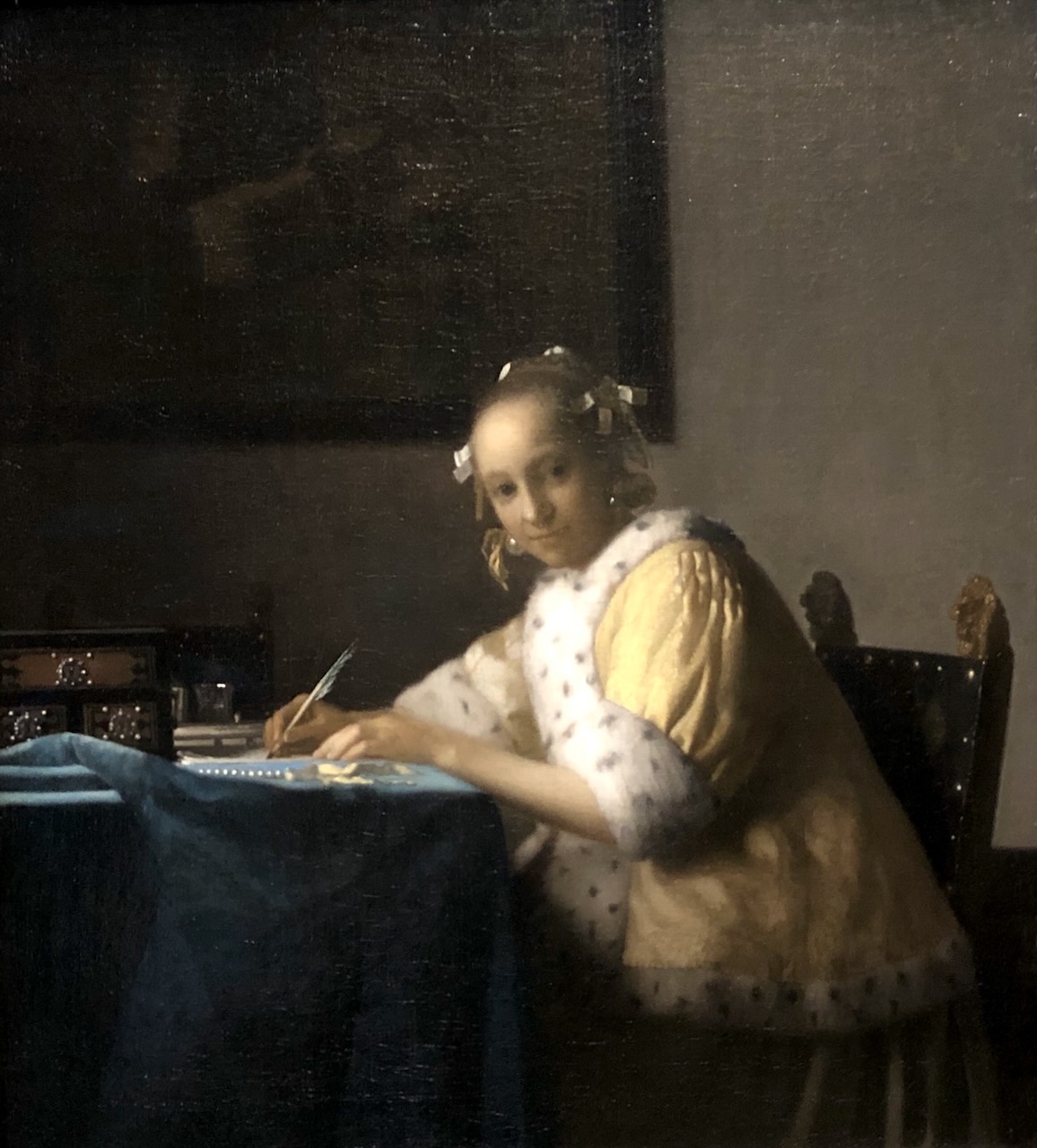
Sold out within two days of its opening in February, this exhibition presents the largest collection of Vermeer paintings ever – 28 out of the 37 known works. Words feel inadequate to describe the quiet intimacy of these often tiny paintings that offer immaculately observed, snapshot-like glimpses into Dutch domestic interiors where mid-17th century women work, play instruments, read or write.
A strong relationship between internal and external worlds is created through letters and the subject’s gaze turned towards open windows or us, the viewers.
Crisp, almost silhouetted figures against potent negative spaces of ‘white’ wall backdrops; droplets of light falling on the brass studs of a chair or the beads of an earring; sumptuous folds of silk sleeves and curtains… the details are breath-taking.
In complete contrast was the loud exuberance of the 7 million bulbs planted by 50 gardeners for the two month Keukenhof Tulip Festival. The cold weather had meant that daffodils, hyacinths, narcissi, muscari, tulips and cherry blossoms were all blooming in a form of perfect synchrony. A heady mix for which no words are needed… just enjoy!
Back at our beautiful hotel – a rare indulgence – the themes of interiors and flowers continued in a creative meeting of design, texture, pattern and nature…
And then finally to the fields and the lovely words of my trooper of a mother that pretty much sum up the special days for both of us: “I don’t want to leave…”
As the days get noticeably longer and the year begins to gain momentum, I have been observing what builds up my energy and what makes it slump. It’s a good way to gain an indication of which direction to follow. What I notice again and again is that when interactions fall into binary dynamics of right and wrong, good and bad, or discussions strive for a dominant ‘winner’, my psyche becomes more combative or defensive and is quickly drained. There is rarely a satisfactory outcome. But when there is an openess for exploration, conversation, ‘compassionate enquiry or curiosity’ as the physician Gabor Maté would call it, my whole body relaxes. I come away feeling expanded, richer, slightly changed, more connected. More hopeful.
Where am I going with this?
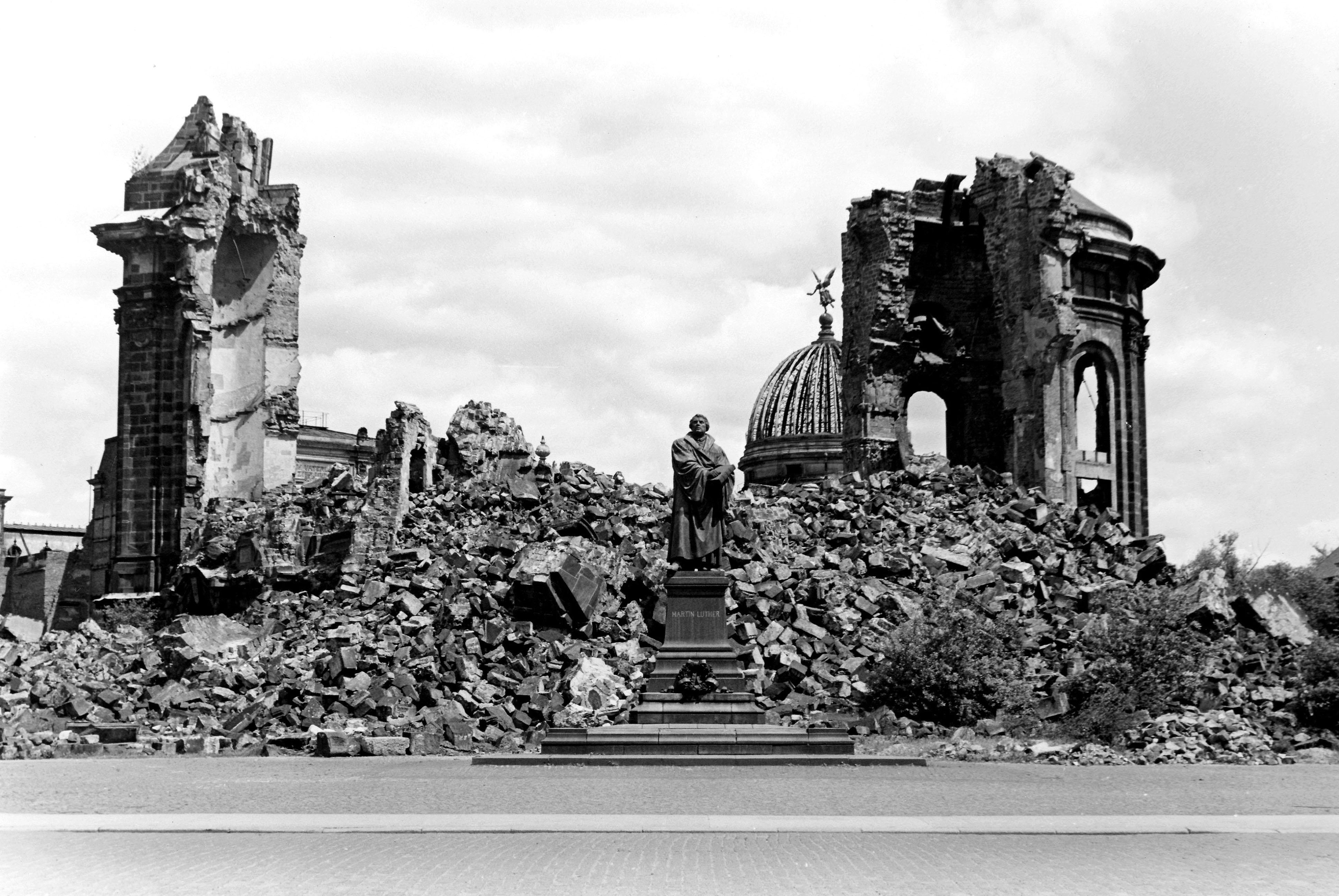
Ruin of the Frauenkirche in Dresden with the Monument to Martin Luther – Church of Our Lady.
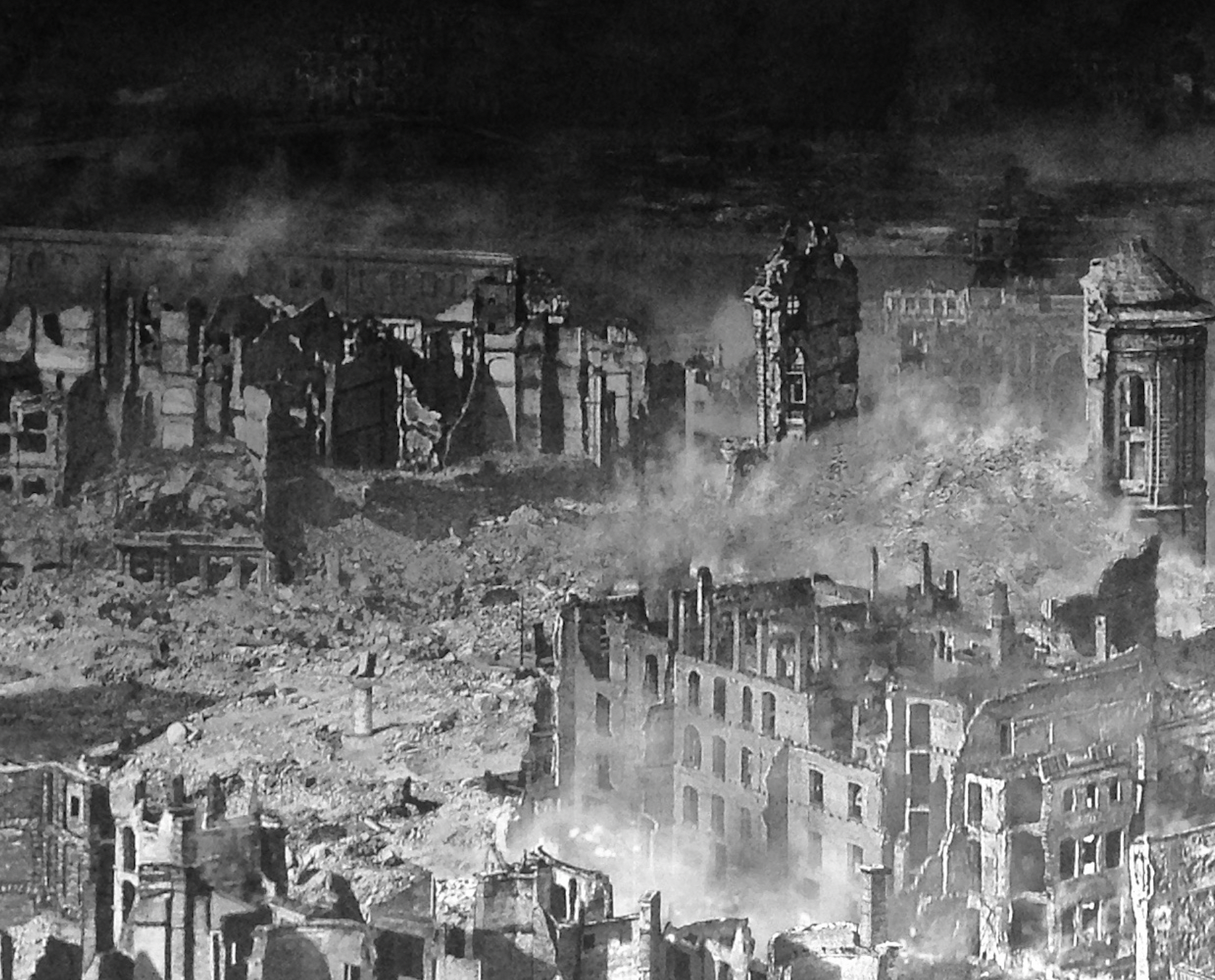
Monday 13th February marks the 78th anniversary of the British and American bombing of Dresden. Every year, a human chain of people holding hands in an open gesture of unity wends its way through the city. This year, on Tuesday 14th, a lunchtime gathering will also take place in London with leading figures from the Anglo-German community to remember the second day of the 1945 bombing raid and celebrate the 30th Anniversary of the Dresden Trust. Founded shortly after the reunification of Germany by Dr Alan Russel in response to a ‘Call from Dresden’ to help rebuild the city, the charity is dedicated to healing the wounds of war and furthering harmonious relations between the people of Britain and Dresden.
Whether you see the bombing of Dresden as a British/US war crime, a justified military strategy or a deserved, morale-destroying mission specifically designed to create as much damage and carnage as possible, the outcome is the same: 25,000 civilians died unimaginably horrible deaths. Such extreme acts of destruction are only possible when all that people can see in their fellow human beings is difference, separation, ‘other,’ lesser, enemy… And where that occurs, peace becomes a far-off pipe dream.
In contrast, behind the reconciliatory, healing and bridge-building efforts of organisations such as the Dresden Trust, is a striving for the opposite: collaboration, communication, comprehension, compassion… and a whole load of other words starting with ‘co’ or ‘com’ that signify a certain oneness in our shared humanity.
Two of the areas I have been most active in – rehabilitation and reconciliation – both have in common that they are repairing or making whole something that got broken. They come about post-event, after the damage has run its course, hence the ‘re-‘ prefix. So what if our collective focus shifted from the costly (on all levels) clean-up jobs those ‘re-‘ words embody, to preventative measures of ‘habilitating’ and ‘conciliation’? What if, instead of constantly having to make good again things that we have damaged – whether health, a lack of education, inequalities or injustices – we put all that time, energy and funding into seeking out and nurturing the common foundations and shared human needs we all have and that we can see so clearly in emergencies such as the devastating earthquakes in Turkey and Syria, where all the differentiating labels (national, political, ideological, gender etc.) we layer over our essential selves get stripped away?
To do this we would need a fundamental shift from head to heart; in our education, politics, laws, economics, environmental policies, attitudes to foreigners. Thankfully, in many areas, that shift is already happening.
During President Zelenskyy’s recent tour of Europe, I was gladdened to hear the calm voice of Christopher Chivvis, former Sr. US Intelligence Officer in Europe, in an interview with Evan Davis on BBC Radio 4’s PM programme. He quietly called for a more robust diplomatic track in relation to the Russia / Ukraine war rather than an escalation of increasingly powerful military methods of destruction with the ensuing losses of life. And then he outlined how this could look. I found him more psychologically astute and emotionally literate than many of the louder voices we hear, but see what you think You can listen to the interview here starting 46:31 mins in.
I imagine one of the foundation stones of diplomacy is a willingness to make a concerted effort to hear all sides of the story. An attempt to do just this came in the form of the brilliant 3-part BBC2 documentary series, ‘Putin vs the West’. Produced by Norma Percy, it presents the run-up to Putin’s invasion of Ukraine through the spoken words of an impressive range of key players as well as incredible footage of Putin and co at work. It was compelling watching that I can only recommend. But… for all the different angles it presented, it remained largely the point of view of the west. As Andrew Seale said in his article: “The problem with this type of documentary… is that there is no one credible to interrogate the west’s narrative.” And it was very clear, the west didn’t always get it right.
So we need to go even further. To include an even more diverse range of voices. To hear our critics too.
If Dresden can teach us anything, it is that it is too dangerous not to. War brutalises. War traumatises. For generations to come. Maybe as former US president, Barack Obama, said in defence of his retrospectively ‘best’ but much criticised decision not to take military action against Syria after it had crossed his ‘red line’ of using chemical weapons: “The ease with which military actions gain momentum, the greater difficulty in pulling back and insuring that diplomacy is given a chance.”
November, in many cultures, is the month designated to remembering those who are no longer there. With a strange synchronicity, everything I did, watched, read or listened to pointed towards ‘absence,’ that non-presence devoid of form that artists call ‘negative space.’ “Empty space is the silence between musical notes, the pauses in poetry, the stillness of a dancer. Therein often lies the meaning or drama of a piece.” (In My Grandfather’s Shadow, Ch 11, p.144)
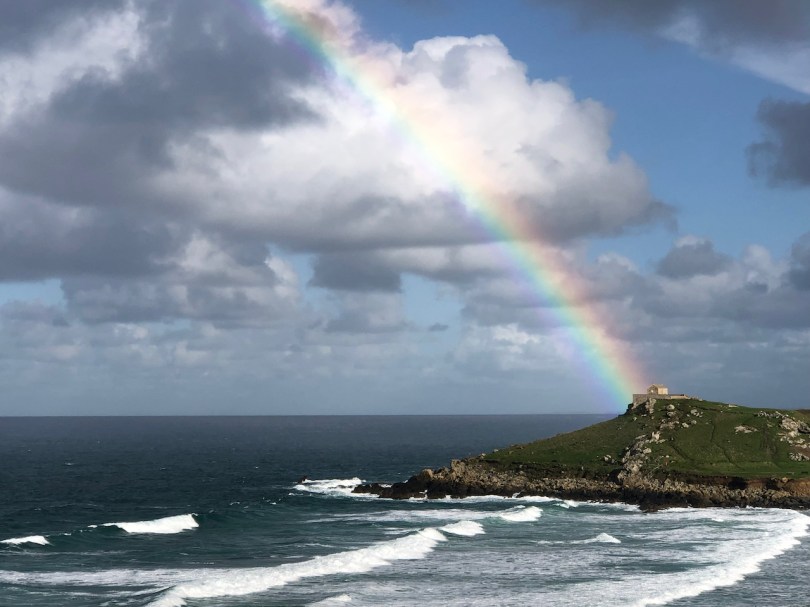
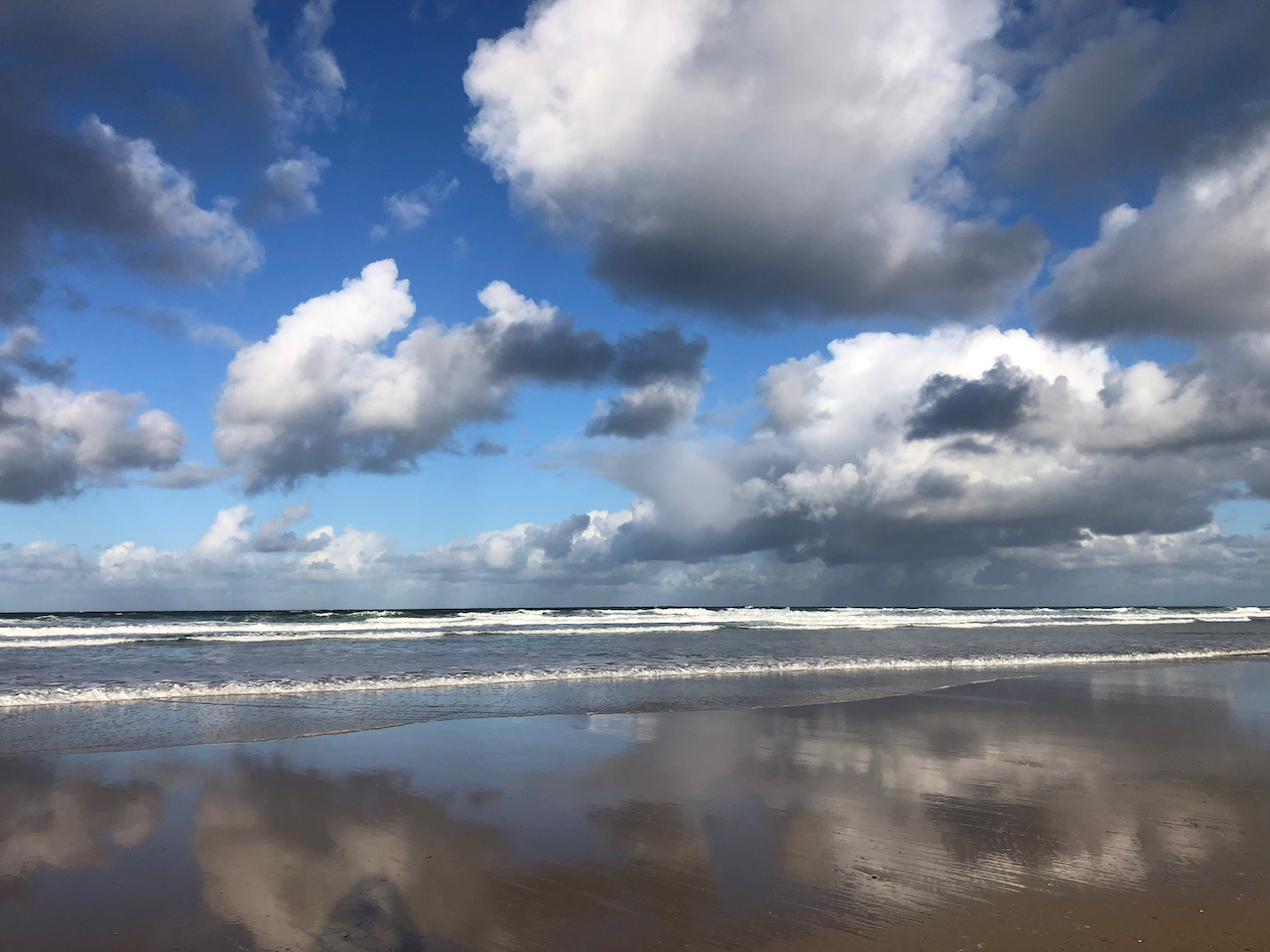
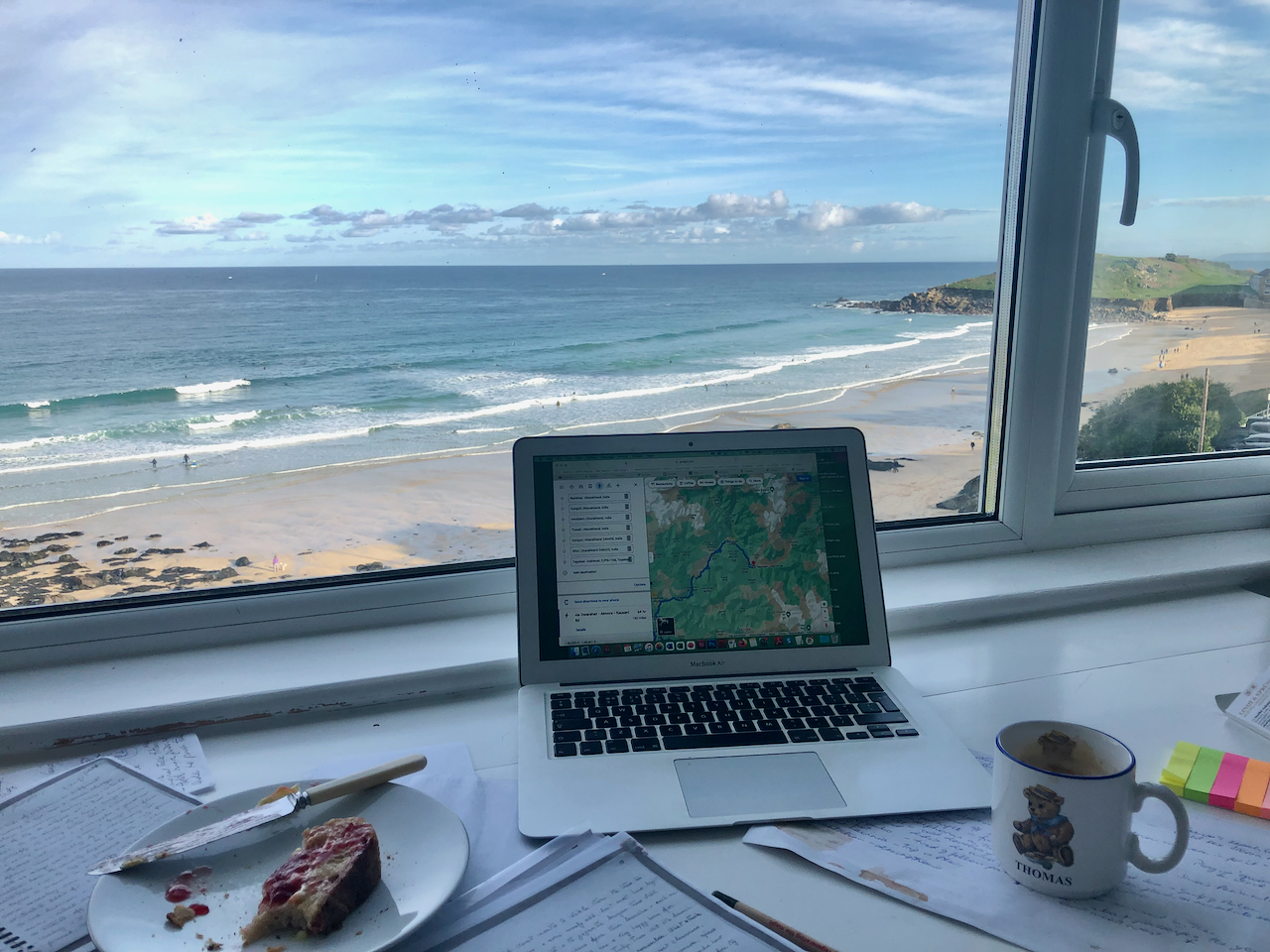
I have just returned from a week in St Ives, the Cornish place that boasts the highest concentration of blue light in the UK and challenges many an artist to capture its effect in paint. A kind author friend each year offers her house of clean white rooms overlooking the beach and cliffs as a form of writing retreat for three of her fellow writer friends. All four of us want to make the most of precious time out, so the interiors fall silent during the days that in turn empty of all structure, just as our minds declutter of chores.
I spent my time reading the diaries of my intrepid, spinster great great aunt, who travelled alone to the Himalayas in 1939 to gather flowers for Kew Gardens. I followed her slow, awe-filled progress as she step-by-stepped her precarious way through lofty peaks and flower- or snow-filled valleys, pausing with her when she rested to stare at the perfectly choreographed performance of clouds and weather dancing in front of my window. Thoughts wafted through my mind, some being noted, others just fading in and out like rainbows. For a whole week, I simply was.
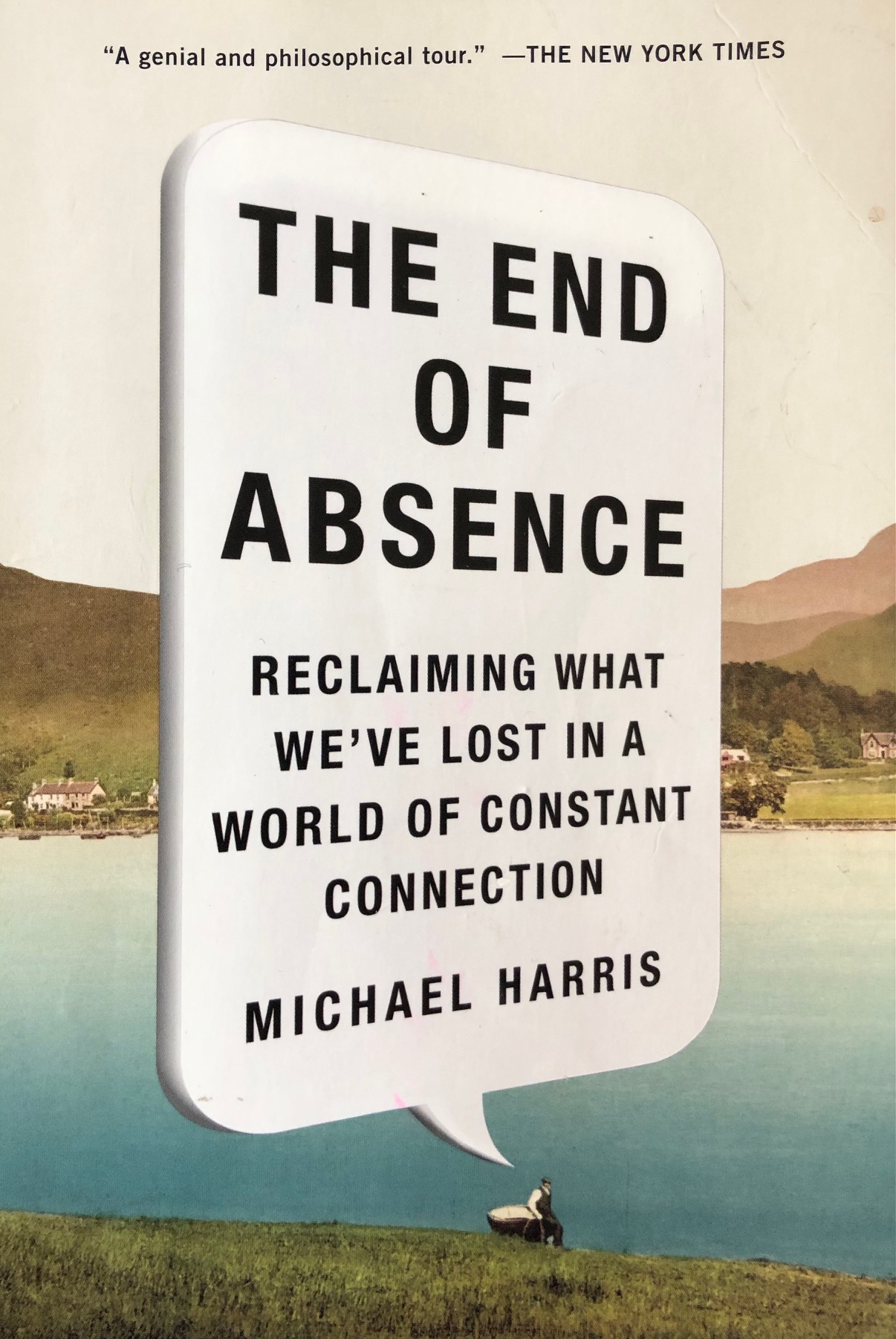
My time there, along with books and films I have recently ingested, have been making me realise just how much I miss and yearn to regain some of what I remember loving doing as a child… nothing. Being born a day-dreamer, the spaces between activity and connection were always filled with a rich, albeit invisible world that had the capacity to entertain, or indeed bore. Boredom… how rarely we have time for that potentially creative vacuum within today’s ubiquitous overload of information, social media and communications that interrupt our rhythms with an octave of pings. I don’t think this is just a grumpy, old-age thing. (Well it may be a bit.) This nostalgia is captured well in ‘The End of Absence’ by the considerably younger and hipper author, Michael Harris. He reminds us of what we are in danger of losing as generations, who have never known life without the internet, gradually overtake those of us who have.
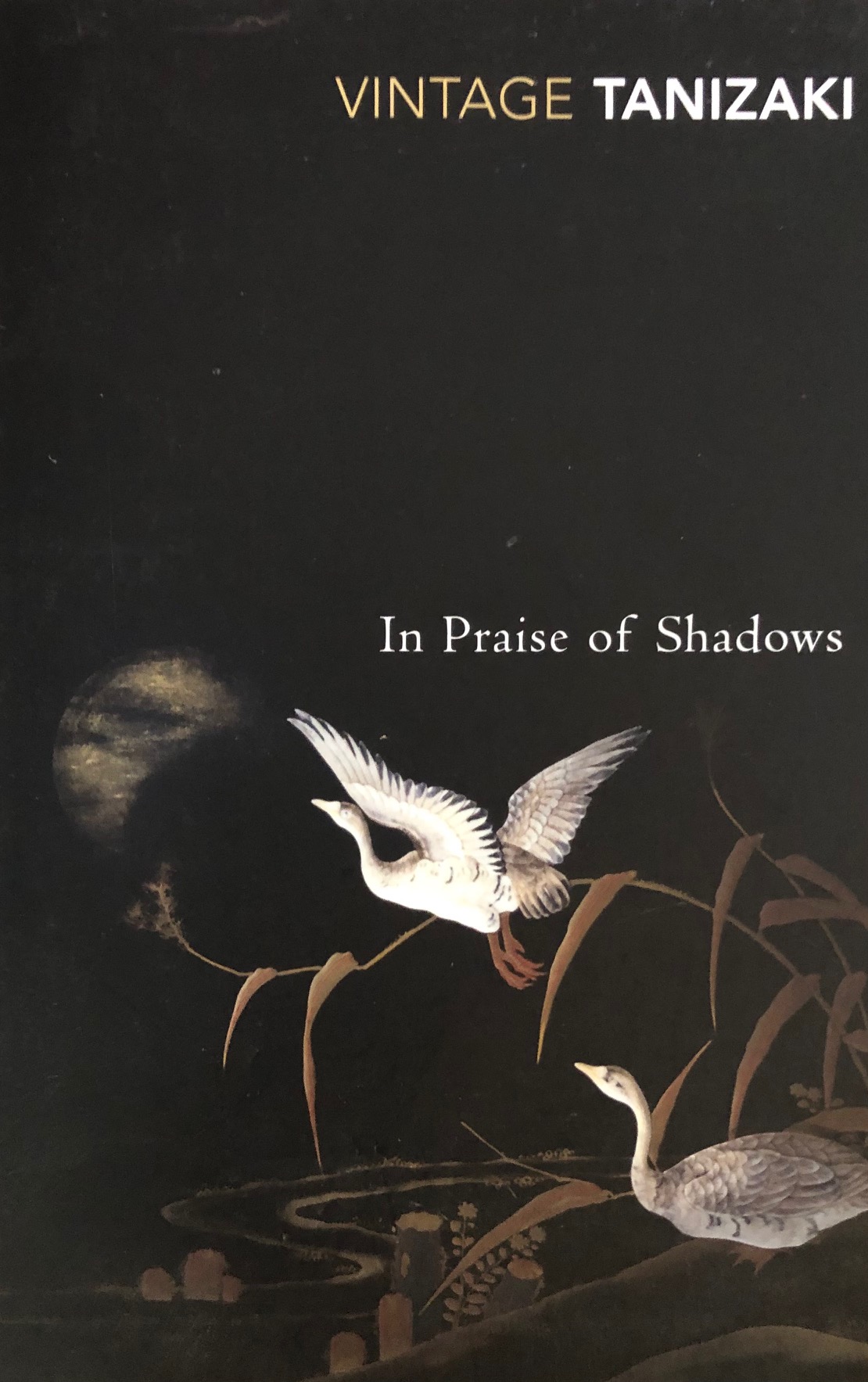
The recently released and highly acclaimed film ‘Living’ based on the book by Akira Krosawa, screen written by Kazuo Ishiguro and starring Bill Nighy is set in 1950s London. Not a lot happens, and what does, happens incredibly slowly. The cinematography is stunning and emulates the subtle grace described in ‘In Praise of Shadows,’ a slim book by Junichiro Tanizaki that gently reveals traditional Japanese aesthetics and use of space. Unlike us in the west where the achievement of light is basically both goal and God, in Japan it was – and maybe still is in places – the creation of shadows that was the source of beauty and mystery. This quiet understatement is part of what I want to rediscover.
Another film I watched where even less happens but with still more potency and power, is The Banshees of Inisherin. Dark, sad, funny and impeccable in every way, including the acting of its two ‘In Bruges’ stars, Brendan Gleeson and Colin Farrell, it basically portrays the painful ending of an long-standing friendship caused by the simple declaration by one: ‘I don’t want to be friends with you anymore’. The extensive space the film allows each facial movement, scene, sentence… one can almost feel the multi-layered clutter of ones own world begging to be emptied into black bin bags, or deleted.
With this increasingly strong desire to create more space, I decided to have a big Studio Sale of my art. (All works available can be viewed here.) And to finally sort through my real and digital filing office and cabinets in order to establish more clarity and space for new shoots and fruits.
So with the start of Advent this Sunday and the build-up to the crazy, all-consuming Christmas season, I would like to invite you to join me in seeking out and reclaiming some of those quiet spaces life used to offer in abundance, and still does if we just stop… feel… and dream our way into them.
Wishing you a very Happy and Meaningful Advent…
Related Links
To buy my book, In My Grandfather’s Shadow, as a Christmas present, please order from your local bookshop or online here
“In My Grandfather’s Shadow’ is a brave, powerful, honest, thoughtful and meticulously researched book. I enjoyed it immensely. It has made me think very hard about intergenerational trauma transfer and explains so much about Germany, and perhaps, in the current context, Russia.” General Sir Richard Shirreff, former Deputy Supreme Allied Commander Europe and author of ‘War with Russia’
To listen to the recent 5-part Interview with Chris Baxter on Radio West, please go to BBC iPlayer here
To look through and/or buy a piece of ART please go to my website: www.angelafindlay.com
I’m interested in how front page news becomes almost no news as we get used to any new situation.
When I think back to last August and Britain’s catastrophic and deeply distressing withdrawal from Afghanistan, or February this year and Putin‘s horrific invasion of Ukraine, the shock and terror of the implications of massive personal tragedy and widespread devastation had me glued to the radio. The ‘News’ from countries far away infiltrated my world, influencing my days and above all my state of mind.
It is with some shame that I have to confess I have now slightly switched off the news. Not out of lack of interest or concern, nor simply because I’m extremely busy in the run-up to the publication my book in July (hence apologies for any typos etc… I am constantly on the road at the moment.) No, I am making a deliberate choice not to turn on the news in order to preserve a positive state of being; so I can feel the excitement of my long journey reaching its end and a new chapter starting; and so I can fully immerse myself in the flower-power of the blooming wonders of nature in all their technicoloured splendour.
I am sure I am not alone in noticing how quickly and completely the un-normal can become normalised. I imagine it was always thus. History feels more intense than the present because history isn’t experienced on a moment-to-moment basis. It is captured in snapshots – letters, diaries, family albums, military or journalistic reports – and concertinaed into a narrative by skilled historians. The multitude of in-between times that make up the everyday are all missed out.
Right now – and without wanting to be a doom-monger but we can’t ignore that it is a possibility – we might be witnessing the build-up to the Third World War. Or a climate catastrophe of proportions we can’t imagine. Or world famine. Or intense poverty. Or worst case scenario, all of the above. These times too will one day be reduced to a sequence of significant events and decisions. Yet for many of us, still not directly impacted by them, the business of life continues, to a large degree, as usual.
Anybody who regularly reads my blogs knows how I frequently get frustrated by the lack of agency, influence or clout I feel in the face of the shenanigans and all too often crap decisions of politicians or world leaders. I never want to not feel justified rage or become guilty of the passivity of ‘looking away’ that so many Germans living in Nazi times are accused of. But thinking back to those times, I find it much easier to comprehend how even then, the ‘News,’ as horrific as it often was, might have become normalised. The majority of people would have read or heard about things, argued about whether they were right or indeed even true, and then probably just got on with the intricacies of their daily lives. Just like most us are probably doing now.
Maybe it’s because I find it overwhelming trying to imagine the challenges, traumas, upheavals, fears and worries of each individual caught up directly or indirectly in all that is going on in the world right now that I am choosing to surrender to the things I am impotent to do anything about. Maybe it’s ok to want to give myself the best chance of maintaining a level of optimism, vision, hope and love so I can contribute positively to the world in whatever way I can… kind of along the lines of the Serenity Prayer written by the American theologian Reinhold Niebuhr and used in Anonymous groups.
God, grant me the serenity to accept the things I cannot change, the courage to change the things I can, and the wisdom to know the difference.
Then again it may just be an age thing. That I have reached the stage where one sits in a chair and writes grumpy letters to newspapers. Or in my case, where I rail against the endless stream of transparently self-serving, superficial and frankly dangerous tweets by our foreign secretary, Liz Truss, all accompanied by ghastly selfies. Oh here we go, I clearly haven’t quite grown out of my healthy rage at the world!
Happy end of May and beginning of June and next time I write, it will be a countdown to publication day…
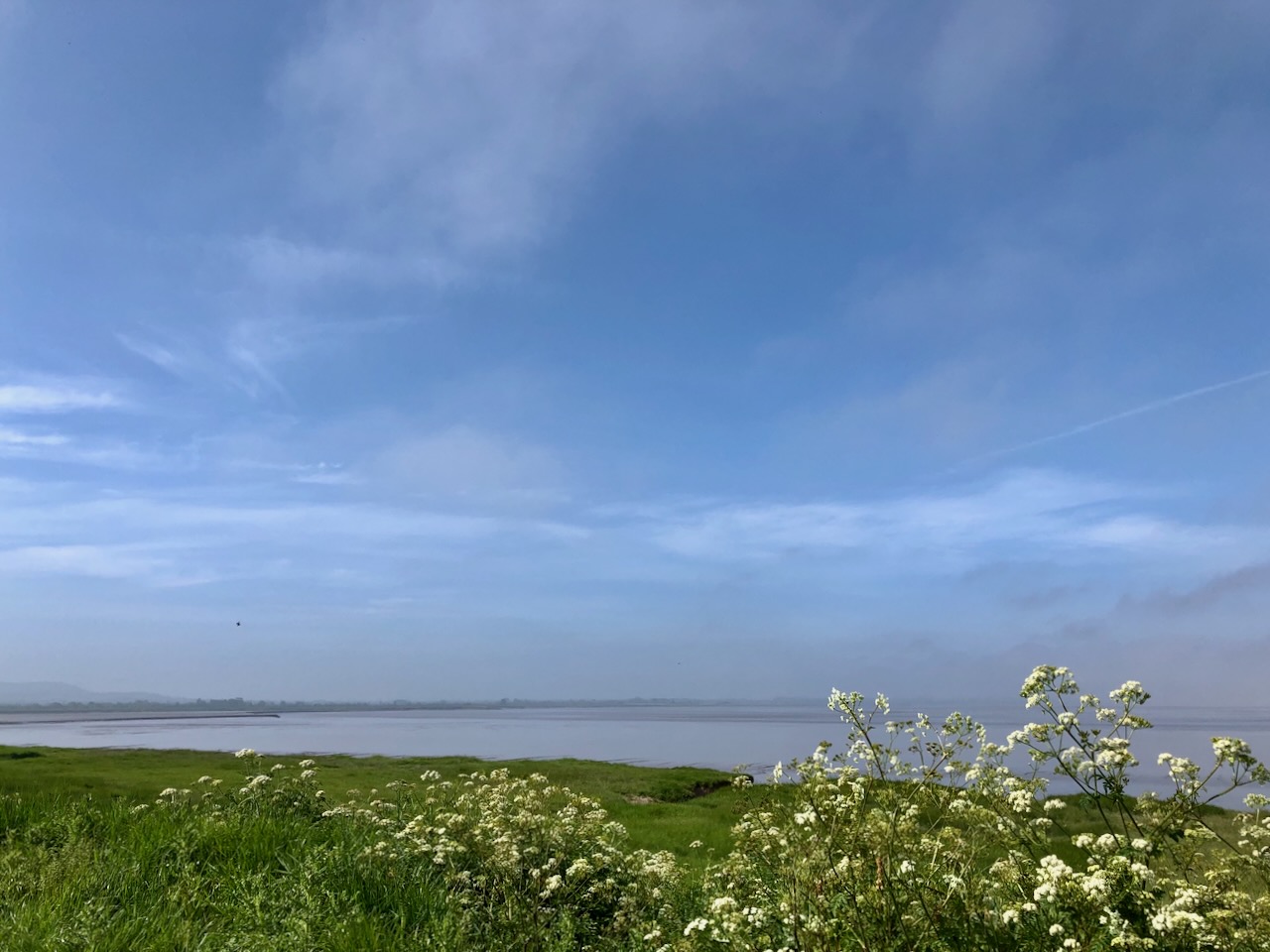
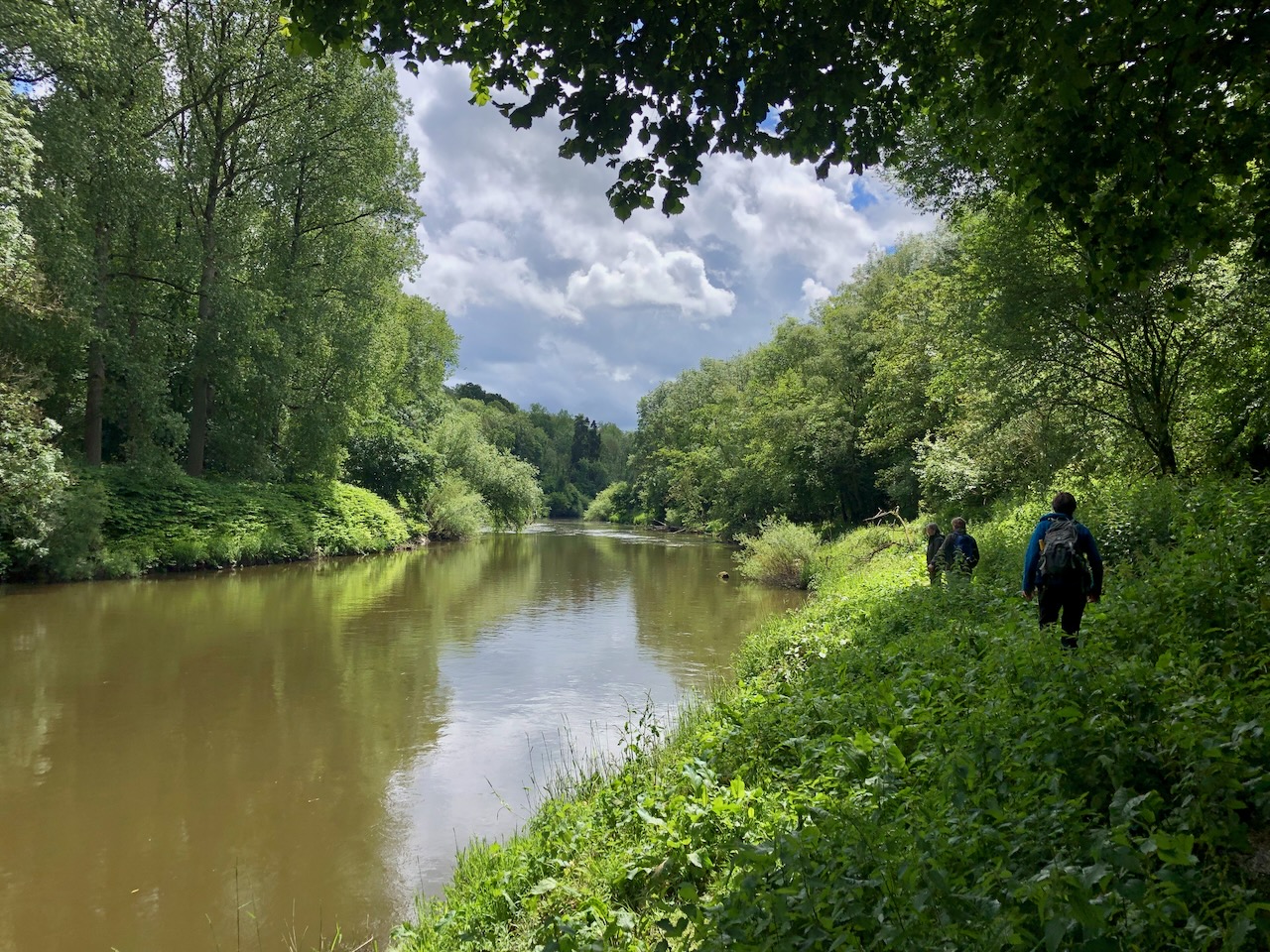
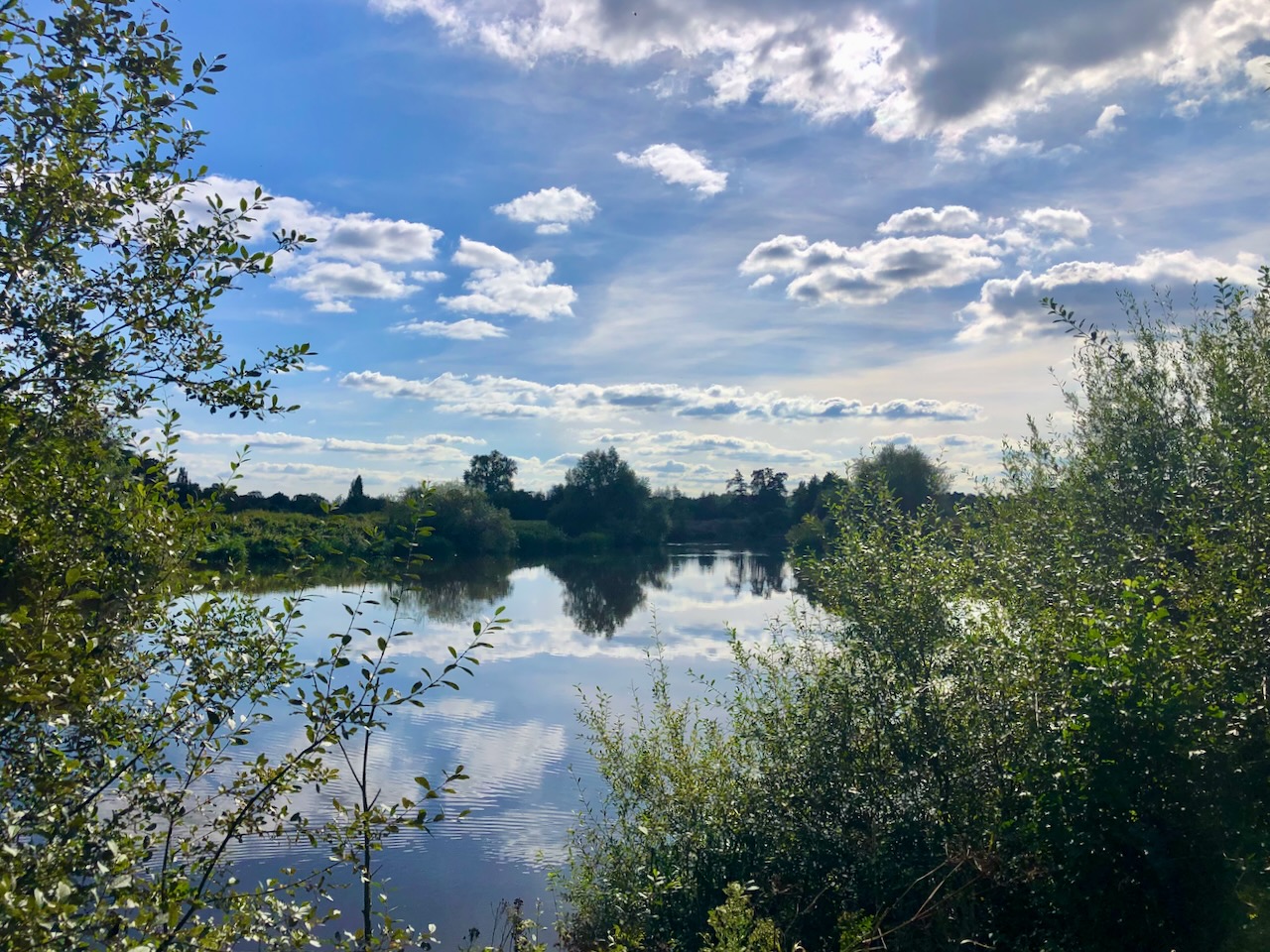
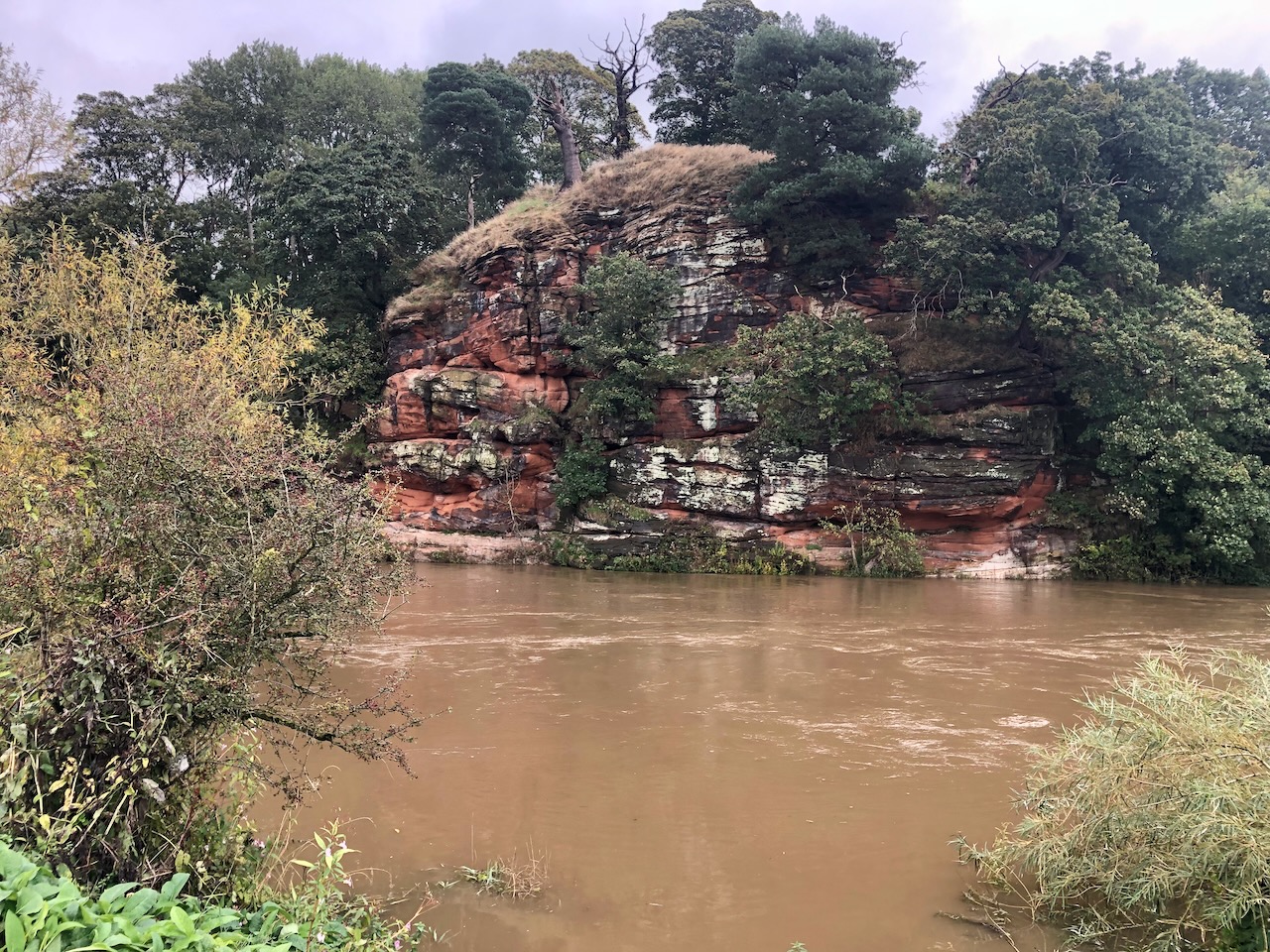
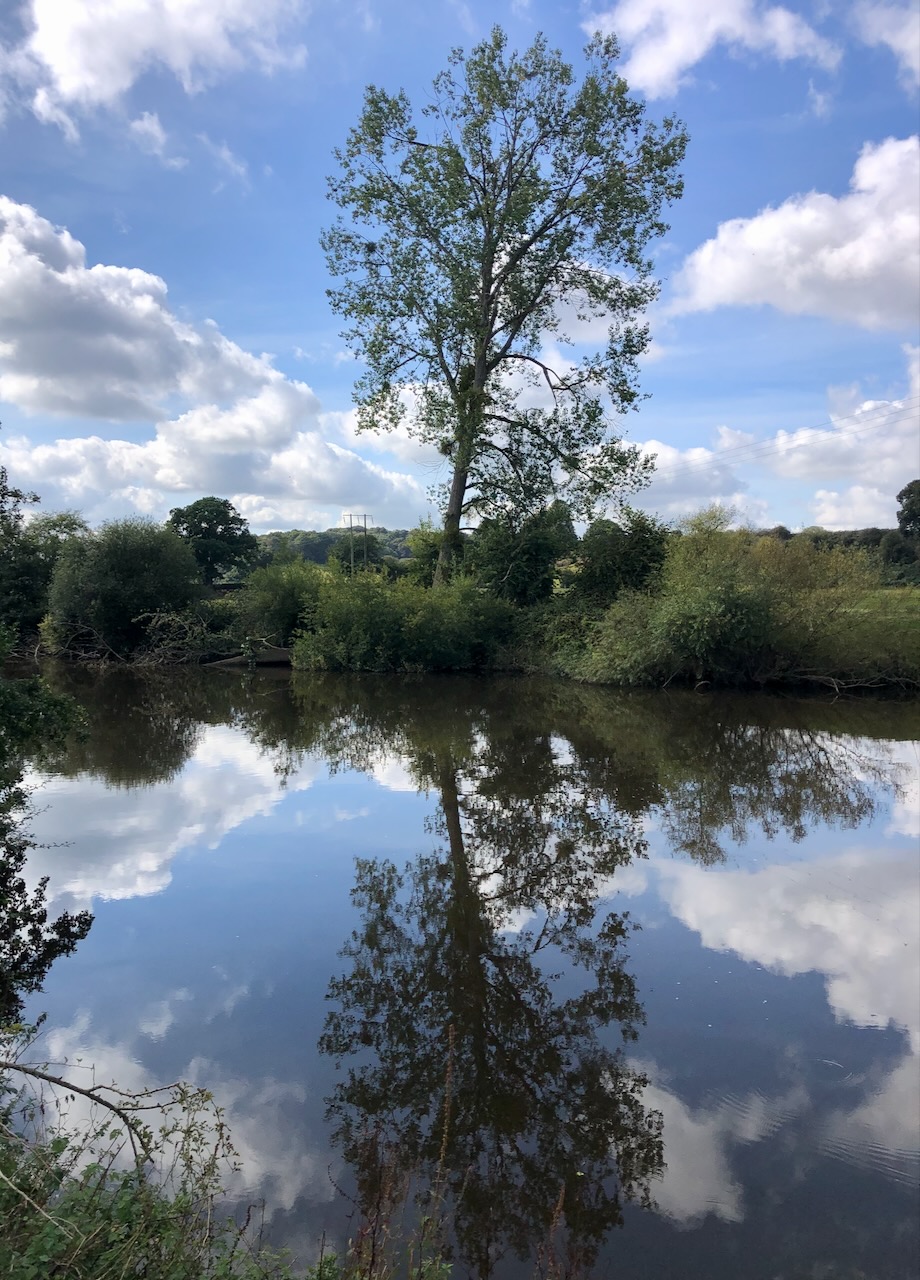
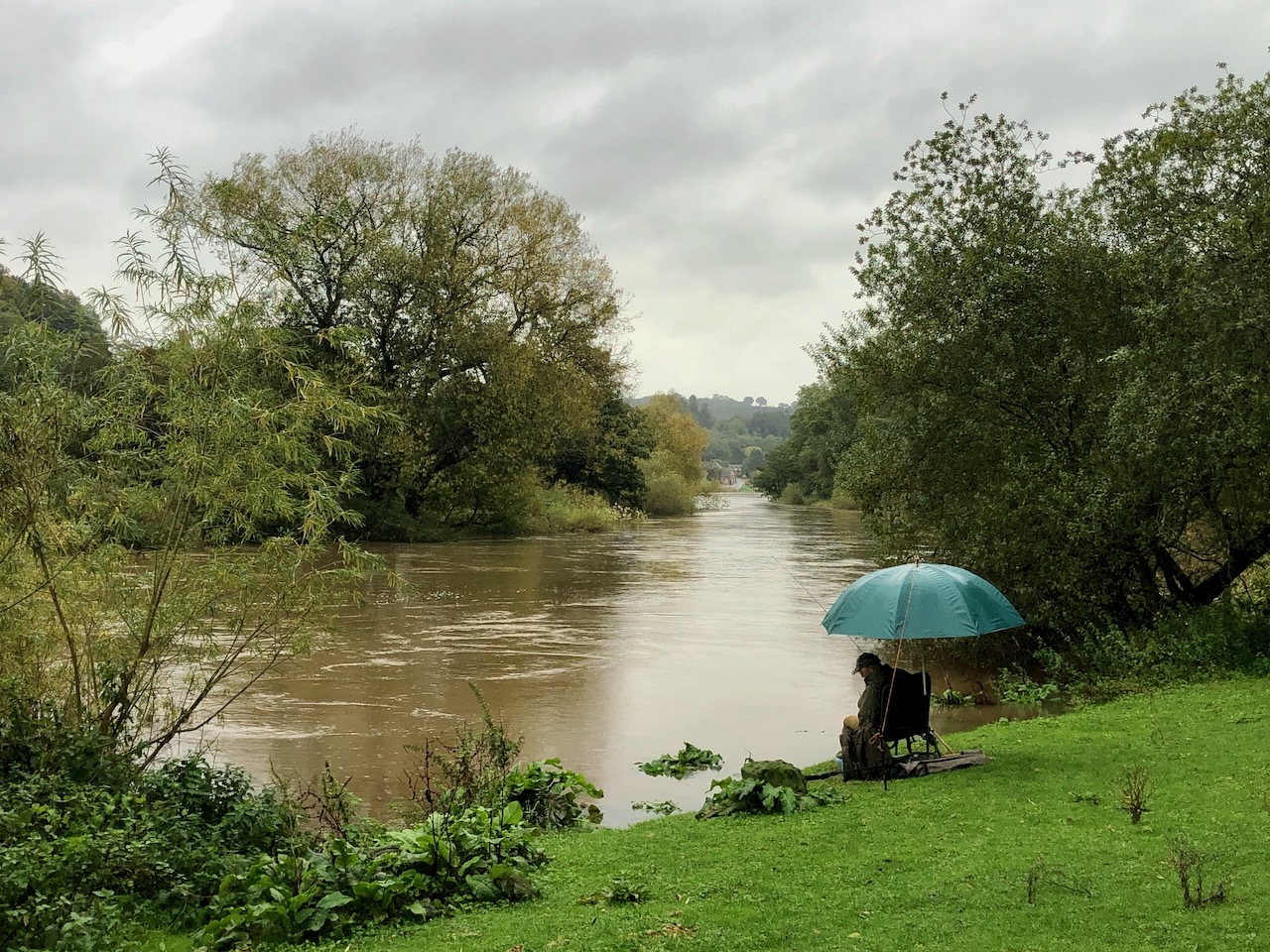
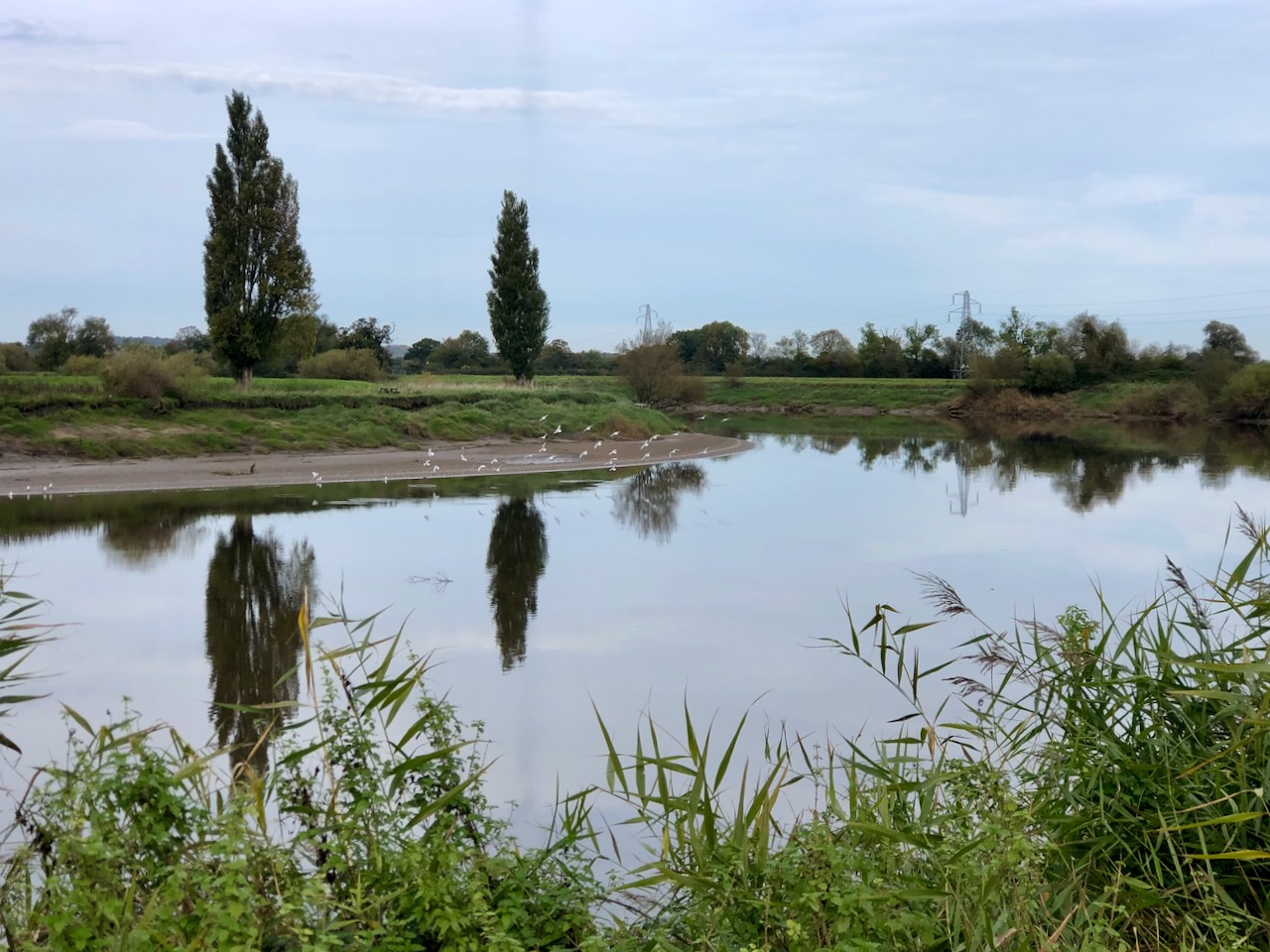
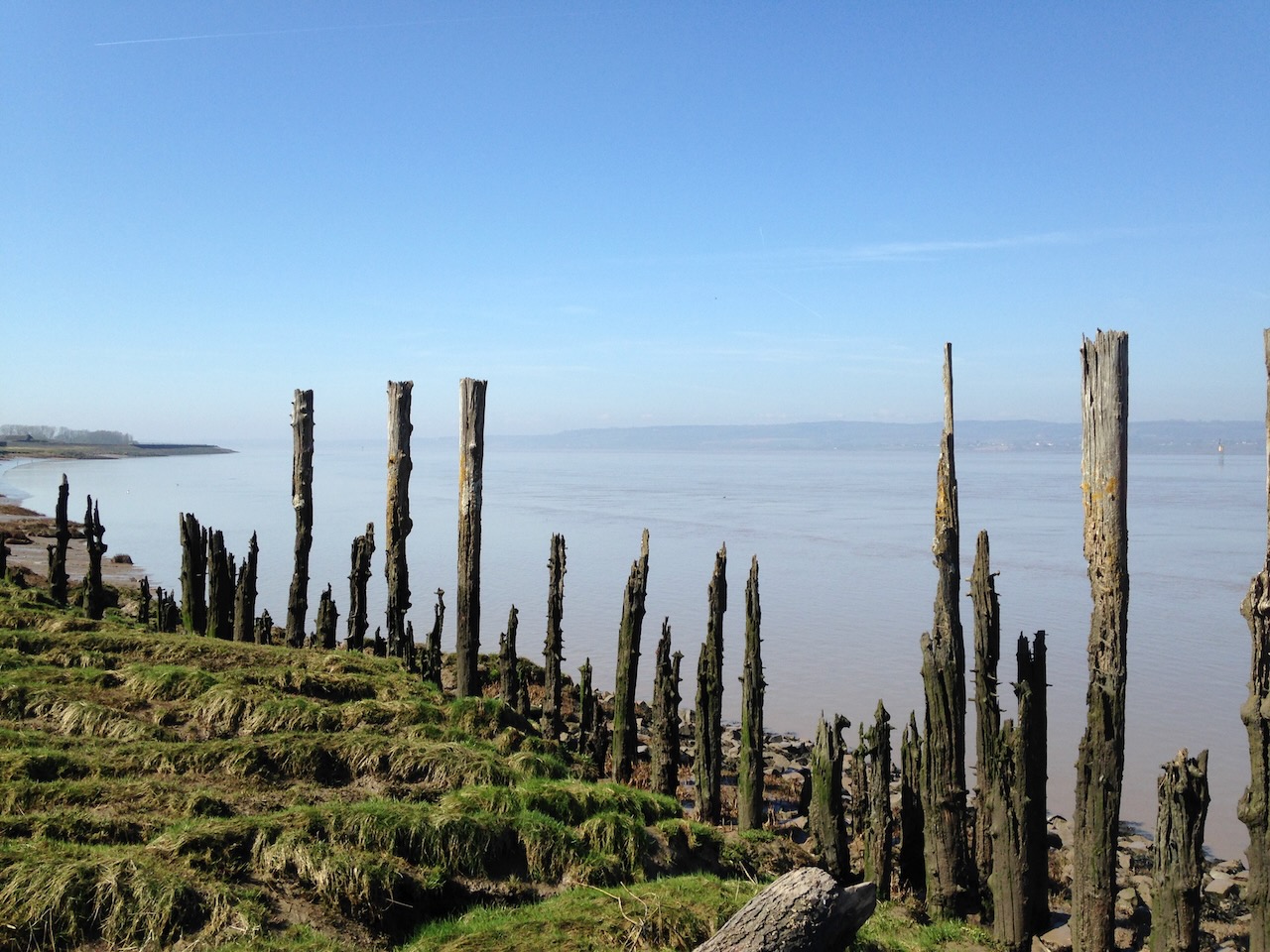
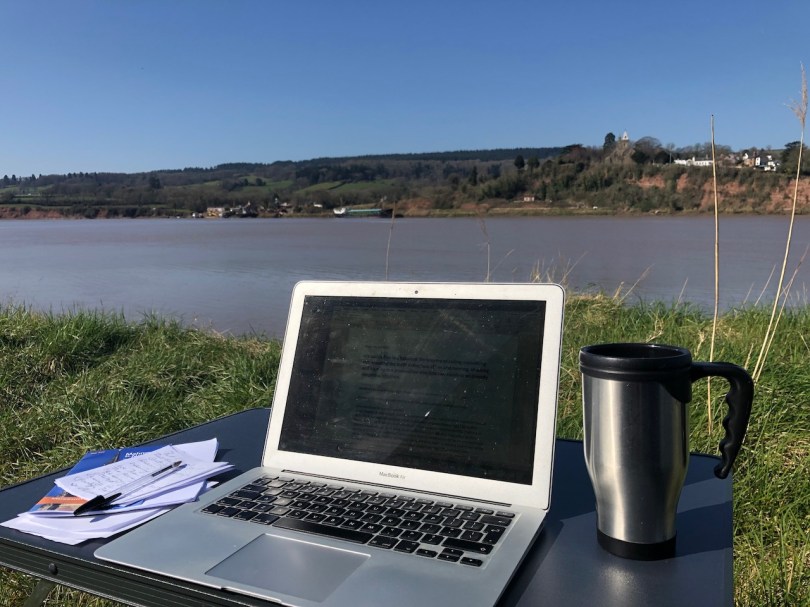
Happy Spring Equinox! I am writing this on the banks of the River Severn, one of my favourite spots in the world. The sun is shining in a cloudless sky, a breeze is dancing through the long grass. I can hear the outgoing tide making its way back to the sea. Within this natural order and peace, it is almost impossible to imagine the horrors of war.
Like all of us who are far from the fighting front, I feel the combined rage, helplessness and deep sadness of seeing and hearing the heart-breaking scenes and accounts of the millions of Ukrainians fleeing their homes or defending their country, their freedom and their lives. Words seem to be my only weapon against this appalling aggression. But what words would help? And which ones won’t? There is such a fine line between the impactful bravery of calling something out, of revealing the truth in the face of lies, like the Russian TV employee who ran onto the set of Russia’s main news channel bearing a placard saying ‘Don’t believe the propaganda, they’re lying to you here’ while shouting ‘Stop the war. No to war,’ and the potentially catastrophic naming, shaming and blaming of an individual.
Russian TV journalist, Marina Ovsyannikova, protesting on a live Russian news broadcast
I know that I want to use my words to help bring about peace. Which is why I choose not to use those that I feel add both to the divisiveness that lies behind all wars and to the ‘othering’ of the enemy, which in turn nurtures the erroneous belief that violence and force are the only ways to achieve aims and justify actions. It’s also why listening to Radio Four’s Woman’s Hour on Thursday 17th March left me unsettled.
I am not usually one to come down on the side of politicians’ typically evasive methods of answering a question. But in this case, I was behind the Foreign Secretary, Liz Truss, in her response to presenter Emma Barnett’s questioning. It went something like this:
Barnett: ‘Is Vladimir Putin a war criminal Foreign Secretary?’
Truss: ‘I think there’s very, very strong evidence that war crimes have been committed in Ukraine and that he is instrumental to those war crimes taking place.’
Barnett: ‘Is that a yes?’
Then, citing USA’s President Biden’s recent declaration that ‘he is a war criminal,’ she continued to push Truss. ‘Why don’t you want to cross that line? That line has been crossed by America and I am wondering why we’re not.’
Truss then repeated her noncommittal answer.
And I was glad she did. I didn’t think that style of political grilling was appropriate here.
Some might see Truss’s line as weak. Maybe you do too? I actually don’t. For what, other than an escalation of diplomatic tensions and danger, is to be gained by shoving Putin into the ‘war criminal’ category, even if he is one? By branding him with what is potentially the worst label there is, do we not put him on the defensive rather than encourage constructive conversation? Hitler was a war criminal. And Putin is a million miles away from allowing himself to be equated with him.
A Kremlin representative’s inevitable response was to call out Biden’s statement as ‘unacceptable and unforgivable rhetoric on the part of the head of state whose bombs have killed hundreds of thousands of people around the world.’ Of course we all know he has a point when you look back at certain episodes of American history. And that is my point. Such statements do nothing other than to add fuel to an already raging fire.
None of this is to say I don’t abhor what Putin is doing as much as anybody. I am just aware that words are absolutely crucial in the dealing with a person whose psychological makeup is so volatile, so proud, so convinced, so terrifyingly dangerous. Because while our acts may be indisputably heinous, we human beings, in all our complexity and contradictions, are never just one thing. So to stick a supremely negative label onto someone – even if they have qualified for it a thousand times over – is in my view counter-productive, especially when, however mad it seems to us, they see themselves in a very different, invariably more heroic light.
While working in prisons, I saw the negative dynamics of labelling people ‘murderer,’ ‘terrorist,’ ‘child abuser’ – even when they were guilty of these crimes. Like the locked door of their tiny cells, there was no way out of that ‘bad’ box. Impotent, ostracised and with no obvious path leading back into the world of ‘good,’ many gave up trying. Some killed themselves. Some continued to numb the shame and sense of separation with drugs or self-harm. Others turned to violence in a futile attempt to punch their way back to the acceptability and respect that ironically often lay behind the motivation to commit their original crime. Shame has a hideous way of making people infinitely more dangerous.
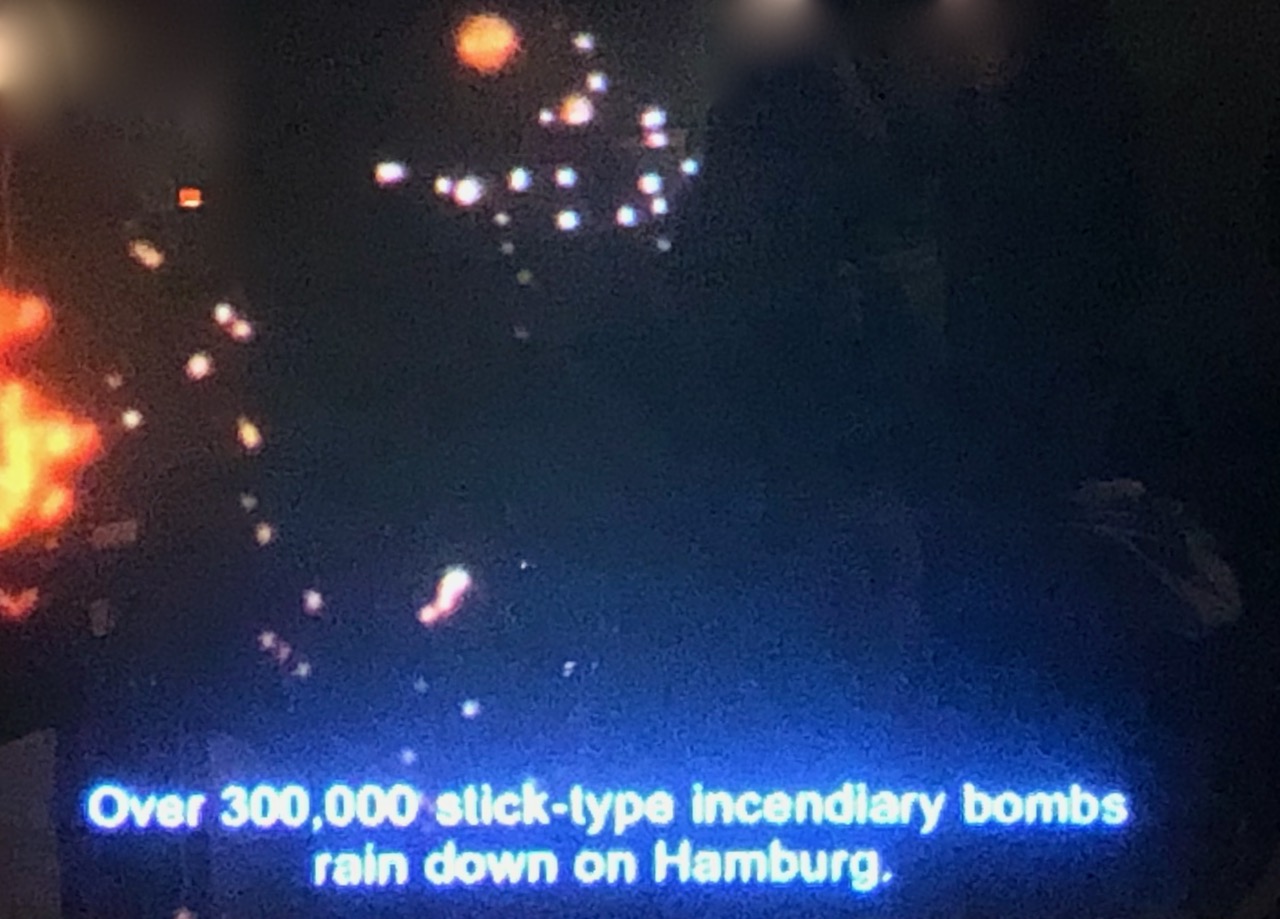
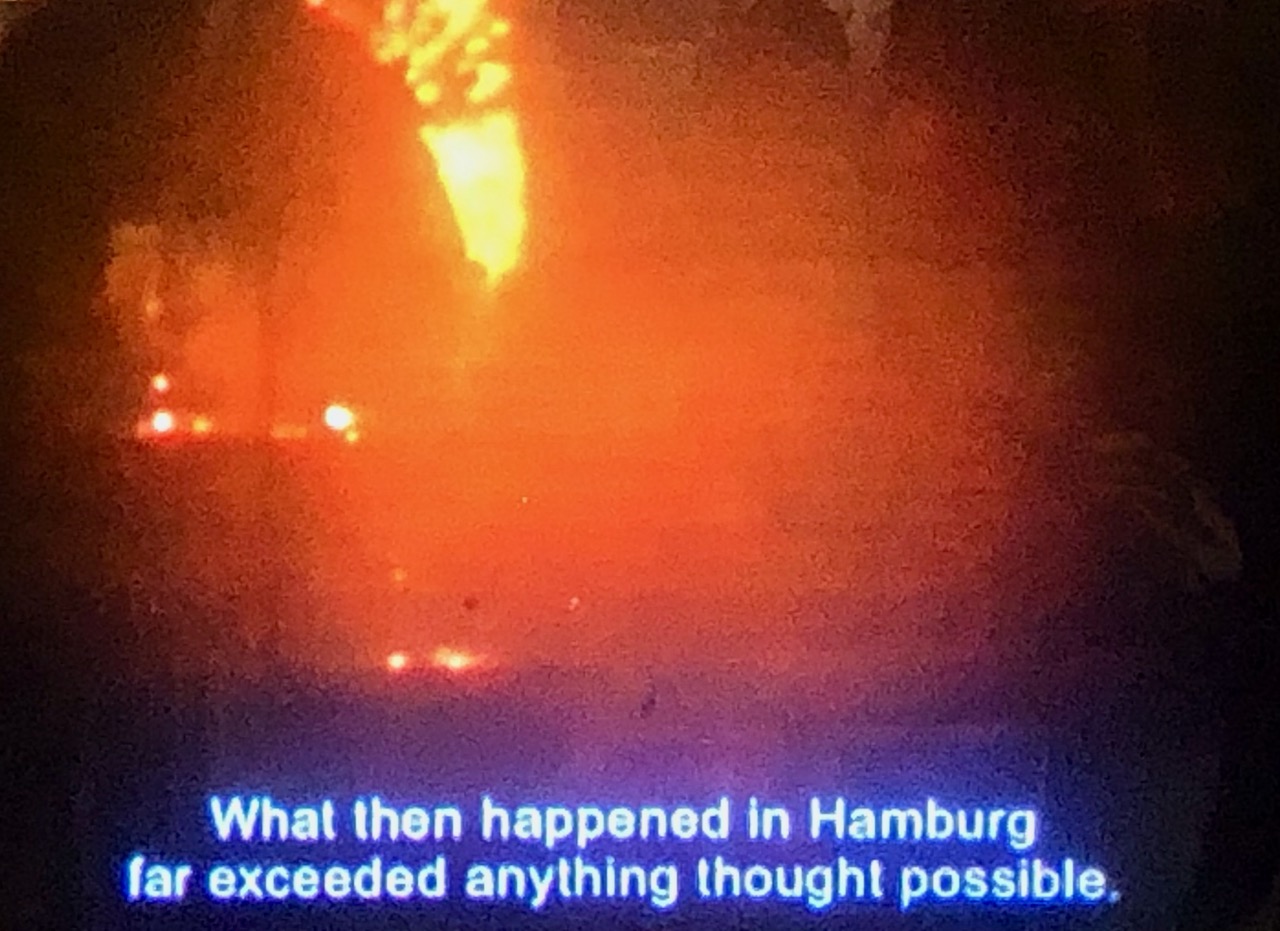
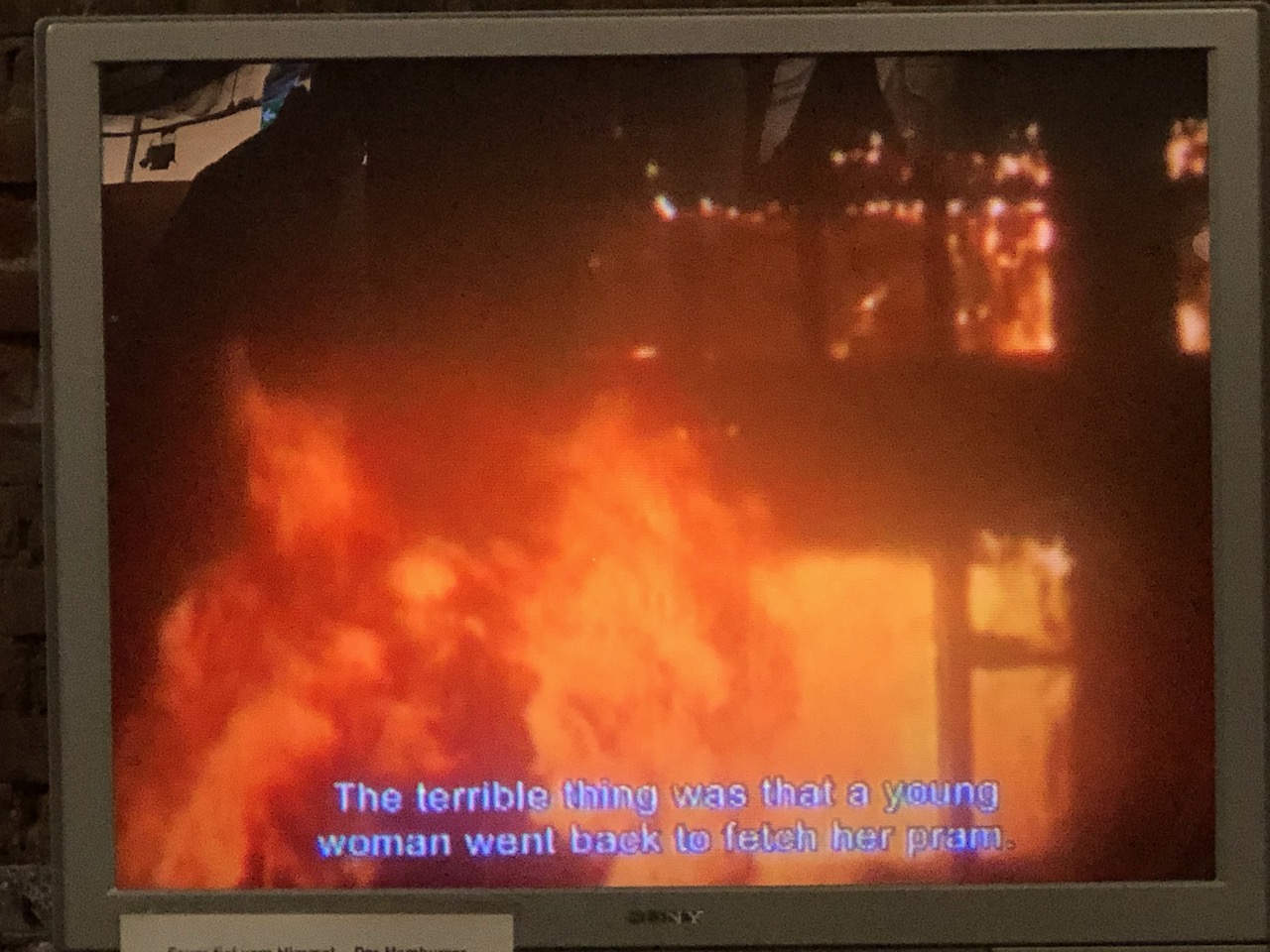
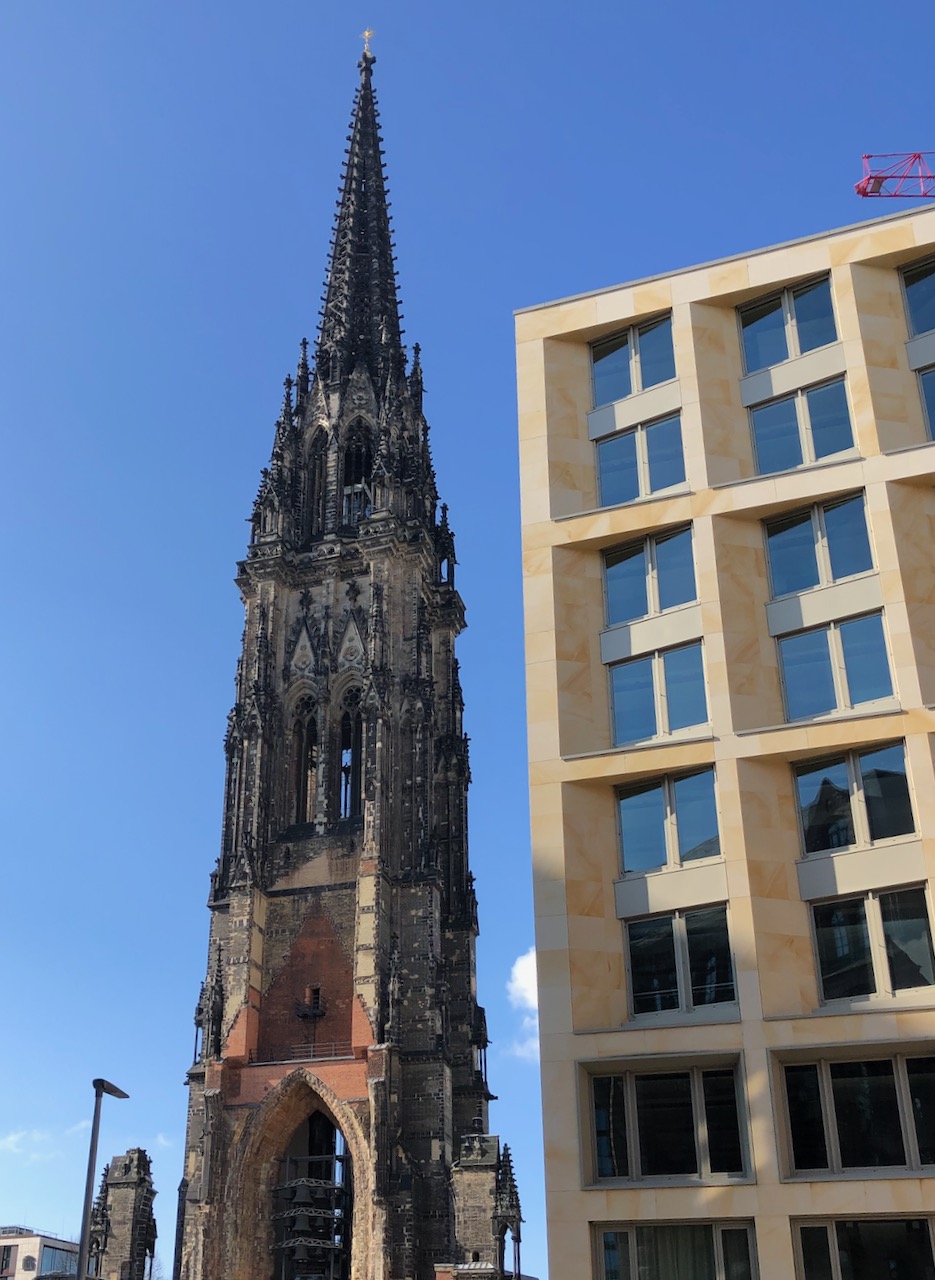
We only have to look at the Germany of the 1920s, 30s and 40s to see what grew out of the humiliation of the Versailles Treaty and above all the ‘war guilt’ clause, which forced Germany to accept all blame for World War One. Or to be reminded, as I was on a recent trip to Hamburg and the blackened ruins of the St. Nicholai church that had so fascinated me as a child, that every nation and each of us are capable of descending into horrific violence, even potential war crimes.
Video stills of the firestorm caused by the allied fire bombings of Hamburg in July 1943, St Nikolai Memorial information centre.
St Nikolai Church, Hamburg
If we are to believe that conflicts begin in the hearts and minds of individuals, then it follows that peace does too. Of course I don’t know for sure, but my feeling, at least from a psychological point of view, is that at this incredibly precarious and dangerous moment in time where the course of the war in Ukraine could escalate in so many directions, we should be doing everything to enable Putin to withdraw, retreat or feel sufficiently victorious to end his war with at least a perception that enough of his dignity and integrity are intact.
I totally understand both the temptation and justification of condemning Putin and his actions as outright evil. But the stakes are currently too high to play the ‘we’re right, you’re wrong’ game. For to do so is to accuse and other the perpetrator in the same way they have accused and othered their foe. Like negotiators communicating with hostage-takers, albeit on an infinitely larger scale, maybe we need to keep in our view the man behind the monster. As many in the west are now admitting, this is possibly what we have neglected to do in the past. And he who feels unheard, unseen, disrespected often feels impelled to stamp louder, punch harder to get themselves noticed.
I think our personal choice of words is one of few things that each of us have as a tool to diffuse rather than escalate a situation. I just hope we can all find the right ones.
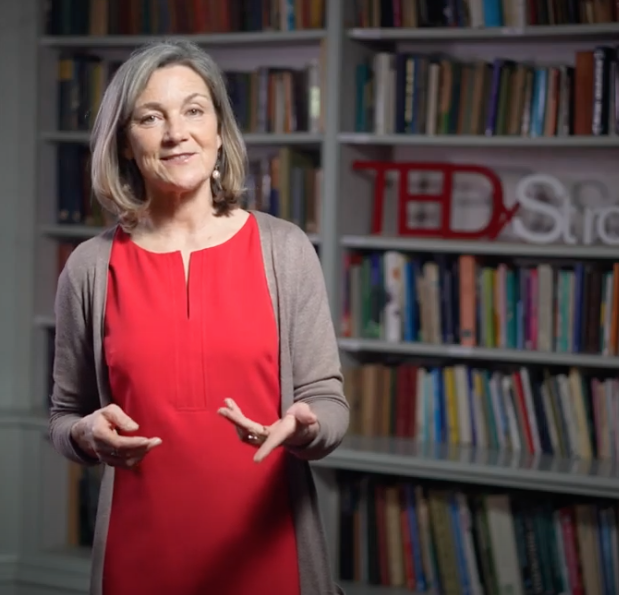
On another note, exactly this time last year, I was giving my Tedx talk. You can watch it here… again or for the first time if you haven’t seen it already.
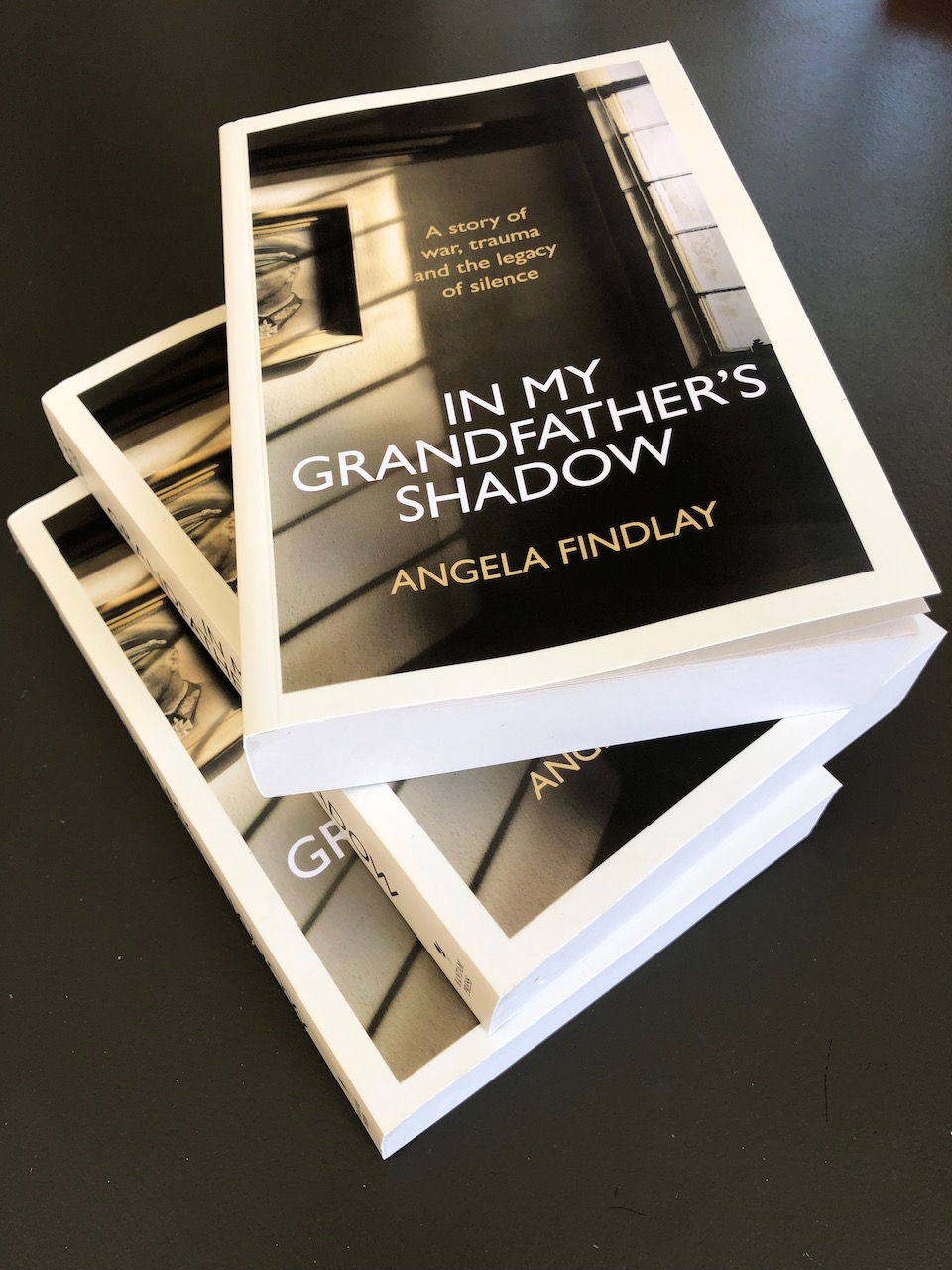
And yesterday I received the printed proofs of my book In My Grandfather’s Shadow. Still not the final product, but another exciting step towards publication in July. You can pre-order on Amazon here or wait until July to buy in a bookshop.
On Sunday 10thJanuary 2021, Arnold Schwarzenegger, the Terminator action hero turned former governor of California, posted a short video on Twitter that went viral. Staring straight into the camera against a backdrop of stars and stripes, the man once known for his body-built body flexed his moral muscles by comparing the mob that stormed the U.S. Capitol with the Nazis.
“Wednesday was the Night of Broken Glass right here in the United States,” he said, referring to the horrors of Kristallnacht, the night of 9th/10th November 1938 when Nazis in Germany and Austria smashed the windows of Jewish homes, schools and stores and set fire to the synagogues. “The broken glass was in the windows of the United States Capitol,” he continued. “But the mob did not just shatter the windows of the Capitol. They shattered the ideas we took for granted. They did not just break down the doors of the building that housed American democracy. They trampled the very principles on which our country was founded.”
Witnessing, in real time, Trump-incited protestors scale white walls and balconies and swarm into the home of the U.S. Congress was truly shocking. Individually most looked pretty ‘normal’ with their caps, hoodies, beards – or horns – in place of masks. But as a mass emboldened by a collective mission, they felt sinister. A mob stitched together by the blatant, you’d think unbelievable, lies of their leader. Trump’s temper tantrum had turned a corner and stamped on the accelerator to become a genuine threat to life.
But, though I admire Schwarzenegger for speaking out unequivocally, can you really equate what happened on 6th January with Kristallnacht? Are Trump’s ‘mobsters’ a valid equivalent to the rioting members of the SA (Sturmabteilung) and Hitler Youth? Is Trump an accurate counterpart to Goebbels? And finally, has democracy been shattered in the way Nazis shattered Jewish lives and livelihoods that night? I don’t think so, but I ask genuinely because making such serious comparisons to such a vast audience, albeit diluted by a schmalzy soundtrack and other comforting dollops of Hollywood, carries responsibilities and consequences. If it was America’s Kristallnacht, what should we and the rest of the world be doing about it?
Accurate or exaggerated, Schwarzenegger is certainly more qualified than most to draw such parallels. Born in Austria in 1947, he grew up with and among people who had lived through the Third Reich and Second World War: active cogs in the Nazi killing machine; passive bystanders, looking away but “going along… step-by-step… down the road;” or any of the other shades of innocence or culpability in between.
What is indisputable in both scenarios – and recent ones here – is the role lies play in leading to things spinning out of control. But it’s intolerance that ultimately fuels these lies. Of course, there’s a healthy form of intolerance, which makes us speak out in the face of ‘wrongness’. But on either side of that, lie two unhealthy extremes: intolerance of anything or anyone that is different to us, ‘other’; and over-tolerance of that which may be familiar, desirable or comfortable to us, but that harms others.
viral image of woman standing up to a far-right protestor
For me, a comparison to Nazi times is more helpful when applied to us… the ordinary people who, back in the 30s and 40s, inadvertently enabled their leaders to carry out murderous plans by doing nothing. Resisting was hard, for it could cost you, or your family, their lives. My mother’s best friend’s family vanished that way. Today, however, we can express a healthy intolerance of what we consider wrong, by resisting the temptation to see the mob as a collective ‘other’ made up of misguided cretins, uneducated loons, neo-fascists, Satan worshippers, conspiracy theorists… Some of them may well be any or all of those things, but they will also all be individuals – fathers, sons, mothers, neighbours – united in believing they are right and on the side of truth and goodness.
Maybe, to prevent re-enactments of Nazi times, we could (or should?) invest the time we spend judging, cursing and dismissing those we see as ‘other’, ‘bad’ or ‘wrong’ more wisely; by trying to listen to and understand them instead. That, after all, was what was neglected in the first instance. And people who feel unheard also feel they have to shout the loudest. And by having to shout, they become distorted versions of themselves. That is what we witnessed on Wednesday. It may sound fluffy or impossible and I am not in any way condoning or defending what happened in Washington. I am just trying to avoid becoming inadvertently complicit in deepening the division between ‘us’ and ‘them’. For we all know where that can lead.
You can see some pictures here. Or read a bit more about what happened here.