“Tell your story… until your past stops tearing you apart”

2009_0922Russia090290

Tell your story.
Let it nourish you, sustain you and claim you.
Tell your story.
Let it feed you, heal you and release you.
Tell your story.
Let it twist and re-mix your shadowed heart.
Tell your story,
Until your past stops tearing your present apart.

I heard the above words recently on Radio 4’s Spoken Word programme “Writing a new South Africa”. You can hear it here at 14.38 minutes: http://www.bbc.co.uk/programmes/b053bsfm
Spoken aloud, with all the power of someone who knows the potency of the words, it struck me that this is precisely what I have been doing in the past years.

Read More »

Holocaust Memorial Day, 27th January 2015


IMG_3702

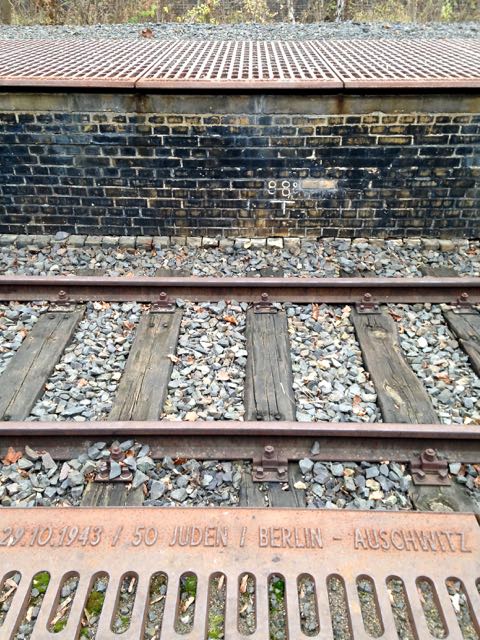
Today was Holocaust Memorial Day, commemorating the day Auschwitz-Birkenau was liberated by the advancing Soviet army seventy years ago. Today Jews and non-Jews alike were reminded to remember what so many of us have no personal recollection of. Reminded how important it is to remember so that it will never happen again.

Today was also the launch of my talk on German Memorials and Counter Memorials, the second in my trilogy of talks “The other side” about World War II from a German point of view. It was a happy coincidence that King William’s College on the Isle of Man invited me to give this particular talk on this particular day, for it encouraged me and my audience not only to think about the victims of the Nazi policies of annihilation but also about the perpetrators and Germany’s ongoing and thorough process of apology on behalf of them.

Read More »

Generation War: Our Mothers, Our Fathers. Does it go far enough?

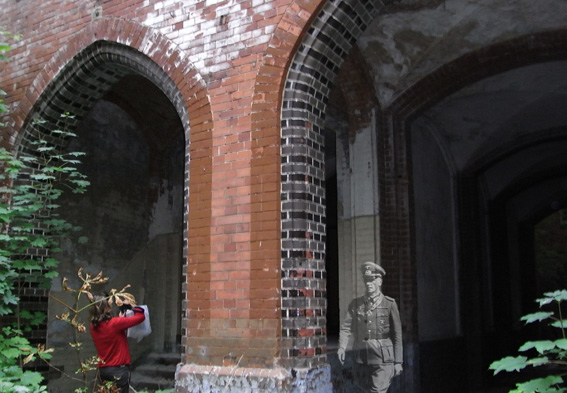
ImagePeering into the crater of my own family history, Jüterbog 2008

I don’t imagine 7.6 million viewers are watching this series as in Germany last year, but judging by the reviews and conflicting opinions expressed in online discussions, it is nonetheless making waves. Many people find it “brilliant”, with its focus on the personal within the wider historical context (as in Downfall and The Lives of Others). Some find it ‘unlikely’, that the 5 main characters’ paths would cross “as if all of Eastern Europe were no bigger than a park in Berlin”[1] or that they would be so openly friendly with a Jew in 1941 Germany. And some criticize how the drama of the story lines are often cliché and distract from the bigger questions – all hazards of portraying historical characters through a contemporary medium.

Read More »

Children of the Third Reich: A critical moral debate


Image

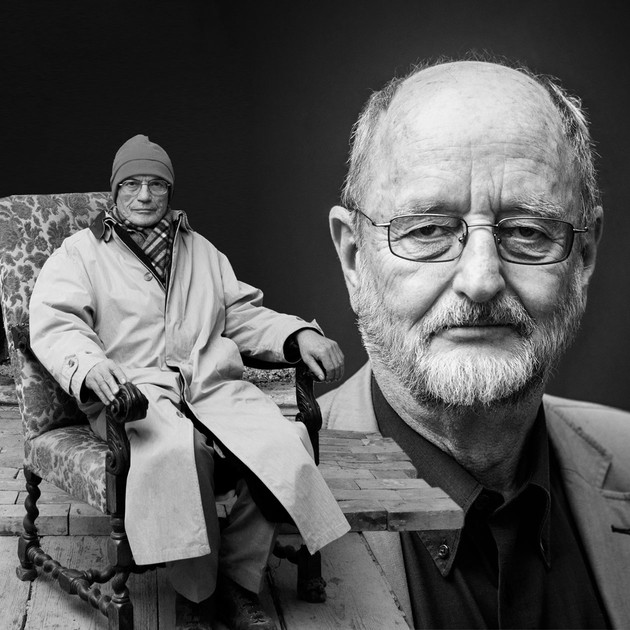
It’s Valentine’s Day and I am writing about the Nazis… again. “Will she ever let up?” I can almost hear people asking. But I’m afraid I can’t… won’t. Not yet. It is still too relevant a topic, as was proved by last night’s debate at the Southbank Centre where not one person in the packed hall moved, let alone left, even after 2.5 hours of listening to two elderly men, children of high-ranking Nazis, as they revealed their opposing relationships with their long-dead fathers.

To voluntarily exchange views and answer questions publically on this delicate and sensitive subject makes Niklas Frank and Horst von Wächter very brave and admirable men in my eyes.

Niklas, whose controversial book of 1987 “Der Vater” (The Father) broke taboos in Germany by admitting categorically that his father was a bad man, has always been determined to “acknowledge the crimes”. This led to a total rejection of his father. “But don’t you want to make peace?” Horst asks, driven by a strong sense of “duty” and “moral obligation” to find the good in his father. “I have. By acknowledging his crimes”, responded Niklas.

Read More »

What relationship do we expect young Germans today to have to their country’s past?

Image

I was very interested in two of the questions I was asked in a recent talk to the sixth formers of a London boy’s school. Both were similar and in response to some statistics I showed about German students’ relationships to their country’s past. And both touched on one of my on-going questions in relation to young Germans today: Do we expect them to feel guilt and shame for what their great grandparents were caught up or directly involved in, or can they now be proud of their country and say with genuine conviction “It has nothing to do with me”?

The statistics from a Zeit Magazine survey of 14-19 year olds revealed, among other things, that:

80% believe remembrance of the Nazi times is important

67% believe it is their generation’s duty to make sure that Nazi Germany and the Holocaust aren’t forgotten

60% said they were ashamed of what Germans did in Nazi times

Read More »

What are we “remembering” on Remembrance Day?

I found it symbolically pleasing to be planting bulbs as yesterday’s two-minute silence hummed over the radio waves across the UK. Sitting in the quiet sunshine, I started to “remember”, only to immediately bump into the questions: what and who am I remembering? And to what end? After all I have no personal “memories” of the First and Second World Wars, nor even of Iraq or Afghanistan. Relatives yes, but in the World Wars they were on opposite sides.

Bomber Harris memorial

Bomber Harris Memorial, (1992) London

Read More »

Frieze London’13… should this piece be there?

Walking the labyrinth of this year’s Frieze London was a bit like exploring a huge playground for adults… or children actually. Lots of bright colours, smiley faces, flower-power daisies, a dog seemingly made of balloons twisted together and Jeff Koons’s  vast, kitsch (hideous) sculptures surrounded by bodyguards… Image

There were also many collage-based works, which of course interested me. Paint applied over photographic and printed material, transporting the literal reality of a photograph into another, more imaginative sphere. Several fun, beautifully crafted, clever and witty pieces too – large embroidered till receipts raising everyday rubbish into a grander sphere.  And a few pieces by some of my favourites – Cornelia Parker, Francis Alys, Tacita Dean – that added a depth and authenticity that I know I can trust.

Read More »

Is there a point in still talking about Second World War Germany ?

lowresKvG9_2

I found it almost impossible to write over the summer or to organise my thoughts into some sort of coherent flow while the sun shone outside producing the intrepid army of courgettes that now lies liquidized in my freezer. Instead I hung out in Nazi Germany, trying to organise 9 years of research into a 40 minute talk for schools and as yet unknown audiences. It was a process of willing black and white photographs to come to life to reveal what has been lurking in the corners of Germany’s post-war national silence for 50 years. But I also found myself wondering (with regular twangs of self-doubt) what the point is of still talking about this subject? And is it still relevant and important for today’s younger generations of English and Germans to engage with Hitler and the Holocaust, or have Bin Laden & other contemporary despots taken his place as ‘Dr Evil’?

Read More »

1945 to 2013 in one painting

low res

Untitled (with lipstick) 2011

by Angela Findlay

My most recent solo show Fragments of time at McAllister Fine Art in Godalming is entering its final week. It shows work combining photographic collage and oil and is a development of ideas and techniques that led to a collaboration with John Helseltine and a joint  exhibition Filling the cracks in 2011

Reflecting on the paintings I find myself wondering where to next? This body of work has been the result of several years of an on-going interest in capturing glimpses of the everyday, usually overlooked and yet often very beautiful testimonies to peoples’ lives within the privacy of their homes. Initially I worked from a dawning sense of the fragility of what we call “home”, a paradox in the face of the security and consistency we seek there.

In 1945 as an eleven year old German girl, my mother fled her home with her younger sister, the approaching Russian army a mere 40 miles away. The few stories of her childhood experiences float silently in my imagination, their edges blurring with those of my own memories. The implications of her sparse accounts didn’t register fully until I was older. But the images she sketched of a Berlin in flames, the train station heaving with jostling people, and the agonising choice of which doll to take – the beloved but threadbare one or the brand new one from her father on leave from the front? – began to provide a source of inspiration for my work.

Read More »