Where history resides in the soil, tangibly awaiting excavation…

There was something profound about launching the German translation of my book in Germany, first in Hamburg, the city I have known and loved all my life, and then in Berlin, the epicentre of that extraordinary episode of history in which I have been immersed for over 15 years. 
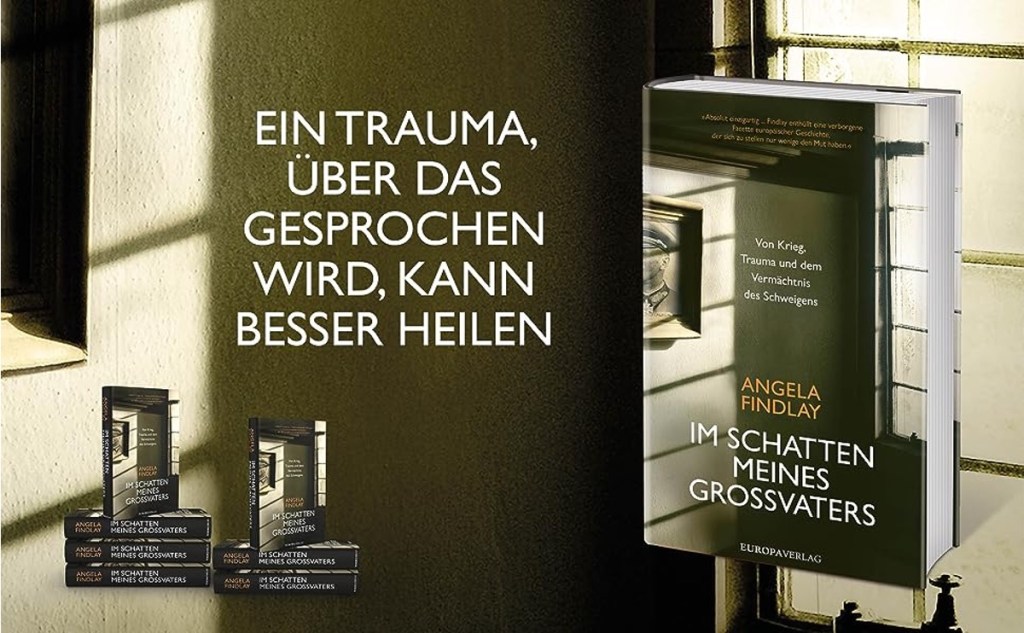
In My Grandfather’s Shadow: A trauma that is talked about can better heal

I had no idea what reception it or I would receive. The audience have, after all, breathed the air of Germany’s past for decades; been shaped by it – whether they have engaged with it or not. German 20th century history is still very much alive in the present, a minefield of sensibilities and taboos through which I had to pick my way, all too aware that as a half-Brit, I always had an airlift out of the horrors. What on earth could I bring to the intensely discussed narratives?

So I was touched by how warmly I was received. How attentively people listened. How sincerely they responded, one elderly man, born in the same year as my 89-year old mother, standing up and telling the story of his childhood flight from the Soviets for the first time. The entry level of questions was so deep, so knowing, so very real. 
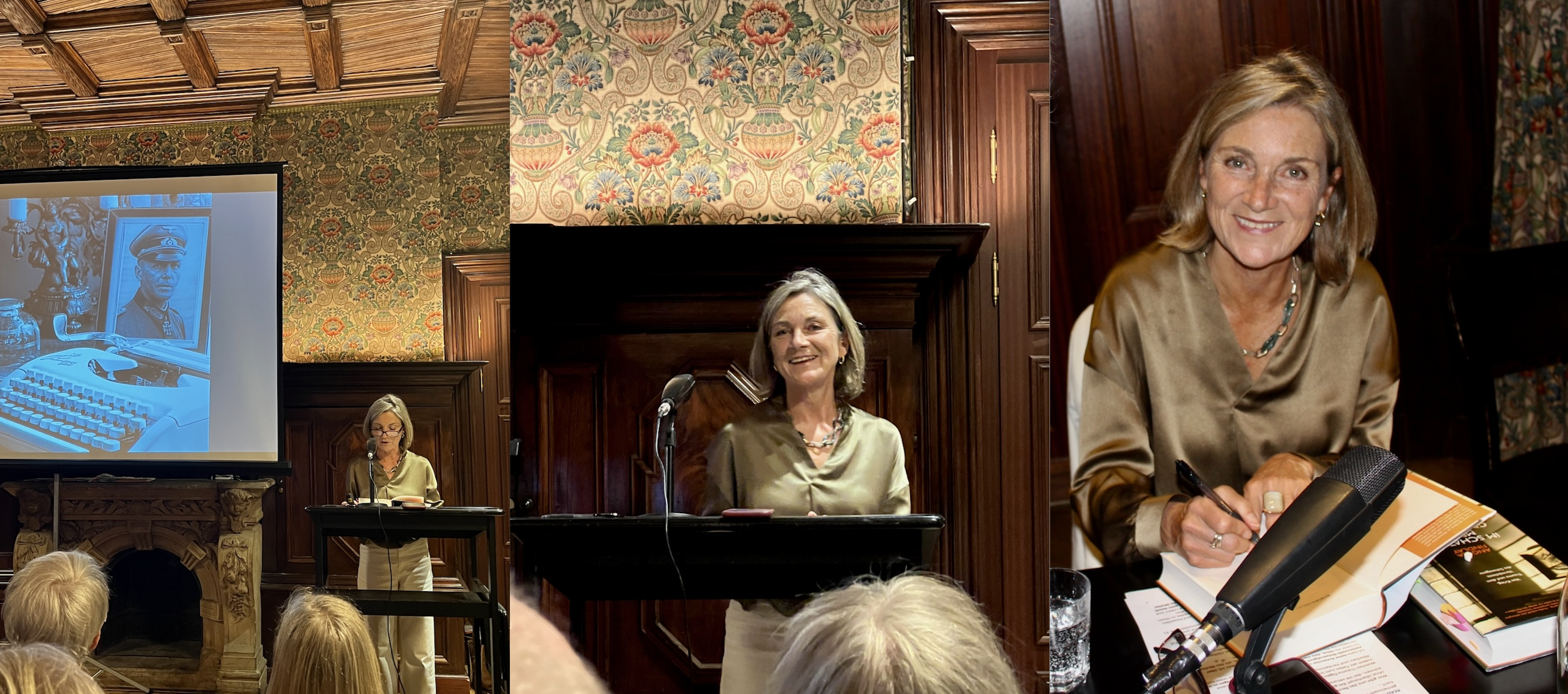
Unintentionally colour-coordinated with the beautiful decor of Berlin’s Literaturhaus!

As always, it was the post-talk discussions, with much needed glasses of wine in hand, that brought home to me once again the importance of talking about what is all too often buried. People expressed how completely new it was for them to hear someone talk so openly both about German soldiers and themselves. This is deliberate on my part. By baring the inner machinations of my soul and that of my grandfather, I was and am inviting people to explore theirs. By touching on taboos, exposing shame to the light of empathy and sharing the tools I developed and steps I took to release myself from the crippling weight of Germany’s Nazi legacy, I can offer hope that there is a way through. Through, not out of. For such an unprecedented past must necessarily maintain the weight of responsibility. 

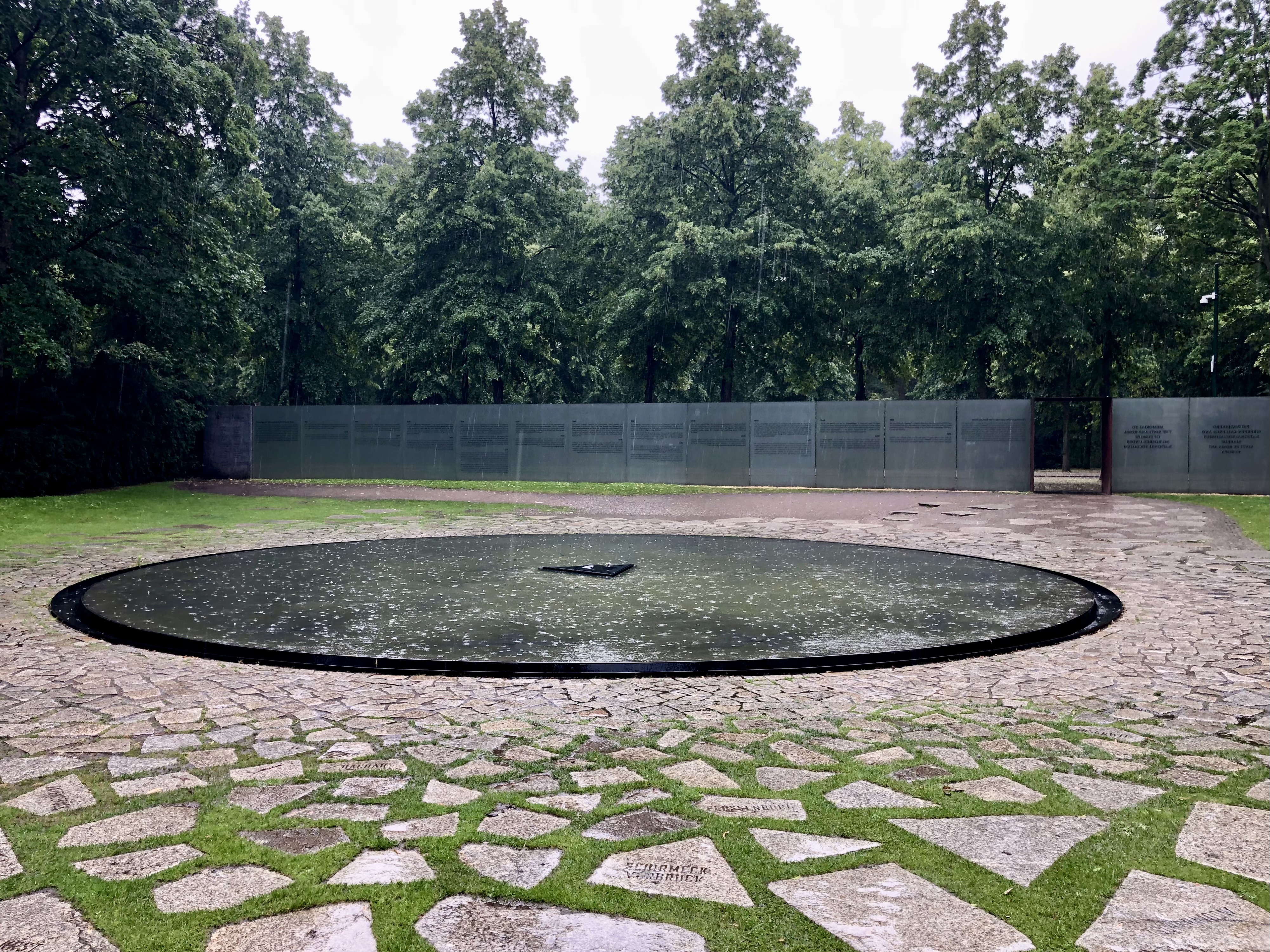
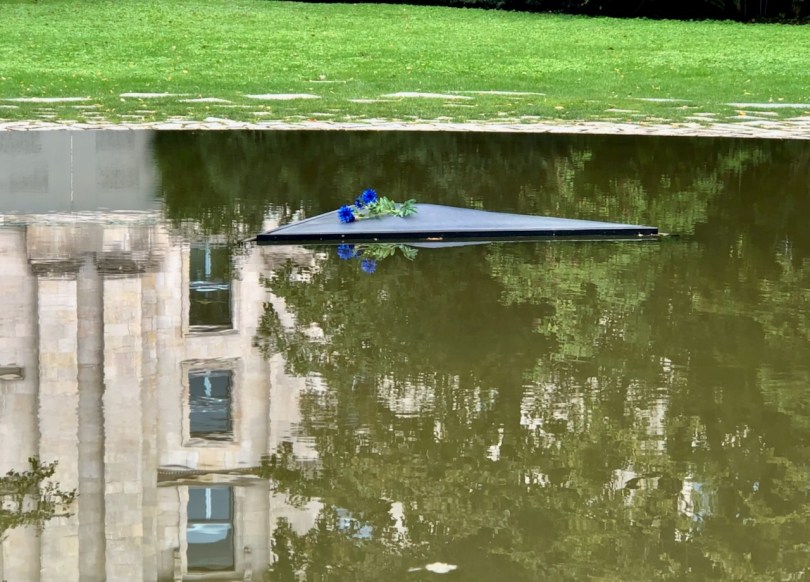
As a nation, Germany continues to respond to its crimes in countless ways, not least through its counter memorial culture about which some of you may have heard me speak in my lectures. One memorial in particular chokes me up every time. It is the Memorial to the Sinti and Roma of Europe murdered under National Socialism placed right in the heart of the city between the Reichstag and Brandenburg Gates. (I mentioned it in my June BLOG on Berlin)
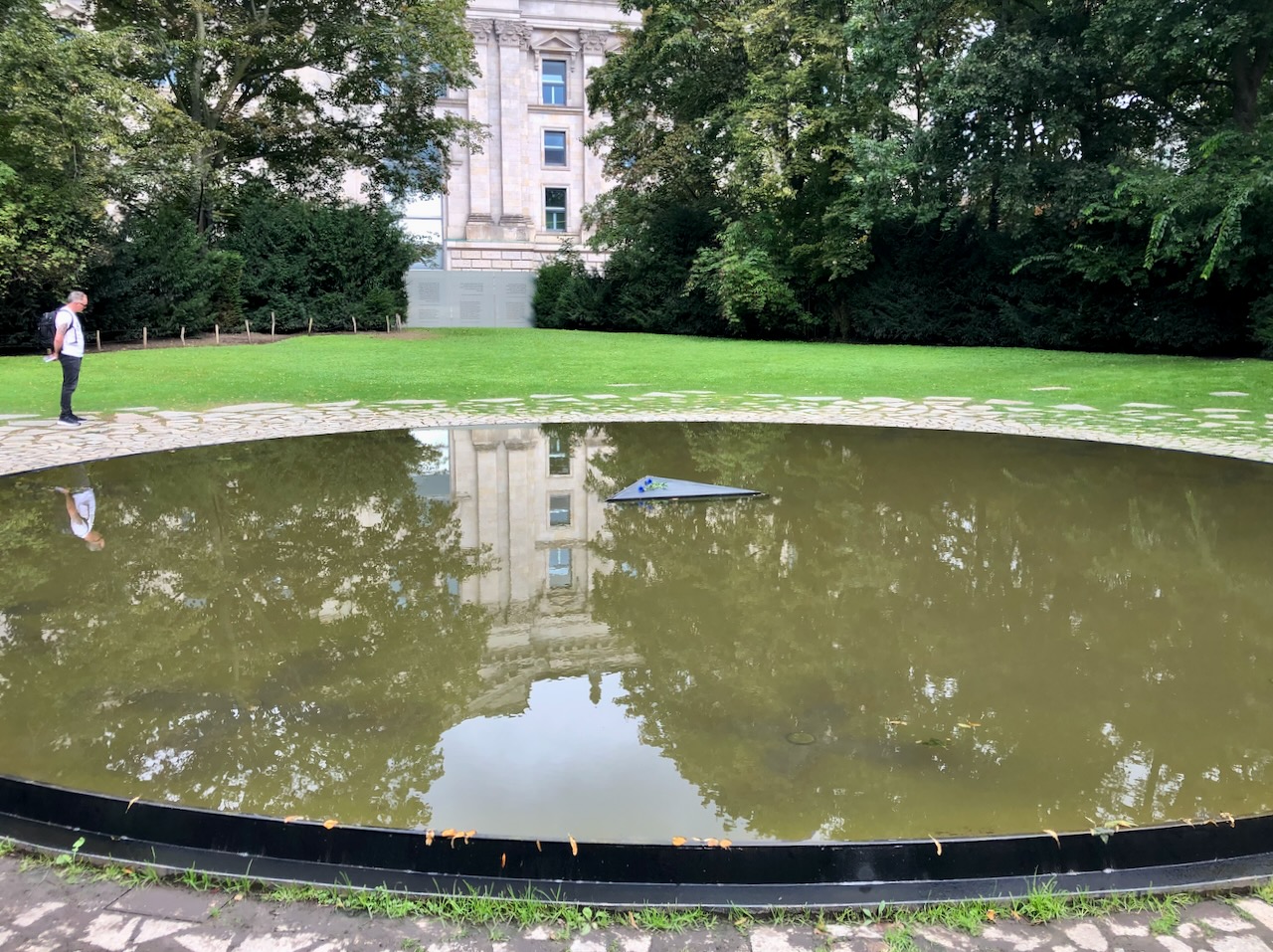
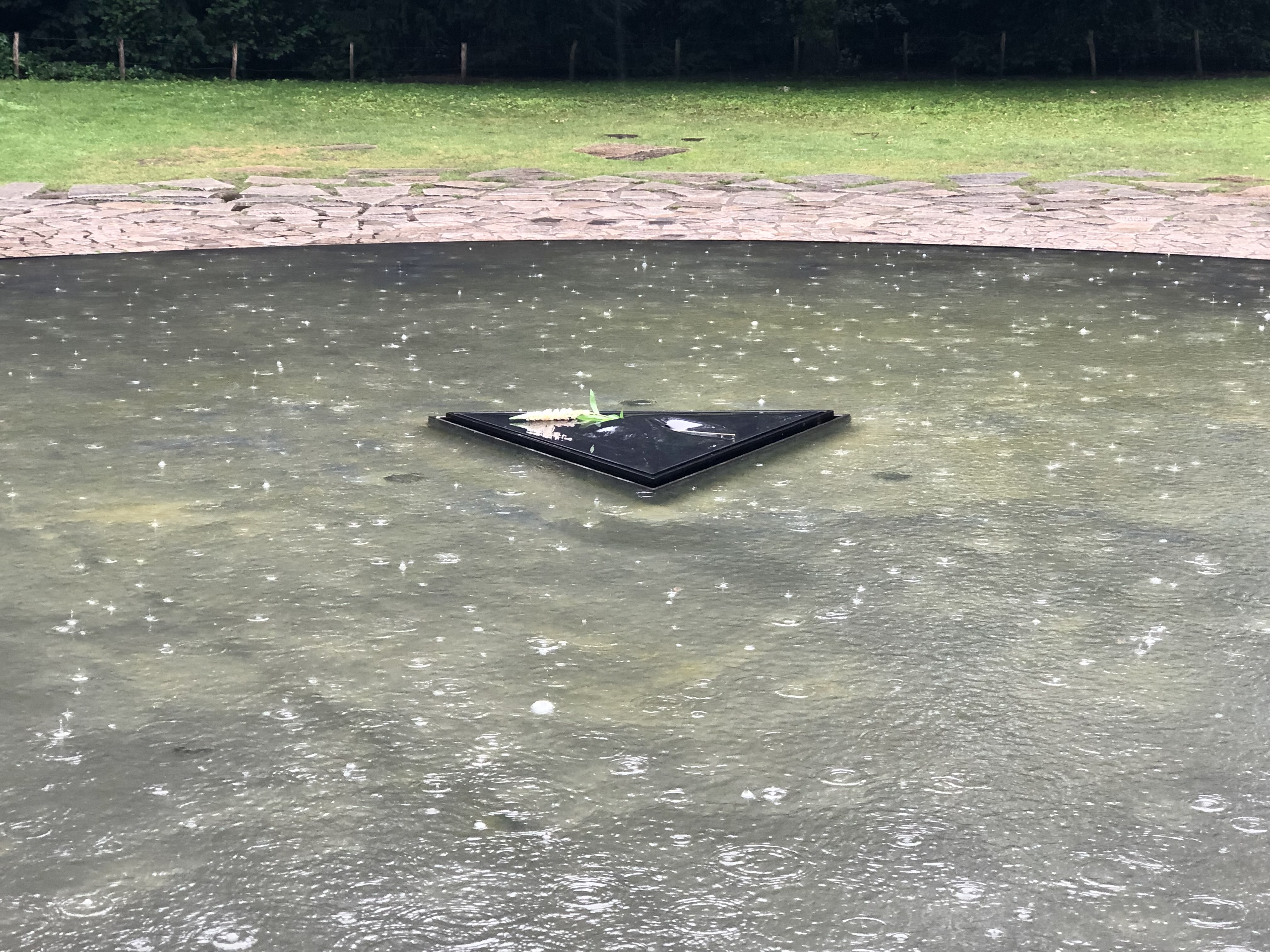
The central feature is a circular pond with a triangular ‘island’ on which a fresh flower is placed every day. That some official is tasked with performing this ritual intrigues me. So, after receiving permission to witness it, I joined a delightful man in uniform by the water’s edge and duly followed him into the bushes. Hidden from public view, he pulled opened a grated trap door and gestured to me to descend the precarious metal ladder and proceed along a damp corridor until I was standing directly below the retractable triangle. At 1pm precisely he pressed a button. An accordion-like black triangular pillar began to lower, folding into itself until the flower was within reach. 
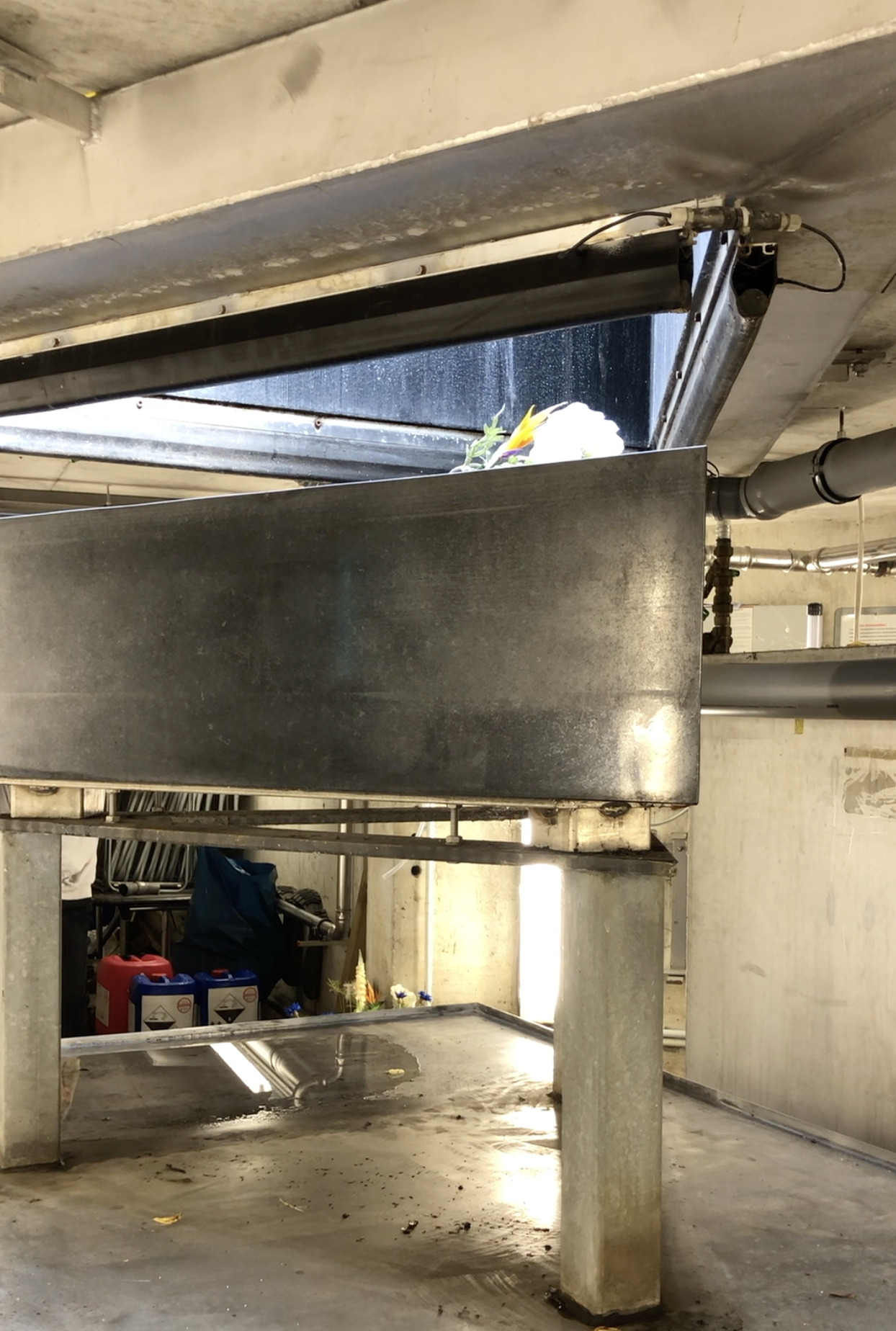
I was then allowed to select and place a new flower on the triangle – a slight disappointment that for practical reasons, the flowers are no longer fresh but plastic! Then, with another push of the button, up it went to take its place in the still water for another day.
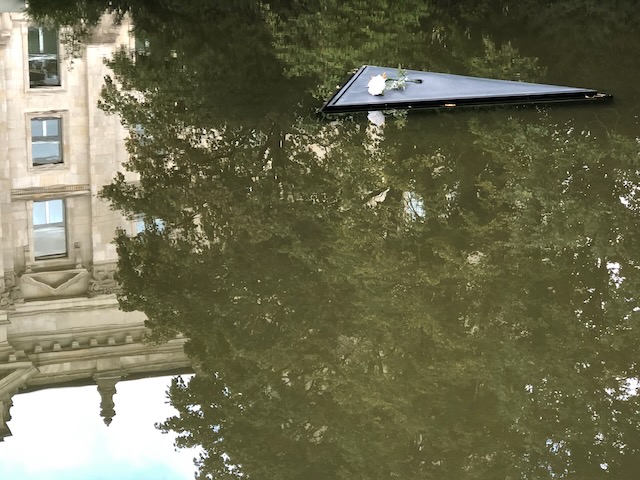
As we emerged from the bushes, a school class of pupils who had been brought to watch the ceremony approached us. The teacher had noticed me disappearing into the undergrowth and asked if I would explain who I was, what, why…etc. which I did. And, long story short, from that encounter and the interest it generated, I received an invitation to come to their school next time I am in Berlin and tell them about my story and my book!

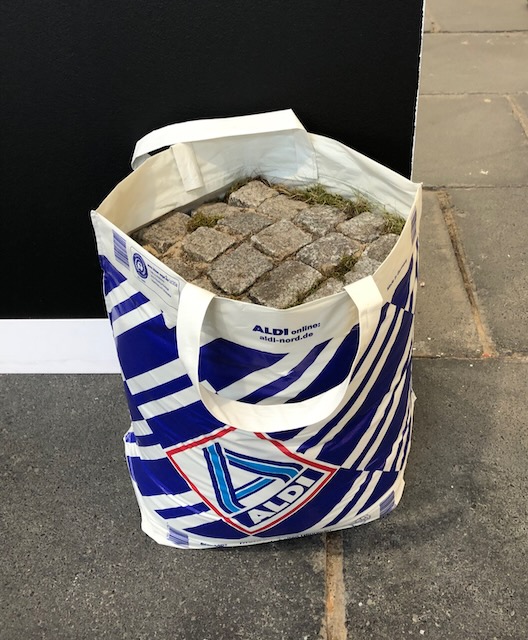
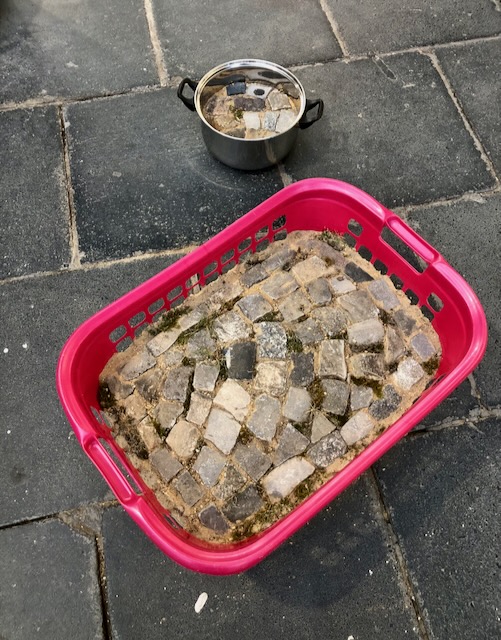
“Truth speaks from the ground” Anne Michaels wrote in Fugitive Pieces. I have always felt this since my first visit to Berlin in 1990. I remember wandering through the recently gentrified area around Hackescher Markt excited by its contemporary art galleries but wholly unaware of its history as a Jewish quarter from which thousands of Jews were rounded up and deported. But “… as the day wore on, I became increasingly aware of an uncomfortable sensation rising inside me. Something seemed to be seeping up from the pavement through my feet and weighing down my legs. It rose further, turning my stomach hard. By the time we stopped at a café, it had reached the level of my heart, at which point it spilled out in a huge wave of sobs…” (IMGS p.153)

Maybe that is why one sculpture spoke to me so strongly at Berlin Art Week’s POSITIONS exhibition housed in the long-disused hangar of Tempelhof Airport, site of the Western allies’ 1948-49 ‘Berlin Airlift’ in response to the Soviet Blockade.

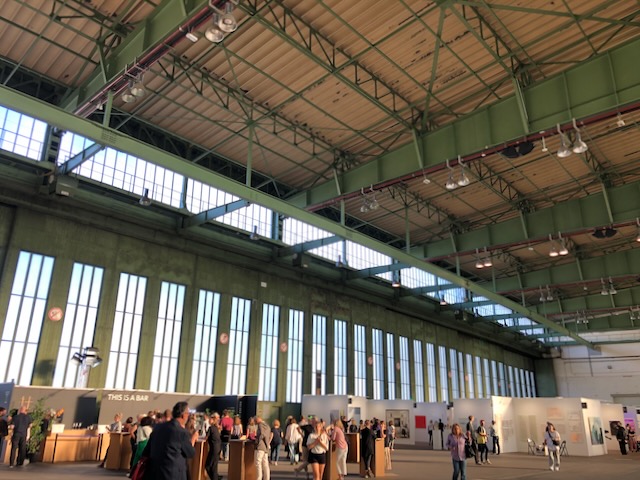
I didn’t get the name of the artist (apologies), but to me their work brilliantly, wordlessly captures what I instinctively feel about being in the unique and extraordinary city that is Berlin, where past meets present with a potency that can’t be ignored.
For NEWS of forthcoming events in England and Germany, please see my website: www.angelafindlaytalks.com

To receive my NEWS straight into your email inbox, please SIGN UP to my NEWSLETTER
Berlin – a flâneur’s wanderings and ponderings

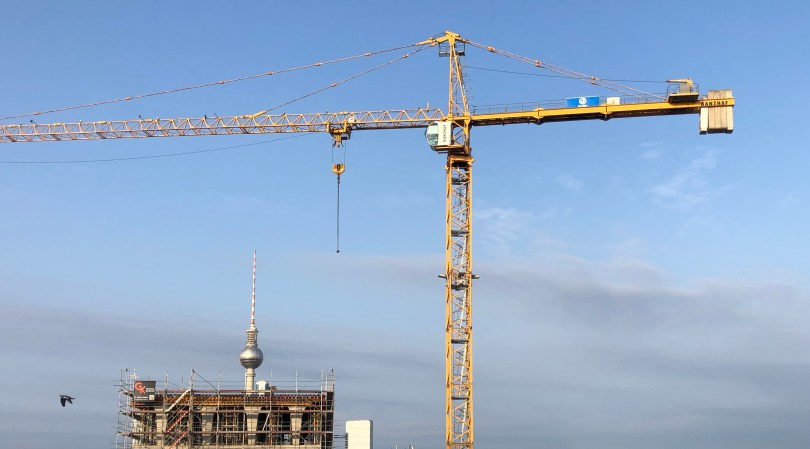
The past century has left heavy footprints all over the ever-changing face of Berlin. Without even scratching the surface, you can find the scars of murderous regimes, failed ideologies, war and destruction on all levels. But my regular visits to the city since 1990 have also witnessed the extraordinary resilience, creativity and defiant refusal to succumb to the particular ‘-ism’ trying to shape it. Throughout the city, past, present and future reside in a disturbing but reassuring harmony that promises not to forget, not to become complacent, not to allow such things to happen again while also offering plenty of opportunities for enjoyment.

Berlin’s contradictions are best experienced first hand. Feeling the city helps one to get closer to understanding it. It isn’t always comfortable, but it is infinitely interesting. Below is a little virtual / visual ‘tour’ of the two weeks I have just spent flâneuring through quarters of Berlin I hadn’t been to before, following my nose as I sniffed out history’s path into the present day. (You might like to read it on my Blog site, where the layout is more reliable.)

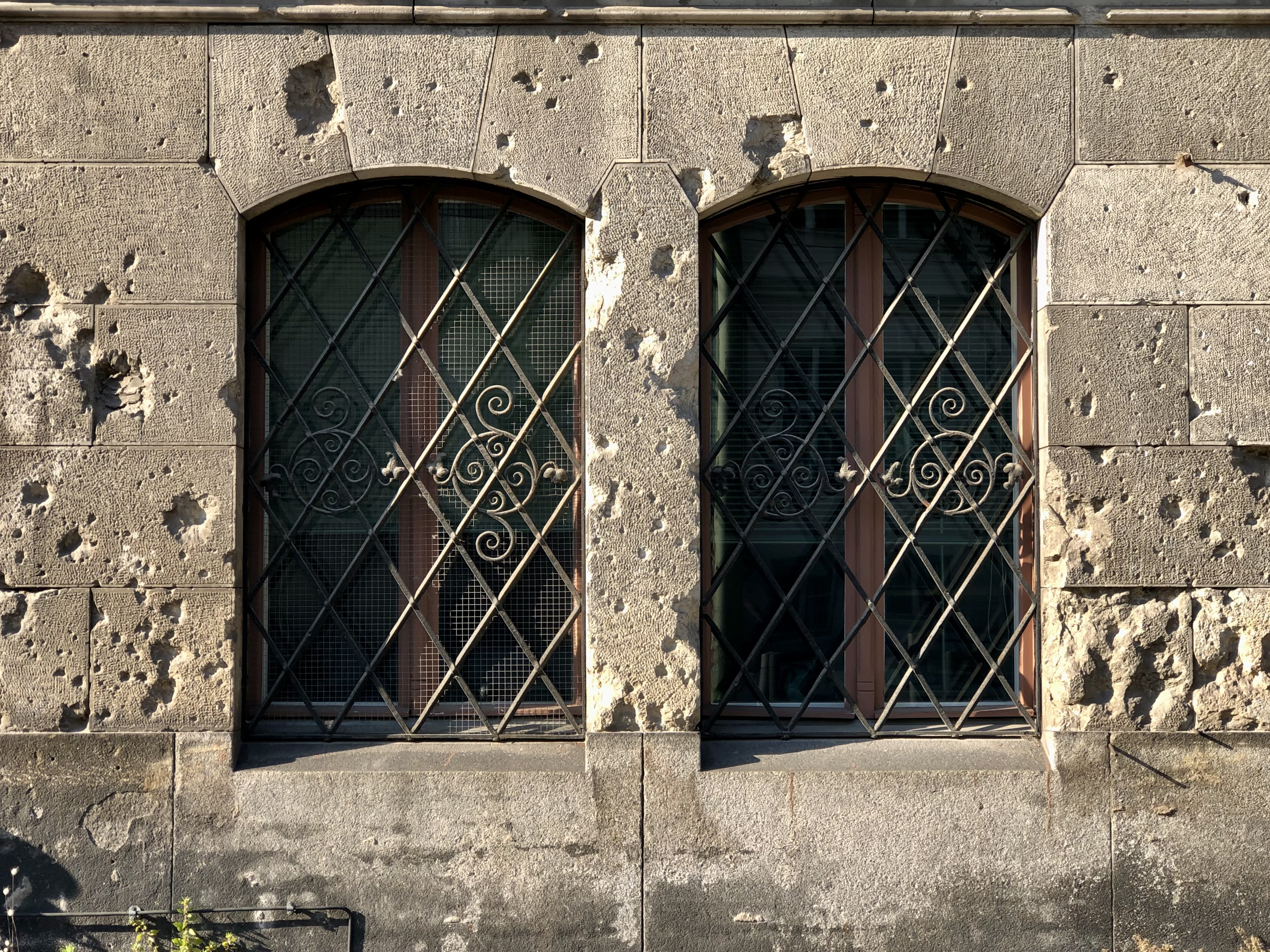
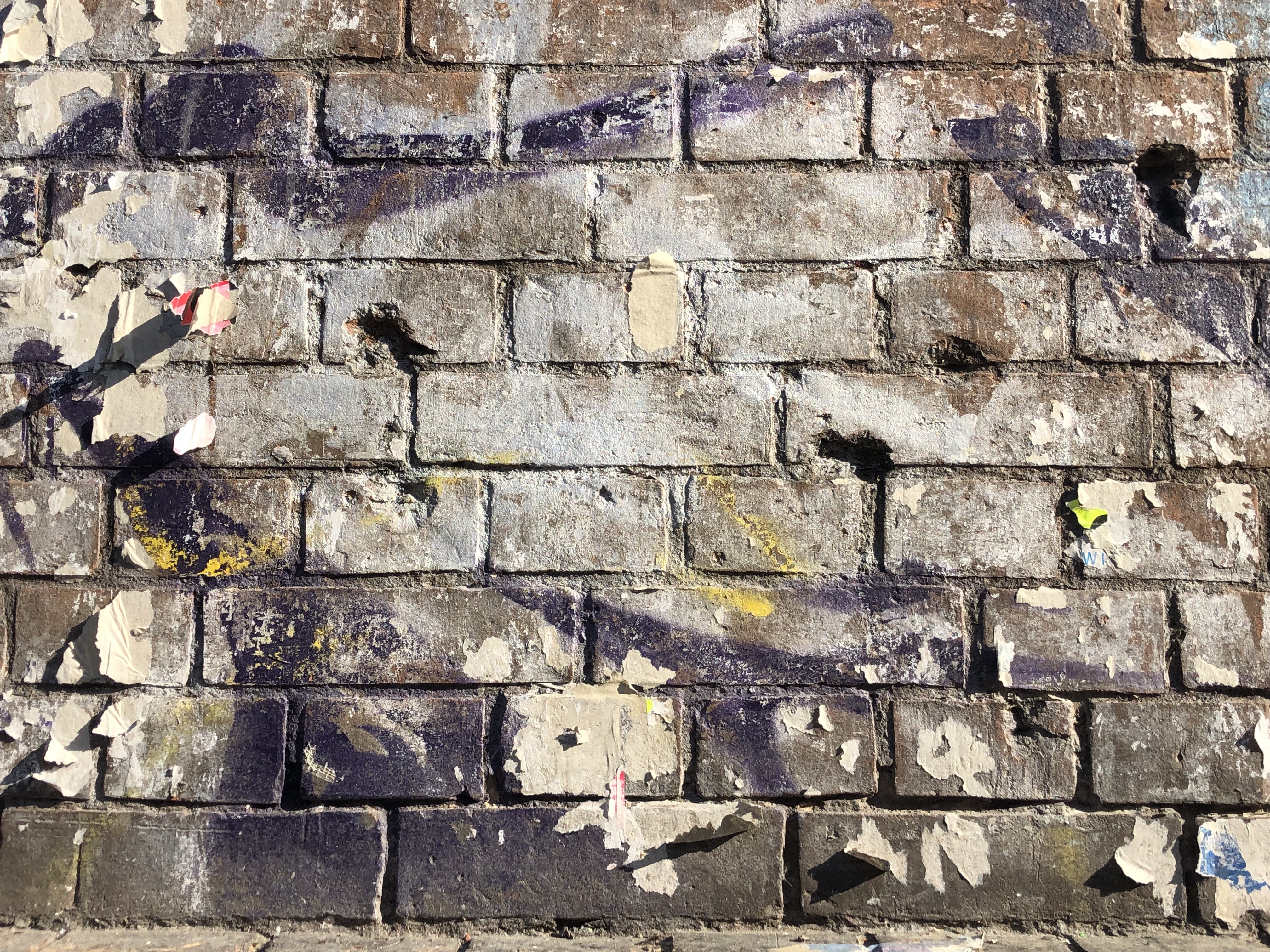
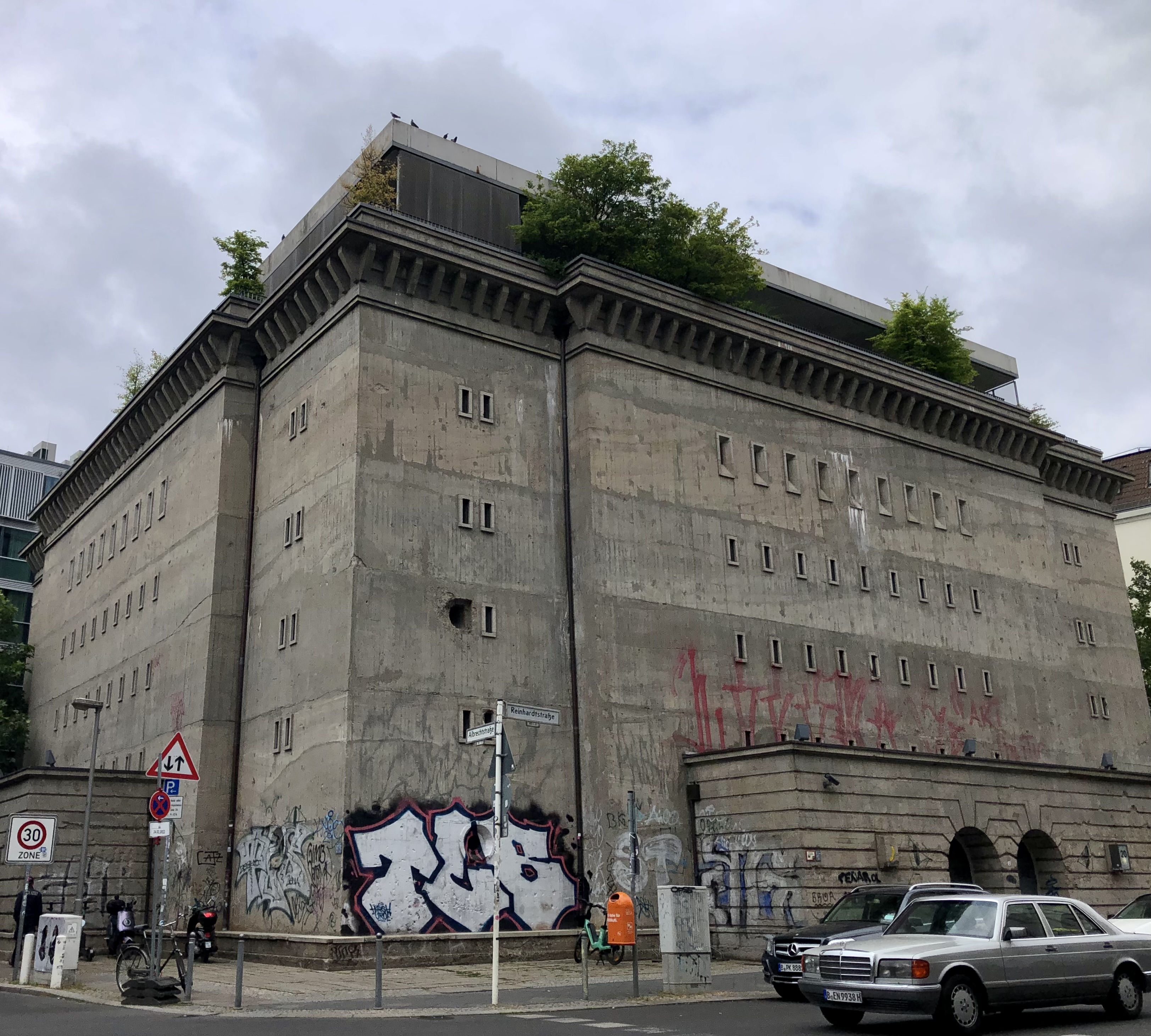
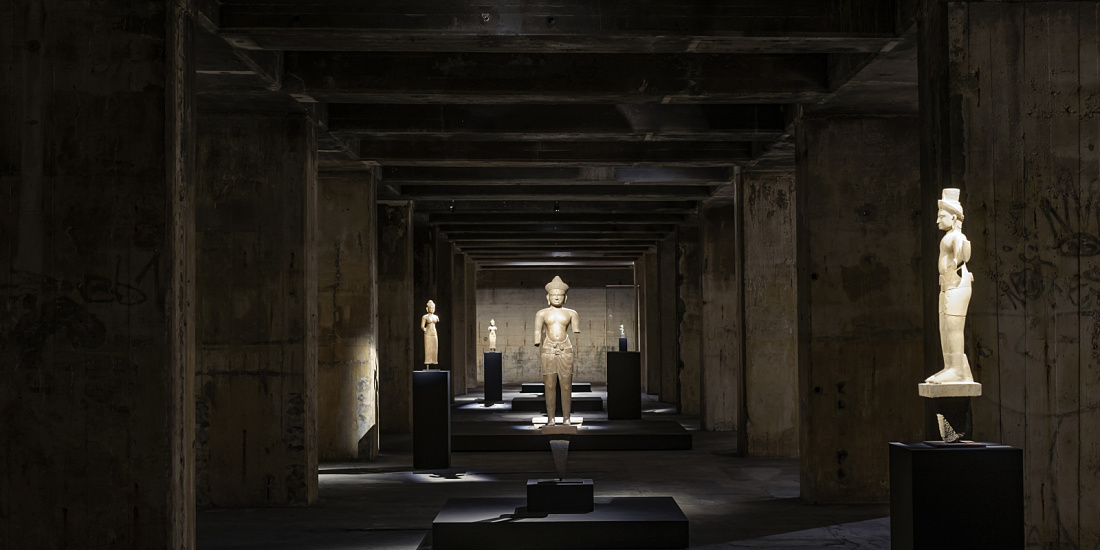
Striking in its lack of cosmetic disguise, evidence of the Second World War still lingers all too visibly: in the empty spaces left by bombed houses; the bullet holes from the final battle; and the enormous bunkers, now transformed into extraordinary galleries that house contemporary installations (Boros Sammlung) or offer an exquisite experience of Asian art in dark silence (Feuerle Sammlung).

After the war, the DDR evolved out of the Manifesto of the Communist Party of 1848 created by KARL MARX and FRIEDRICH ENGELS. Its goal was to ‘change the world’ and to this day, Karl Marx rates as one of the top three Germans, along with Konrad Adenauer (first chancellor of the Federal Republic of Germany 1949-1966) and Martin Luther (Protestant Reformation).
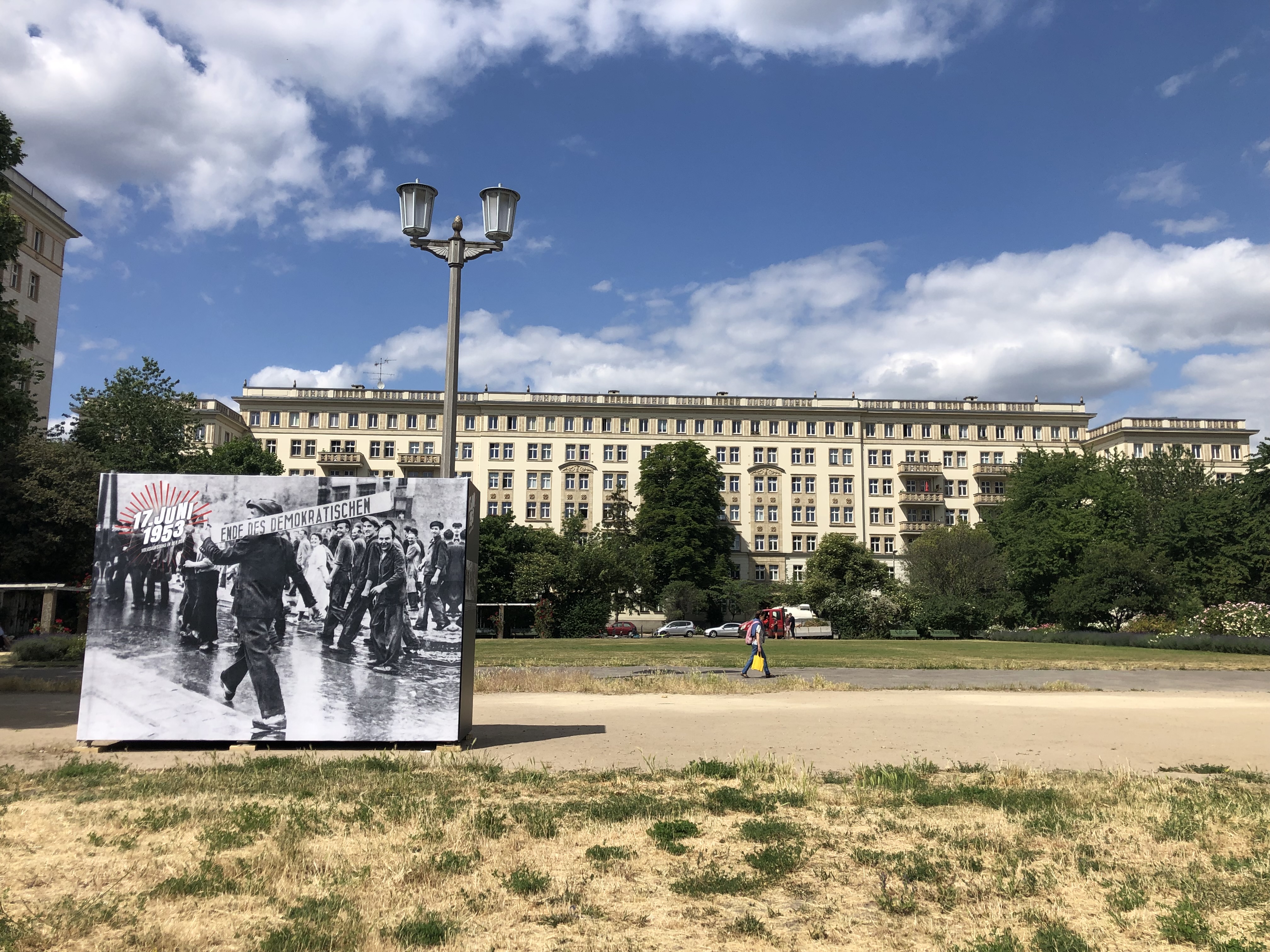
The KARL-MARX-ALLEE, formerly Stalinallee, is the 90-metre wide, 1.2-mile long DDR boulevard lined by grandiose Moscow-style architecture built between 1952 and 1960 and scented lime trees. Designed to sing the praises of socialism, the buildings offered luxurious flats for workers as well as restaurants, shops and a still iconic Kino International cinema. Many of the apartment blocks were covered in ceramic tiles, earning the Allee the nickname of ‘Stalin’s Bathroom’. Half of them had fallen off by 1989.

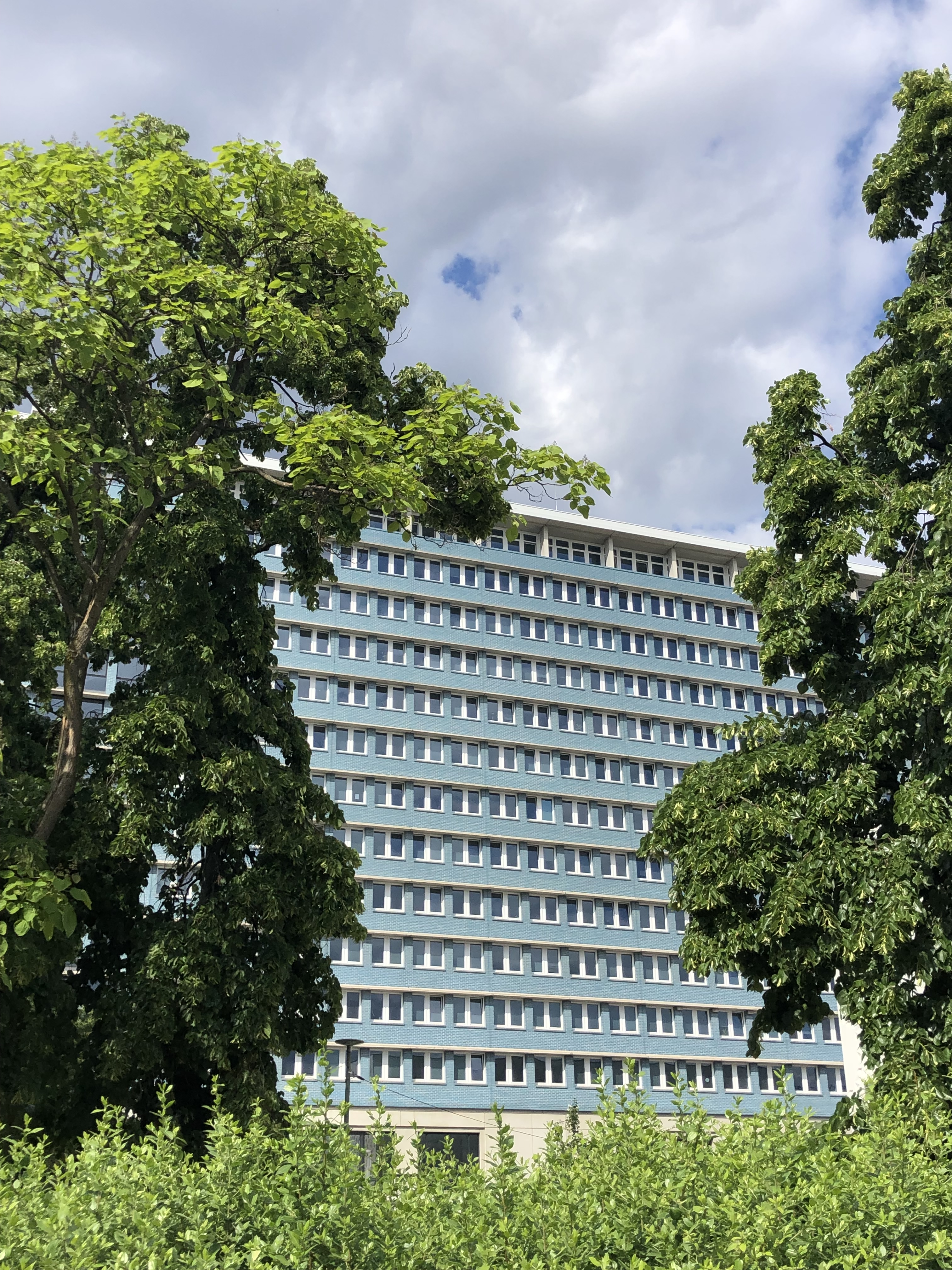
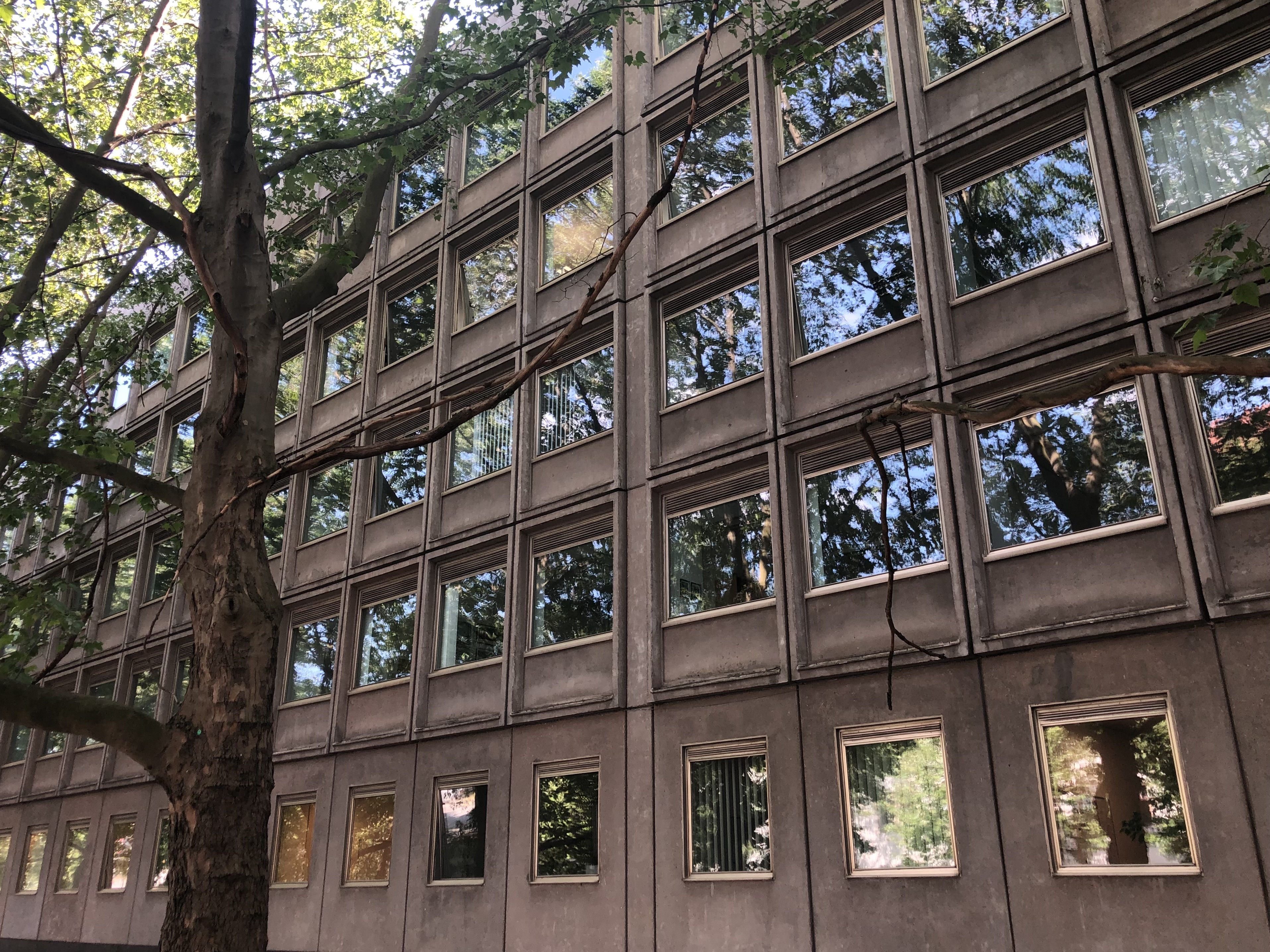
In the oldest part of the city, a typical ‘Plattenbau’, the panel system-building made up of pre-fab concrete panels, some with basin and loo already attached, rises above a little-known but beautifully crafted frieze telling the history of communism and the DDR.

This year was the 70th anniversary of the 17. JUNE 1953 WORKERS UPRISING in protest against the state’s imposition of more working hours for no extra pay. It was crushed with Soviet tanks and troops leaving 123 people dead.

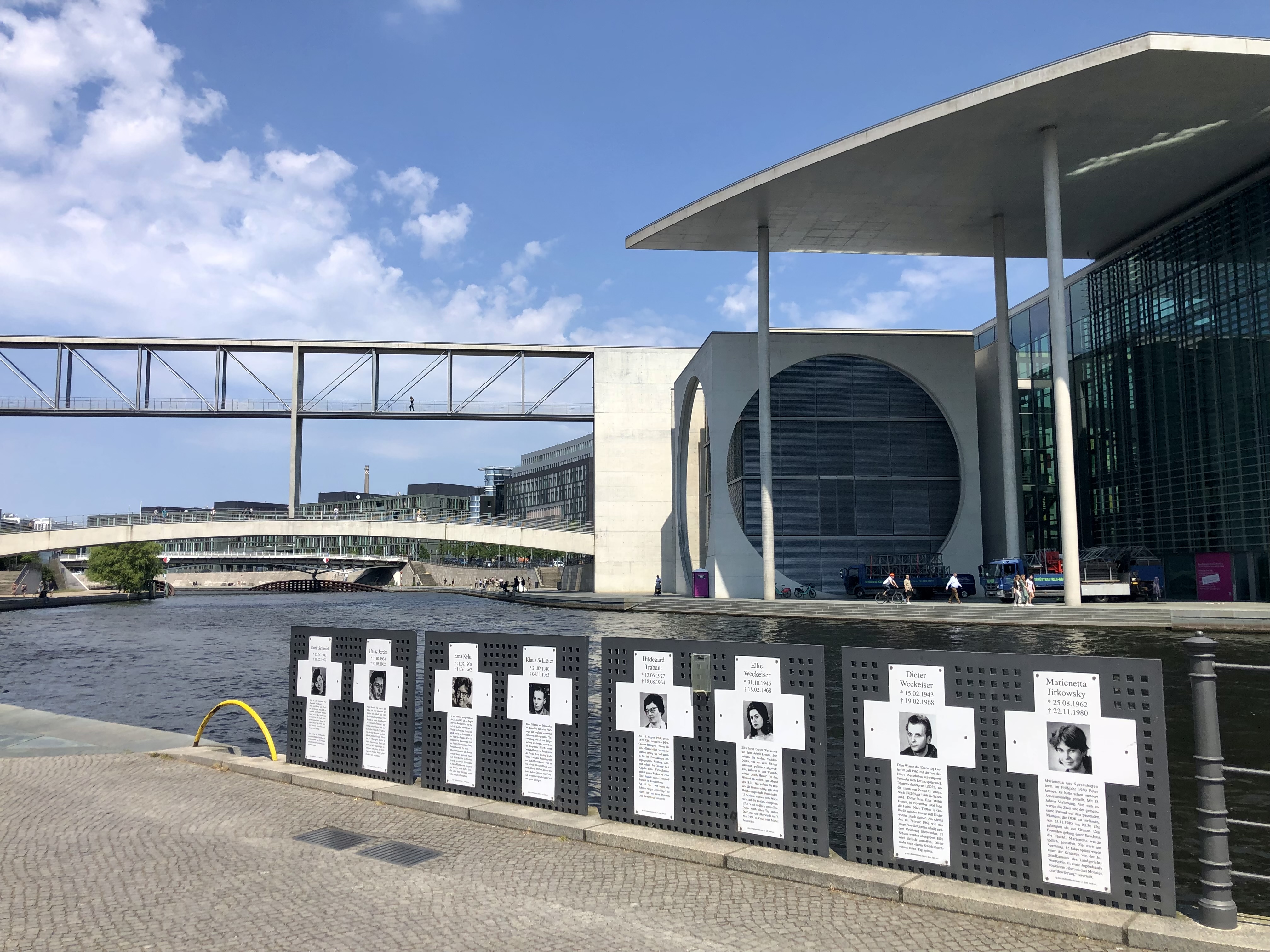
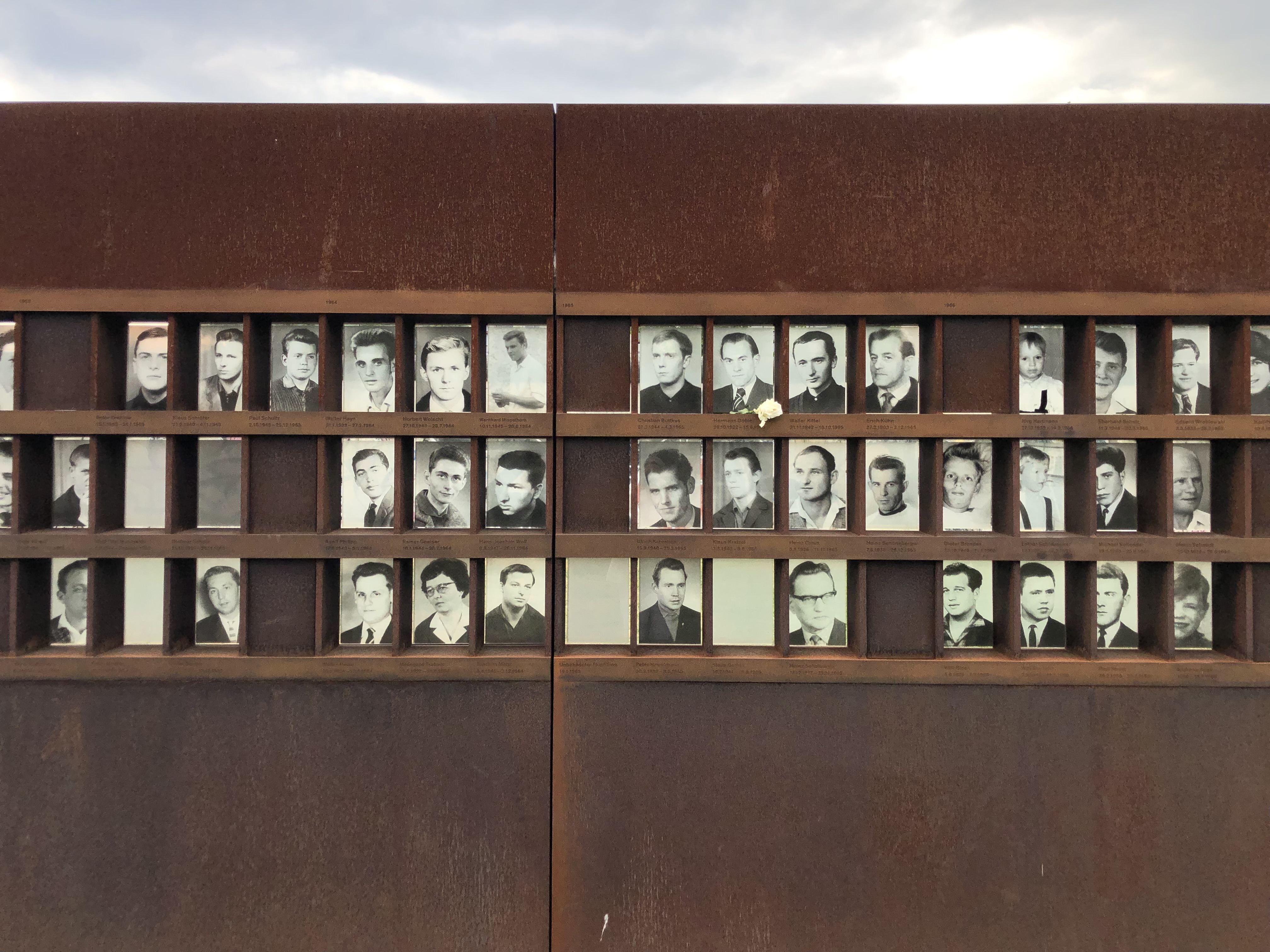
From 1961-1989, the BERLIN WALL effectively locked East Berliners into the regime’s paranoid ideology and ruthless regime. Monuments dotted on its snake-like course through the city tell the tragic stories of the more than 140 people who died trying to escape.

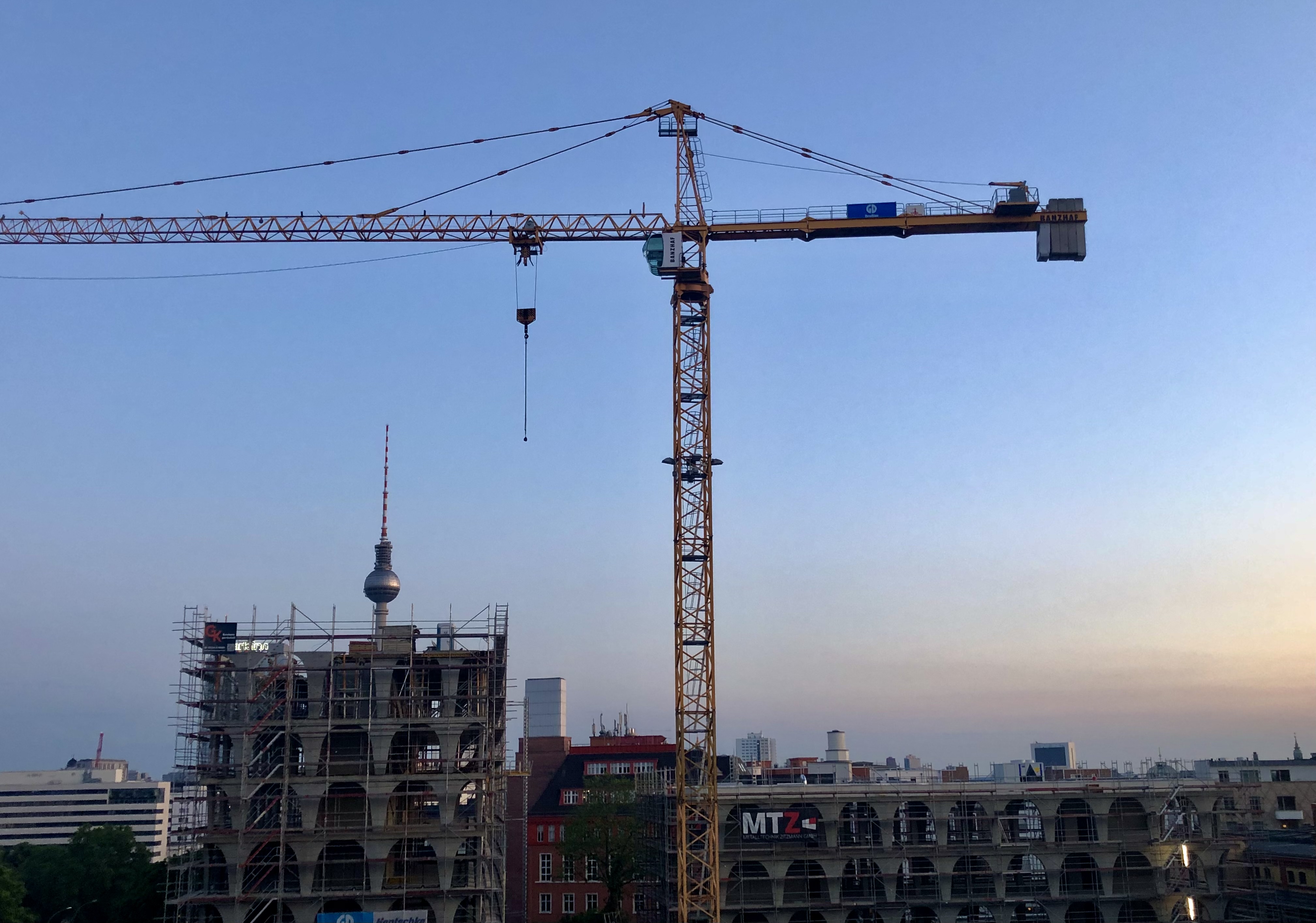
After the Fall of the Wall and the reunification of Germany in 1990, the next phase of (re-)building began and still continues everywhere. Some areas have been homogenised into the commercial cityscapes you can find the world over.

Around the Reichstag and central parliament area, ultra-modern architecture prevails. Outside Jakob Kaiser House, the all-important Grundgesetz or Basic Law is etched into glass – a fragile but resolute commitment by the Federal Constitution to guarantee fundamental rights in Germany .

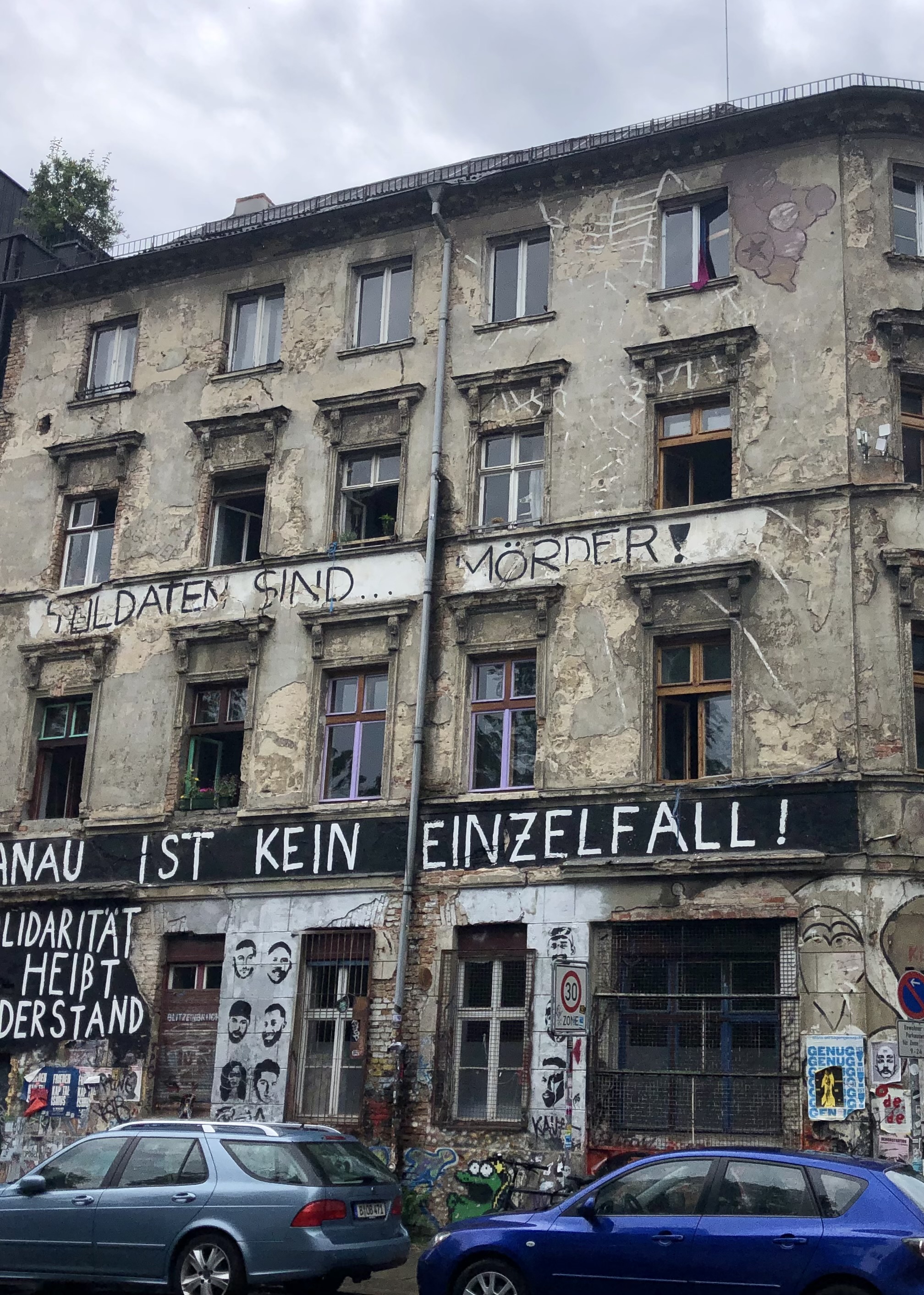
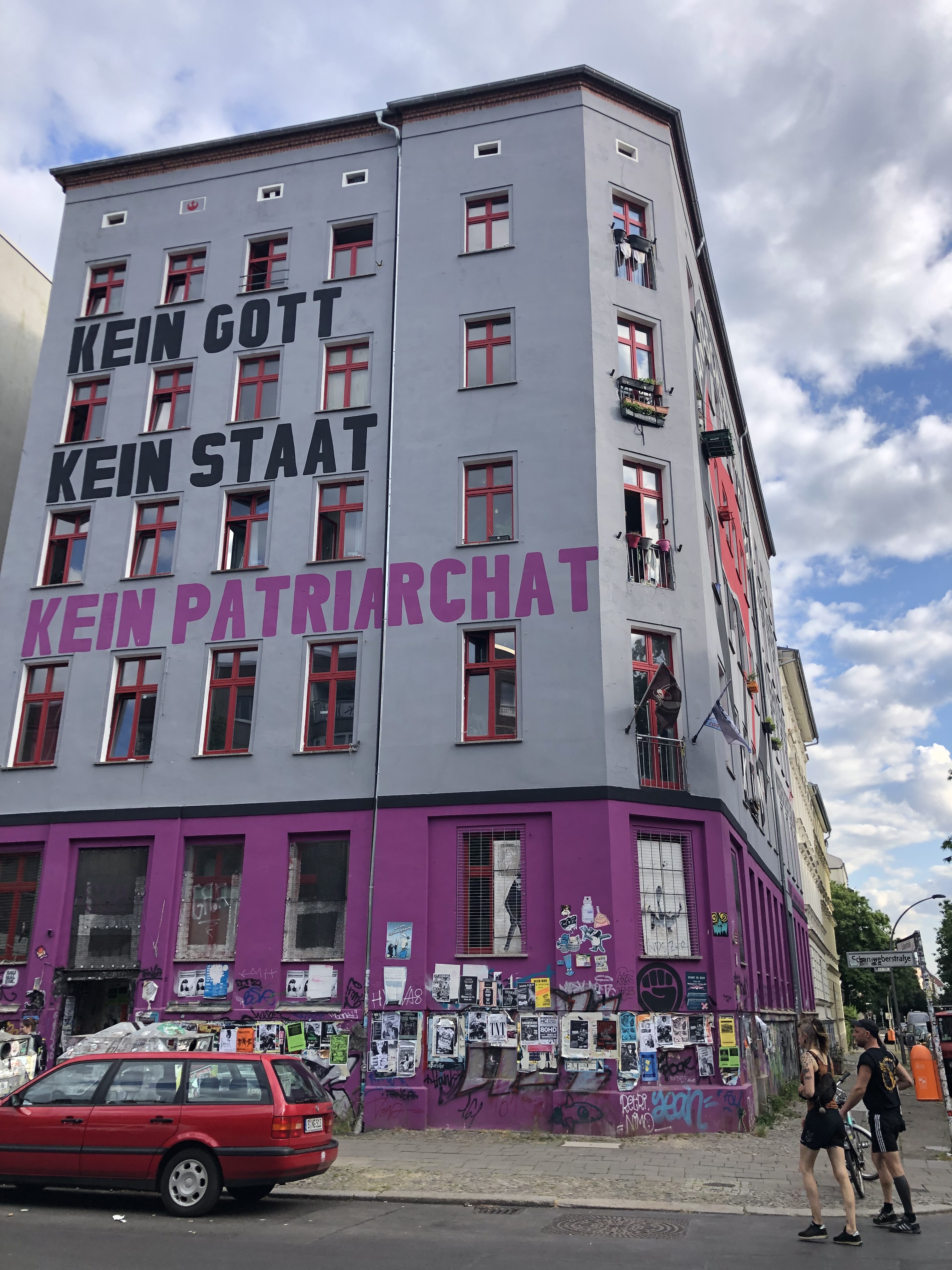
Elsewhere, whole quarters have dodged development and been claimed by layers of graffiti and young hipsters with tattoos scribbled like doodles over their bodies. Political slogans and statements adorn buildings squatted in since ‘Die Wende,’ the peaceful revolution of the autumn of 1989 that led to East and West Germany and Berlin becoming one again: ‘Soldiers are murderers’. ‘Keep calm and don’t give a fuck’. ‘No God, no state, no patriarch.’

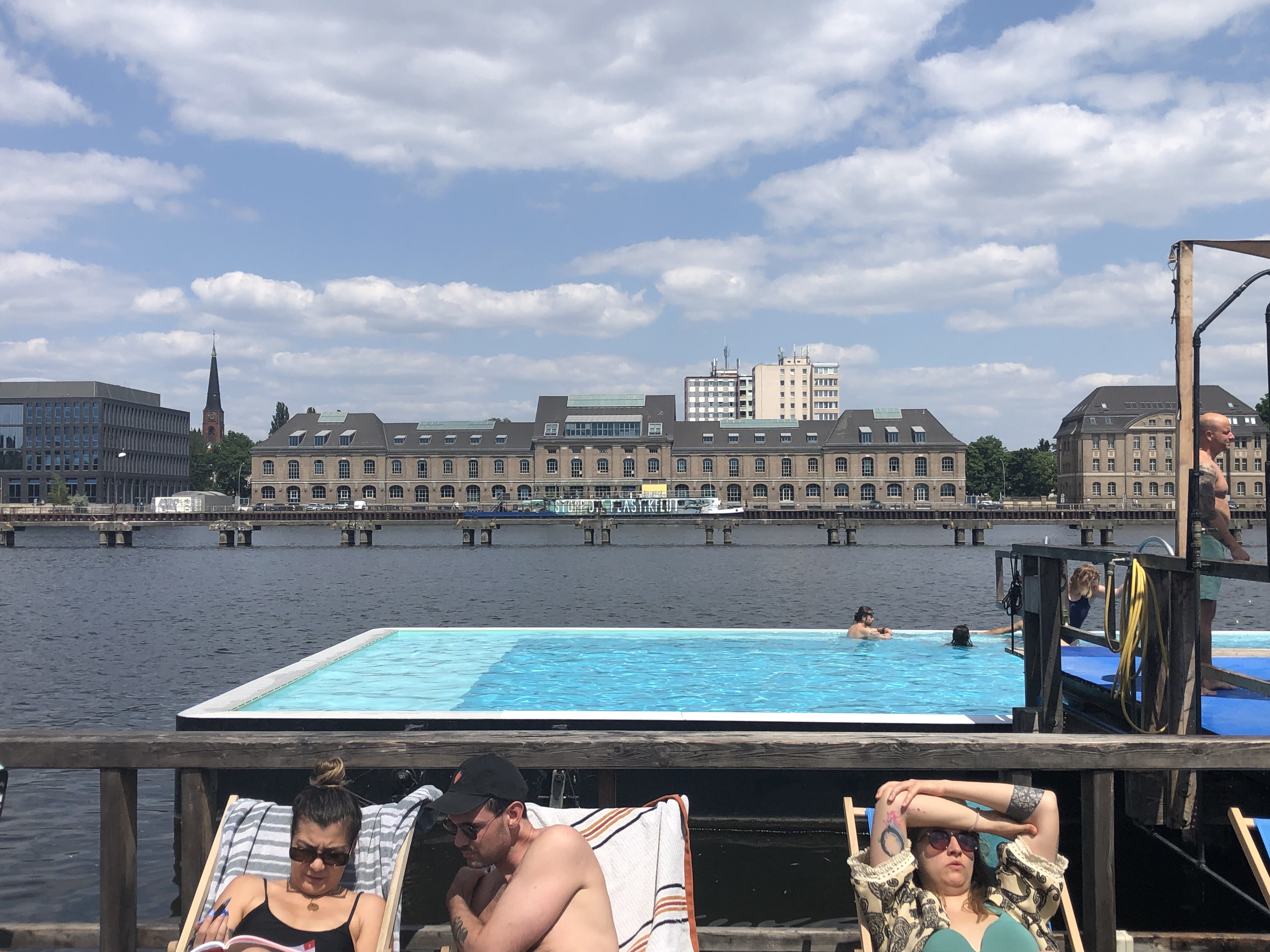
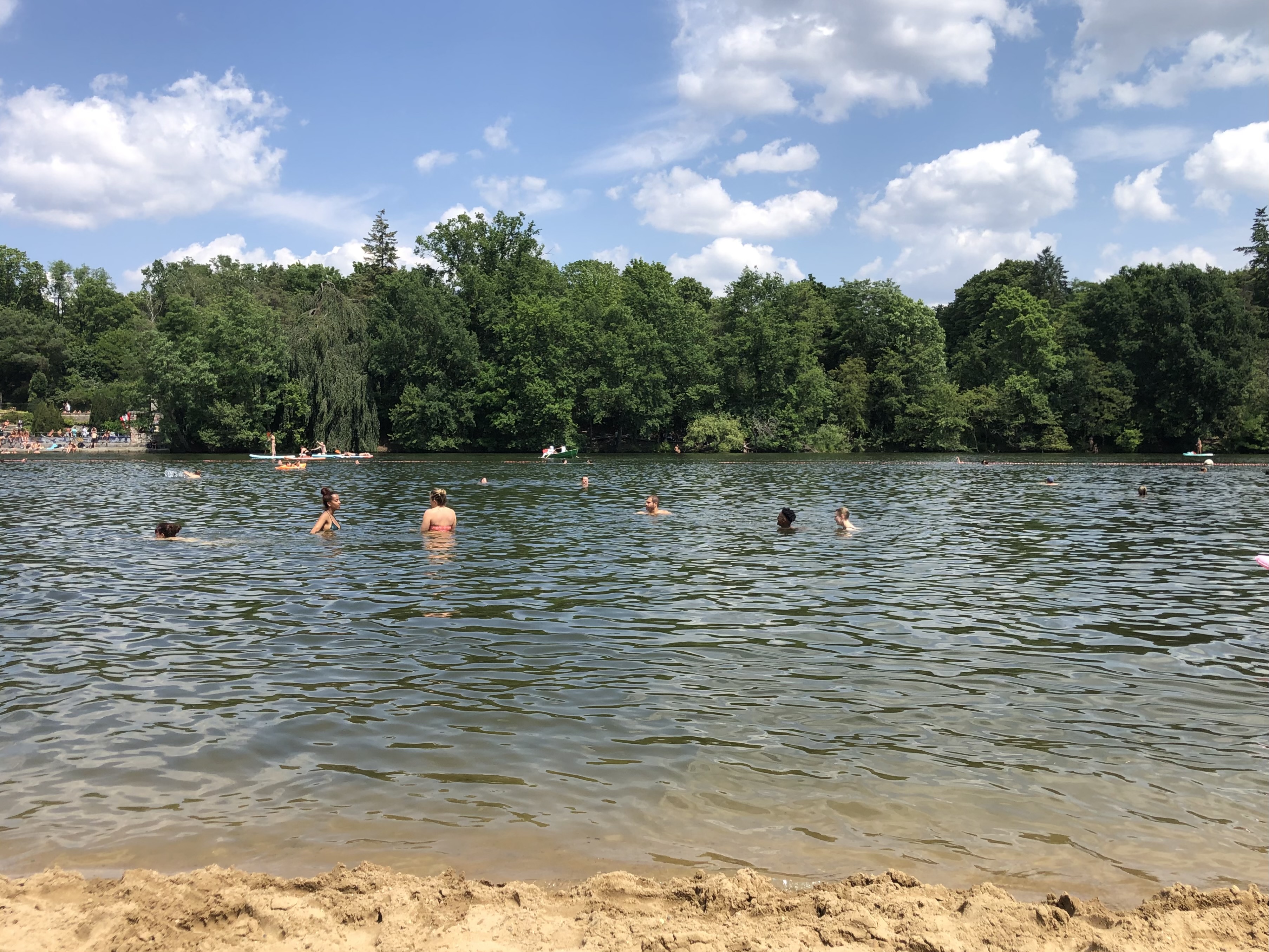
Then there’s swimming in the city centre or in one of the many lakes a cycle ride away; nude sunbathing in the parks and the chatter of endless cafés and bars that spill onto the streets.

Nestled between new and old, the constant reminders of what Germans – and the world – must never forget…

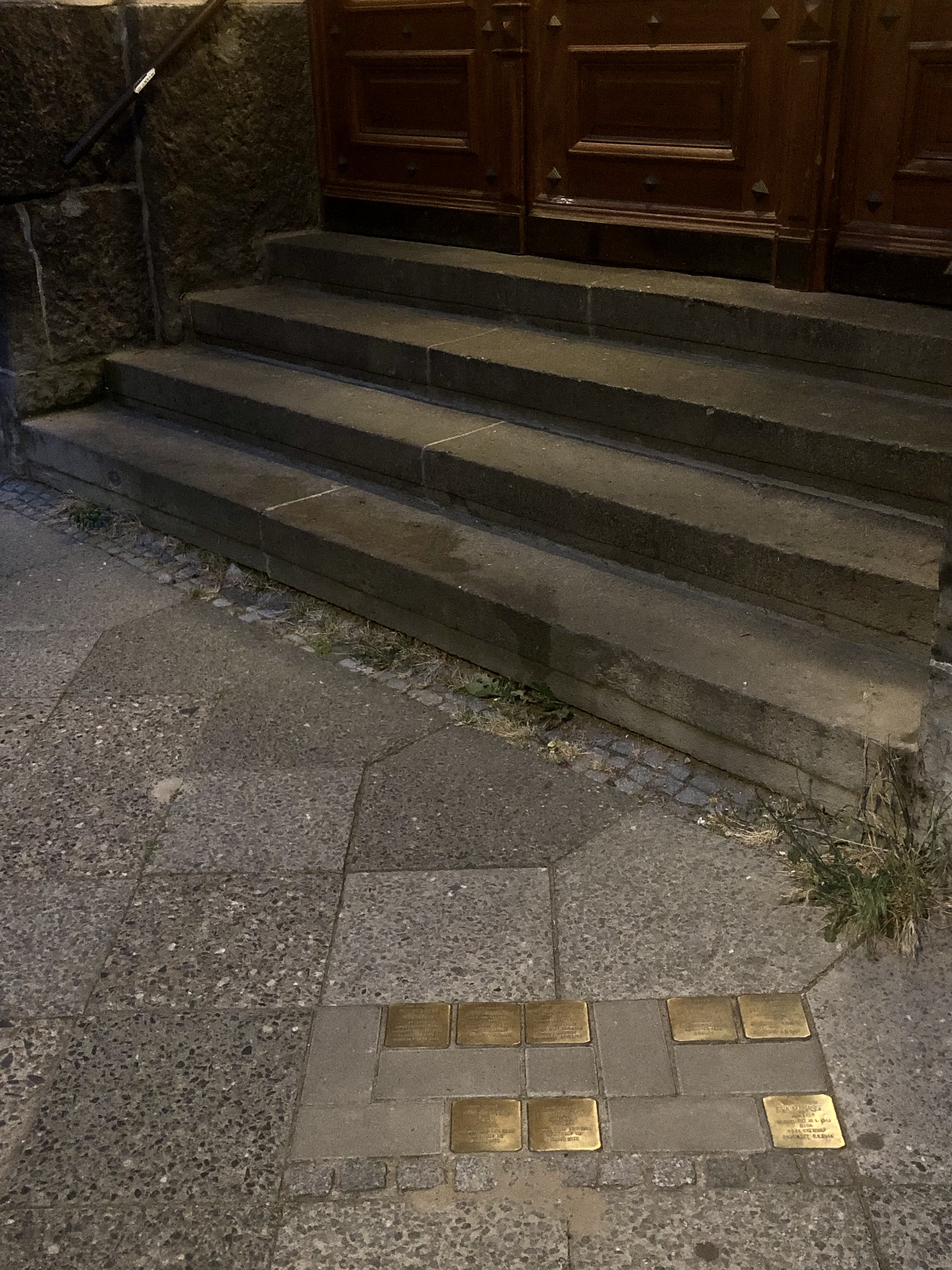
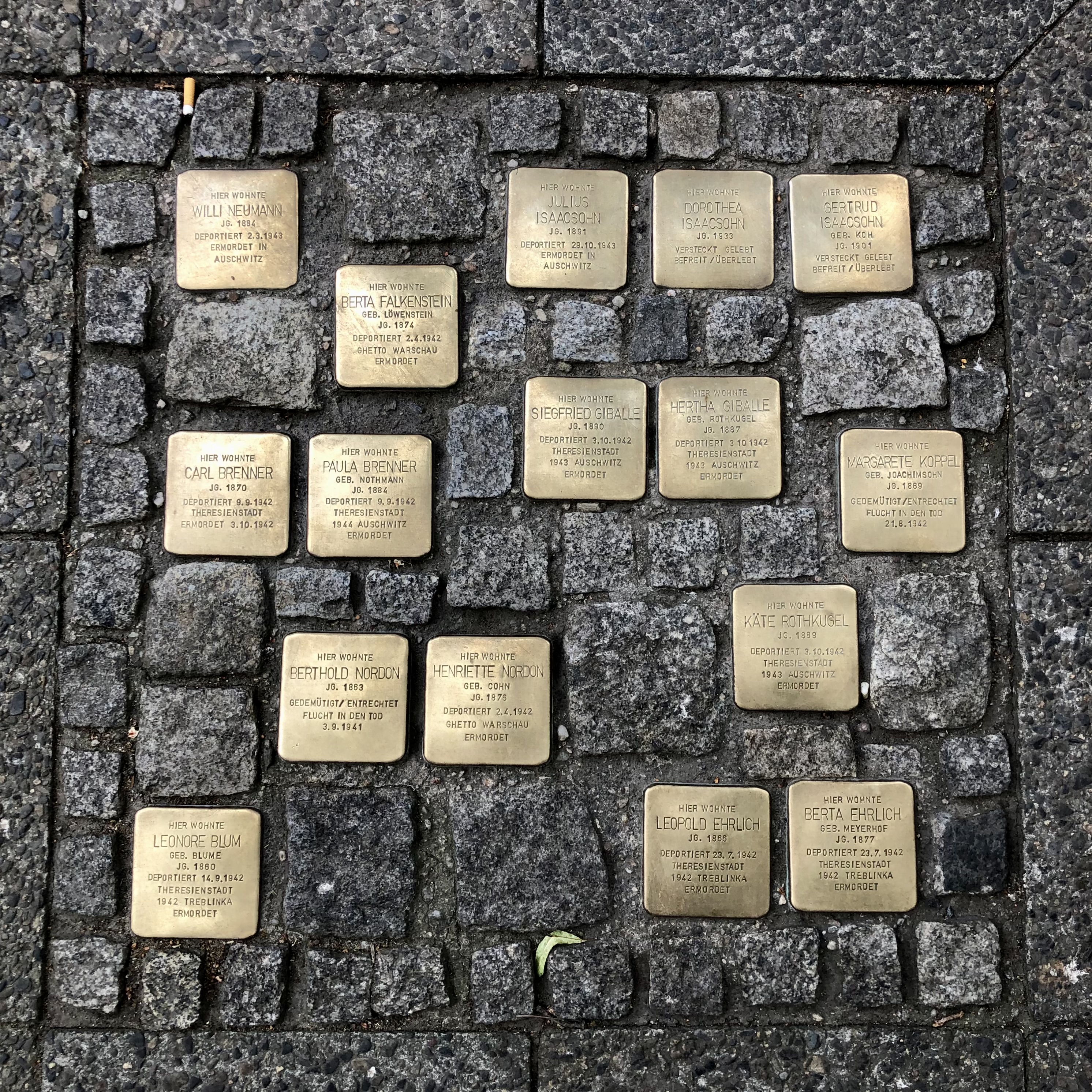
Stolpersteine – stumbling stones – glisten from the pavements naming and remembering those who once lived in these streets before they were deported and murdered by the Nazis.

And in the very heart of Berlin, right between the Reichstag and the Brandenburg Gate, against a soundscape of raindrops and a quiet recording of single violin, I witnessed the daily laying of a fresh flower on the triangular island in the middle of the pond that is the Memorial to the Sinti and Roma Victims of National Socialism.

Berlin exudes a wealth of experience and suffering mined from the psychological, moral, philosophical and political depths into which it has plummeted time and again. But it feels to me and many others who love being there, that out of all the conflicting and restricting -isms of the past century, the power of the individual now has its rightful place. Be yourself, the city seems to say. You won’t be judged here.

Long may that last…

Becoming aware of the invisible ties that bind us to the past…

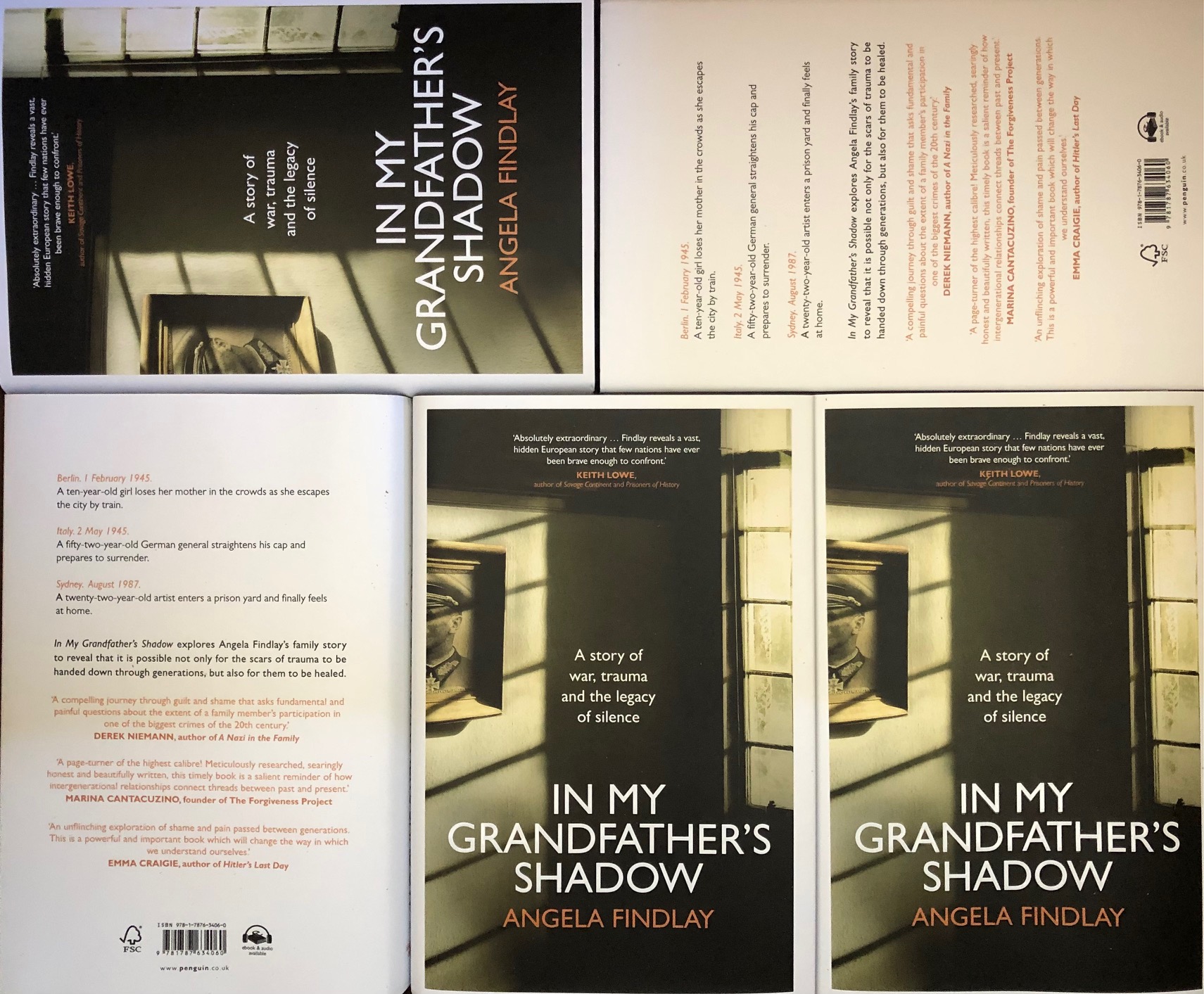
It is now just three weeks until the publication of my book, In My Grandfather’s ShadowA week in the stunning, state-of-the-art Penguin Random House studio recording the whole thing for the audio book version has left me feeling more intimately connected to it than before. Like a parent, I have spent years nurturing it into its current shape. Now it is leaving the nest and heading into the big wide world… how exciting is that! 

Most of you will already have an idea of the themes it is likely to address from my blogs. And – spoiler alert – it does. But possibly the main thrust of the book – as stipulated by Penguin Transworld when they took me on – was to focus on the heritability of trauma. It involved ‘a bit’ (read: ‘total mind-fry’) of a re-write. Yet ultimately they were right. Because this idea, that we can inherit psychological wounds from our forebears, is gaining more and more traction.

The process or re-structuring a book…

One of the book’s working titles was ‘Invisible Lines’, which I liked. But ‘line’ is somehow wrong. Even the letters that make up those two words are too straight, too linear. For, while there is obviously a linear logic to the structure and the content, the essence explores hidden cycles and the bits of life that meander or tie themselves in knots. Or that appear unsubstantial, unreal even, when really they are holding the tiller to our lives.  

As I have said before, trauma, guilt and shame abide in the psyches of us all to a greater or lesser degree. They are part of what it is to be human. But frequently they remain unidentified, like bottom dwellers in the sea of our emotions that stir up the mud to cloud our vision and cause havoc with how we see, not only ourselves, but others and the wider world. 

In My Grandfather’s Shadow therefore takes readers on a deep dive into largely unknown or unspoken – until recently – corners of experience. Not just of those who lived through the Second World War, but those who came after. It looks at the impact of war and violence in general, a theme that has gained an unwelcome pertinence in the light – or should I say darkness – of Russia’s war in Ukraine with its horrific reports of rapes, brutal murders, forced transportations that echoe my grandfather’s letters from the eastern front in 1941-2. War is as old as the world. But where the brutality was once confined to the battlefield and soldiers, Ukraine is a salient reminder that modern warfare invariably extends into the homes and lives of civilians. For generations.

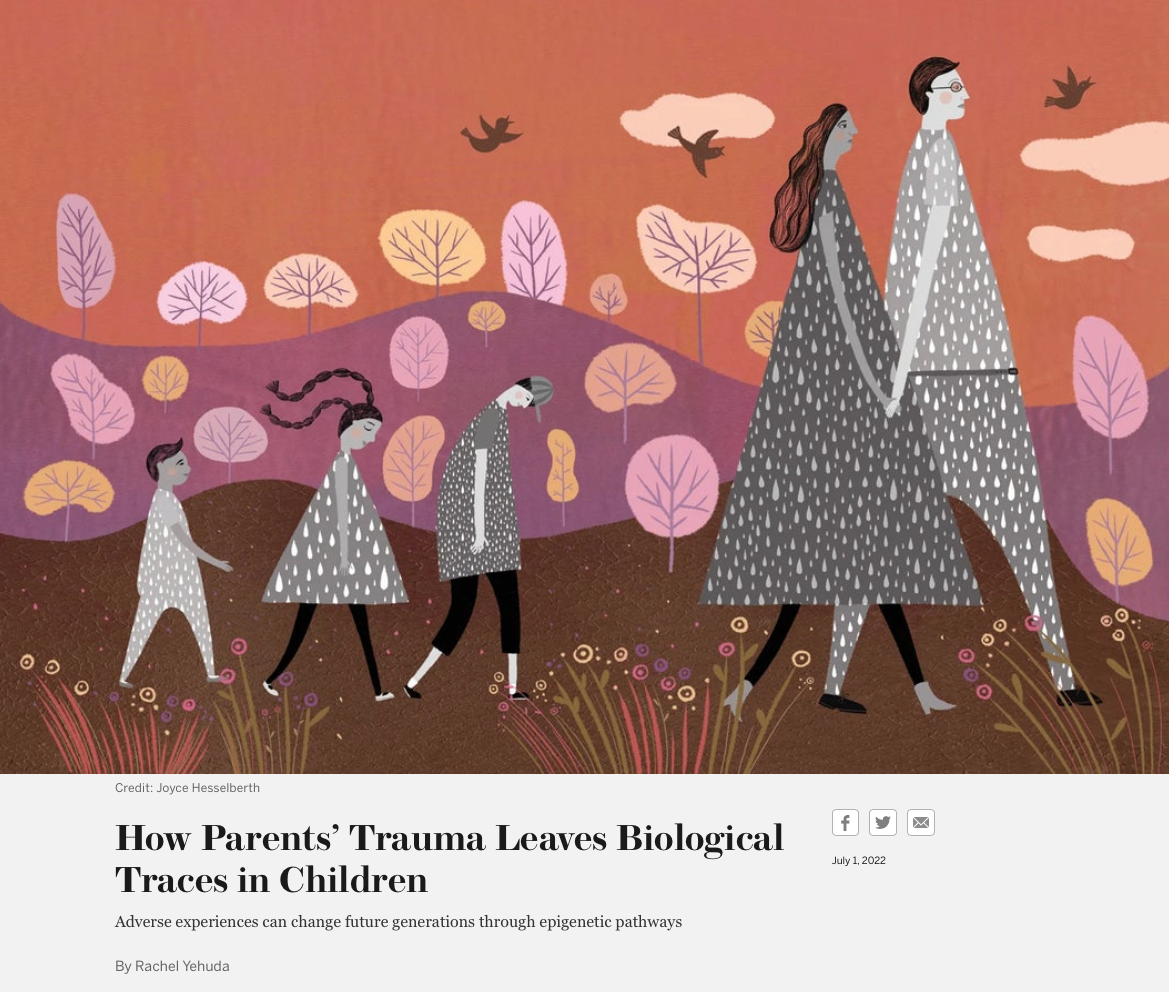
It is probably easy to imagine how the extreme traumas of the Holocaust could affect the offspring of survivors as well. Traumatic imprints have long been witnessed in second and third generations. What is less known because it could only be articulated when the non-Jewish German grandchildren of those who lived through the war came of age in their 40s, is that traumatic experiences of any nature, if left unattended or untreated, can seriously disrupt the lives of subsequent generations. The process is variably referred to as ‘transgenerational transmission’ or ‘emotional inheritance.’ Even science is embracing the possibility with its own language: ‘epigenetics.’ (See article

How Parents’ Trauma Leaves Biological Traces in Children – Scientific American

Whether biological, psychological, genetic or spiritual, the process of transmission is not new. What is new, is our growing awareness of it. And with that awareness comes responsibility. Responsibility to address the cause of the damage, to find ways to resolve or heal it, and then to prevent it. To neglect trauma, particularly in children, and to ignore how it’s effects can linger on for generations is to potentially condemn them to lives of violence, self-harm, substance misuse, depressions, low self-esteem, underachievement or a general sense of something being amiss, all of which are becoming increasingly endemic in our society. It is therefore in everybody’s interest to do this.

This is one of the reasons I took the risk of bearing my soul and writing my book. Because I really hope that parents, teachers, doctors, psychologists, politicians might open their minds to the possibility that behind someone’s problematic behaviour or attitudes, their unemployability, fears or lack of motivation there might lie an unresolved family trauma, wrongdoing or injustice that is seeking resolution through that person without them realising it. It took me five decades to unravel the ties that bound me to the experiences of my immediate forebears. Because nobody knew about it back then.

Well, we do now. Or at least you will do when you have read my book!

In the words of those who have read it:

“Can we as individuals untangle ourselves from a past that binds us to the suffering and deeds of our predecessors?”This profound question forms the basis of this remarkable memoir in which Findlay – granddaughter of Wehrmacht officer, General Karl von Graffen – wrestles the feelings of ‘badness within her’ that has plagued both her mental health and her sense of self for years. It’s a powerful investigation into the individual personal cost that results from wider history, and the ways in which inherited guilt and trauma can leave scars across the generations. A must read… Caroline Sanderson, Editor’s Choice in The Bookseller

This is a moving and powerful memoir that illuminates the extraordinary power of unprocessed trauma as it passes through generations, and how when it is faced it can be healed. Julia Samuel, author of Every Family Has a StoryGrief Works and This Too Shall Pass

An unflinching exploration of shame and pain passed between generations.  This is a powerful and important book which will change the way in which we understand ourselves. Emma Craigie, author

A page turner of the highest calibre! Meticulously researched, searingly honest and beautifully written, this timely book is a salient reminder of how intergenerational relationships connect threads between past and present... This book gives new meaning to the prescient words of psychoanalyst, Roger Woolger: ‘It is the responsibility of the living to heal the dead. Otherwise their unfinished business will continue to play out in our fears, phobias and illnesses.’ Marina Cantacuzino, author and founder of The Forgiveness Project

This is an absolutely extraordinary book. In peeling back the layers of her family history, Angela Findlay reveals a vast, hidden European story that few nations have ever been brave enough to confront. Keith Lowe, author of Savage ContinentThe Fear and the Freedom, and Prisoners of History

A compelling journey through guilt and shame that asks fundamental and painful questions about the extent of a family member’s participation in one of the biggest crimes of the 20th century. Derek Niemann, author of A Nazi in the family

From 14th July, you will be able to purchase In My Grandfather’s Shadow at a bookshop near you such as Waterstones or various online stores .

Two very different military withdrawals…

In the light – or should I say pitch darkness – of the horrors and tragedies that have been unfolding in Afghanistan as the USA, UK and other countries withdraw, my recent visit to the National Army Museum in London felt strangely apposite. One of its current exhibitions – Foe to Friend: The British Army in Germany since 1945 – covers the final withdrawal of British troops from Germany in 2020. It traces Britain’s 75-year military presence there, first as occupiers and administrators of a destroyed country, then as reluctant but necessary Allies confronted with escalating Cold War tensions, and on to its current relationship as friends. 

I can’t stop thinking about what is happening in Afghanistan. It feels beyond catastrophic, beyond imagination, but of course, I am in no position to comment. Except maybe to point out the contrast of our withdrawal from Germany, which passed effortlessly and without incident. Presumably that is the mark of an original mission reaching its intended positive conclusion and outcome, though I have to say I was surprised when I first learned that we even still had a presence there! A second exhibition in the foyer of the museum makes one realise, however, just how alive that period still is in many people’s lives. 

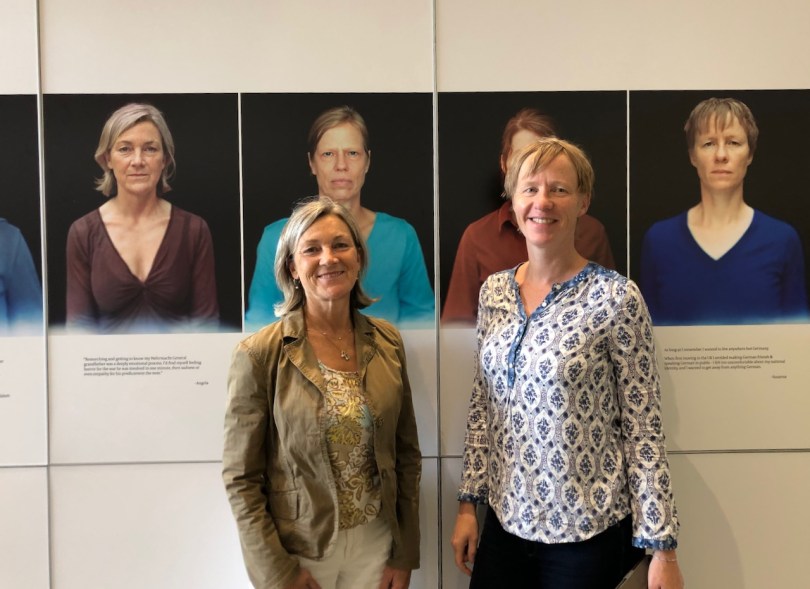
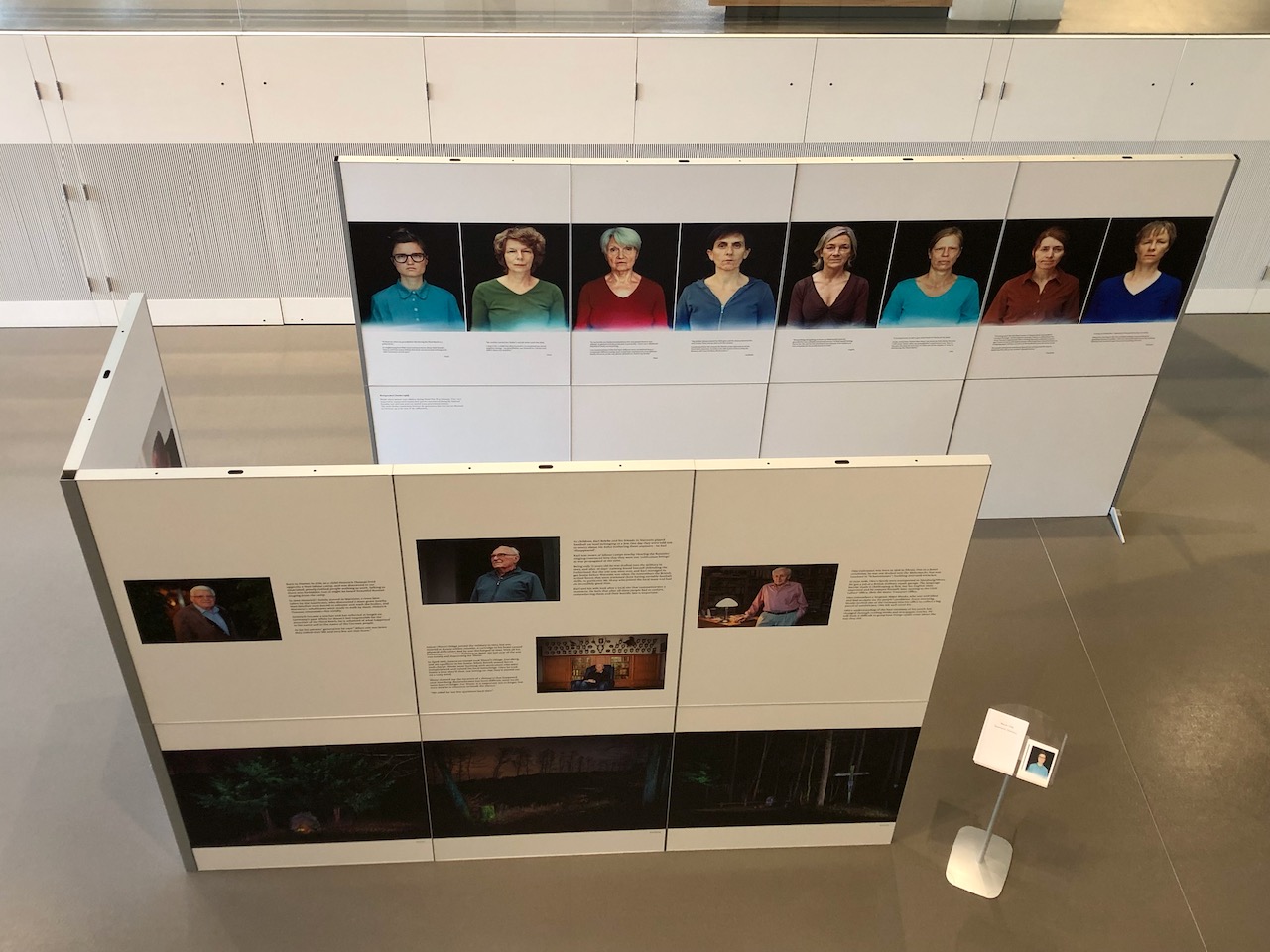
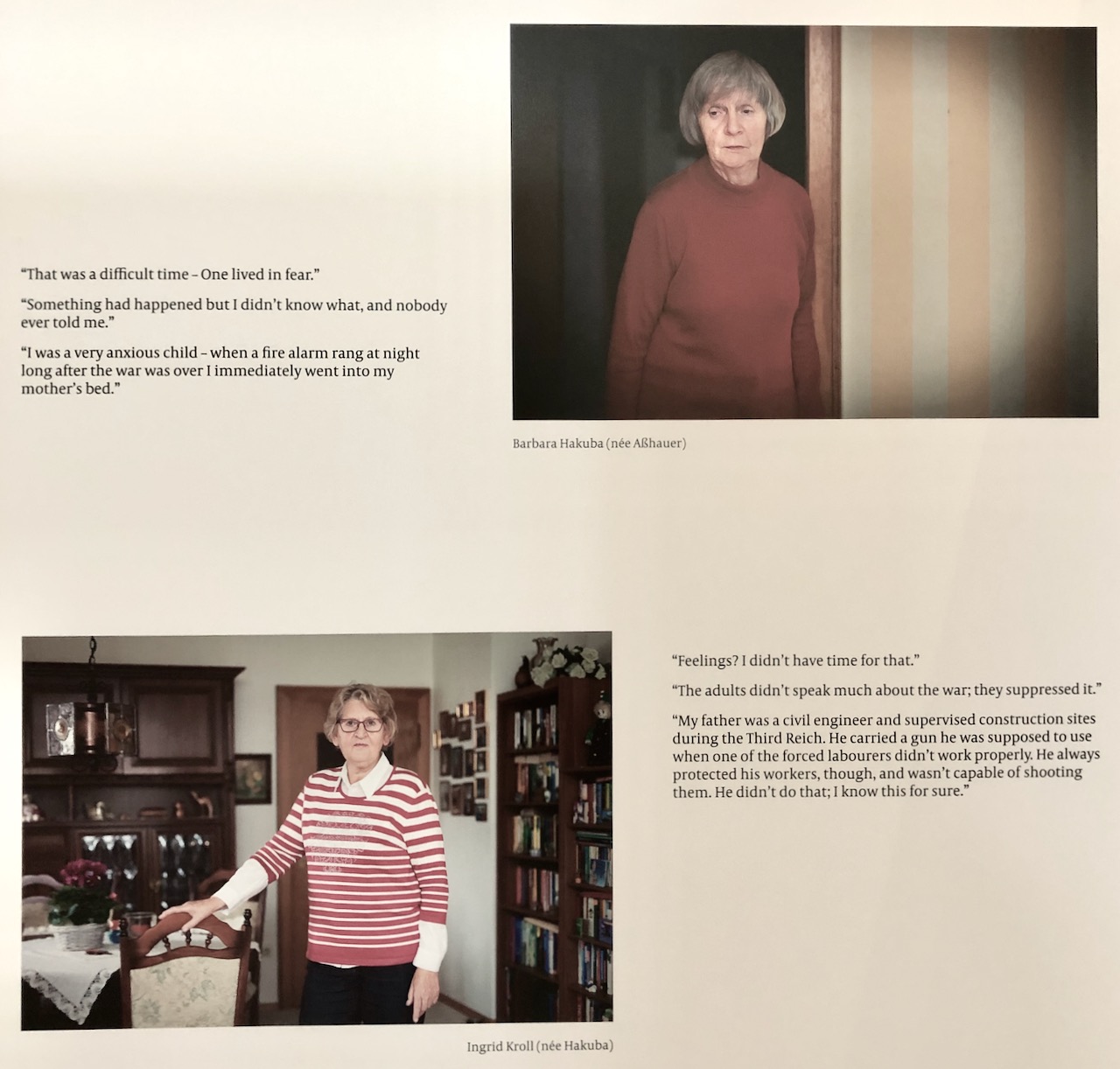
Long Shadows of War has been created by the German photographer, Susanne Hakuba. Susanne lives in England and has been a friend ever since she invited me to participate in her brave and on-going examination of how the Third Reich still casts shadows on Germany, its people and her own life. Any person who is familiar with my blogs or talks will be all too aware of how much Germany has already done to deal with its Nazi heritage at a national and political level. But this exhibition shows how the personal level can be another story, quite literally. 

Susanne’s haunting photographs, quotes and poems draw on the testaments of others to reveal the differing attitudes between three generations: those who witnessed the times, those who lived in their parent’s and grandparent’s trauma- or guilt-filled silences immediately after the war, and those who carried the heavy contents of that silence with its ensuing emotional absence without realising it.

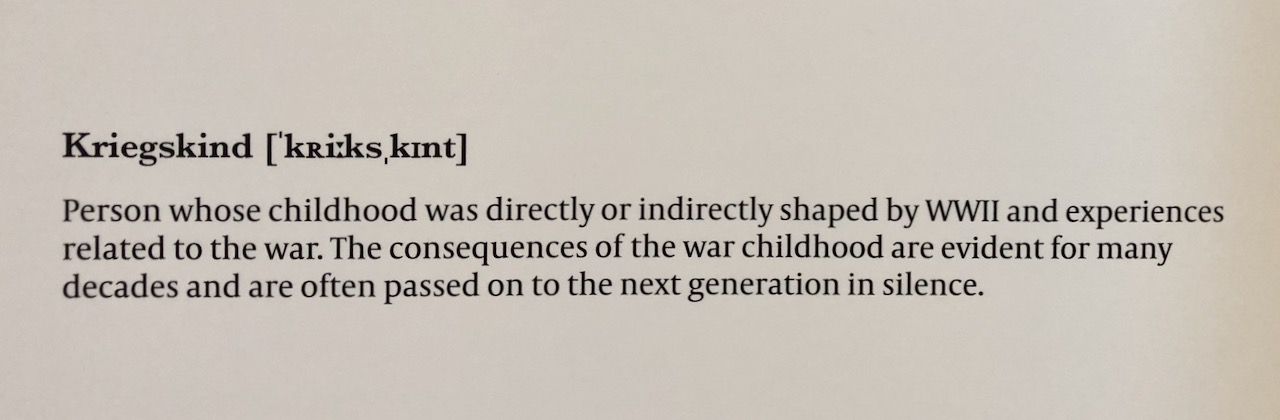
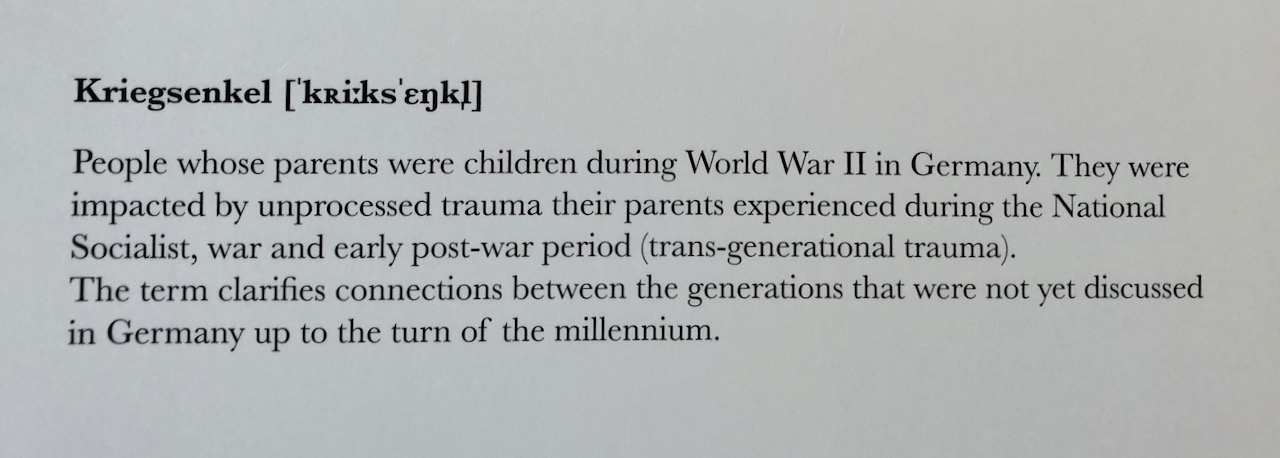
Susanne Hakuba: Two Kriegskinder / War children: “…Feelings? I didn’t have time for that.”

The third generation – born in the sixties and seventies – have been gradually and carefully breaking through the silence to discover what lies behind familiar narratives that don’t quite add up. It’s no longer about uncovering the facts, many of which will never be known or knowable; it is more about the emotions attached to them. For it is these that coloured and flavoured most German childhoods, often leading to inexplicable symptoms, confusions about identity and self-destructive behaviours as they advanced towards adulthood.

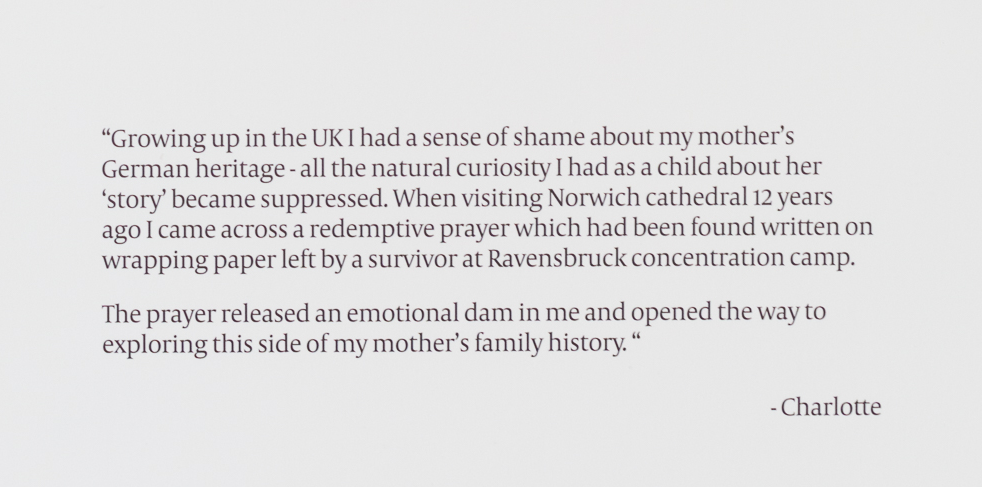
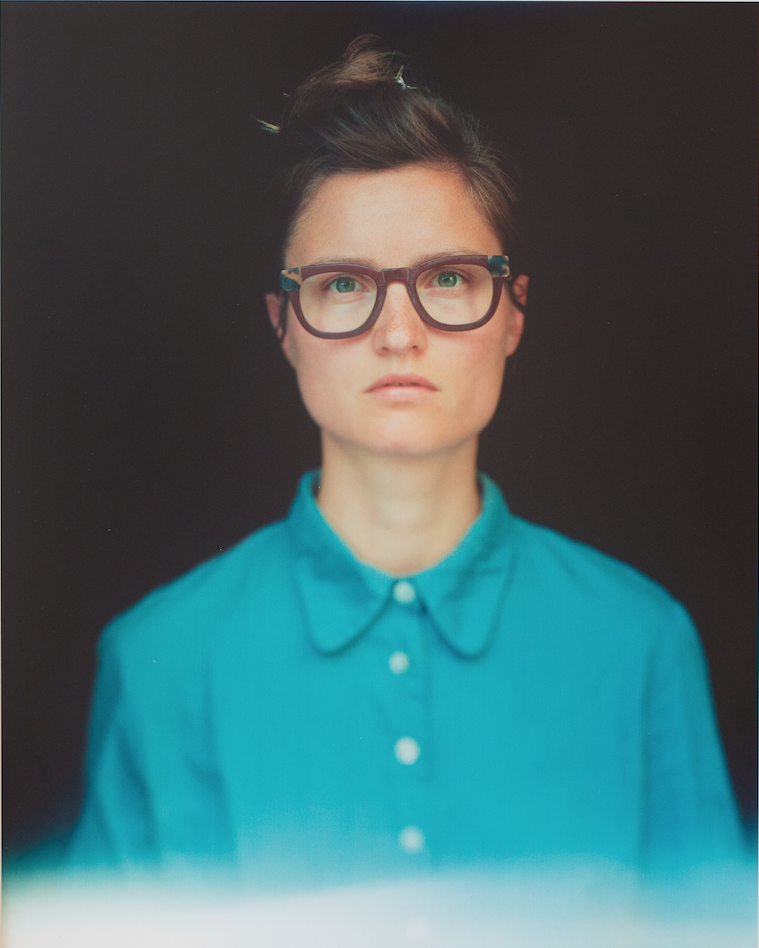
This phenomenon is called inter- or transgenerational trauma. It describes the transmission of unresolved issues from one generation to the next; a form of emotional inheritance seeking resolution. I talk about it in my TEDx talk and it is widely acknowledged in Germany. For all sorts of reasons, however, we don’t know much about this in Britain. But seeing the interest visitors to the exhibition display, Susanne is hopeful – as am I – that her/our work can be a catalyst for people – of any nationality or history – to look at the gaps in their own family stories in order to discover what is lurking there unrecognised, unspoken but potent. 

What is happening in Afghanistan will leave many people traumatised and many others guilty. The impact of both so often gets buried in silent withdrawal as people try to cope. But suppressed traumas and wrongdoings can lead to misery, dysfunction and, all too often, to devastating actions and crimes. I sincerely hope that growing coverage of this subject through exhibitions, talks, books and the media will raise our collective awareness of how important it is to acknowledge and treat trauma before it is allowed to fester and pollute the lives of generations to come. As Afghanistan will no doubt teach us, it is in everybody’s interests to do so.


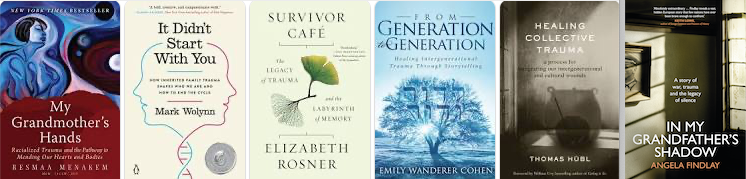
Some further reading:

British army hands back last headquarters in Germany

Parents’ emotional trauma may change their children’s biology. Studies in mice show how

Can We Really Inherit Trauma?

Fearful Memories Passed Down to Mouse Descendants

What Is Generational Trauma? Here’s How Experts Explain It 

When it comes to human experiences, is ‘following the science’ always the right way to act?

For just over a year now, the world has been focused on ‘following the science’. And no doubt rightly so in many instances. Science is brilliant, in too many ways to list here. But… when it comes to human experience, its tools are often blunt, clunky or inadequate.

Sometimes, science lags behind human instinct or common sense. Sometimes, its microscopic focus loses sight of the macroscopic whole. Objective rationale overrides simple solutions seen by subjective understanding. Symptoms may be treated in isolation rather than as part of a highly intelligent organism. Other times, a phenomenon is too mind-boggling to be explained by logical process; love, death, black holes… That’s where art or religion, with their different toolset, have a go with varying degrees of success.

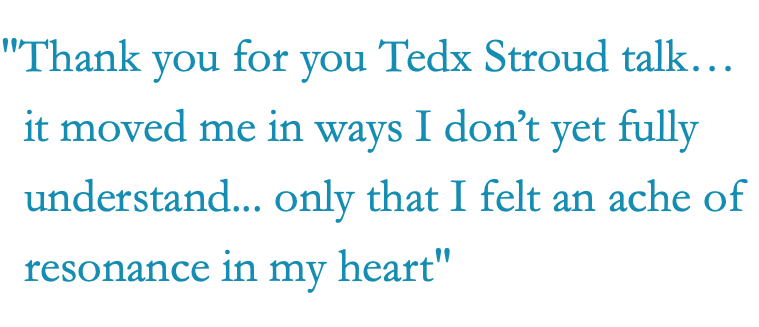
My recent TEDx talk – you can watch it here if you haven’t seen it yet – presents my experience of the transgenerational transmission of trauma or guilt. It’s an example of subjective experience gradually making its way to objective explanation. It is not a new idea. Way back, in Exodus Chapter 20, the bible talked of “…visiting the iniquity of the fathers upon the sons to the third and fourth generation.” In Shakespeare’s Merchant of Venice, Launcelot says, “Yes, truly; for, look you, the sins of the father are to be laid upon the children.” And over the past fifty years or so, symptoms of inherited trauma/guilt have been documented in descendents of a wide range of people exposed to traumatic events. However… because science doesn’t have the ability to prove it happens – not yet at least – some dismiss examples of such transmissions as being impossible, coincidental, imagined, nonsense.

But does that mean that it doesn’t happen? Is science right… or simply behind?

Take Post Traumatic Stress Disorder (PTSD), for example. Traumatic incidents have always been part of the human experience. And no doubt people all over the world have displayed symptoms of PTSD long before it was given a name. Yet the term ‘trauma’ only started to be explored at the end of the nineteenth century when Freud and his fellow pioneers of neurology and psychology considered it a diagnosis worthy of specialised treatment. When thousands of men returned from First World War fronts with psychological symptoms and medical conditions that had never been seen before, let alone explained, the British came up with the diagnosis of “shell shock.” Those who suffered from it were entitled to treatment – often hypnosis – and a disability pension. The sheer numbers, however, led the British General Staff to forbid the use of the term. Instead, “NYDN” (Not Yet Diagnosed, Nervous) was to be used and the afflicted were deemed undisciplined and lacking moral fibre. It wouldn’t be until 1941 with the publication of The traumatic neuroses of war by Abram Kardiner that it was recognised that any man could be affected by the atrocities of war and that traumatic symptoms were a normal response to an unbearable situation.

During the Second World War, psychiatrists continued to use hypnosis as treatment for trauma and veterans were offered improved practical and economic support. Psychological scars, however, were left unrecognised and untreated. From 1947, traumatic neuroses all but disappeared from official psychiatric language. 

The interest in trauma reignited in the seventies with the return of Vietnam war veterans who had such incapacitating symptoms that they were incapable of coping and functioning in civilian life. Many behaved violently towards their partners or became homeless and unemployable. But their symptoms continued to be labelled separately: alcoholism, substance misuse, depression, mood disorder or schizophrenia and treated accordingly, frequently without success. It was only when clinicians and mental health professionals working with Holocaust survivors, battered women, abused children and victims of accidents or rape collated their reports and discovered overwhelming similarities in their traumatised clients, that the range of behavioural, emotional and cognitive symptoms were combined into one psychological trauma diagnosis: Post Traumatic Stress Disorder. In 1980, after several rejections, this term would finally be included in the bible of psychology, the Diagnostic and Statistical Manual of Mental Disorders (third edition; DSM-III). 

For us today, it probably feels obvious that exposing men and women to abuse, war or anything that evokes extreme fear and helplessness would leave traumatic markers. And to a large degree science can now explain the mechanisms behind the process. That sense of ‘obviousness’ is how I have come to feel about the possibility of unresolved trauma or wrongdoing being passed onto the next generations, even though we don’t know how it happens. As I suggest in my TEDx talk, “our roots don’t just run backwards to our ancestors, but forwards to our children and those who come after. And if those roots are damaged or severed, what we hand on will also be impaired.

Many people have written to say my talk has resonated with their own experience of their forebears. But none of us can prove anything. And science will need time to develop the tools that can. Which probably means that the legacies of past familial, societal or historical traumas will not be taken into consideration when helping those afflicted by the often debilitating symptoms of depression, addiction, mental health… 

I think we need to be careful that this new emphasis on ‘following the science’ doesn’t pervade all areas of life. Even if we don’t yet understand the many complex ways in which transmission can occur, let’s give credence to the insights of people who have an innate or formally trained capacity to feel into a situation and ‘know‘ what’s right in the same way maternal instinct so often does. We have two sides to our brains for good reason. Currently the sceptical-until-proven logic of the left side largely prevails. But the non-verbal, intuitive right side has an equally valuable place, especially when it comes to imparting knowledge about our shared humanity. That’s an area where science often trails far behind.

I’d be interested to hear whether or not you think the experiences and insights I reveal in my TEDx talkFacing the past to liberate the future – need science to prove they are ‘real’?  

Related links:

The legacy of trauma: An emerging line of research is exploring how historical and cultural traumas affect survivors’ children for generations to come

Understanding and healing collective trauma – Thomas Hübl

Dr Gabor Maté: Transgenerational trauma, stressed environment and child’s diagnosis

Daring to look your family’s past in the face

Last week a Chinese schoolboy approached me after my talk The other side: The Second World War through the eyes of an ordinary German family. Slightly trembling and in broken English he asked me if I had been frightened looking into my family’s past. In my talk I describe the journey I started 10 years ago, of peering deep into the darkest episode of modern history to discover what role my family, above all my German grandfather, a decorated Wehrmacht General, had played, or may have played. I knew the boy was asking this question for a personal reason, the shadows of his own family demons were almost visible, passing like clouds over his terrified face.

My grasp of Chinese history is woefully thin. I wracked my brains for atrocities or events that this boy’s family member(s) could have been involved in. Tiananmen Square in 1989 sprang to mind along with the general sense of horrors perpetrated by Chairman Mao’s regime. But actually it didn’t matter whether I knew the precise what, when, where and who of his story. What mattered was the impact it was having on his life.

Read More »

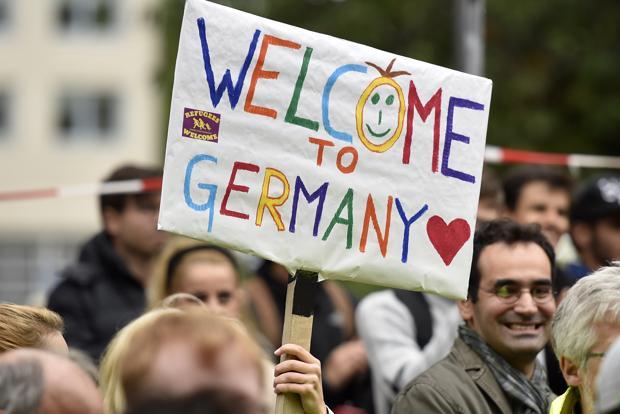
Germany’s welcoming response to the refugee crisis doesn’t surprise me. The more Germans are allowed to acknowledge their own WW2 traumas, the more their personal and collective memories of the horrors of the 1944-50 flights and expulsions come to light.

germanysyria-kkmD--621x414@LiveMint

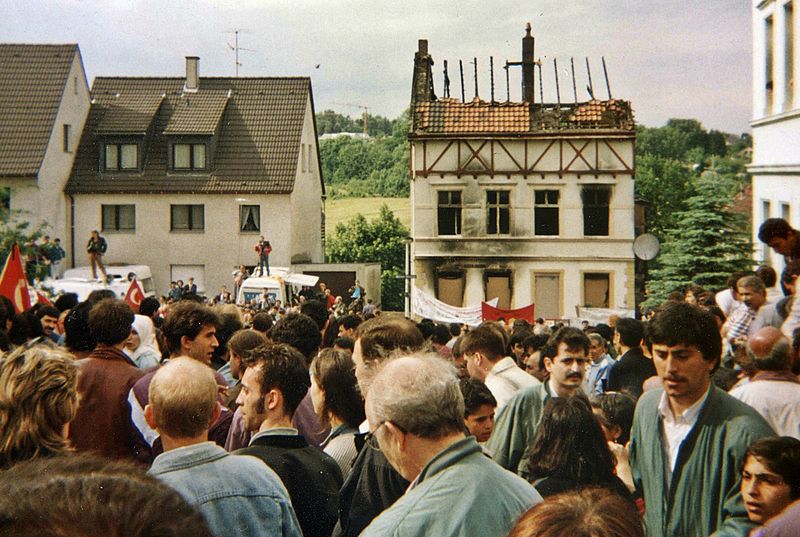
Germany’s ‘open house’ policy and newly attributed “moral leadership” within the mounting refugee crisis was indeed initially surprising. It certainly wasn’t always so. I’m remembering the 17-year-old boy I met in the nineties when I was working as an artist in Cologne Prison. His name was Christian and he had been placed in the special segregated unit there because his crime was so contentious on a national scale. He was one of four young Neo-Nazis responsible for burning down the house of a large Turkish family in Solingen in May 1993, killing three girls and two women and injuring fourteen other family members. It was the most severe instance of anti-foreigner violence in modern Germany and in 1995, Christian was found guilty of murder, attempted murder and arson and sentenced to 10 years.

800px-1993_Solingen_Brandanschlag_2Read More »

Left right, left right, left right…

IMG_5425

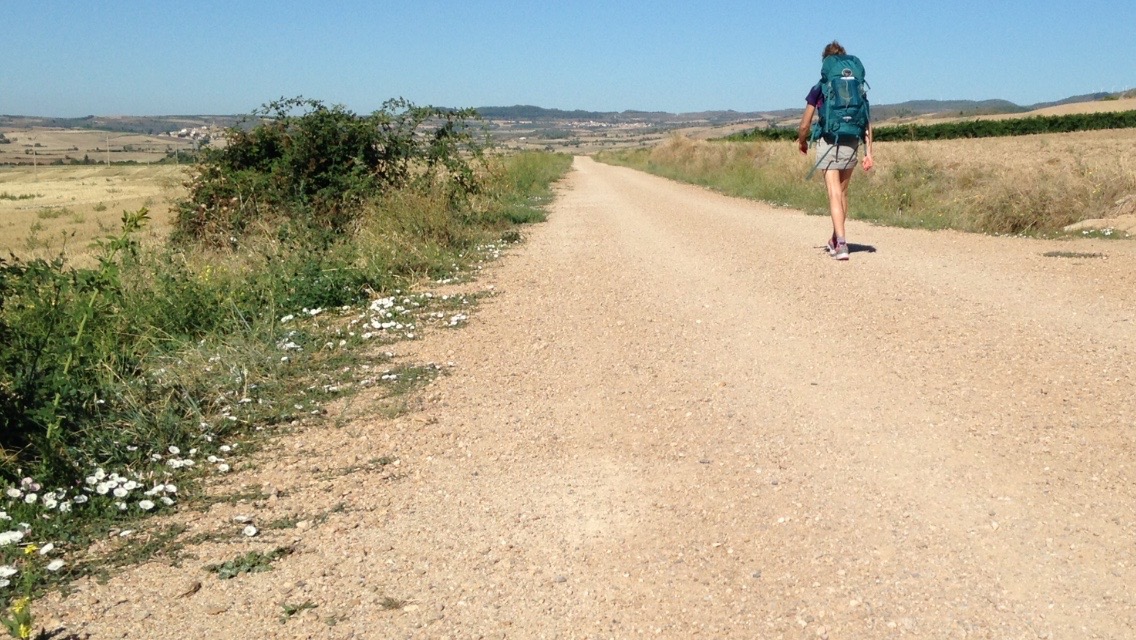
I am on a very long walk – 600km so far – and as my legs go through the motions of left right, left right, left right I find myself thinking about my German grandfather going through the same physical motions as he marched into Russia with his Wehrmacht troops in 1941. I am walking West across the north of Spain on a pilgrimage to the spiritual destination of Santiago de Compostela. He was marching East across Russia to capture the strategically important destination of Moscow.

Read More »

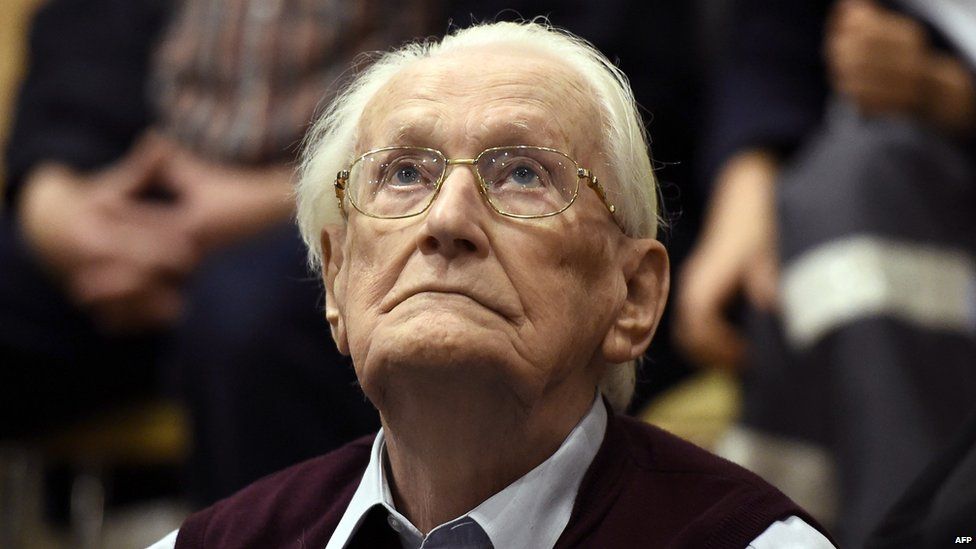
“German court sentences 94-year-old ‘Bookkeeper of Auschwitz’ to four years in prison.” Is this Justice? Or is this the German Judicial System’s attempt to atone for its appalling failure since WW2 to bring more of the real culprits to justice?

_84281791_84281790

This is an obvious choice of topic for my July blog for it touches on all my main themes: WW2 Germany, prison, punishment, forgiveness, redemption.

What we have here is a 94-year-old former SS officer whose job at the age of 21 was to sort the luggage of the new arrivals to Auschwitz and register the prisoners’ goods and valuables. Oskar Gröning was not a guard but a bookkeeper who counted the money the Nazis stole from the Jews. During the trial that started in May in the German city of Lüneburg he admitted: “It is without question that I am morally complicit in the murder of millions of Jews through my activities at Auschwitz. Before the victims, I also admit to this moral guilt here, with regret and humility. But as to the question whether I am criminally culpable, that’s for you to decide.” Today he was sentenced to 4 years in prison after the German Courts found him guilty of being accessory to murder of 300,000 people.

Read More »

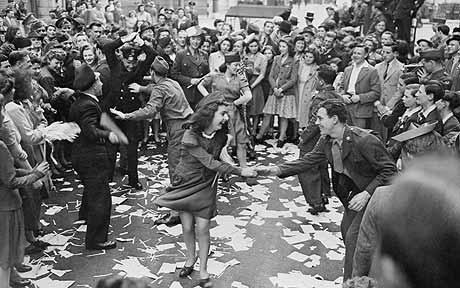
VE Day 70 years on – a time to celebrate victory or a time to also to look more closely at the price of war to women and girls?  

Within the context of my interest in WW2 Remembrance, May offers a welcome break from the misery and darkness. It is indeed a time to celebrate, for on May 8th 1945 Churchill was finally able to announce that the war was over in Europe. The jubilation was naturally boundless and Britain threw the biggest street party the country had ever seen. The Allies had triumphed over the Nazi enemy, Germany had unconditionally surrendered, and it would be the end of death and destruction.

ve460_1631804cRead More »