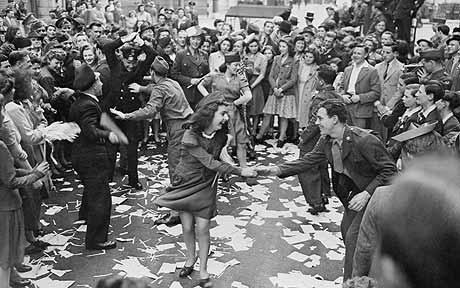
VE Day 70 years on – a time to celebrate victory or a time to also to look more closely at the price of war to women and girls?  

Within the context of my interest in WW2 Remembrance, May offers a welcome break from the misery and darkness. It is indeed a time to celebrate, for on May 8th 1945 Churchill was finally able to announce that the war was over in Europe. The jubilation was naturally boundless and Britain threw the biggest street party the country had ever seen. The Allies had triumphed over the Nazi enemy, Germany had unconditionally surrendered, and it would be the end of death and destruction.

ve460_1631804cRead More »

What makes us act, or not act, in a violent way?

In the first half of this month I had an experience that showed me first hand what lies behind so many acts of violence, malice, destruction and aggression. What drives a person to put a seductively dark thought into action? And what stops them from actually doing so?

I felt badly wronged by someone close to me; disrespected and unfairly treated. The innate need to right the wrong sent my mind into overdrive plotting delicious forms of revenge with the creativity (or should I say destructivity?) and imagination that goes into producing an artwork. By indulging my dark fantasies I could re-write the narrative allowing my character to emerge in tact instead of in tatters.

Read More »

“Tell your story… until your past stops tearing you apart”

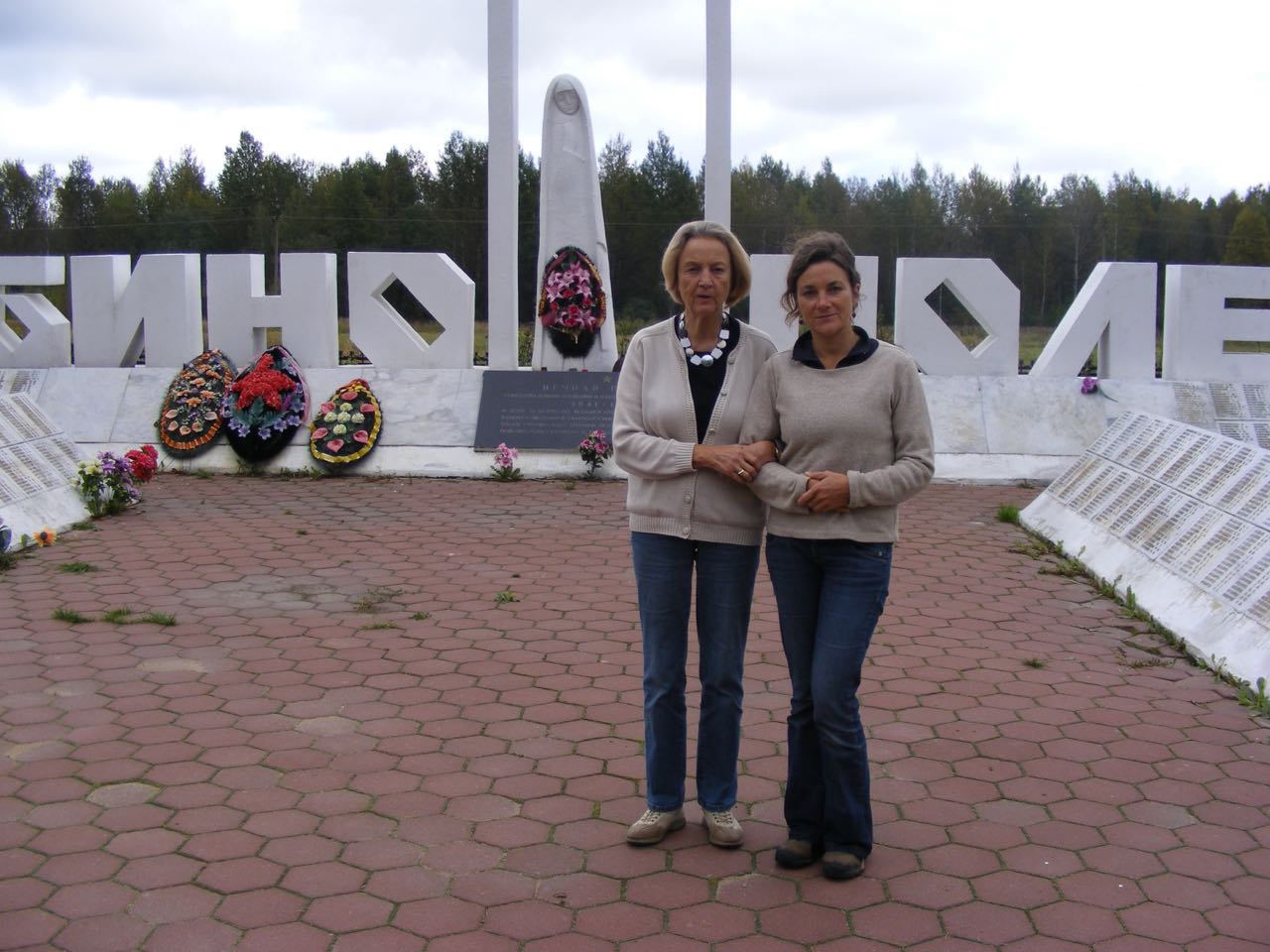
2009_0922Russia090290

Tell your story.
Let it nourish you, sustain you and claim you.
Tell your story.
Let it feed you, heal you and release you.
Tell your story.
Let it twist and re-mix your shadowed heart.
Tell your story,
Until your past stops tearing your present apart.

I heard the above words recently on Radio 4’s Spoken Word programme “Writing a new South Africa”. You can hear it here at 14.38 minutes: http://www.bbc.co.uk/programmes/b053bsfm
Spoken aloud, with all the power of someone who knows the potency of the words, it struck me that this is precisely what I have been doing in the past years.

Read More »

‘Sorry’ does indeed seem to be the hardest word to say

February 2015 saw the 70th anniversary of the bombing of Dresden, a contentious and highly debated element of the British and American war campaign. The deaths of 25,000 civilians and the destruction of the medieval city of Dresden known as the “Jewel of the Elbe” was without doubt one of the low points in the British military strategy.

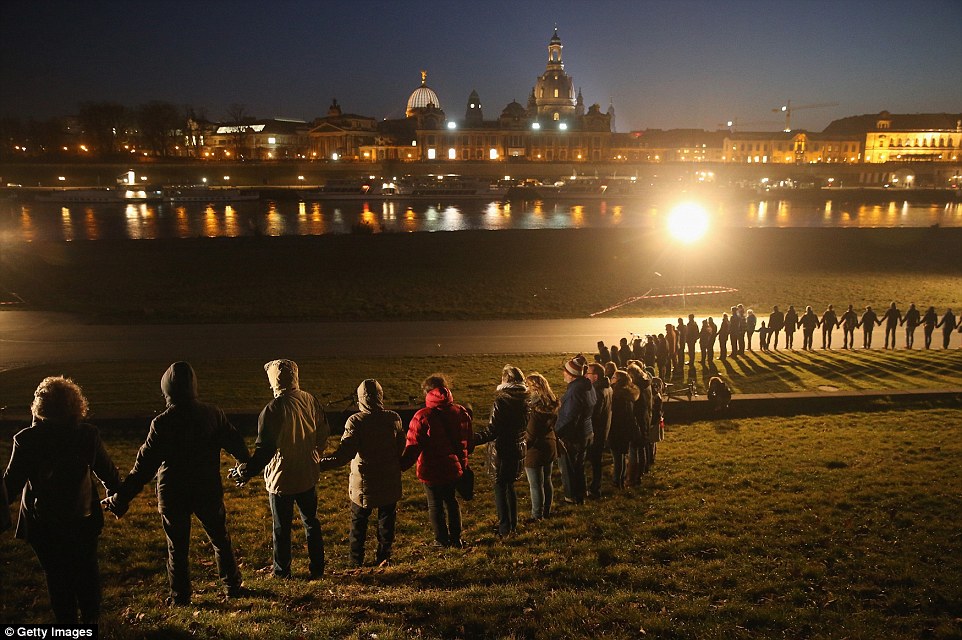
25A64E0500000578-2952892-Solidarity_10_000_people_joined_hands_to_form_a_giant_human_chai-a-9_1423864324864

On 13th February this year Germany held one of their rare commemorations for their own dead. It started with a service in the re-built Frauenkirche / Church of our Lady and continued later in the streets when up to 10,000 people formed a human chain along Dresden’s riverfront, holding hands to commemorate the dead and call for peace.

With my on-going interest in World War commemorations, this was of course a significant one, for two reasons really. On the one hand it remembers German victims of war and on the other it remembers an event that many people see as a British war crime.

Read More »

Holocaust Memorial Day, 27th January 2015


IMG_3702

Today was Holocaust Memorial Day, commemorating the day Auschwitz-Birkenau was liberated by the advancing Soviet army seventy years ago. Today Jews and non-Jews alike were reminded to remember what so many of us have no personal recollection of. Reminded how important it is to remember so that it will never happen again.

Today was also the launch of my talk on German Memorials and Counter Memorials, the second in my trilogy of talks “The other side” about World War II from a German point of view. It was a happy coincidence that King William’s College on the Isle of Man invited me to give this particular talk on this particular day, for it encouraged me and my audience not only to think about the victims of the Nazi policies of annihilation but also about the perpetrators and Germany’s ongoing and thorough process of apology on behalf of them.

Read More »

Remembrance Sunday: “David Cameron was close to tears and bit his lip…” For goodness sake, that sounds like something out of Fifty Shades of Grey.

It’s 11am on 11.11.14 and that makes it time to write down my thoughts and reflections on what has been going on recently in terms of Remembrance.

Watching the Albert Hall Festival of Remembrance on Saturday night, I was struck once again by how well we British do pomp, symbolism and ceremony. It was truly powerful and with its combination of stirring music, potent narrative, and visual spectacle it has become an art form. Developed and refined over decades, it is designed to move you. And these days, I am quite sure, to make you cry.

Which is why I came away once again feeling slightly irritated by it. Irritated by the format that we are used to seeing  in the films of Spielberg and other directors of sentimental, patriotic films, designed to manipulate your heart strings and tear ducts  Nothing necessarily wrong with that, except that we seem to be living in a era where showing emotions, and watching other people showing their emotions in order to make us show our emotions, is not only de rigueur but essential to good viewing.

Read More »

Generation War: Our Mothers, Our Fathers. Does it go far enough?

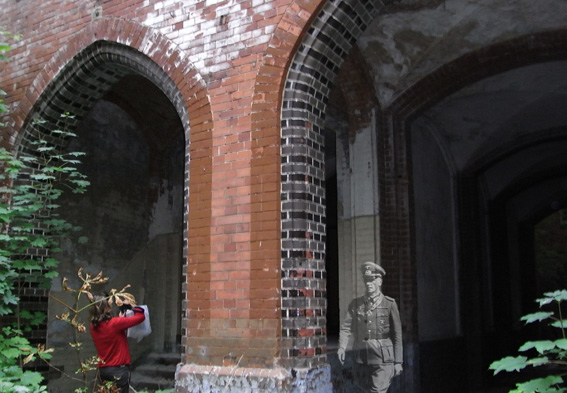
ImagePeering into the crater of my own family history, Jüterbog 2008

I don’t imagine 7.6 million viewers are watching this series as in Germany last year, but judging by the reviews and conflicting opinions expressed in online discussions, it is nonetheless making waves. Many people find it “brilliant”, with its focus on the personal within the wider historical context (as in Downfall and The Lives of Others). Some find it ‘unlikely’, that the 5 main characters’ paths would cross “as if all of Eastern Europe were no bigger than a park in Berlin”[1] or that they would be so openly friendly with a Jew in 1941 Germany. And some criticize how the drama of the story lines are often cliché and distract from the bigger questions – all hazards of portraying historical characters through a contemporary medium.

Read More »

Children of the Third Reich: A critical moral debate


Image

It’s Valentine’s Day and I am writing about the Nazis… again. “Will she ever let up?” I can almost hear people asking. But I’m afraid I can’t… won’t. Not yet. It is still too relevant a topic, as was proved by last night’s debate at the Southbank Centre where not one person in the packed hall moved, let alone left, even after 2.5 hours of listening to two elderly men, children of high-ranking Nazis, as they revealed their opposing relationships with their long-dead fathers.

To voluntarily exchange views and answer questions publically on this delicate and sensitive subject makes Niklas Frank and Horst von Wächter very brave and admirable men in my eyes.

Niklas, whose controversial book of 1987 “Der Vater” (The Father) broke taboos in Germany by admitting categorically that his father was a bad man, has always been determined to “acknowledge the crimes”. This led to a total rejection of his father. “But don’t you want to make peace?” Horst asks, driven by a strong sense of “duty” and “moral obligation” to find the good in his father. “I have. By acknowledging his crimes”, responded Niklas.

Read More »

Simon Jenkins I would kiss you, if I could…

  Image

…for your refreshing article on 30.01.14 in the Guardian:

Germany, I apologise for this sickening avalanche of first world war worship. The festival of self-congratulation will be the British at their worst, and there are still years to endure. A tragedy for both our nations.

http://www.theguardian.com/commentisfree/2014/jan/30/first-world-war-worship-sickening-avalanche?commentpage=1

I too would like to apologise to the Germans for the largely immature, thoughtless, self-centred approach we seem to be taking towards this 4-year centenary. What on earth do we think we are doing? To what end are we striving with all this emphasis on ourselves as a nation of heroes, victims, winners? Our obsession with our victory a century ago is being seen with bemusement on the continent. Read some of Germany’s responses to Michael Gove’s renewed attempts to push the whole blame for the start of WWI on the Germans. Every parent knows that finger-pointing is childish. And yet the Minister of Education (of children no less) is still doing it 100 years after the event??! It’s not as if we are an otherwise innocent and peaceful nation that is regularly and reluctantly dragged into wars. Our leaders are gung-ho and ready to go. Look at Blair and Cameron chafing at the bit to get back into battle at the first opportunity.

Read More »

What relationship do we expect young Germans today to have to their country’s past?

Image

I was very interested in two of the questions I was asked in a recent talk to the sixth formers of a London boy’s school. Both were similar and in response to some statistics I showed about German students’ relationships to their country’s past. And both touched on one of my on-going questions in relation to young Germans today: Do we expect them to feel guilt and shame for what their great grandparents were caught up or directly involved in, or can they now be proud of their country and say with genuine conviction “It has nothing to do with me”?

The statistics from a Zeit Magazine survey of 14-19 year olds revealed, among other things, that:

80% believe remembrance of the Nazi times is important

67% believe it is their generation’s duty to make sure that Nazi Germany and the Holocaust aren’t forgotten

60% said they were ashamed of what Germans did in Nazi times

Read More »