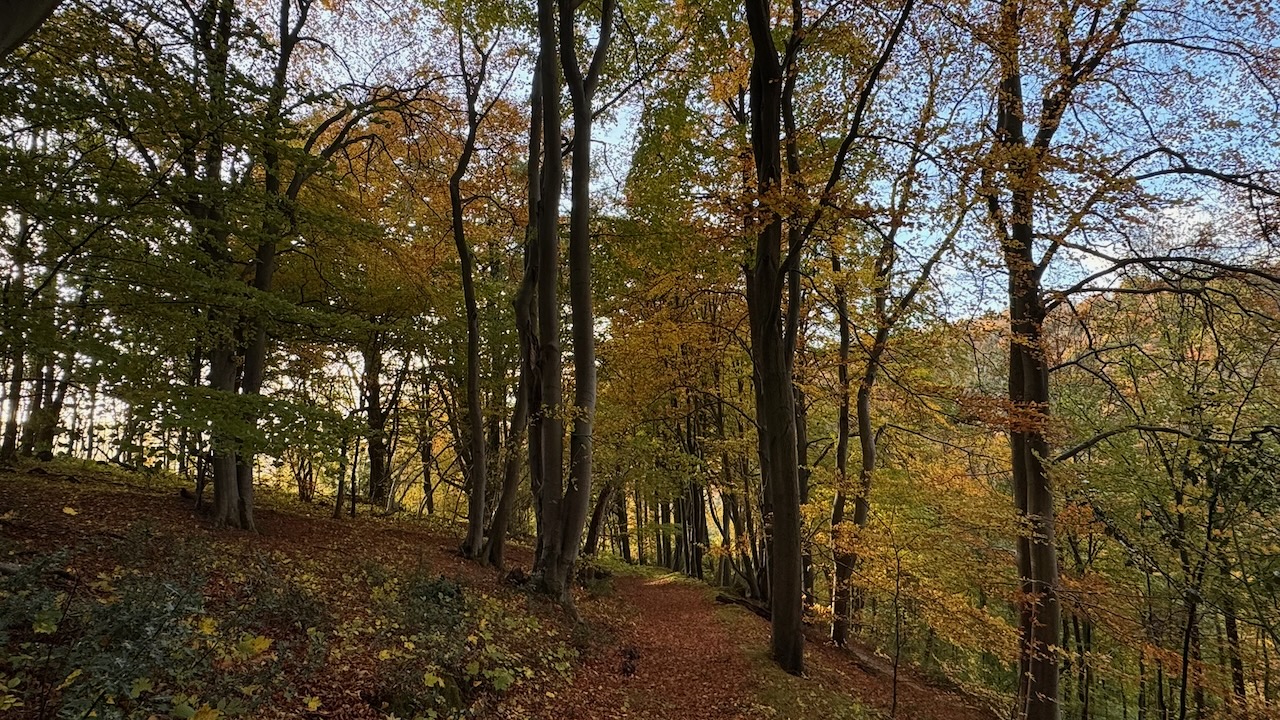
I normally plant bulbs on Remembrance Sunday. But this year I’ve been ill. Instead I went for a gentle walk in nearby woods, silent but for the breeze combing its way through the upper branches.
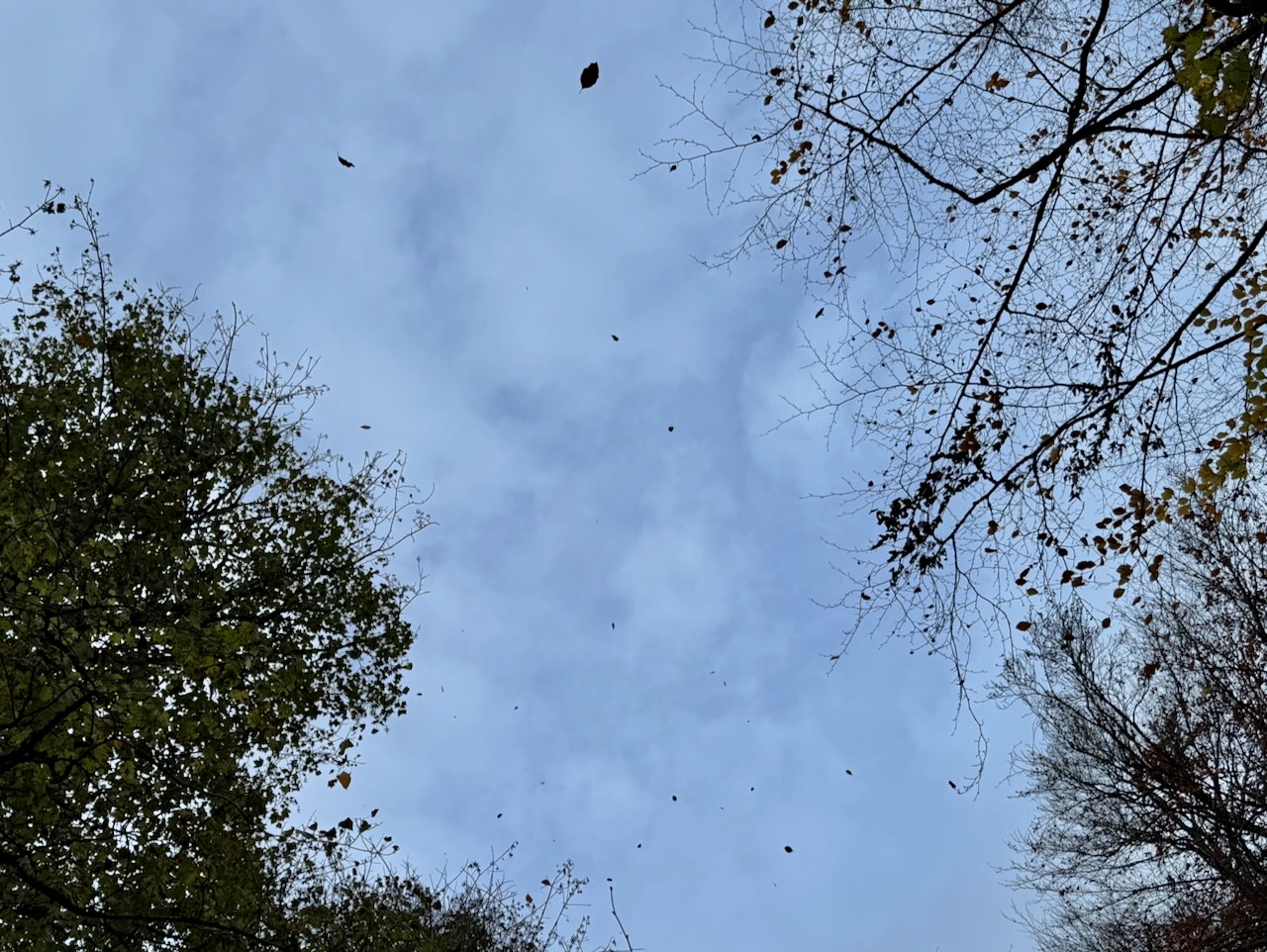
Down below, all was still. Except for individual leaves falling like snow. Each one taking its moment to break from the twig to which it had been rooted since the spring and dance in a series of pirouettes, twirls and summersaults before landing quietly among the already fallen. Unseen except by a chance walker.
Do they pick their moment, or are they plucked from life?
A certain readiness is a prerequisite for each leaf to fall. In summer, winds can howl through the branches and yet the leaves remain bound to the tree, weathering the storm, held in place by life forces that ebb and flow in synchrony with the seasons.
Death is natural for these fallen.
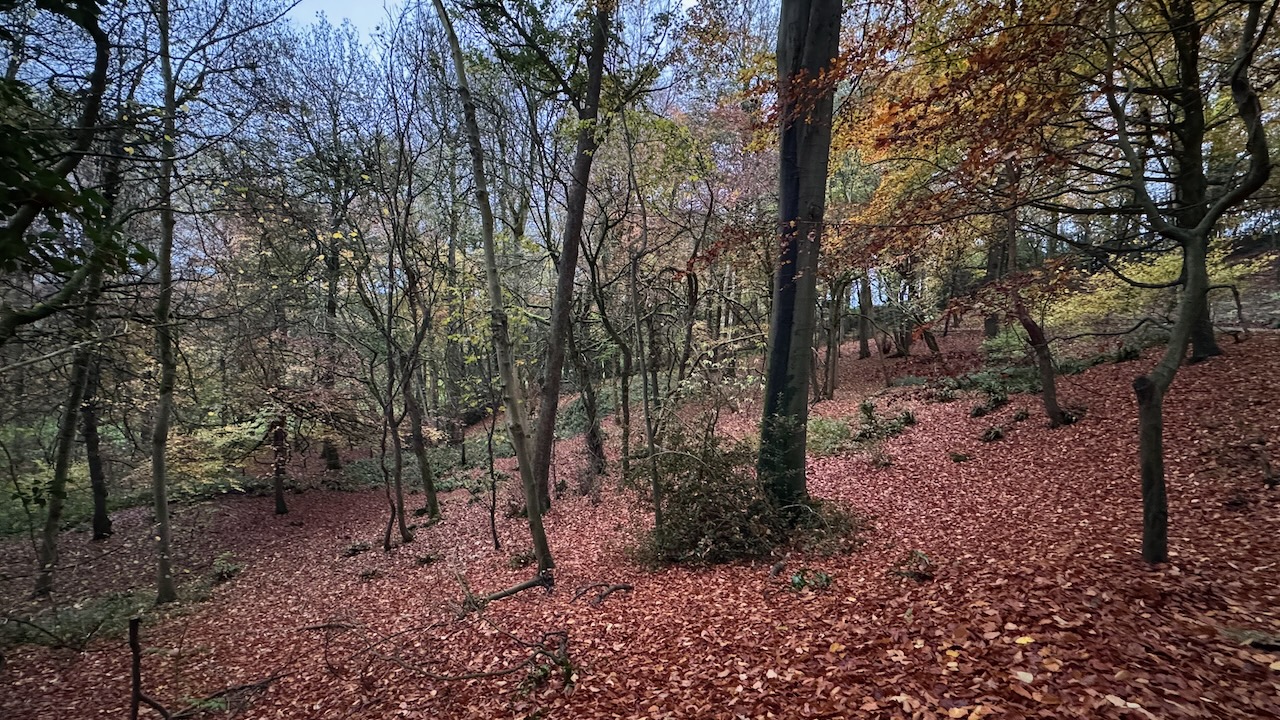
As I shuffle through the carpet of rust and gold, the rustle so reminiscent of childhood memories – kicking through the golden floors of beech forests in little rubber wellies – I can only ponder the dead. The war dead all around the world. The families they left behind. The scars of loss, grief, trauma and silence that remain in their wake, often hidden for generations, shaping the souls of those who come after.
We call them the fallen. It softens the reality of how they died. But while we remember them with warm hearts and deep gratitude, let us – with all the advantages of hindsight – not forget the utter horror, violence and futility of war.
As countries around the world build their armies and arsenal, let us refrain from falling into the trap of thinking war can ever be a solution to political, religious, geographical or economic problems.
April saw the death of the widely loved Pope Francis, the Jewish festival of Passover, and the gradual build-up to the 80th Anniversary of VE Day (Victory in Europe) in May. An unusual trio of events, yet radio coverage of all three wove threads of reflection into the tapestry of this blog.
Compassion was central to Pope Francis’s papacy – particularly towards those who are rejected or marginalised. He often spoke about the importance of honouring and never abandoning our grandparents. “If you want to be a sign of hope, go and talk to your grandfather,” he was quoted as saying. They remind us that we share the same heritage, link us to “the beauty of being part of a much larger history… a loving plan [that] is greater than we are.” He also had the humility to say “I am a sinner,” which makes me wonder where that leaves the rest of us!
In a recent Radio 4 Thought for the Day (at 1:47:45), Chief Rabbi Sir Ephraim Mirvis described Passover as the ‘Festival of Questions;’ a time to ask, to probe, to test assumptions, refine our understanding and uncover the truth.
If we try to apply the guidance of both spiritual leaders to the forthcoming celebrations of VE Day on 8th May, we may find ourselves asking how the grandchildren of the ‘losers’ of WWII – many of whom had been perpetrators or complicit in Nazi atrocities – might ‘honour’ their grandfathers. How do you love – should you even try to love – someone who has acted immorally, abhorrently, even if those acts were sanctioned or ordered by a higher authority and deemed the right thing to do for Volk and country?
I’m all too aware how unfashionable, controversial and even provocative it is to suggest we spare a thought for the perpetrators. But in keeping with the spirit of my triangle, I am going to ask you to do just that. Many people, from all sides of the conflict, are quick to judge, blame and damn the Wehrmacht soldiers and SS as an indiscriminate mob of ‘monsters’, all morally inferior and wholly undeserving of being remembered. It’s completely understandable. But where does that leave their children and grandchildren? What happens when we continue to draw a line between the ‘good us’ and ‘bad them’, a distinction that may have served its time but no longer helps us move forward? Isn’t one of the most crucial lessons of this horrific chapter in history to recognise that most perpetrators were not monsters, but ordinary people… like you and me… who, through a slow drift of compromise, small decisions and ill judgements became capable of unimaginably heinous crimes?
Eighty years on, with more than 88% of the German population having been born after the war’s end and a further 11% still children at the time, it’s difficult to place ‘guilt’ for the Holocaust on the Germans of today. After all, people cannot be guilty of things they themselves didn’t do. Yet, like many descendants of Holocaust victims and survivors, some non-Jewish Germans born in the decades after the war still wrestle, often unknowingly, with the unresolved trauma and guilt passed down from their parents or grandparents. They carry what Eva Hoffman aptly described as “the scars without the wound” – invisible wounds that silently shape their internal world and influence their actions in the external world.
Without detracting anything from the horrors and suffering of the victims, can we imagine for a moment how it might be for post-war generations of Germans to live with legacies of silence, cover-ups, not-knowing, judgement, exclusion, blame or shame in relation to their roots? Mistrusting family stories. Wondering who knew and who did what. What impact does this have on individuals, families, societies, nations and ultimately, the wider world? How can one best deal with such a profound inheritance?
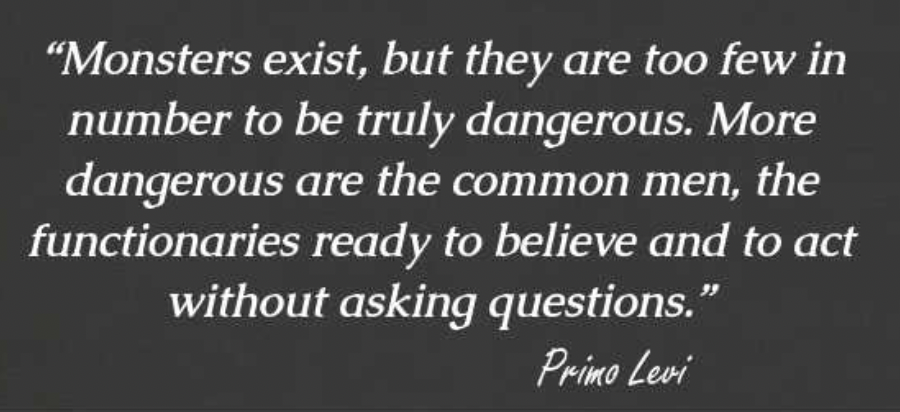
Primo Levi – who, as a Holocaust survivor had every right to think the opposite – declared that collective guilt does not exist. To think that it does is a relapse into Nazi ideology. Both he and Hannah Arendt made a powerful claim: “We are all to blame” for what happened. Collective responsibility is what matters. And that involves understanding how atrocities occur both in society and within the individual. How we become complicit.
The roots of Nazism found fertile soil in the humiliation wrought by the terms of the Treaty of Versailles and the deeply resented ‘guilt clause’ that placed full blame for WW1 solely on Germany’s shoulders. Applying a similar dynamic to today, could there be a connection between this historical pattern and the rise of the AfD (Alternative für Deutschland), Germany’s nationalist far-right party — a movement fuelled in part by a desire to reassert national pride and, as encouraged by figures like Elon Musk, to move beyond what they perceive as an excessive “focus on Nazi guilt”?
The 2019 survey previously cited revealed that few Germans actually feel guilt and 70% (including 87% of AfD voters) believe their country has now sufficiently atoned for the actions of the Nazi regime. Another source revealed that 75% of young Germans (erroneously) believe they come from families of resistors, while 25% can’t name a single concentration camp or ghetto. As the number of living contemporary witnesses dwindles, disinformation, denial and delusions are spreading. With them, the sense of responsibility risks disappearing too – a deeply worrying and dangerous trend. Knowing firsthand the insidiously destructive effects of being shamed for a familial association with the Nazi era, I can understand how, eighty years on, rejecting any semblance of inherited guilt might feel like a healthy response. After all, who among us wants to feel terminally tainted by the wrongdoings of their forebears? Who wants to have to cut off their roots?
The marriage of my parents in March 1962
I feel fortunate that, while living in England with my German heritage was at times challenging, my parents and their families modelled true reconciliation throughout my life. My British father and German mother married just 17 years after the Second World War ended. Both their families had suffered and lost loved ones and/or homes under the others’ military objectives. Yet both found the courage to drop into their hearts and overcome division and enmity. And that, to me, is where the solution lies: in our hearts.
Patriotism is hollow if it is based only on pride and honour. Shame and conscience lead to a deeper bond. Seeing the world in binaries – in terms of ‘us’ and ‘them, good and bad, right and wrong – shuts down love. Reconciliation becomes impossible. As Britain celebrates its triumph over the evil forces, let us also remember we were not all good and they all bad. Among other short-comings, we too were guilty of antisemitism and of failing to help the Jews more.
In another recent Thought for the Day, Rhidian Brook warned, “If you can’t see the other side’s humanity, you’ve lost.”
My 80th Anniversary VE Day wish, therefore, as both a British and German citizen, is for us to follow the example set by the late Pope and Chief Rabbi: to think, to probe, to get uncomfortable, and to find compassion for individuals among the rejected and ostracised.
Eighty years on, might this be the moment to create new rituals of peacekeeping and unity? Without dampening the spirit of national joy, how can we include – and stand hand-in-hand with – our contemporary German friends in celebrations of peace, rather than reinforce historical divides?
Can we develop broader, more expansive narratives that encourage younger generations of Germans to face the difficult and painful truths of their families’ histories and to assume responsibility, not for what was done, but for what is still to be done? Can we remain vigilant against resting on any imagined moral high ground, against believing we would have undoubtedly been resistors and heroes under the Nazi regime? And can we instead recognise how thin the ice of democracy is becoming once again, and how difficult it is, even now, to change the course of history?
Events coming up:
Friday 2nd May, 12-1pm The Second World War 80 years on: Is Remembrance Working? Angela Findlay and Henry Montgomery In Conversation National Army Museum, Royal Hospital Road, Chelsea, London SW3 4HT and ONLINE 80 years on from the German surrender to the Allies, Henry Montgomery, grandson of Field Marshal Bernard ‘Monty’ Montgomery and Angela Findlay, granddaughter of General Karl von Graffen of the German Wehrmacht will reflect on their grandfathers’ roles and actions in WW2 and discuss the differences in the histories, legacies and remembrance cultures of the victors and the losers and how Remembrance can remain meaningful and effective for younger generations. Info and tickets (free) here.
Thursday 8th May, 18.00 – 19.30 Im Schatten Meines Großvaters / In My Grandfather’s Shadow Vortrag und Gespräch / Lecture and Conversation Marktkirche, Hanns-Lilje-Platz, 30159 Hannover, Germany
Thursday 15th May, 17.00 – 19.00 (UK time) 43. Gesprächslabor, PAKH: The Study Group on Intergenerational Consequences of the Holocaust (ONLINE)? Drawing on my own experiences outlined in my book, In My Grandfather’s Shadow, we will be discussing how such a destructive legacy can be transformed into constructive, reconciliatory approaches and positive actions. More info here: https://www.pakh.de/event/gespraechslabor-40/
Buy or read reviews on my book, In My Grandfather’s Shadow, here
On Wednesday I was writing about ‘feeling the bass beat of impending war… The jungle drums of chest-beating bullies rutting for power, control, land… The thumping of panicked hearts packing, fleeing…’ By Thursday, as the thud of bombs landing on Ukraine came through our radios with shocking reality, such poetic imagery felt utterly misplaced. Now, as the horrors of Putin’s unprovoked advance to Kyiv to ‘de-Nazify’ and ‘decapitate’ the democratic Ukrainian government begin to unfold, the shattering idea that we could be witnessing the beginning of World War III has been gaining momentum.
This is heart-breaking. So awful. So wrong. So utterly terrifying. My thoughts and heart are with the people of Ukraine.
Outwardly, in our own tiny orbits, life continues. Just like it did for Franz Kafka when he noted in his diary on the outbreak of the First World War:
‘August 2, 1914: Germany has declared war on Russia. Swimming in the afternoon.’
Inwardly I feel sheer dread.
Having immersed myself for so many years in the past darkness of the Second World War, trying to understand despots, trying to learn the lessons of history, I suddenly find myself emerging into a present filled with similar appalling scenes. And I feel utterly impotent. I think we probably all do. How are we meant to act? What does ‘reacting well’ to this situation look like, both in terms of our leaders and us as individuals?
I don’t know.
The instinct is to rush to Ukraine’s defence, which, to some degree, various countries have. But for Ukrainians, it is clearly too little too late. Yet to use force risks the unimaginable outcome of a full-on war with Russia. That just cannot happen. I have lived vicariously through a war with Russia in my German grandfather’s letters from the 1941-2 Eastern Front. It is hell on earth. Nothing, surely, can justify risking a return to that. It is reassuring to hear the defence secretary and military authorities now warning the chamber of the extreme danger of putting British boots on the ground; of declaring war on Russia. Please Boris Johnson, don’t see this as an opportune moment to fulfil your wannabe Winston Churchill ambitions. The responsibility on leaders is huge and deadly serious. They need to tread carefully and with emotional maturity. The language is critical. Confronting a ruthless maniac takes skill.
‘It is more important to understand the butcher than the victim.’ Javier Cercas
I don’t know how it’s done.
All I do know from a multitude of life’s lessons, is that all sides involved will be feeling they are right. Just like back in the thirties, we in the West see ourselves to be indisputably on the side of good. We are protecting democracy. Our ways of life are the right ways. But while that all may be true, if I have learnt anything about the psychology of conflict and dictators, I feel pretty sure that that is precisely what Putin is also feeling. Because wars and violence are ultimately created out of a sense of threat to one’s position, values, people and way of life. Out of a fear of loss. Power-hungry dictators, such as Hitler and Stalin, were blind to the suffering caused in their pursuit of visions of a world that in their eyes was ‘good’. Same for criminals. With both sides believing they are right, nothing will persuade or force them to think otherwise.
‘No one who either knows or believes that there is another course of action better than the one he is following will ever continue on his present course when he might choose the better.‘ Plato
It would be counter-productive to shame Putin into believing there is no way back without losing face.
To do nothing would be an unforgivable betrayal of the Ukrainian people.
To meet Russian aggression with further aggression would quite possibly provoke a Third World War.
That cannot happen.
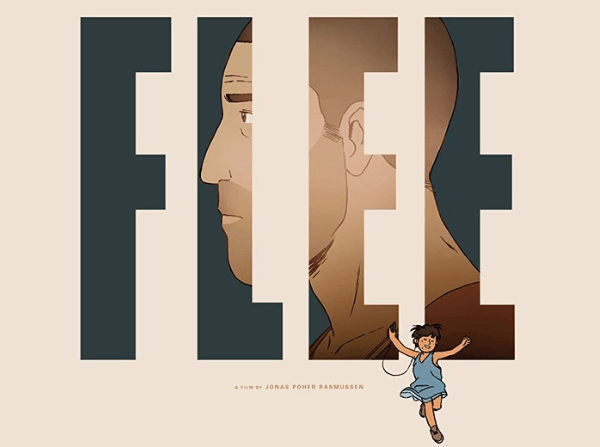
For those who have never experienced war first-hand or occupied themselves with the World Wars, it is almost impossible to imagine their sheer horror. For those with eyes trained on a victorious outcome, it can be easy to overlook the devastating impact on individuals. And not only the inevitable loss of life. What we have been witnessing in Ukraine – civilians signing up or arming themselves with guns and Molotov cocktails, getting stuck in traffic jams, huddling in makeshift bomb shelters – are the fight, flight, freeze responses of trauma. The terror of impending mass destruction, injury, homelessness, hunger and life-long psychological damage for generations to come. Just watch ‘Flee’, the brilliant new Danish animation that is well positioned to clean up at the Oscars, to witness the appalling cost of war on one child, one family. One among millions of others forced to flee their homes.
Still from the film ‘Flee’
Is Margaret MacMillan right when she said in her 2019 Reith Lecture:
“We like to think of war as an aberration, as the breakdown of the normal state of peace. This is comforting but wrong. War is deeply woven into the history of human society. Wherever we look in the past, no matter where or how far back we go, groups of people have organized themselves to protect their own territory or ways of life and, often, to attack those of others. Over the centuries we have deplored the results and struggled to tame war, even abolish it, while we have also venerated the warrior and talked of the nobility and grandeur of war. We all, as human beings, have something to say about war.”
If we accept, just for a moment that war is an inevitable part of our world and as integral to being human as, say, creating art, how should we react to it?
I just can’t believe we are here… again.
How do you reason with a man like Putin, who genuinely believes his demands and actions are reasonable? How do we prevent this conflict from escalating into another deadly world war? How can we prevent our own rage and sense of injustice spilling over into a call for retaliation?
For now, I will attempt to keep my heart filled with love and courage to send to the people of Ukraine and those in Russia who do not want this war. To those fighting, resisting, defending. I pray that the whole world finds its way through this crisis to peace.
Over the past 4 weeks, I have been listening to this year’s Reith Lectures “The Mark of Cain” by historian Professor Margaret MacMillan. They are all about war and they are brilliant. Personally, as someone who is equally comfortable / uncomfortable with creativity and destructivity, I find the questions she is exploring absolutely fundamental to what it is to be human.
Yesterday I wrote two words that I have frequently thought I would never get to write: THE END. Of course it is not The End by any stretch, but nonetheless this week, for the very first time, I caught sight of a teeny-weeny light at the end of the tunnel; just enough to be able to acknowledge its reality, in writing. I am talking about my book; the book that I have been writing for the past three years and researching for well over ten.
To be honest, I have never known a task so challenging. The idea arose out of my talks to schools and Arts Societies all over the country in which I present the Second World War and its aftermath “through the eyes of an ordinary German family”; my family to be precise. “I had no idea,” is the usual, unanimous response. And here in Britain, we actually don’t. So when audience members started asking me with such regularity “Have you written a book?” or told me in no uncertain terms “You must write a book”, I decided to seize the gauntlet. I’ll just stretch the contents of the talks, I thought naively.
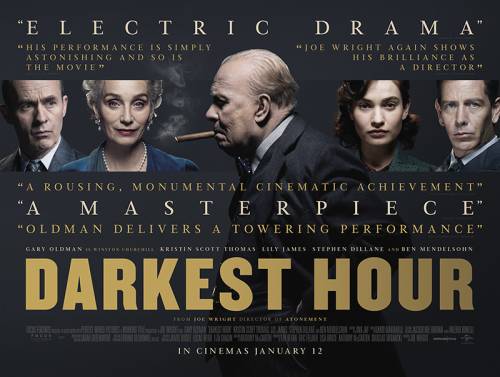
Darkest Hour’s depiction of Churchill in May 1940 is getting standing ovations in cinemas across Britain and America. It will no doubt sweep a mantleshelf of awards into its lap too. Am I the only audience member who was a little bored and slightly sickened by it?
Yes of course, Gary Oldman is truly great as the blatantly alcoholic, often fowl-mouthed, war-mongering Churchill, and the film is beautifully shot and directed etc. etc. And of course winning the war and defeating Hitler was a good and essential thing, something to be celebrated. BUT this black and white, reductionist, at times sentimental, ‘Hero beats Villain’ narrative has now been re-hashed ad nauseam.
Can the British not come up with a more original, nuanced take on the World War Two story?
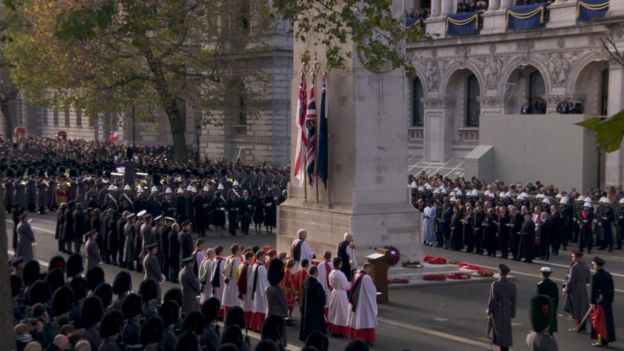
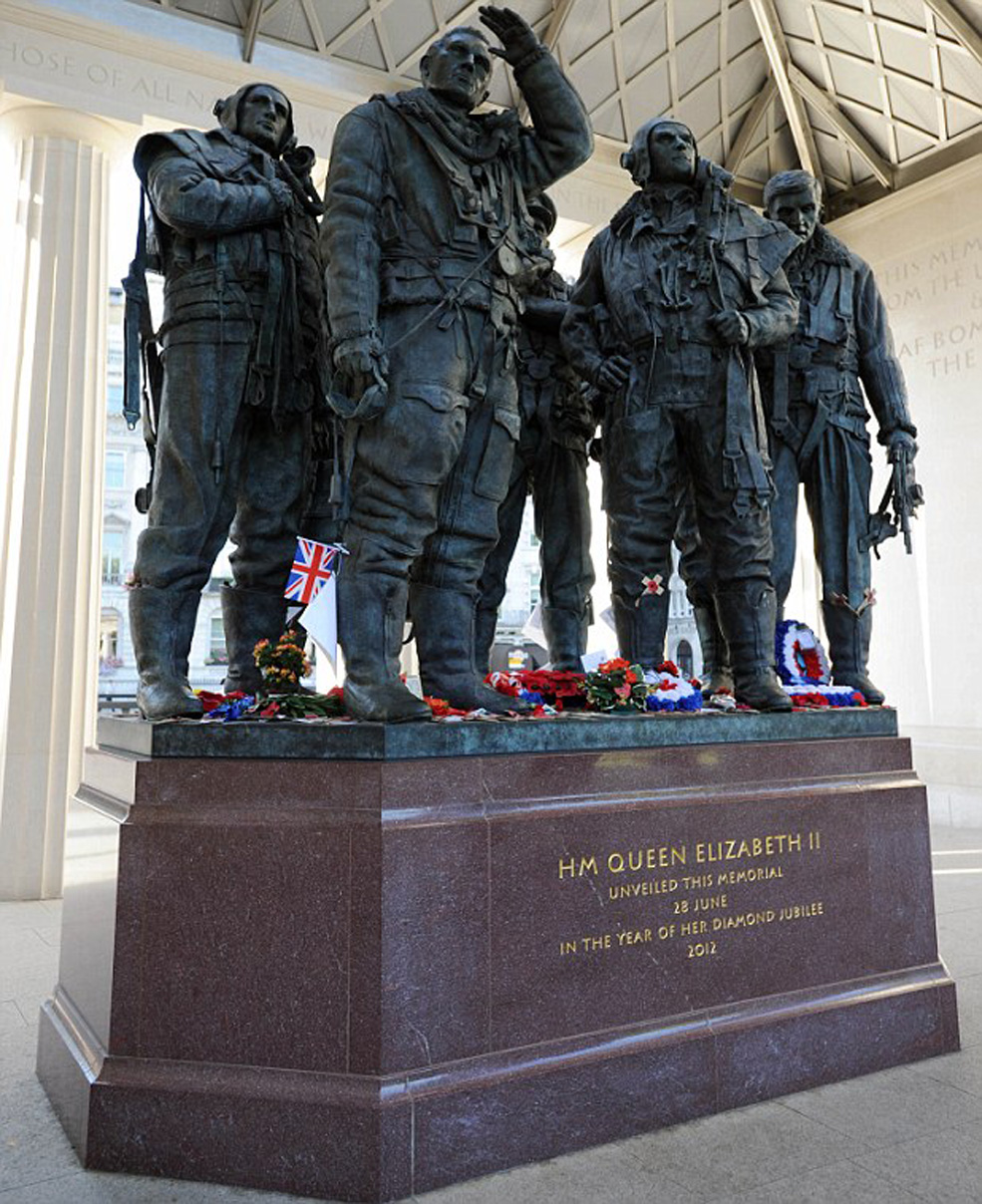
After my talks on Germany’s unique culture of ‘counter memorials’, I am often asked what I would do differently within our British culture of Remembrance. I am always reluctant to pass any kind of judgment on what is one of Britain’s most poignant occasions, for we are true experts in creating meaningful and visual spectacles of solemn ceremony, national pride and gratitude. But now, as the last witnesses of the two World Wars disappear, is it time to shift the emphasis of our remembrance culture from an almost exclusive focus on the fallen soldiers of those two wars to include a broader picture of the casualties and victims of war in general?
Behind every terrorist act is a human being with a grievance. Some will probably call me a ‘terrorist sympathiser’ for saying that, but one of the most important lessons I learnt from working and talking with countless criminals is that people themselves are not innately evil. Their deeds might be, but they themselves are not. That’s why many of the over-simplified, dualistic discourses in the recent ‘To bomb or not to bomb in Syria?’ debate really got under my skin. Action vs. Non-Action, Good vs. Evil, Right vs. Wrong…
I have no first-hand experience of today’s terrorists (thank goodness) but in the nineties I did work closely with a Lebanese man awaiting trial for his major role in one of Germany’s biggest terrorist attacks in which five Kurdish politicians were blown up in a restaurant in Berlin in 1992. As a terrorist he was considered a potential danger and security hazard and kept in enforced isolation. So for him my art class became his only excursion from his cell. Why the authorities found it fitting to place him in my care when I myself was locked in the room with no beeper, no key, no guard, still puzzles me! He asked the group to call him Habibi, so obligingly we did. It was only many years later that I discovered that was the word for “my darling”.
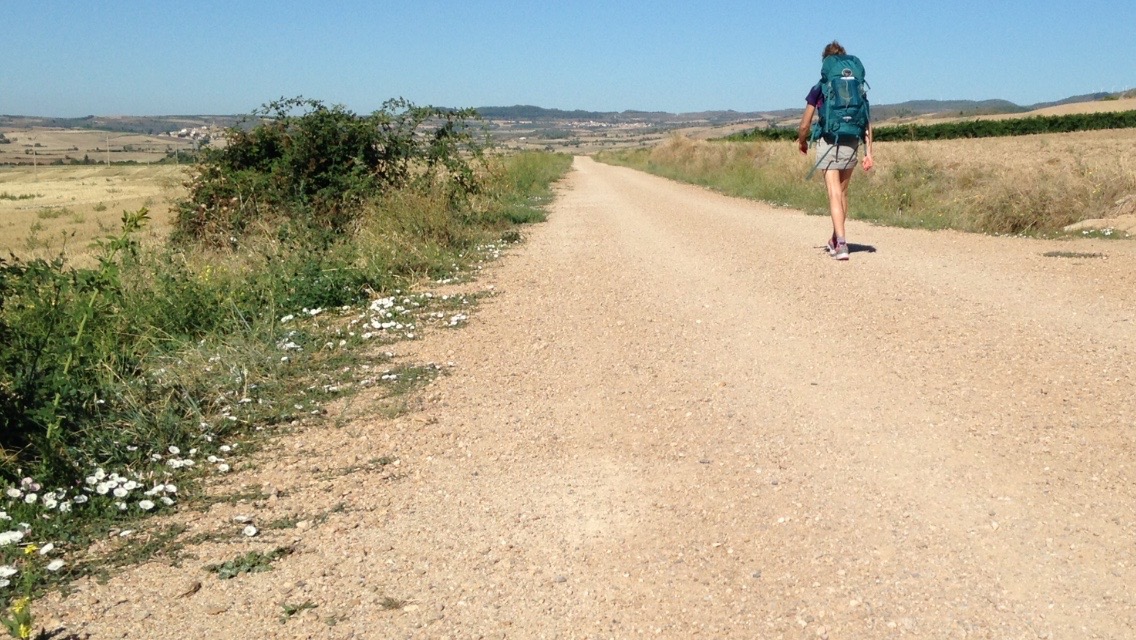
I am on a very long walk – 600km so far – and as my legs go through the motions of left right, left right, left right I find myself thinking about my German grandfather going through the same physical motions as he marched into Russia with his Wehrmacht troops in 1941. I am walking West across the north of Spain on a pilgrimage to the spiritual destination of Santiago de Compostela. He was marching East across Russia to capture the strategically important destination of Moscow.
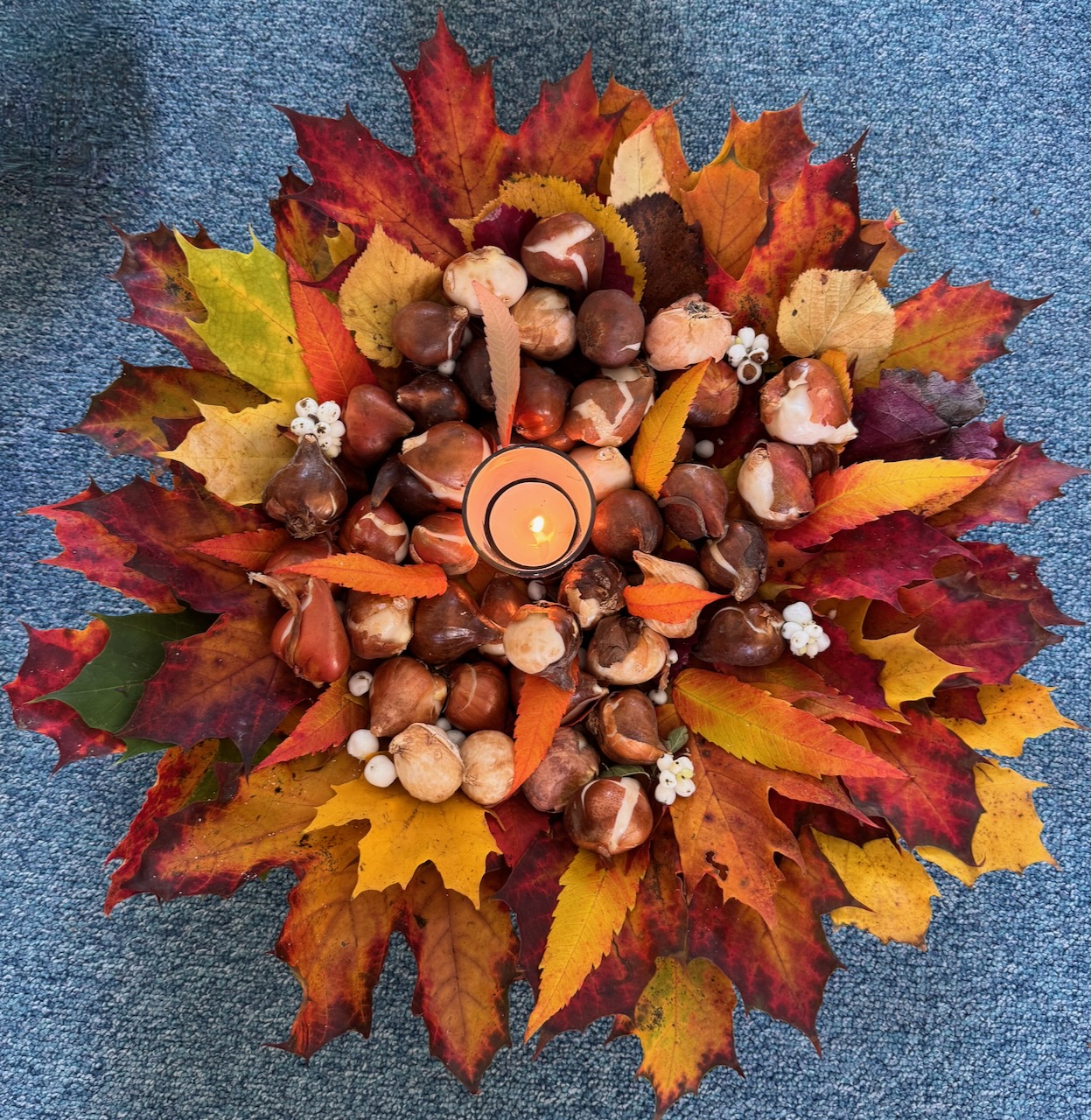
I found it symbolically pleasing to be planting bulbs as yesterday’s two-minute silence hummed over the radio waves across the UK. Sitting in the quiet sunshine, I started to “remember”, only to immediately bump into the questions: what and who am I remembering? And to what end? After all I have no personal “memories” of the First and Second World Wars, nor even of Iraq or Afghanistan. Relatives yes, but in the World Wars they were on opposite sides.










 angela findlay blog