When you experience the past, present and future all occupying the same space in time…

Being away in Germany for much of June and July has got me thinking about the relationship of past, present and future. It keeps coming up as a theme, each time confirming to me that they are not separate, not relegated to positions behind or in front of us as we live that one moment we can call ‘now.’ (My TEDx talk referred to this too)

Just a couple of examples of what I mean.

At a lakeside party in Nuremberg where elegantly dressed guests sipped bubbly from slender glasses and a massive, pink rubber flamingo glided an elderly couple and their granddaughter across the water, everybody appeared unaware of, or simply used to the historical monster that lay across the water. 
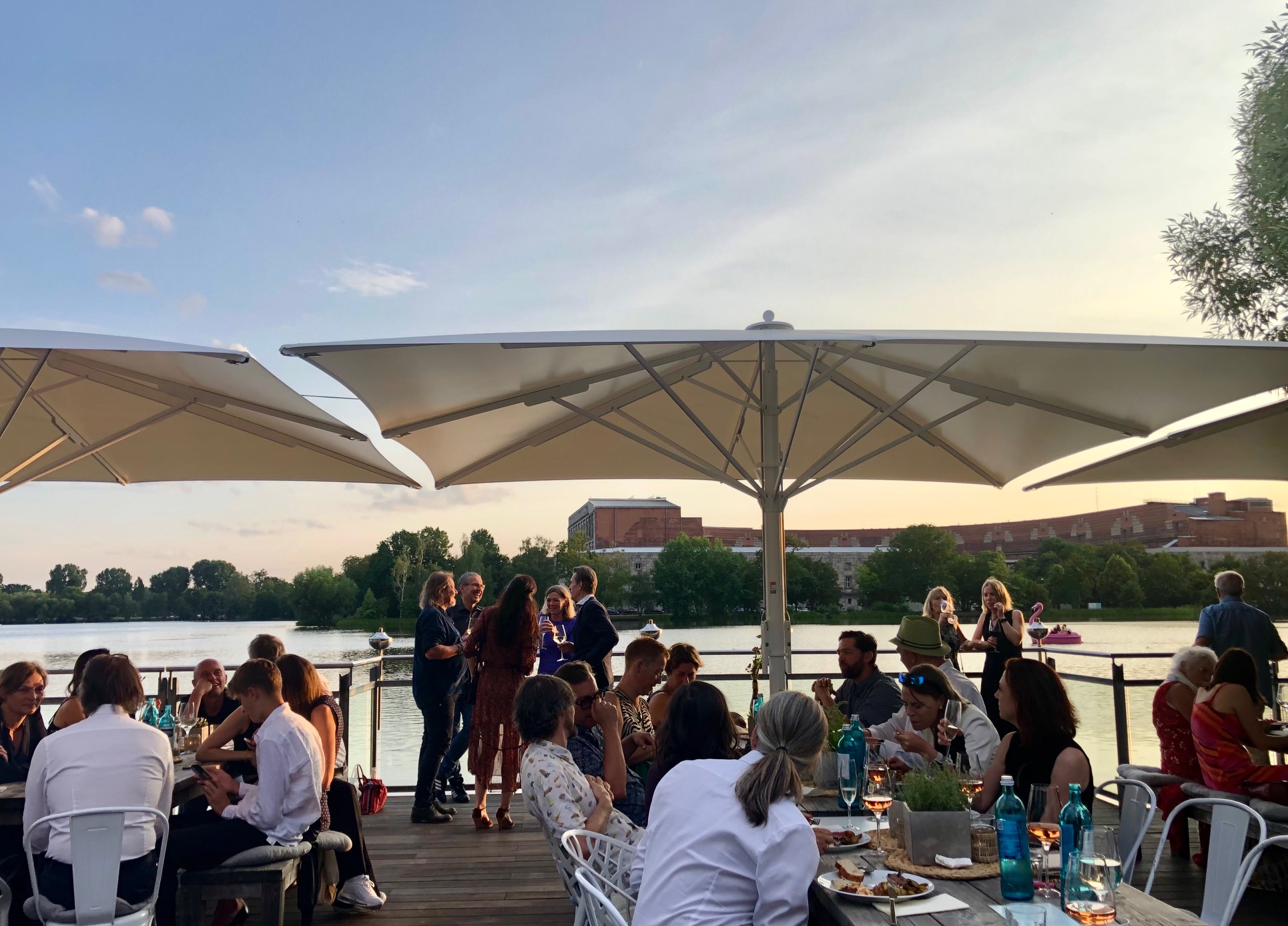
Today it is the biggest preserved National Socialist monument. Ninety years ago it was the unfinished, semi-circular Congress Hall of the Nuremberg Rally Grounds, part of the 11 square kilometre grounds, mostly designed by Albert Speer, that hosted six Nazi party rallies between 1933 and 1938. 
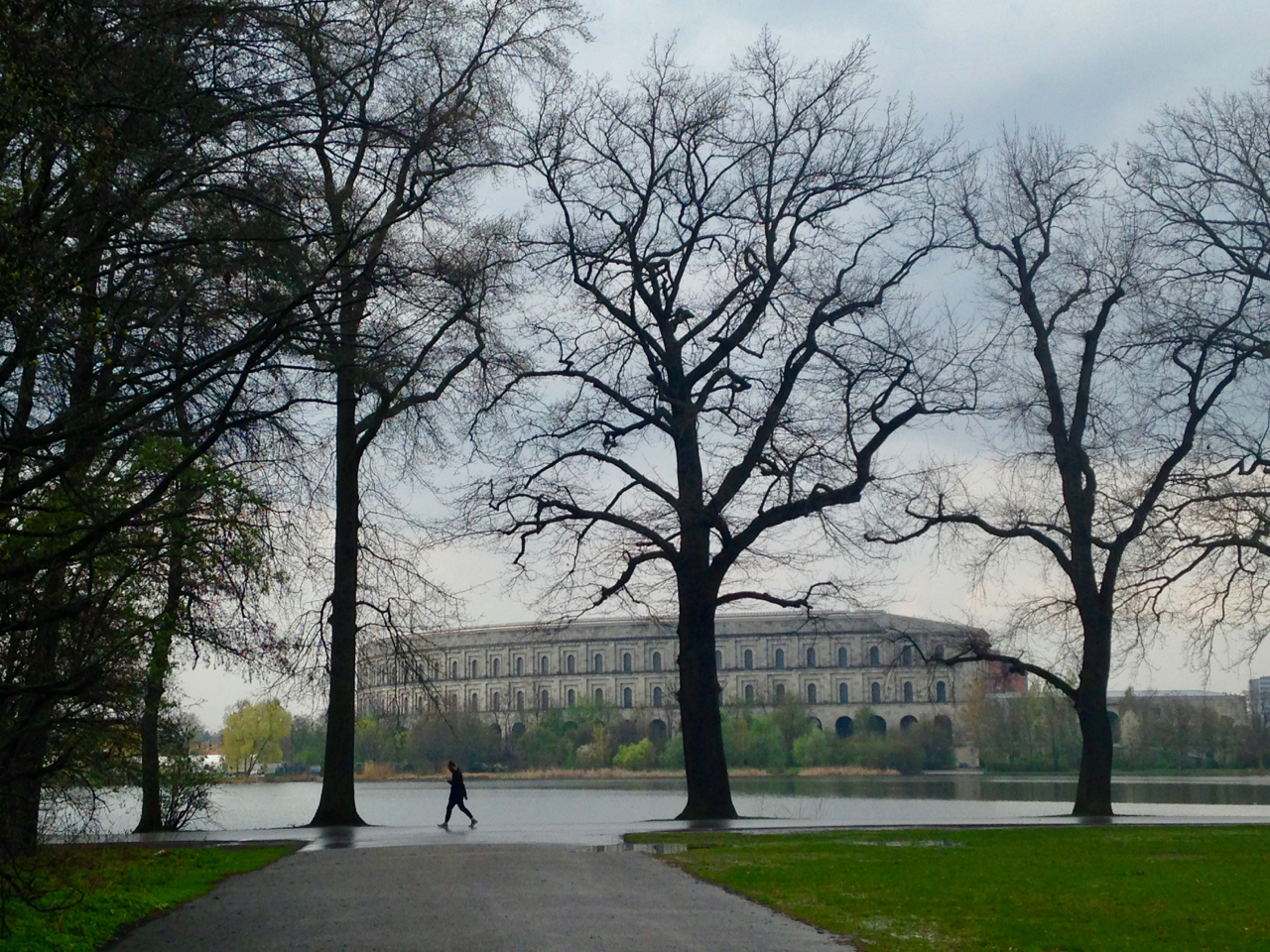
The unfinished Congress Hall, of the Reichsparteitagsgelände, Nuremberg

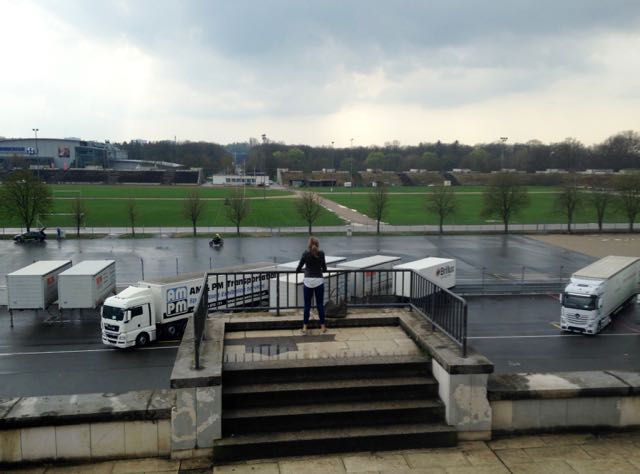
I hadn’t known I would be dancing with my dear friend from Cologne just 500 meters from the Zeppelin Field where I had stood in 2016 on the very rostrum from which Hitler himself had delivered his ‘hypnotic sermons of hate… to rapt audiences in the hundreds and thousands…’ But the visceral memory of the sickening terror I had felt then returned instantly. In spite of the site now being strewn with parked lorries, ‘Never had I been able to visualise the scale of the Nazi movement in all its ugly, popular power with such devastating clarity.’ (In My Grandfather’s Shadow, pp.359-360) 
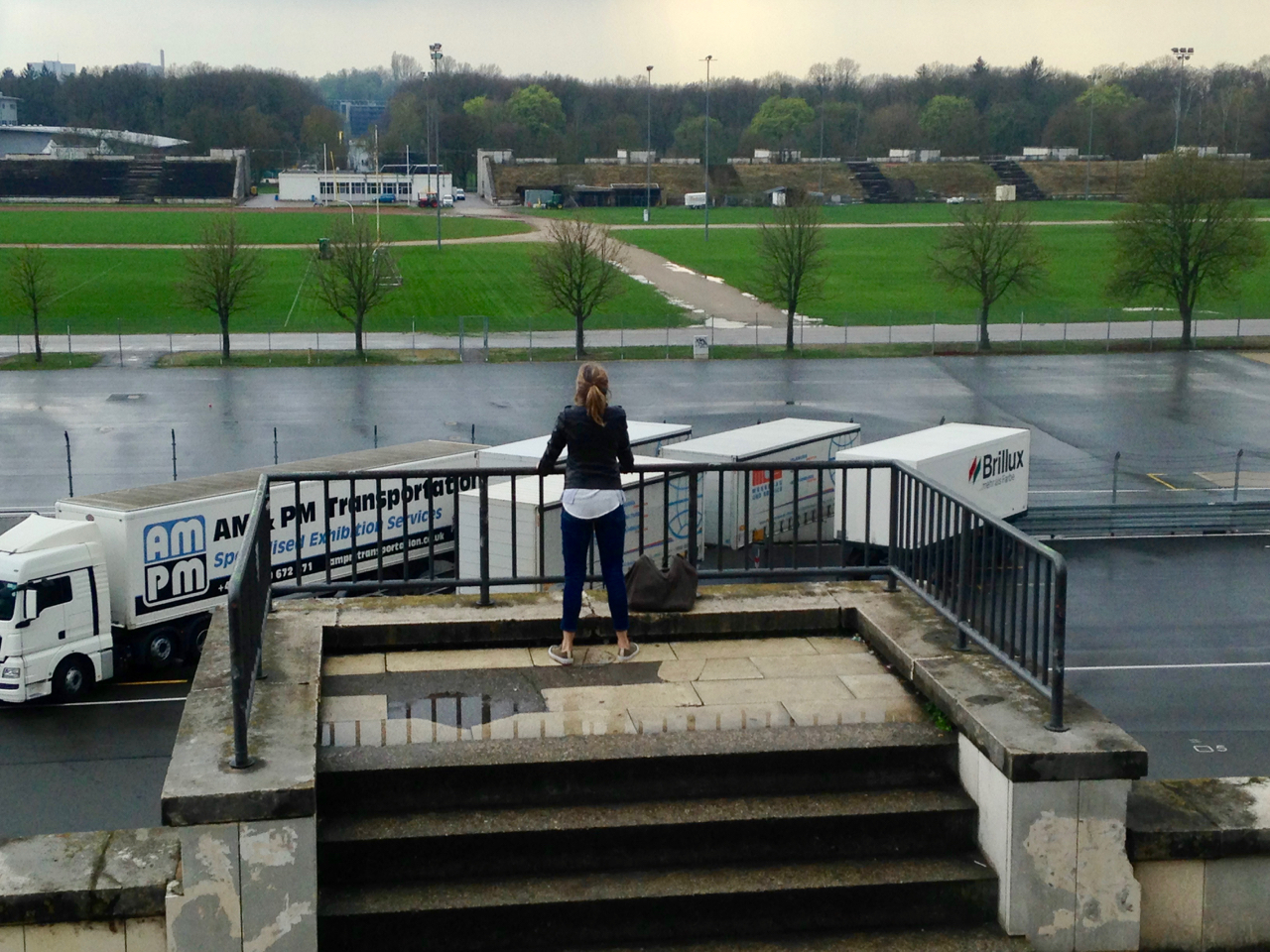
Yet here I was, one minute laughing, the next engaged in debate with people who have been deeply involved in the complexities of what to do with this hideous phantom of the Third Reich. Artist studios seems to be the current preferred proposal, bringing creativity, transformation and a more constructive future into what was one of the centres of past destruction.
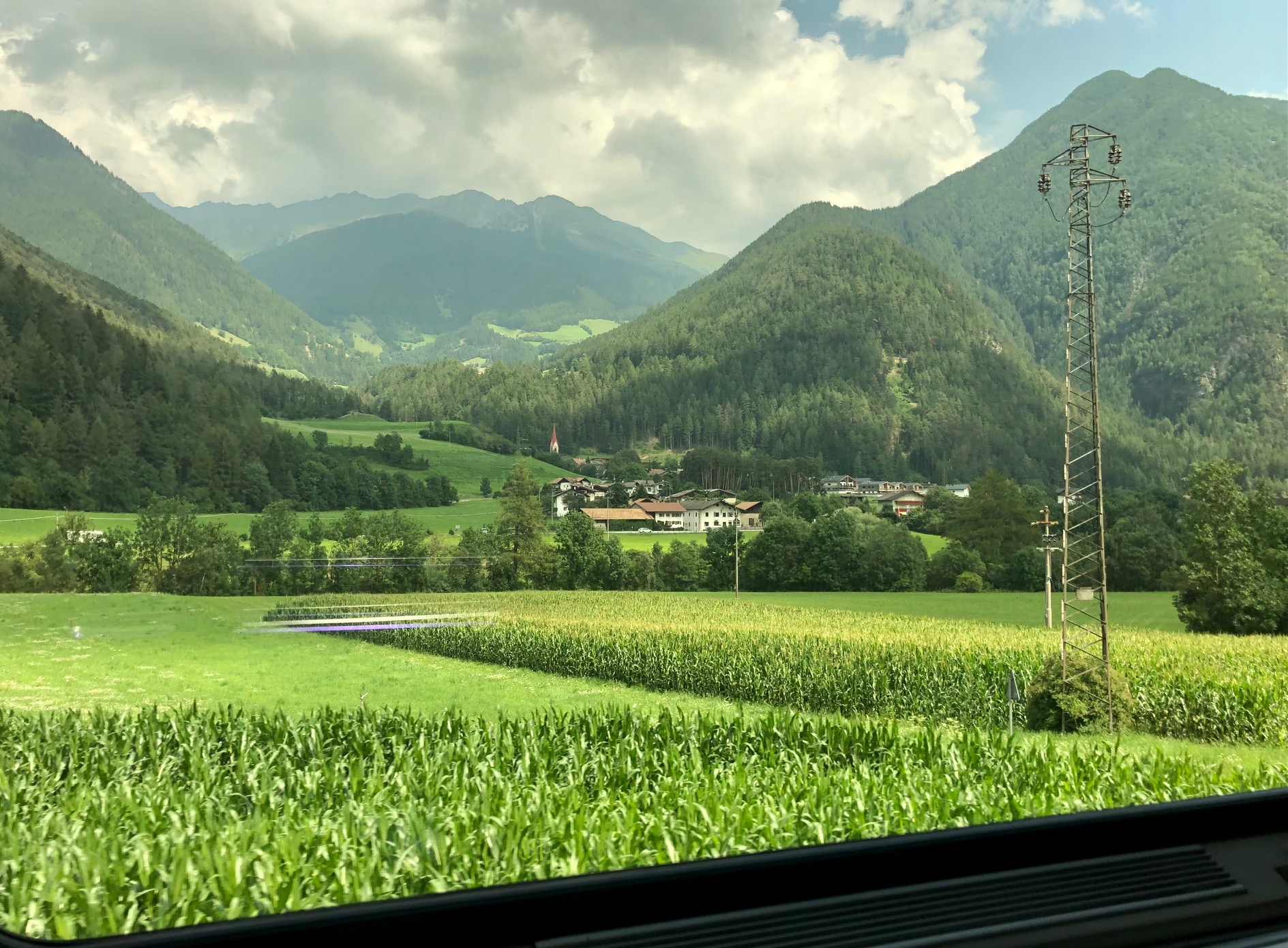
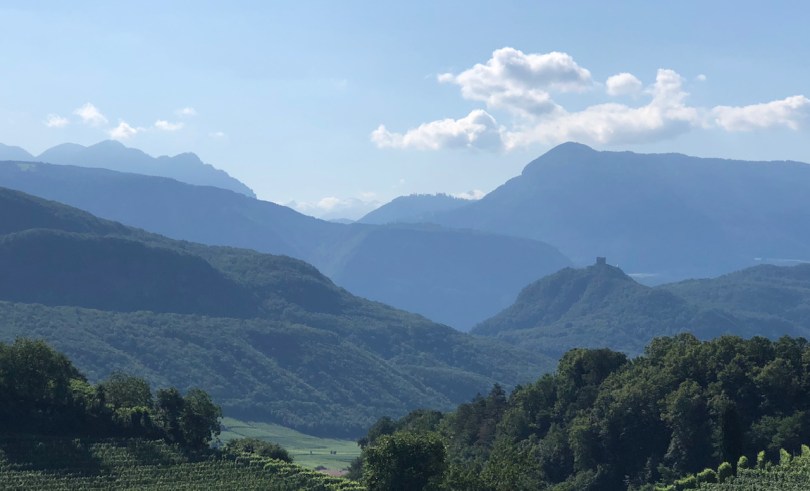
A second example happened on a packed train heading to the mountains of South Tyrol. Settled happily by the window, a young woman entered the compartment with an enormous suitcase, a cloth bag and a delighted smile at having found a space for her and them. As she arranged herself, I watched the dawning of a stricken panic as she began frantically searching under the seats for something. Her rucksack, as I soon learnt, with everything in it: passport, money, phone, ticket…

As the train pulled out of the station, she pushed her way down the carriage only to return a short while later empty handed and distraught. Once again, the past became instantly present as I felt a visceral memory from 1987 when my bag was stolen on a train in India. It too had everything in it, including all my Kodak films and diaries. I remembered the sense of suddenly not existing, of life stuttering to a halt as the bureaucratic fuel needed to move our lives forward was gone. Suddenly I had nothing, and no way of getting anything or anywhere, least of all home. 
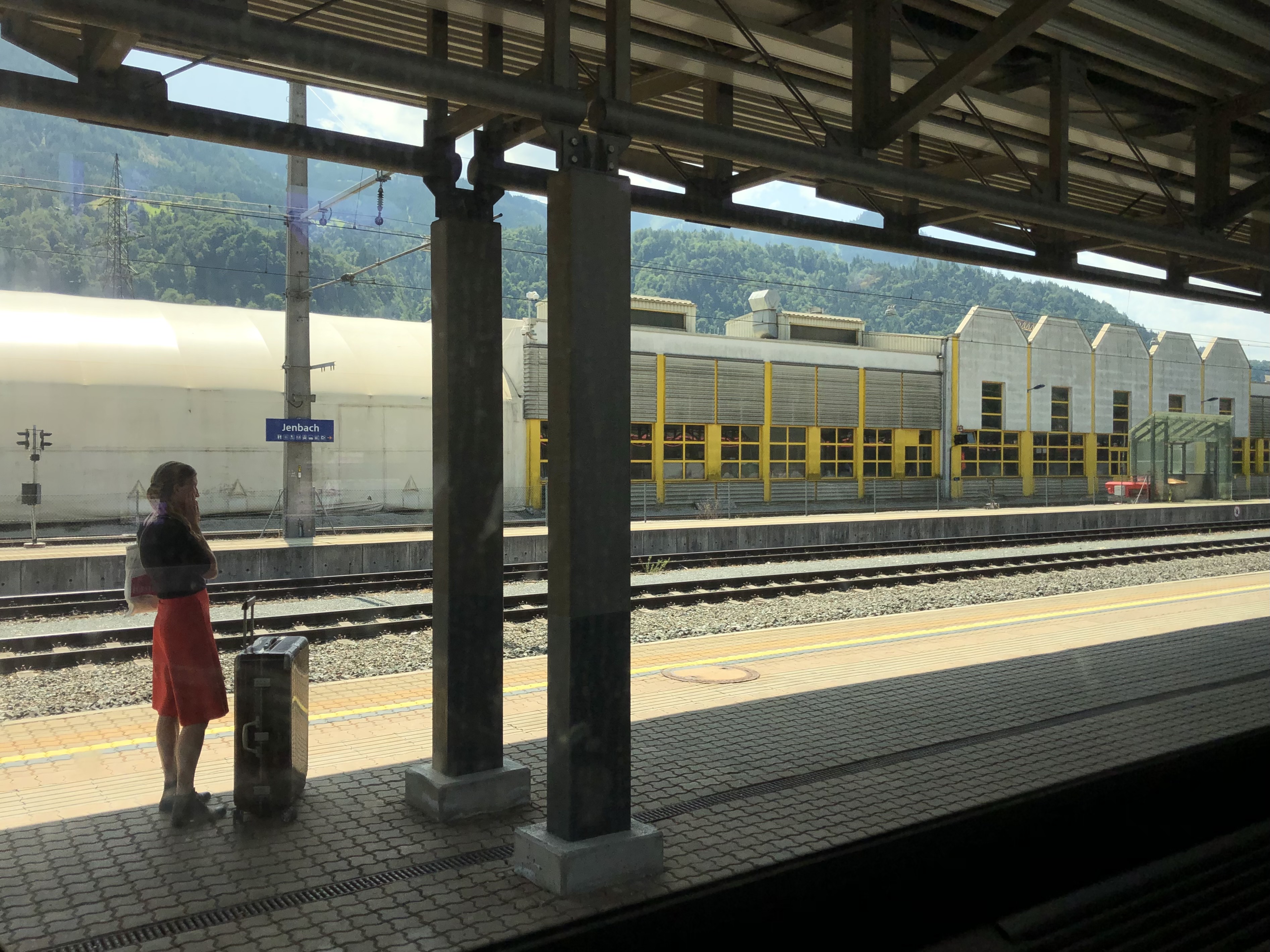
With her beautiful smile now strained, the young traveller got off at the next station in order to return to the only place she might still find her bag. I gave her 30 Euros and told her things would work out somehow. They always do. She returned the same anxious gratitude I too had offered the kind stranger who gave me some money in India. But for the next stage of my journey, that episode from my past was fully present, just as I trusted her present would swiftly pass and resume its course into the future. 

Living in the space between the launch of In My Grandfather’s Shadow last July and the impending publication of Im Schatten Meines Großvaters coming up in September, the present, devoid of a busy schedule and deadlines, has rarely felt as potent and expanded in its not-knowingness. My original 10-day trip packed with travel and planned visits both to German friends and book-related people, evolved through a series of spontaneous decisions and the generous offer of a first cousin’s apartment, first leading me to South Tyrol and then into a week of moment-to-moment unfolding. My days’ questions revolved around whether to hike up that mountain, swim in the big or smaller lake, e-bike to the nearest village, read or taste a different local Weißburgunder/Pino Bianco…
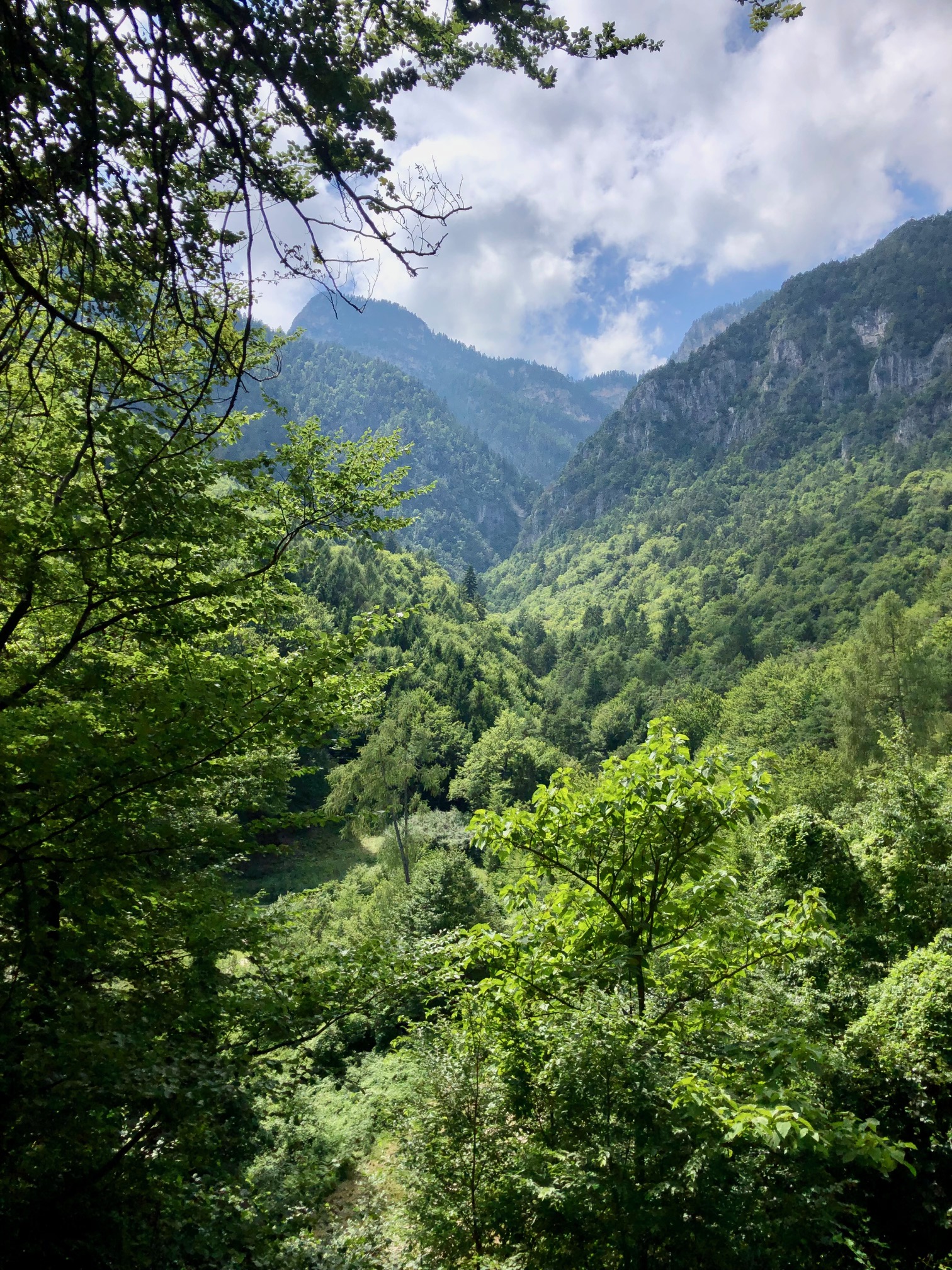
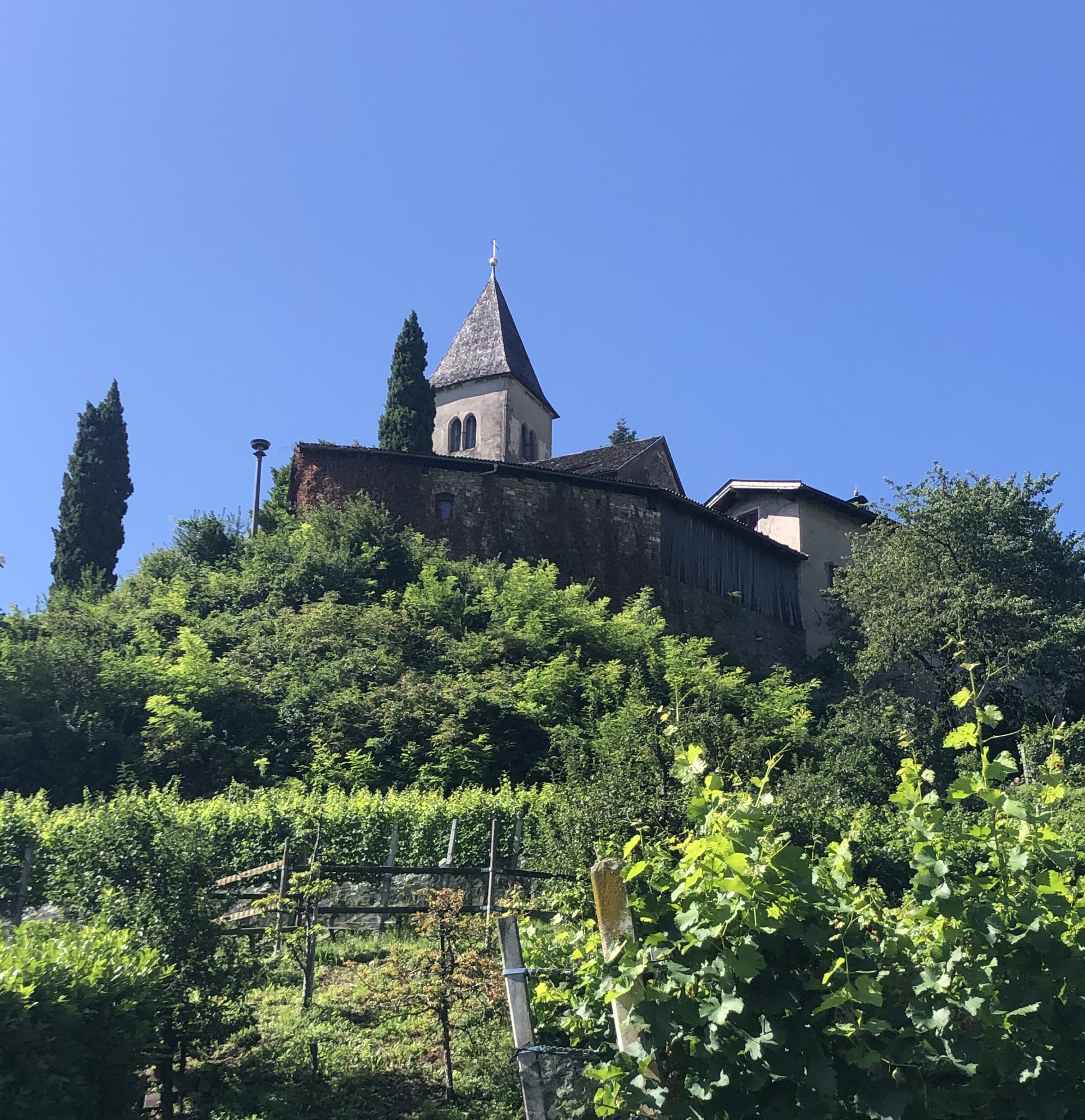
It’s typical happy holiday stuff for some. But there were times when I literally stepped out of the hot sunlight and into the cool past. Italy does that effortlessly through its barely signposted, little Romanesque churches adorned with glorious early 13th century frescoes. The continuity and shared spatiality of past, present and future tangible to those who are open to feel it.

St Jakob in Kastelaz near Tramin

Deliberately avoiding all news and social media and without a task to accomplish, I experienced a strong sense of how the past constantly accompanies and informs us – albeit often subconsciously – as we are drawn by an unknowable future through our present moment. And I have to say, right now, mine is a present that I am really enjoying.
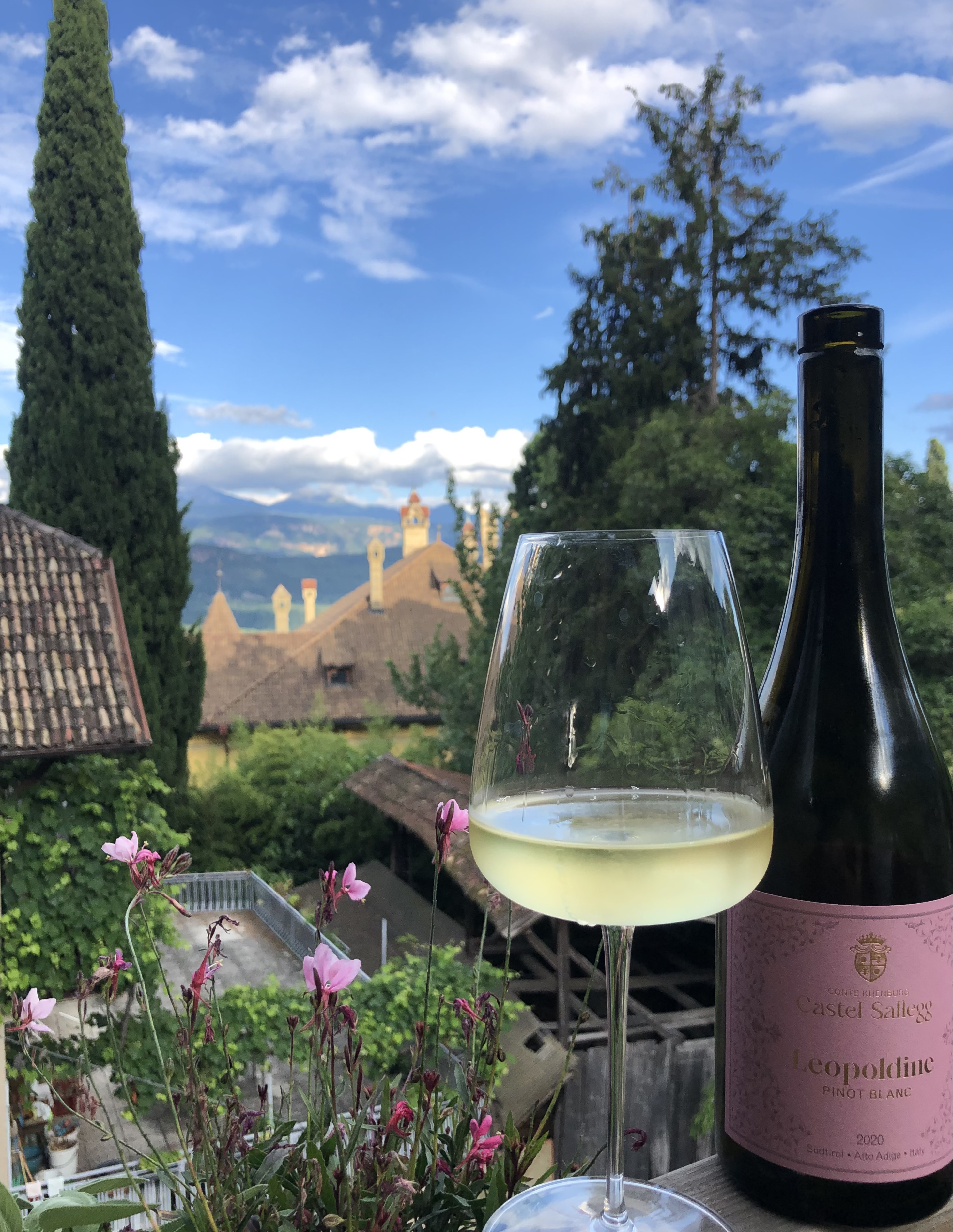
Wishing you a very happy summer wherever you are… and whatever the weather!
Is trying nonagenarians for Nazi War Crimes the best way to achieve justice?

If it wasn’t so serious, the idea of a 96-year-old going on the run to escape trial would be quite comical. But behind the image of an old lady hopping into a cab at her retirement home and fleeing for the subway station in the early hours is a quagmire of deeply complex and emotive issues.

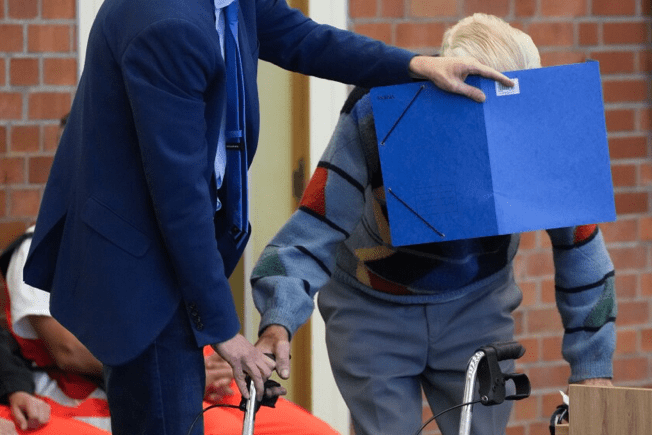
Irmgard Furchner stands accused of having contributed to the murder of 11,412 people between 1943 and 1945 when she was an 18-year-old typist and former secretary to the SS commander of the Stutthof concentration camp in Poland. She is the latest of several nonagenarian Nazi war criminals to be brought to trial, some of them in youth courts because they weren’t adults at the time of their alleged crimes.

Irmgard Furchner being brought into court

The reason this particular case captured my attention is partly because it coincided with the seventy-fifth anniversary of the final day of the Nuremberg Trials that saw twelve senior members of the Nazi establishment sentenced to death by hanging. And partly because the hearing Furchner was due to attend was in Itzehoe, the same north German town that I have been going to all my life. I have been looking Nazism and the Second World War in the face for several decades now, but my countless happy memories visiting relatives there had completely insulated it from the chill of Germany’s wider history. 

Now it is in the spotlight as the face of retribution. So, is it a total no-brainer that even seventy-five years later, such people, nonagenarian or not, must pay for their part in some of the worst mass killings in history? Or is this more a rush by prosecutors to seize the final opportunity to redress the failures of the previous decades? Will sentencing these last Nazis to time in prison achieve justice for the victims? Or are these trials there to serve the broader objective of Never Forget? Is a ninety-year old even the same person as their eighteen-year-old self?

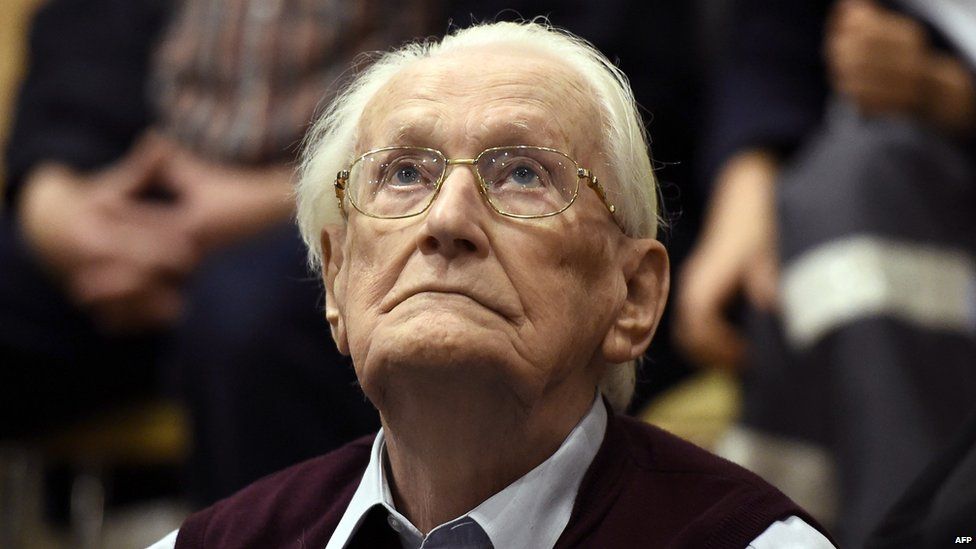
The last guilty verdict issued was to former SS guard Bruno Dey, who was handed a two-year suspended sentence in July 2020 at the age of 93. The 2019 trial against 95-year-old Johann Rehbogen for his service as a guard also in Stutthof Concentration Camp, had to be terminated as his organs were failing. The only successful conviction was of 96-year-old Oskar Gröning, the so-called ‘bookkeeper of Auschwitz,’ who was sentenced to four years in 2015 but died in hospital after his several appeals failed. I wrote about him at the time in my blog. In his case he had not tried to evade justice. Driven by a desire to counter Holocaust deniers and prevent something like Auschwitz from ever happening again, he had been openly talking about his time as an accountant in the death camp. His testimonies, however, were used against him in court with the unintended outcome that other low-level perpetrators and bystanders went silent. 

Oskar Gröning at his trial in 2015

For some people, the greatest justice to all victims of Nazi persecution that these trials can provide is to keep the crimes fresh in peoples’ minds and prevent them from being forgotten, denied or trivialised. They force Germans, including younger generations, to listen to the testimonies of survivors and to rake over the whole disturbing and uncomfortable past once again. 

It is so important that we never forget; that we all learn the lessons that Germany’s descent into barbarity and atrocity teaches us, not least about the vulnerability of democracy today. But survivors often declare that legal retribution is not the main outcome they are after. That they are more interested in shining light on unresolved or overlooked crimes and contributing to Holocaust remembrance and education. 

So, are we now at a time when imprisonment is a less effective response than a more direct dealing with the aftermath of the offence? Is there now another way that serves justice to the many victims of the Third Reich and their descendants AND sends a powerful message to would-be perpetrators of mass crimes that they will never get away with murder AND contributes to remembrance and education AND offers possibilities for healing and reconciliation? 

The past cannot be changed, but the present can. Might communication between those harmed by and those implicated in Nazi crimes, within the safe frameworks of Restorative Justice or mediation initiatives, offer the possibility to fulfil all the outcomes desired by the survivors? Could the excrutiating discomfort of acknowledgment of past wrongdoing be the punishment? Would talking together create an opportunity to resolve some of the harm and nurture the shoots of healing, forgiveness and reconciliation that can sprout from really listening and really being heard? 

Further reading:

Trial of 100-year-old man in Germany: why Nazi war crimes take so long to prosecute – The Conversation

Former Nazi death camp secretary, 96, remanded in custody after going on the run – Times of Israel

Nuremberg: The Trial of the Nazi War Criminals – Radio 4

Germans are right to pursue 100-year-old former Nazi war criminals – Irish Times

Standing in their footprints…

What is it that makes standing in the exact location of something historical, momentous or simply in the footprints of someone famous, so thrilling? Or horrifying? On Tuesday I was standing on a stage in the beautiful east coastal town of Aldeburgh ready to give one of my talks on Germany’s WW2 memorial culture when someone said, “You’re standing exactly where Bill Nighy stood last night”. It was tiny but there it was, a subtle tingle, a flutter of excitement. I like Bill Nighy and I liked knowing that I was so hot on his heels, talking in a venue in which he too had talked. But what’s really happening, what are our bodies or minds reacting to when we are in the presence even of such tenuous claims to fame or significance?

Screen Shot 2017-04-28 at 10.57.55.png

Read More »