A Pope, a Rabbi and an 80-year-old Victory 

April saw the death of the widely loved Pope Francis, the Jewish festival of Passover, and the gradual build-up to the 80th Anniversary of VE Day (Victory in Europe) in May. An unusual trio of events, yet radio coverage of all three wove threads of reflection into the tapestry of this blog. 

Compassion was central to Pope Francis’s papacy – particularly towards those who are rejected or marginalised. He often spoke about the importance of honouring and never abandoning our grandparents. “If you want to be a sign of hope, go and talk to your grandfather,” he was quoted as saying. They remind us that we share the same heritage, link us to “the beauty of being part of a much larger history… a loving plan [that] is greater than we are.” He also had the humility to say “I am a sinner,” which makes me wonder where that leaves the rest of us!

In a recent Radio 4 Thought for the Day  (at 1:47:45), Chief Rabbi Sir Ephraim Mirvis described Passover as the ‘Festival of Questions;’ a time to ask, to probe, to test assumptions, refine our understanding and uncover the truth. 

If we try to apply the guidance of both spiritual leaders to the forthcoming celebrations of VE Day on 8th May, we may find ourselves asking how the grandchildren of the ‘losers’ of WWII – many of whom had been perpetrators or complicit in Nazi atrocities – might ‘honour’ their grandfathers. How do you love – should you even try to love – someone who has acted immorally, abhorrently, even if those acts were sanctioned or ordered by a higher authority and deemed the right thing to do for Volk and country?

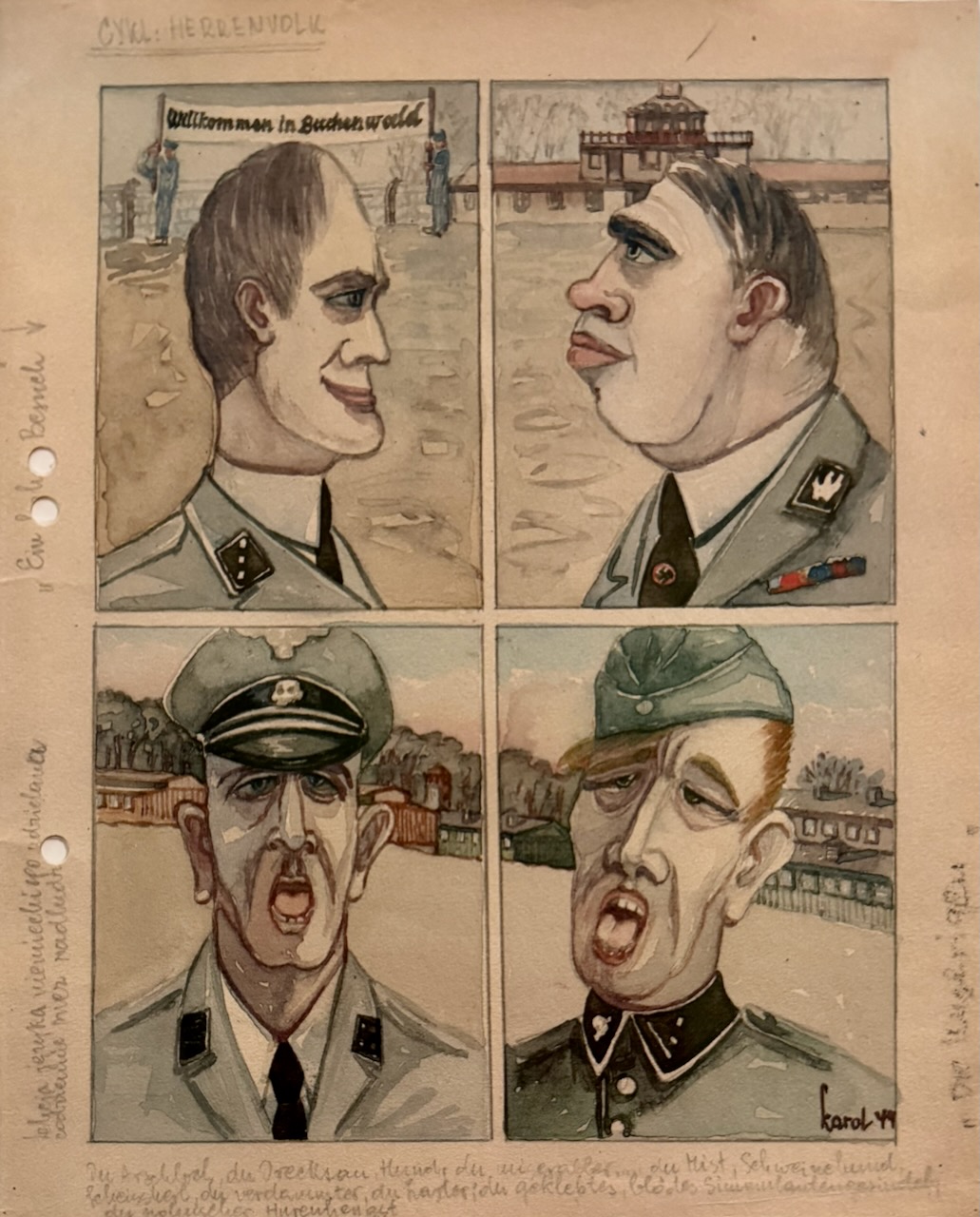
I’m all too aware how unfashionable, controversial and even provocative it is to suggest we spare a thought for the perpetrators. But in keeping with the spirit of my triangle, I am going to ask you to do just that. Many people, from all sides of the conflict, are quick to judge, blame and damn the Wehrmacht soldiers and SS as an indiscriminate mob of ‘monsters’, all morally inferior and wholly undeserving of being remembered. It’s completely understandable. But where does that leave their children and grandchildren? What happens when we continue to draw a line between the ‘good us’ and ‘bad them’, a distinction that may have served its time but no longer helps us move forward? Isn’t one of the most crucial lessons of this horrific chapter in history to recognise that most perpetrators were not monsters, but ordinary people… like you and me… who, through a slow drift of compromise, small decisions and ill judgements became capable of unimaginably heinous crimes? 

Eighty years on, with more than 88% of the German population having been born after the war’s end and a further 11% still children at the time, it’s difficult to place ‘guilt’ for the Holocaust on the Germans of today. After all, people cannot be guilty of things they themselves didn’t do. Yet, like many descendants of Holocaust victims and survivors, some non-Jewish Germans born in the decades after the war still wrestle, often unknowingly, with the unresolved trauma and guilt passed down from their parents or grandparents. They carry what Eva Hoffman aptly described as “the scars without the wound” – invisible wounds that silently shape their internal world and influence their actions in the external world. 

Without detracting anything from the horrors and suffering of the victims, can we imagine for a moment how it might be for post-war generations of Germans to live with legacies of silence, cover-ups, not-knowing, judgement, exclusion, blame or shame in relation to their roots? Mistrusting family stories. Wondering who knew and who did what. What impact does this have on individuals, families, societies, nations and ultimately, the wider world? How can one best deal with such a profound inheritance?

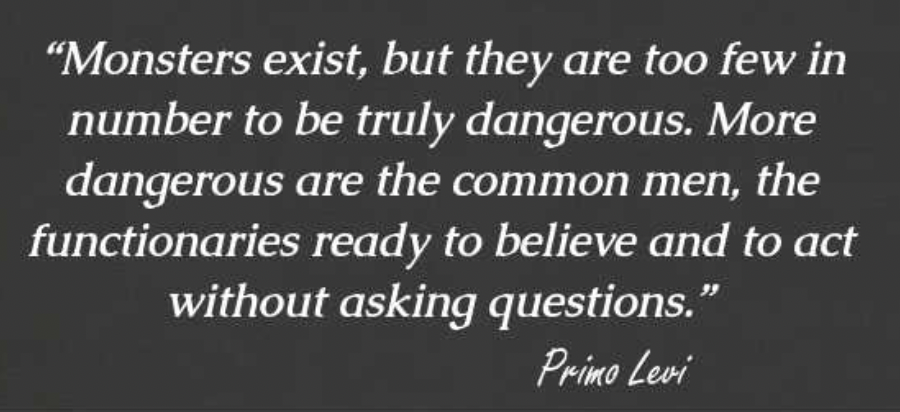
Primo Levi – who, as a Holocaust survivor had every right to think the opposite – declared that collective guilt does not exist. To think that it does is a relapse into Nazi ideology. Both he and Hannah Arendt made a powerful claim: “We are all to blame” for what happened. Collective responsibility is what matters. And that involves understanding how atrocities occur both in society and within the individual. How we become complicit. 

The roots of Nazism found fertile soil in the humiliation wrought by the terms of the Treaty of Versailles and the deeply resented ‘guilt clause’ that placed full blame for WW1 solely on Germany’s shoulders. Applying a similar dynamic to today, could there be a connection between this historical pattern and the rise of the AfD (Alternative für Deutschland), Germany’s nationalist far-right party — a movement fuelled in part by a desire to reassert national pride and, as encouraged by figures like Elon Musk, to move beyond what they perceive as an excessive “focus on Nazi guilt”?

The 2019 survey previously cited revealed that few Germans actually feel guilt and 70% (including 87% of AfD voters) believe their country has now sufficiently atoned for the actions of the Nazi regime. Another source revealed that 75% of young Germans (erroneously) believe they come from families of resistors, while 25% can’t name a single concentration camp or ghetto. As the number of living contemporary witnesses dwindles, disinformation, denial and delusions are spreading. With them, the sense of responsibility risks disappearing too – a deeply worrying and dangerous trend. Knowing firsthand the insidiously destructive effects of being shamed for a familial association with the Nazi era, I can understand how, eighty years on, rejecting any semblance of inherited guilt might feel like a healthy response. After all, who among us wants to feel terminally tainted by the wrongdoings of their forebears? Who wants to have to cut off their roots?

The marriage of my parents in March 1962

I feel fortunate that, while living in England with my German heritage was at times challenging, my parents and their families modelled true reconciliation throughout my life. My British father and German mother married just 17 years after the Second World War ended. Both their families had suffered and lost loved ones and/or homes under the others’ military objectives. Yet both found the courage to drop into their hearts and overcome division and enmity. And that, to me, is where the solution lies: in our hearts.

Patriotism is hollow if it is based only on pride and honour. Shame and conscience lead to a deeper bond. Seeing the world in binaries – in terms of ‘us’ and ‘them, good and bad, right and wrong – shuts down love. Reconciliation becomes impossible. As Britain celebrates its triumph over the evil forces, let us also remember we were not all good and they all bad. Among other short-comings, we too were guilty of antisemitism and of failing to help the Jews more. 

In another recent Thought for the Day, Rhidian Brook warned, “If you can’t see the other side’s humanity, you’ve lost.” 

My 80th Anniversary VE Day wish, therefore, as both a British and German citizen, is for us to follow the example set by the late Pope and Chief Rabbi: to think, to probe, to get uncomfortable, and to find compassion for individuals among the rejected and ostracised.

Eighty years on, might this be the moment to create new rituals of peacekeeping and unity? Without dampening the spirit of national joy, how can we include – and stand hand-in-hand with – our contemporary German friends in celebrations of peace, rather than reinforce historical divides?

Can we develop broader, more expansive narratives that encourage younger generations of Germans to face the difficult and painful truths of their families’ histories and to assume responsibility, not for what was done, but for what is still to be done? Can we remain vigilant against resting on any imagined moral high ground, against believing we would have undoubtedly been resistors and heroes under the Nazi regime? And can we instead recognise how thin the ice of democracy is becoming once again, and how difficult it is, even now, to change the course of history?

Events coming up:

Friday 2nd May, 12-1pm 
The Second World War 80 years on: Is Remembrance Working? 
Angela Findlay and Henry Montgomery In Conversation
National Army Museum, Royal Hospital Road, Chelsea, London SW3 4HT and ONLINE
80 years on from the German surrender to the Allies, Henry Montgomery, grandson of Field Marshal Bernard ‘Monty’ Montgomery and Angela Findlay, granddaughter of General Karl von Graffen of the German Wehrmacht will reflect on their grandfathers’ roles and actions in WW2 and discuss the differences in the histories, legacies and remembrance cultures of the victors and the losers and how Remembrance can remain meaningful and effective for younger generations. 
Info and tickets (free) here

Thursday 8th May, 18.00 – 19.30 
Im Schatten Meines Großvaters / In My Grandfather’s Shadow
Vortrag und Gespräch / Lecture and Conversation 
Marktkirche, Hanns-Lilje-Platz, 30159 Hannover, Germany

Thursday 15th May, 17.00 – 19.00 (UK time)   43. Gesprächslabor, PAKH: The Study Group on Intergenerational Consequences of the Holocaust (ONLINE)? Drawing on my own experiences outlined in my book, In My Grandfather’s Shadow, we will be discussing how such a destructive legacy can be transformed into constructive, reconciliatory approaches and positive actions. More info here: https://www.pakh.de/event/gespraechslabor-40/  

Buy or read reviews on my book, In My Grandfather’s Shadow, here

Question to self: Is speaking out still the right thing to do?

If you haven’t yet seen Jesse Eisenberg’s latest film, ‘A Real Pain,’ I can only urge you to do so. Starring himself and Kieran Culkin [youngest son in Succession!], the pair play two estranged cousins who travel to Poland to fulfil the wish of their recently deceased, concentration camp survivor grandmother for them to visit her former home. It’s essentially a road movie and extremely funny. But the context of the Holocaust and the attempts of third-generation Americans to come to terms with it, makes it also profoundly moving, thought-provoking and important. 

Millions of people world-wide are still grappling with the aftermath of those appalling years of Nazi rule. More, rather than fewer, stories of survivors and first-hand witnesses are coming to light told by descendants who have finally found ways to articulate what their forebears couldn’t. My own, In My Grandfather’s Shadow, published in 2022, is testament to the painful process of peeling back the layers of incredulity in which the extremes of both cruelty and suffering are wrapped. For many, it is justifiable to judge or blame ordinary Germans for not speaking out or revolting against the wrongness of what was happening in clear sight. Despite acknowledging their justified fears, it would have been the right thing to do.

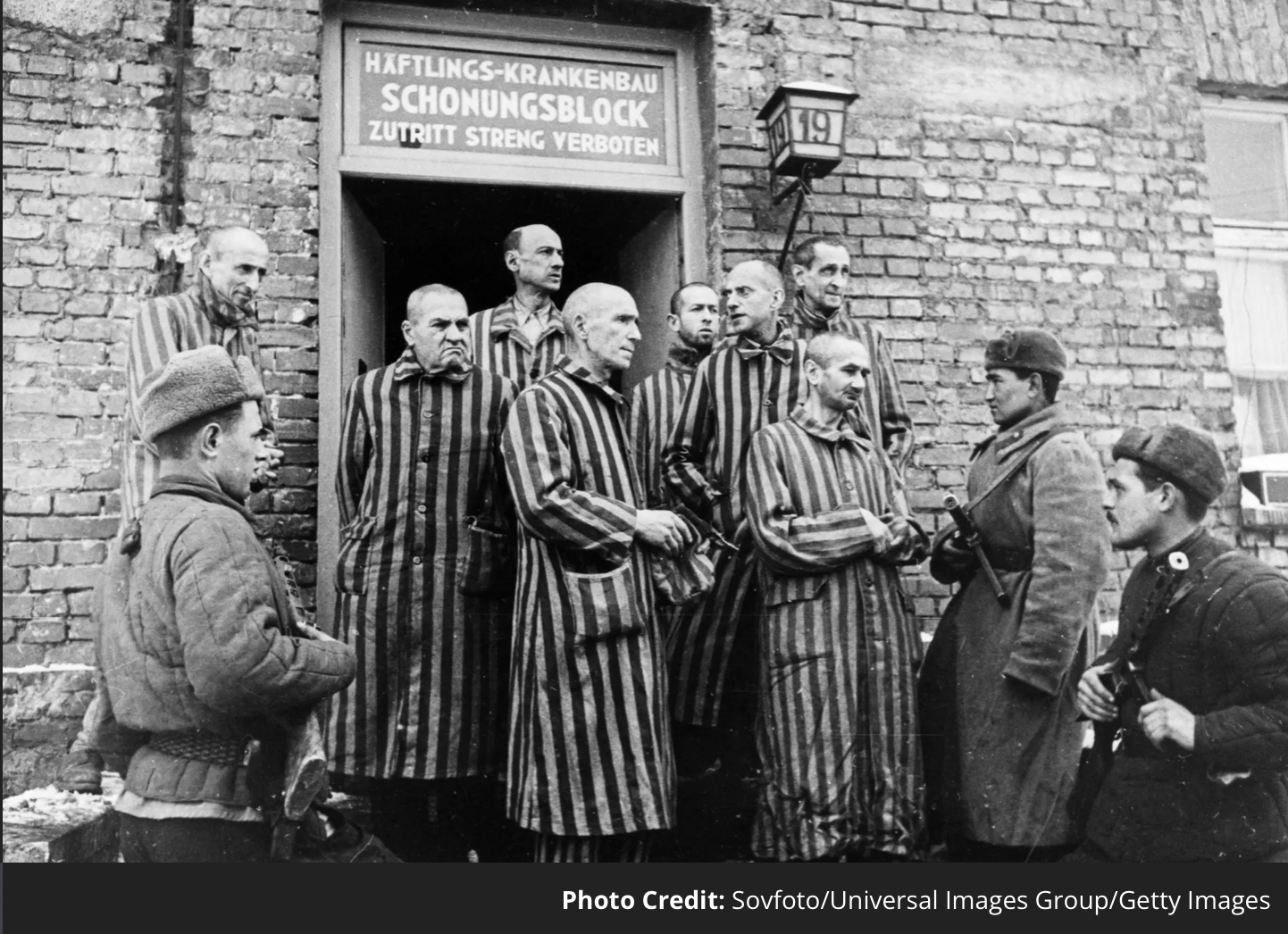
As we approach Holocaust Memorial Day marking the 80th anniversary of the liberation of Auschwitz by Soviet forces in 1945, we are asked to remember the horrific consequences of the crimes that, in part, were enabled because people did not speak out. We will once again repeat the heartfelt ‘Never Again’ that has been chanted like a mantra over the decades. But is it enough?

“Voting right-wing is so 1933”

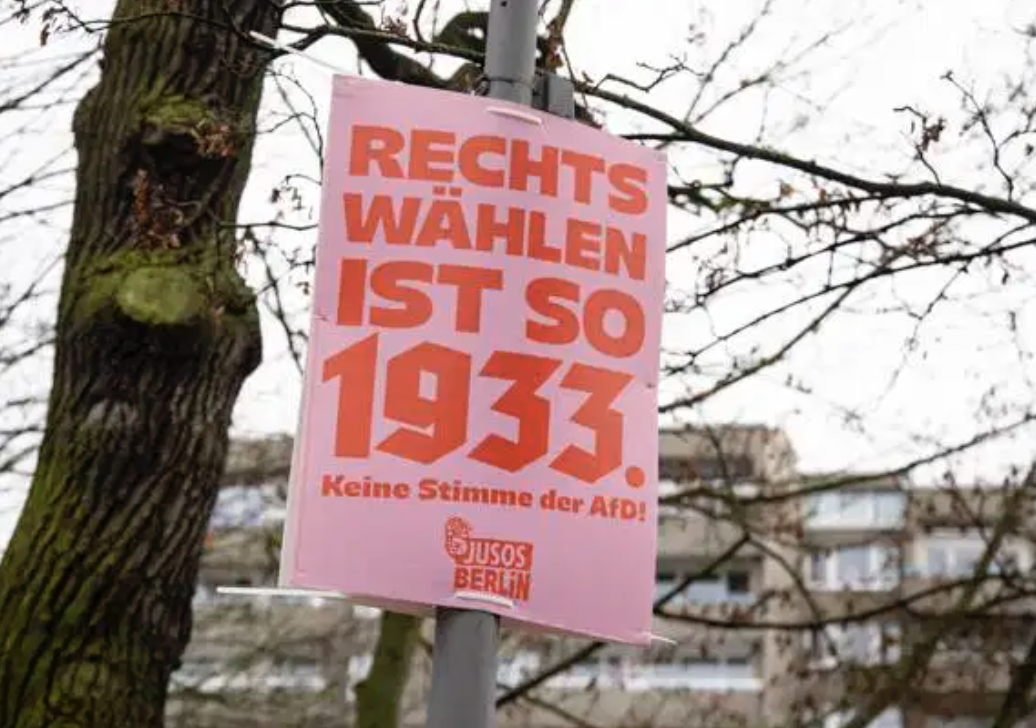
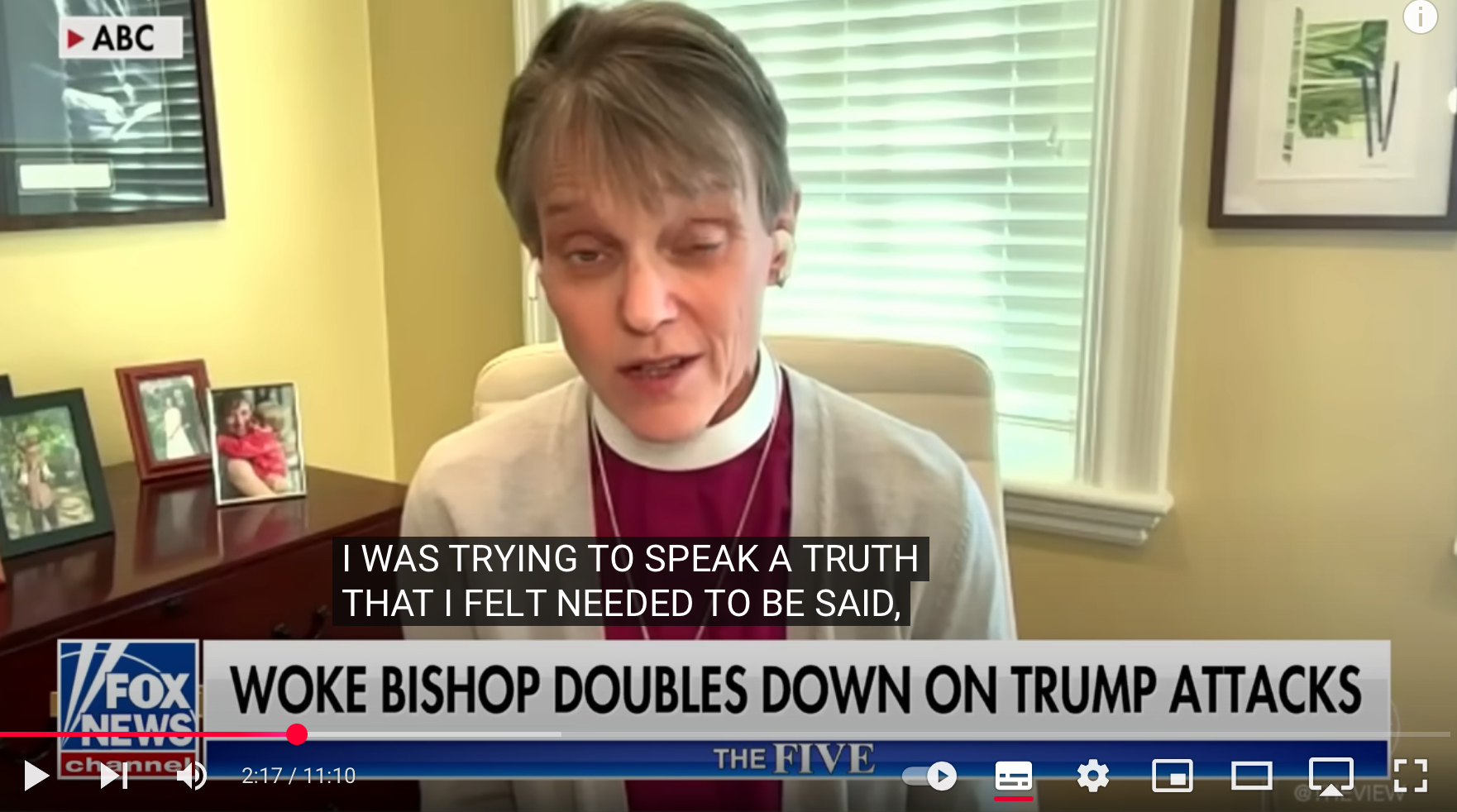
Across the globe, the roots and shoots of far-right policies are taking hold with renewed vigour. In highly vigilant Germany, ‘Voting right-wing is so 1933’ is a campaign slogan for left-wingers. But calling out discrimination and anti-immigrant policies, becoming an ‘upstander’ rather than a bystander has become increasingly perilous, even a danger to life. I wonder how Bishop Mariann Budde’s recent controversial sermon at the inaugural prayer service at Washington National Cathedral will play out. Referencing immigrants and LGBTQ+ individuals among others, she calmly but directly asked President Trump “to have mercy on the people in our country who are scared now.” Will she be cancelled, trolled, fired, discreetly removed from her post? So far she is refusing to apologise for speaking her truth. Was it brave, wise, right? Or, as he and his supporters claim, ‘nasty, woke, inappropriate’ and she a “Radical left hard line Trump hater”? Bizarre as it sounds, by seeking a path of compassion, did she inadvertently shame and dent an ego as big as the world?

As someone with (non-Jewish) German roots, I feel like it is both in my DNA and a conscious personal responsibility to speak out in the face of a perceived injustice or wrongdoing. However, I am beginning to feel an even stronger impulse. In these times of widespread latent and reactive vitriol and rage, I have started to listen into the other side’s point of view rather than – or at least before(!) – slating it. To create a tiny pause, a space between the attack and counter-attack model so many discussions rapidly descend into. It’s like stepping back from an easel when you have been immersed in some detail in order to see the whole picture. For when we speak out against something with conviction but without seeing the back story behind the other’s conviction, we are basically assuming a moral and intellectual high-ground that imparts the message that ‘they’ are wrong (inferior) and ‘we’ are right? This never goes well! Trump’s return to the White House proves that.
Decades of trying to comprehend the behaviour of ordinary Germans eighty or ninety years ago have revealed to me that many of them won’t have been so different to many of us today, i.e. more concerned with their own lives – milking cows, running businesses, keeping children warm and fed – than politics. Looking away, keeping stumm becomes a basic survival tactic. But the outrage humans feel in the face of endless discrimination, inequality, injustice, harm can rapidly turn to despondency and disaffection when we realise we can do little more than sign a petition or share a rant on social media or among friends. Eventually we might become numb, at worst immune to the wrongdoing. I know that I personally read, watch and listen to the news far less than I used to because the drip-feed of madness, badness and sadness feels toxic and induces inertia. I have no idea if this is maturity, complacency, disheartenment, a nauseating lack of humour or an equally nauseating sense of self-righteousness, but I have lost some of my more outspoken tendencies and anger at the world and replaced them with something that is hopefully more productive but still relevant to these times.

My prison work showed me that the most valuable action I could offer prisoners was to listen and to hear them. Not just their stories, excuses and justifications, but what came before. The drivers of their behaviour. With their defences down, trust, compassion and understanding could grow. Attitudes and actions quietly changed without them being shown to be wrong.

I am not sure if this is the right way to go in general life. The story of the Zen / Chinese Farmer comes to mind with its ‘We’ll see…’

It’s certainly not a quick-fix solution. But maybe it’s a tiny antidote to the constant stoking of anger? A drop towards the creation of a kinder world in which wider discourse and a greater tolerance of difference are possible. And ‘Never Again’ regains its urgency and weight. 

A few links to that don’t necessarily reflect my views, but are accessible sources to pursue your own research.

A Real Pain Review

A Real Pain Trailer

Germany’s present is not Germany’s past by Katya Hoyer

Who is Mariann Edgar Budde, the bishop who angered Trump with inaugural sermon?

I am not going to apologise’: The Bishop who confronted Trump speaks out

Remember, Remember… we all lost

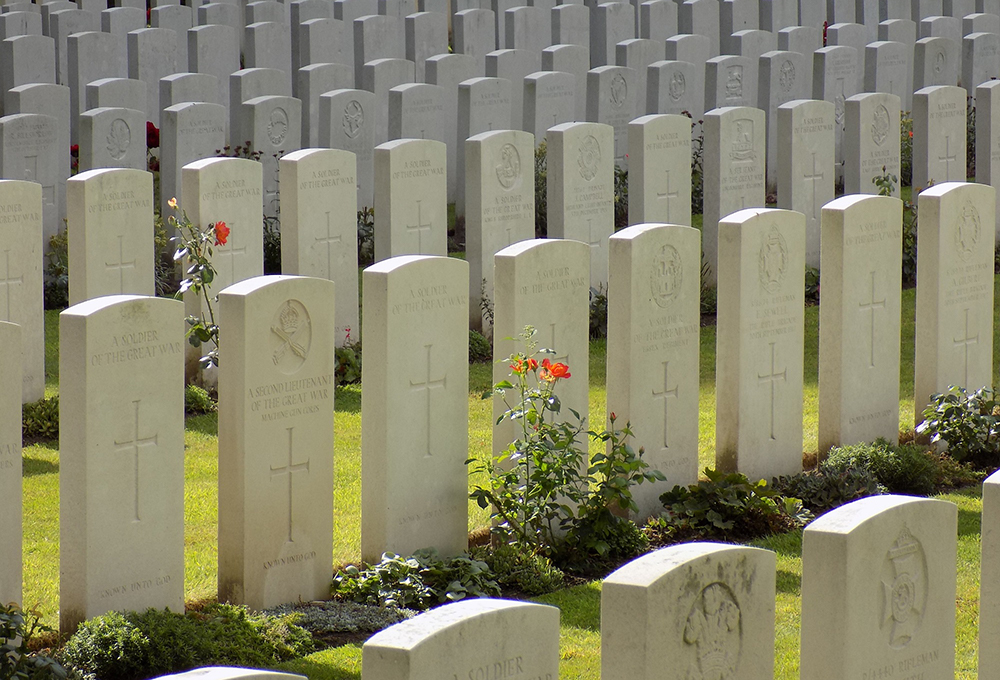
‘Tis the season to remember. In our progression through the grey gloom of this autumn [just 18 minutes of sunshine since 28th October apparently!] and the celebrations of Halloween, All Souls, Samhain, Guy Fawkes and November 11th, the dead take centre stage. Leaves and forest floors redden while poppies bloom on jacket lapels, village monuments and shop counters. This Sunday in London, as on all Remembrance Sundays, red wreaths will be laid by royalties, senior politicians and Commonwealth High Commissioners before some of the last surviving WW2 veterans march or are wheeled past the Cenotaph.

We have been collectively remembering Armistice Day since 1919, the first anniversary of peace at the end of World War One. Remembrance has since been extended to both World Wars and all those who have given their lives in service to defend our freedoms. It is a hugely important day for the British, the Commonwealth and many other countries around the world, albeit not in Germany. There, since the Middle Ages, 11am on 11.11 has marked the start of the carnival season and, on a more serious note, Armistice Day is not considered to have welcomed the beginning of peace but years of intense unrest and far worse horrors to come. 

British and Commonwealth dead

I often dedicate my November blog to our traditional, deeply moving and impeccably executed rituals of remembrance, but not always without a little questioning too. Through the 15 years of research for In My Grandfather’s Shadow, I came to appreciate a far broader narrative of WW2 remembrance than that which Britain generally embraces and teaches. Granted there has been welcome progress over the decades with the inclusion of women as well as the huge contributions and sacrifices made by Gurkha, Indian, Sikh, African and Caribbean servicemen, among others. But there is still widespread ignorance of the bigger context.

Russian dead

When I give my talks, I often use statistics. They provide a solid, black and white foundation of fact to my more psychological / philosophical ponderings. So often these figures shock. For example, when I ask people to guess the total losses, including civilians, of say Russia, Germany and Britain in the Second World War they are usually so far out that they themselves are horrified. I challenge you to make a guess… I’ll put the answers at the end of the blog. One man literally went white when he realised how wrong he had been in his thinking or, by his own admission, his lack of thinking. Another woman recently wrote to tell me how my book had opened her eyes in so many ways. “First off,” she said, “the big realisation of how little I have understood of the two world wars, my ignorance of those times and the aftermath.” This despite attending remembrance services all her life. 

German dead

The quantity of deaths doesn’t mean each death was any less keenly felt. But I think she voices what is probably true of most of us. I certainly was ignorant of the broader landscape of loss and destruction, and no doubt still would be if I hadn’t had German roots that needed excavating and hadn’t made trips through Germany and Russia that exposed me to other ways of looking. The World Wars are the episode in history with which the British are often accused of being unnaturally obsessed. And yet, as a nation, we often present it as a deceptively straightforward story of good triumphing over evil. The victors write history after all. 

Every nation has its ‘chosen traumas’ and ‘chosen victories’ which serve as cornerstones to its identity and prevent true healing from the past as they continue to play out in the present. We frequently have binary views of how we should feel based on – to use the reader’s words again – “simplistic, reductionist understanding… goodies and baddies…” Rarely have we “considered what it must feel like to have a different identity…” 

I really appreciate and admire this woman’s soul-searching honesty. The humility and gentle opening to hearing the other sides’ stories gives me huge hope.   

Healing, reconciliation, peace, forgiveness… all goals we strive for within our culture of Remembrance… can best come about when we become familiar with and find some understanding for the other side’s experience. Maybe, with our greater distance from both the acute trauma and the impassioned jubilation of our forebears, that is what generations now and in the future can strive to do more of. 

Answer to my statistics question: Out of the around 60 million people killed in WW2, 26 million were Russian, approx. one third of them military and two thirds civilians. Between 7-9 million Germans died, roughly 6 million were soldiers and 3 million civilians. In the United Kingdom, just under 451,000 were killed. That’s 383,800 military, including combatants from overseas territories (Crown Colonies and the Indian Empire), and 67,200 civilians.

The changing faces of Berlin…

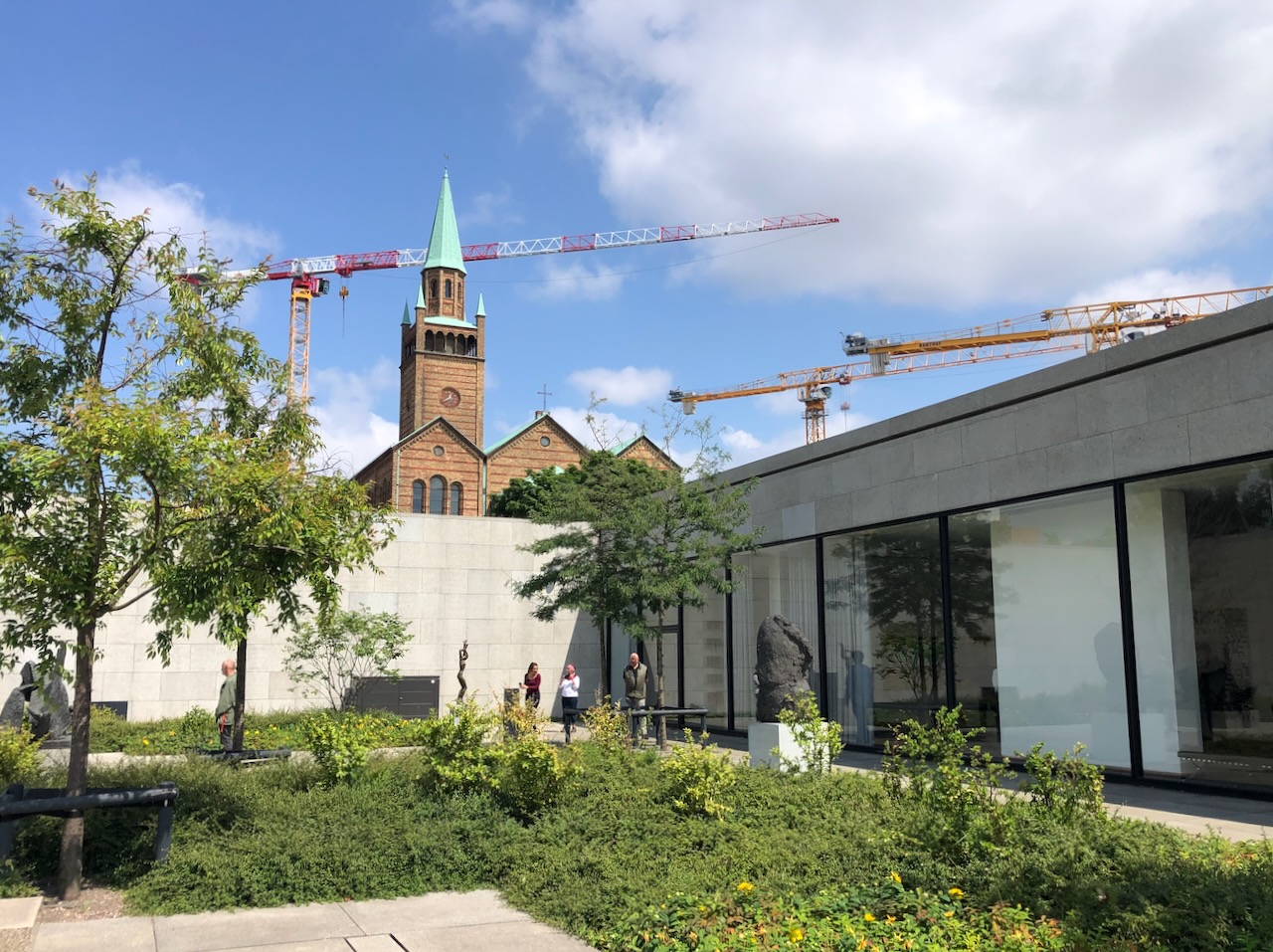
For more than 30 years I have been watching cranes and diggers deconstruct and rebuild the architectural face of Berlin. It is an infinitely fascinating process to follow.

Neue Nationalgallerie by Mies van der Rohe… with cranes

The focus of my most recent trip, however, ended up being the people who inhabit the city, both past and present. And typically for Berlin, it has created a brilliant exhibition to trace the changing faces of those who lived through its turbulent history.

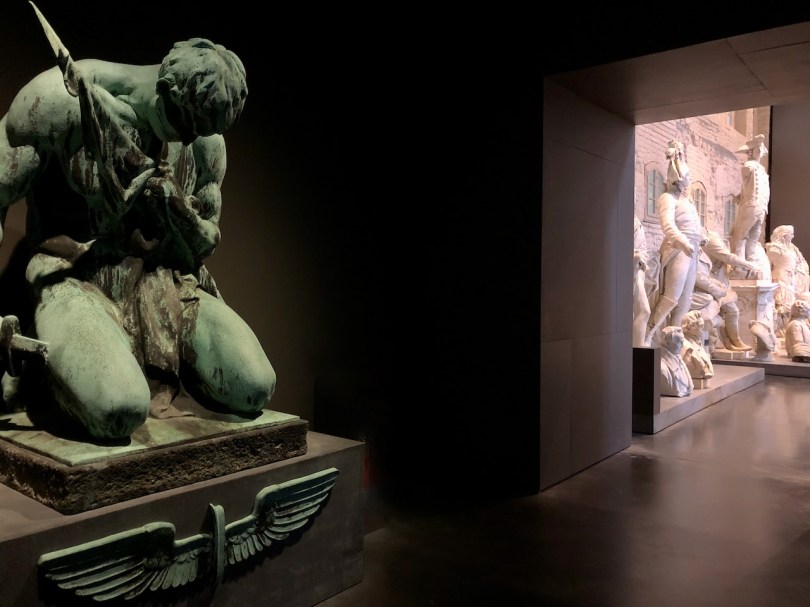
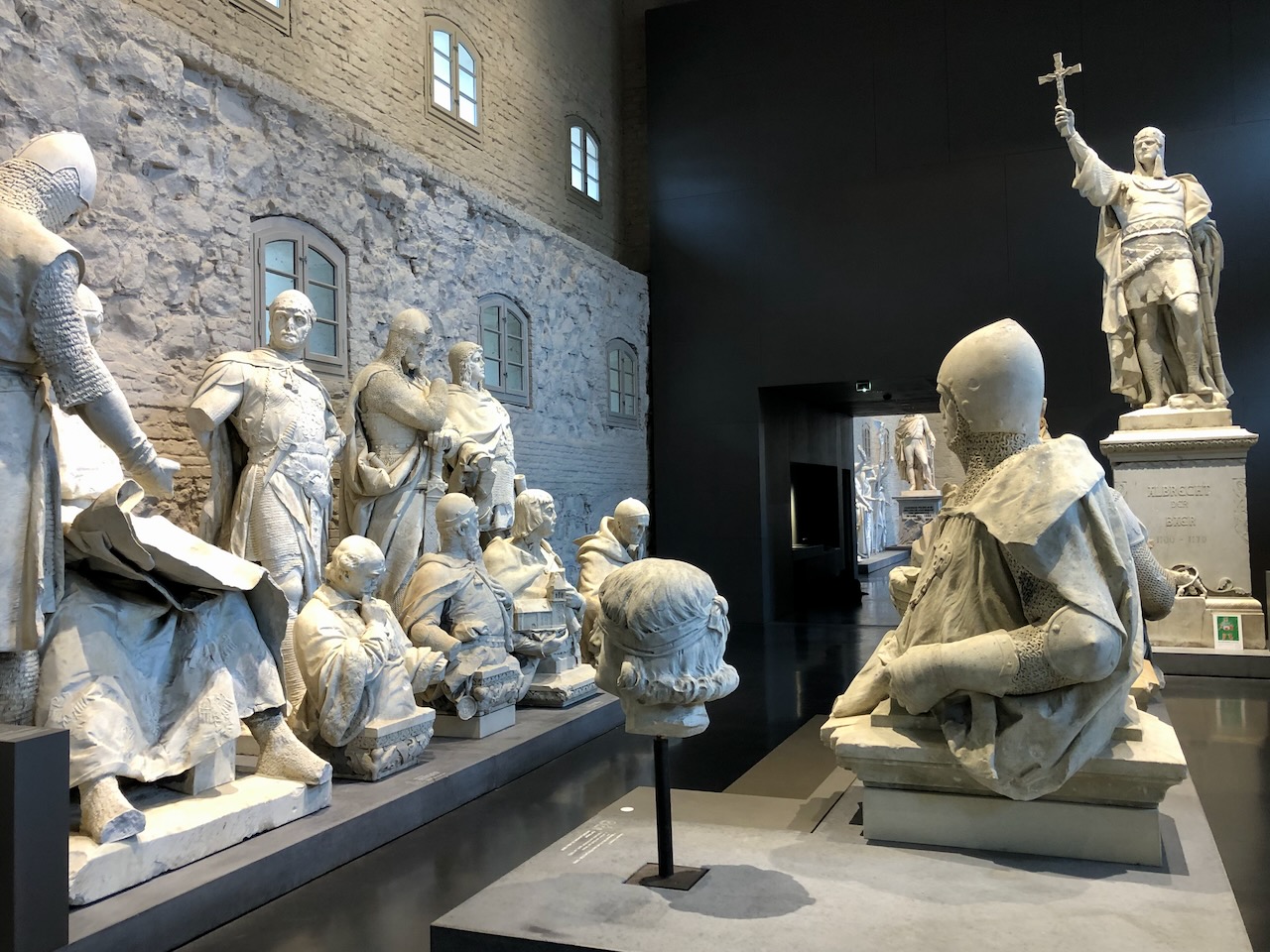
Enthüllt / Unveiled is housed in the Renaissance Citadel in the western borough of Spandau and not only offers a surreal experience but also an inspired response to the emotionally and politically charged ‘statue debate’. 

Albrecht the Bear and others

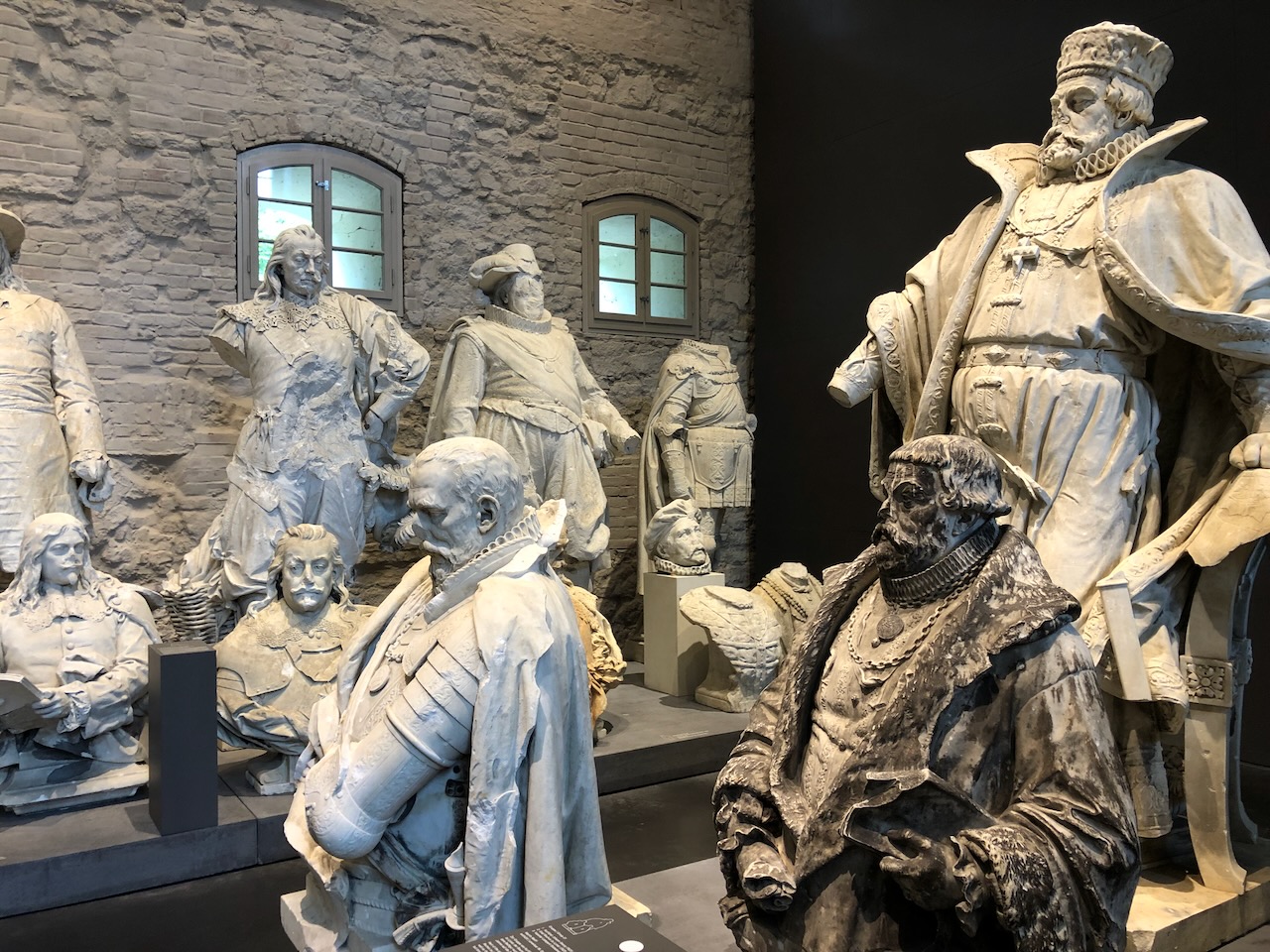
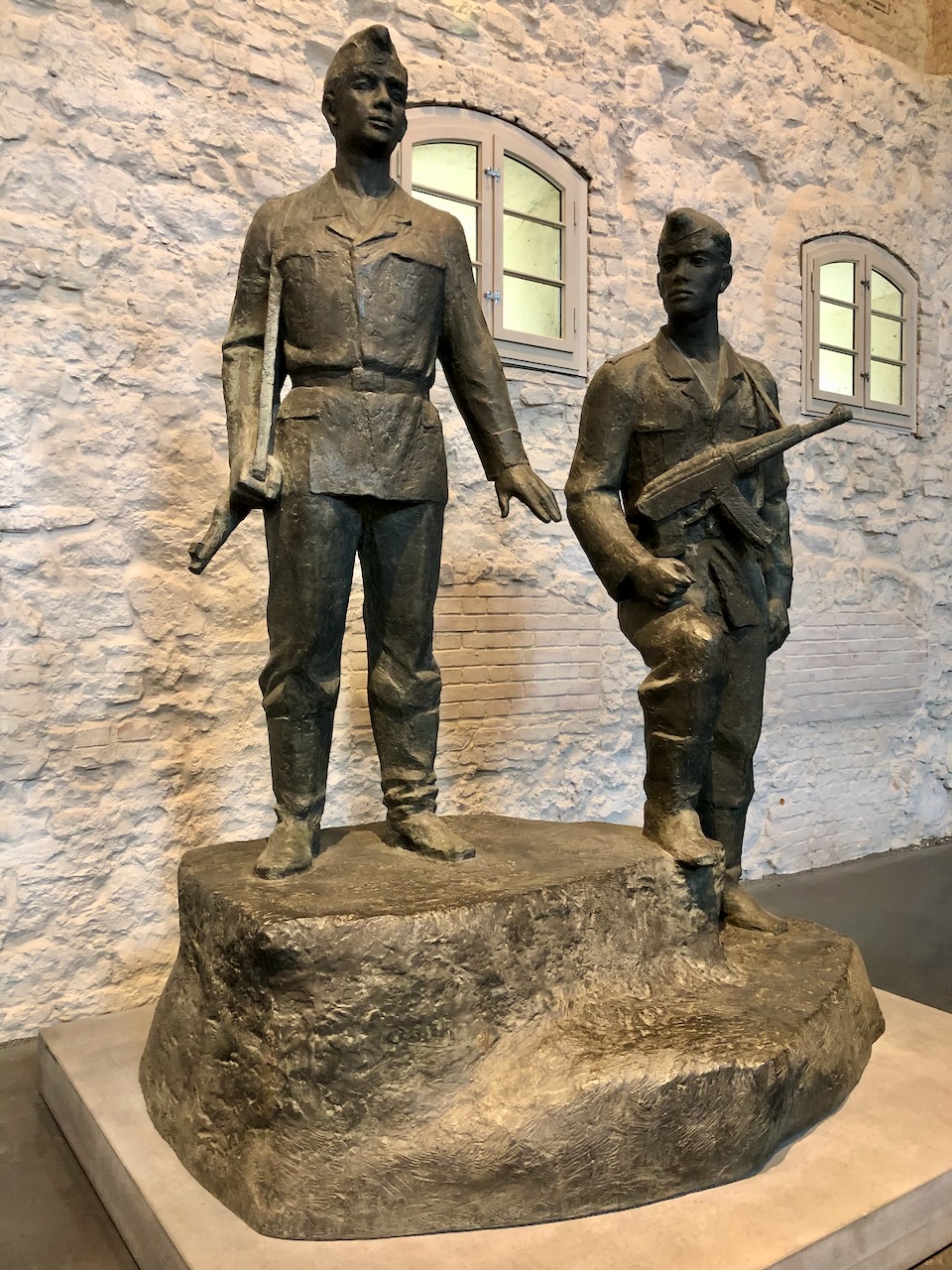
Housed in the 114-meter-long former Provisions Depot of the fortress, Berlin’s once revered or feared rulers, Prussian military heroes and bishops rub marble and bronze shoulders with thinkers, revolutionaries and victims. Spanning a timeline from the 12th century Albrecht the Bear (whose face you learn would not have been known so would have been crafted from a local tradesman or friend of the sculptor’s) to contentious GDR border guards, most of the statues have been removed from their plinths to stand at eye level. Many are missing limbs and noses or even their entire bodies. With chests still puffed but their status removed, you meet the figures of history on equal terms. It is a powerful experience.

Various headless/faceless/slightly worse-for-wear Electors, Chancellors and Counts from the 1500s

Monument to the Grenzposten / Border guards (1971)

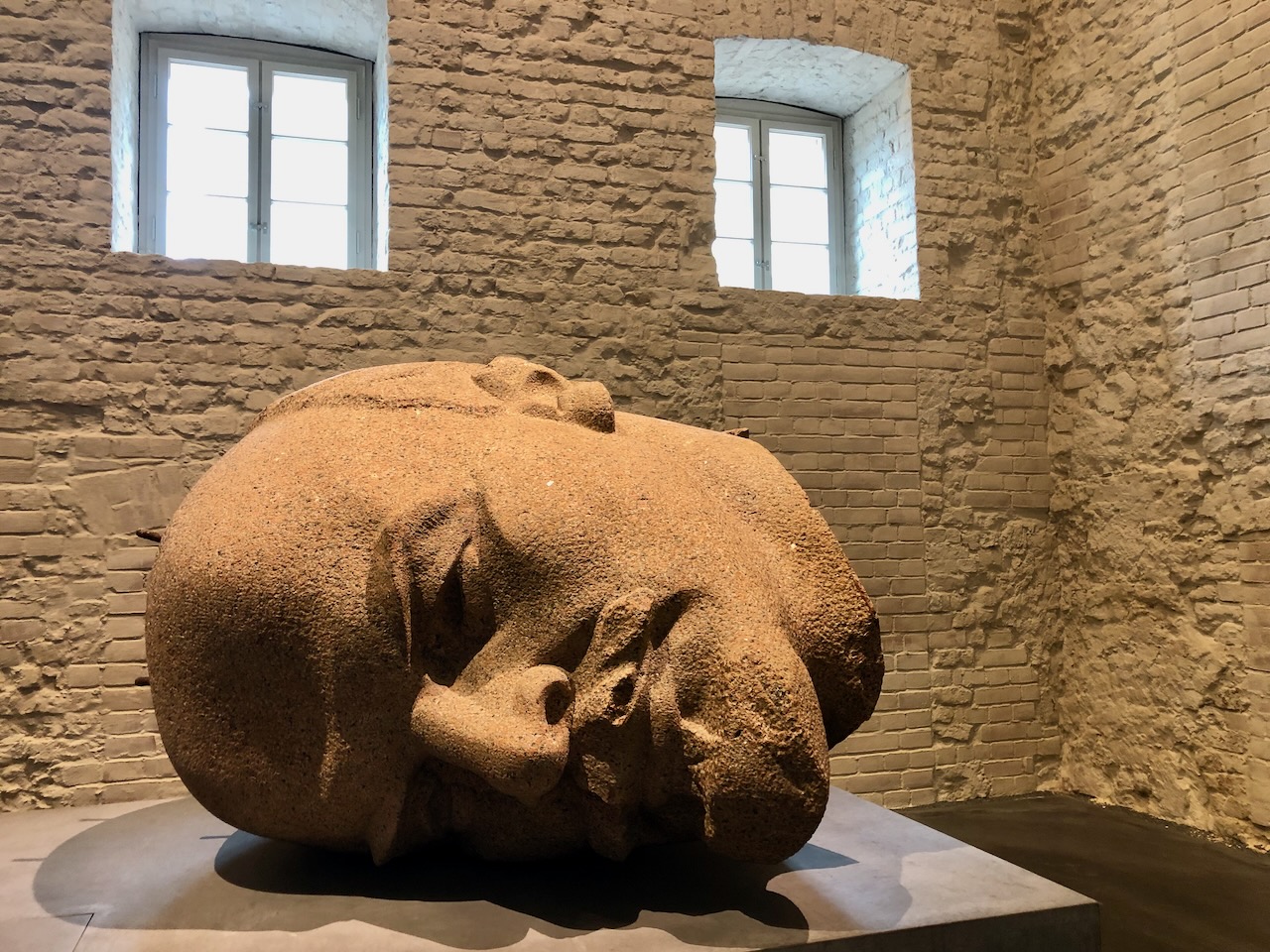
One of the highlights of the exhibition comes right at the end. Displayed on its side, Lenin’s 3.5-tonne granite head once rested atop a 19-meter-high statue by Soviet Sculptor, Nikolai Tomski. Created in 1970 and designed to blend with the Soviet architecture around Lenin Square (now United Nations Square), it was pulled down in 1992, cut into more than 120 blocks, buried in the Müggelheimer Forest and covered with gravel. It was recovered in 2015 for the Citadel exhibition, complete with nibbled ears (people chiselled off chunks for souvenirs) and transportation bolts sticking out of the crown.

Founder of the Soviet Union, Lenin

Traditional memorials are generally markers of achievement and greatness. Raised on plinths, you ‘look up’ to the person or event being celebrated. But what happens when they no longer reflect the values of the time, when their legacy becomes toxic? Do you leave them as lifeless witnesses to a time past with no apparent power in the present? Do you topple or remove them in an attempt to lose the history, or does that lose the discourse and potential to learn lessons? Do you contextualise them with plaques…? 

Germany, with its contentious past has explored these questions possibly more than anywhere else. Accompanied by huge debate, emotion and financial investment, statues and monuments have been removed, banned, dismantled, buried, unburied, re-erected in new locations, built from scratch… All this can be read about in the ubiquitous digital documentation running through the exhibition. But Dr Urte Evert, the curator of Unveiled, seems to have done something very clever. By allowing visitors to touch the statues, children to clamber on them, artists to respond to them, performers to dance among them, she encourages engagement and dialogue, not only with the art forms, but with history. And this feels more important today than ever.

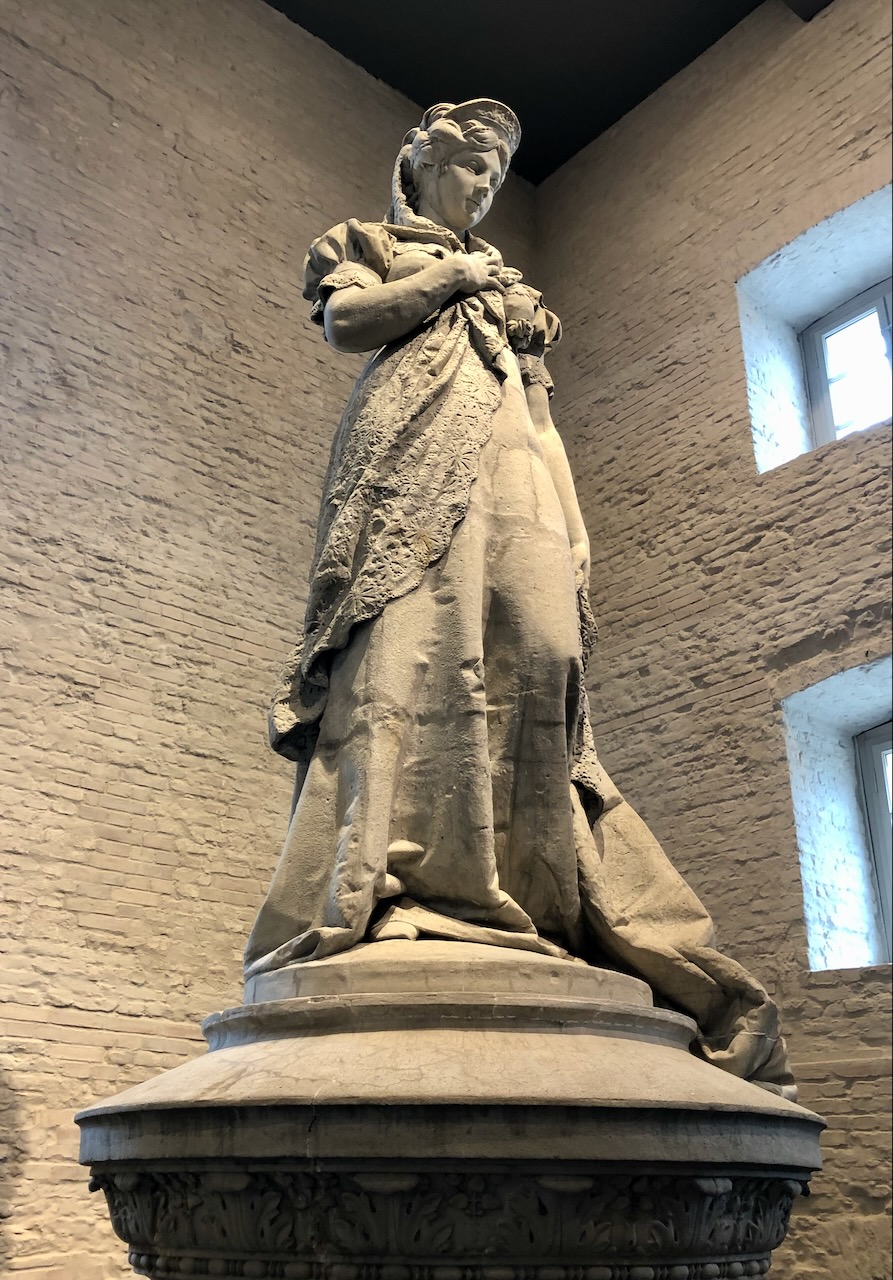
Queen Luise, ‘Queen of Hearts’ (1776-1810)

What is also striking, but not surprising, is that every statue from Kaiser Wilhelm I to Alexander von Humboldt and Immanuel Kant is a man. Apart from one, Queen Luise, wife of King Friedrich Wilhelm III and an early form of celebrity referred to as the Queen of Hearts… or according to Napoleon “the only real man in Prussia.” Even in today’s Berlin there are few statues celebrating women and even fewer to individual women.

Käthe Kollwitz

In a square named after her in the fashionable district of Prenzlauerberg, a rather lumpy and grumpy-looking Käthe Kollwitz, artist, sculptor, committed socialist and pacifist sits on a heavy block narrowly dodging graffiti. She is remembered everywhere and this is just one of many statues of her.

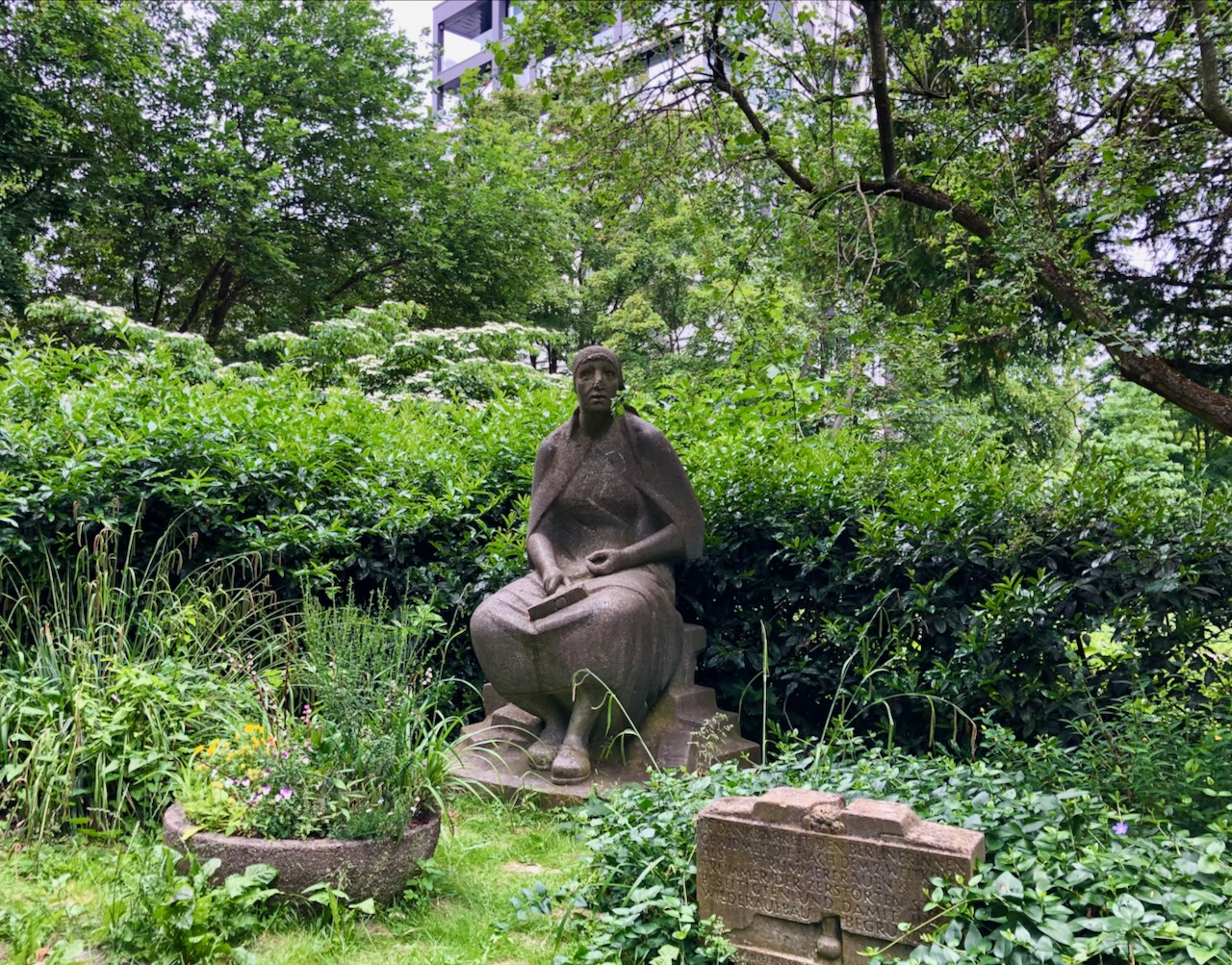
Memorial to the Trümmerfrauen / Rubble women (1950s)

Originally placed on a hill made of the bombed remnants of the city but now reposing with hammer still in hand in the greenery of Hasenheide Park, a Memorial to the Trümmerfrauen of Berlin offers acknowledgement to the ‘rubble women’ who cleared and sorted Germany’s destroyed cities by hand, stone by stone.

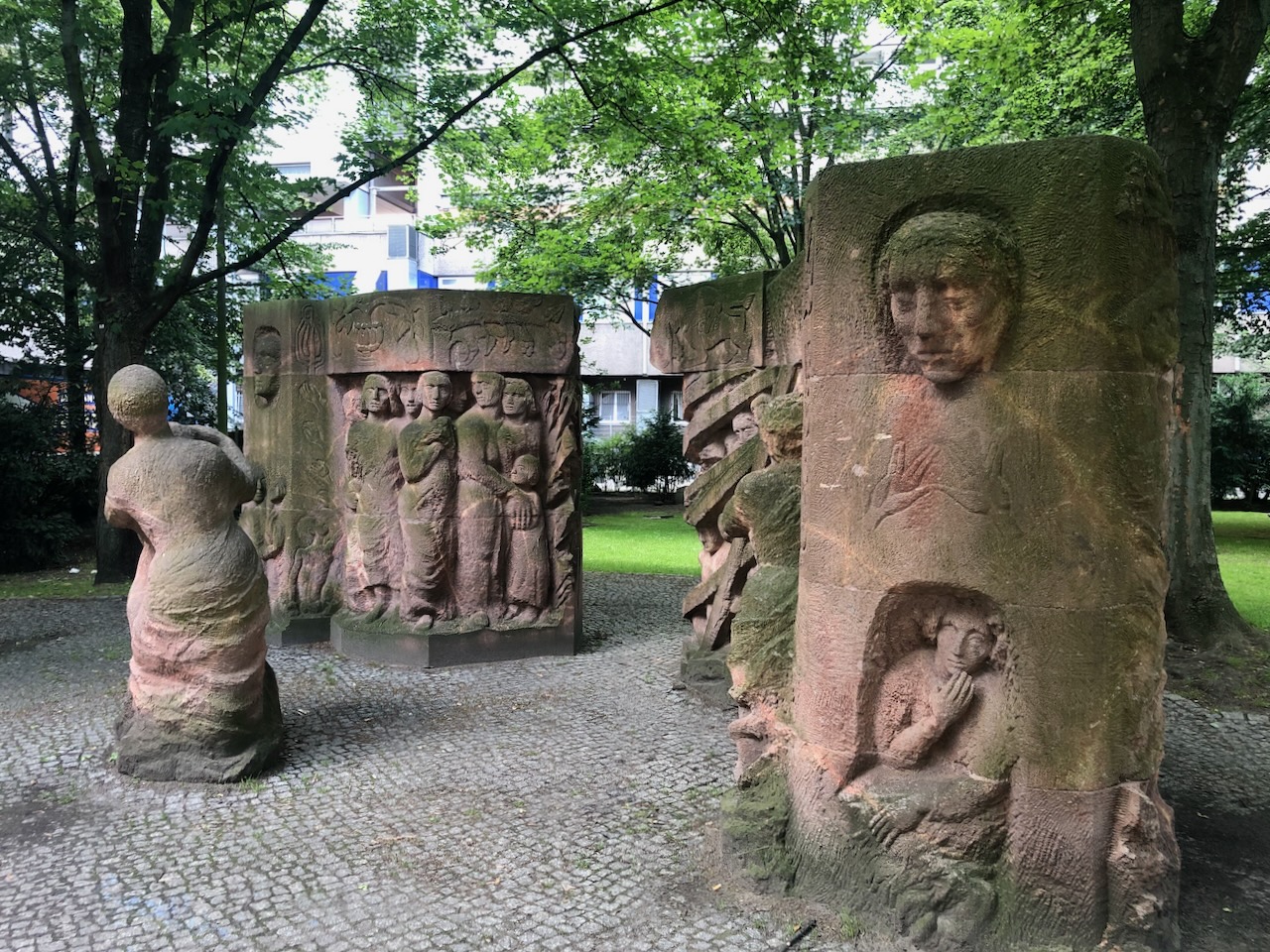
Block of Women, Rosenstraße

More centrally and on the site of the destroyed Old Synagogue, the Rosenstraße Monument, also known as the Block of Women, marks the 1943 peaceful uprising of some 600 non-Jewish German women who demanded the SS and Gestapo release their detained Jewish husbands awaiting deportation. It was a rare moment of successful protest against the Nazis. 

Rosa Luxemburg Memorial

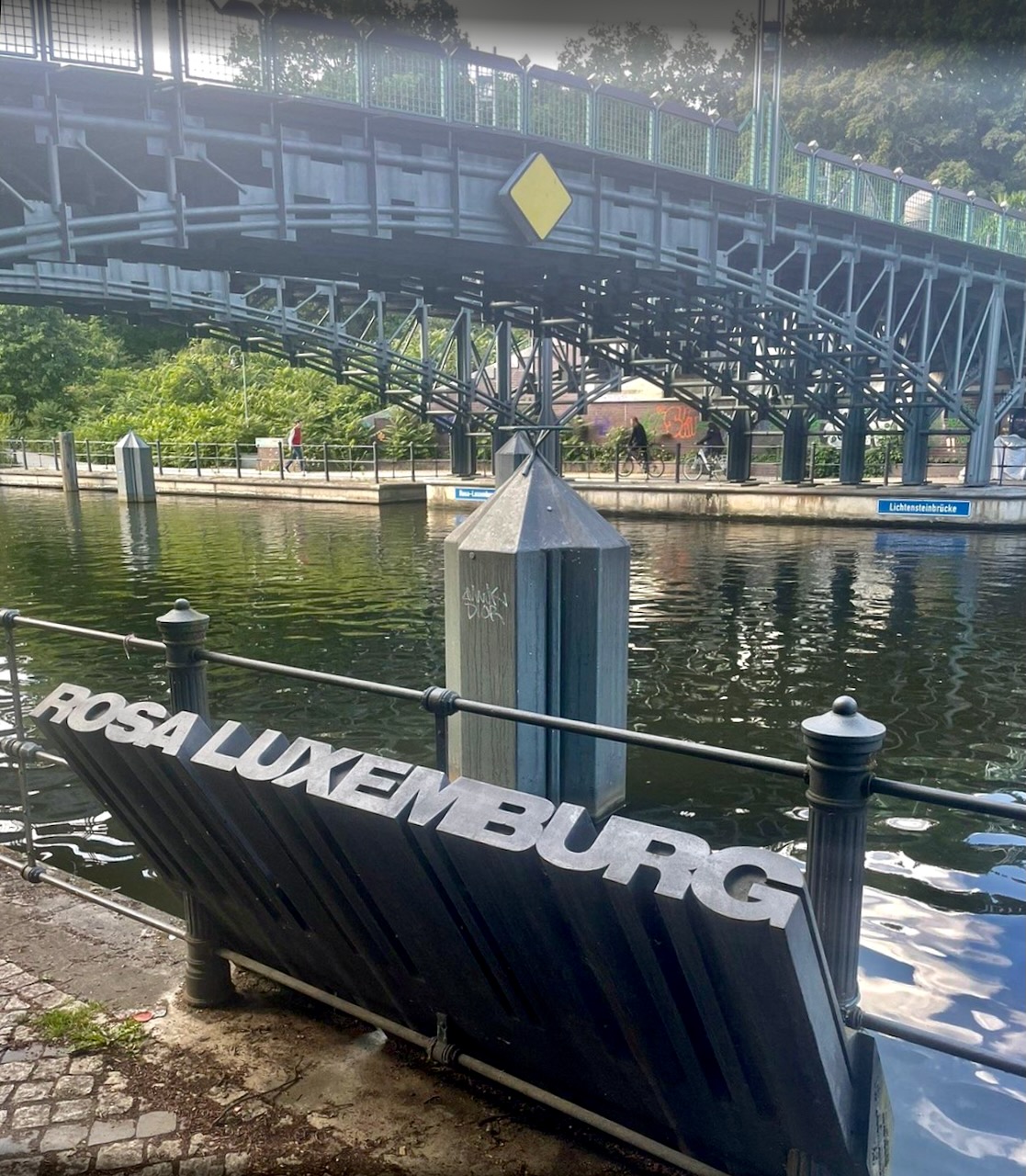
And Rosa Luxemburg, one of the founders and heroines of the anti-war Spartacus League is remembered in big letters spelling out her name along the side of the Landwehr Canal where her tortured and executed body was fished out in 1919. She also has a figurative statue outside the Rosa Luxemburg Stiftung in Friedrichshain.

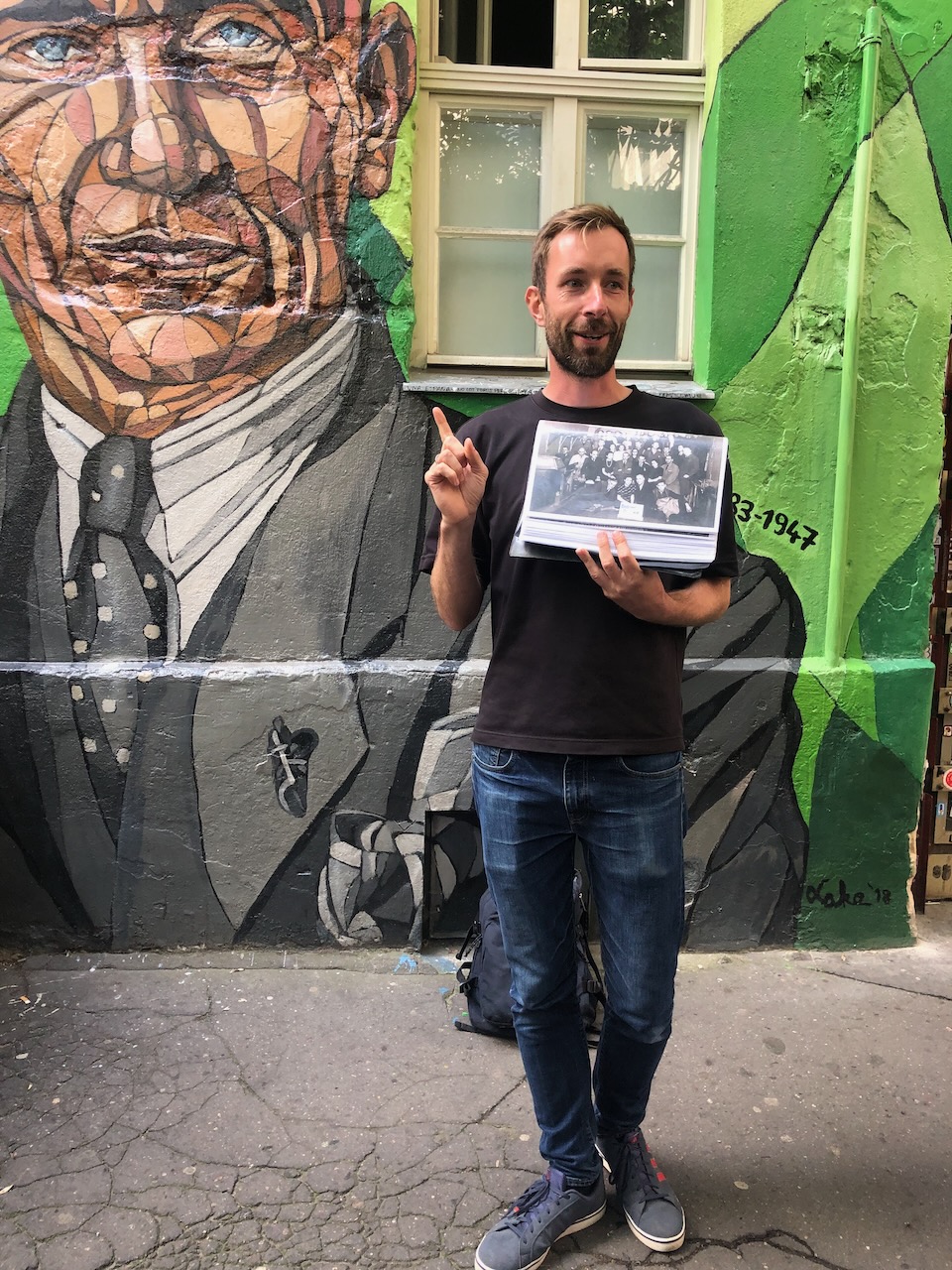
There are no doubt more but today the demographics of Berlin look very different. It’s a cool international city of young hipsters, artists, entrepreneurs, thinkers, activists, expellees, refugees, LGBTQ people, politicians, former GDR bureaucrats and prisoners… the list is long and colourful. John Kampner’s excellent book In Search of Berlin charts its development over the centuries, its ruptures, reinventions and constant search for identity. I keep thinking I know Berlin quite well now, that I have seen a lot of it… how wrong I am. There is more… so much more. And a highlight of this trip was joining Matti Geyer of Tours of Berlin on one of his private tours. (I love a good walking tour and have been on many.) As a born-and-bred Berliner with incredible knowledge and delightful delivery, he could bring new corners of the city to life and introduce me to further gems in this ever-transitioning city. I am already look forward to accompanying him on another.

Germany’s relationship to its past and Berlin’s unique relationship with itself have been fraught with challenges. But while you can feel the unsettled rumble of discontent that has spread throughout Europe and beyond, the wounds and divisions appear to be healing. There is an effortless confidence in its integration of past shadows into its present identity which none of the shiny new façades can hide.

Further reading (as always not necessarily reflective of my views):

Aryan homoeroticism and Lenin’s head: the museum showcasing Berlin’s unwanted statues by John Kapner, The Guardian

History set in stone by Penny Croucher

In Search of Berlin by John Kampner

Counter Monuments: Questions of Definition by Memory and History Blog

Oh dear, what’s happening in Germany…? Could this be the result of a lingering attribution of collective guilt to generations that can’t by definition of the word be ‘guilty’?

“Sometimes in moral philosophy it’s important to think about plants.” I heard these words in last week’s In Our Time and they chimed with my current shift of focus from war to flowers. They were said by the leading philosopher, Philippa Foot, to a room full of Oxford males. She was basically saying that moral evaluation should be see as a continuum of the way in which we see other living things.

A week earlier, I was sent a link to a video by Yanis Varoufakis, former finance minister of Greece, whose proposed speech in April at the Palestine Congress in Berlin was stormed by police and banned. [You can have a listen to his reconstruction of it here.] Somehow I found the two were connected.

So what is happening in Germany in relation to Israel’s war on Gaza? Some reports are pretty concerning. It is understandable that Israel’s security and right to exist has long been Germany’s ‘Staatsräson’ (reason of state). However, since the Hamas-instigated horrors of October 7th, the belief in Israel’s right to defend itself has evolved into a fairly uncompromising pro-Israel position that seems to equate any criticism of Benjamin Netanyahu’s policies with anti-Semitism. Friends in Germany relate how alarmed people are by the shutting down of debate and silencing of different voices, both painfully reminiscent of the authoritarianism and loss of democracy of Nazi Germany. 

The German government’s unswayable support of Israel in whatever it does is a result of Germany’s past. It is seen as morally the right thing to do. But could nearly eighty years of the world’s media placing Germany and Guilt in the same sentence to explain everything, from its open-arm policy towards refugees to its hesitancy to supply weapons for use against Russia, now be backfiring?

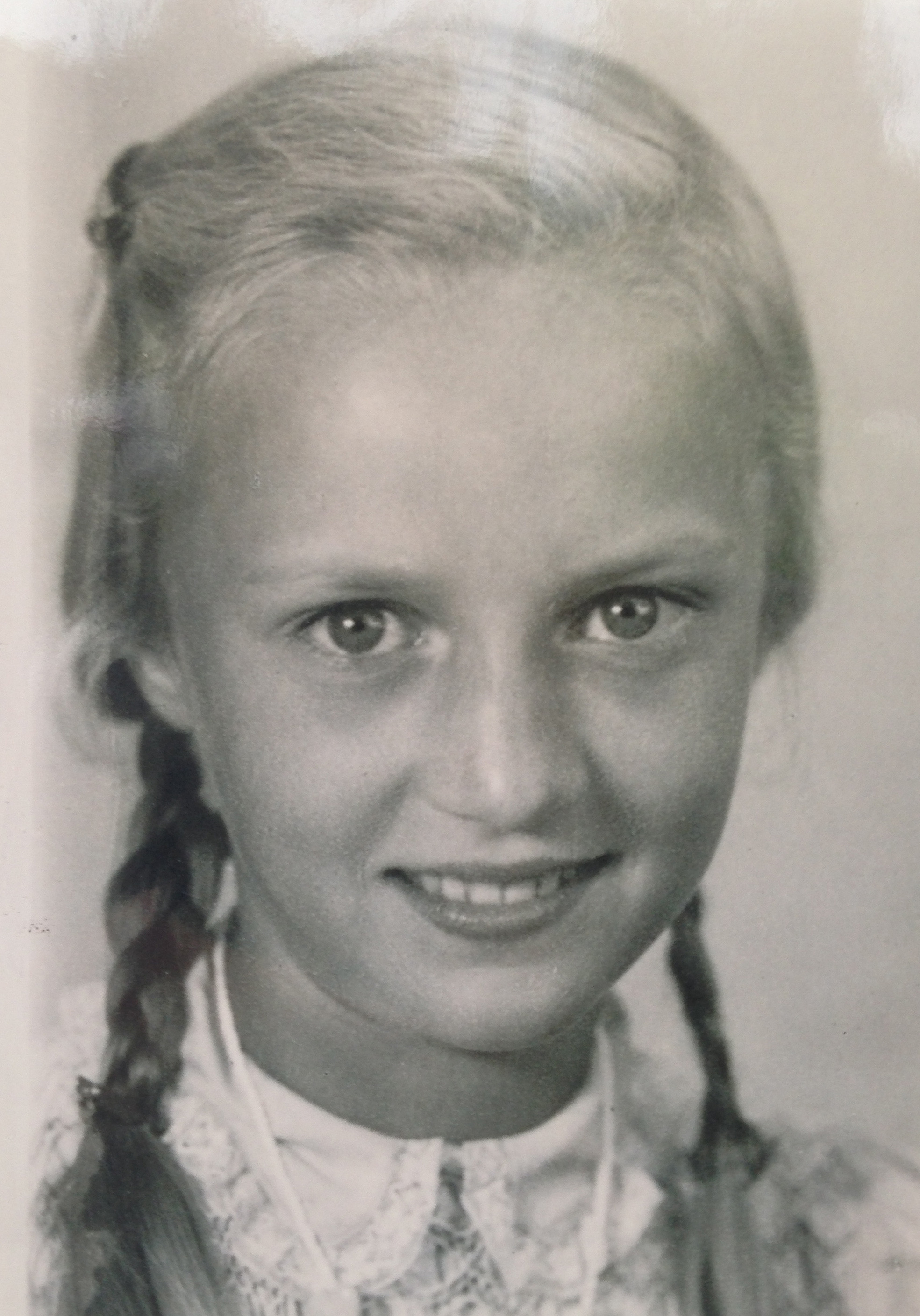
My German mother will be 90 this weekend. She was 11 years old when the Second World War ended and is one of increasingly few Germans who experienced Nazism first hand.

My mother, Jutta, aged 11

In the post-war decades, collective guilt and accusations of complicity in the Nazi atrocities were attributed to the entire German population. Plenty of people consider subsequent generations guilty too, by way of blood / nationality / family association. You might remember my 2018 blog  ‘Shot for what you represent’ with the incident of the English woman who, on hearing I was half-German, picked up her hand off the table, turned her fingers into a gun and shot me in the face! In her eyes, all Germans are unquestionably guilty and “jolly well should feel guilty” too.

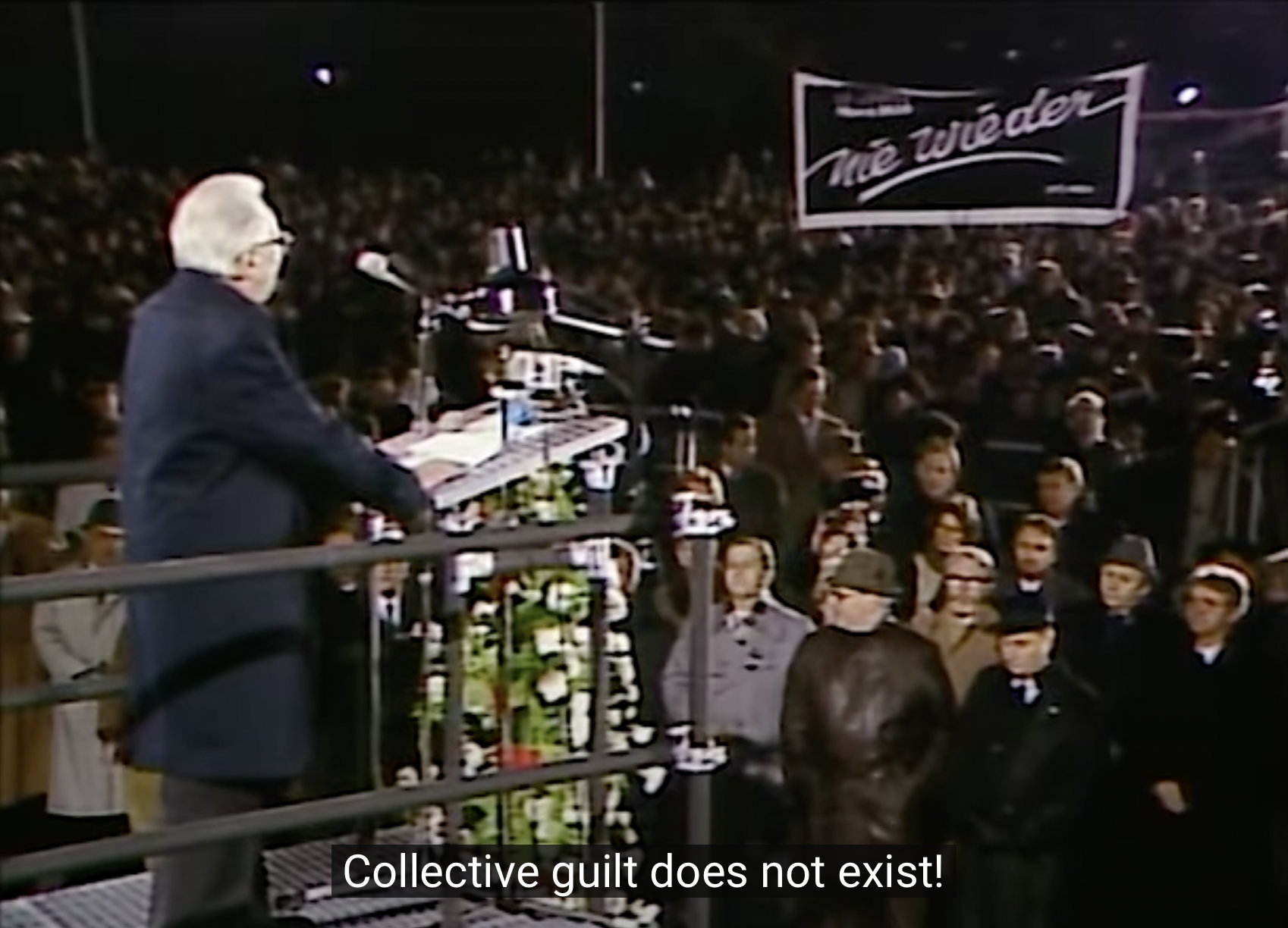
This is in stark contrast to many Holocaust survivors such as Sabina Wolanski, who said at the inauguration of Berlin’s Holocaust Memorial in 2005: I do not believe in collective guilt. The children of the killers are not killers. We must never blame them for what the elders did, but we can hold them responsible for what they do with the memory of their elders’ crime. Similarly Viktor Frankl, author of the seminal book “Man’s Search for Meaning”, who in a 1988 speech spoke out against the very concept of ‘collective guilt’ describing it as a continuation of Nazi-ideology.

I believe they are right. I understand how Germans, myself included, might feel shame for being part of a group who allowed genocide to happen. Many also feel a deep sense of responsibility for not allowing it to be forgotten and making sure it doesn’t happen again. But guilt?

Let’s explore the dynamics of this word for a moment. 

Guilt is the result of an action within our control and responsibility. To be guilty, you have to have done (or failed to do) something that falls out of the framework of what is socially acceptable by the group with consequences of harm to an ‘other’. Frequently ‘guilty’ parties will not feel guilt or shame as they see their actions as having been justified, necessary, righteous even, within the context in which they were committed. Resentment and retaliation for being deemed ‘guilty’ can follow.

In Who’s to Blame? Collective Guilt on Trial, Coline Covington describes how Judeo-Christian cultures place particular emphasis on guilt, forgiveness and atonement alongside rituals that are supposed to restore moral order, cleanse the groups of shame and hatred, and prevent or close cycles of vengeance. For a long time, I have believed this was right and Germany’s culture of Vergangenheitsaufarbeitung (working through the past) and counter memorials was an example to all of us of how things could (and should?) be done. I am no longer sure that is what’s needed now.

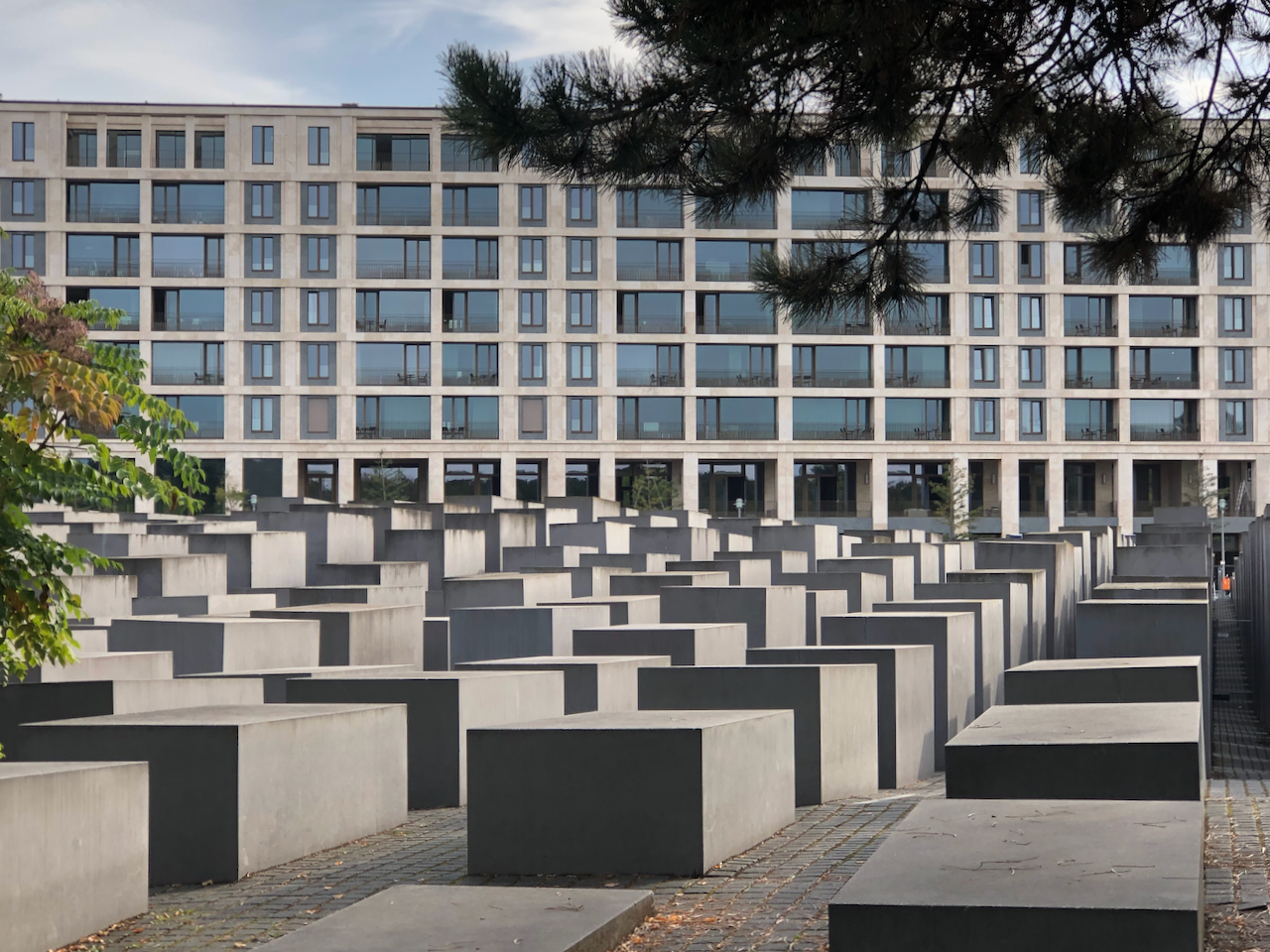
Memorial to the Murdered Jews of Europe by Peter Eisenman, Berlin

The problem is, Covington says, that most restorative rituals for peace-building are built on a binary understanding of good and evil, right and wrong, victims and offenders. “The finger of blame is pointed and yet true healing is meant to eradicate blame. This inherent contradiction contains the seeds of failure.” Could it be that we are witnessing this failure in Germany, Israel/Gaza, Russia/ Ukraine and elsewhere, resulting in new perpetrators and victims of atrocity and trauma? 

If so, how do we overcome binaries? I tried a couple of weeks ago in an online group of Jews, non-Jewish Germans, my own Anglo-German mix and others. Someone had been talking about the frightening increase in anti-Semitic acts and some members of the group had dismissed those behind them as ‘idiots’. A common reaction to unacceptable behaviour, and I have said the same many times in relation to certain members of the Tory party! But it got me thinking… because when we proclaim a shocked judgment: “How could they!” How stupid!” “How awful / evil / weak!”, we are basically believing: If I were them, I wouldn’t do what they are doing. We are seeing ourselves as morally superior, stronger, more intelligent and right, while ‘they’ are inferior, guilty, ignorant, wrong. 

Does this dynamic not replicate, in an initially small but precise way, the dynamics behind the Nazi, or indeed any, discriminations and judgments against apparent ‘lesser mortals’?

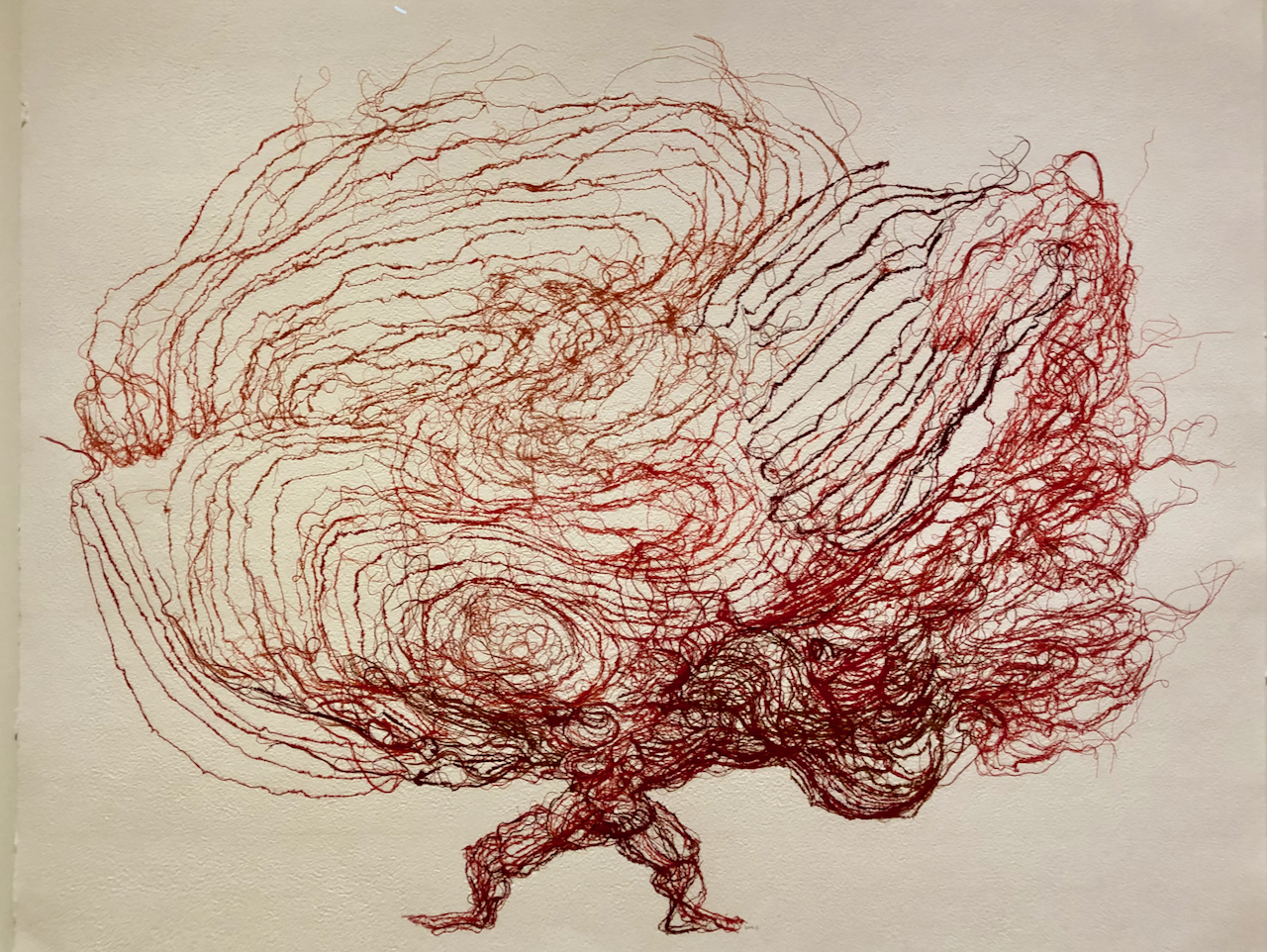
Do Ho Suh, Karma Juggler, Thread embedded in cotton paper

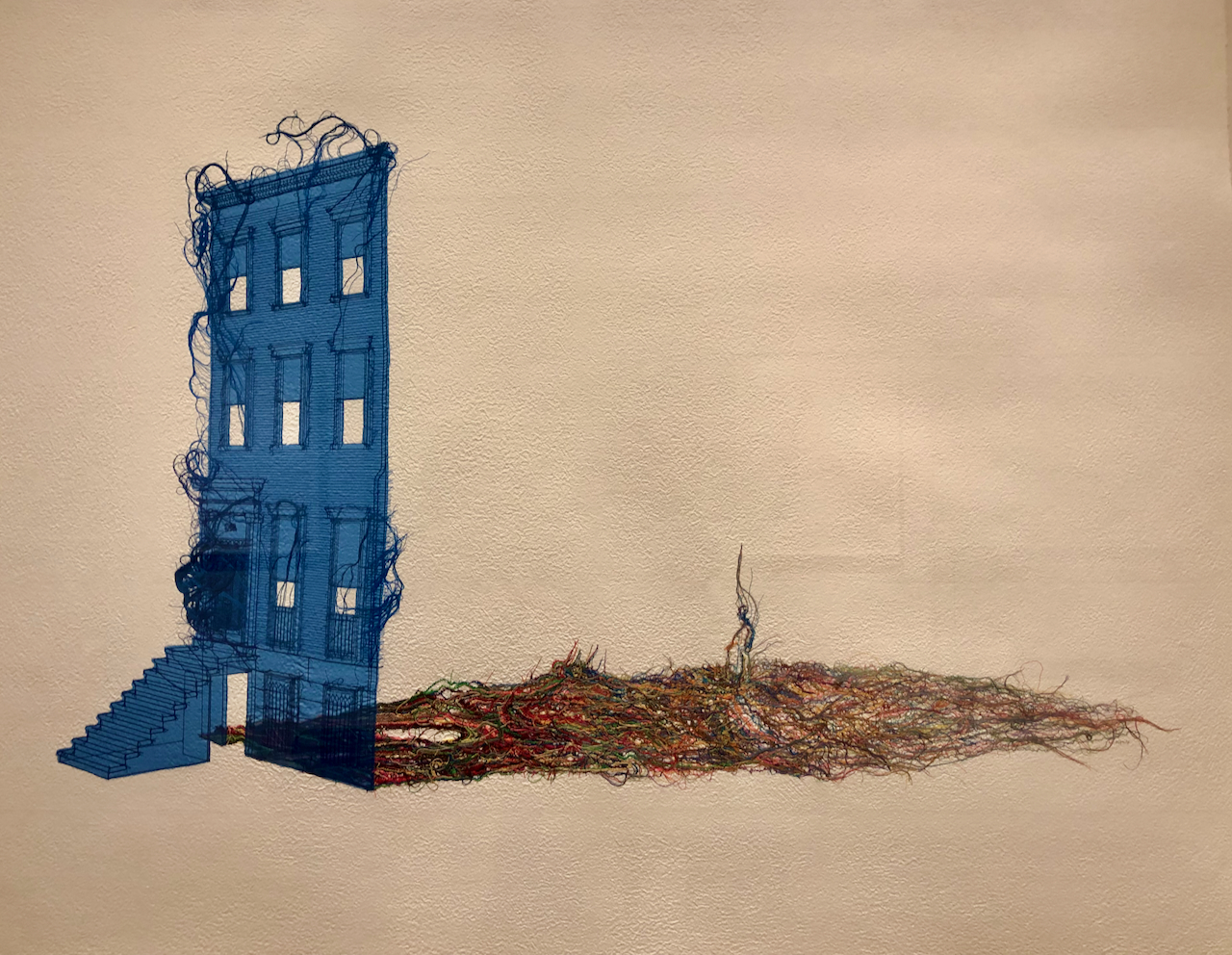
In this particular constellation, I naturally belonged in the ‘German perpetrator’ rather than the ‘Jewish victim’ category. It’s an uncomfortable place to be, but I have noticed that since finishing my book, the label no longer sticks as well. My grandfather’s shadow that once draped over my identity like a huge cloak has been so comprehensively unpicked, understood, transformed and woven into the fabric of my whole being that I can no longer see people in such binary terms. Like the beautiful art of the Korean artist, Do Ho Suh, whose exhibition Tracing Time I saw on a recent trip to Edinburgh, I can see how we are all threaded together into a colourful tangle of humanity, each one necessary and part of the whole. 

Do Ho Suh: Blueprint (2013), Thread embedded in cotton paper

There were people in the group who suggested I was ‘absolving’ myself and wanting to free myself of the burden of guilt, almost as if this was utterly impossible or prohibited. I do understand that response and how for descendants of survivors, this could feel an affront. But, without diminishing any of the suffering of and compassion for the descendants of survivors, I myself choose to no longer see people in terms of “my side/your side”, as one member put it. I believe that in order to overcome the judgmental binaries of ‘us-good’ and ‘them-bad’, we all need to make a greater effort to understand what lies behind bad or evil deeds. We not only need to step into the other person’s shoes, but into their entire situation. Only then can we recognise that if we were in the totality of their internal and external life, we would act, or would have acted in exactly the same way as them. The results of Milgram’s 1961 experiment with obedience to authority suggested something similar. Apparently good people, like us, can also become capable of extreme bad.

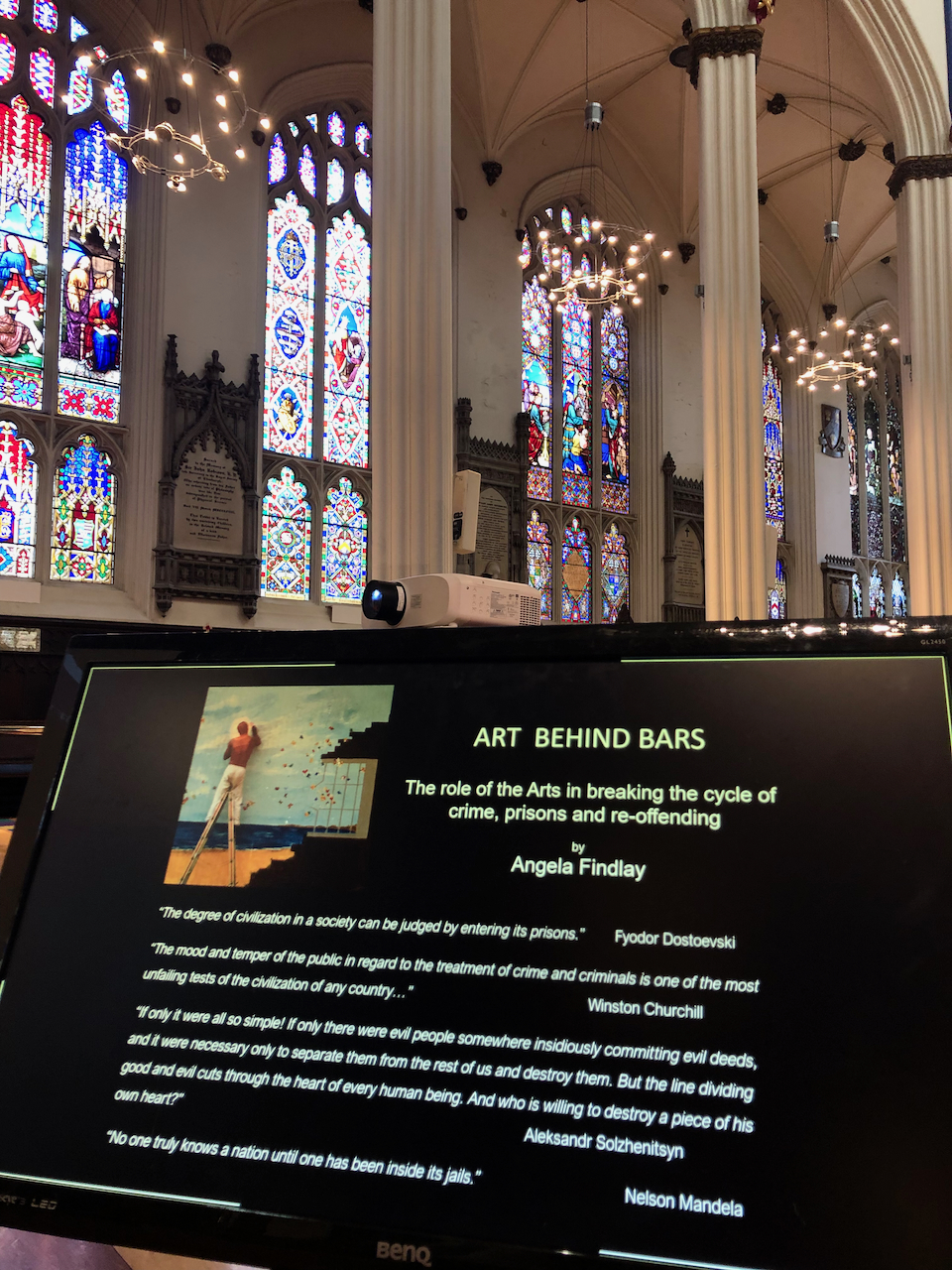
You will all I am sure now know about the horrendous, inhumane conditions of HMP Wandsworth and so many of Britain’s jails, and the decades of glaring failures of our Criminal Justice System in general. (If not, you can get an impression here and here and here) None of us live very far away from a jail, and yet so many of my Art Behind Bars talk audiences say they had “no idea.” Will we too one day be judged and found guilty of the stigmatisation of offenders that enables this shamefully degrading system to exist in our name as a fulfillment of our wish for governments to be ‘tough on crime’? Will we be accused of turning a blind eye, not acting and later claiming ‘we didn’t know’?

I am deliberately being a little provocative to make a point. Because as far as I can see, the only way we have a chance of breaking the catastrophic cycles of blaming and shaming, violence, retribution – all outcomes of seeing each other as ‘other’, separate and different from ourselves – is to create a level playing field of mutual respect where both (or all) sides are treated equally. And it can start within each one of us. In everyday situations. Now.

This is the African concept of ‘Ubuntu’, a philosophy of interconnectedness, sometimes translated as ‘humanity towards others’ or ‘I am because we are’. The most recent definition provided by the African Journal of Social Work (AJSW) describes Ubuntu as: A collection of values and practices that people of Africa or of African origin view as making people authentic human beings. While the nuances of these values and practices vary across different ethnic groups, they all point to one thing – an authentic individual human being is part of a larger and more significant relational, communal, societal, environmental and spiritual world.

According to Charles Eisenstein, author of The More Beautiful World Our Hearts Know is Possible, aligning ourselves with the truth that ‘if I were in the totality of your circumstances, I wouldn’t do differently from you,’ and the compassion that arises from putting ourselves in another’s shoes and seeing us as one, is “perhaps the most powerful way to magnify our effectiveness as agents of change.” I think I agree.

Further Reading / Listening (as always, not necessarily my opinion)

What’s behind Germany’s support of Israel? – Inside Story Podcast, 10th April 2024

As war in Gaza rages, what’s behind Germany’s support of Israel? – Al Jazeera

Historical Reckoning gone haywire – Susan Neiman, The New York Review

Germany’s crackdown on criticism of Israel betrays European values – Al Jazeera

Germany’s historical guilt haunts opponents of Israeli war in Gaza – France 24

A Clean Break by Tom Holland – A Point of View, BBC Radio 4

Back to Jail, this time with a book not a paintbrush… 

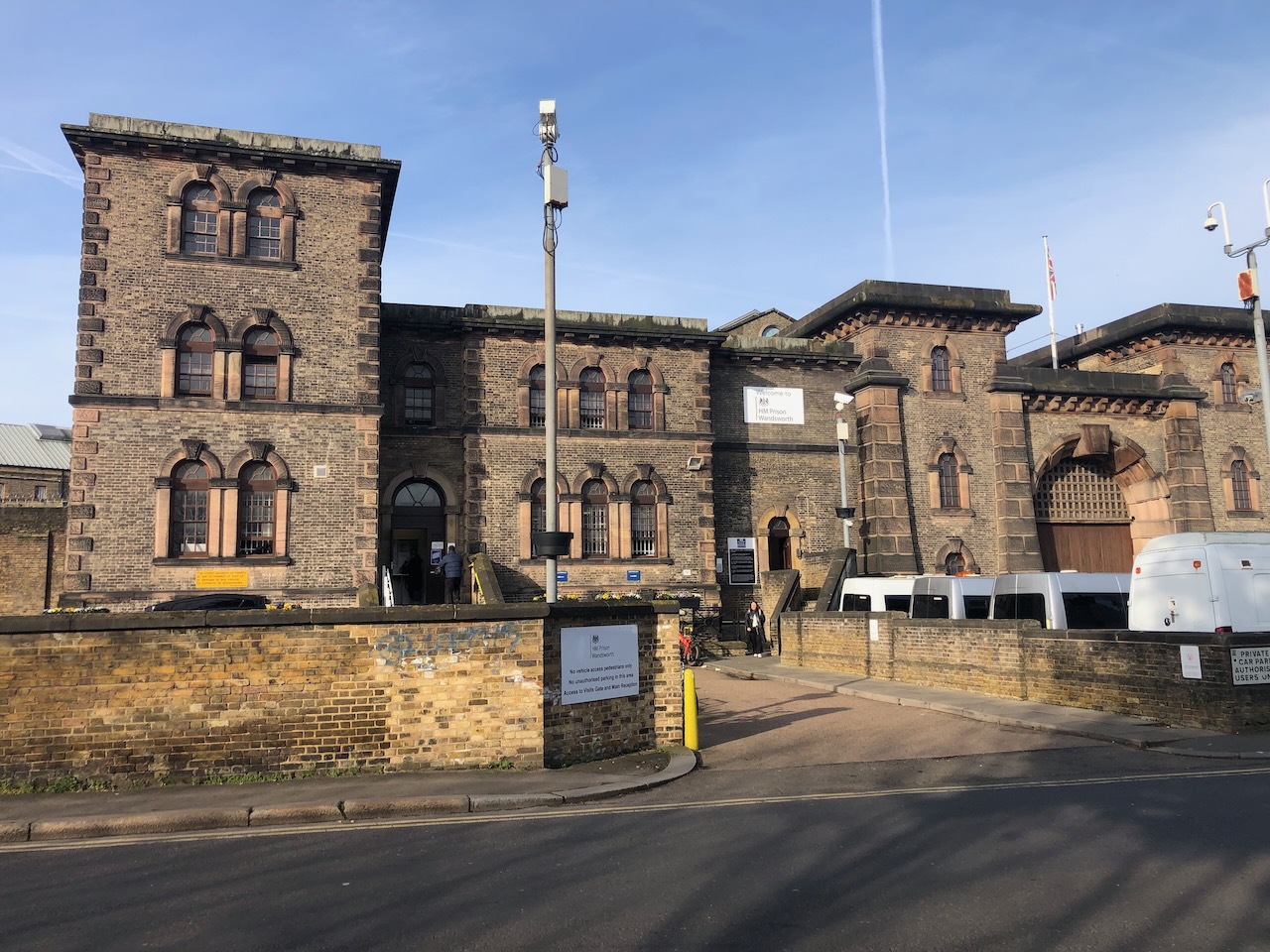
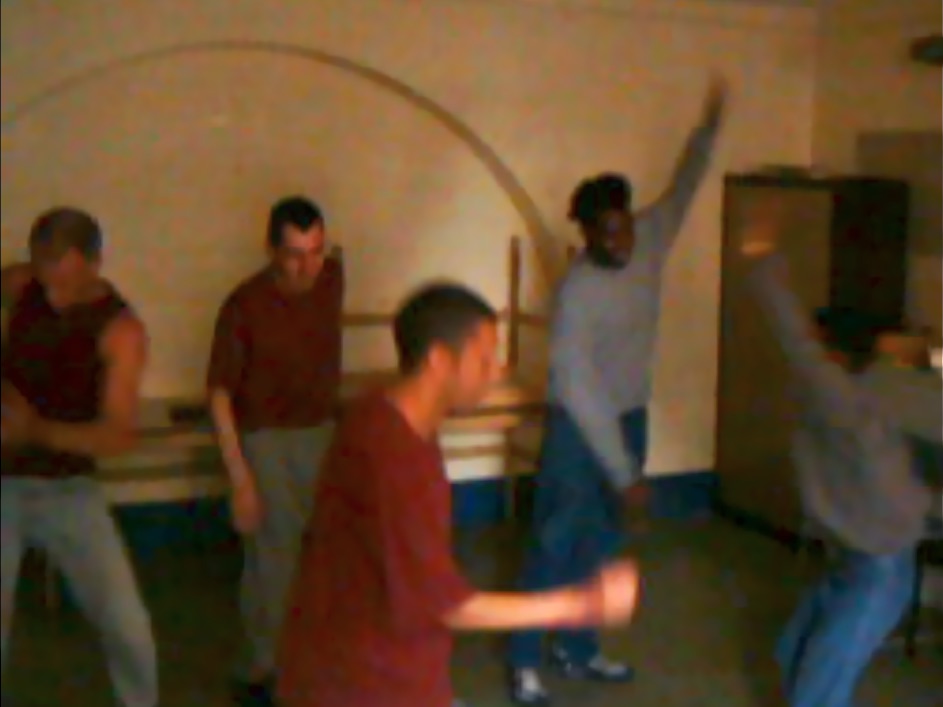
There was something deeply familiar about the process of entering HMP Wandsworth last week. The first time I was there was in 2003 in my role as Arts Coordinator for the London-based Koestler Arts. I had founded the Learning to Learn through the Arts scheme a year earlier and was co-facilitating a 4-week dance and art project called Beyond Words.

HMP Wandsworth, London

The aim was to bring dance and painting together to create a non-verbal language through which prisoners could express themselves. Each day was a mixture of individual and group exercises that saw the men clambering over tables and chairs to dissolve the formalities of a traditional classroom or splattering paint on paper with Expressionist vigour. Both approaches eventually led to solo multi-media performances and the development of communication skills, camaraderie, trust and sensitivity within the group.

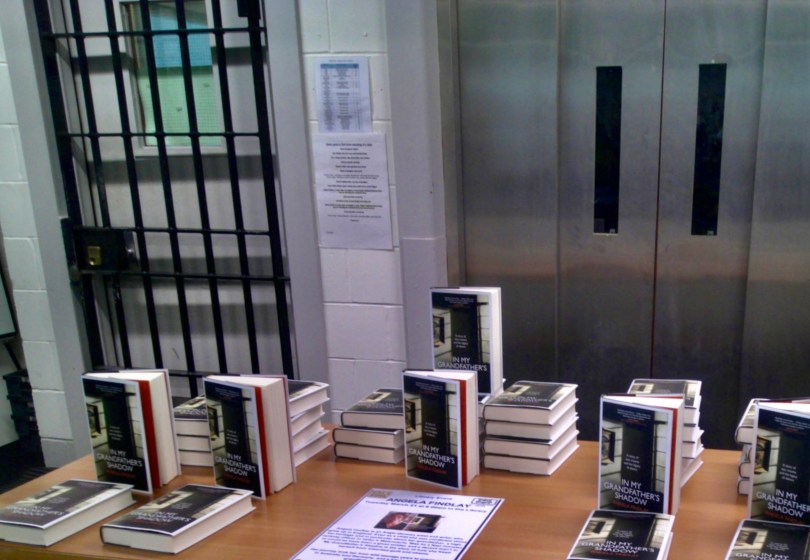
Now, twenty years later, I was re-entering HMP Wandsworth, but this time in the wholly verbal capacity as author of In My Grandfather’s Shadow.

For people who haven’t experienced it, entering a prison can seem synonymous with entering hell. And for many, it probably is. This blog therefore feels unintentionally apposite to Good Friday, the day in the Christian calendar that signifies the crucifixion of Jesus Christ and his descension into hell. We have grounds for this picture of infernal misery from exposure to BBC programmes such as Prisoner,   Time,  Disclosure: Prisons on the brink.  Or five series of Prison Break. But my visit couldn’t have felt further from those dark scenes. 

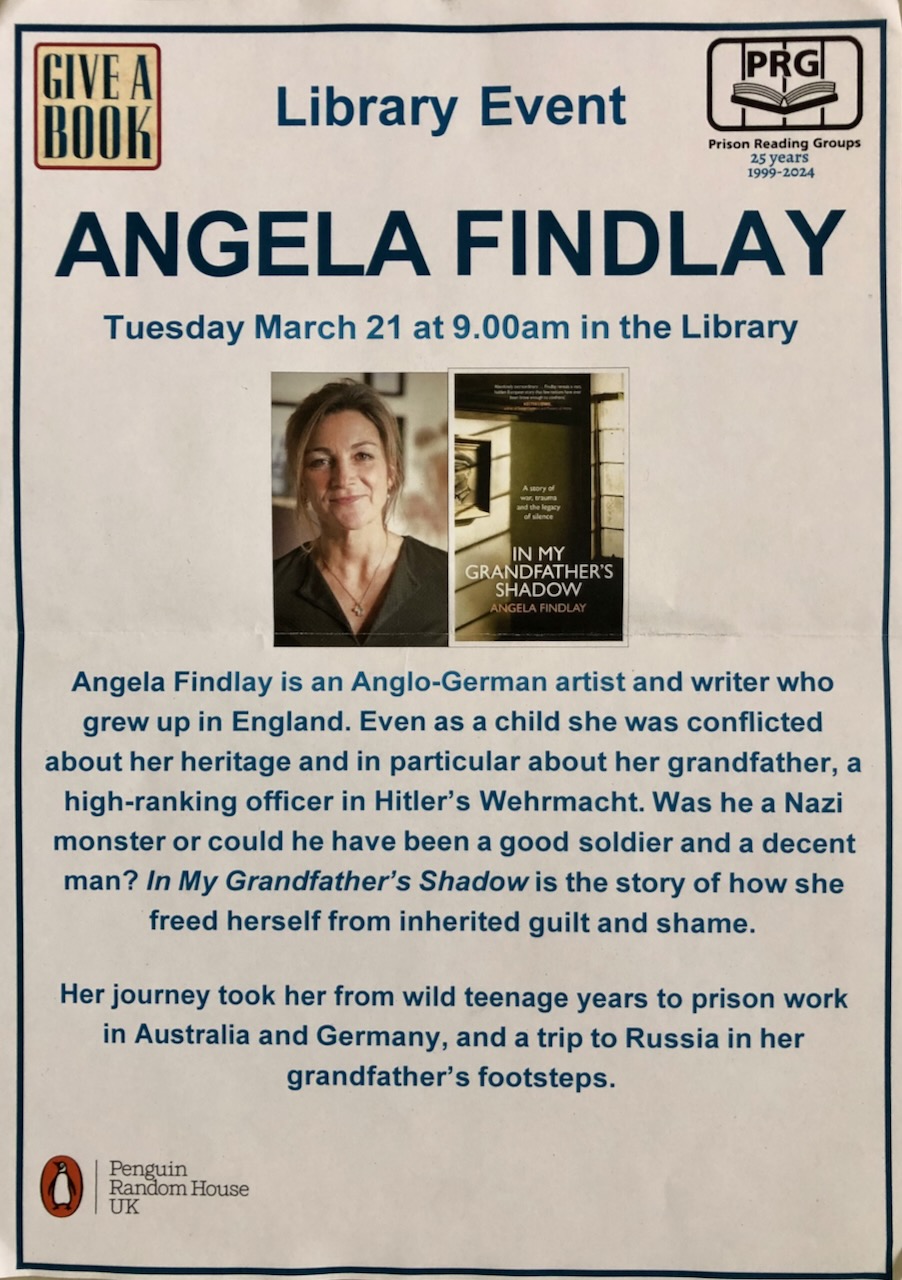
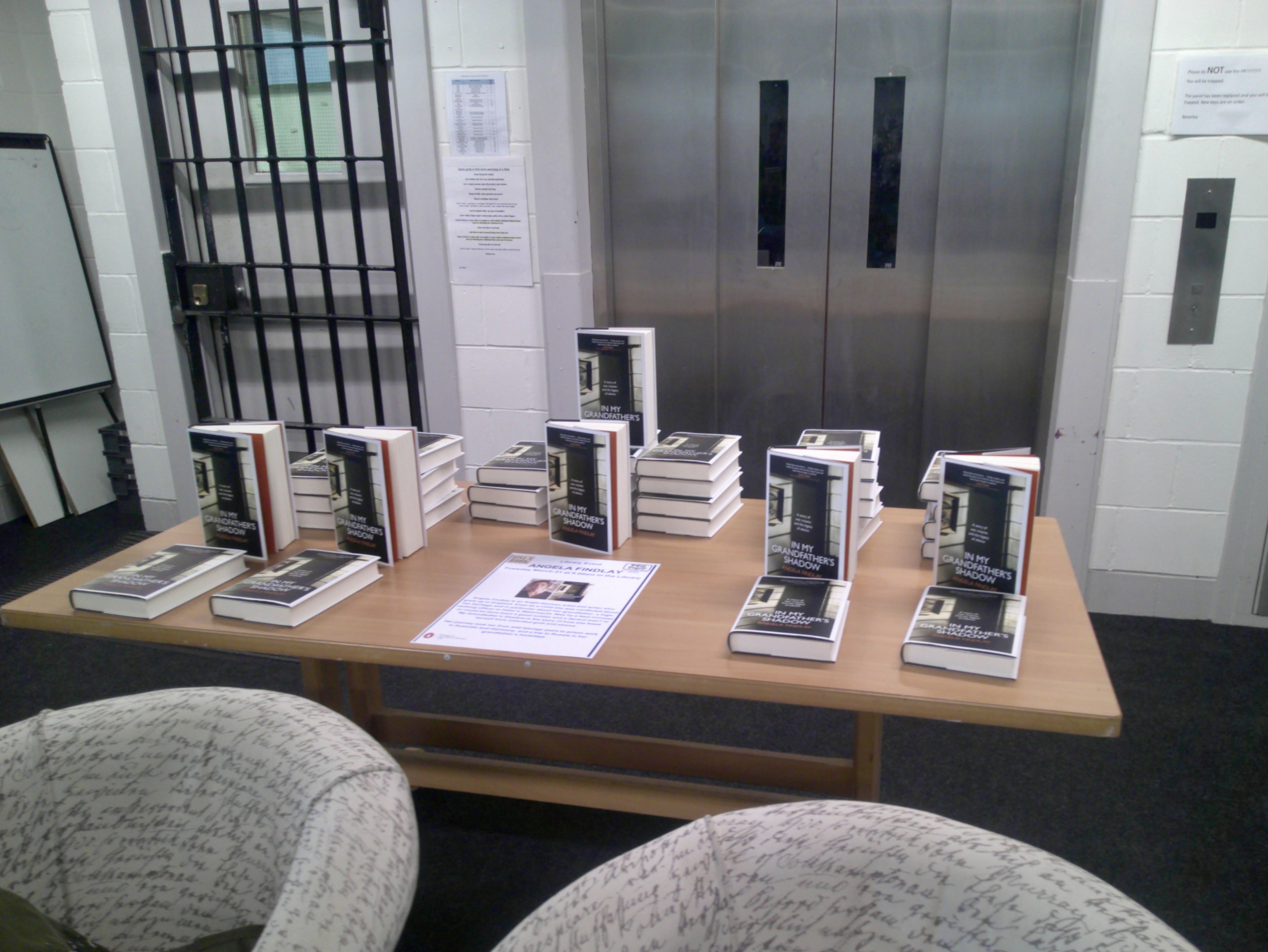
The beautifully organised event was the result of a brilliant collaboration between the Wandsworth Prison Library team and the charities Give a Book and Prison Reading Group (PRG). Generous book donations came from Penguin Transworld and Radio Wano, the prison’s in-house radio station, took care of publicity. I knew from experience how difficult arranging such events can be. Months of dialogue and organisation can be kiboshed by any number of unforeseen occurrences, or simply by time-poor officers’ inability to deliver the prisoners to the room.  

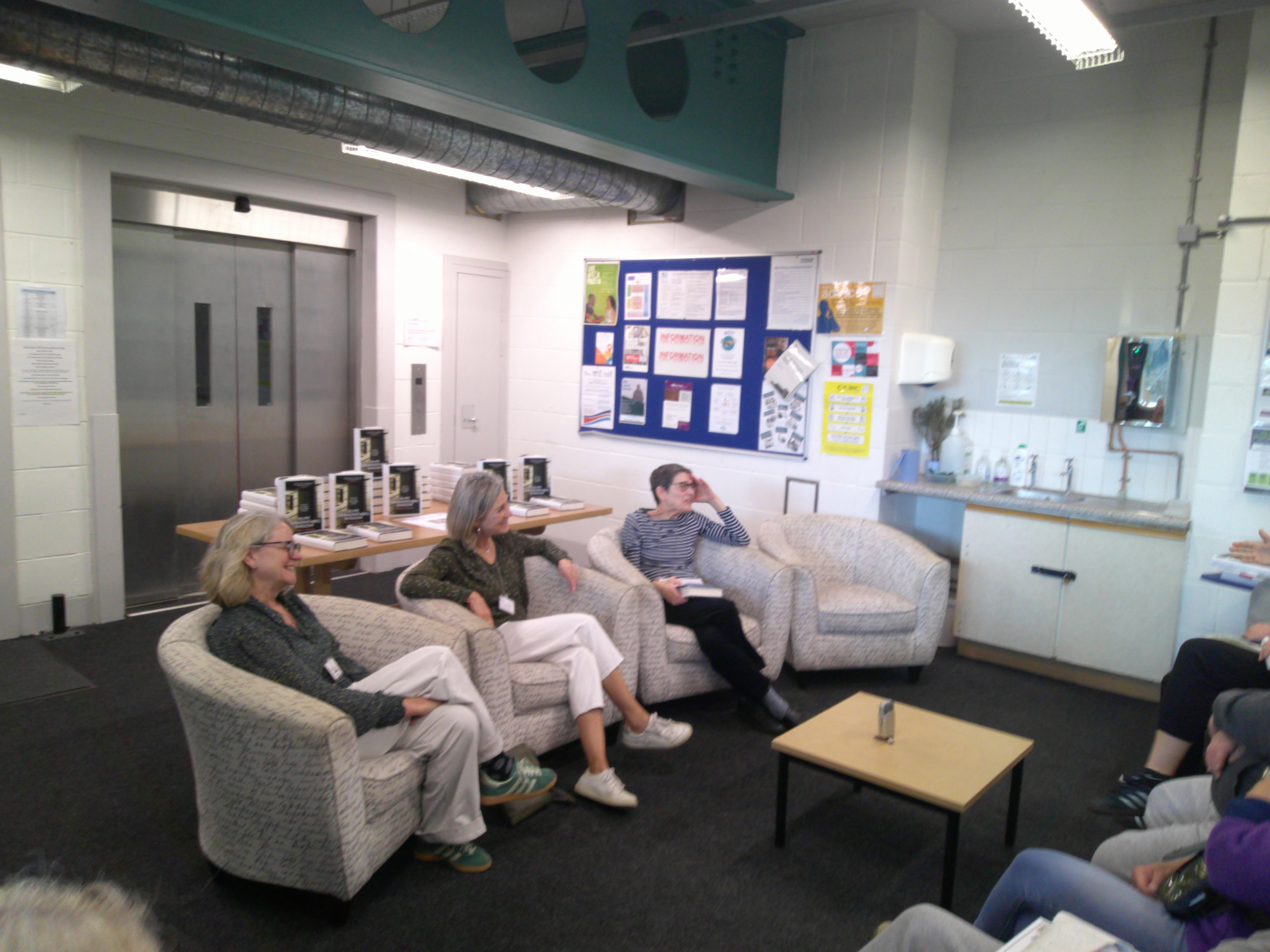
Not on this occasion though. Thirty-five men, mostly already seated, some with copies of my book on their laps, awaited us as we took our seats in front of a display of hardback copies that rivalled any book festival’s. Unlike my regular illustrated talks in which a series of images ties me to a certain chronology of thought, I was able to speak freely, engaging the antennae grown over years working ‘inside’ to gauge the interests and sensitivities of my audience. As I spoke into the men’s intense attention, I sensed cogs turning in brains as they connected my words to their personal situations. So many of my book’s themes speak to their experiences of trauma, addiction, conflict, violence, guilt, shame, depression, intergenerational family legacies… 

Like a muscle memory, my heart opened as they began to engage verbally, asking questions and contributing informed opinions and philosophies of their own to mine. One of the librarians said to me afterwards, ‘They are so deep.’ And yes, their questions dived in at the deep end, not dissimilar to audiences in Germany. Intelligent. Philosophical. They know darkness. And they recognise how you get there. What I, as always, hoped to show was a way out.

At one point, as I related how I had felt ‘at home’ in prison as a young woman, a prisoner suggested that it may have been because they are at the bottom. ‘We are the bottom of society.’ He was right. That is the perception of many. Shame is the ultimate bottom dweller of emotions. And in feeling shamed as a teenager for being half-German, I would have related well to those who resided at ‘the bottom’.

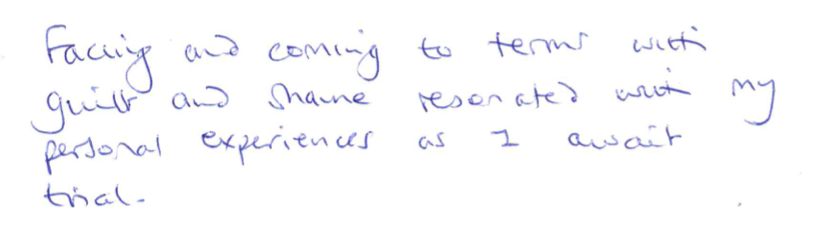
Comment from a prisoner at HMP Wandsworth

I cannot, however, see these men – and I say men as a generalisation because 95% of the prison population is made up of men – as genuinely being at the bottom of the human pile. It is wrong of society to simply clump them together into one unnuanced band of criminal brothers. There are of course some horrendous crimes. But each person is both individual and potentially so much more. Each has a story, a journey of how they got here. And dreams for something different.

One man revealed he had thought about writing his story but felt nobody would be interested. ‘What makes you think that?’ I enquired. ‘Because it would be too dark,’ he replied only to be refuted and encouraged by others with claims that the crime thriller is one of the most popular genres. 

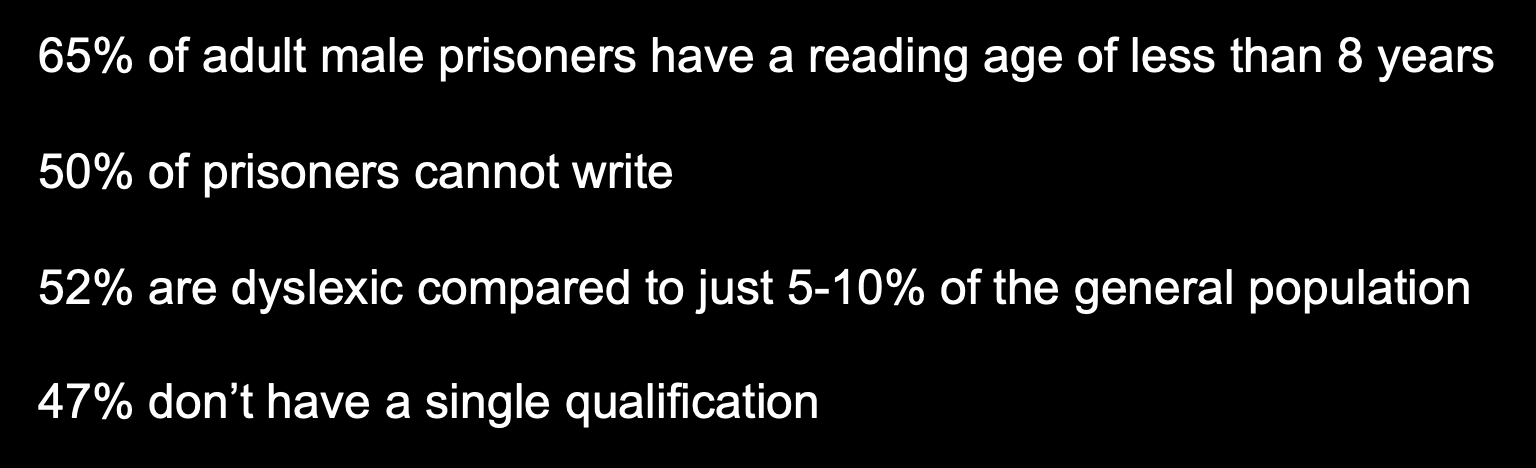
Listening to and briefly meeting the prisoners at this library event didn’t appear to correspond to the prison statistics I regularly quote in my Art behind Bars talks.

A 2022 government review of reading reported: “The most recent data published by the Ministry of Justice shows that 57% of adult prisoners taking initial assessments had literacy levels below those expected of an 11-year-old.” There is nothing new here, but they remain shocking statistics. And yet my experiences tell me that in spite of high rates of ADHD, illiteracy, dyslexia, prisoners are far from ‘thick’ or even uneducated. They may have failed in or been excluded from mainstream education, but all too often that is because they have not received an education appropriate to their learning styles or needs. It’s an education that doesn’t recognise or value what their experiences have taught them about life.

Once the discussions were over, a long queue lined up for signed copies dedicated to names that revealed the audience’s colourful cultural mix. Many imparted tantalising snippets that hinted at reasons for their interest in my subjects… they were from Poland; they were fascinated by alternative perspectives on WW2; they now recognised how their actions might impact their children; they longed for intellectual stimulus. 

L-R: Standing: Sarah Turvey (Founder of PRG) and Mima Edye-Lindner (Director of Projects, PRG) Seated: Me, Paul Eden (Volunteer for an HMP Wandsworth Reading Group), Susanna Wadeson (Penguin Transworld)

The importance of the work of HMP Wandsworth’s Library – headed by Beverley Davies and her Senior Assistant, Hannah Pickering (who was taking the photographs) – and the work of Give a Book, PRG and their reading group volunteers plus all the Arts Projects taking place in prisons around the country cannot be underestimated. I am so grateful for and heartened by it. Traditional classroom settings are not always the way to educate people. There are other ways to inspire minds. As Antoine de Saint-Exupéry wrote in Citadelle:

If you want to build a ship, don’t drum up the men to gather wood, don’t divide the work and give orders.

Instead, teach them to yearn for the vast and endless sea.

Last week’s Library Event seemed to do just that as both the below comments from the Library and Prisoner Nr. XXX reveal:

“The guys were really buzzing afterwards, and it was great that other people noticed what was going on and wanted to get involved. All the books were taken which is a real positive.”

Prison Reading Group was founded in 1999 by Jenny Hartley and Sarah Turvey. Together with the team from Give a Book and Director of Projects Mima Edye-Lindner, they delivered 5000+ books to 84 groups in 64 prisons.

If you would like to support them, please go to their websites: https://prisonreadinggroups.org.uk

In Search of Nothing… Part 3. ‘Listen… ‘

One of the things that struck me most on my recent trip to Australia was how far the country has come in the 37 years since my first visit. Above all, in acknowledging the darkest aspects of its colonial past: the dispossession, dispersal, and inhumane treatment of First Nations peoples.

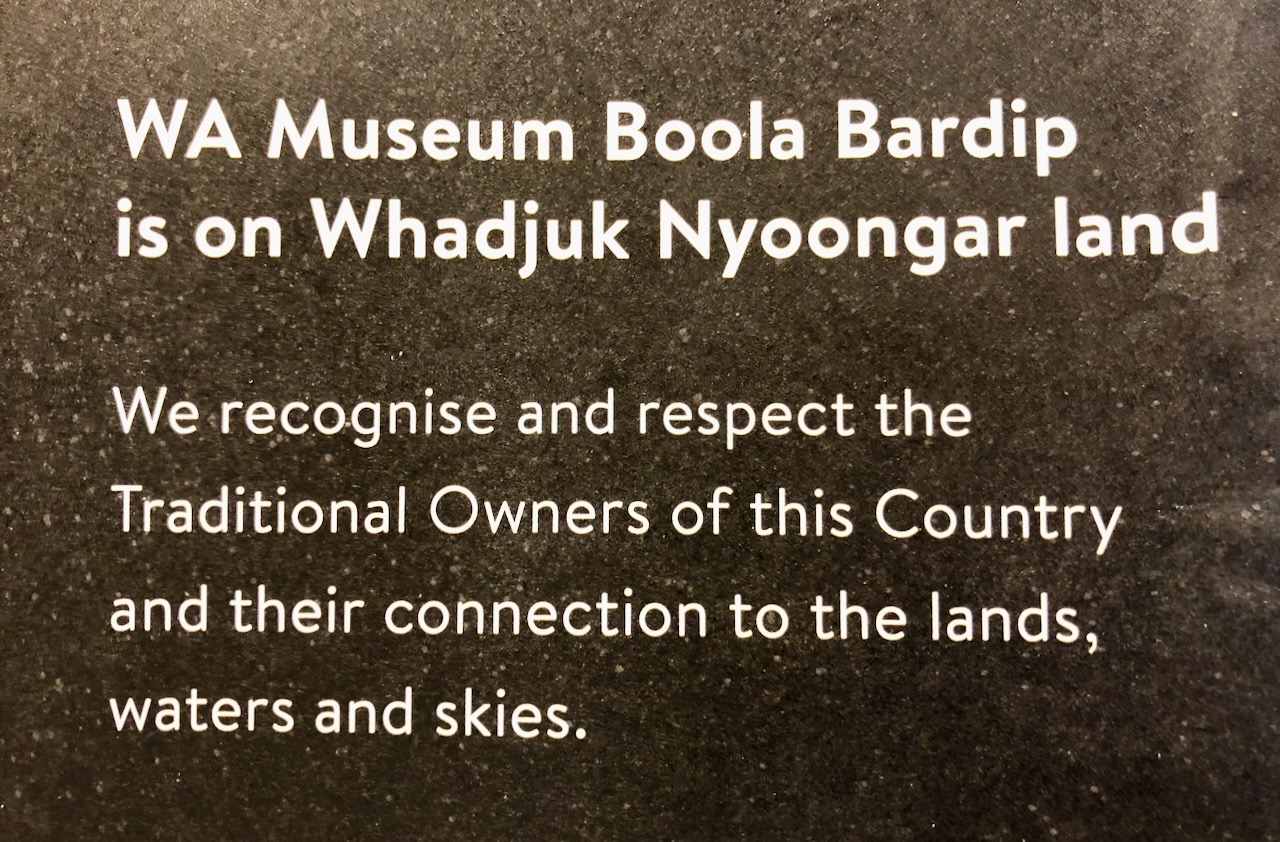
It is far from a given that a country admits, let alone apologises and atones for past wrongdoings. One could also question if it is even possible or right for a subsequent generation to apologise for the errors of a previous one. But that is what I found in today’s Australia where few locations or tourist sites, art galleries or museums, brochures or signage do not have a written acknowledgement of a specific Aboriginal people as the rightful custodians of the land. In addition, there are frequently pledges committing to respect these Traditional Owners going forward. 

This is a welcome overturning of the 1835 legal principle of terra nullius – land belonging to no-one – that was implemented throughout Australia as the basis for British settlement and the negation of Aboriginal people as being civilised enough to be capable of land ownership. Even personal email signatures are now used to underline an individual’s support and respect.

I acknowledge the Whadjuk People of the Noongar Nation as the custodians of the land I live and work on.

I respect their enduring culture, their contribution to this city’s life, and their Elders, past and present.

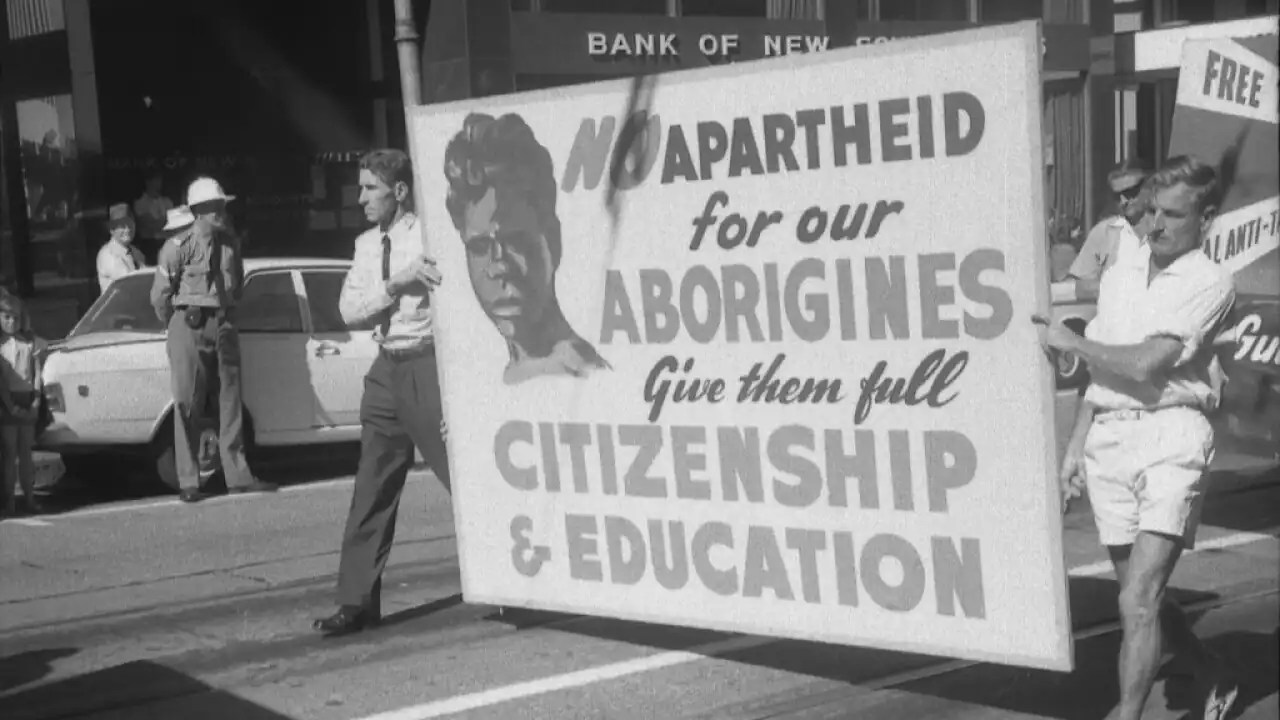
Back in 1986 when I lived in Sydney, I encountered small groups of activists who fought for Aboriginal rights. But attitudes outside the cities, despite the successful 1967 referendum, remained far from close to recognising Australia’s indigenous people as equal citizens in their own land. Even decades after the extreme discriminations of Nazi Germany’s anti-Semitic laws and actions had horrified the world, Aboriginal people were regarded as ‘wards of the state’. They were unable to own property or control their own money; they were not allowed to marry or travel without permission. If they lived in or around white communities they were segregated and prevented from using community swimming pools or sitting where they chose in a cinema.

Photo from the 1966 May Day march in Brisbane. Source: Victorian Aboriginal Health Service

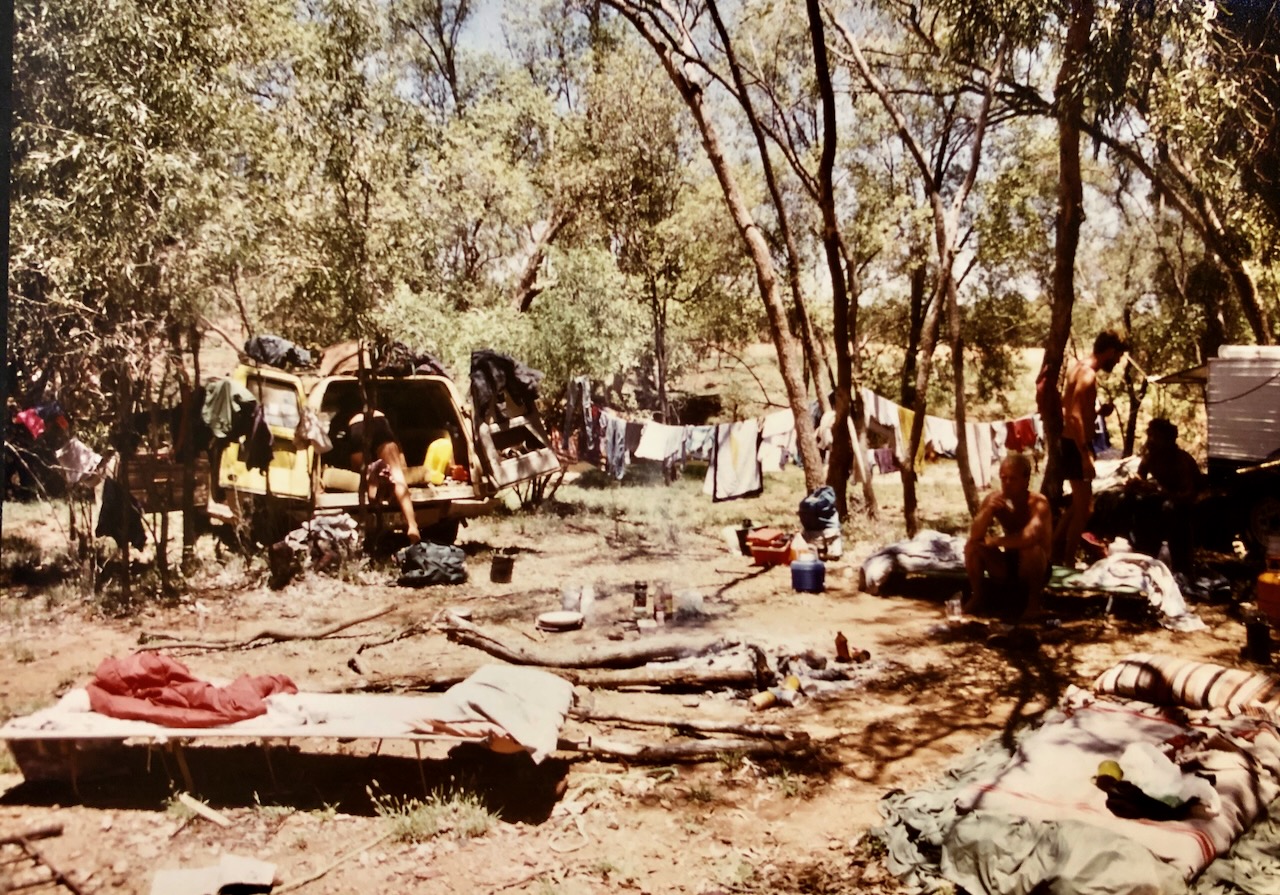
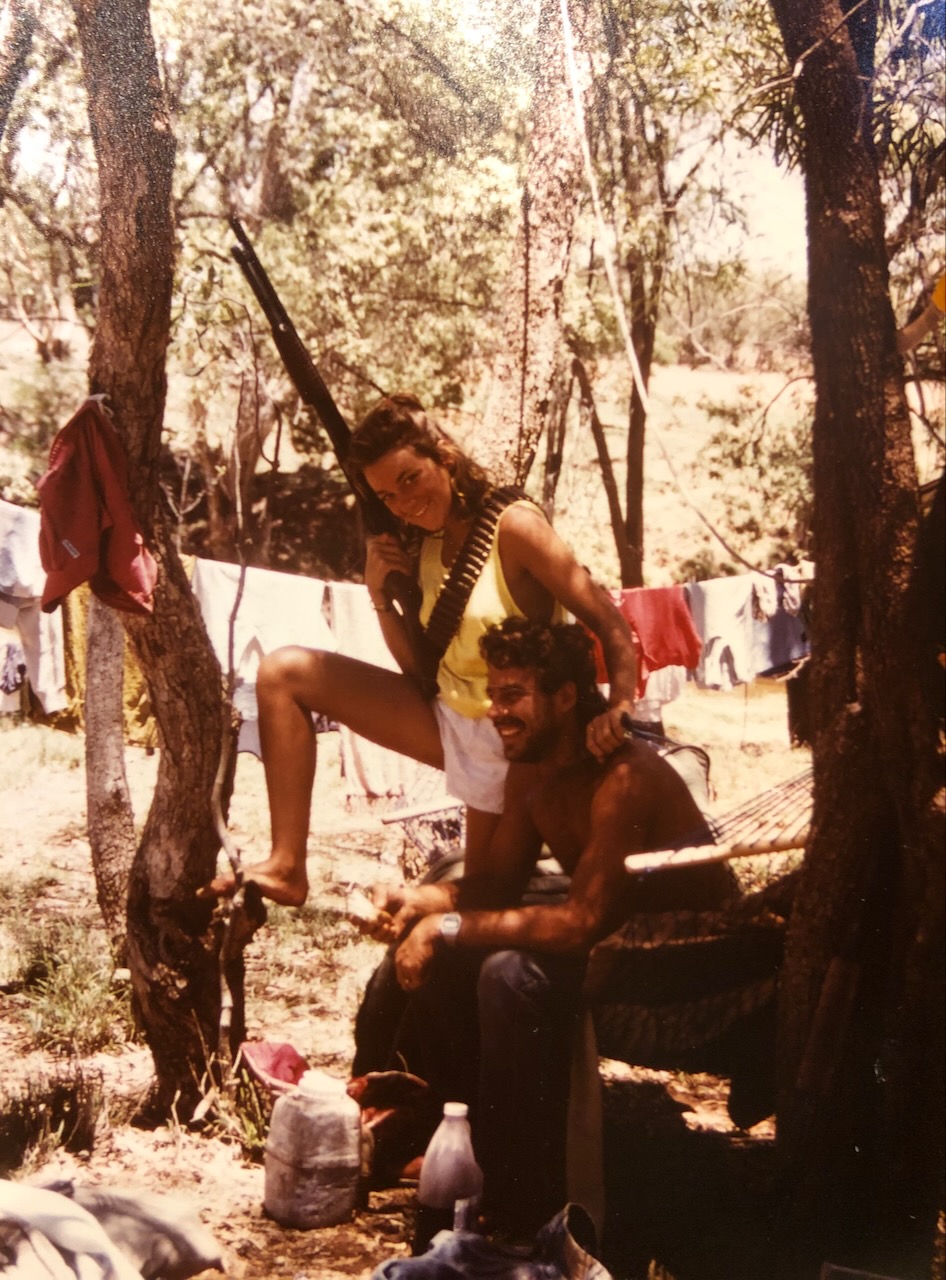
I have clear memories of my naive but adventurous, just-turned 22-year-old self bouncing across the north-eastern outback in chunky 4WDs driven by wild ockers. I remember a shoot-out at a nightclub… apparently some Aboriginals were shot at… and us fleeing the scene with extinguished headlights. The police showed up the next morning at our temporary camp on the banks of a (crocodile-infested?) river. They were not interested in the array of guns propped up against the trees, even though these could have been (but thankfully weren’t) the weapons turned against the Aboriginals. Nor did they question the men who would have used them. With apparent nods of approval to the young men’s armoury, the officers demanded to see my passport instead and carted off my terrified, less-ockery dope-head boyfriend for owning a pair of hash scales so tiny they couldn’t possibly have belonged to a dealer warranting incarceration.

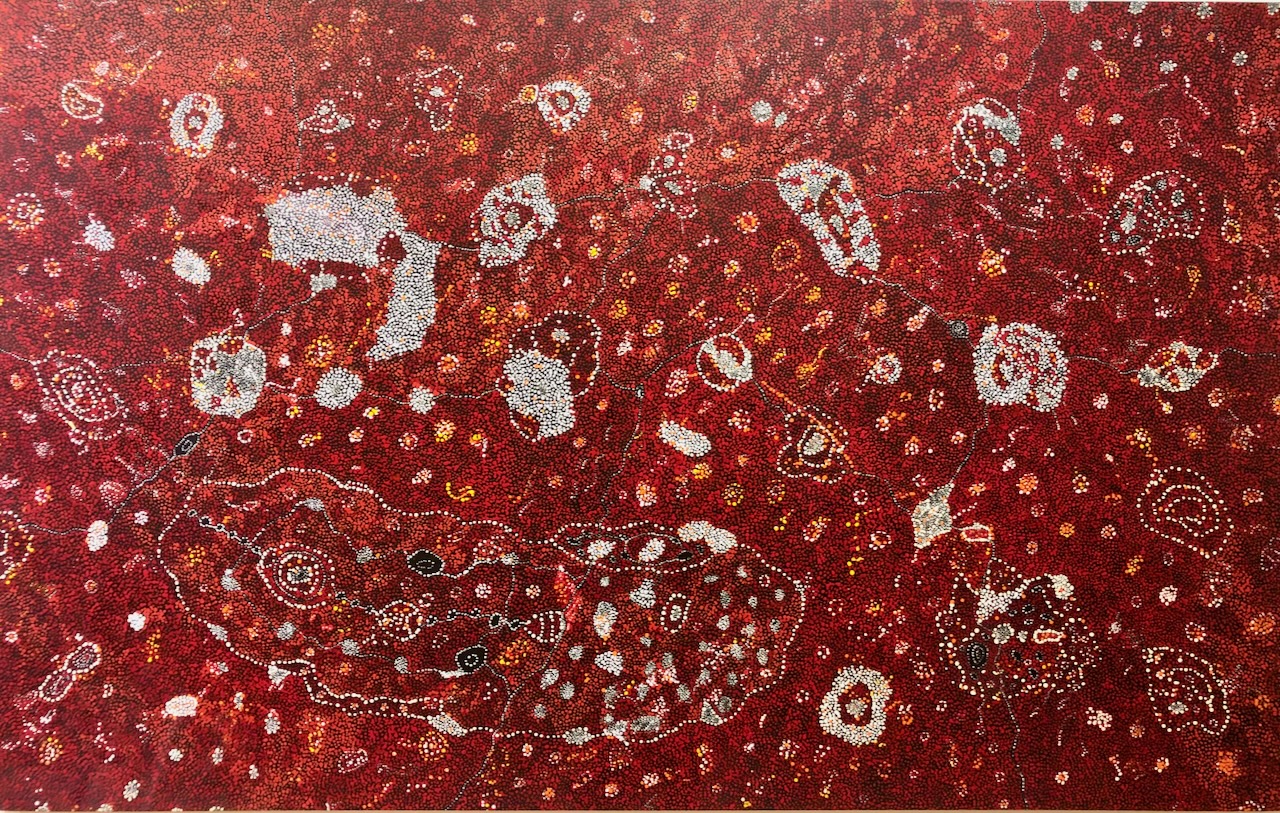
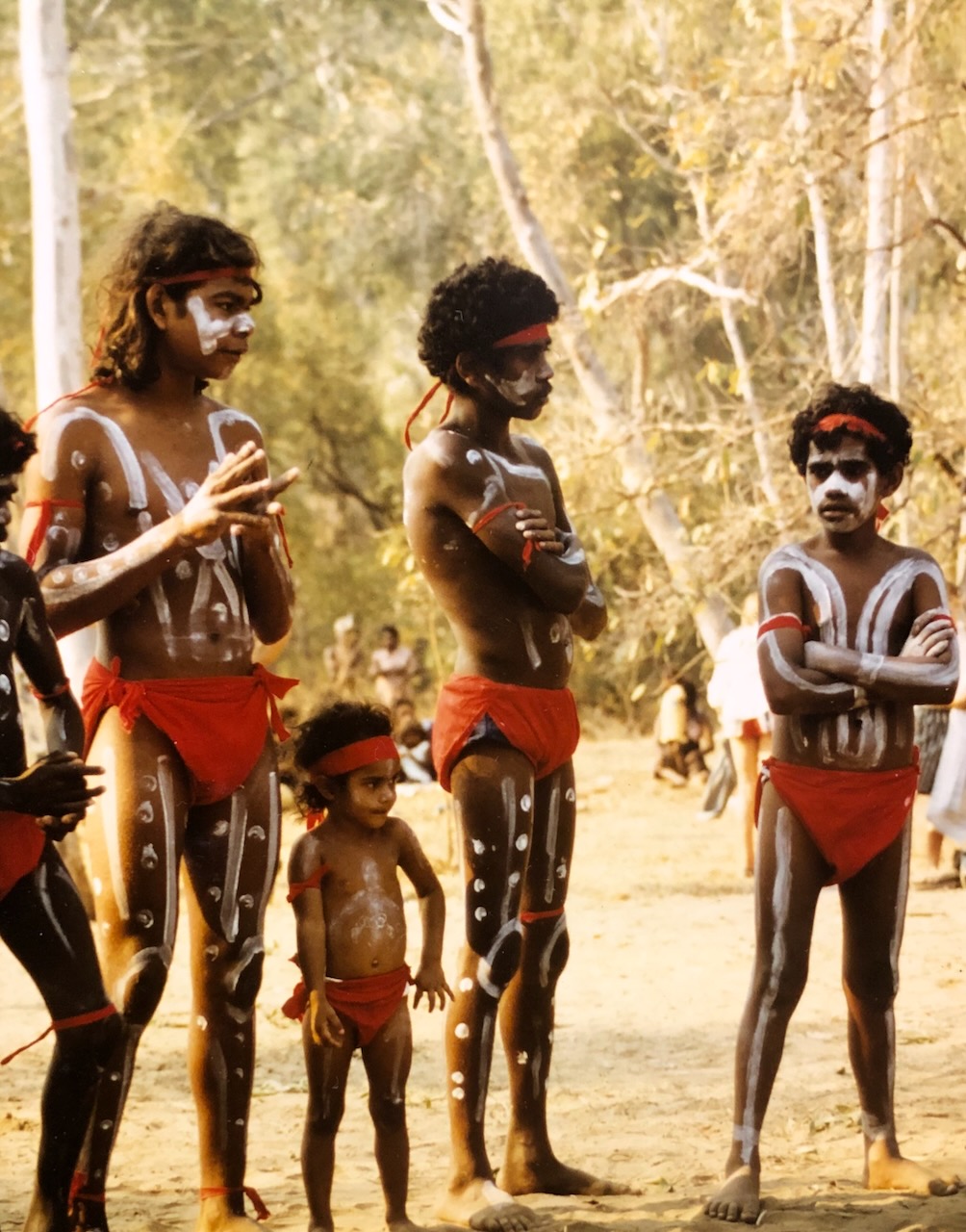
This was ‘normal’, I was told back then in response to my instinctive horror at the lack of concern for the welfare of Aboriginal people. Apart from the obvious abhorrence of such a ‘normality’, my natural tendency to root for the underdog was just one reason it all felt so wrong. Another was an inexplicable appreciation of Aboriginal culture with its ephemeral, ceremonial nature and absence of material evidence in the usual forms of temples and artefacts. I loved the simple power of their ancient handprints. The completeness of reality captured in the collections of dot paintings that began to emerge from the deserts in the seventies. I painted with earth pigments in the colours of their art. White, simply put, is the colour of spirit, black is the night, red is the land or blood, and yellow is the sun and the sacred.

by Lance Peck, b. 1975 in Carnarvon WA

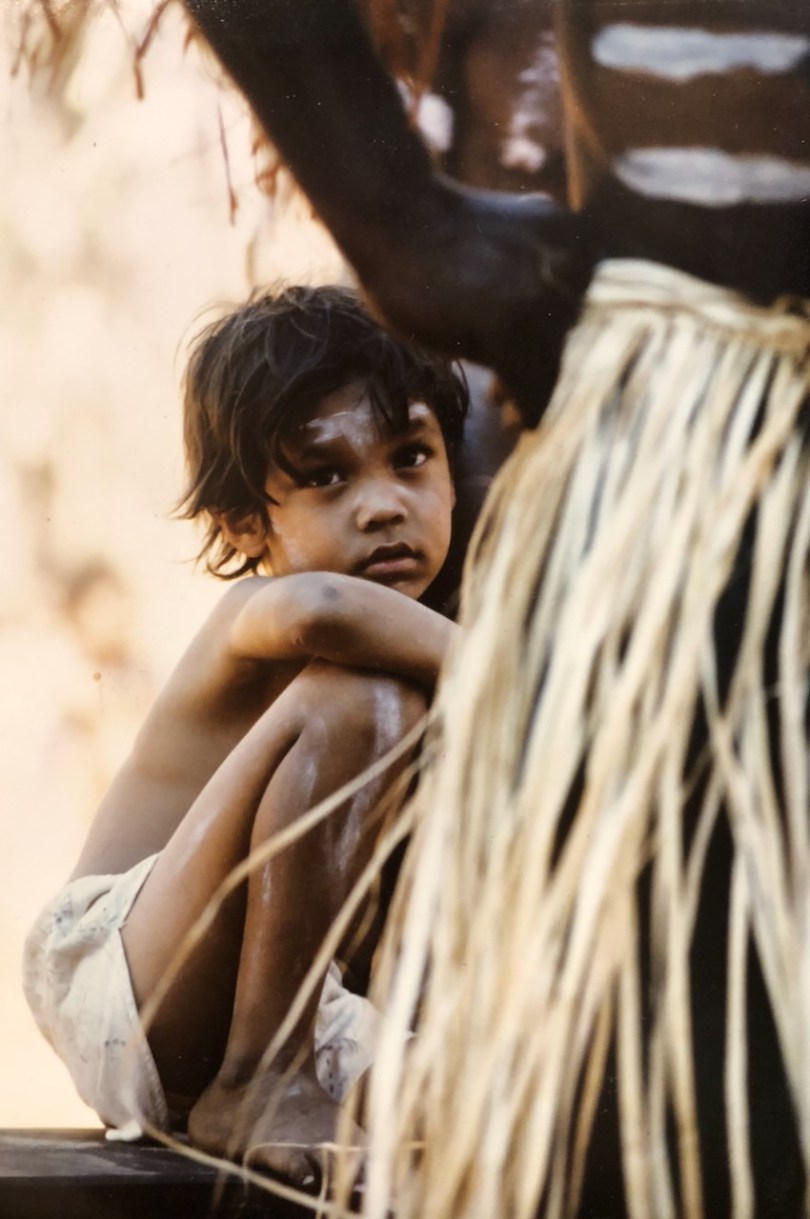
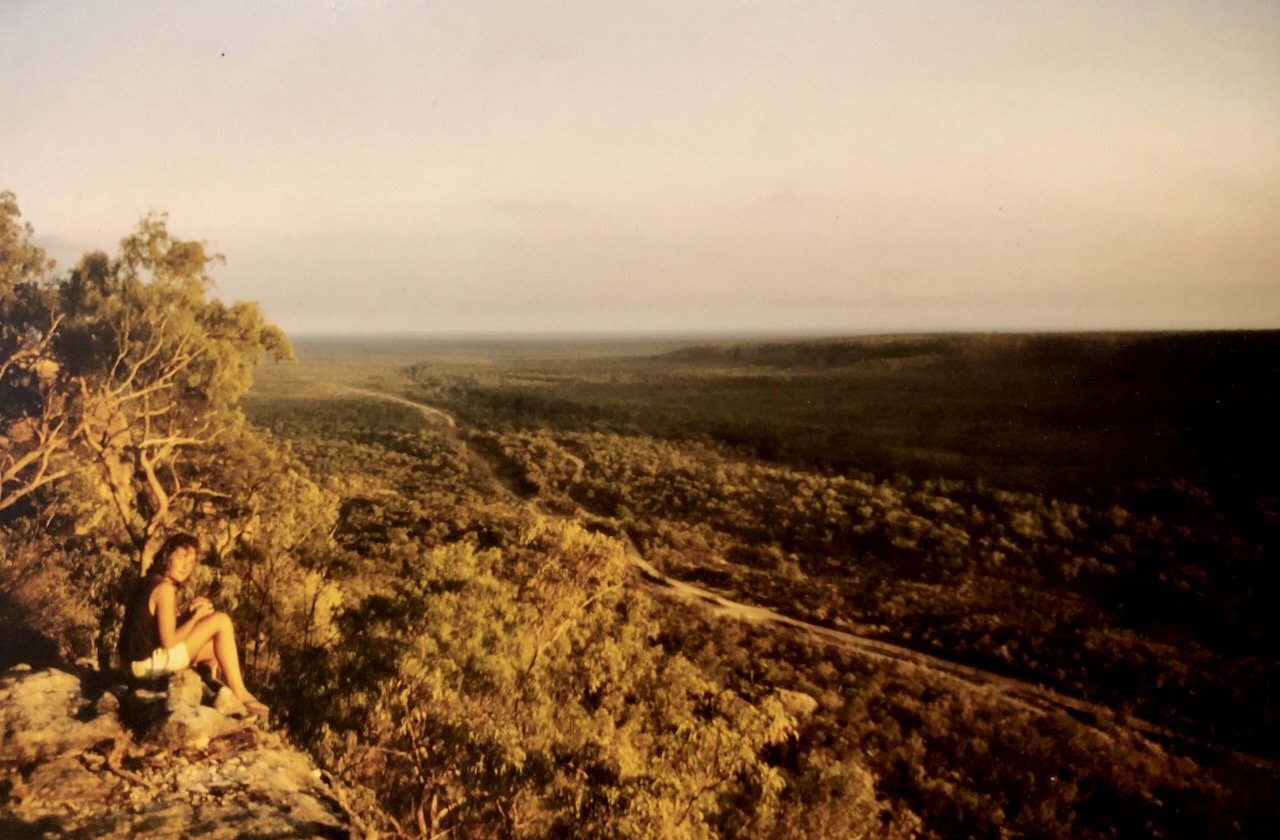
I also attended what must have been one of the first Laura Dance Festivals, a 3-day gathering of dance troupes from across Cape York and the Torres Straits held on a sacred site about 4 hours’ drive north of Cairns.

Sunrise at Laura, 1986

My photo album recalls how the Chairman of the festival arrived 2 hours late and, clad in a grass skirt and white and ochre stripes that adorned a generous belly, promptly forgot the name of the woman he was tasked with thanking. Unamused she took over and sternly instructed the dancers not to get drunk but to follow the example of their ancestors and drink wild honey.

I think Fanta was the happy compromise. 

Disappointingly for many Australians, the Voice referendum last October saw 60% of votes pitched against further constitutional recognition of First Nations people. The slogan ‘If you don’t know, vote No’ was eerily reminiscent of some of the Brexit referendum tactics (ahem…lies) that particularly appealed to ignorance or those who felt left behind. 

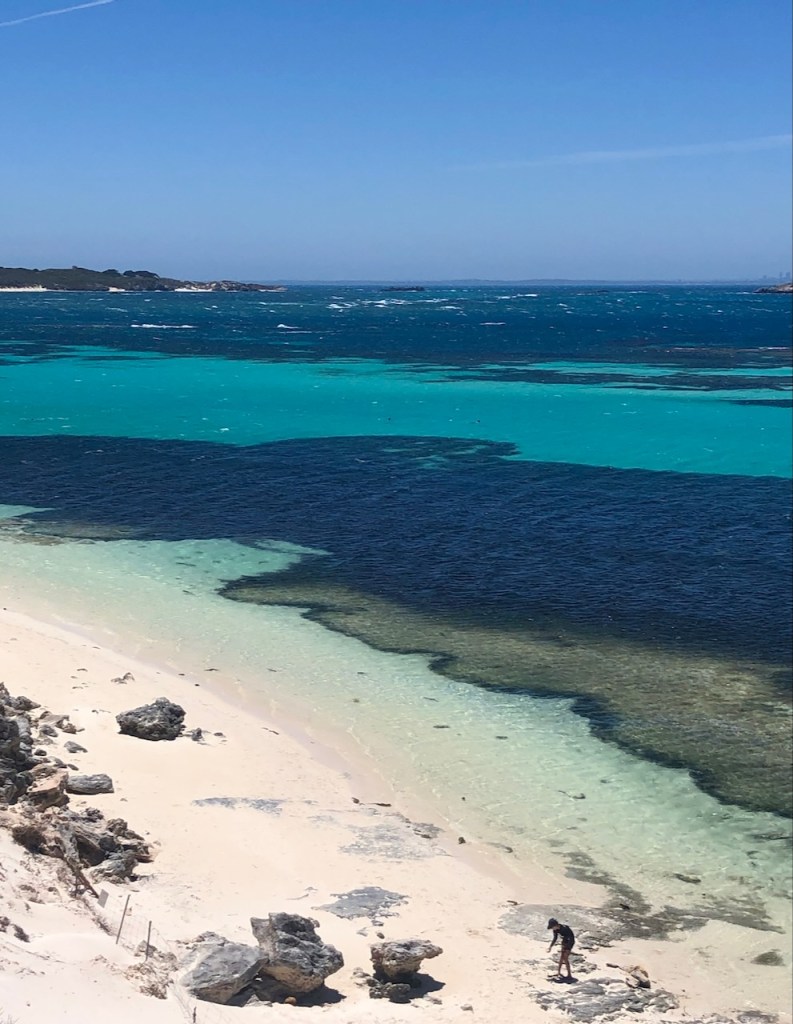
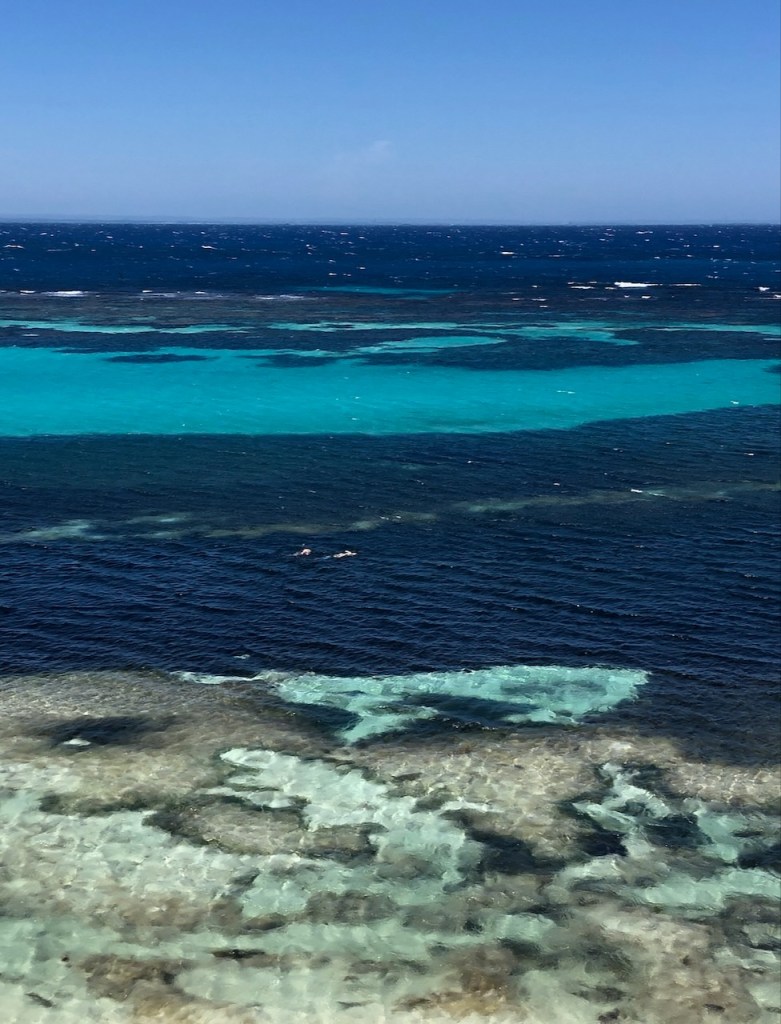
Nonetheless, in certain places in WA and no doubt all over the continent, I found sincere apologies for Australia’s past treatment of its first people. An Island off the coast of Fremantle, just south of Perth in WA, is one such place. 

Between 1838 and 1931 the beautiful island of Wadjemup, also known as Rottnest Island, served as a prison for approximately 4000 Aboriginal men and boys from Western Australia. At least 373 of these prisoners died in custody and were buried in an area currently referred to as the Wadjemup Aboriginal Burial Ground. Many of them were leaders, law men and warriors, the guardians and carriers of a nation’s knowledge and stories. Their absence created turmoil in their communities and a sense of loss still felt today. 

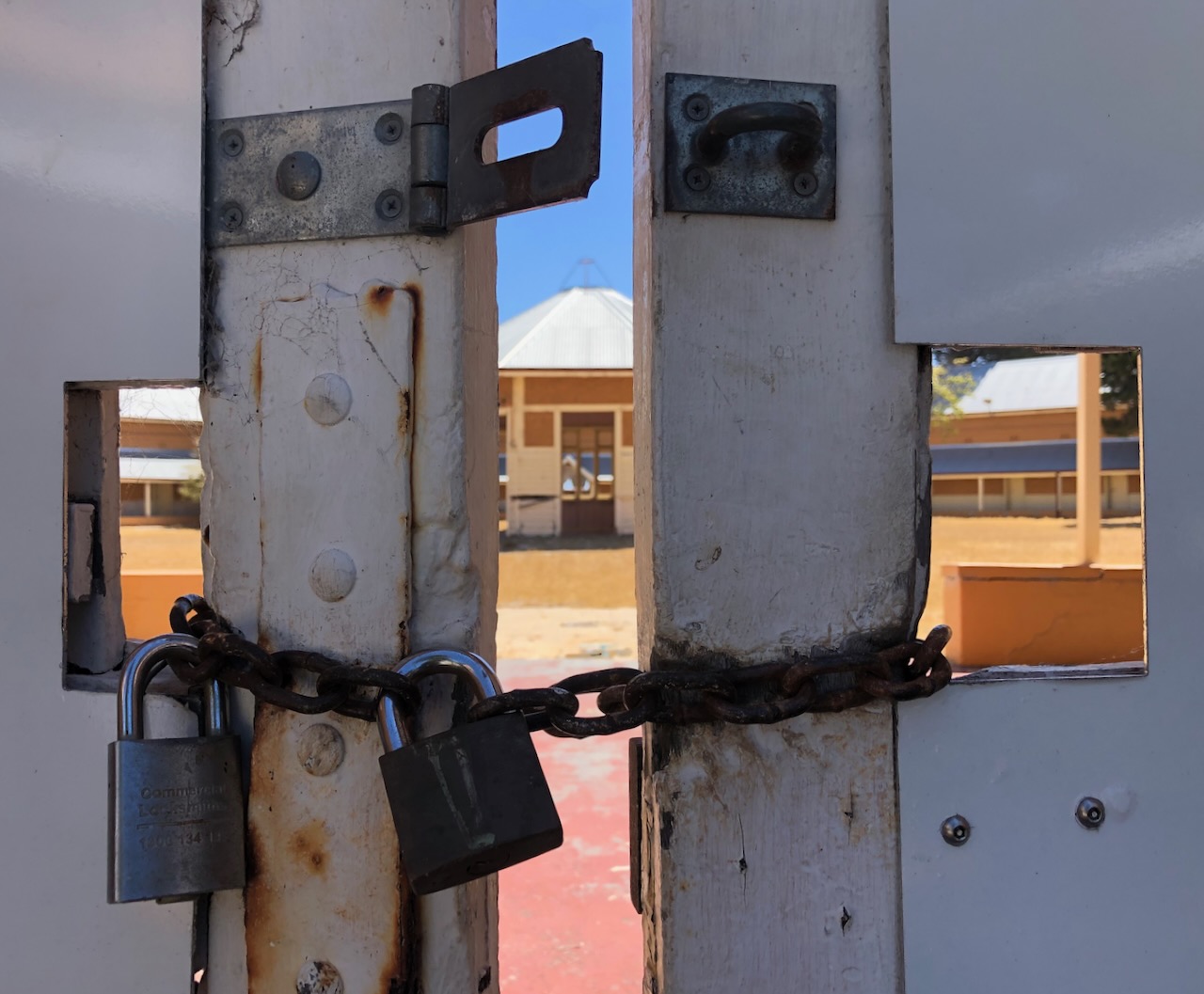
For decades, insensitivity towards the plight of those prisoners and their families manifested in the decision to transform the Island from an Aboriginal penal settlement to a recreation and holiday destination. As part of this transformation, the area where the burial ground is located was repurposed as a camping ground known as Tentland, and the Quod (main prison building) was converted into a hostel. As in so many countries the world over, the painful history of the Island as a place of incarceration was concealed.

Tentland was only closed in 2007. The Quod hostel now lies behind locked padlocks.

On November 6th, 2021, the Rottnest Island Authority (RIA) Board delivered an official apology to the Aboriginal people of Western Australia for their role in ‘the obfuscation’ of the prison history and the disrespect of past practices:

“We recognise that this has caused great pain and anguish within Aboriginal communities. For this we apologise…. We will continue to work in collaboration with the Whadjuk Noongar people and the wider Aboriginal communities of Western Australia to promote reconciliation and acknowledge the past.”

I can imagine this has been welcomed by most, though it was distressing to visit the excellent little museum only to find the banging music and loud voices of a surfing film drowning out the important and deeply moving – when you could hear them – testimonies of descendants of the those imprisoned here. And while the little port hummed with ice-cream-licking tourists on bicycles, I found myself completely alone walking the periphery of the nearby burial ground, following the instructions of intermittent signs reminding you that the spirits of those who died remain here among the trees, part of the island. 

Listen for a moment.

See and understand.

The spirits of the land

are speaking. Listen…

Kwidja baalap yey – The past is still present. 

Our world is full of conflicts based on collective blame, attributions of guilt and/or a need to redress a national humiliation or wrongdoing. Such a binary dynamic is eternal, cyclical and as old as the world. Admissions of guilt accompanied by apologies are rare and largely avoided for multiple reasons, from not wanting to lose face or moral high ground to fearing being landed with restitution and reparation costs. Retrospective apologies are frequently considered hollow or politically motivated. So what options does that leave?

Australia’s example will be considered by many as flawed and insufficient; too little too late. But the country’s efforts to recognise the pain inflicted is surely better than ignoring its lasting impact. The visionary Ngarinyin lawman David Banggal Mowaljarlai offers us a way forward. Born in 1925 on the Kimberley coast, he lived a traditional life but became adept in both cultures becoming, among other things, a Presbyterian lay minister, a painter, a social justice advocate and a land rights activist who then travelled the world as storyteller, thinker and educator. “We are really sorry for you people,” he said in one of his many broadcasts to ‘whitefellas.’ “We cry for you because you haven’t got meaning of culture in this country. We have a gift we want to give you… it’s the gift of pattern thinking.”

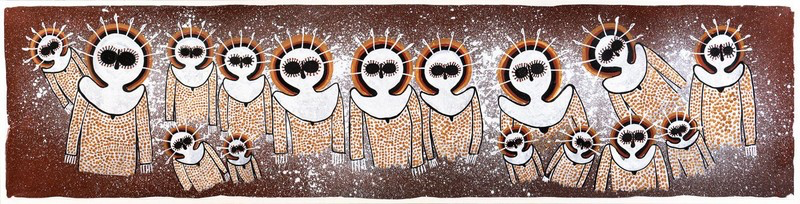
Gallery of Wandjinas (1994) © David Banggal Mowaljarlai or assignee

When I read this is Tim Winton’s ‘Island Home,’ (p.231-3) it clarified to me what I have always loved about Aboriginal art: the innate interconnectivity between human beings, nature and the universe that run far deeper than any divisions of nationality, colour, language, religion etc. Mowaljarlai’s ‘Two Way Thinking’ is a philosophy of mutual respect, mutual curiosity and cultural reciprocity. The uniting principle of ‘mutual obligation’ that became a catchphrase loved by politicians, of course extends to the natural world. To me it offers a genuine way forward that transcends any hopelessness and helplessness we might feel towards the huge problems we all, as a human race, are, or will be facing.

When headline ‘News’ becomes ‘Normal’

I’m interested in how front page news becomes almost no news as we get used to any new situation. 

When I think back to last August and Britain’s catastrophic and deeply distressing withdrawal from Afghanistan, or February this year and Putin‘s horrific invasion of Ukraine, the shock and terror of the implications of massive personal tragedy and widespread devastation had me glued to the radio. The ‘News’ from countries far away infiltrated my world, influencing my days and above all my state of mind. 

It is with some shame that I have to confess I have now slightly switched off the news. Not out of lack of interest or concern, nor simply because I’m extremely busy in the run-up to the publication my book in July (hence apologies for any typos etc… I am constantly on the road at the moment.) No, I am making a deliberate choice not to turn on the news in order to preserve a positive state of being; so I can feel the excitement of my long journey reaching its end and a new chapter starting; and so I can fully immerse myself in the flower-power of the blooming wonders of nature in all their technicoloured splendour. 

I am sure I am not alone in noticing how quickly and completely the un-normal can become normalised. I imagine it was always thus. History feels more intense than the present because history isn’t experienced on a moment-to-moment basis. It is captured in snapshots – letters, diaries, family albums, military or journalistic reports – and concertinaed into a narrative by skilled historians. The multitude of in-between times that make up the everyday are all missed out. 

Right now – and without wanting to be a doom-monger but we can’t ignore that it is a possibility – we might be witnessing the build-up to the Third World War. Or a climate catastrophe of proportions we can’t imagine. Or world famine. Or intense poverty. Or worst case scenario, all of the above. These times too will one day be reduced to a sequence of significant events and decisions. Yet for many of us, still not directly impacted by them, the business of life continues, to a large degree, as usual. 

Anybody who regularly reads my blogs knows how I frequently get frustrated by the lack of agency, influence or clout I feel in the face of the shenanigans and all too often crap decisions of politicians or world leaders. I never want to not feel justified rage or become guilty of the passivity of ‘looking away’ that so many Germans living in Nazi times are accused of. But thinking back to those times, I find it much easier to comprehend how even then, the ‘News,’ as horrific as it often was, might have become normalised. The majority of people would have read or heard about things, argued about whether they were right or indeed even true, and then probably just got on with the intricacies of their daily lives. Just like most us are probably doing now. 

Maybe it’s because I find it overwhelming trying to imagine the challenges, traumas, upheavals, fears and worries of each individual caught up directly or indirectly in all that is going on in the world right now that I am choosing to surrender to the things I am impotent to do anything about. Maybe it’s ok to want to give myself the best chance of maintaining a level of optimism, vision, hope and love so I can contribute positively to the world in whatever way I can… kind of along the lines of the Serenity Prayer written by the American theologian Reinhold Niebuhr and used in Anonymous groups.

God, grant me the serenity to accept the things I cannot change, the courage to change the things I can, and the wisdom to know the difference.

Then again it may just be an age thing. That I have reached the stage where one sits in a chair and writes grumpy letters to newspapers. Or in my case, where I rail against the endless stream of transparently self-serving, superficial and frankly dangerous tweets by our foreign secretary, Liz Truss, all accompanied by ghastly selfies. Oh here we go, I clearly haven’t quite grown out of my healthy rage at the world!

Happy end of May and beginning of June and next time I write, it will be a countdown to publication day…

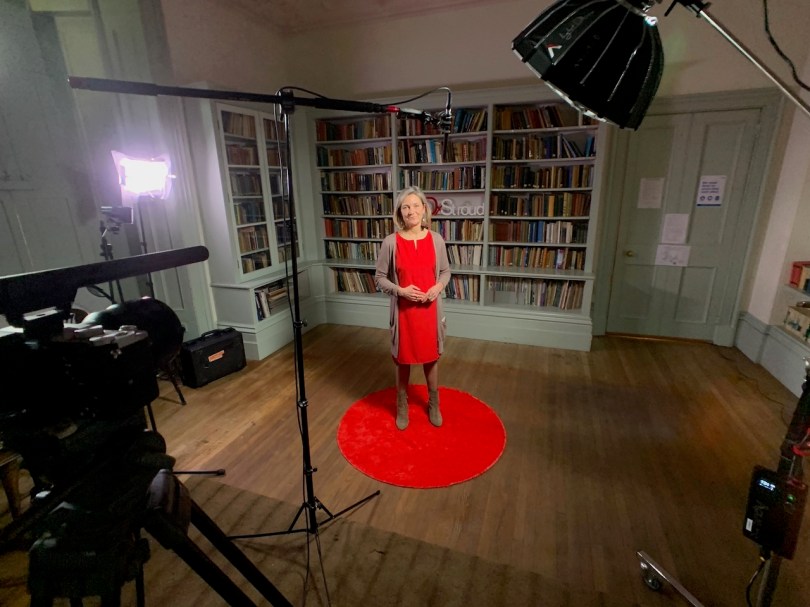
Who’d have thought 18 minutes standing on a red dot could unleash such terror?

The news that I had been selected to speak at TEDxStroud came on what can only be called a day from hell. It was August 2020. The brick gable end of my mother’s old garage had just collapsed in a storm leaving live electricity cables strewn across the driveway. She was unadvisedly trying to tidy them away while sinking into a diabetic low when we received the news that my brother-in-law’s father had died of Covid. In the flurry of activity and phone calls that followed, the email plopped into my inbox: CONGRATULATIONS! You are one of nine people selected from 84 applicants to deliver a TEDx talk on the theme of Emergence…  

I had totally forgotten I had even applied and my heart simultaneously raced and sank as I realised this was another gauntlet I had to take up. TED is the mecca of public speaking platforms. The iconic red spot on the floor has hosted some of the world’s very best speakers and lured over 3,600 people with a good idea to share. There are strict criteria: No more than 18 minutes per talk. No selling or promotion of a product or business. No profit or pay to speakers or organisers… just a good idea that is worth spreading. 

Tickets and further information can be found here

Over the following months, Covid threw curveballs at the original visions for a live event with an audience of 400, sending each one flying like skittles in an alley. Lockdown even forced a postponement from November’20 to March’21. The organising team were undeterred in their commitment. With each new restriction, they adapted, delivering changes of plan with supportive sensitivity and unwaning optimism. Meanwhile, we speakers met in Zoom rooms hosted by other talented volunteers where we would listen and feed back to each other while witnessing amorphous blobs of chosen subjects being honed to their essence. Not ‘just a minute‘ without ‘hesitation, deviation or repetition’ as on BBC Radio 4, but 18 minutes! 

Sounds easy? It’s not. The techniques to memorise our talks ranged from falling asleep to a recording of your own voice droning its way into your memory, (nothing has ever sent me to sleep faster, all insomniacs click here if you’d like a copy!) to delivering it in a silly Texan accent. We had to practice talking to the barrel of a camera lens while smiling at some imaginary audience member sitting beyond it. We even had to choose proper clothes to wear as opposed to our baggy lockdown jumpers and leggings. 

Practicing…

Kind friends tried to assuage the terror that gained momentum over the final two months until it clenched my chest in a vice and froze my brain. “But you speak so well… it’s no different from the talks you already give… you can do this with your eyes shut.” But a TEDx talk isn’t the same at all. It will be uploaded to YouTube and made available to a global audience… potentially forever. You have no slides or prompts to jog the memory. And what’s more, my ‘great’ Tedx idea isn’t an easy one to talk about, let alone sell as a ‘gift’! Because I am basically asking people to get really uncomfortable; to follow me on a journey that descends into the dark underbelly of human experience, where prisoners, Nazis, unspeakable atrocities or war experiences fester like wounds marinated in silence, pain and shame. 

I sometimes feel I should apologise for bringing such things into the light of awareness. But I won’t, because the rewards are too great to ignore. And because it has become clear, not just to me but to neuroscientists, geneticists and psychologists, that we have to go there if we want to break the cycle by which toxic, unresolved past traumas and wrongdoings persistently disrupt the present. Now more than ever, it is important to recognise the link between the past and so many of today’s symptoms of violence, division, discrimination, inequality, addictions, injustices, racism… 

It is not easy to face unacknowledged past harm, not least because it will have been buried for a reason, often a good reason such as protection or avoidance of pain. But I promise you, it is ultimately easier than schlepping it around with us, patching it up and handing it on to the next generation to deal with. 

Recording my TEDx talk on Thursday 11th March

So, may I invite you to join us this SUNDAY 21st MARCH 2021 from 2pm, not just to hear my TEDx talk Facing the past to liberate the present, but the talks of seven other amazing speakers, each of whom has been on an equally intense journey to deliver a wonderful idea as a gift to you and our world. Tickets and further information can be found here.

PLEASE SIGN UP TO MY NEWSLETTER to be kept informed about all my forthcoming events or click on FOLLOW MY BLOG at the top of the page to receive them straight into you inbox.

Light at the end of the tunnel…

Yesterday I wrote two words that I have frequently thought I would never get to write: THE END. Of course it is not The End by any stretch, but nonetheless this week, for the very first time, I caught sight of a teeny-weeny light at the end of the tunnel; just enough to be able to acknowledge its reality, in writing. I am talking about my book; the book that I have been writing for the past three years and researching for well over ten.

To be honest, I have never known a task so challenging. The idea arose out of my talks to schools and Arts Societies all over the country in which I present the Second World War and its aftermath “through the eyes of an ordinary German family”; my family to be precise. “I had no idea,” is the usual, unanimous response. And here in Britain, we actually don’t. So when audience members started asking me with such regularity “Have you written a book?” or told me in no uncertain terms “You must write a book”, I decided to seize the gauntlet. I’ll just stretch the contents of the talks, I thought naively.

Read More »