The changing faces of Berlin…

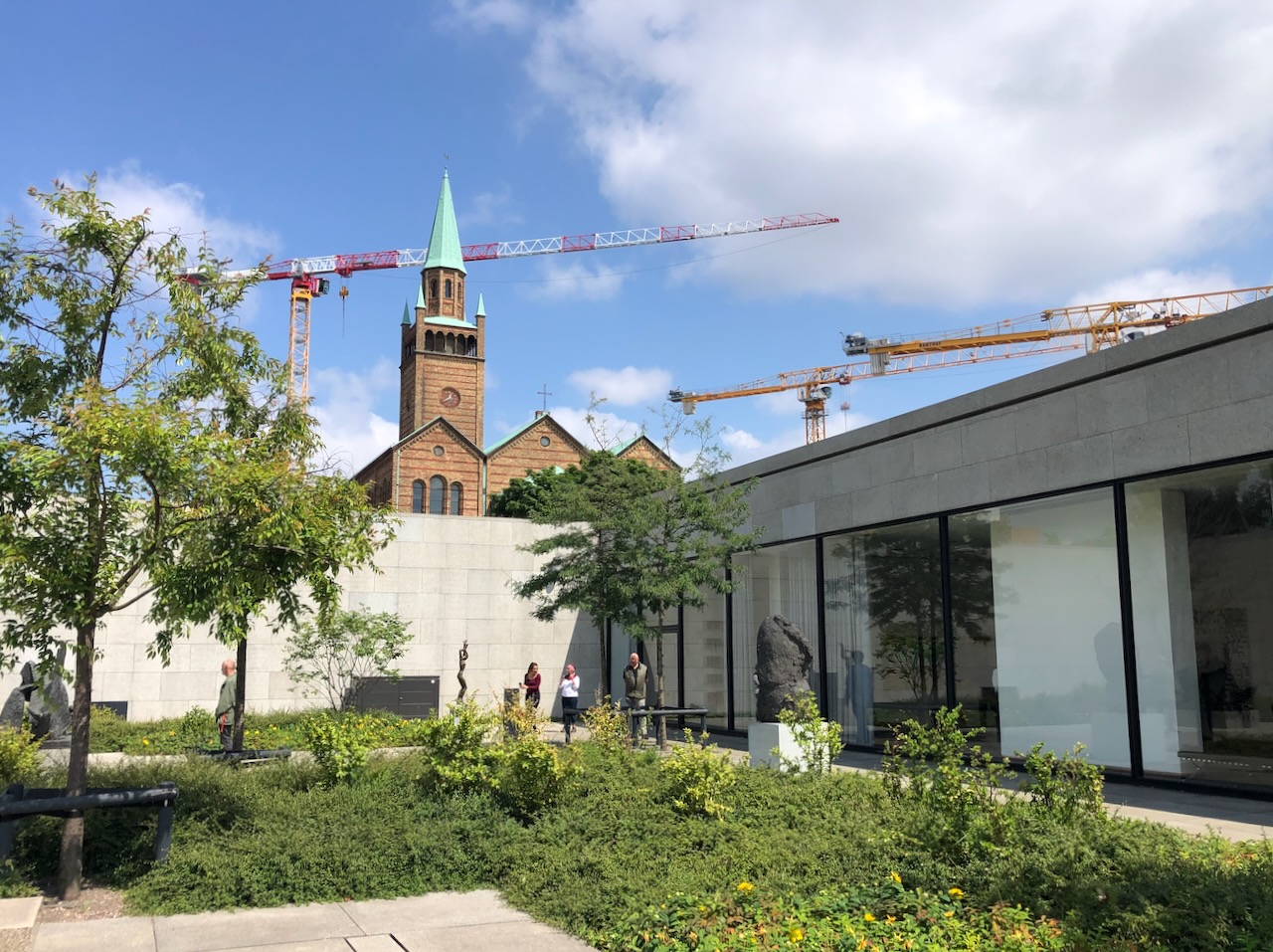
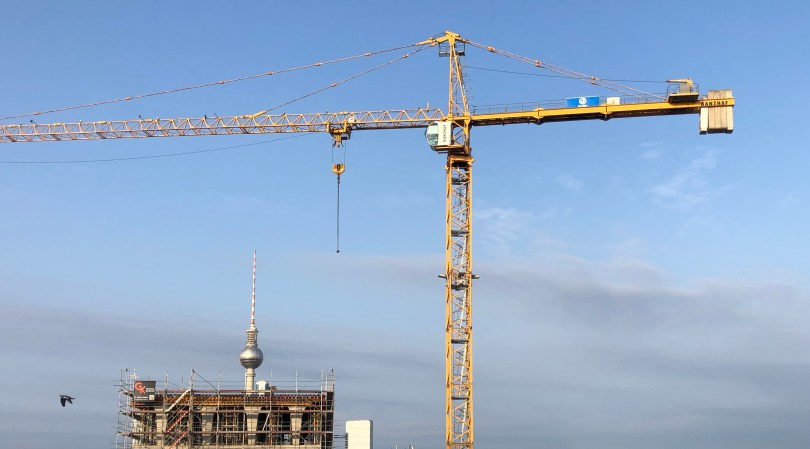
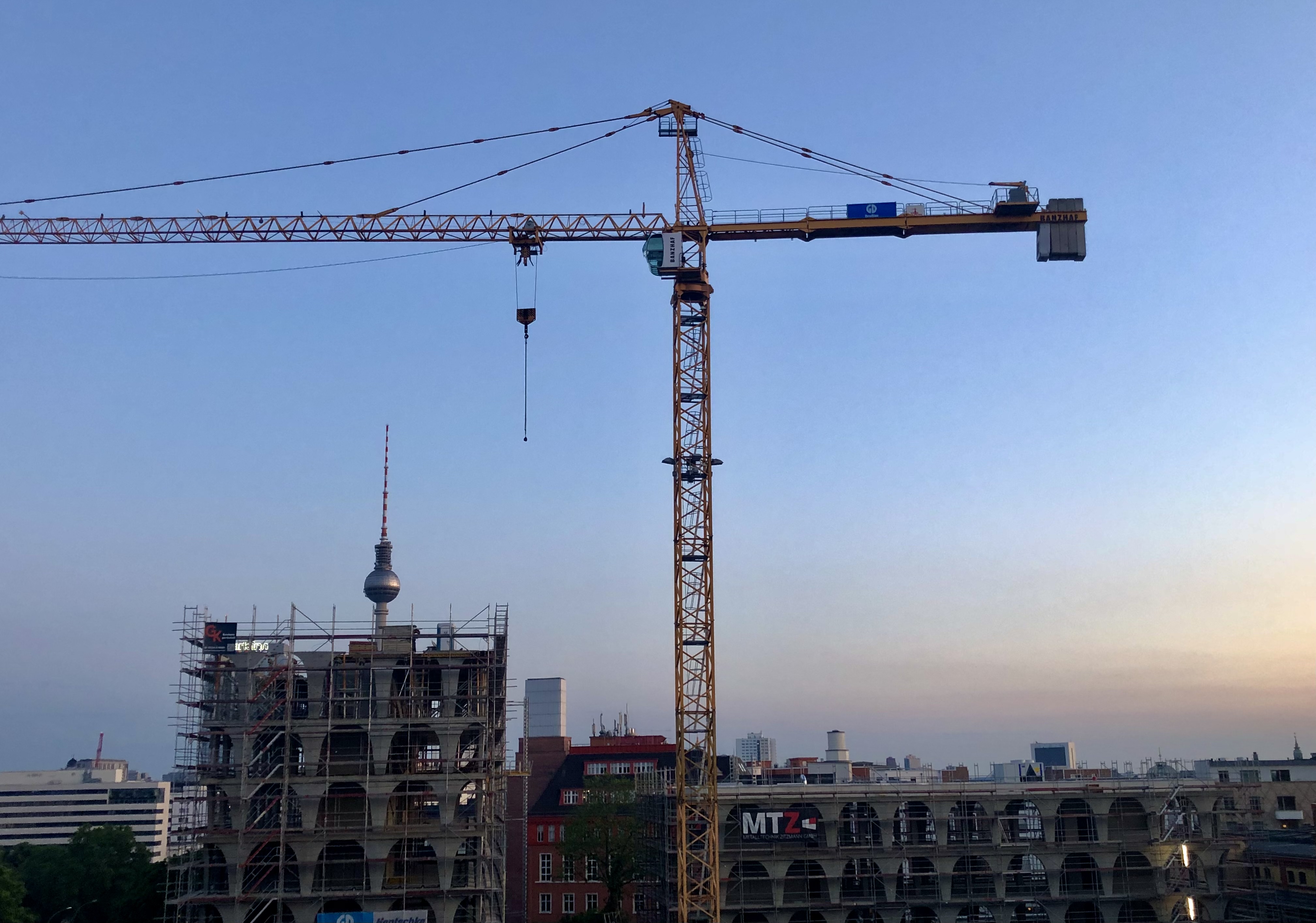
For more than 30 years I have been watching cranes and diggers deconstruct and rebuild the architectural face of Berlin. It is an infinitely fascinating process to follow.

Neue Nationalgallerie by Mies van der Rohe… with cranes

The focus of my most recent trip, however, ended up being the people who inhabit the city, both past and present. And typically for Berlin, it has created a brilliant exhibition to trace the changing faces of those who lived through its turbulent history.

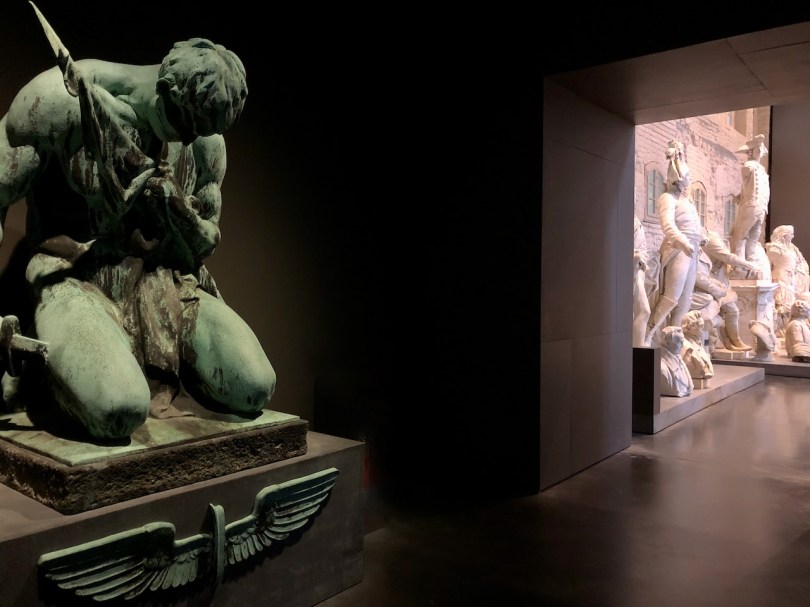
Enthüllt / Unveiled is housed in the Renaissance Citadel in the western borough of Spandau and not only offers a surreal experience but also an inspired response to the emotionally and politically charged ‘statue debate’. 

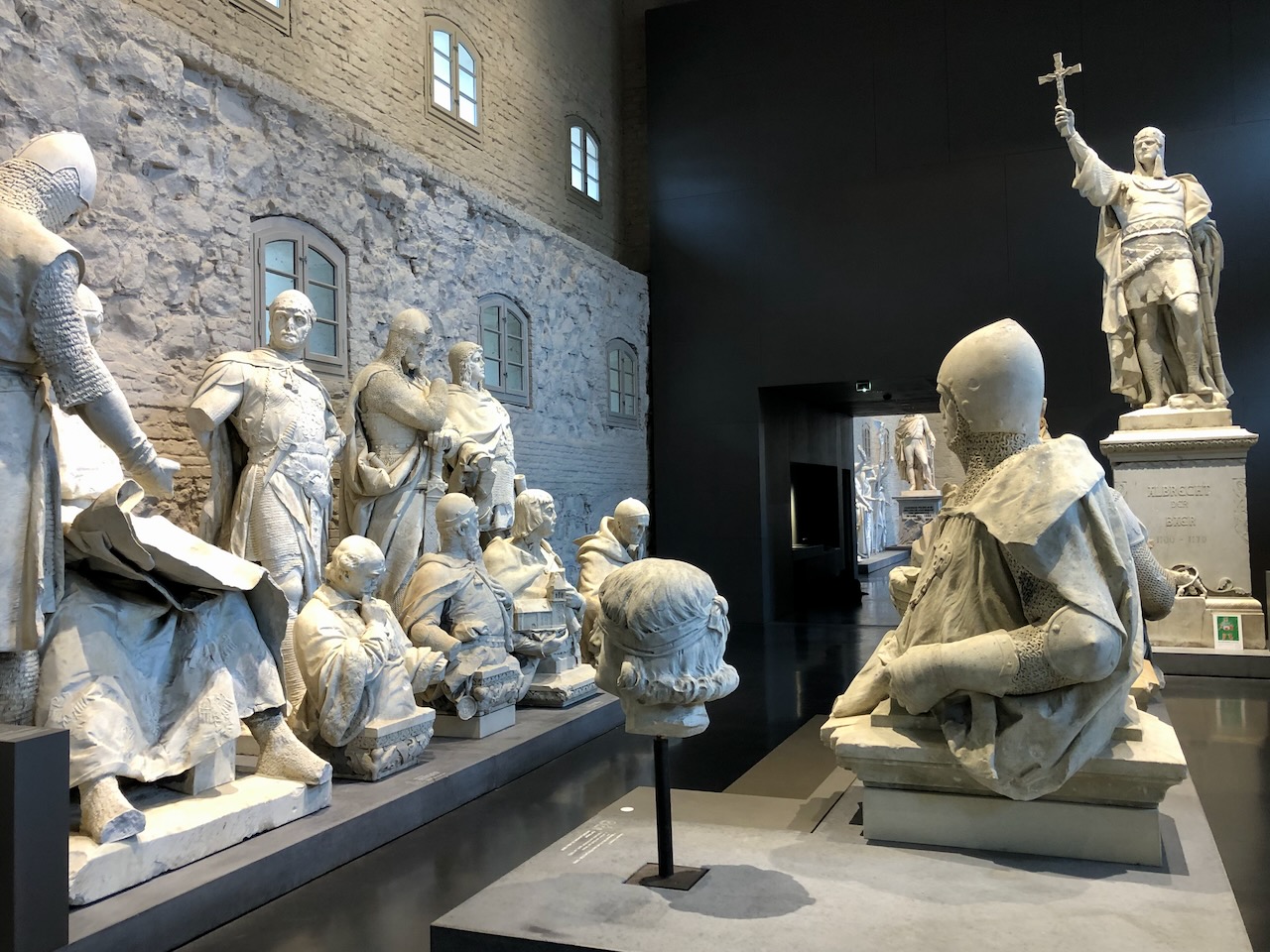
Albrecht the Bear and others

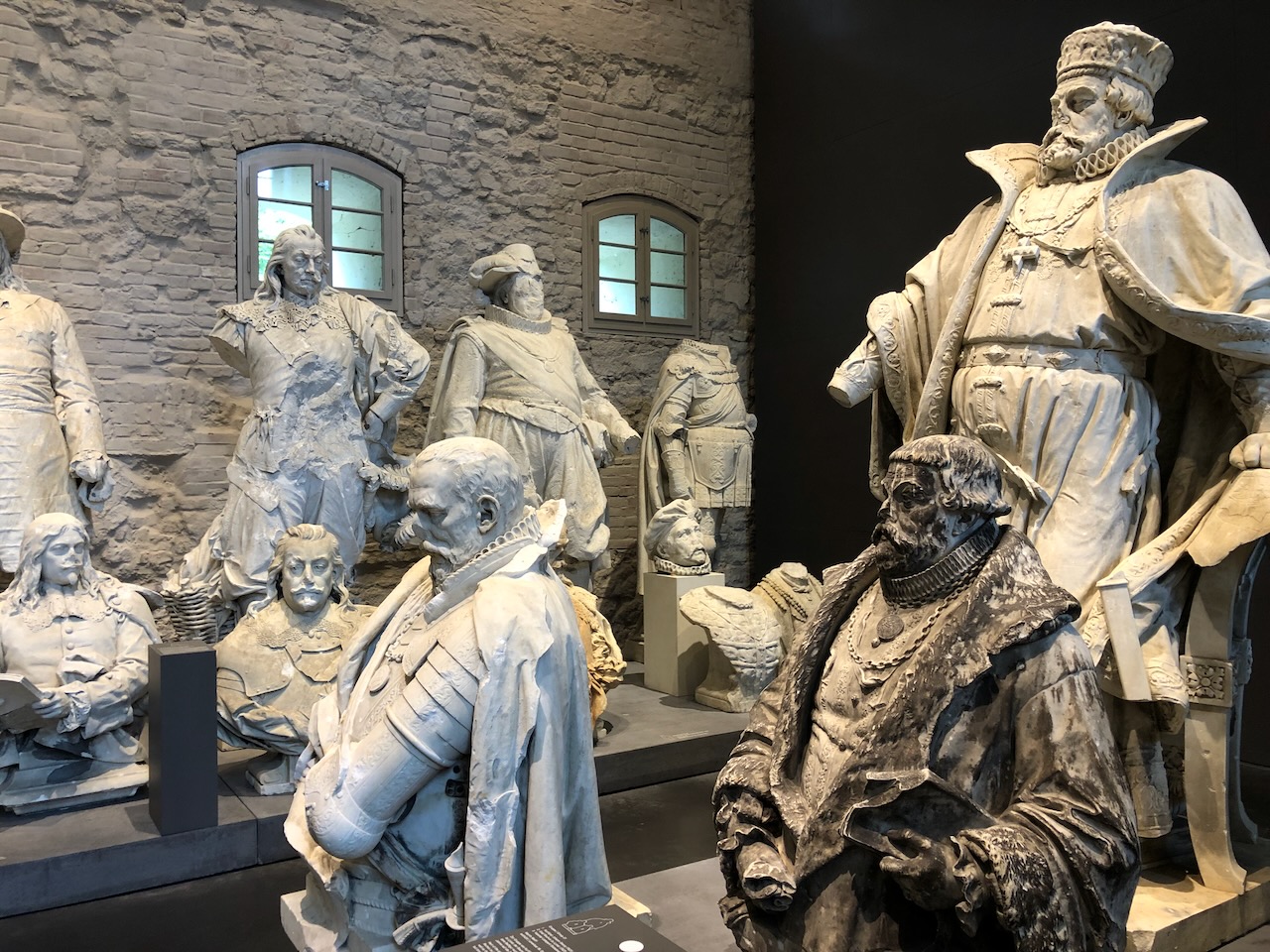
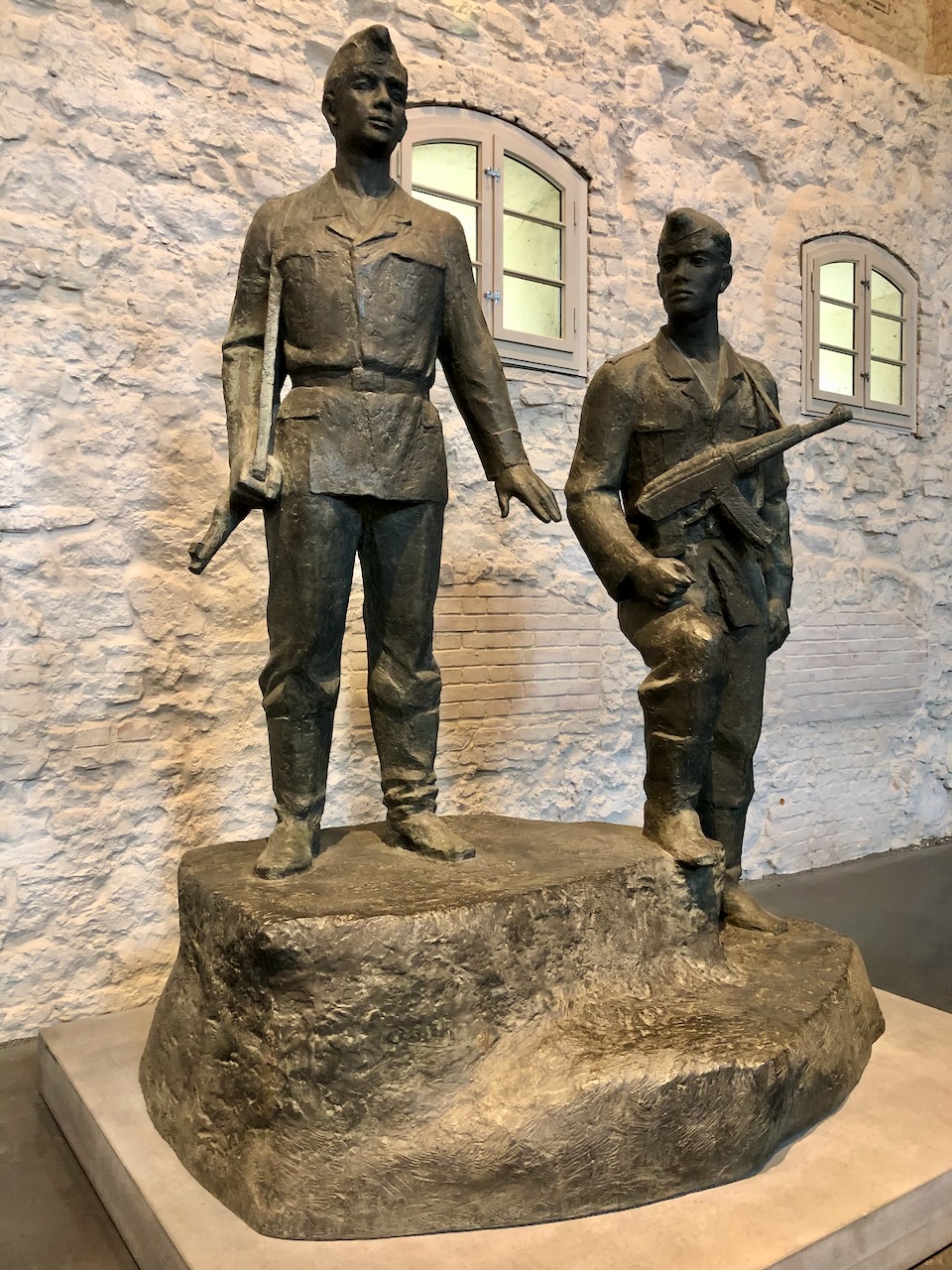
Housed in the 114-meter-long former Provisions Depot of the fortress, Berlin’s once revered or feared rulers, Prussian military heroes and bishops rub marble and bronze shoulders with thinkers, revolutionaries and victims. Spanning a timeline from the 12th century Albrecht the Bear (whose face you learn would not have been known so would have been crafted from a local tradesman or friend of the sculptor’s) to contentious GDR border guards, most of the statues have been removed from their plinths to stand at eye level. Many are missing limbs and noses or even their entire bodies. With chests still puffed but their status removed, you meet the figures of history on equal terms. It is a powerful experience.

Various headless/faceless/slightly worse-for-wear Electors, Chancellors and Counts from the 1500s

Monument to the Grenzposten / Border guards (1971)

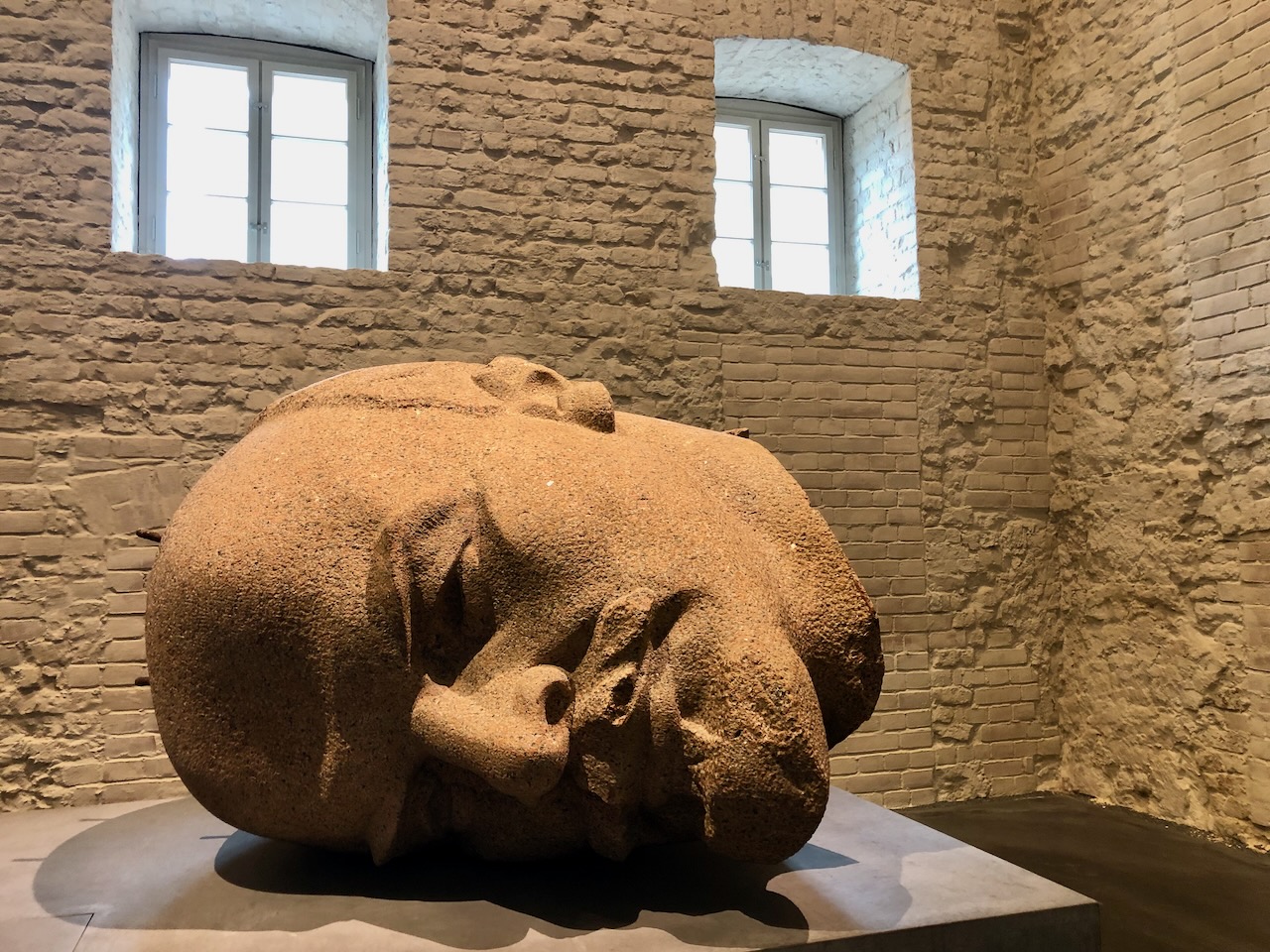
One of the highlights of the exhibition comes right at the end. Displayed on its side, Lenin’s 3.5-tonne granite head once rested atop a 19-meter-high statue by Soviet Sculptor, Nikolai Tomski. Created in 1970 and designed to blend with the Soviet architecture around Lenin Square (now United Nations Square), it was pulled down in 1992, cut into more than 120 blocks, buried in the Müggelheimer Forest and covered with gravel. It was recovered in 2015 for the Citadel exhibition, complete with nibbled ears (people chiselled off chunks for souvenirs) and transportation bolts sticking out of the crown.

Founder of the Soviet Union, Lenin

Traditional memorials are generally markers of achievement and greatness. Raised on plinths, you ‘look up’ to the person or event being celebrated. But what happens when they no longer reflect the values of the time, when their legacy becomes toxic? Do you leave them as lifeless witnesses to a time past with no apparent power in the present? Do you topple or remove them in an attempt to lose the history, or does that lose the discourse and potential to learn lessons? Do you contextualise them with plaques…? 

Germany, with its contentious past has explored these questions possibly more than anywhere else. Accompanied by huge debate, emotion and financial investment, statues and monuments have been removed, banned, dismantled, buried, unburied, re-erected in new locations, built from scratch… All this can be read about in the ubiquitous digital documentation running through the exhibition. But Dr Urte Evert, the curator of Unveiled, seems to have done something very clever. By allowing visitors to touch the statues, children to clamber on them, artists to respond to them, performers to dance among them, she encourages engagement and dialogue, not only with the art forms, but with history. And this feels more important today than ever.

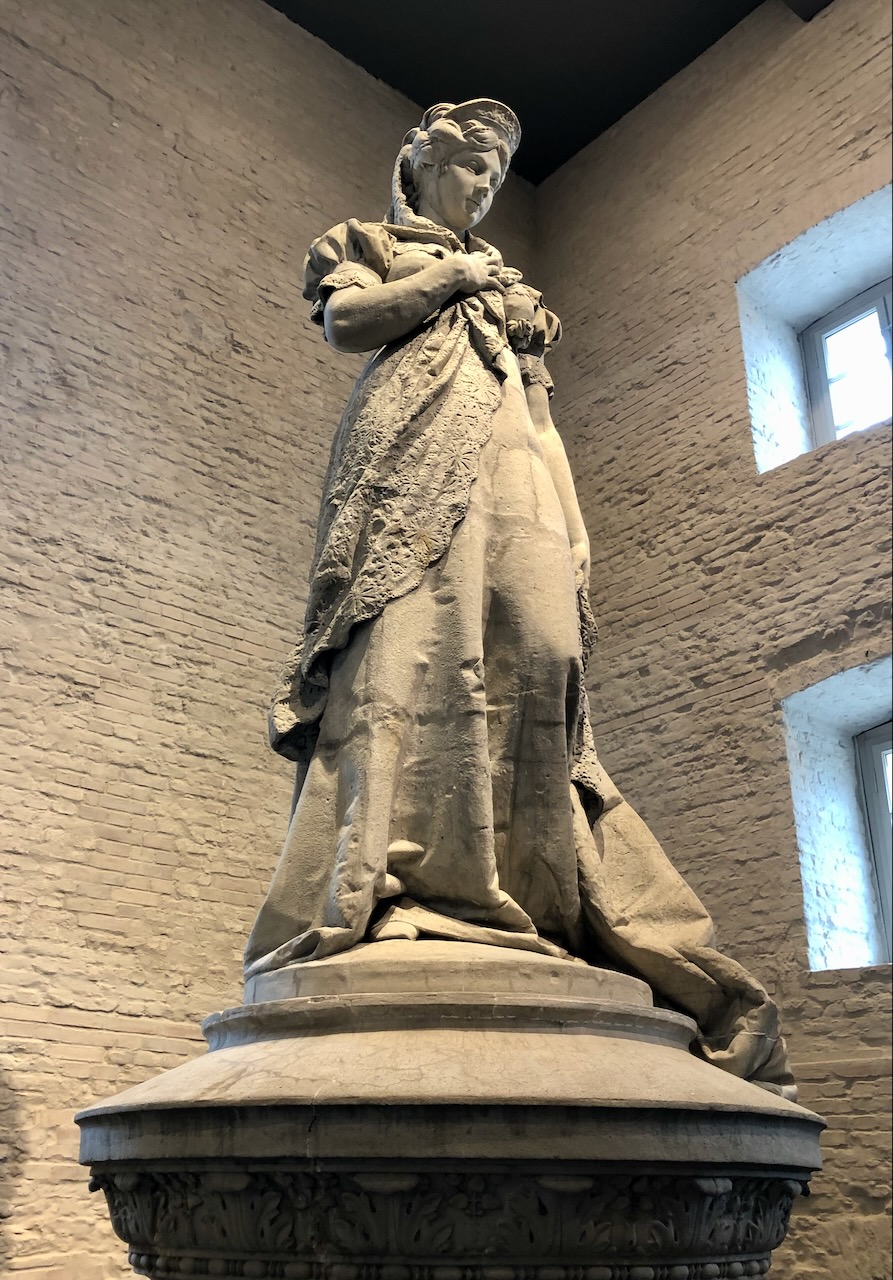
Queen Luise, ‘Queen of Hearts’ (1776-1810)

What is also striking, but not surprising, is that every statue from Kaiser Wilhelm I to Alexander von Humboldt and Immanuel Kant is a man. Apart from one, Queen Luise, wife of King Friedrich Wilhelm III and an early form of celebrity referred to as the Queen of Hearts… or according to Napoleon “the only real man in Prussia.” Even in today’s Berlin there are few statues celebrating women and even fewer to individual women.

Käthe Kollwitz

In a square named after her in the fashionable district of Prenzlauerberg, a rather lumpy and grumpy-looking Käthe Kollwitz, artist, sculptor, committed socialist and pacifist sits on a heavy block narrowly dodging graffiti. She is remembered everywhere and this is just one of many statues of her.

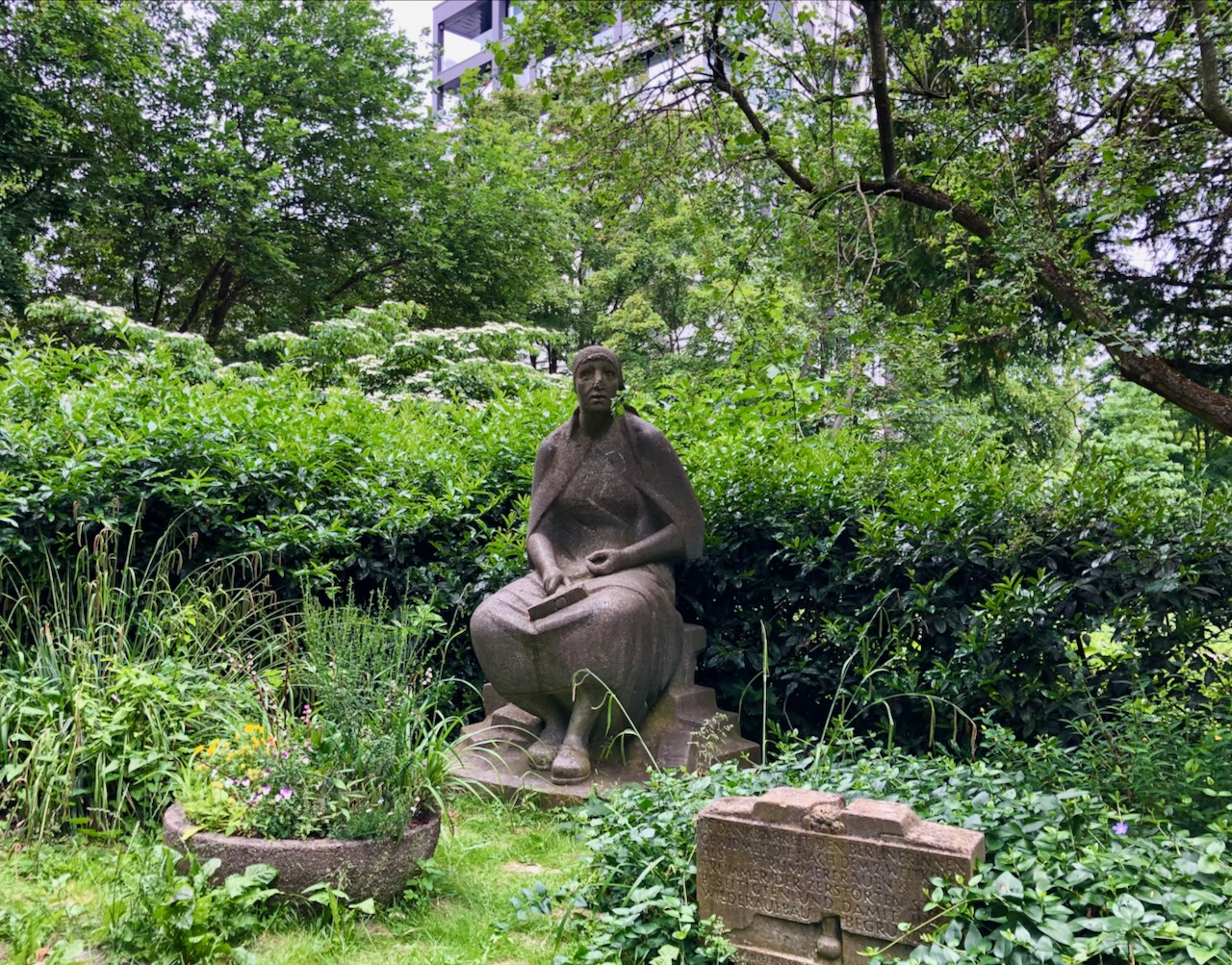
Memorial to the Trümmerfrauen / Rubble women (1950s)

Originally placed on a hill made of the bombed remnants of the city but now reposing with hammer still in hand in the greenery of Hasenheide Park, a Memorial to the Trümmerfrauen of Berlin offers acknowledgement to the ‘rubble women’ who cleared and sorted Germany’s destroyed cities by hand, stone by stone.

Block of Women, Rosenstraße

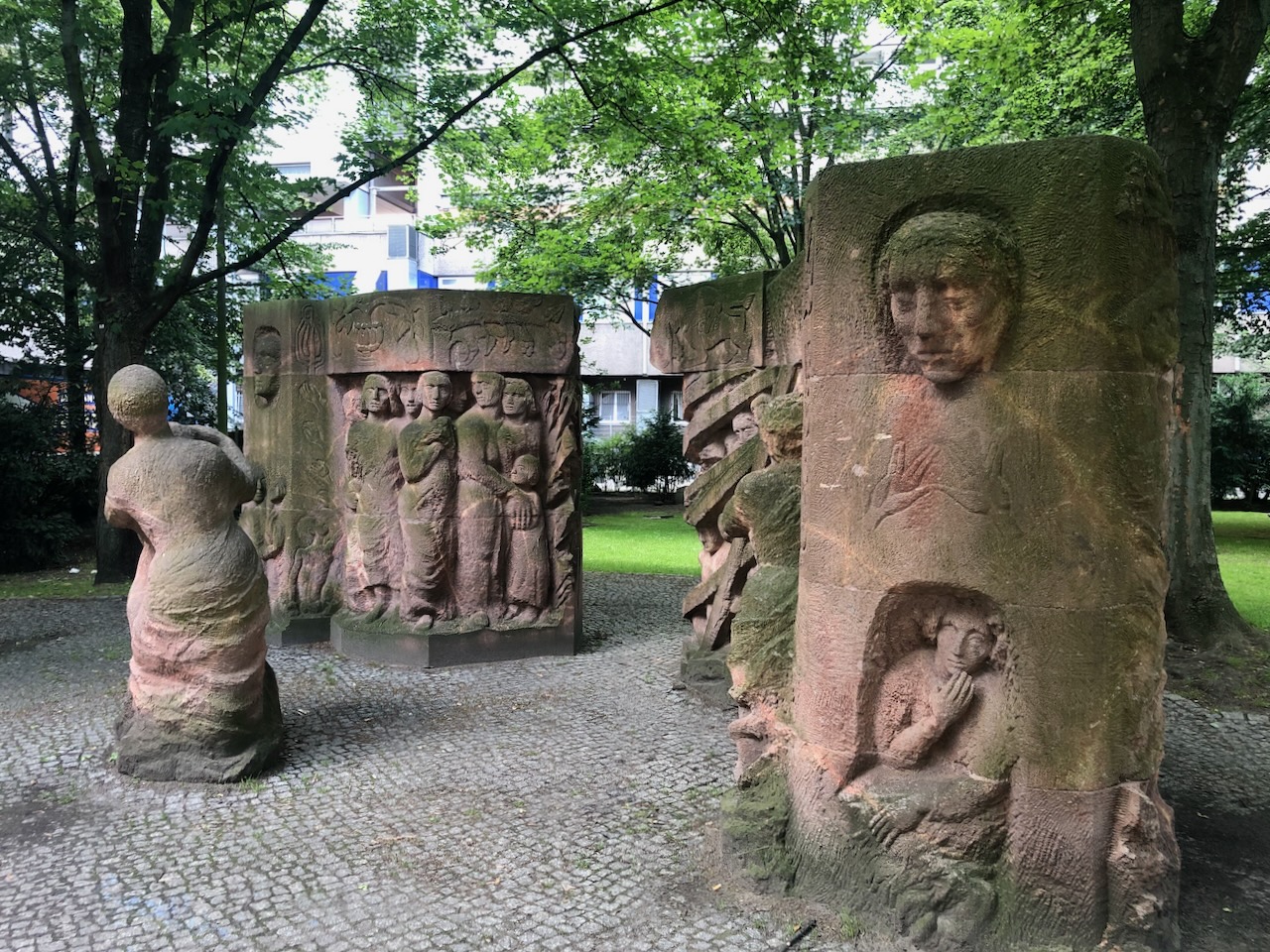
More centrally and on the site of the destroyed Old Synagogue, the Rosenstraße Monument, also known as the Block of Women, marks the 1943 peaceful uprising of some 600 non-Jewish German women who demanded the SS and Gestapo release their detained Jewish husbands awaiting deportation. It was a rare moment of successful protest against the Nazis. 

Rosa Luxemburg Memorial

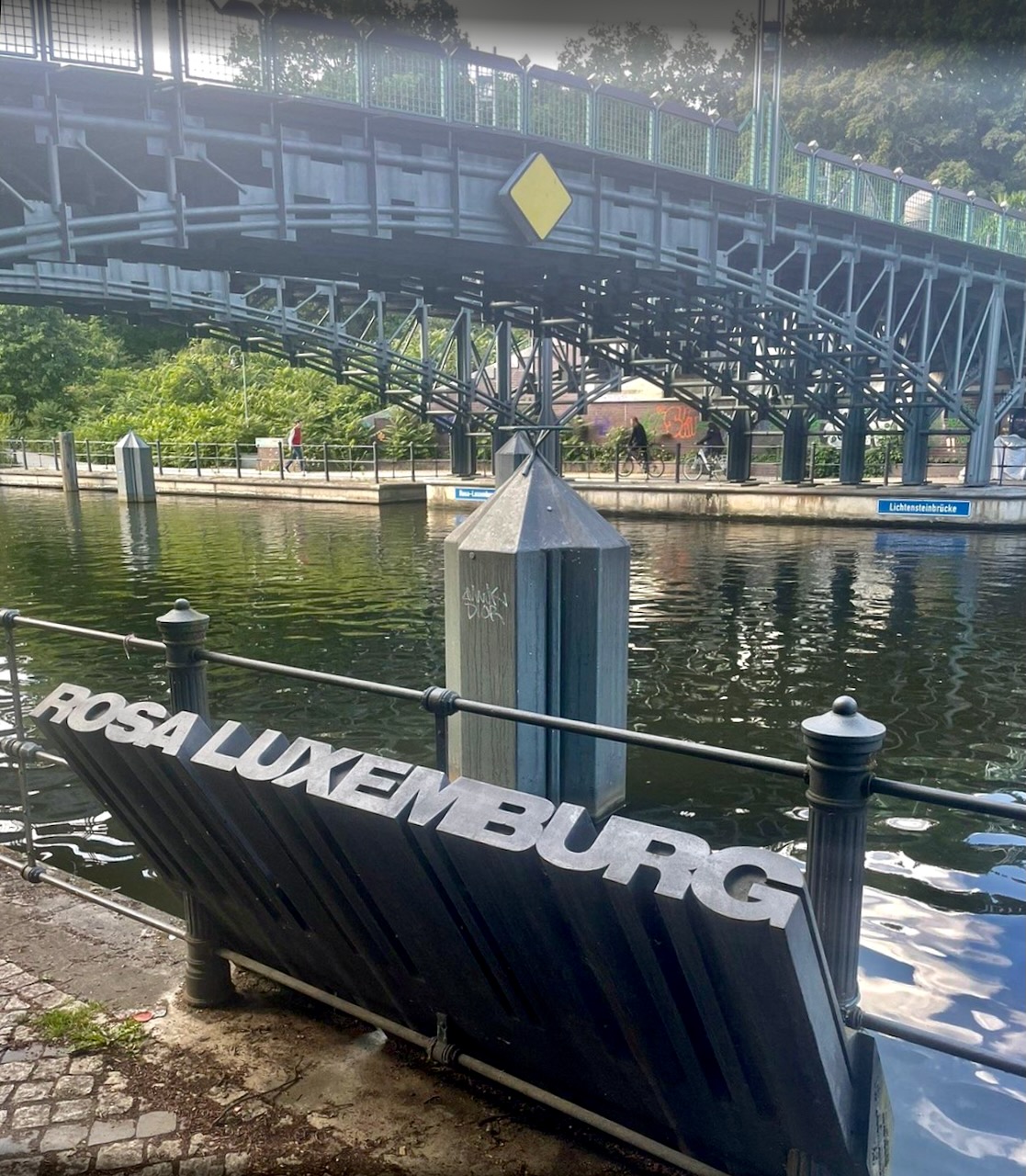
And Rosa Luxemburg, one of the founders and heroines of the anti-war Spartacus League is remembered in big letters spelling out her name along the side of the Landwehr Canal where her tortured and executed body was fished out in 1919. She also has a figurative statue outside the Rosa Luxemburg Stiftung in Friedrichshain.

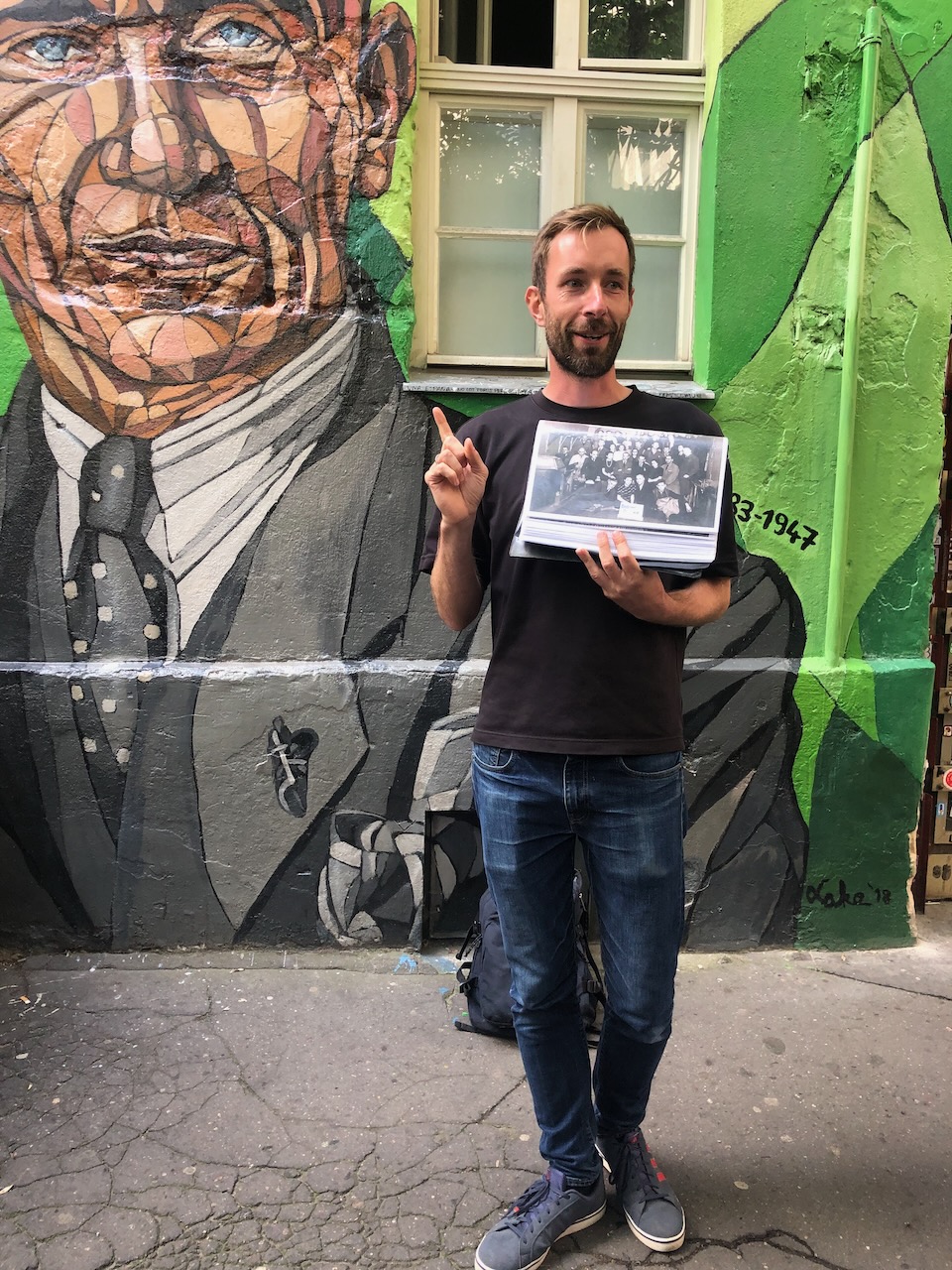
There are no doubt more but today the demographics of Berlin look very different. It’s a cool international city of young hipsters, artists, entrepreneurs, thinkers, activists, expellees, refugees, LGBTQ people, politicians, former GDR bureaucrats and prisoners… the list is long and colourful. John Kampner’s excellent book In Search of Berlin charts its development over the centuries, its ruptures, reinventions and constant search for identity. I keep thinking I know Berlin quite well now, that I have seen a lot of it… how wrong I am. There is more… so much more. And a highlight of this trip was joining Matti Geyer of Tours of Berlin on one of his private tours. (I love a good walking tour and have been on many.) As a born-and-bred Berliner with incredible knowledge and delightful delivery, he could bring new corners of the city to life and introduce me to further gems in this ever-transitioning city. I am already look forward to accompanying him on another.

Germany’s relationship to its past and Berlin’s unique relationship with itself have been fraught with challenges. But while you can feel the unsettled rumble of discontent that has spread throughout Europe and beyond, the wounds and divisions appear to be healing. There is an effortless confidence in its integration of past shadows into its present identity which none of the shiny new façades can hide.

Further reading (as always not necessarily reflective of my views):

Aryan homoeroticism and Lenin’s head: the museum showcasing Berlin’s unwanted statues by John Kapner, The Guardian

History set in stone by Penny Croucher

In Search of Berlin by John Kampner

Counter Monuments: Questions of Definition by Memory and History Blog

Oh dear, what’s happening in Germany…? Could this be the result of a lingering attribution of collective guilt to generations that can’t by definition of the word be ‘guilty’?

“Sometimes in moral philosophy it’s important to think about plants.” I heard these words in last week’s In Our Time and they chimed with my current shift of focus from war to flowers. They were said by the leading philosopher, Philippa Foot, to a room full of Oxford males. She was basically saying that moral evaluation should be see as a continuum of the way in which we see other living things.

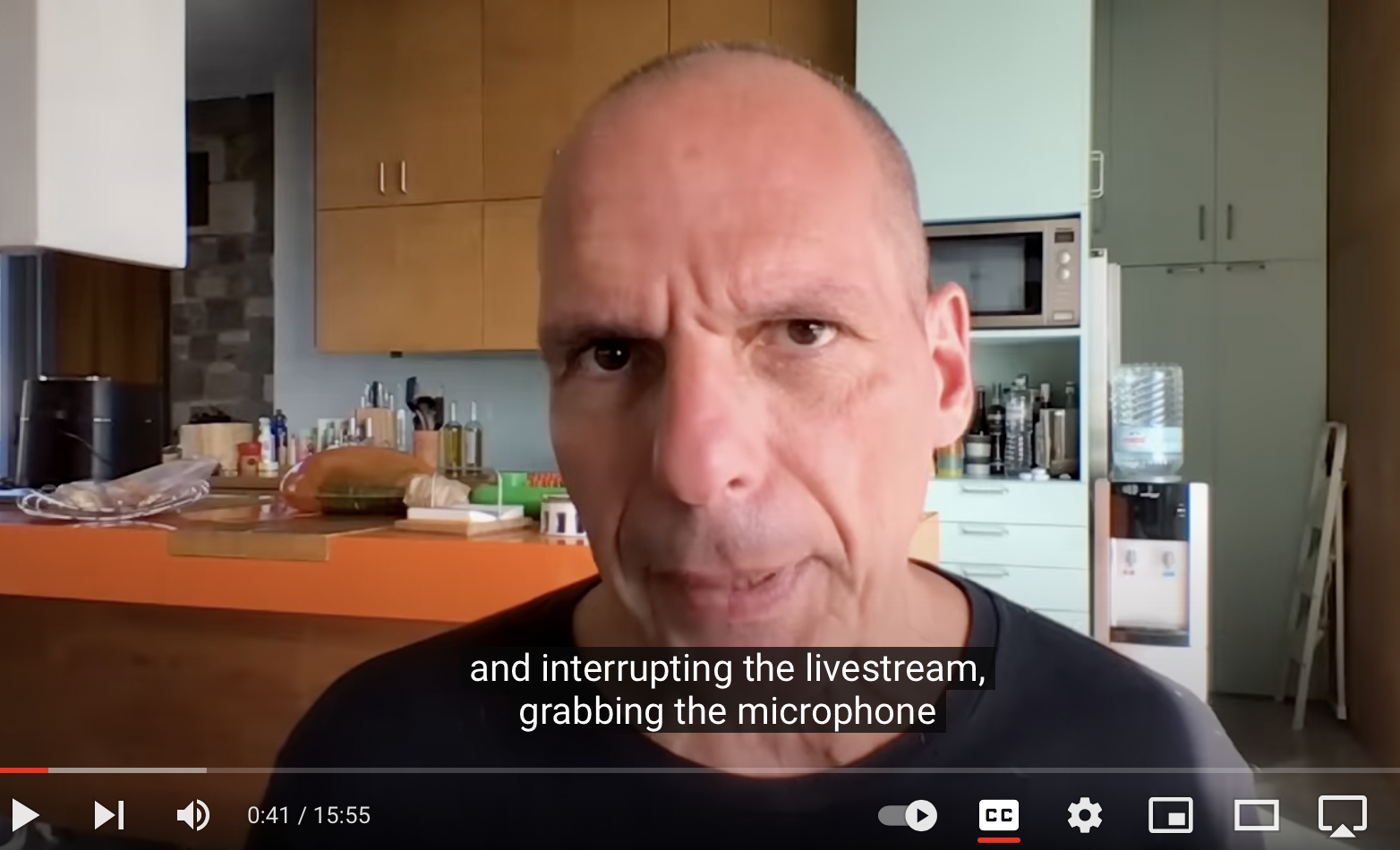
A week earlier, I was sent a link to a video by Yanis Varoufakis, former finance minister of Greece, whose proposed speech in April at the Palestine Congress in Berlin was stormed by police and banned. [You can have a listen to his reconstruction of it here.] Somehow I found the two were connected.

So what is happening in Germany in relation to Israel’s war on Gaza? Some reports are pretty concerning. It is understandable that Israel’s security and right to exist has long been Germany’s ‘Staatsräson’ (reason of state). However, since the Hamas-instigated horrors of October 7th, the belief in Israel’s right to defend itself has evolved into a fairly uncompromising pro-Israel position that seems to equate any criticism of Benjamin Netanyahu’s policies with anti-Semitism. Friends in Germany relate how alarmed people are by the shutting down of debate and silencing of different voices, both painfully reminiscent of the authoritarianism and loss of democracy of Nazi Germany. 

The German government’s unswayable support of Israel in whatever it does is a result of Germany’s past. It is seen as morally the right thing to do. But could nearly eighty years of the world’s media placing Germany and Guilt in the same sentence to explain everything, from its open-arm policy towards refugees to its hesitancy to supply weapons for use against Russia, now be backfiring?

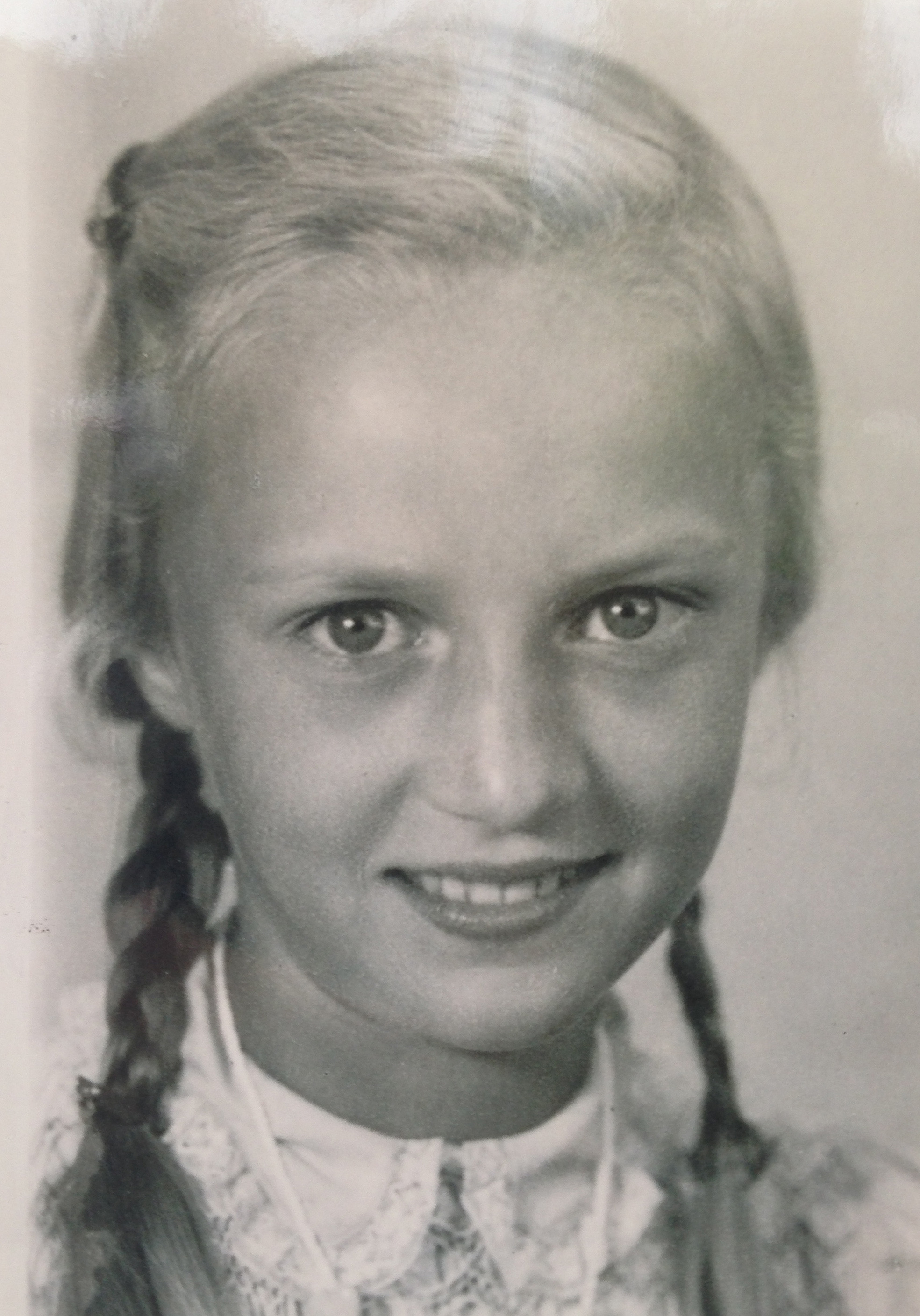
My German mother will be 90 this weekend. She was 11 years old when the Second World War ended and is one of increasingly few Germans who experienced Nazism first hand.

My mother, Jutta, aged 11

In the post-war decades, collective guilt and accusations of complicity in the Nazi atrocities were attributed to the entire German population. Plenty of people consider subsequent generations guilty too, by way of blood / nationality / family association. You might remember my 2018 blog  ‘Shot for what you represent’ with the incident of the English woman who, on hearing I was half-German, picked up her hand off the table, turned her fingers into a gun and shot me in the face! In her eyes, all Germans are unquestionably guilty and “jolly well should feel guilty” too.

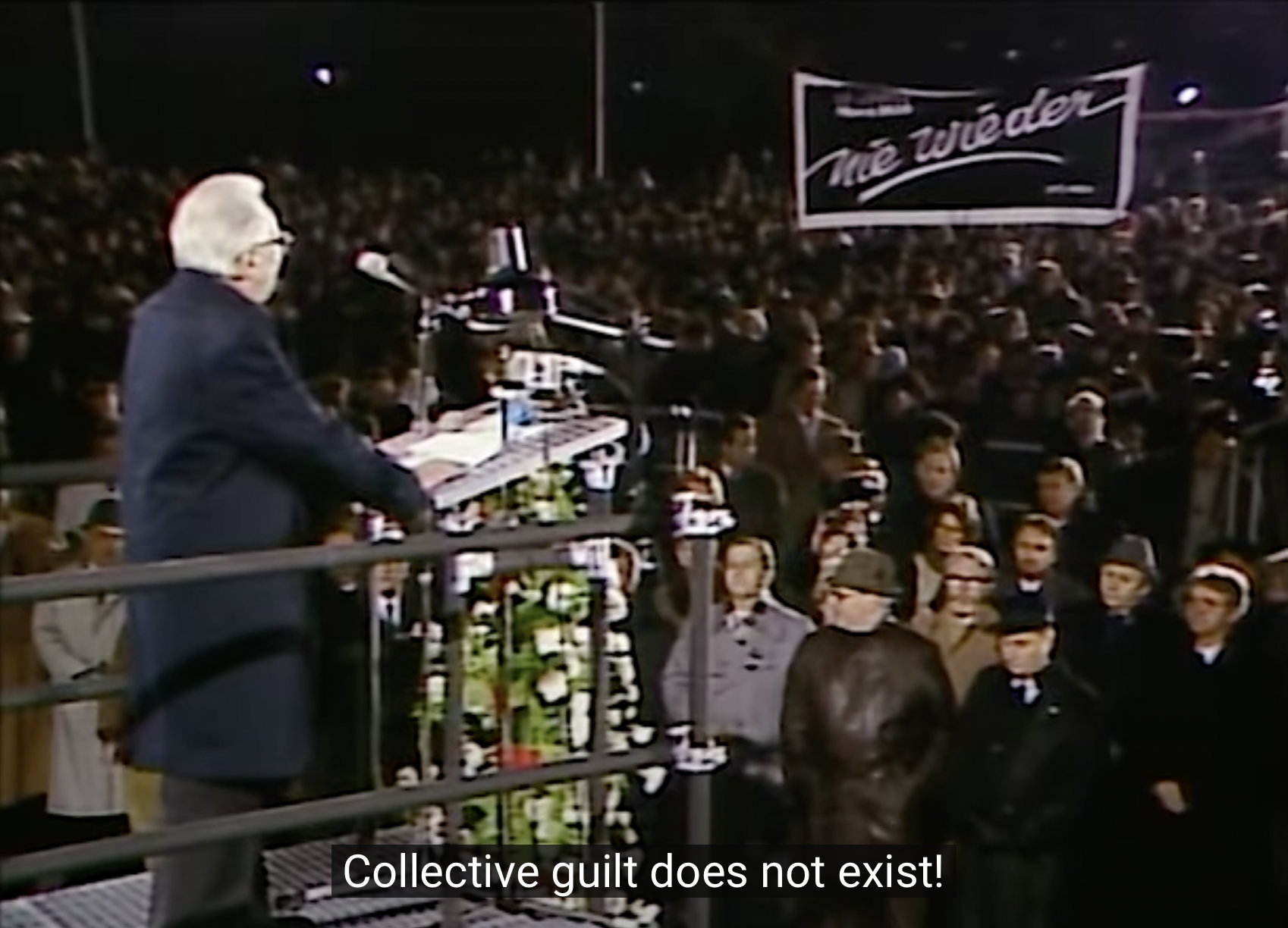
This is in stark contrast to many Holocaust survivors such as Sabina Wolanski, who said at the inauguration of Berlin’s Holocaust Memorial in 2005: I do not believe in collective guilt. The children of the killers are not killers. We must never blame them for what the elders did, but we can hold them responsible for what they do with the memory of their elders’ crime. Similarly Viktor Frankl, author of the seminal book “Man’s Search for Meaning”, who in a 1988 speech spoke out against the very concept of ‘collective guilt’ describing it as a continuation of Nazi-ideology.

I believe they are right. I understand how Germans, myself included, might feel shame for being part of a group who allowed genocide to happen. Many also feel a deep sense of responsibility for not allowing it to be forgotten and making sure it doesn’t happen again. But guilt?

Let’s explore the dynamics of this word for a moment. 

Guilt is the result of an action within our control and responsibility. To be guilty, you have to have done (or failed to do) something that falls out of the framework of what is socially acceptable by the group with consequences of harm to an ‘other’. Frequently ‘guilty’ parties will not feel guilt or shame as they see their actions as having been justified, necessary, righteous even, within the context in which they were committed. Resentment and retaliation for being deemed ‘guilty’ can follow.

In Who’s to Blame? Collective Guilt on Trial, Coline Covington describes how Judeo-Christian cultures place particular emphasis on guilt, forgiveness and atonement alongside rituals that are supposed to restore moral order, cleanse the groups of shame and hatred, and prevent or close cycles of vengeance. For a long time, I have believed this was right and Germany’s culture of Vergangenheitsaufarbeitung (working through the past) and counter memorials was an example to all of us of how things could (and should?) be done. I am no longer sure that is what’s needed now.

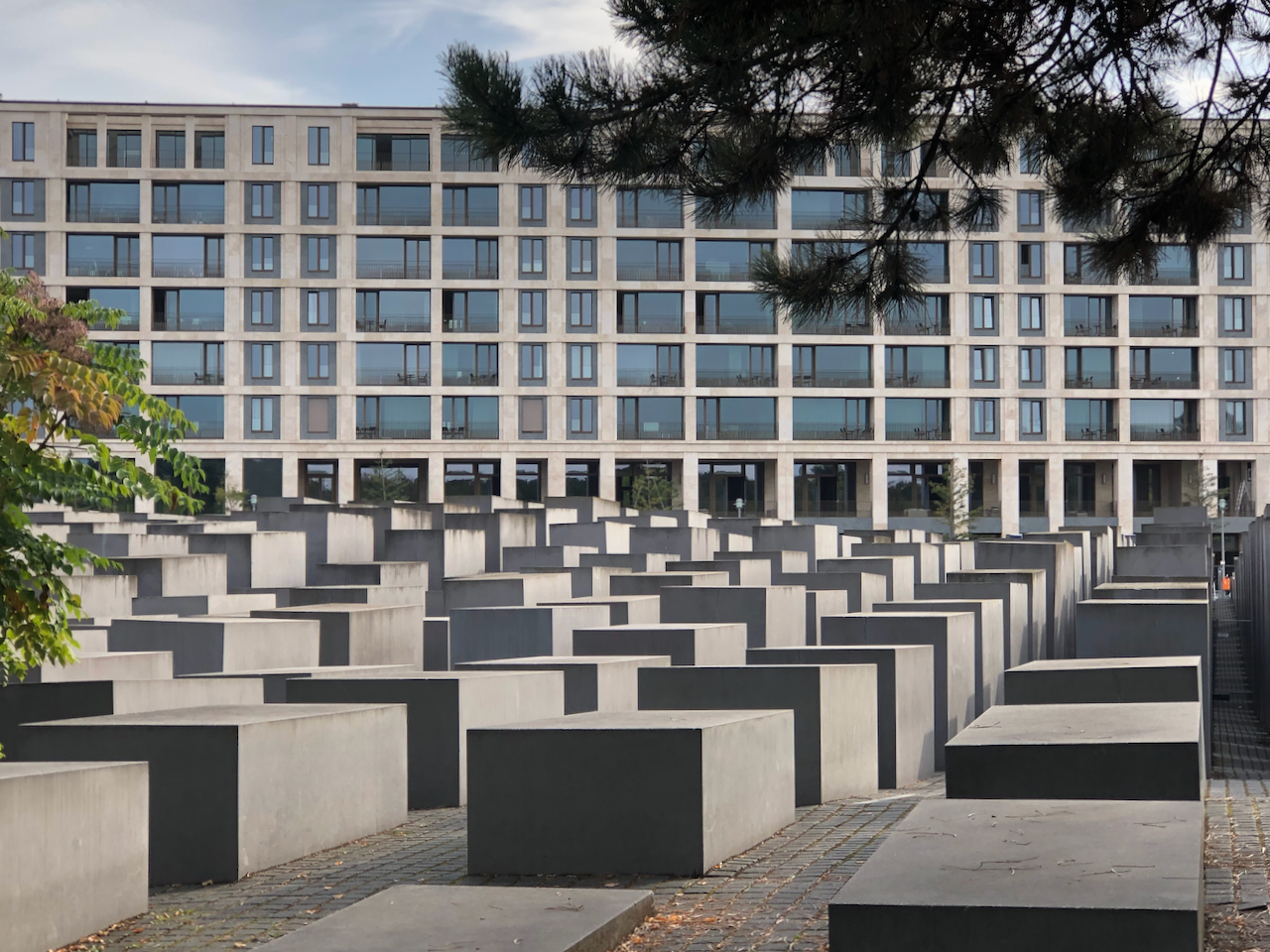
Memorial to the Murdered Jews of Europe by Peter Eisenman, Berlin

The problem is, Covington says, that most restorative rituals for peace-building are built on a binary understanding of good and evil, right and wrong, victims and offenders. “The finger of blame is pointed and yet true healing is meant to eradicate blame. This inherent contradiction contains the seeds of failure.” Could it be that we are witnessing this failure in Germany, Israel/Gaza, Russia/ Ukraine and elsewhere, resulting in new perpetrators and victims of atrocity and trauma? 

If so, how do we overcome binaries? I tried a couple of weeks ago in an online group of Jews, non-Jewish Germans, my own Anglo-German mix and others. Someone had been talking about the frightening increase in anti-Semitic acts and some members of the group had dismissed those behind them as ‘idiots’. A common reaction to unacceptable behaviour, and I have said the same many times in relation to certain members of the Tory party! But it got me thinking… because when we proclaim a shocked judgment: “How could they!” How stupid!” “How awful / evil / weak!”, we are basically believing: If I were them, I wouldn’t do what they are doing. We are seeing ourselves as morally superior, stronger, more intelligent and right, while ‘they’ are inferior, guilty, ignorant, wrong. 

Does this dynamic not replicate, in an initially small but precise way, the dynamics behind the Nazi, or indeed any, discriminations and judgments against apparent ‘lesser mortals’?

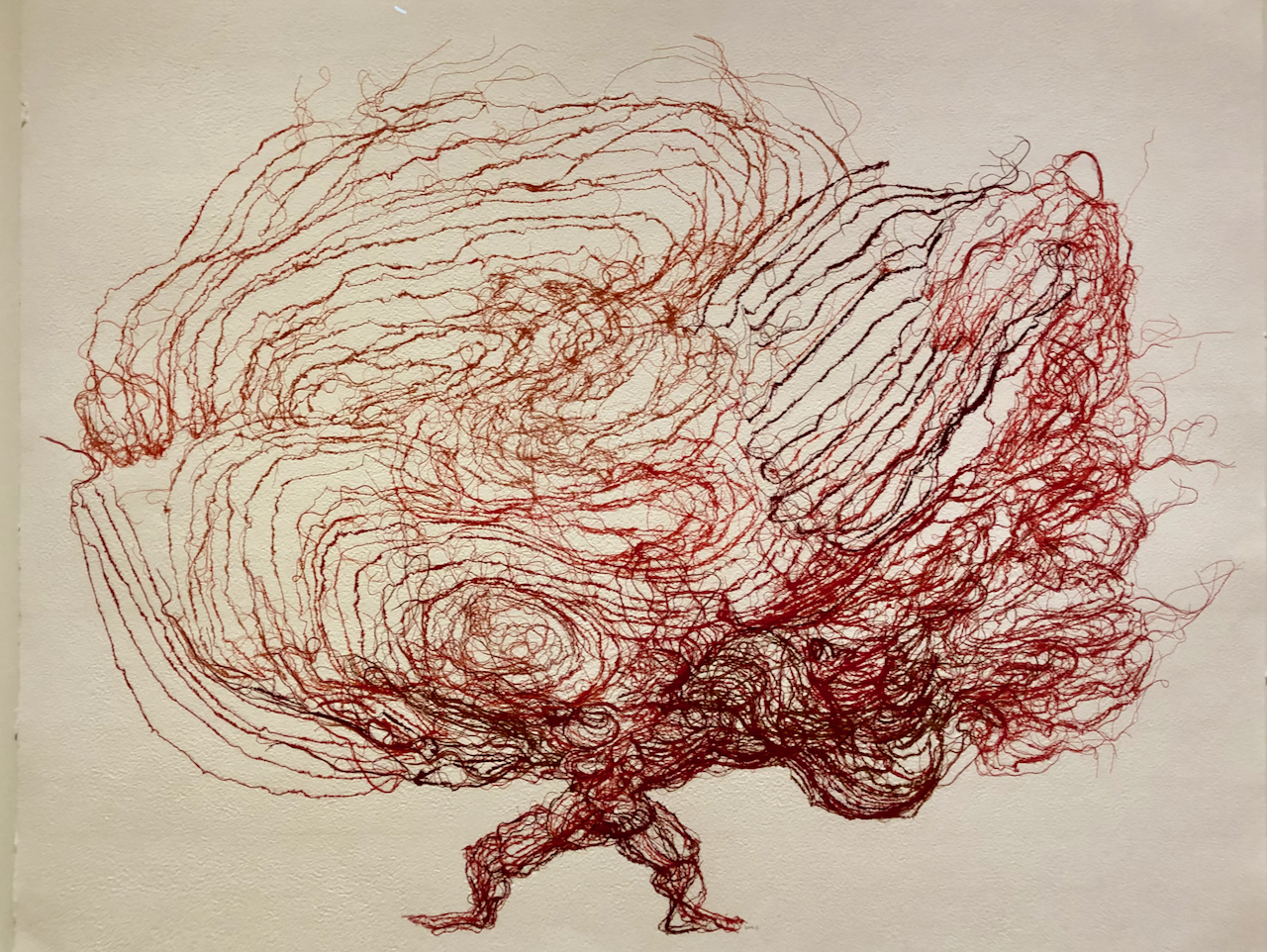
Do Ho Suh, Karma Juggler, Thread embedded in cotton paper

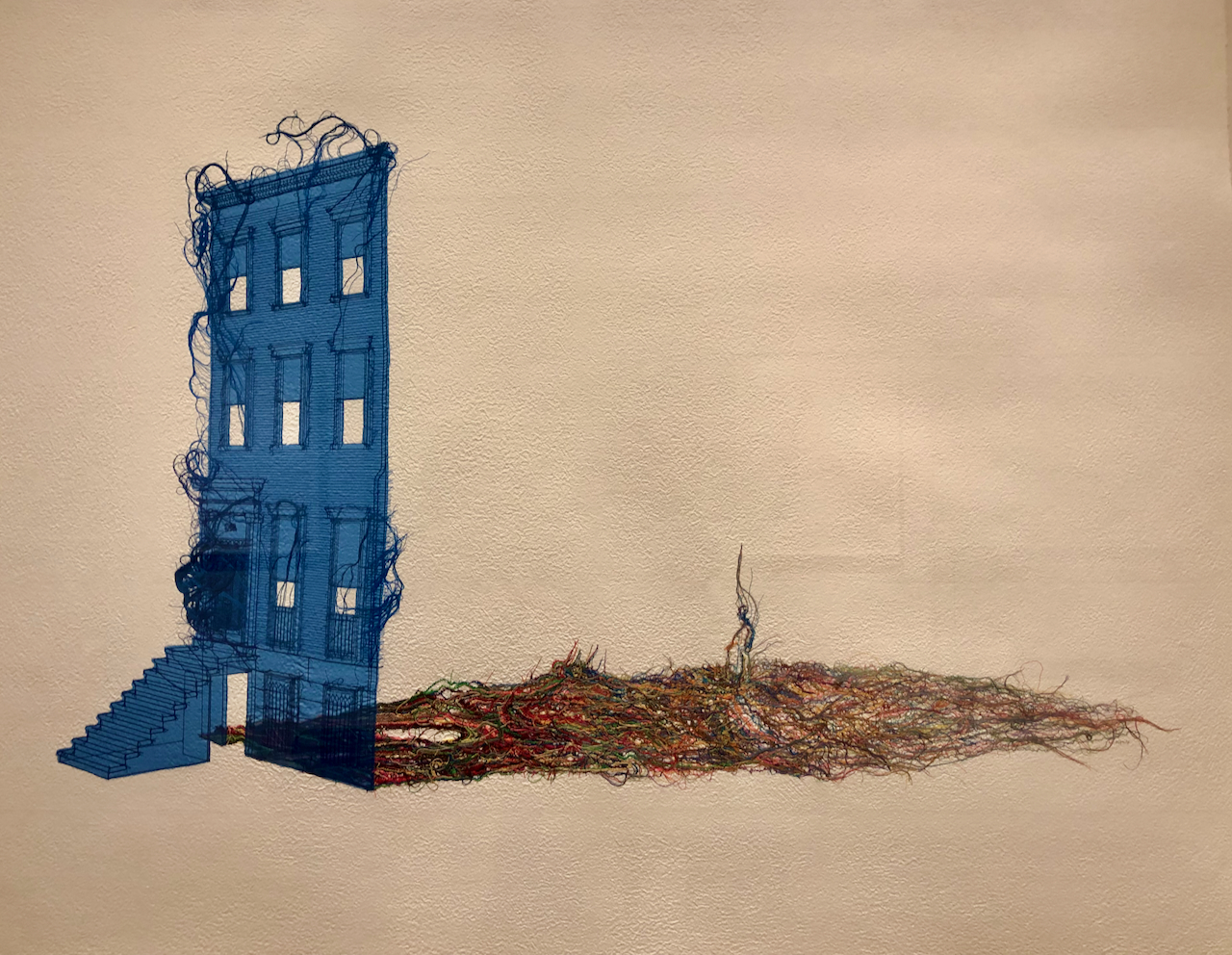
In this particular constellation, I naturally belonged in the ‘German perpetrator’ rather than the ‘Jewish victim’ category. It’s an uncomfortable place to be, but I have noticed that since finishing my book, the label no longer sticks as well. My grandfather’s shadow that once draped over my identity like a huge cloak has been so comprehensively unpicked, understood, transformed and woven into the fabric of my whole being that I can no longer see people in such binary terms. Like the beautiful art of the Korean artist, Do Ho Suh, whose exhibition Tracing Time I saw on a recent trip to Edinburgh, I can see how we are all threaded together into a colourful tangle of humanity, each one necessary and part of the whole. 

Do Ho Suh: Blueprint (2013), Thread embedded in cotton paper

There were people in the group who suggested I was ‘absolving’ myself and wanting to free myself of the burden of guilt, almost as if this was utterly impossible or prohibited. I do understand that response and how for descendants of survivors, this could feel an affront. But, without diminishing any of the suffering of and compassion for the descendants of survivors, I myself choose to no longer see people in terms of “my side/your side”, as one member put it. I believe that in order to overcome the judgmental binaries of ‘us-good’ and ‘them-bad’, we all need to make a greater effort to understand what lies behind bad or evil deeds. We not only need to step into the other person’s shoes, but into their entire situation. Only then can we recognise that if we were in the totality of their internal and external life, we would act, or would have acted in exactly the same way as them. The results of Milgram’s 1961 experiment with obedience to authority suggested something similar. Apparently good people, like us, can also become capable of extreme bad.

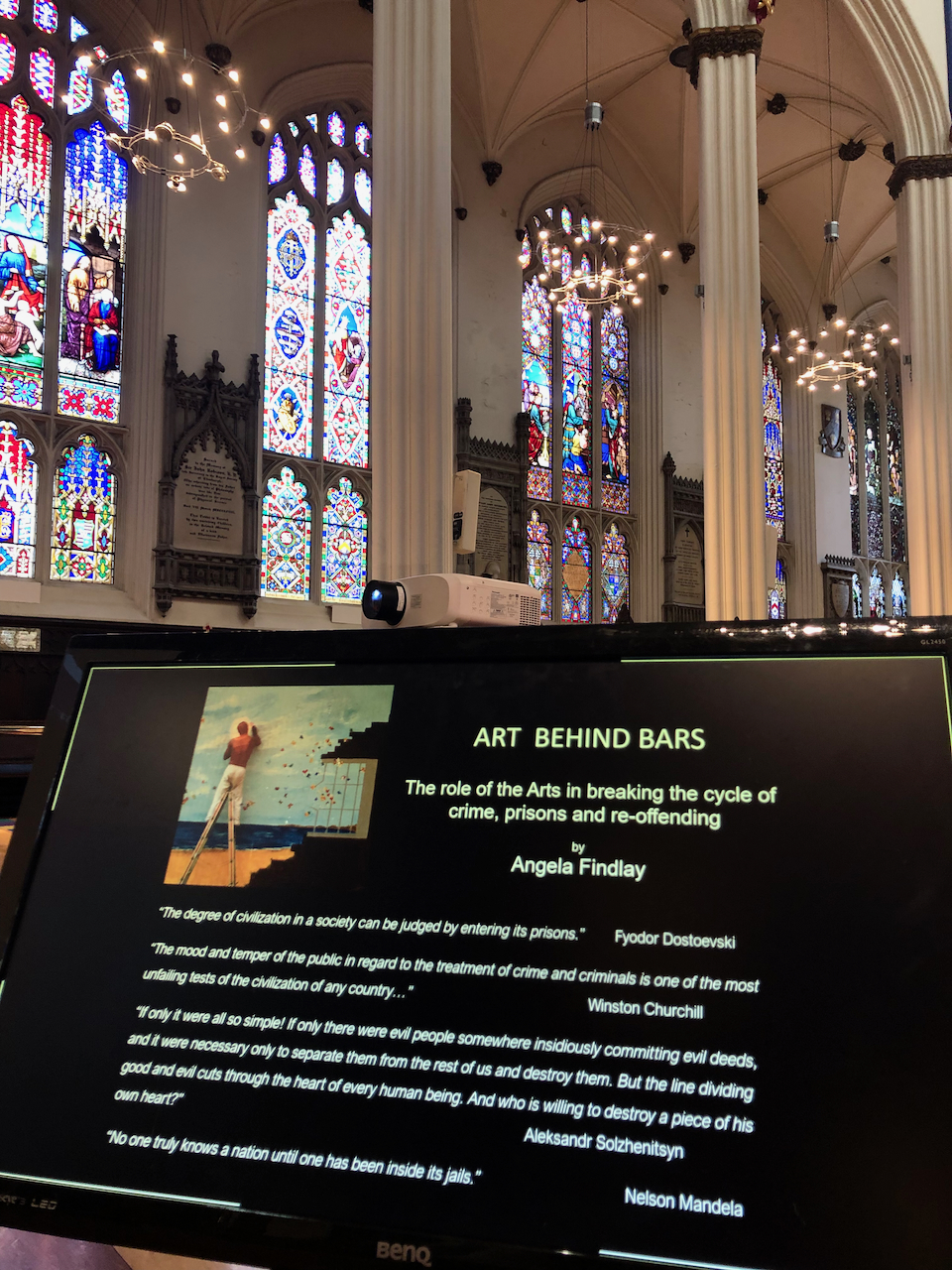
You will all I am sure now know about the horrendous, inhumane conditions of HMP Wandsworth and so many of Britain’s jails, and the decades of glaring failures of our Criminal Justice System in general. (If not, you can get an impression here and here and here) None of us live very far away from a jail, and yet so many of my Art Behind Bars talk audiences say they had “no idea.” Will we too one day be judged and found guilty of the stigmatisation of offenders that enables this shamefully degrading system to exist in our name as a fulfillment of our wish for governments to be ‘tough on crime’? Will we be accused of turning a blind eye, not acting and later claiming ‘we didn’t know’?

I am deliberately being a little provocative to make a point. Because as far as I can see, the only way we have a chance of breaking the catastrophic cycles of blaming and shaming, violence, retribution – all outcomes of seeing each other as ‘other’, separate and different from ourselves – is to create a level playing field of mutual respect where both (or all) sides are treated equally. And it can start within each one of us. In everyday situations. Now.

This is the African concept of ‘Ubuntu’, a philosophy of interconnectedness, sometimes translated as ‘humanity towards others’ or ‘I am because we are’. The most recent definition provided by the African Journal of Social Work (AJSW) describes Ubuntu as: A collection of values and practices that people of Africa or of African origin view as making people authentic human beings. While the nuances of these values and practices vary across different ethnic groups, they all point to one thing – an authentic individual human being is part of a larger and more significant relational, communal, societal, environmental and spiritual world.

According to Charles Eisenstein, author of The More Beautiful World Our Hearts Know is Possible, aligning ourselves with the truth that ‘if I were in the totality of your circumstances, I wouldn’t do differently from you,’ and the compassion that arises from putting ourselves in another’s shoes and seeing us as one, is “perhaps the most powerful way to magnify our effectiveness as agents of change.” I think I agree.

Further Reading / Listening (as always, not necessarily my opinion)

What’s behind Germany’s support of Israel? – Inside Story Podcast, 10th April 2024

As war in Gaza rages, what’s behind Germany’s support of Israel? – Al Jazeera

Historical Reckoning gone haywire – Susan Neiman, The New York Review

Germany’s crackdown on criticism of Israel betrays European values – Al Jazeera

Germany’s historical guilt haunts opponents of Israeli war in Gaza – France 24

A Clean Break by Tom Holland – A Point of View, BBC Radio 4

Where history resides in the soil, tangibly awaiting excavation…

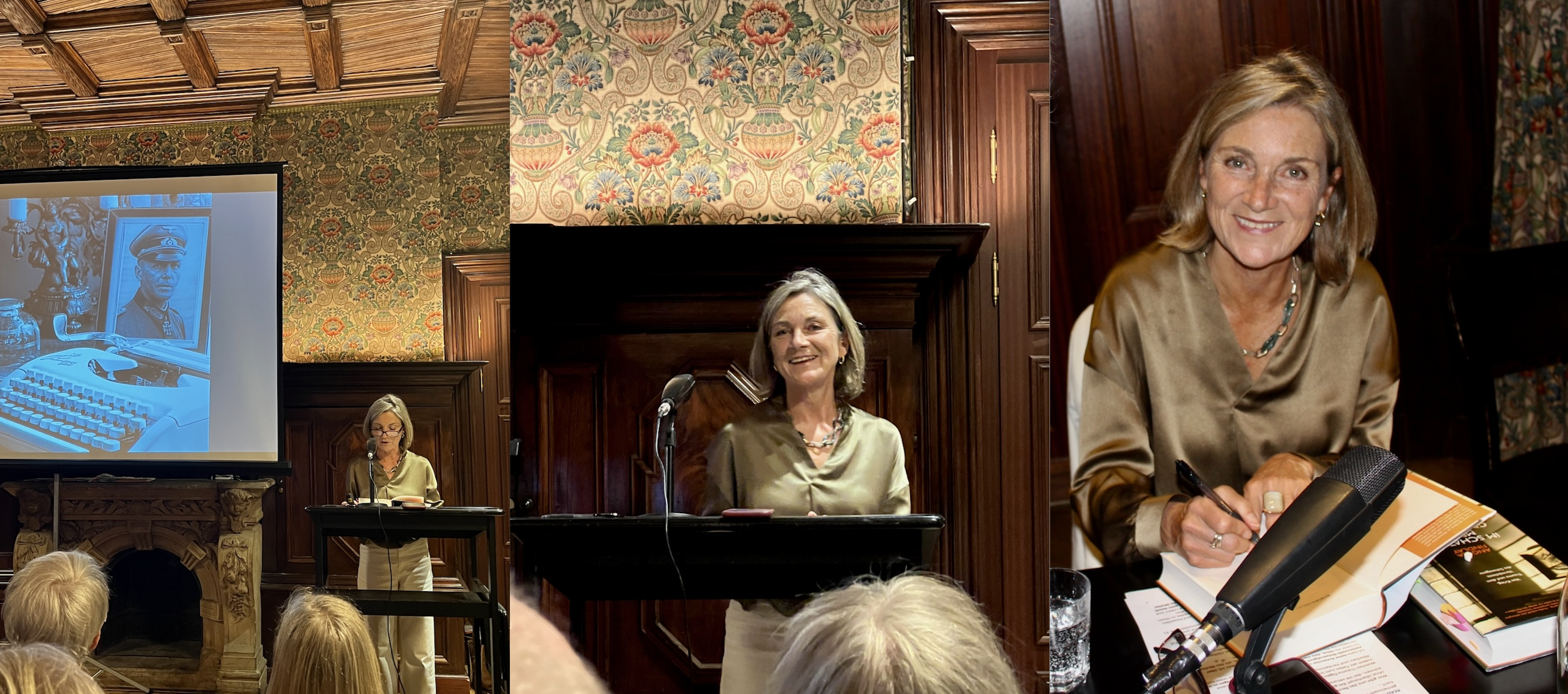
There was something profound about launching the German translation of my book in Germany, first in Hamburg, the city I have known and loved all my life, and then in Berlin, the epicentre of that extraordinary episode of history in which I have been immersed for over 15 years. 

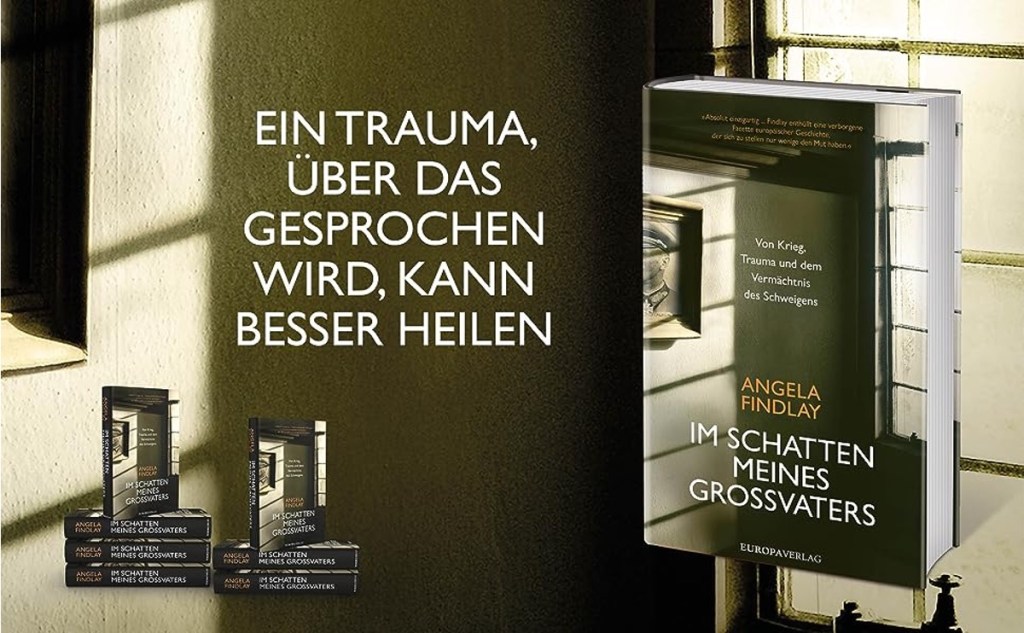
In My Grandfather’s Shadow: A trauma that is talked about can better heal

I had no idea what reception it or I would receive. The audience have, after all, breathed the air of Germany’s past for decades; been shaped by it – whether they have engaged with it or not. German 20th century history is still very much alive in the present, a minefield of sensibilities and taboos through which I had to pick my way, all too aware that as a half-Brit, I always had an airlift out of the horrors. What on earth could I bring to the intensely discussed narratives?

So I was touched by how warmly I was received. How attentively people listened. How sincerely they responded, one elderly man, born in the same year as my 89-year old mother, standing up and telling the story of his childhood flight from the Soviets for the first time. The entry level of questions was so deep, so knowing, so very real. 

Unintentionally colour-coordinated with the beautiful decor of Berlin’s Literaturhaus!

As always, it was the post-talk discussions, with much needed glasses of wine in hand, that brought home to me once again the importance of talking about what is all too often buried. People expressed how completely new it was for them to hear someone talk so openly both about German soldiers and themselves. This is deliberate on my part. By baring the inner machinations of my soul and that of my grandfather, I was and am inviting people to explore theirs. By touching on taboos, exposing shame to the light of empathy and sharing the tools I developed and steps I took to release myself from the crippling weight of Germany’s Nazi legacy, I can offer hope that there is a way through. Through, not out of. For such an unprecedented past must necessarily maintain the weight of responsibility. 

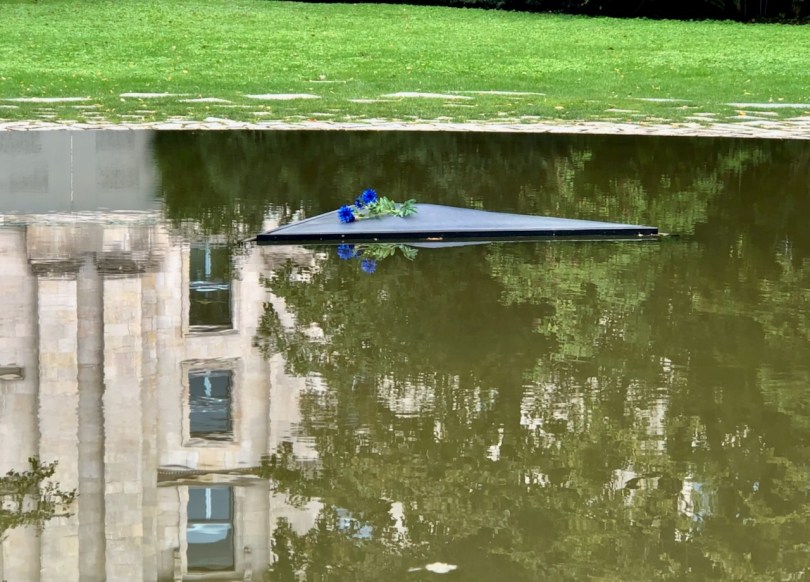
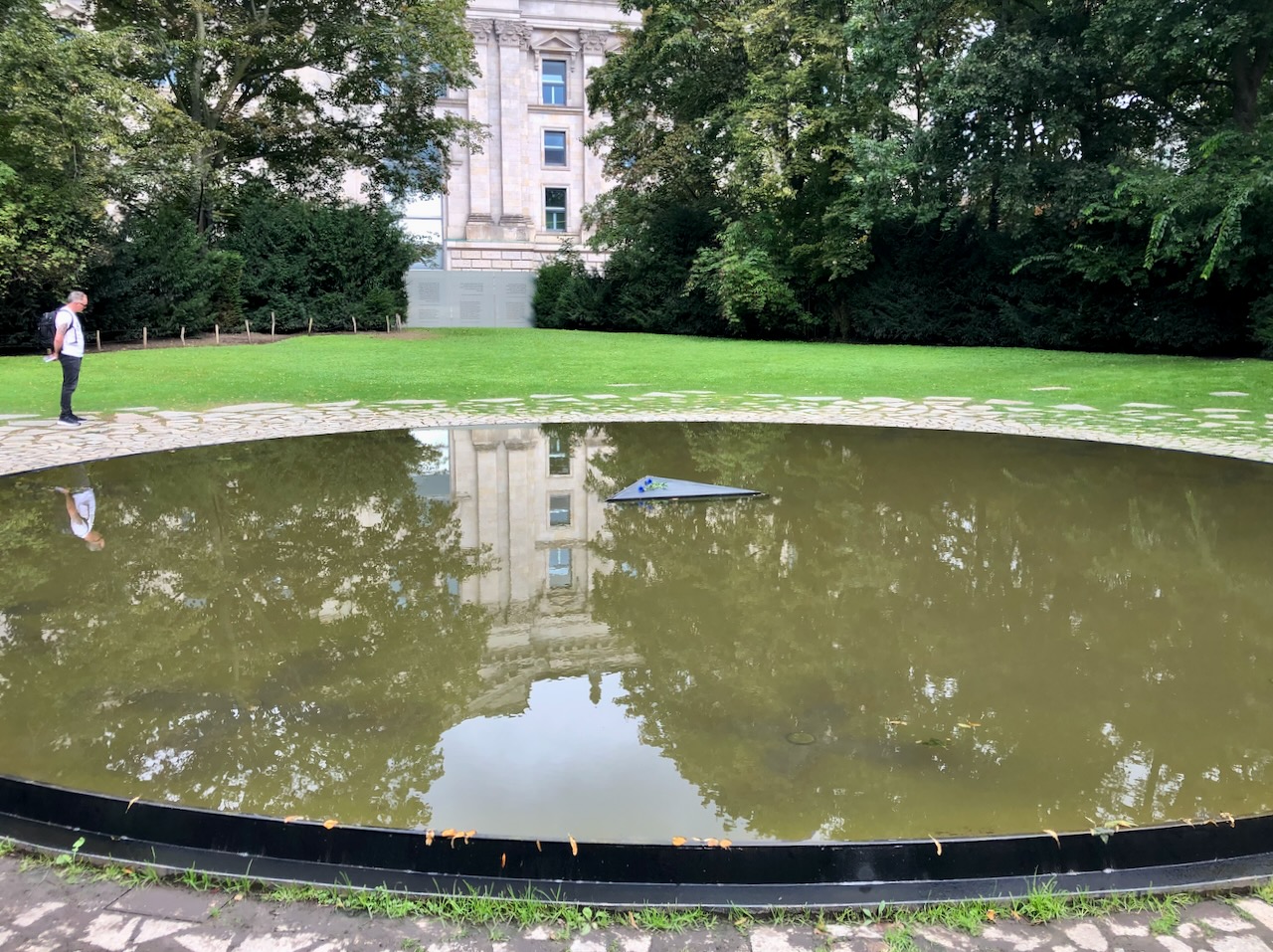
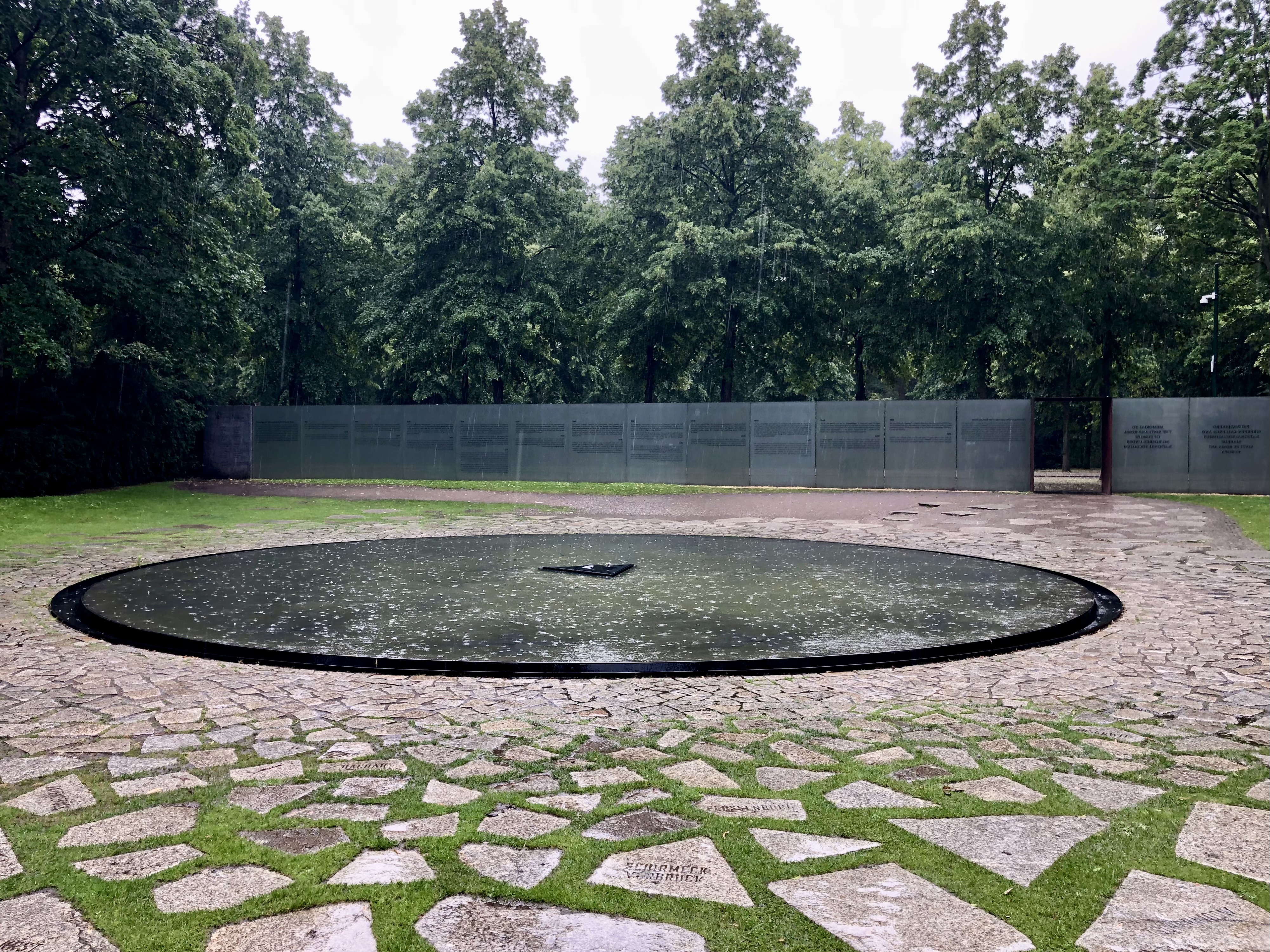
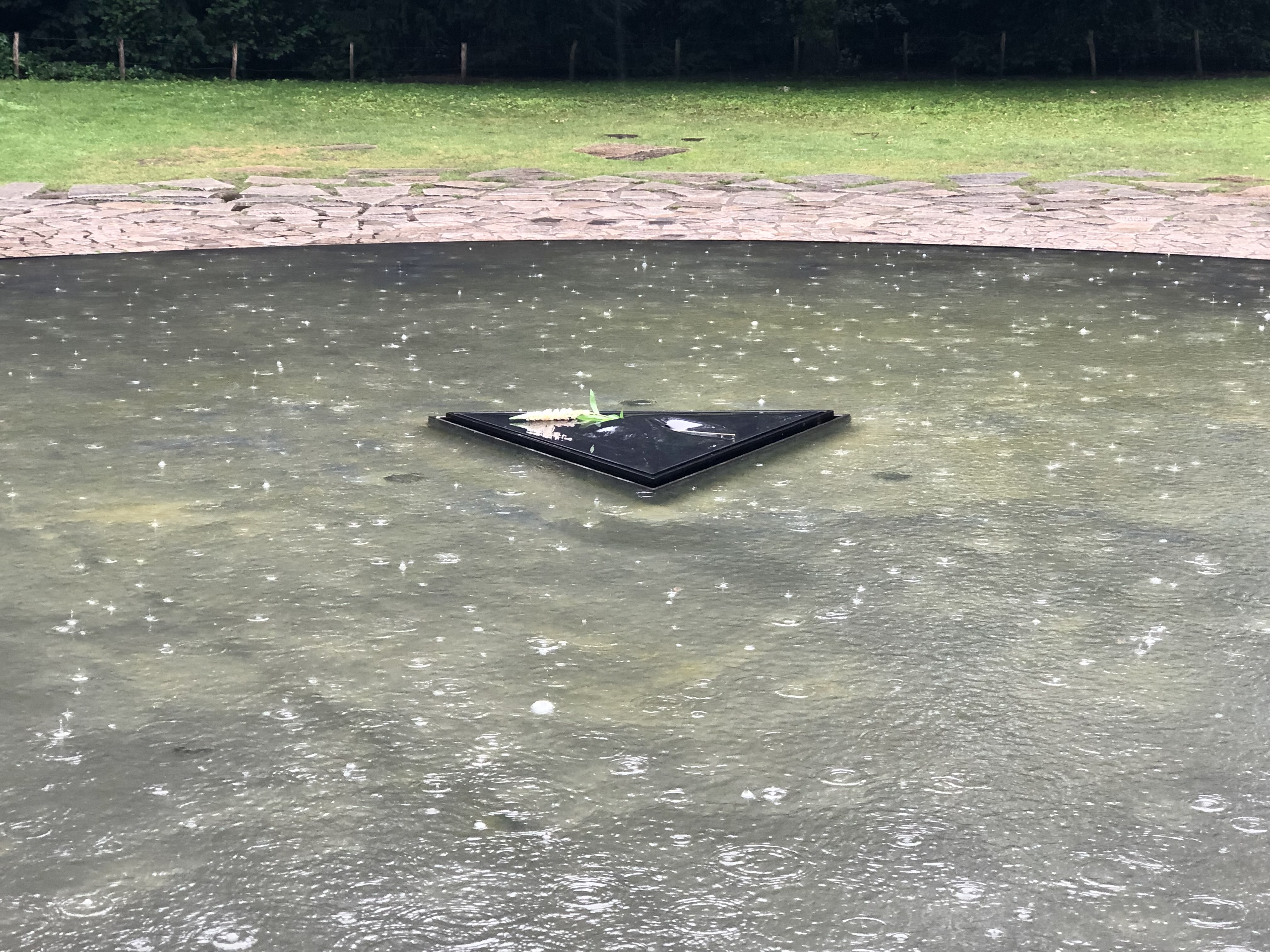
As a nation, Germany continues to respond to its crimes in countless ways, not least through its counter memorial culture about which some of you may have heard me speak in my lectures. One memorial in particular chokes me up every time. It is the Memorial to the Sinti and Roma of Europe murdered under National Socialism placed right in the heart of the city between the Reichstag and Brandenburg Gates. (I mentioned it in my June BLOG on Berlin)

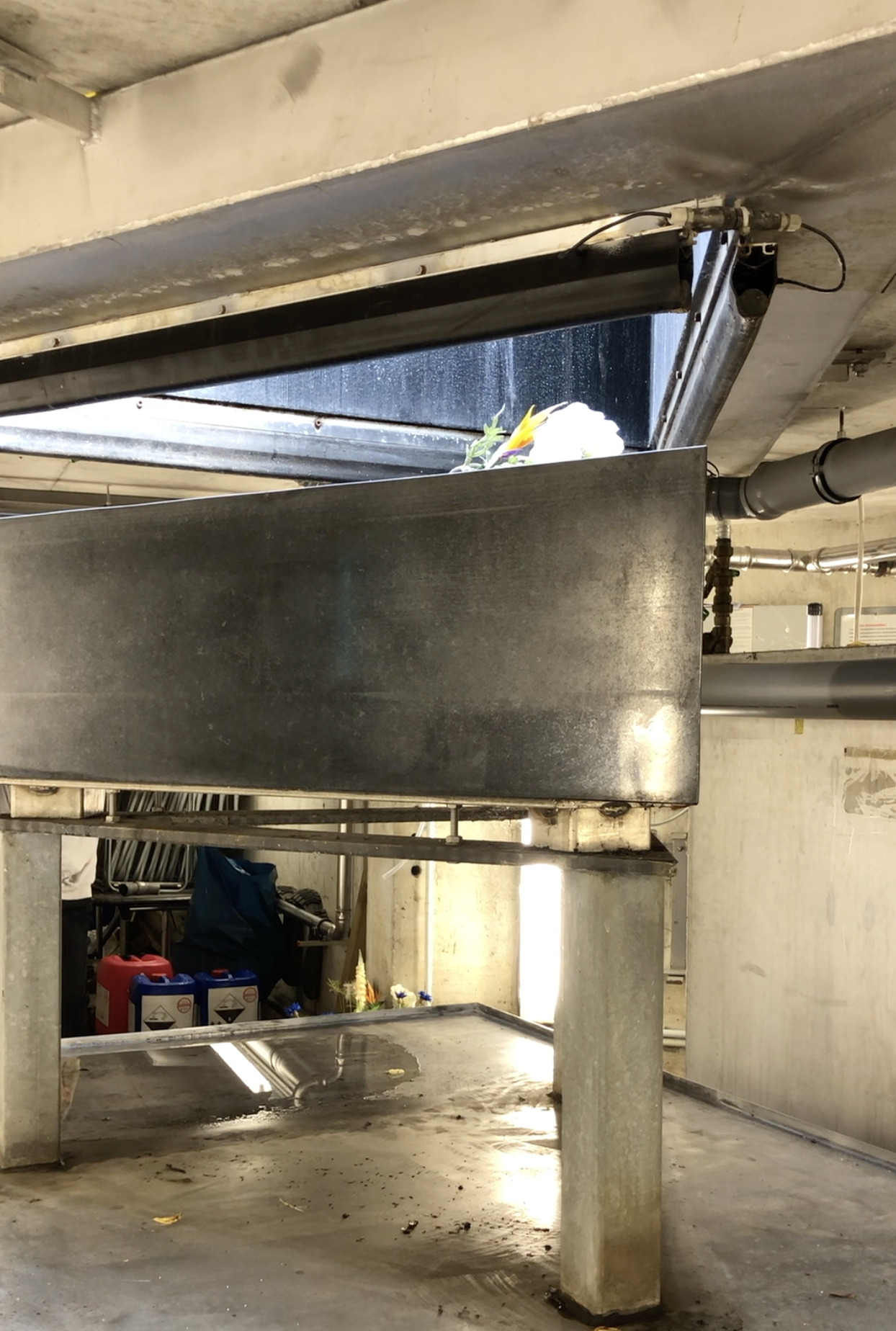
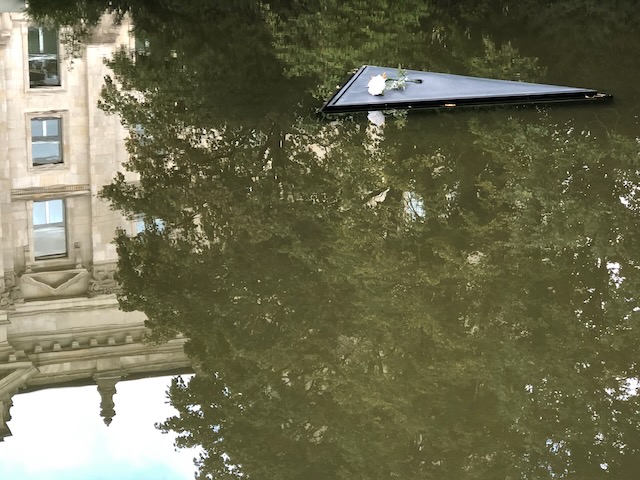
The central feature is a circular pond with a triangular ‘island’ on which a fresh flower is placed every day. That some official is tasked with performing this ritual intrigues me. So, after receiving permission to witness it, I joined a delightful man in uniform by the water’s edge and duly followed him into the bushes. Hidden from public view, he pulled opened a grated trap door and gestured to me to descend the precarious metal ladder and proceed along a damp corridor until I was standing directly below the retractable triangle. At 1pm precisely he pressed a button. An accordion-like black triangular pillar began to lower, folding into itself until the flower was within reach. 

I was then allowed to select and place a new flower on the triangle – a slight disappointment that for practical reasons, the flowers are no longer fresh but plastic! Then, with another push of the button, up it went to take its place in the still water for another day.

As we emerged from the bushes, a school class of pupils who had been brought to watch the ceremony approached us. The teacher had noticed me disappearing into the undergrowth and asked if I would explain who I was, what, why…etc. which I did. And, long story short, from that encounter and the interest it generated, I received an invitation to come to their school next time I am in Berlin and tell them about my story and my book!

“Truth speaks from the ground” Anne Michaels wrote in Fugitive Pieces. I have always felt this since my first visit to Berlin in 1990. I remember wandering through the recently gentrified area around Hackescher Markt excited by its contemporary art galleries but wholly unaware of its history as a Jewish quarter from which thousands of Jews were rounded up and deported. But “… as the day wore on, I became increasingly aware of an uncomfortable sensation rising inside me. Something seemed to be seeping up from the pavement through my feet and weighing down my legs. It rose further, turning my stomach hard. By the time we stopped at a café, it had reached the level of my heart, at which point it spilled out in a huge wave of sobs…” (IMGS p.153)

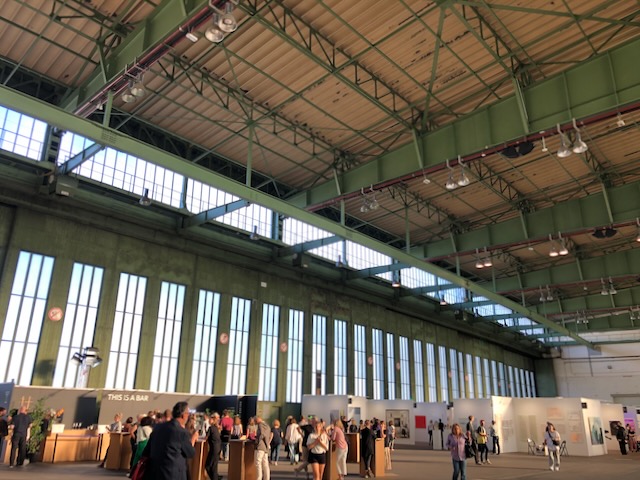
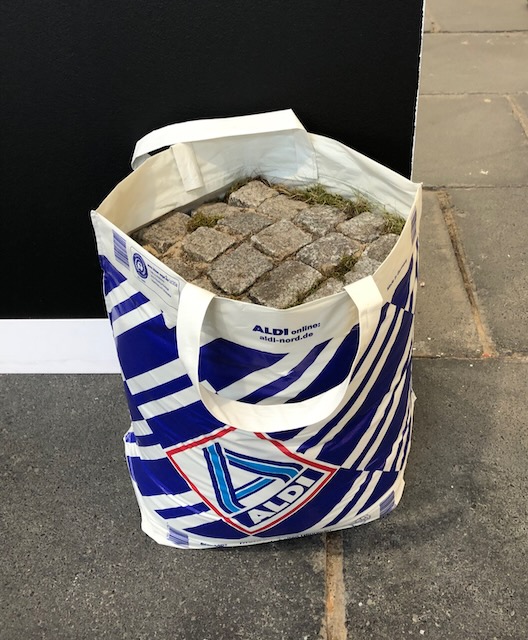
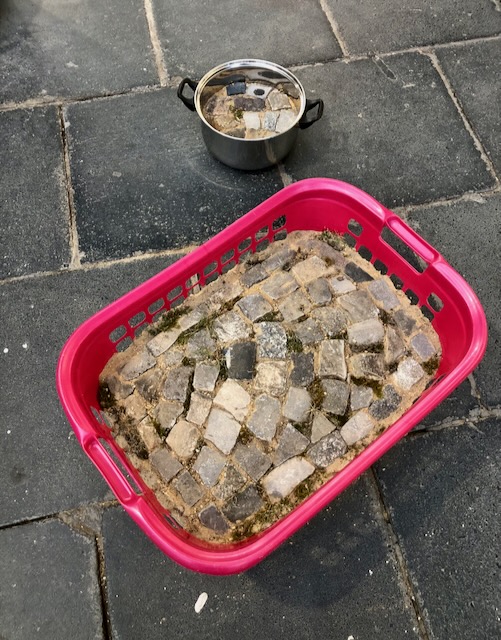
Maybe that is why one sculpture spoke to me so strongly at Berlin Art Week’s POSITIONS exhibition housed in the long-disused hangar of Tempelhof Airport, site of the Western allies’ 1948-49 ‘Berlin Airlift’ in response to the Soviet Blockade.

I didn’t get the name of the artist (apologies), but to me their work brilliantly, wordlessly captures what I instinctively feel about being in the unique and extraordinary city that is Berlin, where past meets present with a potency that can’t be ignored.

For NEWS of forthcoming events in England and Germany, please see my website: www.angelafindlaytalks.com

To receive my NEWS straight into your email inbox, please SIGN UP to my NEWSLETTER

When you experience the past, present and future all occupying the same space in time…

Being away in Germany for much of June and July has got me thinking about the relationship of past, present and future. It keeps coming up as a theme, each time confirming to me that they are not separate, not relegated to positions behind or in front of us as we live that one moment we can call ‘now.’ (My TEDx talk referred to this too)

Just a couple of examples of what I mean.

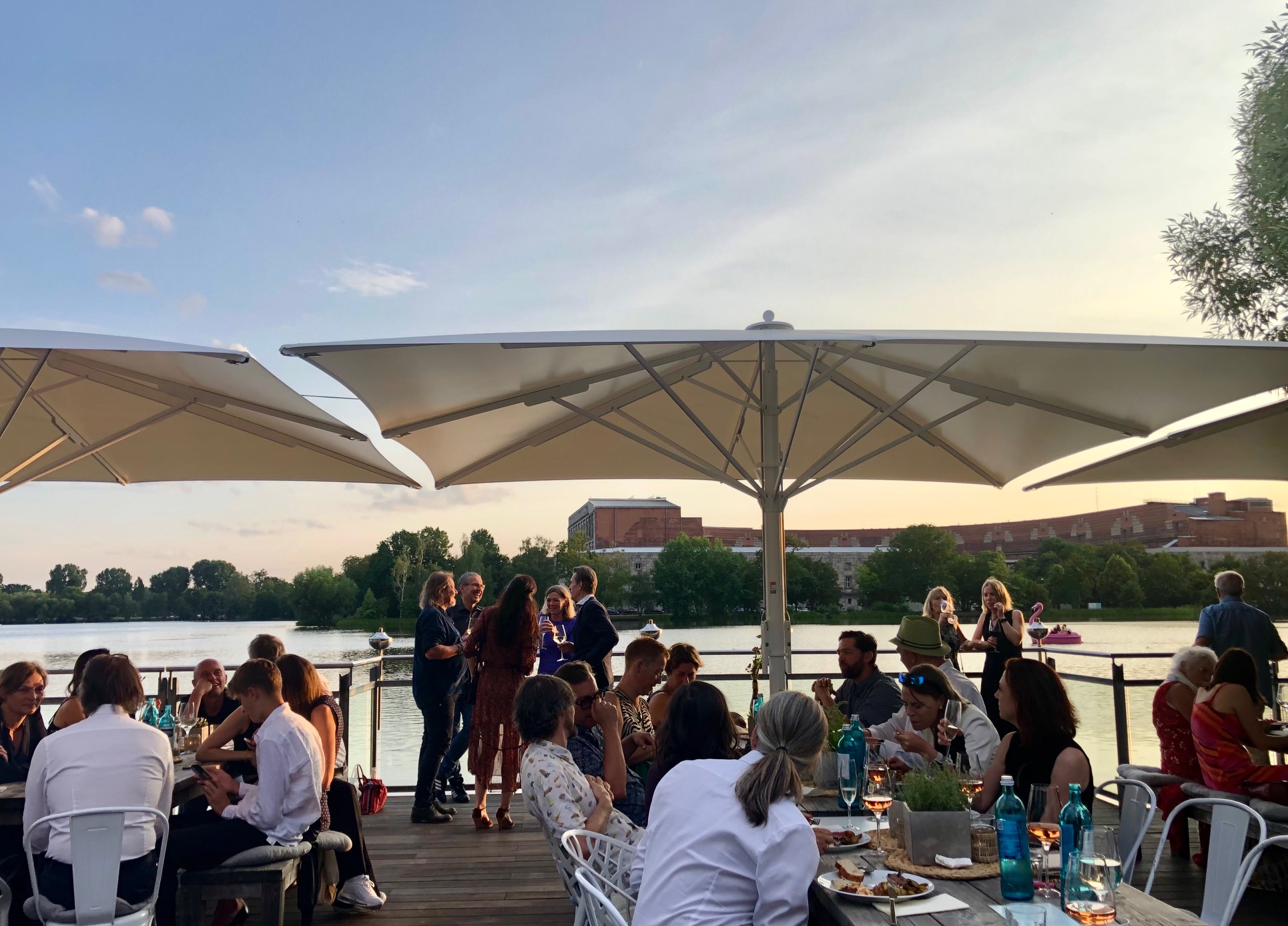
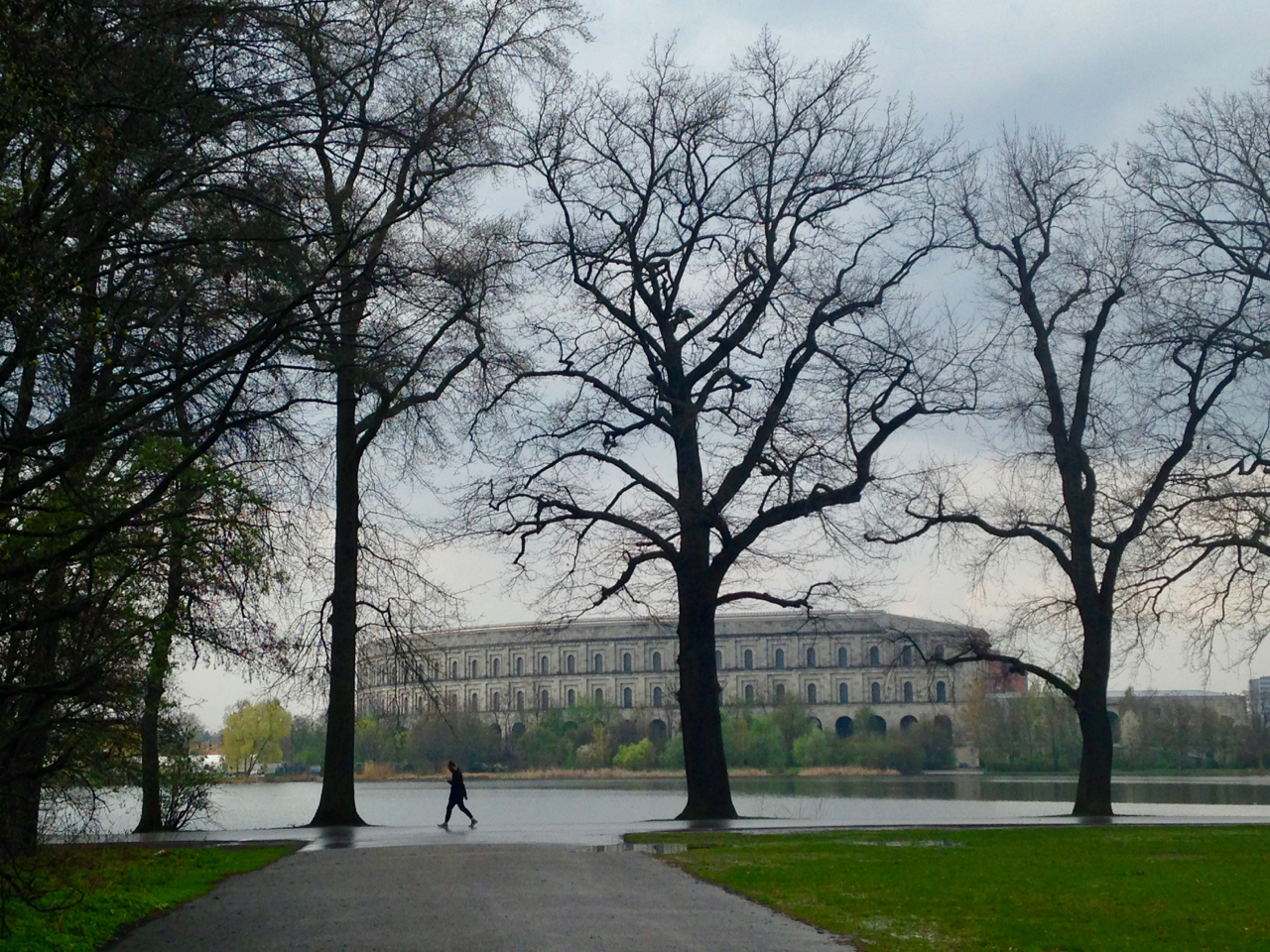
At a lakeside party in Nuremberg where elegantly dressed guests sipped bubbly from slender glasses and a massive, pink rubber flamingo glided an elderly couple and their granddaughter across the water, everybody appeared unaware of, or simply used to the historical monster that lay across the water. 

Today it is the biggest preserved National Socialist monument. Ninety years ago it was the unfinished, semi-circular Congress Hall of the Nuremberg Rally Grounds, part of the 11 square kilometre grounds, mostly designed by Albert Speer, that hosted six Nazi party rallies between 1933 and 1938. 

The unfinished Congress Hall, of the Reichsparteitagsgelände, Nuremberg

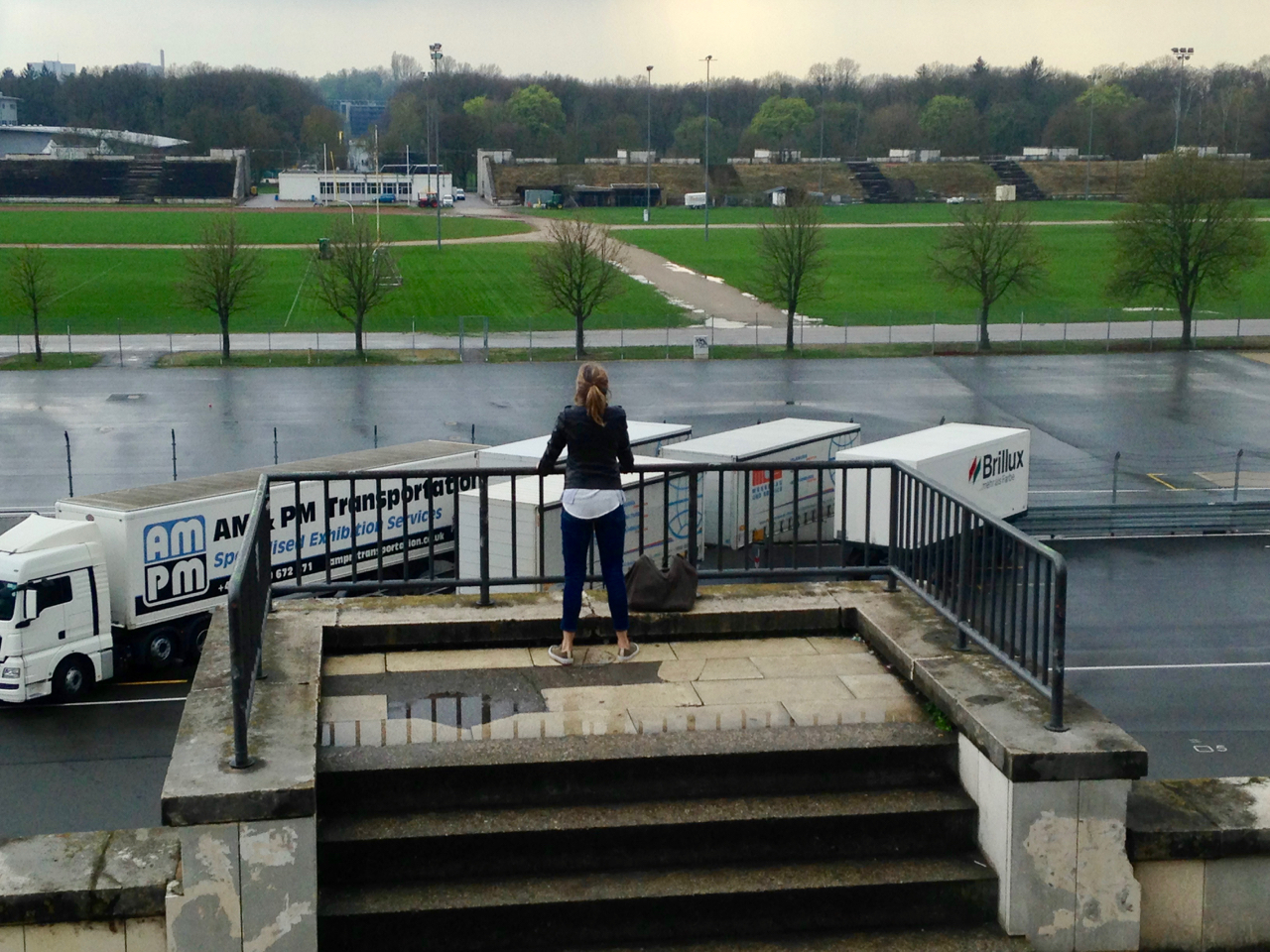
I hadn’t known I would be dancing with my dear friend from Cologne just 500 meters from the Zeppelin Field where I had stood in 2016 on the very rostrum from which Hitler himself had delivered his ‘hypnotic sermons of hate… to rapt audiences in the hundreds and thousands…’ But the visceral memory of the sickening terror I had felt then returned instantly. In spite of the site now being strewn with parked lorries, ‘Never had I been able to visualise the scale of the Nazi movement in all its ugly, popular power with such devastating clarity.’ (In My Grandfather’s Shadow, pp.359-360) 

Yet here I was, one minute laughing, the next engaged in debate with people who have been deeply involved in the complexities of what to do with this hideous phantom of the Third Reich. Artist studios seems to be the current preferred proposal, bringing creativity, transformation and a more constructive future into what was one of the centres of past destruction.

A second example happened on a packed train heading to the mountains of South Tyrol. Settled happily by the window, a young woman entered the compartment with an enormous suitcase, a cloth bag and a delighted smile at having found a space for her and them. As she arranged herself, I watched the dawning of a stricken panic as she began frantically searching under the seats for something. Her rucksack, as I soon learnt, with everything in it: passport, money, phone, ticket…

As the train pulled out of the station, she pushed her way down the carriage only to return a short while later empty handed and distraught. Once again, the past became instantly present as I felt a visceral memory from 1987 when my bag was stolen on a train in India. It too had everything in it, including all my Kodak films and diaries. I remembered the sense of suddenly not existing, of life stuttering to a halt as the bureaucratic fuel needed to move our lives forward was gone. Suddenly I had nothing, and no way of getting anything or anywhere, least of all home. 

With her beautiful smile now strained, the young traveller got off at the next station in order to return to the only place she might still find her bag. I gave her 30 Euros and told her things would work out somehow. They always do. She returned the same anxious gratitude I too had offered the kind stranger who gave me some money in India. But for the next stage of my journey, that episode from my past was fully present, just as I trusted her present would swiftly pass and resume its course into the future. 

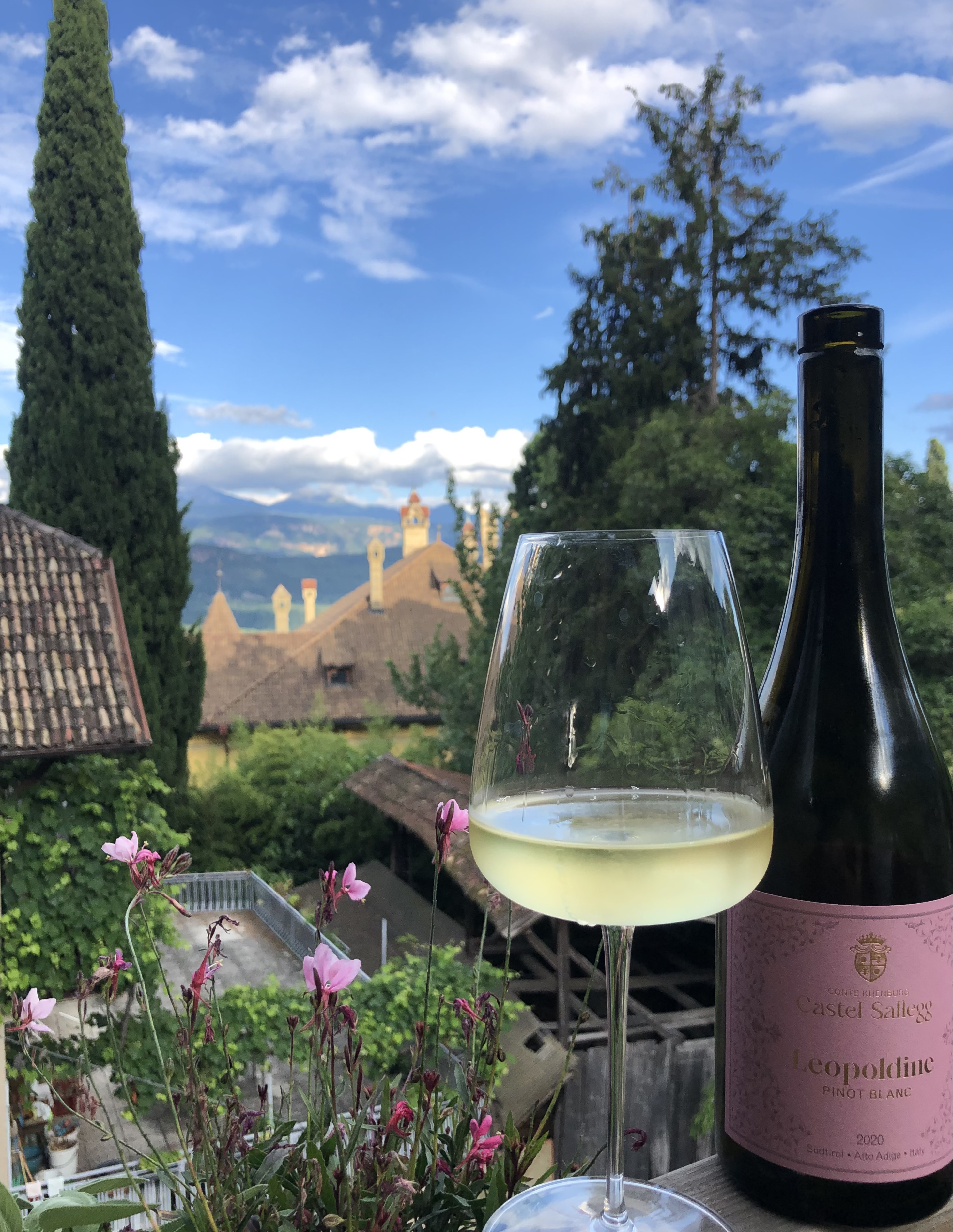
Living in the space between the launch of In My Grandfather’s Shadow last July and the impending publication of Im Schatten Meines Großvaters coming up in September, the present, devoid of a busy schedule and deadlines, has rarely felt as potent and expanded in its not-knowingness. My original 10-day trip packed with travel and planned visits both to German friends and book-related people, evolved through a series of spontaneous decisions and the generous offer of a first cousin’s apartment, first leading me to South Tyrol and then into a week of moment-to-moment unfolding. My days’ questions revolved around whether to hike up that mountain, swim in the big or smaller lake, e-bike to the nearest village, read or taste a different local Weißburgunder/Pino Bianco…

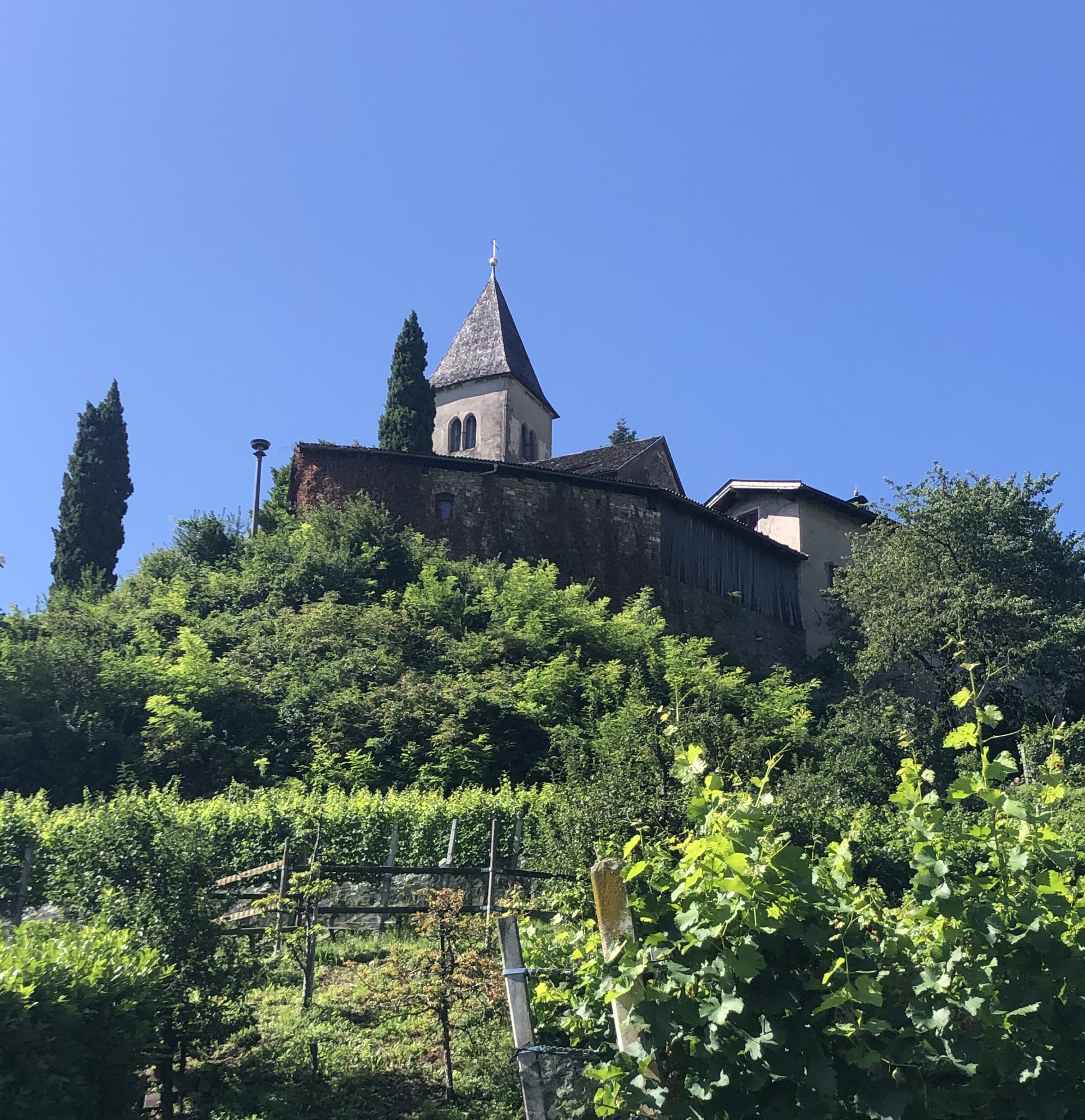
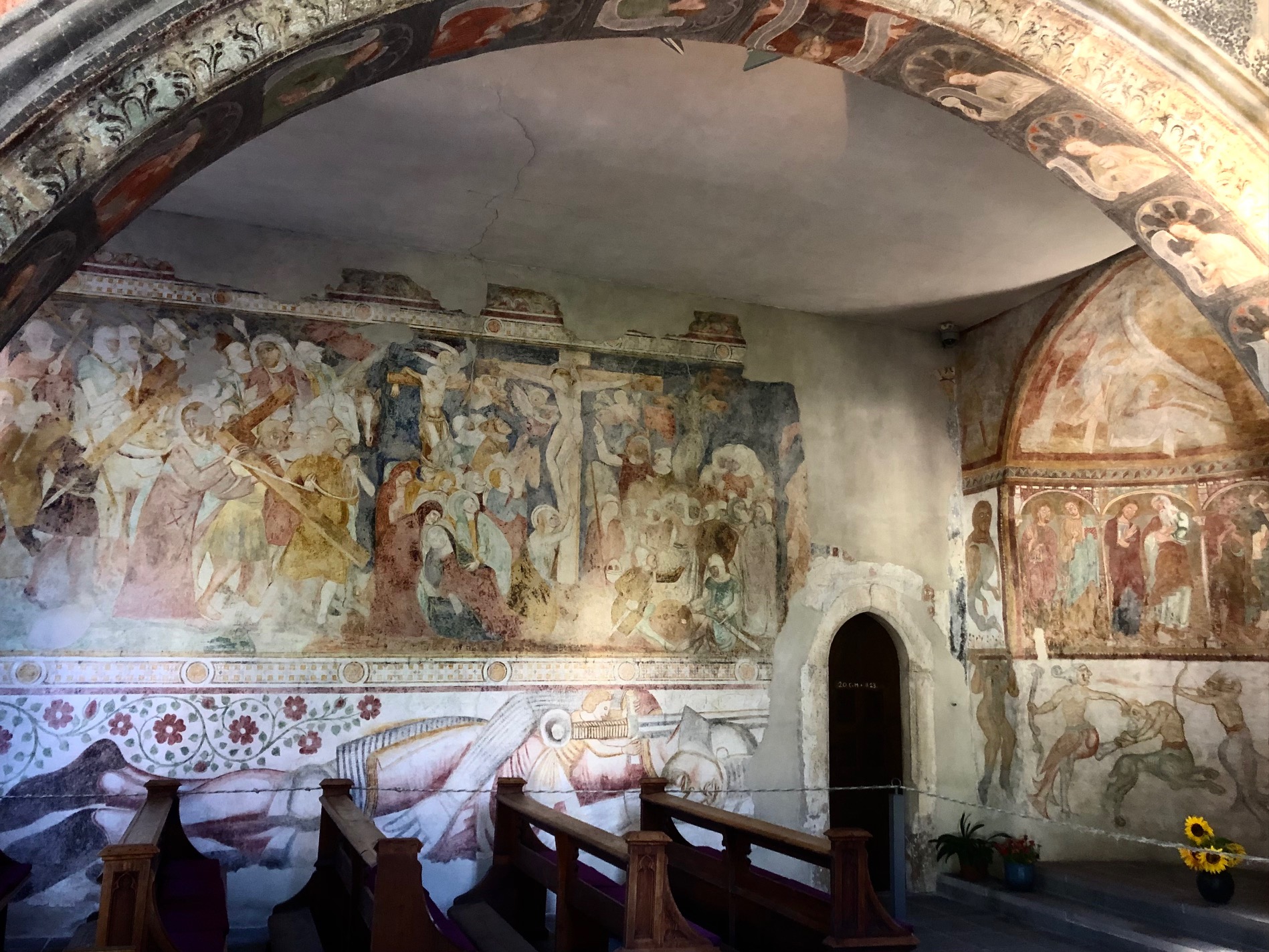
It’s typical happy holiday stuff for some. But there were times when I literally stepped out of the hot sunlight and into the cool past. Italy does that effortlessly through its barely signposted, little Romanesque churches adorned with glorious early 13th century frescoes. The continuity and shared spatiality of past, present and future tangible to those who are open to feel it.

St Jakob in Kastelaz near Tramin

Deliberately avoiding all news and social media and without a task to accomplish, I experienced a strong sense of how the past constantly accompanies and informs us – albeit often subconsciously – as we are drawn by an unknowable future through our present moment. And I have to say, right now, mine is a present that I am really enjoying.

Wishing you a very happy summer wherever you are… and whatever the weather!

Berlin – a flâneur’s wanderings and ponderings

The past century has left heavy footprints all over the ever-changing face of Berlin. Without even scratching the surface, you can find the scars of murderous regimes, failed ideologies, war and destruction on all levels. But my regular visits to the city since 1990 have also witnessed the extraordinary resilience, creativity and defiant refusal to succumb to the particular ‘-ism’ trying to shape it. Throughout the city, past, present and future reside in a disturbing but reassuring harmony that promises not to forget, not to become complacent, not to allow such things to happen again while also offering plenty of opportunities for enjoyment.

Berlin’s contradictions are best experienced first hand. Feeling the city helps one to get closer to understanding it. It isn’t always comfortable, but it is infinitely interesting. Below is a little virtual / visual ‘tour’ of the two weeks I have just spent flâneuring through quarters of Berlin I hadn’t been to before, following my nose as I sniffed out history’s path into the present day. (You might like to read it on my Blog site, where the layout is more reliable.)

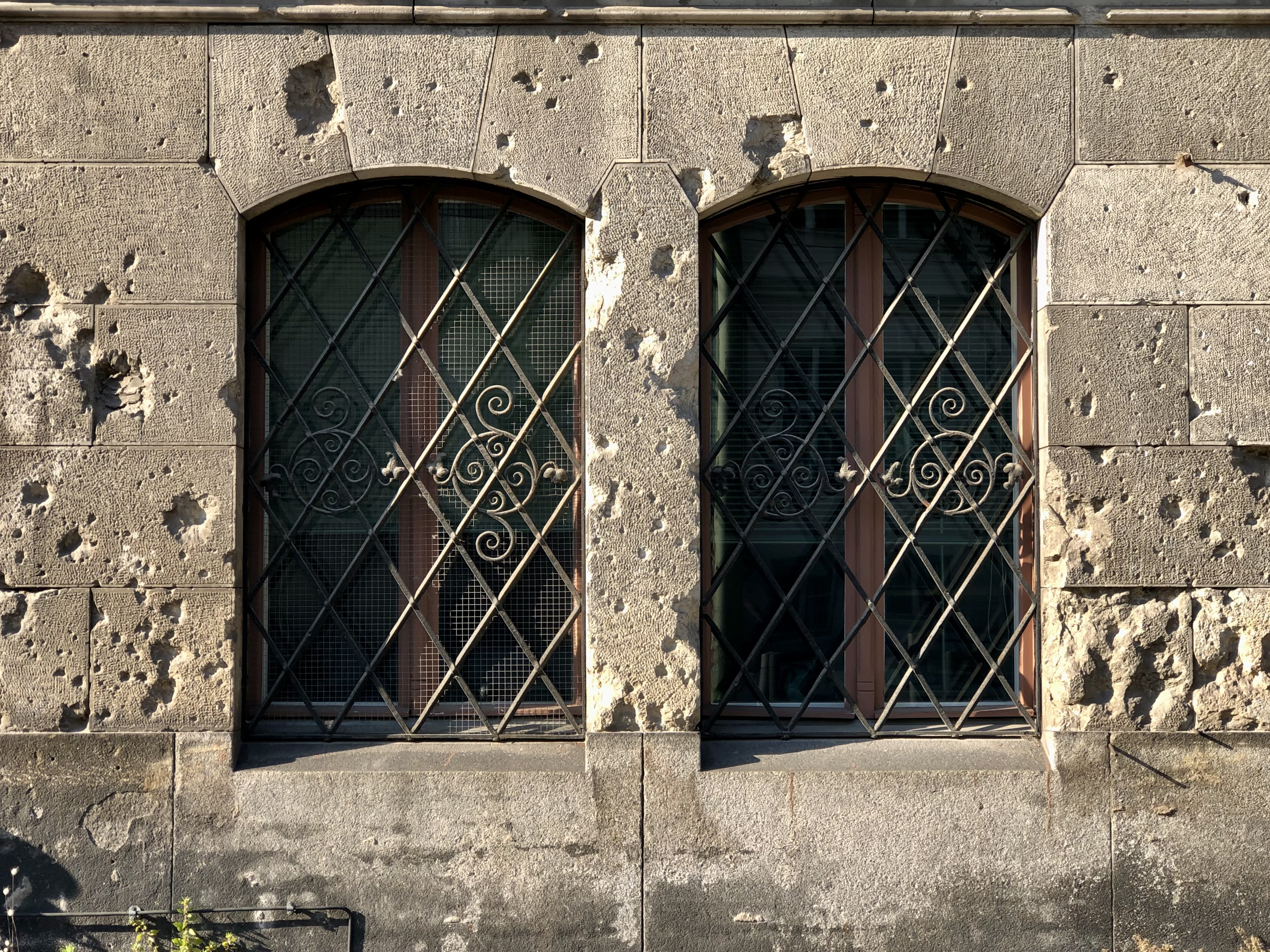
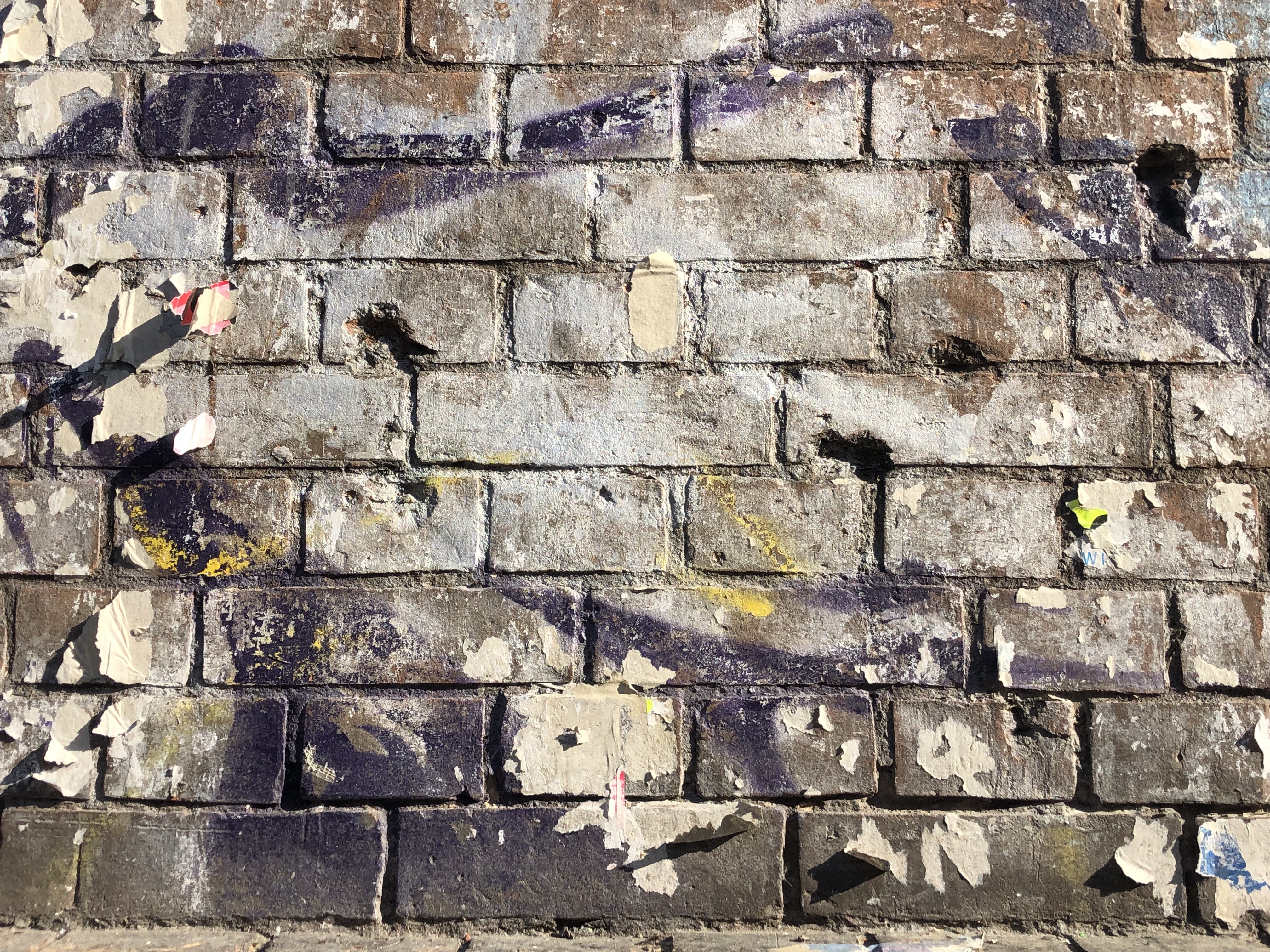
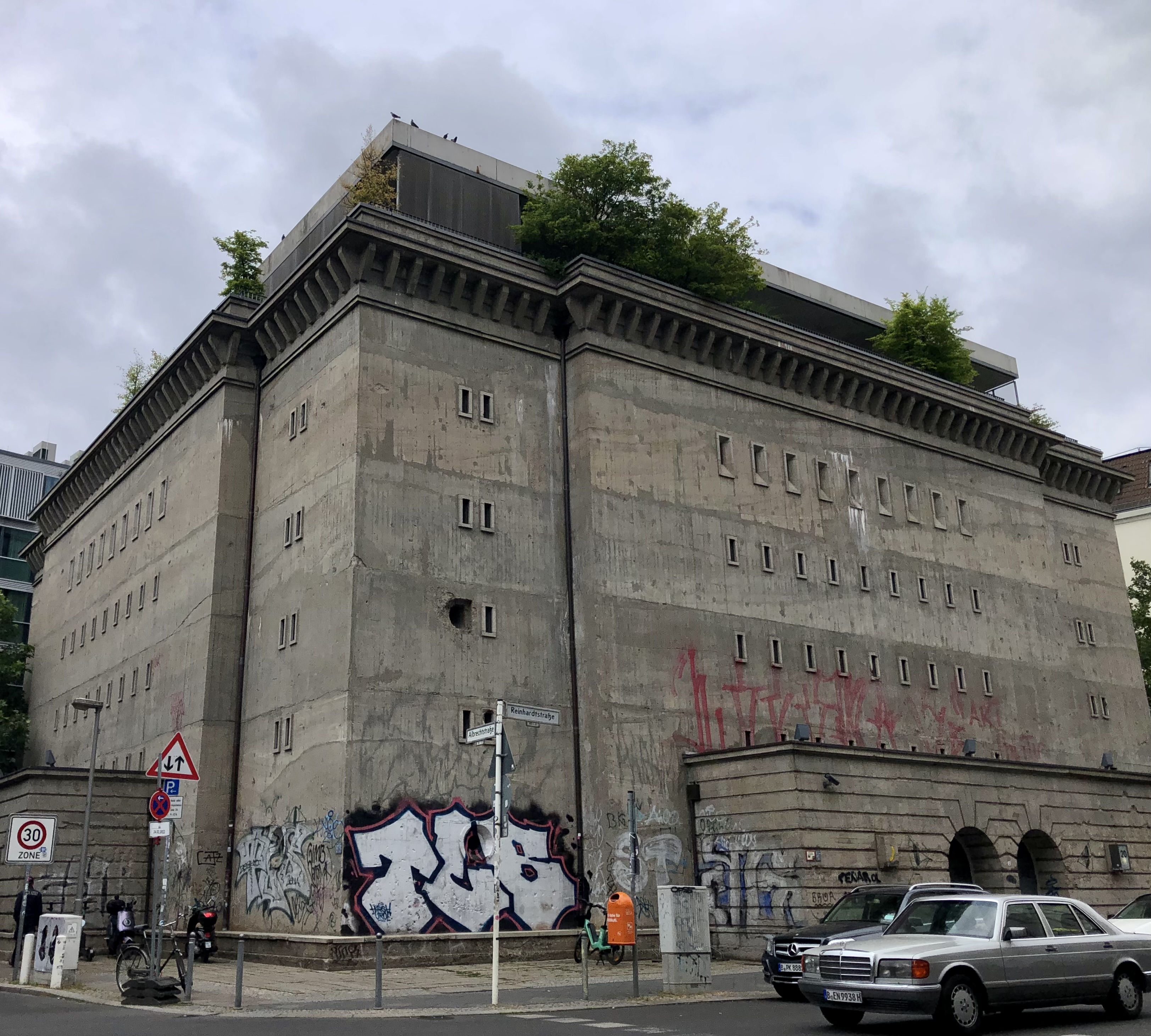
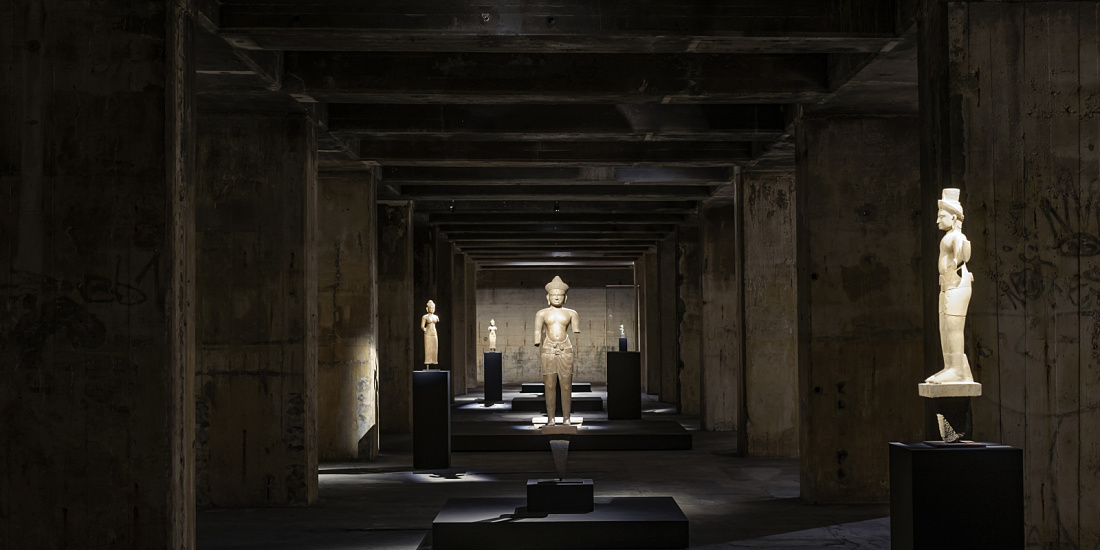
Striking in its lack of cosmetic disguise, evidence of the Second World War still lingers all too visibly: in the empty spaces left by bombed houses; the bullet holes from the final battle; and the enormous bunkers, now transformed into extraordinary galleries that house contemporary installations (Boros Sammlung) or offer an exquisite experience of Asian art in dark silence (Feuerle Sammlung).

After the war, the DDR evolved out of the Manifesto of the Communist Party of 1848 created by KARL MARX and FRIEDRICH ENGELS. Its goal was to ‘change the world’ and to this day, Karl Marx rates as one of the top three Germans, along with Konrad Adenauer (first chancellor of the Federal Republic of Germany 1949-1966) and Martin Luther (Protestant Reformation).

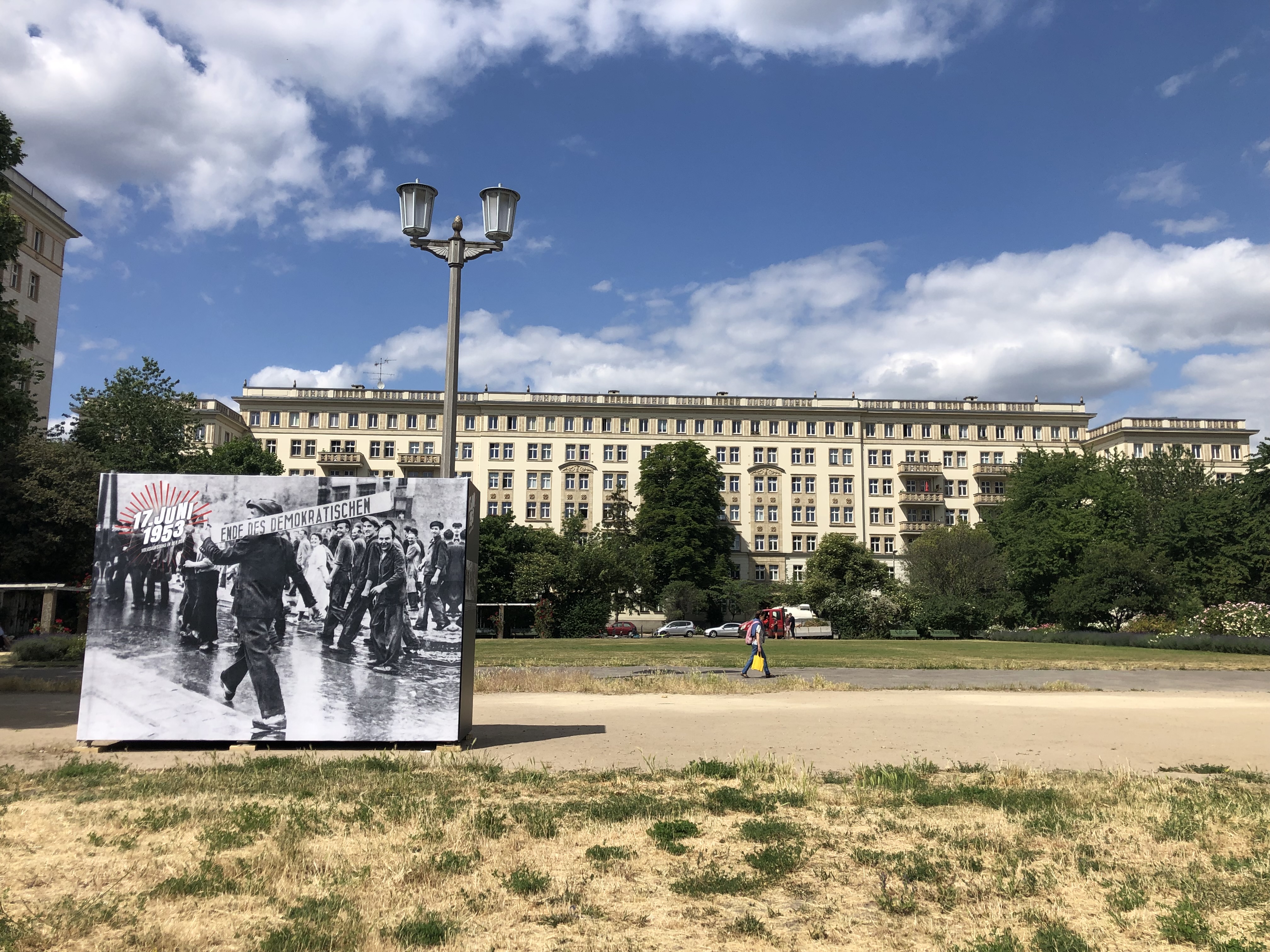
The KARL-MARX-ALLEE, formerly Stalinallee, is the 90-metre wide, 1.2-mile long DDR boulevard lined by grandiose Moscow-style architecture built between 1952 and 1960 and scented lime trees. Designed to sing the praises of socialism, the buildings offered luxurious flats for workers as well as restaurants, shops and a still iconic Kino International cinema. Many of the apartment blocks were covered in ceramic tiles, earning the Allee the nickname of ‘Stalin’s Bathroom’. Half of them had fallen off by 1989.

In the oldest part of the city, a typical ‘Plattenbau’, the panel system-building made up of pre-fab concrete panels, some with basin and loo already attached, rises above a little-known but beautifully crafted frieze telling the history of communism and the DDR.

This year was the 70th anniversary of the 17. JUNE 1953 WORKERS UPRISING in protest against the state’s imposition of more working hours for no extra pay. It was crushed with Soviet tanks and troops leaving 123 people dead.

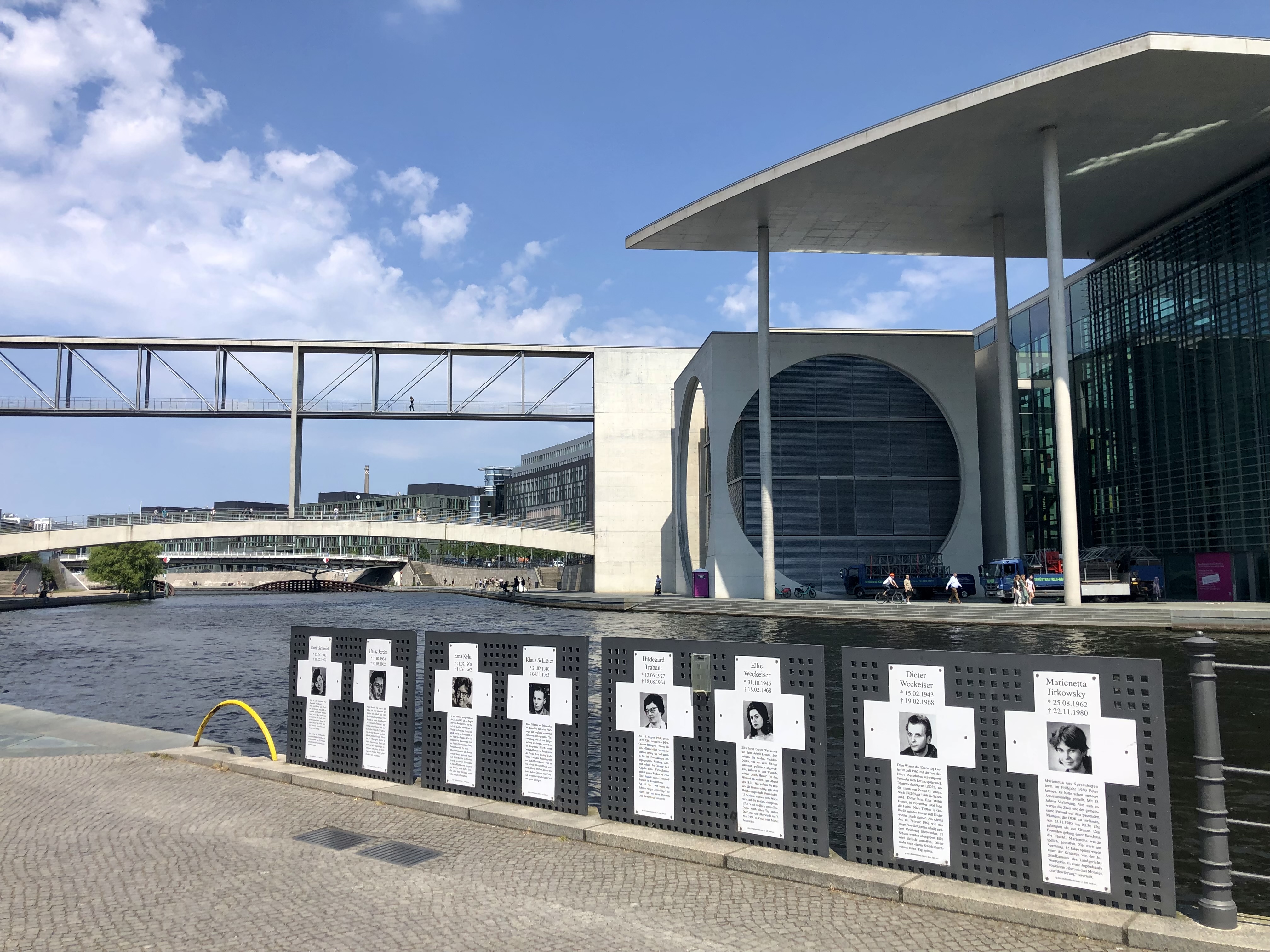
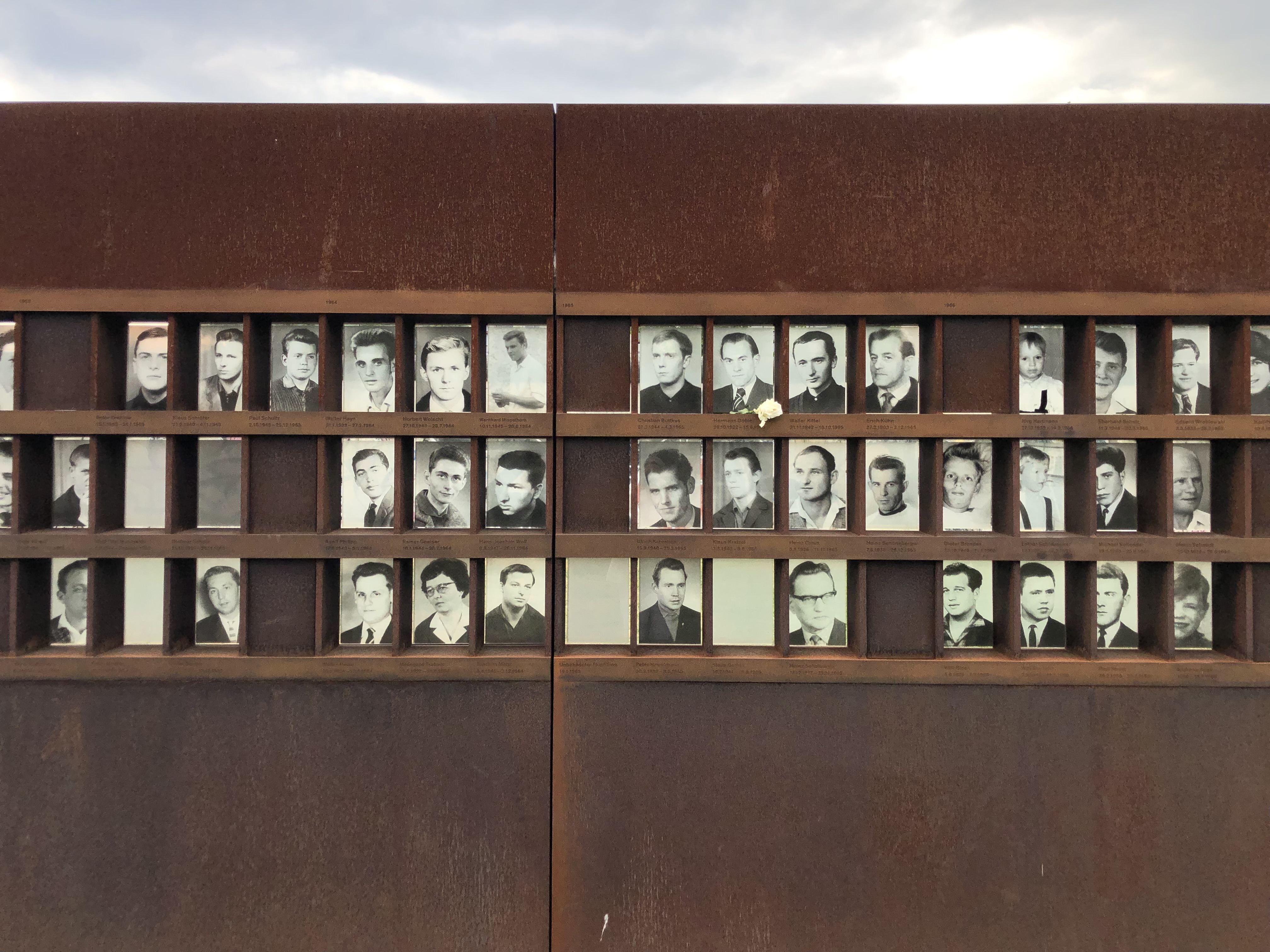
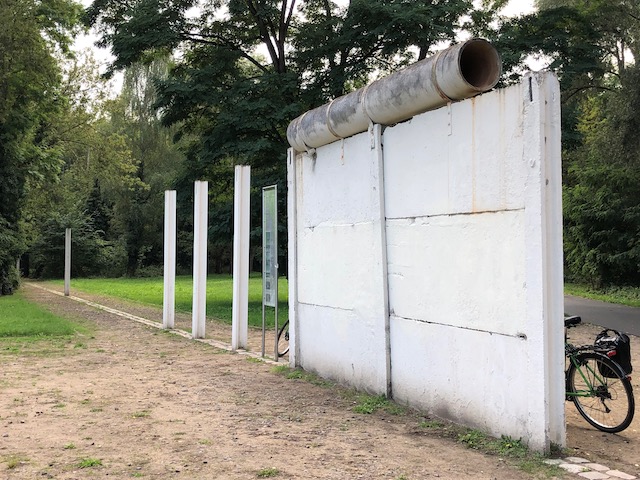
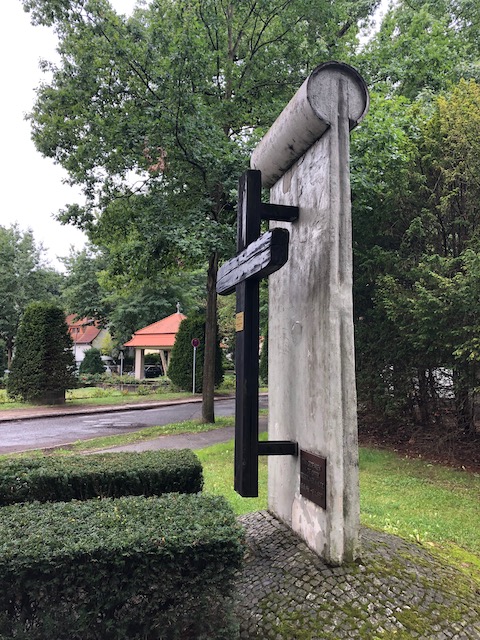
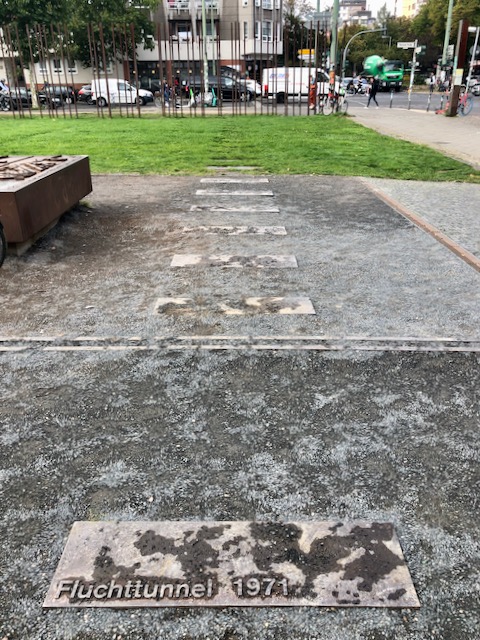
From 1961-1989, the BERLIN WALL effectively locked East Berliners into the regime’s paranoid ideology and ruthless regime. Monuments dotted on its snake-like course through the city tell the tragic stories of the more than 140 people who died trying to escape.

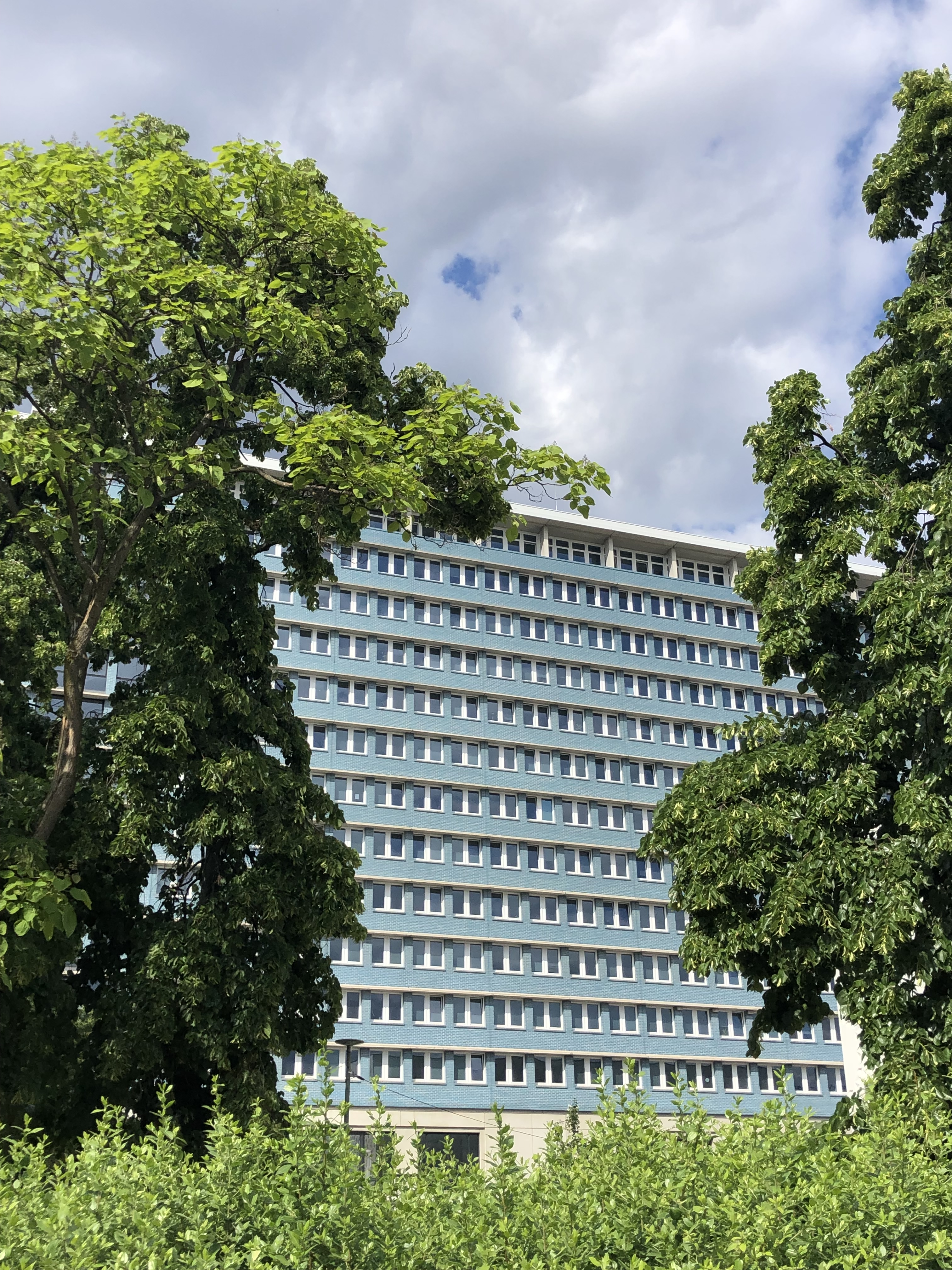
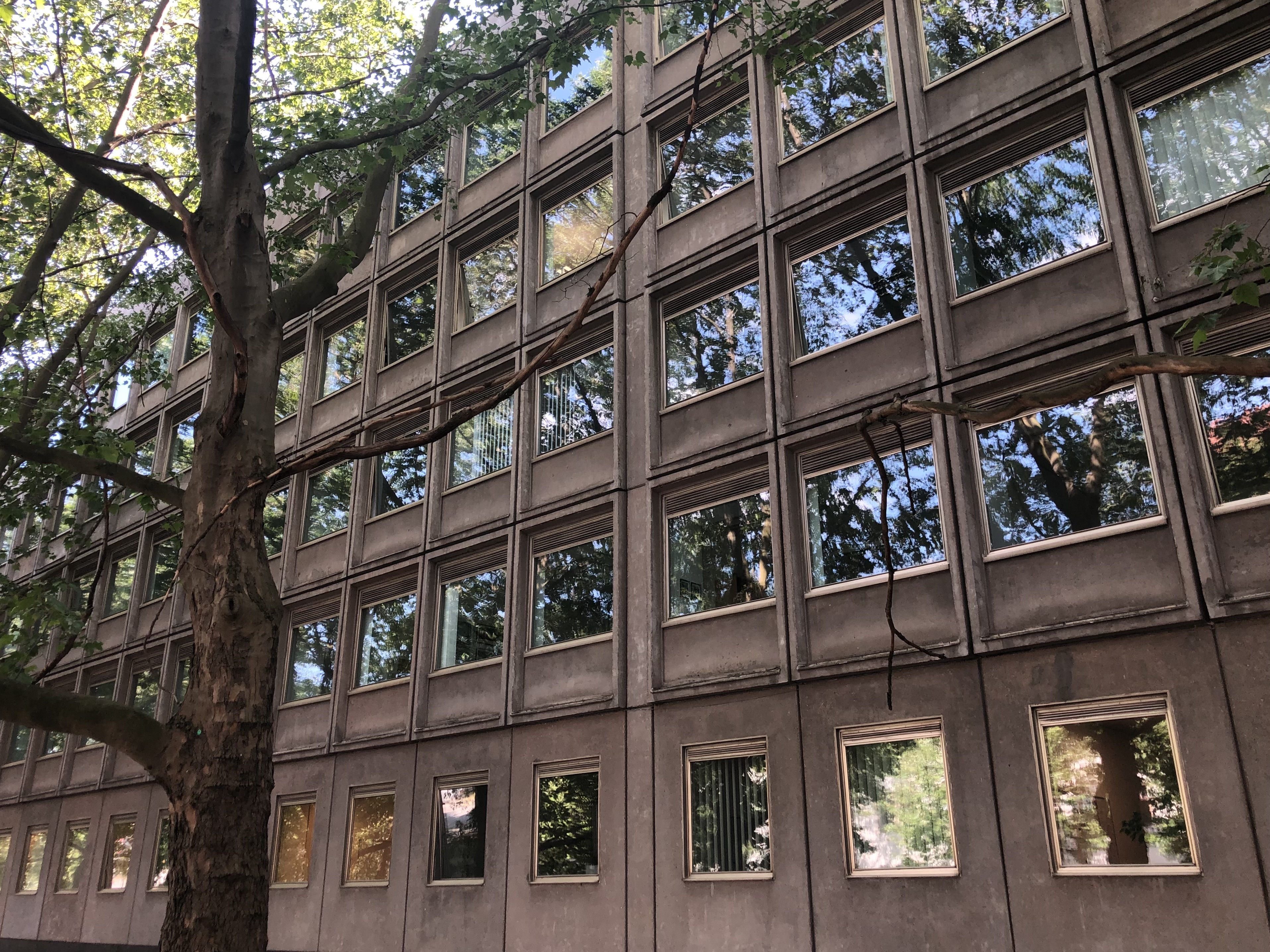
After the Fall of the Wall and the reunification of Germany in 1990, the next phase of (re-)building began and still continues everywhere. Some areas have been homogenised into the commercial cityscapes you can find the world over.

Around the Reichstag and central parliament area, ultra-modern architecture prevails. Outside Jakob Kaiser House, the all-important Grundgesetz or Basic Law is etched into glass – a fragile but resolute commitment by the Federal Constitution to guarantee fundamental rights in Germany .

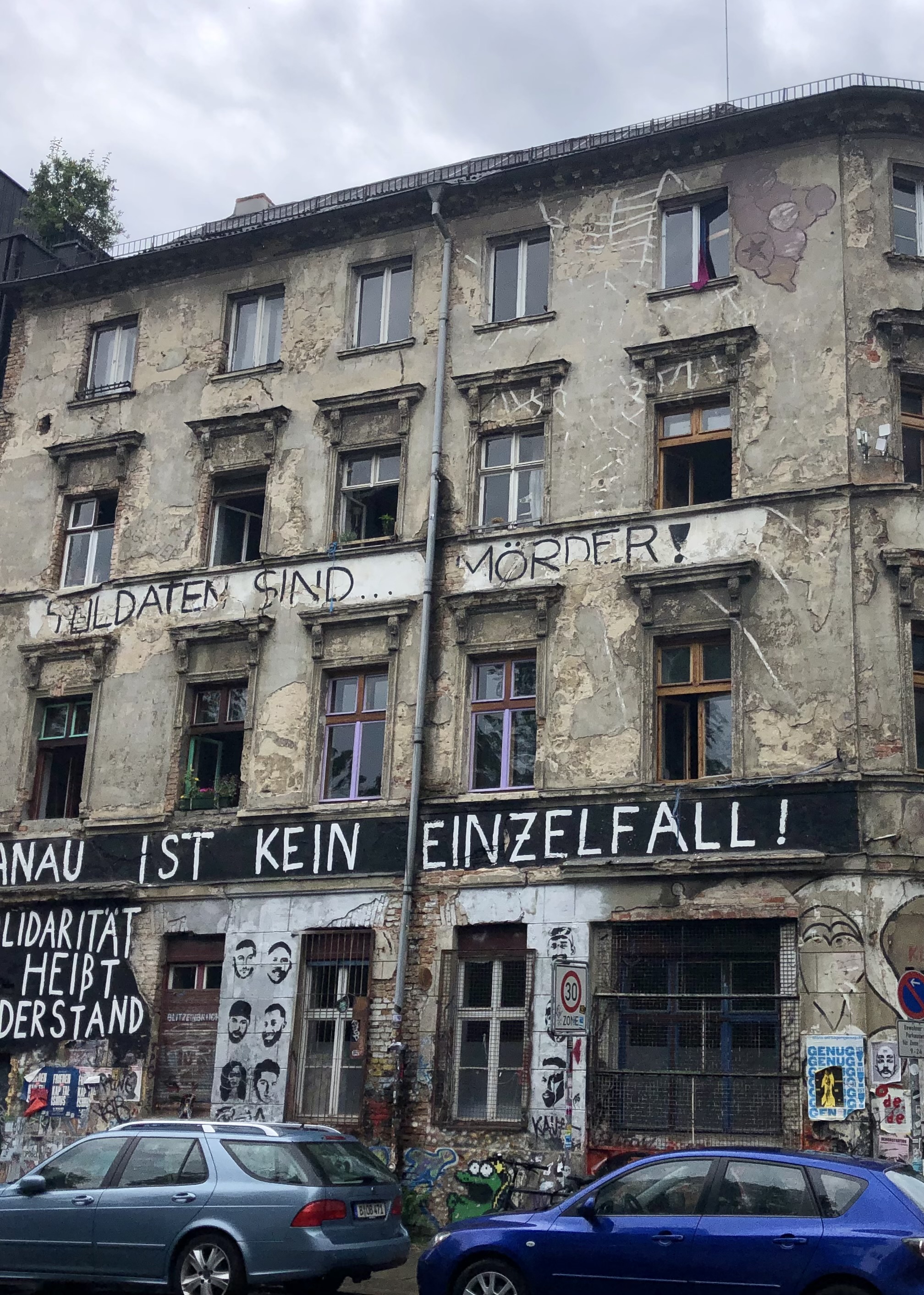
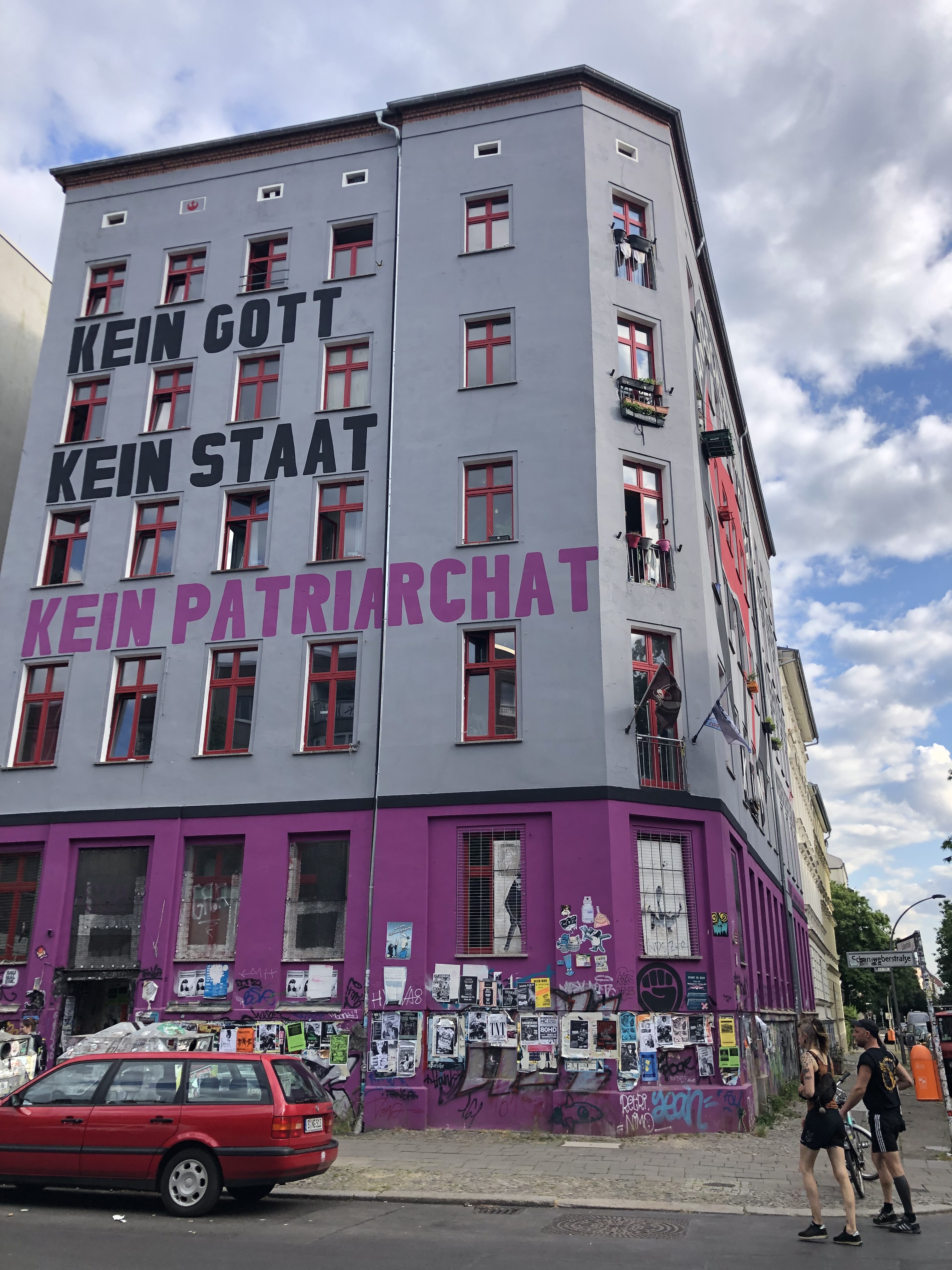
Elsewhere, whole quarters have dodged development and been claimed by layers of graffiti and young hipsters with tattoos scribbled like doodles over their bodies. Political slogans and statements adorn buildings squatted in since ‘Die Wende,’ the peaceful revolution of the autumn of 1989 that led to East and West Germany and Berlin becoming one again: ‘Soldiers are murderers’. ‘Keep calm and don’t give a fuck’. ‘No God, no state, no patriarch.’

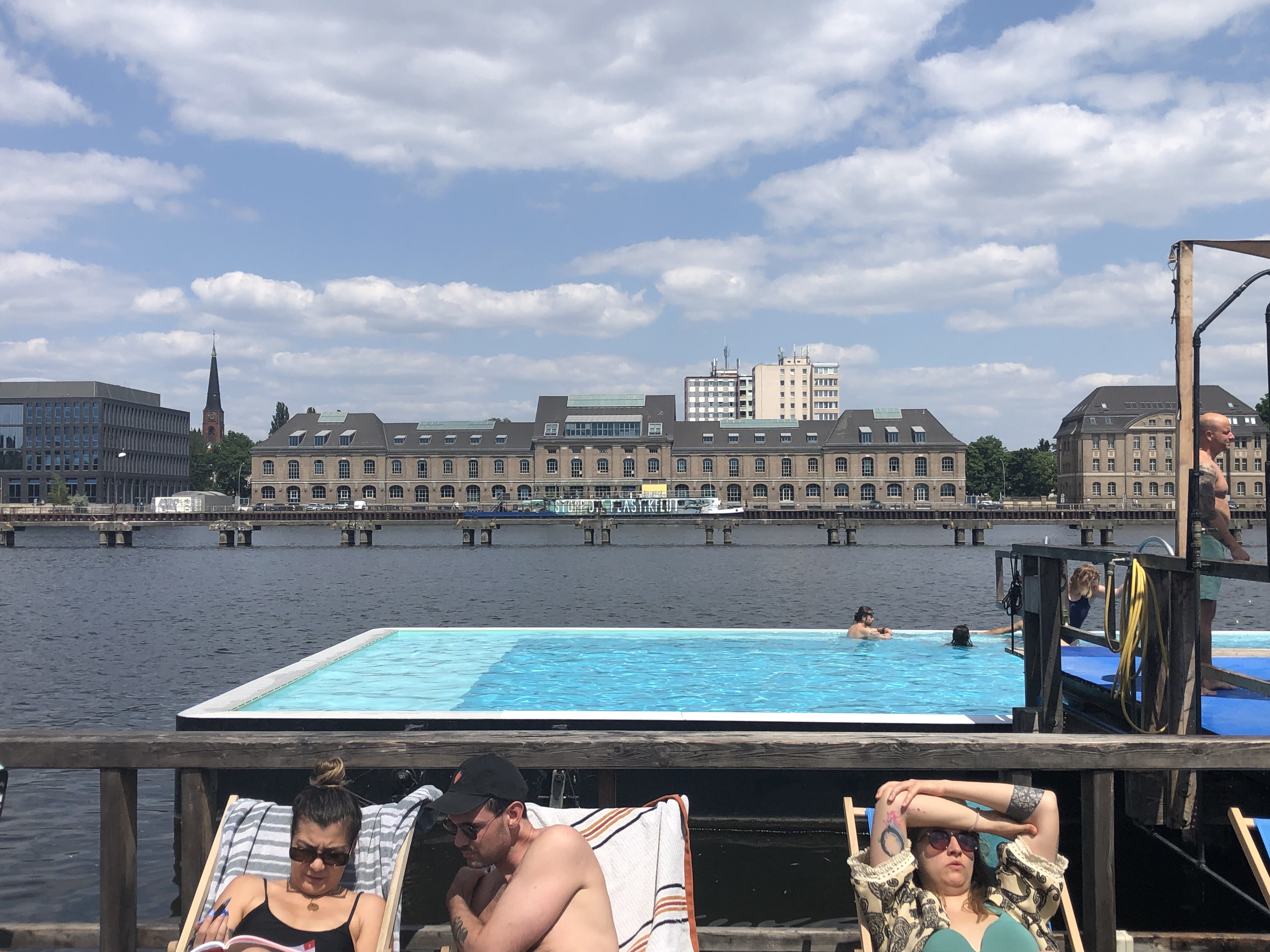
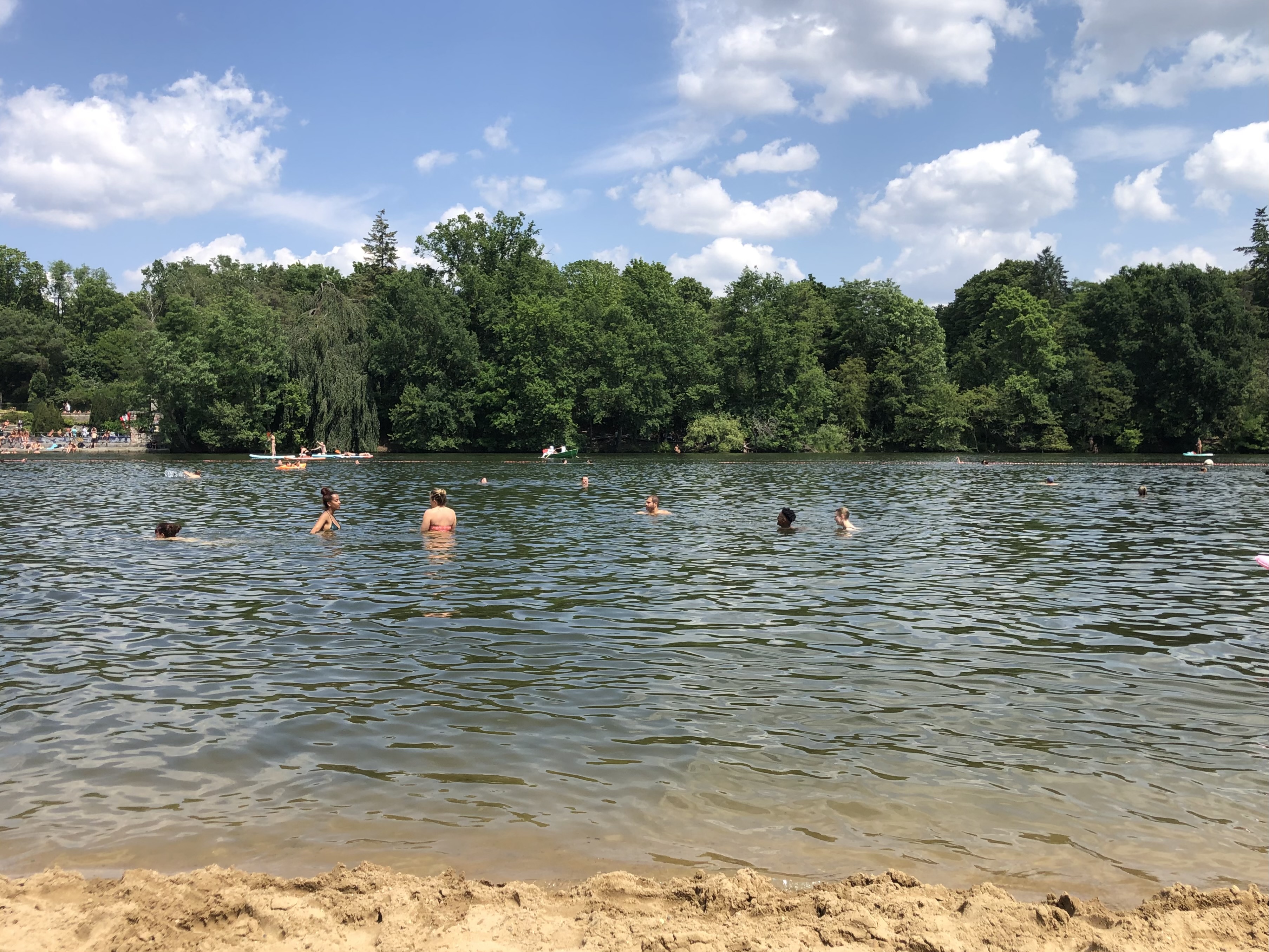
Then there’s swimming in the city centre or in one of the many lakes a cycle ride away; nude sunbathing in the parks and the chatter of endless cafés and bars that spill onto the streets.

Nestled between new and old, the constant reminders of what Germans – and the world – must never forget…

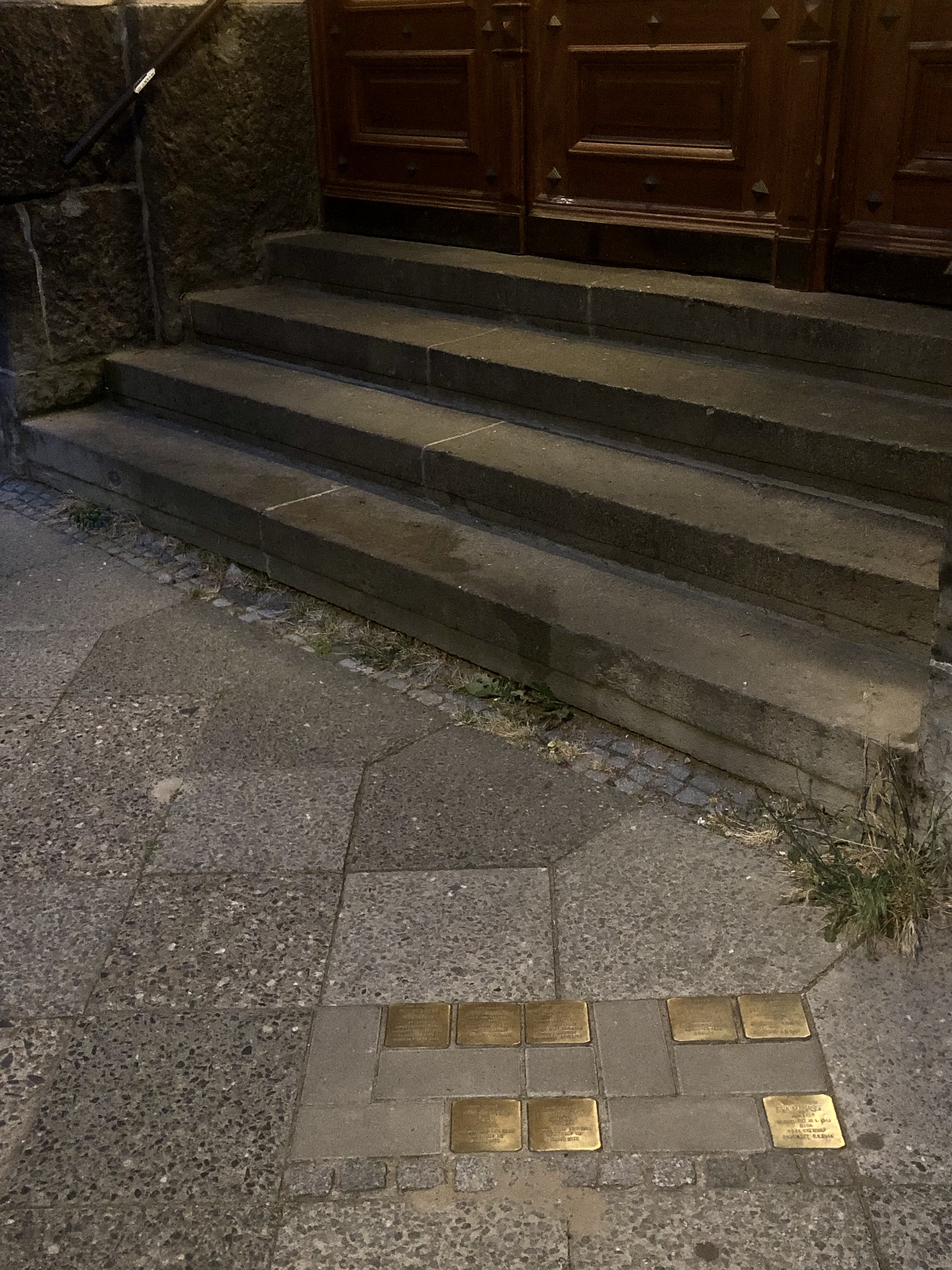
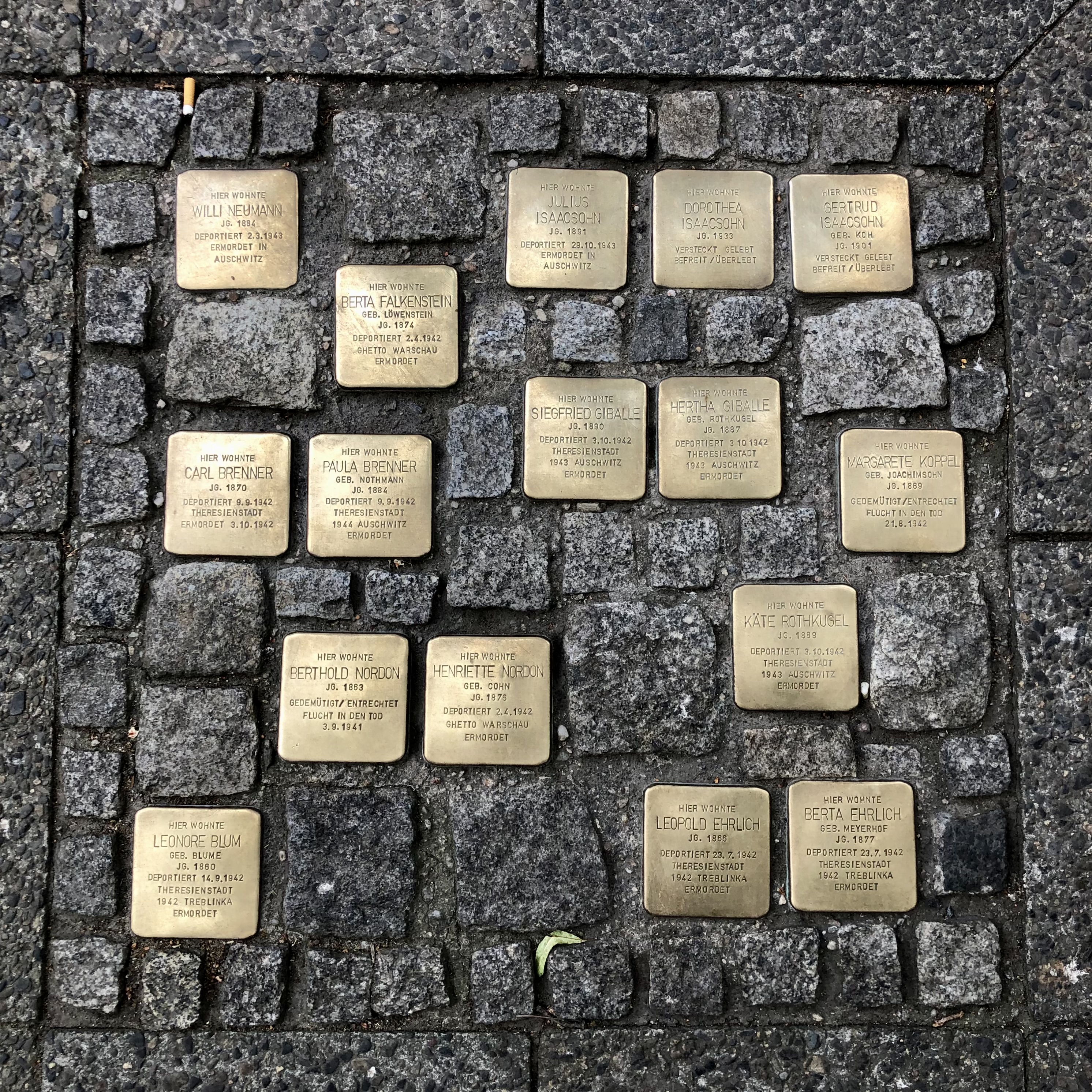
Stolpersteine – stumbling stones – glisten from the pavements naming and remembering those who once lived in these streets before they were deported and murdered by the Nazis.

And in the very heart of Berlin, right between the Reichstag and the Brandenburg Gate, against a soundscape of raindrops and a quiet recording of single violin, I witnessed the daily laying of a fresh flower on the triangular island in the middle of the pond that is the Memorial to the Sinti and Roma Victims of National Socialism.

Berlin exudes a wealth of experience and suffering mined from the psychological, moral, philosophical and political depths into which it has plummeted time and again. But it feels to me and many others who love being there, that out of all the conflicting and restricting -isms of the past century, the power of the individual now has its rightful place. Be yourself, the city seems to say. You won’t be judged here.

Long may that last…

Is King Charles’s visit to Germany important, irrelevant, or are you completely indifferent? 

King Charles is in Germany for three days, his first overseas state visit as monarch after the planned trip to France was postponed. Many people in Britain will not take much notice of this news for a variety of reasons from believing the monarchy should be fundamentally abolished to thinking the whole trip is one big photo-opportunity. But media coverage of his and Camilla, the Queen Consort’s time in Berlin, Hamburg and beyond will show it is far more important in Germany than most of us here might understand. 

There are times I have felt saddened by Germany’s slightly unrequited friendship with Britain. A lot of Brits have wonderful personal or business relationships with our neighbours across the sea, but at Remembrance ceremonies, for example, I have lamented the stiff coolness of the British establishment towards their German counterparts that stands in stark contrast to the genuine warmth displayed by equivalent representatives of France or even Israel. This visit feels different. More relaxed and real. The Royals, at their best, have an uncanny ability to transcend all differences to reach parts other people, above all politicians, can’t, and with far more authentic and lasting resonance than mere symbolic gestures.

“Ah the Queen Mother… I love the Queen Mother!” Those were the unlikely words to come out of a scantily clad, barefoot, elderly Aboriginal man’s mouth on discovering I was English. It was 1986 and I had just wandered, equally scantily clad, into a spit-and-sawdust pub in the baking outback of Australia causing the intimidating head-turns and awkward silence seen in movies. Ever since this display of unreserved enthusiasm for a Royal broke the ice – most definitely the wrong idiom to use in a place where 40˚C temperatures would have melted ice within minutes – followed by the dear man’s insistence on buying me a cold beer, I have valued the role the Monarchy plays in the world. 

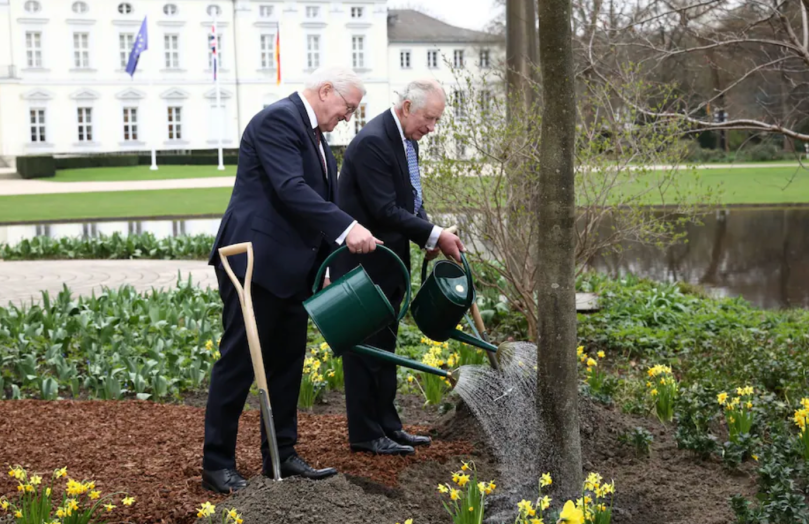
In some ways King Charles brings an even more special affinity than his revered mother because it is coupled with inspiration for Germans whose long-standing environmental awareness and action match his… apart from the rather glaring contradictions in their love of fast cars and belching factories. Like them, he has been advocating greener, more sustainable ways of working with the earth for decades, ideas for which he has been ridiculed here until mainstream politics recently and reluctantly began to acknowledge their common sense. It’s a happy sight to see our King throwing royal reserve aside to inspect potatoes at Berlin’s 150-year-old weekly farmers’ market, water a tree dedicated to the late Queen, play table football in a refugee centre or spend time at an organic farm (bizarrely owned by friends of a friend of mine) sharing their genuine passion for all that he too believes is good and right.

The intended role of our Royals, rather than the all too frequent ones that are mired in controversy, excess, wrongdoing etc. could be compared to that of the German President – currently Frank-Walter Steinmeier, who I always find carries out his brief superbly. Beyond the divisive party politics and in-fighting that brought us Brexit and what was experienced by many Europeans as a hurtful rejection, King Charles’s visit offers a heartfelt olive branch and reassurance that our countries are still indeed friends with both a shared history that extends way before the horrors of the two World Wars, and a deeply connected future.

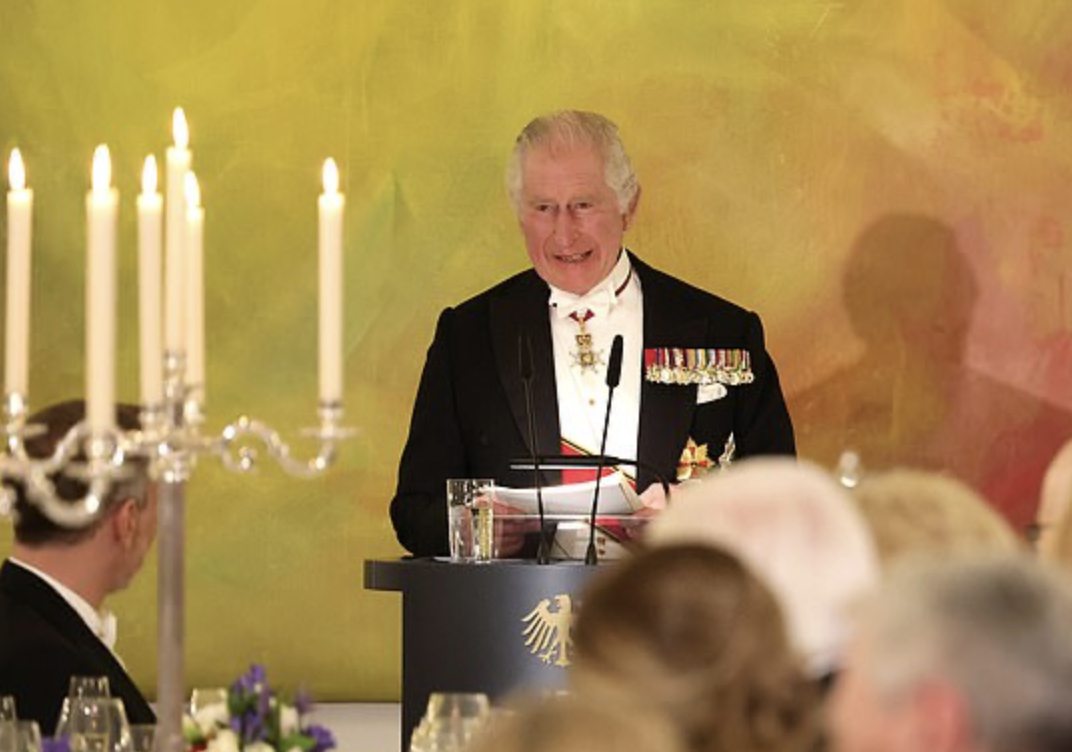
Politicians rarely feel able to give credit or compliments to the achievement of others for fear of exposing their own failings. Charles (is that being over-familiar?) on the other hand, can. With no trace of defensiveness or inadequacy of his own country’s policies, he paid tribute to Germany’s “extraordinary hospitality” in hosting over one million Ukrainian refugees. “This,” he said, “seems to me, so powerfully demonstrates the generosity of spirit of the German people.”

Imagine a politician saying that! But if we want to break the insufferable ping-pong slagging matches that fill the House of Commons, this recognition and appreciation of good policies, ideas or actions surely has to be encouraged on all sides? Batting words to and fro, patting own backs and roaring unruly ‘Ayes’ or ‘Noes’ to drown out opponents’ voices is no way to get anything done. And when you look at the decline of so many of our services, institutions and already neglected areas of British society, it is clear that, for far too long, almost nothing has been done.

I am currently reading a fascinating book lent to me by a delightful 92-year-old friend who, after reading my book, treated me to some of her own stories from the Second World War. Her family lost their home to the bombs dropped on Bristol. And yet, in 1948 on hearing of the extreme hunger of the Germans, she and her church youth group, knocked on doors in their parish to collect donations to send to the very people that most around them (understandably) still regarded as the enemy. She remembers the quarter of a pound of tea she collected.

The book she lent me, ‘Darkness Over Germany’ was written by a remarkable British woman, E. Amy Buller, who visited Germany many times in the 1930s with a mission to understand the ideas that radicalised so many people, particularly the youth, in order to learn how to work with them in peacetime and prevent such things happening again. She saw how Nazism was a false answer to a real need and how foolhardy it is to fight a war without considering how to engage with the enemy once they were defeated. 

I can’t help feeling we could learn a great deal from these enlightened elders who operate with the kindness and innate wisdom of their hearts. And it is in that respect that I completely support visits such as the one happening as I write. With clearly genuine warmth, humour and interest, King Charles is re-building bridges, offering friendship and warming the hearts of a great many German people.

Uh-oh, I feel a little ‘God Save the King!’ coming on… I’ll stop here.

Just a few of a whole load of links recording his visit:

King Charles celebrates UK-Germany ties in historic address – BBC

For Hamburg, devastated by allied bombing, King Charles’s visit is so much more than a photo-op | Helene von Bismarck | The Guardian

From Meeting Scholz To Visiting Farmers Market; A Peek Into King Charles’ Germany Visit

King Charles III arrives in Germany for first overseas visit as monarch

In Pictures – The Telegraph

King Charles to lay wreath to German victims of wartime air raids. Planned visit to St Nikolai memorial in Hamburg contrasts with approach taken by his mother by Philip Oltermann

King Charles avoids mention of Brexit in speech to German parliament

Cycling the Berlin Wall Way… an education, a warning, an inspiration

In the faultless pageantry of Queen Elizabeth’s recent funeral, we witnessed one of the things that Britain does really well. Whether you are pro- or anti-monarchy, it was a spectacular display of planning, coordination, ritual, symbolism and attention to detail, as well as a gratitude- and love-filled farewell to the only ‘Her Majesty’ we have known. Impossible though it might sound, I missed most of it!

I was in Berlin experiencing what Germany does really well: remembrance and commemoration of a difficult and painful history. It was, however, not Germany’s intensive and on-going process of coming to terms with its Nazi past that I was focused on. This time, I was with my two siblings cycling the Berlin Wall Way, a continuous bicycle path that follows the former footprint of the 100-mile long Berlin Wall as closely as possible. Taking five days to complete, with added time to explore some of the many poignant locations in the centre, it was a total eye-opener, not least to the very concept of a divided city and country.

Map of West Berlin with the 160km Wall marked in red

The first initially confusing fact to digest is that, contrary to the widely held idea that the Berlin Wall was a north-to-south boundary separating West and East Berlin, in reality the wall went all the way round West Berlin thereby creating a democratic West German island within socialist East Germany. Even with a map, we found ourselves frequently asking: So, are we in the West or the East? the answer to which, I assure you, is rarely as straightforward or obvious as it sounds.

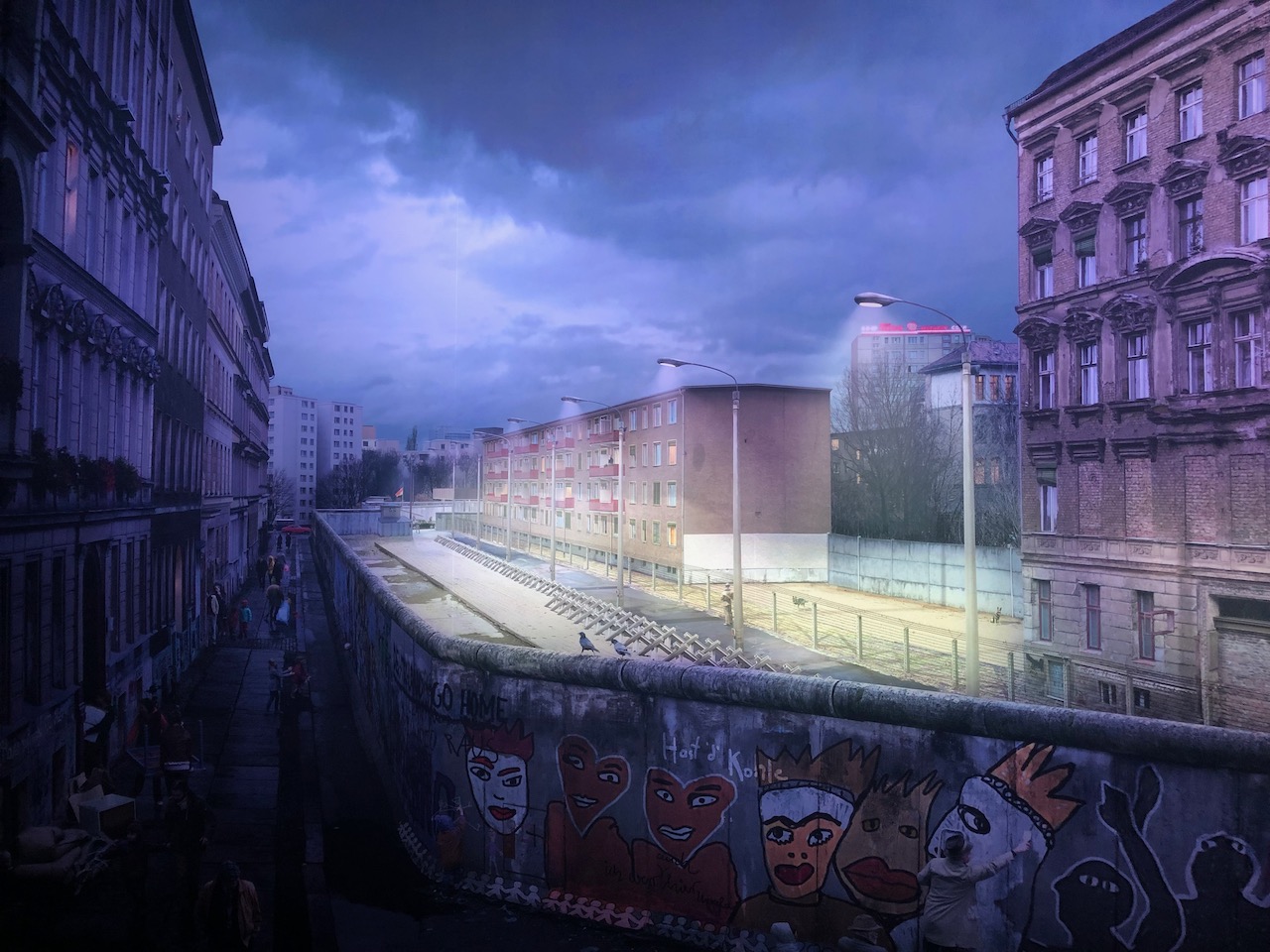
The second tangible shock felt while snaking along its course, was the utter illogic and arbitrariness of this ideological divide – through streets, houses, communities, lakes and woodlands. This randomness would have started as a line drawn on a map by the leaders of the victorious nations – USA’s President Harry S. Truman, Josef Stalin of the USSR, Britain’s prime ministers Winston Churchill and then Clement Attlee as well as other leading members of the three delegations present. That’s probably how most of the other contested border lines around the world have originated. To engage with the whole concept of division, not to mention the impact it had on families and friends separated for nearly three decades, is almost impossible. An enormous 360˚panorama entitled THE WALL by artist Jadegar Asisi gave us arguably our most immediate and visceral sense of being in West Berlin looking at and over the wall into the deadly world behind.

From the360˚ panorama THE WALL by Jadegar Asisi

The third challenge was understanding the complex evolution and structure of the wall that was built in three phases, starting overnight on 13th August 1961 as Berliners slept. What began as a barbed wire barrier and the closure of all but 13 of the 81 established crossing points between the Western and Soviet sectors, eventually developed into not one but two concrete walls separated by a corridor of no man’s land known as the ‘death strip’ with mines, raked sand to detect footprints, trip wire machine guns and armed East German guards in watch towers or patrolling on foot with dogs. By 1989, the Wall was lined with 302 watchtowers and more than 136 people had died trying to cross it.

An example of a section of the wall. What we call the Berlin Wall is on the left

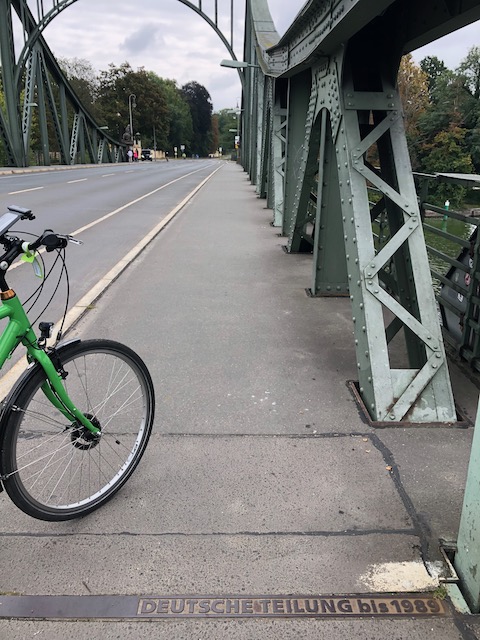
Our little trio started our circumnavigation of West Berlin on the famous Glienicker Bridge in Potsdam in the middle of which spies were on a number of occasions exchanged in the dead of night.

Glienicker Bridge

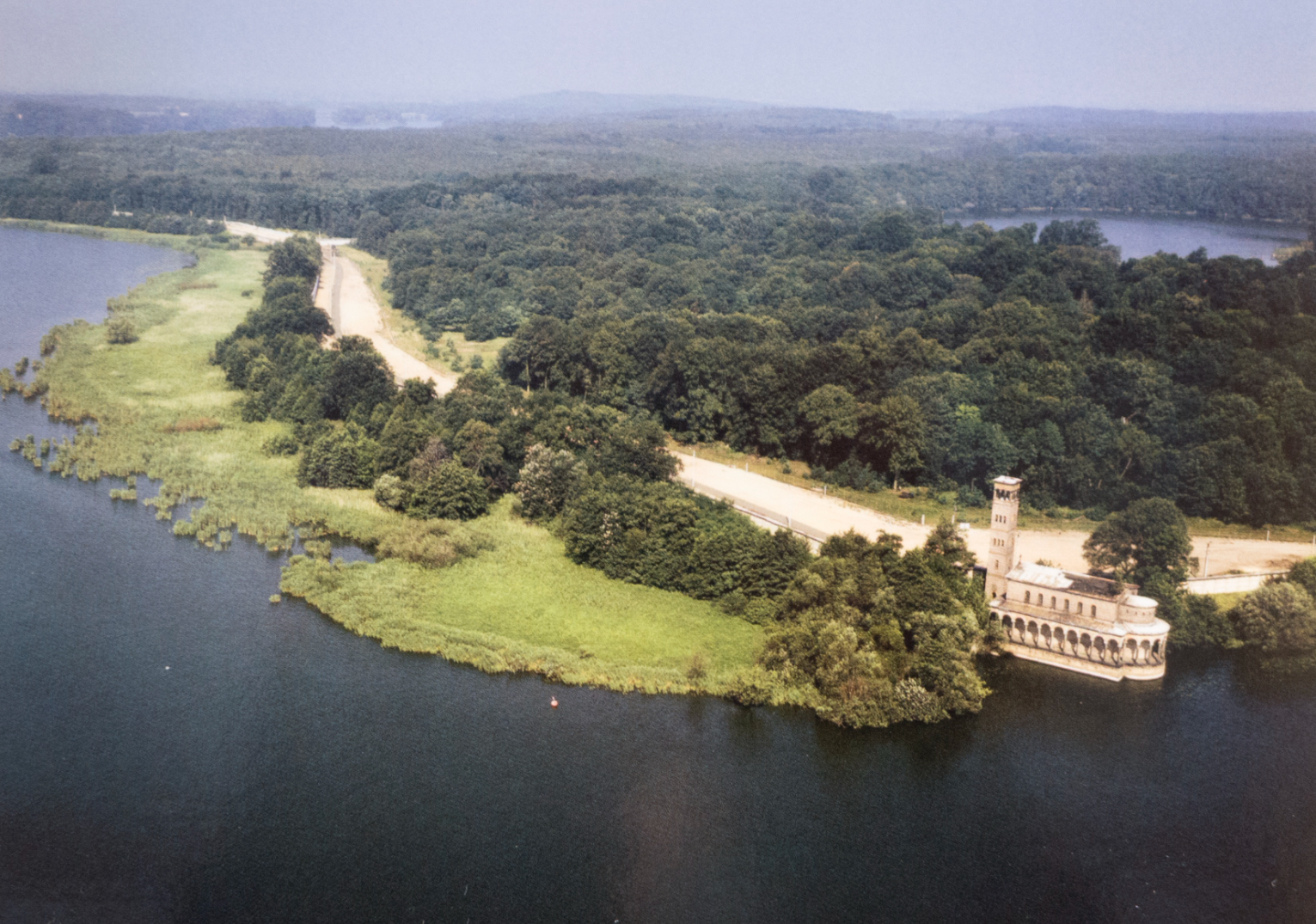
Following a reassuringly well-marked ‘Mauerweg’ route, we soon passed Schloss Cecilienhof, host to the 1945 Potsdam Conference where the division of Berlin and Germany into occupied zones was decided. From there we hugged the shoreline of beautiful lakes, passing the Sacrower Heilandskirche, the church stranded in the controlled border strip and cut off from its congregation.

Heilandskirche, Sacrow, 1961

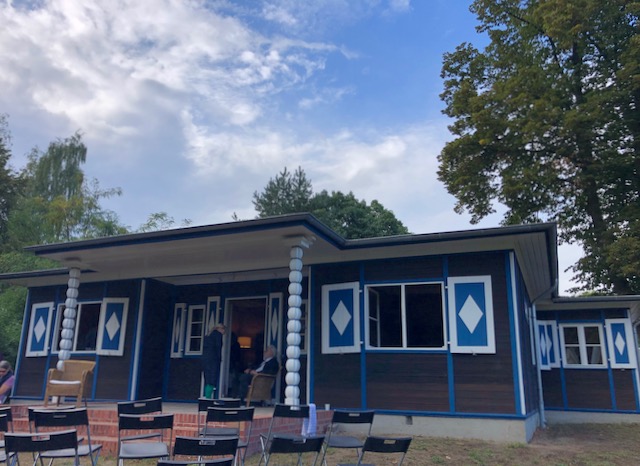
Heading north, we reached Alexander House, whose history became the subject of the acclaimed book by Thomas Harding, The House by the Lake, and is now a place of education and reconciliation.

Alexander House: The House by the Lake

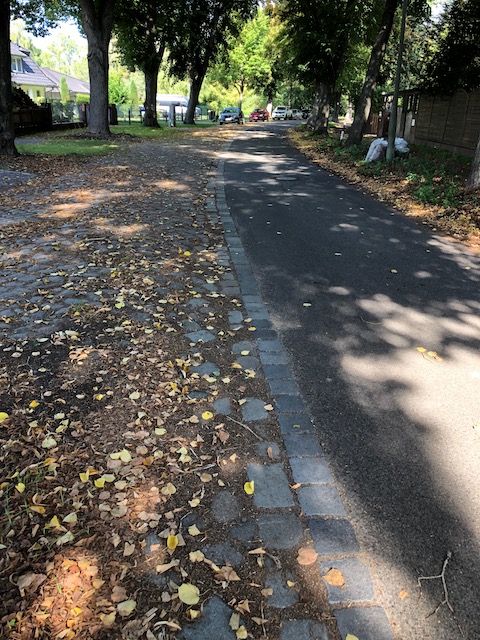
Staying in different hotels en route at intervals of roughly 30 miles enabled us to gain a sense of the scale of the wall and the extraordinary episode in history that only ended a little over 30 years ago. Sections of the concrete boundary, a double cobbled stripe embedded into the pavement or road surface, information boards with photographs and explanations all punctuated our journey.

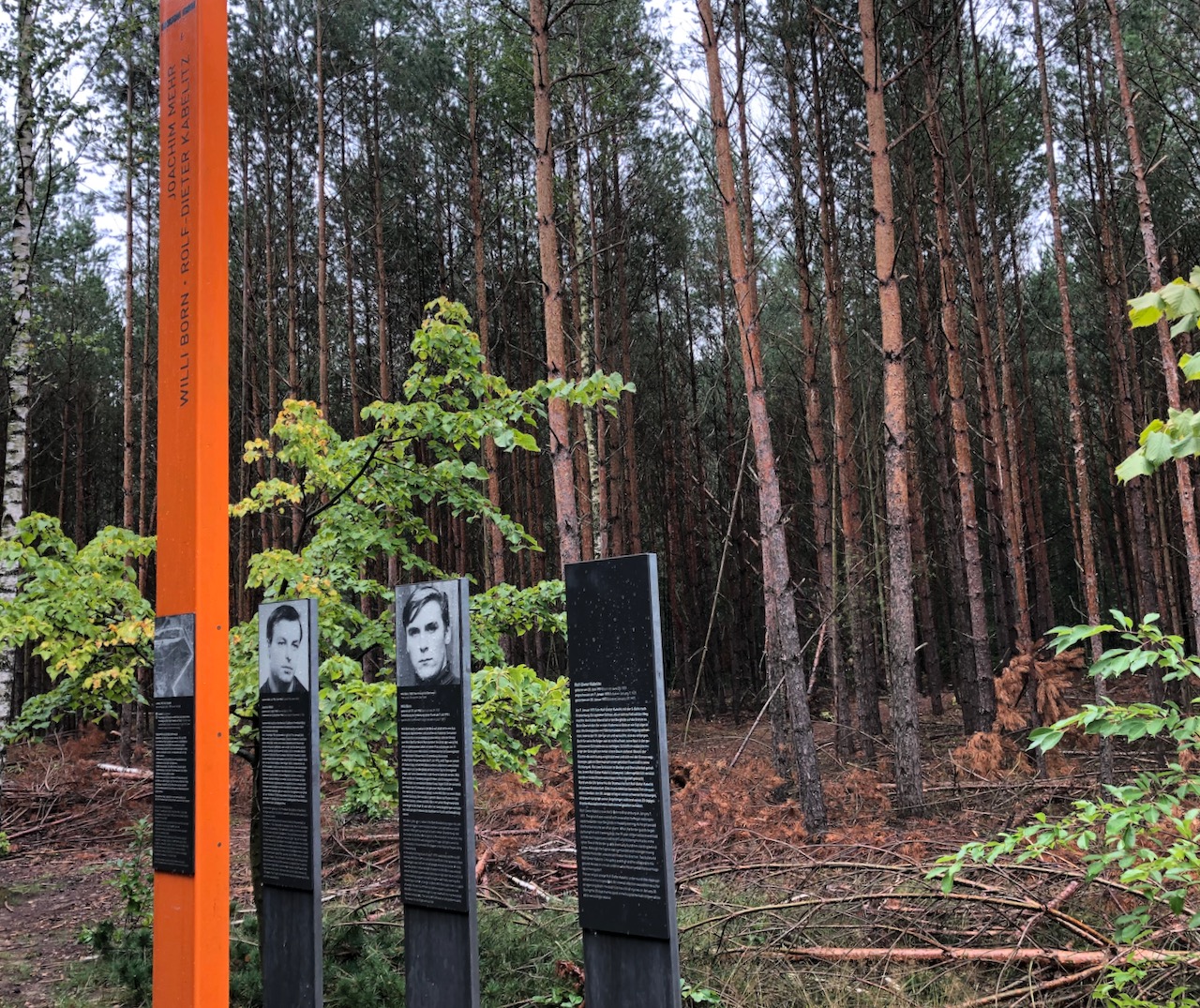
Most moving were the memorials telling heartbreaking stories of failed escapes, largely by young twenty-something-year-old men. With the same unflinching honesty for which all German WW2 or Holocaust-related museums and memorials have come to be known, these allowed us to feel the individual human cost of an ideology based on fear and a necessity to keep people in rather than keeping undesirables out, as the East’s ‘Anti-Fascist Wall’ name misleadingly proclaimed.

Continuing along canals and suburbs, we crossed the ‘Bösebrücke,’ the ‘Bad Bridge’ or Bornholm Bridge that made history on the evening of 9th November 1989 through the jubilant scenes of East Germans flooding across to be greeted by their Western “brothers and sisters” with sparkling wine, cheers and hugs while bemused Eastern border guards watched on helplessly. Unlike my former visits to Berlin while researching for my book, it was this joyous energy of liberation that primarily accompanied me on this trip and allowed me to experience the incredible resilience of Berlin’s inhabitants, past and present, and the revival of its worldwide status as a brilliantly creative, thriving city.

The Bornholm Bridge today and 1989 (pictured)

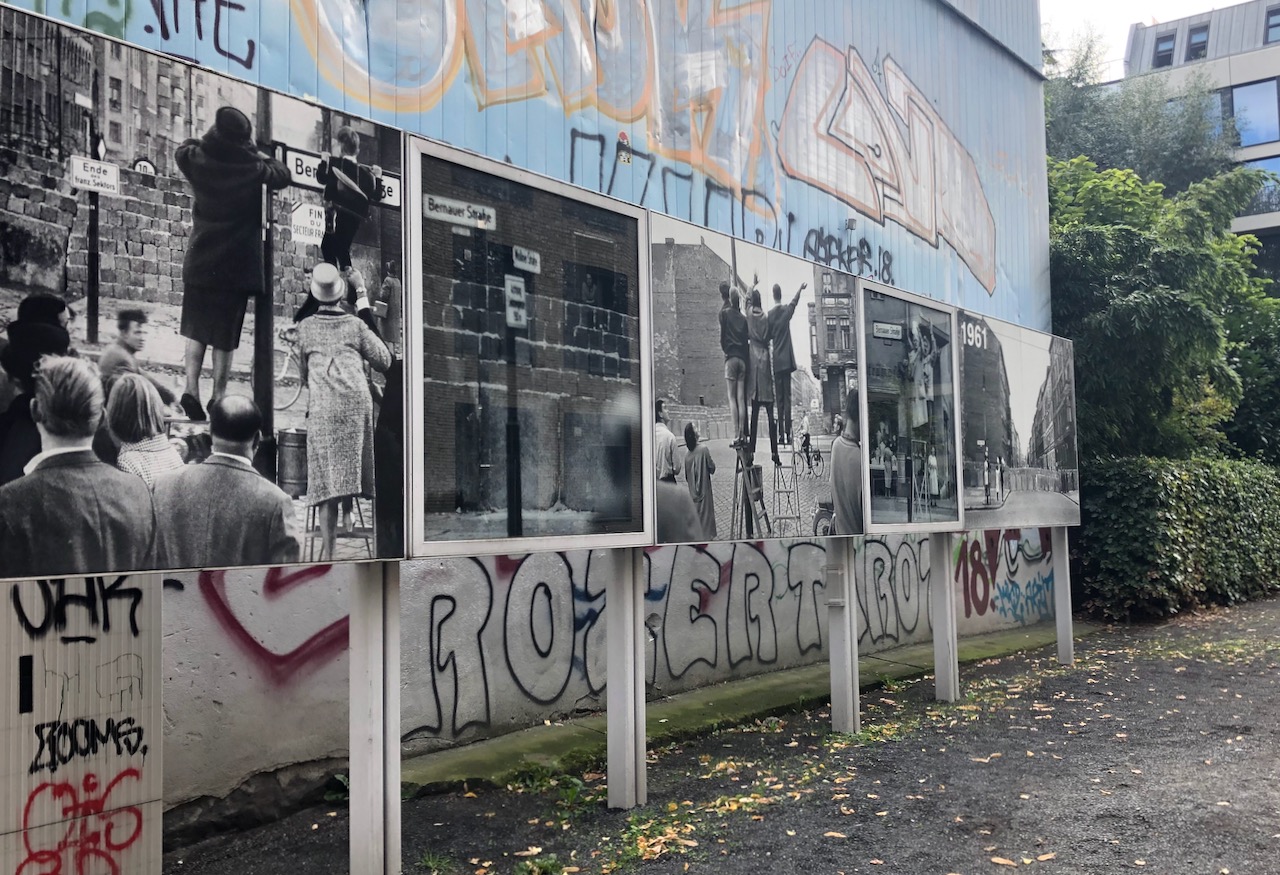
On we cycled, heading south through the beautifully curated but frequently harrowing Mauerpark (Wall Park) that leads into the Bernauer Strasse from which many of the well-known pictures of people jumping out of house windows into tautly held blankets in the West were taken. It was also the street under which various escape tunnels were dug similar to that shown in the 1962 documentary, The Tunnel and including the ‘Tunnel 29’ of the brilliant podcast and book with the same name.
An extended section of the wall and border strip have been preserved as a chilling testimony to its once terrifying presence.

Bernauer Strasse

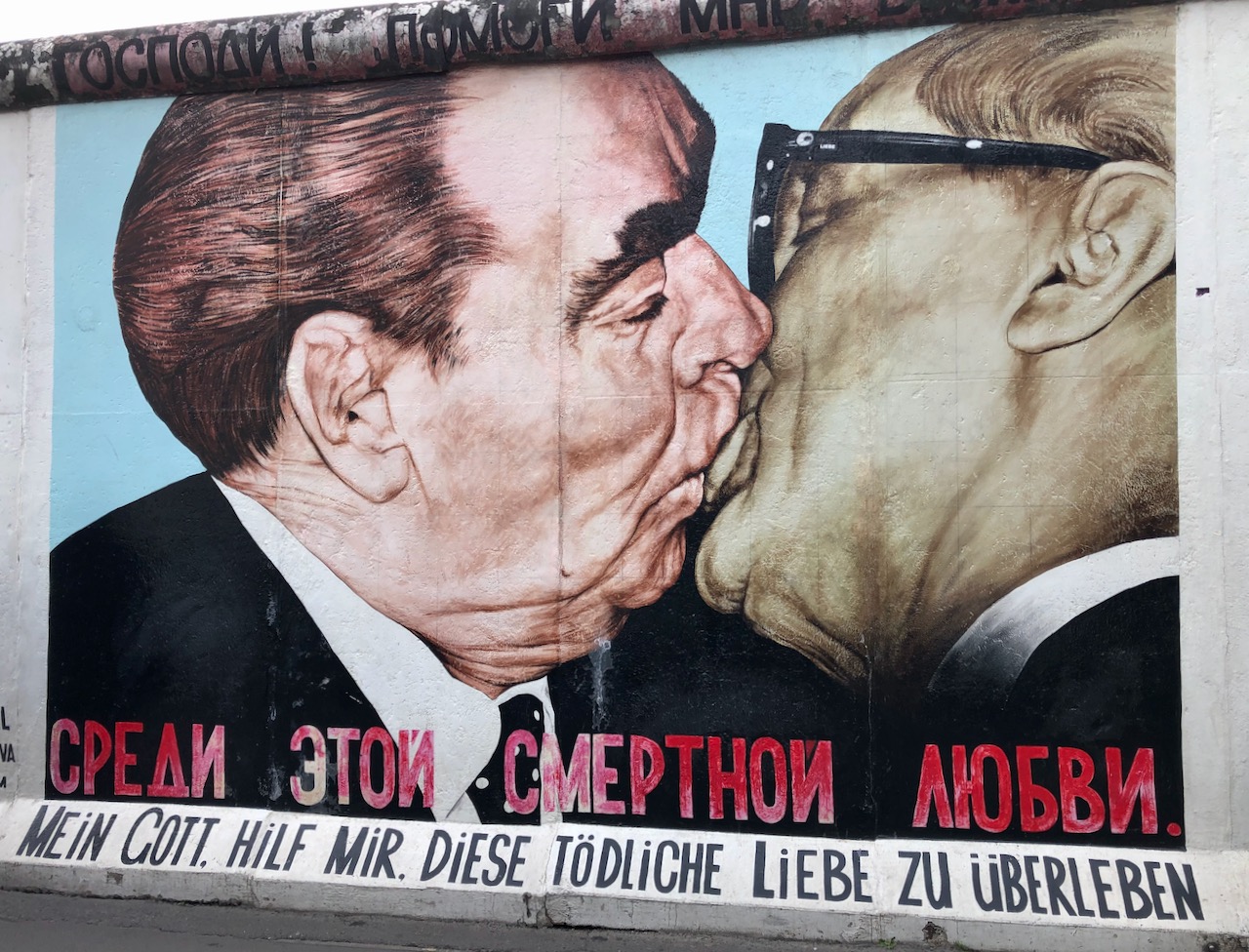
The Wall then continues through Berlin Mitte past some of Berlin’s most famous landmarks: the Reichstag, the Brandenberg Gates, Under den Linden and the Tiergarten, past Potsdamer Platz and Check Point Charlie and along the boundary of what is now one of Berlin’s most chilling museums – the Topography of Terror – but what once was the location of many of the most sinister ministries of the Nazi regime. Then through graffiti-covered Kreuzberg, over the River Spree and to the longest surviving stretch of the inner wall painted in 1991 by painters from all over the world to form the colourful East Side Gallery.

Eastside Gallery: ‘My God. Help me to survive this deadly love.” From a press photograph of Leonid Brezhnev and Erich Honecker painted by by Dmitri Vrubel.

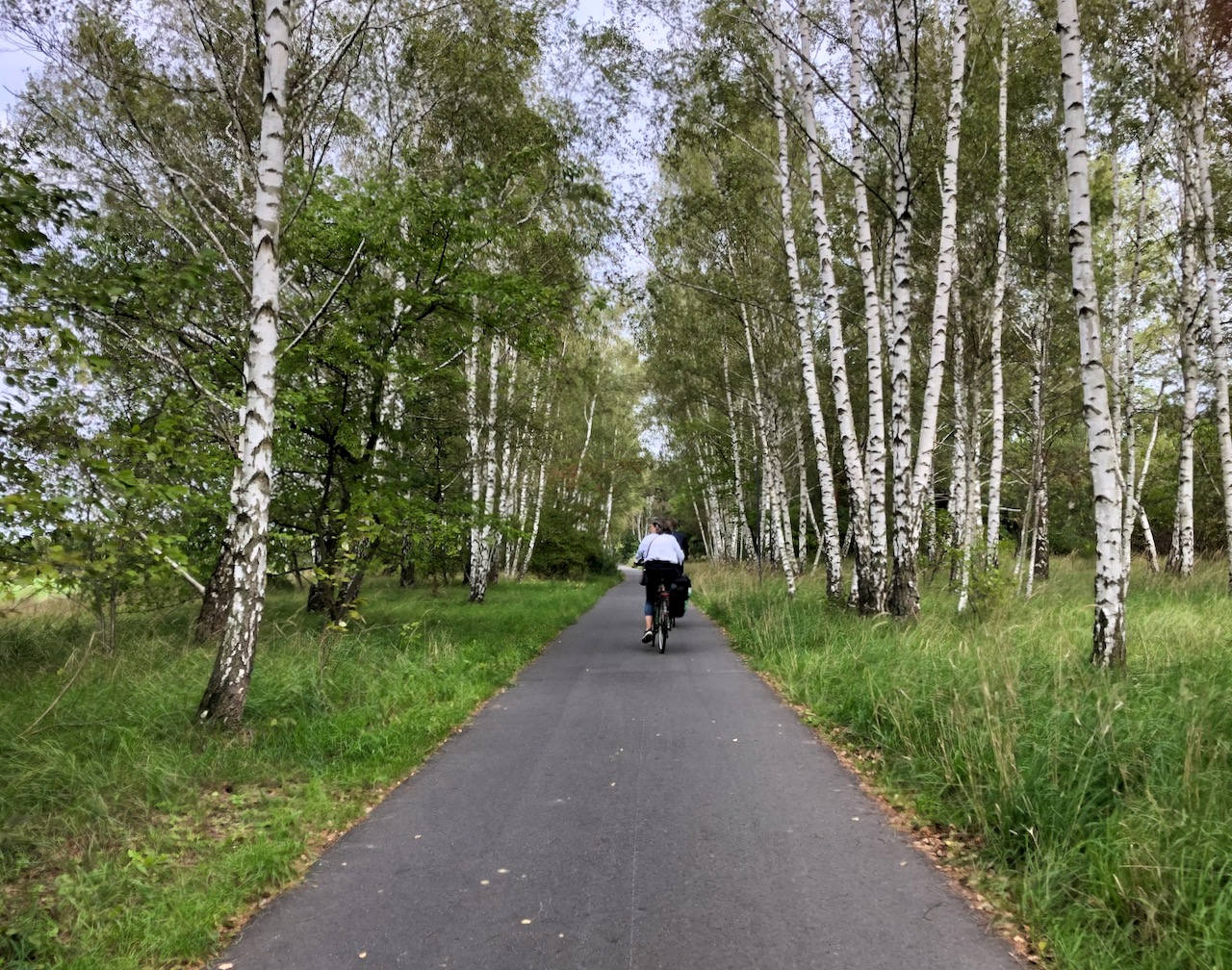
The final 40 miles or so along the southern strip of the wall’s course back to Potsdam was largely rural. A sense of peace replaces the former horror of all that the border came to represent. Long stretches of open fields, avenues of birch trees and an alley of 800 ornamental cherry trees donated by Japanese citizens and a TV station in 1995 “out of joy over the reunification of Germany.”

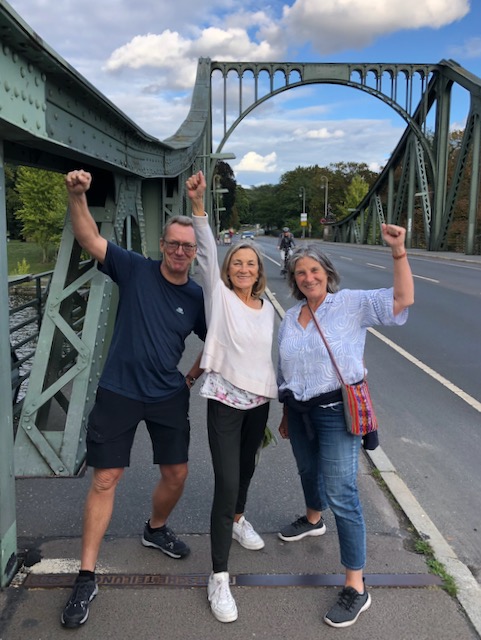
Finally, the three of us arrived back on the Glienicker Bridge from which we had begun our trip, each a little changed, each with a greater knowledge and understanding of German history and our German roots. Each with different emotional responses but a shared sense of the ultimate triumph of humanity and freedom over inhumane systems of repression.

Back on Glienicker Bridge

Upcoming Events relating to my book – In My Grandfather’s Shadow:

Friday 7th October, 7pm. Ebeneza Presents, Somerset: In My Grandfather’s Shadow. More information and tickets here

Sunday 9th October, 4pm. Cuckfield Book Festival: I will be in conversation with Julia Boyd, the best-selling author of Travellers in the Third Reich and A Village in the Third Reich.
More information and tickets here

Wednesday 12th October, 4pm. Mere Literary Festival: In Conversation with Jo Hall. More information and tickets here

Sunday 3rd November, 8.30pm. Stroud Book Festival: In Conversation with Alice Jolly, novelist, playwright and memoirist. More information and tickets here

We love commemorating our victories and losses… but not our declarations of war it seems?

Could it be that even the British have become weary of commemorating the World Wars? Or was the lack of fanfare around the 80th anniversary of the outbreak of the Second World War earlier this month down to having a selective national memory? Do we only like to remember the bits where we emerge as clear heroes, victors or victims?

To my surprise, nothing, or very little, happened in this country on 3rd September 2019. Yet, at 11.15am on that day in 1939, Prime Minister Neville Chamberlain, in a somber broadcast to the nation made from the Cabinet room in 10 Downing Street, announced with regret that his efforts to ensure peace had failed and that “this country is at war with Germany.” The ensuing conflict lasted six years and cost around 50 million lives.

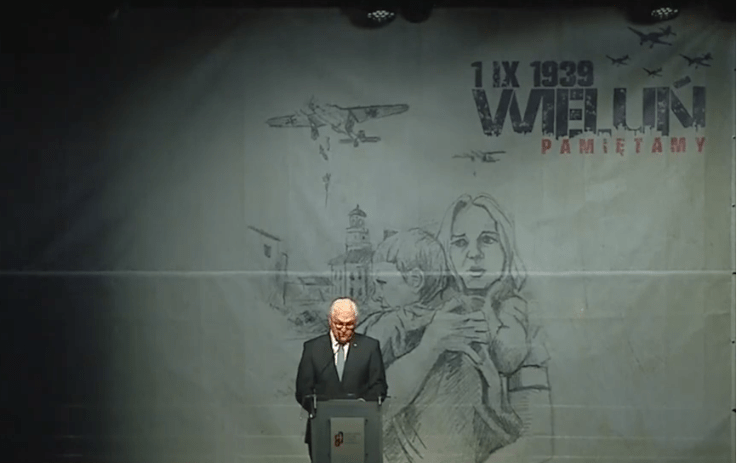
For Poland this anniversary was obviously a huge deal. Germany’s invasion was the catalyst for Britain’s and France’s declaration of war and few places suffered the same level of death and destruction between 1939 and 1945. It lost about a fifth – that’s six million – of its population including the vast majority of its three million Jewish citizens. Wielun, the first city to be bombarded by the Luftwaffe, was the chosen location for forty world leaders and representatives of other countries to gather together for a dawn ceremony on Sunday 1st September at 4am (2am GMT). Polish President Andrzej Duda, German Chancellor Angela Merkel, French Prime Minister Edouard Philippe, US Vice President Mike Pence were all present. (President Trump cancelled citing the approach of Hurricane Dorian as his reason for basically spending the day on the golf course.) President Putin wasn’t invited. But, why wasn’t our Prime Minister there? I think we sent our Foreign Secretary, Dominic Raab, to a subsequent ceremony in Warsaw but…? 

Surely a bit more than just a nod to our role in the unfolding of the most momentous episode in modern history would have been appropriate? Maybe a moment where we press pause on all justifications and humbly reflect on the regrettable escalation of the horrors that our declaration of war unleashed? Or a clearly stated renewed commitment to peace in Europe? Or an informed and respectful acknowledgment of the far greater losses suffered by so many other nations? I recently asked friends how many people they thought died in WW2. “Seven million Soviets? Two million Germans? Two million British?” they guessed. “Actually we have no idea,” they admitted. And they didn’t. Most British people don’t. It was between 20 and 27 million Soviets, 7 million Germans and 450,000 British… that’s including Crown Colonies.

To be fair, Boris Johnson, in a videoed speech that circulated on Twitter, praised the “dogged and unconquerable resistance” Poland displayed during the Second World War and how it “never succumbed to tyranny…” But he also couldn’t help slipping in a quick pat on the UK’s back for standing with Poland “in times of triumph and tragedy.” Hmmmh, you just have to listen to Neil Macgregor’s excellent series on Radio 4 As others see us to realise that this is not quite how Poland sees things. Part of their otherwise generally positive national memory of us is of ‘betrayal’, not once but three times! (This relates to the Katyn massacre, ignoring the plight of Polish Jews and Britain’s role at the Yalta Conference in 1945 when it was decided that Poland would be given to the Soviets.

British Defence Secretary, Ben Wallace, just rolled out the same old tired stuff about Britain going to war to “defend our values and our allies from the Nazis”. (Defending ones values and friends is how all sides justify conflict, however small or large.) He added, “Even though nearly every family in the UK still possessed the memories and hurt of the First World War, they were prepared again to make the ultimate sacrifice. The incredible courage of that generation who fought for our freedom must never be forgotten.” Aaaagh, they just can’t help themselves, these men! It is always all about usOur heroism, our sacrifice, our justified defence. Wouldn’t this have been the perfect time to engage with Polish history? The imbalance between what we know about others and what others know about us is embarrassing. Our narrative that “We went to war for Poland” is, for example, in Polish minds “We declared war for Poland” because the much hoped for military support didn’t actually follow. We really need to start embracing a wider-angled view of history! (This podcast is a great start)

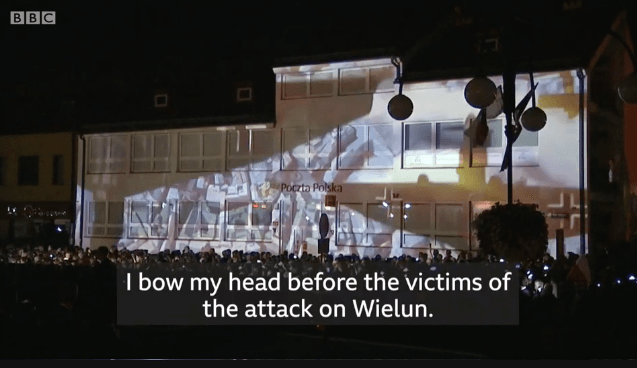
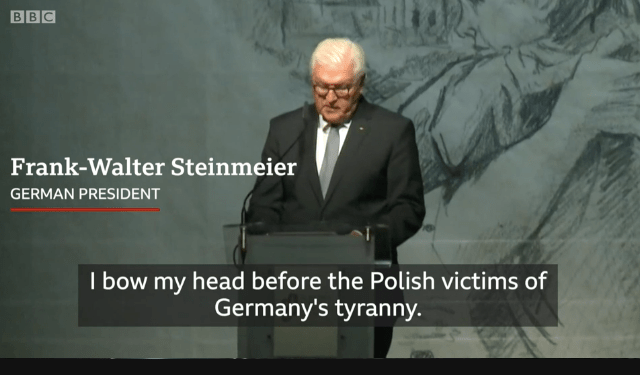
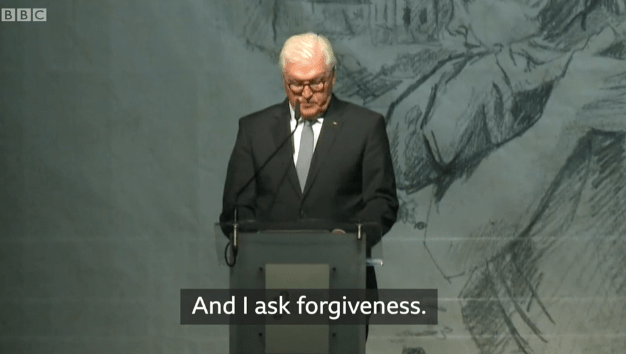
For me it was once again the German contribution that lit a way forward for us all. Speaking with typical unreserved apologetic candour, President Frank-Walter Steinmeier described how “Eighty years ago, at this very moment, all hell rained down on Wielun, fueled by German racist barbarity and the desire to annihilate… My country unleashed a horrific war that would cost more than 50 million people – among them millions of Polish citizens – their lives. This war was a German crime… I, along with [Merkel], want to tell all Poles today that we will not forget. We will not forget the wounds that Germans inflicted on Poland. We will not forget the suffering of Polish families and nor will we forget the courage of their resistance.” He then went on, with a bowed head and speaking in both German and Polish, to ask for Polish forgiveness. “I bow my head before the victims of the attack on Wielun. I bow my head before the Polish victims of Germany’s tyranny. And I ask for your forgiveness.”  

Wow! I know, this is not new. Germany has been publicly apologising for years, starting back in 1970 with Willy Brandt’s silent ‘Kniefall‘. Nevertheless, can we just pause and reflect a moment. The president of a powerful country holding up his hands in surrender and basically saying: “What we did was shit. We were shits. There are no words to describe just how shit we were and nothing can ever change that.” Just imagine how difficult that is to do. And how different the world would be if more people did that. The power of apology. The power of asking for forgiveness. (Whether it is possible to ask for forgiveness on behalf of another / others is debatable as Bernard Schlink does so well in his book ‘Guilt about the past’. But still…)

I’m glad that in a return speech, President Duda thanked Steinmeier for his presence at the painful anniversary before continuing to rightly denounce Nazi Germany’s attack on Poland as “an act of barbarity” and list other massacres and atrocities on Polish soil. He also drew attention to the genocide and mass murder continuing around the world today, and underlined the importance of international alliances like NATO and the European Union. (The question of further compensation was also raised later on… but you can read a fuller summary of the speeches here.) The pain still lingering between these countries that were so utterly destroyed on so many levels is visceral. As is the will for lasting reconciliation.

As much as I am frustrated and disappointed by our on-going and often unimaginative, inward-looking and lop-sided to the point of ignorant rhetoric on the World Wars, I am also optimistic. Younger generations are asking awkward questions that force a re-evaluation of the dusty, airbrushed pictures of our ‘glorious’ Empire. And the answers they are finding are uncomfortable. Maybe when we stop hiding our misdeeds behind the undisputedly ghastly deeds of the Nazis and the Holocaust and finally acknowledge our own national shadow, when we admit that the whole British Empire was based on the genocide of indigenous people and a forcing of our values on others, maybe then we can be genuinely better in the present and the future. 

Further reading:

https://www.dw.com/en/german-president-asks-for-polish-forgiveness-on-wwii-anniversary/a-50247207

https://www.telegraph.co.uk/news/2019/09/01/german-president-asks-forgiveness-80th-anniversary-start-second/?WT.mc_id=tmg_share_em

https://www.theguardian.com/world/2019/aug/30/truth-is-a-casualty-80-years-after-start-of-second-world-war

‘Shot’ for what you represent

I had a funny experience the other day… not sure if I mean funny-ha-ha or funny as in quite strange. Or maybe it simply made something visible that usually remains disguised or hidden.

I had just arrived at the theatre where I was due to give my talk on German WW2 counter memorials. The woman, who had booked me on the recommendation of several other art societies, greeted me warmly, bought us each a coffee and sat down opposite me in the café.

Read More »

Light at the end of the tunnel…

Yesterday I wrote two words that I have frequently thought I would never get to write: THE END. Of course it is not The End by any stretch, but nonetheless this week, for the very first time, I caught sight of a teeny-weeny light at the end of the tunnel; just enough to be able to acknowledge its reality, in writing. I am talking about my book; the book that I have been writing for the past three years and researching for well over ten.
To be honest, I have never known a task so challenging. The idea arose out of my talks to schools and Arts Societies all over the country in which I present the Second World War and its aftermath “through the eyes of an ordinary German family”; my family to be precise. “I had no idea,” is the usual, unanimous response. And here in Britain, we actually don’t. So when audience members started asking me with such regularity “Have you written a book?” or told me in no uncertain terms “You must write a book”, I decided to seize the gauntlet. I’ll just stretch the contents of the talks, I thought naively.
Read More »