Peace on earth, goodwill to men… and women

I am not a huge fan of Christmas, but I do love the peace of the days that follow the rush and stuffing of stockings, fridges and bellies. A stillness descends as exhausted people navigate the aftermath of families, toy-strewn floors and overflowing bins. Finally, those of us in the northern hemisphere can follow winter’s call to slow down, rest, and listen to the wisdom of our hearts and souls before the new year draws us back into action. 

Peace is not something we can take for granted anymore. Fighting – with words, ideologies or weapons – has increasingly become the norm. We have just been told by the UK defence minister, Al Carns, that “the shadow of war is knocking on Europe’s door.” And warned by NATO boss, Mark Rutte, that “we must be prepared for the scale of war our grandparents and great grandparents endured.” In this year marking the 80th anniversaries of the end of the Second World War, I’ve been asking myself: how do we maintain peace in a world in which so many of the vows and institutions created to prevent future wars are under threat? How do we ensure that ‘Never Again’ still holds? Various recent events have been shaping my thoughts.

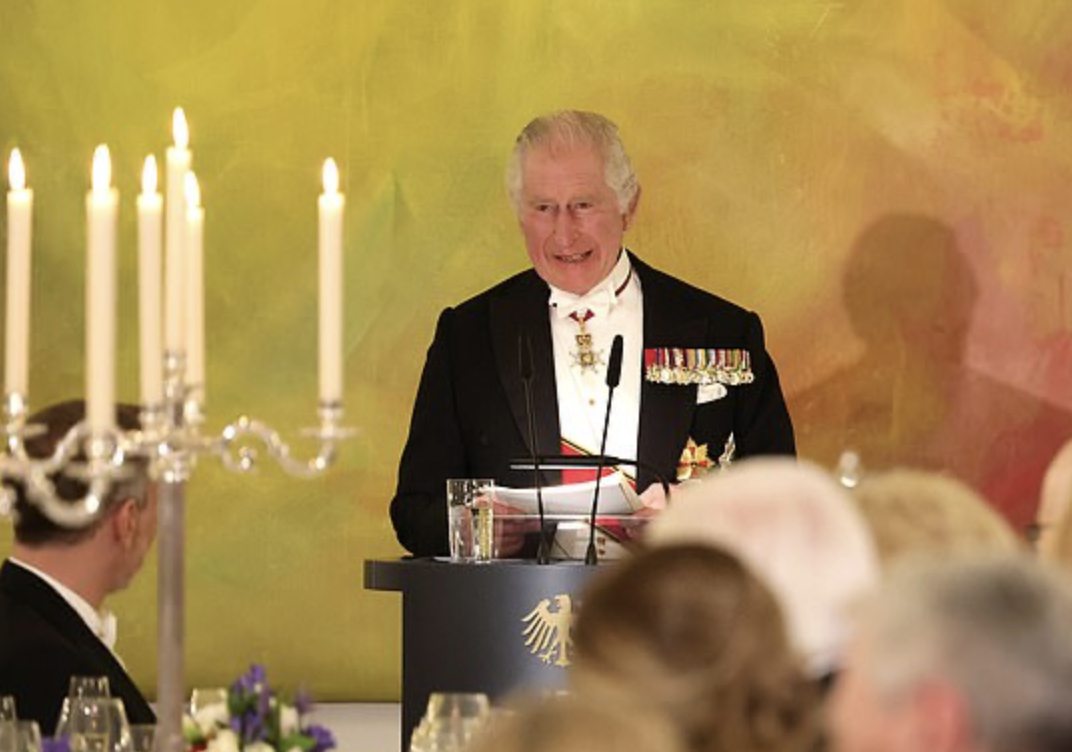
In early December, the German President Frank-Walter Steinmeier and his wife, Elke Büdenbender, embarked on a three-day state visit to the UK, the first in 27 years. In his speech at the state banquet hosted by King Charles III and Queen Camilla, Steinmeier highlighted the deep connections between Britain and Germany; how traditions from each country have been woven together so tightly that their origins are now obscured. Not least among these is the Christmas tree. The first one was displayed in Windsor in 1800 by the German Queen Charlotte, wife of King George III, and the custom soon spread to living rooms across the UK. The same is true for Battenberg Cake – a story I love and have often told in my work (see my December 2017 blog). 
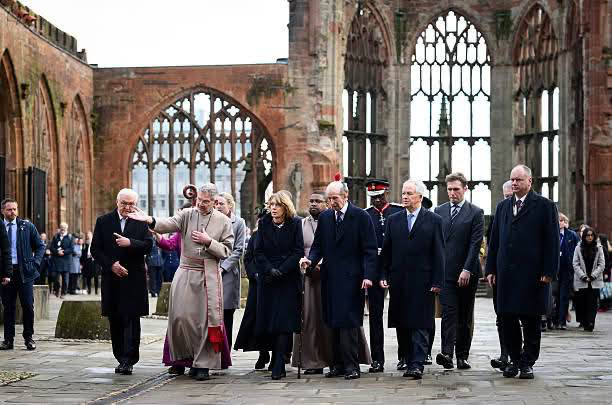
L-R: President Steinmeier, Dean of Coventry, Elke Büdenbender, Duke of Kent…

On the final day of his visit, President Steinmeier travelled to Coventry Cathedral. He and his wife were greeted by His Royal Highness The Duke of Kent who, among his other roles, is Patron of The Dresden Trust. Coventry and Dresden have been twinned since 1959, linked both by the devastation of the bombing raids each country inflicted on the other, and by the many decades of peace and reconciliation work that have followed.
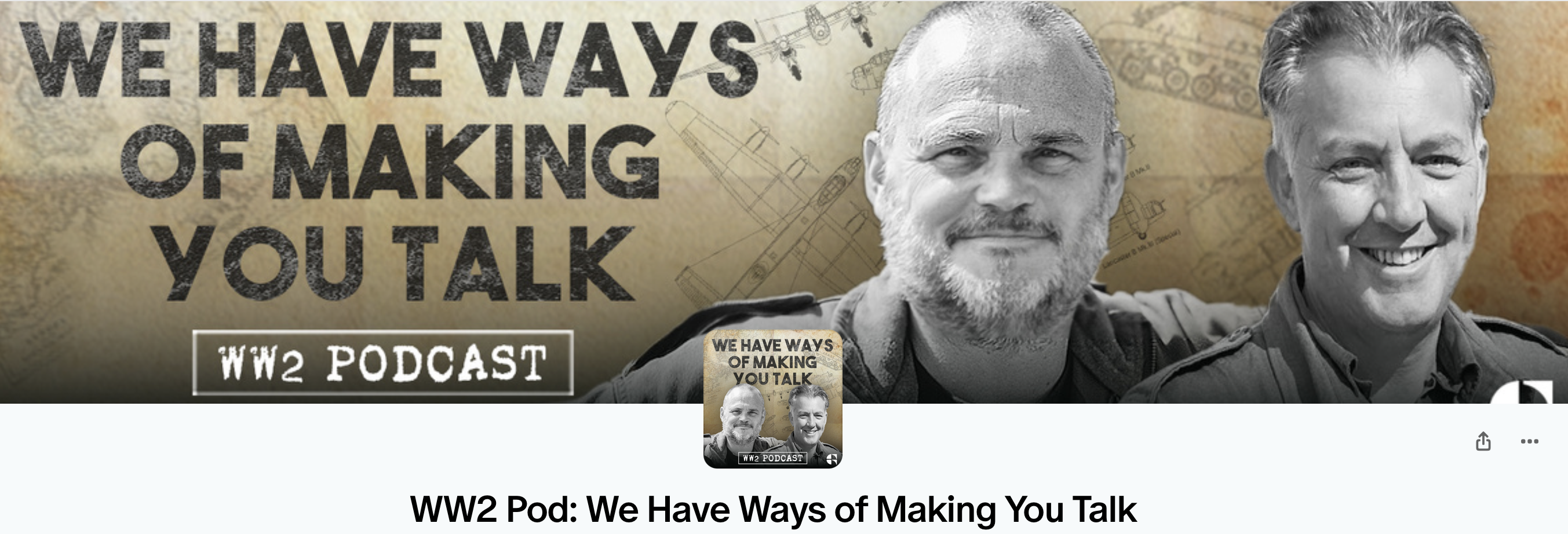
Al Murray and James Holland

At around the same time, I had been sitting in one of Goalhanger’s recording studios. You may know them for some of their most popular podcasts in The Rest Is… series, including the chart-topping The Rest Is History and The Rest Is Politics. I was there with Henry Montgomery to talk with historian and broadcaster James Holland, and comedian and ‘Pub Landlord’ Al Murray, on their equally popular WW2-focused podcast, We Have Ways of Making You Talk Henry, also the grandchild of a high-ranking army officer – in his case the British field marshal best known as ‘Monty’ – and I had previously spoken together on VE Day at the National Army Museum. As I have mentioned in other blogs, we are exploring from our different perspectives how well Britain’s remembrance culture is really working. With ever fewer World War veterans and first-hand witnesses still alive to warn us of the horrors and futility of war, is it doing enough to keep “Never Again” a lived reality?
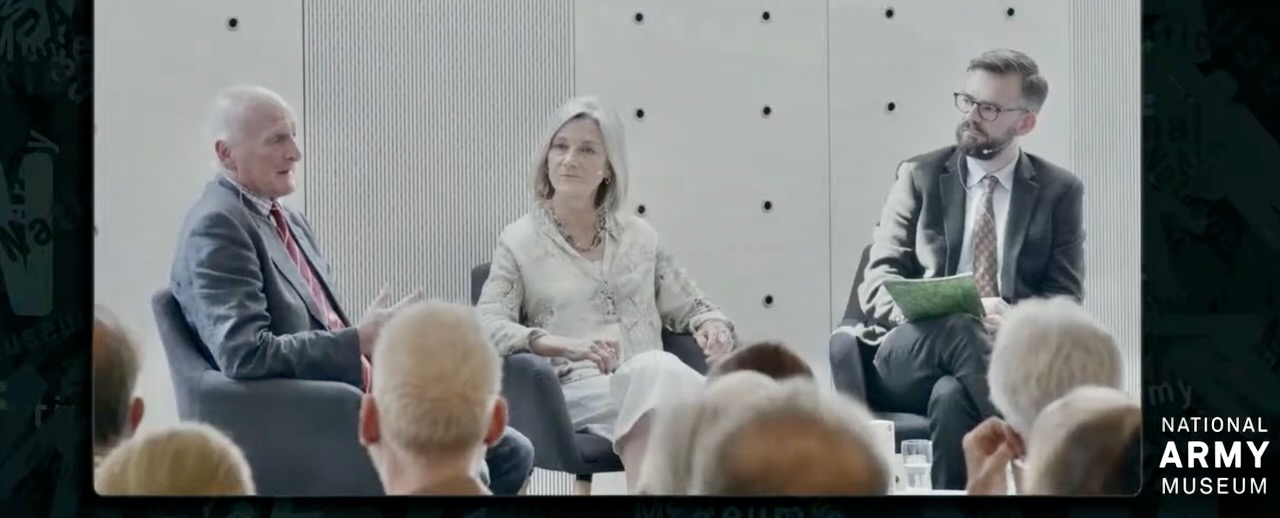
National Army Museum: Henry Montgomery, me and Daniel Cowling, May 2025

When I look at the visuals of Britain’s remembrance culture that make it into the media – for many people, perhaps the only occasions where they will actively ‘remember to remember’ the lessons of history – I fear we are not going far enough. We see mostly men in dark coats laying wreaths and solemnly reaffirming vows to uphold the peace and international friendship while elsewhere in the world other men stubbornly refuse to make it. We see the bright regalia of royalty and the glinting medals of veterans. It is the language of the military and the state: formal, symbolic and carefully choreographed. All fine and important. But peace is not confined to grand stages or organised occasions.

Listening to Radio 4’s brilliant Reith Lectures, this year titled Moral Revolution (what could be more pertinent in our times?) and delivered by the historian and author Rutger Bregman, I was struck by a description of a Quaker practice to bury the dead in unmarked graves. In stark contrast to the fields of Commonwealth War Graves and annual remembrance rituals, they believe you don’t honour people with costly headstones but with actions. Thomas Clarkson, the famous abolitionist who wrote extensively on the Quakers, said: If you wish to honour a good man, let all his actions live in your memory so that they may constantly awaken you to imitation, thus you will show that you really respect his memory.

In a similar vein, Germany’s counter memorial movement, which began in the 1980s, fundamentally changed the dynamics of memorialisation. Through its shifting, disappearing monuments and memorials to absence, the focus turned toward the millions murdered by the Nazis. Responsibility for remembrance and for ensuring such destruction never happens again was transferred from stone and bronze into the hands of ordinary people. 

And that is where it belongs. Peace is sustained not only by treaties, leaders and ceremonies, but by us – each and every one of us in our daily lives. 

So if, like Rutger Bregman with his call for a Moral Revolution, we were to start a Revolution of Peace, what might it look like? What would its optics be? What language would it speak and who would embody it? I suspect it would be a revolution that brings heart, warmth, listening, sharing and art into our everyday encounters. One with no emphasis on sides and differences, winners and losers, no interest in egos, power games or deception. Idealistic maybe, but arguably closer to what is naturally human for many of us than conflict and war. 

Perhaps over Christmas we can practice peacekeeping: at kitchen tables, in disagreements, in how we speak to one another and how willing we are to listen. In choosing curiosity and compassion over judgment. In noticing where hostility quietly creeps into our own lives and questioning the ingrained narratives that divide the world into a good and right ‘us’ and a bad and wrong ‘them’.  

When peace is on the line, remembrance must shift from an act of looking back to a commitment to shaping the future. Just as conflicts and wars escalate out of countless small decisions, so peace does too. May we – and the world’s leaders – choose peace in the year ahead.

But first, let the mayhem continue… Wishing you all a very happy festive season, a meaningful Winter Solstice, a restful and restorative break and, in 2026, peace on earth and goodwill to men… and women.

The We have Ways… podcast episode is due to be published on 30th December in all the usual podcast outlets.
Is King Charles’s visit to Germany important, irrelevant, or are you completely indifferent? 

King Charles is in Germany for three days, his first overseas state visit as monarch after the planned trip to France was postponed. Many people in Britain will not take much notice of this news for a variety of reasons from believing the monarchy should be fundamentally abolished to thinking the whole trip is one big photo-opportunity. But media coverage of his and Camilla, the Queen Consort’s time in Berlin, Hamburg and beyond will show it is far more important in Germany than most of us here might understand. 

There are times I have felt saddened by Germany’s slightly unrequited friendship with Britain. A lot of Brits have wonderful personal or business relationships with our neighbours across the sea, but at Remembrance ceremonies, for example, I have lamented the stiff coolness of the British establishment towards their German counterparts that stands in stark contrast to the genuine warmth displayed by equivalent representatives of France or even Israel. This visit feels different. More relaxed and real. The Royals, at their best, have an uncanny ability to transcend all differences to reach parts other people, above all politicians, can’t, and with far more authentic and lasting resonance than mere symbolic gestures.

“Ah the Queen Mother… I love the Queen Mother!” Those were the unlikely words to come out of a scantily clad, barefoot, elderly Aboriginal man’s mouth on discovering I was English. It was 1986 and I had just wandered, equally scantily clad, into a spit-and-sawdust pub in the baking outback of Australia causing the intimidating head-turns and awkward silence seen in movies. Ever since this display of unreserved enthusiasm for a Royal broke the ice – most definitely the wrong idiom to use in a place where 40˚C temperatures would have melted ice within minutes – followed by the dear man’s insistence on buying me a cold beer, I have valued the role the Monarchy plays in the world. 

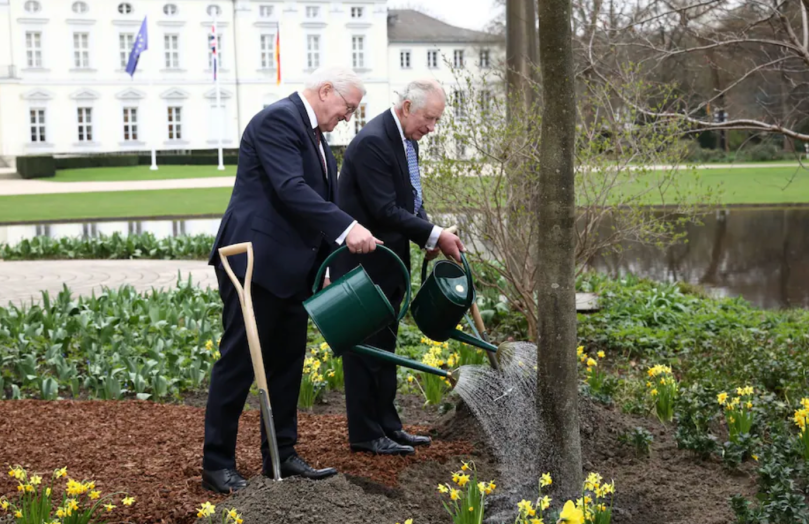
In some ways King Charles brings an even more special affinity than his revered mother because it is coupled with inspiration for Germans whose long-standing environmental awareness and action match his… apart from the rather glaring contradictions in their love of fast cars and belching factories. Like them, he has been advocating greener, more sustainable ways of working with the earth for decades, ideas for which he has been ridiculed here until mainstream politics recently and reluctantly began to acknowledge their common sense. It’s a happy sight to see our King throwing royal reserve aside to inspect potatoes at Berlin’s 150-year-old weekly farmers’ market, water a tree dedicated to the late Queen, play table football in a refugee centre or spend time at an organic farm (bizarrely owned by friends of a friend of mine) sharing their genuine passion for all that he too believes is good and right.

The intended role of our Royals, rather than the all too frequent ones that are mired in controversy, excess, wrongdoing etc. could be compared to that of the German President – currently Frank-Walter Steinmeier, who I always find carries out his brief superbly. Beyond the divisive party politics and in-fighting that brought us Brexit and what was experienced by many Europeans as a hurtful rejection, King Charles’s visit offers a heartfelt olive branch and reassurance that our countries are still indeed friends with both a shared history that extends way before the horrors of the two World Wars, and a deeply connected future.

Politicians rarely feel able to give credit or compliments to the achievement of others for fear of exposing their own failings. Charles (is that being over-familiar?) on the other hand, can. With no trace of defensiveness or inadequacy of his own country’s policies, he paid tribute to Germany’s “extraordinary hospitality” in hosting over one million Ukrainian refugees. “This,” he said, “seems to me, so powerfully demonstrates the generosity of spirit of the German people.”

Imagine a politician saying that! But if we want to break the insufferable ping-pong slagging matches that fill the House of Commons, this recognition and appreciation of good policies, ideas or actions surely has to be encouraged on all sides? Batting words to and fro, patting own backs and roaring unruly ‘Ayes’ or ‘Noes’ to drown out opponents’ voices is no way to get anything done. And when you look at the decline of so many of our services, institutions and already neglected areas of British society, it is clear that, for far too long, almost nothing has been done.

I am currently reading a fascinating book lent to me by a delightful 92-year-old friend who, after reading my book, treated me to some of her own stories from the Second World War. Her family lost their home to the bombs dropped on Bristol. And yet, in 1948 on hearing of the extreme hunger of the Germans, she and her church youth group, knocked on doors in their parish to collect donations to send to the very people that most around them (understandably) still regarded as the enemy. She remembers the quarter of a pound of tea she collected.

The book she lent me, ‘Darkness Over Germany’ was written by a remarkable British woman, E. Amy Buller, who visited Germany many times in the 1930s with a mission to understand the ideas that radicalised so many people, particularly the youth, in order to learn how to work with them in peacetime and prevent such things happening again. She saw how Nazism was a false answer to a real need and how foolhardy it is to fight a war without considering how to engage with the enemy once they were defeated. 

I can’t help feeling we could learn a great deal from these enlightened elders who operate with the kindness and innate wisdom of their hearts. And it is in that respect that I completely support visits such as the one happening as I write. With clearly genuine warmth, humour and interest, King Charles is re-building bridges, offering friendship and warming the hearts of a great many German people.

Uh-oh, I feel a little ‘God Save the King!’ coming on… I’ll stop here.

Just a few of a whole load of links recording his visit:

King Charles celebrates UK-Germany ties in historic address – BBC

For Hamburg, devastated by allied bombing, King Charles’s visit is so much more than a photo-op | Helene von Bismarck | The Guardian

From Meeting Scholz To Visiting Farmers Market; A Peek Into King Charles’ Germany Visit

King Charles III arrives in Germany for first overseas visit as monarch

In Pictures – The Telegraph

King Charles to lay wreath to German victims of wartime air raids. Planned visit to St Nikolai memorial in Hamburg contrasts with approach taken by his mother by Philip Oltermann

King Charles avoids mention of Brexit in speech to German parliament