Rock, Paper, Scissors and AI

Last week I met a man who is drafting a book along the same themes as mine. He too has German roots and his is a remarkable story that I hope will one day be published. We discussed the fascinating process of researching historical content, and the more arduous one of finding an agent or publisher. In my case, both involved huge quantities of time, trawling through books, websites and the brick-like tome that is the handbook for writers. For him, information and guidance were more at his fingertips in the form of AI. The difference got me thinking. 

Part of me feels glad to have completed In My Grandfather’s Shadow before the tools of Chat GPT or Open AI became widely available, or indeed unavoidable in the case of search engines. The temptation to constantly tweak my own imperfect writing voice according to the suggestions of an entity that has absorbed millions of other people’s work – including my own by now – might have been irresistible. But how much time I would have saved. And online searches might have discovered my grandfather’s movements on the Italian front, all records of which at the time lay buried in the silence of Italy’s complex and unresolved history of collaboration and resistance. 

There is no doubt AI is unbelievably brilliant and useful in many areas. I am not anti-AI per se. But when it comes to making art, I worry about the loss of essential skills and faculties to a desire for ease and instant answers. What happens when colours and shapes are made by the same keyboard clicks that generate words, mathematical equations, spreadsheets, drone attacks or hacks? Of course, great art will come out it. Artists have always embraced modern technologies and fashioned them to express their own visions. David Hockney’s iPad works spring to mind. But how many of our multi-sensory human skills – coordination, balance, weight, instinctive rightness – might we lose?
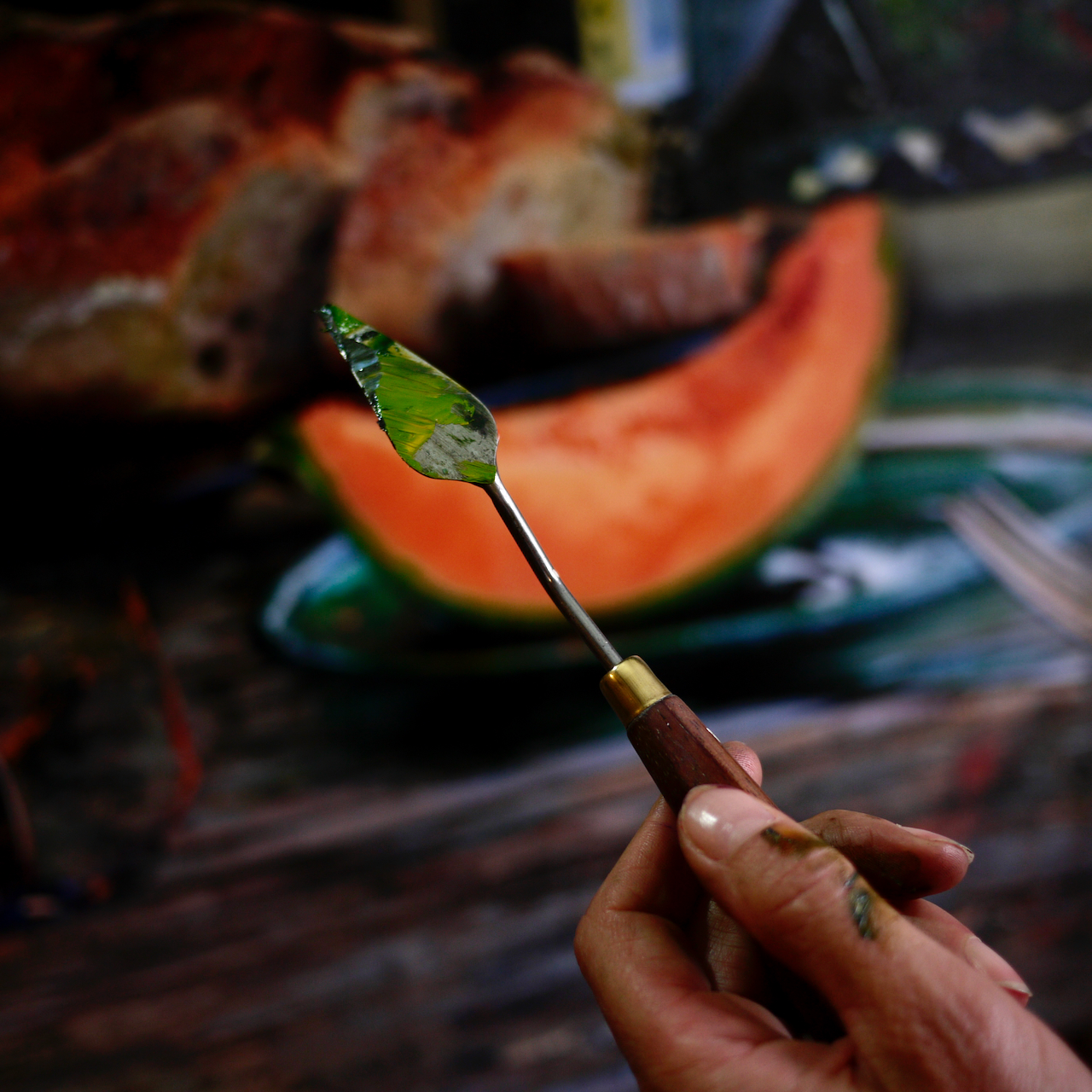
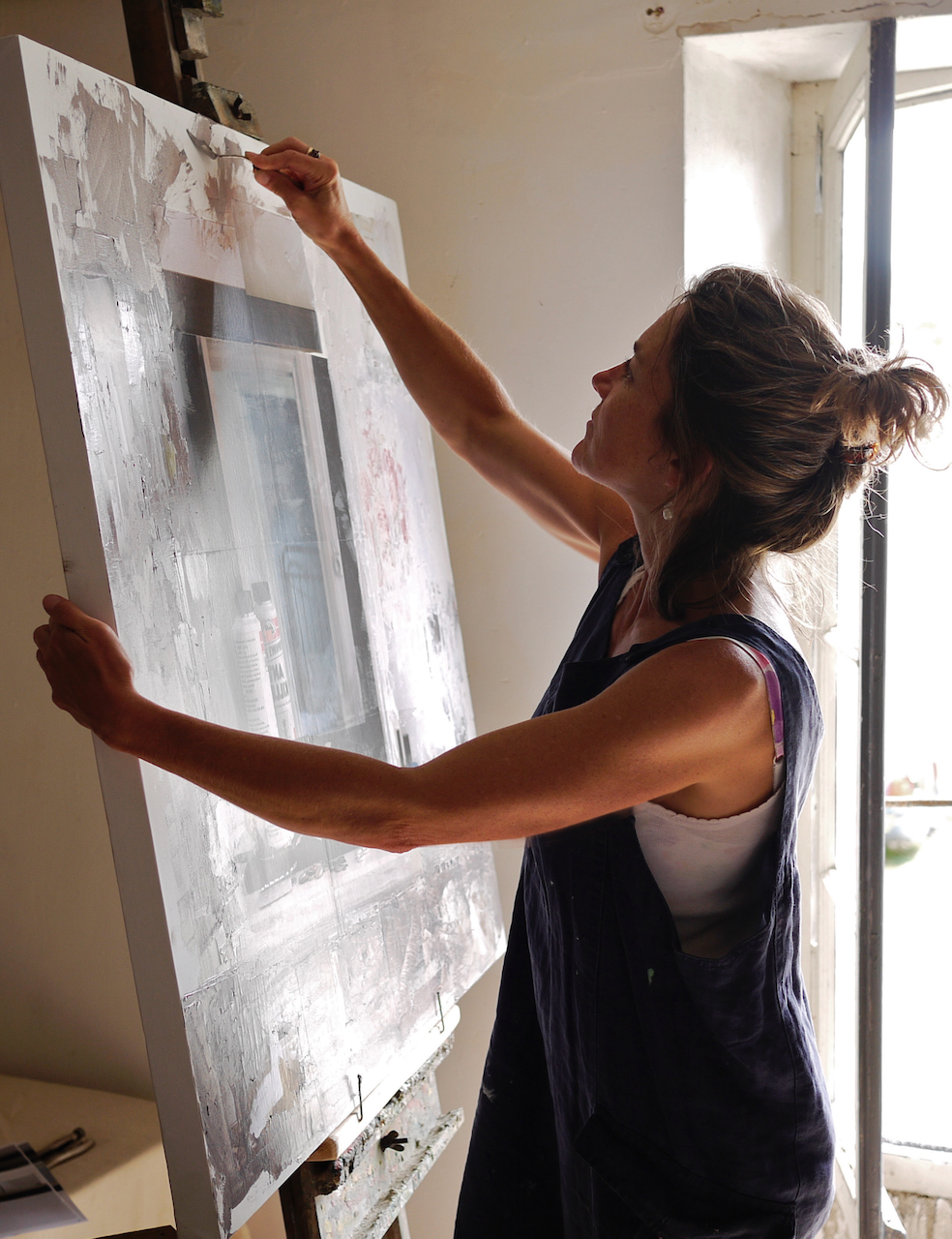
While AI chatbots are becoming terrifyingly advanced, Grayson Perry’s insightful 2-parter on Channel 4 – Grayson Perry Has Seen the Future – reveals how physical robots are still lagging in emulating the complexities of simple actions we take for granted – like making a cup of tea. So much is involved to get brain and body to work together. When painting was part of my main profession, I revelled in the mixing of colours. Hands squeezed tubes, rinsed brushes, and spread paint onto canvas like buttering bread. Taste buds sprang into action, the tongue searching like a cook for the missing flavour… a little more darkness, a bit more warmth, maturity, or contrast. Colours needed to ‘sing’ particular harmonies or discords. The eye would journey over a terrain of textures while the nose inhaled the same oily odours of centuries of masters gone by. 
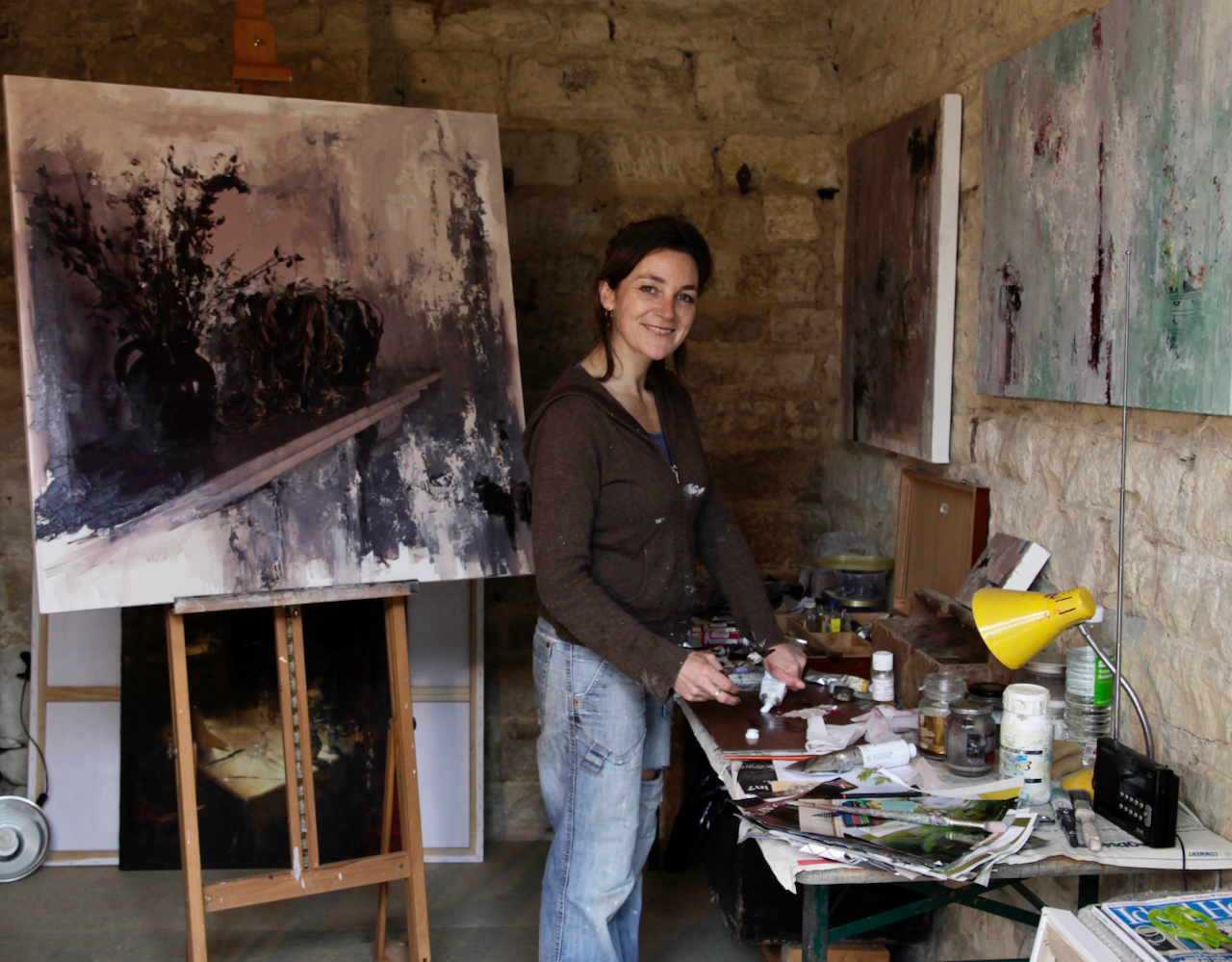
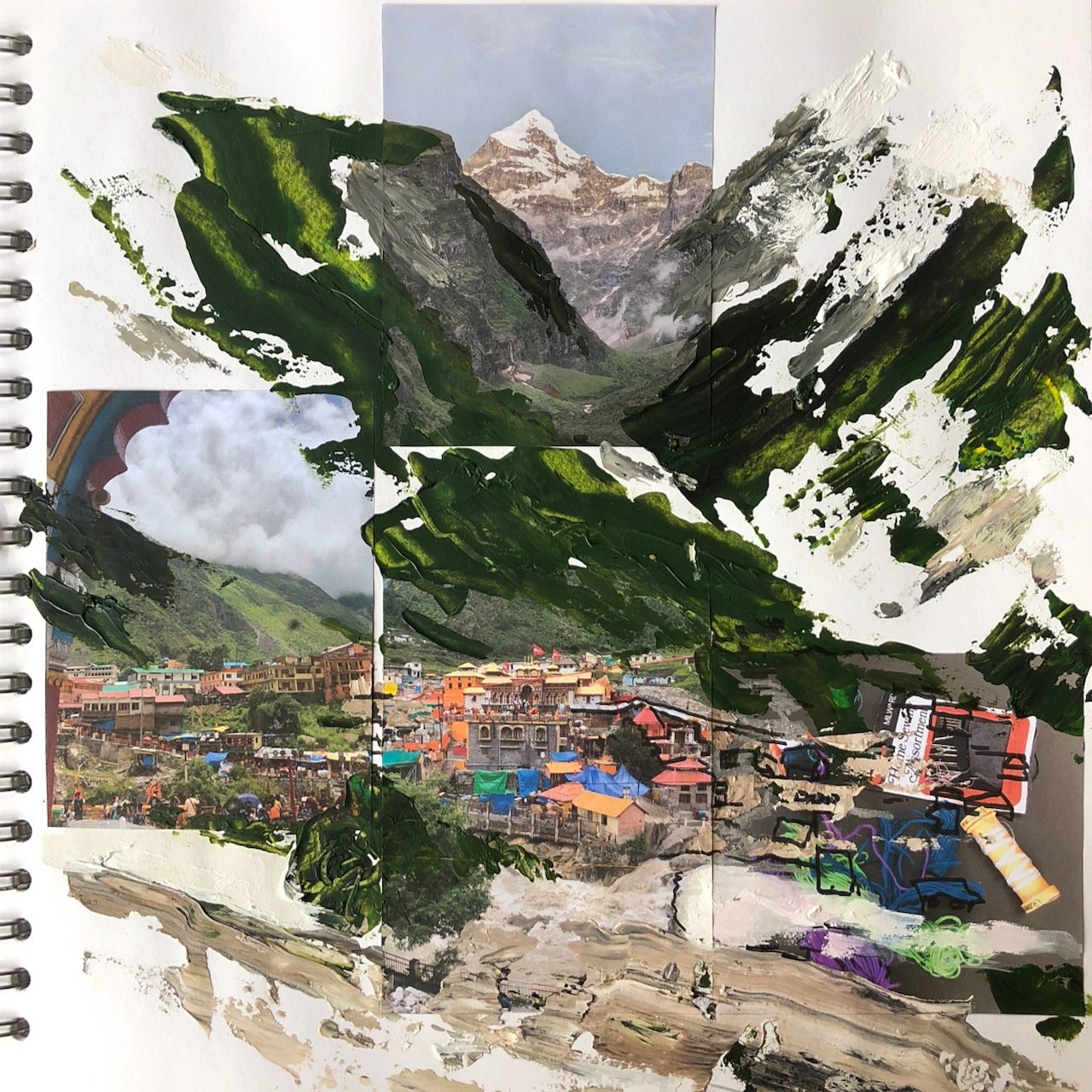
Maybe I am nostalgic. That could well be. Equally possible is that I am frustrated that though I have an all-singing iPad, I have not mastered the brilliant tools of Canva, Procreate or iMovie. Instead, I sit in my studio with scissors, glue, sticky fingers, and paper images strewn across the floor. I assemble and reassemble in contortions that resemble games of Twister. I destroy, lose and abandon works… often wishing there was a Command Z key I could tap to undo the error that led to ruination and the bin. 
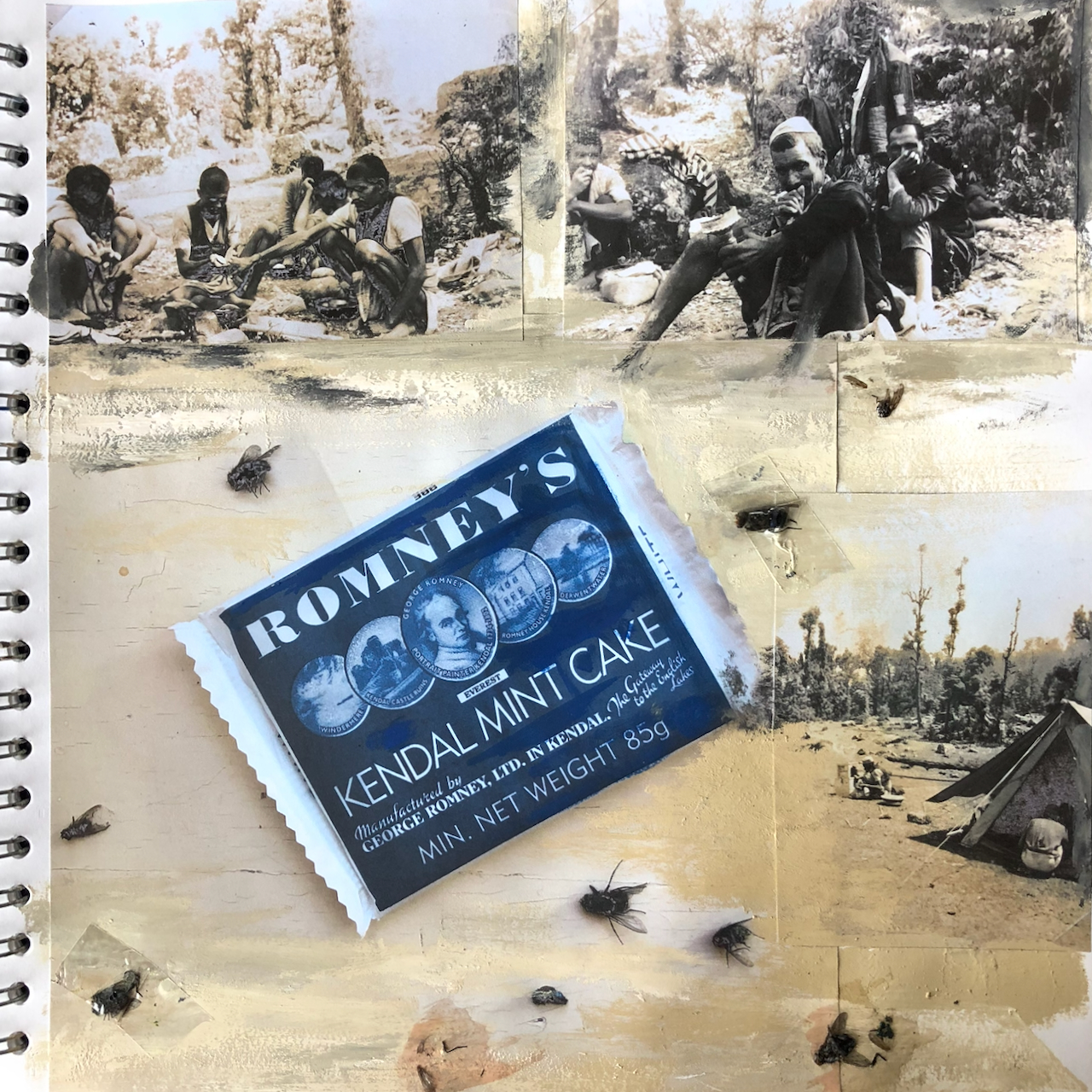
I have no wish to be a fuddy-duddy doom monger like those who thought our heads would blow off when the motor car was introduced, or who mourned the loss of letters when the telephone was created… though there is loss as well as gain involved in both inventions. But my forthcoming exhibition CONVERSATIONS ACROSS TIME is distinctly handmade. And like IN PROCESS last autumn, it is experiential, small and intimate. 
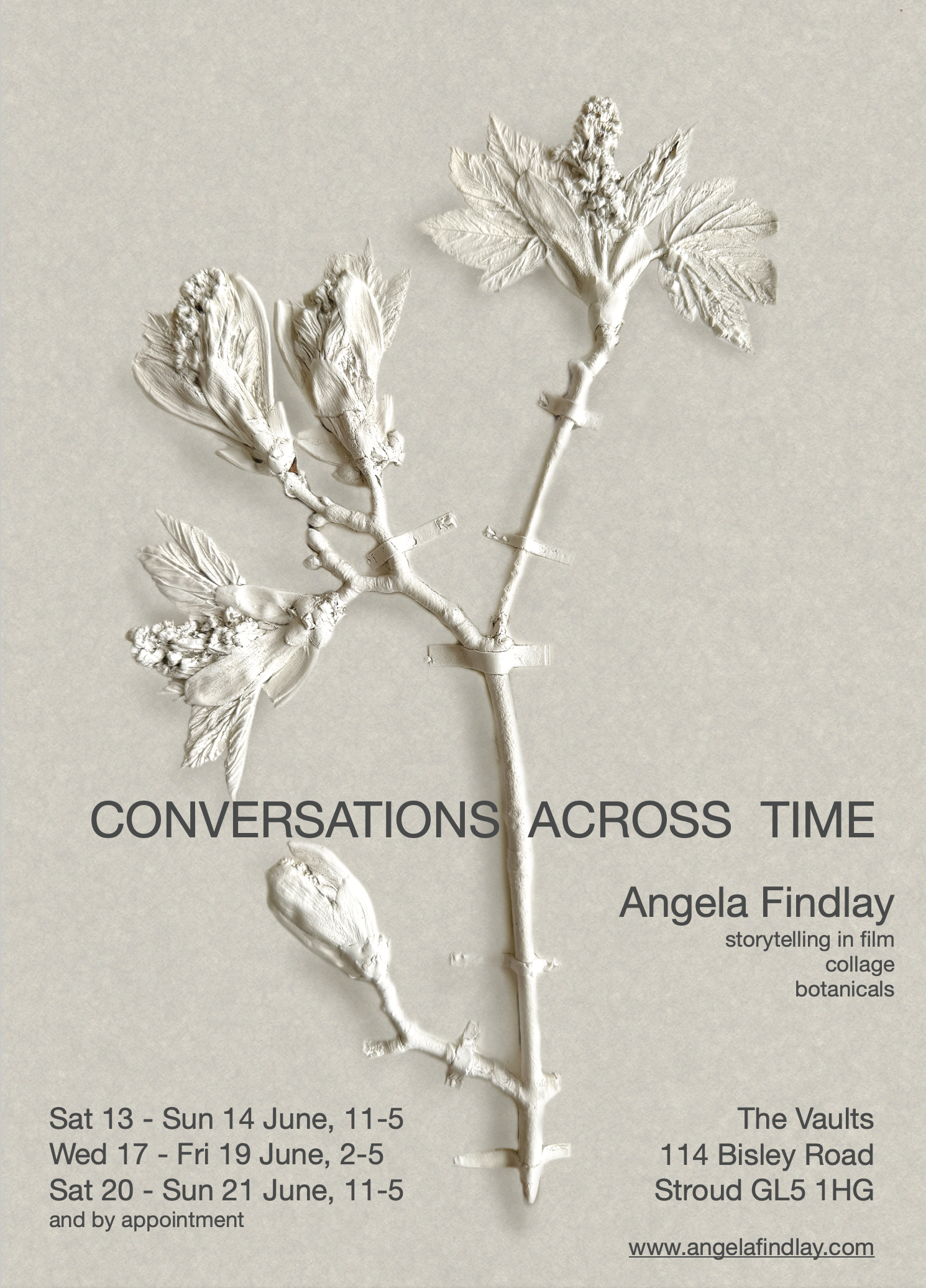
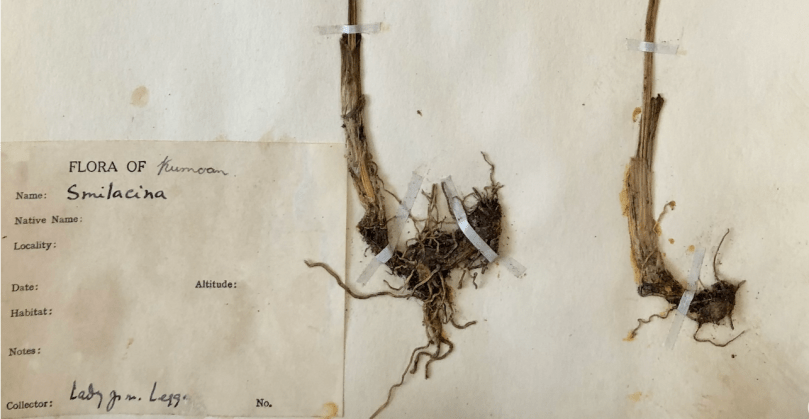
Part of Stroud’s brilliant annual SITE Festival, it continues to tell the story of my intrepid great-great-aunt, Joan Margaret Legge, while exploring, in a variety of media, intergenerational relationships and the legacies of those who have gone before us.

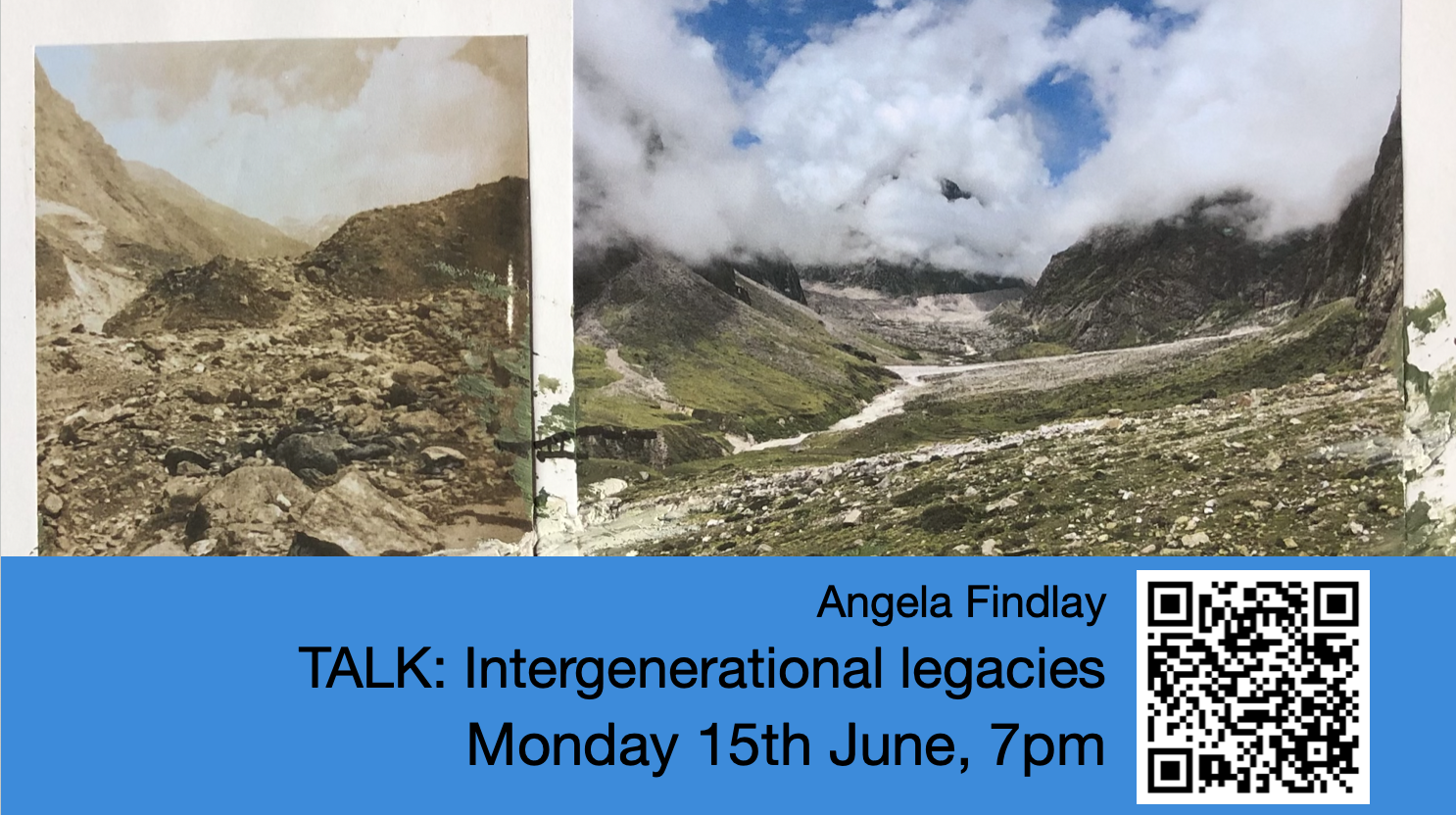
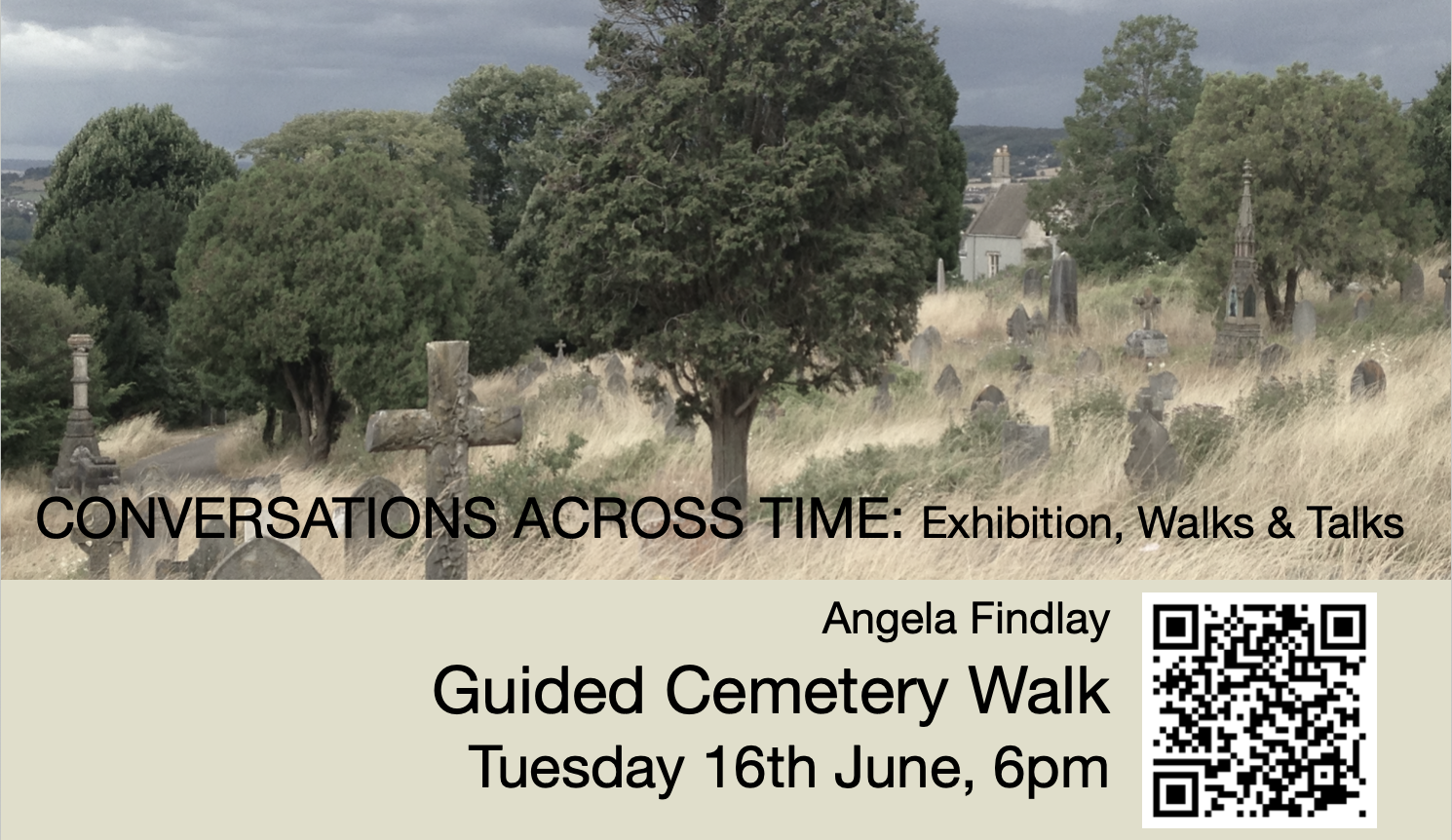
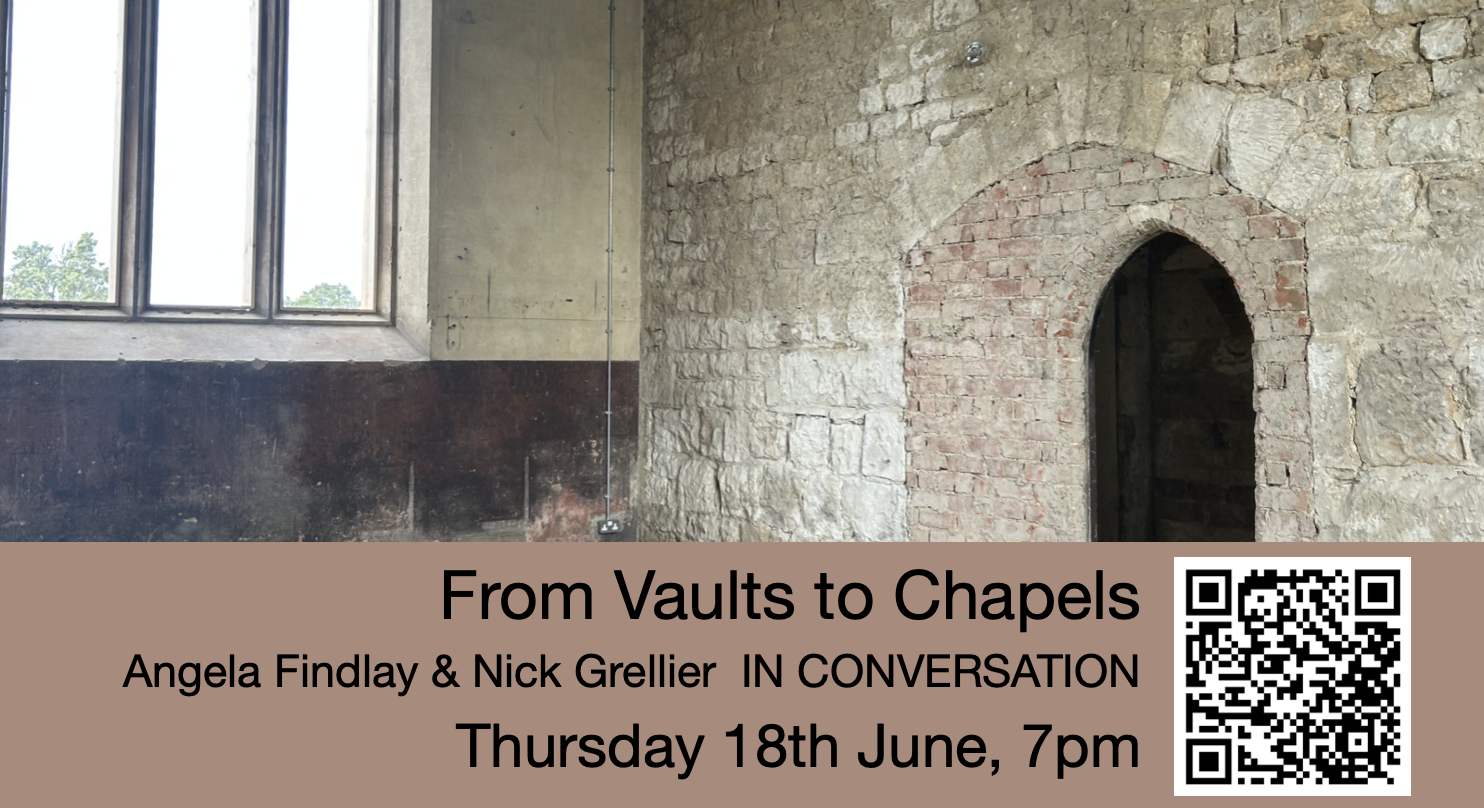
I invite you to physically immerse yourself in The Vaults in Stroud Cemetery, or attend one of the events below that are linked to the themes explored. Or simply benefit from the advances in technology that will allow you to see some, (but not all) of it with a few clicks here from the comfort of your home! 

More INFO and TICKETS to events: Use QR codes below or click here: TALKWALKIN CONVERSATION

The easiest way to receive up-to-date information on Talks, Exhibitions and Events is to Sign Up to my occasional newsletter. You can unsubscribe at any point.

AI… An Artist’s Slippery Slope?

This month I dipped my toe into the brilliant and deeply unsettling ocean of AI’s potential. I’m a bit late to the game, but for fun, I asked ChatGPT to write a synopsis of a piece based on a few scraps of information. Within seconds, it had. Not only that, it praised my “sensitive yet powerful” style and described my opening as “strong and reflective,” – causing a ridiculous flutter of flattery – before offering to adapt the piece into a short radio feature.

Writers are just one of many professions for whom AI is a game-changer: a time-saver, free editor, spell-checker, researcher and source of both inspiration… and misinformation. It was uncannily attuned to the contents of my book, In My Grandfather’s Shadow, which I’ve recently discovered had, along with millions of other authors’ works, been quietly harvested by Meta for AI training – without permission, acknowledgment, or any form of compensation. Authors’ licensing rights swept aside in the data goldrush.

At Bath Literature Festival last week, I interviewed Daniel Kehlmann – “the finest German writer of his generation,” according to Salman Rushdie. In his latest novel, The Director, Kehlmann reimagines the life of G.W. Pabst, a once-celebrated silent film director, tracing the moral compromises he made as he navigated a precarious and murky artistic path through the rise and fall of the Nazi regime. It is a brilliant read and couldn’t be more apposite.

I also watched the newly released film Riefenstahl, about one of the most controversial cultural figures of the Third Reich. Leni Riefenstahl’s 1935 Triumph of the Will is a visually stunning albeit ideologically chilling portrayal of the 1934 Nuremberg rally. Her talent for cinematic innovation is undeniable, but so is her closeness to Hitler and one of the darkest regimes in human history. To the end, however, she insisted she was not a Nazi but merely “an artist,” obsessed only with beauty, form, and structure. She claimed she had no knowledge of the Holocaust and never apologised. 

What links AI, Pabst, and Riefenstahl are questions of artistic freedom and moral compromise. Both directors pursued their creative ambitions under a political leadership that demanded ideological conformity. Riefenstahl willingly. Pabst, more reluctantly. But both became complicit in horror. And that complicity, as Kehlmann skilfully shows, is often quiet, mundane, and all too human.

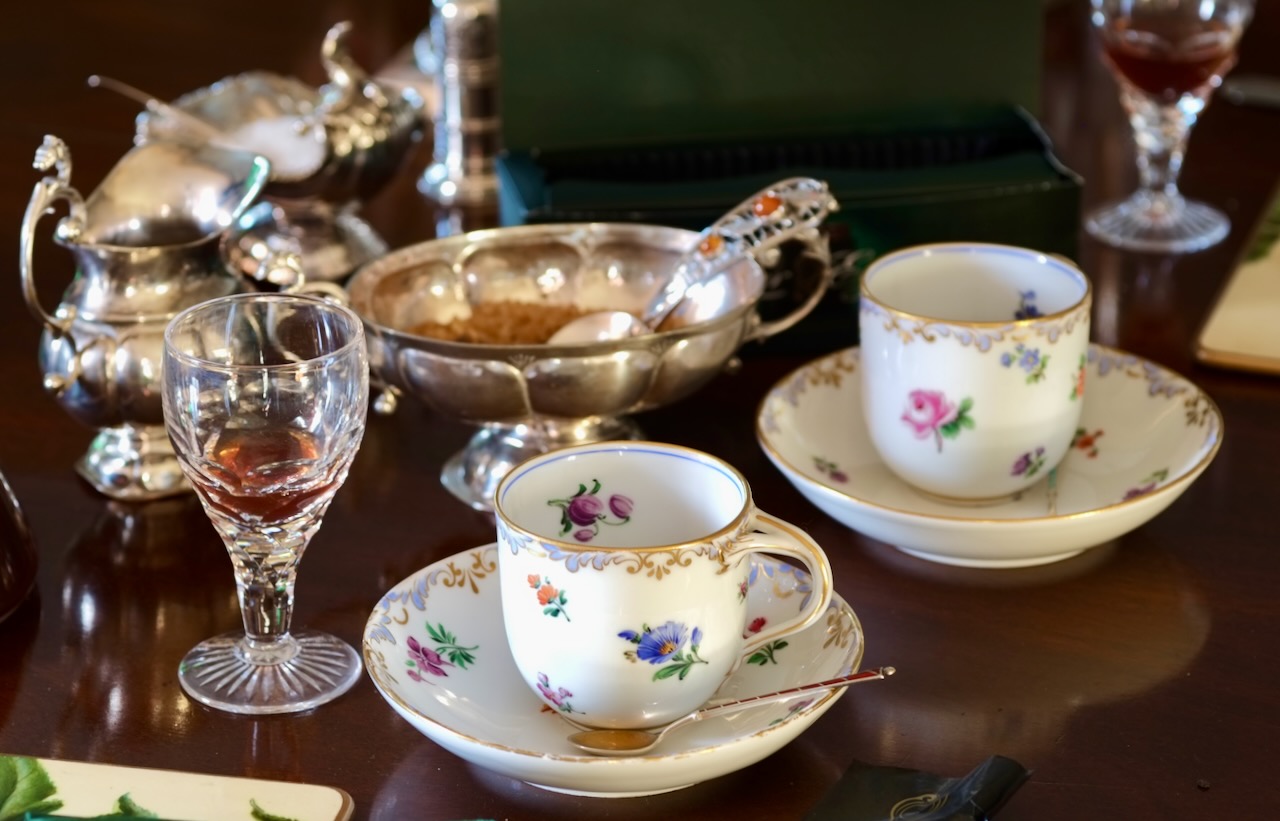
One scene in The Director stays with me. Pabst’s wife, Trude, attends a stifling book club of wives of high-ranking Nazis. As coffee is served, the conversation drifts to the new porcelain set and a glittering sugar bowl. A flurry of admiration. Silence. Then a quiet, hesitant voice says she’s “seen one like that… but not here… over at the…” The implication is clear: the bowl came from a confiscated Jewish home. Beauty and brutality blend into the everyday.

Another scene captures the power of self-censorship. A member praises a banned play and is swiftly expelled from the group. “A circle like this is based on agreement,” the host says. “On harmony. Where that is not the case…” The others hang their heads and remain silent. Agreement through fear. Harmony through complicity. 

We probably all know such moments. Times we wanted to speak, but didn’t or felt we shouldn’t. 

Eighty plus years on, we are in very different times, but similar dynamics are re-surfacing in modern contexts, not least under Trump’s presidency, and certainly within our digital lives. AI, algorithms and social platforms are increasingly shaping what we see, create, think and consume, often without us even realising. The slope is slippery, not only because of dramatic, evil choices made by tyrants, but because of the many small, unexamined ones made by the rest of us.

I haven’t worked out yet how or where to dig my heels in to prevent what I fear is a downward slide. Ease is such a temptress after all. And maybe some of AI is no more morally fraught than the telephone, which saved – and lost – us the art of letter-writing; or the camera, which snapped rather than painted landscapes; or Google Maps, which delivers us to destinations with little connection to the journey. Our tool kits for life have always evolved with time. So isn’t it right, necessary even, to adopt and adapt?

Maybe yes. But AI has no values. No morality. No nuance. No sense of consequence. Those are ours to guard with vigilance and intention, in the choices we make and the art we create. Because isn’t beauty inseparable from ethics? Aren’t feeling, meaning, soul, responsibility the very qualities that still set us apart from technology; the keys to remaining humane?

Detail of painting by Angela Findlay

I remember decades ago walking into a David Hockney retrospective at the Royal Academy. Near the entrance hung a series of portraits, typical of Hockney’s flat distinctive style, but they felt particularly mechanical, soulless. Inside, I saw the same portraits again, but these positively vibrated with life and presence. The former I learned, were digital reproductions, technically flawless, visually identical, but missing the very essence of art – human creativity, the trace of touch, the soul behind the brushstroke.

That’s how we know when something is real. Our souls have a gauge for truth.

We feel it.

Further Reading and News:

How to Make Art Under the Nazis (Without Losing Your Soul)

Riefenstahl review – nauseating yet gripping story of Nazi poster woman

I am participating in Site Festival 2025 Open Studios: SALE of older work, & new project to view. Sat 14th – Sun 15th June 11am – 5pm; Sat 21st – Sun 22nd June 11am – 5pm. Or by appointment