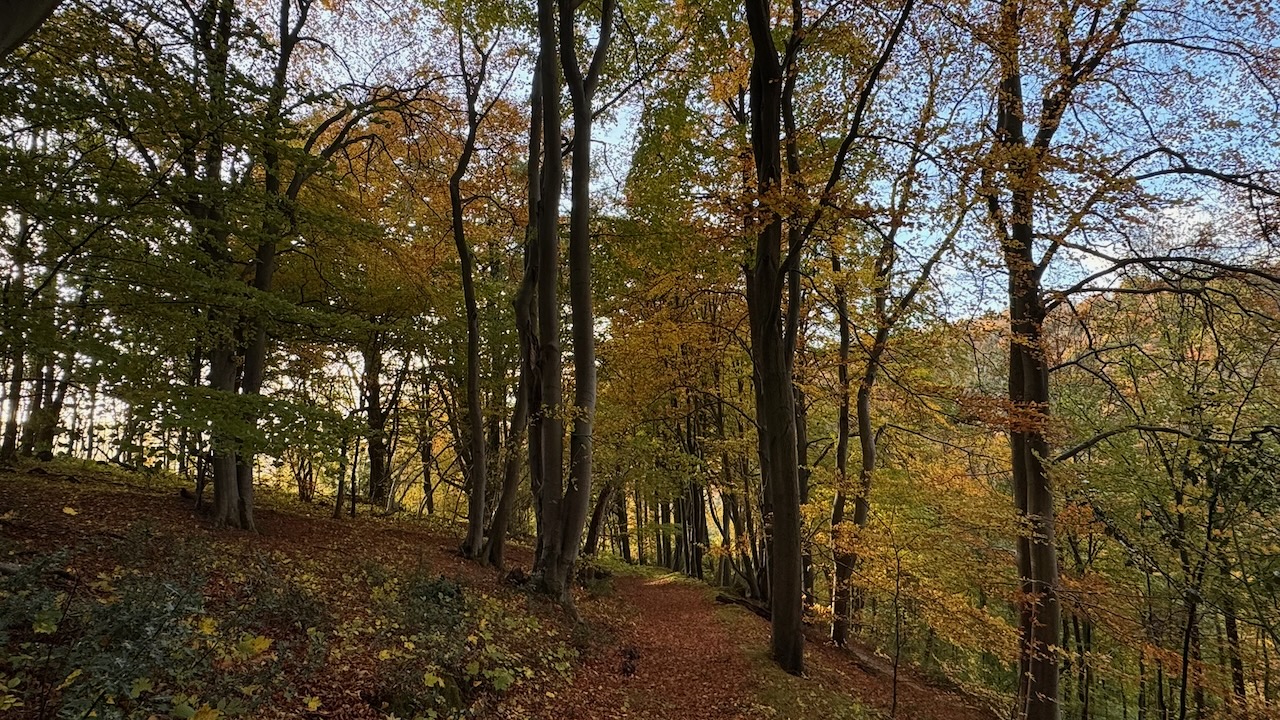
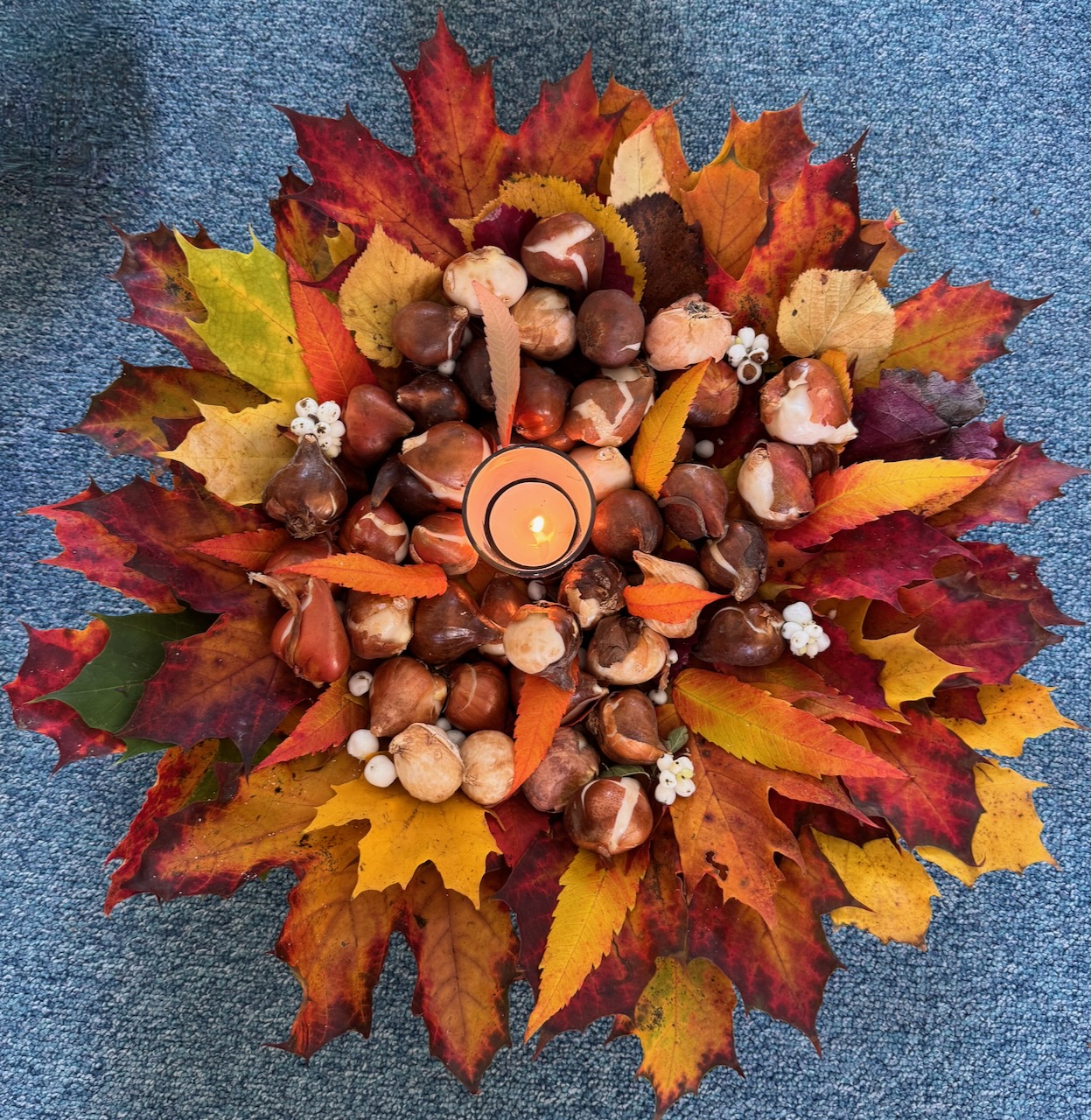
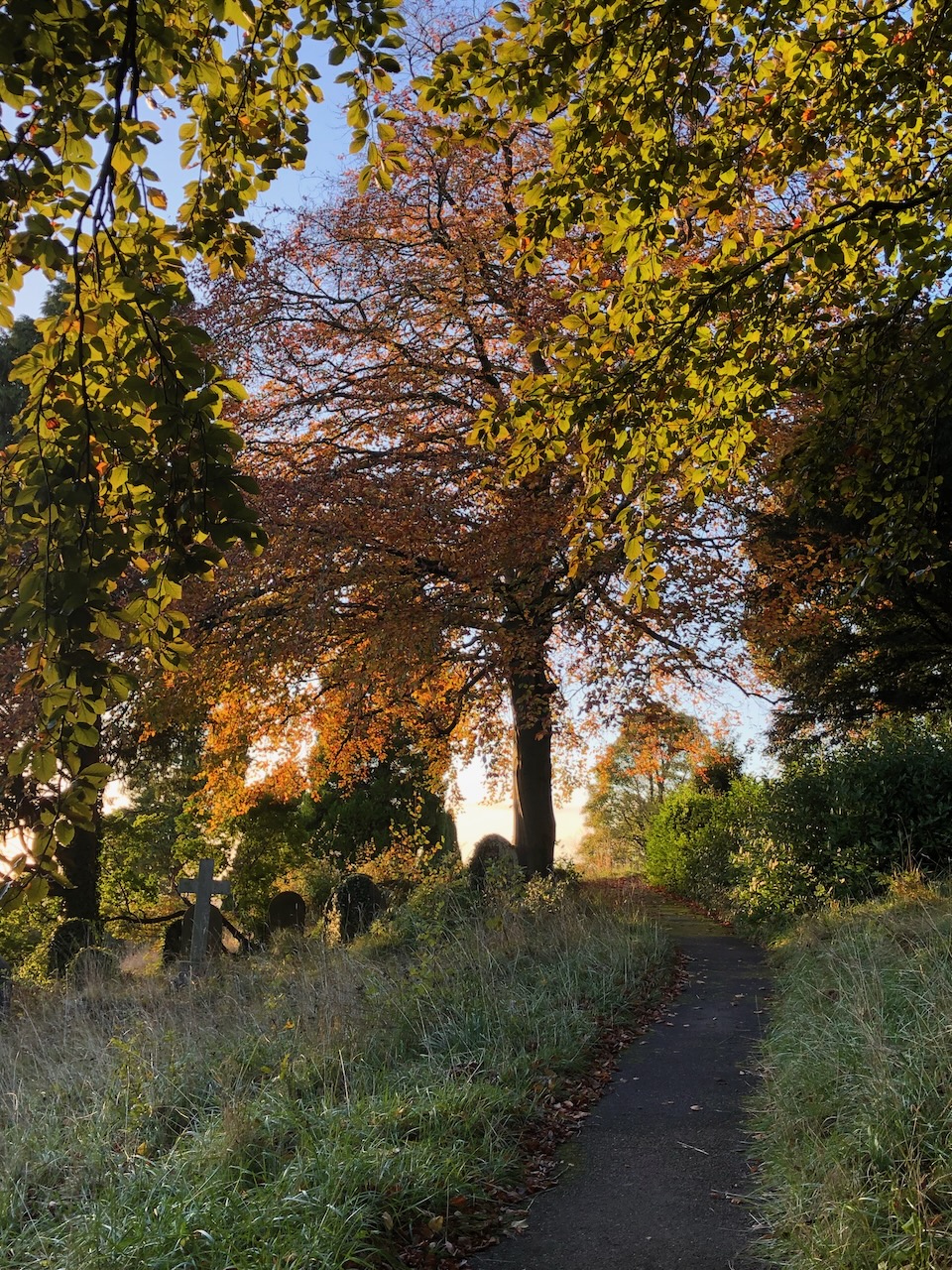
I normally plant bulbs on Remembrance Sunday. But this year I’ve been ill. Instead I went for a gentle walk in nearby woods, silent but for the breeze combing its way through the upper branches.
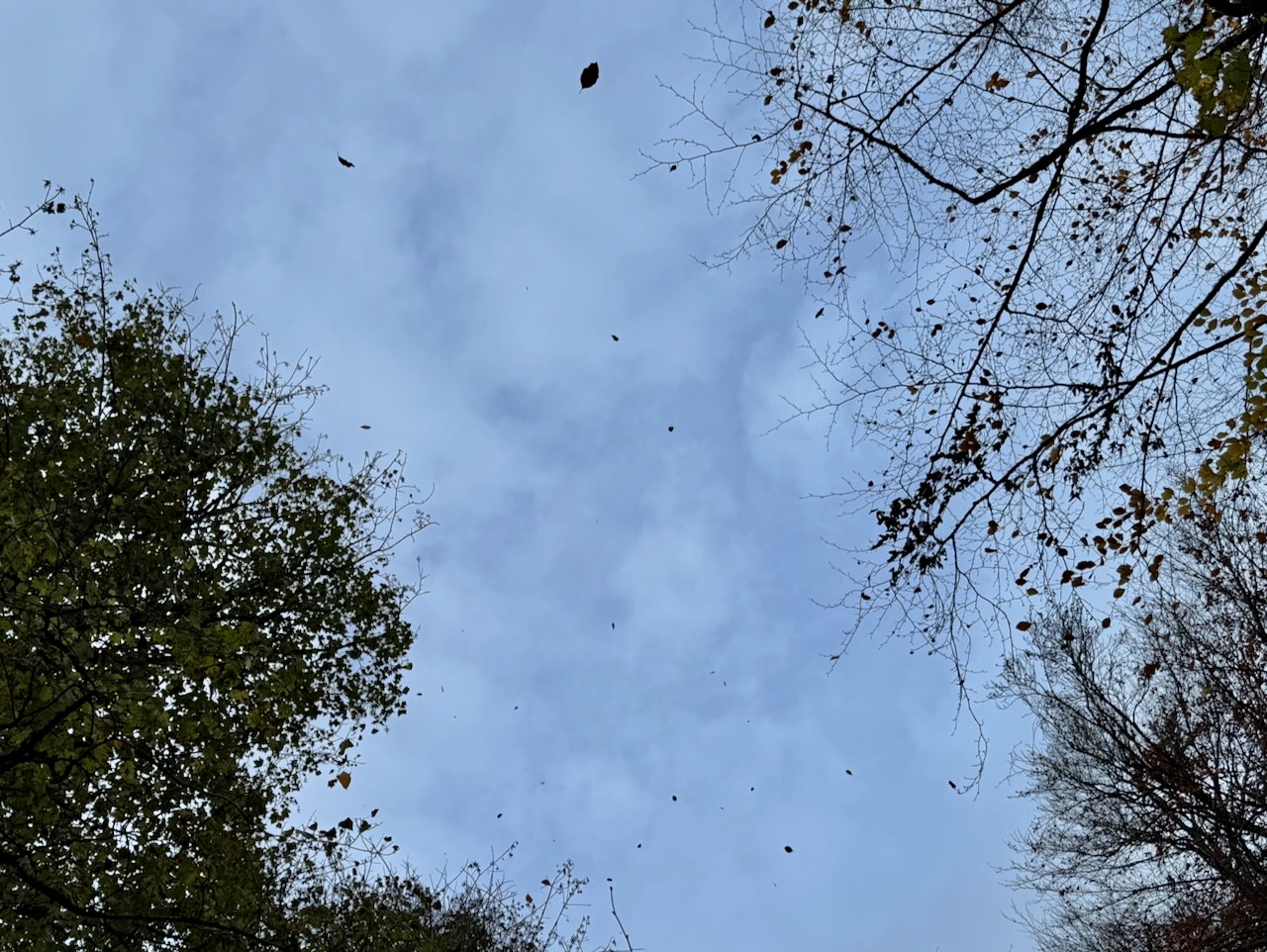
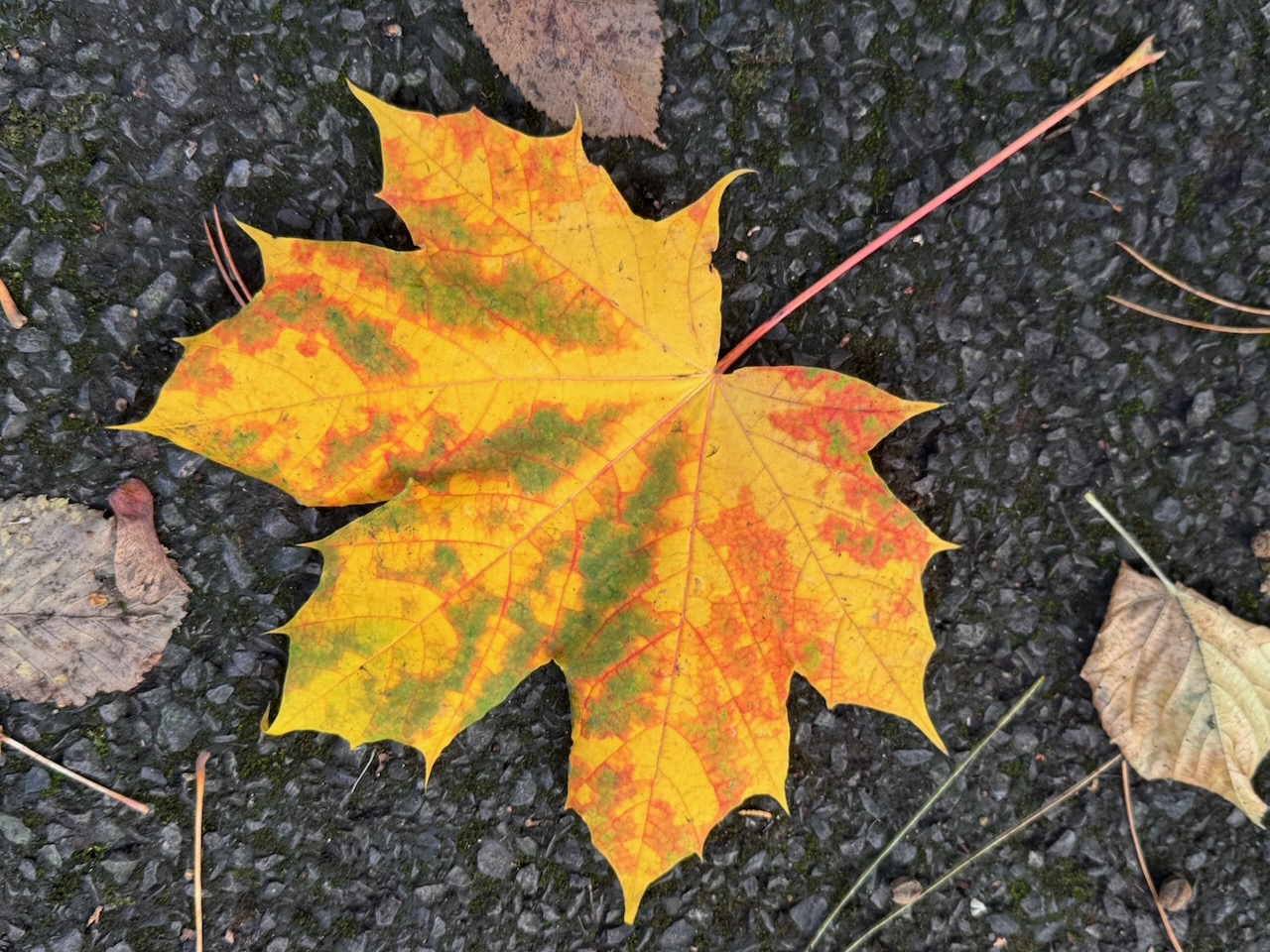
Down below, all was still. Except for individual leaves falling like snow. Each one taking its moment to break from the twig to which it had been rooted since the spring and dance in a series of pirouettes, twirls and summersaults before landing quietly among the already fallen. Unseen except by a chance walker.
Do they pick their moment, or are they plucked from life?
A certain readiness is a prerequisite for each leaf to fall. In summer, winds can howl through the branches and yet the leaves remain bound to the tree, weathering the storm, held in place by life forces that ebb and flow in synchrony with the seasons.
Death is natural for these fallen.
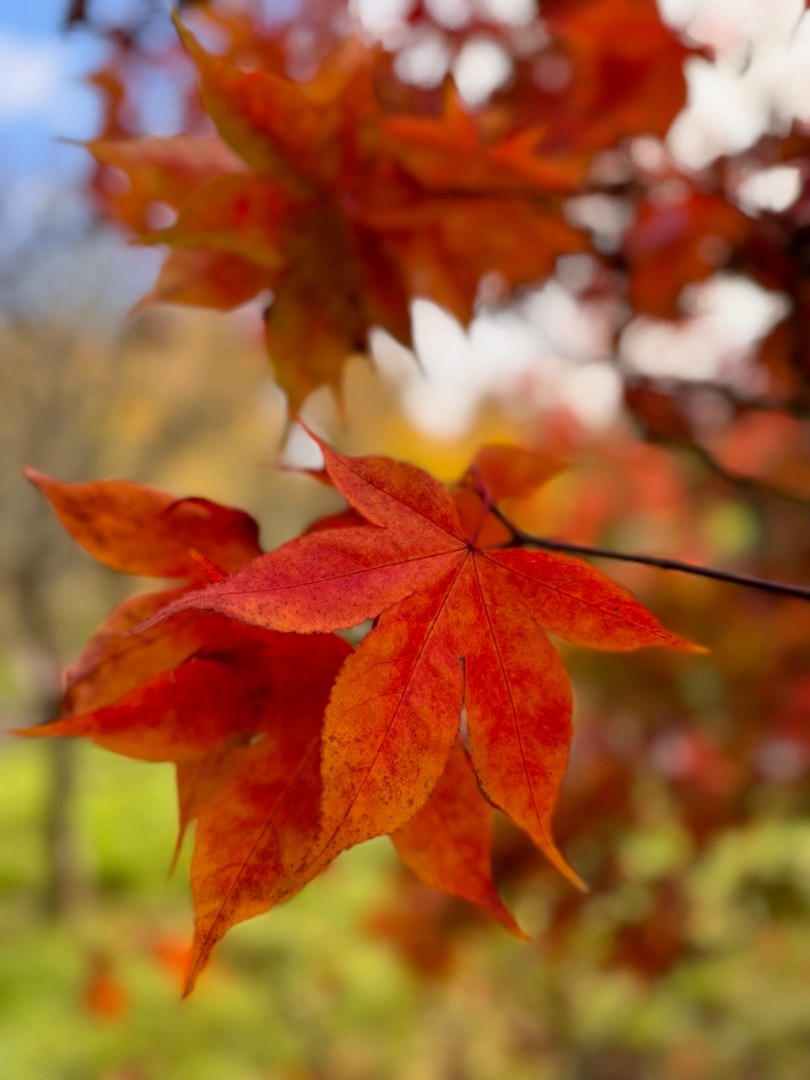
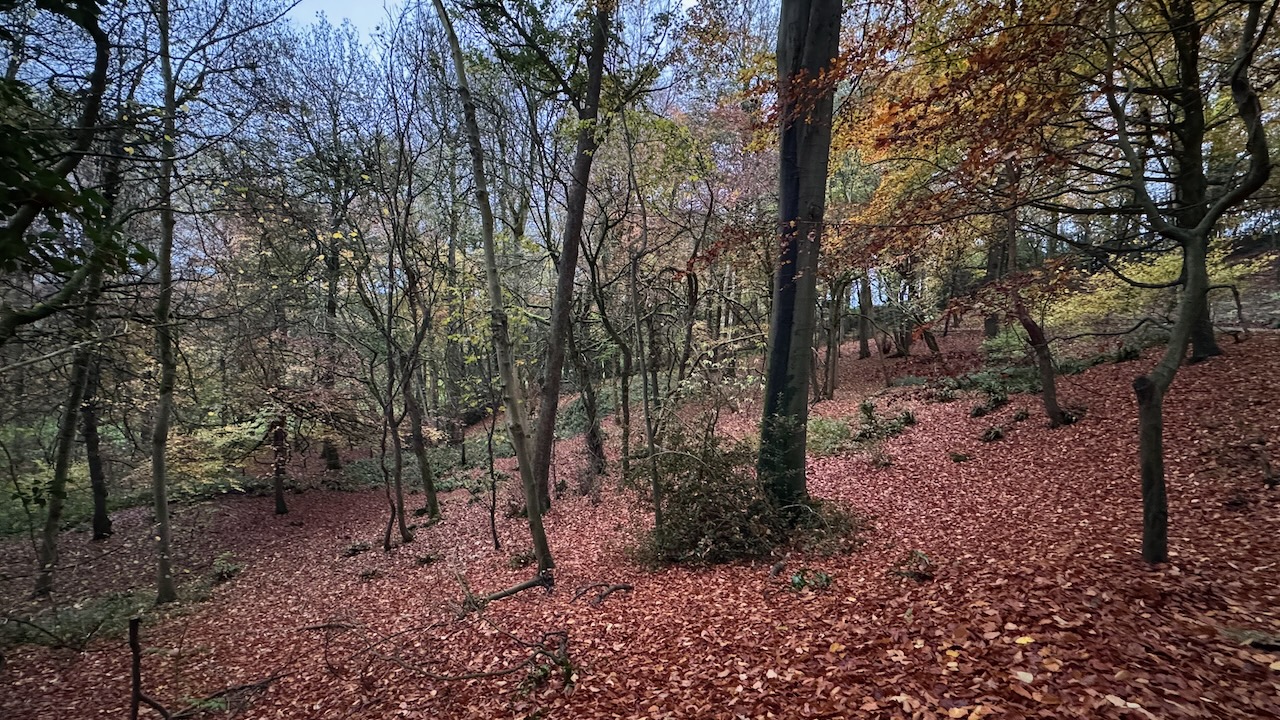
As I shuffle through the carpet of rust and gold, the rustle so reminiscent of childhood memories – kicking through the golden floors of beech forests in little rubber wellies – I can only ponder the dead. The war dead all around the world. The families they left behind. The scars of loss, grief, trauma and silence that remain in their wake, often hidden for generations, shaping the souls of those who come after.
We call them the fallen. It softens the reality of how they died. But while we remember them with warm hearts and deep gratitude, let us – with all the advantages of hindsight – not forget the utter horror, violence and futility of war.
As countries around the world build their armies and arsenal, let us refrain from falling into the trap of thinking war can ever be a solution to political, religious, geographical or economic problems.
‘Tis the season to remember. In our progression through the grey gloom of this autumn [just 18 minutes of sunshine since 28th October apparently!] and the celebrations of Halloween, All Souls, Samhain, Guy Fawkes and November 11th, the dead take centre stage. Leaves and forest floors redden while poppies bloom on jacket lapels, village monuments and shop counters. This Sunday in London, as on all Remembrance Sundays, red wreaths will be laid by royalties, senior politicians and Commonwealth High Commissioners before some of the last surviving WW2 veterans march or are wheeled past the Cenotaph.
We have been collectively remembering Armistice Day since 1919, the first anniversary of peace at the end of World War One. Remembrance has since been extended to both World Wars and all those who have given their lives in service to defend our freedoms. It is a hugely important day for the British, the Commonwealth and many other countries around the world, albeit not in Germany. There, since the Middle Ages, 11am on 11.11 has marked the start of the carnival season and, on a more serious note, Armistice Day is not considered to have welcomed the beginning of peace but years of intense unrest and far worse horrors to come.
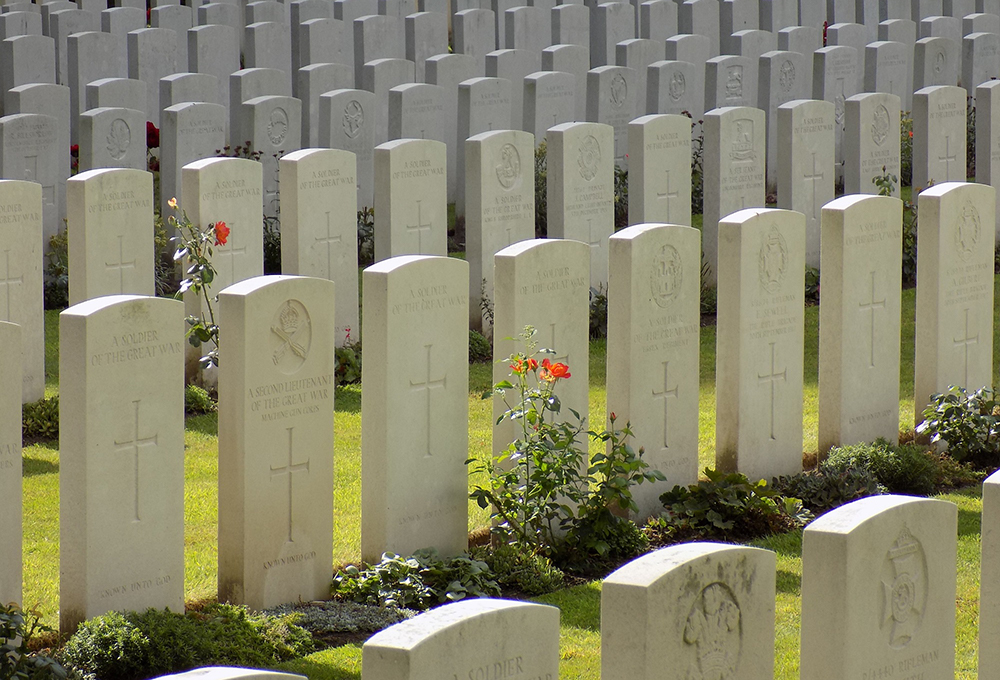
British and Commonwealth dead
I often dedicate my November blog to our traditional, deeply moving and impeccably executed rituals of remembrance, but not always without a little questioning too. Through the 15 years of research for In My Grandfather’s Shadow, I came to appreciate a far broader narrative of WW2 remembrance than that which Britain generally embraces and teaches. Granted there has been welcome progress over the decades with the inclusion of women as well as the huge contributions and sacrifices made by Gurkha, Indian, Sikh, African and Caribbean servicemen, among others. But there is still widespread ignorance of the bigger context.
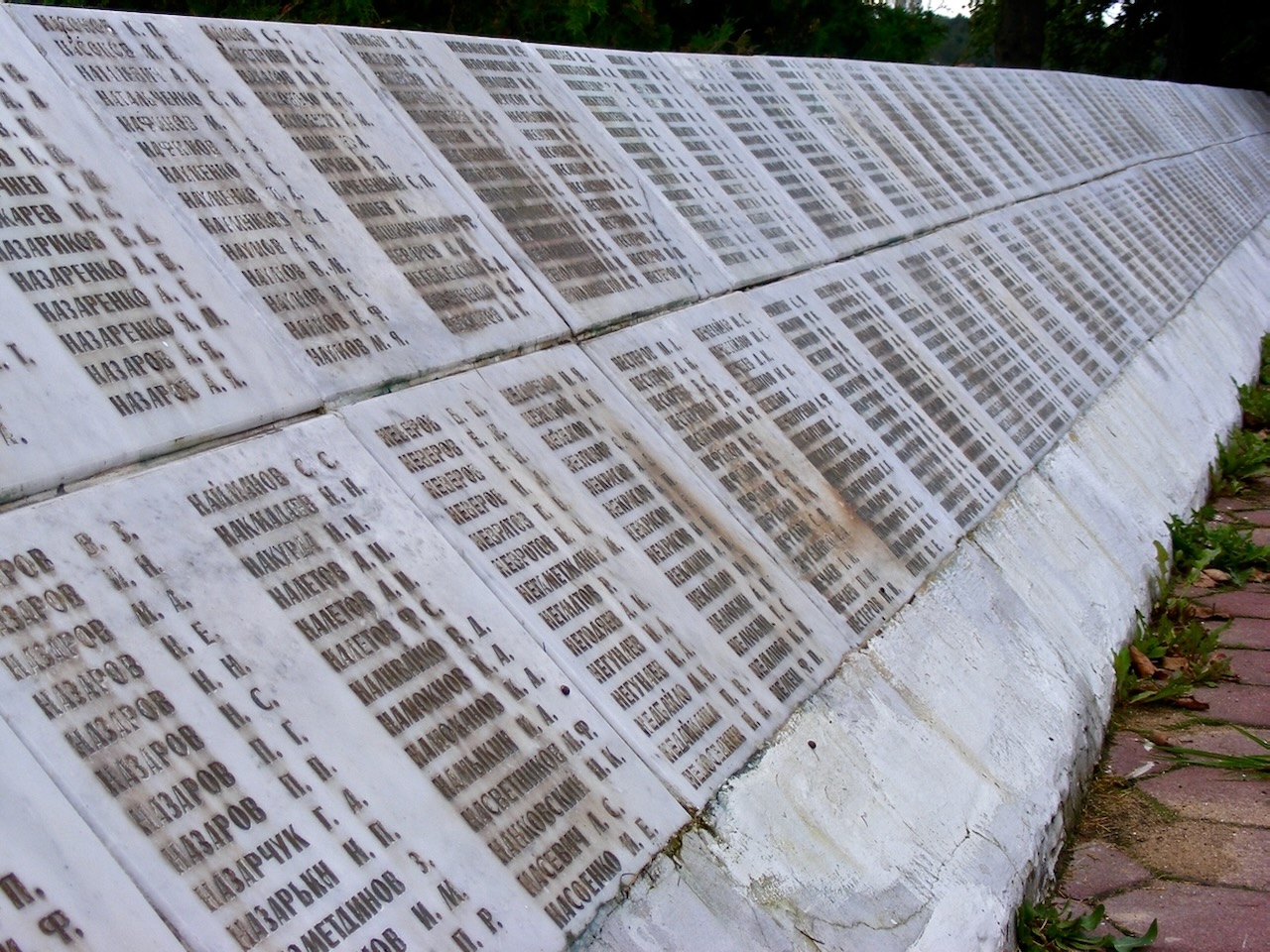
Russian dead
When I give my talks, I often use statistics. They provide a solid, black and white foundation of fact to my more psychological / philosophical ponderings. So often these figures shock. For example, when I ask people to guess the total losses, including civilians, of say Russia, Germany and Britain in the Second World War they are usually so far out that they themselves are horrified. I challenge you to make a guess… I’ll put the answers at the end of the blog. One man literally went white when he realised how wrong he had been in his thinking or, by his own admission, his lack of thinking. Another woman recently wrote to tell me how my book had opened her eyes in so many ways. “First off,” she said, “the big realisation of how little I have understood of the two world wars, my ignorance of those times and the aftermath.” This despite attending remembrance services all her life.
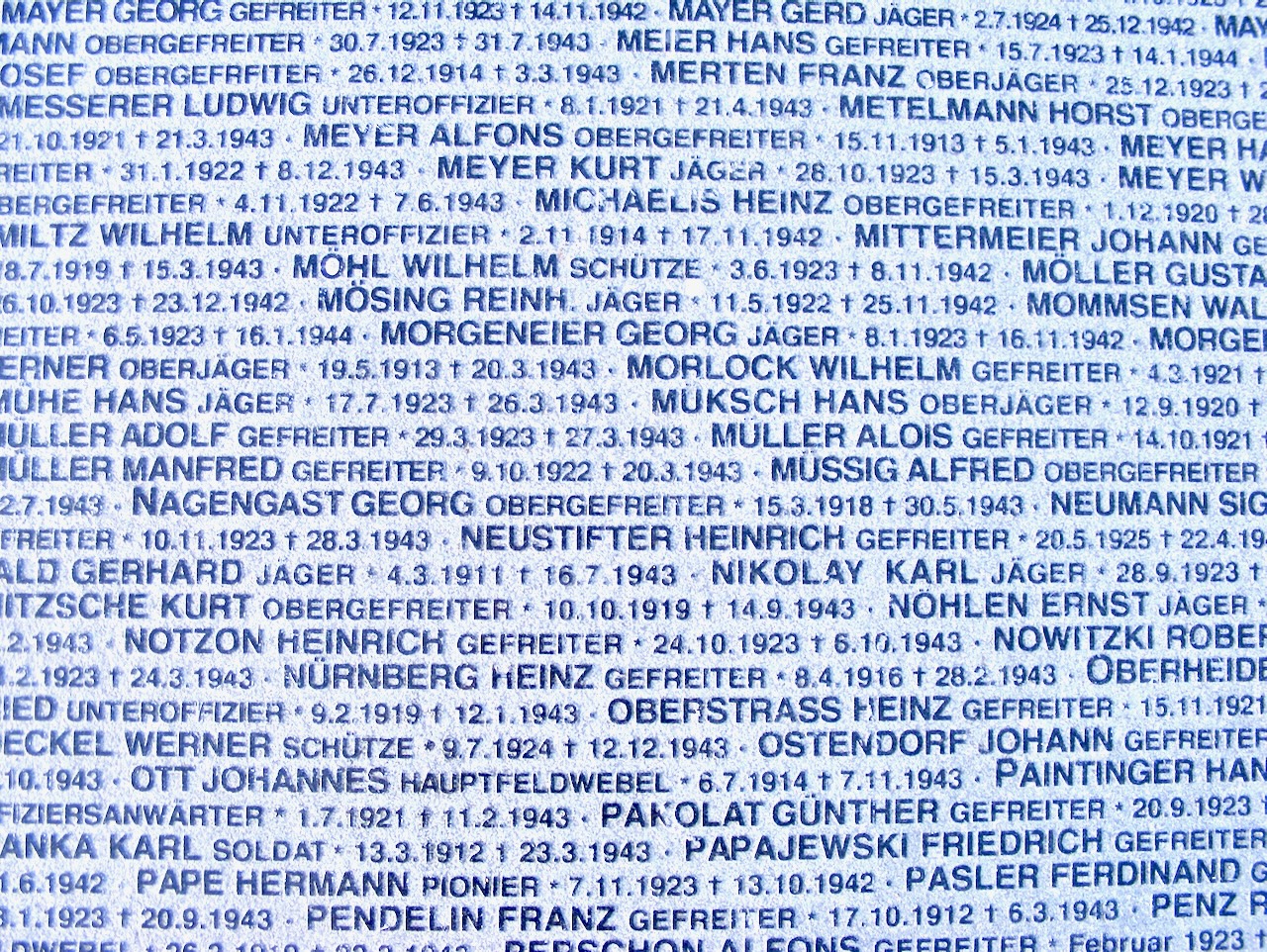
German dead
The quantity of deaths doesn’t mean each death was any less keenly felt. But I think she voices what is probably true of most of us. I certainly was ignorant of the broader landscape of loss and destruction, and no doubt still would be if I hadn’t had German roots that needed excavating and hadn’t made trips through Germany and Russia that exposed me to other ways of looking. The World Wars are the episode in history with which the British are often accused of being unnaturally obsessed. And yet, as a nation, we often present it as a deceptively straightforward story of good triumphing over evil. The victors write history after all.
Every nation has its ‘chosen traumas’ and ‘chosen victories’ which serve as cornerstones to its identity and prevent true healing from the past as they continue to play out in the present. We frequently have binary views of how we should feel based on – to use the reader’s words again – “simplistic, reductionist understanding… goodies and baddies…” Rarely have we “considered what it must feel like to have a different identity…”
I really appreciate and admire this woman’s soul-searching honesty. The humility and gentle opening to hearing the other sides’ stories gives me huge hope.
Healing, reconciliation, peace, forgiveness… all goals we strive for within our culture of Remembrance… can best come about when we become familiar with and find some understanding for the other side’s experience. Maybe, with our greater distance from both the acute trauma and the impassioned jubilation of our forebears, that is what generations now and in the future can strive to do more of.
Answer to my statistics question: Out of the around 60 million people killed in WW2, 26 million were Russian, approx. one third of them military and two thirds civilians. Between 7-9 million Germans died, roughly 6 million were soldiers and 3 million civilians. In the United Kingdom, just under 451,000 were killed. That’s 383,800 military, including combatants from overseas territories (Crown Colonies and the Indian Empire), and 67,200 civilians.
‘Tis the season to remember… and yet, this year, for the first time, I forgot. Remembrance Sunday was almost over before I suddenly remembered to remember.
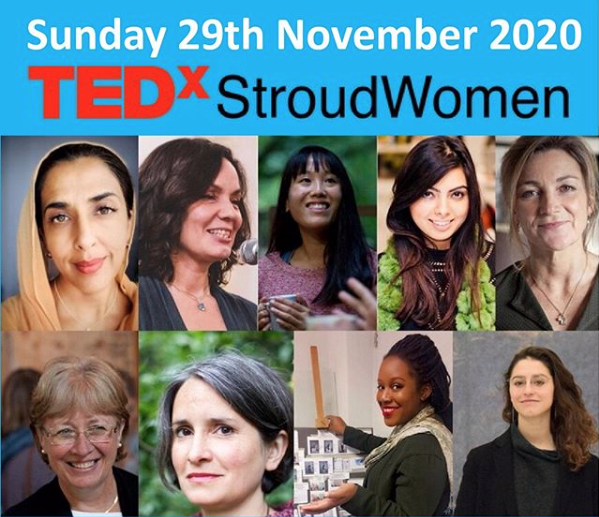
Locked down at home, I was definitely silent. But maybe the official 2-minute silence at 11am passed me by because in my talks and blogs I am frequently remembering. In fact, ‘looking back’ has become part of my identity, my expertise even. So much so that I have been selected, as one of nine speakers, to do a Tedx Talk on the subject: ‘Facing the past in order to create a fairer future.’ It’s an exciting opportunity though unfortunately lockdown has forced the proposed date of 29th November to be postponed until the spring. It will happen though… like so many other things in this disorientating Covid world in which we are currently immersed.
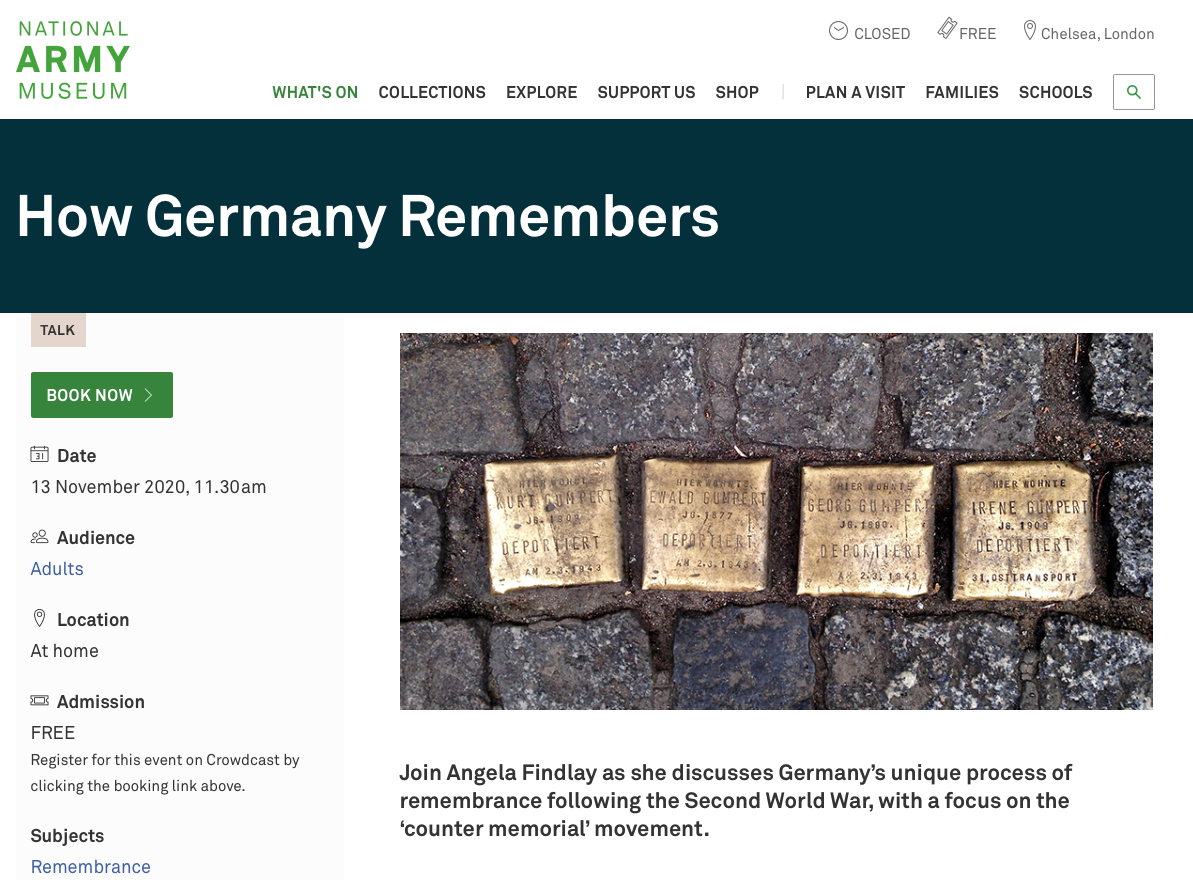
In the meantime, if you haven’t attended my talk on How Germany Remembersand would like to, there’s a chance to hear it online on Friday 13th November at 11.30am. It is being hosted by the National Army Museum in London where I spoke last year. You can read more about ithere and you can register for freehere.
But back to remembering… or forgetting in my case. Maybe there are some of us who feel a little tired of remembering. Or maybe it’s the national narrative we tell ourselves each year, that is tiring. This is one of the points made in Radio 4’s ‘Our Sacred Story’ in which Alex Ryrie, Professor of the History of Christianity at Durham University, suggests that the Second World War is both our modern sacred narrative as well as the shaper of our collective sense of what constitutes good and evil.
This summer we celebrated the 75thanniversaries of VE and VJ Day. In fact, we’ve done loads of national remembering over the past years. So aside from Remembrance fatigue, I’m wondering if Covid’s restrictive squeeze on lungs, lives and events alike, is also impacting what and how we remember. Lockdown has been turning mindsets inwards, shifting focus and values onto all that is immediately around us – family, gardens, quiet streets or empty skies. Maybe this new way of being is merging effortlessly with the existing sub-stream of thought that strives for essence rather than glitzy, sparkling veneer.
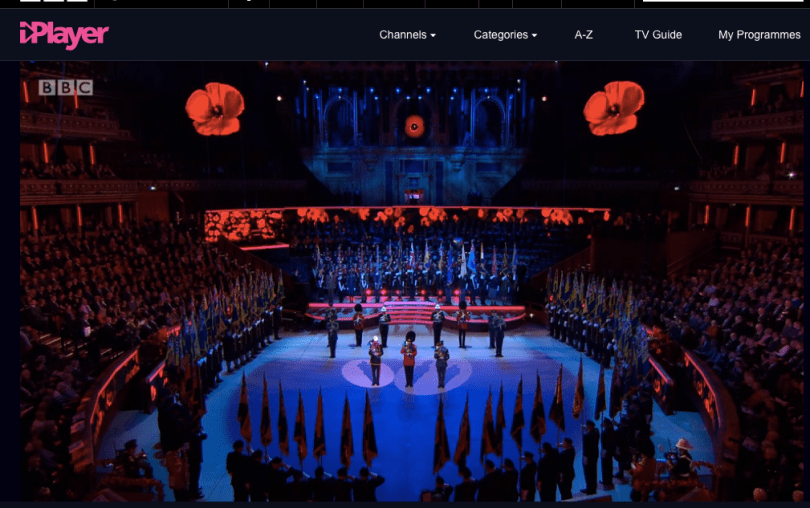
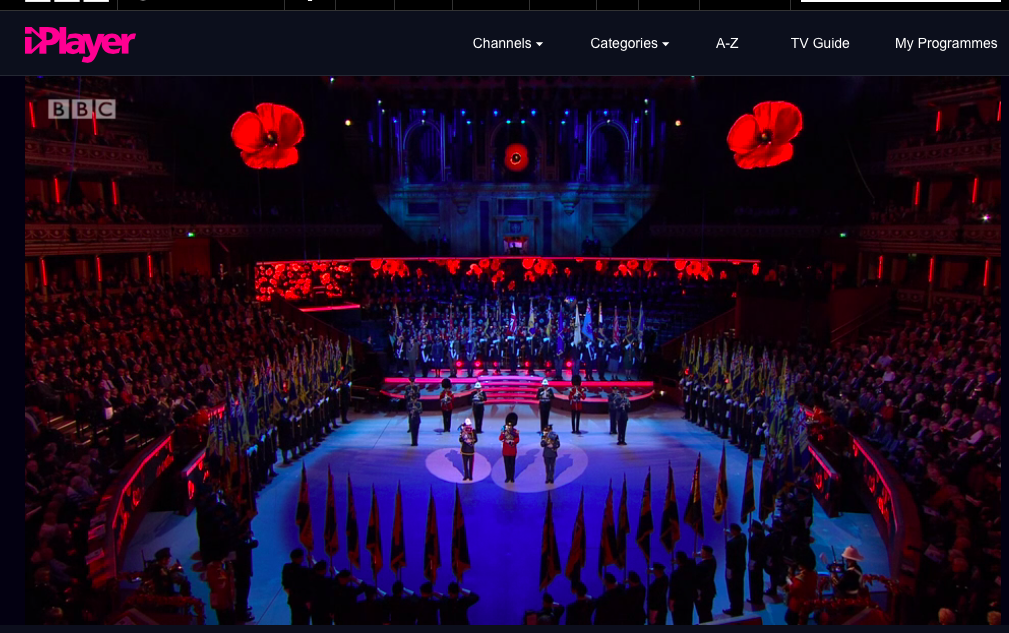
Looking at the BBC coverage of Remembrance Sunday, it is clear that even our mainstream institutions of commemoration are being forcibly stripped of excess. I salute the efforts of all involved in trying to evoke the all-too familiar rituals, yet nothing could distract from the extraordinary visuals of sparsity. Watching the morning ceremonies at the Cenotaph, one could be forgiven for not knowing where one was. The eerily still Whitehall dotted with a few socially-distanced, poppy- and wreath-bearing dignitaries resembled a set construction of a movie whose budget couldn’t stretch to more actors. And in Westminster Abbey, the Queen, bless her, hatted and masked up in black, couldn’t help but look a little like Darth Vader as she gently touched the white myrtle wreath that was then laid by a masked serviceman upon the Grave of the Unknown Warrior.
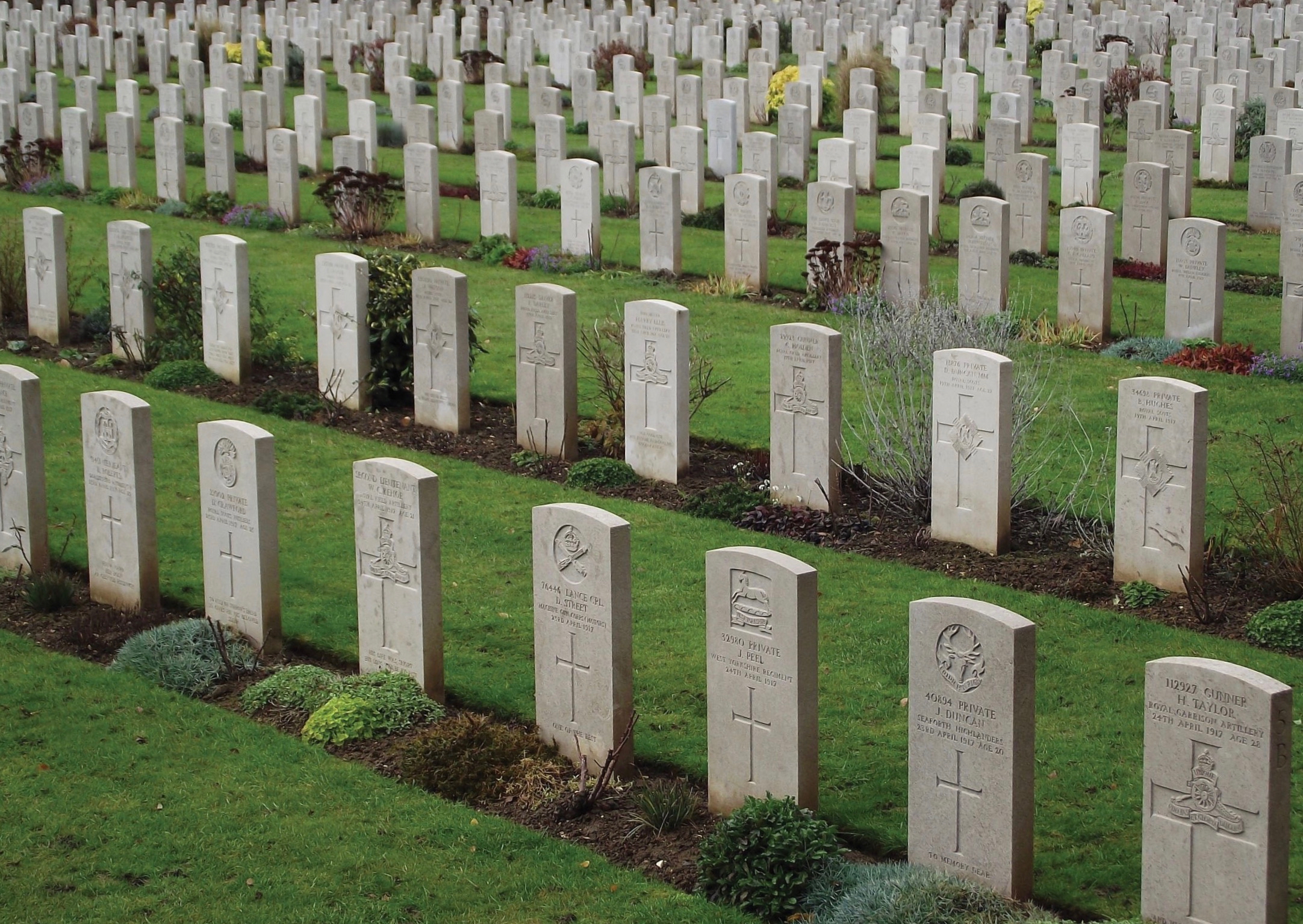
I couldn’t sit through the empty-seated Royal Albert Hall festivities that in the past have both grated and made me cry against my will. Instead, I sought the essence of remembrance in other areas. I soon found it in the podcast, We have ways of making you think. In their Episode 203 on Remembrance, historian James Holland and comedian Al Murray were in conversation with Glyn Prysor, former historian of the Commonwealth War Graves Commission. Between them they brought to life the history of the ubiquitous white headstones that fill acres and acres of land both here and on the continent.
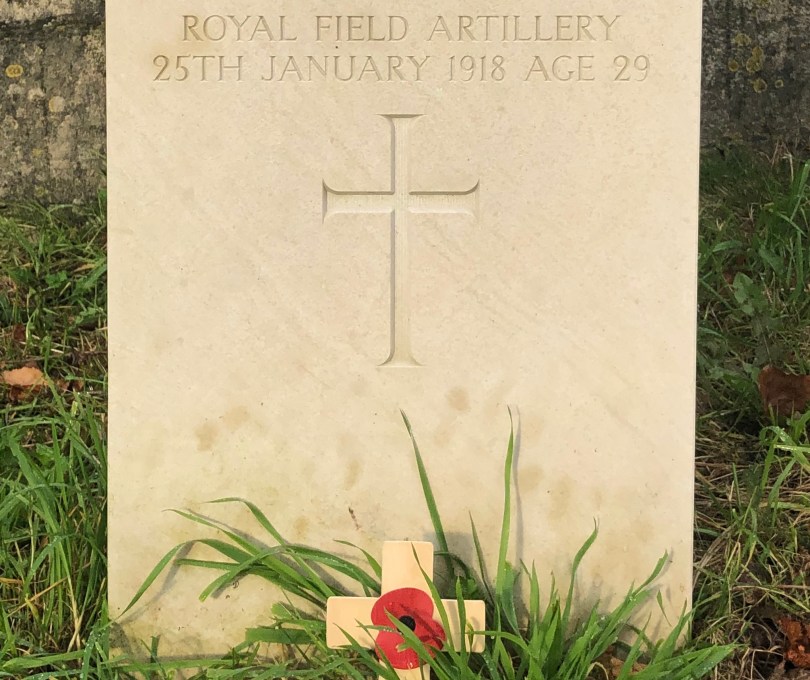
Set up in 1917 while World War One was still raging, the process of burying in the region of a million war dead, half of whose remains were missing, demanded a very new way of thinking. In a departure from the Victorian hierarchy of worthiness that extended into death and resulted in the common man just being ‘bunged’ into a mass grave, the Commission made a move towards inclusion. It wanted to evoke the sense that everyone had contributed to the war and everyone was equal in death. The outcome was a uniform design for all headstones that would make no distinction between wealthy and poor. This was of course deeply controversial. Individuality would only be marked through the listing of name, rank, unit, regimental badge and date of death. An appropriate religious symbol could also be added, or not. And a space at the bottom was dedicated to personal messages from family members, some of whom would never be able to travel to the continent to visit the graves of their loved ones.
Covid has been highlighting the need for a similar leveling process across our hierarchies of wealth, fairness and opportunity. As in war, it is the personal losses and tragedies that will far surpass and long outlive the victories or shenanigans of the politics. In that vein, I found the essence of remembrance in an inscription spotted on a war grave in Bayeux:
Into the mosaic of victory, our most precious piece was laid.
With all the D-Day commemorations and talk of heroes of the past week, I have to think of my naval English grandfather. His contribution to D-Day was possibly a little less than heroic. He had been invited to give a naval lecture at his son’s prep school and somehow, failing to realise they were still under security wraps, told a room full of enthralled, wide-eyed boys about the Mulberry Harbours. It was only when he spotted two even wider-eyed parental marines in the audience that he realised the top-secrecy of the information he had just imparted. Convinced he would be court-martialled, he emerged from a sleepless night hugely relieved to find the allied landings splashed all over the morning papers’ front pages.
I have to admit I have been profoundly
moved by the commemorative ceremonies of D-Day’s 75th anniversary. It’s
of course a well-known story but the BBC’s live coverage of events, first by Huw
Edwards in Portsmouth and then by Sophie
Raworth in Bayeux cemetery, felt particularly fresh. With the help of
original footage, the incredible story of Operation Overlord was brought to
life by historians Dan Snow and James Holland and some of the 300 or so
nonagenarian veterans who had travelled there for the occasion.
What struck me anew was the sheer scale of the invasion. It is unsurprising that it is still considered the most ambitious and biggest land, air and sea operation ever in history. Every aspect of the assault is almost impossible to imagine, not least the out-of-the-box thinking, off the scale planning and coordination that lay behind it. As one of my single father friends said, “organising a picnic for two is hard enough, so I cannot begin to imagine how they organised…” – and here I’ll give you a few facts – 7000 ships and landing craft, 10,000 vehicles and 156,000 troops to land on a fifty-mile stretch of French beaches within a tiny window of good-enough weather. For the ensuing Battle of Normandy, they had to design and construct two harbours the size of Dover and then somehow get them across the channel. 442,000 cubic meters of concrete had to be transported; breakwaters were created out of old scuttled transport ships and warships of allied countries; they had to build jetties for the millions of tons of supplies and the two million men that would be needed over the next months: an estimated 8000 tons of fuel per day, half a million tanks, gliders, undersea pipelines, self-heating soup cans, air-portable motorbikes…. it’s utterly mind-boggling.
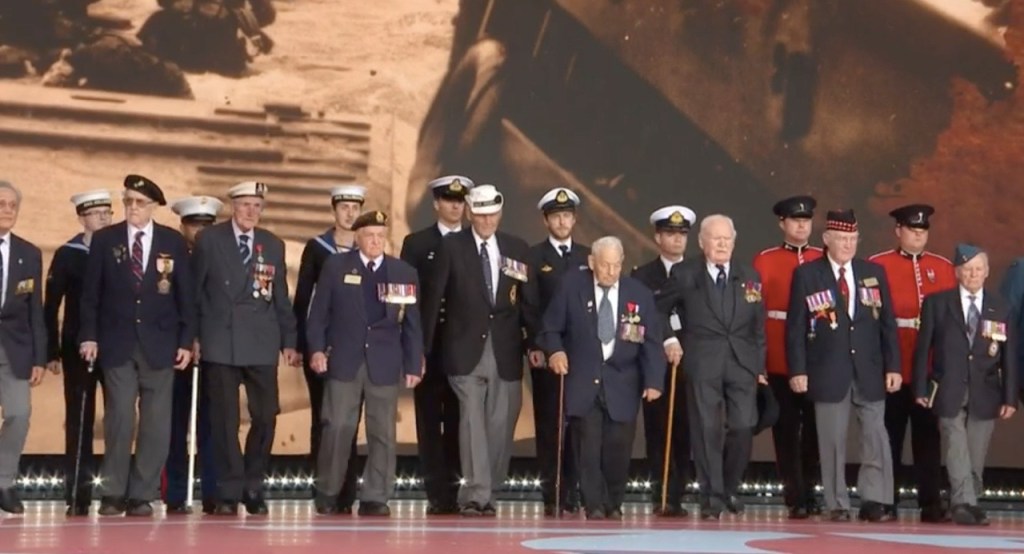
Veterans at Portsmouth
But facts and logistics
aside, if that’s possible, the focus of these two days of commemoration was undoubtedly
on the raw courage of the men involved. Approximately 4,400 allied soldiers
were killed in the Normandy landings of June 6th 1944 and a total of
22,442 men and women died in the subsequent months of the Battle of Normandy. Many
of those who fought were mere teenagers; many were conscripts who didn’t want
to be there; none of them had any idea if they would return. Seventy-five years
on, the last witnesses were returning to the sites of their nightmares to
remember their mates who didn’t come back. In spite of the rows of medals
proudly displayed across their chests, most don’t see themselves, nor do they
want to be seen, as heroes. “A hero is someone who does something they don’t
have to do,” said one. “I just had a job to do and I did it.” Instead, it was
the friend “who gave his most precious gift, his unfinished life” who was the
hero.
Veterans lay wreaths in Bayeux Cemetery
We have followed many
veterans over the past decades, but watching and listening to these men had
more poignancy than anything I have ever seen in terms of remembrance. Shrunken
by age and accompanied by young serving personnel, they tottered across stages
or among gleaming rows of beautifully kept war graves to lay wreaths or share
their stories. The emotion was tangible even through the television screen as cameras
moved in on old faces of men staring into a far distance where the roar of battle
still resounds, their usually stiff upper lips wobbling as they wistfully
recall their friends or quietly re-live the memories of carnage and gunfire
that have privately haunted them for the past seven decades. I can’t think of a
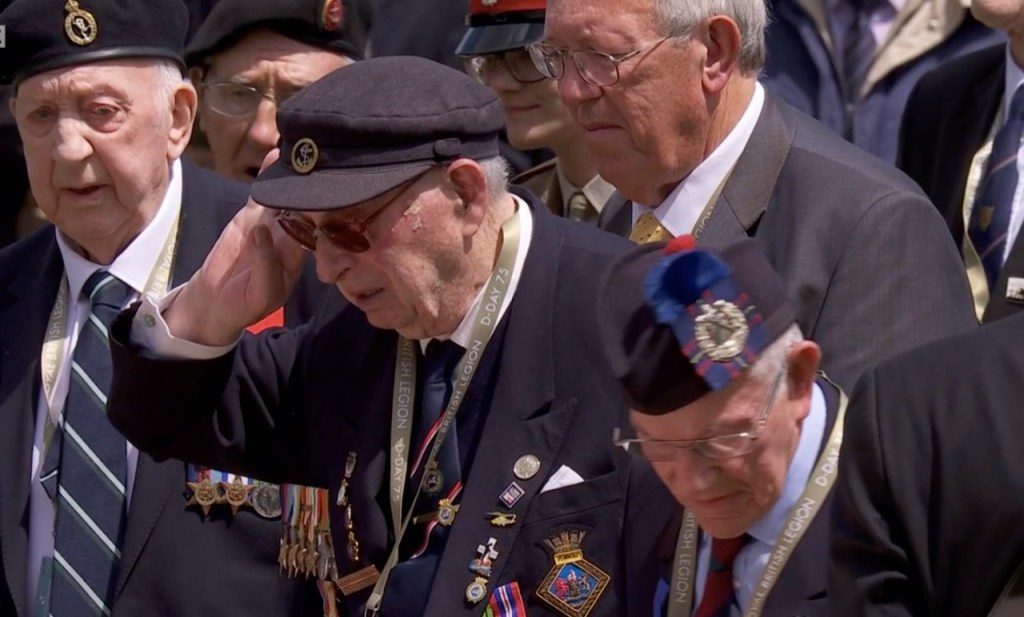
more powerful tribute than seeing a 95-year-old veteran with tears in his eyes,
saluting.
Veterans in Bayeux Cemetery
Through them, we can touch history. But what happens when they are gone? I already feel a sense of nostalgia for the old-school dignity, modesty and courage that defined them. And what about the lessons they implore us to learn: Keep away from war, resolve for it never to happen again and remember. This Channel 4 footage of two British and German veterans meeting for a beer makes it clear just how painful, to the point of impossible, it has been for some of them to extend the hand of friendship to their former enemy. But when they are gone, I think that kind of future-orientated reconciliation is precisely what our remembrance culture should focus on rather than past victory, heroism and ‘triumph over evil’. “Too much remembering is a dangerous business,” Simon Jenkins says here and I agree.
As is always so clear on such occasions, our current world war commemorations are also designed for the families of those who served. Every soldier or casualty of war is someone’s son or grandfather, wife or mother, so could we from now on extend the healing attributes of honour, gratitude, pride and remembrance to others beyond ‘our own’ and re-dress the imbalance of our history books by broadening our victor’s narrative to include a far bigger picture of what actually went on for us to win the war?
It’s good that the 40,000 French civilians shot for resisting were included in these celebrations. There was also acknowledgment of the occupied French living in daily terror of the Nazi regime and the vital roles of the millions of men and women working behind the scenes in factories, hospitals, Bletchley Park as well as all those who risked their lives to report on the front lines. But President Putin, who wasn’t invited, reminded us that the Russians are also worthy of remembrance and gratitude for the three years and gargantuan losses they endured fighting German forces both prior to and after D-Day. And American friends, whose grandfathers had fought just as bravely in Italian campaigns, told me they wanted them be given the same level of acknowledgment as the D-Day heroes.
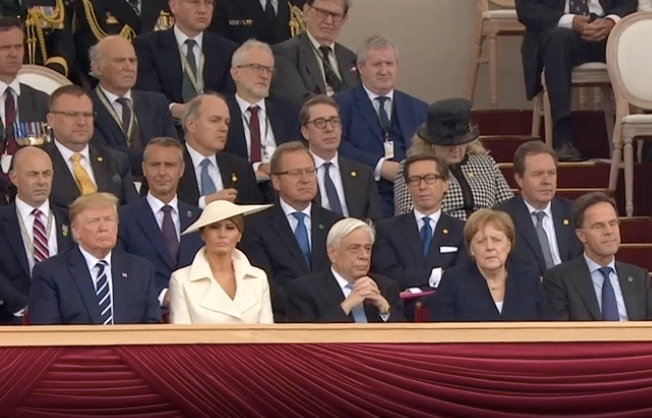
Angela Merkel in Portsmouth
I don’t expect anyone to share my thoughts for German soldiers, but on this day I found myself imagining those young German men who woke up in their bunkers on June 6th 1944 to the terrifying spectacle of 1,700 enemy ships rolling towards them like a tsunami from hell. Many of them were conscripts and “just doing their job”; many of them didn’t want to be there; many had instant psychiatric breakdowns and up to 9,000 became D-Day casualties. Many of them will be the fathers and grandfathers of our German friends today.
It’s the eleventh of the eleventh, one hundred years on from the day when three signatures scribbled urgently on a piece of paper in a train carriage in France, finally brought the horrors of the First World War to an end.
It’s Remembrance time. Red paper and enamel poppies are blooming on lapels all over the nation as people remember those who fought in conflict, and the huge sacrifices they made. Last night, the Festival of Remembrance at the Royal Albert Hall opened with a stunning rendition of “I vow to thee my country”. First, just three slow and quiet brass instruments; then violins joined in; then drums, voices, and finally the whole orchestra played, while flag- and oversized headwear-bearing members of the forces, marched into the hall in step with the music. We were only four minutes into the hundred-minute programme and the lump in my throat was already swollen and wobbling out of control. Gosh we do this so well.
It is Remembrance season and once again I find myself feeling slightly uncomfortable, a bit pedantic, no doubt irritating and at worst offensively unpatriotic. And yet Remembrance is one of my favourite themes and both my grandfathers fought in the World Wars. So why can’t I jump whole-heartedly into the seas of poppies and poppy wearers, dignitaries and wreaths, that stream through our streets to lap up against memorials and into churches each November? Of course I want to ‘remember’ and acknowledge all the soldiers who died or were wounded serving their country, but discordant questions waft like dried leaves or ghosts through the architecture of British Remembrance rituals. So once again I ask myself and all of us collectively: what exactly are we remembering, and to what end? Remembrance is by nature vital, solemn, beautiful, meaningful… in many ways we do it so well. But beneath the tradition, ceremony and ritual conveyed through a distinctly military visual language, the message has also, in today’s world, become slightly flawed, inadequate and at times hypocritical.
It’s 11am on 11.11.14 and that makes it time to write down my thoughts and reflections on what has been going on recently in terms of Remembrance.
Watching the Albert Hall Festival of Remembrance on Saturday night, I was struck once again by how well we British do pomp, symbolism and ceremony. It was truly powerful and with its combination of stirring music, potent narrative, and visual spectacle it has become an art form. Developed and refined over decades, it is designed to move you. And these days, I am quite sure, to make you cry.
Which is why I came away once again feeling slightly irritated by it. Irritated by the format that we are used to seeing in the films of Spielberg and other directors of sentimental, patriotic films, designed to manipulate your heart strings and tear ducts Nothing necessarily wrong with that, except that we seem to be living in a era where showing emotions, and watching other people showing their emotions in order to make us show our emotions, is not only de rigueur but essential to good viewing.
…for your refreshing article on 30.01.14 in the Guardian:
Germany, I apologise for this sickening avalanche of first world war worship. The festival of self-congratulation will be the British at their worst, and there are still years to endure. A tragedy for both our nations.
I too would like to apologise to the Germans for the largely immature, thoughtless, self-centred approach we seem to be taking towards this 4-year centenary. What on earth do we think we are doing? To what end are we striving with all this emphasis on ourselves as a nation of heroes, victims, winners? Our obsession with our victory a century ago is being seen with bemusement on the continent. Read some of Germany’s responses to Michael Gove’s renewed attempts to push the whole blame for the start of WWI on the Germans. Every parent knows that finger-pointing is childish. And yet the Minister of Education (of children no less) is still doing it 100 years after the event??! It’s not as if we are an otherwise innocent and peaceful nation that is regularly and reluctantly dragged into wars. Our leaders are gung-ho and ready to go. Look at Blair and Cameron chafing at the bit to get back into battle at the first opportunity.








 angela findlay blog