Oh dear, what’s happening in Germany…? Could this be the result of a lingering attribution of collective guilt to generations that can’t by definition of the word be ‘guilty’?

“Sometimes in moral philosophy it’s important to think about plants.” I heard these words in last week’s In Our Time and they chimed with my current shift of focus from war to flowers. They were said by the leading philosopher, Philippa Foot, to a room full of Oxford males. She was basically saying that moral evaluation should be see as a continuum of the way in which we see other living things.

A week earlier, I was sent a link to a video by Yanis Varoufakis, former finance minister of Greece, whose proposed speech in April at the Palestine Congress in Berlin was stormed by police and banned. [You can have a listen to his reconstruction of it here.] Somehow I found the two were connected.
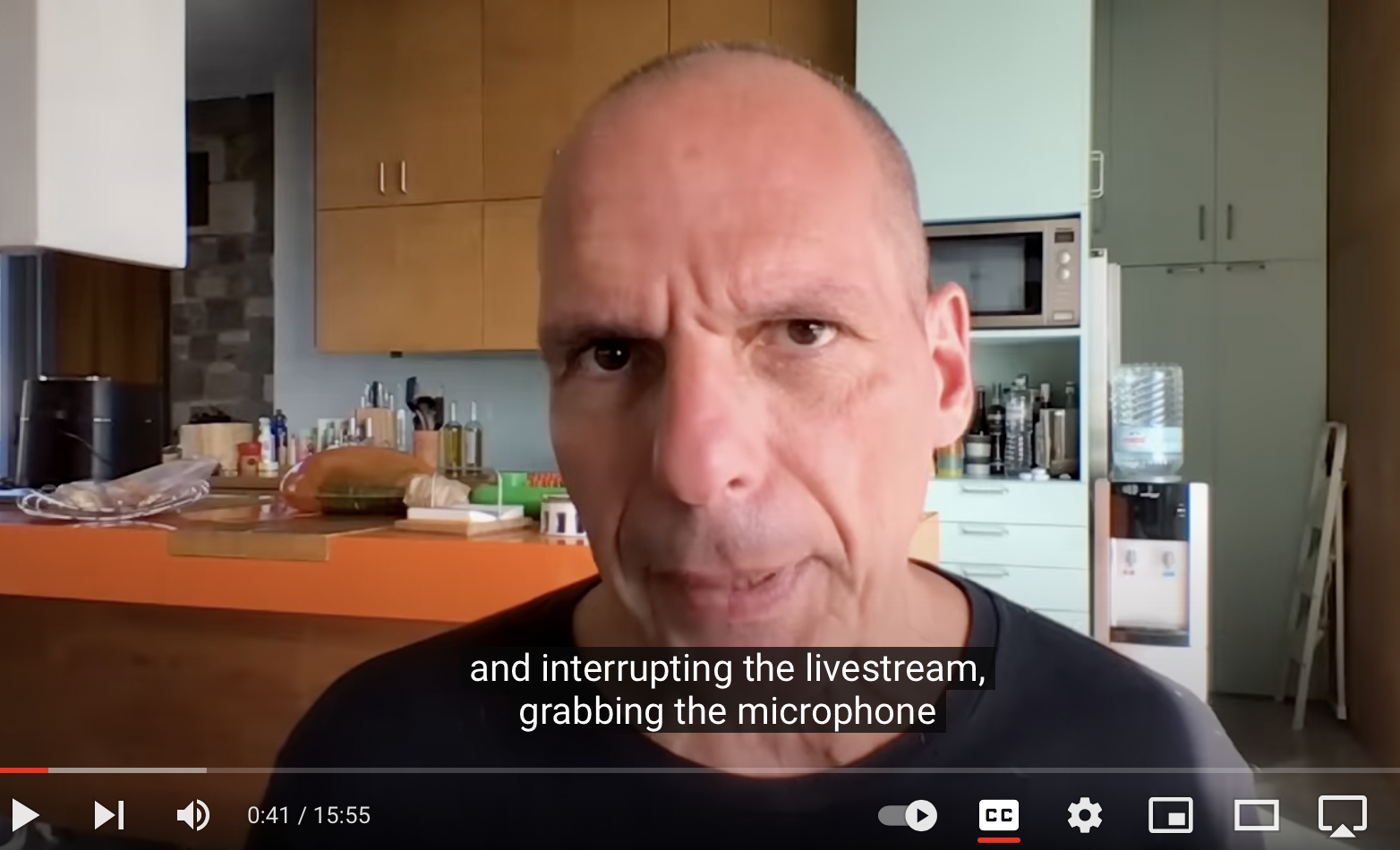
So what is happening in Germany in relation to Israel’s war on Gaza? Some reports are pretty concerning. It is understandable that Israel’s security and right to exist has long been Germany’s ‘Staatsräson’ (reason of state). However, since the Hamas-instigated horrors of October 7th, the belief in Israel’s right to defend itself has evolved into a fairly uncompromising pro-Israel position that seems to equate any criticism of Benjamin Netanyahu’s policies with anti-Semitism. Friends in Germany relate how alarmed people are by the shutting down of debate and silencing of different voices, both painfully reminiscent of the authoritarianism and loss of democracy of Nazi Germany. 

The German government’s unswayable support of Israel in whatever it does is a result of Germany’s past. It is seen as morally the right thing to do. But could nearly eighty years of the world’s media placing Germany and Guilt in the same sentence to explain everything, from its open-arm policy towards refugees to its hesitancy to supply weapons for use against Russia, now be backfiring?

My German mother will be 90 this weekend. She was 11 years old when the Second World War ended and is one of increasingly few Germans who experienced Nazism first hand.

My mother, Jutta, aged 11

In the post-war decades, collective guilt and accusations of complicity in the Nazi atrocities were attributed to the entire German population. Plenty of people consider subsequent generations guilty too, by way of blood / nationality / family association. You might remember my 2018 blog  ‘Shot for what you represent’ with the incident of the English woman who, on hearing I was half-German, picked up her hand off the table, turned her fingers into a gun and shot me in the face! In her eyes, all Germans are unquestionably guilty and “jolly well should feel guilty” too.

This is in stark contrast to many Holocaust survivors such as Sabina Wolanski, who said at the inauguration of Berlin’s Holocaust Memorial in 2005: I do not believe in collective guilt. The children of the killers are not killers. We must never blame them for what the elders did, but we can hold them responsible for what they do with the memory of their elders’ crime. Similarly Viktor Frankl, author of the seminal book “Man’s Search for Meaning”, who in a 1988 speech spoke out against the very concept of ‘collective guilt’ describing it as a continuation of Nazi-ideology.
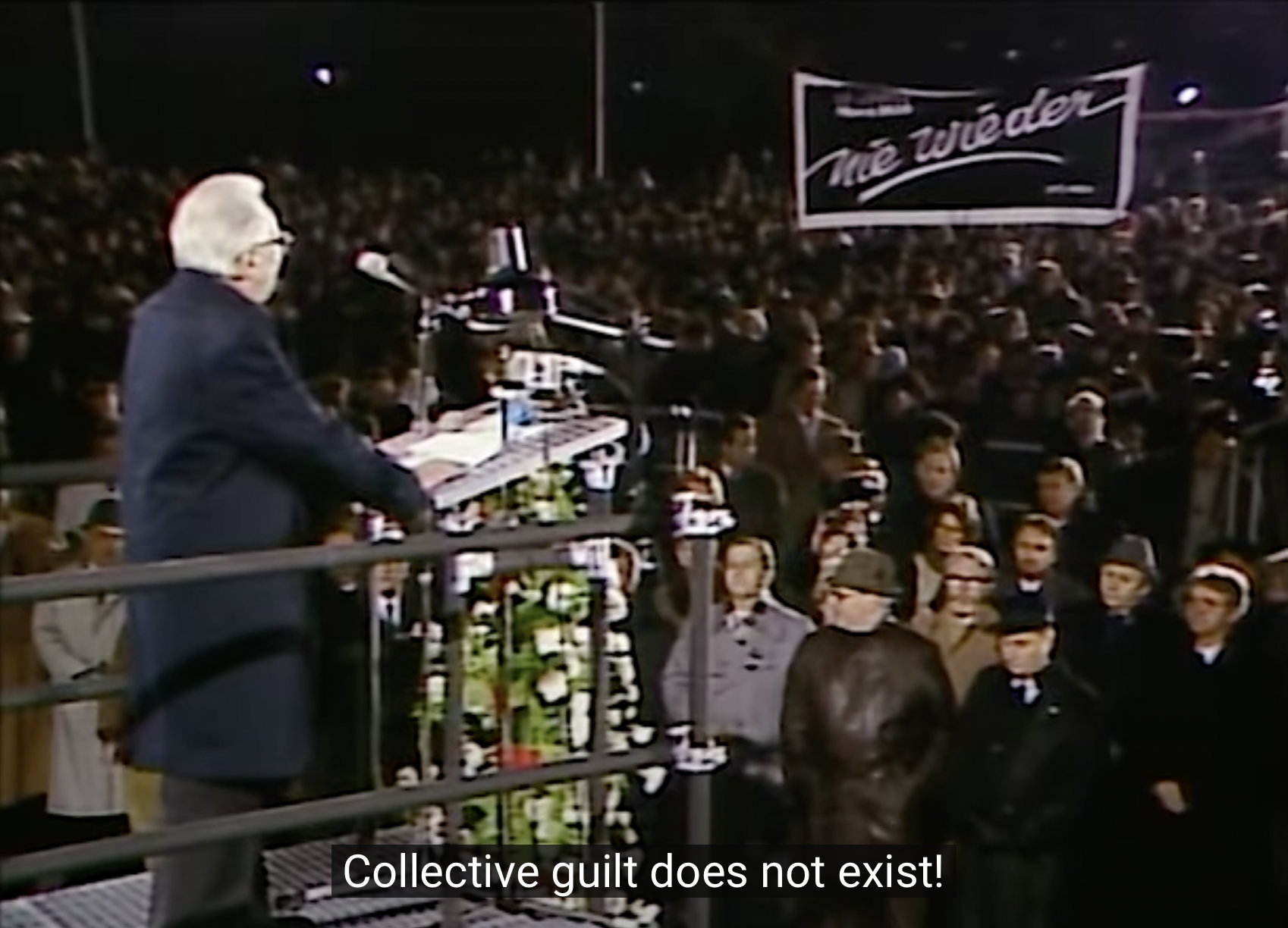
I believe they are right. I understand how Germans, myself included, might feel shame for being part of a group who allowed genocide to happen. Many also feel a deep sense of responsibility for not allowing it to be forgotten and making sure it doesn’t happen again. But guilt?

Let’s explore the dynamics of this word for a moment. 

Guilt is the result of an action within our control and responsibility. To be guilty, you have to have done (or failed to do) something that falls out of the framework of what is socially acceptable by the group with consequences of harm to an ‘other’. Frequently ‘guilty’ parties will not feel guilt or shame as they see their actions as having been justified, necessary, righteous even, within the context in which they were committed. Resentment and retaliation for being deemed ‘guilty’ can follow.

In Who’s to Blame? Collective Guilt on Trial, Coline Covington describes how Judeo-Christian cultures place particular emphasis on guilt, forgiveness and atonement alongside rituals that are supposed to restore moral order, cleanse the groups of shame and hatred, and prevent or close cycles of vengeance. For a long time, I have believed this was right and Germany’s culture of Vergangenheitsaufarbeitung (working through the past) and counter memorials was an example to all of us of how things could (and should?) be done. I am no longer sure that is what’s needed now.
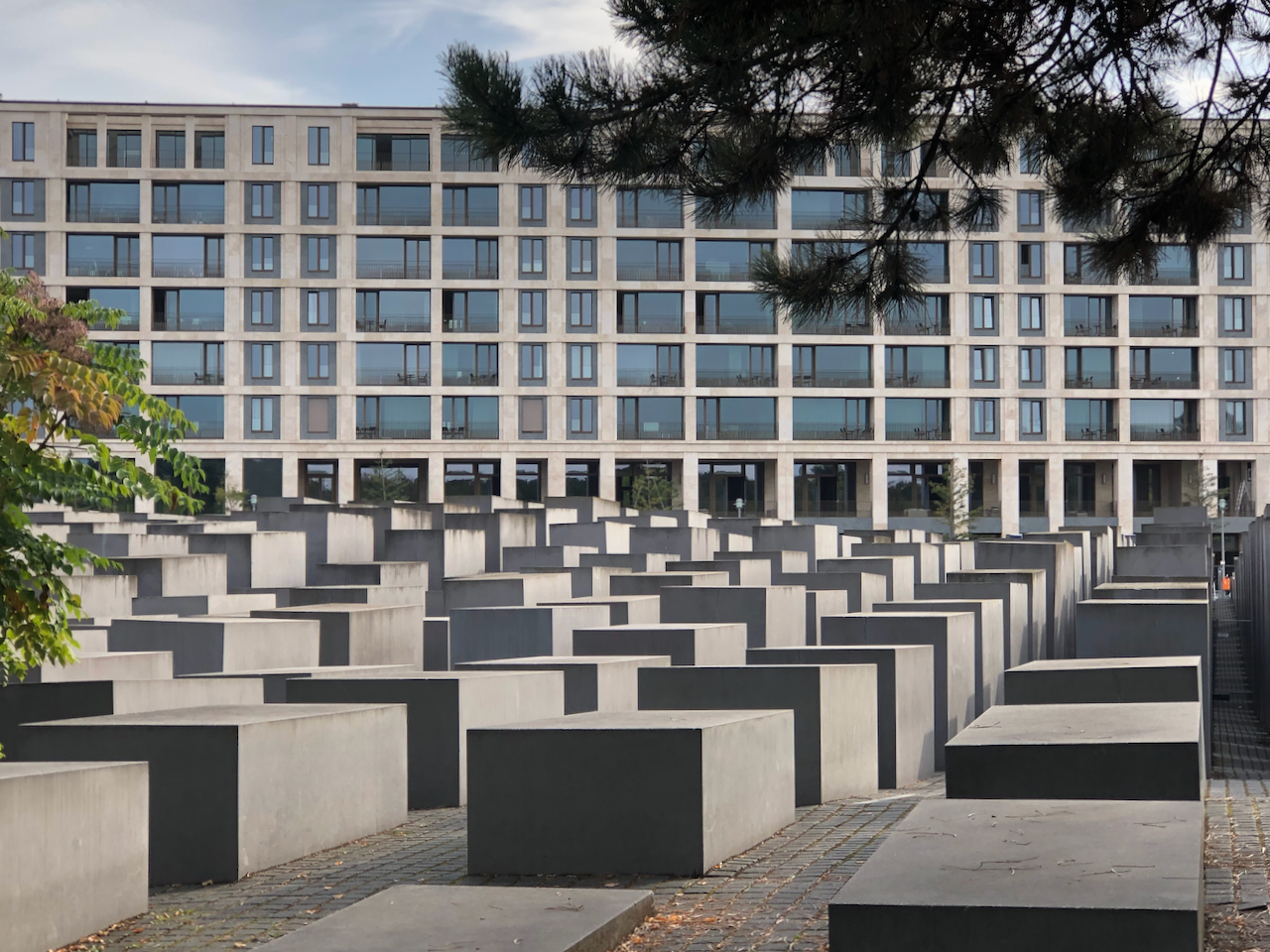
Memorial to the Murdered Jews of Europe by Peter Eisenman, Berlin

The problem is, Covington says, that most restorative rituals for peace-building are built on a binary understanding of good and evil, right and wrong, victims and offenders. “The finger of blame is pointed and yet true healing is meant to eradicate blame. This inherent contradiction contains the seeds of failure.” Could it be that we are witnessing this failure in Germany, Israel/Gaza, Russia/ Ukraine and elsewhere, resulting in new perpetrators and victims of atrocity and trauma? 

If so, how do we overcome binaries? I tried a couple of weeks ago in an online group of Jews, non-Jewish Germans, my own Anglo-German mix and others. Someone had been talking about the frightening increase in anti-Semitic acts and some members of the group had dismissed those behind them as ‘idiots’. A common reaction to unacceptable behaviour, and I have said the same many times in relation to certain members of the Tory party! But it got me thinking… because when we proclaim a shocked judgment: “How could they!” How stupid!” “How awful / evil / weak!”, we are basically believing: If I were them, I wouldn’t do what they are doing. We are seeing ourselves as morally superior, stronger, more intelligent and right, while ‘they’ are inferior, guilty, ignorant, wrong. 

Does this dynamic not replicate, in an initially small but precise way, the dynamics behind the Nazi, or indeed any, discriminations and judgments against apparent ‘lesser mortals’?
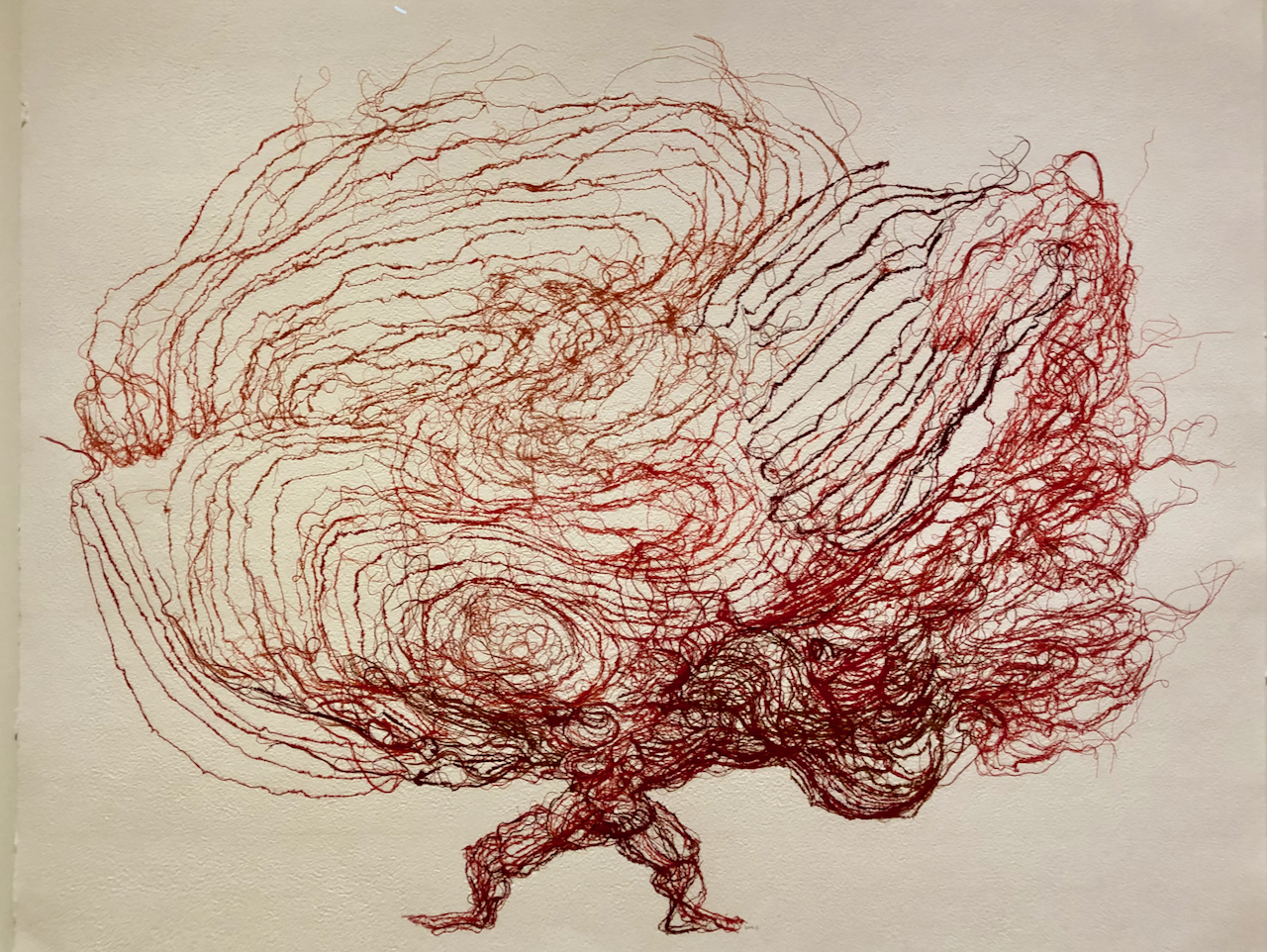
Do Ho Suh, Karma Juggler, Thread embedded in cotton paper

In this particular constellation, I naturally belonged in the ‘German perpetrator’ rather than the ‘Jewish victim’ category. It’s an uncomfortable place to be, but I have noticed that since finishing my book, the label no longer sticks as well. My grandfather’s shadow that once draped over my identity like a huge cloak has been so comprehensively unpicked, understood, transformed and woven into the fabric of my whole being that I can no longer see people in such binary terms. Like the beautiful art of the Korean artist, Do Ho Suh, whose exhibition Tracing Time I saw on a recent trip to Edinburgh, I can see how we are all threaded together into a colourful tangle of humanity, each one necessary and part of the whole. 
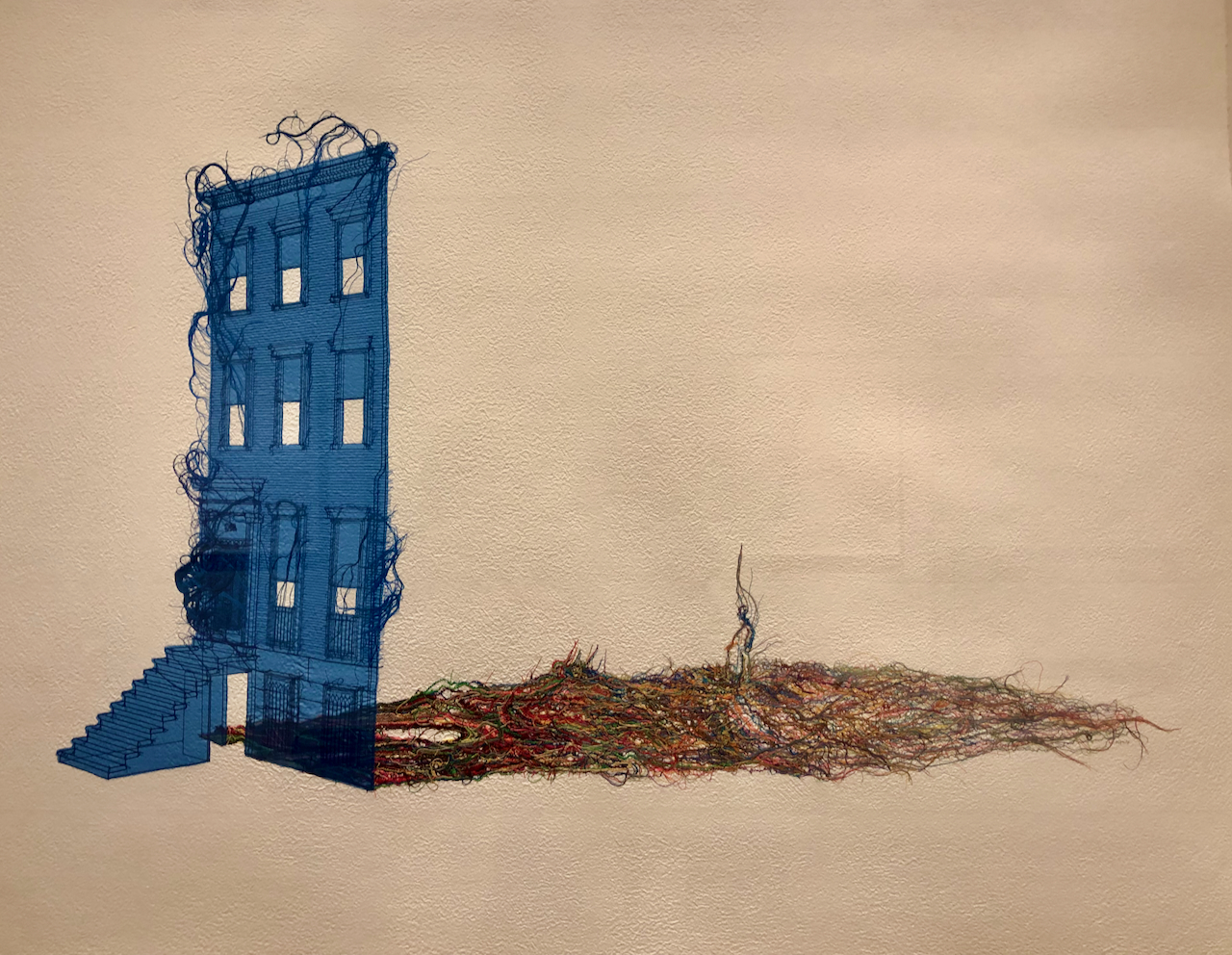
Do Ho Suh: Blueprint (2013), Thread embedded in cotton paper

There were people in the group who suggested I was ‘absolving’ myself and wanting to free myself of the burden of guilt, almost as if this was utterly impossible or prohibited. I do understand that response and how for descendants of survivors, this could feel an affront. But, without diminishing any of the suffering of and compassion for the descendants of survivors, I myself choose to no longer see people in terms of “my side/your side”, as one member put it. I believe that in order to overcome the judgmental binaries of ‘us-good’ and ‘them-bad’, we all need to make a greater effort to understand what lies behind bad or evil deeds. We not only need to step into the other person’s shoes, but into their entire situation. Only then can we recognise that if we were in the totality of their internal and external life, we would act, or would have acted in exactly the same way as them. The results of Milgram’s 1961 experiment with obedience to authority suggested something similar. Apparently good people, like us, can also become capable of extreme bad.

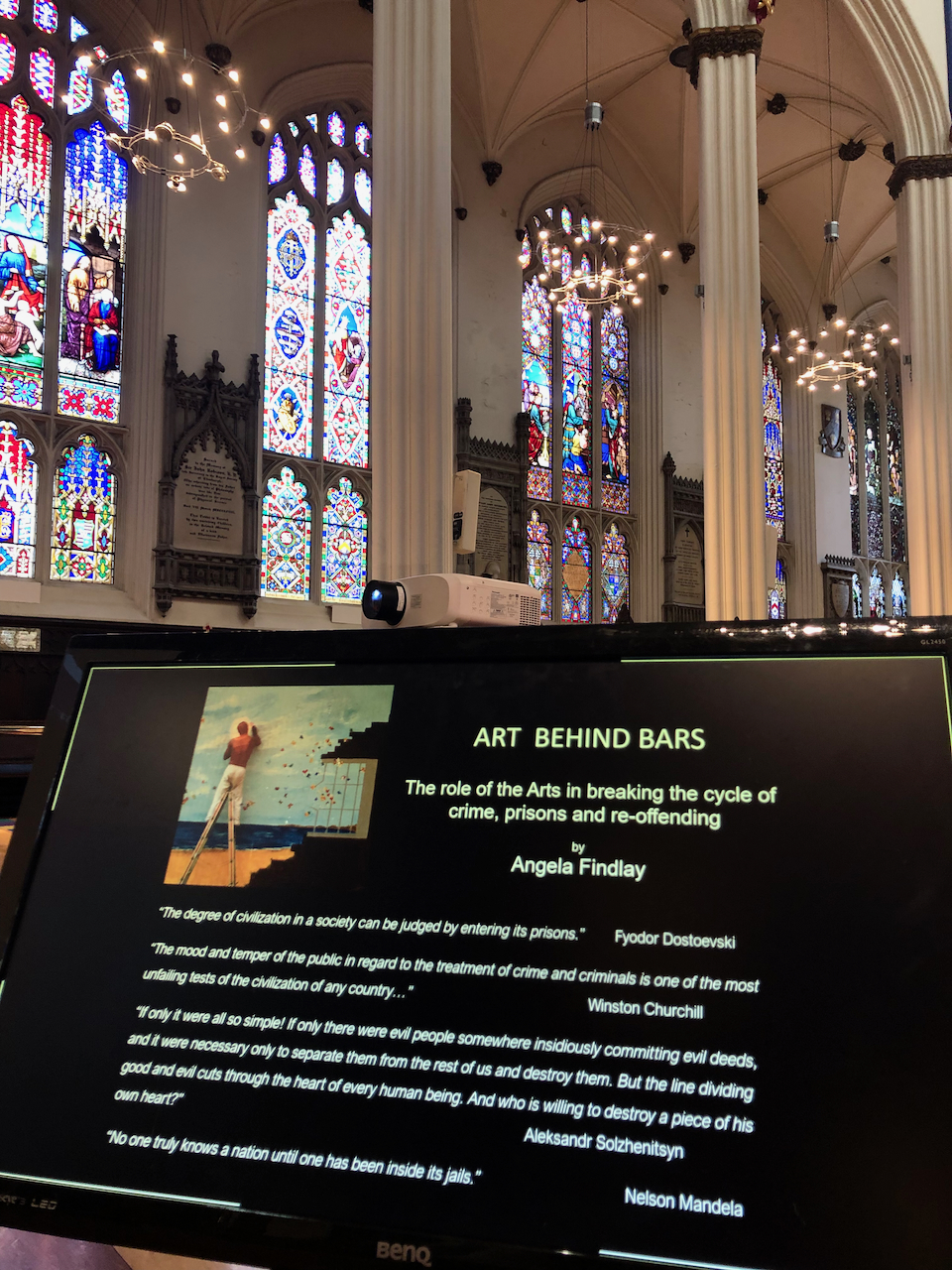
You will all I am sure now know about the horrendous, inhumane conditions of HMP Wandsworth and so many of Britain’s jails, and the decades of glaring failures of our Criminal Justice System in general. (If not, you can get an impression here and here and here) None of us live very far away from a jail, and yet so many of my Art Behind Bars talk audiences say they had “no idea.” Will we too one day be judged and found guilty of the stigmatisation of offenders that enables this shamefully degrading system to exist in our name as a fulfillment of our wish for governments to be ‘tough on crime’? Will we be accused of turning a blind eye, not acting and later claiming ‘we didn’t know’?
I am deliberately being a little provocative to make a point. Because as far as I can see, the only way we have a chance of breaking the catastrophic cycles of blaming and shaming, violence, retribution – all outcomes of seeing each other as ‘other’, separate and different from ourselves – is to create a level playing field of mutual respect where both (or all) sides are treated equally. And it can start within each one of us. In everyday situations. Now.

This is the African concept of ‘Ubuntu’, a philosophy of interconnectedness, sometimes translated as ‘humanity towards others’ or ‘I am because we are’. The most recent definition provided by the African Journal of Social Work (AJSW) describes Ubuntu as: A collection of values and practices that people of Africa or of African origin view as making people authentic human beings. While the nuances of these values and practices vary across different ethnic groups, they all point to one thing – an authentic individual human being is part of a larger and more significant relational, communal, societal, environmental and spiritual world.

According to Charles Eisenstein, author of The More Beautiful World Our Hearts Know is Possible, aligning ourselves with the truth that ‘if I were in the totality of your circumstances, I wouldn’t do differently from you,’ and the compassion that arises from putting ourselves in another’s shoes and seeing us as one, is “perhaps the most powerful way to magnify our effectiveness as agents of change.” I think I agree.

Further Reading / Listening (as always, not necessarily my opinion)

What’s behind Germany’s support of Israel? – Inside Story Podcast, 10th April 2024

As war in Gaza rages, what’s behind Germany’s support of Israel? – Al Jazeera

Historical Reckoning gone haywire – Susan Neiman, The New York Review

Germany’s crackdown on criticism of Israel betrays European values – Al Jazeera

Germany’s historical guilt haunts opponents of Israeli war in Gaza – France 24

A Clean Break by Tom Holland – A Point of View, BBC Radio 4

To remove, or not to remove statues: that is not the question Britain’s imperial past is asking of the present.

Something huge is happening in the UK. Britain’s colonial past is storming into the present and will not quieten until we listen to what it has to say. The national journey ahead of us will be deeply healing if we do.

In the past three weeks, the words “I can’t breathe” have become a universal slogan. And no, they have nothing to do with the Corona virus. They were the dying words of George Floyd as he was slowly killed, in full view, by a Minneapolis police officer. Like a match to dry tinder, his appalling, videotaped death ignited fury. Black Lives Matter and other anti-racist movements leapt to life spreading protests like bush fires through streets around the world. In the UK, while many people peacefully chanted, knelt or lay down in solidarity with the murdered man and fellow victims of racism, others went further, rocking the symbols of white supremacy quite literally off their pedestals.

In Bristol, the main target was the widely-despised statue of Edward Colston. Since his death in 1721, the philanthropist’s name and generosity had been celebrated in famous landmarks – a street, a school, the city’s largest concert hall – while the uncomfortable truth of his lucrative role as Deputy Governor of the Royal African Company (RAC), the most prolific slave-trading institution in British history, was hushed up. Estimates suggest he himself presided over the shipping of around 84,500 African men, women and children to the Americas to be sold as slaves. Horrendous 2-3 month sea journeys chained to the slave decks caused 19,000 to perish. Their RAC-branded bodies were unceremoniously tipped into the Atlantic Ocean as “wastage.”   

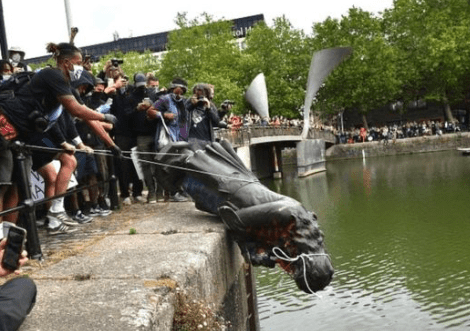
Colston’s statue being deposited in Bristol Harbour by protestors

Colston’s bronze presence has long been contentious in the city that used to be known as the ‘slave capital,’ but previous attempts to remove him had failed. On June 7th, however, Colston the philanthropist met his slave-trader Hyde when he was toppled off his perch and dumped head first into the harbour like one of the thousands of slaves under his watch. Whether you agree with such activism or not, it could hardly have been a more perfect gesture of karmic comeuppance. The aftershocks of his heavy landing are still reverberating, cracking the shiny veneer of Britain’s preferred version of history upon which it has built its largely benevolent national self-image.

I am not interested in judging the wisdom of this action – it was emotional and inevitable. I do not condone any of the subsequent violence and I deplore the eruption of the Far Right onto the streets with their eagerness to fight… anything. I am, however, glad that it was sufficiently contentious to prise open the Pandora’s Box of Britain’s imperialism making it impossible to slam the lid down on the restless ghosts of historic crimes.

Anyone who has attended my talks or read my blogs will know I have long been calling for Britain to look at, learn from and redress its own past wrongdoings. It has hitherto been far too easy to hide them in the shadows of the more recent Nazi genocide against which every atrocity naturally pales. For far too long, our history books and curriculums have primarily been testaments to our greatness: our victories and sacrifices, our worldwide achievements and position, the industrial revolution, the apparent huge benefits of British rule, the abolition of slavery… all worthy of celebration to those who still harvest and enjoy their fruits. But vast swathes of society are excluded from the feast and are still locked in lives of disadvantage, poverty and discrimination… or prison.

Churchill’s (boxed) statue in Parliament Square

The fact that until 2015 tax payers were still paying off the £20 million debt borrowed by the government in 1833 to pay compensation, not to victims or descendants of slavery, but to wealthy slave owners who lost out when slavery was abolished, shows how the tentacles of slave ownership reach into our present. Surely such glaring insult and inappropriateness are more worthy of expressions of outrage than the temporary covering of Winston Churchill’s statue? Yet Boris Johnson’s string of passionate tweets defending the lump of bronze representing his all-time role model were not only the same typical deflections from the existential debate being demanded by living people… on our streets… now, which are employed by many conservative thinkers. They also display a widespread British contradiction that is out of date and out of sync with the world. We as a nation verge on the obsessive when it comes to remembering our past as saviours of Europe from fascism. Yet we refuse to acknowledge the dark underbelly of murder, pillage, torture, cruelty, oppression, racism – the list is long – that formed the foundations of wealth, privilege and inequality on which so much of British society is built.

The prime minister scored an own goal when he tweeted “We cannot now try to edit or censor our past… those statues teach us about our past, with all its faults.” The editing and censoring the past is precisely what these protests have been about! Other than one in Liverpool, there are no dedicated museums to the slave trade. As for ‘teaching us about our past,’ one viral video of a slave trader being torn down has achieved far more in terms of educating people about Britain’s past atrocities than any existing statue has ever done. On an official visit to Jamaica in 2015, David Cameron employed much the same avoidance tactic by stating that it was time to “move on from this painful legacy and continue to build for the future.” How can you move on from something that is still happening? Until Britain finds a way as Germany has been trying to do – initially reluctantly and on the insistence of the British – to reckon with its imperial past and scarred present, we will not be able to “move on”.

Monuments are key to national identity. They demonstrate and instruct the values of a society by elevating heroes of the time onto plinths to be looked up to and respected for generations to come. They are not innately required to be permanent. Romans used to melt down their statues for coins. So what should happen when those same values become disgusting, offensive and humiliating, whichever angle you look at them from? When they become symbols of psychological and political oppression? Would British people not rightly feel offended or appalled having to constantly walk past statues of former oppressors – Hitler, Goebbels, Rommel – either here or in Germany? Yet this is what the black community have had to endure, seeing the slave-traders who murdered their ancestors, committed mass crimes, genocide and atrocity against them still celebrated in public. The toppling, removal or covering of monuments is not “to lie about history,” as Johnson claims. Nor should it become the prime debate, as it has in right wing papers, whose writers are incidentally putting up almost identical arguments and resistance to owning national atrocity as Germans once did. The statues have simply woken people from their willful amnesia. But there is a danger. If the agitators of colonial history simply vanish, so could the discourse and urgently needed education.

The removal of the slave-owner Robert Milligan statue in Canary Wharf

From all my studies and experience of Germany’s post-WW2 culture of Vergangenheitsbewältigung (working through the past) and the ensuing counter memorials and museums that dot the nation’s cities, parks and pavements, there is much the British state/we can, and must, do. As descendants of the original perpetrators, current generations are not to be blamed for the sins of their fathers, but we are responsible for making amends. So, rather than focusing purely on the clunky symbols and symptoms of discontent and planning ten-year prison sentences for those desecrating memorials, the government should be fully engaging with the debate and the root of the problem: institutional racism. The full truth of our past – warts and all – must be integrated into history lessons and school curriculums, museums and public monuments. Like in Germany, cities around the UK could hold their own competitions for imaginative counter monuments – Banksy has already submitted his proposal. Or information tableaus could be erected beside any monuments that remain in situ presenting the other side of the story along with an unmitigated condemnation of any repetition of those values. Also like in Germany, rather than building the highly contested Holocaust memorial by the Houses of Parliament, a memorial to Britain’s own victims could be created as a reminder of how fragile civilisation and democracy are. And for the victims’ descendants, opportunities for conversation, dedicated remembrance days, apology, restitution, compensation, reconciliation, investment… it’s all so late but there is so much to do.

Banksy’s sketch proposal for reinstating the Colston monument as part of a slavery memorial

Facing and talking about uncomfortable truths is the first step to healing them. Covid has exposed the inequalities in our society. We have a unique opportunity here for attitudinal and structural change. In the words of the soul singer, Erykah Badu, we need to ‘stay woke’. We simply cannot go back to sleep on this. Rumi, the 13th Century Persian poet’s beautiful message is so very apposite for these times.

“Out beyond ideas of wrongdoing and rightdoing,

there is a field. I’ll meet you there.

When the soul lies down in that grass,

the world is too full to talk about.

Ideas, language, even the phrase “each other”

doesn’t make any sense.

The breeze at dawn has secrets to tell you.

Don’t go back to sleep.

You must ask for what you really want.

Don’t go back to sleep.

People are going back and forth across the doorsill

where the two worlds touch.

The door is round and open.

Don’t go back to sleep.”

Further reading (I have included a couple of articles with which I wholeheartedly disagree!)

The dark side of British History you weren’t taught in school – video by George Monbiot

Robert Clive was a vicious asset-stripper. His statue has no place on Whitehall by William Dalrymple

Removing the statue of Cecil Rhodes would be cowardly and anti-intellectual by Daniel Hannan

When will Britain face up to its crimes against humanity? by Kris Manjapra

Buried for 50 years: Britain’s shameful role in the Biafran war by Frederick Forsyth 

All lives matter: There is too much at risk for us to let the ‘culture warriors’ win. You cannot teach the lessons of history by trying to erase it by Liam Fox

Britain’s colonial crimes deserve a lasting memorial. Here’s why by Afua Hirsch

Until we reckon with our imperial history, Britain’s toxic culture war will burn by Daniel Trilling