Peace on earth, goodwill to men… and women

I am not a huge fan of Christmas, but I do love the peace of the days that follow the rush and stuffing of stockings, fridges and bellies. A stillness descends as exhausted people navigate the aftermath of families, toy-strewn floors and overflowing bins. Finally, those of us in the northern hemisphere can follow winter’s call to slow down, rest, and listen to the wisdom of our hearts and souls before the new year draws us back into action. 

Peace is not something we can take for granted anymore. Fighting – with words, ideologies or weapons – has increasingly become the norm. We have just been told by the UK defence minister, Al Carns, that “the shadow of war is knocking on Europe’s door.” And warned by NATO boss, Mark Rutte, that “we must be prepared for the scale of war our grandparents and great grandparents endured.” In this year marking the 80th anniversaries of the end of the Second World War, I’ve been asking myself: how do we maintain peace in a world in which so many of the vows and institutions created to prevent future wars are under threat? How do we ensure that ‘Never Again’ still holds? Various recent events have been shaping my thoughts.

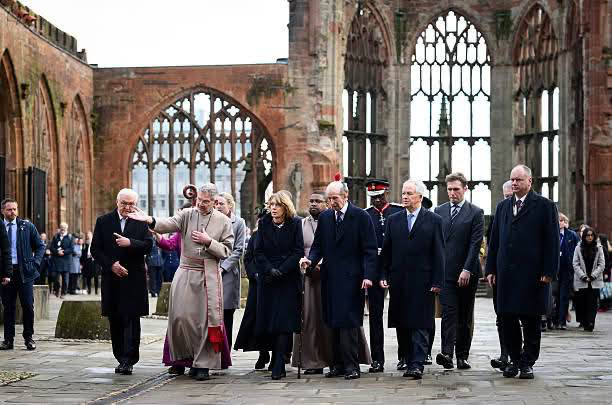
In early December, the German President Frank-Walter Steinmeier and his wife, Elke Büdenbender, embarked on a three-day state visit to the UK, the first in 27 years. In his speech at the state banquet hosted by King Charles III and Queen Camilla, Steinmeier highlighted the deep connections between Britain and Germany; how traditions from each country have been woven together so tightly that their origins are now obscured. Not least among these is the Christmas tree. The first one was displayed in Windsor in 1800 by the German Queen Charlotte, wife of King George III, and the custom soon spread to living rooms across the UK. The same is true for Battenberg Cake – a story I love and have often told in my work (see my December 2017 blog). 

L-R: President Steinmeier, Dean of Coventry, Elke Büdenbender, Duke of Kent…

On the final day of his visit, President Steinmeier travelled to Coventry Cathedral. He and his wife were greeted by His Royal Highness The Duke of Kent who, among his other roles, is Patron of The Dresden Trust. Coventry and Dresden have been twinned since 1959, linked both by the devastation of the bombing raids each country inflicted on the other, and by the many decades of peace and reconciliation work that have followed.

Al Murray and James Holland

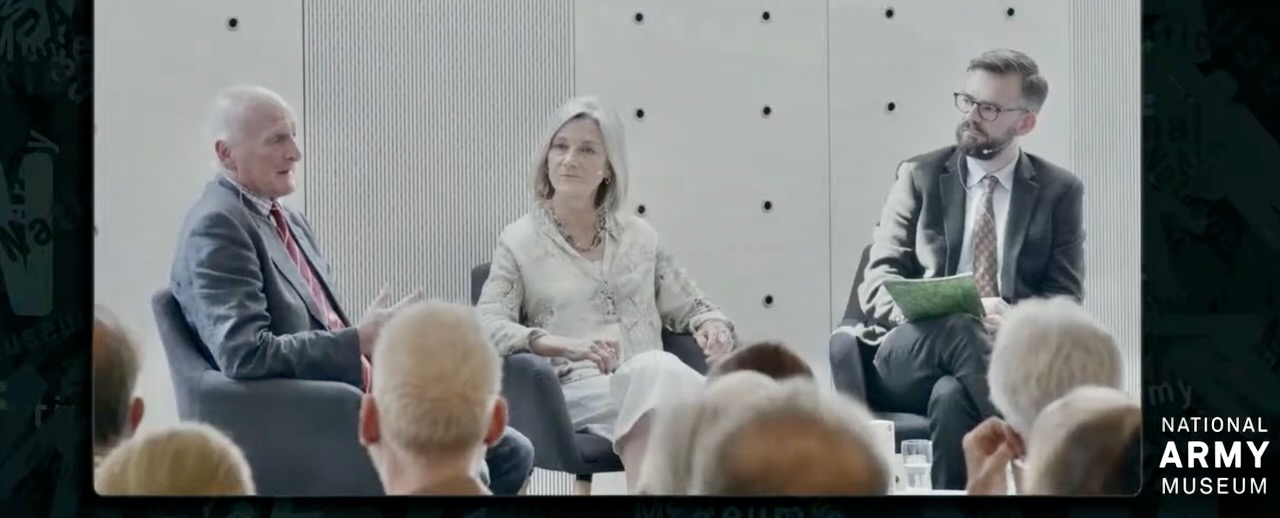
At around the same time, I had been sitting in one of Goalhanger’s recording studios. You may know them for some of their most popular podcasts in The Rest Is… series, including the chart-topping The Rest Is History and The Rest Is Politics. I was there with Henry Montgomery to talk with historian and broadcaster James Holland, and comedian and ‘Pub Landlord’ Al Murray, on their equally popular WW2-focused podcast, We Have Ways of Making You Talk Henry, also the grandchild of a high-ranking army officer – in his case the British field marshal best known as ‘Monty’ – and I had previously spoken together on VE Day at the National Army Museum. As I have mentioned in other blogs, we are exploring from our different perspectives how well Britain’s remembrance culture is really working. With ever fewer World War veterans and first-hand witnesses still alive to warn us of the horrors and futility of war, is it doing enough to keep “Never Again” a lived reality?

National Army Museum: Henry Montgomery, me and Daniel Cowling, May 2025

When I look at the visuals of Britain’s remembrance culture that make it into the media – for many people, perhaps the only occasions where they will actively ‘remember to remember’ the lessons of history – I fear we are not going far enough. We see mostly men in dark coats laying wreaths and solemnly reaffirming vows to uphold the peace and international friendship while elsewhere in the world other men stubbornly refuse to make it. We see the bright regalia of royalty and the glinting medals of veterans. It is the language of the military and the state: formal, symbolic and carefully choreographed. All fine and important. But peace is not confined to grand stages or organised occasions.

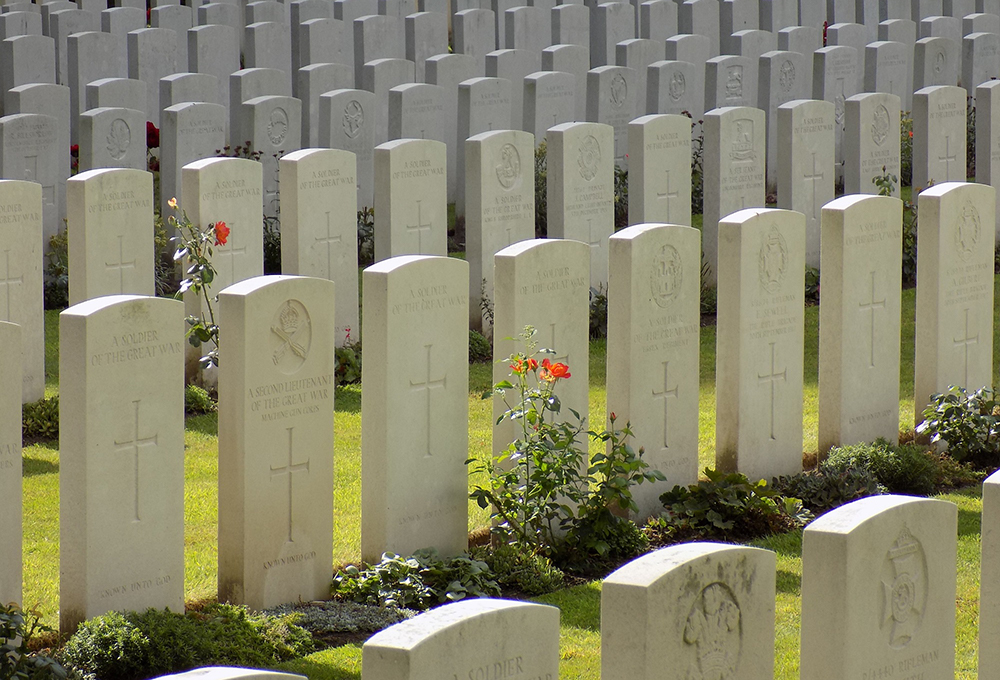
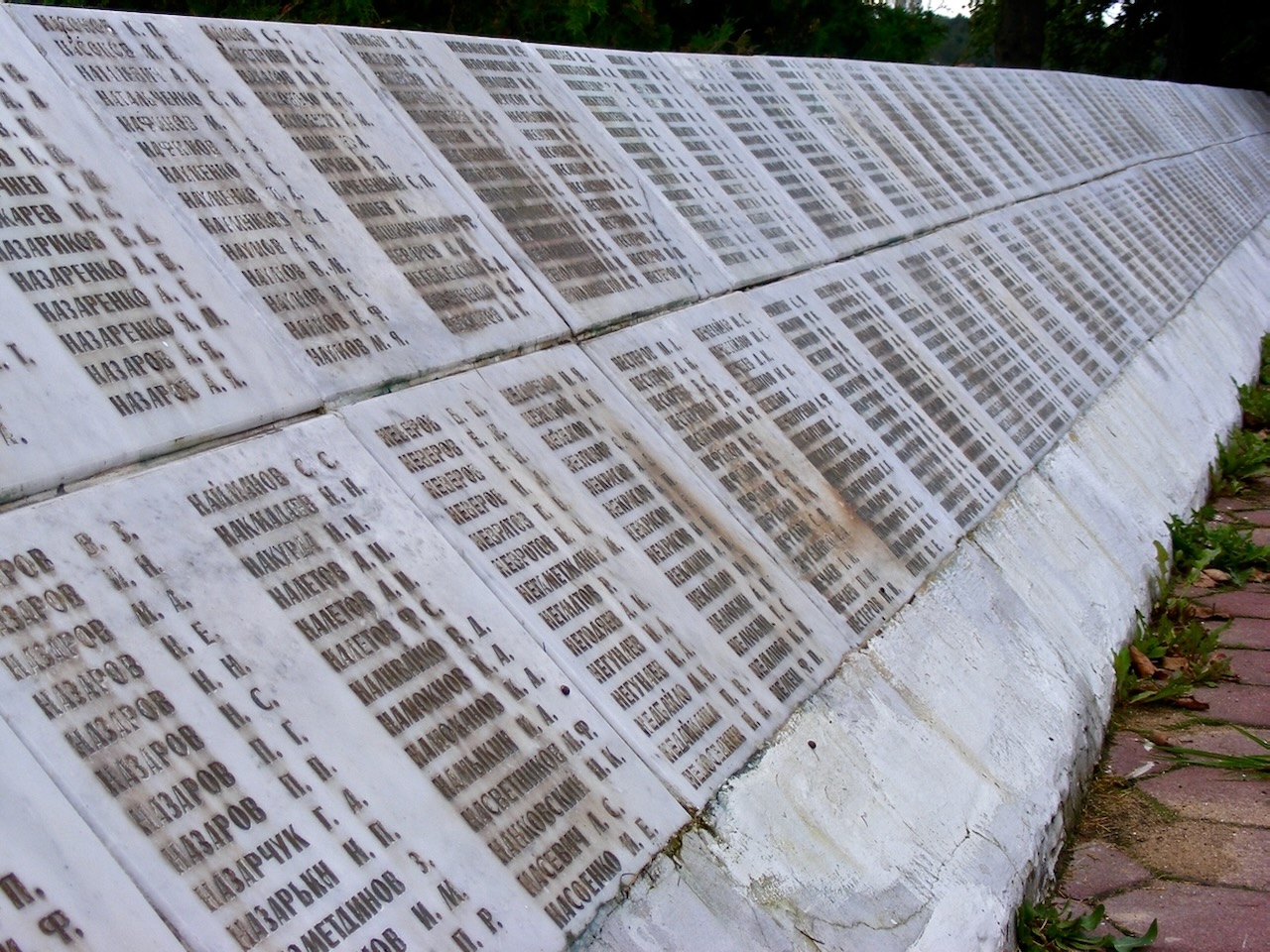
Listening to Radio 4’s brilliant Reith Lectures, this year titled Moral Revolution (what could be more pertinent in our times?) and delivered by the historian and author Rutger Bregman, I was struck by a description of a Quaker practice to bury the dead in unmarked graves. In stark contrast to the fields of Commonwealth War Graves and annual remembrance rituals, they believe you don’t honour people with costly headstones but with actions. Thomas Clarkson, the famous abolitionist who wrote extensively on the Quakers, said: If you wish to honour a good man, let all his actions live in your memory so that they may constantly awaken you to imitation, thus you will show that you really respect his memory.

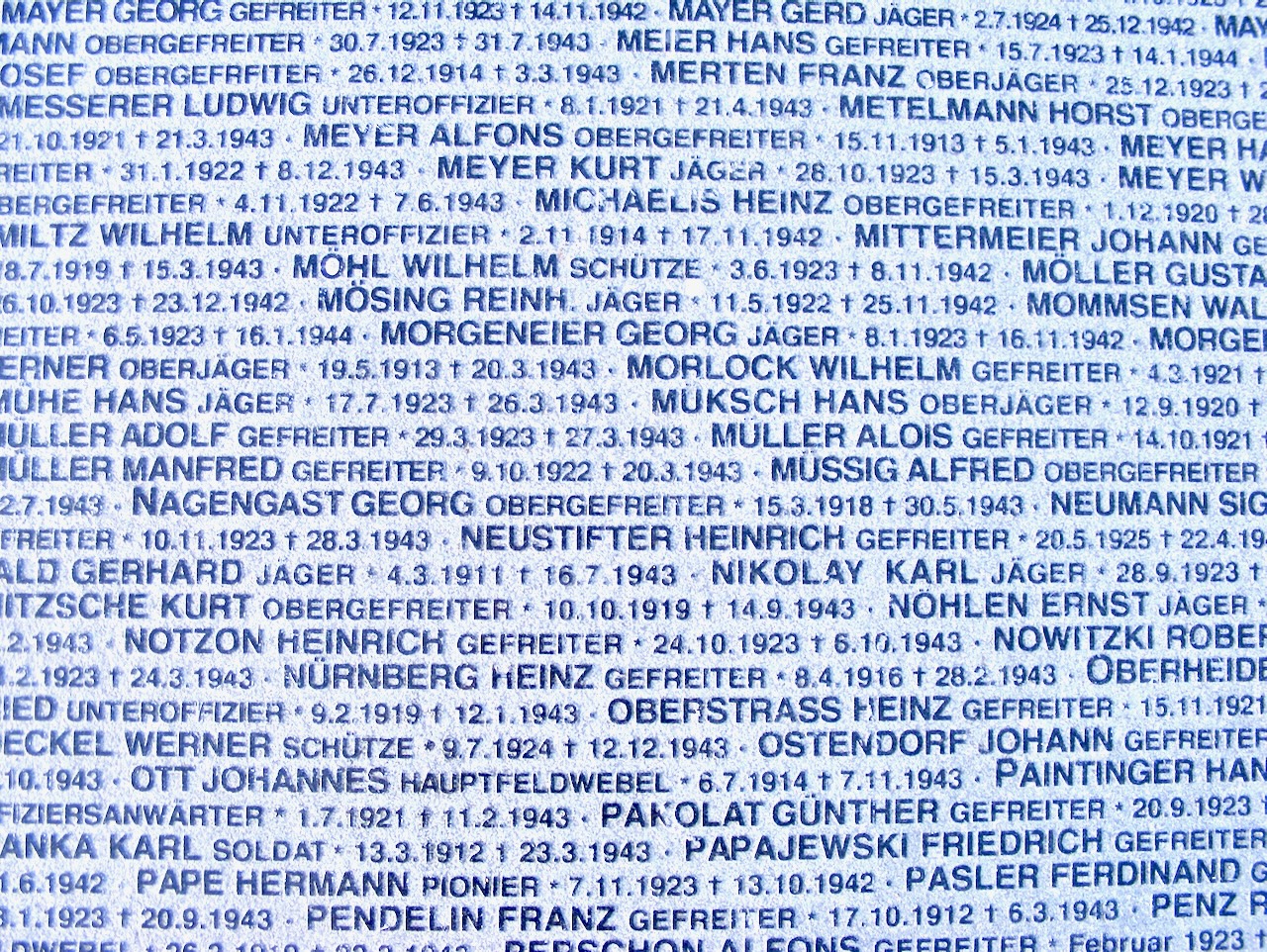
In a similar vein, Germany’s counter memorial movement, which began in the 1980s, fundamentally changed the dynamics of memorialisation. Through its shifting, disappearing monuments and memorials to absence, the focus turned toward the millions murdered by the Nazis. Responsibility for remembrance and for ensuring such destruction never happens again was transferred from stone and bronze into the hands of ordinary people. 

And that is where it belongs. Peace is sustained not only by treaties, leaders and ceremonies, but by us – each and every one of us in our daily lives. 

So if, like Rutger Bregman with his call for a Moral Revolution, we were to start a Revolution of Peace, what might it look like? What would its optics be? What language would it speak and who would embody it? I suspect it would be a revolution that brings heart, warmth, listening, sharing and art into our everyday encounters. One with no emphasis on sides and differences, winners and losers, no interest in egos, power games or deception. Idealistic maybe, but arguably closer to what is naturally human for many of us than conflict and war. 

Perhaps over Christmas we can practice peacekeeping: at kitchen tables, in disagreements, in how we speak to one another and how willing we are to listen. In choosing curiosity and compassion over judgment. In noticing where hostility quietly creeps into our own lives and questioning the ingrained narratives that divide the world into a good and right ‘us’ and a bad and wrong ‘them’.  

When peace is on the line, remembrance must shift from an act of looking back to a commitment to shaping the future. Just as conflicts and wars escalate out of countless small decisions, so peace does too. May we – and the world’s leaders – choose peace in the year ahead.

But first, let the mayhem continue… Wishing you all a very happy festive season, a meaningful Winter Solstice, a restful and restorative break and, in 2026, peace on earth and goodwill to men… and women.

The We have Ways… podcast episode is due to be published on 30th December in all the usual podcast outlets.
Remembering, while watching falling leaves…

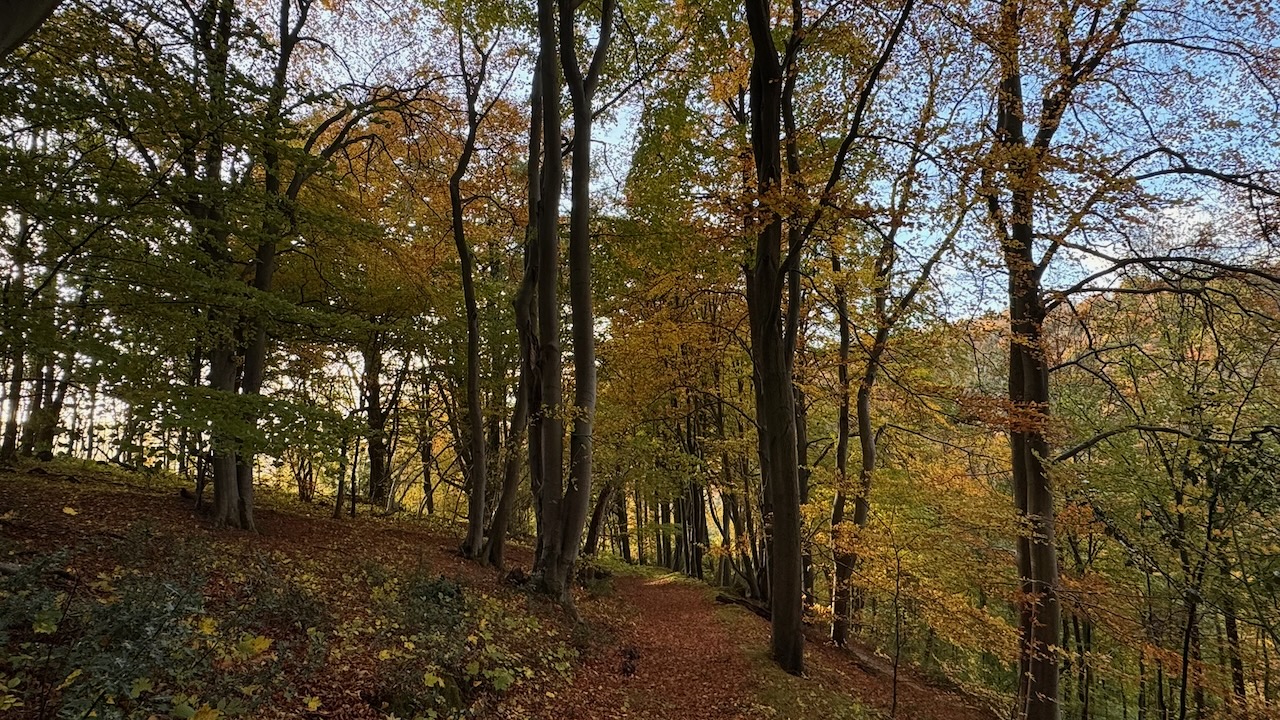
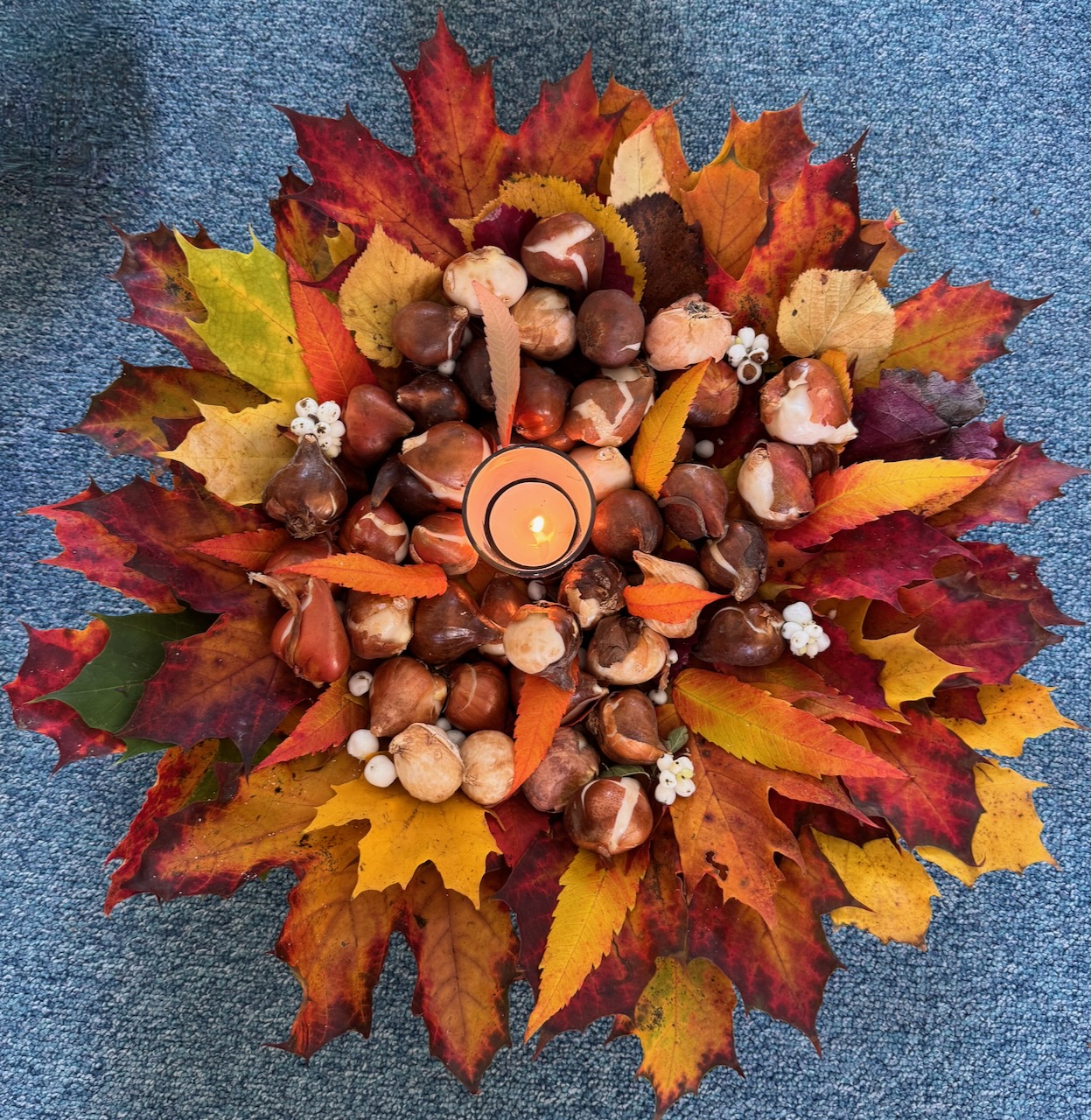
I normally plant bulbs on Remembrance Sunday. But this year I’ve been ill. Instead I went for a gentle walk in nearby woods, silent but for the breeze combing its way through the upper branches.

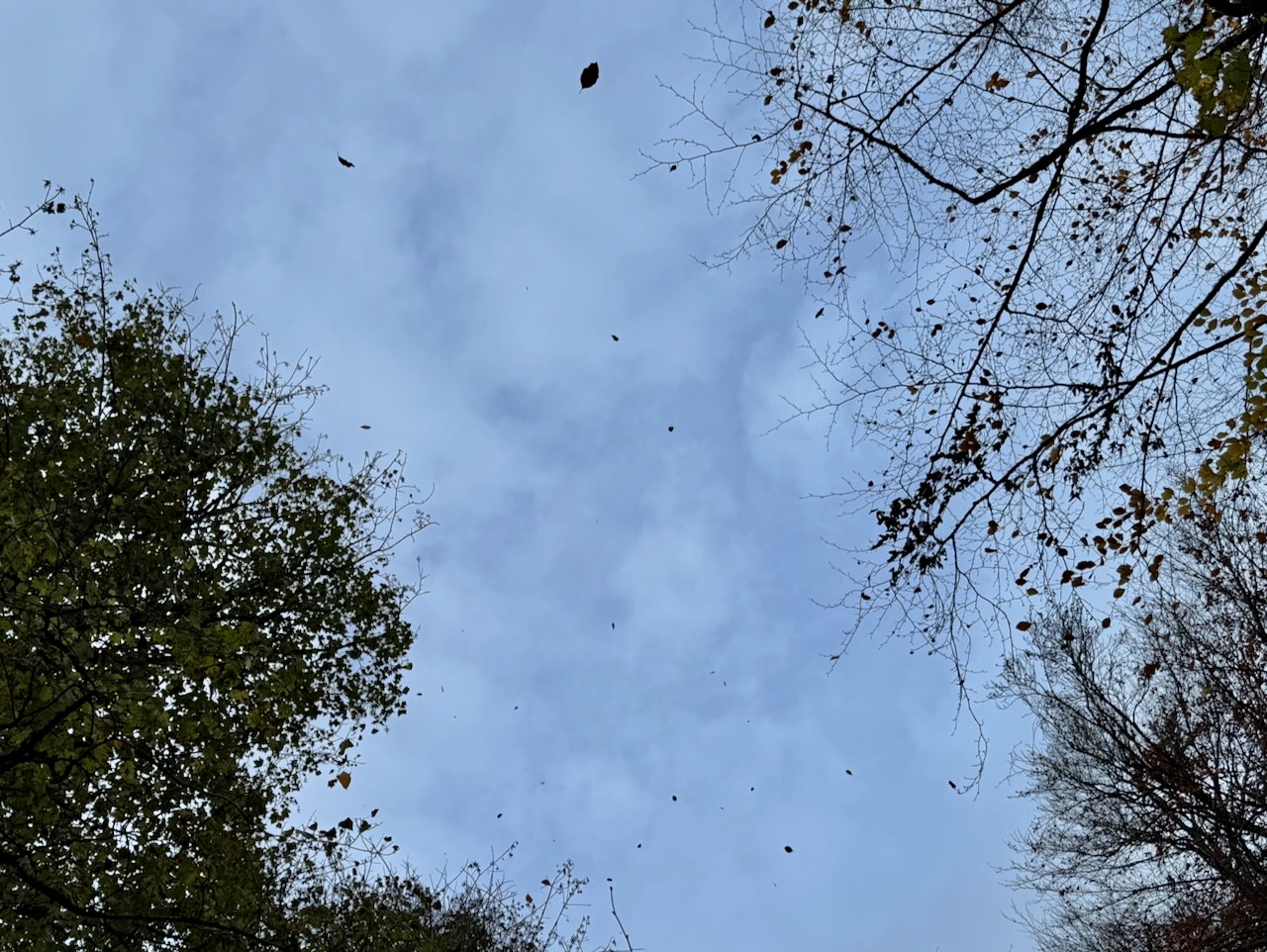
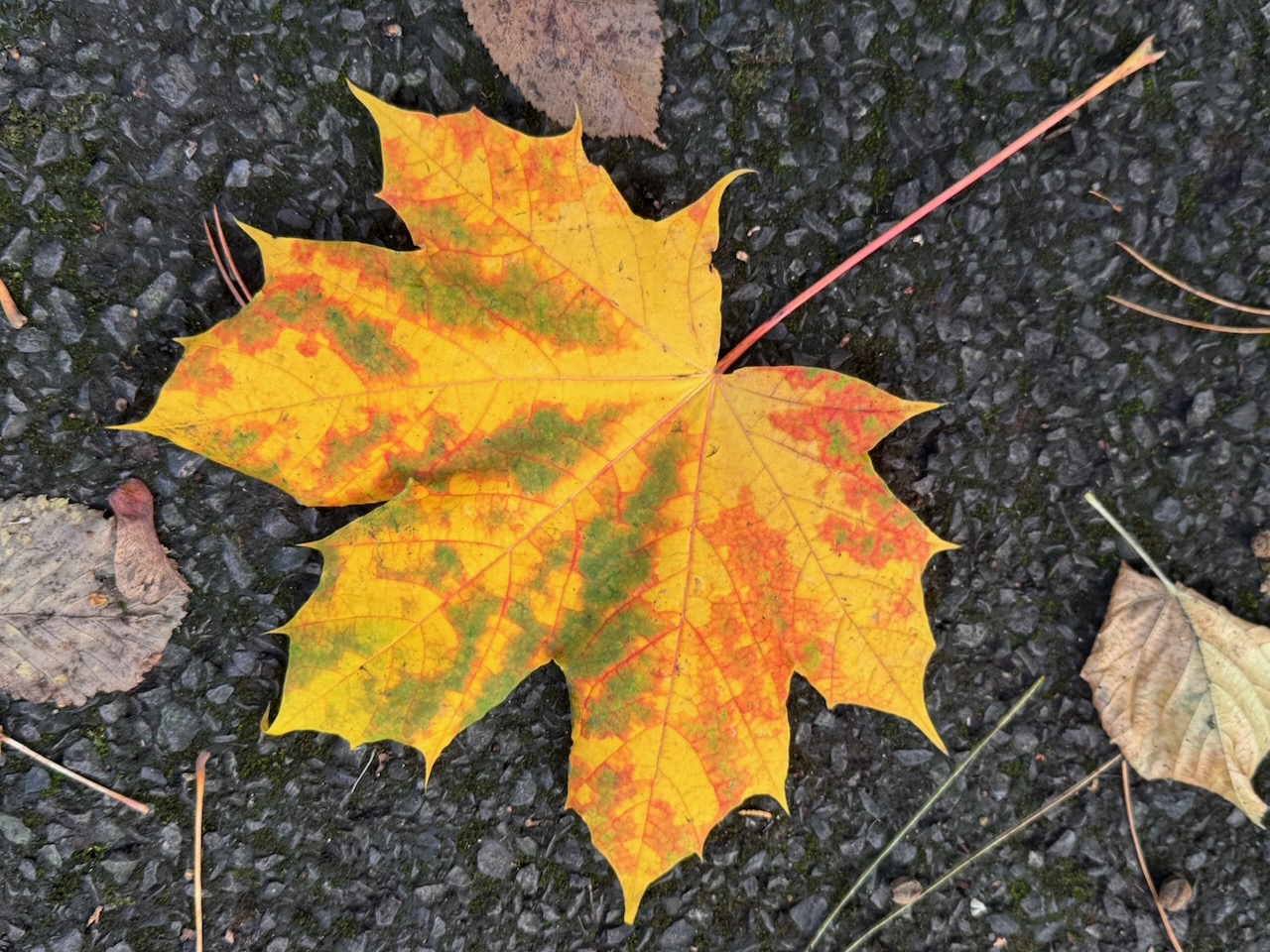
Down below, all was still. Except for individual leaves falling like snow. Each one taking its moment to break from the twig to which it had been rooted since the spring and dance in a series of pirouettes, twirls and summersaults before landing quietly among the already fallen. Unseen except by a chance walker. 

Do they pick their moment, or are they plucked from life?

A certain readiness is a prerequisite for each leaf to fall. In summer, winds can howl through the branches and yet the leaves remain bound to the tree, weathering the storm, held in place by life forces that ebb and flow in synchrony with the seasons.

Death is natural for these fallen.

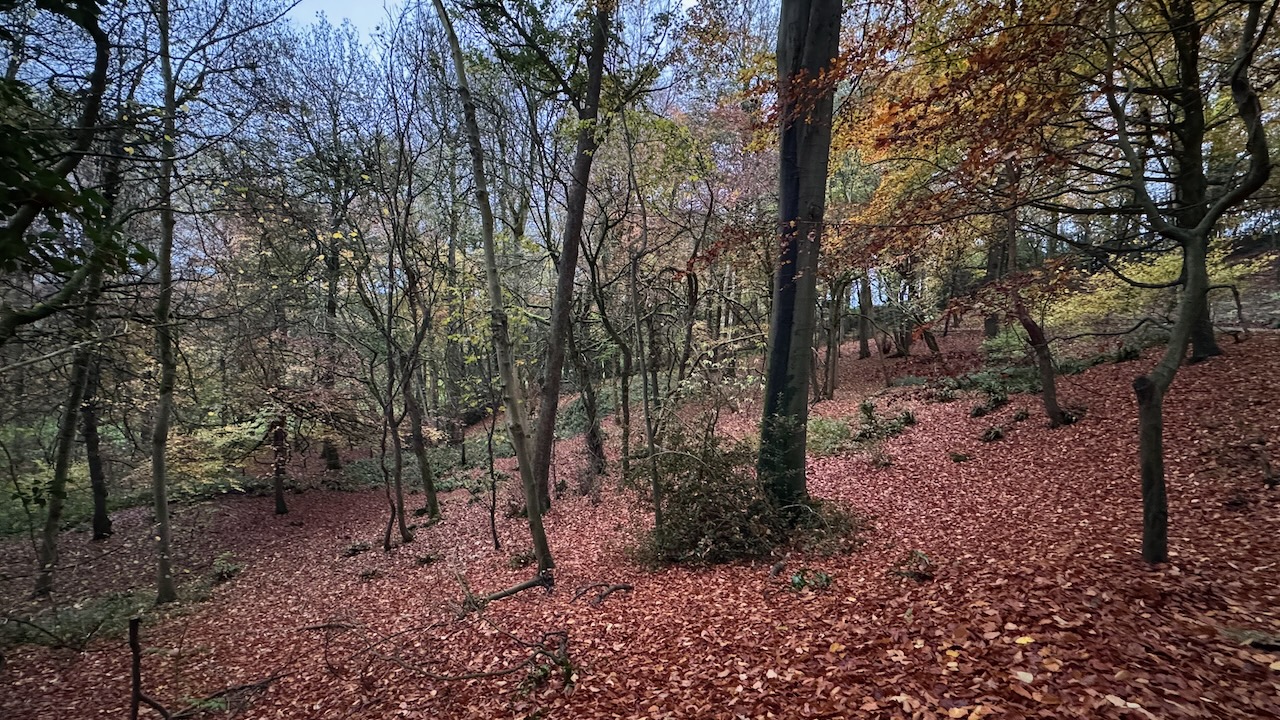
As I shuffle through the carpet of rust and gold, the rustle so reminiscent of childhood memories – kicking through the golden floors of beech forests in little rubber wellies – I can only ponder the dead. The war dead all around the world. The families they left behind. The scars of loss, grief, trauma and silence that remain in their wake, often hidden for generations, shaping the souls of those who come after.

We call them the fallen. It softens the reality of how they died. But while we remember them with warm hearts and deep gratitude, let us – with all the advantages of hindsight – not forget the utter horror, violence and futility of war.

As countries around the world build their armies and arsenal, let us refrain from falling into the trap of thinking war can ever be a solution to political, religious, geographical or economic problems.

Let us remember that the cost is always too high.

When big isn’t necessarily better

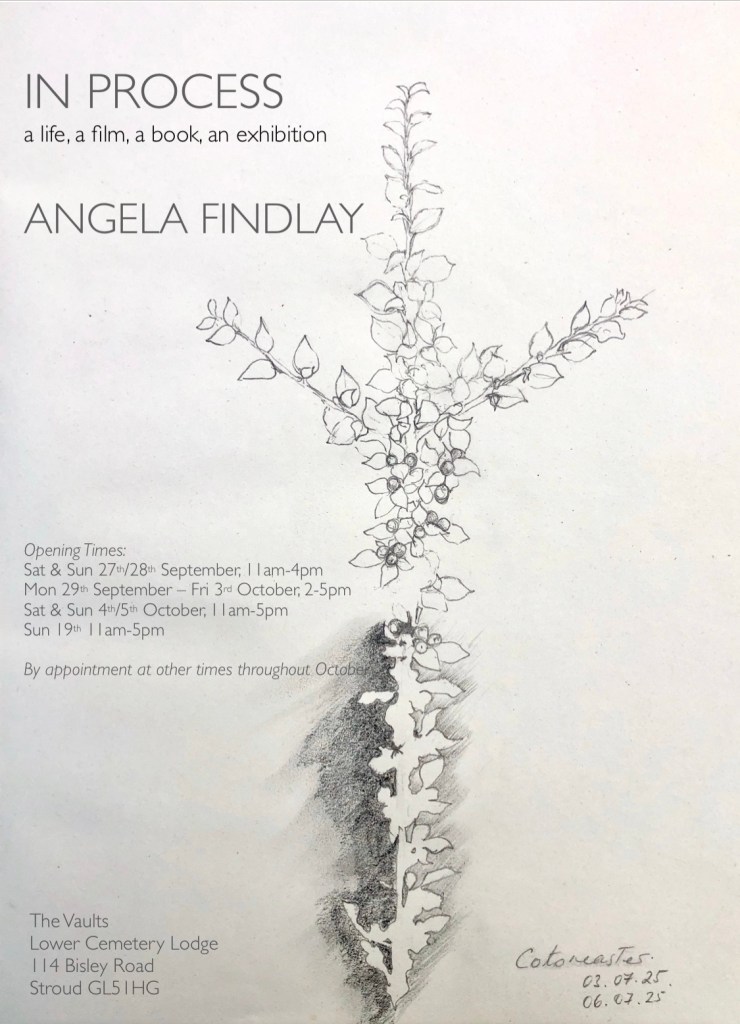
Reflections on: IN PROCESS… a life, a film, a book, an exhibition, The Vaults, Stroud. Sunday 19th October, 11am-5pm and by appointment until 1st November.


“We must, we must, we must increase the bust.

The bigger the better, the tighter the sweater, the boys depend on us.”

I remember chanting that with my boarding school roommates as a teenager, elbows flung back in a futile attempt – in my case at least – to inflate our adolescent chests. Bigger was definitely better, or so we believed.

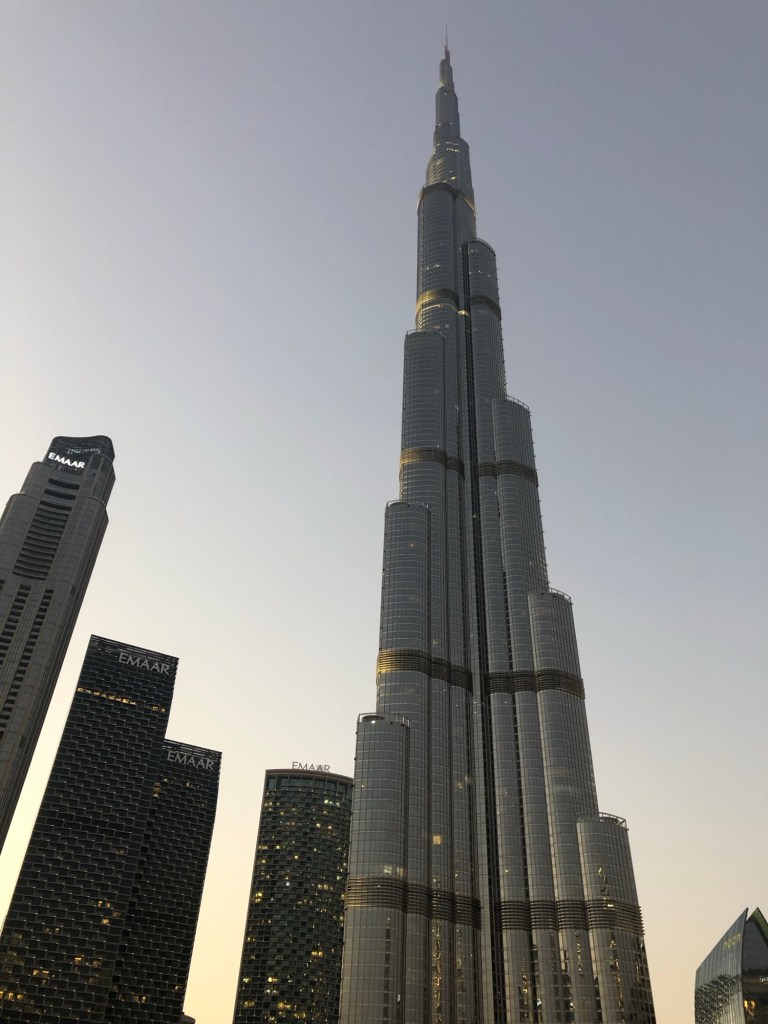
Burj Khalifa, Dubai

Skyscrapers, cars, salaries, houses… In so many areas of modern society, ‘big’ still equals ‘better.’ More followers, more likes, more headlines, more sales. The biggest countries led by the most powerful leaders and largest militaries make the most noise. And yet we know, quantity doesn’t equate to quality. Magnitude doesn’t always reflect meaning or value.

This idea – that bigger isn’t always better – is something I’ve seen reflected both in the trajectory of my great great aunt Joan’s life and in my own development as an artist. (If you are new to Joan’s story, please see my previous blogs for background.)

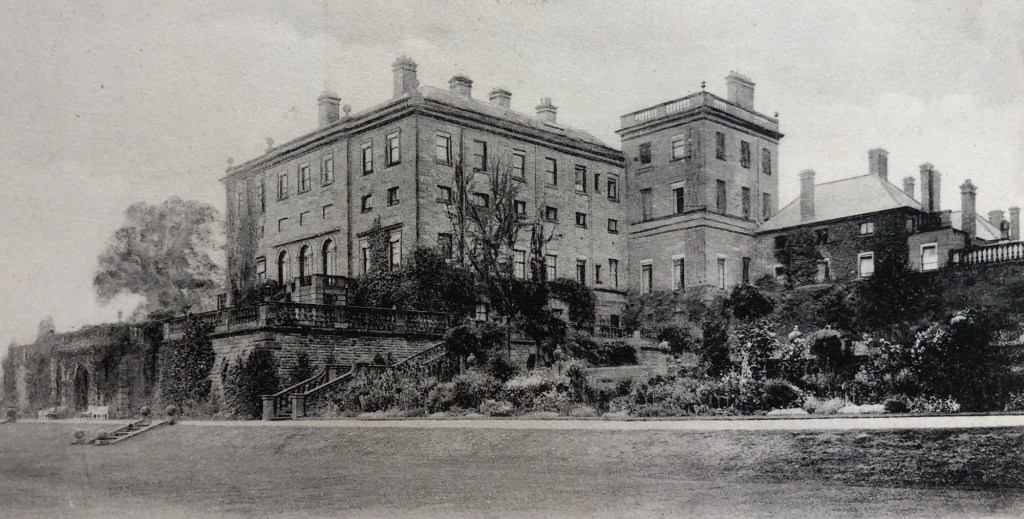
Patshull Hall, Staffordshire

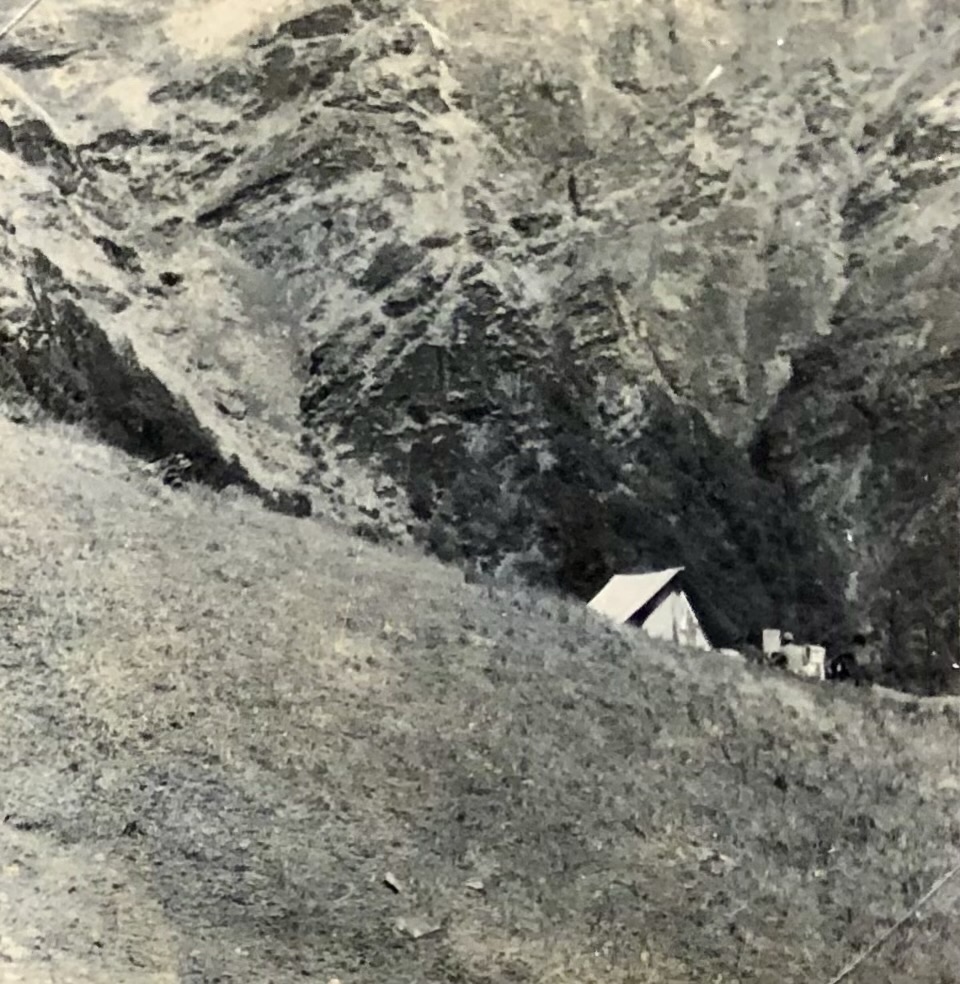
Joan’s tent

Joan grew up in a 147-room stately home in Staffordshire. Yet she spent her final weeks in a single, often soggy Meade tent pitched in a remote Himalayan Valley, surrounded not by grandeur but by shepherds, wildflowers and the sound of rain. She had traded scale for purpose. And her joy, it seems, had grown as her material load had lessened.

My own artistic journey has followed a similarly inverse curve.

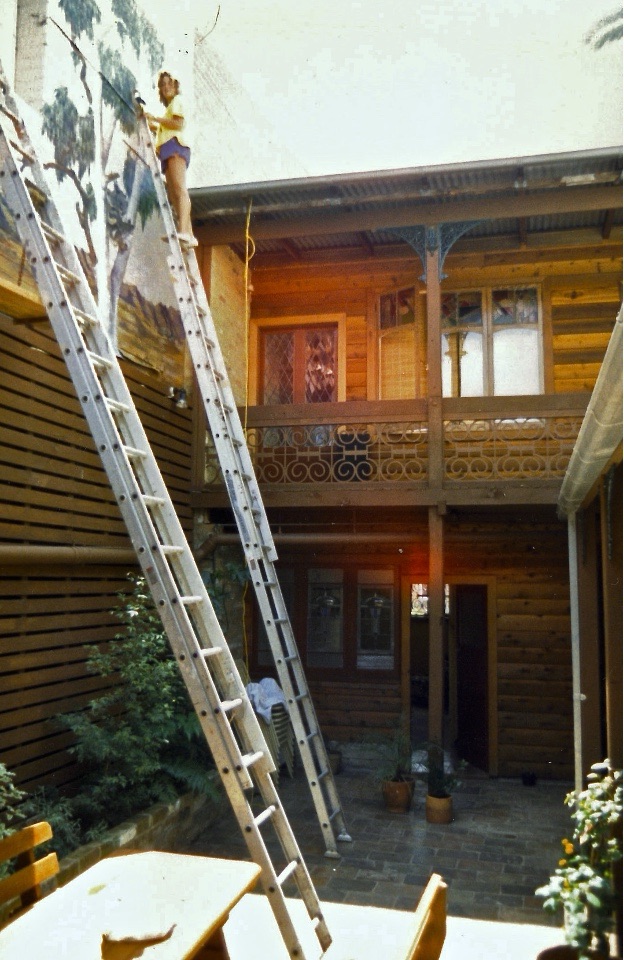
Painting a mural in Sydney, 1987

I began large, unable to contain any drawing or painting within the boundaries of paper or canvas. My work spilled onto walls, first private then public, then grew further to fill stage backdrops for theatres or touring bands. Various mishaps including a paint-splattered boss’s car and a disastrous commission to paint the backdrop for INXS KICK album tour in 1987, which promptly cracked and fell off in large chunks when rolled up, nudged me toward the more forgiving surface of prison walls. There, no amount of damage could make the environment worse than it already was.

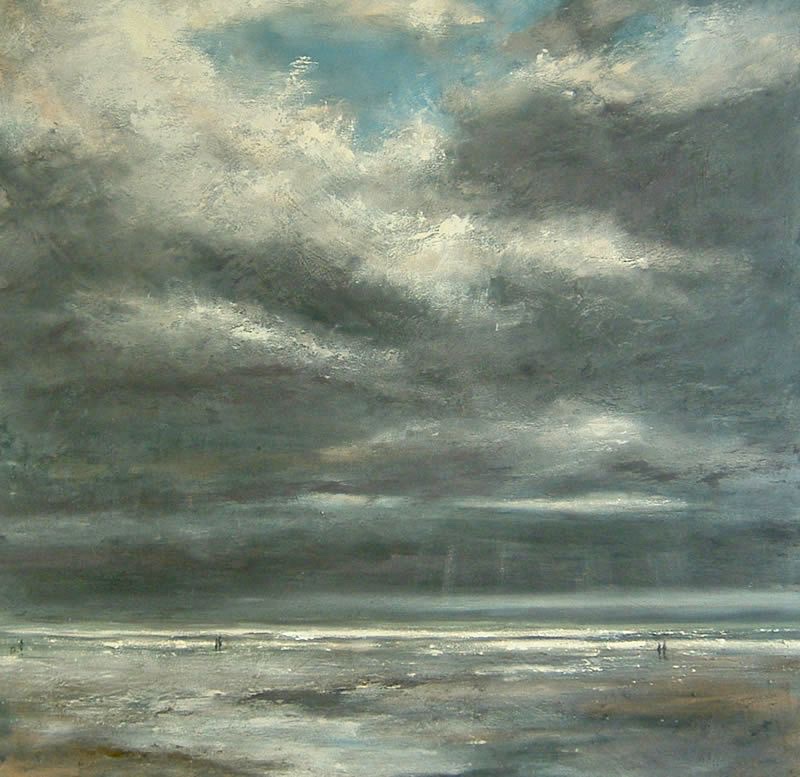
The light danced, 120x120cm

Years later, I turned my focus to canvases of my own, their size dictated by the available studio space and commercial considerations of galleries. And most recently, to works just 28x28cm – or smaller. I have replaced the vast audiences of art fairs with the quiet intimacy of just six or seven visitors at a time into the two vaults beneath my home in Stroud’s Cemetery.

The Vaults

Those vaults now house In Process… a deeply personal exhibition about Joan, her life and the resonance her death still holds for me, our family and small communities she encountered in India.

In one vault, where gravediggers once hung their tools and I now hang mine, visitors watch a short film projected into the open lid of an old trunk telling the story of Joan Margaret Legge.

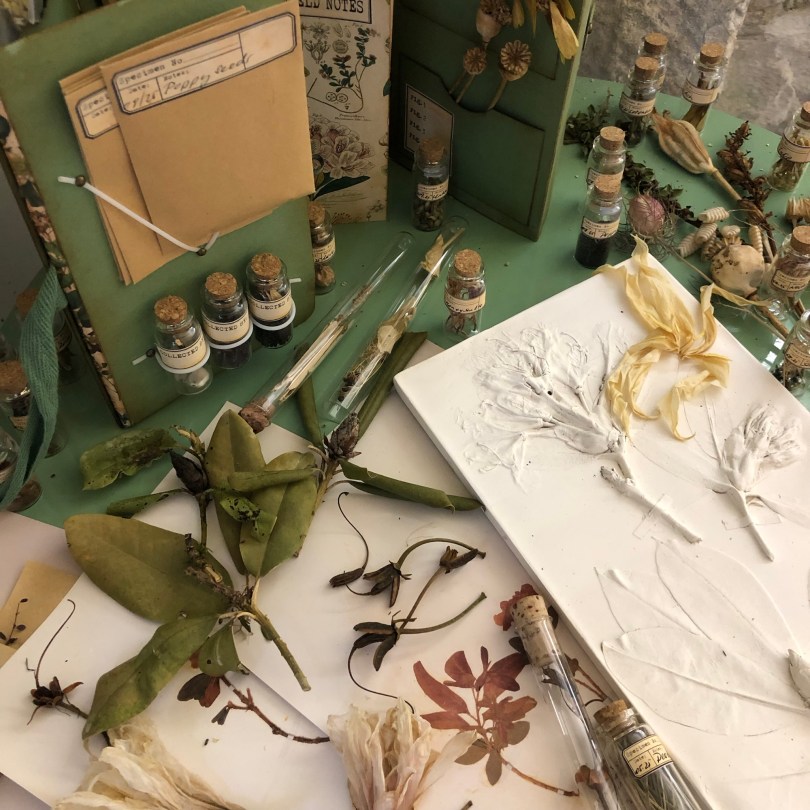
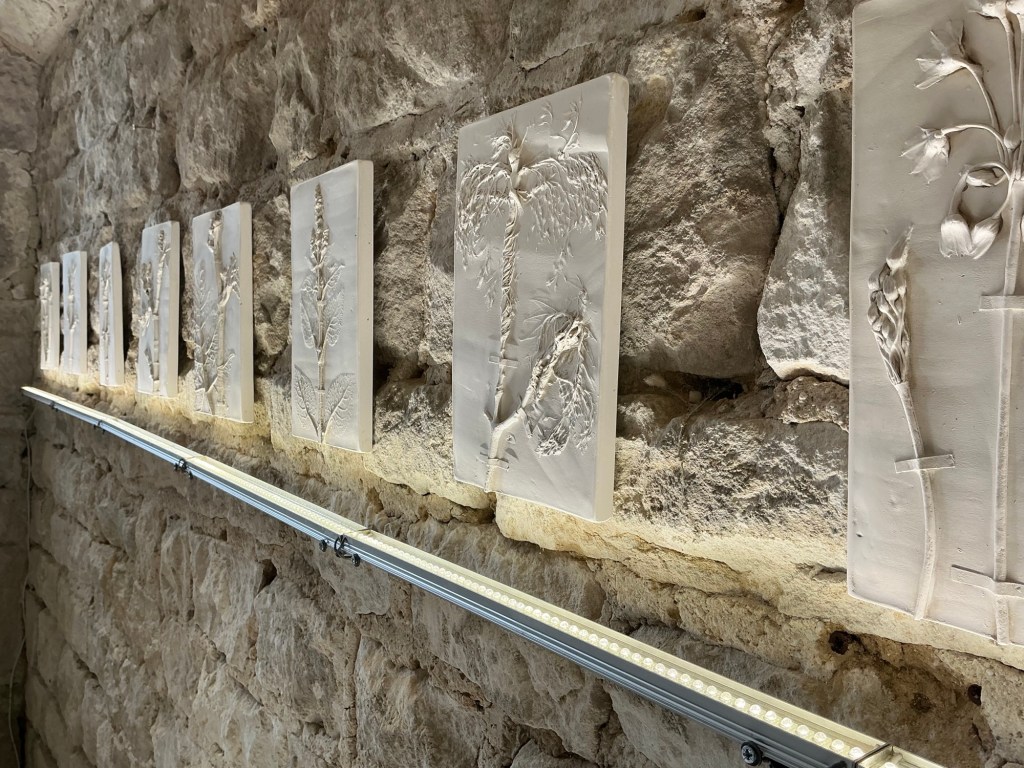
In the other, where those same workers drank tea, ghostly white plaster casts hang like three-dimensional botanical drawings reminiscent of the specimens Joan collected and sent to Kew Gardens.

‘138 days’

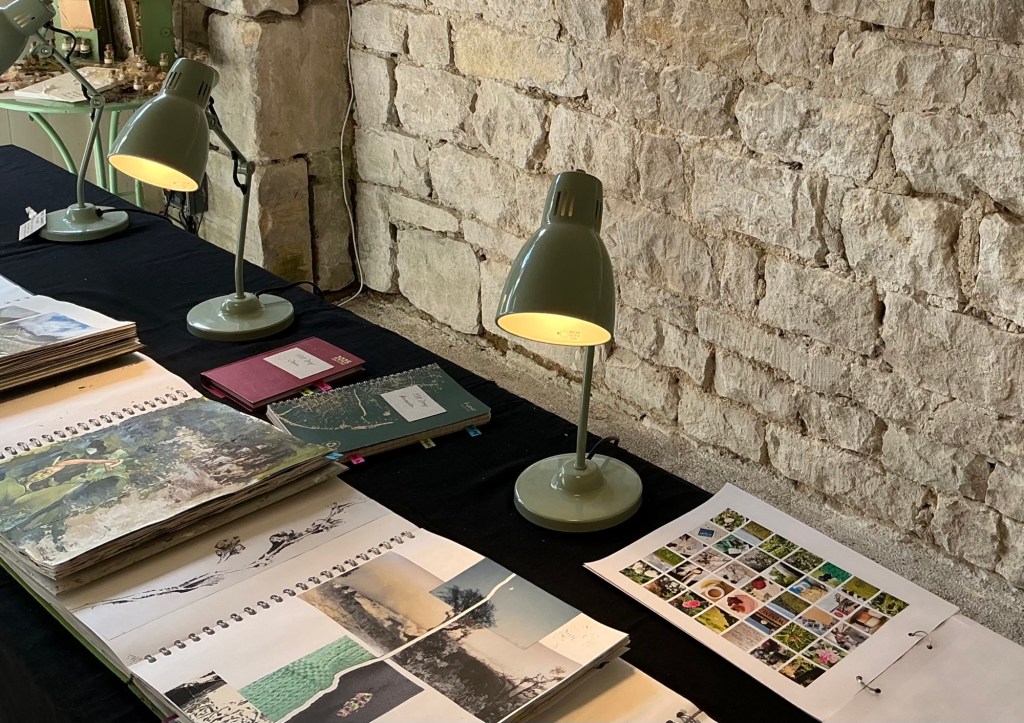
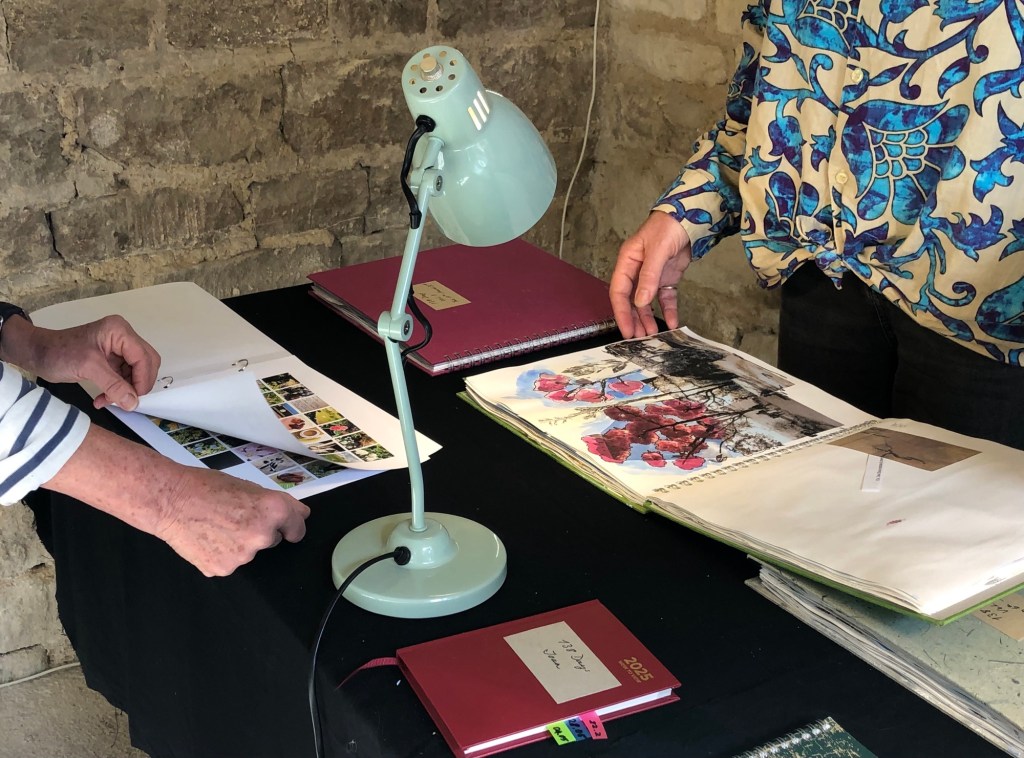
A series of square sketchbooks chart the 138 days I followed Joan’s 1939 diary entries. Starting on 17th February when I stepped into her shoes as she boarded a ship to India, I step out of them again on 4th July, the day she slipped off the edge of a Himalayan path to her death. One photograph, one sketchbook page, each day a quiet re-embodiment across time. Not a recreation of her journey, but a chance to listen more deeply to the changing tone of her voice in the final months of her life.

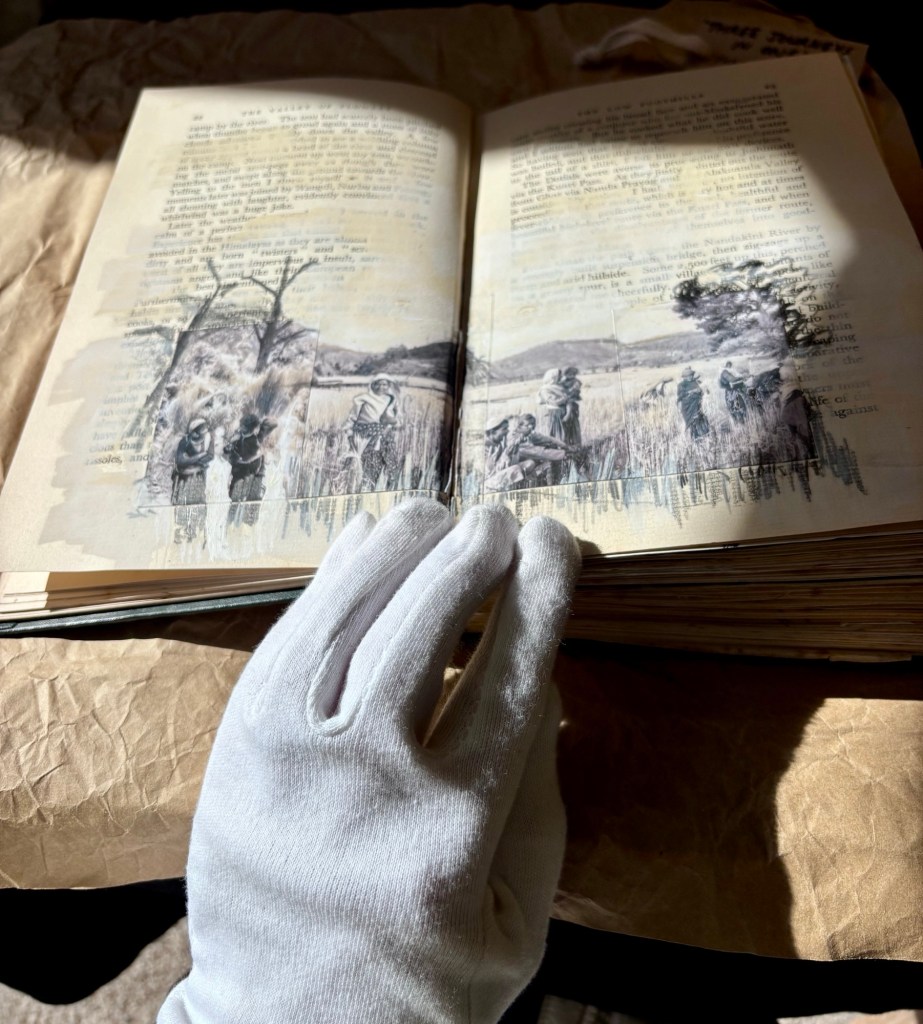
At the heart of the exhibition is its smallest piece: a re-working of a first edition of Frank Smythe’s Valley of Flowers, the very book that inspired Joan’s expedition. Through collage, drawings and pressed flowers, it now tells the stories of three visitors to the valley rather than just one: his, hers and mine. Wrapped in brown paper and tied with string like an archival package, the book invites visitors to wear white gloves to turn its delicate pages, not because it is precious in a monetary sense, but out of respect, Unlike most artworks, these ones are meant to be handled and engaged with.

‘Three journeys in one’

There is nothing for sale. No press campaign. No sponsorship. Just a quiet space, tucked away in a garden, found by invitation or chance. A strange but deliberate choice, and to me, a more authentic reflection of the humbleness of where Joan’s life ended than any traditional gallery could offer.

What Joan lost in material possessions, she gained in purpose and joy. Her life distilled into what nine porters could carry. She found a sense of completeness long before she had completed her journey.

That’s what I hope to convey in the improvised, immersive pieces shown in the warm belly of my limestone vaults. People forgive imperfection and lack of polish as they connect with Joan’s story through their hands, senses and bodies.

Just as artists learn to see not just form but negative space – the shapes between things – so Joan’s outwardly abundant life transformed into an inner world: slower, quieter, less visible, but not lesser in any way.

Maybe this is a natural outcome of ageing… the gentle decluttering of ambition and a reshuffling of values. Or maybe Joan’s story is a simple reminder that richness cannot always be seen and meaning doesn’t always require an audience.

The symmetry in our shrinking trajectories is just an observation.

But it feels strangely right.

IN PROCESS…

Sunday 19th October, 11am-5pm and by appointment until 1st November.

The Vaults, 114 Bisley Road, Stroud


Following Joan… Part Three

(If you are joining Joan’s story now, you might want to read Following Joan… Parts One and Two first.) 

‘Do you think she jumped… or did she fall?’

It’s 2020 and I am sitting opposite my uncle, a grandfather clock tick-tocking the present into the past.

That question has always lingered around the name of my Great Great Aunt Joan. She was said to have been troubled, never having recovered from the death of her beloved older brother, Gerald, killed at Gallipoli in the First World War. Ill health had dogged her. And as another war loomed on the horizon, perhaps she could not bear to witness more loss. 

I sometimes wish I could type ‘Joan Legge’ into the search box of my life’s hard drive to locate the exact moment her story began to intrigue me. Perhaps it was a conversation with my grandmother, Joan’s niece. Both she and her younger sister had believed, independently, that Joan would not return from her trip to the Himalayas in 1939. Their mother was said to have ‘the gift’ – an unfathomable intuition, a form of knowing that slips past reason. 

That fascinated me, for even as a child I sensed there were hidden channels of communication and knowledge beneath the surface of ordinary life. Perhaps their foreboding of no return planted the idea that Joan’s death had been deliberate.

Joan 1905

Or maybe it came from the anecdotes I gleaned over time from my father and uncle about this eccentric spinster who, after Gerald’s death, cast off the frills and trappings of aristocracy and privilege to forge a life of farming, service and adventure. A life that ended in solitude, in a remote valley half a world away. 

Some lives close with a sense of completeness, even peace. Death may be welcomed after a struggle with illness or the slow wear of age. Others remain unfinished, wrapped in mystery, unresolved, tugging at the conscience of descendants like a child clutching at its mother’s apron strings. 

Joan’s sudden death was of that latter kind. It sent shock waves through the generations, softening with distance into small ripples. Even now they lap at the shores of my own soul. 

Map of the Valley of Flowers, the site of Joan’s camp, death & grave marked in red
©Staffordshire History Centre

It was only last year, travelling to the Valley of Flowers with three of Joan’s descendants, that I fully grasped the scale of her courage. And the violence of her end. The monsoon rains offered us just a fleeting glimpse of the place she fell, its position traced on a map sketched in the days after her death. Yet it was enough to shatter the gentler image I had long created of her tumbling down a wooded slope. The truth was starker. Joan had fallen clean over the edge of a sheer granite cliff.
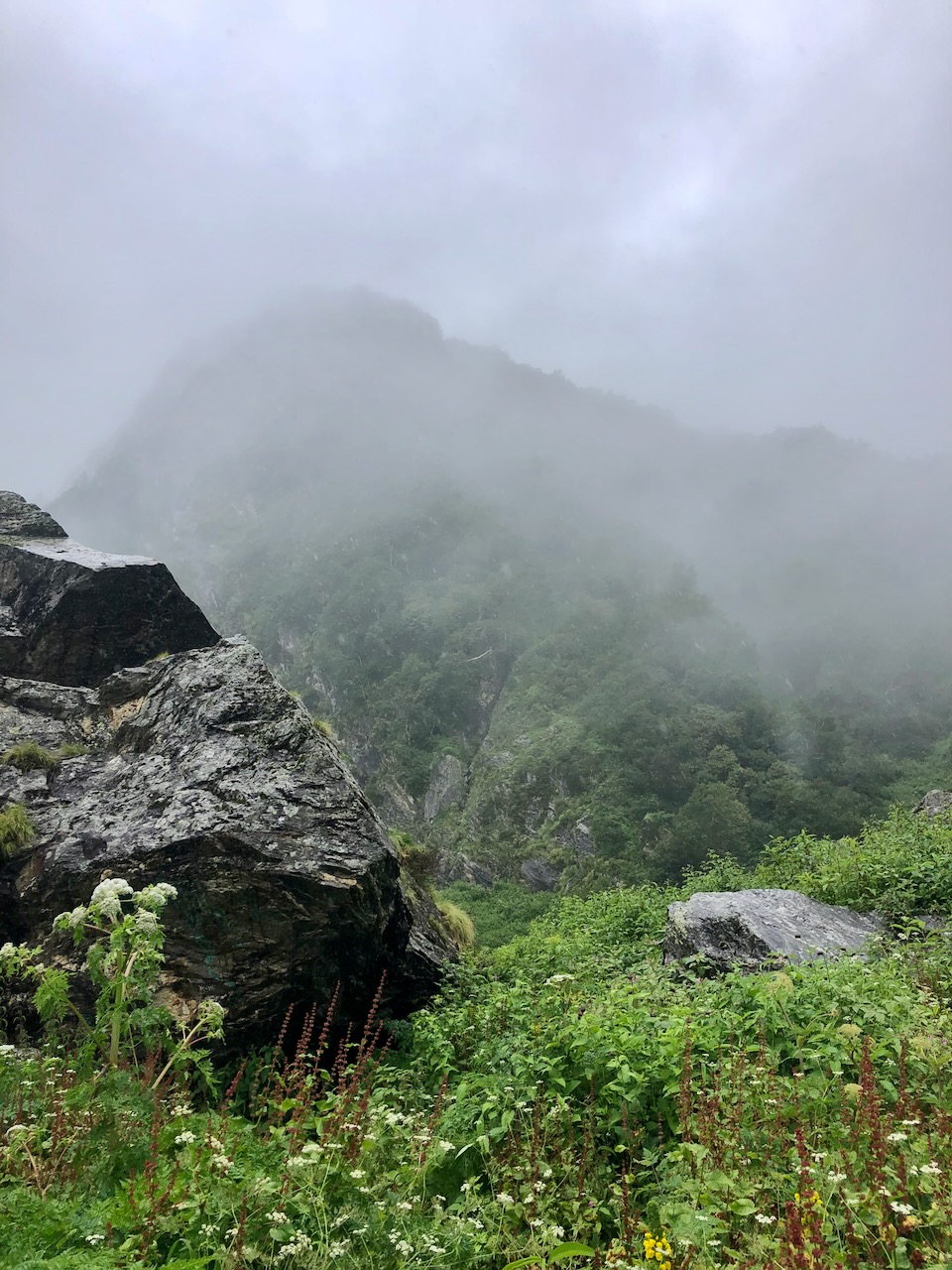
Her fall haunts me. Those unthinkable seconds of awareness, knowing you are hurtling toward your end. How different from a death that comes inch by inch, offering time to prepare, to resist, to rage, or to reconcile. In July 2024, when I left the Valley of Flowers and Joan’s remote grave, a sudden grief overwhelmed me, buckling my legs and landing me in a pile of donkey droppings. Yet Joan’s own words leave no room for doubt. Her diaries brimmed with excitement for the months ahead, with awe for the surrounding peaks, and with delight in her adventure. She did not choose death. She was very much alive.

So why does her story touch me so deeply? Why not my great grandmother, killed in a car crash?  Why not my grandfather, the ‘muck and magic man’, pioneer of organic farming? Why Joan? And why me – the only one in the family drawn, again and again, to the lives behind us rather than those unfolding ahead? Is it because I have no children to anchor my gaze forward? Or is it that I have no children precisely because the voices behind me insisted on my attention?

Gerald (far left), Joan’s father (seated left), Joan (centre) and others, 1907

Perhaps neither, or both. What I do know is that the dead have enriched my life. And in honouring them, in breaking the silence of the unspoken, in unravelling the mysteries and untangling the knots they left behind, I believe their presence has enriched the lives of others’ too. 

Through my recent studies in Family Constellations, I have increasingly come to experience life as a river, flowing on with or without us. We step into its current for longer or shorter spans, mingling in the same waters where our predecessors once moved. What matters is not the length of time, but the resonance we leave behind. Not quantity, but quality.

Birth is the one beginning we all share. But our endings are as varied as our lives. Accident, chance, destiny, choice… no one can know death’s moment or manner, only its inevitability.

So was Joan’s death a tragedy as her obituaries mourned? Or was it a brilliant ending to a life lived fully right into its final breath? 

Draft for Joan’s eulogy by her sister: ‘If in another world kindred spirits dwell together there Joan & her brother Gerald will be found, I think, among a happy throng of pioneers and explorers of all ages. Courage, endurance and an indomitable will were possessed by this devoted brother and sister and both lie buried in a mountain grave & as one of her friends wrote, ‘”already halfway to Heaven”. She started on her greatest hazardous adventure joyfully and she died as she had lived, unafraid –

Joan and Gerald, 1907

I dedicate this blog to my dear friend in Australia, Tas. Over the past six years, corticobasal syndrome (CBS) has been claiming his body, his movement, his speech. And yet his spirit, his humour, his integrity and his enduring delight in friends, family and life itself still blaze. To know him is both an inspiration and a gift I deeply treasure.  

Further details of my exhibition / event on Joan will follow in my next Blog.  

A Pope, a Rabbi and an 80-year-old Victory 

April saw the death of the widely loved Pope Francis, the Jewish festival of Passover, and the gradual build-up to the 80th Anniversary of VE Day (Victory in Europe) in May. An unusual trio of events, yet radio coverage of all three wove threads of reflection into the tapestry of this blog. 

Compassion was central to Pope Francis’s papacy – particularly towards those who are rejected or marginalised. He often spoke about the importance of honouring and never abandoning our grandparents. “If you want to be a sign of hope, go and talk to your grandfather,” he was quoted as saying. They remind us that we share the same heritage, link us to “the beauty of being part of a much larger history… a loving plan [that] is greater than we are.” He also had the humility to say “I am a sinner,” which makes me wonder where that leaves the rest of us!

In a recent Radio 4 Thought for the Day  (at 1:47:45), Chief Rabbi Sir Ephraim Mirvis described Passover as the ‘Festival of Questions;’ a time to ask, to probe, to test assumptions, refine our understanding and uncover the truth. 

If we try to apply the guidance of both spiritual leaders to the forthcoming celebrations of VE Day on 8th May, we may find ourselves asking how the grandchildren of the ‘losers’ of WWII – many of whom had been perpetrators or complicit in Nazi atrocities – might ‘honour’ their grandfathers. How do you love – should you even try to love – someone who has acted immorally, abhorrently, even if those acts were sanctioned or ordered by a higher authority and deemed the right thing to do for Volk and country?

I’m all too aware how unfashionable, controversial and even provocative it is to suggest we spare a thought for the perpetrators. But in keeping with the spirit of my triangle, I am going to ask you to do just that. Many people, from all sides of the conflict, are quick to judge, blame and damn the Wehrmacht soldiers and SS as an indiscriminate mob of ‘monsters’, all morally inferior and wholly undeserving of being remembered. It’s completely understandable. But where does that leave their children and grandchildren? What happens when we continue to draw a line between the ‘good us’ and ‘bad them’, a distinction that may have served its time but no longer helps us move forward? Isn’t one of the most crucial lessons of this horrific chapter in history to recognise that most perpetrators were not monsters, but ordinary people… like you and me… who, through a slow drift of compromise, small decisions and ill judgements became capable of unimaginably heinous crimes? 

Eighty years on, with more than 88% of the German population having been born after the war’s end and a further 11% still children at the time, it’s difficult to place ‘guilt’ for the Holocaust on the Germans of today. After all, people cannot be guilty of things they themselves didn’t do. Yet, like many descendants of Holocaust victims and survivors, some non-Jewish Germans born in the decades after the war still wrestle, often unknowingly, with the unresolved trauma and guilt passed down from their parents or grandparents. They carry what Eva Hoffman aptly described as “the scars without the wound” – invisible wounds that silently shape their internal world and influence their actions in the external world. 

Without detracting anything from the horrors and suffering of the victims, can we imagine for a moment how it might be for post-war generations of Germans to live with legacies of silence, cover-ups, not-knowing, judgement, exclusion, blame or shame in relation to their roots? Mistrusting family stories. Wondering who knew and who did what. What impact does this have on individuals, families, societies, nations and ultimately, the wider world? How can one best deal with such a profound inheritance?

Primo Levi – who, as a Holocaust survivor had every right to think the opposite – declared that collective guilt does not exist. To think that it does is a relapse into Nazi ideology. Both he and Hannah Arendt made a powerful claim: “We are all to blame” for what happened. Collective responsibility is what matters. And that involves understanding how atrocities occur both in society and within the individual. How we become complicit. 

The roots of Nazism found fertile soil in the humiliation wrought by the terms of the Treaty of Versailles and the deeply resented ‘guilt clause’ that placed full blame for WW1 solely on Germany’s shoulders. Applying a similar dynamic to today, could there be a connection between this historical pattern and the rise of the AfD (Alternative für Deutschland), Germany’s nationalist far-right party — a movement fuelled in part by a desire to reassert national pride and, as encouraged by figures like Elon Musk, to move beyond what they perceive as an excessive “focus on Nazi guilt”?

The 2019 survey previously cited revealed that few Germans actually feel guilt and 70% (including 87% of AfD voters) believe their country has now sufficiently atoned for the actions of the Nazi regime. Another source revealed that 75% of young Germans (erroneously) believe they come from families of resistors, while 25% can’t name a single concentration camp or ghetto. As the number of living contemporary witnesses dwindles, disinformation, denial and delusions are spreading. With them, the sense of responsibility risks disappearing too – a deeply worrying and dangerous trend. Knowing firsthand the insidiously destructive effects of being shamed for a familial association with the Nazi era, I can understand how, eighty years on, rejecting any semblance of inherited guilt might feel like a healthy response. After all, who among us wants to feel terminally tainted by the wrongdoings of their forebears? Who wants to have to cut off their roots?

The marriage of my parents in March 1962

I feel fortunate that, while living in England with my German heritage was at times challenging, my parents and their families modelled true reconciliation throughout my life. My British father and German mother married just 17 years after the Second World War ended. Both their families had suffered and lost loved ones and/or homes under the others’ military objectives. Yet both found the courage to drop into their hearts and overcome division and enmity. And that, to me, is where the solution lies: in our hearts.

Patriotism is hollow if it is based only on pride and honour. Shame and conscience lead to a deeper bond. Seeing the world in binaries – in terms of ‘us’ and ‘them, good and bad, right and wrong – shuts down love. Reconciliation becomes impossible. As Britain celebrates its triumph over the evil forces, let us also remember we were not all good and they all bad. Among other short-comings, we too were guilty of antisemitism and of failing to help the Jews more. 

In another recent Thought for the Day, Rhidian Brook warned, “If you can’t see the other side’s humanity, you’ve lost.” 

My 80th Anniversary VE Day wish, therefore, as both a British and German citizen, is for us to follow the example set by the late Pope and Chief Rabbi: to think, to probe, to get uncomfortable, and to find compassion for individuals among the rejected and ostracised.

Eighty years on, might this be the moment to create new rituals of peacekeeping and unity? Without dampening the spirit of national joy, how can we include – and stand hand-in-hand with – our contemporary German friends in celebrations of peace, rather than reinforce historical divides?

Can we develop broader, more expansive narratives that encourage younger generations of Germans to face the difficult and painful truths of their families’ histories and to assume responsibility, not for what was done, but for what is still to be done? Can we remain vigilant against resting on any imagined moral high ground, against believing we would have undoubtedly been resistors and heroes under the Nazi regime? And can we instead recognise how thin the ice of democracy is becoming once again, and how difficult it is, even now, to change the course of history?

Events coming up:

Friday 2nd May, 12-1pm 
The Second World War 80 years on: Is Remembrance Working? 
Angela Findlay and Henry Montgomery In Conversation
National Army Museum, Royal Hospital Road, Chelsea, London SW3 4HT and ONLINE
80 years on from the German surrender to the Allies, Henry Montgomery, grandson of Field Marshal Bernard ‘Monty’ Montgomery and Angela Findlay, granddaughter of General Karl von Graffen of the German Wehrmacht will reflect on their grandfathers’ roles and actions in WW2 and discuss the differences in the histories, legacies and remembrance cultures of the victors and the losers and how Remembrance can remain meaningful and effective for younger generations. 
Info and tickets (free) here

Thursday 8th May, 18.00 – 19.30 
Im Schatten Meines Großvaters / In My Grandfather’s Shadow
Vortrag und Gespräch / Lecture and Conversation 
Marktkirche, Hanns-Lilje-Platz, 30159 Hannover, Germany

Thursday 15th May, 17.00 – 19.00 (UK time)   43. Gesprächslabor, PAKH: The Study Group on Intergenerational Consequences of the Holocaust (ONLINE)? Drawing on my own experiences outlined in my book, In My Grandfather’s Shadow, we will be discussing how such a destructive legacy can be transformed into constructive, reconciliatory approaches and positive actions. More info here: https://www.pakh.de/event/gespraechslabor-40/  

Buy or read reviews on my book, In My Grandfather’s Shadow, here

Looking at our present and future to find the lessons of the past

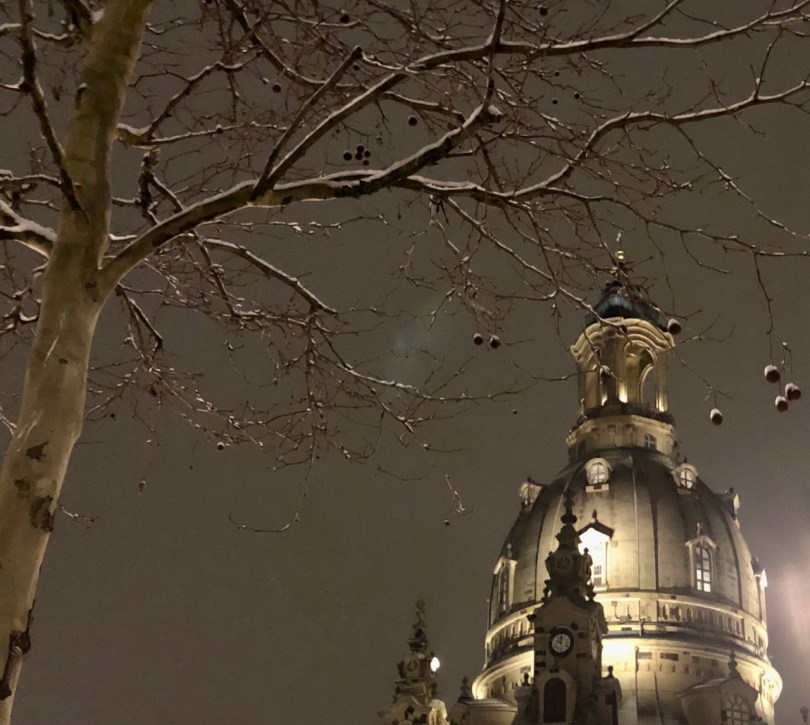
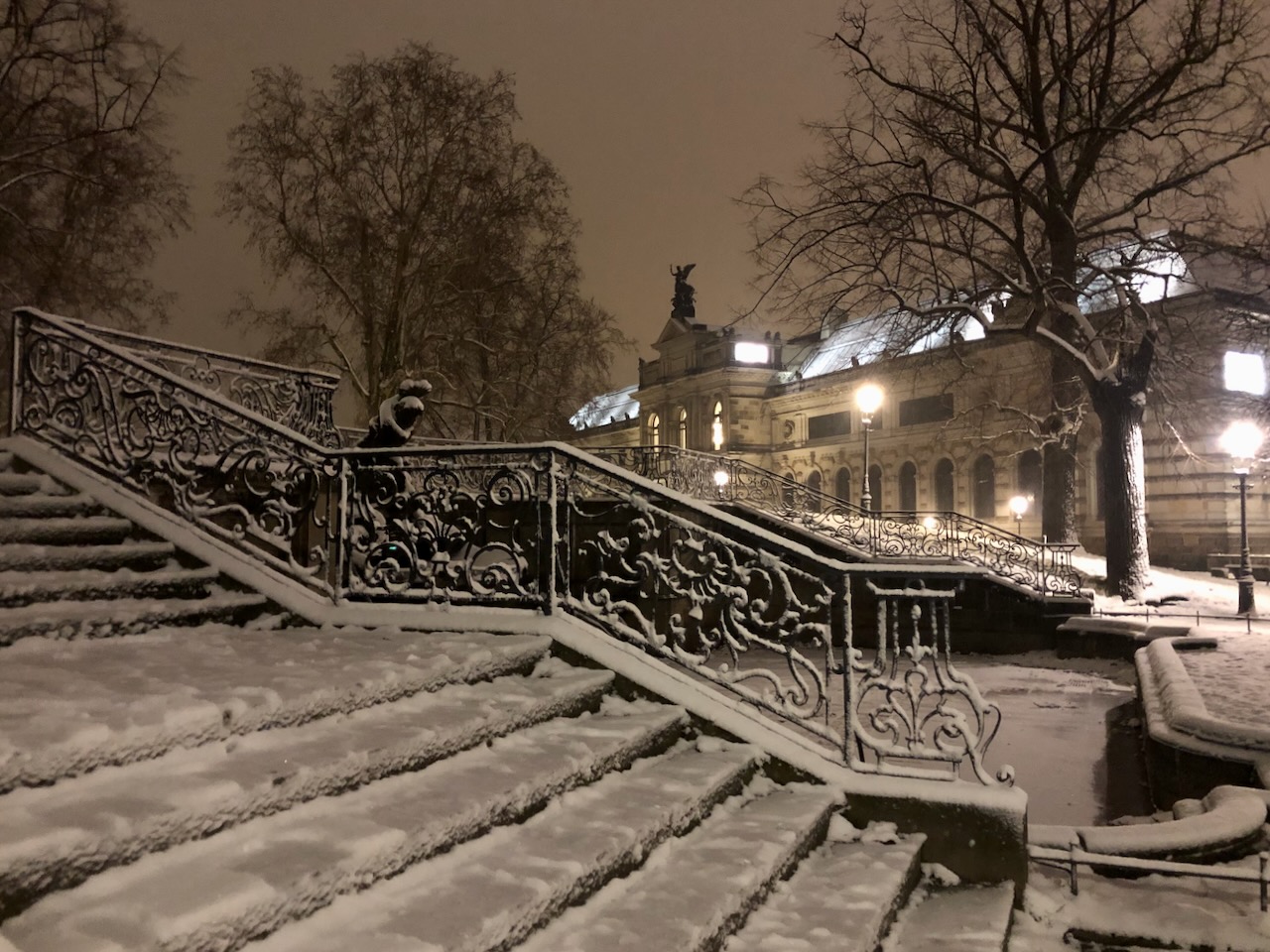
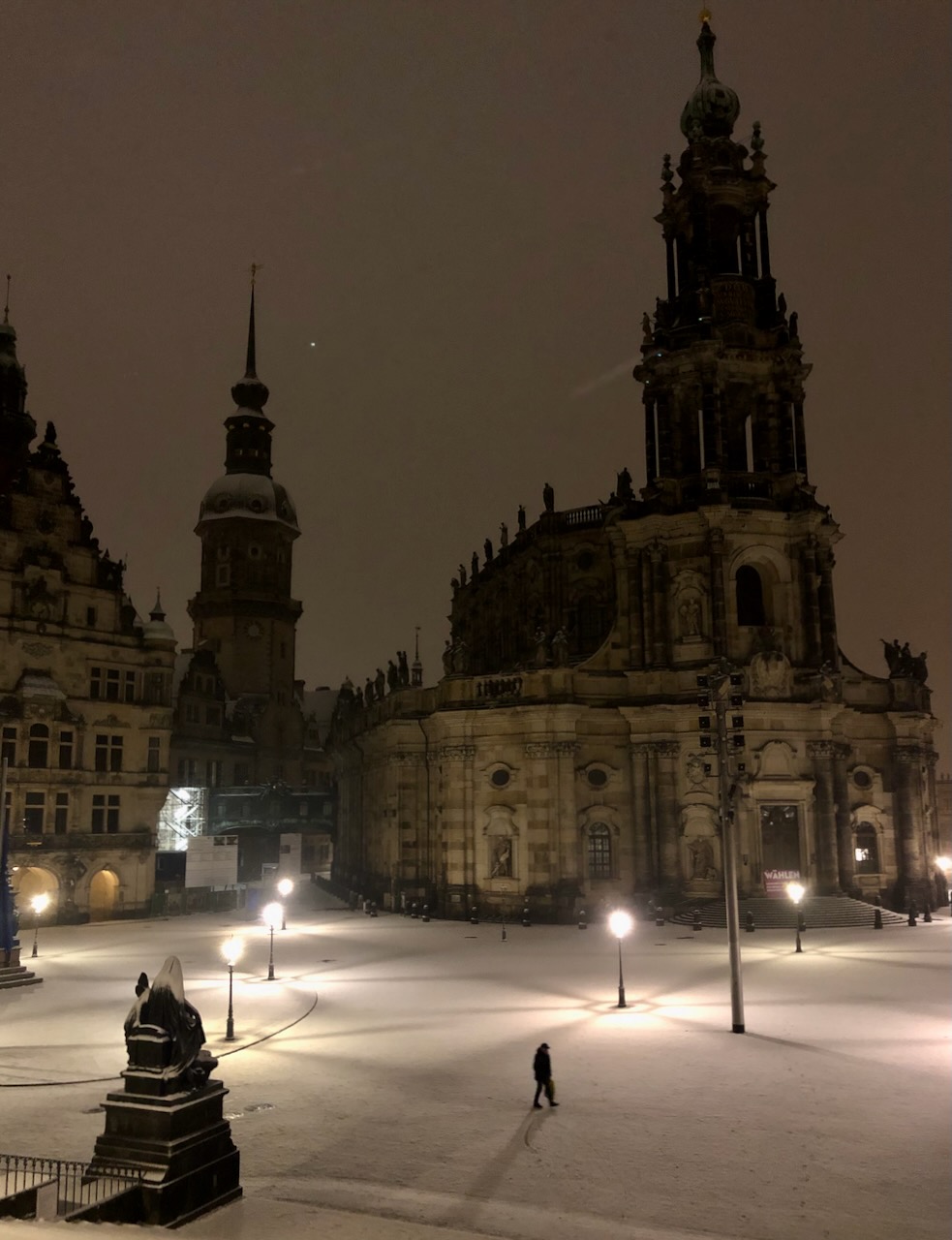
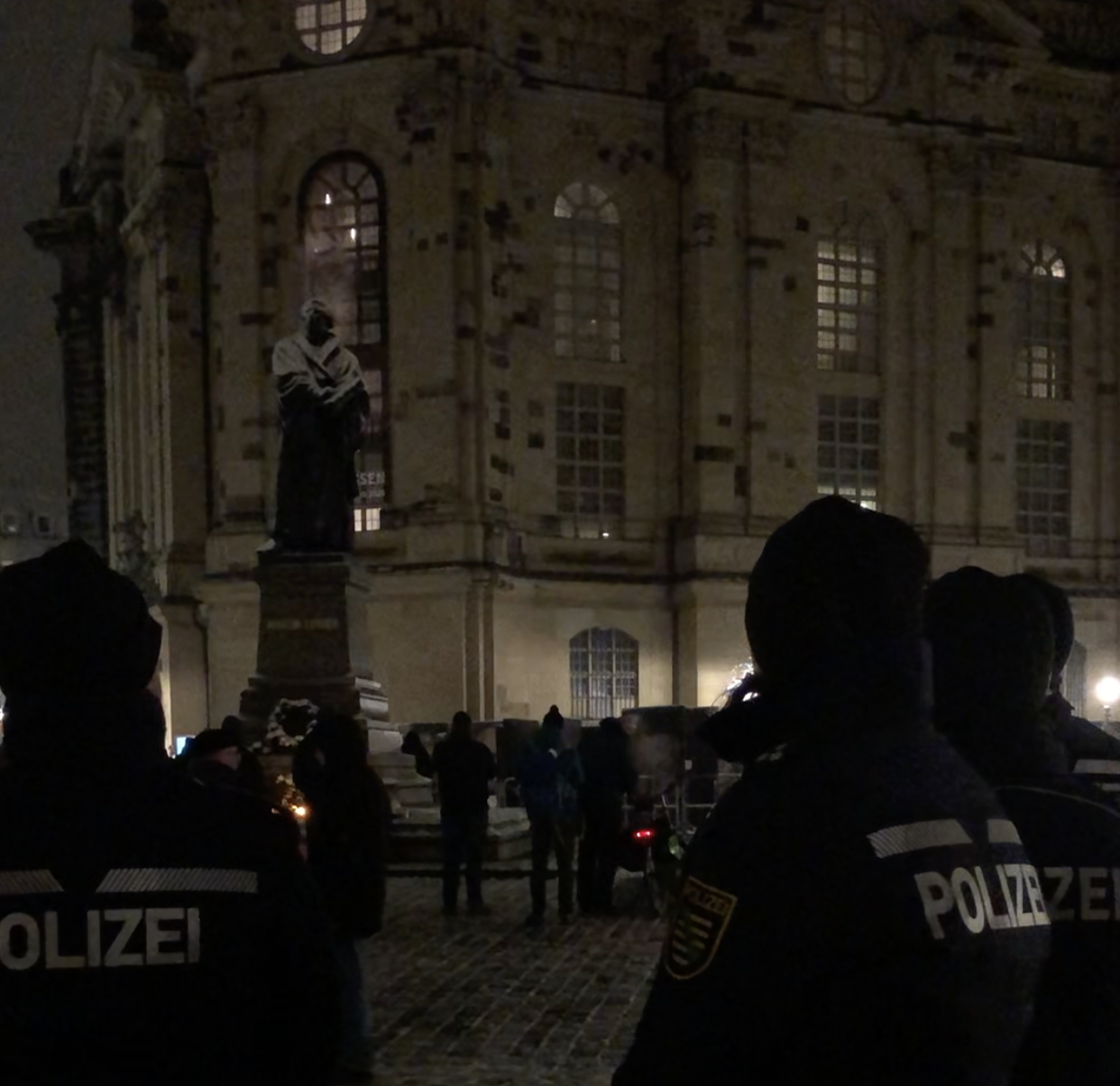
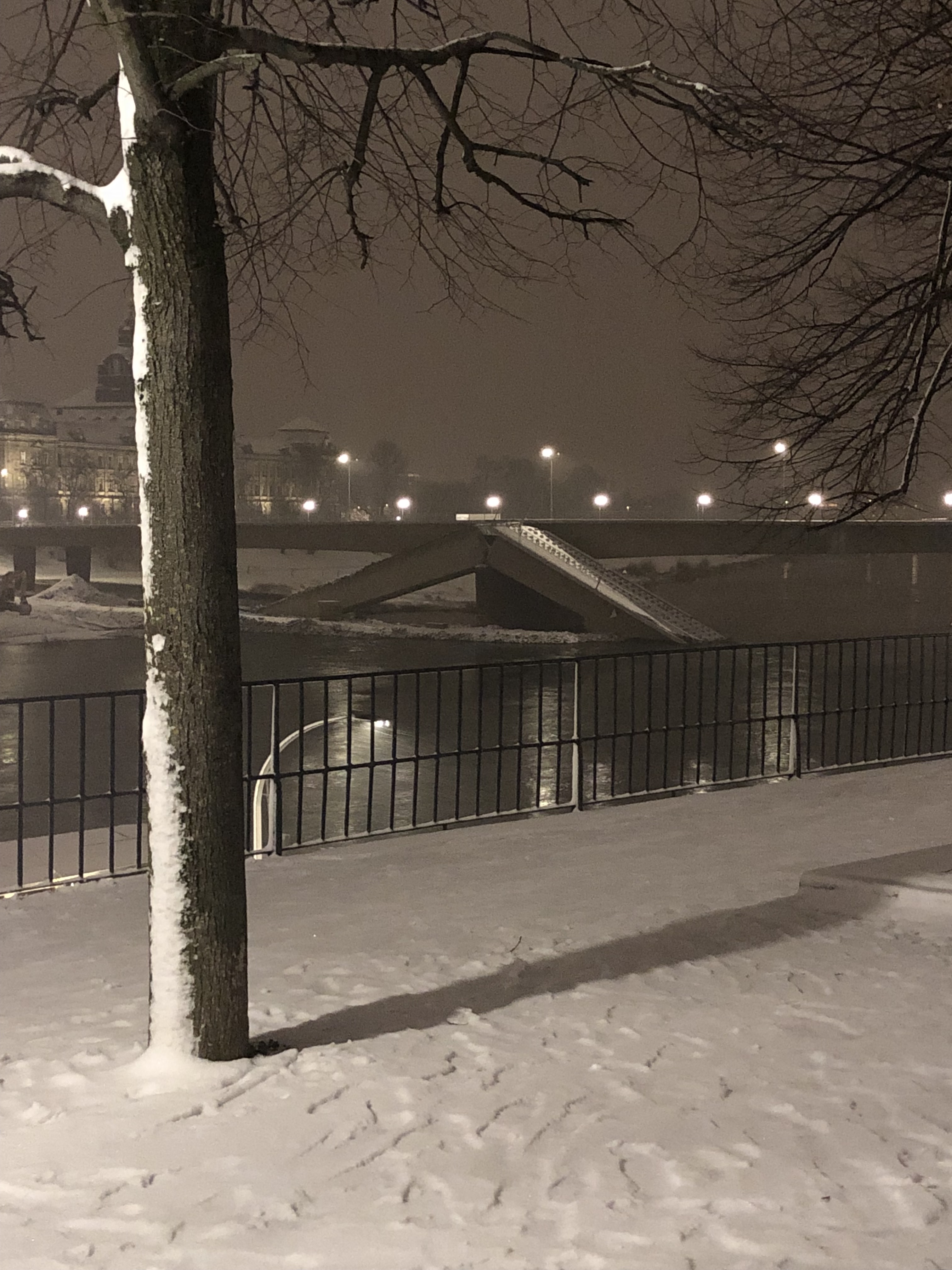
On February 13th at 9.45pm, the bells started; asymmetrical tones infusing the snow-sprinkled city. 

People wrapped in scarves and silence, stared at the dome of the Frauenkirche that 80 years before had been mangled by bombs into a pile of rubble that would scar the city for over fifty years.

Candles placed on the ground flickered benign flames as memories haunted the minds of those who had witnessed a firestorm that melted asphalt, roofs and neighbours alike.

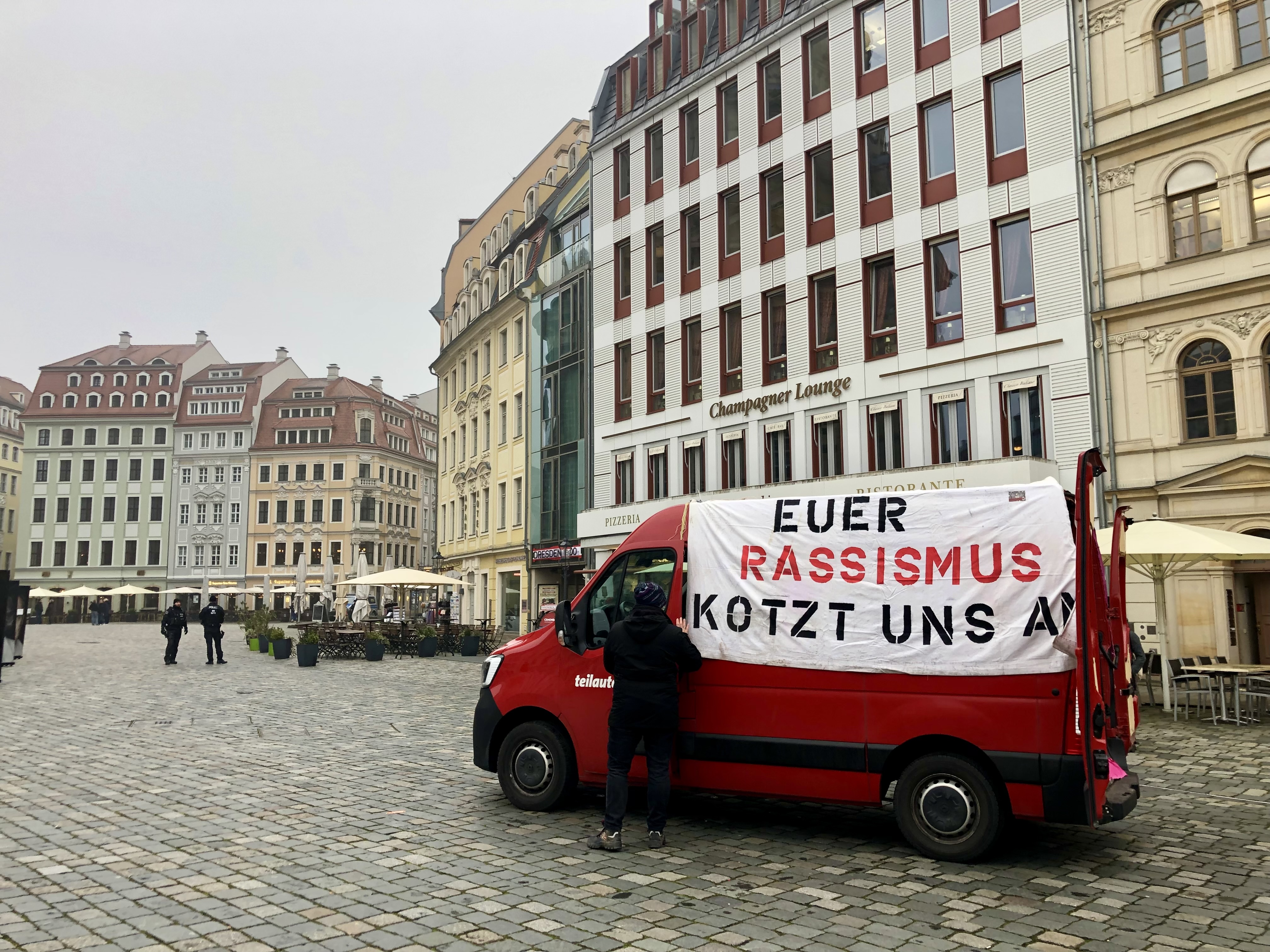
A human chain of hand-holding citizens wove through the resurrected buildings, knitted together both in remembrance and defiance of the re-emerging forces of lessons not learned.

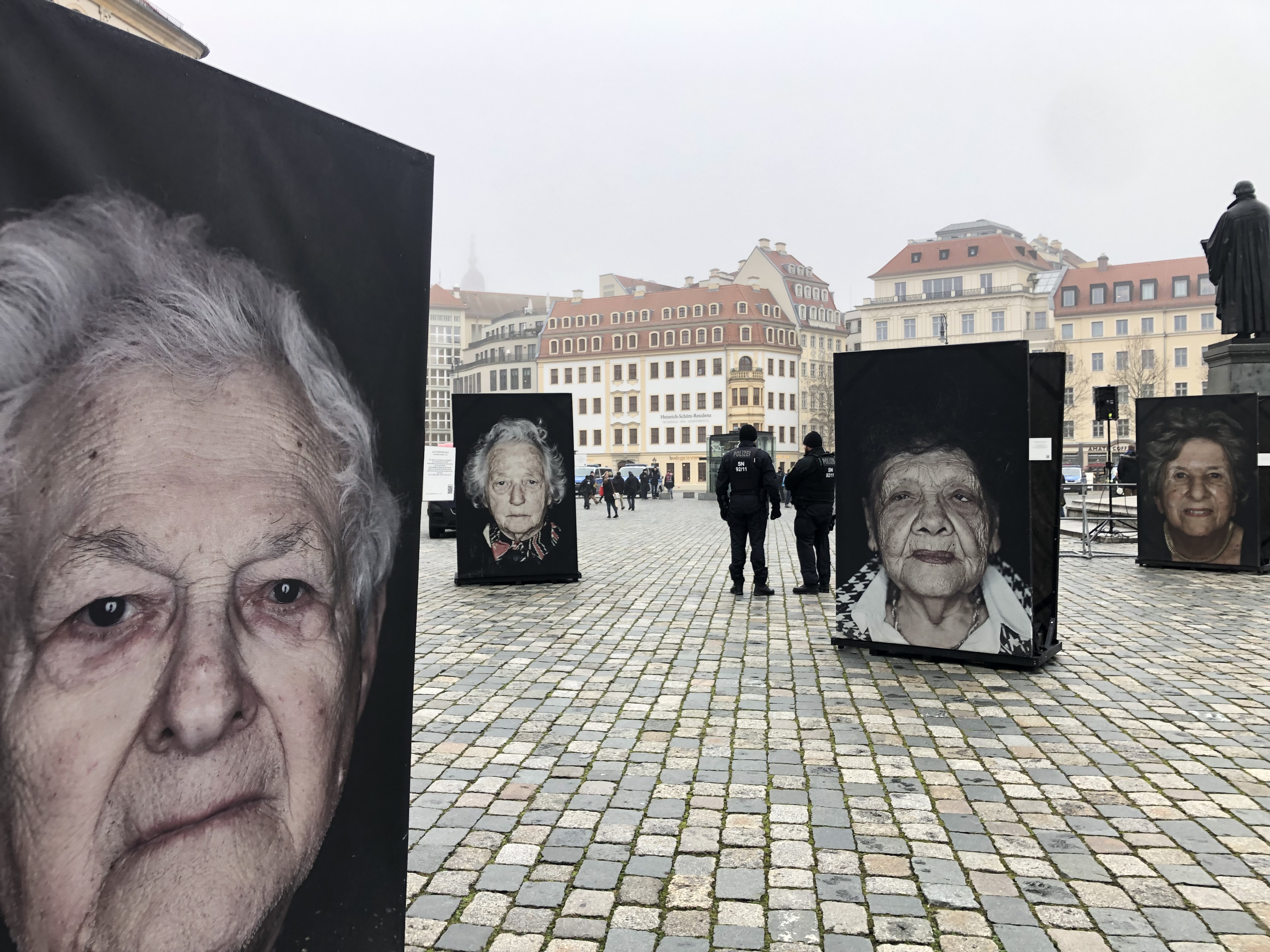
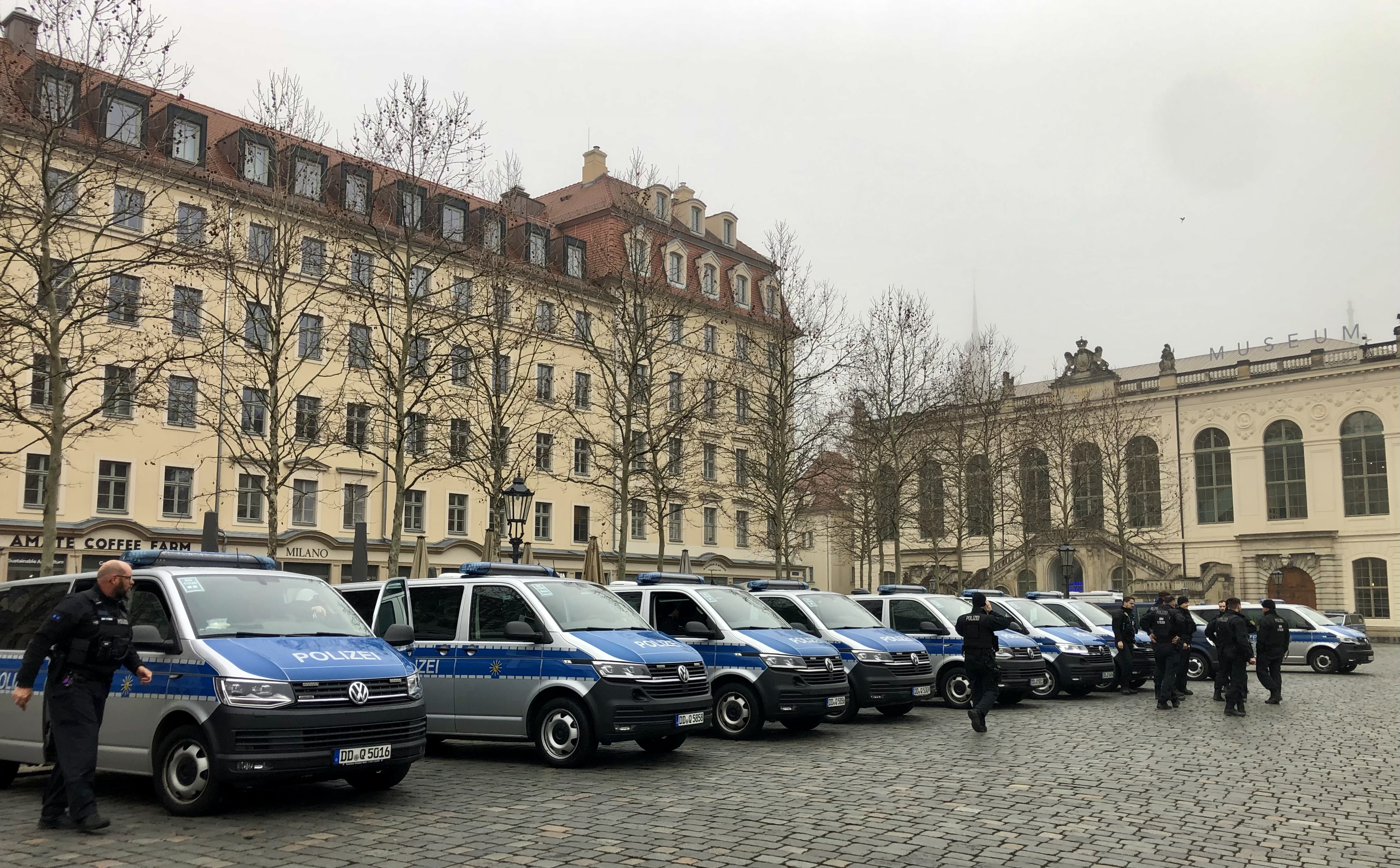
This year’s anniversary of the British and USA bombing of Dresden was determined not simply to look back and roll out familiar but increasingly empty tropes such as ‘Never Again’. Instead, ‘Future through Remembrance’ was the theme repeated through the activities I attended as a Trustee of the British Dresden Trust. Younger generations from Germany, Ukraine, Poland, UK occupied the foreground mingling the wisdom of elders with messages that gave genuine hope for our troubling times. 

Stay awake. Be aware and curious as a child about what is happening around you. Look at history from multiple angles. Step back to see it in perspective. Take responsibility. 

Benjamin Britten’s War Requiem followed by silence in place of applause gave the horror, tragedy and futility of any war the viscerality needed to galvanise us out of complacency into using Remembrance fiercely rather than sentimentally; to unite us as human beings, each with a heart and soul that thump with a longing for peace. 

It was the move from formality to informality, from grand gestures to tiny actions we are all capable of doing everyday, that left the most lasting impression. From pomp and ceremony to conversation; from people in suits or uniforms telling us the importance of remembrance of a time that is increasingly distant, both temporally and emotionally, to a lively exchange between young and old from different nations on the values of democracy and peace.

Peace that is all too easily taken for granted. 

Further Reading and Links

The Dresden Trust

History and politics collide as Dresden mourns its destruction in WWII by Katja Hoyer

DRESDEN: A Survivor’s Story by Victor Gregg

DRESDEN: The fire and the darkness by Sinclair McKay

AIR RAID by Alexander Kluge

The Duke of Kent marks the 80th anniversary of the bombing of Dresden

Commemoration: 80th Anniversary of the destruction of Dresden

l

Question to self: Is speaking out still the right thing to do?

If you haven’t yet seen Jesse Eisenberg’s latest film, ‘A Real Pain,’ I can only urge you to do so. Starring himself and Kieran Culkin [youngest son in Succession!], the pair play two estranged cousins who travel to Poland to fulfil the wish of their recently deceased, concentration camp survivor grandmother for them to visit her former home. It’s essentially a road movie and extremely funny. But the context of the Holocaust and the attempts of third-generation Americans to come to terms with it, makes it also profoundly moving, thought-provoking and important. 

Millions of people world-wide are still grappling with the aftermath of those appalling years of Nazi rule. More, rather than fewer, stories of survivors and first-hand witnesses are coming to light told by descendants who have finally found ways to articulate what their forebears couldn’t. My own, In My Grandfather’s Shadow, published in 2022, is testament to the painful process of peeling back the layers of incredulity in which the extremes of both cruelty and suffering are wrapped. For many, it is justifiable to judge or blame ordinary Germans for not speaking out or revolting against the wrongness of what was happening in clear sight. Despite acknowledging their justified fears, it would have been the right thing to do.

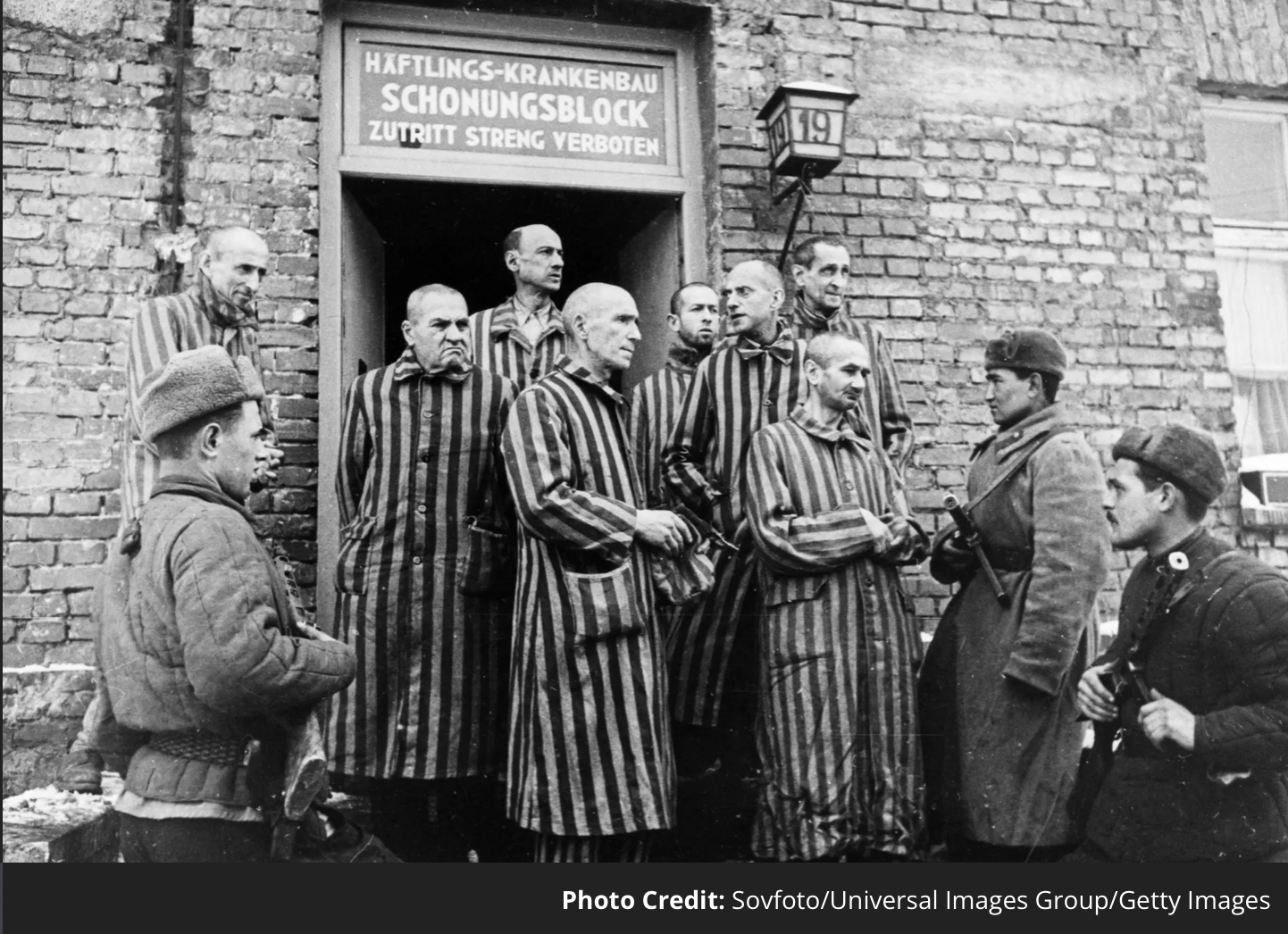
As we approach Holocaust Memorial Day marking the 80th anniversary of the liberation of Auschwitz by Soviet forces in 1945, we are asked to remember the horrific consequences of the crimes that, in part, were enabled because people did not speak out. We will once again repeat the heartfelt ‘Never Again’ that has been chanted like a mantra over the decades. But is it enough?

“Voting right-wing is so 1933”

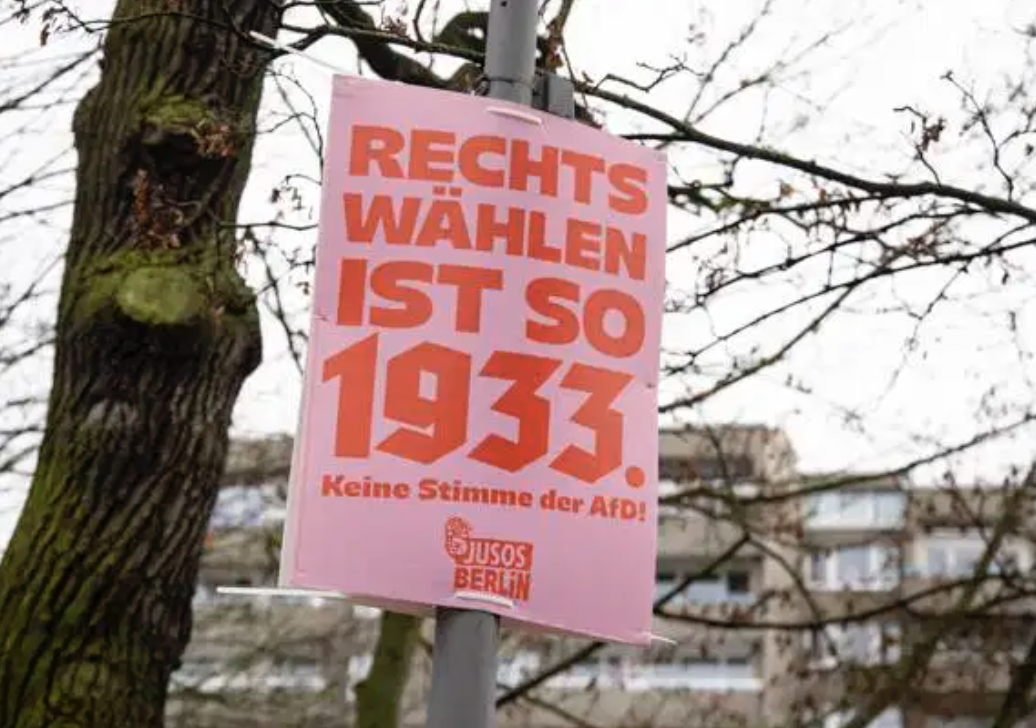
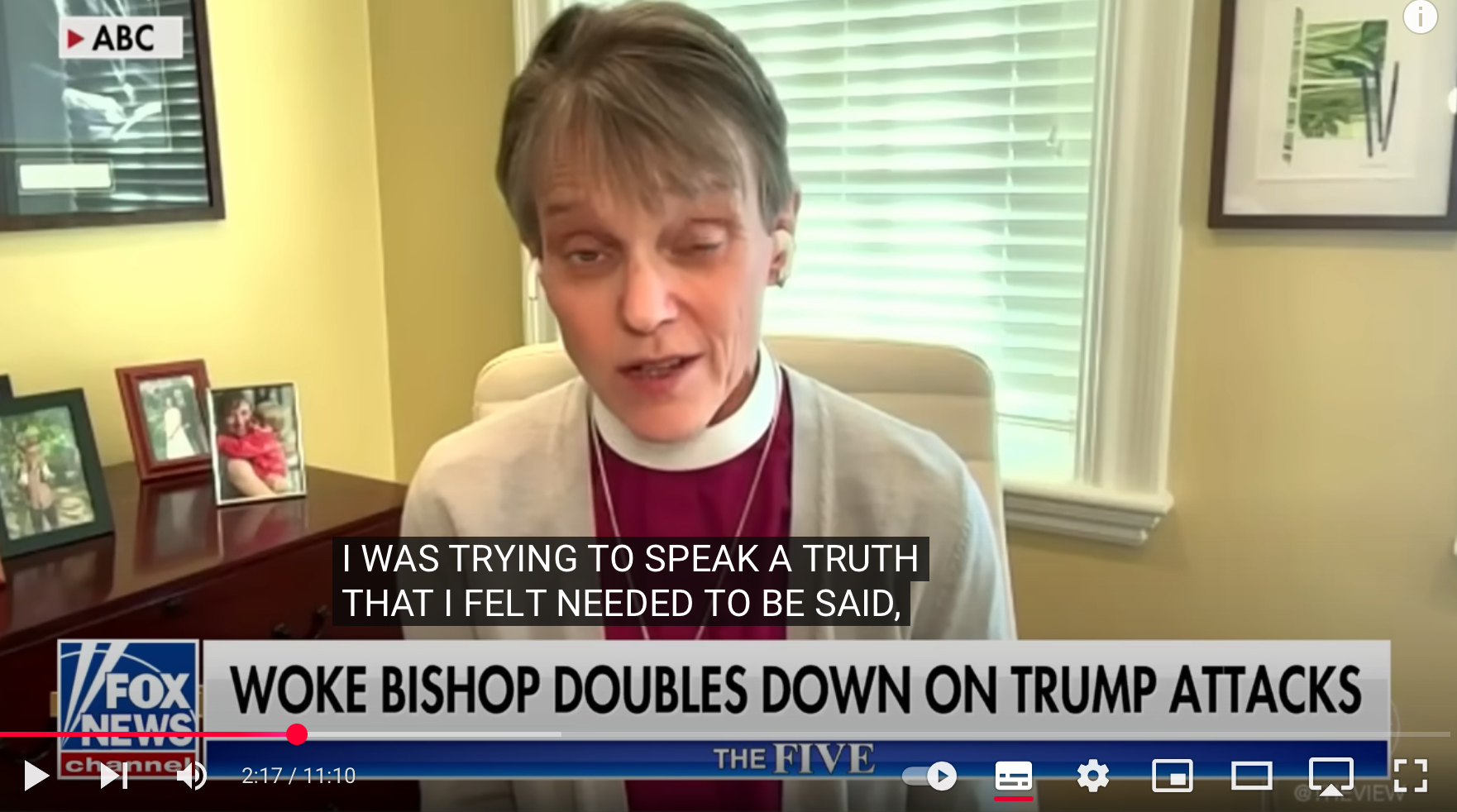
Across the globe, the roots and shoots of far-right policies are taking hold with renewed vigour. In highly vigilant Germany, ‘Voting right-wing is so 1933’ is a campaign slogan for left-wingers. But calling out discrimination and anti-immigrant policies, becoming an ‘upstander’ rather than a bystander has become increasingly perilous, even a danger to life. I wonder how Bishop Mariann Budde’s recent controversial sermon at the inaugural prayer service at Washington National Cathedral will play out. Referencing immigrants and LGBTQ+ individuals among others, she calmly but directly asked President Trump “to have mercy on the people in our country who are scared now.” Will she be cancelled, trolled, fired, discreetly removed from her post? So far she is refusing to apologise for speaking her truth. Was it brave, wise, right? Or, as he and his supporters claim, ‘nasty, woke, inappropriate’ and she a “Radical left hard line Trump hater”? Bizarre as it sounds, by seeking a path of compassion, did she inadvertently shame and dent an ego as big as the world?

As someone with (non-Jewish) German roots, I feel like it is both in my DNA and a conscious personal responsibility to speak out in the face of a perceived injustice or wrongdoing. However, I am beginning to feel an even stronger impulse. In these times of widespread latent and reactive vitriol and rage, I have started to listen into the other side’s point of view rather than – or at least before(!) – slating it. To create a tiny pause, a space between the attack and counter-attack model so many discussions rapidly descend into. It’s like stepping back from an easel when you have been immersed in some detail in order to see the whole picture. For when we speak out against something with conviction but without seeing the back story behind the other’s conviction, we are basically assuming a moral and intellectual high-ground that imparts the message that ‘they’ are wrong (inferior) and ‘we’ are right? This never goes well! Trump’s return to the White House proves that.

Decades of trying to comprehend the behaviour of ordinary Germans eighty or ninety years ago have revealed to me that many of them won’t have been so different to many of us today, i.e. more concerned with their own lives – milking cows, running businesses, keeping children warm and fed – than politics. Looking away, keeping stumm becomes a basic survival tactic. But the outrage humans feel in the face of endless discrimination, inequality, injustice, harm can rapidly turn to despondency and disaffection when we realise we can do little more than sign a petition or share a rant on social media or among friends. Eventually we might become numb, at worst immune to the wrongdoing. I know that I personally read, watch and listen to the news far less than I used to because the drip-feed of madness, badness and sadness feels toxic and induces inertia. I have no idea if this is maturity, complacency, disheartenment, a nauseating lack of humour or an equally nauseating sense of self-righteousness, but I have lost some of my more outspoken tendencies and anger at the world and replaced them with something that is hopefully more productive but still relevant to these times.

My prison work showed me that the most valuable action I could offer prisoners was to listen and to hear them. Not just their stories, excuses and justifications, but what came before. The drivers of their behaviour. With their defences down, trust, compassion and understanding could grow. Attitudes and actions quietly changed without them being shown to be wrong.

I am not sure if this is the right way to go in general life. The story of the Zen / Chinese Farmer comes to mind with its ‘We’ll see…’

It’s certainly not a quick-fix solution. But maybe it’s a tiny antidote to the constant stoking of anger? A drop towards the creation of a kinder world in which wider discourse and a greater tolerance of difference are possible. And ‘Never Again’ regains its urgency and weight. 

A few links to that don’t necessarily reflect my views, but are accessible sources to pursue your own research.

A Real Pain Review

A Real Pain Trailer

Germany’s present is not Germany’s past by Katya Hoyer

Who is Mariann Edgar Budde, the bishop who angered Trump with inaugural sermon?

I am not going to apologise’: The Bishop who confronted Trump speaks out

This liminal space…

It will be different for everybody. But I love the quietness of these in-between days… 

That bloated weariness from endless festivities and good will. The jaded sparkle of unwrapped gifts spilling out of recycling bins. The jingle of carols fading as the challenges of Christmas are banished into as distant a future as any one year allows. 

For me there’s a sense of peace. A release from the storm of traditions. A disorientation. A heart full of gratitude.

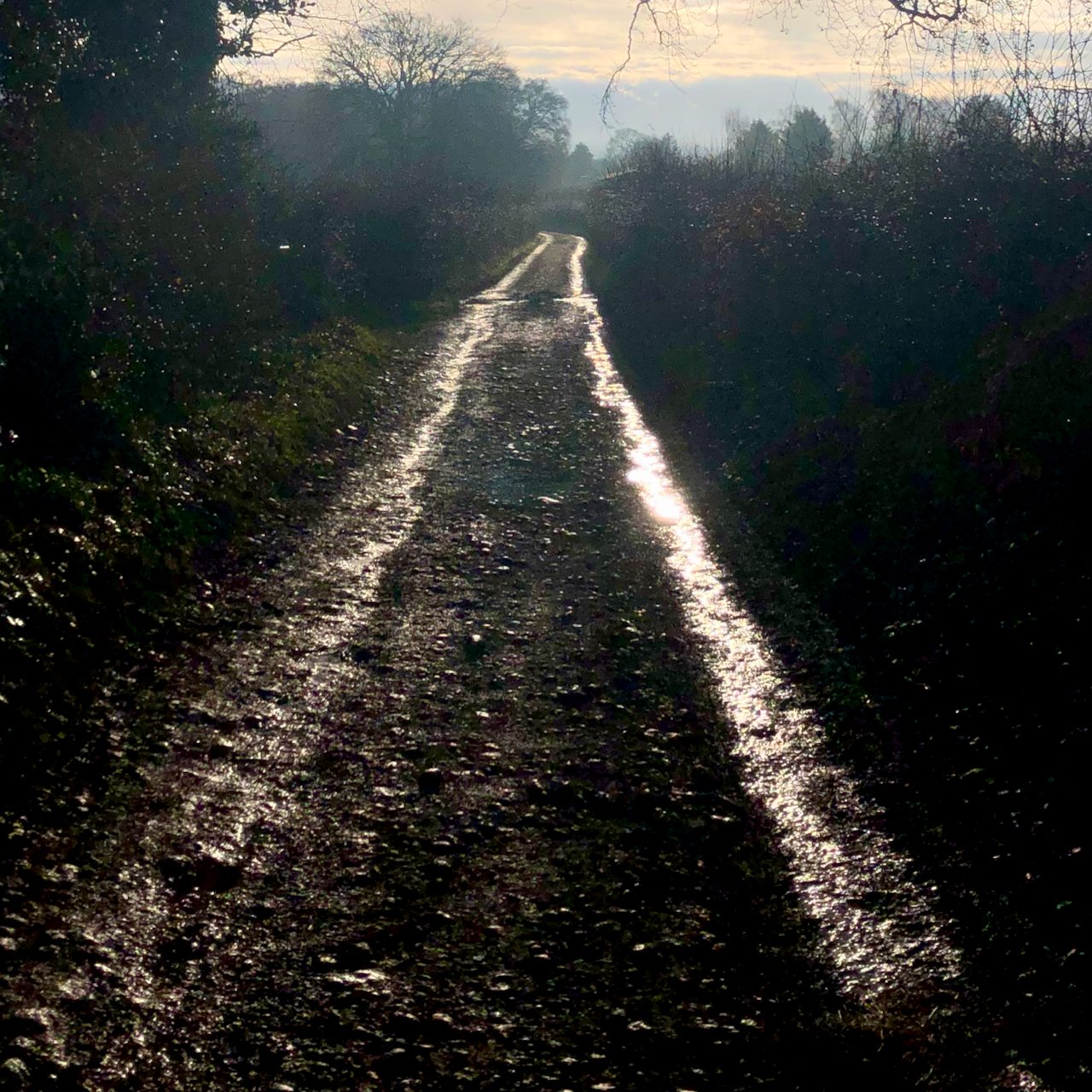
With New Year still to celebrate, there’s just one last real or symbolic cork to pop. Then it’s back to reality with its resolutions, rhythms and routines. Bleak mid-winter stretched unruffled, a blanket of dark fields tucked into the horizon over a sleeping, muddy countryside.

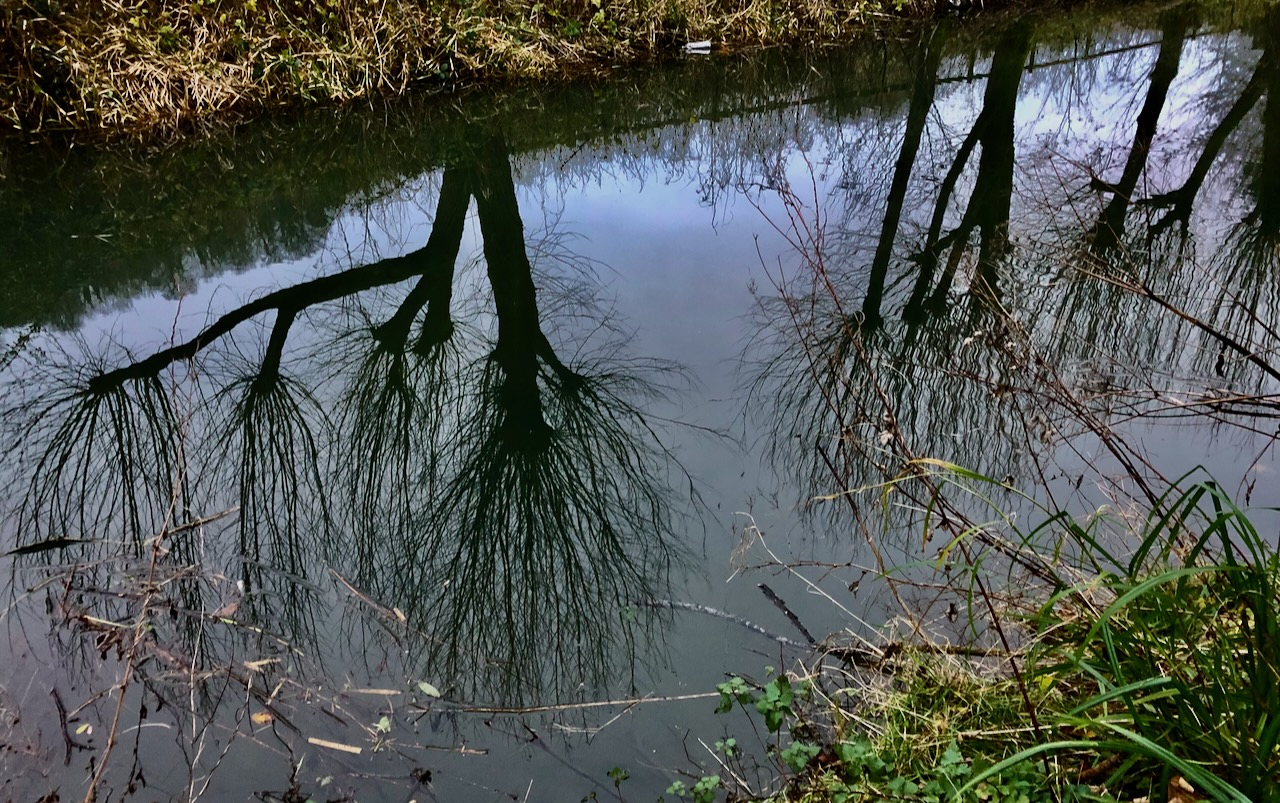
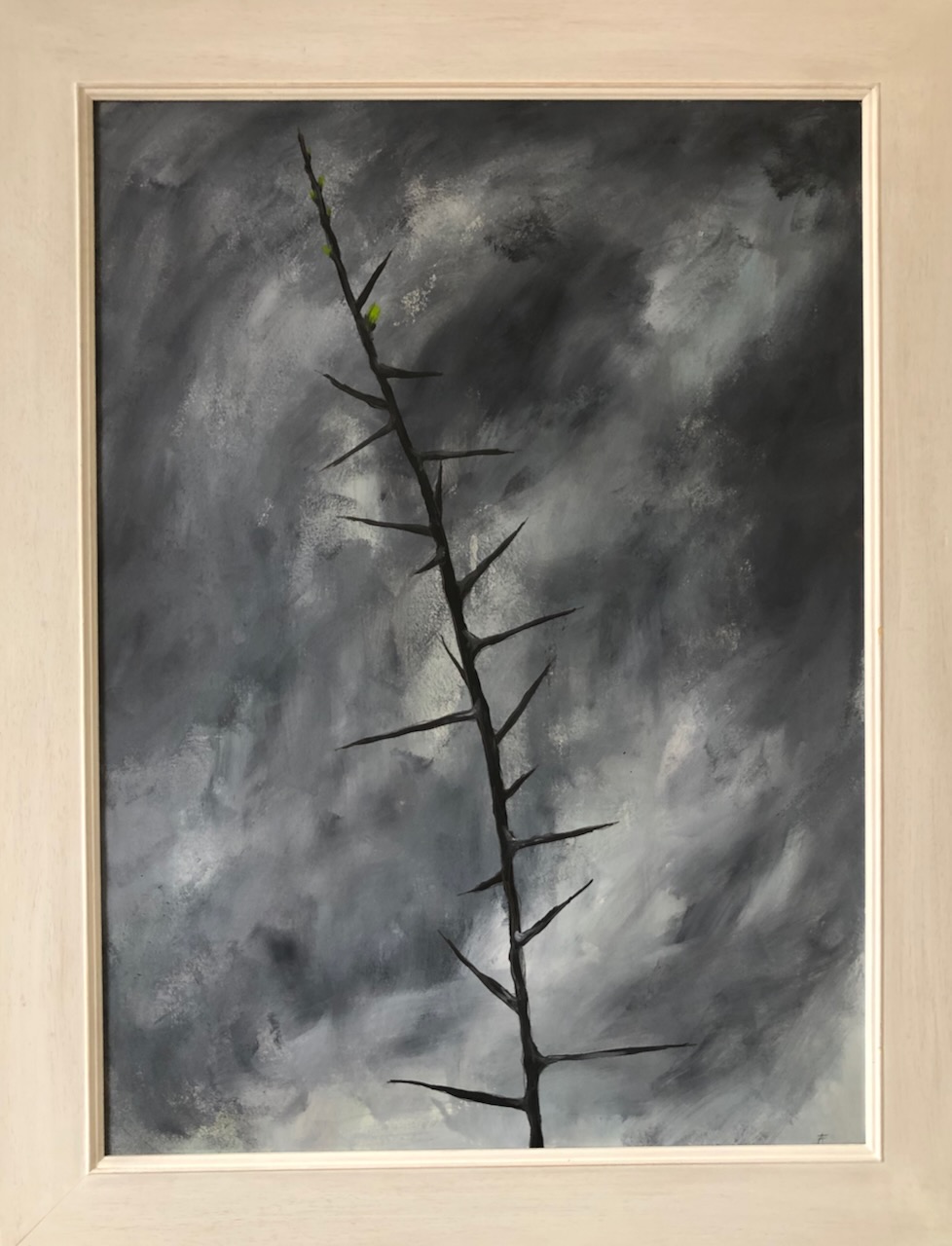
Trees stand brittle, skeletal. We know Spring will come, but in the immediate months ahead it is easy to lose faith that colour, light and warmth will ever return. 

Looking closely, however (with a slightly alarming nod to climate change), small promises have already started to decorate bare branches like fairy lights. A little pink blossom here, a tiny green bud there.

But it is out of sight, below the earth’s surface, where the real hope and action thrive. 

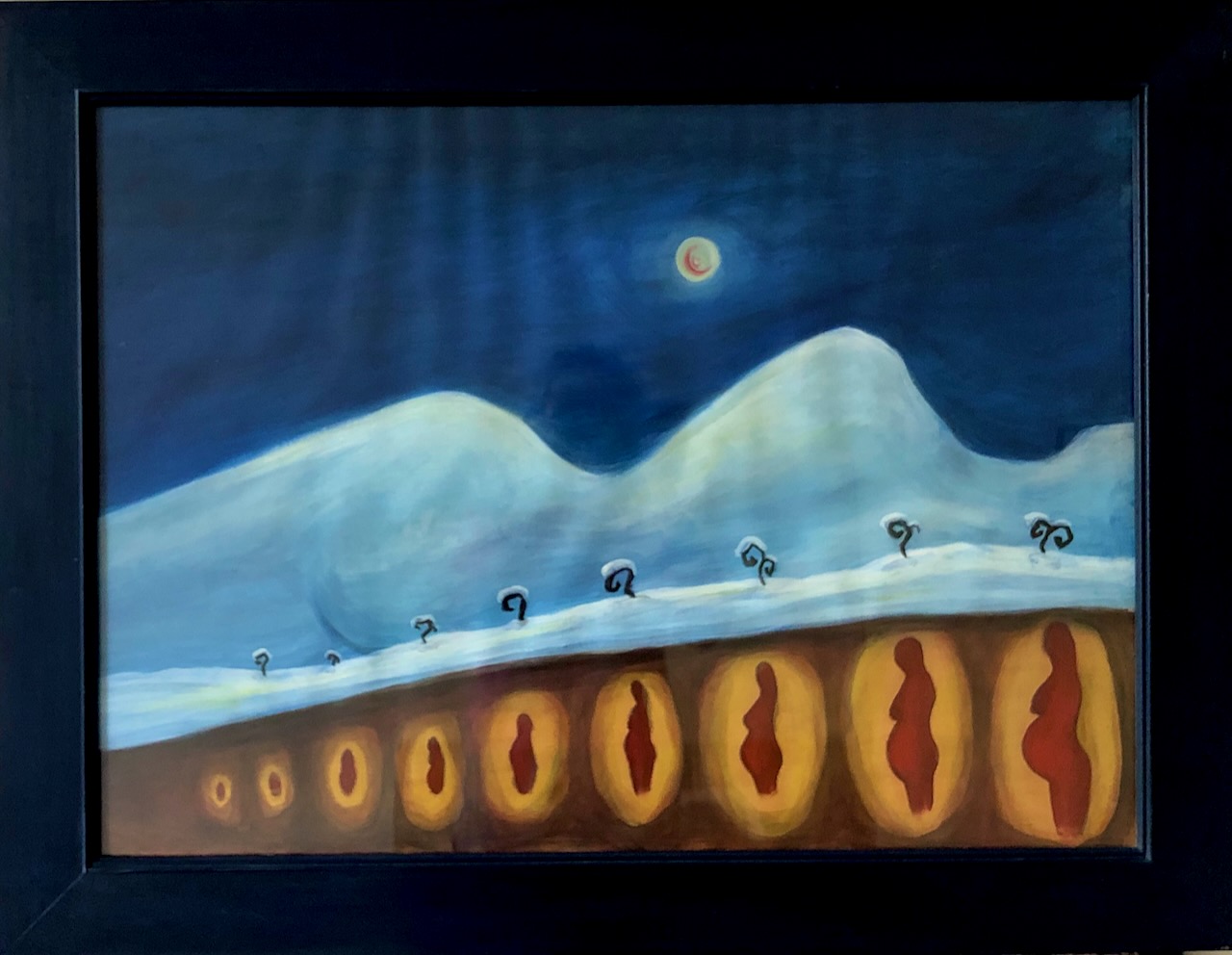
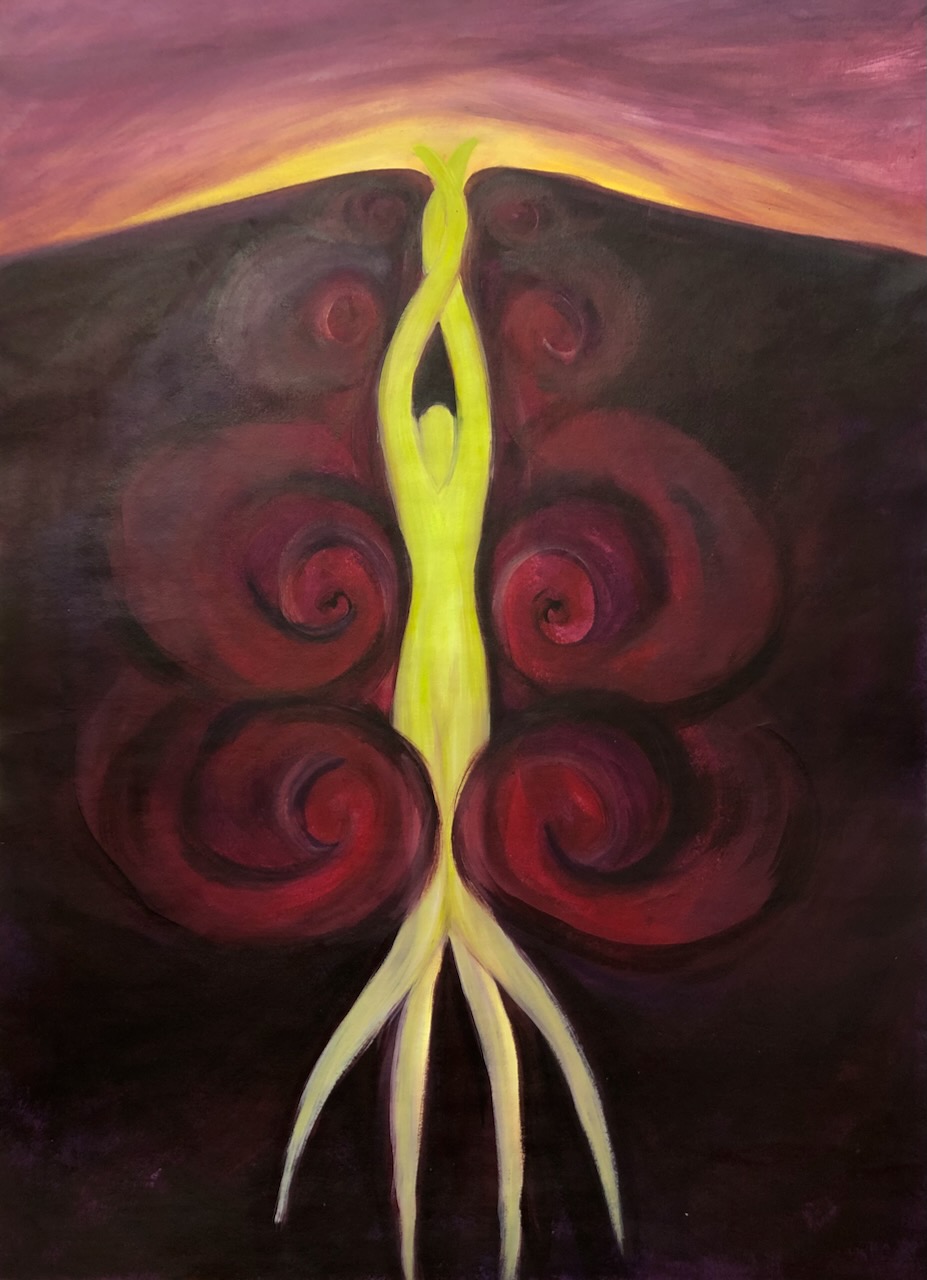
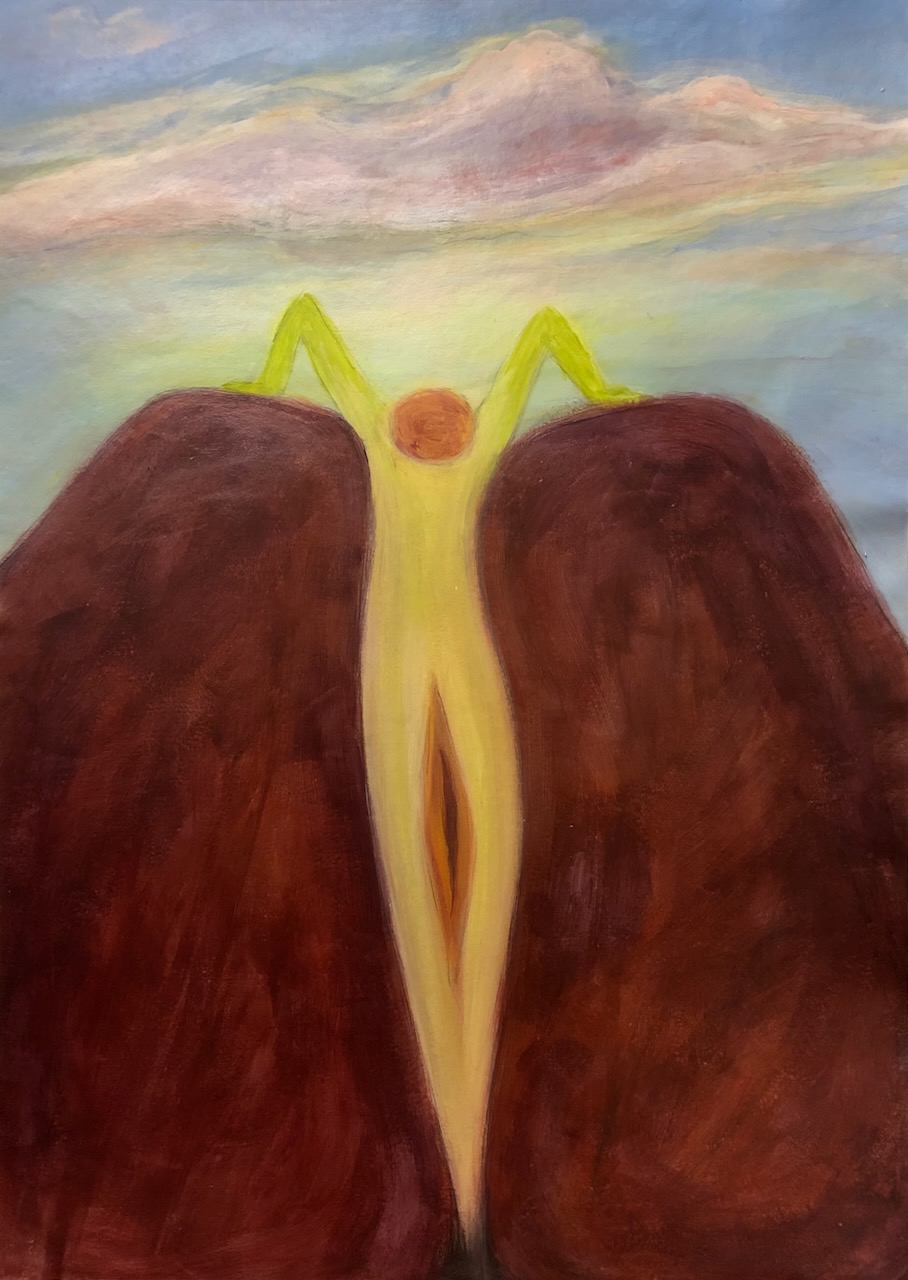
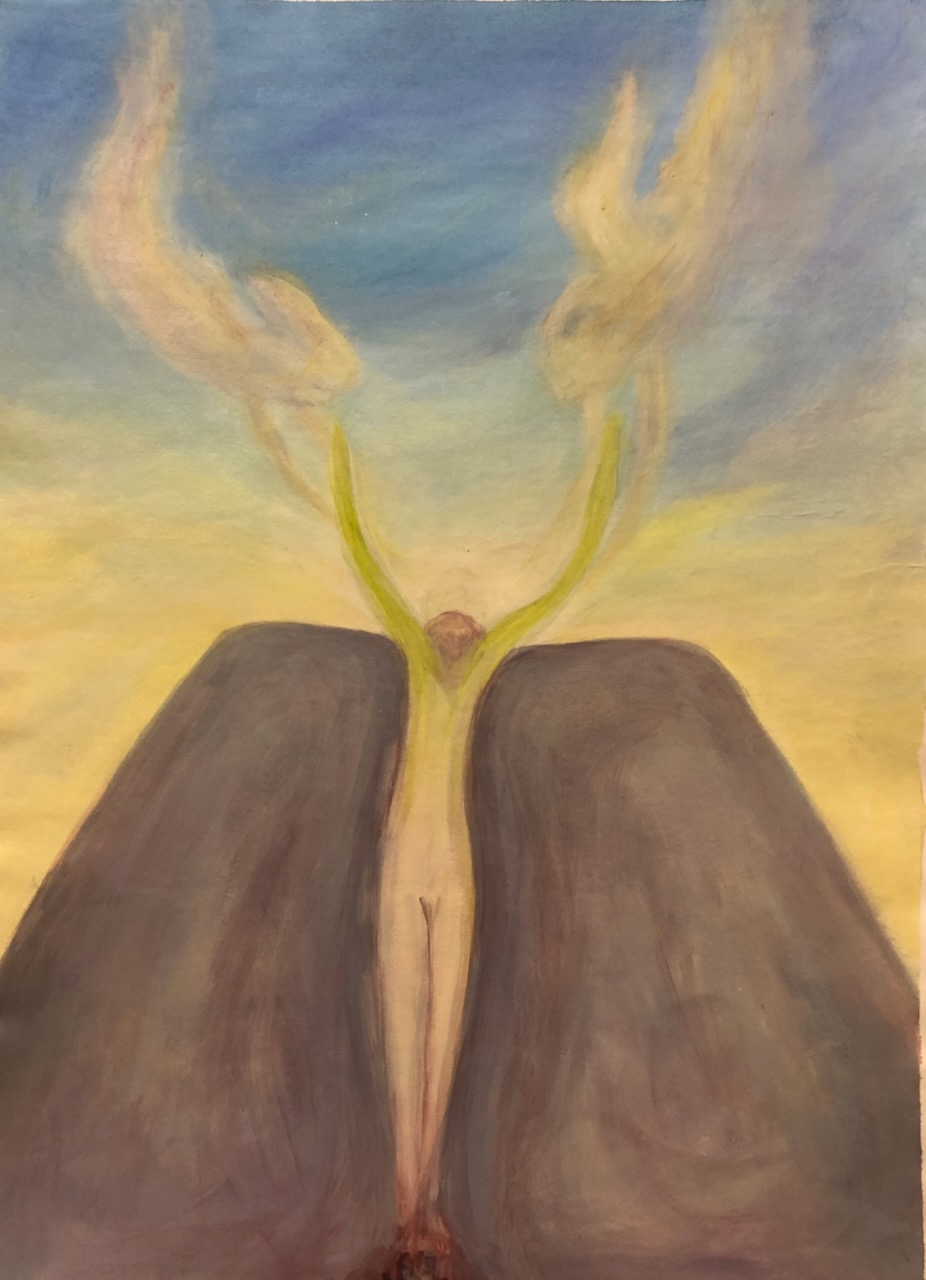
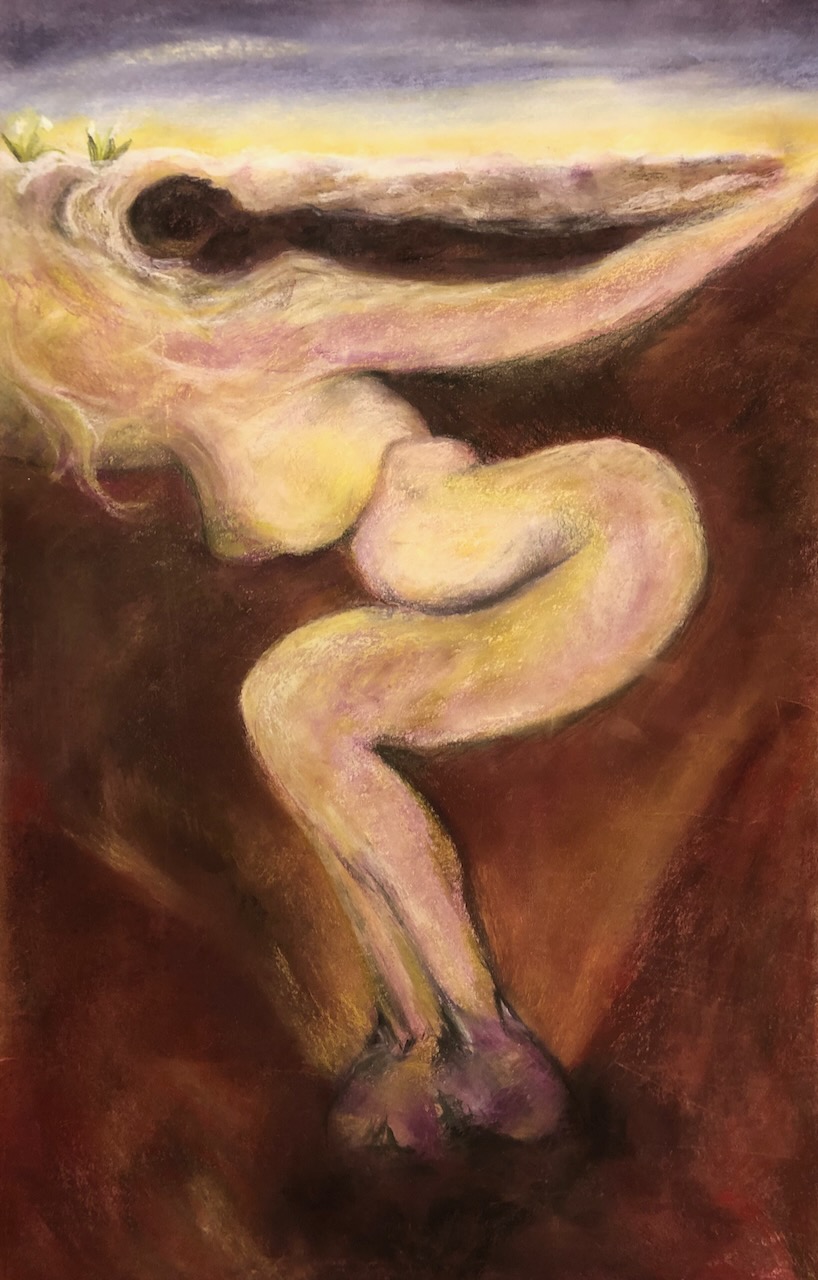
My recent move from storage to studio has uncovered numerous sketches and paintings I haven’t looked at for over twenty years. They were painted in the nineties when I lived on the west coast of Ireland consciously engaging with the four seasons and their corresponding echo within the inner rhythms of a human lifespan. Inspired by Celtic mythology and various spiritual traditions, my thirty-something-year-old self saw winter as Mother Earth’s pregnant womb, and Spring the birth and dance of youth. 

On a soul level, we experience winter in those times when it appears nothing is happening. When everything seems dead, stuck, over. It can feel eternal and deeply uncomfortable. We might search for escape in company, drink, exercise, work… or chocolate and movies. Might make wrong decisions through impatience to crank up the old and move forward. Then one tiny shoot of new growth breaks through the surface and into our lives. The season changes and Winter’s purpose is revealed as saps start to rise unstoppably. Energy returns after its slump… or slumber. Because of its slump or slumber. New creativity flows. Our soul’s spring has arrived.

In the meantime, this darkness can nourish us. It invites stillness and rest. Quiet intimacy. Soul. Life is tiring… winter offers us a chance to withdraw and replenish our energies. So I welcome these dark mornings, short days and early nights – ideally interrupted by crisp sunshine to brighten the spirits – as a period of germination. An opportunity to lay off the guilt of achieving less as we enrich more. A time of holding rather than pushing.

With all that in mind, I wish you a gentle, inspiring, meaningful and happy path into your New Year.

(All the paintings above are a mixture of acrylic and/or pastel and roughly 75x55cm)

Remember, Remember… we all lost

‘Tis the season to remember. In our progression through the grey gloom of this autumn [just 18 minutes of sunshine since 28th October apparently!] and the celebrations of Halloween, All Souls, Samhain, Guy Fawkes and November 11th, the dead take centre stage. Leaves and forest floors redden while poppies bloom on jacket lapels, village monuments and shop counters. This Sunday in London, as on all Remembrance Sundays, red wreaths will be laid by royalties, senior politicians and Commonwealth High Commissioners before some of the last surviving WW2 veterans march or are wheeled past the Cenotaph.

We have been collectively remembering Armistice Day since 1919, the first anniversary of peace at the end of World War One. Remembrance has since been extended to both World Wars and all those who have given their lives in service to defend our freedoms. It is a hugely important day for the British, the Commonwealth and many other countries around the world, albeit not in Germany. There, since the Middle Ages, 11am on 11.11 has marked the start of the carnival season and, on a more serious note, Armistice Day is not considered to have welcomed the beginning of peace but years of intense unrest and far worse horrors to come. 

British and Commonwealth dead

I often dedicate my November blog to our traditional, deeply moving and impeccably executed rituals of remembrance, but not always without a little questioning too. Through the 15 years of research for In My Grandfather’s Shadow, I came to appreciate a far broader narrative of WW2 remembrance than that which Britain generally embraces and teaches. Granted there has been welcome progress over the decades with the inclusion of women as well as the huge contributions and sacrifices made by Gurkha, Indian, Sikh, African and Caribbean servicemen, among others. But there is still widespread ignorance of the bigger context.

Russian dead

When I give my talks, I often use statistics. They provide a solid, black and white foundation of fact to my more psychological / philosophical ponderings. So often these figures shock. For example, when I ask people to guess the total losses, including civilians, of say Russia, Germany and Britain in the Second World War they are usually so far out that they themselves are horrified. I challenge you to make a guess… I’ll put the answers at the end of the blog. One man literally went white when he realised how wrong he had been in his thinking or, by his own admission, his lack of thinking. Another woman recently wrote to tell me how my book had opened her eyes in so many ways. “First off,” she said, “the big realisation of how little I have understood of the two world wars, my ignorance of those times and the aftermath.” This despite attending remembrance services all her life. 

German dead

The quantity of deaths doesn’t mean each death was any less keenly felt. But I think she voices what is probably true of most of us. I certainly was ignorant of the broader landscape of loss and destruction, and no doubt still would be if I hadn’t had German roots that needed excavating and hadn’t made trips through Germany and Russia that exposed me to other ways of looking. The World Wars are the episode in history with which the British are often accused of being unnaturally obsessed. And yet, as a nation, we often present it as a deceptively straightforward story of good triumphing over evil. The victors write history after all. 

Every nation has its ‘chosen traumas’ and ‘chosen victories’ which serve as cornerstones to its identity and prevent true healing from the past as they continue to play out in the present. We frequently have binary views of how we should feel based on – to use the reader’s words again – “simplistic, reductionist understanding… goodies and baddies…” Rarely have we “considered what it must feel like to have a different identity…” 

I really appreciate and admire this woman’s soul-searching honesty. The humility and gentle opening to hearing the other sides’ stories gives me huge hope.   

Healing, reconciliation, peace, forgiveness… all goals we strive for within our culture of Remembrance… can best come about when we become familiar with and find some understanding for the other side’s experience. Maybe, with our greater distance from both the acute trauma and the impassioned jubilation of our forebears, that is what generations now and in the future can strive to do more of. 

Answer to my statistics question: Out of the around 60 million people killed in WW2, 26 million were Russian, approx. one third of them military and two thirds civilians. Between 7-9 million Germans died, roughly 6 million were soldiers and 3 million civilians. In the United Kingdom, just under 451,000 were killed. That’s 383,800 military, including combatants from overseas territories (Crown Colonies and the Indian Empire), and 67,200 civilians.

In the Flow: Ode to the River Severn

First Encounter with the River Severn

June 1999. You wouldn’t know it was there. Nothing suggests the proximity of Britain’s longest river as you amble down the canal towpath at Frampton-on-Severn. I have a hand-painted sign promising Cream Teas to thank for its discovery. The arrow lured passers-by through a hedge and into a wonderland of round tea tables bedecked with embroidered tablecloths and mis-matching crockery and arranged beneath the boughs of a huge copper beech. A tall man navigated trays of silver teapots and 3-tiered cake stands along narrow paths mown through the long grass. 

I had moved back to England after 10 years living abroad and was checking out the Stroud area as a possible new home. The top floor of the accompanying Lodge was up for rent, I soon learned… would I like to look at it? A sweeping staircase carried us up two stories and into an apartment of hexagonal rooms adorned with small fireplaces. Then, bending double, two miniature doors awkwardly birthed us onto a roof terrace and into the breath-taking view that would become my world. The River Severn stretched like a taut blue sheet tucked into a distant shore. Low tide mud sparkled. Silence was broken only by the soft chink of teacups on saucers.

Life on the River Severn

I would live in that apartment on the Severn for nearly three years. Every day I walked along the banks of the estuary, my breath aligning with the deep ebb and flow of the tides. 

I witnessed the stoicism of a little oak tree holding its precarious own through the seasons, storms and floods; watched cows amble home at dusk accompanied by the swirling black clouds of starlings that condensed and evaporated in the gentle orange glow.

This was where I became a professional artist, scooping rich, melted-chocolate mud into buckets, mixing it with paint and dancing sky and weatherscapes onto large canvases with my hands. 

On many a chilly morning I stood on the Severn’s banks with mugs of coffee and expectant crowds waiting for the world’s second highest Bore to swash its way up the estuary and carry brave surfers upstream. Once, in the pitch of night, I crossed its swirling waters in a rickety old boat and returned in the frozen pinks of dawn. 

A Severn Bore

In later years, I would park my camper van on its shores, drink chilled glasses of wine in the sun’s last rays and sleep through rising moons and meteoric showers. 

I have a rich store of happy, muddy memories of the River Severn.

Walking the Severn Way from source to sea

For the past eight months I have followed its 220-mile course [albeit not in order] from source to sea; from the peaty uplands of Plynlimon in Mid Wales, north-east through Powys and Shropshire, then south through Worcestershire, Gloucestershire to where it sweeps into the Bristol Channel… the Celtic Sea… the Atlantic Ocean. 

Map from the Severn Way Guidebook by Terry Marsh

Within a mile of its boggy birth, the infant Severn starts tumbling through the Hafren Forest, gathering erratic speed like a toddler until the ‘Severn-break-its-neck’ Falls plunge it into the valley that will bob it to its first town, Llanidloes.

Assuming a steadier gait, it meanders through undulating pastureland before looping north to cross the Welsh/English border at Crew Green. Growing prosperity expands its girth into a watercourse that cuts through floodplains as it heads into the dense cluster of the period buildings and timber-framed mansions that formerly made up one of Britain’s most prosperous wool and cloth trade towns, Shrewsbury.

Past the birthplace of Charles Darwin, a glassy stillness and almost imperceivable flow belie the Severn’s true force as it smoothly snakes its path between overgrown banks of willow, elder and the deceptively pretty pinks of thuggish Himalayan Balsam.  

History punctuates the landscape with traces of Roman forts and roads, a Saxon chapel, the evocative ruins of the Cistercian Abbey at Buildwas, 16th Century market halls and sandstone caves that once sheltered hermits or stranded travellers unable to cross the river. As the Severn bullies its way south through gorges striped by coal, limestone and iron ore strata, the legacies of once booming industries and trades are memorialised in mines, railway stations and canals that once linked local towns across Britain. 

Regular bridges drip feed the imagination with the industrial revolution. Ironbridge boasts the world’s first iron bridge cast by the grandson of Abraham Darby in 1779 in the wake of his grandfather’s revolutionary discovery seventy years earlier that coke could be used for smelting iron instead of charcoal. Further downstream, the fortified town of Bridgnorth perches on a sandstone cliff. Once the busiest port in Europe, it hummed with the sound of iron works and carpet mills, breweries and tanners until the 1860s when railways heralded the end of river trades.  

Following its increasingly wide, milky-coffee-coloured road, vocabulary from school geography lessons surfaced from the recesses of my turbulent education: Oxbow lakes, flood and sandbanks, confluences; soaring cumulonimbus or, equally frequently, water-dumping nimbostratus clouds.

South of Gloucester and around the peninsular at Arlingham, the now tidal Severn breathes in the sea and releases the river out into the vast estuary. At Purton, the ghostly remains of a graveyard of more than 80 sunken barges reveal man’s hopeless struggle to halt the erosion of the banks. Through the working docks at Sharpness and past a pair of looming power stations, the two Severn Bridges rise like misty goalposts. Portals to the open sea. And an abrupt, somewhat unspectacular end to the Way.

With the walking completed, there remained just one more aspiration: to surf the Severn Bore. A bad dream thankfully warned this novice surfer with a fear of water off. Instead, I rode the Bore in a boat driven by its champion.

We set out on a slack tide in the early dawn, deposited two surfers into the tidal stream and waited. You can hear the roar as it approaches. Pulled by the force of the moon, a small line of foam scrabbling its way against the flow comes into view, gathering body until it is a swell. And then you are on it. Riding the crest as salty water from far away thrusts its way up the river dragging the sea in its wake like a heavy cloak.

Immersed in the perfect balance of the 4 elements, the smile on my face remains for many hours. The magic of Sabrina will last a lot longer.