A Pope, a Rabbi and an 80-year-old Victory 

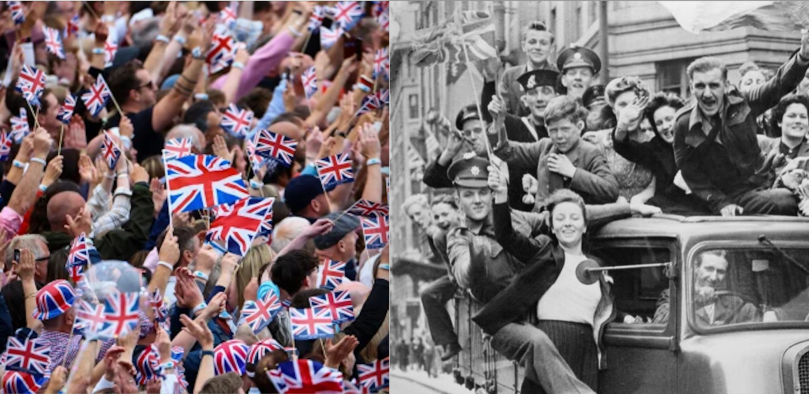
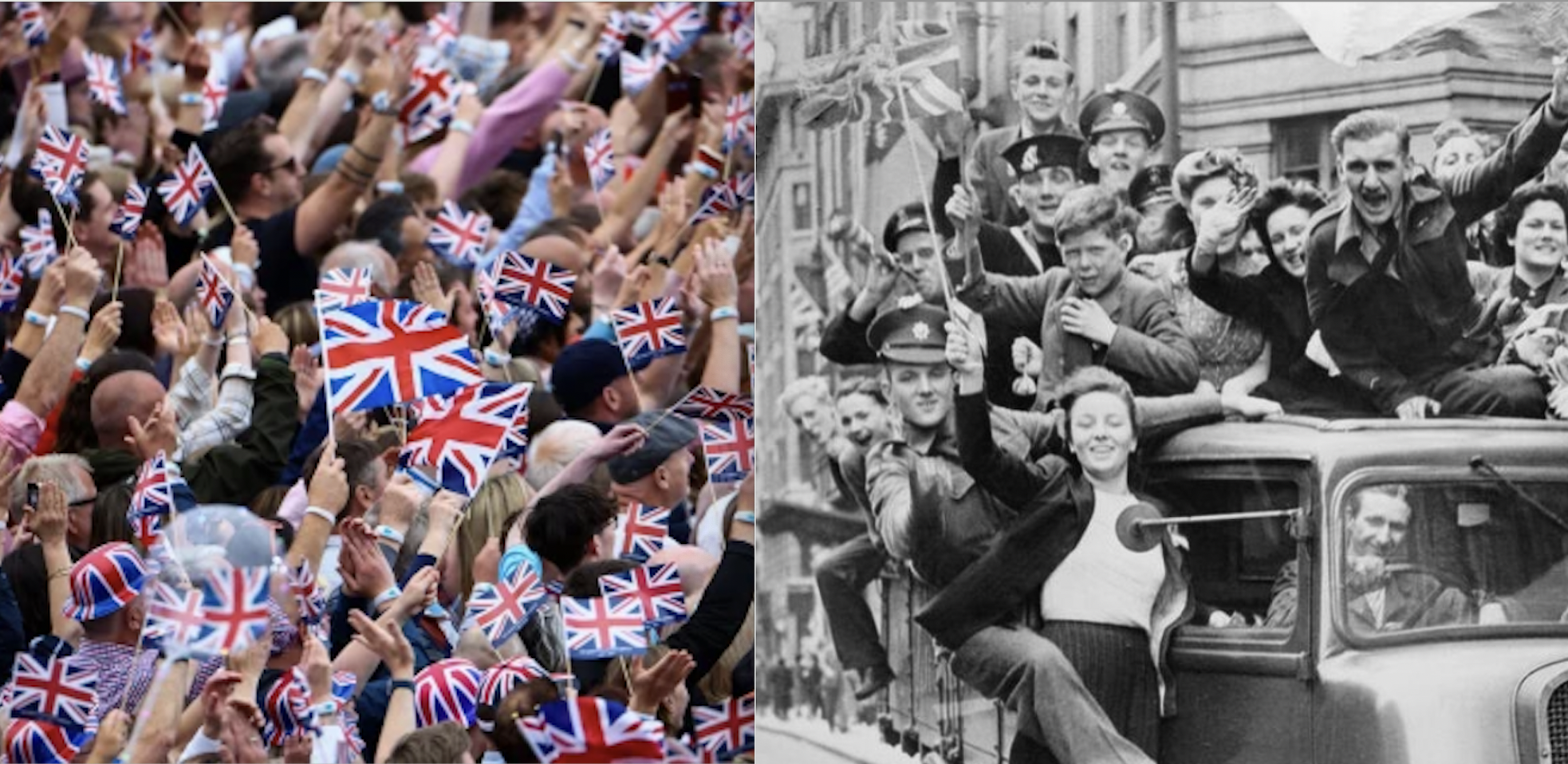
April saw the death of the widely loved Pope Francis, the Jewish festival of Passover, and the gradual build-up to the 80th Anniversary of VE Day (Victory in Europe) in May. An unusual trio of events, yet radio coverage of all three wove threads of reflection into the tapestry of this blog. 

Compassion was central to Pope Francis’s papacy – particularly towards those who are rejected or marginalised. He often spoke about the importance of honouring and never abandoning our grandparents. “If you want to be a sign of hope, go and talk to your grandfather,” he was quoted as saying. They remind us that we share the same heritage, link us to “the beauty of being part of a much larger history… a loving plan [that] is greater than we are.” He also had the humility to say “I am a sinner,” which makes me wonder where that leaves the rest of us!

In a recent Radio 4 Thought for the Day  (at 1:47:45), Chief Rabbi Sir Ephraim Mirvis described Passover as the ‘Festival of Questions;’ a time to ask, to probe, to test assumptions, refine our understanding and uncover the truth. 

If we try to apply the guidance of both spiritual leaders to the forthcoming celebrations of VE Day on 8th May, we may find ourselves asking how the grandchildren of the ‘losers’ of WWII – many of whom had been perpetrators or complicit in Nazi atrocities – might ‘honour’ their grandfathers. How do you love – should you even try to love – someone who has acted immorally, abhorrently, even if those acts were sanctioned or ordered by a higher authority and deemed the right thing to do for Volk and country?

I’m all too aware how unfashionable, controversial and even provocative it is to suggest we spare a thought for the perpetrators. But in keeping with the spirit of my triangle, I am going to ask you to do just that. Many people, from all sides of the conflict, are quick to judge, blame and damn the Wehrmacht soldiers and SS as an indiscriminate mob of ‘monsters’, all morally inferior and wholly undeserving of being remembered. It’s completely understandable. But where does that leave their children and grandchildren? What happens when we continue to draw a line between the ‘good us’ and ‘bad them’, a distinction that may have served its time but no longer helps us move forward? Isn’t one of the most crucial lessons of this horrific chapter in history to recognise that most perpetrators were not monsters, but ordinary people… like you and me… who, through a slow drift of compromise, small decisions and ill judgements became capable of unimaginably heinous crimes? 

Eighty years on, with more than 88% of the German population having been born after the war’s end and a further 11% still children at the time, it’s difficult to place ‘guilt’ for the Holocaust on the Germans of today. After all, people cannot be guilty of things they themselves didn’t do. Yet, like many descendants of Holocaust victims and survivors, some non-Jewish Germans born in the decades after the war still wrestle, often unknowingly, with the unresolved trauma and guilt passed down from their parents or grandparents. They carry what Eva Hoffman aptly described as “the scars without the wound” – invisible wounds that silently shape their internal world and influence their actions in the external world. 

Without detracting anything from the horrors and suffering of the victims, can we imagine for a moment how it might be for post-war generations of Germans to live with legacies of silence, cover-ups, not-knowing, judgement, exclusion, blame or shame in relation to their roots? Mistrusting family stories. Wondering who knew and who did what. What impact does this have on individuals, families, societies, nations and ultimately, the wider world? How can one best deal with such a profound inheritance?

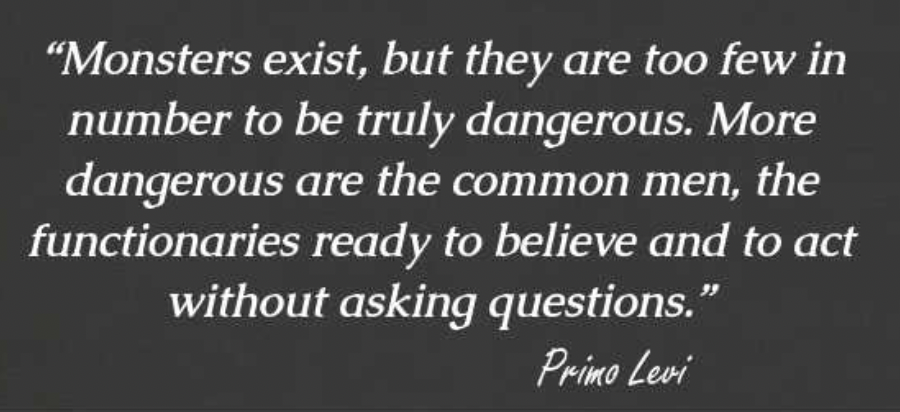
Primo Levi – who, as a Holocaust survivor had every right to think the opposite – declared that collective guilt does not exist. To think that it does is a relapse into Nazi ideology. Both he and Hannah Arendt made a powerful claim: “We are all to blame” for what happened. Collective responsibility is what matters. And that involves understanding how atrocities occur both in society and within the individual. How we become complicit. 

The roots of Nazism found fertile soil in the humiliation wrought by the terms of the Treaty of Versailles and the deeply resented ‘guilt clause’ that placed full blame for WW1 solely on Germany’s shoulders. Applying a similar dynamic to today, could there be a connection between this historical pattern and the rise of the AfD (Alternative für Deutschland), Germany’s nationalist far-right party — a movement fuelled in part by a desire to reassert national pride and, as encouraged by figures like Elon Musk, to move beyond what they perceive as an excessive “focus on Nazi guilt”?

The 2019 survey previously cited revealed that few Germans actually feel guilt and 70% (including 87% of AfD voters) believe their country has now sufficiently atoned for the actions of the Nazi regime. Another source revealed that 75% of young Germans (erroneously) believe they come from families of resistors, while 25% can’t name a single concentration camp or ghetto. As the number of living contemporary witnesses dwindles, disinformation, denial and delusions are spreading. With them, the sense of responsibility risks disappearing too – a deeply worrying and dangerous trend. Knowing firsthand the insidiously destructive effects of being shamed for a familial association with the Nazi era, I can understand how, eighty years on, rejecting any semblance of inherited guilt might feel like a healthy response. After all, who among us wants to feel terminally tainted by the wrongdoings of their forebears? Who wants to have to cut off their roots?

The marriage of my parents in March 1962

I feel fortunate that, while living in England with my German heritage was at times challenging, my parents and their families modelled true reconciliation throughout my life. My British father and German mother married just 17 years after the Second World War ended. Both their families had suffered and lost loved ones and/or homes under the others’ military objectives. Yet both found the courage to drop into their hearts and overcome division and enmity. And that, to me, is where the solution lies: in our hearts.

Patriotism is hollow if it is based only on pride and honour. Shame and conscience lead to a deeper bond. Seeing the world in binaries – in terms of ‘us’ and ‘them, good and bad, right and wrong – shuts down love. Reconciliation becomes impossible. As Britain celebrates its triumph over the evil forces, let us also remember we were not all good and they all bad. Among other short-comings, we too were guilty of antisemitism and of failing to help the Jews more. 

In another recent Thought for the Day, Rhidian Brook warned, “If you can’t see the other side’s humanity, you’ve lost.” 

My 80th Anniversary VE Day wish, therefore, as both a British and German citizen, is for us to follow the example set by the late Pope and Chief Rabbi: to think, to probe, to get uncomfortable, and to find compassion for individuals among the rejected and ostracised.

Eighty years on, might this be the moment to create new rituals of peacekeeping and unity? Without dampening the spirit of national joy, how can we include – and stand hand-in-hand with – our contemporary German friends in celebrations of peace, rather than reinforce historical divides?

Can we develop broader, more expansive narratives that encourage younger generations of Germans to face the difficult and painful truths of their families’ histories and to assume responsibility, not for what was done, but for what is still to be done? Can we remain vigilant against resting on any imagined moral high ground, against believing we would have undoubtedly been resistors and heroes under the Nazi regime? And can we instead recognise how thin the ice of democracy is becoming once again, and how difficult it is, even now, to change the course of history?

Events coming up:

Friday 2nd May, 12-1pm 
The Second World War 80 years on: Is Remembrance Working? 
Angela Findlay and Henry Montgomery In Conversation
National Army Museum, Royal Hospital Road, Chelsea, London SW3 4HT and ONLINE
80 years on from the German surrender to the Allies, Henry Montgomery, grandson of Field Marshal Bernard ‘Monty’ Montgomery and Angela Findlay, granddaughter of General Karl von Graffen of the German Wehrmacht will reflect on their grandfathers’ roles and actions in WW2 and discuss the differences in the histories, legacies and remembrance cultures of the victors and the losers and how Remembrance can remain meaningful and effective for younger generations. 
Info and tickets (free) here

Thursday 8th May, 18.00 – 19.30 
Im Schatten Meines Großvaters / In My Grandfather’s Shadow
Vortrag und Gespräch / Lecture and Conversation 
Marktkirche, Hanns-Lilje-Platz, 30159 Hannover, Germany

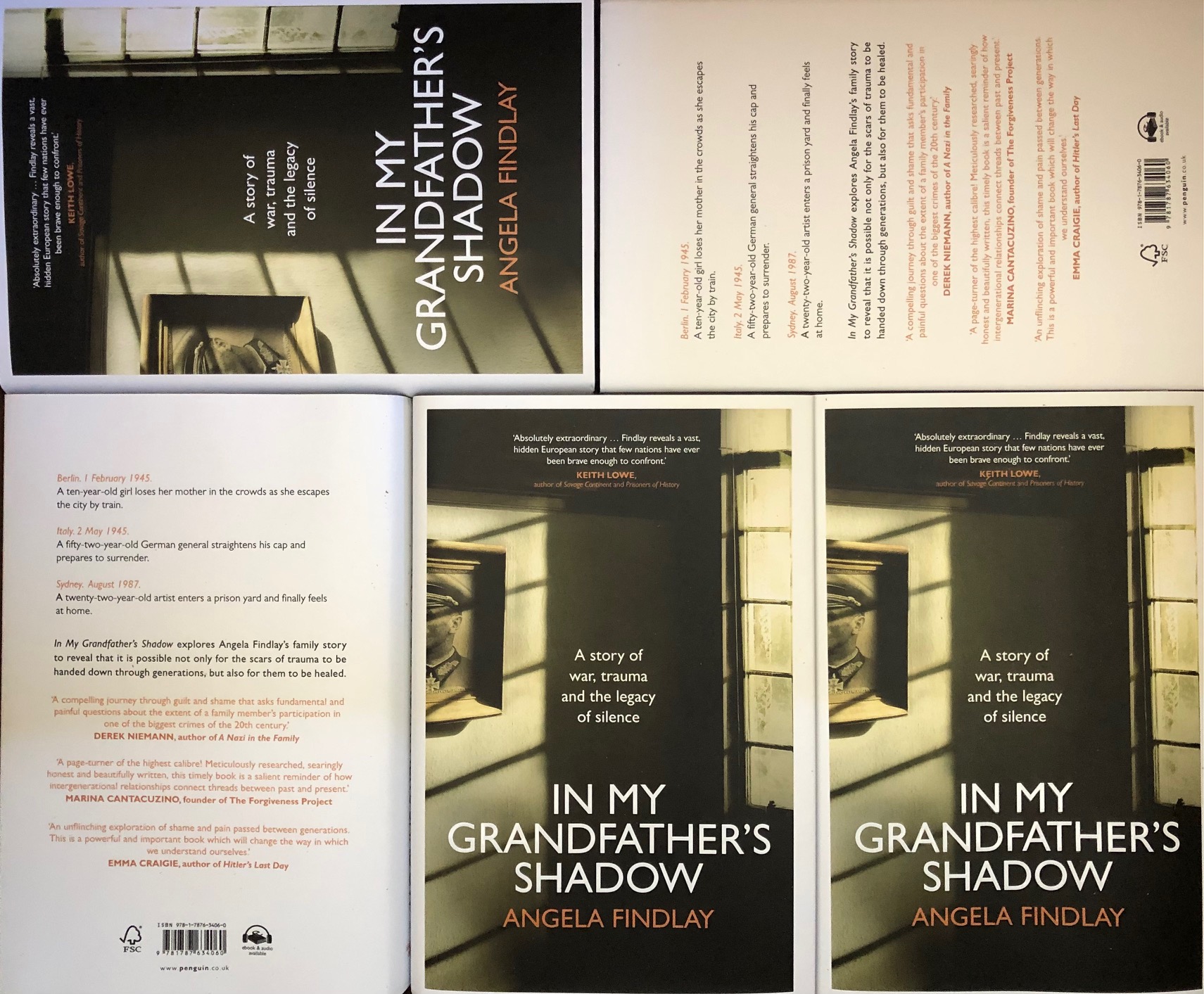
Thursday 15th May, 17.00 – 19.00 (UK time)   43. Gesprächslabor, PAKH: The Study Group on Intergenerational Consequences of the Holocaust (ONLINE)? Drawing on my own experiences outlined in my book, In My Grandfather’s Shadow, we will be discussing how such a destructive legacy can be transformed into constructive, reconciliatory approaches and positive actions. More info here: https://www.pakh.de/event/gespraechslabor-40/  

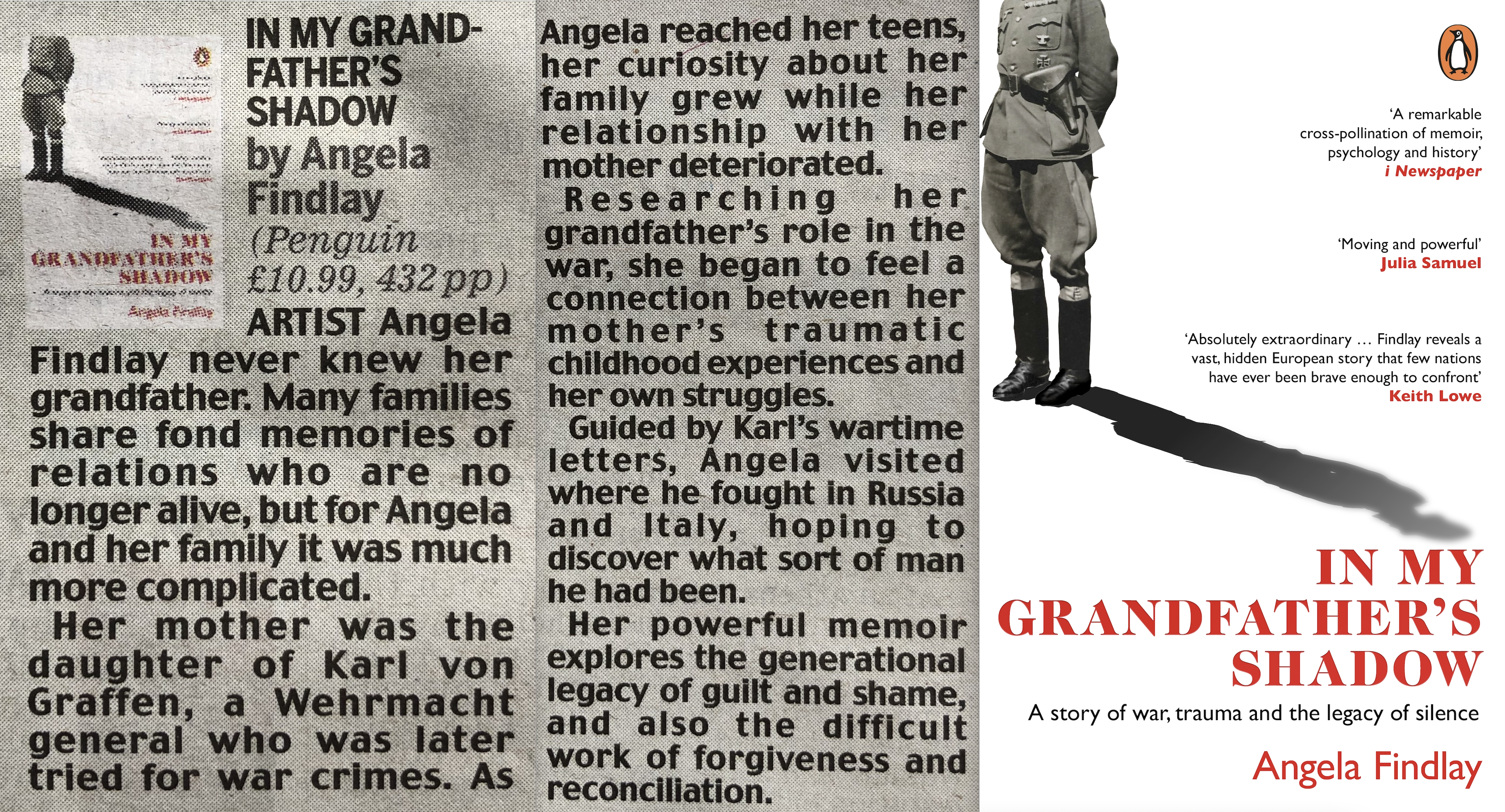
Buy or read reviews on my book, In My Grandfather’s Shadow, here

Question to self: Is speaking out still the right thing to do?

If you haven’t yet seen Jesse Eisenberg’s latest film, ‘A Real Pain,’ I can only urge you to do so. Starring himself and Kieran Culkin [youngest son in Succession!], the pair play two estranged cousins who travel to Poland to fulfil the wish of their recently deceased, concentration camp survivor grandmother for them to visit her former home. It’s essentially a road movie and extremely funny. But the context of the Holocaust and the attempts of third-generation Americans to come to terms with it, makes it also profoundly moving, thought-provoking and important. 

Millions of people world-wide are still grappling with the aftermath of those appalling years of Nazi rule. More, rather than fewer, stories of survivors and first-hand witnesses are coming to light told by descendants who have finally found ways to articulate what their forebears couldn’t. My own, In My Grandfather’s Shadow, published in 2022, is testament to the painful process of peeling back the layers of incredulity in which the extremes of both cruelty and suffering are wrapped. For many, it is justifiable to judge or blame ordinary Germans for not speaking out or revolting against the wrongness of what was happening in clear sight. Despite acknowledging their justified fears, it would have been the right thing to do.

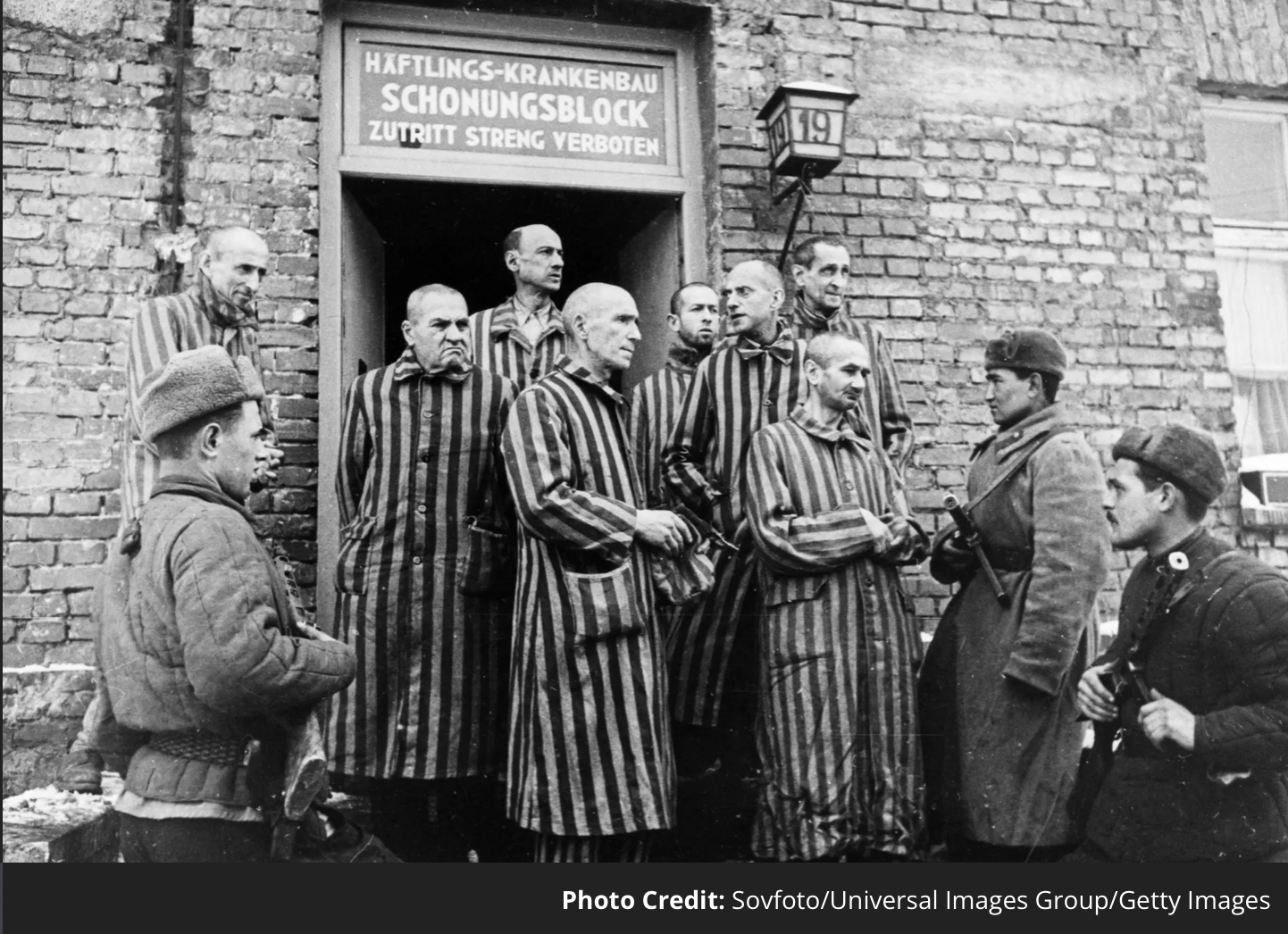
As we approach Holocaust Memorial Day marking the 80th anniversary of the liberation of Auschwitz by Soviet forces in 1945, we are asked to remember the horrific consequences of the crimes that, in part, were enabled because people did not speak out. We will once again repeat the heartfelt ‘Never Again’ that has been chanted like a mantra over the decades. But is it enough?

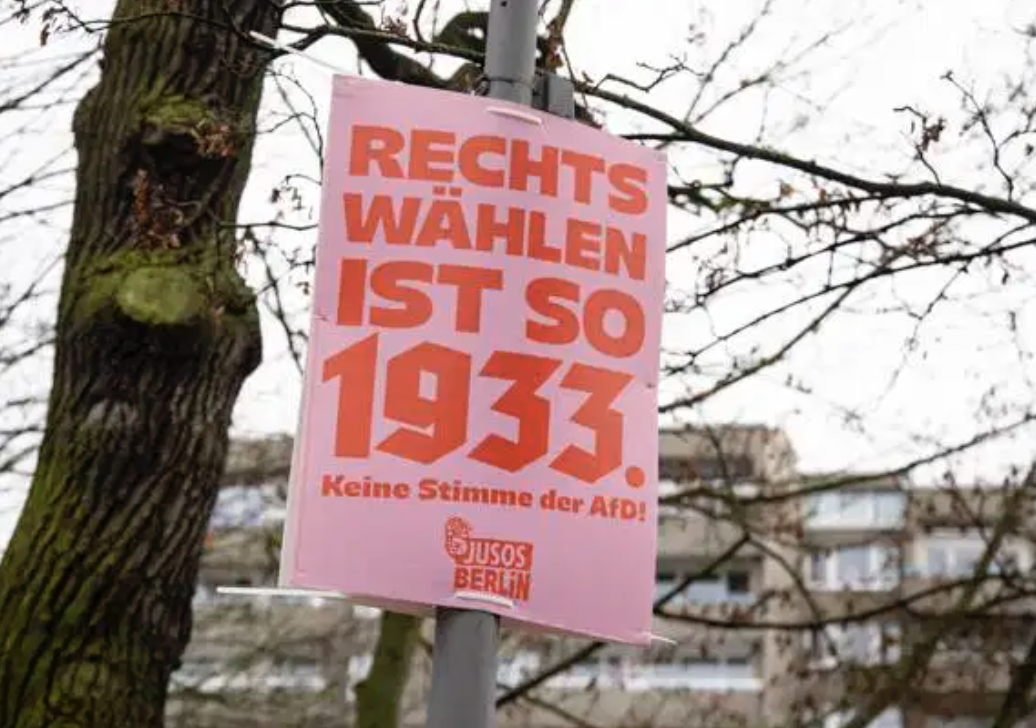
“Voting right-wing is so 1933”

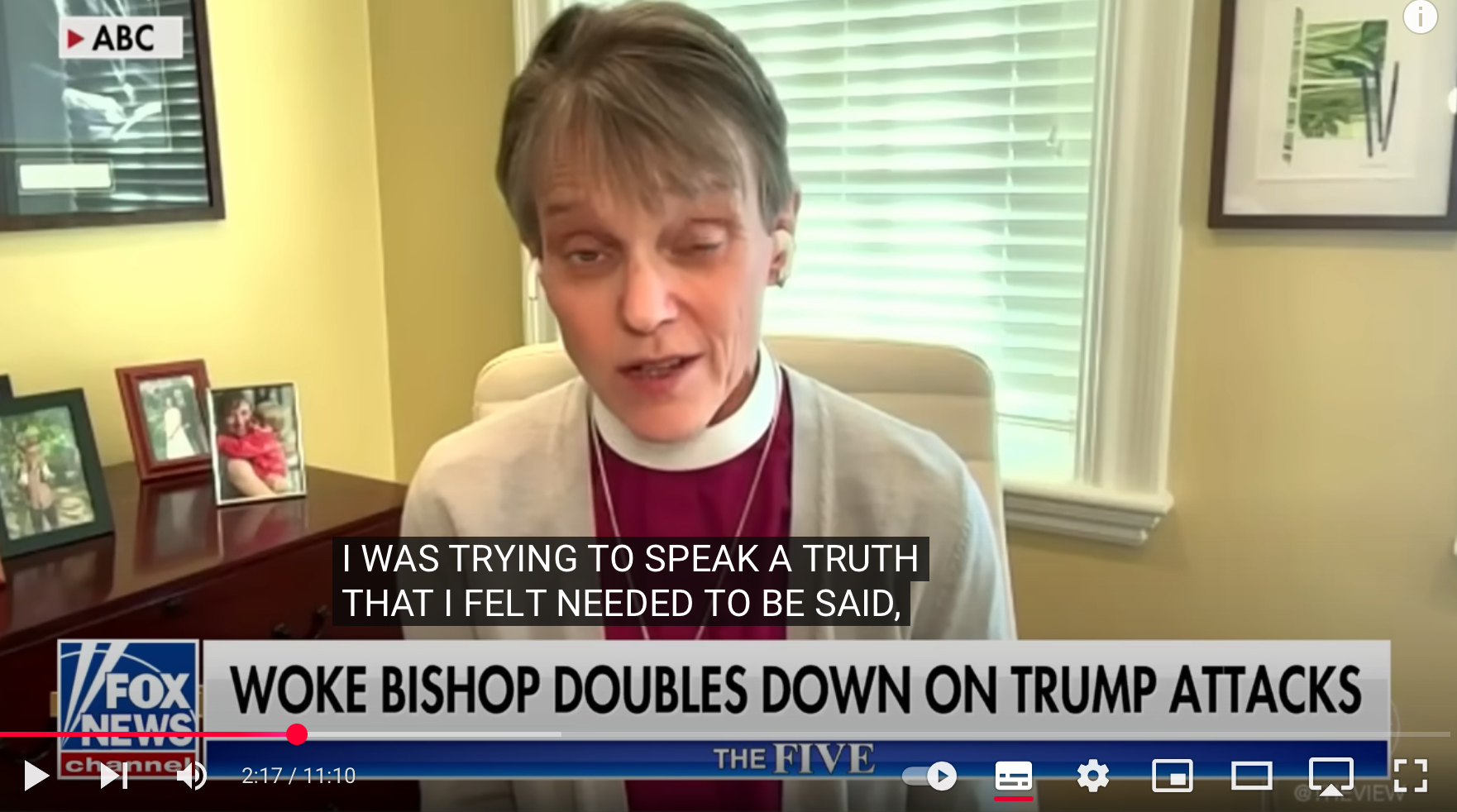
Across the globe, the roots and shoots of far-right policies are taking hold with renewed vigour. In highly vigilant Germany, ‘Voting right-wing is so 1933’ is a campaign slogan for left-wingers. But calling out discrimination and anti-immigrant policies, becoming an ‘upstander’ rather than a bystander has become increasingly perilous, even a danger to life. I wonder how Bishop Mariann Budde’s recent controversial sermon at the inaugural prayer service at Washington National Cathedral will play out. Referencing immigrants and LGBTQ+ individuals among others, she calmly but directly asked President Trump “to have mercy on the people in our country who are scared now.” Will she be cancelled, trolled, fired, discreetly removed from her post? So far she is refusing to apologise for speaking her truth. Was it brave, wise, right? Or, as he and his supporters claim, ‘nasty, woke, inappropriate’ and she a “Radical left hard line Trump hater”? Bizarre as it sounds, by seeking a path of compassion, did she inadvertently shame and dent an ego as big as the world?

As someone with (non-Jewish) German roots, I feel like it is both in my DNA and a conscious personal responsibility to speak out in the face of a perceived injustice or wrongdoing. However, I am beginning to feel an even stronger impulse. In these times of widespread latent and reactive vitriol and rage, I have started to listen into the other side’s point of view rather than – or at least before(!) – slating it. To create a tiny pause, a space between the attack and counter-attack model so many discussions rapidly descend into. It’s like stepping back from an easel when you have been immersed in some detail in order to see the whole picture. For when we speak out against something with conviction but without seeing the back story behind the other’s conviction, we are basically assuming a moral and intellectual high-ground that imparts the message that ‘they’ are wrong (inferior) and ‘we’ are right? This never goes well! Trump’s return to the White House proves that.

Decades of trying to comprehend the behaviour of ordinary Germans eighty or ninety years ago have revealed to me that many of them won’t have been so different to many of us today, i.e. more concerned with their own lives – milking cows, running businesses, keeping children warm and fed – than politics. Looking away, keeping stumm becomes a basic survival tactic. But the outrage humans feel in the face of endless discrimination, inequality, injustice, harm can rapidly turn to despondency and disaffection when we realise we can do little more than sign a petition or share a rant on social media or among friends. Eventually we might become numb, at worst immune to the wrongdoing. I know that I personally read, watch and listen to the news far less than I used to because the drip-feed of madness, badness and sadness feels toxic and induces inertia. I have no idea if this is maturity, complacency, disheartenment, a nauseating lack of humour or an equally nauseating sense of self-righteousness, but I have lost some of my more outspoken tendencies and anger at the world and replaced them with something that is hopefully more productive but still relevant to these times.

My prison work showed me that the most valuable action I could offer prisoners was to listen and to hear them. Not just their stories, excuses and justifications, but what came before. The drivers of their behaviour. With their defences down, trust, compassion and understanding could grow. Attitudes and actions quietly changed without them being shown to be wrong.

I am not sure if this is the right way to go in general life. The story of the Zen / Chinese Farmer comes to mind with its ‘We’ll see…’

It’s certainly not a quick-fix solution. But maybe it’s a tiny antidote to the constant stoking of anger? A drop towards the creation of a kinder world in which wider discourse and a greater tolerance of difference are possible. And ‘Never Again’ regains its urgency and weight. 

A few links to that don’t necessarily reflect my views, but are accessible sources to pursue your own research.

A Real Pain Review

A Real Pain Trailer

Germany’s present is not Germany’s past by Katya Hoyer

Who is Mariann Edgar Budde, the bishop who angered Trump with inaugural sermon?

I am not going to apologise’: The Bishop who confronted Trump speaks out

To protest too much… or too little?

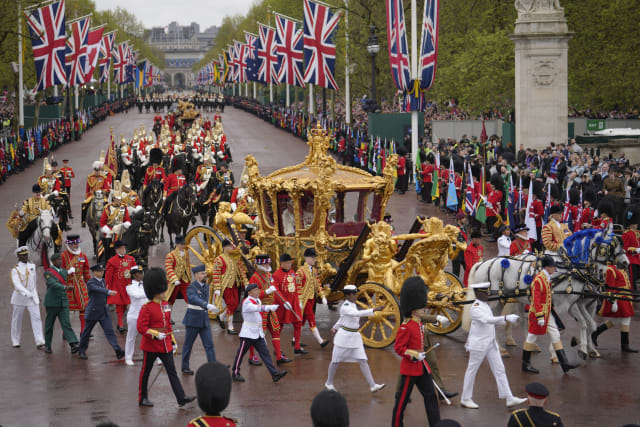
The coronation of King Charles III and Victory in Europe Day 1945

This Coronation Bank Holiday weekend marks two events that will retain prominence in British history books forever: the crowning of King Charles III on Saturday 6th May 2023 and the 78th anniversary of Germany’s unconditional capitulation on 8th May 1945 that brought an end to the Second World War in Europe. 

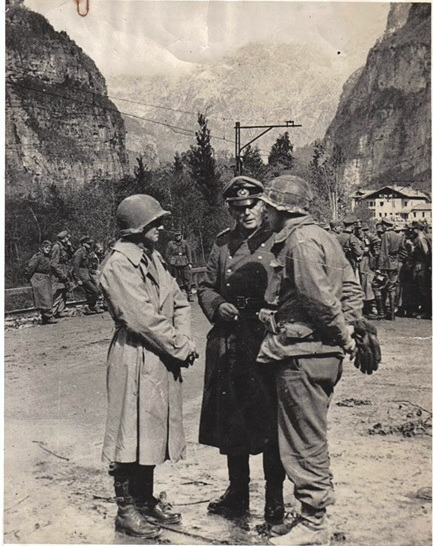
My grandfather (centre) surrendering to the American forces in northern Italy on 2 May 1945.

The Royal Family and Britain’s World War victories are defining features of our national identity and regularly create occasions for celebration. This weekend, both elements came together with the unforeseen effect of highlighting a common, more sinister undercurrent relating to protest, or rather the right to protest. 

For some people the traditional spectacle of ritual, religion, militarism, pomp and swathes of red, white and blue flag-wavers doesn’t reflect any aspect of their lives. Indeed, the price tag of putting on such an event appears obscene in a cost-of-living crisis. And the slightly creepy swearing of an oath of allegiance to the king resembled rather too closely the oath of obedience demanded by Hitler. 

‘Not my King’ became their activist cry, just as other universal voices have cried out: ‘No war,’ ‘Just Stop Oil,’ ‘Insulate Britain,’ ‘Not in my name,’ ‘Me too,’ ‘Black lives matter.’

I am with everybody who is either tired of or has been inconvenienced by protestors. But I fully understand the frustration, desperation even, people feel that leads them to take extreme measures in order to draw attention to what they see as being destructive or plain wrong… for us all. Their right to have that voice of protest is indisputable. Aren’t we after all constantly reminded that the Second World War was fought and won to protect our freedoms because Hitler’s evil regime had removed so many? 

No wonder then that there was an outcry of concern when, in the run-up to the coronation, the government rushed stronger laws through parliament intensifying the powers of the recently passed Policing Act while resurrecting proposals in the largely rejected Public Order Bill. With extended stop and search powers, the criminalisation of disruptive protests, and the imposition of protest banning orders, the right to peaceful protest is clearly under increasing threat. 

“The coronation is a chance for the United Kingdom to showcase our liberty and democracy, that’s what this security arrangement is doing,” Mr Tugendhat, the Security Minister, told BBC Radio 4’s Today programme in defence.

Liberty and democracy? Hmmmh… I’m not sure those words quite match the policies and resulting actions!

And while the statement Home Secretary Suella Braverman made on Tuesday 2nd May might sound fair enough, in reality it is pure, misguided hypocrisy: 

The public shouldn’t have their daily lives ruined by so called ‘eco-warriors’ causing disruption and wasting millions of pounds of taxpayer money… The selfish minority must not be allowed to get away with this. We are giving our police and courts the tools they need to stop this chaos and I back them in making full use of these powers.”

In another context, say in relation to our water companies and their appalling levels of waste, pollution and greed, a similar statement would make perfect sense, maybe along these lines:

The public shouldn’t have their daily lives and futures ruined by blatant ‘eco-destroyers’ causing disruption to public water services due to the contamination of our waterways and the wasting of millions of gallons of water each day. The selfish companies must not be allowed to get away with this. We are giving inspectors and courts the tools they need to stop these criminal practices and I back them in making full use of these powers.

Pollution on the Jubilee river in southern England. ‘The EA has called for water company directors to be imprisoned for the appalling decline in performance.’ Photograph: Maureen McLean/REX/Shutterstock

I personally believe Britain would be a poorer nation, not a richer one without the monarchy. But I still respect the views of those who want a British republic because they see the Royal Family as an outdated, unrepresentative, dysfunctional and extortionately expensive establishment that should be abolished. Given King Charles’s sincere dedication and visionary, common sensical, environmental concerns and solutions, which he has expressed – and been ridiculed for – since the 1970s, my hopes are that he will sympathise with protestors in ways this government doesn’t. And he will help push forward the environmental agenda that the whole world desperately needs to make its priority.

The lessons of the Second World War, especially of the Third Reich with its top-down dictatorship, are more relevant today than ever. Nazism showed us how thin the ice of morality is, how even such a culturally advanced country as Germany could fall through into barbarity. It happened slowly, incrementally, in full sight. Little laws restricting more and more little freedoms…

As I say in In My Grandfather’s Shadow: Germany’s lessons are therefore universal, as are the questions we must all ceaselessly ask ourselves: how thick or thin is the ice today, and what structures are in place to stop us falling through it again?

‘In My Grandfathers Shadow’ is now out in Paperback.

Links to further reading (as always, not all reflect my opinions necessarily)

UK security minister defends new anti-protest laws before coronation – The Guardian

The Shame of the Coronation Arrests – The Spectator

King Charles will be green in deeds before words, says adviser – The Times

Water company environmental performance hits new low – Environment Agency

England’s water industry now represents the unacceptable face of capitalism – Simon Jenkins

Victory in Europe Day, 8th May 1945

Right to protest in UK ‘under threat’ after coronation arrests, human rights group warns – iNews

Forthcoming Events:

Monday 22nd May: British and Irish Association of Holocaust Studies Online Conference

Monday 22nd May: Nailsworth Festival

Tuesday 27th June: Bradford Literary Festival

Becoming aware of the invisible ties that bind us to the past…

It is now just three weeks until the publication of my book, In My Grandfather’s ShadowA week in the stunning, state-of-the-art Penguin Random House studio recording the whole thing for the audio book version has left me feeling more intimately connected to it than before. Like a parent, I have spent years nurturing it into its current shape. Now it is leaving the nest and heading into the big wide world… how exciting is that! 

Most of you will already have an idea of the themes it is likely to address from my blogs. And – spoiler alert – it does. But possibly the main thrust of the book – as stipulated by Penguin Transworld when they took me on – was to focus on the heritability of trauma. It involved ‘a bit’ (read: ‘total mind-fry’) of a re-write. Yet ultimately they were right. Because this idea, that we can inherit psychological wounds from our forebears, is gaining more and more traction.

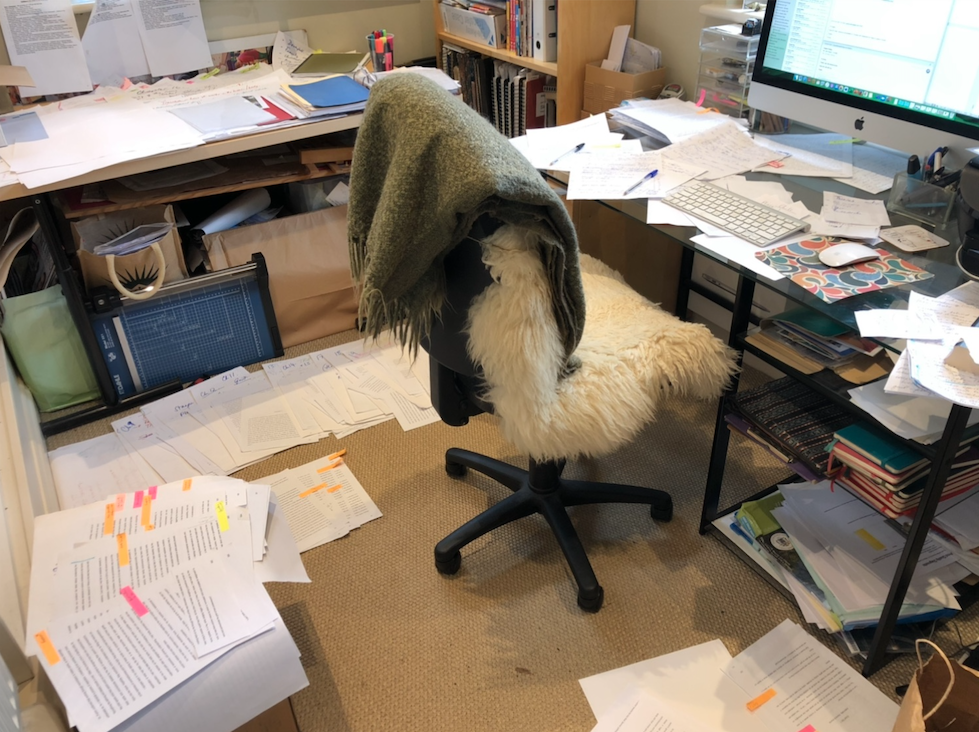
The process or re-structuring a book…

One of the book’s working titles was ‘Invisible Lines’, which I liked. But ‘line’ is somehow wrong. Even the letters that make up those two words are too straight, too linear. For, while there is obviously a linear logic to the structure and the content, the essence explores hidden cycles and the bits of life that meander or tie themselves in knots. Or that appear unsubstantial, unreal even, when really they are holding the tiller to our lives.  

As I have said before, trauma, guilt and shame abide in the psyches of us all to a greater or lesser degree. They are part of what it is to be human. But frequently they remain unidentified, like bottom dwellers in the sea of our emotions that stir up the mud to cloud our vision and cause havoc with how we see, not only ourselves, but others and the wider world. 

In My Grandfather’s Shadow therefore takes readers on a deep dive into largely unknown or unspoken – until recently – corners of experience. Not just of those who lived through the Second World War, but those who came after. It looks at the impact of war and violence in general, a theme that has gained an unwelcome pertinence in the light – or should I say darkness – of Russia’s war in Ukraine with its horrific reports of rapes, brutal murders, forced transportations that echoe my grandfather’s letters from the eastern front in 1941-2. War is as old as the world. But where the brutality was once confined to the battlefield and soldiers, Ukraine is a salient reminder that modern warfare invariably extends into the homes and lives of civilians. For generations.

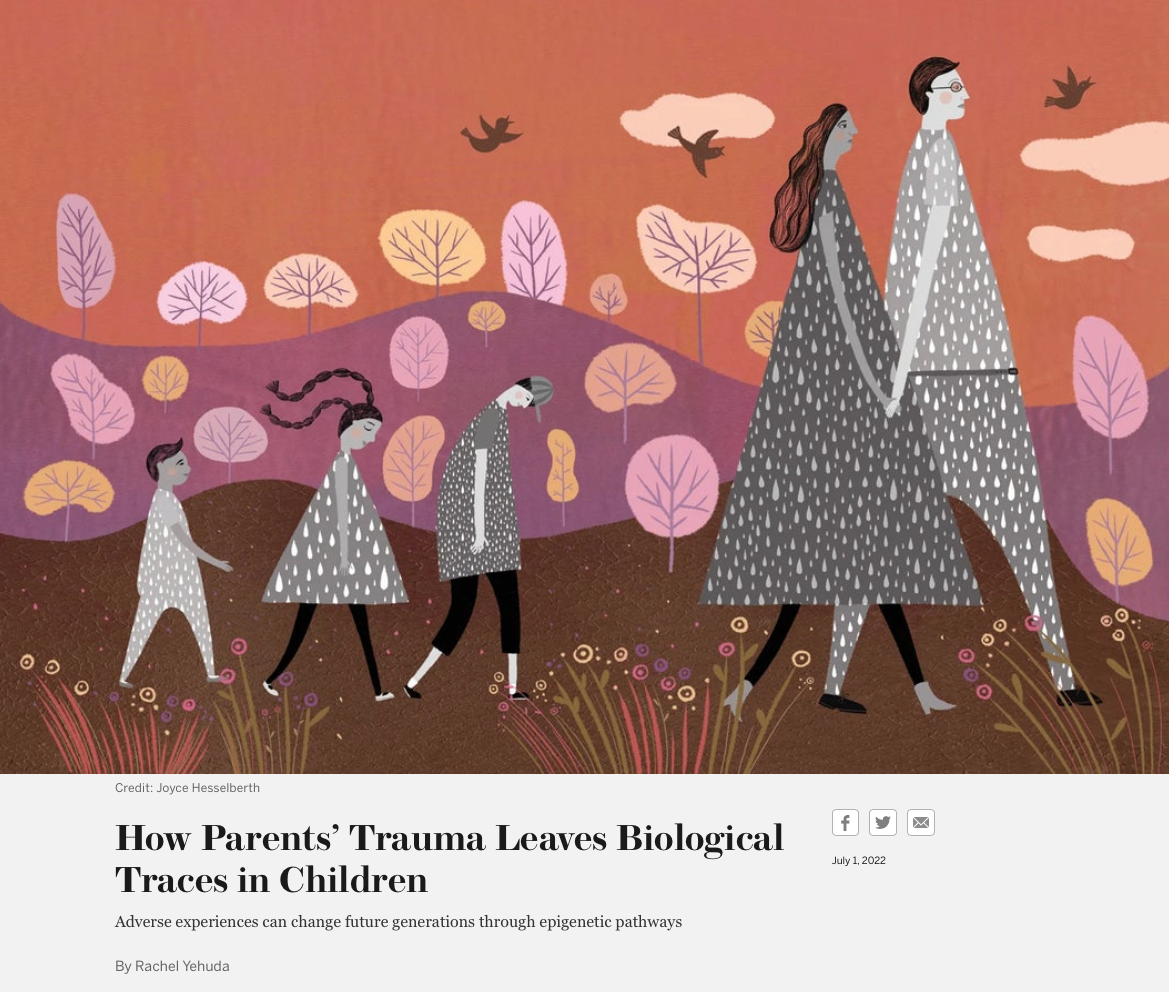
It is probably easy to imagine how the extreme traumas of the Holocaust could affect the offspring of survivors as well. Traumatic imprints have long been witnessed in second and third generations. What is less known because it could only be articulated when the non-Jewish German grandchildren of those who lived through the war came of age in their 40s, is that traumatic experiences of any nature, if left unattended or untreated, can seriously disrupt the lives of subsequent generations. The process is variably referred to as ‘transgenerational transmission’ or ‘emotional inheritance.’ Even science is embracing the possibility with its own language: ‘epigenetics.’ (See article

How Parents’ Trauma Leaves Biological Traces in Children – Scientific American

Whether biological, psychological, genetic or spiritual, the process of transmission is not new. What is new, is our growing awareness of it. And with that awareness comes responsibility. Responsibility to address the cause of the damage, to find ways to resolve or heal it, and then to prevent it. To neglect trauma, particularly in children, and to ignore how it’s effects can linger on for generations is to potentially condemn them to lives of violence, self-harm, substance misuse, depressions, low self-esteem, underachievement or a general sense of something being amiss, all of which are becoming increasingly endemic in our society. It is therefore in everybody’s interest to do this.

This is one of the reasons I took the risk of bearing my soul and writing my book. Because I really hope that parents, teachers, doctors, psychologists, politicians might open their minds to the possibility that behind someone’s problematic behaviour or attitudes, their unemployability, fears or lack of motivation there might lie an unresolved family trauma, wrongdoing or injustice that is seeking resolution through that person without them realising it. It took me five decades to unravel the ties that bound me to the experiences of my immediate forebears. Because nobody knew about it back then.

Well, we do now. Or at least you will do when you have read my book!

In the words of those who have read it:

“Can we as individuals untangle ourselves from a past that binds us to the suffering and deeds of our predecessors?”This profound question forms the basis of this remarkable memoir in which Findlay – granddaughter of Wehrmacht officer, General Karl von Graffen – wrestles the feelings of ‘badness within her’ that has plagued both her mental health and her sense of self for years. It’s a powerful investigation into the individual personal cost that results from wider history, and the ways in which inherited guilt and trauma can leave scars across the generations. A must read… Caroline Sanderson, Editor’s Choice in The Bookseller

This is a moving and powerful memoir that illuminates the extraordinary power of unprocessed trauma as it passes through generations, and how when it is faced it can be healed. Julia Samuel, author of Every Family Has a StoryGrief Works and This Too Shall Pass

An unflinching exploration of shame and pain passed between generations.  This is a powerful and important book which will change the way in which we understand ourselves. Emma Craigie, author

A page turner of the highest calibre! Meticulously researched, searingly honest and beautifully written, this timely book is a salient reminder of how intergenerational relationships connect threads between past and present... This book gives new meaning to the prescient words of psychoanalyst, Roger Woolger: ‘It is the responsibility of the living to heal the dead. Otherwise their unfinished business will continue to play out in our fears, phobias and illnesses.’ Marina Cantacuzino, author and founder of The Forgiveness Project

This is an absolutely extraordinary book. In peeling back the layers of her family history, Angela Findlay reveals a vast, hidden European story that few nations have ever been brave enough to confront. Keith Lowe, author of Savage ContinentThe Fear and the Freedom, and Prisoners of History

A compelling journey through guilt and shame that asks fundamental and painful questions about the extent of a family member’s participation in one of the biggest crimes of the 20th century. Derek Niemann, author of A Nazi in the family

From 14th July, you will be able to purchase In My Grandfather’s Shadow at a bookshop near you such as Waterstones or various online stores .

Is trying nonagenarians for Nazi War Crimes the best way to achieve justice?

If it wasn’t so serious, the idea of a 96-year-old going on the run to escape trial would be quite comical. But behind the image of an old lady hopping into a cab at her retirement home and fleeing for the subway station in the early hours is a quagmire of deeply complex and emotive issues.

Irmgard Furchner stands accused of having contributed to the murder of 11,412 people between 1943 and 1945 when she was an 18-year-old typist and former secretary to the SS commander of the Stutthof concentration camp in Poland. She is the latest of several nonagenarian Nazi war criminals to be brought to trial, some of them in youth courts because they weren’t adults at the time of their alleged crimes.

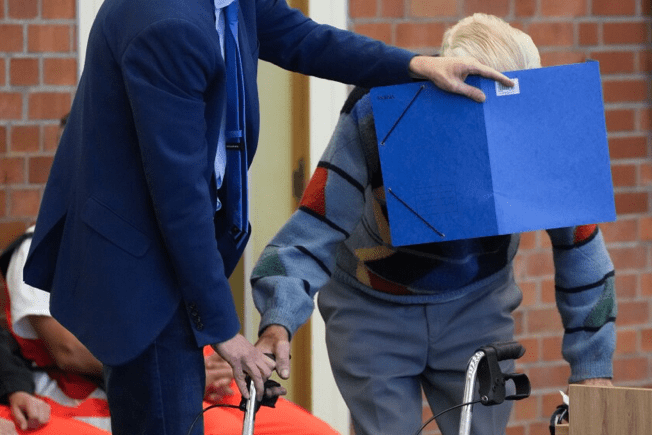
Irmgard Furchner being brought into court

The reason this particular case captured my attention is partly because it coincided with the seventy-fifth anniversary of the final day of the Nuremberg Trials that saw twelve senior members of the Nazi establishment sentenced to death by hanging. And partly because the hearing Furchner was due to attend was in Itzehoe, the same north German town that I have been going to all my life. I have been looking Nazism and the Second World War in the face for several decades now, but my countless happy memories visiting relatives there had completely insulated it from the chill of Germany’s wider history. 

Now it is in the spotlight as the face of retribution. So, is it a total no-brainer that even seventy-five years later, such people, nonagenarian or not, must pay for their part in some of the worst mass killings in history? Or is this more a rush by prosecutors to seize the final opportunity to redress the failures of the previous decades? Will sentencing these last Nazis to time in prison achieve justice for the victims? Or are these trials there to serve the broader objective of Never Forget? Is a ninety-year old even the same person as their eighteen-year-old self?

The last guilty verdict issued was to former SS guard Bruno Dey, who was handed a two-year suspended sentence in July 2020 at the age of 93. The 2019 trial against 95-year-old Johann Rehbogen for his service as a guard also in Stutthof Concentration Camp, had to be terminated as his organs were failing. The only successful conviction was of 96-year-old Oskar Gröning, the so-called ‘bookkeeper of Auschwitz,’ who was sentenced to four years in 2015 but died in hospital after his several appeals failed. I wrote about him at the time in my blog. In his case he had not tried to evade justice. Driven by a desire to counter Holocaust deniers and prevent something like Auschwitz from ever happening again, he had been openly talking about his time as an accountant in the death camp. His testimonies, however, were used against him in court with the unintended outcome that other low-level perpetrators and bystanders went silent. 

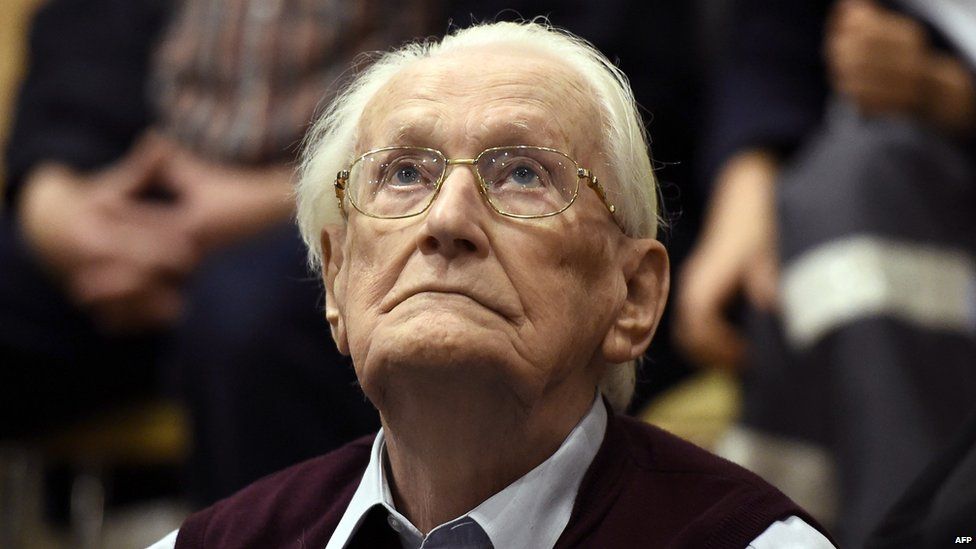
Oskar Gröning at his trial in 2015

For some people, the greatest justice to all victims of Nazi persecution that these trials can provide is to keep the crimes fresh in peoples’ minds and prevent them from being forgotten, denied or trivialised. They force Germans, including younger generations, to listen to the testimonies of survivors and to rake over the whole disturbing and uncomfortable past once again. 

It is so important that we never forget; that we all learn the lessons that Germany’s descent into barbarity and atrocity teaches us, not least about the vulnerability of democracy today. But survivors often declare that legal retribution is not the main outcome they are after. That they are more interested in shining light on unresolved or overlooked crimes and contributing to Holocaust remembrance and education. 

So, are we now at a time when imprisonment is a less effective response than a more direct dealing with the aftermath of the offence? Is there now another way that serves justice to the many victims of the Third Reich and their descendants AND sends a powerful message to would-be perpetrators of mass crimes that they will never get away with murder AND contributes to remembrance and education AND offers possibilities for healing and reconciliation? 

The past cannot be changed, but the present can. Might communication between those harmed by and those implicated in Nazi crimes, within the safe frameworks of Restorative Justice or mediation initiatives, offer the possibility to fulfil all the outcomes desired by the survivors? Could the excrutiating discomfort of acknowledgment of past wrongdoing be the punishment? Would talking together create an opportunity to resolve some of the harm and nurture the shoots of healing, forgiveness and reconciliation that can sprout from really listening and really being heard? 

Further reading:

Trial of 100-year-old man in Germany: why Nazi war crimes take so long to prosecute – The Conversation

Former Nazi death camp secretary, 96, remanded in custody after going on the run – Times of Israel

Nuremberg: The Trial of the Nazi War Criminals – Radio 4

Germans are right to pursue 100-year-old former Nazi war criminals – Irish Times

I dare you not to look away…

What is the difference between ‘I had no idea’ and ‘I didn’t know’?

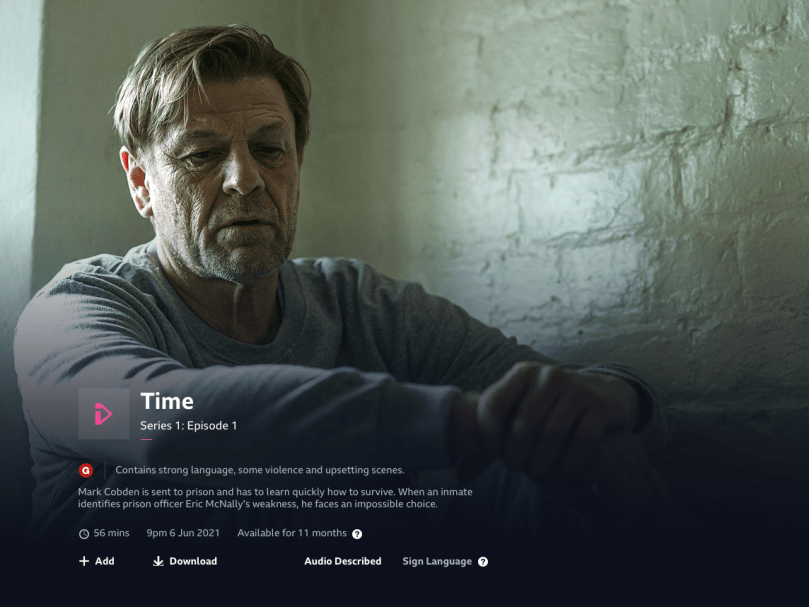
I ask this question in the wake of what must be one of the best television series in the past year: BBC One’s deeply uncomfortable and disquieting three-parter, Time.

It is described as: ‘Jimmy McGovern’s hard-hitting, brutally honest portrayal of a failed public service which gets everything right about prison life – minus the tedium.’ If you haven’t seen it – and sorry to my readers abroad if you can’t get BBC – I would like to invite you to watch it, even to dip into it for ten minutes. I’ll tell you why.

Having worked in many prisons in England, I feel everybody needs to know what is going on in them. In our name. There was nothing in the series that I didn’t recognise from my years inside. As I am up against a tight writing deadline for my book (and this blog actually!), I am going to allow the three episodes to speak for me and bear witness to the sheer illogic, and all too often, inhumanity of our current system.

This doesn’t apply to all prisoners, but if we recognise that many addictive, violent and destructive behaviours derive from childhood trauma; if we fully comprehend the impact of untreated traumatic incidents, then the cruelty of locking up people, who were first and foremost victims, in what are often little more than hell holes, becomes very clear. 

My admittedly provocative opening question stems from a genuine desire to understand the answer.

For decades, the adult-generation of Germans living through the Second World War have not been believed when they say, ‘we didn’t know’ (about the concentration camps). And people around the world often blame them for having looked the other way. I don’t want to get into that debate here. There is a consensus among historians that some would have known, some would have heard about them and not believed it, and others would not have known. Most of the camps were miles away in the east and there was little access to free press. There was also a deadly dictatorship controlling thoughts and actions. Yet not knowing, or knowing and not doing anything, allowed the deadly system to persist for as long as it did.

I have been talking to a wide range of audiences about my experiences of working as an artist in prisons for nearly three decades. The most common thing I hear afterwards is a shocked “I had no idea.” It’s totally valid, I make no judgment. There are loads of things I have no idea about. But why don’t more people know about this? There are prisons in nearly every major town. The shocking statistics of failure, the appalling conditions and the tragic stories of many of the people locked up in them are reported on all the time, in every form of media. How can we not know about them?

There is obviously a wide spectrum from having no idea, to knowing but looking away, to knowing and acting. I would just like to use this month’s blog to encourage you to become more informed, specifically about the system in which we warehouse prisoners. Not just for their sakes, but for all of us who live in the communities into which they are returned… usually worse.

When enough people ‘have an idea’, things can and will change.

Watching this series is a start. It’s tough watching, but the reality is much, much tougher.

I dare you not to look away.

Reviews:

Time review – Sean Bean and Stephen Graham astound in enraging prison drama

Time review – like a punch in the face, but in a good way

Time review: This gripping, gruelling portrait of life in prison is essential viewing

Should we be seeing the storming of the U.S. Capitol as Trump’s Kristallnacht?

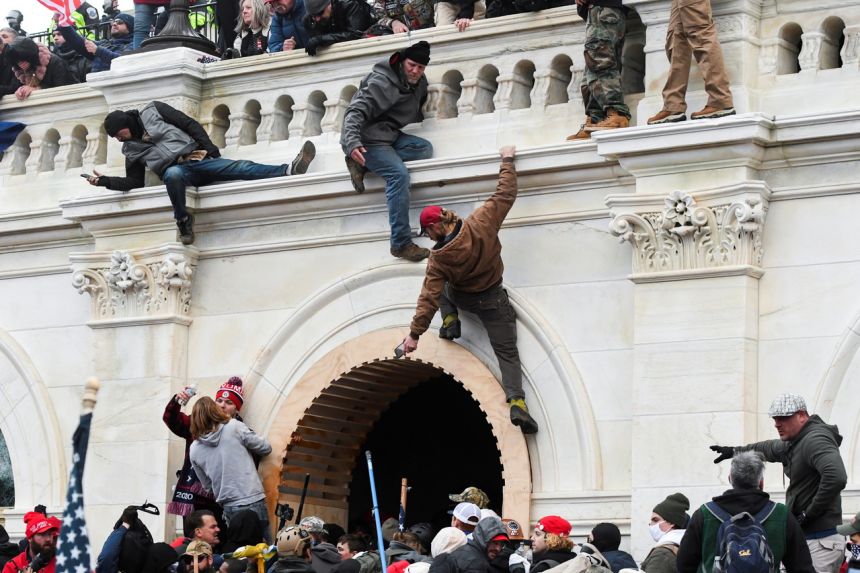
On Sunday 10thJanuary 2021, Arnold Schwarzenegger, the Terminator action hero turned former governor of California, posted a short video on Twitter that went viral. Staring straight into the camera against a backdrop of stars and stripes, the man once known for his body-built body flexed his moral muscles by comparing the mob that stormed the U.S. Capitol with the Nazis.

“Wednesday was the Night of Broken Glass right here in the United States,” he said, referring to the horrors of Kristallnacht, the night of 9th/10th November 1938 when Nazis in Germany and Austria smashed the windows of Jewish homes, schools and stores and set fire to the synagogues. “The broken glass was in the windows of the United States Capitol,” he continued. “But the mob did not just shatter the windows of the Capitol. They shattered the ideas we took for granted. They did not just break down the doors of the building that housed American democracy. They trampled the very principles on which our country was founded.”

Witnessing, in real time, Trump-incited protestors scale white walls and balconies and swarm into the home of the U.S. Congress was truly shocking. Individually most looked pretty ‘normal’ with their caps, hoodies, beards – or horns – in place of masks. But as a mass emboldened by a collective mission, they felt sinister. A mob stitched together by the blatant, you’d think unbelievable, lies of their leader. Trump’s temper tantrum had turned a corner and stamped on the accelerator to become a genuine threat to life. 

But, though I admire Schwarzenegger for speaking out unequivocally, can you really equate what happened on 6th January with Kristallnacht? Are Trump’s ‘mobsters’ a valid equivalent to the rioting members of the SA (Sturmabteilung) and Hitler Youth? Is Trump an accurate counterpart to Goebbels? And finally, has democracy been shattered in the way Nazis shattered Jewish lives and livelihoods that night? I don’t think so, but I ask genuinely because making such serious comparisons to such a vast audience, albeit diluted by a schmalzy soundtrack and other comforting dollops of Hollywood, carries responsibilities and consequences. If it was America’s Kristallnacht, what should we and the rest of the world be doing about it?

Accurate or exaggerated, Schwarzenegger is certainly more qualified than most to draw such parallels. Born in Austria in 1947, he grew up with and among people who had lived through the Third Reich and Second World War: active cogs in the Nazi killing machine; passive bystanders, looking away but “going along… step-by-step… down the road;” or any of the other shades of innocence or culpability in between. 

What is indisputable in both scenarios – and recent ones here – is the role lies play in leading to things spinning out of control. But it’s intolerance that ultimately fuels these lies. Of course, there’s a healthy form of intolerance, which makes us speak out in the face of ‘wrongness’. But on either side of that, lie two unhealthy extremes: intolerance of anything or anyone that is different to us, ‘other’; and over-tolerance of that which may be familiar, desirable or comfortable to us, but that harms others.

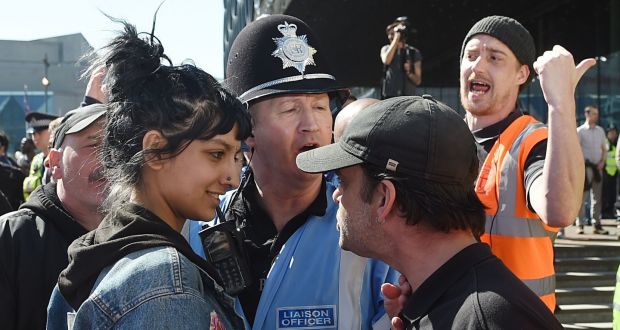
viral image of woman standing up to a far-right protestor

For me, a comparison to Nazi times is more helpful when applied to us… the ordinary people who, back in the 30s and 40s, inadvertently enabled their leaders to carry out murderous plans by doing nothing. Resisting was hard, for it could cost you, or your family, their lives. My mother’s best friend’s family vanished that way. Today, however, we can express a healthy intolerance of what we consider wrong, by resisting the temptation to see the mob as a collective ‘other’ made up of misguided cretins, uneducated loons, neo-fascists, Satan worshippers, conspiracy theorists… Some of them may well be any or all of those things, but they will also all be individuals – fathers, sons, mothers, neighbours – united in believing they are right and on the side of truth and goodness.

Maybe, to prevent re-enactments of Nazi times, we could (or should?) invest the time we spend judging, cursing and dismissing those we see as ‘other’, ‘bad’ or ‘wrong’ more wisely; by trying to listen to and understand them instead. That, after all, was what was neglected in the first instance. And people who feel unheard also feel they have to shout the loudest. And by having to shout, they become distorted versions of themselves. That is what we witnessed on Wednesday. It may sound fluffy or impossible and I am not in any way condoning or defending what happened in Washington. I am just trying to avoid becoming inadvertently complicit in deepening the division between ‘us’ and ‘them’. For we all know where that can lead. 

You can see some pictures here. Or read a bit more about what happened here.

Actions may speak louder than words, but words can lead to actions…

This first month of 2020 offered a veritable feast of potential inspiration for January’s blog. It was hard to choose. On the theme of prisons, there was BBC Two’s The Choir in which Gareth Malone has just two episodes to get young men in Aylesbury Young Offenders Institute to sing and viewers to cry. I know from experience, the latter was definitely easier. 

In cinemas, Jojo Rabbit, a risky, irreverent, bitter-sweet comedy about Hitler, breaks through taboos and somehow gets you laughing at the Nazis in ways they would have hated. Less amusing is Sam Mendes’s 1917, which, through its close-up filming method, dumps its audiences into the putteed boots and helmeted heads of two young British soldiers and sends them off on an impossible mission through hell. Within minutes one has snagged his hand on rusty barbed wire, a wound that alone would send all of us racing to A&E. But that is a mere scratch compared to what awaits him.

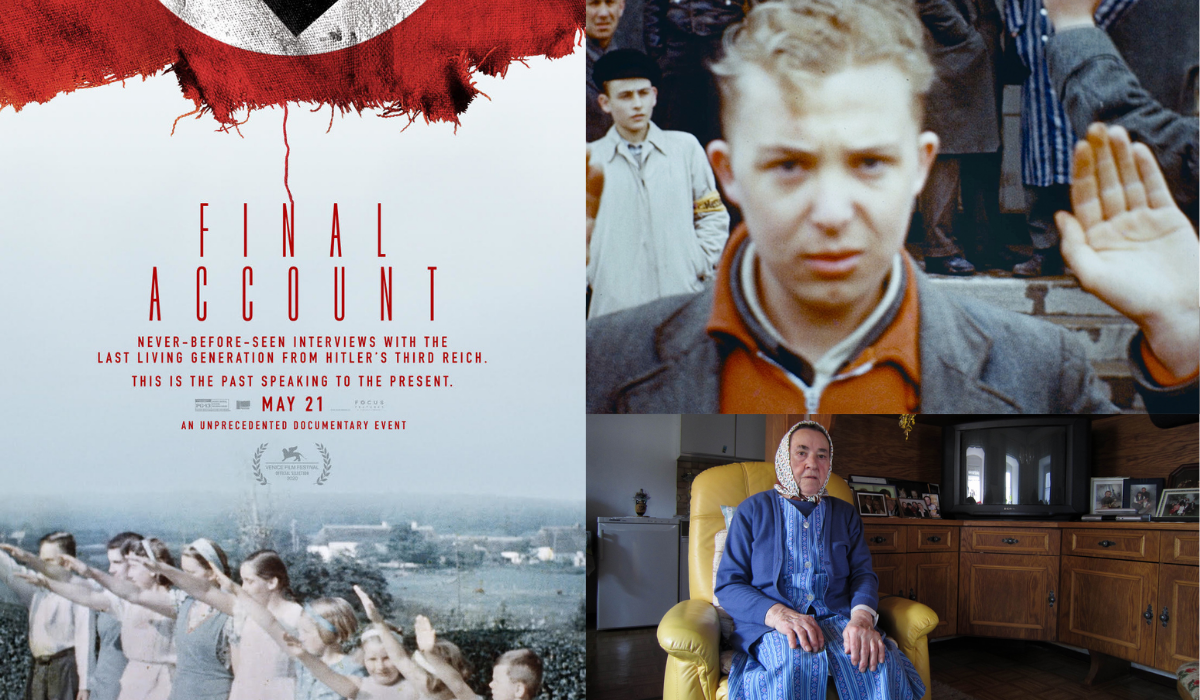
Another extraordinary BBC two-episoder, Lost Home Movies of Nazi Germany, gives deeper and more nuanced insights into both the lives and the beliefs of individuals living through those times. While Channel 4’s moving My grandparents’ War follows Kristen Scott Thomas and three other esteemed British actors as they uncover the brave roles their grandfathers played in the Second World War. 

2020 will be a year of 75th anniversaries relating to WW2 with more such documentaries, films, books (oh I wish mine too) and podcasts covering increasingly personal moments of suffering, bravery and evil. History has definitely shifted. No longer just a narrative of kings, politics and wars, it now hones in on the stories of individuals caught up in or affected by the decisions of their leaders. Our appetite to understand experiences from the two world wars has not abated, for they still touch us personally. But one day there will be no more contemporary witnesses to testify to the horrors, misery, fear and loss. No more survivors of the Shoah to remind us not to forget what can happen; to warn us that we are not immune.

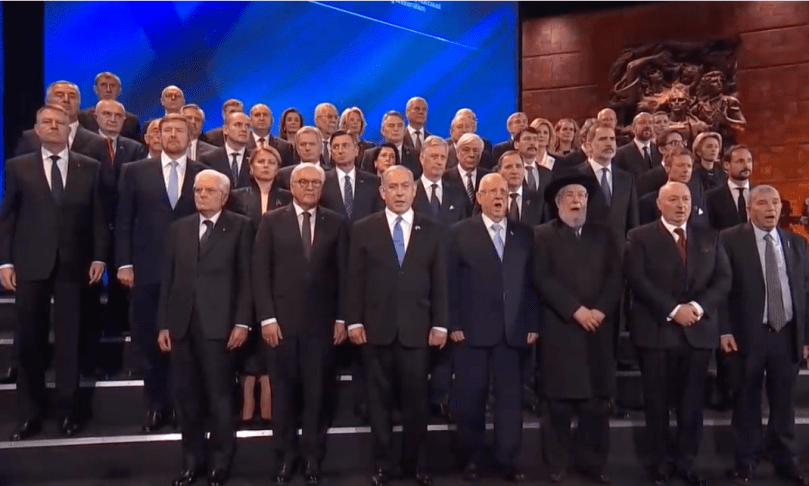
Over the past five years there has been a 320% rise in Far-Right attacks globally. In 2018 alone, there were 387 violent anti-Semitic incidents – 35 in Germany, 68 in the UK… The Holocaust was clearly not enough to snuff out the thinking that leads to such evil. Which is why I have chosen last week’s commemoration of the 75thanniversary of the liberation of Auschwitz and International Holocaust Remembrance Day at Yad Vashem in Jerusalem as my blog’s focus. There the overriding message of world leaders was of the necessity for vigilance to the language of hate, discrimination and prejudice. (The full speeches are on YouTube)

I have no doubt the Jewish speakers’ speeches in Jiddish were profound and extraordinary. And Prince Charles spoke movingly about the risk of the Holocaust being placed under a glass bubble within history and urged us to re-commit ourselves to tolerance and respect. (He speaks at 1:31:30) But it was once again the German president, Frank-Walter Steinmeier, the first ever German president to address guests at Yad Vashem, who, in my view, stole the show with his impossibly difficult and brave speech. I would like to include extracts from it here because, as we approach the thankfully silent bongs of Big Ben on 31st January, I believe his words are relevant to each and every one of us to act upon in our own little ways.

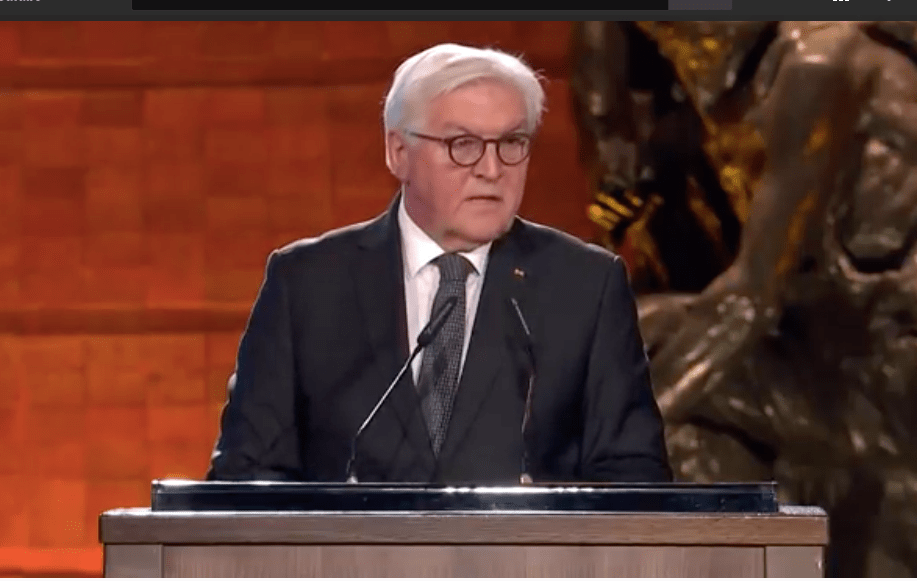
Opening his address (which starts at 1.49.20) with a Jewish blessing in seemingly fluent Hebrew, he continued in English, telling the tragic stories of four individuals murdered in the Holocaust. With the humility and honesty that has become a hallmark of German leaders at such occasions, he unflinchingly took responsibility on behalf of his country:

Germans deported them. Germans burnt numbers on their forearms. Germans tried to dehumanise them, to reduce them to numbers to erase all memory of them in the extermination camps. They did not succeed…. As human beings, they live on in our memory.

Frank-Walter Steinmeier talking at Yad Vashem in Jerusalem

Referring to the Yad Vashem monument, he continued, “I stand before this monument as a human being and as a German… and I bow in deepest sorrow.”

His reference to ‘human beings’ didn’t stop at the victims and those on the side of good: “The perpetrators were human beings,” he continued, lightly emphasising each of our potential to become perpetrators or victims. “They were Germans; those who murdered, those who helped in the murdering, and the many who silently towed the line… they were Germans. The industrial mass murder of 6 million Jews, the worst crime in the history of humanity – it was committed by my countrymen. The terrible war, which cost far more than 50 million lives, is originated from my country. Seventy-five years later, after the liberation of Asuchwitz, I stand before you all as President of Germany, and I stand here laden with the historical burden of guilt.”

Gulp… I don’t know if it moves you, but I know a little of just how heavy that burden is. But as anybody dealing with criminals and/or victims can attest to, genuine admissions of guilt and acts of apology, forgiveness, restorative justice or therapy offer opportunities for reconciliation, that powerfully healing balm for wounds which threaten to fester forever. Steinmeier knows this:

“At the same time, my heart is filled with gratitude… gratitude for the hands of the survivors stretched out to us, gratitude for the new trust given to us by people in Israel and across the world, gratitude that Jewish life is flourishing again in Germany. My soul is moved by this spirit of reconciliation… a spirit, which opened up a new and peaceful path for Germany and Israel; for Germany and Europe and the countries of the world.”

I love the way Germans can speak of ‘heart’ and ‘soul’ and ‘spirit’ so effortlessly…

“The eternal flame at Yad Vashem does not go out. Germany’s responsibility does not expire. We want to live up to our responsibility. By this, dear friends, you should measure us. I stand before you grateful for this miracle of reconciliation and I wish I could say that our remembrance has made us immune to evil. Yes, we Germans remember, but sometimes it seems as though we understand the past better than the present. The spirits of evil are emerging in a new guise, presenting their anti-Semitic, racist, authoritarian thinking as an answer for the future, a new solution to new problems of our age. And I wish I could say we Germans have learnt from history once and for all. But I cannot say that when hatred is spreading…”

“Of course, our age is a different age, the words are not the same, the perpetrators are not the same, but it is the same evil. And there remains only one answer: Never again. Nie wieder. That is why there cannot be an end to remembrance…”

President Steinmeier and Prince Charles
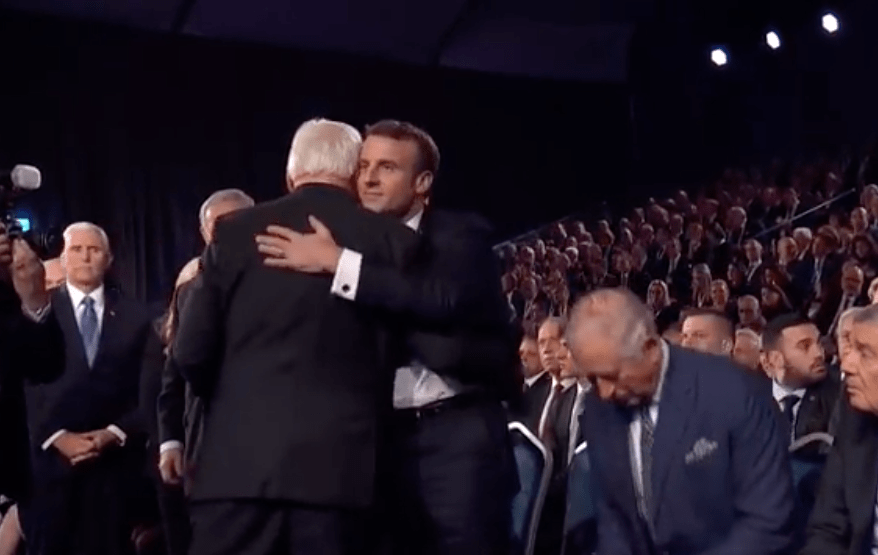
President Steinmeier hugged by President Macron
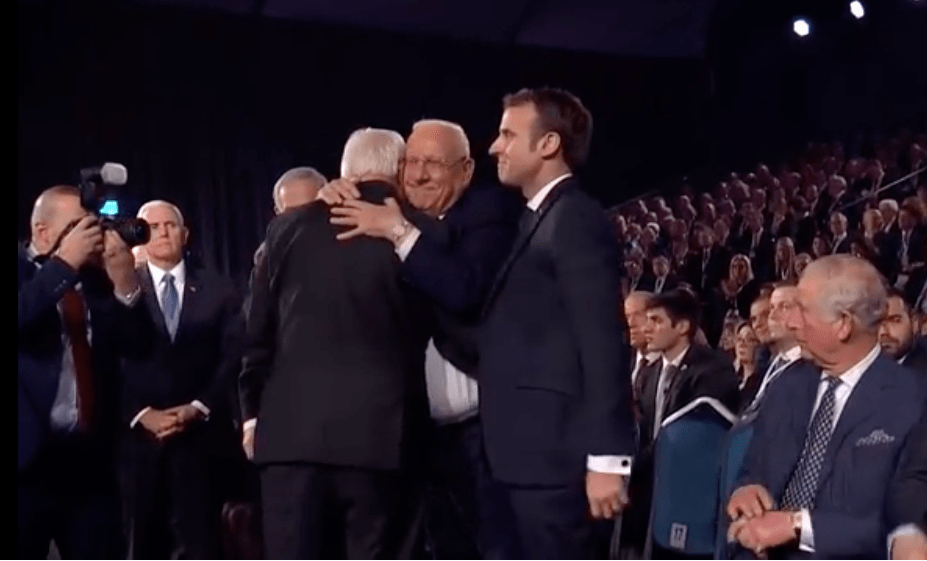
President Steinmeier hugged by Avner Shalev, Chairman of the Yad Vashem Directorate

I am so glad that President Steinmeier was given such heartfelt hugs on returning to his seat. After Prince Charles’s slightly awkward handshake and strained smile, President Macron looked him in the eyes and embraced him followed by Avner Shalev, Chairman of the Yad Vashem Directorate, who looked like he would never let him go. Such displays of heart, soul and spirit warm me every time.

Further reading:

The Times of Israel: At Yad Vashem, German president says Germans haven’t learned lesson of Holocaust

The Telegraph: Holocaust is no mere ‘fact of history’: Prince Charles stands with world leaders against rise of anti-Semitism

The Guardian: The need to remember and retain the lessons of what became the Holocaust grows rather than diminishes. 

The New York Times: At Holocaust Memorial, a Survivor and Towering Moral Voice Says He ‘Cannot Forgive’

We love commemorating our victories and losses… but not our declarations of war it seems?

Could it be that even the British have become weary of commemorating the World Wars? Or was the lack of fanfare around the 80th anniversary of the outbreak of the Second World War earlier this month down to having a selective national memory? Do we only like to remember the bits where we emerge as clear heroes, victors or victims?

To my surprise, nothing, or very little, happened in this country on 3rd September 2019. Yet, at 11.15am on that day in 1939, Prime Minister Neville Chamberlain, in a somber broadcast to the nation made from the Cabinet room in 10 Downing Street, announced with regret that his efforts to ensure peace had failed and that “this country is at war with Germany.” The ensuing conflict lasted six years and cost around 50 million lives.

For Poland this anniversary was obviously a huge deal. Germany’s invasion was the catalyst for Britain’s and France’s declaration of war and few places suffered the same level of death and destruction between 1939 and 1945. It lost about a fifth – that’s six million – of its population including the vast majority of its three million Jewish citizens. Wielun, the first city to be bombarded by the Luftwaffe, was the chosen location for forty world leaders and representatives of other countries to gather together for a dawn ceremony on Sunday 1st September at 4am (2am GMT). Polish President Andrzej Duda, German Chancellor Angela Merkel, French Prime Minister Edouard Philippe, US Vice President Mike Pence were all present. (President Trump cancelled citing the approach of Hurricane Dorian as his reason for basically spending the day on the golf course.) President Putin wasn’t invited. But, why wasn’t our Prime Minister there? I think we sent our Foreign Secretary, Dominic Raab, to a subsequent ceremony in Warsaw but…? 

Surely a bit more than just a nod to our role in the unfolding of the most momentous episode in modern history would have been appropriate? Maybe a moment where we press pause on all justifications and humbly reflect on the regrettable escalation of the horrors that our declaration of war unleashed? Or a clearly stated renewed commitment to peace in Europe? Or an informed and respectful acknowledgment of the far greater losses suffered by so many other nations? I recently asked friends how many people they thought died in WW2. “Seven million Soviets? Two million Germans? Two million British?” they guessed. “Actually we have no idea,” they admitted. And they didn’t. Most British people don’t. It was between 20 and 27 million Soviets, 7 million Germans and 450,000 British… that’s including Crown Colonies.

To be fair, Boris Johnson, in a videoed speech that circulated on Twitter, praised the “dogged and unconquerable resistance” Poland displayed during the Second World War and how it “never succumbed to tyranny…” But he also couldn’t help slipping in a quick pat on the UK’s back for standing with Poland “in times of triumph and tragedy.” Hmmmh, you just have to listen to Neil Macgregor’s excellent series on Radio 4 As others see us to realise that this is not quite how Poland sees things. Part of their otherwise generally positive national memory of us is of ‘betrayal’, not once but three times! (This relates to the Katyn massacre, ignoring the plight of Polish Jews and Britain’s role at the Yalta Conference in 1945 when it was decided that Poland would be given to the Soviets.

British Defence Secretary, Ben Wallace, just rolled out the same old tired stuff about Britain going to war to “defend our values and our allies from the Nazis”. (Defending ones values and friends is how all sides justify conflict, however small or large.) He added, “Even though nearly every family in the UK still possessed the memories and hurt of the First World War, they were prepared again to make the ultimate sacrifice. The incredible courage of that generation who fought for our freedom must never be forgotten.” Aaaagh, they just can’t help themselves, these men! It is always all about usOur heroism, our sacrifice, our justified defence. Wouldn’t this have been the perfect time to engage with Polish history? The imbalance between what we know about others and what others know about us is embarrassing. Our narrative that “We went to war for Poland” is, for example, in Polish minds “We declared war for Poland” because the much hoped for military support didn’t actually follow. We really need to start embracing a wider-angled view of history! (This podcast is a great start)

For me it was once again the German contribution that lit a way forward for us all. Speaking with typical unreserved apologetic candour, President Frank-Walter Steinmeier described how “Eighty years ago, at this very moment, all hell rained down on Wielun, fueled by German racist barbarity and the desire to annihilate… My country unleashed a horrific war that would cost more than 50 million people – among them millions of Polish citizens – their lives. This war was a German crime… I, along with [Merkel], want to tell all Poles today that we will not forget. We will not forget the wounds that Germans inflicted on Poland. We will not forget the suffering of Polish families and nor will we forget the courage of their resistance.” He then went on, with a bowed head and speaking in both German and Polish, to ask for Polish forgiveness. “I bow my head before the victims of the attack on Wielun. I bow my head before the Polish victims of Germany’s tyranny. And I ask for your forgiveness.”  
Wow! I know, this is not new. Germany has been publicly apologising for years, starting back in 1970 with Willy Brandt’s silent ‘Kniefall‘. Nevertheless, can we just pause and reflect a moment. The president of a powerful country holding up his hands in surrender and basically saying: “What we did was shit. We were shits. There are no words to describe just how shit we were and nothing can ever change that.” Just imagine how difficult that is to do. And how different the world would be if more people did that. The power of apology. The power of asking for forgiveness. (Whether it is possible to ask for forgiveness on behalf of another / others is debatable as Bernard Schlink does so well in his book ‘Guilt about the past’. But still…)

I’m glad that in a return speech, President Duda thanked Steinmeier for his presence at the painful anniversary before continuing to rightly denounce Nazi Germany’s attack on Poland as “an act of barbarity” and list other massacres and atrocities on Polish soil. He also drew attention to the genocide and mass murder continuing around the world today, and underlined the importance of international alliances like NATO and the European Union. (The question of further compensation was also raised later on… but you can read a fuller summary of the speeches here.) The pain still lingering between these countries that were so utterly destroyed on so many levels is visceral. As is the will for lasting reconciliation.

As much as I am frustrated and disappointed by our on-going and often unimaginative, inward-looking and lop-sided to the point of ignorant rhetoric on the World Wars, I am also optimistic. Younger generations are asking awkward questions that force a re-evaluation of the dusty, airbrushed pictures of our ‘glorious’ Empire. And the answers they are finding are uncomfortable. Maybe when we stop hiding our misdeeds behind the undisputedly ghastly deeds of the Nazis and the Holocaust and finally acknowledge our own national shadow, when we admit that the whole British Empire was based on the genocide of indigenous people and a forcing of our values on others, maybe then we can be genuinely better in the present and the future. 

Further reading:

https://www.dw.com/en/german-president-asks-for-polish-forgiveness-on-wwii-anniversary/a-50247207

https://www.telegraph.co.uk/news/2019/09/01/german-president-asks-forgiveness-80th-anniversary-start-second/?WT.mc_id=tmg_share_em

https://www.theguardian.com/world/2019/aug/30/truth-is-a-casualty-80-years-after-start-of-second-world-war