Question to self: Is speaking out still the right thing to do?

If you haven’t yet seen Jesse Eisenberg’s latest film, ‘A Real Pain,’ I can only urge you to do so. Starring himself and Kieran Culkin [youngest son in Succession!], the pair play two estranged cousins who travel to Poland to fulfil the wish of their recently deceased, concentration camp survivor grandmother for them to visit her former home. It’s essentially a road movie and extremely funny. But the context of the Holocaust and the attempts of third-generation Americans to come to terms with it, makes it also profoundly moving, thought-provoking and important. 

Millions of people world-wide are still grappling with the aftermath of those appalling years of Nazi rule. More, rather than fewer, stories of survivors and first-hand witnesses are coming to light told by descendants who have finally found ways to articulate what their forebears couldn’t. My own, In My Grandfather’s Shadow, published in 2022, is testament to the painful process of peeling back the layers of incredulity in which the extremes of both cruelty and suffering are wrapped. For many, it is justifiable to judge or blame ordinary Germans for not speaking out or revolting against the wrongness of what was happening in clear sight. Despite acknowledging their justified fears, it would have been the right thing to do.

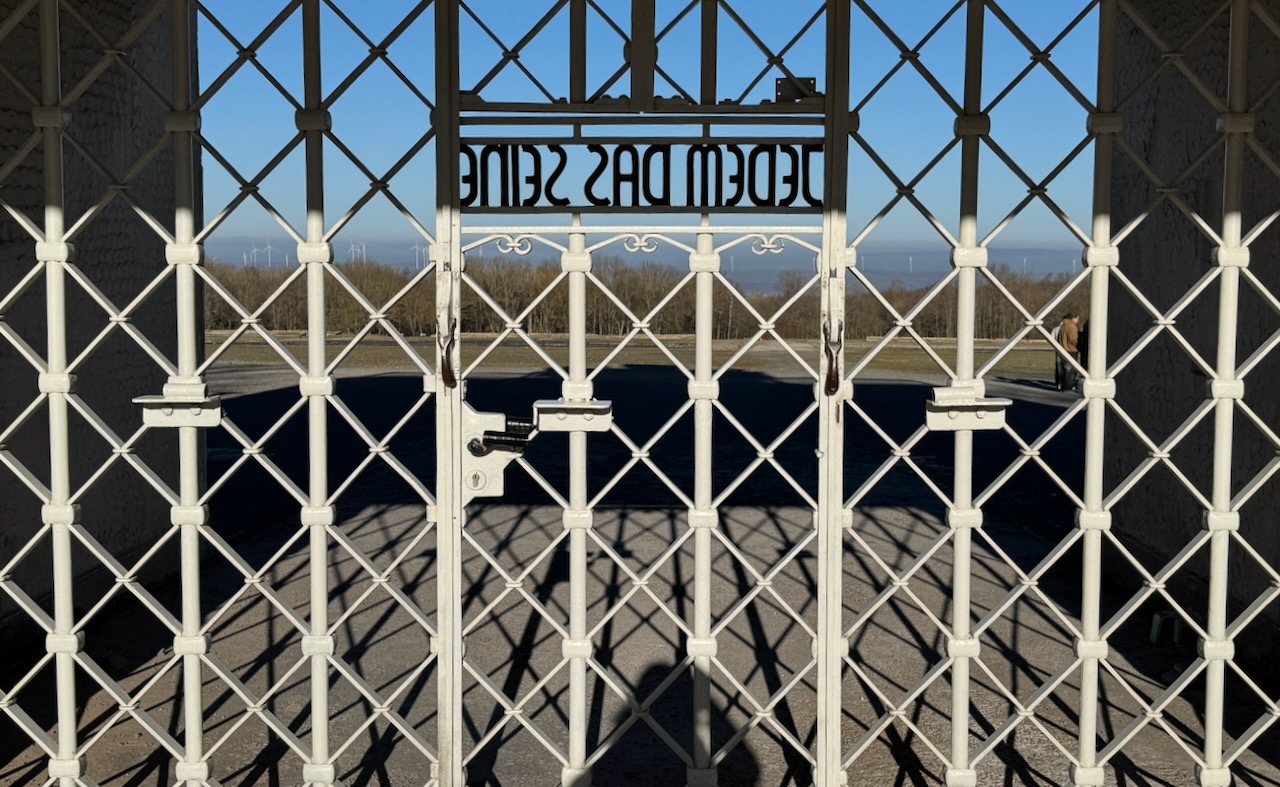
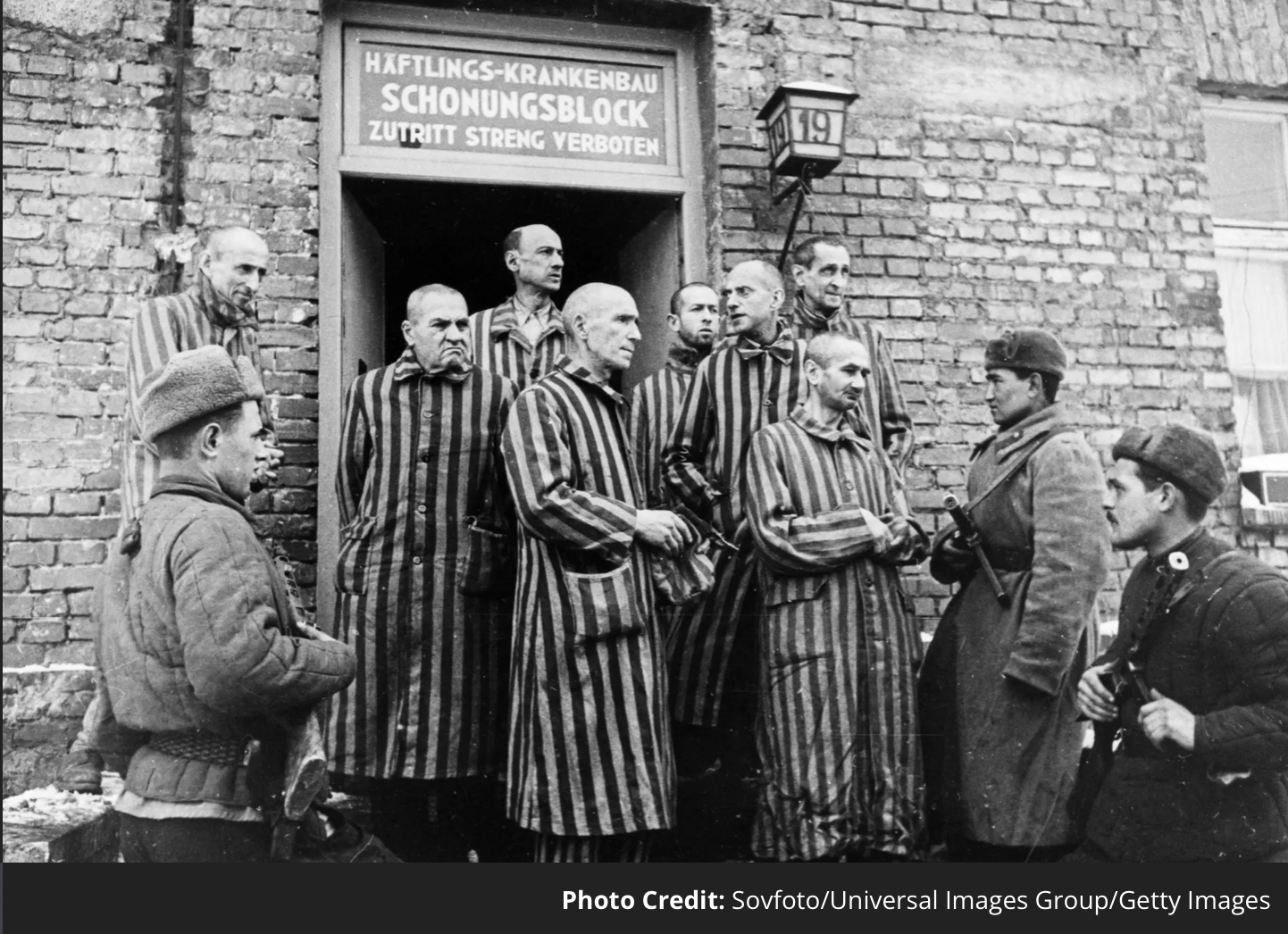
As we approach Holocaust Memorial Day marking the 80th anniversary of the liberation of Auschwitz by Soviet forces in 1945, we are asked to remember the horrific consequences of the crimes that, in part, were enabled because people did not speak out. We will once again repeat the heartfelt ‘Never Again’ that has been chanted like a mantra over the decades. But is it enough?

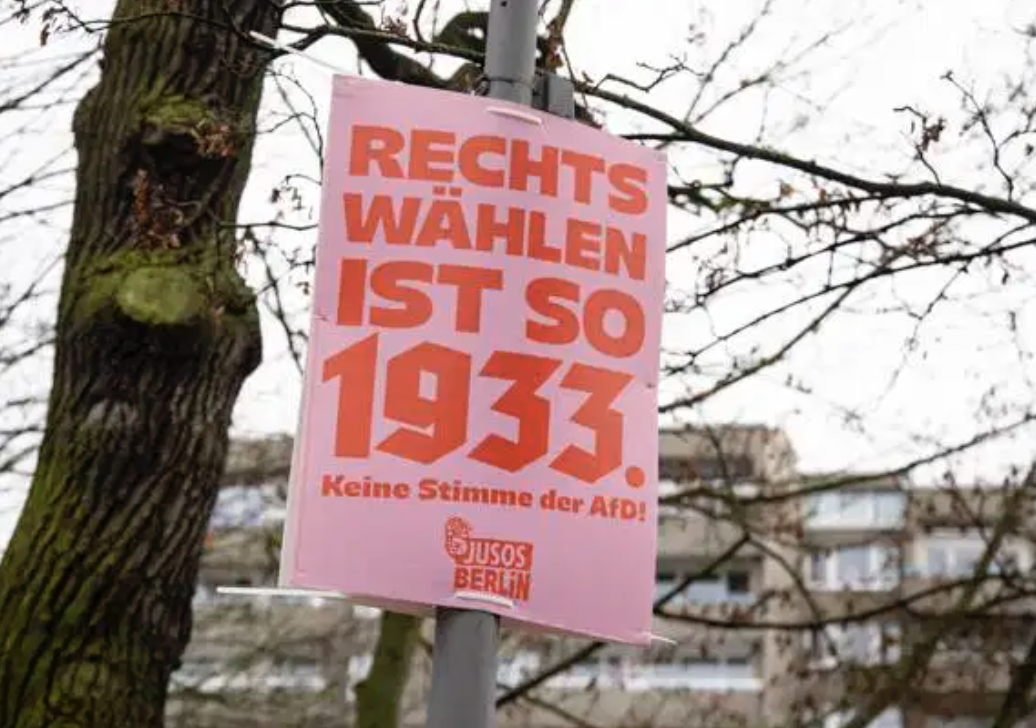
“Voting right-wing is so 1933”

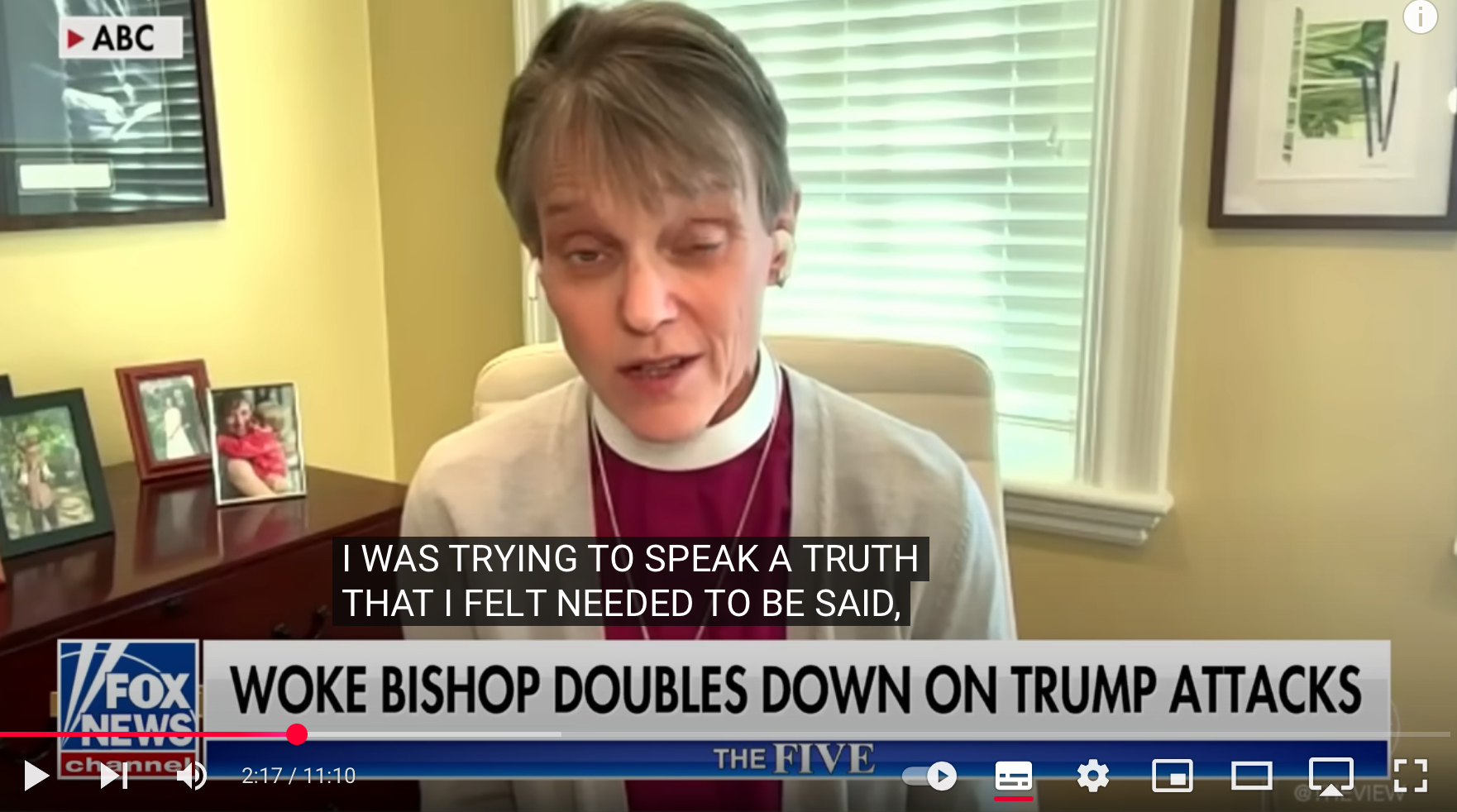
Across the globe, the roots and shoots of far-right policies are taking hold with renewed vigour. In highly vigilant Germany, ‘Voting right-wing is so 1933’ is a campaign slogan for left-wingers. But calling out discrimination and anti-immigrant policies, becoming an ‘upstander’ rather than a bystander has become increasingly perilous, even a danger to life. I wonder how Bishop Mariann Budde’s recent controversial sermon at the inaugural prayer service at Washington National Cathedral will play out. Referencing immigrants and LGBTQ+ individuals among others, she calmly but directly asked President Trump “to have mercy on the people in our country who are scared now.” Will she be cancelled, trolled, fired, discreetly removed from her post? So far she is refusing to apologise for speaking her truth. Was it brave, wise, right? Or, as he and his supporters claim, ‘nasty, woke, inappropriate’ and she a “Radical left hard line Trump hater”? Bizarre as it sounds, by seeking a path of compassion, did she inadvertently shame and dent an ego as big as the world?

As someone with (non-Jewish) German roots, I feel like it is both in my DNA and a conscious personal responsibility to speak out in the face of a perceived injustice or wrongdoing. However, I am beginning to feel an even stronger impulse. In these times of widespread latent and reactive vitriol and rage, I have started to listen into the other side’s point of view rather than – or at least before(!) – slating it. To create a tiny pause, a space between the attack and counter-attack model so many discussions rapidly descend into. It’s like stepping back from an easel when you have been immersed in some detail in order to see the whole picture. For when we speak out against something with conviction but without seeing the back story behind the other’s conviction, we are basically assuming a moral and intellectual high-ground that imparts the message that ‘they’ are wrong (inferior) and ‘we’ are right? This never goes well! Trump’s return to the White House proves that.
Decades of trying to comprehend the behaviour of ordinary Germans eighty or ninety years ago have revealed to me that many of them won’t have been so different to many of us today, i.e. more concerned with their own lives – milking cows, running businesses, keeping children warm and fed – than politics. Looking away, keeping stumm becomes a basic survival tactic. But the outrage humans feel in the face of endless discrimination, inequality, injustice, harm can rapidly turn to despondency and disaffection when we realise we can do little more than sign a petition or share a rant on social media or among friends. Eventually we might become numb, at worst immune to the wrongdoing. I know that I personally read, watch and listen to the news far less than I used to because the drip-feed of madness, badness and sadness feels toxic and induces inertia. I have no idea if this is maturity, complacency, disheartenment, a nauseating lack of humour or an equally nauseating sense of self-righteousness, but I have lost some of my more outspoken tendencies and anger at the world and replaced them with something that is hopefully more productive but still relevant to these times.

My prison work showed me that the most valuable action I could offer prisoners was to listen and to hear them. Not just their stories, excuses and justifications, but what came before. The drivers of their behaviour. With their defences down, trust, compassion and understanding could grow. Attitudes and actions quietly changed without them being shown to be wrong.

I am not sure if this is the right way to go in general life. The story of the Zen / Chinese Farmer comes to mind with its ‘We’ll see…’

It’s certainly not a quick-fix solution. But maybe it’s a tiny antidote to the constant stoking of anger? A drop towards the creation of a kinder world in which wider discourse and a greater tolerance of difference are possible. And ‘Never Again’ regains its urgency and weight. 

A few links to that don’t necessarily reflect my views, but are accessible sources to pursue your own research.

A Real Pain Review

A Real Pain Trailer

Germany’s present is not Germany’s past by Katya Hoyer

Who is Mariann Edgar Budde, the bishop who angered Trump with inaugural sermon?

I am not going to apologise’: The Bishop who confronted Trump speaks out

In search of ‘nothing’… Part 2 

(You can find Part 1 here)

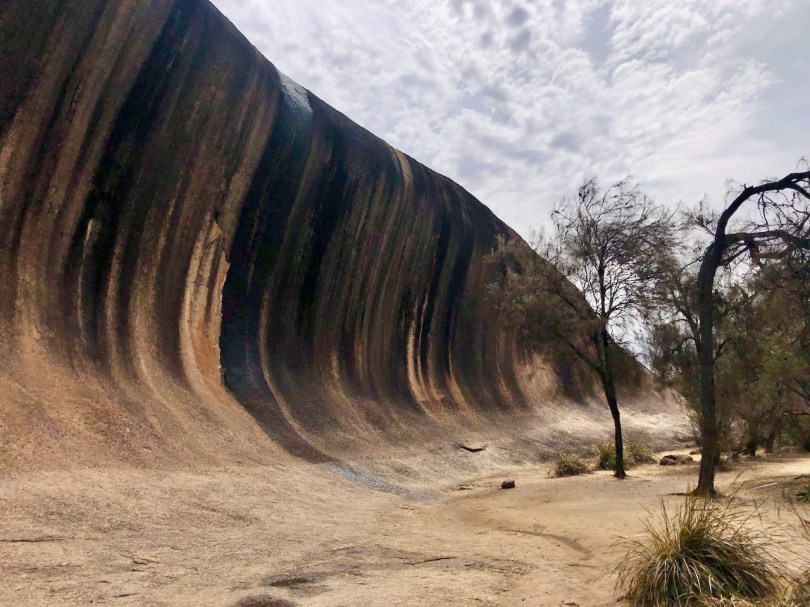
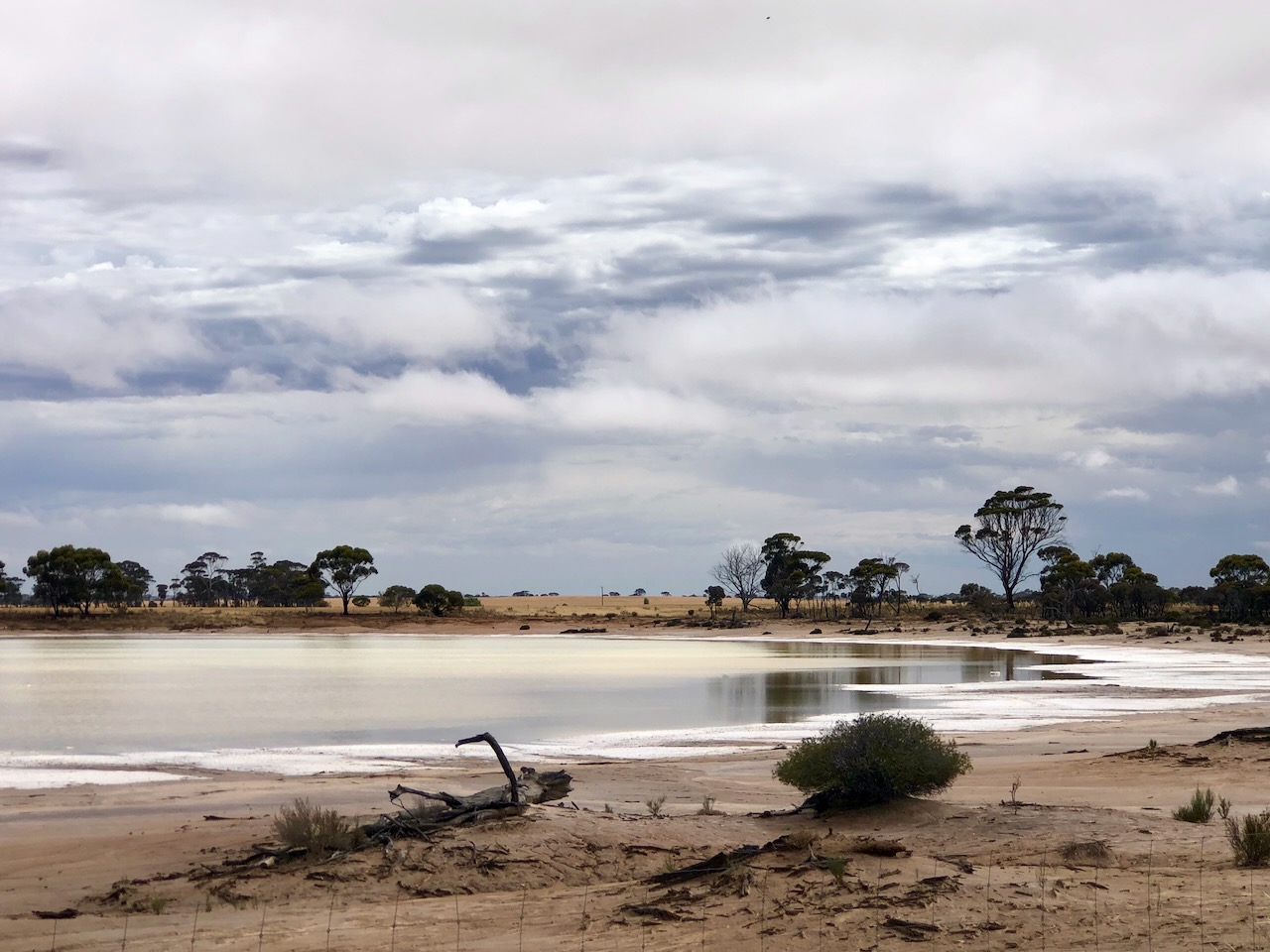
Roughly 220 miles east of Perth, beyond the salt lakes of the Western Australian Wheatbelt and within the remoteness of Hyden’s various outcrops of mineral-striped granite, the mouth of Mulka’s Cave opened just enough to allow us to clamber inside. With the brash sun denied entry, it took time to adjust to the dimness of leaked light… and silence. That’s when we saw them. 

A few miles away, Hyden Rock, more famously known as Wave Rock, buzzed with flies and visitors posing for selfies and family snaps. It is better served than the cave with a visitor’s centre and trail signs tasked with the nigh on impossible endeavour of condensing 4,500 million years of evolution into digestible snapshots. Like the constellations of night skies, how do you explain the making of some of the oldest exposed rocks anywhere on earth? 

Well, with a little appropriation, I am going to give it a go. For to travel in Australia is not only to experience the elements as art forms of uncompromising intensity and beauty. It is also to engage with Australian history. And that involves confronting another story of darkness that relates to the pitch dark episode of more recent times that many people will be remembering this Saturday 27th January… Holocaust Memorial Day.

Approximately 2,500 million years ago, a mass of granite rock known as the Yilgarn Block was intruded into the earth’s crust right across the southern half of Western Australia. It remained below the surface as the first plants and trees emerged, as the first amphibians, reptiles and insects moved, as the dinosaurs came and went between 230 and 130 million years ago. Meanwhile, hidden out of sight, a process of sub-surface weathering was occurring in three massive phases of erosion. 

Water that ran off Hyden Rock seeped into cracks and nibbled away at the structure of the granite. While winds and heat would dry the upper layers of soil, deep down it remained wet and salty, rotting the rock face and breaking it down. When natural erosion finally lowered the surface level of the surroundings, the crumbled rock also washed away leaving a 25-meter-high and 110-meter-long crest rising from the darkness of geological history. To put humans into perspective, if the whole evolution of the earth was reduced to a single calendar year, modern man would make his entrance onto the world stage in the final half-second of December 31st!

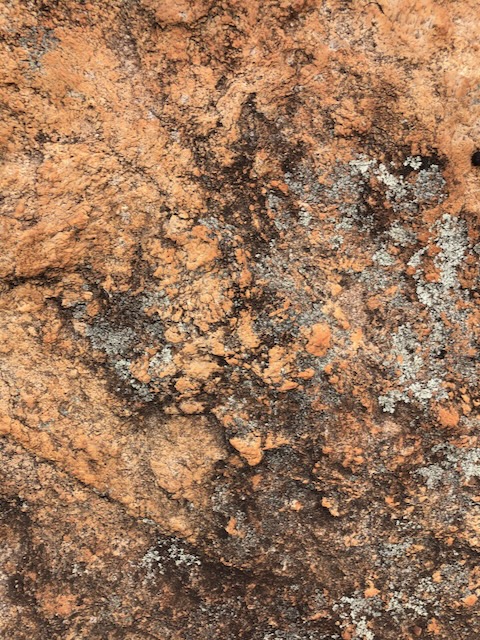
The palette of coloured stripes is created by water’s impact on the tiny lichens (the first plant form to colonise granite), mosses and blue-green algae that stain and streak the stone with shades of black, orange and silver.

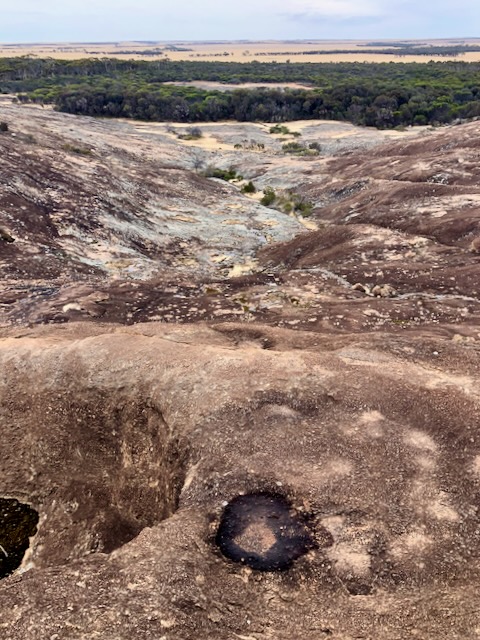
Similar processes occurred at the nearby domed granite ‘Humps,’ one of which houses Mulka’s Cave. Crafted over millions of years by salt, water and wind and painted in strokes of ochres, greys and pale cobalt dotted with small green shrubs, they were home to the vital gnamma holes. These were Aboriginal people’s natural water holes capable of storing rainwater run-off and replenished from underground stores. From the 1890s, the influx of thirsty new arrivals made these already vital sources of water even more precious than the gold they came to mine. The sacred gnamma holes became scenes of conflict. Many were drained, destroyed or polluted, others were lined and claimed as the gold diggers’ own. 

The pattern from there on is all too depressingly familiar. Domination, subjugation, exploitation, cruelty, destruction, suffering, death. A particular human / inhumane trait prevails the world over when man is consumed by greed and a sense of superiority and entitlement. But is that our true nature or an aberration of what we are designed to be?

One could say that since 1633 when Galileo was convicted of heresy for upending almost 2000 years of western scientific thinking by claiming the sun – rather than the earth – was the centre of the universe, there has been strong resistance, especially by the Catholic Church, to the ensuing demotion of man’s position in the world. 

Behind this refusal lies the still-existing widespread conviction of alpha male’s rightful position at the pinnacle of nature. In the mid 19th century, a complete misinterpretation of ‘survival of the fittest’, the catchphrase that became shorthand for Darwin’s ground-breaking theories on evolution, conveniently advanced his apparent confirmation that physical dominance triumphs. 

Such misunderstandings and claims of man’s importance and right to dominate have had devastating consequences, most recently seen in the ideologies and doctrines such as Nazism, eugenics, racial and gender discrimination and society’s policies on and treatment of the ‘weaker’ more vulnerable in society – the elderly, sick, poor, lesser-abled, foreign… and, in Australia, the indigenous Aboriginals and their descendants. (Hmmm… I can feel a Part 3 to this blog might be needed.)

Fortunately, countless scientists of different disciplines are finding that it is not physical dominance that assures survival but the human traits of friendliness, kindness, generosity, sacrifice, empathy, cooperation.

Compassion, for example, stems from a really old part of the brain. It activates the vagus nerve – the longest bundle of nerves in the human parasympathetic nervous system. Research shows how feelings of caring for someone in need activate the vagus nerve. Have a listen to this. It’s not my area of expertise, but it feels all too relevant to some of the problems in the world today. 

When I left England at the beginning of December, I realised I felt saturated and helpless in the face of the wrongness and tragic outcomes of human actions, both past and present. (For background you can read my November Blog.)

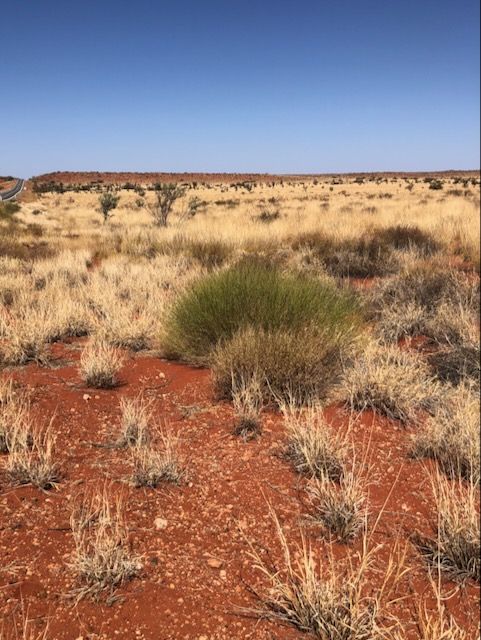
Travelling through the landscape of the Western Australian outback washed, warmed and blew the density away creating endless space… a blank inner canvas. It was a form of recalibration and alignment with nature. A state of empty ‘nothing’ full of potential and hope. And that’s what I saw in Mulka’s Cave when I saw ‘them’.

As my eyes acclimatised to the dipped light, I found myself surrounded by the traces of 3-4000-year-old, possibly much older, hands waving gently from the walls.

Some printed, others stencilled, they revealed the inextricable interplay of positive and negative space, of simultaneous absence and presence, the creative dance of inner and outer. The entirety of the world quite literally in the palm of a hand. 

These early displays of human creativity seem to bridge the synthetic divisions of secular modernity and the differences that lead to wars. They close the false divides between past, present and future to depict human beings’ true position in the scheme of things. As part of a greater whole.

To me, those ancient hands that refused to spoil or damage what their ancestral deities had made in the Dreamtime prove that we are both the created and creators. That we are both all and nothing. 

With this blog and in a very different way to usual, I acknowledge Holocaust Memorial Day on Saturday 27th January and remember the millions of people who were brutally murdered by those who could not see that ultimately, we are one.

On this year’s Holocaust Memorial Day, German tanks will be heading to Ukraine to fight Russia. Are we learning from or repeating the past?

With the approach of Holocaust Memorial Day, I find myself engaging with some of my customary questions around how to remember the past and learn from it. 

There is no question that 27th January is a day to collectively bear witness to those murdered under Nazi Germany’s heinous regime. To honour their memories and acknowledge the agonising voids they once filled. To hold in our minds and hearts those who survived and those born later scarred by the violence inflicted on their families. I personally can’t imagine a time when this is not the right thing to do.

Added to remembrance, is the necessity to grasp and implement the lessons of such dark episodes in history. The most obvious ones centre on the dangers and wrongness of discrimination; of othering fellow human beings for their perceived inferiorities or differences in religion, outlook, appearance, social standing, sexual orientation etc. This may feel relatively straightforward for decent people. It becomes less easy, however, when we are requested to act in the face of similar wrongdoings, rather than look away or rant on social media; to become ‘upstanders’ rather than bystanders. How do we do that in this world where injustices can be found everywhere?

One could deduce, that punishing the culprits is an important aspect of commemorating the Holocaust and avoiding future genocides, though the time for that may now have passed. Just over a month ago, the 97-year-old German care home resident, Irmgard Furchner, became possibly the last person to be convicted of Nazi war crimes. After a divisive trial in Itzehoe, she was given a 2-year suspended sentence for her role as the 18-year-old secretary to the Stutthof concentration camp commandant, Paul-Werner Hoppe. For many people, this is justice, no matter how late, and all the more deserved due to Furchner’s evident absence of remorse. For some, however, it is a vindictive attempt to assuage Germany’s collective guilt. For others, it is misplaced and sickening virtue-signalling, pointless scape-goating… the debate is lively.

Irmgard Furchner

A positive outcome of Germany’s learning from its dark past is its nigh on eighty years of pacifism. But this too appears to be being brought to an end, albeit with huge reluctance and resistance within the country. Putin’s illegal war and NATO’s unified military response in support of Ukraine have put understandable pressure on Germany to break its resolve not to get involved in military conflicts and supply Ukraine with its world class Leopard 2 tanks specifically designed to compete with the Russian T-90 tanks. Last night, after months of hesitation and debate, the Chancellor, Olaf Scholz, and the German government finally agreed to send a company of battle tanks and allowed other countries to send their German-made tanks too.

The whole issue is extremely complex, I know, but the psychological irony seems unavoidable. 

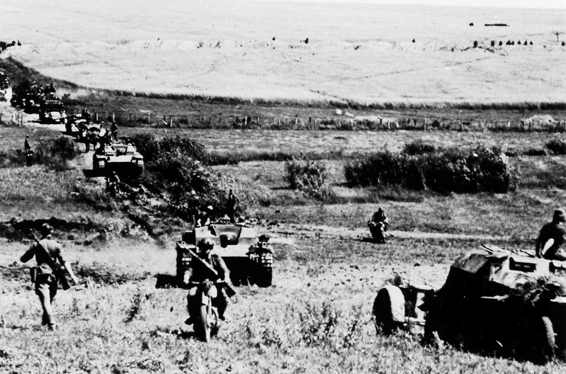
On the one hand, the widespread tendency to never let Germany forget the wrongs of its Nazi past is still alive and kicking. On the other, there is now equally widespread demand that it does just that. Or rather that it selectively remembers some bits of its past and forgets others, such as the traumatic memories of the last time German tanks rolled into Russia with the horrifically high death tolls and suffering of tens of millions that ensued. I wish I could ask my German grandfather what he thinks of the situation, having fought on the eastern front for so long… (See Chapters 14 & 15 in my book In My Grandfather’s Shadow)

Operation Barbarossa, 1941

From many points of view, including a growing number within Germany itself, there are compelling arguments for the government to embrace a Zeitenwende’ (turning of the times) in its foreign policy and to override its long-standing commitment to peacekeeping, up its defence budget and contribute more military solidarity to its NATO allies in a shared effort to support Ukraine against Russia. I am not saying this is right or wrong, just recognising that it is a HUGE step for Germans and Germany, a potential game-changer for either good or bad, and one we should try to understand rather than simply criticise and judge. 

Within the over-simplified, clean-cut narrative of Putin = bad, Ukraine/NATO = good, (which is naturally true from the West’s perspective but not from Russia’s and its allies, hence the conflict), space should be allowed for Germany’s justified fears of an escalation. Its visceral memories of fighting Russia and closer proximity to the country, raise genuinely terrifying concerns that we need to take seriously. At the same time, the contradictions in the messages being delivered to Germany surely don’t go unnoticed: Remember and take the full blame for the atrocities you caused with the Holocaust and the Second World War… but actually, forget some of them now and immediately dispatch tanks against the former enemy with whom you have been trying to make some kind of peace or amends and play a decisive and deadly frontline role in what could easily become a Third World War.

Maybe it really is time for Germany to move beyond its WW2 identity. I hope that this Zeitenwende in German policy will also find a counter Zeitenwende in certain mindsets.

Further Reading:

Was this Germany’s last ever Nazi war crime trial?

Why Germany hesitates on sending battle tanks to Ukraine

Why Germany is struggling to stomach the idea of sending tanks to Ukraine

Germany to send Leopard tanks to Kyiv and allow others to do so

Forthcoming Events focusing on In My Grandfather’s Shadow and open to Public:

Thursday 2nd February, 6-8.30pm, Painswick, Glos: First Thursday In ConversationMore info

Thursday 23rd March, 6pm – Summer Town Library, Oxford: Talk and Q&AMore info soon

Wednesday 29th March, 2-3pm – Oxford Literary Festival: In Conversation with Miranda Gold… More info

Being inspired to be a ‘light in the darkness’ feels a powerful way to honour Holocaust Memorial Day

When it comes to Remembrance, I cannot think of a more important day to take time to reflect than today – Holocaust Memorial Day, the anniversary of the liberation of Auschwitz by the Soviet army in 1945. Eighty or so years lie between us and the horrors that started in Germany and then spread beyond. Most of the survivors of those times are no longer able to bear witness to them. And yet, for many descendents, that past will still be alive shaping their present. It is primarily for them, and all that they carry in their hearts, that I pay such attention to this day.

As readers of my blogs will know, any day of remembrance raises questions in me: what to remember, how to remember it and to what end? I’m always particularly interested in the editing process of our personal, collective and national memories. Which selection of people, events and actions we choose to remember and honour. And which get left out.

Edits of history come about for all sorts of reasons, not least because some memories are too painful… or shameful to re-visit. But what happens to things that happened, but aren’t included in the stories we tell about ourselves? What happens to those awkward truths or people that disrupt more favoured version of events? Obviously politics plays a big role in shaping a country’s historical narrative to support left, right or centre agendas. But I still ask, what happens to the inconvenient truths that get suppressed, denied or banished to the footnotes?

Plans for a Holocaust memorial next to Parliament

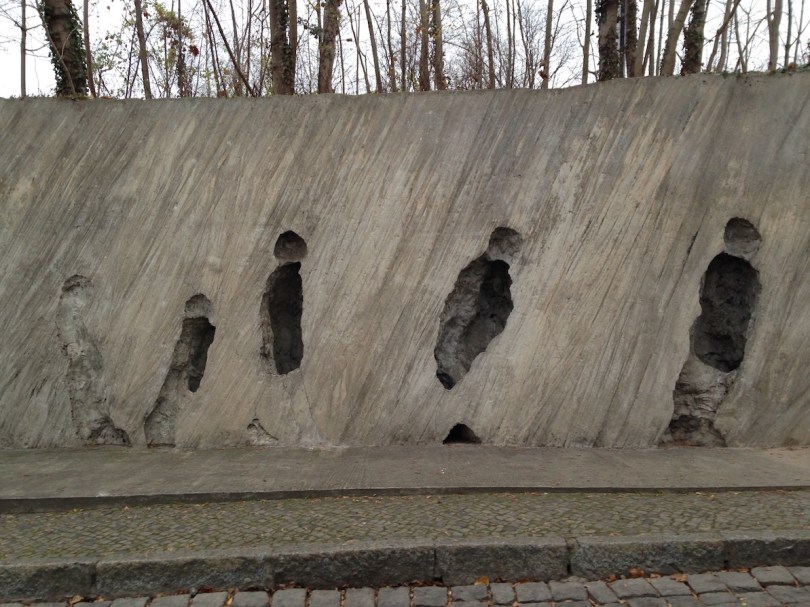
I found this recent article by Richard Evans in the New Statesman fascinating: How should we remember the Holocaust? It describes some of the multiple points of view in the on-going debate about the appropriate form, location, size, message and so much more of the proposed Holocaust Memorial and learning centre in the heart of Westminster. It’s complicated. This is exactly the kind of debate Germany has been engaged in almost incessantly since the eighties and that lies behind their extensive culture of ‘counter memorials.’ At one point it was even suggested that perpetual debate on the form of a memorial was possibly the best way to keep the memories alive.

I have many thoughts (obviously!) on what is said in the article, but I will spare you of them here (except one!) in favour of inviting you, on this day, to think about where you stand in relation to Holocaust remembrance. My ‘one’ opinion echoes that of Raphael Wallfisch, a leading international concert cellist whose mother was forced by the SS to play in the infamous women’s orchestra at Auschwitz. He insists that the proposed ‘British Values Learning Centre’ “must reflect clearly and truthfully, the complete and unvarnished truth of Britain’s role before, during and after the Jewish Holocaust…” This request for a fuller picture is echoed by many others in the Jewish community and beyond.

We are witnessing all around the world not only a rise in anti-Semitism, but also eruptions of rage as suppressed, uncomfortable truths surface. Covid-19 is giving us an opportunity to re-think how, what and why we remember. The Britain of today needs to rise to this challenge, now more than ever before. Of course, remembering and hearing the stories of the victims is paramount. But if we primarily focus on what Germany did and how the British triumphed over evil, we are missing a vital lesson. Britain also needs to look at, and learn from, what we as a nation didn’t do… but could have done.

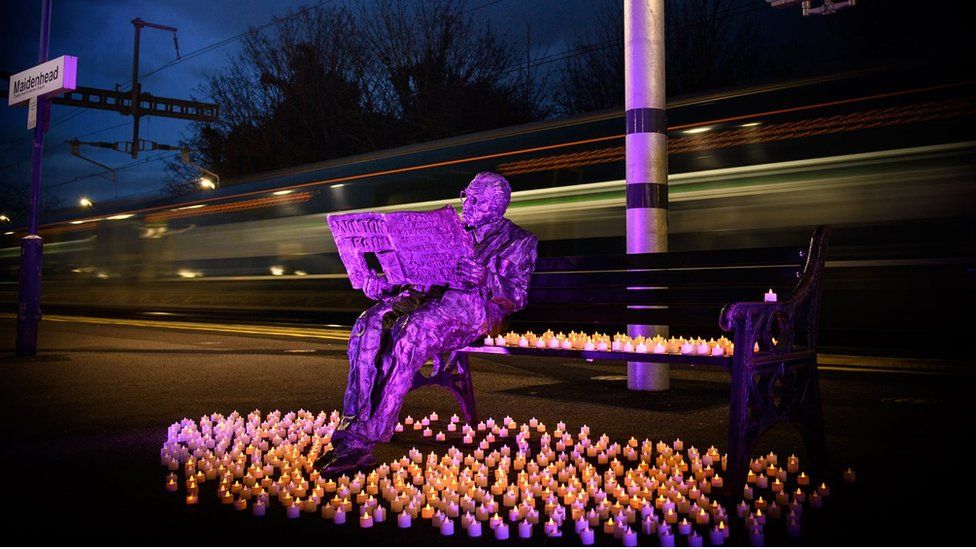
 Statue of Sir Nicholas Winton, the “British Schindler” at Maidenhead railway station

This man, Sir Nicholas Winton, could never be accused of not having done enough. Against all odds, he smuggled 669 boys and girls, destined for concentration camps, out of Czechoslovakia in 1939. Celebrating his unbelievable bravery and life-saving initiative with candles feels a truly fitting way to mark this day. We can all join in for households across the country are being invited to light a candle at 8pm this evening, as an encouragement to us all to “be the light in the darkness.”

A few more things here:

This 4-minute film is a deeply moving testament: Story of Nicholas Winton, BBC That’s life – Short version

Holocaust Memorial Day: Sir Nicholas Winton’s statue lit up: Article about the above lit-up statue

Article in The Conversation: Plans for UK Holocaust Memorial looked promising, but now debate has stalled

BBC 2: Confronting Holocaust Denial with David Baddiel

Actions may speak louder than words, but words can lead to actions…

This first month of 2020 offered a veritable feast of potential inspiration for January’s blog. It was hard to choose. On the theme of prisons, there was BBC Two’s The Choir in which Gareth Malone has just two episodes to get young men in Aylesbury Young Offenders Institute to sing and viewers to cry. I know from experience, the latter was definitely easier. 

In cinemas, Jojo Rabbit, a risky, irreverent, bitter-sweet comedy about Hitler, breaks through taboos and somehow gets you laughing at the Nazis in ways they would have hated. Less amusing is Sam Mendes’s 1917, which, through its close-up filming method, dumps its audiences into the putteed boots and helmeted heads of two young British soldiers and sends them off on an impossible mission through hell. Within minutes one has snagged his hand on rusty barbed wire, a wound that alone would send all of us racing to A&E. But that is a mere scratch compared to what awaits him.

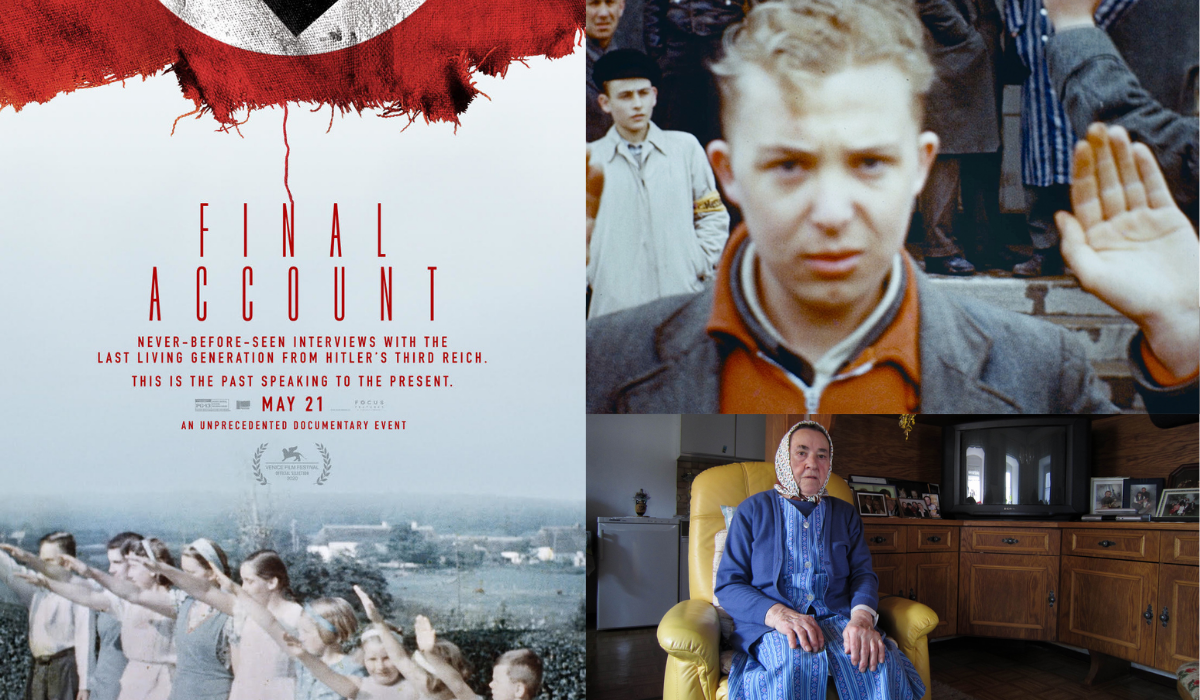
Another extraordinary BBC two-episoder, Lost Home Movies of Nazi Germany, gives deeper and more nuanced insights into both the lives and the beliefs of individuals living through those times. While Channel 4’s moving My grandparents’ War follows Kristen Scott Thomas and three other esteemed British actors as they uncover the brave roles their grandfathers played in the Second World War. 

2020 will be a year of 75th anniversaries relating to WW2 with more such documentaries, films, books (oh I wish mine too) and podcasts covering increasingly personal moments of suffering, bravery and evil. History has definitely shifted. No longer just a narrative of kings, politics and wars, it now hones in on the stories of individuals caught up in or affected by the decisions of their leaders. Our appetite to understand experiences from the two world wars has not abated, for they still touch us personally. But one day there will be no more contemporary witnesses to testify to the horrors, misery, fear and loss. No more survivors of the Shoah to remind us not to forget what can happen; to warn us that we are not immune.

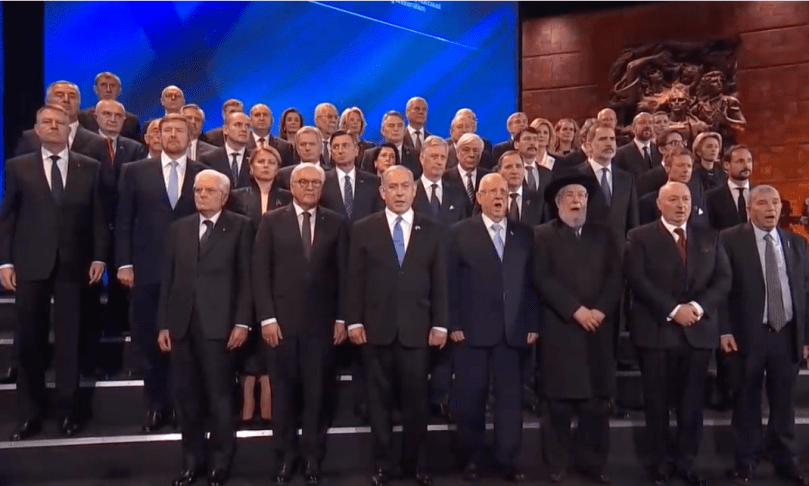
Over the past five years there has been a 320% rise in Far-Right attacks globally. In 2018 alone, there were 387 violent anti-Semitic incidents – 35 in Germany, 68 in the UK… The Holocaust was clearly not enough to snuff out the thinking that leads to such evil. Which is why I have chosen last week’s commemoration of the 75thanniversary of the liberation of Auschwitz and International Holocaust Remembrance Day at Yad Vashem in Jerusalem as my blog’s focus. There the overriding message of world leaders was of the necessity for vigilance to the language of hate, discrimination and prejudice. (The full speeches are on YouTube)

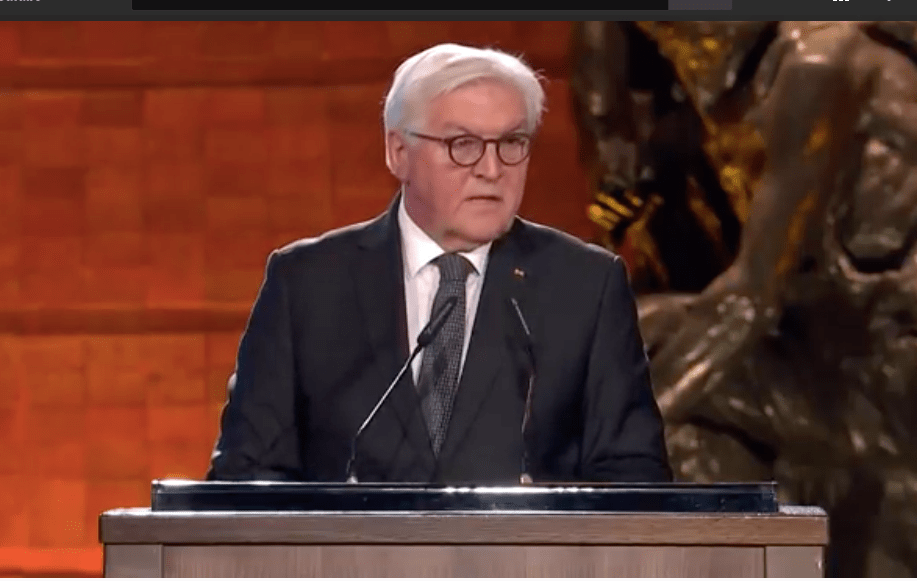
I have no doubt the Jewish speakers’ speeches in Jiddish were profound and extraordinary. And Prince Charles spoke movingly about the risk of the Holocaust being placed under a glass bubble within history and urged us to re-commit ourselves to tolerance and respect. (He speaks at 1:31:30) But it was once again the German president, Frank-Walter Steinmeier, the first ever German president to address guests at Yad Vashem, who, in my view, stole the show with his impossibly difficult and brave speech. I would like to include extracts from it here because, as we approach the thankfully silent bongs of Big Ben on 31st January, I believe his words are relevant to each and every one of us to act upon in our own little ways.

Opening his address (which starts at 1.49.20) with a Jewish blessing in seemingly fluent Hebrew, he continued in English, telling the tragic stories of four individuals murdered in the Holocaust. With the humility and honesty that has become a hallmark of German leaders at such occasions, he unflinchingly took responsibility on behalf of his country:

Germans deported them. Germans burnt numbers on their forearms. Germans tried to dehumanise them, to reduce them to numbers to erase all memory of them in the extermination camps. They did not succeed…. As human beings, they live on in our memory.

Frank-Walter Steinmeier talking at Yad Vashem in Jerusalem

Referring to the Yad Vashem monument, he continued, “I stand before this monument as a human being and as a German… and I bow in deepest sorrow.”

His reference to ‘human beings’ didn’t stop at the victims and those on the side of good: “The perpetrators were human beings,” he continued, lightly emphasising each of our potential to become perpetrators or victims. “They were Germans; those who murdered, those who helped in the murdering, and the many who silently towed the line… they were Germans. The industrial mass murder of 6 million Jews, the worst crime in the history of humanity – it was committed by my countrymen. The terrible war, which cost far more than 50 million lives, is originated from my country. Seventy-five years later, after the liberation of Asuchwitz, I stand before you all as President of Germany, and I stand here laden with the historical burden of guilt.”

Gulp… I don’t know if it moves you, but I know a little of just how heavy that burden is. But as anybody dealing with criminals and/or victims can attest to, genuine admissions of guilt and acts of apology, forgiveness, restorative justice or therapy offer opportunities for reconciliation, that powerfully healing balm for wounds which threaten to fester forever. Steinmeier knows this:

“At the same time, my heart is filled with gratitude… gratitude for the hands of the survivors stretched out to us, gratitude for the new trust given to us by people in Israel and across the world, gratitude that Jewish life is flourishing again in Germany. My soul is moved by this spirit of reconciliation… a spirit, which opened up a new and peaceful path for Germany and Israel; for Germany and Europe and the countries of the world.”

I love the way Germans can speak of ‘heart’ and ‘soul’ and ‘spirit’ so effortlessly…

“The eternal flame at Yad Vashem does not go out. Germany’s responsibility does not expire. We want to live up to our responsibility. By this, dear friends, you should measure us. I stand before you grateful for this miracle of reconciliation and I wish I could say that our remembrance has made us immune to evil. Yes, we Germans remember, but sometimes it seems as though we understand the past better than the present. The spirits of evil are emerging in a new guise, presenting their anti-Semitic, racist, authoritarian thinking as an answer for the future, a new solution to new problems of our age. And I wish I could say we Germans have learnt from history once and for all. But I cannot say that when hatred is spreading…”

“Of course, our age is a different age, the words are not the same, the perpetrators are not the same, but it is the same evil. And there remains only one answer: Never again. Nie wieder. That is why there cannot be an end to remembrance…”

President Steinmeier and Prince Charles
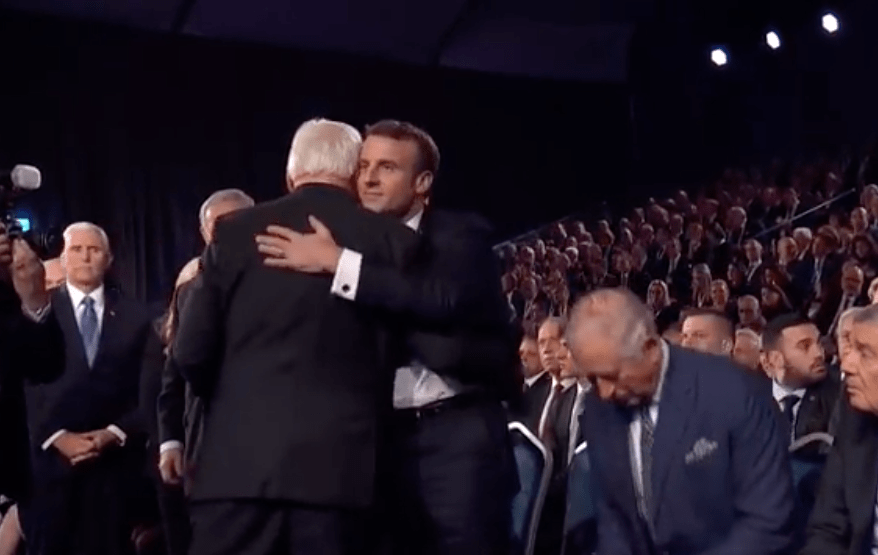
President Steinmeier hugged by President Macron
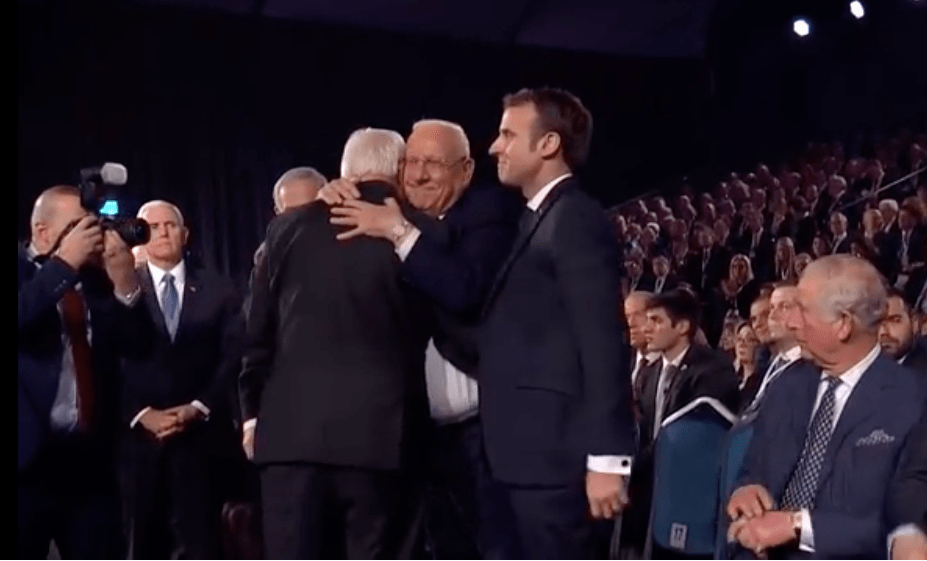
President Steinmeier hugged by Avner Shalev, Chairman of the Yad Vashem Directorate

I am so glad that President Steinmeier was given such heartfelt hugs on returning to his seat. After Prince Charles’s slightly awkward handshake and strained smile, President Macron looked him in the eyes and embraced him followed by Avner Shalev, Chairman of the Yad Vashem Directorate, who looked like he would never let him go. Such displays of heart, soul and spirit warm me every time.

Further reading:

The Times of Israel: At Yad Vashem, German president says Germans haven’t learned lesson of Holocaust

The Telegraph: Holocaust is no mere ‘fact of history’: Prince Charles stands with world leaders against rise of anti-Semitism

The Guardian: The need to remember and retain the lessons of what became the Holocaust grows rather than diminishes. 

The New York Times: At Holocaust Memorial, a Survivor and Towering Moral Voice Says He ‘Cannot Forgive’

For 27.1. – a Holocaust Memorial Day tribute to my audience last week

Nothing on the booking form or accompanying correspondence gave any clue as to who my audience would be on Thursday morning last week. I just turned up at Kenwood House on the edge of Hampstead Heath ready to give my German memorial talk to the monthly Arts Society. As we stood in the frosty sunshine waiting for the house to open, the Chair mentioned almost in passing, “This is North London, so most of our members are Jewish.

Read More »

There’s an unhelpful form of Tourette Syndrome lurking within certain British men…

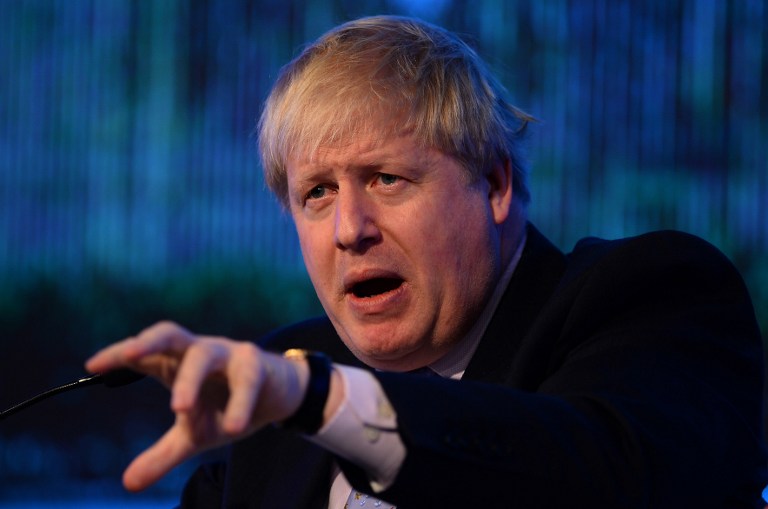
What is it about some British men? It’s as if they have a form of Tourette’s that makes it impossible for them not to heed Basil’s advice and not mention the war. Smug winner syndrome, even 70 years on. I mean is it really a good idea, Boris Johnson, is it remotely mature or diplomatic to respond to a perfectly reasonable suggestion that Britain could not expect to get a better deal outside the EU than it enjoyed inside, by equating such an approach to “punishment beatings… in the manner of some world war two movie”? (The Guardian, 18.01.17)

f1c8a09b8dc2c845d413acc6a7525daa3e3ac06a4553eade79040d0b2bd9c0bc.jpg

It honestly makes me wince, not because it’s insensitive, antagonistic or unnecessary, but because it is so unbelievably, pathetically childish. I once laughed at Will Self’s brilliant verbal portrait of Boris as “an enigma wrapped up in a whoopee cushion” but I don’t find him remotely enigmatic or amusing anymore. Just dangerously out of date and out of touch.

Read More »

What purpose does Holocaust Memorial Day serve for those generations who can’t “remember”?

On Monday I was invited to give my talk about Germany’s memorial culture of apology and atonement (read more) at Brighton College as part of their Holocaust Studies Week. One student asked a question being debated by current historians: “When can we let WW2 recede into the past like other episodes of history do?”

6c682644-29fd-46de-9a95-e49714cdda9e.jpg

Today, 27th January, is International Holocaust Memorial Day, the date that marks the day Auschwitz-Birkenau was liberated by Soviet troops in 1945. It is the day on which we are asked to remember the 11 million victims killed in the Holocaust – 6 million Jews and 5 million Soviet POWs, homosexuals, Sinti and Roma, mentally or physically disabled, Roman Catholics, political dissidents, ethnic Poles, Slavs and Ukrainians. All had become victims of the Nazi hatred that deemed them to be “Untermenschen”, literally ‘beneath’ or ‘below’ human; sub-humans. They were killed because they were seen to be a threat to the ideal world image that Hitler and his followers were striving to manifest.

Read More »