Cycling the Berlin Wall Way… an education, a warning, an inspiration

In the faultless pageantry of Queen Elizabeth’s recent funeral, we witnessed one of the things that Britain does really well. Whether you are pro- or anti-monarchy, it was a spectacular display of planning, coordination, ritual, symbolism and attention to detail, as well as a gratitude- and love-filled farewell to the only ‘Her Majesty’ we have known. Impossible though it might sound, I missed most of it!

I was in Berlin experiencing what Germany does really well: remembrance and commemoration of a difficult and painful history. It was, however, not Germany’s intensive and on-going process of coming to terms with its Nazi past that I was focused on. This time, I was with my two siblings cycling the Berlin Wall Way, a continuous bicycle path that follows the former footprint of the 100-mile long Berlin Wall as closely as possible. Taking five days to complete, with added time to explore some of the many poignant locations in the centre, it was a total eye-opener, not least to the very concept of a divided city and country.

Map of West Berlin with the 160km Wall marked in red

The first initially confusing fact to digest is that, contrary to the widely held idea that the Berlin Wall was a north-to-south boundary separating West and East Berlin, in reality the wall went all the way round West Berlin thereby creating a democratic West German island within socialist East Germany. Even with a map, we found ourselves frequently asking: So, are we in the West or the East? the answer to which, I assure you, is rarely as straightforward or obvious as it sounds.

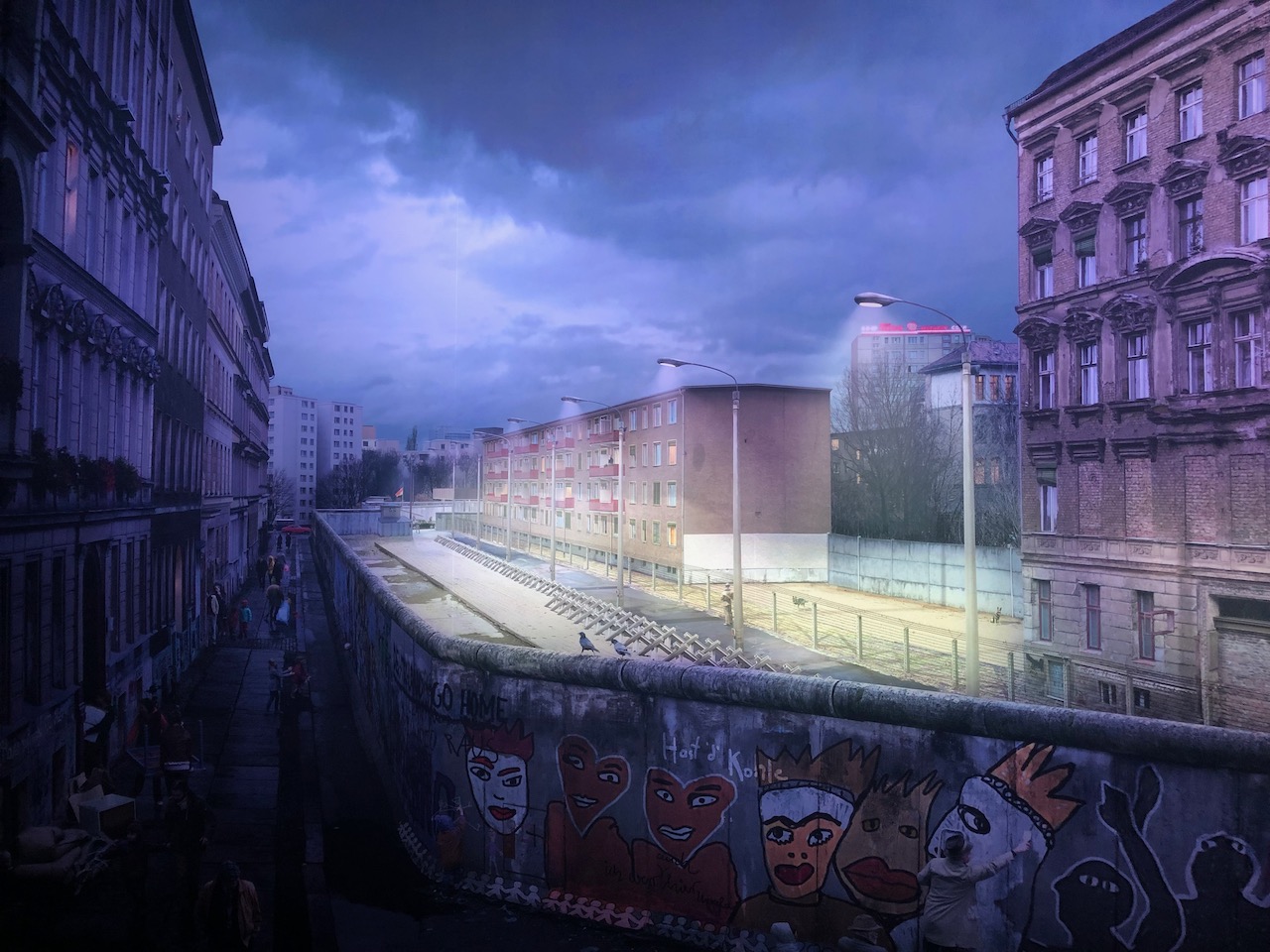
The second tangible shock felt while snaking along its course, was the utter illogic and arbitrariness of this ideological divide – through streets, houses, communities, lakes and woodlands. This randomness would have started as a line drawn on a map by the leaders of the victorious nations – USA’s President Harry S. Truman, Josef Stalin of the USSR, Britain’s prime ministers Winston Churchill and then Clement Attlee as well as other leading members of the three delegations present. That’s probably how most of the other contested border lines around the world have originated. To engage with the whole concept of division, not to mention the impact it had on families and friends separated for nearly three decades, is almost impossible. An enormous 360˚panorama entitled THE WALL by artist Jadegar Asisi gave us arguably our most immediate and visceral sense of being in West Berlin looking at and over the wall into the deadly world behind.

From the360˚ panorama THE WALL by Jadegar Asisi

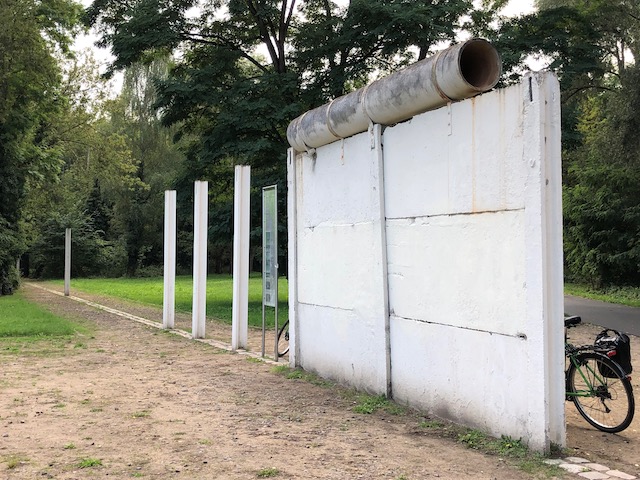
The third challenge was understanding the complex evolution and structure of the wall that was built in three phases, starting overnight on 13th August 1961 as Berliners slept. What began as a barbed wire barrier and the closure of all but 13 of the 81 established crossing points between the Western and Soviet sectors, eventually developed into not one but two concrete walls separated by a corridor of no man’s land known as the ‘death strip’ with mines, raked sand to detect footprints, trip wire machine guns and armed East German guards in watch towers or patrolling on foot with dogs. By 1989, the Wall was lined with 302 watchtowers and more than 136 people had died trying to cross it.

An example of a section of the wall. What we call the Berlin Wall is on the left

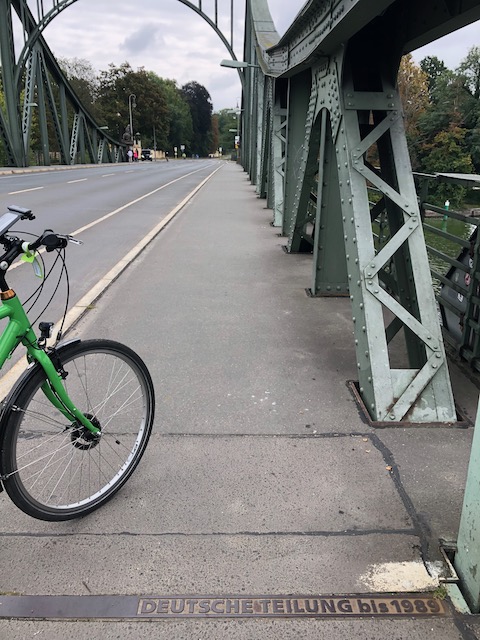
Our little trio started our circumnavigation of West Berlin on the famous Glienicker Bridge in Potsdam in the middle of which spies were on a number of occasions exchanged in the dead of night.
Glienicker Bridge

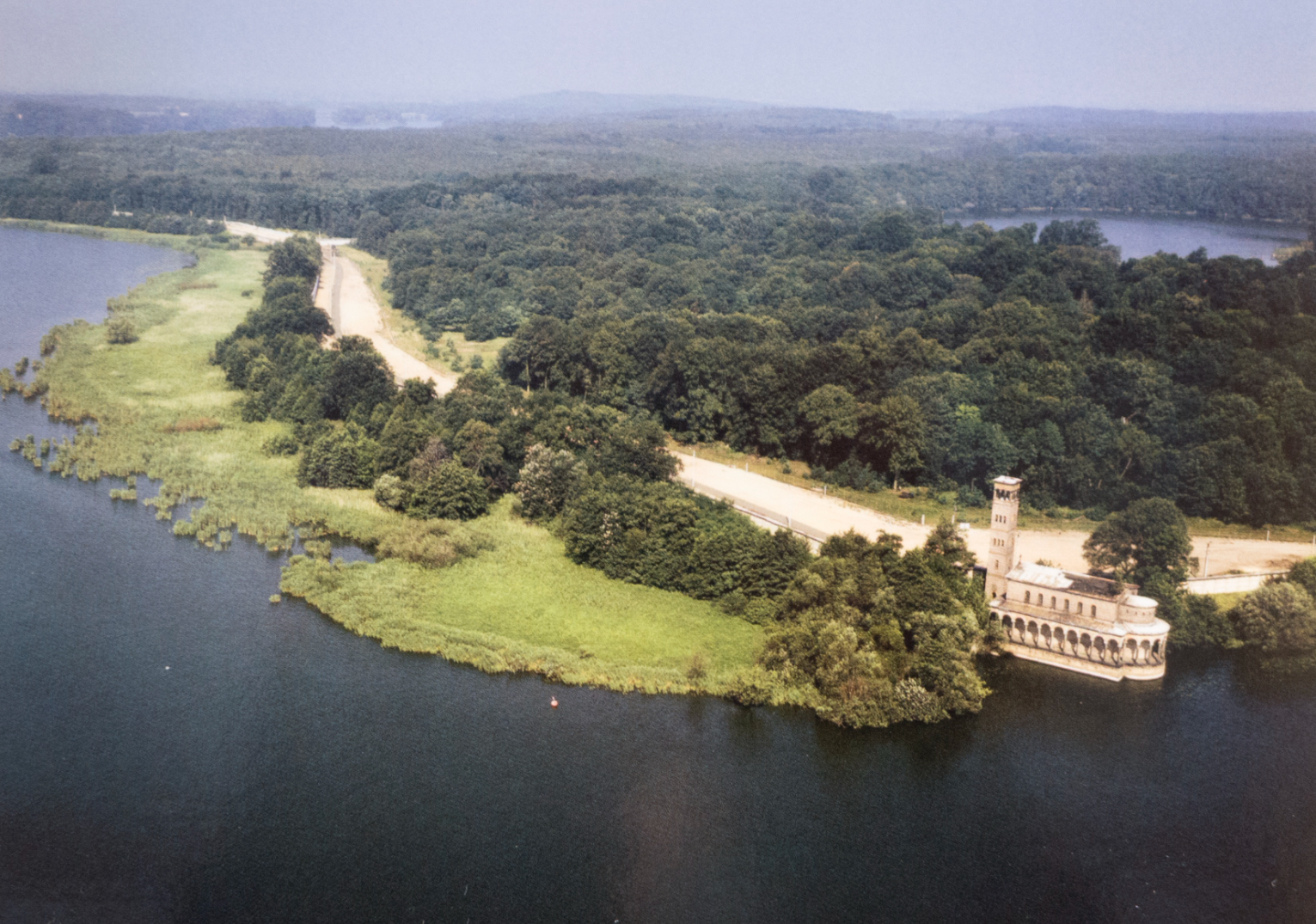
Following a reassuringly well-marked ‘Mauerweg’ route, we soon passed Schloss Cecilienhof, host to the 1945 Potsdam Conference where the division of Berlin and Germany into occupied zones was decided. From there we hugged the shoreline of beautiful lakes, passing the Sacrower Heilandskirche, the church stranded in the controlled border strip and cut off from its congregation.

Heilandskirche, Sacrow, 1961

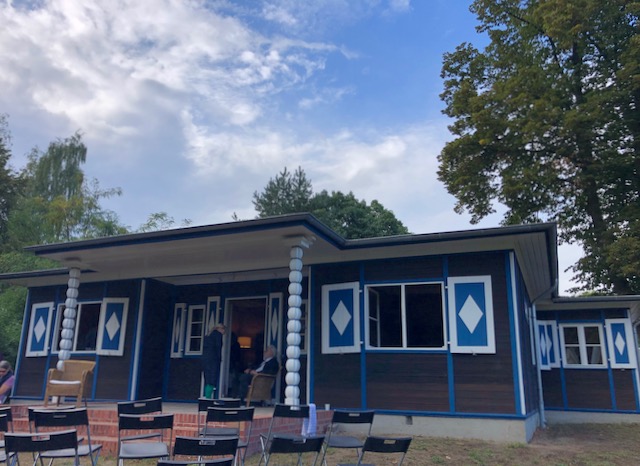
Heading north, we reached Alexander House, whose history became the subject of the acclaimed book by Thomas Harding, The House by the Lake, and is now a place of education and reconciliation.

Alexander House: The House by the Lake

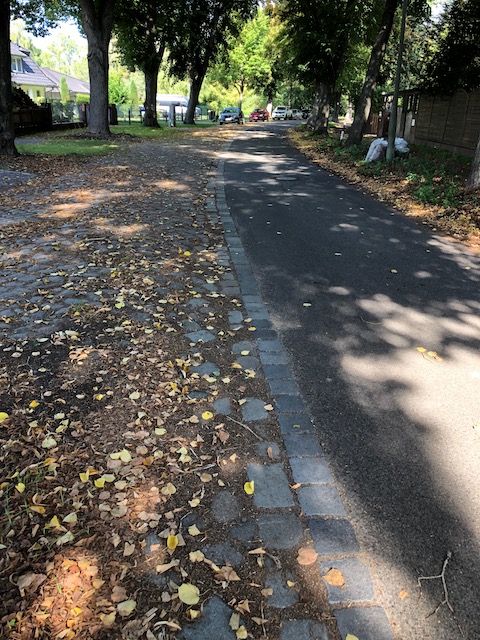
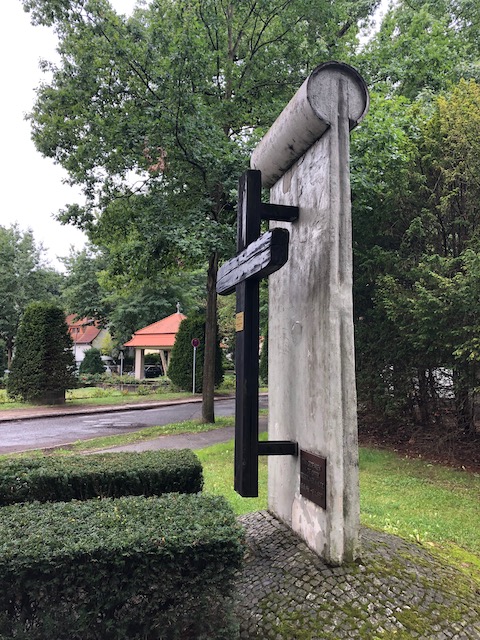
Staying in different hotels en route at intervals of roughly 30 miles enabled us to gain a sense of the scale of the wall and the extraordinary episode in history that only ended a little over 30 years ago. Sections of the concrete boundary, a double cobbled stripe embedded into the pavement or road surface, information boards with photographs and explanations all punctuated our journey.

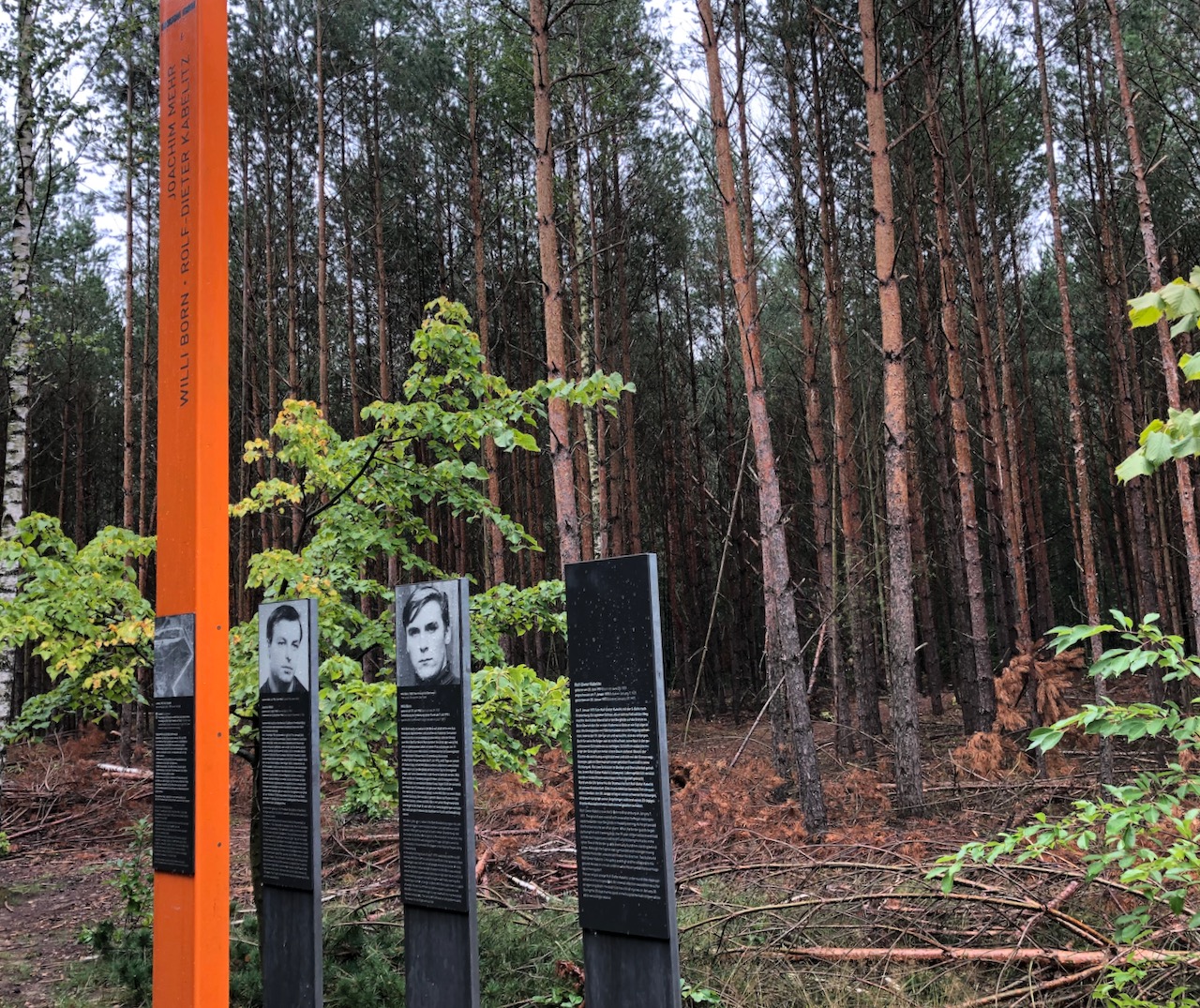
Most moving were the memorials telling heartbreaking stories of failed escapes, largely by young twenty-something-year-old men. With the same unflinching honesty for which all German WW2 or Holocaust-related museums and memorials have come to be known, these allowed us to feel the individual human cost of an ideology based on fear and a necessity to keep people in rather than keeping undesirables out, as the East’s ‘Anti-Fascist Wall’ name misleadingly proclaimed.

Continuing along canals and suburbs, we crossed the ‘Bösebrücke,’ the ‘Bad Bridge’ or Bornholm Bridge that made history on the evening of 9th November 1989 through the jubilant scenes of East Germans flooding across to be greeted by their Western “brothers and sisters” with sparkling wine, cheers and hugs while bemused Eastern border guards watched on helplessly. Unlike my former visits to Berlin while researching for my book, it was this joyous energy of liberation that primarily accompanied me on this trip and allowed me to experience the incredible resilience of Berlin’s inhabitants, past and present, and the revival of its worldwide status as a brilliantly creative, thriving city.

The Bornholm Bridge today and 1989 (pictured)

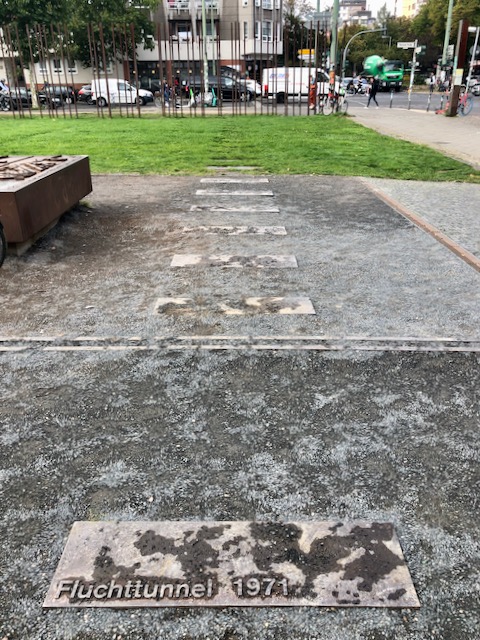
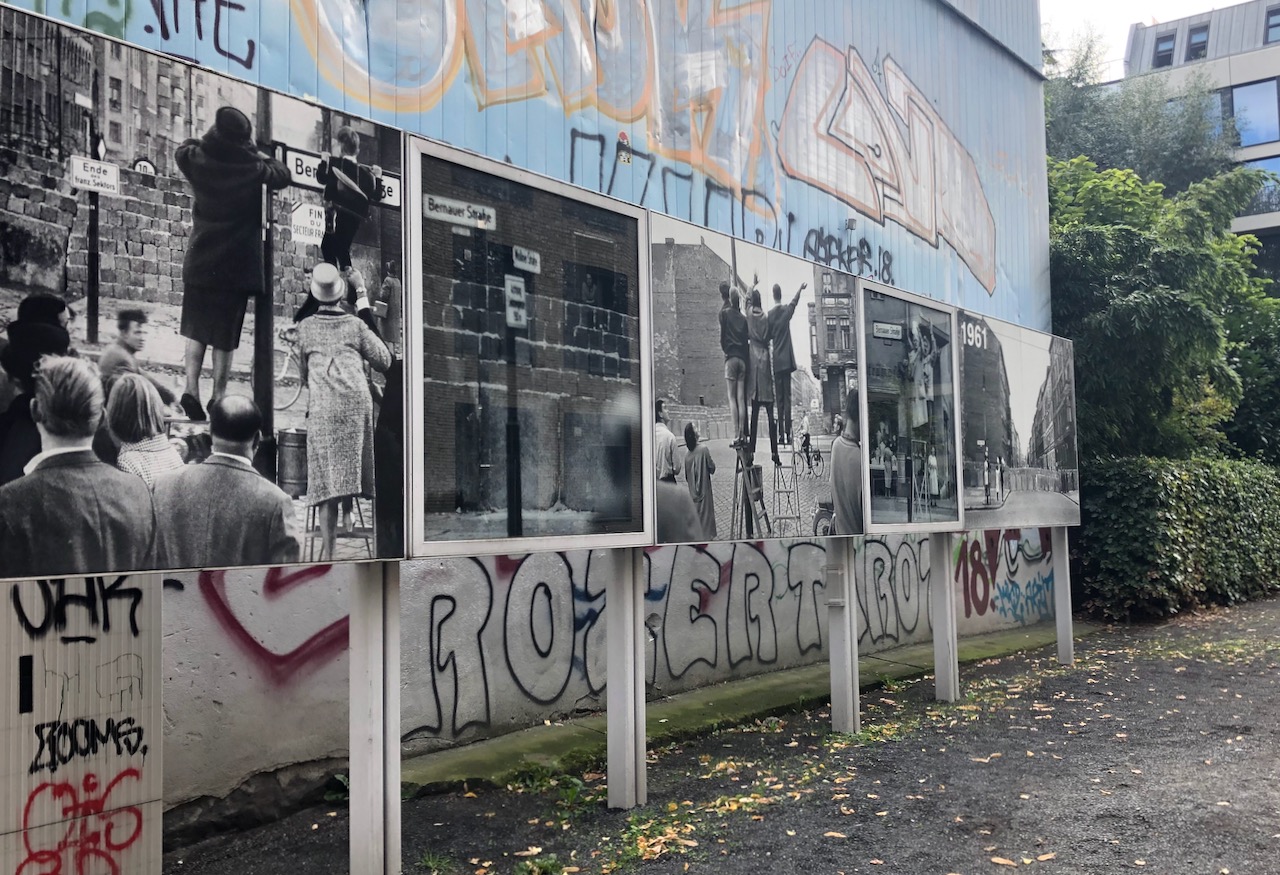
On we cycled, heading south through the beautifully curated but frequently harrowing Mauerpark (Wall Park) that leads into the Bernauer Strasse from which many of the well-known pictures of people jumping out of house windows into tautly held blankets in the West were taken. It was also the street under which various escape tunnels were dug similar to that shown in the 1962 documentary, The Tunnel and including the ‘Tunnel 29’ of the brilliant podcast and book with the same name.

An extended section of the wall and border strip have been preserved as a chilling testimony to its once terrifying presence.

Bernauer Strasse

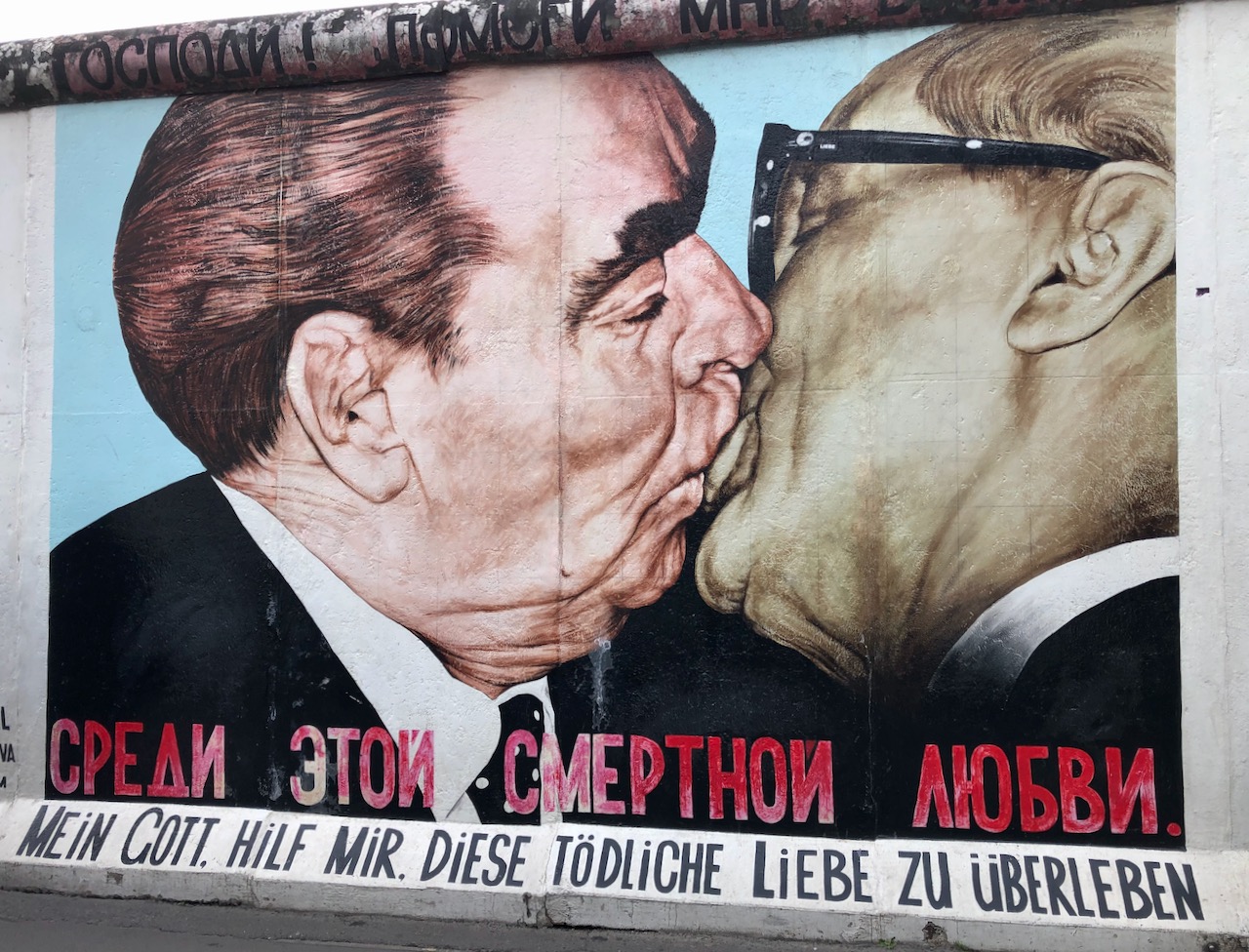
The Wall then continues through Berlin Mitte past some of Berlin’s most famous landmarks: the Reichstag, the Brandenberg Gates, Under den Linden and the Tiergarten, past Potsdamer Platz and Check Point Charlie and along the boundary of what is now one of Berlin’s most chilling museums – the Topography of Terror – but what once was the location of many of the most sinister ministries of the Nazi regime. Then through graffiti-covered Kreuzberg, over the River Spree and to the longest surviving stretch of the inner wall painted in 1991 by painters from all over the world to form the colourful East Side Gallery.

Eastside Gallery: ‘My God. Help me to survive this deadly love.” From a press photograph of Leonid Brezhnev and Erich Honecker painted by by Dmitri Vrubel.

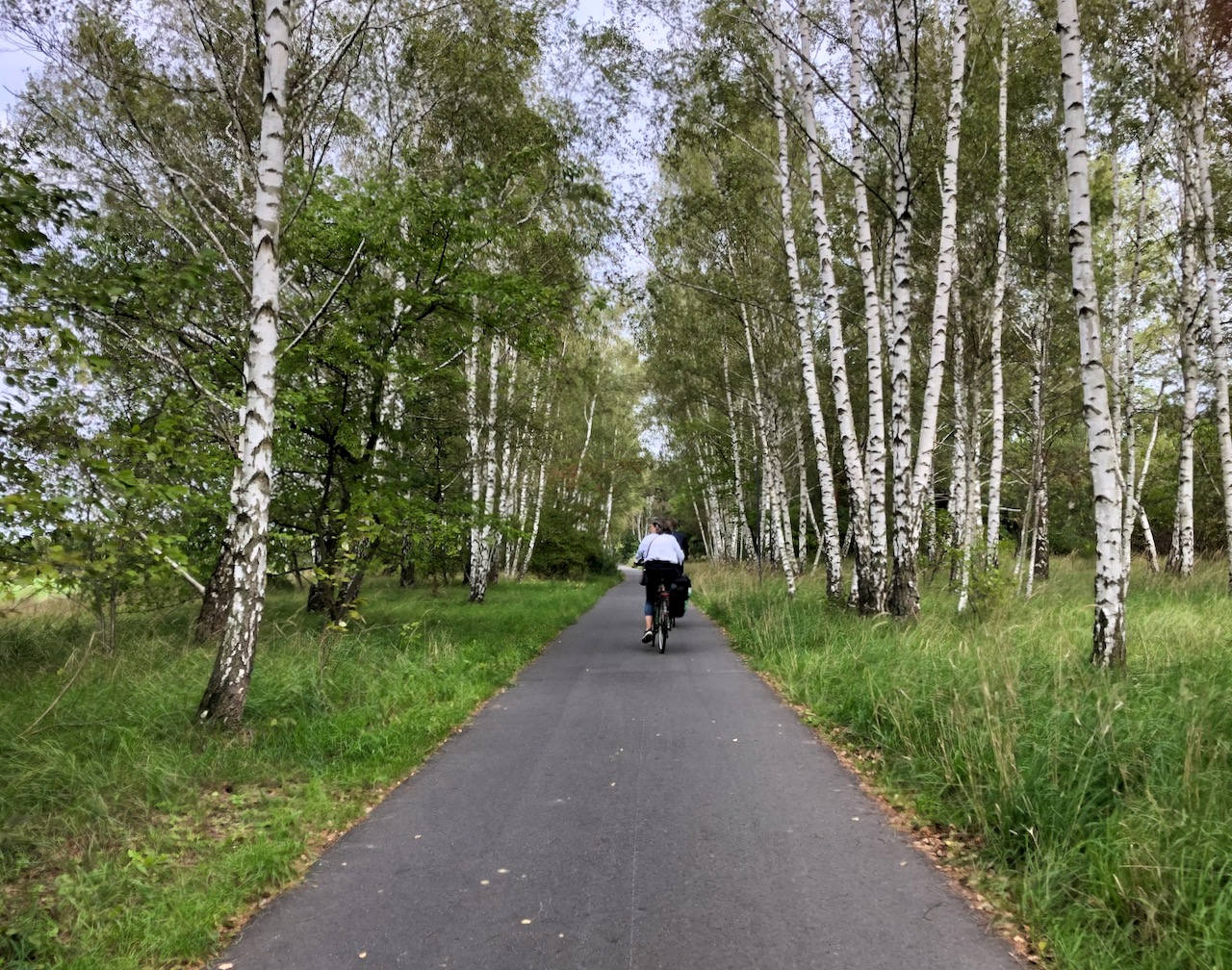
The final 40 miles or so along the southern strip of the wall’s course back to Potsdam was largely rural. A sense of peace replaces the former horror of all that the border came to represent. Long stretches of open fields, avenues of birch trees and an alley of 800 ornamental cherry trees donated by Japanese citizens and a TV station in 1995 “out of joy over the reunification of Germany.”

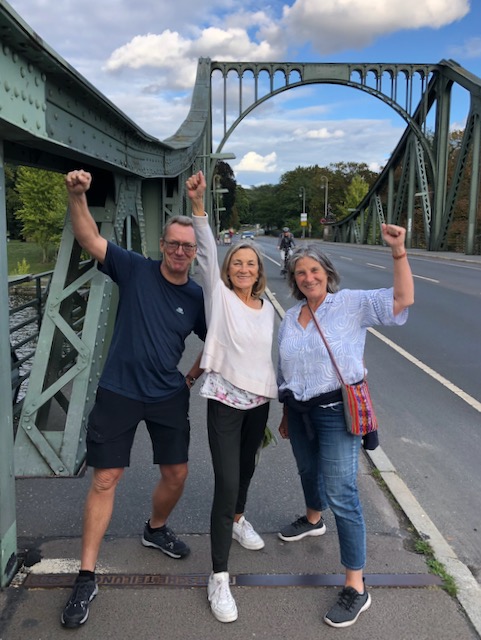
Finally, the three of us arrived back on the Glienicker Bridge from which we had begun our trip, each a little changed, each with a greater knowledge and understanding of German history and our German roots. Each with different emotional responses but a shared sense of the ultimate triumph of humanity and freedom over inhumane systems of repression.

Back on Glienicker Bridge

Upcoming Events relating to my book – In My Grandfather’s Shadow:

Friday 7th October, 7pm. Ebeneza Presents, Somerset: In My Grandfather’s Shadow. More information and tickets here

Sunday 9th October, 4pm. Cuckfield Book Festival: I will be in conversation with Julia Boyd, the best-selling author of Travellers in the Third Reich and A Village in the Third Reich.
More information and tickets here

Wednesday 12th October, 4pm. Mere Literary Festival: In Conversation with Jo Hall. More information and tickets here

Sunday 3rd November, 8.30pm. Stroud Book Festival: In Conversation with Alice Jolly, novelist, playwright and memoirist. More information and tickets here

Where Earth meets Art

There’s something about August that has left me with a form of blog-blankness.

It may be due to my first bout of covid leaving me in a congested fog. Or the fact that the news and politics are too depressing to listen to let alone engage with. I mean, just when you thought things couldn’t get worse, we are faced with the increasingly likely prospect of Liz Truss becoming prime minister! 

Whichever way you look, there’s evidence of climate change, stories of polluted rivers, strikes, shortages, waste, price hikes, incompetency… Seeking out the positives is possible, there are plenty of them around. But most people are having to dig deep to find resources of resilience. For some, these will be primarily financial: basic survival – food, heating, shelter. For others, the focus might be on mental or physical health, practicalities, business strategies… or a mix of all of the above. Somehow it all feels so huge.

Today I did something I haven’t done for a while. I went to an art exhibition. Entitled EARTH: Digging Deep in British Art 1781-2022, it was the fourth in Bristol’s RWA series based on the four elements.  Earth has made a regular appearance in my work. It was a major component of my mud paintings, of my exhibition Re-dressing Absence about the paupers buried in Stroud Cemetery in unmarked graves, and it features prominently in my recently published book In My Grandfather’s Shadow (IMGS) both literally and metaphorically. 

Me gathering River Severn mud for my paintings, 2002

I can’t say the RWA’s EARTH was the most interesting exhibition I’ve ever been to in my life, but in my current mind-fog state of finding it hard to form a coherent narrative about anything, I’d like to intermingle some of my thoughts, experiences and passages from my book relating to ‘earth’ with loosely corresponding artworks by some of the exhibiting artists. 

For me, the earth – as old as time itself – holds the memories of history. ‘Like a smell or tune or piece of material heritage, a particular location can instantly evoke a past that appears to have been buried.’ (IMGS p. 145)

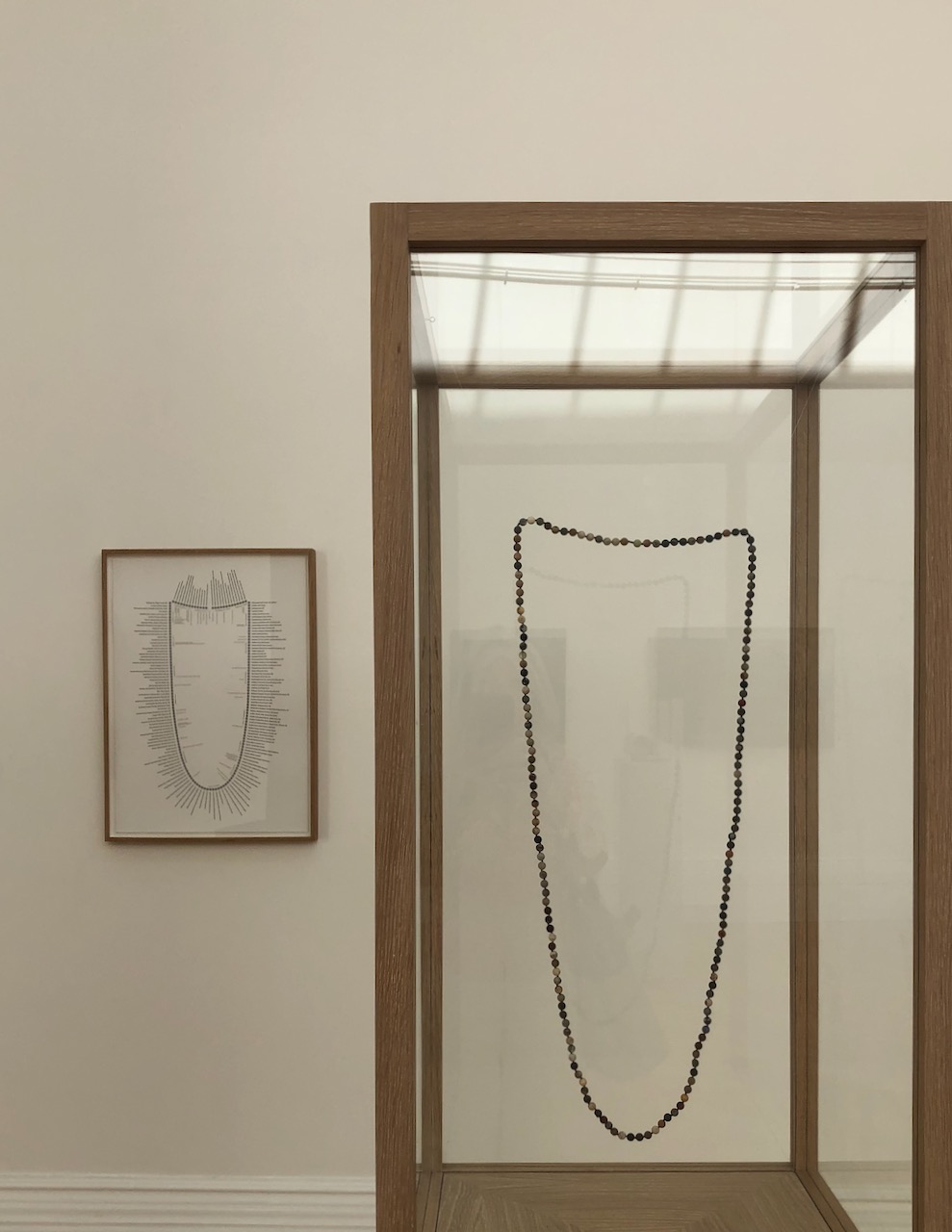
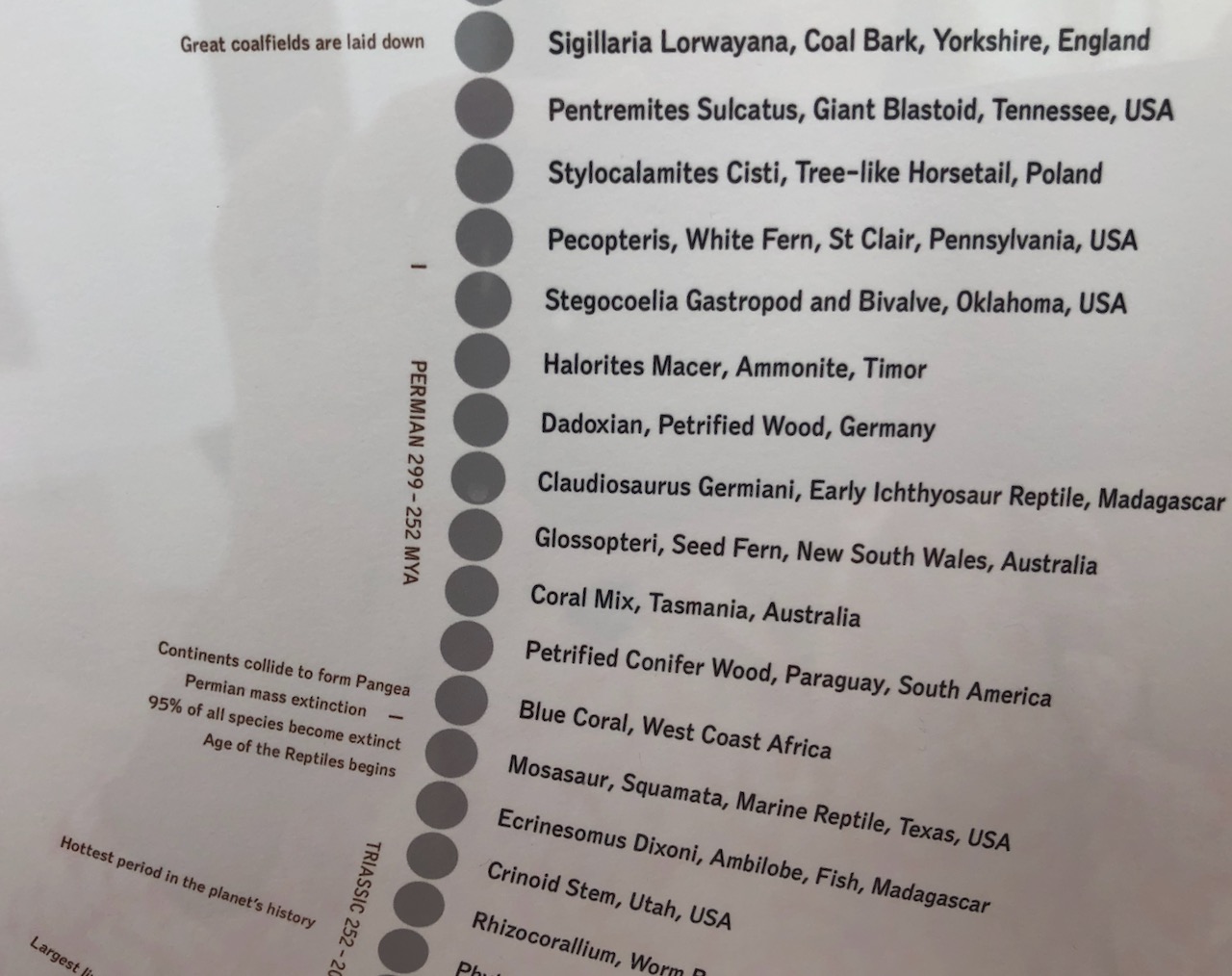
Katie Paterson (b. 1981) Fossil Necklace, 2013

It absorbs the blood, sweat and tears of humanity’s passage over its surface. 

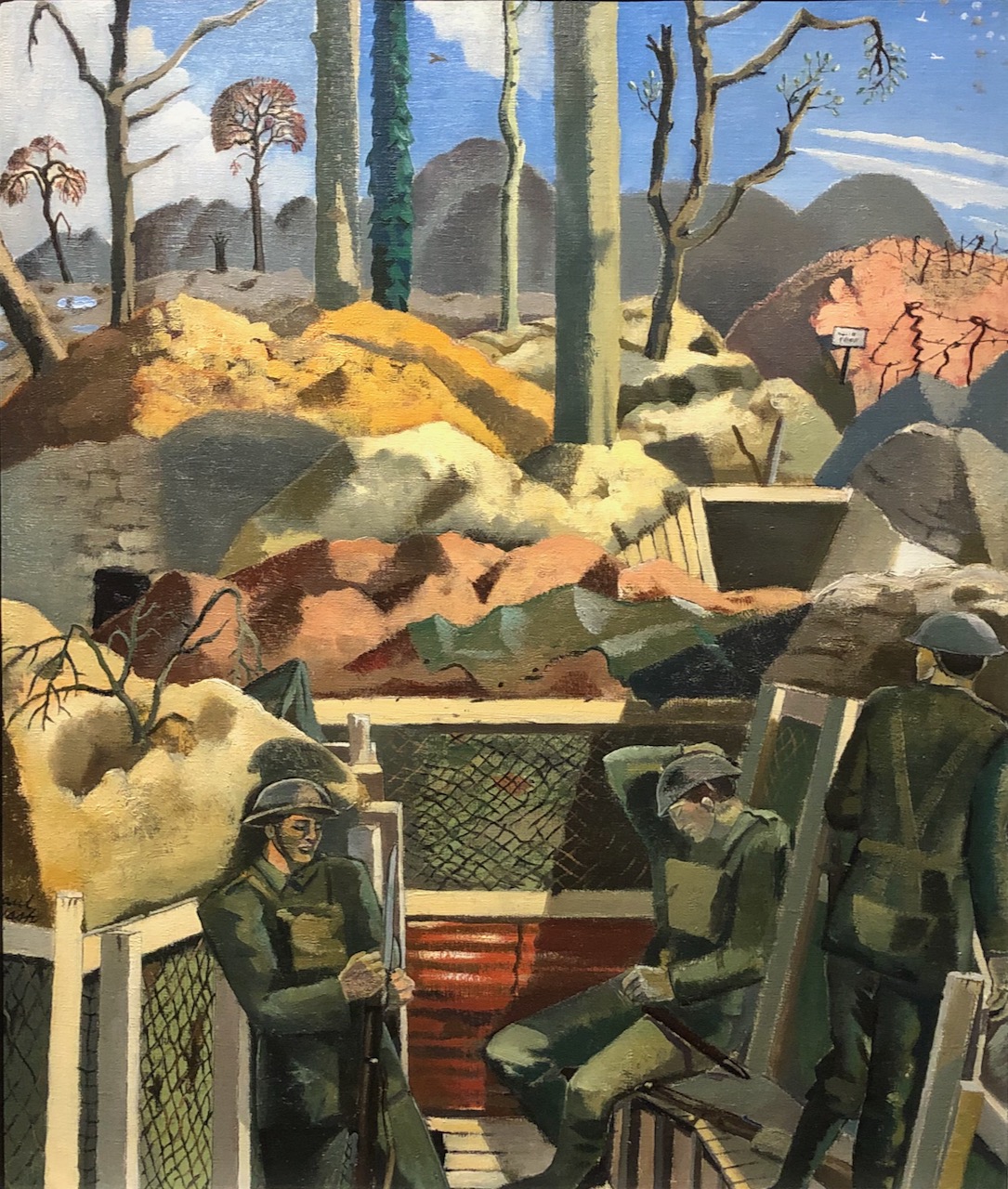
Paul Nash (1889-1946) Spring in the Trenches, Ridge Wood 1917, 1918

It is the life-giving womb of Mother Nature and a resting place for most of us after death. 

Eric Ravilious (1903-1942) Downs in Winter, 1935

Earth offers a metaphor for our hidden roots. ‘Though at times it felt like it, I am, of course far from the only person to try to rattle and sieve the truth from the soil of the past. But the truth is not easily dislodged when it is triple-bound by trauma, guilt and accusations of complicity.’ (IMGS p. 279)

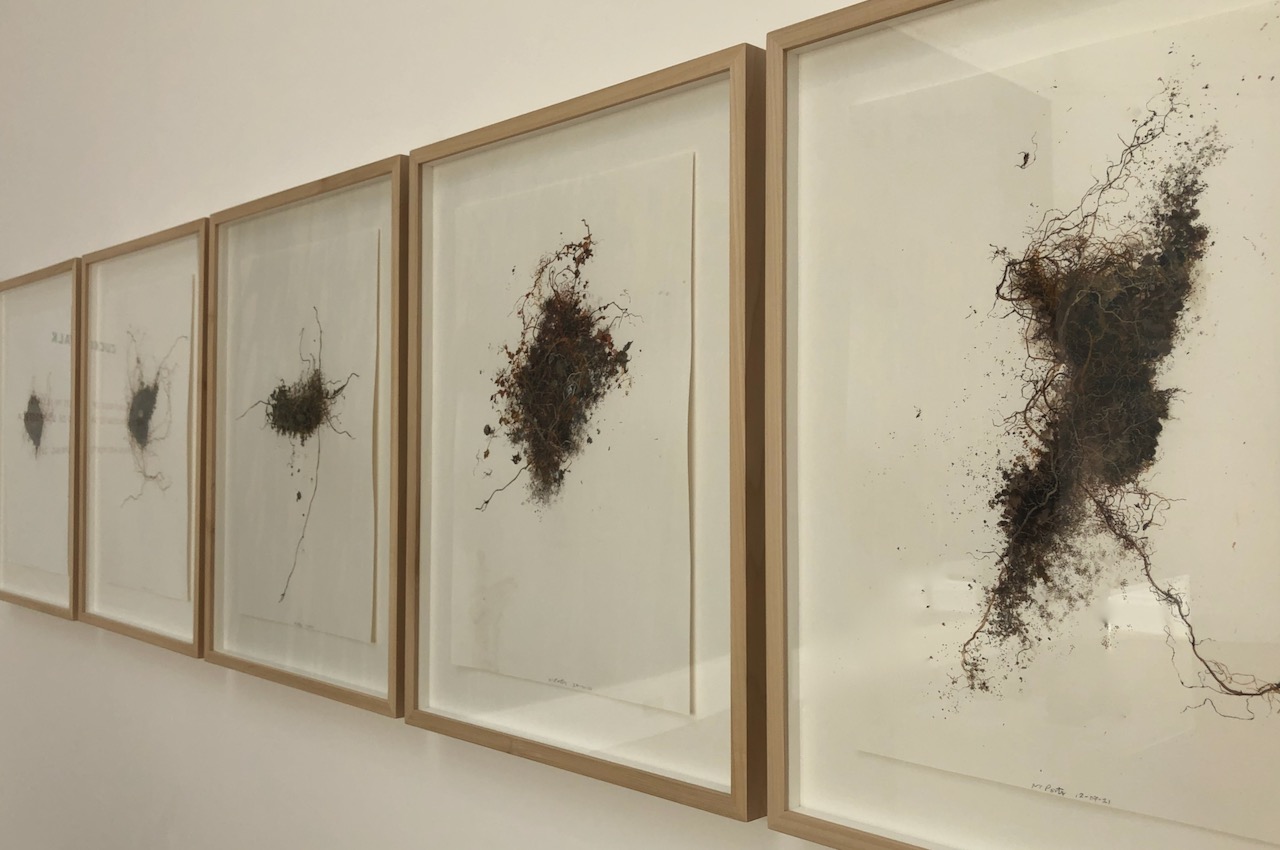
Michael Porter RWA (b. 1948) Dirt Series, 2018-2021

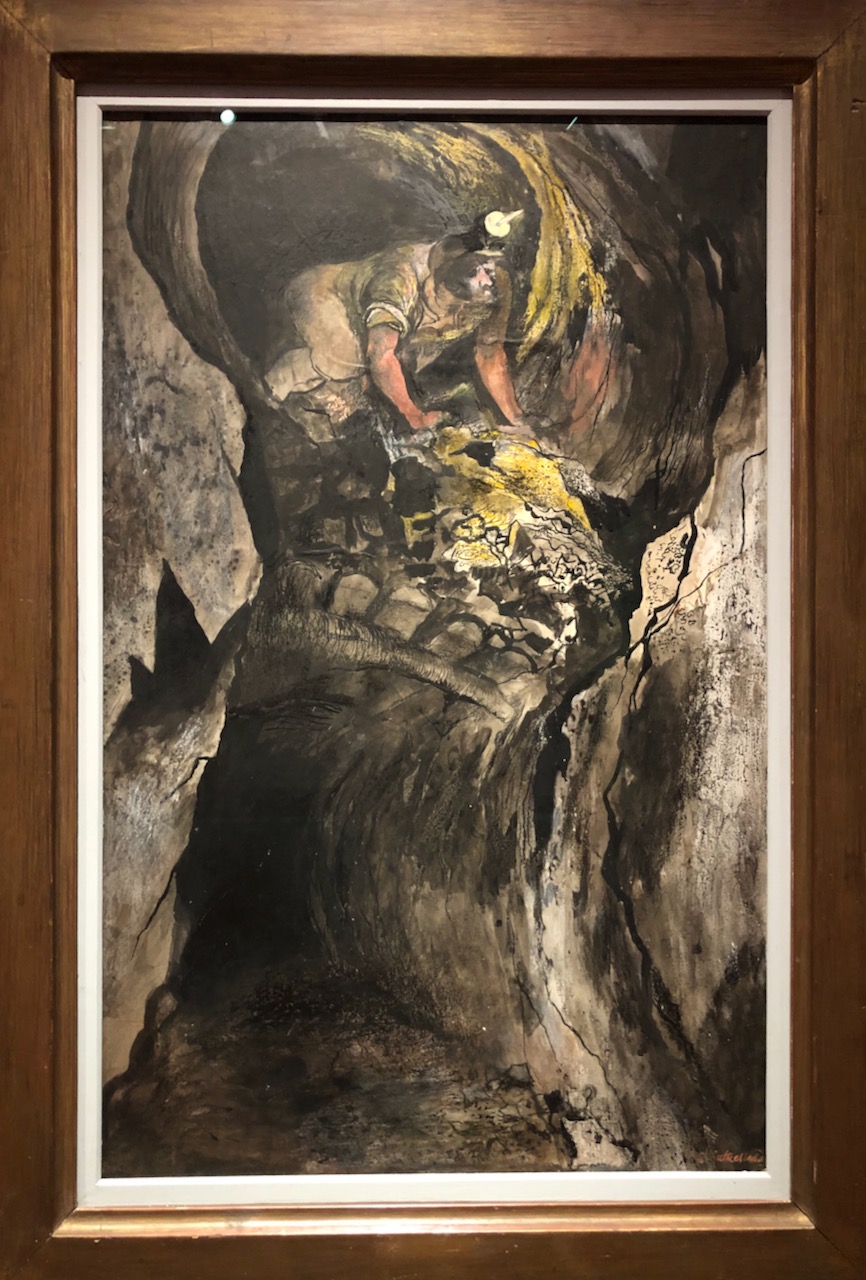
It’s a place of darkness, difficult to access, but also the guardian of precious secrets, materials and gems. ‘While I continued to pursue answers to unresolved questions, sometimes I dreaded having to descend like a miner into the darkness of the Second World War. It always took so long to adjust to the lack of light and air…’ (IMGS p. 314)

Graham Sutherland OM (1903-1980) Tin Mine, Emerging Miner 1942

It became part of my process to come to terms with my German heritage. ‘There was one more task to accomplish before we left La Stanga: my soil ritual. With its fusion of site-specific rite, remembrance and reconciliation, I had come to see this… as a form of acupuncture, using a trowel instead of needles to stimulate the healing of wounded places and wounded people…’ (IMGS p. 150)

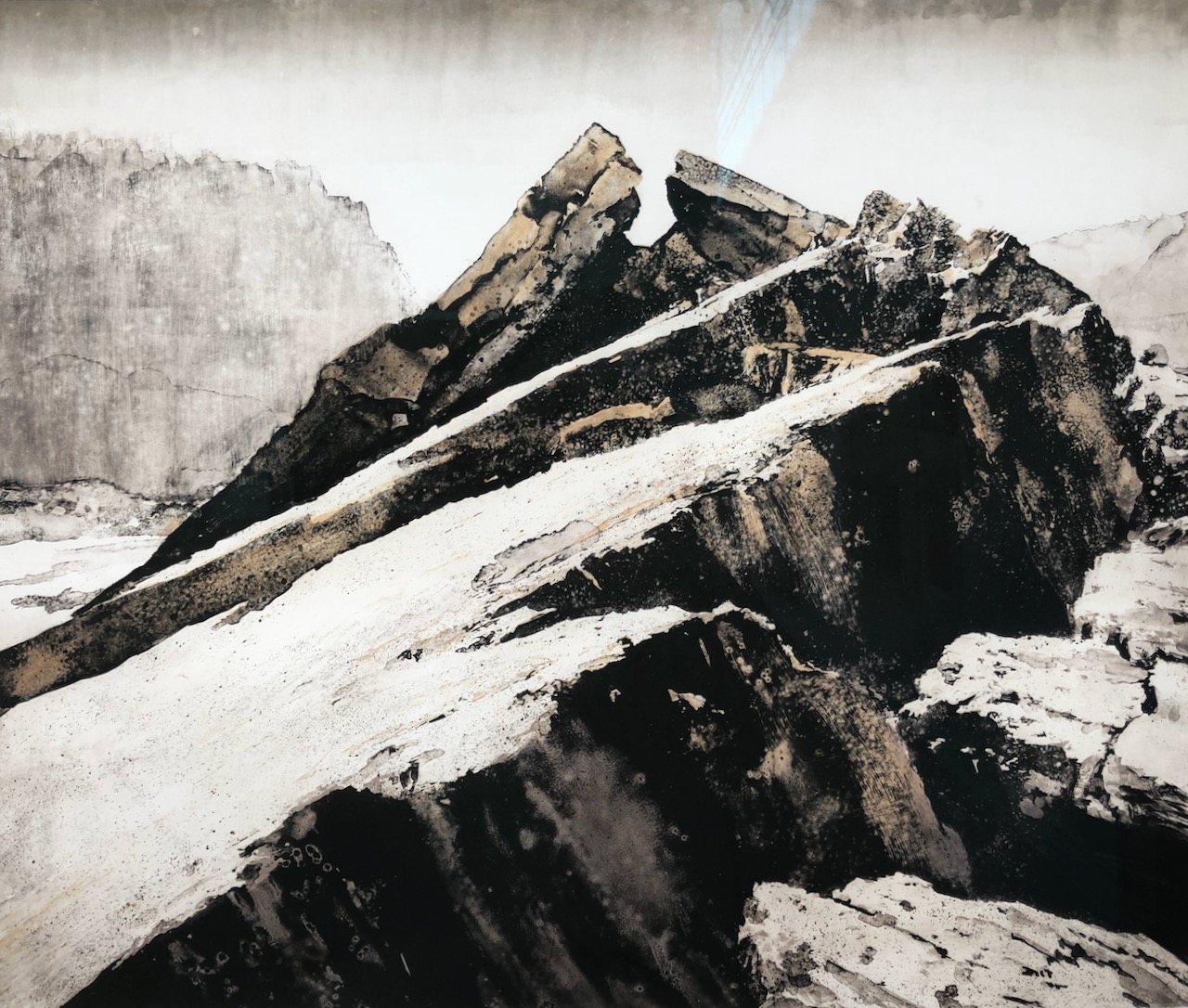
Emma Stibbon RA RWA (b. 1962) Broken Terrain, 2017

The earth holds energy. And as David Malone says in his beautiful BBC documentary The Secret Life of Waves, ‘Energy can never be destroyed, it can only change from one form to another. That is the premise of the intergenerational transmission of emotions that I have written about in In My Grandfather’s Shadow. That is why I instinctively traveled to significant places as part of my research. That is why I used earth in my art and my ritual. I wanted to feel the energy and work with that energy in order to understand.

Maybe, if we just keep noticing and moving towards those little moments when all the elements are in perfect harmony, we will find the inner resilience we need to get through the more challenging times.

Sunrise

EVENTS COMING UP:

Thursday 22nd September, 2pm: The Chelsea History Festival at the National Army Museum, London.
Join Angela Findlay as she discusses the process of coming to terms with her grandfather’s wartime service in the German Army and the heritability of guilt. Book tickets here  

Monday 26th September, 3-6.30pm: Online Training: Developing a Shame-Informed Approach Information and Registration here 

Sunday 9th October, 4pm: Cuckfield Book Festival. Julia Boyd and Angela Findlay in conversation about A Village in the Third Reich and In My Grandfather’s Shadow. More information and tickets here

Wednesday 12th October, 4pm: Mere Literary Festival. Angela Findlay in conversation with Jo Hall. More information and tickets here 

Can we start recognising the different qualities of lived experience and logic… and valuing them equally?

July has provided many rich and interesting stories I could write about.

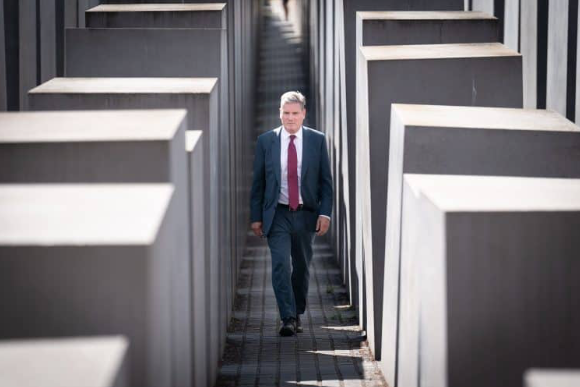
There was the Labour leader, Sir Keir Starmer’s ill-judged campaign video in which he and Shadow Foreign Secretary, David Lammy, are filmed walking thoughtfully through the grey corridors of the Holocaust Memorial in central Berlin, ‘a massive faux-pas’ in Germany where such a carefully choreographed and blatant political usage of the site would be a complete and passionate no-no. 

Sir Keir Starmer in Berlin

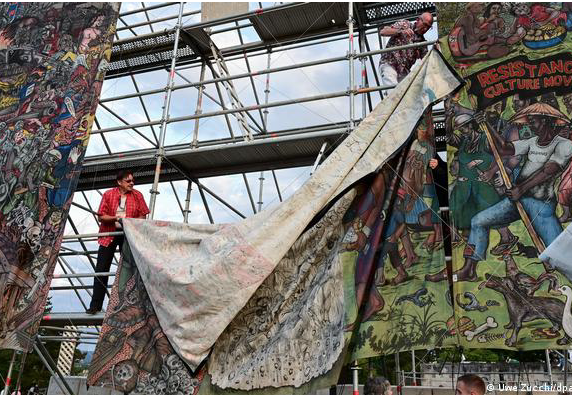
Or the contentious mural by the Indonesian art collective, Taring Padi, deemed unacceptably antisemitic and therefore quickly removed from this year’s Documenta international contemporary art fair in Kassel, the director quitting soon after.

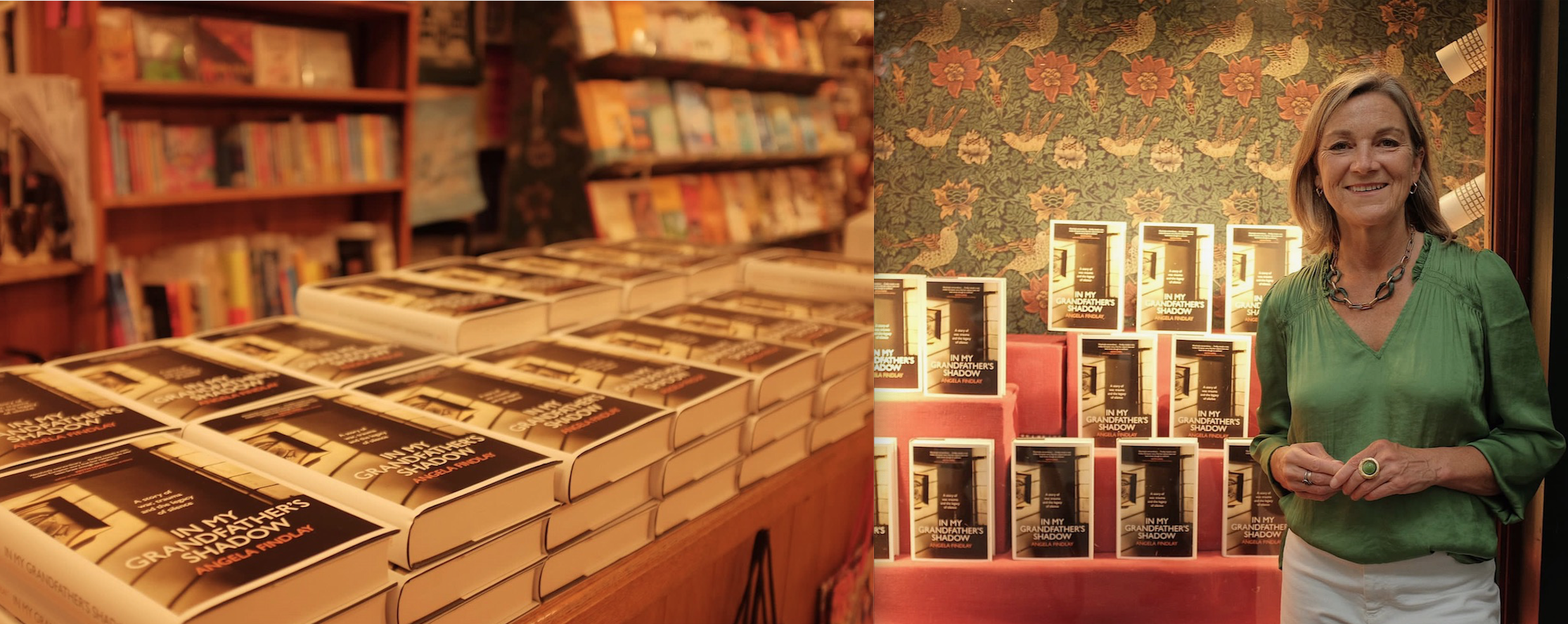
And my personal highlight, the three wonderful book launches that celebrated my arrival at the summit of my endless mountain. July has buzzed with the tangible excitement of people starting to read In My Grandfather’s Shadow and a string of radio interviews (all available here) and future invitations to talk about the themes and questions it raises.

Book Launch at Daunt Books, Holland Park

But two other experiences left me reflecting once again on what I see as a fundamental fault line in our troubled world. One was a recent review of my book, In My Grandfather’s Shadow, in the Observer. The other, the National Theatre Live broadcast of Suzie Miller’s award-winning play, Prima Facie in which an outstanding Jodie Comer (the BBC’s Killing Eve’s notorious assassin) plays a young and brilliant barrister who, after an unexpected event, is forced ‘to confront the lines where the patriarchal power of the law, burden of proof and morals diverge.’ 

In different ways, both the article and the play illustrate the age-old dynamic of ‘feminine’ versus ‘masculine’ perspectives in which the feminine experience is ignored, interrogated until it no can longer stand up and finally overridden, often with catastrophic consequences as the play demonstrates. For example, just 1.3% of rapes end in prosecution. Why? One reason is clear: the clunky measuring tools employed by the law to establish ‘proof’ are wholly inadequate when it comes to female trauma.

On a far less serious level, the Observer review by Matthew Reisz, former editor of the Jewish Quarterly and a staff writer at Times Higher Education, created a similar tension. I am hugely chuffed to have a got a review in the Observer. And there were compliments, like ‘strange and powerful.’ And Reisz was convinced by my hypothesis that a parent’s PTSD can have an impact on a child. Science after all accepts that as real and it’s now mainstream thinking, though it wasn’t always. What Reisz clearly doesn’t give any credence to is the reality, let alone the possibility, of the very premise of the book.

‘Much less plausible,’ apparently, is my belief that I am ‘in some sense haunted by the grandfather she never knew.’ As for the techniques I develop to find an “improbable epiphany” that will help me understand what kind of man he is, well, they are clearly the same “esoteric claptrap” that I suggest my grandfather might have seen them as! 

Matthew Reisz has every right to think like he does, and many will agree with him. I am well prepared for this kind of critique. I knew the ‘woo-woo’ stuff (as one or two of my editors called the more weird occurrences) could be problematic for some readers. But I insisted on keeping it. Without it, it was neither my story nor my book. And certainly not my truth. Including a ‘feminine’ perspective on the largely masculine arena of war and traditional fact-based history was for me essential. And I use ‘feminine’ here not as in female, but as in that inner dimension within all of us. That inexplicable world of instinct, intuition, serendipity, dreams and the invisible whisperings of the dead; often the source of creativity or vision, yet also the areas of human experience so often dismissed as ‘dippy-hippy nonsense,’ not ‘real’ or valid because they are ‘unprovable,’ or apparently just ‘wrong’. For it was these things – not clever science or psychologists – that provided the clues to solving the mystery of what I was experiencing. 

The book is intensely personal. But the issues it explores – addiction, shame, trauma, inherited guilt, forgiveness, reconciliation – are not. As Prima Facie so dramatically shows, they require a different approach to the logic and plausibility of left-brain thinking. This is what I feel Reisz unfortunately misses. In his final sentence, he reveals the source of his unsettledness in the apparent contradiction of ‘a woman who has dedicated her book to “all those whose lives are affected by discrimination, oppression or war” searching so desperately for redeeming qualities in a decorated Wehrmacht general.’ Is he suggesting there couldn’t possibly be any while misunderstanding my desire to comprehend a relative as wanting to exonerate them?

It’s going to be so interesting hearing different responses to In My Grandfather’s Shadow and coming into dialogue with others about their own relationships to the darker corners of their heritages, which is what frequently comes up. Like the prisoners in my art classes, like audience members at my lectures, people begin to talk when you make it safe for them to do so. That’s what I hope telling my difficult story will encourage: conversation. Not about provable facts, but fears, feelings and experiences. Conversation. Not with a goal of judging or a need to be right. Certainly not doubting or questioning the reality of what is being said. Just from a genuine desire to understand others. That’s how we can find our shared humanity.

So just to finish with a bit of undiluted ‘woo-woo,’ I found a 4′ grass snake in my hall a week or so ago. A Stroud friend told me that when animals come into our houses, they have a message. I thought no more about the symbolic significance of a snake. But then yesterday, without me mentioning the snake, another friend reminded me of the questions asked in Goethe’s beautiful story, The Fairytale of the Green Snake and the Beautiful Lily in which the snake sacrifices itself to bridge the divide between the land of the ordinary senses and the land of the spirit or soul. It roughly translate as:

‘What is more precious/glorious than gold?’ asked the King. 

‘Light’, answered the snake.

‘What is more refreshing/quickening than light?’ asked the King.

‘Conversation’ said the snake.

Becoming aware of the invisible ties that bind us to the past…

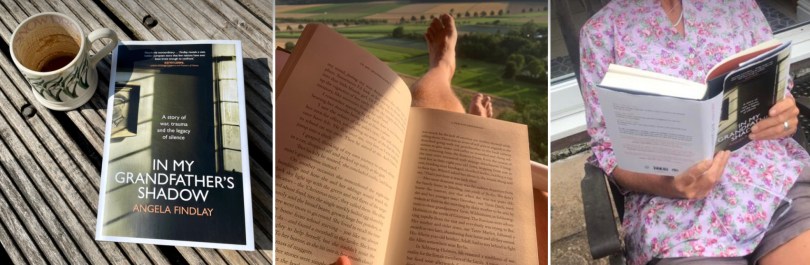
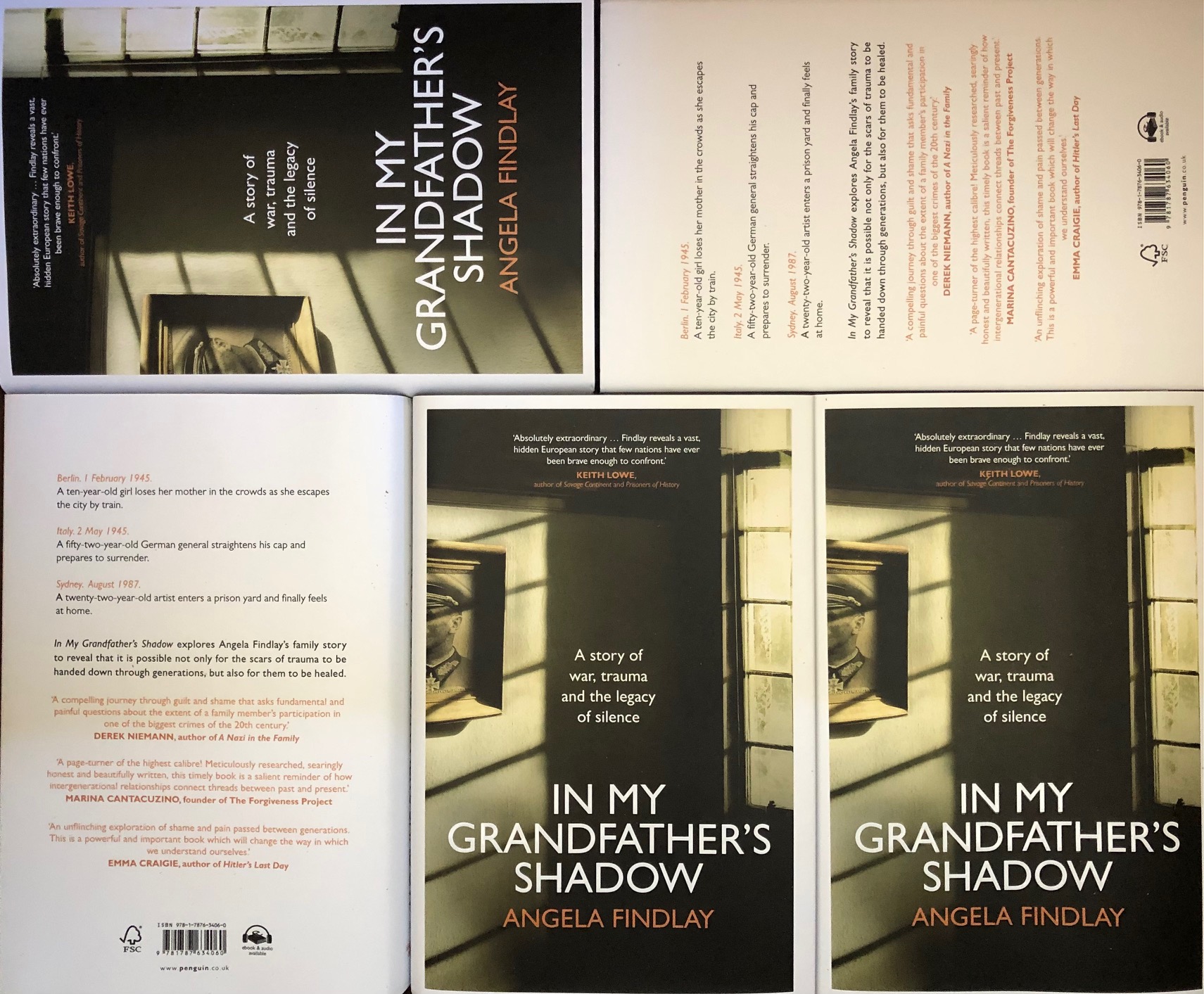
It is now just three weeks until the publication of my book, In My Grandfather’s ShadowA week in the stunning, state-of-the-art Penguin Random House studio recording the whole thing for the audio book version has left me feeling more intimately connected to it than before. Like a parent, I have spent years nurturing it into its current shape. Now it is leaving the nest and heading into the big wide world… how exciting is that! 

Most of you will already have an idea of the themes it is likely to address from my blogs. And – spoiler alert – it does. But possibly the main thrust of the book – as stipulated by Penguin Transworld when they took me on – was to focus on the heritability of trauma. It involved ‘a bit’ (read: ‘total mind-fry’) of a re-write. Yet ultimately they were right. Because this idea, that we can inherit psychological wounds from our forebears, is gaining more and more traction.

The process or re-structuring a book…

One of the book’s working titles was ‘Invisible Lines’, which I liked. But ‘line’ is somehow wrong. Even the letters that make up those two words are too straight, too linear. For, while there is obviously a linear logic to the structure and the content, the essence explores hidden cycles and the bits of life that meander or tie themselves in knots. Or that appear unsubstantial, unreal even, when really they are holding the tiller to our lives.  

As I have said before, trauma, guilt and shame abide in the psyches of us all to a greater or lesser degree. They are part of what it is to be human. But frequently they remain unidentified, like bottom dwellers in the sea of our emotions that stir up the mud to cloud our vision and cause havoc with how we see, not only ourselves, but others and the wider world. 

In My Grandfather’s Shadow therefore takes readers on a deep dive into largely unknown or unspoken – until recently – corners of experience. Not just of those who lived through the Second World War, but those who came after. It looks at the impact of war and violence in general, a theme that has gained an unwelcome pertinence in the light – or should I say darkness – of Russia’s war in Ukraine with its horrific reports of rapes, brutal murders, forced transportations that echoe my grandfather’s letters from the eastern front in 1941-2. War is as old as the world. But where the brutality was once confined to the battlefield and soldiers, Ukraine is a salient reminder that modern warfare invariably extends into the homes and lives of civilians. For generations.

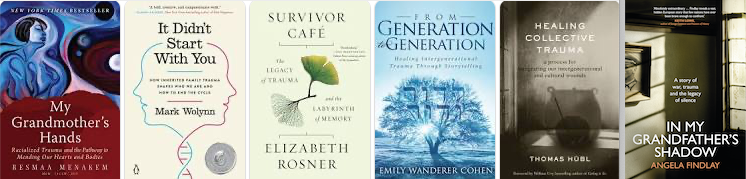
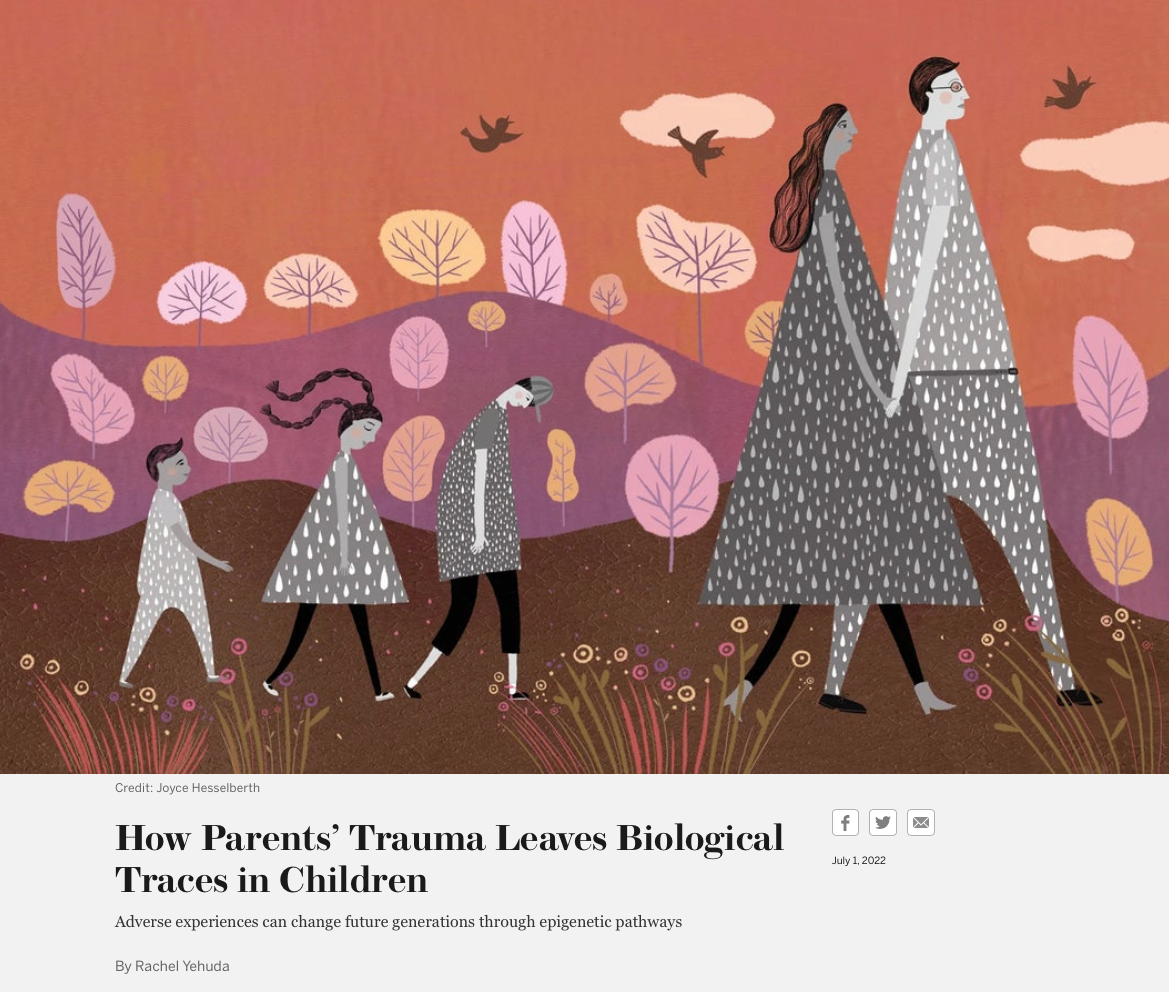
It is probably easy to imagine how the extreme traumas of the Holocaust could affect the offspring of survivors as well. Traumatic imprints have long been witnessed in second and third generations. What is less known because it could only be articulated when the non-Jewish German grandchildren of those who lived through the war came of age in their 40s, is that traumatic experiences of any nature, if left unattended or untreated, can seriously disrupt the lives of subsequent generations. The process is variably referred to as ‘transgenerational transmission’ or ‘emotional inheritance.’ Even science is embracing the possibility with its own language: ‘epigenetics.’ (See article

How Parents’ Trauma Leaves Biological Traces in Children – Scientific American

Whether biological, psychological, genetic or spiritual, the process of transmission is not new. What is new, is our growing awareness of it. And with that awareness comes responsibility. Responsibility to address the cause of the damage, to find ways to resolve or heal it, and then to prevent it. To neglect trauma, particularly in children, and to ignore how it’s effects can linger on for generations is to potentially condemn them to lives of violence, self-harm, substance misuse, depressions, low self-esteem, underachievement or a general sense of something being amiss, all of which are becoming increasingly endemic in our society. It is therefore in everybody’s interest to do this.

This is one of the reasons I took the risk of bearing my soul and writing my book. Because I really hope that parents, teachers, doctors, psychologists, politicians might open their minds to the possibility that behind someone’s problematic behaviour or attitudes, their unemployability, fears or lack of motivation there might lie an unresolved family trauma, wrongdoing or injustice that is seeking resolution through that person without them realising it. It took me five decades to unravel the ties that bound me to the experiences of my immediate forebears. Because nobody knew about it back then.

Well, we do now. Or at least you will do when you have read my book!

In the words of those who have read it:

“Can we as individuals untangle ourselves from a past that binds us to the suffering and deeds of our predecessors?”This profound question forms the basis of this remarkable memoir in which Findlay – granddaughter of Wehrmacht officer, General Karl von Graffen – wrestles the feelings of ‘badness within her’ that has plagued both her mental health and her sense of self for years. It’s a powerful investigation into the individual personal cost that results from wider history, and the ways in which inherited guilt and trauma can leave scars across the generations. A must read… Caroline Sanderson, Editor’s Choice in The Bookseller

This is a moving and powerful memoir that illuminates the extraordinary power of unprocessed trauma as it passes through generations, and how when it is faced it can be healed. Julia Samuel, author of Every Family Has a StoryGrief Works and This Too Shall Pass

An unflinching exploration of shame and pain passed between generations.  This is a powerful and important book which will change the way in which we understand ourselves. Emma Craigie, author

A page turner of the highest calibre! Meticulously researched, searingly honest and beautifully written, this timely book is a salient reminder of how intergenerational relationships connect threads between past and present... This book gives new meaning to the prescient words of psychoanalyst, Roger Woolger: ‘It is the responsibility of the living to heal the dead. Otherwise their unfinished business will continue to play out in our fears, phobias and illnesses.’ Marina Cantacuzino, author and founder of The Forgiveness Project

This is an absolutely extraordinary book. In peeling back the layers of her family history, Angela Findlay reveals a vast, hidden European story that few nations have ever been brave enough to confront. Keith Lowe, author of Savage ContinentThe Fear and the Freedom, and Prisoners of History

A compelling journey through guilt and shame that asks fundamental and painful questions about the extent of a family member’s participation in one of the biggest crimes of the 20th century. Derek Niemann, author of A Nazi in the family

From 14th July, you will be able to purchase In My Grandfather’s Shadow at a bookshop near you such as Waterstones or various online stores .

When headline ‘News’ becomes ‘Normal’

I’m interested in how front page news becomes almost no news as we get used to any new situation. 

When I think back to last August and Britain’s catastrophic and deeply distressing withdrawal from Afghanistan, or February this year and Putin‘s horrific invasion of Ukraine, the shock and terror of the implications of massive personal tragedy and widespread devastation had me glued to the radio. The ‘News’ from countries far away infiltrated my world, influencing my days and above all my state of mind. 

It is with some shame that I have to confess I have now slightly switched off the news. Not out of lack of interest or concern, nor simply because I’m extremely busy in the run-up to the publication my book in July (hence apologies for any typos etc… I am constantly on the road at the moment.) No, I am making a deliberate choice not to turn on the news in order to preserve a positive state of being; so I can feel the excitement of my long journey reaching its end and a new chapter starting; and so I can fully immerse myself in the flower-power of the blooming wonders of nature in all their technicoloured splendour. 

I am sure I am not alone in noticing how quickly and completely the un-normal can become normalised. I imagine it was always thus. History feels more intense than the present because history isn’t experienced on a moment-to-moment basis. It is captured in snapshots – letters, diaries, family albums, military or journalistic reports – and concertinaed into a narrative by skilled historians. The multitude of in-between times that make up the everyday are all missed out. 

Right now – and without wanting to be a doom-monger but we can’t ignore that it is a possibility – we might be witnessing the build-up to the Third World War. Or a climate catastrophe of proportions we can’t imagine. Or world famine. Or intense poverty. Or worst case scenario, all of the above. These times too will one day be reduced to a sequence of significant events and decisions. Yet for many of us, still not directly impacted by them, the business of life continues, to a large degree, as usual. 

Anybody who regularly reads my blogs knows how I frequently get frustrated by the lack of agency, influence or clout I feel in the face of the shenanigans and all too often crap decisions of politicians or world leaders. I never want to not feel justified rage or become guilty of the passivity of ‘looking away’ that so many Germans living in Nazi times are accused of. But thinking back to those times, I find it much easier to comprehend how even then, the ‘News,’ as horrific as it often was, might have become normalised. The majority of people would have read or heard about things, argued about whether they were right or indeed even true, and then probably just got on with the intricacies of their daily lives. Just like most us are probably doing now. 

Maybe it’s because I find it overwhelming trying to imagine the challenges, traumas, upheavals, fears and worries of each individual caught up directly or indirectly in all that is going on in the world right now that I am choosing to surrender to the things I am impotent to do anything about. Maybe it’s ok to want to give myself the best chance of maintaining a level of optimism, vision, hope and love so I can contribute positively to the world in whatever way I can… kind of along the lines of the Serenity Prayer written by the American theologian Reinhold Niebuhr and used in Anonymous groups.

God, grant me the serenity to accept the things I cannot change, the courage to change the things I can, and the wisdom to know the difference.

Then again it may just be an age thing. That I have reached the stage where one sits in a chair and writes grumpy letters to newspapers. Or in my case, where I rail against the endless stream of transparently self-serving, superficial and frankly dangerous tweets by our foreign secretary, Liz Truss, all accompanied by ghastly selfies. Oh here we go, I clearly haven’t quite grown out of my healthy rage at the world!

Happy end of May and beginning of June and next time I write, it will be a countdown to publication day…

Madness, Art, Dreams and Aperol Spritz converge in Venice for the 59. Biennale…

I have just returned from Venice, my soul filled to the brim with images, beauty, thoughts and inspiration. I was invited to speak at a one-day symposium on ‘the magic of madness’ that coincided with the opening of the 59th Venice Biennale titled ‘The Milk of Dreams.’ For a person deeply interested in all those words – magic, madness, dreams… even milk when it’s in a cappuccino or gelato – this was my idea of heaven. 

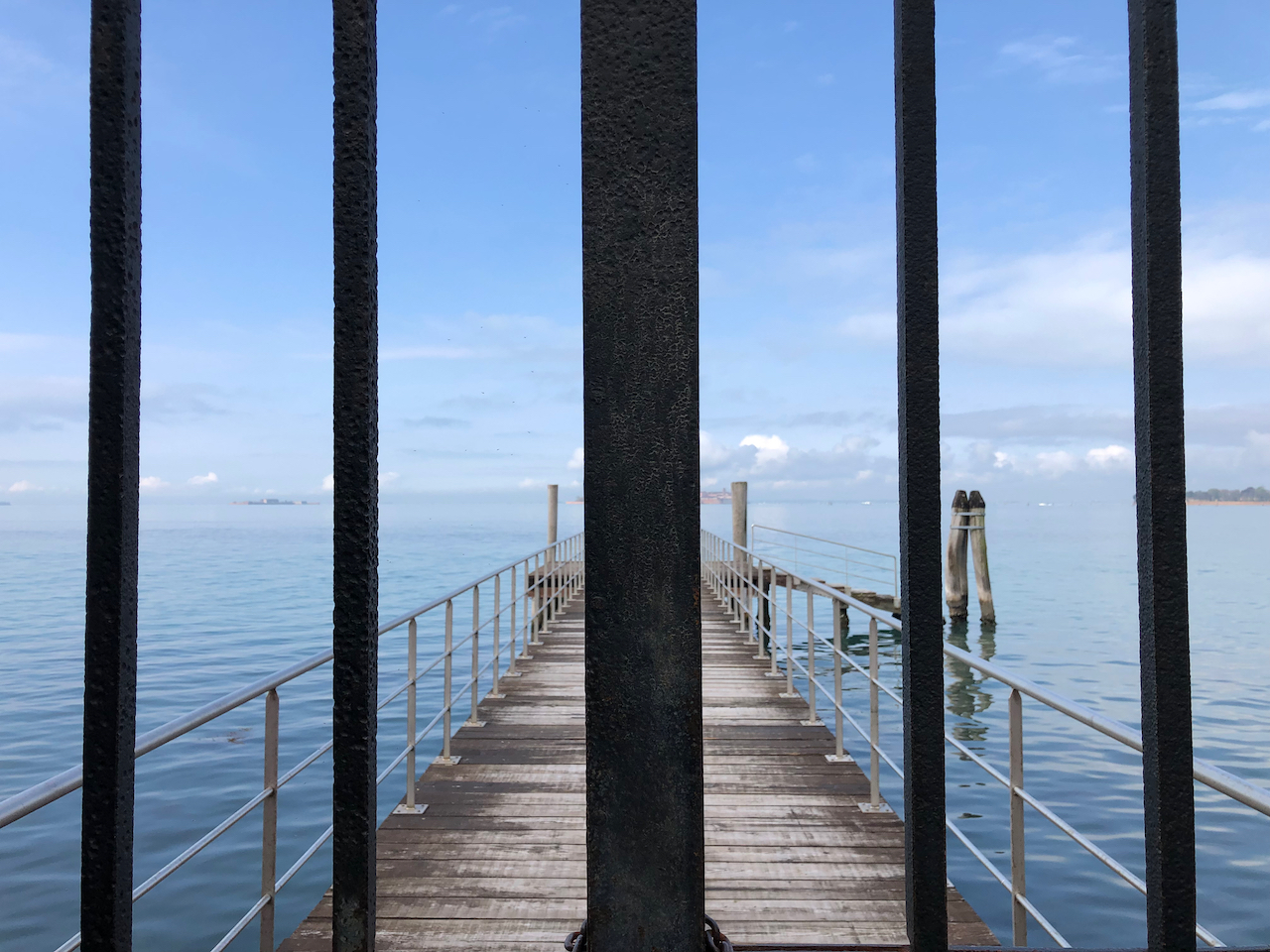
The jetty from which boatloads of tourists used to arrive from Venice to gape at the patients of the former ‘lunatic asylum’ on the island of San Servolo

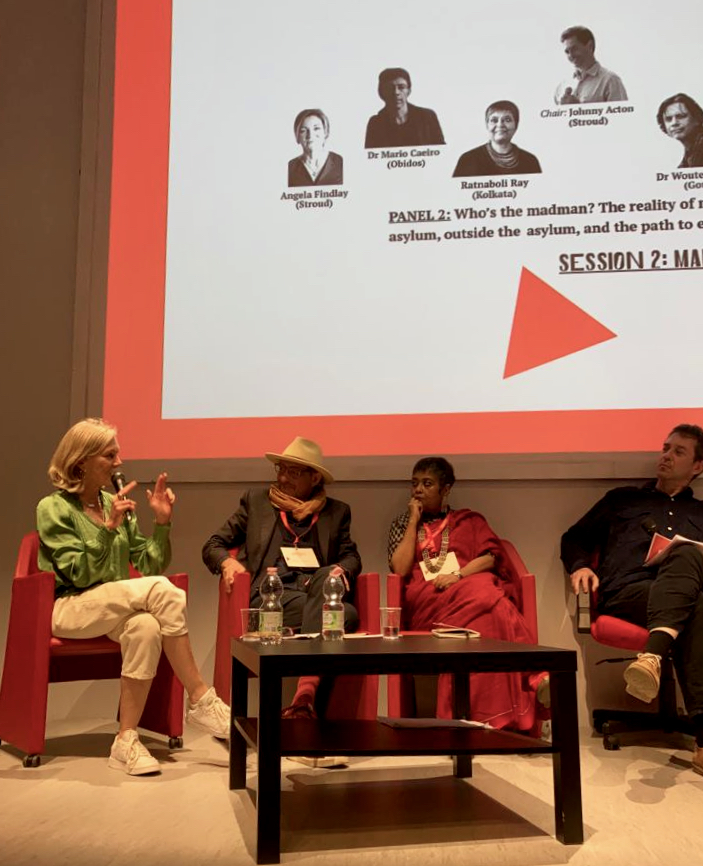
The MADNICITY Pavilion, where the symposium took place, is situated on the site of a former insane asylum on the island of San Servolo. Three panels of leading voices in psychiatry, psychology, philosophy, critical theory and the arts discussed topics ranging from ‘the place of madness in society’ to the expansion of traditional concepts of ‘normality’ and ‘mental disorder’ to a more inclusive embrace of ‘mental diversity’. There was also some very academic philosophical stuff debated by an all-male panel of professors, but I wasn’t entirely able to follow that. I personally chose to stay on more familiar ground and talked about the madness of institutions, specifically prisons. (You can listen to the whole day of presentations here or just my talk starting at 3:52.50)

At one point, the Chair of our panel – Johnny Acton – asked us what we find most mad about society. For me, it is the fact that the ‘feminine’ in life – and before I get hauled up for being sexist or in some way discriminatory, can I make it clear that I am not talking about biological ‘men’ and ‘women’, nor even ‘male’ and ‘female’ genders. I am talking about archetypes, the feminine principle that is in each and every one of us to a greater or lesser degree. Coarsely, and therefore inevitably inaccurately put, we are talking the feminine/masculine dualisms of moon/sun, inner/outer, art/science, feelings/concepts… you get the picture hopefully. Ok, so where was I? Let me start that sentence again. In fact, let’s have a new paragraph too. 

To me, what’s most mad in society is that the ‘feminine’ is still ignored, dismissed, ridiculed or considered invalid in the face of the more tangible ‘masculine’. The left-brain, rigid logic of science with its need for proof, as I have frequently both observed and said, too often totters behind the more right-brain, unpredictable logic of intuition, dreaming, playing – all the stuff that can lead to creative genius or apparent ‘madness’. Women who lived by these rules used to be burned at the stake, locked up, or simply forced into subservience to men and masters. The island of San Servolo and the amazing installations under the title ‘LUNATICS’ bear witness to the some of the horrific past approaches both to madness and women. The thinking behind most of our systems – education, prison, medicine – are dominated by this ‘masculine’ thinking. And yet, common sense, vision, wisdom and truth are frequently born from the supposedly unprovable, inaccurate, fantastical, unreal phenomena of dreams, gut feelings, instinct. The world has paid a heavy price for playing down their innate value.

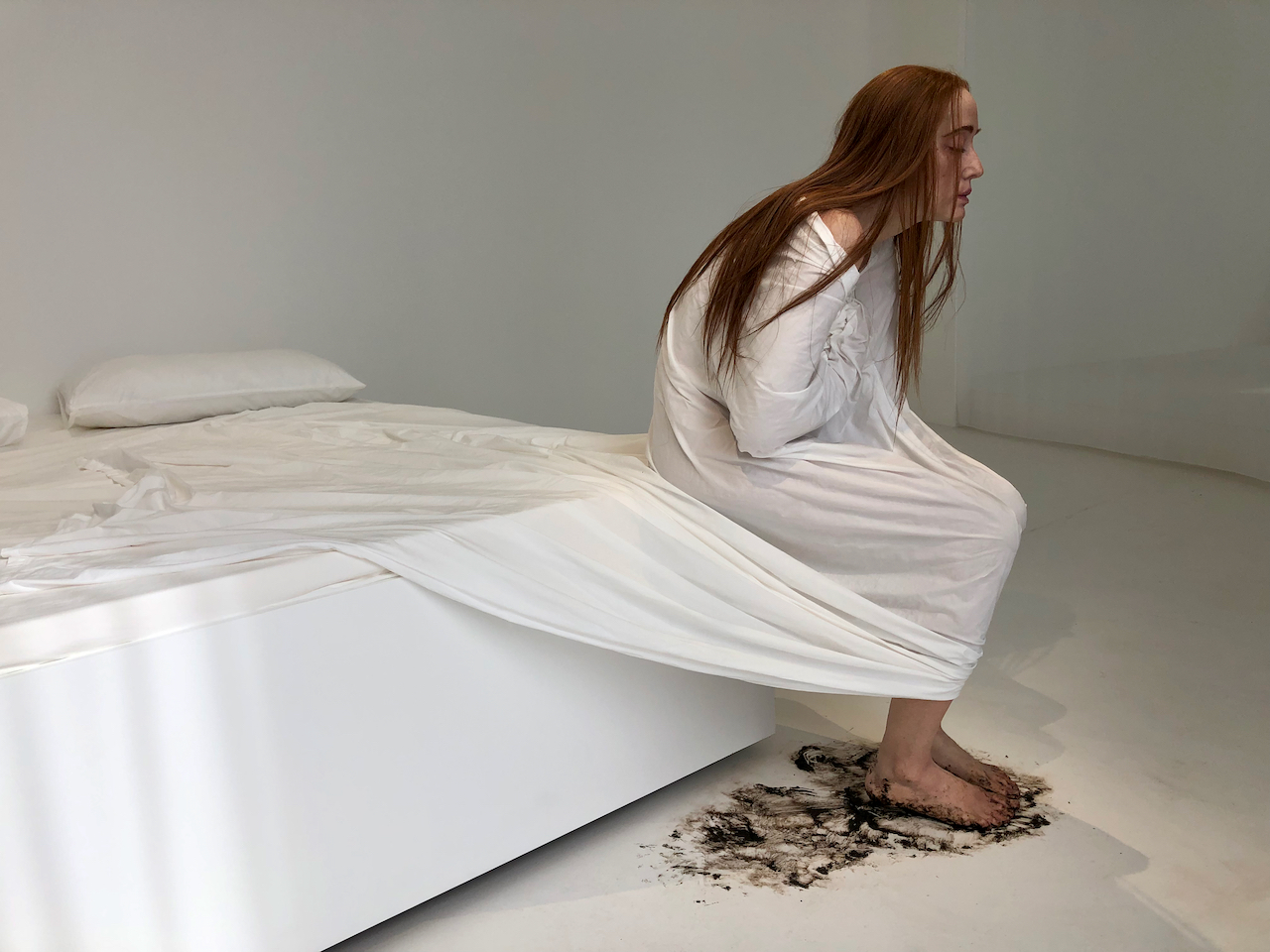
‘LUNATIC’ – one of ten collaborative installations by Dominik Lejman and Bianca O’Brien on San Servolo

But something is finally shifting. The world is becoming more fluid, less polarised. Boundaries are blurring. Humans are becoming less certain of themselves and bowing to the greater forces of nature and the big unknowns. This was all reflected both in the panel conversations and the art, the latter not least because Cecilia Alemani, unbelievably the first Italian woman to curate the Venice Biennale, ensured that 80% of artists featured were women or gender non-conforming. And the theme itself – The Milk of Dreams – appealed to symbolism, surrealism, fantasy and spirituality rather than the conceptualism of past years. Many of the big male names were there – Kiefer, Baselitz, Kapoor – but on the periphery, looking rather bombastic, egotistical… ‘out’.

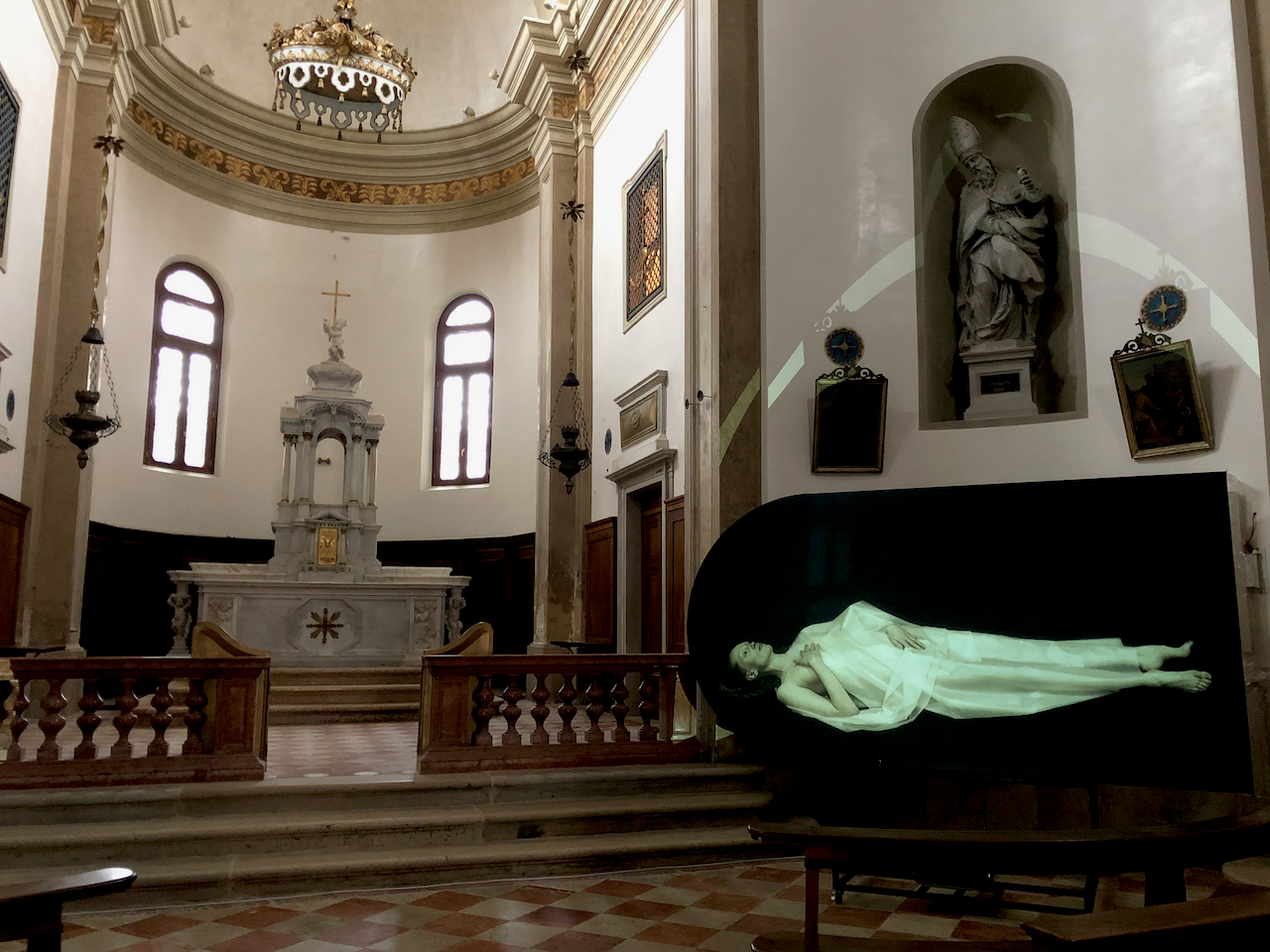
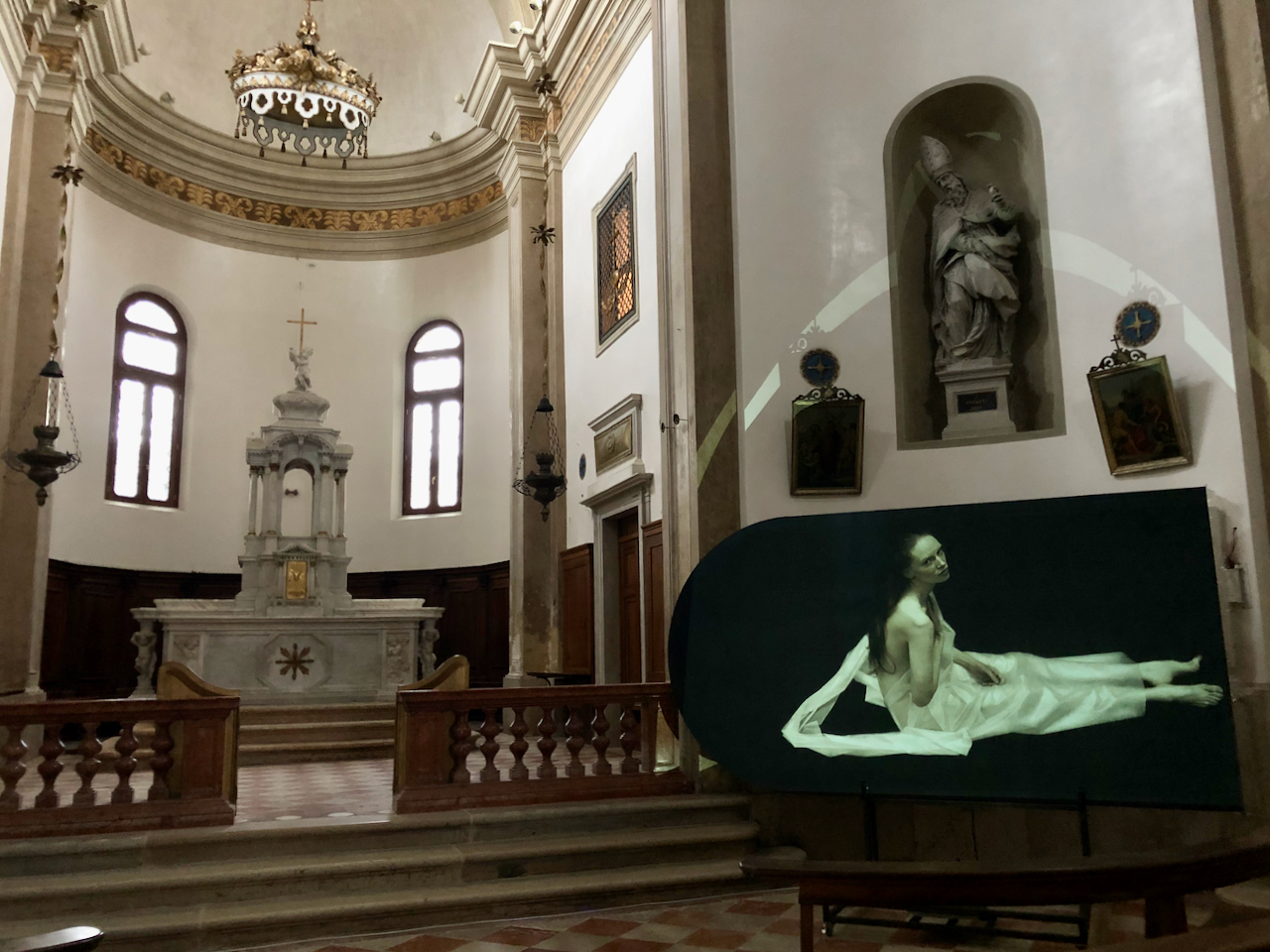
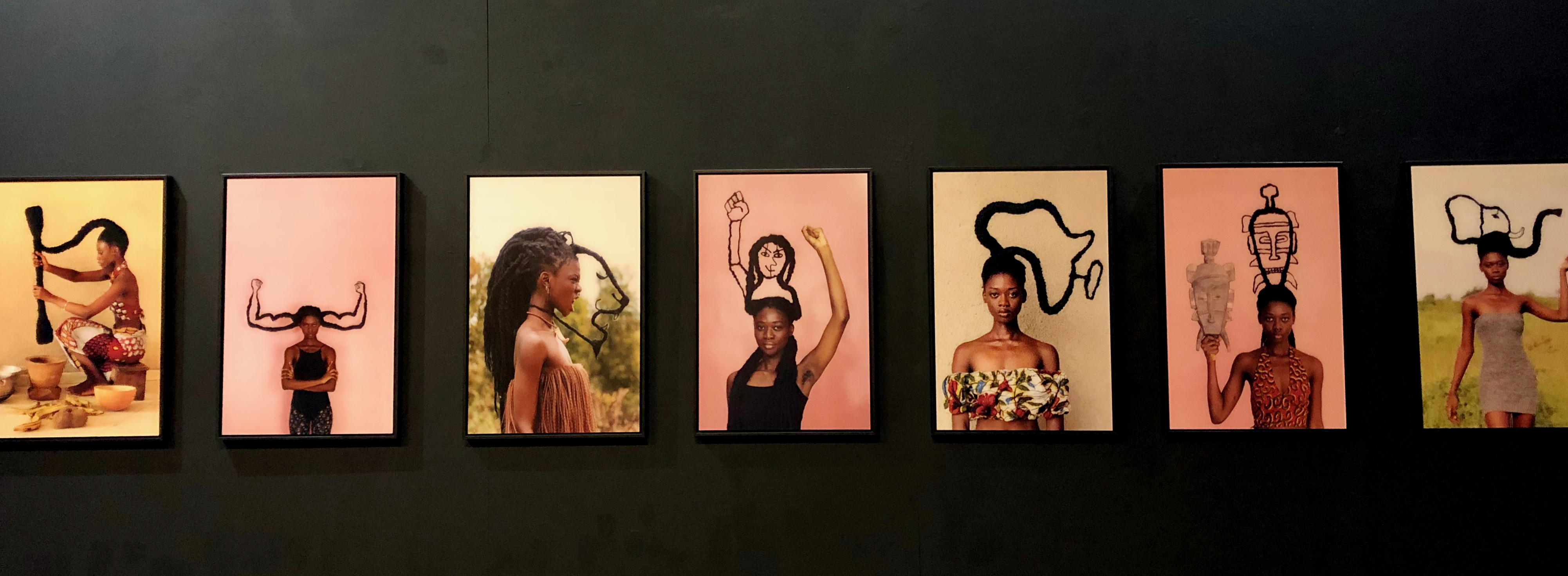
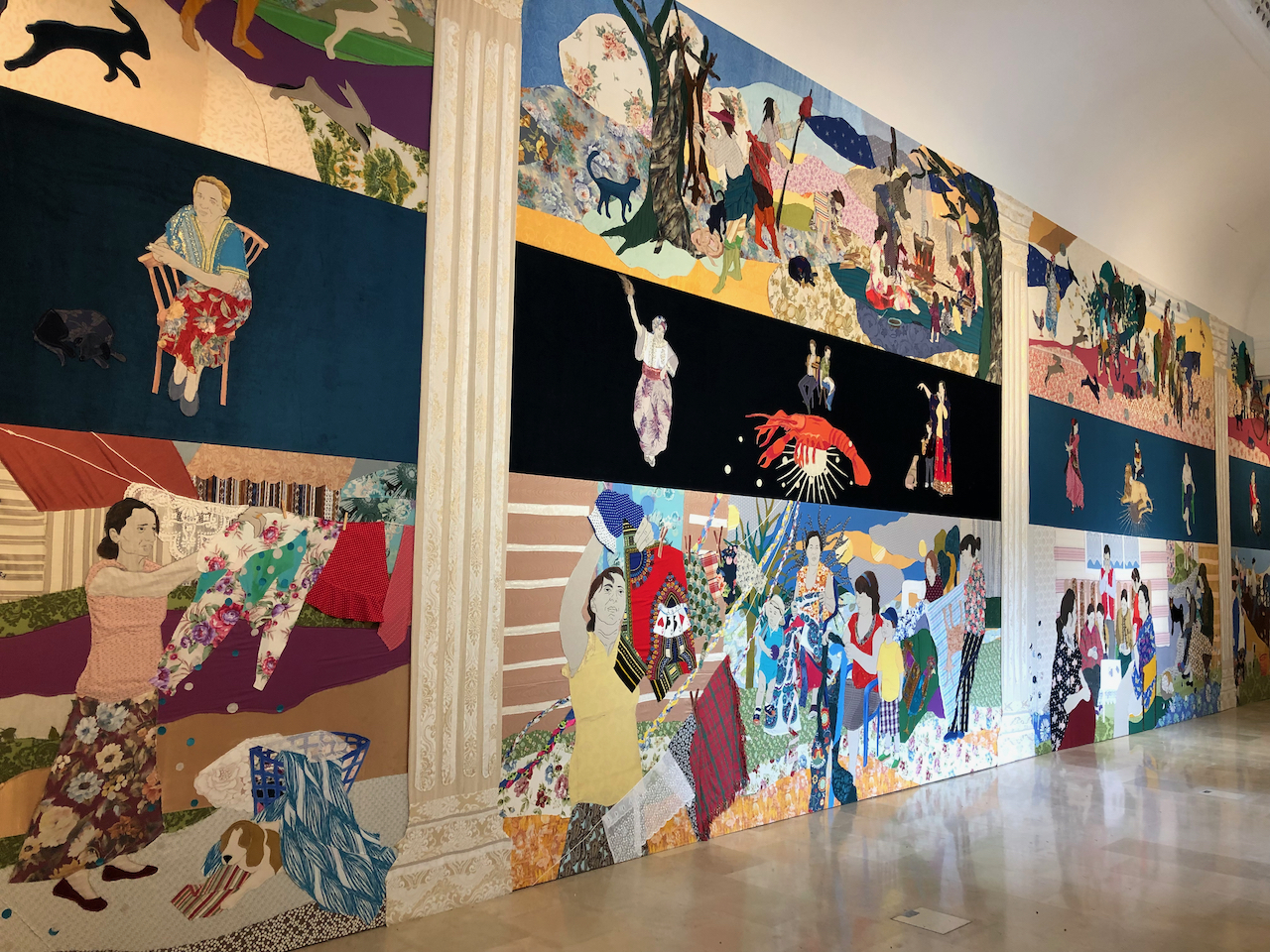
Let’s see if I can make this clearer through a selection of pictures I took, unaware at the time that this was what I was seeing. Some are from the official Biennale pavilions of the Giardini and the Arsenale, others at collateral events and exhibitions around town.

Laetitia KY, Hair sculptures, Pavillon de la C^ote d’Ivoire. Interview here.
Malgorzata Mirga-Tas: Re-enchanting the world, Poland Pavilion
Can’t remember… one of the pavilions in the Giardini
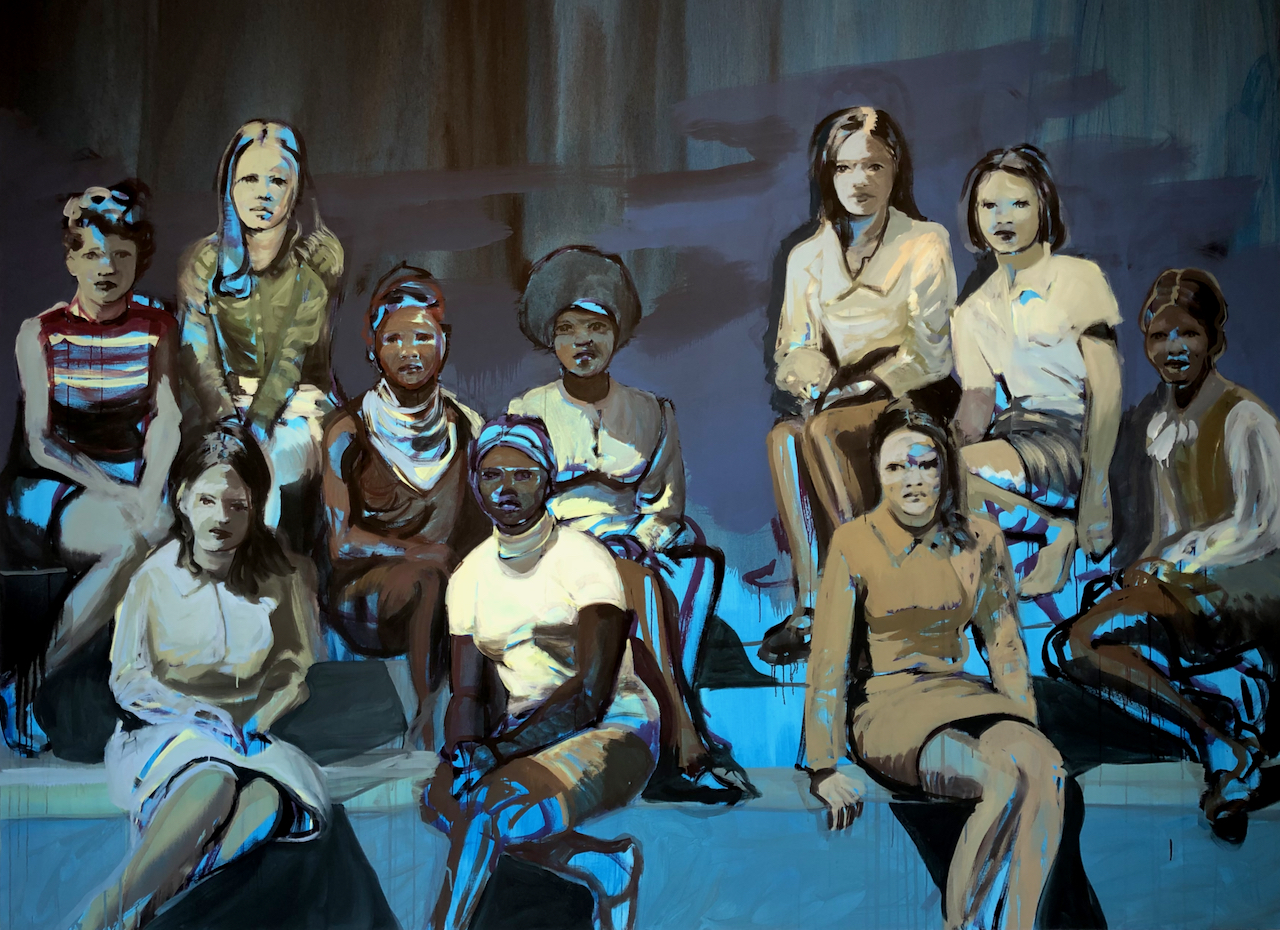
Claire Tabouret: I am spacious singing flesh, Palazzo Cavanis
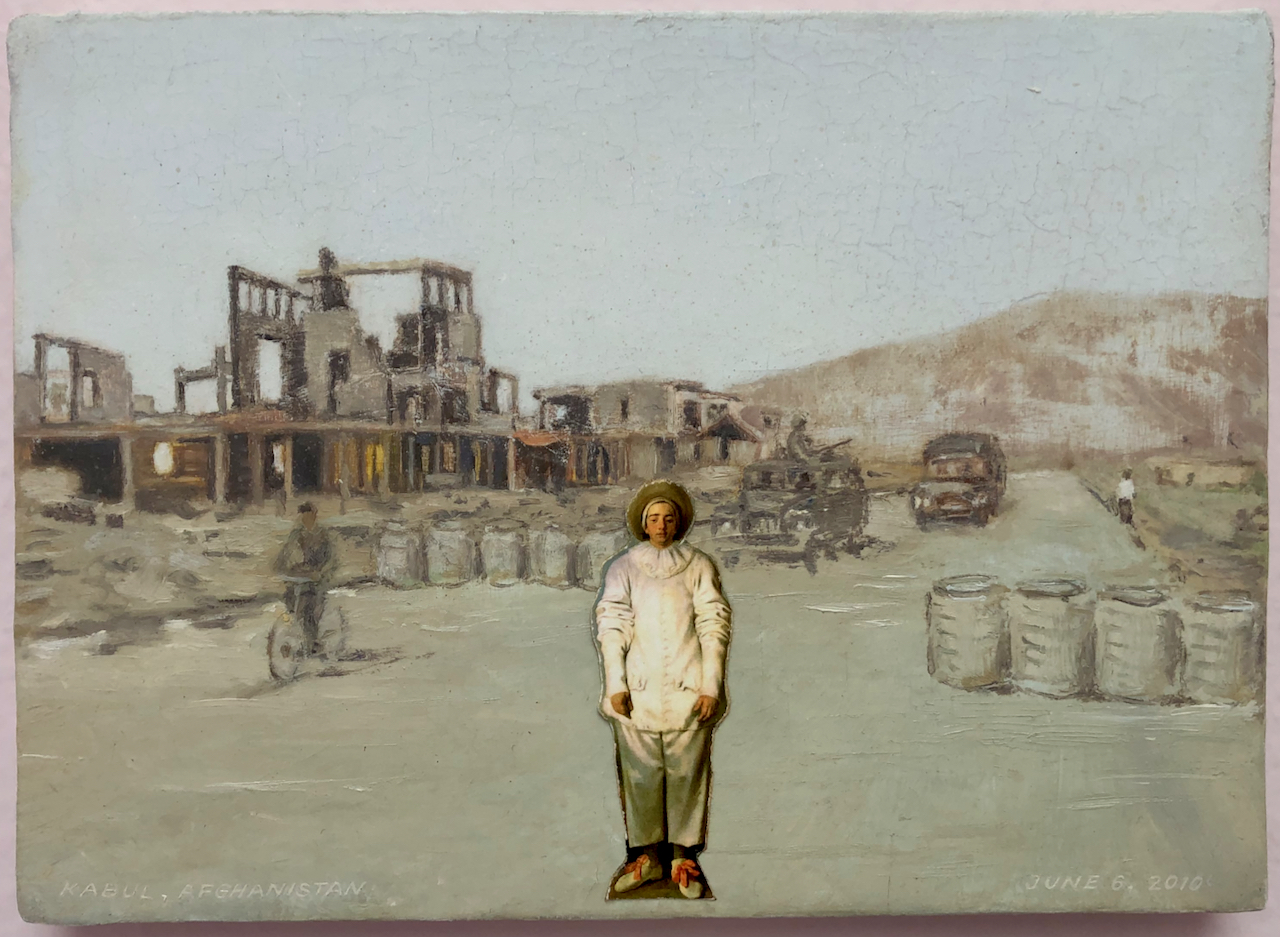
Francis Alÿs: The Nature of the Game, Belgium Pavilion, Giardini
Beyond: Emerging Artists, Palazzo Franchetti
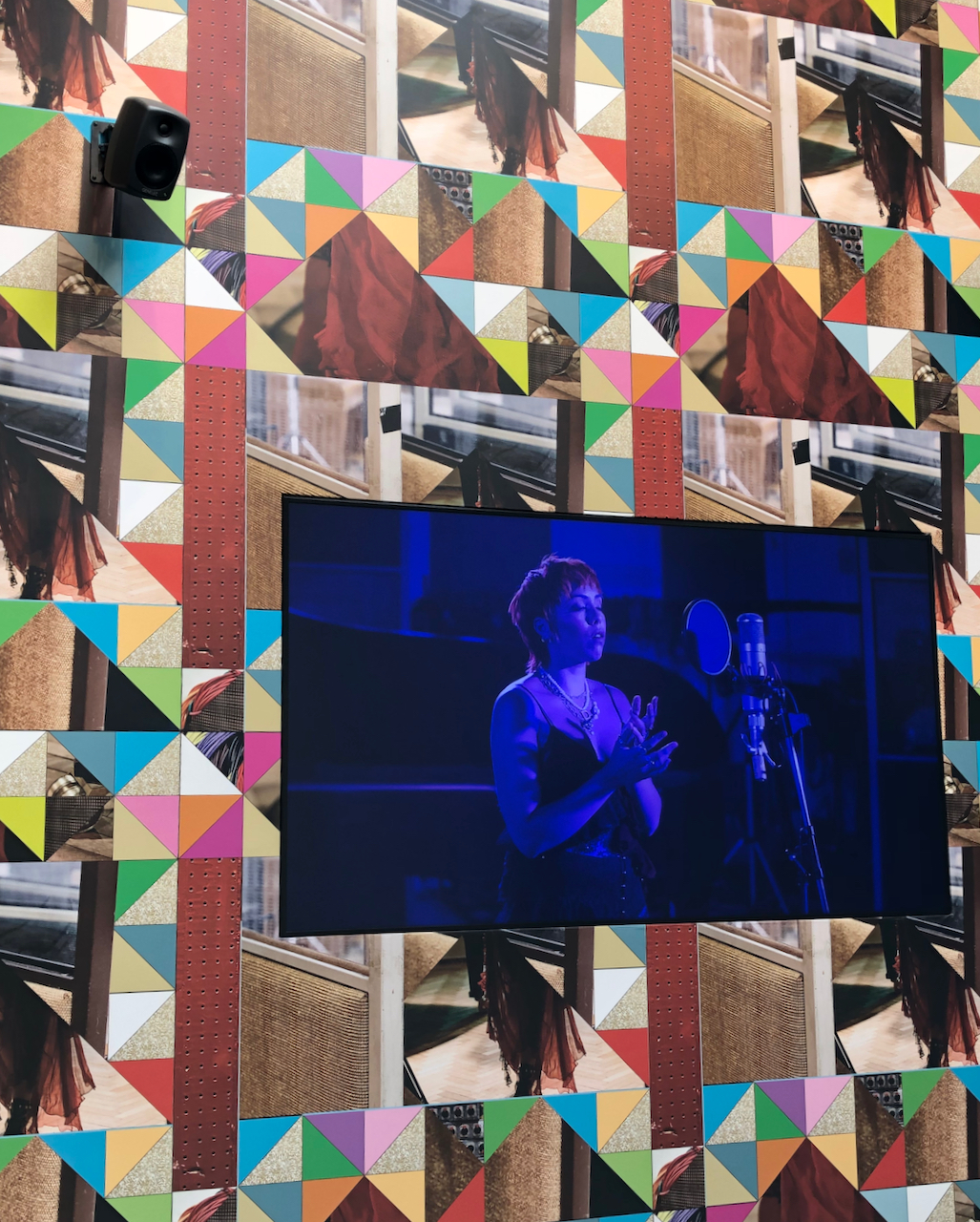
Sonya Boyce: Feeling her way, Great Britain pavilion, Giardini – winner of the Golden Lion Prize for Best National Pavilion, Venice Biennale 2022
A foyer we stumbled into in a building on Campo Santo Stefano…
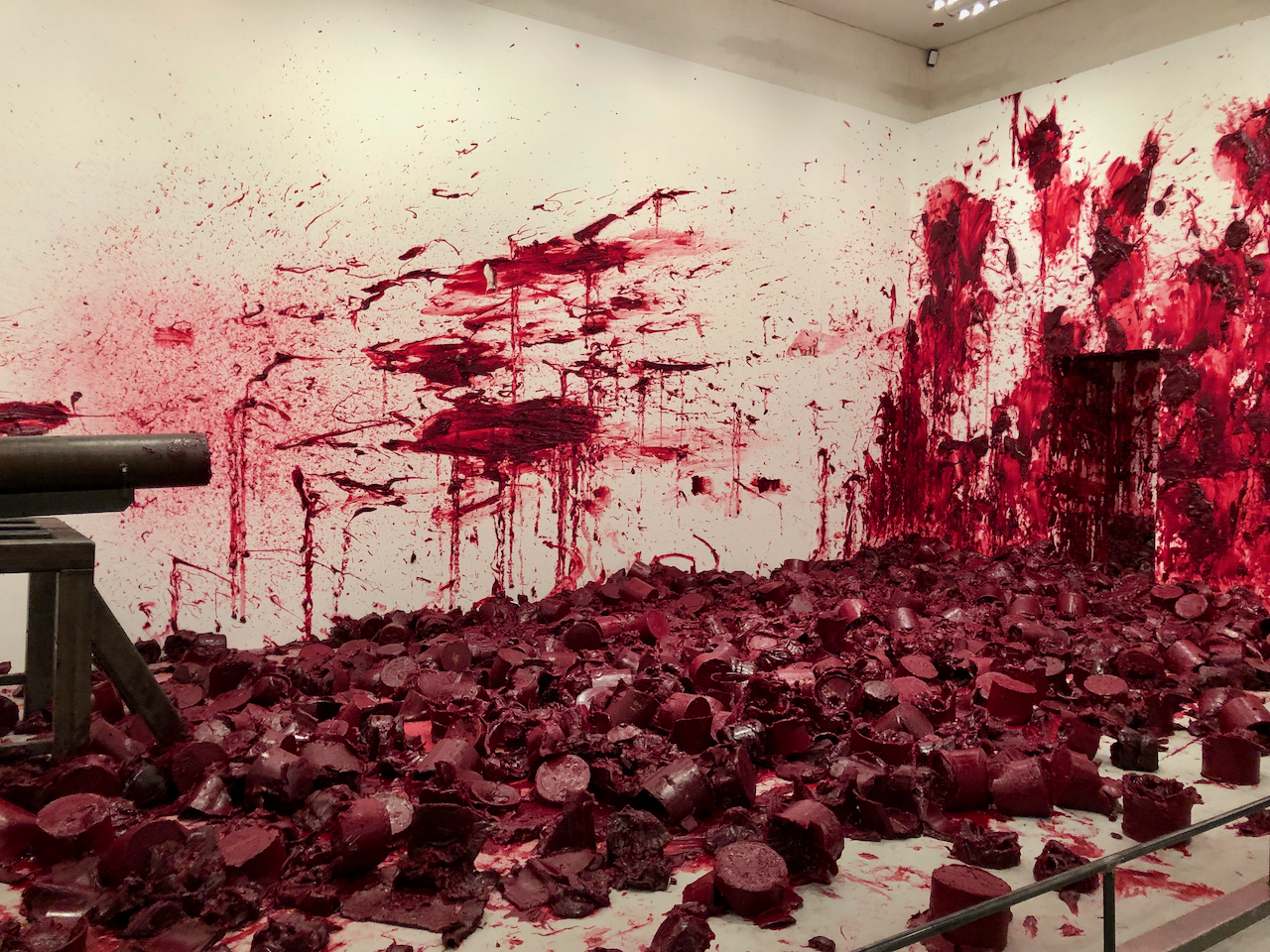
Anish Kapoor, Shooting into the corner (2008), Galleria dell’Accademia
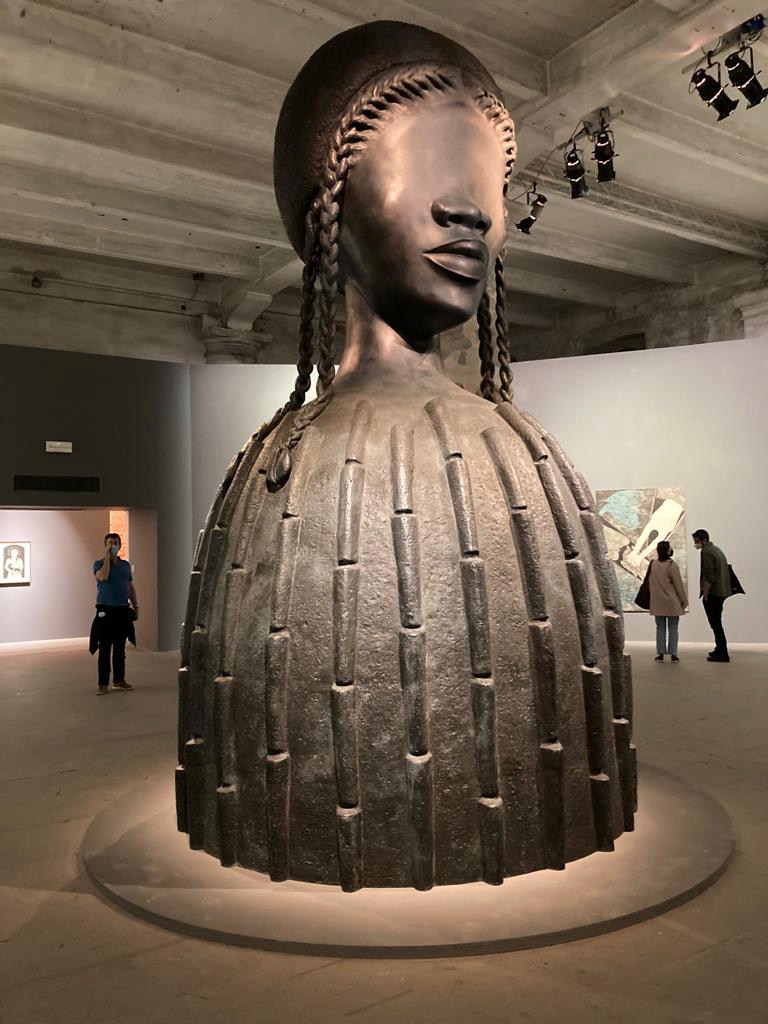
From the Arsenale…
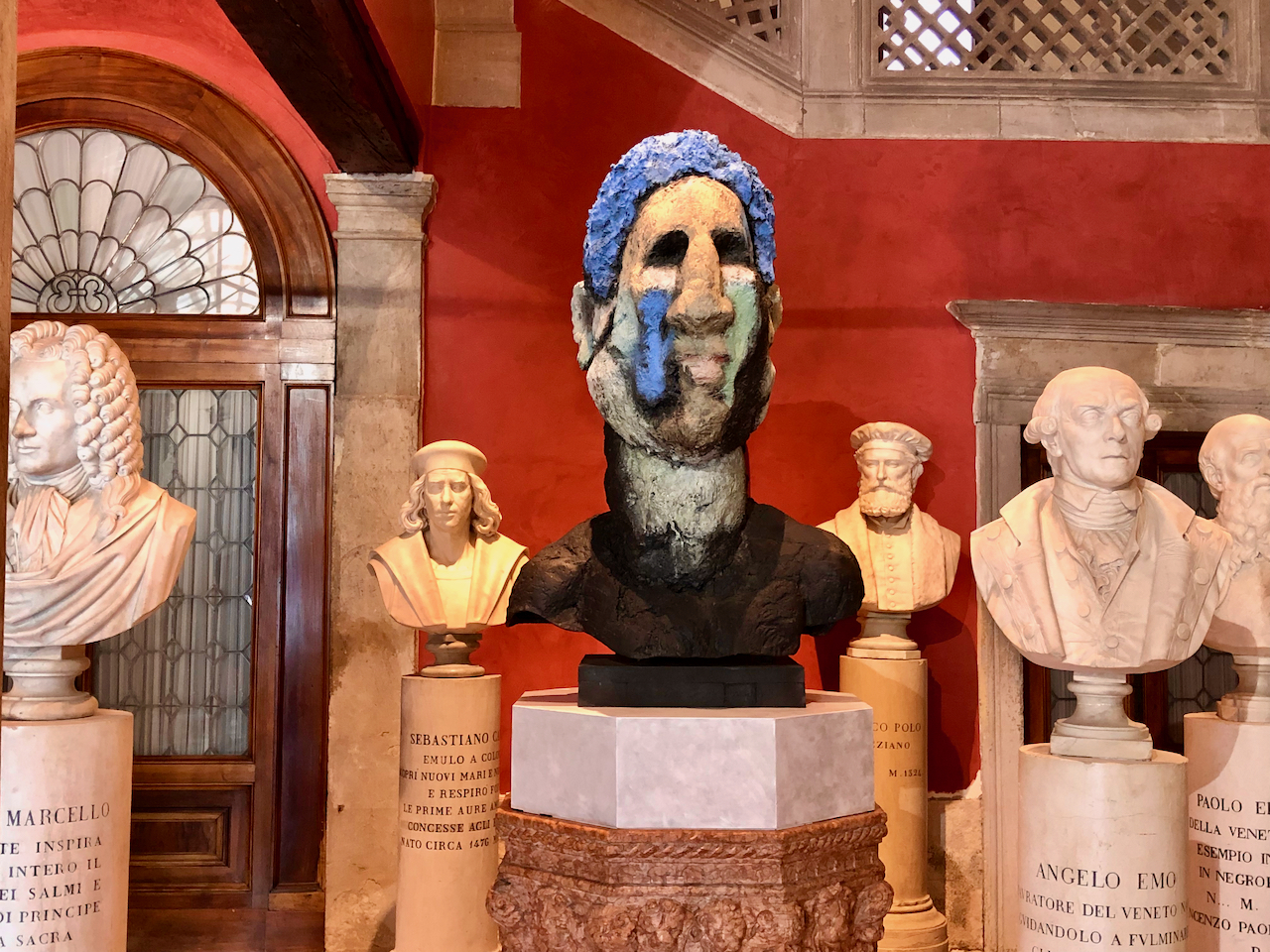
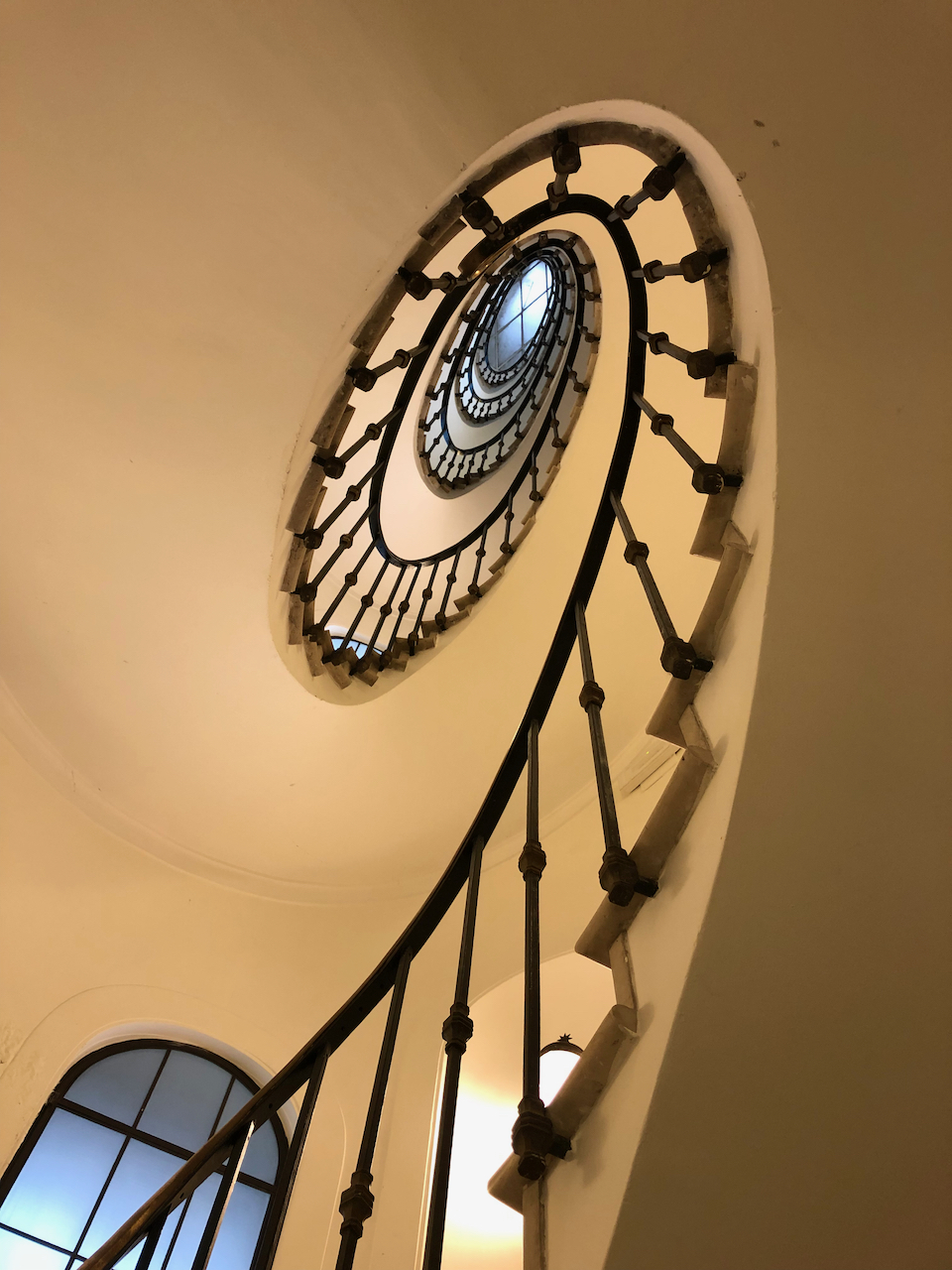
Just a beautiful staircase at Palazzo Cini

I could go on and on. But I’d be interested what themes you see in this microcosmic collection.

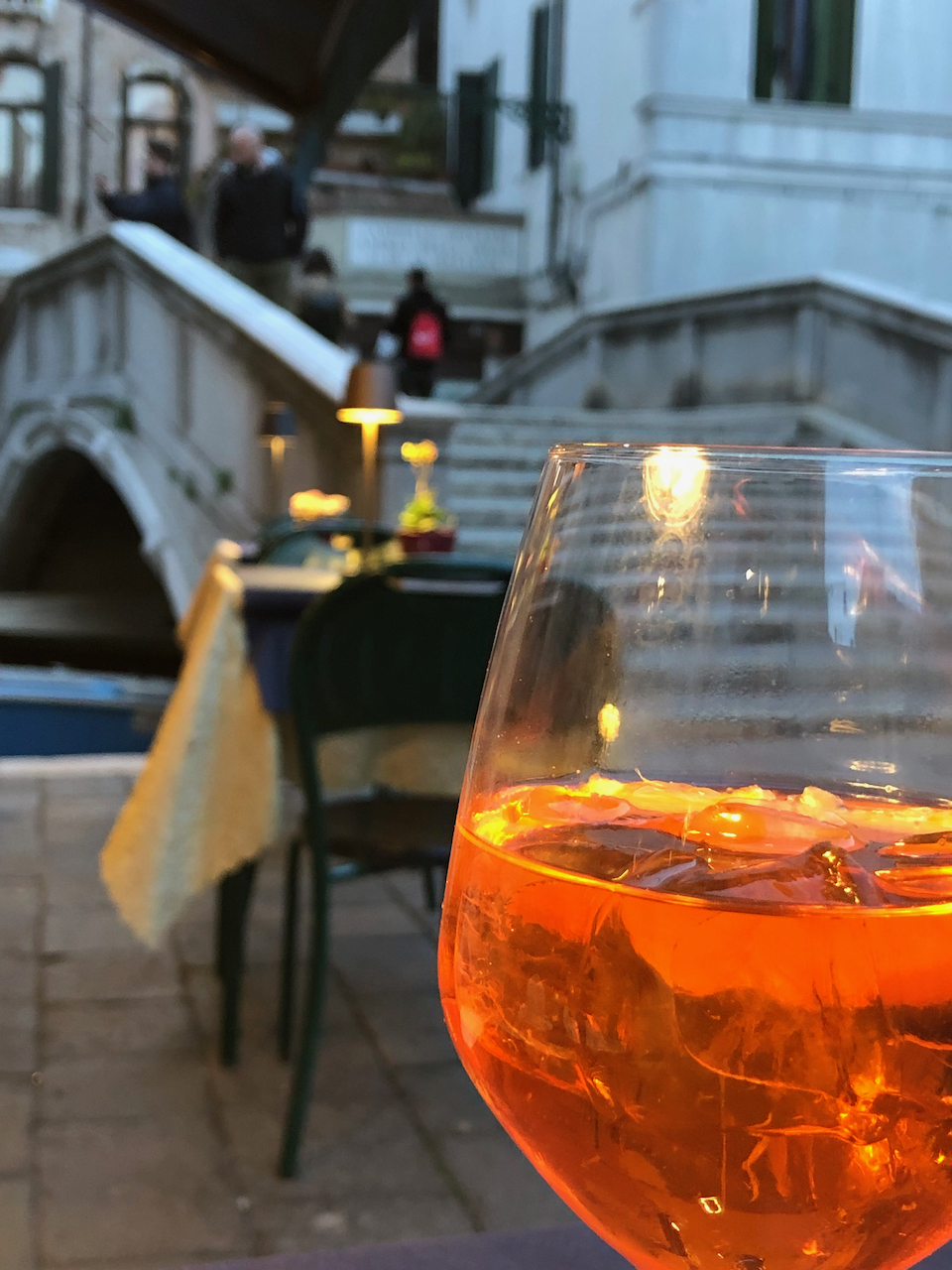
Altogether, it was an inspiring trip. Wonderful people, paintings, palazzos, piazzas, pizzas and of course the delicious Aperol Spritz to round up the day… simply the best in my book. Talking of which…

My book, In My Grandfather’s Shadow, is still on course to be published in mid-July. Do SIGN UP TO MY NEWSLETTER for information about a book launch near you where you will be able to buy a signed copy or for any other news.

When words become weapons of war or peace

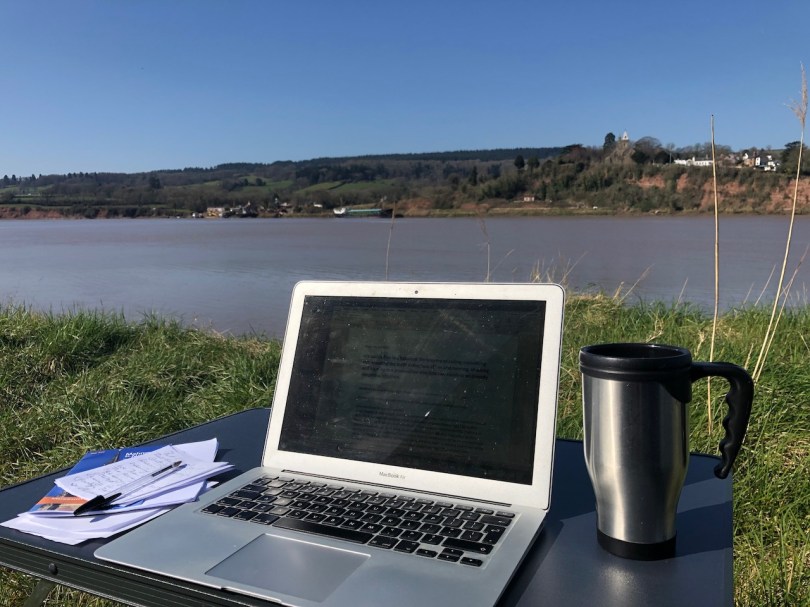
Happy Spring Equinox! I am writing this on the banks of the River Severn, one of my favourite spots in the world. The sun is shining in a cloudless sky, a breeze is dancing through the long grass. I can hear the outgoing tide making its way back to the sea. Within this natural order and peace, it is almost impossible to imagine the horrors of war.  

Like all of us who are far from the fighting front, I feel the combined rage, helplessness and deep sadness of seeing and hearing the heart-breaking scenes and accounts of the millions of Ukrainians fleeing their homes or defending their country, their freedom and their lives. Words seem to be my only weapon against this appalling aggression. But what words would help? And which ones won’t? There is such a fine line between the impactful bravery of calling something out, of revealing the truth in the face of lies, like the Russian TV employee who ran onto the set of Russia’s main news channel bearing a placard saying ‘Don’t believe the propaganda, they’re lying to you here’ while shouting ‘Stop the war. No to war,’ and the potentially catastrophic naming, shaming and blaming of an individual.  

Russian TV journalist, Marina Ovsyannikova, protesting on a live Russian news broadcast

I know that I want to use my words to help bring about peace. Which is why I choose not to use those that I feel add both to the divisiveness that lies behind all wars and to the ‘othering’ of the enemy, which in turn nurtures the erroneous belief that violence and force are the only ways to achieve aims and justify actions. It’s also why listening to Radio Four’s Woman’s Hour on Thursday 17th March left me unsettled. 

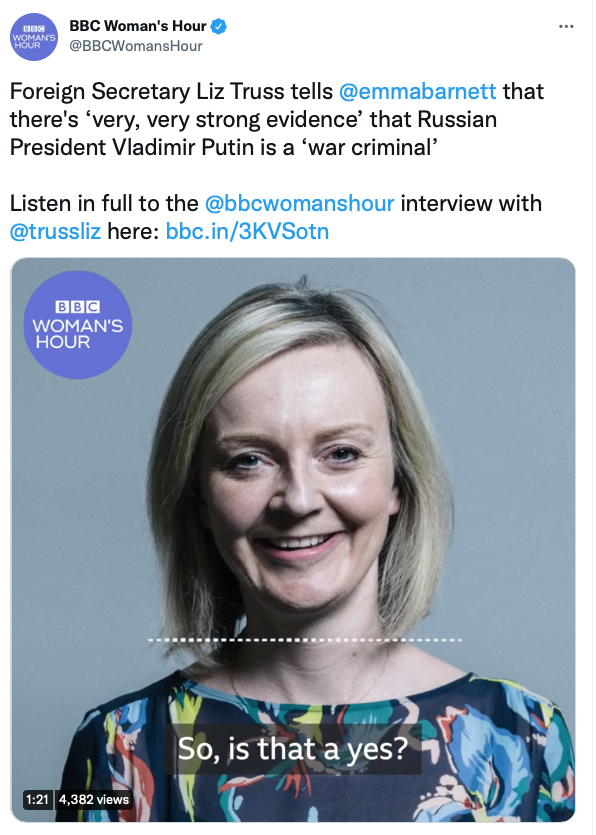
I am not usually one to come down on the side of politicians’ typically evasive methods of answering a question. But in this case, I was behind the Foreign Secretary, Liz Truss, in her response to presenter Emma Barnett’s questioning. It went something like this: 

Barnett: ‘Is Vladimir Putin a war criminal Foreign Secretary?’ 

Truss: ‘I think there’s very, very strong evidence that war crimes have been committed in Ukraine and that he is instrumental to those war crimes taking place.’ 

Barnett: ‘Is that a yes?’

Then, citing USA’s President Biden’s recent declaration that ‘he is a war criminal,’ she continued to push Truss. ‘Why don’t you want to cross that line? That line has been crossed by America and I am wondering why we’re not.’ 

Truss then repeated her noncommittal answer. 

And I was glad she did. I didn’t think that style of political grilling was appropriate here.

Some might see Truss’s line as weak. Maybe you do too? I actually don’t. For what, other than an escalation of diplomatic tensions and danger, is to be gained by shoving Putin into the ‘war criminal’ category, even if he is one? By branding him with what is potentially the worst label there is, do we not put him on the defensive rather than encourage constructive conversation? Hitler was a war criminal. And Putin is a million miles away from allowing himself to be equated with him. 

A Kremlin representative’s inevitable response was to call out Biden’s statement as ‘unacceptable and unforgivable rhetoric on the part of the head of state whose bombs have killed hundreds of thousands of people around the world.’ Of course we all know he has a point when you look back at certain episodes of American history. And that is my point. Such statements do nothing other than to add fuel to an already raging fire. 

None of this is to say I don’t abhor what Putin is doing as much as anybody. I am just aware that words are absolutely crucial in the dealing with a person whose psychological makeup is so volatile, so proud, so convinced, so terrifyingly dangerous. Because while our acts may be indisputably heinous, we human beings, in all our complexity and contradictions, are never just one thing. So to stick a supremely negative label onto someone – even if they have qualified for it a thousand times over – is in my view counter-productive, especially when, however mad it seems to us, they see themselves in a very different, invariably more heroic light.

While working in prisons, I saw the negative dynamics of labelling people ‘murderer,’ ‘terrorist,’ ‘child abuser’ – even when they were guilty of these crimes. Like the locked door of their tiny cells, there was no way out of that ‘bad’ box. Impotent, ostracised and with no obvious path leading back into the world of ‘good,’ many gave up trying. Some killed themselves. Some continued to numb the shame and sense of separation with drugs or self-harm. Others turned to violence in a futile attempt to punch their way back to the acceptability and respect that ironically often lay behind the motivation to commit their original crime. Shame has a hideous way of making people infinitely more dangerous.

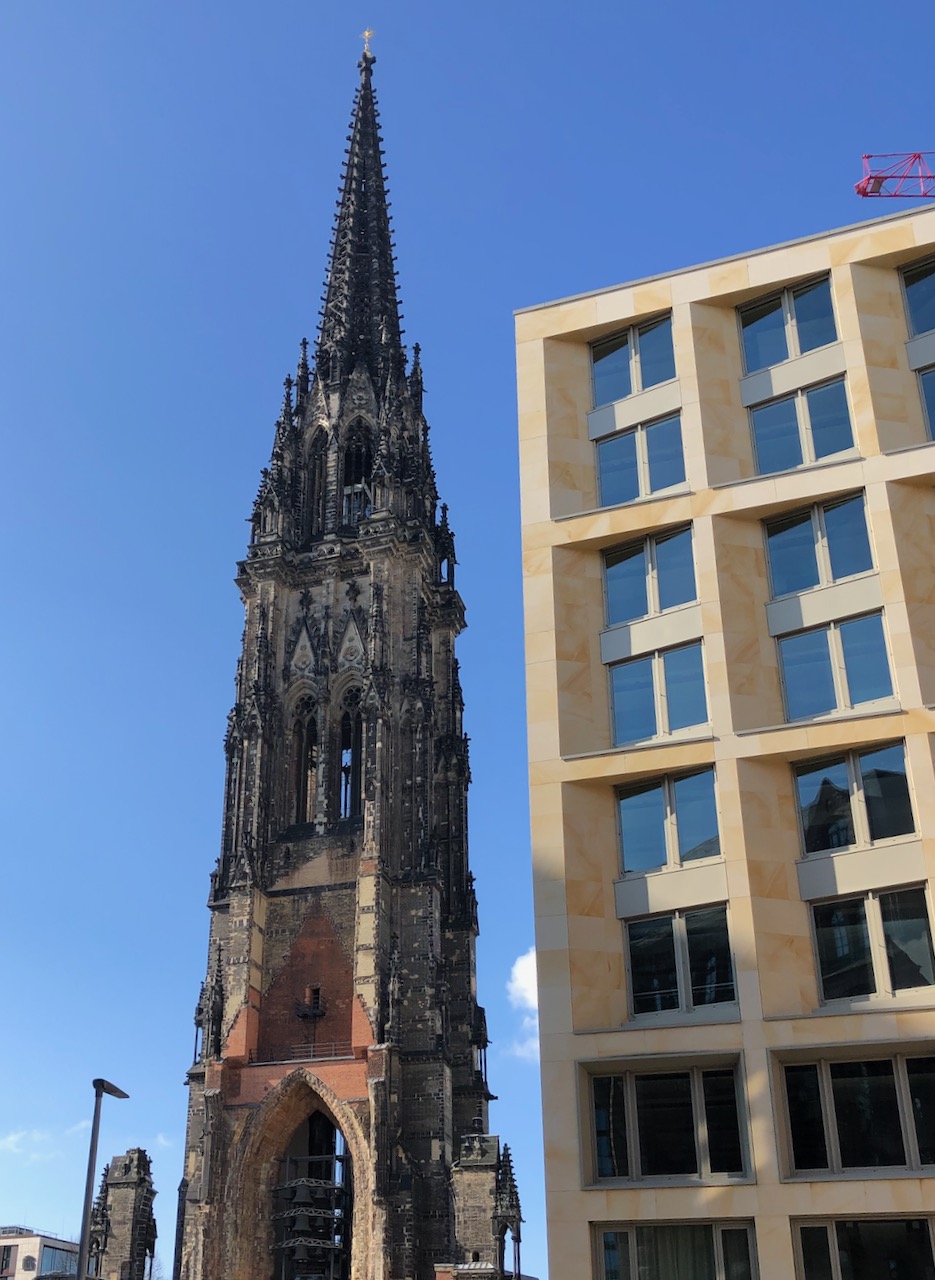
We only have to look at the Germany of the 1920s, 30s and 40s to see what grew out of the humiliation of the Versailles Treaty and above all the ‘war guilt’ clause, which forced Germany to accept all blame for World War One. Or to be reminded, as I was on a recent trip to Hamburg and the blackened ruins of the St. Nicholai church that had so fascinated me as a child, that every nation and each of us are capable of descending into horrific violence, even potential war crimes.

St Nikolai Church, Hamburg

If we are to believe that conflicts begin in the hearts and minds of individuals, then it follows that peace does too. Of course I don’t know for sure, but my feeling, at least from a psychological point of view, is that at this incredibly precarious and dangerous moment in time where the course of the war in Ukraine could escalate in so many directions, we should be doing everything to enable Putin to withdraw, retreat or feel sufficiently victorious to end his war with at least a perception that enough of his dignity and integrity are intact.

I totally understand both the temptation and justification of condemning Putin and his actions as outright evil. But the stakes are currently too high to play the ‘we’re right, you’re wrong’ game. For to do so is to accuse and other the perpetrator in the same way they have accused and othered their foe. Like negotiators communicating with hostage-takers, albeit on an infinitely larger scale, maybe we need to keep in our view the man behind the monster. As many in the west are now admitting, this is possibly what we have neglected to do in the past. And he who feels unheard, unseen, disrespected often feels impelled to stamp louder, punch harder to get themselves noticed. 

I think our personal choice of words is one of few things that each of us have as a tool to diffuse rather than escalate a situation. I just hope we can all find the right ones.

On another note, exactly this time last year, I was giving my Tedx talk. You can watch it here… again or for the first time if you haven’t seen it already.

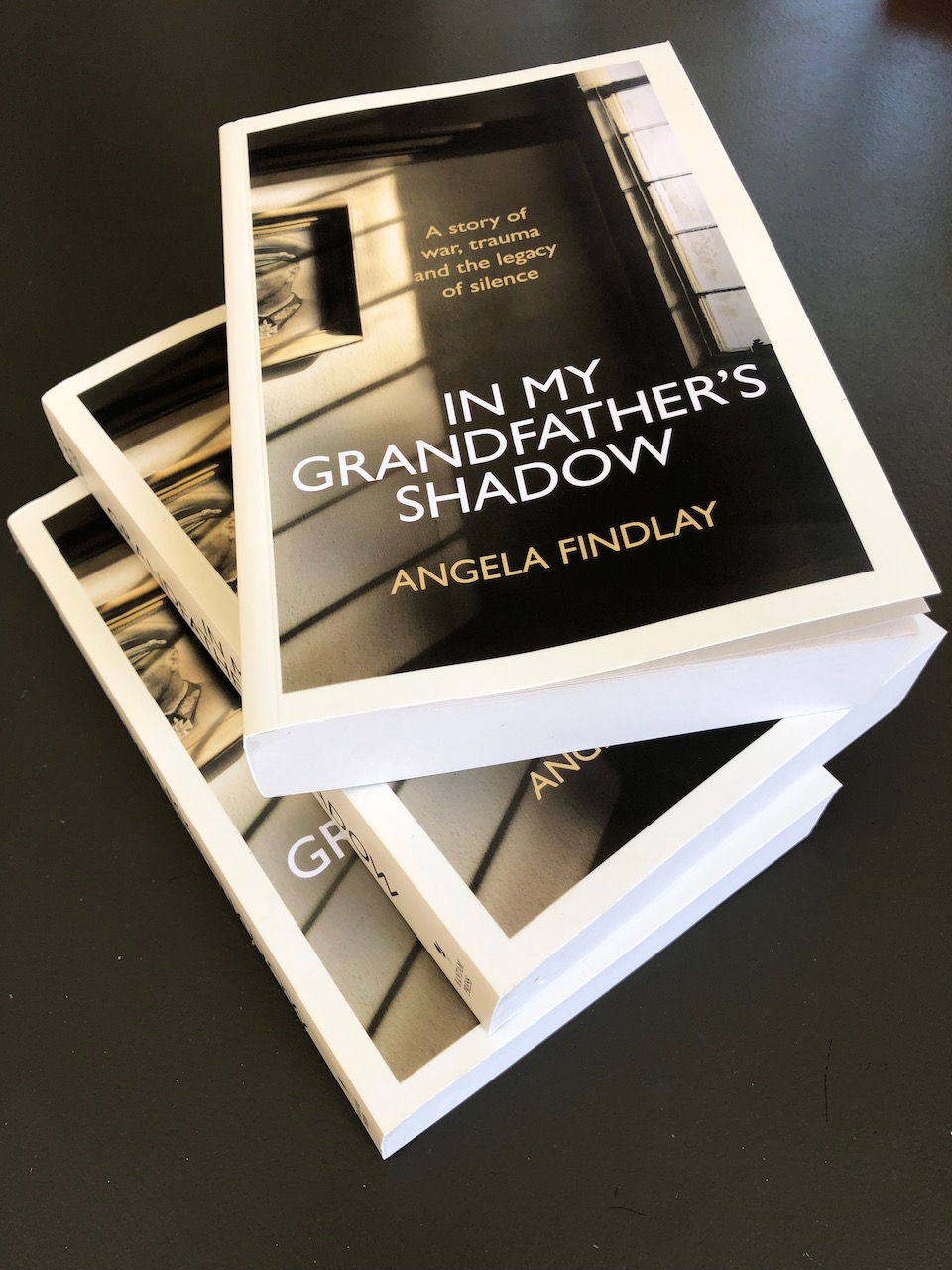
And yesterday I received the printed proofs of my book In My Grandfather’s Shadow. Still not the final product, but another exciting step towards publication in July. You can pre-order on Amazon here or wait until July to buy in a bookshop.

Related Links

Woman’s Hour Interview with Liz Truss – start at 13.30 mins

This total tragedy and injustice cannot be the start of the Third World War

On Wednesday I was writing about ‘feeling the bass beat of impending war… The jungle drums of chest-beating bullies rutting for power, control, land… The thumping of panicked hearts packing, fleeing…’ By Thursday, as the thud of bombs landing on Ukraine came through our radios with shocking reality, such poetic imagery felt utterly misplaced. Now, as the horrors of Putin’s unprovoked advance to Kyiv to ‘de-Nazify’ and ‘decapitate’ the democratic Ukrainian government begin to unfold, the shattering idea that we could be witnessing the beginning of World War III has been gaining momentum. 

This is heart-breaking. So awful. So wrong. So utterly terrifying. My thoughts and heart are with the people of Ukraine.  

Outwardly, in our own tiny orbits, life continues. Just like it did for Franz Kafka when he noted in his diary on the outbreak of the First World War:

August 2, 1914: Germany has declared war on Russia. Swimming in the afternoon.’

Inwardly I feel sheer dread. 

Having immersed myself for so many years in the past darkness of the Second World War, trying to understand despots, trying to learn the lessons of history, I suddenly find myself emerging into a present filled with similar appalling scenes. And I feel utterly impotent. I think we probably all do. How are we meant to act? What does ‘reacting well’ to this situation look like, both in terms of our leaders and us as individuals? 

I don’t know.

The instinct is to rush to Ukraine’s defence, which, to some degree, various countries have. But for Ukrainians, it is clearly too little too late. Yet to use force risks the unimaginable outcome of a full-on war with Russia. That just cannot happen. I have lived vicariously through a war with Russia in my German grandfather’s letters from the 1941-2 Eastern Front. It is hell on earth. Nothing, surely, can justify risking a return to that. It is reassuring to hear the defence secretary and military authorities now warning the chamber of the extreme danger of putting British boots on the ground; of declaring war on Russia. Please Boris Johnson, don’t see this as an opportune moment to fulfil your wannabe Winston Churchill ambitions. The responsibility on leaders is huge and deadly serious. They need to tread carefully and with emotional maturity. The language is critical. Confronting a ruthless maniac takes skill. 

‘It is more important to understand the butcher than the victim.’ Javier Cercas

I don’t know how it’s done. 

All I do know from a multitude of life’s lessons, is that all sides involved will be feeling they are right. Just like back in the thirties, we in the West see ourselves to be indisputably on the side of good. We are protecting democracy. Our ways of life are the right ways. But while that all may be true, if I have learnt anything about the psychology of conflict and dictators, I feel pretty sure that that is precisely what Putin is also feeling. Because wars and violence are ultimately created out of a sense of threat to one’s position, values, people and way of life. Out of a fear of loss. Power-hungry dictators, such as Hitler and Stalin, were blind to the suffering caused in their pursuit of visions of a world that in their eyes was ‘good’. Same for criminals. With both sides believing they are right, nothing will persuade or force them to think otherwise. 

 ‘No one who either knows or believes that there is another course of action better than the one he is following will ever continue on his present course when he might choose the better.‘ Plato

It would be counter-productive to shame Putin into believing there is no way back without losing face. 

To do nothing would be an unforgivable betrayal of the Ukrainian people.   

To meet Russian aggression with further aggression would quite possibly provoke a Third World War.

That cannot happen. 

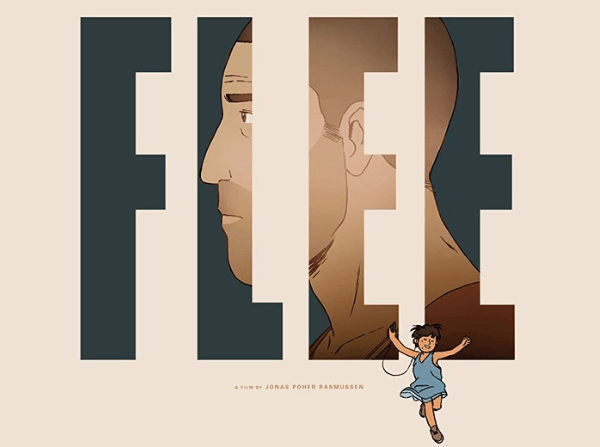
For those who have never experienced war first-hand or occupied themselves with the World Wars, it is almost impossible to imagine their sheer horror. For those with eyes trained on a victorious outcome, it can be easy to overlook the devastating impact on individuals. And not only the inevitable loss of life. What we have been witnessing in Ukraine – civilians signing up or arming themselves with guns and Molotov cocktails, getting stuck in traffic jams, huddling in makeshift bomb shelters – are the fight, flight, freeze responses of trauma. The terror of impending mass destruction, injury, homelessness, hunger and life-long psychological damage for generations to come. Just watch ‘Flee’, the brilliant new Danish animation that is well positioned to clean up at the Oscars, to witness the appalling cost of war on one child, one family. One among millions of others forced to flee their homes.

Still from the film ‘Flee’

Is Margaret MacMillan right when she said in her 2019 Reith Lecture:

 “We like to think of war as an aberration, as the breakdown of the normal state of peace. This is comforting but wrong. War is deeply woven into the history of human society. Wherever we look in the past, no matter where or how far back we go, groups of people have organized themselves to protect their own territory or ways of life and, often, to attack those of others.  Over the centuries we have deplored the results and struggled to tame war, even abolish it, while we have also venerated the warrior and talked of the nobility and grandeur of war. We all, as human beings, have something to say about war.”

If we accept, just for a moment that war is an inevitable part of our world and as integral to being human as, say, creating art, how should we react to it? 

I just can’t believe we are here… again. 

How do you reason with a man like Putin, who genuinely believes his demands and actions are reasonable?  How do we prevent this conflict from escalating into another deadly world war? How can we prevent our own rage and sense of injustice spilling over into a call for retaliation?

For now, I will attempt to keep my heart filled with love and courage to send to the people of Ukraine and those in Russia who do not want this war. To those fighting, resisting, defending. I pray that the whole world finds its way through this crisis to peace. 

Related links:

BBC series Rise of the Nazis: Dictators at War 

Trailer for ‘Flee’

What a year… and on we go…

What a year 2021 has been! 

Just in my blogs alone we’ve watched the storming of the White House and the removal of contentious statues. We’ve marked Holocaust Memorial Day in January, the anniversary of the bombing of Dresden in February and remembered to remember – albeit only just – Remembrance Sunday in November. You shared my experiences of deep anxiety prior to giving a TEDx talk in March, explored the idea of inherited trauma and guilt as well as ‘genetic pain’, and toured a German photographer’s exhibition: Long Shadows of War. I have taken you – as I frequently do – into the depths and dysfunctions of our prison service. First, via a gruelling TV series, then through new government policies, from relatively harmless ones such as the introduction of high-vis jackets that simply won’t work to terrifying ‘Saudi Arabia-style’ approaches that leave 18-year-old women giving birth alone in cells. We also witnessed the tragic withdrawal from Afghanistan and questioned the sense of trying and locking up nonagenarian former Nazis. 

Thank you for joining me on all or some of those journeys of enquiry and thought.

It feels like there is so much going on in the world, like we are hurtling towards bigger disasters while still mopping up smaller ones. It’s hard to remain optimistic when our own horizons have shrunk due to the imposed or self-imposed Covid restrictions, and yet good things can come out of all this unrest and uncertainty. Like my book!

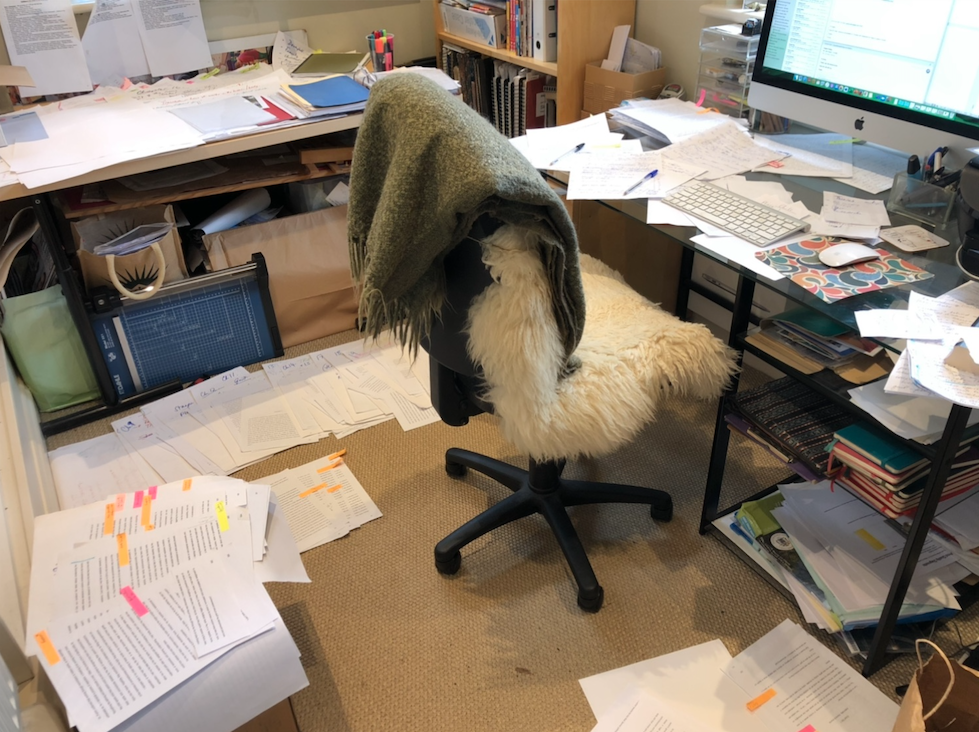
For the past months, I have been strapped to my desk in a mad rush to meet deadlines and finally ‘finish my book’. I know, I know, you’ve heard that before. I’ve said it before because I frequently thought I had. This time, and certainly by Christmas, I really will have and, what’s more, you can read about it and… drum roll… even pre-order it HERE… What a perfect Christmas gift! Just know it won’t actually be published until 7th July 2022. 

I have never known such a gargantuan task as writing a non-fiction book of around 100,000 words. But then In My grandfather’s Shadow weaves together all the threads running through my blogs, my careers, my whole life, into one narrative. Set against the backdrop of Germany’s Second World War and post-war decades, it tells the stories of three generations – my German grandfather, a decorated General who served on the eastern front; my German mother, who fled Berlin in 1945 as the Soviets advanced, and me, their respective Anglo-German granddaughter and daughter who, by some transgenerational mechanism, carried some of the scars of war that they hadn’t been able to heal.

That’s all I will tell you about it right now. But, on top of my usual responding to current developments within my blog themes, I intend to devote next year’s blogs to whetting your appetites with little morsels until you feel you absolutely have to read the book!

For now though, as 2021 draws to its dark and slightly messy close, I would just like to wish you a very happy festive season, good health of mind, body and soul, and much love, light and laughter in your hearts for the new year ahead. 

Look forward to seeing you in some form in 2022. It’s going to be really good… or at least better. Even if it is just ‘fine’, all is and will be well.

Cheers to that!