(If you are joining Joan’s story now, you might like to read ‘Following Joan… Part One’ first)
‘Goal reached, Valley of Flowers. Fritillaries nodding their heads around me. Men off.’
On 20th June 1939, just over four months after leaving England, 54-year-old Joan and her troop of porters reached the Valley of Flowers in the northern Indian Himalayas.
It was ‘a morning in a thousand’. Firs and jasmine scented the air, dew drops sparkled & everyone was cheerful & happy. The track wound up and down until it suddenly dropped sheer to the river. At the bottom, the worst native bridge Joan had encountered yet stretched precariously across a particularly turbulent section. ‘If I had met it in the early days I don’t think I could have faced it.’

Then came a real climb, so steep she had to crawl part of the way. Even with ice axe and climbing boots, she couldn’t stay upright. The path clung to the side of a mountain which plummeted several hundred feet into the raging waters below, the ground crumbly and uncertain. But she pressed on. ‘One is so busy placing feet that one hasn’t time to think of possibilities.’

They slid down a precipice, hanging on to rhododendron bushes, crossed another snow field, then climbed again. Ganga Ram & Amba Dath – two of Joan’s three most loyal young guides – clearly thought she was too slow. ‘Each took a hand & ran me up paying no heed if I was on my feet or not. I had to beg for mercy twice as really they nearly finished me off,’ she wrote. And then they were there. The goal reached. The Valley of Flowers.
Tents were pitched exactly where mountaineer and author Frank Smythe had camped for several months in 1937. With three men managing the camp and plans to stay there until October, Joan was free to roam and explore the terrain of her new home in search of alpine flowers. The monsoon rains were gathering. Conditions would soon become unimaginably wet and the ground increasingly treacherous. But Joan was deeply happy.
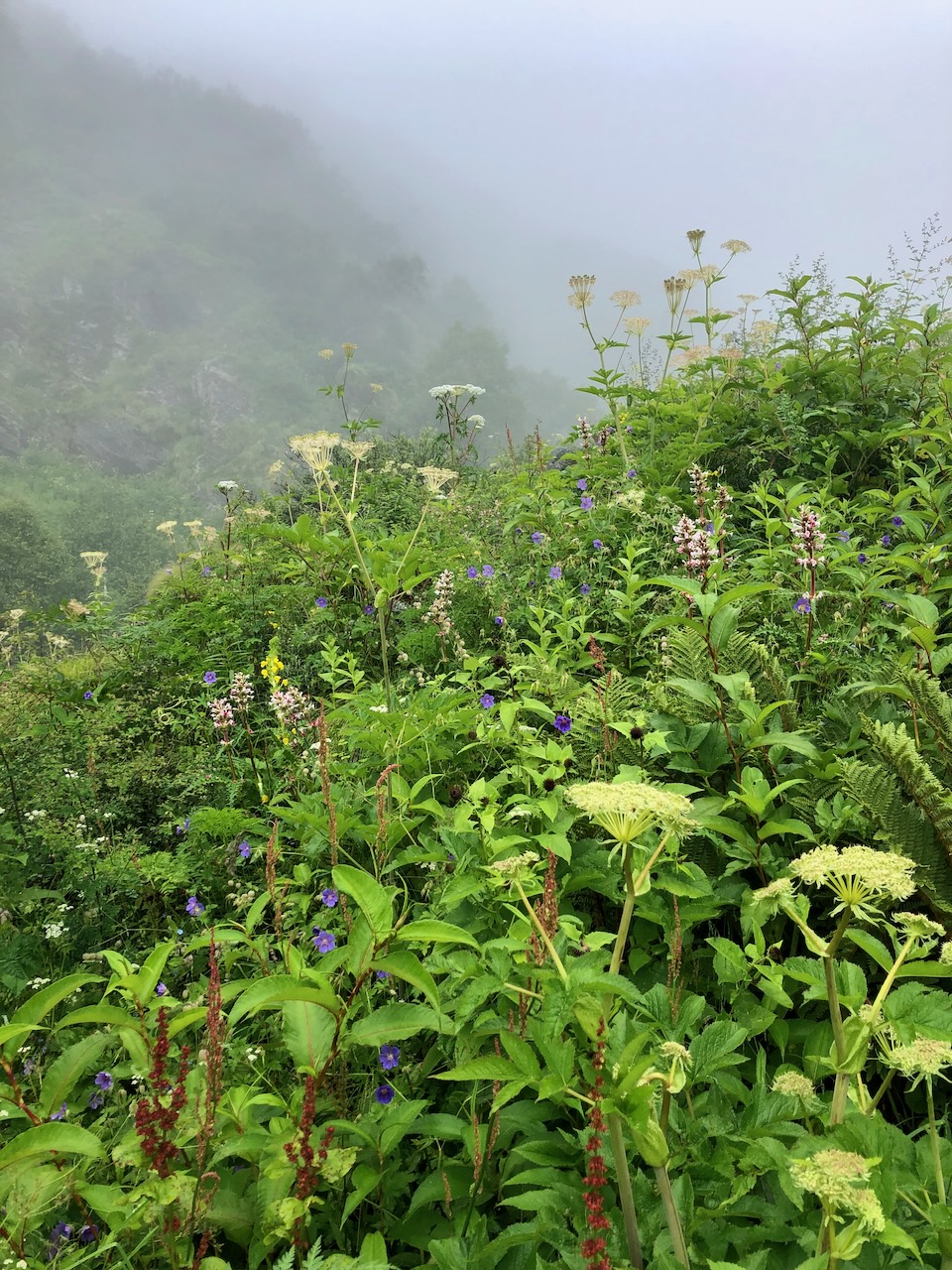

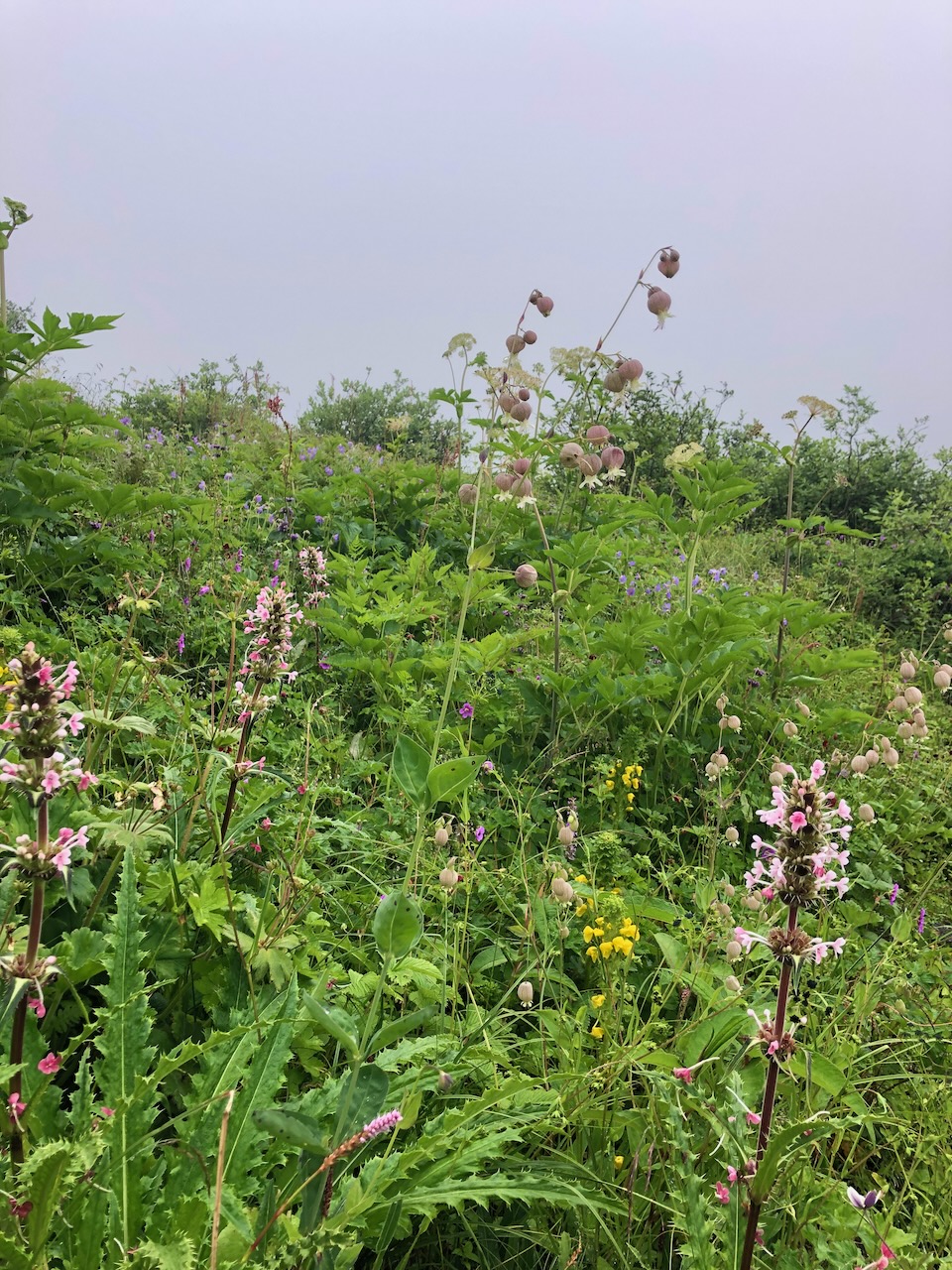
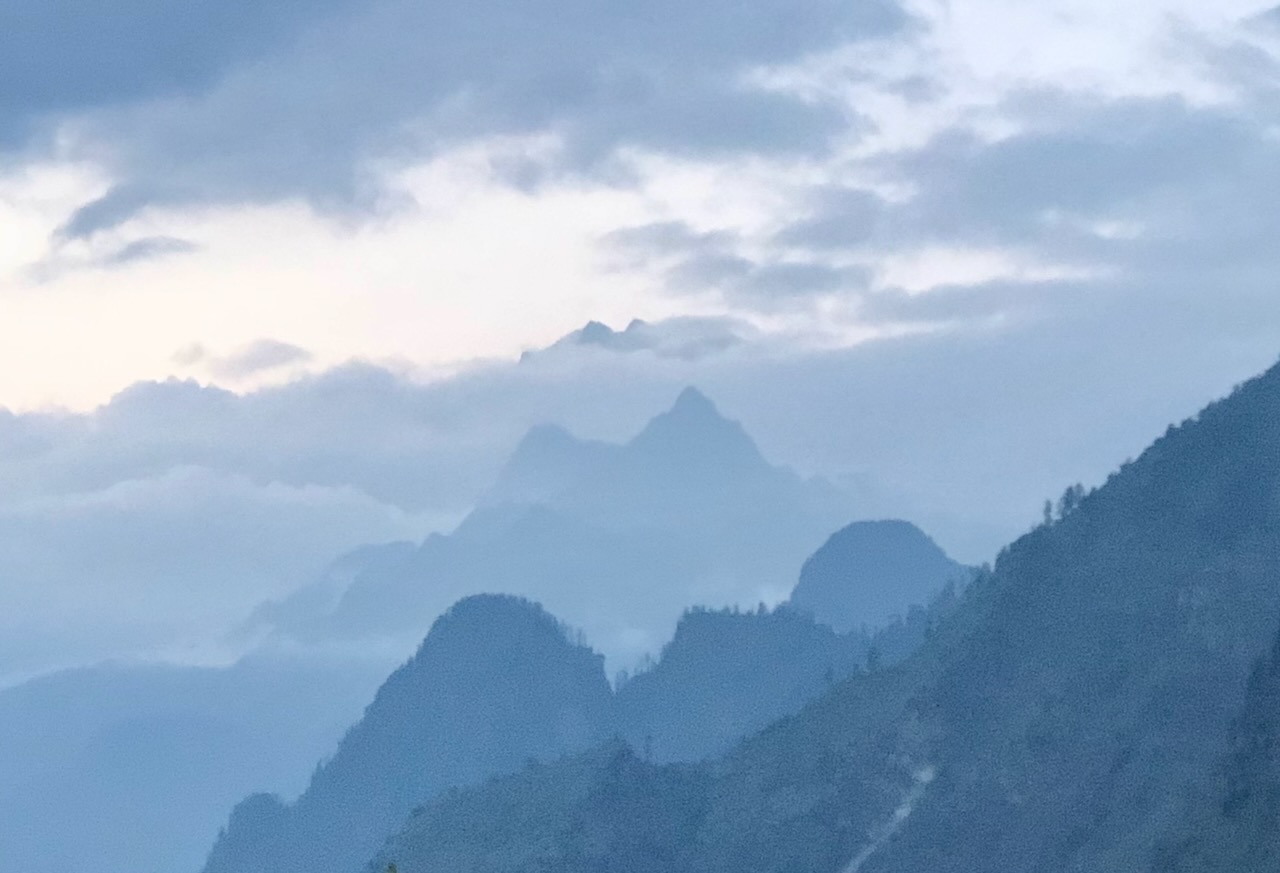
July 2nd. ‘It was the most glorious evening, every way you looked magnificent, through the gorge range upon range of perfect mountains…’ The descent from these dizzying heights, however, was less glorious. Rains had rotted much of the ground and the final stretch was so steep that she had no choice but to descend on her seat, using the ice axe as a brake. Yet Joan revelled in challenge and beauty alike, undaunted by danger, enchanted by flowers and alive to every shifting shadow. ‘All the way back to camp I had the great joy of watching the last sun on the peaks across the river, orangey pink… the rest of the snow getting white & harder, then that green when they look so severe & unapproachable.‘
That night was lovely but cold. A bright moon rose over the range, catching the snowy summits in the east. Though Joan’s camp lay in darkness, the moonlight made the mountains glow. ‘A fairy world,’ she wrote, ‘beautiful beyond words.’
July 3rd. ‘The men started singing before 5 o’clock this morning, it sounded so nice. The ground has all dried up & things are extremely lovely. If we get spells of two days fine, it will be a great help. Everything is growing very fast.
The following day, Joan was dead.
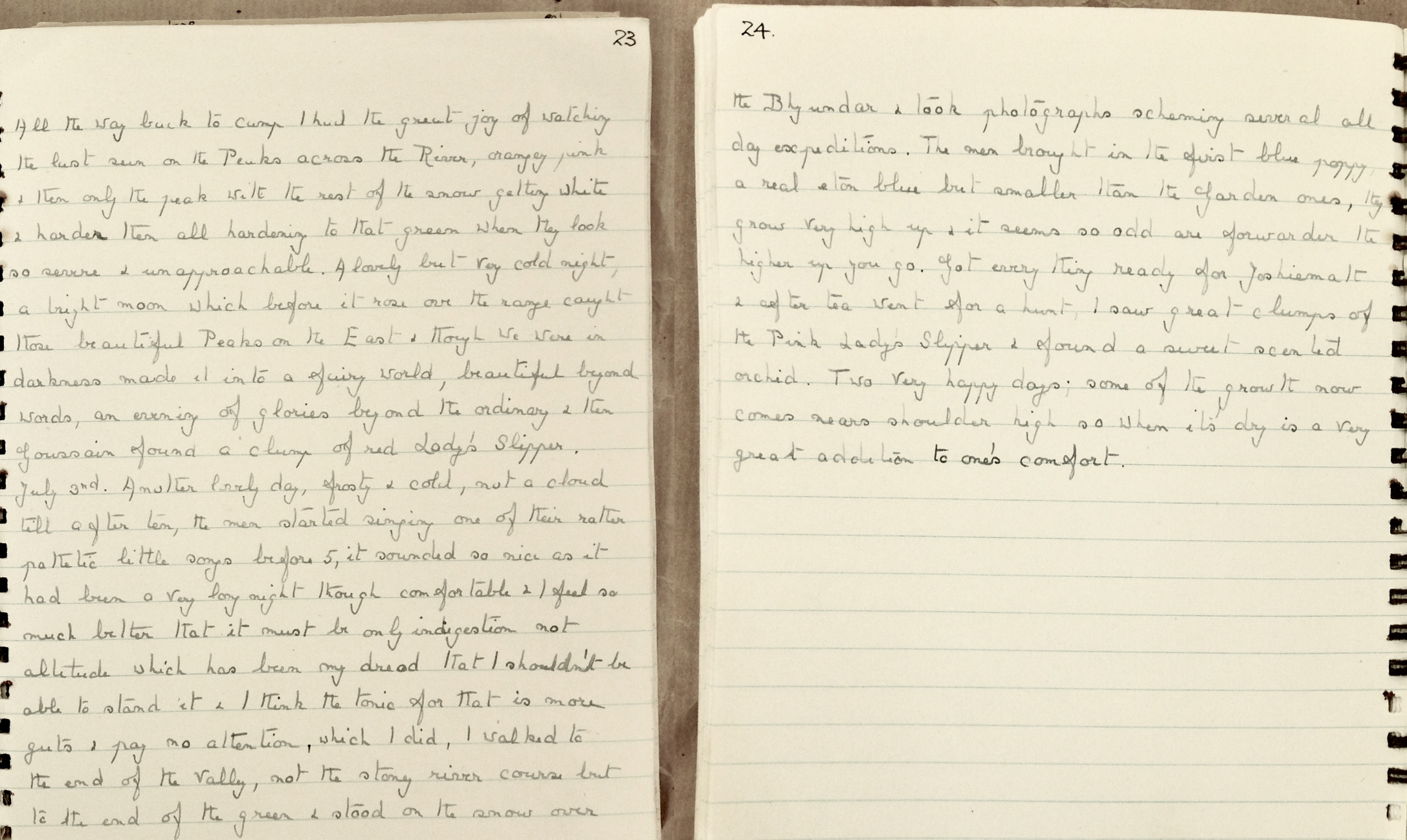
As abruptly as her life ended, her diary – so alive with wonder – skids to a halt.
Silence.
A telegram or letter from the sub-postmaster in Joshimath informed her family. Joan had slipped, fallen and died instantly. Due to the remote terrain, her body was carried back to camp and preserved in the snow until a magistrate could formally record the death. When her sister, Dossy, requested that Joan be buried in the valley, a small grave was made. A year later a headstone was erected, apparently delivered by Dossy herself.
Except that last bit has been deemed most unlikely by Dossy’s grandchildren who can find no record of their grandmother having made the long, arduous journey to India in the first year of the Second World War.

Without Joan’s detailed voice to explain what happened, conflicting accounts have taken root, a Chinese whisper of history… herstory. Was she reaching for a flower to add to her collection of specimens for Kew Gardens? Did she just slip, the edge of the cliff invisible in dense fog? For several years, I’ve tried to disentangle fact from error and in late July 2024, I and three of Joan’s descendants travelled to Ghanghariya, a colourful, bustling shanty town of damp hotels, pilgrims and donkeys, ready to make the long climb into the Valley of Flowers. The landscape might not reveal the past, but it could not lie.
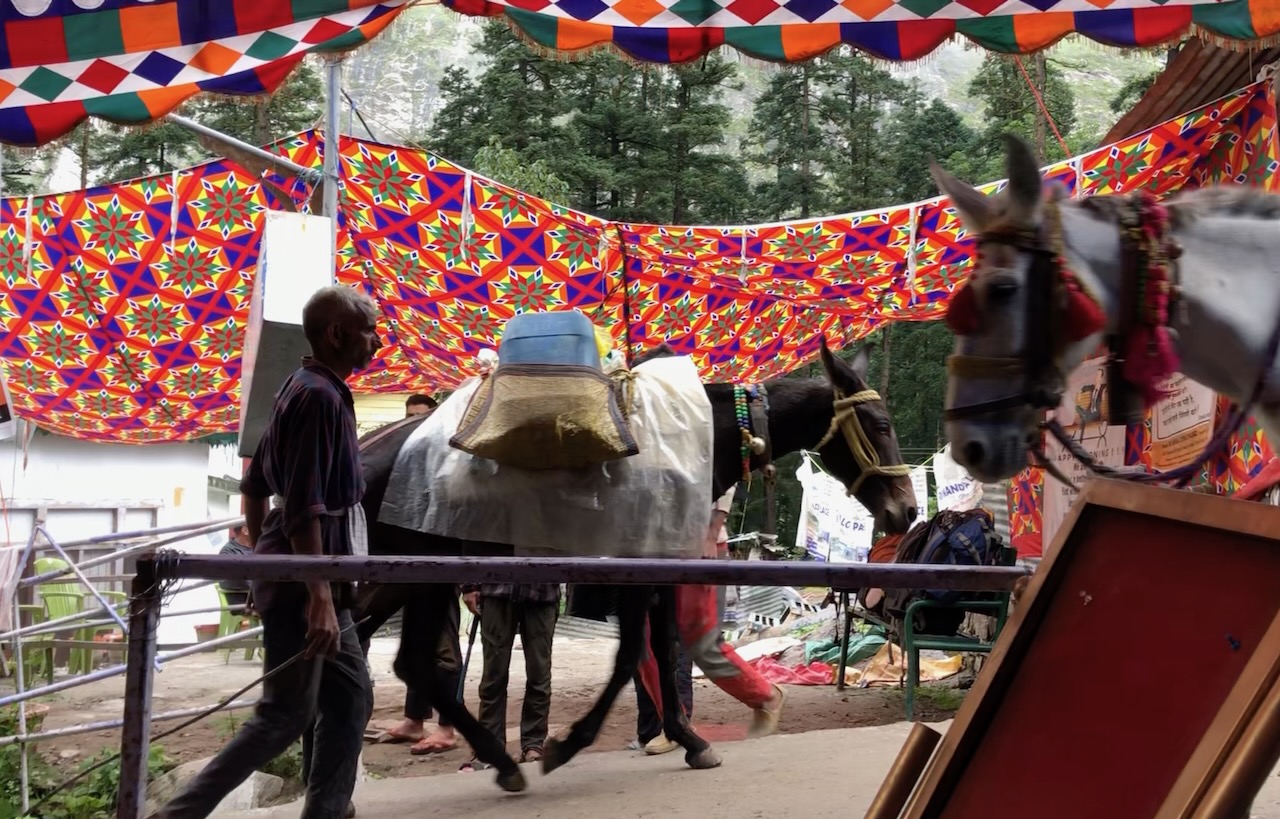
We were warmly welcomed at the impressive Information Centre, honoured guests of the great-great-grandchildren of shepherds, villagers, and guides from Joan’s time each eager to share their version of what had happened to ‘Legge Ma’am’. Soon I had scribbled five different endings to Joan’s life in my little green notebook, the one that would mysteriously vanish a few days later as if to tell me: it didn’t really matter. The only truth that did, was that Joan had not been forgotten.
The next day we set off, once again retracing Joan’s footsteps, traversing the same raging river (via a slightly less terrifying bridge) and climbing the steep slopes into the valley.


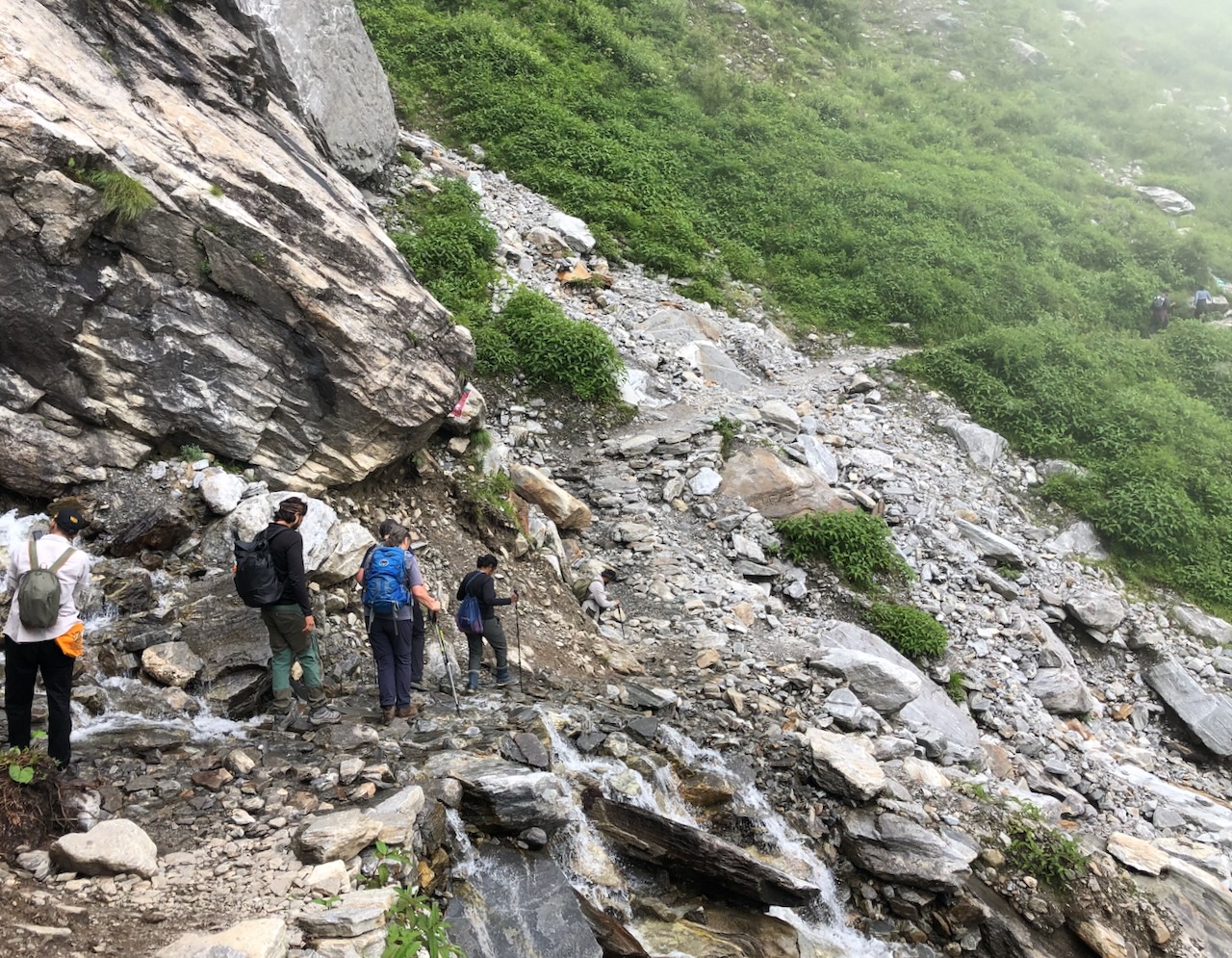
Low cloud concealed Joan’s snowy ‘majesties’ and even the valley itself. Flowers, shoulder high, lined the narrow trail until a small hand-painted sign forked it and directed us to the right.
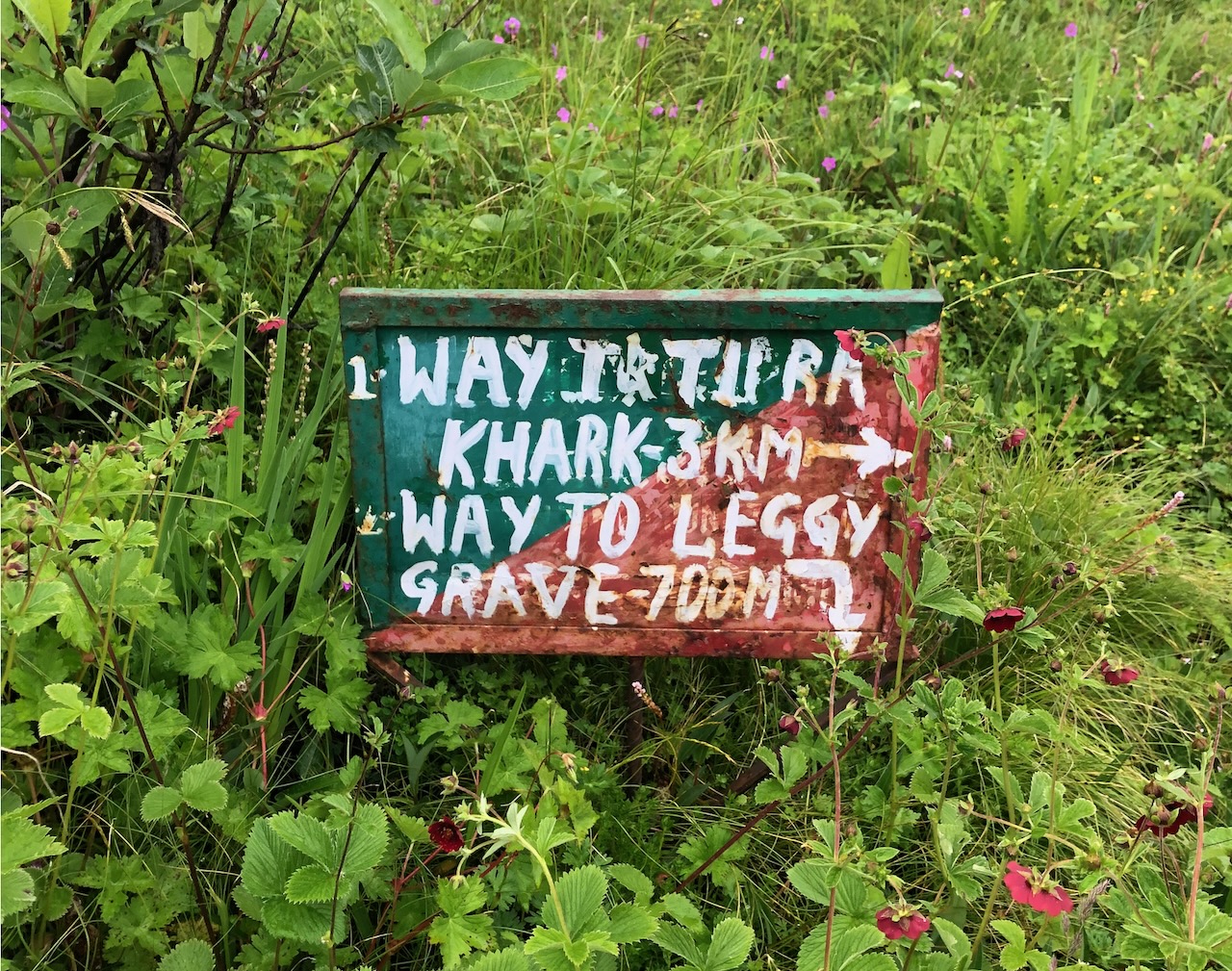
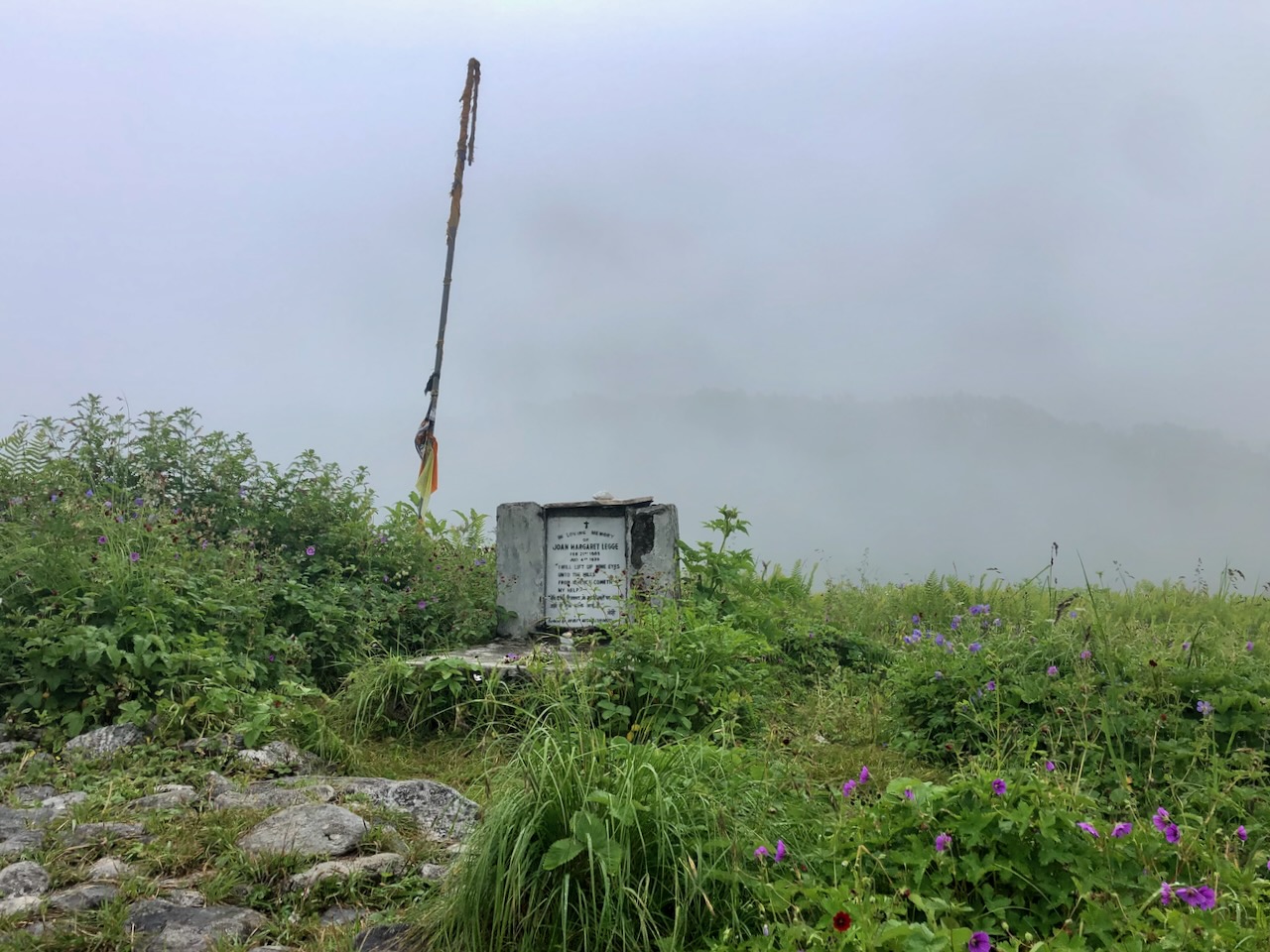
‘Leggy Grave’ could not have been more remote. With the original, broken headstone having been generously replaced by Infinity Outdoor Explorers and the area lovingly tended by villagers, Joan rested, Ophelia-like, among geraniums, potentillas and flowers whose names I don’t know. But she did.
Buried under snow for eight months of the year, this was where my intrepid great-great aunt found peace. A ‘lost daughter of the Himalayas’. And in the prophetic words of the sub-postmaster written over eight decades ago, ‘though death is inevitable, her death in a lonely forest under the tragic circumstances will always be mourned.’
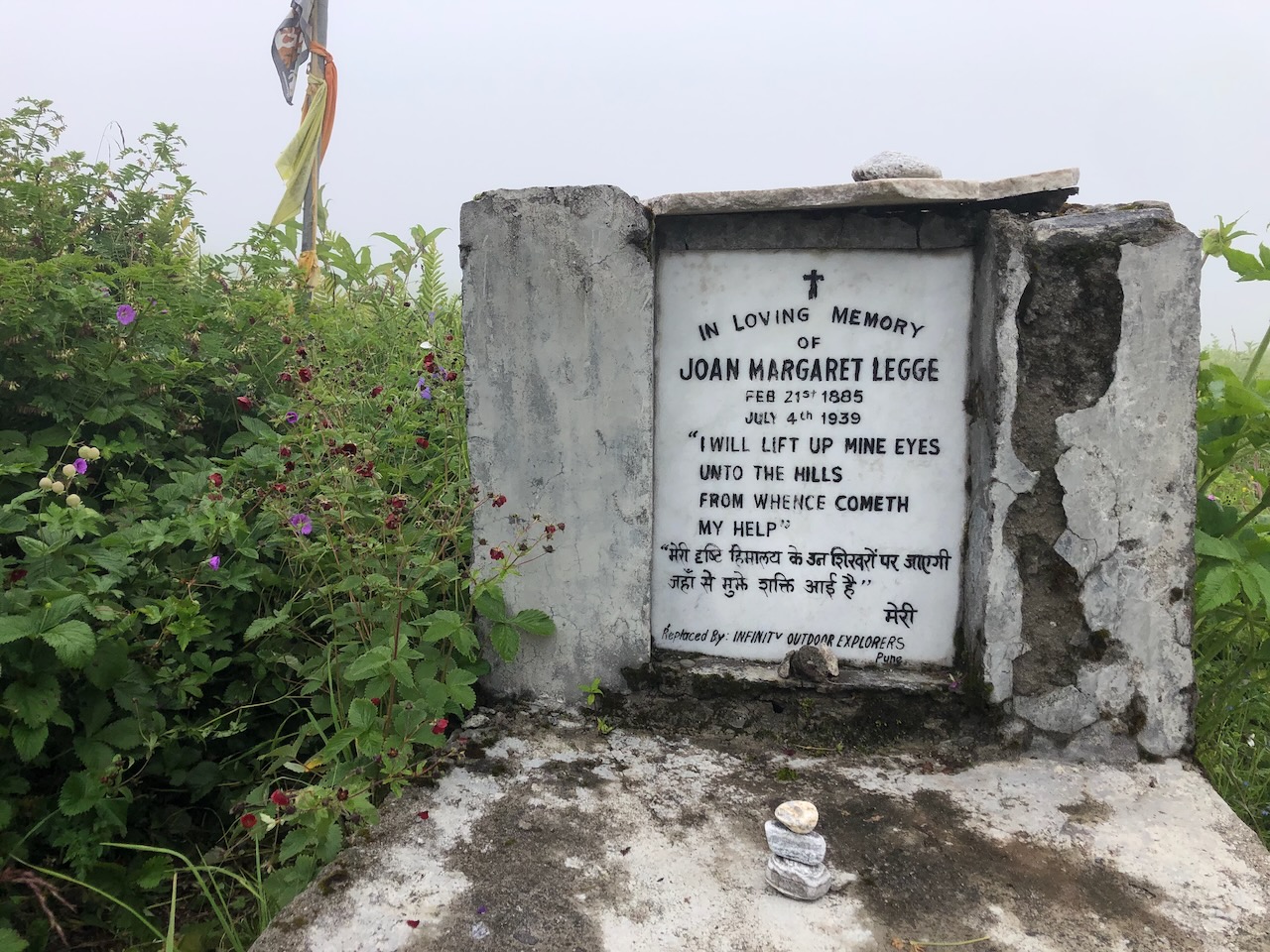
While Joan lives on in the hearts and imaginations of people in northern India – many of whom have trekked miles to pay their respects – back in England, her name, her journey and her collection of flowers had all but vanished into the obscurity of family attics and forgotten archives. She entered my orbit in my twenties, a bright star that inspired independence, courage, a different way to be a woman in the world. I’ve followed her willingly, right to the edge. Imagined her fall… falling… falling… time stretching to infinity like a bungee… then snapping.
A tragic death, or an enviable end to a life well-lived? I’ll let Joan speak for herself.
‘… if we would only give up struggling after worldly things. They don’t count much when you come face to face with what the old Sardou calls the sublimity of the Himalayas whose magnificence, serenity and everlastingness grip one right to the core. You will probably think I am mad, but I don’t think so. There are things that stand and are I think increased, they are love and gratitude.’
Joan, June 1939
Forthcoming Event:
At the end of September, you are warmly invited to an exhibition/series of events showing research and art created in honour of Joan. Exact dates and details to be confirmed, but it will be in the beautiful Chapels of Rest in Stroud Cemetery.
 angela findlay blog
the story so engaging that one could forget to breath even… What a way it is penned down by dear writer❤️