
My yearning for ‘nothing’ has been growing incrementally over the past few years. I have alluded to variations of apparent nothingness in my book and previous blogs when I discuss ‘negative space’, ‘the feminine principle,’ the vital pause at the start of Beethoven’s 5th, all expressions of that immaterial level of life that evade measurement or proof by current instruments of science. It is space, in every sense of the word.
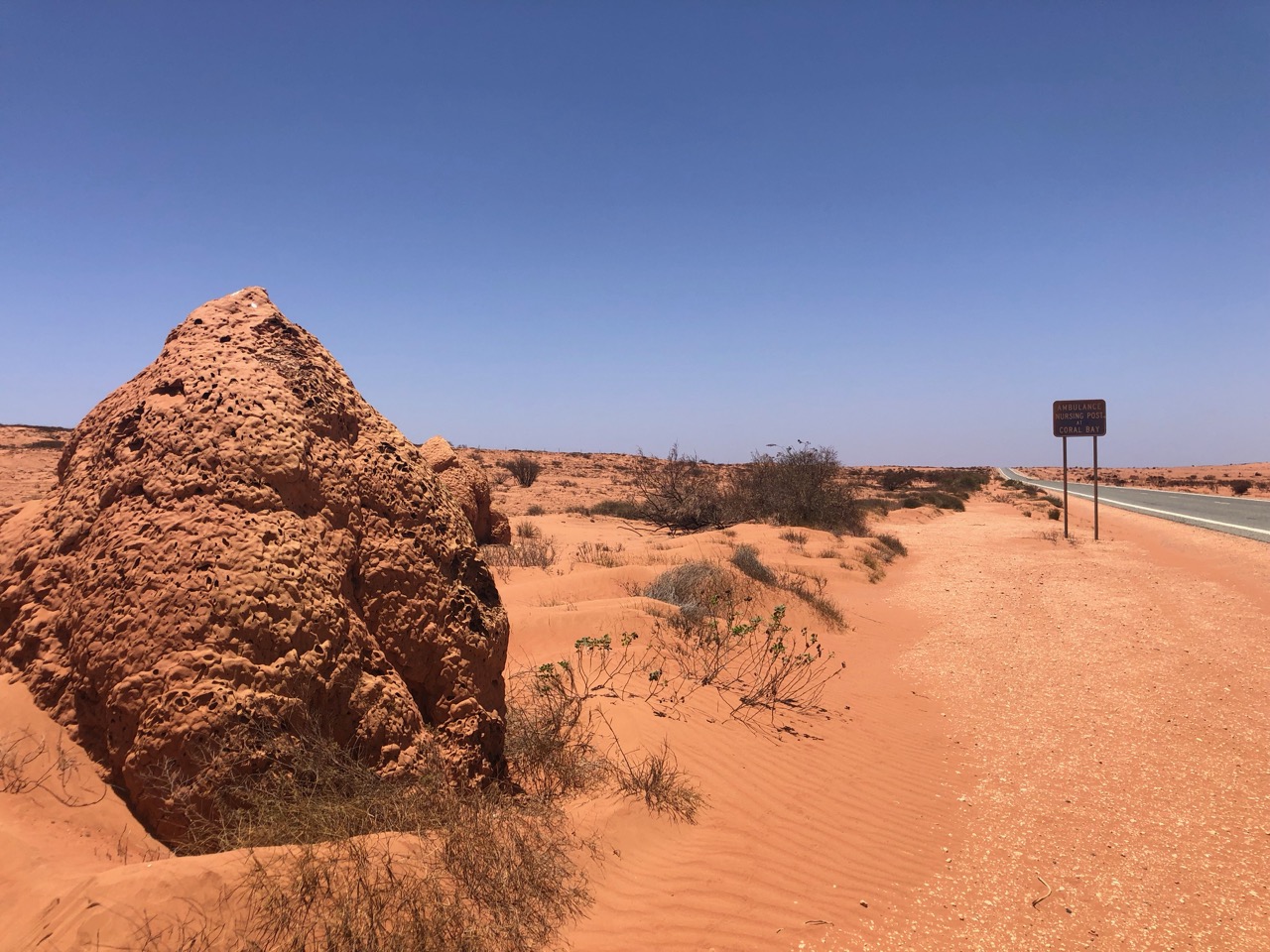
Ever since my first and only trip there in the mid-eighties, Australia’s unique form of emptiness has tempted me back. Its vast cobalt-domed red plains sealed by 360˚ of horizon and uncluttered by physical landmarks of human endeavour older than 235 years. Here the world could well be flat. For the mind expands unhindered in all directions, stretching until the last strands of taut linear thought surrender their elasticity to slip like well-worn pyjama bottoms into a useless pile around the ankles.
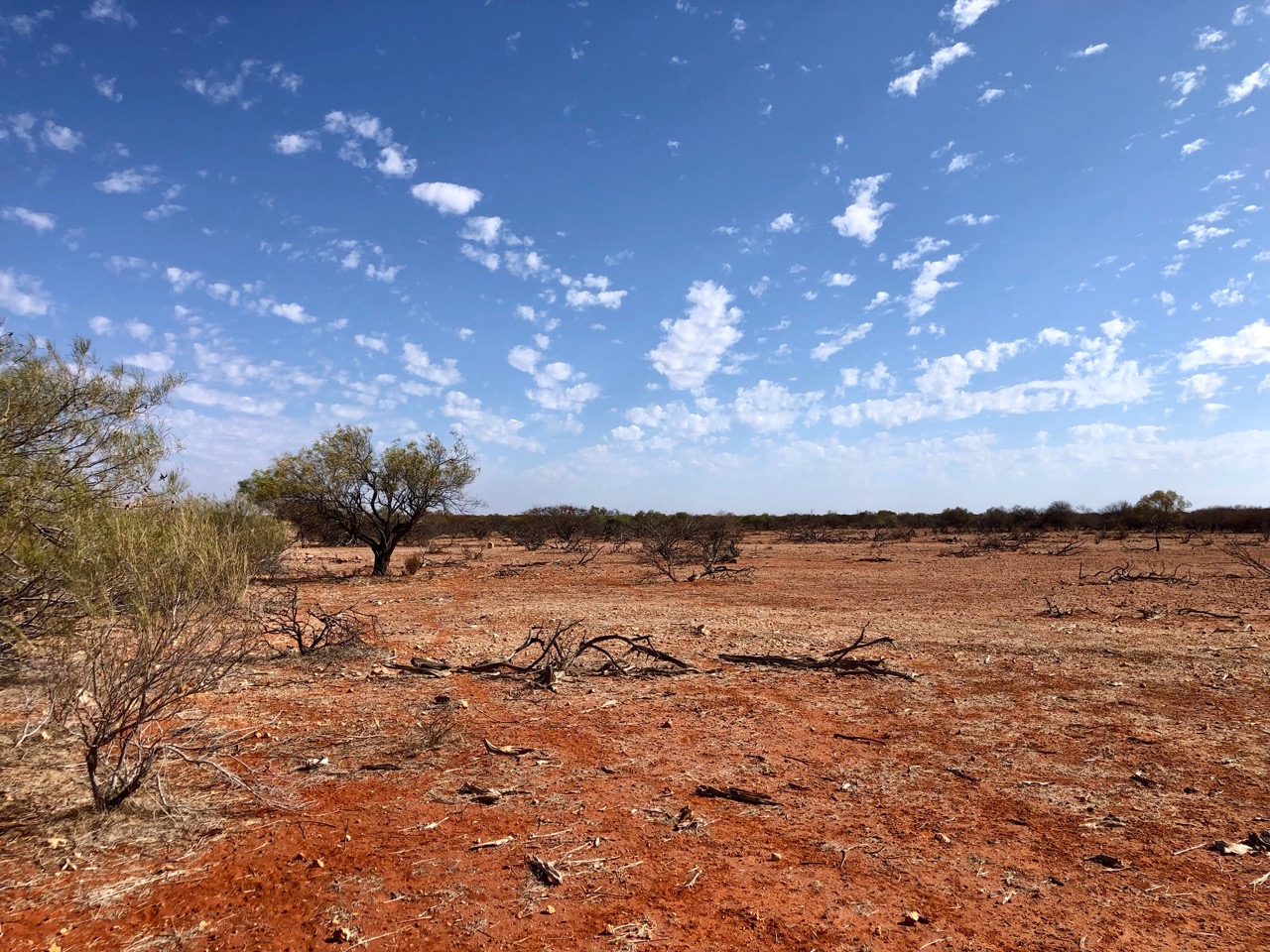
The island continent is a landmass that cannot be understood with the brain. It must be embodied, felt. Having travelled there between the wars, a confounded D.H. Lawrence wrote in Kangaroo (1923): “You feel you can’t see, as if your eyes hadn’t the vision in them to correspond with the outside landscape.”
The Western Australian novelist, Tim Winton, expands on this inability to process what is around you in his book Island Home. It requires time. Duration and experience. Submission and waiting. ‘Space was my primary inheritance,’ he writes of his upbringing. ‘I was formed by gaps nurtured in the long pauses between people.’
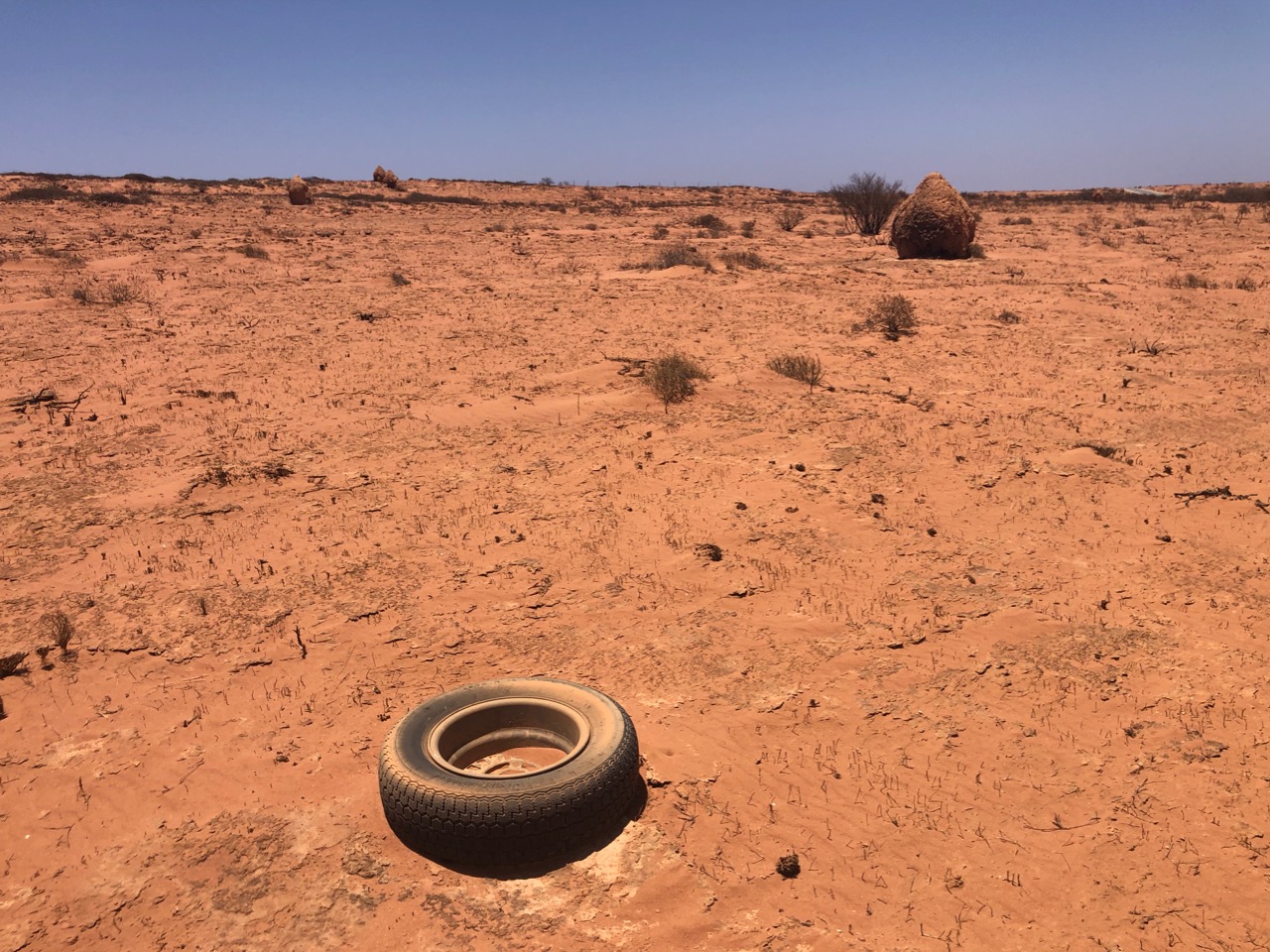
I recognise the impossibility of putting the sensory vocabulary from the 18 months spent here in my early twenties into words. And yet, a residual, visceral resonance with the land, aboriginal culture and those ‘gaps’ remained through the decades despite my disproportional terror of almost every native creature that swims, slithers or hops.
One of the aims of this trip to the inland and coastal terrain of Western Australia was to visit old housemates who shared that vibrant formative period in Sydney. Other motivations came from a need to escape the increasing compactness of a busy work schedule and a head filled to the brim with daily horror stories of escalating conflicts, the non-sense of current politics and power struggles, the dreaded false Gods of ‘economic growth’ and technological ‘progress’ and the cold soggy winter shades of grey. I wanted to blow my mind wide open in order to (re)connect with a more primal relationship to space and time. And life itself.

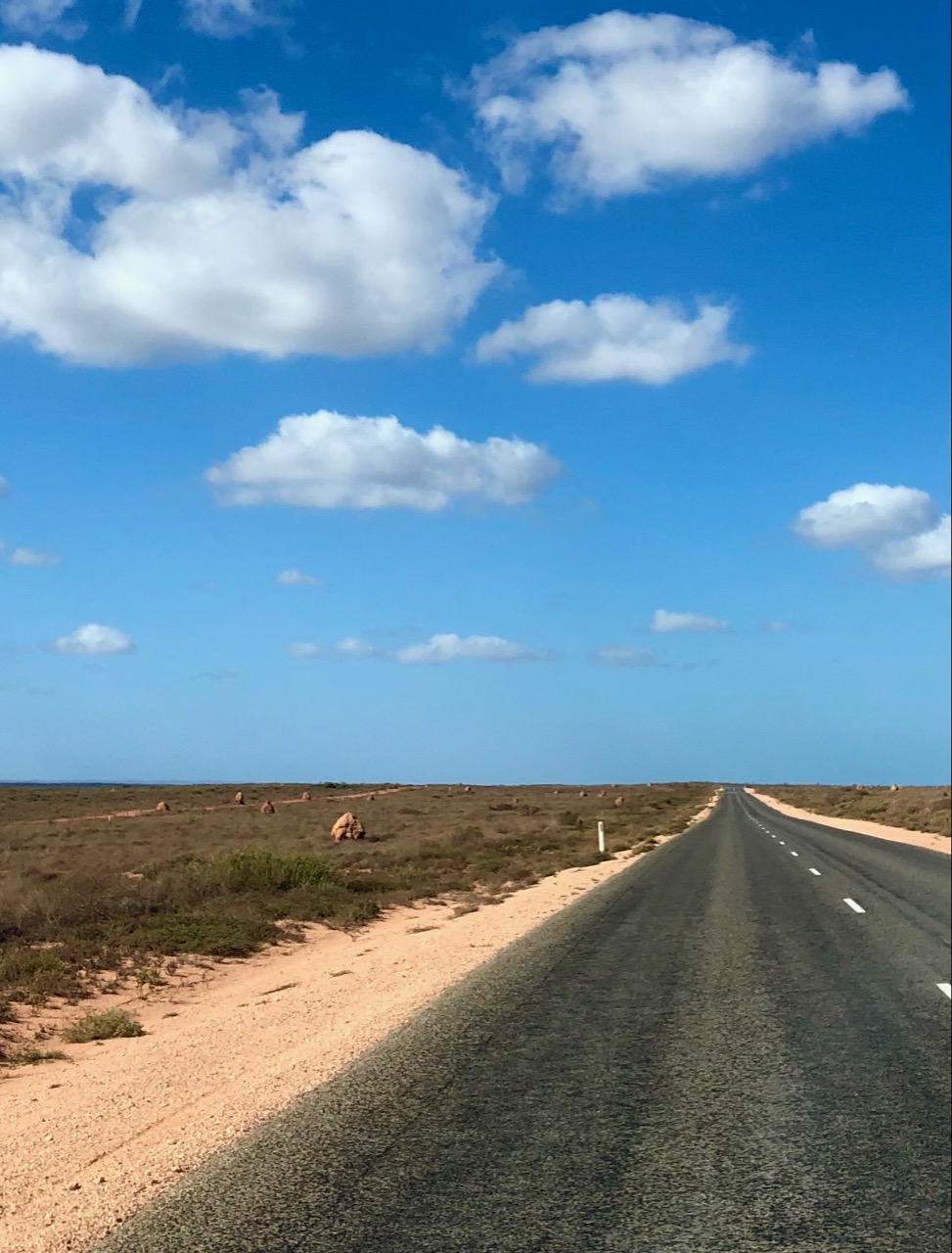
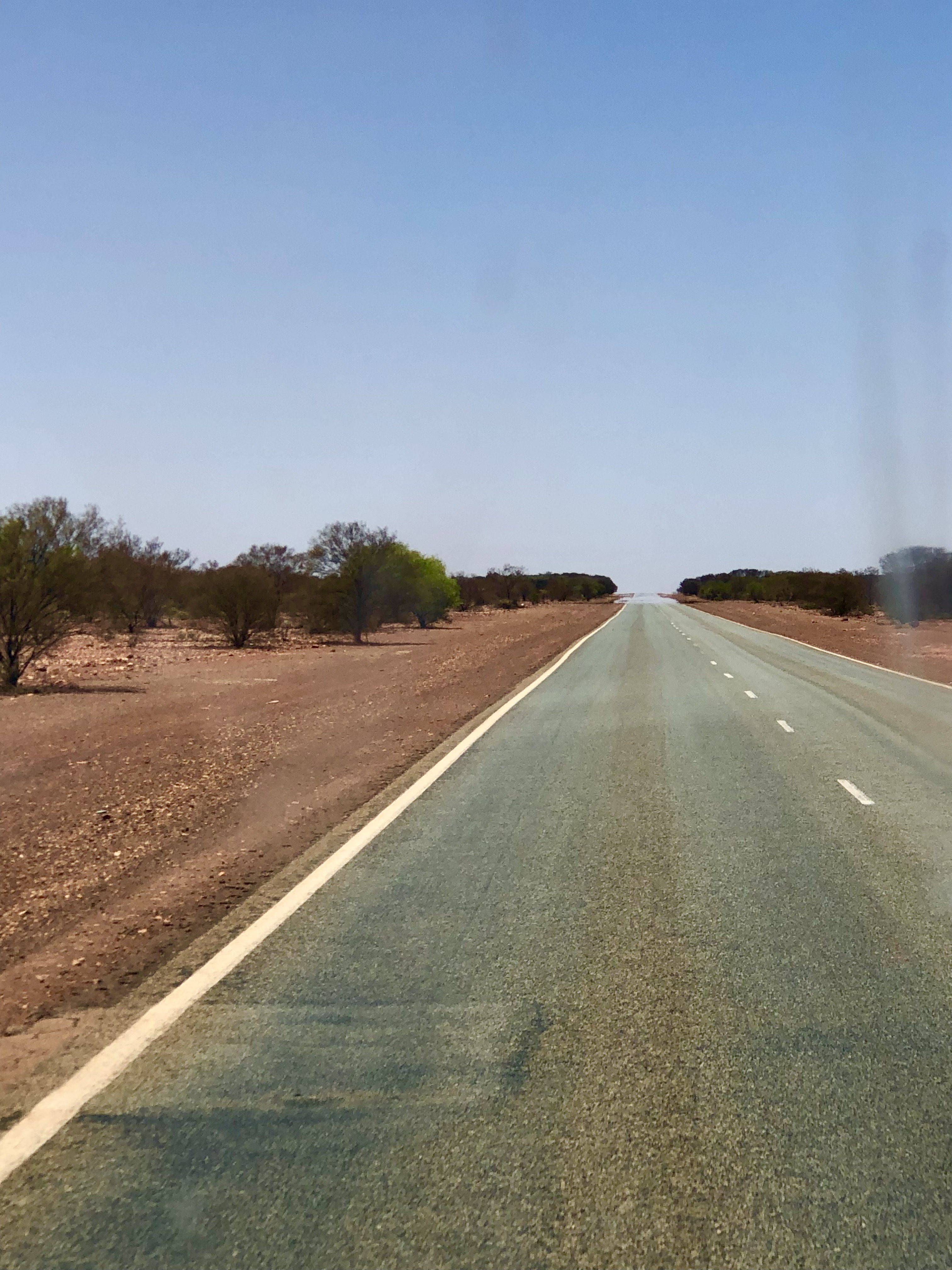
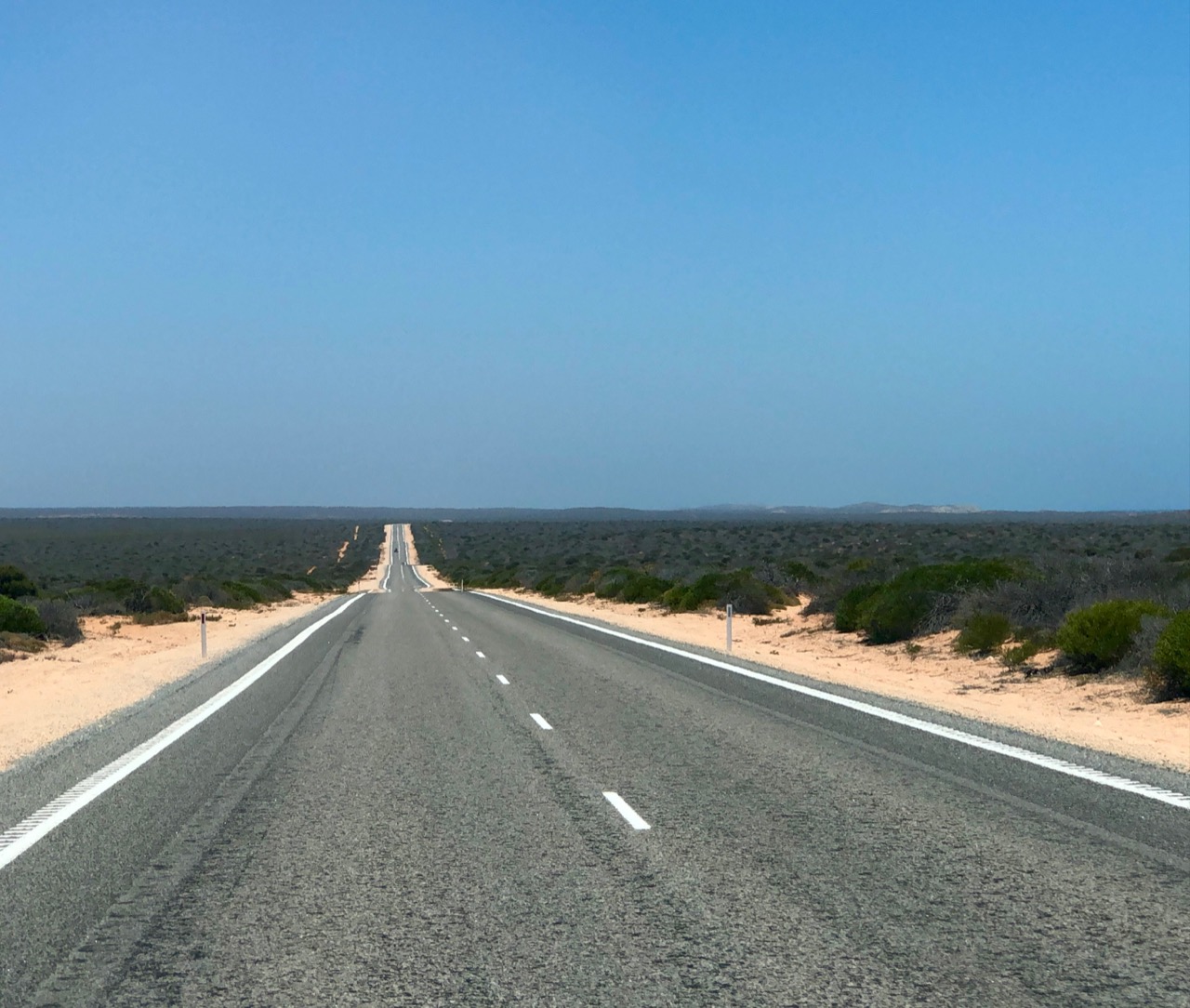
Departing from Perth on 15th December, a friend from Melbourne and I loaded fuel, water and food into a 4WD Toyota Landcruiser ‘troupy’ converted into a camper van clearly designed for a contortionist. Heading north-east we followed the Sat Nav’s increasingly sparse instructions until a lazy voice told us to just ‘drive straight for 280km.’ And then another 250. And then another.
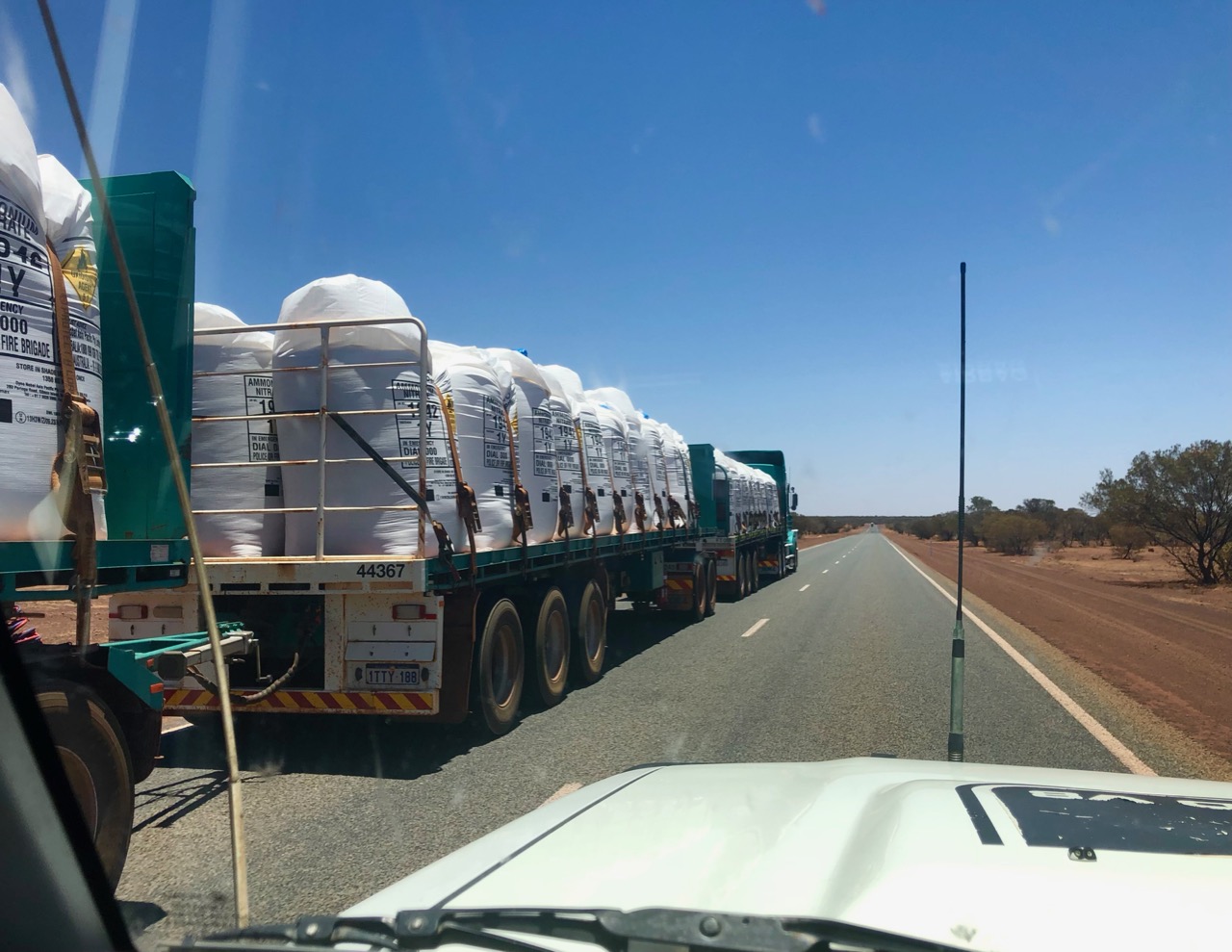
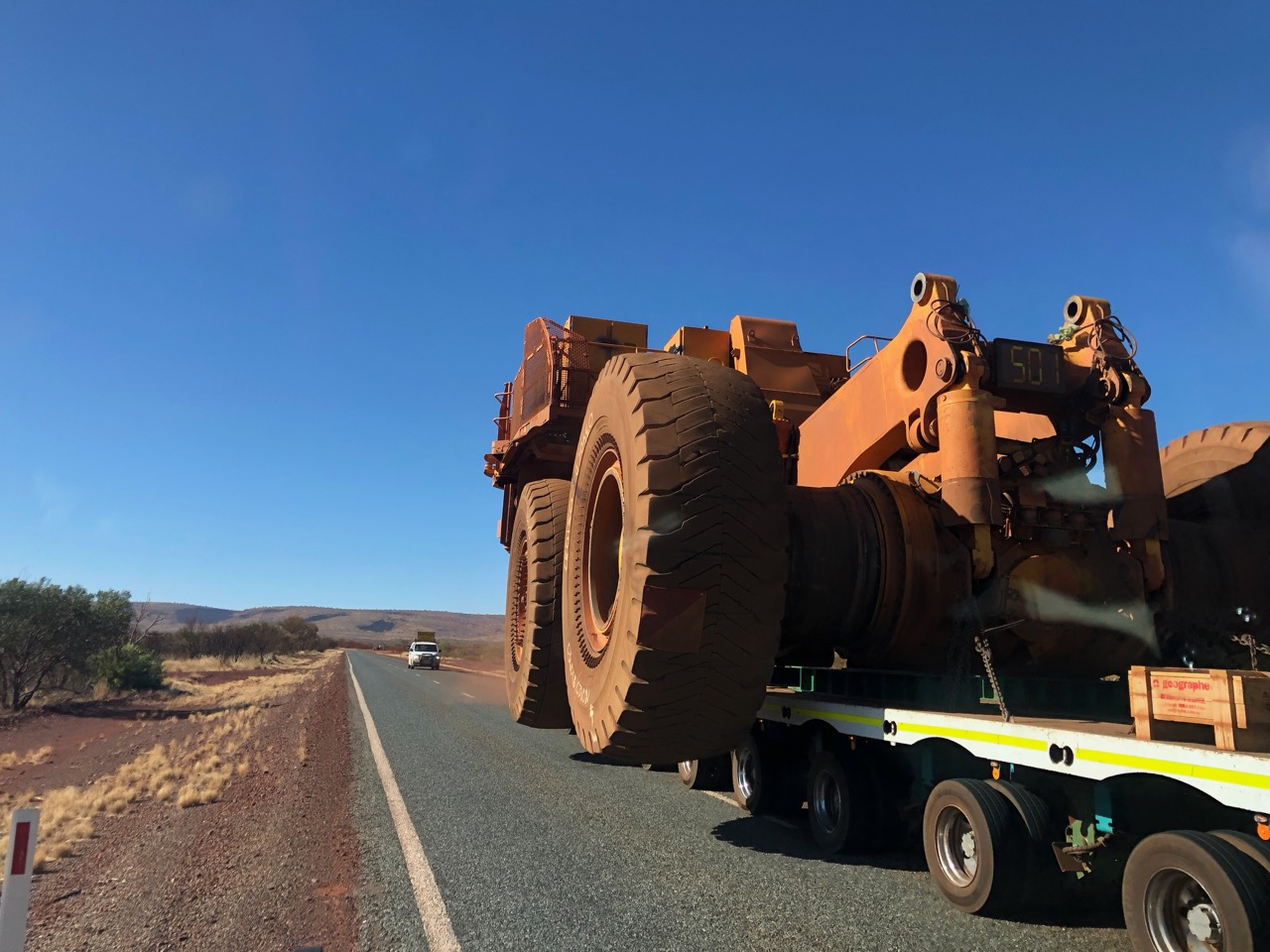
Barely turning the steering wheel except to overtake 60-meter-long road trains bearing heavy loads of ready-made houses or industrial monsters destined for the mines, we watched as the golden fields of the wheat belt dried and darkened into the deep ochres of the outback. The green foliage and white trunks of swaying gum trees gradually gave way to more sclerotic scrubland as earth and sky baked in the unrelenting rage of 44˚ sunrays. With rivers and gorges evaporated and all sensible holidaymakers having headed south, meet-and-greet parties of thirsty flies eagerly awaited us at each stop to feast on our eyelids, nostrils and lips.
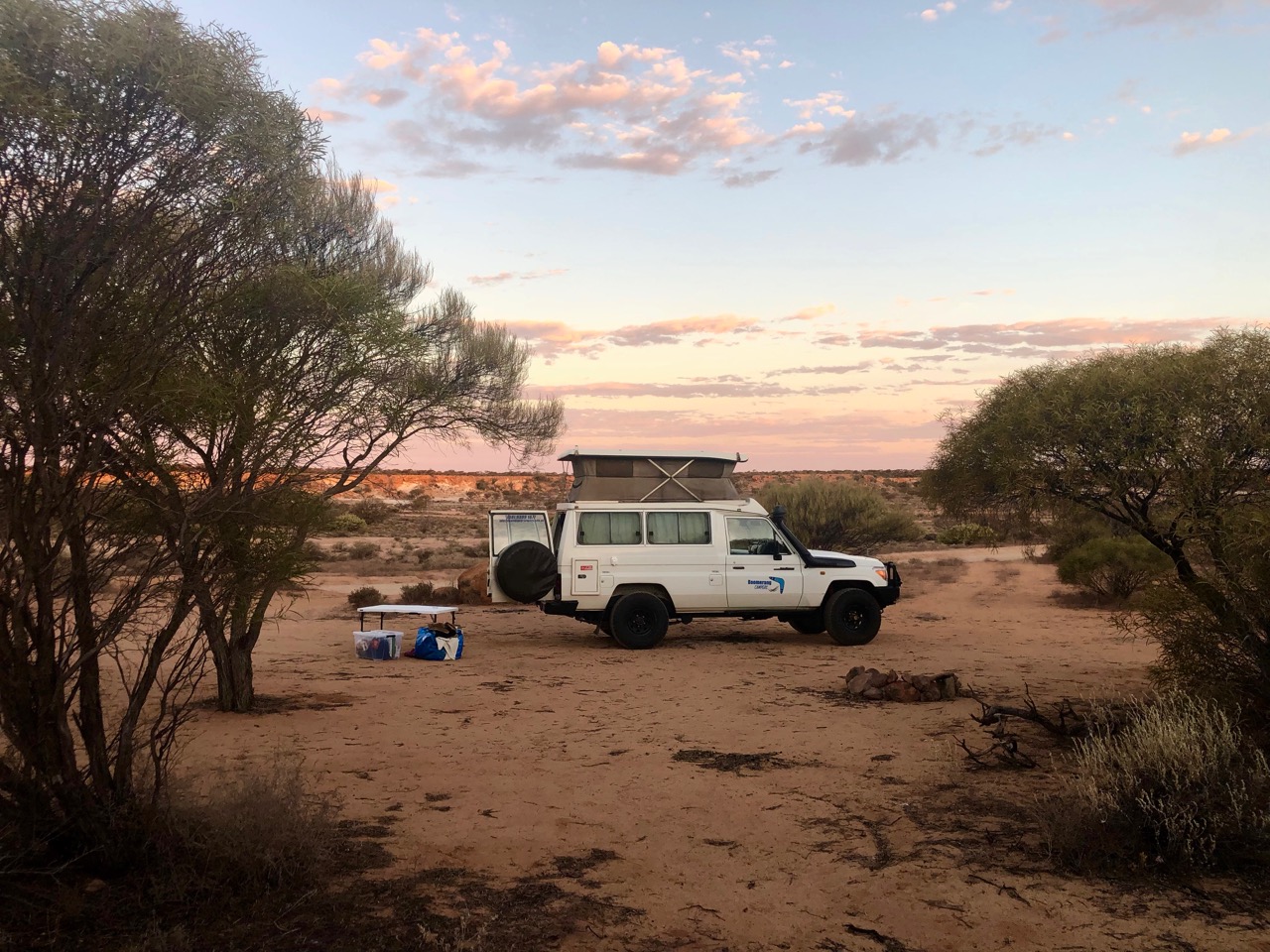
“One seems to ride forever and come to nothing and to relinquish at last the very idea of an object.” Anthony Trollope in the 19th Century
While indicators of bush fire risks threatened, the surreal warnings of floods made us salivate. It was only when we reached the white sand shores of Cape Range that we were introduced to the element of liquid. Turquoise waters busy with turtles and unfazed multi-coloured fish that populate the coral of the fringing Ningaloo Reef.
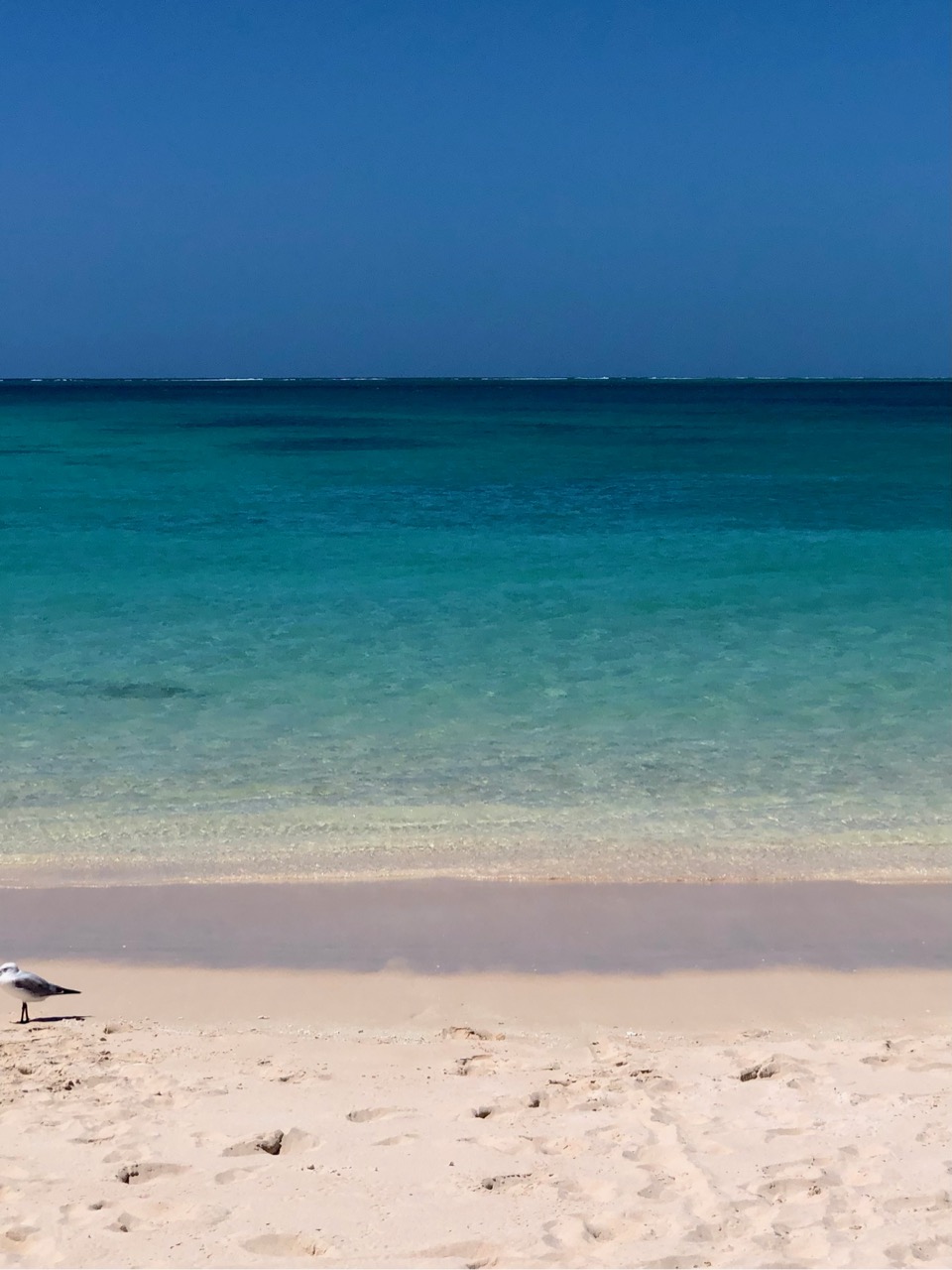
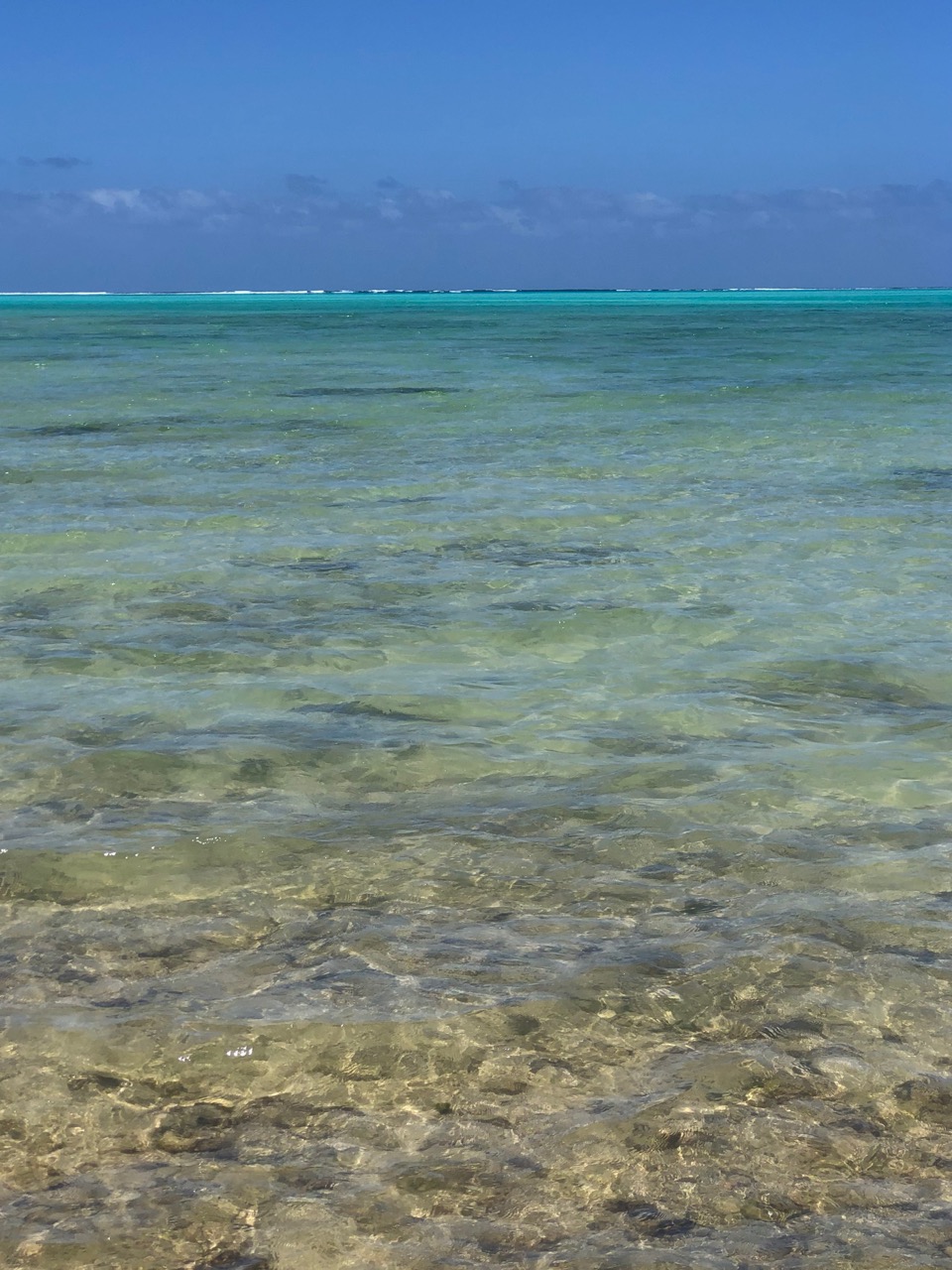

Water, water may have been everywhere, but there was not a drop to drink. No taps, no showers, no quenching glass to fill. Here the elements don’t provide a mere backdrop to human dramas. They are the drama. And they rarely disappoint. The very molecules that make up earth, sea, air and heat seem packed more tightly to consolidate into physical entities that vie to destroy each other in fierce games of rock – paper – scissors.
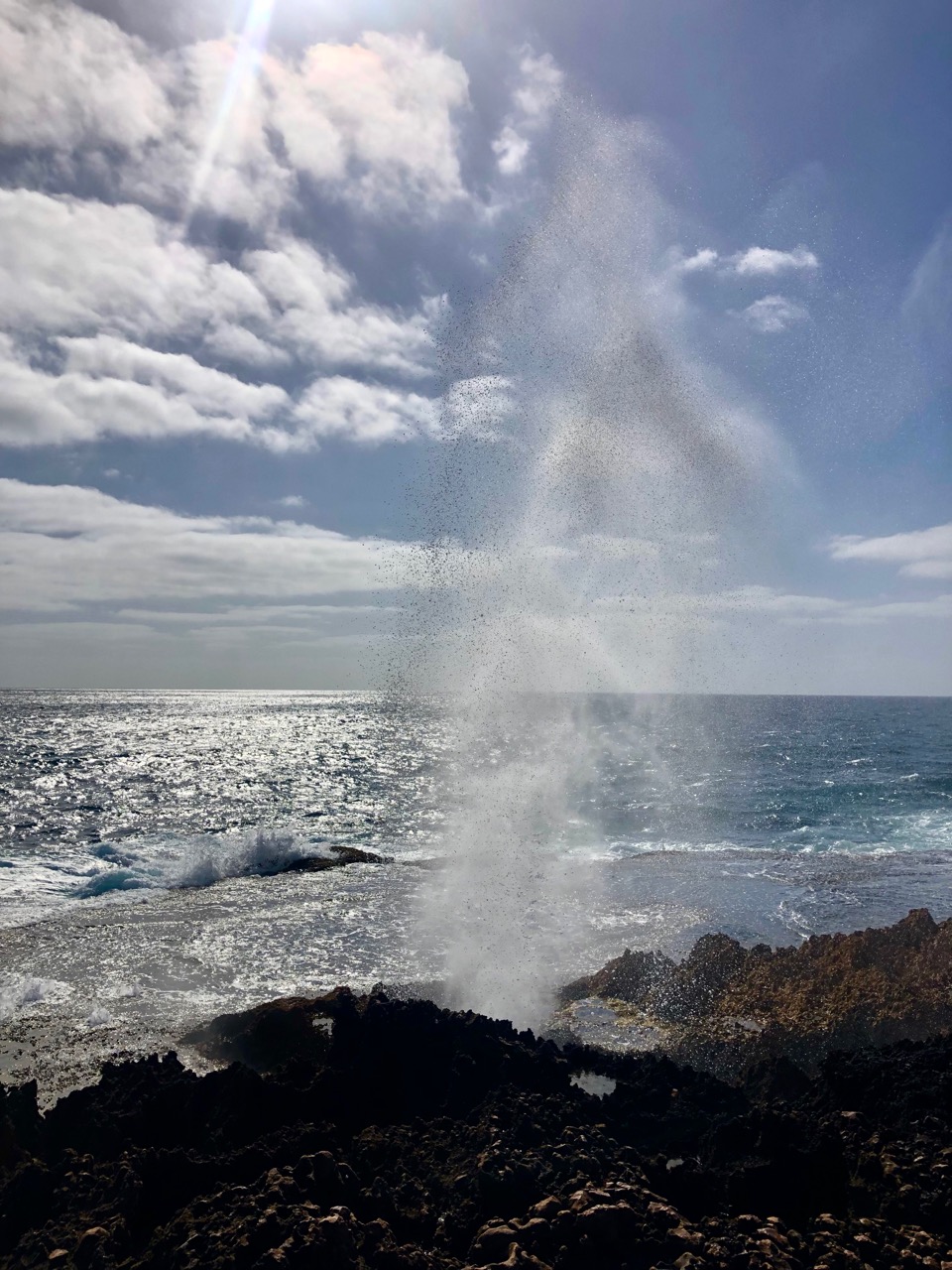

As we travelled southwards down the coast we passed orange monuments of termite mounds, the jagged teeth and rounded limestone phalli of the Pinnacles Desert. We looked down from heady heights onto a mottled green lagoon in which spooky shapes of sharks and stingrays silently moved about their day isolated from the inky depths. We shuffled along eerie beaches made from deep swathes of white shells emptied of their inhabitants and lined by water too salty to enter. We climbed ragged gorges shaped by cyclonic rains and wind and home to black-flanked rock wallabies, paddled in silver-pink salt lakes and swam through mazes of coral. Each scene could have been a movie set… and a sci-fi one at that.
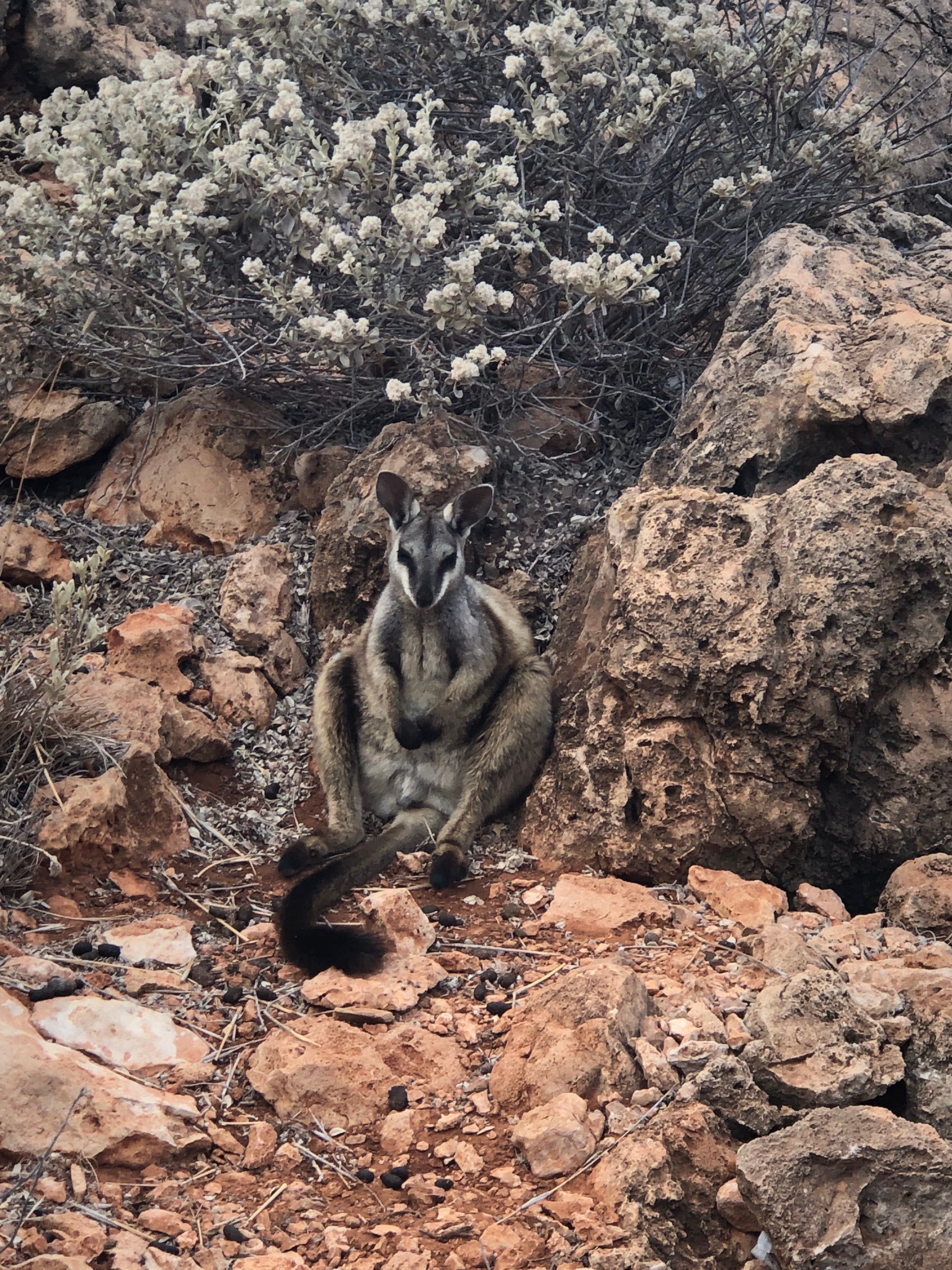

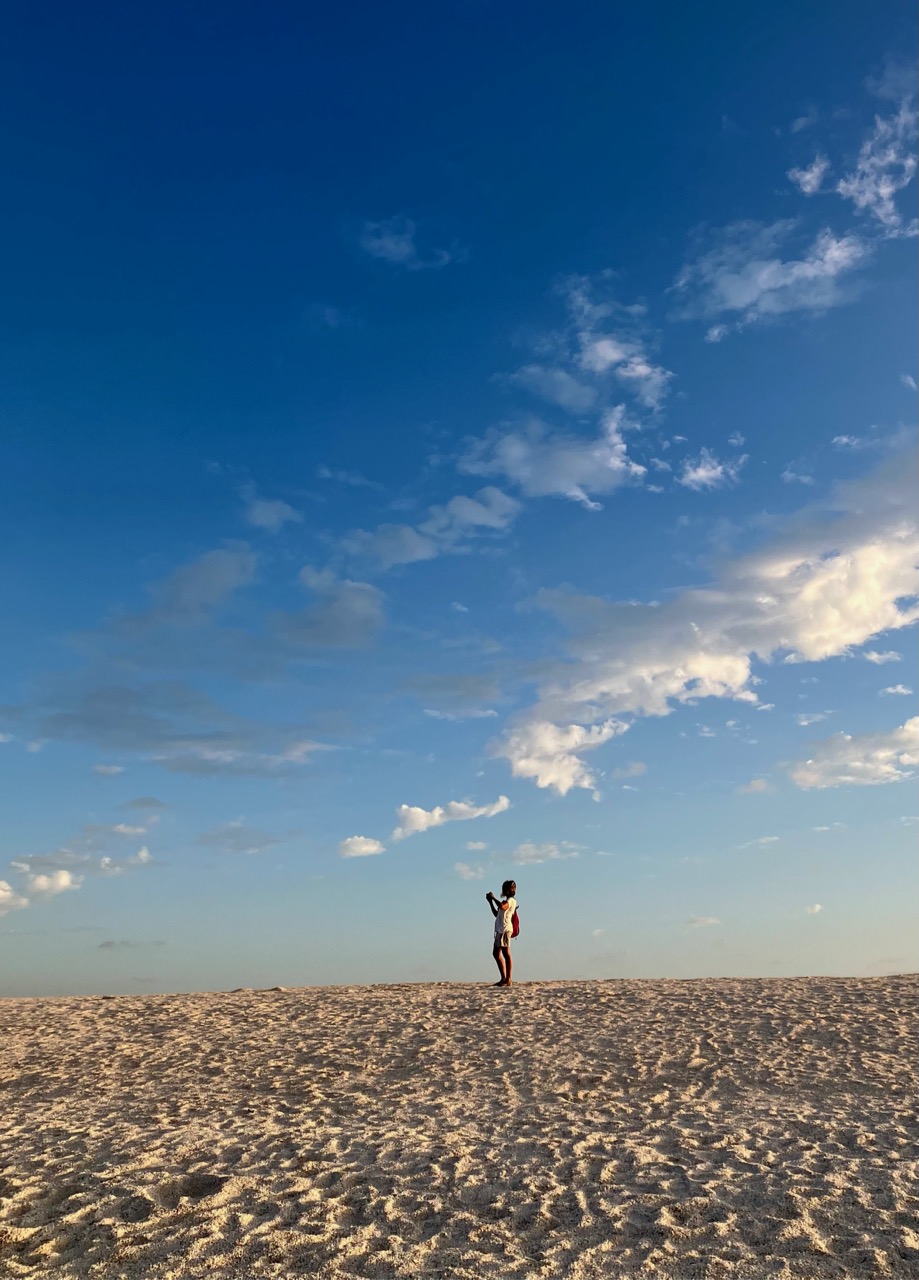
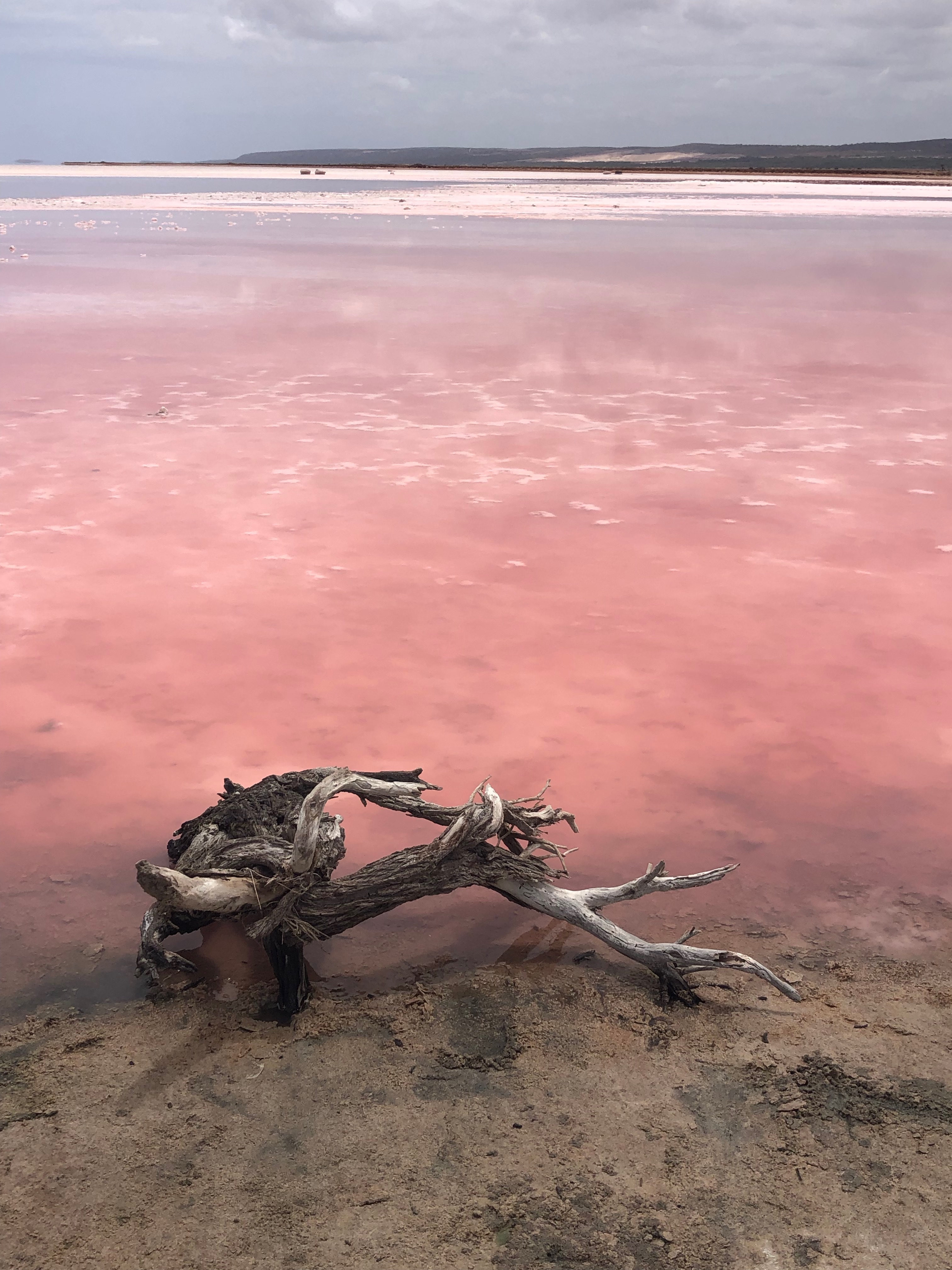
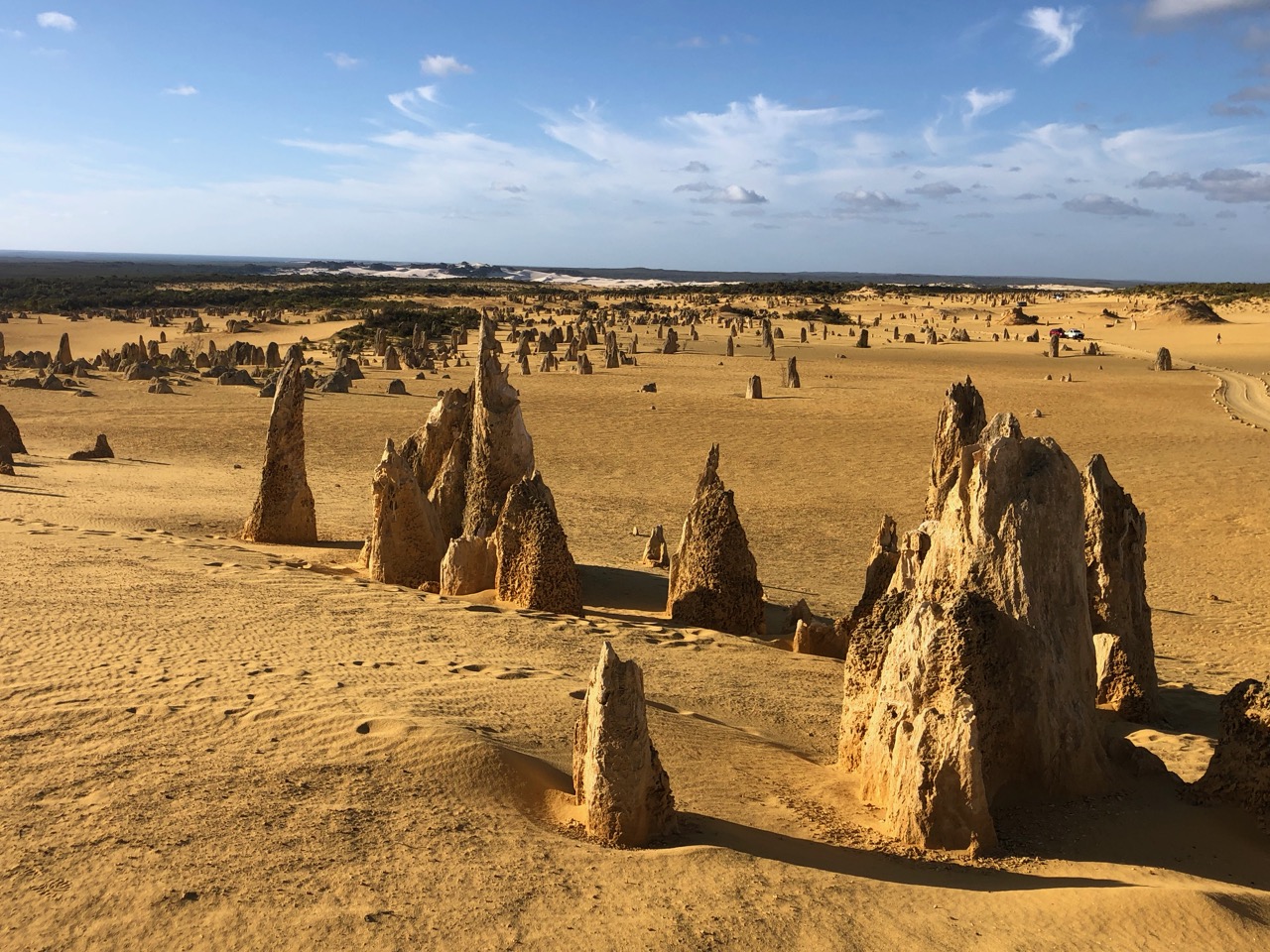
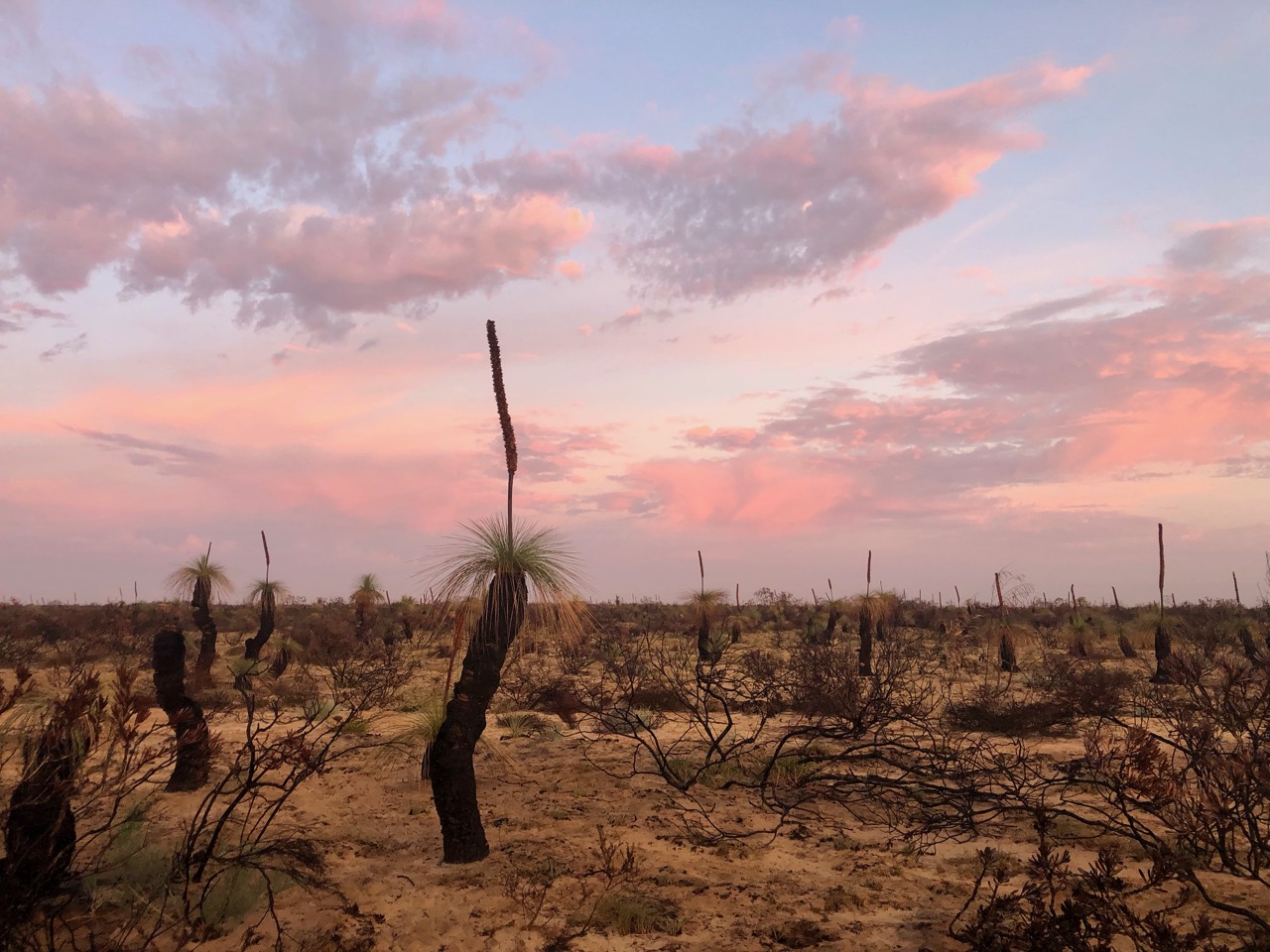
It’s not surprising that three weeks on I am still feeling the ever-changing landscape whisper its secrets into the spaces within my mind and body. With both deliberately denied all news, social media and the familiarities of home, it is easier to hear.
For many visitors and natives, the landscape is daunting, monotonous, melancholic, ugly. But for some it is an acute experience. I find myself inspired by the clean-cut lines of the horizon that stretches in all directions as far as the eye can see dividing opaque blocks of cobalt and red ochre or bleached cerulean, salted turquoise and pristine white into the containers of empty space.
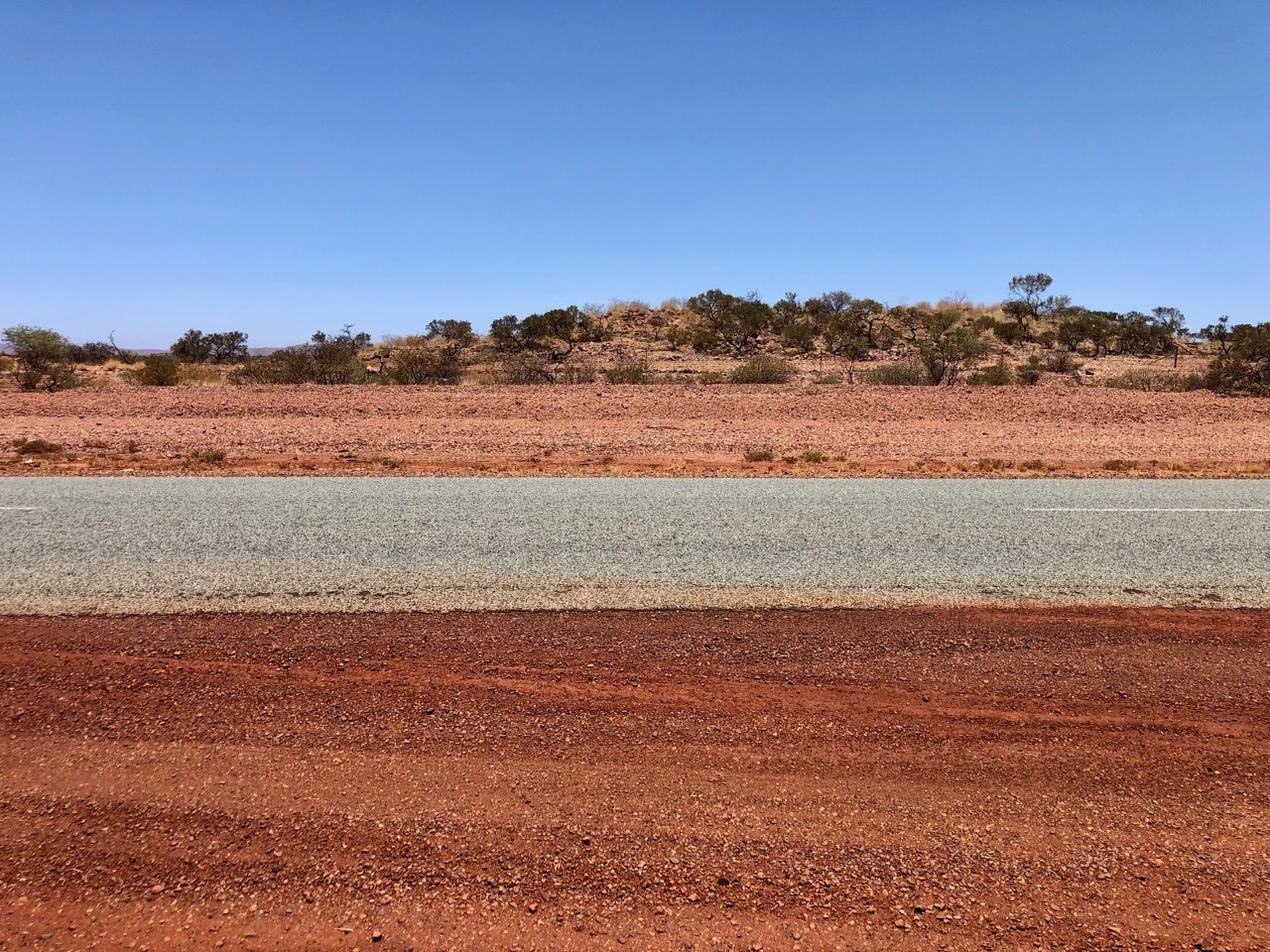
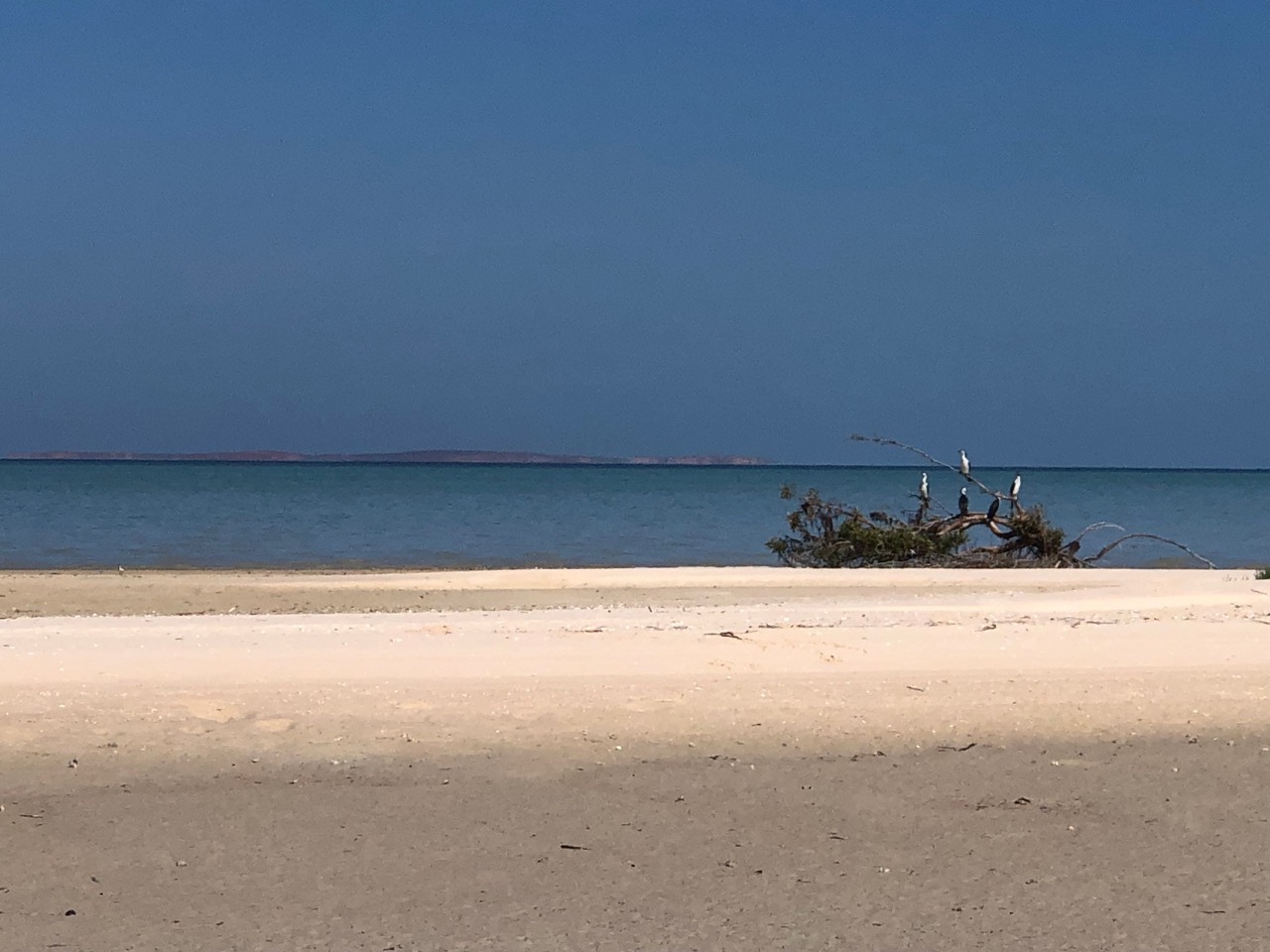
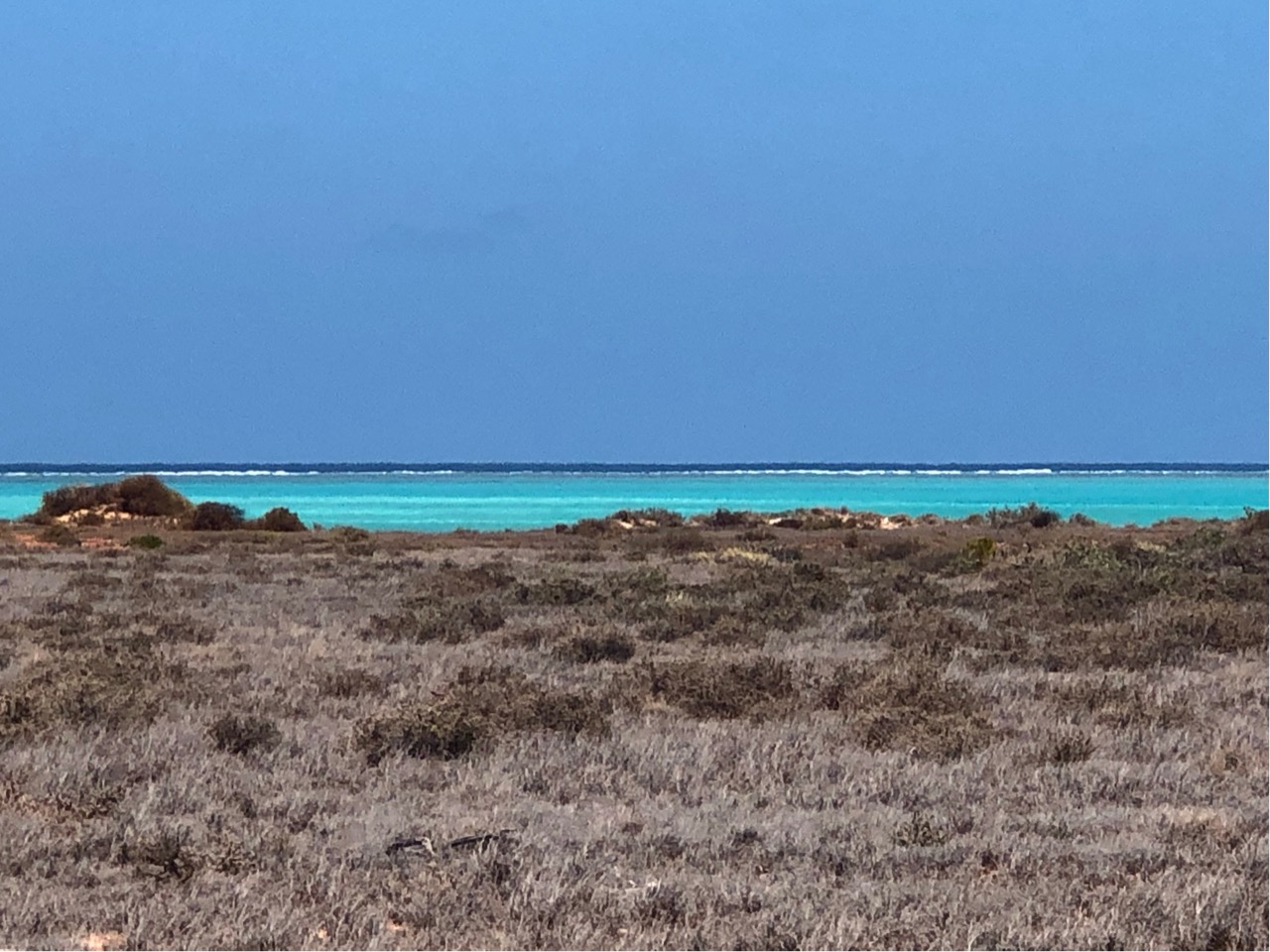
Much of Western Australia is made up of a landscape where the marks of two centuries of colonial successors appear to merely scratch the surface with straight asphalt lines and low-lying bungalows ducked under corrugated roofs in an attempt to escape oppressive heat and excess cost. To the trained eye, however, non-indiginous man’s marks are much deeper and more destructive… in places devastating. But there is no getting away from it, we are a mere blink in the long timeline of this ancient geology.
There were moments I too longed for the containment of four solid walls, a chance to withdraw from the wild and hibernate, as I am accustomed to doing at this time of year. And it was indeed within the cool damp walls of a dimly lit sacred cave that I found stunning evidence of the nothing I have been seeking…
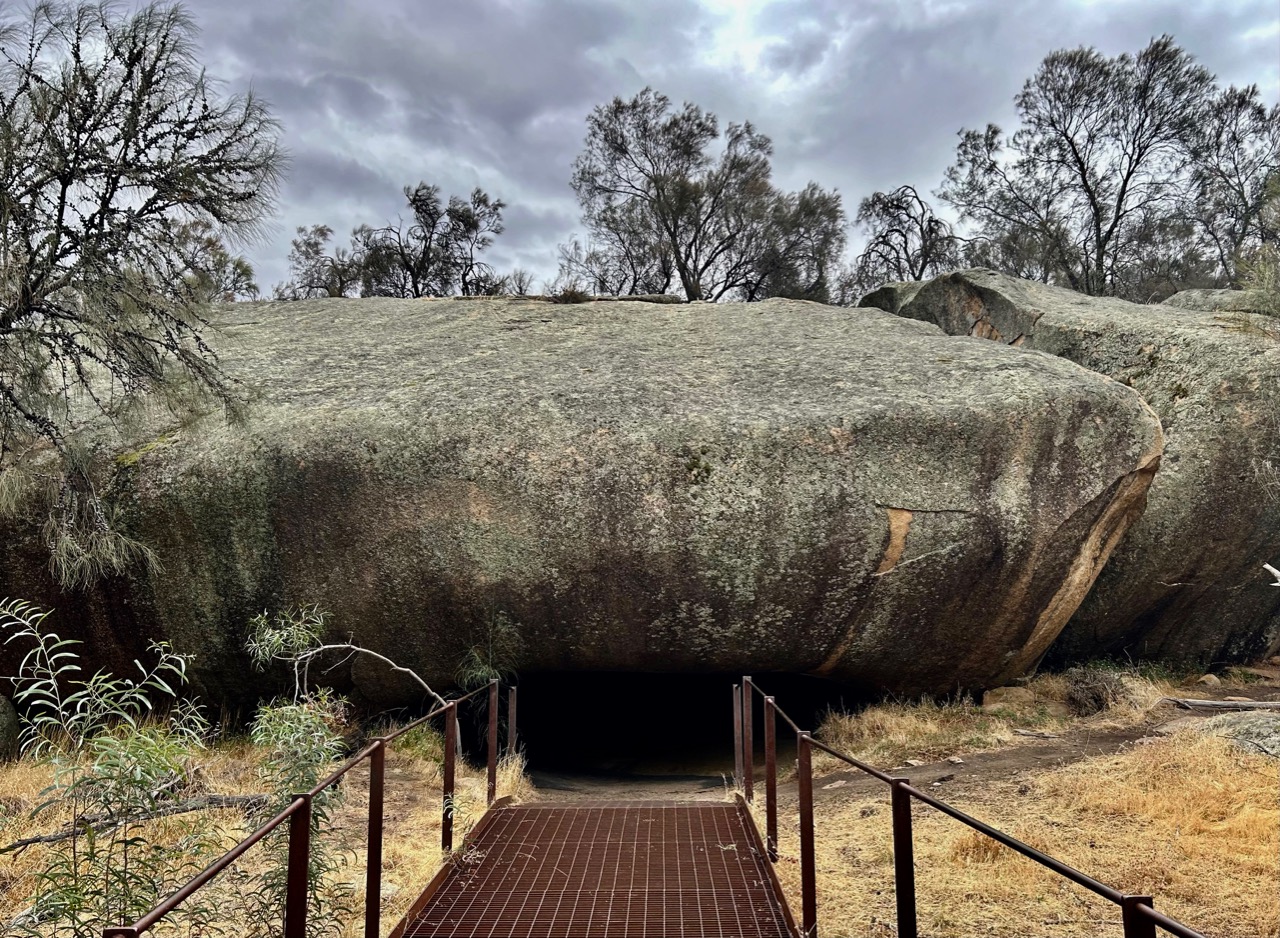
To be continued… Part 2 will follow soon!
 angela findlay blog
Gre
My goodness Angela!
They say that nothing is actually there unless observed; that logic cannot explain existence, only observation. Well, your observation, so richly described, brings a vivid reality to all that you encounter – and share with us.
Thank you!! ❤️
P.S. You mentioned GPS, vividly reminding me of my own favourite satnav instruction – “Continue to follow the road”. In your Australian context it suddenly took on a new and deeper meaning. It might perhaps be a good moto for Life ……
“Continue to follow the road,” that about sums up everything on all levels. Thank you as always for your interesting comment. I enjoy and appreciate your engagement with the subject matter of my blogs…