When big isn’t necessarily better

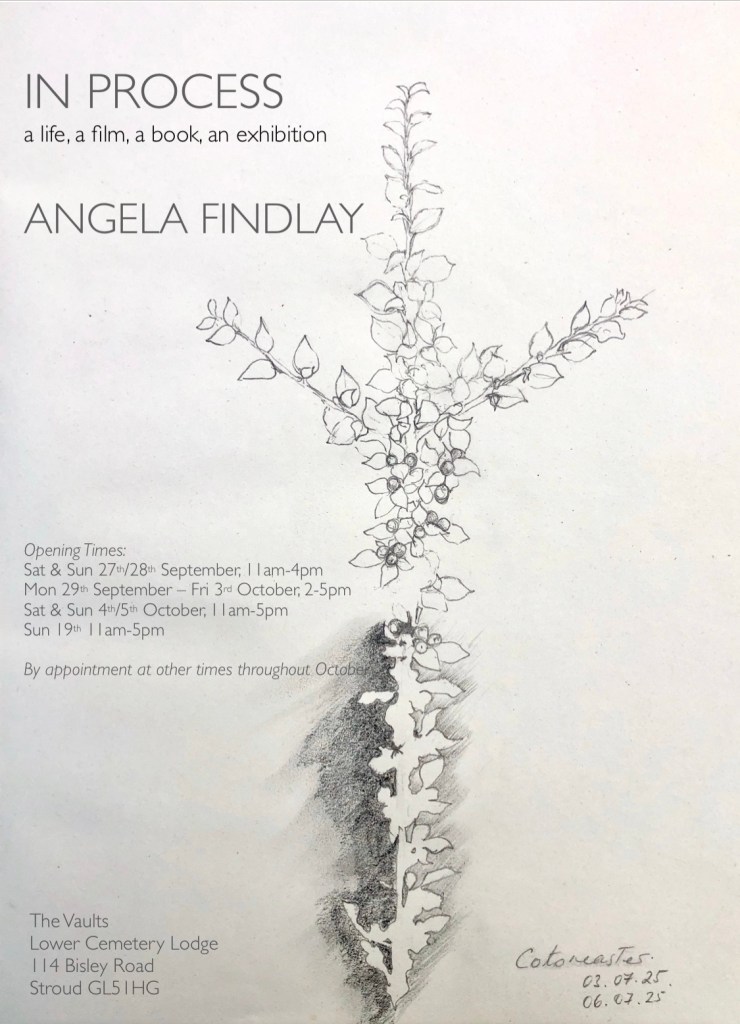
Reflections on: IN PROCESS… a life, a film, a book, an exhibition, The Vaults, Stroud. Sunday 19th October, 11am-5pm and by appointment until 1st November.


“We must, we must, we must increase the bust.

The bigger the better, the tighter the sweater, the boys depend on us.”

I remember chanting that with my boarding school roommates as a teenager, elbows flung back in a futile attempt – in my case at least – to inflate our adolescent chests. Bigger was definitely better, or so we believed.

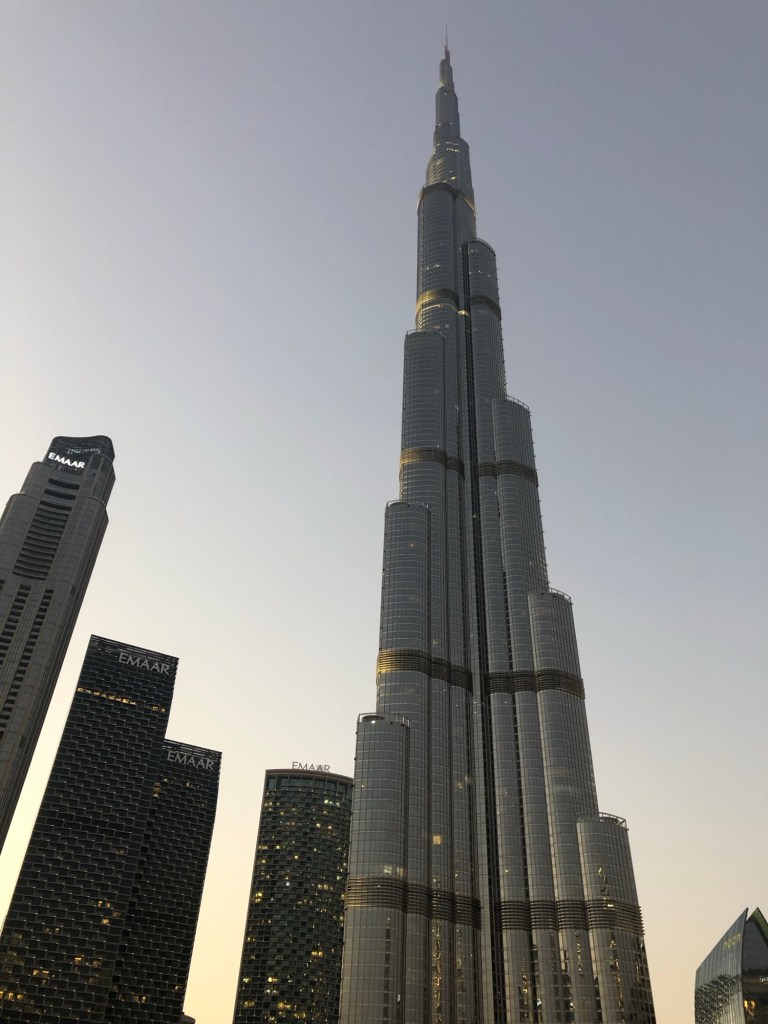
Burj Khalifa, Dubai

Skyscrapers, cars, salaries, houses… In so many areas of modern society, ‘big’ still equals ‘better.’ More followers, more likes, more headlines, more sales. The biggest countries led by the most powerful leaders and largest militaries make the most noise. And yet we know, quantity doesn’t equate to quality. Magnitude doesn’t always reflect meaning or value.

This idea – that bigger isn’t always better – is something I’ve seen reflected both in the trajectory of my great great aunt Joan’s life and in my own development as an artist. (If you are new to Joan’s story, please see my previous blogs for background.)

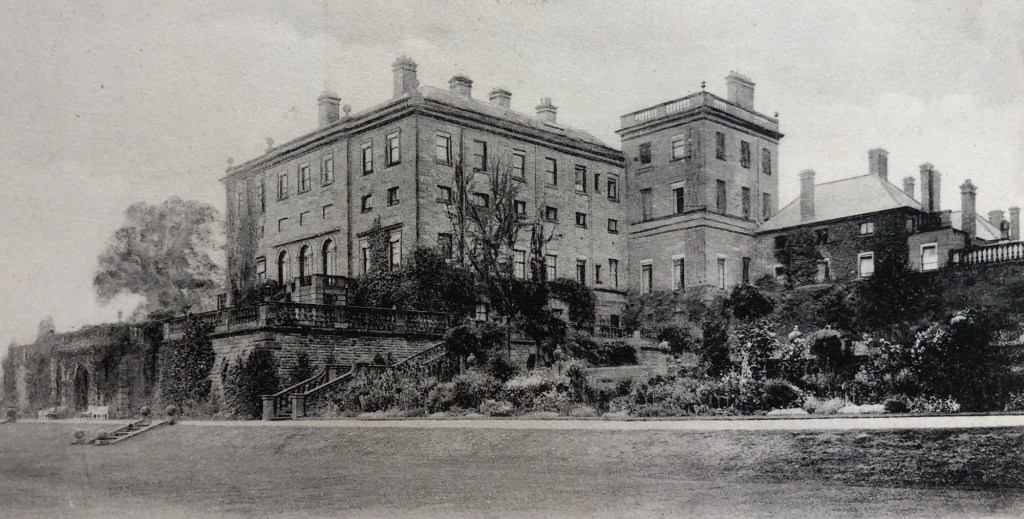
Patshull Hall, Staffordshire

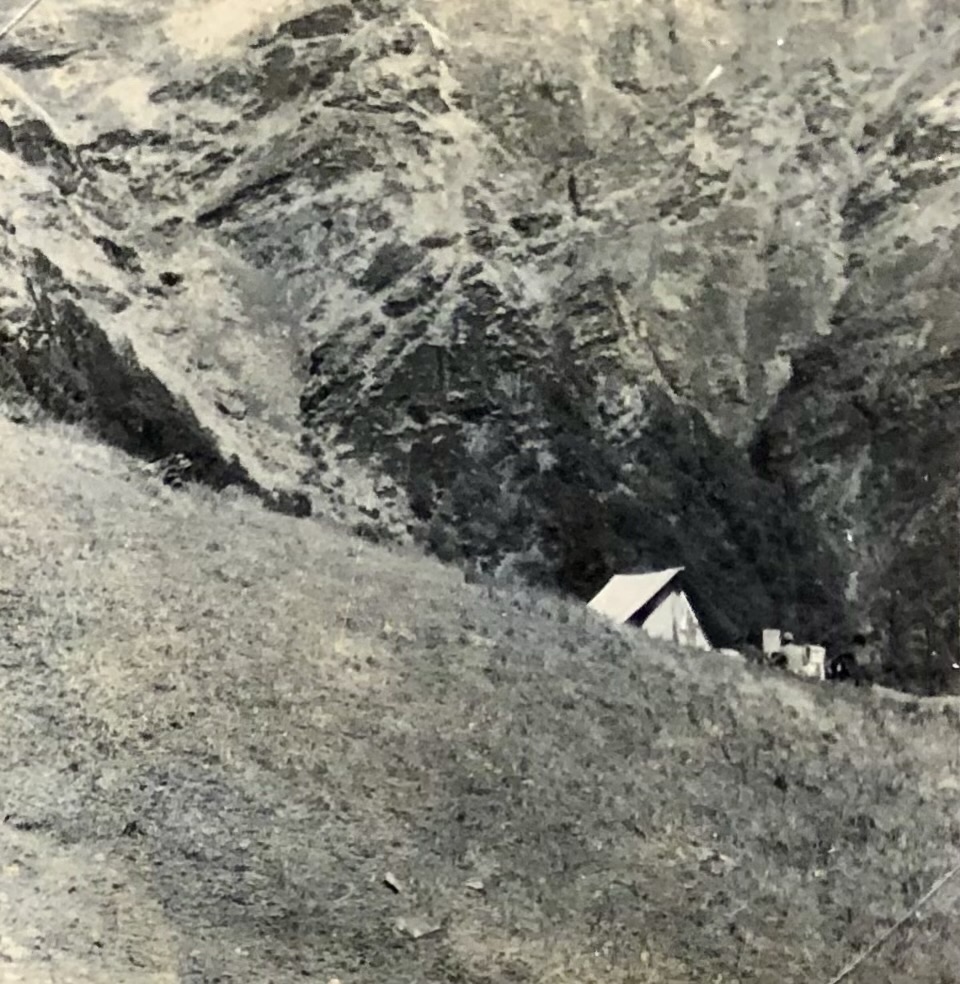
Joan’s tent

Joan grew up in a 147-room stately home in Staffordshire. Yet she spent her final weeks in a single, often soggy Meade tent pitched in a remote Himalayan Valley, surrounded not by grandeur but by shepherds, wildflowers and the sound of rain. She had traded scale for purpose. And her joy, it seems, had grown as her material load had lessened.
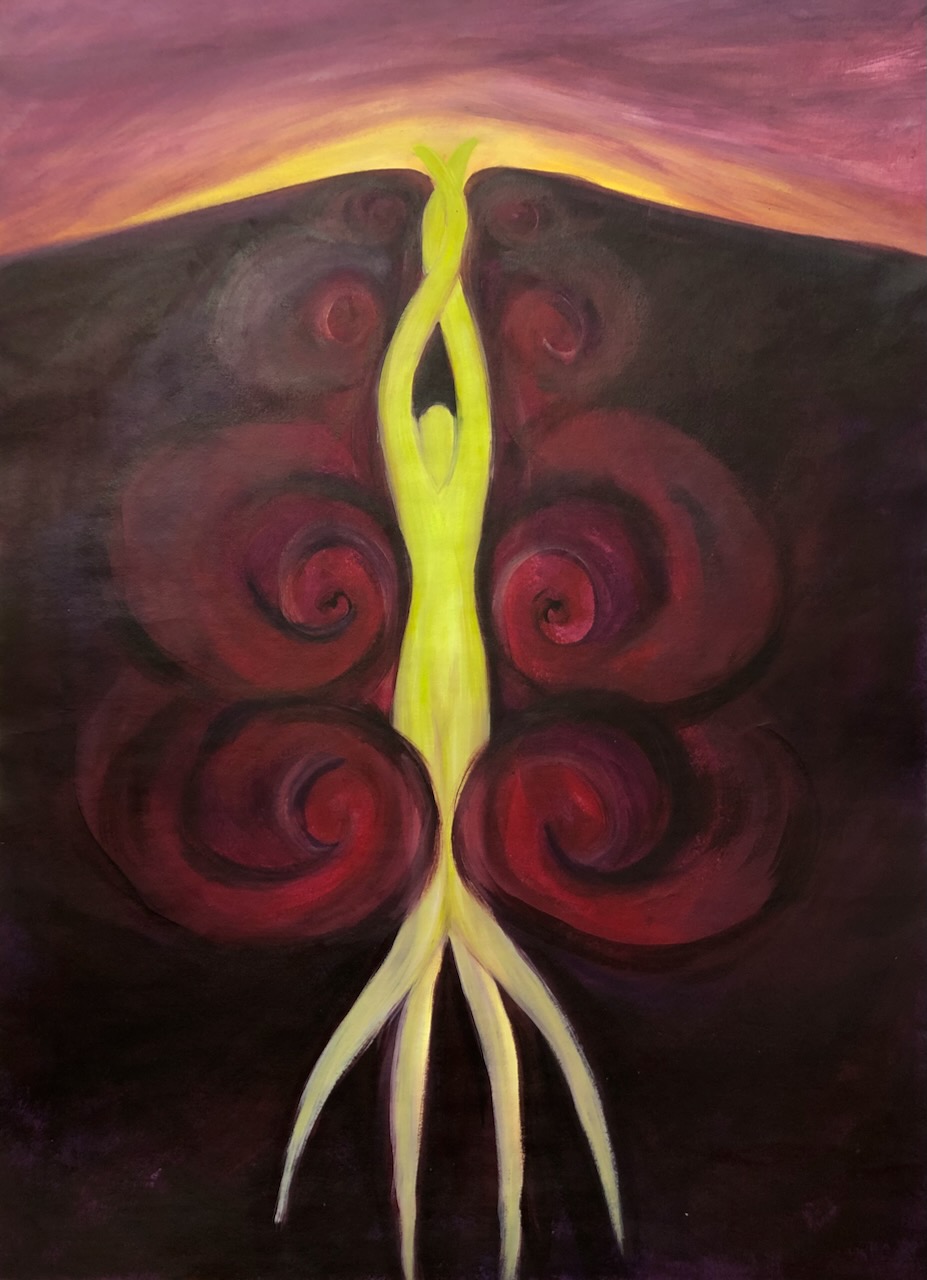
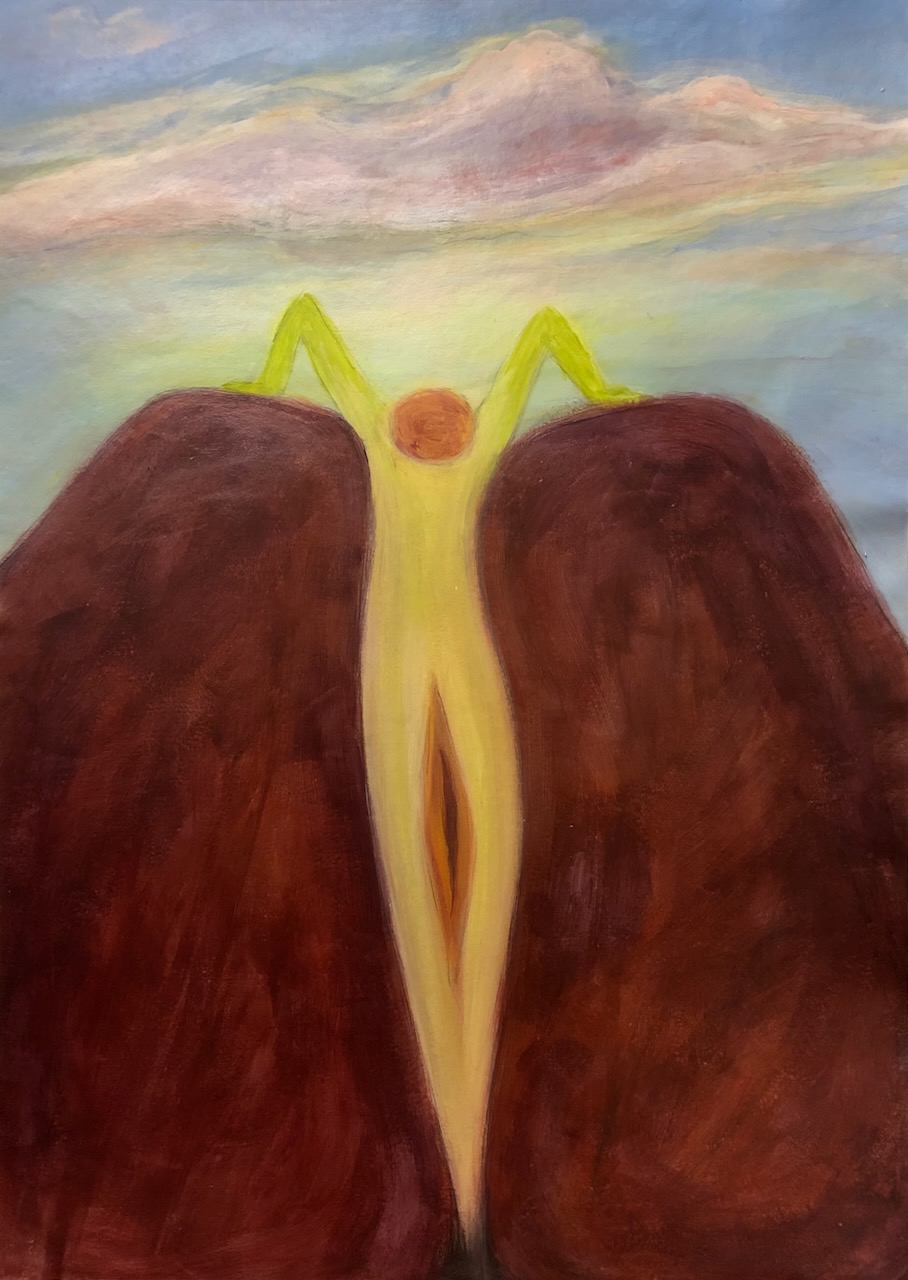
My own artistic journey has followed a similarly inverse curve.

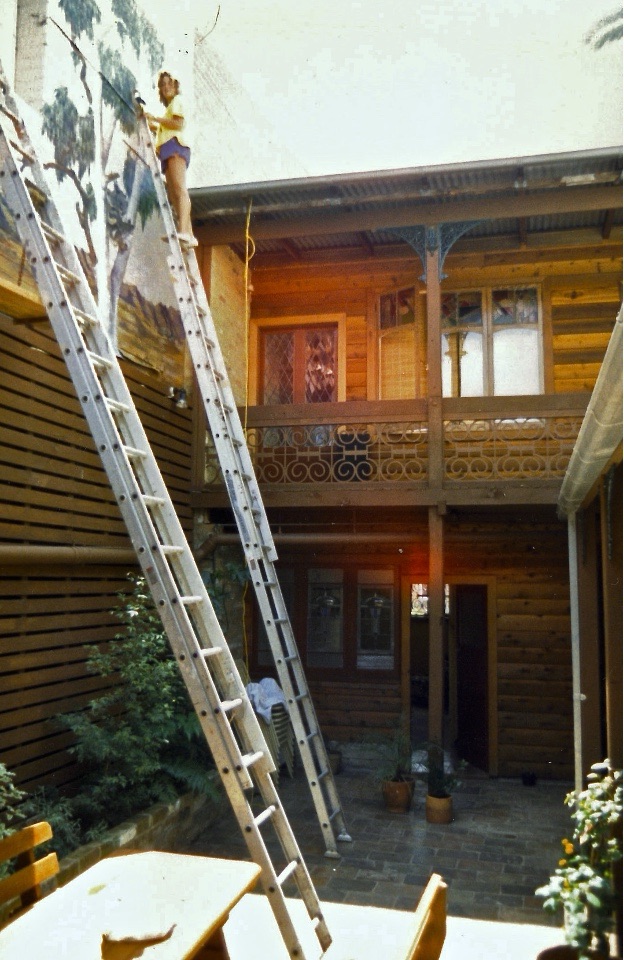
Painting a mural in Sydney, 1987

I began large, unable to contain any drawing or painting within the boundaries of paper or canvas. My work spilled onto walls, first private then public, then grew further to fill stage backdrops for theatres or touring bands. Various mishaps including a paint-splattered boss’s car and a disastrous commission to paint the backdrop for INXS KICK album tour in 1987, which promptly cracked and fell off in large chunks when rolled up, nudged me toward the more forgiving surface of prison walls. There, no amount of damage could make the environment worse than it already was.

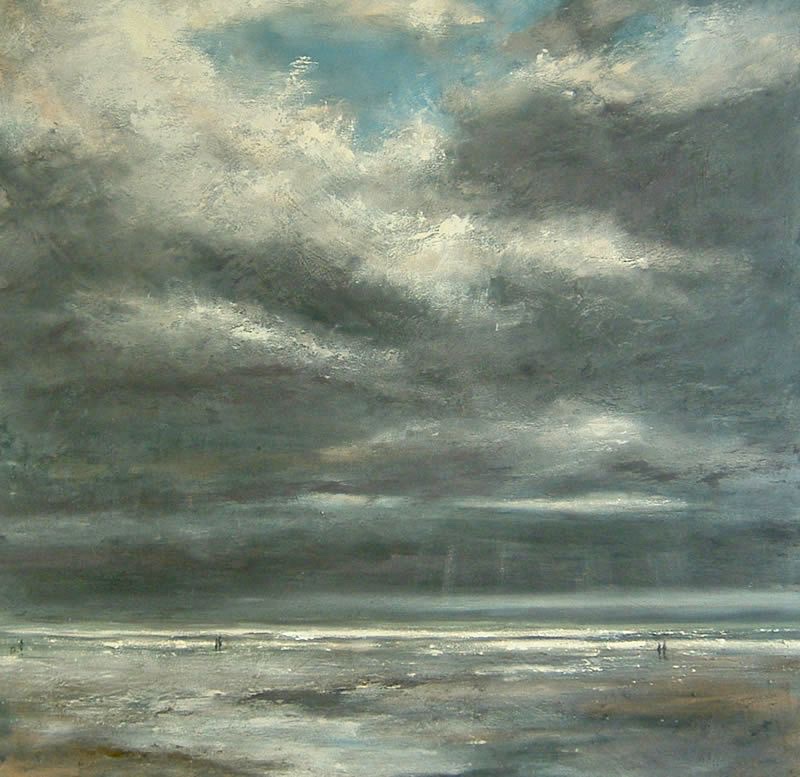
The light danced, 120x120cm

Years later, I turned my focus to canvases of my own, their size dictated by the available studio space and commercial considerations of galleries. And most recently, to works just 28x28cm – or smaller. I have replaced the vast audiences of art fairs with the quiet intimacy of just six or seven visitors at a time into the two vaults beneath my home in Stroud’s Cemetery.

The Vaults

Those vaults now house In Process… a deeply personal exhibition about Joan, her life and the resonance her death still holds for me, our family and small communities she encountered in India.

In one vault, where gravediggers once hung their tools and I now hang mine, visitors watch a short film projected into the open lid of an old trunk telling the story of Joan Margaret Legge.

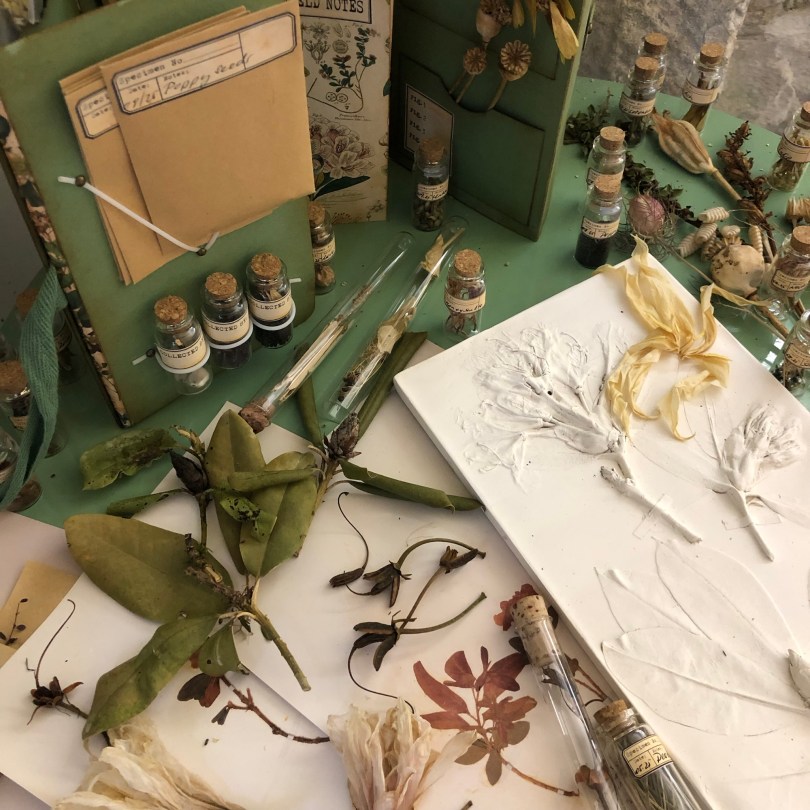
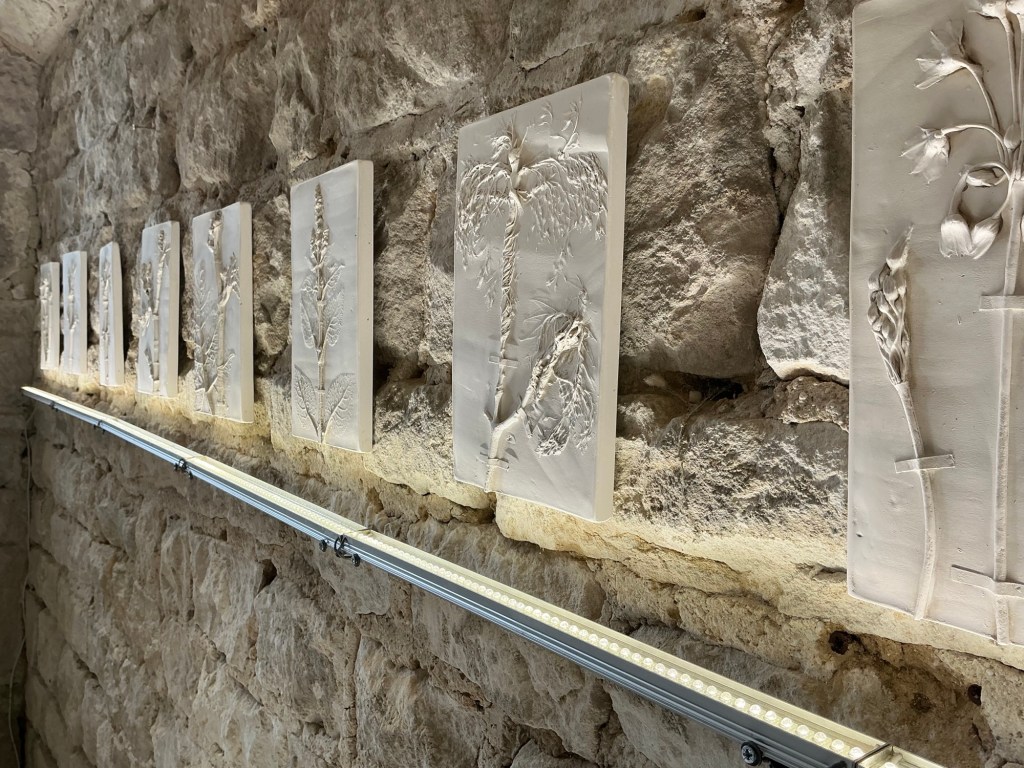
In the other, where those same workers drank tea, ghostly white plaster casts hang like three-dimensional botanical drawings reminiscent of the specimens Joan collected and sent to Kew Gardens.

‘138 days’

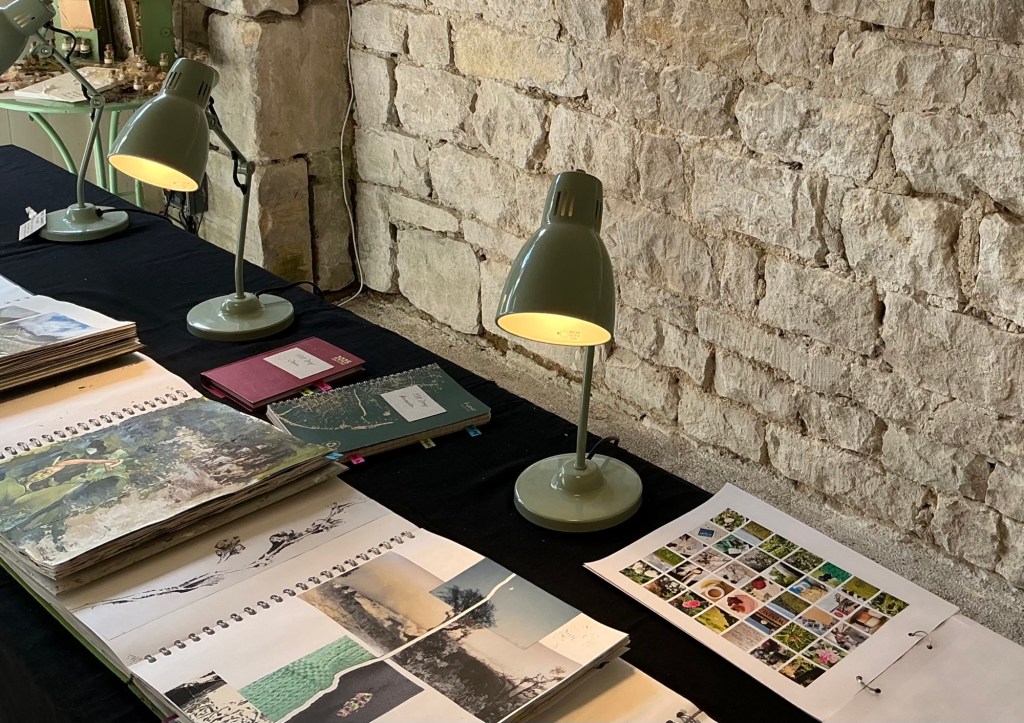
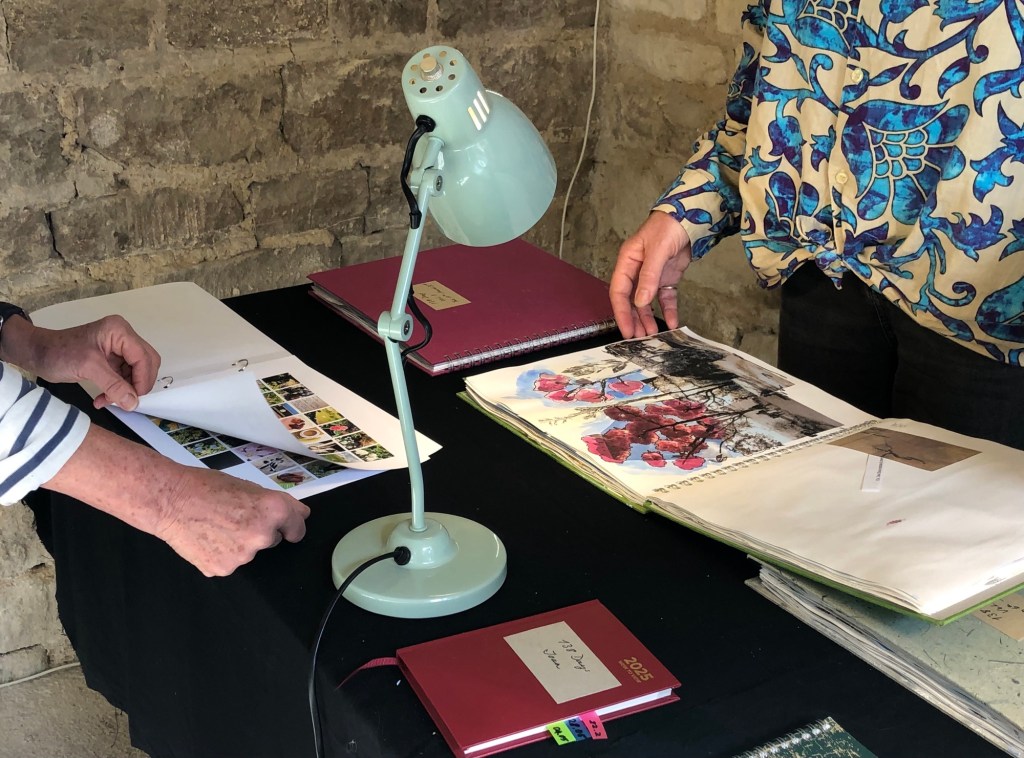
A series of square sketchbooks chart the 138 days I followed Joan’s 1939 diary entries. Starting on 17th February when I stepped into her shoes as she boarded a ship to India, I step out of them again on 4th July, the day she slipped off the edge of a Himalayan path to her death. One photograph, one sketchbook page, each day a quiet re-embodiment across time. Not a recreation of her journey, but a chance to listen more deeply to the changing tone of her voice in the final months of her life.

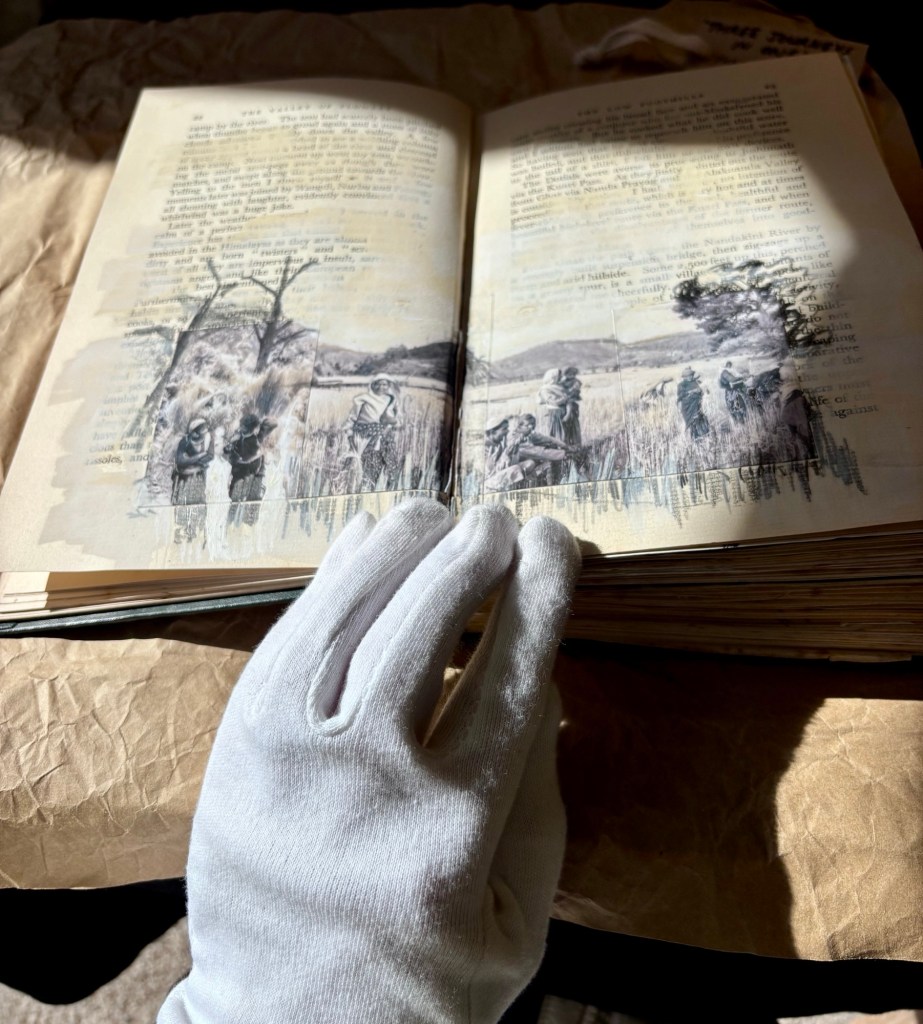
At the heart of the exhibition is its smallest piece: a re-working of a first edition of Frank Smythe’s Valley of Flowers, the very book that inspired Joan’s expedition. Through collage, drawings and pressed flowers, it now tells the stories of three visitors to the valley rather than just one: his, hers and mine. Wrapped in brown paper and tied with string like an archival package, the book invites visitors to wear white gloves to turn its delicate pages, not because it is precious in a monetary sense, but out of respect, Unlike most artworks, these ones are meant to be handled and engaged with.
‘Three journeys in one’

There is nothing for sale. No press campaign. No sponsorship. Just a quiet space, tucked away in a garden, found by invitation or chance. A strange but deliberate choice, and to me, a more authentic reflection of the humbleness of where Joan’s life ended than any traditional gallery could offer.

What Joan lost in material possessions, she gained in purpose and joy. Her life distilled into what nine porters could carry. She found a sense of completeness long before she had completed her journey.

That’s what I hope to convey in the improvised, immersive pieces shown in the warm belly of my limestone vaults. People forgive imperfection and lack of polish as they connect with Joan’s story through their hands, senses and bodies.

Just as artists learn to see not just form but negative space – the shapes between things – so Joan’s outwardly abundant life transformed into an inner world: slower, quieter, less visible, but not lesser in any way.

Maybe this is a natural outcome of ageing… the gentle decluttering of ambition and a reshuffling of values. Or maybe Joan’s story is a simple reminder that richness cannot always be seen and meaning doesn’t always require an audience.

The symmetry in our shrinking trajectories is just an observation.

But it feels strangely right.

IN PROCESS…

Sunday 19th October, 11am-5pm and by appointment until 1st November.

The Vaults, 114 Bisley Road, Stroud


Following Joan… Part Two

(If you are joining Joan’s story now, you might like to read ‘Following Joan… Part One’ first)

Goal reached, Valley of Flowers. Fritillaries nodding their heads around me. Men off.’ 

On 20th June 1939, just over four months after leaving England, 54-year-old Joan and her troop of porters reached the Valley of Flowers in the northern Indian Himalayas. 

It was ‘a morning in a thousand’. Firs and jasmine scented the air, dew drops sparkled & everyone was cheerful & happy. The track wound up and down until it suddenly dropped sheer to the river. At the bottom, the worst native bridge Joan had encountered yet stretched precariously across a particularly turbulent section. ‘If I had met it in the early days I don’t think I could have faced it.’  

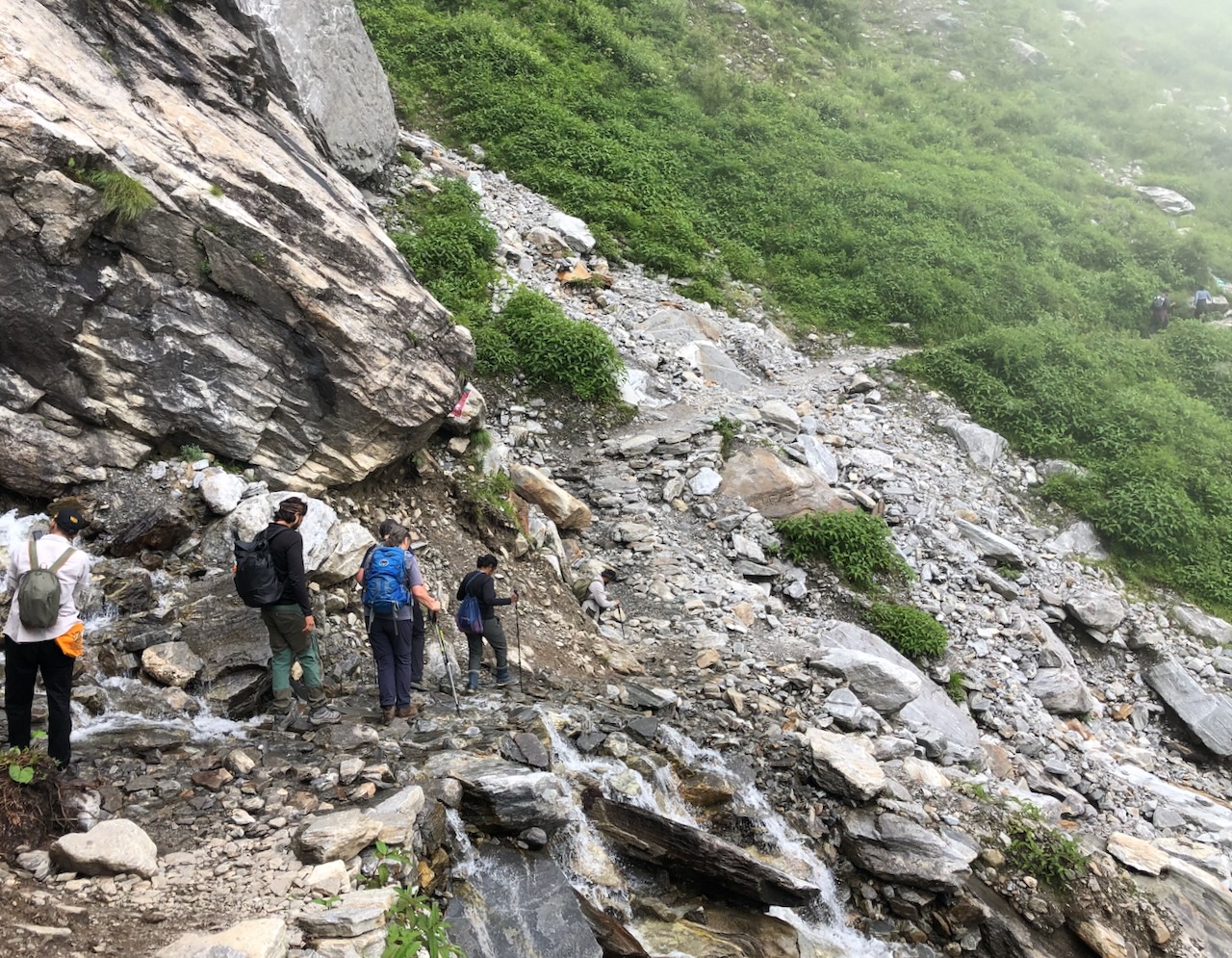
Then came a real climb, so steep she had to crawl part of the way. Even with ice axe and climbing boots, she couldn’t stay upright. The path clung to the side of a mountain which plummeted several hundred feet into the raging waters below, the ground crumbly and uncertain. But she pressed on. ‘One is so busy placing feet that one hasn’t time to think of possibilities.’ 
They slid down a precipice, hanging on to rhododendron bushes, crossed another snow field, then climbed again. Ganga Ram & Amba Dath – two of Joan’s three most loyal young guides – clearly thought she was too slow. ‘Each took a hand & ran me up paying no heed if I was on my feet or not. I had to beg for mercy twice as really they nearly finished me off,’ she wrote. And then they were there. The goal reached. The Valley of Flowers.
Tents were pitched exactly where mountaineer and author Frank Smythe had camped for several months in 1937. With three men managing the camp and plans to stay there until October, Joan was free to roam and explore the terrain of her new home in search of alpine flowers. The monsoon rains were gathering. Conditions would soon become unimaginably wet and the ground increasingly treacherous. But Joan was deeply happy.

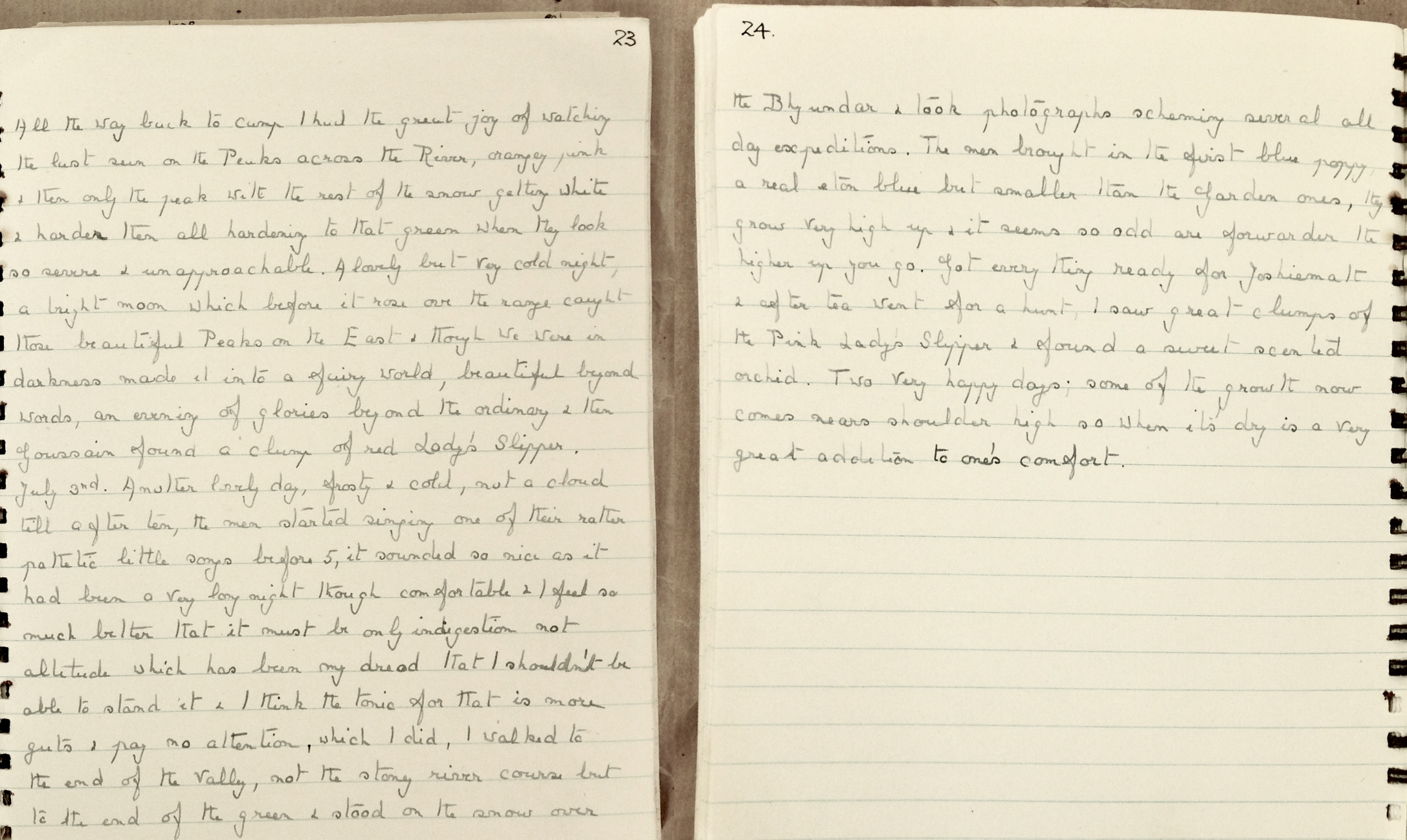
July 2nd. ‘It was the most glorious evening, every way you looked magnificent, through the gorge range upon range of perfect mountains…’ The descent from these dizzying heights, however, was less glorious. Rains had rotted much of the ground and the final stretch was so steep that she had no choice but to descend on her seat, using the ice axe as a brake. Yet Joan revelled in challenge and beauty alike, undaunted by danger, enchanted by flowers and alive to every shifting shadow. ‘All the way back to camp I had the great joy of watching the last sun on the peaks across the river, orangey pink… the rest of the snow getting white & harder, then that green when they look so severe & unapproachable.

That night was lovely but cold. A bright moon rose over the range, catching the snowy summits in the east. Though Joan’s camp lay in darkness, the moonlight made the mountains glow. ‘A fairy world,’ she wrote, ‘beautiful beyond words.’

July 3rd. ‘The men started singing before 5 o’clock this morning, it sounded so nice. The ground has all dried up & things are extremely lovely. If we get spells of two days fine, it will be a great help. Everything is growing very fast.

The following day, Joan was dead.

©Staffordshire History Centre

As abruptly as her life ended, her diary – so alive with wonder – skids to a halt.

Silence.

A telegram or letter from the sub-postmaster in Joshimath informed her family. Joan had slipped, fallen and died instantly. Due to the remote terrain, her body was carried back to camp and preserved in the snow until a magistrate could formally record the death. When her sister, Dossy, requested that Joan be buried in the valley, a small grave was made. A year later a headstone was erected, apparently delivered by Dossy herself.

Except that last bit has been deemed most unlikely by Dossy’s grandchildren who can find no record of their grandmother having made the long, arduous journey to India in the first year of the Second World War.

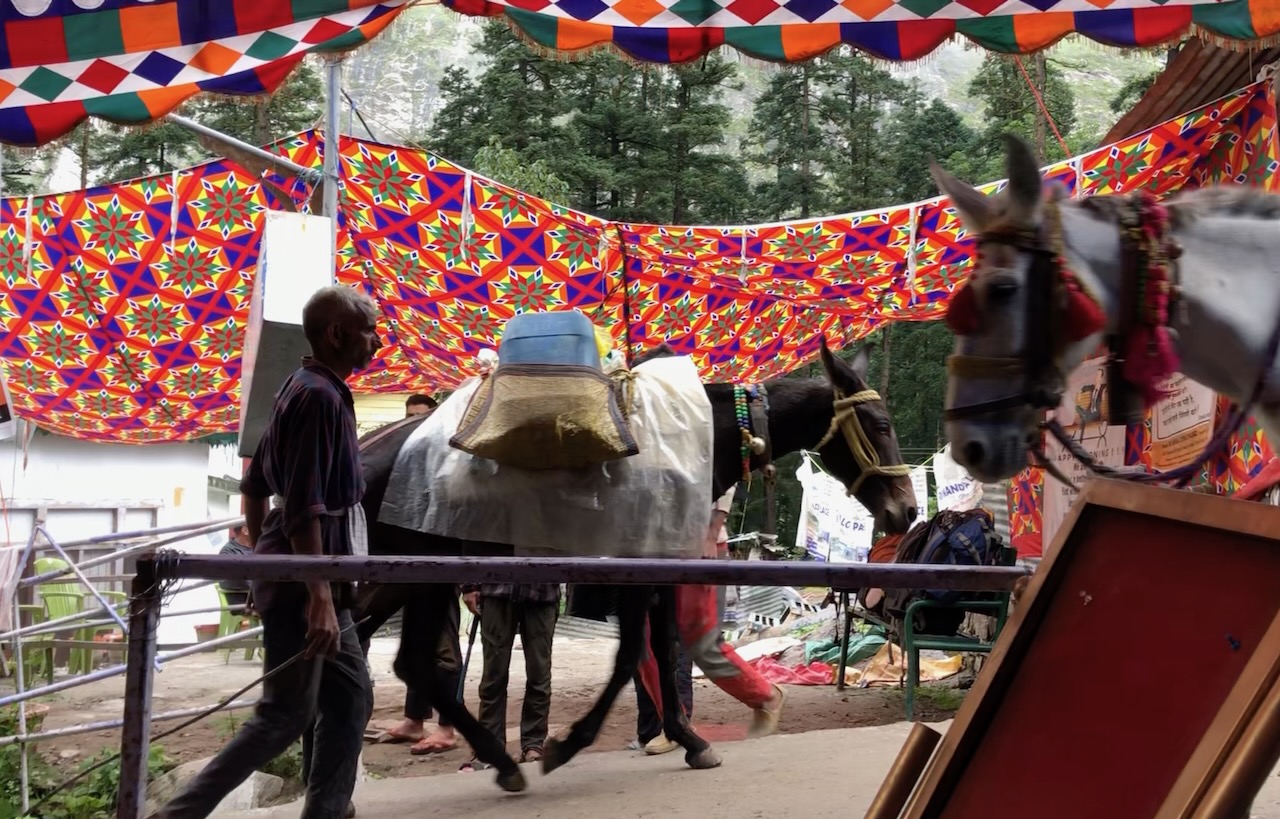
Without Joan’s detailed voice to explain what happened, conflicting accounts have taken root, a Chinese whisper of history… herstory. Was she reaching for a flower to add to her collection of specimens for Kew Gardens? Did she just slip, the edge of the cliff invisible in dense fog? For several years, I’ve tried to disentangle fact from error and in late July 2024, I and three of Joan’s descendants travelled to Ghanghariya, a colourful, bustling shanty town of damp hotels, pilgrims and donkeys, ready to make the long climb into the Valley of Flowers. The landscape might not reveal the past, but it could not lie.

Ghanghariya

We were warmly welcomed at the impressive Information Centre, honoured guests of the great-great-grandchildren of shepherds, villagers, and guides from Joan’s time each eager to share their version of what had happened to ‘Legge Ma’am’. Soon I had scribbled five different endings to Joan’s life in my little green notebook, the one that would mysteriously vanish a few days later as if to tell me: it didn’t really matter. The only truth that did, was that Joan had not been forgotten.

The next day we set off, once again retracing Joan’s footsteps, traversing the same raging river (via a slightly less terrifying bridge) and climbing the steep slopes into the valley.

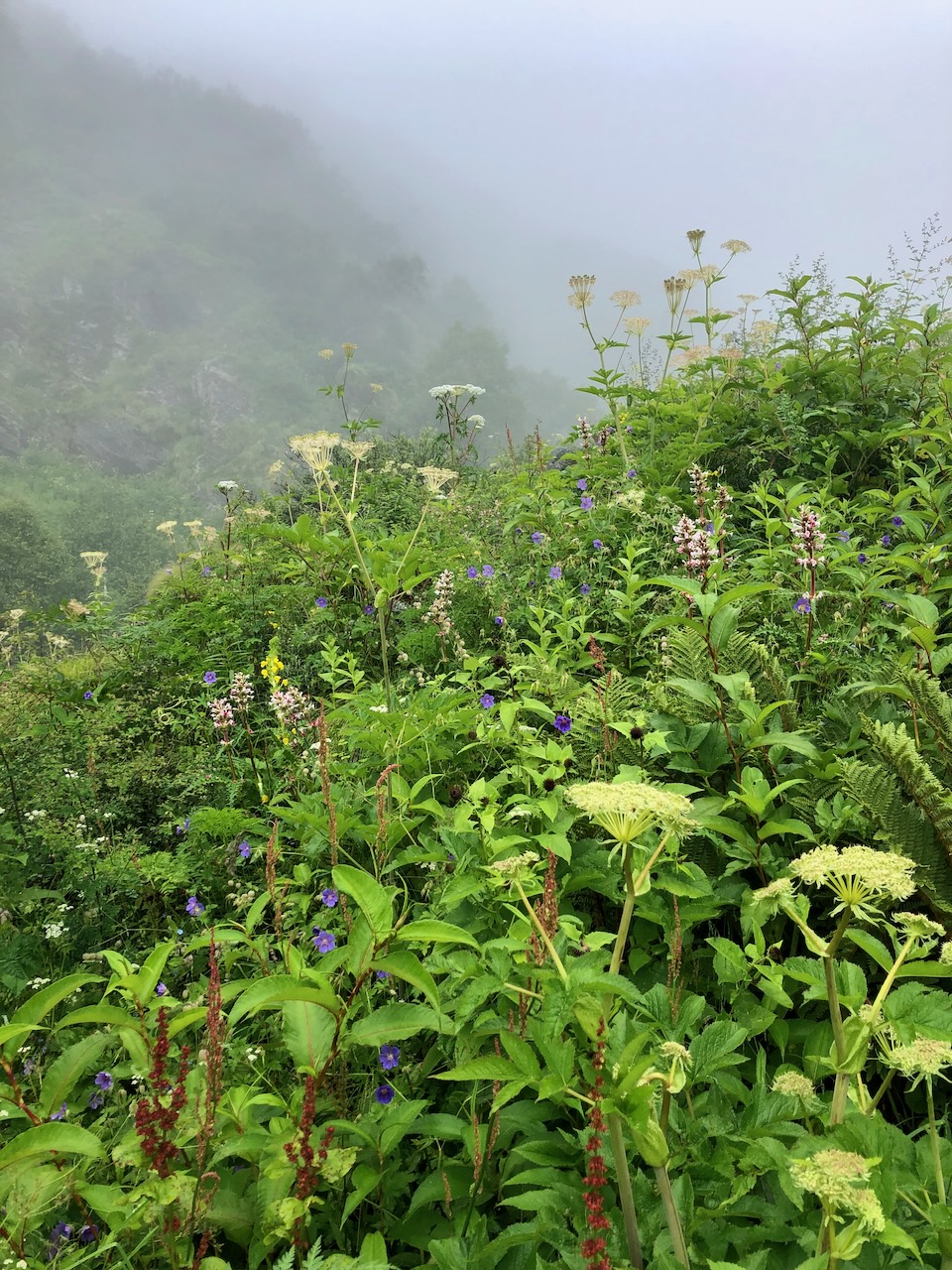
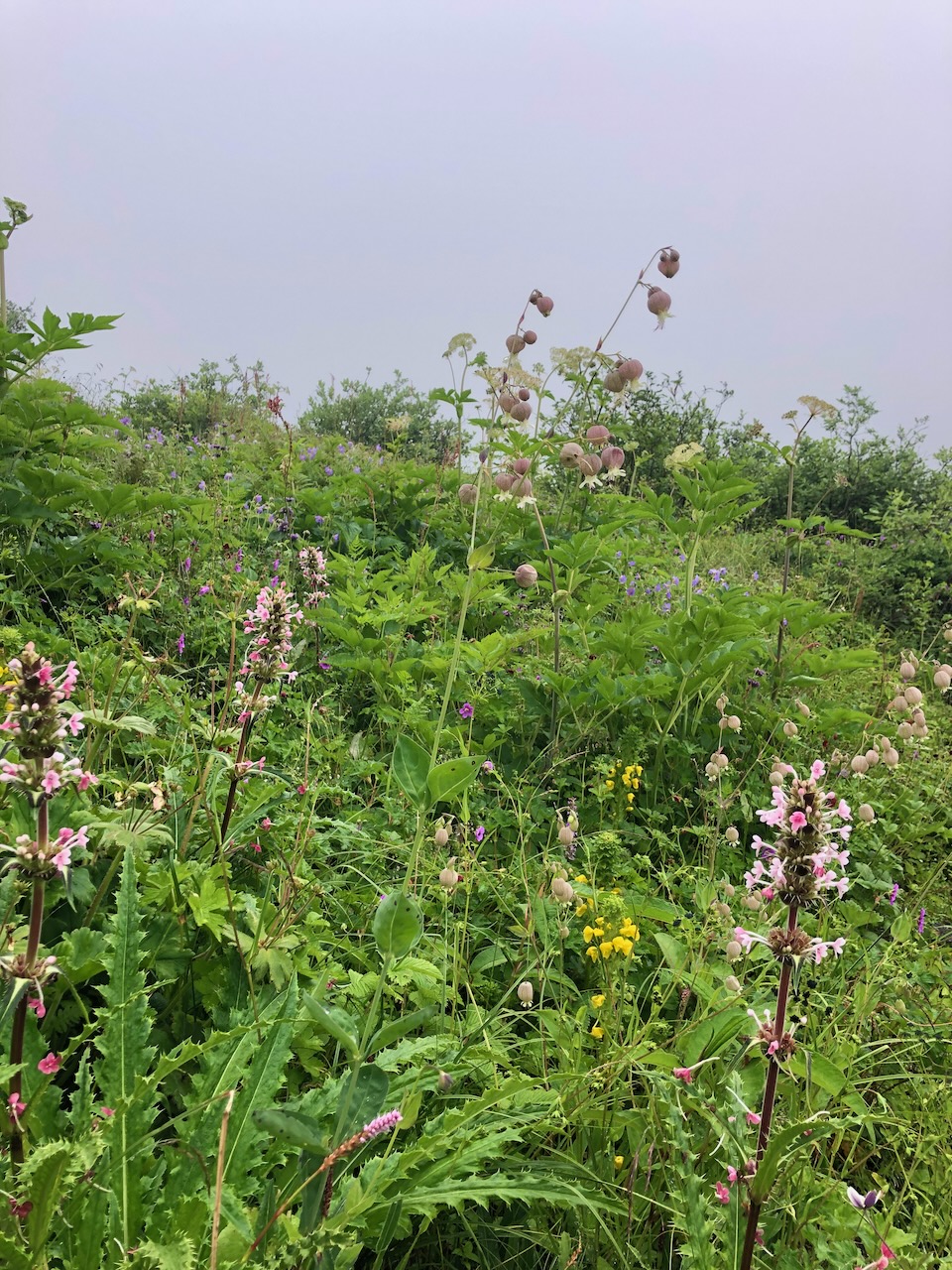
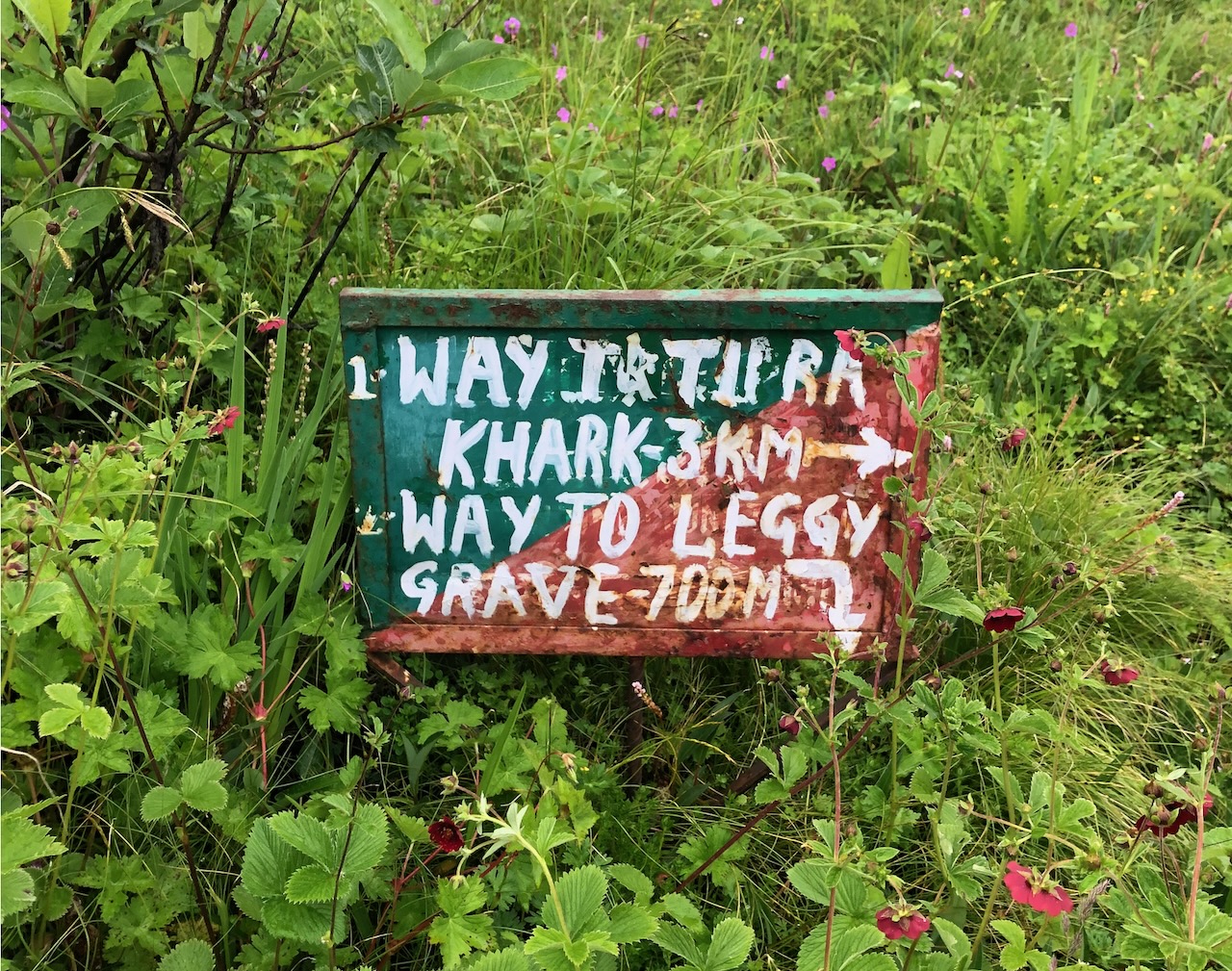
Low cloud concealed Joan’s snowy ‘majesties’ and even the valley itself. Flowers, shoulder high, lined the narrow trail until a small hand-painted sign forked it and directed us to the right.

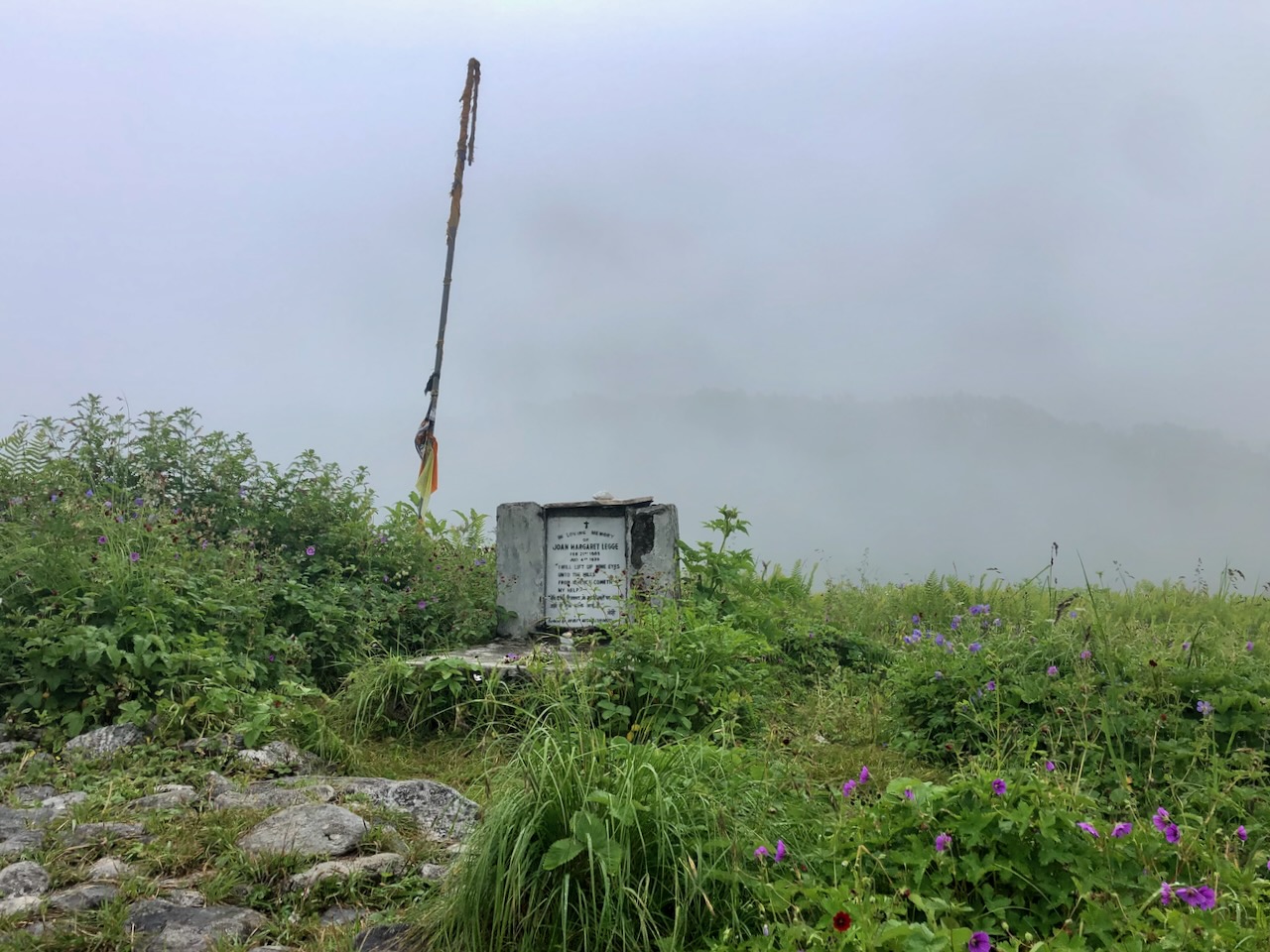
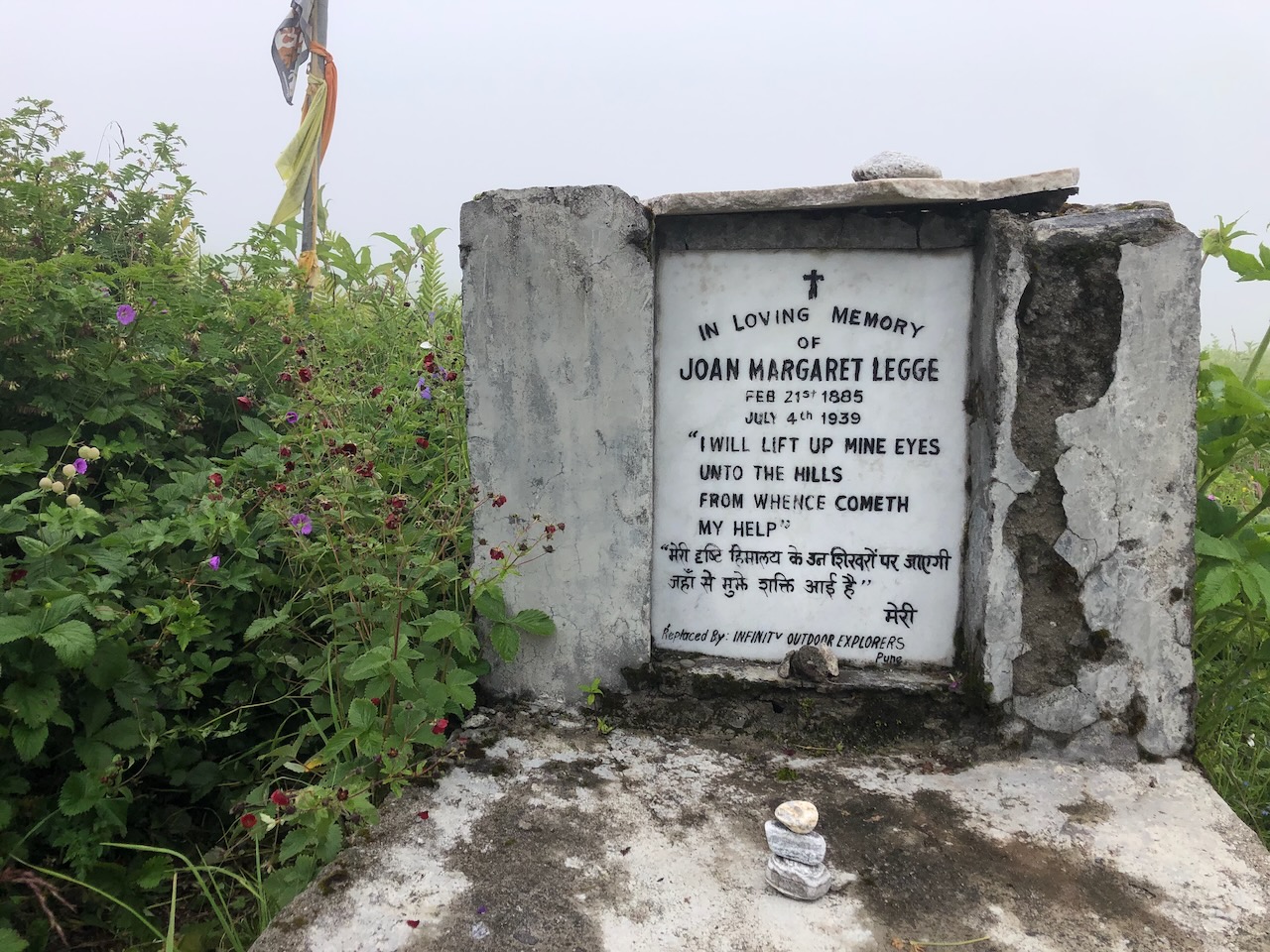
‘Leggy Grave’ could not have been more remote. With the original, broken headstone having been generously replaced by Infinity Outdoor Explorers and the area lovingly tended by villagers, Joan rested, Ophelia-like, among geraniums, potentillas and flowers whose names I don’t know. But she did.

Buried under snow for eight months of the year, this was where my intrepid great-great aunt found peace. A ‘lost daughter of the Himalayas’. And in the prophetic words of the sub-postmaster written over eight decades ago, ‘though death is inevitable, her death in a lonely forest under the tragic circumstances will always be mourned.’

While Joan lives on in the hearts and imaginations of people in northern India – many of whom have trekked miles to pay their respects – back in England, her name, her journey and her collection of flowers had all but vanished into the obscurity of family attics and forgotten archives. She entered my orbit in my twenties, a bright star that inspired independence, courage, a different way to be a woman in the world. I’ve followed her willingly, right to the edge. Imagined her fall… falling… falling… time stretching to infinity like a bungee… then snapping.

A tragic death, or an enviable end to a life well-lived? I’ll let Joan speak for herself.

‘… if we would only give up struggling after worldly things. They don’t count much when you come face to face with what the old Sardou calls the sublimity of the Himalayas whose magnificence, serenity and everlastingness grip one right to the core. You will probably think I am mad, but I don’t think so. There are things that stand and are I think increased, they are love and gratitude.’

Joan, June 1939

Forthcoming Event:

At the end of September, you are warmly invited to an exhibition/series of events showing research and art created in honour of Joan. Exact dates and details to be confirmed, but it will be in the beautiful Chapels of Rest in Stroud Cemetery.

This liminal space…

It will be different for everybody. But I love the quietness of these in-between days… 

That bloated weariness from endless festivities and good will. The jaded sparkle of unwrapped gifts spilling out of recycling bins. The jingle of carols fading as the challenges of Christmas are banished into as distant a future as any one year allows. 

For me there’s a sense of peace. A release from the storm of traditions. A disorientation. A heart full of gratitude.

With New Year still to celebrate, there’s just one last real or symbolic cork to pop. Then it’s back to reality with its resolutions, rhythms and routines. Bleak mid-winter stretched unruffled, a blanket of dark fields tucked into the horizon over a sleeping, muddy countryside.

Trees stand brittle, skeletal. We know Spring will come, but in the immediate months ahead it is easy to lose faith that colour, light and warmth will ever return. 

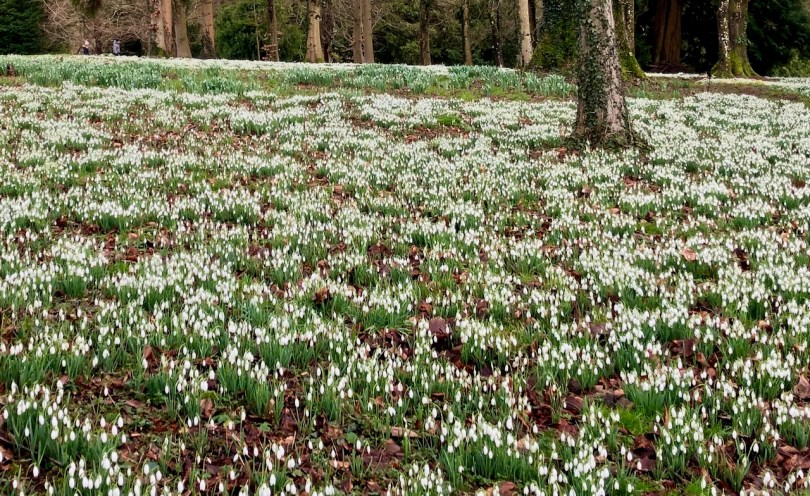
Looking closely, however (with a slightly alarming nod to climate change), small promises have already started to decorate bare branches like fairy lights. A little pink blossom here, a tiny green bud there.

But it is out of sight, below the earth’s surface, where the real hope and action thrive. 

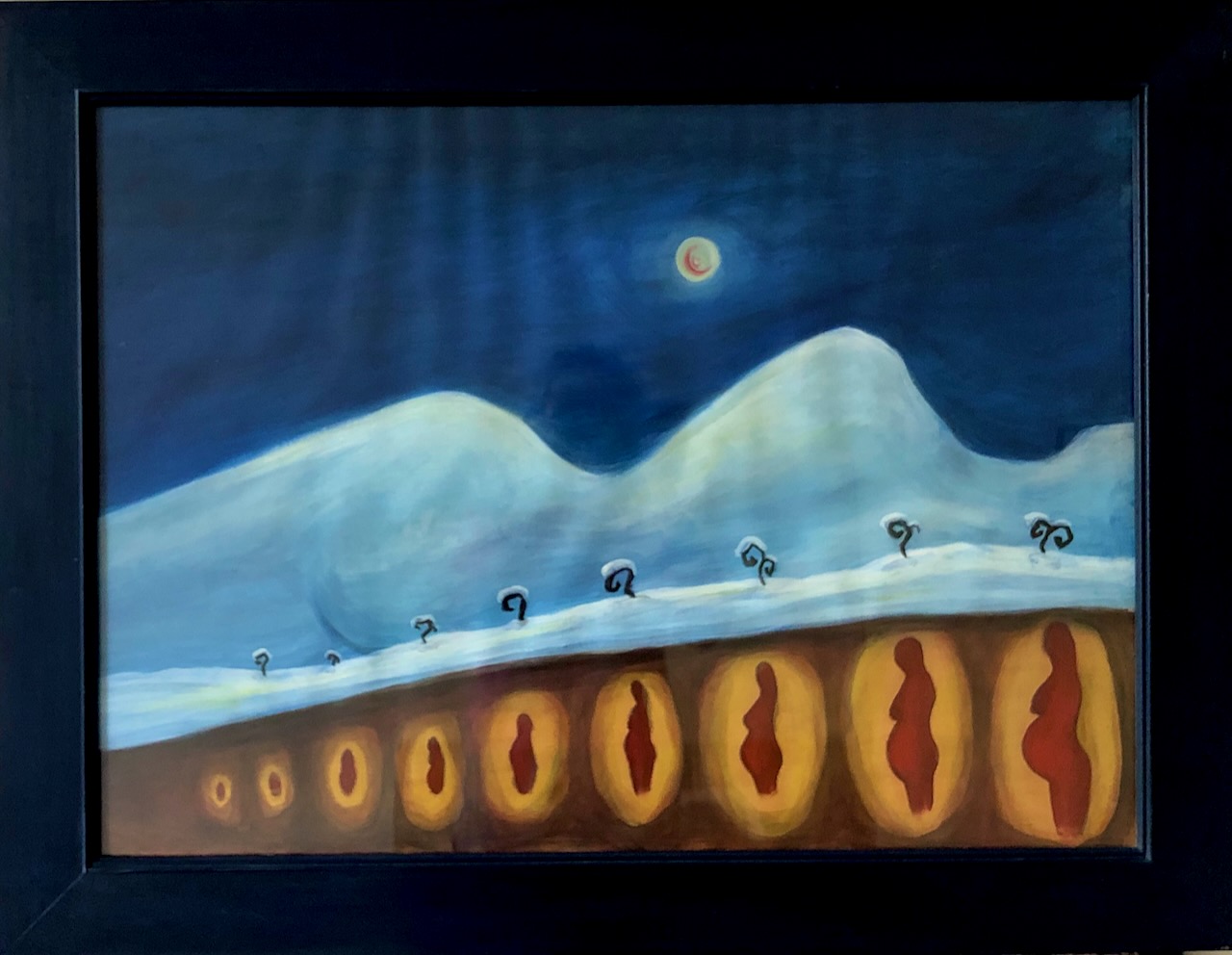
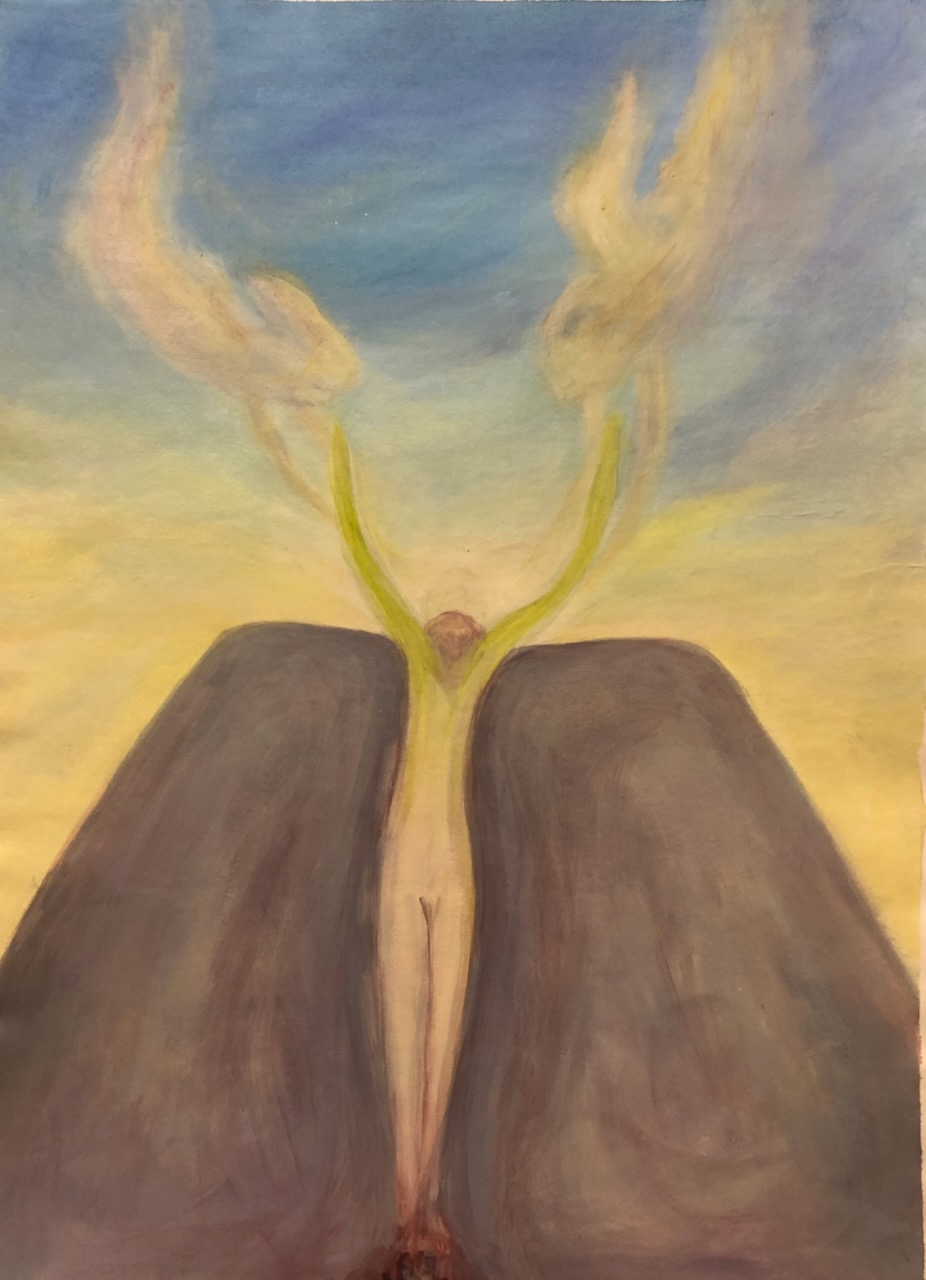
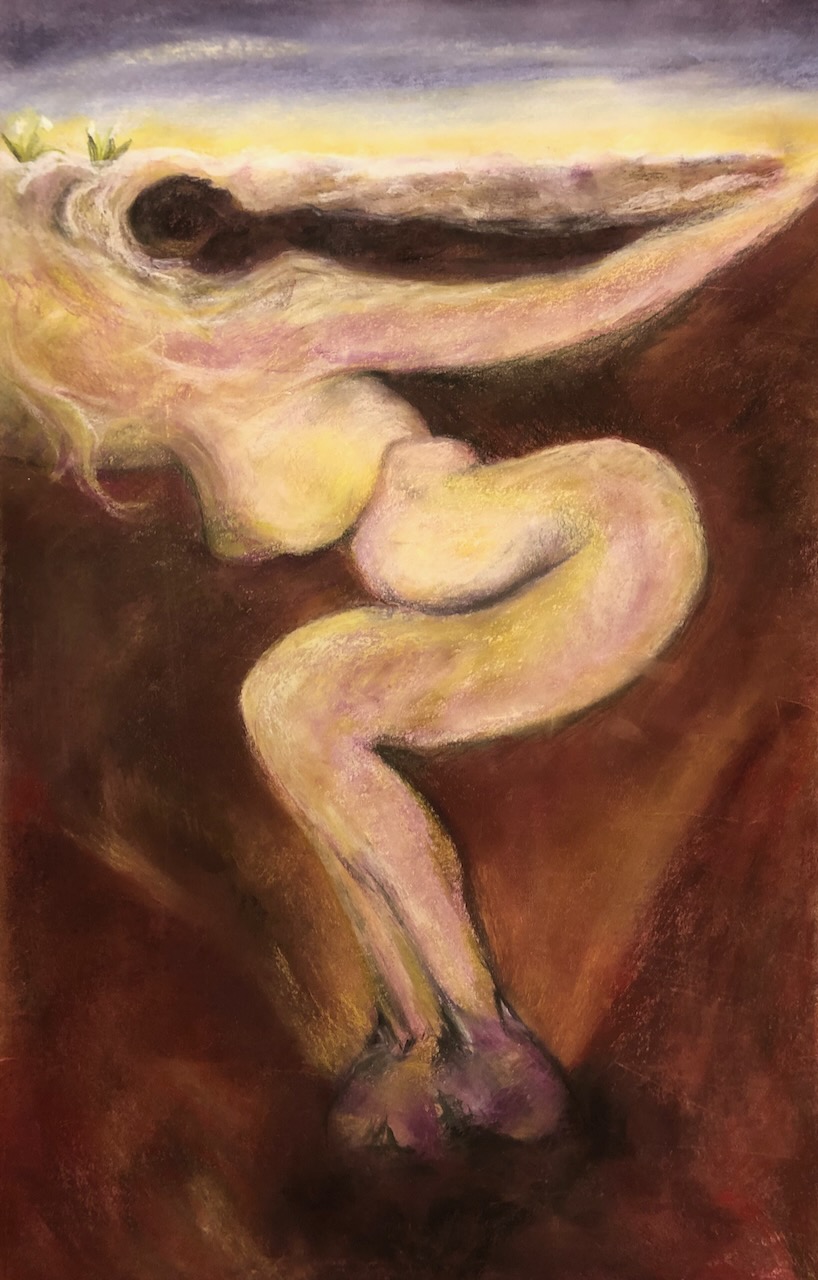
My recent move from storage to studio has uncovered numerous sketches and paintings I haven’t looked at for over twenty years. They were painted in the nineties when I lived on the west coast of Ireland consciously engaging with the four seasons and their corresponding echo within the inner rhythms of a human lifespan. Inspired by Celtic mythology and various spiritual traditions, my thirty-something-year-old self saw winter as Mother Earth’s pregnant womb, and Spring the birth and dance of youth. 

On a soul level, we experience winter in those times when it appears nothing is happening. When everything seems dead, stuck, over. It can feel eternal and deeply uncomfortable. We might search for escape in company, drink, exercise, work… or chocolate and movies. Might make wrong decisions through impatience to crank up the old and move forward. Then one tiny shoot of new growth breaks through the surface and into our lives. The season changes and Winter’s purpose is revealed as saps start to rise unstoppably. Energy returns after its slump… or slumber. Because of its slump or slumber. New creativity flows. Our soul’s spring has arrived.

In the meantime, this darkness can nourish us. It invites stillness and rest. Quiet intimacy. Soul. Life is tiring… winter offers us a chance to withdraw and replenish our energies. So I welcome these dark mornings, short days and early nights – ideally interrupted by crisp sunshine to brighten the spirits – as a period of germination. An opportunity to lay off the guilt of achieving less as we enrich more. A time of holding rather than pushing.

With all that in mind, I wish you a gentle, inspiring, meaningful and happy path into your New Year.

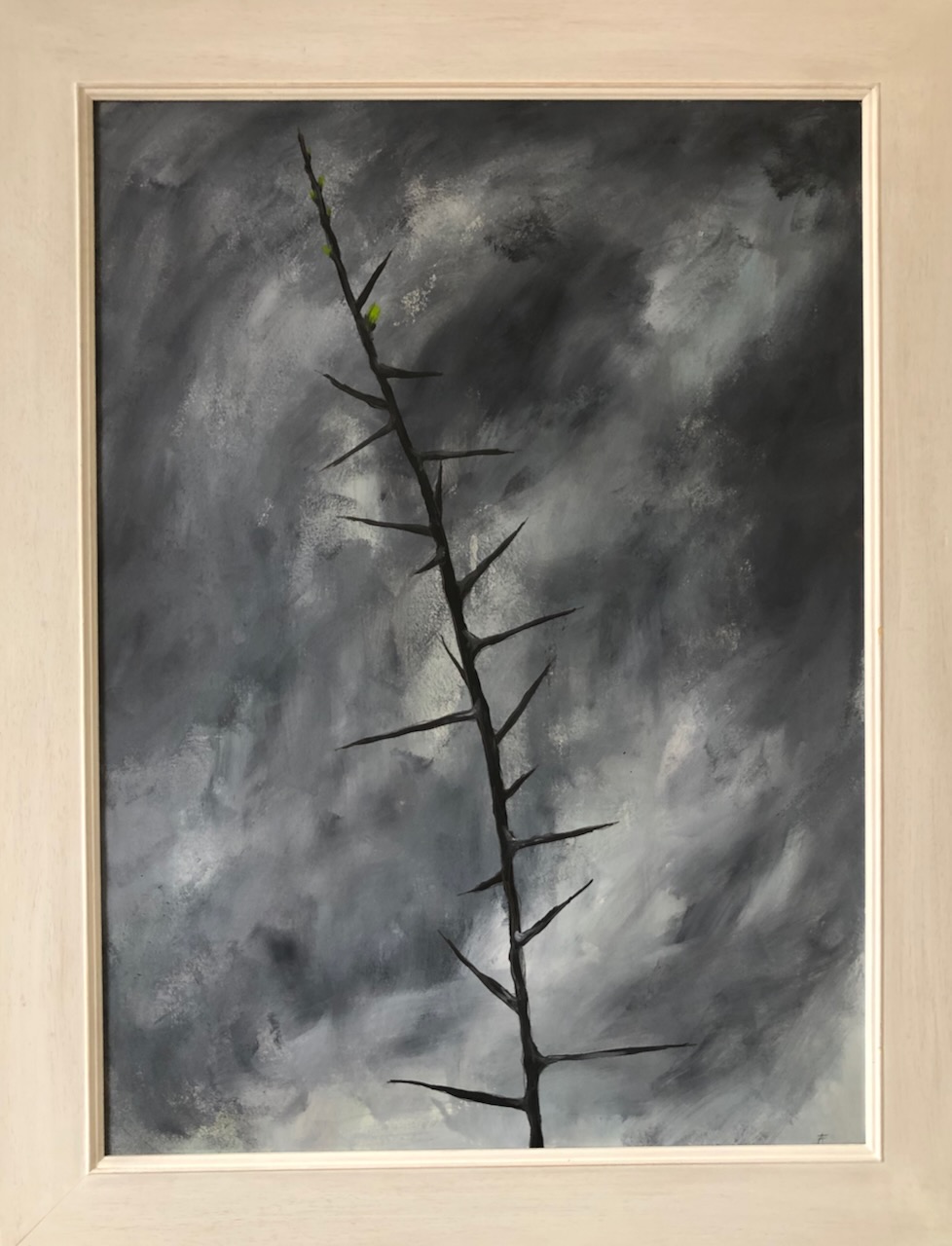
(All the paintings above are a mixture of acrylic and/or pastel and roughly 75x55cm)

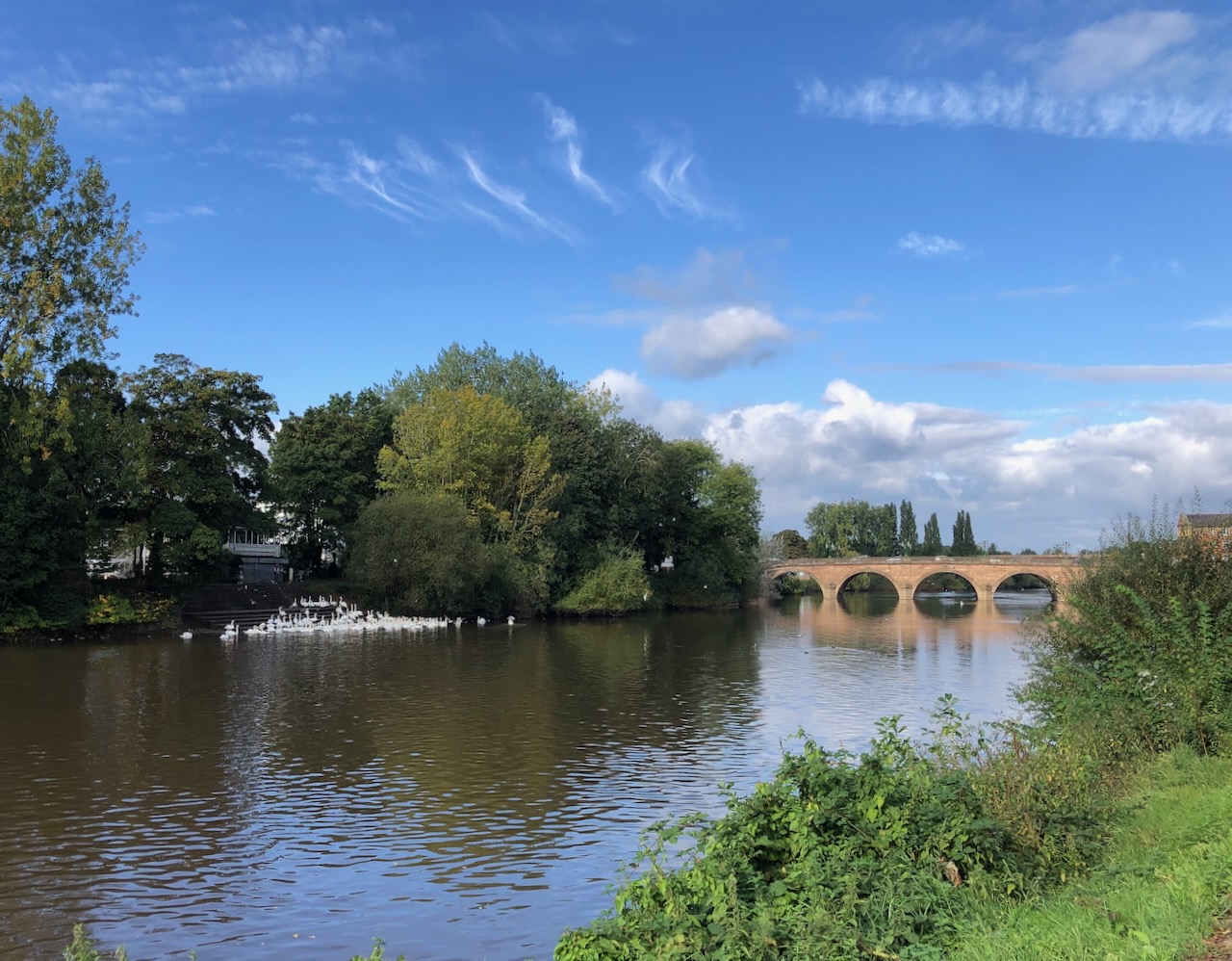
In the Flow: Ode to the River Severn

First Encounter with the River Severn

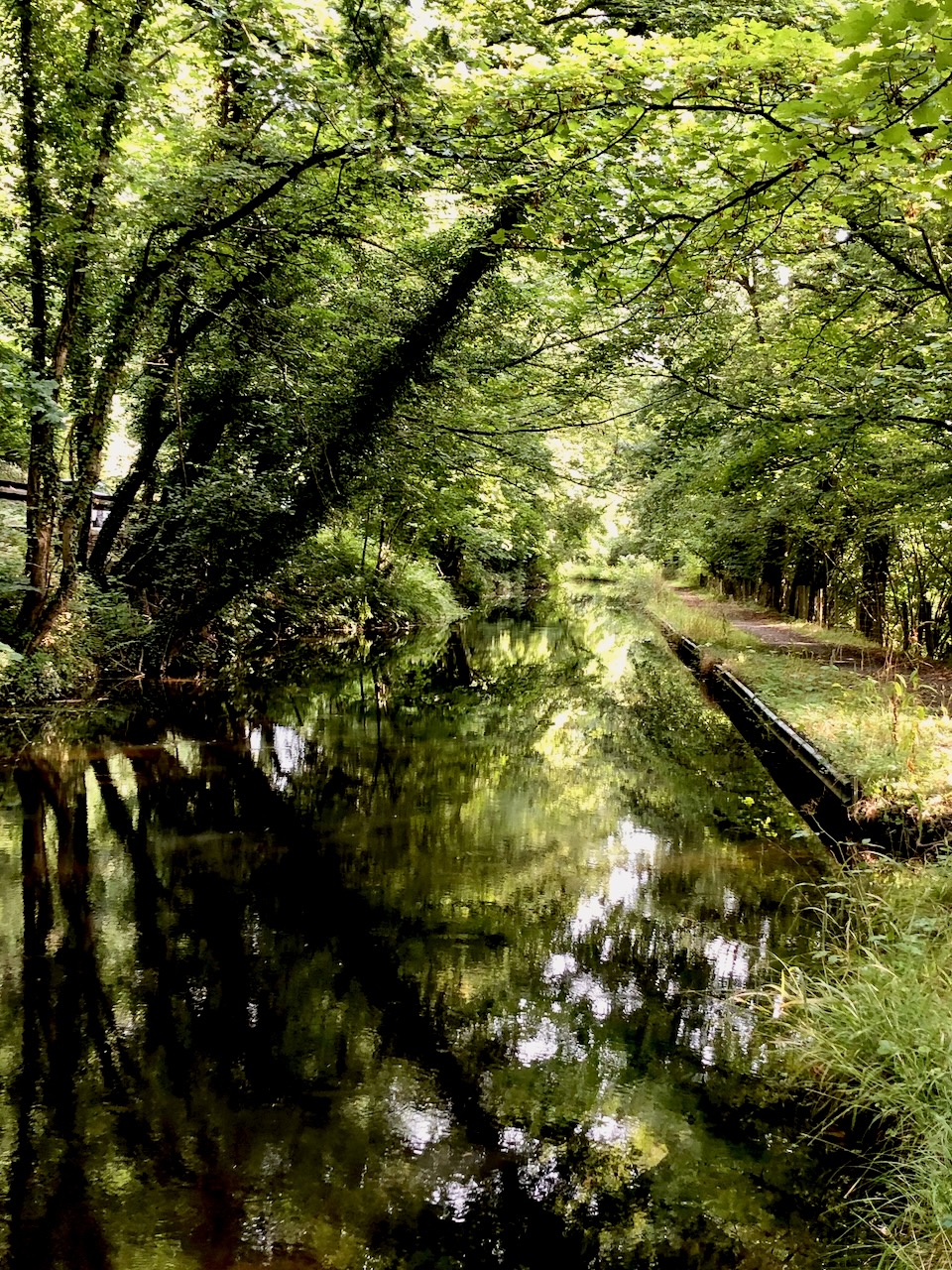
June 1999. You wouldn’t know it was there. Nothing suggests the proximity of Britain’s longest river as you amble down the canal towpath at Frampton-on-Severn. I have a hand-painted sign promising Cream Teas to thank for its discovery. The arrow lured passers-by through a hedge and into a wonderland of round tea tables bedecked with embroidered tablecloths and mis-matching crockery and arranged beneath the boughs of a huge copper beech. A tall man navigated trays of silver teapots and 3-tiered cake stands along narrow paths mown through the long grass. 

I had moved back to England after 10 years living abroad and was checking out the Stroud area as a possible new home. The top floor of the accompanying Lodge was up for rent, I soon learned… would I like to look at it? A sweeping staircase carried us up two stories and into an apartment of hexagonal rooms adorned with small fireplaces. Then, bending double, two miniature doors awkwardly birthed us onto a roof terrace and into the breath-taking view that would become my world. The River Severn stretched like a taut blue sheet tucked into a distant shore. Low tide mud sparkled. Silence was broken only by the soft chink of teacups on saucers.

Life on the River Severn

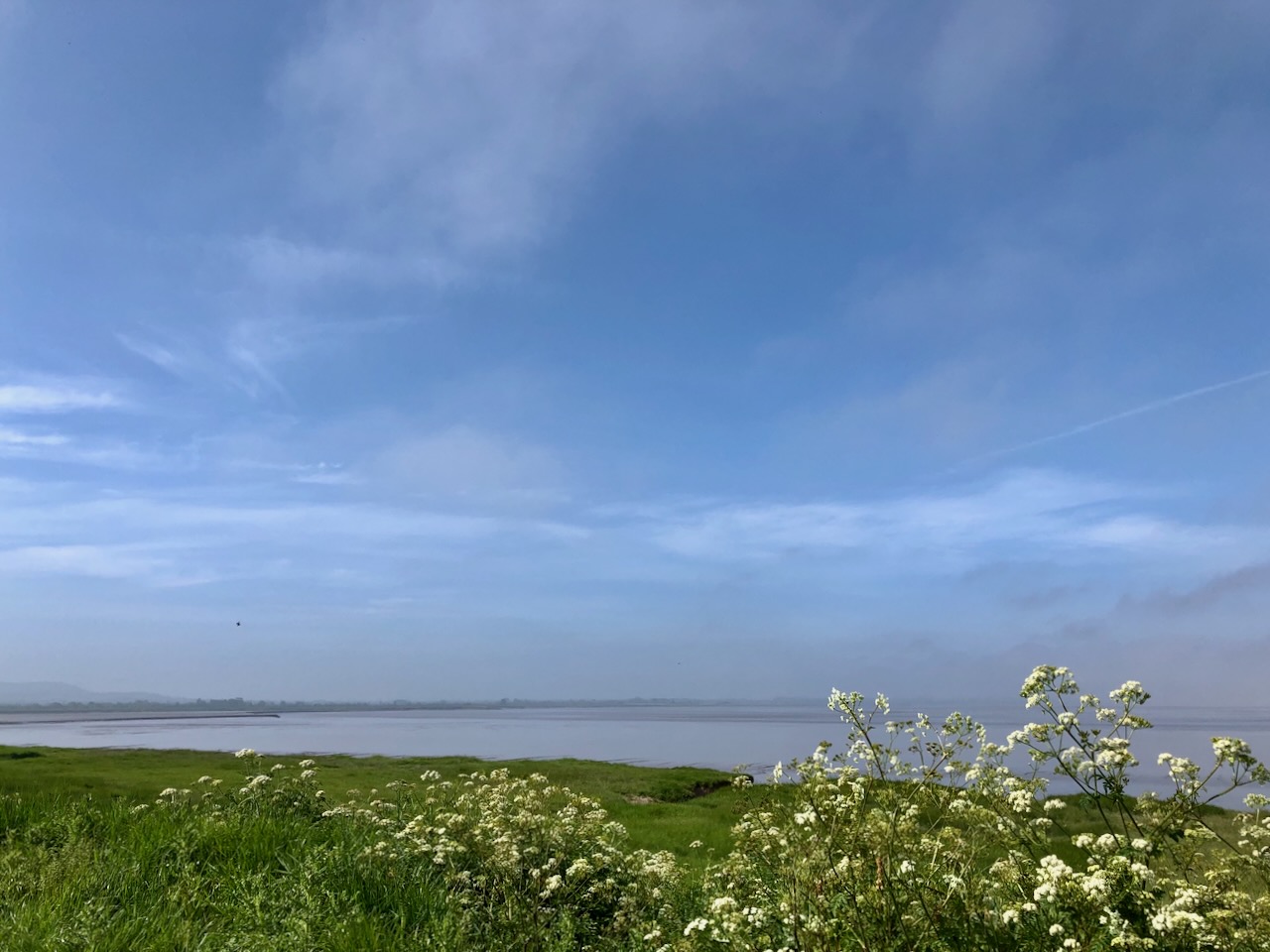
I would live in that apartment on the Severn for nearly three years. Every day I walked along the banks of the estuary, my breath aligning with the deep ebb and flow of the tides. 

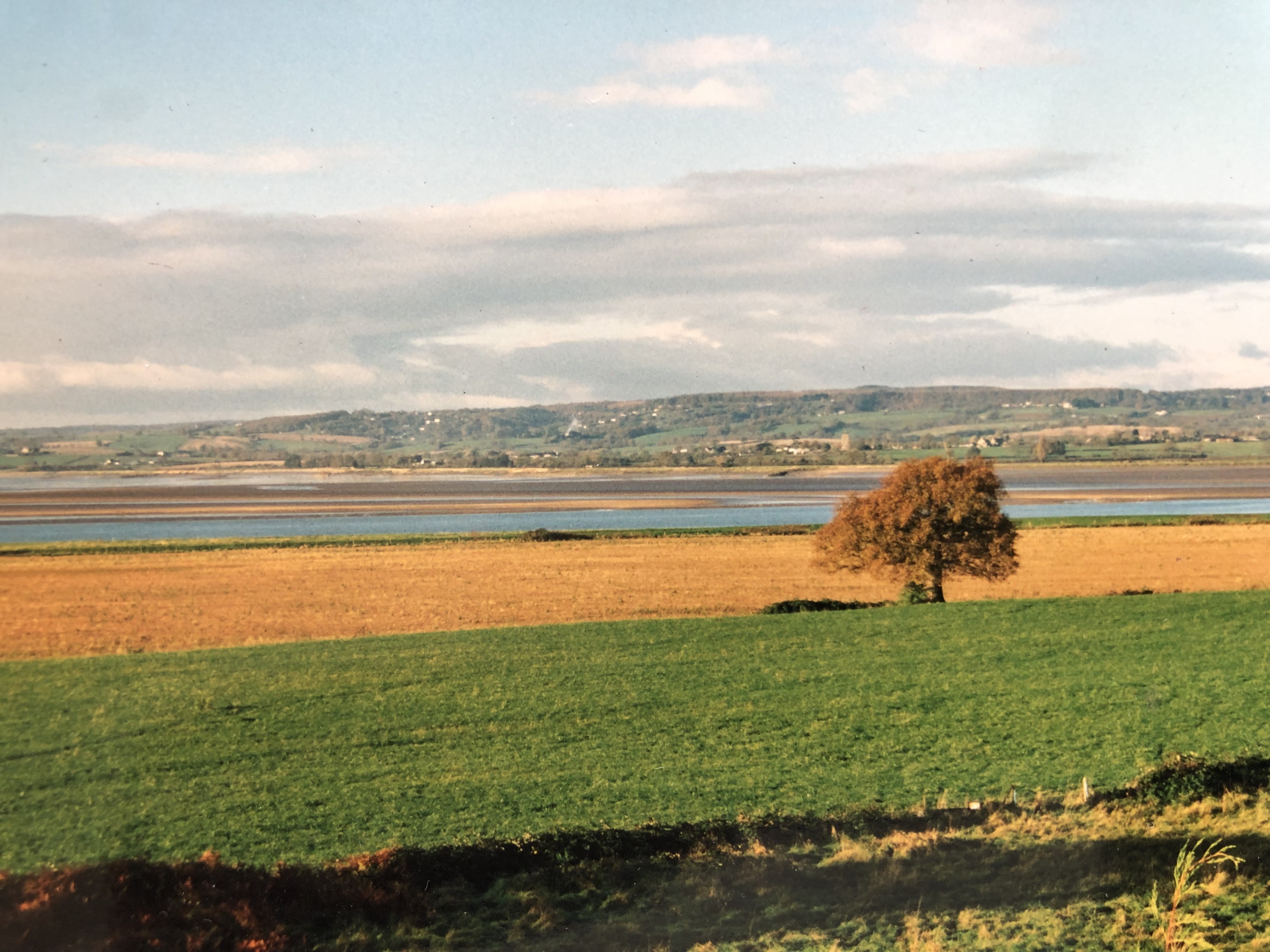
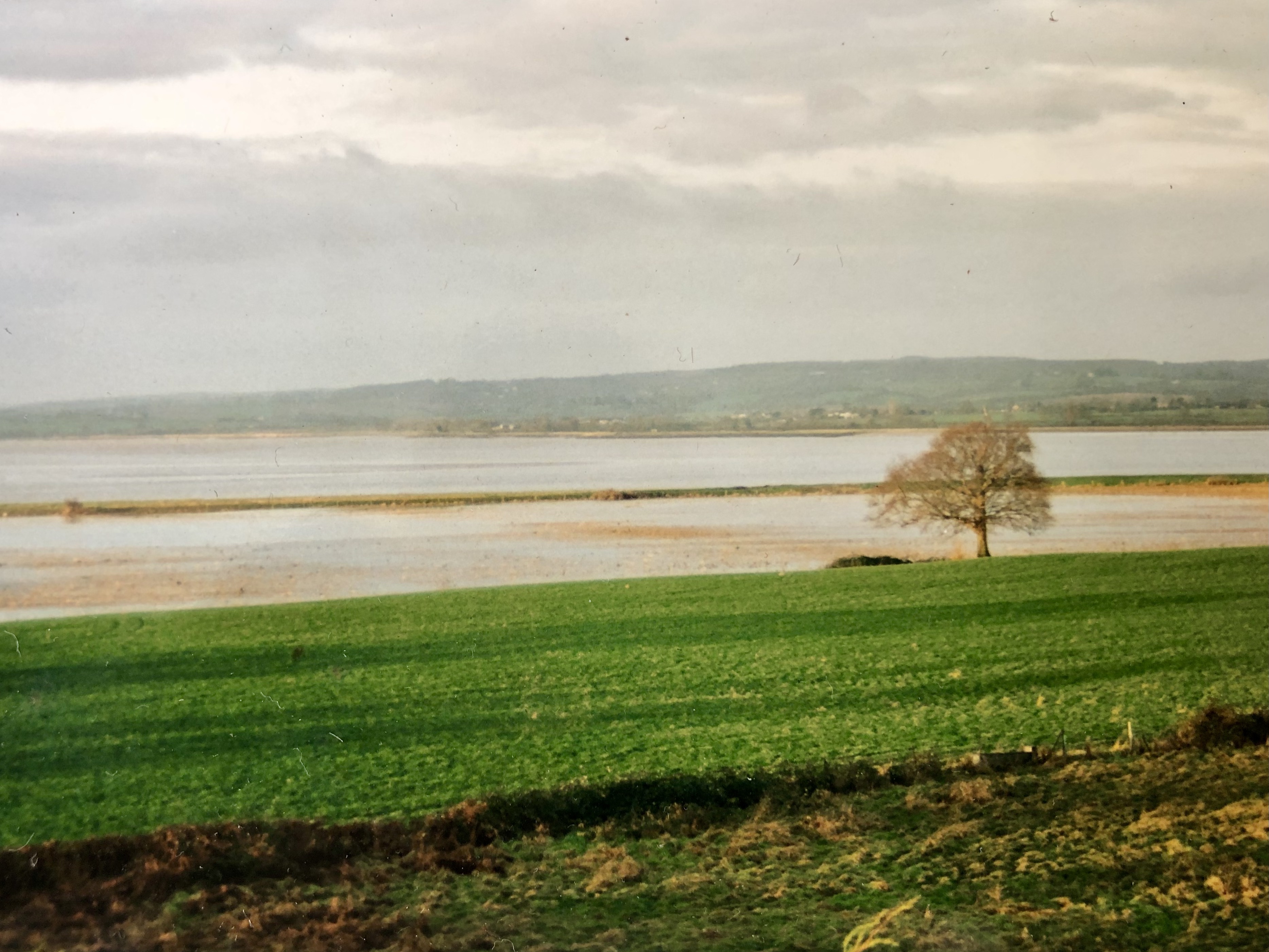
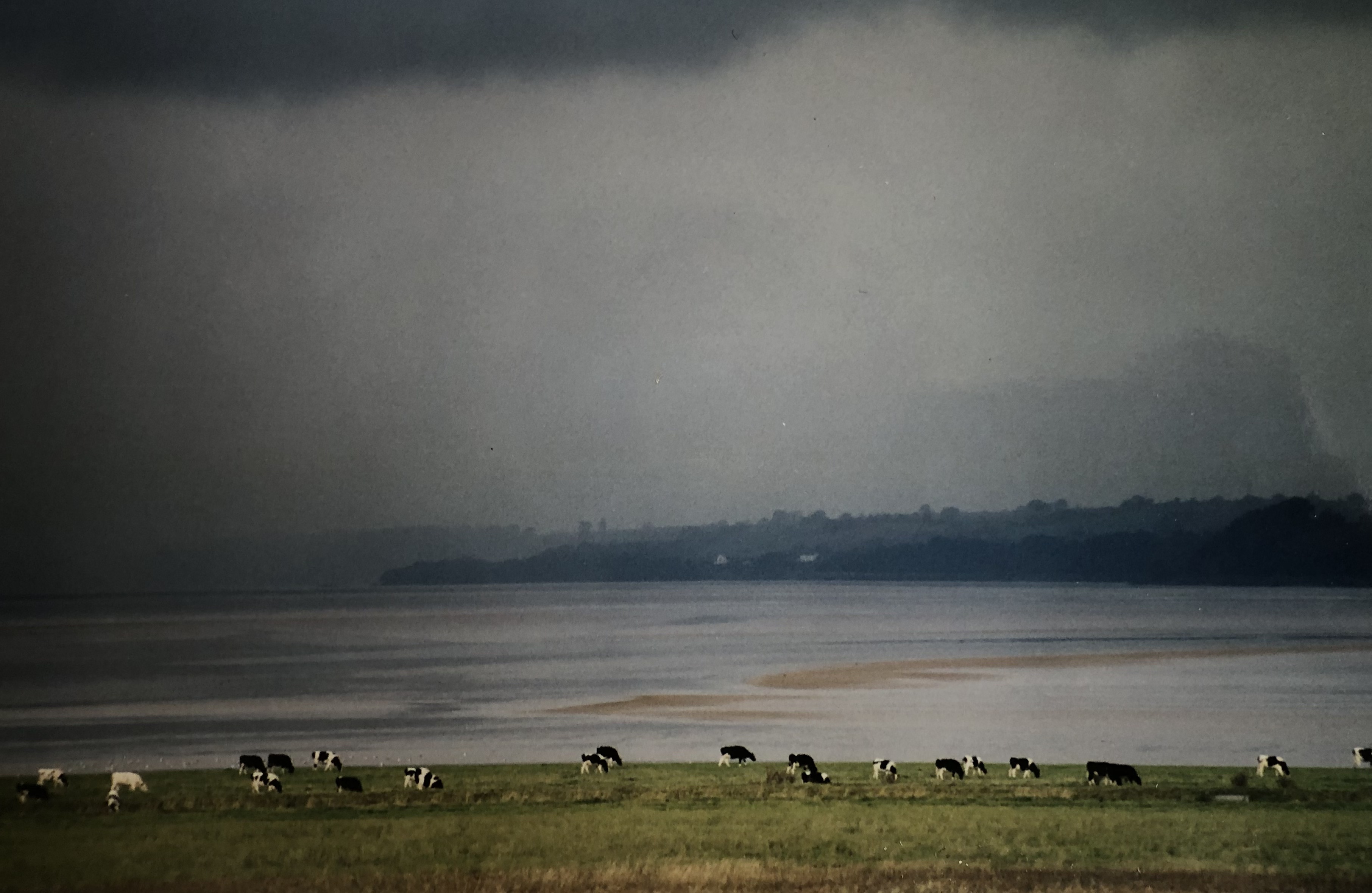
I witnessed the stoicism of a little oak tree holding its precarious own through the seasons, storms and floods; watched cows amble home at dusk accompanied by the swirling black clouds of starlings that condensed and evaporated in the gentle orange glow.

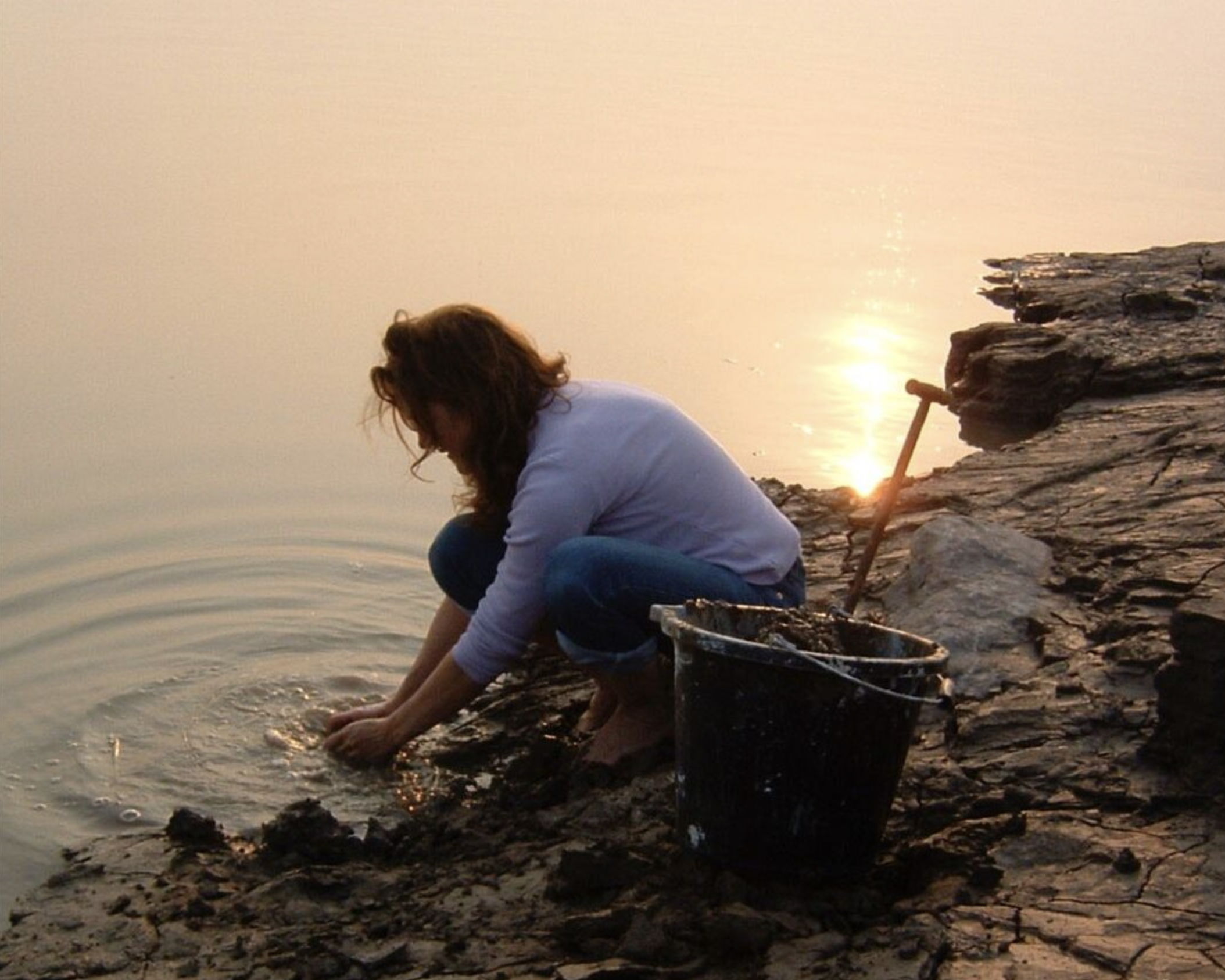
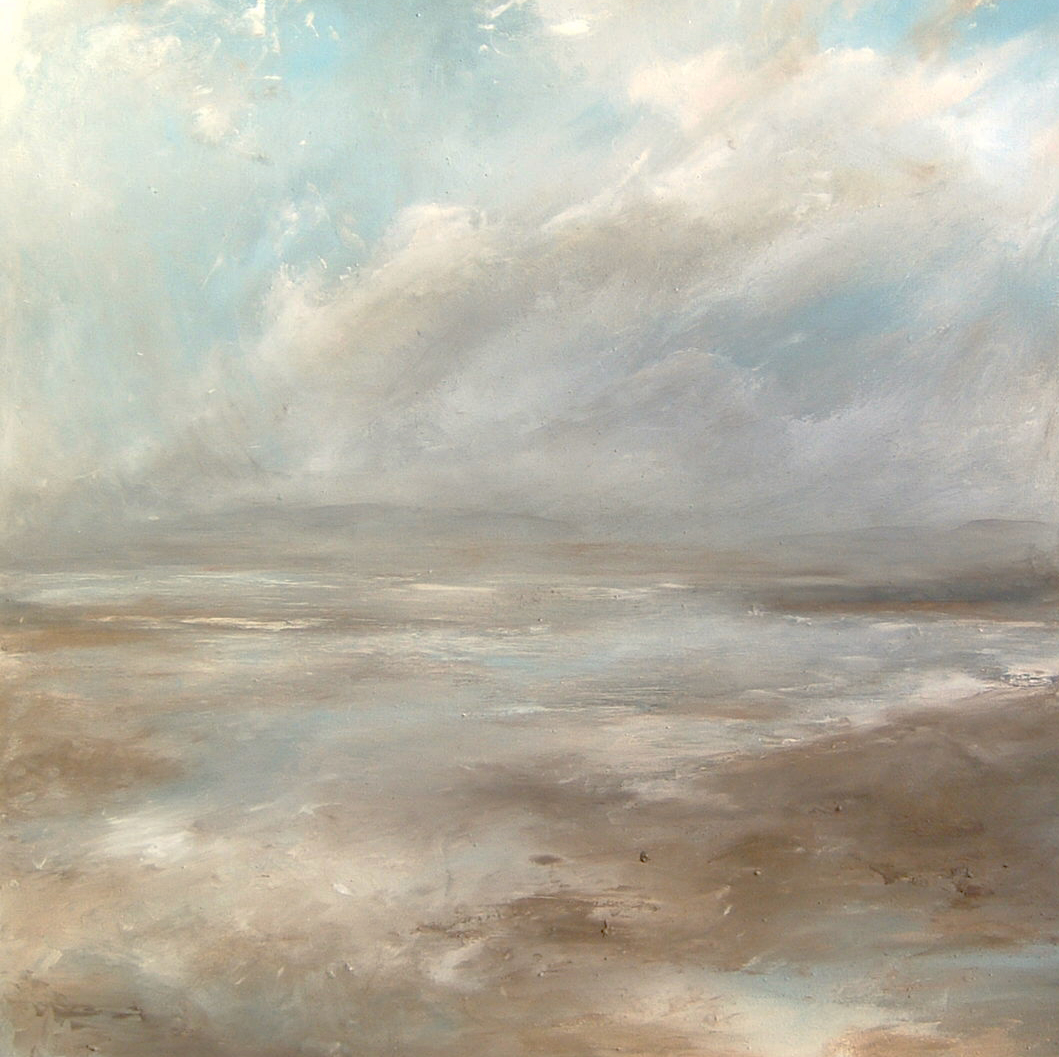
This was where I became a professional artist, scooping rich, melted-chocolate mud into buckets, mixing it with paint and dancing sky and weatherscapes onto large canvases with my hands. 

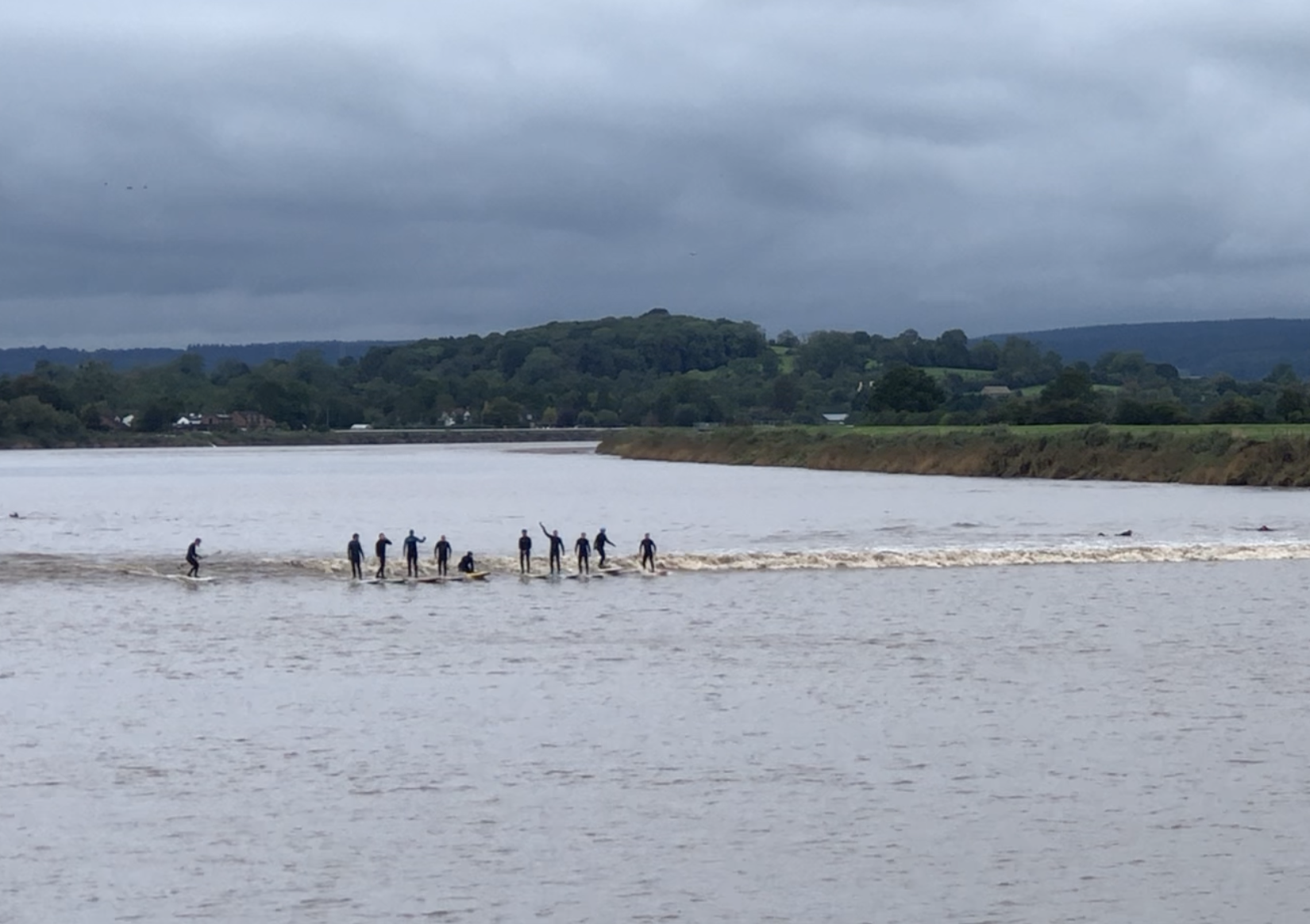
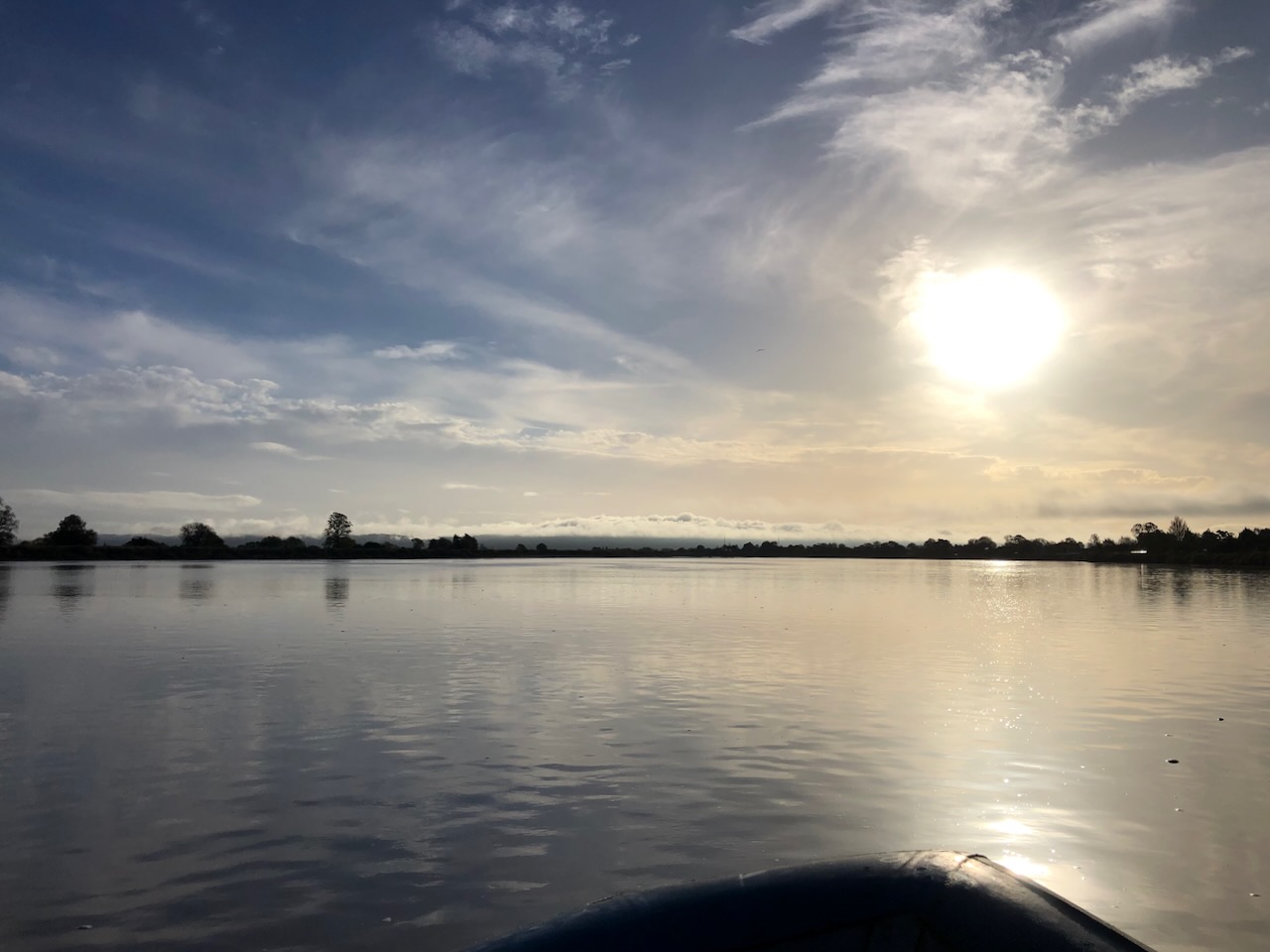
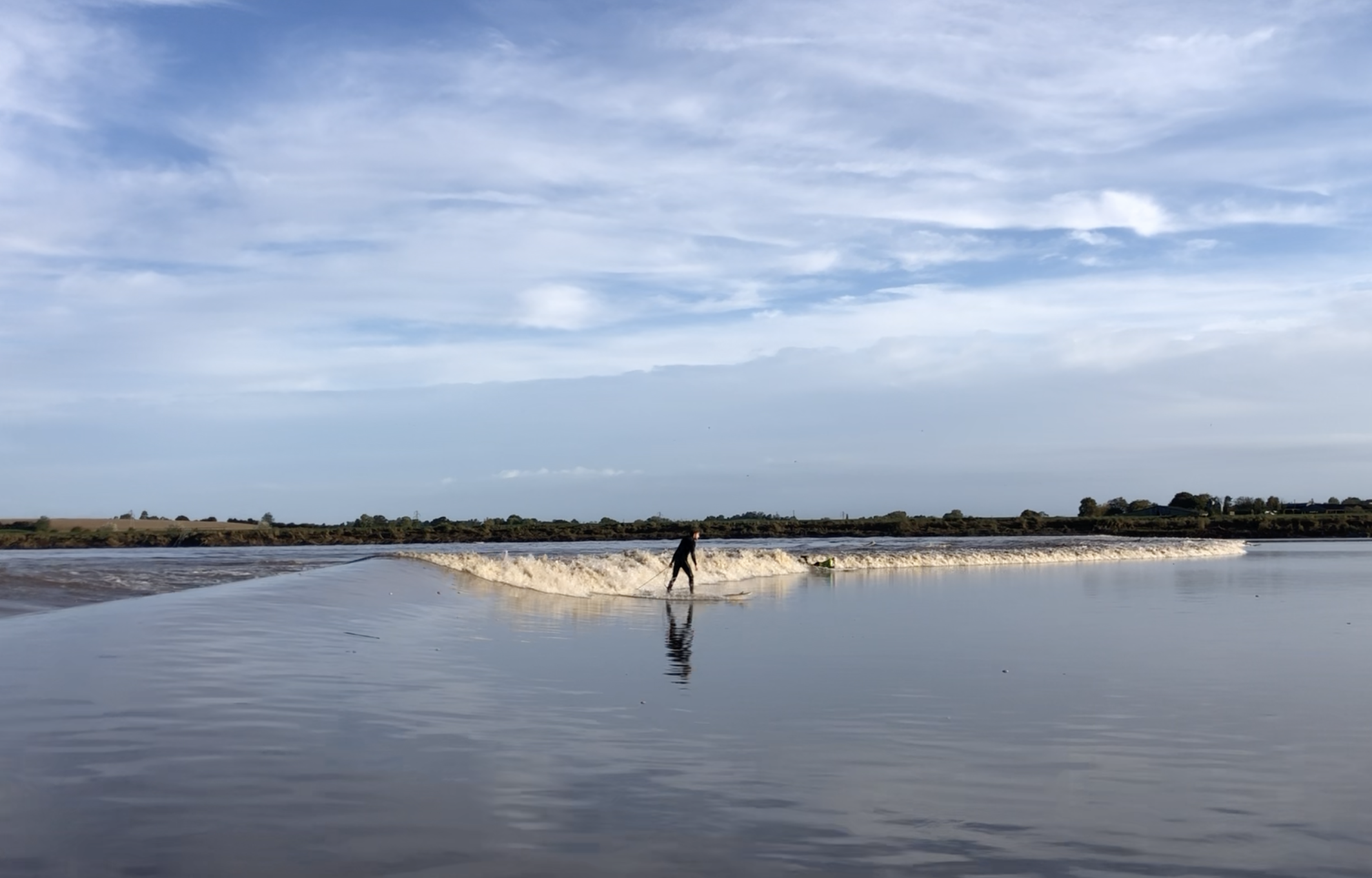
On many a chilly morning I stood on the Severn’s banks with mugs of coffee and expectant crowds waiting for the world’s second highest Bore to swash its way up the estuary and carry brave surfers upstream. Once, in the pitch of night, I crossed its swirling waters in a rickety old boat and returned in the frozen pinks of dawn. 

A Severn Bore

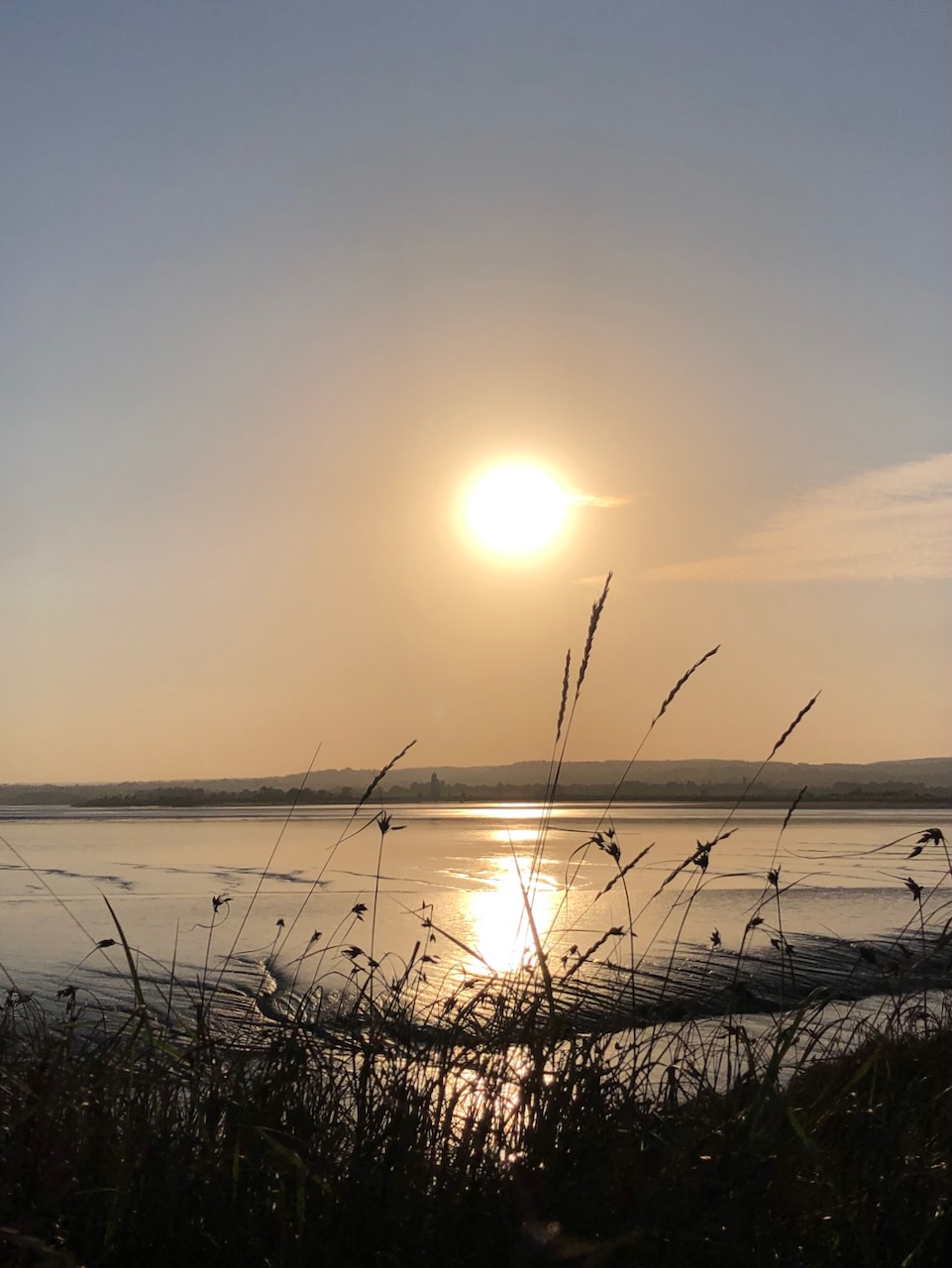
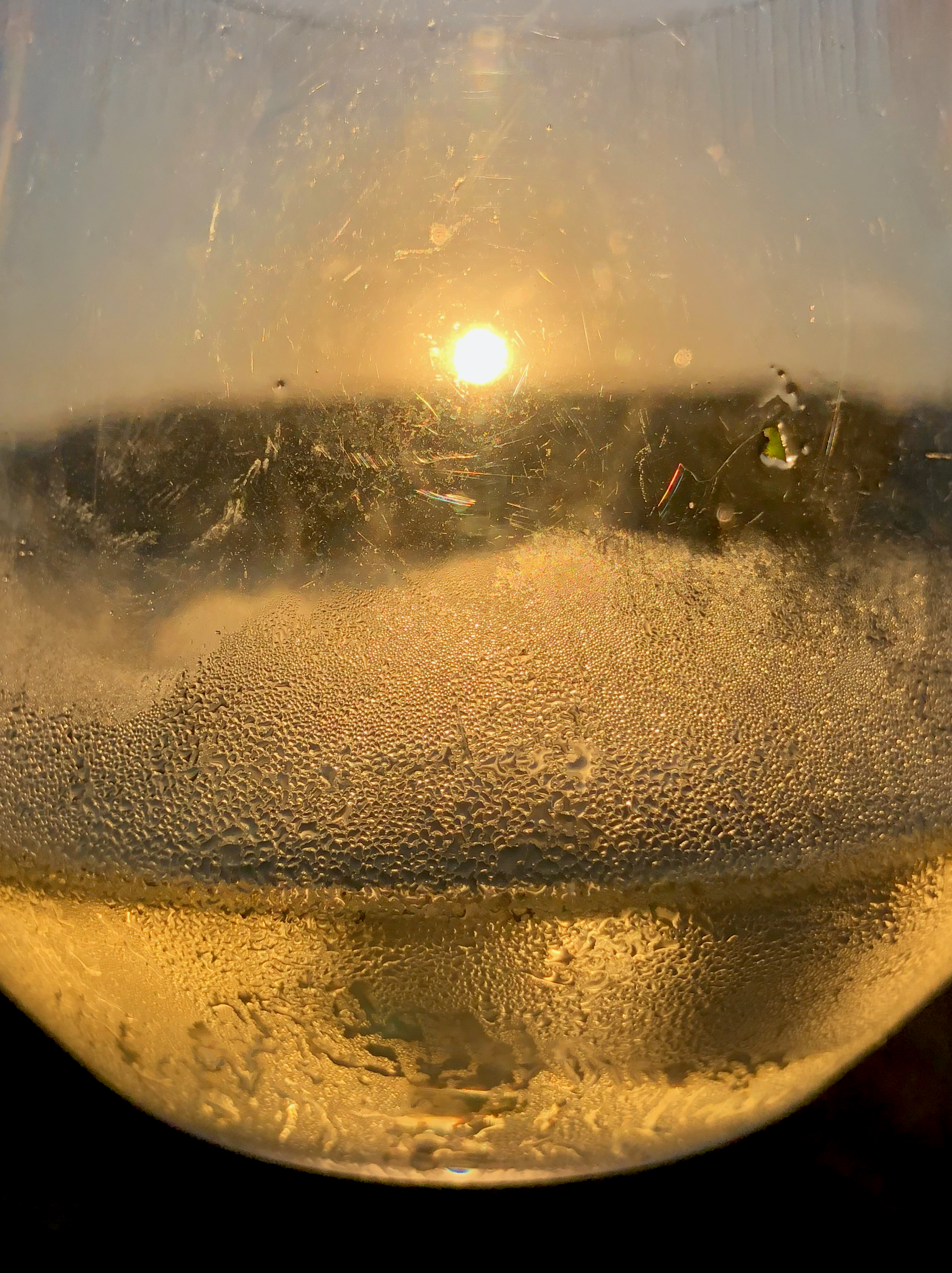
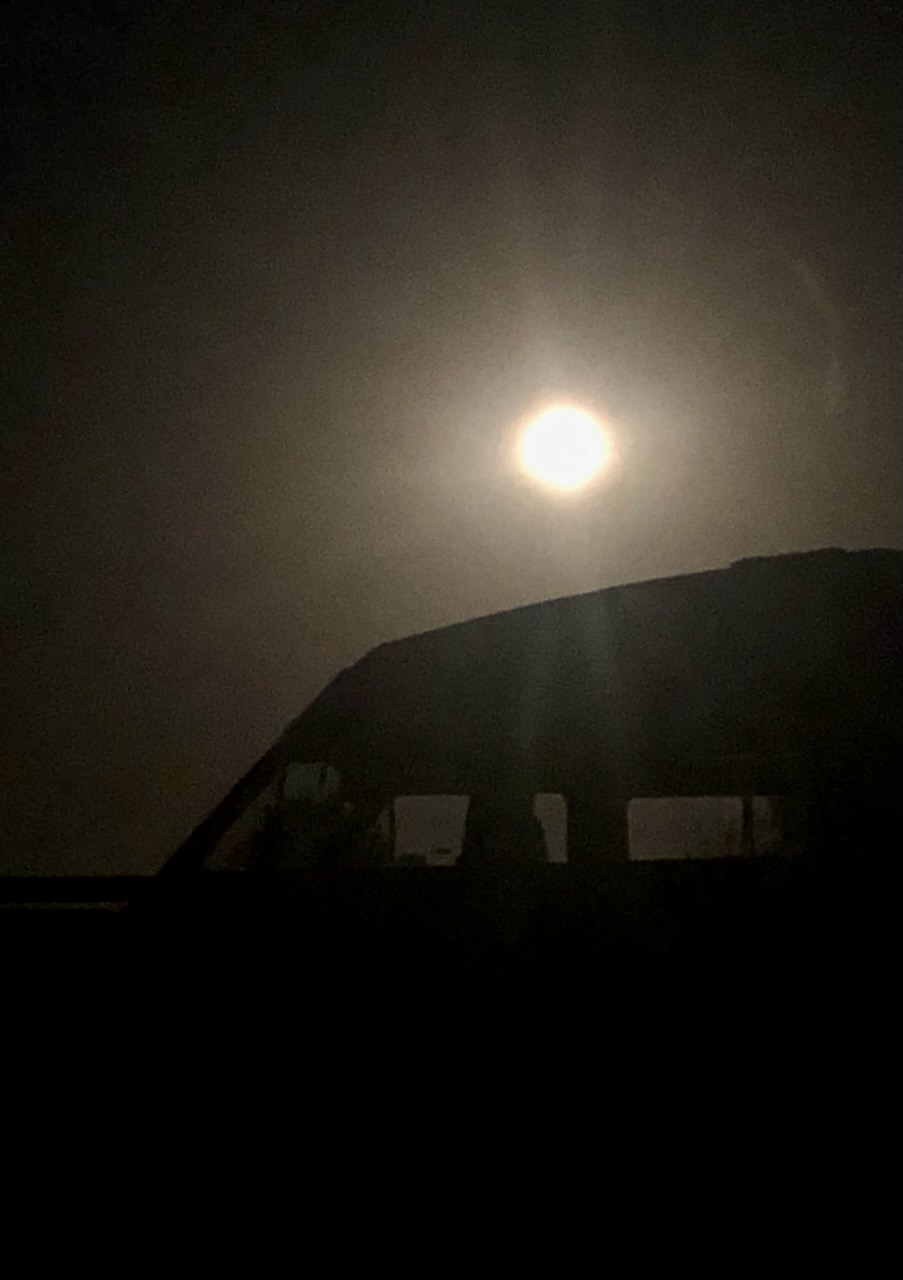
In later years, I would park my camper van on its shores, drink chilled glasses of wine in the sun’s last rays and sleep through rising moons and meteoric showers. 

I have a rich store of happy, muddy memories of the River Severn.

Walking the Severn Way from source to sea

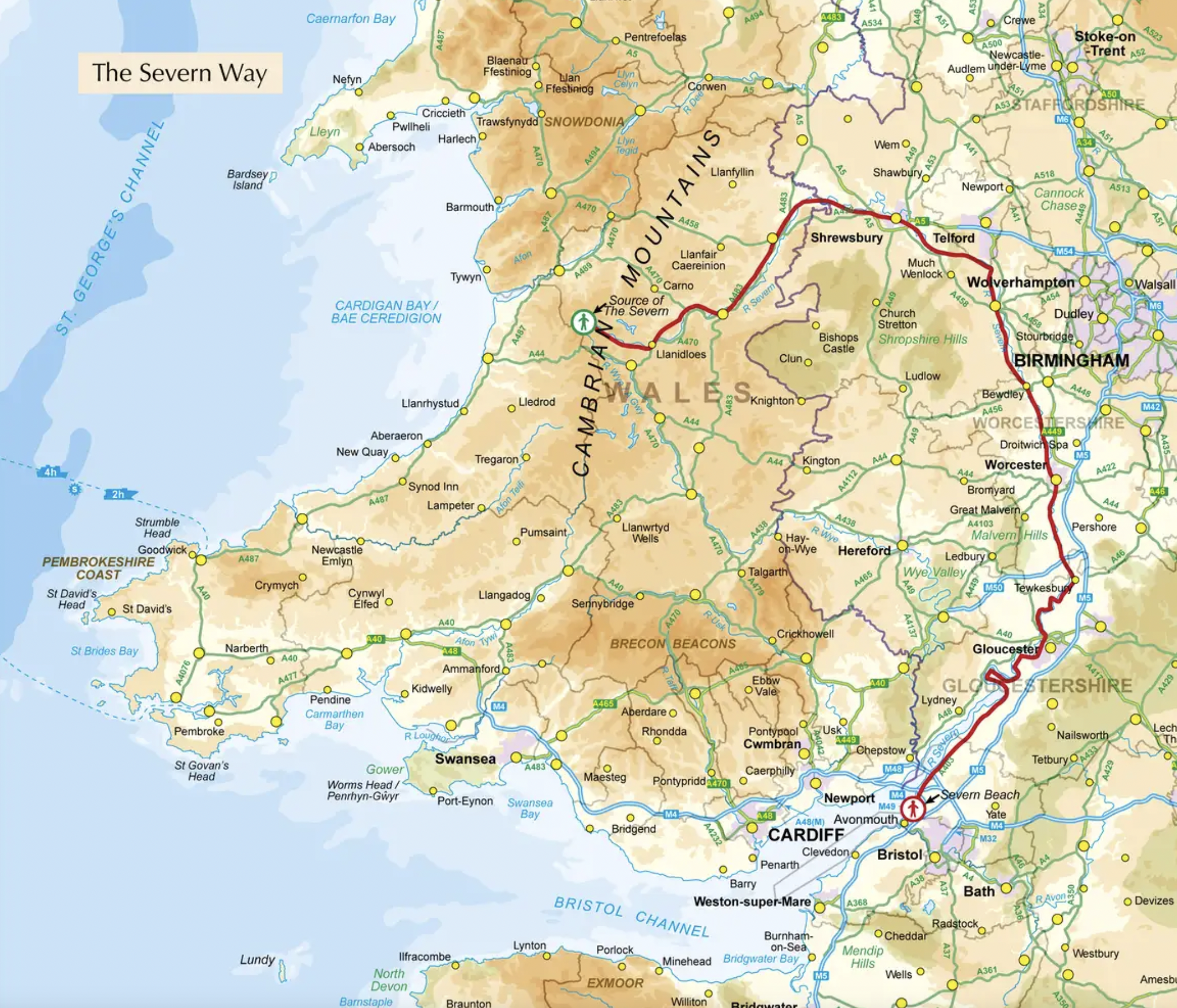
For the past eight months I have followed its 220-mile course [albeit not in order] from source to sea; from the peaty uplands of Plynlimon in Mid Wales, north-east through Powys and Shropshire, then south through Worcestershire, Gloucestershire to where it sweeps into the Bristol Channel… the Celtic Sea… the Atlantic Ocean. 

Map from the Severn Way Guidebook by Terry Marsh

Within a mile of its boggy birth, the infant Severn starts tumbling through the Hafren Forest, gathering erratic speed like a toddler until the ‘Severn-break-its-neck’ Falls plunge it into the valley that will bob it to its first town, Llanidloes.

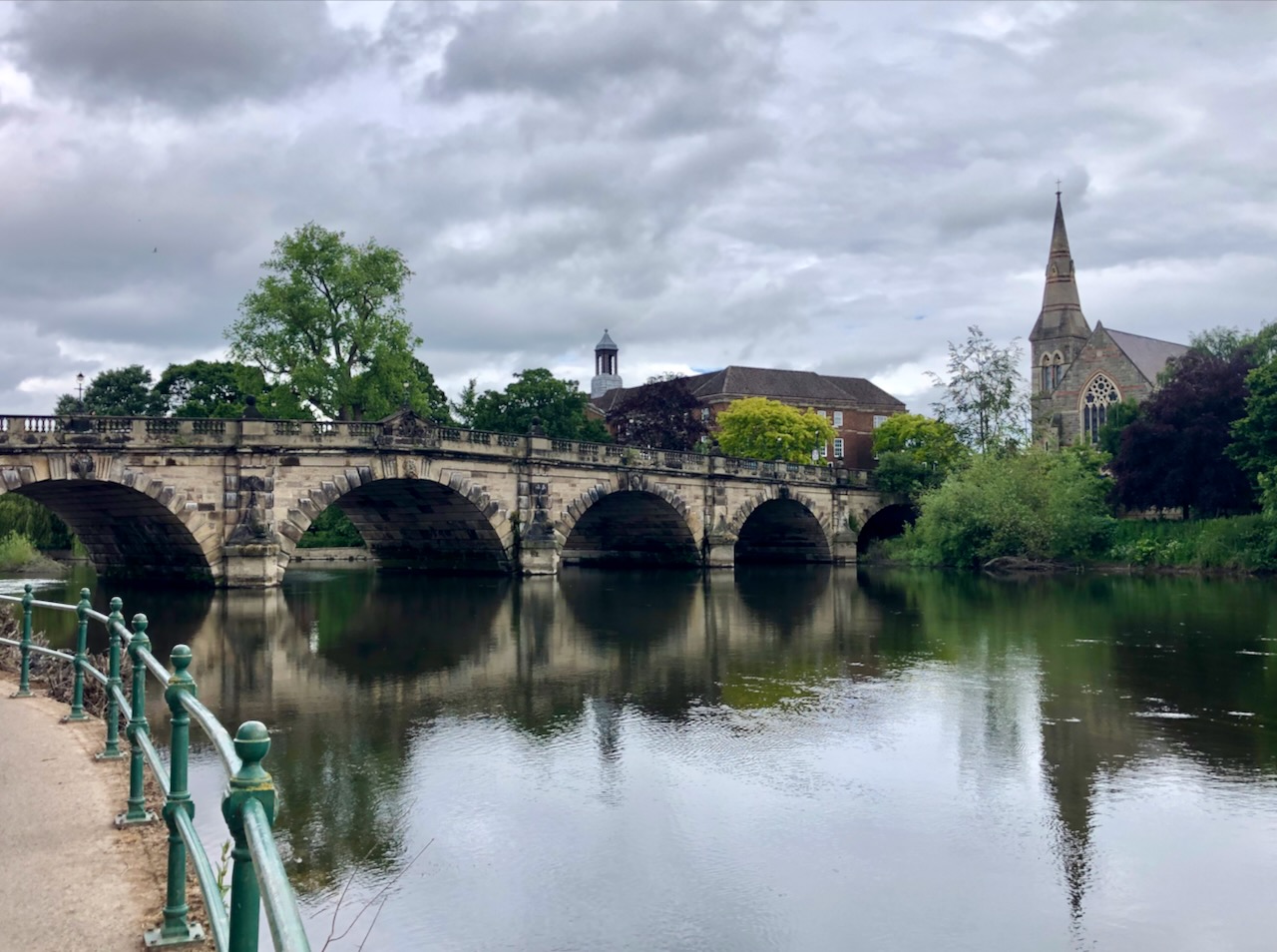
Assuming a steadier gait, it meanders through undulating pastureland before looping north to cross the Welsh/English border at Crew Green. Growing prosperity expands its girth into a watercourse that cuts through floodplains as it heads into the dense cluster of the period buildings and timber-framed mansions that formerly made up one of Britain’s most prosperous wool and cloth trade towns, Shrewsbury.

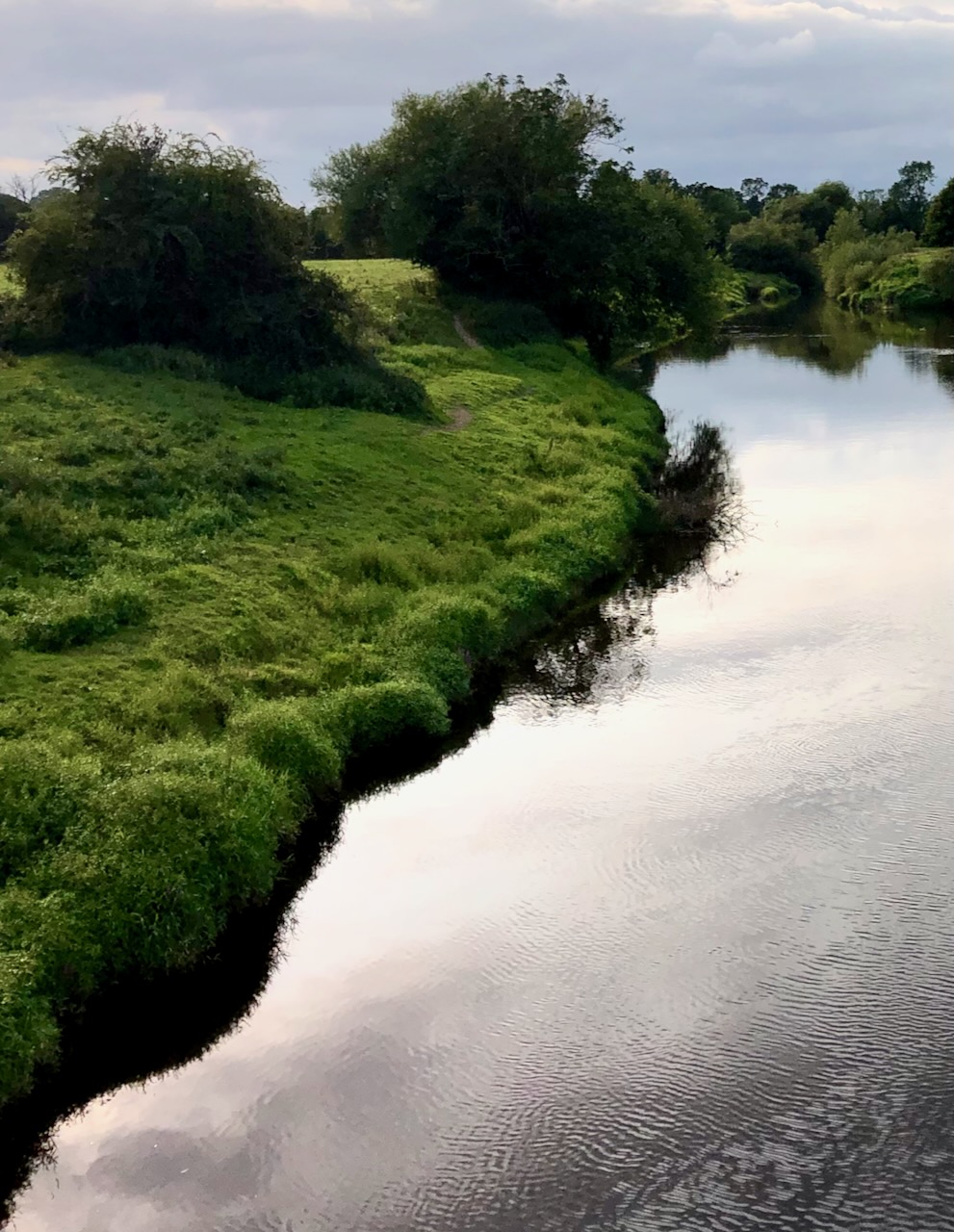
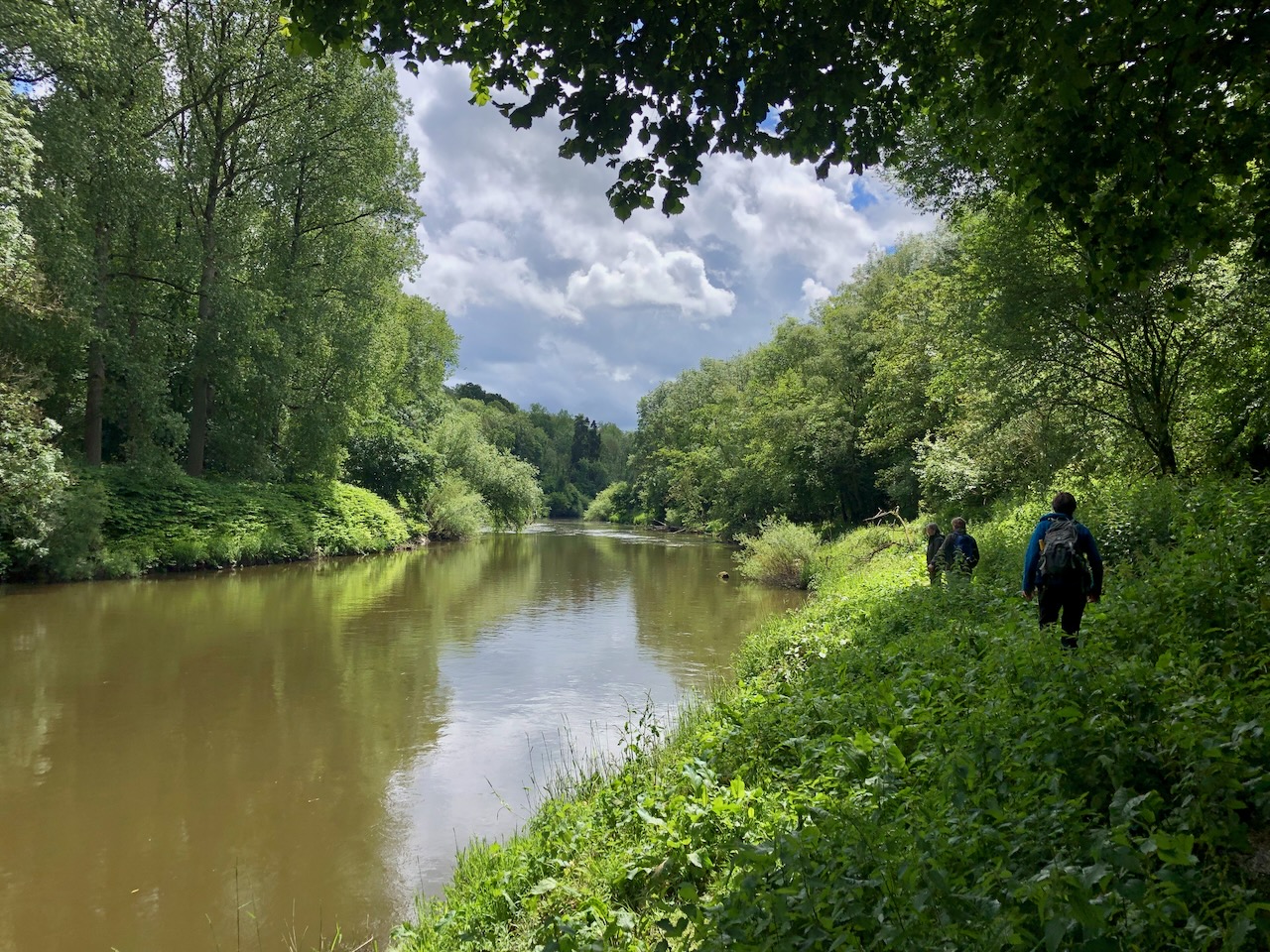
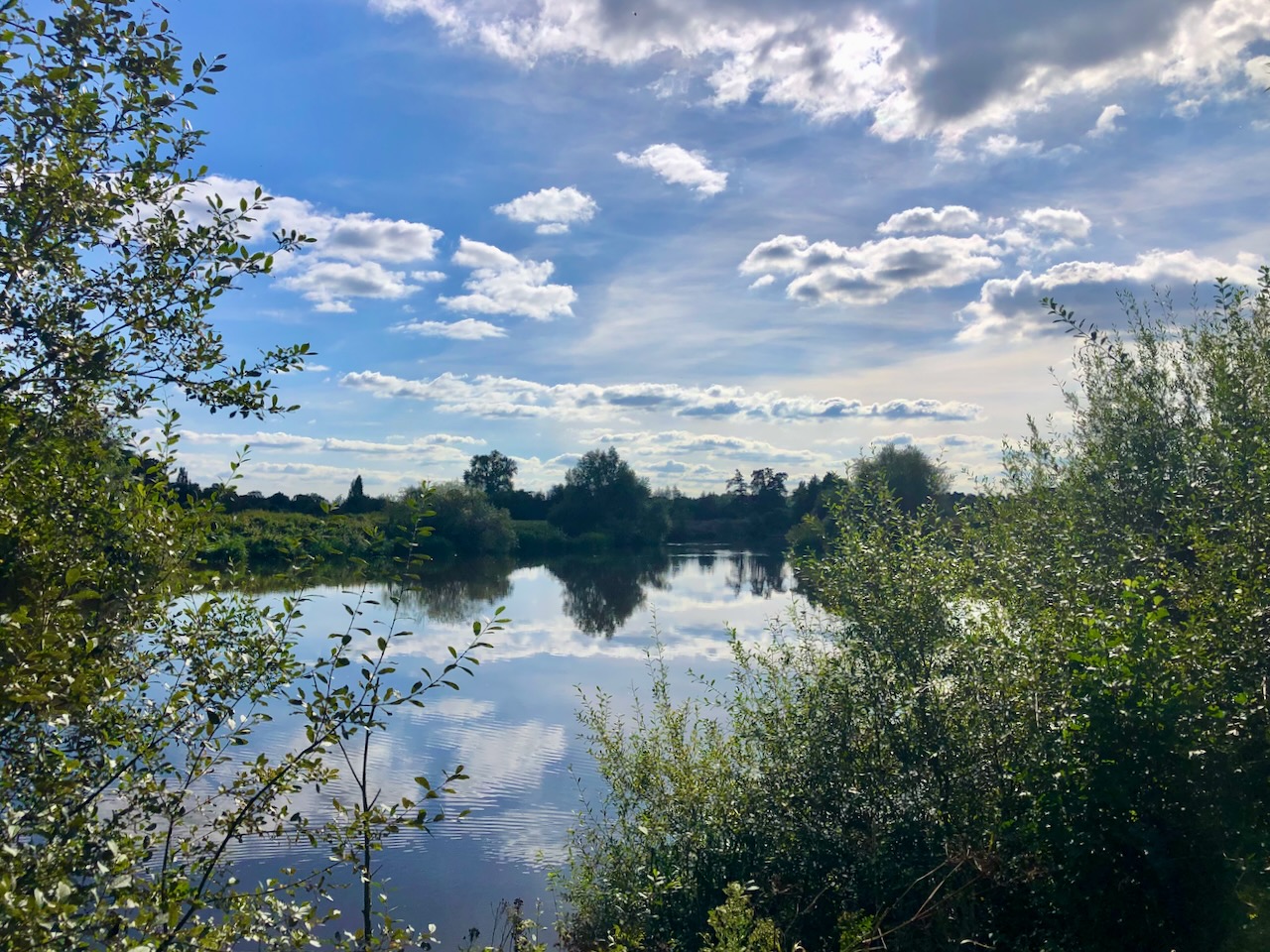
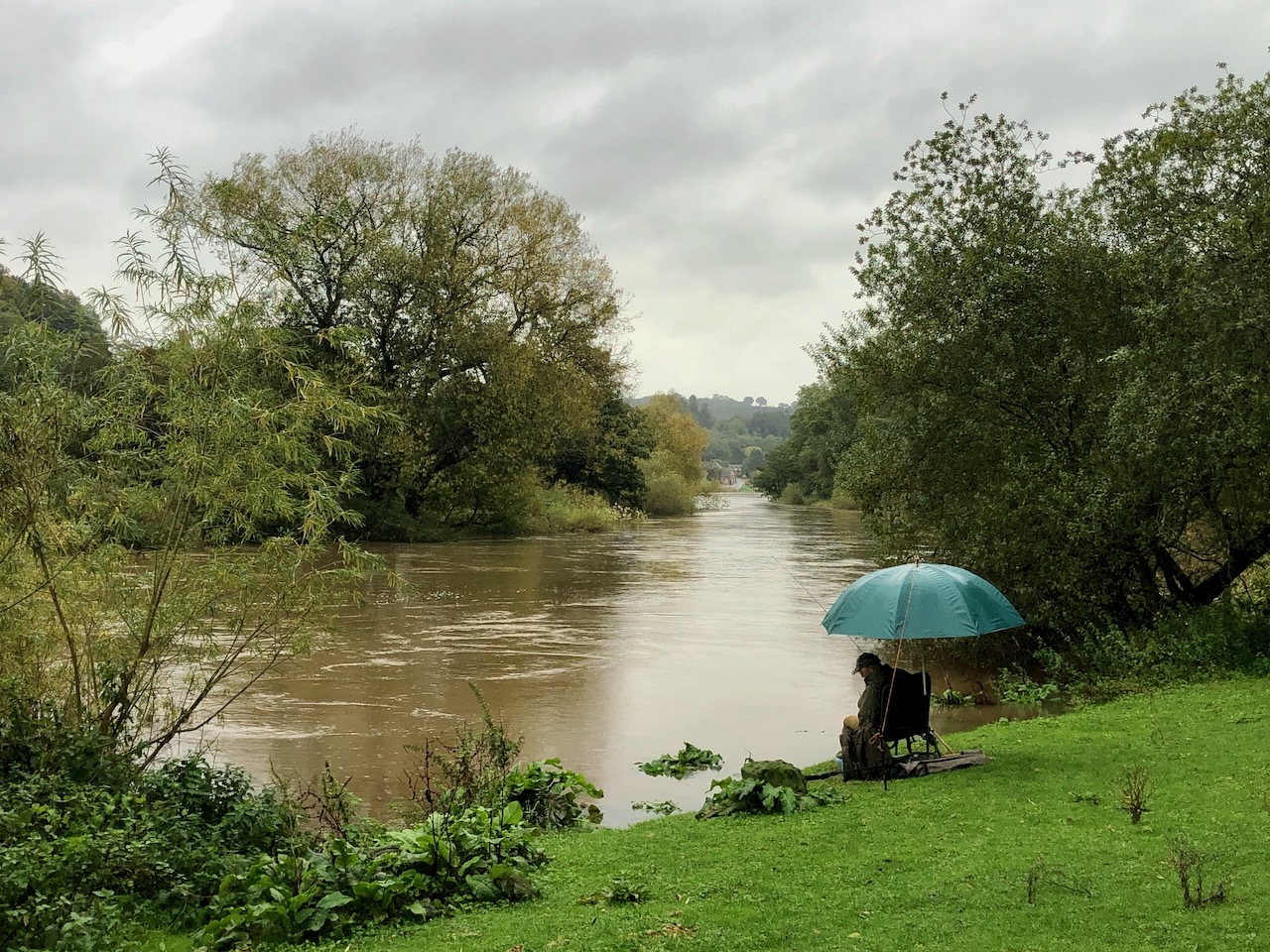
Past the birthplace of Charles Darwin, a glassy stillness and almost imperceivable flow belie the Severn’s true force as it smoothly snakes its path between overgrown banks of willow, elder and the deceptively pretty pinks of thuggish Himalayan Balsam.  

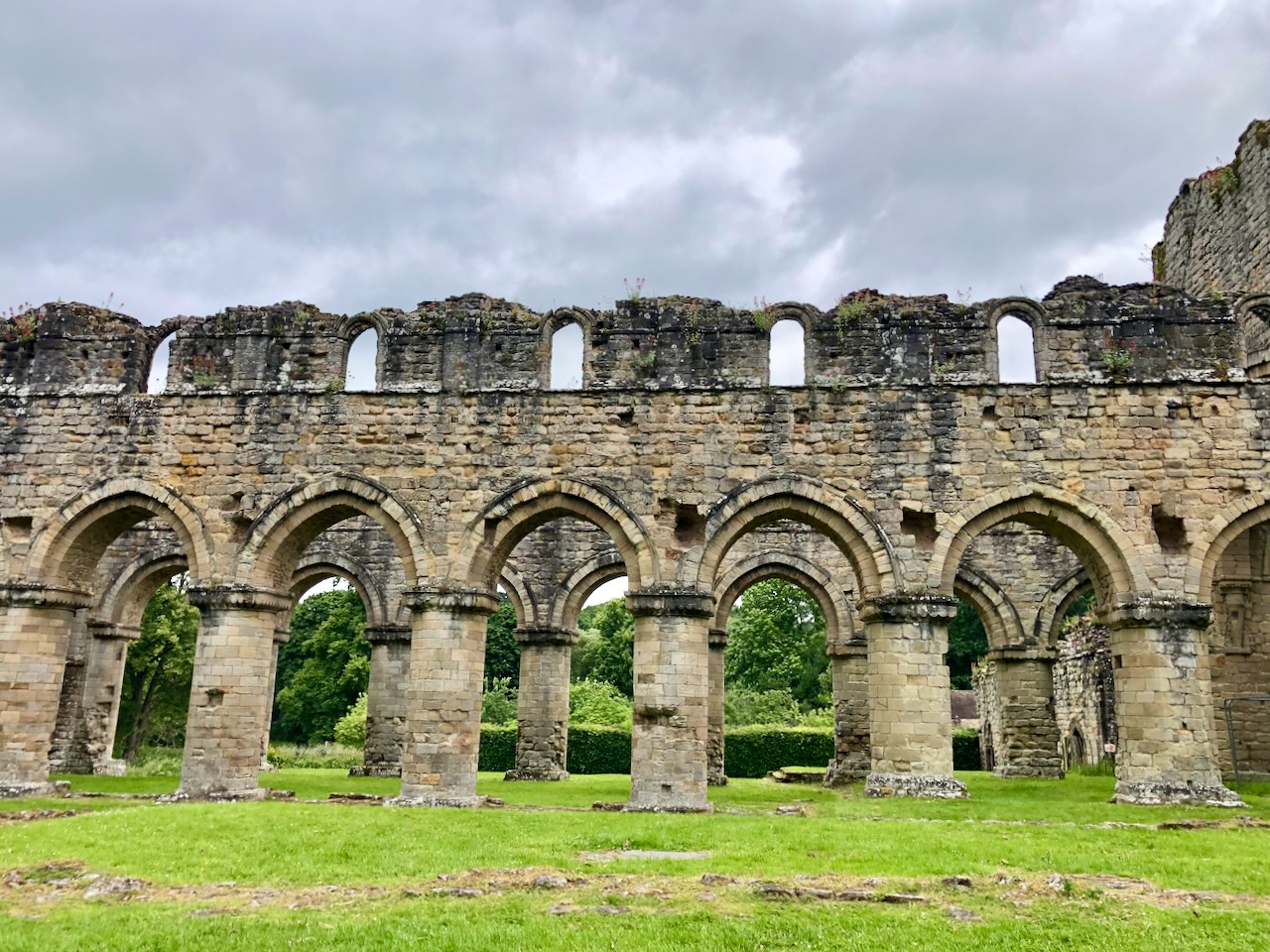
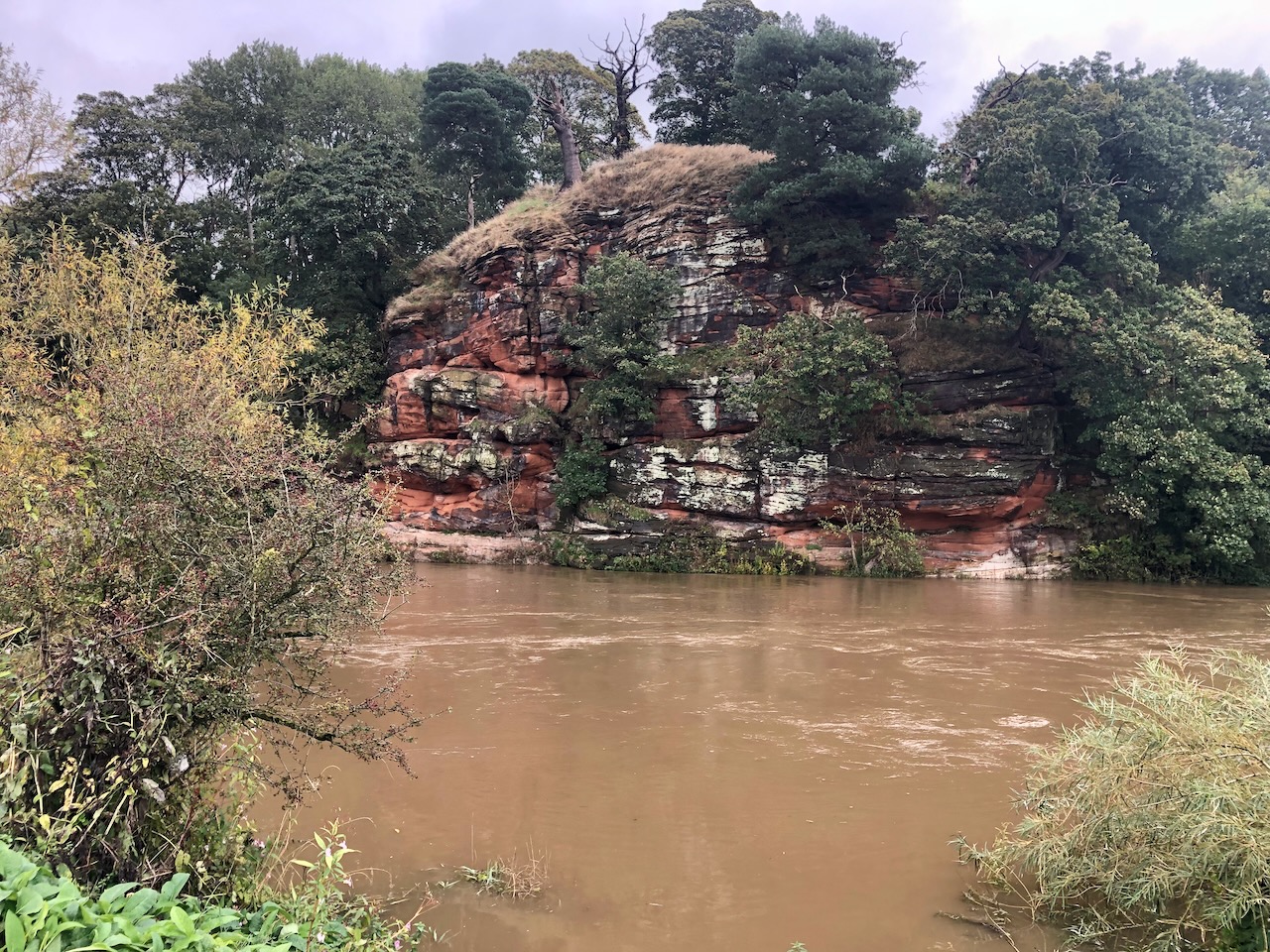
History punctuates the landscape with traces of Roman forts and roads, a Saxon chapel, the evocative ruins of the Cistercian Abbey at Buildwas, 16th Century market halls and sandstone caves that once sheltered hermits or stranded travellers unable to cross the river. As the Severn bullies its way south through gorges striped by coal, limestone and iron ore strata, the legacies of once booming industries and trades are memorialised in mines, railway stations and canals that once linked local towns across Britain. 

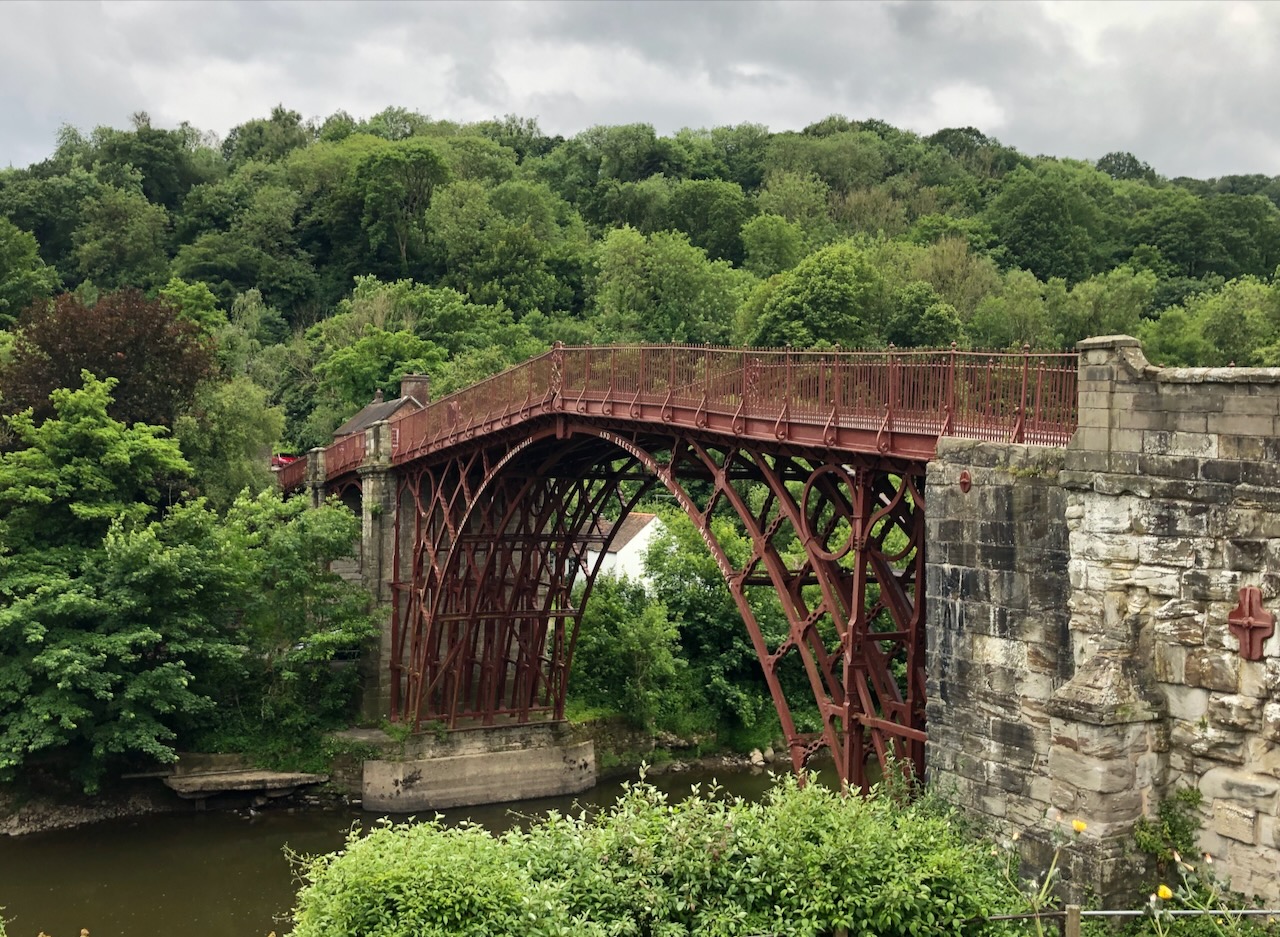
Regular bridges drip feed the imagination with the industrial revolution. Ironbridge boasts the world’s first iron bridge cast by the grandson of Abraham Darby in 1779 in the wake of his grandfather’s revolutionary discovery seventy years earlier that coke could be used for smelting iron instead of charcoal. Further downstream, the fortified town of Bridgnorth perches on a sandstone cliff. Once the busiest port in Europe, it hummed with the sound of iron works and carpet mills, breweries and tanners until the 1860s when railways heralded the end of river trades.  

Following its increasingly wide, milky-coffee-coloured road, vocabulary from school geography lessons surfaced from the recesses of my turbulent education: Oxbow lakes, flood and sandbanks, confluences; soaring cumulonimbus or, equally frequently, water-dumping nimbostratus clouds.

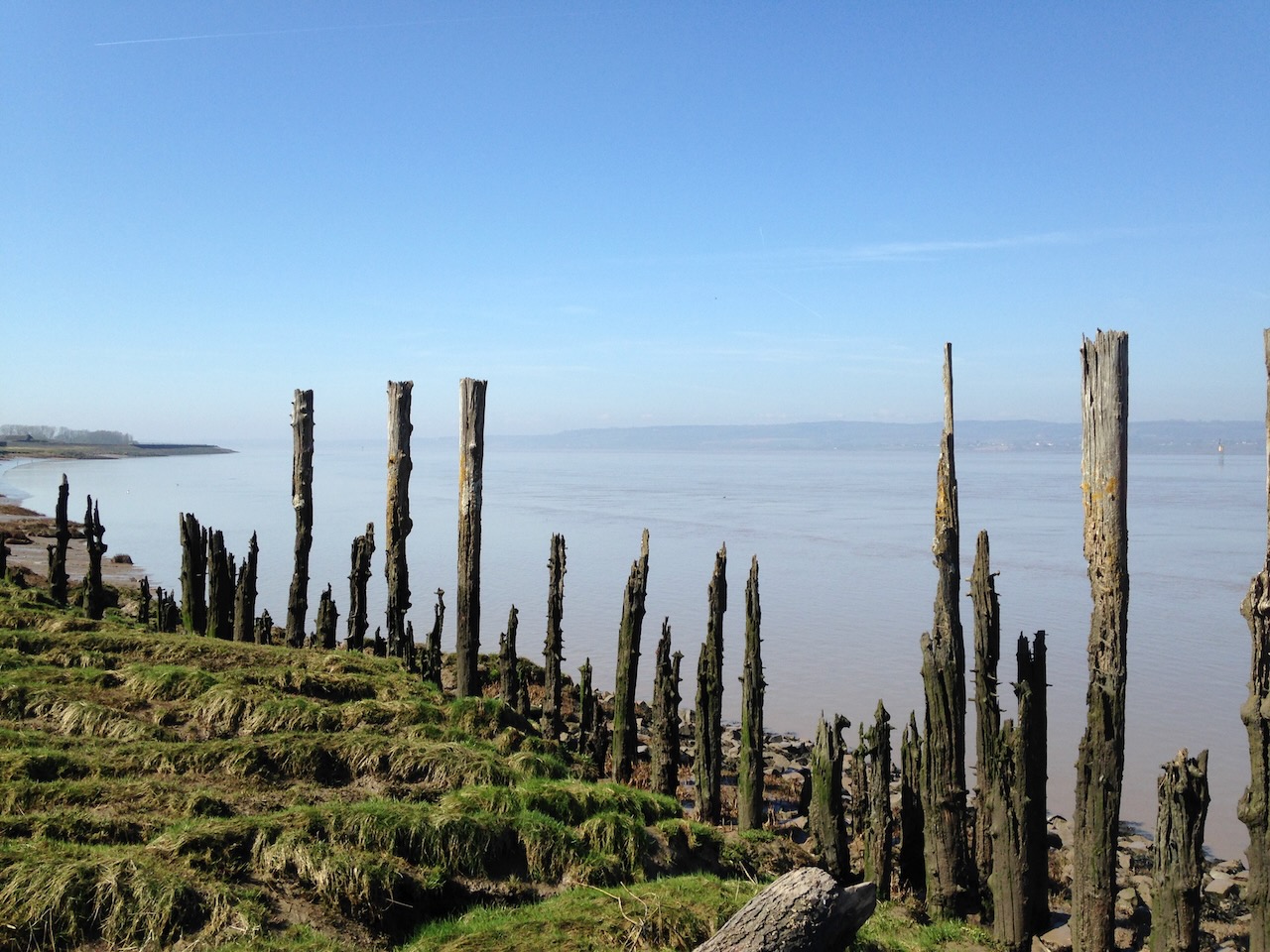
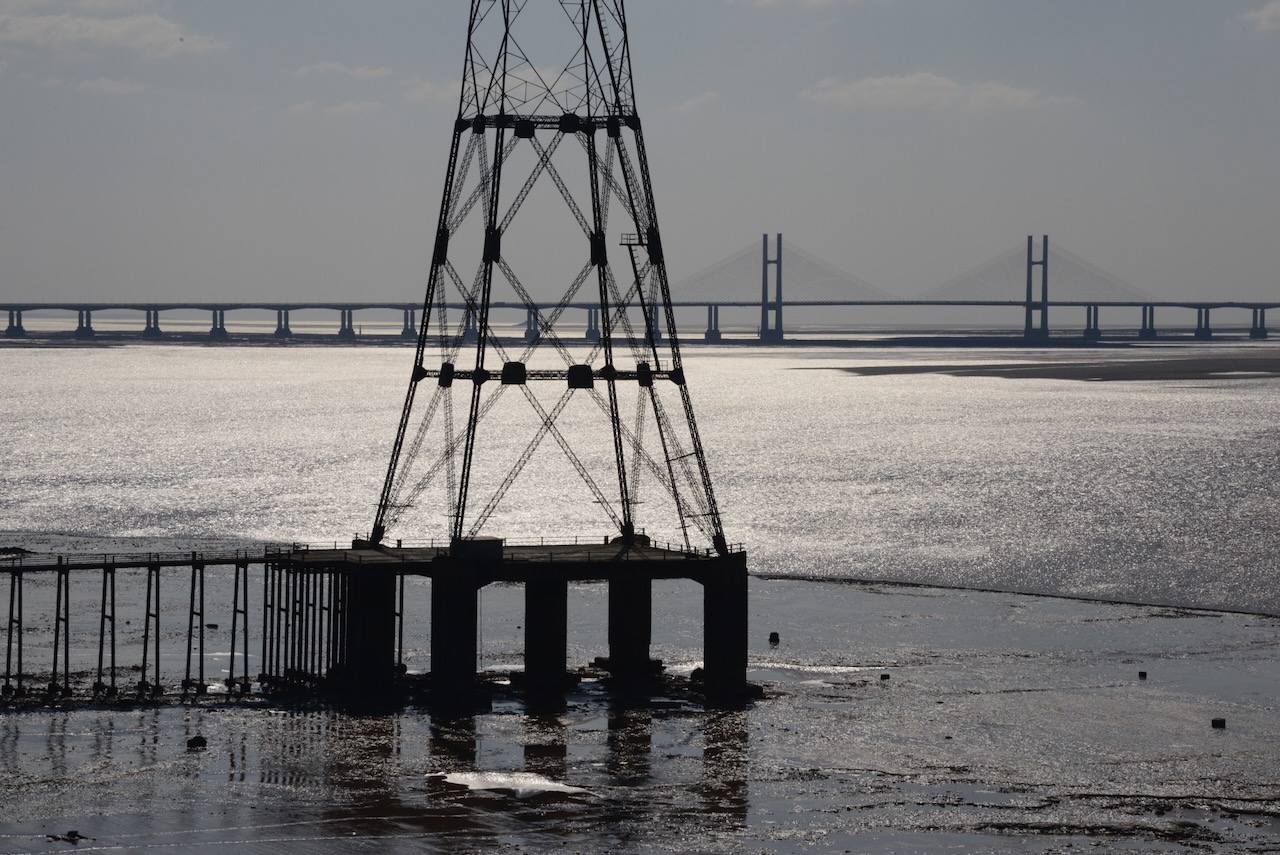
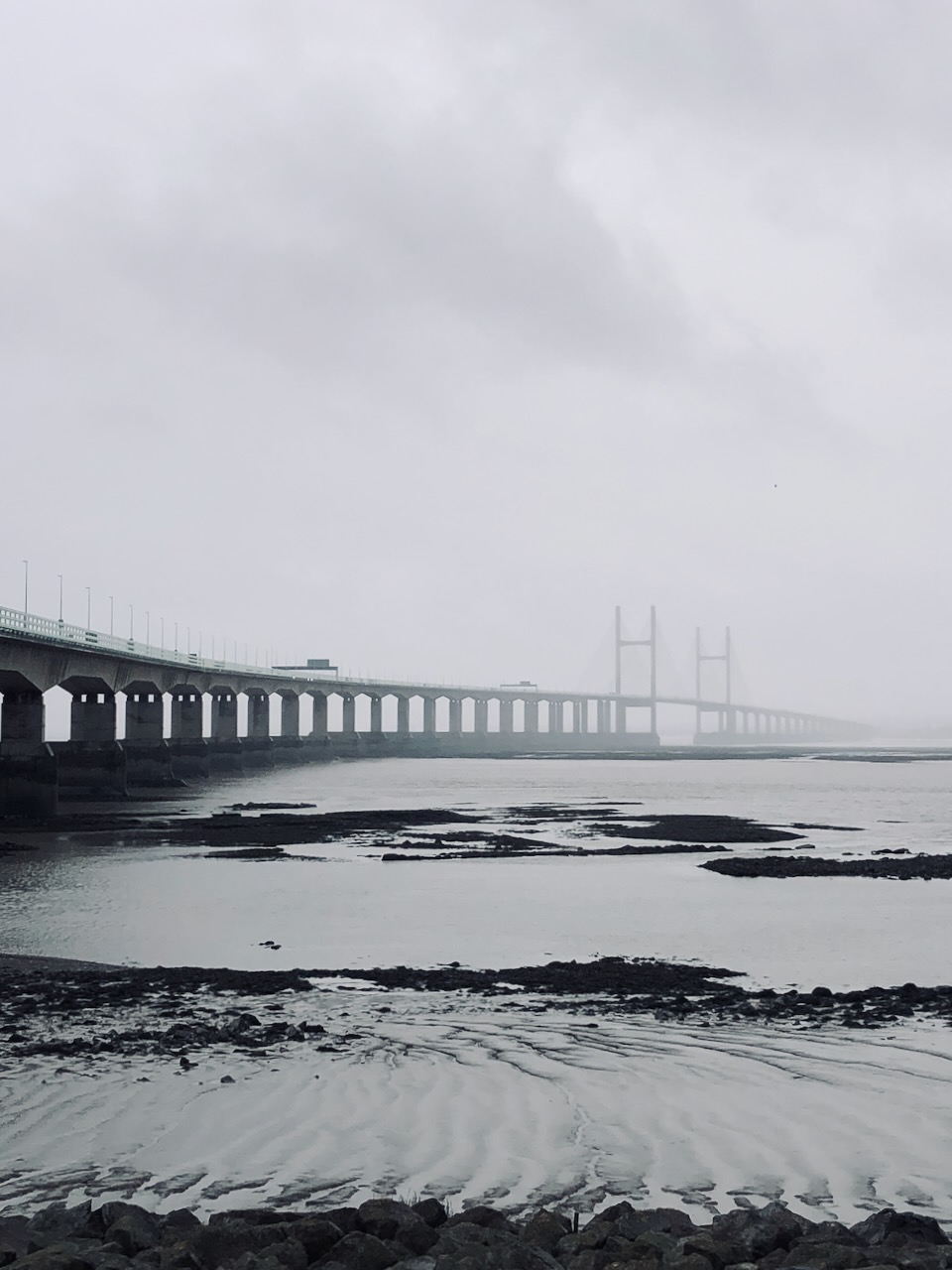
South of Gloucester and around the peninsular at Arlingham, the now tidal Severn breathes in the sea and releases the river out into the vast estuary. At Purton, the ghostly remains of a graveyard of more than 80 sunken barges reveal man’s hopeless struggle to halt the erosion of the banks. Through the working docks at Sharpness and past a pair of looming power stations, the two Severn Bridges rise like misty goalposts. Portals to the open sea. And an abrupt, somewhat unspectacular end to the Way.

With the walking completed, there remained just one more aspiration: to surf the Severn Bore. A bad dream thankfully warned this novice surfer with a fear of water off. Instead, I rode the Bore in a boat driven by its champion.

We set out on a slack tide in the early dawn, deposited two surfers into the tidal stream and waited. You can hear the roar as it approaches. Pulled by the force of the moon, a small line of foam scrabbling its way against the flow comes into view, gathering body until it is a swell. And then you are on it. Riding the crest as salty water from far away thrusts its way up the river dragging the sea in its wake like a heavy cloak.

Immersed in the perfect balance of the 4 elements, the smile on my face remains for many hours. The magic of Sabrina will last a lot longer.

The ghosts of lost flowers

On 4th July, while the minds and eyes of many people in Britain and further afield were firmly focused on Election Day, mine were occupied with my Great Great Aunt who died on this day 85 years ago. In one of those unintentionally magical examples of serendipity, I had managed to secure an appointment at Kew Gardens, London to view some of the fruits of her trekking and gathering in the Himalayas in 1939 just prior to her sudden death.

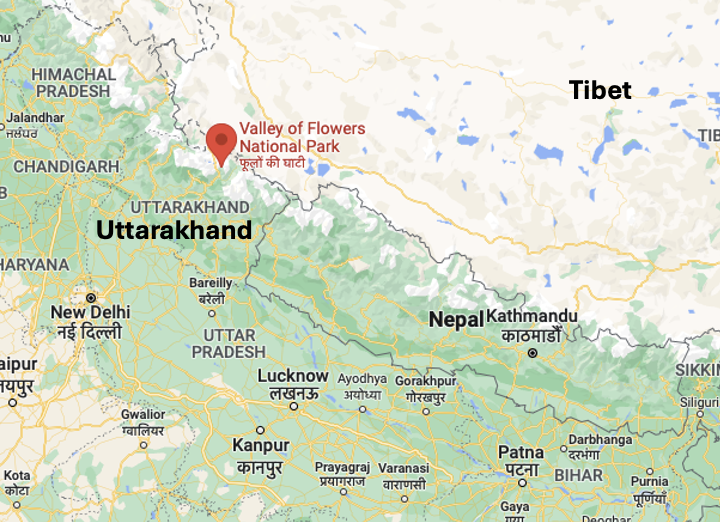
I introduced Joan Margaret Legge in a recent blog and talked a little on how, while the Second World War was rumbling towards its beginning, she had travelled to the Valley of Flowers, otherwise known as the Bhyundar Valley, in Northern India.

As a keen amateur botanist she had been inspired by the recent discovery of the valley in 1931 by a team of three lost British mountaineers returning from an ascent of Mount Kamet and seeking shelter from inclement weather. One of the climbers, Frank S. Smythe, had been so entranced by the valley that he returned in the monsoons of 1937 to explore and collect examples of its flora. His book, published in 1938, was the inspiration for my great great aunt to set sail in February 1939 and travel up through India to her base camp in the lower hills around Ranikhet. Waiting there for the snows higher up to melt, she spent two months acclimatising, doing practice hikes and organising porters and equipment for the big trek to her destination where she planned to spend the summer gathering seeds and samples for Kew.

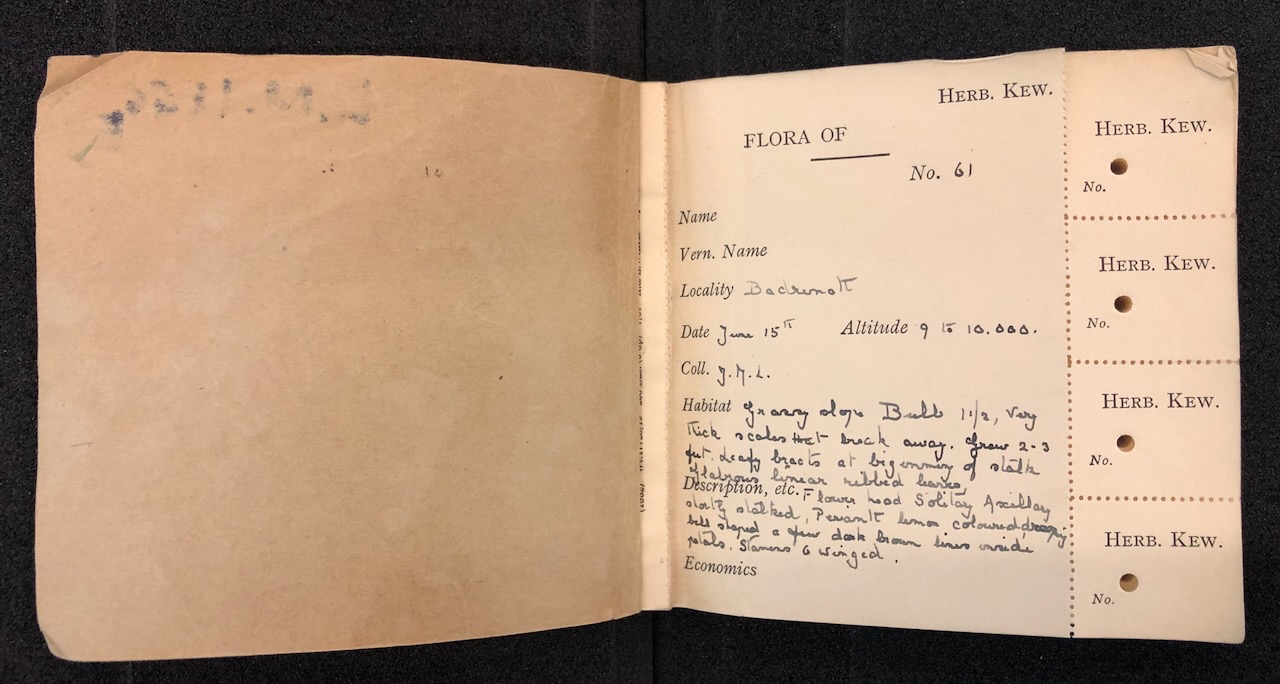
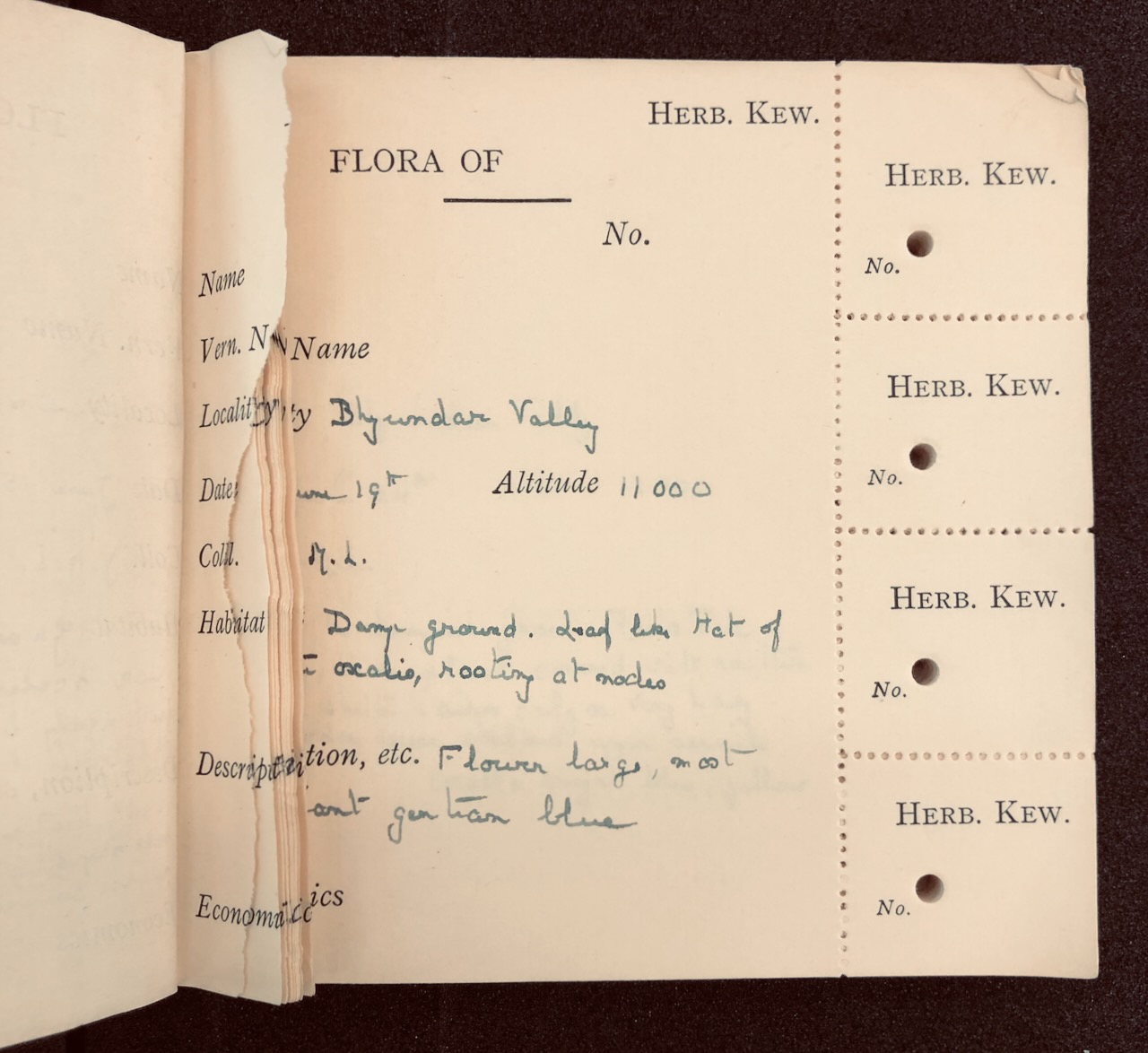
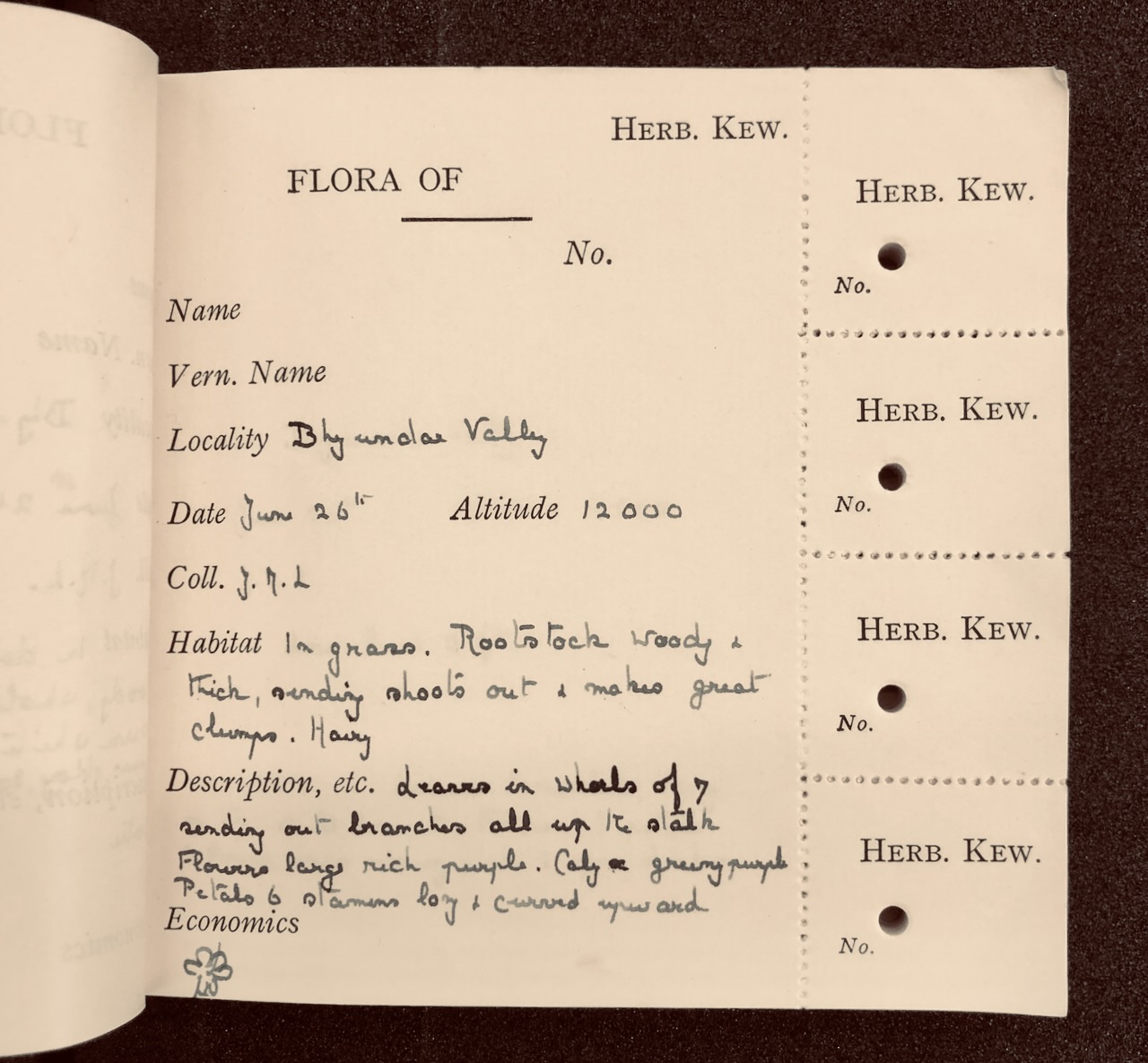
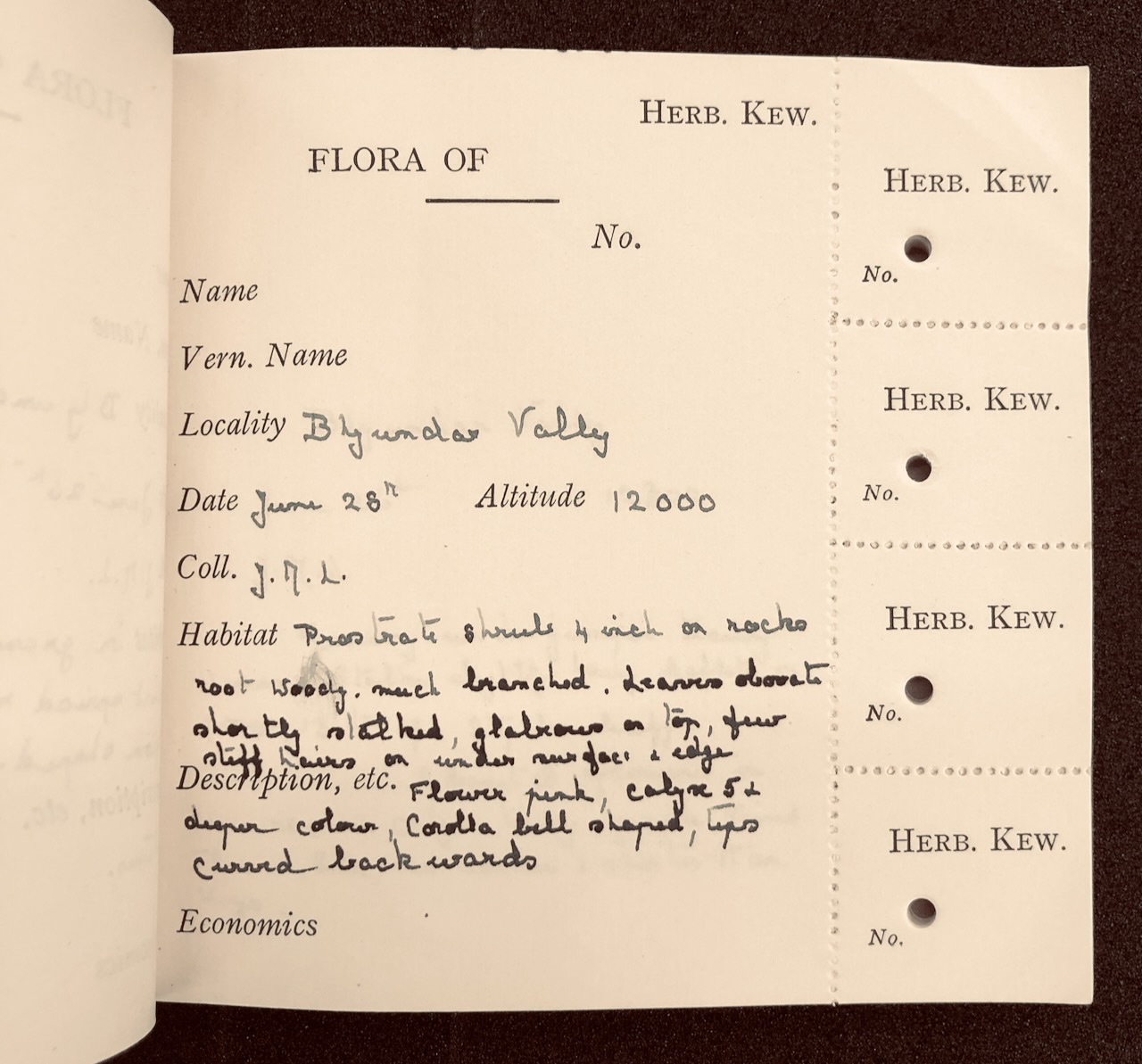
Between 22nd May and 20th June she trekked north sleeping in precariously pitched tents with a hardy team of local men carrying provisions. Usually on her feet but sometimes on her bottom, she scrambled and climbed her solitary way through the mountains in a state of sweaty or rain-drenched awe of the ‘Glories’ as she called the soaring peaks that emerged and disappeared in the sky. She took cameras, presses supplied by Kew, wrote diaries and filled collectors’ notebooks with minuscule handwriting describing calyxes and tuberous roots while always scanning the terrain for flowers to press and send to the Herbarium in the hope of filling some of the gaps in Smythe’s earlier, spoiled-by-mould attempts to record what grew there. 

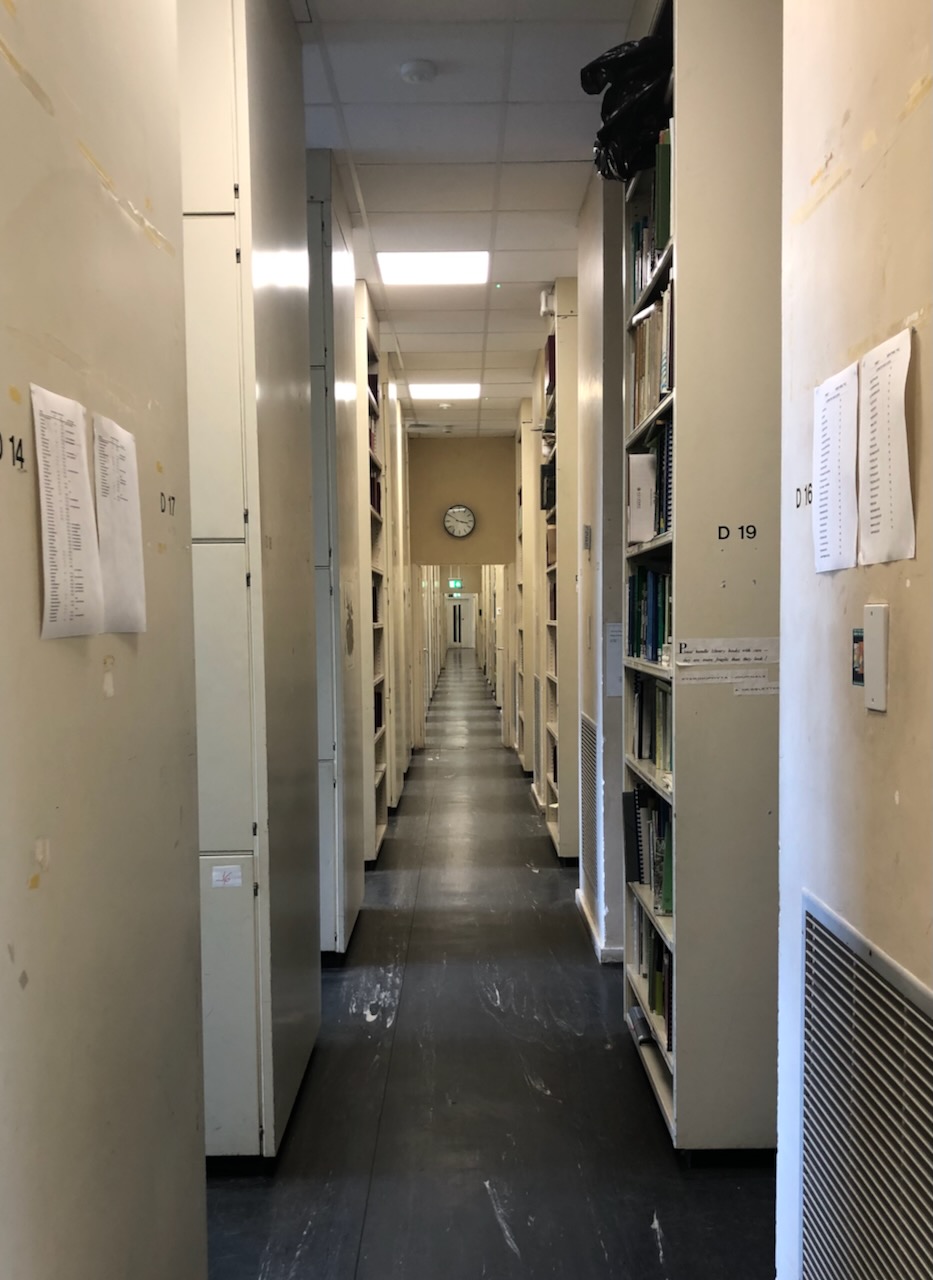
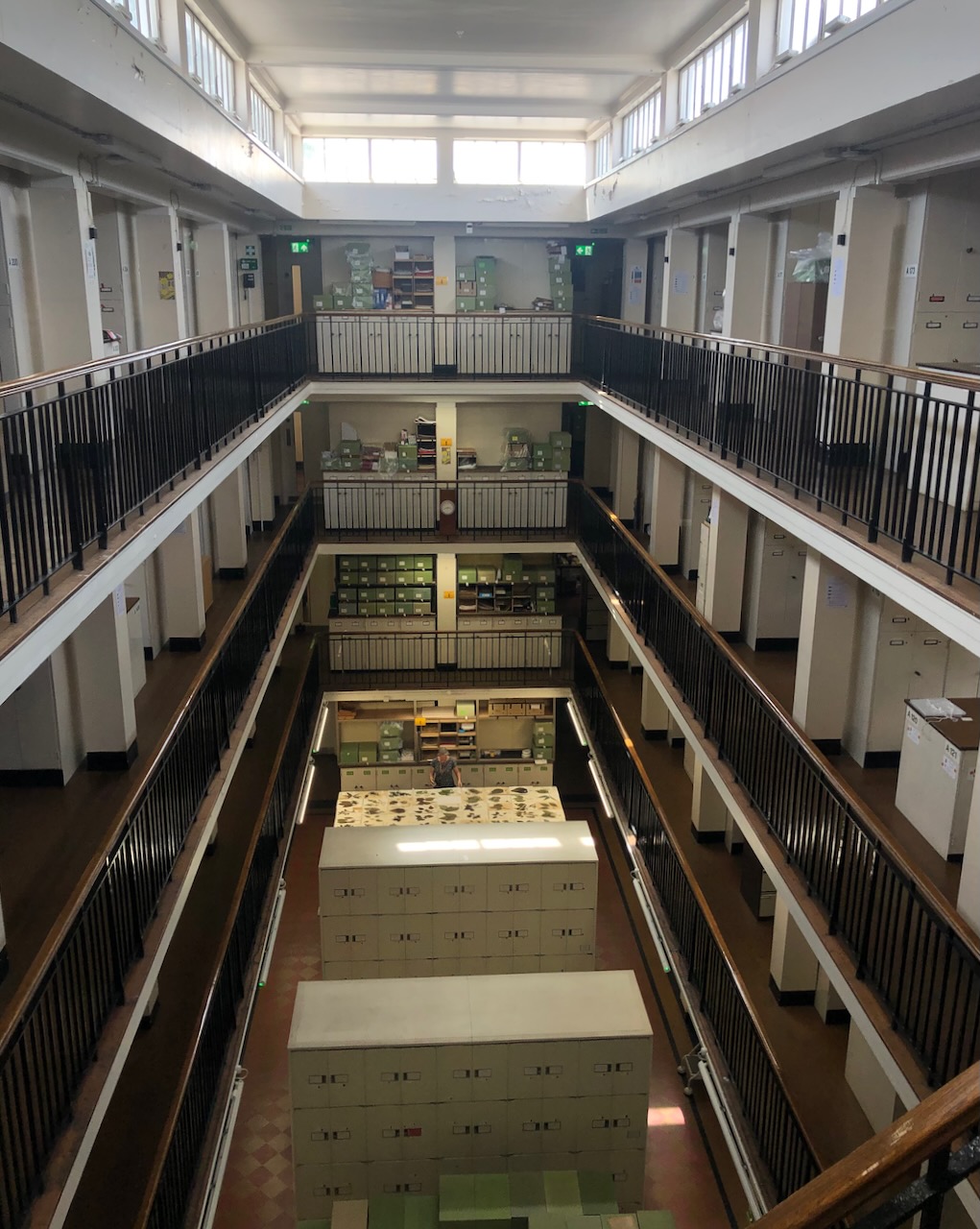
On my first visit to Kew in 2022 I had been told that none of her notebooks or specimens could be located, that they had probably not survived or had been of insufficient quality or significance. It was impossible to search for them… understandably so, the Herbarium houses an incredible seven million specimens!  

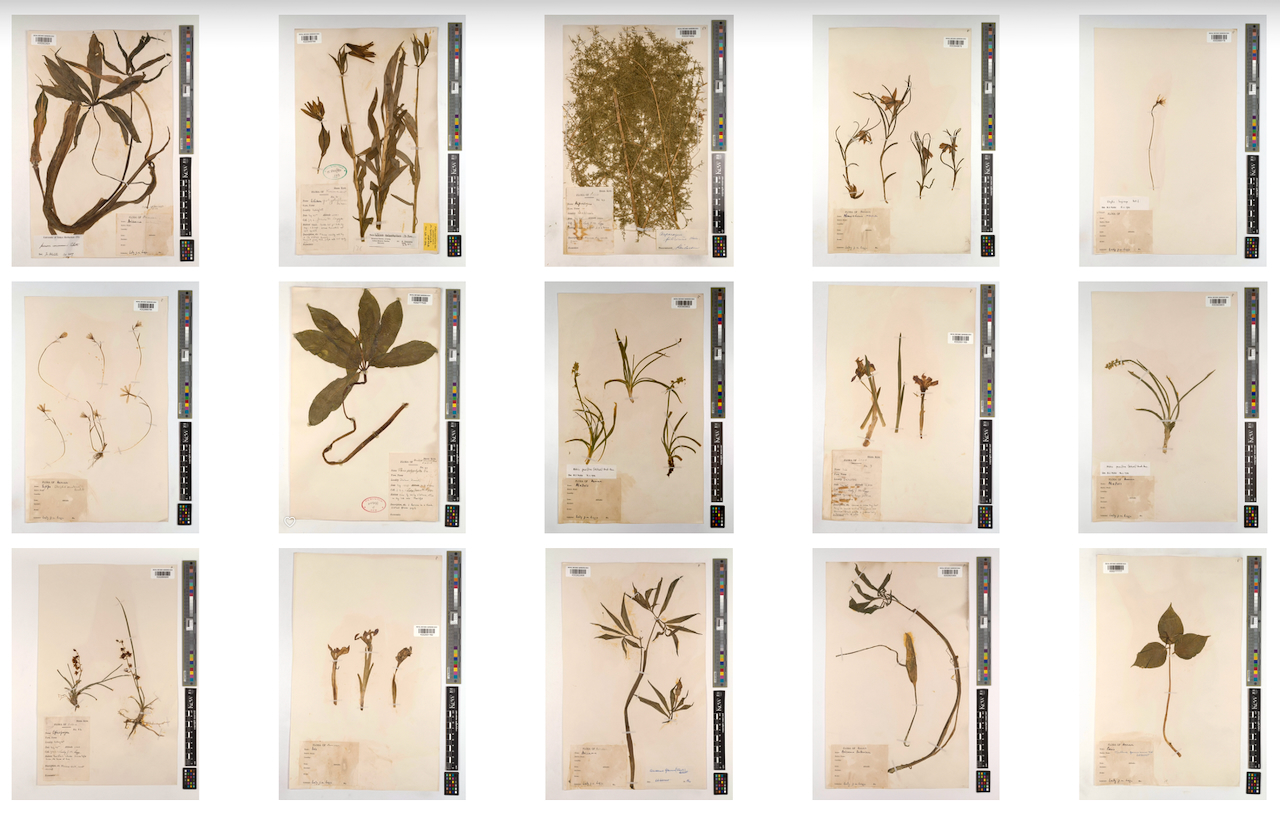
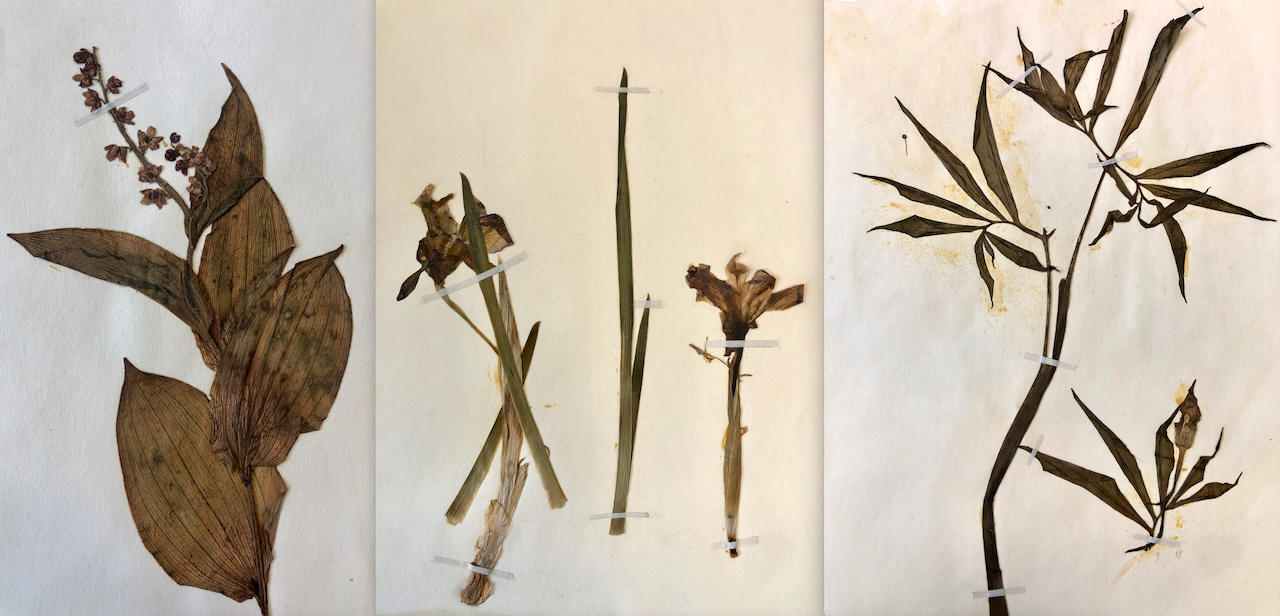
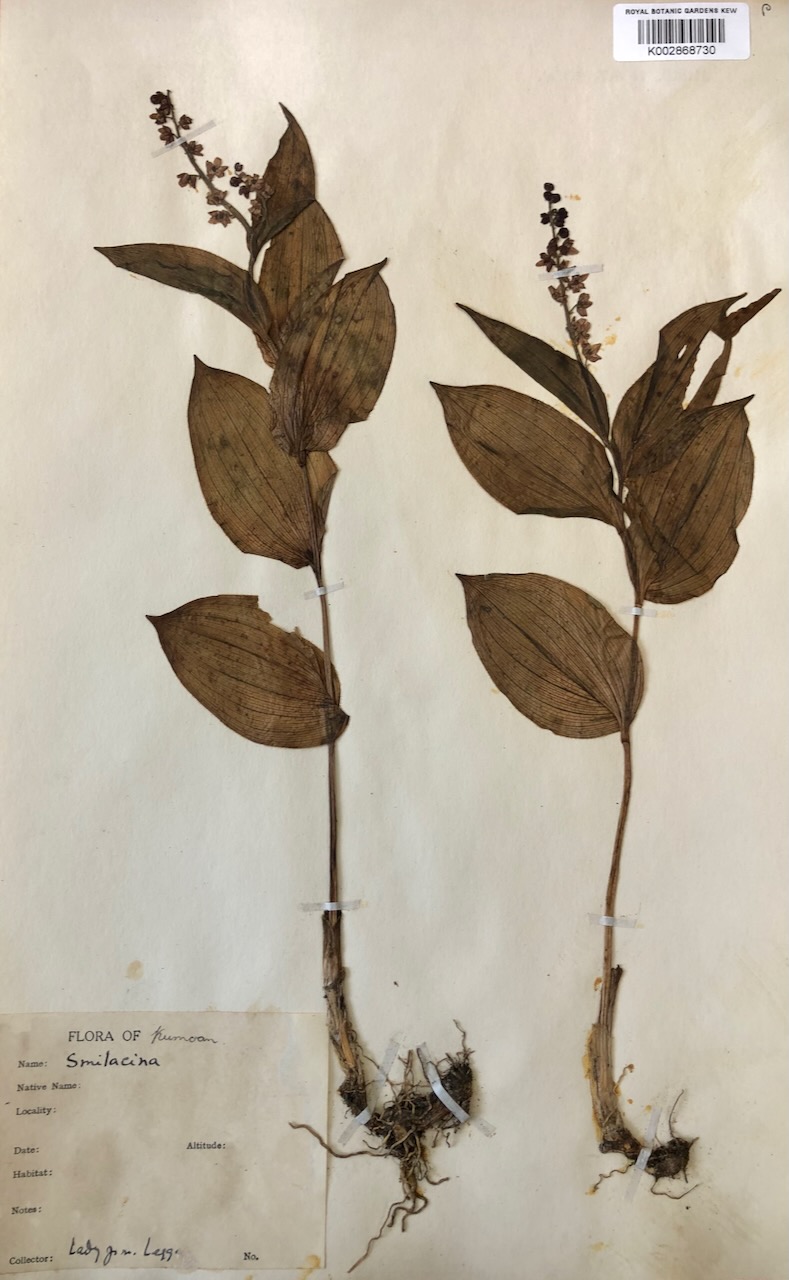
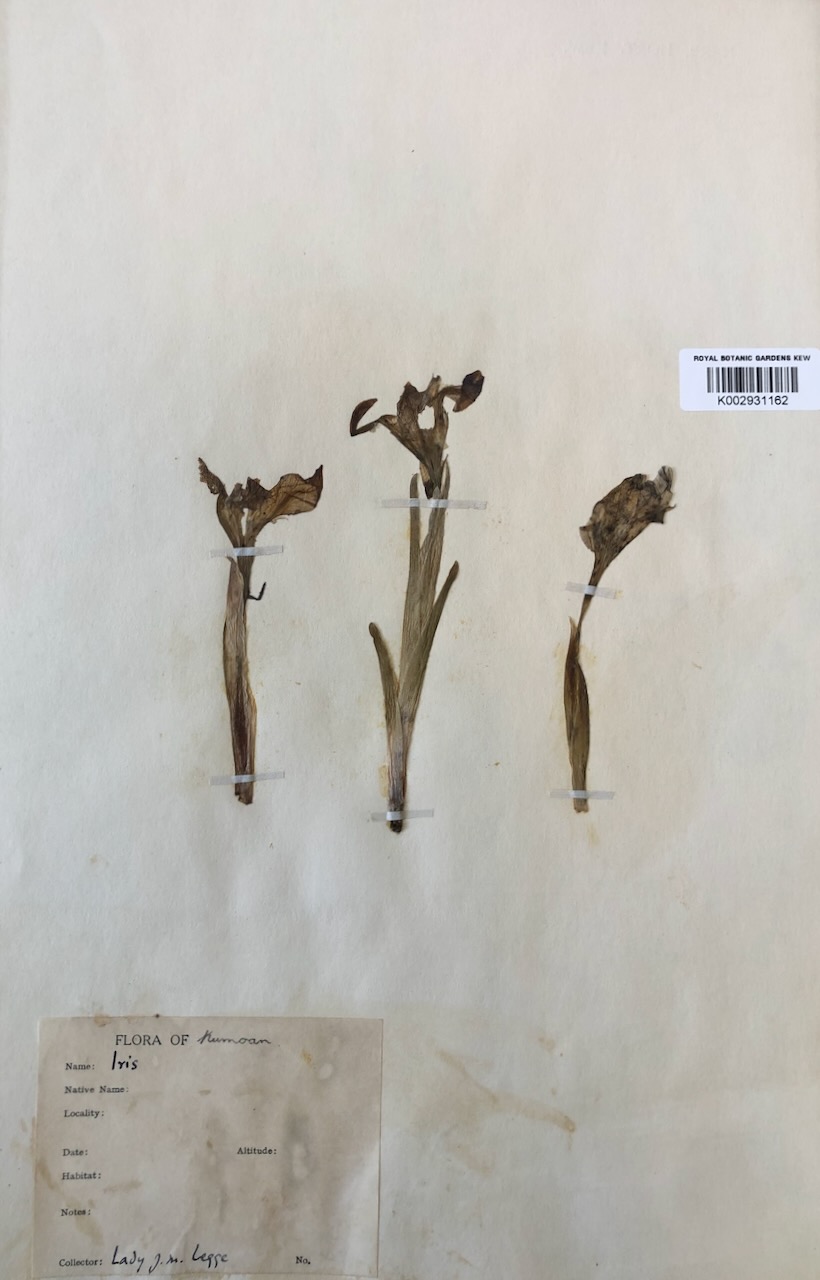
When I research I sometimes get this dogged instinct not to accept the first claim of something no longer existing or being lost in the annals of some past archival system and, not quite ready to give up, I renewed my quest to locate them. Following a string of helpful leads, several kind employees at the Herbarium, intrigued by my aunt’s story, joined me in my search. They soon discovered that a collector’s notebook and an as-yet unknown quantity of her specimens had indeed survived and the latter had been recently digitalised as part of a huge project to create a digital catalogue of the contents of Kew’s filing cabinets.

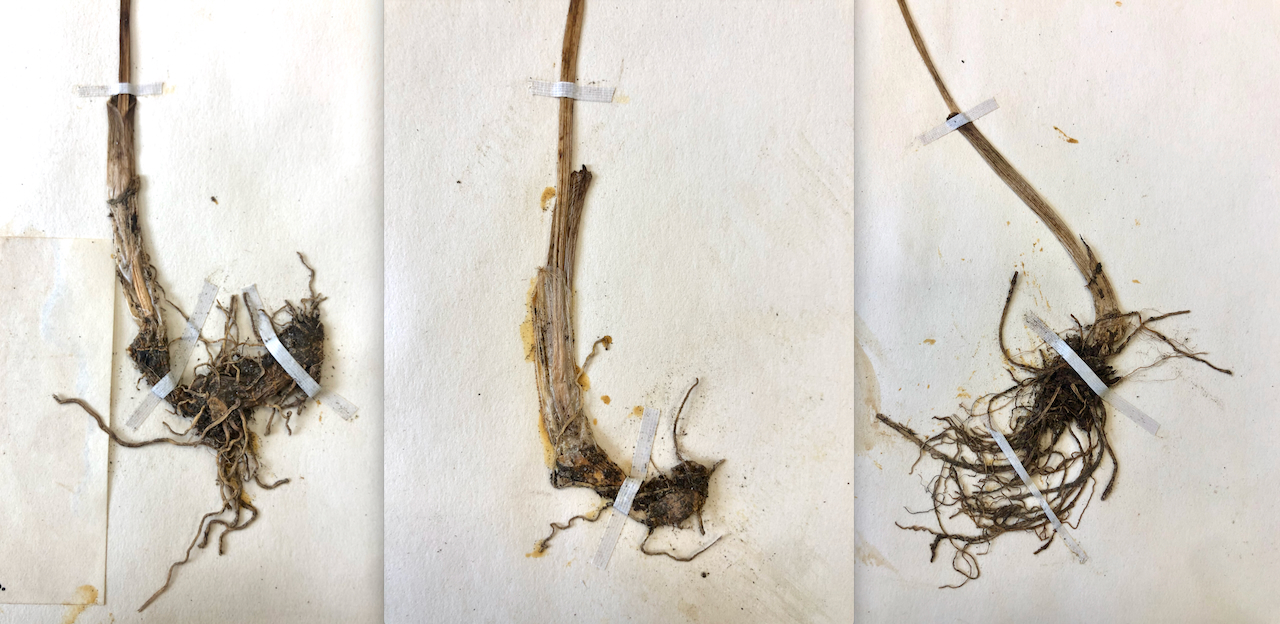
Digitalised specimens of Joan Margaret Legge ©Kew Gardens

And so, on the anniversary of Joan’s death, dodging ballot papers and predictive polls, I immersed myself in the sepia papers of a time and world that no longer exists.

Joan’s Collector’s Notebook, 1939  ©Kew Gardens

Exhumed from their graves and held in place by tiny straps, I was able to connect to Joan through the physical ghosts of the plants she had harvested. Traces of earth still clung to their roots, potent yellow pollen spilled from crumpled and flattened flowers, residual colours blushed petals and leaves as their ethereal beauty gently concertinaed the 85-year stretch of time between Joan’s picking and my viewing into a space in which I could almost touch her. 

Strange to think that these faded blooms had made it back to England while she hadn’t… It was a poignant preamble to an impending trip with my sister and two first cousins, all female descendants of Joan, designed to follow in her footsteps through the monsoon rains and soaring peaks of Uttarakhand, from Ranikhet to Joshimath and Badrinath and on to her isolated grave in the Valley of Flowers. As far as I know, we will be the first members of her family to visit Joan. It will be the realisation of a dying wish of my dear uncle who had long wanted to travel there himself but, unable to fulfil his dream, invited us to go there in his place.

Time marches on, history is made. We have a new prime minister and his government’s actions and inactions will make it into the newspapers and history books. Meanwhile, the silent and unseen reside as untold stories pressed between their pages awaiting discovery.

All images are © copyright of the Board of Trustees of the Royal Botanic Gardens, Kew and/or The Herbarium Catalogue, Royal Botanic Gardens, Kew. Published on the Internet http://www.kew.org/herbcat [accessed on 04/07/2024]


The changing faces of Berlin…

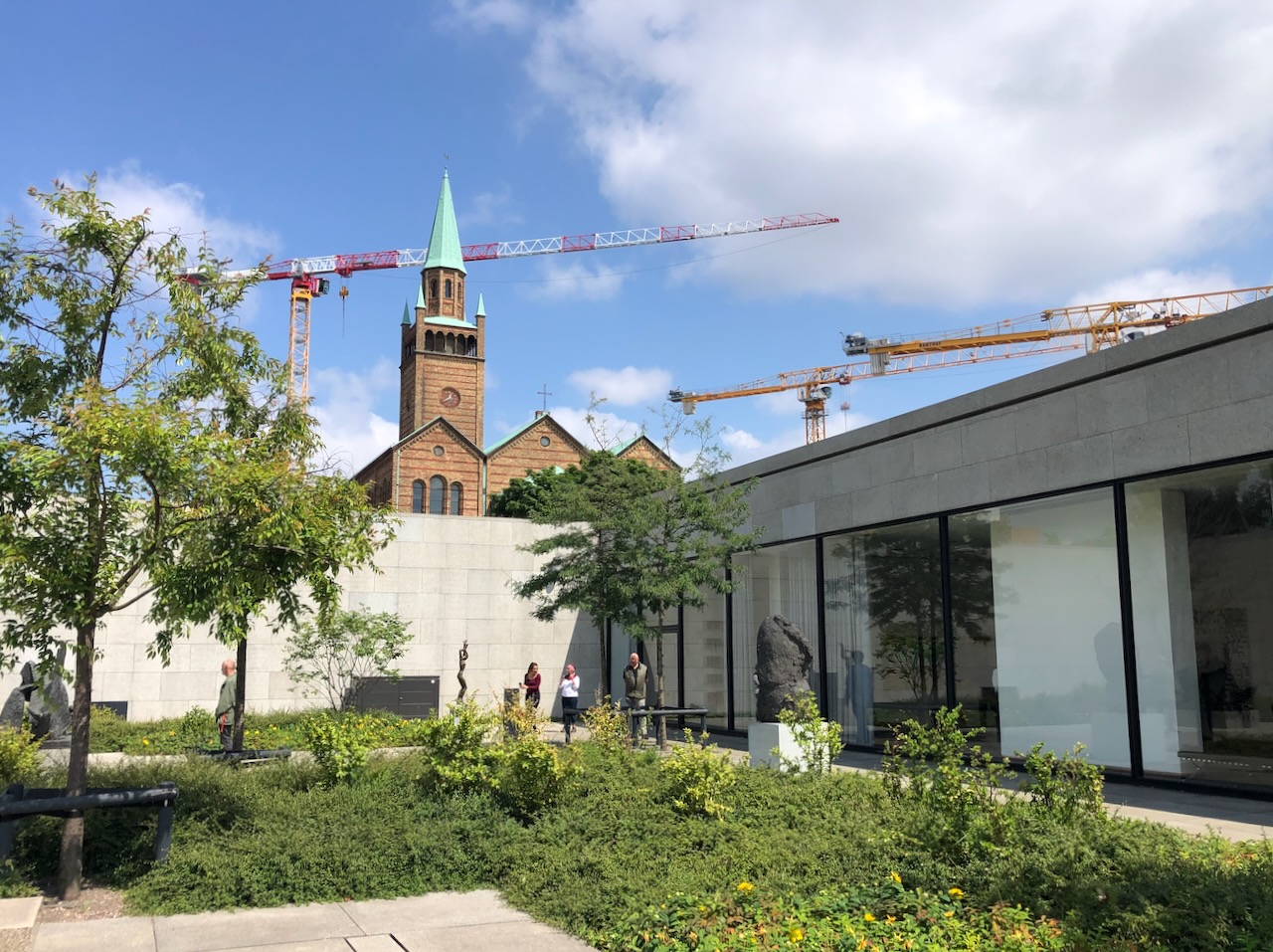
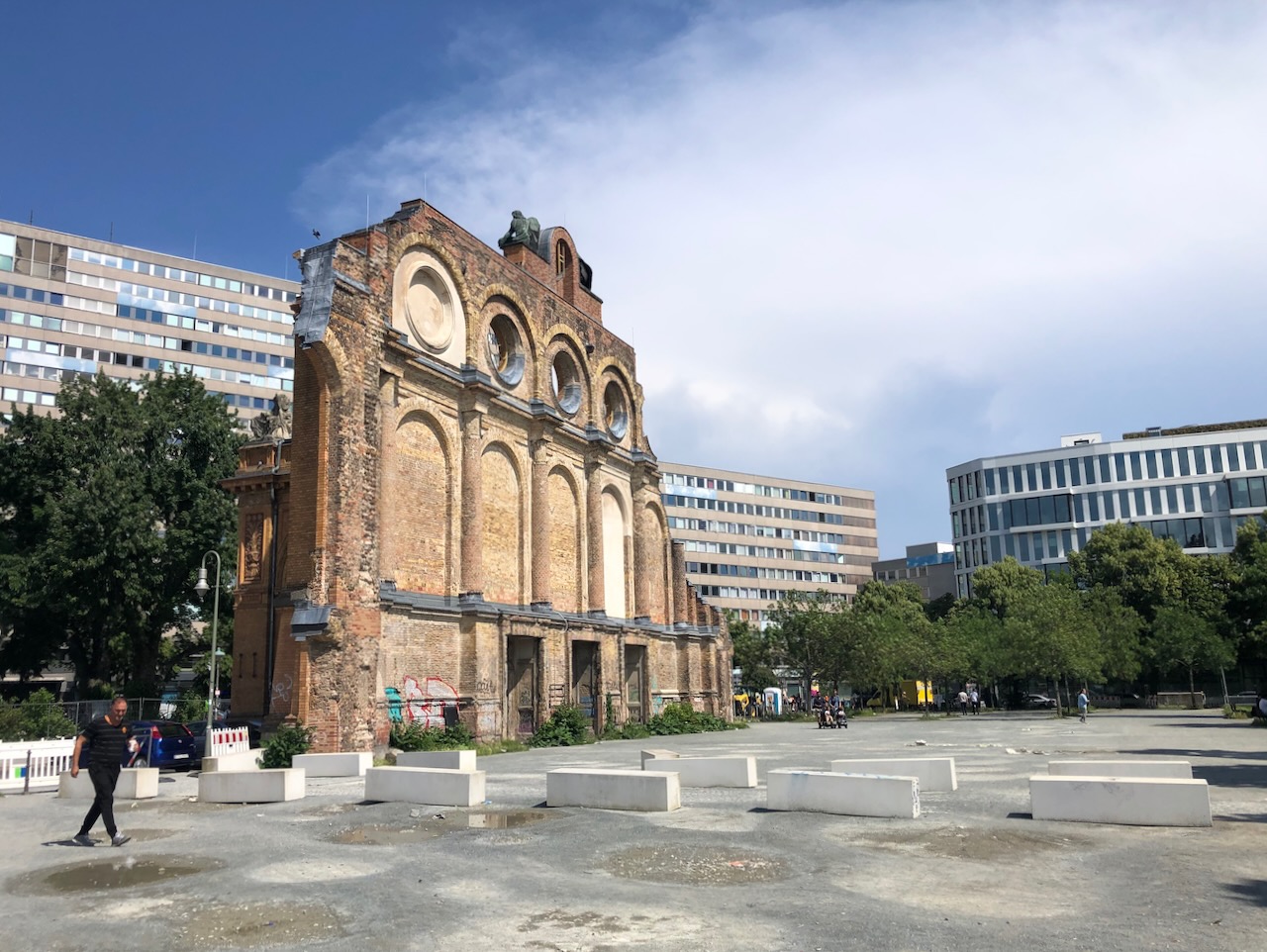
For more than 30 years I have been watching cranes and diggers deconstruct and rebuild the architectural face of Berlin. It is an infinitely fascinating process to follow.

Neue Nationalgallerie by Mies van der Rohe… with cranes

The focus of my most recent trip, however, ended up being the people who inhabit the city, both past and present. And typically for Berlin, it has created a brilliant exhibition to trace the changing faces of those who lived through its turbulent history.

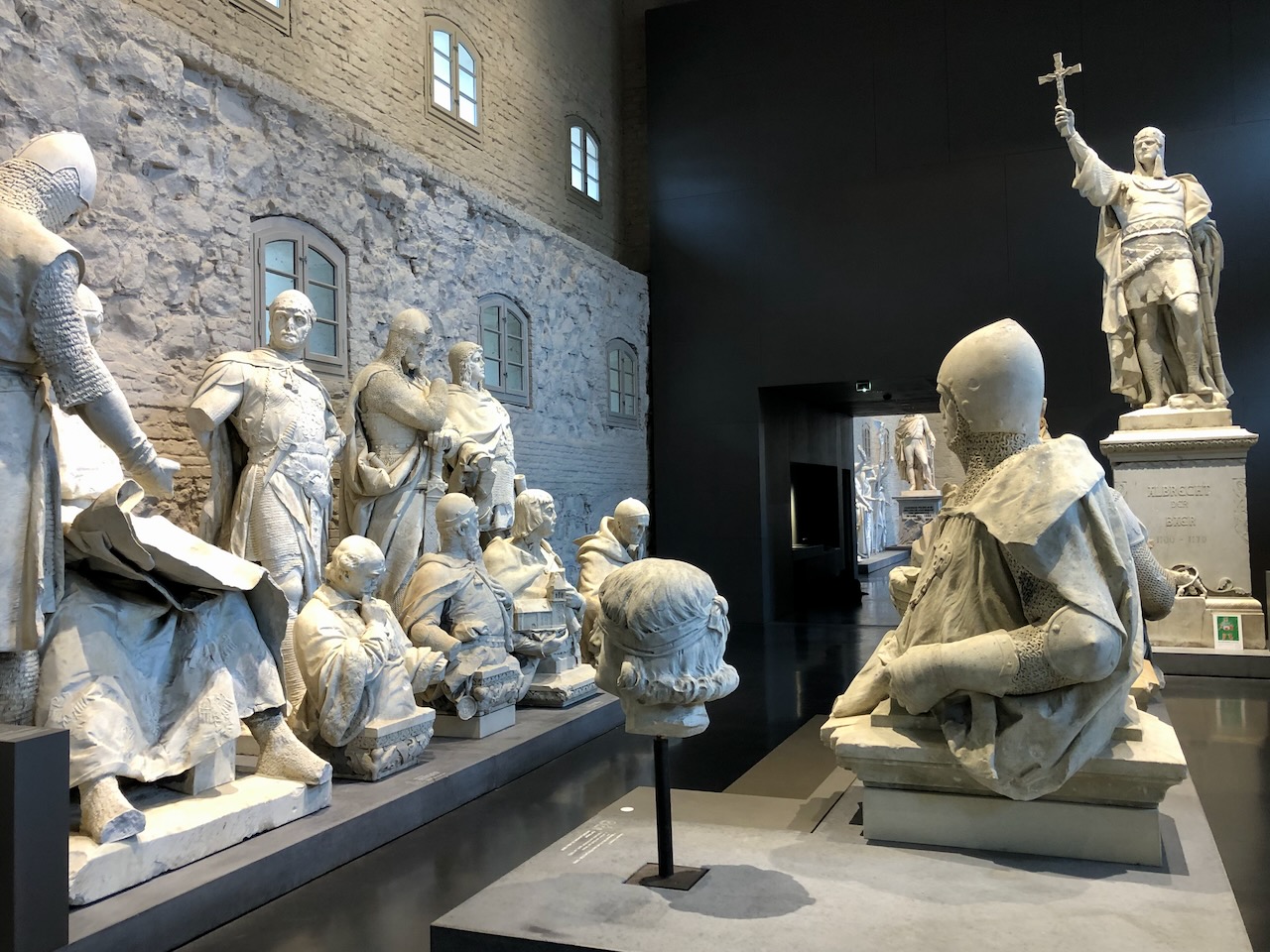
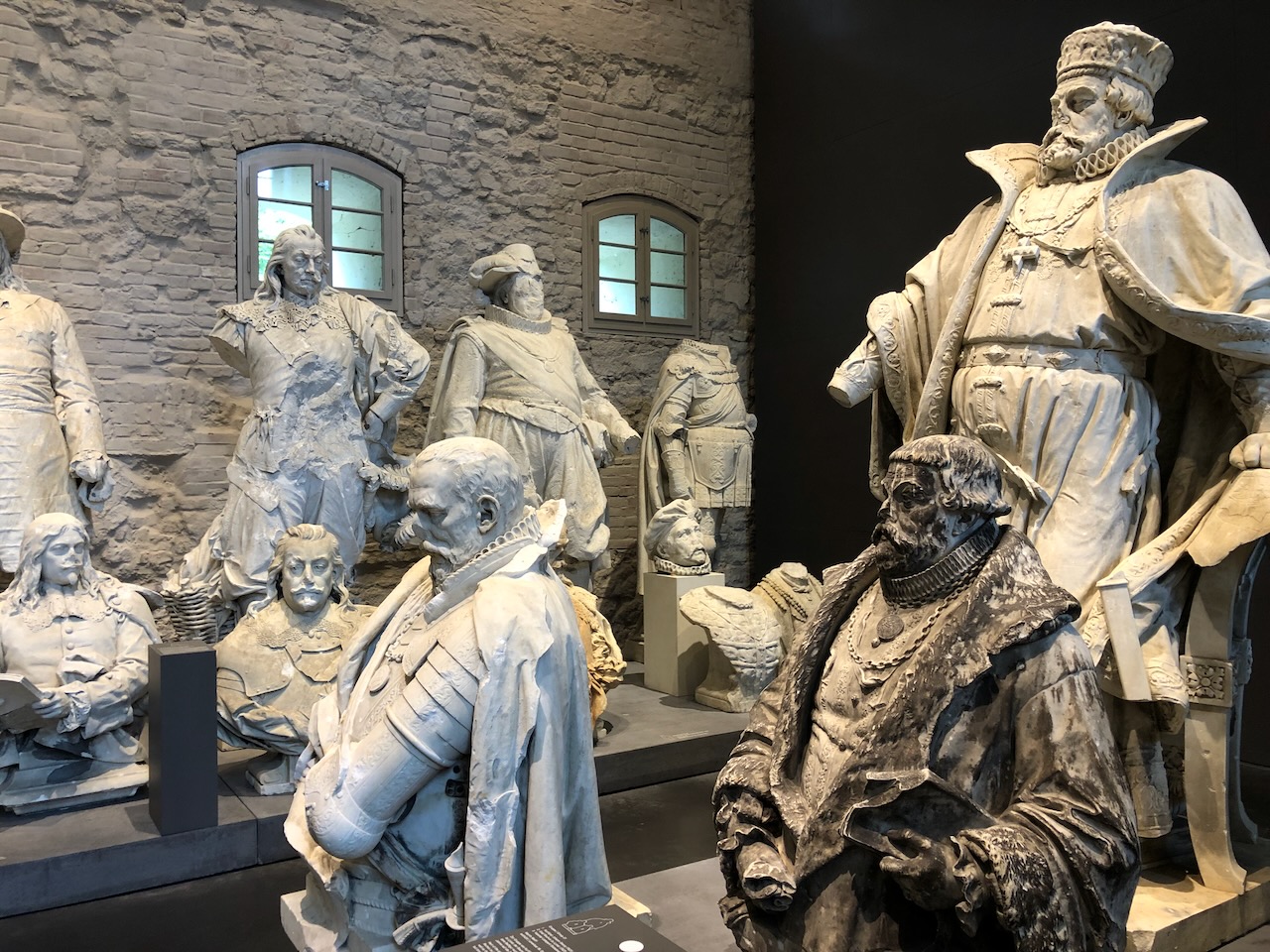
Enthüllt / Unveiled is housed in the Renaissance Citadel in the western borough of Spandau and not only offers a surreal experience but also an inspired response to the emotionally and politically charged ‘statue debate’. 

Albrecht the Bear and others

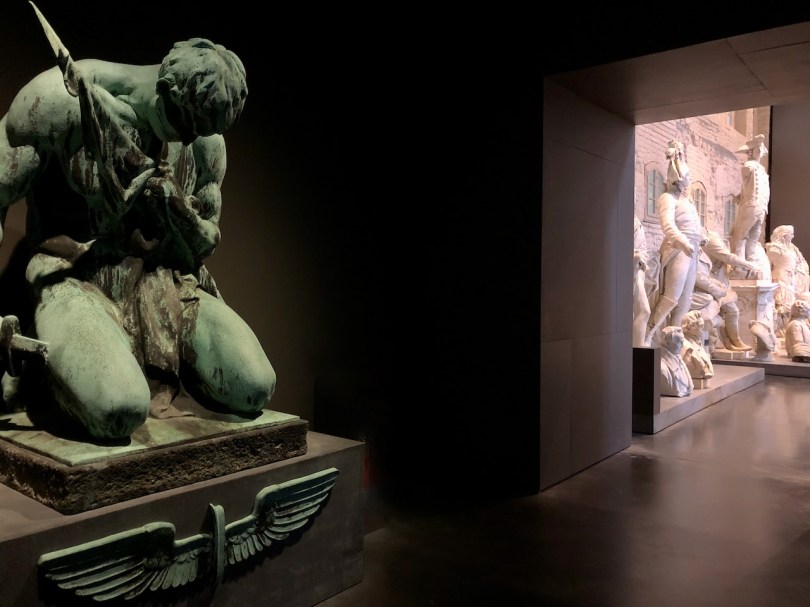
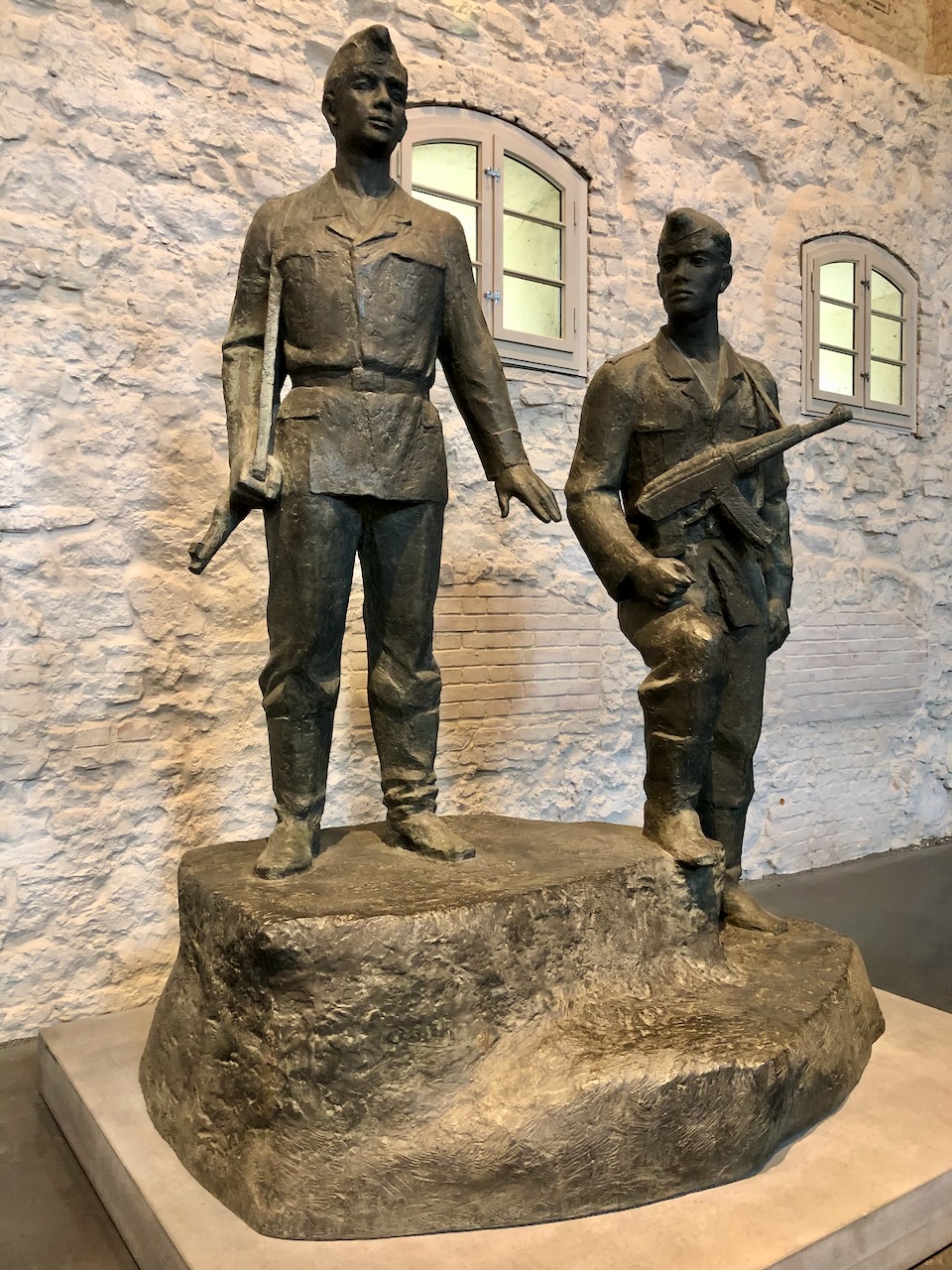
Housed in the 114-meter-long former Provisions Depot of the fortress, Berlin’s once revered or feared rulers, Prussian military heroes and bishops rub marble and bronze shoulders with thinkers, revolutionaries and victims. Spanning a timeline from the 12th century Albrecht the Bear (whose face you learn would not have been known so would have been crafted from a local tradesman or friend of the sculptor’s) to contentious GDR border guards, most of the statues have been removed from their plinths to stand at eye level. Many are missing limbs and noses or even their entire bodies. With chests still puffed but their status removed, you meet the figures of history on equal terms. It is a powerful experience.

Various headless/faceless/slightly worse-for-wear Electors, Chancellors and Counts from the 1500s

Monument to the Grenzposten / Border guards (1971)

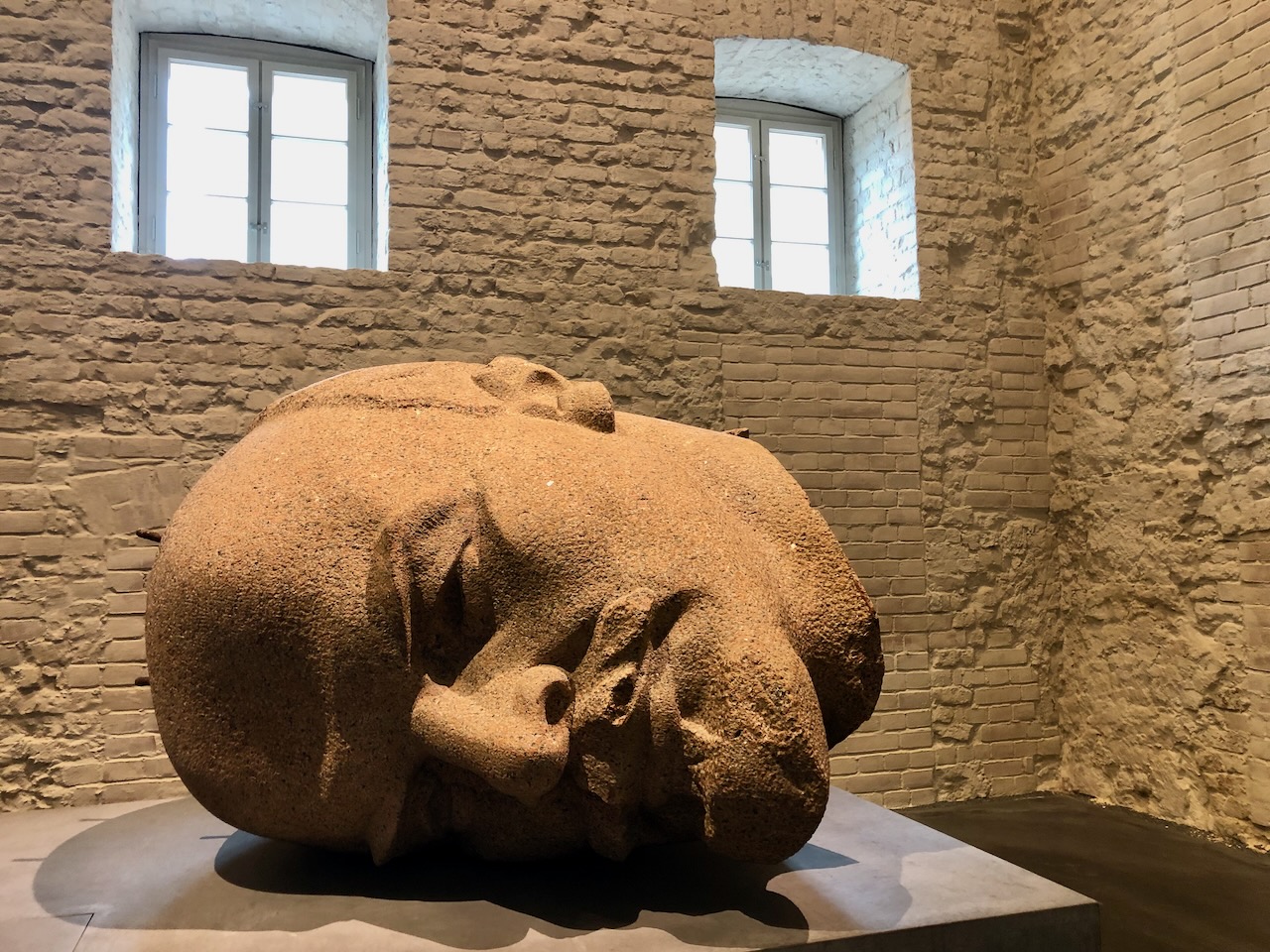
One of the highlights of the exhibition comes right at the end. Displayed on its side, Lenin’s 3.5-tonne granite head once rested atop a 19-meter-high statue by Soviet Sculptor, Nikolai Tomski. Created in 1970 and designed to blend with the Soviet architecture around Lenin Square (now United Nations Square), it was pulled down in 1992, cut into more than 120 blocks, buried in the Müggelheimer Forest and covered with gravel. It was recovered in 2015 for the Citadel exhibition, complete with nibbled ears (people chiselled off chunks for souvenirs) and transportation bolts sticking out of the crown.

Founder of the Soviet Union, Lenin

Traditional memorials are generally markers of achievement and greatness. Raised on plinths, you ‘look up’ to the person or event being celebrated. But what happens when they no longer reflect the values of the time, when their legacy becomes toxic? Do you leave them as lifeless witnesses to a time past with no apparent power in the present? Do you topple or remove them in an attempt to lose the history, or does that lose the discourse and potential to learn lessons? Do you contextualise them with plaques…? 

Germany, with its contentious past has explored these questions possibly more than anywhere else. Accompanied by huge debate, emotion and financial investment, statues and monuments have been removed, banned, dismantled, buried, unburied, re-erected in new locations, built from scratch… All this can be read about in the ubiquitous digital documentation running through the exhibition. But Dr Urte Evert, the curator of Unveiled, seems to have done something very clever. By allowing visitors to touch the statues, children to clamber on them, artists to respond to them, performers to dance among them, she encourages engagement and dialogue, not only with the art forms, but with history. And this feels more important today than ever.

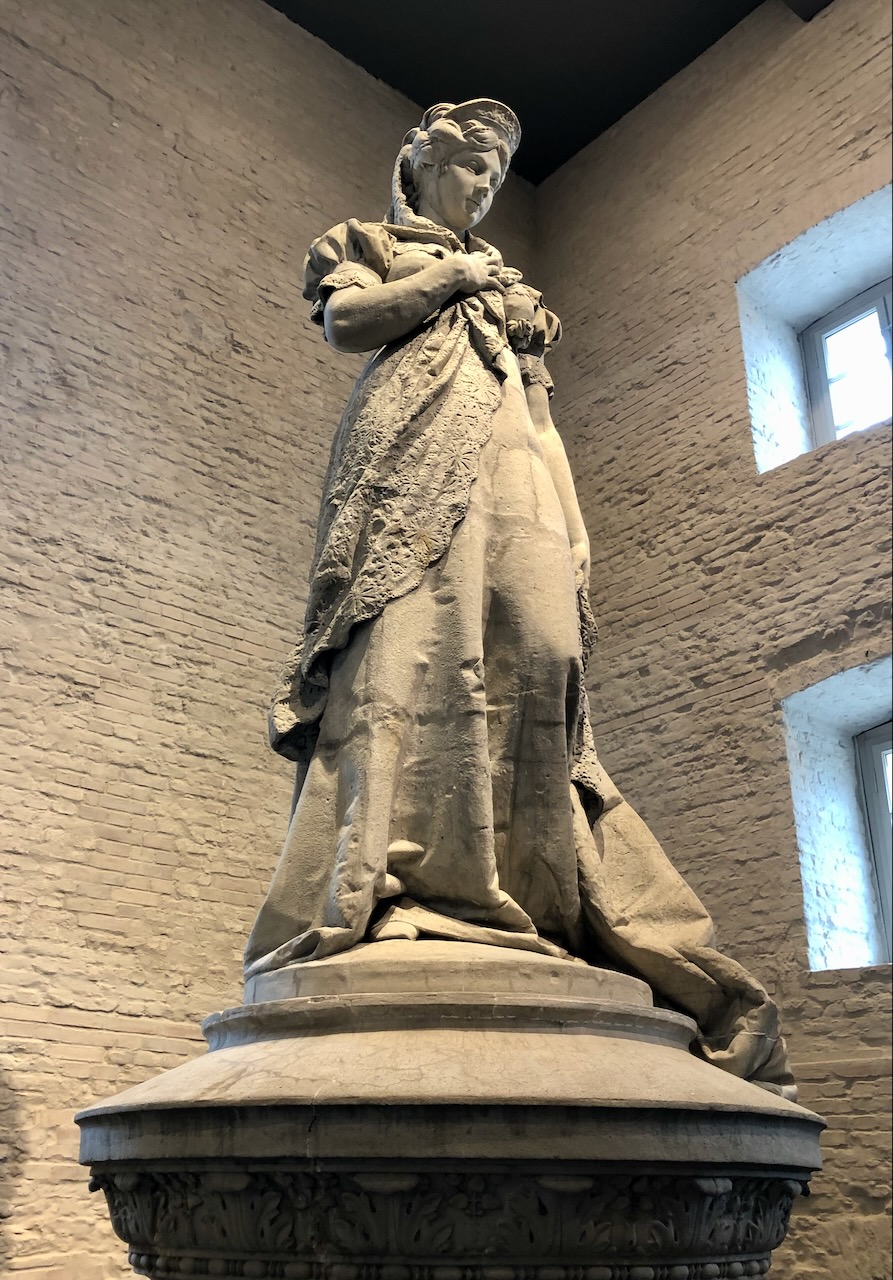
Queen Luise, ‘Queen of Hearts’ (1776-1810)

What is also striking, but not surprising, is that every statue from Kaiser Wilhelm I to Alexander von Humboldt and Immanuel Kant is a man. Apart from one, Queen Luise, wife of King Friedrich Wilhelm III and an early form of celebrity referred to as the Queen of Hearts… or according to Napoleon “the only real man in Prussia.” Even in today’s Berlin there are few statues celebrating women and even fewer to individual women.

Käthe Kollwitz

In a square named after her in the fashionable district of Prenzlauerberg, a rather lumpy and grumpy-looking Käthe Kollwitz, artist, sculptor, committed socialist and pacifist sits on a heavy block narrowly dodging graffiti. She is remembered everywhere and this is just one of many statues of her.

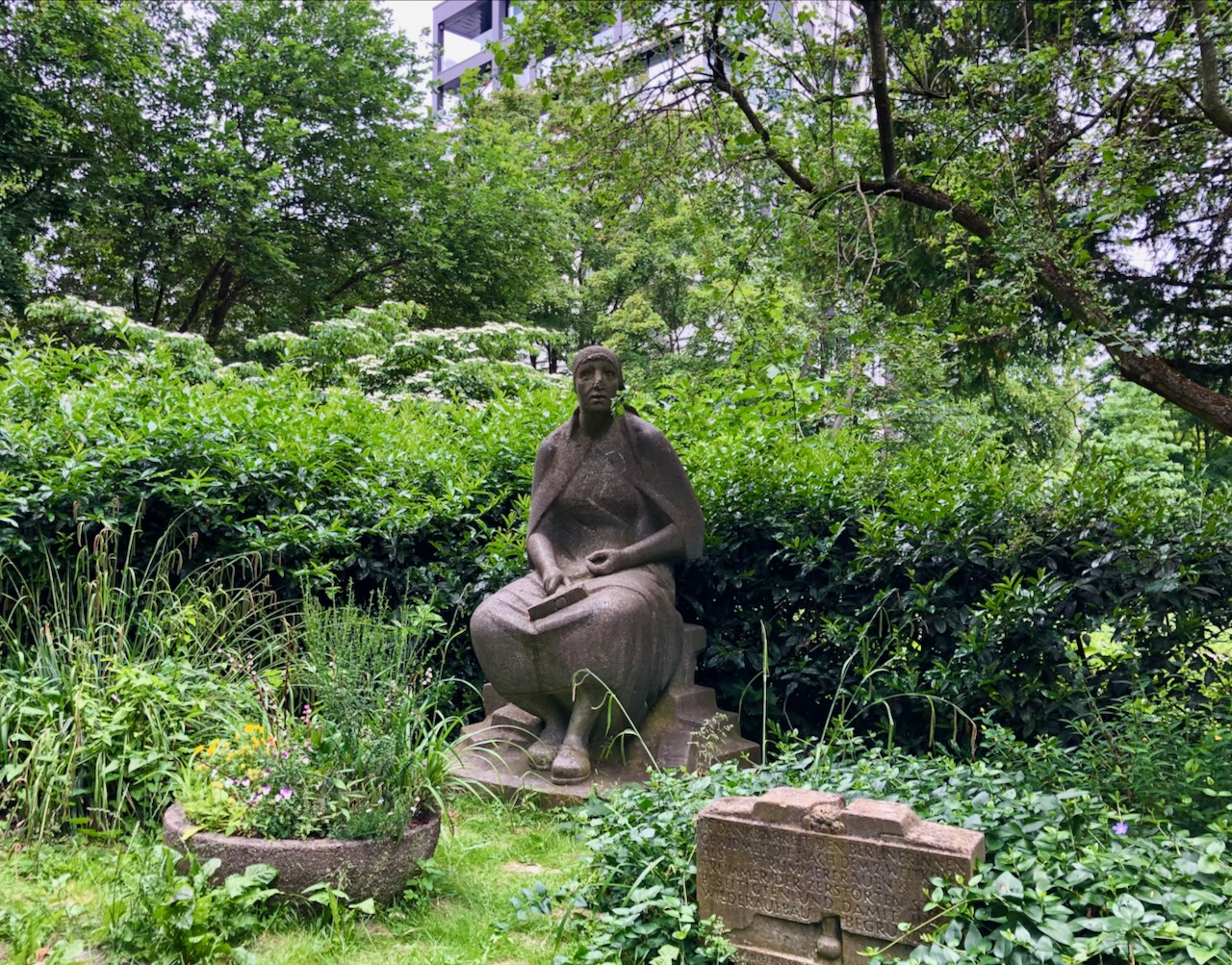
Memorial to the Trümmerfrauen / Rubble women (1950s)

Originally placed on a hill made of the bombed remnants of the city but now reposing with hammer still in hand in the greenery of Hasenheide Park, a Memorial to the Trümmerfrauen of Berlin offers acknowledgement to the ‘rubble women’ who cleared and sorted Germany’s destroyed cities by hand, stone by stone.

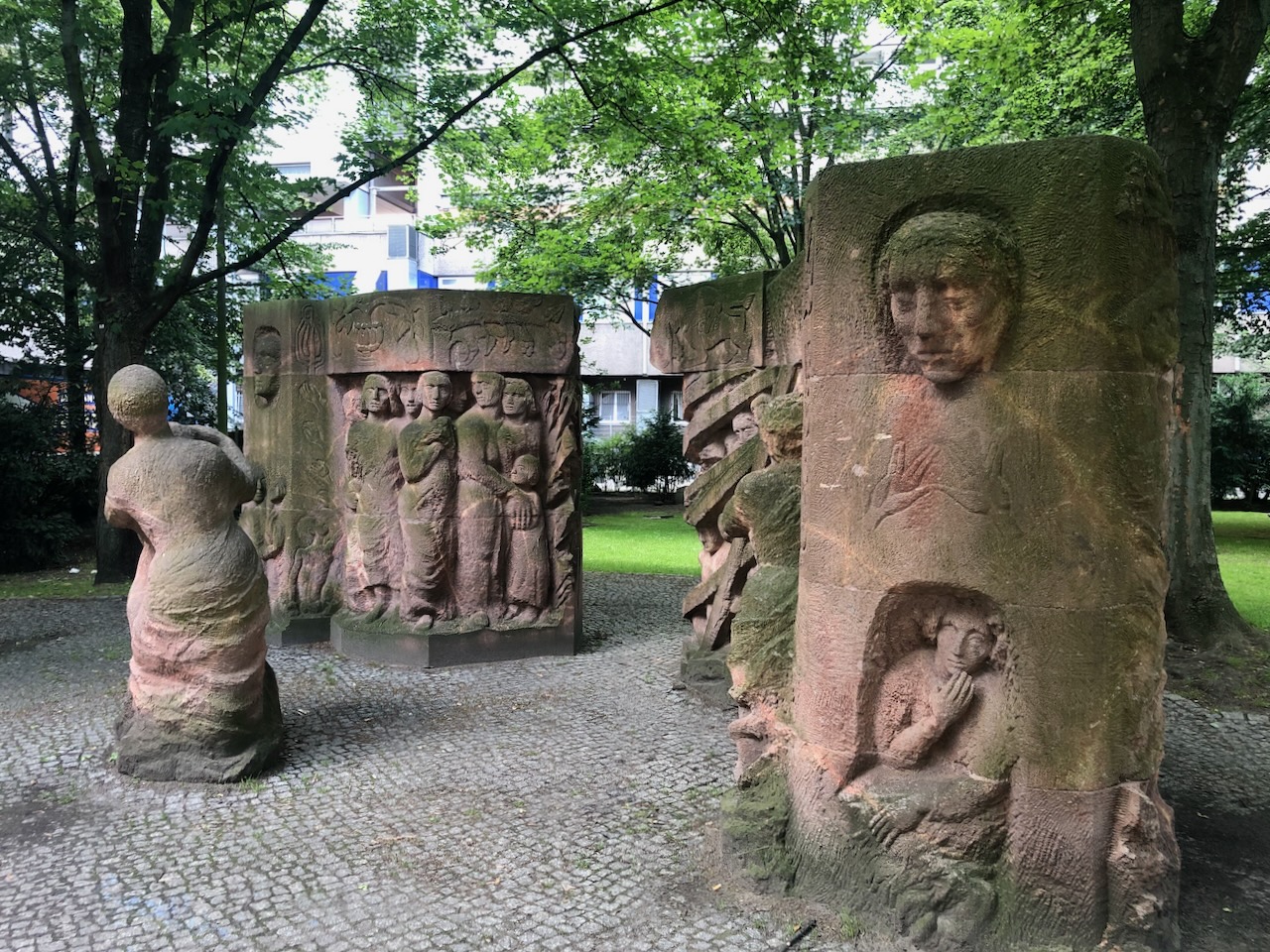
Block of Women, Rosenstraße

More centrally and on the site of the destroyed Old Synagogue, the Rosenstraße Monument, also known as the Block of Women, marks the 1943 peaceful uprising of some 600 non-Jewish German women who demanded the SS and Gestapo release their detained Jewish husbands awaiting deportation. It was a rare moment of successful protest against the Nazis. 

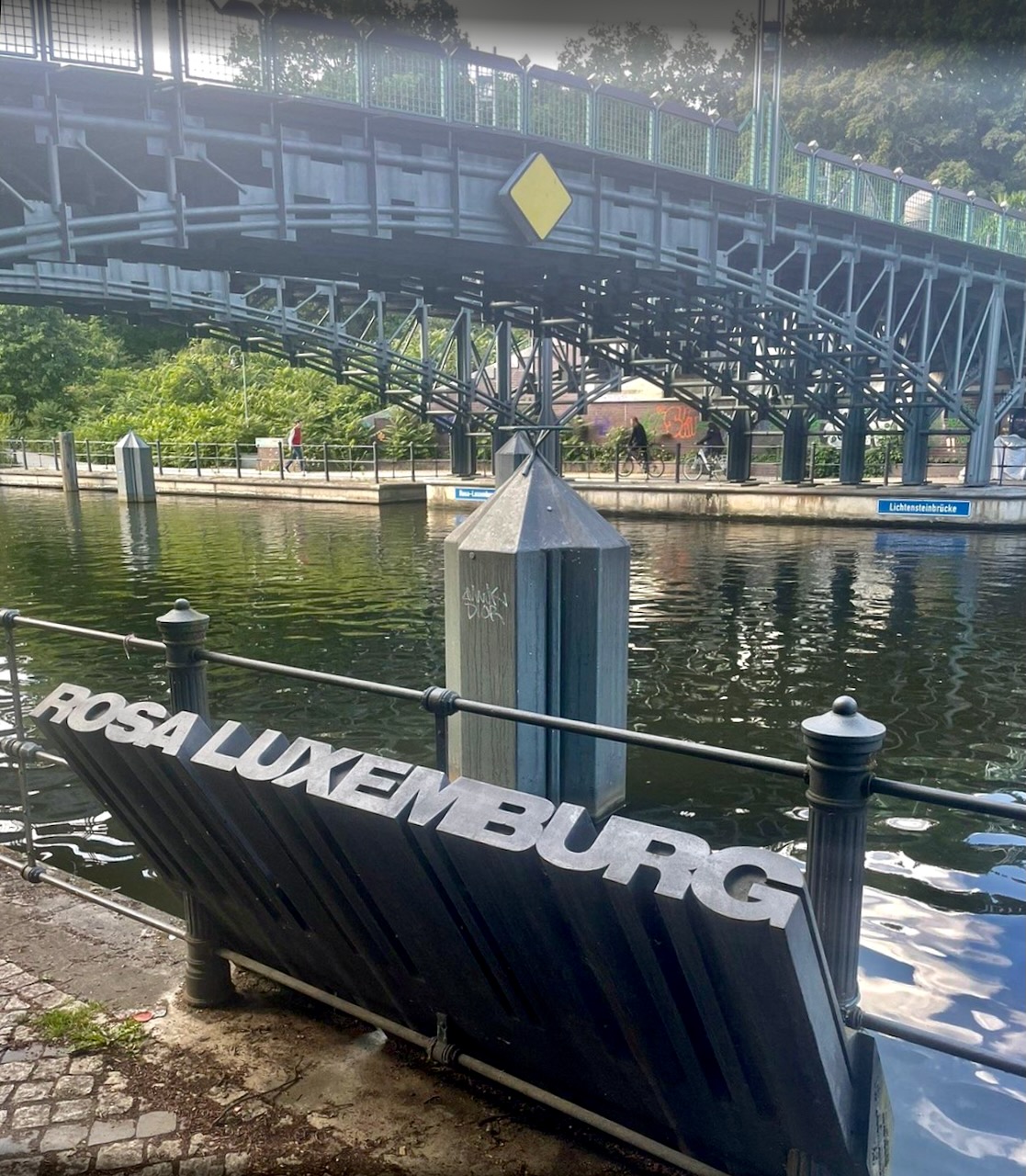
Rosa Luxemburg Memorial

And Rosa Luxemburg, one of the founders and heroines of the anti-war Spartacus League is remembered in big letters spelling out her name along the side of the Landwehr Canal where her tortured and executed body was fished out in 1919. She also has a figurative statue outside the Rosa Luxemburg Stiftung in Friedrichshain.

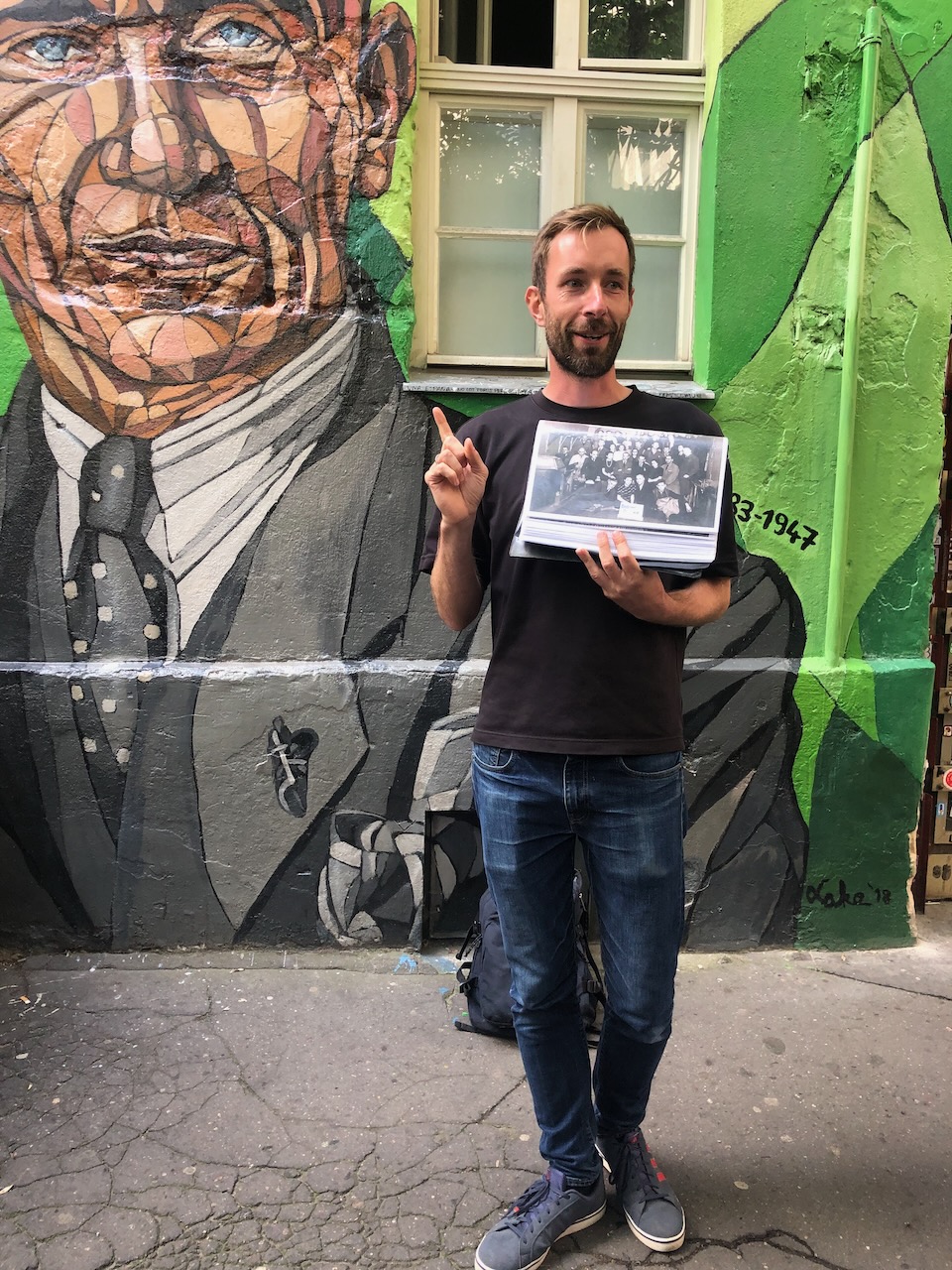
There are no doubt more but today the demographics of Berlin look very different. It’s a cool international city of young hipsters, artists, entrepreneurs, thinkers, activists, expellees, refugees, LGBTQ people, politicians, former GDR bureaucrats and prisoners… the list is long and colourful. John Kampner’s excellent book In Search of Berlin charts its development over the centuries, its ruptures, reinventions and constant search for identity. I keep thinking I know Berlin quite well now, that I have seen a lot of it… how wrong I am. There is more… so much more. And a highlight of this trip was joining Matti Geyer of Tours of Berlin on one of his private tours. (I love a good walking tour and have been on many.) As a born-and-bred Berliner with incredible knowledge and delightful delivery, he could bring new corners of the city to life and introduce me to further gems in this ever-transitioning city. I am already look forward to accompanying him on another.

Germany’s relationship to its past and Berlin’s unique relationship with itself have been fraught with challenges. But while you can feel the unsettled rumble of discontent that has spread throughout Europe and beyond, the wounds and divisions appear to be healing. There is an effortless confidence in its integration of past shadows into its present identity which none of the shiny new façades can hide.

Further reading (as always not necessarily reflective of my views):

Aryan homoeroticism and Lenin’s head: the museum showcasing Berlin’s unwanted statues by John Kapner, The Guardian

History set in stone by Penny Croucher

In Search of Berlin by John Kampner

Counter Monuments: Questions of Definition by Memory and History Blog

In search of ‘nothing’… part 1

My yearning for ‘nothing’ has been growing incrementally over the past few years. I have alluded to variations of apparent nothingness in my book and previous blogs when I discuss ‘negative space’, ‘the feminine principle,’ the vital pause at the start of Beethoven’s 5th, all expressions of that immaterial level of life that evade measurement or proof by current instruments of science. It is space, in every sense of the word.

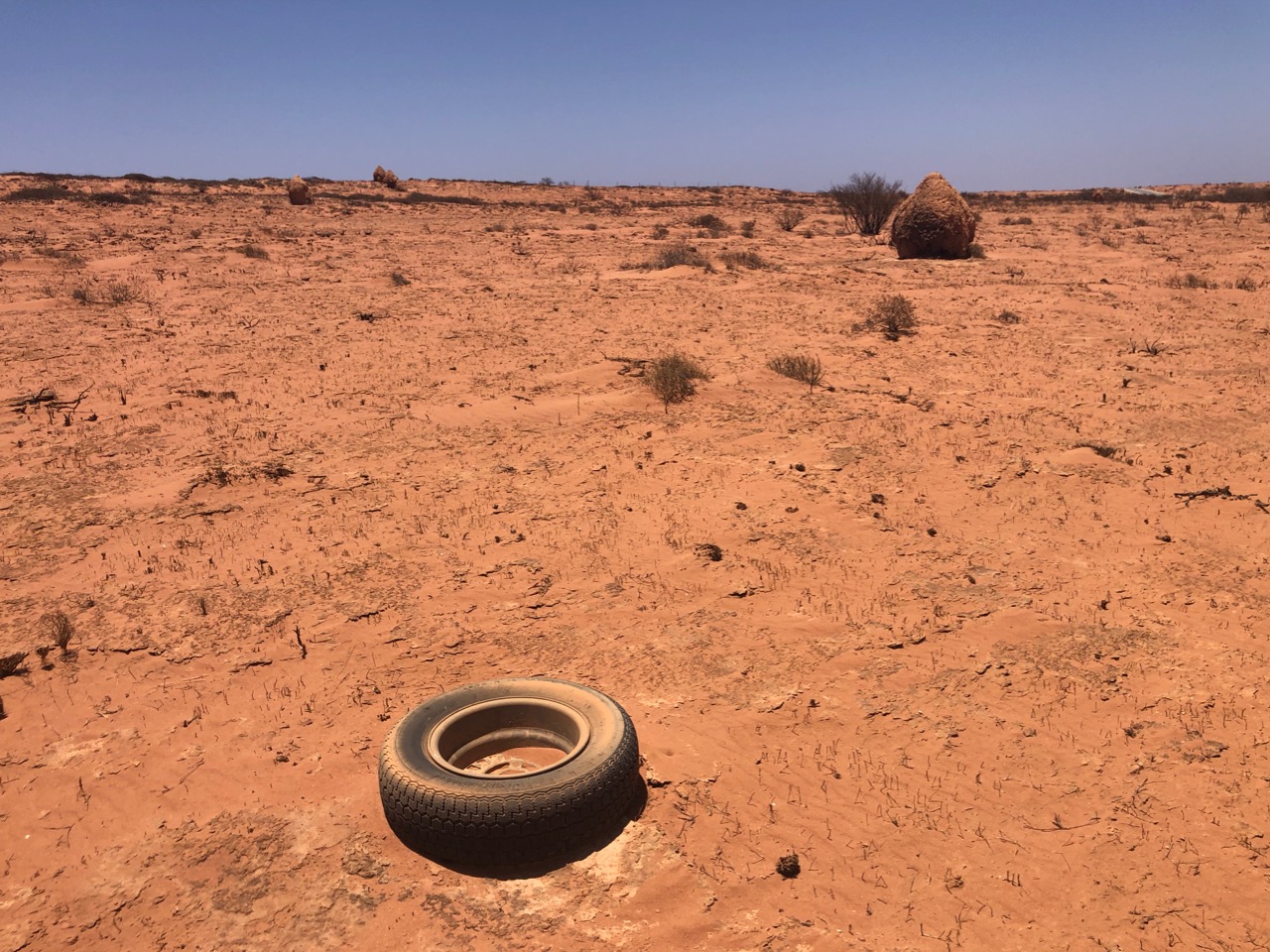
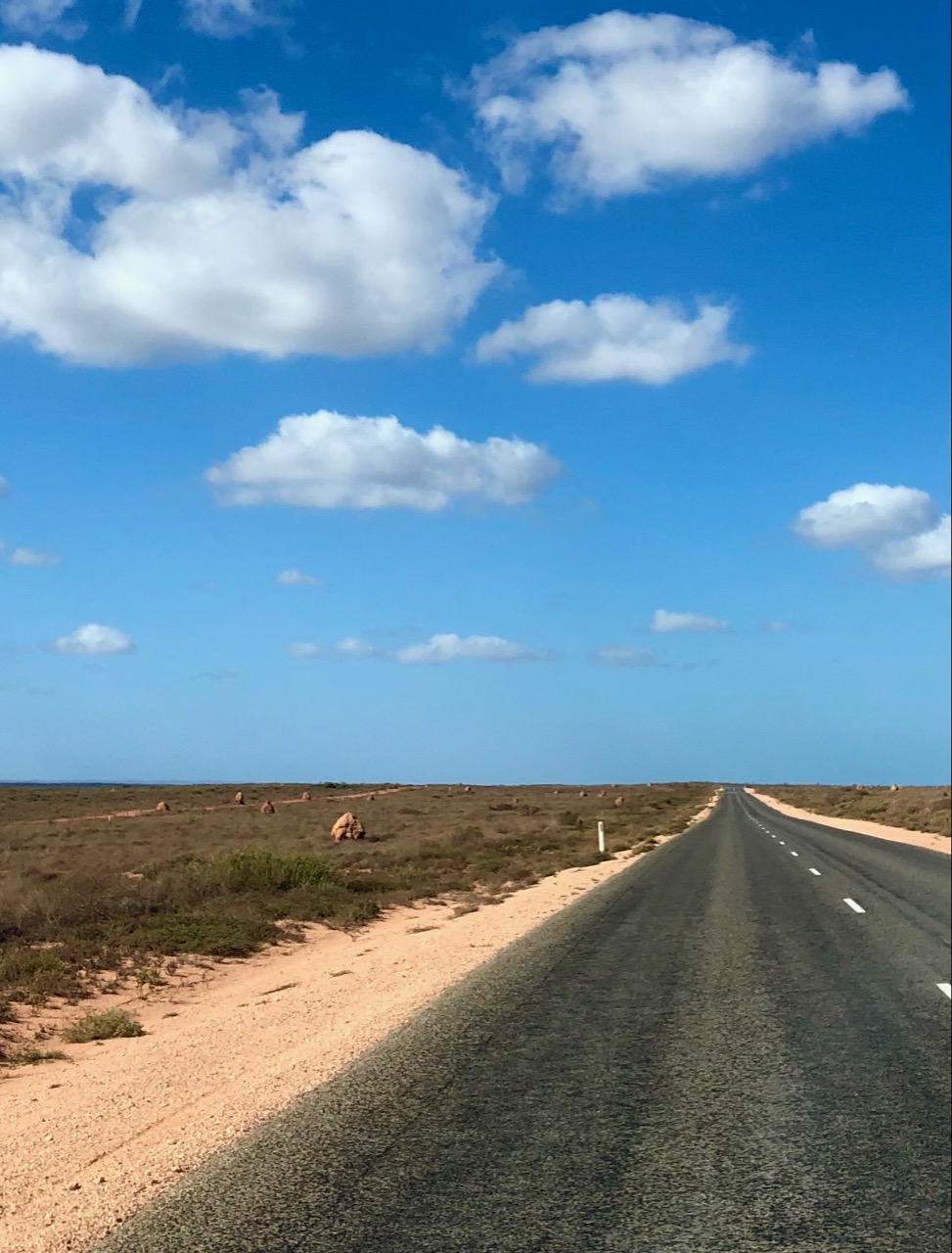
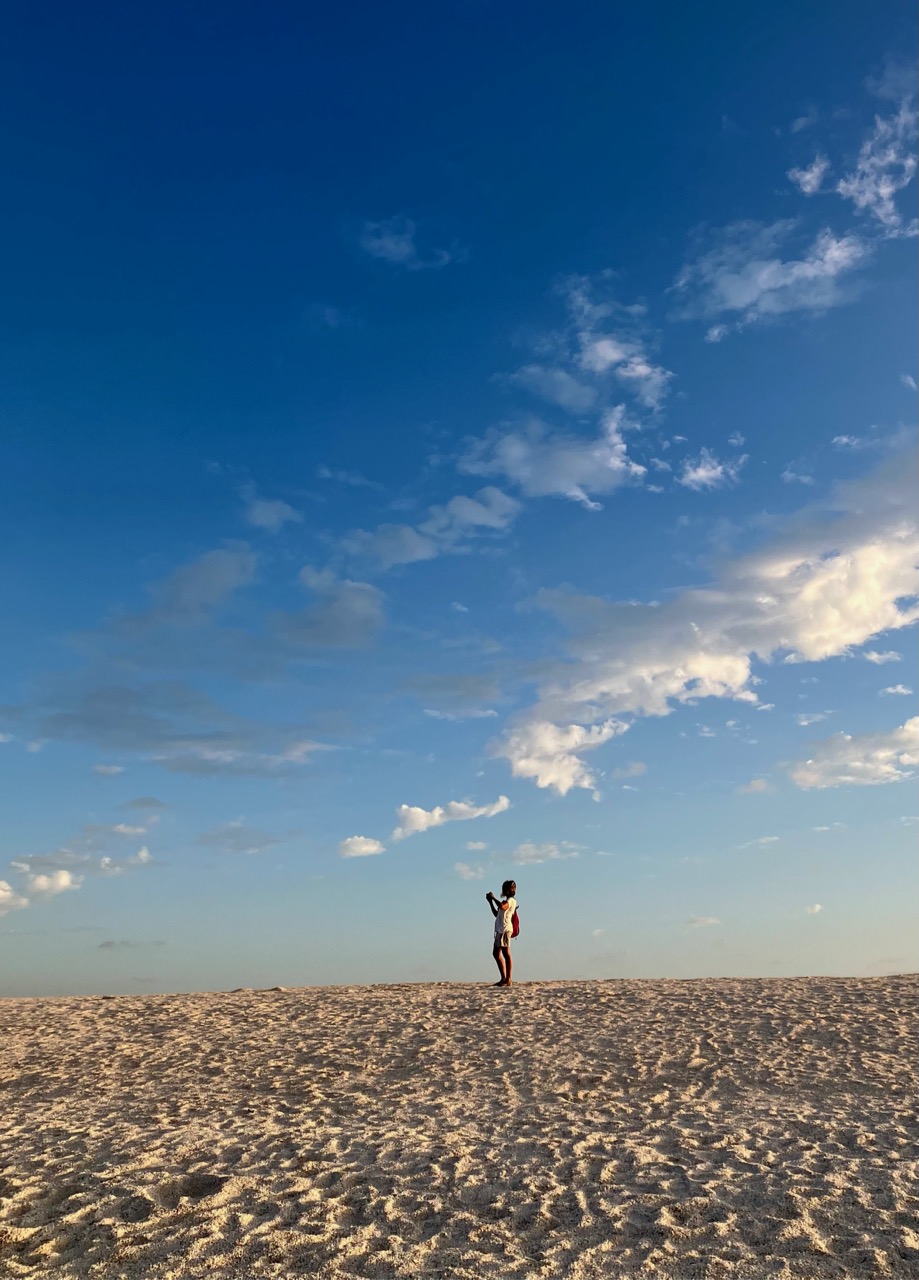
Ever since my first and only trip there in the mid-eighties, Australia’s unique form of emptiness has tempted me back. Its vast cobalt-domed red plains sealed by 360˚ of horizon and uncluttered by physical landmarks of human endeavour older than 235 years. Here the world could well be flat. For the mind expands unhindered in all directions, stretching until the last strands of taut linear thought surrender their elasticity to slip like well-worn pyjama bottoms into a useless pile around the ankles.

The island continent is a landmass that cannot be understood with the brain. It must be embodied, felt. Having travelled there between the wars, a confounded D.H. Lawrence wrote in Kangaroo (1923): “You feel you can’t see, as if your eyes hadn’t the vision in them to correspond with the outside landscape.” 

The Western Australian novelist, Tim Winton, expands on this inability to process what is around you in his book Island Home. It requires time. Duration and experience. Submission and waiting. ‘Space was my primary inheritance,’ he writes of his upbringing. ‘I was formed by gaps nurtured in the long pauses between people.’

I recognise the impossibility of putting the sensory vocabulary from the 18 months spent here in my early twenties into words. And yet, a residual, visceral resonance with the land, aboriginal culture and those ‘gaps’ remained through the decades despite my disproportional terror of almost every native creature that swims, slithers or hops. 

One of the aims of this trip to the inland and coastal terrain of Western Australia was to visit old housemates who shared that vibrant formative period in Sydney. Other motivations came from a need to escape the increasing compactness of a busy work schedule and a head filled to the brim with daily horror stories of escalating conflicts, the non-sense of current politics and power struggles, the dreaded false Gods of ‘economic growth’ and technological ‘progress’ and the cold soggy winter shades of grey. I wanted to blow my mind wide open in order to (re)connect with a more primal relationship to space and time. And life itself.

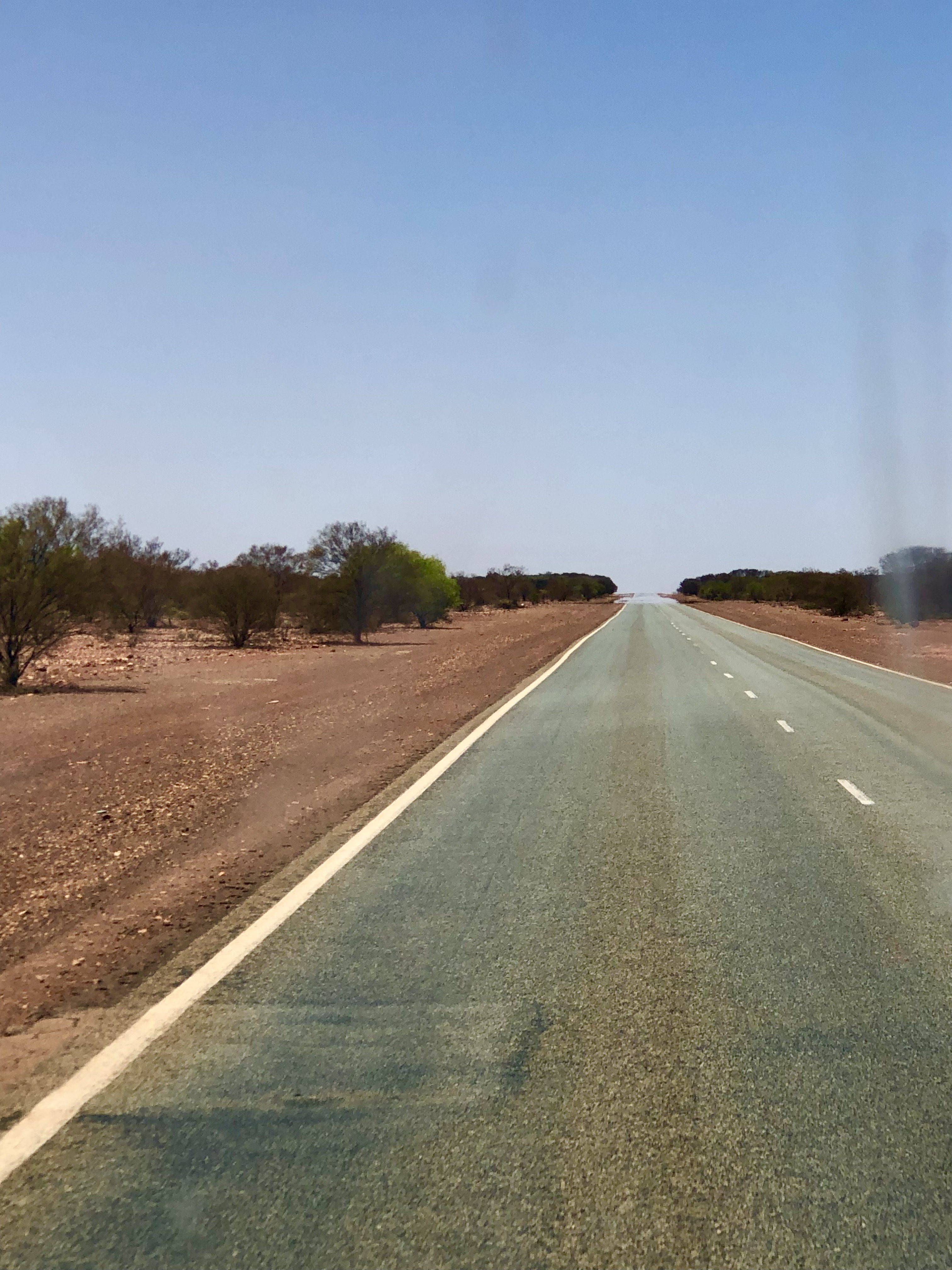
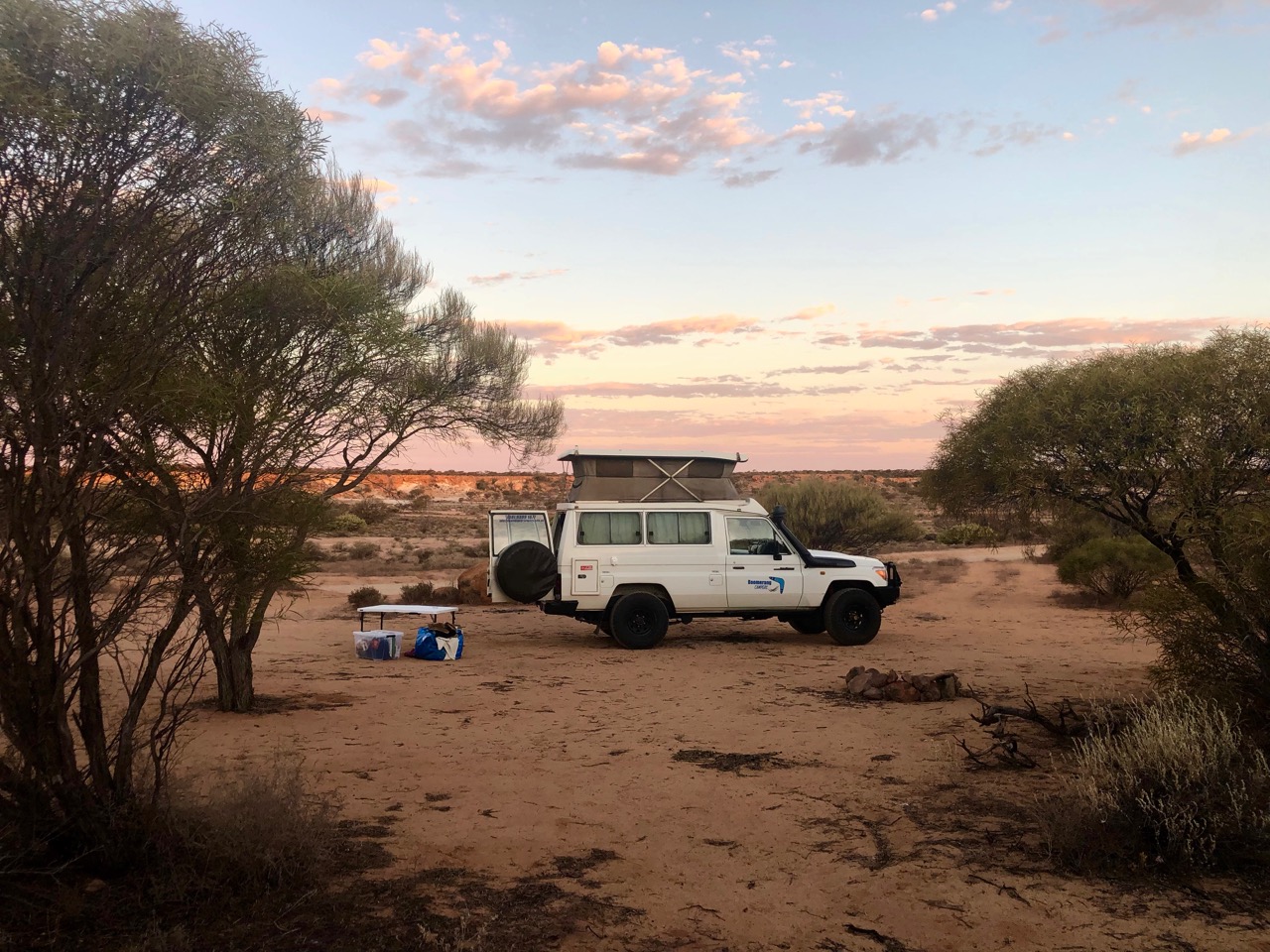
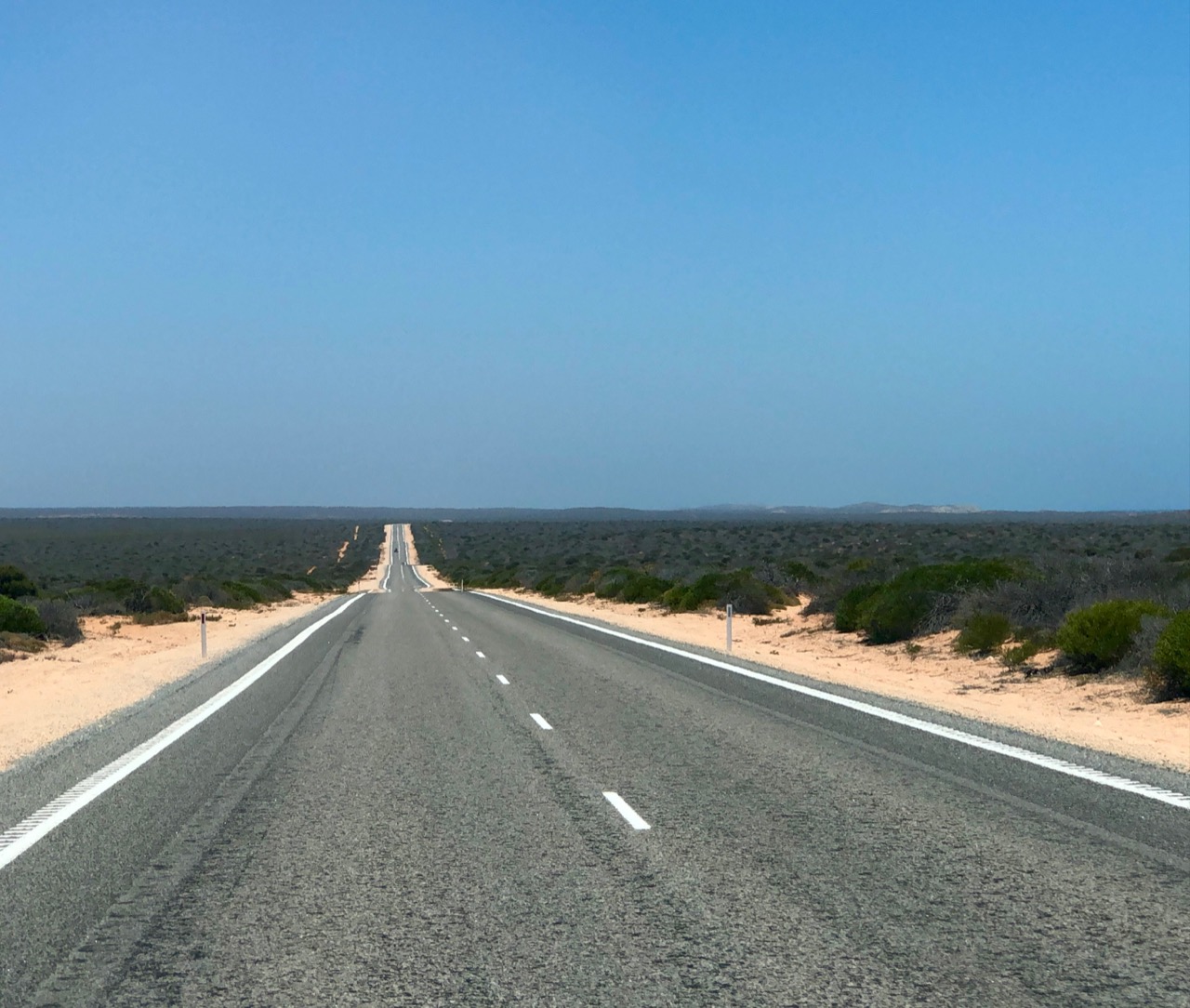
Departing from Perth on 15th December, a friend from Melbourne and I loaded fuel, water and food into a 4WD Toyota Landcruiser ‘troupy’ converted into a camper van clearly designed for a contortionist. Heading north-east we followed the Sat Nav’s increasingly sparse instructions until a lazy voice told us to just ‘drive straight for 280km.’ And then another 250. And then another.

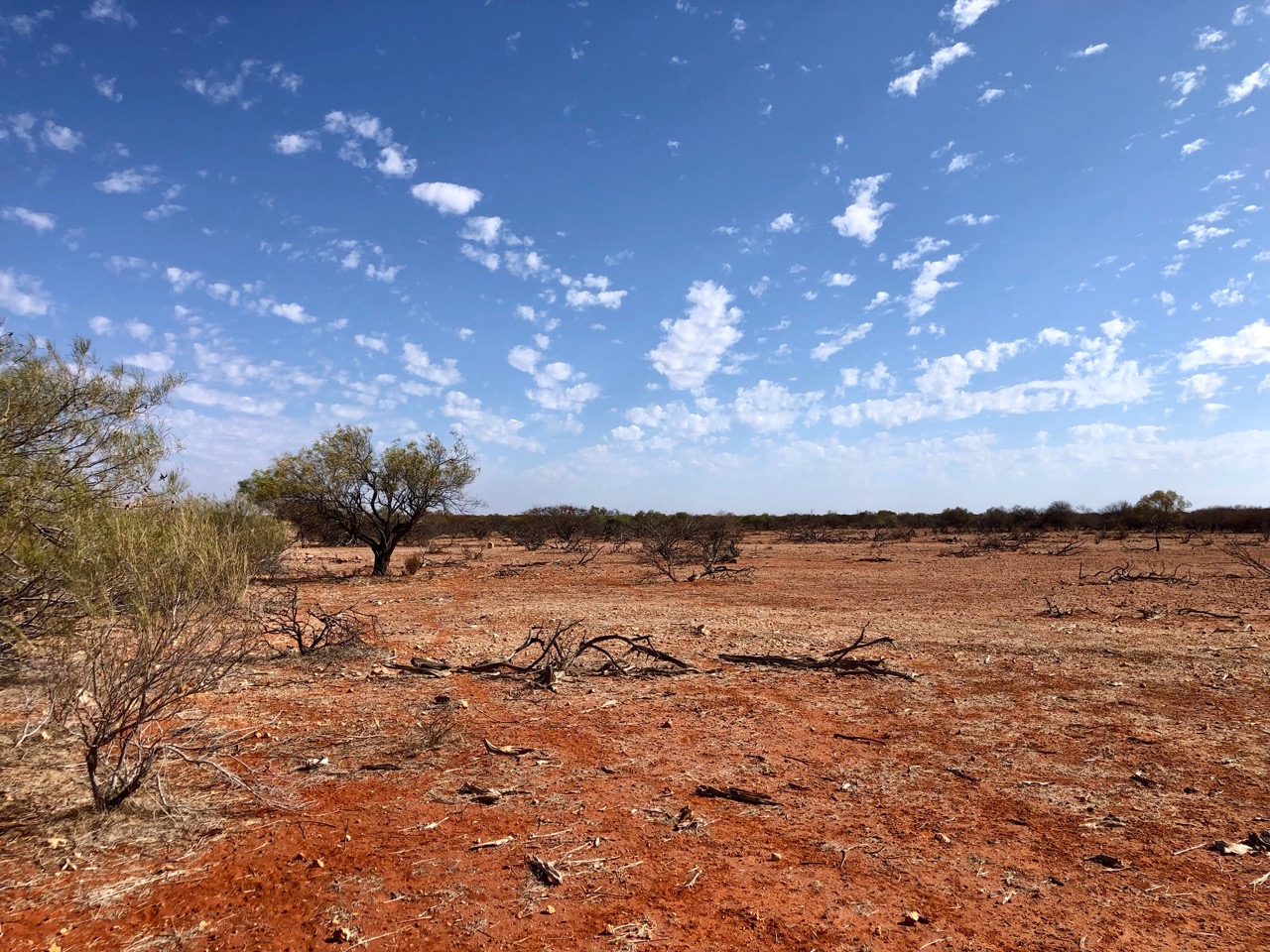
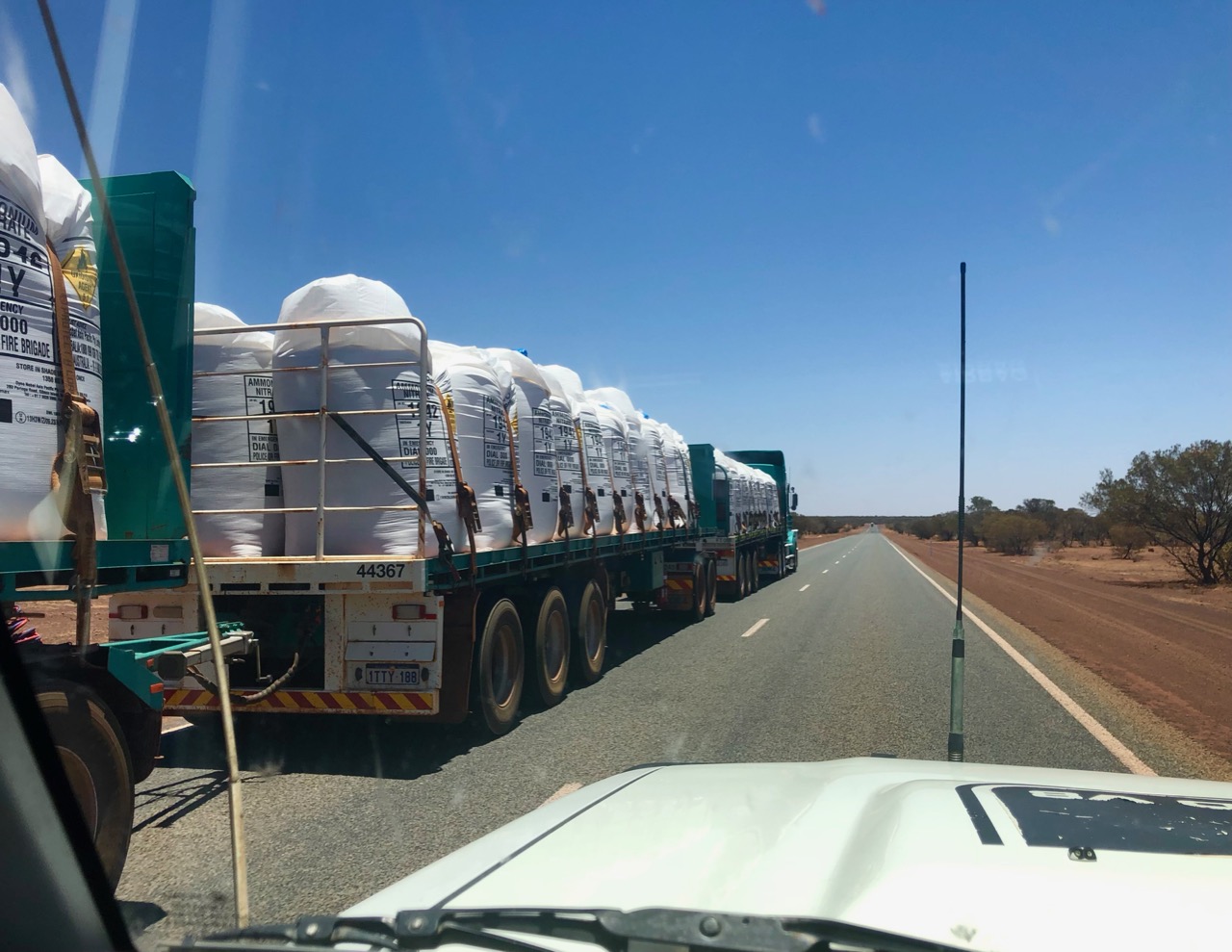
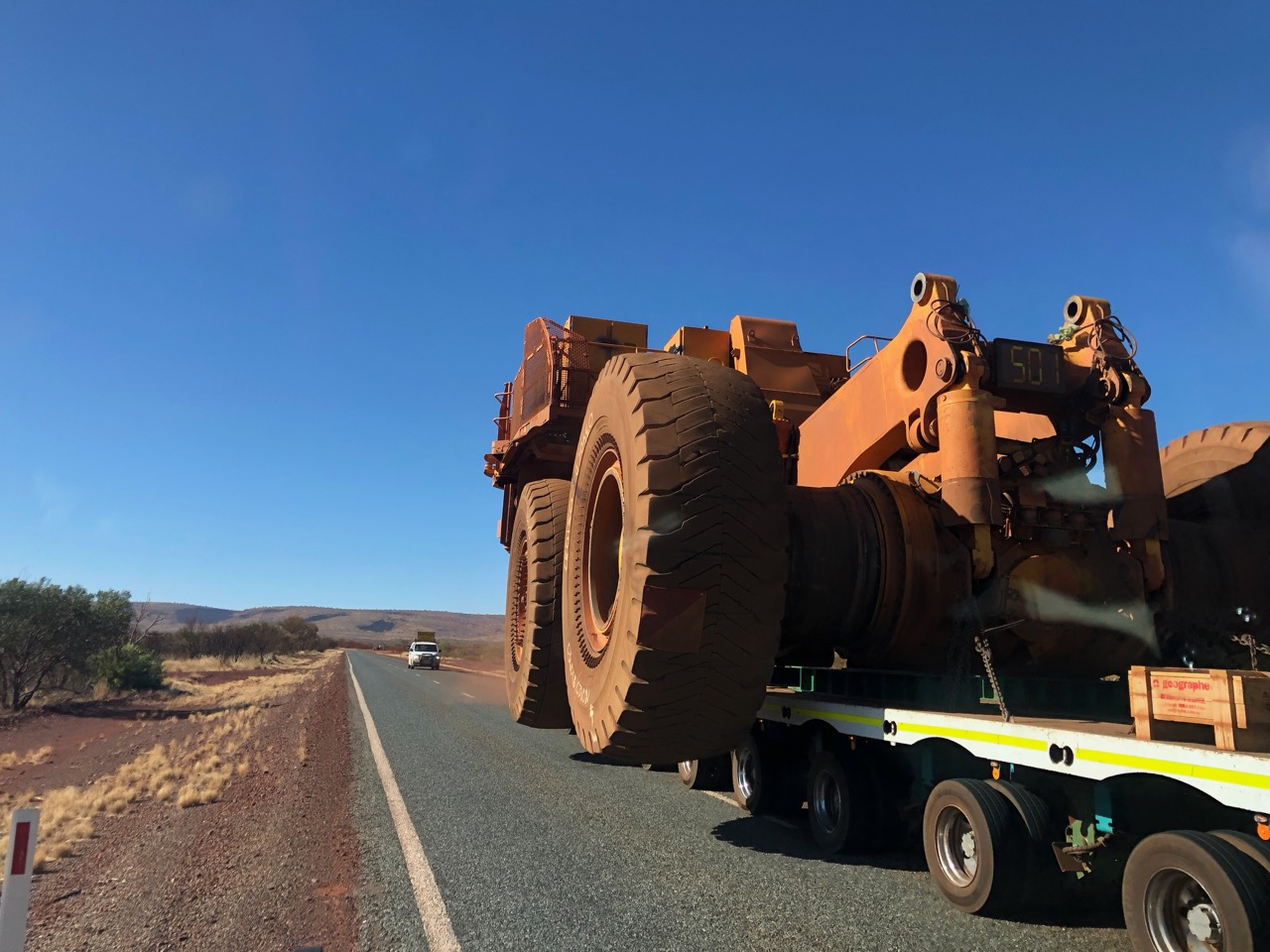
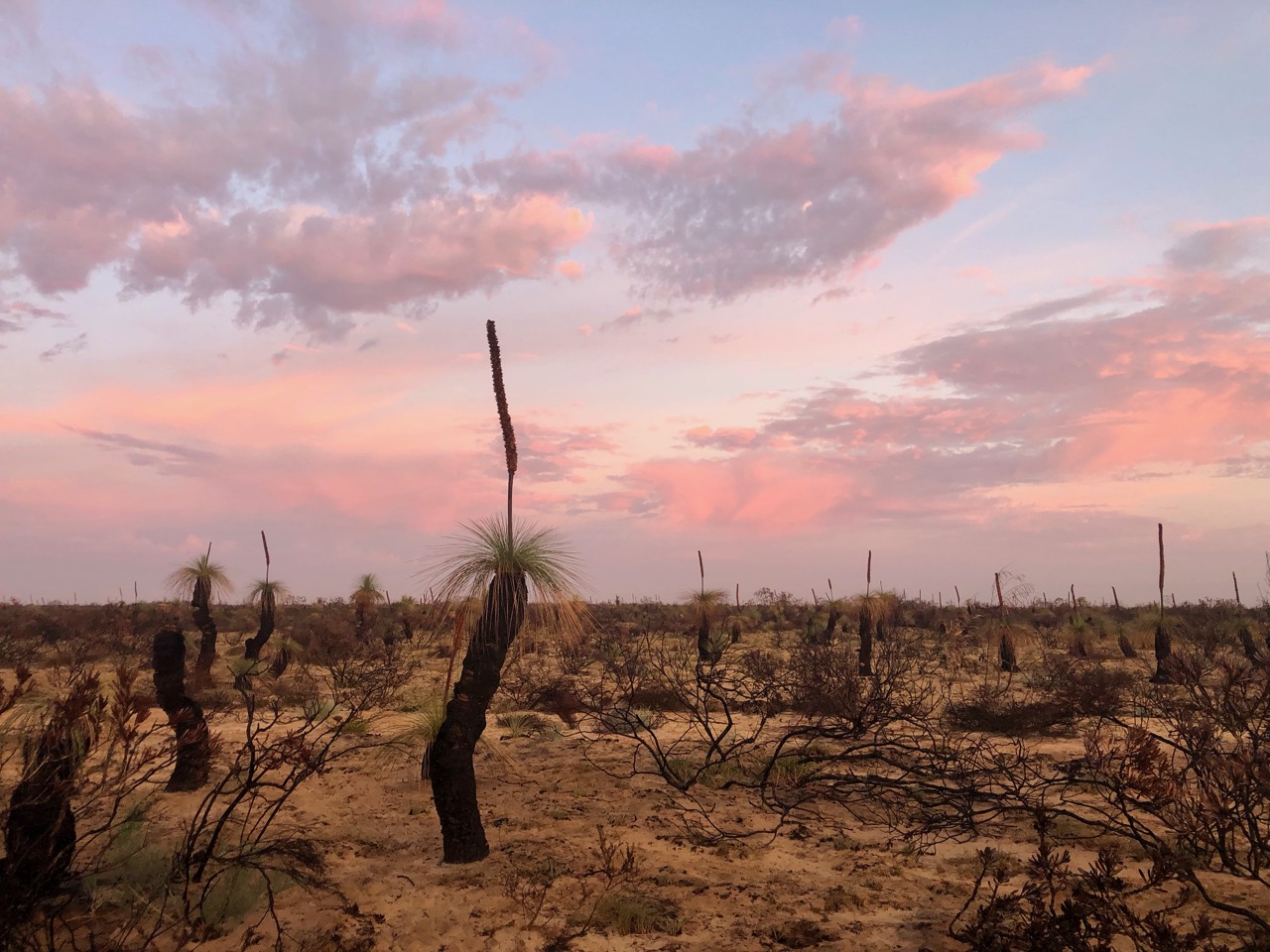
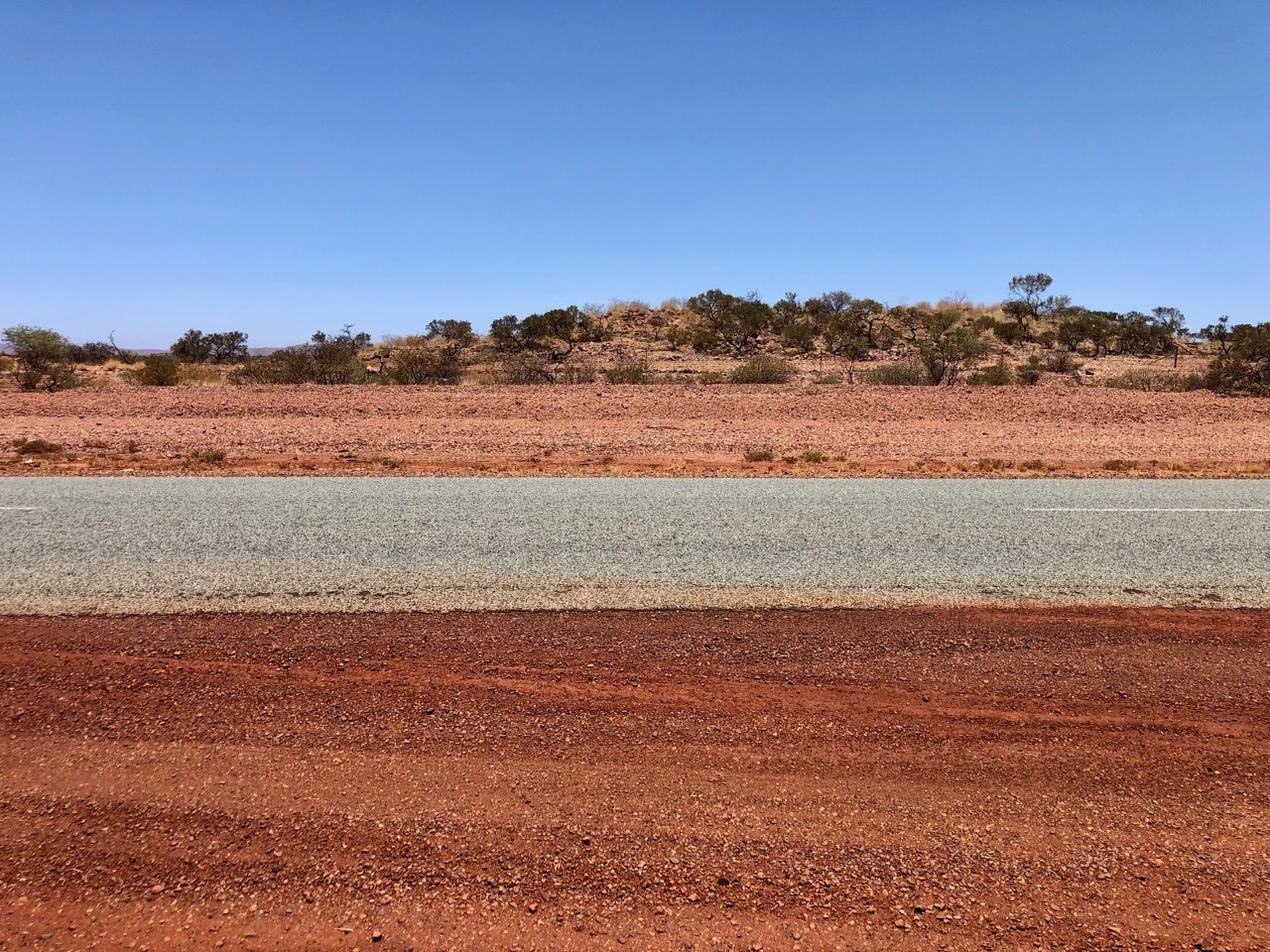
Barely turning the steering wheel except to overtake 60-meter-long road trains bearing heavy loads of ready-made houses or industrial monsters destined for the mines, we watched as the golden fields of the wheat belt dried and darkened into the deep ochres of the outback. The green foliage and white trunks of swaying gum trees gradually gave way to more sclerotic scrubland as earth and sky baked in the unrelenting rage of 44˚ sunrays. With rivers and gorges evaporated and all sensible holidaymakers having headed south, meet-and-greet parties of thirsty flies eagerly awaited us at each stop to feast on our eyelids, nostrils and lips. 

“One seems to ride forever and come to nothing and to relinquish at last the very idea of an object.” Anthony Trollope in the 19th Century

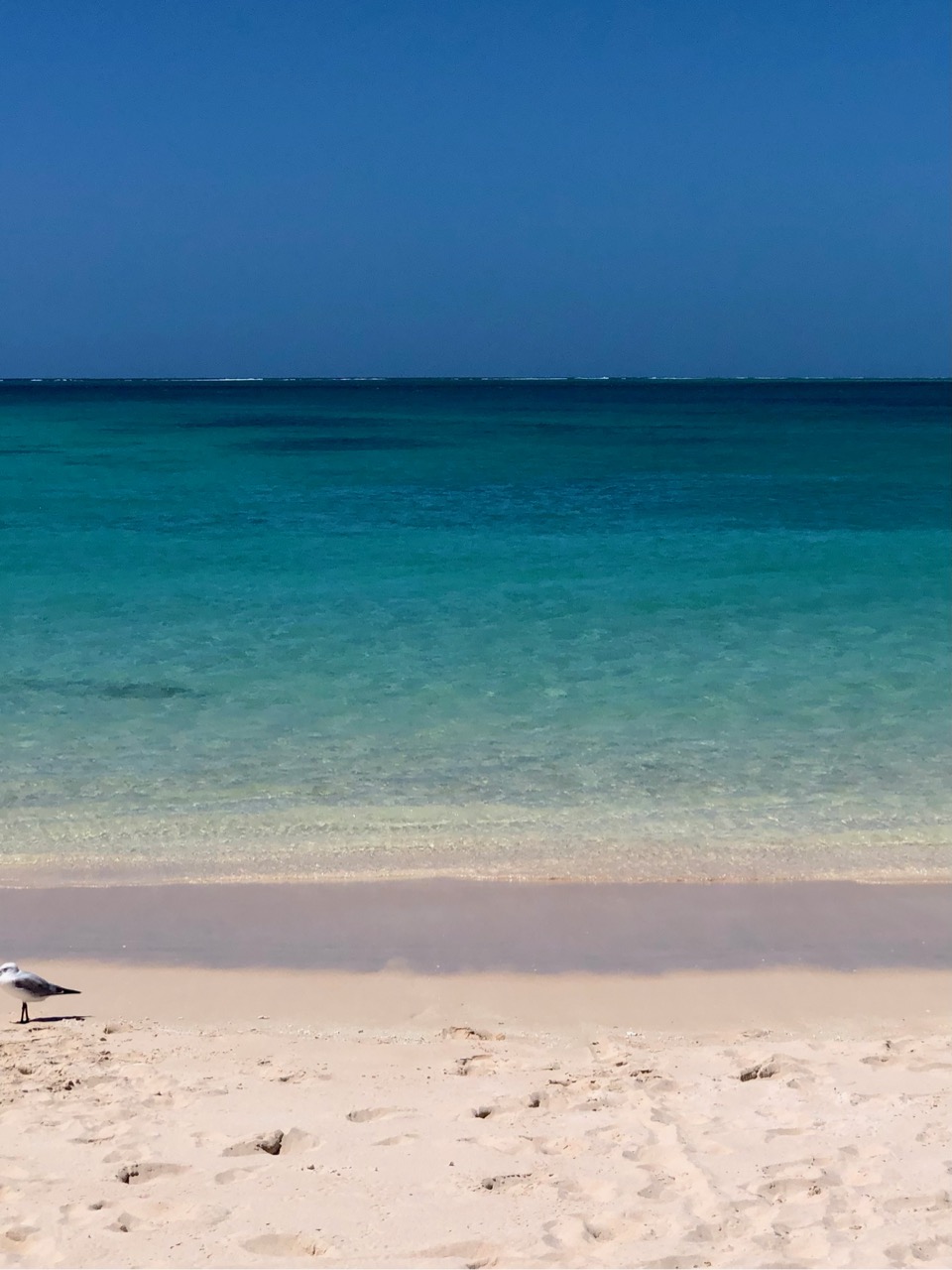
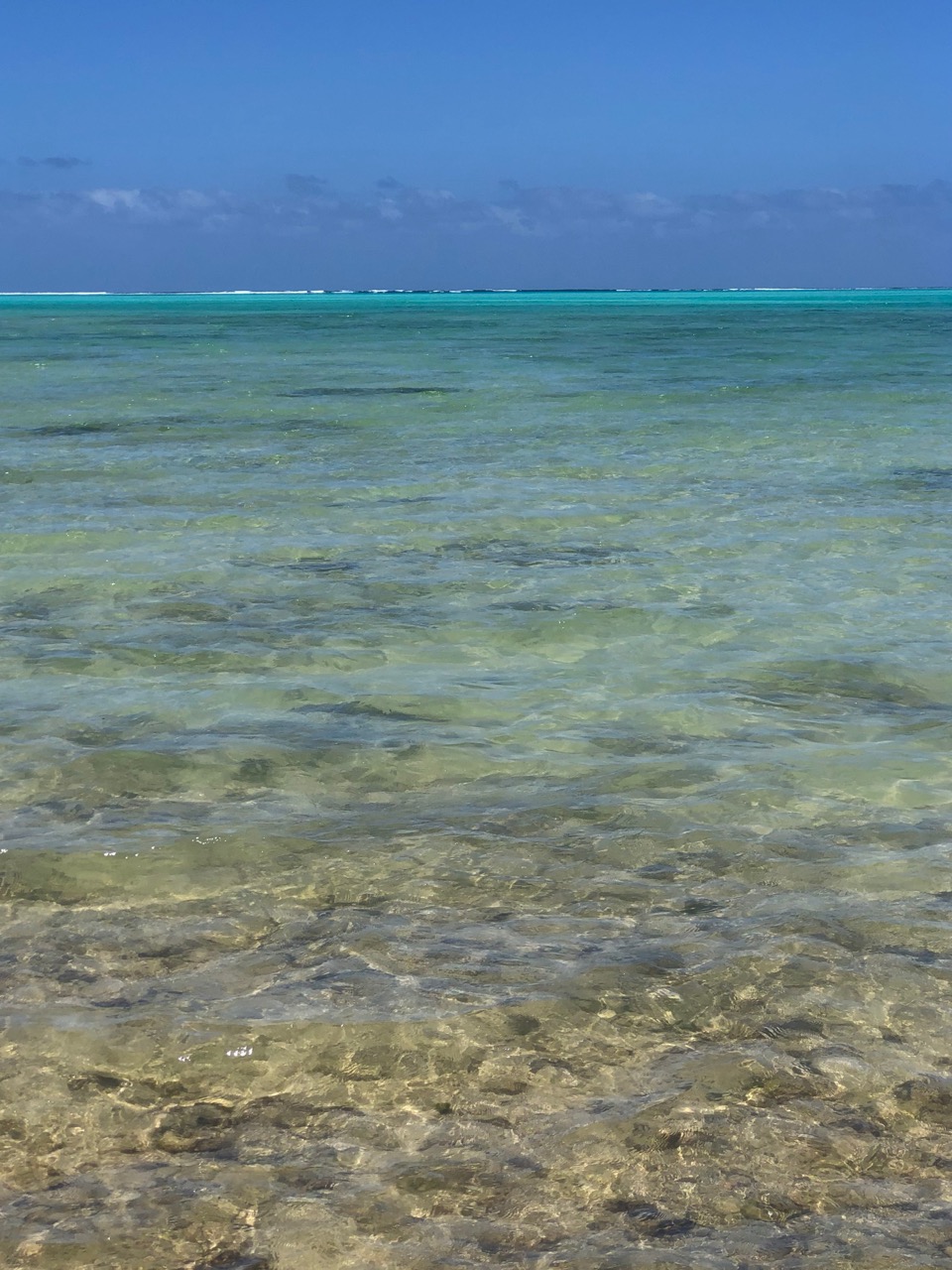
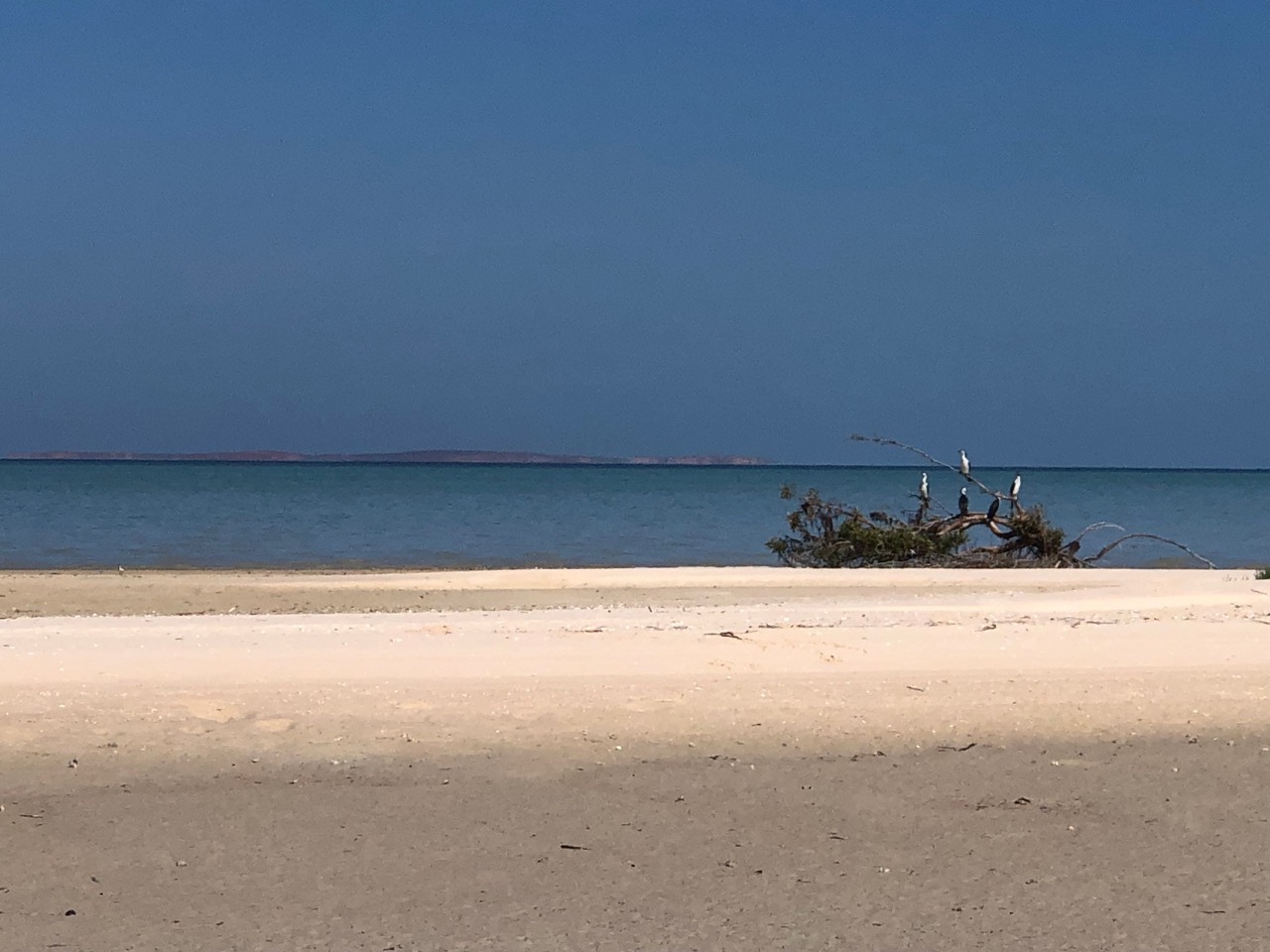
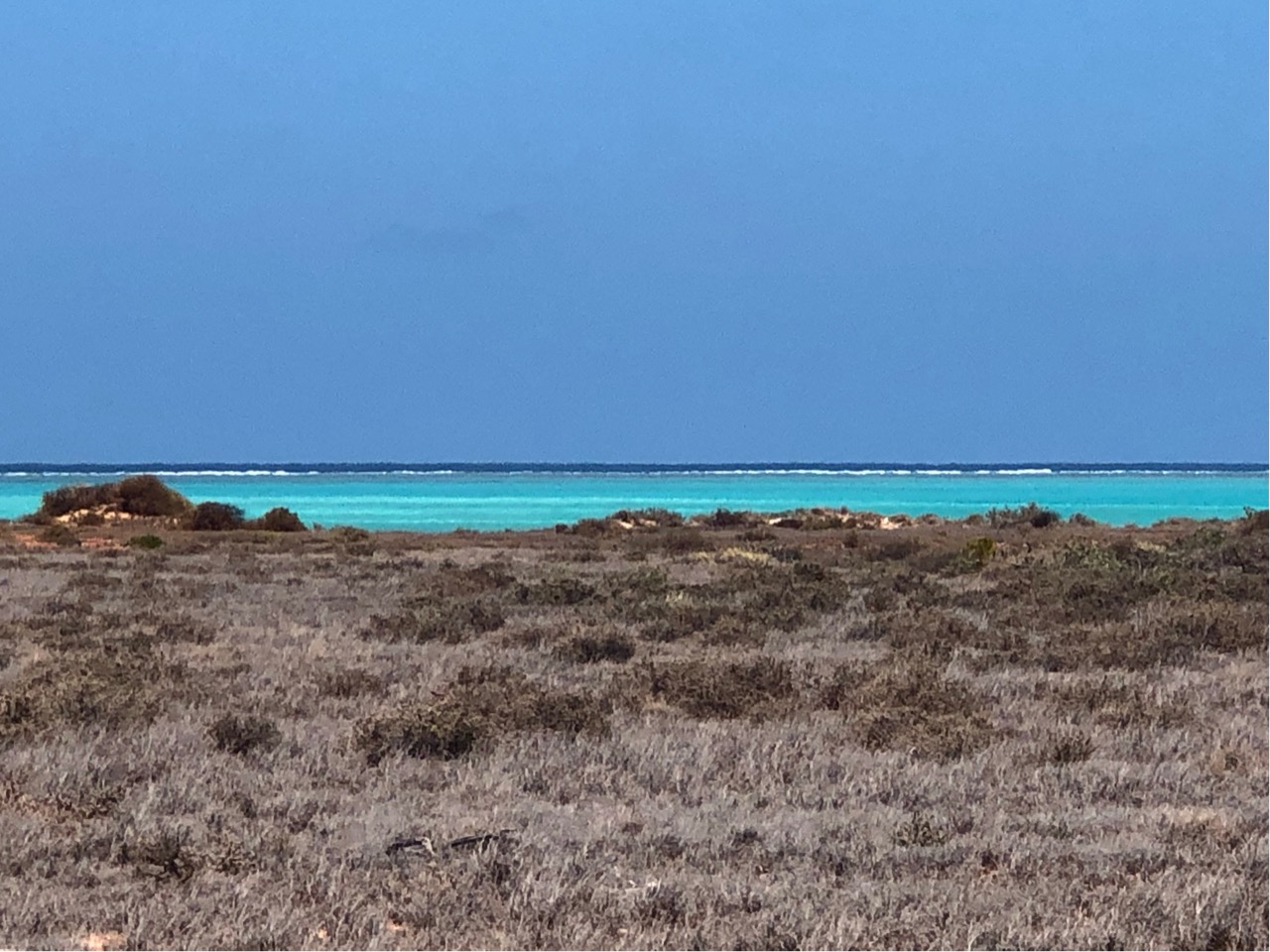
While indicators of bush fire risks threatened, the surreal warnings of floods made us salivate. It was only when we reached the white sand shores of Cape Range that we were introduced to the element of liquid. Turquoise waters busy with turtles and unfazed multi-coloured fish that populate the coral of the fringing Ningaloo Reef.

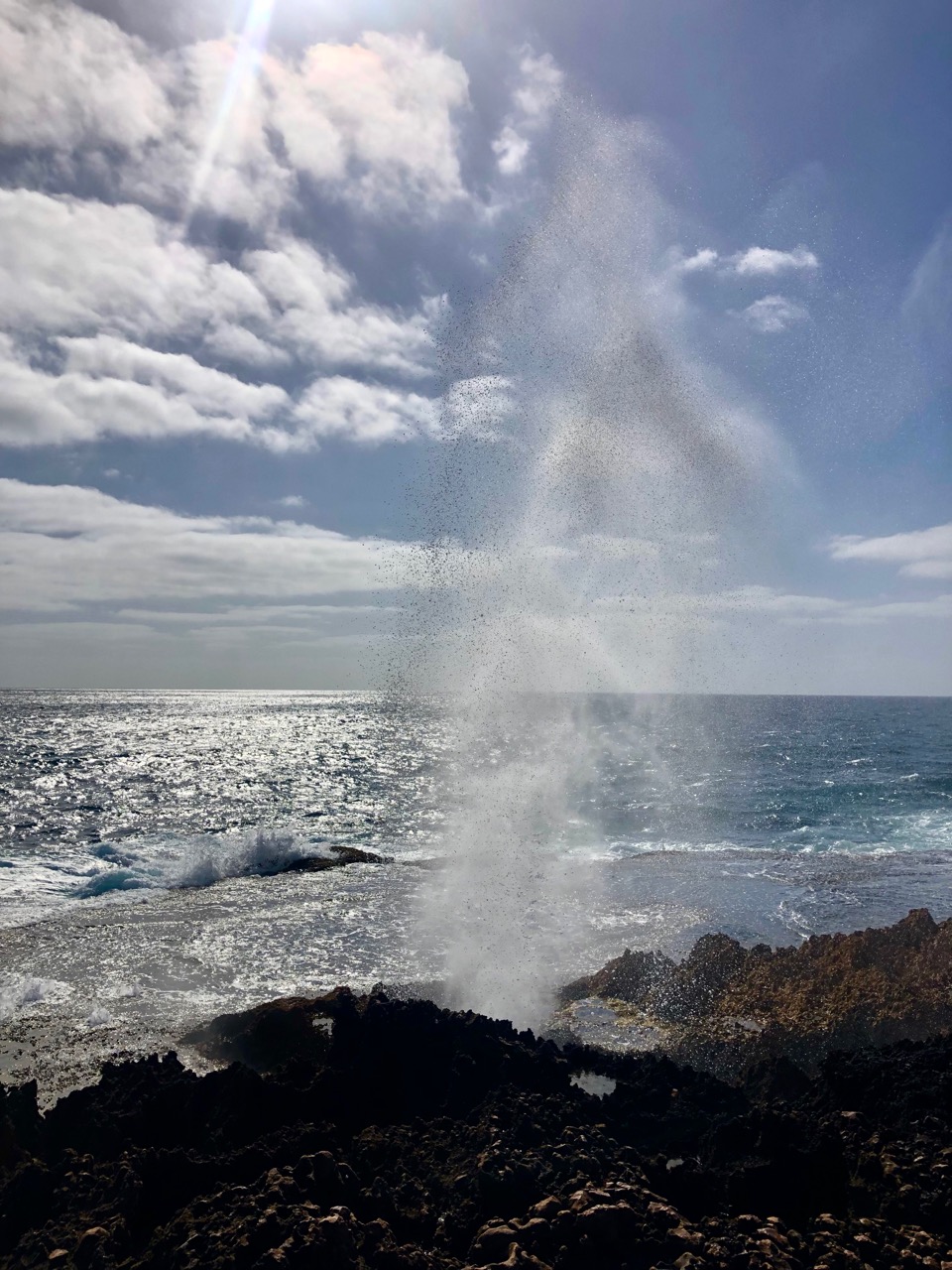
Water, water may have been everywhere, but there was not a drop to drink. No taps, no showers, no quenching glass to fill. Here the elements don’t provide a mere backdrop to human dramas. They are the drama. And they rarely disappoint. The very molecules that make up earth, sea, air and heat seem packed more tightly to consolidate into physical entities that vie to destroy each other in fierce games of rock – paper – scissors. 

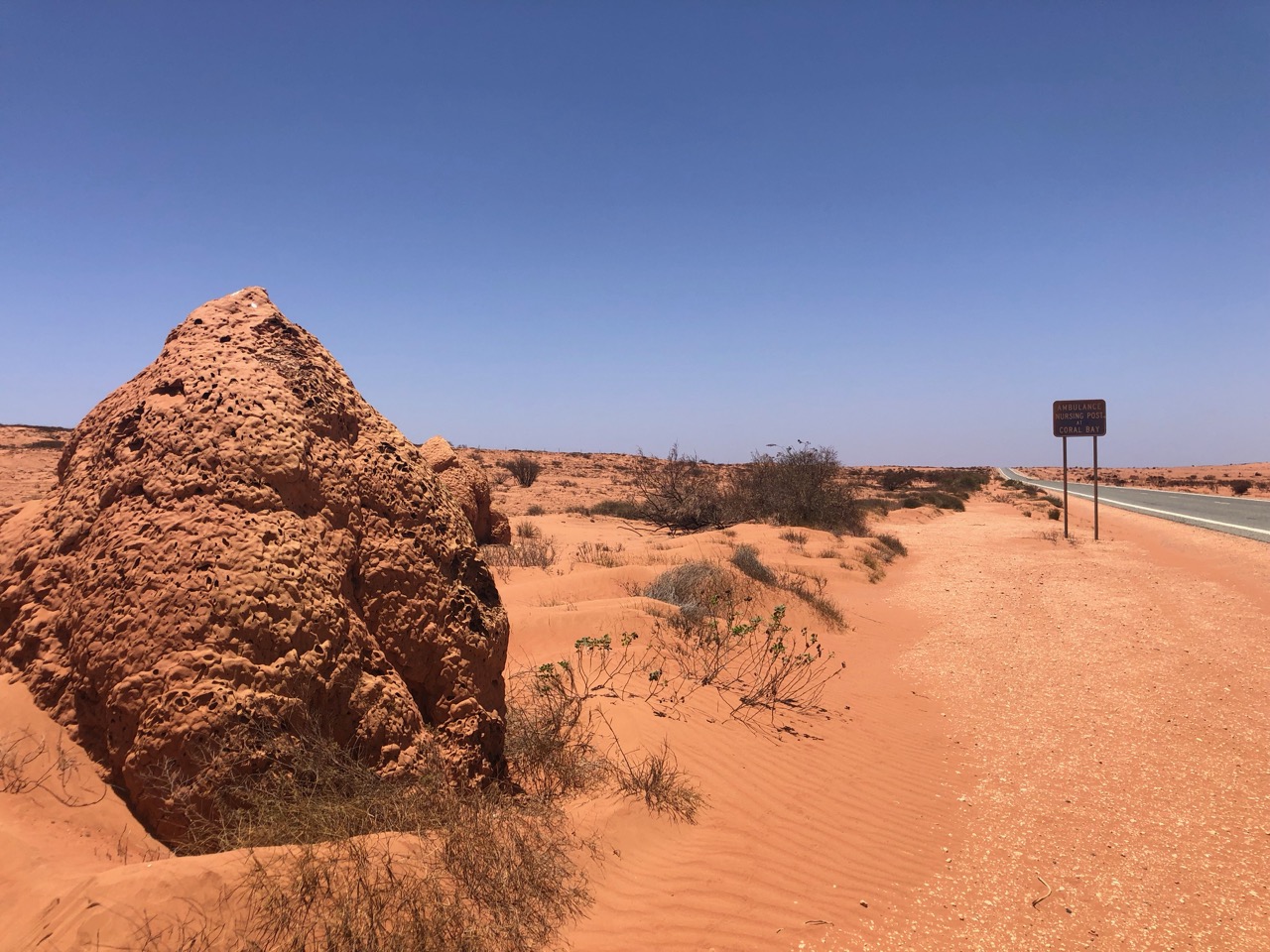
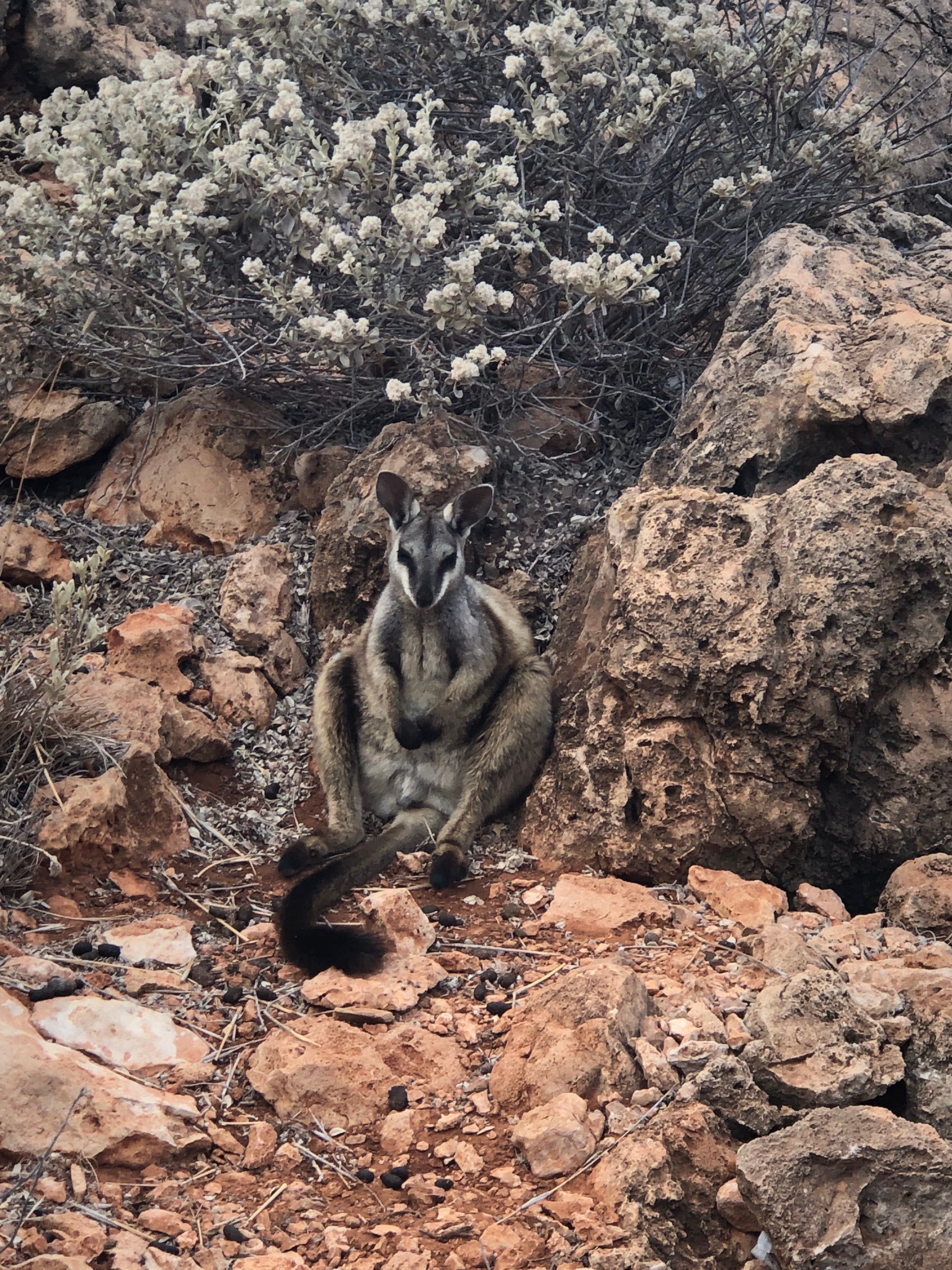
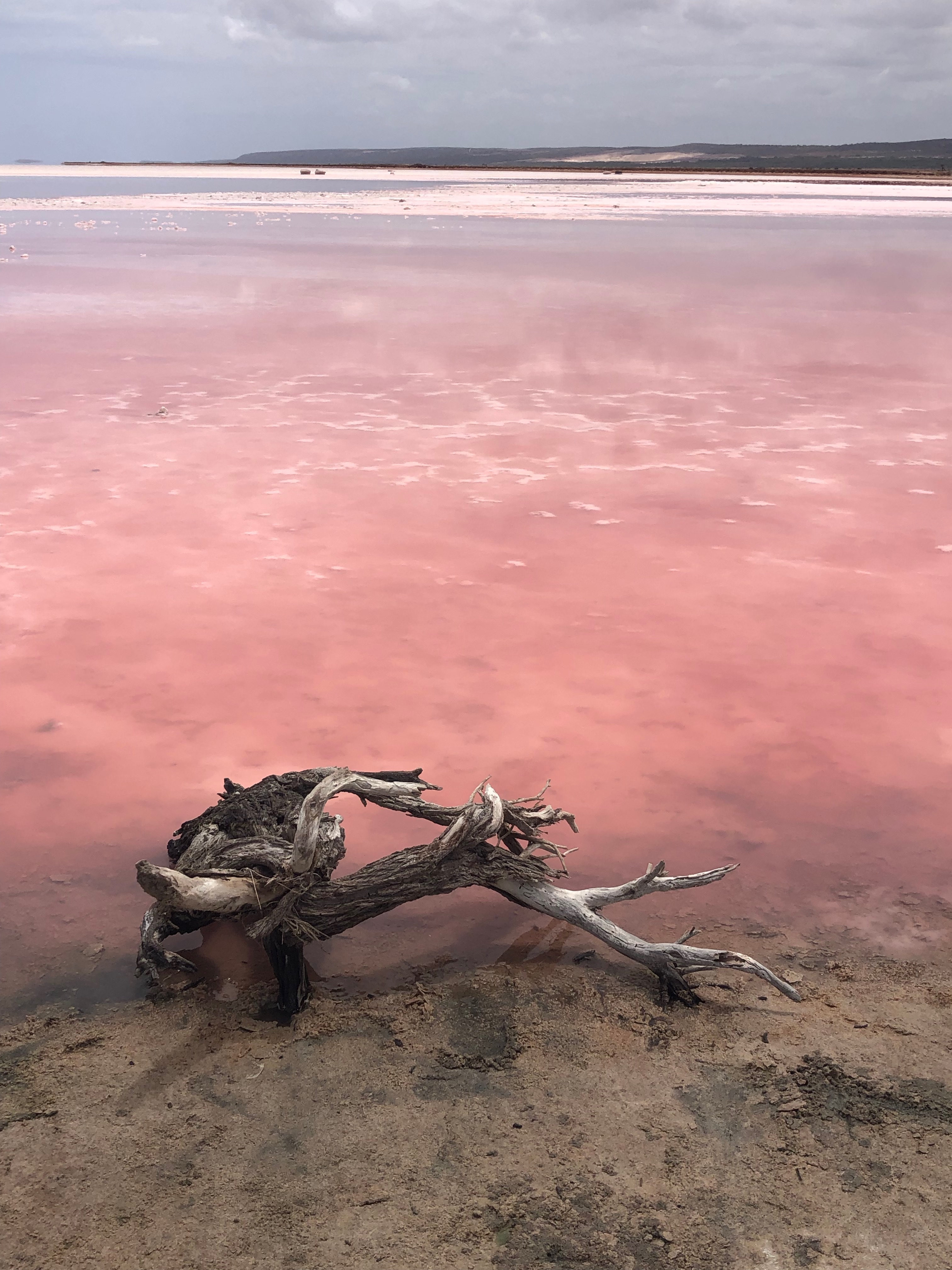
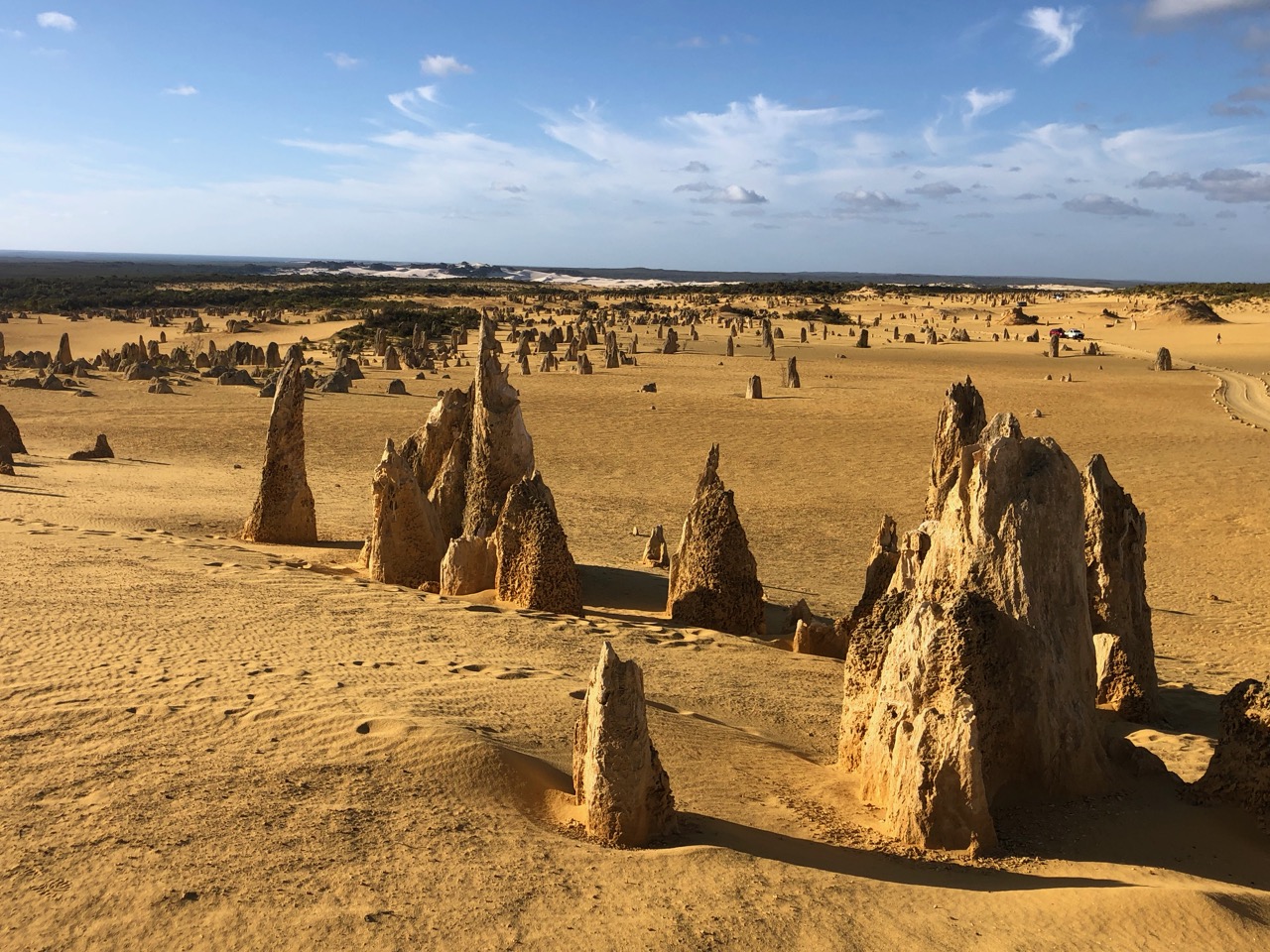
As we travelled southwards down the coast we passed orange monuments of termite mounds, the jagged teeth and rounded limestone phalli of the Pinnacles Desert. We looked down from heady heights onto a mottled green lagoon in which spooky shapes of sharks and stingrays silently moved about their day isolated from the inky depths. We shuffled along eerie beaches made from deep swathes of white shells emptied of their inhabitants and lined by water too salty to enter. We climbed ragged gorges shaped by cyclonic rains and wind and home to black-flanked rock wallabies, paddled in silver-pink salt lakes and swam through mazes of coral. Each scene could have been a movie set… and a sci-fi one at that.  

It’s not surprising that three weeks on I am still feeling the ever-changing landscape whisper its secrets into the spaces within my mind and body. With both deliberately denied all news, social media and the familiarities of home, it is easier to hear.

For many visitors and natives, the landscape is daunting, monotonous, melancholic, ugly. But for some it is an acute experience. I find myself inspired by the clean-cut lines of the horizon that stretches in all directions as far as the eye can see dividing opaque blocks of cobalt and red ochre or bleached cerulean, salted turquoise and pristine white into the containers of empty space. 

Much of Western Australia is made up of a landscape where the marks of two centuries of colonial successors appear to merely scratch the surface with straight asphalt lines and low-lying bungalows ducked under corrugated roofs in an attempt to escape oppressive heat and excess cost. To the trained eye, however, non-indiginous man’s marks are much deeper and more destructive… in places devastating. But there is no getting away from it, we are a mere blink in the long timeline of this ancient geology. 

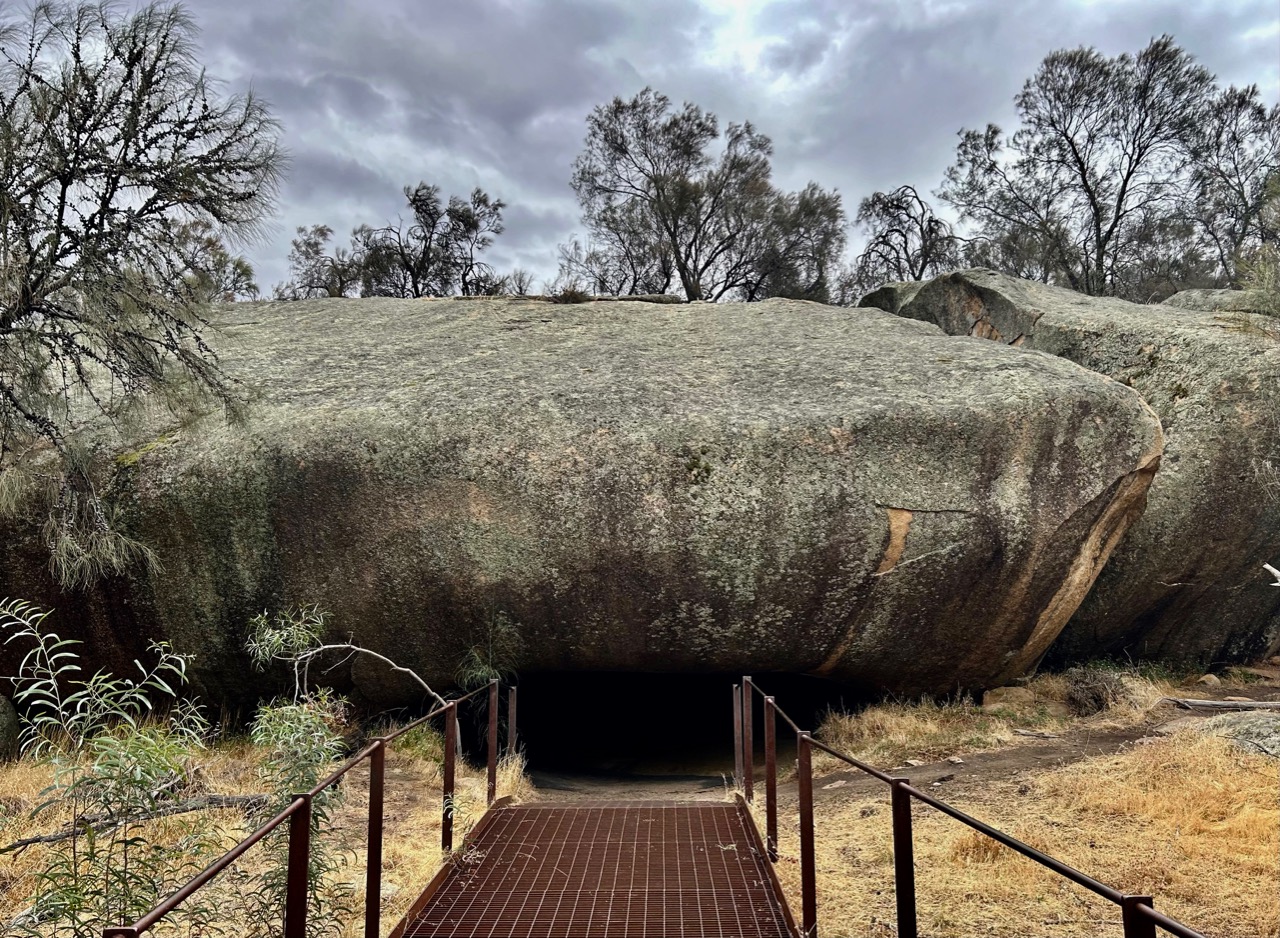
There were moments I too longed for the containment of four solid walls, a chance to withdraw from the wild and hibernate, as I am accustomed to doing at this time of year. And it was indeed within the cool damp walls of a dimly lit sacred cave that I found stunning evidence of the nothing I have been seeking…

To be continued… Part 2 will follow soon!