I feel like I should write about the US/Israel war on Iran – just in case it’s the start of another world war. Conflict and its lasting impact are themes of my blogs, after all.
But I can’t quite bring myself to. Do you feel the same? That initial shock… then a deep sigh, a kind of eye-rolling weariness, an ‘Oh, for goodness’ sake…” followed by a quieter, heavier sadness: not again.
Perhaps being immersed in a vibrant community, in the arts, in nature and in inner processes – as many of you may be, in your own ways – offers a lens on world events that cuts through the noise of “facts” and “news” and brings the sheer idiocy of this war into sharp relief.
All wars are deadly serious, and my thoughts are frequently with those directly caught up in the pain, terror, danger, destruction and loss that war carries in its DNA. And yet, with so many alternatives to military action available, I struggle to see this one as anything other than a series of reckless actions by an orange, puffed-up caricature of a world leader alongside others in positions of power, playing with the lives, lands, and futures of millions, both near and far.
Many watching on seem baffled and possibly outraged by what has unfolded this month. But implications and consequences aside for a moment, the language of and justification for war itself feels curiously antiquated: transparently dishonest, illogical, unimaginative, emotionally illiterate, and astonishingly short-sighted.
Similarly, I find myself unable to listen to discussions in the House of Commons without a sense of embarrassment. The braying and booing, the scorning and jeering. You could hardly design a better architectural setting or system for pitching people against one another in a relentless ping-pong match of insults and counterarguments that defy meaningful action or resolution.
While I am at it, I would add the excessive striving for power, control, territory, wealth, or ideological domination to my list of grievances ready to be banished to Room 101. It all feels so… yesterday.
What would really give me hope, however, is seeing the many effective, often evidence-based practices and initiatives that foster peace, health, care, connection and creativity properly funded, implemented, and woven into systems that are currently buckling under the weight of outdated thinking, much of it developed in the name of ‘progress’.
As my wise constellations teacher said, what we may be witnessing is the “demise of competitive individualism”. Across the world, in both small and large ways, people are coming together in cooperatives, collaborations, conversations and communities, rather than conflicts. Many have recognised the dead end of elbowed egotism, excessive consumption, resource exploitation and disposable waste. Something else has been quietly brewing for decades. And though some of its early expressions may be flawed, it is happening.
Here in this feisty little town in Gloucestershire that has always punched above its weight, the ground is tangibly rumbling. Not with tanks, but with a peaceful, bottom-up revolution. Changes in thinking, acting and being in this wonderful world based on what is beneficial to all.
Bring it on.
For just as valerian roots can quietly topple stone walls, so too can the gradual growth of grassroots initiatives gently tumble those clinging to the brittle pinnacles of old systems that have lost connection to their source.
Can anybody name one good reason why this country repeatedly does nothing about the state of our prisons? Can you give me any single benefit to us, as a nation, of keeping people in institutions that have repeatedly been condemned for their wholesale ineffectiveness?
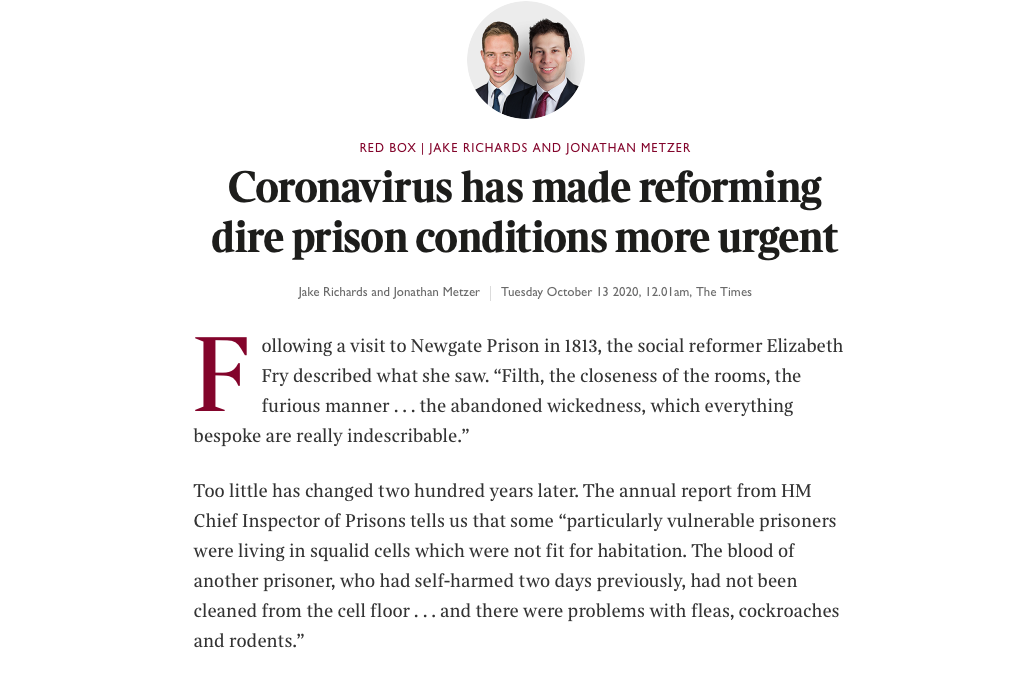
Since 2001 when I got involved in Britain’s Criminal Justice System having worked in Germany’s for 6 years, I have heard one government-appointed Chief Inspector of Prisons after another – from the judge, Sir Stephen Tumin, to the army officer, Sir David Ramsbotham, to the current retired senior police officer, Peter Clarke – denounce the conditions in our jails. All their reports reveal systemic failures, appalling levels of filth, readily available drugs, lack of educational opportunities and deeply disturbing practices that arise as a result of overcrowding.
Since the 40% budget cuts of 2010, things have only got worse. 25% to 1/3 of prison officers and staff were lost. This has led to prisoners being left languishing in their cells for up to 23 hours a day because there are not enough officers to unlock doors and take them to education, employment, anger-management or drug rehabilitation courses – all things that have been proven to help prevent re-offending. I experienced it myself in HMP Belmarsh when I was Arts Coordinator to Koestler Arts. We raised the money for a 5-week art project, we provided the artists, the materials, we organised the practicalities and we then showed up. But the prisoners didn’t. Because the officers didn’t have time to deliver them. It is one of the reasons I gave up my front line work and focused my attention on raising awareness of what is going on.
Learning to Learn through the Arts projects in HMP Belmarsh, 2004
Now in 2020, I would finally like to understand the apparent logic behind the criminal waste of time, money, opportunity and human lives. And why we, as a nation, allow it to continue.
What is the block that is preventing the British public, the politicians, the Justice Secretaries – of which there have been seven in the past ten years – from recognising the illogic of depriving people of their liberty with the justification of punishment or deterrent, only to then make everything else infinitely worse? Surely it is not rocket science to comprehend that placing people… and they are people… in squalid, overcrowded environments in which they are likely to become more brutalised, embittered and frustrated; in places where they may well acquire a new drug habit, learn hot tips for new criminal methods, possibly self-harm or commit suicide; in places where they have limited or no access to the services, education and general help they need… cannot produce positive results? How can any reasonable person not see that ejecting them back into society after their sentence with £47.50 in their pocket, a criminal record – and sometimes a TENT! – is not going to stop them from re-offending, possibly within days? How is this supposed ‘tough on crime’ approach to people, who often come from catastrophic, traumatic or hugely disadvantaged backgrounds going to make our communities safer?
I am no economist or mathematician but let’s just look at 2 figures:
1. The Prison Service budget is £4.5 billion per year.
2. The cost of re-offending is £18 billion.
Let’s look at 2 more:
1. 70% of prisoners suffer from some sort of mental health issue.
2. 50% of prisoners are functionally illiterate.
The logic is there in black and white, in the figures. So why this dug-in-heels resistance to changes that embrace methods that have been proven to work? Not least Restorative Justice.
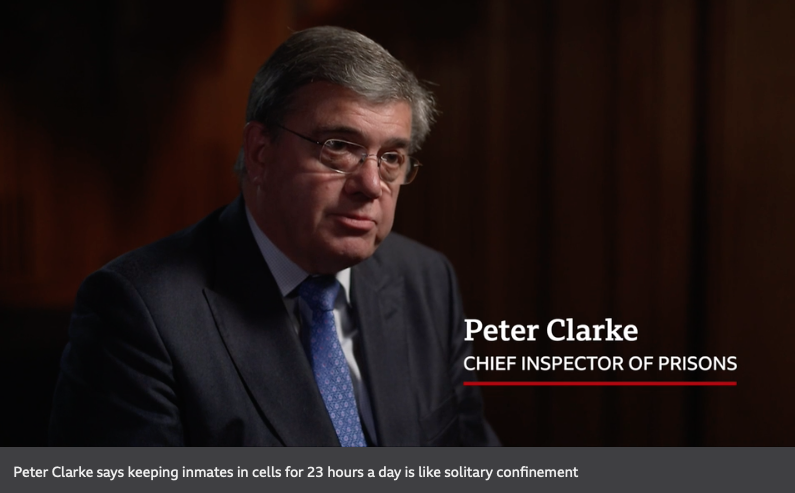
This week, in his last report as Chief Inspector of Prisons, a weary looking Peter Clarke, like so many of his predecessors once again explained the detrimental impact our system has on the mental health of prisoners. Once again he reported rubbish and rat-filled environments, apparently ‘so dirty you can’t clean it’. Once again he described the overall failure of managers who are proud of their data-driven and evidence-based methods but have rarely been inside prisons to ‘taste it, smell it.’ Clarke expresses similar bemusement to me as to why these damning reports so often come as a surprise to the management of the Prison Service. This has been going on for years! We may not be ‘world-beating’ in the appallingness of our prisons but we certainly are close to, if not at the top of the European table of failure.
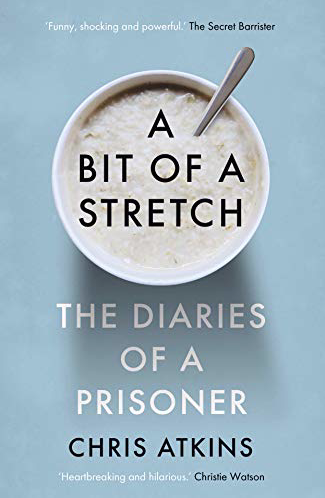
As Chris Atkins says in his new book A Bit of a Stretch, our prisons have become little more than ‘warehouses’ for storing offenders. Justice Secretaries, often lacking any background in law, let alone prisons, announce new initiatives with great fanfare, but nothing gets done and after a year, they move on.
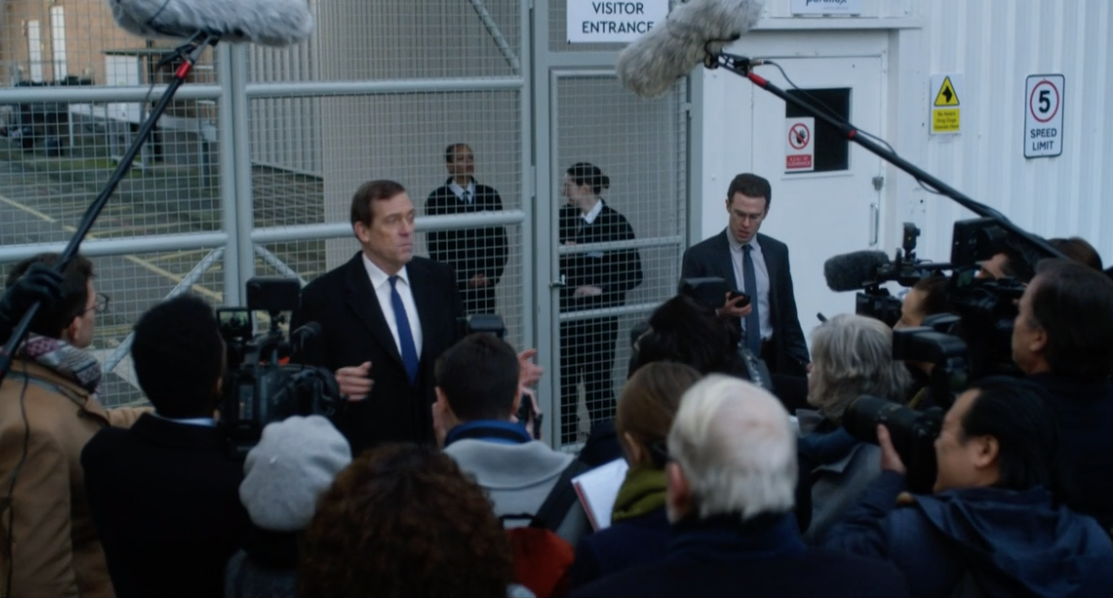
Hugh Laurie as Peter Laurence in Roadkill
How I wish we could have a minister like the actor Hugh Laurie’s Peter Laurence, in the brilliant new BBC series, Roadkill. Laurence is deeply flawed as a man and corrupt as a politician, but in his newly appointed position as Justice Secretary, he at least verbalises the obvious question: Why are we wasting so much public money on a policy that’s not working? ‘Everyone knows the prison system is grossly inefficient,’ he tells the wholly resistant, thankfully fictional, female Conservative prime minister. ‘So I’m going to shake things up. Justice deserves that.’
And it does. But he will fail. Because it is not just the right-leaning politicians who want to stick to our punitive approach. It is also the British public. In the series, both their attitudes are revealed: ‘We lock criminals up and throw away the key… in the interest of public safety… We’re famous for it… It’s our nature… It’s our bond of trust between the Conservative party and the public…’
Covid-19 has of course made conditions even worse. Some prisoners are locked in their cells for 24 hours a day, and for several weeks at a time in what amounts to solitary confinement, as Clarke points out. Of course that leads to the ‘more controlled, well-ordered’ environment the Prison Officer Association is relieved to have. But what does it do to the people inside? Clarke is convinced there must be an exploration of other ways to do things, safely. After all, ‘Are we really saying we are going to keep prisoners locked in their cells for another 3 months… 6 months… a year?’
After my talks on Art behind Bars in which I reveal the shocking but oft-printed statistics of our prison system’s failures, people frequently come up to me and say “Gosh, how awful, I had no idea.” Well maybe with all the upheaval of Covid-19, it really is time for the public to gain an idea of the horrors that are being perpetuated in their name; in the interest of their safety. Of course we can stick with the old approaches, but at our peril. For who pays the price? Don’t think it is just the prisoners and their families who are punished. It’s all of us. We make ourselves less safe. We make ourselves less just. But above all, we make ourselves complicit in a system that is less than humane.
If you would like to do something to help bring about a shift in attitude and policy, you can write to your MP. You can support the important work of The Prison Reform Trust or the Howard League for Penal Reform. Or any of the charities offering help to prisoners and their families. Or you can look at the wonderful work of my favourite charity, The Forgiveness Project, and their excellent and effective prison RESTOREprogramme, that I have both witnessed and on one occasion co-facilitated.
My blogger’s brain seems to be in recess along with parliament and my own little ‘bong’ has been temporarily silenced along with Big Ben’s. August has not been the time to focus on any of my usual themes – prisons, rehabilitation, Art, WW2 Germany, Remembrance, memorials and forgiveness – so I will not waffle simply for the sake of fulfilling my goal to publish a monthly blog.
Instead I would like to use this platform to share the following heartfelt TRIBUTE by Marina Cantacuzino, founder of The Forgiveness Project, to Shad Ali who died unexpectedly and suddenly earlier this month. As you will read, he was a truly remarkable, beautiful and inspirational human being who I had the honour of meeting and working with last May at HMP Parc while he was co-facilitating one of the Forgiveness Project’s prison RESTORE programmes. I wrote about the experience back in my May 2016 blog.
A ten-year-old boy haunted by the face of his mother as she was stabbed multiple times in front of his eyes; a seven-year-old boy sexually abused by a family friend, then repeatedly while in care; an eight-year-old boy in charge of his younger siblings, regularly punched in the face by his terrifying mother… I could go on. These are some of the people I have just met in HMP Parc while participating in The Forgiveness Project’s RESTORE programme. And it beggars the question: is it right to be punishing people who themselves were originally the victims of primary life experiences that were so overwhelming, traumatic and desperately sad?
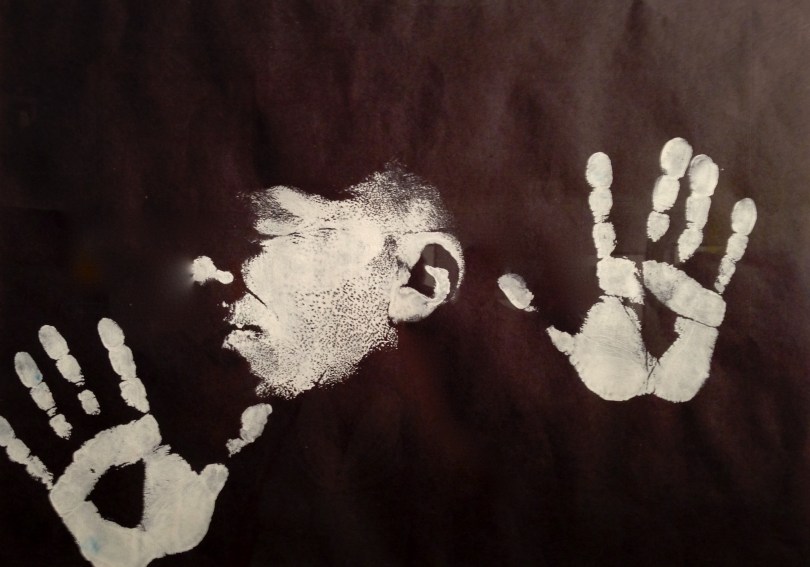
Painting: Where am I? by a young offender Last week I was invited to witness and experience the work of The Forgiveness Project (TFP) first hand. It was nothing less than extraordinary. Every single person in the room was profoundly moved and affected by the brave story tellers describing their experiences, either as a victim or […]





 angela findlay blog