
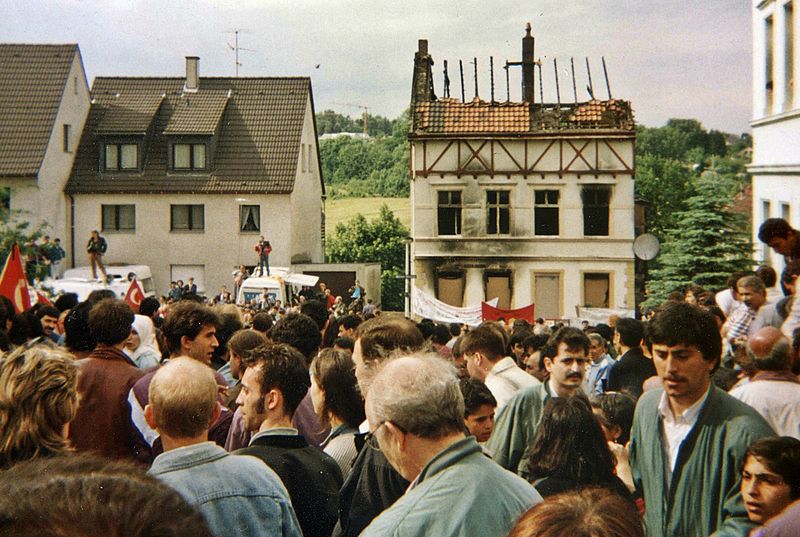
Germany’s ‘open house’ policy and newly attributed “moral leadership” within the mounting refugee crisis was indeed initially surprising. It certainly wasn’t always so. I’m remembering the 17-year-old boy I met in the nineties when I was working as an artist in Cologne Prison. His name was Christian and he had been placed in the special segregated unit there because his crime was so contentious on a national scale. He was one of four young Neo-Nazis responsible for burning down the house of a large Turkish family in Solingen in May 1993, killing three girls and two women and injuring fourteen other family members. It was the most severe instance of anti-foreigner violence in modern Germany and in 1995, Christian was found guilty of murder, attempted murder and arson and sentenced to 10 years.
 angela findlay blog