From screens to Spring…

Spring is Nature’s childhood. It’s frequently associated with youth, new beginnings and innocence. Yet while blossoms skip through our outdoor landscapes, our screens highlight with renewed urgency the premature loss of innocence of our younger generations with devastating consequences to their mental health, education, relationships and identity.

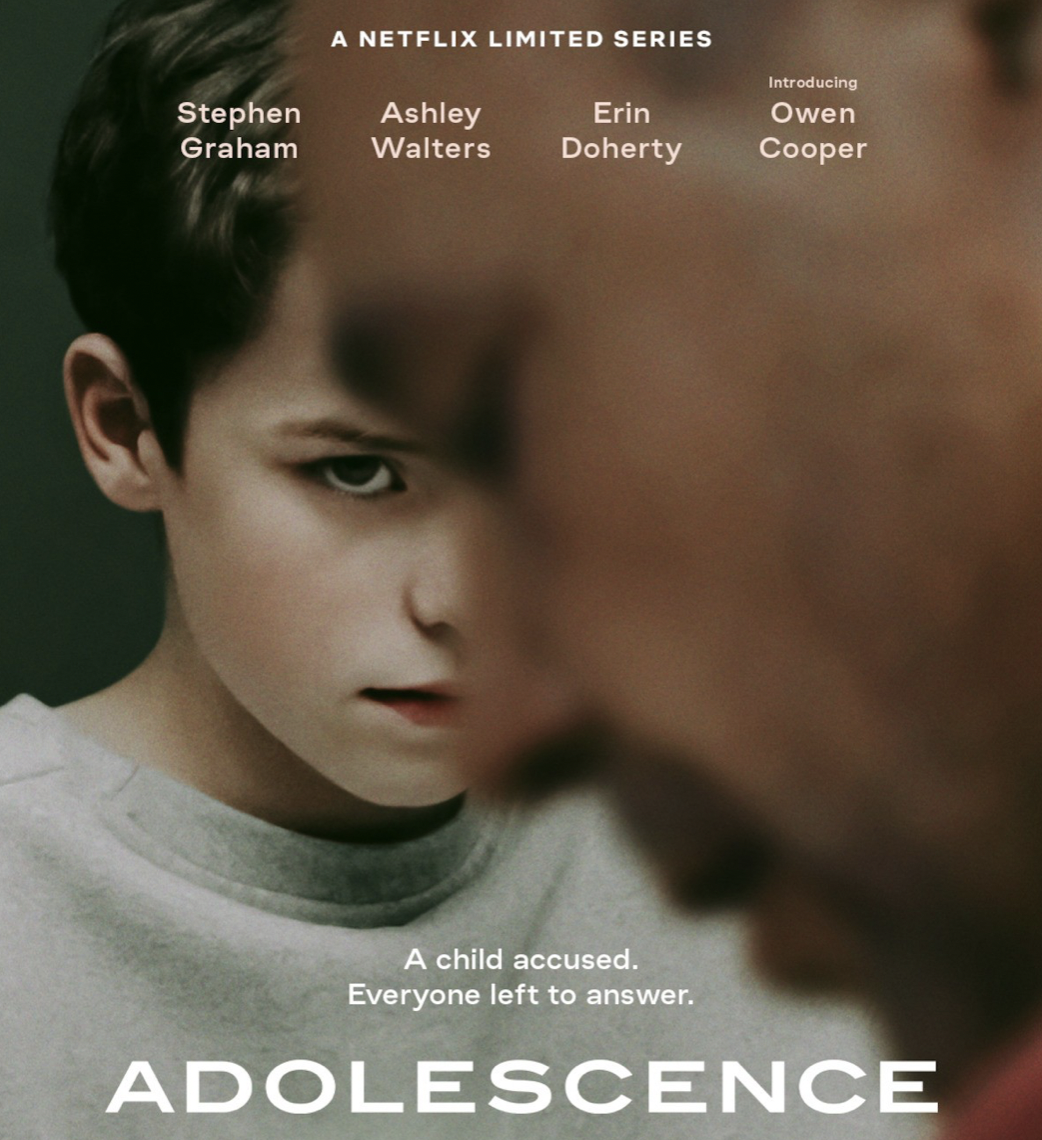
With that in mind, I was going to write about the new Netflix series, Adolescence, that has provoked widespread debate and concern about toxic masculinity, the ‘manosphere’ and sexist ‘manfluencers’ like Andrew Tate. (If you haven’t seen it, I can only encourage you to do so). Online platforms and social media are abuzz with it. Even Radio 4’s Moral Maze dedicated its weekly slot to exploring the question: What’s wrong with men?
Plenty more such questions could be asked in relation to the various world leaders dominating our headlines – Trump, Putin, Zelenskyy, Netanyahu, Starmer, Pope Francis – who between them are presenting a smorgasbord of appealing to repellent aspects of maleness.

I also considered writing about my recent visit to one of London’s dilapidated prisons – organised by the wonderful charity Prison Reading Group – to deliver a session on my book to a group of male prisoners who had read it. About the lingering impressions I’m left with, both of the shabby, four-storey wing that looked, smelt and sounded like your worst imagining of incarceration, and of what happened in the tiny room embedded in it that offered space for our inspired conversation. As always, I was touched by the men’s deep grasp of the themes I address in In My Grandfather’s Shadow, their carefully prepared lists of insightful questions, their gratitude for the positive impact the book had made on their lives. As always, I felt intense frustration at a system of wasted opportunity, money, time and human potential. As always, the wounds left by the absence of fathers, positive male role models and the learned ability to deal with overwhelming emotions glared red.
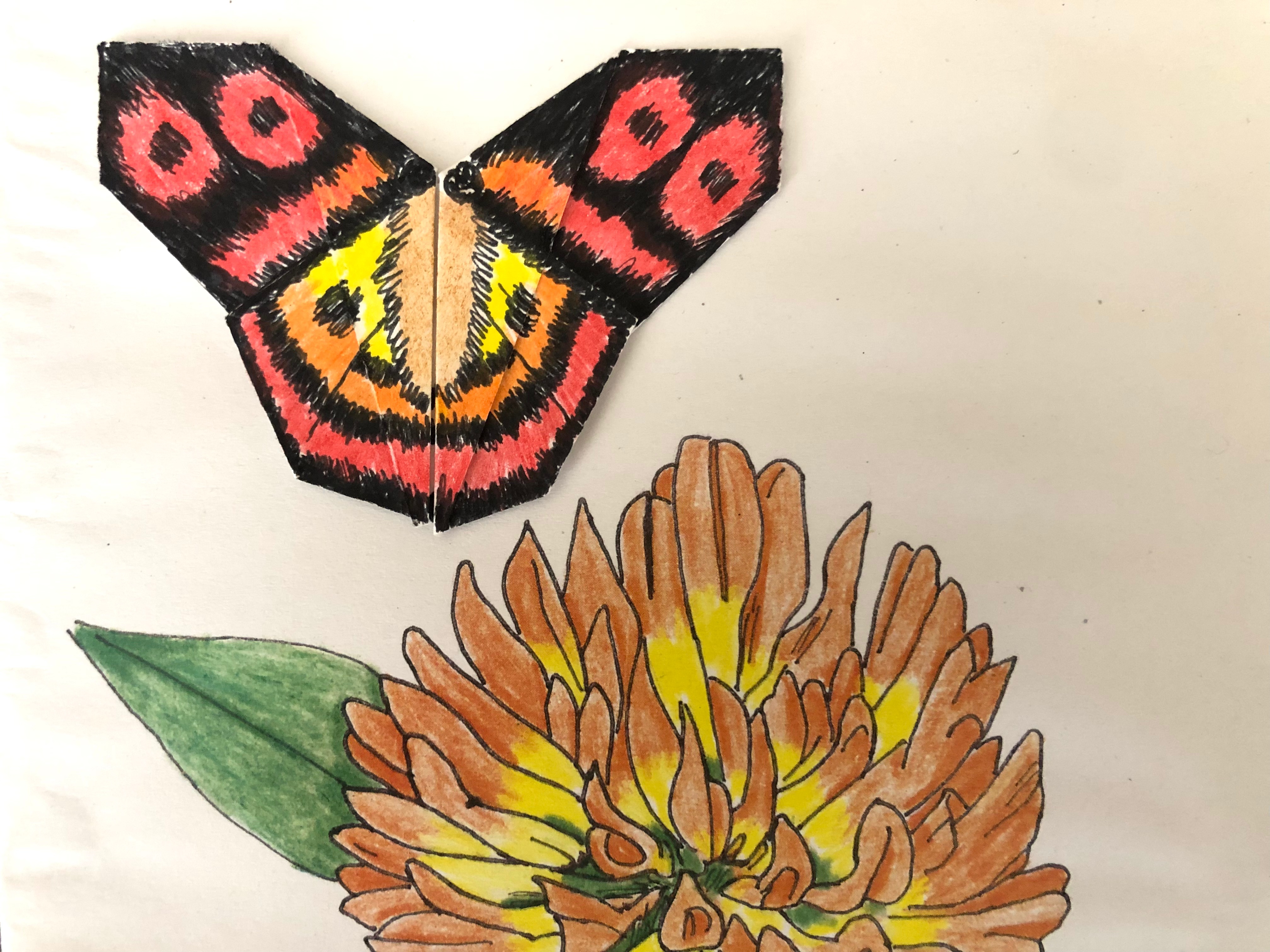
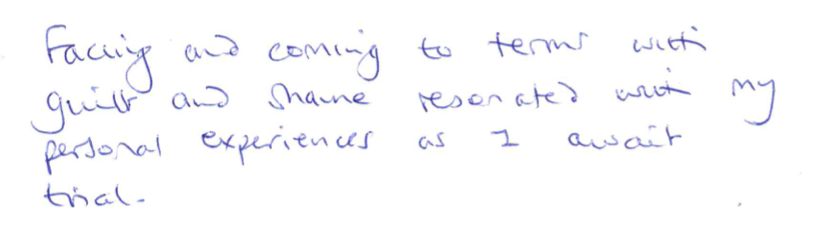
Detail from a handmade thank-you card from Prisoner B

But in the end, I couldn’t face writing about any of these huge and complex topics, even though they occupy my thoughts.

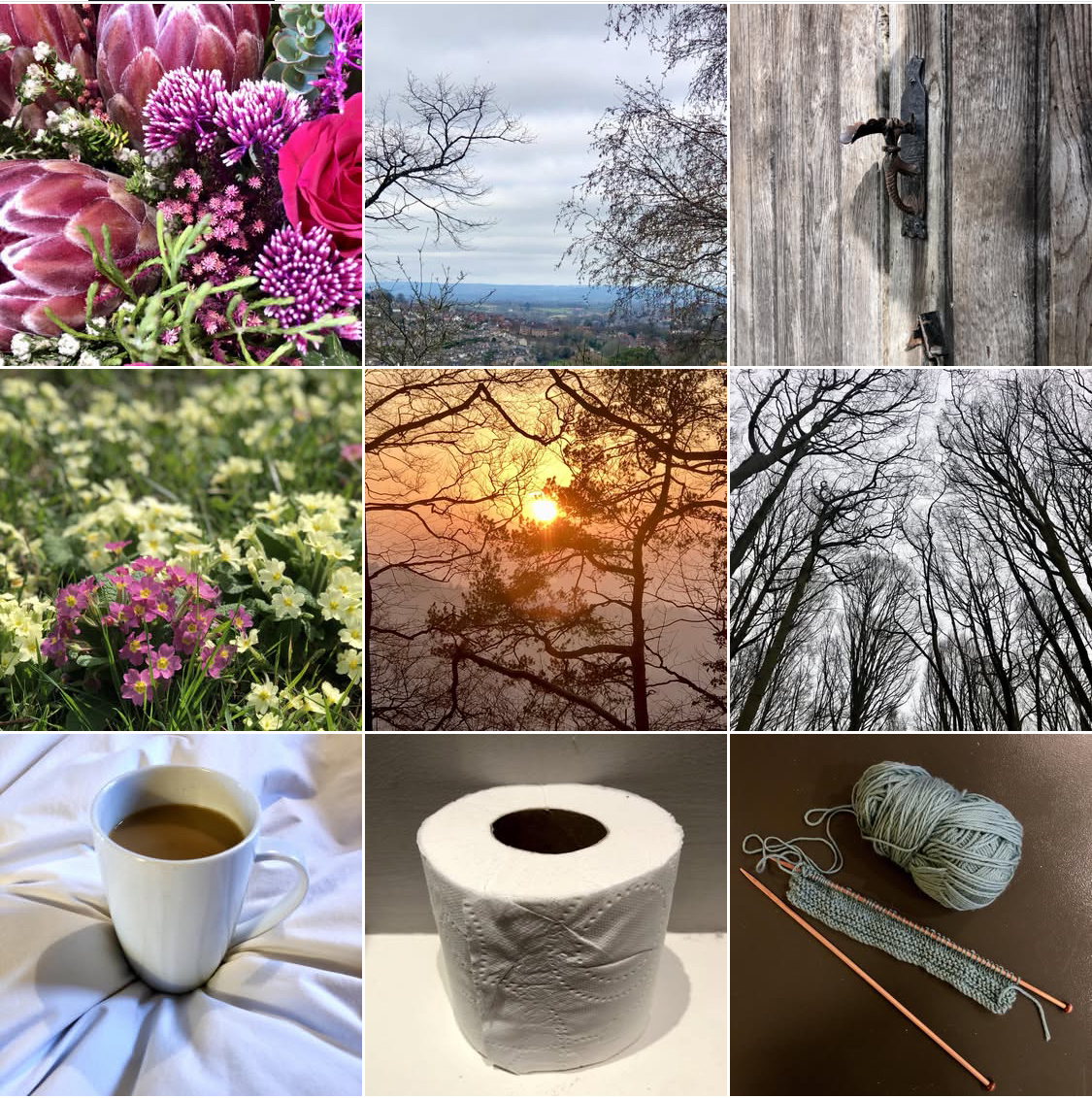
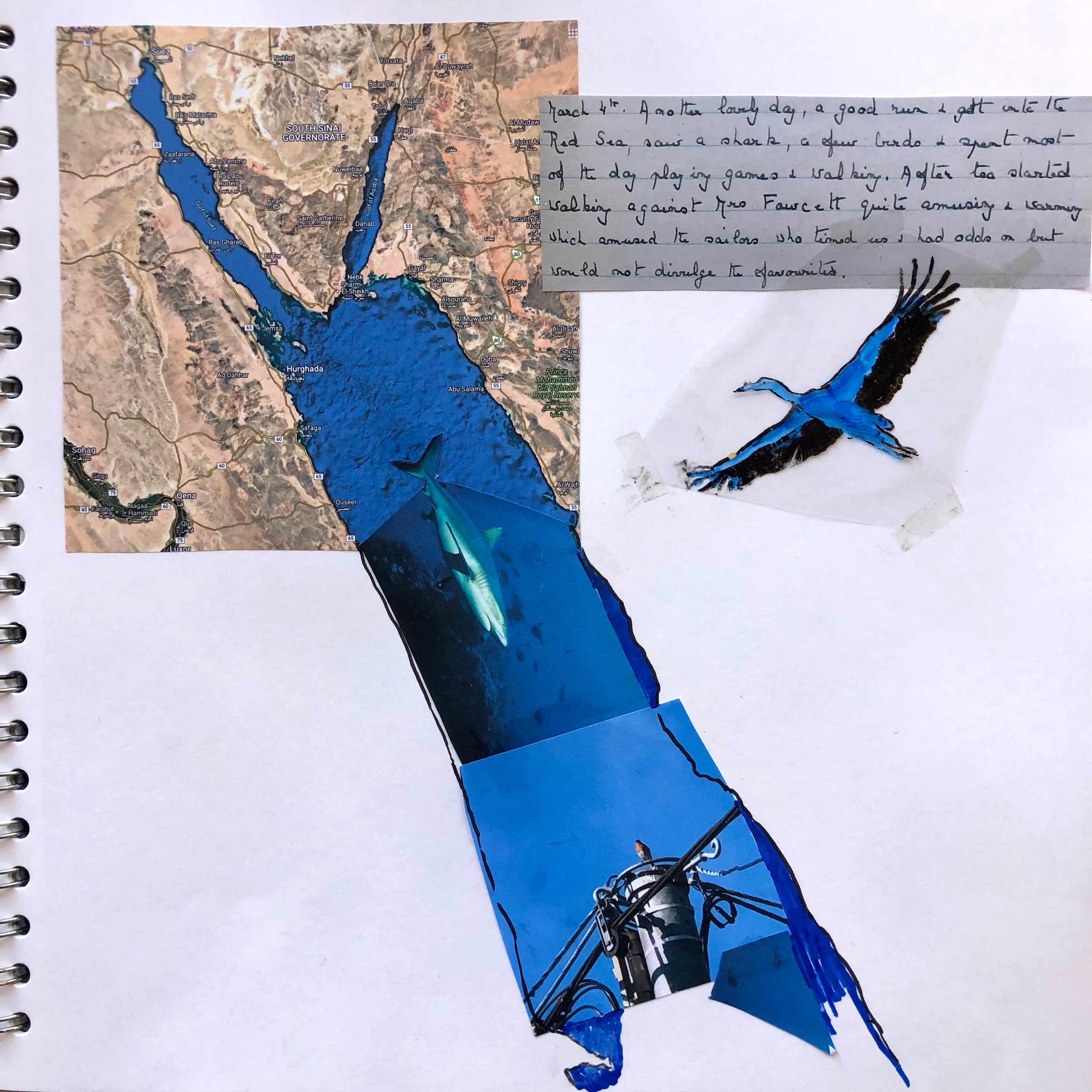
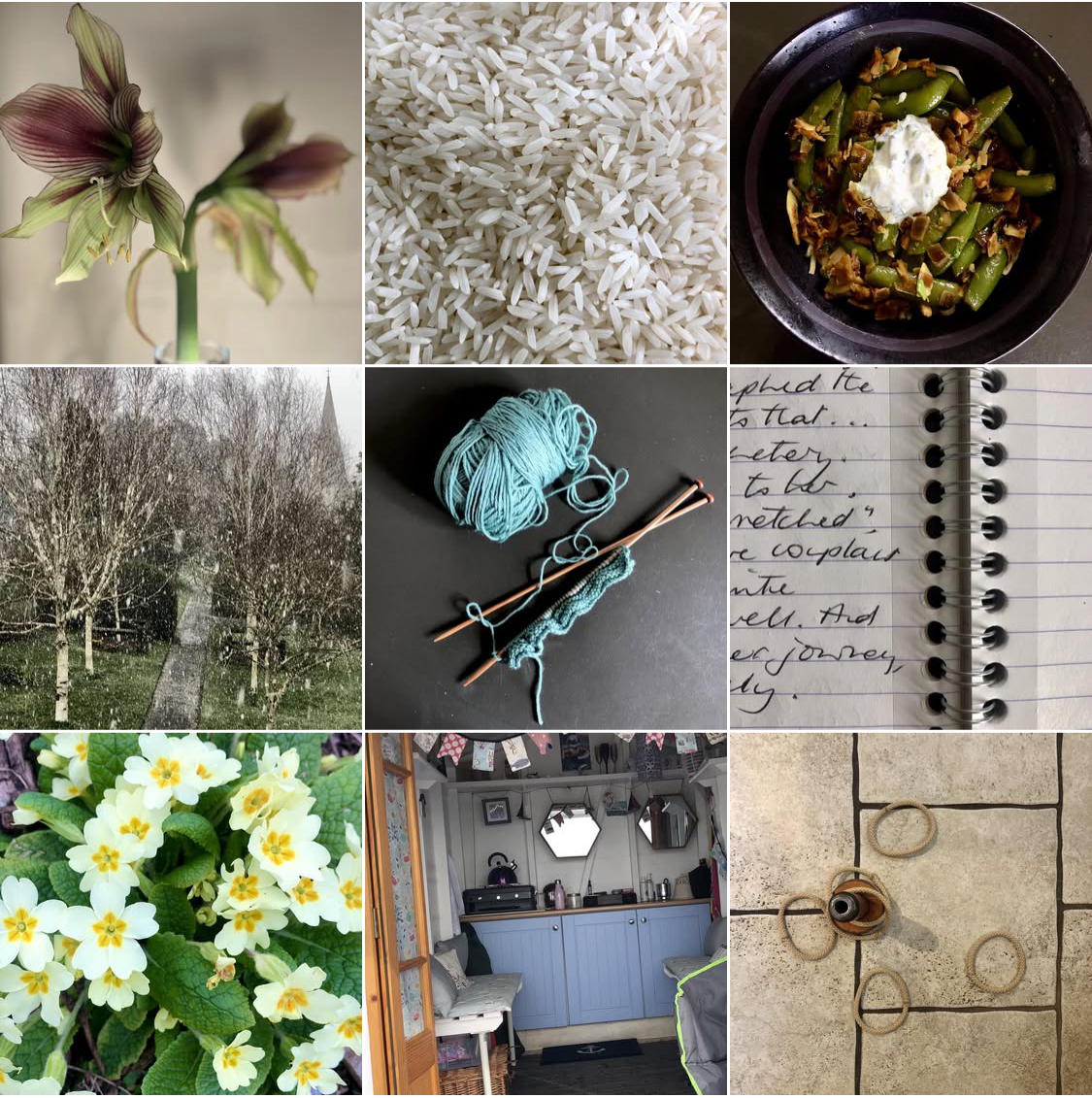
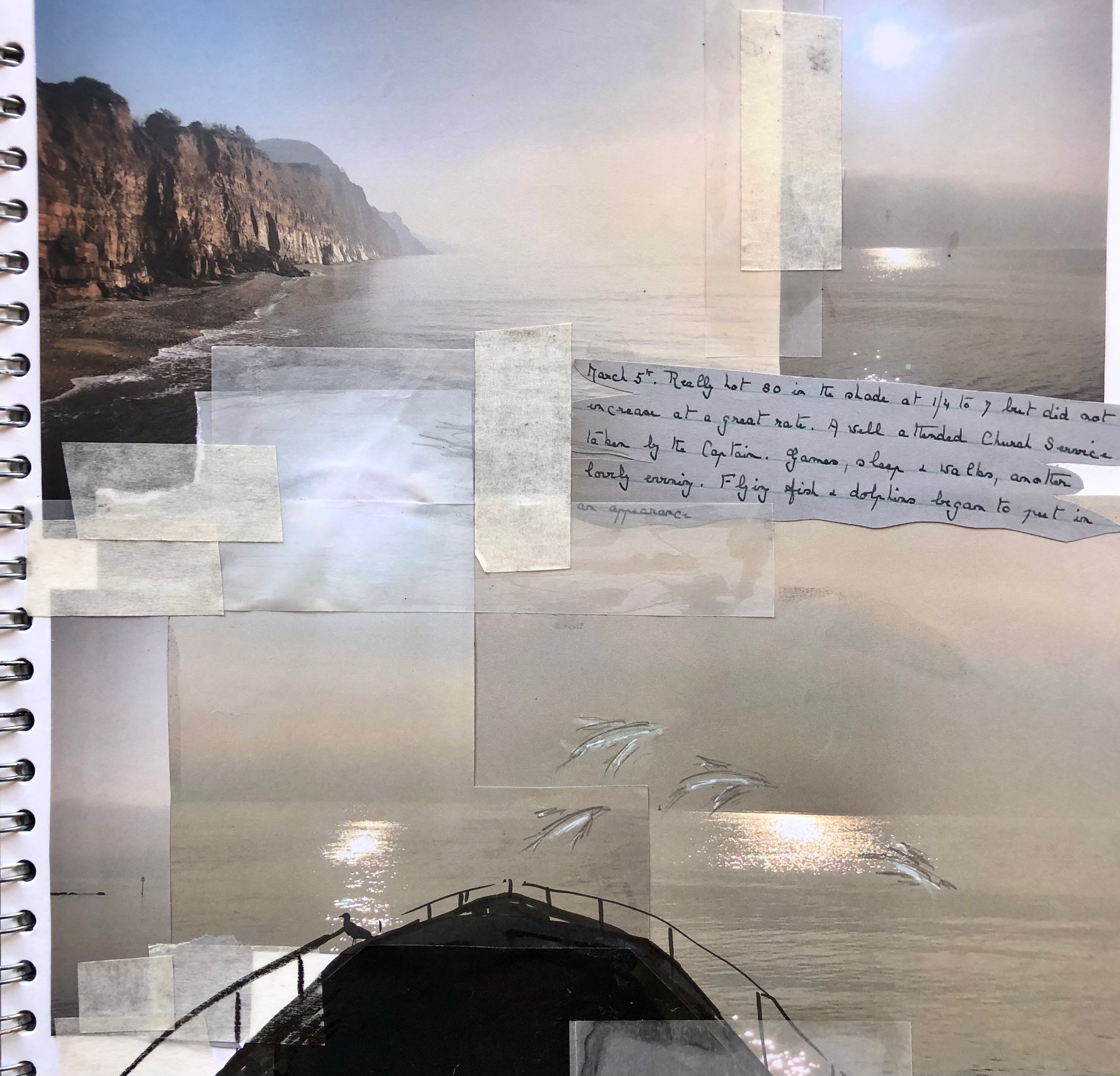
Instead, I find myself once more turning my focus to the more uplifting emergence of spring flowers both in nature and my garden. And to my inspiring great great aunt who travelled to India to gather floral specimens for Kew Gardens and in whose steps I am metaphorically walking for the next few months, following her diary as she sails from Birkenhead to Mumbai and then trains it up to the Himalayas. Each day I am reenacting a small action or activity she did in 1939, taking a slightly oblique photo that relates to it, posting it on Instagram (angela_findlay) and then creating an experimental collaged page in my sketch book. It’s my way into telling her story.
From 17th February to 13th March she was on board the T.S.S. Hector cruise ship playing quoits on deck or holed up in her cabin feeling seasick. (Not easy to make ‘art’ out of either!) There followed a few ‘outstanding’ days in and around Colombo visiting tea plantations and paddy fields, another sea voyage and several trains to the small hill station of Ranikhet in Uttarakhand. This will be her base for several months as she acclimatises, goes on practice treks and waits for the snows to melt further north giving her access to her ultimate destination, The Valley of Flowers. 
With deep regret I am coming to accept that I am not one of those exquisite botanical painters whose sketch books are veritable works of art. And I am sorely lacking in the plethora of technological and digital tools that are creating mind-blowing new universes in the art world. But I find solace in the fact that like Joan, I too am on a journey towards a (in my case, artistic) destination unknown, exploring and accompanying this intrepid female relative on her solo adventure. Ironically the worldly backdrop to her trip are the precarious months leading to the start of the Second World War. Mine is the run-up to the 80th Anniversary of its end. Or, if stupidity and egos escalate in the wrong direction, the beginning of the third…
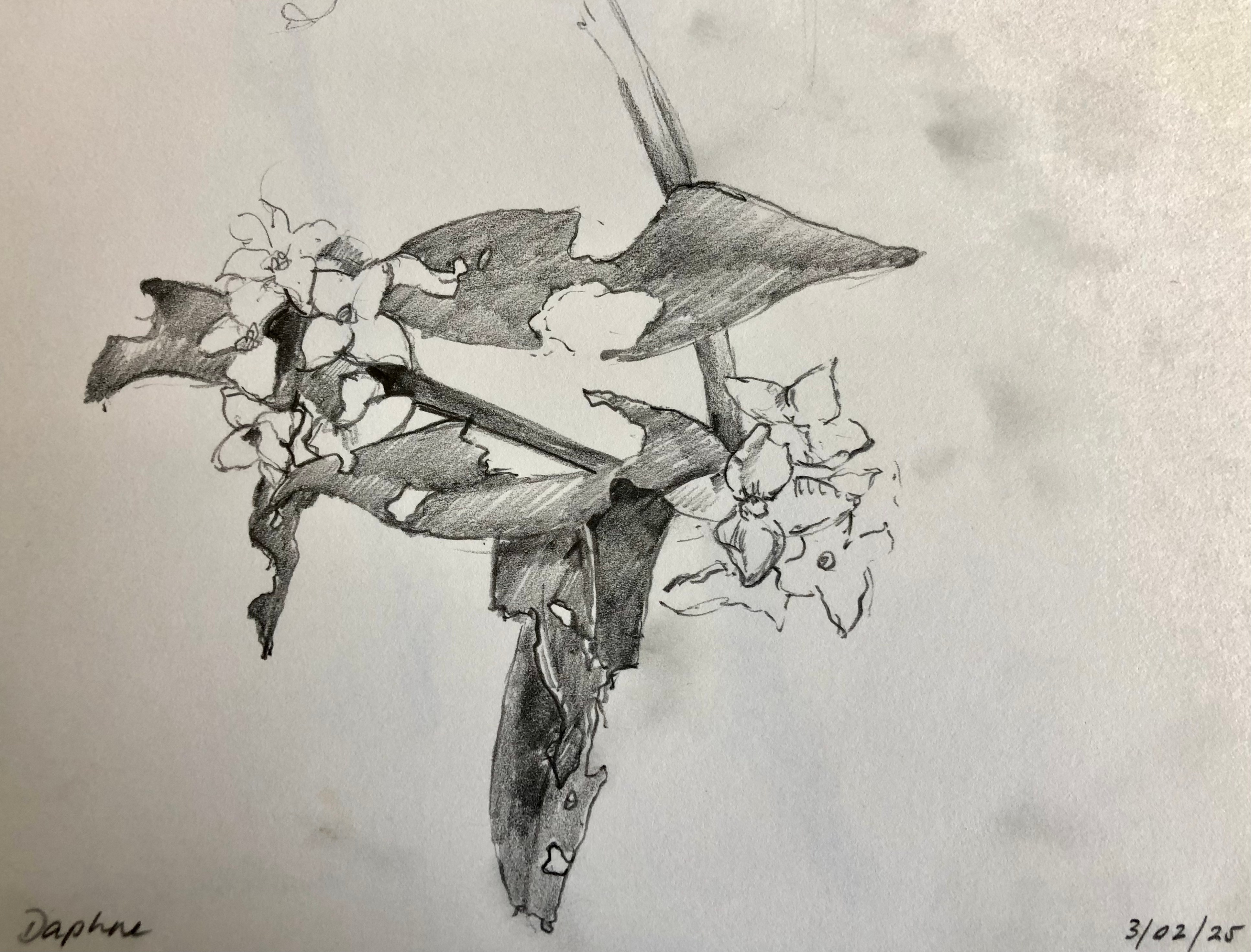
War, the word alone snaps me back to present reality. I imagine we are all treading this fine line between engagement with the wider pain and travails of so many and the small (and big) joys and concerns that can be found within our homes and lives. How to care and act without losing sight of the beauty and wonder constantly available to us? How to engage with the immeasurable force of Nature’s creativity rather than human beings’ destructiveness? How to stay awake and feel, but not succumb to anger or blame?

It’s an on-going practice… a dance. And Spring feels like a perfect time to take to the floor.
Back to Jail, this time with a book not a paintbrush… 

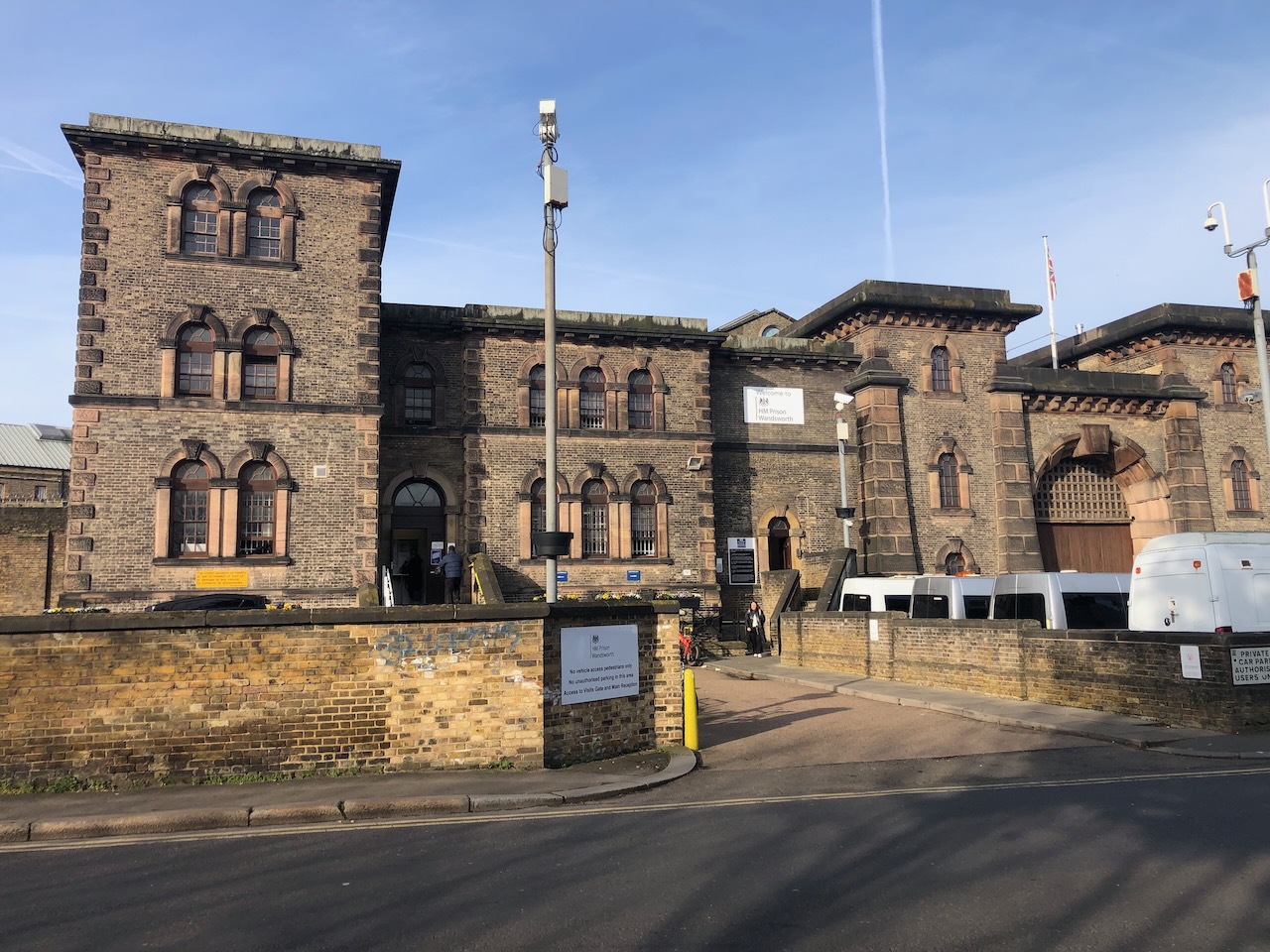
There was something deeply familiar about the process of entering HMP Wandsworth last week. The first time I was there was in 2003 in my role as Arts Coordinator for the London-based Koestler Arts. I had founded the Learning to Learn through the Arts scheme a year earlier and was co-facilitating a 4-week dance and art project called Beyond Words.

HMP Wandsworth, London

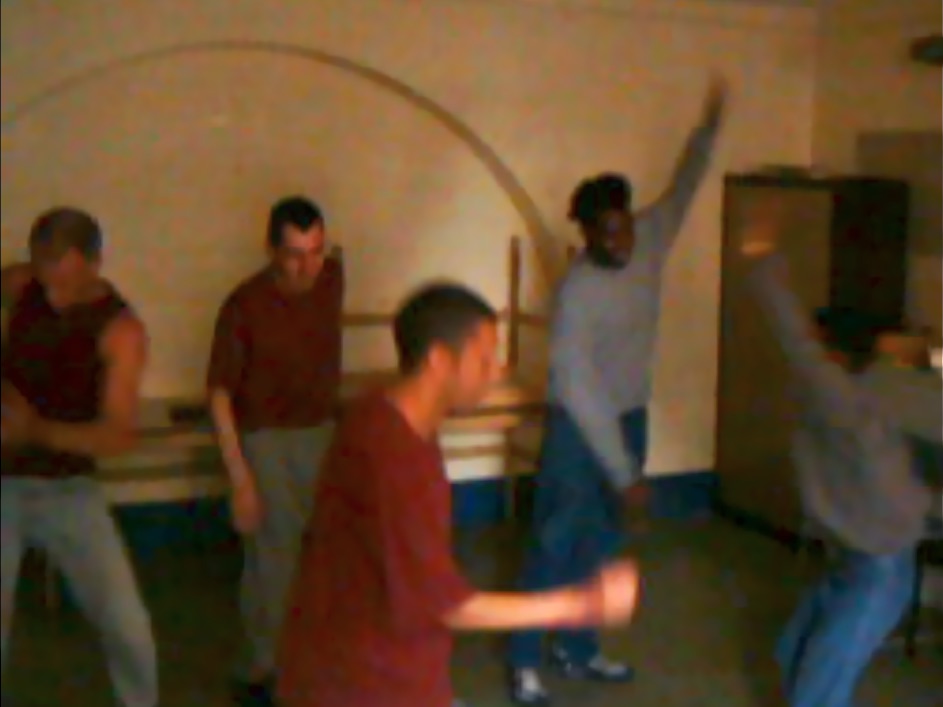
The aim was to bring dance and painting together to create a non-verbal language through which prisoners could express themselves. Each day was a mixture of individual and group exercises that saw the men clambering over tables and chairs to dissolve the formalities of a traditional classroom or splattering paint on paper with Expressionist vigour. Both approaches eventually led to solo multi-media performances and the development of communication skills, camaraderie, trust and sensitivity within the group.

Now, twenty years later, I was re-entering HMP Wandsworth, but this time in the wholly verbal capacity as author of In My Grandfather’s Shadow.

For people who haven’t experienced it, entering a prison can seem synonymous with entering hell. And for many, it probably is. This blog therefore feels unintentionally apposite to Good Friday, the day in the Christian calendar that signifies the crucifixion of Jesus Christ and his descension into hell. We have grounds for this picture of infernal misery from exposure to BBC programmes such as Prisoner,   Time,  Disclosure: Prisons on the brink.  Or five series of Prison Break. But my visit couldn’t have felt further from those dark scenes. 

The beautifully organised event was the result of a brilliant collaboration between the Wandsworth Prison Library team and the charities Give a Book and Prison Reading Group (PRG). Generous book donations came from Penguin Transworld and Radio Wano, the prison’s in-house radio station, took care of publicity. I knew from experience how difficult arranging such events can be. Months of dialogue and organisation can be kiboshed by any number of unforeseen occurrences, or simply by time-poor officers’ inability to deliver the prisoners to the room.  

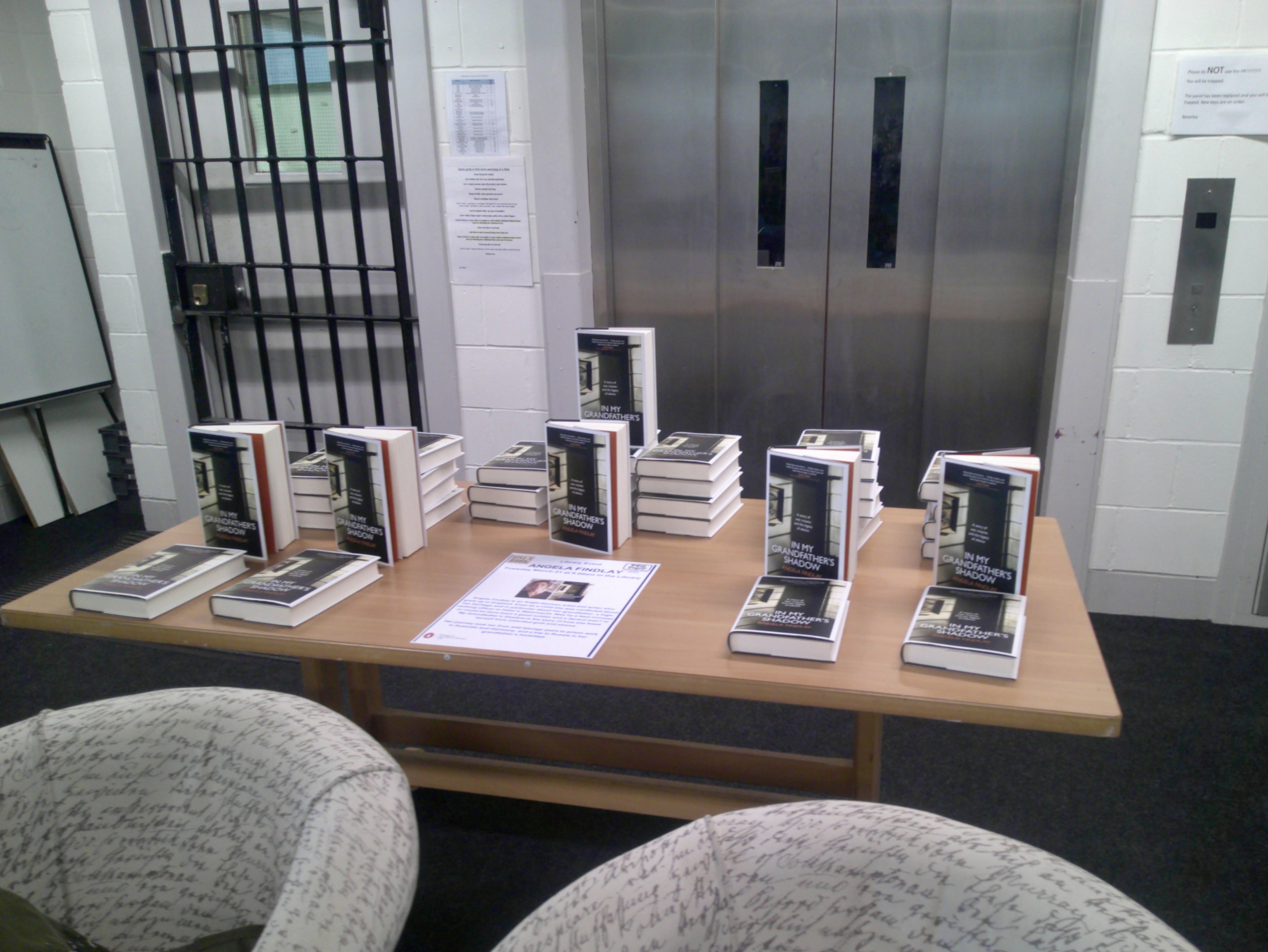
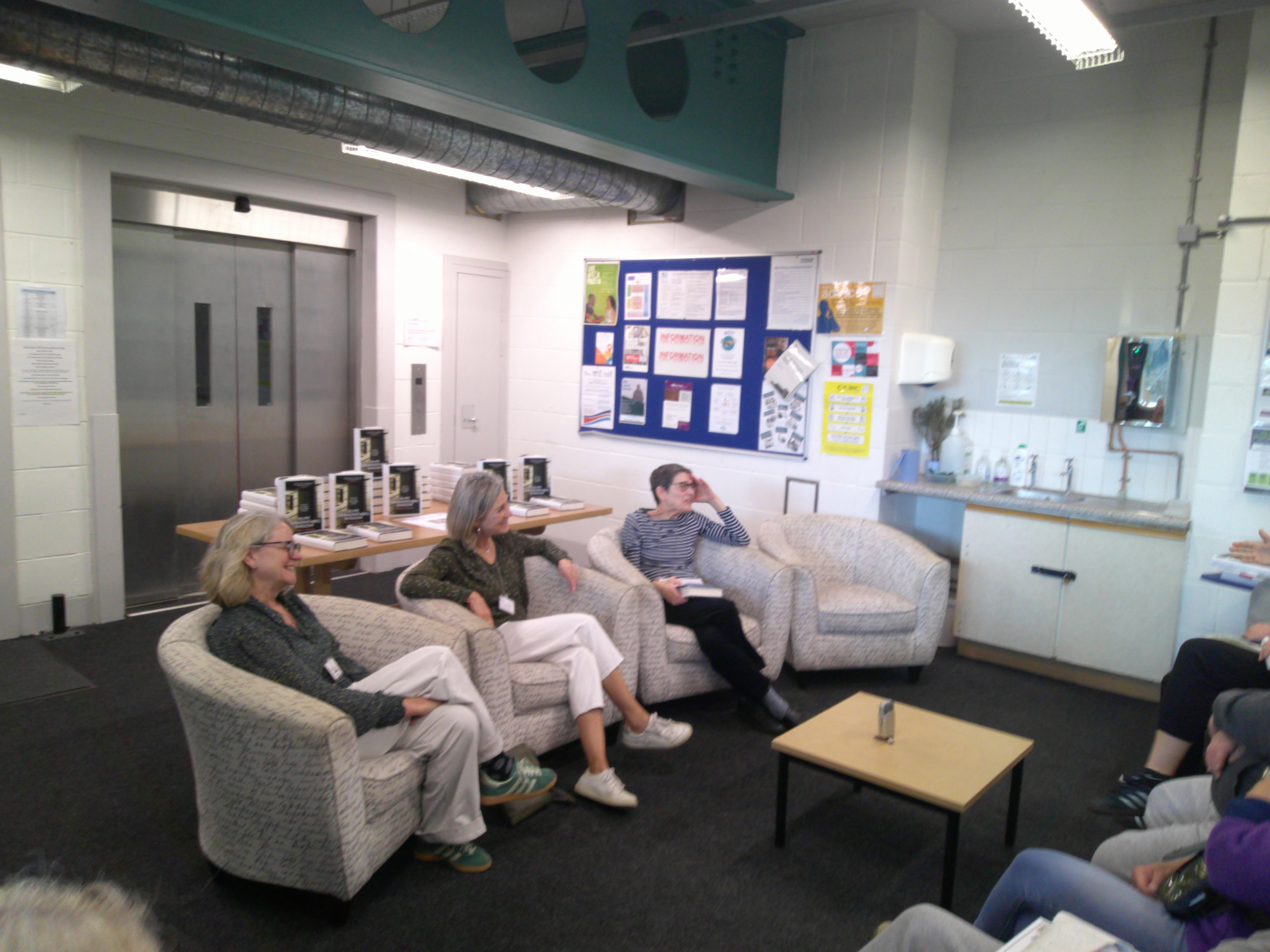
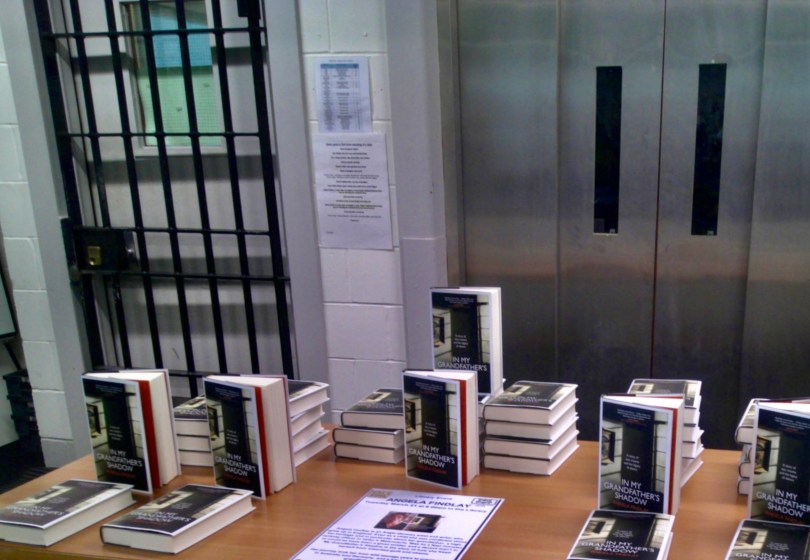
Not on this occasion though. Thirty-five men, mostly already seated, some with copies of my book on their laps, awaited us as we took our seats in front of a display of hardback copies that rivalled any book festival’s. Unlike my regular illustrated talks in which a series of images ties me to a certain chronology of thought, I was able to speak freely, engaging the antennae grown over years working ‘inside’ to gauge the interests and sensitivities of my audience. As I spoke into the men’s intense attention, I sensed cogs turning in brains as they connected my words to their personal situations. So many of my book’s themes speak to their experiences of trauma, addiction, conflict, violence, guilt, shame, depression, intergenerational family legacies… 

Like a muscle memory, my heart opened as they began to engage verbally, asking questions and contributing informed opinions and philosophies of their own to mine. One of the librarians said to me afterwards, ‘They are so deep.’ And yes, their questions dived in at the deep end, not dissimilar to audiences in Germany. Intelligent. Philosophical. They know darkness. And they recognise how you get there. What I, as always, hoped to show was a way out.

At one point, as I related how I had felt ‘at home’ in prison as a young woman, a prisoner suggested that it may have been because they are at the bottom. ‘We are the bottom of society.’ He was right. That is the perception of many. Shame is the ultimate bottom dweller of emotions. And in feeling shamed as a teenager for being half-German, I would have related well to those who resided at ‘the bottom’.

Comment from a prisoner at HMP Wandsworth

I cannot, however, see these men – and I say men as a generalisation because 95% of the prison population is made up of men – as genuinely being at the bottom of the human pile. It is wrong of society to simply clump them together into one unnuanced band of criminal brothers. There are of course some horrendous crimes. But each person is both individual and potentially so much more. Each has a story, a journey of how they got here. And dreams for something different.

One man revealed he had thought about writing his story but felt nobody would be interested. ‘What makes you think that?’ I enquired. ‘Because it would be too dark,’ he replied only to be refuted and encouraged by others with claims that the crime thriller is one of the most popular genres. 

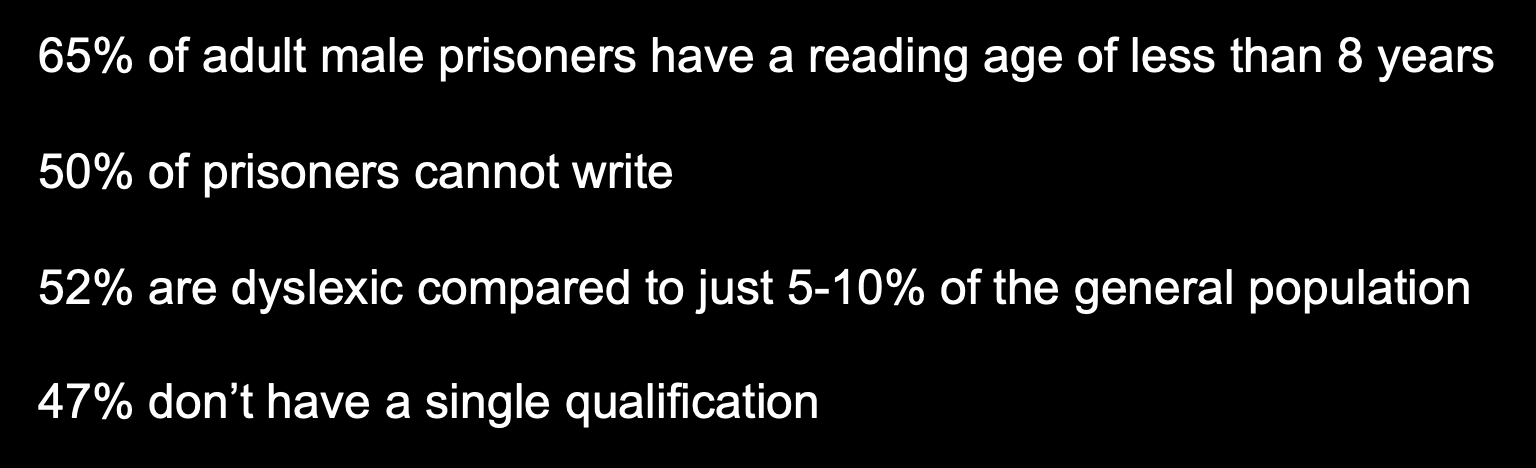
Listening to and briefly meeting the prisoners at this library event didn’t appear to correspond to the prison statistics I regularly quote in my Art behind Bars talks.

A 2022 government review of reading reported: “The most recent data published by the Ministry of Justice shows that 57% of adult prisoners taking initial assessments had literacy levels below those expected of an 11-year-old.” There is nothing new here, but they remain shocking statistics. And yet my experiences tell me that in spite of high rates of ADHD, illiteracy, dyslexia, prisoners are far from ‘thick’ or even uneducated. They may have failed in or been excluded from mainstream education, but all too often that is because they have not received an education appropriate to their learning styles or needs. It’s an education that doesn’t recognise or value what their experiences have taught them about life.

Once the discussions were over, a long queue lined up for signed copies dedicated to names that revealed the audience’s colourful cultural mix. Many imparted tantalising snippets that hinted at reasons for their interest in my subjects… they were from Poland; they were fascinated by alternative perspectives on WW2; they now recognised how their actions might impact their children; they longed for intellectual stimulus. 

L-R: Standing: Sarah Turvey (Founder of PRG) and Mima Edye-Lindner (Director of Projects, PRG) Seated: Me, Paul Eden (Volunteer for an HMP Wandsworth Reading Group), Susanna Wadeson (Penguin Transworld)

The importance of the work of HMP Wandsworth’s Library – headed by Beverley Davies and her Senior Assistant, Hannah Pickering (who was taking the photographs) – and the work of Give a Book, PRG and their reading group volunteers plus all the Arts Projects taking place in prisons around the country cannot be underestimated. I am so grateful for and heartened by it. Traditional classroom settings are not always the way to educate people. There are other ways to inspire minds. As Antoine de Saint-Exupéry wrote in Citadelle:

If you want to build a ship, don’t drum up the men to gather wood, don’t divide the work and give orders.

Instead, teach them to yearn for the vast and endless sea.

Last week’s Library Event seemed to do just that as both the below comments from the Library and Prisoner Nr. XXX reveal:

“The guys were really buzzing afterwards, and it was great that other people noticed what was going on and wanted to get involved. All the books were taken which is a real positive.”

Prison Reading Group was founded in 1999 by Jenny Hartley and Sarah Turvey. Together with the team from Give a Book and Director of Projects Mima Edye-Lindner, they delivered 5000+ books to 84 groups in 64 prisons.

If you would like to support them, please go to their websites: https://prisonreadinggroups.org.uk