Powerful Art versus weak policy… which do we need more?

It’s not every day that you squeeze yourself between two nude bodies lining a doorway. But visiting the Marina Abramović exhibition at the Royal Academy on Friday, that is exactly what I did. And the experience was so visceral, so vulnerable and in such stark contrast to everyday interactions with fellow human beings that it got me thinking… as all good art does. 

At the Royal Academy, London

Unbelievably, scandalously actually, this is the Royal Academy’s first solo female retrospective to run through those grand, main rooms in its 255-year history. I was still digesting that appalling fact as I entered the first room to be met with the full force of the artist. Video footage shows Abramović sitting in still silence gazing into the eyes of some of the 1,545 people (also represented through videos) who queued up to sit opposite her at MoMa New York in 2010. With this trusting personal connection between artist and visitor established, you allow her to take you through the trauma, pain, and almost impossible endurance she puts her body and soul through to end up in a place of meditation, peace and transcendence. 
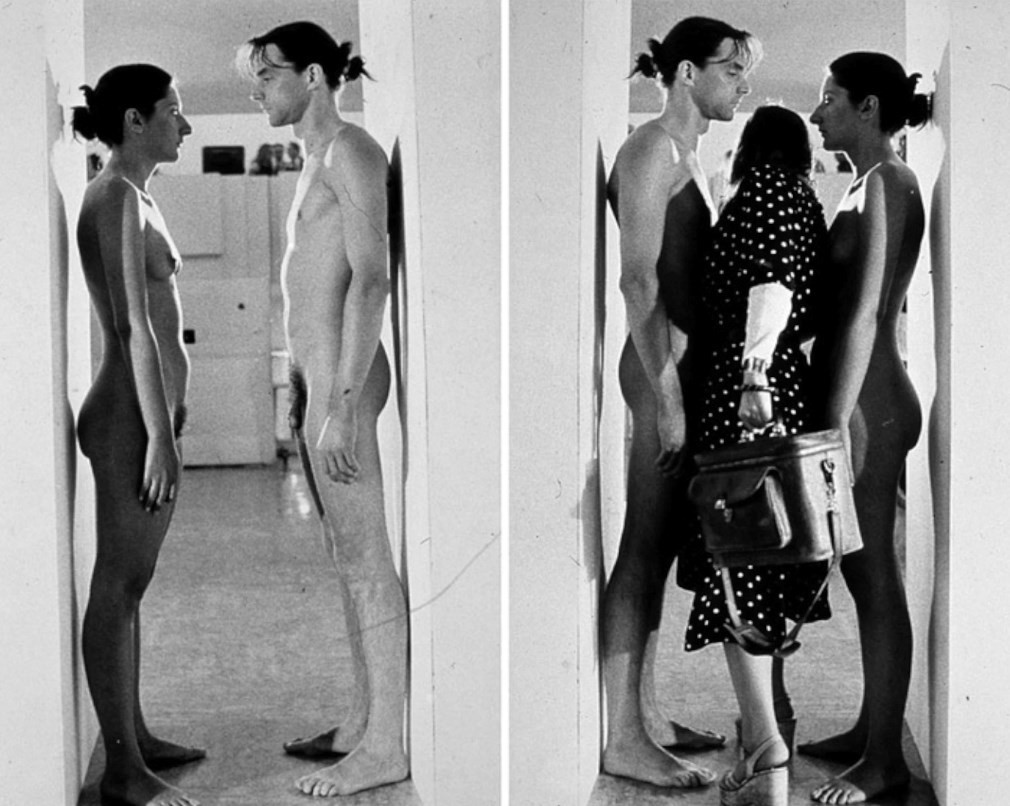
Marina Abramović’s Imponderabilia (1977)

Earlier in the week, walking on an autumnal Whitehall lined with statues of Britain’s WW2 military heroes striking distinctly ‘male’ poses, I was struck anew by the glaring gap between the (traditionally designated) sexes. Each man was raised on his very own plinth set back from the road under the shade of mature plane (I think?) trees.

L-R: Field Marshal The Viscounts Slim, Montgomery and Alan Brooke

Opposite them, in the middle of the two-way street and on a black stela, an array of bronze female wartime outfits hung, saggy as if on coat hooks to represent the wartime contribution of over 7 million women. It’s not a new observation, but in the light of Abramovic, it is starker than before.

This memorial was raised to commemorate the vital work done by over 7 million women during World War II (July 2005)

I can only recommend you go and see, or rather experience this show. It shook me out of the increasing numbness I have felt as relentless bad, sad and mad news breaks like waves through social media outlets, radios and tv sets to crash into our lives. In order to cope, many of us feel we have to switch off or shut down. To look or move away. To rage at our impotence or pretend it has nothing to do with us. 

Speaking out has always been an option. But at times, fear of being cancelled or becoming a Twitter/X target of hate silences our voices (an unlikely scenario with my scant number of followers.) Equally, speaking out can frequently feel like you are shouting into the wind. 

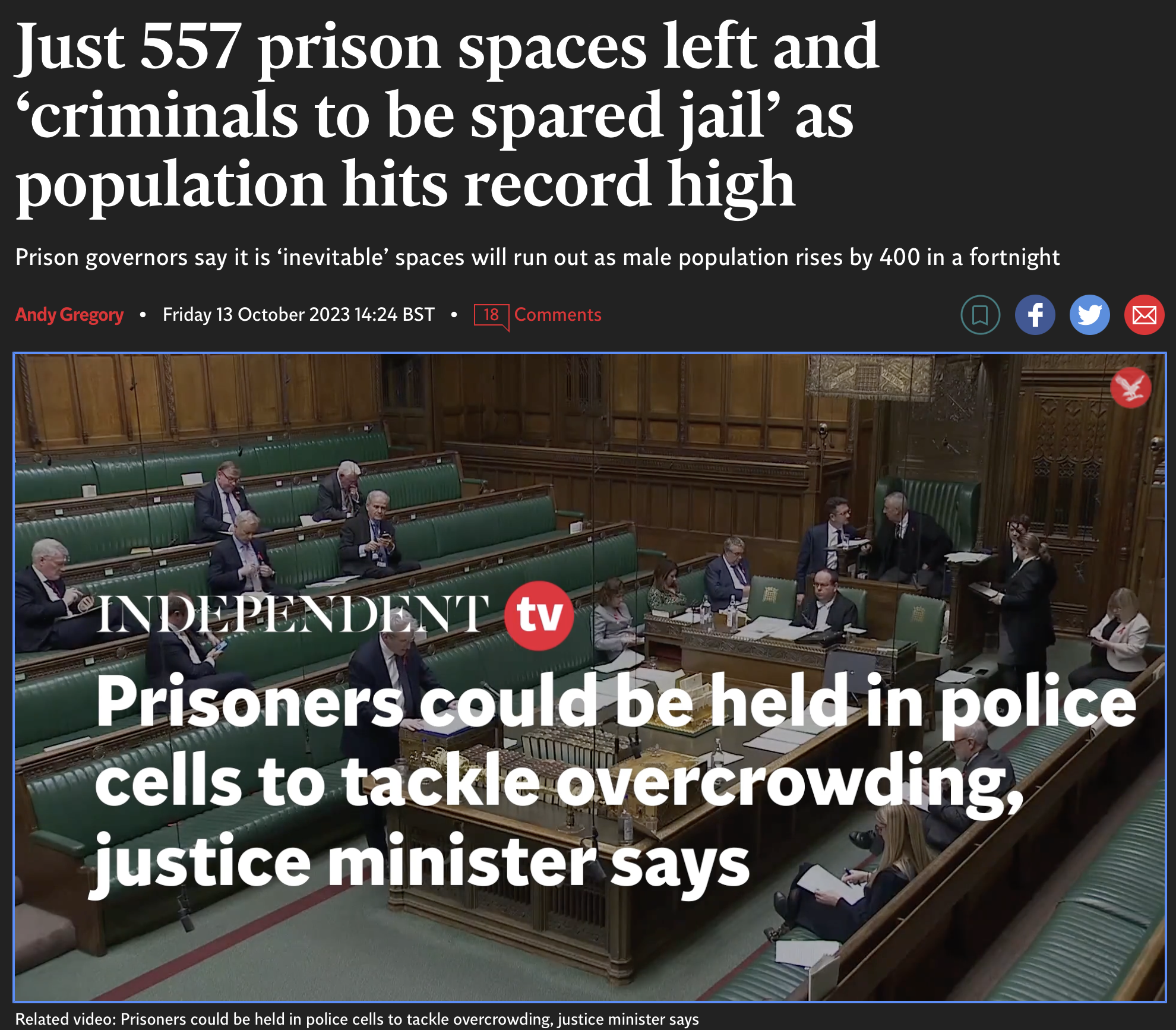
Take prisons… one of few areas in life I feel confident I know a little more about than most. In recent weeks they have regularly hit the headlines for multiple reasons; reasons about which I have been banging on since the eighties when I first started teaching in them. The big, but far from new, problem is overcrowding… our prisons are full. Last time I heard (13.10.23) there were just 557 spaces left across the prison estate. 
Devoted and committed to the ‘tough on crime’ mantra, the government’s short-term thinking has landed in a cul-de-sac with just a handful of short-term ideas that could have been long-term solutions decades ago. They are not rocket science, just obvious tips like ‘Stop putting so many people who aren’t a danger to others in prison!’ Or ‘Stop this revolving door of madness of locking people away for longer and longer and then releasing them, often with just £70 in their pockets, a criminal record, a drug habit they didn’t have before they went in, and nowhere to stay when they come out…!’ It is sheer insanity to think they are going to miraculously be rehabilitated and can go on to lead a crime-free life. 

And still current policy remains the same: to create yet more institutions of failure and waste in the “biggest prison-building programme since the Victorian era.”  

Sorry, I can feel my blood beginning to boil…

But one more example of this system of illogic. And a new one at that. On 03.10.23, the Justice Secretary, Alex Chalk, (the eleventh JS since 2010), announced that the government wants to outsource the problem by renting prison cells overseas in a variation of the Refugees-to-Ruanda thinking? Well that’s going well.   

And so it goes on throughout the whole Criminal Justice System. And has done for as long as I can remember. But still the majority of my Art behind Bars audience members come up to me and say, “I had no idea.” I say that with exasperation rather than blame. But it makes me realise that speaking out has its limitations. So, for the record and possibly the last time I allow myself to become incensed in a blog, here is one of my slides with some statistics (please allow for inevitable fluctuation) that give an insight into the failure, people and costs caught up in our current prison system.

Right, let’s return to Marina Abramović and the immediacy of her work’s impact compared to mine. Drawing inspiration from the feelings and inner experiences her powerful performances evoke, I would like to propose a different solution to our on-going crisis.

The Artist is Present (2009)

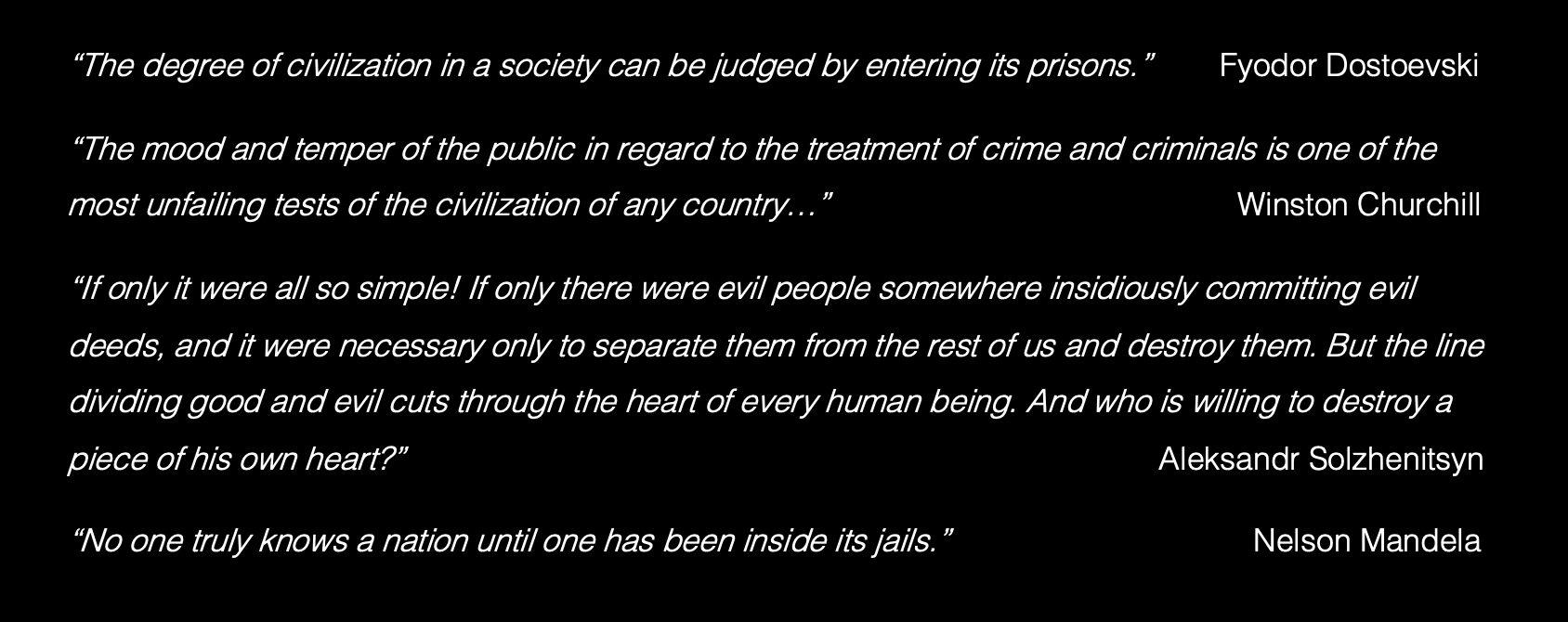
I suggest every government minister, every magistrate, judge, lawyer, banker, teacher and member of the public is taken into one of Britain’s many failing prisons. For when you feel the impact of the first of many heavy doors lock behind you; when you smell the socks, watery cabbage and frustrated testosterone (95% of prisoners are men); when you hear the shouts of anger and cries of despair; when you taste the fear of under-trained staff and terrified, often traumatised men and women, and see the size of a cell and the squalid world in which these people are banged up in the name of and for the apparent protection of us all, then people might understand what so many important figures have claimed about the relationship of prisons and society, and finally demand change.  
Further readingToo many articles in every newspaper to list, so here are some specialists on Criminal Justice:

Why the prison population crisis is everyone’s concern

Prison Reform Trust: Bromley Briefings Prison Factfile, January 2023

Work with Offenders: Government considering exporting prisoners to ‘partner countries’

The Week in Justice

Russell Webster Blog

A few dates of my forthcoming events open to all:

Thursday 26th October, 7.30pm: Im Schatten meines Großvaters, Frauenkirche, Dresden

Wednesday 15th November, 5pm: Difficult Family Legacies: Lily Dunn and Angela Findlay, Goldsmiths, University of London

Thursday 16th November, 6.30pm: War and Peace: A Century of British-German Relations. Co-hosted by The Dresden Trust and the National Army Museum, London

22-24th November: 3 evening talks in Laubach, Frankfurt and Heidelberg. Contact me for details

What will it take for the British public to get behind prison reform?

Ok, here’s a challenge for a rainy day. 

Can anybody name one good reason why this country repeatedly does nothing about the state of our prisons? Can you give me any single benefit to us, as a nation, of keeping people in institutions that have repeatedly been condemned for their wholesale ineffectiveness?

Since 2001 when I got involved in Britain’s Criminal Justice System having worked in Germany’s for 6 years, I have heard one government-appointed Chief Inspector of Prisons after another – from the judge, Sir Stephen Tumin, to the army officer, Sir David Ramsbotham, to the current retired senior police officer, Peter Clarke – denounce the conditions in our jails. All their reports reveal systemic failures, appalling levels of filth, readily available drugs, lack of educational opportunities and deeply disturbing practices that arise as a result of overcrowding.

Since the 40% budget cuts of 2010, things have only got worse. 25% to 1/3 of prison officers and staff were lost. This has led to prisoners being left languishing in their cells for up to 23 hours a day because there are not enough officers to unlock doors and take them to education, employment, anger-management or drug rehabilitation courses – all things that have been proven to help prevent re-offending. I experienced it myself in HMP Belmarsh when I was Arts Coordinator to Koestler Arts. We raised the money for a 5-week art project, we provided the artists, the materials, we organised the practicalities and we then showed up. But the prisoners didn’t. Because the officers didn’t have time to deliver them. It is one of the reasons I gave up my front line work and focused my attention on raising awareness of what is going on.

Learning to Learn through the Arts projects in HMP Belmarsh, 2004

Now in 2020, I would finally like to understand the apparent logic behind the criminal waste of time, money, opportunity and human lives. And why we, as a nation, allow it to continue.

What is the block that is preventing the British public, the politicians, the Justice Secretaries – of which there have been seven in the past ten years – from recognising the illogic of depriving people of their liberty with the justification of punishment or deterrent, only to then make everything else infinitely worse? Surely it is not rocket science to comprehend that placing people… and they are people… in squalid, overcrowded environments in which they are likely to become more brutalised, embittered and frustrated; in places where they may well acquire a new drug habit, learn hot tips for new criminal methods, possibly self-harm or commit suicide; in places where they have limited or no access to the services, education and general help they need… cannot produce positive results? How can any reasonable person not see that ejecting them back into society after their sentence with £47.50 in their pocket, a criminal record – and sometimes a TENT! – is not going to stop them from re-offending, possibly within days? How is this supposed ‘tough on crime’ approach to people, who often come from catastrophic, traumatic or hugely disadvantaged backgrounds going to make our communities safer? 

I am no economist or mathematician but let’s just look at 2 figures:

1. The Prison Service budget is £4.5 billion per year.

2. The cost of re-offending is £18 billion. 

Let’s look at 2 more:

1. 70% of prisoners suffer from some sort of mental health issue.

2. 50% of prisoners are functionally illiterate.

The logic is there in black and white, in the figures. So why this dug-in-heels resistance to changes that embrace methods that have been proven to work? Not least Restorative Justice.

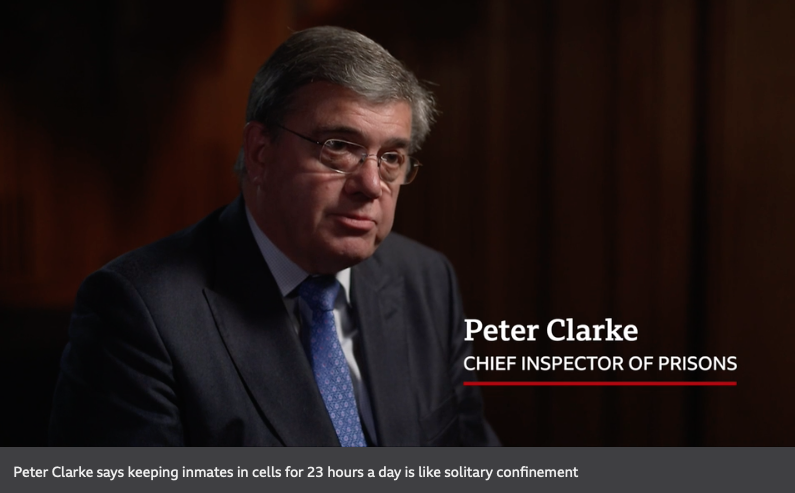
This week, in his last report as Chief Inspector of Prisons, a weary looking Peter Clarke, like so many of his predecessors once again explained the detrimental impact our system has on the mental health of prisoners. Once again he reported rubbish and rat-filled environments, apparently ‘so dirty you can’t clean it’. Once again he described the overall failure of managers who are proud of their data-driven and evidence-based methods but have rarely been inside prisons to ‘taste it, smell it.’ Clarke expresses similar bemusement to me as to why these damning reports so often come as a surprise to the management of the Prison Service. This has been going on for years! We may not be ‘world-beating’ in the appallingness of our prisons but we certainly are close to, if not at the top of the European table of failure. 

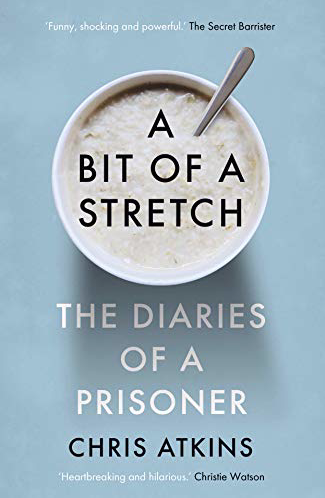
As Chris Atkins says in his new book A Bit of a Stretch, our prisons have become little more than ‘warehouses’ for storing offenders. Justice Secretaries, often lacking any background in law, let alone prisons, announce new initiatives with great fanfare, but nothing gets done and after a year, they move on.

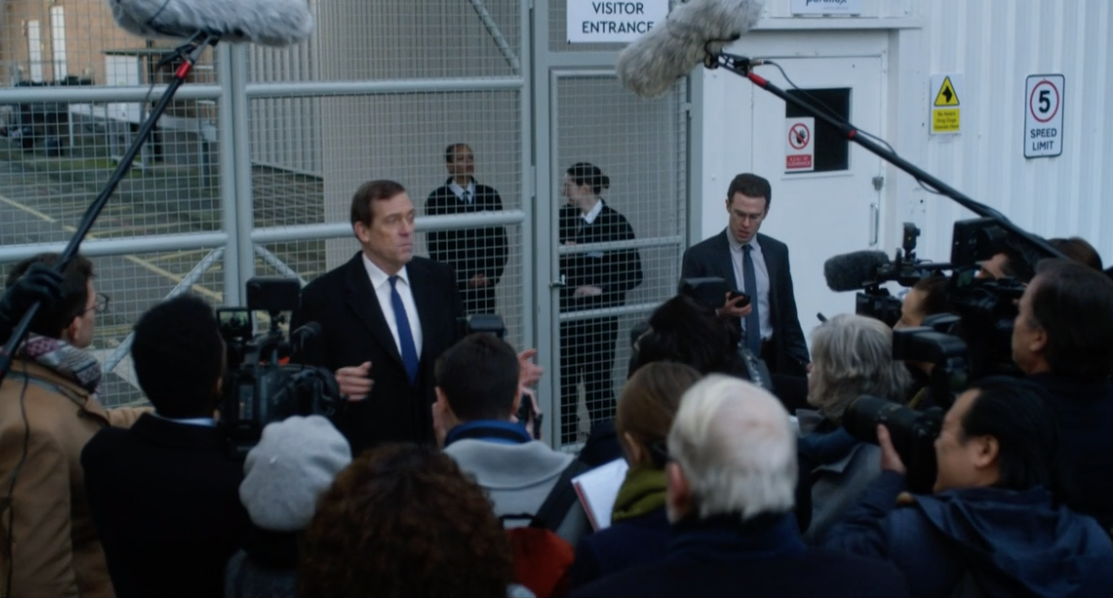
Hugh Laurie as Peter Laurence in Roadkill

How I wish we could have a minister like the actor Hugh Laurie’s Peter Laurence, in the brilliant new BBC series, Roadkill. Laurence is deeply flawed as a man and corrupt as a politician, but in his newly appointed position as Justice Secretary, he at least verbalises the obvious question: Why are we wasting so much public money on a policy that’s not working? ‘Everyone knows the prison system is grossly inefficient,’ he tells the wholly resistant, thankfully fictional, female Conservative prime minister. ‘So I’m going to shake things up. Justice deserves that.’

And it does. But he will fail. Because it is not just the right-leaning politicians who want to stick to our punitive approach. It is also the British public. In the series, both their attitudes are revealed: ‘We lock criminals up and throw away the key… in the interest of public safety… We’re famous for it… It’s our nature… It’s our bond of trust between the Conservative party and the public…’

Covid-19 has of course made conditions even worse. Some prisoners are locked in their cells for 24 hours a day, and for several weeks at a time in what amounts to solitary confinement, as Clarke points out. Of course that leads to the ‘more controlled, well-ordered’ environment the Prison Officer Association is relieved to have. But what does it do to the people inside? Clarke is convinced there must be an exploration of other ways to do things, safely. After all, ‘Are we really saying we are going to keep prisoners locked in their cells for another 3 months… 6 months… a year?’

After my talks on Art behind Bars in which I reveal the shocking but oft-printed statistics of our prison system’s failures, people frequently come up to me and say “Gosh, how awful, I had no idea.” Well maybe with all the upheaval of Covid-19, it really is time for the public to gain an idea of the horrors that are being perpetuated in their name; in the interest of their safety. Of course we can stick with the old approaches, but at our peril. For who pays the price? Don’t think it is just the prisoners and their families who are punished. It’s all of us. We make ourselves less safe. We make ourselves less just. But above all, we make ourselves complicit in a system that is less than humane.

If you would like to do something to help bring about a shift in attitude and policy, you can write to your MP. You can support the important work of The Prison Reform Trust or the Howard League for Penal Reform. Or any of the charities offering help to prisoners and their families. Or you can look at the wonderful work of my favourite charity, The Forgiveness Project, and their excellent and effective prison RESTORE programme, that I have both witnessed and on one occasion co-facilitated.

Links to follow up

Prisoners locked up for 23 hours due to Covid rules is ‘dangerous’ – BBC News

BBC Newsnight 20.10.20 with Chief Inspector of Prison, Peter Clarke Start at 21.27 mins

Chris Atkins A Bit of a Stretch: The Diaries of a Prisoner at Wells Festival of Literature

Roadkill on BBC player

The Guardian view on failing jails: an inspector’s call

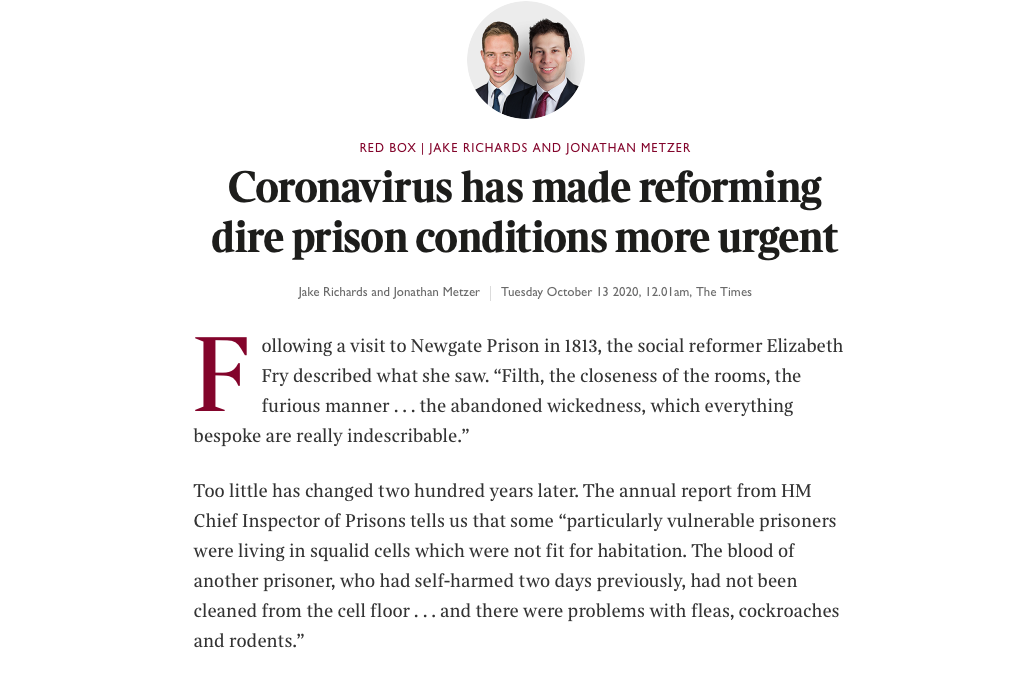
Times article, 13.10.20