(You can find Part 1 here)
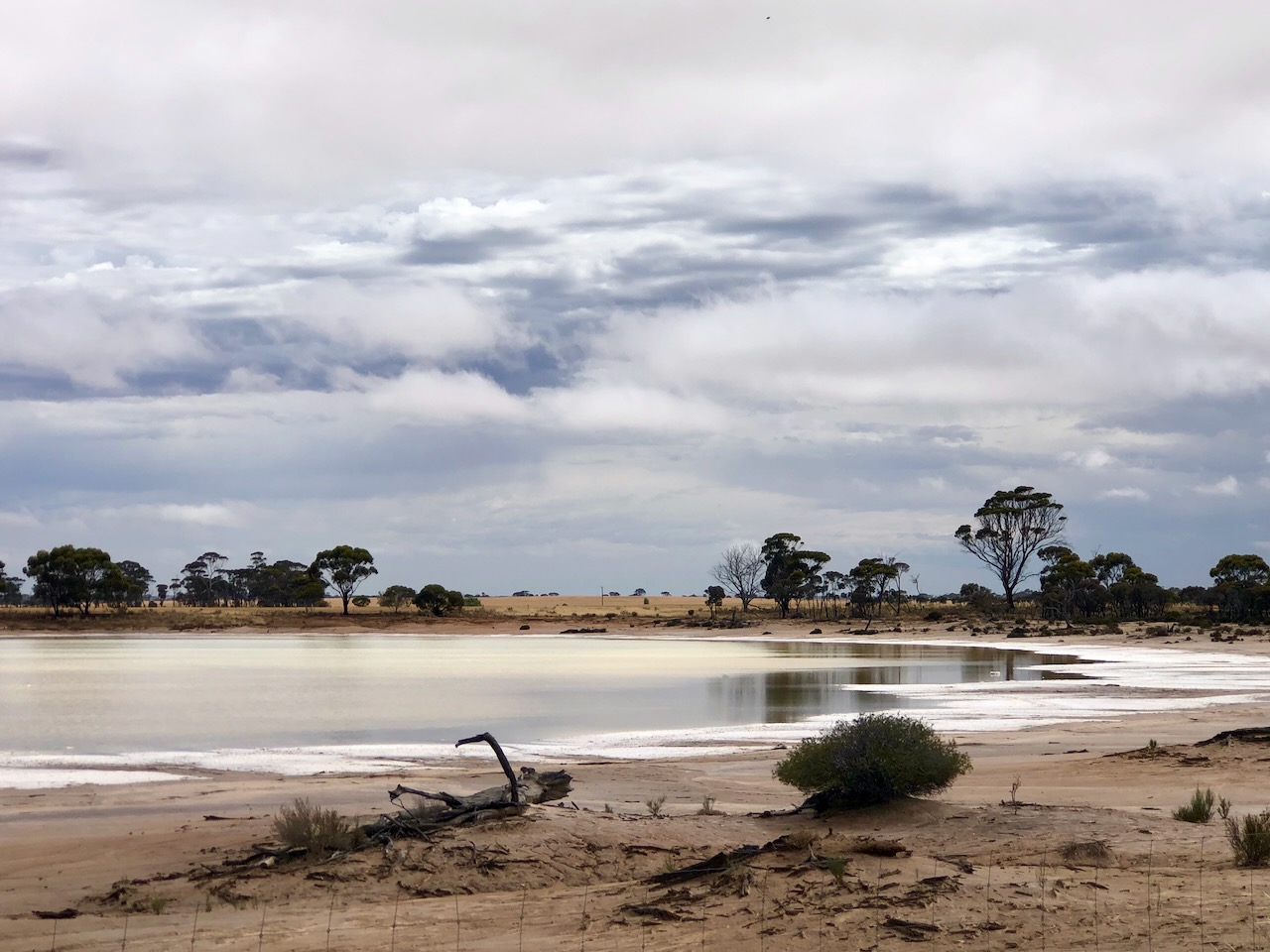
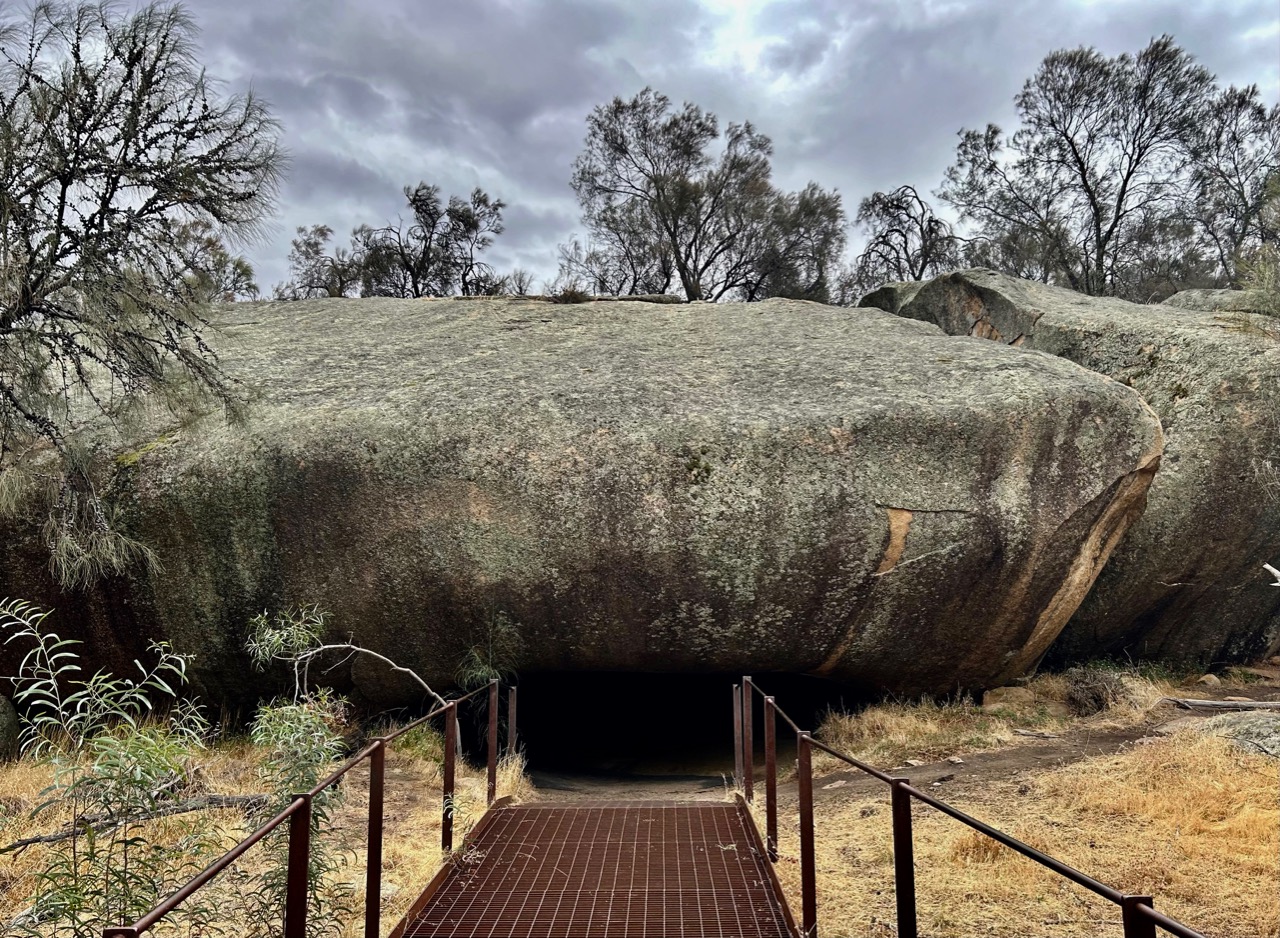
Roughly 220 miles east of Perth, beyond the salt lakes of the Western Australian Wheatbelt and within the remoteness of Hyden’s various outcrops of mineral-striped granite, the mouth of Mulka’s Cave opened just enough to allow us to clamber inside. With the brash sun denied entry, it took time to adjust to the dimness of leaked light… and silence. That’s when we saw them.

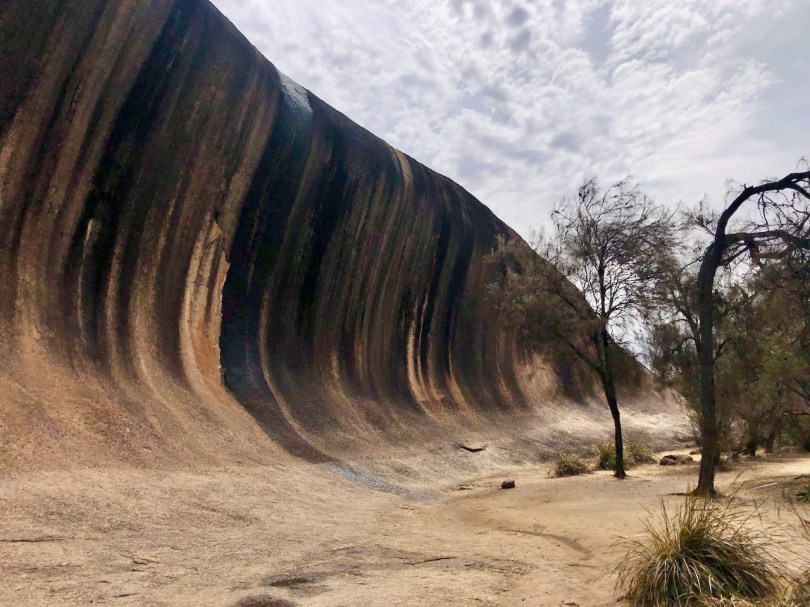
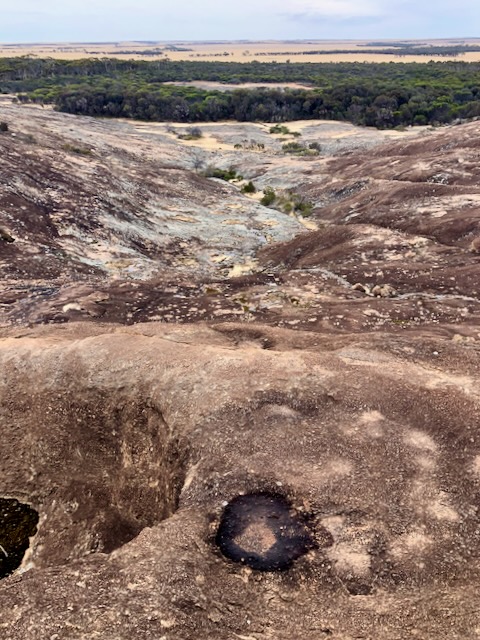
A few miles away, Hyden Rock, more famously known as Wave Rock, buzzed with flies and visitors posing for selfies and family snaps. It is better served than the cave with a visitor’s centre and trail signs tasked with the nigh on impossible endeavour of condensing 4,500 million years of evolution into digestible snapshots. Like the constellations of night skies, how do you explain the making of some of the oldest exposed rocks anywhere on earth?
Well, with a little appropriation, I am going to give it a go. For to travel in Australia is not only to experience the elements as art forms of uncompromising intensity and beauty. It is also to engage with Australian history. And that involves confronting another story of darkness that relates to the pitch dark episode of more recent times that many people will be remembering this Saturday 27th January… Holocaust Memorial Day.

Approximately 2,500 million years ago, a mass of granite rock known as the Yilgarn Block was intruded into the earth’s crust right across the southern half of Western Australia. It remained below the surface as the first plants and trees emerged, as the first amphibians, reptiles and insects moved, as the dinosaurs came and went between 230 and 130 million years ago. Meanwhile, hidden out of sight, a process of sub-surface weathering was occurring in three massive phases of erosion.
Water that ran off Hyden Rock seeped into cracks and nibbled away at the structure of the granite. While winds and heat would dry the upper layers of soil, deep down it remained wet and salty, rotting the rock face and breaking it down. When natural erosion finally lowered the surface level of the surroundings, the crumbled rock also washed away leaving a 25-meter-high and 110-meter-long crest rising from the darkness of geological history. To put humans into perspective, if the whole evolution of the earth was reduced to a single calendar year, modern man would make his entrance onto the world stage in the final half-second of December 31st!

The palette of coloured stripes is created by water’s impact on the tiny lichens (the first plant form to colonise granite), mosses and blue-green algae that stain and streak the stone with shades of black, orange and silver.
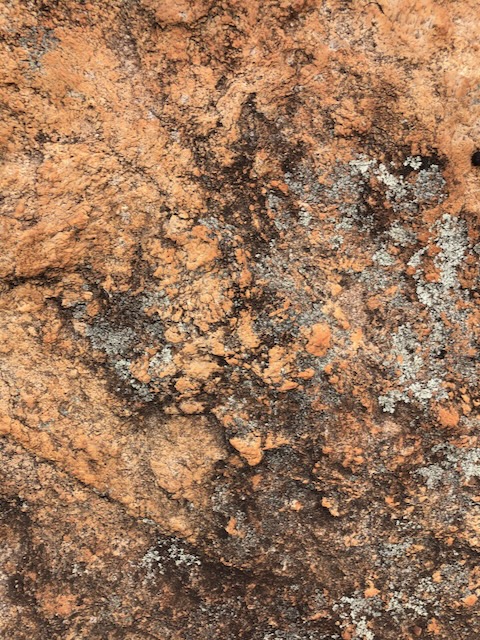
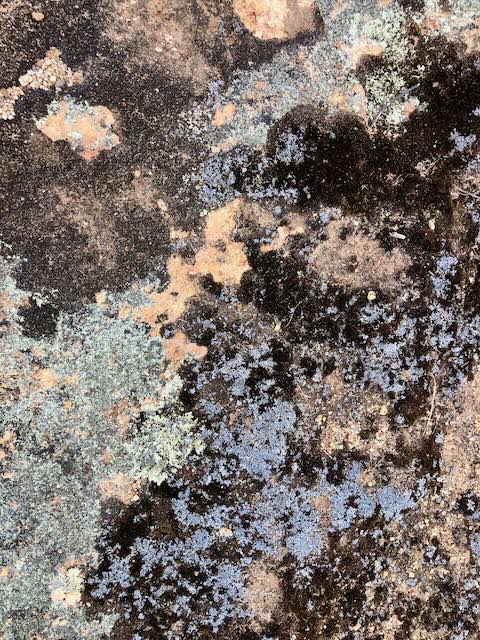

Similar processes occurred at the nearby domed granite ‘Humps,’ one of which houses Mulka’s Cave. Crafted over millions of years by salt, water and wind and painted in strokes of ochres, greys and pale cobalt dotted with small green shrubs, they were home to the vital gnamma holes. These were Aboriginal people’s natural water holes capable of storing rainwater run-off and replenished from underground stores. From the 1890s, the influx of thirsty new arrivals made these already vital sources of water even more precious than the gold they came to mine. The sacred gnamma holes became scenes of conflict. Many were drained, destroyed or polluted, others were lined and claimed as the gold diggers’ own.
The pattern from there on is all too depressingly familiar. Domination, subjugation, exploitation, cruelty, destruction, suffering, death. A particular human / inhumane trait prevails the world over when man is consumed by greed and a sense of superiority and entitlement. But is that our true nature or an aberration of what we are designed to be?
One could say that since 1633 when Galileo was convicted of heresy for upending almost 2000 years of western scientific thinking by claiming the sun – rather than the earth – was the centre of the universe, there has been strong resistance, especially by the Catholic Church, to the ensuing demotion of man’s position in the world.
Behind this refusal lies the still-existing widespread conviction of alpha male’s rightful position at the pinnacle of nature. In the mid 19th century, a complete misinterpretation of ‘survival of the fittest’, the catchphrase that became shorthand for Darwin’s ground-breaking theories on evolution, conveniently advanced his apparent confirmation that physical dominance triumphs.

Such misunderstandings and claims of man’s importance and right to dominate have had devastating consequences, most recently seen in the ideologies and doctrines such as Nazism, eugenics, racial and gender discrimination and society’s policies on and treatment of the ‘weaker’ more vulnerable in society – the elderly, sick, poor, lesser-abled, foreign… and, in Australia, the indigenous Aboriginals and their descendants. (Hmmm… I can feel a Part 3 to this blog might be needed.)
Fortunately, countless scientists of different disciplines are finding that it is not physical dominance that assures survival but the human traits of friendliness, kindness, generosity, sacrifice, empathy, cooperation.
Compassion, for example, stems from a really old part of the brain. It activates the vagus nerve – the longest bundle of nerves in the human parasympathetic nervous system. Research shows how feelings of caring for someone in need activate the vagus nerve. Have a listen to this. It’s not my area of expertise, but it feels all too relevant to some of the problems in the world today.
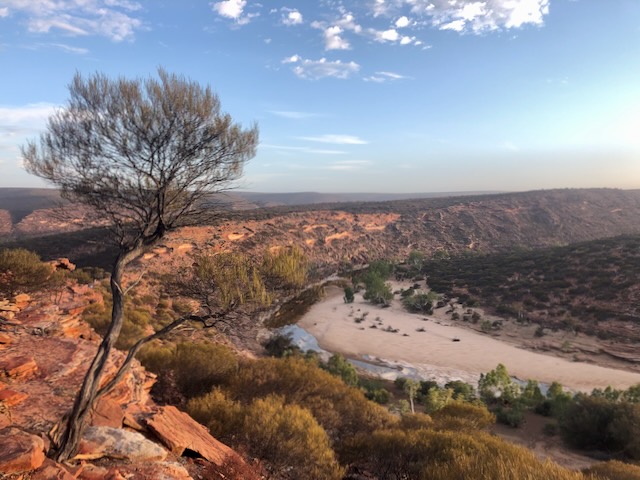
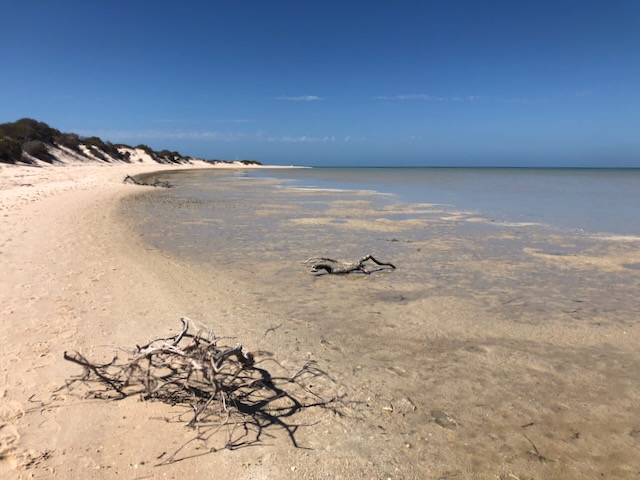
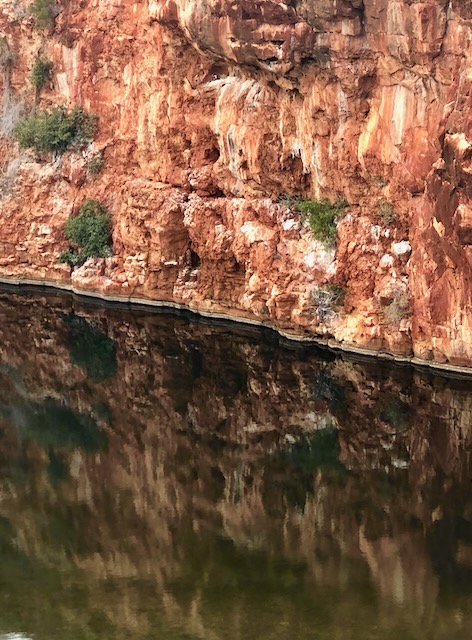
When I left England at the beginning of December, I realised I felt saturated and helpless in the face of the wrongness and tragic outcomes of human actions, both past and present. (For background you can read my November Blog.)
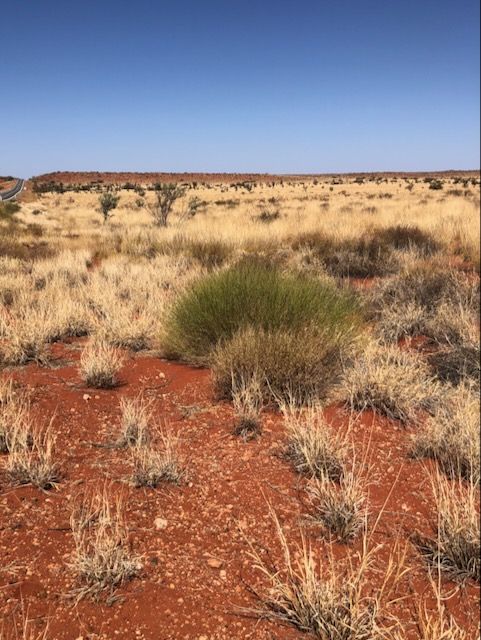
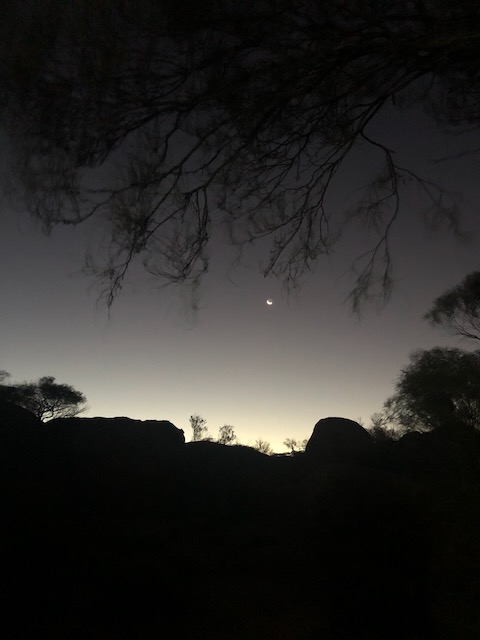
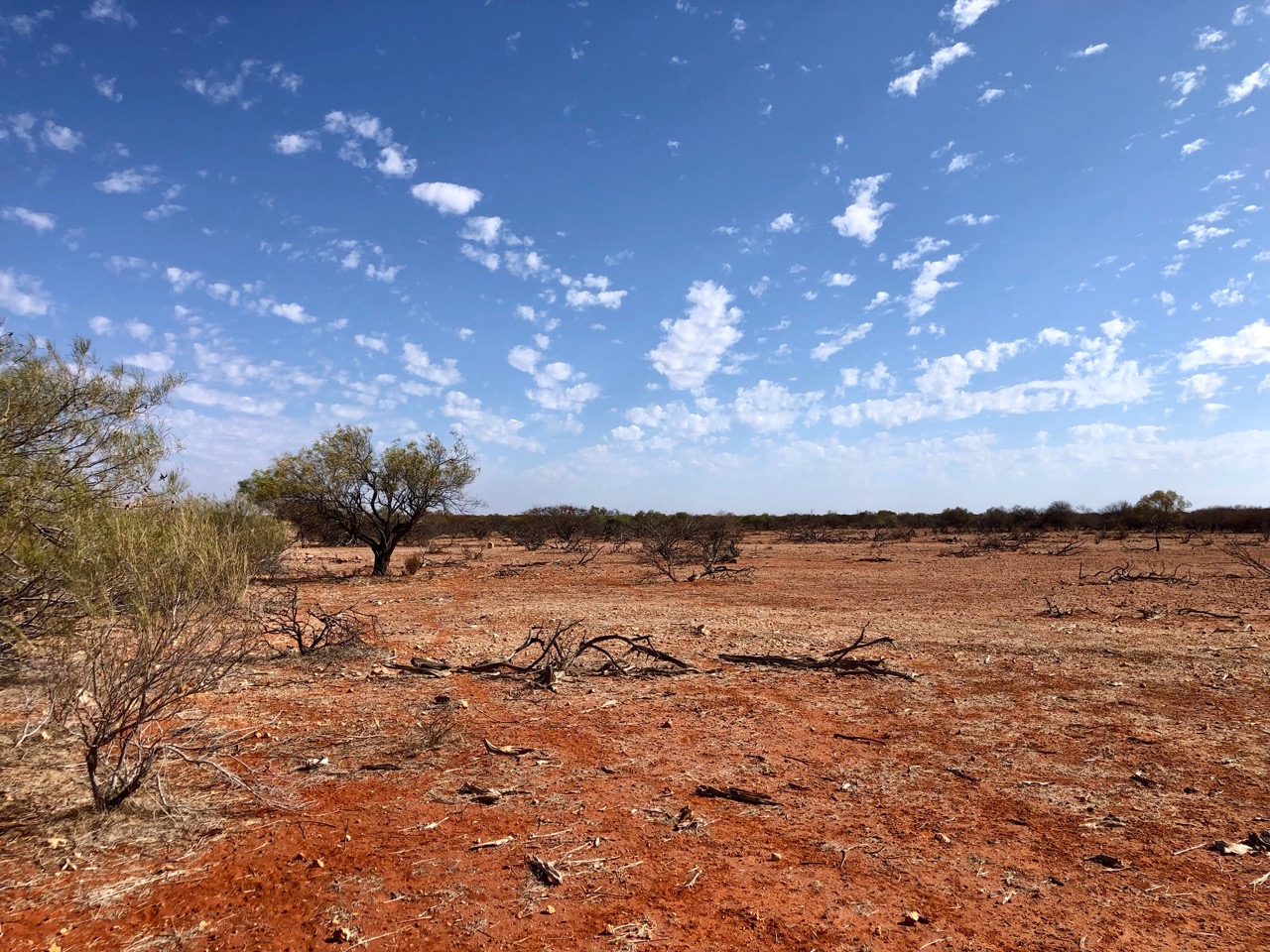
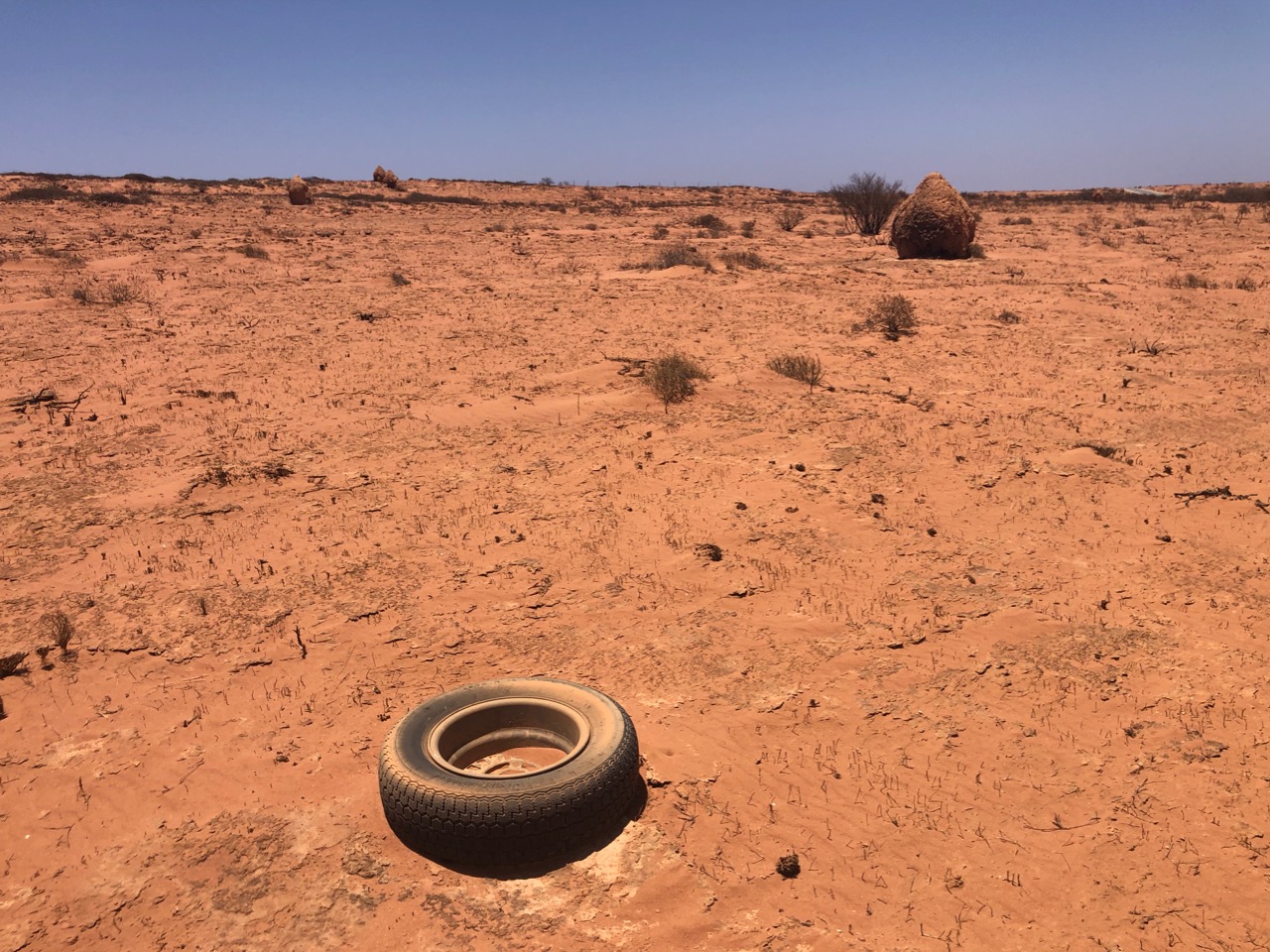
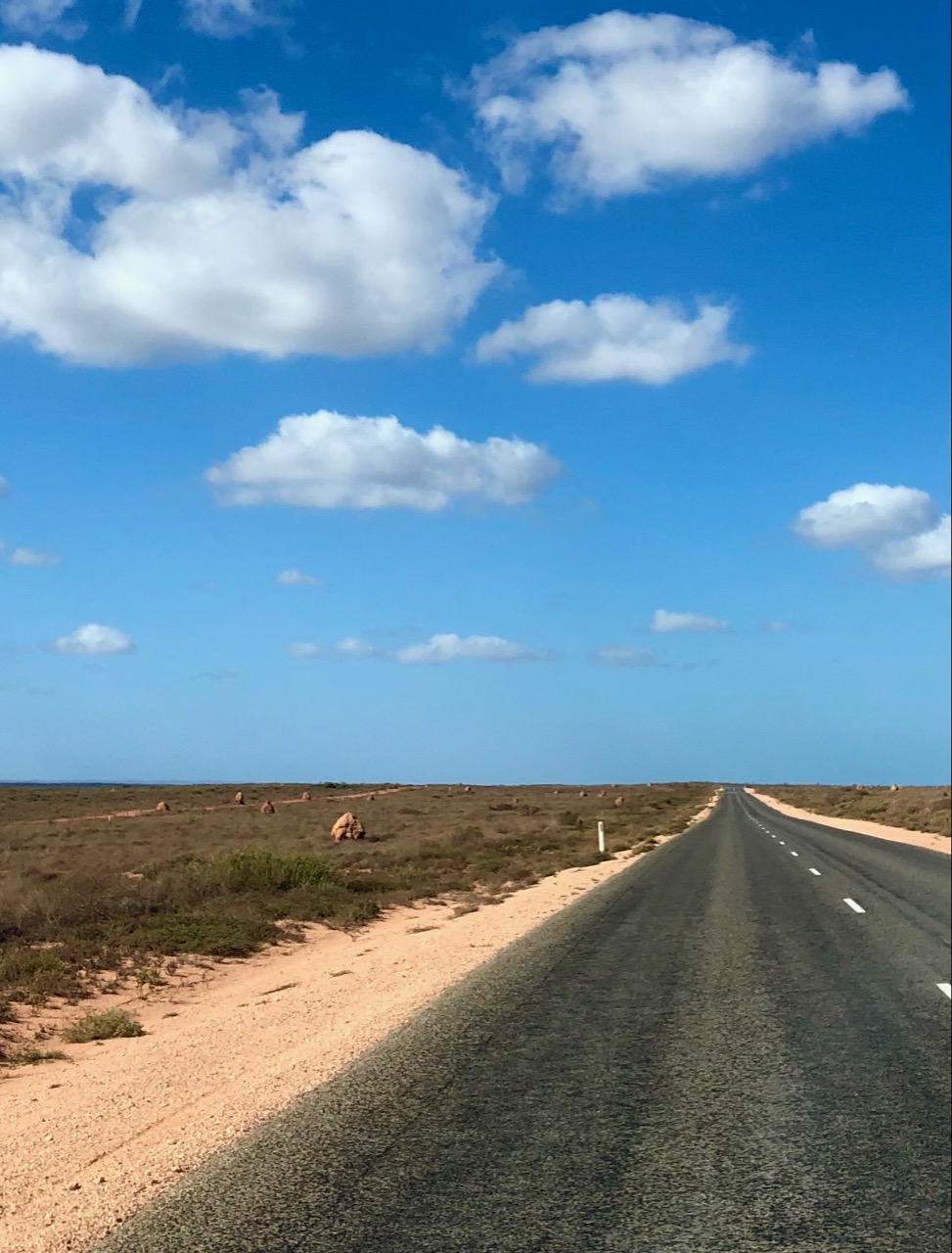
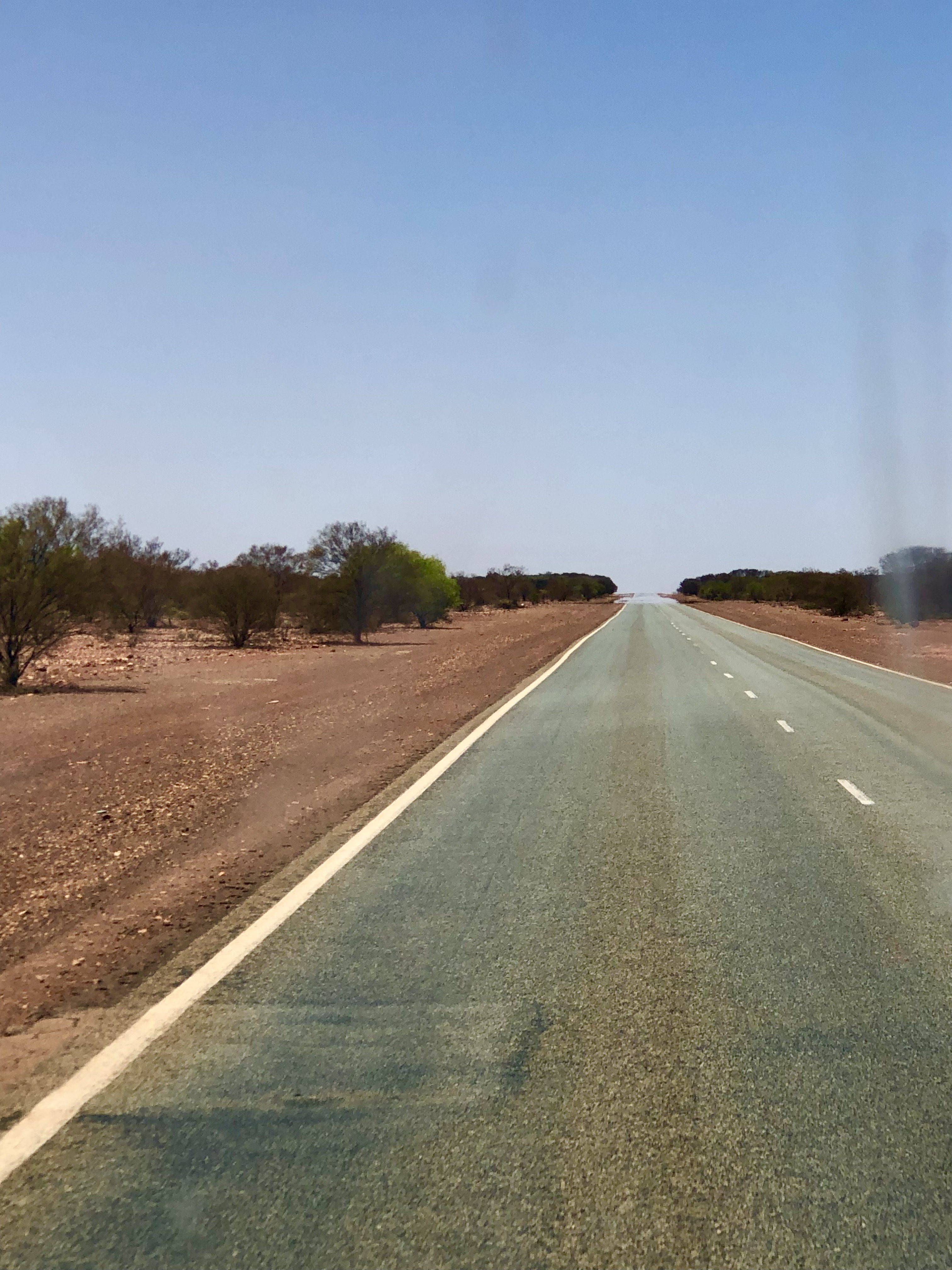
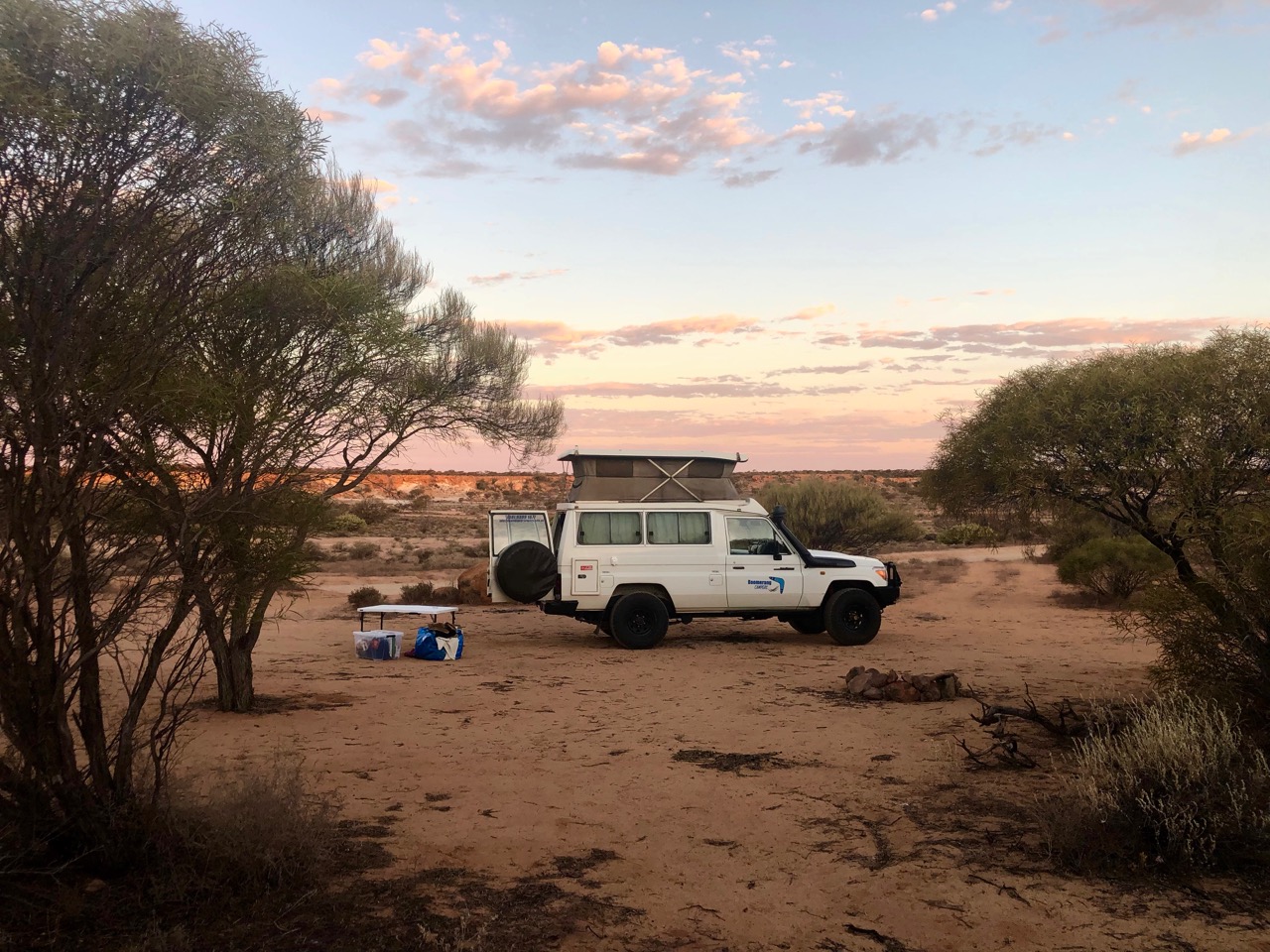
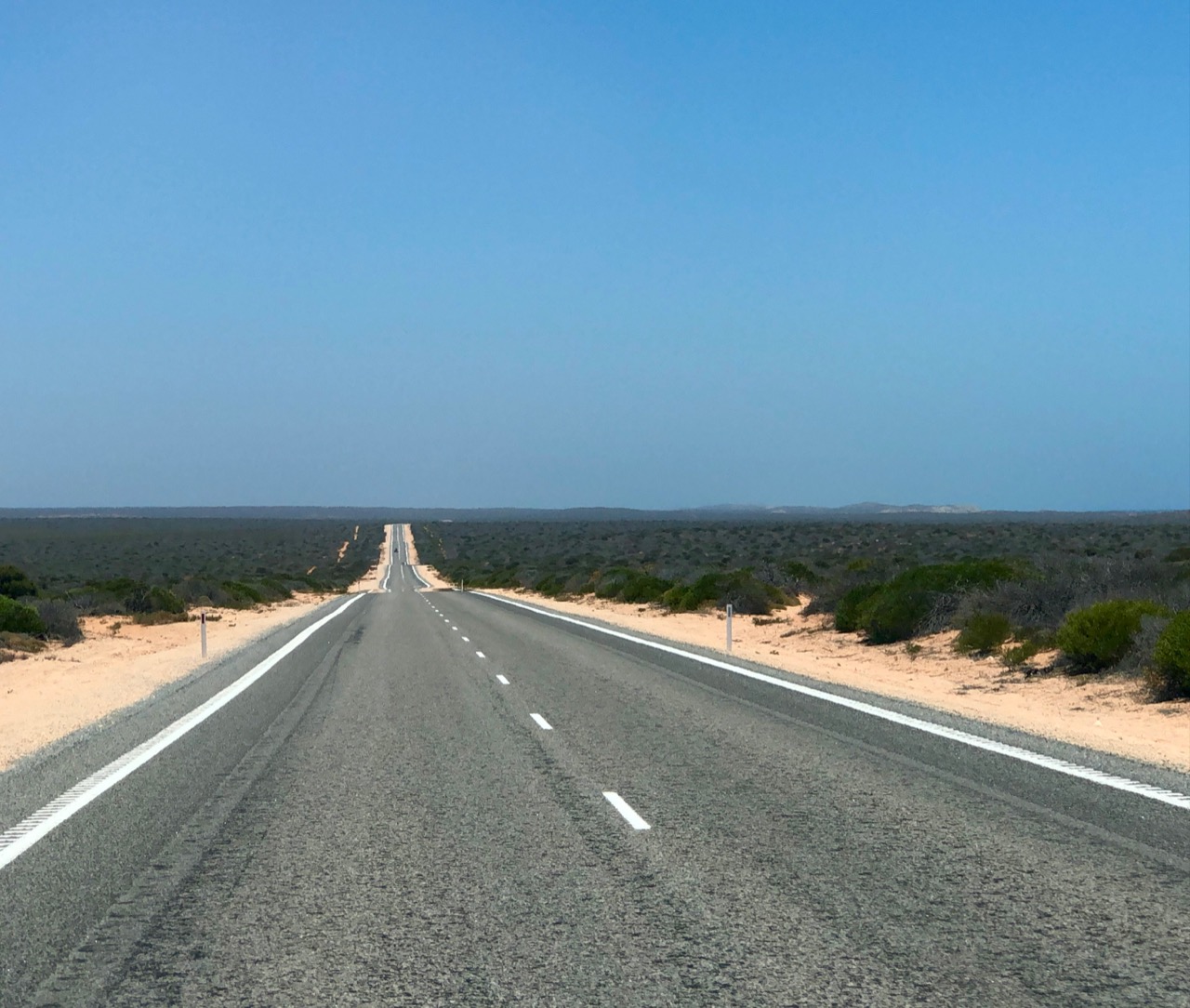
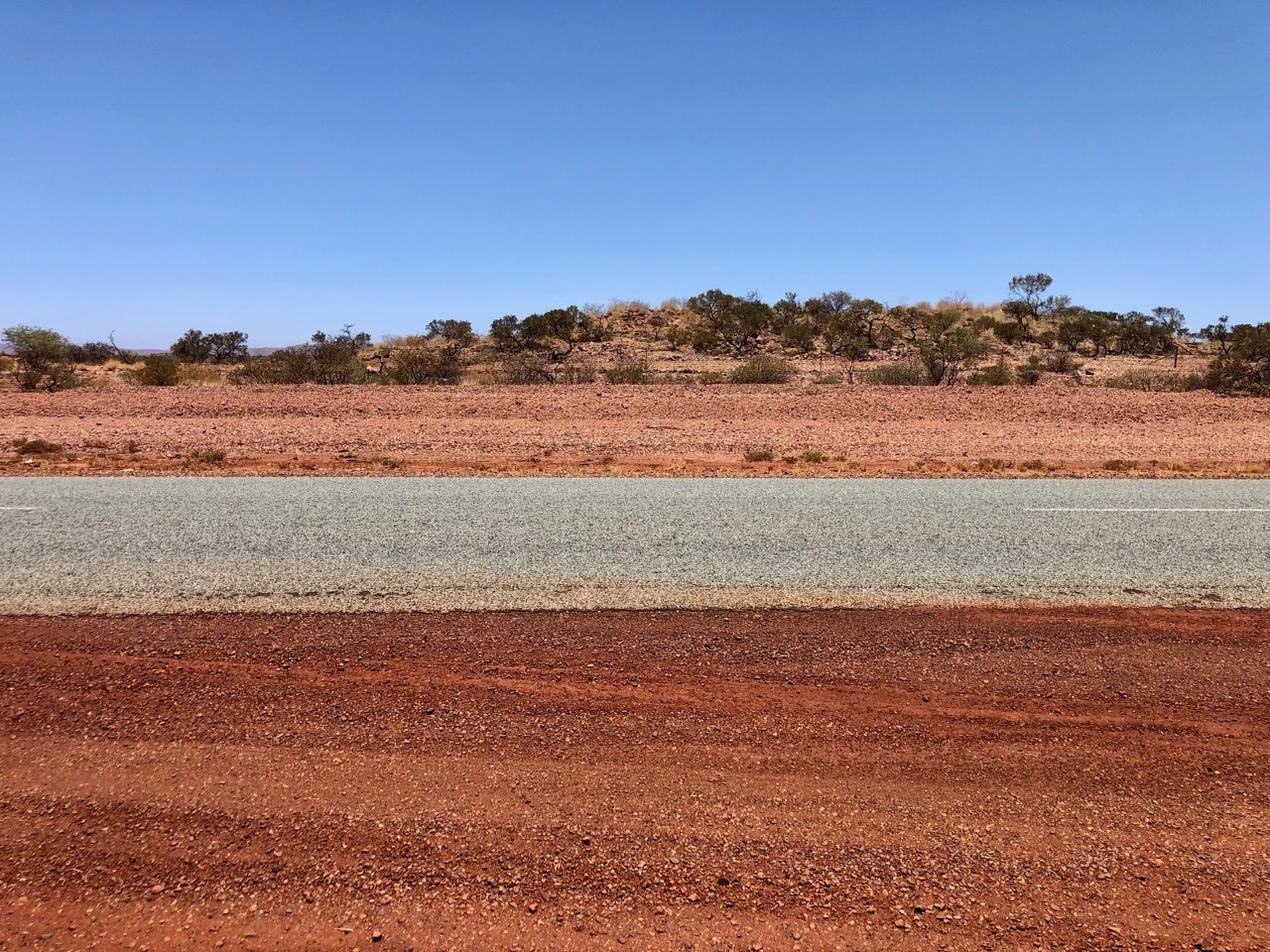
Travelling through the landscape of the Western Australian outback washed, warmed and blew the density away creating endless space… a blank inner canvas. It was a form of recalibration and alignment with nature. A state of empty ‘nothing’ full of potential and hope. And that’s what I saw in Mulka’s Cave when I saw ‘them’.
As my eyes acclimatised to the dipped light, I found myself surrounded by the traces of 3-4000-year-old, possibly much older, hands waving gently from the walls.

Some printed, others stencilled, they revealed the inextricable interplay of positive and negative space, of simultaneous absence and presence, the creative dance of inner and outer. The entirety of the world quite literally in the palm of a hand.

These early displays of human creativity seem to bridge the synthetic divisions of secular modernity and the differences that lead to wars. They close the false divides between past, present and future to depict human beings’ true position in the scheme of things. As part of a greater whole.
To me, those ancient hands that refused to spoil or damage what their ancestral deities had made in the Dreamtime prove that we are both the created and creators. That we are both all and nothing.

With this blog and in a very different way to usual, I acknowledge Holocaust Memorial Day on Saturday 27th January and remember the millions of people who were brutally murdered by those who could not see that ultimately, we are one.





 angela findlay blog