When big isn’t necessarily better

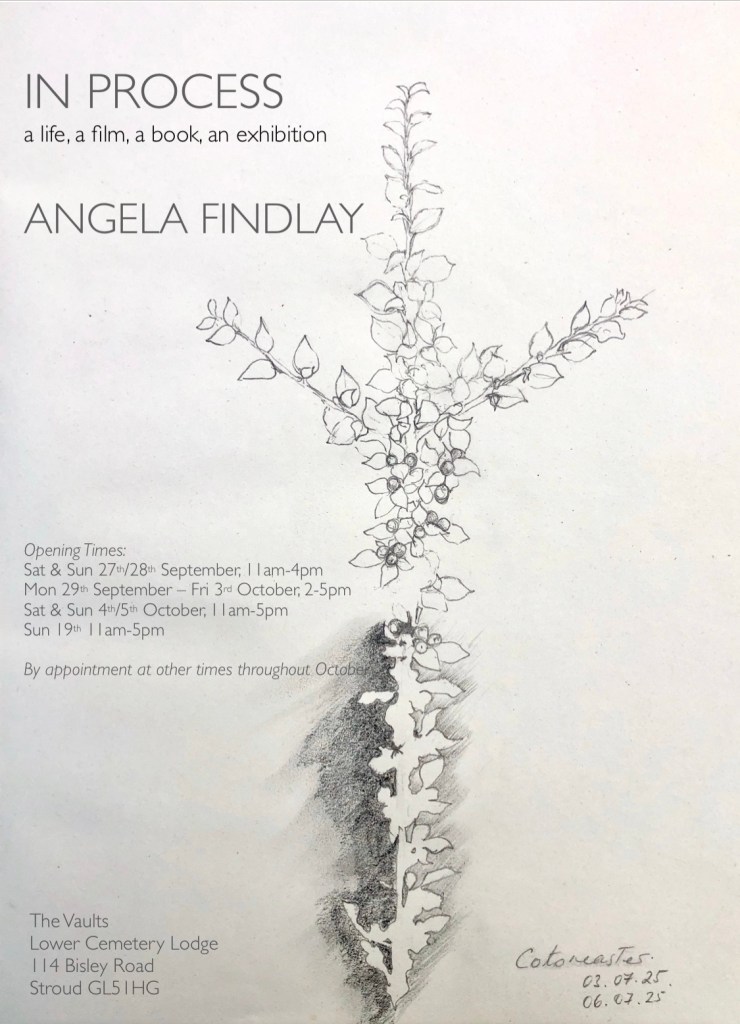
Reflections on: IN PROCESS… a life, a film, a book, an exhibition, The Vaults, Stroud. Sunday 19th October, 11am-5pm and by appointment until 1st November.


“We must, we must, we must increase the bust.

The bigger the better, the tighter the sweater, the boys depend on us.”

I remember chanting that with my boarding school roommates as a teenager, elbows flung back in a futile attempt – in my case at least – to inflate our adolescent chests. Bigger was definitely better, or so we believed.

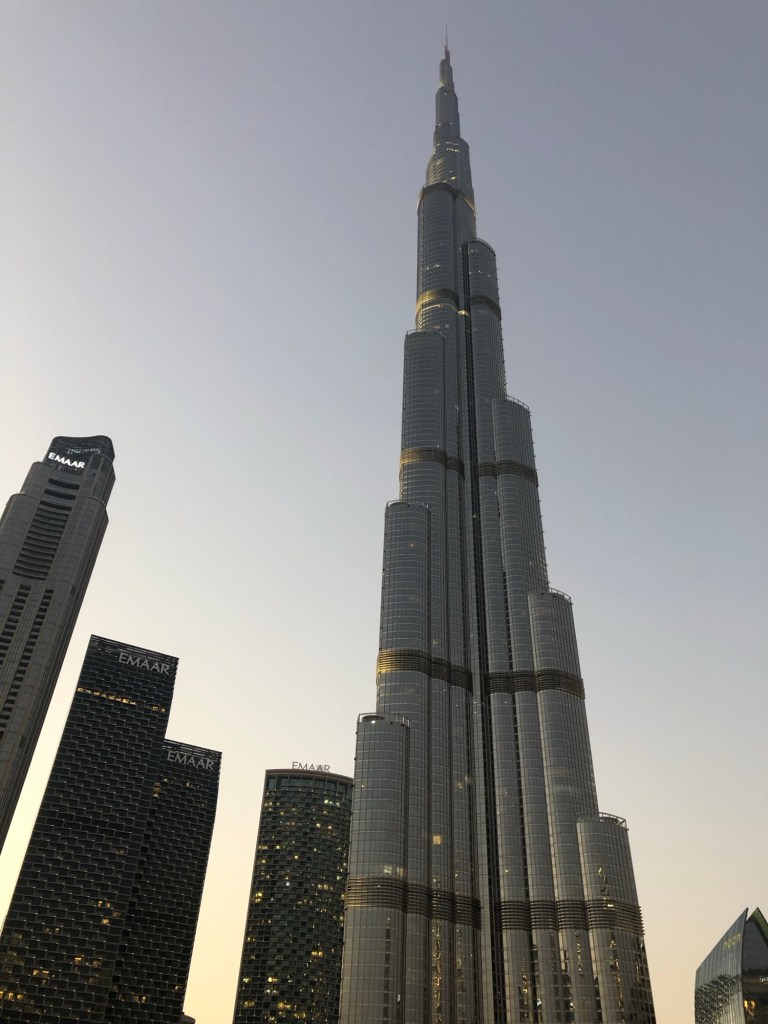
Burj Khalifa, Dubai

Skyscrapers, cars, salaries, houses… In so many areas of modern society, ‘big’ still equals ‘better.’ More followers, more likes, more headlines, more sales. The biggest countries led by the most powerful leaders and largest militaries make the most noise. And yet we know, quantity doesn’t equate to quality. Magnitude doesn’t always reflect meaning or value.

This idea – that bigger isn’t always better – is something I’ve seen reflected both in the trajectory of my great great aunt Joan’s life and in my own development as an artist. (If you are new to Joan’s story, please see my previous blogs for background.)

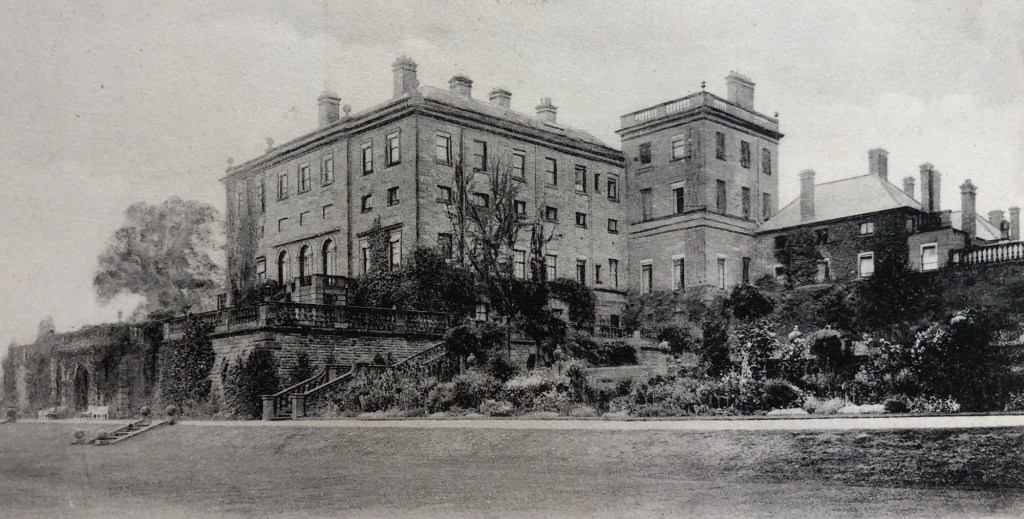
Patshull Hall, Staffordshire

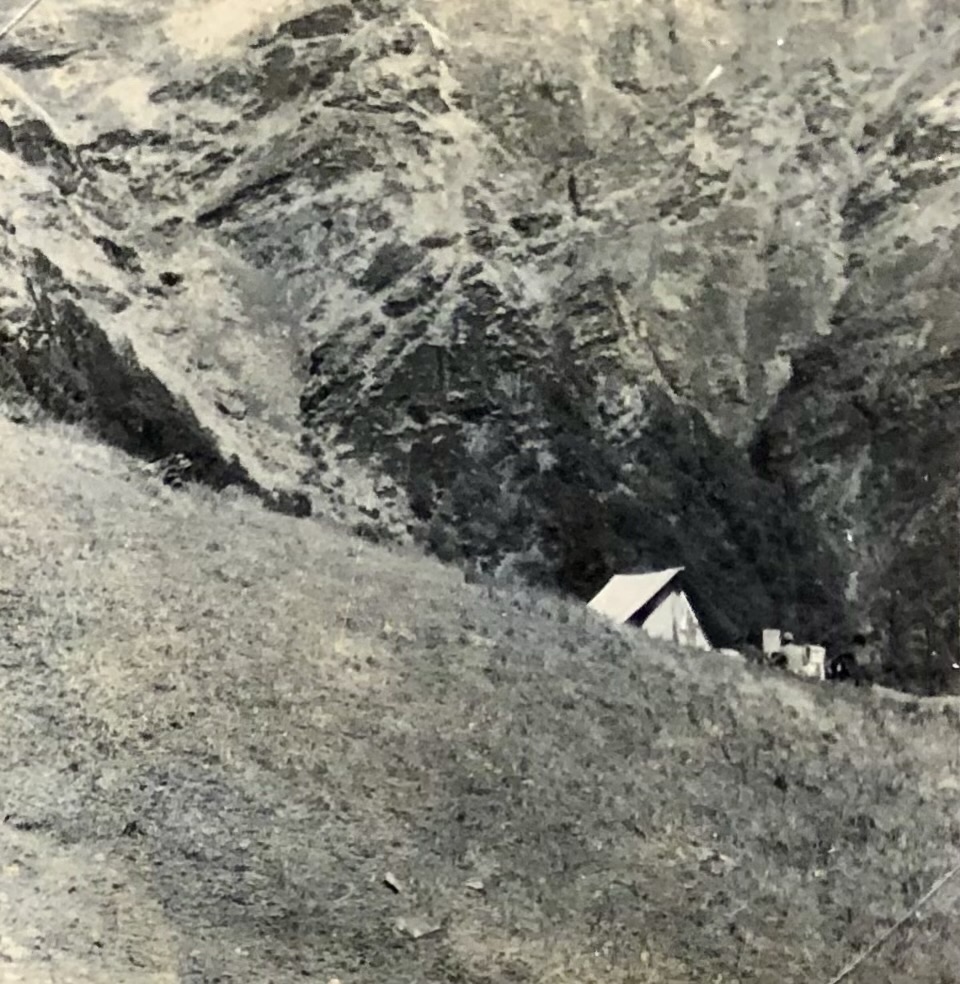
Joan’s tent

Joan grew up in a 147-room stately home in Staffordshire. Yet she spent her final weeks in a single, often soggy Meade tent pitched in a remote Himalayan Valley, surrounded not by grandeur but by shepherds, wildflowers and the sound of rain. She had traded scale for purpose. And her joy, it seems, had grown as her material load had lessened.
My own artistic journey has followed a similarly inverse curve.

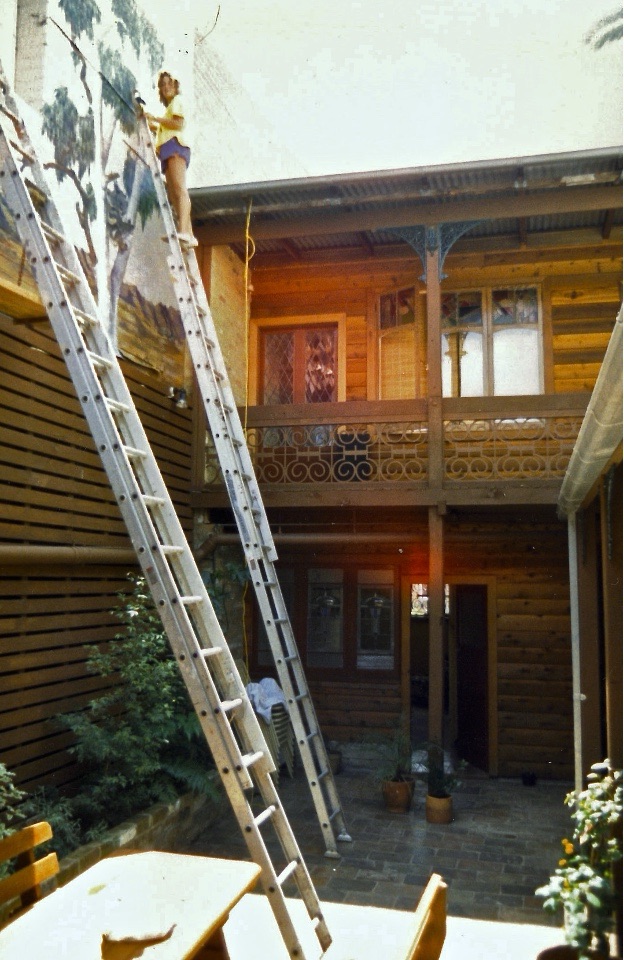
Painting a mural in Sydney, 1987

I began large, unable to contain any drawing or painting within the boundaries of paper or canvas. My work spilled onto walls, first private then public, then grew further to fill stage backdrops for theatres or touring bands. Various mishaps including a paint-splattered boss’s car and a disastrous commission to paint the backdrop for INXS KICK album tour in 1987, which promptly cracked and fell off in large chunks when rolled up, nudged me toward the more forgiving surface of prison walls. There, no amount of damage could make the environment worse than it already was.

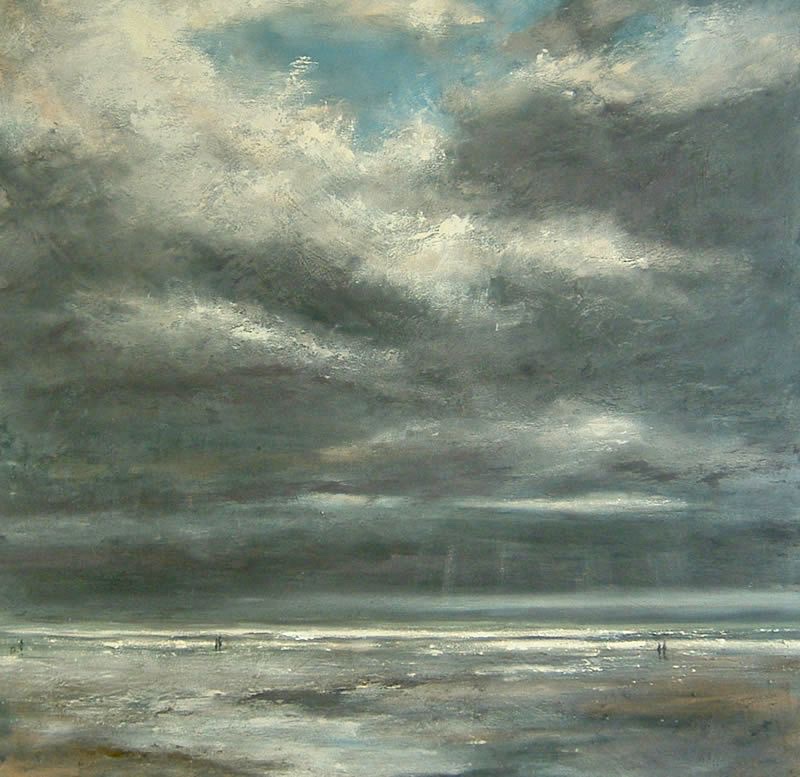
The light danced, 120x120cm

Years later, I turned my focus to canvases of my own, their size dictated by the available studio space and commercial considerations of galleries. And most recently, to works just 28x28cm – or smaller. I have replaced the vast audiences of art fairs with the quiet intimacy of just six or seven visitors at a time into the two vaults beneath my home in Stroud’s Cemetery.

The Vaults

Those vaults now house In Process… a deeply personal exhibition about Joan, her life and the resonance her death still holds for me, our family and small communities she encountered in India.

In one vault, where gravediggers once hung their tools and I now hang mine, visitors watch a short film projected into the open lid of an old trunk telling the story of Joan Margaret Legge.

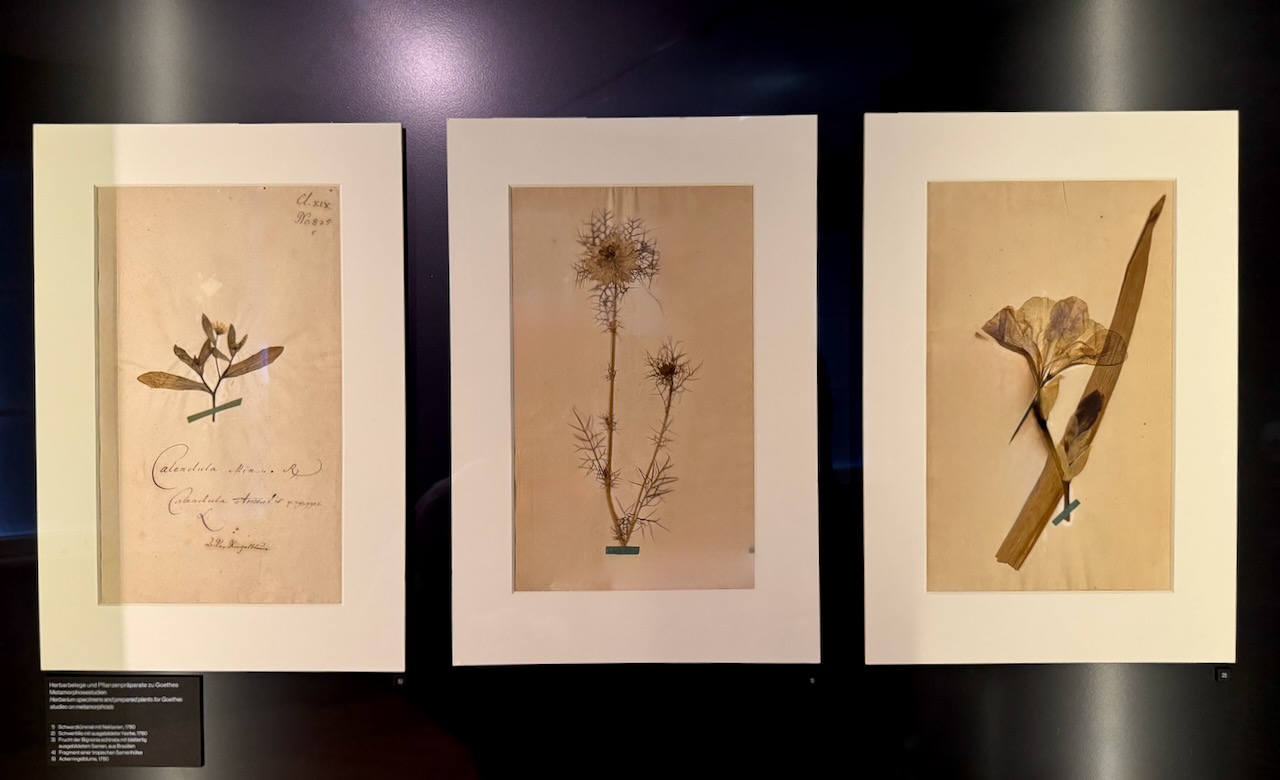
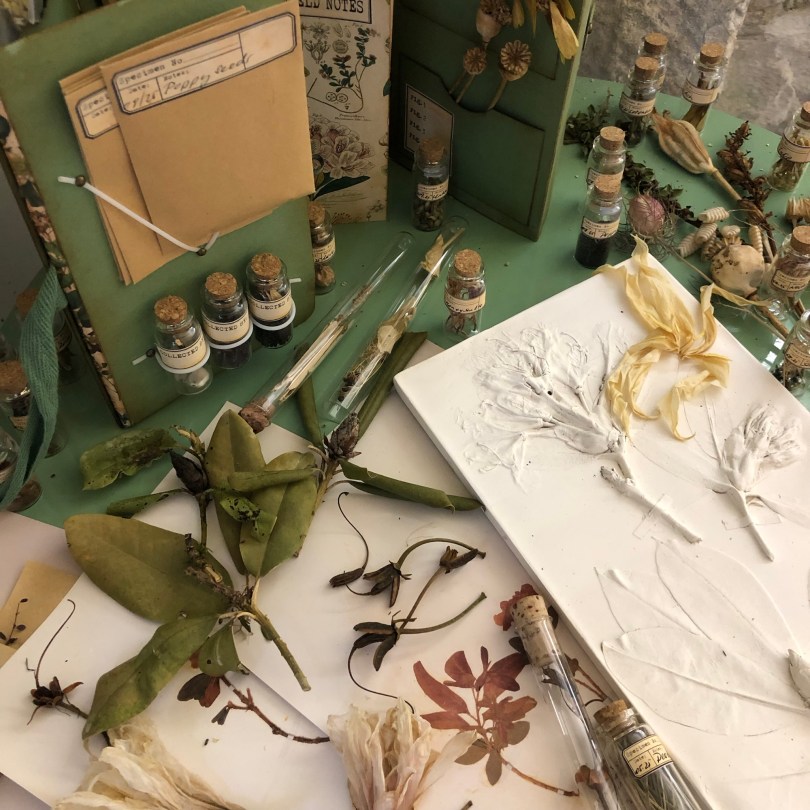
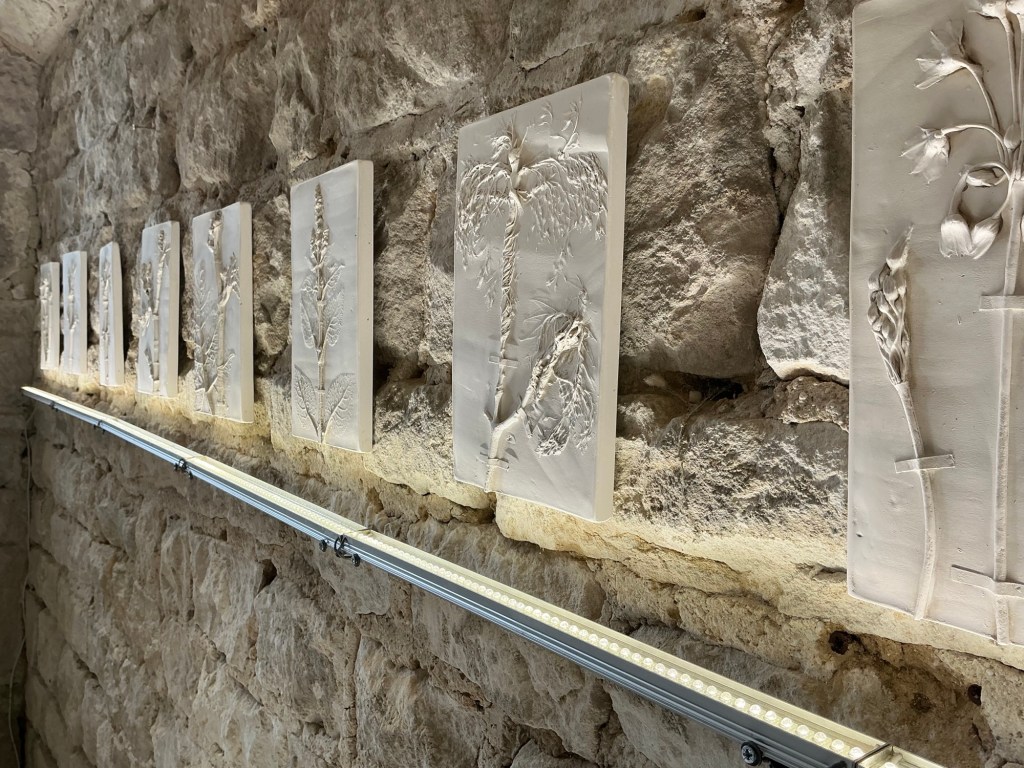
In the other, where those same workers drank tea, ghostly white plaster casts hang like three-dimensional botanical drawings reminiscent of the specimens Joan collected and sent to Kew Gardens.

‘138 days’

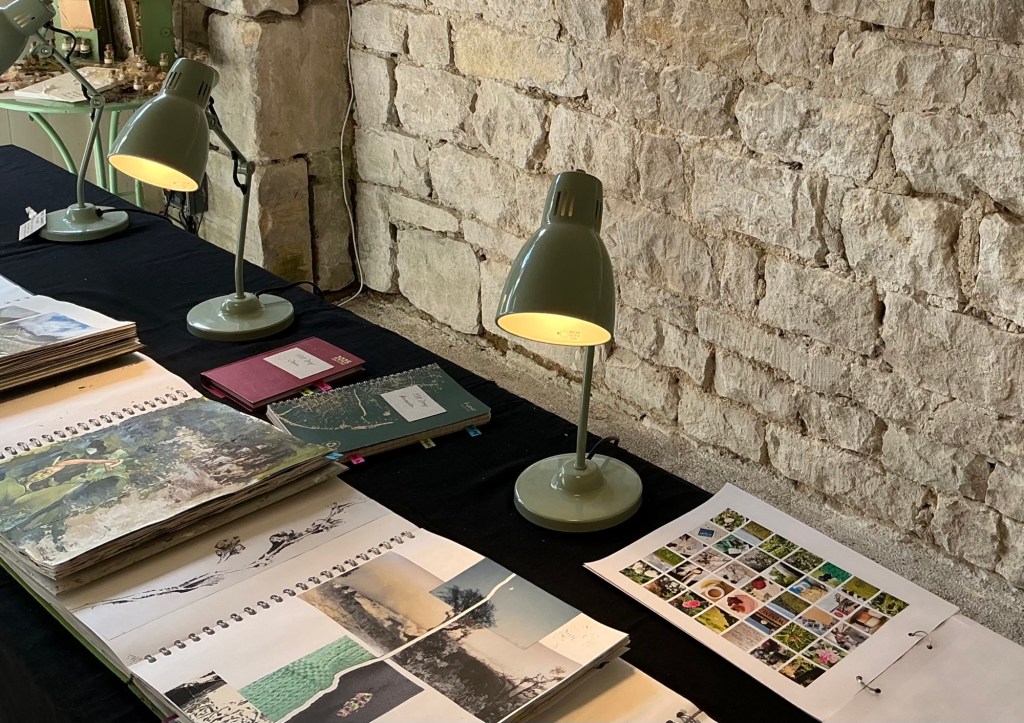
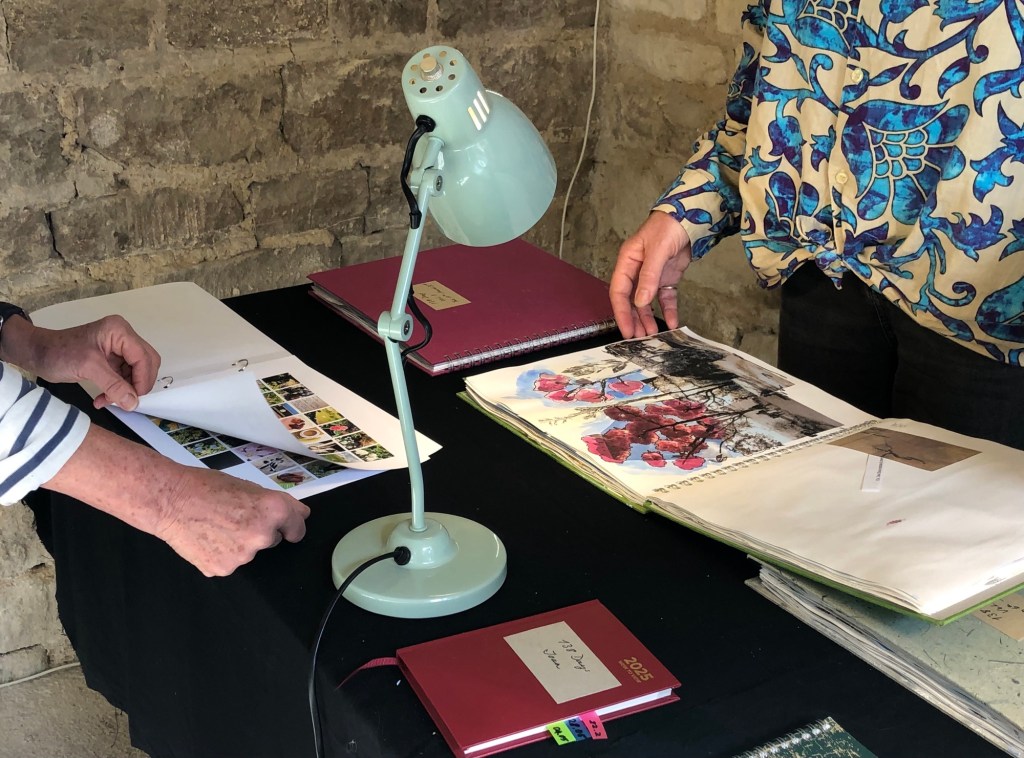
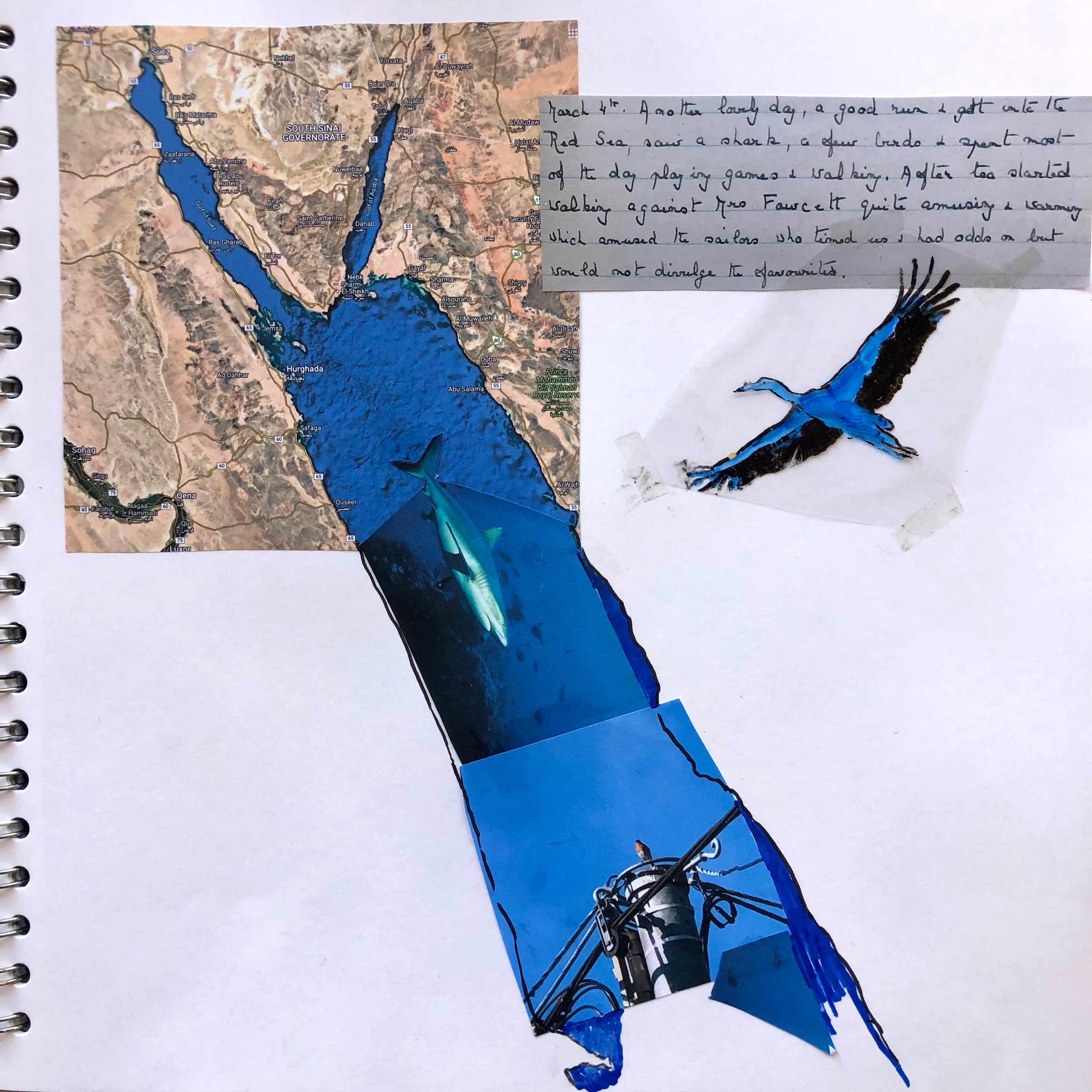
A series of square sketchbooks chart the 138 days I followed Joan’s 1939 diary entries. Starting on 17th February when I stepped into her shoes as she boarded a ship to India, I step out of them again on 4th July, the day she slipped off the edge of a Himalayan path to her death. One photograph, one sketchbook page, each day a quiet re-embodiment across time. Not a recreation of her journey, but a chance to listen more deeply to the changing tone of her voice in the final months of her life.

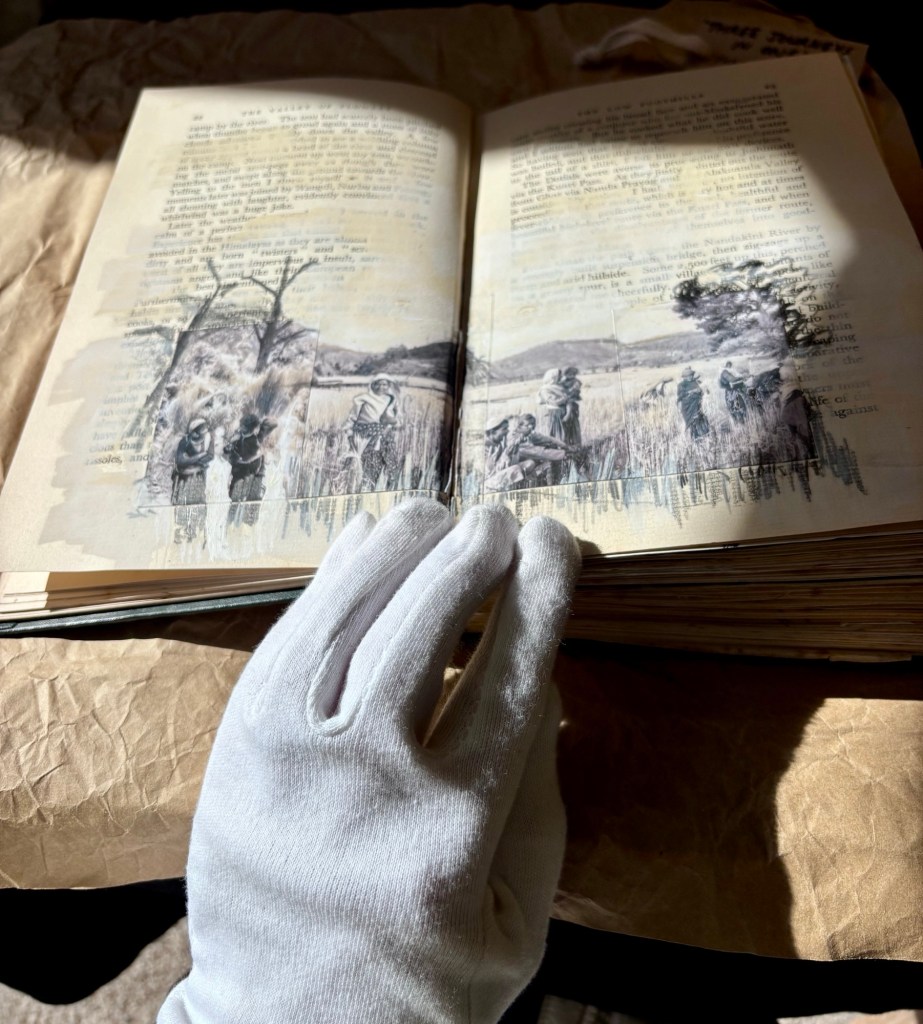
At the heart of the exhibition is its smallest piece: a re-working of a first edition of Frank Smythe’s Valley of Flowers, the very book that inspired Joan’s expedition. Through collage, drawings and pressed flowers, it now tells the stories of three visitors to the valley rather than just one: his, hers and mine. Wrapped in brown paper and tied with string like an archival package, the book invites visitors to wear white gloves to turn its delicate pages, not because it is precious in a monetary sense, but out of respect, Unlike most artworks, these ones are meant to be handled and engaged with.
‘Three journeys in one’

There is nothing for sale. No press campaign. No sponsorship. Just a quiet space, tucked away in a garden, found by invitation or chance. A strange but deliberate choice, and to me, a more authentic reflection of the humbleness of where Joan’s life ended than any traditional gallery could offer.

What Joan lost in material possessions, she gained in purpose and joy. Her life distilled into what nine porters could carry. She found a sense of completeness long before she had completed her journey.

That’s what I hope to convey in the improvised, immersive pieces shown in the warm belly of my limestone vaults. People forgive imperfection and lack of polish as they connect with Joan’s story through their hands, senses and bodies.

Just as artists learn to see not just form but negative space – the shapes between things – so Joan’s outwardly abundant life transformed into an inner world: slower, quieter, less visible, but not lesser in any way.

Maybe this is a natural outcome of ageing… the gentle decluttering of ambition and a reshuffling of values. Or maybe Joan’s story is a simple reminder that richness cannot always be seen and meaning doesn’t always require an audience.

The symmetry in our shrinking trajectories is just an observation.

But it feels strangely right.

IN PROCESS…

Sunday 19th October, 11am-5pm and by appointment until 1st November.

The Vaults, 114 Bisley Road, Stroud


From screens to Spring…

Spring is Nature’s childhood. It’s frequently associated with youth, new beginnings and innocence. Yet while blossoms skip through our outdoor landscapes, our screens highlight with renewed urgency the premature loss of innocence of our younger generations with devastating consequences to their mental health, education, relationships and identity.

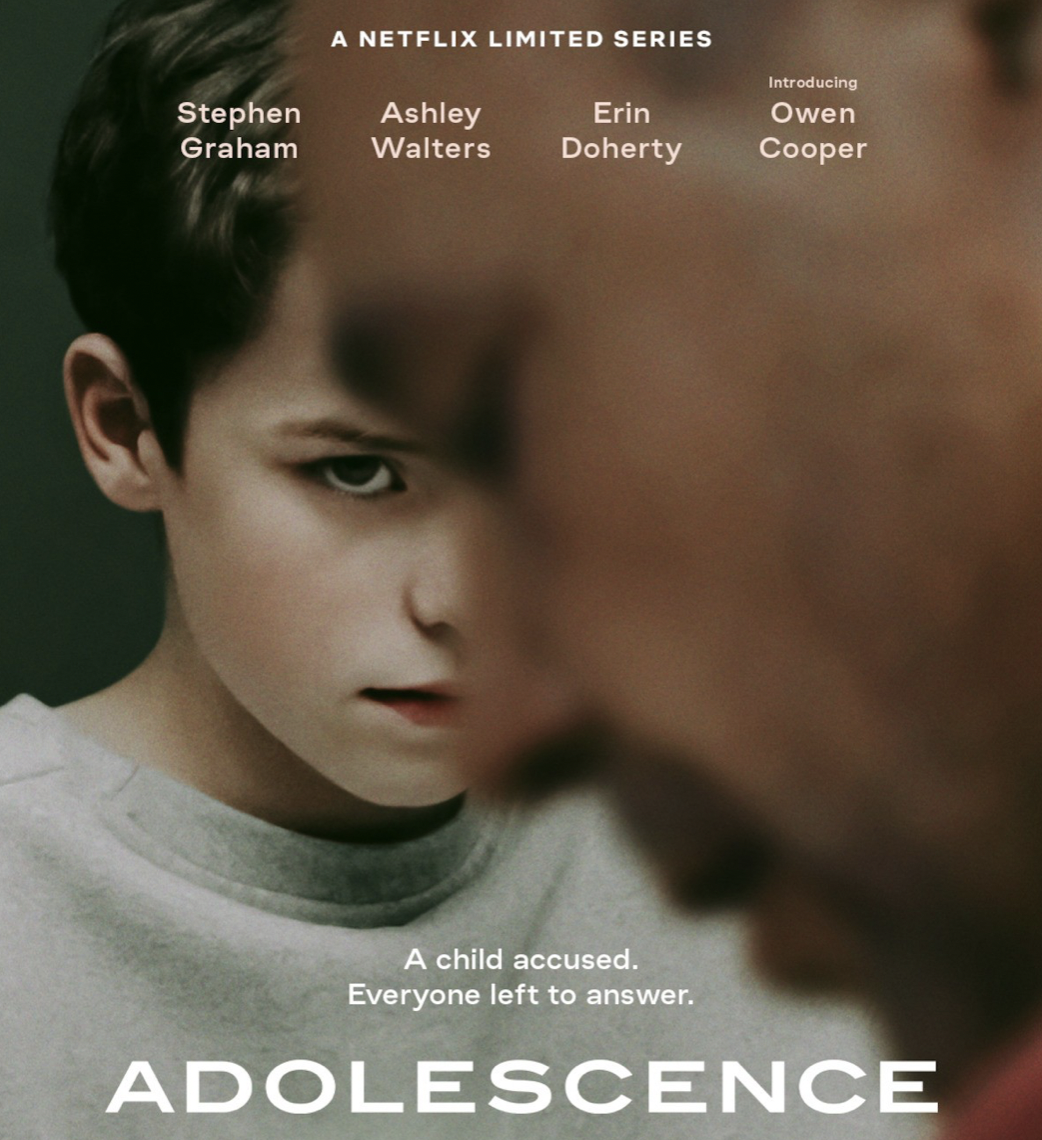
With that in mind, I was going to write about the new Netflix series, Adolescence, that has provoked widespread debate and concern about toxic masculinity, the ‘manosphere’ and sexist ‘manfluencers’ like Andrew Tate. (If you haven’t seen it, I can only encourage you to do so). Online platforms and social media are abuzz with it. Even Radio 4’s Moral Maze dedicated its weekly slot to exploring the question: What’s wrong with men?

Plenty more such questions could be asked in relation to the various world leaders dominating our headlines – Trump, Putin, Zelenskyy, Netanyahu, Starmer, Pope Francis – who between them are presenting a smorgasbord of appealing to repellent aspects of maleness.

I also considered writing about my recent visit to one of London’s dilapidated prisons – organised by the wonderful charity Prison Reading Group – to deliver a session on my book to a group of male prisoners who had read it. About the lingering impressions I’m left with, both of the shabby, four-storey wing that looked, smelt and sounded like your worst imagining of incarceration, and of what happened in the tiny room embedded in it that offered space for our inspired conversation. As always, I was touched by the men’s deep grasp of the themes I address in In My Grandfather’s Shadow, their carefully prepared lists of insightful questions, their gratitude for the positive impact the book had made on their lives. As always, I felt intense frustration at a system of wasted opportunity, money, time and human potential. As always, the wounds left by the absence of fathers, positive male role models and the learned ability to deal with overwhelming emotions glared red.

Detail from a handmade thank-you card from Prisoner B

But in the end, I couldn’t face writing about any of these huge and complex topics, even though they occupy my thoughts.

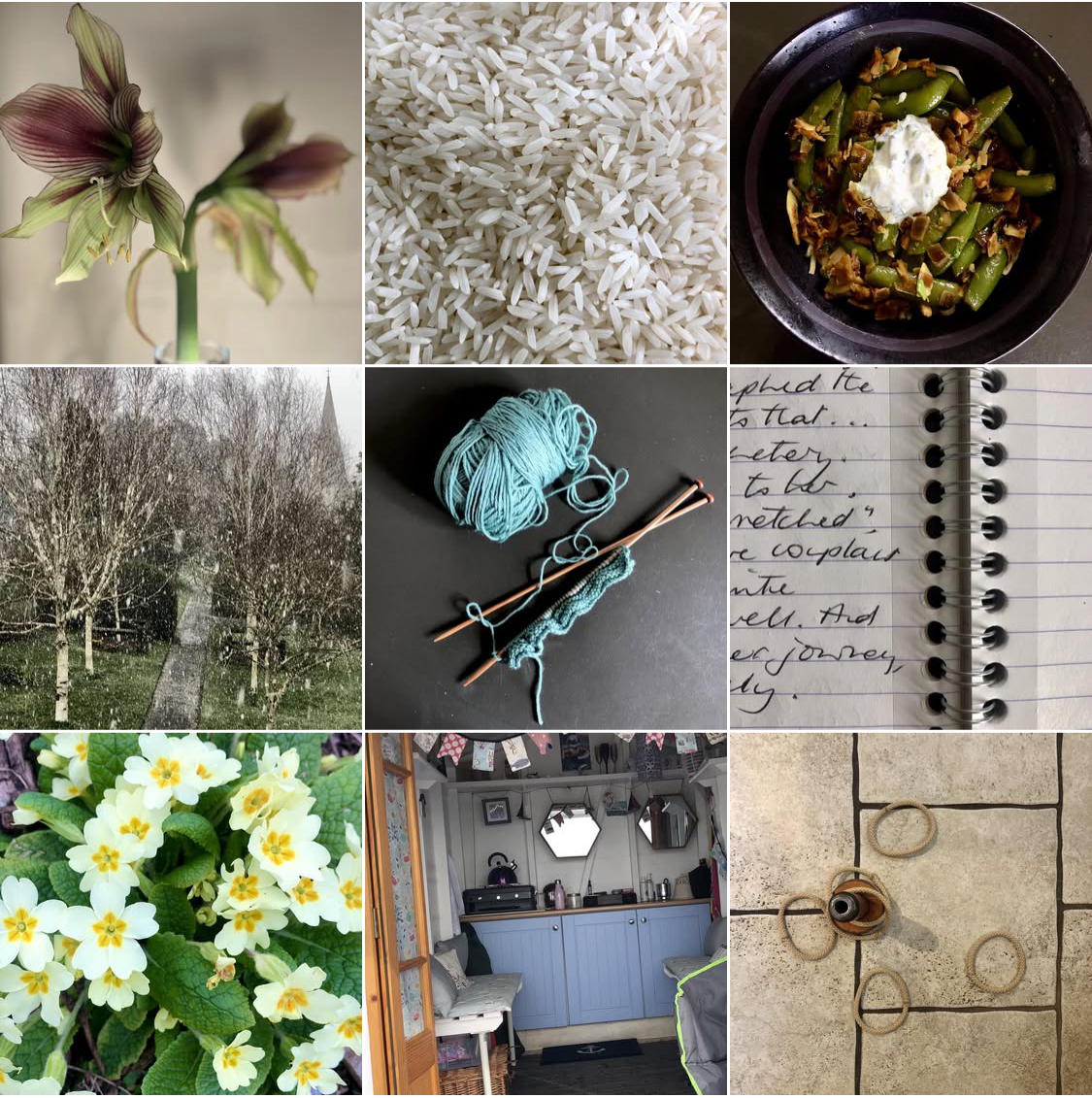
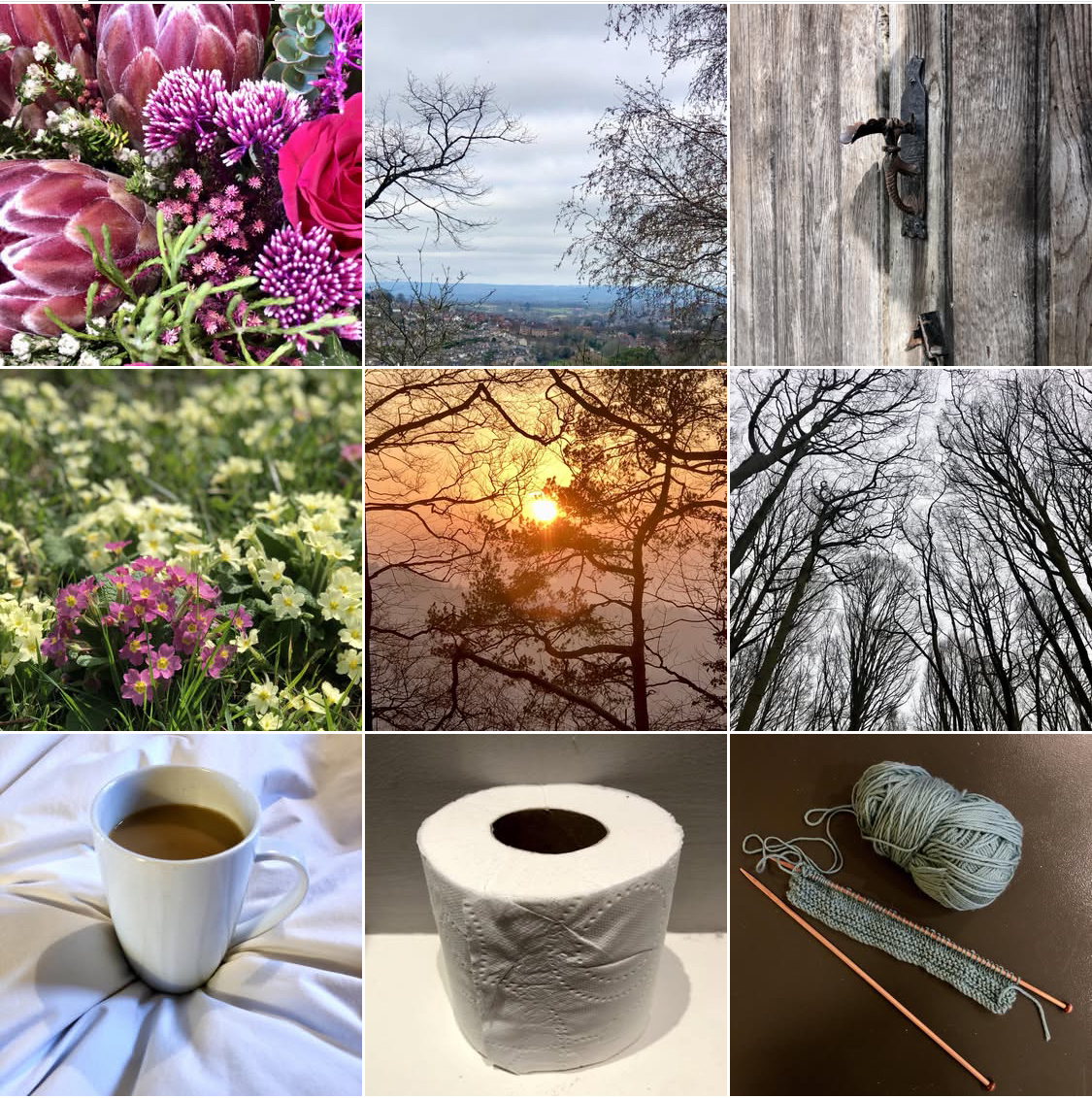
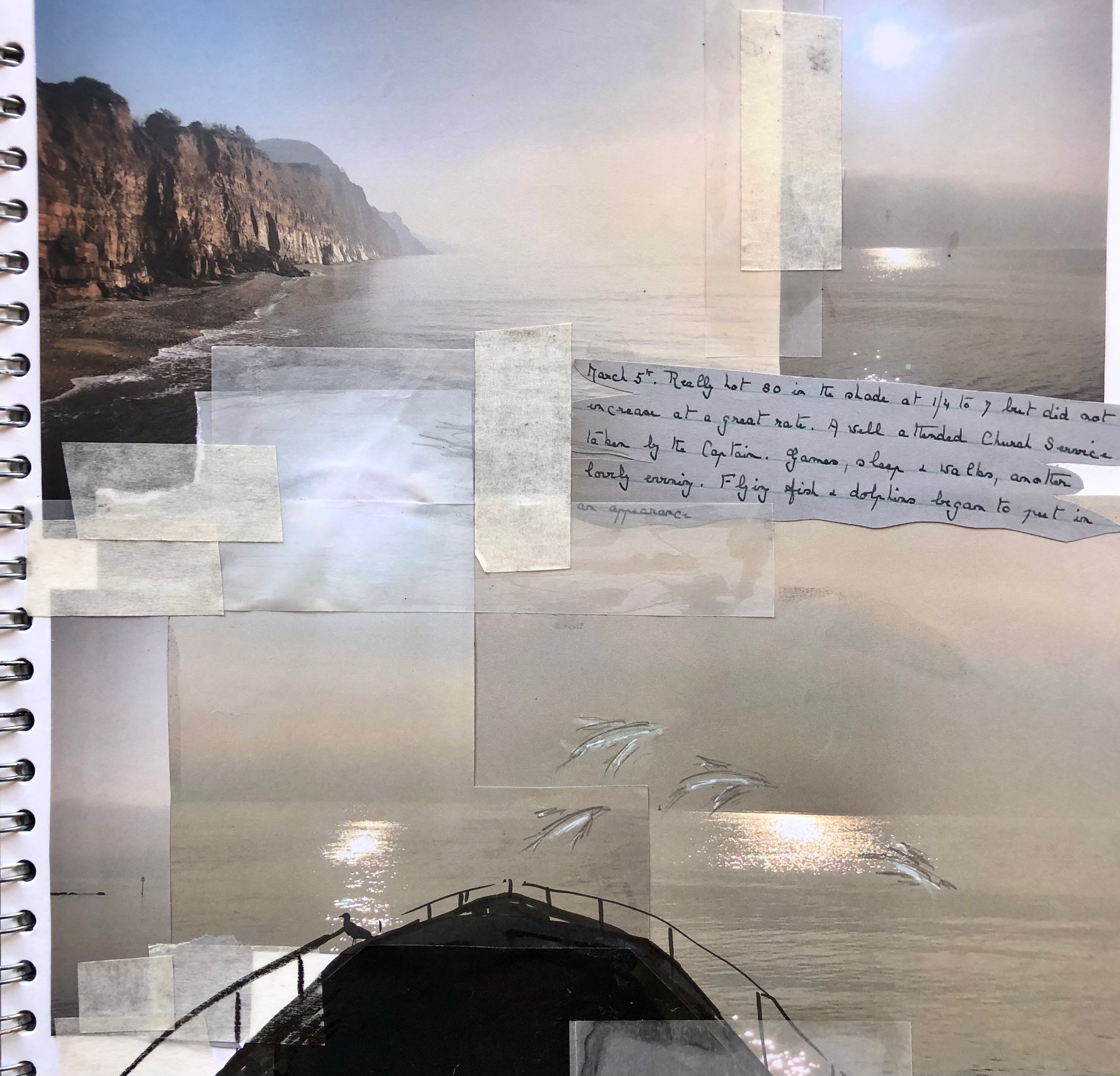
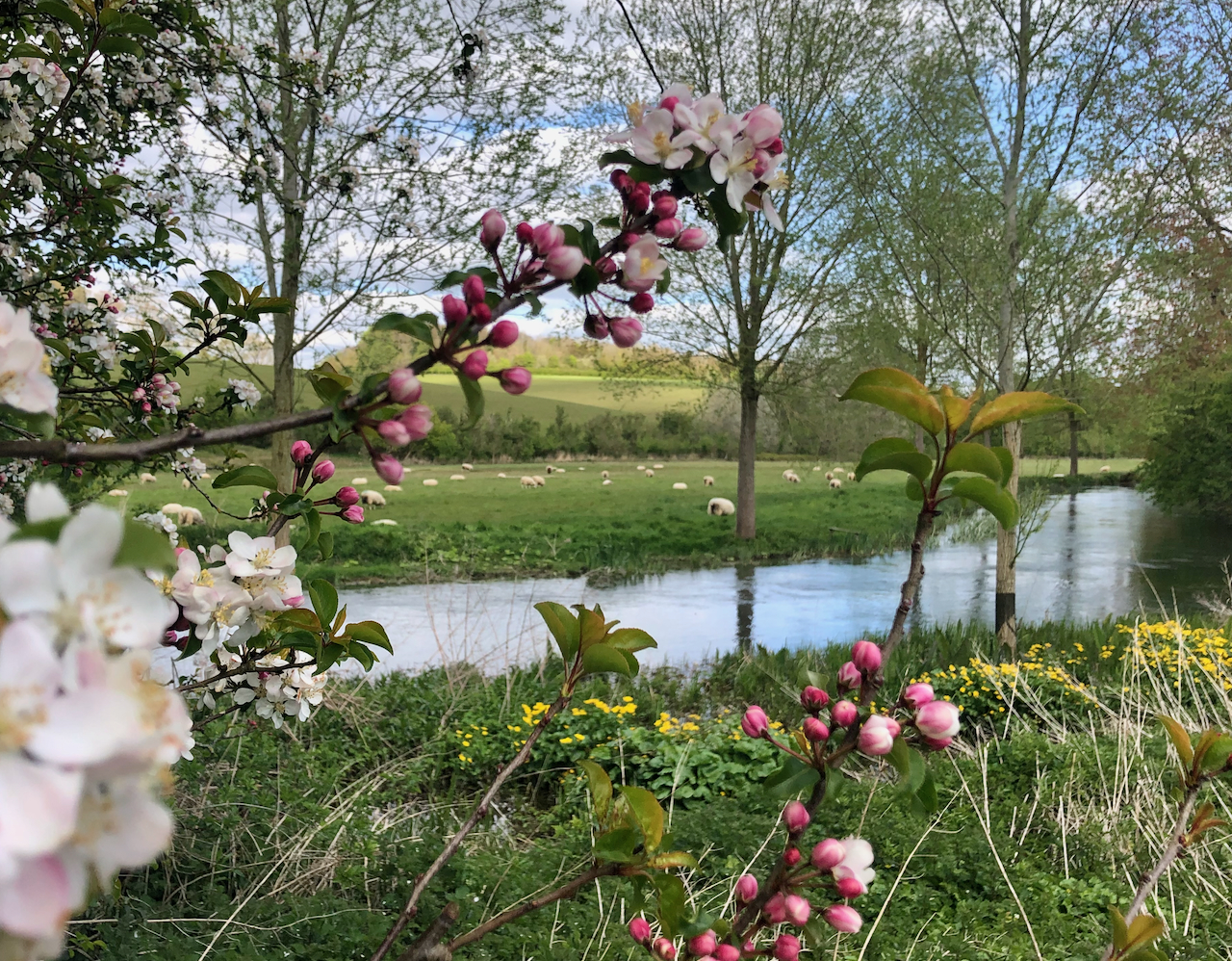
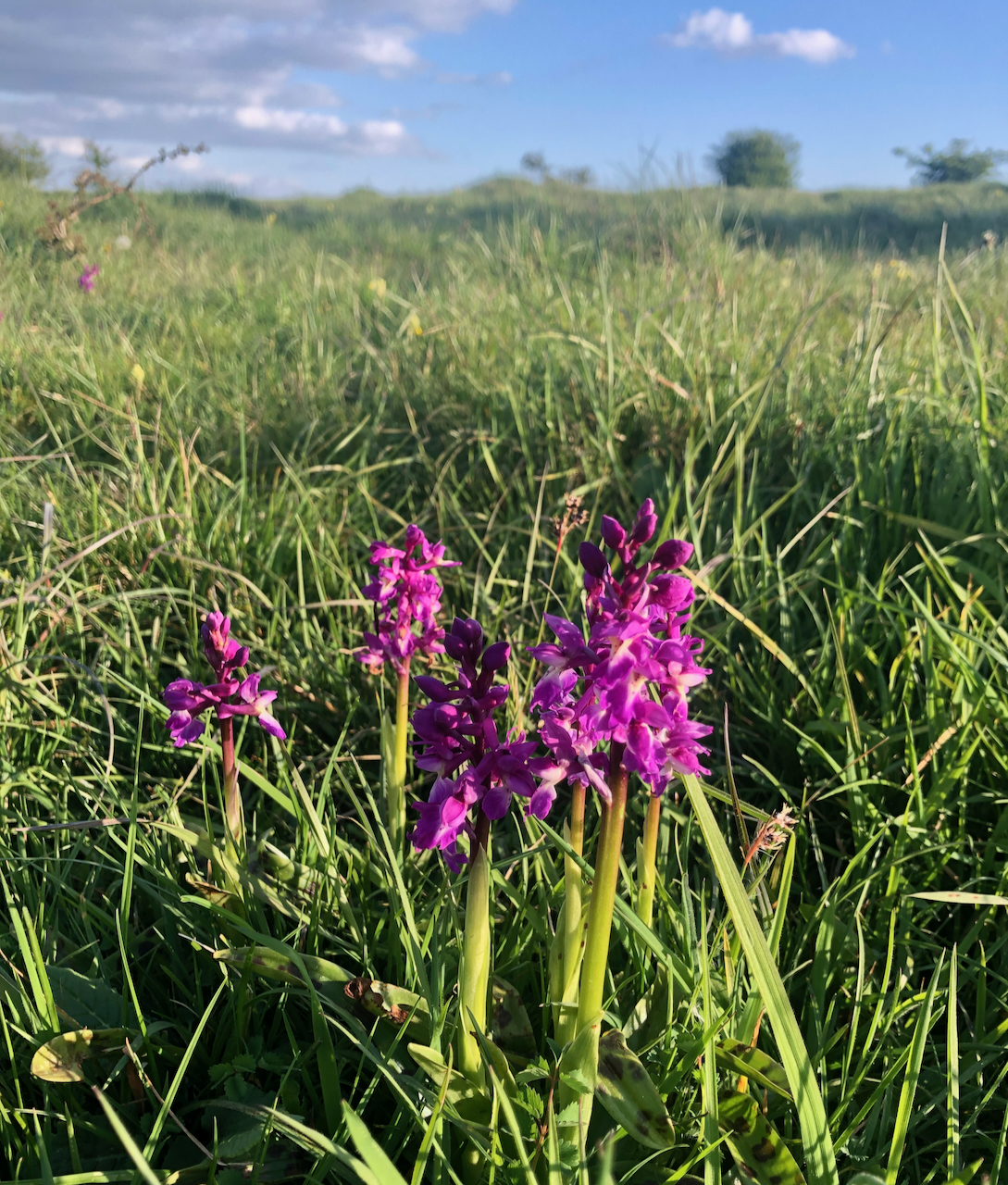
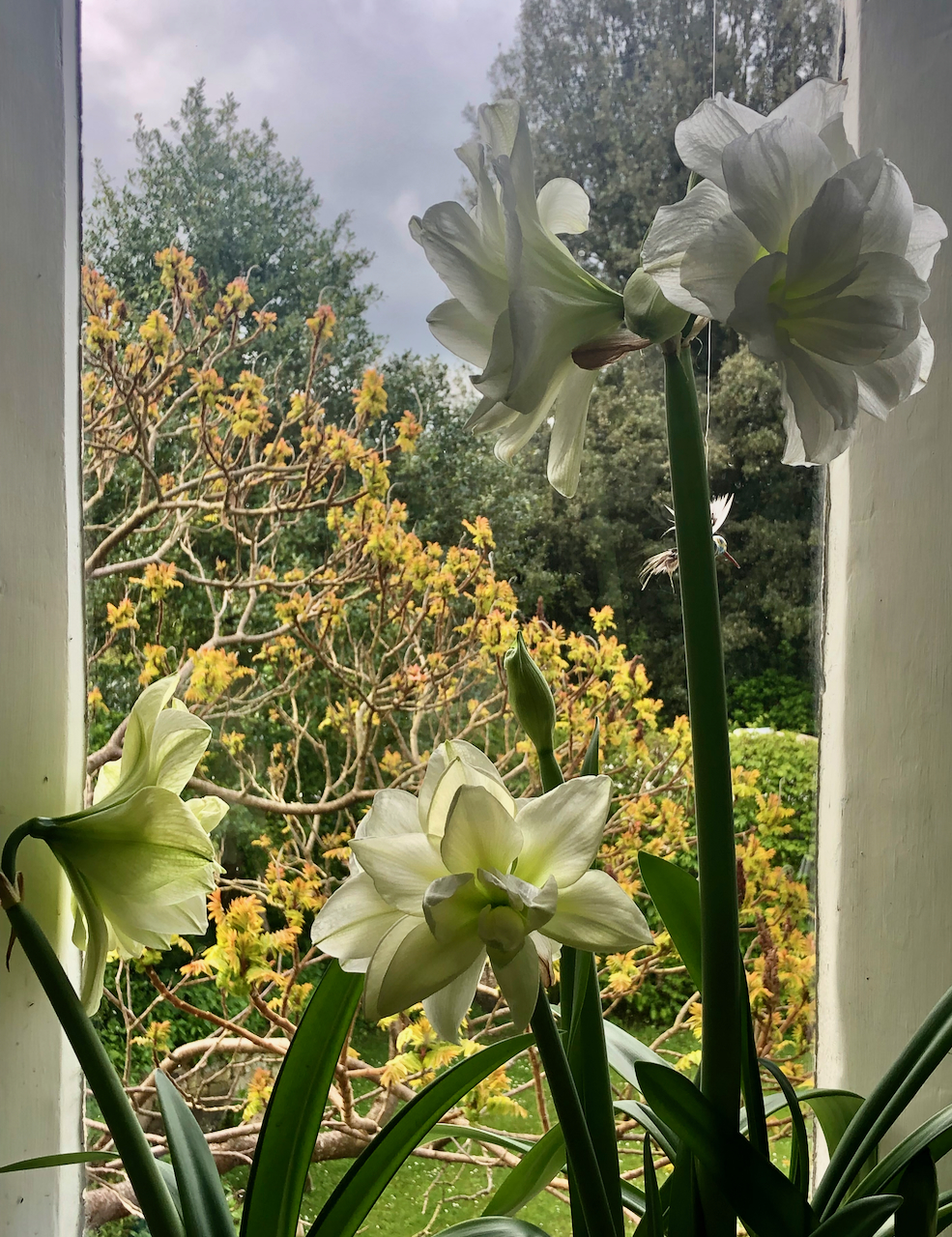
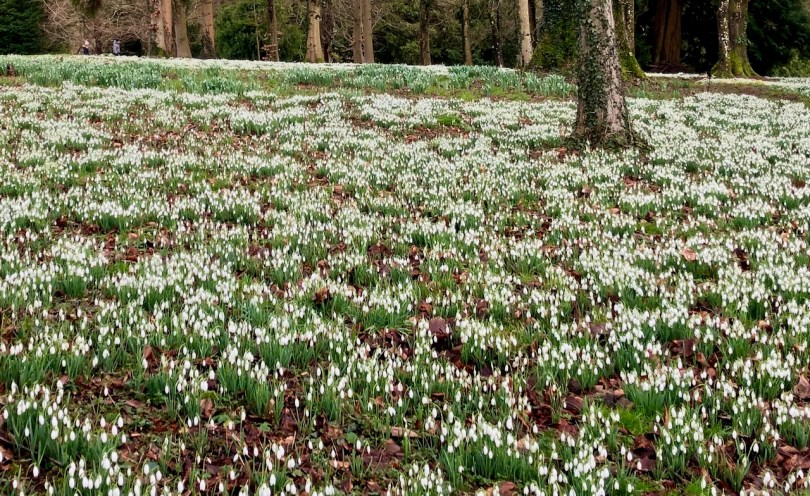
Instead, I find myself once more turning my focus to the more uplifting emergence of spring flowers both in nature and my garden. And to my inspiring great great aunt who travelled to India to gather floral specimens for Kew Gardens and in whose steps I am metaphorically walking for the next few months, following her diary as she sails from Birkenhead to Mumbai and then trains it up to the Himalayas. Each day I am reenacting a small action or activity she did in 1939, taking a slightly oblique photo that relates to it, posting it on Instagram (angela_findlay) and then creating an experimental collaged page in my sketch book. It’s my way into telling her story.

From 17th February to 13th March she was on board the T.S.S. Hector cruise ship playing quoits on deck or holed up in her cabin feeling seasick. (Not easy to make ‘art’ out of either!) There followed a few ‘outstanding’ days in and around Colombo visiting tea plantations and paddy fields, another sea voyage and several trains to the small hill station of Ranikhet in Uttarakhand. This will be her base for several months as she acclimatises, goes on practice treks and waits for the snows to melt further north giving her access to her ultimate destination, The Valley of Flowers. 

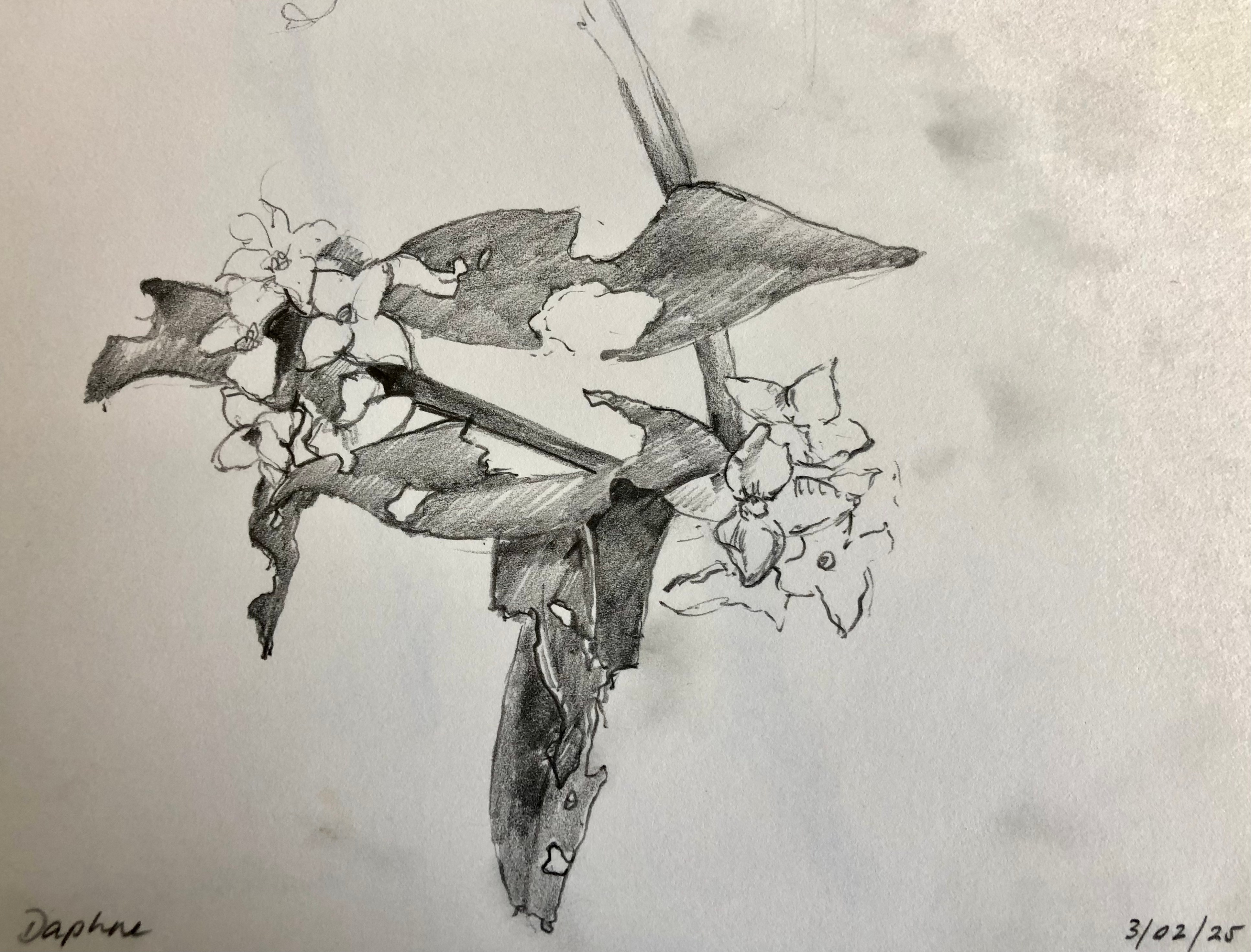
With deep regret I am coming to accept that I am not one of those exquisite botanical painters whose sketch books are veritable works of art. And I am sorely lacking in the plethora of technological and digital tools that are creating mind-blowing new universes in the art world. But I find solace in the fact that like Joan, I too am on a journey towards a (in my case, artistic) destination unknown, exploring and accompanying this intrepid female relative on her solo adventure. Ironically the worldly backdrop to her trip are the precarious months leading to the start of the Second World War. Mine is the run-up to the 80th Anniversary of its end. Or, if stupidity and egos escalate in the wrong direction, the beginning of the third…

War, the word alone snaps me back to present reality. I imagine we are all treading this fine line between engagement with the wider pain and travails of so many and the small (and big) joys and concerns that can be found within our homes and lives. How to care and act without losing sight of the beauty and wonder constantly available to us? How to engage with the immeasurable force of Nature’s creativity rather than human beings’ destructiveness? How to stay awake and feel, but not succumb to anger or blame?

It’s an on-going practice… a dance. And Spring feels like a perfect time to take to the floor.

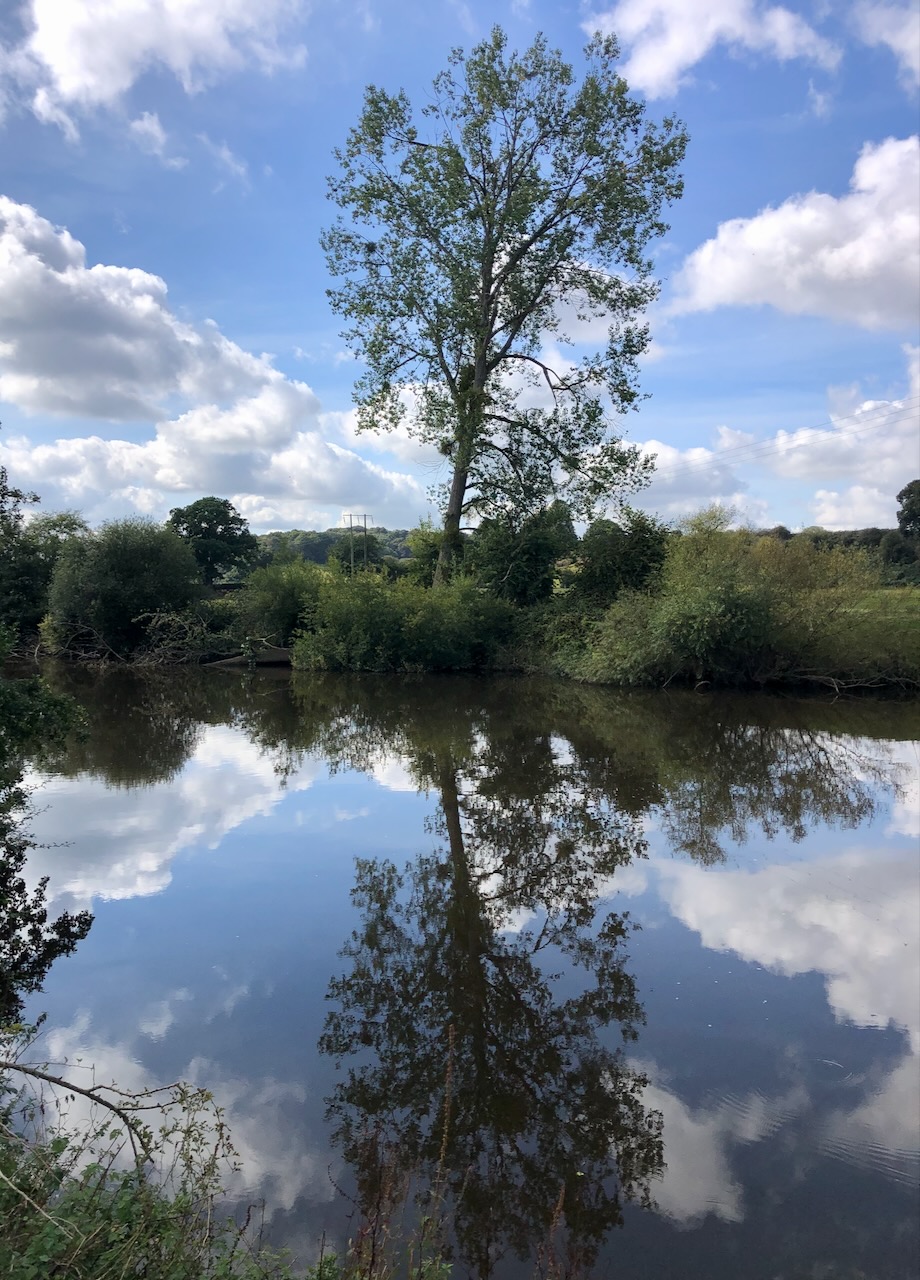
In the Flow: Ode to the River Severn

First Encounter with the River Severn

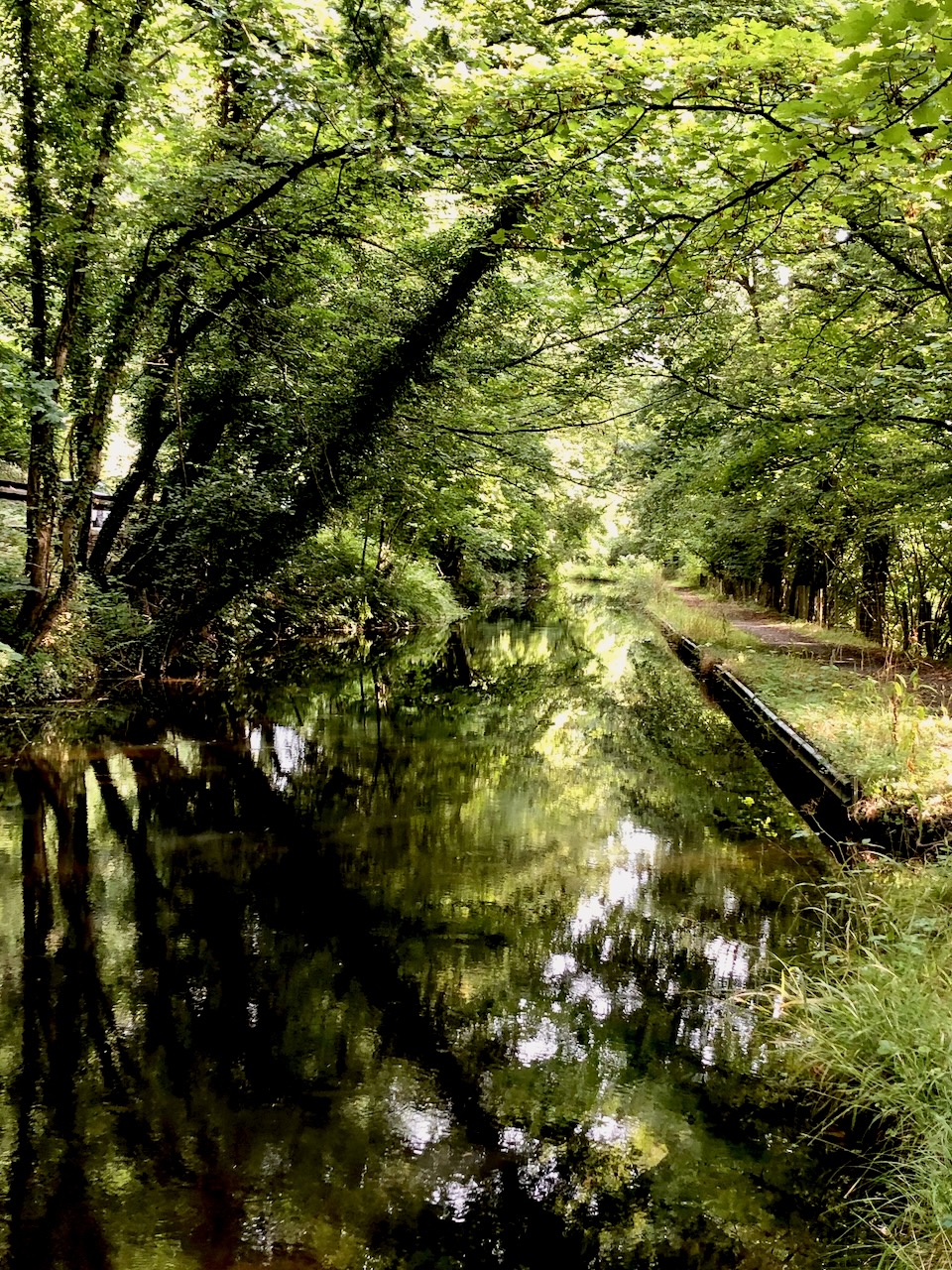
June 1999. You wouldn’t know it was there. Nothing suggests the proximity of Britain’s longest river as you amble down the canal towpath at Frampton-on-Severn. I have a hand-painted sign promising Cream Teas to thank for its discovery. The arrow lured passers-by through a hedge and into a wonderland of round tea tables bedecked with embroidered tablecloths and mis-matching crockery and arranged beneath the boughs of a huge copper beech. A tall man navigated trays of silver teapots and 3-tiered cake stands along narrow paths mown through the long grass. 

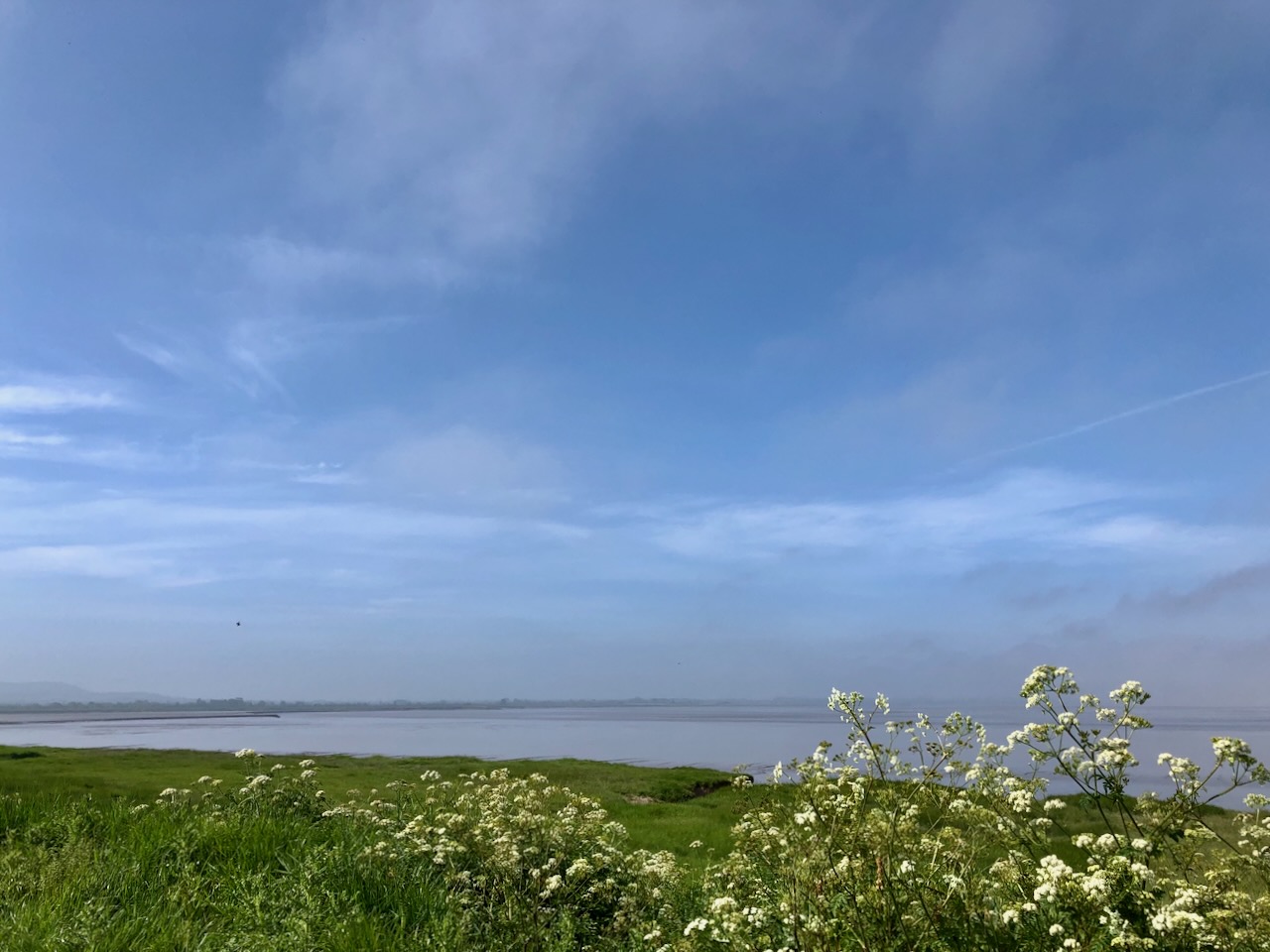
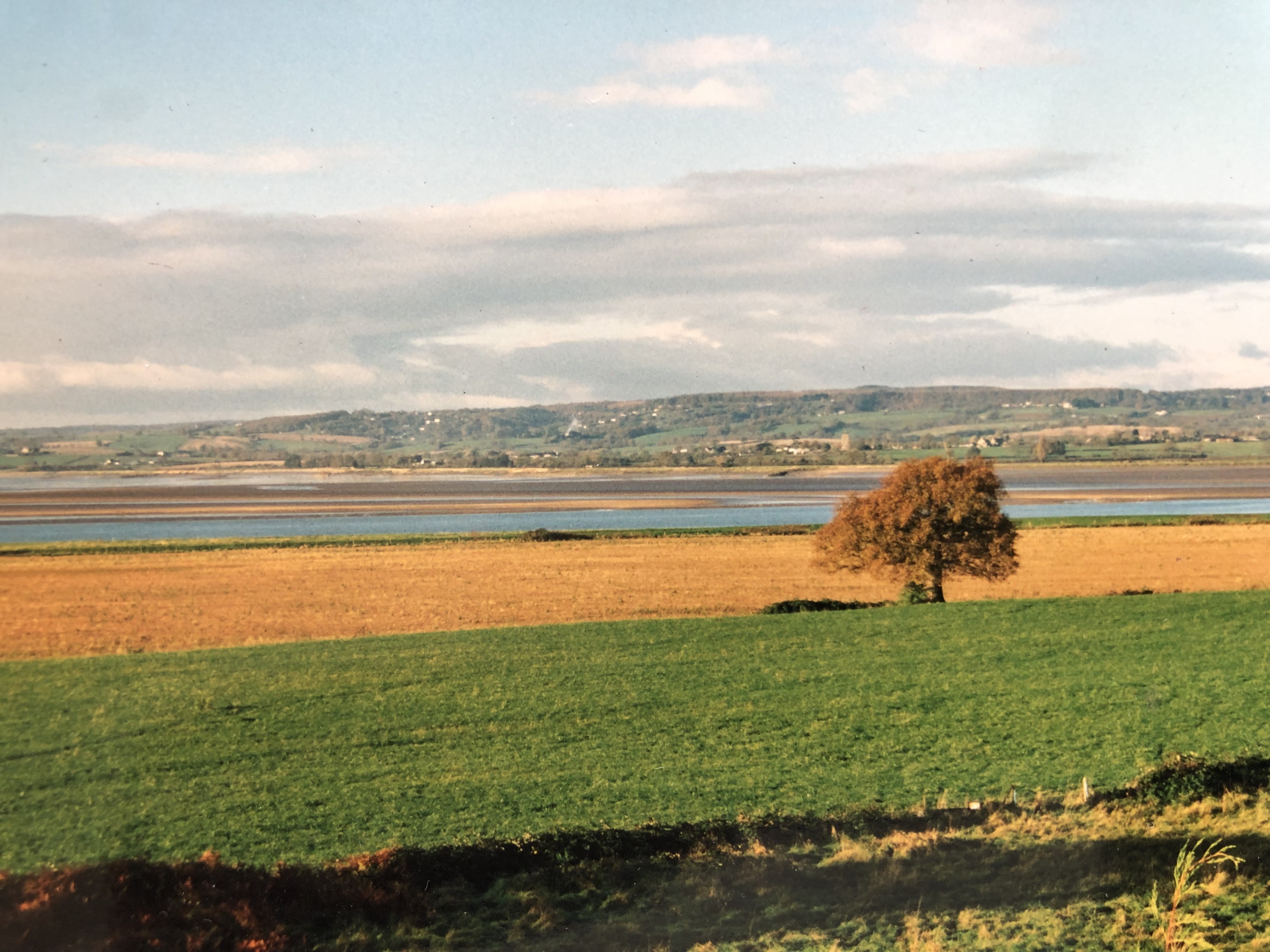
I had moved back to England after 10 years living abroad and was checking out the Stroud area as a possible new home. The top floor of the accompanying Lodge was up for rent, I soon learned… would I like to look at it? A sweeping staircase carried us up two stories and into an apartment of hexagonal rooms adorned with small fireplaces. Then, bending double, two miniature doors awkwardly birthed us onto a roof terrace and into the breath-taking view that would become my world. The River Severn stretched like a taut blue sheet tucked into a distant shore. Low tide mud sparkled. Silence was broken only by the soft chink of teacups on saucers.

Life on the River Severn

I would live in that apartment on the Severn for nearly three years. Every day I walked along the banks of the estuary, my breath aligning with the deep ebb and flow of the tides. 

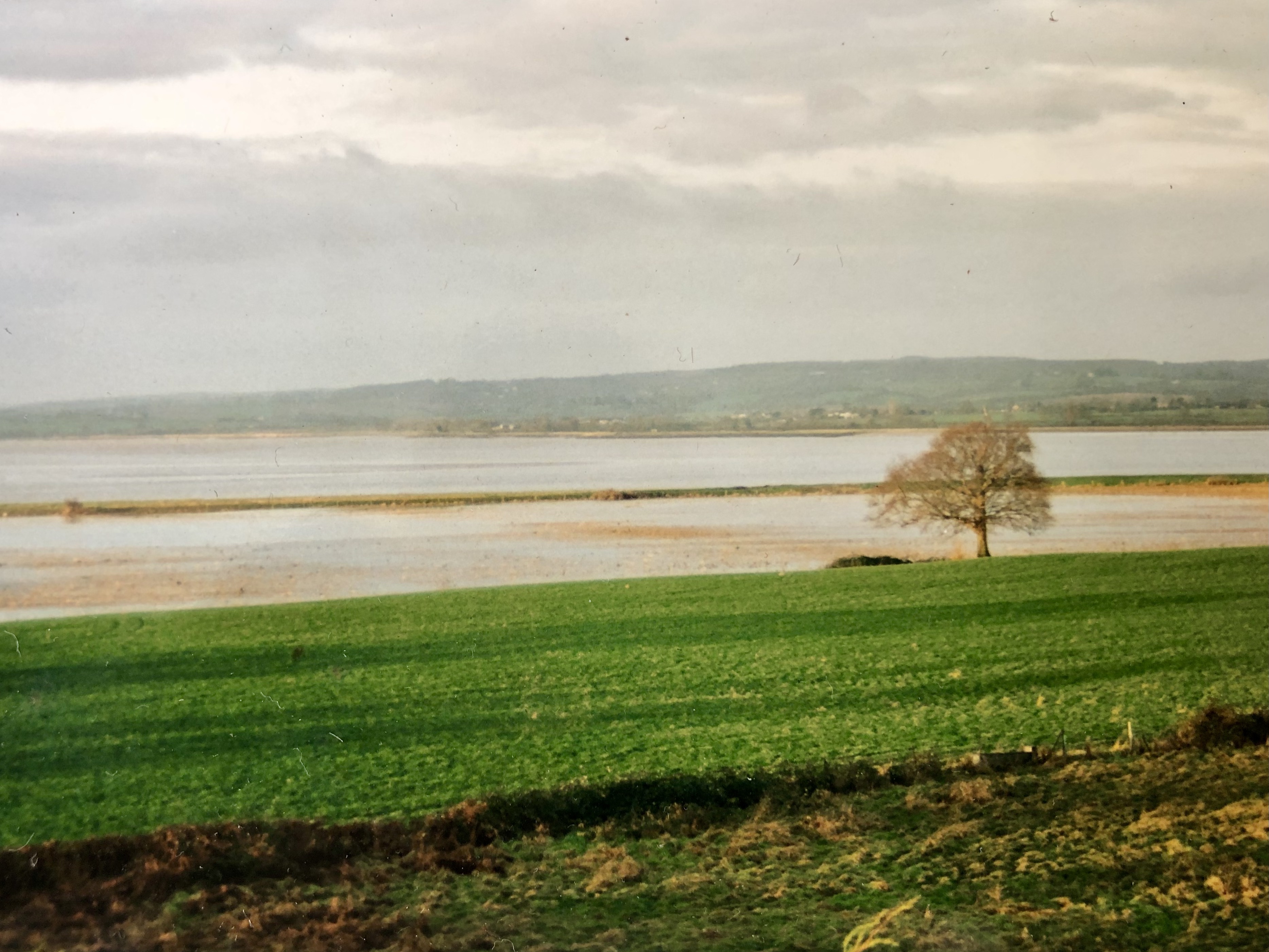
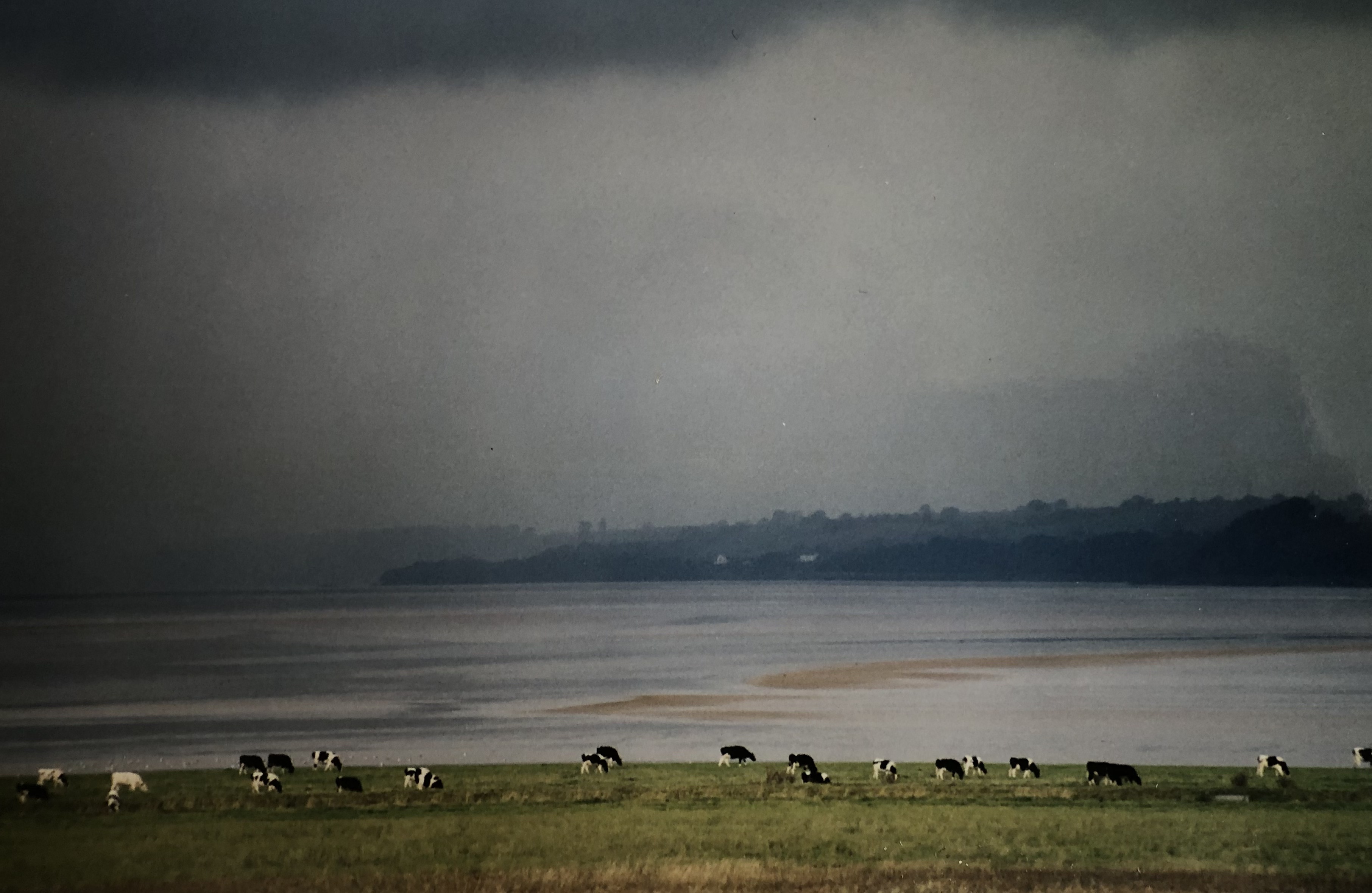
I witnessed the stoicism of a little oak tree holding its precarious own through the seasons, storms and floods; watched cows amble home at dusk accompanied by the swirling black clouds of starlings that condensed and evaporated in the gentle orange glow.

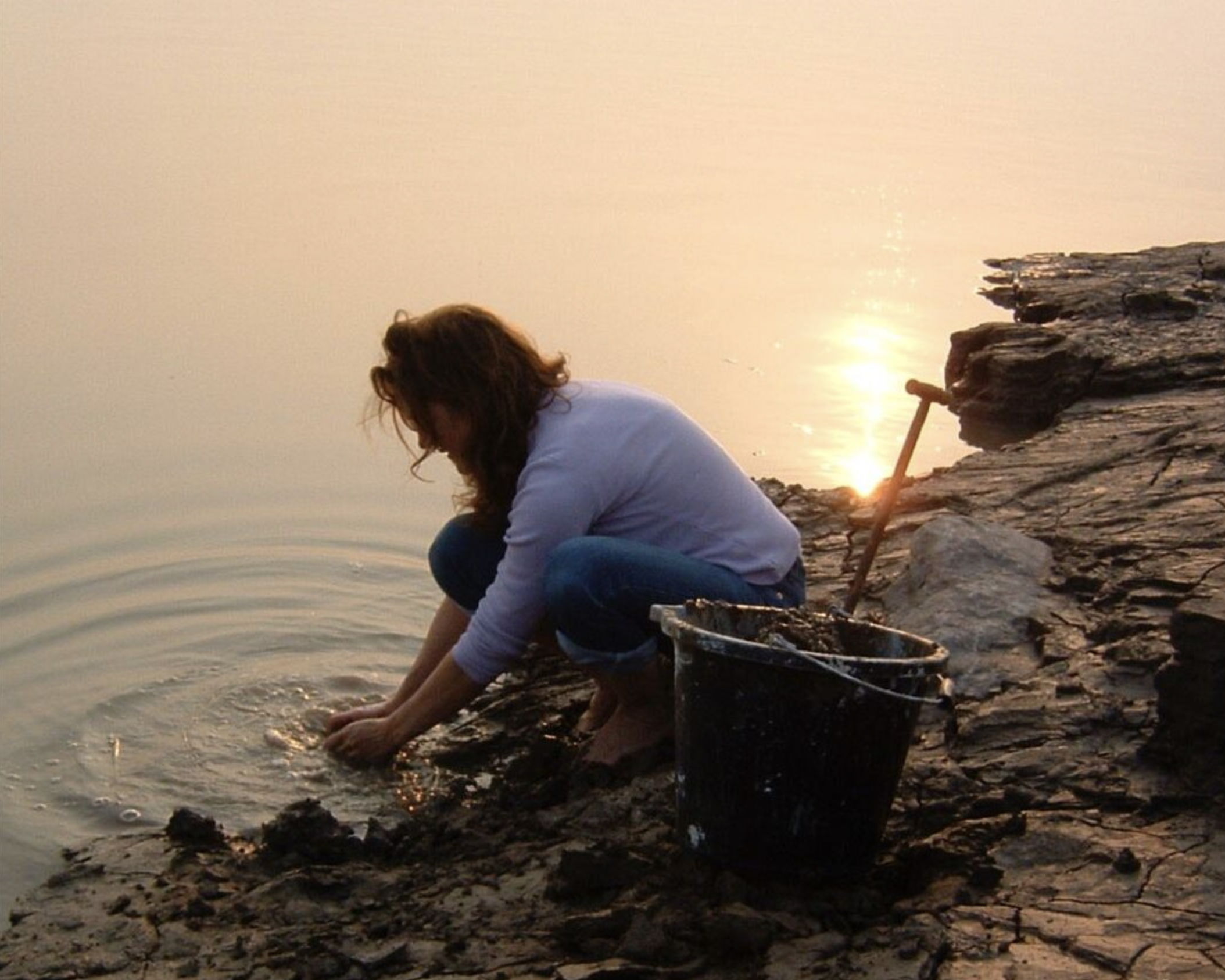
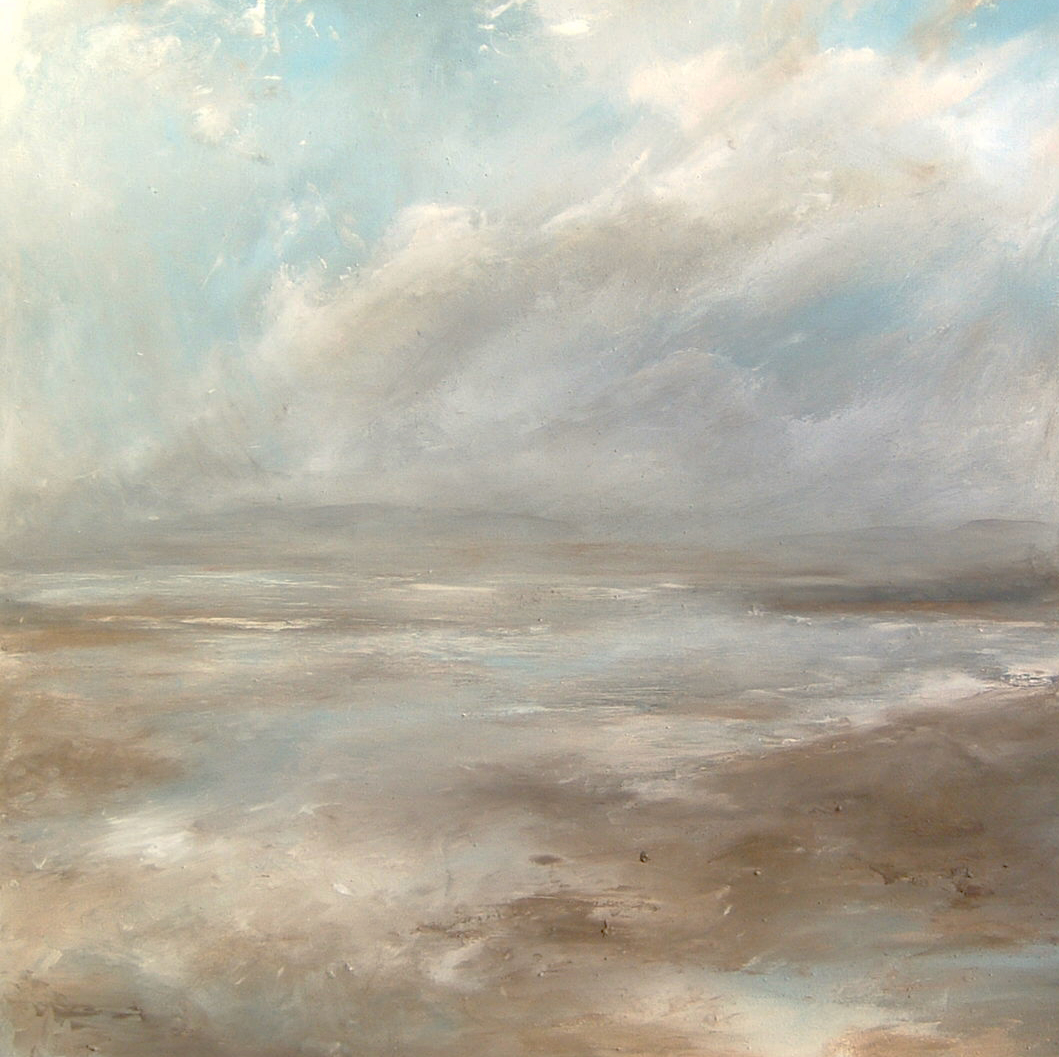
This was where I became a professional artist, scooping rich, melted-chocolate mud into buckets, mixing it with paint and dancing sky and weatherscapes onto large canvases with my hands. 

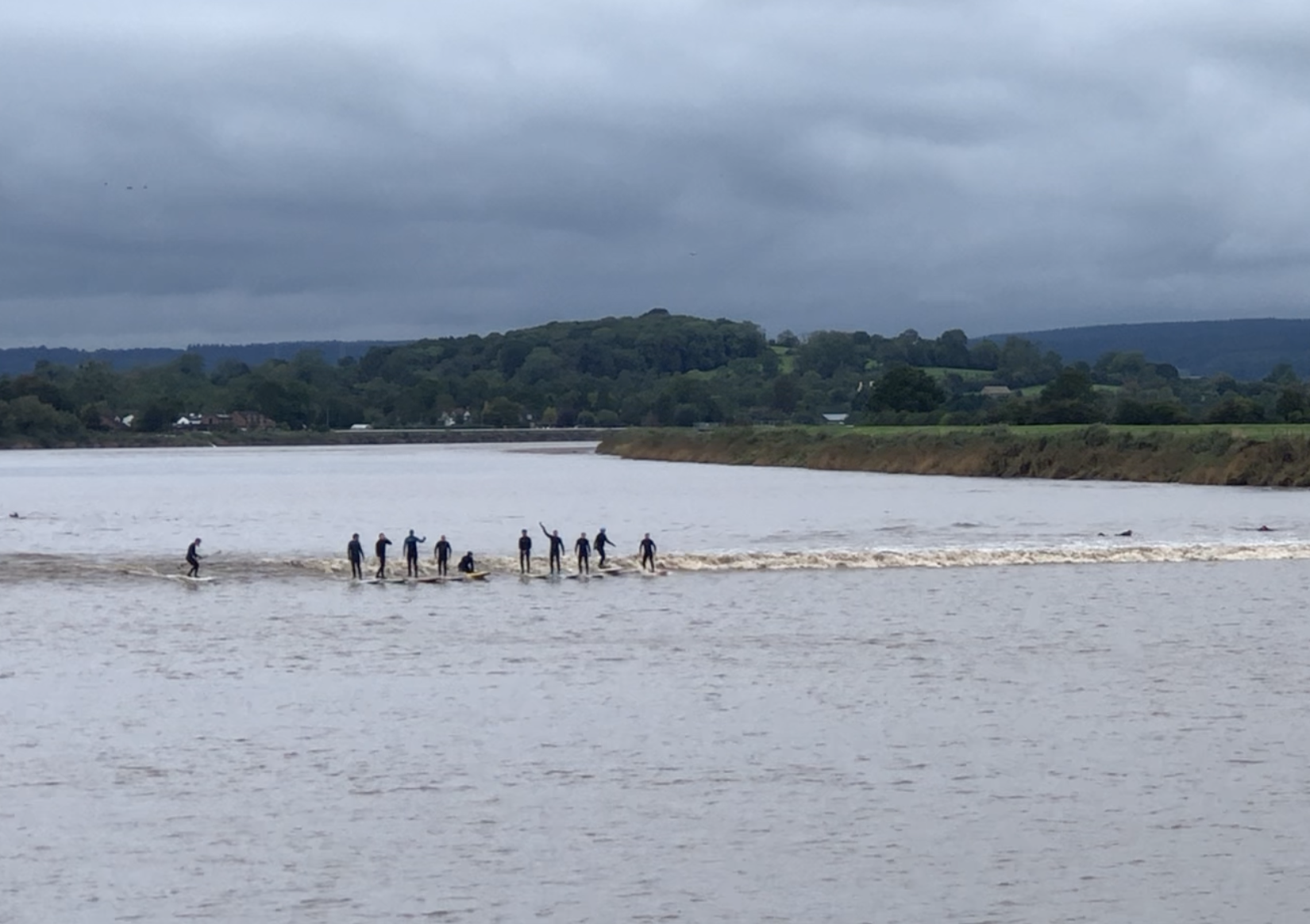
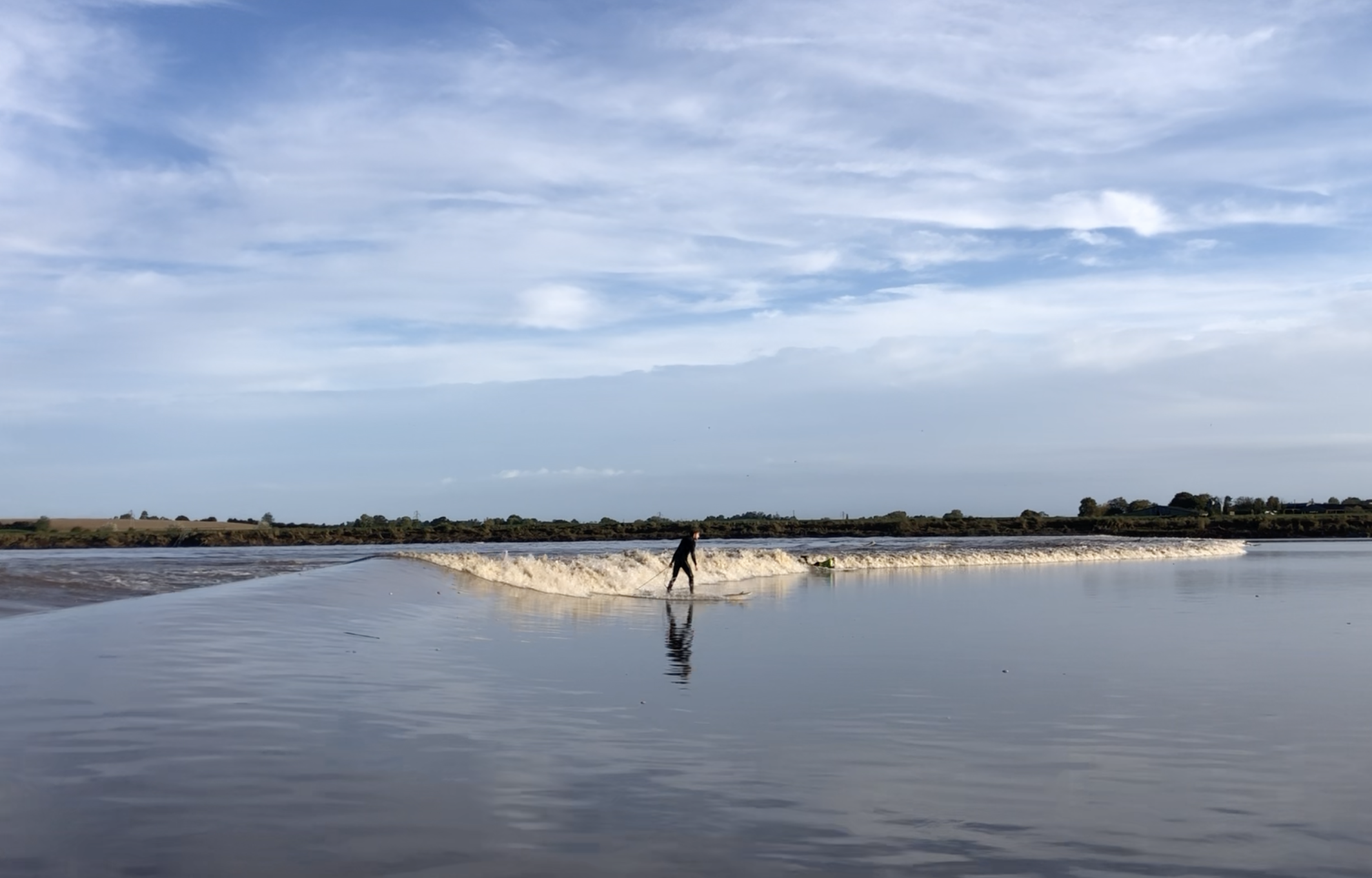
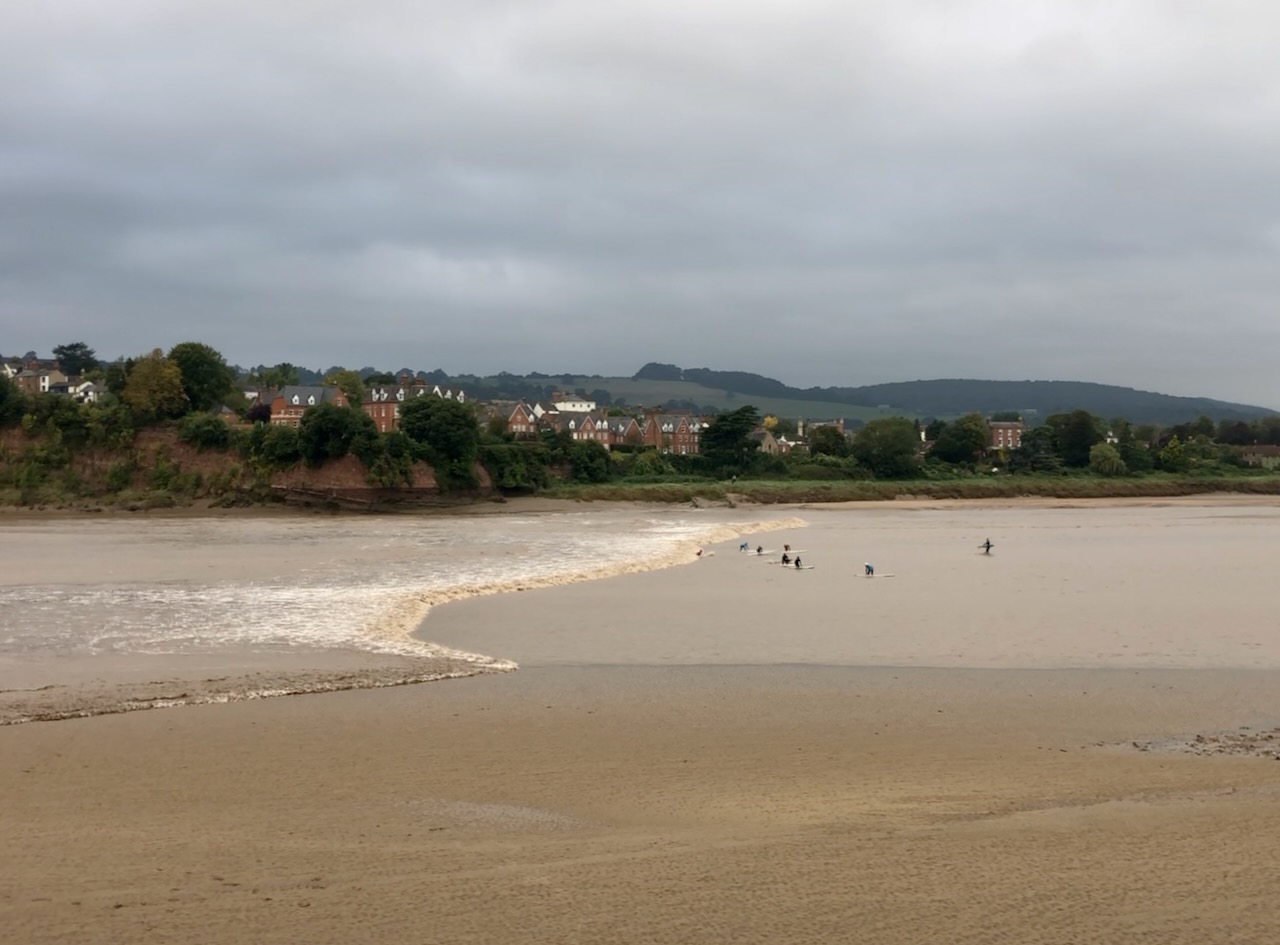
On many a chilly morning I stood on the Severn’s banks with mugs of coffee and expectant crowds waiting for the world’s second highest Bore to swash its way up the estuary and carry brave surfers upstream. Once, in the pitch of night, I crossed its swirling waters in a rickety old boat and returned in the frozen pinks of dawn. 

A Severn Bore

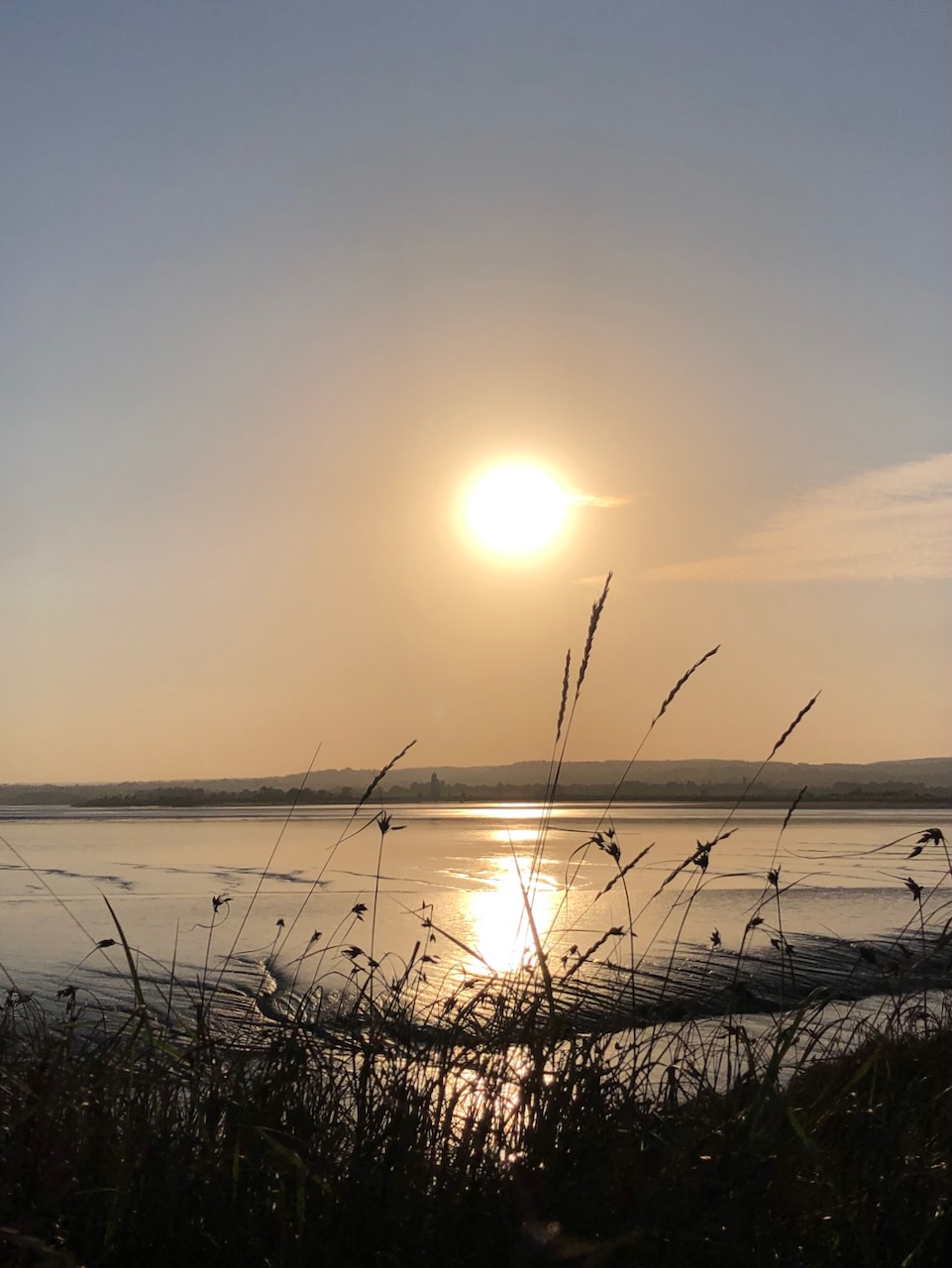
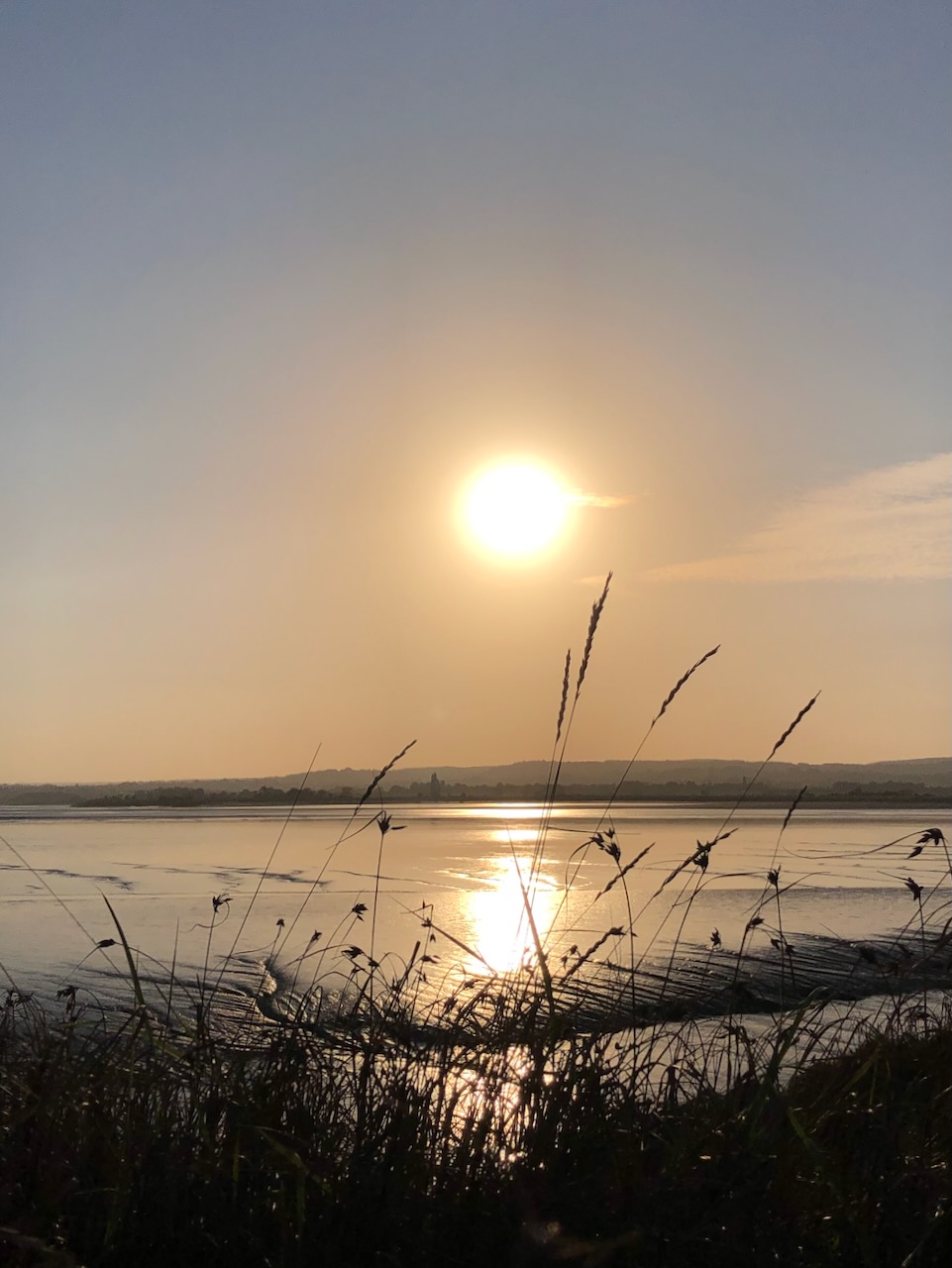
In later years, I would park my camper van on its shores, drink chilled glasses of wine in the sun’s last rays and sleep through rising moons and meteoric showers. 

I have a rich store of happy, muddy memories of the River Severn.

Walking the Severn Way from source to sea

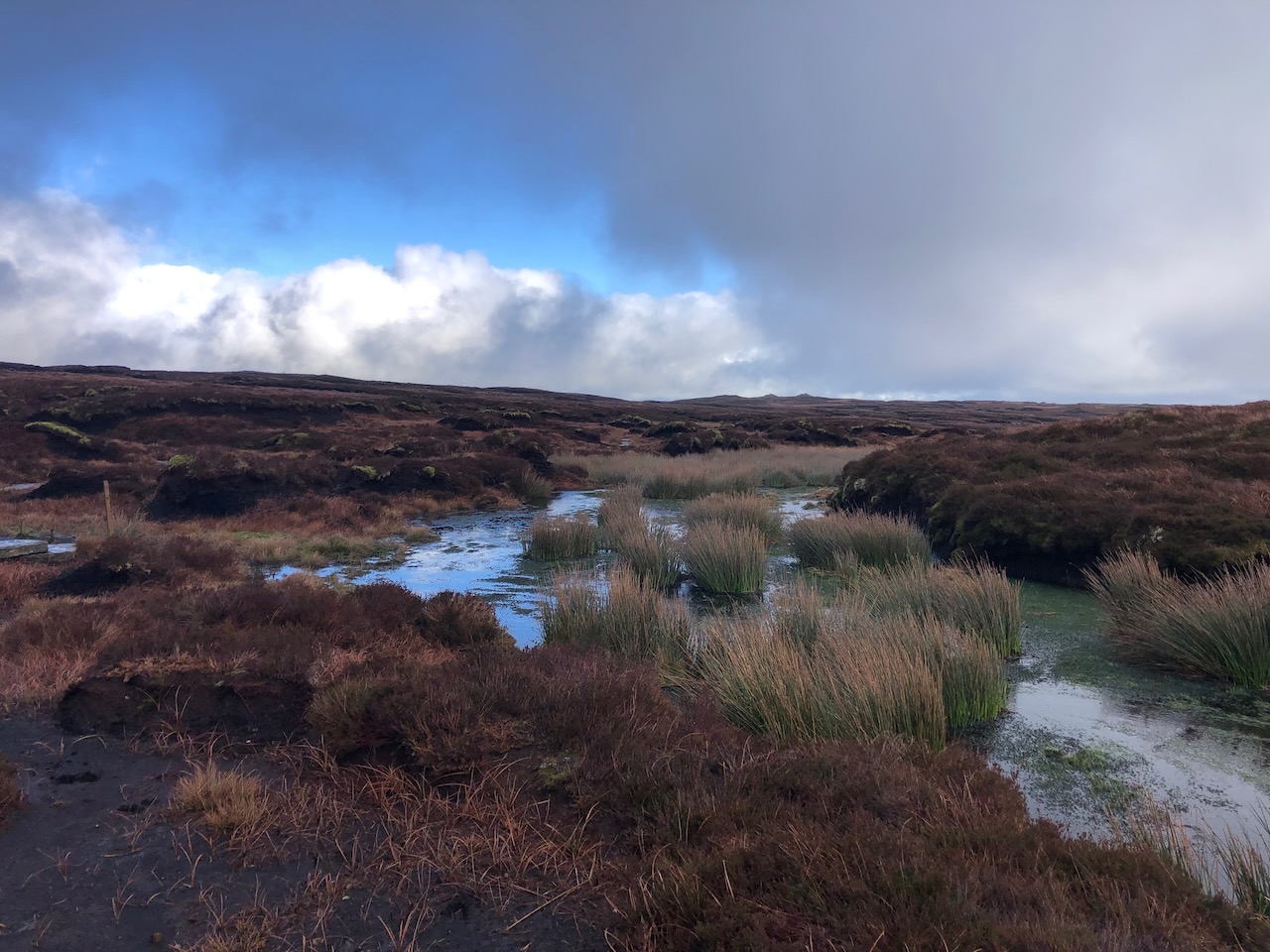
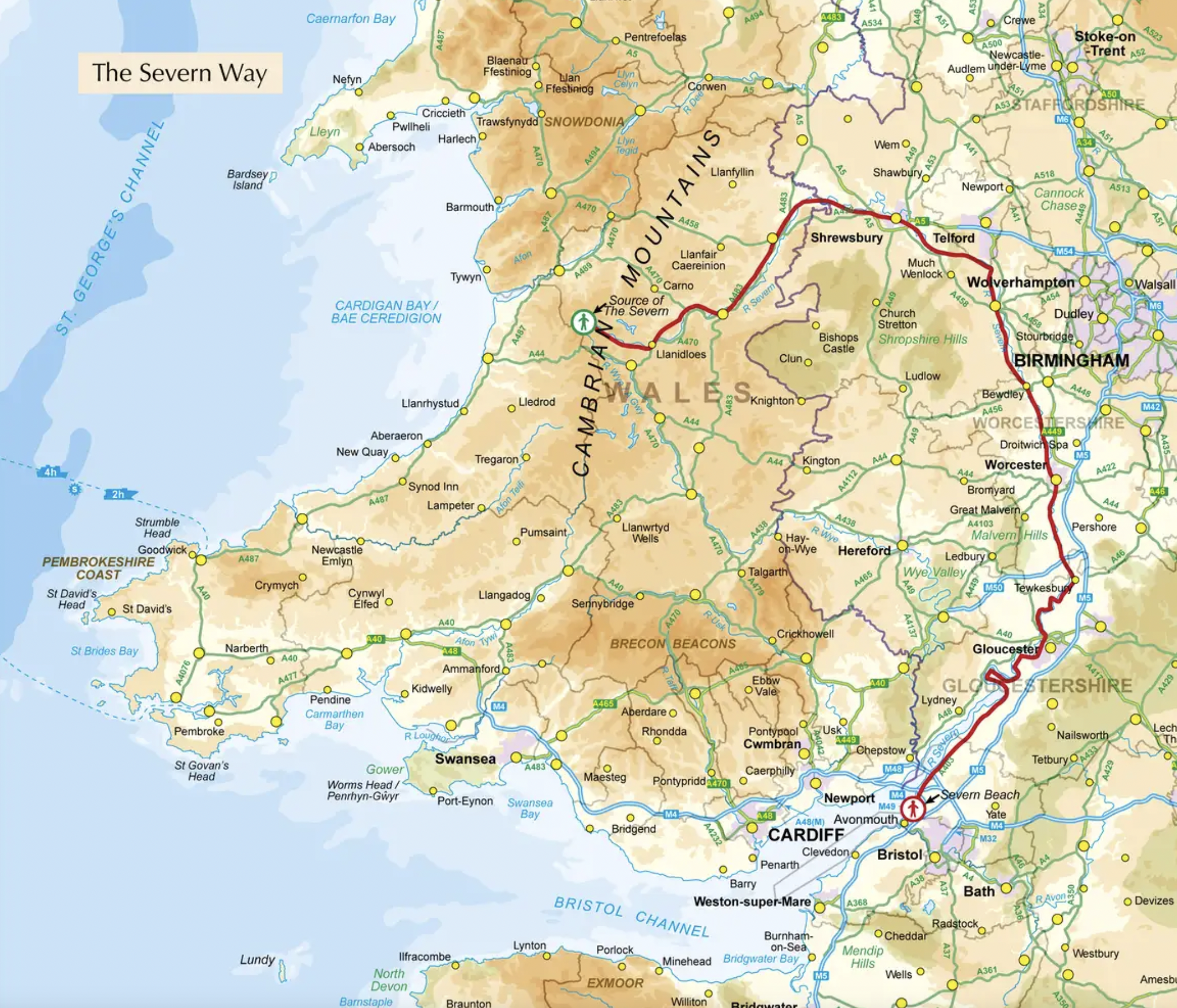
For the past eight months I have followed its 220-mile course [albeit not in order] from source to sea; from the peaty uplands of Plynlimon in Mid Wales, north-east through Powys and Shropshire, then south through Worcestershire, Gloucestershire to where it sweeps into the Bristol Channel… the Celtic Sea… the Atlantic Ocean. 

Map from the Severn Way Guidebook by Terry Marsh

Within a mile of its boggy birth, the infant Severn starts tumbling through the Hafren Forest, gathering erratic speed like a toddler until the ‘Severn-break-its-neck’ Falls plunge it into the valley that will bob it to its first town, Llanidloes.

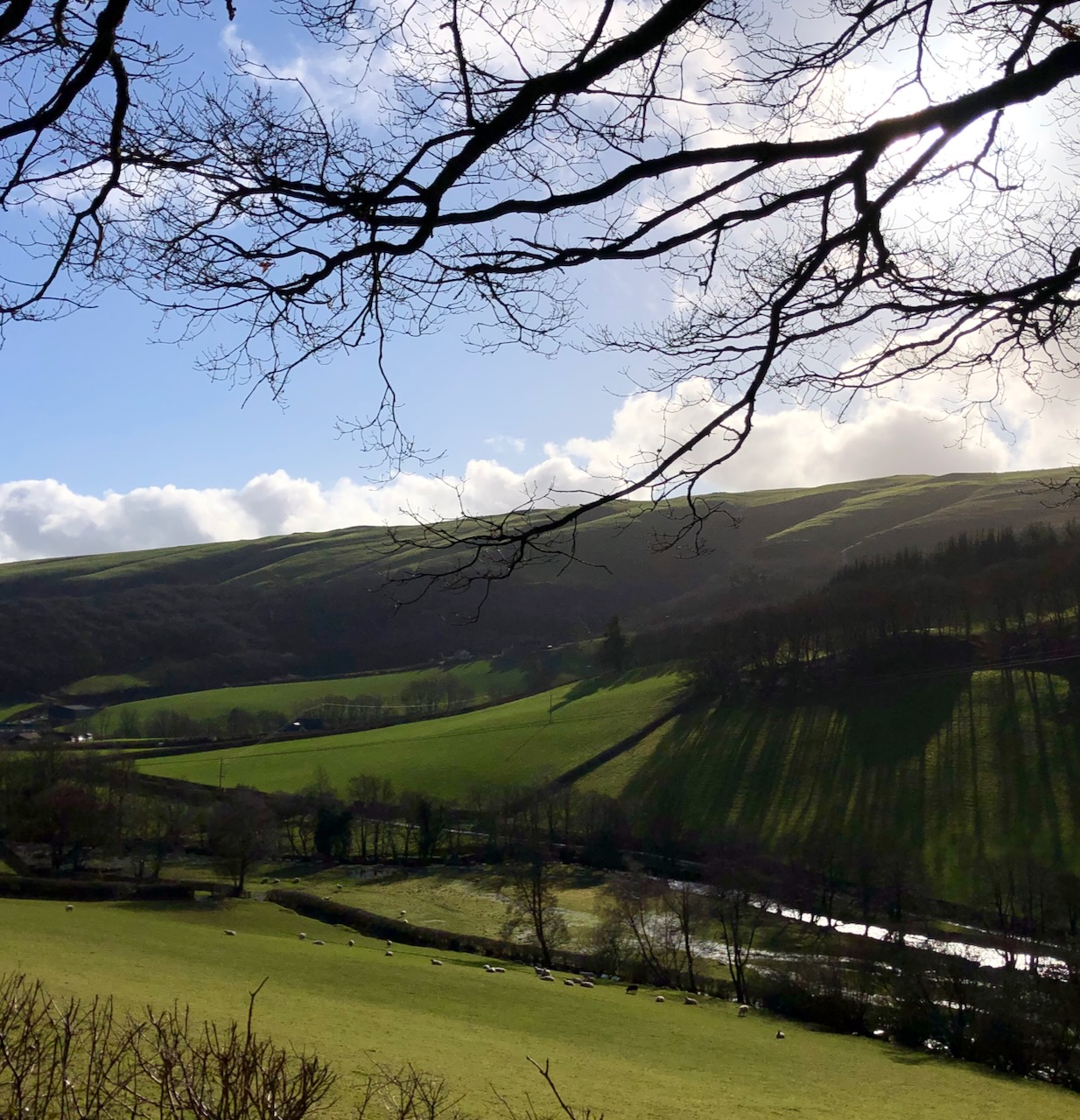
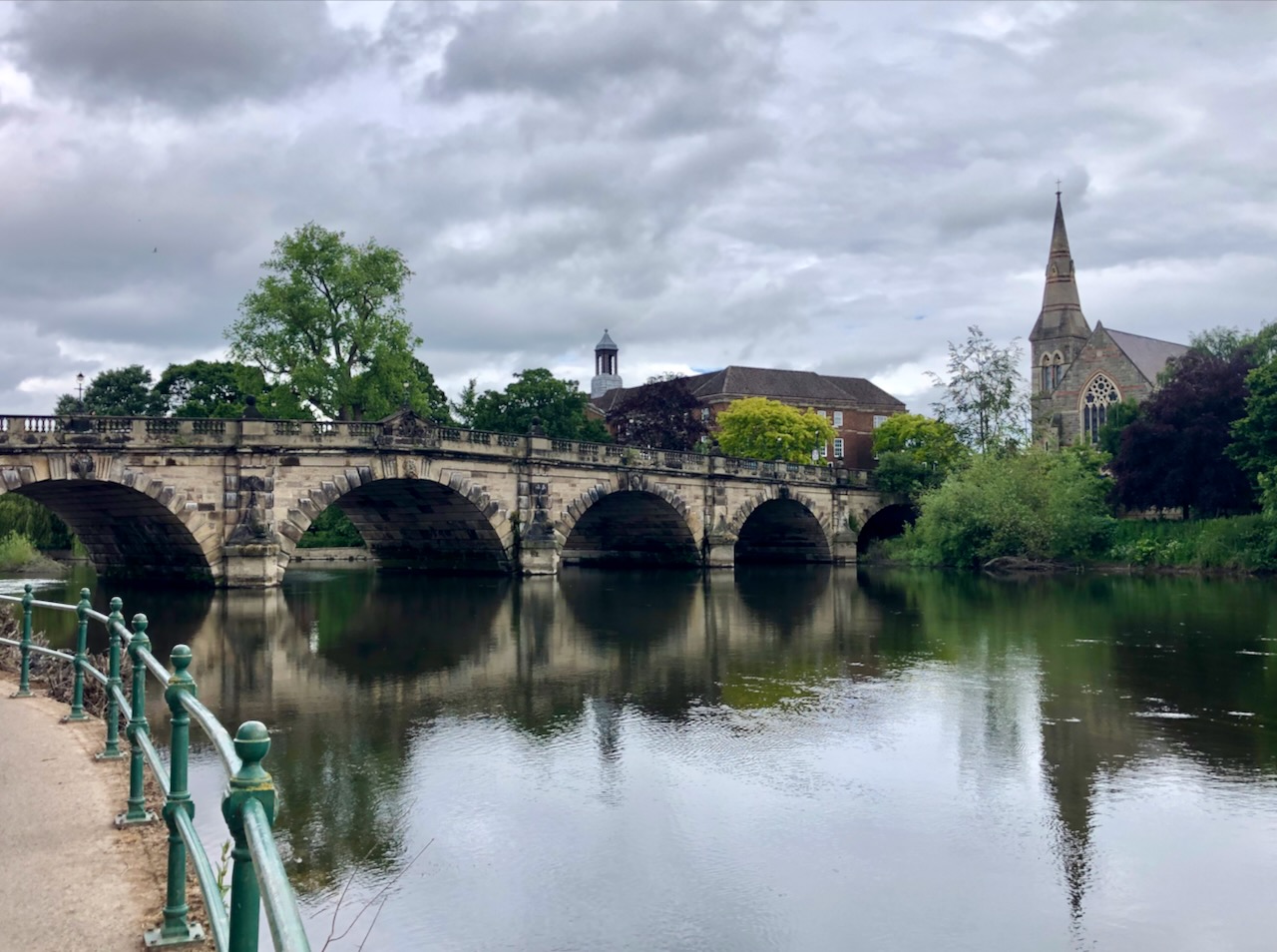
Assuming a steadier gait, it meanders through undulating pastureland before looping north to cross the Welsh/English border at Crew Green. Growing prosperity expands its girth into a watercourse that cuts through floodplains as it heads into the dense cluster of the period buildings and timber-framed mansions that formerly made up one of Britain’s most prosperous wool and cloth trade towns, Shrewsbury.

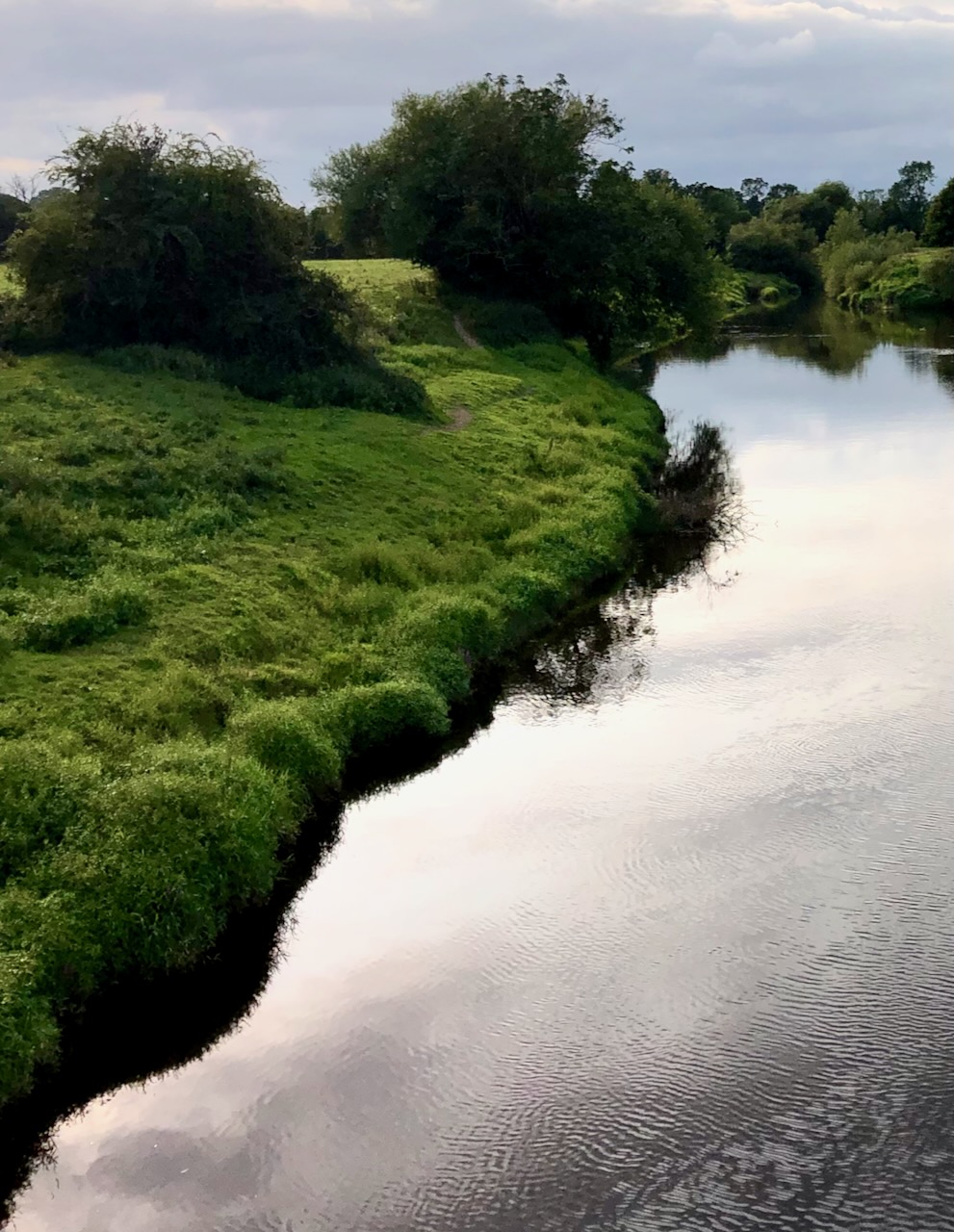
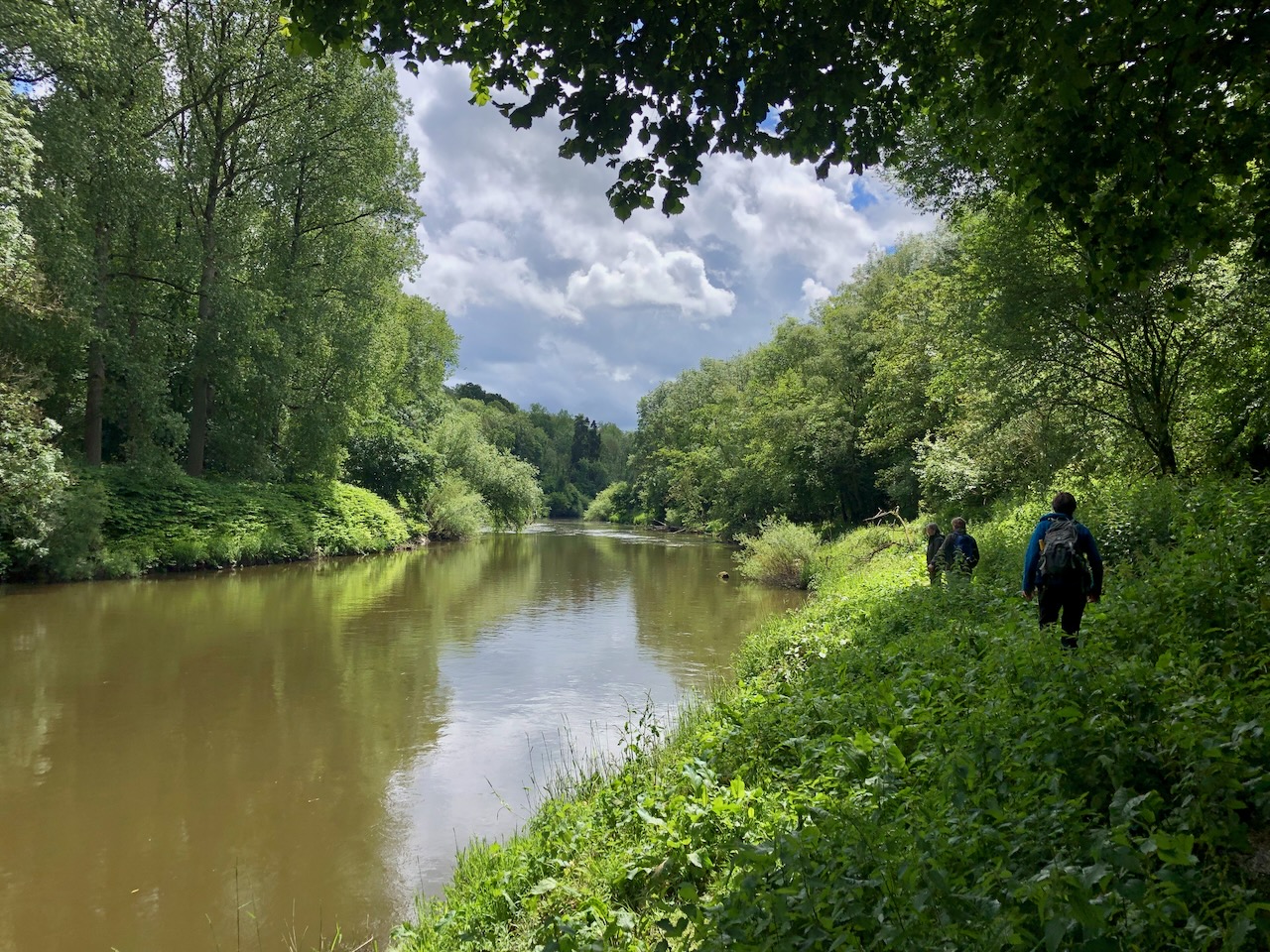
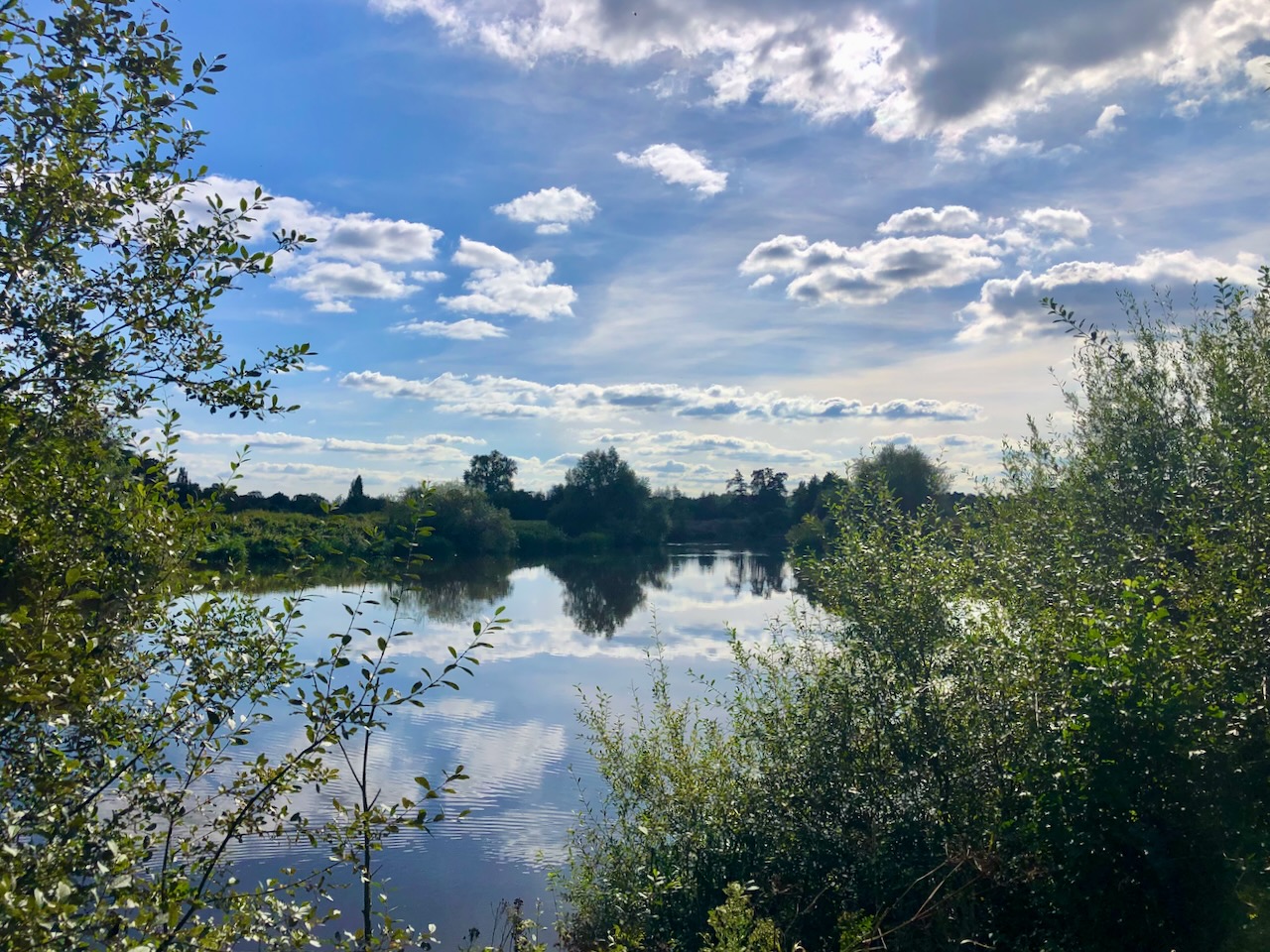
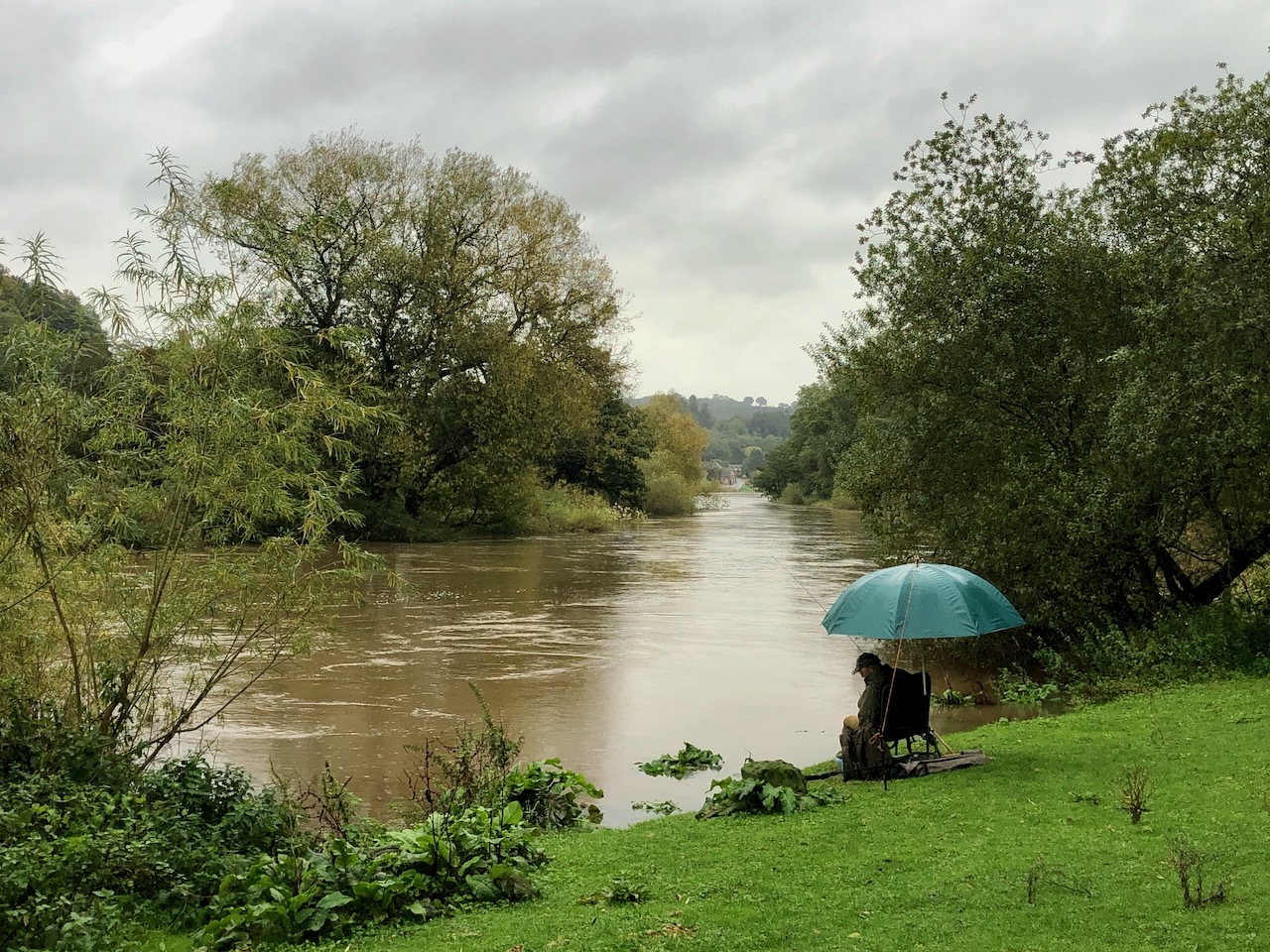
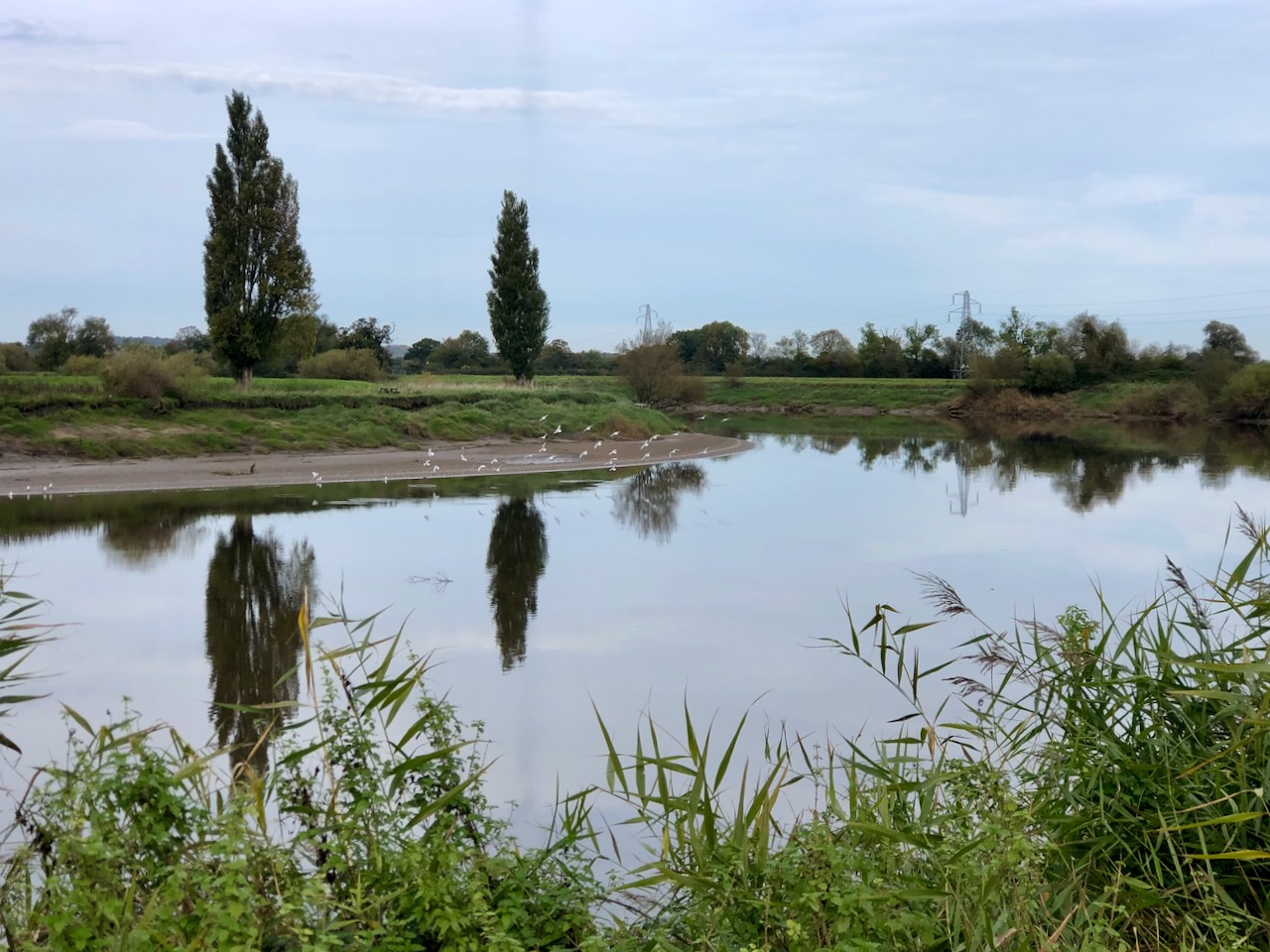
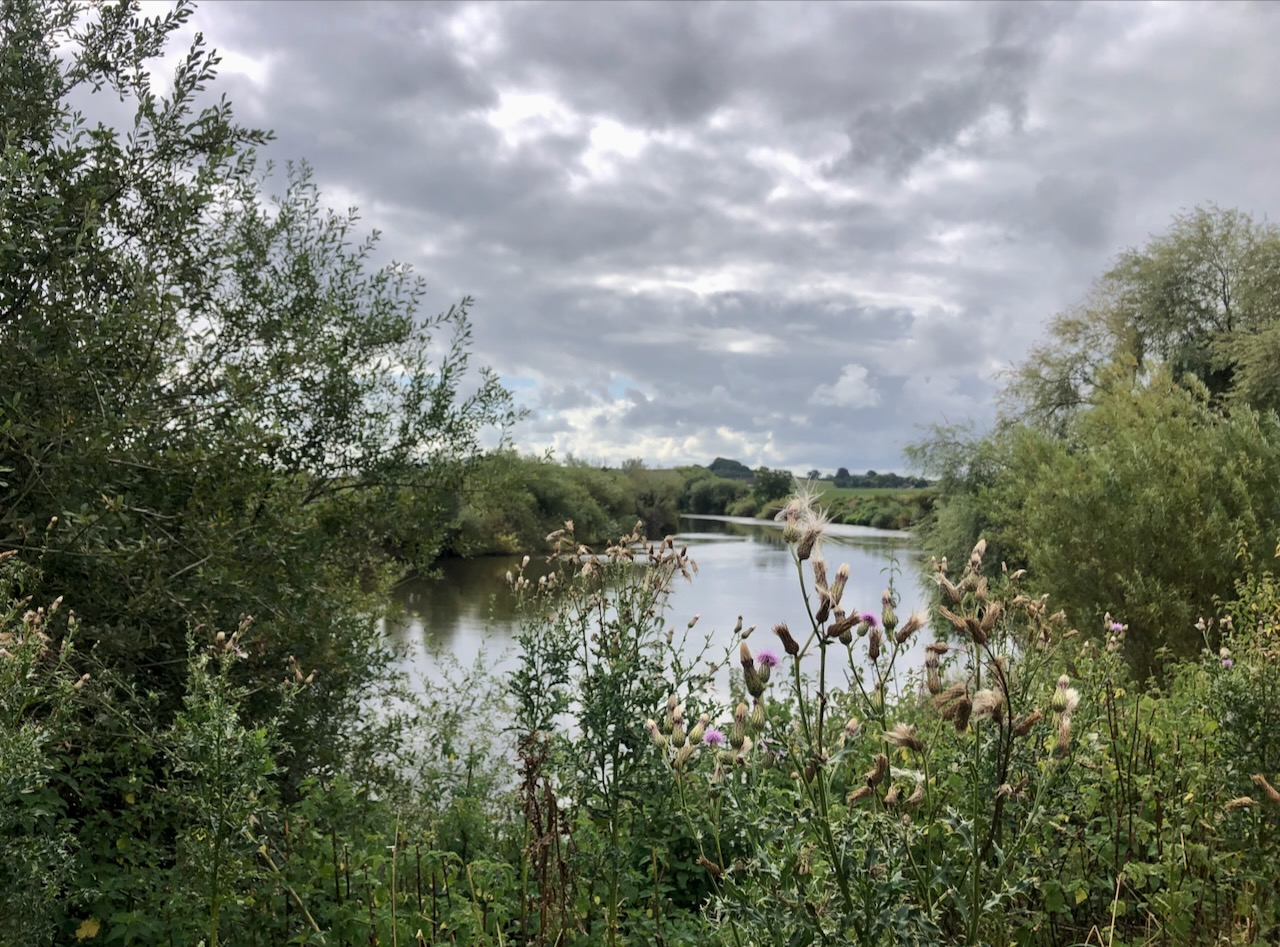
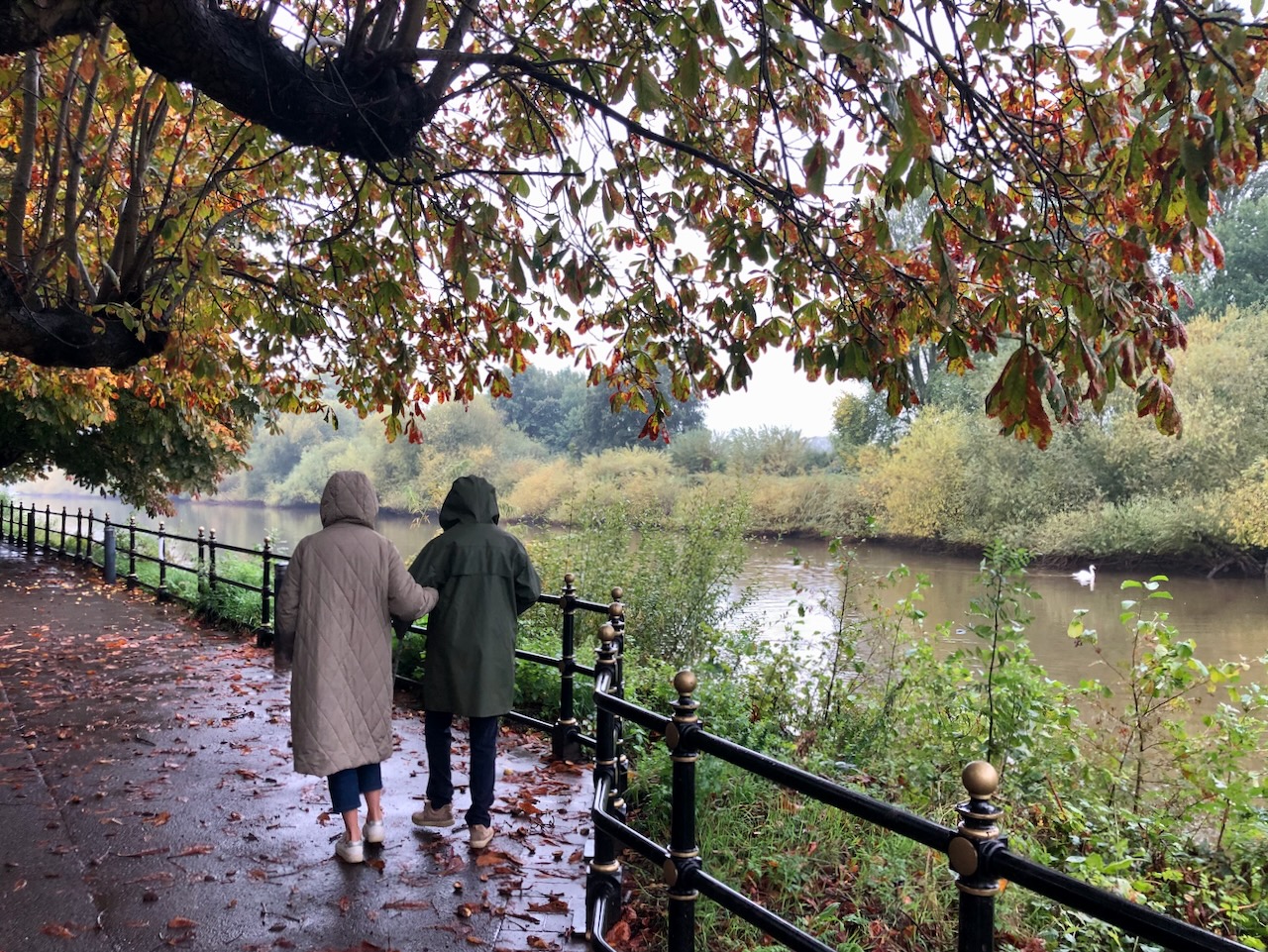
Past the birthplace of Charles Darwin, a glassy stillness and almost imperceivable flow belie the Severn’s true force as it smoothly snakes its path between overgrown banks of willow, elder and the deceptively pretty pinks of thuggish Himalayan Balsam.  

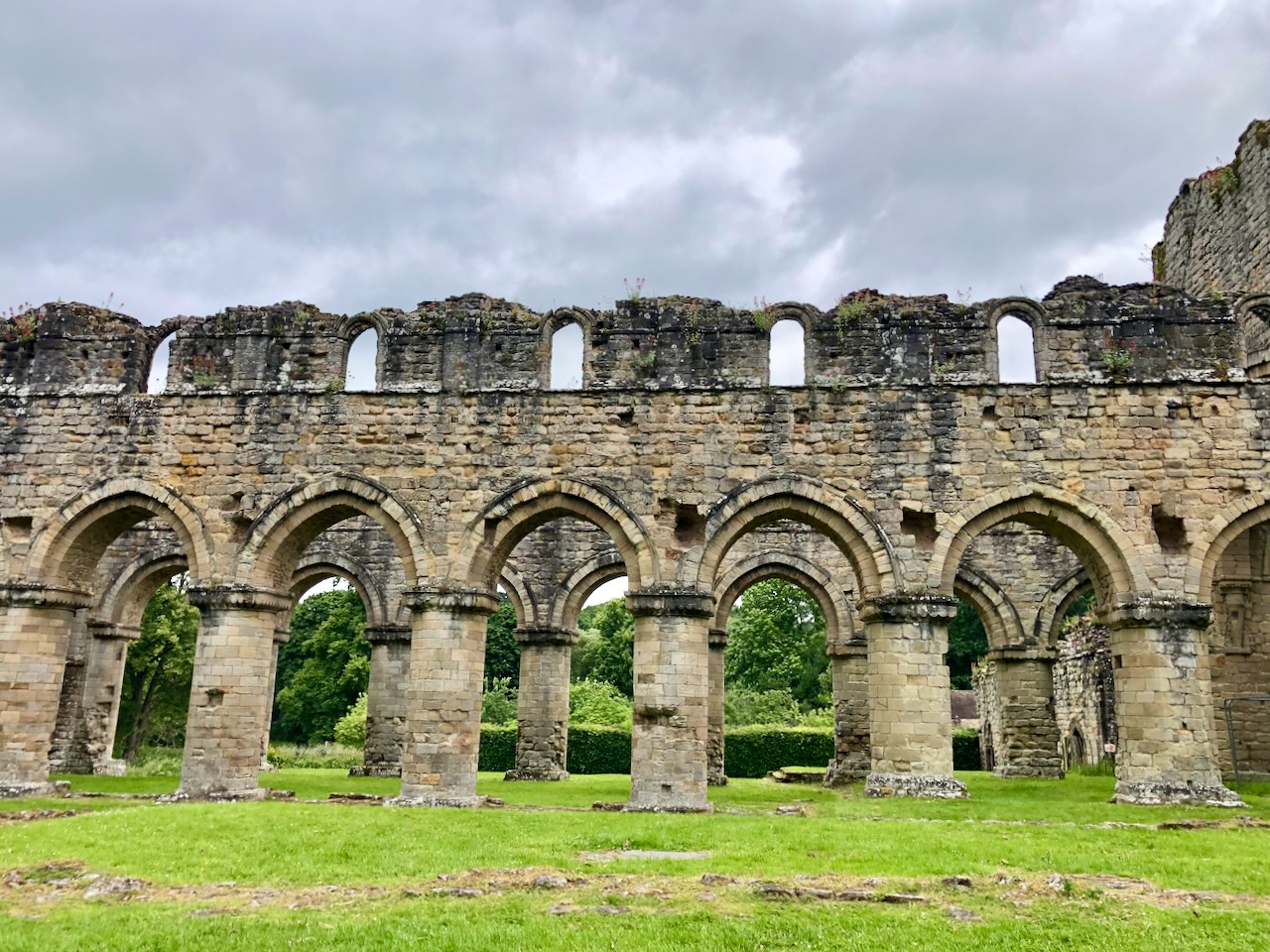
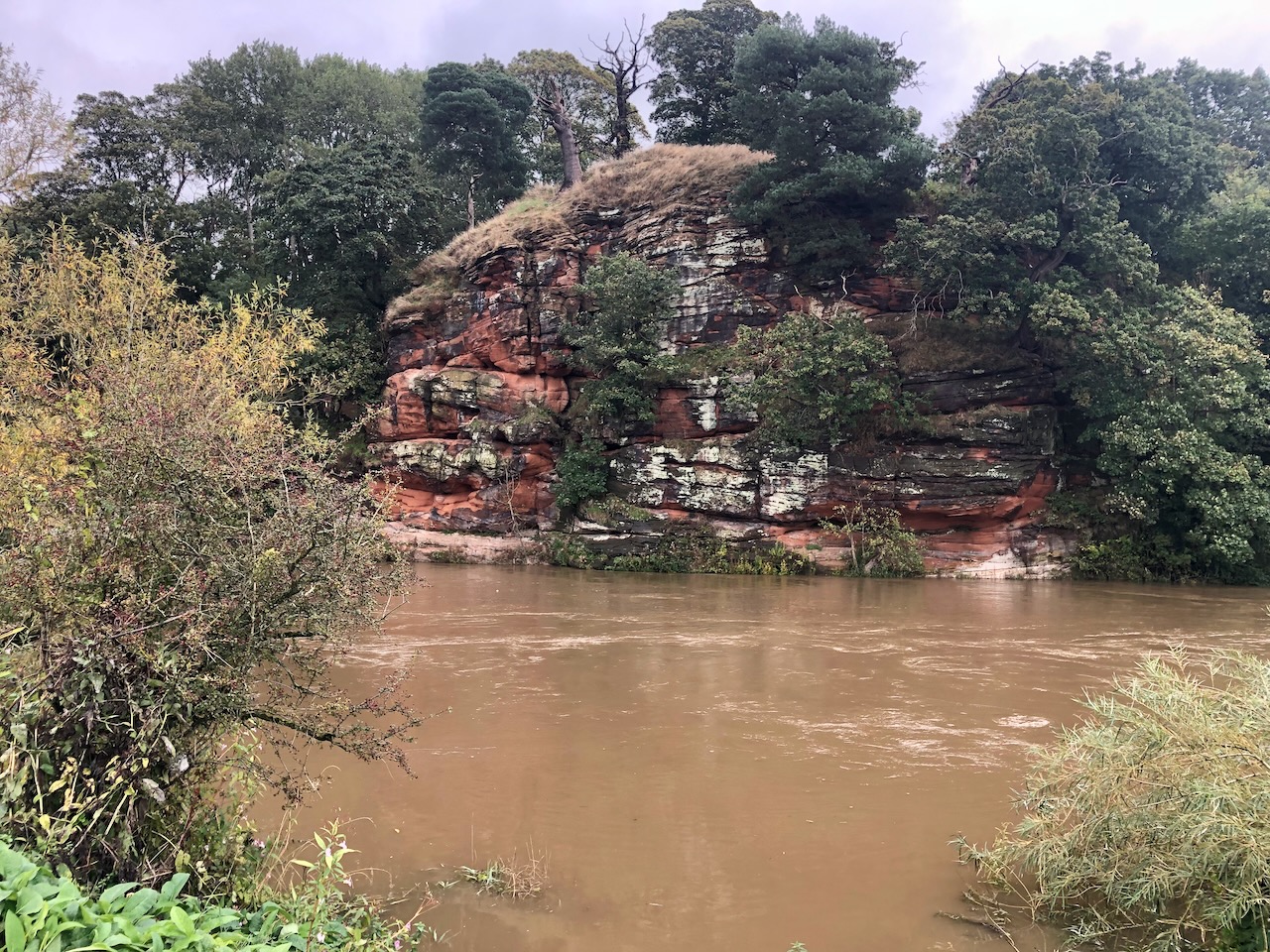
History punctuates the landscape with traces of Roman forts and roads, a Saxon chapel, the evocative ruins of the Cistercian Abbey at Buildwas, 16th Century market halls and sandstone caves that once sheltered hermits or stranded travellers unable to cross the river. As the Severn bullies its way south through gorges striped by coal, limestone and iron ore strata, the legacies of once booming industries and trades are memorialised in mines, railway stations and canals that once linked local towns across Britain. 

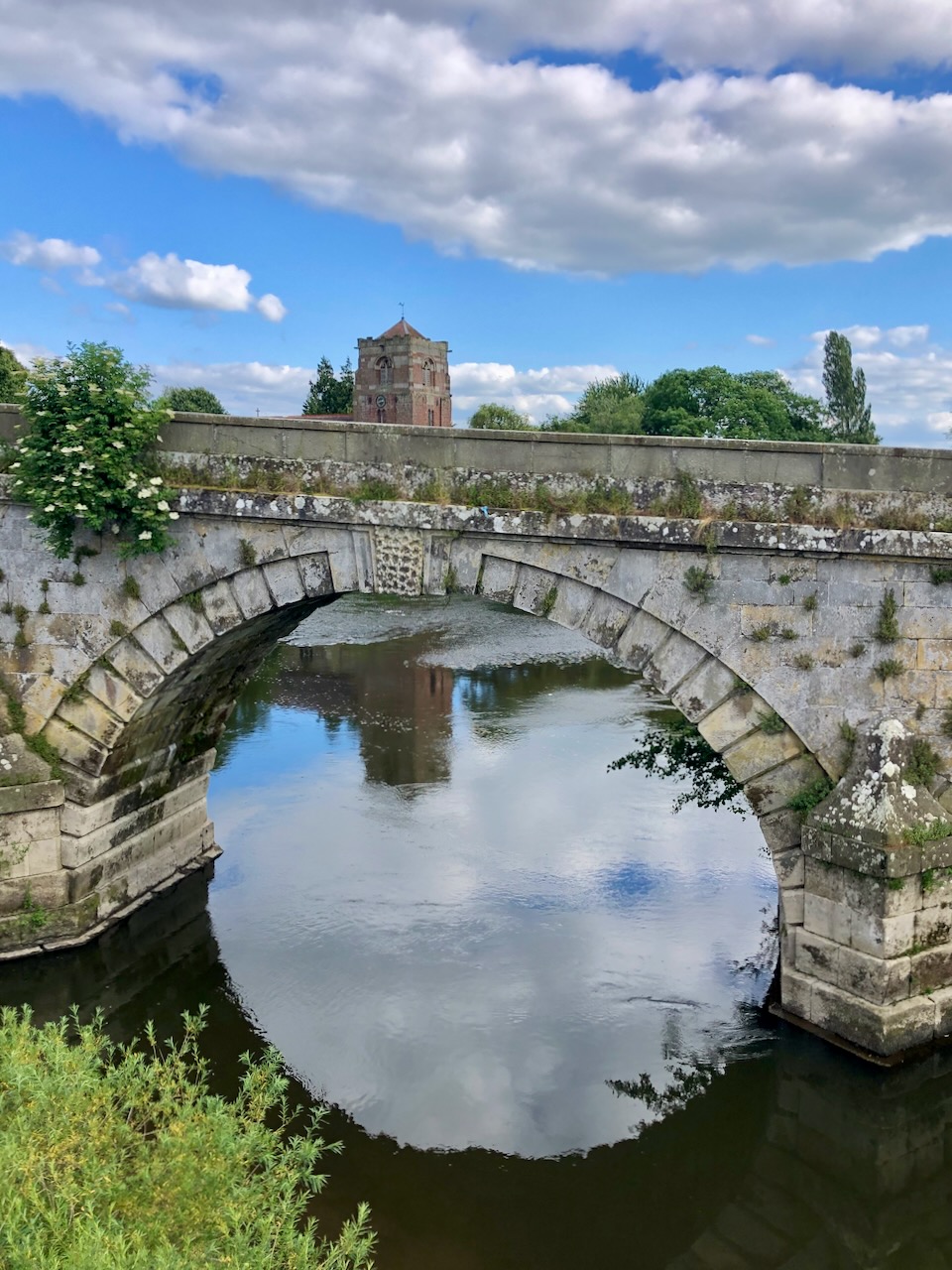
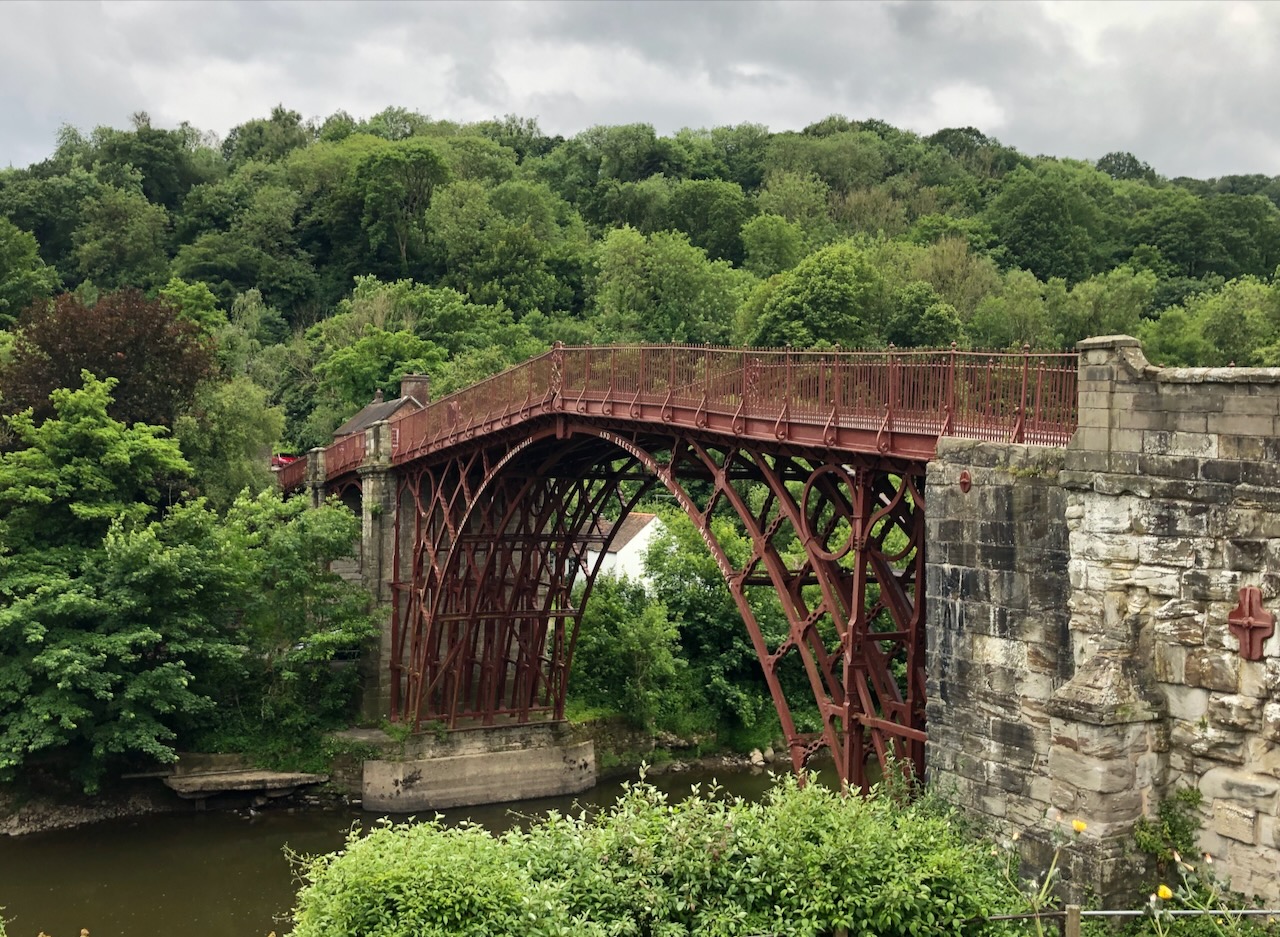
Regular bridges drip feed the imagination with the industrial revolution. Ironbridge boasts the world’s first iron bridge cast by the grandson of Abraham Darby in 1779 in the wake of his grandfather’s revolutionary discovery seventy years earlier that coke could be used for smelting iron instead of charcoal. Further downstream, the fortified town of Bridgnorth perches on a sandstone cliff. Once the busiest port in Europe, it hummed with the sound of iron works and carpet mills, breweries and tanners until the 1860s when railways heralded the end of river trades.  

Following its increasingly wide, milky-coffee-coloured road, vocabulary from school geography lessons surfaced from the recesses of my turbulent education: Oxbow lakes, flood and sandbanks, confluences; soaring cumulonimbus or, equally frequently, water-dumping nimbostratus clouds.

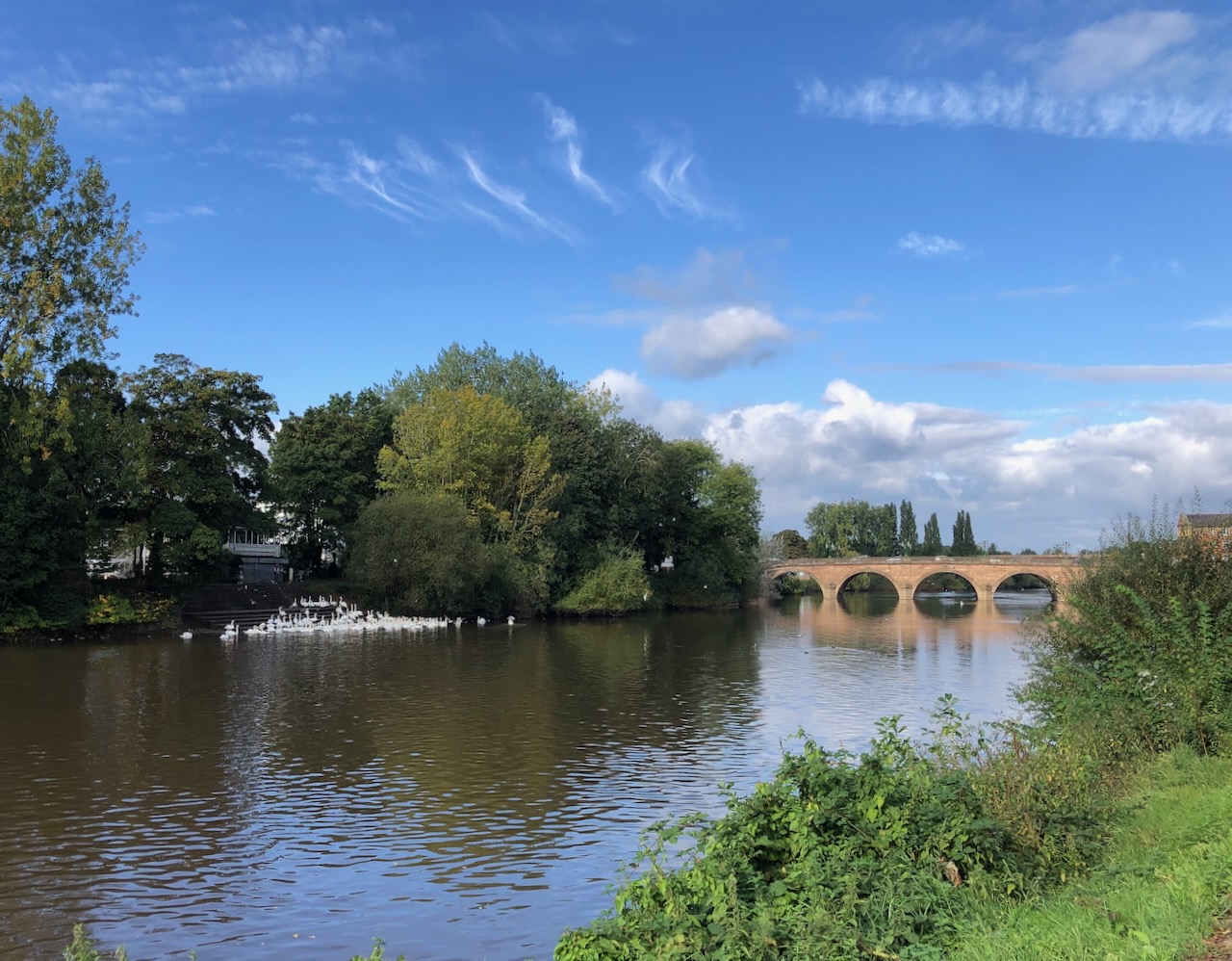
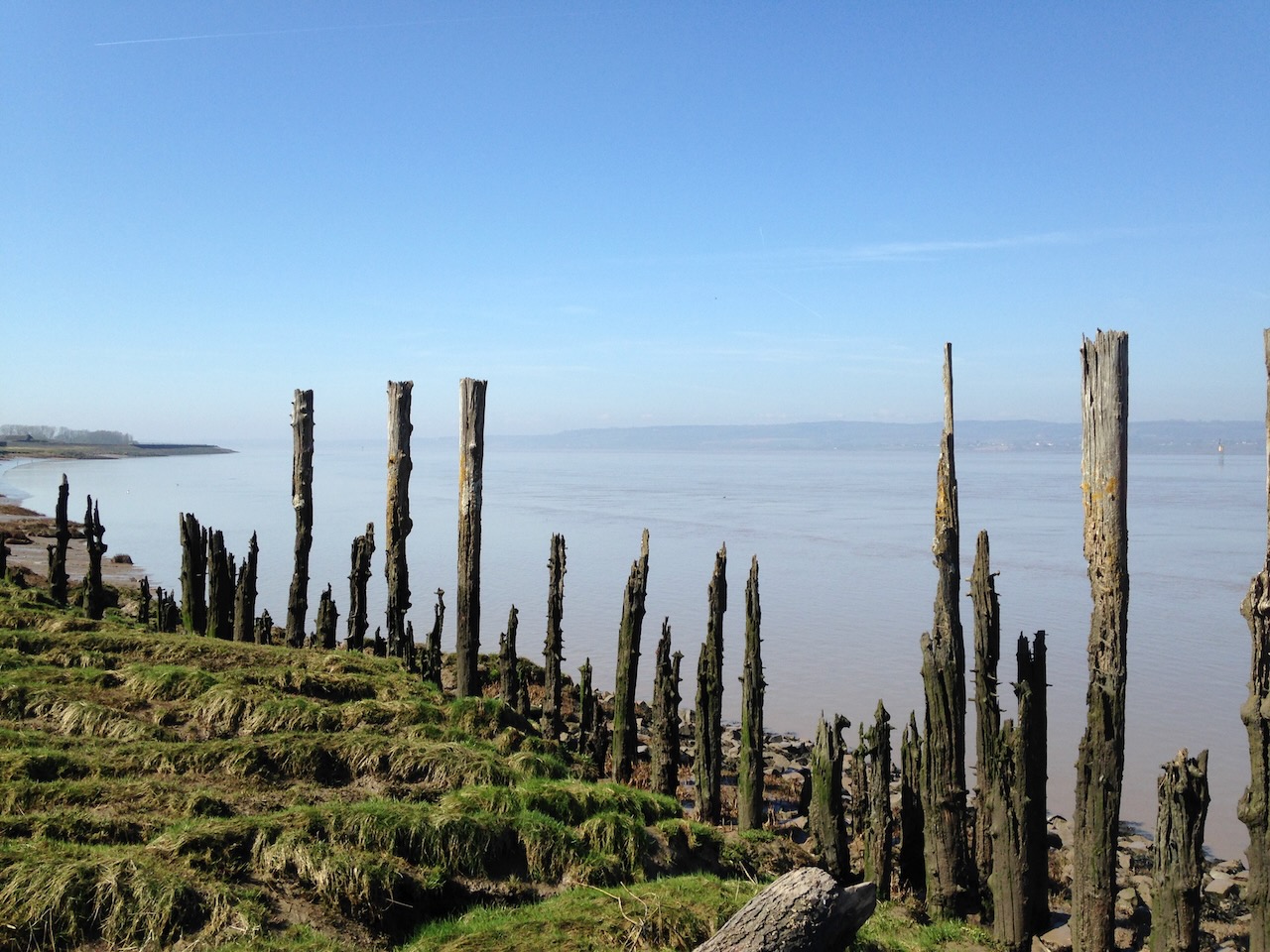
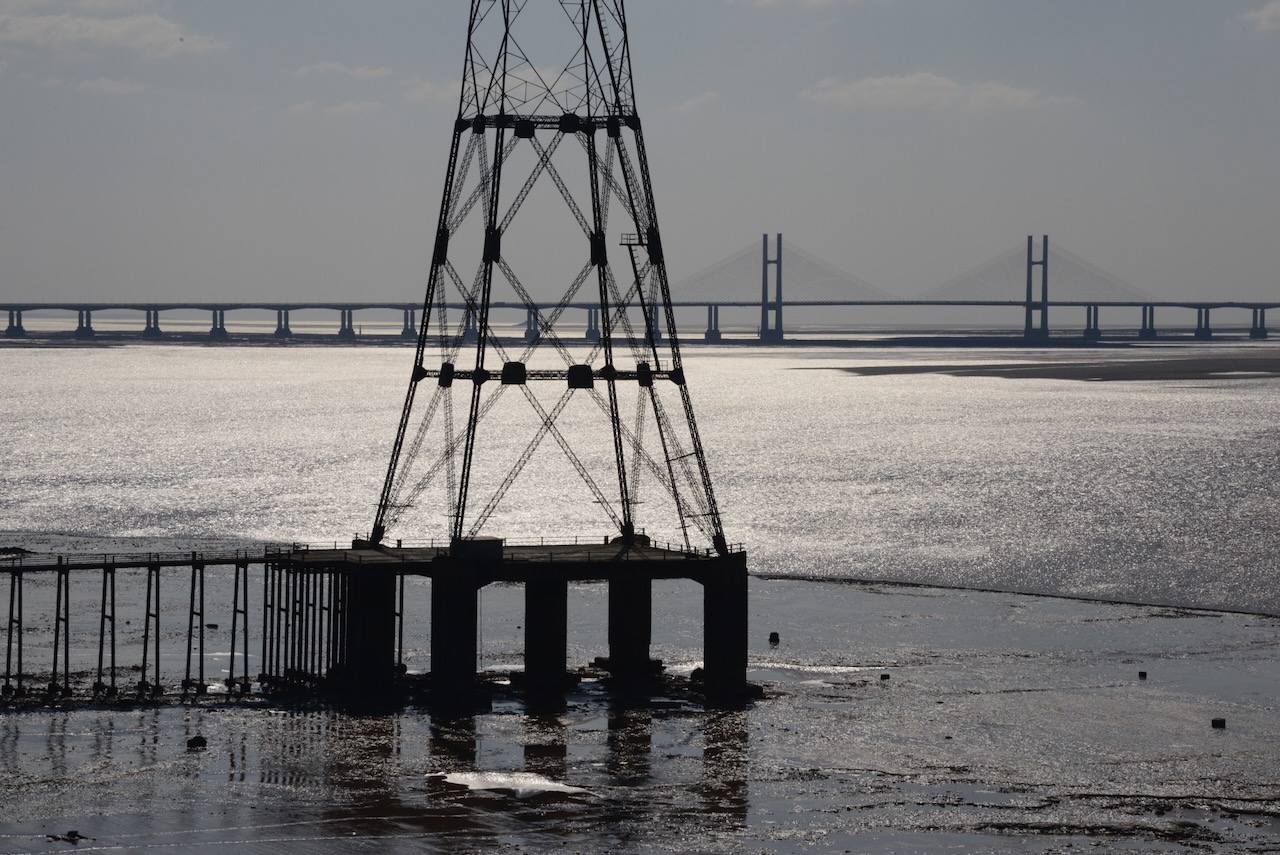
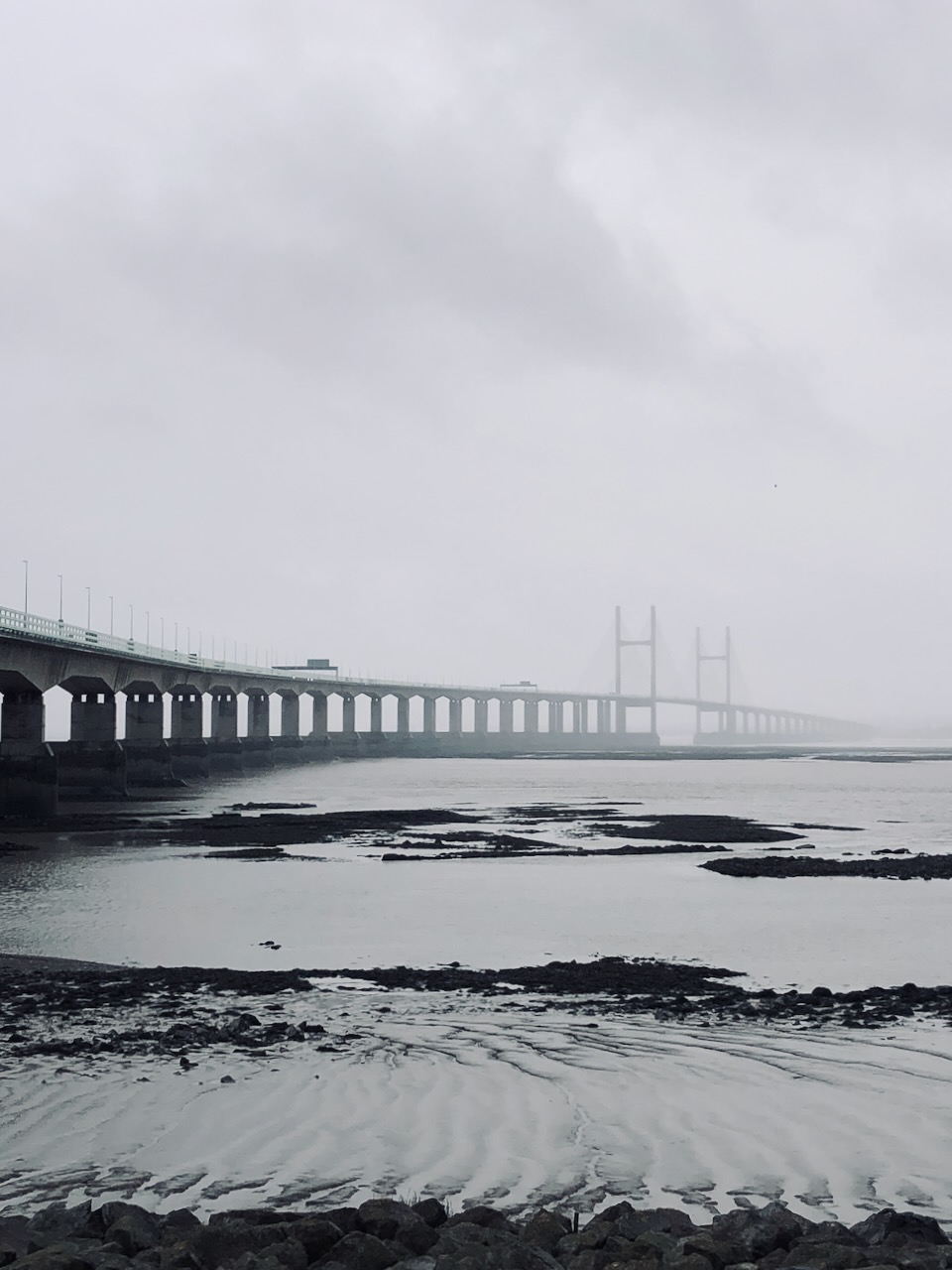
South of Gloucester and around the peninsular at Arlingham, the now tidal Severn breathes in the sea and releases the river out into the vast estuary. At Purton, the ghostly remains of a graveyard of more than 80 sunken barges reveal man’s hopeless struggle to halt the erosion of the banks. Through the working docks at Sharpness and past a pair of looming power stations, the two Severn Bridges rise like misty goalposts. Portals to the open sea. And an abrupt, somewhat unspectacular end to the Way.

With the walking completed, there remained just one more aspiration: to surf the Severn Bore. A bad dream thankfully warned this novice surfer with a fear of water off. Instead, I rode the Bore in a boat driven by its champion.

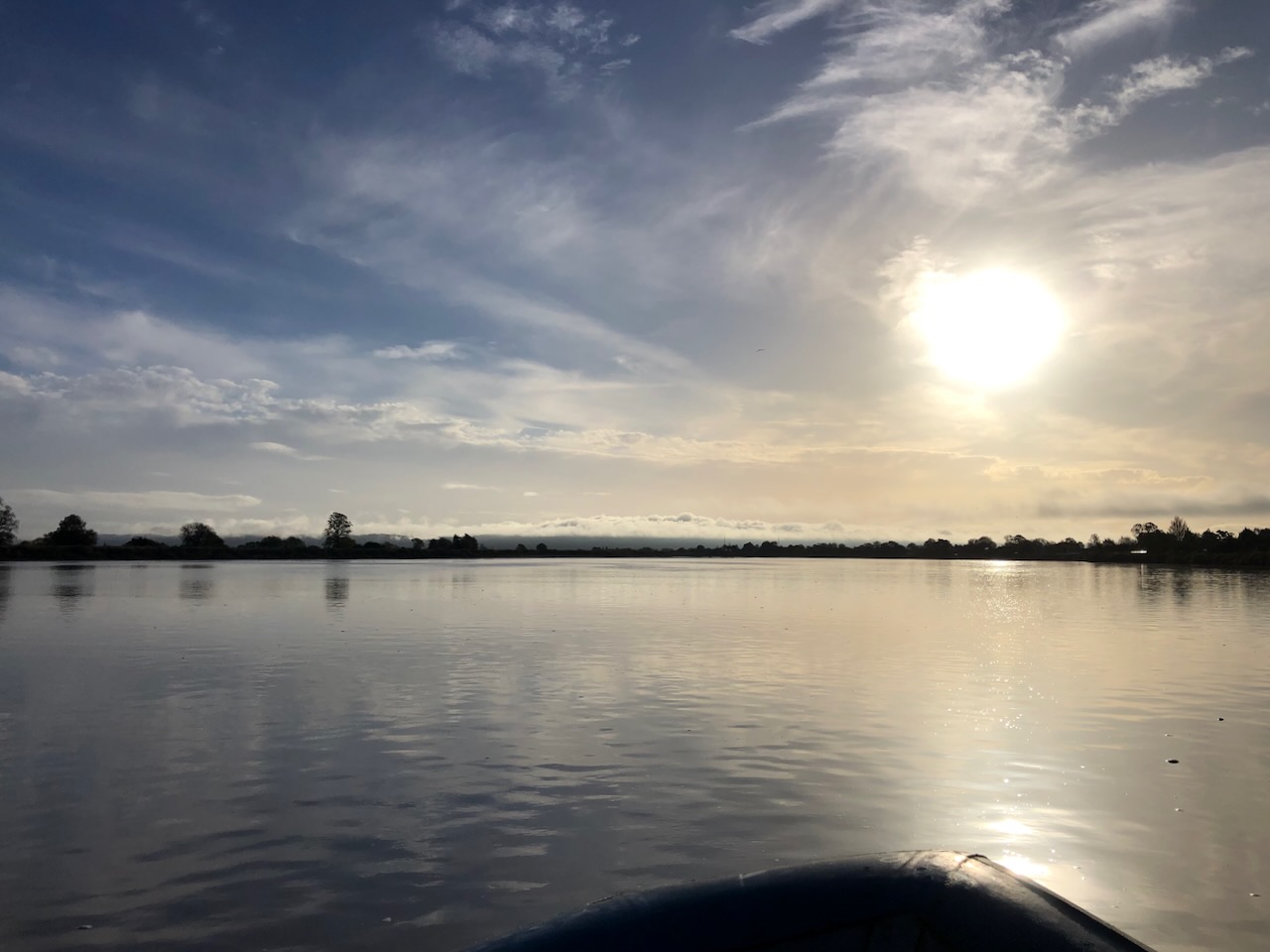
We set out on a slack tide in the early dawn, deposited two surfers into the tidal stream and waited. You can hear the roar as it approaches. Pulled by the force of the moon, a small line of foam scrabbling its way against the flow comes into view, gathering body until it is a swell. And then you are on it. Riding the crest as salty water from far away thrusts its way up the river dragging the sea in its wake like a heavy cloak.

Immersed in the perfect balance of the 4 elements, the smile on my face remains for many hours. The magic of Sabrina will last a lot longer.

A personal meditation on the loss of summer

I associate the first half of September with painful muscle memories of returning to school for the start of the new academic year. That dreaded countdown to the end of the summer holidays… a slow but intense process of loss. Now it’s the waning warmth and hours of daylight. The demise of peaceful silence as the hum of activity and traffic re-clutter mornings. Leaves, not long ago the fresh green of youth, yellow and fall like aging teeth while flower heads darken and shrivel shedding their petals like hair.  

(As you can see, my mood and thoughts plummet in September! Early September that is. It gets better though, if you care to read on…)

Expanded thoughts stretching lazily into the great outdoors are reined in. Earth’s gravitational pull sucks sap and life forces back into its bosom, simultaneously draining me of mine. I grieve the death of summer. My optimism falters. It requires an act of will to stop my spirits from sinking into a deep, weary sigh.  

Dying… death, the sole inevitable event in each of our lives, yet about which we know so little and only talk reluctantly. 

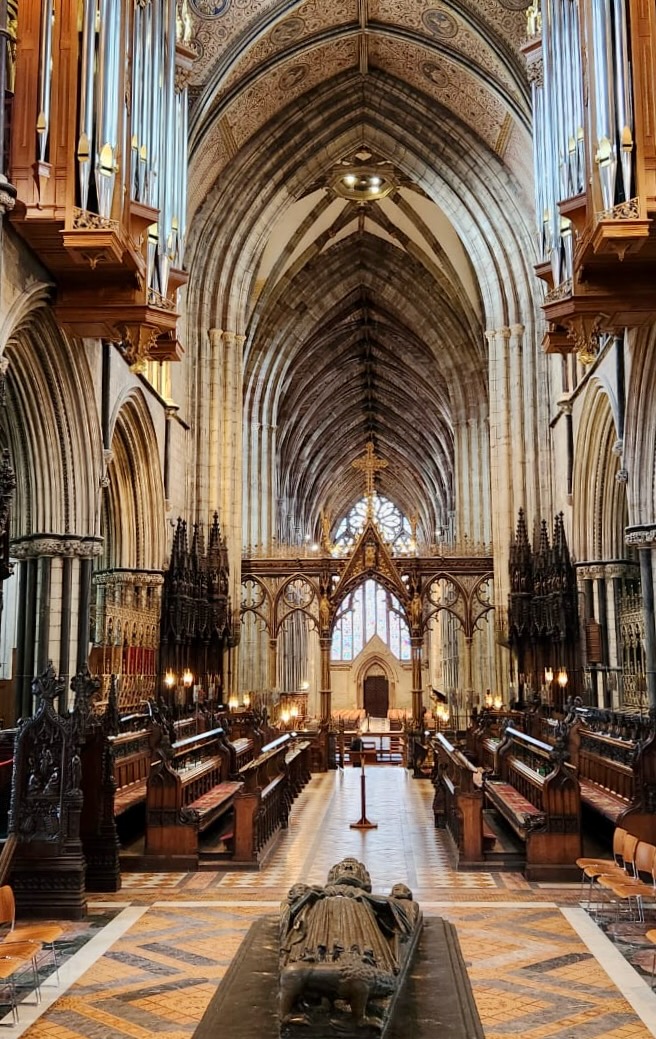
As if mirroring the fading light and life in nature, death in various guises fell close to home during the last months. The natural passing of a dear, elderly godfather. The sudden, wholly tragic demise of the 14-year-old son of close friends of my sister’s family. Further afield but landing in our days nonetheless, the nameless numbers of violent deaths from conflicts or upturned boats. And in my regular dips into churches and cathedrals while walking the 215-mile Severn Way, I encounter those who have long gone, some preserved in perpetuity in grand tombs, others lost in overgrown cemeteries.

Still clinging to my scanty summer wardrobe while shivering in stubborn refusal to turn on the heating, everything changes for me as we pass through the portal of the Equinox and turn the corner into autumn. The sense of loss and gradual dying shift into a graceful letting go; an embracing of our interior worlds and the gifts of the encroaching darkness that, like the tide, cannot be stopped. The worst period of mourning is over.

Earlier this week I was privileged to witness a beautiful example of joy and laughter in the wake of loss and grief. It came in the form of a fellow visitor to the Museum of Royal Worcester. Cabinets of china artefacts do not belong to my usual aesthetic, but I was there with my 90-year-old mother for whom they do. In a far room, sitting at a table covered in brushes and bottles of ceramic paints, a woman, maybe in her sixties, sat with her head bent over a bare clay mug impressed with an owl design. I soon learned that she had come here to honour her late parents, with whom she had always lived, in the most profound way she could think of. As lovers of porcelain themselves, they would have been beyond overjoyed to see the cups, bowls, vases and ornaments on display. Now, she was painting an owl mug for each of them, carefully outlining the wings in darker slip and stopping her excited chat to concentrate on the beak or pupils. She shone with the simplicity and profundity of her action. It touched me deeply. She was doing a far better job of overcoming a far greater loss than I had been with my summertime blues.

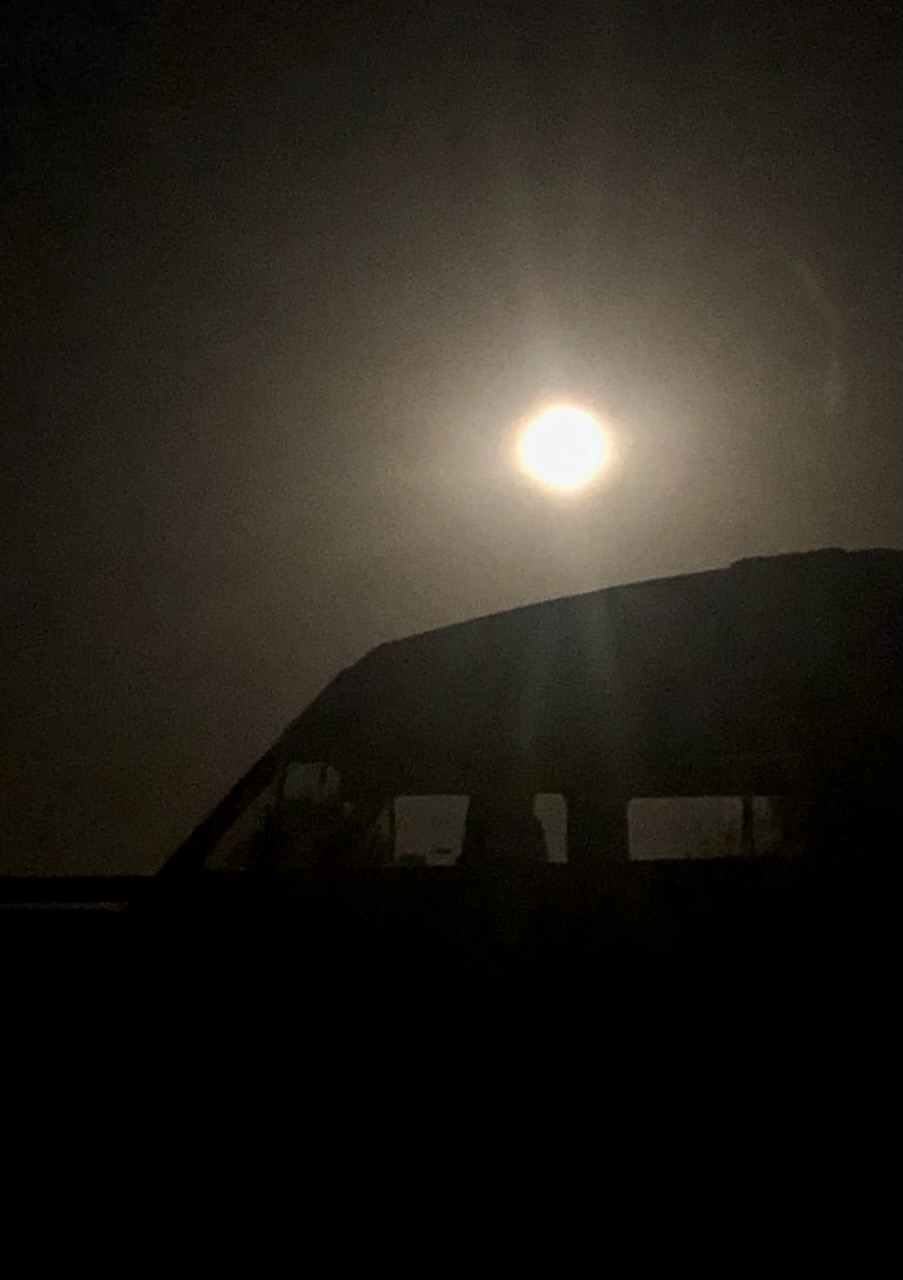
Then a cool night in my camper van with the visceral thrust of Severn Bores pushed and pulled upstream and over the banks by a full moon boldly rising in defiance of the descending sun. Reminders that the deep in- and out- breaths of the tidal river are part of the larger breaths of the Earth, the Seasons, Nature, Life… and Death.

Reminders that nothing is either lost or dead. That all is well and all will come again. 

A small 3* Severn Bore

Welcome to you, Autumn, with all your outer splendour and inner hope!

Finding new ways forward in a valley of flowers…

For the past month I have been immersed in the sights and sensations of Northern India… not literally but in my head, psyche and the screen of my desktop.

©Staffordshire Records Office

Having stepped out of my German ‘grandfather’s shadow’ and the darkness of the times in which he was embroiled, I am now switching families to walk in the footsteps of my English Great Great Aunt, who travelled to the Himalayas to gather flower seeds and specimens for Kew Gardens. Surrounded by the blooms of Spring and regularly soaked by rains, just as she was, it has not been difficult to feel my way into her world. And it’s a great deal more enjoyable than marching across Russia in 1941.


A friend recently asked me, what is it that makes you research your predecessors? Why do you feel a need to look back? I couldn’t come up with an off-the-cuff answer, just an interest in the question and a strong sense that ‘looking back’ wasn’t really what I was doing.

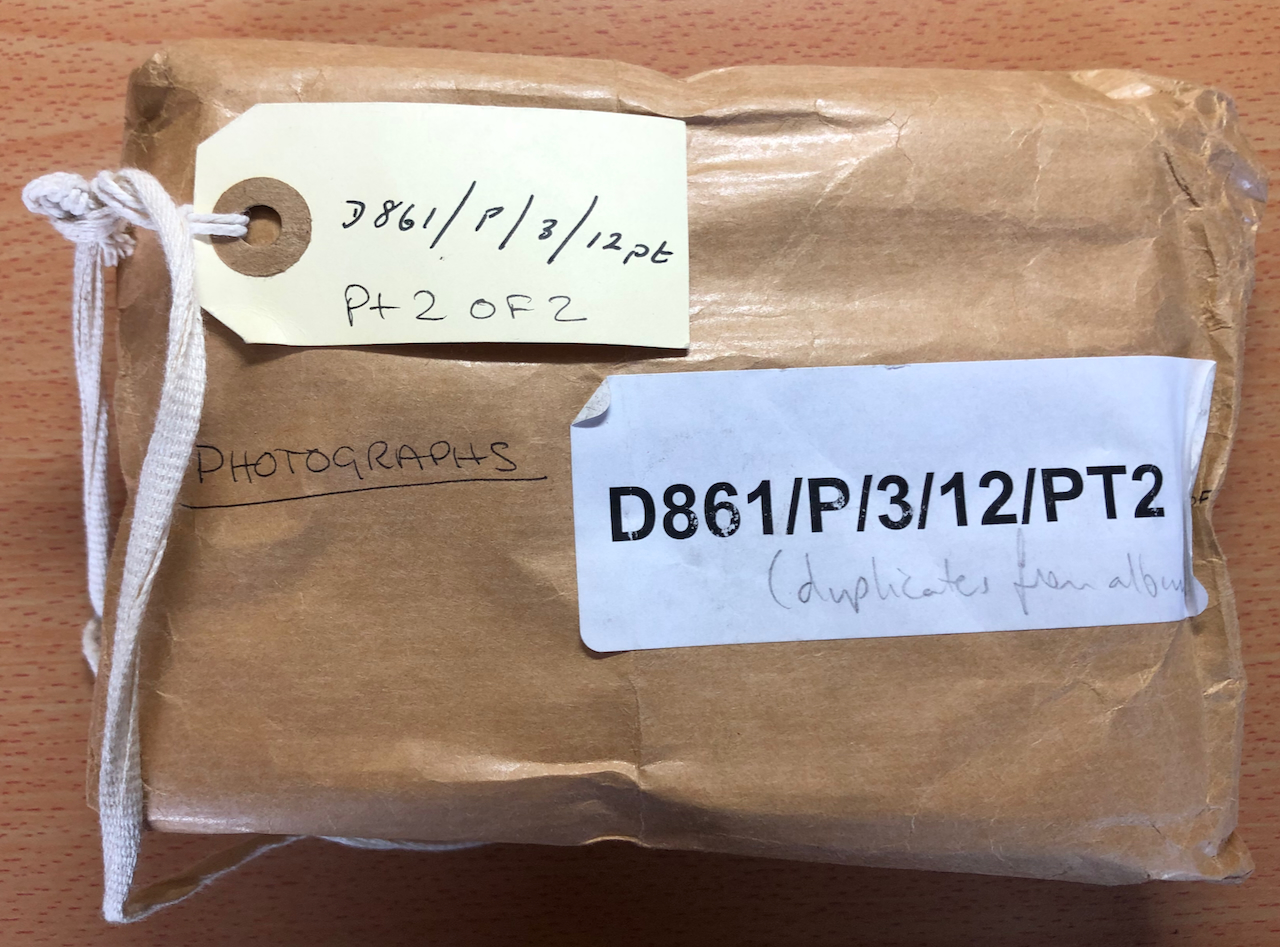
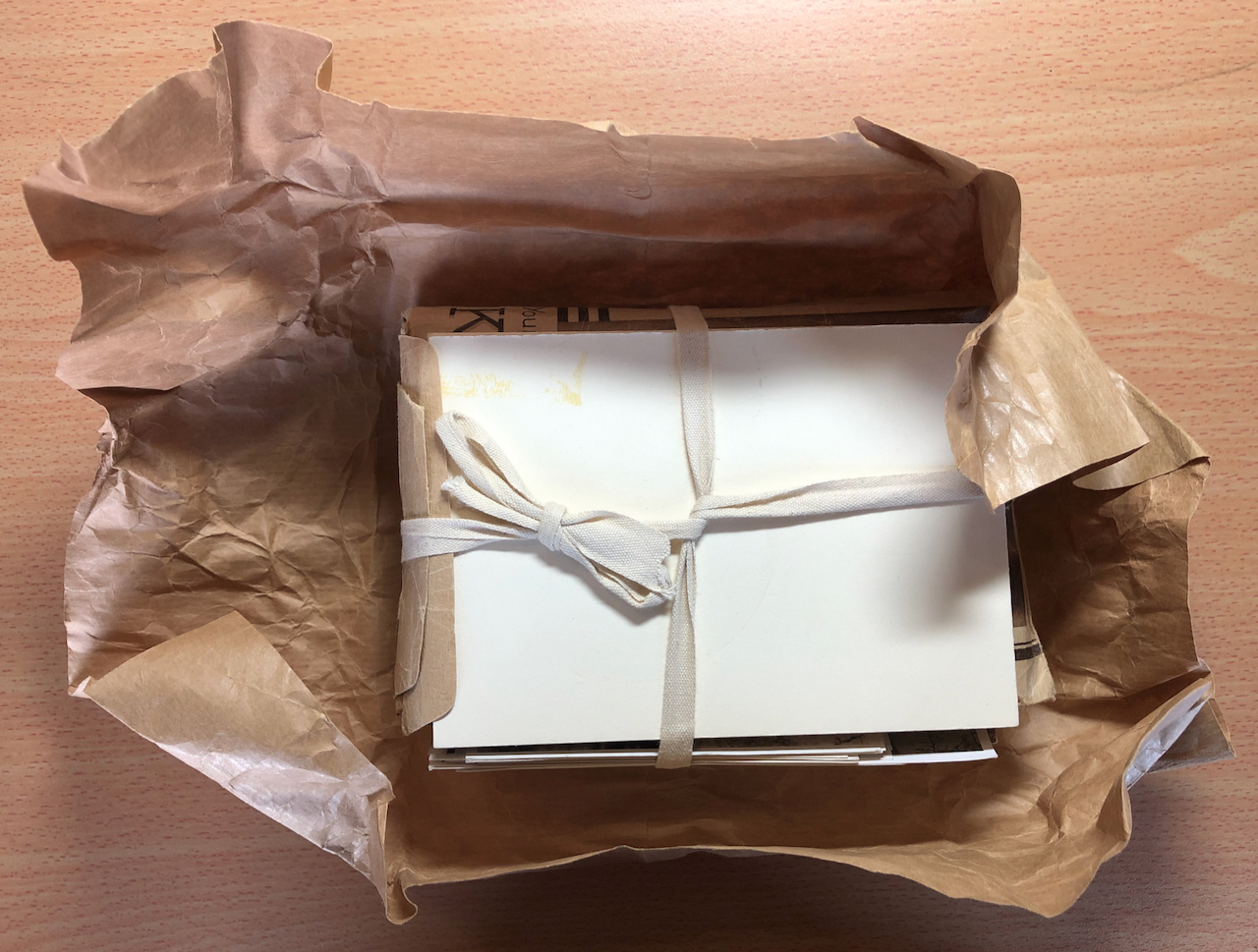
You will hear more about my Great Great Aunt Joan in the future for she is the subject of my current research. I don’t yet know where it will lead, I just love unpacking ‘brown paper packages tied up with string’ stored away in archives, reading diaries and letters, and scouring black and white images for visual details that will help me create a picture of a once living person long since buried in the annals of time. 

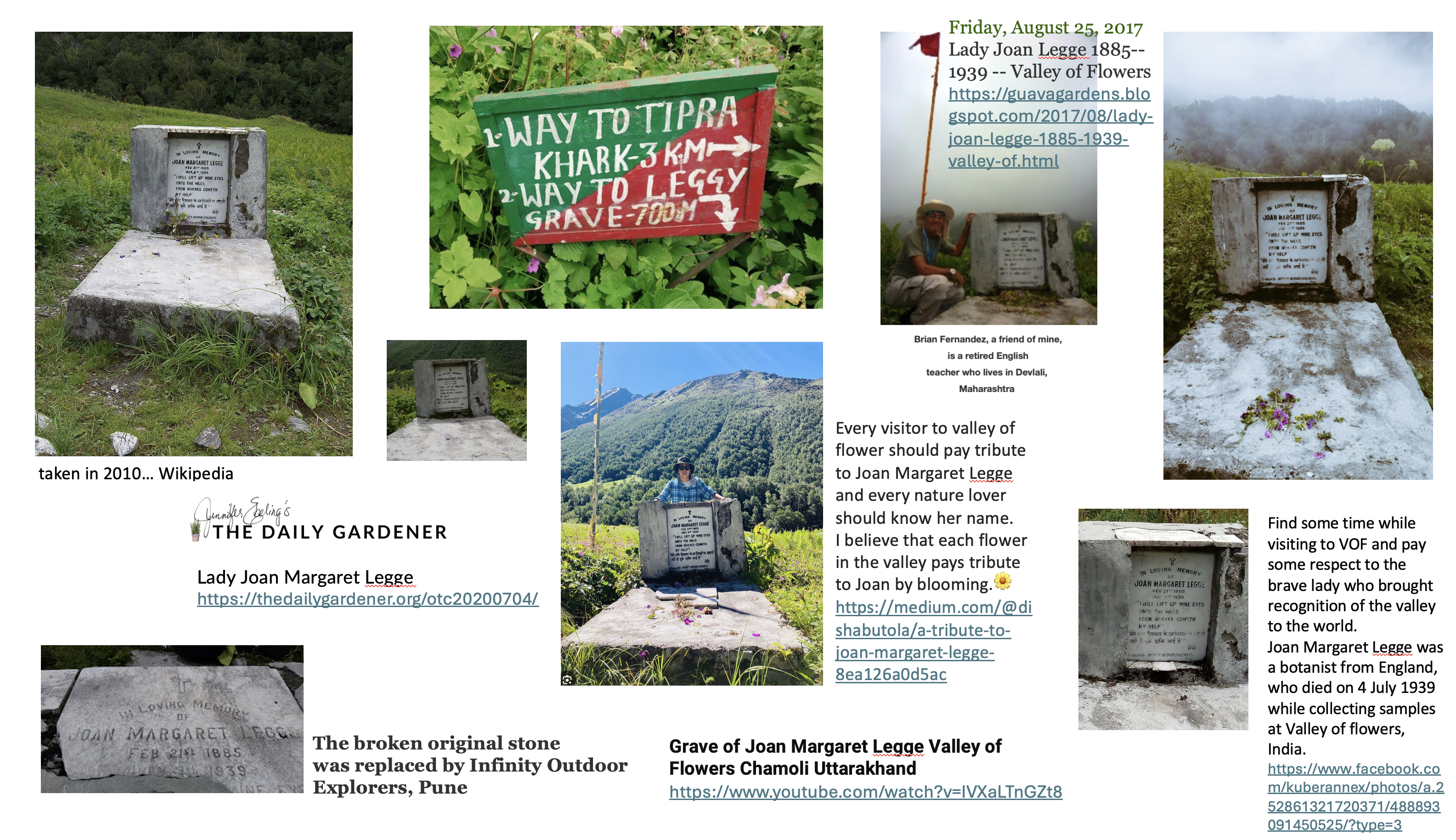
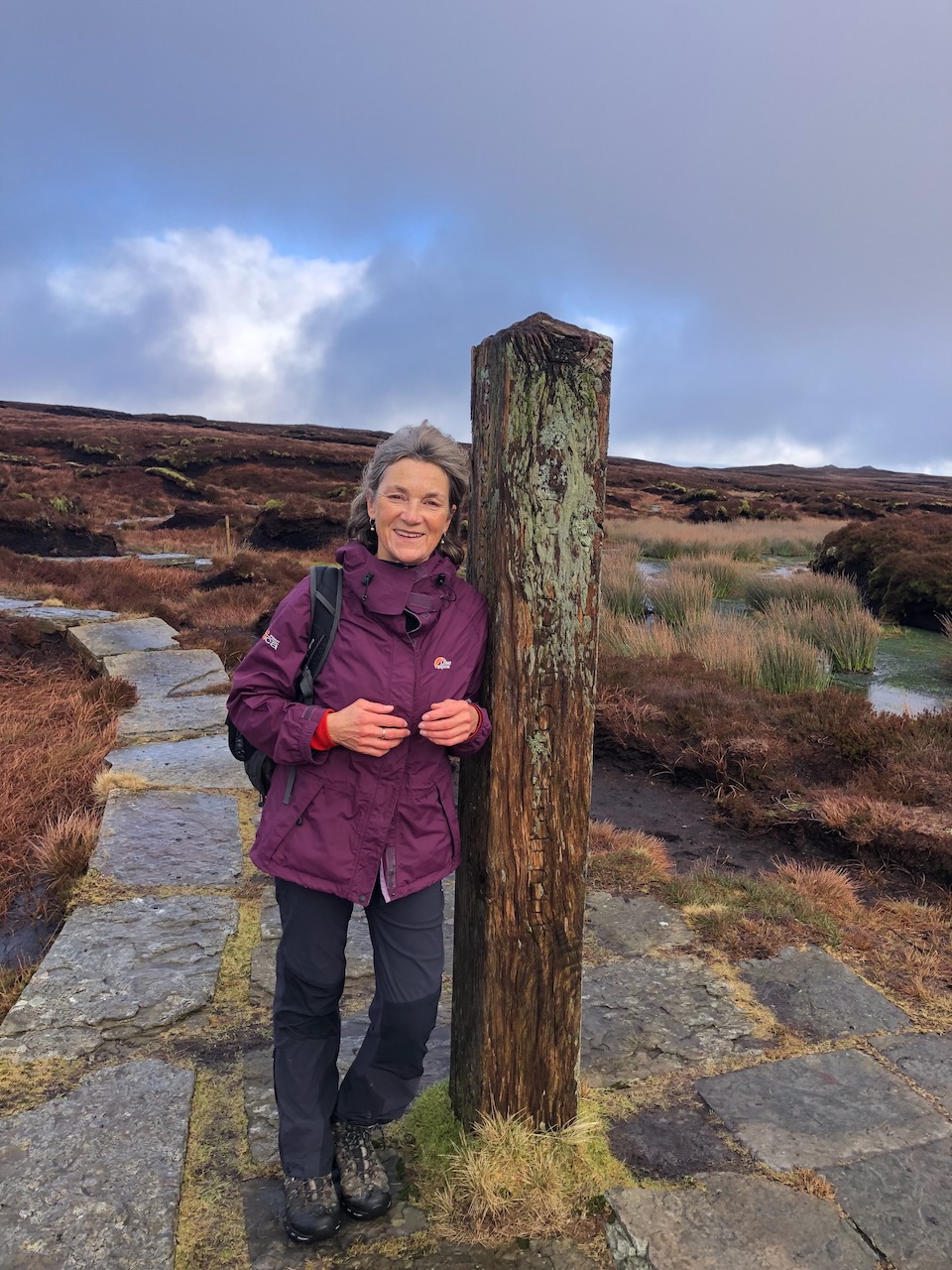
Joan’s grave lies in the Himalayan ‘Valley of Flowers’, 3,600 metres above sea level just west of Nepal and flanking the Tibetan border. She died there in 1939 aged 54. For many months of the year it is concealed by the snows but in the few months between June and September when they melt and the valley becomes accessible, a small rectangular gravestone emerges in the verdant meadows like a baby’s first tooth. Nestled below a range of snow-capped ‘glories’ that zigzag a skyline into the rarefied air, it captures the imagination of trekkers. Google search ‘Joan Legge’ and you will find she features in many a social media post or blog. People are touched by the story of this solitary British woman who found her end in such a remote and beautiful place. 

I too have long been fascinated by Joan though I can’t explain why. Her name just twinkled like a star when I first heard it in my late teens or early twenties. I knew few details other than that she was a spinster who had opted out of the trappings of aristocratic society and travelled to India; a woman who bucked the expectations and trends of the time in favour of independence and adventure. Like the tip of an iceberg her grave is just the beginning of a story I would like to find a way of telling. 

As for my friend’s question of ‘looking back’, I don’t actually feel the past lies ‘behind’ us. I am certainly interested in looking at history, most specifically Nazism, the Holocaust and the Second World War, for clues on how we can best learn the lessons of the past. And with that it mind I have explored the roles of memorials, apology, restorative justice, punishment and prisons, not least in my blogs. And yet, while they all can and do work to a degree, none of them seem to prevent cycles of violence, conflict, discrimination and trauma from repeating themselves over and over as we can witness all too frequently in the world.  

There must be something else… some other way, but we are unable to see, or even think it within the limitations of our current belief systems and knowledge of life.

My sense is that we need to go way beyond the specifics of each conflict to the very root of what leads to all of them. ‘Othering’ and seeing things is terms of clear-cut binaries that justify violent actions are clear causes. But could our fundamental, albeit often unconscious linear-based depiction of time, evolution, even ‘progress’ also be part of the problem with their goal-oriented focus on the future and belief that the past is largely done and dusted and trailing inanimately behind?

It feels increasingly like an (erroneous) modern construct (and I’m talking thousands of years ago not ten) that sees humanity as collectively shuffling forwards towards an ideal state lying in some distant future. Admittedly the present moment is where it’s all at in many belief systems, but nonetheless there is usually a destination towards which to strive. In Yogic or Buddhist practices, it might be Enlightenment, in Christian terms, Heaven or Eternal Life on the other side of death. In economics, it can be seen in politicians’ relentless chase for ‘growth’, in technology, it’s ‘progress’, in the environment, net-zero, in health, a perfect body, in leisure, a chase for something bigger, better, faster, further…

Darwinian theories of the ‘survival of the fittest’ lead to competition with winners and losers, an increasing separation of weak and strong, good and bad, rich and poor; a sense of lack, of being left behind, of missing out, of not being good enough or being better… and so many more of the psychological states that can be found behind the widespread symptoms of mental health, poverty, addictions, injustice… and war.

How well has this outlook served us? Not too well if I look around at where we are today with most problems failing to be solved using the same thinking that created them. 

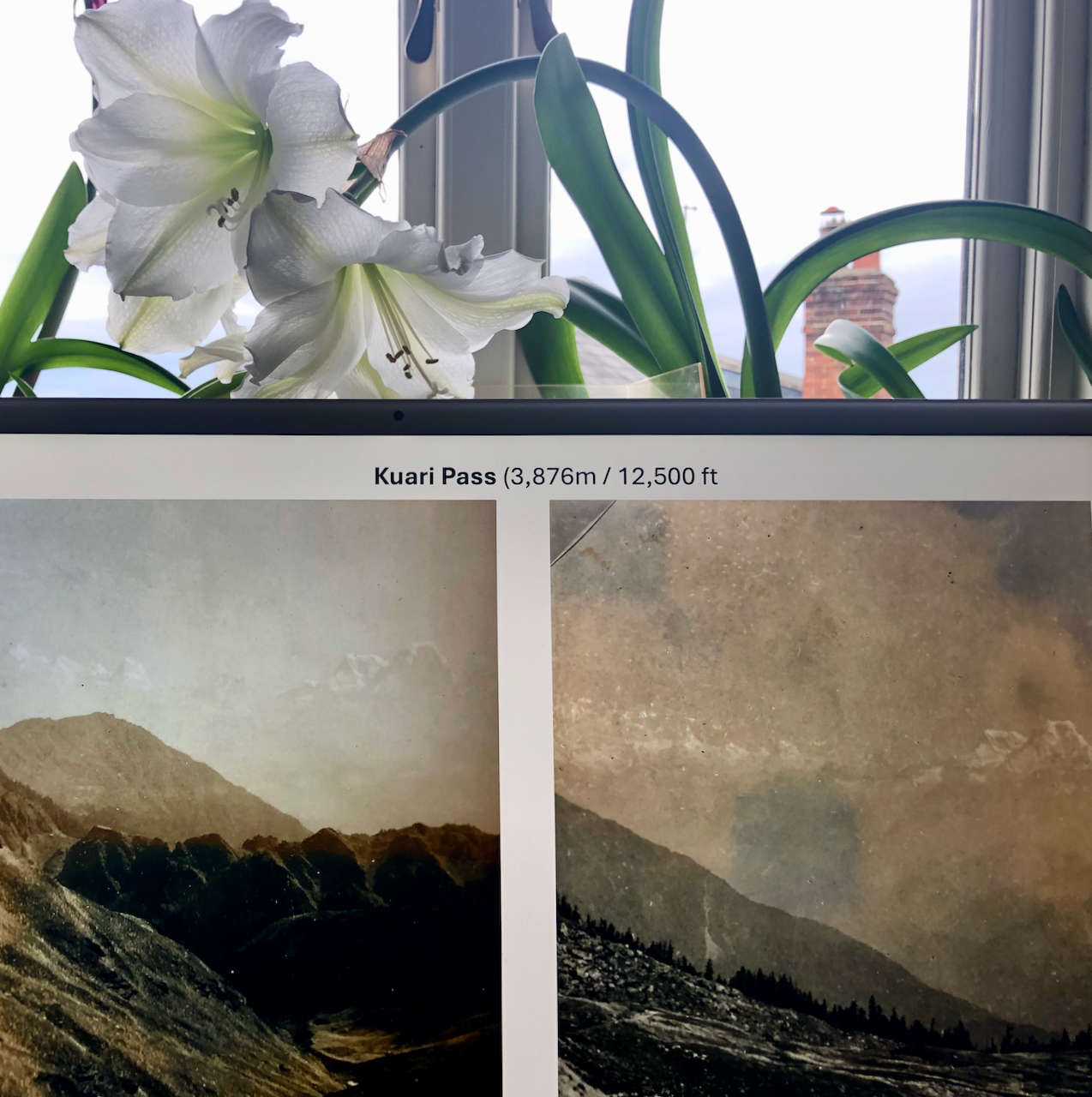
My most recent attempt to find solutions has been to duck out of the continuous stream of bad news and surround myself with flowers and sepia photos of breath-taking mountains, to inhale the extraordinary, albeit understated bravery of my great great aunt and to do a deep-dive into the contents of three inspirational books that landed in my hands as gifts with the kind of serendipitous timing that, in my experience, portends something magical.

I can feel something shifting far below the surface of the present chaos. Possibilities for improvement and lasting change… in our present, not some distant future. They have not yet flowered in my mind, so you might have to wait a little while for me to articulate what they look like!