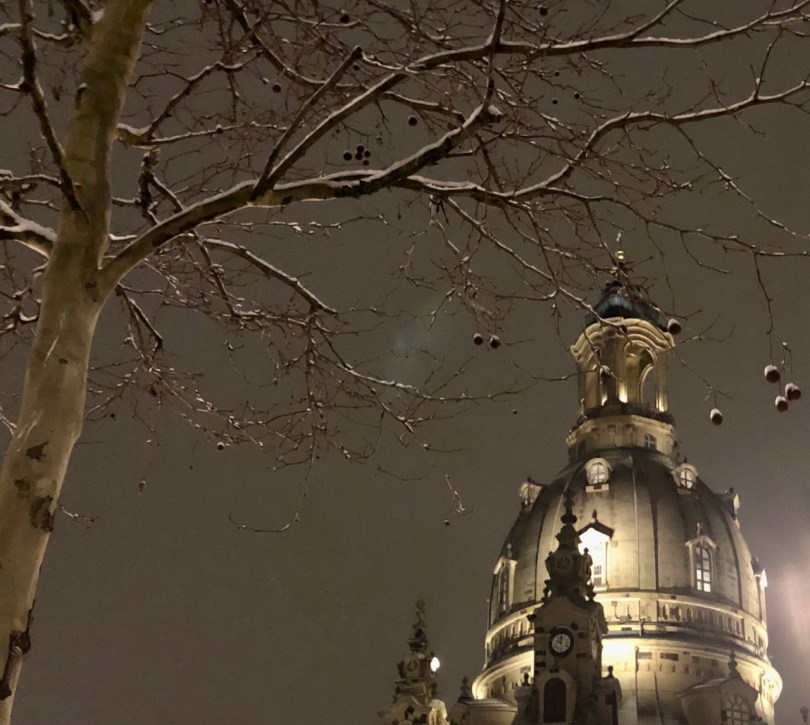
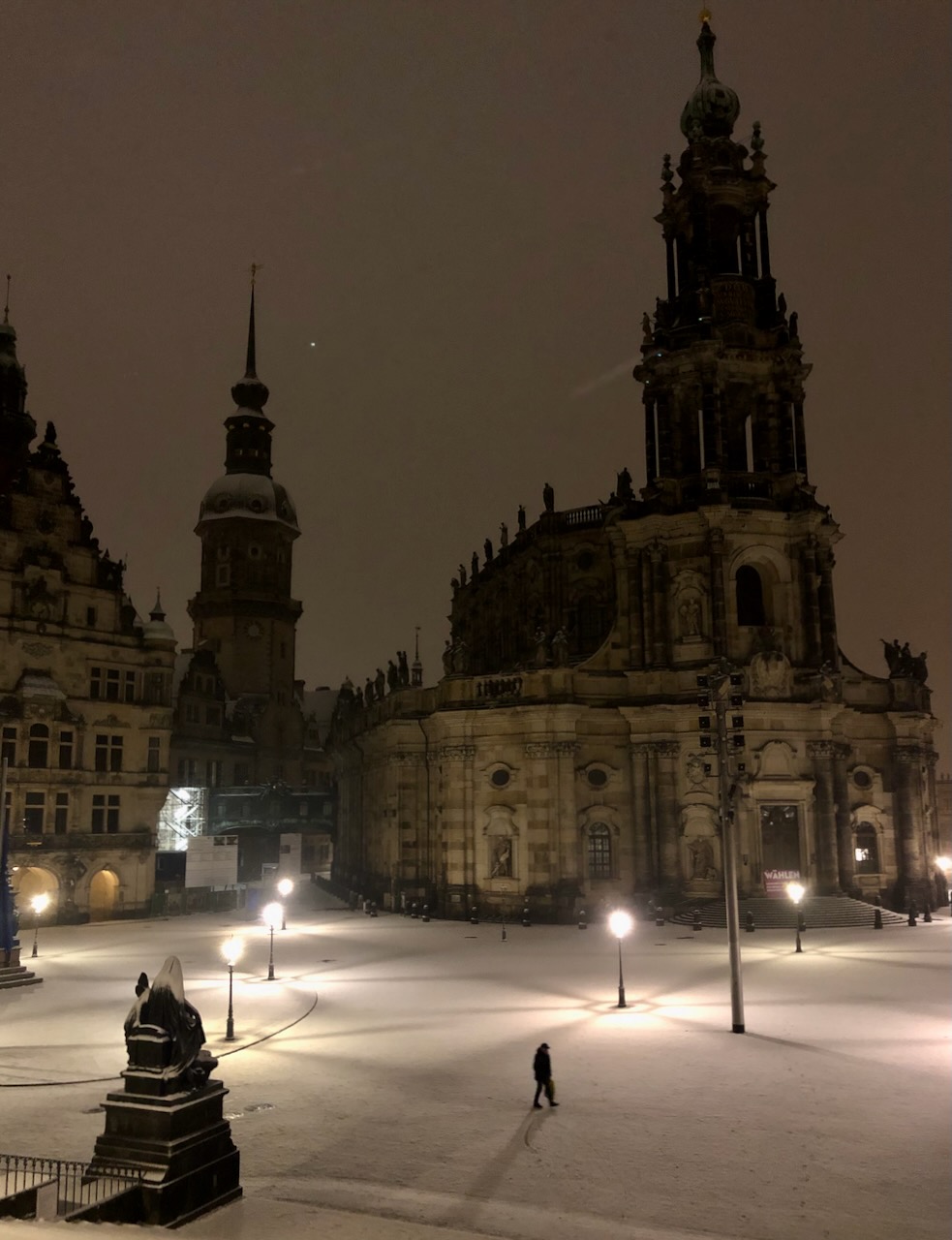
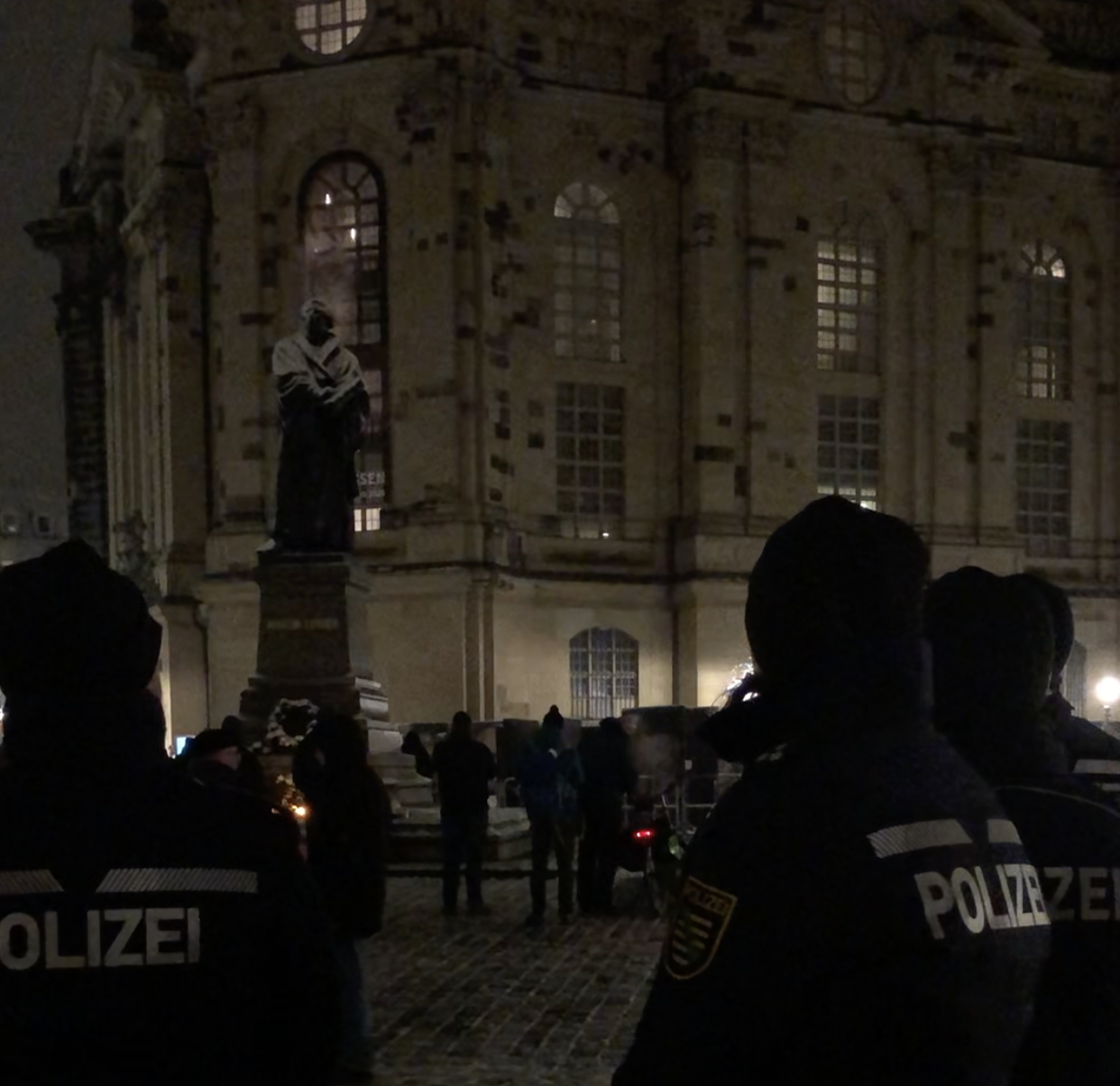
On February 13th at 9.45pm, the bells started; asymmetrical tones infusing the snow-sprinkled city.
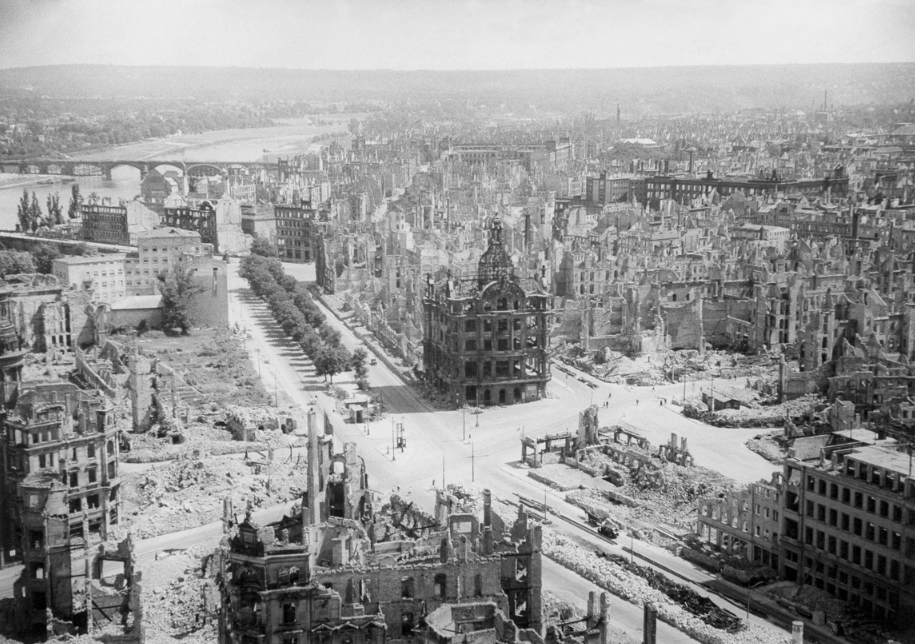
People wrapped in scarves and silence, stared at the dome of the Frauenkirche that 80 years before had been mangled by bombs into a pile of rubble that would scar the city for over fifty years.
Candles placed on the ground flickered benign flames as memories haunted the minds of those who had witnessed a firestorm that melted asphalt, roofs and neighbours alike.
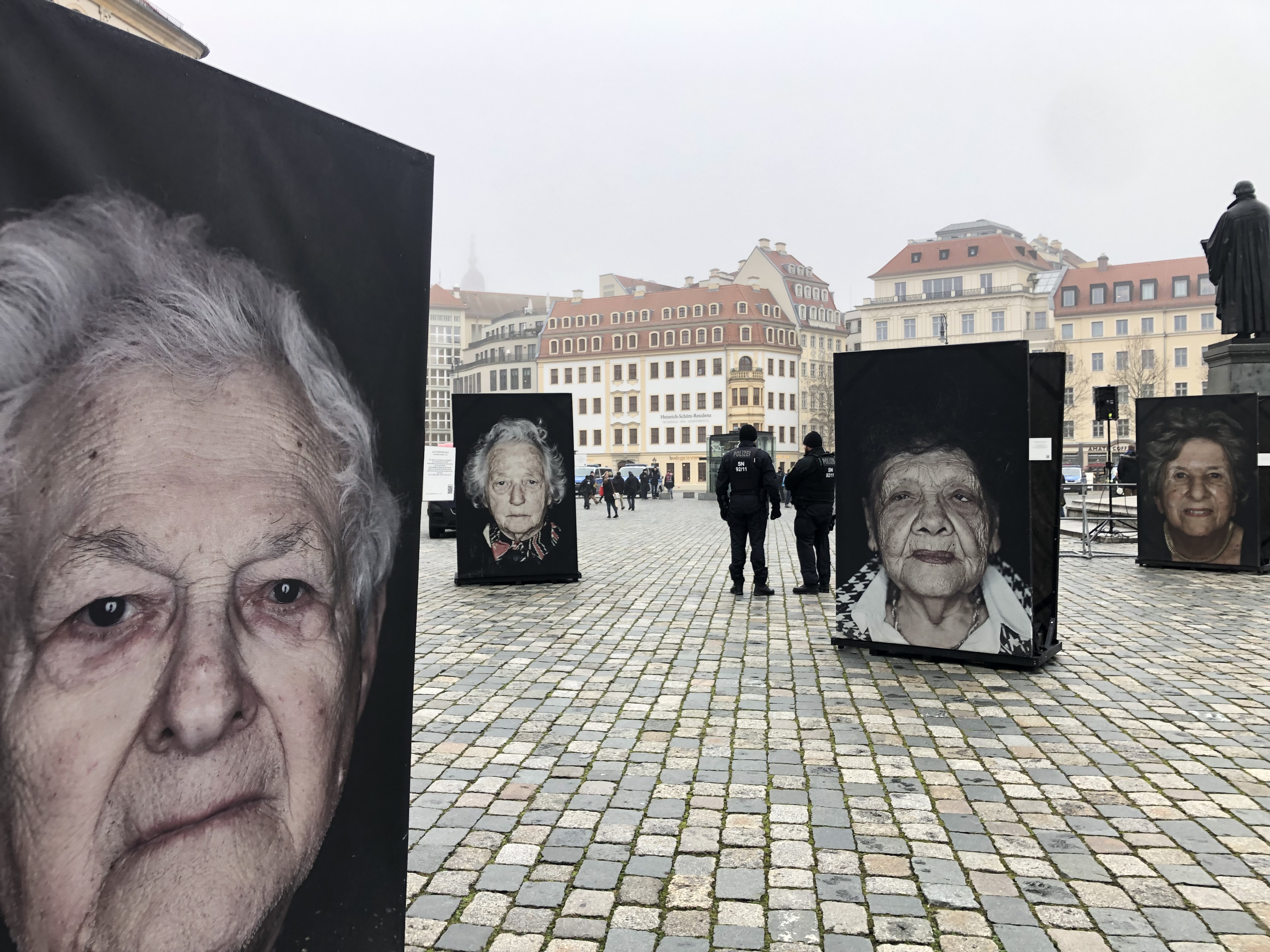
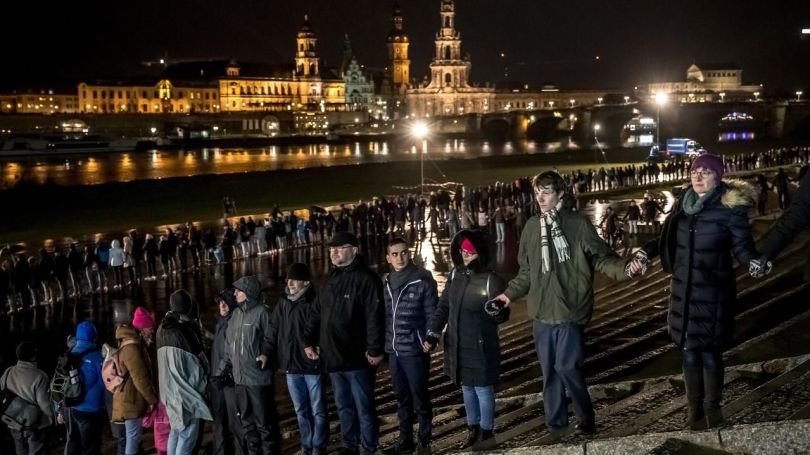
A human chain of hand-holding citizens wove through the resurrected buildings, knitted together both in remembrance and defiance of the re-emerging forces of lessons not learned.
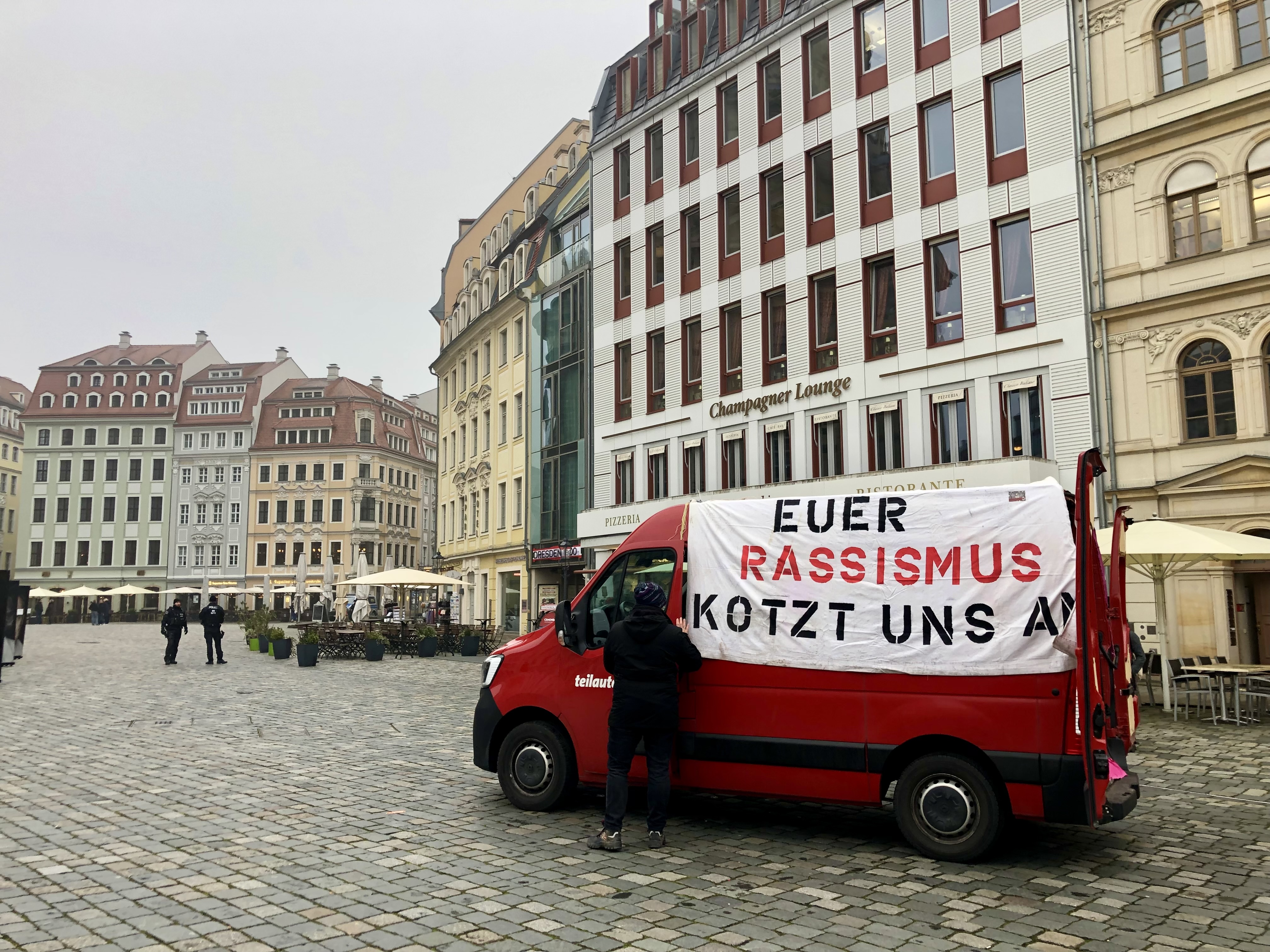
“Your racism makes us sick”
This year’s anniversary of the British and USA bombing of Dresden was determined not simply to look back and roll out familiar but increasingly empty tropes such as ‘Never Again’. Instead, ‘Future through Remembrance’ was the theme repeated through the activities I attended as a Trustee of the British Dresden Trust. Younger generations from Germany, Ukraine, Poland, UK occupied the foreground mingling the wisdom of elders with messages that gave genuine hope for our troubling times.
Stay awake. Be aware and curious as a child about what is happening around you. Look at history from multiple angles. Step back to see it in perspective. Take responsibility.
Benjamin Britten’s War Requiem followed by silence in place of applause gave the horror, tragedy and futility of any war the viscerality needed to galvanise us out of complacency into using Remembrance fiercely rather than sentimentally; to unite us as human beings, each with a heart and soul that thump with a longing for peace.
It was the move from formality to informality, from grand gestures to tiny actions we are all capable of doing everyday, that left the most lasting impression. From pomp and ceremony to conversation; from people in suits or uniforms telling us the importance of remembrance of a time that is increasingly distant, both temporally and emotionally, to a lively exchange between young and old from different nations on the values of democracy and peace.
I raise this question specifically in the wake of last week’s 75th anniversary of the Dresden bombing raid by the Allies, an occasion of remembrance that is known for bringing far-right protestors out in droves. Each year, in what they call their ‘Trauermarsch’ (funeral march), several hundred neo-Nazis, xenophobic Pegida and anti-immigrant Alternative for Germany (AfD) protestors set off from the city’s central station to commemorate the dead. The blatantly neo-Nazi flags, tattoos and slogans, however, betray their true agenda.
While part of me is swift to unreservedly dismiss all forms of far-right nationalism and extremism, another part is keen to understand: What are their grievances? What are their goals? And how should we, as individuals, meet this growing trend around the world?
I am at the very beginning of my research into these questions, but in relation to the Dresden bombings of 13th and 14th February 1945, it seems that the far-right scene have several axes to grind. For them, Dresden has become a symbol of how the Allies rewrote the history of the Second World War. Drawing on the language and inflated figures first propagated by Goebbels and the Nazi propaganda ministry, Dresden was a “terror attack,” an indisputable war crime in which up to 300,000 people – primarily women, children and refugees fleeing from the east – were horrendously murdered over three nights. (This claim is in spite of the 2010 historical investigation commissioned by the city and largely accepted by historians that conclude figures would be closer to 25,000.) By shifting the focus onto atrocities committed by the victors, they can call for a stop to Germany’s culture of atonement and guilt.
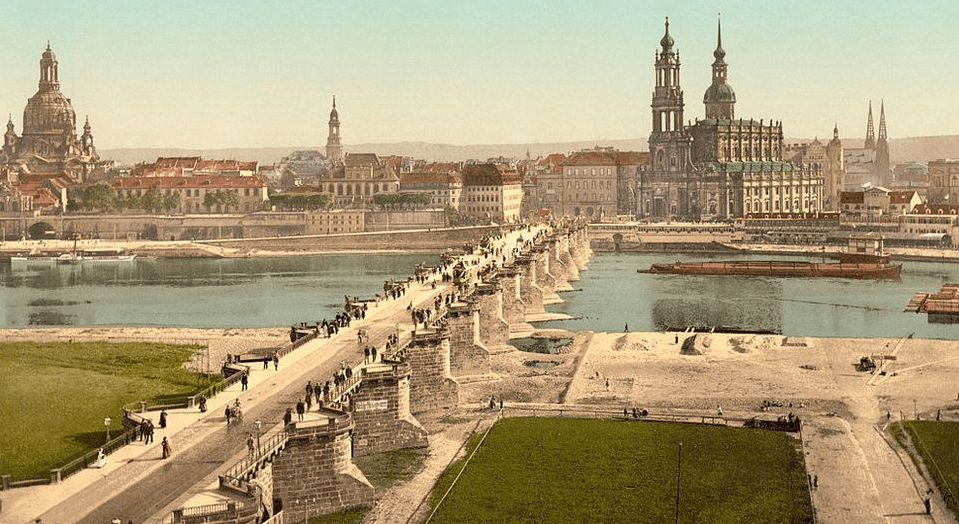
Dresden, the “Florence on the Elbe”
Dresden after the bombing in 1945
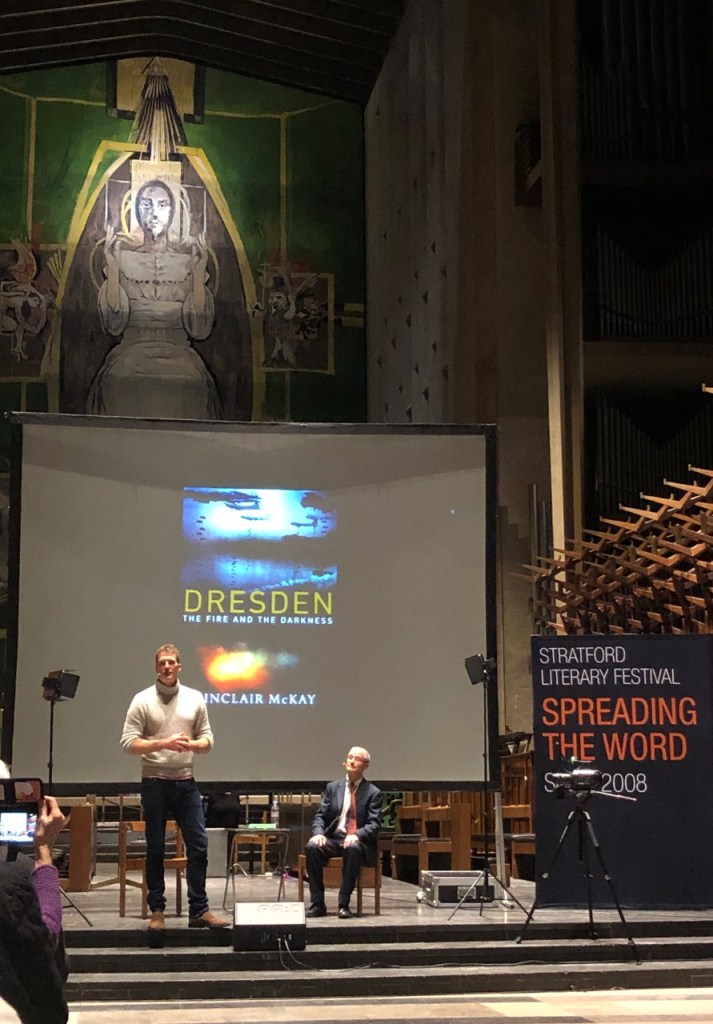
This year, the emphasis of their message was not so much on the numbers as on what they call “the truth” about the bombings. They want to make a stand against the way the bombing of Dresden, once known as the “Florence on the Elbe” for its Baroque beauty, is relativised and compared with what happens in wars all around the world. They want to preserve Dresden’s uniqueness, the myth of martyrdom and its status as a ‘city of innocence.’ In some of this they do have a point. The debate about whether Dresden was a war crime or not still divides international historians and the public alike. Just a few weeks ago, I travelled to Coventry Cathedral to hear historian Dan Snow explore the legitimacy of Dresden as a target with Sinclair McKay, whose book Dresden, The Fire and The Darkness has recently been published.
Dan Snow and Sinclair McKay at Coventry Cathedral
In the official ceremonies two days before the far right took to the streets, the man who has become a bit of a hero in my eyes, President Frank-Walter Steinmeier, addressed the dangers of this way of thinking. Unlike the 75th anniversary of the Liberation of Auschwitz at which he had spoken a few weeks before (see my January blog), the victimhood of Germans had to be placed centre-stage here. For whether perceived as deserved retribution or a tactical military operation, the bombing raids were calculatedly horrendous creating infernos of such intense heat that people literally melted. It’s an event that does indeed deserve much self-reflection and on-going soul-searching by the Allies as well as a continuation of the already considerable efforts of reconciliation by the British.
Speaking with his hallmark combination of deep sensitivity and resolute strength, Steinmeier remembered the victims but, even here, he was quick to remind Germans of their role as perpetrators. He warned against the “political forces” that seek to “manipulate history and abuse it like a weapon.” He reached out to all present to “work together for a commemoration that focuses on the suffering of the victims and the bereaved, but also asks about the reasons for this suffering.” And, seemingly referring to the far right directly, he said, “Whoever pits the dead of Dresden against the dead of Auschwitz, whoever seeks to talk down German wrongs, whoever falsifies improved knowledge and historical facts, we as democrats must loudly and clearly contradict them. We must defy them.”
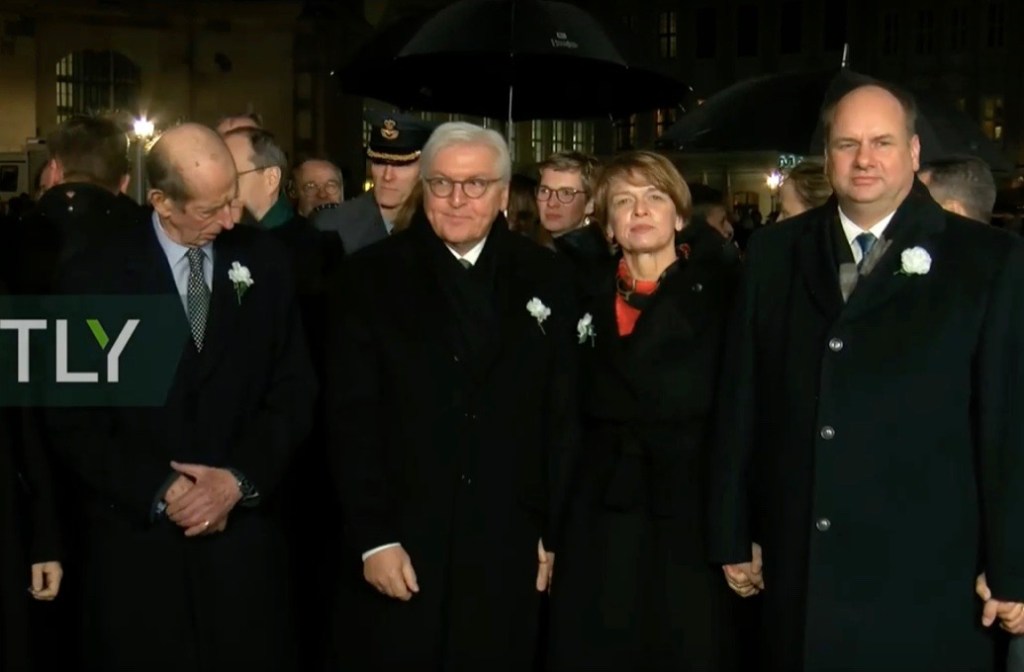
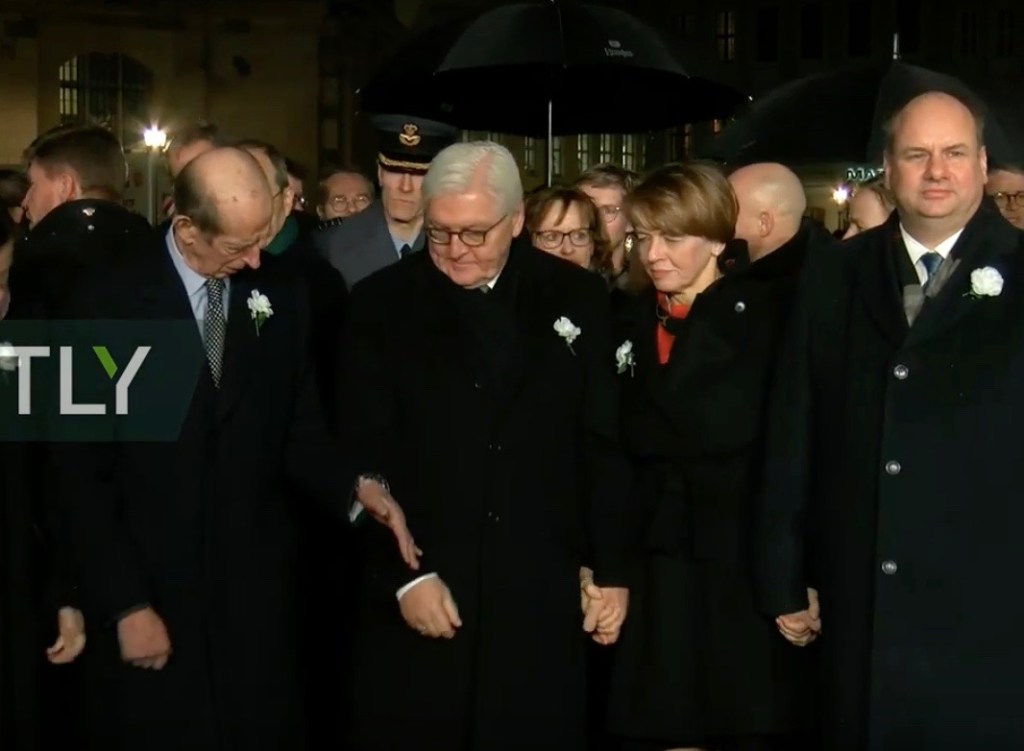
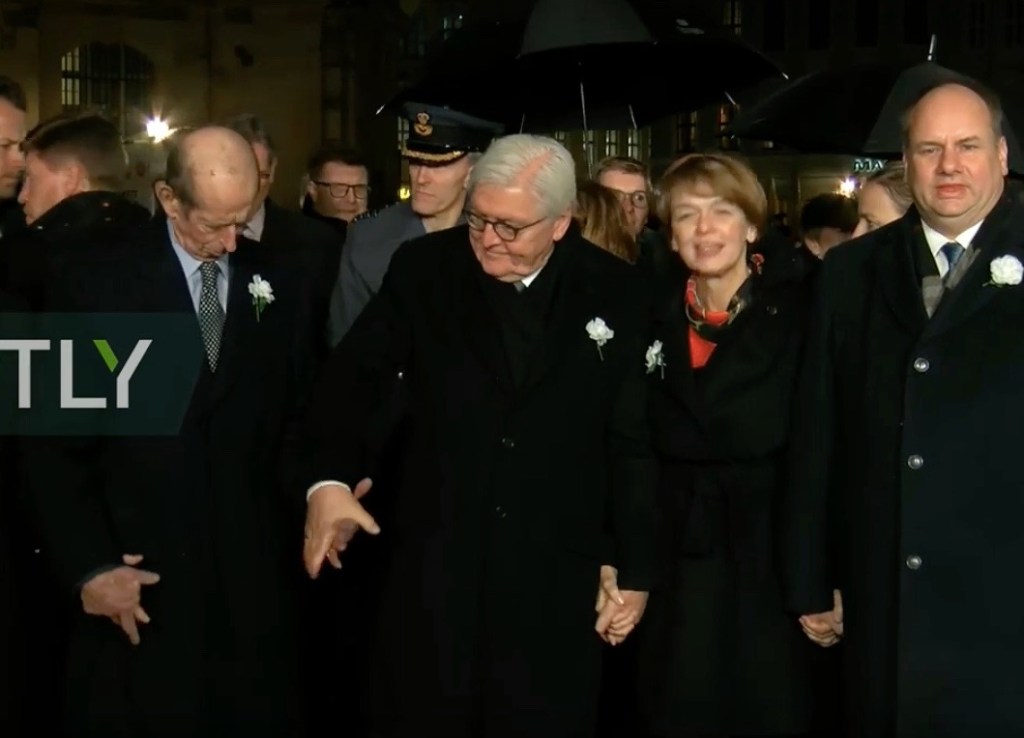
Steinmeier later joined thousands of residents in holding hands to form the annual human chain of “peace and tolerance.” Standing quietly beside him in icy rain and wind was the Duke of Kent, a long-standing contributor to British reconciliation efforts and Patron of The Dresden Trust (of which I am now honoured to be a Trustee). I don’t think Steinmeier dared initiate what happened next, but to his credit, the Duke did. Over a delightful few seconds, the nearly eighty-five-year-old royal looked down and, seeing the empty right hand of the German President, reached out and took it in his. And there they stood for a considerable time, hand in hand bearing witness to their respective nations’ capacities for the wholesale destruction of innocents.
The Duke of Kent (left) holding hands with German President, Frank-Walter Steinmeier
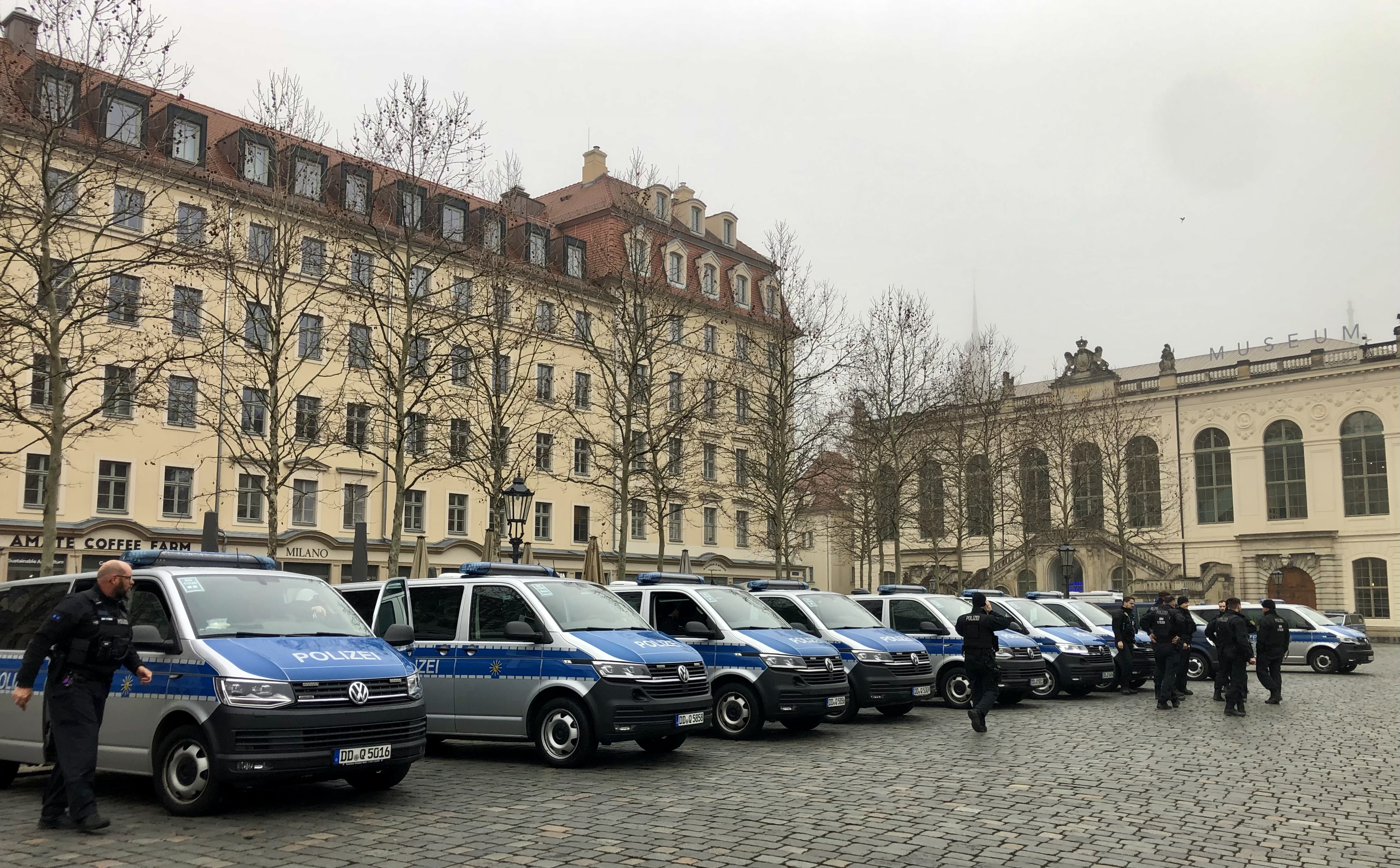
So far, my answer to my own questions is that there are way too many of us prepared to make a stand against the dark desires of the far right for them to gain significant power. In Dresden, two days after Steinmeier’s call to protect democracy, thousands of anti-fascist counter-demonstrators took to the streets forcing the comparatively low numbers of neo-Nazis to change their route. As one said, “On a day like this, you can’t just stand idly by. We are here to say that this is not our Dresden. There is no room for Nazis in this city — not now, not ever.”






 angela findlay blog