In search of ‘nothing’… Part 2 

(You can find Part 1 here)
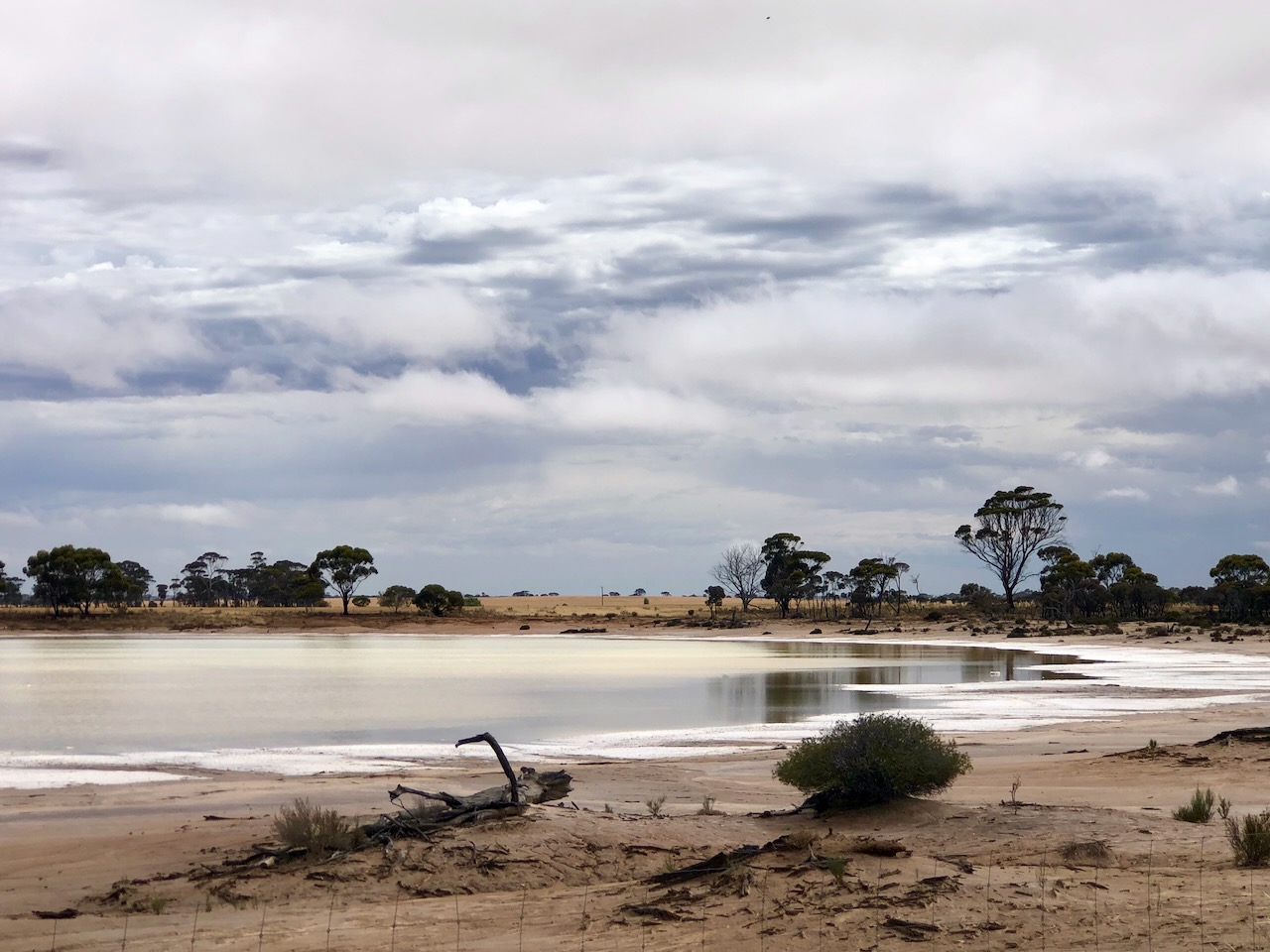
Roughly 220 miles east of Perth, beyond the salt lakes of the Western Australian Wheatbelt and within the remoteness of Hyden’s various outcrops of mineral-striped granite, the mouth of Mulka’s Cave opened just enough to allow us to clamber inside. With the brash sun denied entry, it took time to adjust to the dimness of leaked light… and silence. That’s when we saw them. 

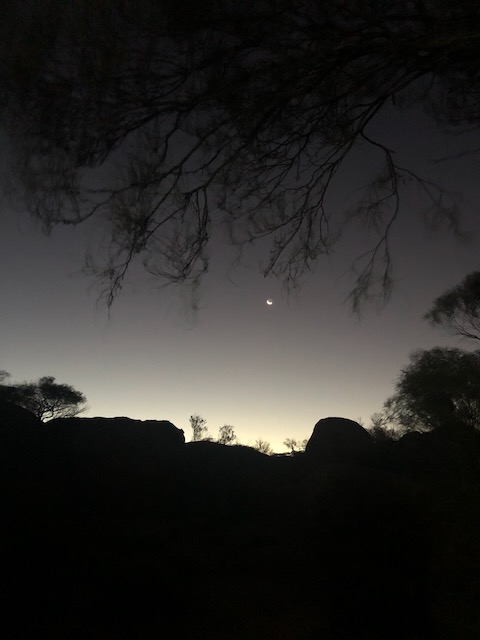
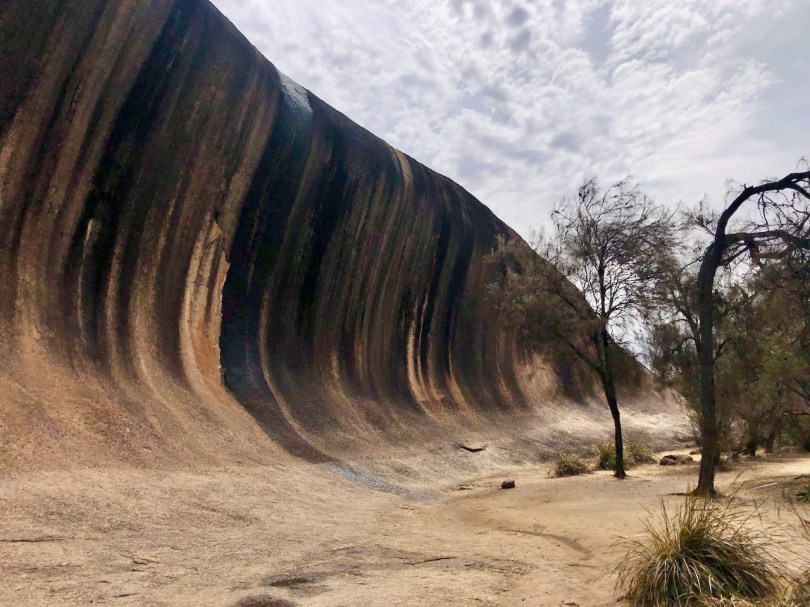
A few miles away, Hyden Rock, more famously known as Wave Rock, buzzed with flies and visitors posing for selfies and family snaps. It is better served than the cave with a visitor’s centre and trail signs tasked with the nigh on impossible endeavour of condensing 4,500 million years of evolution into digestible snapshots. Like the constellations of night skies, how do you explain the making of some of the oldest exposed rocks anywhere on earth? 

Well, with a little appropriation, I am going to give it a go. For to travel in Australia is not only to experience the elements as art forms of uncompromising intensity and beauty. It is also to engage with Australian history. And that involves confronting another story of darkness that relates to the pitch dark episode of more recent times that many people will be remembering this Saturday 27th January… Holocaust Memorial Day.

Approximately 2,500 million years ago, a mass of granite rock known as the Yilgarn Block was intruded into the earth’s crust right across the southern half of Western Australia. It remained below the surface as the first plants and trees emerged, as the first amphibians, reptiles and insects moved, as the dinosaurs came and went between 230 and 130 million years ago. Meanwhile, hidden out of sight, a process of sub-surface weathering was occurring in three massive phases of erosion. 

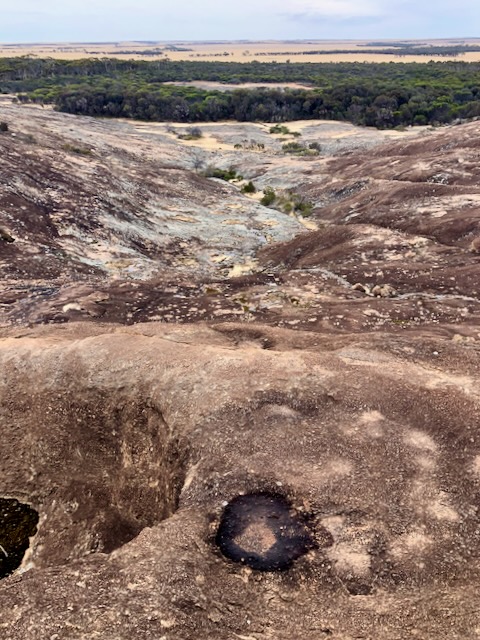
Water that ran off Hyden Rock seeped into cracks and nibbled away at the structure of the granite. While winds and heat would dry the upper layers of soil, deep down it remained wet and salty, rotting the rock face and breaking it down. When natural erosion finally lowered the surface level of the surroundings, the crumbled rock also washed away leaving a 25-meter-high and 110-meter-long crest rising from the darkness of geological history. To put humans into perspective, if the whole evolution of the earth was reduced to a single calendar year, modern man would make his entrance onto the world stage in the final half-second of December 31st!

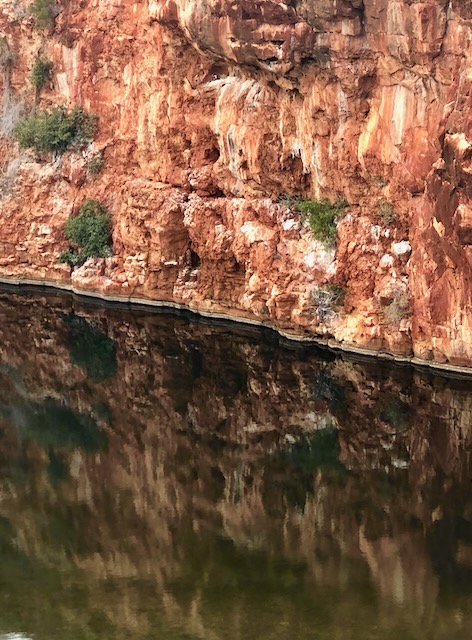
The palette of coloured stripes is created by water’s impact on the tiny lichens (the first plant form to colonise granite), mosses and blue-green algae that stain and streak the stone with shades of black, orange and silver.
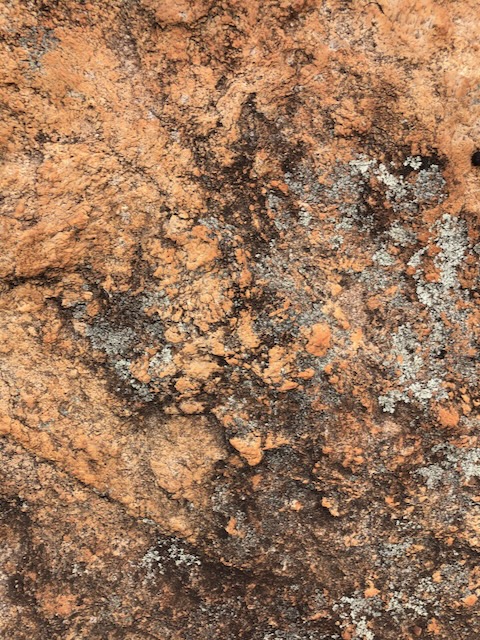
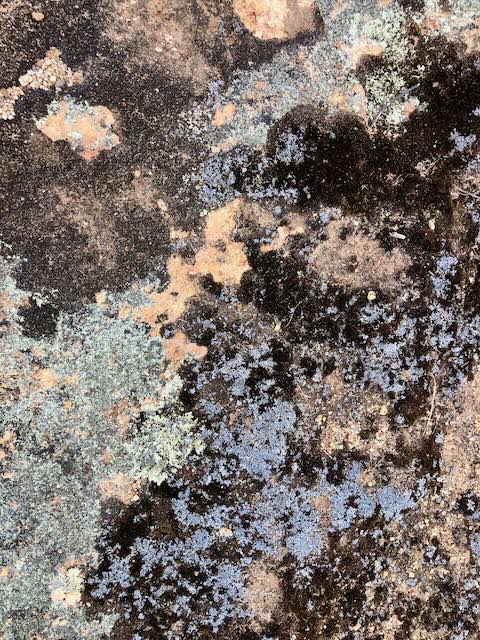
Similar processes occurred at the nearby domed granite ‘Humps,’ one of which houses Mulka’s Cave. Crafted over millions of years by salt, water and wind and painted in strokes of ochres, greys and pale cobalt dotted with small green shrubs, they were home to the vital gnamma holes. These were Aboriginal people’s natural water holes capable of storing rainwater run-off and replenished from underground stores. From the 1890s, the influx of thirsty new arrivals made these already vital sources of water even more precious than the gold they came to mine. The sacred gnamma holes became scenes of conflict. Many were drained, destroyed or polluted, others were lined and claimed as the gold diggers’ own. 
The pattern from there on is all too depressingly familiar. Domination, subjugation, exploitation, cruelty, destruction, suffering, death. A particular human / inhumane trait prevails the world over when man is consumed by greed and a sense of superiority and entitlement. But is that our true nature or an aberration of what we are designed to be?

One could say that since 1633 when Galileo was convicted of heresy for upending almost 2000 years of western scientific thinking by claiming the sun – rather than the earth – was the centre of the universe, there has been strong resistance, especially by the Catholic Church, to the ensuing demotion of man’s position in the world. 

Behind this refusal lies the still-existing widespread conviction of alpha male’s rightful position at the pinnacle of nature. In the mid 19th century, a complete misinterpretation of ‘survival of the fittest’, the catchphrase that became shorthand for Darwin’s ground-breaking theories on evolution, conveniently advanced his apparent confirmation that physical dominance triumphs. 
Such misunderstandings and claims of man’s importance and right to dominate have had devastating consequences, most recently seen in the ideologies and doctrines such as Nazism, eugenics, racial and gender discrimination and society’s policies on and treatment of the ‘weaker’ more vulnerable in society – the elderly, sick, poor, lesser-abled, foreign… and, in Australia, the indigenous Aboriginals and their descendants. (Hmmm… I can feel a Part 3 to this blog might be needed.)

Fortunately, countless scientists of different disciplines are finding that it is not physical dominance that assures survival but the human traits of friendliness, kindness, generosity, sacrifice, empathy, cooperation.

Compassion, for example, stems from a really old part of the brain. It activates the vagus nerve – the longest bundle of nerves in the human parasympathetic nervous system. Research shows how feelings of caring for someone in need activate the vagus nerve. Have a listen to this. It’s not my area of expertise, but it feels all too relevant to some of the problems in the world today. 
When I left England at the beginning of December, I realised I felt saturated and helpless in the face of the wrongness and tragic outcomes of human actions, both past and present. (For background you can read my November Blog.)

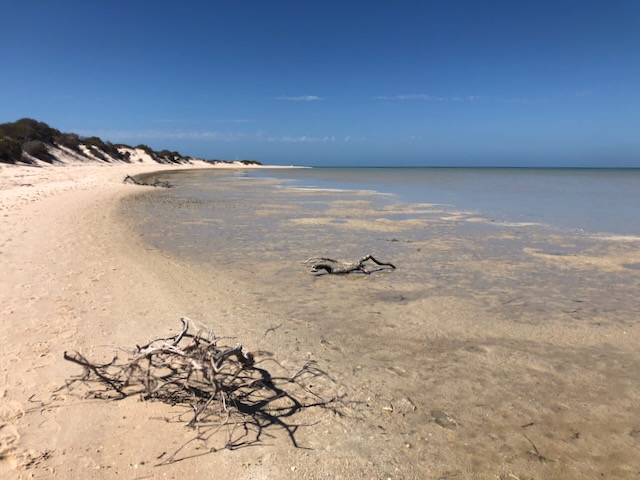
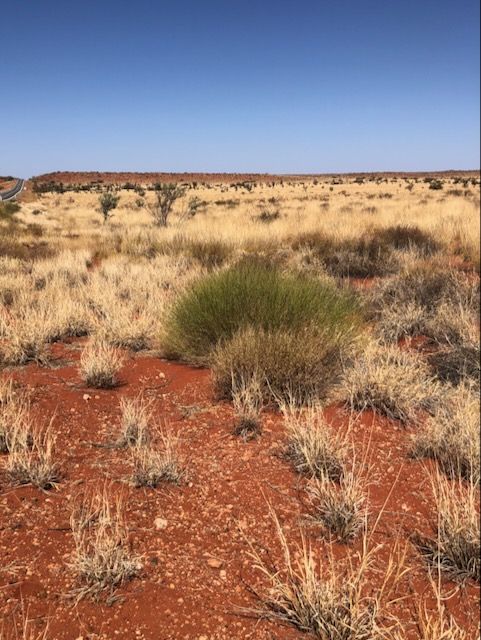
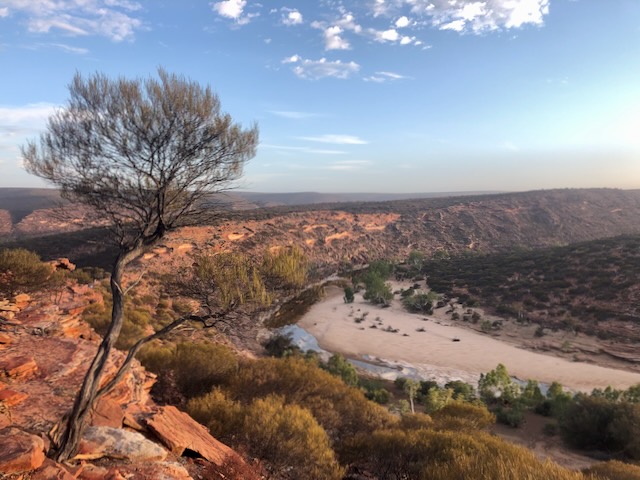
Travelling through the landscape of the Western Australian outback washed, warmed and blew the density away creating endless space… a blank inner canvas. It was a form of recalibration and alignment with nature. A state of empty ‘nothing’ full of potential and hope. And that’s what I saw in Mulka’s Cave when I saw ‘them’.

As my eyes acclimatised to the dipped light, I found myself surrounded by the traces of 3-4000-year-old, possibly much older, hands waving gently from the walls.

Some printed, others stencilled, they revealed the inextricable interplay of positive and negative space, of simultaneous absence and presence, the creative dance of inner and outer. The entirety of the world quite literally in the palm of a hand. 

These early displays of human creativity seem to bridge the synthetic divisions of secular modernity and the differences that lead to wars. They close the false divides between past, present and future to depict human beings’ true position in the scheme of things. As part of a greater whole.

To me, those ancient hands that refused to spoil or damage what their ancestral deities had made in the Dreamtime prove that we are both the created and creators. That we are both all and nothing. 

With this blog and in a very different way to usual, I acknowledge Holocaust Memorial Day on Saturday 27th January and remember the millions of people who were brutally murdered by those who could not see that ultimately, we are one.
Did you know…? A little quiz to see who is really guilty when it comes to â€˜prisons’

Talking with friends – an admittedly unreliable study on which to base objective conclusions – I am wondering if you too are experiencing a dull grey weight to your days. If your thoughts are slightly befuddled, your energy levels subdued, your feelings a kind of bland beige. Whether it’s mild depression, Long Covid, Seasonal Affective Disorder (SAD) or the impact of eighteen months of restrictions, worries and losses caused by a perfect storm of Covid, Brexit and long-term neglect, the usual palette of life seems, for many, to have mixed itself into a nondescript yuk of a colour. 

September inevitably brings change. As the nights steal increasing light from our mornings and evenings, we pack away those hopeful but unworn summer clothes, watch leaves crinkle and kickstart jobs, studies or projects. From soaring energy prices and fuel shortages to cabinet re-shuffles, we are rocked by uncertainty. Even in Germany it’s all change as Mutti, the very face of stability, tries her best to retire.  

Meanwhile, our sclerotic prison system resists change as it plods through the ebbs and flows of the outside world. In the ten years since 2011, the Right Honourables Clarke, Grayling, Gove, Truss, Lidington, Gauke and Buckland have tried, but largely failed, to stop the relentless rhythms of ineffectiveness. Will Dominic Raab, our new Secretary of State for Justice, who didn’t exactly shine in his role overseeing the evacuation of Afghanistan, be able to re-direct its course? Just looking at some of the more recent headlines, I don’t think so.

Albert Einstein said: “We cannot solve our problems with the same thinking we used when we created them.” At my Wednesday morning dance group, I experienced firsthand why. Change does not always come about through control and enforcement. It comes about through compassionate attention, movement, connection, acceptance and love.

Everybody wants to be seen for who they truly are. Because in our essence, we are all beautiful. By only seeing and judging the outer product of a person’s upbringing, education, tragedies and choices, we miss their inner selves with all their original hopes and dreams and unique offerings to the world.   

I recently attended a webinar of Ian Hislop, Editor of Private Eye, in conversation with Frances Crook, Chief Executive of the Howard League for Penal Reform. She is stepping down after 30 years as one of Britain’s leading and most respected voices on prison reform. That’s pretty much the same length of time I have been involved in teaching prisoners or campaigning for better prisons, albeit with considerably less impact. The conversation was actually more entertaining than depressing, though the facts never cease to confirm Britain’s role as an excessively punitive nation. Did you know, for example, that we give out more life sentences per year – around 13,000 – than all European countries (Turkey excluded) combined? 

Just for fun – or to add another dollop of grey to any minor depression – let’s do a little quiz based on their conversation and my on-going research.

  1. How many people are currently in our prisons?
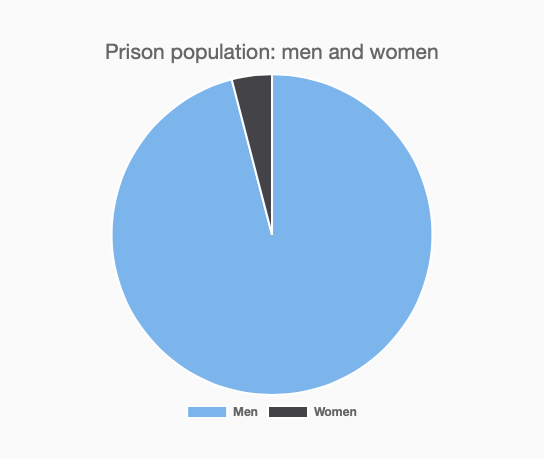
  2. What percentage of those are women?
  3. How much does re-offending cost the government and taxpayer?
  4. What happened recently in HMP Bronzefield?
  5. What almost always works?

If we start with that last question – the answer according to Frances Crook is: education. Education nearly always works. It can be beneficial to everybody. Life-changingly so. We all know that, not least because those who can afford it are prepared to invest £40,000 a year to get the best for their child. You no doubt want your children and grandchildren to have a good education too. It’s natural. So why is no more than a tiny fraction of that same sum (which is what it also costs to keep an adult in prison for a year) invested in as much education as possible for those who have so little?

One of this week’s headlines pointed out this neglect. 

This ‘Prisoners not taken to lessons…’ thing is precisely why I stopped running the Learning to Learn through the Arts scheme that I set up in my capacity as Arts Coordinator to Koestler Arts from 2002-2006. Having raised the funds, sourced appropriate artists, bought materials, liaised with prisons and organised all the many other practicalities involved in running a 4-6 week art project, all the prison had to do was deliver the men to the allotted room at the appropriate time. But more than often they didn’t. Or couldn’t. Staff shortages was one reason. Old-fashioned punitive attitudes, a risk-averse governor, bad organisation were others.

You might know the answers to the rest of the questions.

  1. 80,000. We lock up more people than anywhere in Western Europe.
  2. Roughly 3000 or up to 5% are women. 
  3. Re-offending costs £18 billion. In contrast, to run an educational course costs a few hundred pounds per person.
  4. At HMP Bronzefield, the private prison run by contractor Sodexo, an 18-year-old gave birth alone in her cell . When her calls for help were ignored, she passed out in pain. The baby died. She bit through the umbilical cord, climbed into bed and cradled it for 12 hours.

Looking at Answer Nr. 4, Chief Inspectors, charities, pressure groups can all point out the failures behind such a traumatic incident. They have been there for so long.

Yet ministers repeatedly ignore facts, common sense, morality, humanity and even kindness. 

When our prime minister quips behind closed doors at a Conservative party fundraiser that the UK could become ‘the Saudi Arabia of penal policy’ under his current ‘hardline’ home secretary, Priti Patel, you know for sure that there is little sensitivity towards the grim levels of stress, pain and discomfort experienced by those living or working in some of our prisons. Little understanding of how growing up surrounded by violence and fear has an impact on a person’s nervous system and brain functioning. Little understanding of the strain on a mother of three who has to choose between putting food on the table or heating the room for an hour. 

I believe the plethora of such unempathetic attitudes and policies towards those who are less advantaged, less educated, less fortunate are massively contributing to the current ‘yuk’ colour of life. Understanding is one of the paths to a compassionate and restorative Criminal Justice System. A lack of understanding mixed with emotional immaturity is one of the surest paths to an unjust and failing prison system. And the latter is costing us all dear, on many levels. 

They/We are squandering the precious opportunities incarceration could offer to nurture and rebuild rather than waste and destroy human potential. 

So who is really the guilty party and the danger to society here? 

If you feel moved to, please support the excellent work of Howard League for Penal Reform and/or Prison Reform Trust

Further reading – not all articles represent my opinions

Warning on ‘parlous state’ of jail education

The reform of prisons has been my life’s work, but they are still utterly broken‘ by Frances Crook

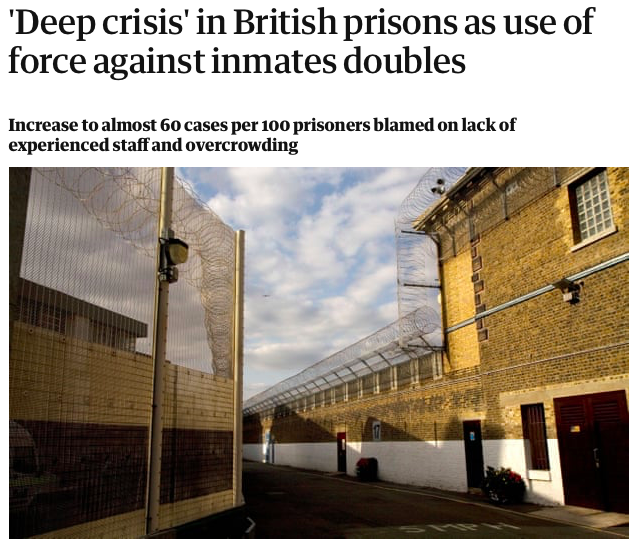
‘Deep crisis’ in British prisons as use of force against inmates doubles

Fear of more baby deaths as ministers stand firm on jailing pregnant women

Newborn baby dies in prison cell after teenage mother left alone without medical helpB