
In the faultless pageantry of Queen Elizabeth’s recent funeral, we witnessed one of the things that Britain does really well. Whether you are pro- or anti-monarchy, it was a spectacular display of planning, coordination, ritual, symbolism and attention to detail, as well as a gratitude- and love-filled farewell to the only ‘Her Majesty’ we have known. Impossible though it might sound, I missed most of it!
I was in Berlin experiencing what Germany does really well: remembrance and commemoration of a difficult and painful history. It was, however, not Germany’s intensive and on-going process of coming to terms with its Nazi past that I was focused on. This time, I was with my two siblings cycling the Berlin Wall Way, a continuous bicycle path that follows the former footprint of the 100-mile long Berlin Wall as closely as possible. Taking five days to complete, with added time to explore some of the many poignant locations in the centre, it was a total eye-opener, not least to the very concept of a divided city and country.

The first initially confusing fact to digest is that, contrary to the widely held idea that the Berlin Wall was a north-to-south boundary separating West and East Berlin, in reality the wall went all the way round West Berlin thereby creating a democratic West German island within socialist East Germany. Even with a map, we found ourselves frequently asking: So, are we in the West or the East? the answer to which, I assure you, is rarely as straightforward or obvious as it sounds.

The second tangible shock felt while snaking along its course, was the utter illogic and arbitrariness of this ideological divide – through streets, houses, communities, lakes and woodlands. This randomness would have started as a line drawn on a map by the leaders of the victorious nations – USA’s President Harry S. Truman, Josef Stalin of the USSR, Britain’s prime ministers Winston Churchill and then Clement Attlee as well as other leading members of the three delegations present. That’s probably how most of the other contested border lines around the world have originated. To engage with the whole concept of division, not to mention the impact it had on families and friends separated for nearly three decades, is almost impossible. An enormous 360˚panorama entitled THE WALL by artist Jadegar Asisi gave us arguably our most immediate and visceral sense of being in West Berlin looking at and over the wall into the deadly world behind.
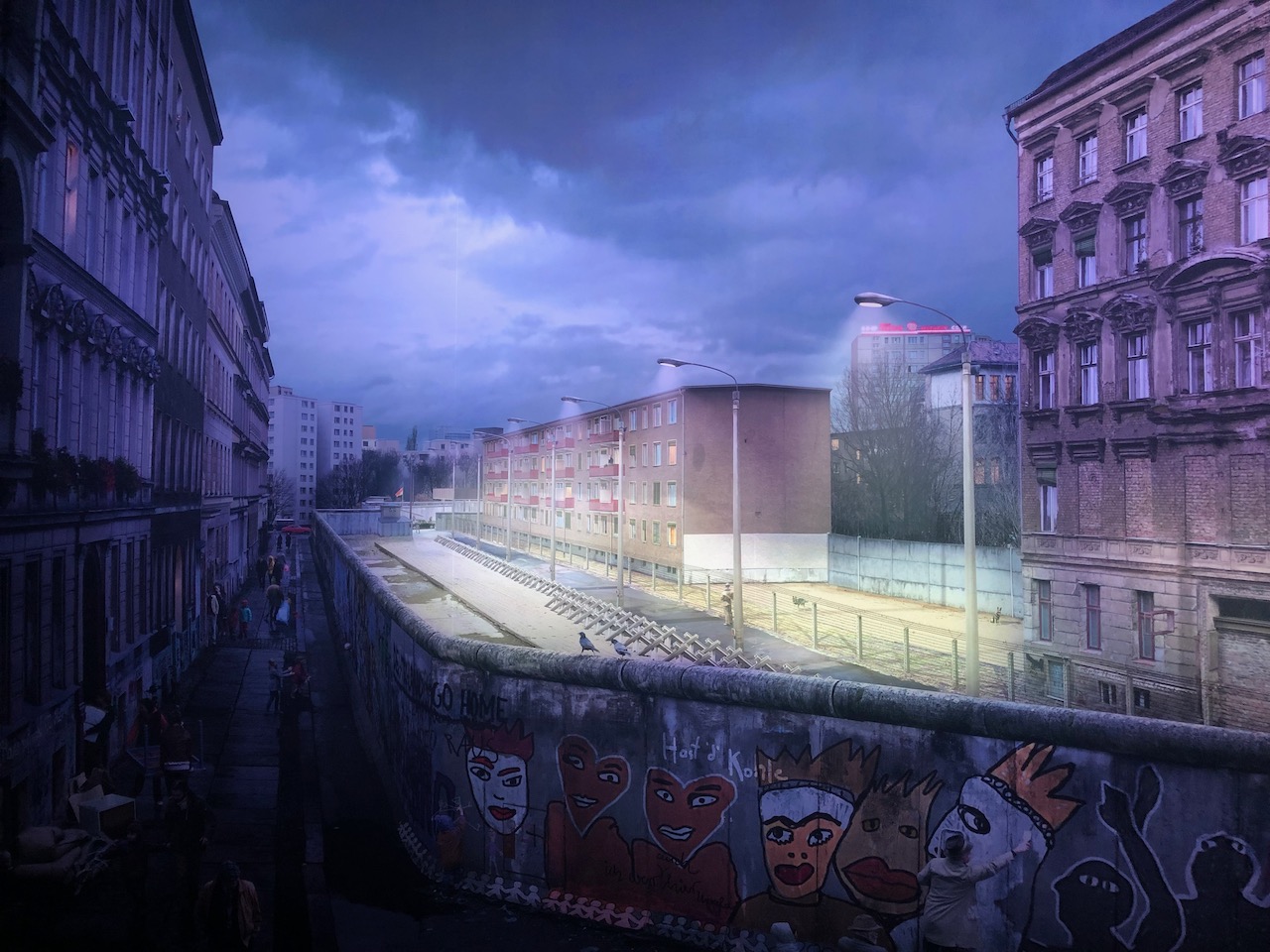
The third challenge was understanding the complex evolution and structure of the wall that was built in three phases, starting overnight on 13th August 1961 as Berliners slept. What began as a barbed wire barrier and the closure of all but 13 of the 81 established crossing points between the Western and Soviet sectors, eventually developed into not one but two concrete walls separated by a corridor of no man’s land known as the ‘death strip’ with mines, raked sand to detect footprints, trip wire machine guns and armed East German guards in watch towers or patrolling on foot with dogs. By 1989, the Wall was lined with 302 watchtowers and more than 136 people had died trying to cross it.

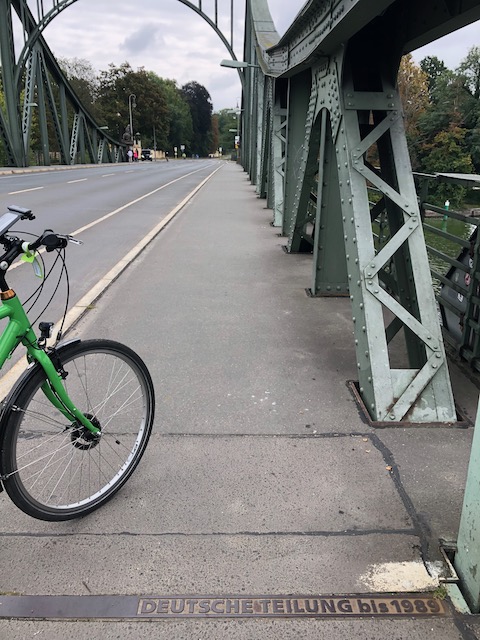
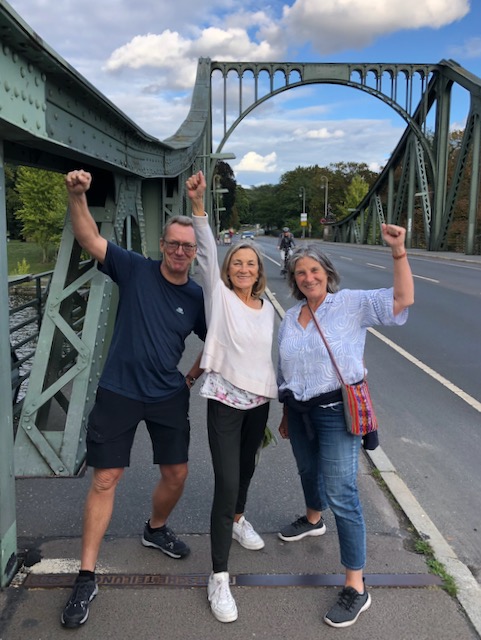
Our little trio started our circumnavigation of West Berlin on the famous Glienicker Bridge in Potsdam in the middle of which spies were on a number of occasions exchanged in the dead of night.
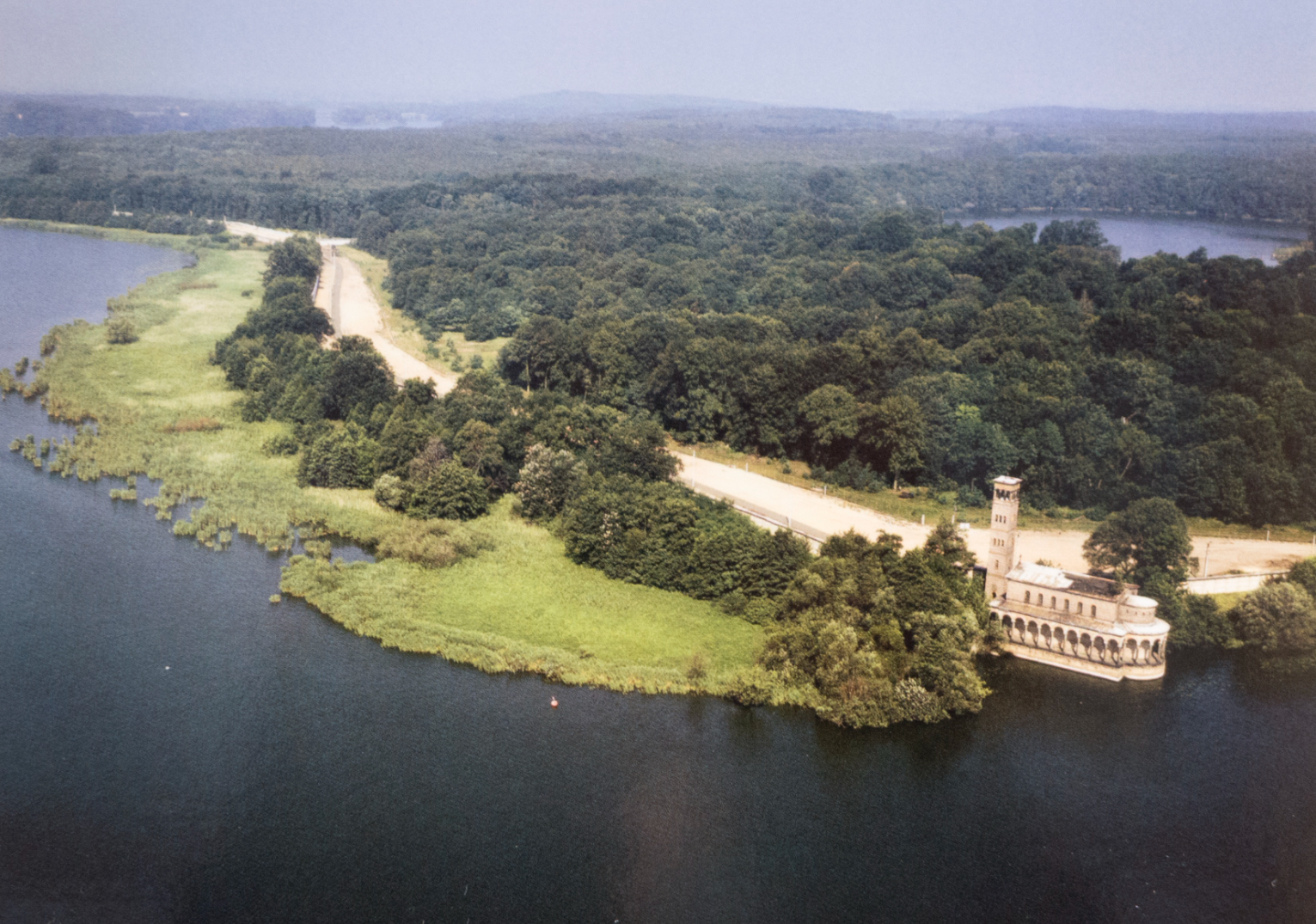
Following a reassuringly well-marked ‘Mauerweg’ route, we soon passed Schloss Cecilienhof, host to the 1945 Potsdam Conference where the division of Berlin and Germany into occupied zones was decided. From there we hugged the shoreline of beautiful lakes, passing the Sacrower Heilandskirche, the church stranded in the controlled border strip and cut off from its congregation.
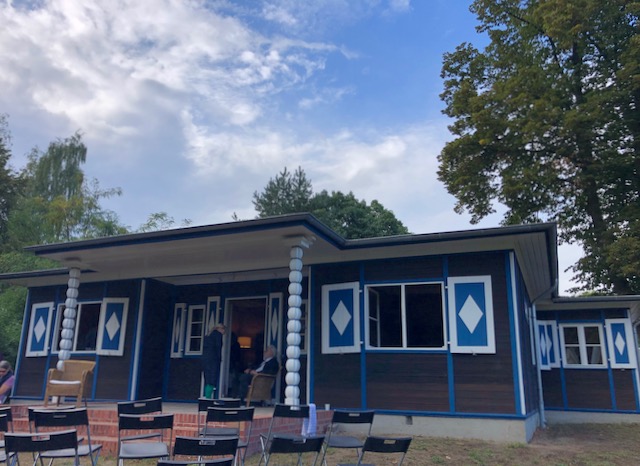
Heading north, we reached Alexander House, whose history became the subject of the acclaimed book by Thomas Harding, The House by the Lake, and is now a place of education and reconciliation.
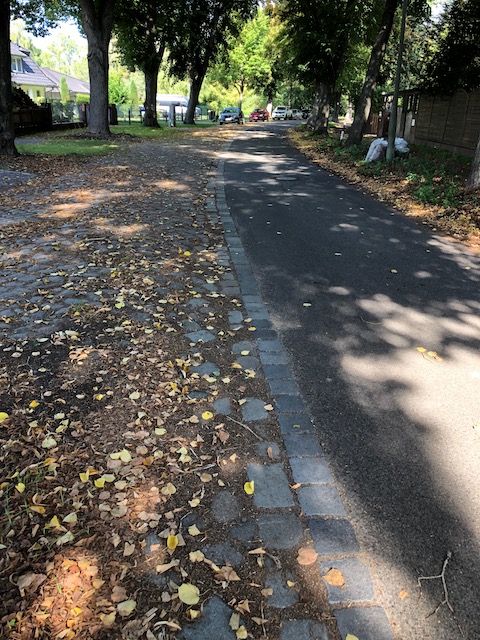
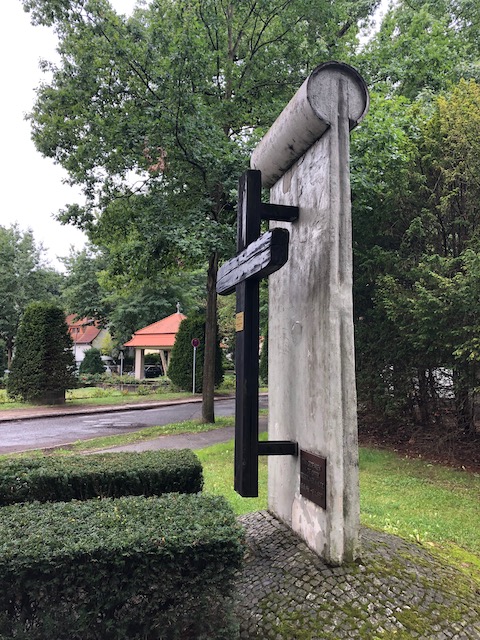
Staying in different hotels en route at intervals of roughly 30 miles enabled us to gain a sense of the scale of the wall and the extraordinary episode in history that only ended a little over 30 years ago. Sections of the concrete boundary, a double cobbled stripe embedded into the pavement or road surface, information boards with photographs and explanations all punctuated our journey.
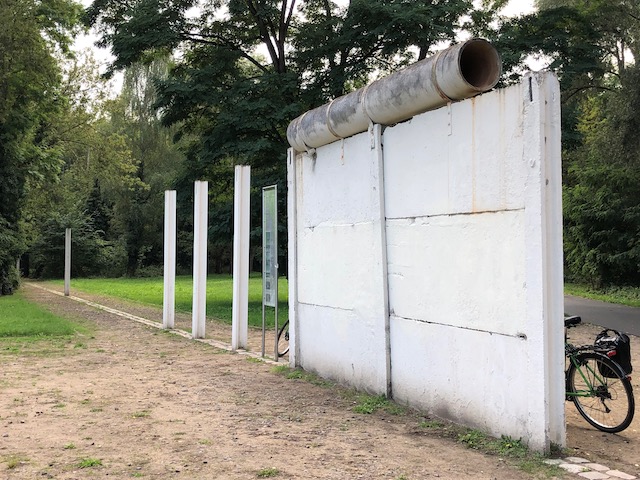

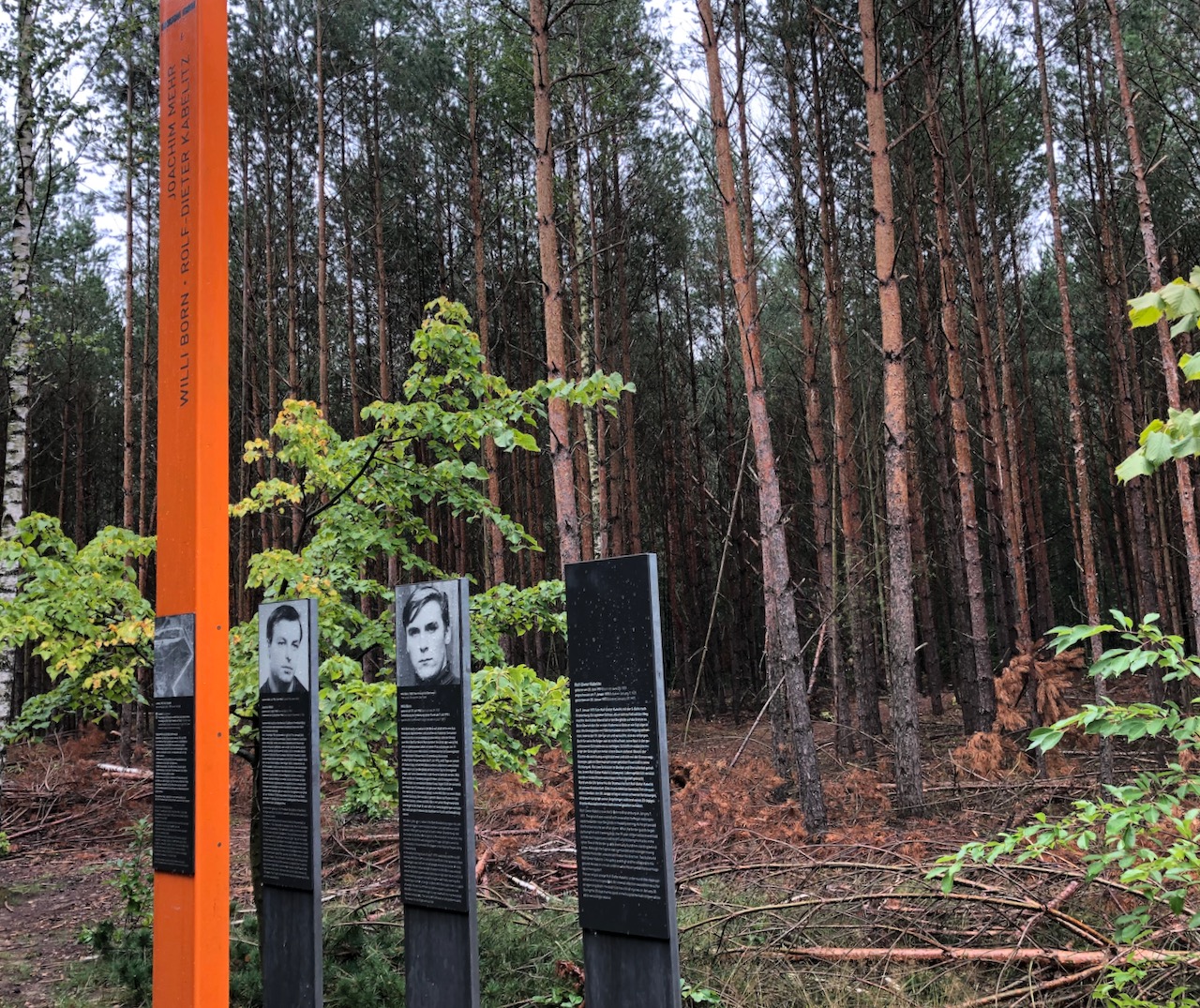
Most moving were the memorials telling heartbreaking stories of failed escapes, largely by young twenty-something-year-old men. With the same unflinching honesty for which all German WW2 or Holocaust-related museums and memorials have come to be known, these allowed us to feel the individual human cost of an ideology based on fear and a necessity to keep people in rather than keeping undesirables out, as the East’s ‘Anti-Fascist Wall’ name misleadingly proclaimed.
Continuing along canals and suburbs, we crossed the ‘Bösebrücke,’ the ‘Bad Bridge’ or Bornholm Bridge that made history on the evening of 9th November 1989 through the jubilant scenes of East Germans flooding across to be greeted by their Western “brothers and sisters” with sparkling wine, cheers and hugs while bemused Eastern border guards watched on helplessly. Unlike my former visits to Berlin while researching for my book, it was this joyous energy of liberation that primarily accompanied me on this trip and allowed me to experience the incredible resilience of Berlin’s inhabitants, past and present, and the revival of its worldwide status as a brilliantly creative, thriving city.

On we cycled, heading south through the beautifully curated but frequently harrowing Mauerpark (Wall Park) that leads into the Bernauer Strasse from which many of the well-known pictures of people jumping out of house windows into tautly held blankets in the West were taken. It was also the street under which various escape tunnels were dug similar to that shown in the 1962 documentary, The Tunnel and including the ‘Tunnel 29’ of the brilliant podcast and book with the same name.
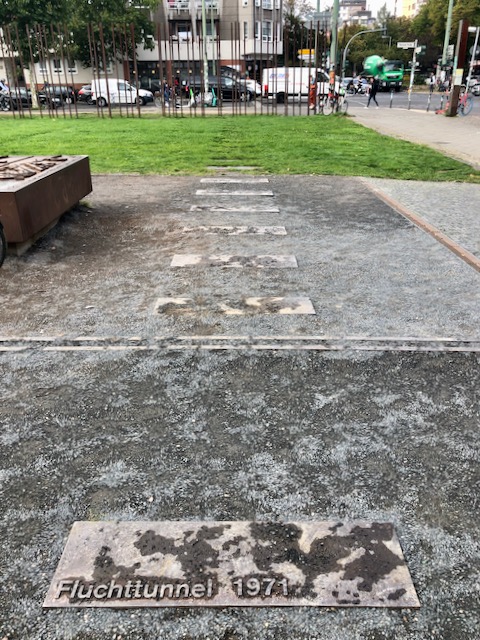
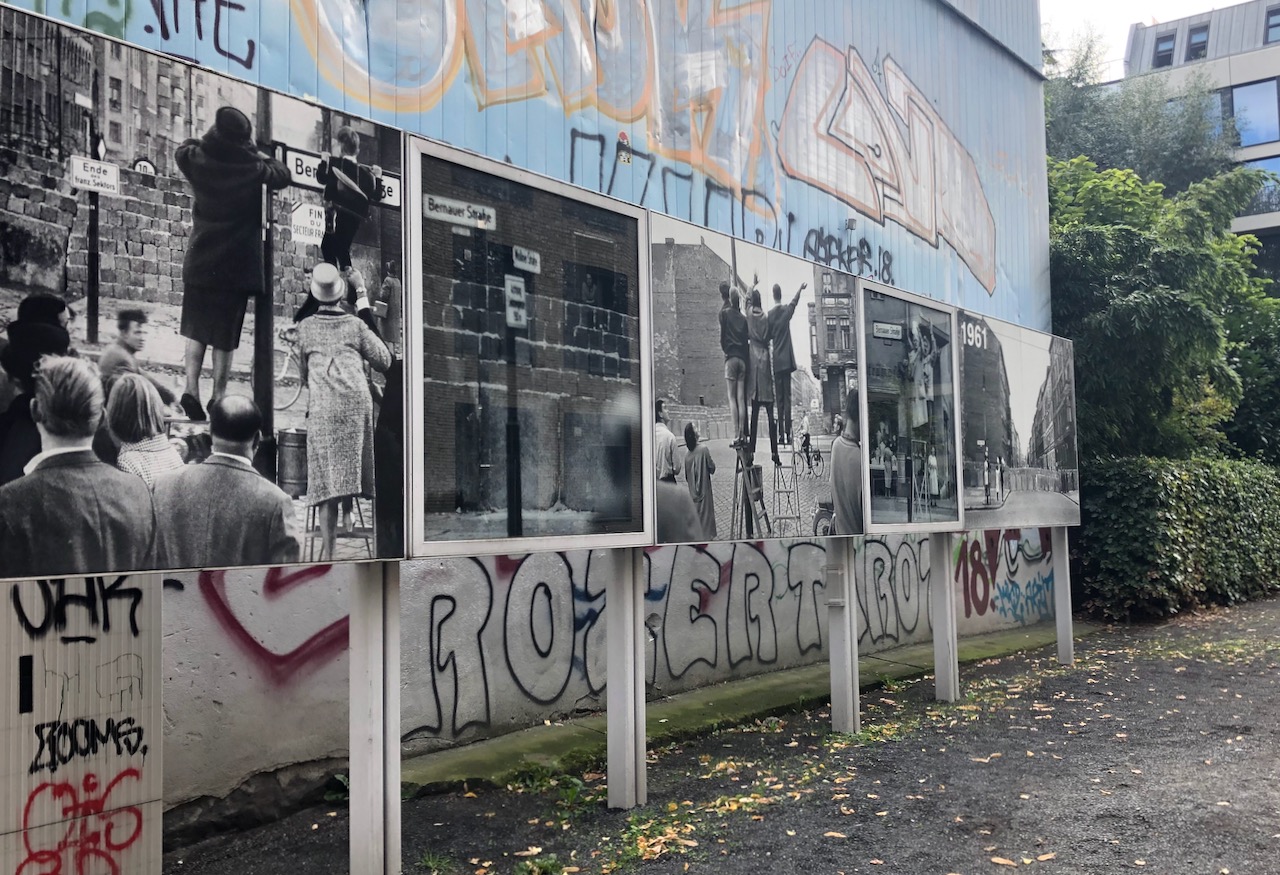
An extended section of the wall and border strip have been preserved as a chilling testimony to its once terrifying presence.

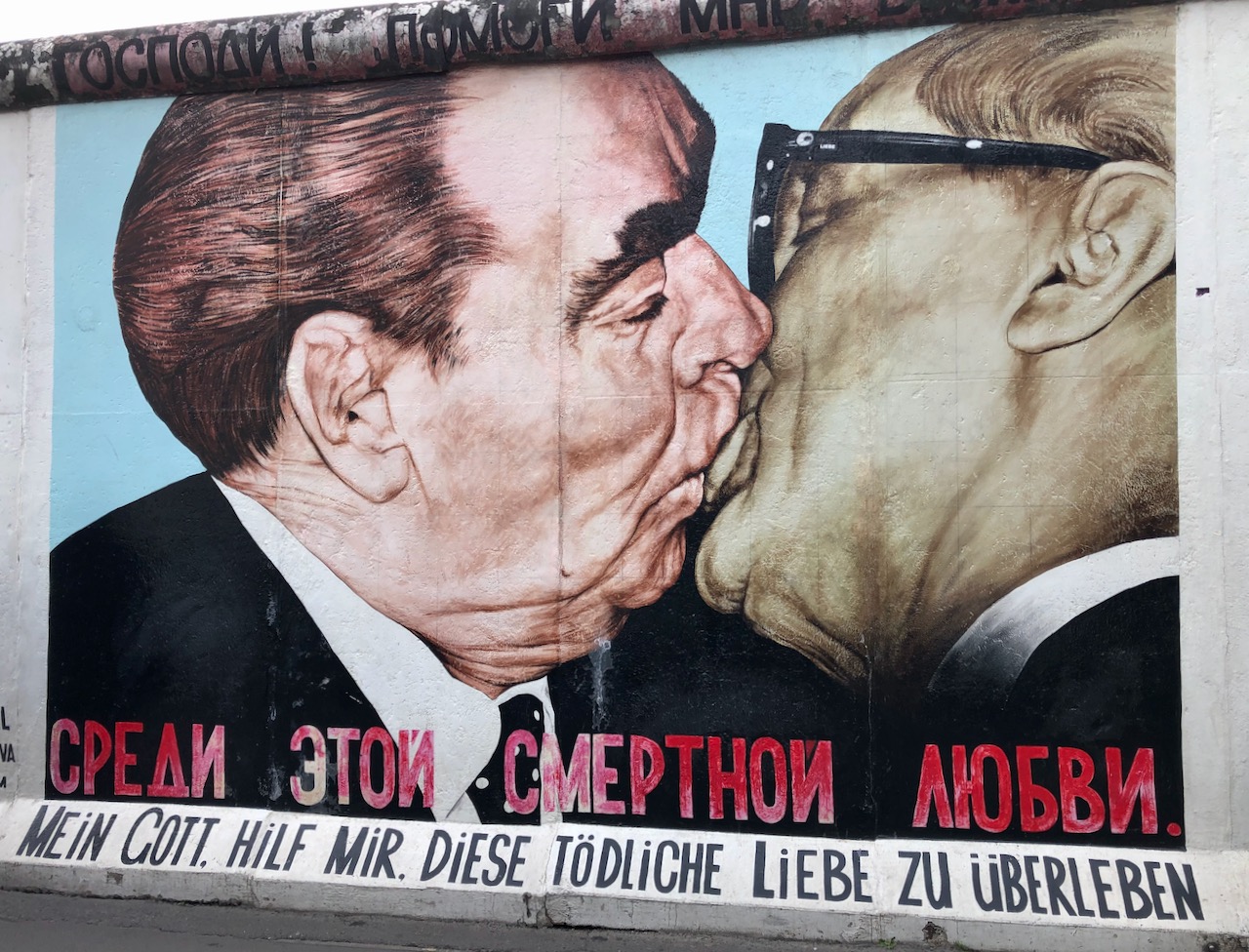
The Wall then continues through Berlin Mitte past some of Berlin’s most famous landmarks: the Reichstag, the Brandenberg Gates, Under den Linden and the Tiergarten, past Potsdamer Platz and Check Point Charlie and along the boundary of what is now one of Berlin’s most chilling museums – the Topography of Terror – but what once was the location of many of the most sinister ministries of the Nazi regime. Then through graffiti-covered Kreuzberg, over the River Spree and to the longest surviving stretch of the inner wall painted in 1991 by painters from all over the world to form the colourful East Side Gallery.
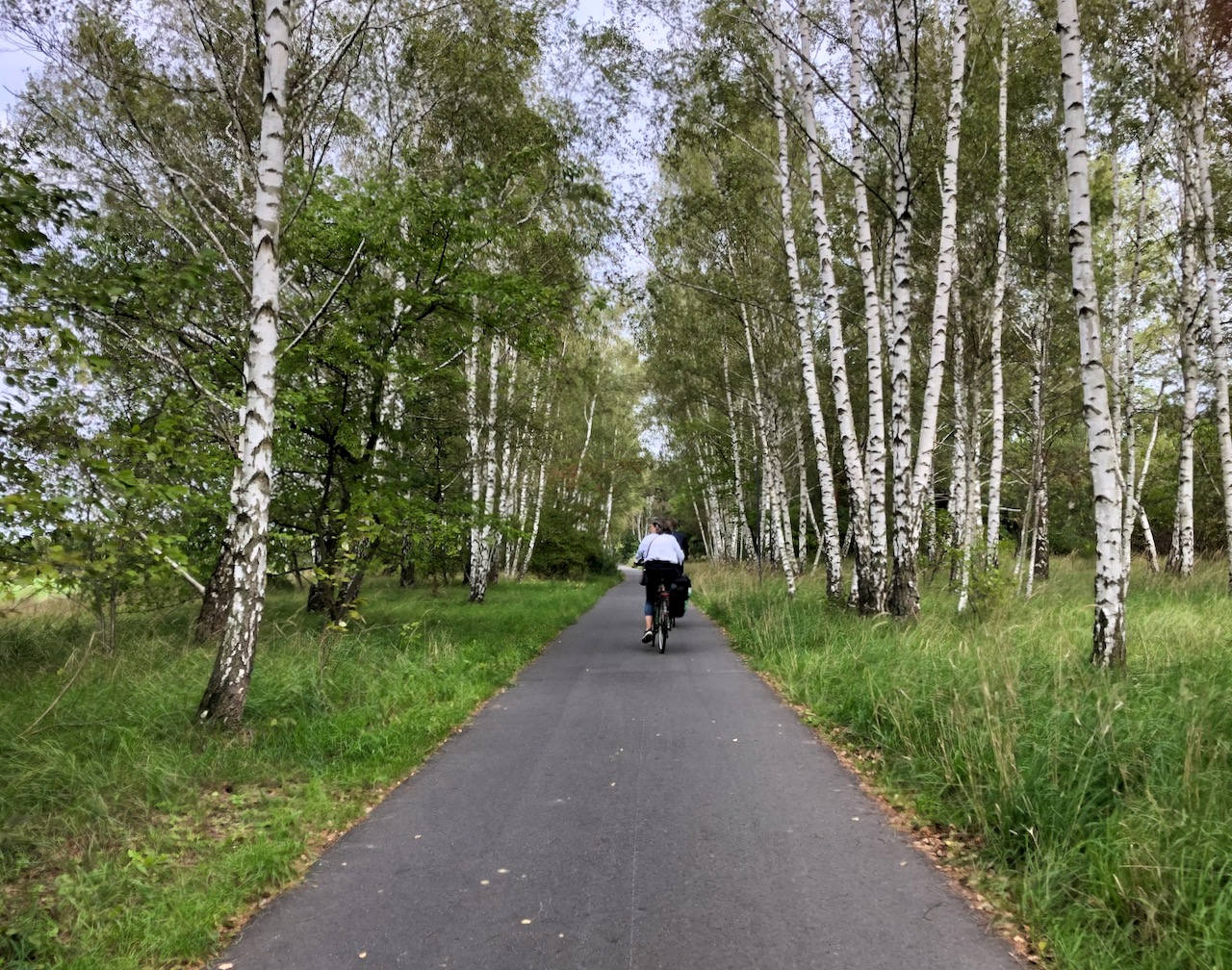
The final 40 miles or so along the southern strip of the wall’s course back to Potsdam was largely rural. A sense of peace replaces the former horror of all that the border came to represent. Long stretches of open fields, avenues of birch trees and an alley of 800 ornamental cherry trees donated by Japanese citizens and a TV station in 1995 “out of joy over the reunification of Germany.”
Finally, the three of us arrived back on the Glienicker Bridge from which we had begun our trip, each a little changed, each with a greater knowledge and understanding of German history and our German roots. Each with different emotional responses but a shared sense of the ultimate triumph of humanity and freedom over inhumane systems of repression.
Upcoming Events relating to my book – In My Grandfather’s Shadow:
Friday 7th October, 7pm. Ebeneza Presents, Somerset: In My Grandfather’s Shadow. More information and tickets here
Sunday 9th October, 4pm. Cuckfield Book Festival: I will be in conversation with Julia Boyd, the best-selling author of Travellers in the Third Reich and A Village in the Third Reich.
More information and tickets here.
Wednesday 12th October, 4pm. Mere Literary Festival: In Conversation with Jo Hall. More information and tickets here
Sunday 3rd November, 8.30pm. Stroud Book Festival: In Conversation with Alice Jolly, novelist, playwright and memoirist. More information and tickets here



 Reading Prison

 angela findlay blog