Should we be seeing the storming of the U.S. Capitol as Trump’s Kristallnacht?
On Sunday 10thJanuary 2021, Arnold Schwarzenegger, the Terminator action hero turned former governor of California, posted a short video on Twitter that went viral. Staring straight into the camera against a backdrop of stars and stripes, the man once known for his body-built body flexed his moral muscles by comparing the mob that stormed the U.S. Capitol with the Nazis.

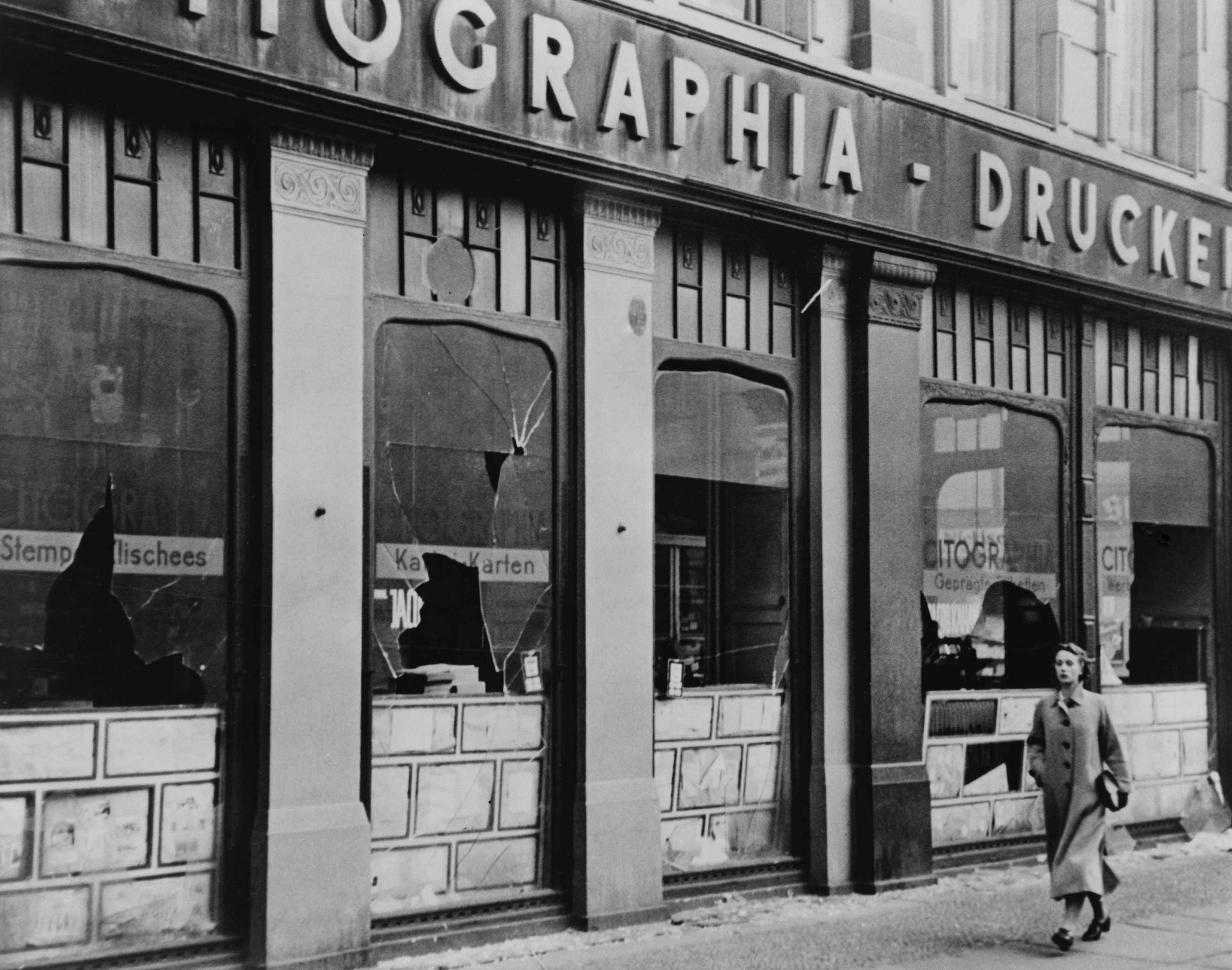
“Wednesday was the Night of Broken Glass right here in the United States,” he said, referring to the horrors of Kristallnacht, the night of 9th/10th November 1938 when Nazis in Germany and Austria smashed the windows of Jewish homes, schools and stores and set fire to the synagogues. “The broken glass was in the windows of the United States Capitol,” he continued. “But the mob did not just shatter the windows of the Capitol. They shattered the ideas we took for granted. They did not just break down the doors of the building that housed American democracy. They trampled the very principles on which our country was founded.”

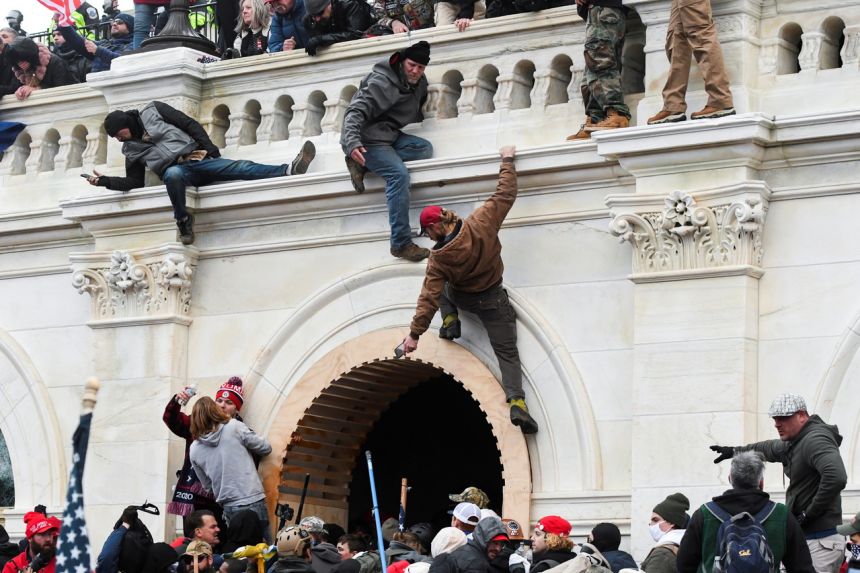
Witnessing, in real time, Trump-incited protestors scale white walls and balconies and swarm into the home of the U.S. Congress was truly shocking. Individually most looked pretty ‘normal’ with their caps, hoodies, beards – or horns – in place of masks. But as a mass emboldened by a collective mission, they felt sinister. A mob stitched together by the blatant, you’d think unbelievable, lies of their leader. Trump’s temper tantrum had turned a corner and stamped on the accelerator to become a genuine threat to life. 

But, though I admire Schwarzenegger for speaking out unequivocally, can you really equate what happened on 6th January with Kristallnacht? Are Trump’s ‘mobsters’ a valid equivalent to the rioting members of the SA (Sturmabteilung) and Hitler Youth? Is Trump an accurate counterpart to Goebbels? And finally, has democracy been shattered in the way Nazis shattered Jewish lives and livelihoods that night? I don’t think so, but I ask genuinely because making such serious comparisons to such a vast audience, albeit diluted by a schmalzy soundtrack and other comforting dollops of Hollywood, carries responsibilities and consequences. If it was America’s Kristallnacht, what should we and the rest of the world be doing about it?

Accurate or exaggerated, Schwarzenegger is certainly more qualified than most to draw such parallels. Born in Austria in 1947, he grew up with and among people who had lived through the Third Reich and Second World War: active cogs in the Nazi killing machine; passive bystanders, looking away but “going along… step-by-step… down the road;” or any of the other shades of innocence or culpability in between. 

What is indisputable in both scenarios – and recent ones here – is the role lies play in leading to things spinning out of control. But it’s intolerance that ultimately fuels these lies. Of course, there’s a healthy form of intolerance, which makes us speak out in the face of ‘wrongness’. But on either side of that, lie two unhealthy extremes: intolerance of anything or anyone that is different to us, ‘other’; and over-tolerance of that which may be familiar, desirable or comfortable to us, but that harms others.

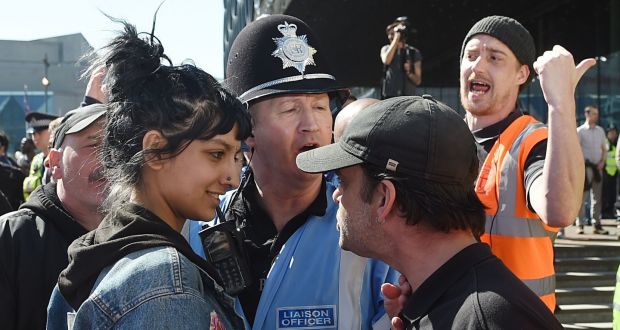
viral image of woman standing up to a far-right protestor

For me, a comparison to Nazi times is more helpful when applied to us… the ordinary people who, back in the 30s and 40s, inadvertently enabled their leaders to carry out murderous plans by doing nothing. Resisting was hard, for it could cost you, or your family, their lives. My mother’s best friend’s family vanished that way. Today, however, we can express a healthy intolerance of what we consider wrong, by resisting the temptation to see the mob as a collective ‘other’ made up of misguided cretins, uneducated loons, neo-fascists, Satan worshippers, conspiracy theorists… Some of them may well be any or all of those things, but they will also all be individuals – fathers, sons, mothers, neighbours – united in believing they are right and on the side of truth and goodness.

Maybe, to prevent re-enactments of Nazi times, we could (or should?) invest the time we spend judging, cursing and dismissing those we see as ‘other’, ‘bad’ or ‘wrong’ more wisely; by trying to listen to and understand them instead. That, after all, was what was neglected in the first instance. And people who feel unheard also feel they have to shout the loudest. And by having to shout, they become distorted versions of themselves. That is what we witnessed on Wednesday. It may sound fluffy or impossible and I am not in any way condoning or defending what happened in Washington. I am just trying to avoid becoming inadvertently complicit in deepening the division between ‘us’ and ‘them’. For we all know where that can lead. 

You can see some pictures here. Or read a bit more about what happened here.

Thoughts for a very different Christmas

With the recent news that Christmas has all but been cancelled, I find myself feeling the ache of millions of people’s disappointment. For so many, this is a joyfully anticipated time of year. I’m thinking of the stacks of thoughtfully chosen gifts, wrapped and ready… now abandoned. Of fridges and store cupboards swollen with traditional delicacies, all approaching sell-by dates. Of patient children and adults adapting their excited plans to visit grandparents and relatives to instead spend another day at home. 

This whole Covid-19 year has been one of dashed hopes and cancellations, but also of unexpected gains and joys. This winter’s repeated semi-lockdowns and the deadlocks of Brexit negotiations have tested us all further, even wobbling the initial sun- and spring-filled optimism of those who believed we would collectively shift values and become better human beings. For others, the tragedy of life-changing losses and trauma were there from the beginning. And for so many others still, life is existentially terrifying. 

I feel for everybody. For months I have talked, while pointing to the bottom half of my torso, of conscious or unconscious base layers of anxiety, sadness, fear and uncertainty forming the foundations of our days. Even if we are far from any front lines, they rumble on in the background like the constant hum of fridges of which we only become aware once they stop. It makes me wonder how this year will affect people long-term… in what ways it will take its toll. It will be healthy to listen and talk honestly to each other about how we feel.

From Everything is light by Jack Wimperis

But back to Christmas – not my favourite time of year I have to admit. Because as joyful as it is for some, as miserable it is for others! Christmas has an uncanny way of enhancing and exacerbating all the glitches in one’s life, all the things that are ‘wrong’ or missing. Whether it’s the separation from or loss of a loved one; whether it’s sickness, loneliness, homelessness, poverty… the list is long… all are strangely amplified by the oft-stressful and largely commercial insistence on excess and jollity. 

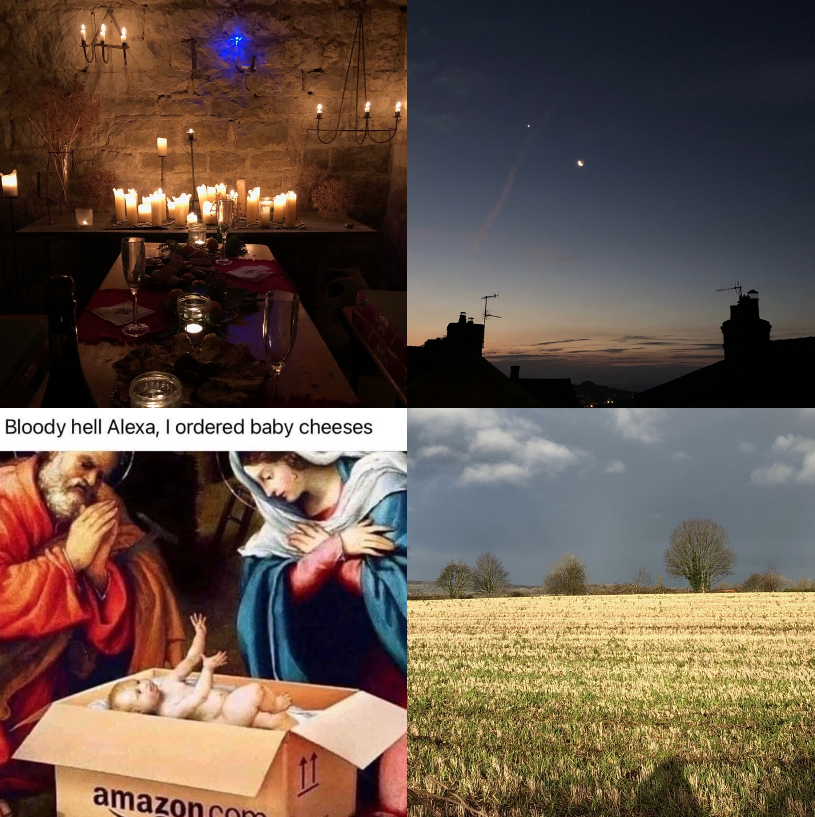
Which is why I really hope that this year, many people will find it easier to access that quiet place of inner peace and happiness that is not reliant on outer conditions; that place where ‘all is well,’ as the saying that has kept me sane since March goes; that place where we simply love and feel loved. So, at great risk of sounding like a Christmas Day sermon, I’d like to suggest that this year presents us with an opportunity. One where rather than focusing on the tinsel and turkey that we may or may not now have, we focus on the essence of that all-too familiar scene that started this whole loved or hated festival off in the first place: that of a stable, a star, a newborn baby and lots of straw. Surely, whether you are religious or not, it deserves at least a nod? 

Ok, so this blog is sounding like a sermon. But just maybe the stable could represent gratitude that we have shelter and warmth (if we indeed do).

Maybe the star could inspire the sense that something much, much bigger than us exists.

Maybe the newborn baby could fill us with love, tenderness and kindness to the planet, each other and ourselves.

And maybe the straw could remind us that we are simply lucky to have whatever and whoever we do have. Oh no, I feel an ‘Amen’ coming… 

Happy Christmas to you all!

New haircut… super short to last for months

The time to remember that ‘to the world he was a soldier, to us he was the world’

‘Tis the season to remember… and yet, this year, for the first time, I forgot. Remembrance Sunday was almost over before I suddenly remembered to remember. 

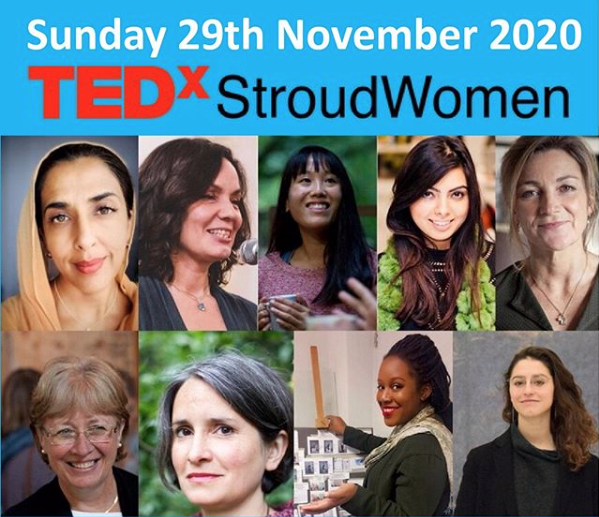
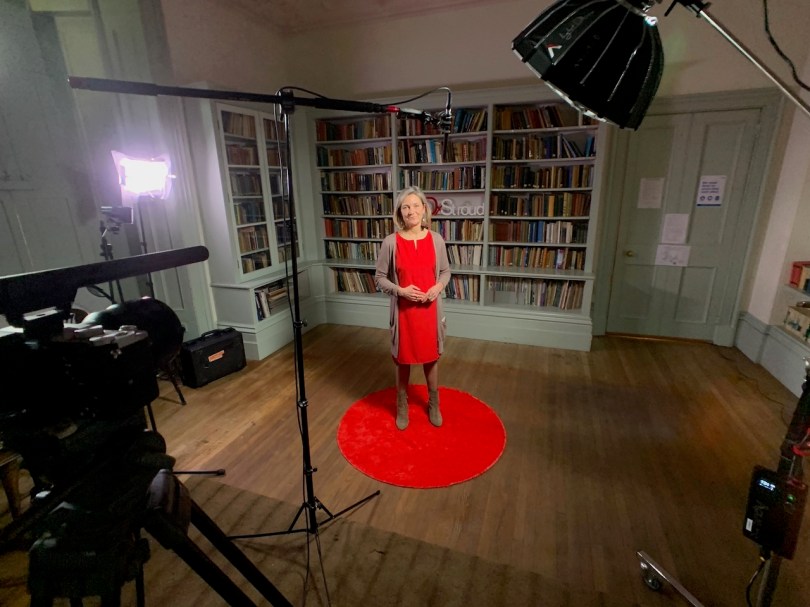
Locked down at home, I was definitely silent. But maybe the official 2-minute silence at 11am passed me by because in my talks and blogs I am frequently remembering. In fact, ‘looking back’ has become part of my identity, my expertise even. So much so that I have been selected, as one of nine speakers, to do a Tedx Talk on the subject: Facing the past in order to create a fairer future.’ It’s an exciting opportunity though unfortunately lockdown has forced the proposed date of 29th November to be postponed until the spring. It will happen though… like so many other things in this disorientating Covid world in which we are currently immersed. 

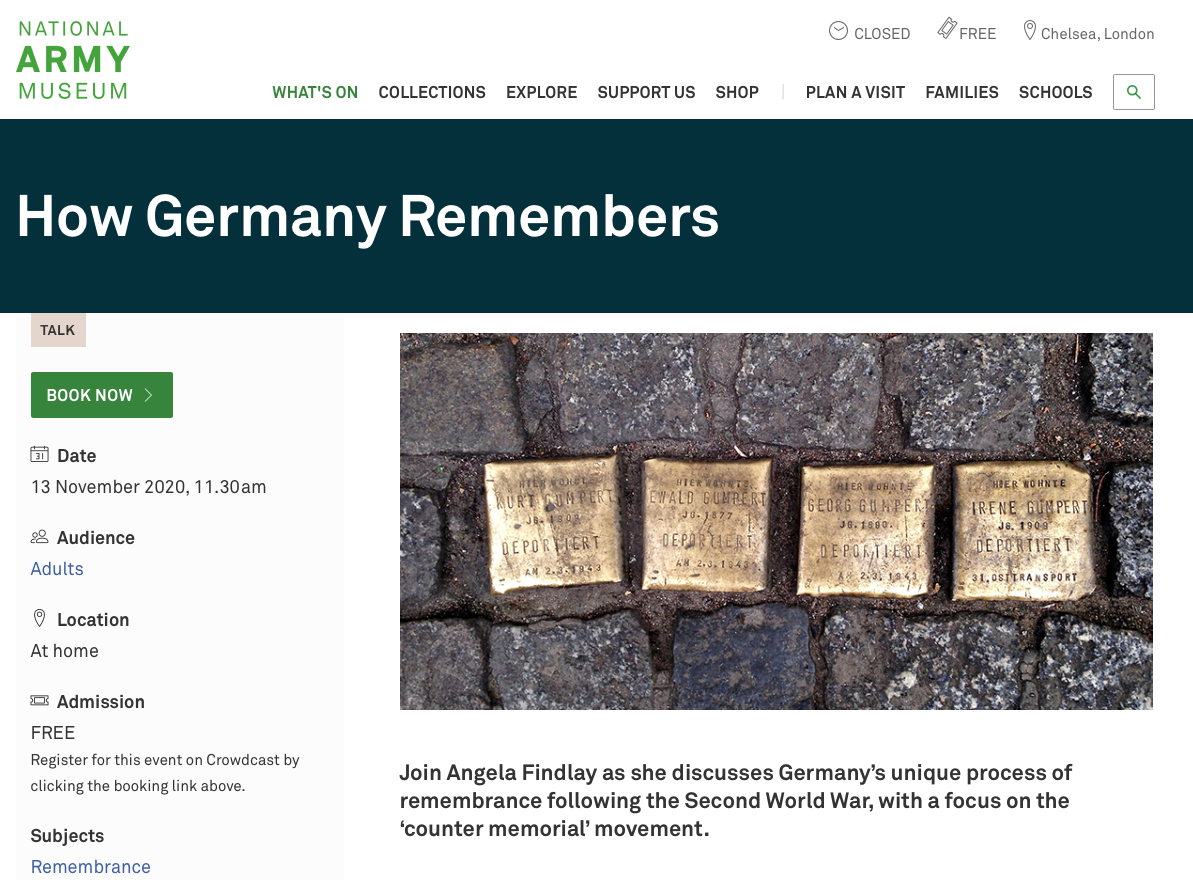
In the meantime, if you haven’t attended my talk on How Germany Remembers and would like to, there’s a chance to hear it online on Friday 13th November at 11.30am. It is being hosted by the National Army Museum in London where I spoke last year. You can read more about it here and you can register for free here.

But back to remembering… or forgetting in my case. Maybe there are some of us who feel a little tired of remembering. Or maybe it’s the national narrative we tell ourselves each year, that is tiring. This is one of the points made in Radio 4’s ‘Our Sacred Story’ in which Alex Ryrie, Professor of the History of Christianity at Durham University, suggests that the Second World War is both our modern sacred narrative as well as the shaper of our collective sense of what constitutes good and evil. 

This summer we celebrated the 75thanniversaries of VE and VJ Day. In fact, we’ve done loads of national remembering over the past years. So aside from Remembrance fatigue, I’m wondering if Covid’s restrictive squeeze on lungs, lives and events alike, is also impacting what and how we remember. Lockdown has been turning mindsets inwards, shifting focus and values onto all that is immediately around us – family, gardens, quiet streets or empty skies. Maybe this new way of being is merging effortlessly with the existing sub-stream of thought that strives for essence rather than glitzy, sparkling veneer. 

Looking at the BBC coverage of Remembrance Sunday, it is clear that even our mainstream institutions of commemoration are being forcibly stripped of excess. I salute the efforts of all involved in trying to evoke the all-too familiar rituals, yet nothing could distract from the extraordinary visuals of sparsity. Watching the morning ceremonies at the Cenotaph, one could be forgiven for not knowing where one was. The eerily still Whitehall dotted with a few socially-distanced, poppy- and wreath-bearing dignitaries resembled a set construction of a movie whose budget couldn’t stretch to more actors. And in Westminster Abbey, the Queen, bless her, hatted and masked up in black, couldn’t help but look a little like Darth Vader as she gently touched the white myrtle wreath that was then laid by a masked serviceman upon the Grave of the Unknown Warrior. 

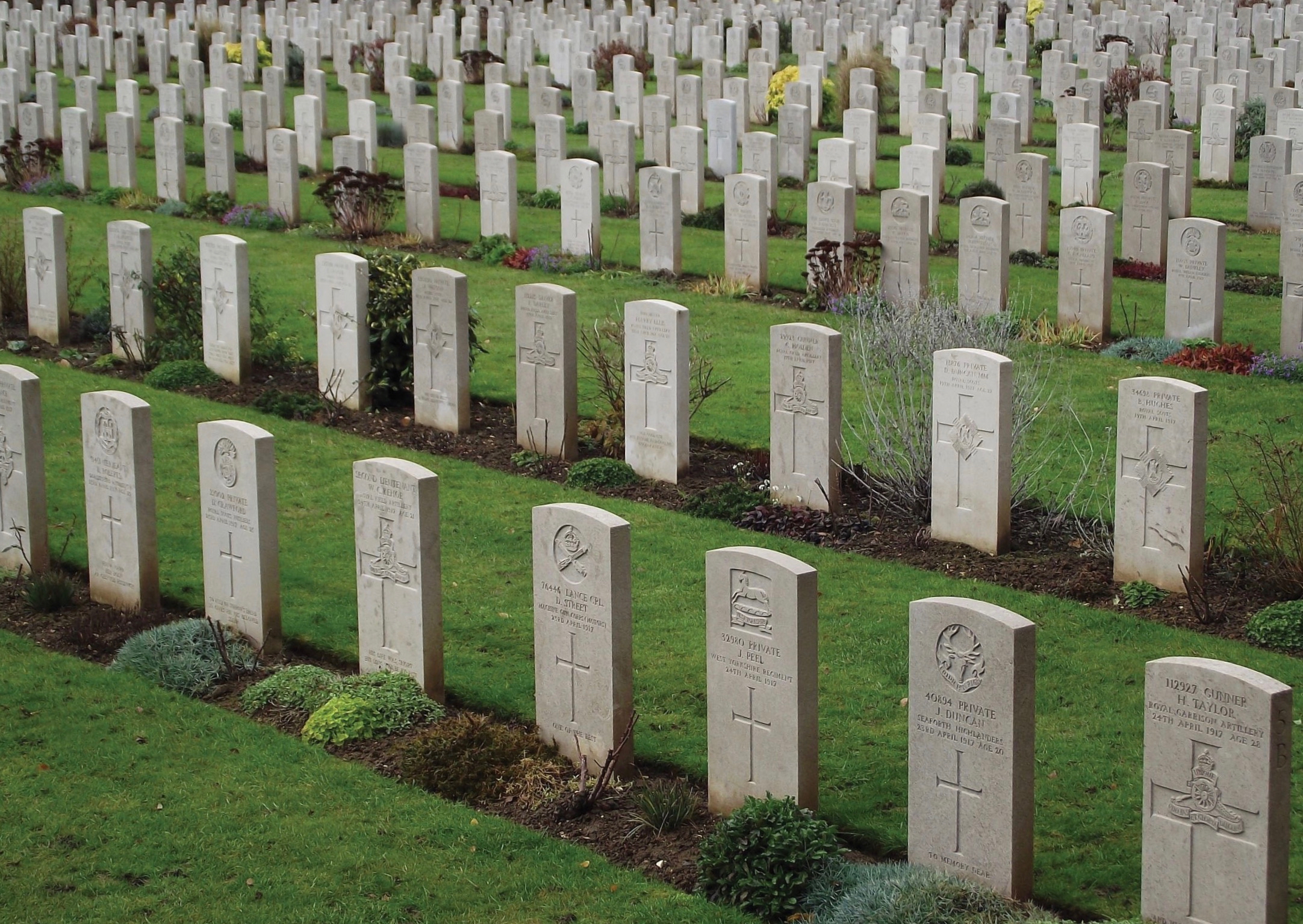
I couldn’t sit through the empty-seated Royal Albert Hall festivities that in the past have both grated and made me cry against my will. Instead, I sought the essence of remembrance in other areas. I soon found it in the podcast, We have ways of making you think. In their Episode 203 on Remembrance, historian James Holland and comedian Al Murray were in conversation with Glyn Prysor, former historian of the Commonwealth War Graves Commission. Between them they brought to life the history of the ubiquitous white headstones that fill acres and acres of land both here and on the continent. 

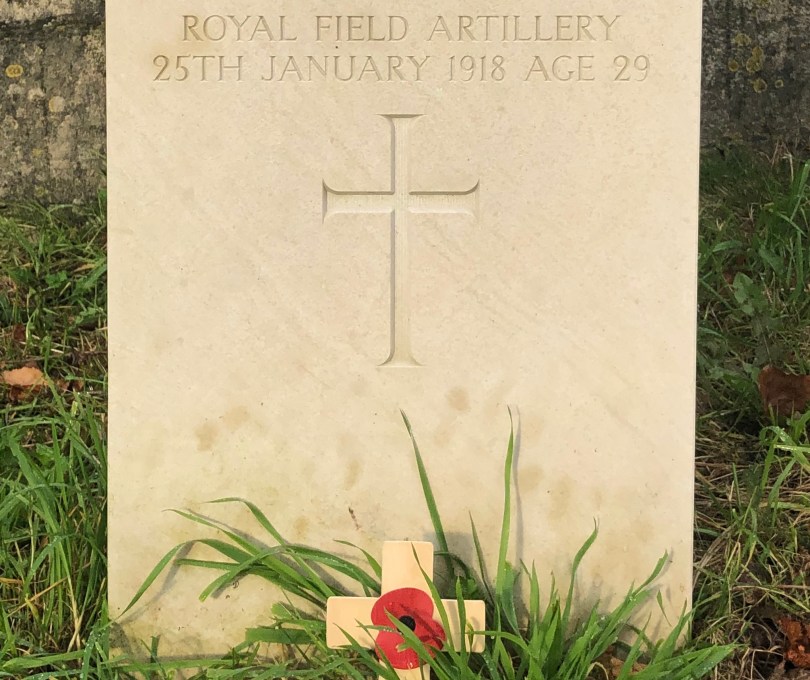
Set up in 1917 while World War One was still raging, the process of burying in the region of a million war dead, half of whose remains were missing, demanded a very new way of thinking. In a departure from the Victorian hierarchy of worthiness that extended into death and resulted in the common man just being ‘bunged’ into a mass grave, the Commission made a move towards inclusion. It wanted to evoke the sense that everyone had contributed to the war and everyone was equal in death. The outcome was a uniform design for all headstones that would make no distinction between wealthy and poor. This was of course deeply controversial. Individuality would only be marked through the listing of name, rank, unit, regimental badge and date of death. An appropriate religious symbol could also be added, or not. And a space at the bottom was dedicated to personal messages from family members, some of whom would never be able to travel to the continent to visit the graves of their loved ones. 

Covid has been highlighting the need for a similar leveling process across our hierarchies of wealth, fairness and opportunity. As in war, it is the personal losses and tragedies that will far surpass and long outlive the victories or shenanigans of the politics. In that vein, I found the essence of remembrance in an inscription spotted on a war grave in Bayeux:

Into the mosaic of victory, our most precious piece was laid.

What will it take for the British public to get behind prison reform?

Ok, here’s a challenge for a rainy day. 

Can anybody name one good reason why this country repeatedly does nothing about the state of our prisons? Can you give me any single benefit to us, as a nation, of keeping people in institutions that have repeatedly been condemned for their wholesale ineffectiveness?

Since 2001 when I got involved in Britain’s Criminal Justice System having worked in Germany’s for 6 years, I have heard one government-appointed Chief Inspector of Prisons after another – from the judge, Sir Stephen Tumin, to the army officer, Sir David Ramsbotham, to the current retired senior police officer, Peter Clarke – denounce the conditions in our jails. All their reports reveal systemic failures, appalling levels of filth, readily available drugs, lack of educational opportunities and deeply disturbing practices that arise as a result of overcrowding.

Since the 40% budget cuts of 2010, things have only got worse. 25% to 1/3 of prison officers and staff were lost. This has led to prisoners being left languishing in their cells for up to 23 hours a day because there are not enough officers to unlock doors and take them to education, employment, anger-management or drug rehabilitation courses – all things that have been proven to help prevent re-offending. I experienced it myself in HMP Belmarsh when I was Arts Coordinator to Koestler Arts. We raised the money for a 5-week art project, we provided the artists, the materials, we organised the practicalities and we then showed up. But the prisoners didn’t. Because the officers didn’t have time to deliver them. It is one of the reasons I gave up my front line work and focused my attention on raising awareness of what is going on.

Learning to Learn through the Arts projects in HMP Belmarsh, 2004

Now in 2020, I would finally like to understand the apparent logic behind the criminal waste of time, money, opportunity and human lives. And why we, as a nation, allow it to continue.

What is the block that is preventing the British public, the politicians, the Justice Secretaries – of which there have been seven in the past ten years – from recognising the illogic of depriving people of their liberty with the justification of punishment or deterrent, only to then make everything else infinitely worse? Surely it is not rocket science to comprehend that placing people… and they are people… in squalid, overcrowded environments in which they are likely to become more brutalised, embittered and frustrated; in places where they may well acquire a new drug habit, learn hot tips for new criminal methods, possibly self-harm or commit suicide; in places where they have limited or no access to the services, education and general help they need… cannot produce positive results? How can any reasonable person not see that ejecting them back into society after their sentence with £47.50 in their pocket, a criminal record – and sometimes a TENT! – is not going to stop them from re-offending, possibly within days? How is this supposed ‘tough on crime’ approach to people, who often come from catastrophic, traumatic or hugely disadvantaged backgrounds going to make our communities safer? 

I am no economist or mathematician but let’s just look at 2 figures:

1. The Prison Service budget is £4.5 billion per year.

2. The cost of re-offending is £18 billion. 

Let’s look at 2 more:

1. 70% of prisoners suffer from some sort of mental health issue.

2. 50% of prisoners are functionally illiterate.

The logic is there in black and white, in the figures. So why this dug-in-heels resistance to changes that embrace methods that have been proven to work? Not least Restorative Justice.

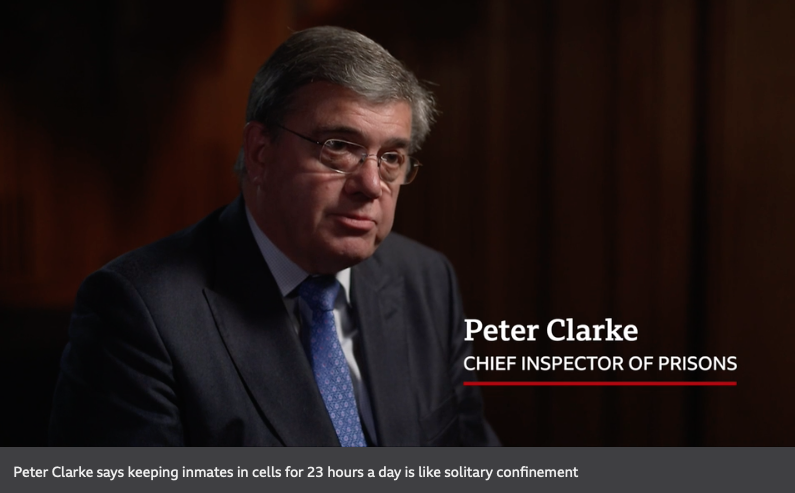
This week, in his last report as Chief Inspector of Prisons, a weary looking Peter Clarke, like so many of his predecessors once again explained the detrimental impact our system has on the mental health of prisoners. Once again he reported rubbish and rat-filled environments, apparently ‘so dirty you can’t clean it’. Once again he described the overall failure of managers who are proud of their data-driven and evidence-based methods but have rarely been inside prisons to ‘taste it, smell it.’ Clarke expresses similar bemusement to me as to why these damning reports so often come as a surprise to the management of the Prison Service. This has been going on for years! We may not be ‘world-beating’ in the appallingness of our prisons but we certainly are close to, if not at the top of the European table of failure. 

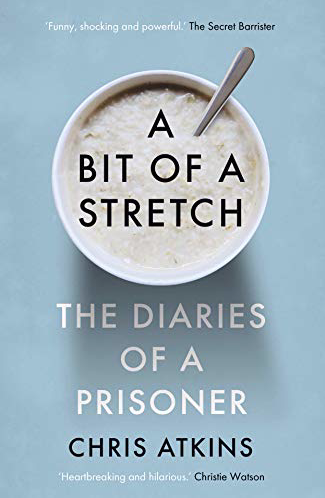
As Chris Atkins says in his new book A Bit of a Stretch, our prisons have become little more than ‘warehouses’ for storing offenders. Justice Secretaries, often lacking any background in law, let alone prisons, announce new initiatives with great fanfare, but nothing gets done and after a year, they move on.

Hugh Laurie as Peter Laurence in Roadkill

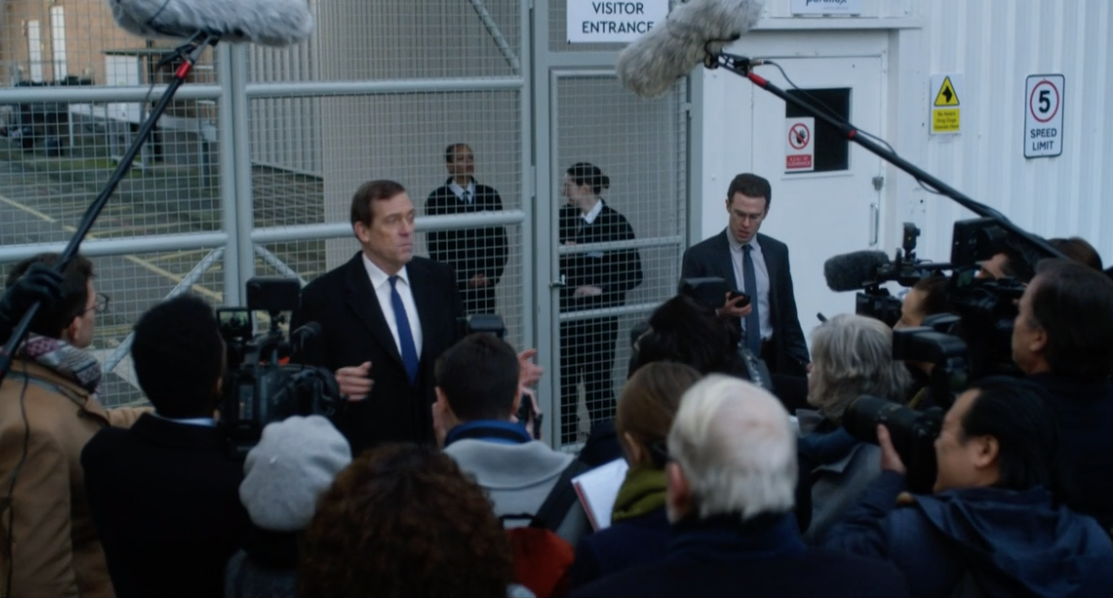
How I wish we could have a minister like the actor Hugh Laurie’s Peter Laurence, in the brilliant new BBC series, Roadkill. Laurence is deeply flawed as a man and corrupt as a politician, but in his newly appointed position as Justice Secretary, he at least verbalises the obvious question: Why are we wasting so much public money on a policy that’s not working? ‘Everyone knows the prison system is grossly inefficient,’ he tells the wholly resistant, thankfully fictional, female Conservative prime minister. ‘So I’m going to shake things up. Justice deserves that.’

And it does. But he will fail. Because it is not just the right-leaning politicians who want to stick to our punitive approach. It is also the British public. In the series, both their attitudes are revealed: ‘We lock criminals up and throw away the key… in the interest of public safety… We’re famous for it… It’s our nature… It’s our bond of trust between the Conservative party and the public…’

Covid-19 has of course made conditions even worse. Some prisoners are locked in their cells for 24 hours a day, and for several weeks at a time in what amounts to solitary confinement, as Clarke points out. Of course that leads to the ‘more controlled, well-ordered’ environment the Prison Officer Association is relieved to have. But what does it do to the people inside? Clarke is convinced there must be an exploration of other ways to do things, safely. After all, ‘Are we really saying we are going to keep prisoners locked in their cells for another 3 months… 6 months… a year?’

After my talks on Art behind Bars in which I reveal the shocking but oft-printed statistics of our prison system’s failures, people frequently come up to me and say “Gosh, how awful, I had no idea.” Well maybe with all the upheaval of Covid-19, it really is time for the public to gain an idea of the horrors that are being perpetuated in their name; in the interest of their safety. Of course we can stick with the old approaches, but at our peril. For who pays the price? Don’t think it is just the prisoners and their families who are punished. It’s all of us. We make ourselves less safe. We make ourselves less just. But above all, we make ourselves complicit in a system that is less than humane.

If you would like to do something to help bring about a shift in attitude and policy, you can write to your MP. You can support the important work of The Prison Reform Trust or the Howard League for Penal Reform. Or any of the charities offering help to prisoners and their families. Or you can look at the wonderful work of my favourite charity, The Forgiveness Project, and their excellent and effective prison RESTORE programme, that I have both witnessed and on one occasion co-facilitated.

Links to follow up

Prisoners locked up for 23 hours due to Covid rules is ‘dangerous’ – BBC News

BBC Newsnight 20.10.20 with Chief Inspector of Prison, Peter Clarke Start at 21.27 mins

Chris Atkins A Bit of a Stretch: The Diaries of a Prisoner at Wells Festival of Literature

Roadkill on BBC player

The Guardian view on failing jails: an inspector’s call

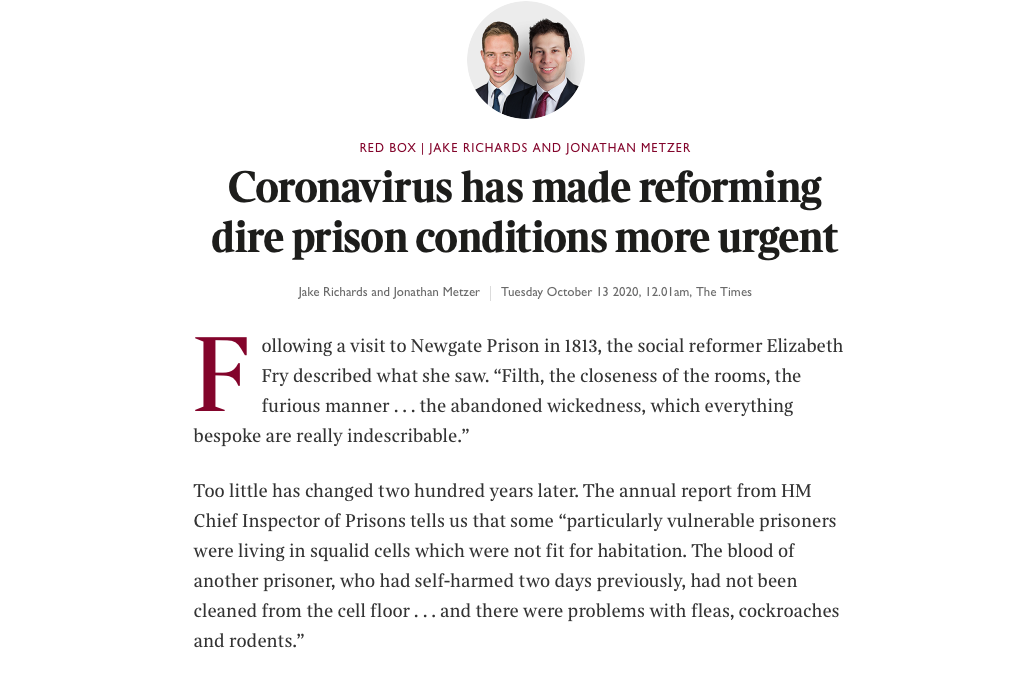
Times article, 13.10.20

What does ‘British’ mean to you? And are certain ideas of ‘Britishness’ holding us back?

I’m really interested in the question of what ‘British’ means to people now. I am curious which images of Britishness are conjured up by Brexiteers. What British means to Black Lives Matter (BLM) protestors, NHS workers, army officers, staunch Conservatives and practicing artists alike. And what British means to you, whether you are British or not.

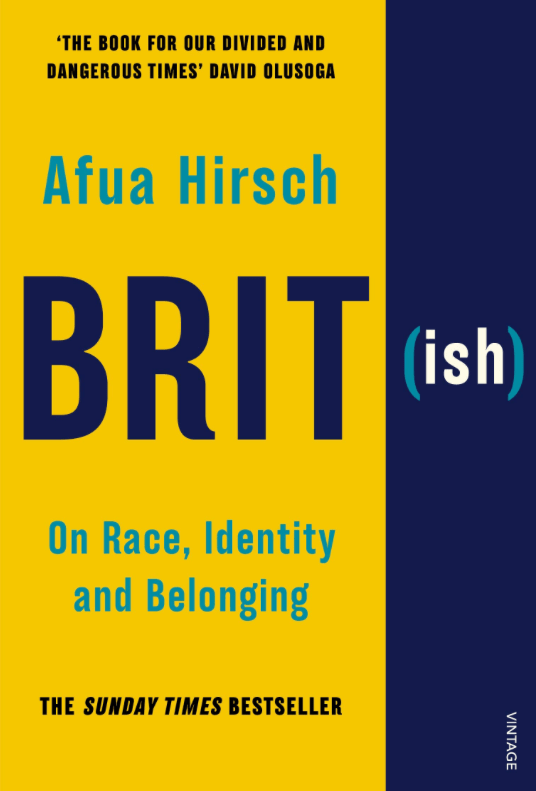
The reason for my interest comes partly from reading Afua Hirsch’s excellent book, BRIT(ish). Born to British and African parents and raised in middle-class Wimbledon, she explores questions of identity on personal, collective and political levels and reveals the on-going challenges and prejudices faced by many black British. It’s shocking, moving and humbling. And it offers potent insights into Britain’s evident desire to be ‘post-racial’ before it has properly confronted the deeply embedded racism derived from old but intractable beliefs in the superiority of whiteness. 

As a person born to parents of differing nationalities, I have often occupied myself with questions of national identity. Now I am fascinated by the concept of ‘British’ more than ever because, from where I’m standing, Britain and Britishness are hurtling towards a potentially exciting cusp of change. I don’t mean the very tangible changes we, along with much of the world, are making as a result of the Covid pandemic. I also don’t mean the changes that will inevitably come about as a result of Brexit and our divorce from the EU. I’m not even referring to the changes the prime minister and government are plotting in order to make Britain ‘the greatest place on earth’. No, all those proposed changes, a bit like HS2 in a post-Covid world, feel slightly old and out of date already. Most have a reactive feel to them, like sticking plasters, firefighting or making-it-up-as-you go-along.  

Change is rarely comfortable. And fundamental change even less so. Many people fear it and tend to hold tightly to the status quo in preference of disruption. But I am keen to understand precisely what qualities of ‘British’ people are wanting to hold on to. Because it seems to me, and I am far from alone in this, that Britain – whatever that means – is holding onto something, or at least desperately trying to hold onto something. Critical words that have been around for decades in smaller circles are suddenly trending in new publications, articles and programmes. Where Britishness may once have conjured up images of fish and chips, rainy queues, Mr Bean and the Royal Family; or diplomacy, reserve, wit and multi-culturalism, the main things now being cited both here and abroad – and not without considerable sadness and dismay by countries that have deeply admired and loved the UK – seem to be largely scathing criticisms. Above all, of prevailing attitudes: British self-importance; self-congratulation; delusions of grandeur; flag-waving patriotism; exceptionalism; self-entitlement; immaturity, isolationism, archaism… it is not a flattering list.

What has happened? It’s long been clear that Britain has never got over winning the war and, though it’s less verbalised, losing its empire. Boris Johnson is busy channelling Churchill and the language used by many of our leaders merely reveals how stuck they are in ruts of victor/loser rhetoric on the one hand, and nostalgia on the other. Both are ossified and now misplaced attitudes that infuse national thinking and hinder their ability to respond to the very specific demands of these unbelievably challenging times with the appropriateness some countries with lower death rates have displayed. And of course, our pride in our victories and apparently benign empire is only partially justified anyway. There are far broader perspectives to explore and embrace that will not only bring honest nuance to our favoured narratives, but also acknowledge the lingering dark shadows we have cast over whole areas and peoples in our past. As Afua Hirsch says, ‘Britain definitely has secrets. They lurk in the language and the brickwork and the patterns of society.’

Why is it important to look at them?  

Why do we need to look behind us before moving ahead? 

Because until we do, many options and possibilities for the future will remain closed to us, not least in relation to the biggest challenge facing the world, climate change. Like a person riddled with festering wounds, Britain cannot move forward with the light optimism it so desires. It can only limp making the wounds more livid. But once we have tended to the hurt, trauma and ethical redress needed to heal our past, we will be able to move forward less hindered. We can then start the process of integrating the fragmented aspects of British society into a healthier, synchronised whole. This more inclusive version of ‘British’ with its stronger, more contemporary identity will restore us to the position of respect and admiration we long for and will then rightly deserve. 

It won’t be comfortable… but it will be deeply healing and liberating in the long run.

In the meantime, while I am aware that English, Welsh and Scottish also have individual identities, please send me the words and qualities that ‘British’ conjures up for you.

A few related links:

Afua Hirsch on BRIT(ish) – a short video

BRIT(ish) Review – what does it mean to be black and British now?

National Geographic: Why Britishness, as an identity, is in crisis

VJ Day 75 years on: Remembering the Pacific War as an example of what a unified, multinational and collaborative effort can achieve… for all.

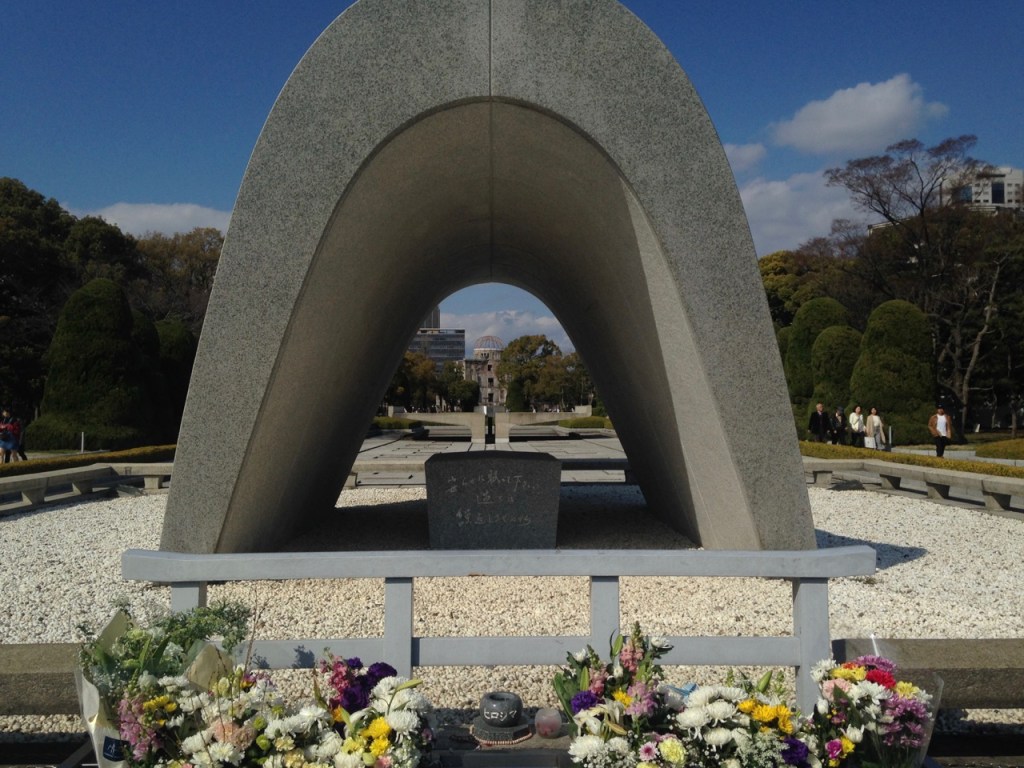
What we choose to remember and why are questions that fascinate me, particularly in relation to the World Wars. For how we think of and present the past shapes the future. It’s therefore important to keep up with national narratives and August 2020 has offered a smorgasbord of anniversaries to study. On 6th August, Japan commemorated the atomic bombings of Hiroshima and Nagasaki. The 14th August was South Korea’s third Japanese Military Comfort Women Victims Memorial Day remembering the women forced to work in Japan’s military brothels. And here in the UK and elsewhere, 15th August was Victory over Japan or VJ Day marking Japan’s surrender and the end of the Second World War. For America the commemoration is actually 2nd September when the official surrender document was signed.

Hiroshima Peace Memorial Park

In spite of my on-going interest in WW2 I have known little about the war in the Far East other than Kamikaze pilots, brutal ‘Japs’ and the TV drama series Tenko shown in the early eighties about British, Australian and Dutch women held in a Japanese internment camp. I can still recall the sand-coloured heat, cruel captors and tattered dresses of sun burnt women. I of course have known more about the atomic bomb dropping on Hiroshima, but always as primarily an American/Japanese conflict. It wasn’t until I went there last year that I learned just how involved the British had been in the whole decision-making process. 

Tenko, BBC Series

As it turns out, I am not alone in my ignorance. Aside from widespread awareness of the notorious Japanese cruelty towards those they held captive – POWs, women and children alike – and the physical and mental scars from which many never recovered, it’s a fact, the war in the Far East always played second fiddle to the western imperative of beating the Germans. Even in 1943, troops in the Fourteenth Army fighting the Japanese in Burma referred to themselves as the ‘Forgotten Army.’ Post took months to arrive, resources were limited and their battles went unmentioned in newspapers. Yet by 1945, with around 1.3 million men and women having served in it, it was the largest army not only in the Commonwealth, but the world. 

I’d never heard of it. Nor did I know until yesterday that when surviving troops finally returned to the UK in 1946, they were told specifically not to talk about their war but to ‘move on’ like everybody else had been trying to do since VE Day. So, having already been overlooked while fighting some of the most ferocious battles of WW2, they were now being requested both to forget and be forgotten once again. It’s a good example of the selective nature of memory, whether personal or collective. And it highlights the importance of ‘re-membering’ the full body of a past, especially those forgotten parts that were dismembered and sacrificed on the altar of a carefully considered national narrative. 

This year’s VJ Day commemorations will have educated many of us on the Pacific War not least its multi-national nature. Gurkhas, Sikhs, Indians, Australians, Canadians, Africans, Americans, Welsh, Scottish and more fought side by side, united in their shared goal of defeating Japan. The 606,000 men that made up the aforementioned Fourteenth Army commanded by General William Slim were from 20 countries speaking 40 different languages. 87% were Indian, 3% African and 10% British. 

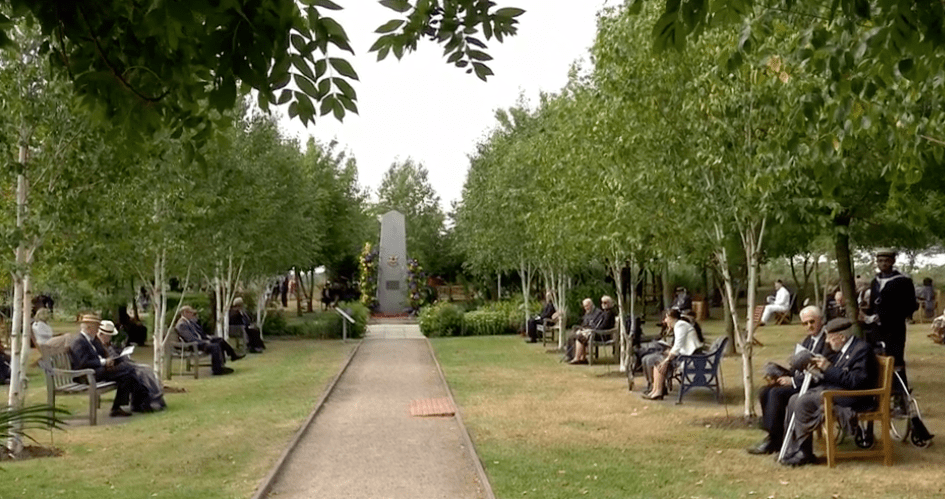
National Memorial Arboretum

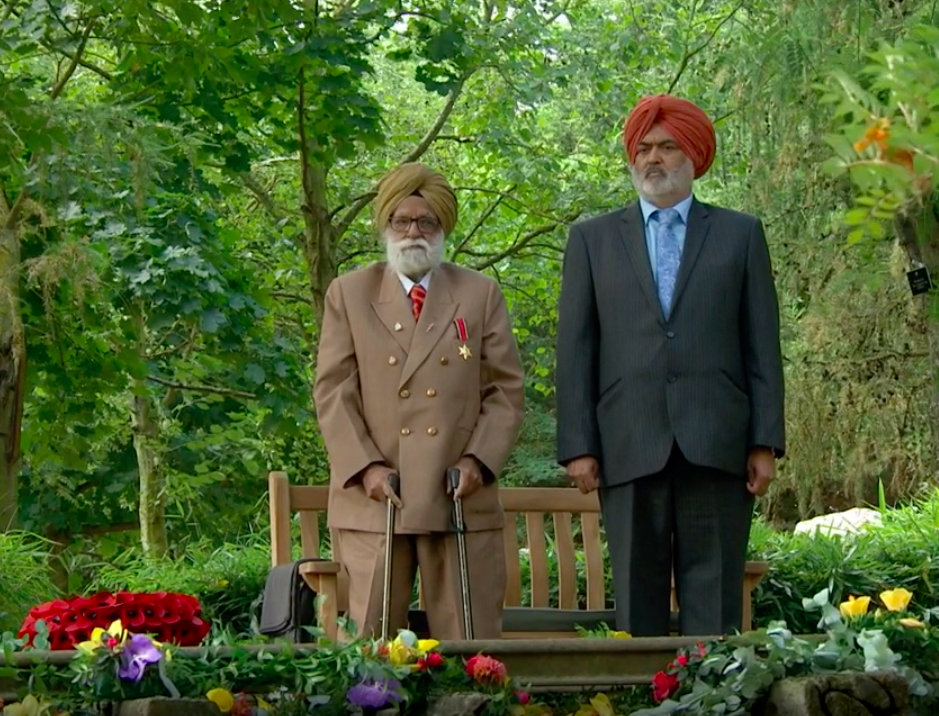
The BBC’s morning coverage of VJ Day, The Nation Remembers, reflected this beautifully through a multi-cultural programme of readings and music by British Asian actors, Indian musicians, Scottish and African soldiers. Set amongst the conveniently socially distanced trees of the National Memorial Arboretum in Staffordshire and with an incessant breeze ruffling hair and dresses alike, uniformed regiments casually mingled with royal dignitaries and politicians, while elderly veterans clad in best suits and medals shuffled on the arms of descendants or sat on benches staring into the far distance. “To all who served, we thank you,” said leaders from around the world in an online video. The presenter Sophie Raworth and historian Dan Snow once again sensitively drew out memories and stories to paint pictures of almost unimaginable scenes. But it was the veterans’ determined efforts to lay a wreath or stand up for the 2-minute silence that best captured the grit and humility of their generation. 

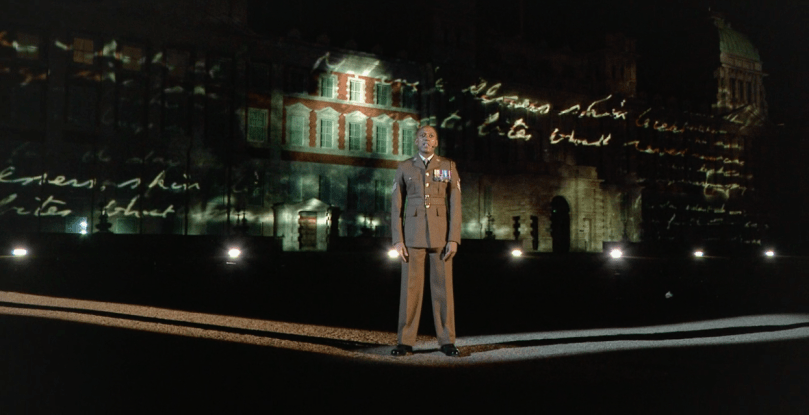
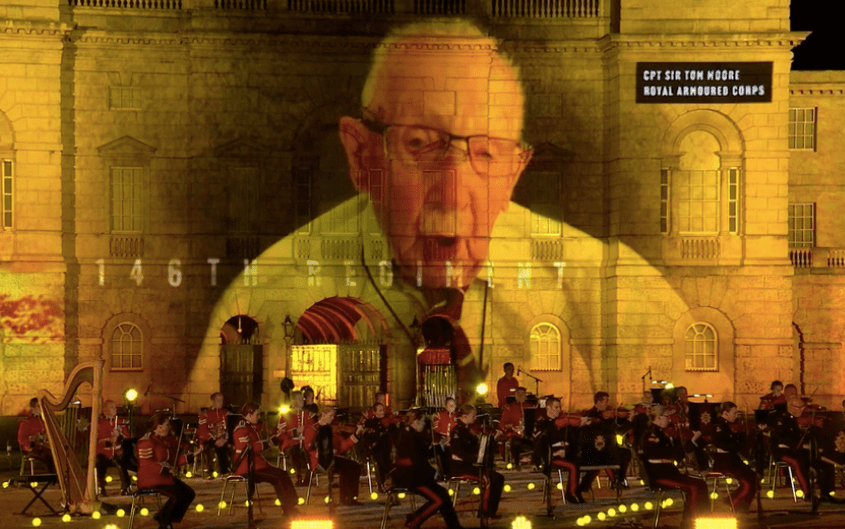
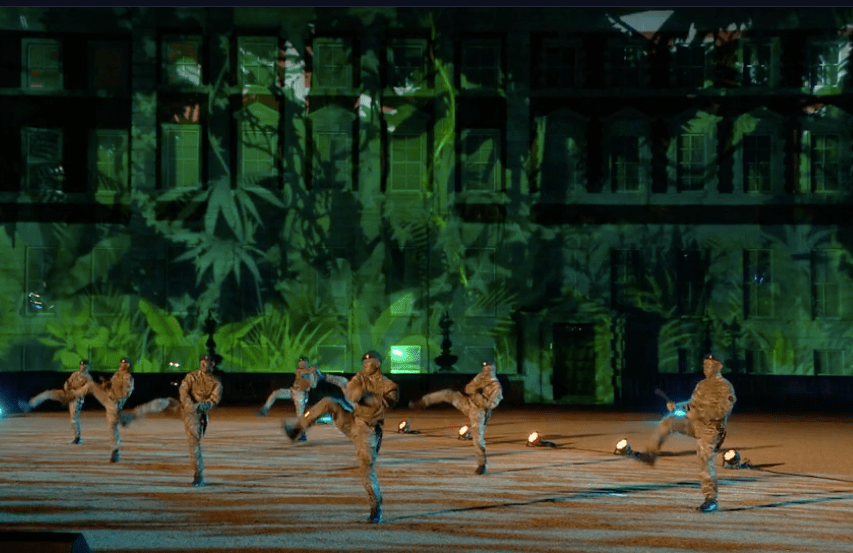
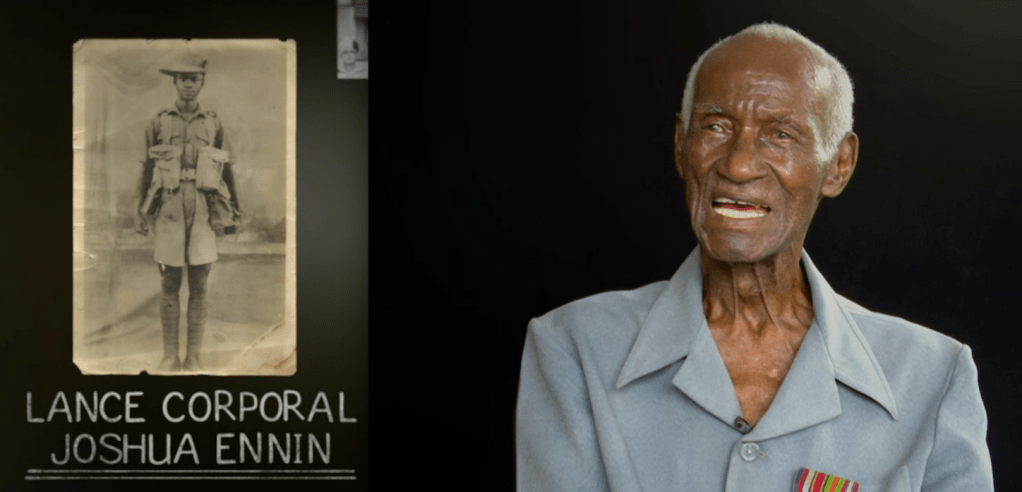
The more formal ‘Nation’s Tribute’ in the evening provided another moving, albeit more polished testament to their resilience. Hosted by Joanna Lumley – in her serious Gurkha supporter and presenter role rather than the Champagne-swigging Patsy of Absolutely Fabulous – and against a stunning backdrop of visuals projected onto Horse Guards Parade, we heard further multinational perspectives by veterans, including ‘Captain Tom’, our lockdown hero.

Captain Tom Moore

I could listen to them for hours but our national culture of Remembrance clearly has a remit both to entertain and make us cry. So, in keeping with tradition, military bands, glittering celebrity singers and an actually wonderful danced fight performed by knife-bearing Gurkhas punctuated the programme.

Gurkhas dance-fight

All in all, this event was less nationalistic or victorious and more inclusive than any previous ones I have seen. Maybe Covid-19, maybe the Black Lives Matter protests or maybe increased maturity has finally nudged our commemorations towards the humility of those that knew the horrific cost of war behind any victory. There was even a small injection of public self-questioning into the rightness of such contentious acts as the atomic bombing of Hiroshima. That’s new. And very welcome.

As always, veterans asked us to remember those that fought; to ‘appreciate the value of the freedoms we enjoy’ for which so many gave their lives; and ‘to resolve never to be involved in another war.’ Akiko Macdonald, a Japanese woman married to an English man and working with veterans on both sides, called for reconciliation: ‘Yesterday’s foe is today’s friend.’ And Prince William asked us once again ‘to learn the lessons of the past’. I have often done that too in my talks and blogs. But this year I found myself asking what ‘learning from the past’ could mean for us today?  

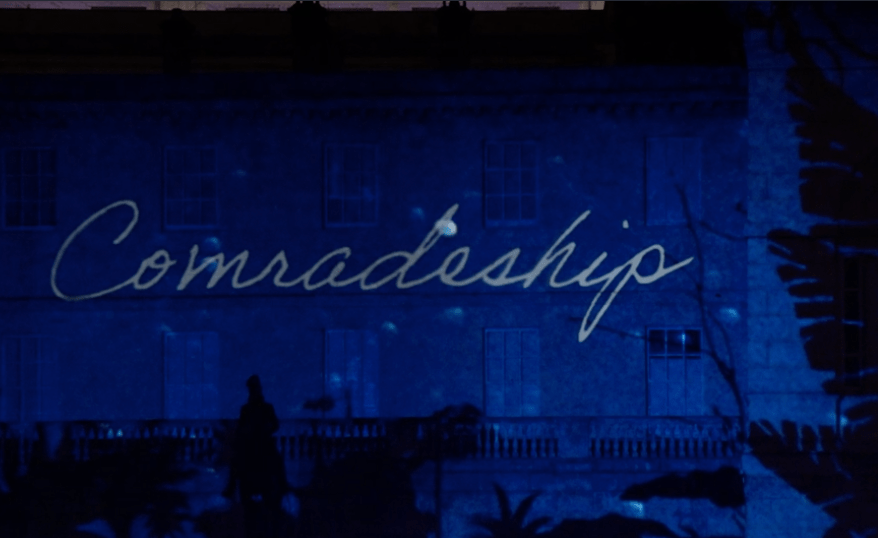
What I have learnt from the largely overlooked war in the Far East is the importance and power of working together, of overcoming difference to unite in a common goal. If we are to successfully tackle the enormous environmental, economic and social challenges the whole world faces, we need to learn to operate as a united body. Just as the Fourteenth Army overcame the challenges of national and cultural difference, we need to see beyond and rise above all that divides us. We need to pool resources, ideas and energy for the greater good of everyone. For as General Slim recognised in his journal, it was the ‘comradeship’ within the Fourteenth Army that ultimately turned defeat into victory. 

To watch the BBC coverage of the Commemorations I mention

The Nation Remembers

Nation’s Tribute

So we’re all here… but how do we get ‘there’?

Things have to change… surely no-one could disagree with that? For Covid has neatly lined up in plain sight all that is unsustainable, unjust and disproportionately vulnerable in our society. The question is: How? Who can we rely on to bring about change? I have already gone through a list of potential candidates to lead the way – the prime minister, politicians, councils, charities, schools – but they are all tied up in complicated knots of agendas, quotas, targets, financial restraints, guidelines… the list is long. So I have been asking myself, what I personally can do. But aside from the things I already do, I haven’t come up with much that doesn’t involve getting angry or overwhelmed to little effect. 

It’s quite easy to become despondent isn’t it? In spite of my initial high-octane optimism that this pandemic was a global wake-up call of such volume that nobody could sleep through it, I have to admit to succumbing to little bouts of chocolate- and mid-week-rosé-fuelled Can’t-be-arsed Syndrome myself. Because as lockdown eases, it has become increasingly clear that some of those in positions of power haven’t woken-up. It’s sort of not in their interest to. So that leaves us to bring about the changes. You, me, him, her, them. And I think I have finally identified two places we could start. One is in the past, the other in the present.

The Past

In order to move into a new future with lightness, vision and energy, we need to face and reconsider our past. History is intrinsically linked to identity – who we are and how we got here – and is broadly made up of heroes, victims and villains. Of course it’s natural to want to see your ancestors and nation as heroic. And if they can’t be heroes, then victim. The move to villain, on the other hand, is huge, hard and largely unprecedented. But people need a healthy balance of their country’s strengths and weaknesses and that requires shining the spotlight of awareness and truth into the dark, painful and uncomfortable corners of our history. Not just for deep moral reasons, but because unresolved trauma, injustice or wrongdoing refuse to rest. Instead they remain potent disruptors, passing from generation to generation in search of resolution. 

We have just witnessed how the footfall of the recent Black Lives Matter protests rattled the buried crimes of our colonial past until they erupted through the pavements, toppling outdated values from their pedestals in order to draw attention to the costly price of British imperialism. Counter protests claiming the removal of statues is to ‘destroy history and heritage’ don’t wash, for statues don’t uphold history, just the values of the time; the events and people we want to remember. Like carefully selected snapshots of a nation’s best side, they are not the whole picture.  

Whatever you think of protest, it has time and again been the vital precursor to change. It was, after all, the student demonstrations of 1968 that demanded Germany finally pull its reluctant head out of the sandy silence to face the atrocities of its past and seek atonement. The current protests are also a demand for a more honest appraisal of who we are, not just as a nation but as individuals whose values and actions have been unconsciously shaped by the deeds, and misdeeds, of those who went before us.

So, we each have a real choice here. We can either keep repeating the familiar stories of past glory, riches and world power while watching on as our present falls into widening abysses of social injustice, inequality and environmental destruction. Or we can pull out the roots of these fissures and start to lay more solid and fertile foundations for a better future for the younger generations. 

The Present

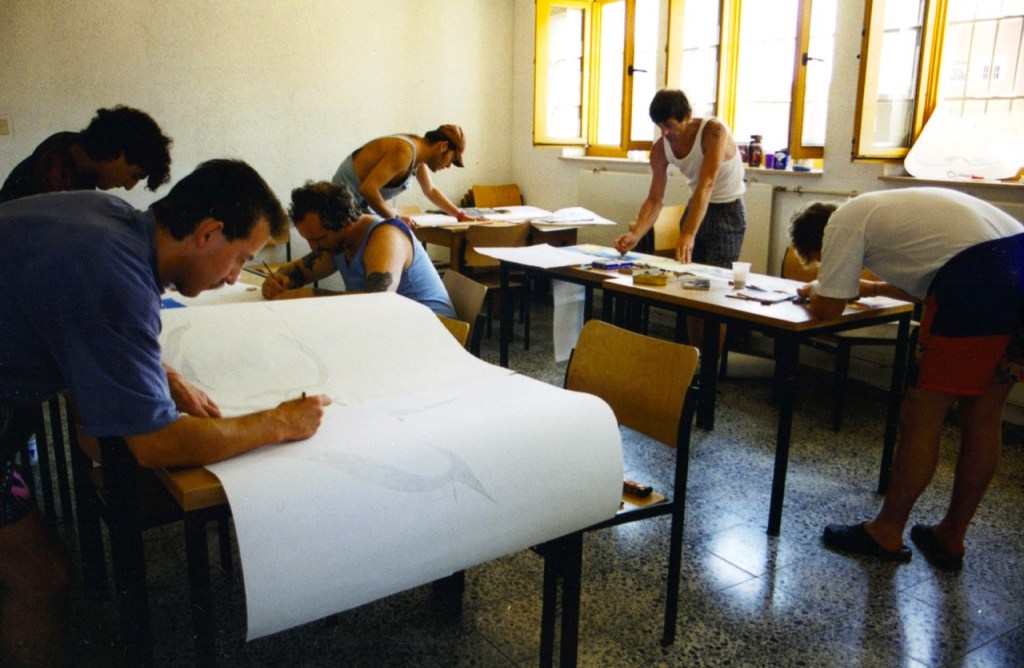
The second starting point comes from a lesson I used to teach prisoners in my mural painting classes, one that I myself now need to relearn: that regardless of what is going on around you, there is always personal choice. 

Creativity is all about choices. No rights or wrongs, just a series of decisions. It’s a process in which successes and strengths are built upon, while mistakes and weaknesses are learnt from, transformed and integrated. The prisoners experienced how each person becomes a co-creator working toward a common goal, the details of which emerged along the way. Initially they couldn’t apply this freedom of choice to their daily prison lives. ‘Choice?’ they’d say. ‘What choice? We can’t be with loved ones, we can’t go to the pub, we can’t even have a shower when we choose!’ True, I’d agree before suggesting that they did maintain a freedom of choice when it came to how to respond to each given moment, person or situation. Would they smile, curse or punch? Put the pencil back in the materials cupboard, or nick it? Over time, they witnessed how their choices began to change their world, and then other worlds they touched. A ripple effect of change…

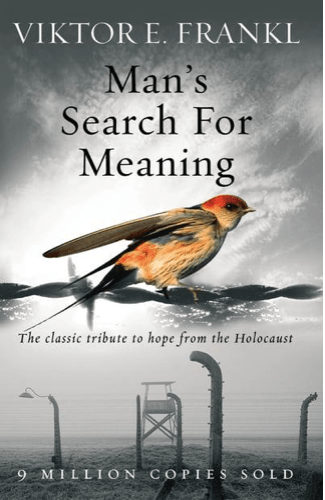
Of course this wisdom is not mine. It was the basis of the teachings of Viktor Frankl, the Austrian neurologist, psychiatrist and creator of logotherapy who claimed: “Everything can be taken from a man but one thing: the last of the human freedoms to choose one’s attitude in any given set of circumstances, to choose one’s own way.”

He should know. He survived Auschwitz and various other camps by discovering what he believed was the primary purpose in life: the quest for meaning. In the early days of psychology and psychotherapy, there was an assumption that we exist in order to reach a certain level of pleasure, power or success. Sigmund Freud’s ‘pleasure principle,’ claimed that the central motivator in human life was to gain as much gratification of our fundamental needs and urges as possible. His disciple, Alfred Adler, substituted ‘pleasure’ with ‘power’ as the prime driver of human striving. His theory believed that all of us are born with an innate feeling of inferiority, which we try to overcome by striving for superiority through power, influence and money. For Frankl, on the other hand, all these goals were actually symptoms that a person had failed to find meaning; a meaningful goal, task or person. Meaning fills the void that so often fuels the unhealthy and destructive drives for personal power and pleasure. Covid and lockdown nudged many of us into searches for meaning, now it’s our choice whether we pursue it.

The Future

I have experienced deep meaning and reward in facing and redeeming the uncomfortable aspects of my German national and familial heritage. In tiny and larger ways, the process changed me as I uncovered unconscious drivers; it changed members of my family and it continues to change people who attend my talks… That’s why I can’t encourage people enough to look at their own history and lineage, warts and all, before the people who can tell you about them disappear. If we can heal our past and make good choices in our present, maybe, just maybe, we will succeed in steering our masked and fragile society to a future that is fairer, kinder and more sustainable for all. 

In Victor Frankl’s words: Live as if you were living a second time, and as though you had acted wrongly the first time.

To remove, or not to remove statues: that is not the question Britain’s imperial past is asking of the present.

Something huge is happening in the UK. Britain’s colonial past is storming into the present and will not quieten until we listen to what it has to say. The national journey ahead of us will be deeply healing if we do.

In the past three weeks, the words “I can’t breathe” have become a universal slogan. And no, they have nothing to do with the Corona virus. They were the dying words of George Floyd as he was slowly killed, in full view, by a Minneapolis police officer. Like a match to dry tinder, his appalling, videotaped death ignited fury. Black Lives Matter and other anti-racist movements leapt to life spreading protests like bush fires through streets around the world. In the UK, while many people peacefully chanted, knelt or lay down in solidarity with the murdered man and fellow victims of racism, others went further, rocking the symbols of white supremacy quite literally off their pedestals.

In Bristol, the main target was the widely-despised statue of Edward Colston. Since his death in 1721, the philanthropist’s name and generosity had been celebrated in famous landmarks – a street, a school, the city’s largest concert hall – while the uncomfortable truth of his lucrative role as Deputy Governor of the Royal African Company (RAC), the most prolific slave-trading institution in British history, was hushed up. Estimates suggest he himself presided over the shipping of around 84,500 African men, women and children to the Americas to be sold as slaves. Horrendous 2-3 month sea journeys chained to the slave decks caused 19,000 to perish. Their RAC-branded bodies were unceremoniously tipped into the Atlantic Ocean as “wastage.”   

Colston’s statue being deposited in Bristol Harbour by protestors

Colston’s bronze presence has long been contentious in the city that used to be known as the ‘slave capital,’ but previous attempts to remove him had failed. On June 7th, however, Colston the philanthropist met his slave-trader Hyde when he was toppled off his perch and dumped head first into the harbour like one of the thousands of slaves under his watch. Whether you agree with such activism or not, it could hardly have been a more perfect gesture of karmic comeuppance. The aftershocks of his heavy landing are still reverberating, cracking the shiny veneer of Britain’s preferred version of history upon which it has built its largely benevolent national self-image.

I am not interested in judging the wisdom of this action – it was emotional and inevitable. I do not condone any of the subsequent violence and I deplore the eruption of the Far Right onto the streets with their eagerness to fight… anything. I am, however, glad that it was sufficiently contentious to prise open the Pandora’s Box of Britain’s imperialism making it impossible to slam the lid down on the restless ghosts of historic crimes.

Anyone who has attended my talks or read my blogs will know I have long been calling for Britain to look at, learn from and redress its own past wrongdoings. It has hitherto been far too easy to hide them in the shadows of the more recent Nazi genocide against which every atrocity naturally pales. For far too long, our history books and curriculums have primarily been testaments to our greatness: our victories and sacrifices, our worldwide achievements and position, the industrial revolution, the apparent huge benefits of British rule, the abolition of slavery… all worthy of celebration to those who still harvest and enjoy their fruits. But vast swathes of society are excluded from the feast and are still locked in lives of disadvantage, poverty and discrimination… or prison.

Churchill’s (boxed) statue in Parliament Square

The fact that until 2015 tax payers were still paying off the £20 million debt borrowed by the government in 1833 to pay compensation, not to victims or descendants of slavery, but to wealthy slave owners who lost out when slavery was abolished, shows how the tentacles of slave ownership reach into our present. Surely such glaring insult and inappropriateness are more worthy of expressions of outrage than the temporary covering of Winston Churchill’s statue? Yet Boris Johnson’s string of passionate tweets defending the lump of bronze representing his all-time role model were not only the same typical deflections from the existential debate being demanded by living people… on our streets… now, which are employed by many conservative thinkers. They also display a widespread British contradiction that is out of date and out of sync with the world. We as a nation verge on the obsessive when it comes to remembering our past as saviours of Europe from fascism. Yet we refuse to acknowledge the dark underbelly of murder, pillage, torture, cruelty, oppression, racism – the list is long – that formed the foundations of wealth, privilege and inequality on which so much of British society is built.

The prime minister scored an own goal when he tweeted “We cannot now try to edit or censor our past… those statues teach us about our past, with all its faults.” The editing and censoring the past is precisely what these protests have been about! Other than one in Liverpool, there are no dedicated museums to the slave trade. As for ‘teaching us about our past,’ one viral video of a slave trader being torn down has achieved far more in terms of educating people about Britain’s past atrocities than any existing statue has ever done. On an official visit to Jamaica in 2015, David Cameron employed much the same avoidance tactic by stating that it was time to “move on from this painful legacy and continue to build for the future.” How can you move on from something that is still happening? Until Britain finds a way as Germany has been trying to do – initially reluctantly and on the insistence of the British – to reckon with its imperial past and scarred present, we will not be able to “move on”.

Monuments are key to national identity. They demonstrate and instruct the values of a society by elevating heroes of the time onto plinths to be looked up to and respected for generations to come. They are not innately required to be permanent. Romans used to melt down their statues for coins. So what should happen when those same values become disgusting, offensive and humiliating, whichever angle you look at them from? When they become symbols of psychological and political oppression? Would British people not rightly feel offended or appalled having to constantly walk past statues of former oppressors – Hitler, Goebbels, Rommel – either here or in Germany? Yet this is what the black community have had to endure, seeing the slave-traders who murdered their ancestors, committed mass crimes, genocide and atrocity against them still celebrated in public. The toppling, removal or covering of monuments is not “to lie about history,” as Johnson claims. Nor should it become the prime debate, as it has in right wing papers, whose writers are incidentally putting up almost identical arguments and resistance to owning national atrocity as Germans once did. The statues have simply woken people from their willful amnesia. But there is a danger. If the agitators of colonial history simply vanish, so could the discourse and urgently needed education.

The removal of the slave-owner Robert Milligan statue in Canary Wharf

From all my studies and experience of Germany’s post-WW2 culture of Vergangenheitsbewältigung (working through the past) and the ensuing counter memorials and museums that dot the nation’s cities, parks and pavements, there is much the British state/we can, and must, do. As descendants of the original perpetrators, current generations are not to be blamed for the sins of their fathers, but we are responsible for making amends. So, rather than focusing purely on the clunky symbols and symptoms of discontent and planning ten-year prison sentences for those desecrating memorials, the government should be fully engaging with the debate and the root of the problem: institutional racism. The full truth of our past – warts and all – must be integrated into history lessons and school curriculums, museums and public monuments. Like in Germany, cities around the UK could hold their own competitions for imaginative counter monuments – Banksy has already submitted his proposal. Or information tableaus could be erected beside any monuments that remain in situ presenting the other side of the story along with an unmitigated condemnation of any repetition of those values. Also like in Germany, rather than building the highly contested Holocaust memorial by the Houses of Parliament, a memorial to Britain’s own victims could be created as a reminder of how fragile civilisation and democracy are. And for the victims’ descendants, opportunities for conversation, dedicated remembrance days, apology, restitution, compensation, reconciliation, investment… it’s all so late but there is so much to do.

Banksy’s sketch proposal for reinstating the Colston monument as part of a slavery memorial

Facing and talking about uncomfortable truths is the first step to healing them. Covid has exposed the inequalities in our society. We have a unique opportunity here for attitudinal and structural change. In the words of the soul singer, Erykah Badu, we need to ‘stay woke’. We simply cannot go back to sleep on this. Rumi, the 13th Century Persian poet’s beautiful message is so very apposite for these times.

“Out beyond ideas of wrongdoing and rightdoing,

there is a field. I’ll meet you there.

When the soul lies down in that grass,

the world is too full to talk about.

Ideas, language, even the phrase “each other”

doesn’t make any sense.

The breeze at dawn has secrets to tell you.

Don’t go back to sleep.

You must ask for what you really want.

Don’t go back to sleep.

People are going back and forth across the doorsill

where the two worlds touch.

The door is round and open.

Don’t go back to sleep.”

Further reading (I have included a couple of articles with which I wholeheartedly disagree!)

The dark side of British History you weren’t taught in school – video by George Monbiot

Robert Clive was a vicious asset-stripper. His statue has no place on Whitehall by William Dalrymple

Removing the statue of Cecil Rhodes would be cowardly and anti-intellectual by Daniel Hannan

When will Britain face up to its crimes against humanity? by Kris Manjapra

Buried for 50 years: Britain’s shameful role in the Biafran war by Frederick Forsyth 

All lives matter: There is too much at risk for us to let the ‘culture warriors’ win. You cannot teach the lessons of history by trying to erase it by Liam Fox

Britain’s colonial crimes deserve a lasting memorial. Here’s why by Afua Hirsch

Until we reckon with our imperial history, Britain’s toxic culture war will burn by Daniel Trilling

How should we celebrate VE Day 75 years on? Could it not be Peace in Europe Day rather than Victory?

Friday 8thMay 2020 will be the 75thAnniversary of the end of the Second World War in Europe. It was the day when millions of people took to the streets and pubs to celebrate. For those who can remember that time in 1945, the emotions will be particularly poignant. Victory over the German enemy finally brought the promise of peace. That is indeed worthy of celebration. But what should we be doing three quarters of a century on?

VE Day, 1945

On Saturday 2nd May, I was due to be in Belluno on the edge of the Dolomites standing together with a group of total strangers from America and Italy. We had connected on Facebook and had hatched a plan to meet in the area where seventy-five years previously our fathers’, or grandfathers’, paths had crossed, first in war and then in peace. My sister, mother and my two octogenarian German aunts were coming too. 

For me, it had all started fifteen years ago with the discovery of a photograph. I had googled my German grandfather’s name for the first time and the small black and white image that appeared on the screen instantly commanded my full attention. Until then, I had only known my grandfather as a framed photo on my mother’s writing desk. Just a face slightly obscured by the peak of a General’s hat with an iron cross hanging like a choker from a collared neck. He hadn’t moved in forty years. Now he was suddenly standing in front of me, wrapped in a belted, three-quarter length coat trimmed with a double row of perfectly aligned shiny buttons. 

His face is instantly recognisable, his eyes still partially hidden as he talks to two men in baggier uniforms. He looks relaxed, upright. There’s even an air of authority in the way one of the seventy-a-day cigarettes I had often heard about rests between the fingers of his right hand. Reading the caption below the photo, I learn that it is 2nd May, 1945. The soldier on the left is an American Colonel, CO of the 337thInfantry, the other a translator. They are negotiating the handover of German troops and armaments. This is the day of Germany’s unconditional capitulation to the Allies. The moment my grandfather’s war ended and his time as a prisoner began. His experiences in the years that followed as a POW to the British would shape his family’s inner, and outer, worlds.

2nd May, 1945

After years spent disentangling the family roots from the blood-soaked mud of conflict and Germany’s post-war silence, my relatives and I would be travelling to meet the sons of the American 337th Division and the granddaughter of the Colonel in the photograph. They had warmly welcomed me into their group. This 75thanniversary, supported by the Councillor of Culture in Belluno, had little to do with victory or defeat, winners or losers, goodies or baddies. It was about reconciliation. About growing friendships and understanding in the soil of broken grief and lingering pride or devastation. It promised to be a very special occasion… we will try again next year.

Visiting the location in 2007

I can feel I am slightly bracing myself for what will happen on 8thMay. How will Britain mark this historic occasion? Energetic flag-waving aside, will it be much the same as our annual Remembrance Days in November and D-Days in June? Tony Hall, Director General of the BBC says their coverage “will bring households together to remember the past, pay tribute to the Second World War generation, and honour the heroes both then and now.” So yes, judging by that and the day’s schedule, it probably will. 

Starting with a two-minute silence at 11am, a series of sing-alongs, prayers and encounters with veterans will follow, all interwoven with the familiar black and white footage. Then comes an evening of singers and actors performing well-loved songs, poetry and stories until 9pm when the Queen’s pre-recorded message will be broadcasted to close the day. Those who have got this far will probably feel slightly mushy (and possibly quite drunk). Filled with genuine gratitude to those who served, they will feel proud to be British, to be on the side of the victors and the heroic defenders of our freedoms… And that is all fine. Of course it is. But it’s not enough anymore. 

History used to be a matter of consolation or pride, now it is more a matter of warning and learning. As it shifts over time, black and white narratives of good and bad, victory and defeat, perpetrators, victims and heroes no longer hold. The story becomes more nuanced, the divisions more blurred, the lessons more universal. Simply remembering has become empty. Yet as Susan Neiman explains in her excellent book, Learning from the Germans, “We are not hardwired for nuance. Learning to live with ambivalence and to recognise nuance may be the hardest part of growing up.” No country can fully celebrate the triumphs of its history while ignoring the darker moments. So we cannot, nor should we be allowed to rest in our national self-image as the incontestable good guys. Seventy-five years ago, yes, but not today. 

Neil Macgregor, former director of the British Museum and now of the Humboldt Forum in Berlin notes: “What is very remarkable about German history as a whole is that the Germans use their history to think about the future, where the British tend to use their history to comfort themselves.” 

Maybe 75 years on is the right time for us to stop merely re-playing the gore, glory and gratitude of the Second World War and to start reaching beyond our own borders to include the histories and destinies of foreign populations, such as Russia, Poland, China – even Germany, who lost infinitely more and triumphed daily in tinier, but no less important ways. With a general consensus among historians about what happened and why, we can then shift our emphasis onto becoming fully aware that no country is immune from falling into the same abyss as Germany. Its descent happened gradually in full view. Like a frog being slowly brought to boil in a saucepan, most people didn’t notice.

Covid-19 has ushered in a rash of startlingly rapid changes to our laws and freedoms. We are forcibly and necessarily being shaken out of complacency and into the realisation that civilisation as we know it is both fragile and reversible. So more urgently than ever, our World War anniversaries need to be reminders of this and opportunities for learning and growth to inspire collective vigilance against darker forces and a genuine sense of unity across borders.

Let’s see what happens on Friday. If I wave anything, it won’t be a flag for Victory but a white flower for on-going Peace.

Some other views I found interesting:

We Remember World War II Wrong

Why I’ll be a VE Day dodger

German President Frank Steinemeier’s speech 08.05.20

THE WILL TO CHANGE IS THERE… BUT HOW DO WE BUILD ON IT?

As I write this blog, I am holding in my thoughts and heart all who are suffering, grieving, lonely, lost, anxious, frightened, helping, serving, or dying and all the infinite shades of individual human experience that fall between.

Like for some, but unlike for so many more, my rural little Covid world of the past 5 weeks has been a haven of sun-filled peace. Such is the stillness that you can almost hear buds bursting into bouquets of blooms as Spring rustles through the land like a breeze. Woods carpeted in white and blue have become cathedrals for choirs of birds filling the daily Sunday silence with song. Time is no longer measured by clock hands and calendars, but by the gradual emptying of a fridge shelf or the clapping hands on the pavements that announce another week has passed. 

As if from another world, packages of numbers wrapped in the language of war drip-drip-drip-feed death, tragedy, fear and devastation into our days rippling the peace like a faulty tap. Are we at war with Covid-19? Is our sole purpose in the face of a cruel enemy that is attacking all we have come to know and value as “normal,” to defeat it? War requires strategies to target and vanquish an adversary through killing. But, as Angela Merkel said in her address to the nation on 18thMarch, the Covid-19 pandemic is a war without a human enemy.

I find it interesting and heart-warming that 99-year old Captain Tom Moore, an army veteran who fought in the world’s largest war, has become Britain’s inspiration and symbol for how to face the Coronavirus. In total contrast, both to armed conflict situations of war and the language used by several governments, he is not fighting to kill off something. By completing lengths of his back garden, he is walking to help our dedicated services save lives. 

I have to confess that there are moments when I almost dread the day Covid-19 is “sent packing,” as Boris Johnson blustered before the virus robbed him of his usual air, and things return to ‘normal’. Of course I want a rapid end to the huge and relentless suffering of so many. But I don’t want us to go “back to normal.” I don’t want the war metaphors to continue but now with triumphant declarations of victory. For Covid-19 has not just been a vile enemy and bringer of death and misery. It has also been a huge teacher, a creator of peace, a unifier of communities, a friend to nature, a highlighter of the fissures in our society and a persistent pointer to the most vulnerable, the most needed and the most brave. Covid-19 is a killer, yes, but as anyone who has been close to the death of a loved one will attest to, it is also guiding us to our hearts. 

Many people have said it much better than I can, either in this or my last blog. In my opinion, one of the most insightful and erudite writings on the subject is the essay The Coronation by Charles Eisenstein. In it he says: Covid-19 is showing us that when humanity is united in common cause, phenomenally rapid change is possible. None of the world’s problems are technically difficult to solve; they originate in human disagreement. In coherency, humanity’s creative powers are boundless… Covid demonstrates the power of our collective will when we agree on what is important.

I feel deeply and passionately that there is a much bigger picture to the close-up snapshots we are getting from around the world. We are standing before a phenomenal chance for change. A unique opportunity to not go back to the “normal,” which was neither just, nor sustainable, nor even working for the majority of the global population. As Charles Eisenstein asks: For years normality has been stretched nearly to its breaking point, a rope pulled tighter and tighter… Now that the rope has snapped, do we tie its ends back together, or shall we undo its dangling braids still further, to see what we might weave from them?

The Indian author, Arundhati Roy, says much the same in THE WAY AHEAD:

Arundhati Roy

The writing has been on the wall for a long time. I sincerely hope Covid-19 will make it impossible for these ways of thinking to be brushed aside and ignored as the domain of dippy-hippies, whacko scientists, alternative dropouts, idealists, artists or activists. I pray that during this prolonged pause enough of us can shift our values and priorities fully into the camp of those we are currently embracing, not just as individuals but also as a nation. As I have frustratingly learned from decades of campaigning for prison reform, the political impetus to change will only come from widespread public insistence and/or inspired and wise leadership. I don’t yet know what exactly I, what we as individuals, can do and I welcome all suggestions. But maybe a good starting point is to follow New Zealand’s Prime Minister, Jacinda Ardern’s encouragement to “Be strong, be kind.”

Some further opinions:

Penguin is publishing essays about Covid-19 by their leading authors every Monday, like It’s all got to change by Philp Pullman and A New Normal by Malorie Blackman

The pandemic is a portal by Arundhati Roy

Covid-19 and the language of war by ADRIAN W J KUAH AND BERNARD F W LOO
Coronavirus and the language of war New Statesman

Coronavirus: How New Zealand relied on science and empathy BBC News

The Coronation by Charles Eisenstein as a podcast and as a PDF file

George Monbiot talks about Coronavirus