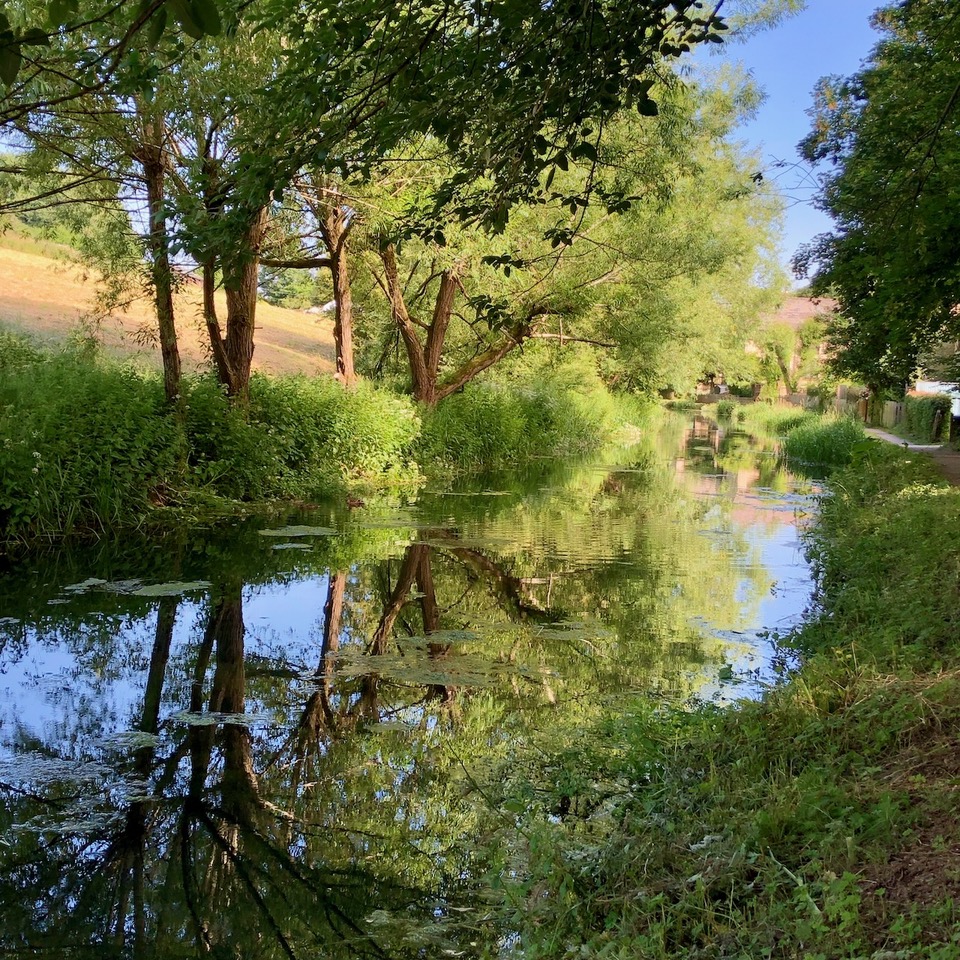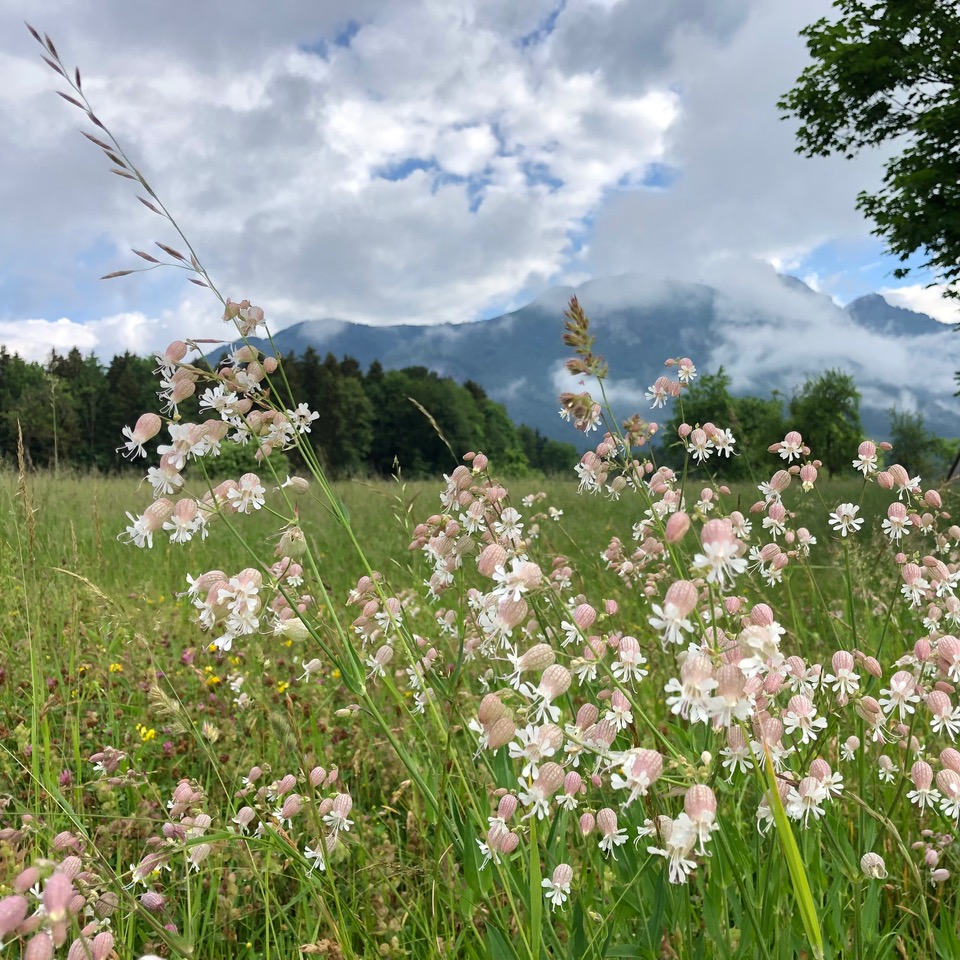
When you experience the past, present and future all occupying the same space in time…

Being away in Germany for much of June and July has got me thinking about the relationship of past, present and future. It keeps coming up as a theme, each time confirming to me that they are not separate, not relegated to positions behind or in front of us as we live that one moment we can call ‘now.’ (My TEDx talk referred to this too)

Just a couple of examples of what I mean.

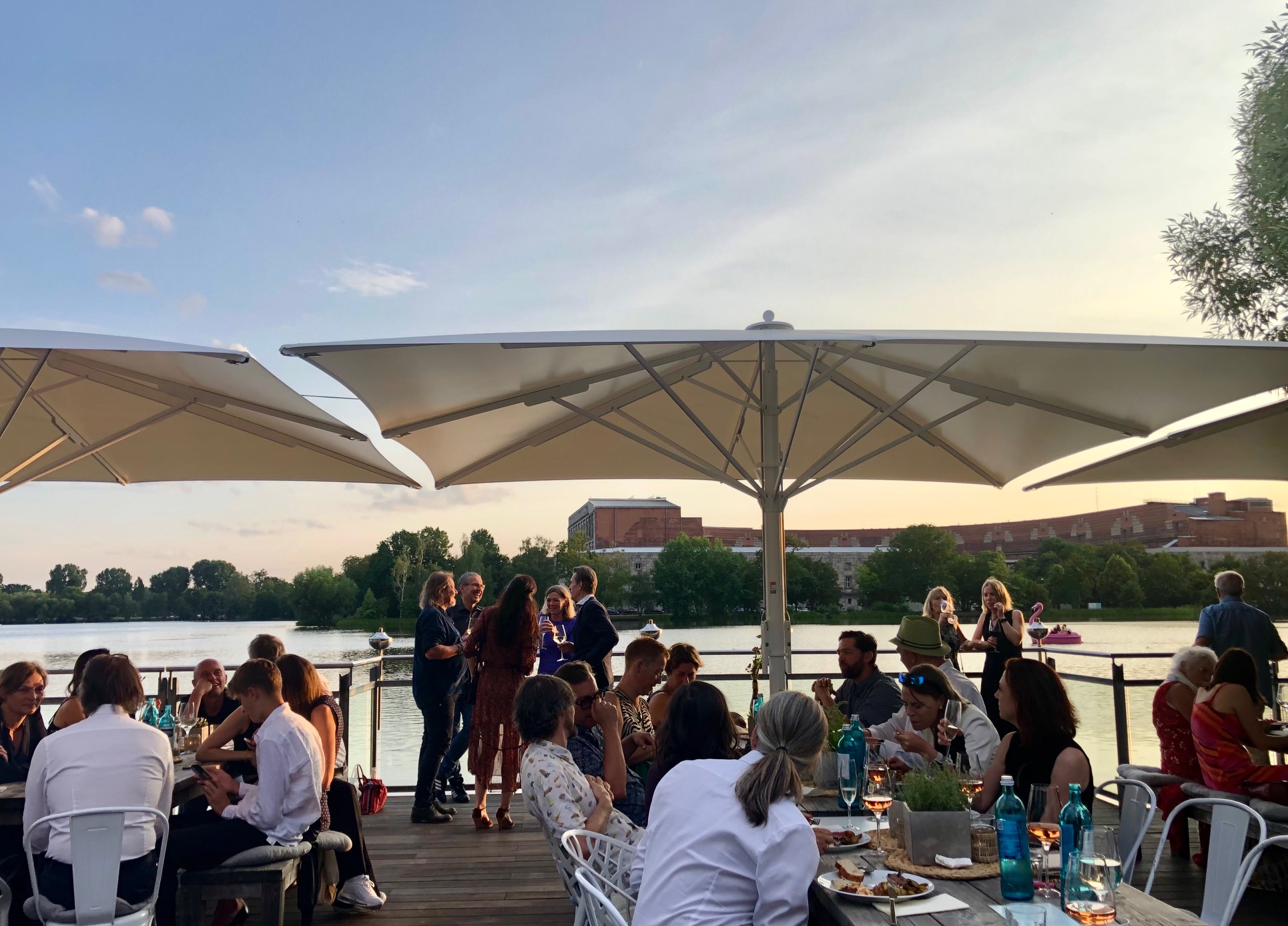
At a lakeside party in Nuremberg where elegantly dressed guests sipped bubbly from slender glasses and a massive, pink rubber flamingo glided an elderly couple and their granddaughter across the water, everybody appeared unaware of, or simply used to the historical monster that lay across the water. 

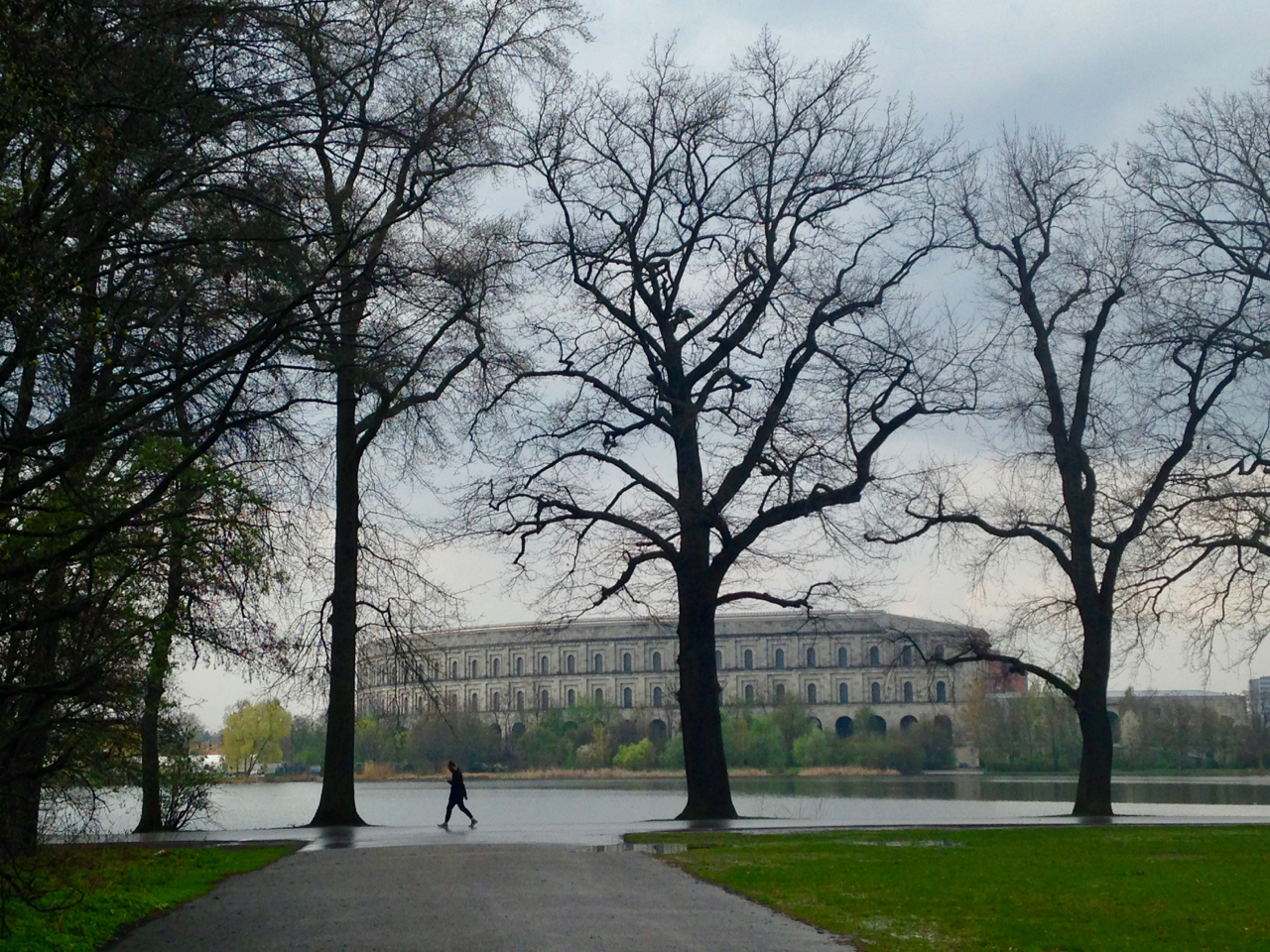
Today it is the biggest preserved National Socialist monument. Ninety years ago it was the unfinished, semi-circular Congress Hall of the Nuremberg Rally Grounds, part of the 11 square kilometre grounds, mostly designed by Albert Speer, that hosted six Nazi party rallies between 1933 and 1938. 

The unfinished Congress Hall, of the Reichsparteitagsgelände, Nuremberg

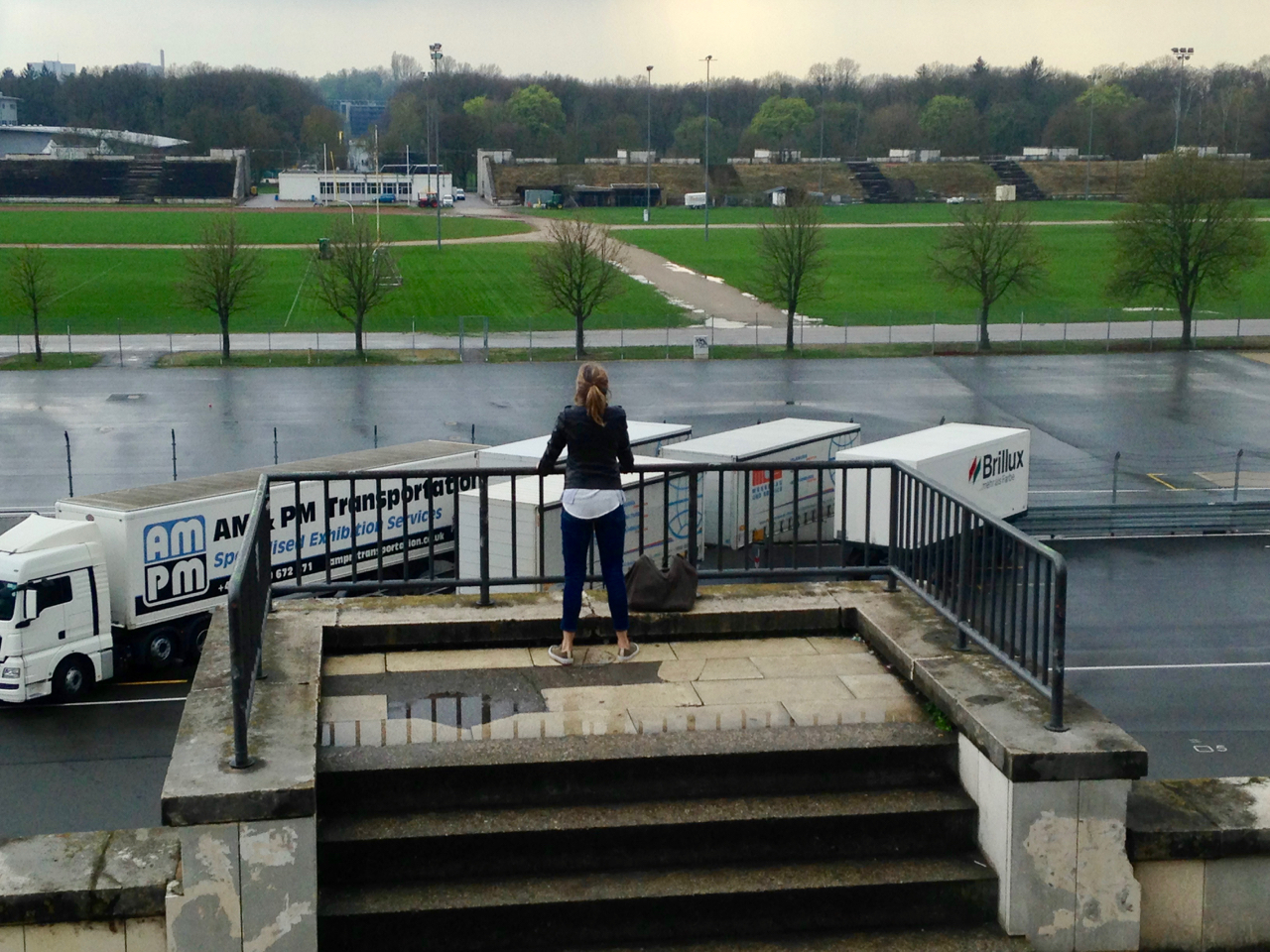
I hadn’t known I would be dancing with my dear friend from Cologne just 500 meters from the Zeppelin Field where I had stood in 2016 on the very rostrum from which Hitler himself had delivered his ‘hypnotic sermons of hate… to rapt audiences in the hundreds and thousands…’ But the visceral memory of the sickening terror I had felt then returned instantly. In spite of the site now being strewn with parked lorries, ‘Never had I been able to visualise the scale of the Nazi movement in all its ugly, popular power with such devastating clarity.’ (In My Grandfather’s Shadow, pp.359-360) 

Yet here I was, one minute laughing, the next engaged in debate with people who have been deeply involved in the complexities of what to do with this hideous phantom of the Third Reich. Artist studios seems to be the current preferred proposal, bringing creativity, transformation and a more constructive future into what was one of the centres of past destruction.

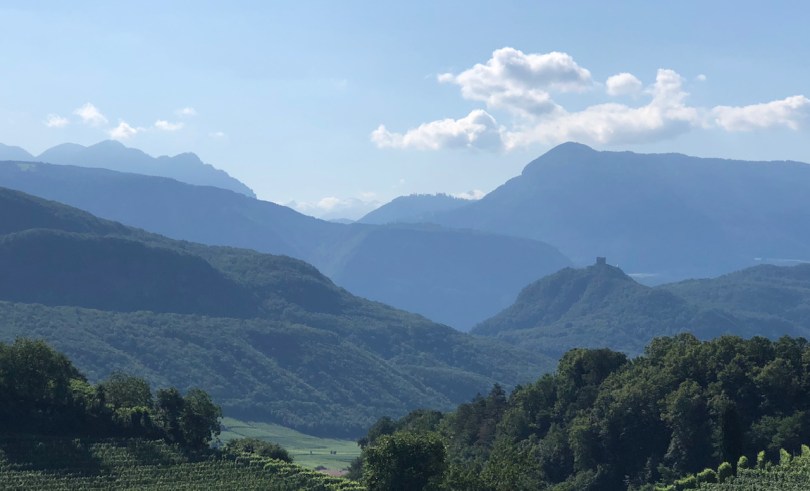
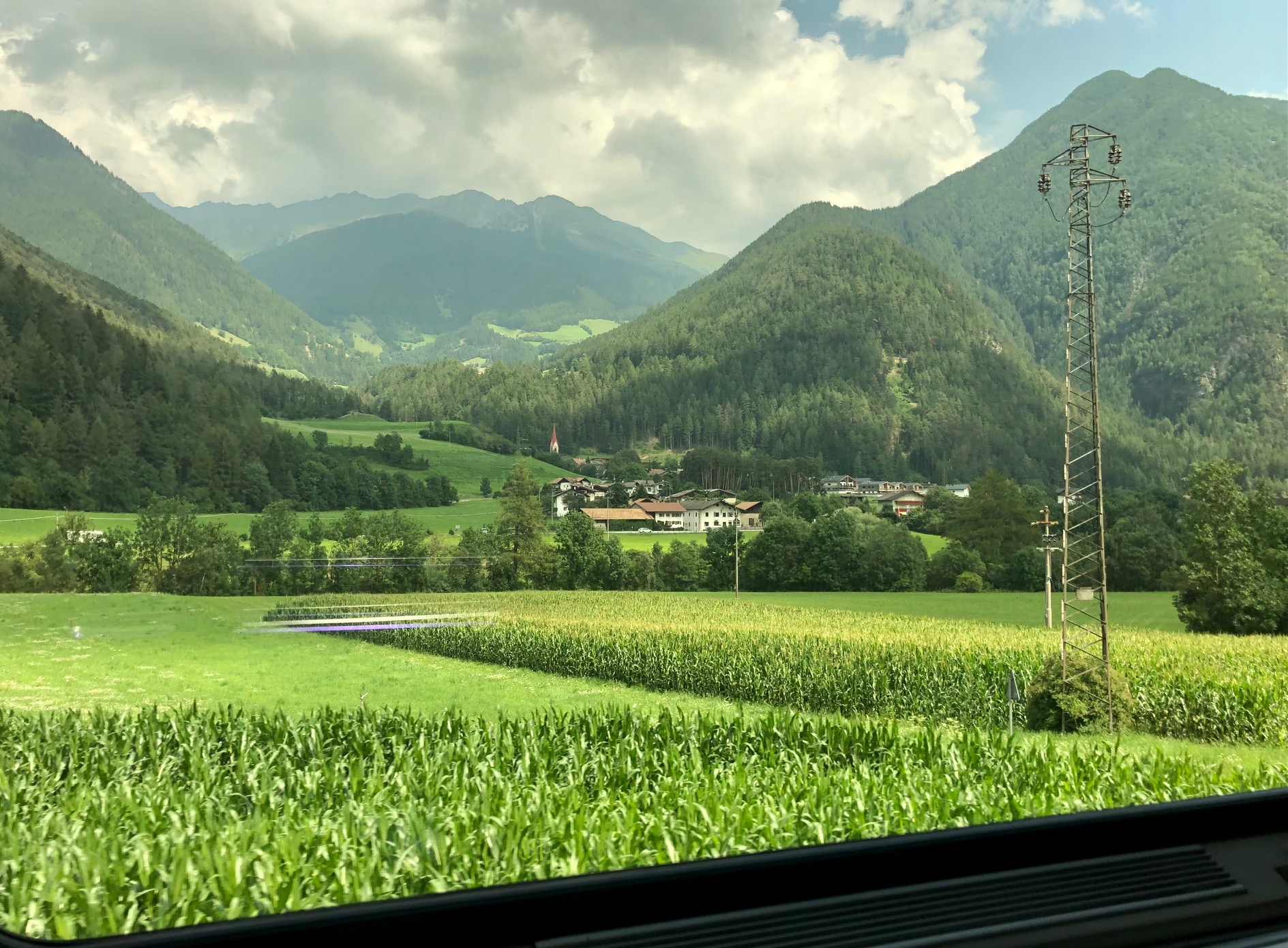
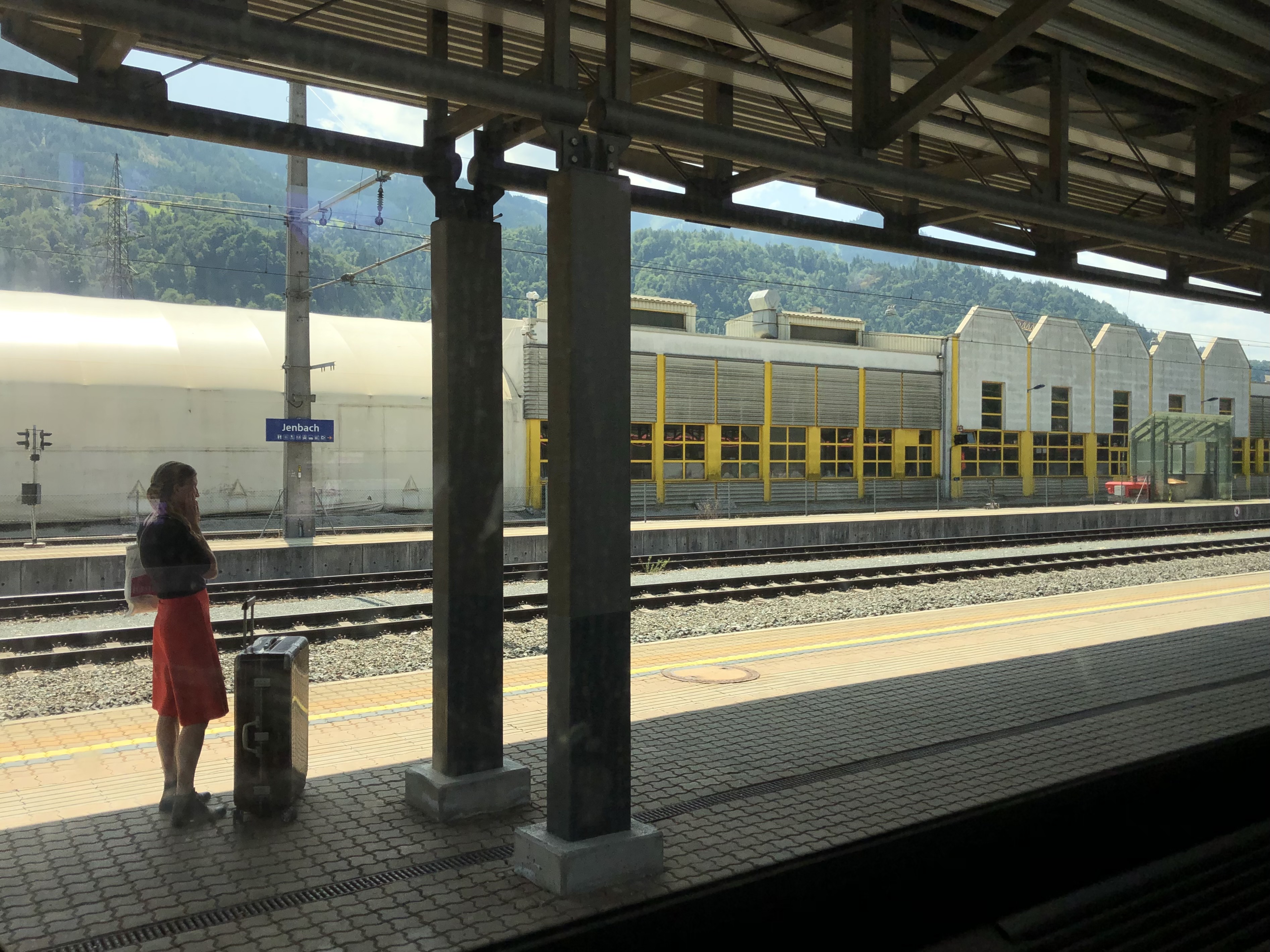
A second example happened on a packed train heading to the mountains of South Tyrol. Settled happily by the window, a young woman entered the compartment with an enormous suitcase, a cloth bag and a delighted smile at having found a space for her and them. As she arranged herself, I watched the dawning of a stricken panic as she began frantically searching under the seats for something. Her rucksack, as I soon learnt, with everything in it: passport, money, phone, ticket…

As the train pulled out of the station, she pushed her way down the carriage only to return a short while later empty handed and distraught. Once again, the past became instantly present as I felt a visceral memory from 1987 when my bag was stolen on a train in India. It too had everything in it, including all my Kodak films and diaries. I remembered the sense of suddenly not existing, of life stuttering to a halt as the bureaucratic fuel needed to move our lives forward was gone. Suddenly I had nothing, and no way of getting anything or anywhere, least of all home. 

With her beautiful smile now strained, the young traveller got off at the next station in order to return to the only place she might still find her bag. I gave her 30 Euros and told her things would work out somehow. They always do. She returned the same anxious gratitude I too had offered the kind stranger who gave me some money in India. But for the next stage of my journey, that episode from my past was fully present, just as I trusted her present would swiftly pass and resume its course into the future. 

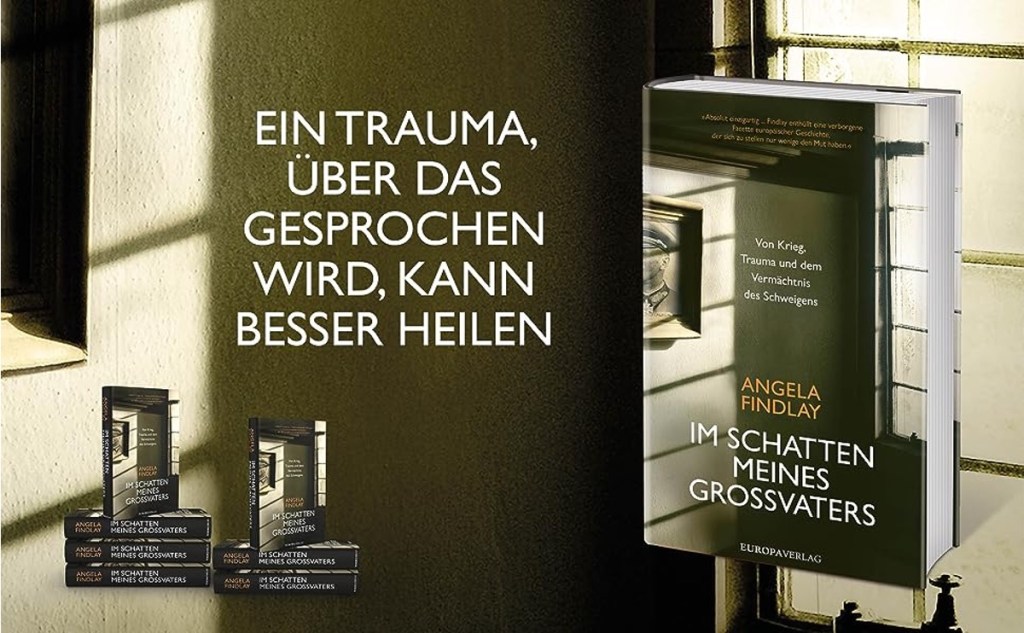
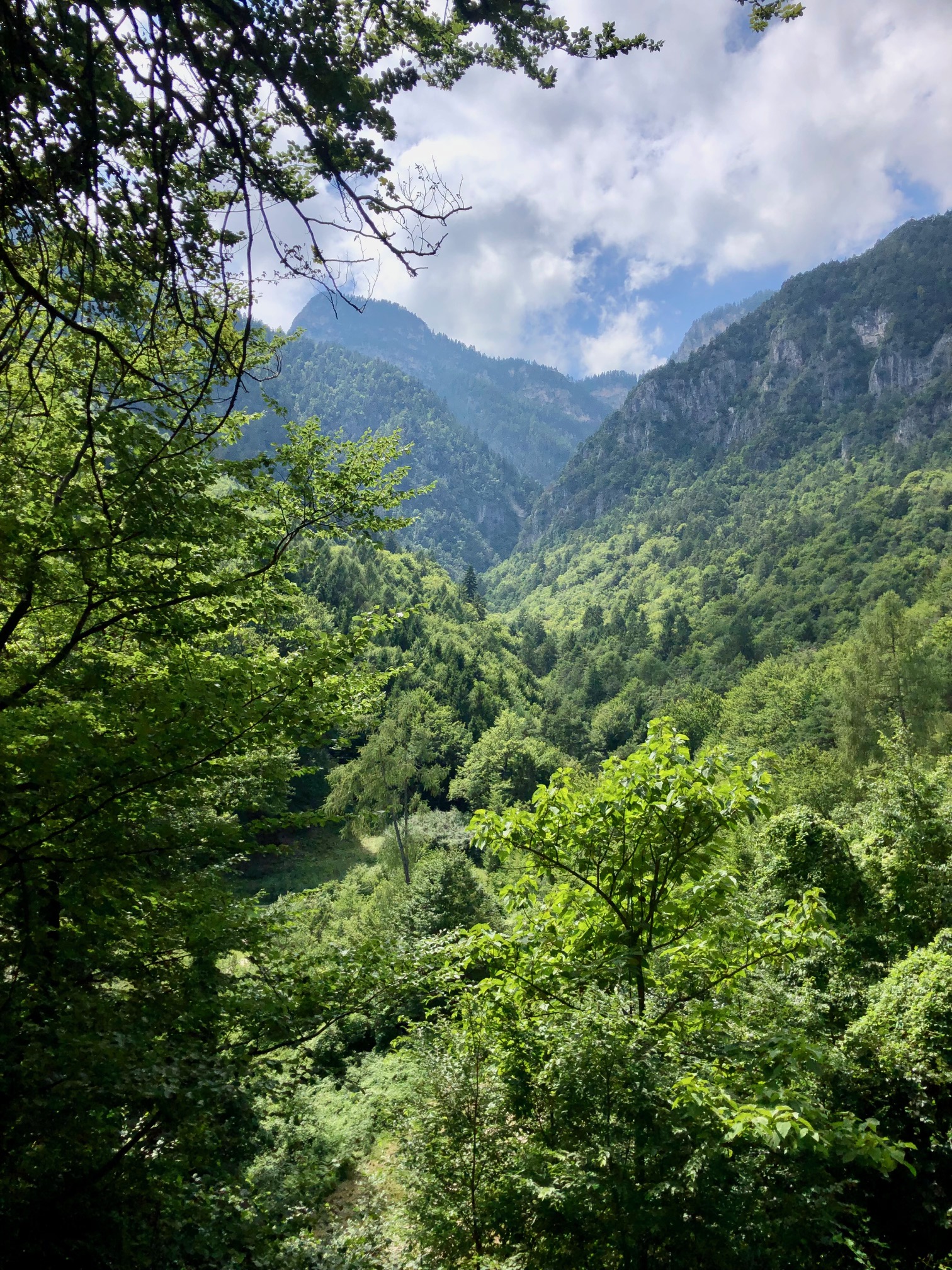
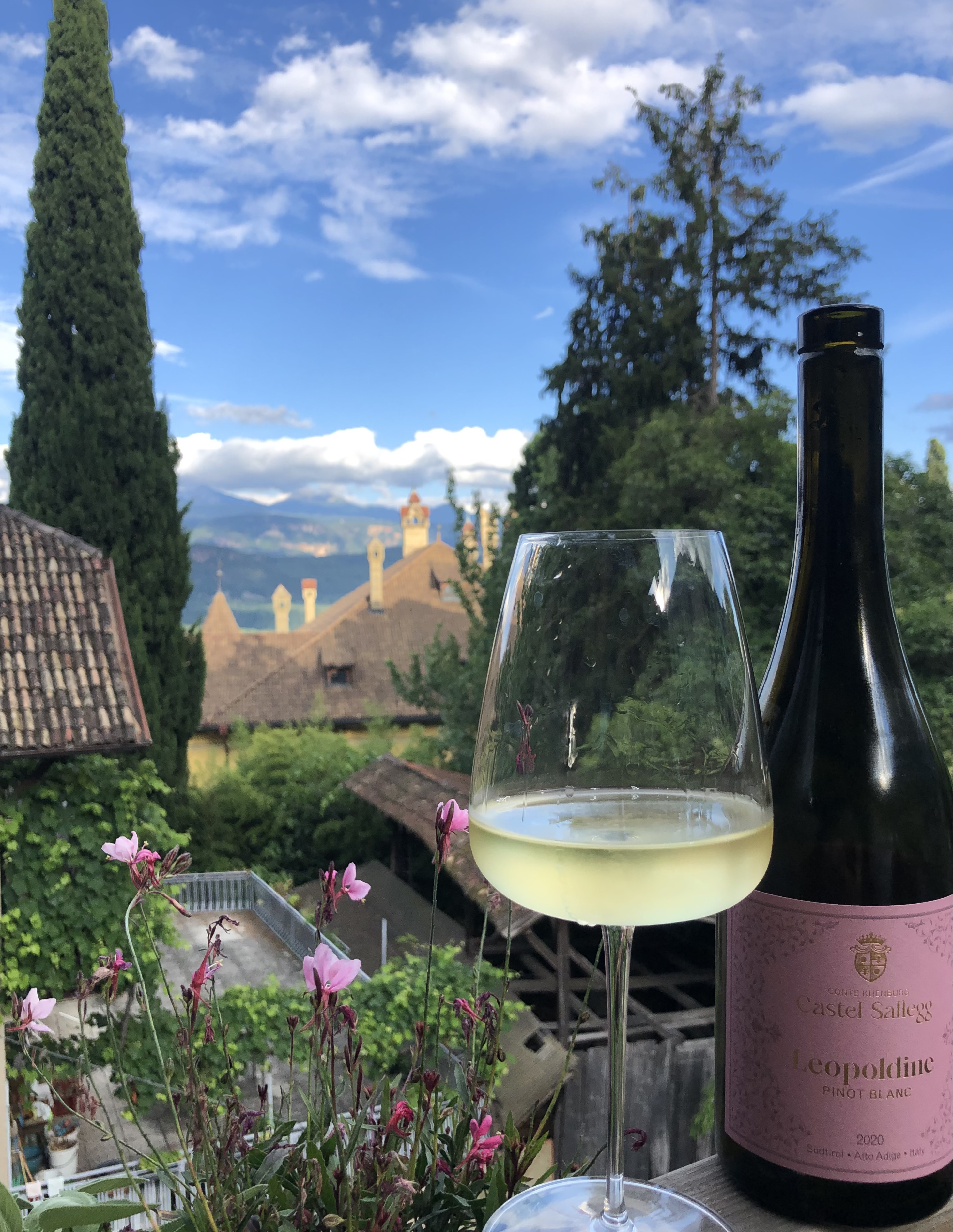
Living in the space between the launch of In My Grandfather’s Shadow last July and the impending publication of Im Schatten Meines Großvaters coming up in September, the present, devoid of a busy schedule and deadlines, has rarely felt as potent and expanded in its not-knowingness. My original 10-day trip packed with travel and planned visits both to German friends and book-related people, evolved through a series of spontaneous decisions and the generous offer of a first cousin’s apartment, first leading me to South Tyrol and then into a week of moment-to-moment unfolding. My days’ questions revolved around whether to hike up that mountain, swim in the big or smaller lake, e-bike to the nearest village, read or taste a different local Weißburgunder/Pino Bianco…

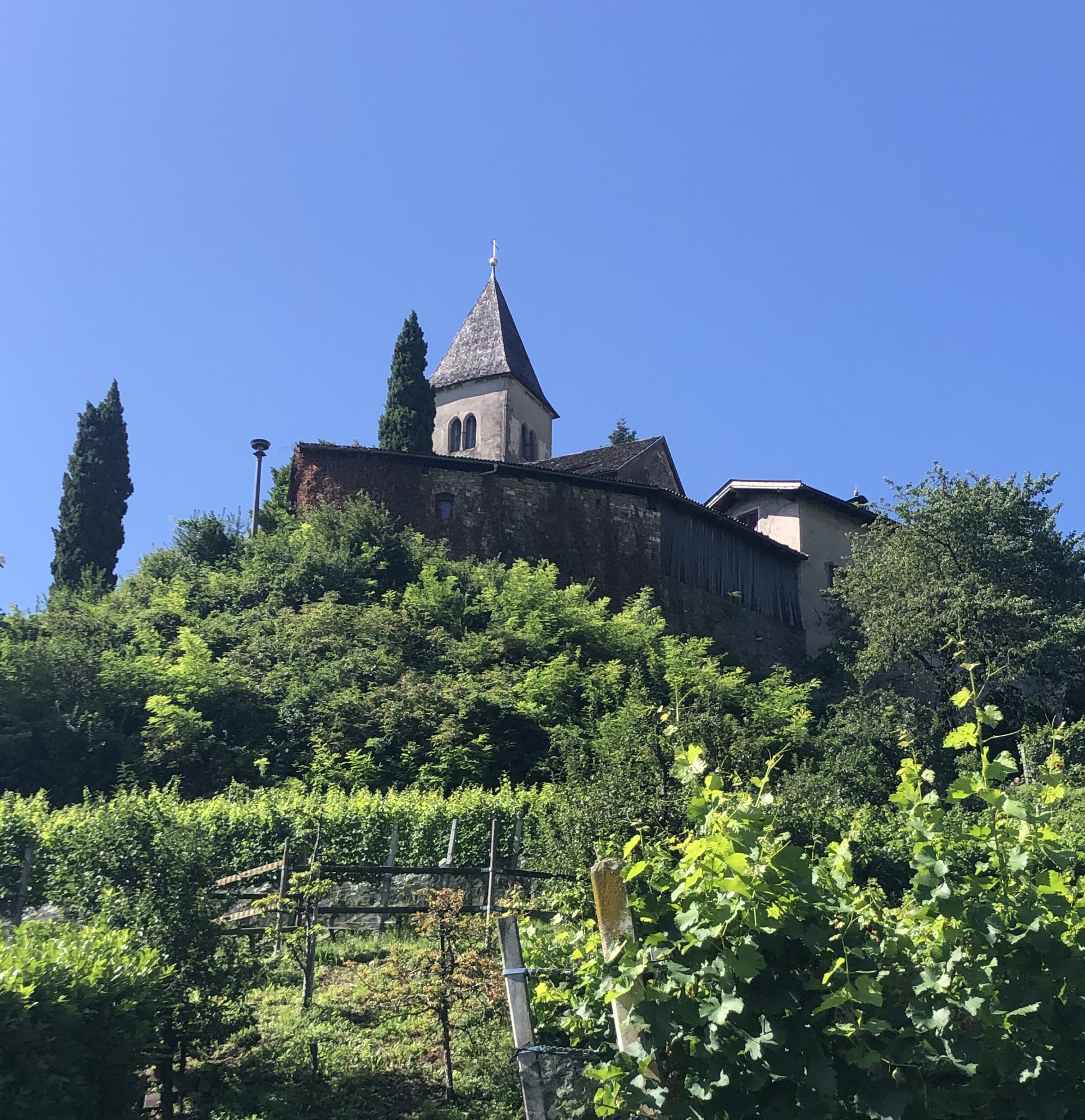
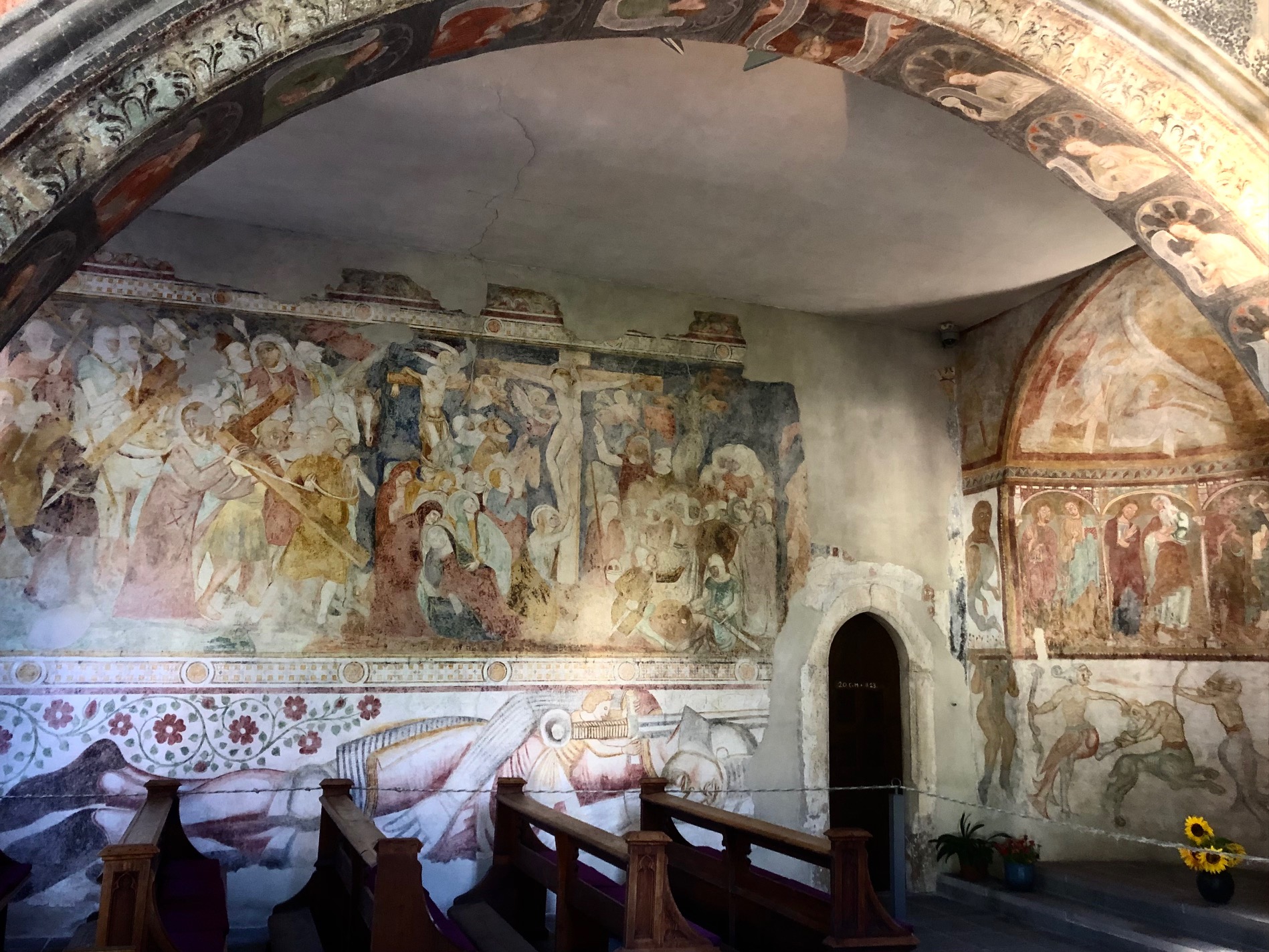
It’s typical happy holiday stuff for some. But there were times when I literally stepped out of the hot sunlight and into the cool past. Italy does that effortlessly through its barely signposted, little Romanesque churches adorned with glorious early 13th century frescoes. The continuity and shared spatiality of past, present and future tangible to those who are open to feel it.

St Jakob in Kastelaz near Tramin

Deliberately avoiding all news and social media and without a task to accomplish, I experienced a strong sense of how the past constantly accompanies and informs us – albeit often subconsciously – as we are drawn by an unknowable future through our present moment. And I have to say, right now, mine is a present that I am really enjoying.

Wishing you a very happy summer wherever you are… and whatever the weather!

Berlin – a flâneur’s wanderings and ponderings

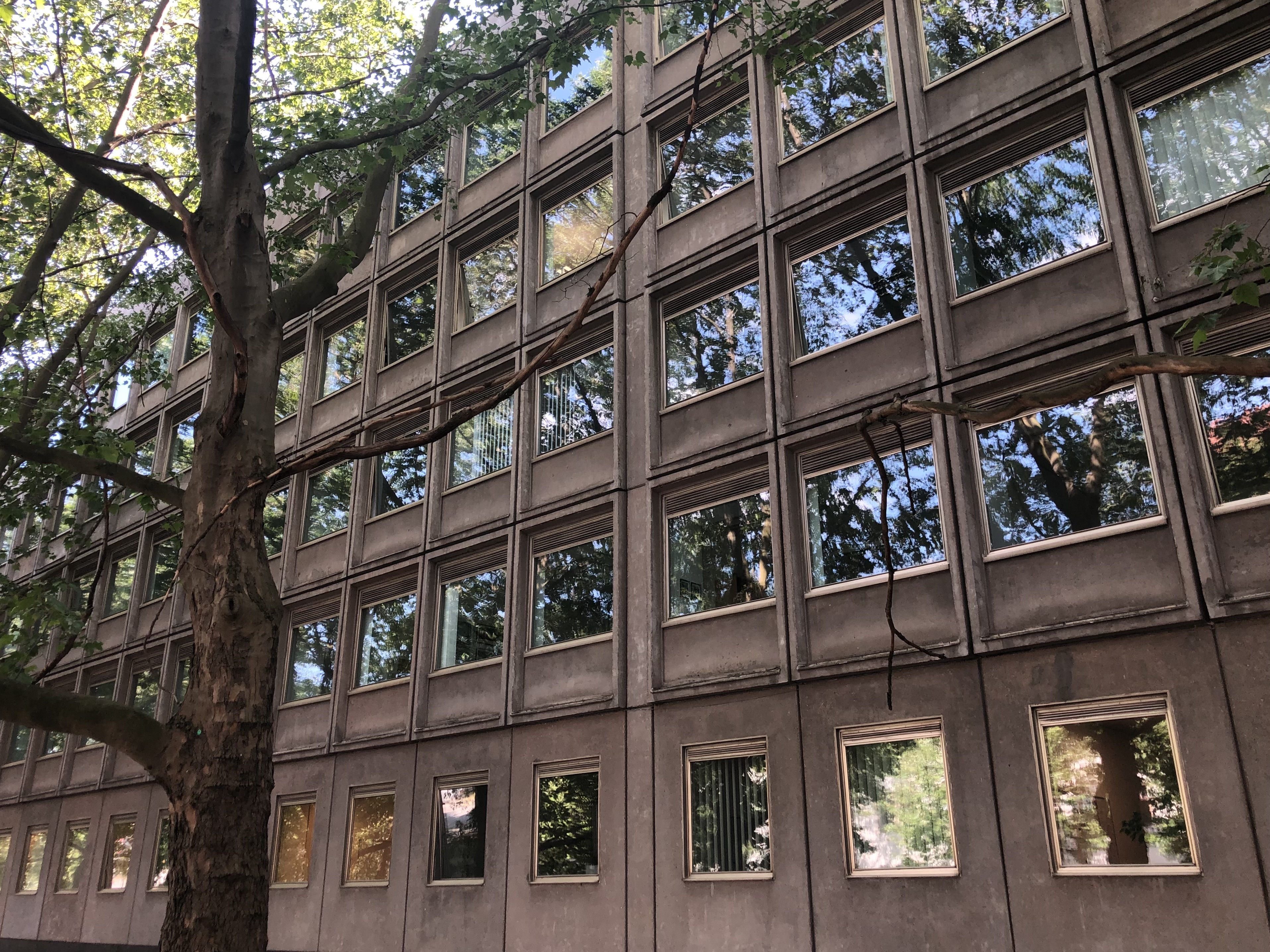
The past century has left heavy footprints all over the ever-changing face of Berlin. Without even scratching the surface, you can find the scars of murderous regimes, failed ideologies, war and destruction on all levels. But my regular visits to the city since 1990 have also witnessed the extraordinary resilience, creativity and defiant refusal to succumb to the particular ‘-ism’ trying to shape it. Throughout the city, past, present and future reside in a disturbing but reassuring harmony that promises not to forget, not to become complacent, not to allow such things to happen again while also offering plenty of opportunities for enjoyment.

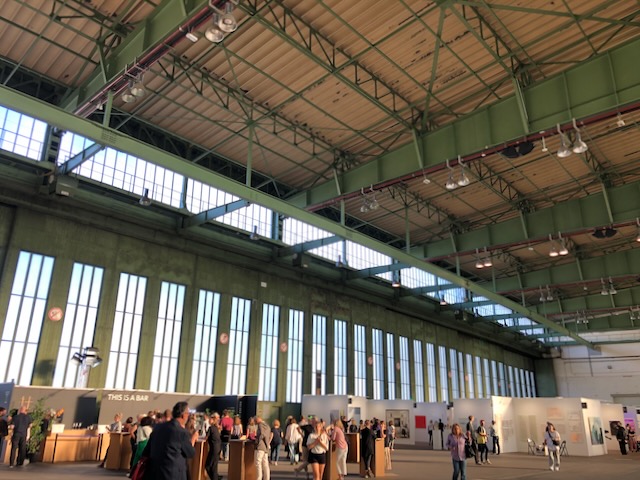
Berlin’s contradictions are best experienced first hand. Feeling the city helps one to get closer to understanding it. It isn’t always comfortable, but it is infinitely interesting. Below is a little virtual / visual ‘tour’ of the two weeks I have just spent flâneuring through quarters of Berlin I hadn’t been to before, following my nose as I sniffed out history’s path into the present day. (You might like to read it on my Blog site, where the layout is more reliable.)

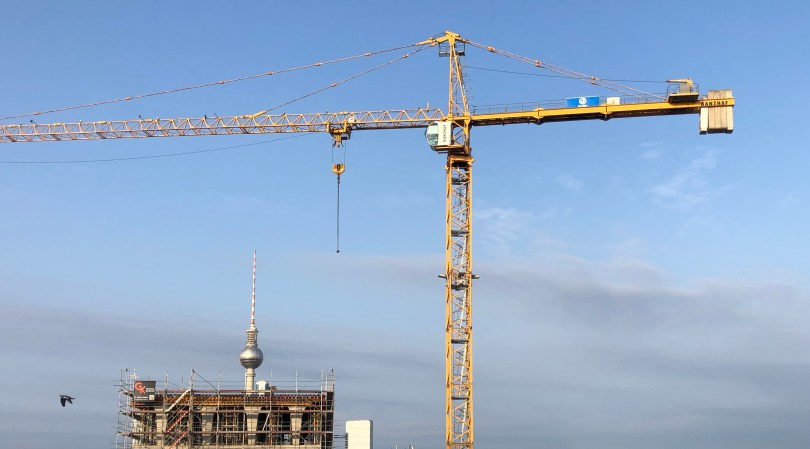
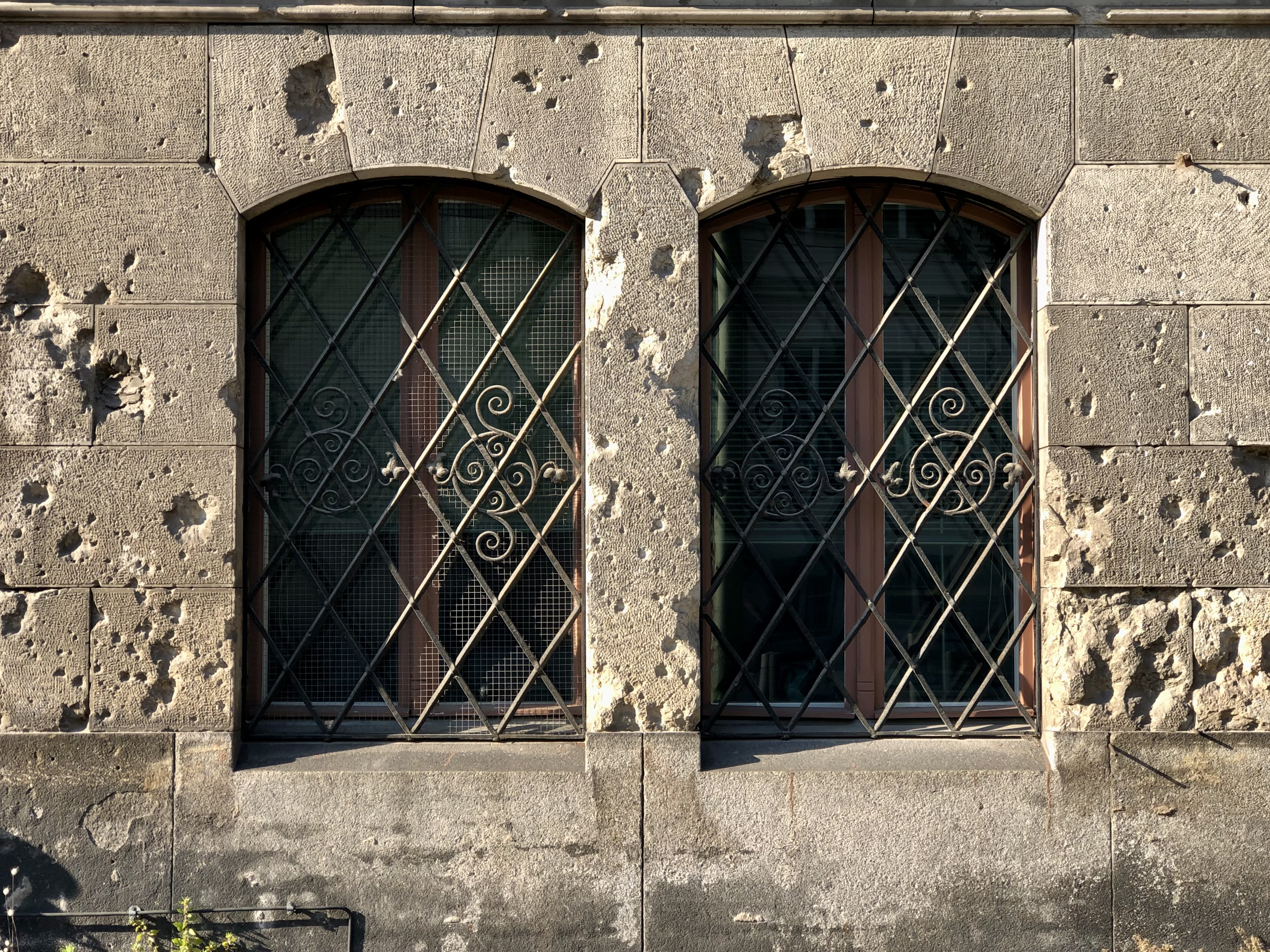
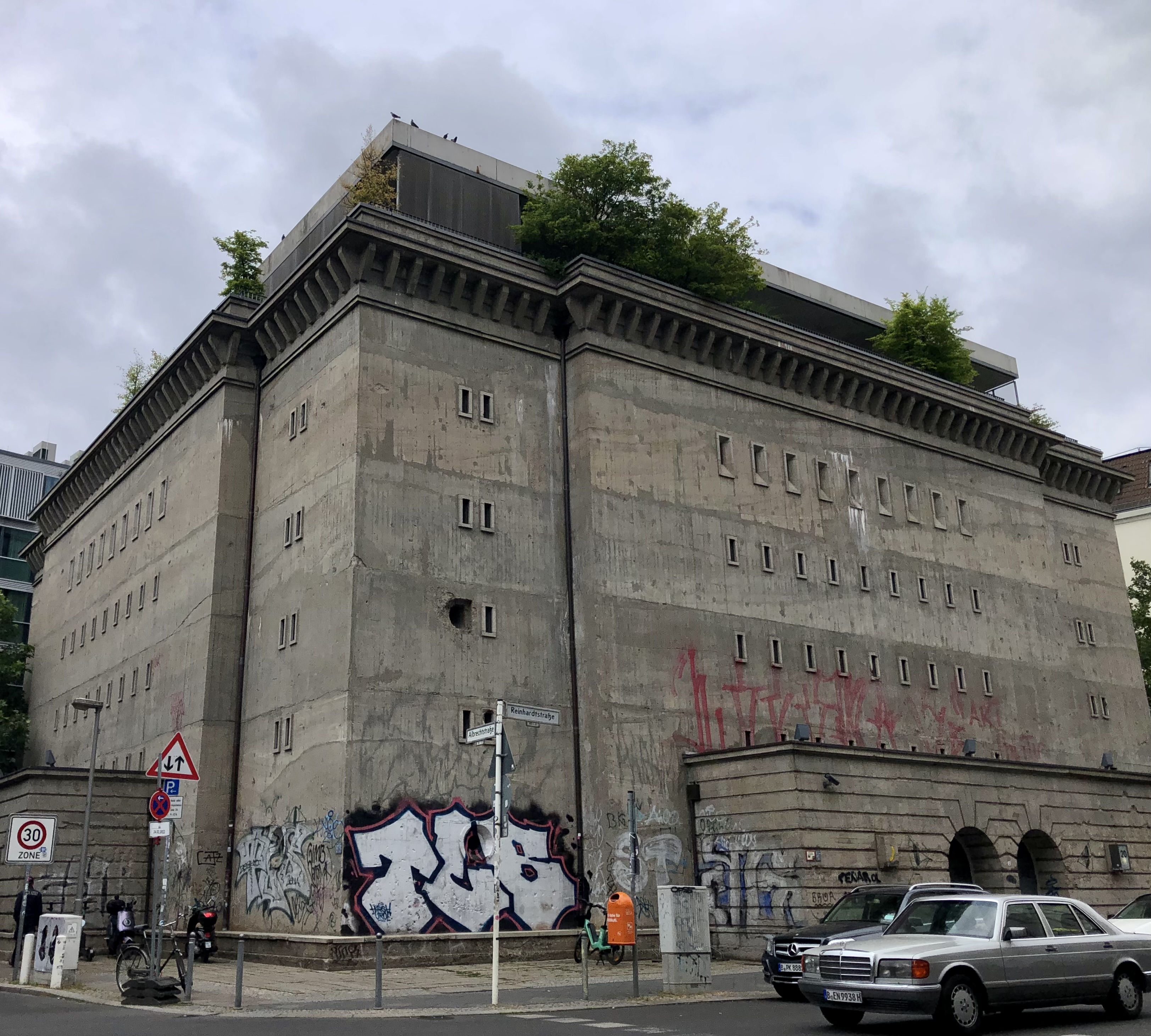
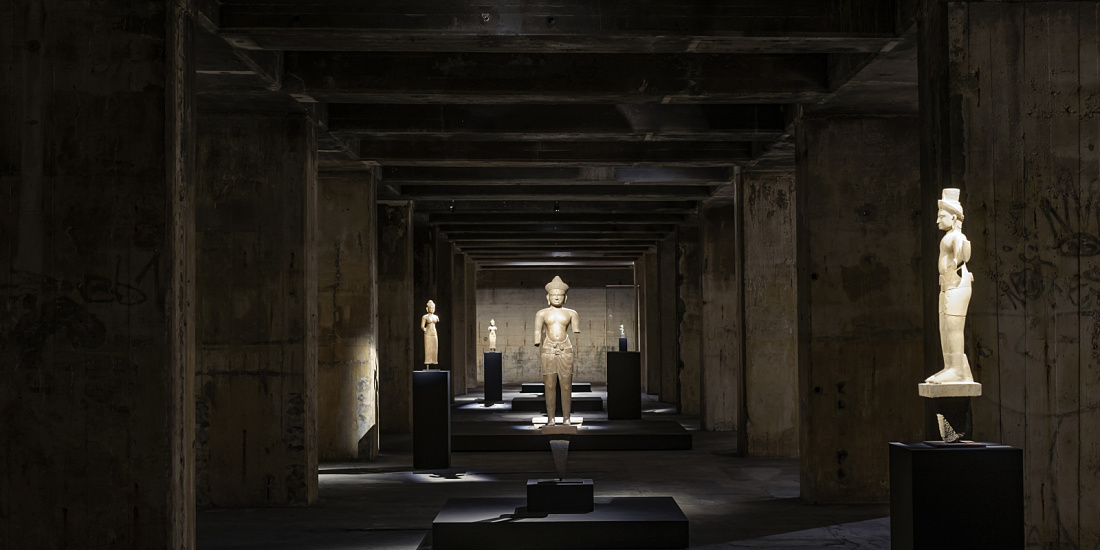
Striking in its lack of cosmetic disguise, evidence of the Second World War still lingers all too visibly: in the empty spaces left by bombed houses; the bullet holes from the final battle; and the enormous bunkers, now transformed into extraordinary galleries that house contemporary installations (Boros Sammlung) or offer an exquisite experience of Asian art in dark silence (Feuerle Sammlung).

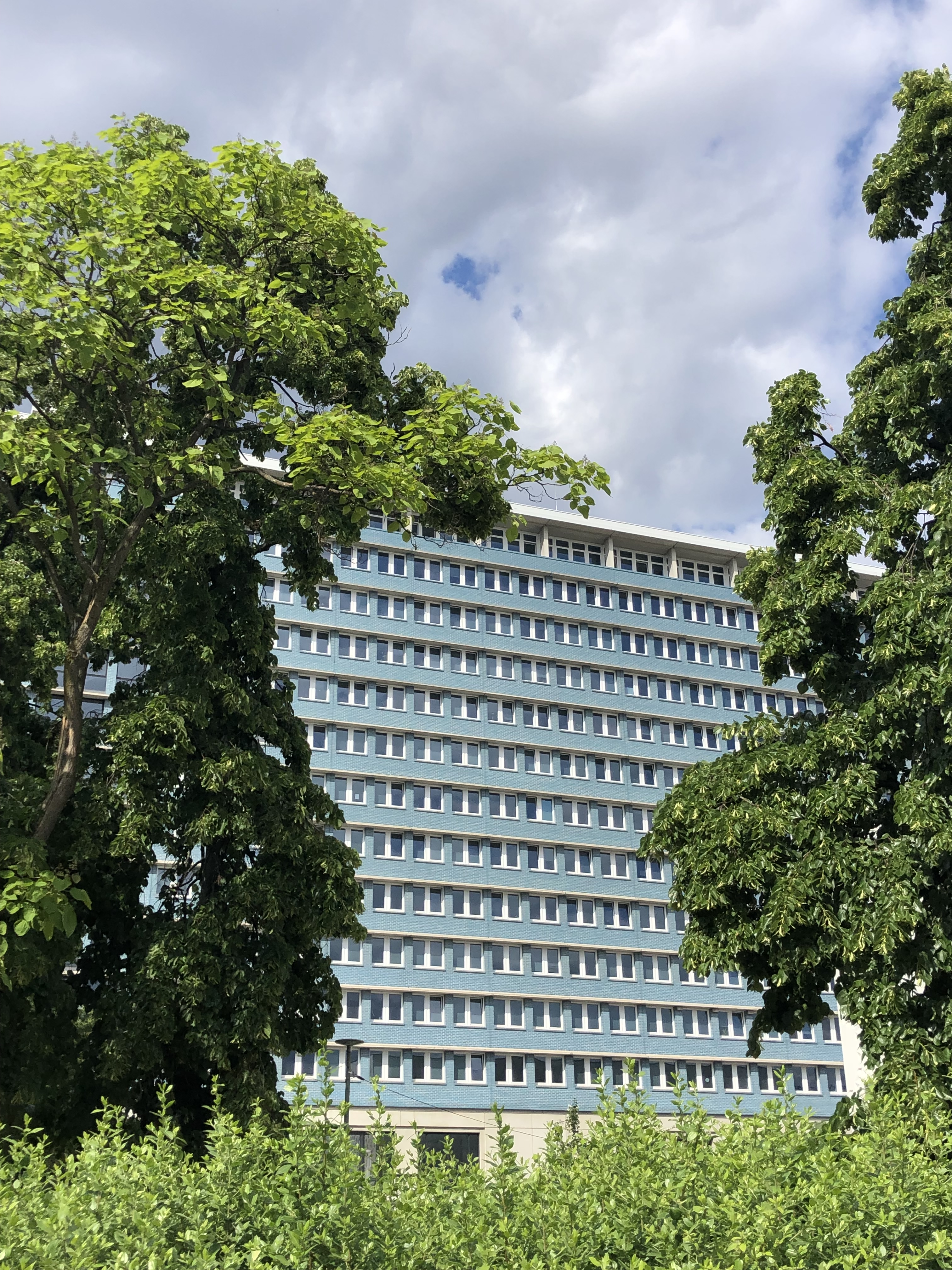
After the war, the DDR evolved out of the Manifesto of the Communist Party of 1848 created by KARL MARX and FRIEDRICH ENGELS. Its goal was to ‘change the world’ and to this day, Karl Marx rates as one of the top three Germans, along with Konrad Adenauer (first chancellor of the Federal Republic of Germany 1949-1966) and Martin Luther (Protestant Reformation).
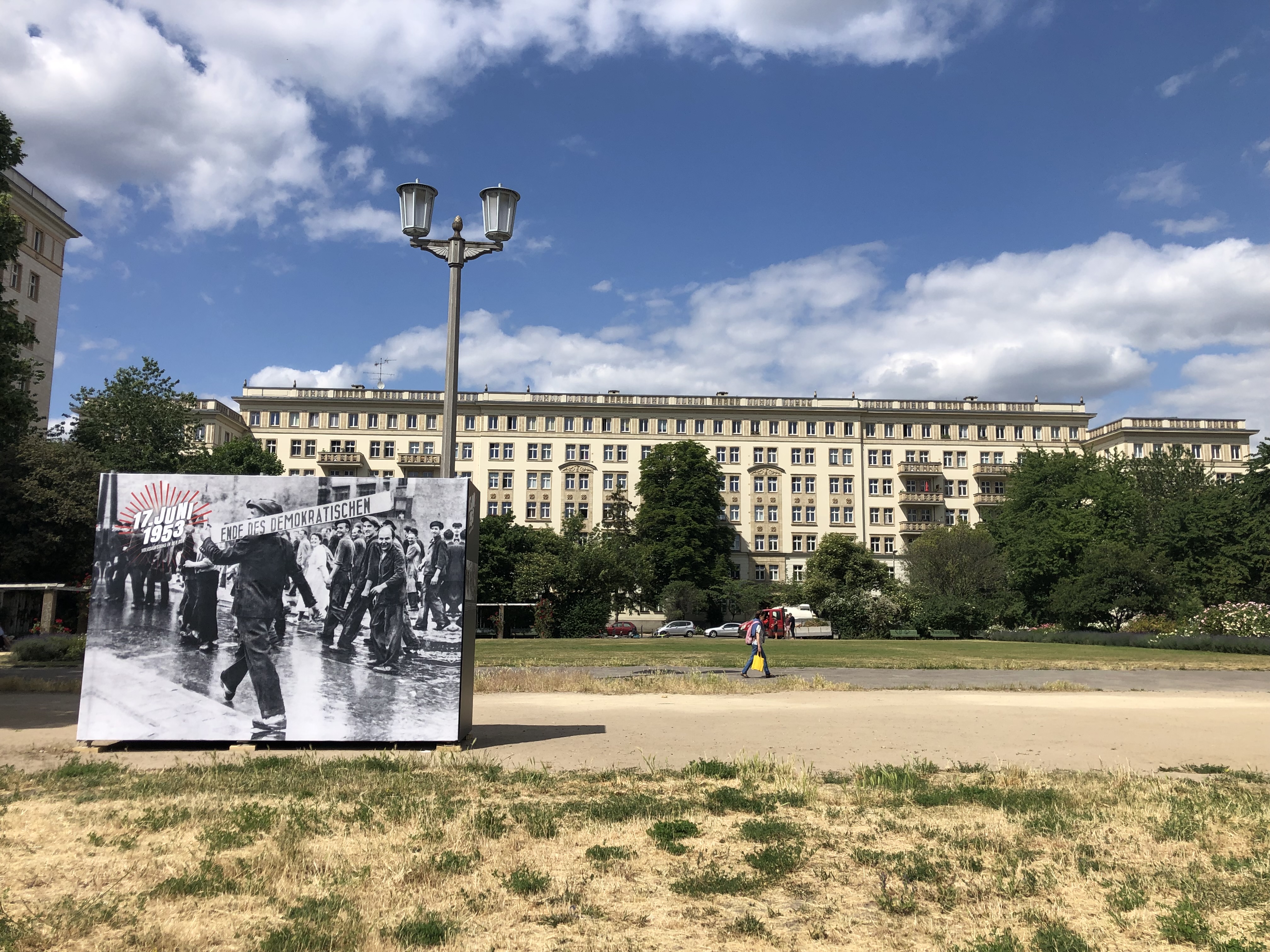
The KARL-MARX-ALLEE, formerly Stalinallee, is the 90-metre wide, 1.2-mile long DDR boulevard lined by grandiose Moscow-style architecture built between 1952 and 1960 and scented lime trees. Designed to sing the praises of socialism, the buildings offered luxurious flats for workers as well as restaurants, shops and a still iconic Kino International cinema. Many of the apartment blocks were covered in ceramic tiles, earning the Allee the nickname of ‘Stalin’s Bathroom’. Half of them had fallen off by 1989.

In the oldest part of the city, a typical ‘Plattenbau’, the panel system-building made up of pre-fab concrete panels, some with basin and loo already attached, rises above a little-known but beautifully crafted frieze telling the history of communism and the DDR.

This year was the 70th anniversary of the 17. JUNE 1953 WORKERS UPRISING in protest against the state’s imposition of more working hours for no extra pay. It was crushed with Soviet tanks and troops leaving 123 people dead.

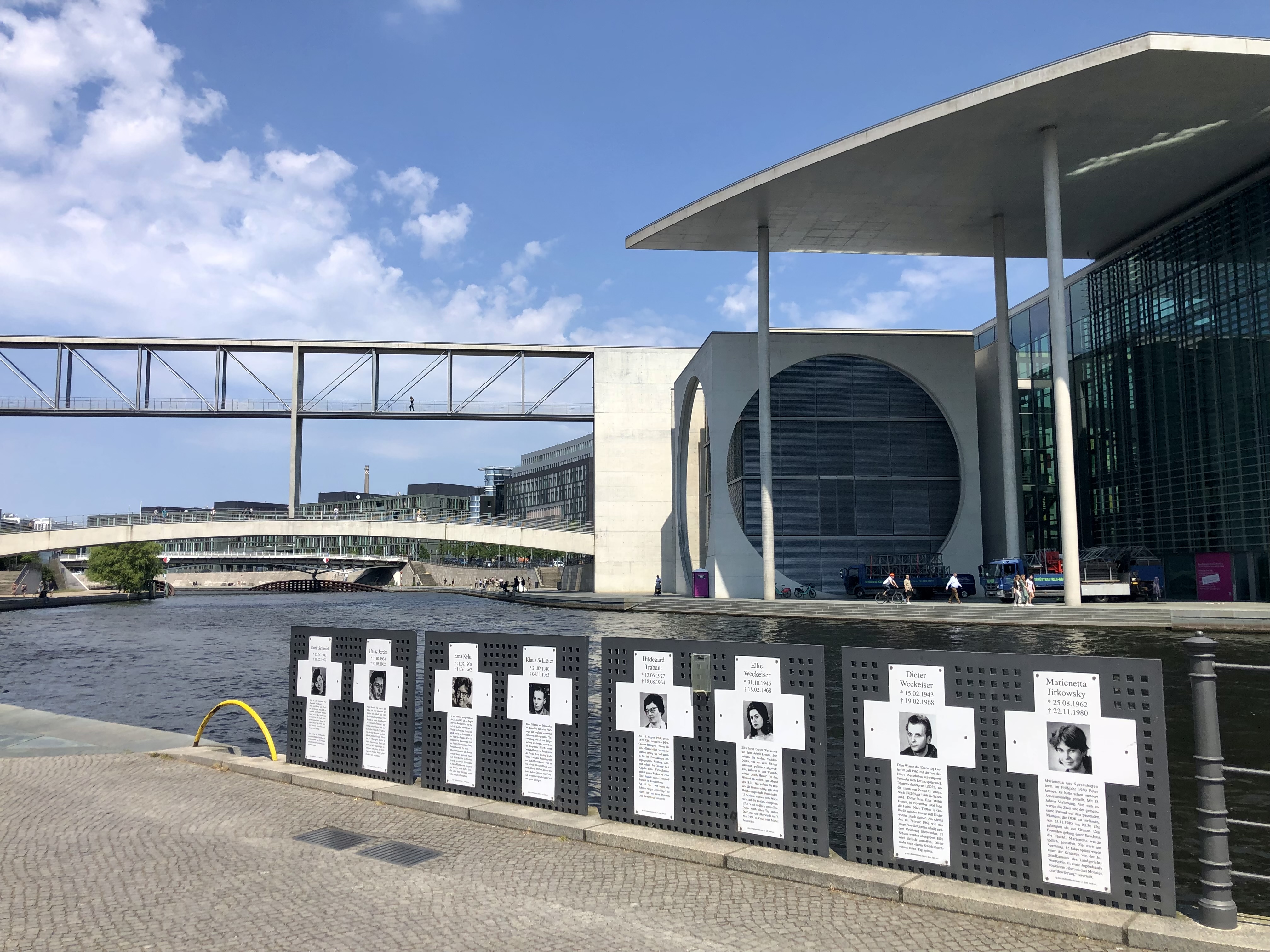
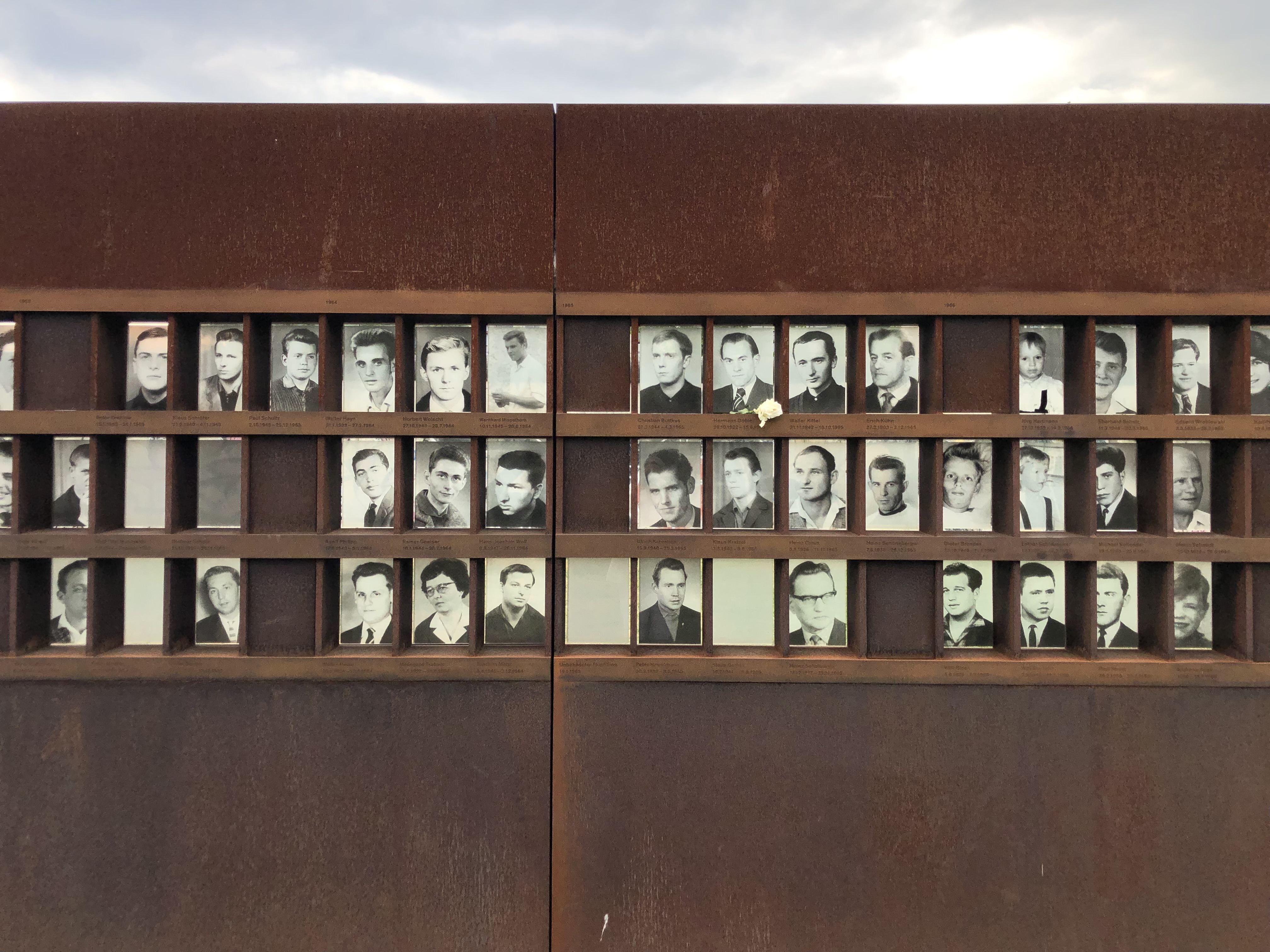
From 1961-1989, the BERLIN WALL effectively locked East Berliners into the regime’s paranoid ideology and ruthless regime. Monuments dotted on its snake-like course through the city tell the tragic stories of the more than 140 people who died trying to escape.

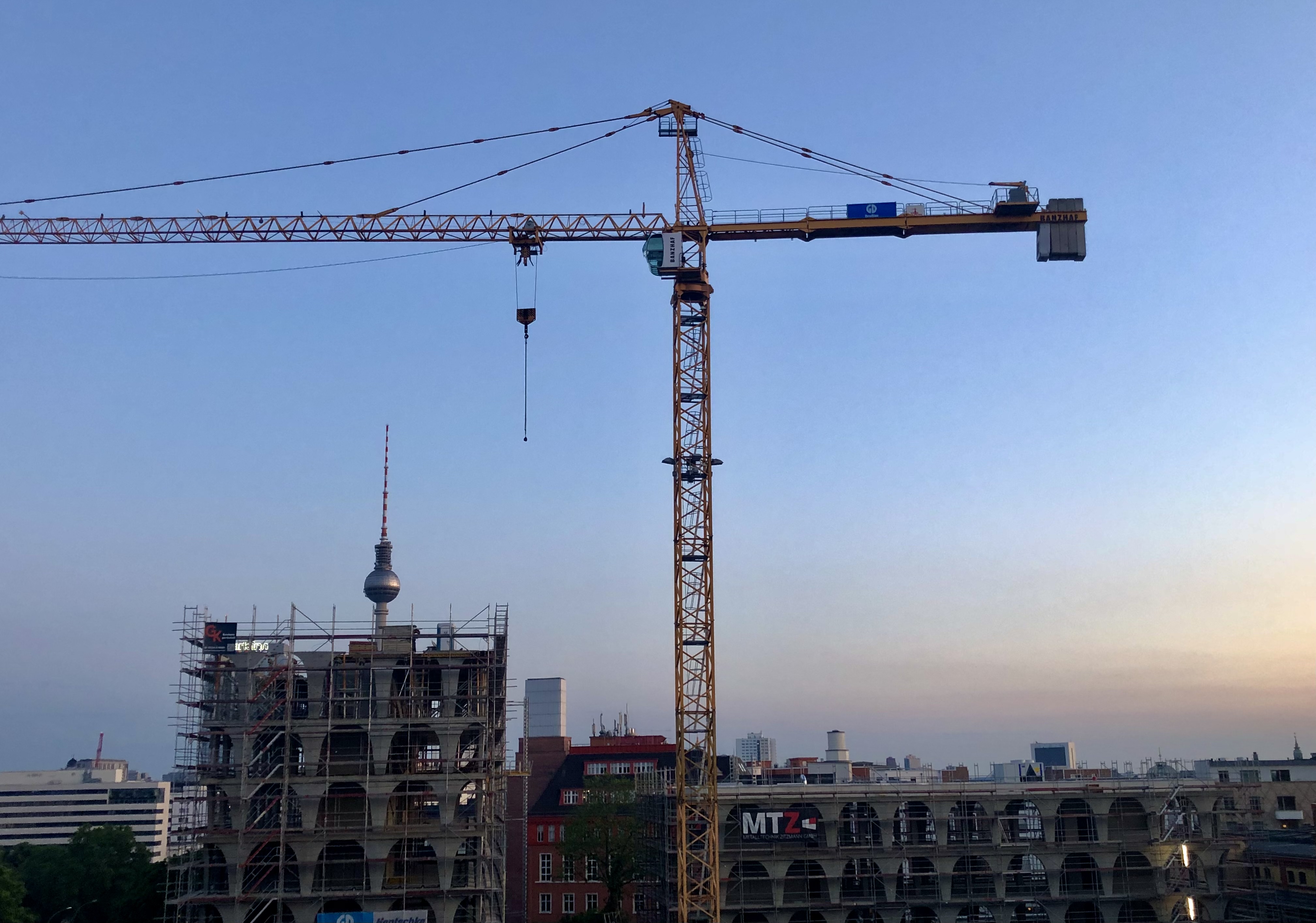
After the Fall of the Wall and the reunification of Germany in 1990, the next phase of (re-)building began and still continues everywhere. Some areas have been homogenised into the commercial cityscapes you can find the world over.

Around the Reichstag and central parliament area, ultra-modern architecture prevails. Outside Jakob Kaiser House, the all-important Grundgesetz or Basic Law is etched into glass – a fragile but resolute commitment by the Federal Constitution to guarantee fundamental rights in Germany .

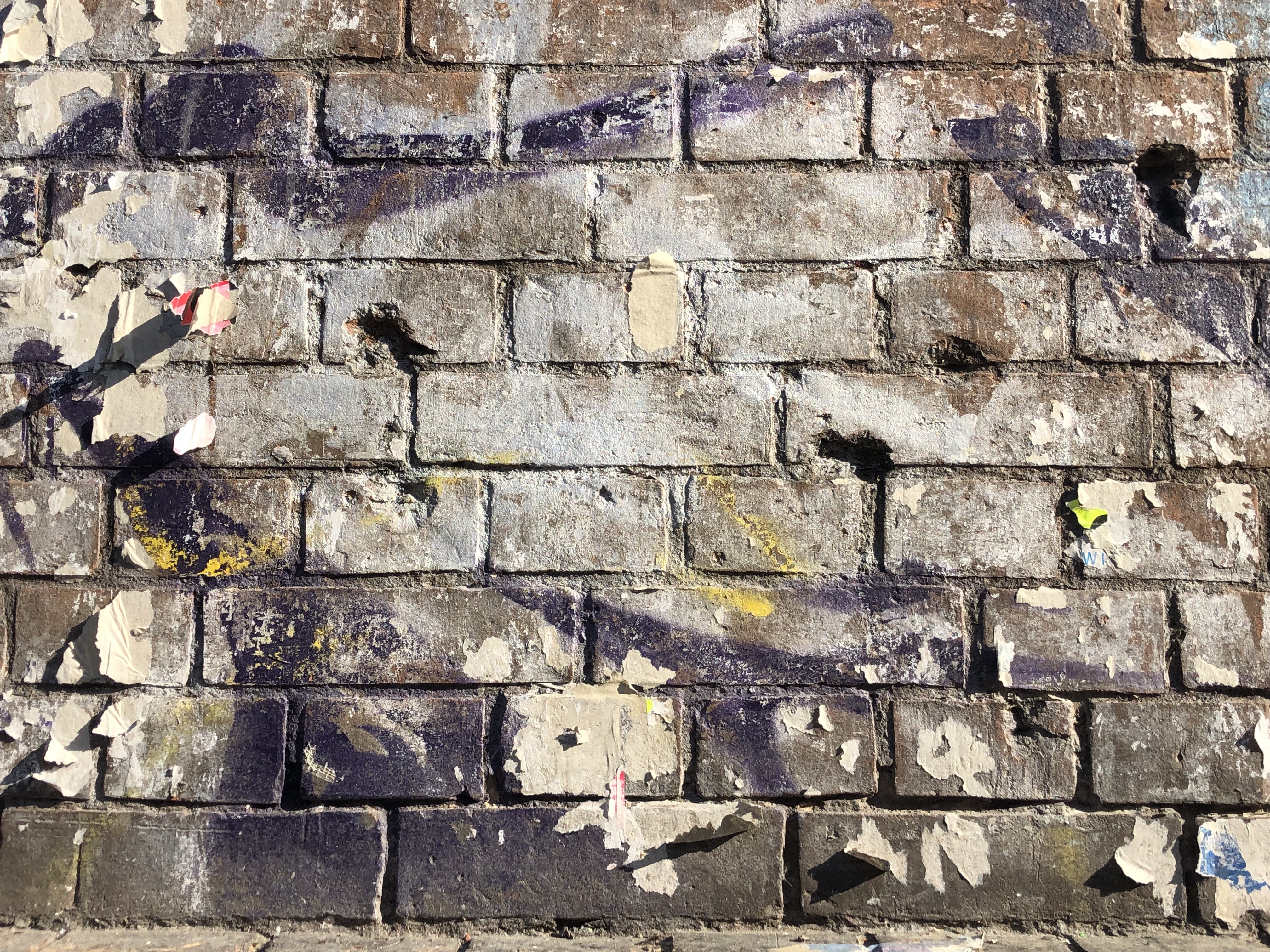
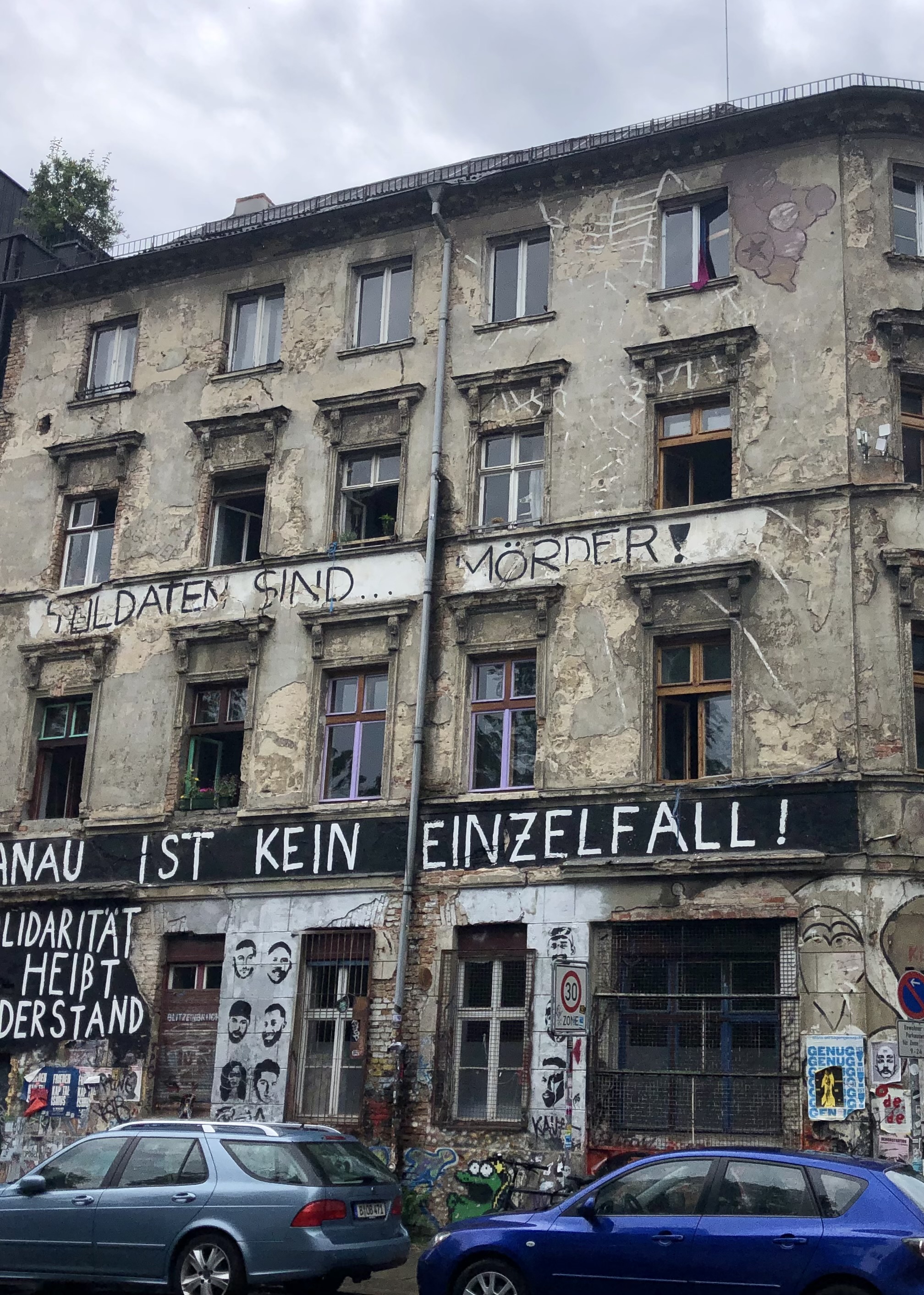
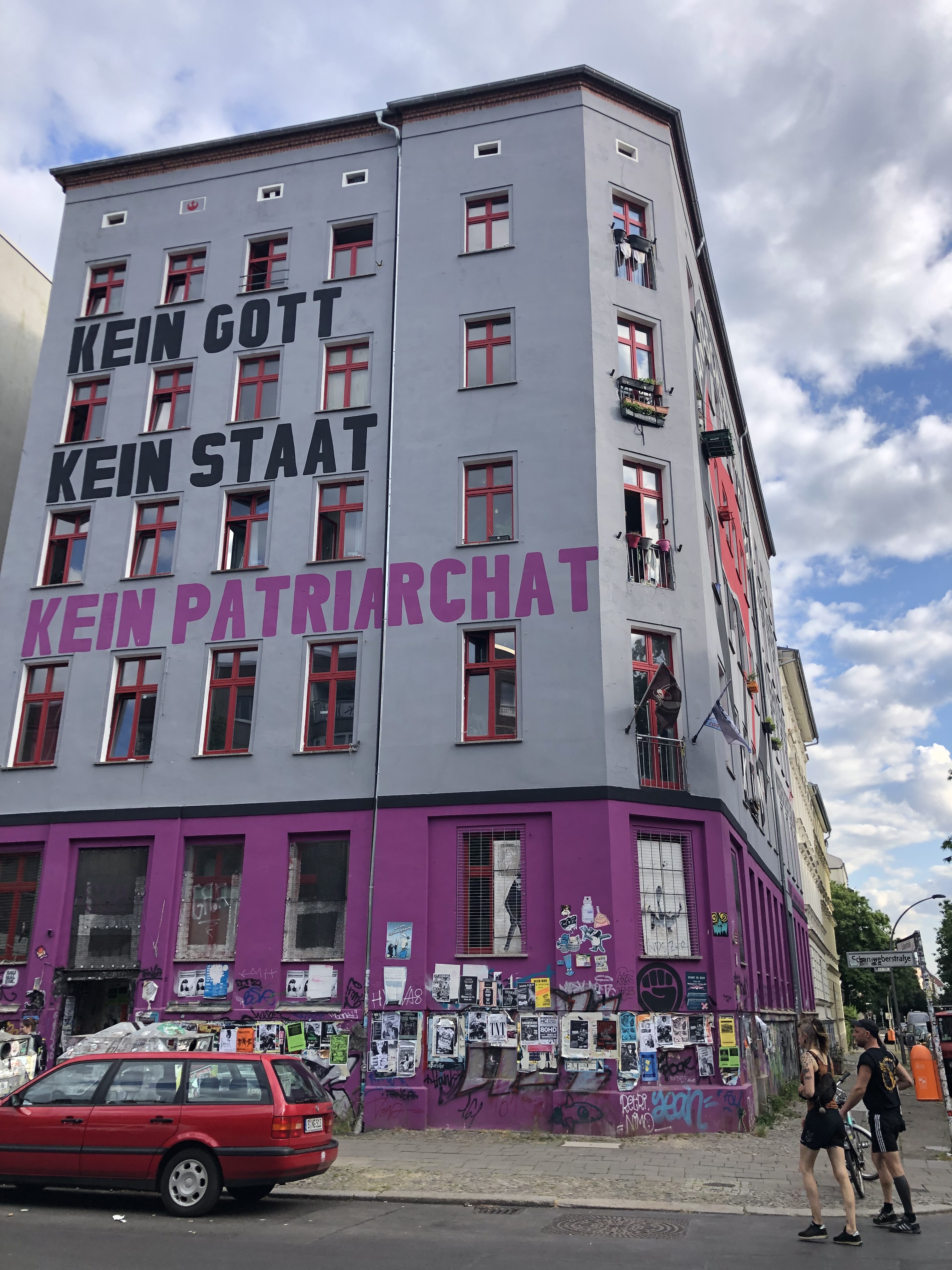
Elsewhere, whole quarters have dodged development and been claimed by layers of graffiti and young hipsters with tattoos scribbled like doodles over their bodies. Political slogans and statements adorn buildings squatted in since ‘Die Wende,’ the peaceful revolution of the autumn of 1989 that led to East and West Germany and Berlin becoming one again: ‘Soldiers are murderers’. ‘Keep calm and don’t give a fuck’. ‘No God, no state, no patriarch.’

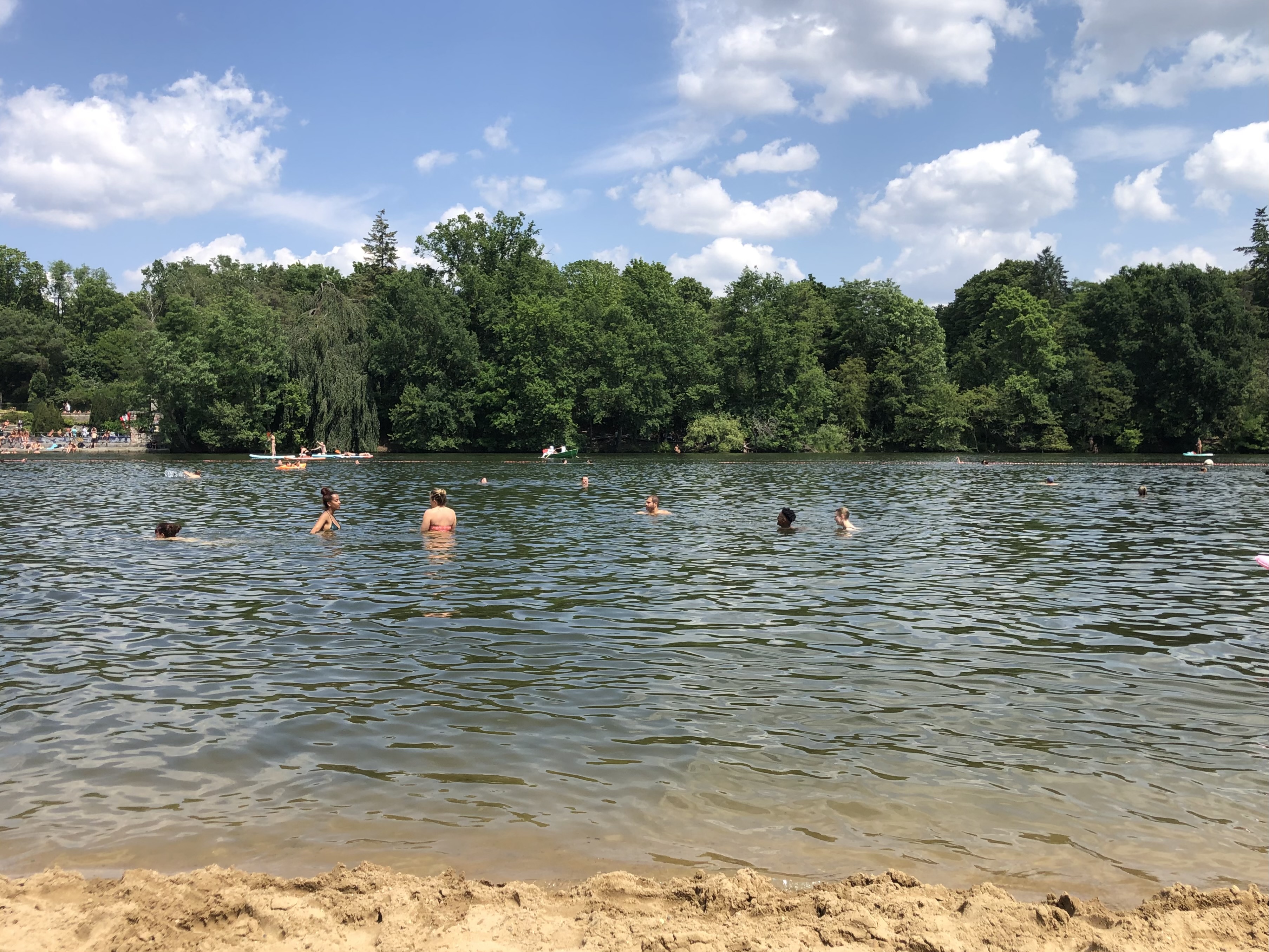
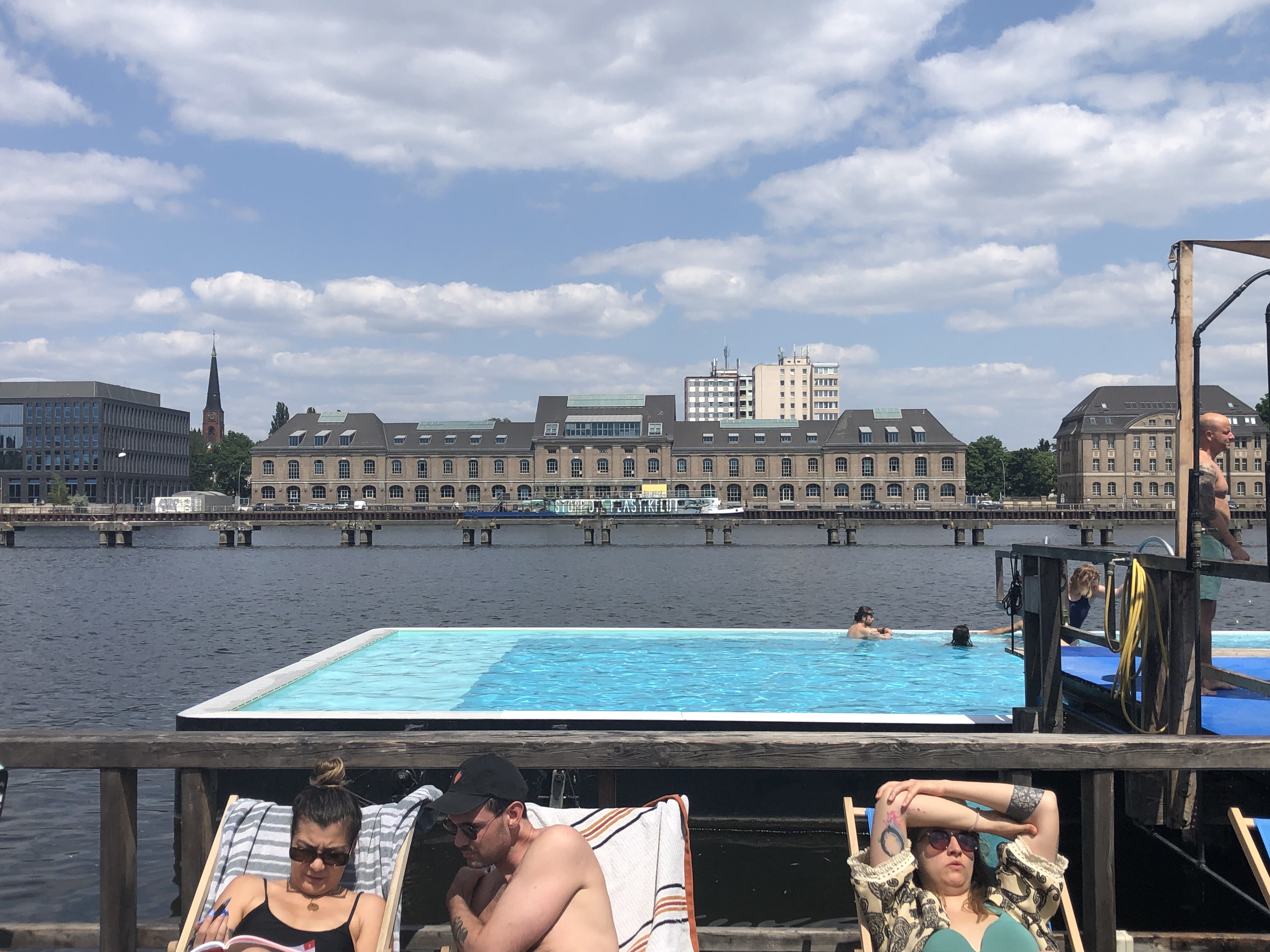
Then there’s swimming in the city centre or in one of the many lakes a cycle ride away; nude sunbathing in the parks and the chatter of endless cafés and bars that spill onto the streets.

Nestled between new and old, the constant reminders of what Germans – and the world – must never forget…

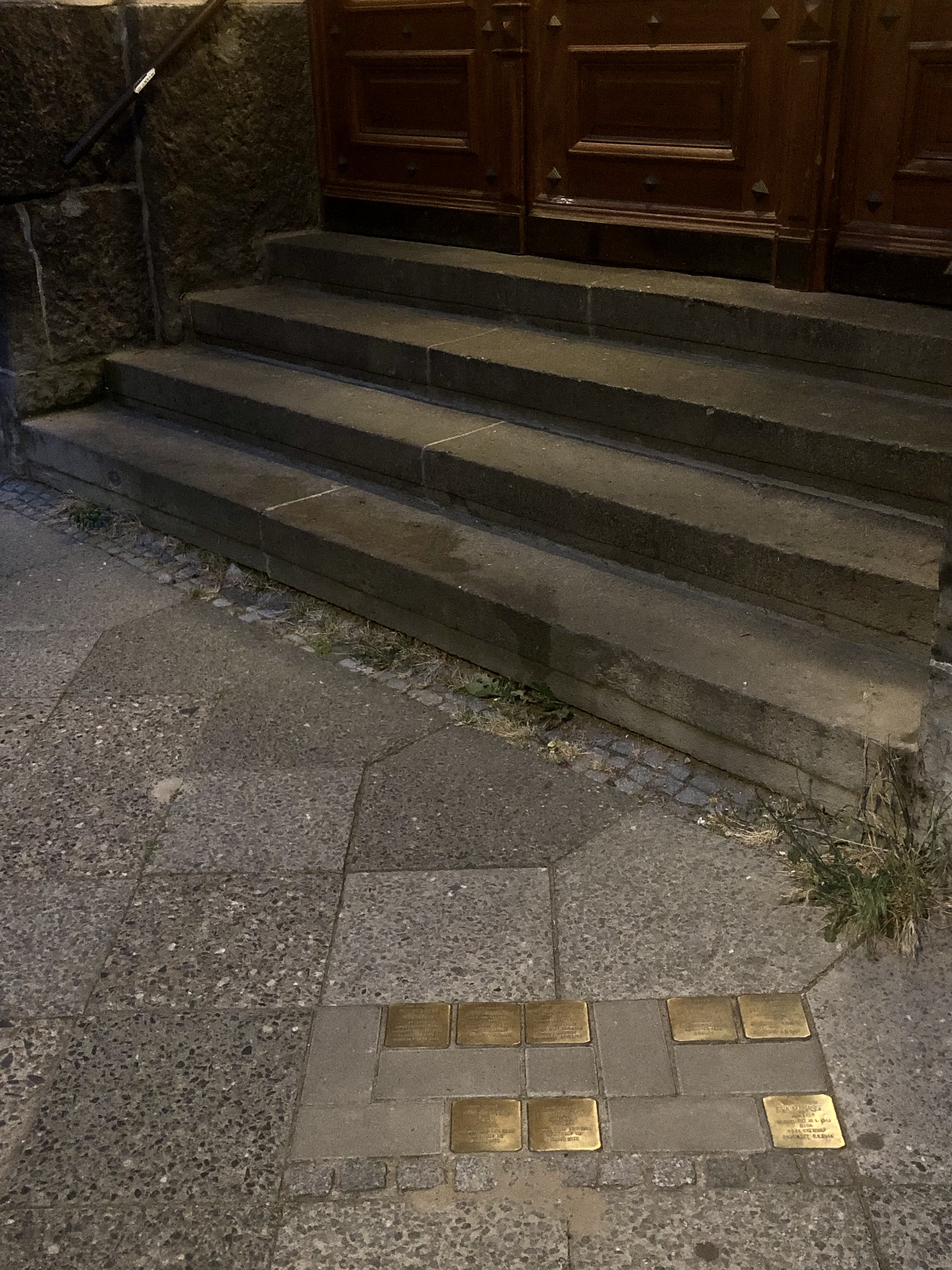
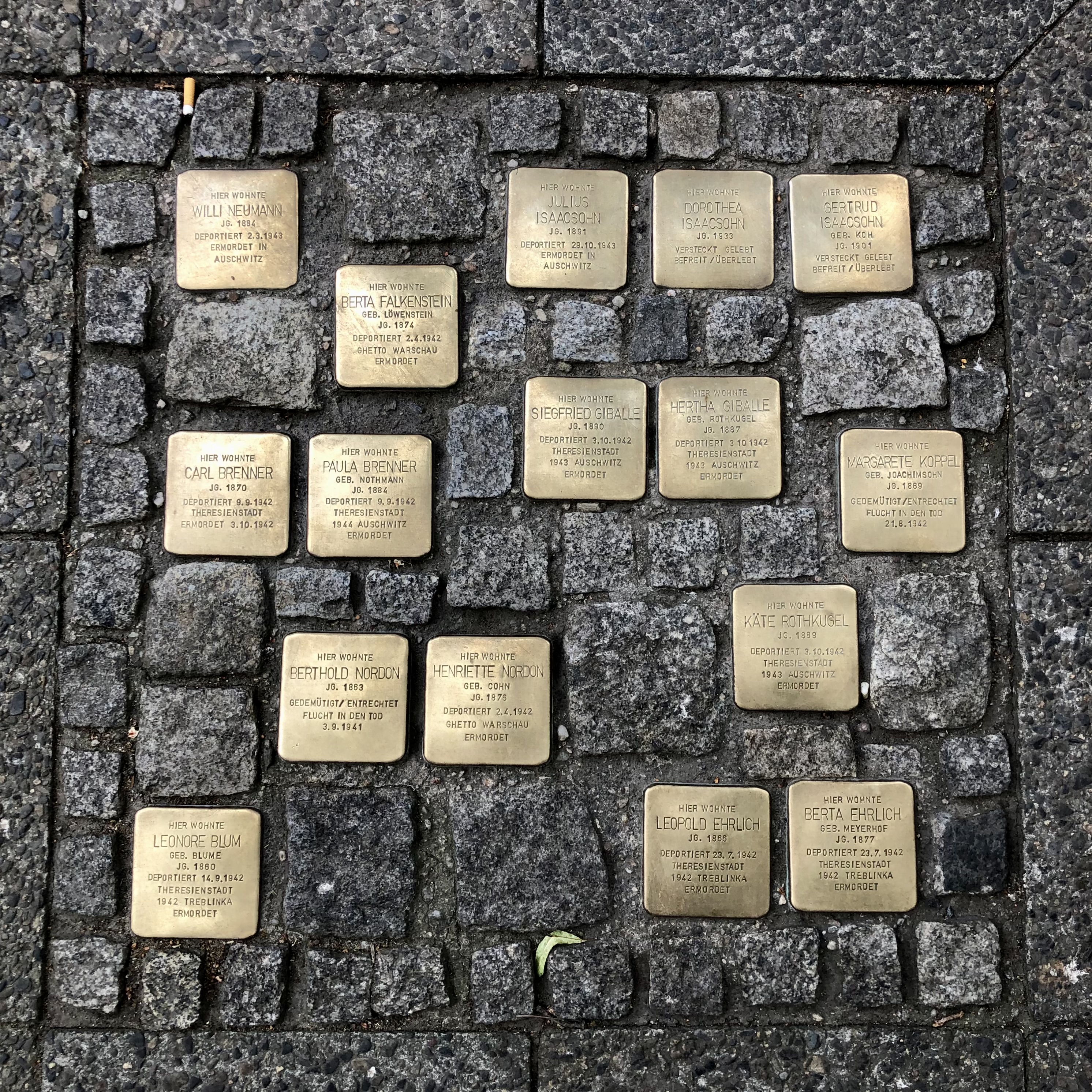
Stolpersteine – stumbling stones – glisten from the pavements naming and remembering those who once lived in these streets before they were deported and murdered by the Nazis.

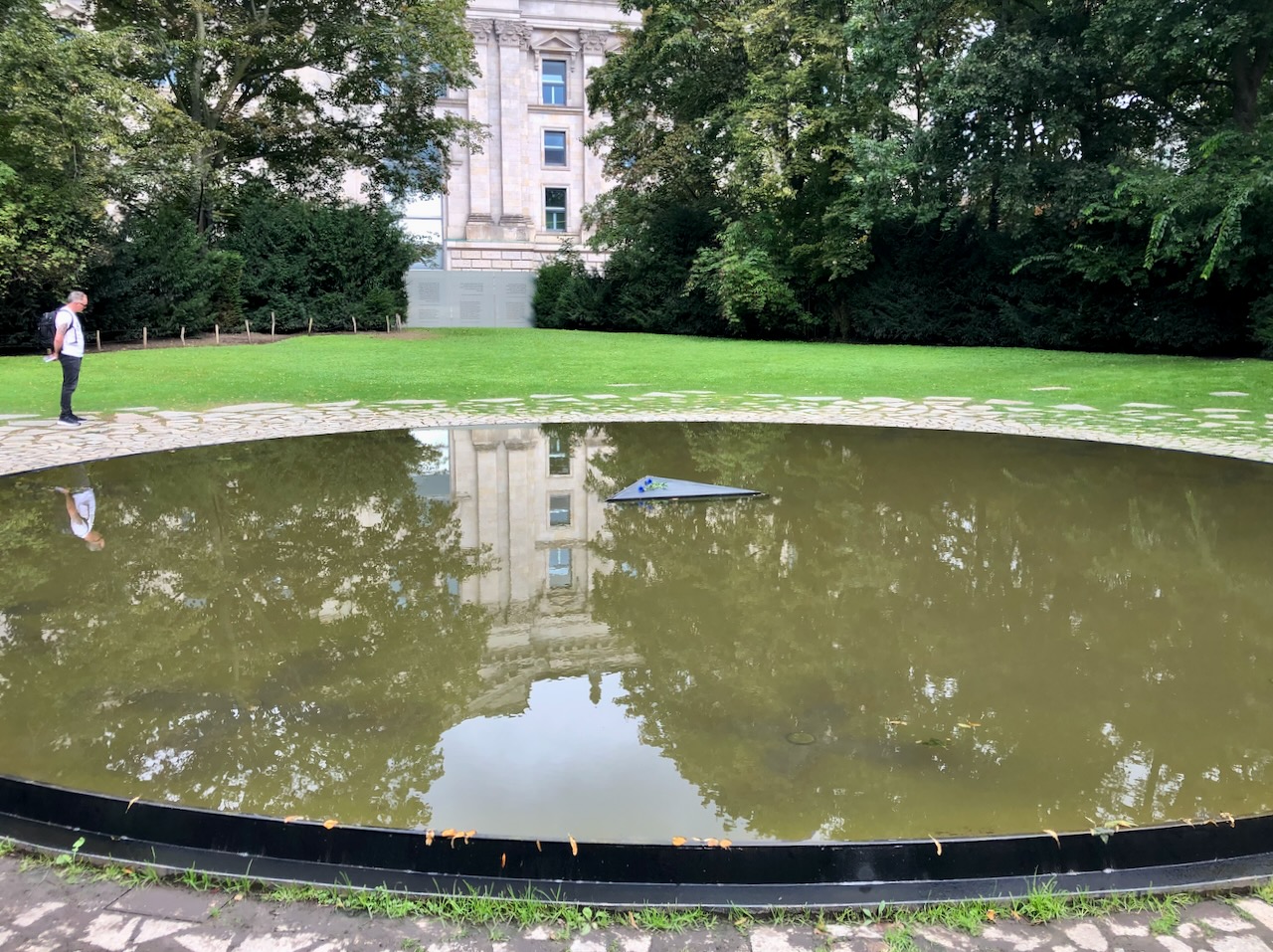
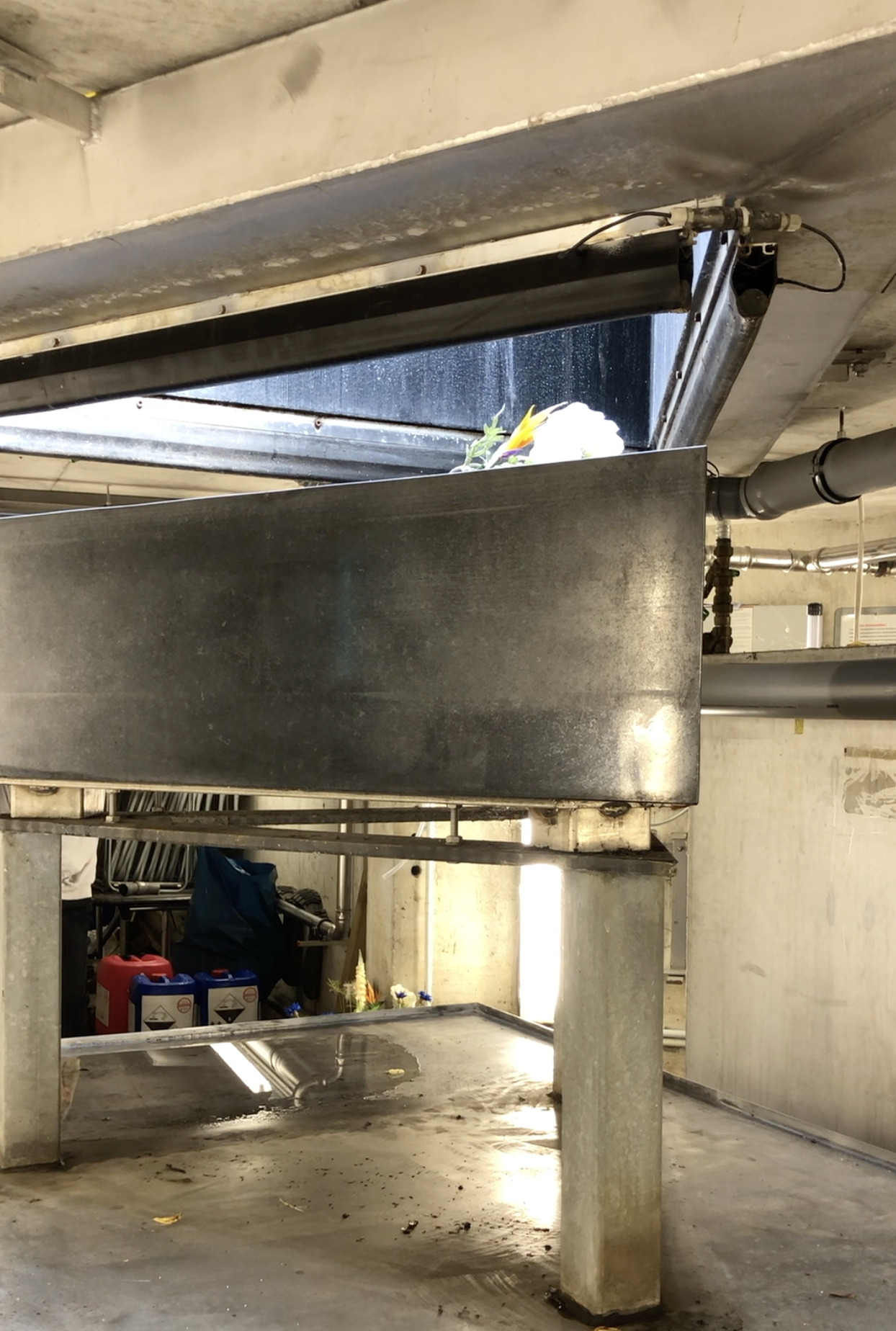
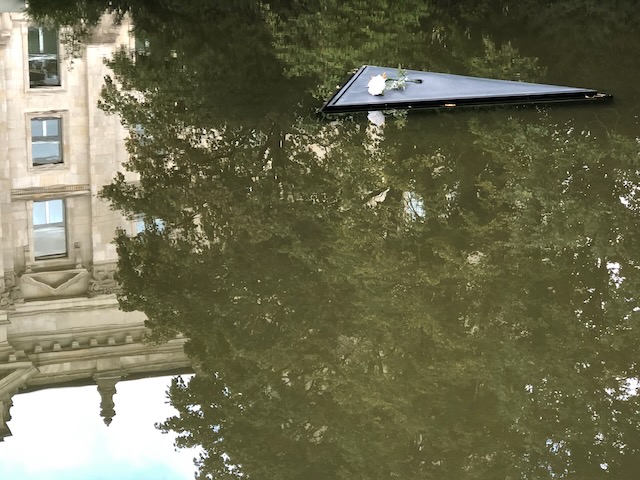
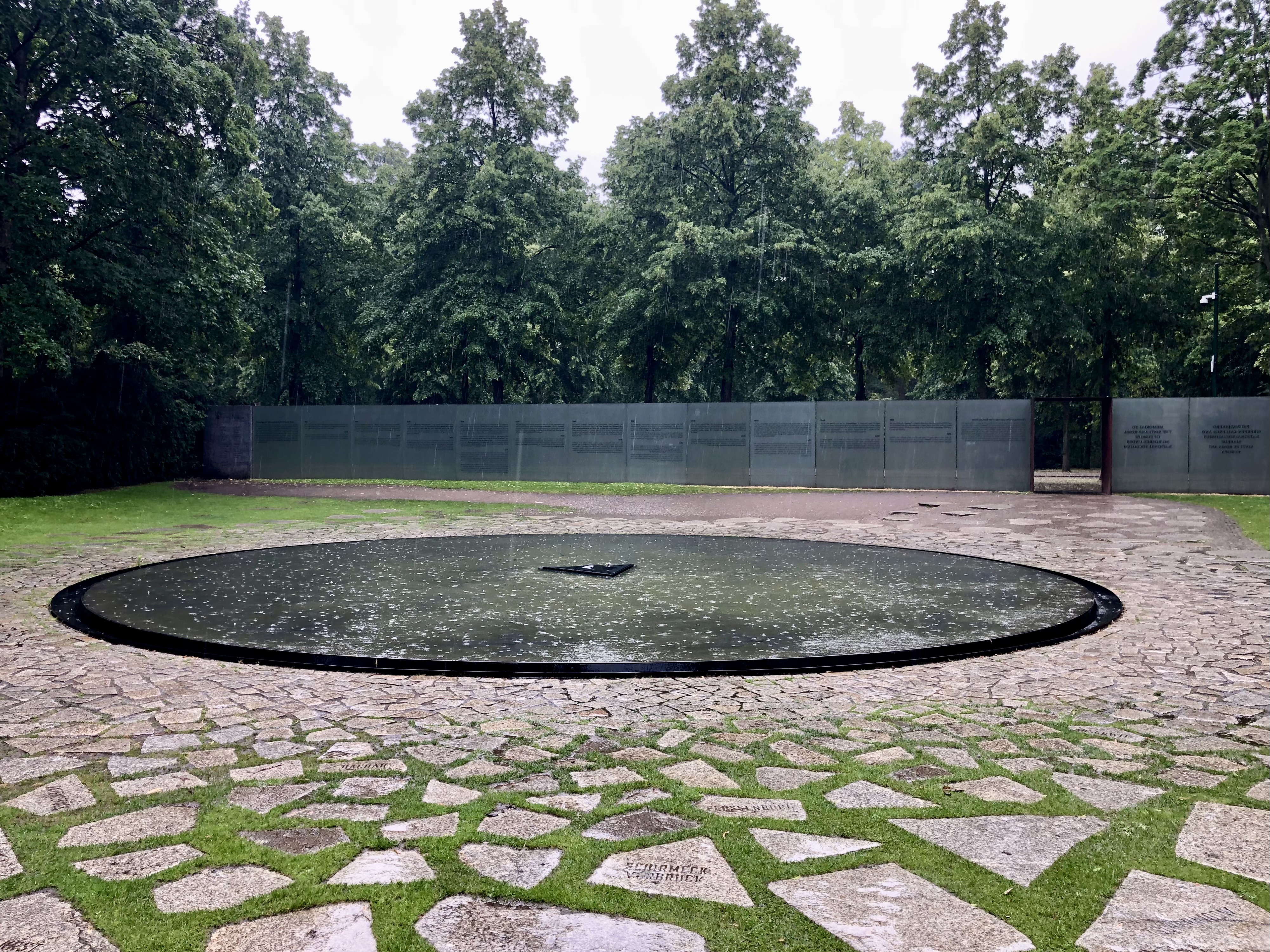
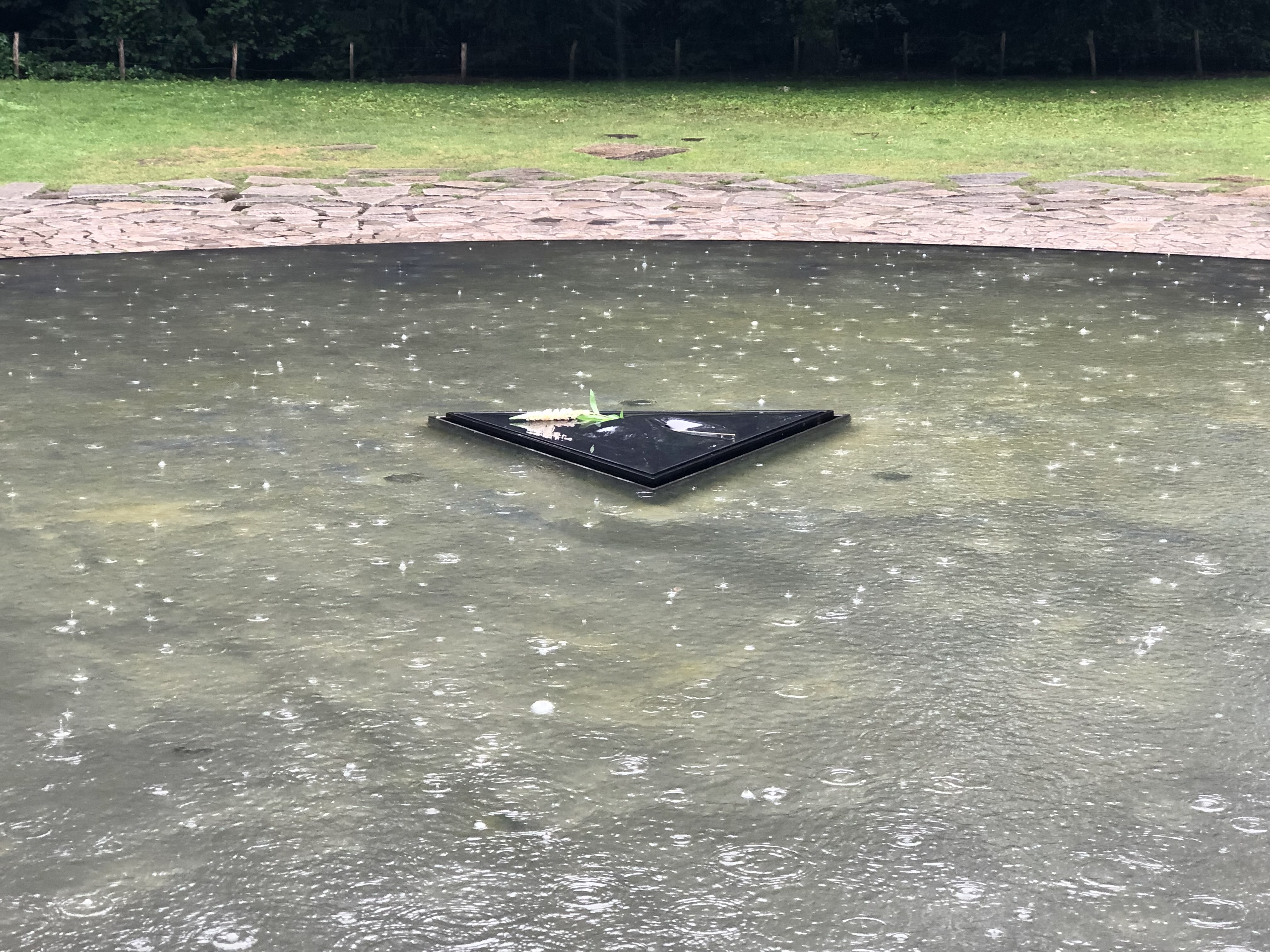
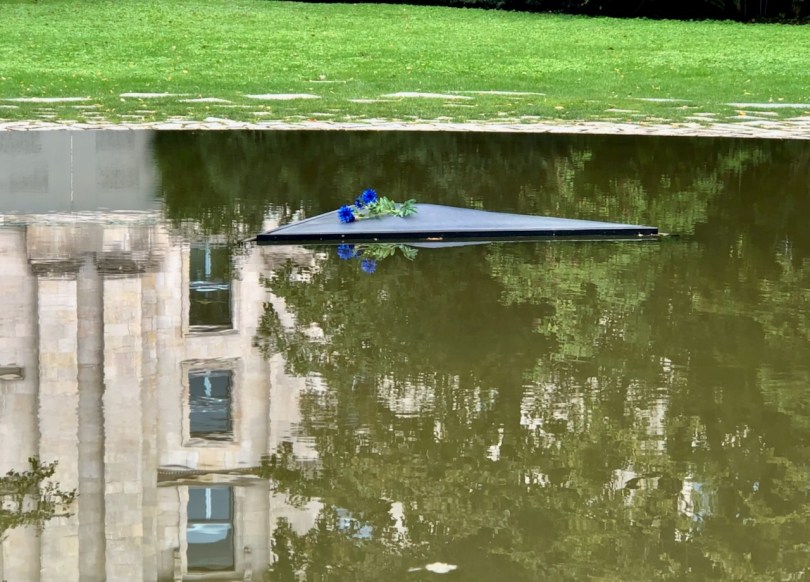
And in the very heart of Berlin, right between the Reichstag and the Brandenburg Gate, against a soundscape of raindrops and a quiet recording of single violin, I witnessed the daily laying of a fresh flower on the triangular island in the middle of the pond that is the Memorial to the Sinti and Roma Victims of National Socialism.

Berlin exudes a wealth of experience and suffering mined from the psychological, moral, philosophical and political depths into which it has plummeted time and again. But it feels to me and many others who love being there, that out of all the conflicting and restricting -isms of the past century, the power of the individual now has its rightful place. Be yourself, the city seems to say. You won’t be judged here.

Long may that last…

To protest too much… or too little?

The coronation of King Charles III and Victory in Europe Day 1945

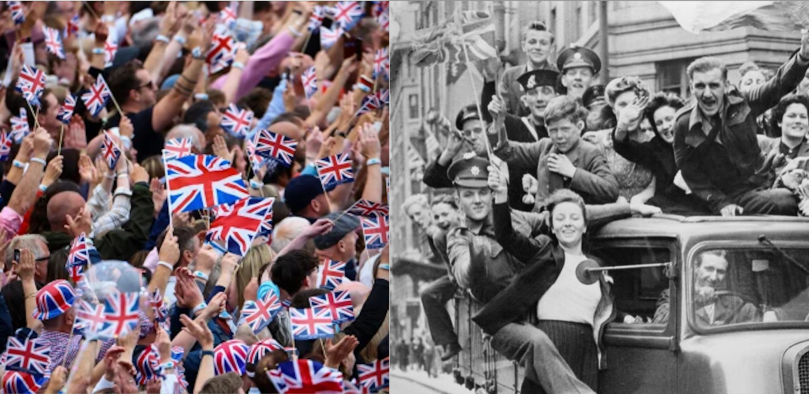
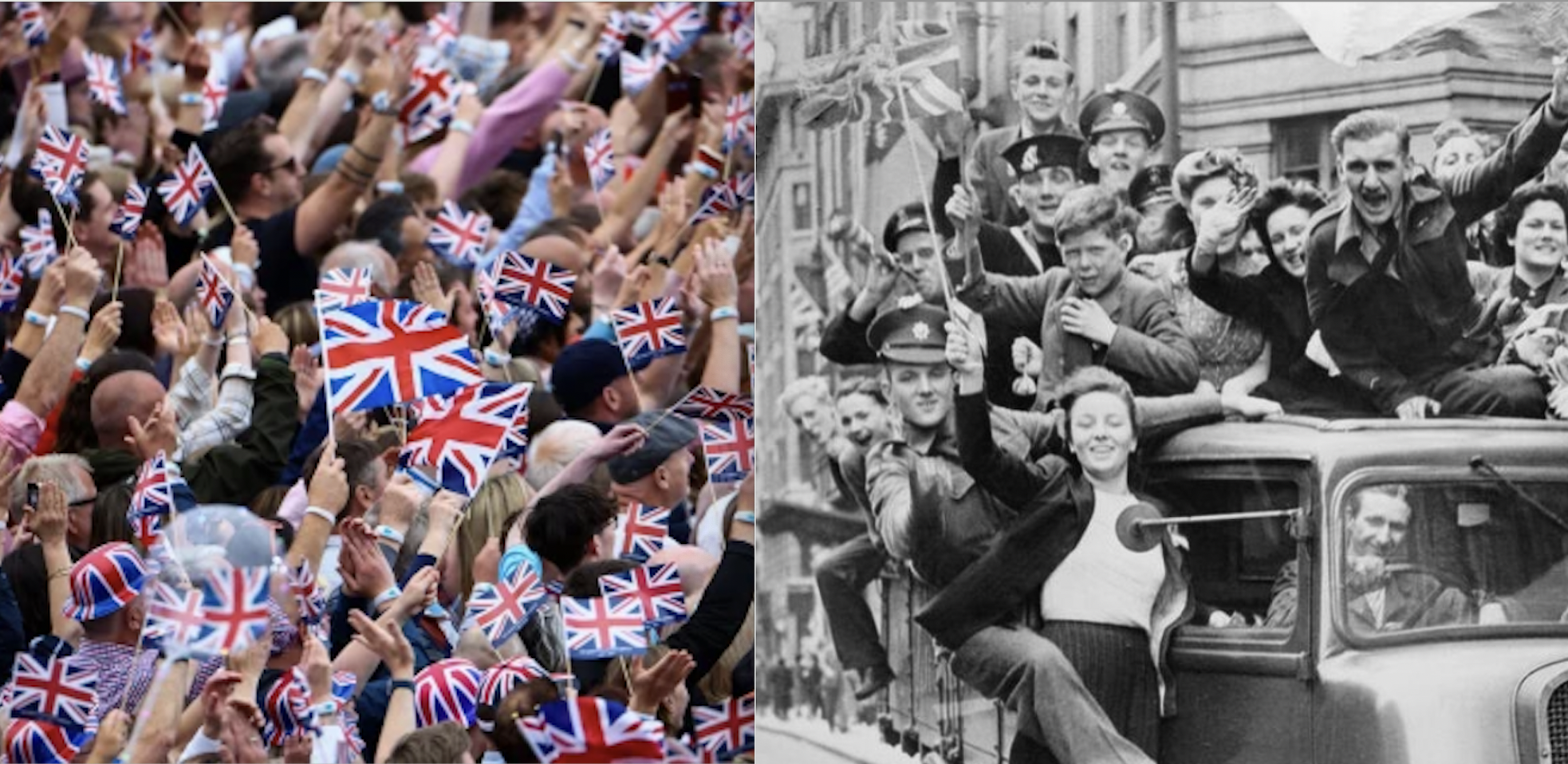
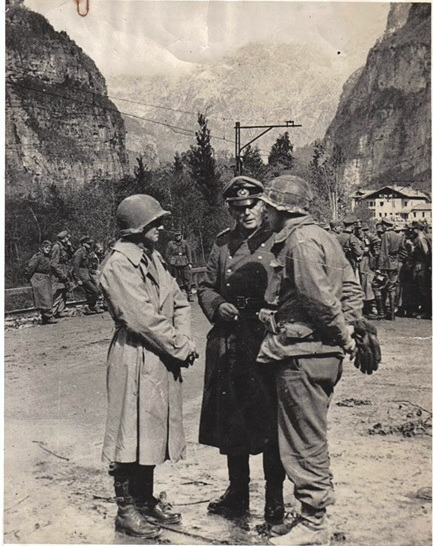
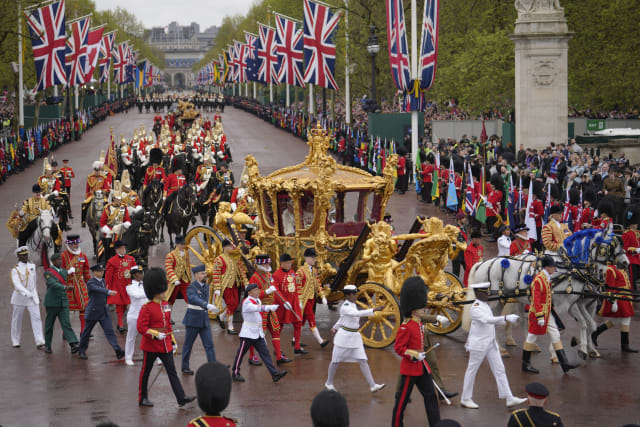
This Coronation Bank Holiday weekend marks two events that will retain prominence in British history books forever: the crowning of King Charles III on Saturday 6th May 2023 and the 78th anniversary of Germany’s unconditional capitulation on 8th May 1945 that brought an end to the Second World War in Europe. 

My grandfather (centre) surrendering to the American forces in northern Italy on 2 May 1945.

The Royal Family and Britain’s World War victories are defining features of our national identity and regularly create occasions for celebration. This weekend, both elements came together with the unforeseen effect of highlighting a common, more sinister undercurrent relating to protest, or rather the right to protest. 

For some people the traditional spectacle of ritual, religion, militarism, pomp and swathes of red, white and blue flag-wavers doesn’t reflect any aspect of their lives. Indeed, the price tag of putting on such an event appears obscene in a cost-of-living crisis. And the slightly creepy swearing of an oath of allegiance to the king resembled rather too closely the oath of obedience demanded by Hitler. 

‘Not my King’ became their activist cry, just as other universal voices have cried out: ‘No war,’ ‘Just Stop Oil,’ ‘Insulate Britain,’ ‘Not in my name,’ ‘Me too,’ ‘Black lives matter.’

I am with everybody who is either tired of or has been inconvenienced by protestors. But I fully understand the frustration, desperation even, people feel that leads them to take extreme measures in order to draw attention to what they see as being destructive or plain wrong… for us all. Their right to have that voice of protest is indisputable. Aren’t we after all constantly reminded that the Second World War was fought and won to protect our freedoms because Hitler’s evil regime had removed so many? 

No wonder then that there was an outcry of concern when, in the run-up to the coronation, the government rushed stronger laws through parliament intensifying the powers of the recently passed Policing Act while resurrecting proposals in the largely rejected Public Order Bill. With extended stop and search powers, the criminalisation of disruptive protests, and the imposition of protest banning orders, the right to peaceful protest is clearly under increasing threat. 

“The coronation is a chance for the United Kingdom to showcase our liberty and democracy, that’s what this security arrangement is doing,” Mr Tugendhat, the Security Minister, told BBC Radio 4’s Today programme in defence.

Liberty and democracy? Hmmmh… I’m not sure those words quite match the policies and resulting actions!

And while the statement Home Secretary Suella Braverman made on Tuesday 2nd May might sound fair enough, in reality it is pure, misguided hypocrisy: 

The public shouldn’t have their daily lives ruined by so called ‘eco-warriors’ causing disruption and wasting millions of pounds of taxpayer money… The selfish minority must not be allowed to get away with this. We are giving our police and courts the tools they need to stop this chaos and I back them in making full use of these powers.”

In another context, say in relation to our water companies and their appalling levels of waste, pollution and greed, a similar statement would make perfect sense, maybe along these lines:

The public shouldn’t have their daily lives and futures ruined by blatant ‘eco-destroyers’ causing disruption to public water services due to the contamination of our waterways and the wasting of millions of gallons of water each day. The selfish companies must not be allowed to get away with this. We are giving inspectors and courts the tools they need to stop these criminal practices and I back them in making full use of these powers.

Pollution on the Jubilee river in southern England. ‘The EA has called for water company directors to be imprisoned for the appalling decline in performance.’ Photograph: Maureen McLean/REX/Shutterstock

I personally believe Britain would be a poorer nation, not a richer one without the monarchy. But I still respect the views of those who want a British republic because they see the Royal Family as an outdated, unrepresentative, dysfunctional and extortionately expensive establishment that should be abolished. Given King Charles’s sincere dedication and visionary, common sensical, environmental concerns and solutions, which he has expressed – and been ridiculed for – since the 1970s, my hopes are that he will sympathise with protestors in ways this government doesn’t. And he will help push forward the environmental agenda that the whole world desperately needs to make its priority.

The lessons of the Second World War, especially of the Third Reich with its top-down dictatorship, are more relevant today than ever. Nazism showed us how thin the ice of morality is, how even such a culturally advanced country as Germany could fall through into barbarity. It happened slowly, incrementally, in full sight. Little laws restricting more and more little freedoms…

As I say in In My Grandfather’s Shadow: Germany’s lessons are therefore universal, as are the questions we must all ceaselessly ask ourselves: how thick or thin is the ice today, and what structures are in place to stop us falling through it again?

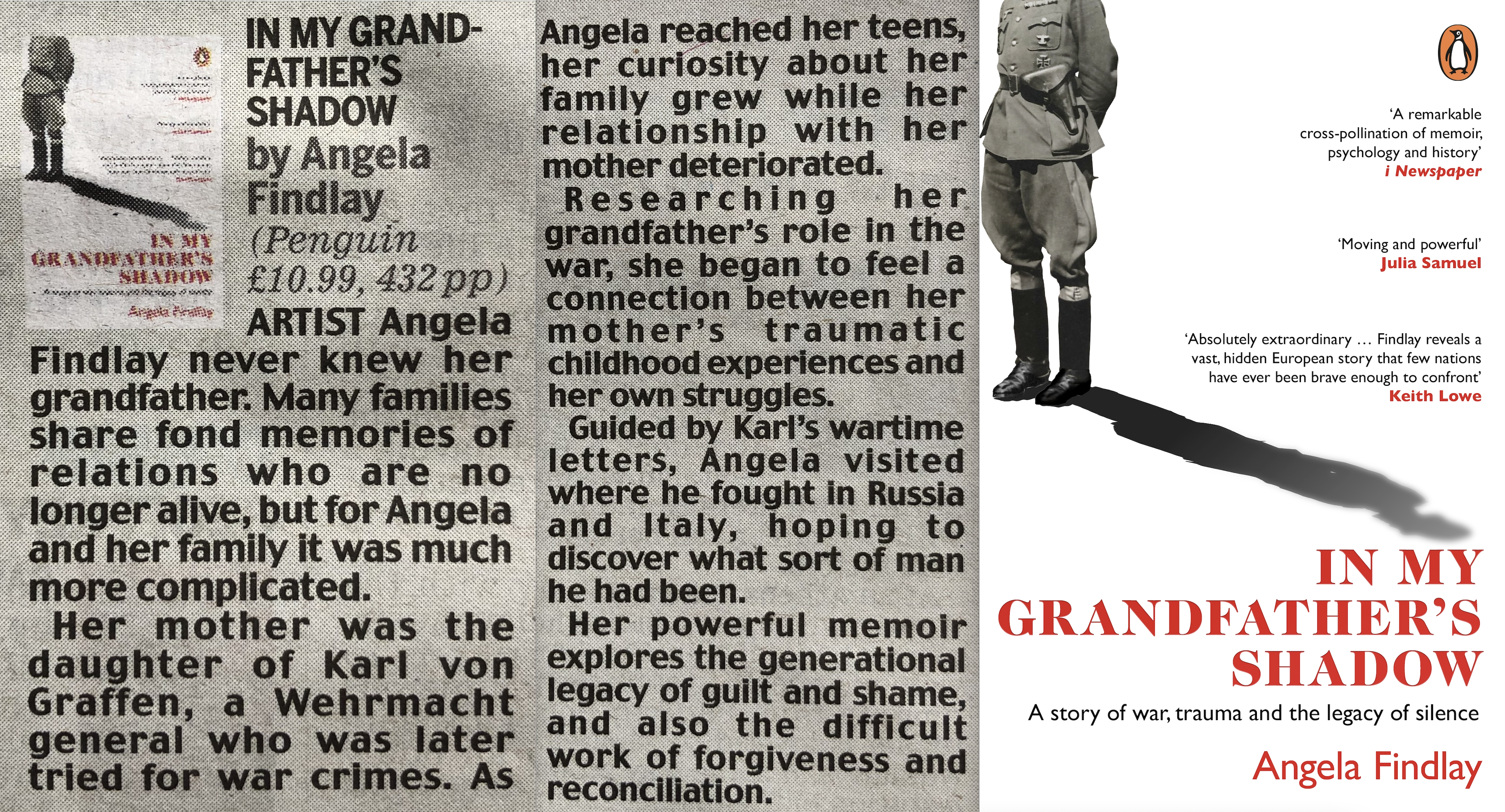
‘In My Grandfathers Shadow’ is now out in Paperback.

Links to further reading (as always, not all reflect my opinions necessarily)

UK security minister defends new anti-protest laws before coronation – The Guardian

The Shame of the Coronation Arrests – The Spectator

King Charles will be green in deeds before words, says adviser – The Times

Water company environmental performance hits new low – Environment Agency

England’s water industry now represents the unacceptable face of capitalism – Simon Jenkins

Victory in Europe Day, 8th May 1945

Right to protest in UK ‘under threat’ after coronation arrests, human rights group warns – iNews

Forthcoming Events:

Monday 22nd May: British and Irish Association of Holocaust Studies Online Conference

Monday 22nd May: Nailsworth Festival

Tuesday 27th June: Bradford Literary Festival

A Bonanza of Beauty and Art

In a radical departure from my usual darker themes, I’ve got something special for you. (You may find it more rewarding to view April’s blog on my blog site rather than as an email where the layout sometimes gets a little garbled.)

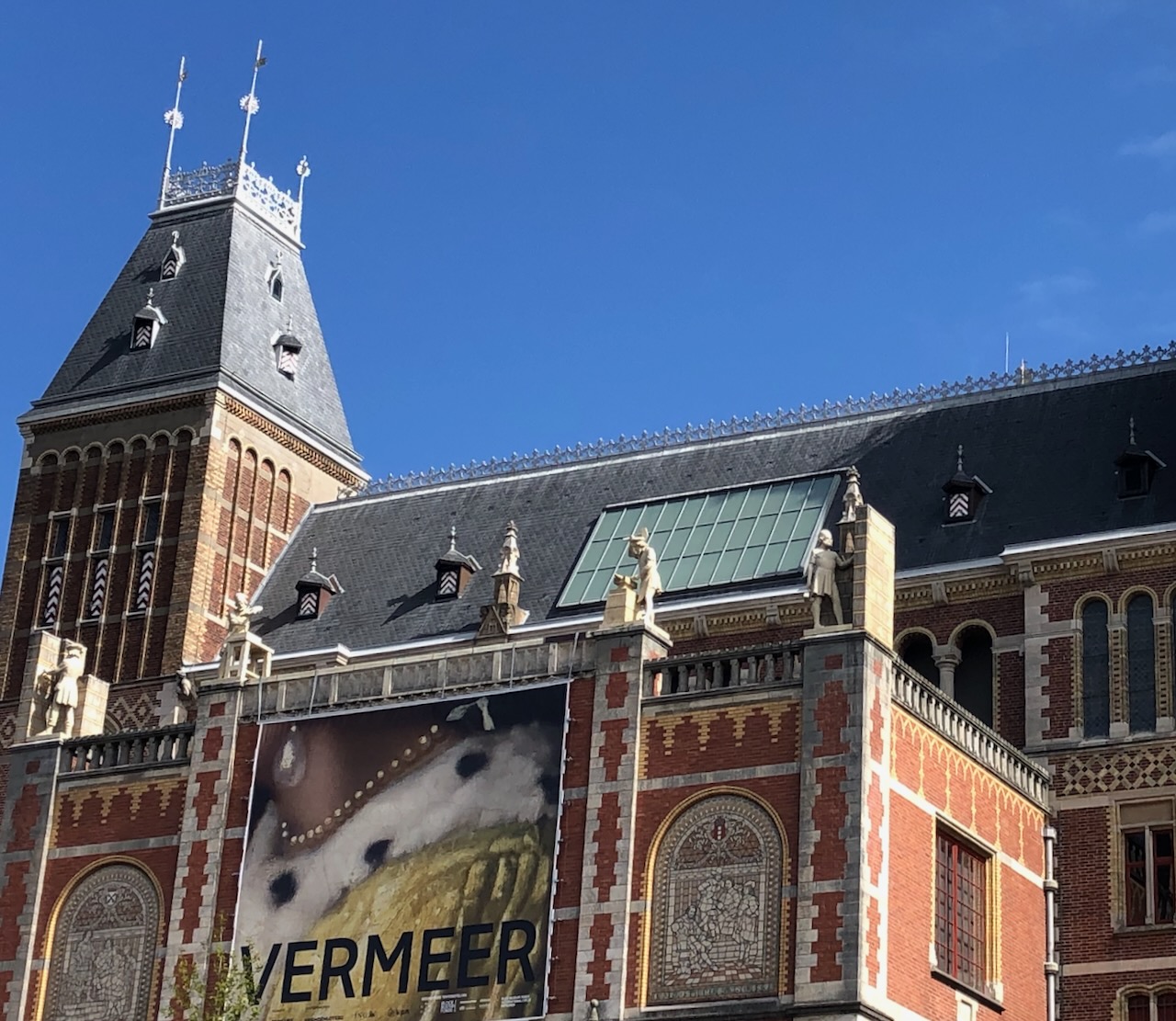
I have just returned from a three-day trip to Amsterdam with my nearly 89-year-old mother. After her stroke in 2016, talking and understanding became difficult, at times impossible. This trip was designed to bypass both and provide delightful experiences in some of the areas of life we both love – art and flowers. The main components would be the Vermeer exhibition at the Rijksmuseum and the Keukenhof Tulip Festival. Both exceeded our already high expectations as we were treated to a visual and sensory bonanza. We bathed in beauty, feasted on colour, immersed ourselves in the scents and sounds of sunlit spring…

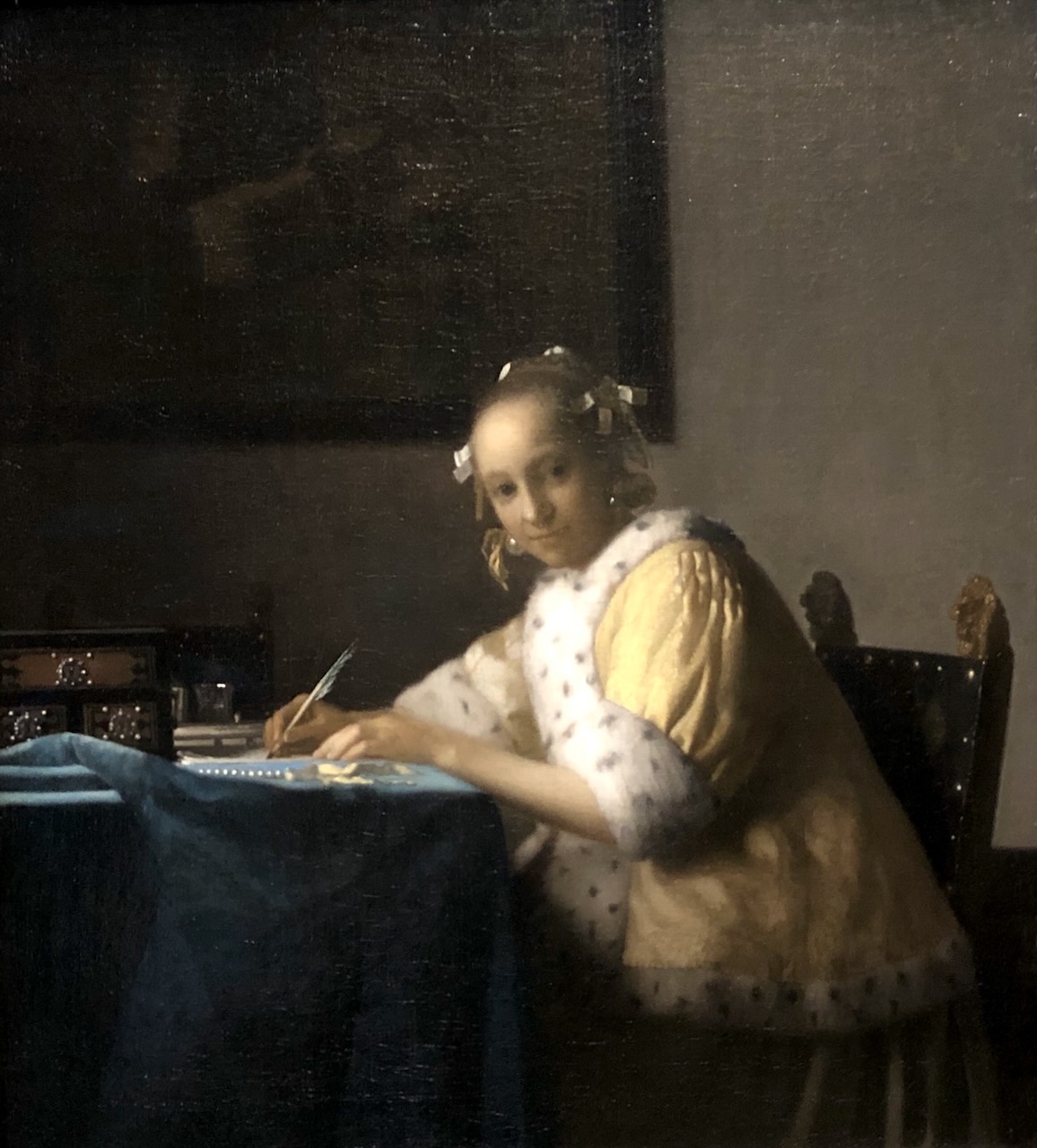
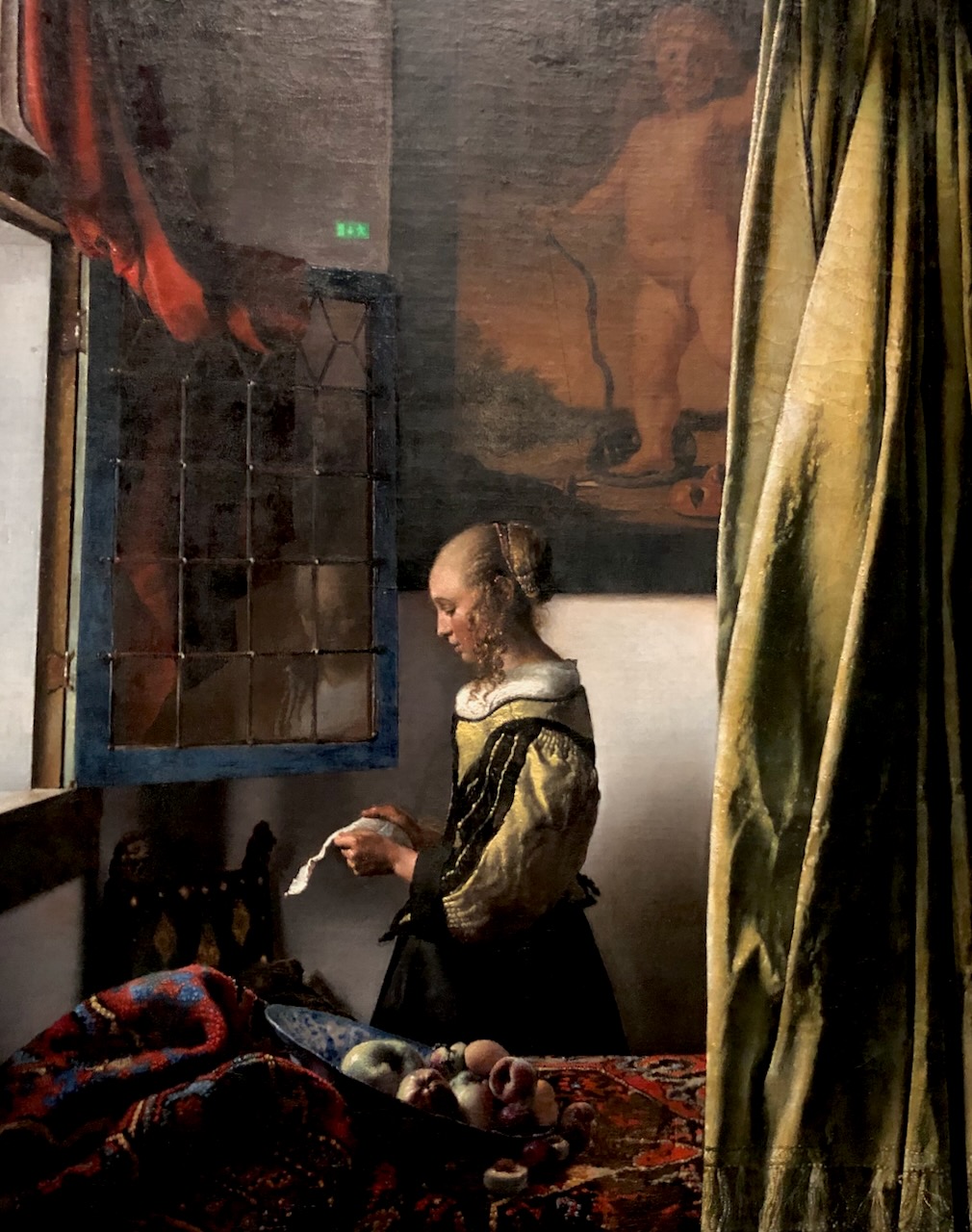
Sold out within two days of its opening in February, this exhibition presents the largest collection of Vermeer paintings ever – 28 out of the 37 known works. Words feel inadequate to describe the quiet intimacy of these often tiny paintings that offer immaculately observed, snapshot-like glimpses into Dutch domestic interiors where mid-17th century women work, play instruments, read or write.

A strong relationship between internal and external worlds is created through letters and the subject’s gaze turned towards open windows or us, the viewers.

Crisp, almost silhouetted figures against potent negative spaces of ‘white’ wall backdrops; droplets of light falling on the brass studs of a chair or the beads of an earring; sumptuous folds of silk sleeves and curtains… the details are breath-taking.

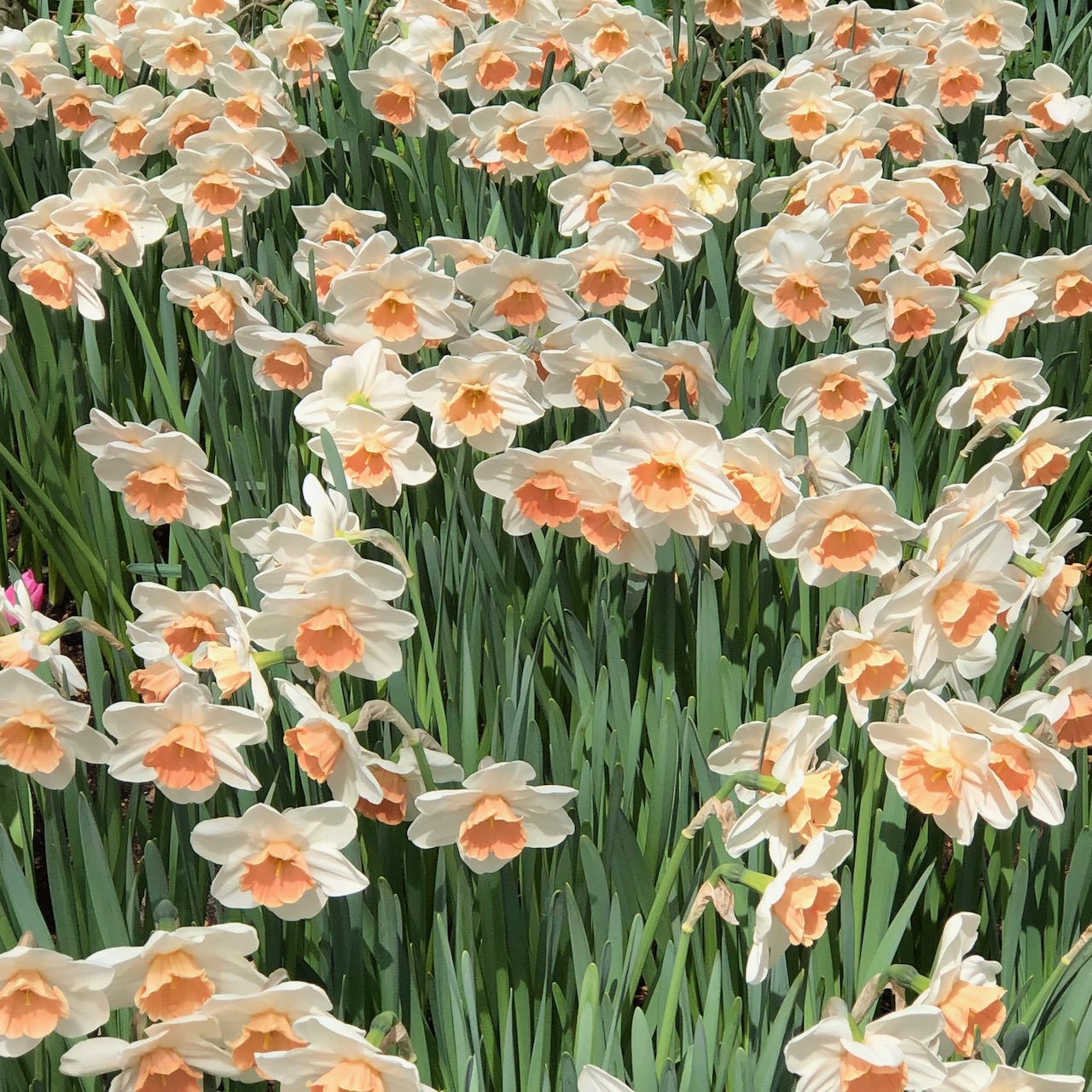
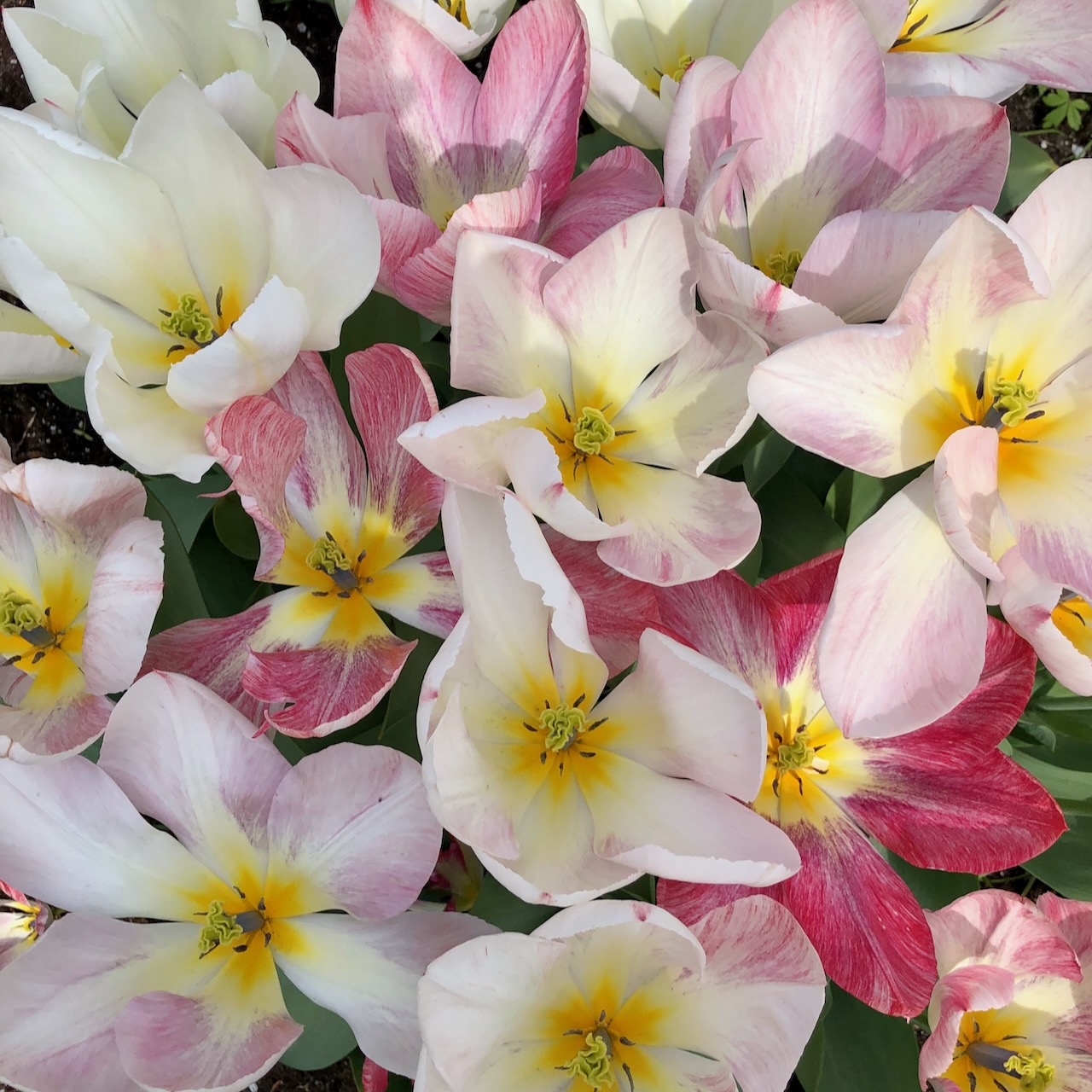
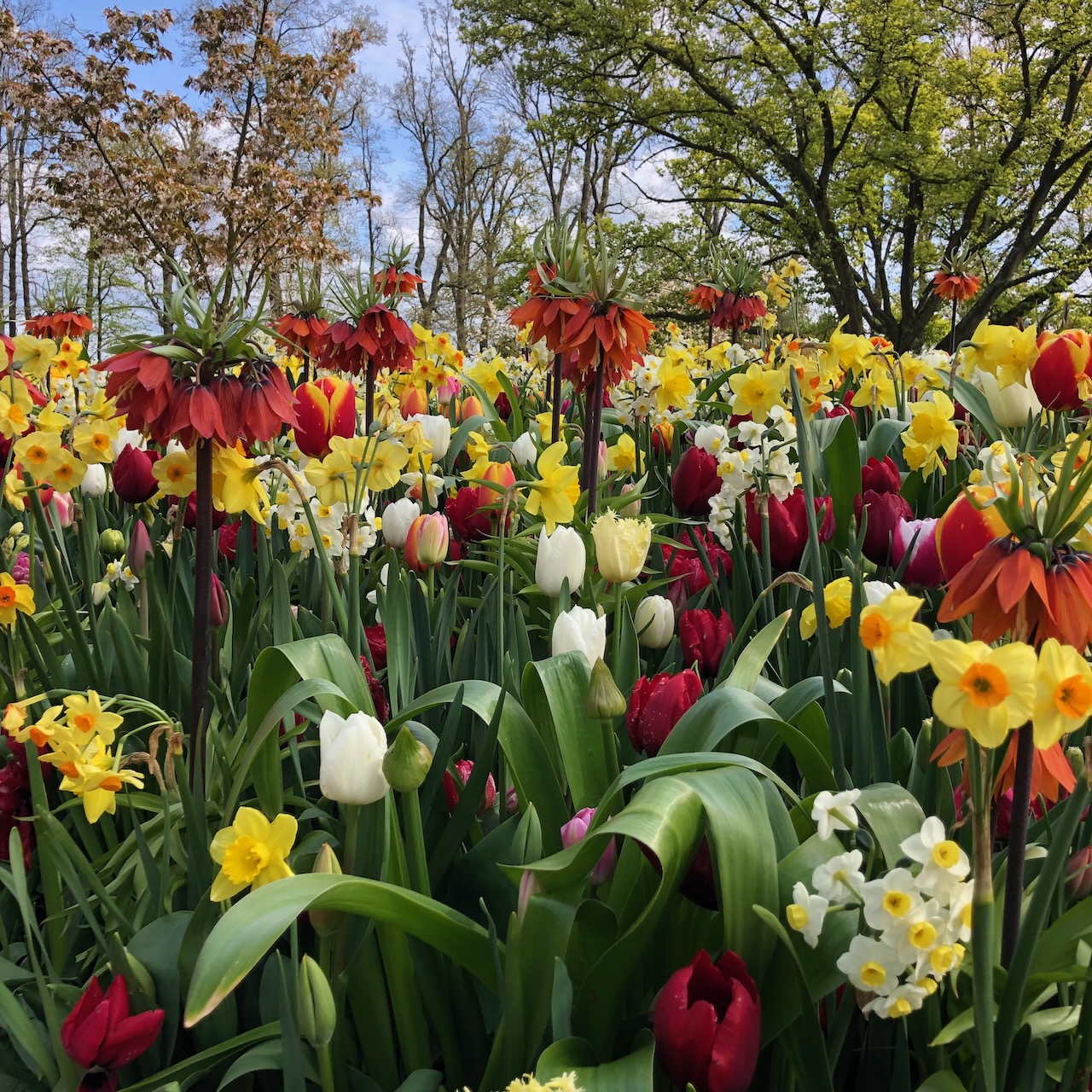
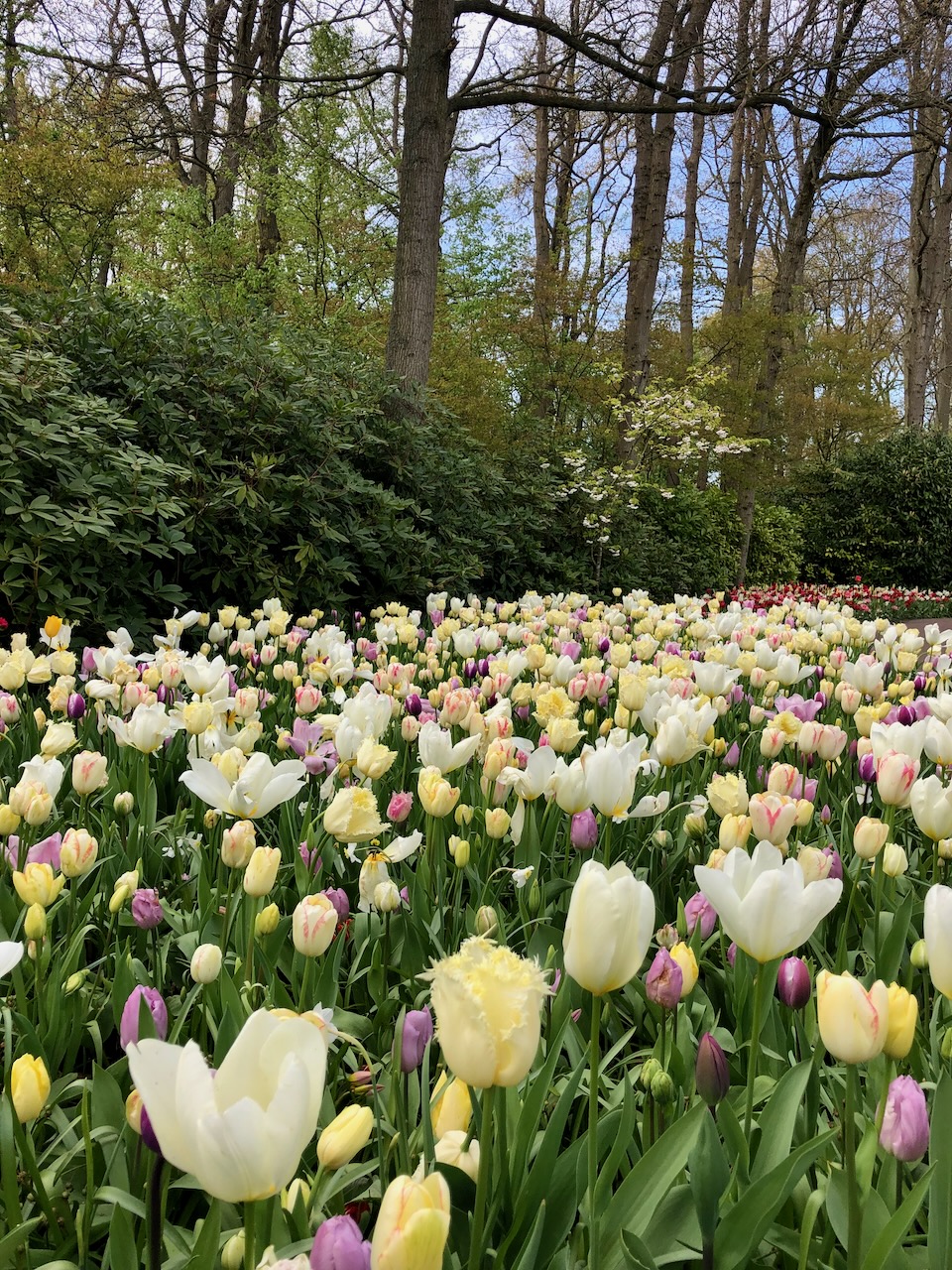
In complete contrast was the loud exuberance of the 7 million bulbs planted by 50 gardeners for the two month Keukenhof Tulip Festival. The cold weather had meant that daffodils, hyacinths, narcissi, muscari, tulips and cherry blossoms were all blooming in a form of perfect synchrony. A heady mix for which no words are needed… just enjoy!

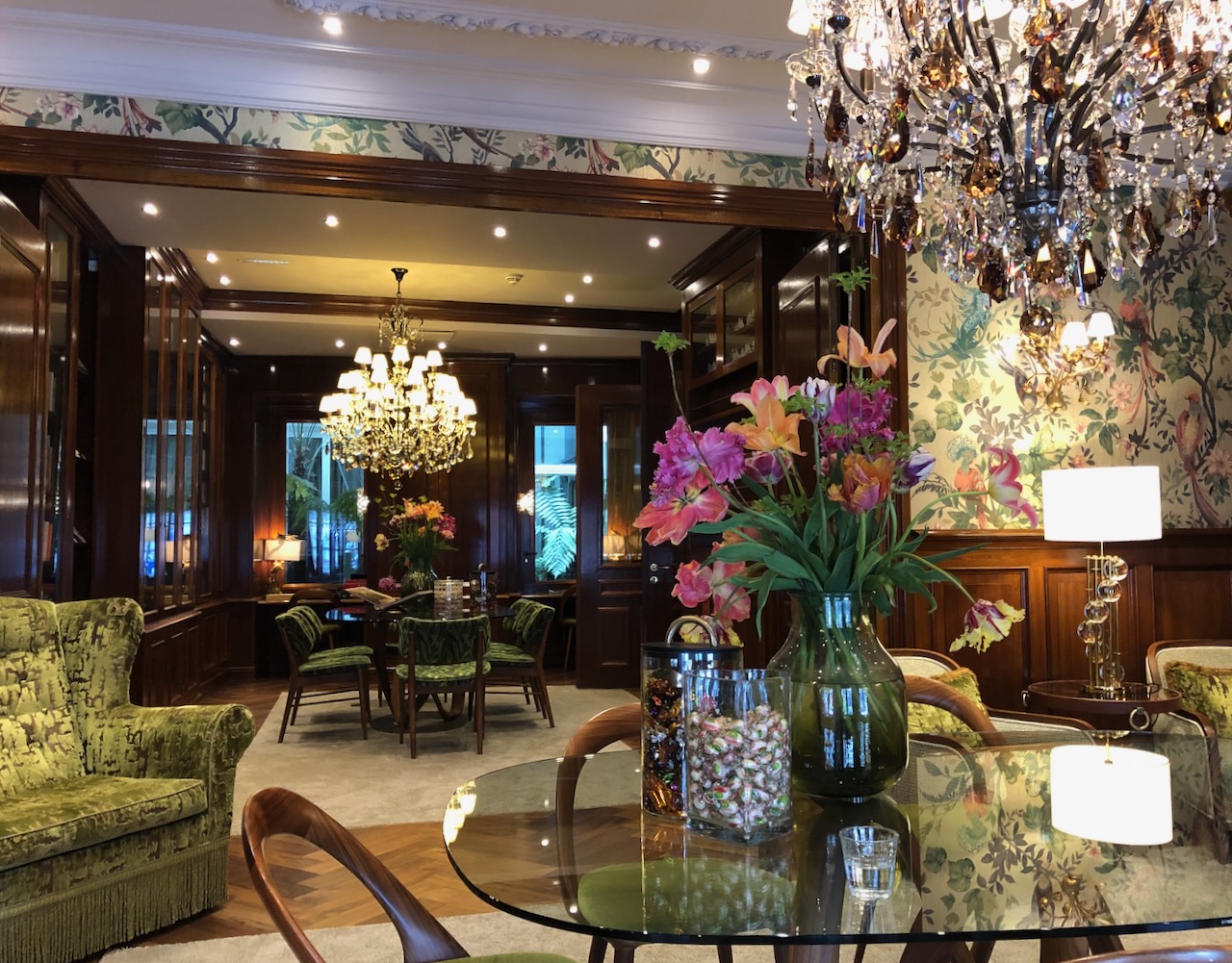
Back at our beautiful hotel – a rare indulgence – the themes of interiors and flowers continued in a creative meeting of design, texture, pattern and nature…

And then finally to the fields and the lovely words of my trooper of a mother that pretty much sum up the special days for both of us: “I don’t want to leave…”

Is King Charles’s visit to Germany important, irrelevant, or are you completely indifferent? 

King Charles is in Germany for three days, his first overseas state visit as monarch after the planned trip to France was postponed. Many people in Britain will not take much notice of this news for a variety of reasons from believing the monarchy should be fundamentally abolished to thinking the whole trip is one big photo-opportunity. But media coverage of his and Camilla, the Queen Consort’s time in Berlin, Hamburg and beyond will show it is far more important in Germany than most of us here might understand. 

There are times I have felt saddened by Germany’s slightly unrequited friendship with Britain. A lot of Brits have wonderful personal or business relationships with our neighbours across the sea, but at Remembrance ceremonies, for example, I have lamented the stiff coolness of the British establishment towards their German counterparts that stands in stark contrast to the genuine warmth displayed by equivalent representatives of France or even Israel. This visit feels different. More relaxed and real. The Royals, at their best, have an uncanny ability to transcend all differences to reach parts other people, above all politicians, can’t, and with far more authentic and lasting resonance than mere symbolic gestures.

“Ah the Queen Mother… I love the Queen Mother!” Those were the unlikely words to come out of a scantily clad, barefoot, elderly Aboriginal man’s mouth on discovering I was English. It was 1986 and I had just wandered, equally scantily clad, into a spit-and-sawdust pub in the baking outback of Australia causing the intimidating head-turns and awkward silence seen in movies. Ever since this display of unreserved enthusiasm for a Royal broke the ice – most definitely the wrong idiom to use in a place where 40˚C temperatures would have melted ice within minutes – followed by the dear man’s insistence on buying me a cold beer, I have valued the role the Monarchy plays in the world. 

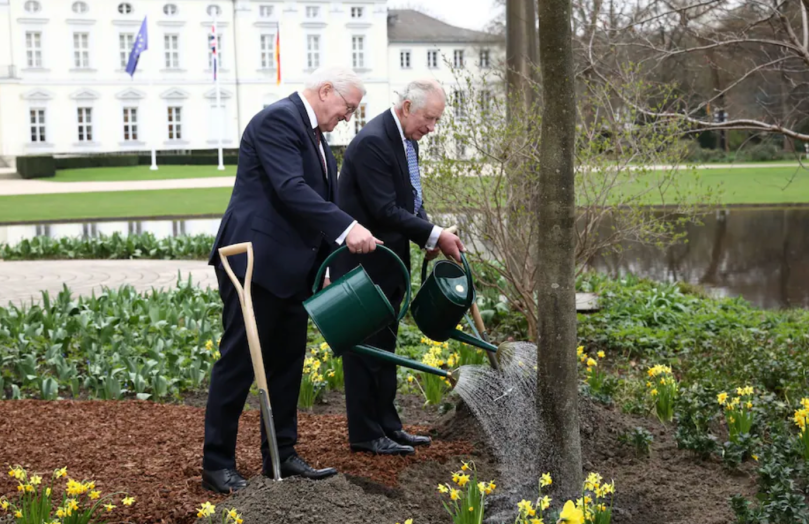
In some ways King Charles brings an even more special affinity than his revered mother because it is coupled with inspiration for Germans whose long-standing environmental awareness and action match his… apart from the rather glaring contradictions in their love of fast cars and belching factories. Like them, he has been advocating greener, more sustainable ways of working with the earth for decades, ideas for which he has been ridiculed here until mainstream politics recently and reluctantly began to acknowledge their common sense. It’s a happy sight to see our King throwing royal reserve aside to inspect potatoes at Berlin’s 150-year-old weekly farmers’ market, water a tree dedicated to the late Queen, play table football in a refugee centre or spend time at an organic farm (bizarrely owned by friends of a friend of mine) sharing their genuine passion for all that he too believes is good and right.

The intended role of our Royals, rather than the all too frequent ones that are mired in controversy, excess, wrongdoing etc. could be compared to that of the German President – currently Frank-Walter Steinmeier, who I always find carries out his brief superbly. Beyond the divisive party politics and in-fighting that brought us Brexit and what was experienced by many Europeans as a hurtful rejection, King Charles’s visit offers a heartfelt olive branch and reassurance that our countries are still indeed friends with both a shared history that extends way before the horrors of the two World Wars, and a deeply connected future.

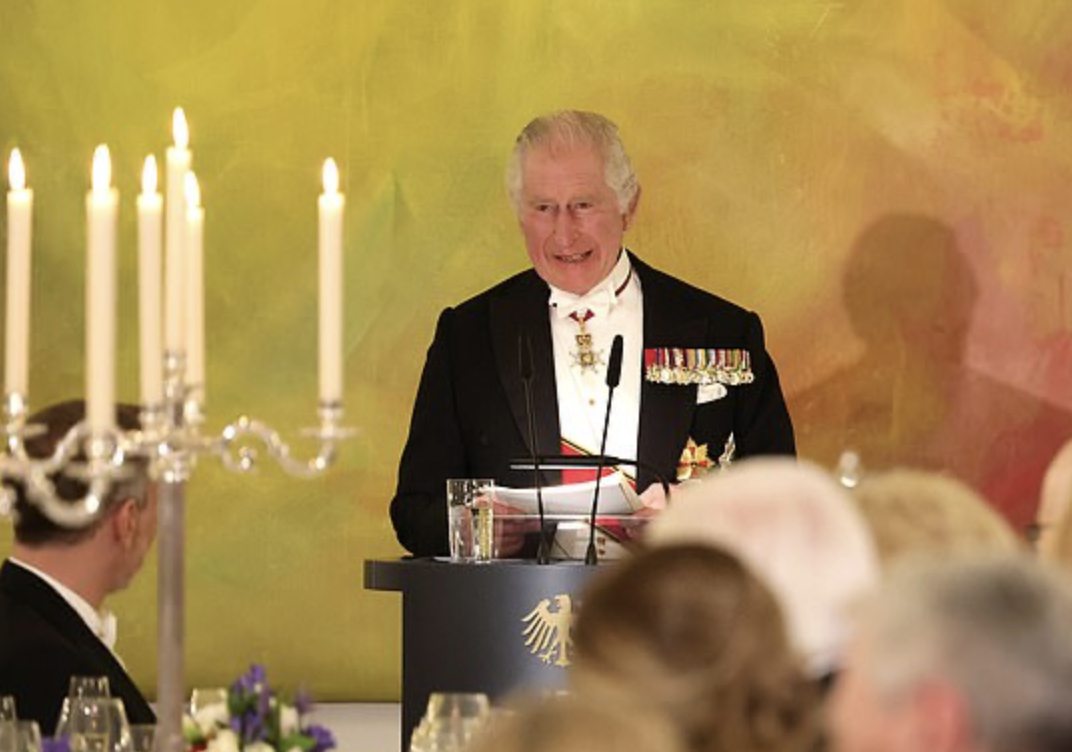
Politicians rarely feel able to give credit or compliments to the achievement of others for fear of exposing their own failings. Charles (is that being over-familiar?) on the other hand, can. With no trace of defensiveness or inadequacy of his own country’s policies, he paid tribute to Germany’s “extraordinary hospitality” in hosting over one million Ukrainian refugees. “This,” he said, “seems to me, so powerfully demonstrates the generosity of spirit of the German people.”

Imagine a politician saying that! But if we want to break the insufferable ping-pong slagging matches that fill the House of Commons, this recognition and appreciation of good policies, ideas or actions surely has to be encouraged on all sides? Batting words to and fro, patting own backs and roaring unruly ‘Ayes’ or ‘Noes’ to drown out opponents’ voices is no way to get anything done. And when you look at the decline of so many of our services, institutions and already neglected areas of British society, it is clear that, for far too long, almost nothing has been done.

I am currently reading a fascinating book lent to me by a delightful 92-year-old friend who, after reading my book, treated me to some of her own stories from the Second World War. Her family lost their home to the bombs dropped on Bristol. And yet, in 1948 on hearing of the extreme hunger of the Germans, she and her church youth group, knocked on doors in their parish to collect donations to send to the very people that most around them (understandably) still regarded as the enemy. She remembers the quarter of a pound of tea she collected.

The book she lent me, ‘Darkness Over Germany’ was written by a remarkable British woman, E. Amy Buller, who visited Germany many times in the 1930s with a mission to understand the ideas that radicalised so many people, particularly the youth, in order to learn how to work with them in peacetime and prevent such things happening again. She saw how Nazism was a false answer to a real need and how foolhardy it is to fight a war without considering how to engage with the enemy once they were defeated. 

I can’t help feeling we could learn a great deal from these enlightened elders who operate with the kindness and innate wisdom of their hearts. And it is in that respect that I completely support visits such as the one happening as I write. With clearly genuine warmth, humour and interest, King Charles is re-building bridges, offering friendship and warming the hearts of a great many German people.

Uh-oh, I feel a little ‘God Save the King!’ coming on… I’ll stop here.

Just a few of a whole load of links recording his visit:

King Charles celebrates UK-Germany ties in historic address – BBC

For Hamburg, devastated by allied bombing, King Charles’s visit is so much more than a photo-op | Helene von Bismarck | The Guardian

From Meeting Scholz To Visiting Farmers Market; A Peek Into King Charles’ Germany Visit

King Charles III arrives in Germany for first overseas visit as monarch

In Pictures – The Telegraph

King Charles to lay wreath to German victims of wartime air raids. Planned visit to St Nikolai memorial in Hamburg contrasts with approach taken by his mother by Philip Oltermann

King Charles avoids mention of Brexit in speech to German parliament

A meander from Dresden to Diplomacy…

As the days get noticeably longer and the year begins to gain momentum, I have been observing what builds up my energy and what makes it slump. It’s a good way to gain an indication of which direction to follow. What I notice again and again is that when interactions fall into binary dynamics of right and wrong, good and bad, or discussions strive for a dominant ‘winner’, my psyche becomes more combative or defensive and is quickly drained. There is rarely a satisfactory outcome. But when there is an openess for exploration, conversation, ‘compassionate enquiry or curiosity’ as the physician Gabor Maté would call it, my whole body relaxes. I come away feeling expanded, richer, slightly changed, more connected. More hopeful.

Where am I going with this? 

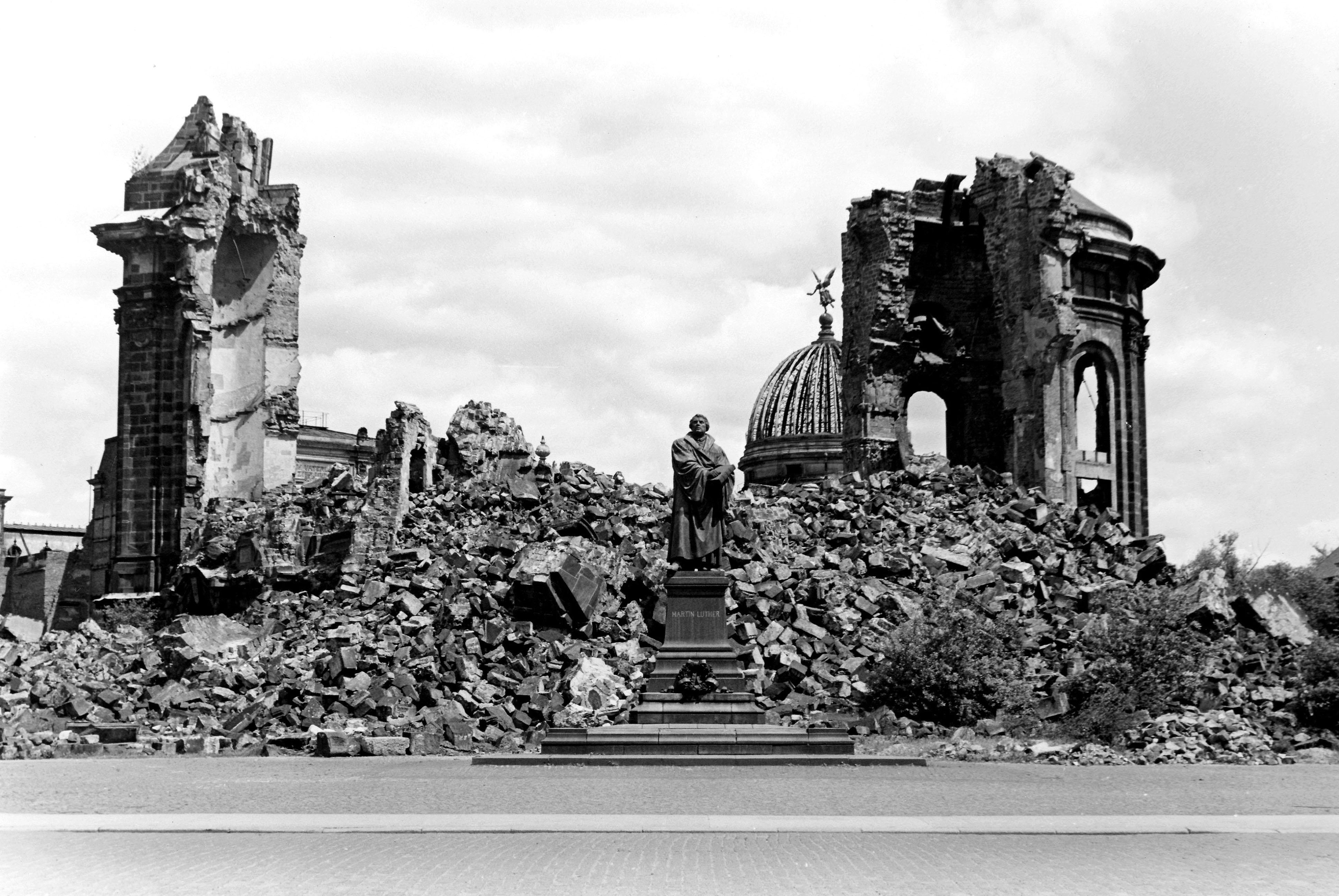
Ruin of the Frauenkirche in Dresden with the Monument to Martin Luther – Church of Our Lady.

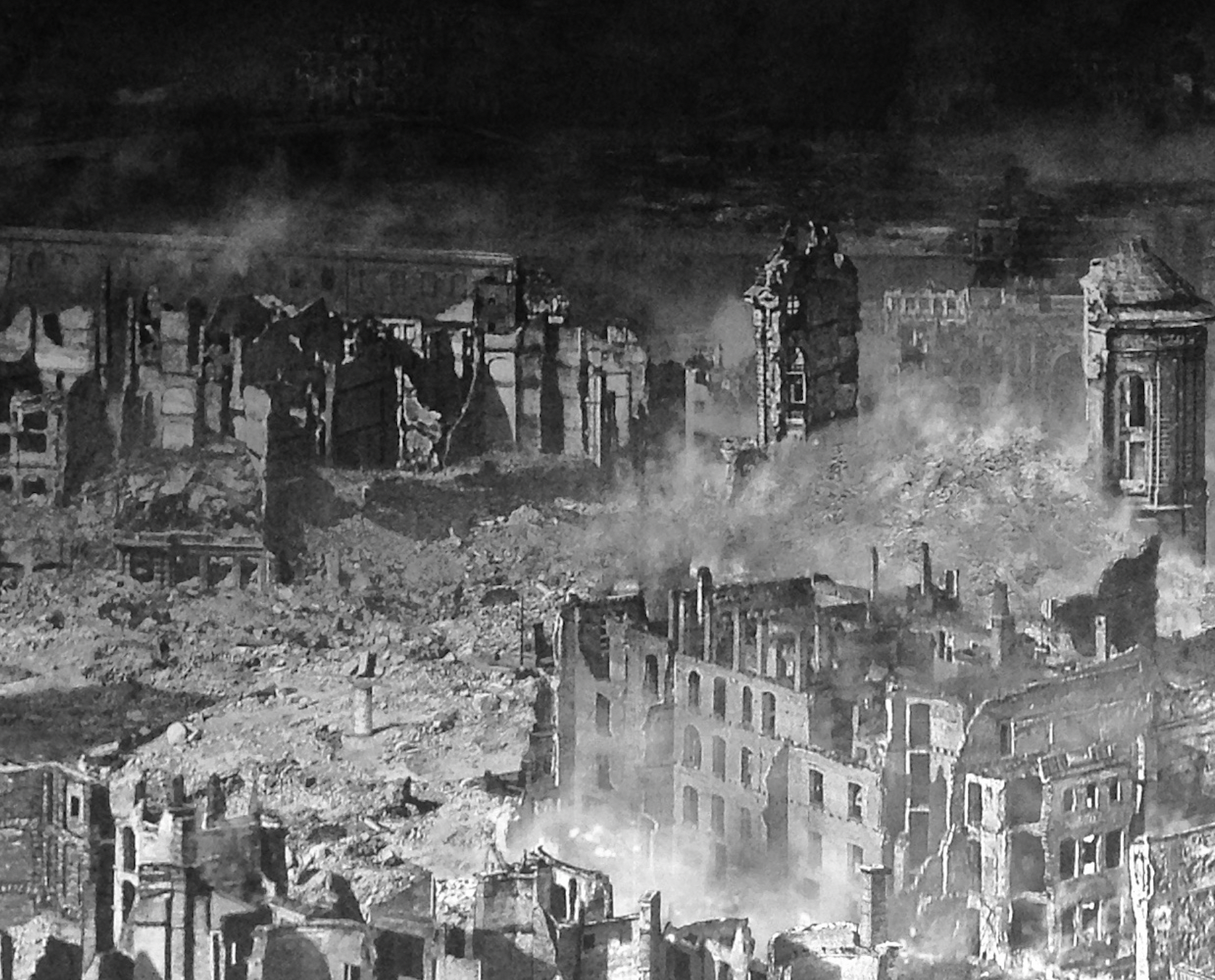
Monday 13th February marks the 78th anniversary of the British and American bombing of Dresden. Every year, a human chain of people holding hands in an open gesture of unity wends its way through the city. This year, on Tuesday 14th, a lunchtime gathering will also take place in London with leading figures from the Anglo-German community to remember the second day of the 1945 bombing raid and celebrate the 30th Anniversary of the Dresden Trust. Founded shortly after the reunification of Germany by Dr Alan Russel in response to a ‘Call from Dresden’ to help rebuild the city, the charity is dedicated to healing the wounds of war and furthering harmonious relations between the people of Britain and Dresden.

Whether you see the bombing of Dresden as a British/US war crime, a justified military strategy or a deserved, morale-destroying mission specifically designed to create as much damage and carnage as possible, the outcome is the same: 25,000 civilians died unimaginably horrible deaths. Such extreme acts of destruction are only possible when all that people can see in their fellow human beings is difference, separation, ‘other,’ lesser, enemy… And where that occurs, peace becomes a far-off pipe dream.

In contrast, behind the reconciliatory, healing and bridge-building efforts of organisations such as the Dresden Trust, is a striving for the opposite: collaboration, communication, comprehension, compassion… and a whole load of other words starting with ‘co’ or ‘com’ that signify a certain oneness in our shared humanity. 

Two of the areas I have been most active in – rehabilitation and reconciliation – both have in common that they are repairing or making whole something that got broken. They come about post-event, after the damage has run its course, hence the ‘re-‘ prefix. So what if our collective focus shifted from the costly (on all levels) clean-up jobs those ‘re-‘ words embody, to preventative measures of ‘habilitating’ and ‘conciliation’? What if, instead of constantly having to make good again things that we have damaged – whether health, a lack of education, inequalities or injustices – we put all that time, energy and funding into seeking out and nurturing the common foundations and shared human needs we all have and that we can see so clearly in emergencies such as the devastating earthquakes in Turkey and Syria, where all the differentiating labels (national, political, ideological, gender etc.) we layer over our essential selves get stripped away? 

To do this we would need a fundamental shift from head to heart; in our education, politics, laws, economics, environmental policies, attitudes to foreigners. Thankfully, in many areas, that shift is already happening. 

During President Zelenskyy’s recent tour of Europe, I was gladdened to hear the calm voice of Christopher Chivvis, former Sr. US Intelligence Officer in Europe, in an interview with Evan Davis on BBC Radio 4’s PM programme. He quietly called for a more robust diplomatic track in relation to the Russia / Ukraine war rather than an escalation of increasingly powerful military methods of destruction with the ensuing losses of life. And then he outlined how this could look. I found him more psychologically astute and emotionally literate than many of the louder voices we hear, but see what you think You can listen to the interview here starting 46:31 mins in.

I imagine one of the foundation stones of diplomacy is a willingness to make a concerted effort to hear all sides of the story. An attempt to do just this came in the form of the brilliant 3-part BBC2 documentary series, ‘Putin vs the West’. Produced by Norma Percy, it presents the run-up to Putin’s invasion of Ukraine through the spoken words of an impressive range of key players as well as incredible footage of Putin and co at work. It was compelling watching that I can only recommend. But… for all the different angles it presented, it remained largely the point of view of the west. As Andrew Seale said in his article: “The problem with this type of documentary… is that there is no one credible to interrogate the west’s narrative.” And it was very clear, the west didn’t always get it right.

So we need to go even further. To include an even more diverse range of voices. To hear our critics too.

If Dresden can teach us anything, it is that it is too dangerous not to. War brutalises. War traumatises. For generations to come. Maybe as former US president, Barack Obama, said in defence of his retrospectively ‘best’ but much criticised decision not to take military action against Syria after it had crossed his ‘red line’ of using chemical weapons: “The ease with which military actions gain momentum, the greater difficulty in pulling back and insuring that diplomacy is given a chance.” 

Further reading

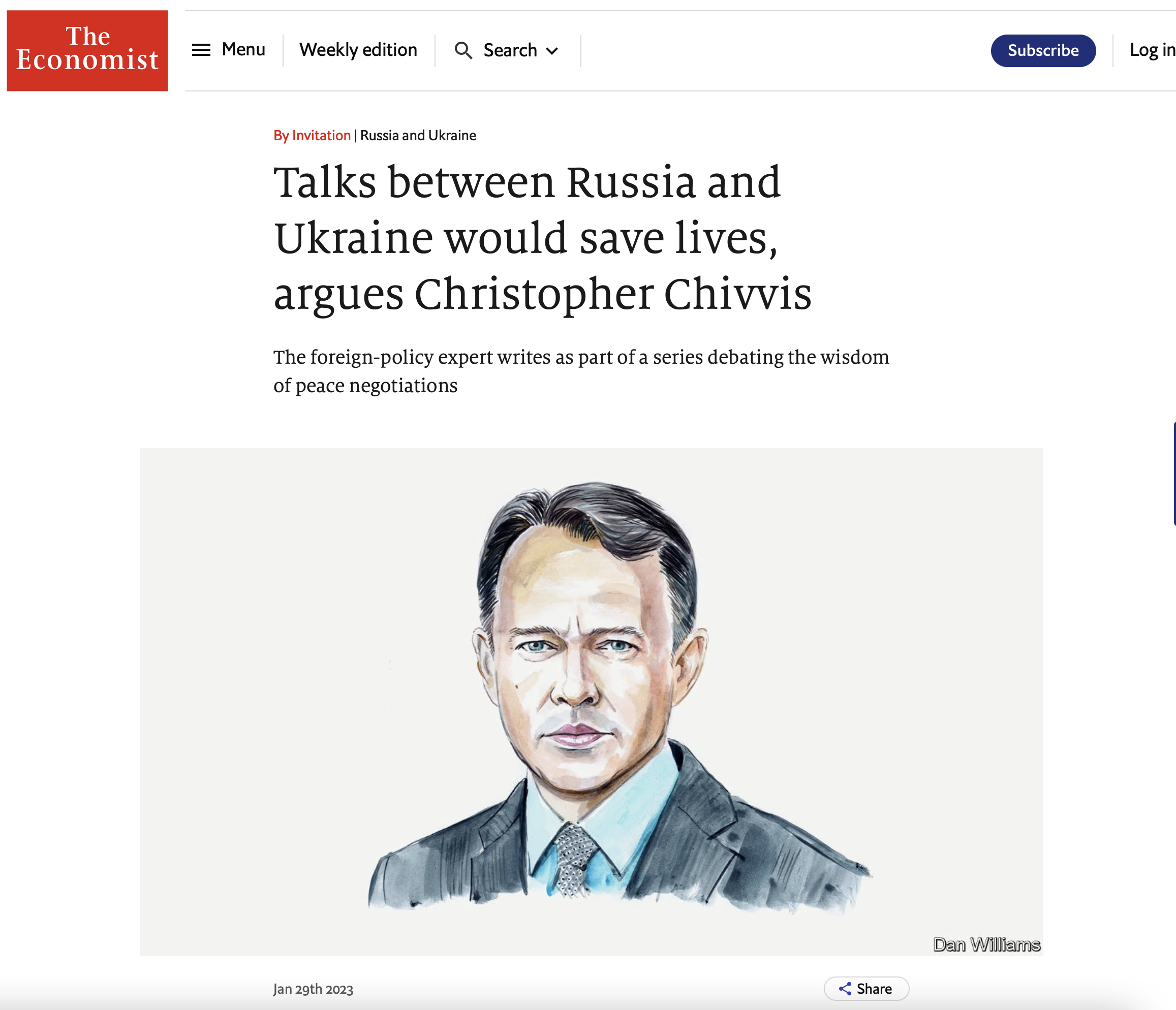
Talks between Russia and Ukraine would save lives argues Christopher Chivvis – The Economist

Putin vs the West review – like a gripping terrifying soap opera – The Guardian

The West is wrong to assume it has global support in the war against Putin – Open Democracy

On this year’s Holocaust Memorial Day, German tanks will be heading to Ukraine to fight Russia. Are we learning from or repeating the past?

With the approach of Holocaust Memorial Day, I find myself engaging with some of my customary questions around how to remember the past and learn from it. 

There is no question that 27th January is a day to collectively bear witness to those murdered under Nazi Germany’s heinous regime. To honour their memories and acknowledge the agonising voids they once filled. To hold in our minds and hearts those who survived and those born later scarred by the violence inflicted on their families. I personally can’t imagine a time when this is not the right thing to do.

Added to remembrance, is the necessity to grasp and implement the lessons of such dark episodes in history. The most obvious ones centre on the dangers and wrongness of discrimination; of othering fellow human beings for their perceived inferiorities or differences in religion, outlook, appearance, social standing, sexual orientation etc. This may feel relatively straightforward for decent people. It becomes less easy, however, when we are requested to act in the face of similar wrongdoings, rather than look away or rant on social media; to become ‘upstanders’ rather than bystanders. How do we do that in this world where injustices can be found everywhere?

One could deduce, that punishing the culprits is an important aspect of commemorating the Holocaust and avoiding future genocides, though the time for that may now have passed. Just over a month ago, the 97-year-old German care home resident, Irmgard Furchner, became possibly the last person to be convicted of Nazi war crimes. After a divisive trial in Itzehoe, she was given a 2-year suspended sentence for her role as the 18-year-old secretary to the Stutthof concentration camp commandant, Paul-Werner Hoppe. For many people, this is justice, no matter how late, and all the more deserved due to Furchner’s evident absence of remorse. For some, however, it is a vindictive attempt to assuage Germany’s collective guilt. For others, it is misplaced and sickening virtue-signalling, pointless scape-goating… the debate is lively.

Irmgard Furchner

A positive outcome of Germany’s learning from its dark past is its nigh on eighty years of pacifism. But this too appears to be being brought to an end, albeit with huge reluctance and resistance within the country. Putin’s illegal war and NATO’s unified military response in support of Ukraine have put understandable pressure on Germany to break its resolve not to get involved in military conflicts and supply Ukraine with its world class Leopard 2 tanks specifically designed to compete with the Russian T-90 tanks. Last night, after months of hesitation and debate, the Chancellor, Olaf Scholz, and the German government finally agreed to send a company of battle tanks and allowed other countries to send their German-made tanks too.

The whole issue is extremely complex, I know, but the psychological irony seems unavoidable. 

On the one hand, the widespread tendency to never let Germany forget the wrongs of its Nazi past is still alive and kicking. On the other, there is now equally widespread demand that it does just that. Or rather that it selectively remembers some bits of its past and forgets others, such as the traumatic memories of the last time German tanks rolled into Russia with the horrifically high death tolls and suffering of tens of millions that ensued. I wish I could ask my German grandfather what he thinks of the situation, having fought on the eastern front for so long… (See Chapters 14 & 15 in my book In My Grandfather’s Shadow)

Operation Barbarossa, 1941

From many points of view, including a growing number within Germany itself, there are compelling arguments for the government to embrace a Zeitenwende’ (turning of the times) in its foreign policy and to override its long-standing commitment to peacekeeping, up its defence budget and contribute more military solidarity to its NATO allies in a shared effort to support Ukraine against Russia. I am not saying this is right or wrong, just recognising that it is a HUGE step for Germans and Germany, a potential game-changer for either good or bad, and one we should try to understand rather than simply criticise and judge. 

Within the over-simplified, clean-cut narrative of Putin = bad, Ukraine/NATO = good, (which is naturally true from the West’s perspective but not from Russia’s and its allies, hence the conflict), space should be allowed for Germany’s justified fears of an escalation. Its visceral memories of fighting Russia and closer proximity to the country, raise genuinely terrifying concerns that we need to take seriously. At the same time, the contradictions in the messages being delivered to Germany surely don’t go unnoticed: Remember and take the full blame for the atrocities you caused with the Holocaust and the Second World War… but actually, forget some of them now and immediately dispatch tanks against the former enemy with whom you have been trying to make some kind of peace or amends and play a decisive and deadly frontline role in what could easily become a Third World War.

Maybe it really is time for Germany to move beyond its WW2 identity. I hope that this Zeitenwende in German policy will also find a counter Zeitenwende in certain mindsets.

Further Reading:

Was this Germany’s last ever Nazi war crime trial?

Why Germany hesitates on sending battle tanks to Ukraine

Why Germany is struggling to stomach the idea of sending tanks to Ukraine

Germany to send Leopard tanks to Kyiv and allow others to do so

Forthcoming Events focusing on In My Grandfather’s Shadow and open to Public:

Thursday 2nd February, 6-8.30pm, Painswick, Glos: First Thursday In ConversationMore info

Thursday 23rd March, 6pm – Summer Town Library, Oxford: Talk and Q&AMore info soon

Wednesday 29th March, 2-3pm – Oxford Literary Festival: In Conversation with Miranda Gold… More info

Looking back and looking forward…

Looking back over the past year, it seems that whatever lens you look through – global, political, environmental, financial, social – it was a pretty shit year. And looking ahead to 2023, it is hard to see how matters can improve enough to turn things around. Collectively we have been hurtling down a cul-de-sac with a gung-ho ‘it’ll be fine’ attitude for far too long and now we are finally waking up to the reality of the wall at the end. 

I was convinced the upside of the covid pandemic would be that the errors of our ways would become so obvious it would be impossible to return to ‘normality’. If they did, it was a short-lived awakening that hasn’t translated into political policy-making. Then again, maybe we are in more of a transition phase than we know. Maybe the upheavals and misery we are witnessing in the widespread strikes, the fuel and food crises, in Iran and so many other places are all part of a necessary disintegration of the old. Like the breaking up of soil for new shoots to emerge and bear different fruits.

Talking with people, it is evident that our outlooks on life and values have been subtly, if not dramatically impacted by the disruption across the planet. Change takes time and attracts resistance. Those who cling to the status quo will have a harder or more frustrating time in the long term, because ultimately the old models were built on dodgy foundations of exploitation and waste of natural and human resources; on greed and a psychological fear of lack; on delusions of superiority or entitlement; on widespread lies, incompetency, unresolved trauma and an epidemic of (often anonymous) nastiness… 

When, however, you turn away from the incessant rumble of worrying news, hardship and suffering that infiltrate our lives and look at the tiny pockets of society we as individuals inhabit, there is still a huge amount of kindness, generosity of spirit, vision, action, personal awakening and growth. So maybe we are all being invited to think differently? My strategy for 2023 is therefore to at least try to see the unrest everywhere as an essential part of a positive and necessary process of change in the world for the good of humanity. An osteopathic realignment of our shared spine. We have a long way to go. There will be casualties and loss. But I do believe in the power of little steps.

I think that is the biggest lesson writing my book has taught me. Getting to publication in July was a long, long climb, a bumpy road, at times a dark and lonely tunnel, at others a heart-expanding series of intimate encounters. Always focusing on the next step rather than the far-off goal, and taking that step were what eventually got me to the other side. 2023 offers a new chapter, a different landscape with expansive new horizons and possibilities. I wish that sense of possibility and hope for change for you and everyone in some small or big way. 

Have a happy, healthy, peace-filled and kind 2023! 

Links relating to the past year:

Read about my book, In My Grandfather’s Shadow, here

Listen to radio interviews and podcasts about it here

View paintings in my Studio Sale here

Read more blogs here

In Praise of Empty Space…

November, in many cultures, is the month designated to remembering those who are no longer there. With a strange synchronicity, everything I did, watched, read or listened to pointed towards ‘absence,’ that non-presence devoid of form that artists call ‘negative space.’ “Empty space is the silence between musical notes, the pauses in poetry, the stillness of a dancer. Therein often lies the meaning or drama of a piece.” (In My Grandfather’s Shadow, Ch 11, p.144)  

I have just returned from a week in St Ives, the Cornish place that boasts the highest concentration of blue light in the UK and challenges many an artist to capture its effect in paint. A kind author friend each year offers her house of clean white rooms overlooking the beach and cliffs as a form of writing retreat for three of her fellow writer friends. All four of us want to make the most of precious time out, so the interiors fall silent during the days that in turn empty of all structure, just as our minds declutter of chores. 

I spent my time reading the diaries of my intrepid, spinster great great aunt, who travelled alone to the Himalayas in 1939 to gather flowers for Kew Gardens. I followed her slow, awe-filled progress as she step-by-stepped her precarious way through lofty peaks and flower- or snow-filled valleys, pausing with her when she rested to stare at the perfectly choreographed performance of clouds and weather dancing in front of my window. Thoughts wafted through my mind, some being noted, others just fading in and out like rainbows. For a whole week, I simply was.

My time there, along with books and films I have recently ingested, have been making me realise just how much I miss and yearn to regain some of what I remember loving doing as a child… nothing. Being born a day-dreamer, the spaces between activity and connection were always filled with a rich, albeit invisible world that had the capacity to entertain, or indeed bore. Boredom… how rarely we have time for that potentially creative vacuum within today’s ubiquitous overload of information, social media and communications that interrupt our rhythms with an octave of pings. I don’t think this is just a grumpy, old-age thing. (Well it may be a bit.) This nostalgia is captured well in ‘The End of Absence’ by the considerably younger and hipper author, Michael Harris. He reminds us of what we are in danger of losing as generations, who have never known life without the internet, gradually overtake those of us who have. 

The recently released and highly acclaimed film ‘Living’ based on the book by Akira Krosawa, screen written by Kazuo Ishiguro and starring Bill Nighy is set in 1950s London. Not a lot happens, and what does, happens incredibly slowly. The cinematography is stunning and emulates the subtle grace described in ‘In Praise of Shadows,’ a slim book by Junichiro Tanizaki that gently reveals traditional Japanese aesthetics and use of space. Unlike us in the west where the achievement of light is basically both goal and God, in Japan it was – and maybe still is in places – the creation of shadows that was the source of beauty and mystery. This quiet understatement is part of what I want to rediscover.

Another film I watched where even less happens but with still more potency and power, is The Banshees of Inisherin. Dark, sad, funny and impeccable in every way, including the acting of its two ‘In Bruges’ stars, Brendan Gleeson and Colin Farrell, it basically portrays the painful ending of an long-standing friendship caused by the simple declaration by one: ‘I don’t want to be friends with you anymore’. The extensive space the film allows each facial movement, scene, sentence… one can almost feel the multi-layered clutter of ones own world begging to be emptied into black bin bags, or deleted.

With this increasingly strong desire to create more space, I decided to have a big Studio Sale of my art. (All works available can be viewed here.) And to finally sort through my real and digital filing office and cabinets in order to establish more clarity and space for new shoots and fruits. 

So with the start of Advent this Sunday and the build-up to the crazy, all-consuming Christmas season, I would like to invite you to join me in seeking out and reclaiming some of those quiet spaces life used to offer in abundance, and still does if we just stop… feel… and dream our way into them.

Wishing you a very Happy and Meaningful Advent…

Related Links

To buy my book, In My Grandfather’s Shadow, as a Christmas present, please order from your local bookshop or online here

In My Grandfather’s Shadow’ is a brave, powerful, honest, thoughtful and meticulously researched book. I enjoyed it immensely. It has made me think very hard about intergenerational trauma transfer and explains so much about Germany, and perhaps, in the current context, Russia.General Sir Richard Shirreff, former Deputy Supreme Allied Commander Europe and author of ‘War with Russia’

To listen to the recent 5-part Interview with Chris Baxter on Radio West, please go to BBC iPlayer here

To look through and/or buy a piece of ART please go to my website: www.angelafindlay.com

Remembering Russia’s past as a way to understanding its present

The Remembrance Sunday of 2022 will be one of thankfully few since 1945 that sees another war in Europe raging. As we remember those who lost their lives in past wars, fellow Europeans will be losing theirs in the all too real conflict fighting itself out in Ukraine.

In my last blog I wrote about travelling the Berlin Wall Way, itself a form of 100+ mile-long memorial remembering both a repressive episode in history and those who lost their lives trying to escape it. Well, a little off that route in what was central East Berlin is Treptower Park, the largest Soviet military memorial outside the Soviet Union. Opened on 8th May 1949, it is a 10-hectare cemetery for 7000 of the more than 22,000 Soviet soldiers killed in the battle to take Berlin in the final months of the Second World War and contains the world-famous symbol of the role played by the Soviet Union in destroying National Socialism: the 13-meter towering statue of a Soviet soldier holding a lowered sword over a shattered swastika and cradling a rescued German child in his arm.

The Soviet Warrior Monument built by Yevgeny Vuchetich

To experience this place is to experience a sense of the enormity and profundity of the impact WW2 had on the Soviet / Russian people. For a start it is vast. And the extensive layout is designed to take you through a process of mourning and remembrance to honouring the victors as heroes and liberators. 

‘Heroes and liberators.’

We too use those words in relation to our own soldiers. But how often have we – or do we – actively honour the decisive role the Soviet soldiers played in defeating Nazi Germany? And how often do we include the mind-boggling numbers of Russians murdered or killed in the process (25 million to give a rough/round figure) in our process of remembrance? We don’t really, is the only answer I can find. And yet they were our allies in a war that we, as a nation, have made central to our national identity. Could our slightly introspective leanings and lack of acknowledgment of the Soviet sacrifices and achievement (among many other factors, not least the horrors of the Stalin era) have contributed to the attitudes of subsequent regimes and politics towards the West? Just a question… but one that walking through Treptower Park certainly made me ask.

‘Mother Homeland’

Entering through one of two avenues, the (tiny) visitor is led first to the statue of a grieving “Mother Homeland.” 

From there a promenade lined with weeping birches – incredibly moving witnessing trees seemingly crumpled in grief – you arrive at two sphynx-like kneeling soldiers that act as guardians to the cemetery section below. 

Looking back to the avenue of weeping birches
Looking ahead to the cemetery

Beautifully executed stone reliefs illustrating scenes from the ‘Great Patriotic War’ decorate the sixteen marble sarcophagi flanking the graves, while gold-lettered quotes by J. Stalin, the commander in chief of the Soviet armed forces, underscore the importance of the Communist Party and the Red Army under his leadership. Though clearly outdated, these quotes survived Khrushchev’s denouncement of Stalinist rule in 1956 with the subsequent cull of Stalin-statues and effective banning of any mention of his name in public. 

The sarcophagi tell the story of the Second World War in Russia…
…through extraordinary imagery and craftsmanship.
Dedicated to the ‘heroic dying’ of the Russian people

At the very far end, you climb a stepped hill to a mausoleum supporting the aforementioned bronze statue of a Soviet soldier holding a small German girl.

Turning around to descend, you get an overview of the whole dramatic panorama that reflects the historical narratives and artistic concepts dominant in the Soviet Union under Stalin and to a degree still exist today: monumentality, hero worship, a personality cult, and a claim to exclusivity.

Treptower Park has been and continues to be a frequent venue for commemorative events. Since 1990, with the signing of the German-Soviet treaty on neighbourly relations and the German-Russian agreement on the upkeep of war graves in 1992, the Federal Republic of Germany committed itself to the care, renovation and maintenance of all Soviet military graves and war memorials in Germany. 

The evident meticulousness with which the whole site continues to be maintained (and patrolled by German police) is another of Germany’s visible expressions of understanding and reconciliation that have been extended to the Russian Federation and other countries brutally destroyed in the Third Reich’s expansionist and ideological wake. Does this reaching out in friendship make it easier to understand Angela Merkel’s unpopular (certainly in retrospect) policy relating to the Nord Stream pipeline? And the apparent weakness of Olaf Scholz’s initial reluctance to break Germany’s practice and permit the transfer of lethal weapons to areas of conflict… in this case, to Ukraine?

If the premise of my book is true and unresolved traumas of one generation can impact the lives and behaviour of subsequent generations, then the extreme collective traumas experienced by the Russian people over the past century are part of what we are seeing playing out in the attitudes, politics and actions of Russia today. Trauma responses such as emotional numbness, low self-esteem, acceptance of poverty might go some way to explain the apparent passivity and gullibility of large swathes of the population. Likewise, trauma responses such as shame might be producing the violence, megalomania and greed of those in power. Is this then, by extension of the idea, the natural destiny of all traumatised nations? After all we can see similar dysfunction and violence in Africa, South America and plenty of other nations once brutally colonised.

Psychohistory‘ – a new but exciting term to me that I appear to have already been practicing – seems to offer a way forward in thinking about these things. It combines history with psychology/psychoanalysis and social sciences/humanities to understand the emotional origin of the behavior of individuals, groups and nations, past and present. In other words, the ‘why’ of history.

I don’t have any answers, nor even the right questions yet, just an ever-growing sense of discomfort in simple, black and white narratives of good and bad, right and wrong. And an increasing belief that we are still very far from seeing, let alone comprehending the fuller picture. But we need to become more trauma-informed in all areas of life. For to neglect trauma is to leave people in a state of emotional numbness. And when you don’t feel, you become capable of overriding humanity and care for fellow living beings and life itself.

Further Reading / Viewing: 

These questions are explored more deeply in my book: In My Grandfather’s Shadow. Published by Penguin Transworld and Bantam Press in July 2022 and available in most bookshops and the usual online outlets

The brilliant BBC documentary ‘Russia 1985-1999: Traumazone’ by Adam Curtis is made up of multiple film snippets taken in those years. As a fly on the wall experience and from the comfort of an armchair, it doesn’t get much ‘better’ in terms of an experience of Russia. To have lived through those years of extreme deprivation, corruption and hunger must have been little short of appalling.

Russia 1985-1999: TraumaZone review – ingenious, essential viewing from Adam Curtis

‘Generations of hurt’: Children and grandchildren of war survivors fear ripple effect of Russia’s war in Ukraine

Russia has yet to recover from the trauma of the Stalin era – The Guardian