When big isn’t necessarily better

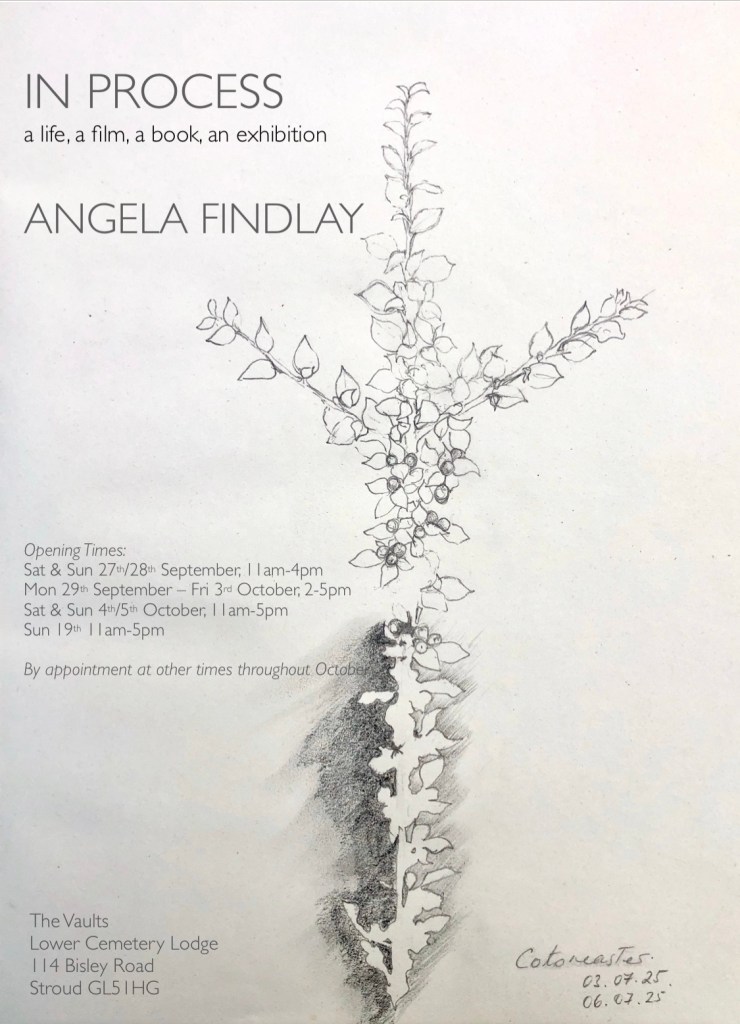
Reflections on: IN PROCESS… a life, a film, a book, an exhibition, The Vaults, Stroud. Sunday 19th October, 11am-5pm and by appointment until 1st November.
 

“We must, we must, we must increase the bust.

The bigger the better, the tighter the sweater, the boys depend on us.”

I remember chanting that with my boarding school roommates as a teenager, elbows flung back in a futile attempt – in my case at least – to inflate our adolescent chests. Bigger was definitely better, or so we believed.
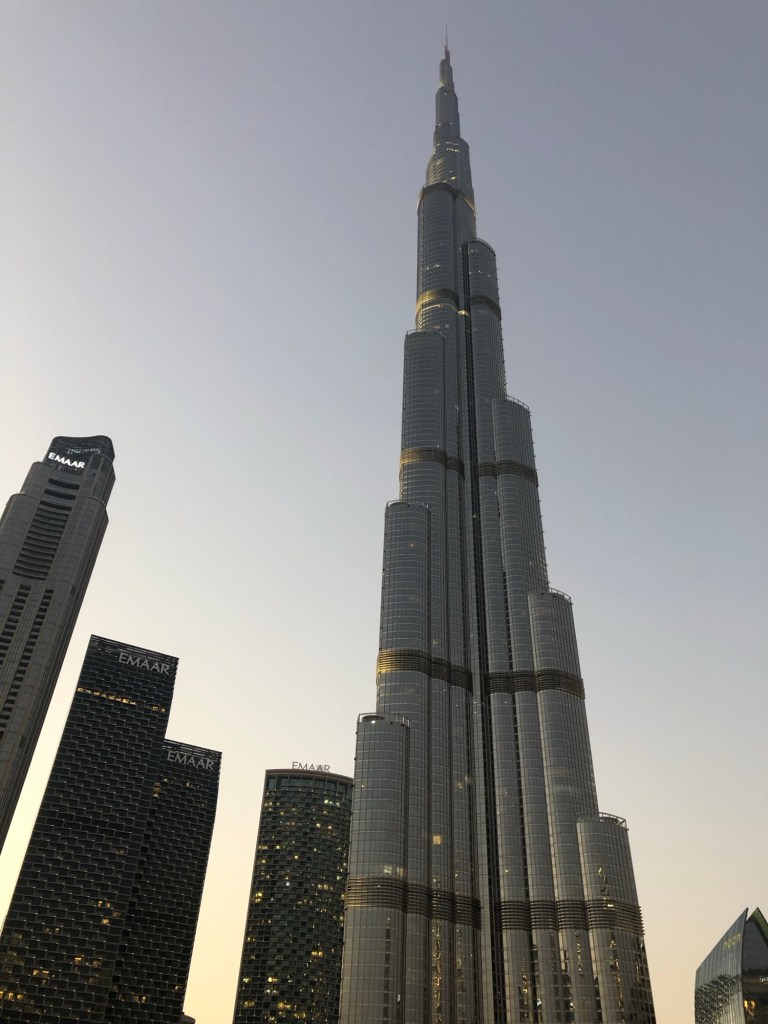
Burj Khalifa, Dubai

Skyscrapers, cars, salaries, houses… In so many areas of modern society, ‘big’ still equals ‘better.’ More followers, more likes, more headlines, more sales. The biggest countries led by the most powerful leaders and largest militaries make the most noise. And yet we know, quantity doesn’t equate to quality. Magnitude doesn’t always reflect meaning or value.

This idea – that bigger isn’t always better – is something I’ve seen reflected both in the trajectory of my great great aunt Joan’s life and in my own development as an artist. (If you are new to Joan’s story, please see my previous blogs for background.)
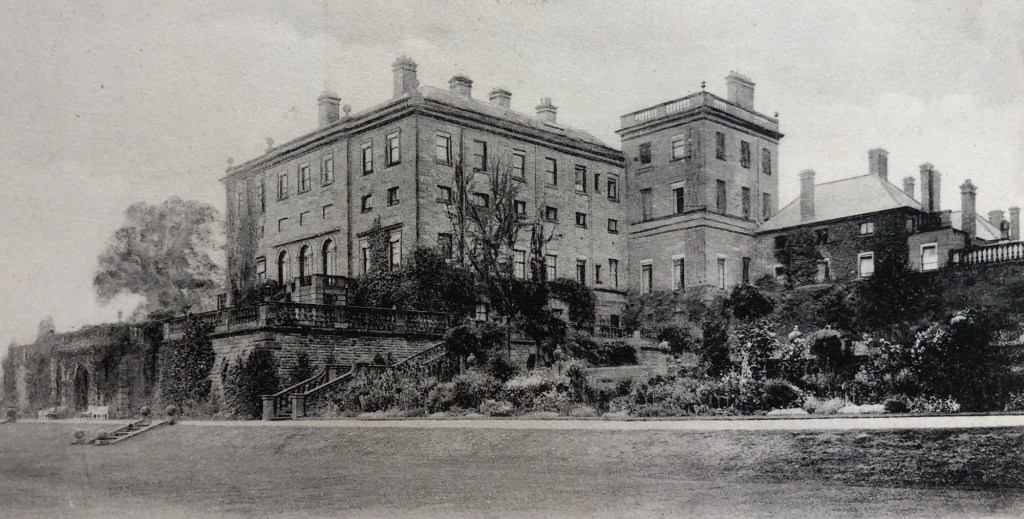
Patshull Hall, Staffordshire

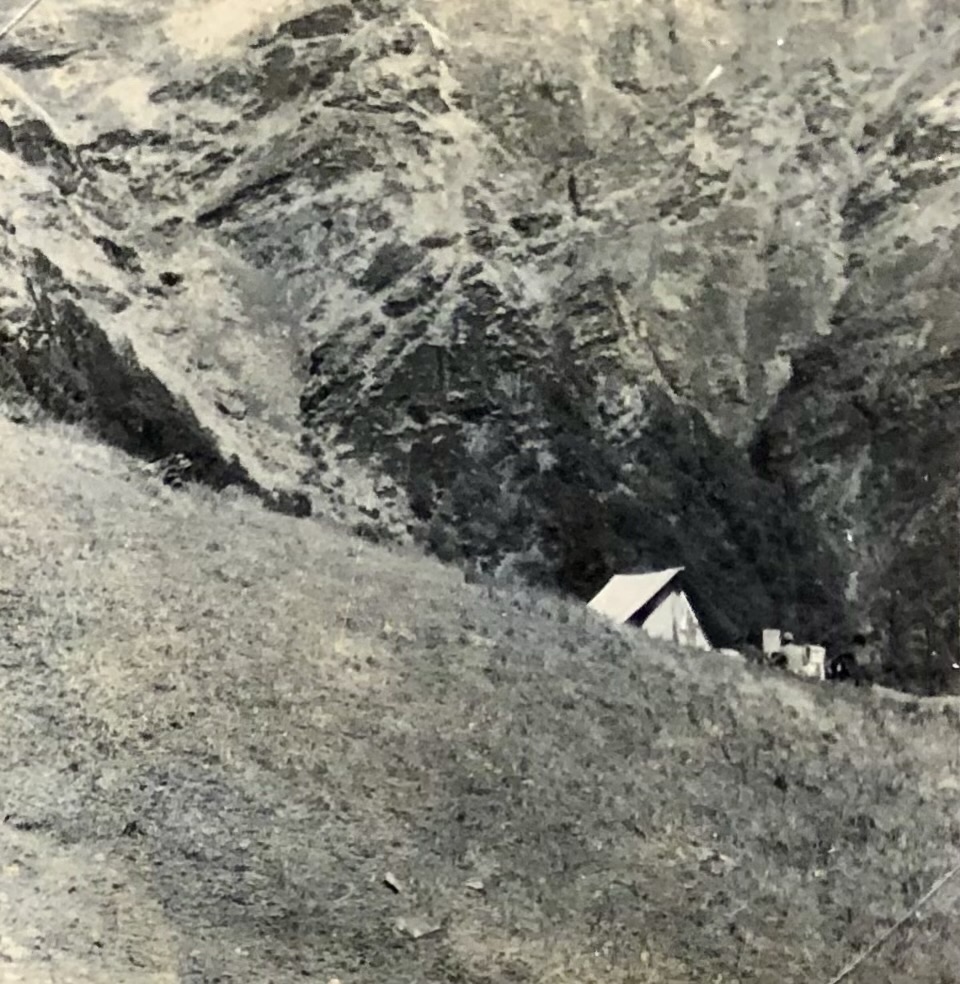
Joan’s tent

Joan grew up in a 147-room stately home in Staffordshire. Yet she spent her final weeks in a single, often soggy Meade tent pitched in a remote Himalayan Valley, surrounded not by grandeur but by shepherds, wildflowers and the sound of rain. She had traded scale for purpose. And her joy, it seems, had grown as her material load had lessened.

My own artistic journey has followed a similarly inverse curve.
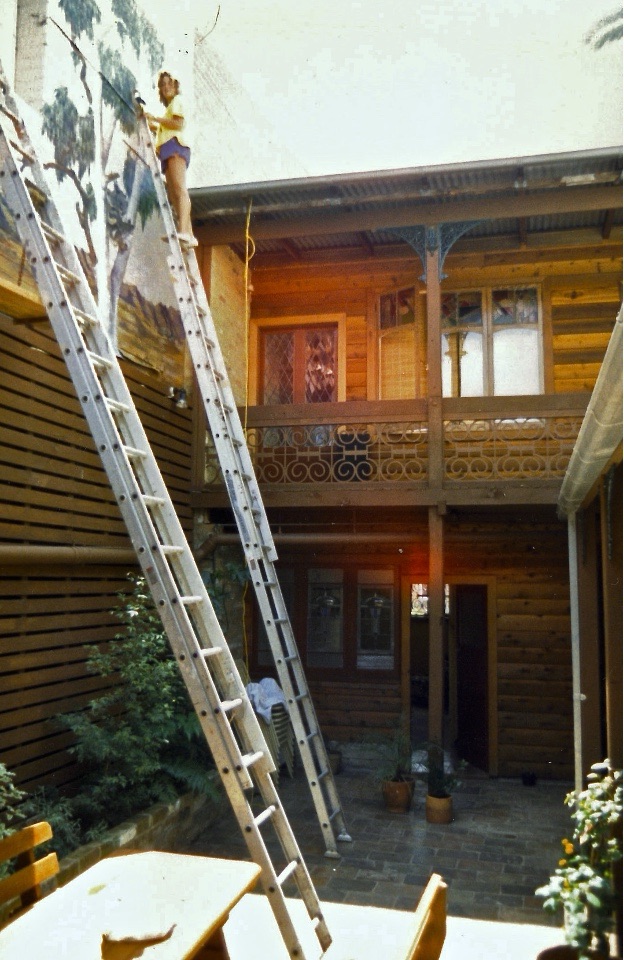
Painting a mural in Sydney, 1987

I began large, unable to contain any drawing or painting within the boundaries of paper or canvas. My work spilled onto walls, first private then public, then grew further to fill stage backdrops for theatres or touring bands. Various mishaps including a paint-splattered boss’s car and a disastrous commission to paint the backdrop for INXS KICK album tour in 1987, which promptly cracked and fell off in large chunks when rolled up, nudged me toward the more forgiving surface of prison walls. There, no amount of damage could make the environment worse than it already was.
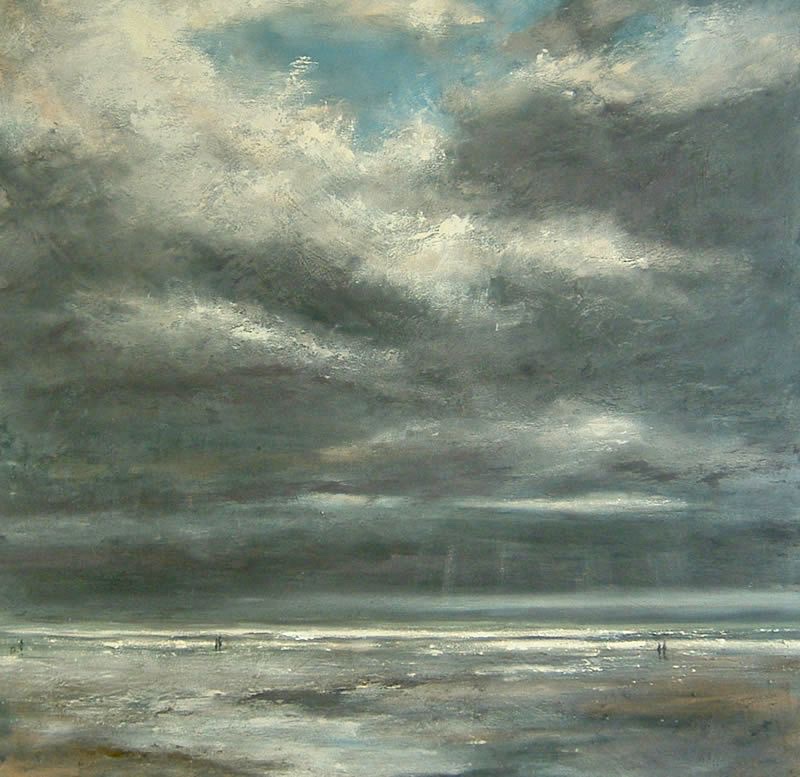
The light danced, 120x120cm

Years later, I turned my focus to canvases of my own, their size dictated by the available studio space and commercial considerations of galleries. And most recently, to works just 28x28cm – or smaller. I have replaced the vast audiences of art fairs with the quiet intimacy of just six or seven visitors at a time into the two vaults beneath my home in Stroud’s Cemetery.

The Vaults

Those vaults now house In Process… a deeply personal exhibition about Joan, her life and the resonance her death still holds for me, our family and small communities she encountered in India.

In one vault, where gravediggers once hung their tools and I now hang mine, visitors watch a short film projected into the open lid of an old trunk telling the story of Joan Margaret Legge.
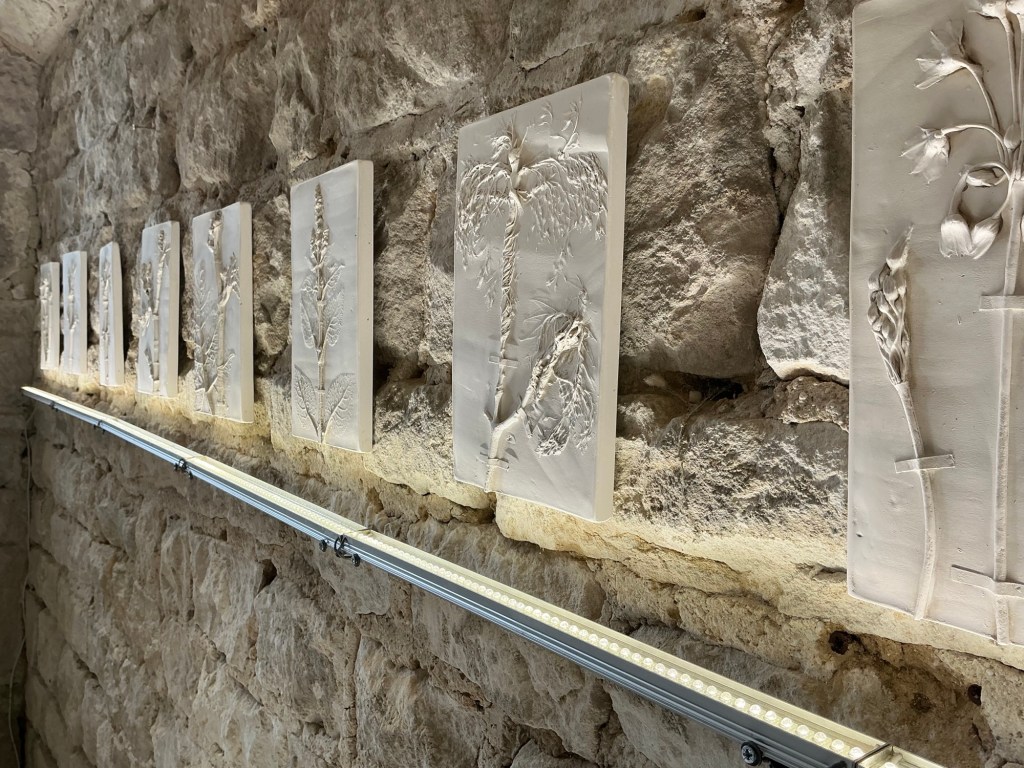
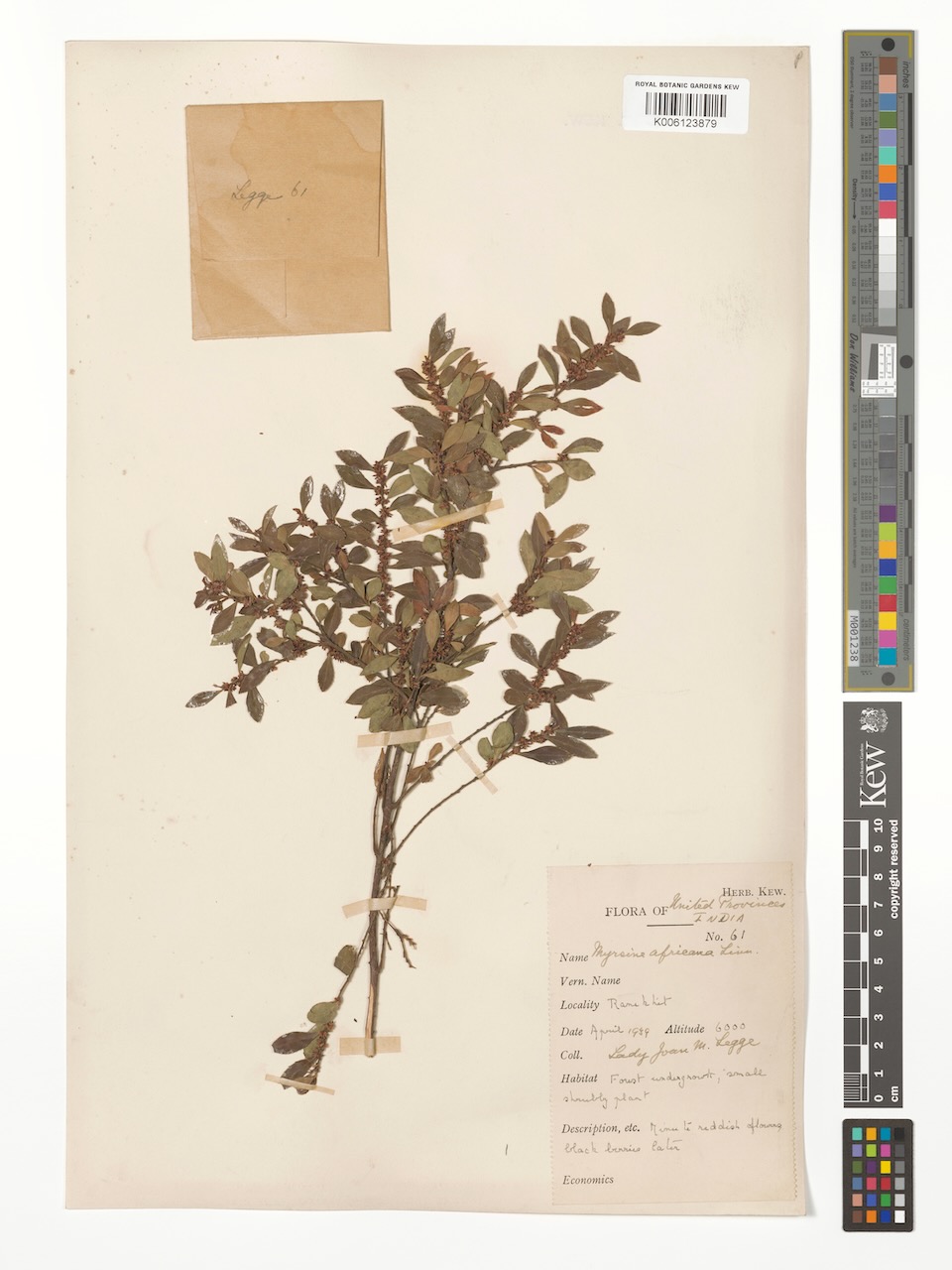
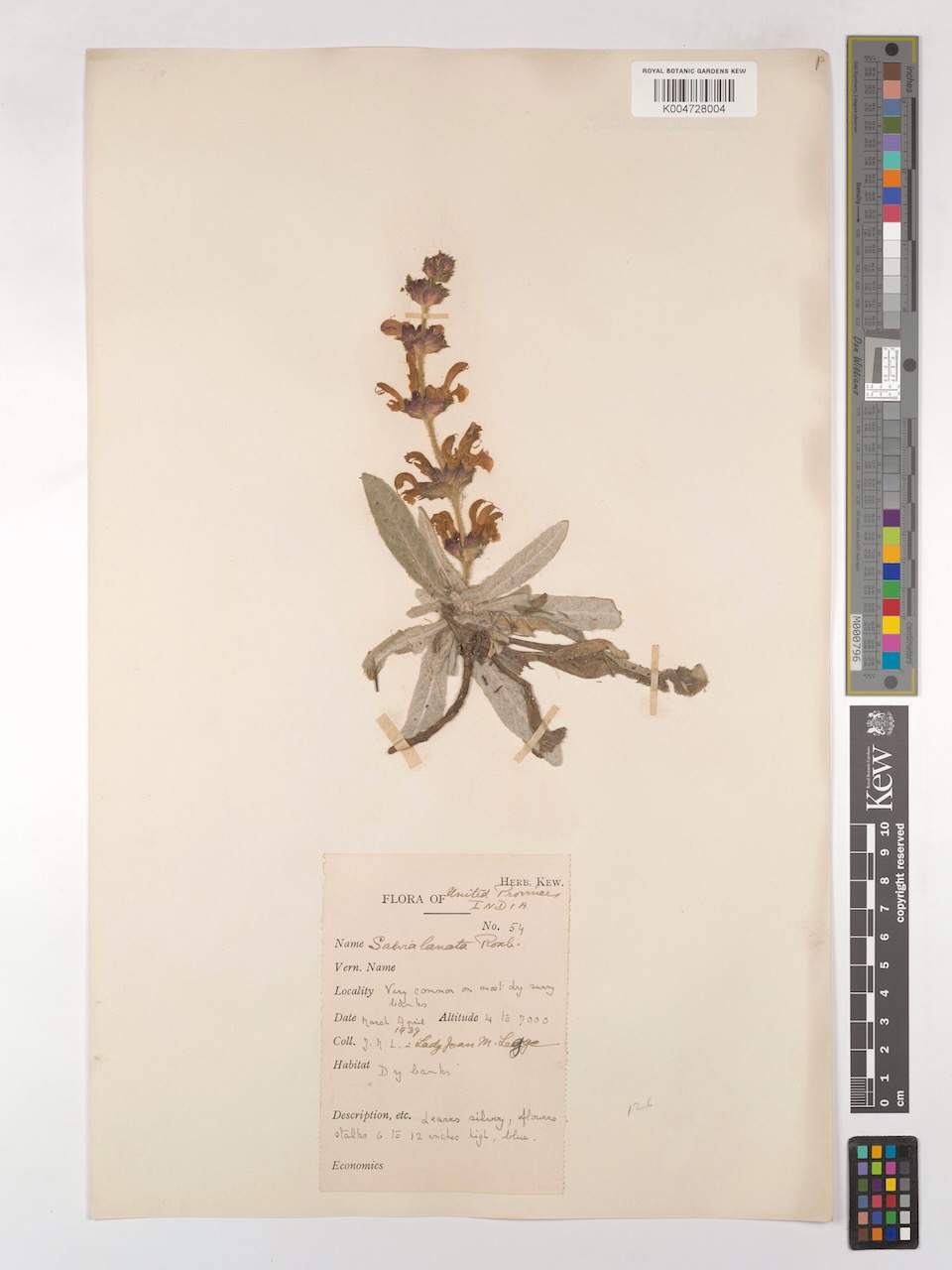
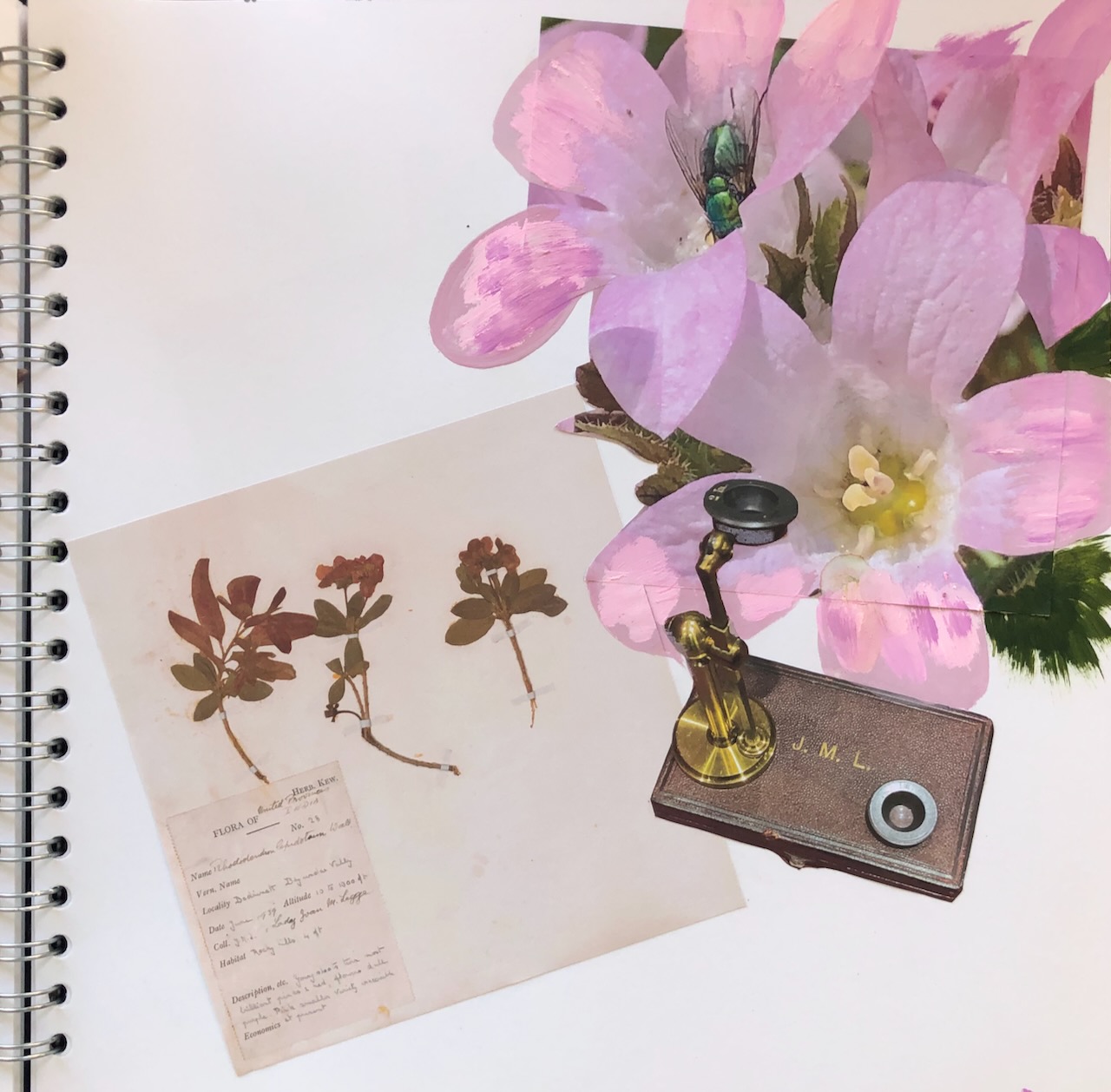
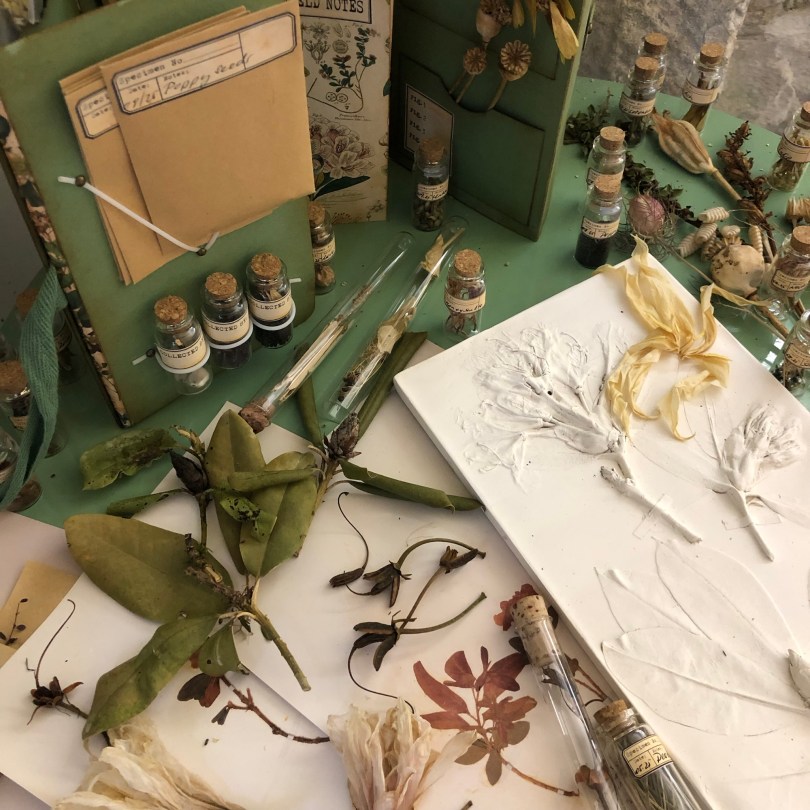
In the other, where those same workers drank tea, ghostly white plaster casts hang like three-dimensional botanical drawings reminiscent of the specimens Joan collected and sent to Kew Gardens.
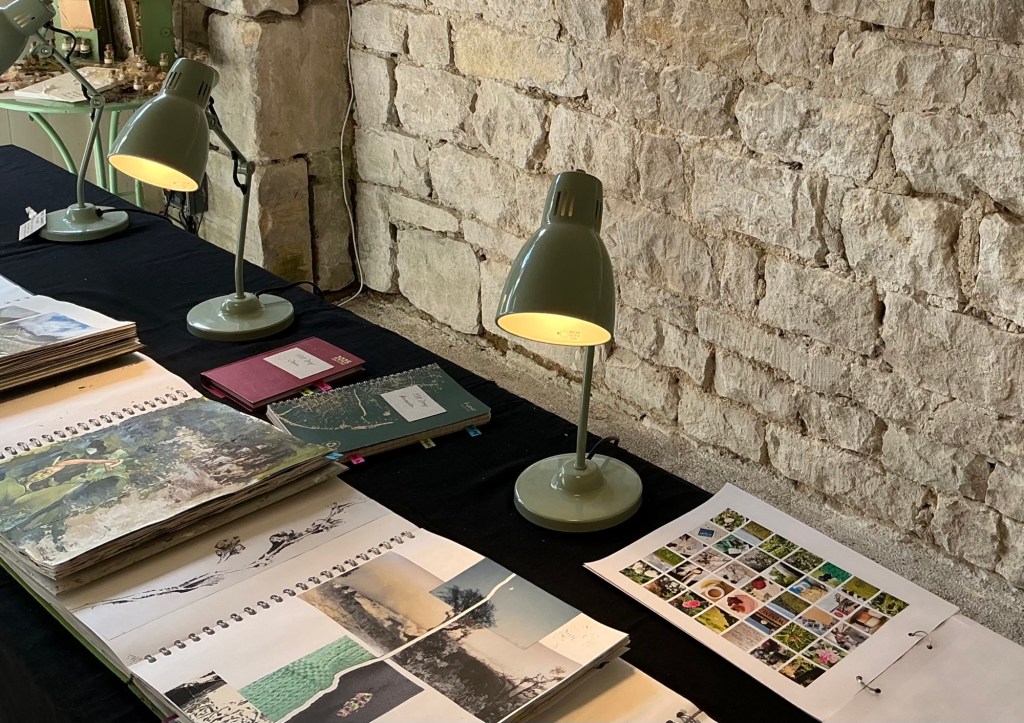
‘138 days’

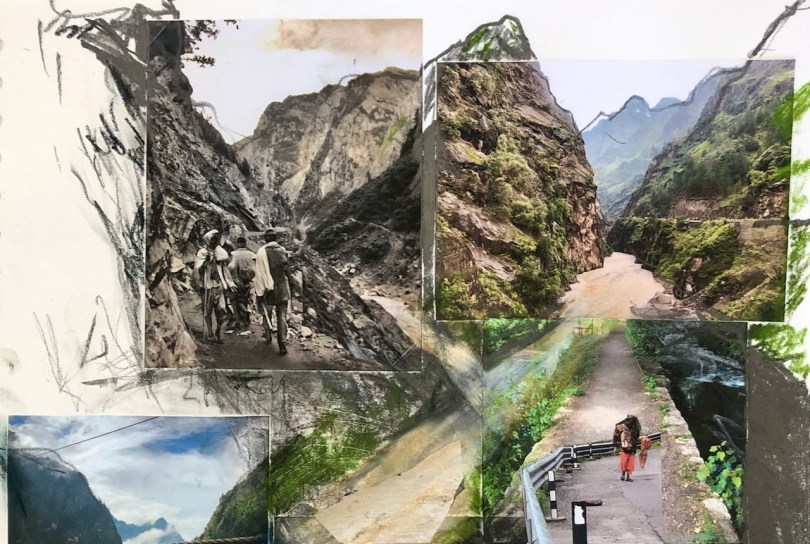
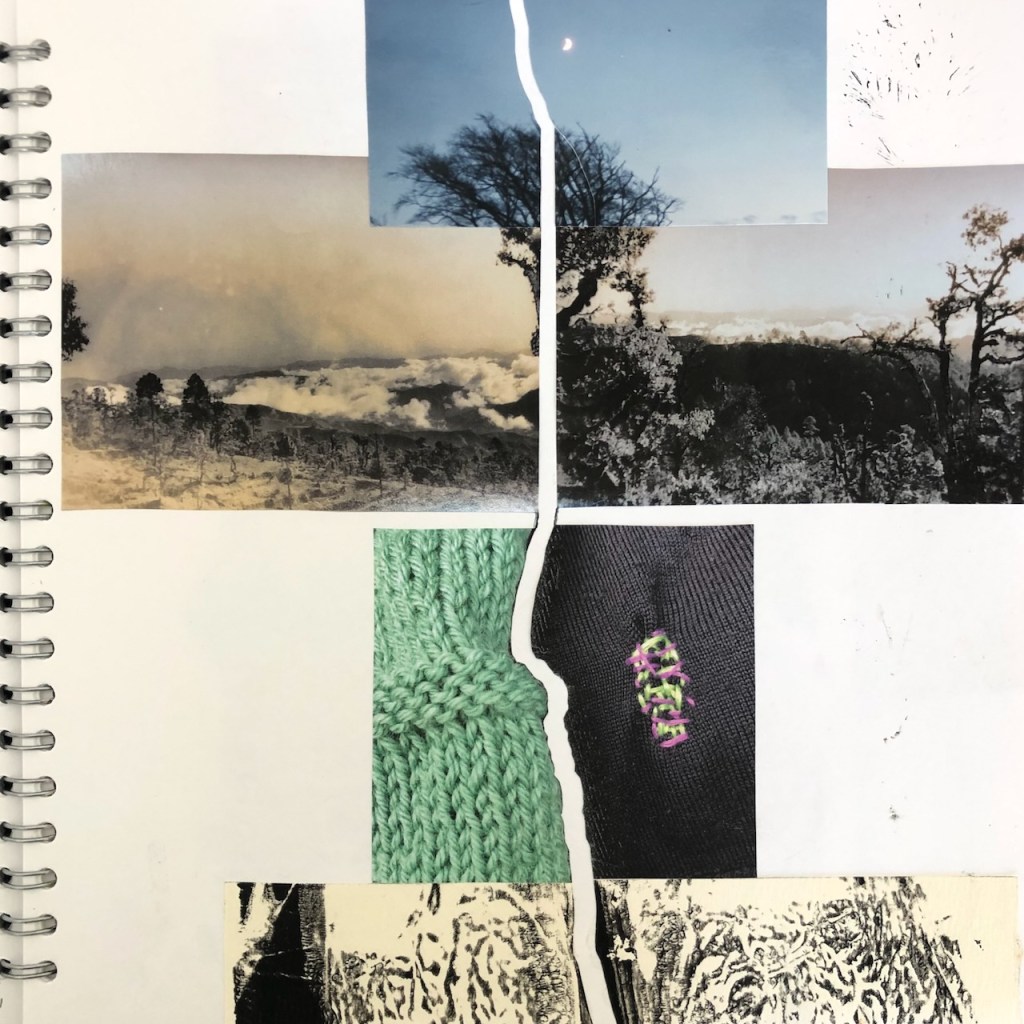
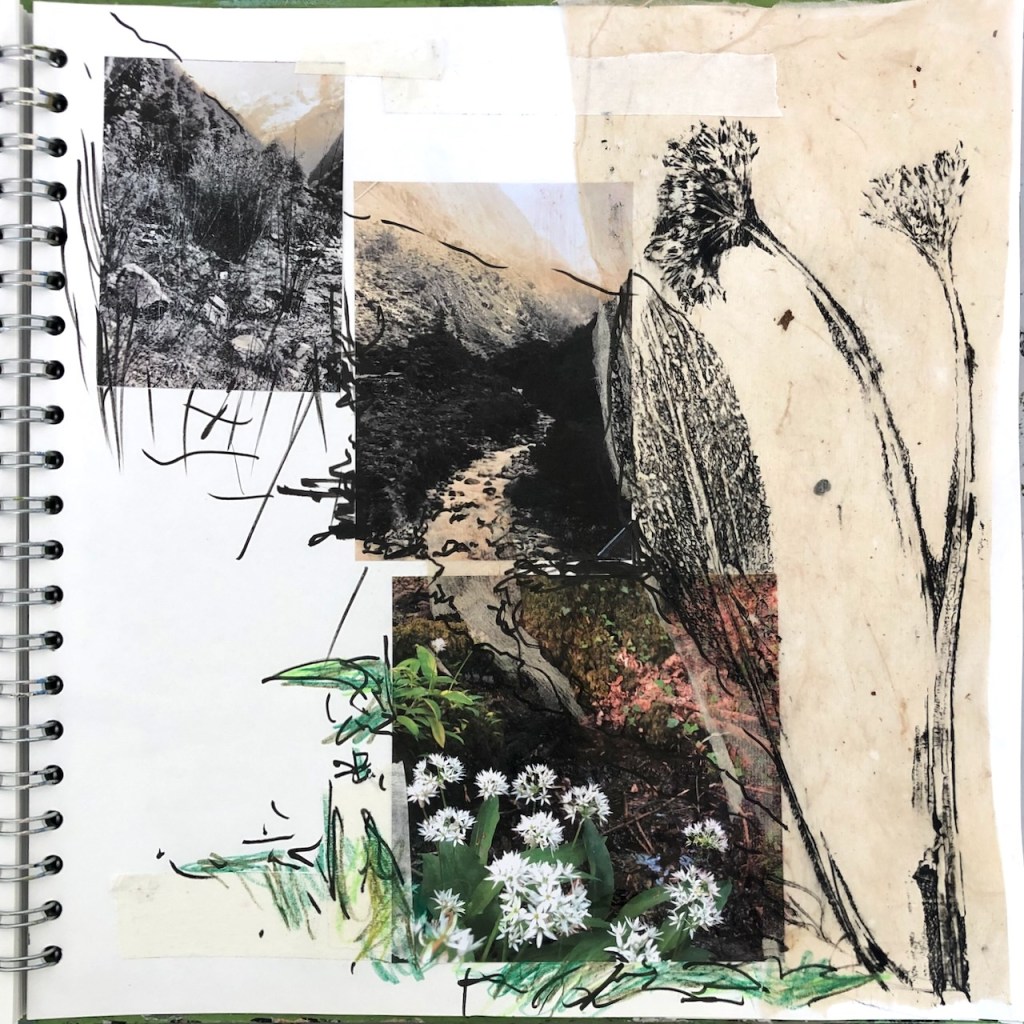
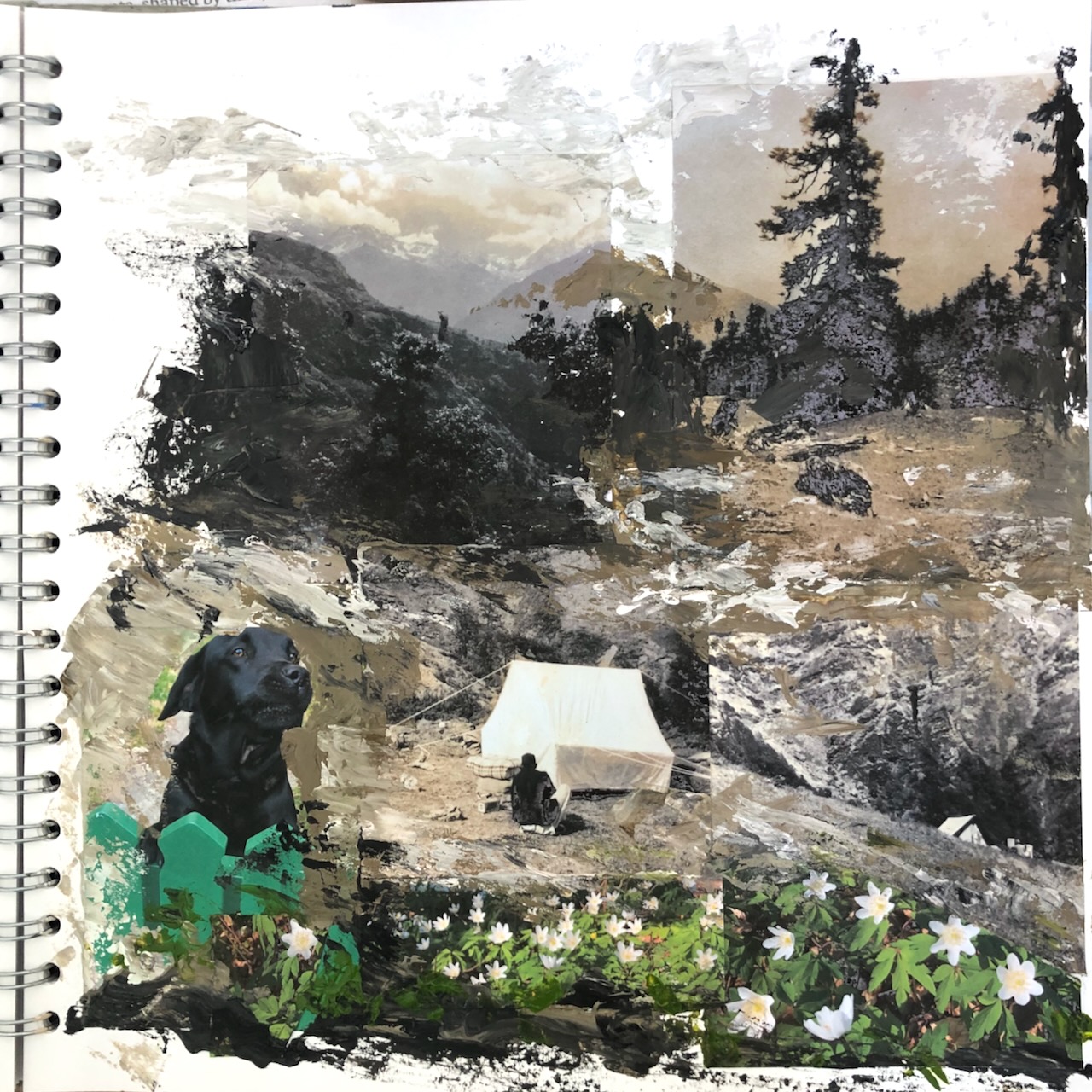
A series of square sketchbooks chart the 138 days I followed Joan’s 1939 diary entries. Starting on 17th February when I stepped into her shoes as she boarded a ship to India, I step out of them again on 4th July, the day she slipped off the edge of a Himalayan path to her death. One photograph, one sketchbook page, each day a quiet re-embodiment across time. Not a recreation of her journey, but a chance to listen more deeply to the changing tone of her voice in the final months of her life.

At the heart of the exhibition is its smallest piece: a re-working of a first edition of Frank Smythe’s Valley of Flowers, the very book that inspired Joan’s expedition. Through collage, drawings and pressed flowers, it now tells the stories of three visitors to the valley rather than just one: his, hers and mine. Wrapped in brown paper and tied with string like an archival package, the book invites visitors to wear white gloves to turn its delicate pages, not because it is precious in a monetary sense, but out of respect, Unlike most artworks, these ones are meant to be handled and engaged with.
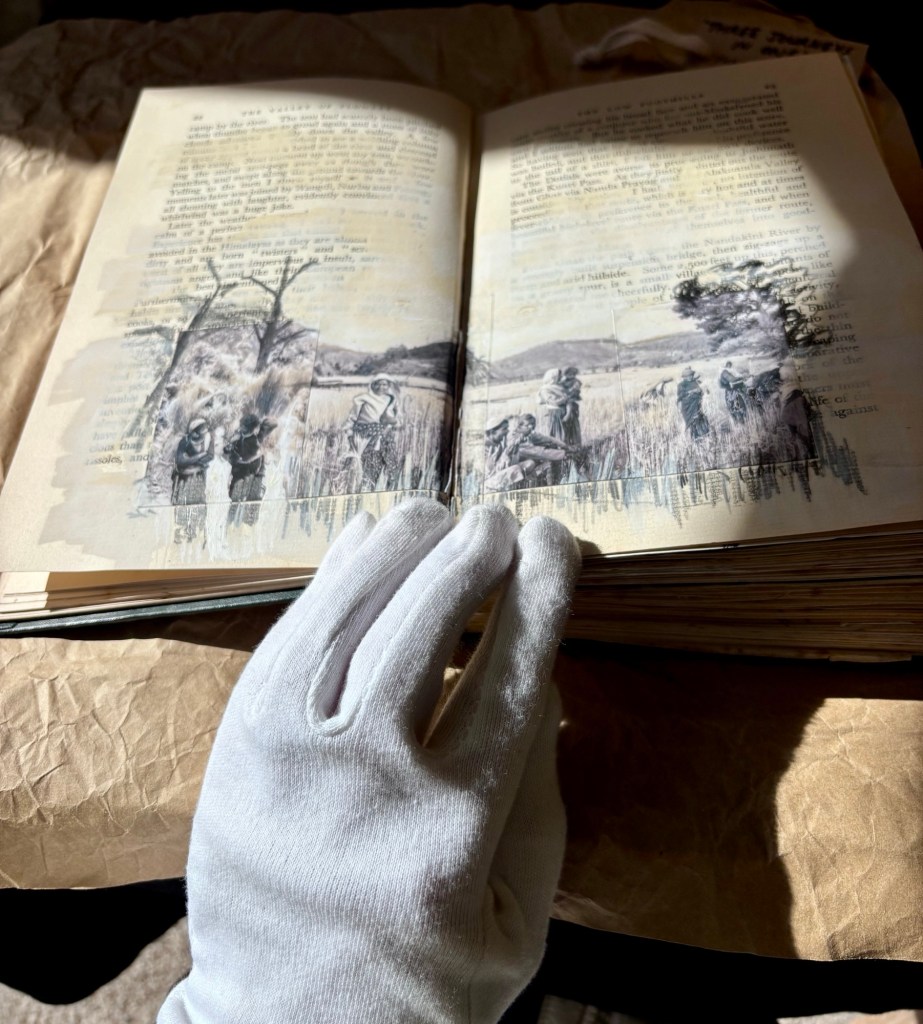
‘Three journeys in one’

There is nothing for sale. No press campaign. No sponsorship. Just a quiet space, tucked away in a garden, found by invitation or chance. A strange but deliberate choice, and to me, a more authentic reflection of the humbleness of where Joan’s life ended than any traditional gallery could offer.

What Joan lost in material possessions, she gained in purpose and joy. Her life distilled into what nine porters could carry. She found a sense of completeness long before she had completed her journey.
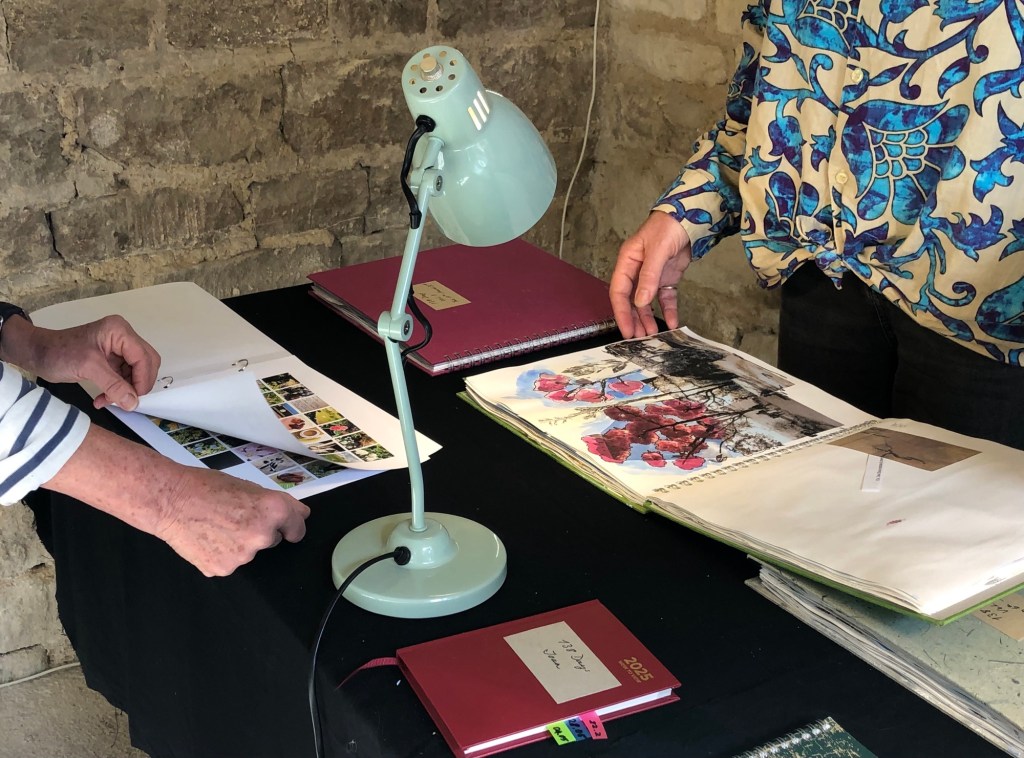
That’s what I hope to convey in the improvised, immersive pieces shown in the warm belly of my limestone vaults. People forgive imperfection and lack of polish as they connect with Joan’s story through their hands, senses and bodies.

Just as artists learn to see not just form but negative space – the shapes between things – so Joan’s outwardly abundant life transformed into an inner world: slower, quieter, less visible, but not lesser in any way.

Maybe this is a natural outcome of ageing… the gentle decluttering of ambition and a reshuffling of values. Or maybe Joan’s story is a simple reminder that richness cannot always be seen and meaning doesn’t always require an audience.

The symmetry in our shrinking trajectories is just an observation.

But it feels strangely right.

IN PROCESS…

Sunday 19th October, 11am-5pm and by appointment until 1st November.

The Vaults, 114 Bisley Road, Stroud


Following Joan… Part One

On 17th February 1939, Joan Margaret Legge boarded the T.S.S. Hector at Birkenhead’s Vittoria Docks and set sail for India. Surrounded by a flurry of last-minute flowers, letters and good wishes as well as Leica cameras, rolls of Kodak film and 17 packages from Fortnum & Mason, she began a four-week sea voyage that would deposit her in Mumbai. From there she would travel north by train to the Himalayan hill town of Ranikhet. And so, aged 54, began her greatest adventure.

The year before, Joan had read mountaineer Frank Smythe’s newly published book The Valley of Flowers and was so captivated by his descriptions of the majestic Himalayas that she resolved to go there herself. With the intention of adding to the collection of flower specimens Smythe had collected, she offered her services as a keen albeit amateur botanist to Kew Gardens, who willingly accepted sending her flower presses and detailed instructions on how to collect and preserve flora from the field. 

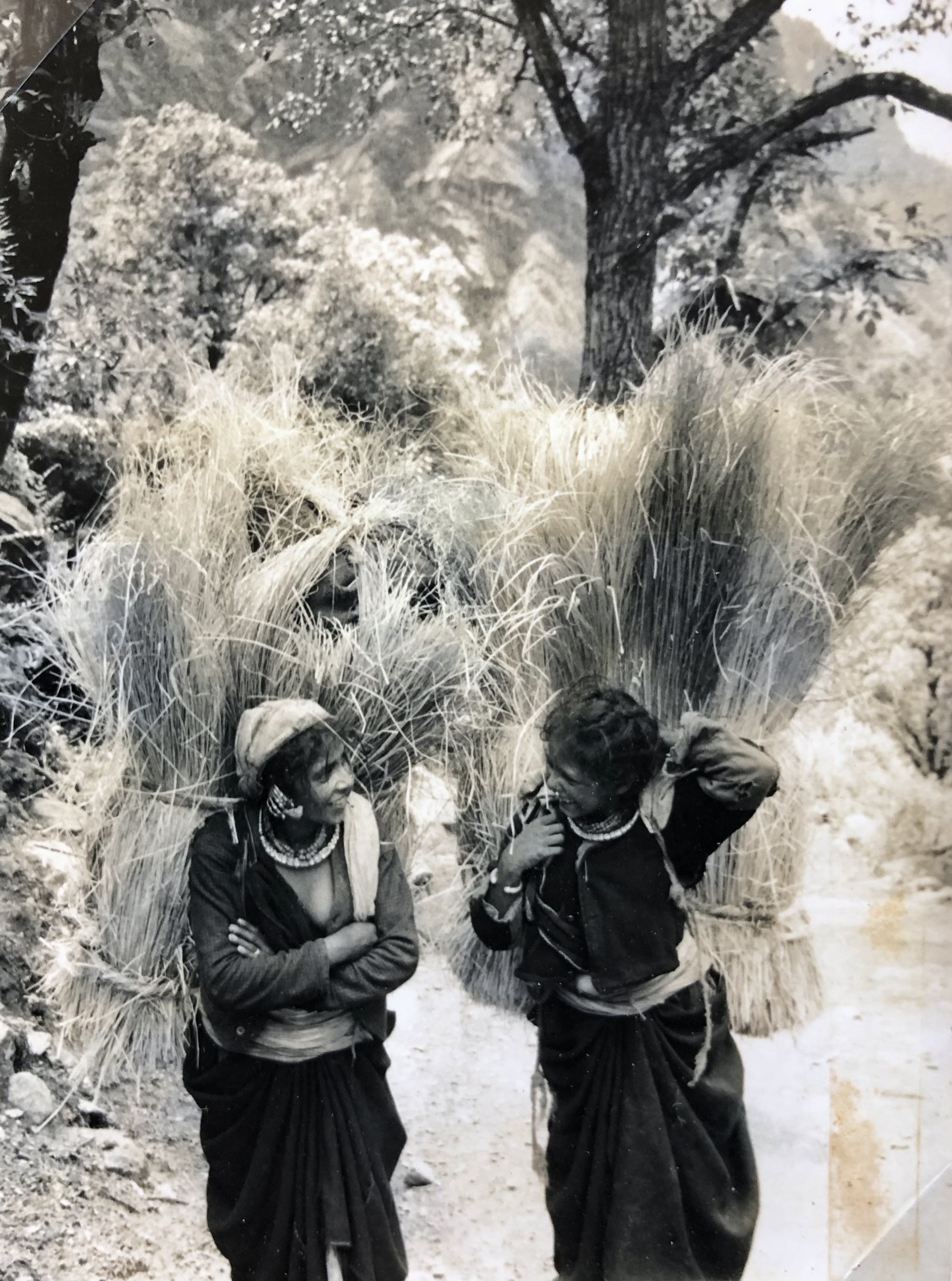
Her daily diary entries – written in tiny, meticulous script – and a remarkable collection of surviving photographs, now housed at the Stafford Archives, paint vivid scenes of rural life in northern India. As a woman navigating imperial times, Joan observed the stark poverty, the tangled legacy of British rule, and the troubling presence of Christian missionaries amid deeply rooted local faiths. Yet she did so with sensitivity and genuine curiosity, not the arrogance or entitlement so often associated with her era. She taught herself enough Hindustani to converse with those she met along the way, delighting in children, cups of tea, goats with saddle bags and botanical novelties in equal measure.

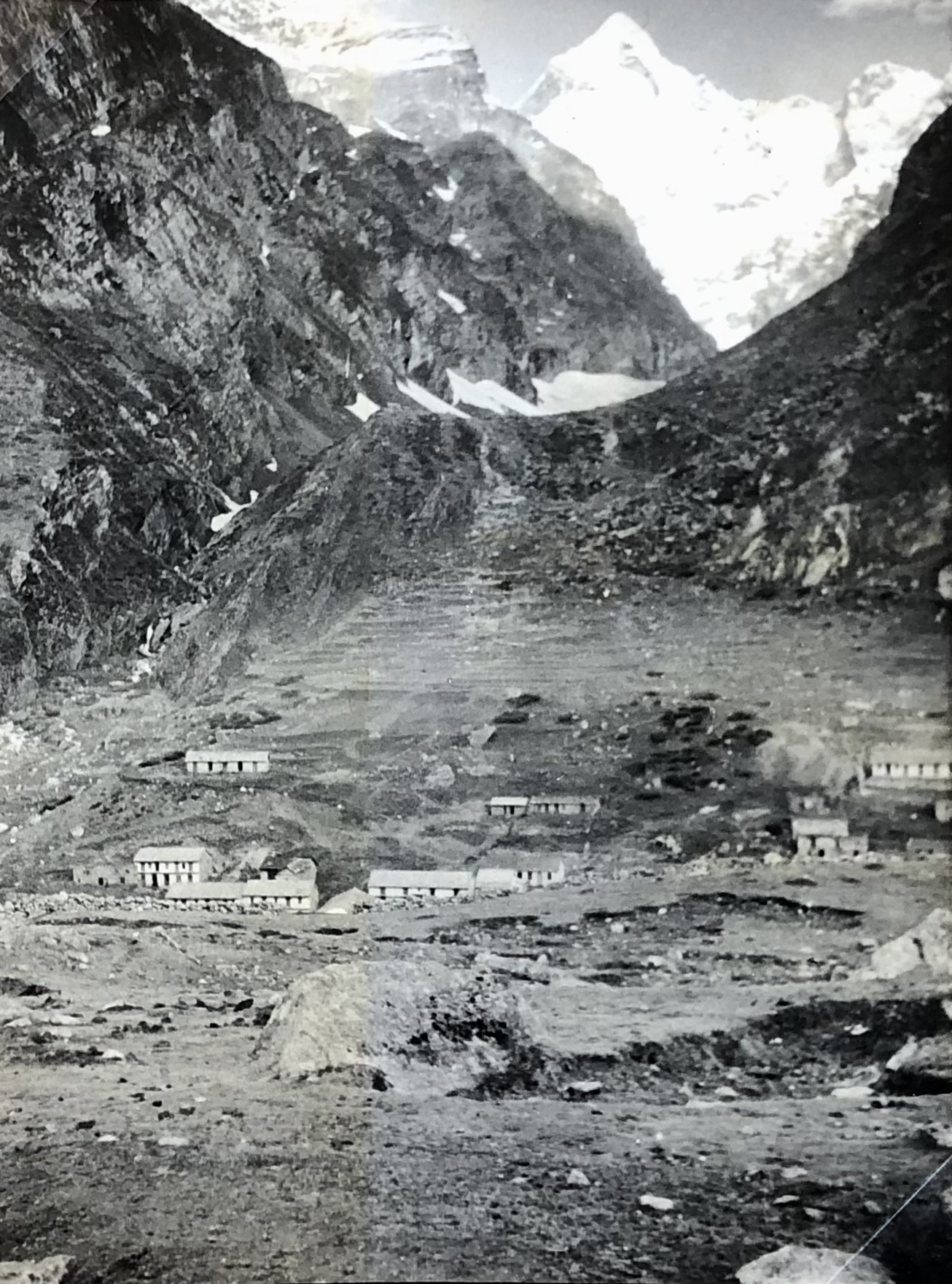
Several months of acclimatisation treks around Ranikhet gave her time to assemble a team of guides and porters and to test her equipment – tents, a canvas bath, ice axe and other supplies – in preparation for the ultimate trek to her final destination: the remote, high-altitude Bhyundar Valley, nestled just south of the Tibetan border. On May 22nd, they headed north.

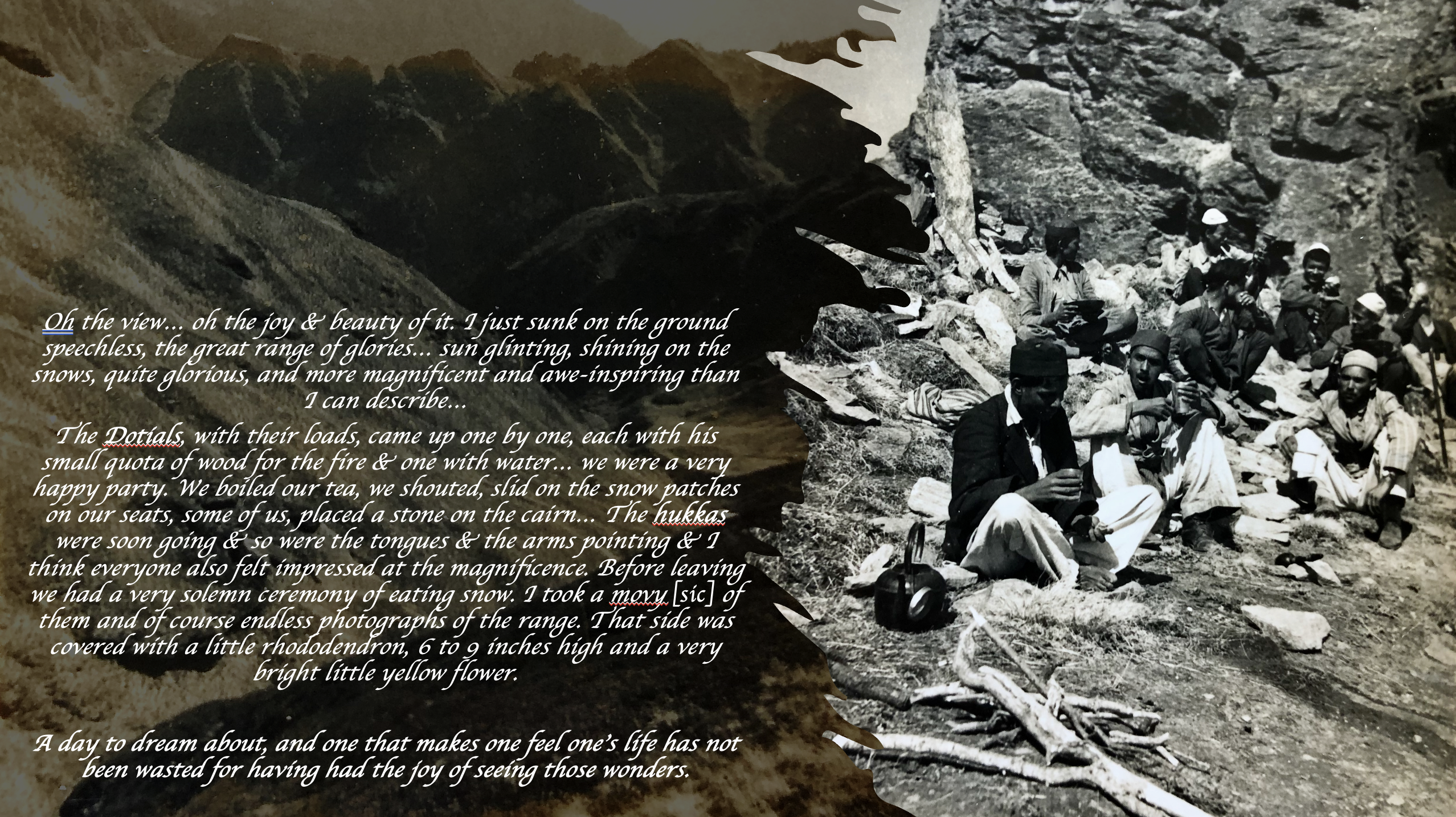
31st May, 1939. Arrival at the Kuari Pass: A very great day in one’s life

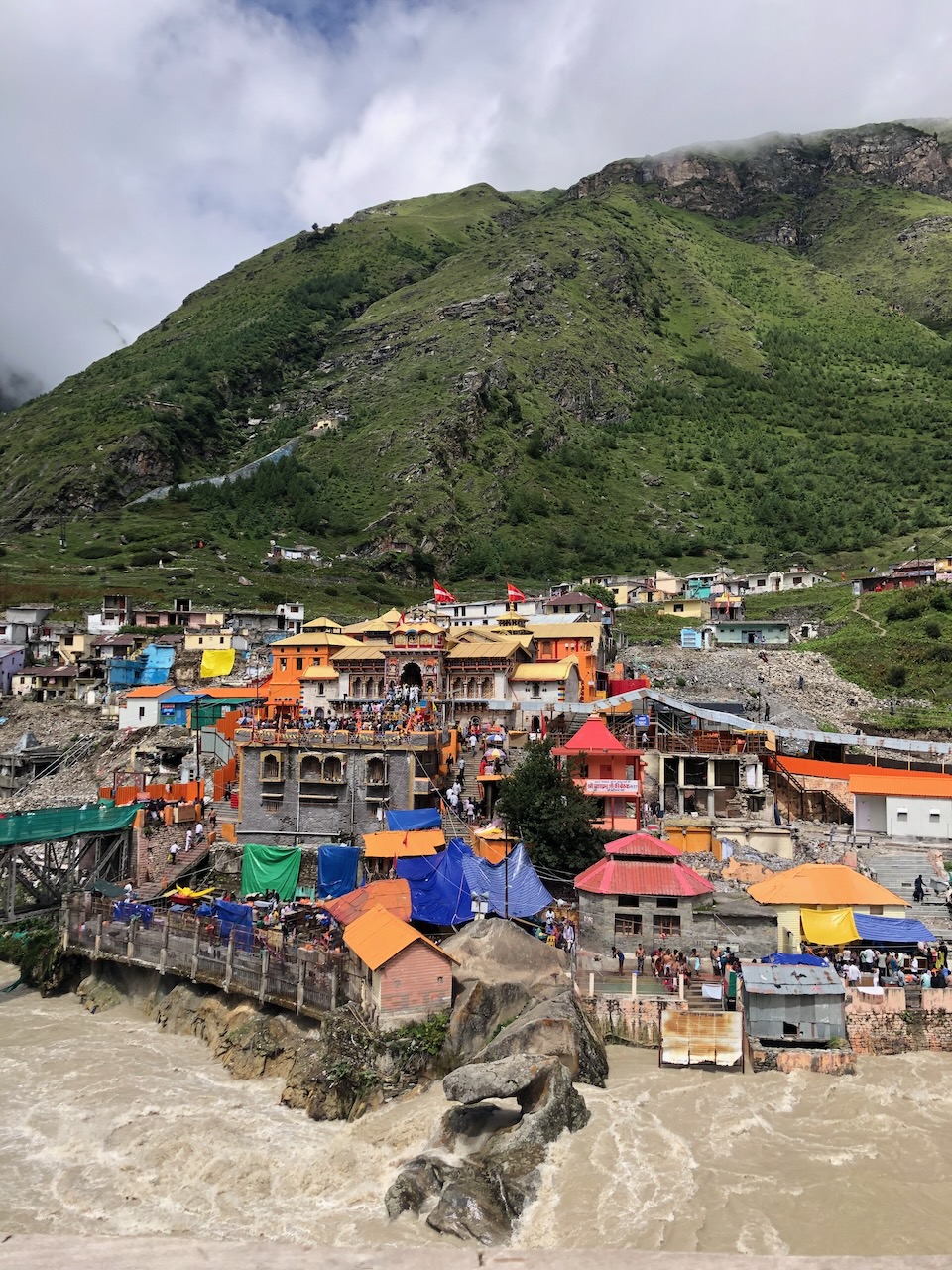
As I have mentioned in earlier blogs, Joan was my great-great aunt on my father’s side. And last July, three other descendants and I retraced her Indian footsteps. Together with local guides who were already familiar with ‘Legge Ma’am’ as they fondly and reverently called her, we made our way to some of the same hills and valleys she once walked, recognising waterfalls, temples, holy trees, bridges and landscapes she had captured in both writing and image.

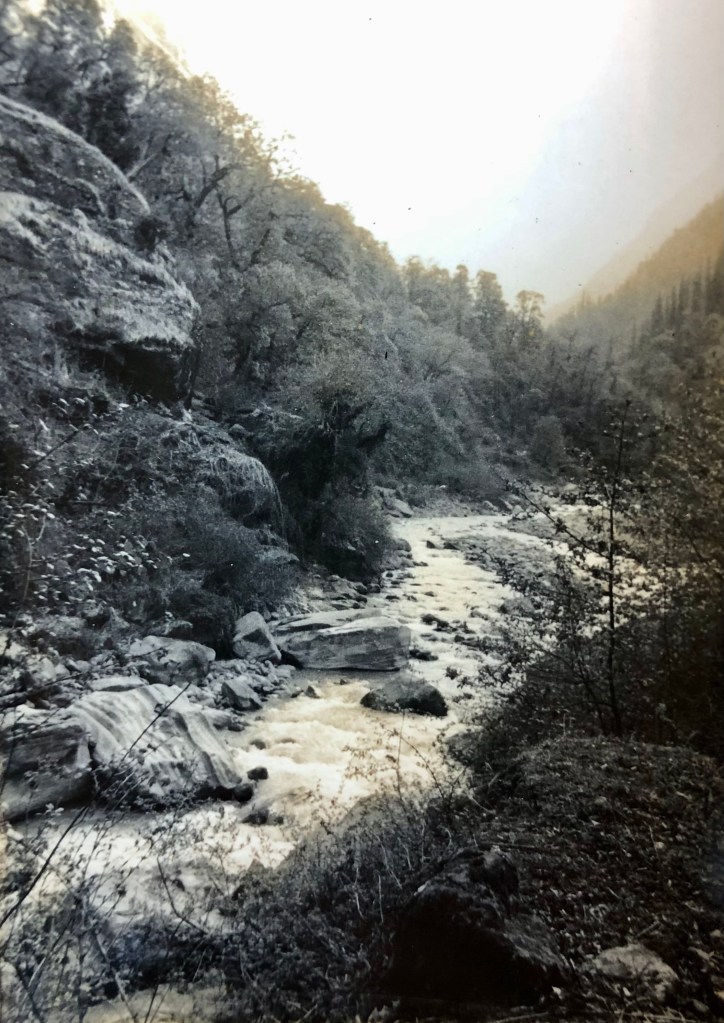
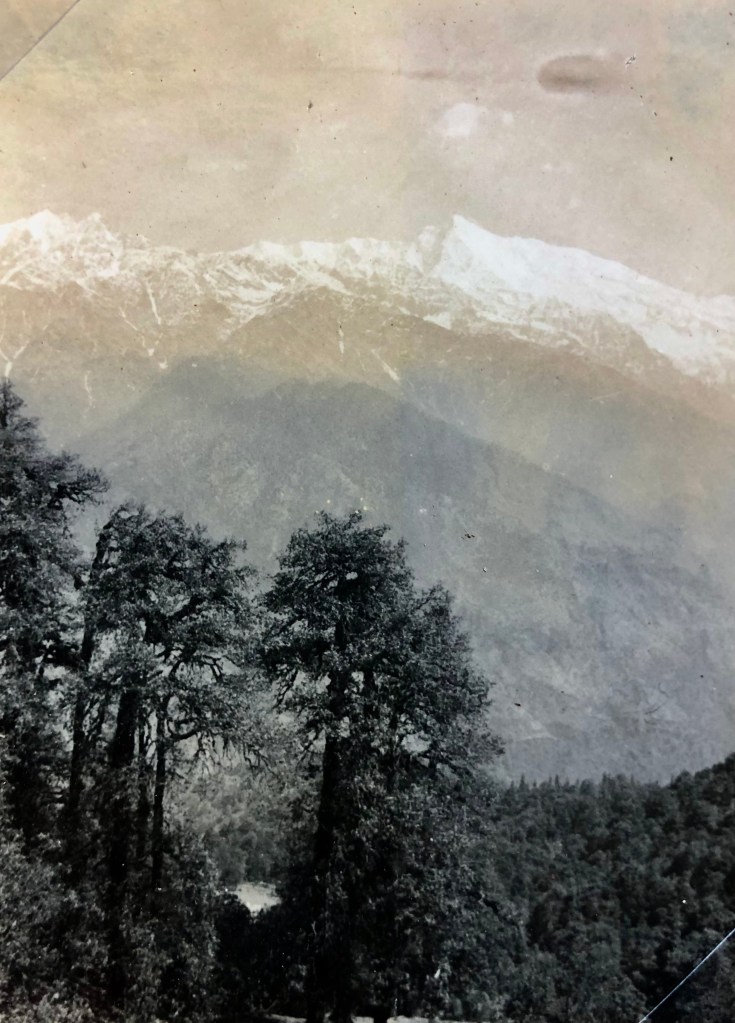
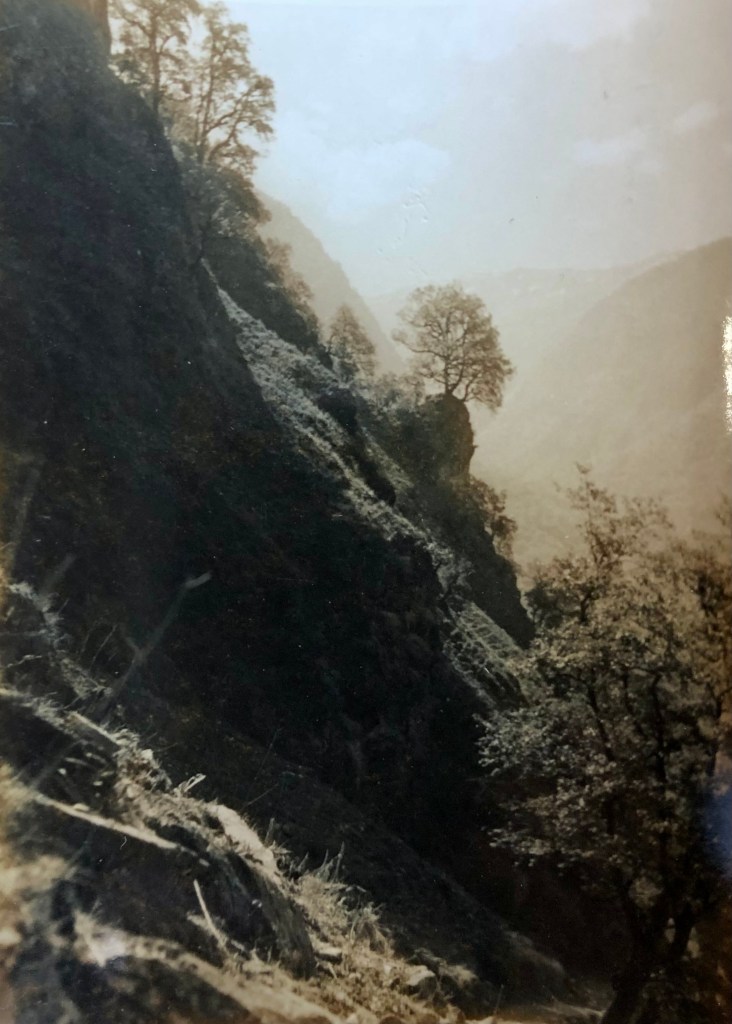
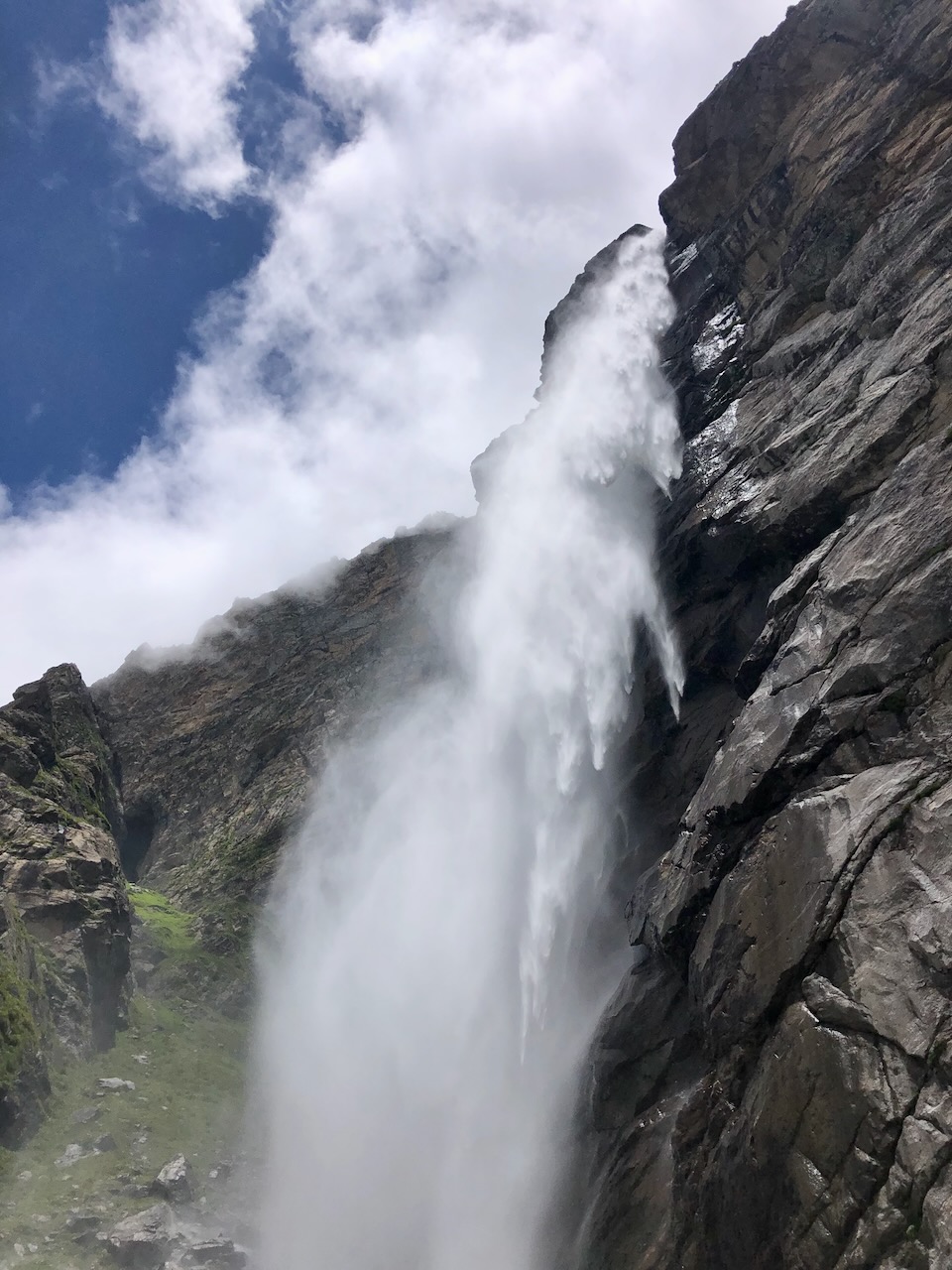
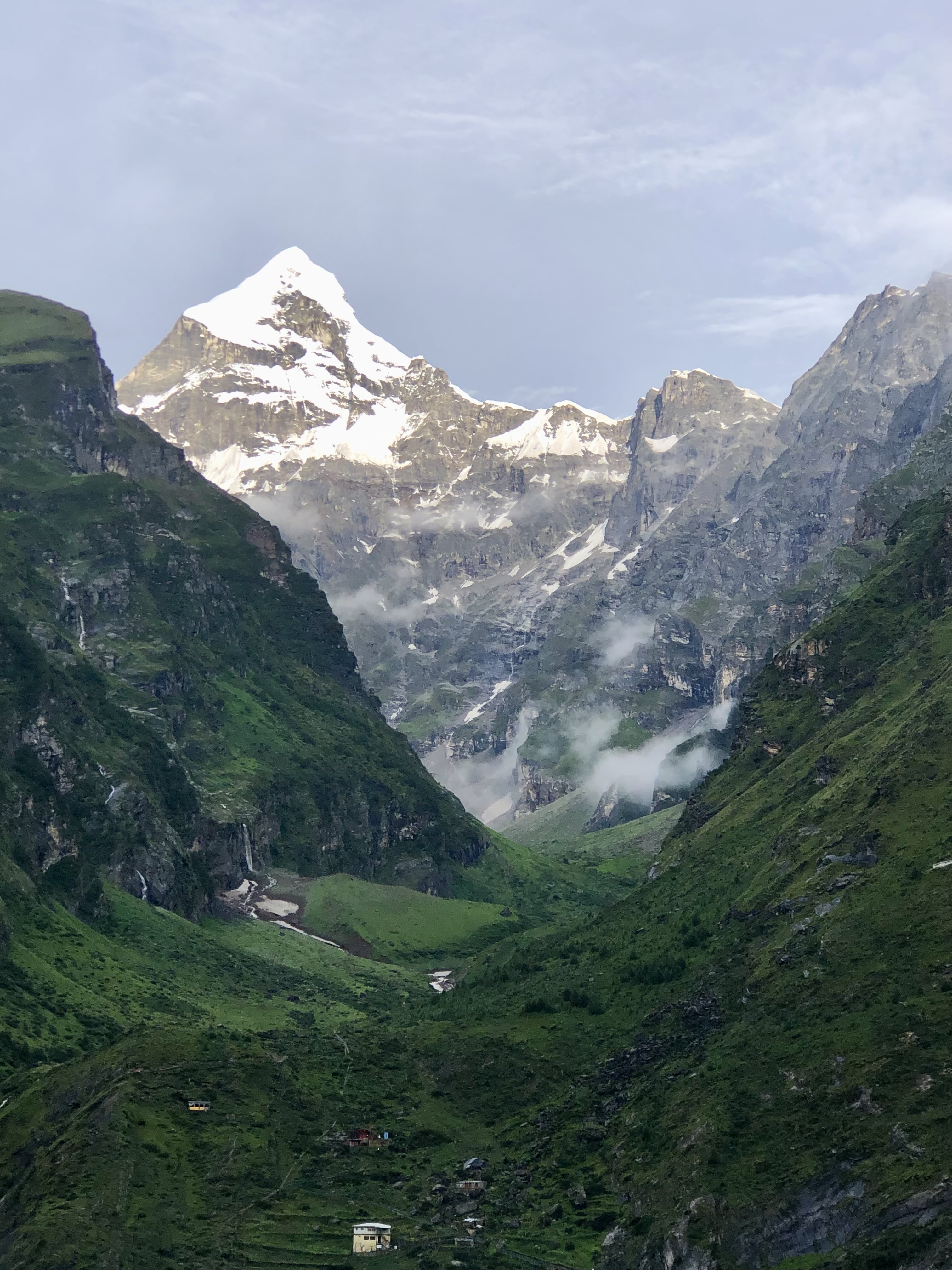
Like all pilgrimages to places of memory, her story seemed to reassemble itself in the elements around us: the humid air, the scent of pine needles crunching underfoot, the wind and monkeys dancing through the trees, the sheer drops and raging rivers, the saffron-clad pilgrims, and the fleeting glimpses of snow-covered peaks – ‘the Glories’, as Joan called them in her awe – emerging through shifting skies. As the four of us dipped our toes into the trials of that wild and beautiful land, its altitudes, its weather, its unfamiliar rhythms, her quiet courage and unflinching resilience rose steadily in our esteem.

Joan’s story is that of an intrepid 54-year-old woman who displayed the same grit and independence as her more famous contemporaries, such as Gertrude Bell or Evelyn Cobbold. But unlike them, her path was quieter, deeply personal and largely unsung. Her modesty, her self-deprecating wit, and the sense of spiritual joy and serenity captured in her letters and journals only deepen the power of her achievement. The beauty and the tragedy of what came to pass have lifted Joan’s journey into something more than biography. It is a story that asks, gently but insistently, to be remembered. Maybe I am the last in our lineage to feel her so vividly. Maybe I am the one meant to tell it.

With that in mind, on 17th February 2025, exactly 86 years after Joan set sail, I stood at Vittoria Docks in Birkenhead to symbolically wave her off. I imagined the Hector gliding down the Mersey, carrying with it not just Joan and her belongings, but the promise of new horizons and adventure. I walked beside the ghost of that ship until it reached the sea, trying to feel what she might have felt… the thrill and anxiety as she watched the landmass she called home and all that was familiar fade from view.

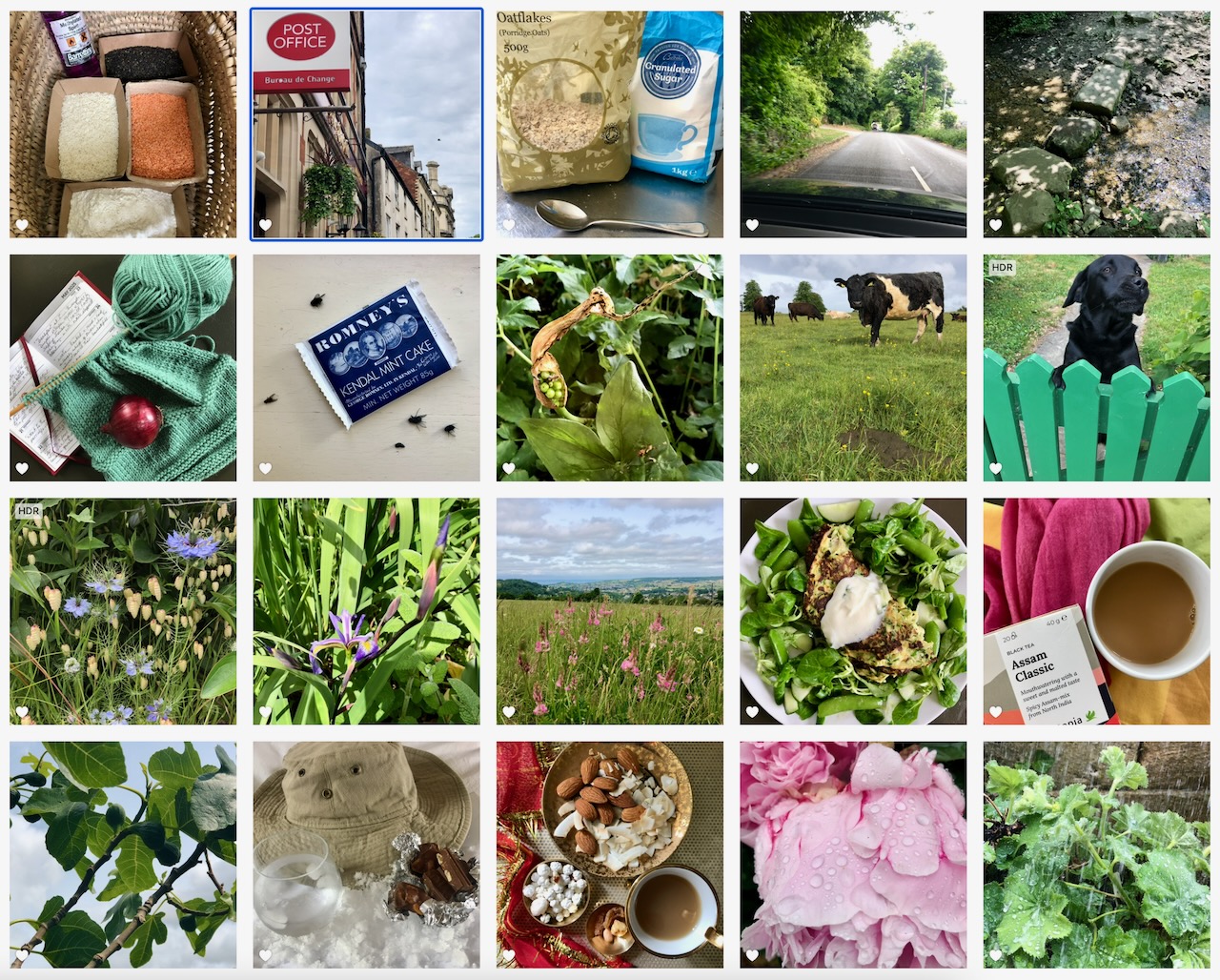
Daily Instagram posts: @ angela_findlay

Since that day, as some of you will know, I’ve been following Joan’s diary in real time, reenacting something she saw or did each day, capturing it through a single square photograph, posting it to Instagram, and translating it into an artistic rendition on a page in one of several dedicated sketchbooks.

Just as she did, I keep a written diary threading her life into my own. These past months have served as a reintroduction to my artistic practice, long abandoned as my brain grappled for a decade with words rather than images to write the story of my German grandfather. The process has involved an exploration of techniques in visual storytelling as I reacquaint myself with paints and brushes, scissors and glue, clay and plaster. Layers of collage stitch tenuous patterns between past and present, India and England, flowers living and long dead.

As today’s world echoes the precariousness of Joan’s, my gaze drifts over flowers and leaves, tracing their delicate lines in quiet wonder, both with my eyes and the tip of my pencil. My studio has stirred to life. And the steady rhythm of commitment and focus have birthed new creative ideas and potential collaborations.

Joan died on 4th July 1939. As that date approaches once again, I’m nearing the end of our shared journey. I will miss her – a courageous companion and inspiration. A daily reminder of a world that predated the horrors of WW2, ecological destruction, plastic waste and the proliferation of smart phones. But Joan’s story didn’t end with her death. And my telling of it doesn’t end in the fourth incomplete sketchbook.   

In the Flow: Ode to the River Severn

First Encounter with the River Severn

June 1999. You wouldn’t know it was there. Nothing suggests the proximity of Britain’s longest river as you amble down the canal towpath at Frampton-on-Severn. I have a hand-painted sign promising Cream Teas to thank for its discovery. The arrow lured passers-by through a hedge and into a wonderland of round tea tables bedecked with embroidered tablecloths and mis-matching crockery and arranged beneath the boughs of a huge copper beech. A tall man navigated trays of silver teapots and 3-tiered cake stands along narrow paths mown through the long grass. 

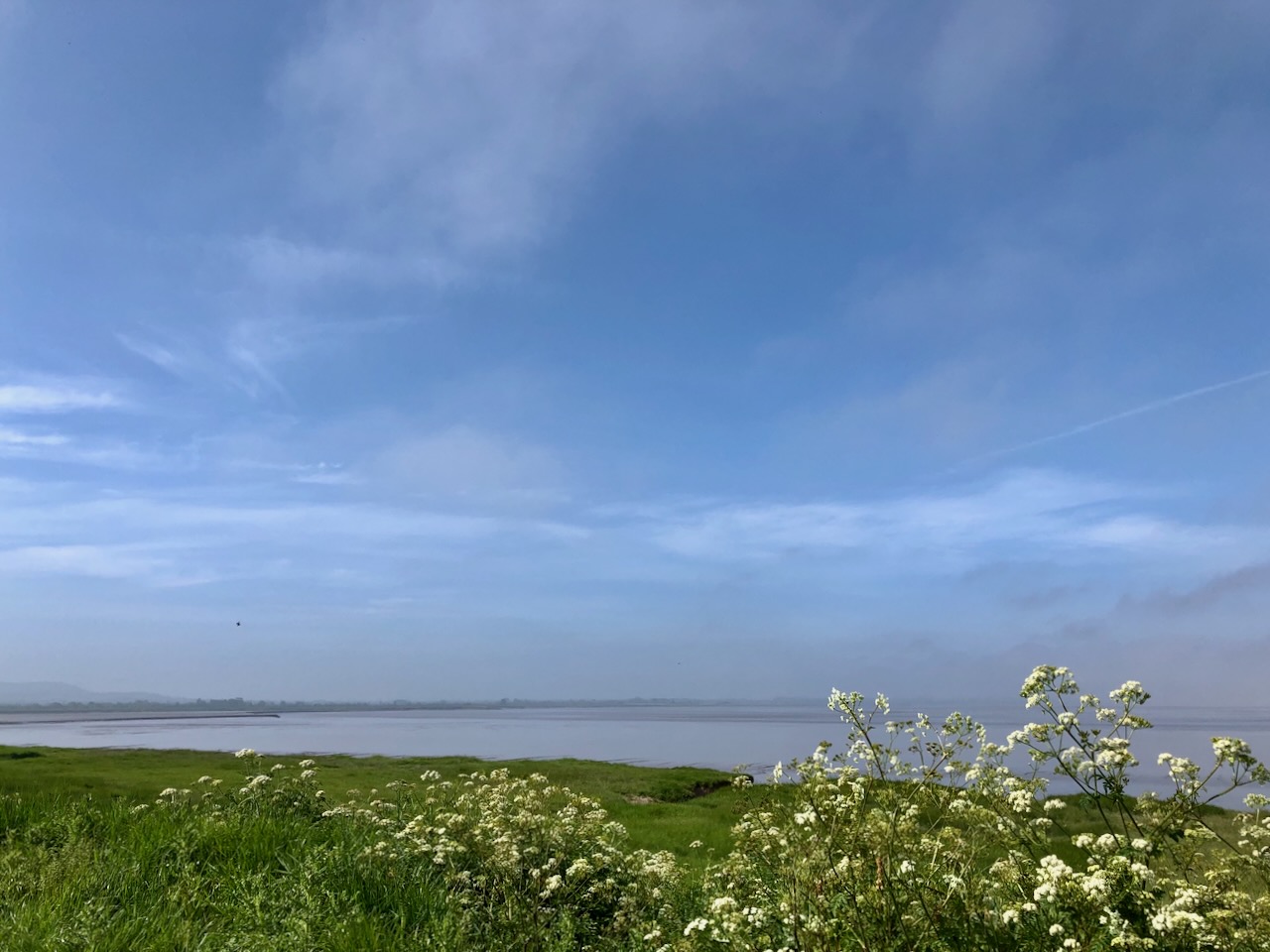
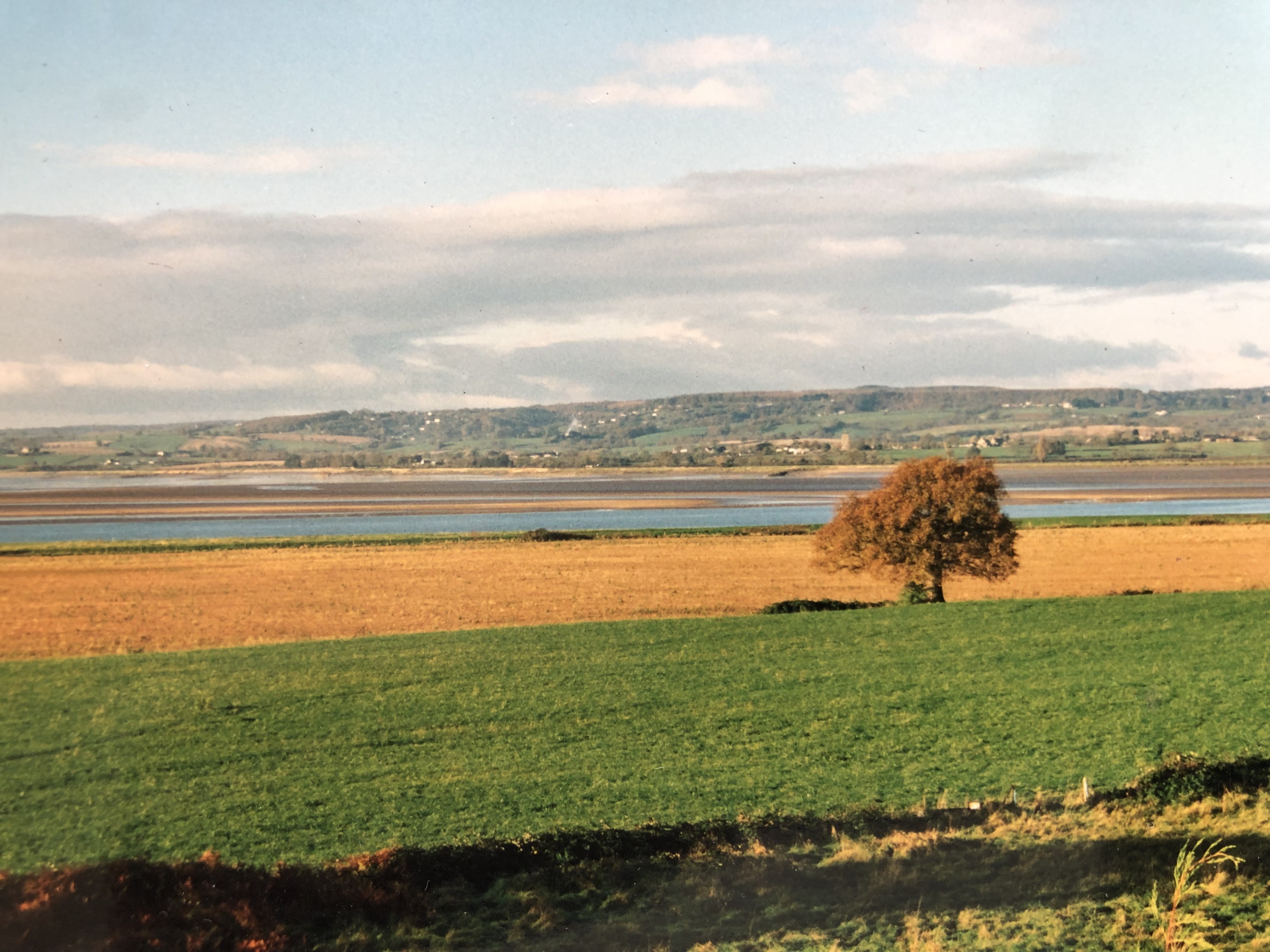
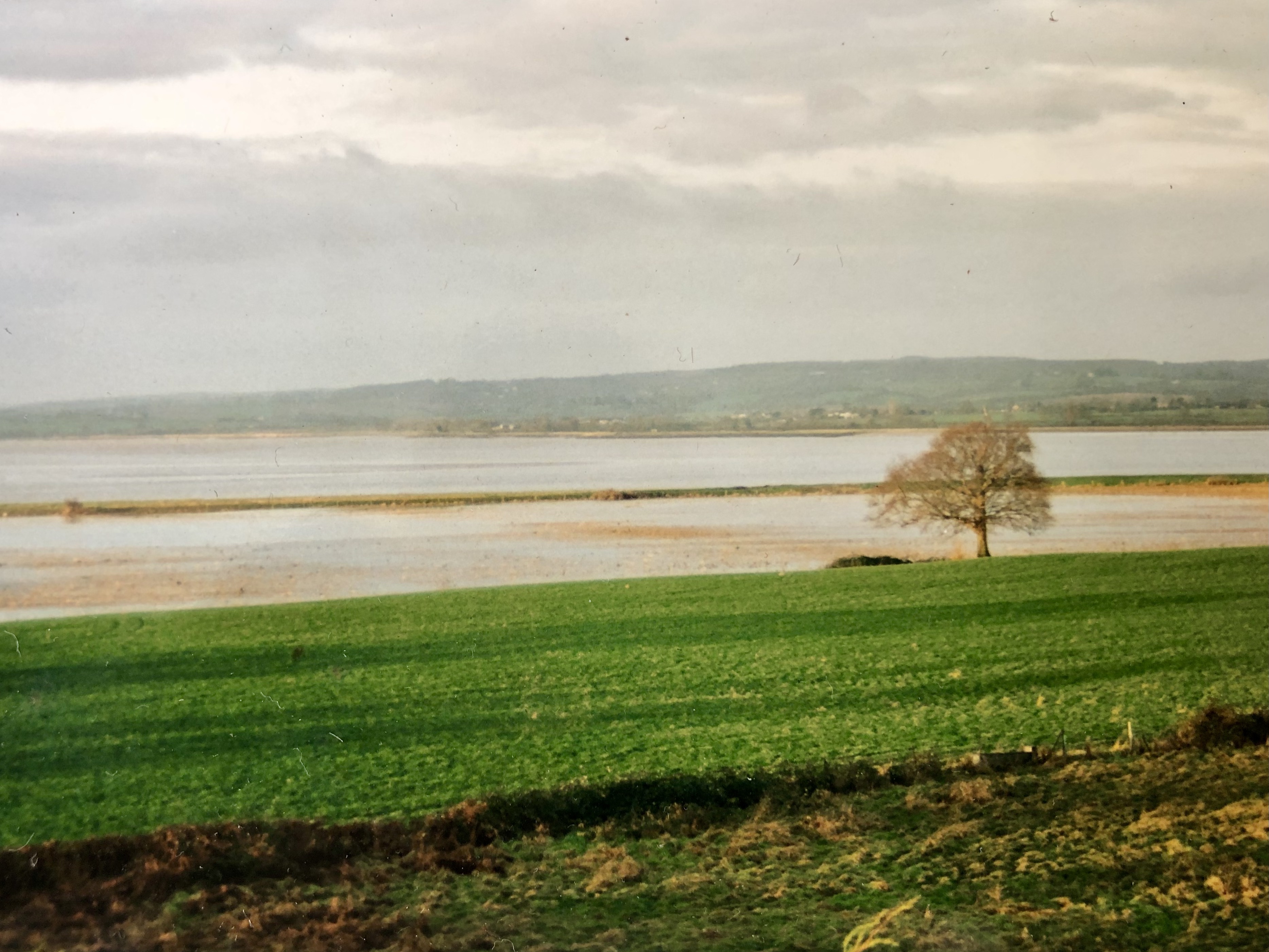
I had moved back to England after 10 years living abroad and was checking out the Stroud area as a possible new home. The top floor of the accompanying Lodge was up for rent, I soon learned… would I like to look at it? A sweeping staircase carried us up two stories and into an apartment of hexagonal rooms adorned with small fireplaces. Then, bending double, two miniature doors awkwardly birthed us onto a roof terrace and into the breath-taking view that would become my world. The River Severn stretched like a taut blue sheet tucked into a distant shore. Low tide mud sparkled. Silence was broken only by the soft chink of teacups on saucers.
Life on the River Severn

I would live in that apartment on the Severn for nearly three years. Every day I walked along the banks of the estuary, my breath aligning with the deep ebb and flow of the tides. 
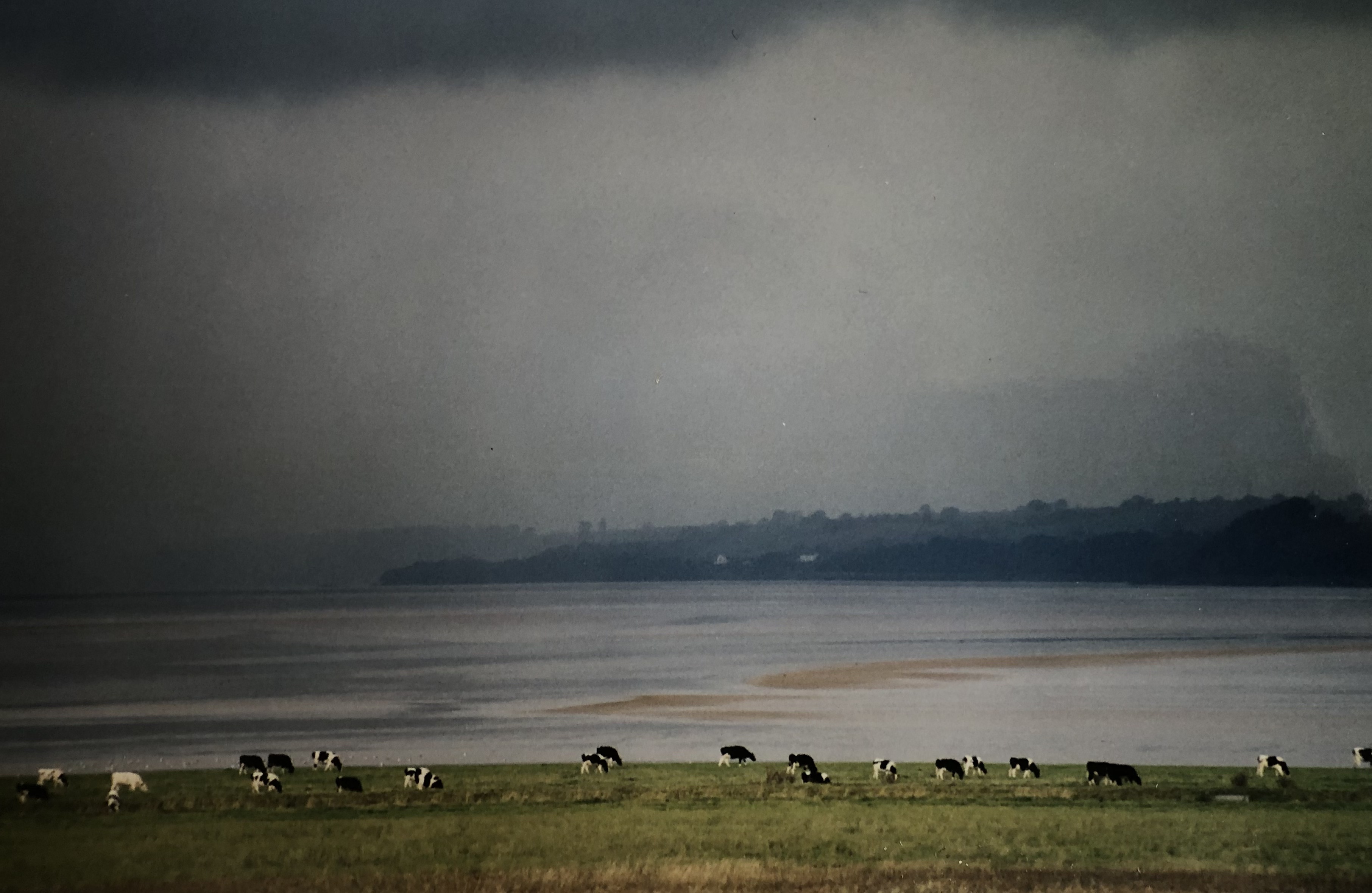
I witnessed the stoicism of a little oak tree holding its precarious own through the seasons, storms and floods; watched cows amble home at dusk accompanied by the swirling black clouds of starlings that condensed and evaporated in the gentle orange glow.

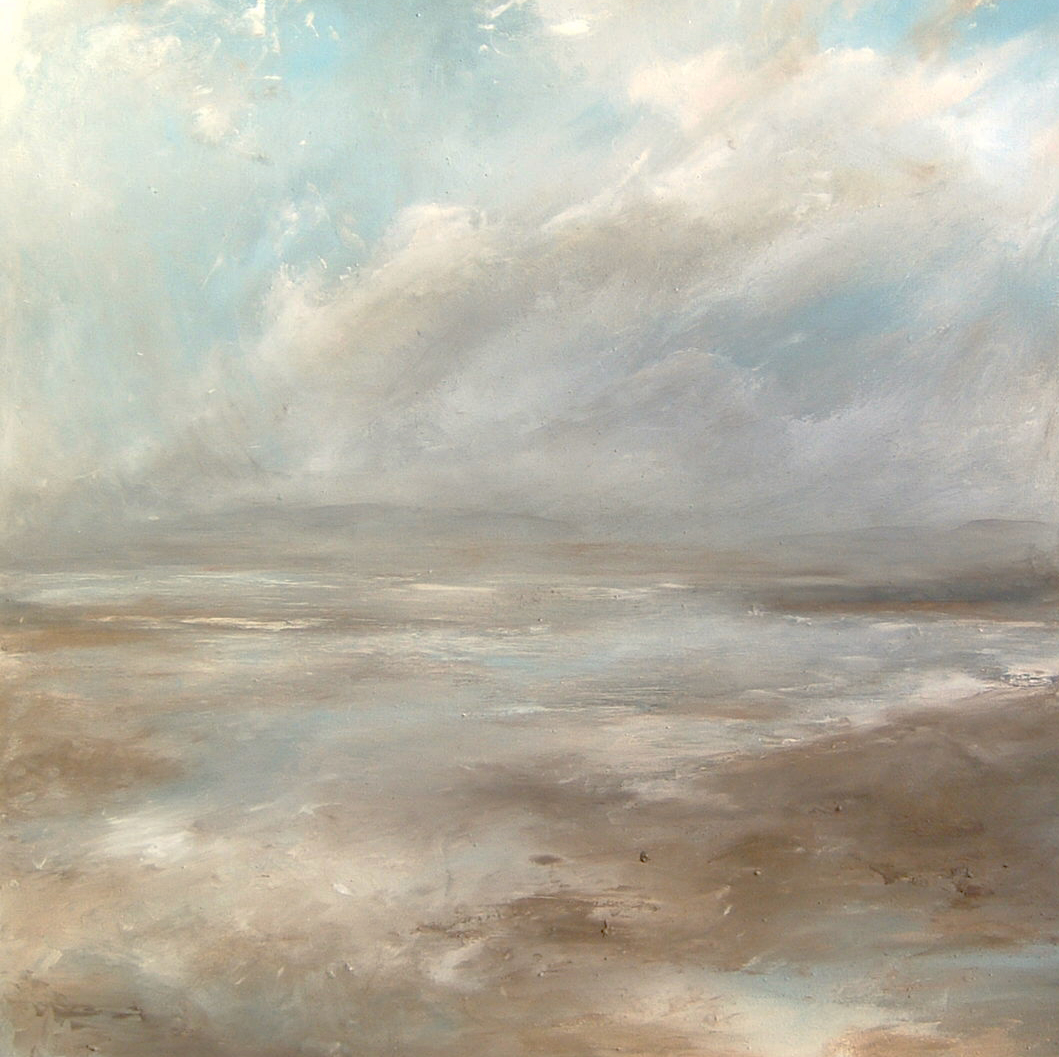
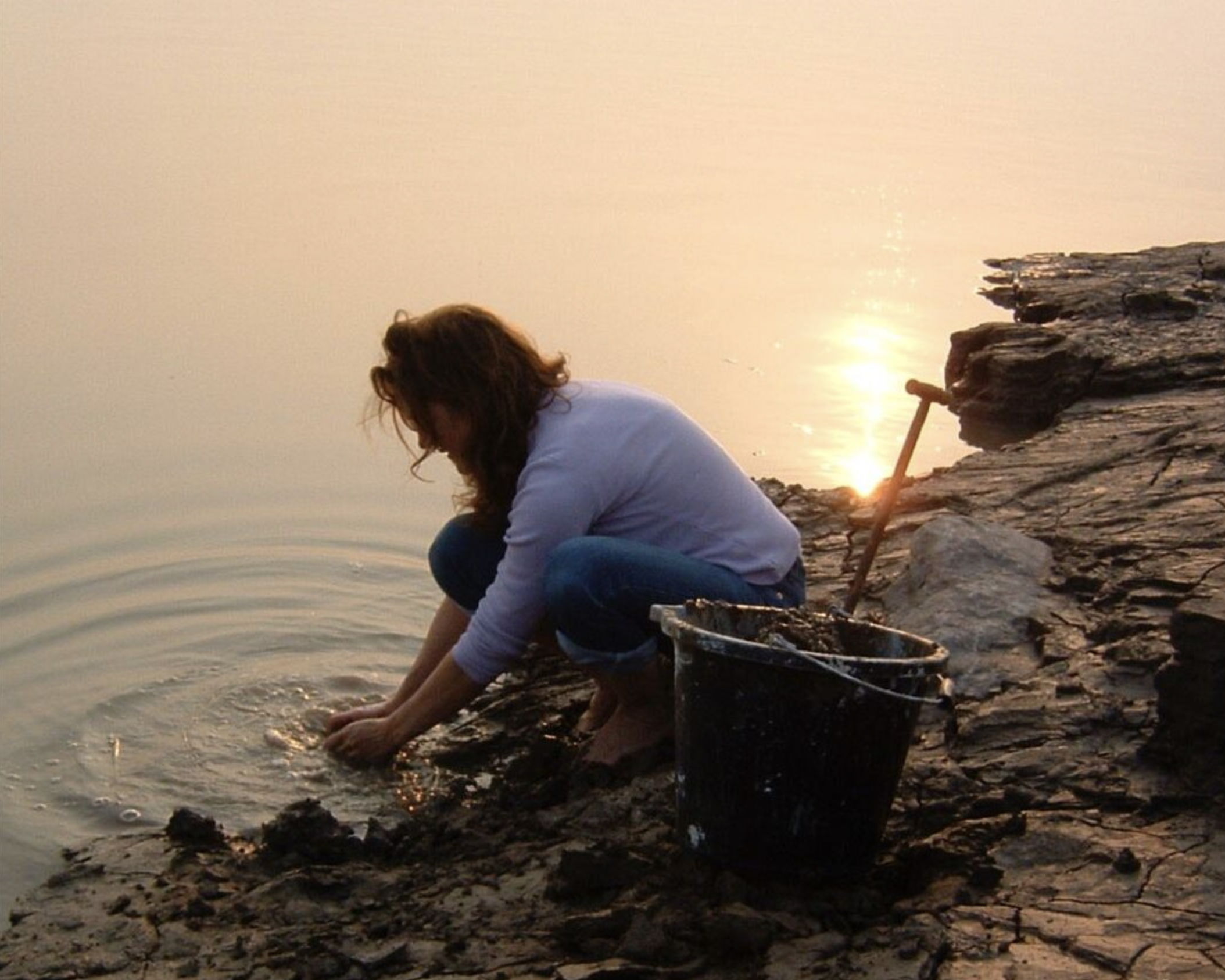
This was where I became a professional artist, scooping rich, melted-chocolate mud into buckets, mixing it with paint and dancing sky and weatherscapes onto large canvases with my hands. 

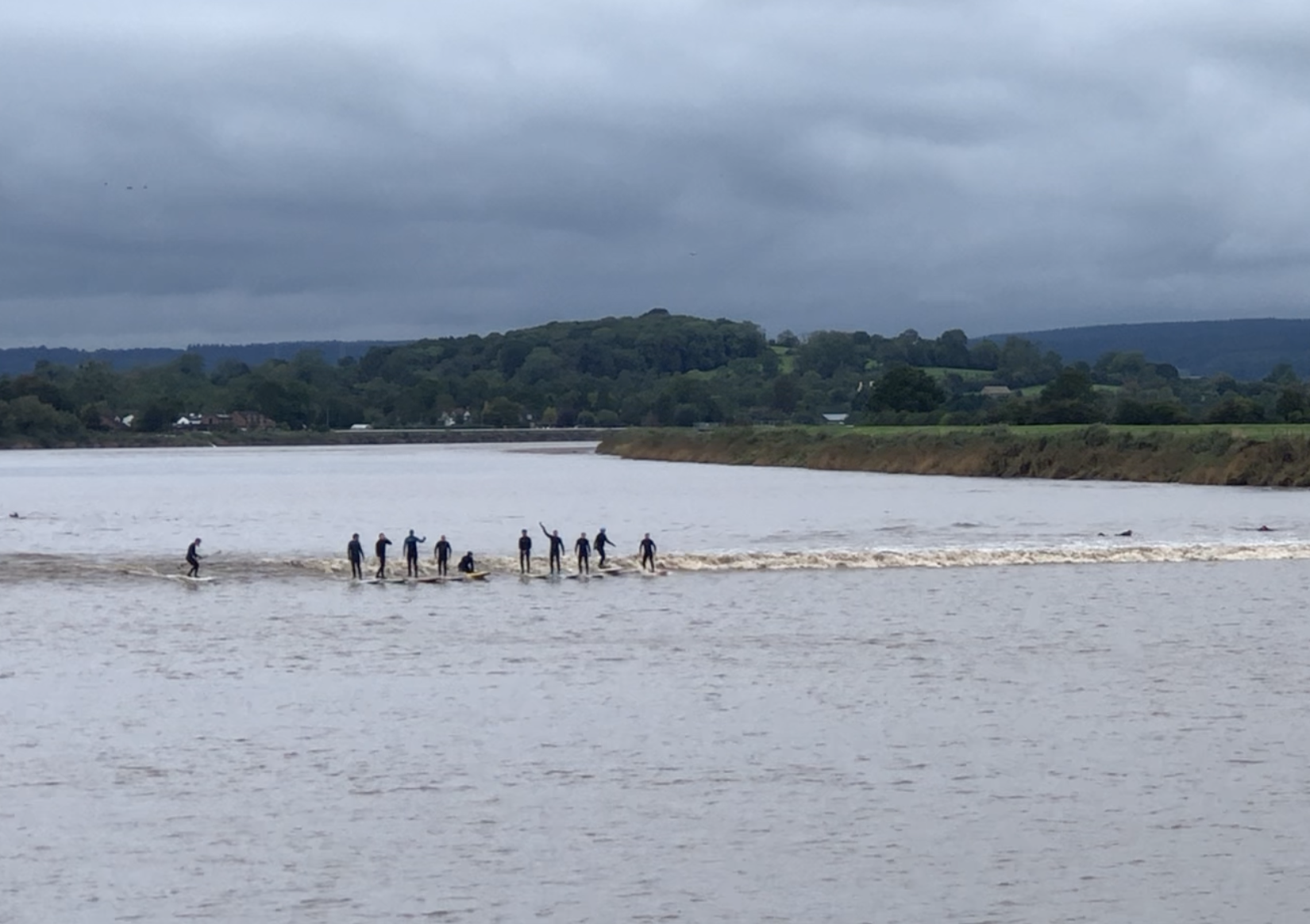
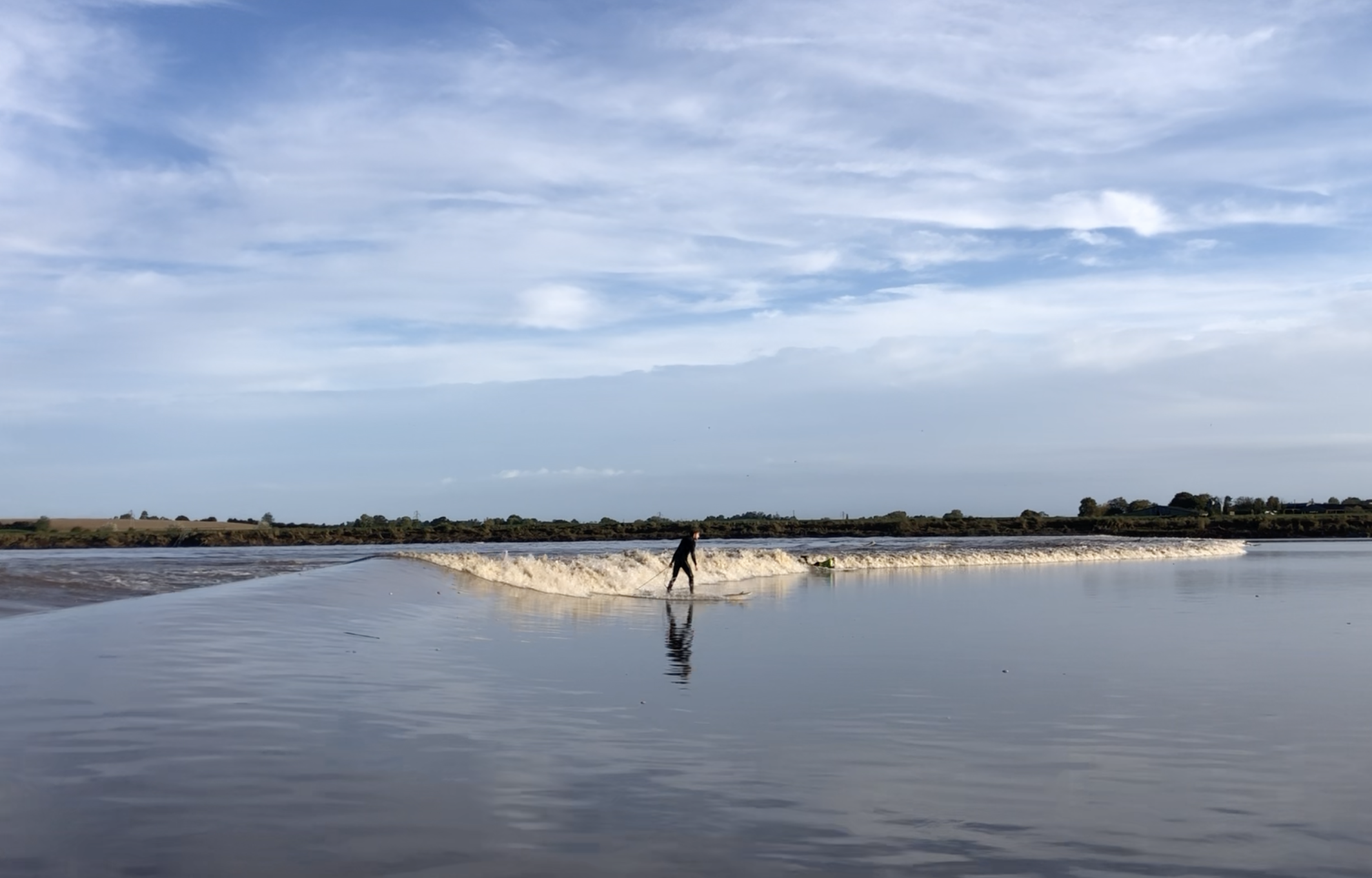
On many a chilly morning I stood on the Severn’s banks with mugs of coffee and expectant crowds waiting for the world’s second highest Bore to swash its way up the estuary and carry brave surfers upstream. Once, in the pitch of night, I crossed its swirling waters in a rickety old boat and returned in the frozen pinks of dawn. 

A Severn Bore

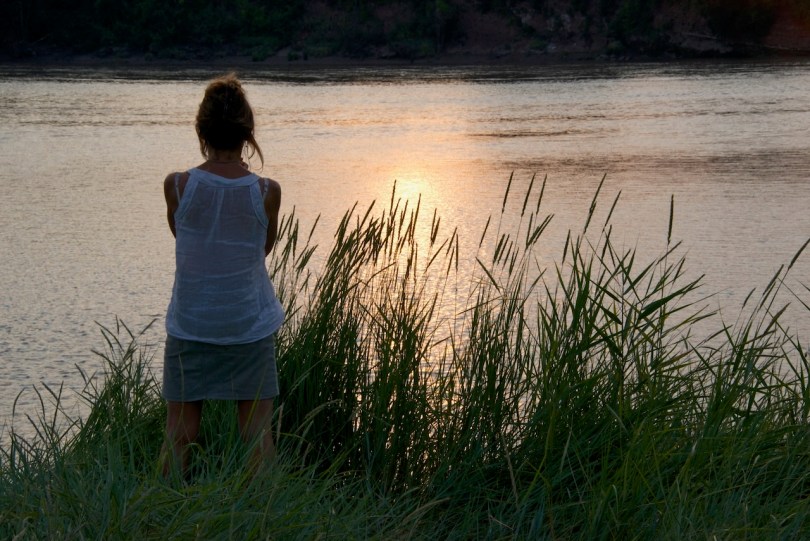
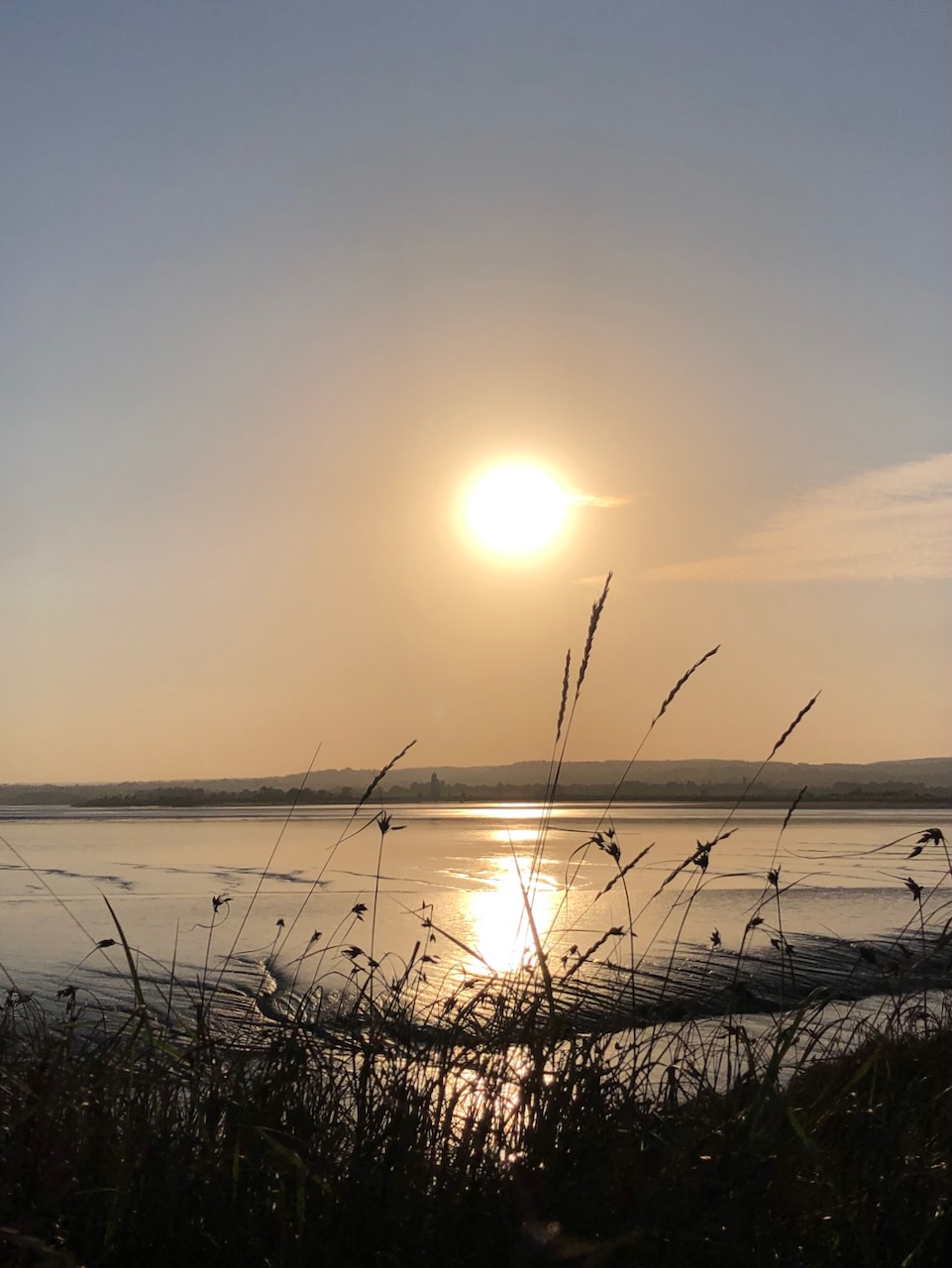
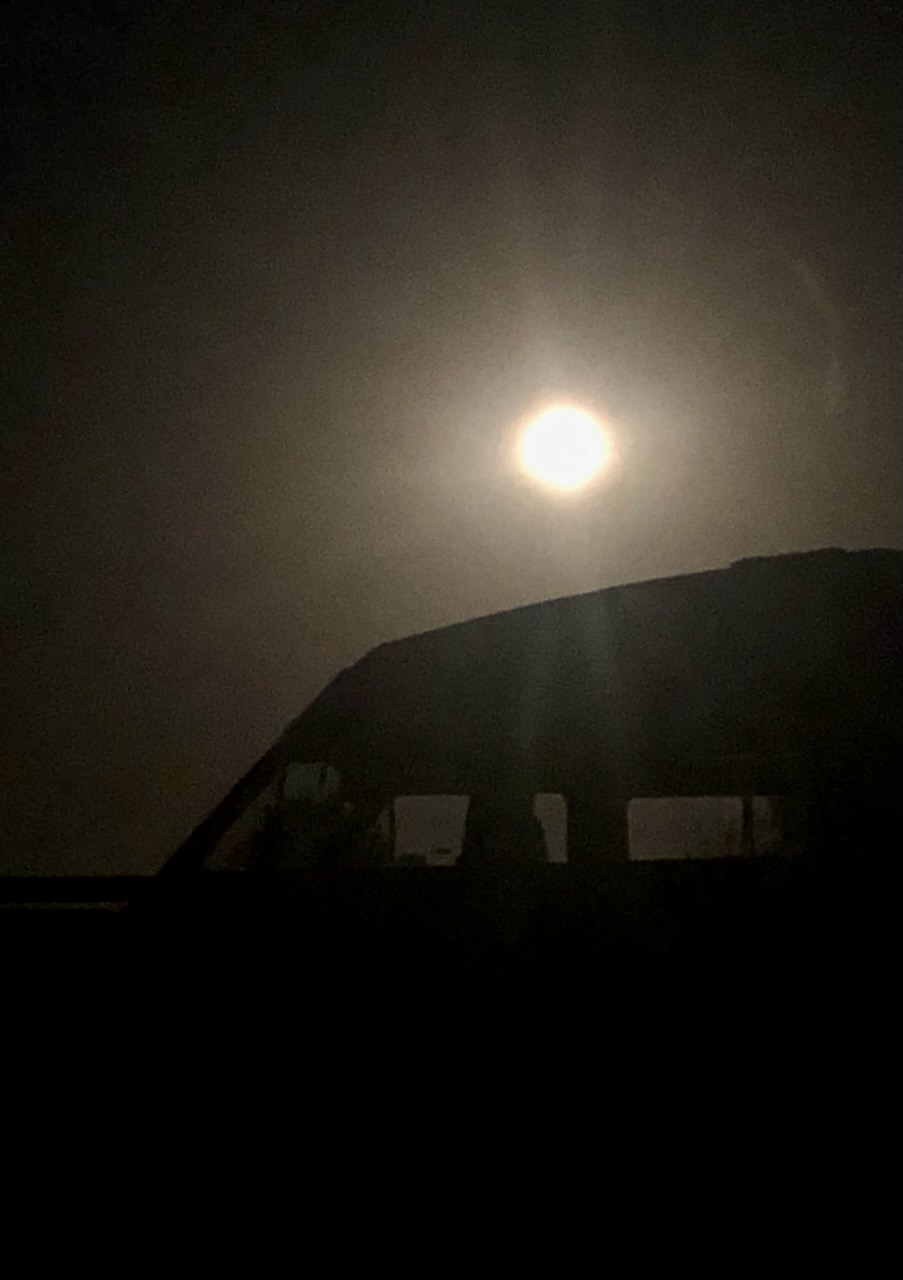
In later years, I would park my camper van on its shores, drink chilled glasses of wine in the sun’s last rays and sleep through rising moons and meteoric showers. 

I have a rich store of happy, muddy memories of the River Severn.

Walking the Severn Way from source to sea

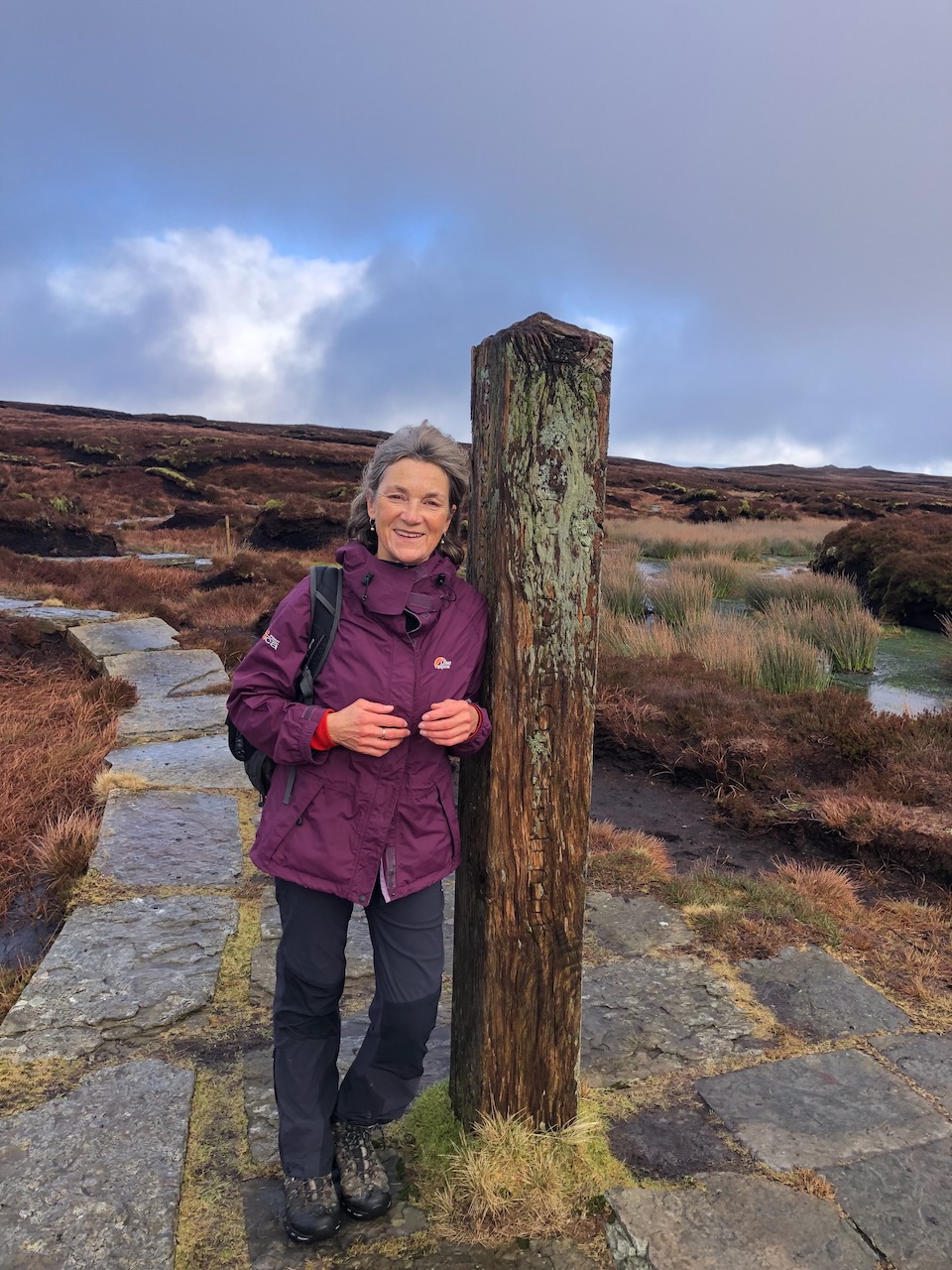
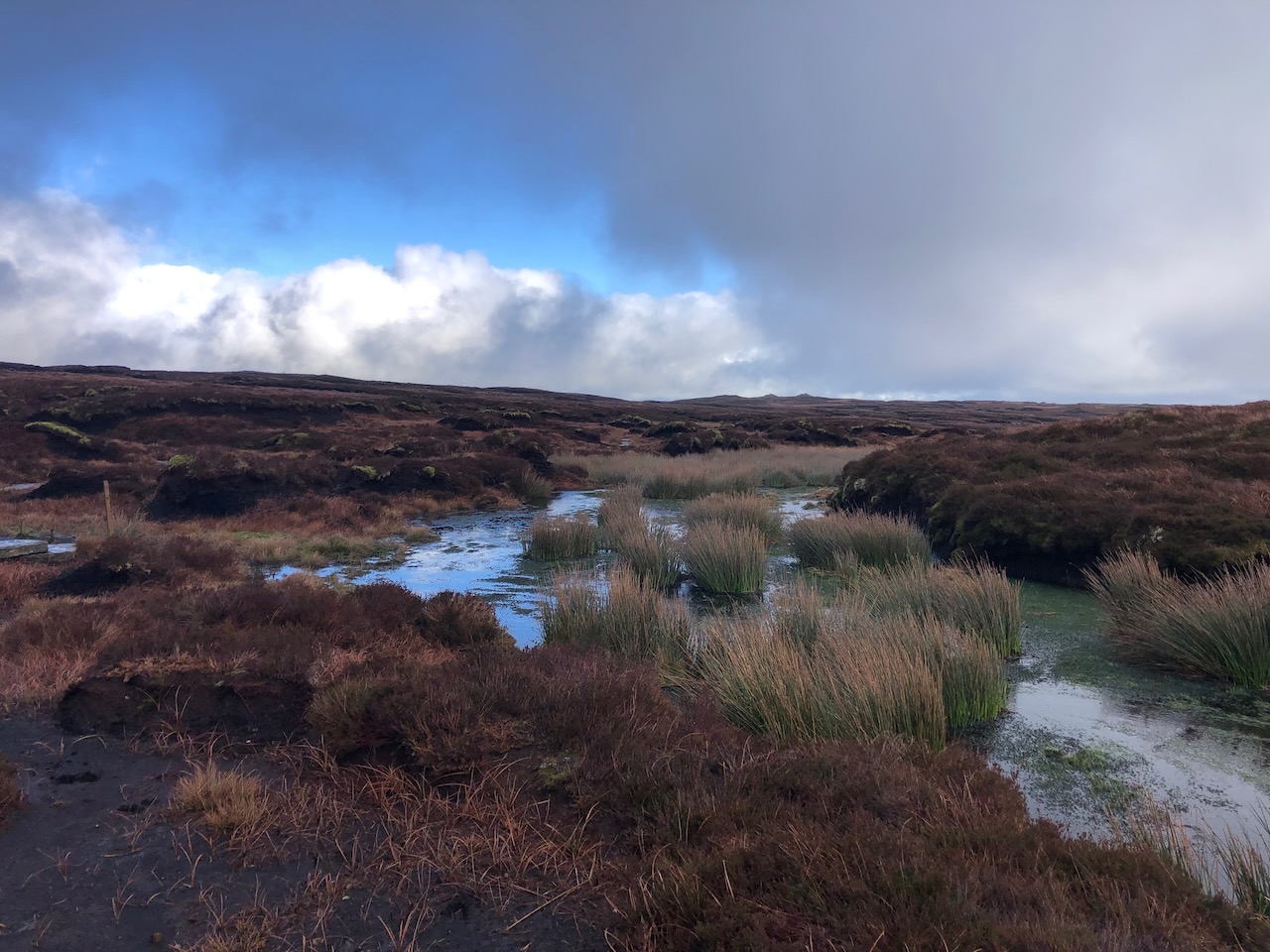
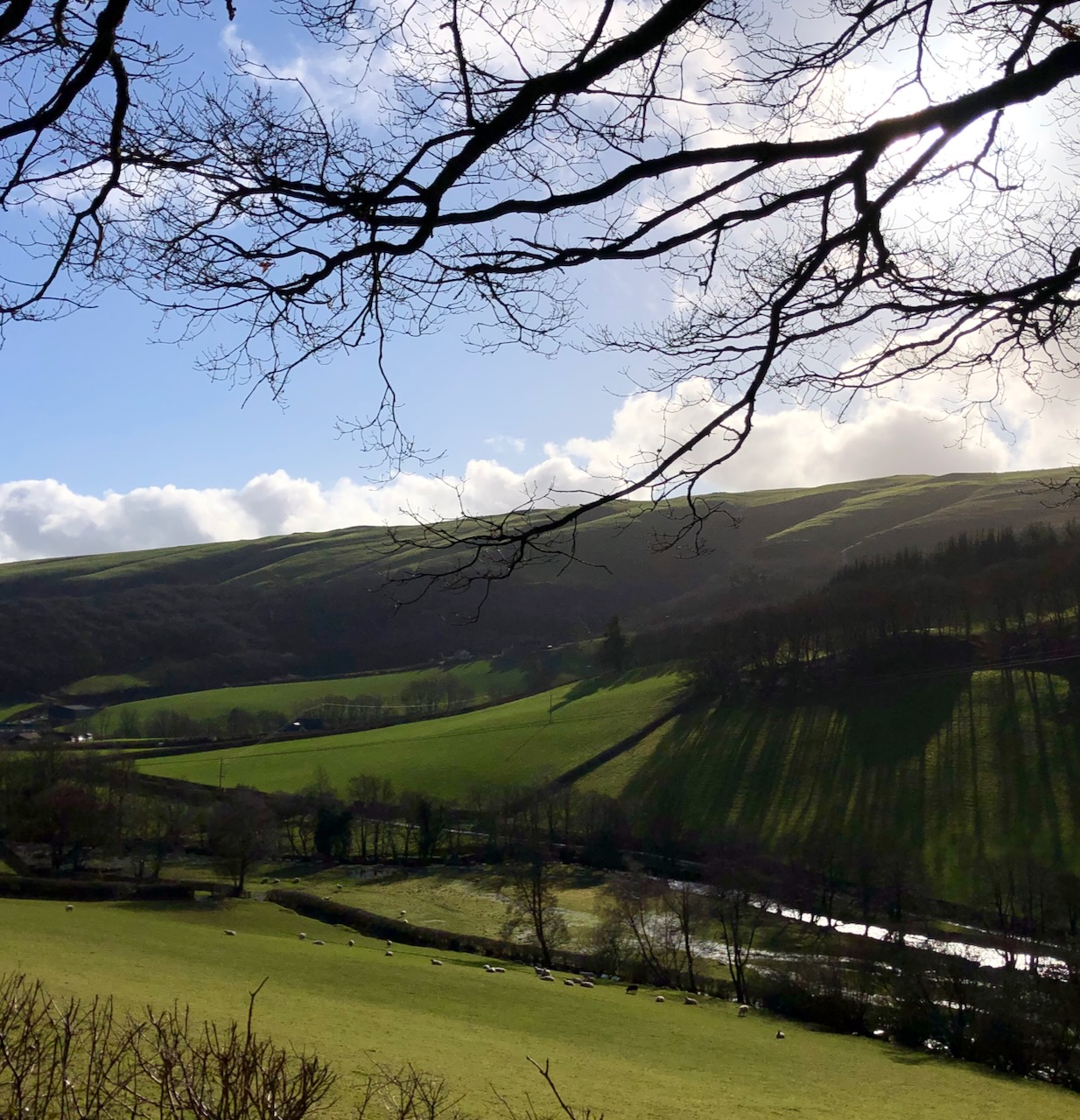
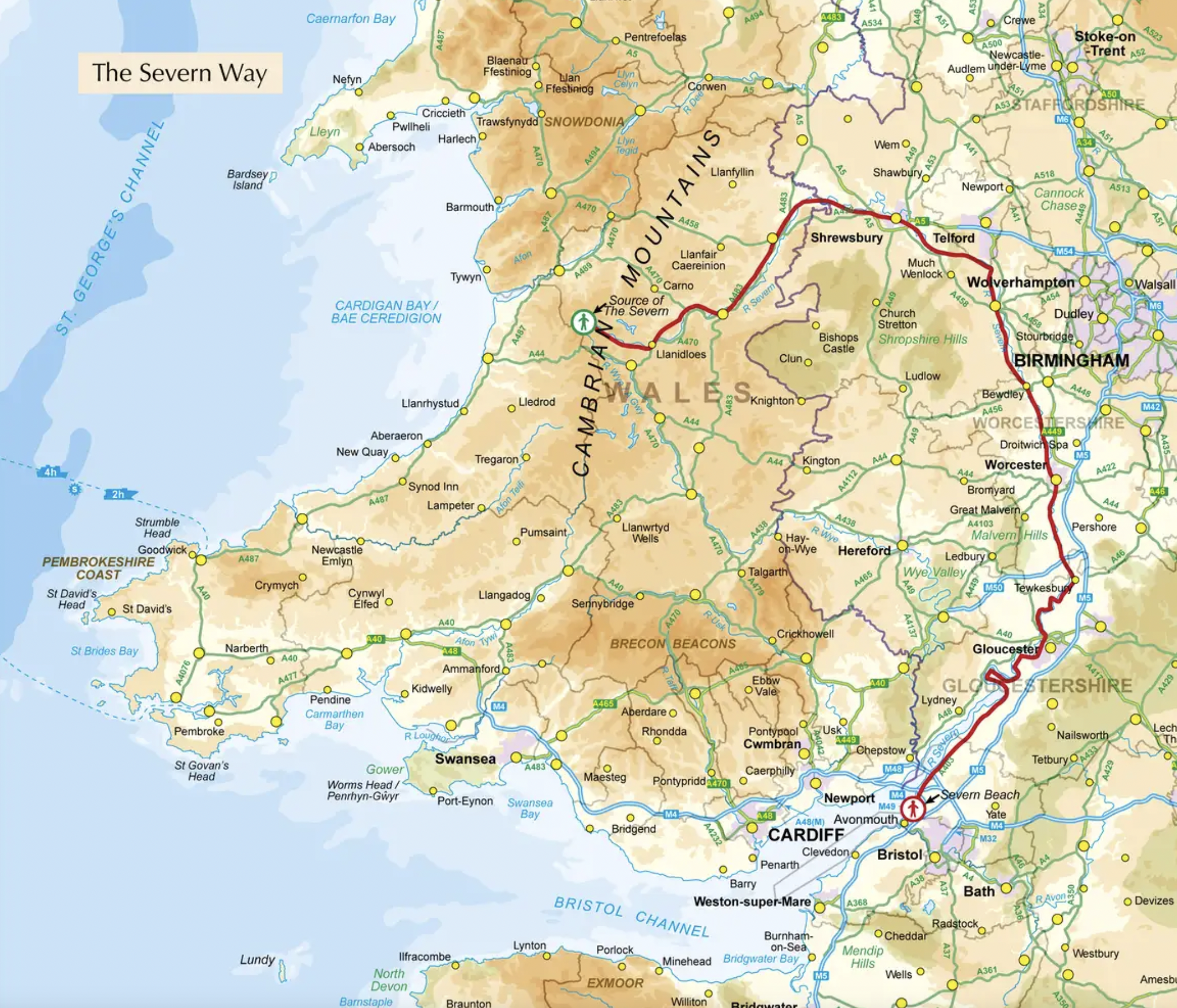
For the past eight months I have followed its 220-mile course [albeit not in order] from source to sea; from the peaty uplands of Plynlimon in Mid Wales, north-east through Powys and Shropshire, then south through Worcestershire, Gloucestershire to where it sweeps into the Bristol Channel… the Celtic Sea… the Atlantic Ocean. 

Map from the Severn Way Guidebook by Terry Marsh

Within a mile of its boggy birth, the infant Severn starts tumbling through the Hafren Forest, gathering erratic speed like a toddler until the ‘Severn-break-its-neck’ Falls plunge it into the valley that will bob it to its first town, Llanidloes.

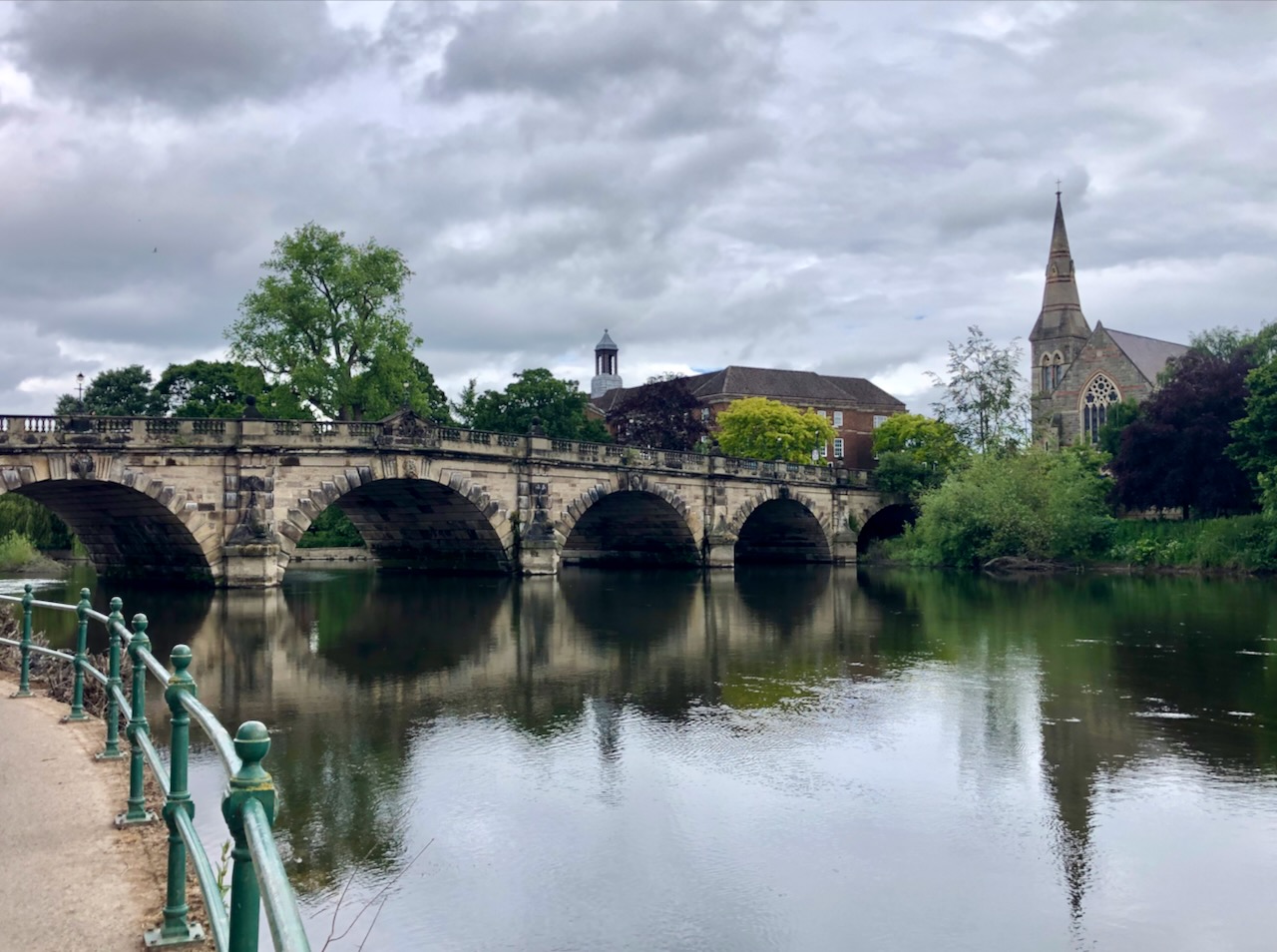
Assuming a steadier gait, it meanders through undulating pastureland before looping north to cross the Welsh/English border at Crew Green. Growing prosperity expands its girth into a watercourse that cuts through floodplains as it heads into the dense cluster of the period buildings and timber-framed mansions that formerly made up one of Britain’s most prosperous wool and cloth trade towns, Shrewsbury.

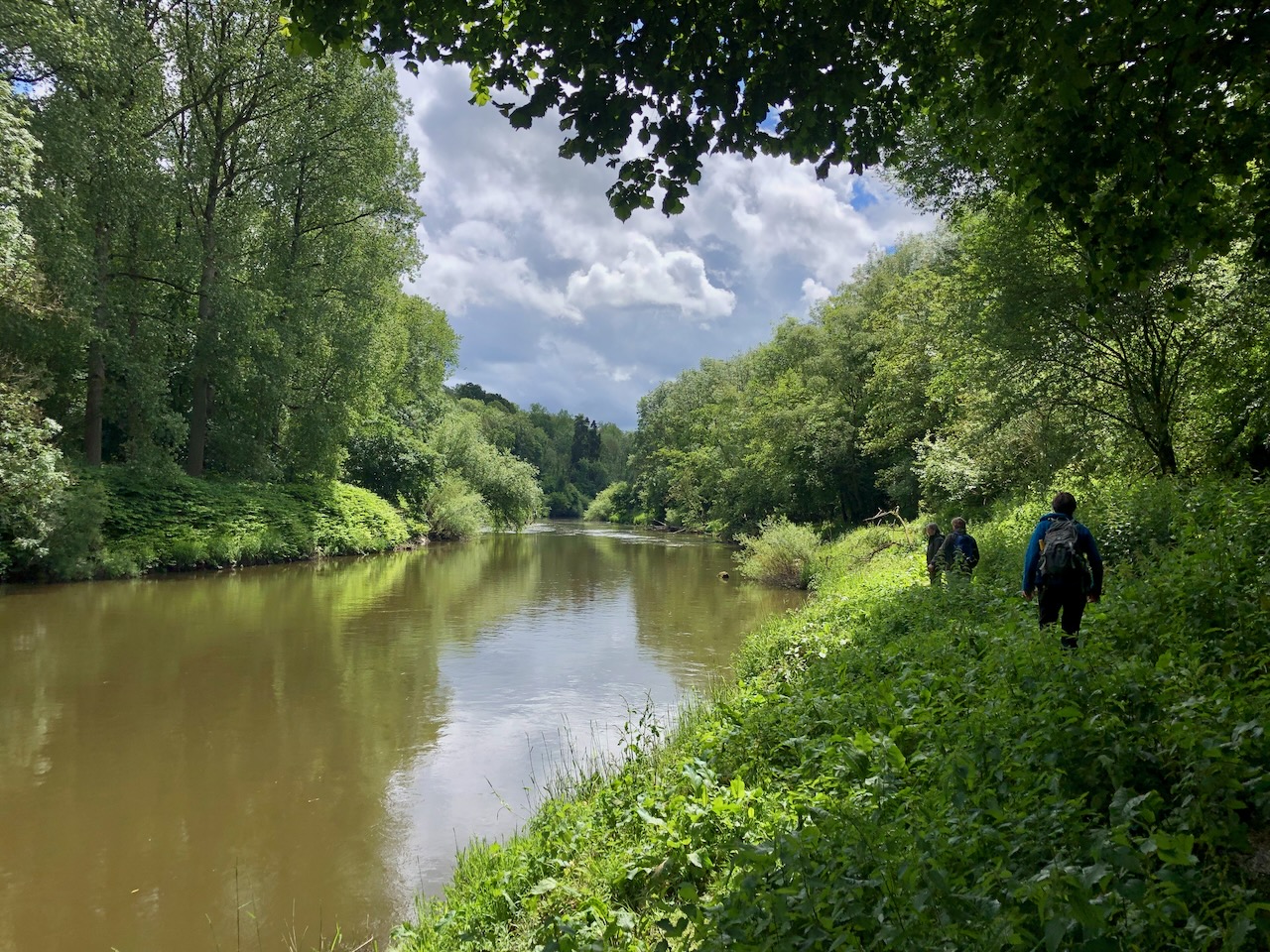
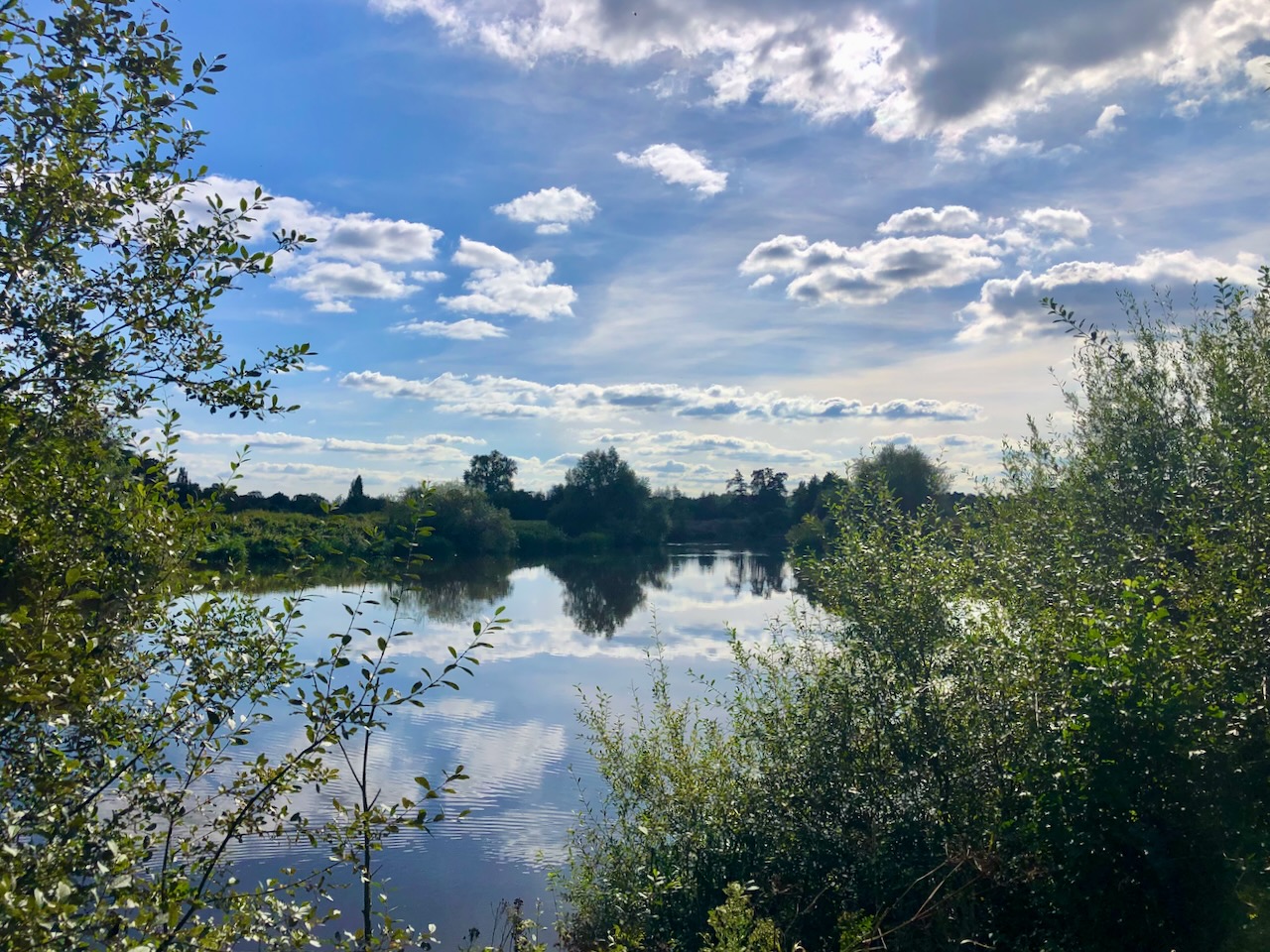
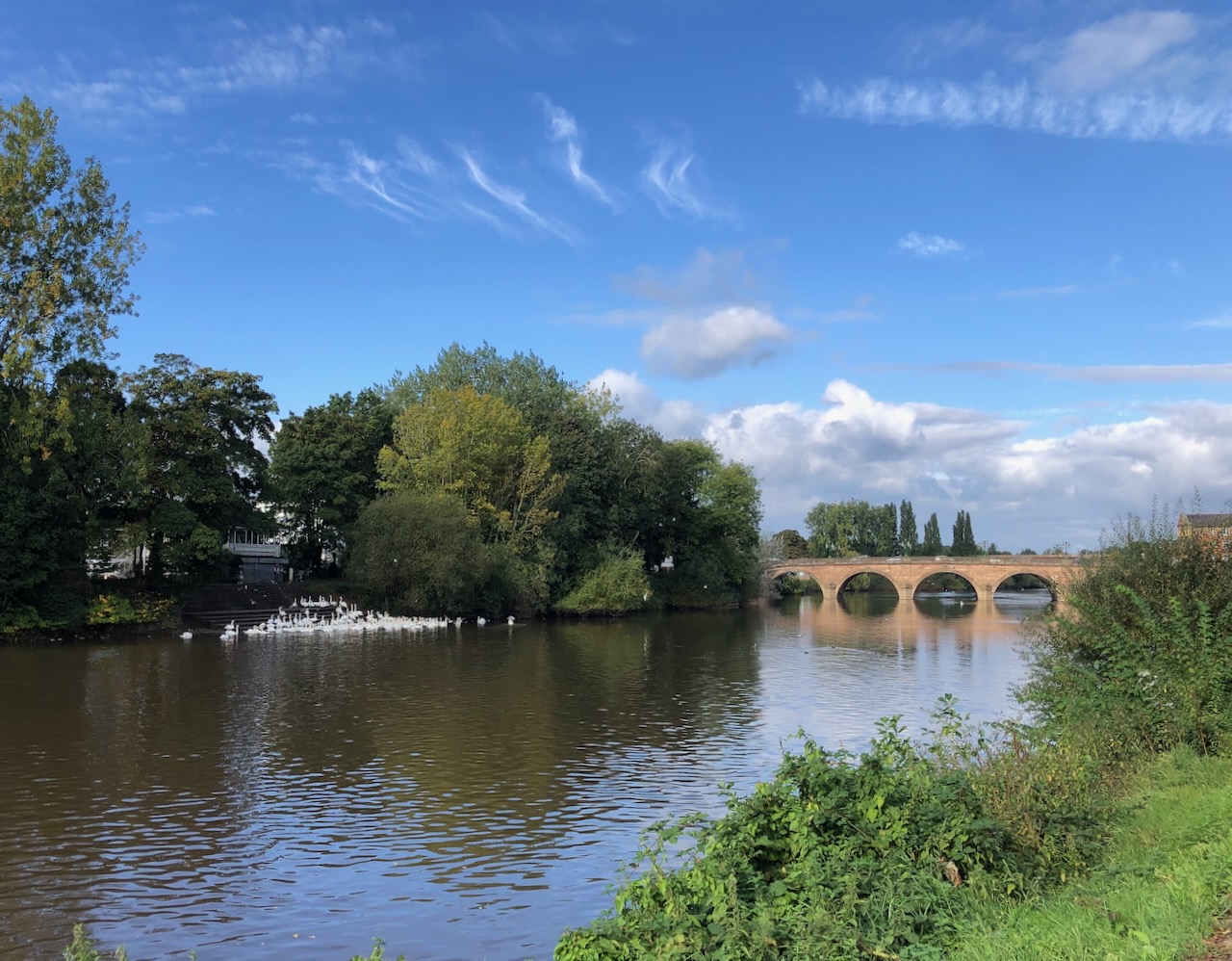
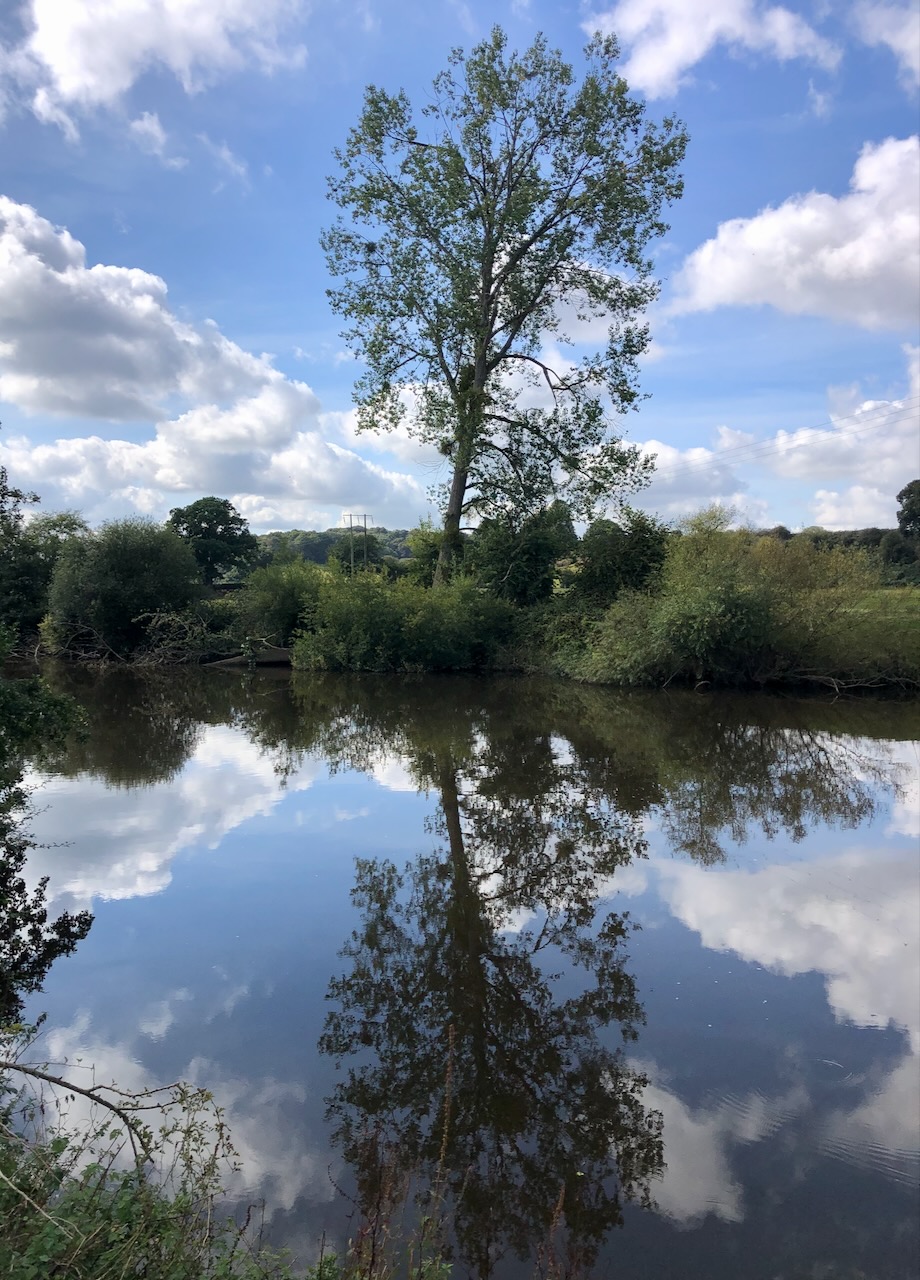
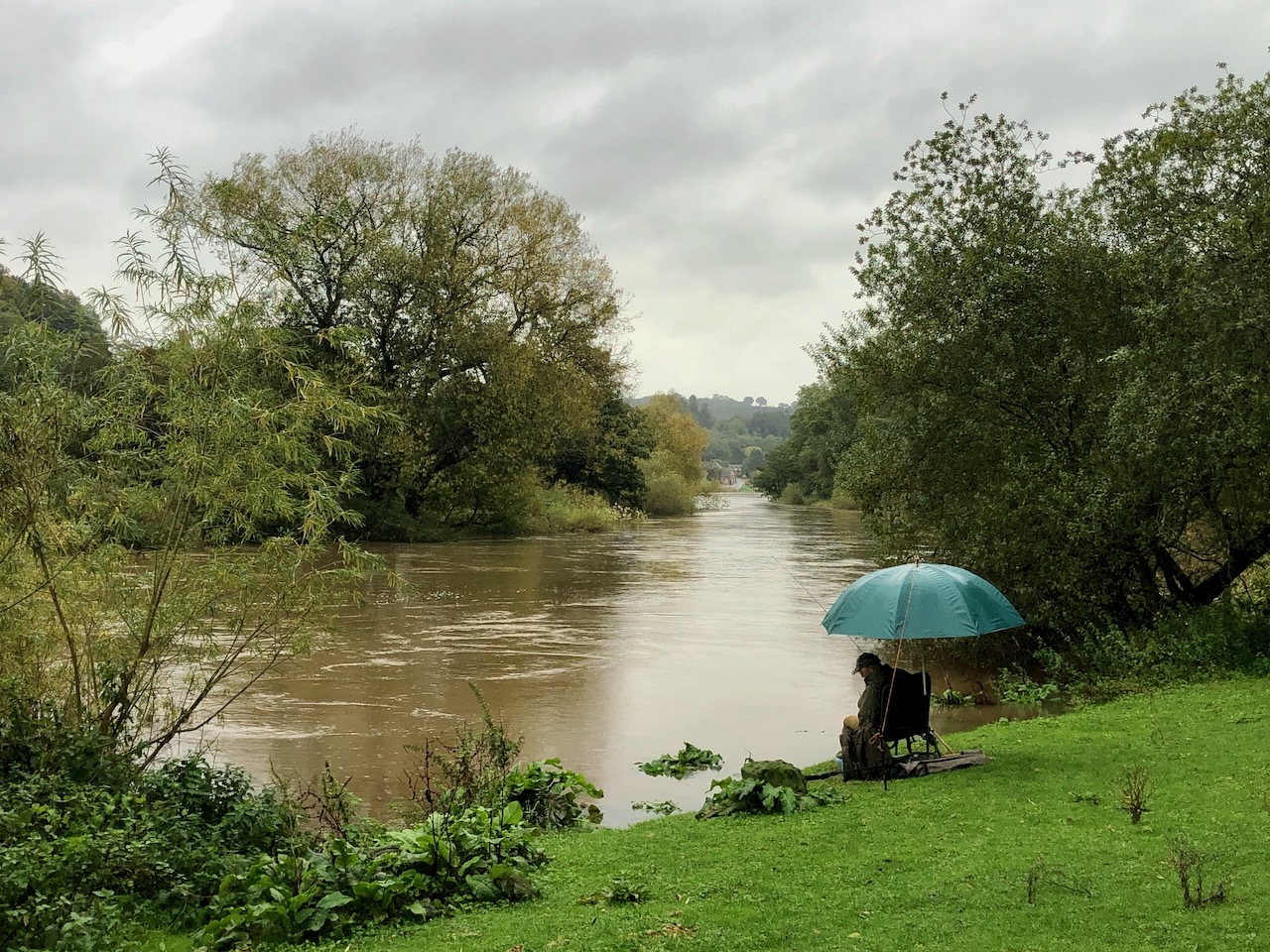
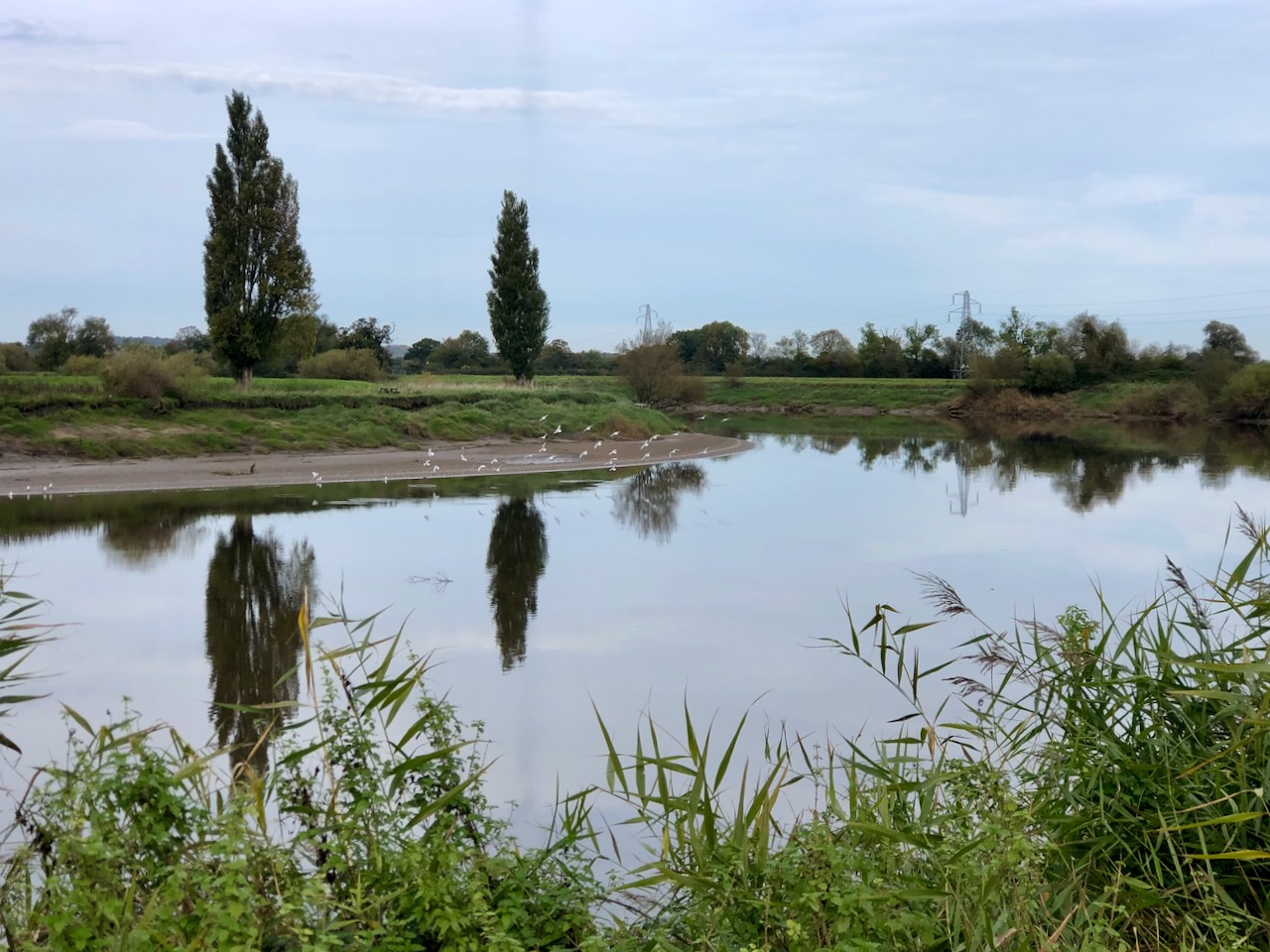
Past the birthplace of Charles Darwin, a glassy stillness and almost imperceivable flow belie the Severn’s true force as it smoothly snakes its path between overgrown banks of willow, elder and the deceptively pretty pinks of thuggish Himalayan Balsam.  

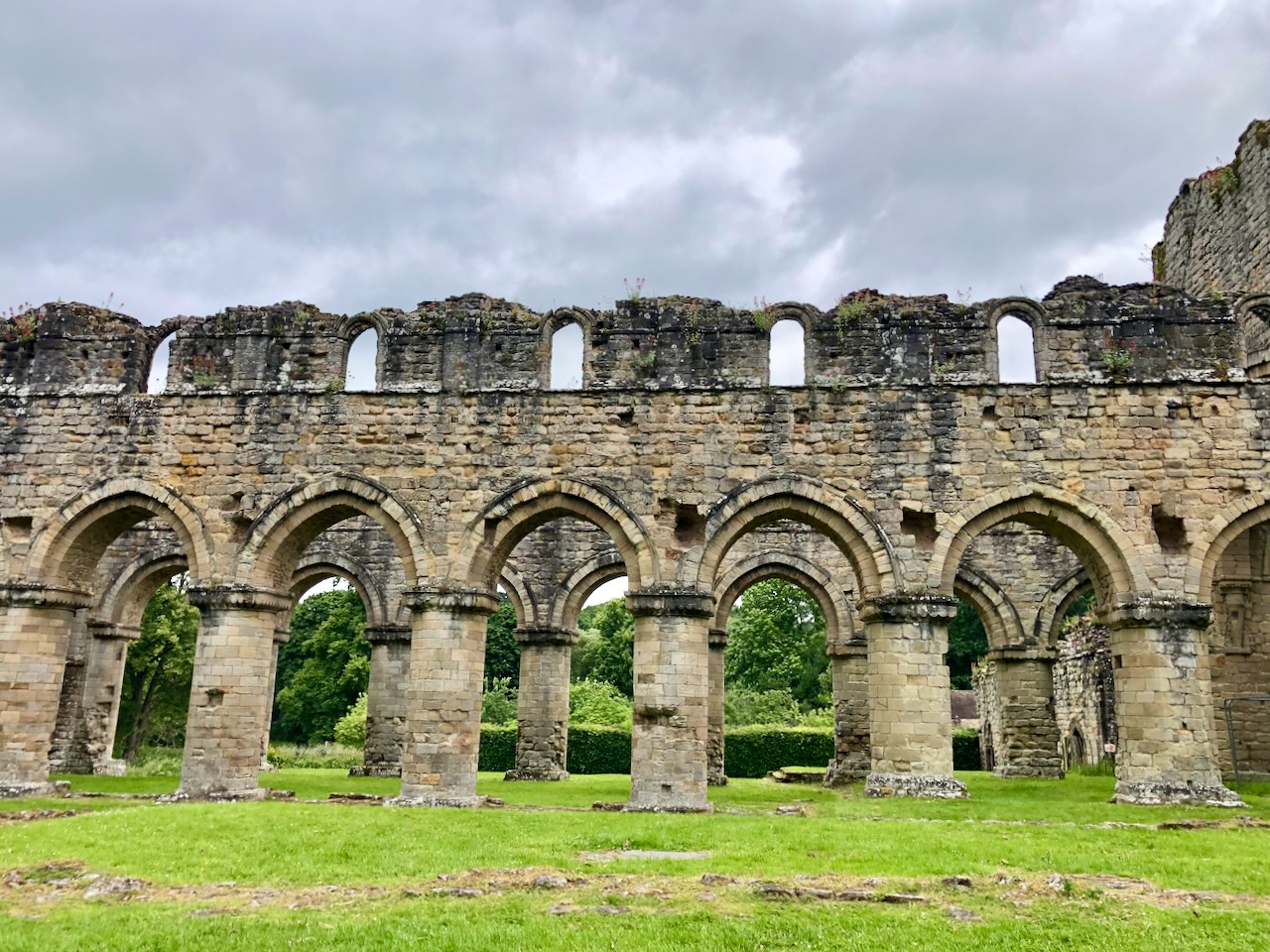
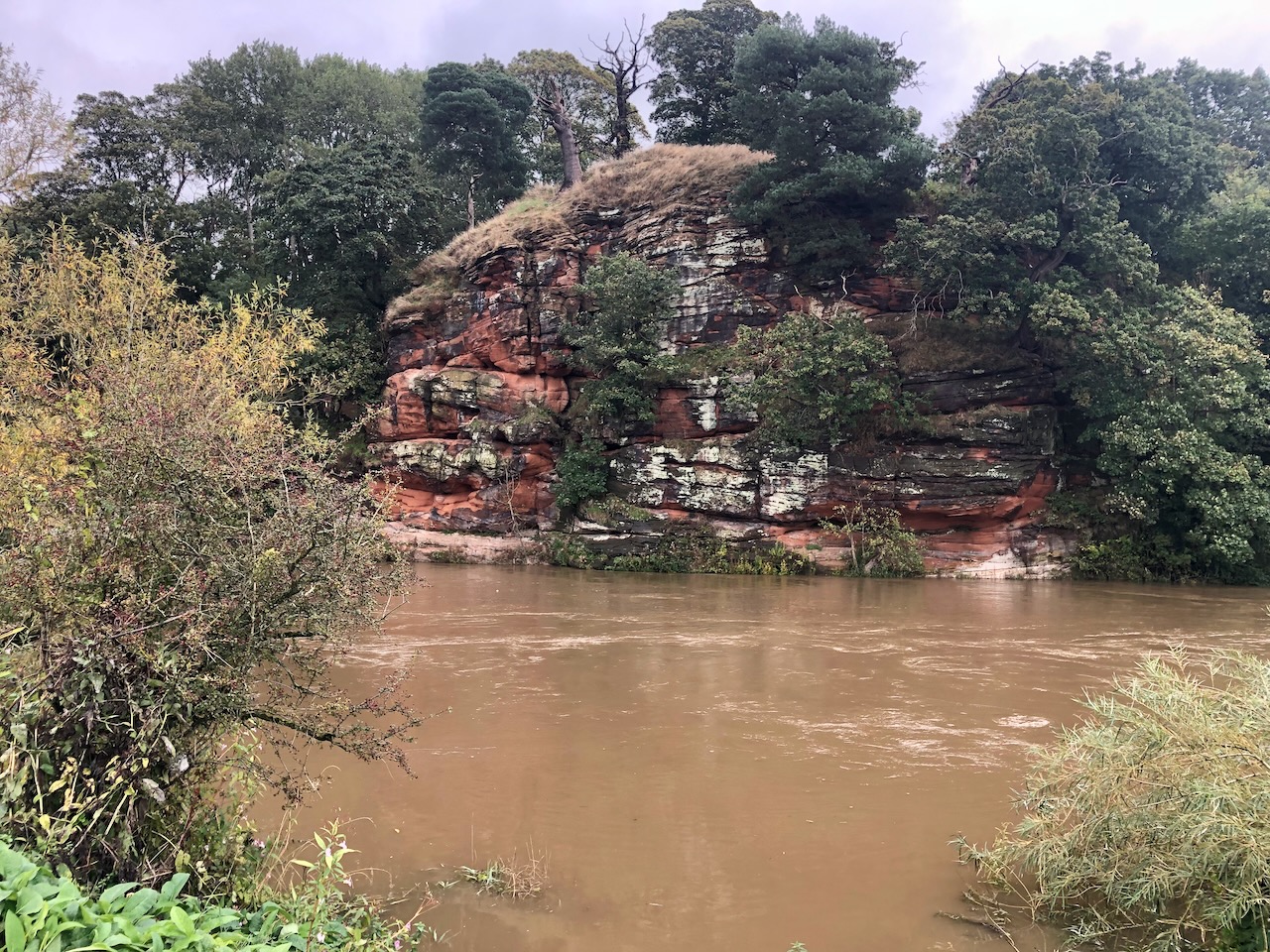
History punctuates the landscape with traces of Roman forts and roads, a Saxon chapel, the evocative ruins of the Cistercian Abbey at Buildwas, 16th Century market halls and sandstone caves that once sheltered hermits or stranded travellers unable to cross the river. As the Severn bullies its way south through gorges striped by coal, limestone and iron ore strata, the legacies of once booming industries and trades are memorialised in mines, railway stations and canals that once linked local towns across Britain. 

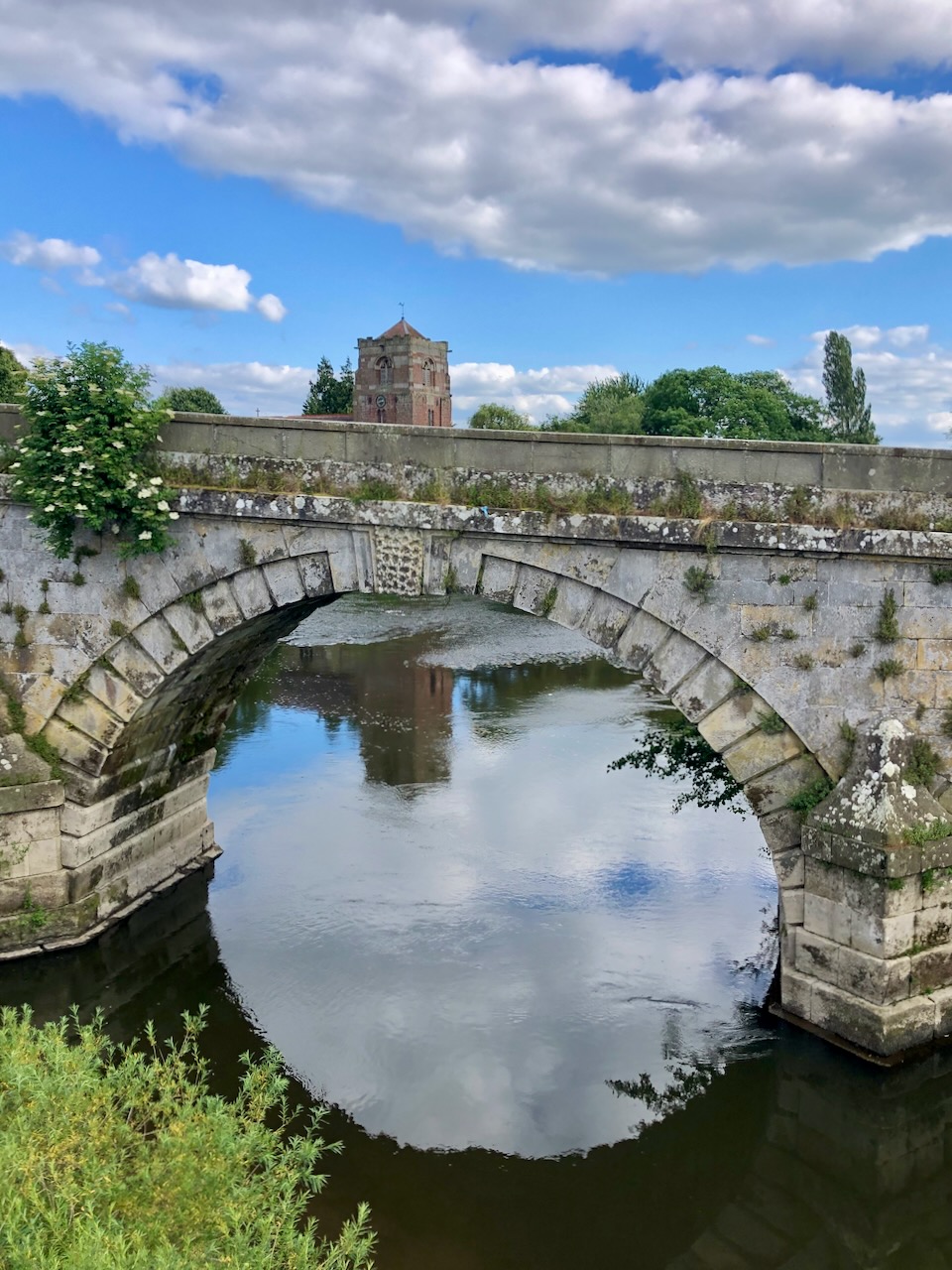
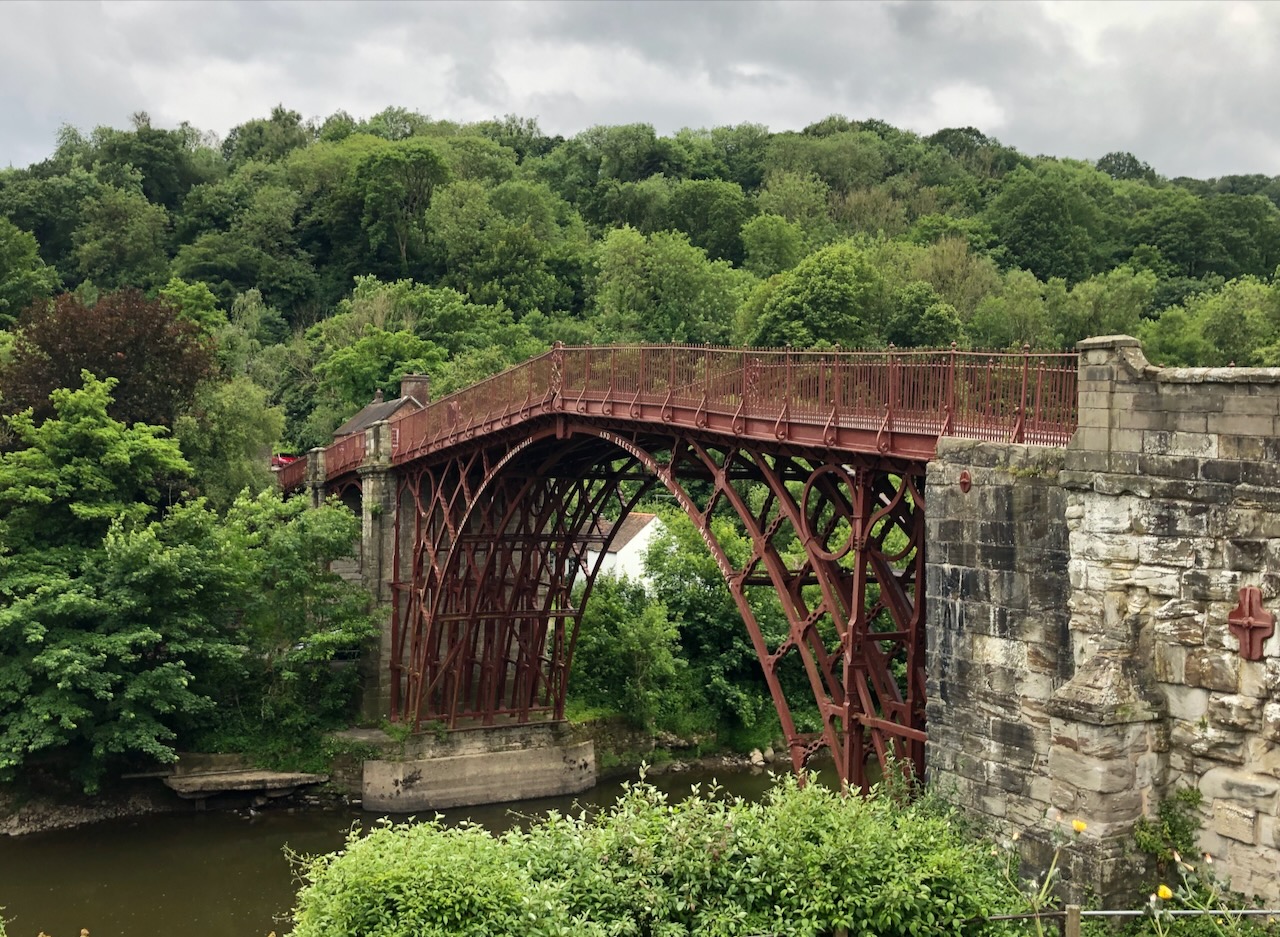
Regular bridges drip feed the imagination with the industrial revolution. Ironbridge boasts the world’s first iron bridge cast by the grandson of Abraham Darby in 1779 in the wake of his grandfather’s revolutionary discovery seventy years earlier that coke could be used for smelting iron instead of charcoal. Further downstream, the fortified town of Bridgnorth perches on a sandstone cliff. Once the busiest port in Europe, it hummed with the sound of iron works and carpet mills, breweries and tanners until the 1860s when railways heralded the end of river trades.  

Following its increasingly wide, milky-coffee-coloured road, vocabulary from school geography lessons surfaced from the recesses of my turbulent education: Oxbow lakes, flood and sandbanks, confluences; soaring cumulonimbus or, equally frequently, water-dumping nimbostratus clouds.

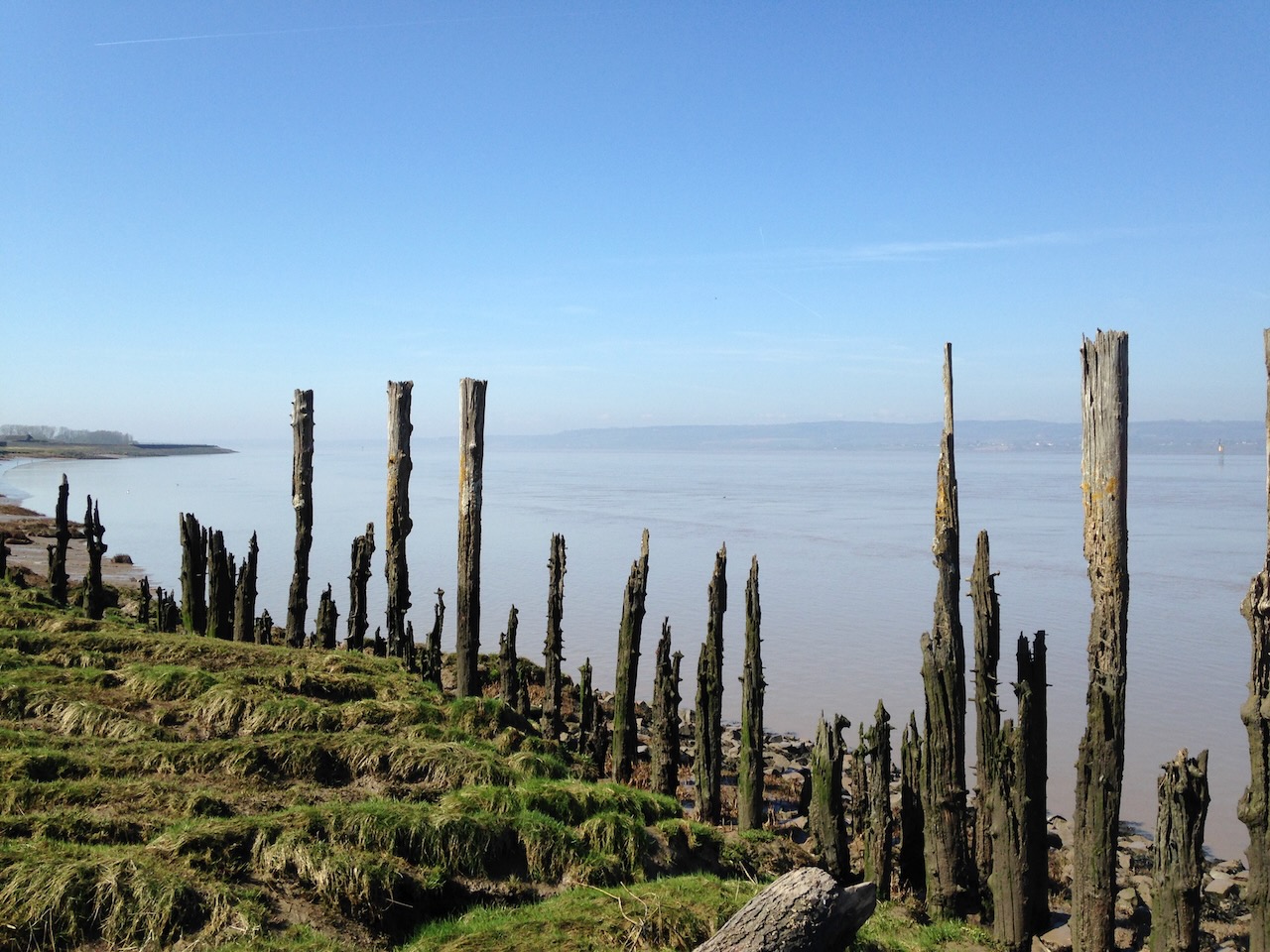
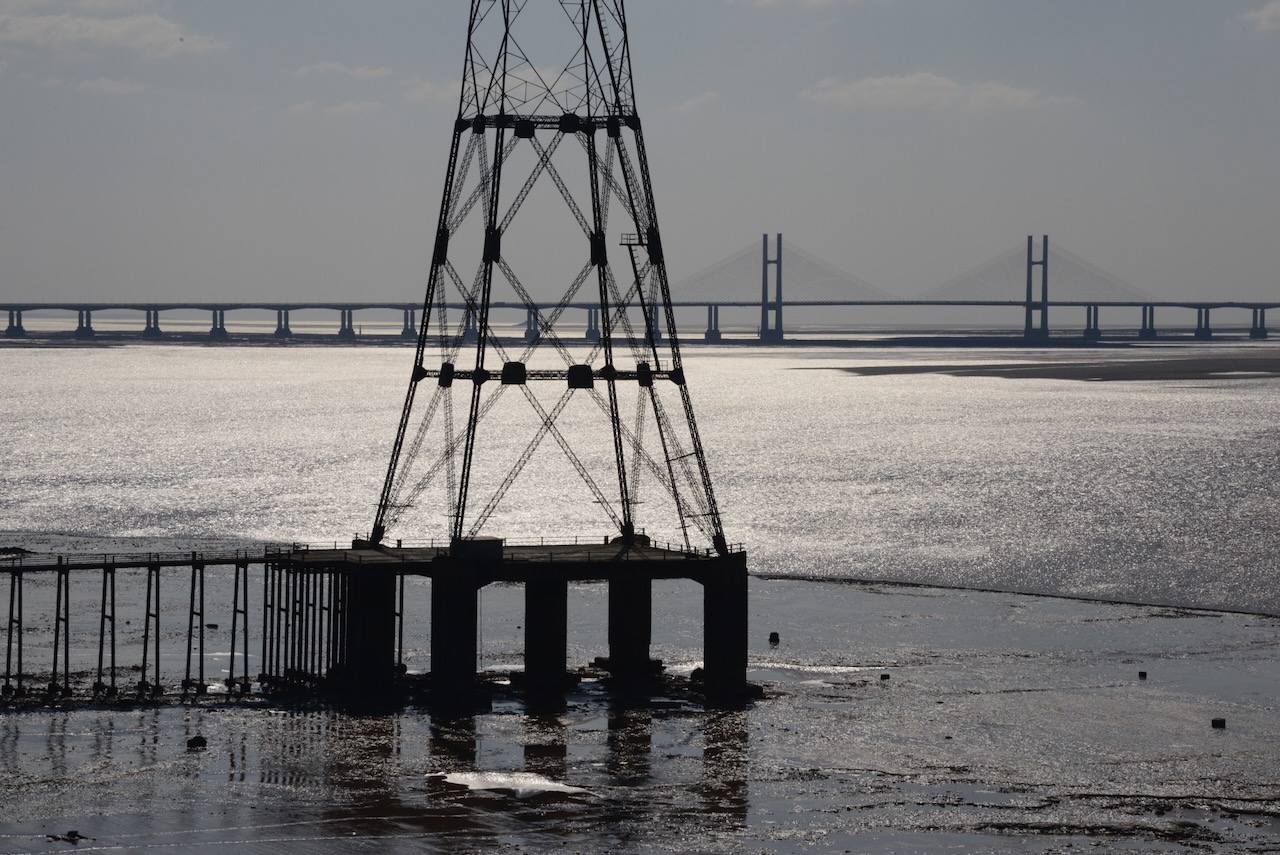
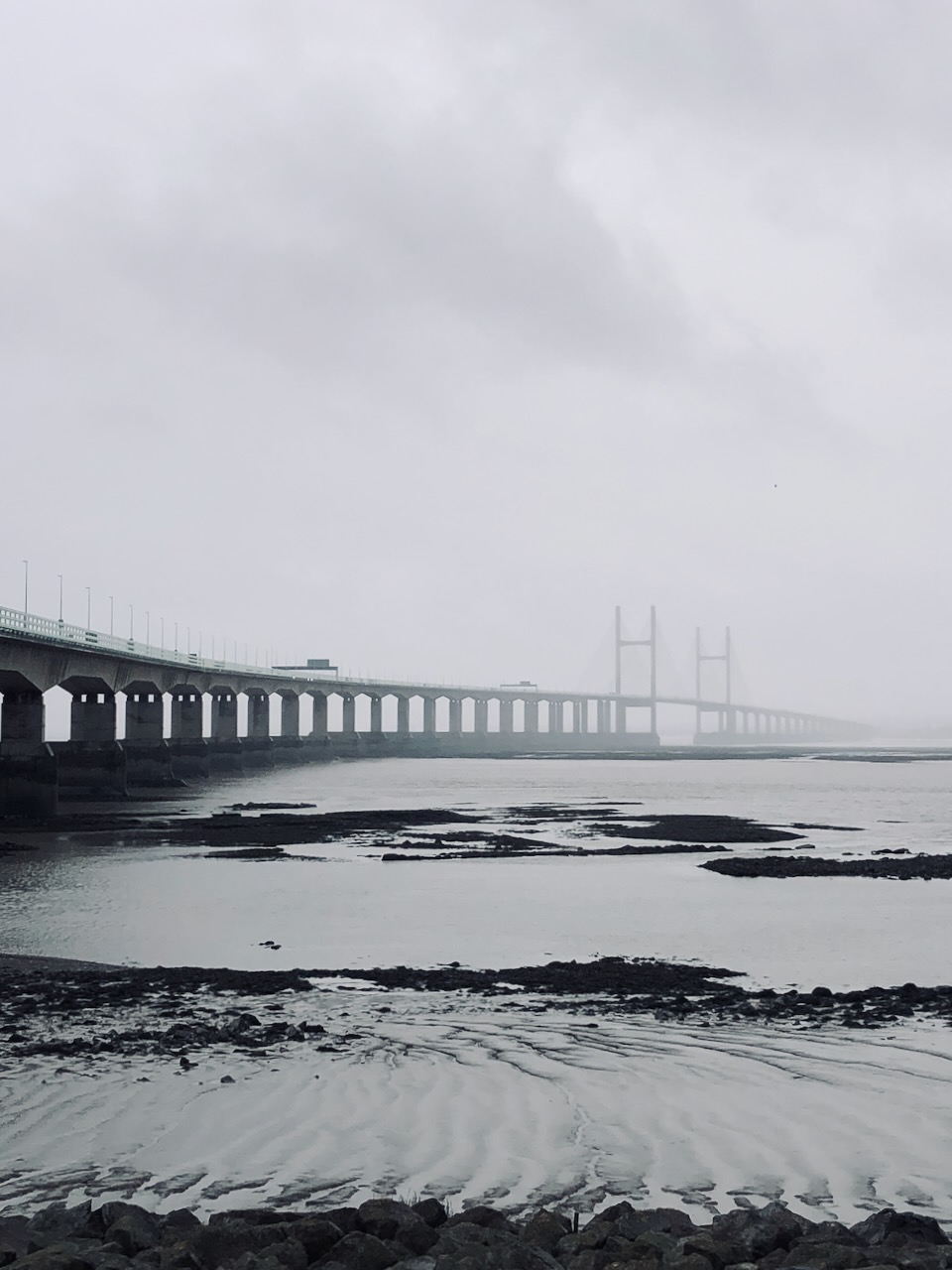
South of Gloucester and around the peninsular at Arlingham, the now tidal Severn breathes in the sea and releases the river out into the vast estuary. At Purton, the ghostly remains of a graveyard of more than 80 sunken barges reveal man’s hopeless struggle to halt the erosion of the banks. Through the working docks at Sharpness and past a pair of looming power stations, the two Severn Bridges rise like misty goalposts. Portals to the open sea. And an abrupt, somewhat unspectacular end to the Way.

With the walking completed, there remained just one more aspiration: to surf the Severn Bore. A bad dream thankfully warned this novice surfer with a fear of water off. Instead, I rode the Bore in a boat driven by its champion.

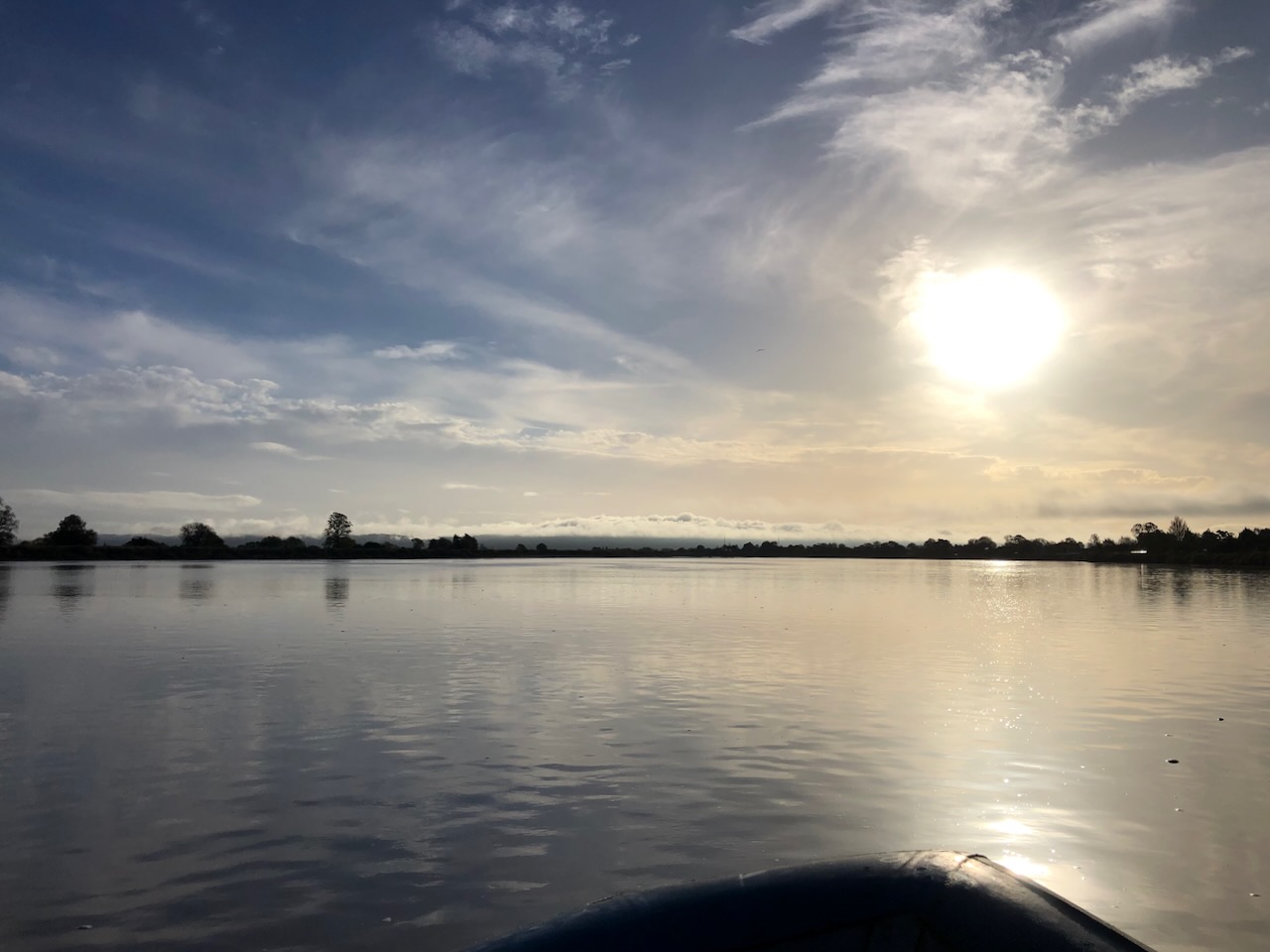
We set out on a slack tide in the early dawn, deposited two surfers into the tidal stream and waited. You can hear the roar as it approaches. Pulled by the force of the moon, a small line of foam scrabbling its way against the flow comes into view, gathering body until it is a swell. And then you are on it. Riding the crest as salty water from far away thrusts its way up the river dragging the sea in its wake like a heavy cloak.

Immersed in the perfect balance of the 4 elements, the smile on my face remains for many hours. The magic of Sabrina will last a lot longer.