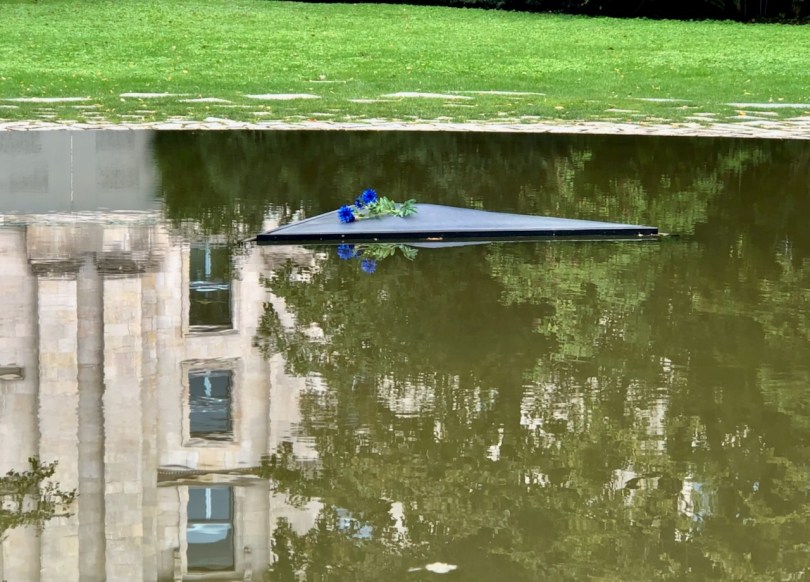
Where history resides in the soil, tangibly awaiting excavation…

There was something profound about launching the German translation of my book in Germany, first in Hamburg, the city I have known and loved all my life, and then in Berlin, the epicentre of that extraordinary episode of history in which I have been immersed for over 15 years. 
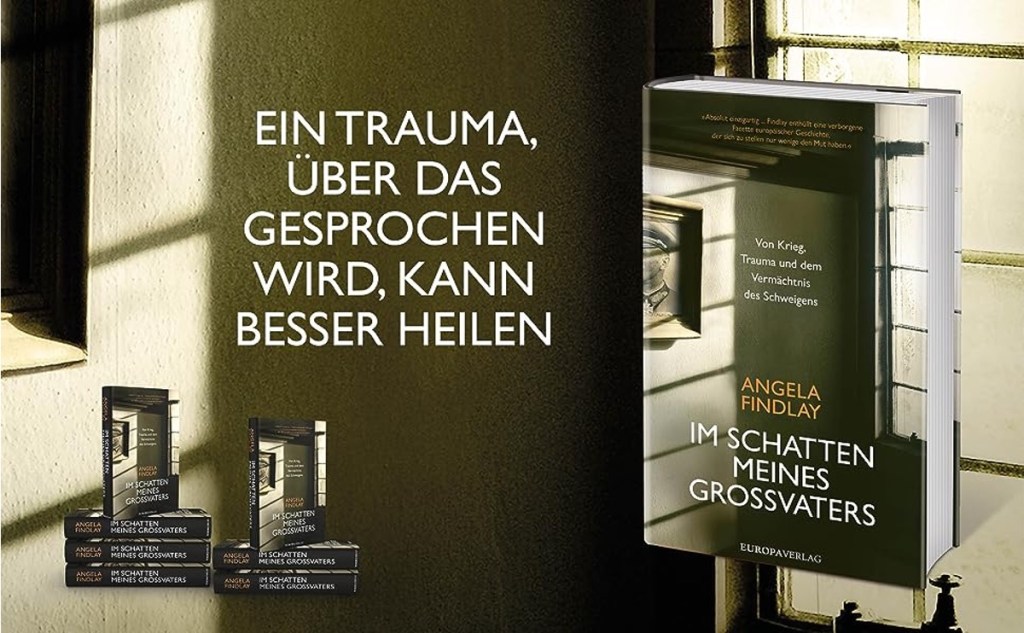
In My Grandfather’s Shadow: A trauma that is talked about can better heal

I had no idea what reception it or I would receive. The audience have, after all, breathed the air of Germany’s past for decades; been shaped by it – whether they have engaged with it or not. German 20th century history is still very much alive in the present, a minefield of sensibilities and taboos through which I had to pick my way, all too aware that as a half-Brit, I always had an airlift out of the horrors. What on earth could I bring to the intensely discussed narratives?

So I was touched by how warmly I was received. How attentively people listened. How sincerely they responded, one elderly man, born in the same year as my 89-year old mother, standing up and telling the story of his childhood flight from the Soviets for the first time. The entry level of questions was so deep, so knowing, so very real. 
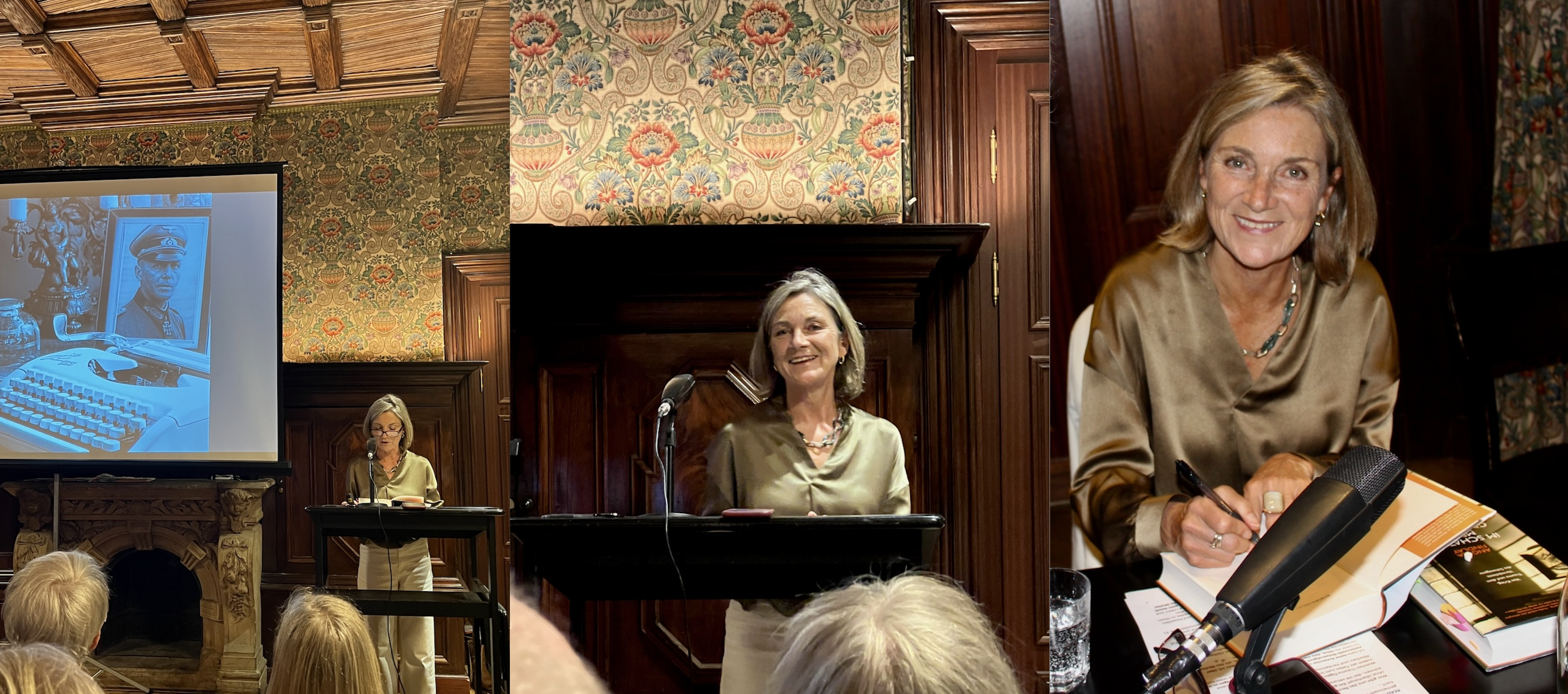
Unintentionally colour-coordinated with the beautiful decor of Berlin’s Literaturhaus!

As always, it was the post-talk discussions, with much needed glasses of wine in hand, that brought home to me once again the importance of talking about what is all too often buried. People expressed how completely new it was for them to hear someone talk so openly both about German soldiers and themselves. This is deliberate on my part. By baring the inner machinations of my soul and that of my grandfather, I was and am inviting people to explore theirs. By touching on taboos, exposing shame to the light of empathy and sharing the tools I developed and steps I took to release myself from the crippling weight of Germany’s Nazi legacy, I can offer hope that there is a way through. Through, not out of. For such an unprecedented past must necessarily maintain the weight of responsibility. 

As a nation, Germany continues to respond to its crimes in countless ways, not least through its counter memorial culture about which some of you may have heard me speak in my lectures. One memorial in particular chokes me up every time. It is the Memorial to the Sinti and Roma of Europe murdered under National Socialism placed right in the heart of the city between the Reichstag and Brandenburg Gates. (I mentioned it in my June BLOG on Berlin)
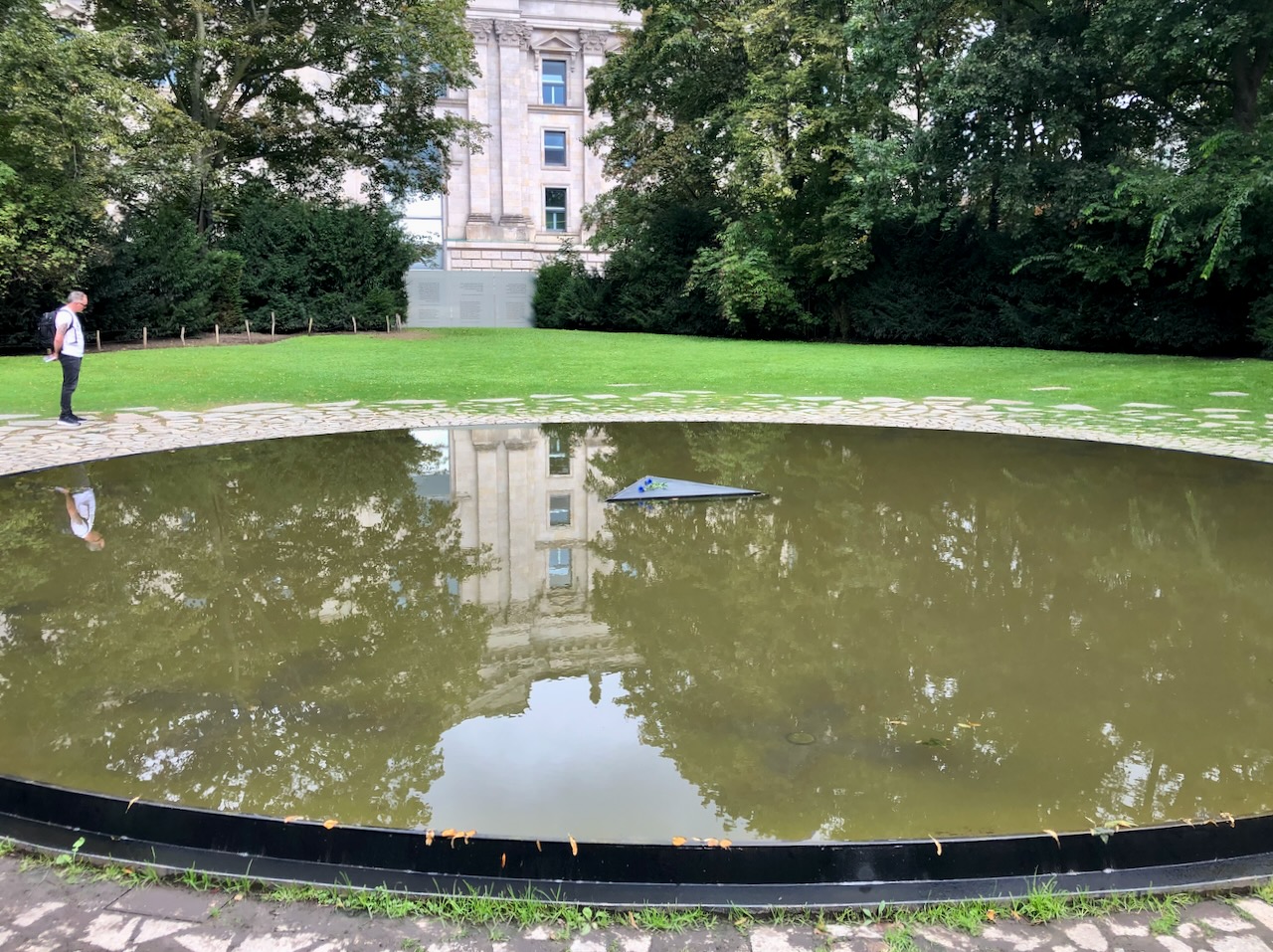
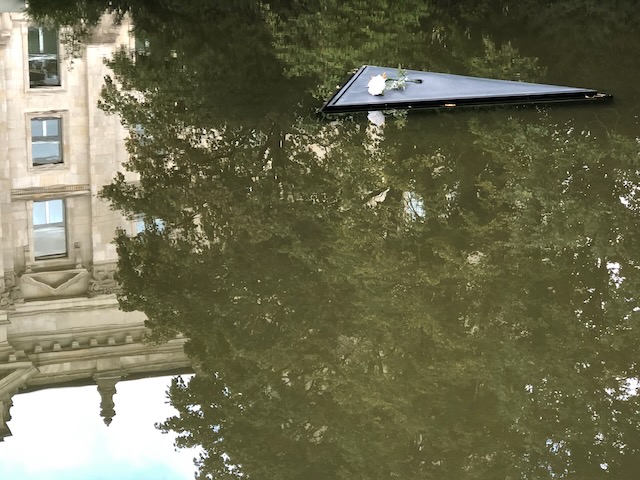
The central feature is a circular pond with a triangular ‘island’ on which a fresh flower is placed every day. That some official is tasked with performing this ritual intrigues me. So, after receiving permission to witness it, I joined a delightful man in uniform by the water’s edge and duly followed him into the bushes. Hidden from public view, he pulled opened a grated trap door and gestured to me to descend the precarious metal ladder and proceed along a damp corridor until I was standing directly below the retractable triangle. At 1pm precisely he pressed a button. An accordion-like black triangular pillar began to lower, folding into itself until the flower was within reach. 
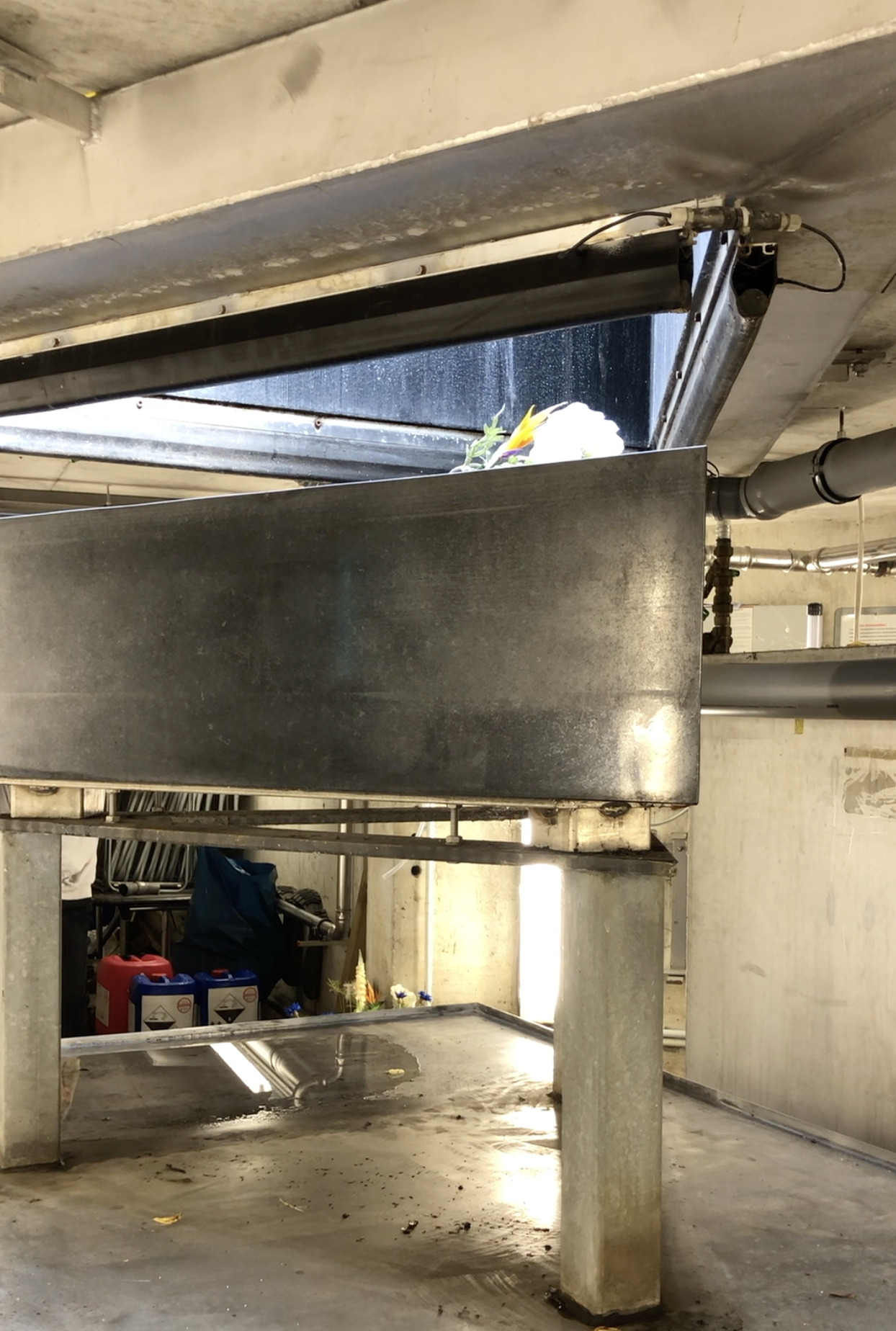
I was then allowed to select and place a new flower on the triangle – a slight disappointment that for practical reasons, the flowers are no longer fresh but plastic! Then, with another push of the button, up it went to take its place in the still water for another day.
As we emerged from the bushes, a school class of pupils who had been brought to watch the ceremony approached us. The teacher had noticed me disappearing into the undergrowth and asked if I would explain who I was, what, why…etc. which I did. And, long story short, from that encounter and the interest it generated, I received an invitation to come to their school next time I am in Berlin and tell them about my story and my book!

“Truth speaks from the ground” Anne Michaels wrote in Fugitive Pieces. I have always felt this since my first visit to Berlin in 1990. I remember wandering through the recently gentrified area around Hackescher Markt excited by its contemporary art galleries but wholly unaware of its history as a Jewish quarter from which thousands of Jews were rounded up and deported. But “… as the day wore on, I became increasingly aware of an uncomfortable sensation rising inside me. Something seemed to be seeping up from the pavement through my feet and weighing down my legs. It rose further, turning my stomach hard. By the time we stopped at a café, it had reached the level of my heart, at which point it spilled out in a huge wave of sobs…” (IMGS p.153)

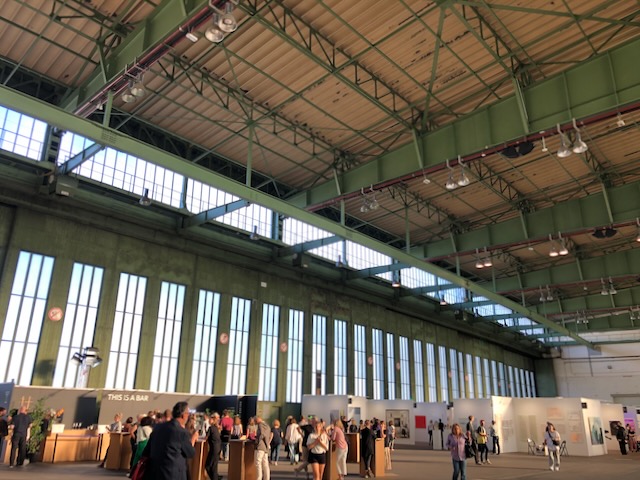
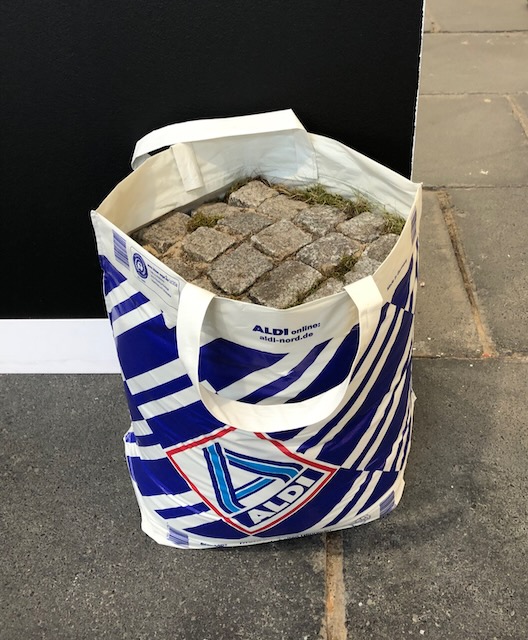
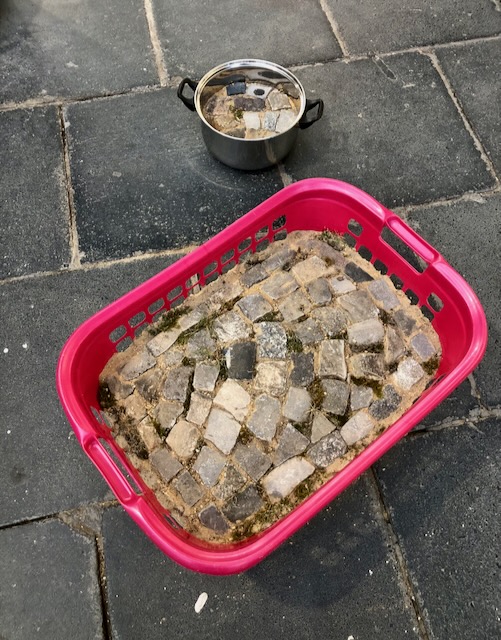
Maybe that is why one sculpture spoke to me so strongly at Berlin Art Week’s POSITIONS exhibition housed in the long-disused hangar of Tempelhof Airport, site of the Western allies’ 1948-49 ‘Berlin Airlift’ in response to the Soviet Blockade.

I didn’t get the name of the artist (apologies), but to me their work brilliantly, wordlessly captures what I instinctively feel about being in the unique and extraordinary city that is Berlin, where past meets present with a potency that can’t be ignored.
For NEWS of forthcoming events in England and Germany, please see my website: www.angelafindlaytalks.com

To receive my NEWS straight into your email inbox, please SIGN UP to my NEWSLETTER

Remembering Russia’s past as a way to understanding its present

The Remembrance Sunday of 2022 will be one of thankfully few since 1945 that sees another war in Europe raging. As we remember those who lost their lives in past wars, fellow Europeans will be losing theirs in the all too real conflict fighting itself out in Ukraine.

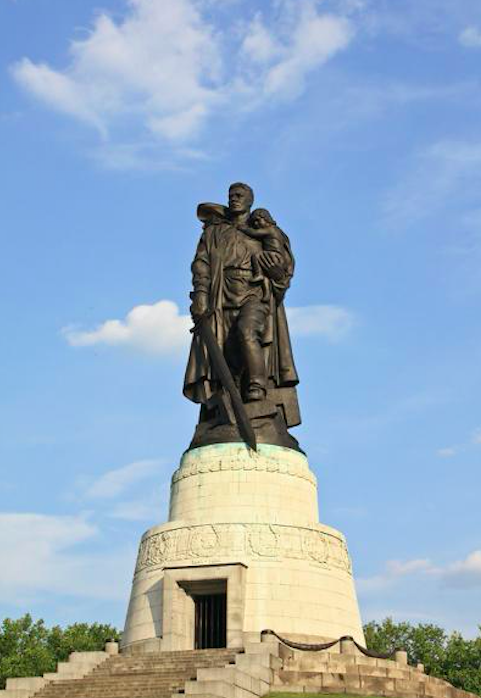
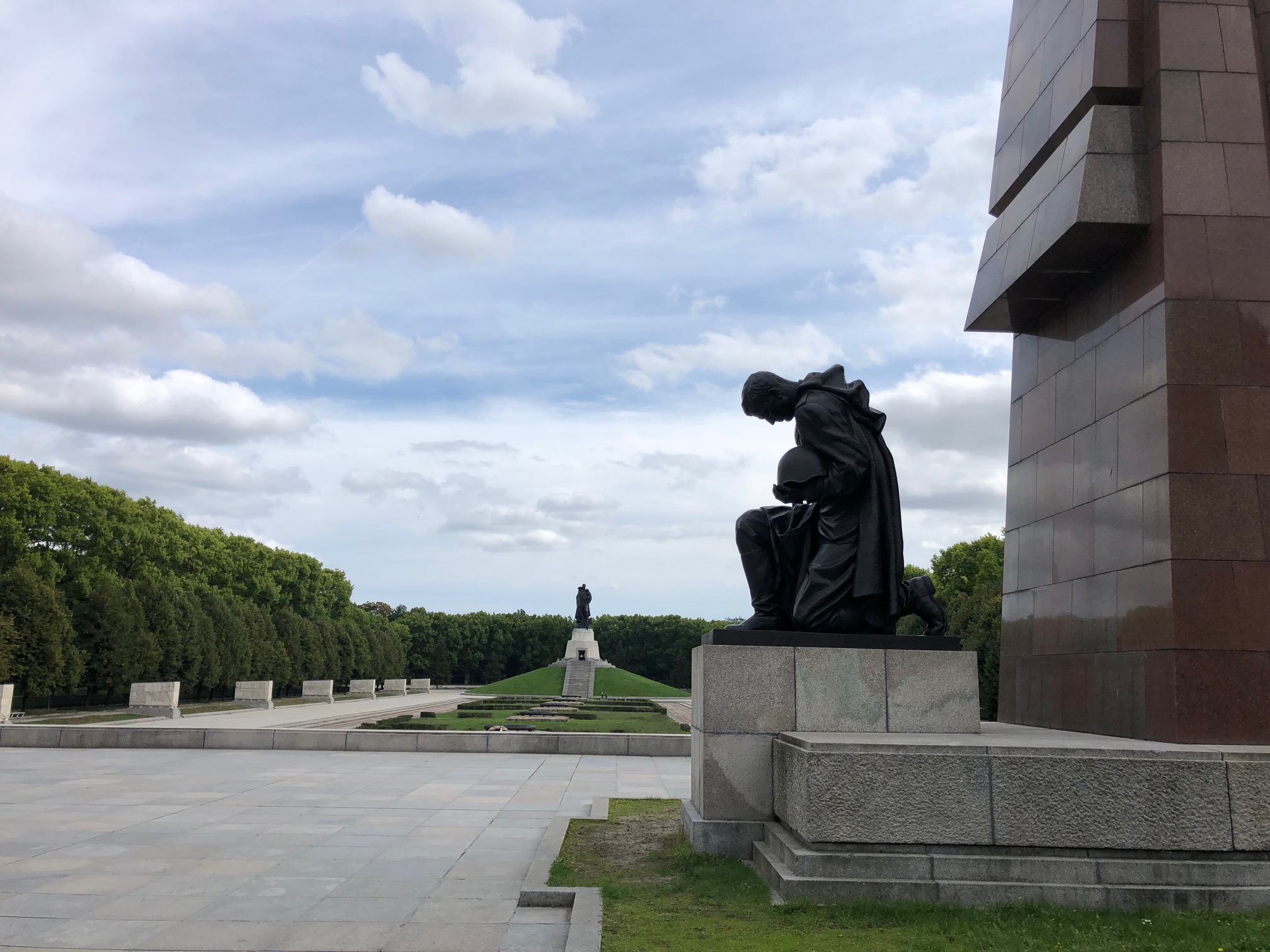
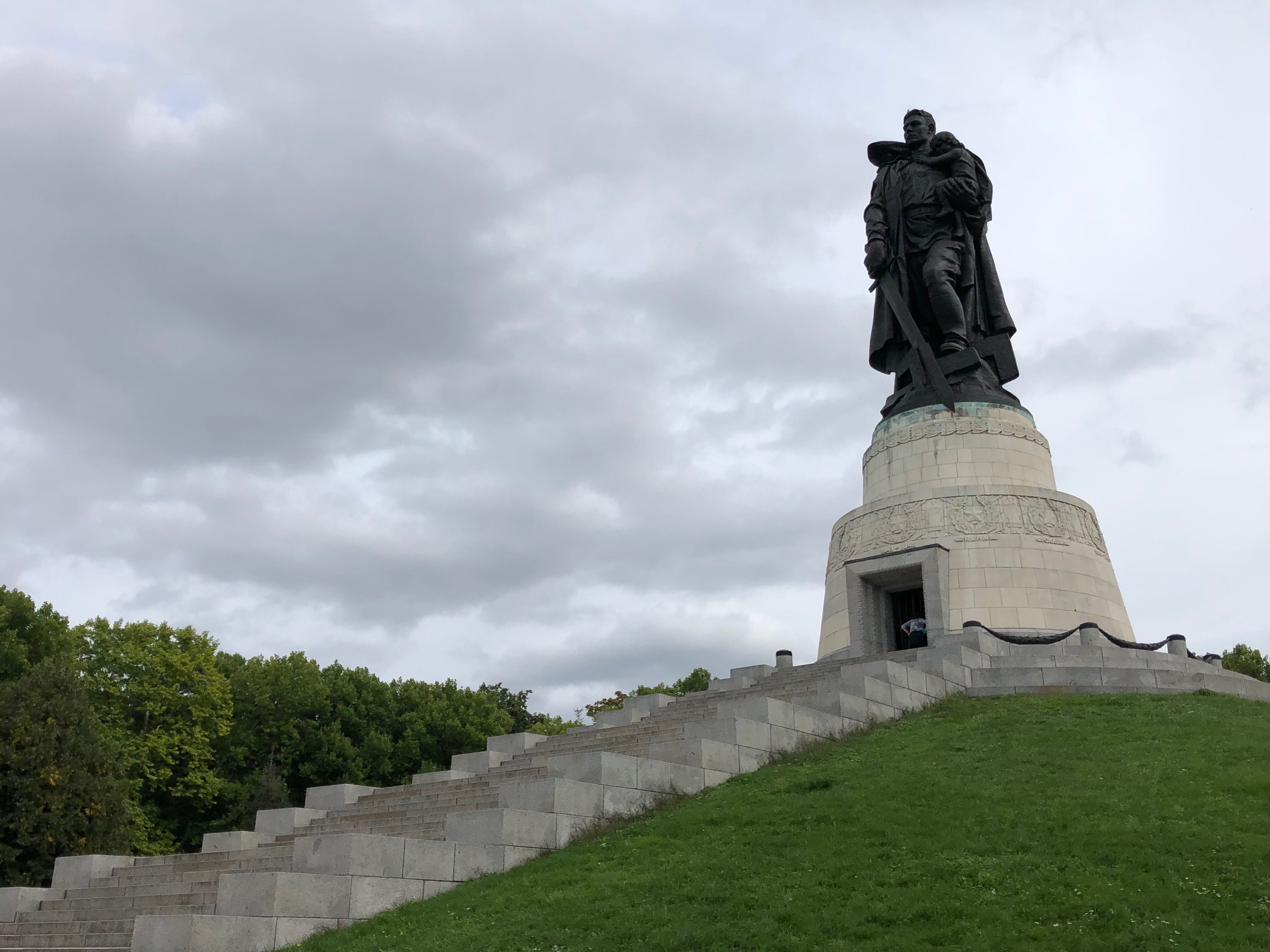
In my last blog I wrote about travelling the Berlin Wall Way, itself a form of 100+ mile-long memorial remembering both a repressive episode in history and those who lost their lives trying to escape it. Well, a little off that route in what was central East Berlin is Treptower Park, the largest Soviet military memorial outside the Soviet Union. Opened on 8th May 1949, it is a 10-hectare cemetery for 7000 of the more than 22,000 Soviet soldiers killed in the battle to take Berlin in the final months of the Second World War and contains the world-famous symbol of the role played by the Soviet Union in destroying National Socialism: the 13-meter towering statue of a Soviet soldier holding a lowered sword over a shattered swastika and cradling a rescued German child in his arm.

The Soviet Warrior Monument built by Yevgeny Vuchetich

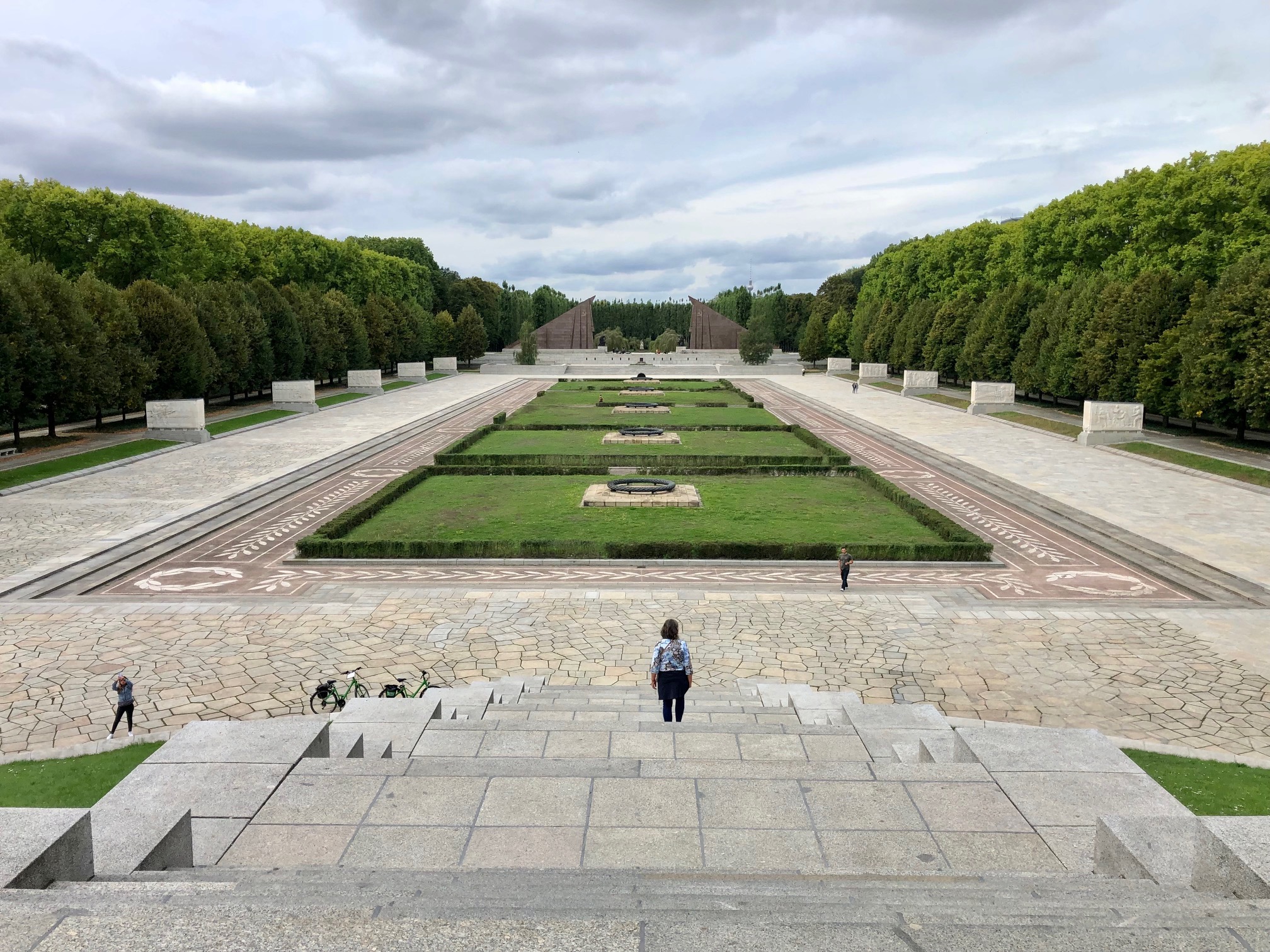
To experience this place is to experience a sense of the enormity and profundity of the impact WW2 had on the Soviet / Russian people. For a start it is vast. And the extensive layout is designed to take you through a process of mourning and remembrance to honouring the victors as heroes and liberators. 

‘Heroes and liberators.’

We too use those words in relation to our own soldiers. But how often have we – or do we – actively honour the decisive role the Soviet soldiers played in defeating Nazi Germany? And how often do we include the mind-boggling numbers of Russians murdered or killed in the process (25 million to give a rough/round figure) in our process of remembrance? We don’t really, is the only answer I can find. And yet they were our allies in a war that we, as a nation, have made central to our national identity. Could our slightly introspective leanings and lack of acknowledgment of the Soviet sacrifices and achievement (among many other factors, not least the horrors of the Stalin era) have contributed to the attitudes of subsequent regimes and politics towards the West? Just a question… but one that walking through Treptower Park certainly made me ask.

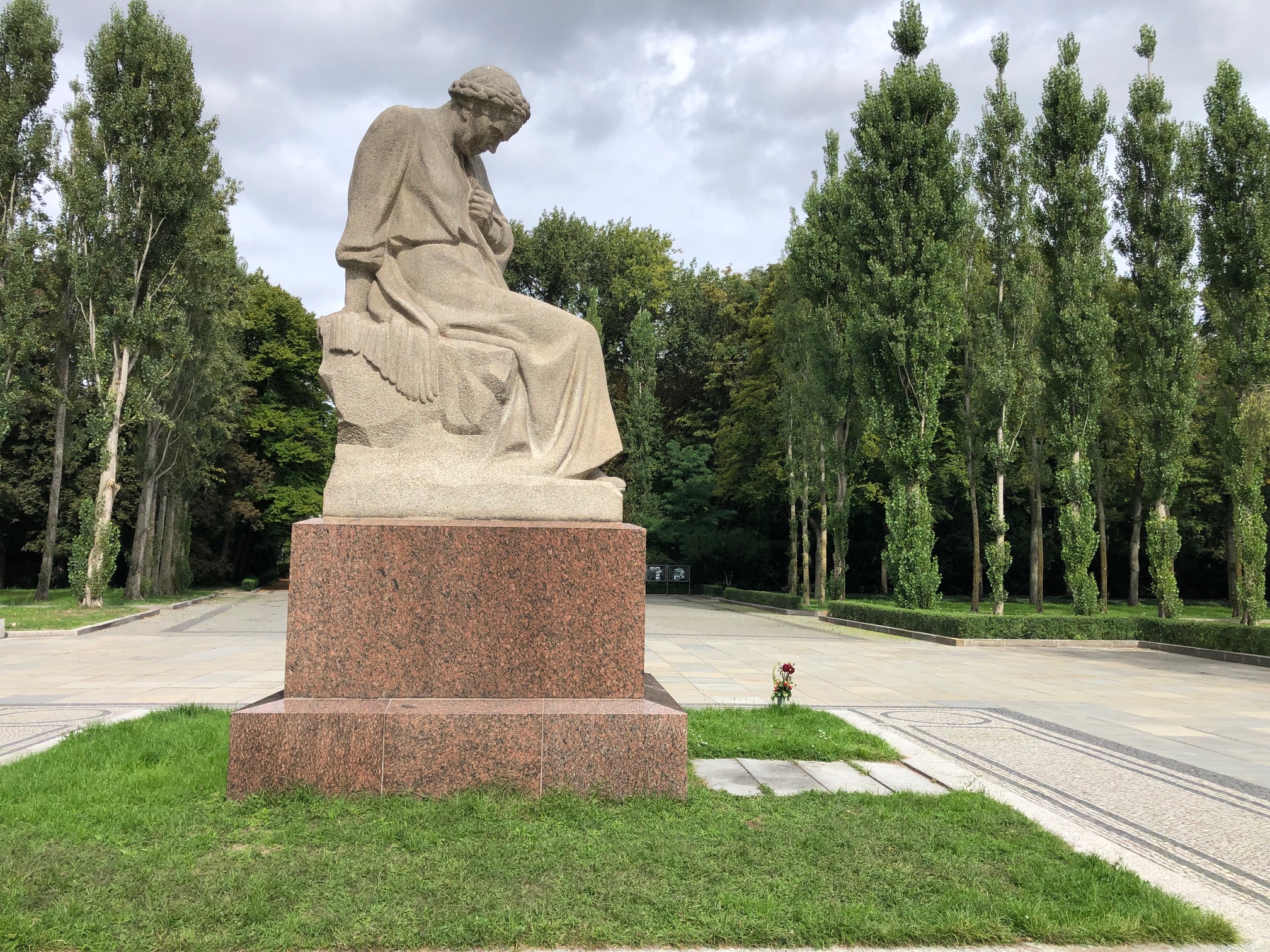
‘Mother Homeland’

Entering through one of two avenues, the (tiny) visitor is led first to the statue of a grieving “Mother Homeland.” 

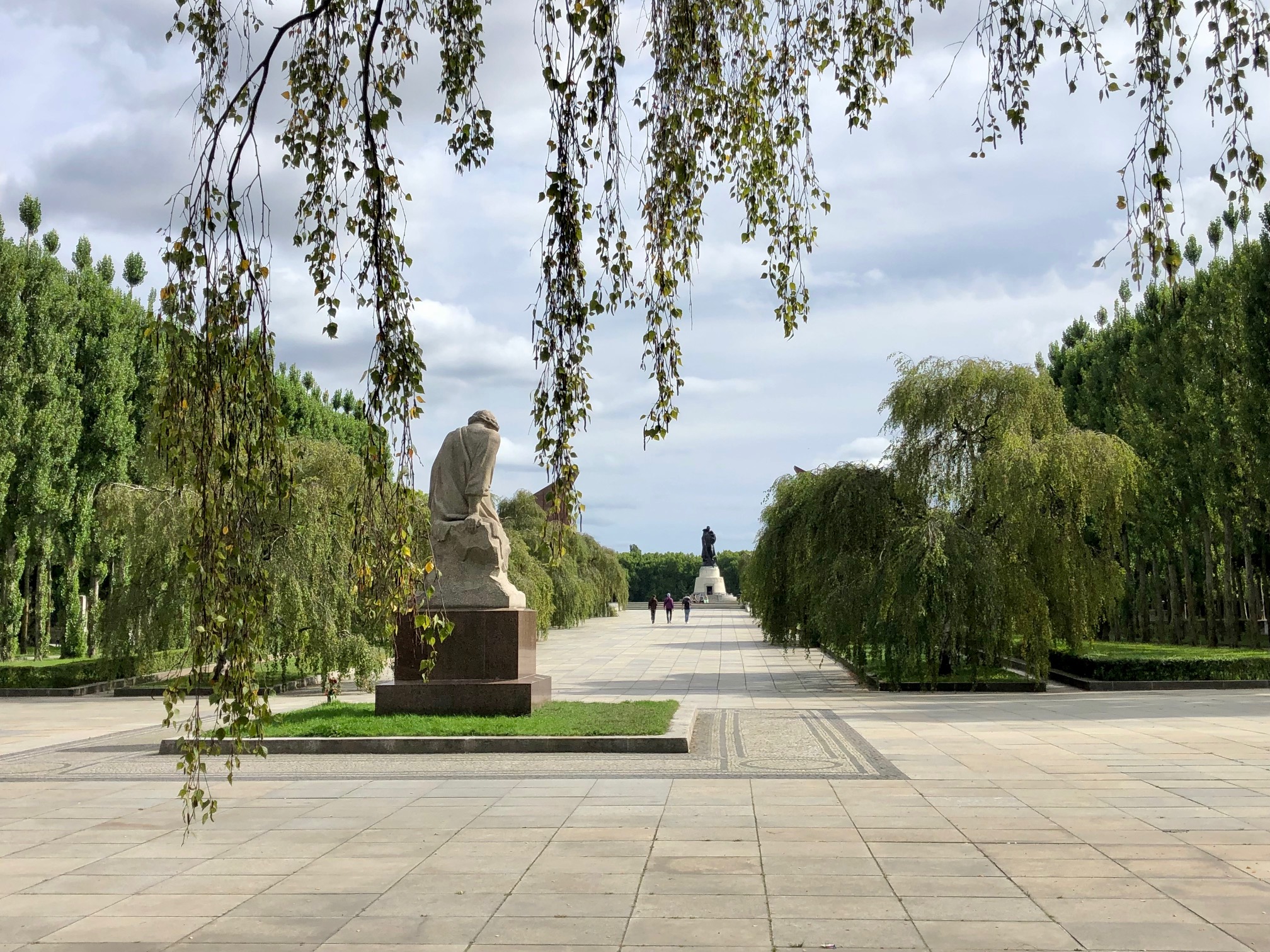
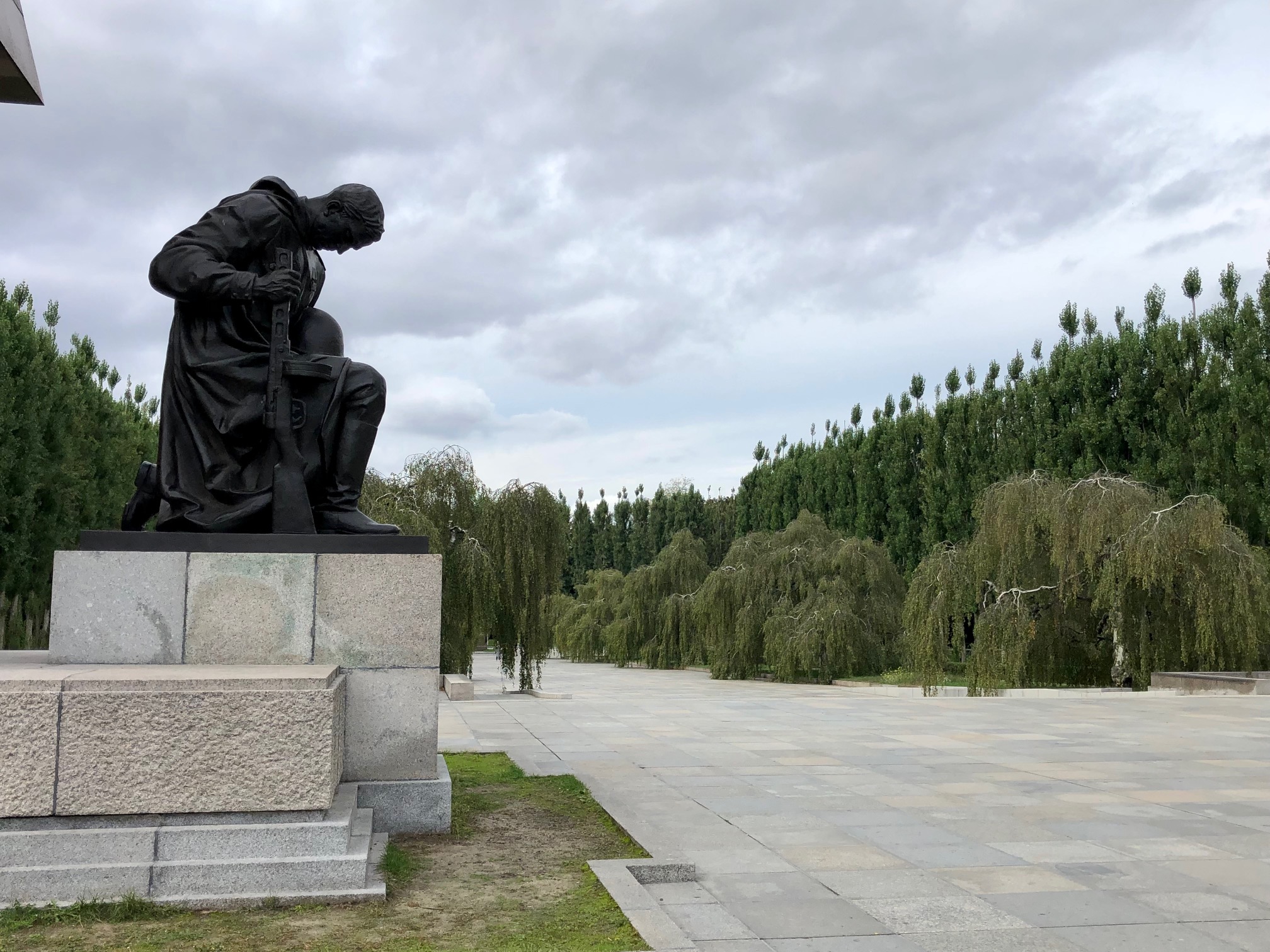
From there a promenade lined with weeping birches – incredibly moving witnessing trees seemingly crumpled in grief – you arrive at two sphynx-like kneeling soldiers that act as guardians to the cemetery section below. 

Looking back to the avenue of weeping birches
Looking ahead to the cemetery

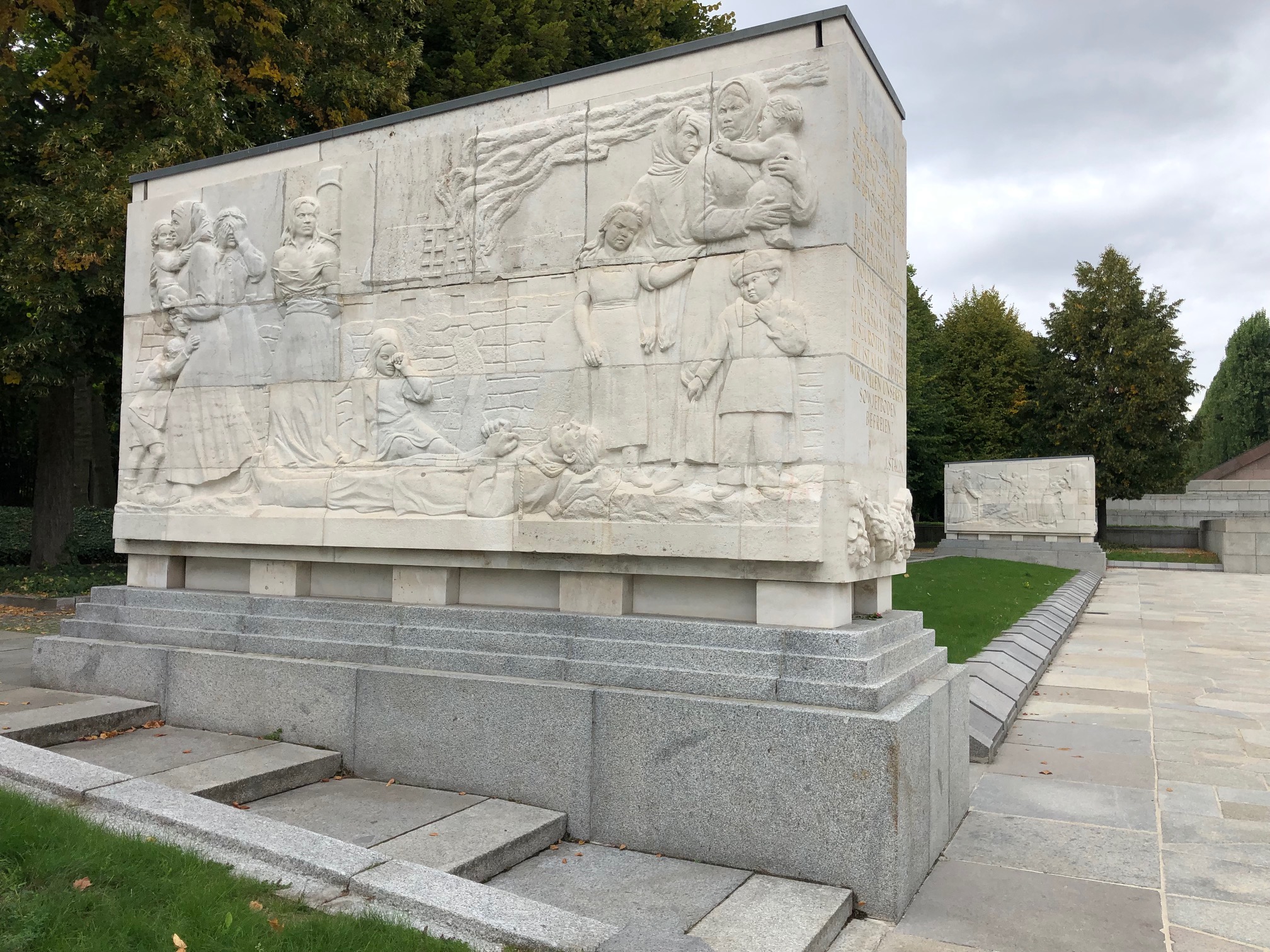
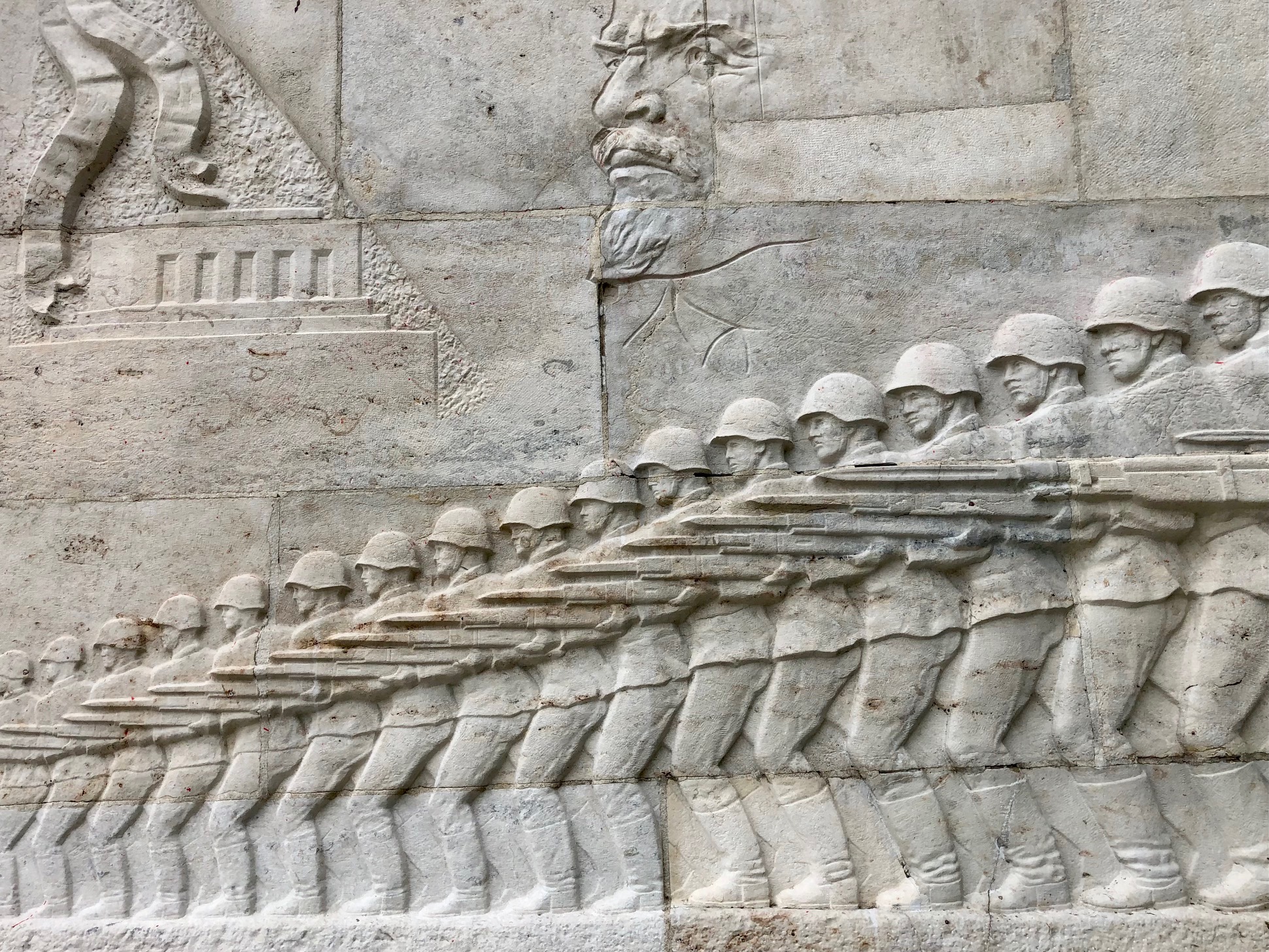
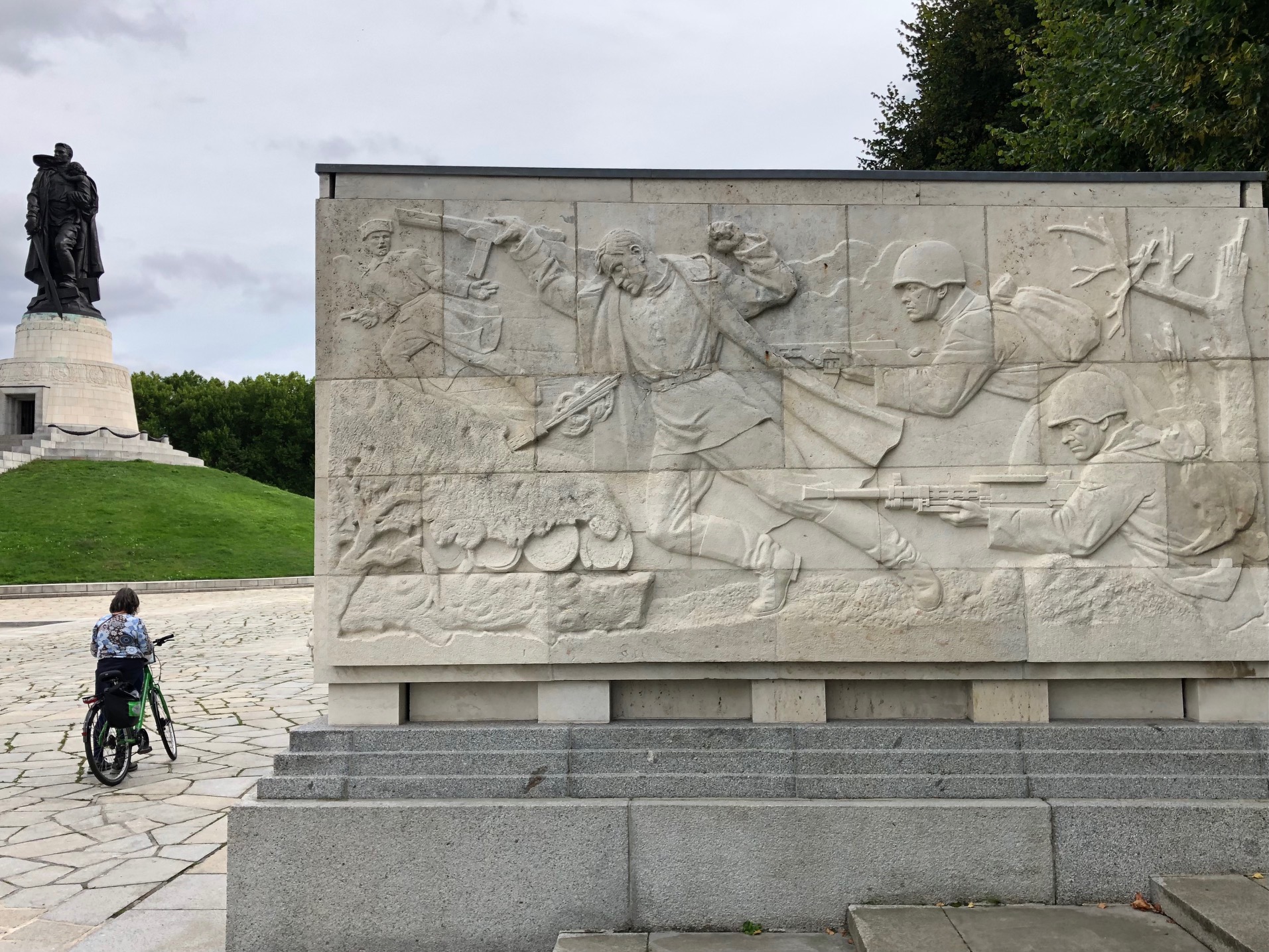
Beautifully executed stone reliefs illustrating scenes from the ‘Great Patriotic War’ decorate the sixteen marble sarcophagi flanking the graves, while gold-lettered quotes by J. Stalin, the commander in chief of the Soviet armed forces, underscore the importance of the Communist Party and the Red Army under his leadership. Though clearly outdated, these quotes survived Khrushchev’s denouncement of Stalinist rule in 1956 with the subsequent cull of Stalin-statues and effective banning of any mention of his name in public. 

The sarcophagi tell the story of the Second World War in Russia…
…through extraordinary imagery and craftsmanship.
Dedicated to the ‘heroic dying’ of the Russian people

At the very far end, you climb a stepped hill to a mausoleum supporting the aforementioned bronze statue of a Soviet soldier holding a small German girl.

Turning around to descend, you get an overview of the whole dramatic panorama that reflects the historical narratives and artistic concepts dominant in the Soviet Union under Stalin and to a degree still exist today: monumentality, hero worship, a personality cult, and a claim to exclusivity.

Treptower Park has been and continues to be a frequent venue for commemorative events. Since 1990, with the signing of the German-Soviet treaty on neighbourly relations and the German-Russian agreement on the upkeep of war graves in 1992, the Federal Republic of Germany committed itself to the care, renovation and maintenance of all Soviet military graves and war memorials in Germany. 

The evident meticulousness with which the whole site continues to be maintained (and patrolled by German police) is another of Germany’s visible expressions of understanding and reconciliation that have been extended to the Russian Federation and other countries brutally destroyed in the Third Reich’s expansionist and ideological wake. Does this reaching out in friendship make it easier to understand Angela Merkel’s unpopular (certainly in retrospect) policy relating to the Nord Stream pipeline? And the apparent weakness of Olaf Scholz’s initial reluctance to break Germany’s practice and permit the transfer of lethal weapons to areas of conflict… in this case, to Ukraine?

If the premise of my book is true and unresolved traumas of one generation can impact the lives and behaviour of subsequent generations, then the extreme collective traumas experienced by the Russian people over the past century are part of what we are seeing playing out in the attitudes, politics and actions of Russia today. Trauma responses such as emotional numbness, low self-esteem, acceptance of poverty might go some way to explain the apparent passivity and gullibility of large swathes of the population. Likewise, trauma responses such as shame might be producing the violence, megalomania and greed of those in power. Is this then, by extension of the idea, the natural destiny of all traumatised nations? After all we can see similar dysfunction and violence in Africa, South America and plenty of other nations once brutally colonised.

Psychohistory‘ – a new but exciting term to me that I appear to have already been practicing – seems to offer a way forward in thinking about these things. It combines history with psychology/psychoanalysis and social sciences/humanities to understand the emotional origin of the behavior of individuals, groups and nations, past and present. In other words, the ‘why’ of history.

I don’t have any answers, nor even the right questions yet, just an ever-growing sense of discomfort in simple, black and white narratives of good and bad, right and wrong. And an increasing belief that we are still very far from seeing, let alone comprehending the fuller picture. But we need to become more trauma-informed in all areas of life. For to neglect trauma is to leave people in a state of emotional numbness. And when you don’t feel, you become capable of overriding humanity and care for fellow living beings and life itself.

Further Reading / Viewing: 

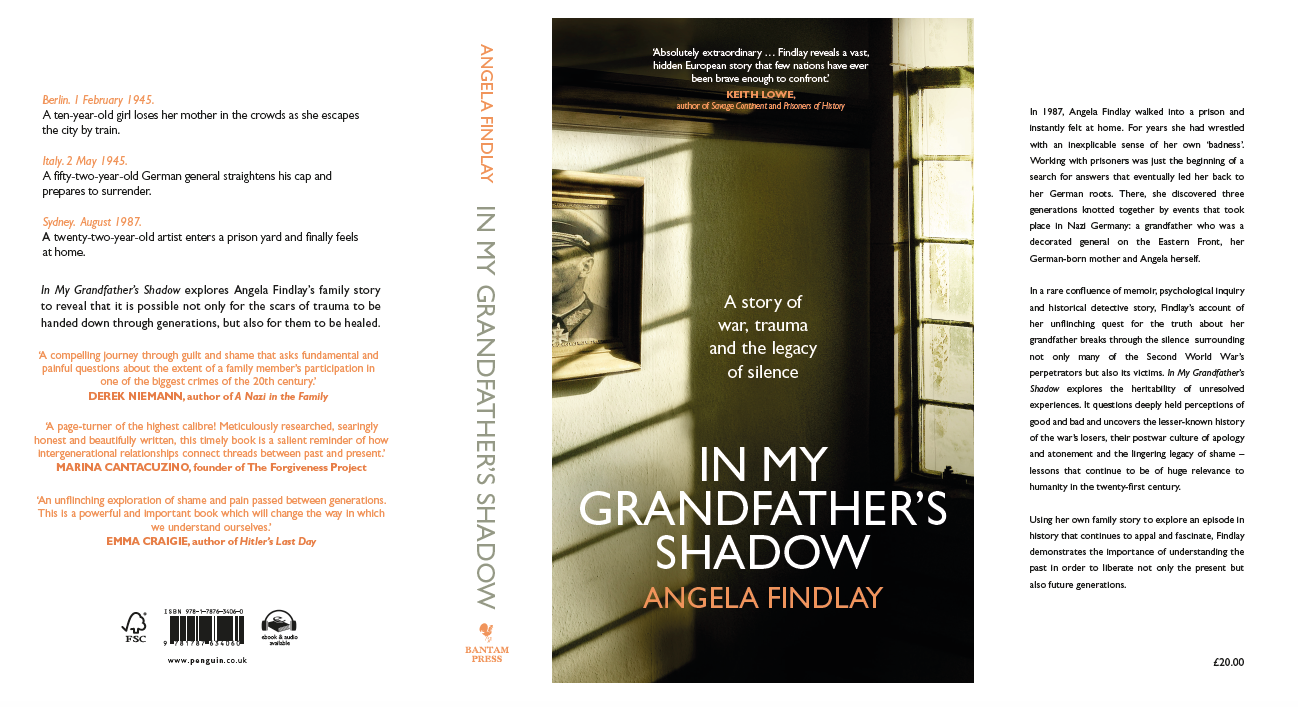
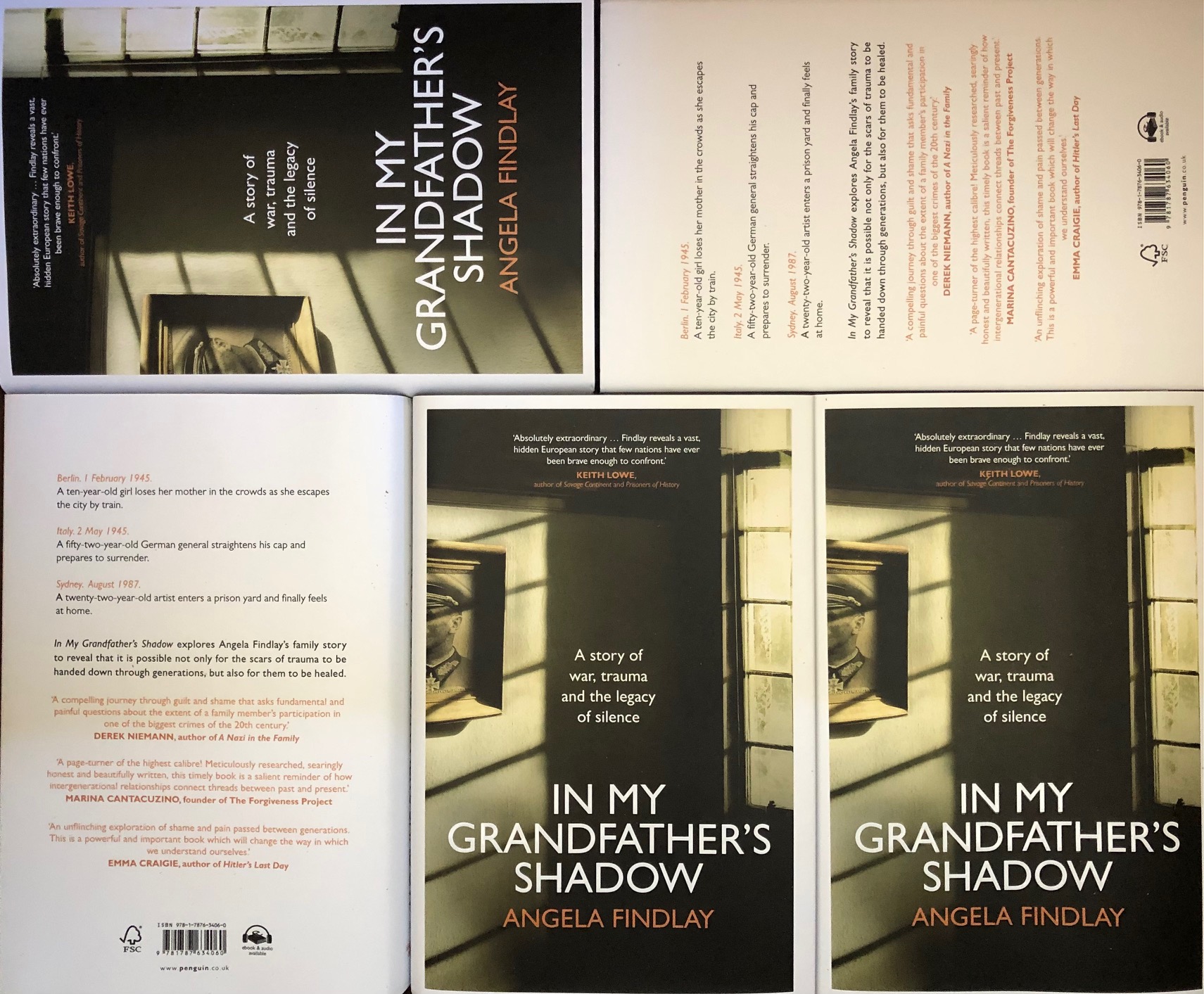
These questions are explored more deeply in my book: In My Grandfather’s Shadow. Published by Penguin Transworld and Bantam Press in July 2022 and available in most bookshops and the usual online outlets

The brilliant BBC documentary ‘Russia 1985-1999: Traumazone’ by Adam Curtis is made up of multiple film snippets taken in those years. As a fly on the wall experience and from the comfort of an armchair, it doesn’t get much ‘better’ in terms of an experience of Russia. To have lived through those years of extreme deprivation, corruption and hunger must have been little short of appalling.

Russia 1985-1999: TraumaZone review – ingenious, essential viewing from Adam Curtis

‘Generations of hurt’: Children and grandchildren of war survivors fear ripple effect of Russia’s war in Ukraine

Russia has yet to recover from the trauma of the Stalin era – The Guardian

Becoming aware of the invisible ties that bind us to the past…

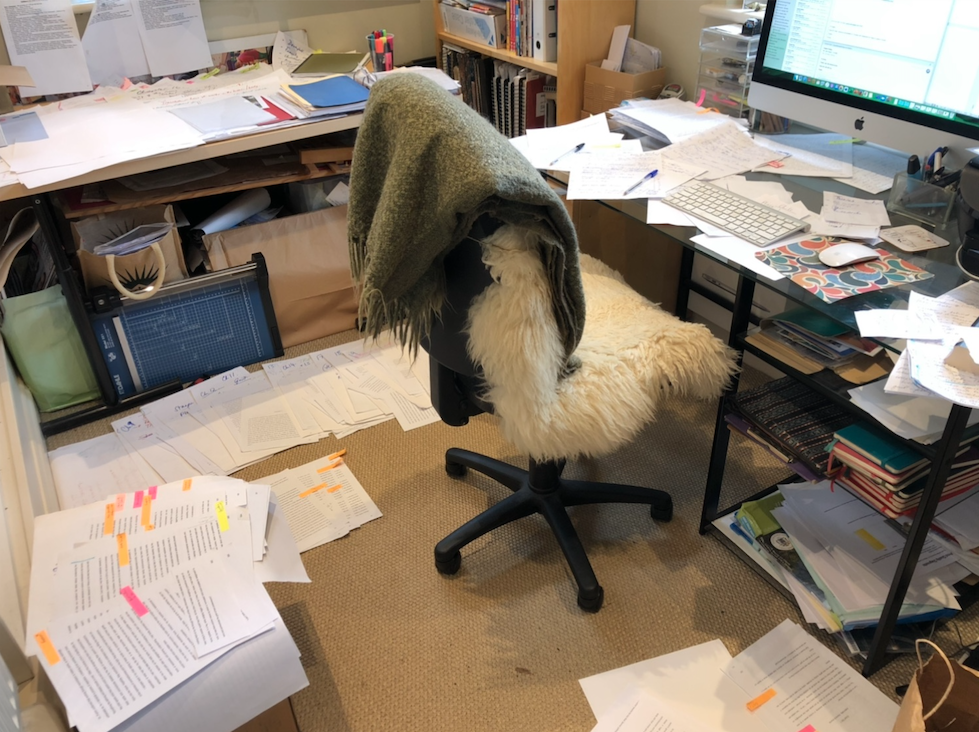
It is now just three weeks until the publication of my book, In My Grandfather’s ShadowA week in the stunning, state-of-the-art Penguin Random House studio recording the whole thing for the audio book version has left me feeling more intimately connected to it than before. Like a parent, I have spent years nurturing it into its current shape. Now it is leaving the nest and heading into the big wide world… how exciting is that! 

Most of you will already have an idea of the themes it is likely to address from my blogs. And – spoiler alert – it does. But possibly the main thrust of the book – as stipulated by Penguin Transworld when they took me on – was to focus on the heritability of trauma. It involved ‘a bit’ (read: ‘total mind-fry’) of a re-write. Yet ultimately they were right. Because this idea, that we can inherit psychological wounds from our forebears, is gaining more and more traction.

The process or re-structuring a book…

One of the book’s working titles was ‘Invisible Lines’, which I liked. But ‘line’ is somehow wrong. Even the letters that make up those two words are too straight, too linear. For, while there is obviously a linear logic to the structure and the content, the essence explores hidden cycles and the bits of life that meander or tie themselves in knots. Or that appear unsubstantial, unreal even, when really they are holding the tiller to our lives.  

As I have said before, trauma, guilt and shame abide in the psyches of us all to a greater or lesser degree. They are part of what it is to be human. But frequently they remain unidentified, like bottom dwellers in the sea of our emotions that stir up the mud to cloud our vision and cause havoc with how we see, not only ourselves, but others and the wider world. 

In My Grandfather’s Shadow therefore takes readers on a deep dive into largely unknown or unspoken – until recently – corners of experience. Not just of those who lived through the Second World War, but those who came after. It looks at the impact of war and violence in general, a theme that has gained an unwelcome pertinence in the light – or should I say darkness – of Russia’s war in Ukraine with its horrific reports of rapes, brutal murders, forced transportations that echoe my grandfather’s letters from the eastern front in 1941-2. War is as old as the world. But where the brutality was once confined to the battlefield and soldiers, Ukraine is a salient reminder that modern warfare invariably extends into the homes and lives of civilians. For generations.

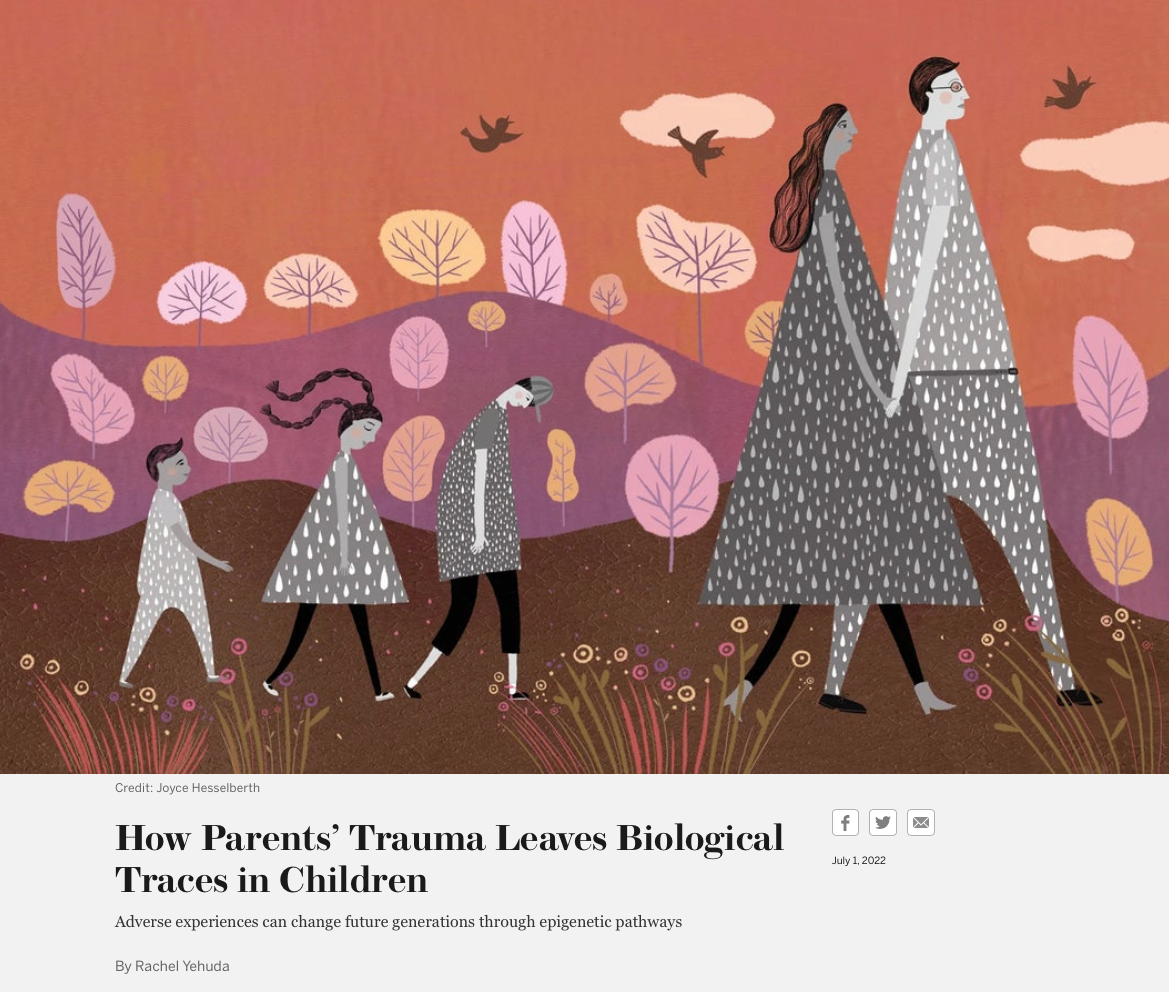
It is probably easy to imagine how the extreme traumas of the Holocaust could affect the offspring of survivors as well. Traumatic imprints have long been witnessed in second and third generations. What is less known because it could only be articulated when the non-Jewish German grandchildren of those who lived through the war came of age in their 40s, is that traumatic experiences of any nature, if left unattended or untreated, can seriously disrupt the lives of subsequent generations. The process is variably referred to as ‘transgenerational transmission’ or ‘emotional inheritance.’ Even science is embracing the possibility with its own language: ‘epigenetics.’ (See article

How Parents’ Trauma Leaves Biological Traces in Children – Scientific American

Whether biological, psychological, genetic or spiritual, the process of transmission is not new. What is new, is our growing awareness of it. And with that awareness comes responsibility. Responsibility to address the cause of the damage, to find ways to resolve or heal it, and then to prevent it. To neglect trauma, particularly in children, and to ignore how it’s effects can linger on for generations is to potentially condemn them to lives of violence, self-harm, substance misuse, depressions, low self-esteem, underachievement or a general sense of something being amiss, all of which are becoming increasingly endemic in our society. It is therefore in everybody’s interest to do this.

This is one of the reasons I took the risk of bearing my soul and writing my book. Because I really hope that parents, teachers, doctors, psychologists, politicians might open their minds to the possibility that behind someone’s problematic behaviour or attitudes, their unemployability, fears or lack of motivation there might lie an unresolved family trauma, wrongdoing or injustice that is seeking resolution through that person without them realising it. It took me five decades to unravel the ties that bound me to the experiences of my immediate forebears. Because nobody knew about it back then.

Well, we do now. Or at least you will do when you have read my book!

In the words of those who have read it:

“Can we as individuals untangle ourselves from a past that binds us to the suffering and deeds of our predecessors?”This profound question forms the basis of this remarkable memoir in which Findlay – granddaughter of Wehrmacht officer, General Karl von Graffen – wrestles the feelings of ‘badness within her’ that has plagued both her mental health and her sense of self for years. It’s a powerful investigation into the individual personal cost that results from wider history, and the ways in which inherited guilt and trauma can leave scars across the generations. A must read… Caroline Sanderson, Editor’s Choice in The Bookseller

This is a moving and powerful memoir that illuminates the extraordinary power of unprocessed trauma as it passes through generations, and how when it is faced it can be healed. Julia Samuel, author of Every Family Has a StoryGrief Works and This Too Shall Pass

An unflinching exploration of shame and pain passed between generations.  This is a powerful and important book which will change the way in which we understand ourselves. Emma Craigie, author

A page turner of the highest calibre! Meticulously researched, searingly honest and beautifully written, this timely book is a salient reminder of how intergenerational relationships connect threads between past and present... This book gives new meaning to the prescient words of psychoanalyst, Roger Woolger: ‘It is the responsibility of the living to heal the dead. Otherwise their unfinished business will continue to play out in our fears, phobias and illnesses.’ Marina Cantacuzino, author and founder of The Forgiveness Project

This is an absolutely extraordinary book. In peeling back the layers of her family history, Angela Findlay reveals a vast, hidden European story that few nations have ever been brave enough to confront. Keith Lowe, author of Savage ContinentThe Fear and the Freedom, and Prisoners of History

A compelling journey through guilt and shame that asks fundamental and painful questions about the extent of a family member’s participation in one of the biggest crimes of the 20th century. Derek Niemann, author of A Nazi in the family

From 14th July, you will be able to purchase In My Grandfather’s Shadow at a bookshop near you such as Waterstones or various online stores .

I dare you not to look away…

What is the difference between ‘I had no idea’ and ‘I didn’t know’?

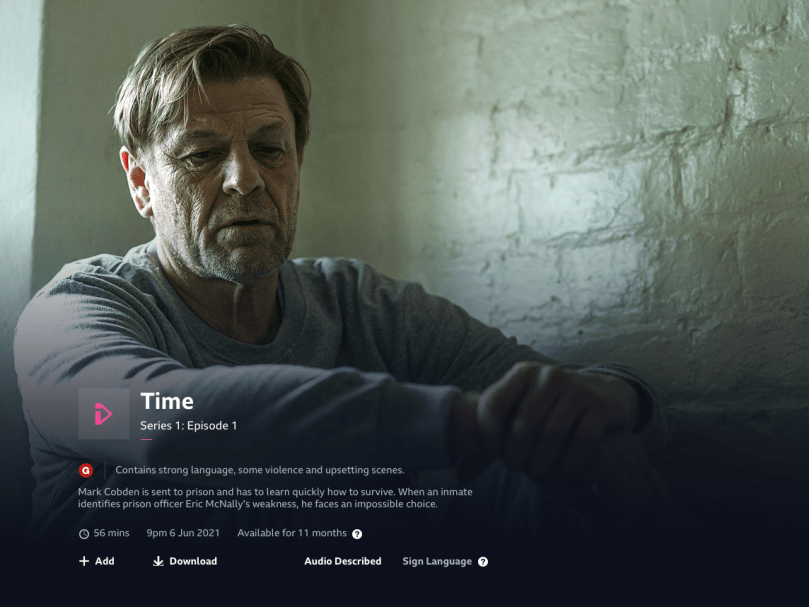
I ask this question in the wake of what must be one of the best television series in the past year: BBC One’s deeply uncomfortable and disquieting three-parter, Time.

It is described as: ‘Jimmy McGovern’s hard-hitting, brutally honest portrayal of a failed public service which gets everything right about prison life – minus the tedium.’ If you haven’t seen it – and sorry to my readers abroad if you can’t get BBC – I would like to invite you to watch it, even to dip into it for ten minutes. I’ll tell you why.

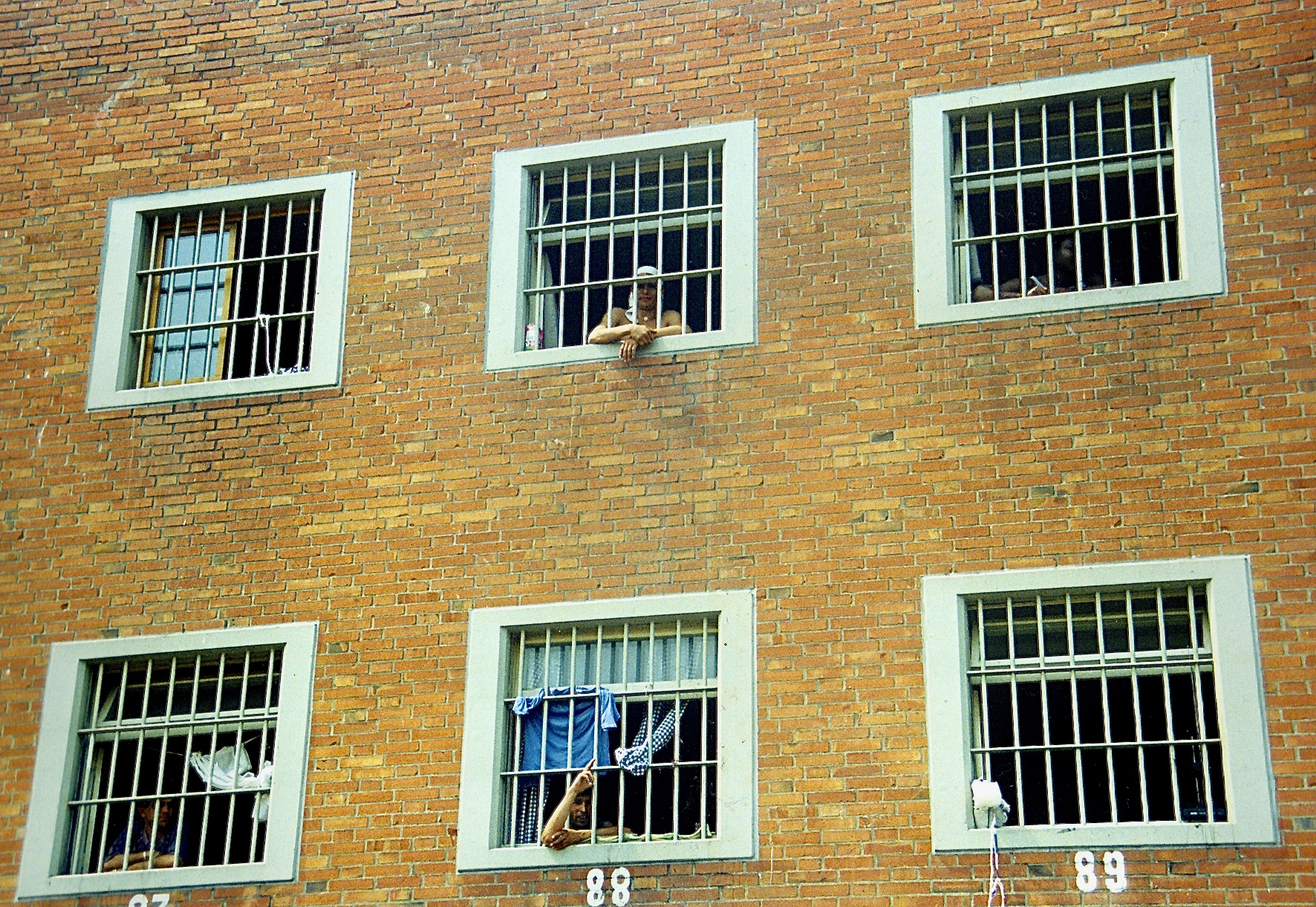
Having worked in many prisons in England, I feel everybody needs to know what is going on in them. In our name. There was nothing in the series that I didn’t recognise from my years inside. As I am up against a tight writing deadline for my book (and this blog actually!), I am going to allow the three episodes to speak for me and bear witness to the sheer illogic, and all too often, inhumanity of our current system.

This doesn’t apply to all prisoners, but if we recognise that many addictive, violent and destructive behaviours derive from childhood trauma; if we fully comprehend the impact of untreated traumatic incidents, then the cruelty of locking up people, who were first and foremost victims, in what are often little more than hell holes, becomes very clear. 

My admittedly provocative opening question stems from a genuine desire to understand the answer.

For decades, the adult-generation of Germans living through the Second World War have not been believed when they say, ‘we didn’t know’ (about the concentration camps). And people around the world often blame them for having looked the other way. I don’t want to get into that debate here. There is a consensus among historians that some would have known, some would have heard about them and not believed it, and others would not have known. Most of the camps were miles away in the east and there was little access to free press. There was also a deadly dictatorship controlling thoughts and actions. Yet not knowing, or knowing and not doing anything, allowed the deadly system to persist for as long as it did.

I have been talking to a wide range of audiences about my experiences of working as an artist in prisons for nearly three decades. The most common thing I hear afterwards is a shocked “I had no idea.” It’s totally valid, I make no judgment. There are loads of things I have no idea about. But why don’t more people know about this? There are prisons in nearly every major town. The shocking statistics of failure, the appalling conditions and the tragic stories of many of the people locked up in them are reported on all the time, in every form of media. How can we not know about them?

There is obviously a wide spectrum from having no idea, to knowing but looking away, to knowing and acting. I would just like to use this month’s blog to encourage you to become more informed, specifically about the system in which we warehouse prisoners. Not just for their sakes, but for all of us who live in the communities into which they are returned… usually worse.

When enough people ‘have an idea’, things can and will change.

Watching this series is a start. It’s tough watching, but the reality is much, much tougher.

I dare you not to look away.

Reviews:

Time review – Sean Bean and Stephen Graham astound in enraging prison drama

Time review – like a punch in the face, but in a good way

Time review: This gripping, gruelling portrait of life in prison is essential viewing

Let’s at least talk about it…

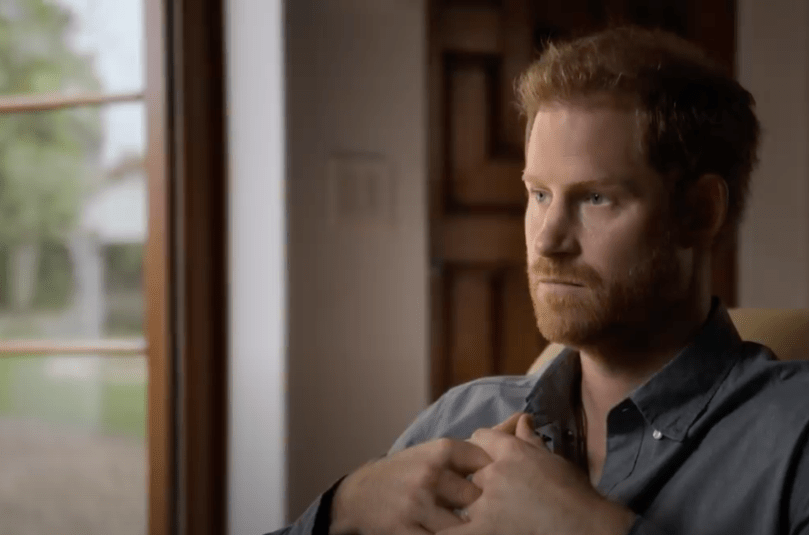
I know many people are finding plenty of reasons to slate Prince Harry at the moment: for his open criticism of his upbringing; for hypocrisy in privacy vs. publicity matters; for his ‘therapy speak’. 

I also know there is fierce resistance to what he is saying. After all, it flies in the faces of stiff-upper-lip Britishness and the Royal Family’s ‘play-the-game’ rules.

How about we put all judgment aside for a moment, and simply listen to – and hear – what he is trying to do. Because doesn’t it then become clear that he is trying to talk about some of the most important things that can affect us all? Things that haven’t been talked about nearly enough.

Unresolved trauma. 

Silence. 

And mental health.

No-one can accuse him of not knowing each of them intimately.

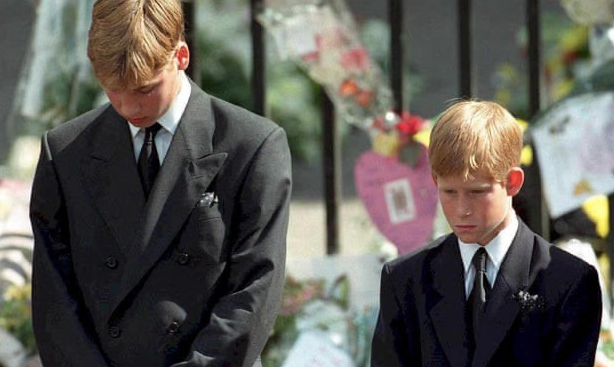
Prince William and Harry at their mother’s funeral in 1997

According to the leading charity, MIND, mental health issues went up by 20% between 1993 and 2014. Imagine the rate at which they are rising now, especially among the young. You just have to witness, as I recently have, a desperate twenty-something year old trying to access mental health provision in this country in order to see how woefully inadequate it is. And how much needs to be done.

From MIND

There is nothing new or wrong in recognising the potentially huge role parents and primary carers play in forming or, in some cases unfortunately, de-forming a child’s mental health. It’s not an attack; or blame. It’s just fact. So personally, I welcome Harry’s efforts to get us all talking about these things. And I can only recognise logic, truth and sense when he says:

“There is no blame. I don’t think we should be pointing the finger or blaming anybody, but certainly when it comes to parenting, if I’ve experienced some form of pain or suffering because of the pain or suffering that perhaps my father or my parents had suffered, I’m going to make sure I break that cycle so that I don’t pass it on, basically.

Or:

“It’s a lot of genetic pain and suffering that gets passed on anyway so we as parents should be doing the most we can to try and say: ‘You know what, that happened to me, I’m going to make sure that doesn’t happen to you.’”

People have been asking what ‘genetic pain’ is. I know the scientific fact-checkers at TED would have a lot to say about his use of the word ‘genetic’ in that context – they did about my single mention of it in my TEDx talk, which wasn’t even about genetic inheritance! He possibly means ‘generational’ pain, but, as I mentioned in last month’s blog, science often lags behind lived experience and the insights of other disciplines, so maybe his – and my – experiences will one day be proved to be genetically true as well.

I actually think that if more parents or grandparents learnt to ‘therapy speak’ about the hurt or trauma in their childhoods and lives, many destructive cycles would be broken. Of course it isn’t comfortable at the time. And yes, it can be extremely upsetting, especially if criticism of family members is voiced on a global platform. But feeling a need to talk openly and publicly is often a direct result of having been silenced. And the impact of silence on traumatic experiences is potentially devastating. It pushes raw, unprocessed emotions deeper into the psyche where, unexpressed, they fester like bandaged wounds deprived of the air that will heal them. And then the problems start. 

After over two decades of silence… of being silenced… Harry is now giving his wounds some ‘air-time’. And I hope the world will allow him to stumble and cock up royally (…sorry!) from time to time while he does his best to break new ground – just like his mother tried to do – and raise awareness of the insidious killer in our midst.

And what can we do to help the situation?

Maybe the first step is to start talking. And listening. Talking about things that have mattered… with your children and your grandchildren. With your parents and grandparents. With your wife, husband, friends. Because while silence may help you cope with something, it may not help those who come after.

So, talk about it… before it becomes too late. 

LINKS (as usual, a variety of viewpoints – some definitely not my opinion)

I talk about the impact of silence and lack of understanding surrounding intergenerational trauma in my TEDx talk – Facing the past to liberate the present

“The Me You Can’t See”.

Prince Harry appears to criticise way he was raised by his father – The Guardian

Prince Harry’s ‘Genetic Pain’ Comments Are Not Actually A Dig At Prince Charles – GRAZIA

Prince Harry’s ‘genetic pain’ is an insult to his grandmother. The Duke’s preoccupations with mental health and his parents reveal him to be as self-obsessed as any privileged millennial – The Telegraph

Prince Harry: I want to break cycle of pain for my children – BBC NEWS

Prince Harry says trauma of Diana’s death led him to use alcohol and drugs – The Guardian

What is genetic pain and can you inherit parental trauma? – The Telegraph

Meghan, Diana, drugs and therapy: what Harry said in Apple TV series – The Guardian