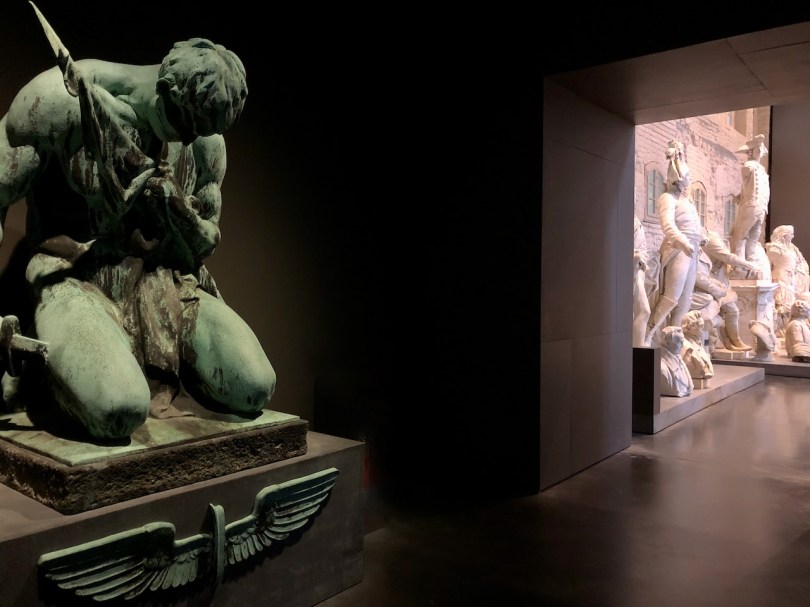
The changing faces of Berlin…

For more than 30 years I have been watching cranes and diggers deconstruct and rebuild the architectural face of Berlin. It is an infinitely fascinating process to follow.
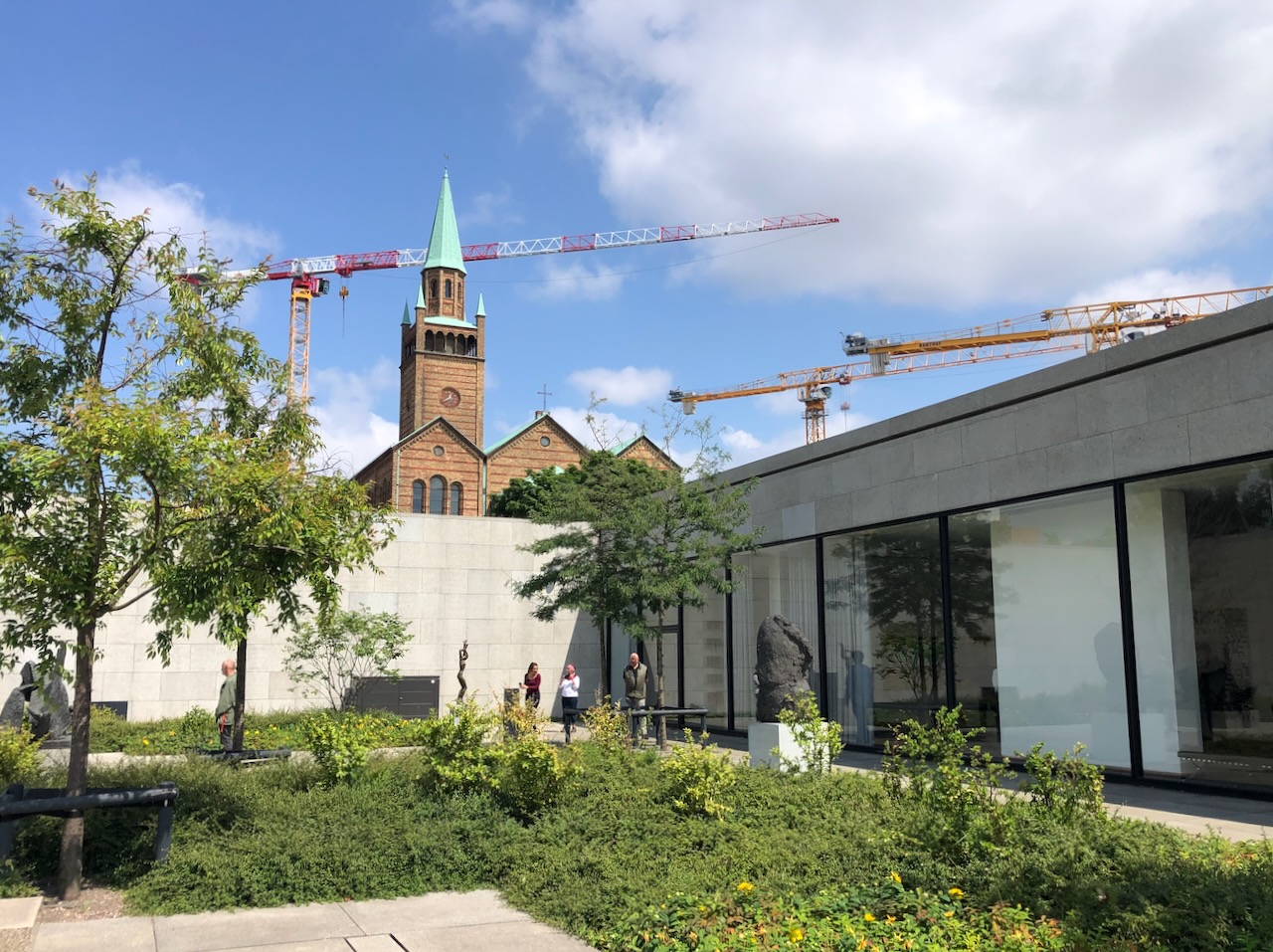
Neue Nationalgallerie by Mies van der Rohe… with cranes

The focus of my most recent trip, however, ended up being the people who inhabit the city, both past and present. And typically for Berlin, it has created a brilliant exhibition to trace the changing faces of those who lived through its turbulent history.

Enthüllt / Unveiled is housed in the Renaissance Citadel in the western borough of Spandau and not only offers a surreal experience but also an inspired response to the emotionally and politically charged ‘statue debate’. 
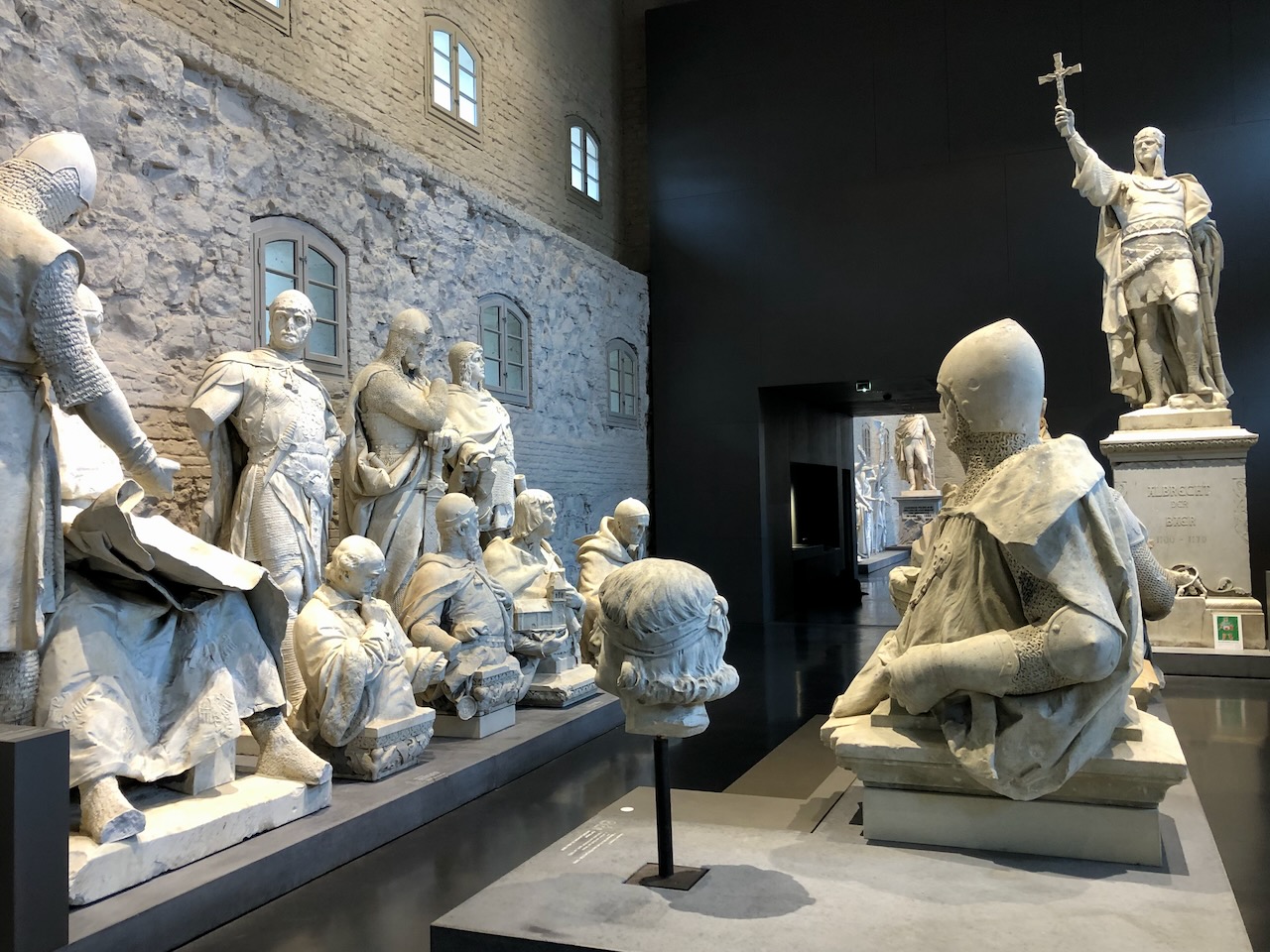
Albrecht the Bear and others

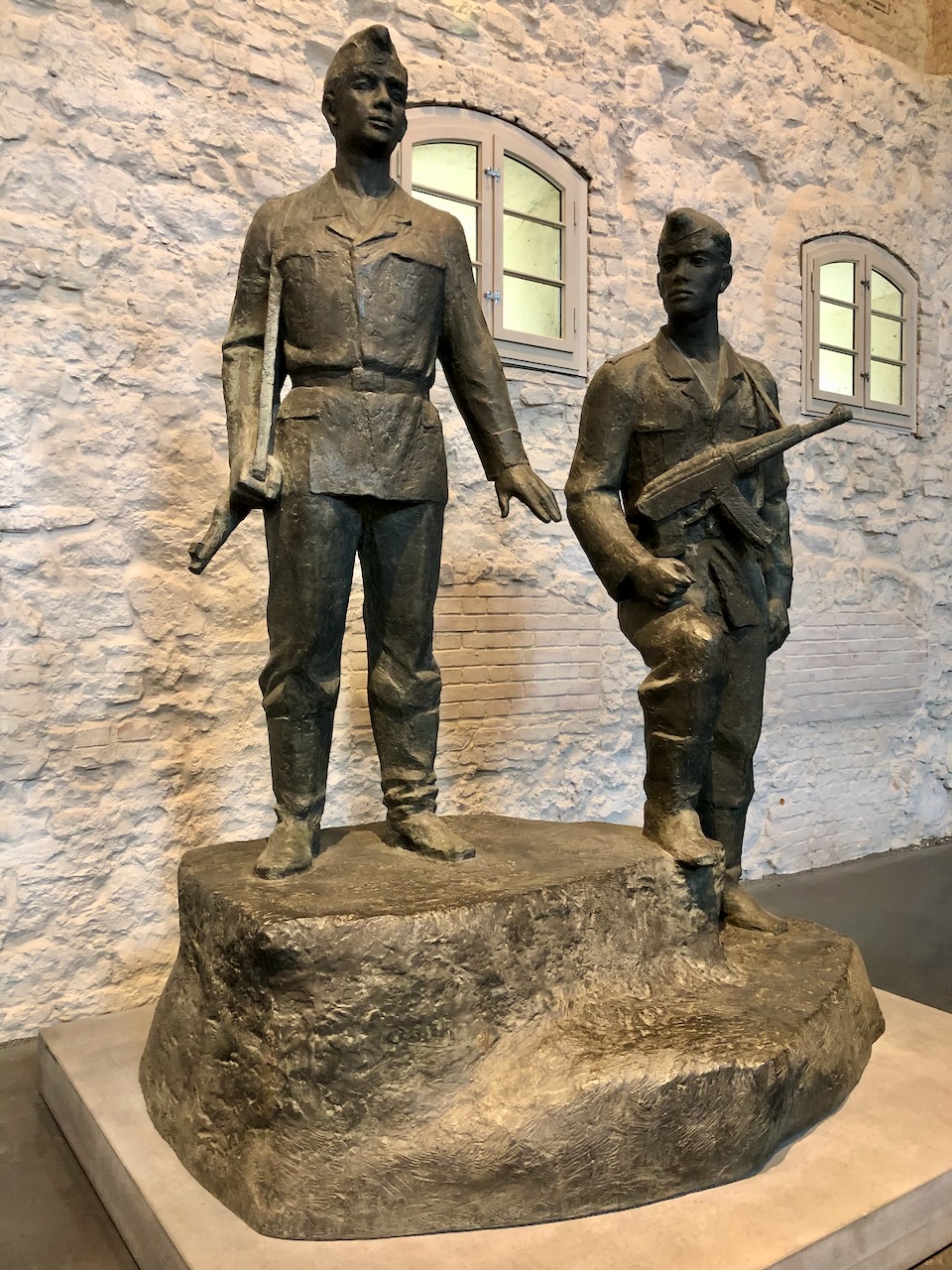
Housed in the 114-meter-long former Provisions Depot of the fortress, Berlin’s once revered or feared rulers, Prussian military heroes and bishops rub marble and bronze shoulders with thinkers, revolutionaries and victims. Spanning a timeline from the 12th century Albrecht the Bear (whose face you learn would not have been known so would have been crafted from a local tradesman or friend of the sculptor’s) to contentious GDR border guards, most of the statues have been removed from their plinths to stand at eye level. Many are missing limbs and noses or even their entire bodies. With chests still puffed but their status removed, you meet the figures of history on equal terms. It is a powerful experience.
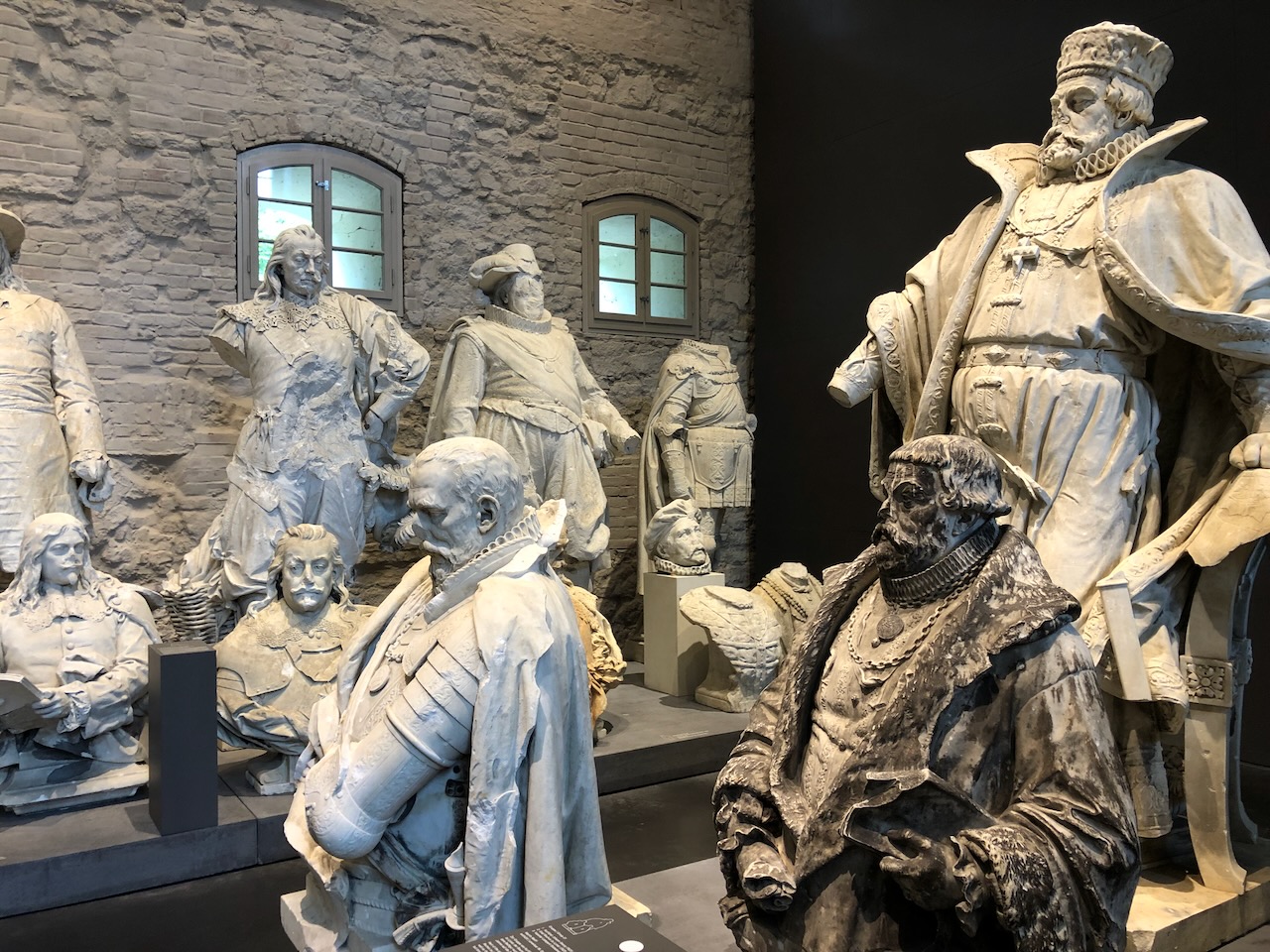
Various headless/faceless/slightly worse-for-wear Electors, Chancellors and Counts from the 1500s

Monument to the Grenzposten / Border guards (1971)

One of the highlights of the exhibition comes right at the end. Displayed on its side, Lenin’s 3.5-tonne granite head once rested atop a 19-meter-high statue by Soviet Sculptor, Nikolai Tomski. Created in 1970 and designed to blend with the Soviet architecture around Lenin Square (now United Nations Square), it was pulled down in 1992, cut into more than 120 blocks, buried in the Müggelheimer Forest and covered with gravel. It was recovered in 2015 for the Citadel exhibition, complete with nibbled ears (people chiselled off chunks for souvenirs) and transportation bolts sticking out of the crown.
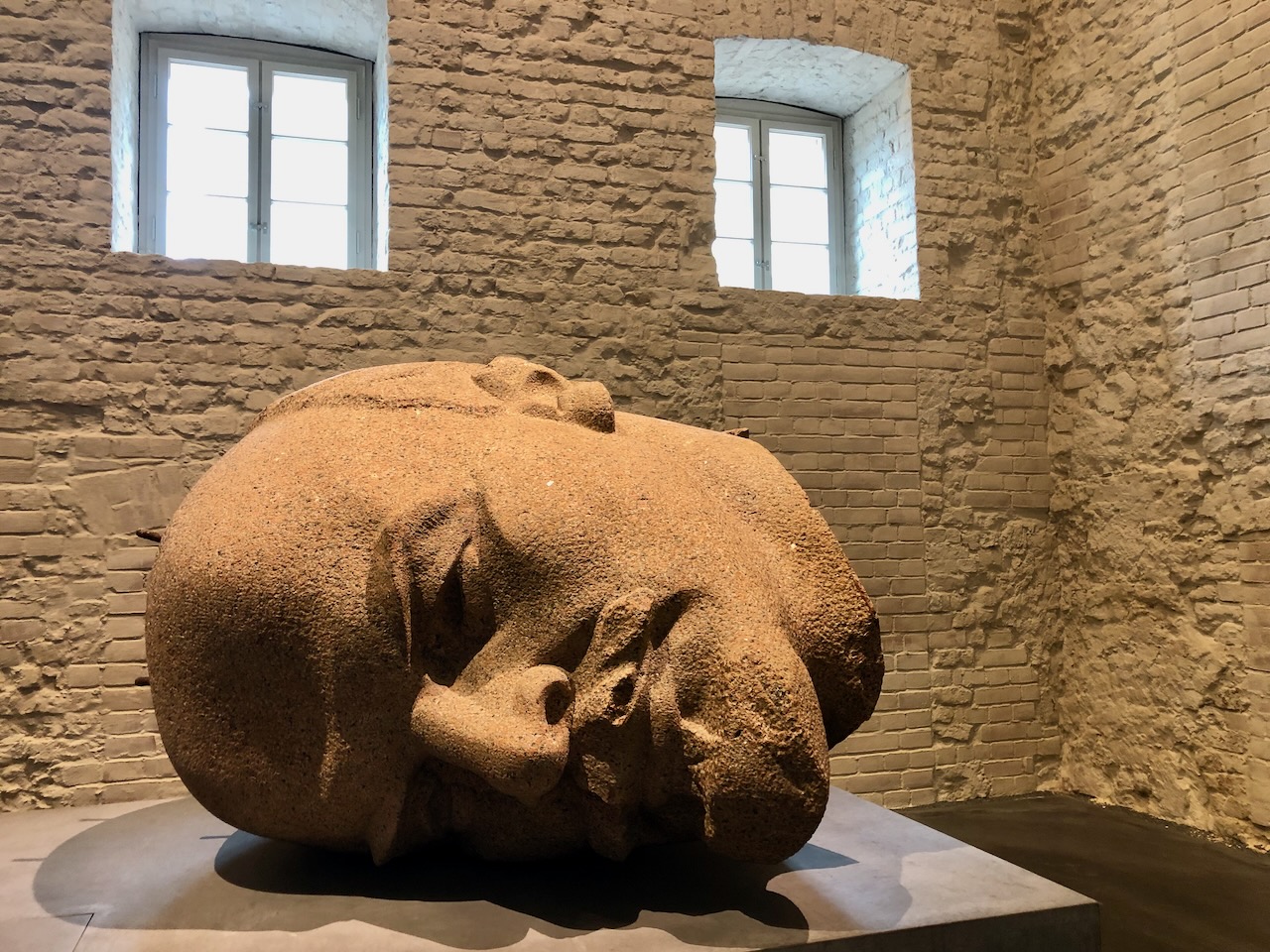
Founder of the Soviet Union, Lenin

Traditional memorials are generally markers of achievement and greatness. Raised on plinths, you ‘look up’ to the person or event being celebrated. But what happens when they no longer reflect the values of the time, when their legacy becomes toxic? Do you leave them as lifeless witnesses to a time past with no apparent power in the present? Do you topple or remove them in an attempt to lose the history, or does that lose the discourse and potential to learn lessons? Do you contextualise them with plaques…? 

Germany, with its contentious past has explored these questions possibly more than anywhere else. Accompanied by huge debate, emotion and financial investment, statues and monuments have been removed, banned, dismantled, buried, unburied, re-erected in new locations, built from scratch… All this can be read about in the ubiquitous digital documentation running through the exhibition. But Dr Urte Evert, the curator of Unveiled, seems to have done something very clever. By allowing visitors to touch the statues, children to clamber on them, artists to respond to them, performers to dance among them, she encourages engagement and dialogue, not only with the art forms, but with history. And this feels more important today than ever.
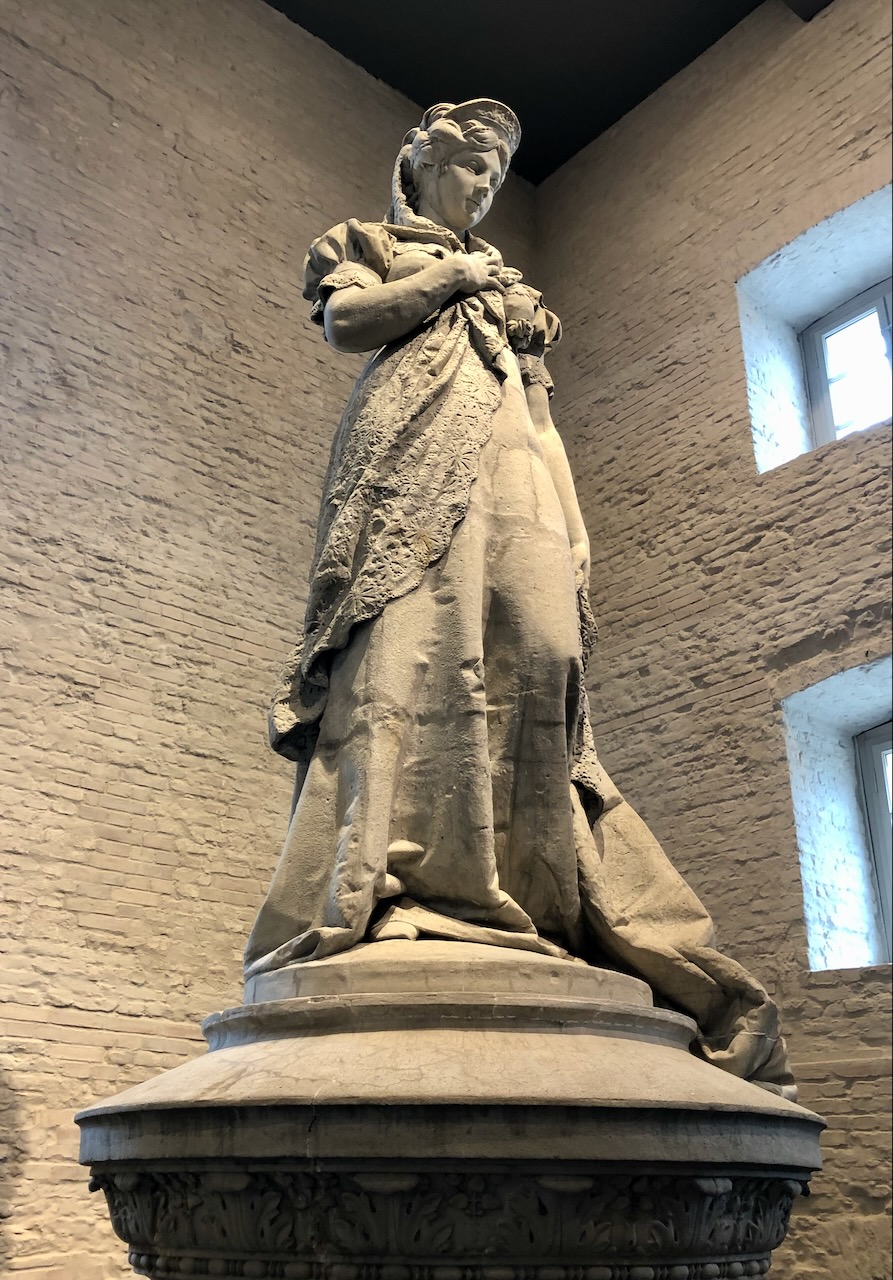
Queen Luise, ‘Queen of Hearts’ (1776-1810)

What is also striking, but not surprising, is that every statue from Kaiser Wilhelm I to Alexander von Humboldt and Immanuel Kant is a man. Apart from one, Queen Luise, wife of King Friedrich Wilhelm III and an early form of celebrity referred to as the Queen of Hearts… or according to Napoleon “the only real man in Prussia.” Even in today’s Berlin there are few statues celebrating women and even fewer to individual women.

Käthe Kollwitz

In a square named after her in the fashionable district of Prenzlauerberg, a rather lumpy and grumpy-looking Käthe Kollwitz, artist, sculptor, committed socialist and pacifist sits on a heavy block narrowly dodging graffiti. She is remembered everywhere and this is just one of many statues of her.
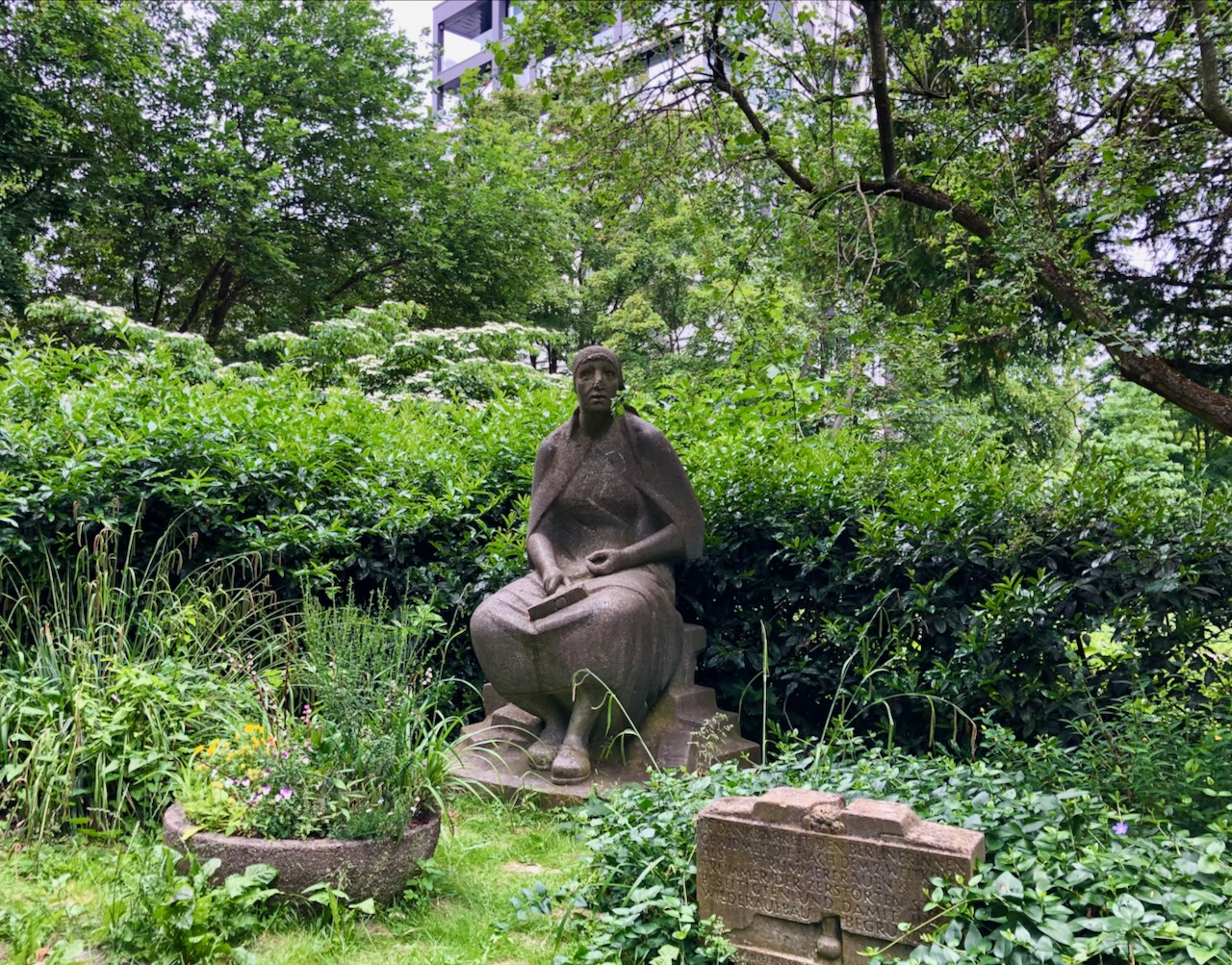
Memorial to the Trümmerfrauen / Rubble women (1950s)

Originally placed on a hill made of the bombed remnants of the city but now reposing with hammer still in hand in the greenery of Hasenheide Park, a Memorial to the Trümmerfrauen of Berlin offers acknowledgement to the ‘rubble women’ who cleared and sorted Germany’s destroyed cities by hand, stone by stone.
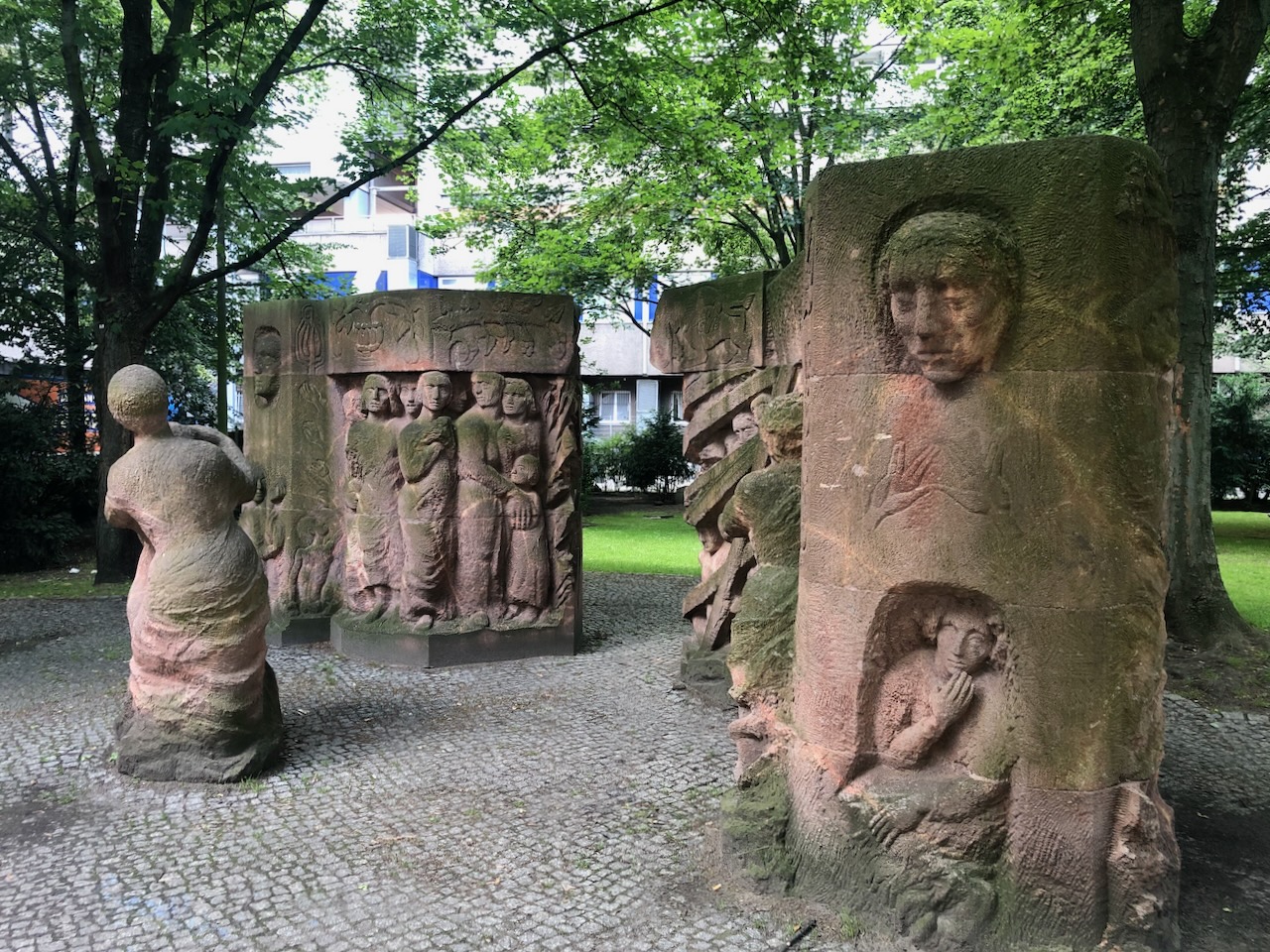
Block of Women, Rosenstraße

More centrally and on the site of the destroyed Old Synagogue, the Rosenstraße Monument, also known as the Block of Women, marks the 1943 peaceful uprising of some 600 non-Jewish German women who demanded the SS and Gestapo release their detained Jewish husbands awaiting deportation. It was a rare moment of successful protest against the Nazis. 
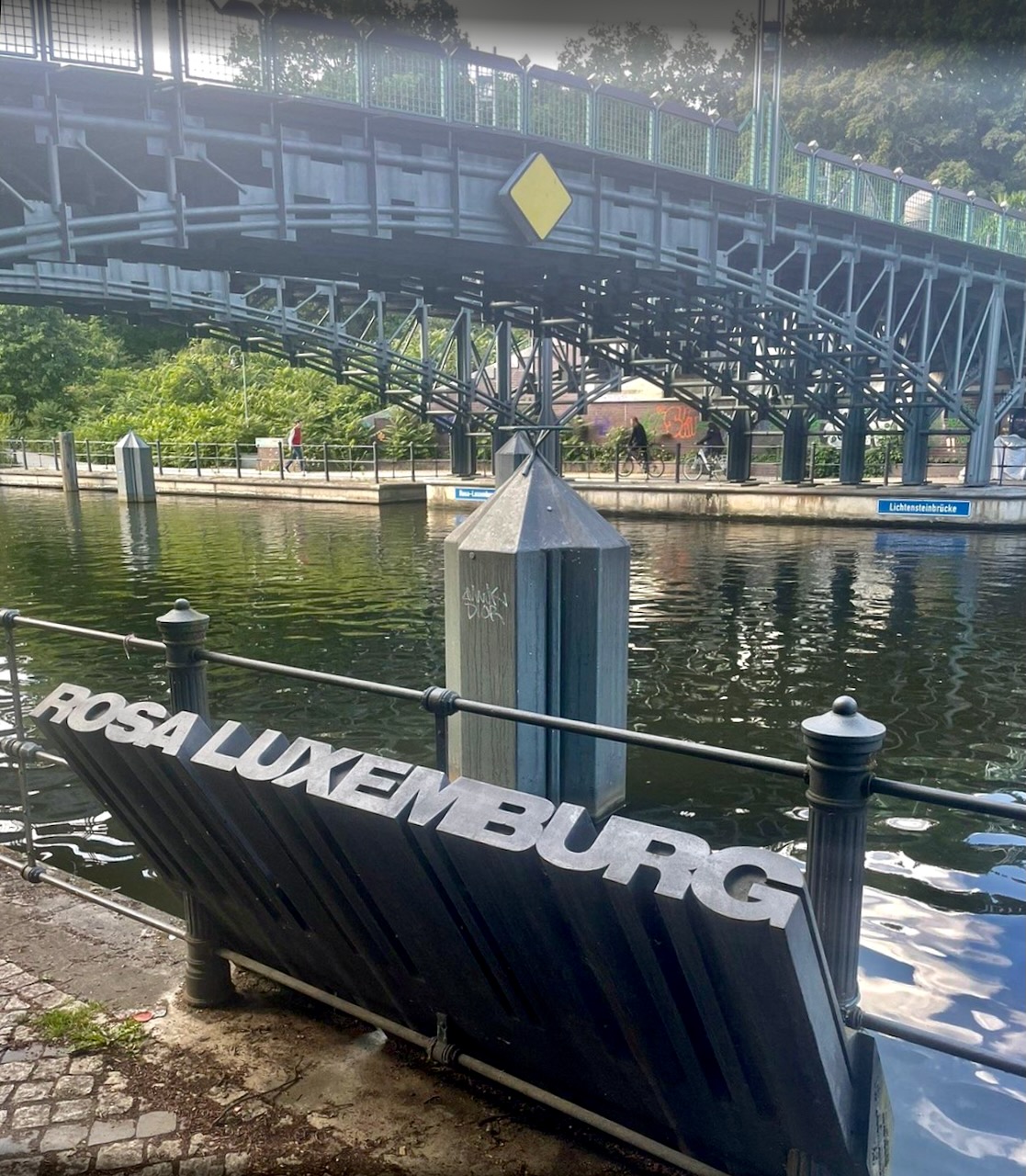
Rosa Luxemburg Memorial

And Rosa Luxemburg, one of the founders and heroines of the anti-war Spartacus League is remembered in big letters spelling out her name along the side of the Landwehr Canal where her tortured and executed body was fished out in 1919. She also has a figurative statue outside the Rosa Luxemburg Stiftung in Friedrichshain.

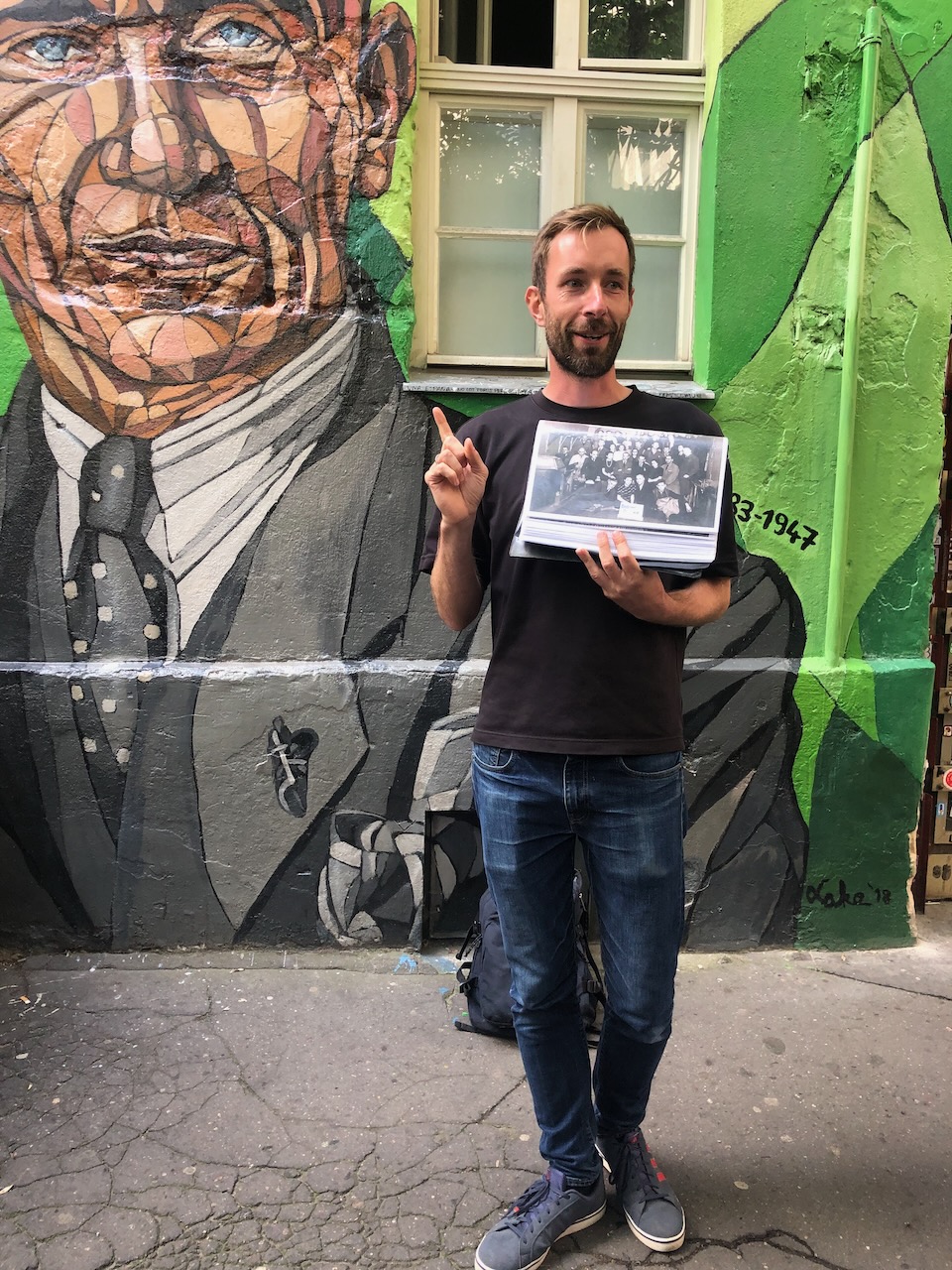
There are no doubt more but today the demographics of Berlin look very different. It’s a cool international city of young hipsters, artists, entrepreneurs, thinkers, activists, expellees, refugees, LGBTQ people, politicians, former GDR bureaucrats and prisoners… the list is long and colourful. John Kampner’s excellent book In Search of Berlin charts its development over the centuries, its ruptures, reinventions and constant search for identity. I keep thinking I know Berlin quite well now, that I have seen a lot of it… how wrong I am. There is more… so much more. And a highlight of this trip was joining Matti Geyer of Tours of Berlin on one of his private tours. (I love a good walking tour and have been on many.) As a born-and-bred Berliner with incredible knowledge and delightful delivery, he could bring new corners of the city to life and introduce me to further gems in this ever-transitioning city. I am already look forward to accompanying him on another.
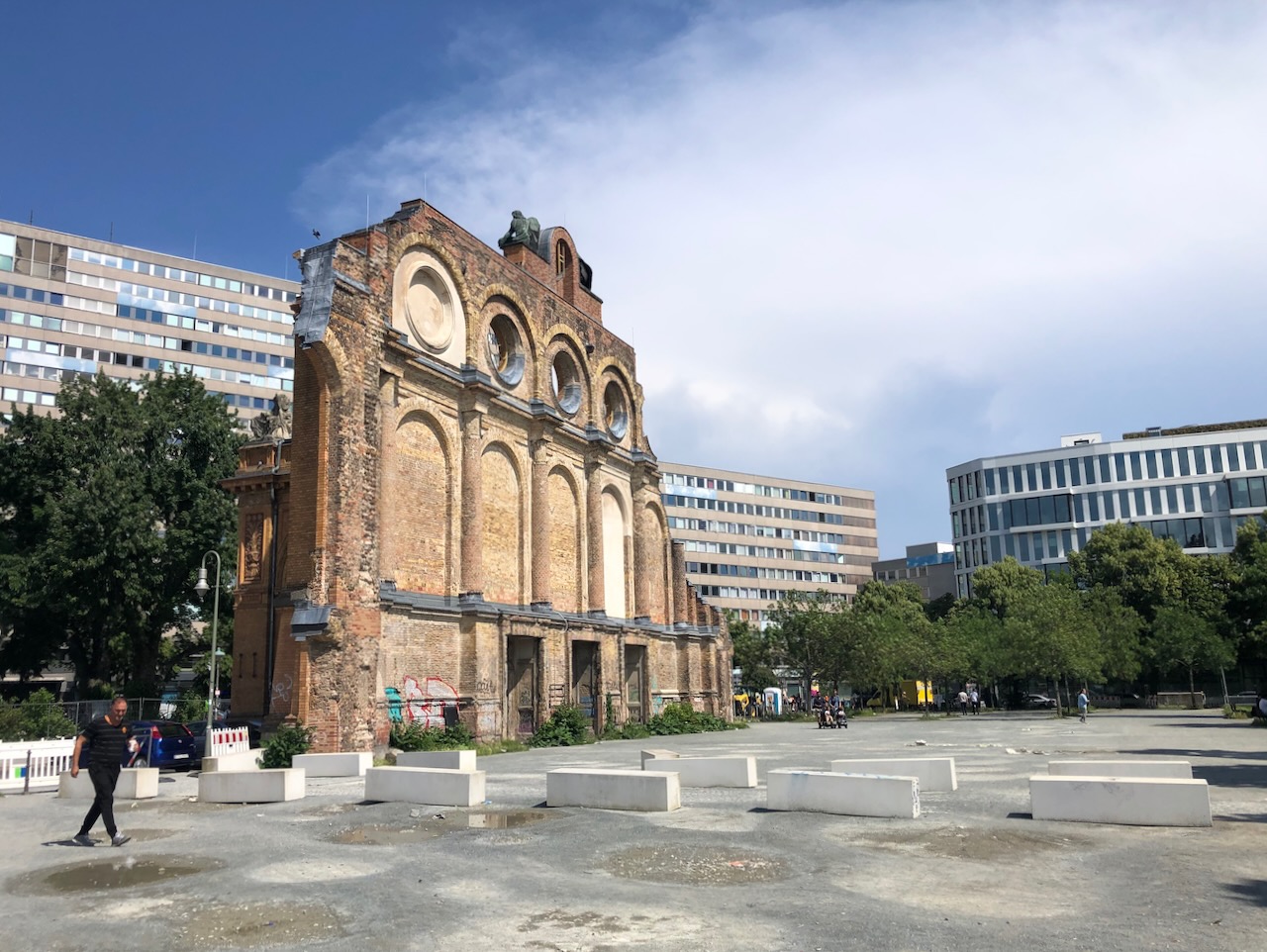
Germany’s relationship to its past and Berlin’s unique relationship with itself have been fraught with challenges. But while you can feel the unsettled rumble of discontent that has spread throughout Europe and beyond, the wounds and divisions appear to be healing. There is an effortless confidence in its integration of past shadows into its present identity which none of the shiny new façades can hide.
Further reading (as always not necessarily reflective of my views):

Aryan homoeroticism and Lenin’s head: the museum showcasing Berlin’s unwanted statues by John Kapner, The Guardian

History set in stone by Penny Croucher

In Search of Berlin by John Kampner

Counter Monuments: Questions of Definition by Memory and History Blog

Remembering Russia’s past as a way to understanding its present

The Remembrance Sunday of 2022 will be one of thankfully few since 1945 that sees another war in Europe raging. As we remember those who lost their lives in past wars, fellow Europeans will be losing theirs in the all too real conflict fighting itself out in Ukraine.

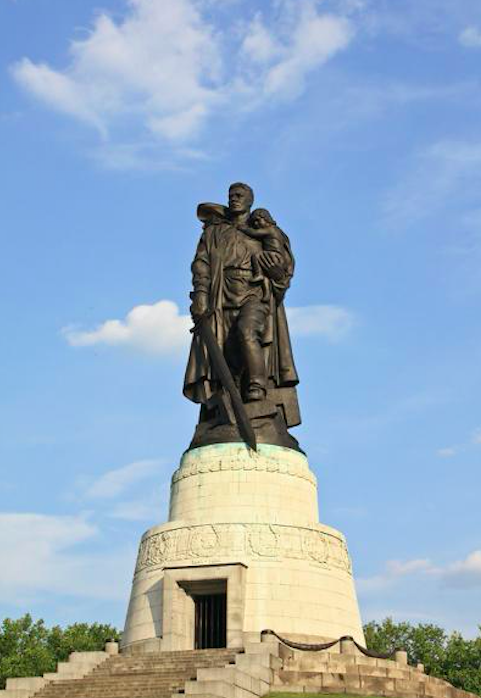
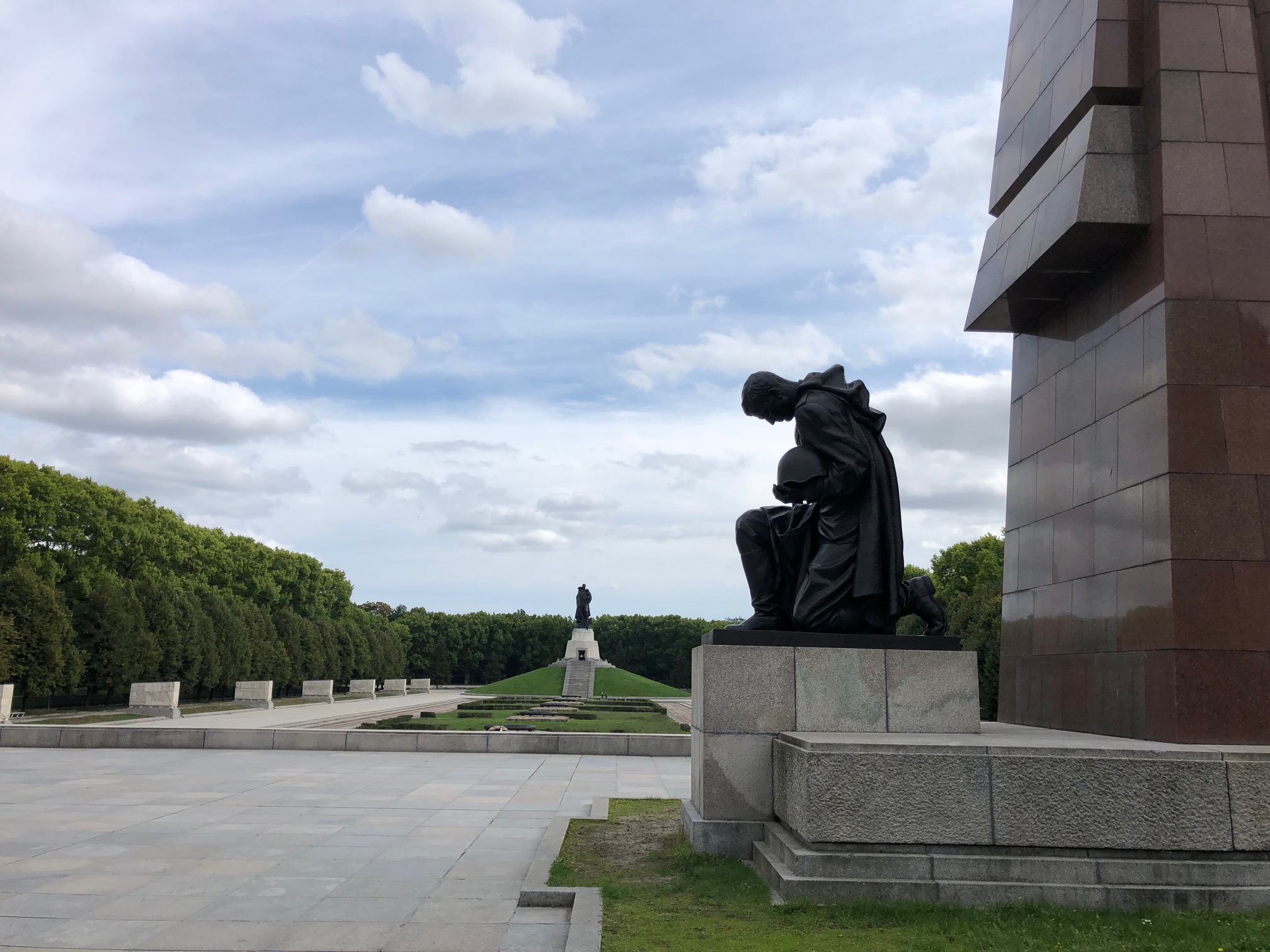
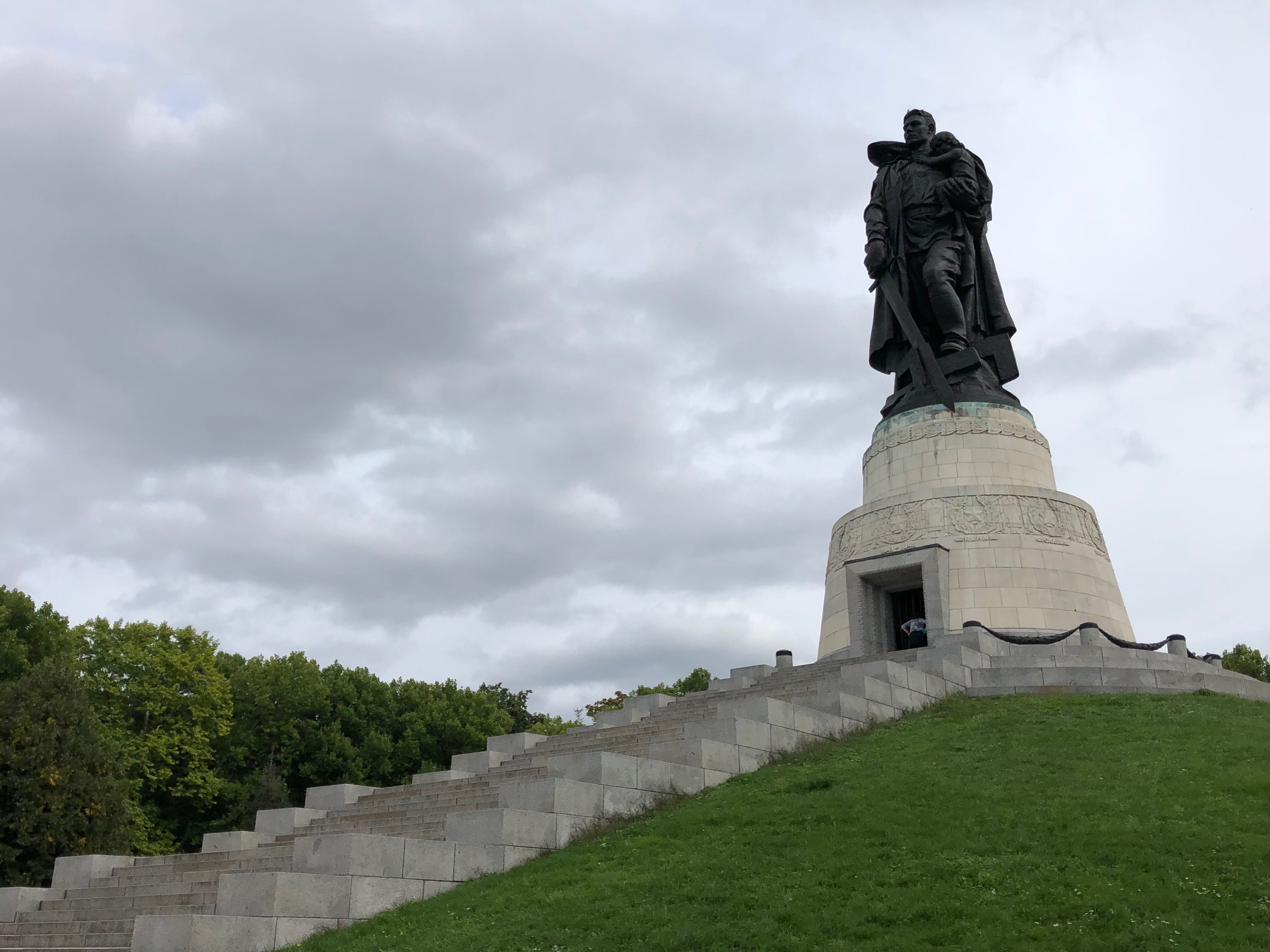
In my last blog I wrote about travelling the Berlin Wall Way, itself a form of 100+ mile-long memorial remembering both a repressive episode in history and those who lost their lives trying to escape it. Well, a little off that route in what was central East Berlin is Treptower Park, the largest Soviet military memorial outside the Soviet Union. Opened on 8th May 1949, it is a 10-hectare cemetery for 7000 of the more than 22,000 Soviet soldiers killed in the battle to take Berlin in the final months of the Second World War and contains the world-famous symbol of the role played by the Soviet Union in destroying National Socialism: the 13-meter towering statue of a Soviet soldier holding a lowered sword over a shattered swastika and cradling a rescued German child in his arm.

The Soviet Warrior Monument built by Yevgeny Vuchetich

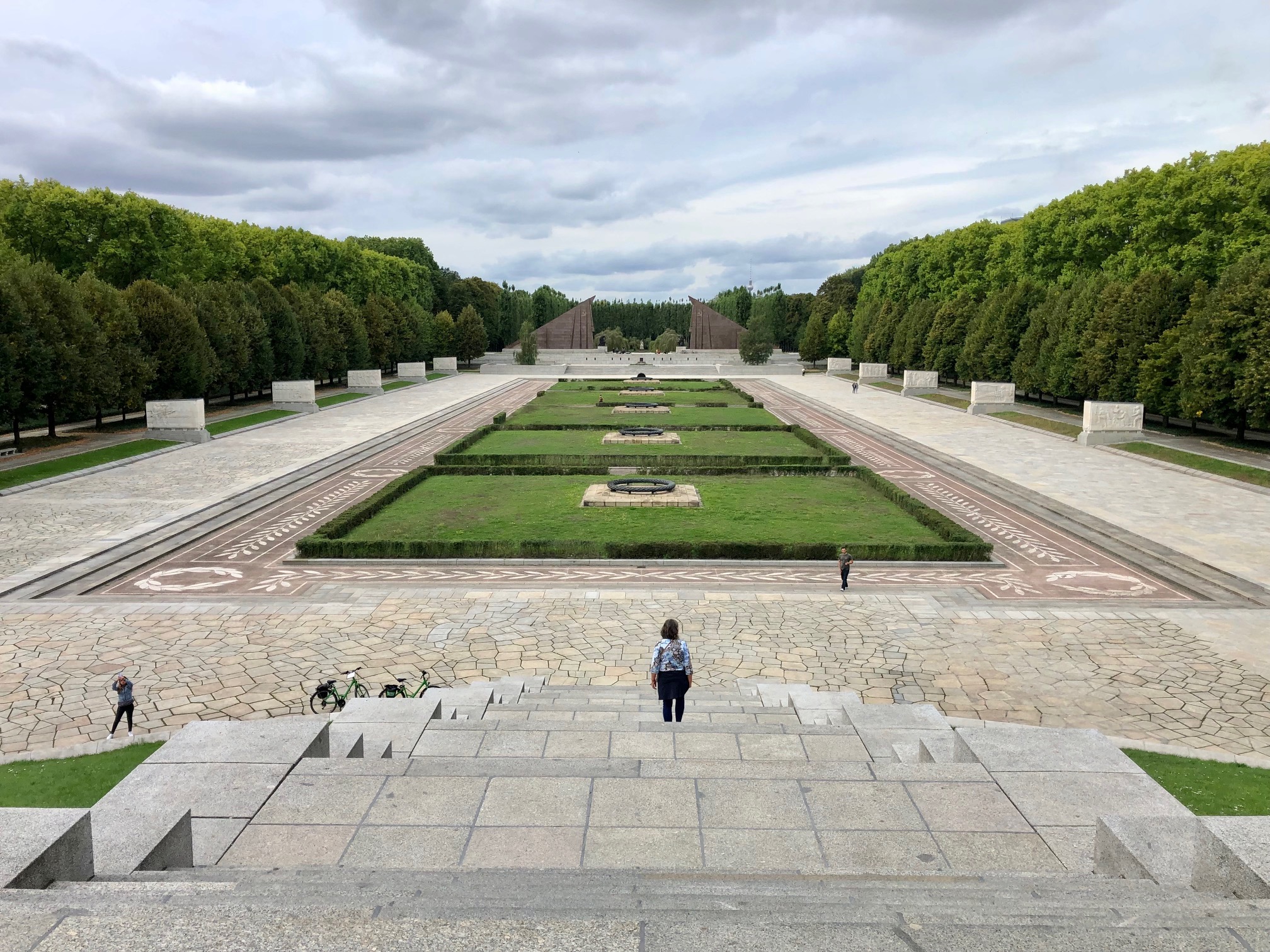
To experience this place is to experience a sense of the enormity and profundity of the impact WW2 had on the Soviet / Russian people. For a start it is vast. And the extensive layout is designed to take you through a process of mourning and remembrance to honouring the victors as heroes and liberators. 

‘Heroes and liberators.’

We too use those words in relation to our own soldiers. But how often have we – or do we – actively honour the decisive role the Soviet soldiers played in defeating Nazi Germany? And how often do we include the mind-boggling numbers of Russians murdered or killed in the process (25 million to give a rough/round figure) in our process of remembrance? We don’t really, is the only answer I can find. And yet they were our allies in a war that we, as a nation, have made central to our national identity. Could our slightly introspective leanings and lack of acknowledgment of the Soviet sacrifices and achievement (among many other factors, not least the horrors of the Stalin era) have contributed to the attitudes of subsequent regimes and politics towards the West? Just a question… but one that walking through Treptower Park certainly made me ask.

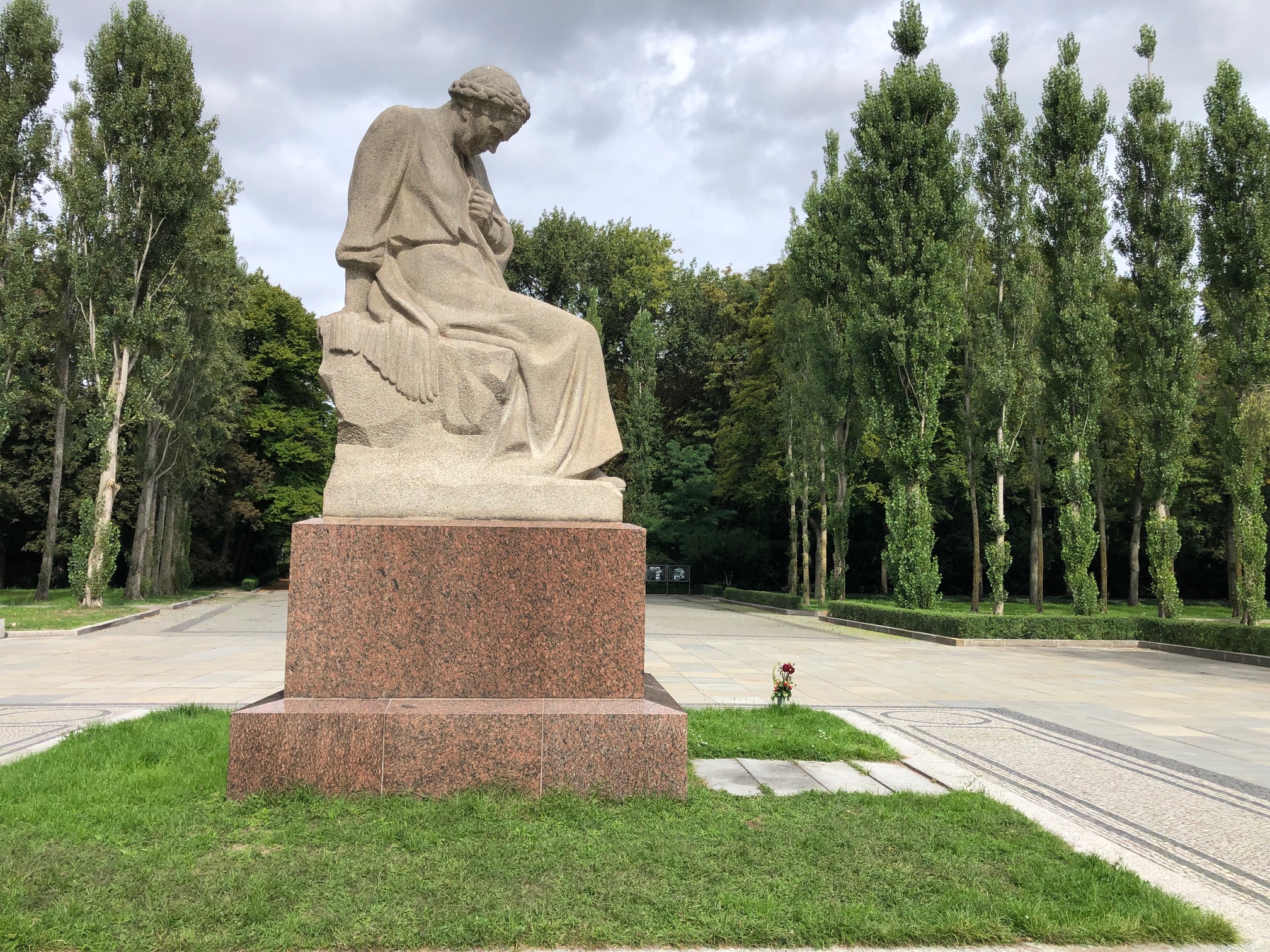
‘Mother Homeland’

Entering through one of two avenues, the (tiny) visitor is led first to the statue of a grieving “Mother Homeland.” 

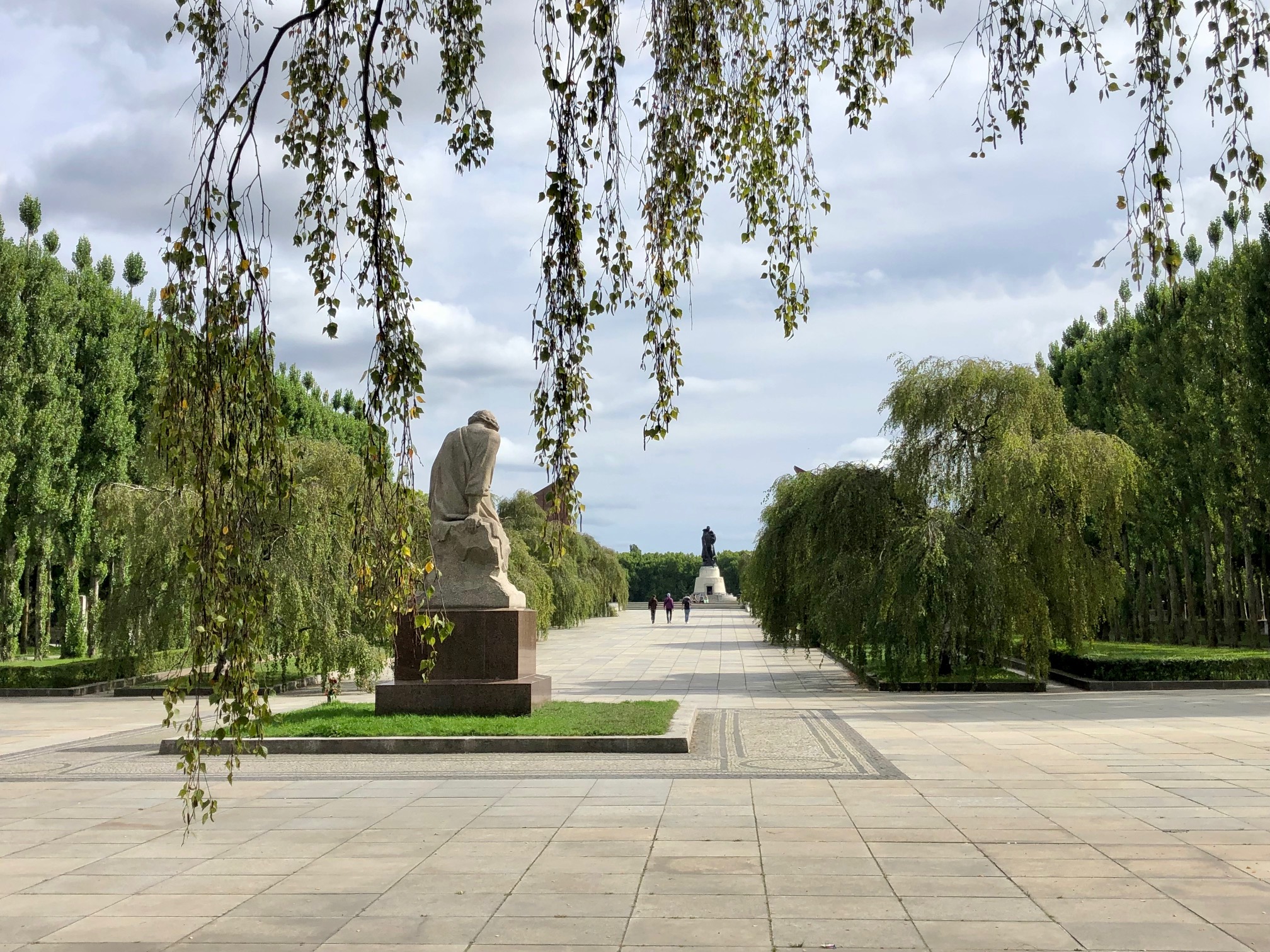
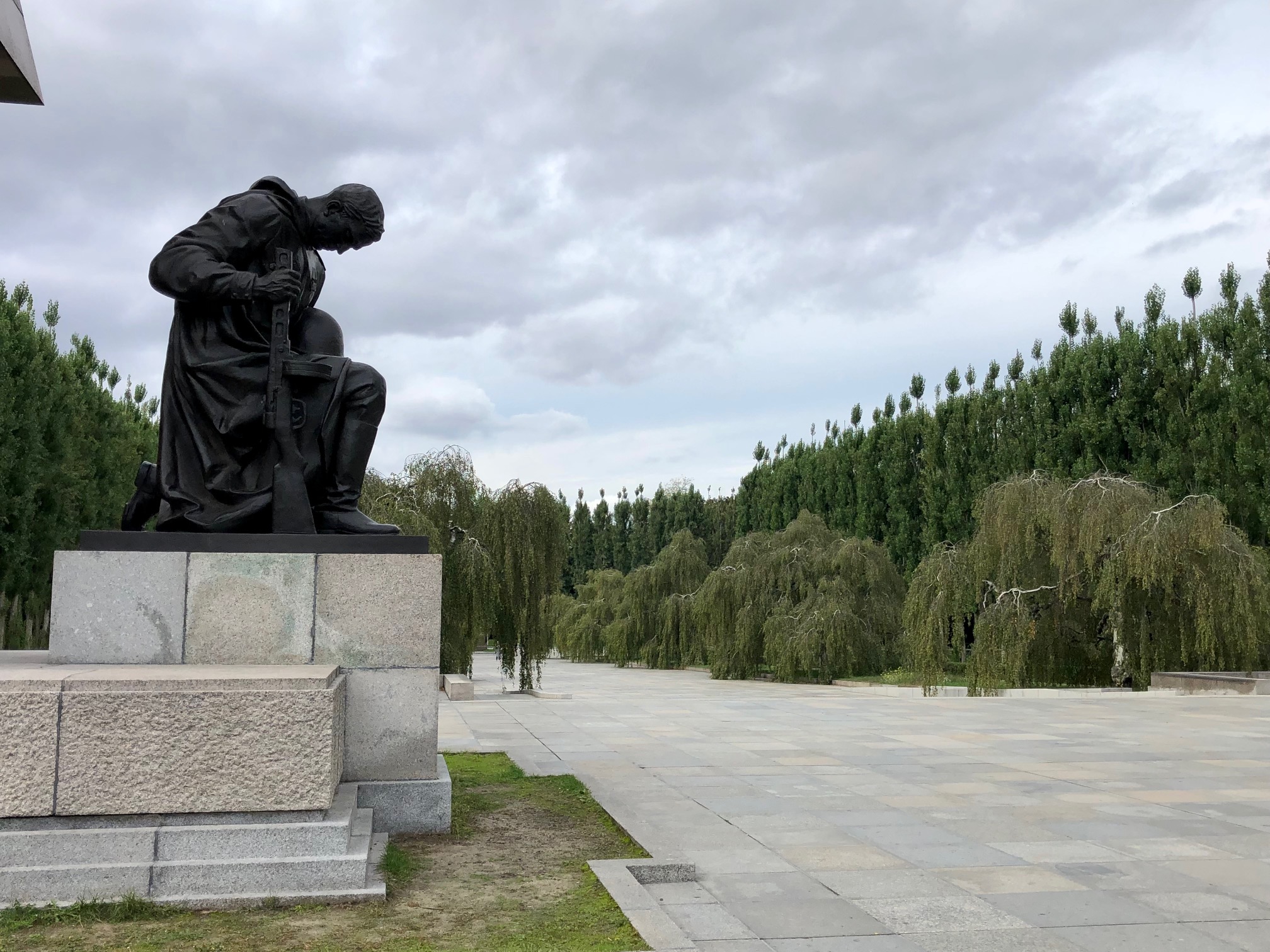
From there a promenade lined with weeping birches – incredibly moving witnessing trees seemingly crumpled in grief – you arrive at two sphynx-like kneeling soldiers that act as guardians to the cemetery section below. 

Looking back to the avenue of weeping birches
Looking ahead to the cemetery

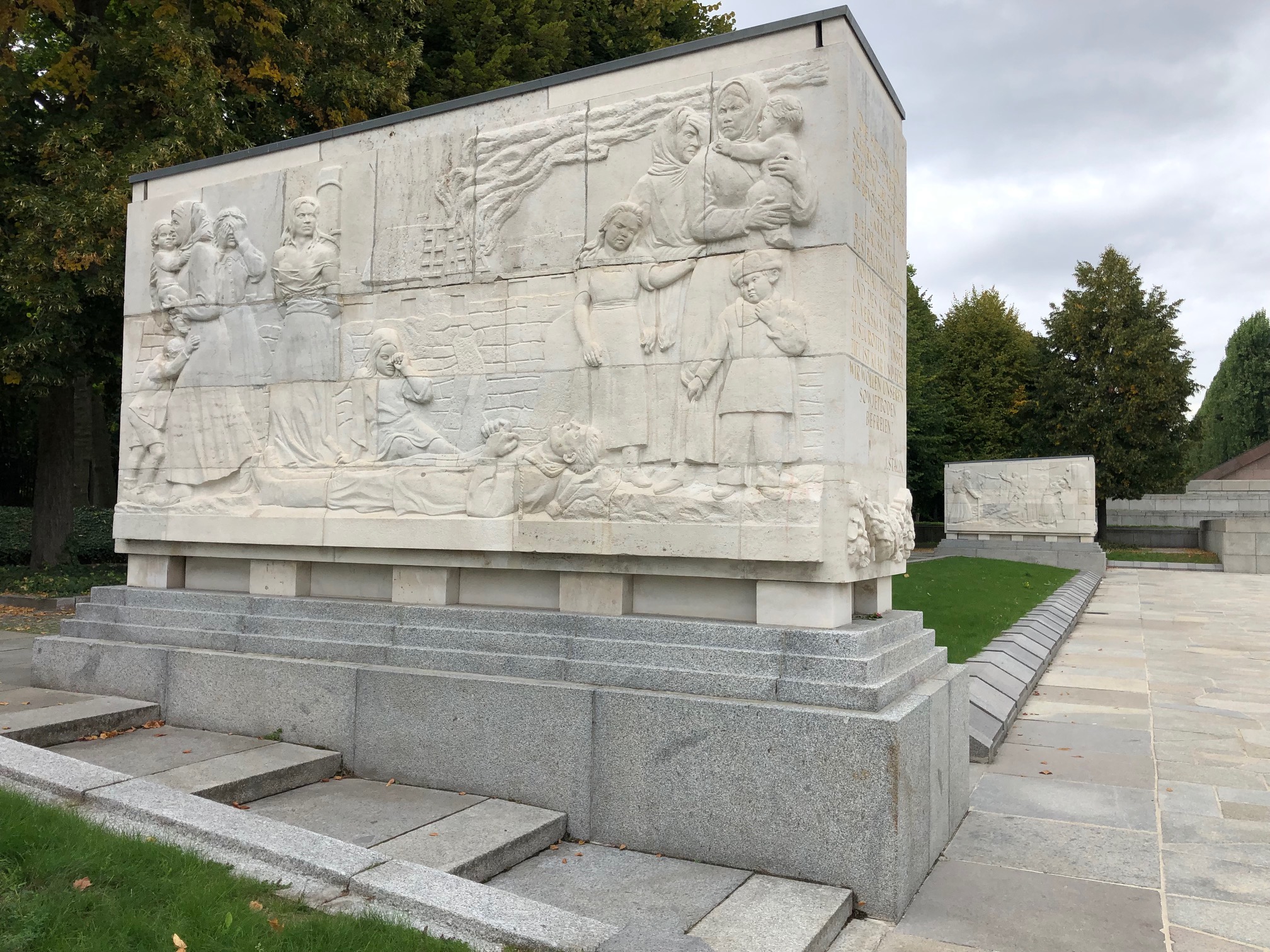
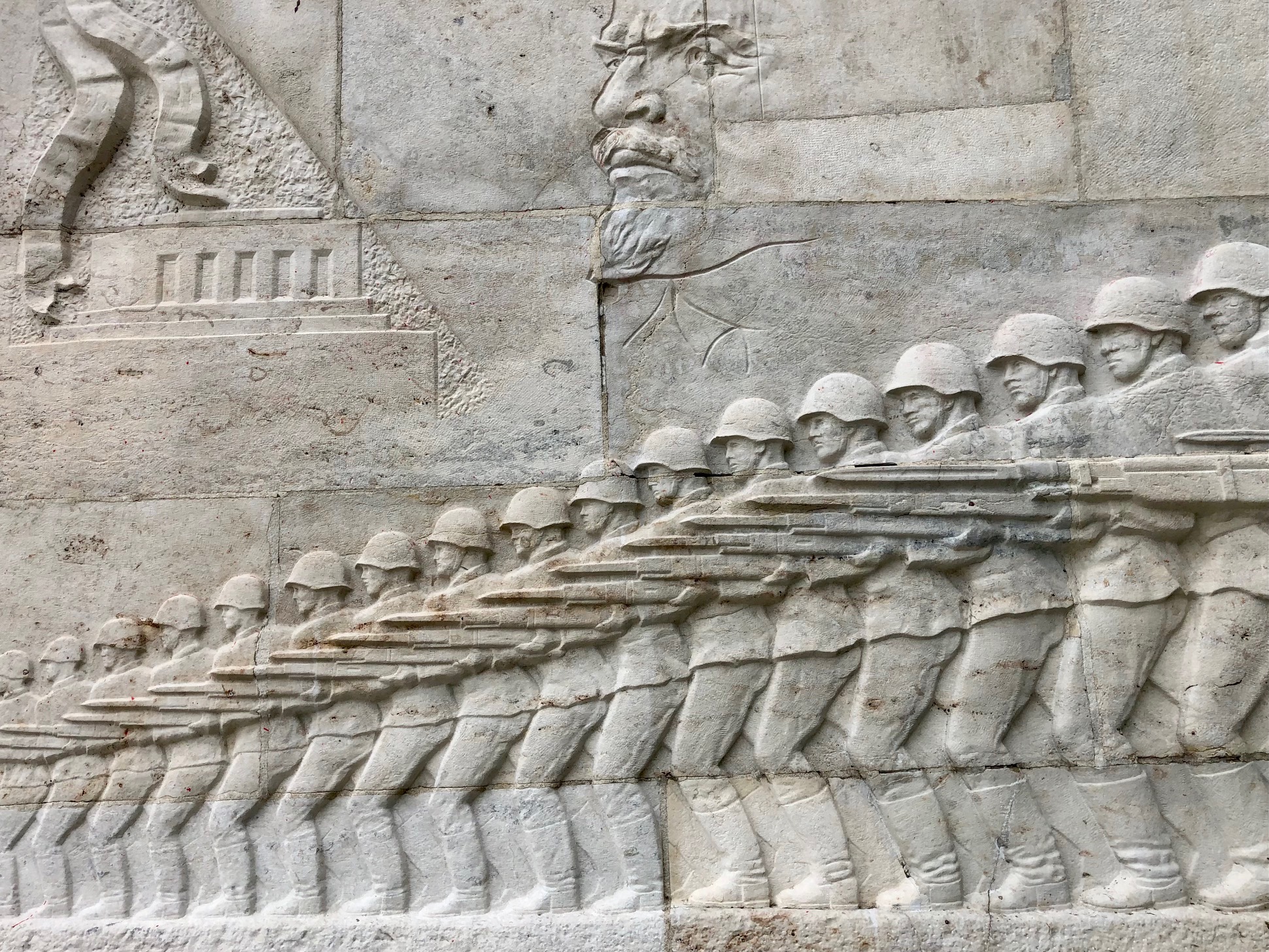
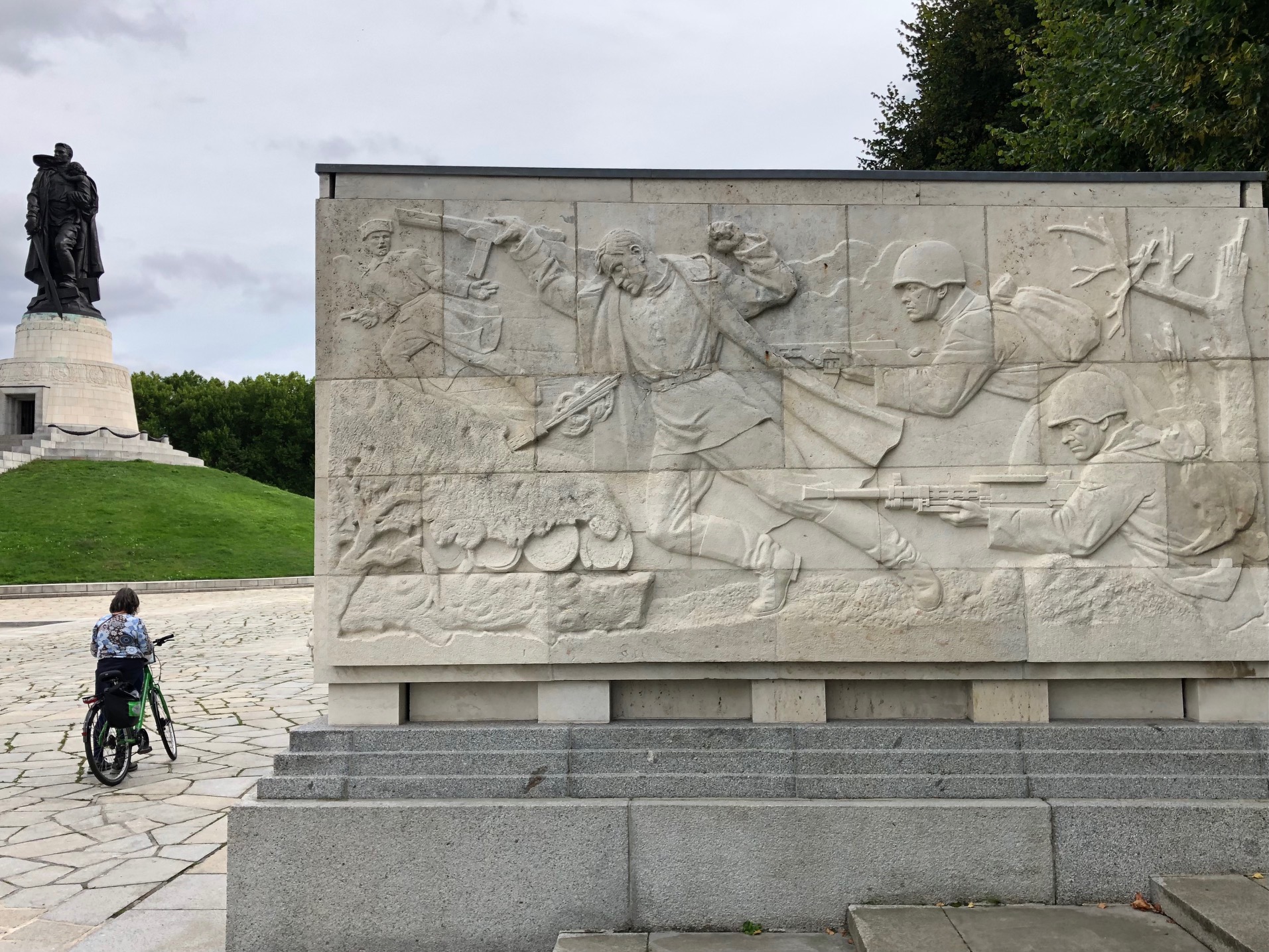
Beautifully executed stone reliefs illustrating scenes from the ‘Great Patriotic War’ decorate the sixteen marble sarcophagi flanking the graves, while gold-lettered quotes by J. Stalin, the commander in chief of the Soviet armed forces, underscore the importance of the Communist Party and the Red Army under his leadership. Though clearly outdated, these quotes survived Khrushchev’s denouncement of Stalinist rule in 1956 with the subsequent cull of Stalin-statues and effective banning of any mention of his name in public. 

The sarcophagi tell the story of the Second World War in Russia…
…through extraordinary imagery and craftsmanship.
Dedicated to the ‘heroic dying’ of the Russian people

At the very far end, you climb a stepped hill to a mausoleum supporting the aforementioned bronze statue of a Soviet soldier holding a small German girl.

Turning around to descend, you get an overview of the whole dramatic panorama that reflects the historical narratives and artistic concepts dominant in the Soviet Union under Stalin and to a degree still exist today: monumentality, hero worship, a personality cult, and a claim to exclusivity.

Treptower Park has been and continues to be a frequent venue for commemorative events. Since 1990, with the signing of the German-Soviet treaty on neighbourly relations and the German-Russian agreement on the upkeep of war graves in 1992, the Federal Republic of Germany committed itself to the care, renovation and maintenance of all Soviet military graves and war memorials in Germany. 

The evident meticulousness with which the whole site continues to be maintained (and patrolled by German police) is another of Germany’s visible expressions of understanding and reconciliation that have been extended to the Russian Federation and other countries brutally destroyed in the Third Reich’s expansionist and ideological wake. Does this reaching out in friendship make it easier to understand Angela Merkel’s unpopular (certainly in retrospect) policy relating to the Nord Stream pipeline? And the apparent weakness of Olaf Scholz’s initial reluctance to break Germany’s practice and permit the transfer of lethal weapons to areas of conflict… in this case, to Ukraine?

If the premise of my book is true and unresolved traumas of one generation can impact the lives and behaviour of subsequent generations, then the extreme collective traumas experienced by the Russian people over the past century are part of what we are seeing playing out in the attitudes, politics and actions of Russia today. Trauma responses such as emotional numbness, low self-esteem, acceptance of poverty might go some way to explain the apparent passivity and gullibility of large swathes of the population. Likewise, trauma responses such as shame might be producing the violence, megalomania and greed of those in power. Is this then, by extension of the idea, the natural destiny of all traumatised nations? After all we can see similar dysfunction and violence in Africa, South America and plenty of other nations once brutally colonised.

Psychohistory‘ – a new but exciting term to me that I appear to have already been practicing – seems to offer a way forward in thinking about these things. It combines history with psychology/psychoanalysis and social sciences/humanities to understand the emotional origin of the behavior of individuals, groups and nations, past and present. In other words, the ‘why’ of history.

I don’t have any answers, nor even the right questions yet, just an ever-growing sense of discomfort in simple, black and white narratives of good and bad, right and wrong. And an increasing belief that we are still very far from seeing, let alone comprehending the fuller picture. But we need to become more trauma-informed in all areas of life. For to neglect trauma is to leave people in a state of emotional numbness. And when you don’t feel, you become capable of overriding humanity and care for fellow living beings and life itself.

Further Reading / Viewing: 

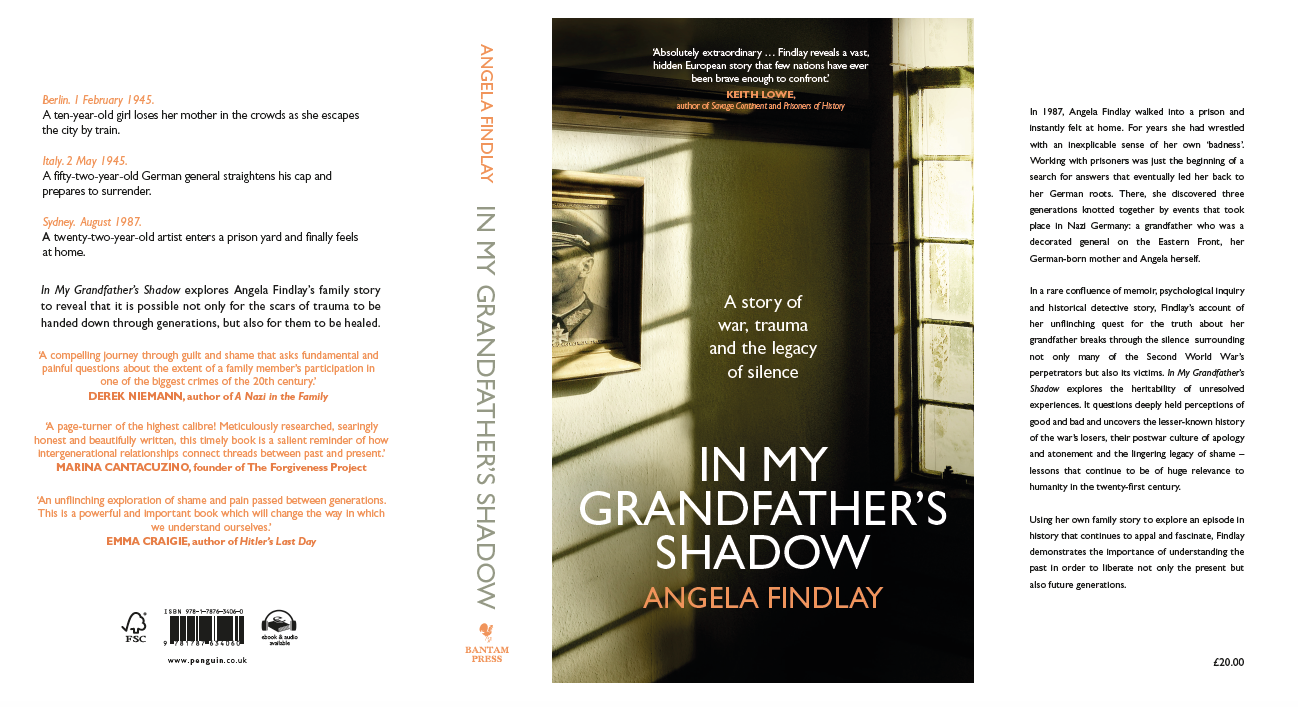
These questions are explored more deeply in my book: In My Grandfather’s Shadow. Published by Penguin Transworld and Bantam Press in July 2022 and available in most bookshops and the usual online outlets

The brilliant BBC documentary ‘Russia 1985-1999: Traumazone’ by Adam Curtis is made up of multiple film snippets taken in those years. As a fly on the wall experience and from the comfort of an armchair, it doesn’t get much ‘better’ in terms of an experience of Russia. To have lived through those years of extreme deprivation, corruption and hunger must have been little short of appalling.

Russia 1985-1999: TraumaZone review – ingenious, essential viewing from Adam Curtis

‘Generations of hurt’: Children and grandchildren of war survivors fear ripple effect of Russia’s war in Ukraine

Russia has yet to recover from the trauma of the Stalin era – The Guardian

Remembering Dresden – along side its people – helps in the healing of the past

From 13th-15th February, Dresdeners will be gathering to mark the anniversary of the destruction of their city in 1945. This year, rather than creating their usual human chain to snake through the city in peaceful reflection, it will, like most things in this pandemic, be a largely online affair. A Dresden Trust trustee always attends the event as a gesture of deeply-felt solidarity and reconciliation. This year was to be my year to represent the Trust, but instead we have sent a video of messages to our friends and contacts there. Immediate emails of thanks reveal how deeply moved they have been by this extension of virtual British hands and hearts to them. It was a tiny act on our part, but its value was clearly of significance. 

The last couple of years have seen the 75th anniversaries of many Second World War events: the D-Day landings, VE Day, VJ Day, the liberation of Auschwitz… Each was naturally ‘celebrated’ in technicolour with dignitaries from around the world, for these were some of our nation’s finest hours. Tucked in the shadows of those victories, was the 75th anniversary of the UK and USA bombing of Dresden. As far as I am aware, no British politician attended. Neither Boris Johnson nor Jeremy Corbyn even commented on it. It is still a thorn in the side of Britain’s conscience. 

I am fully aware of the contention surrounding the bombing of Dresden. Was the city a legitimate target? Did the Germans deserve it? Was it a war crime? Were Bomber Harris and his Command heroes or part of a campaign that went too far… way too far? In the articles at the bottom of this post you can read up on some of these attitudes, as well as get a picture of the horrors witnessed by a British serviceman held prisoner there. 

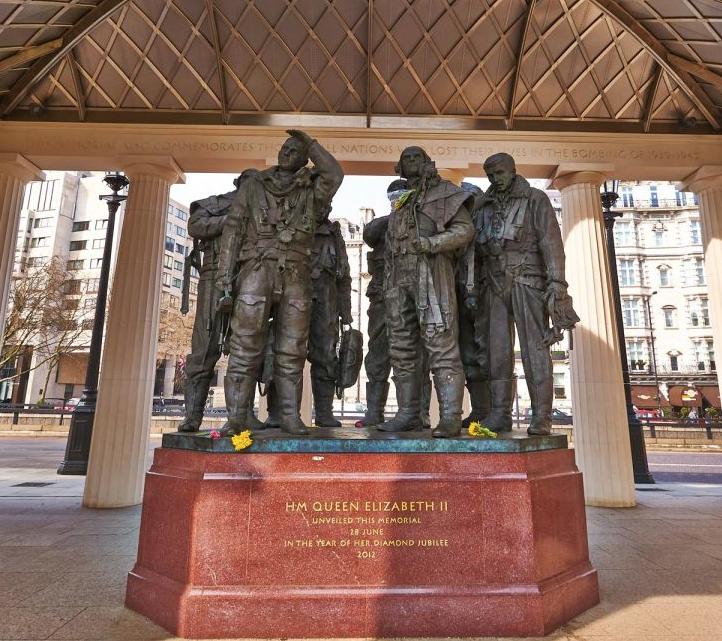
Bomber Command Memorial, Green Park, London (2012)

Seventy-six years on, I feel we are totally missing the point if we get tangled up in binary discussions of whether it was right or wrong. Within the context of Hitler and a World War, you can see how it could be considered ‘right’. On that basis, by reading some of my German grandfather’s letters, you can also see how it could have been considered ‘right’ to invade Russia. And by listening to the stories of prisoners, you can also come to understand how they too consider their crimes to have been the ‘right’ thing to have done. Wrongdoing – on an individual or national level – is usually based on thoughts that justify it as being the ‘right’ thing to do. Often this is a reaction designed to redress the wrongdoing of another… and so it goes on. The validity of the reasoning, however, doesn’t automatically make it the right thing to do morally

We are living through extraordinary times of potential change for good. I say ‘potential’ because if we in Britain do not broaden our perspectives on our past in tune with history’s ever-shifting shape, we run the risk of becoming fossilised within it. Nothing can change if we cling to the old. The current statue debate, as provocatively and passionately pursued by Robert Jenrick, our secretary of state for housing, communities and institutions, is an example of the deeply flawed thinking at the core of some of our attitudes to the past. For him, statues represent history itself. Yet they don’t. They represent the values of the time. Both history and values evolve, and debating and adapting to this evolution are important parts of any country’s healthy relationship to its past. What’s more, focusing on statues is a classic example of merely treating the symptom rather than the cause of a problem.

While I don’t believe the removal (or not) of statues is either the real issue or the solution, the government’s evident terror of a ‘revisionist purge’ by ‘town hall militants,’ ‘woke worthies’ and ‘baying mobs’ is revealing. (And insulting to the justifiable requests for a reconsideration of the appropriateness of certain statues in today’s cities). It is the terror, not just of the dismantlement of our statues and heritage, but of our almost purely benign self-image. So great is that fear, that Mr Jenrick is giving himself the personal power to intervene in democratic decisions made by local communities, councils and institutions about the fate of their statues if their decisions don’t adhere to the government’s position. Is that democracy?

Our national self-image and reputation have already been considerably wobbled, if not toppled, in recent years. So I say, bring it on! Why don’t we just go for it? Why don’t we literally ‘come out’ officially and admit: We have… at times… been utter shits. Does that automatically diminish all that we hold dear and celebrate about ourselves? No, not at all. We can be all those good things AS WELL AS being, at times… shits. We can have done and achieved amazing things AS WELL AS having made mistakes, or been on the wrong side of good, or been actively, deliberately bad. We can honour our pilots and soldiers AS WELL AS deeply question the morality of some of our decisions. No country will think less of us… indeed I am sure they will embrace and welcome our vulnerability after so much bullish bluster.

Dresden, February 1945

Until we can shift our position even just a little, Dresden will remain a contentious and unresolved issue. A dark smudge on the national conscience. Whether it was right or wrong, a war crime, an atrocity or a strategic attack, the fact remains that an estimated 25,000 people – primarily women, children, elderly, refugees and POWs – were killed in indescribably ghastly ways, by any standards of warfare. We deliberately designed it to be just so. Could this government, the successors of the instigators of such calculated destruction and loss of life, not also extend a small gesture of thought to the descendants of our victims?

In Mr Jenrick’s argument, “To tear [statues] down is, as the prime minister has said, ‘to lie about our history’.” If we really rely on our statues to tell the truth about our history, then we need to get carving and casting fast. For so far, only truths considered flattering or benign are being told. Nothing of the dark shadows cast by those men on pedestals is included in our statue-version of history. Doesn’t that then make it a lie…?

Past harm left unresolved is a burden that disrupts the present of each generation as it seeks resolution. It adversely shapes attitudes and policies. Let’s be the generation that works through the full truth of our past, creates peace with it and thereby liberates future generations from it.

In my forthcoming TEDx talk on 21st March 2021, I will be explaining How facing the past freed me. You can read more about it here and buy tickets to the event here

Related articles:

The Spectator: Did Britain commit a war crime in Dresden? A conversation Sinclair McKay and A.N. Wilson on the 75th anniversary of the bombing raid

Good Morning Britain 75th anniversary: Dresden bombing survivor Victor Gregg 100 on

Herald Scotland: Dresden 75th anniversary: why Britain must come to terms with its own dark wartime past 

BBC: Dresden: The World War Two bombing 75 years on

The Telegraph: We will save Britain’s statues from the woke militants who want to censor our past (Robert Jenrick)

The Guardian: It’s not ‘censorship’ to question the statues in our public spaces

Please sign up to my NEWSLETTER to be kept up to date on my forthcoming BOOK on the subject here. To receive my monthly blog by email, press FOLLOW at the top of this page. Or contact me for any enquiries about my TALKS.