When big isn’t necessarily better

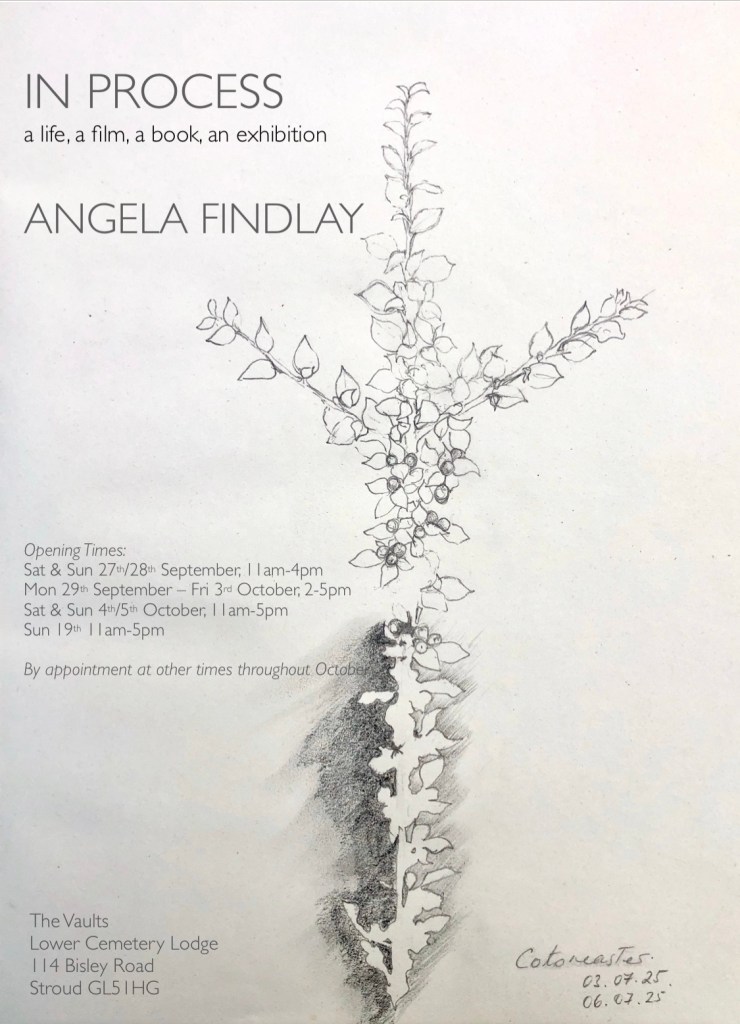
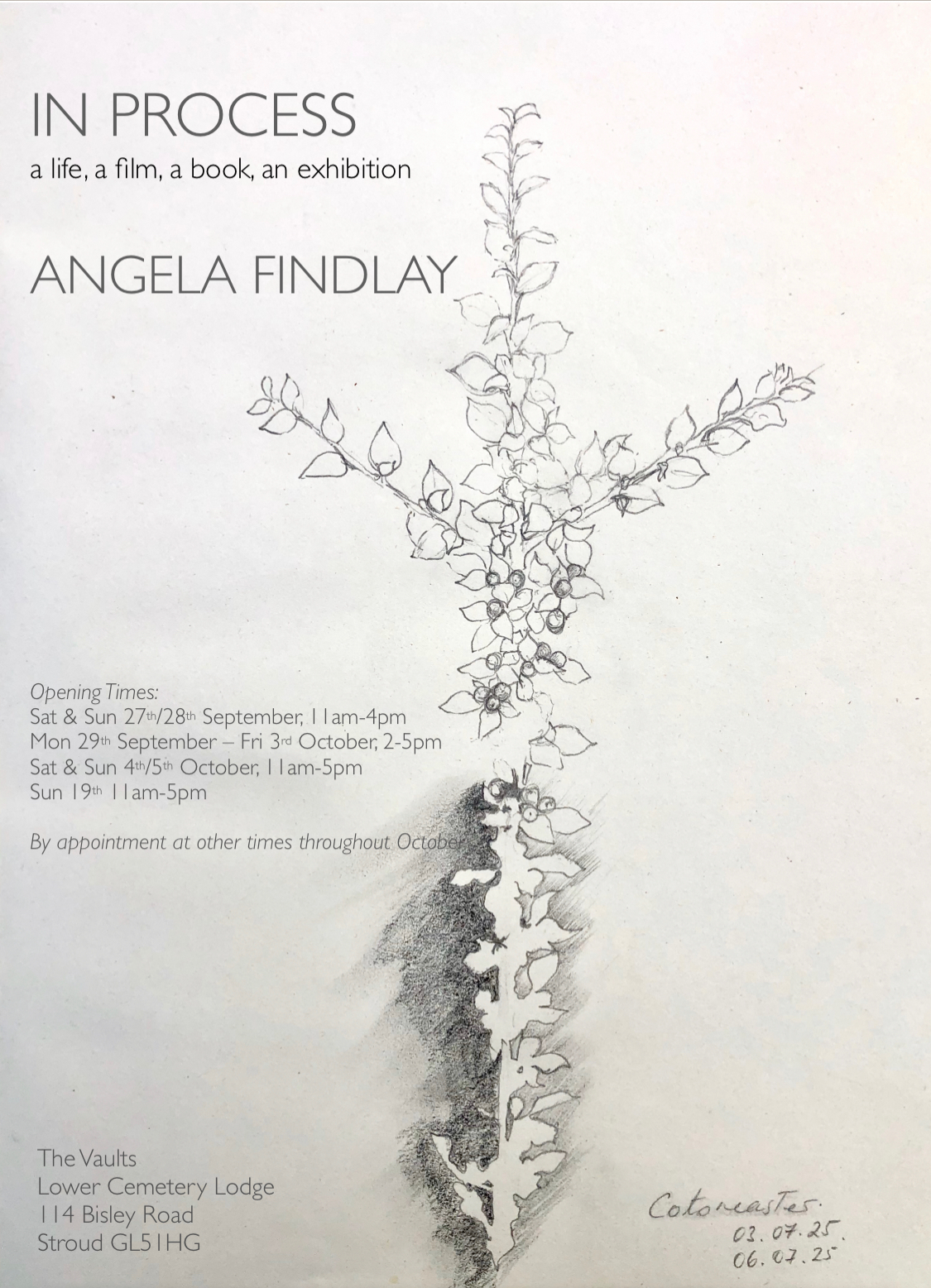
Reflections on: IN PROCESS… a life, a film, a book, an exhibition, The Vaults, Stroud. Sunday 19th October, 11am-5pm and by appointment until 1st November.


“We must, we must, we must increase the bust.

The bigger the better, the tighter the sweater, the boys depend on us.”

I remember chanting that with my boarding school roommates as a teenager, elbows flung back in a futile attempt – in my case at least – to inflate our adolescent chests. Bigger was definitely better, or so we believed.

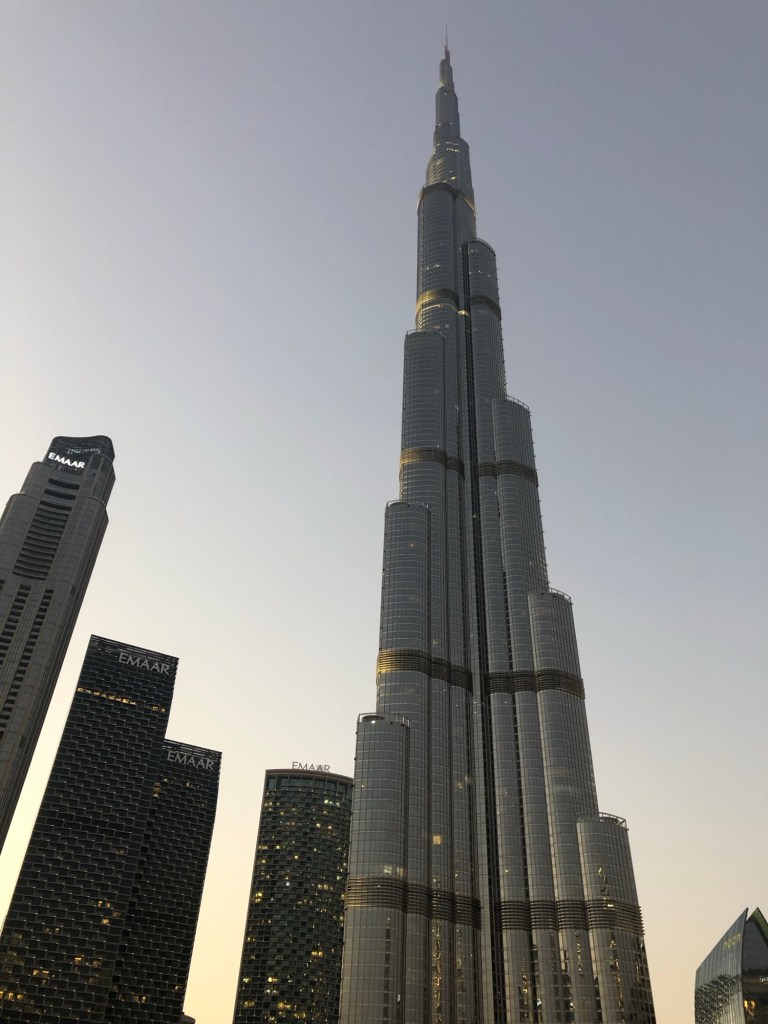
Burj Khalifa, Dubai

Skyscrapers, cars, salaries, houses… In so many areas of modern society, ‘big’ still equals ‘better.’ More followers, more likes, more headlines, more sales. The biggest countries led by the most powerful leaders and largest militaries make the most noise. And yet we know, quantity doesn’t equate to quality. Magnitude doesn’t always reflect meaning or value.

This idea – that bigger isn’t always better – is something I’ve seen reflected both in the trajectory of my great great aunt Joan’s life and in my own development as an artist. (If you are new to Joan’s story, please see my previous blogs for background.)

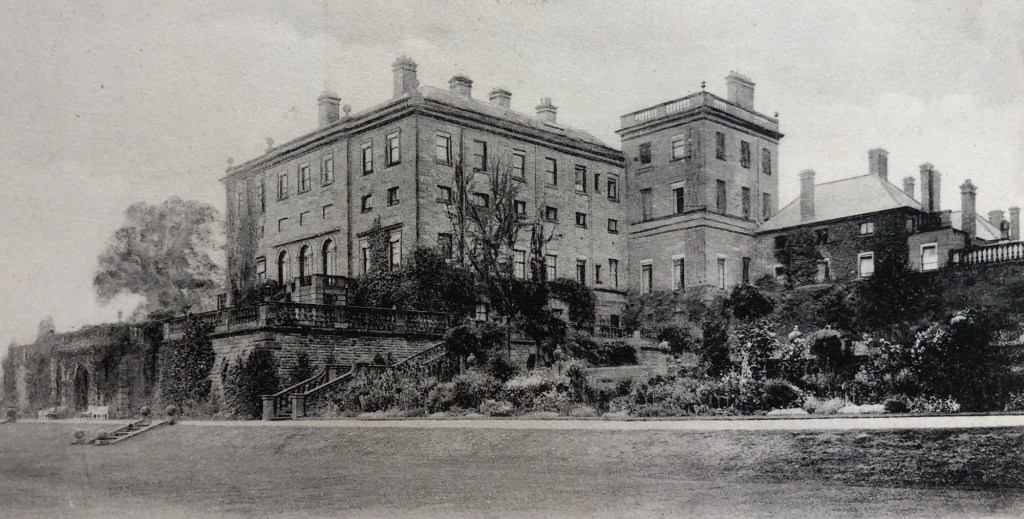
Patshull Hall, Staffordshire

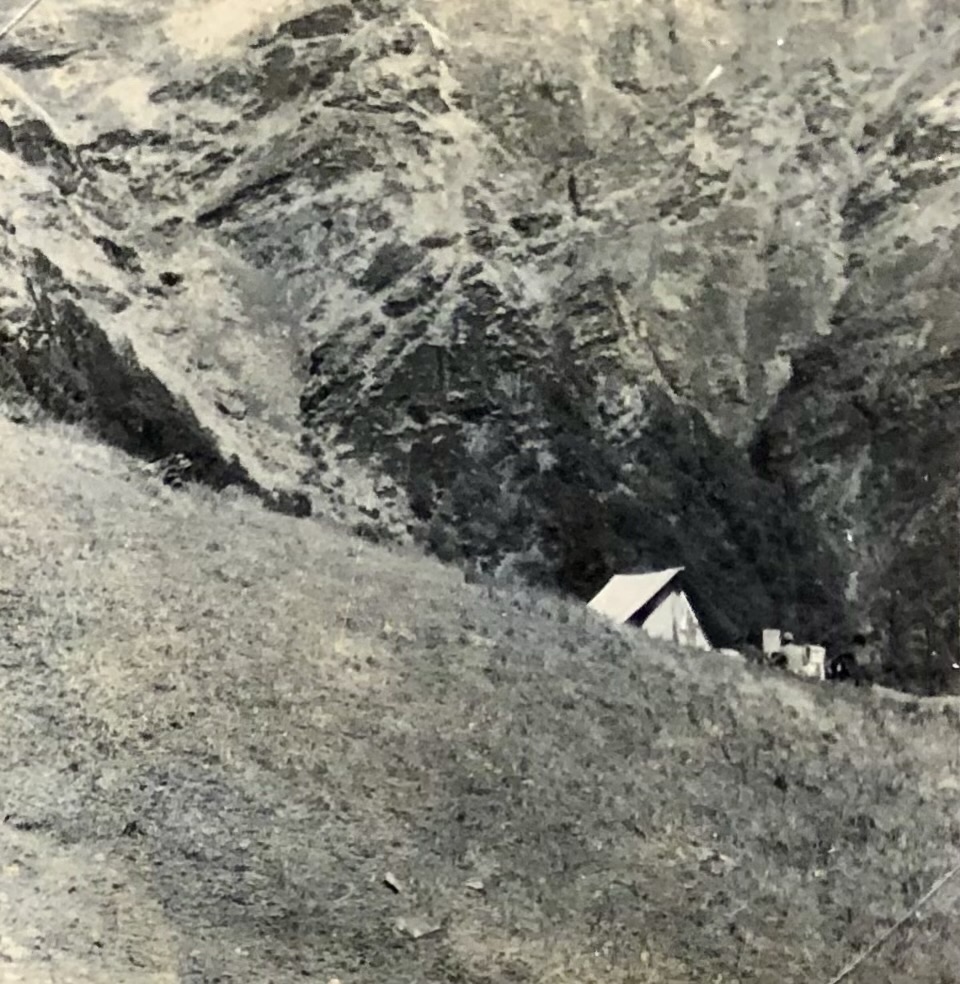
Joan’s tent

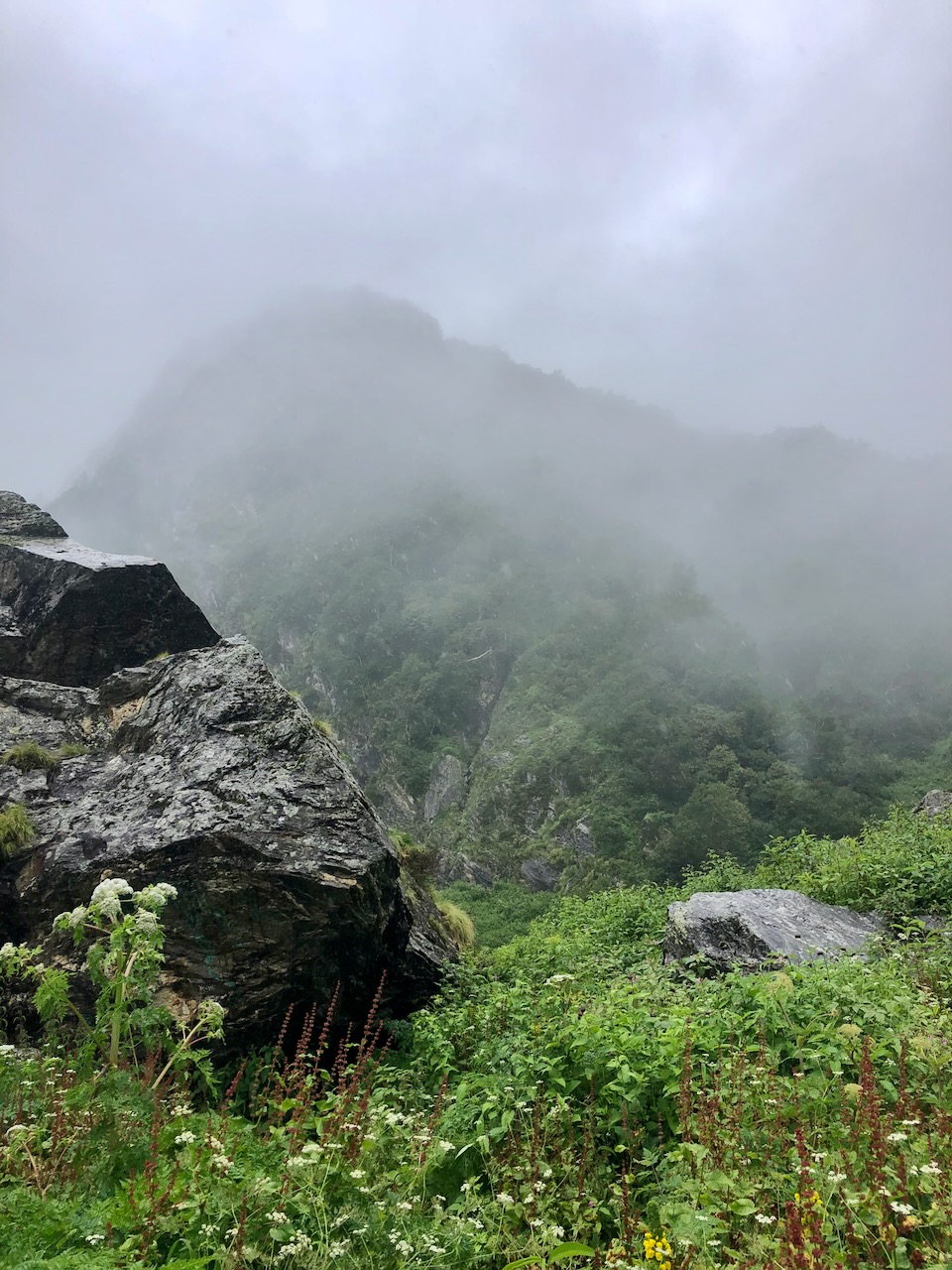
Joan grew up in a 147-room stately home in Staffordshire. Yet she spent her final weeks in a single, often soggy Meade tent pitched in a remote Himalayan Valley, surrounded not by grandeur but by shepherds, wildflowers and the sound of rain. She had traded scale for purpose. And her joy, it seems, had grown as her material load had lessened.

My own artistic journey has followed a similarly inverse curve.

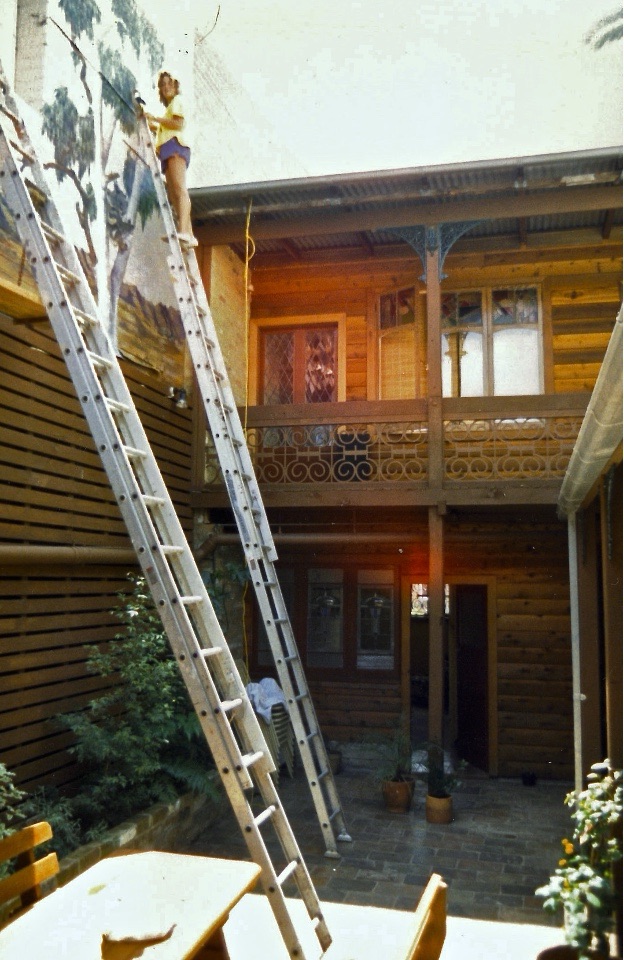
Painting a mural in Sydney, 1987

I began large, unable to contain any drawing or painting within the boundaries of paper or canvas. My work spilled onto walls, first private then public, then grew further to fill stage backdrops for theatres or touring bands. Various mishaps including a paint-splattered boss’s car and a disastrous commission to paint the backdrop for INXS KICK album tour in 1987, which promptly cracked and fell off in large chunks when rolled up, nudged me toward the more forgiving surface of prison walls. There, no amount of damage could make the environment worse than it already was.

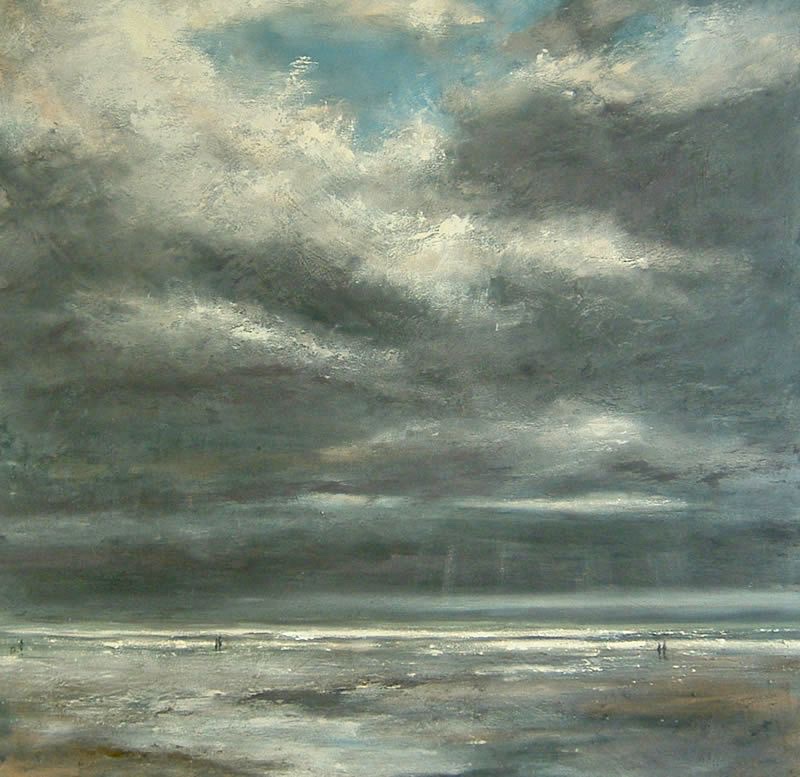
The light danced, 120x120cm

Years later, I turned my focus to canvases of my own, their size dictated by the available studio space and commercial considerations of galleries. And most recently, to works just 28x28cm – or smaller. I have replaced the vast audiences of art fairs with the quiet intimacy of just six or seven visitors at a time into the two vaults beneath my home in Stroud’s Cemetery.

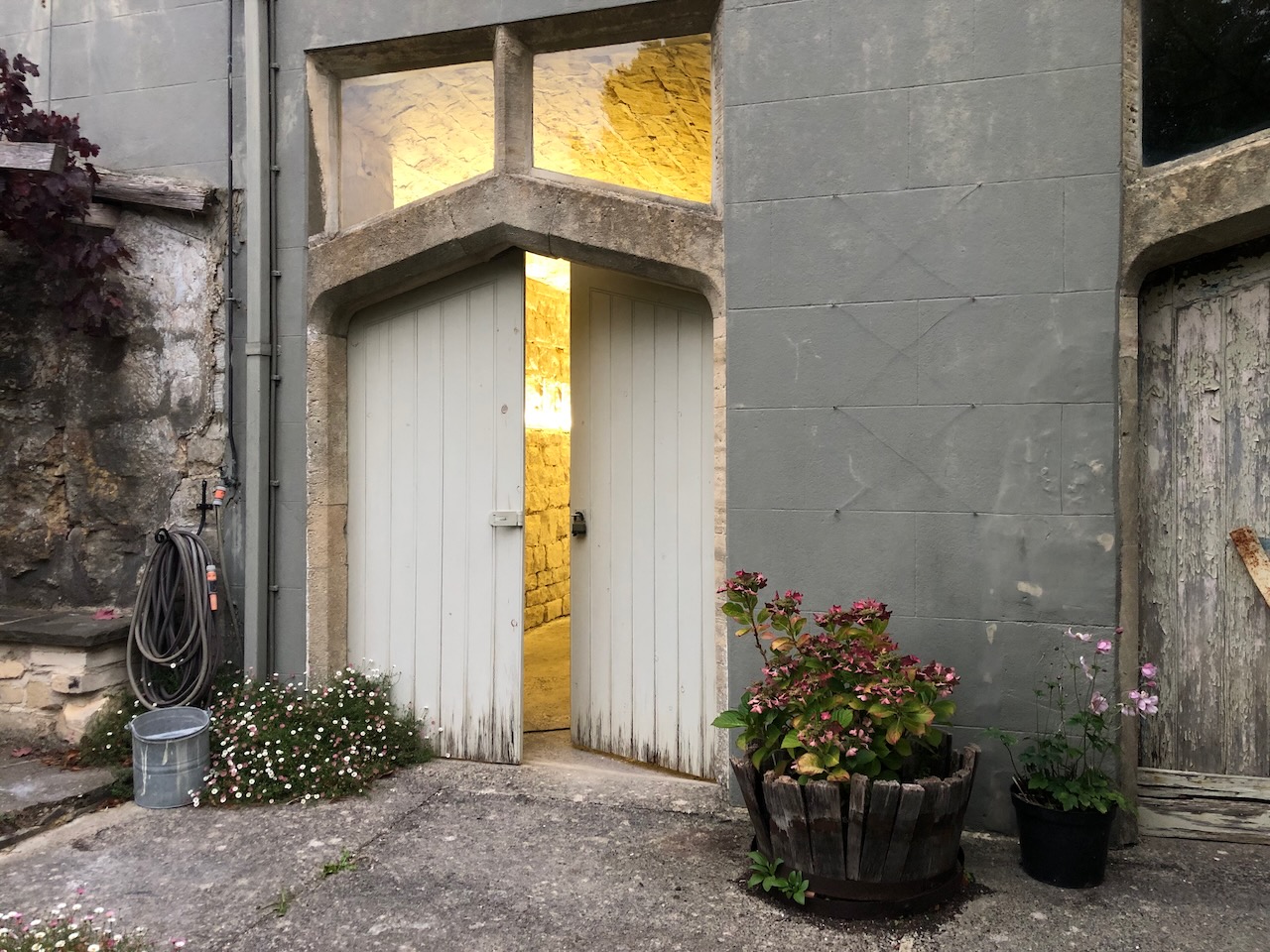
The Vaults

Those vaults now house In Process… a deeply personal exhibition about Joan, her life and the resonance her death still holds for me, our family and small communities she encountered in India.

In one vault, where gravediggers once hung their tools and I now hang mine, visitors watch a short film projected into the open lid of an old trunk telling the story of Joan Margaret Legge.

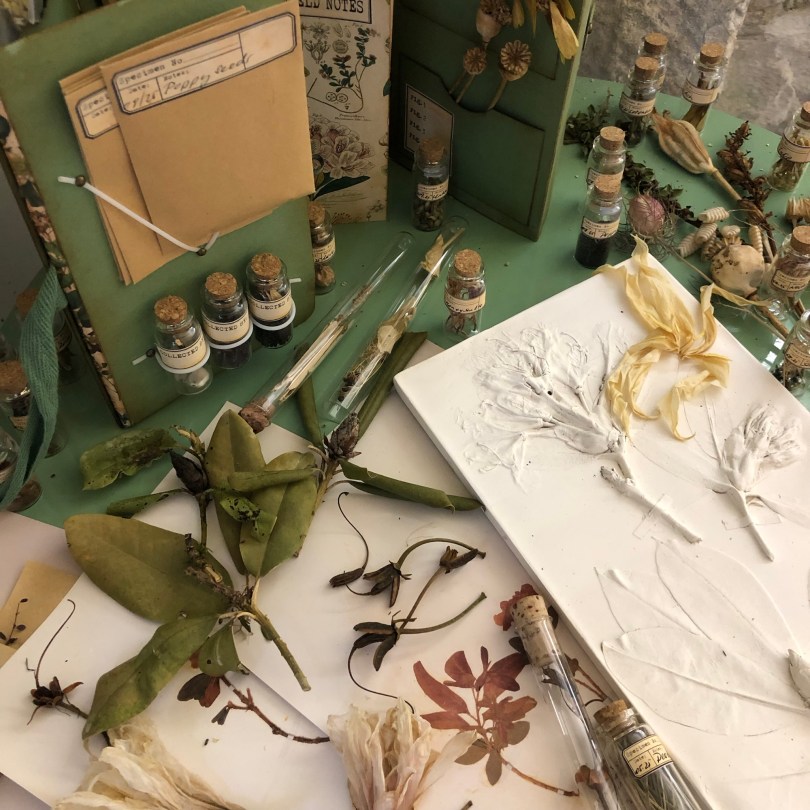
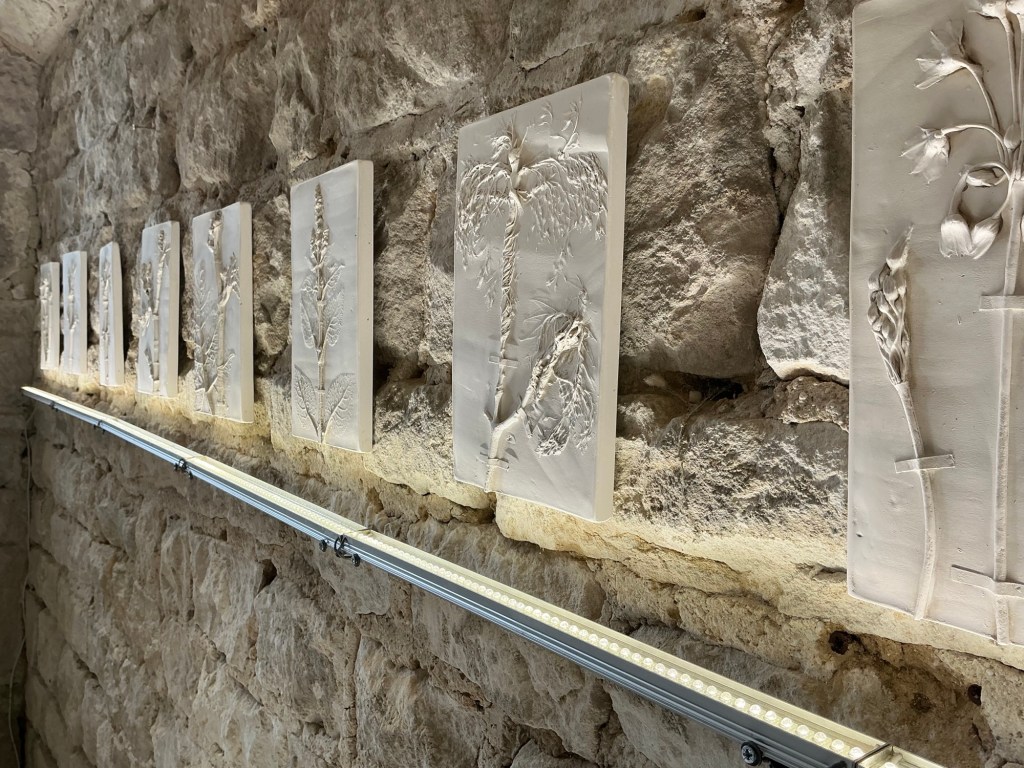
In the other, where those same workers drank tea, ghostly white plaster casts hang like three-dimensional botanical drawings reminiscent of the specimens Joan collected and sent to Kew Gardens.

‘138 days’

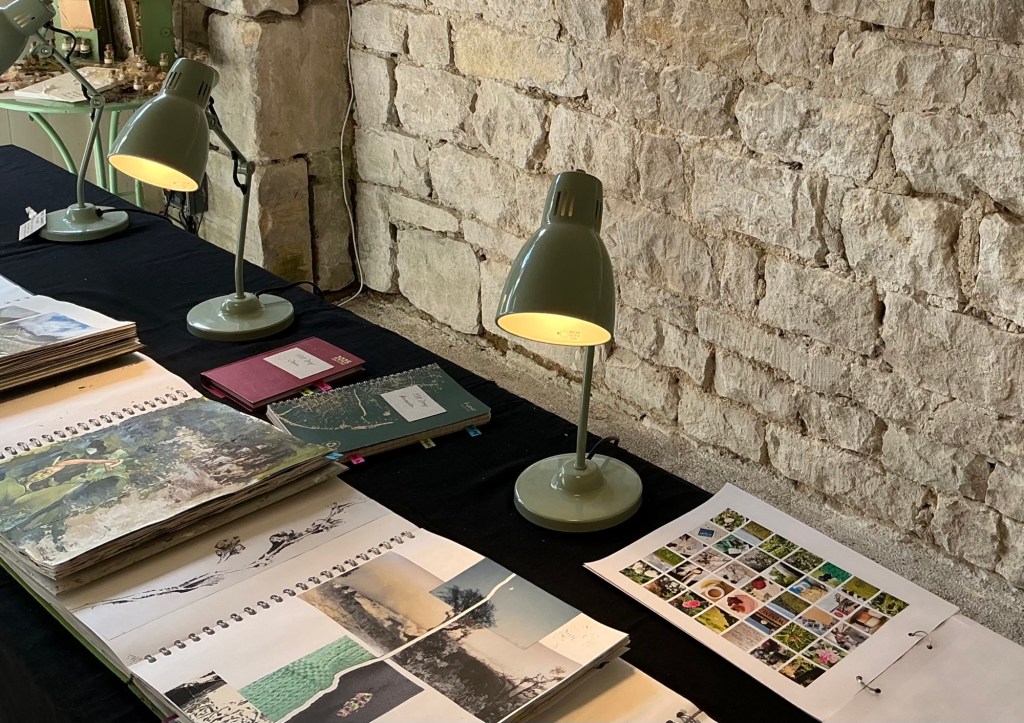
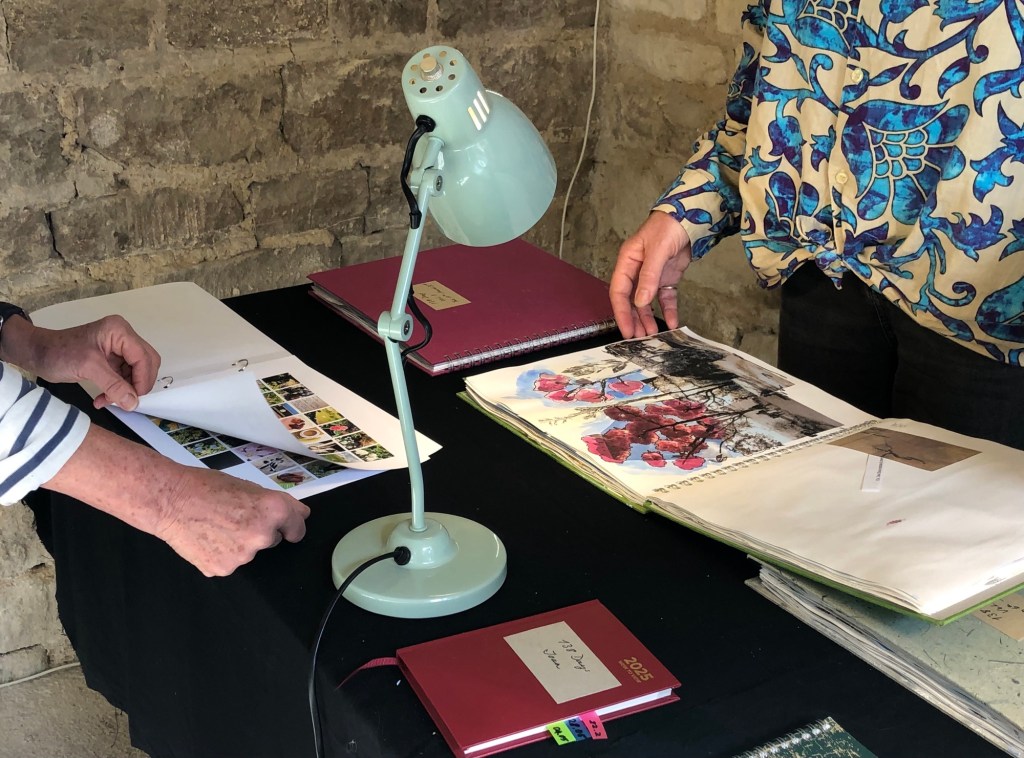
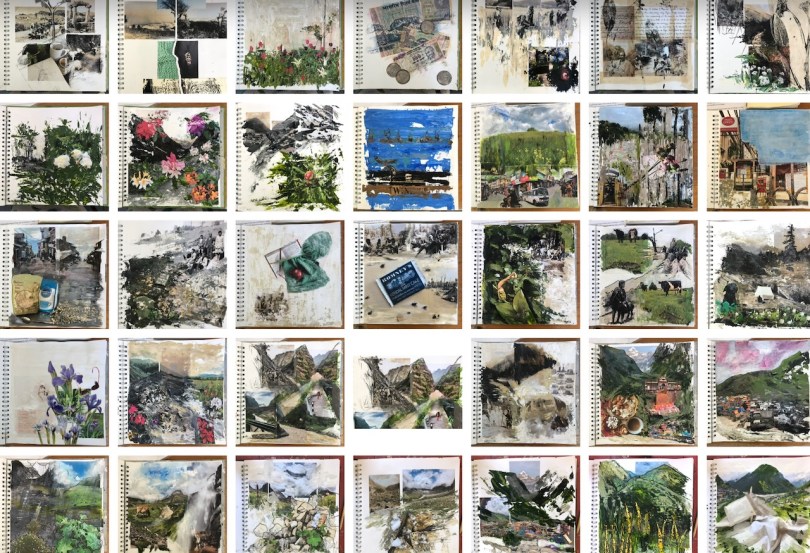
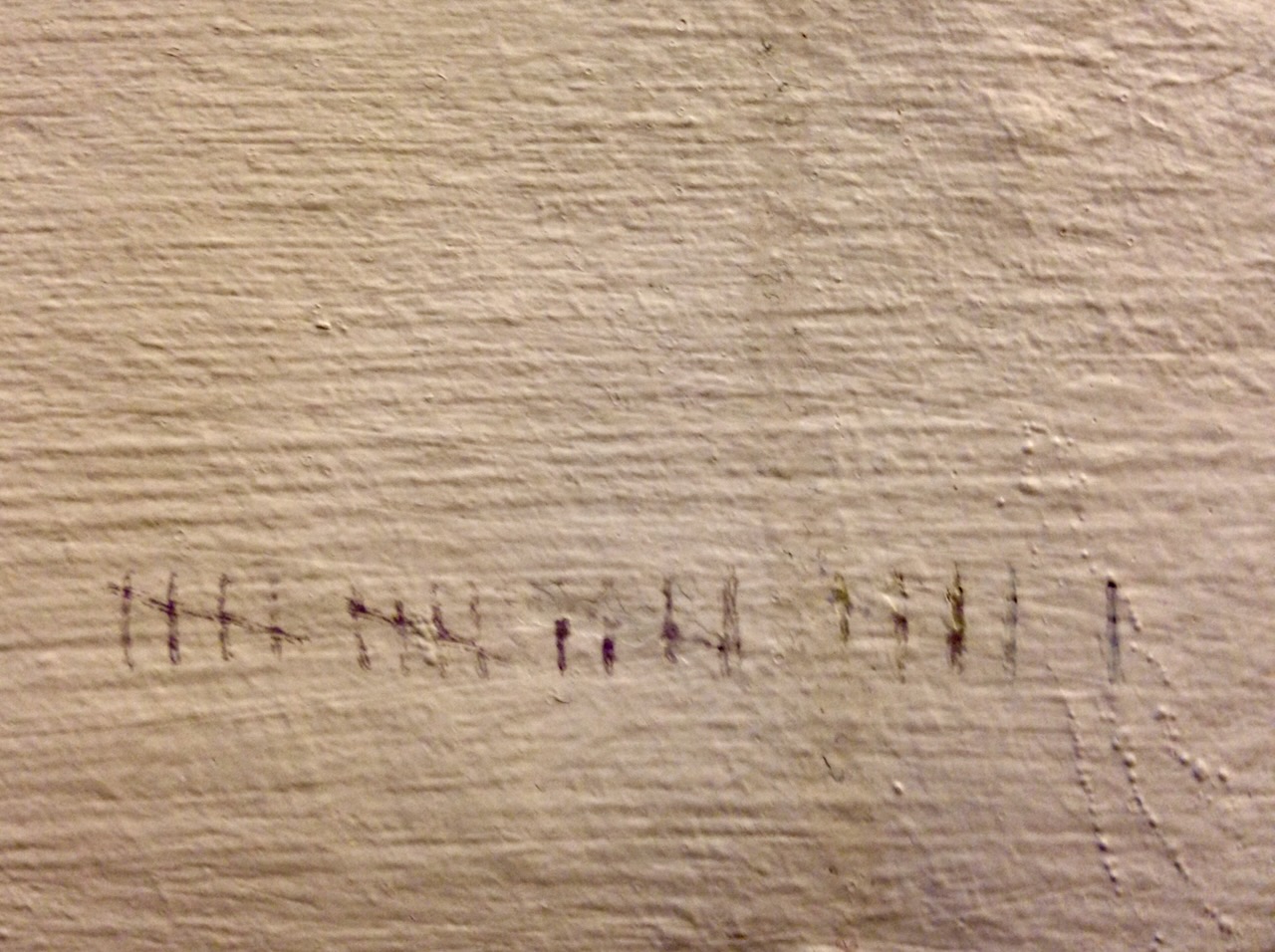
A series of square sketchbooks chart the 138 days I followed Joan’s 1939 diary entries. Starting on 17th February when I stepped into her shoes as she boarded a ship to India, I step out of them again on 4th July, the day she slipped off the edge of a Himalayan path to her death. One photograph, one sketchbook page, each day a quiet re-embodiment across time. Not a recreation of her journey, but a chance to listen more deeply to the changing tone of her voice in the final months of her life.

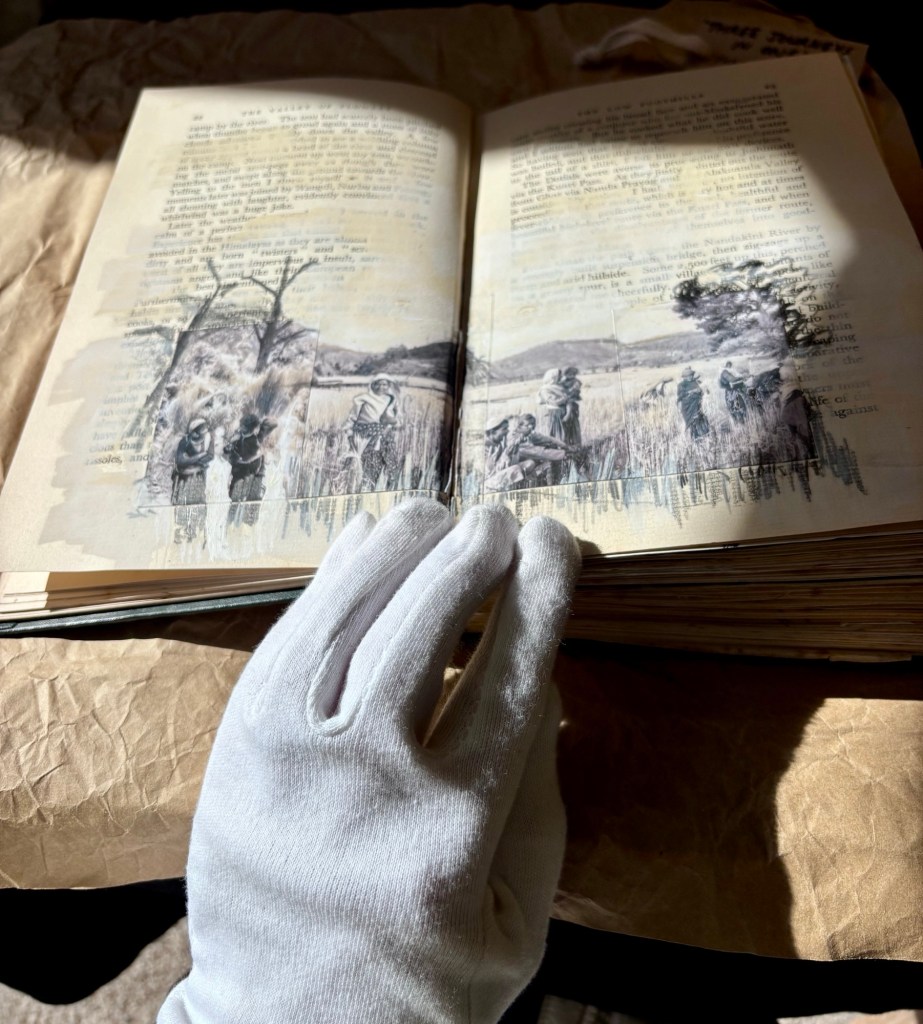
At the heart of the exhibition is its smallest piece: a re-working of a first edition of Frank Smythe’s Valley of Flowers, the very book that inspired Joan’s expedition. Through collage, drawings and pressed flowers, it now tells the stories of three visitors to the valley rather than just one: his, hers and mine. Wrapped in brown paper and tied with string like an archival package, the book invites visitors to wear white gloves to turn its delicate pages, not because it is precious in a monetary sense, but out of respect, Unlike most artworks, these ones are meant to be handled and engaged with.

‘Three journeys in one’

There is nothing for sale. No press campaign. No sponsorship. Just a quiet space, tucked away in a garden, found by invitation or chance. A strange but deliberate choice, and to me, a more authentic reflection of the humbleness of where Joan’s life ended than any traditional gallery could offer.

What Joan lost in material possessions, she gained in purpose and joy. Her life distilled into what nine porters could carry. She found a sense of completeness long before she had completed her journey.

That’s what I hope to convey in the improvised, immersive pieces shown in the warm belly of my limestone vaults. People forgive imperfection and lack of polish as they connect with Joan’s story through their hands, senses and bodies.

Just as artists learn to see not just form but negative space – the shapes between things – so Joan’s outwardly abundant life transformed into an inner world: slower, quieter, less visible, but not lesser in any way.

Maybe this is a natural outcome of ageing… the gentle decluttering of ambition and a reshuffling of values. Or maybe Joan’s story is a simple reminder that richness cannot always be seen and meaning doesn’t always require an audience.

The symmetry in our shrinking trajectories is just an observation.

But it feels strangely right.

IN PROCESS…

Sunday 19th October, 11am-5pm and by appointment until 1st November.

The Vaults, 114 Bisley Road, Stroud


Creativity in times of destruction…

“It’s brutal.”

That’s how a friend recently described being an artist. He had been a student at Goldsmiths in the late eighties and early nineties, during the rise of the Young British Artists (YBAs) like Damien Hirst, Tracy Emin and Sarah Lucas, names that would go on to dominate the art world, thanks in part to the patronage of Charles Saatchi.

We ran into each other at the local paint shop—a regular stop for him in his current life as a decorator. Across a spread of tester pots and fillers, the conversation effortlessly turned to the day-to-day grind of being an artist. Over the summer I have been preparing for my forthcoming exhibition, In Process… (which opens today, 27th September!) and was feeling the impact of long, solitary studio days, wrestling with questions only I was posing and whose answers seemed only to matter to me. It can be a struggle: adhering to a discipline of showing up as captain to a ship with no passengers, steering a course to a nebulous destination, deep-diving into the depths of the soul, mind or body – wherever the well of creativity bubbles up – to haul tiny gems to the surface. Exhaustion and self-doubt often creep in.

‘What’s the point?’ is the main saboteur. The work seems irrelevant, the purpose elusive. There’s no financial gain, just costs. In the isolation of the studio, there’s no one to argue with those thoughts. Indeed it is easy to agree with them: Why bother?

And in times of widespread destruction – whether global or even personal – that sense of futility can grow.

This summer, for example, parts of my home were stripped back to their foundations. My life was overtaken by builders, noise, dusty cups of coffee and chaos. Creativity felt all but impossible. In the grand scheme of things, this was a minor inconvenience. Soon, things would return to normal. But what about those whose lives have been shattered by larger forces… wars, displacement, destruction and poverty on a massive scale? How does creativity find its place amidst the rubble of Gaza, Ukraine, or other war-torn regions? Or even amongst the devastating images that make their way into our minds?

History has shown that creativity can thrive in the moments when everything appears to be falling apart. Creative expression becomes a form of resilience, opposition, even survival. It can be a small act of regaining control in an otherwise uncontrollable situation; a conduit for grief, an out-breath for trauma, a balm for moral wounds. Marks on walls or scraps of paper cry out: I am still here.

In today’s news-filled world where conflicts and politics pitch people against each other while social media distracts and distorts, I feel the call to act. To do or say something that will make a difference. I contemplate taking to the streets and marching in protest. Or superglueing myself to a pavement. I wonder if ‘speaking out’ involves publishing endless blogs and posts on social media denouncing what (I feel) is wrong? Ineffectuality wears one down. 

But to me, the direction of the human race is a force majeure, too big for even the Trump to halt. We find ourselves swept in its rampageous current, both unwilling cogs in the destruction of things we once valued, and parts of an optimistic surge to re-build better. I feel feeble and impotent. When I can’t even open the lid on a jar of gherkins, how can I shift anything of significance? But maybe this disorientating maelstrom is precisely the context in which creativity becomes most vital. Maybe the internal orientation creativity demands provides a space for the mind to process, to breathe, to make light of the weight and sense of the senseless, and to find fragments of meaning in what frequently seems like an overwhelming mess.

Destruction can’t defeat creativity; it calls it forth, demanding that we seek beauty, purpose and points of connection. That process can feel ‘brutal’.  What’s the point? is never far away. But I try to remember: The point is not always to create something monumental. Nor is it to offer neat answers. Sometimes, the point is simply to make something that wasn’t there before, to keep moving forward and to hold onto the belief that every act of creation – however small and seemingly insignificant – is a counter movement, an act of defiance, a stand against that which threatens to destroy us. 

In Process… at The Vaults in Stroud

I have heaved my most recent exhibition out of a time of dark chaos. But as I – and it – clawed our way to the surface, it grew its own wings. Help came from unexpected places. Beauty emerged. And now it is there, in the Vaults, among the grapes on my vine, fruits to share.

There was a point!

You are so welcome to visit.

IN PROCESS…

In Process… Opening Times:  

  • Saturday & Sunday 27th/28th September, 11am-4pm
  • Monday 29th September – Friday 3rd October, 2-5pm
  • Saturday & Sunday 4th/5th October, 11am-5pm
  • Sunday 19th October 11am-5pm
  • And by appointment at other times throughout October (excluding 10th–17th and 22nd–26th October)

If you would like more context to the work in the exhibition prior to coming, please read my previous three blogs: Following Joan… Parts One, Two & Three.

Following Joan… Part Three

(If you are joining Joan’s story now, you might want to read Following Joan… Parts One and Two first.) 

‘Do you think she jumped… or did she fall?’

It’s 2020 and I am sitting opposite my uncle, a grandfather clock tick-tocking the present into the past.

That question has always lingered around the name of my Great Great Aunt Joan. She was said to have been troubled, never having recovered from the death of her beloved older brother, Gerald, killed at Gallipoli in the First World War. Ill health had dogged her. And as another war loomed on the horizon, perhaps she could not bear to witness more loss. 

I sometimes wish I could type ‘Joan Legge’ into the search box of my life’s hard drive to locate the exact moment her story began to intrigue me. Perhaps it was a conversation with my grandmother, Joan’s niece. Both she and her younger sister had believed, independently, that Joan would not return from her trip to the Himalayas in 1939. Their mother was said to have ‘the gift’ – an unfathomable intuition, a form of knowing that slips past reason. 

That fascinated me, for even as a child I sensed there were hidden channels of communication and knowledge beneath the surface of ordinary life. Perhaps their foreboding of no return planted the idea that Joan’s death had been deliberate.

Joan 1905

Or maybe it came from the anecdotes I gleaned over time from my father and uncle about this eccentric spinster who, after Gerald’s death, cast off the frills and trappings of aristocracy and privilege to forge a life of farming, service and adventure. A life that ended in solitude, in a remote valley half a world away. 
Some lives close with a sense of completeness, even peace. Death may be welcomed after a struggle with illness or the slow wear of age. Others remain unfinished, wrapped in mystery, unresolved, tugging at the conscience of descendants like a child clutching at its mother’s apron strings. 

Joan’s sudden death was of that latter kind. It sent shock waves through the generations, softening with distance into small ripples. Even now they lap at the shores of my own soul. 

Map of the Valley of Flowers, the site of Joan’s camp, death & grave marked in red
©Staffordshire History Centre

It was only last year, travelling to the Valley of Flowers with three of Joan’s descendants, that I fully grasped the scale of her courage. And the violence of her end. The monsoon rains offered us just a fleeting glimpse of the place she fell, its position traced on a map sketched in the days after her death. Yet it was enough to shatter the gentler image I had long created of her tumbling down a wooded slope. The truth was starker. Joan had fallen clean over the edge of a sheer granite cliff.
Her fall haunts me. Those unthinkable seconds of awareness, knowing you are hurtling toward your end. How different from a death that comes inch by inch, offering time to prepare, to resist, to rage, or to reconcile. In July 2024, when I left the Valley of Flowers and Joan’s remote grave, a sudden grief overwhelmed me, buckling my legs and landing me in a pile of donkey droppings. Yet Joan’s own words leave no room for doubt. Her diaries brimmed with excitement for the months ahead, with awe for the surrounding peaks, and with delight in her adventure. She did not choose death. She was very much alive.

So why does her story touch me so deeply? Why not my great grandmother, killed in a car crash?  Why not my grandfather, the ‘muck and magic man’, pioneer of organic farming? Why Joan? And why me – the only one in the family drawn, again and again, to the lives behind us rather than those unfolding ahead? Is it because I have no children to anchor my gaze forward? Or is it that I have no children precisely because the voices behind me insisted on my attention?

Gerald (far left), Joan’s father (seated left), Joan (centre) and others, 1907

Perhaps neither, or both. What I do know is that the dead have enriched my life. And in honouring them, in breaking the silence of the unspoken, in unravelling the mysteries and untangling the knots they left behind, I believe their presence has enriched the lives of others’ too. 

Through my recent studies in Family Constellations, I have increasingly come to experience life as a river, flowing on with or without us. We step into its current for longer or shorter spans, mingling in the same waters where our predecessors once moved. What matters is not the length of time, but the resonance we leave behind. Not quantity, but quality.

Birth is the one beginning we all share. But our endings are as varied as our lives. Accident, chance, destiny, choice… no one can know death’s moment or manner, only its inevitability.

So was Joan’s death a tragedy as her obituaries mourned? Or was it a brilliant ending to a life lived fully right into its final breath? 

Draft for Joan’s eulogy by her sister: ‘If in another world kindred spirits dwell together there Joan & her brother Gerald will be found, I think, among a happy throng of pioneers and explorers of all ages. Courage, endurance and an indomitable will were possessed by this devoted brother and sister and both lie buried in a mountain grave & as one of her friends wrote, ‘”already halfway to Heaven”. She started on her greatest hazardous adventure joyfully and she died as she had lived, unafraid –

Joan and Gerald, 1907

I dedicate this blog to my dear friend in Australia, Tas. Over the past six years, corticobasal syndrome (CBS) has been claiming his body, his movement, his speech. And yet his spirit, his humour, his integrity and his enduring delight in friends, family and life itself still blaze. To know him is both an inspiration and a gift I deeply treasure.  

Further details of my exhibition / event on Joan will follow in my next Blog.  

From screens to Spring…

Spring is Nature’s childhood. It’s frequently associated with youth, new beginnings and innocence. Yet while blossoms skip through our outdoor landscapes, our screens highlight with renewed urgency the premature loss of innocence of our younger generations with devastating consequences to their mental health, education, relationships and identity.

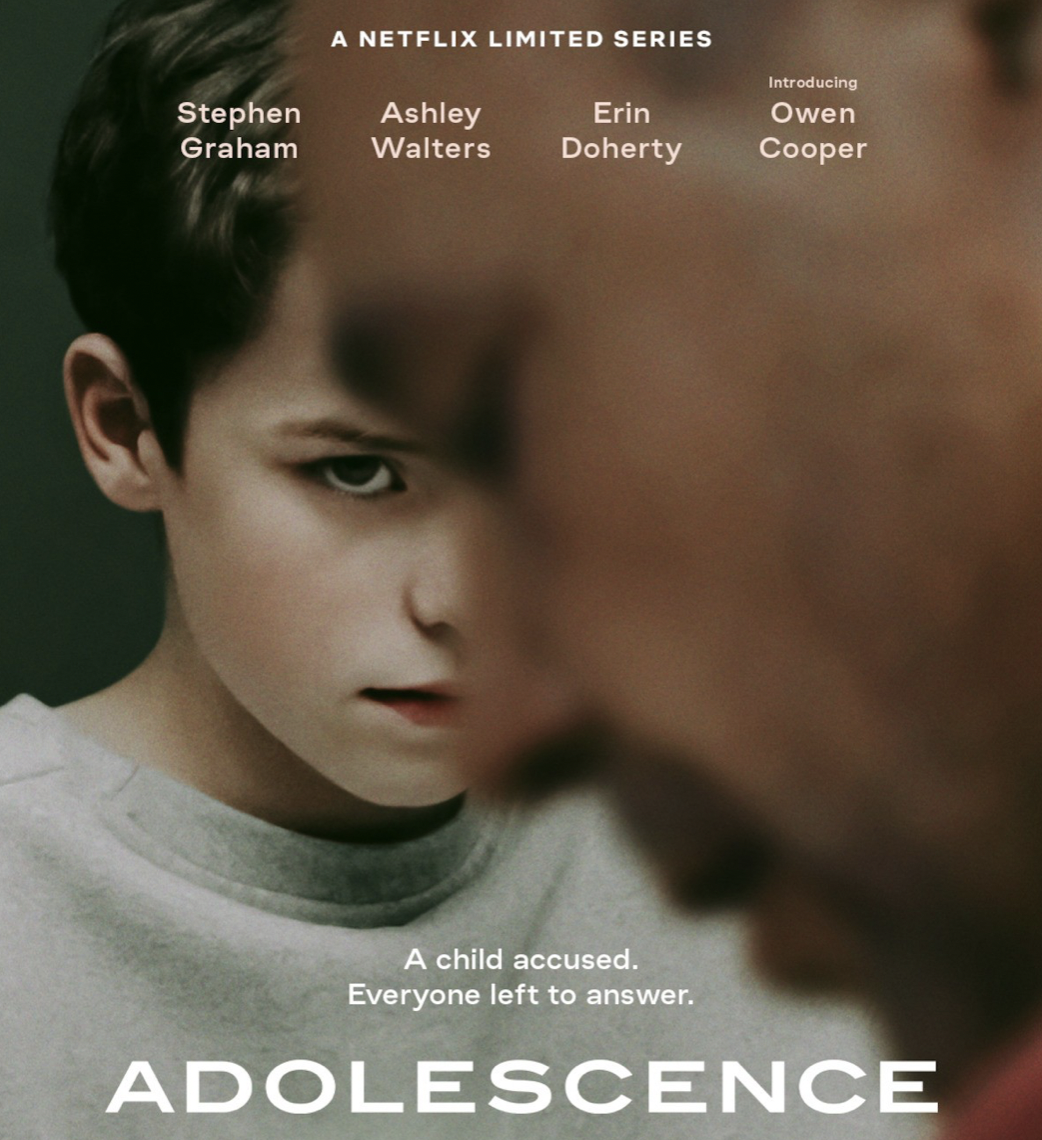
With that in mind, I was going to write about the new Netflix series, Adolescence, that has provoked widespread debate and concern about toxic masculinity, the ‘manosphere’ and sexist ‘manfluencers’ like Andrew Tate. (If you haven’t seen it, I can only encourage you to do so). Online platforms and social media are abuzz with it. Even Radio 4’s Moral Maze dedicated its weekly slot to exploring the question: What’s wrong with men?

Plenty more such questions could be asked in relation to the various world leaders dominating our headlines – Trump, Putin, Zelenskyy, Netanyahu, Starmer, Pope Francis – who between them are presenting a smorgasbord of appealing to repellent aspects of maleness.

I also considered writing about my recent visit to one of London’s dilapidated prisons – organised by the wonderful charity Prison Reading Group – to deliver a session on my book to a group of male prisoners who had read it. About the lingering impressions I’m left with, both of the shabby, four-storey wing that looked, smelt and sounded like your worst imagining of incarceration, and of what happened in the tiny room embedded in it that offered space for our inspired conversation. As always, I was touched by the men’s deep grasp of the themes I address in In My Grandfather’s Shadow, their carefully prepared lists of insightful questions, their gratitude for the positive impact the book had made on their lives. As always, I felt intense frustration at a system of wasted opportunity, money, time and human potential. As always, the wounds left by the absence of fathers, positive male role models and the learned ability to deal with overwhelming emotions glared red.

Detail from a handmade thank-you card from Prisoner B

But in the end, I couldn’t face writing about any of these huge and complex topics, even though they occupy my thoughts.

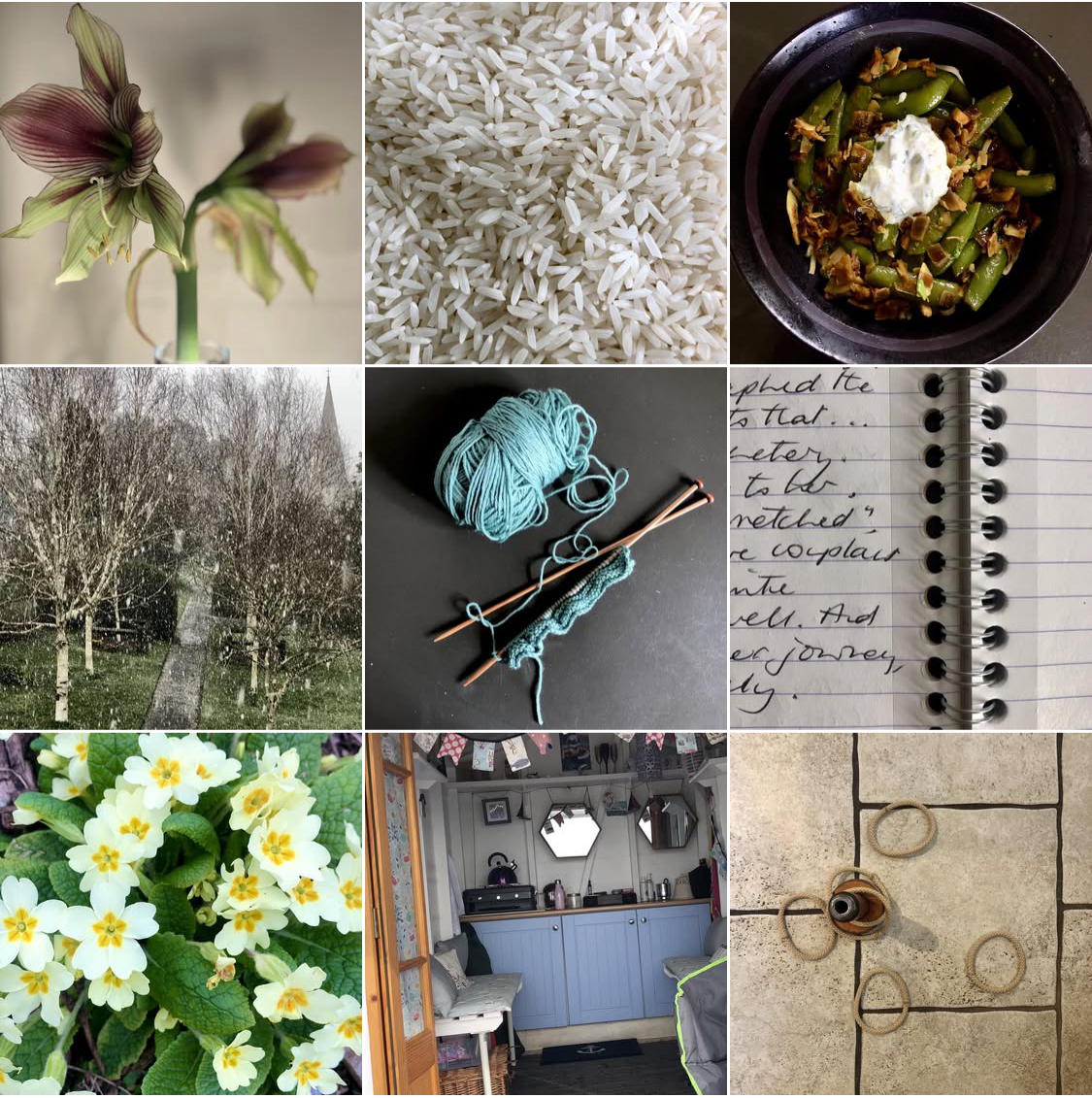
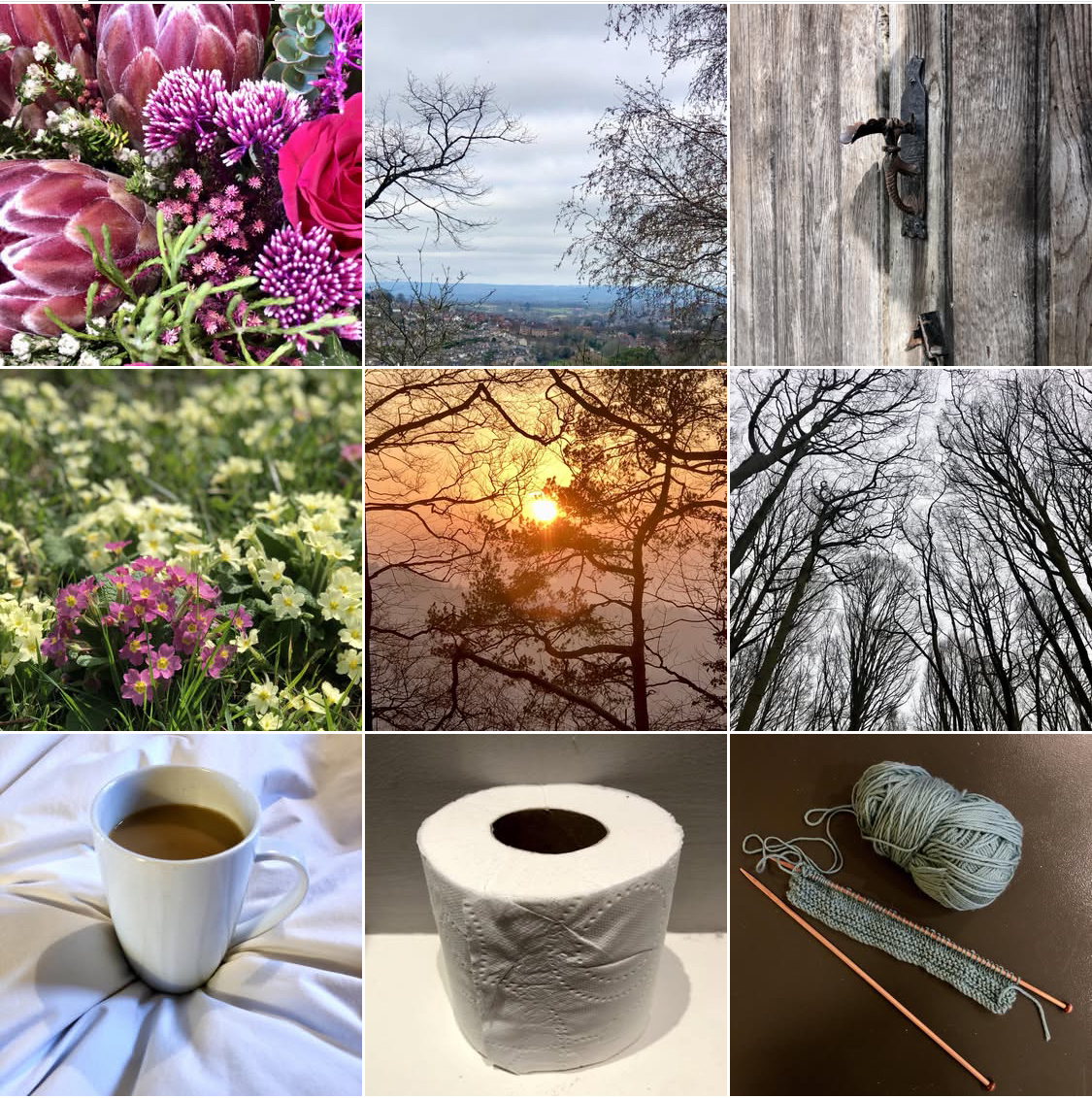
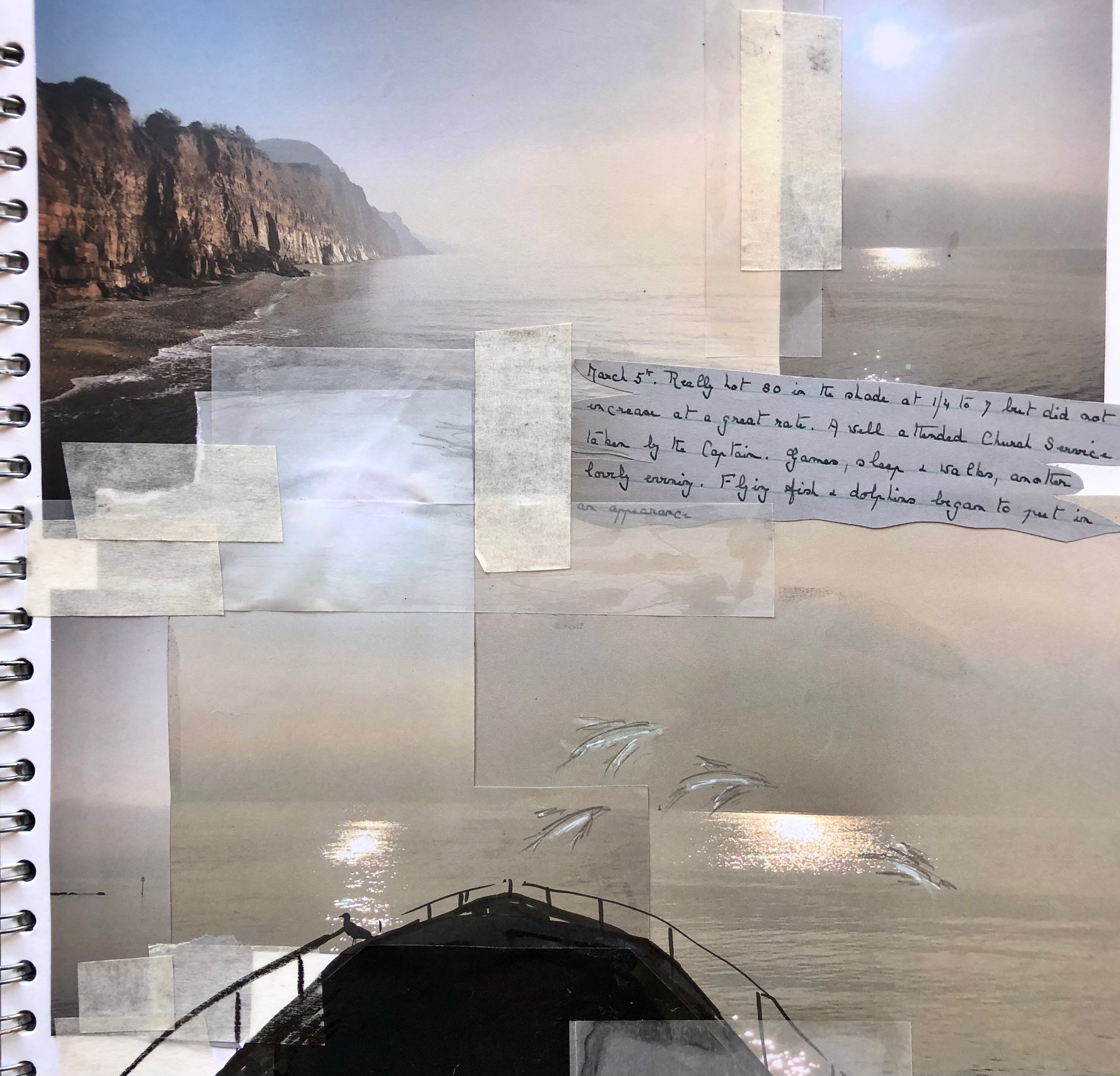
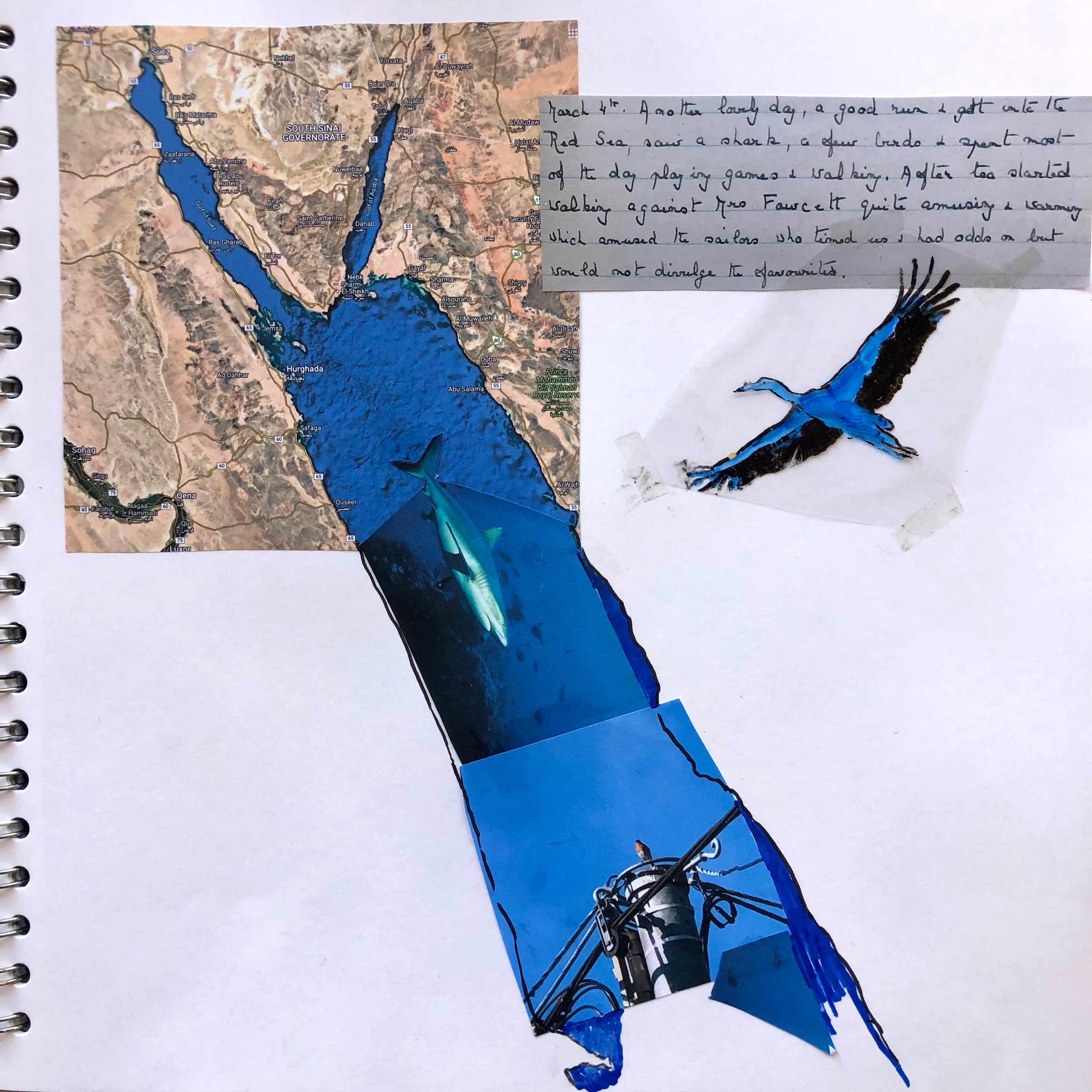
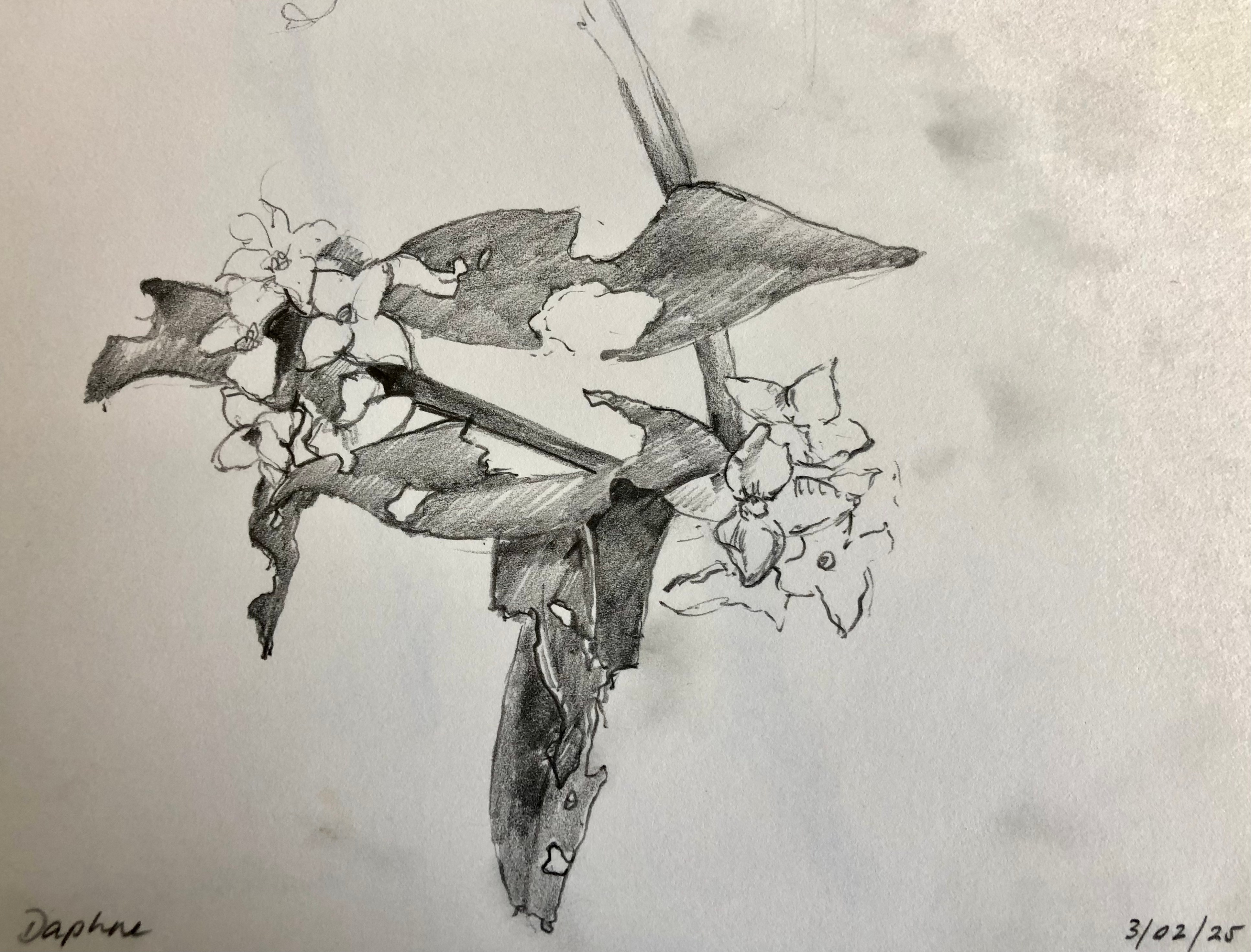
Instead, I find myself once more turning my focus to the more uplifting emergence of spring flowers both in nature and my garden. And to my inspiring great great aunt who travelled to India to gather floral specimens for Kew Gardens and in whose steps I am metaphorically walking for the next few months, following her diary as she sails from Birkenhead to Mumbai and then trains it up to the Himalayas. Each day I am reenacting a small action or activity she did in 1939, taking a slightly oblique photo that relates to it, posting it on Instagram (angela_findlay) and then creating an experimental collaged page in my sketch book. It’s my way into telling her story.

From 17th February to 13th March she was on board the T.S.S. Hector cruise ship playing quoits on deck or holed up in her cabin feeling seasick. (Not easy to make ‘art’ out of either!) There followed a few ‘outstanding’ days in and around Colombo visiting tea plantations and paddy fields, another sea voyage and several trains to the small hill station of Ranikhet in Uttarakhand. This will be her base for several months as she acclimatises, goes on practice treks and waits for the snows to melt further north giving her access to her ultimate destination, The Valley of Flowers. 

With deep regret I am coming to accept that I am not one of those exquisite botanical painters whose sketch books are veritable works of art. And I am sorely lacking in the plethora of technological and digital tools that are creating mind-blowing new universes in the art world. But I find solace in the fact that like Joan, I too am on a journey towards a (in my case, artistic) destination unknown, exploring and accompanying this intrepid female relative on her solo adventure. Ironically the worldly backdrop to her trip are the precarious months leading to the start of the Second World War. Mine is the run-up to the 80th Anniversary of its end. Or, if stupidity and egos escalate in the wrong direction, the beginning of the third…

War, the word alone snaps me back to present reality. I imagine we are all treading this fine line between engagement with the wider pain and travails of so many and the small (and big) joys and concerns that can be found within our homes and lives. How to care and act without losing sight of the beauty and wonder constantly available to us? How to engage with the immeasurable force of Nature’s creativity rather than human beings’ destructiveness? How to stay awake and feel, but not succumb to anger or blame?

It’s an on-going practice… a dance. And Spring feels like a perfect time to take to the floor.

This liminal space…

It will be different for everybody. But I love the quietness of these in-between days… 

That bloated weariness from endless festivities and good will. The jaded sparkle of unwrapped gifts spilling out of recycling bins. The jingle of carols fading as the challenges of Christmas are banished into as distant a future as any one year allows. 

For me there’s a sense of peace. A release from the storm of traditions. A disorientation. A heart full of gratitude.

With New Year still to celebrate, there’s just one last real or symbolic cork to pop. Then it’s back to reality with its resolutions, rhythms and routines. Bleak mid-winter stretched unruffled, a blanket of dark fields tucked into the horizon over a sleeping, muddy countryside.

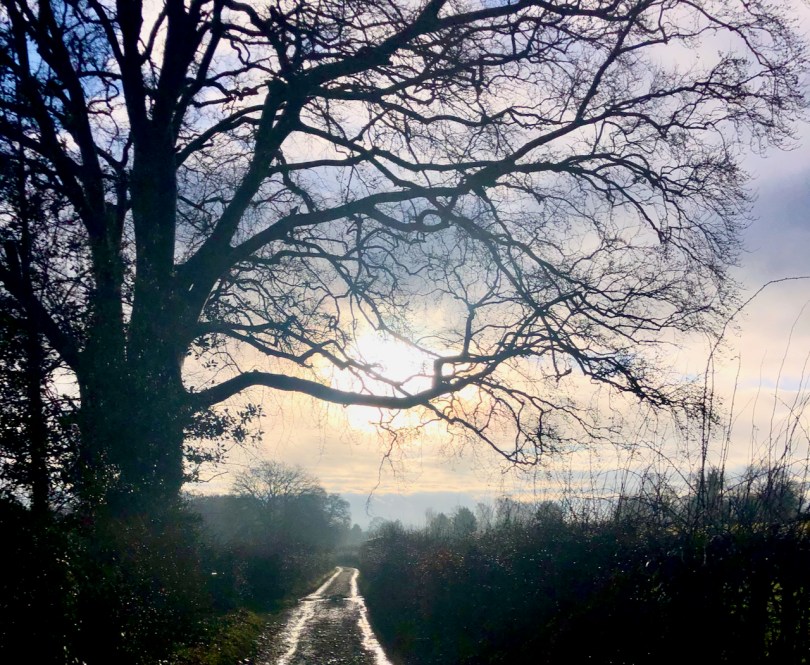
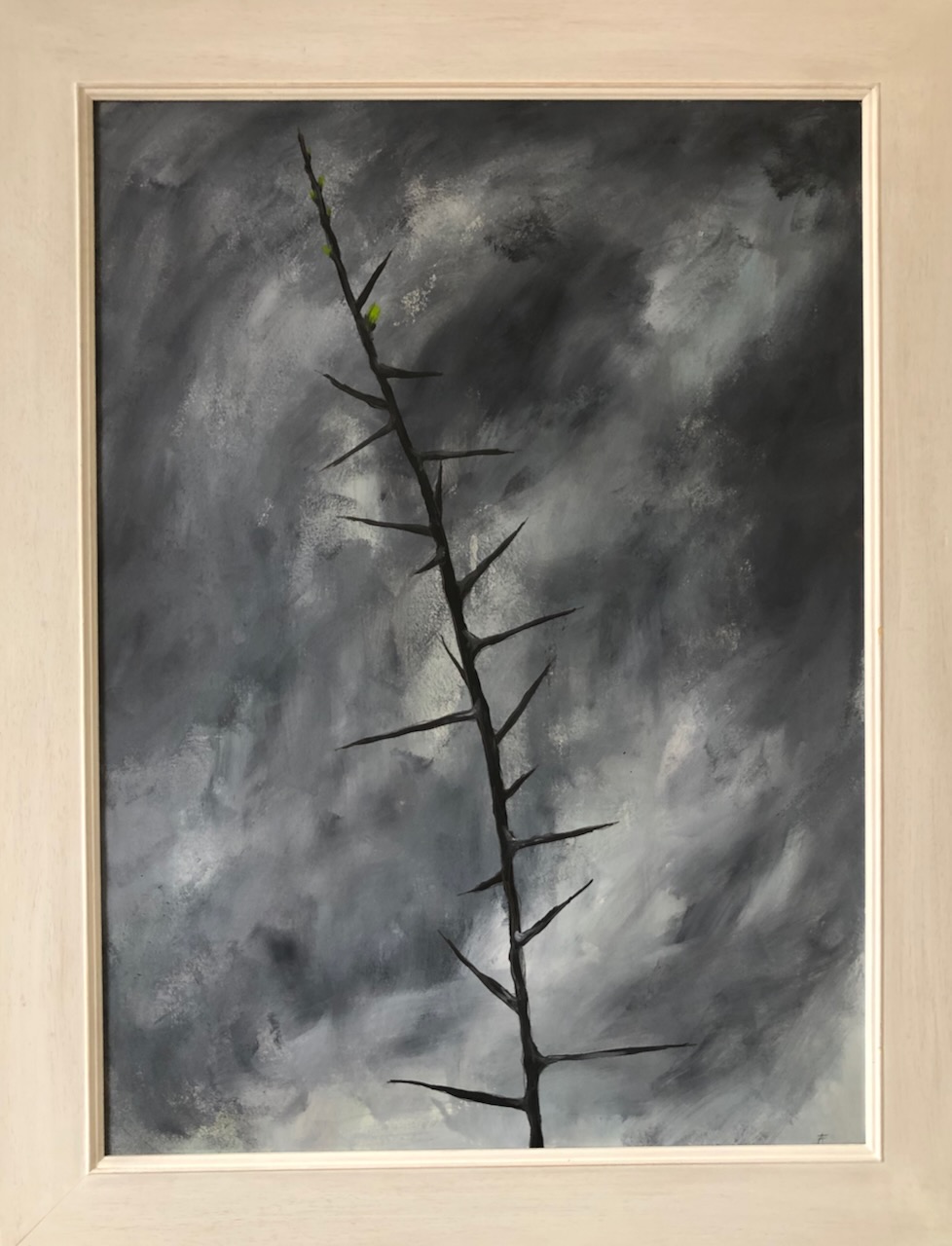
Trees stand brittle, skeletal. We know Spring will come, but in the immediate months ahead it is easy to lose faith that colour, light and warmth will ever return. 

Looking closely, however (with a slightly alarming nod to climate change), small promises have already started to decorate bare branches like fairy lights. A little pink blossom here, a tiny green bud there.

But it is out of sight, below the earth’s surface, where the real hope and action thrive. 

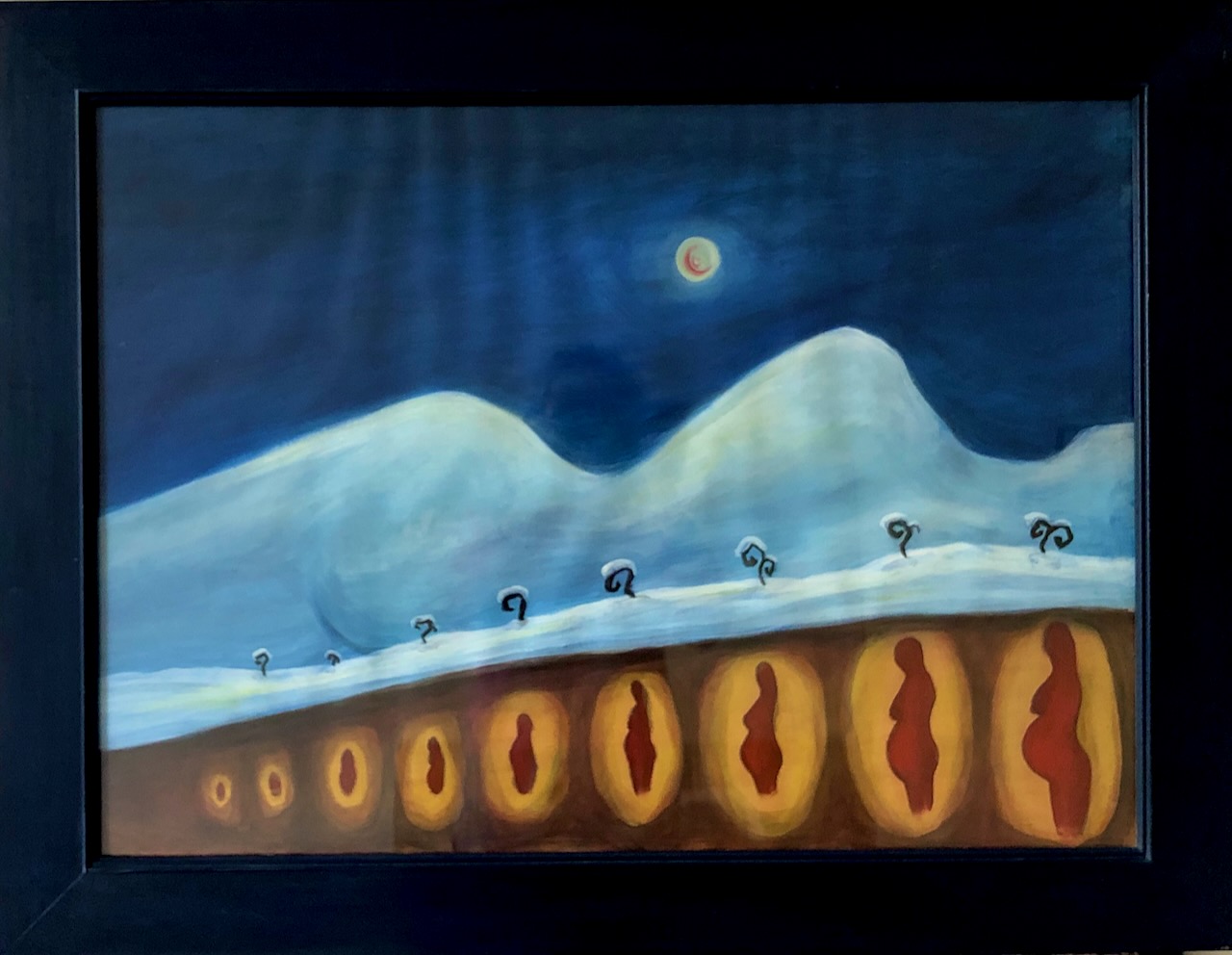
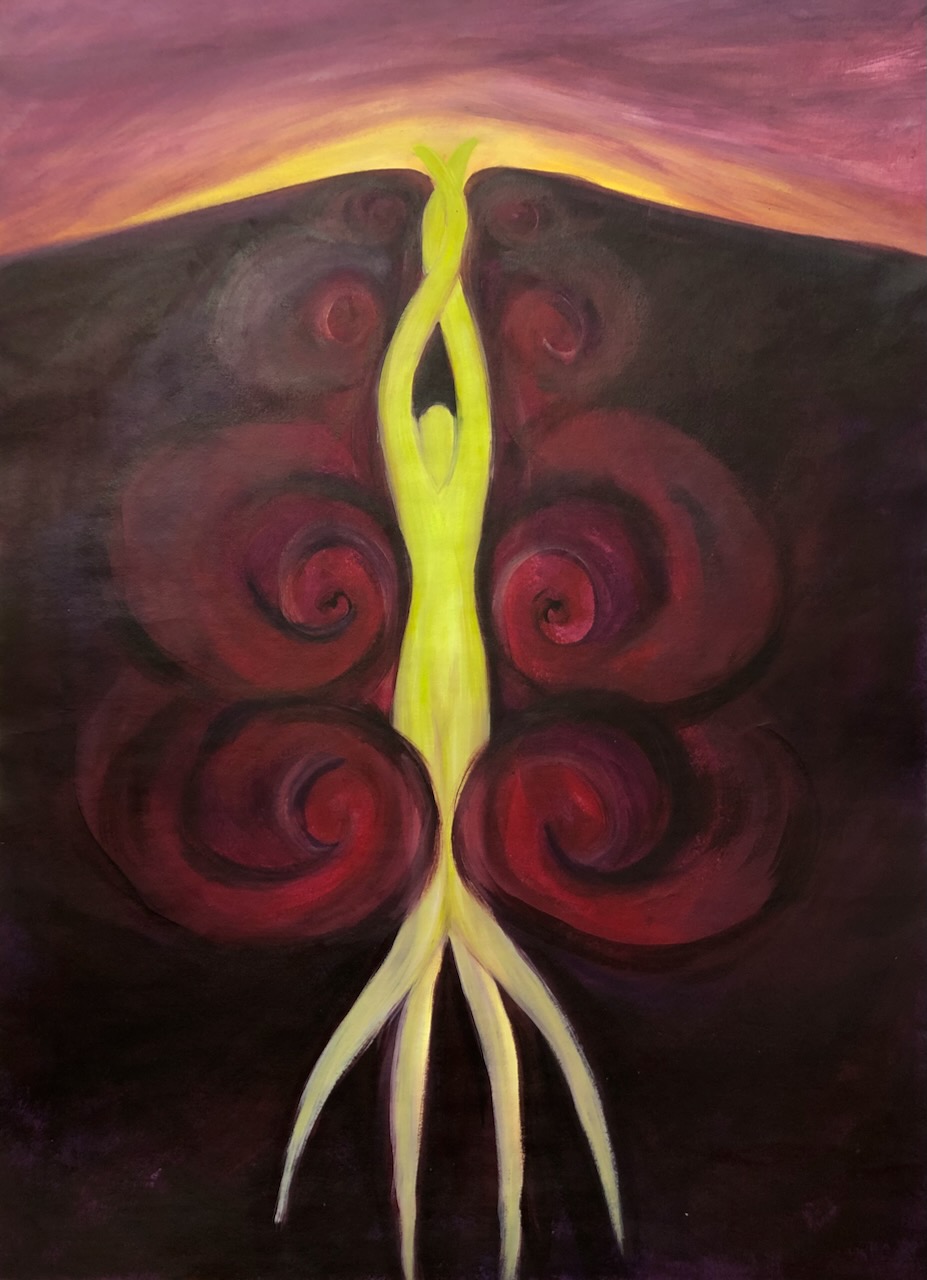
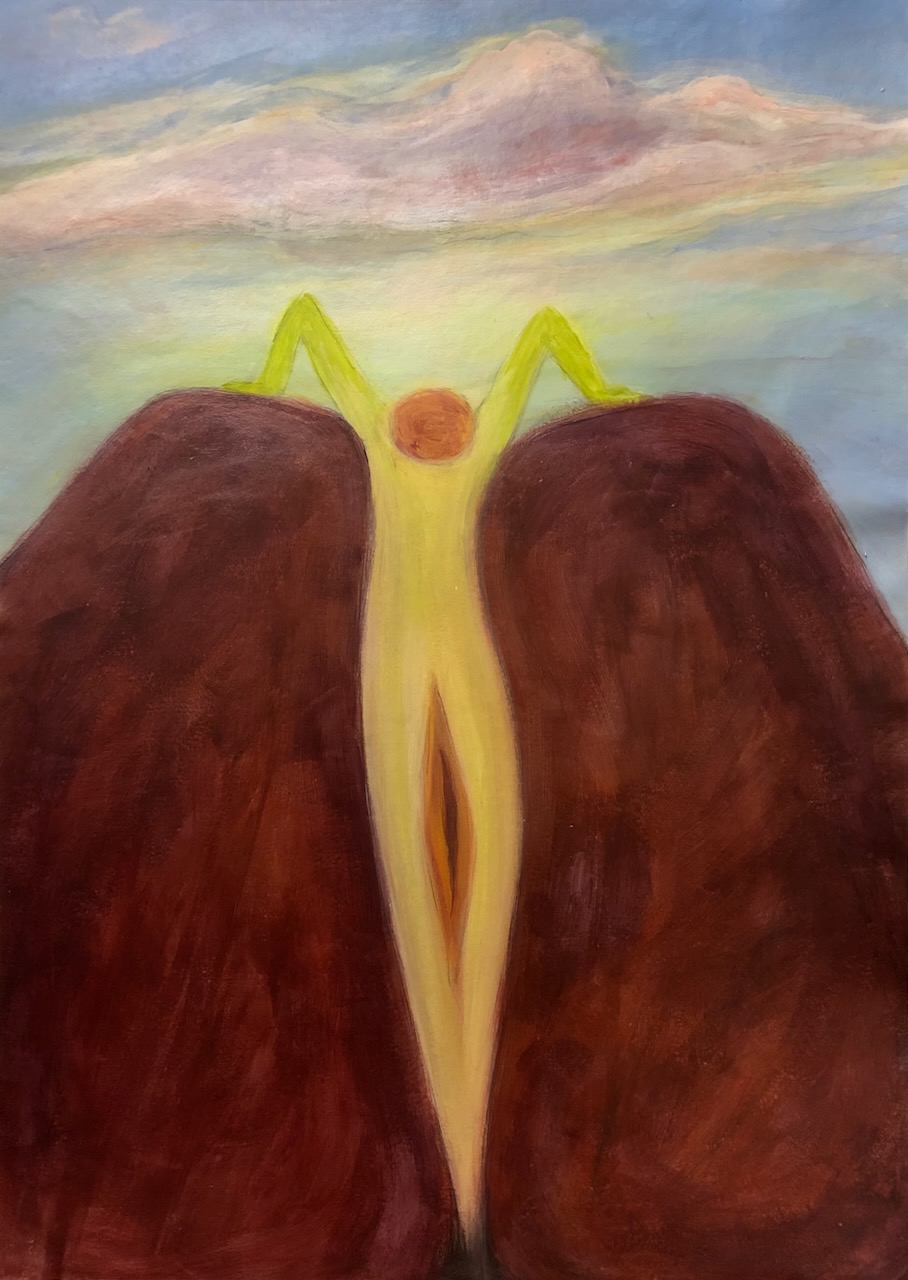
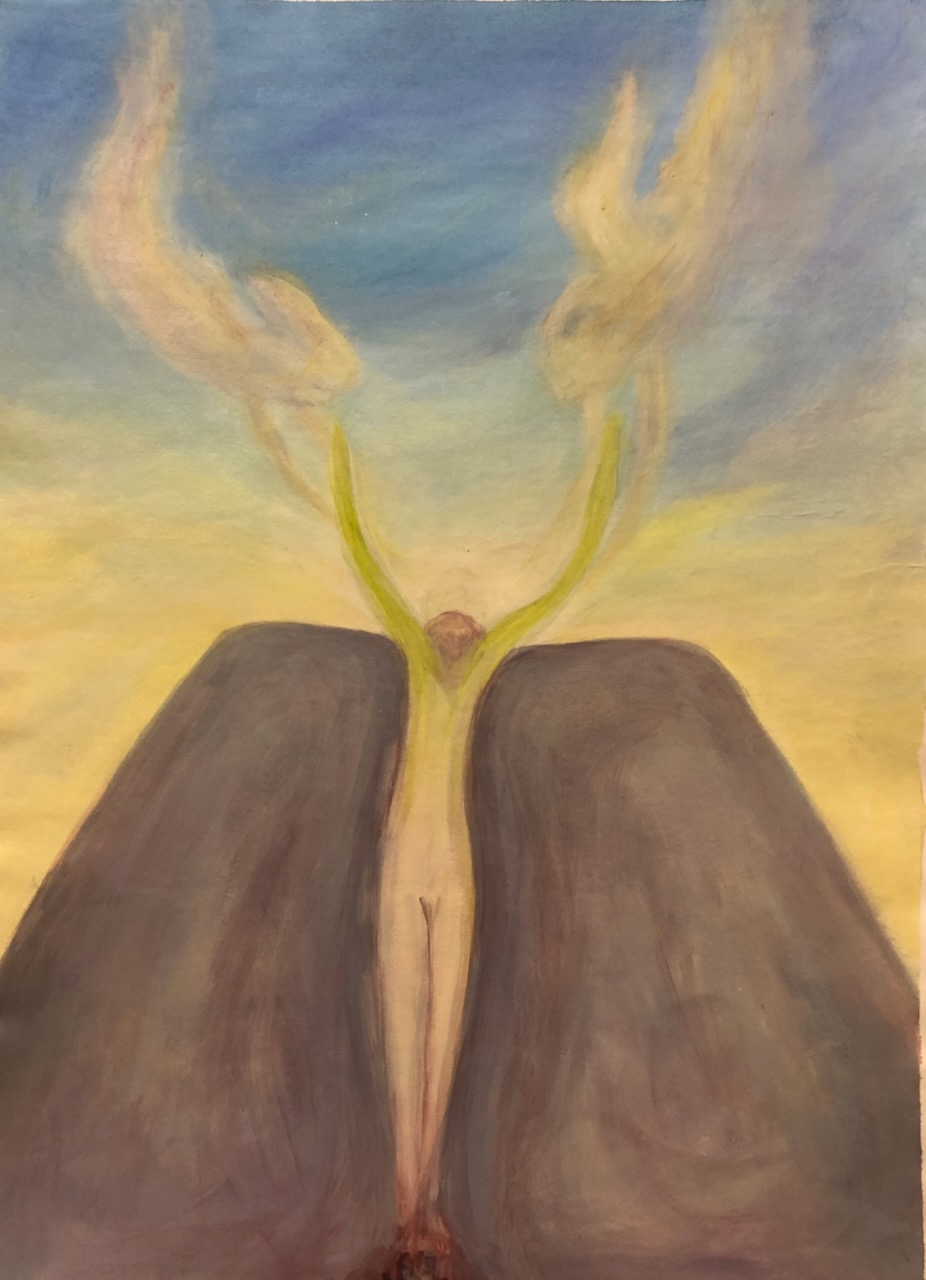
My recent move from storage to studio has uncovered numerous sketches and paintings I haven’t looked at for over twenty years. They were painted in the nineties when I lived on the west coast of Ireland consciously engaging with the four seasons and their corresponding echo within the inner rhythms of a human lifespan. Inspired by Celtic mythology and various spiritual traditions, my thirty-something-year-old self saw winter as Mother Earth’s pregnant womb, and Spring the birth and dance of youth. 

On a soul level, we experience winter in those times when it appears nothing is happening. When everything seems dead, stuck, over. It can feel eternal and deeply uncomfortable. We might search for escape in company, drink, exercise, work… or chocolate and movies. Might make wrong decisions through impatience to crank up the old and move forward. Then one tiny shoot of new growth breaks through the surface and into our lives. The season changes and Winter’s purpose is revealed as saps start to rise unstoppably. Energy returns after its slump… or slumber. Because of its slump or slumber. New creativity flows. Our soul’s spring has arrived.

In the meantime, this darkness can nourish us. It invites stillness and rest. Quiet intimacy. Soul. Life is tiring… winter offers us a chance to withdraw and replenish our energies. So I welcome these dark mornings, short days and early nights – ideally interrupted by crisp sunshine to brighten the spirits – as a period of germination. An opportunity to lay off the guilt of achieving less as we enrich more. A time of holding rather than pushing.

With all that in mind, I wish you a gentle, inspiring, meaningful and happy path into your New Year.

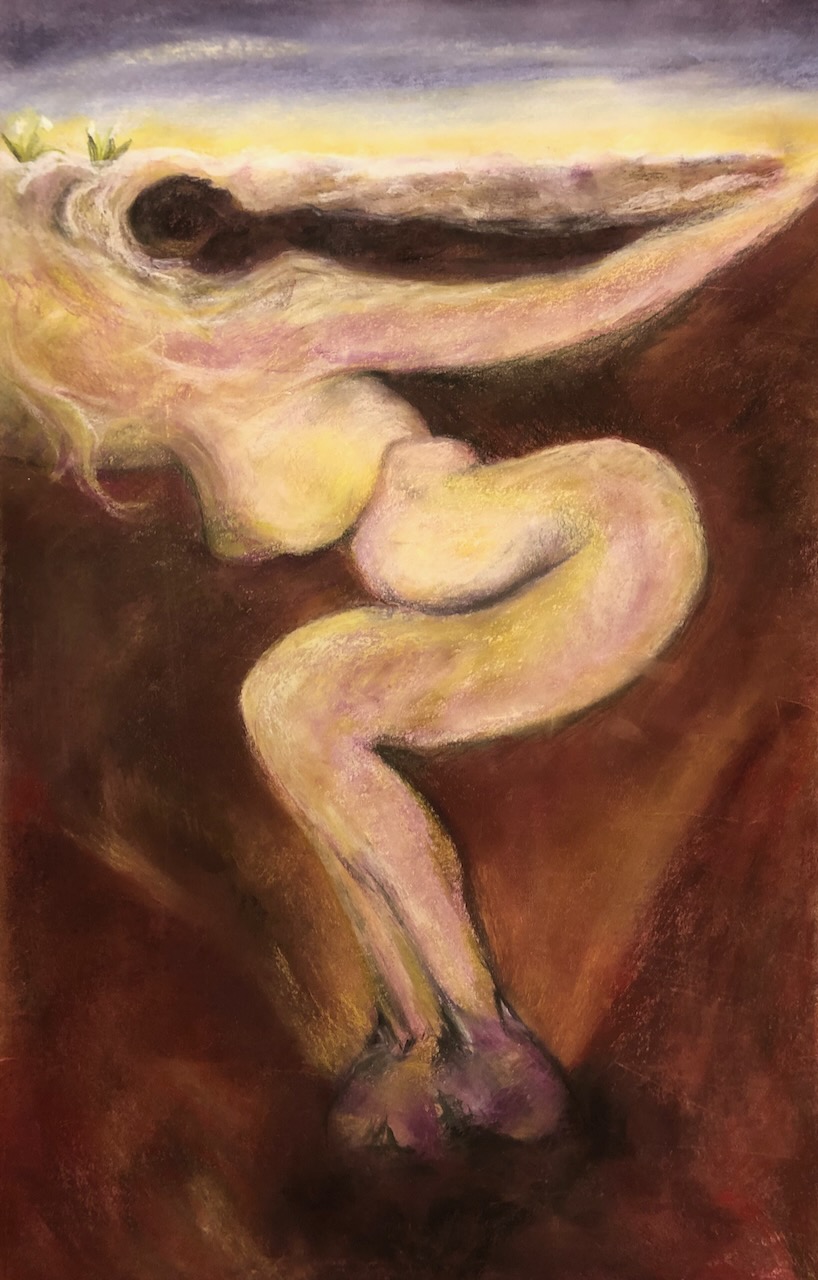
(All the paintings above are a mixture of acrylic and/or pastel and roughly 75x55cm)

A Bonanza of Beauty and Art

In a radical departure from my usual darker themes, I’ve got something special for you. (You may find it more rewarding to view April’s blog on my blog site rather than as an email where the layout sometimes gets a little garbled.)

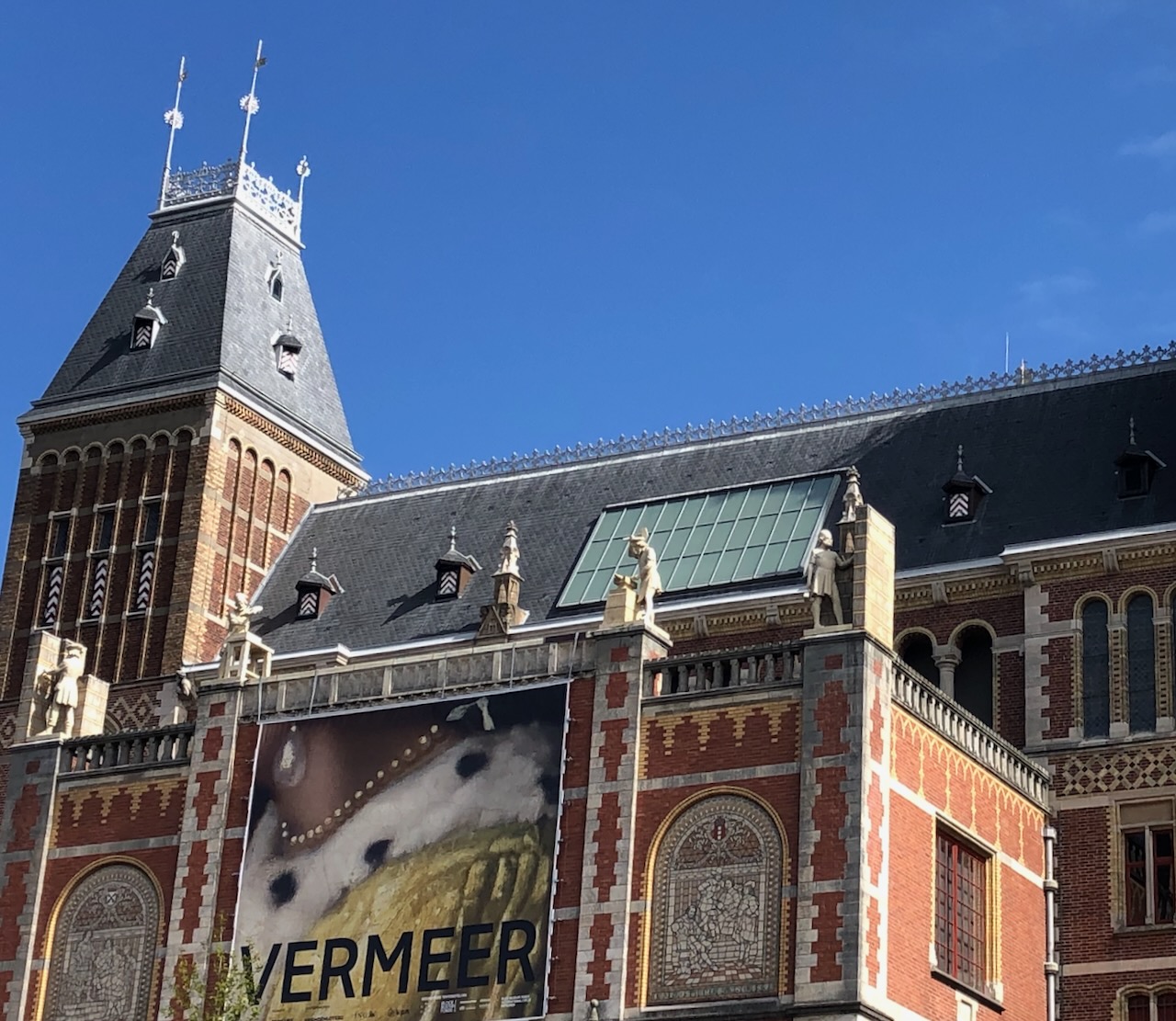
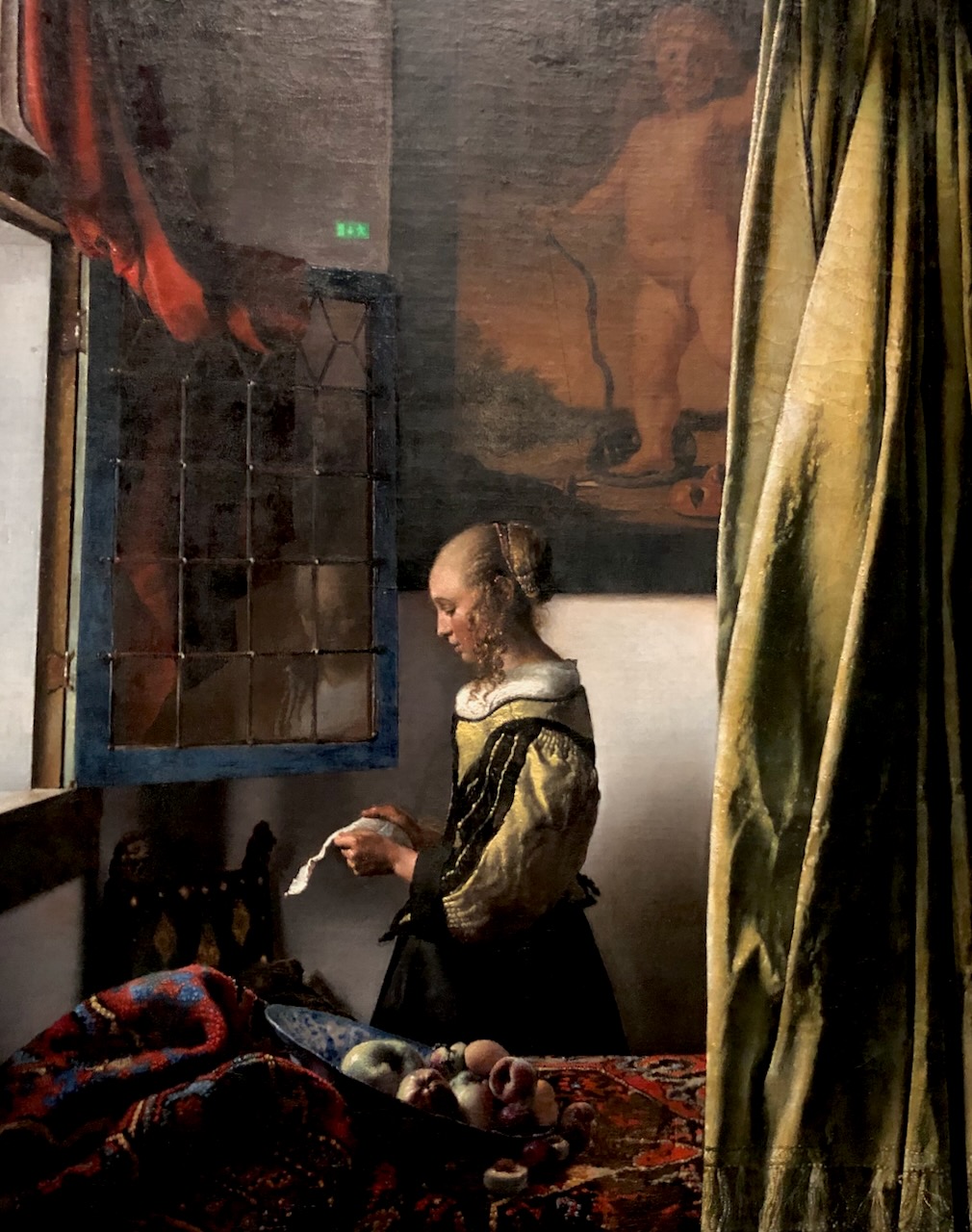
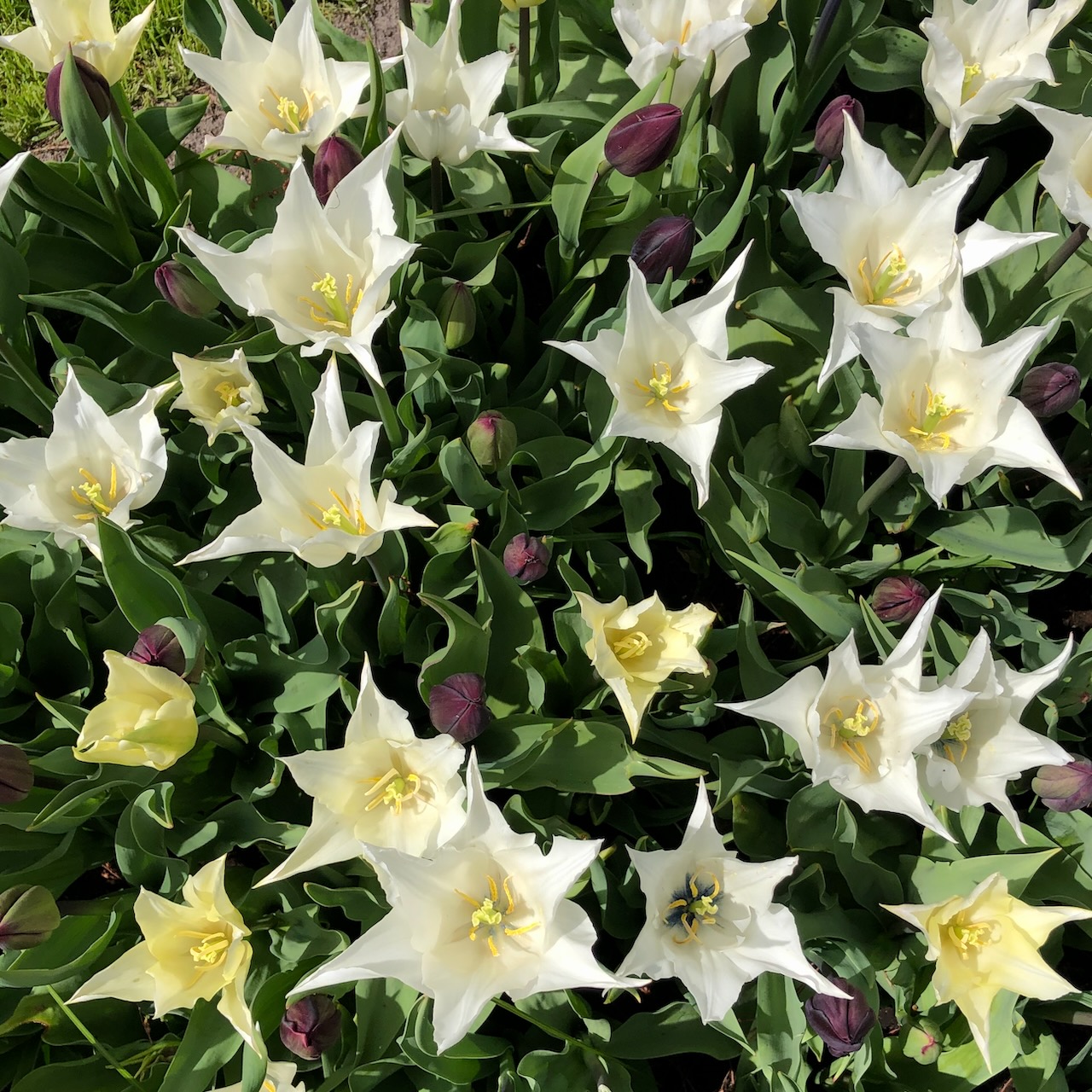
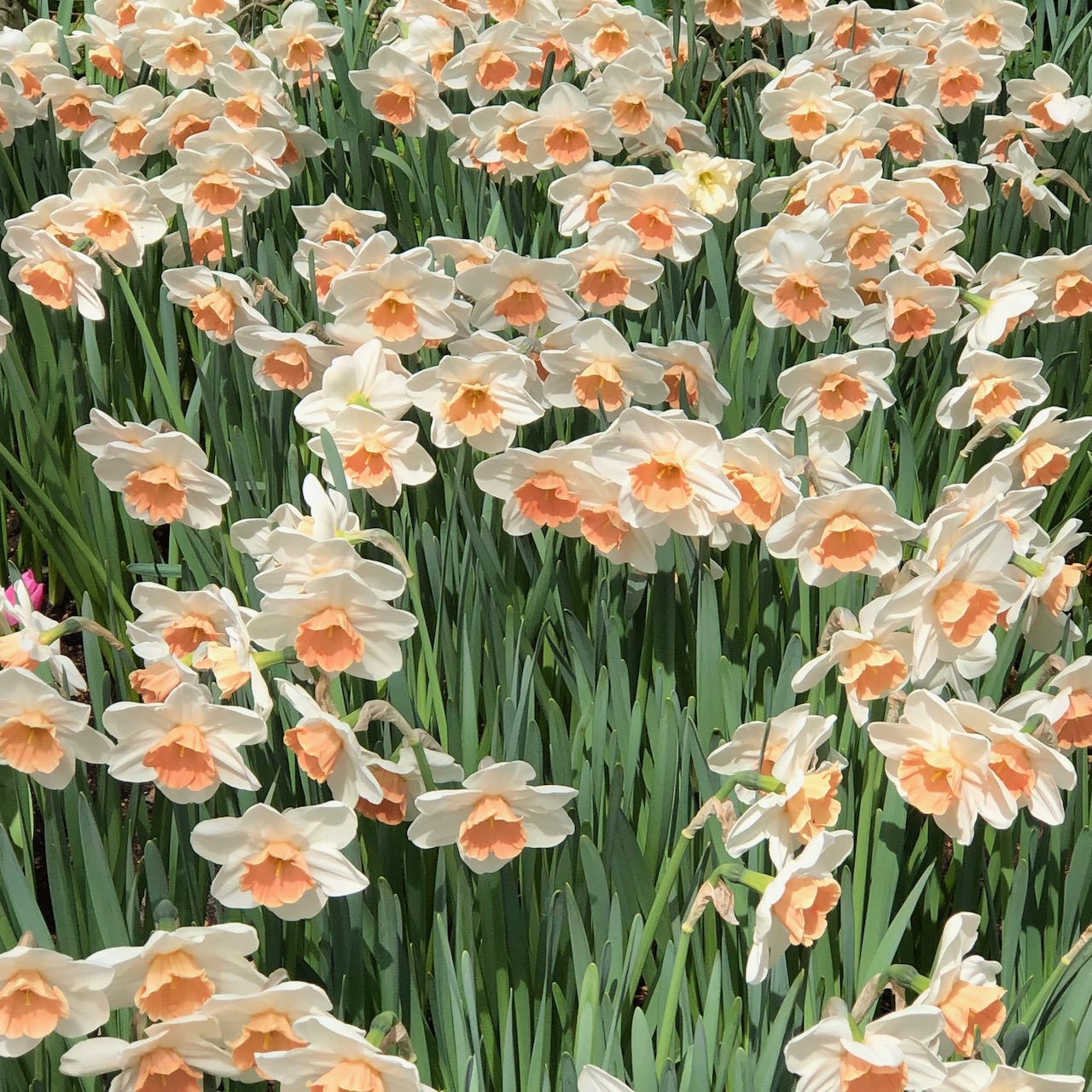
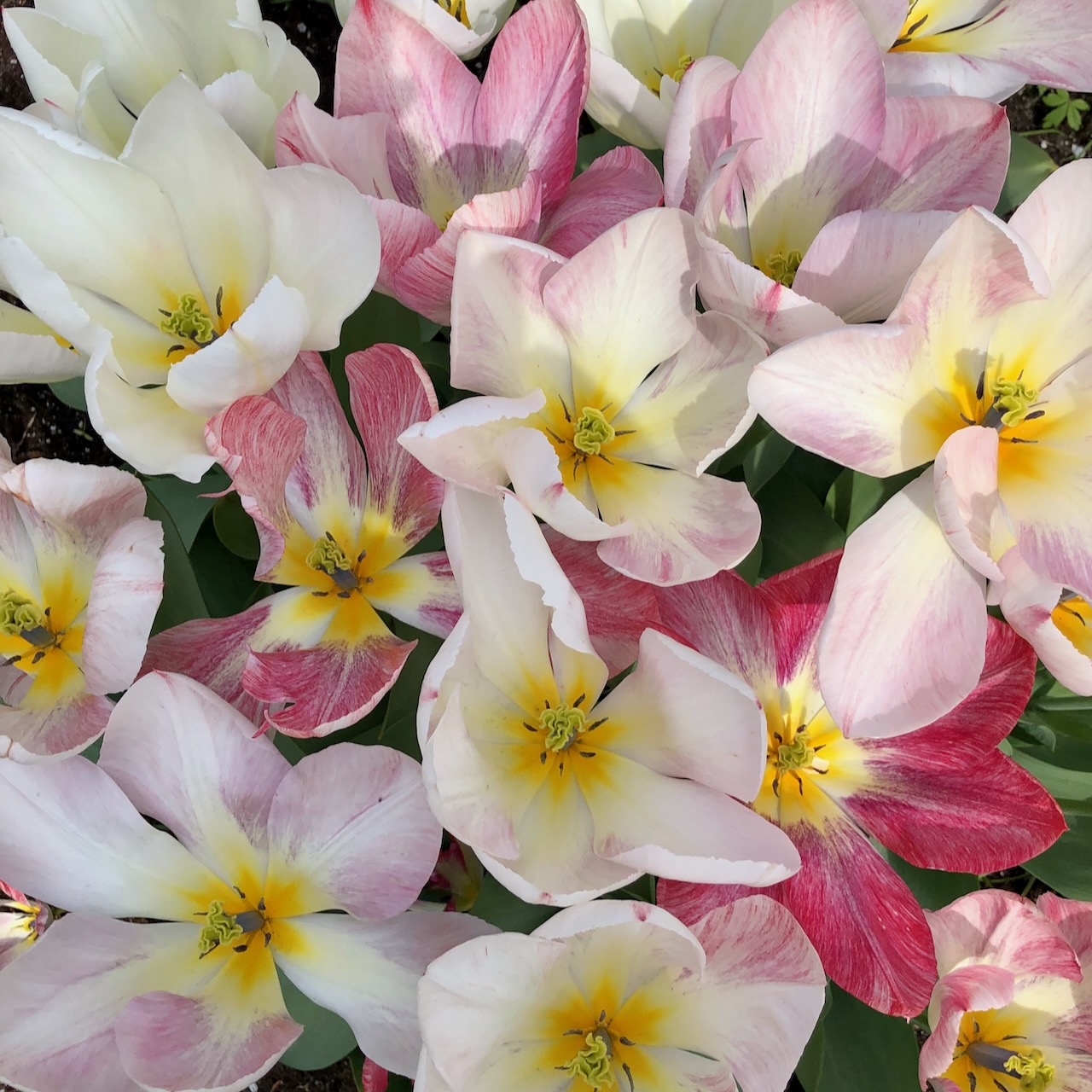
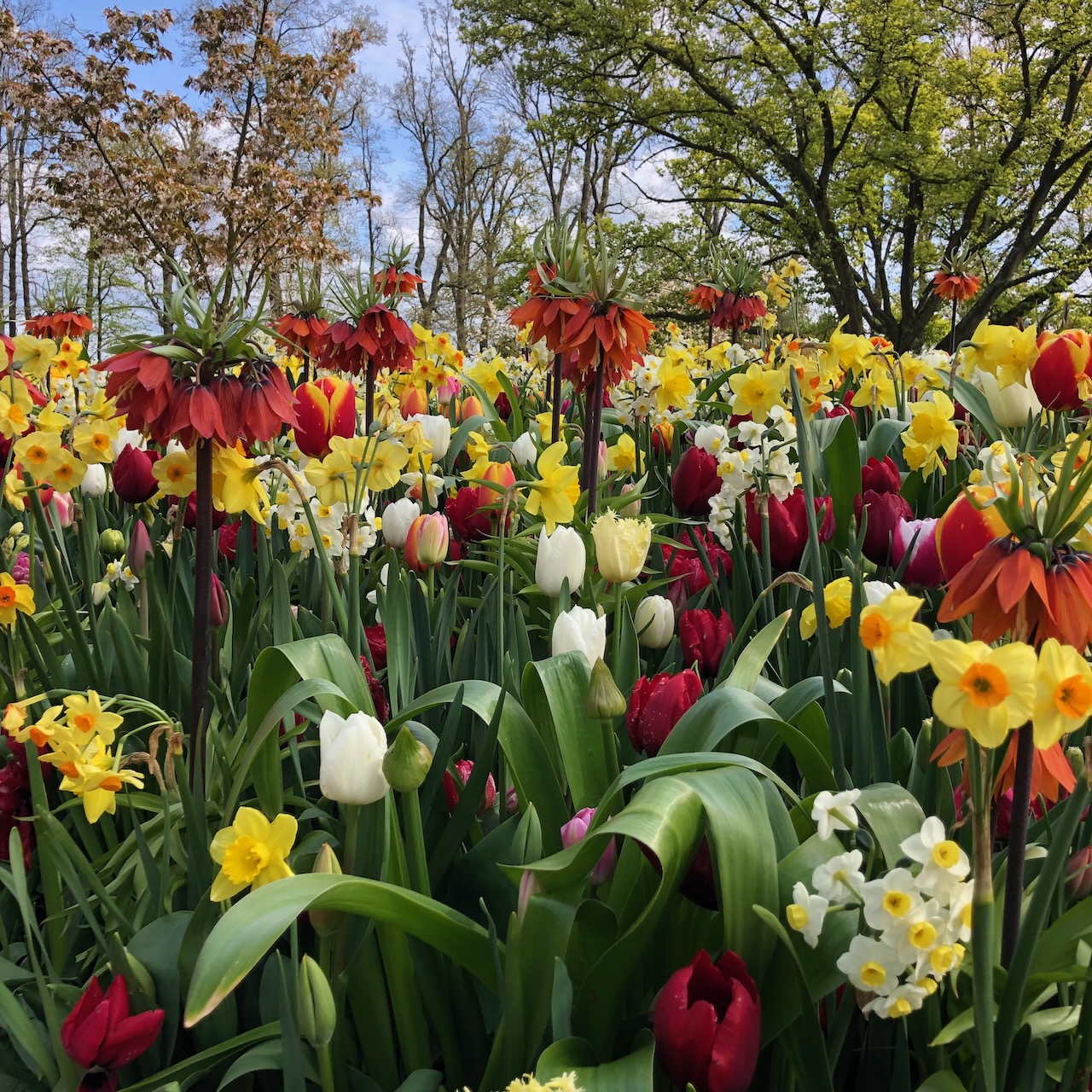
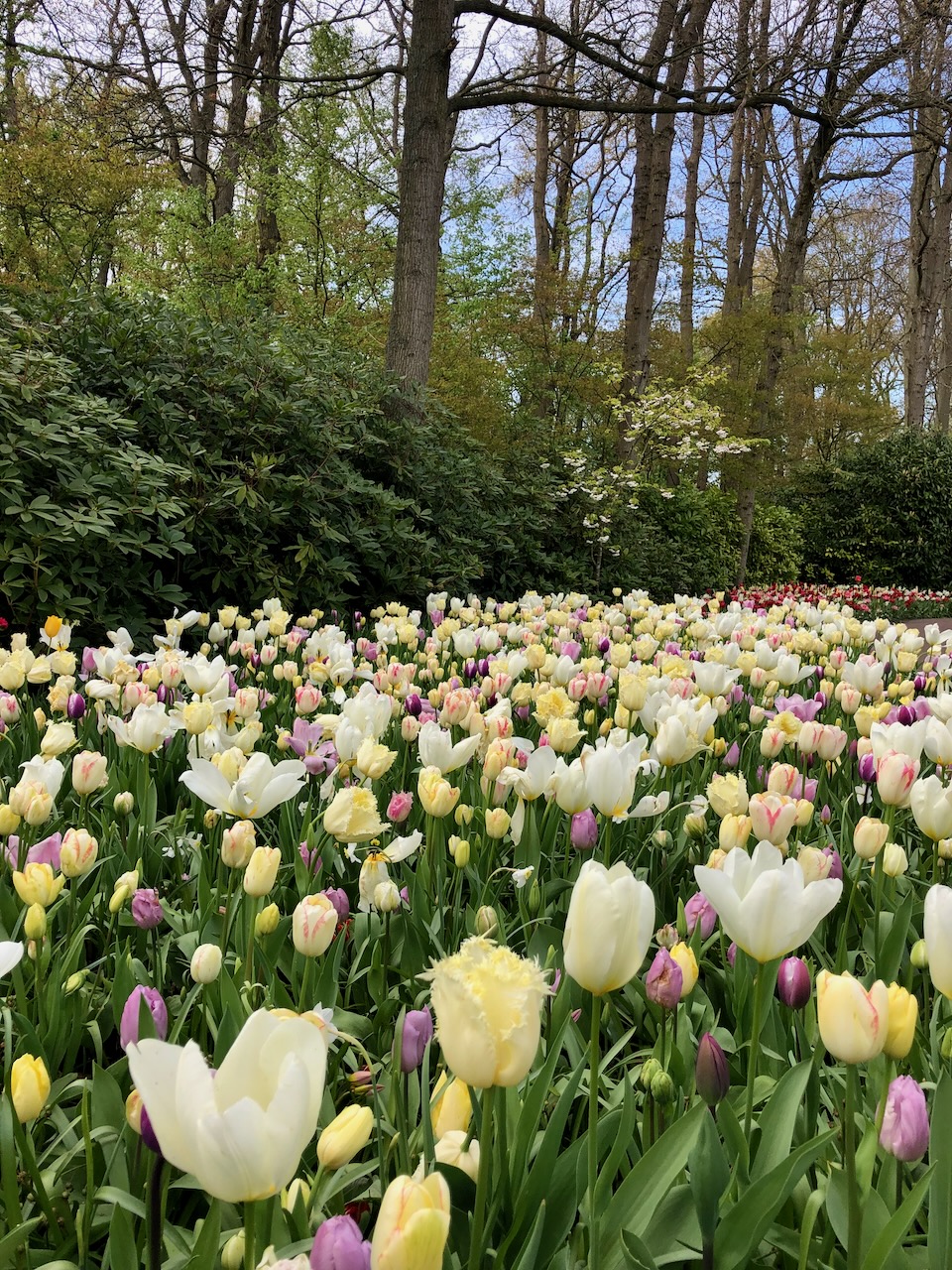
I have just returned from a three-day trip to Amsterdam with my nearly 89-year-old mother. After her stroke in 2016, talking and understanding became difficult, at times impossible. This trip was designed to bypass both and provide delightful experiences in some of the areas of life we both love – art and flowers. The main components would be the Vermeer exhibition at the Rijksmuseum and the Keukenhof Tulip Festival. Both exceeded our already high expectations as we were treated to a visual and sensory bonanza. We bathed in beauty, feasted on colour, immersed ourselves in the scents and sounds of sunlit spring…

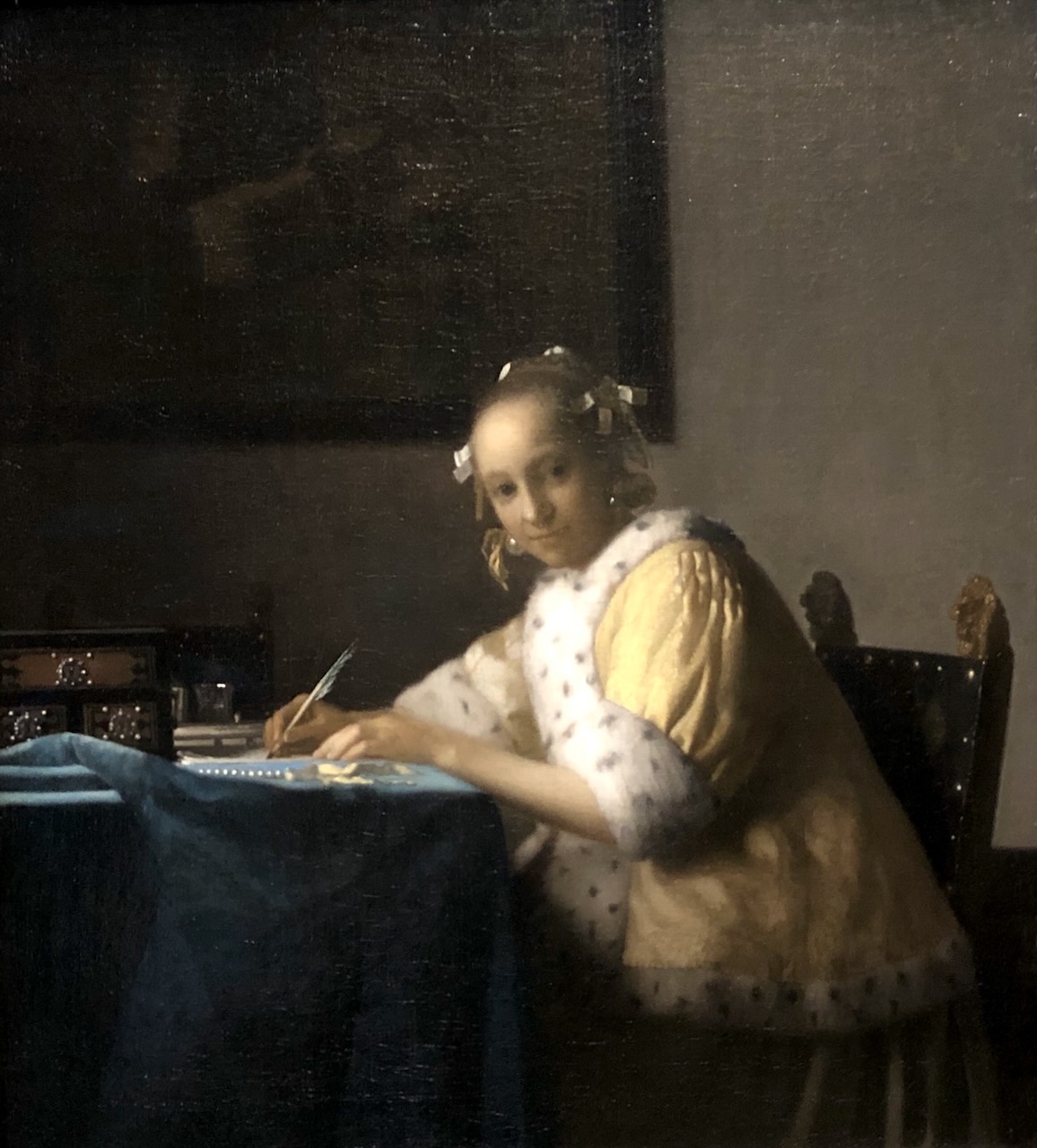
Sold out within two days of its opening in February, this exhibition presents the largest collection of Vermeer paintings ever – 28 out of the 37 known works. Words feel inadequate to describe the quiet intimacy of these often tiny paintings that offer immaculately observed, snapshot-like glimpses into Dutch domestic interiors where mid-17th century women work, play instruments, read or write.

A strong relationship between internal and external worlds is created through letters and the subject’s gaze turned towards open windows or us, the viewers.

Crisp, almost silhouetted figures against potent negative spaces of ‘white’ wall backdrops; droplets of light falling on the brass studs of a chair or the beads of an earring; sumptuous folds of silk sleeves and curtains… the details are breath-taking.

In complete contrast was the loud exuberance of the 7 million bulbs planted by 50 gardeners for the two month Keukenhof Tulip Festival. The cold weather had meant that daffodils, hyacinths, narcissi, muscari, tulips and cherry blossoms were all blooming in a form of perfect synchrony. A heady mix for which no words are needed… just enjoy!

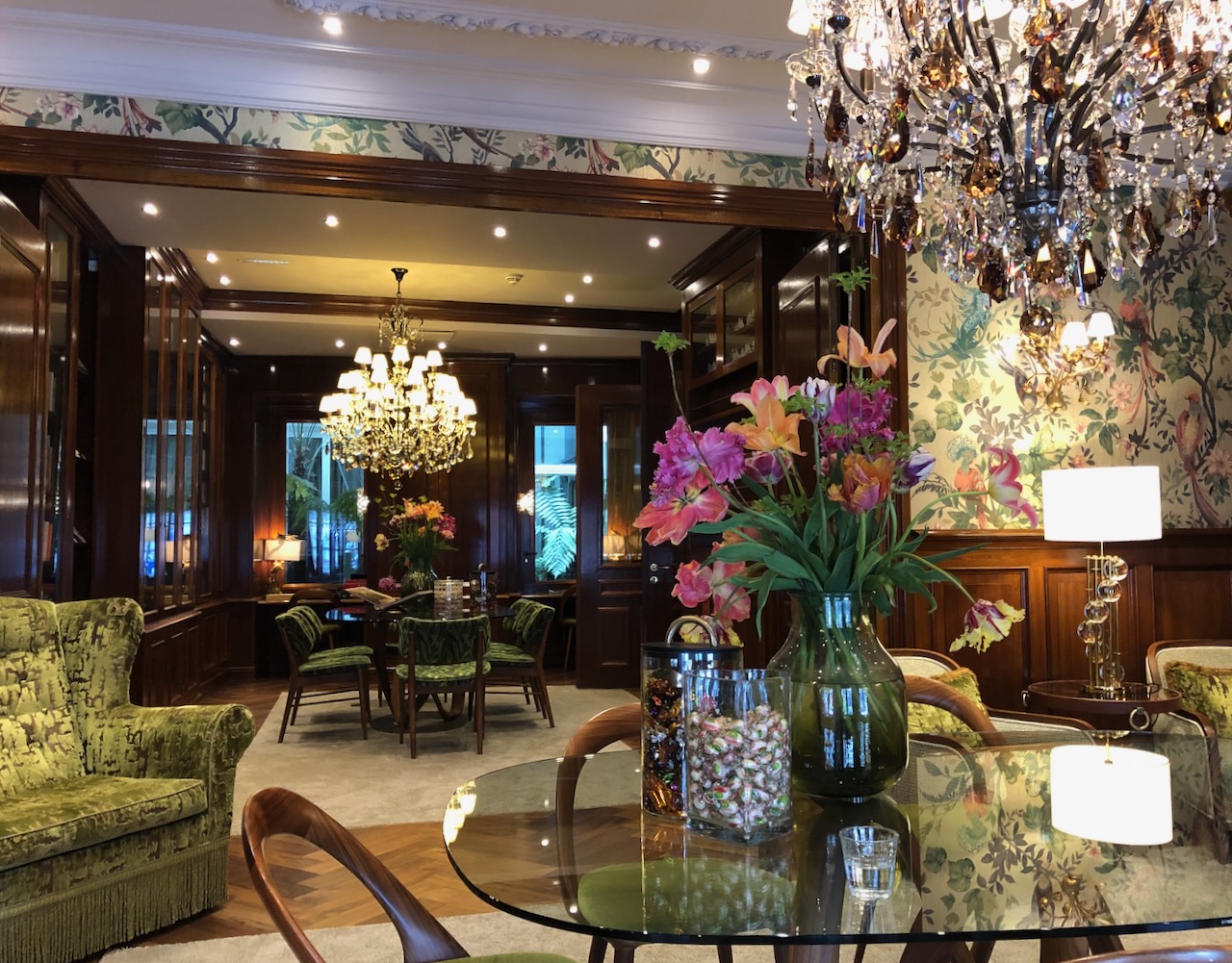
Back at our beautiful hotel – a rare indulgence – the themes of interiors and flowers continued in a creative meeting of design, texture, pattern and nature…

And then finally to the fields and the lovely words of my trooper of a mother that pretty much sum up the special days for both of us: “I don’t want to leave…”

In Praise of Empty Space…

November, in many cultures, is the month designated to remembering those who are no longer there. With a strange synchronicity, everything I did, watched, read or listened to pointed towards ‘absence,’ that non-presence devoid of form that artists call ‘negative space.’ “Empty space is the silence between musical notes, the pauses in poetry, the stillness of a dancer. Therein often lies the meaning or drama of a piece.” (In My Grandfather’s Shadow, Ch 11, p.144)  

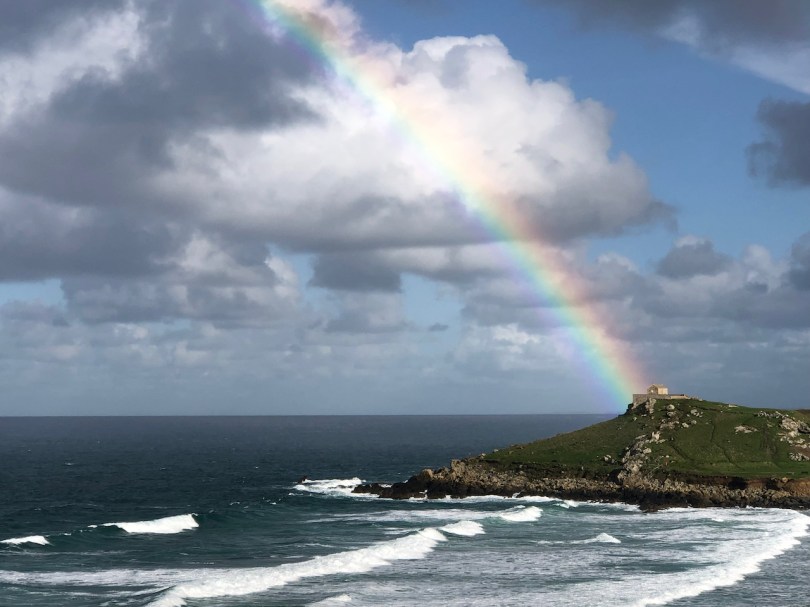
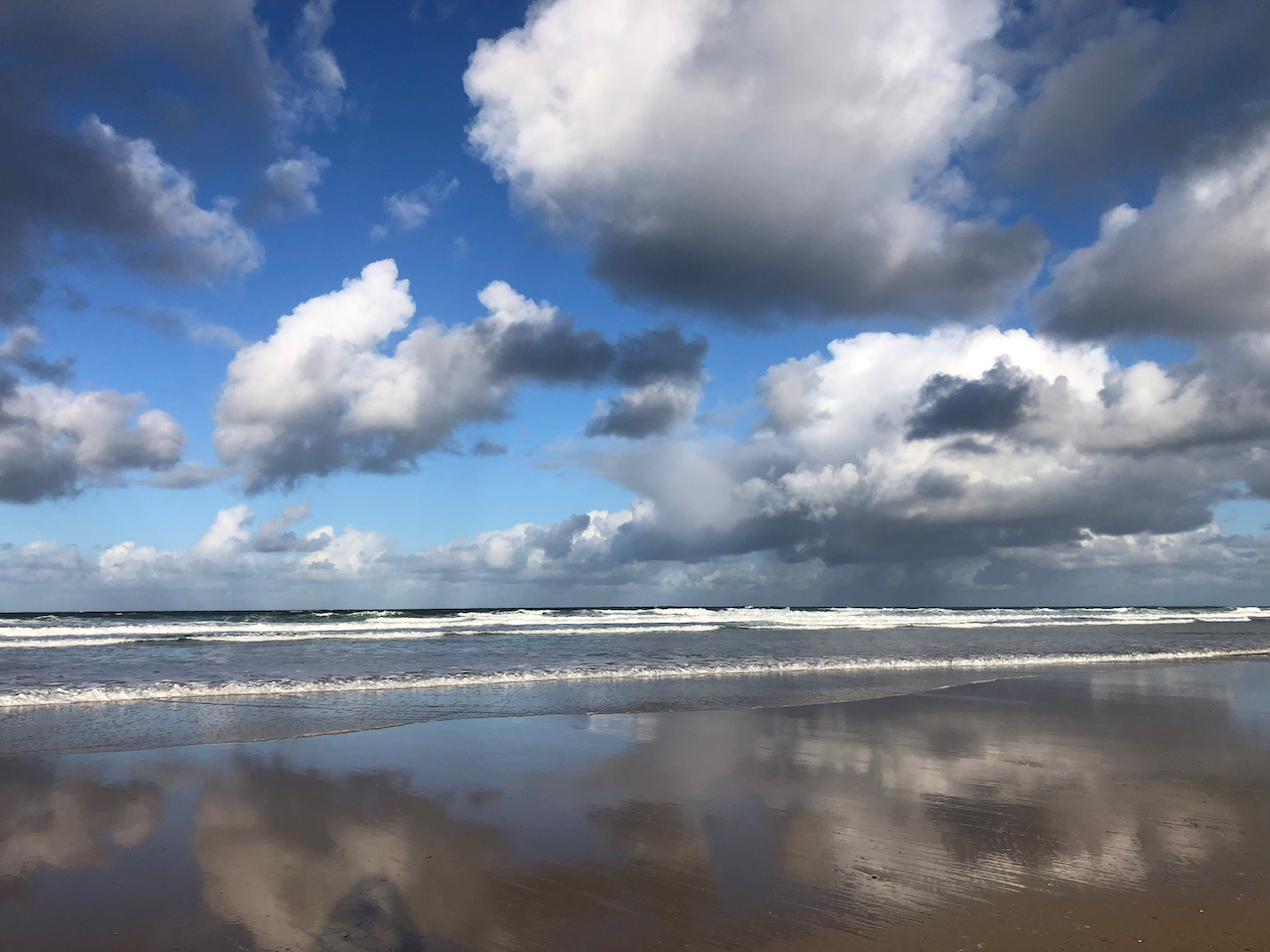
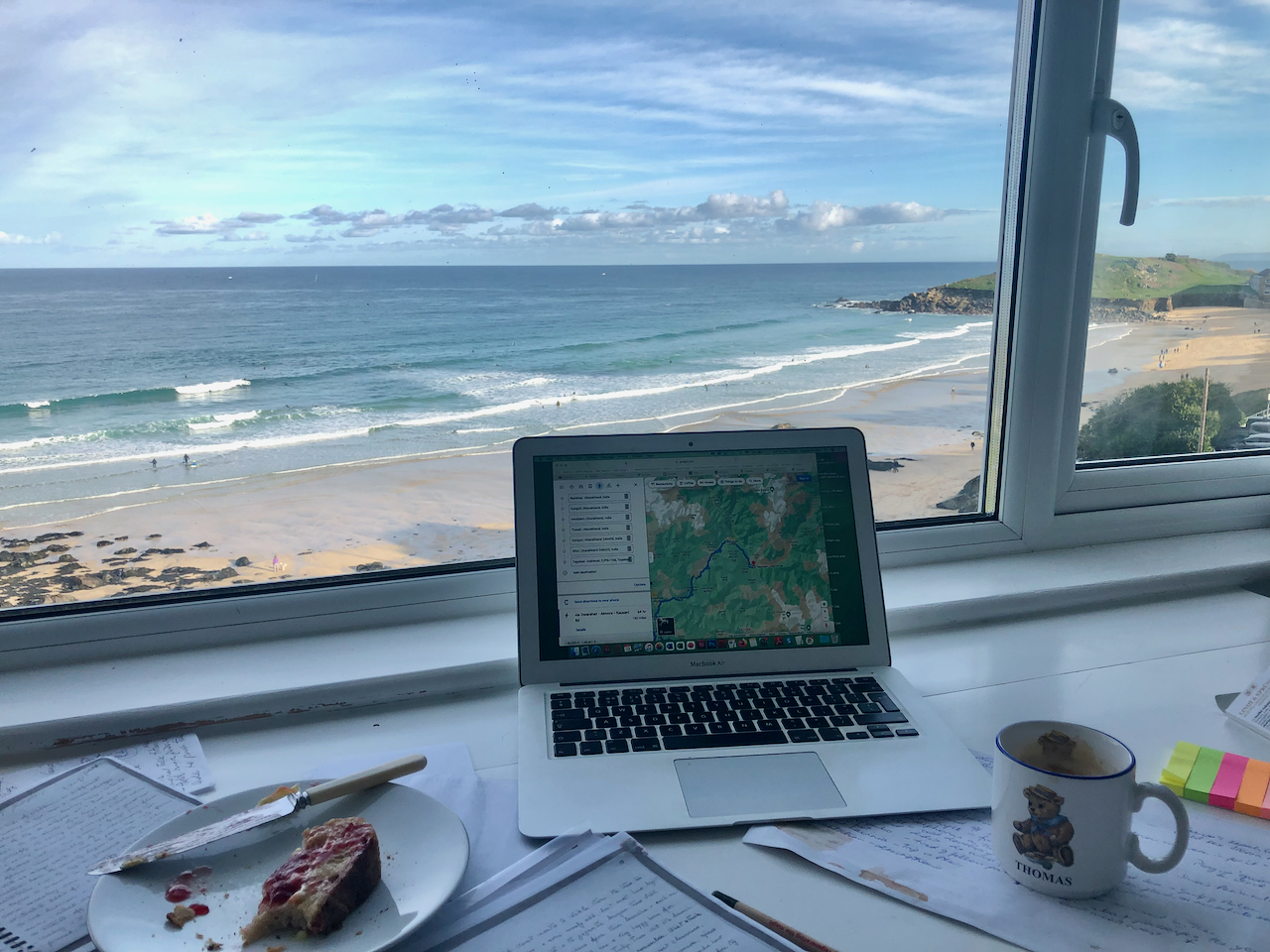
I have just returned from a week in St Ives, the Cornish place that boasts the highest concentration of blue light in the UK and challenges many an artist to capture its effect in paint. A kind author friend each year offers her house of clean white rooms overlooking the beach and cliffs as a form of writing retreat for three of her fellow writer friends. All four of us want to make the most of precious time out, so the interiors fall silent during the days that in turn empty of all structure, just as our minds declutter of chores. 

I spent my time reading the diaries of my intrepid, spinster great great aunt, who travelled alone to the Himalayas in 1939 to gather flowers for Kew Gardens. I followed her slow, awe-filled progress as she step-by-stepped her precarious way through lofty peaks and flower- or snow-filled valleys, pausing with her when she rested to stare at the perfectly choreographed performance of clouds and weather dancing in front of my window. Thoughts wafted through my mind, some being noted, others just fading in and out like rainbows. For a whole week, I simply was.

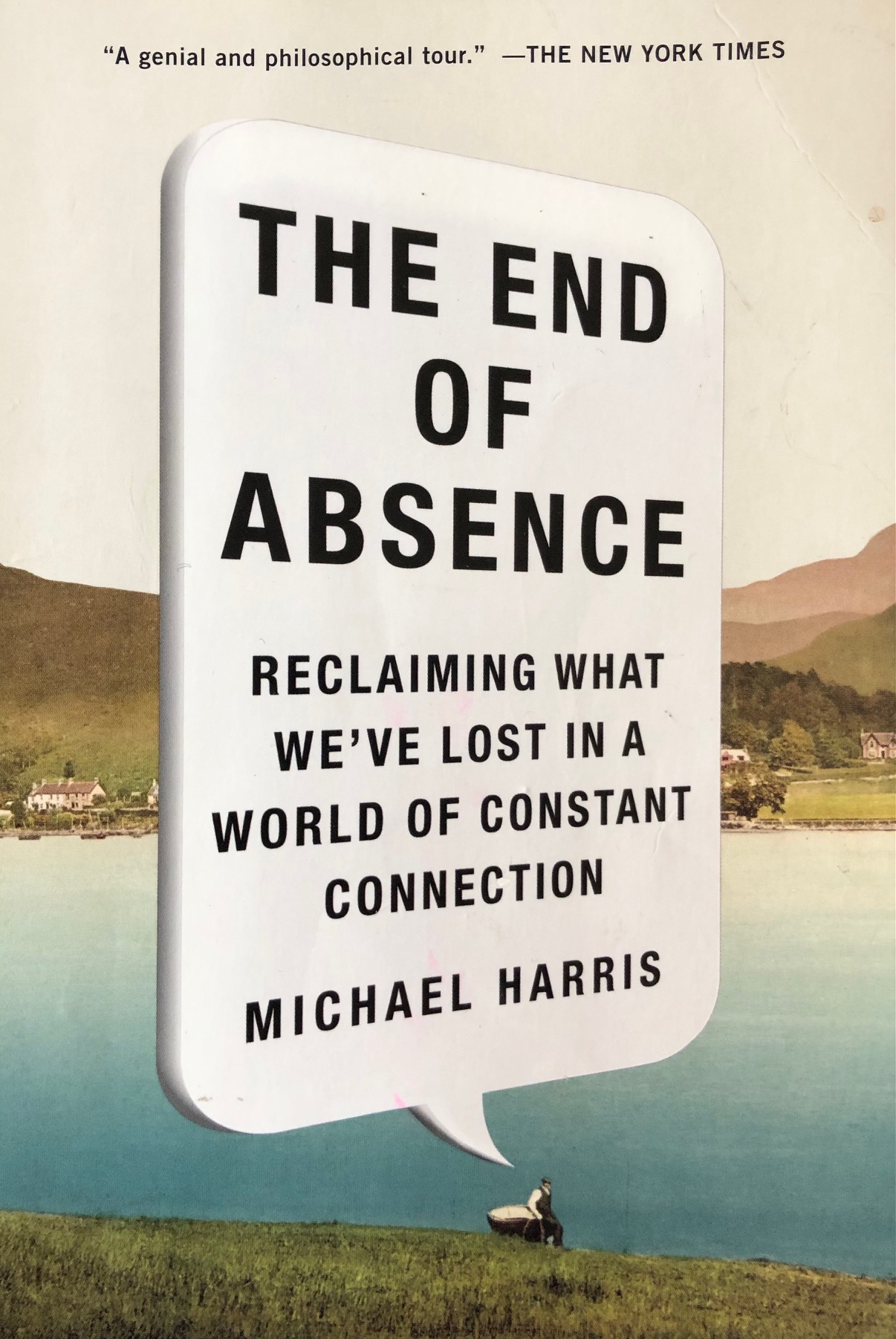
My time there, along with books and films I have recently ingested, have been making me realise just how much I miss and yearn to regain some of what I remember loving doing as a child… nothing. Being born a day-dreamer, the spaces between activity and connection were always filled with a rich, albeit invisible world that had the capacity to entertain, or indeed bore. Boredom… how rarely we have time for that potentially creative vacuum within today’s ubiquitous overload of information, social media and communications that interrupt our rhythms with an octave of pings. I don’t think this is just a grumpy, old-age thing. (Well it may be a bit.) This nostalgia is captured well in ‘The End of Absence’ by the considerably younger and hipper author, Michael Harris. He reminds us of what we are in danger of losing as generations, who have never known life without the internet, gradually overtake those of us who have. 

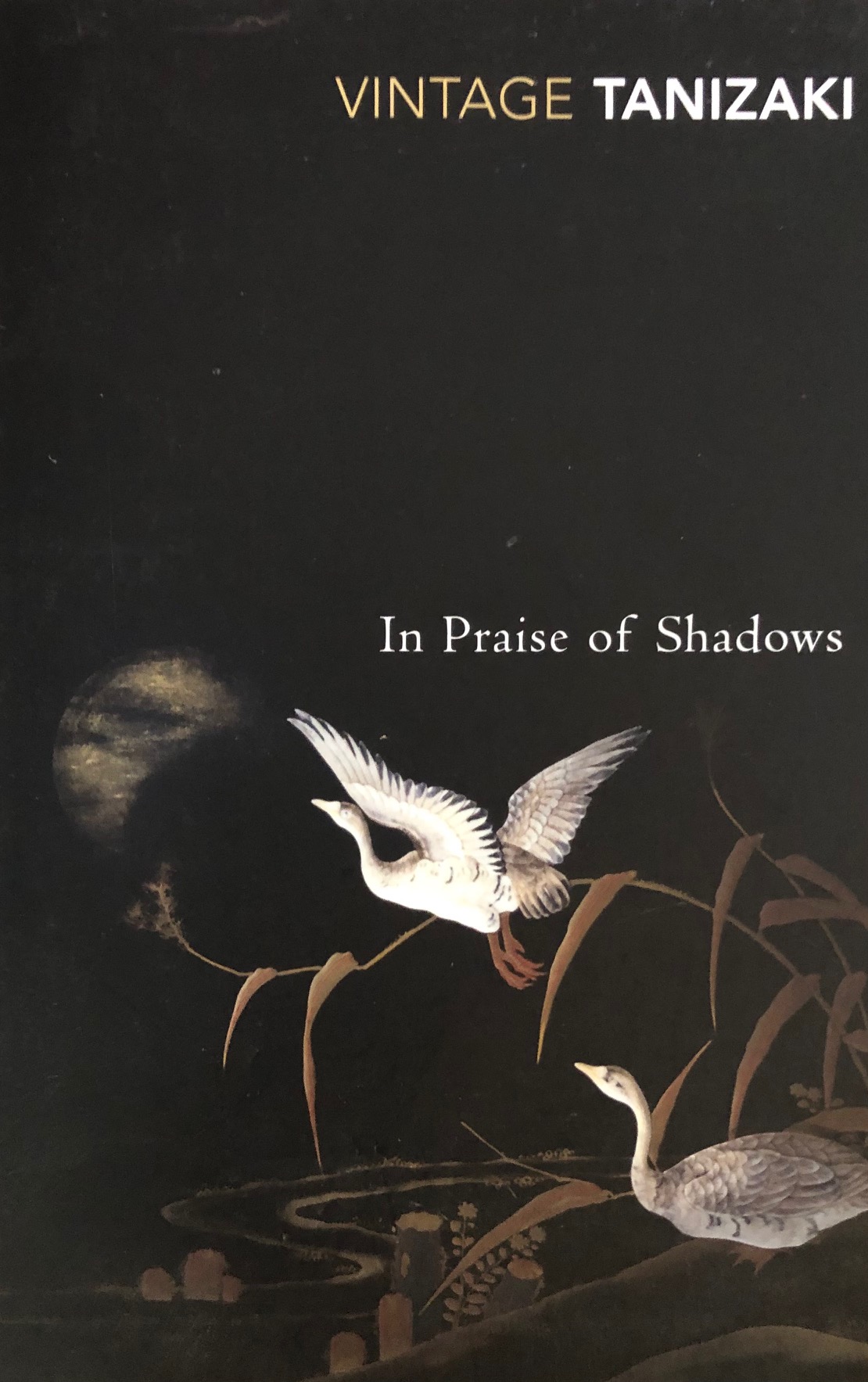
The recently released and highly acclaimed film ‘Living’ based on the book by Akira Krosawa, screen written by Kazuo Ishiguro and starring Bill Nighy is set in 1950s London. Not a lot happens, and what does, happens incredibly slowly. The cinematography is stunning and emulates the subtle grace described in ‘In Praise of Shadows,’ a slim book by Junichiro Tanizaki that gently reveals traditional Japanese aesthetics and use of space. Unlike us in the west where the achievement of light is basically both goal and God, in Japan it was – and maybe still is in places – the creation of shadows that was the source of beauty and mystery. This quiet understatement is part of what I want to rediscover.

Another film I watched where even less happens but with still more potency and power, is The Banshees of Inisherin. Dark, sad, funny and impeccable in every way, including the acting of its two ‘In Bruges’ stars, Brendan Gleeson and Colin Farrell, it basically portrays the painful ending of an long-standing friendship caused by the simple declaration by one: ‘I don’t want to be friends with you anymore’. The extensive space the film allows each facial movement, scene, sentence… one can almost feel the multi-layered clutter of ones own world begging to be emptied into black bin bags, or deleted.

With this increasingly strong desire to create more space, I decided to have a big Studio Sale of my art. (All works available can be viewed here.) And to finally sort through my real and digital filing office and cabinets in order to establish more clarity and space for new shoots and fruits. 

So with the start of Advent this Sunday and the build-up to the crazy, all-consuming Christmas season, I would like to invite you to join me in seeking out and reclaiming some of those quiet spaces life used to offer in abundance, and still does if we just stop… feel… and dream our way into them.

Wishing you a very Happy and Meaningful Advent…

Related Links

To buy my book, In My Grandfather’s Shadow, as a Christmas present, please order from your local bookshop or online here

In My Grandfather’s Shadow’ is a brave, powerful, honest, thoughtful and meticulously researched book. I enjoyed it immensely. It has made me think very hard about intergenerational trauma transfer and explains so much about Germany, and perhaps, in the current context, Russia.General Sir Richard Shirreff, former Deputy Supreme Allied Commander Europe and author of ‘War with Russia’

To listen to the recent 5-part Interview with Chris Baxter on Radio West, please go to BBC iPlayer here

To look through and/or buy a piece of ART please go to my website: www.angelafindlay.com

Between Birth and Death lies Brexit and very little else it seems… until you enter the world of Art

In these final weeks before the Brexit deadline, I should probably be saying a few words. I’m prone to giving little speeches after all. But I just can’t bring myself to join in the clatter of opinions and emotions. Indeed, when we cross the March 29th threshold, I will be far away in another country, and slightly hoping to get stuck there. Anyway, there are more important things in life than bloody Brexit as my recent visit to the Bill Viola / Michelangelo: Life Death Rebirth exhibition proved. 

On a beautiful, sunny Sunday morning, I arrived at the still closed doors of the Royal Academy determined to be first in and to have my long-standing hero, Michelangelo, to myself with all the quiet intimacy his tiny, yet exquisite drawings require. So I entered the first darkened room wholly unprepared to come face to face with a floor-to-ceiling-high woman squatting with splayed legs in the final throes of childbirth. Next to her, equally huge, a ghostly figure swirled like white ink dropped in black water. And beyond that, the hollow-cheeked face of an old woman sucked her final breaths through a respirator. 

Bill Viola Nante’s Triptych (1992)

While very moving, Bill Viola’s video installation Nante’s Triptych is, in some ways, a fairly obvious depiction of humanity. Between the life-filled rotundity of the baby’s face and the sunken cavities that collapse the old woman’s into little more than a skin-covered scull, lies what we call ‘Life’. Birth and Death become mere moments, portals into and out of the human experience. 

But standing in front of these huge videos I saw something else too. It was like I was staring at a visual rendition of one of the underlying plots of the book I’m writing. For, as I took my first breaths in a nursing home in Kent, my German grandfather was heaving his last in the family home in Schleswig Holstein. Our lives overlapped for a mere six days and yet, behind the changing backdrops to my physical existence, he too continued to exist. As I tripped and tromped my way through the various milestones of my life, he was there; an absent presence, like the shadowy figure of a backstage assistant, moving behind the scenes, invisible to the audience but essential for the illusion of the stage ‘reality’. “The dead are invisible, they are not absent,” St Augustine had said. And looking at that central panel, Viola seems to be saying that too; we all occupy the same space, between Birth, Death and Rebirth.

Michelangelo The lamentation over the Dead Christ (1540)

Overtaking other early visitors immersed in subsequent room-sized Viola installations, I eventually reached a row of Michelangelo’s drawings and shrank my full attention into each one in turn. And there I saw what I value most in the world. There, vibrating through the tiny pencil strokes evoking Mary’s extreme tenderness towards her child, the weightlessness of Christ’s resurrection and the dynamic muscularity of writhing male figures, was the most sublime evidence of the soul. That invisible part of us that transcends birth, life, death… even Brexit. In this country the word ‘soul’ is often spurned for its religious connotations. As a result, even the concept of soul is all but ignored or avoided by modern politics, the school curriculum, medicine and science… but not by Art. In Germany, the word for soul is Seele. It effortlessly encompasses all that is intangible about us – mental, psychological, emotional, spiritual, psychic – so it is more liberally embraced and supported in many spheres of life. This is what I fear we have been losing sight of in pre-Brexit Britain; that essence of what we love and value about a Michelangelo or any other truly great piece of art.

Michelangelo Three labours of Hercules (1530-33)

Whatever happens on March 29th – ok, here we go, here’s my penny’s worth on the subject of Brexit – I see Britain as a nation in grave danger of losing touch with its soul. The fool’s gold of ‘economic growth’, ‘financial independence’, ‘control’, ‘national identity’ and ‘greatness’ with which we are endlessly pounded will merely dump us on a new shore battered, divided and disorientated. Some people and businesses, above all in the City, will thrive, but many more won’t because those aren’t the things that make a nation as a whole happy, fair or humane. Look at the 45% rise in knife crime of recent years… it’s not just down to the cuts in policing. Neither is an increase to policing the main solution. No, this country has been short-sighted and plain wrong to cut out and close down so many of the small things that nurture and nourish peoples’ souls; youth centres, productive activities in prisons, learning assistance, the arts… Those are the things that make a real difference to many peoples’ lives. That’s why I am choosing to duck beneath the turbulent political waves rocking our country and beyond, to fill myself with art and cultivate spaces where the quieter qualities of soul and all that we as humans share in common, can thrive. Because without those, Britain will become infinitely poorer whichever way Brexit goes.

Message to pupils of a Catholic school I recently talked at.

This article by Ben Okri on transcendence in art is one of the best I’ve ever read: https://www.royalacademy.org.uk/article/bill-viola-michelangelo-ben-okri-birth-transcendence