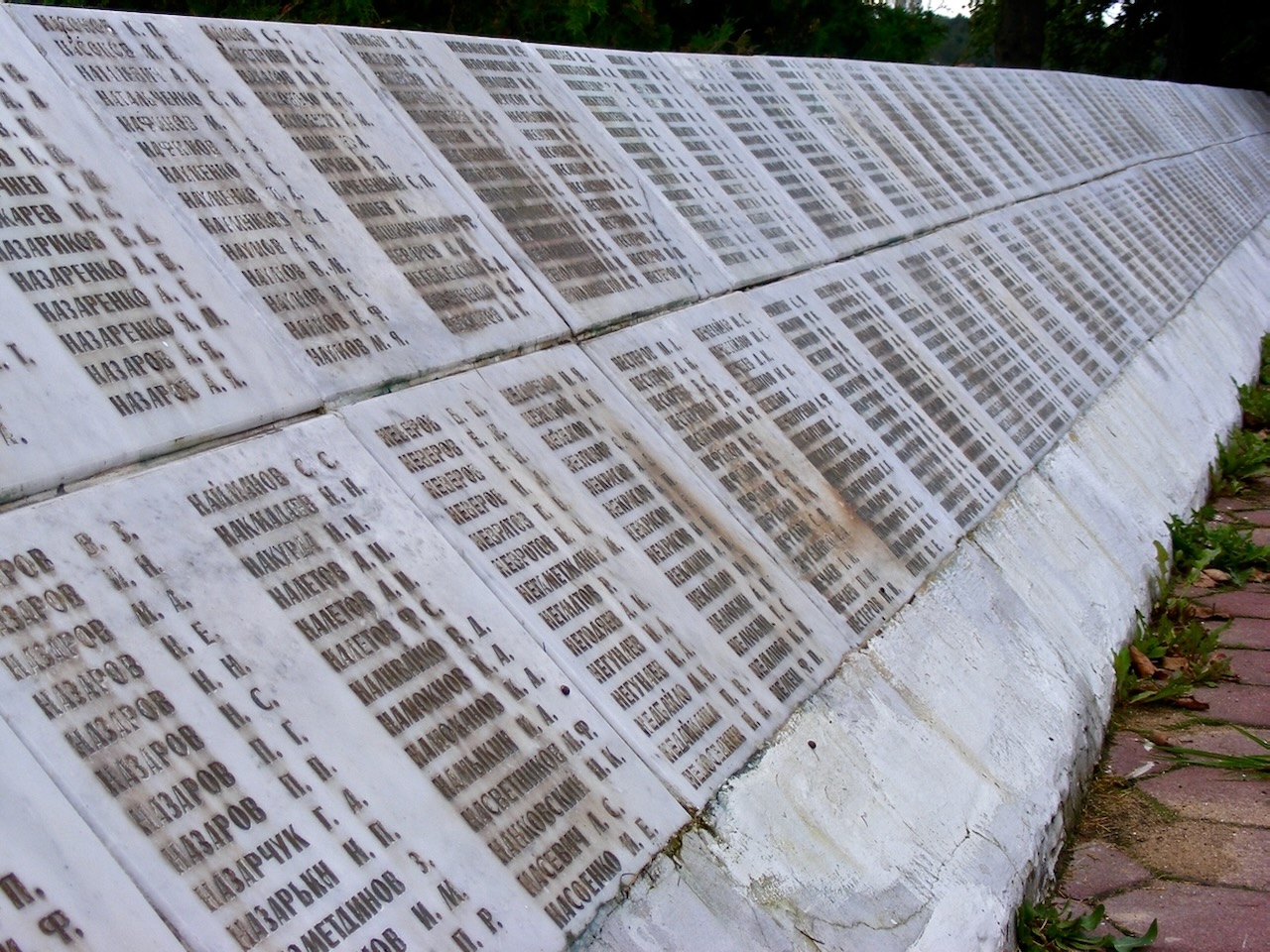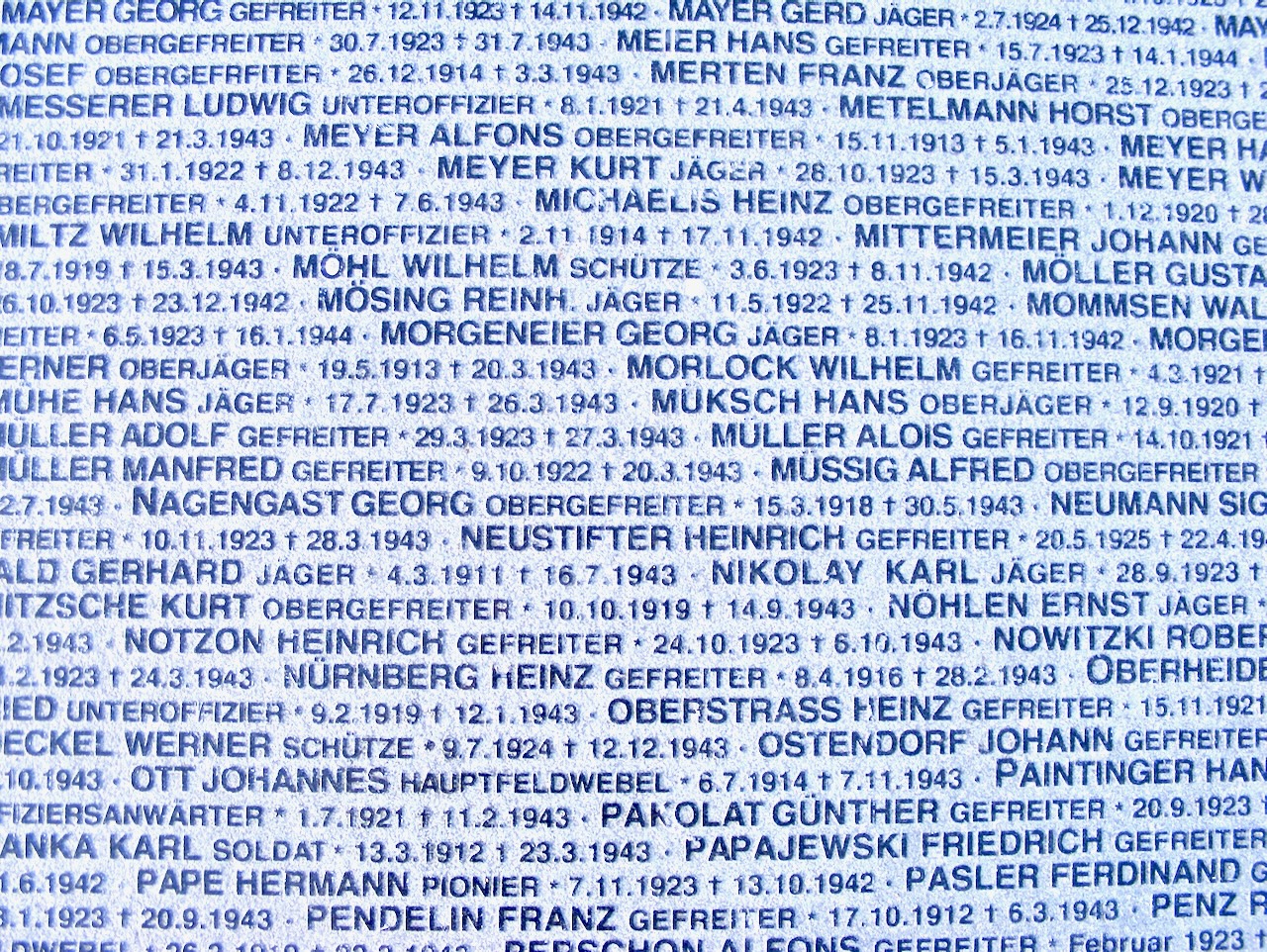
A Pope, a Rabbi and an 80-year-old Victory 

April saw the death of the widely loved Pope Francis, the Jewish festival of Passover, and the gradual build-up to the 80th Anniversary of VE Day (Victory in Europe) in May. An unusual trio of events, yet radio coverage of all three wove threads of reflection into the tapestry of this blog. 

Compassion was central to Pope Francis’s papacy – particularly towards those who are rejected or marginalised. He often spoke about the importance of honouring and never abandoning our grandparents. “If you want to be a sign of hope, go and talk to your grandfather,” he was quoted as saying. They remind us that we share the same heritage, link us to “the beauty of being part of a much larger history… a loving plan [that] is greater than we are.” He also had the humility to say “I am a sinner,” which makes me wonder where that leaves the rest of us!

In a recent Radio 4 Thought for the Day  (at 1:47:45), Chief Rabbi Sir Ephraim Mirvis described Passover as the ‘Festival of Questions;’ a time to ask, to probe, to test assumptions, refine our understanding and uncover the truth. 

If we try to apply the guidance of both spiritual leaders to the forthcoming celebrations of VE Day on 8th May, we may find ourselves asking how the grandchildren of the ‘losers’ of WWII – many of whom had been perpetrators or complicit in Nazi atrocities – might ‘honour’ their grandfathers. How do you love – should you even try to love – someone who has acted immorally, abhorrently, even if those acts were sanctioned or ordered by a higher authority and deemed the right thing to do for Volk and country?

I’m all too aware how unfashionable, controversial and even provocative it is to suggest we spare a thought for the perpetrators. But in keeping with the spirit of my triangle, I am going to ask you to do just that. Many people, from all sides of the conflict, are quick to judge, blame and damn the Wehrmacht soldiers and SS as an indiscriminate mob of ‘monsters’, all morally inferior and wholly undeserving of being remembered. It’s completely understandable. But where does that leave their children and grandchildren? What happens when we continue to draw a line between the ‘good us’ and ‘bad them’, a distinction that may have served its time but no longer helps us move forward? Isn’t one of the most crucial lessons of this horrific chapter in history to recognise that most perpetrators were not monsters, but ordinary people… like you and me… who, through a slow drift of compromise, small decisions and ill judgements became capable of unimaginably heinous crimes? 
Eighty years on, with more than 88% of the German population having been born after the war’s end and a further 11% still children at the time, it’s difficult to place ‘guilt’ for the Holocaust on the Germans of today. After all, people cannot be guilty of things they themselves didn’t do. Yet, like many descendants of Holocaust victims and survivors, some non-Jewish Germans born in the decades after the war still wrestle, often unknowingly, with the unresolved trauma and guilt passed down from their parents or grandparents. They carry what Eva Hoffman aptly described as “the scars without the wound” – invisible wounds that silently shape their internal world and influence their actions in the external world. 

Without detracting anything from the horrors and suffering of the victims, can we imagine for a moment how it might be for post-war generations of Germans to live with legacies of silence, cover-ups, not-knowing, judgement, exclusion, blame or shame in relation to their roots? Mistrusting family stories. Wondering who knew and who did what. What impact does this have on individuals, families, societies, nations and ultimately, the wider world? How can one best deal with such a profound inheritance?

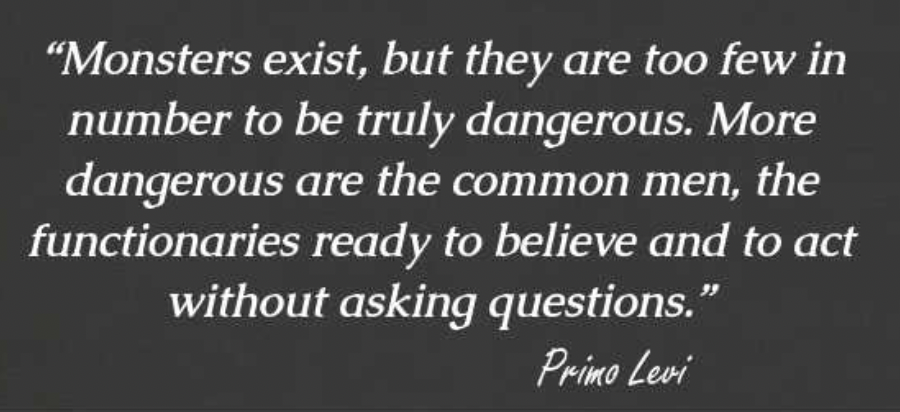
Primo Levi – who, as a Holocaust survivor had every right to think the opposite – declared that collective guilt does not exist. To think that it does is a relapse into Nazi ideology. Both he and Hannah Arendt made a powerful claim: “We are all to blame” for what happened. Collective responsibility is what matters. And that involves understanding how atrocities occur both in society and within the individual. How we become complicit. 

The roots of Nazism found fertile soil in the humiliation wrought by the terms of the Treaty of Versailles and the deeply resented ‘guilt clause’ that placed full blame for WW1 solely on Germany’s shoulders. Applying a similar dynamic to today, could there be a connection between this historical pattern and the rise of the AfD (Alternative für Deutschland), Germany’s nationalist far-right party — a movement fuelled in part by a desire to reassert national pride and, as encouraged by figures like Elon Musk, to move beyond what they perceive as an excessive “focus on Nazi guilt”?

The 2019 survey previously cited revealed that few Germans actually feel guilt and 70% (including 87% of AfD voters) believe their country has now sufficiently atoned for the actions of the Nazi regime. Another source revealed that 75% of young Germans (erroneously) believe they come from families of resistors, while 25% can’t name a single concentration camp or ghetto. As the number of living contemporary witnesses dwindles, disinformation, denial and delusions are spreading. With them, the sense of responsibility risks disappearing too – a deeply worrying and dangerous trend. Knowing firsthand the insidiously destructive effects of being shamed for a familial association with the Nazi era, I can understand how, eighty years on, rejecting any semblance of inherited guilt might feel like a healthy response. After all, who among us wants to feel terminally tainted by the wrongdoings of their forebears? Who wants to have to cut off their roots?

The marriage of my parents in March 1962

I feel fortunate that, while living in England with my German heritage was at times challenging, my parents and their families modelled true reconciliation throughout my life. My British father and German mother married just 17 years after the Second World War ended. Both their families had suffered and lost loved ones and/or homes under the others’ military objectives. Yet both found the courage to drop into their hearts and overcome division and enmity. And that, to me, is where the solution lies: in our hearts.

Patriotism is hollow if it is based only on pride and honour. Shame and conscience lead to a deeper bond. Seeing the world in binaries – in terms of ‘us’ and ‘them, good and bad, right and wrong – shuts down love. Reconciliation becomes impossible. As Britain celebrates its triumph over the evil forces, let us also remember we were not all good and they all bad. Among other short-comings, we too were guilty of antisemitism and of failing to help the Jews more. 
In another recent Thought for the Day, Rhidian Brook warned, “If you can’t see the other side’s humanity, you’ve lost.” 

My 80th Anniversary VE Day wish, therefore, as both a British and German citizen, is for us to follow the example set by the late Pope and Chief Rabbi: to think, to probe, to get uncomfortable, and to find compassion for individuals among the rejected and ostracised.

Eighty years on, might this be the moment to create new rituals of peacekeeping and unity? Without dampening the spirit of national joy, how can we include – and stand hand-in-hand with – our contemporary German friends in celebrations of peace, rather than reinforce historical divides?

Can we develop broader, more expansive narratives that encourage younger generations of Germans to face the difficult and painful truths of their families’ histories and to assume responsibility, not for what was done, but for what is still to be done? Can we remain vigilant against resting on any imagined moral high ground, against believing we would have undoubtedly been resistors and heroes under the Nazi regime? And can we instead recognise how thin the ice of democracy is becoming once again, and how difficult it is, even now, to change the course of history?

Events coming up:

Friday 2nd May, 12-1pm 
The Second World War 80 years on: Is Remembrance Working? 
Angela Findlay and Henry Montgomery In Conversation
National Army Museum, Royal Hospital Road, Chelsea, London SW3 4HT and ONLINE
80 years on from the German surrender to the Allies, Henry Montgomery, grandson of Field Marshal Bernard ‘Monty’ Montgomery and Angela Findlay, granddaughter of General Karl von Graffen of the German Wehrmacht will reflect on their grandfathers’ roles and actions in WW2 and discuss the differences in the histories, legacies and remembrance cultures of the victors and the losers and how Remembrance can remain meaningful and effective for younger generations. 
Info and tickets (free) here

Thursday 8th May, 18.00 – 19.30 
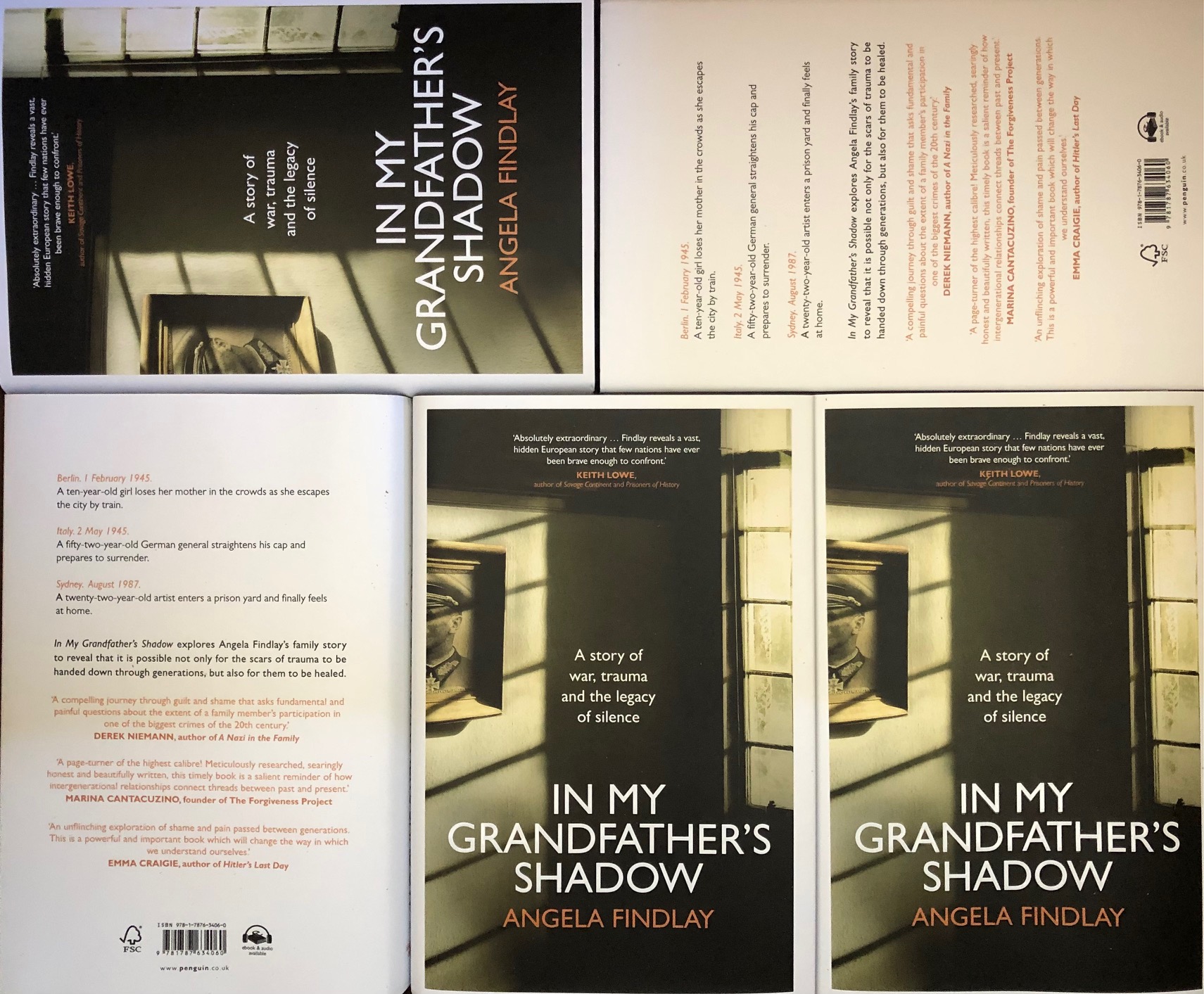
Im Schatten Meines Großvaters / In My Grandfather’s Shadow
Vortrag und Gespräch / Lecture and Conversation 
Marktkirche, Hanns-Lilje-Platz, 30159 Hannover, Germany

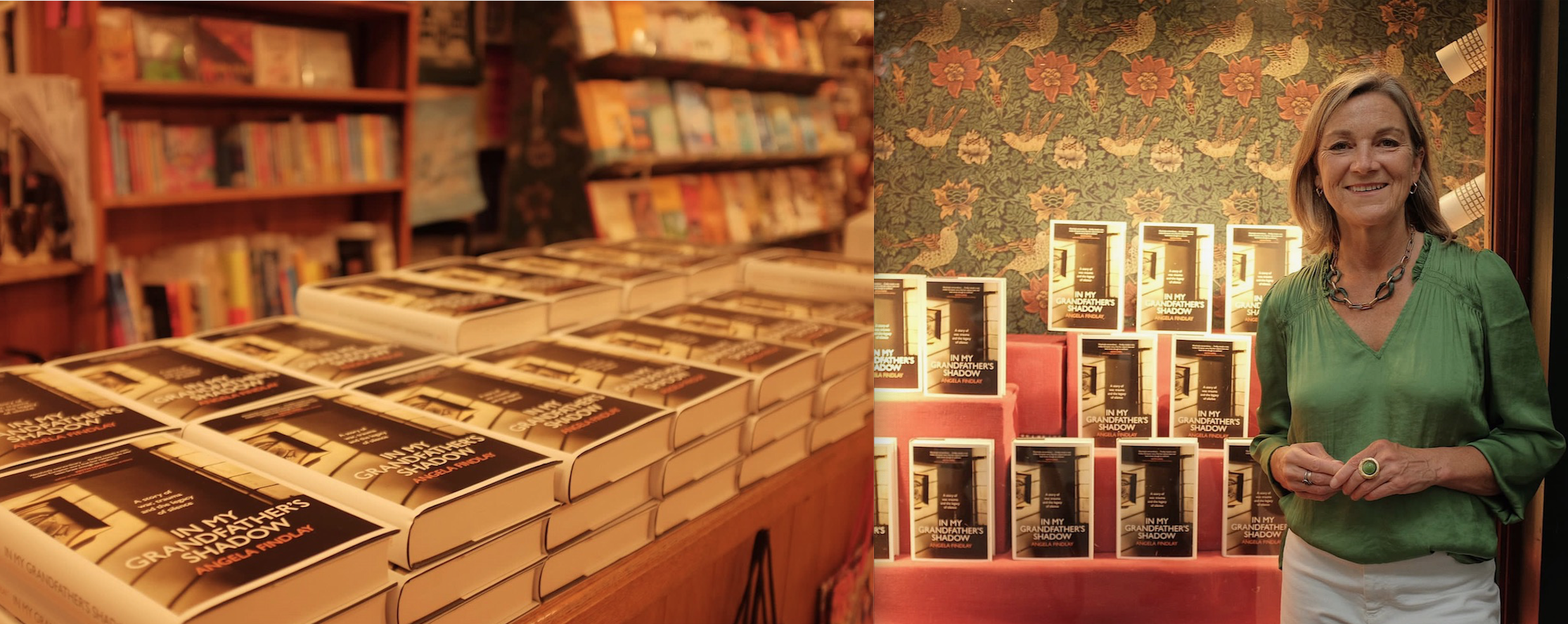
Thursday 15th May, 17.00 – 19.00 (UK time)   43. Gesprächslabor, PAKH: The Study Group on Intergenerational Consequences of the Holocaust (ONLINE)? Drawing on my own experiences outlined in my book, In My Grandfather’s Shadow, we will be discussing how such a destructive legacy can be transformed into constructive, reconciliatory approaches and positive actions. More info here: https://www.pakh.de/event/gespraechslabor-40/  

Buy or read reviews on my book, In My Grandfather’s Shadow, here
Looking at our present and future to find the lessons of the past

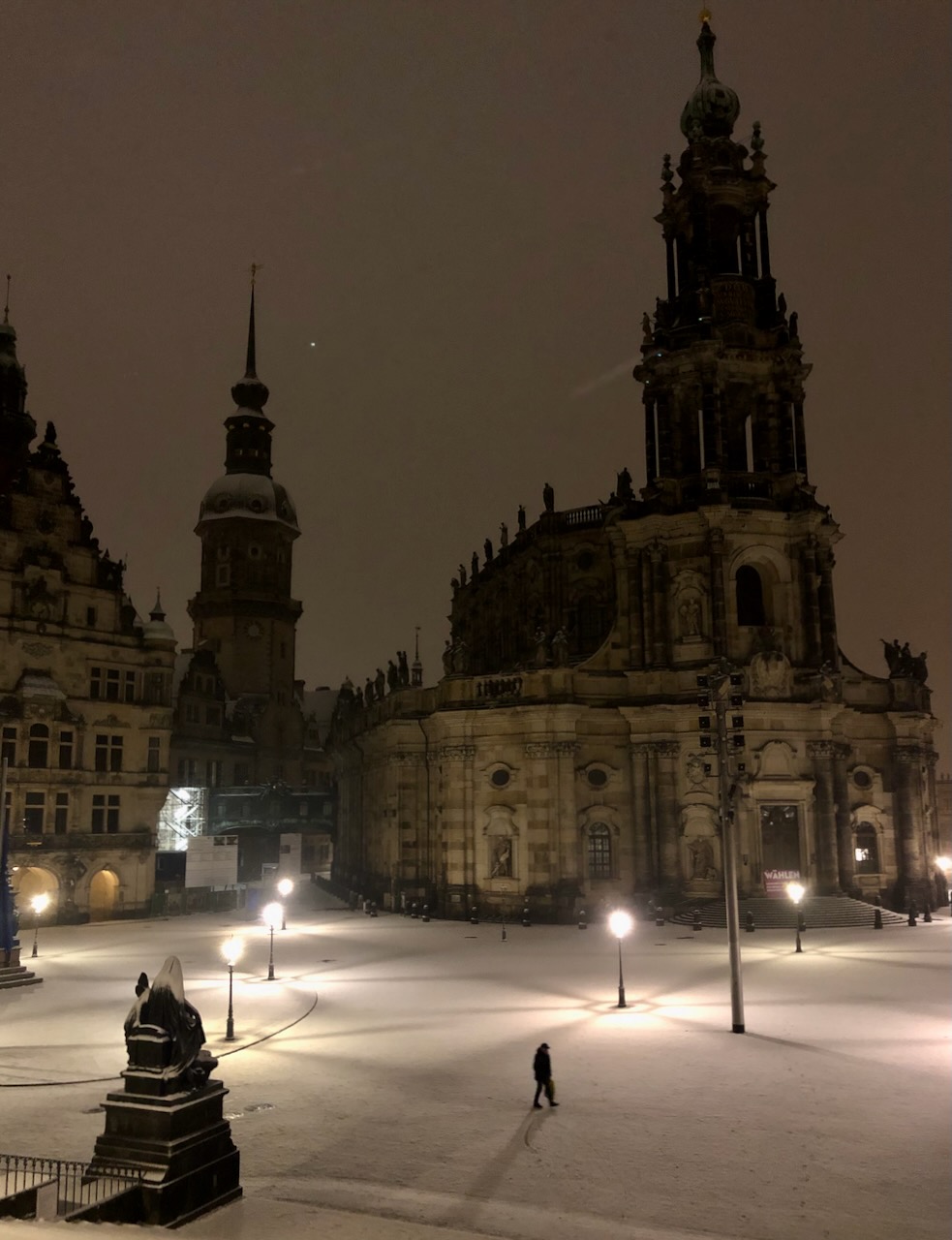
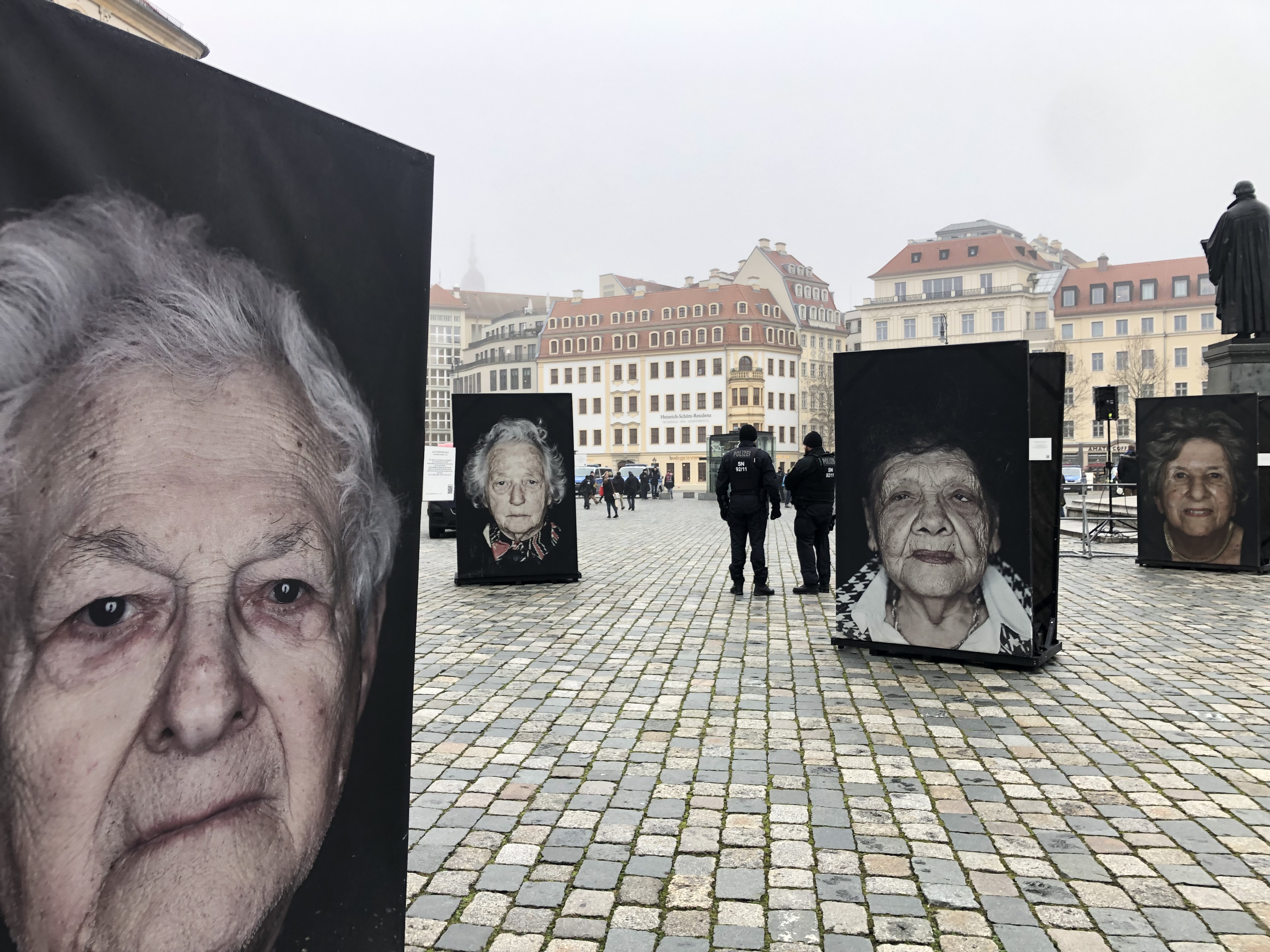
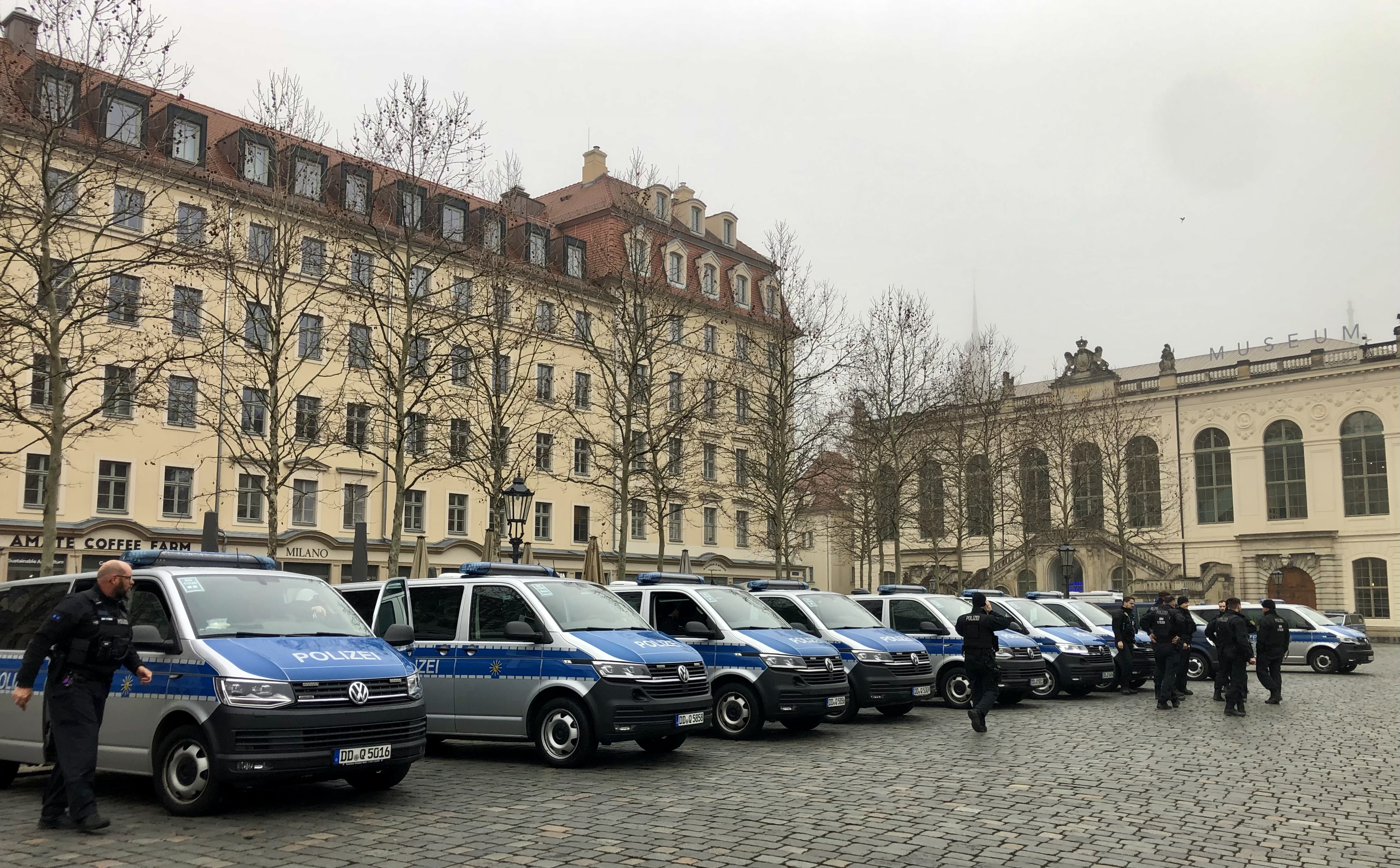
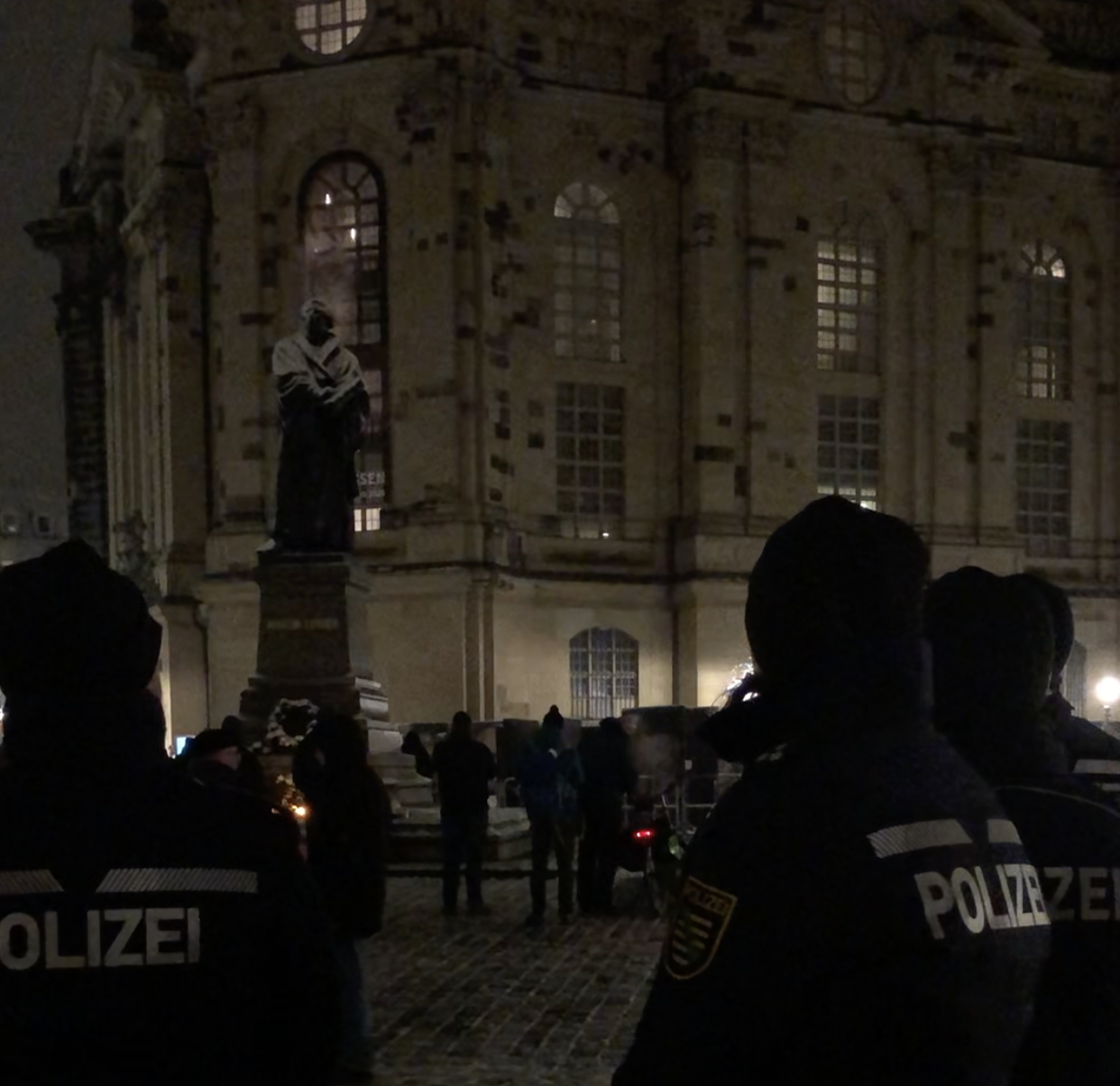
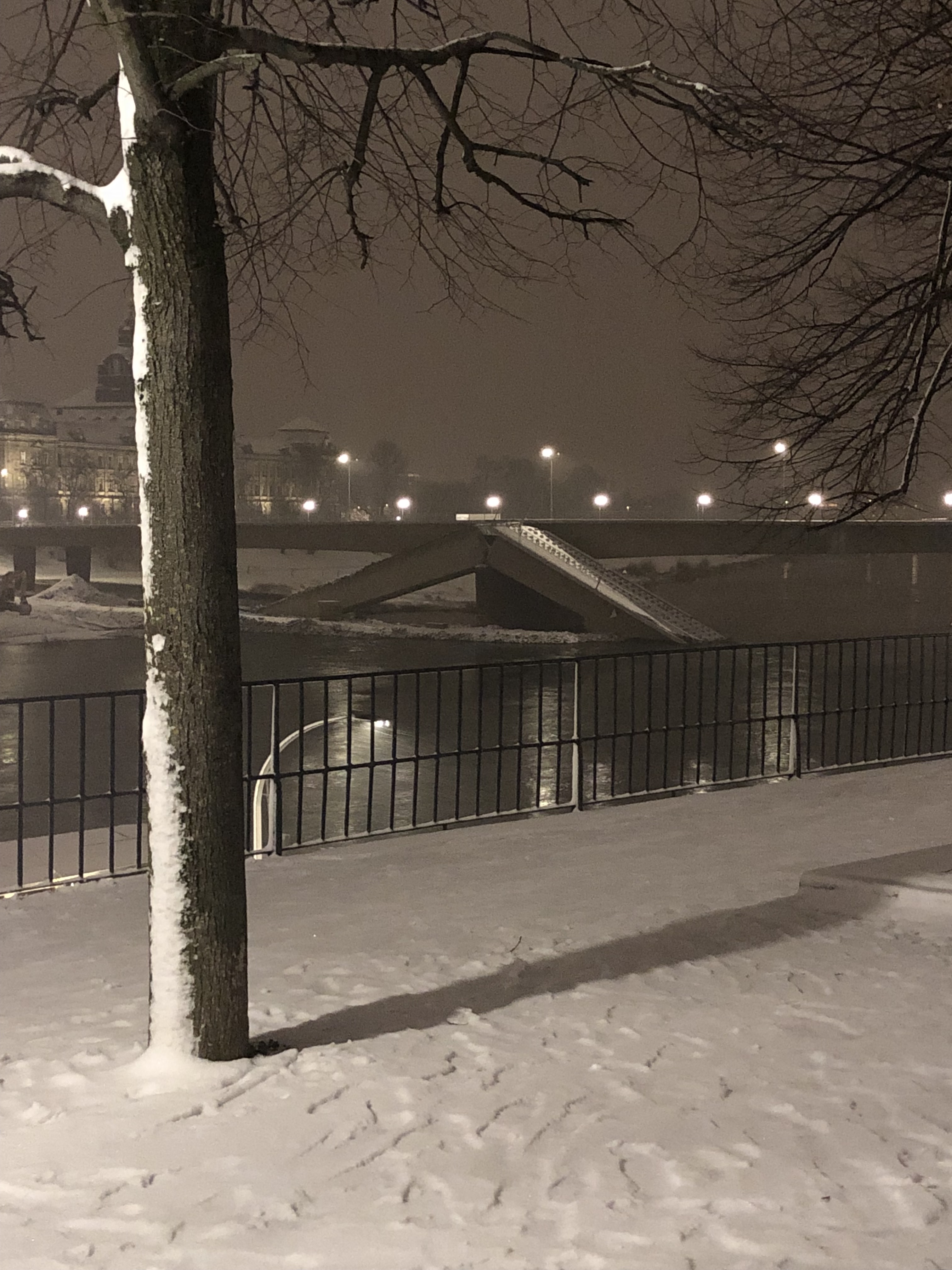
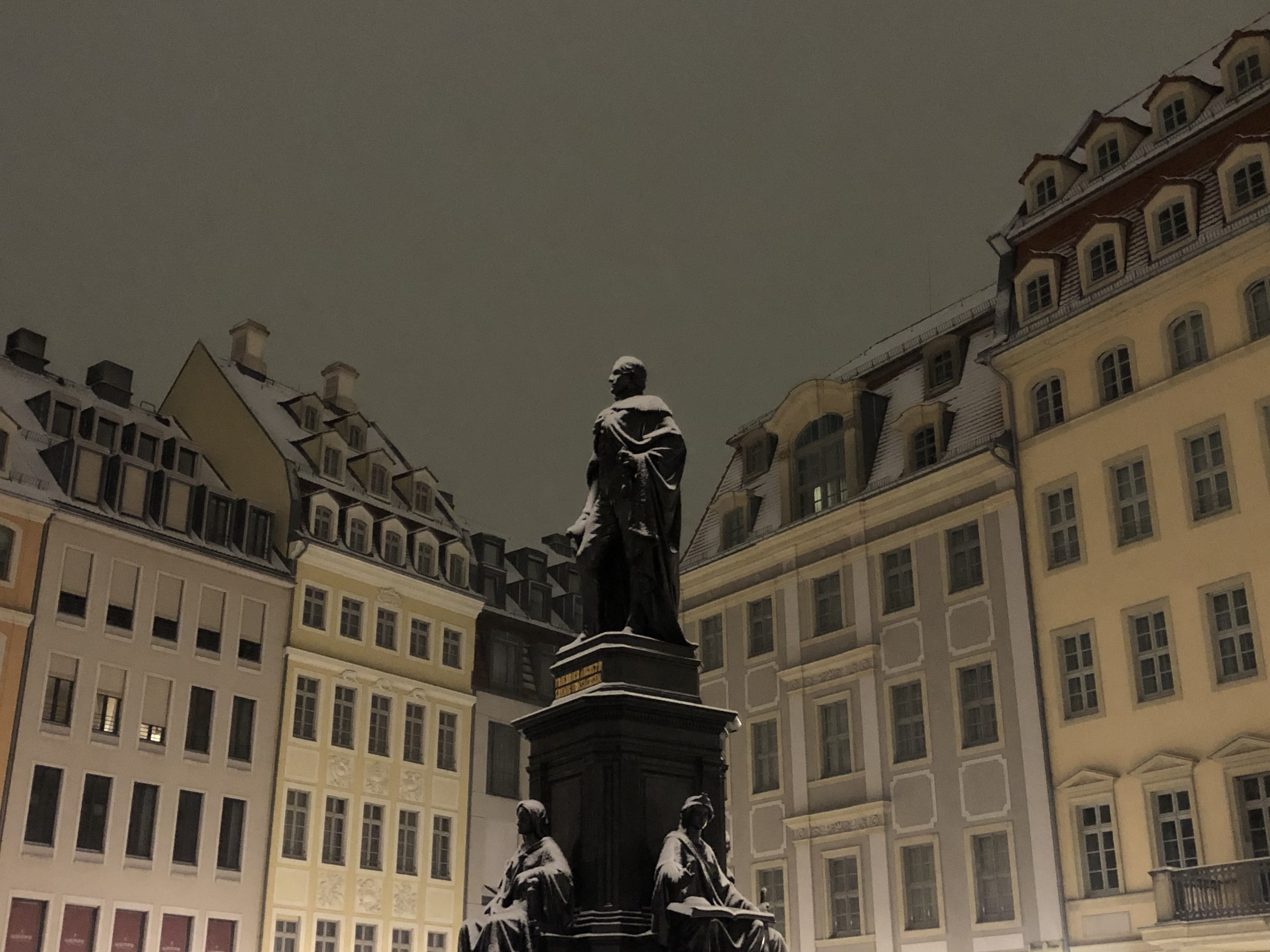
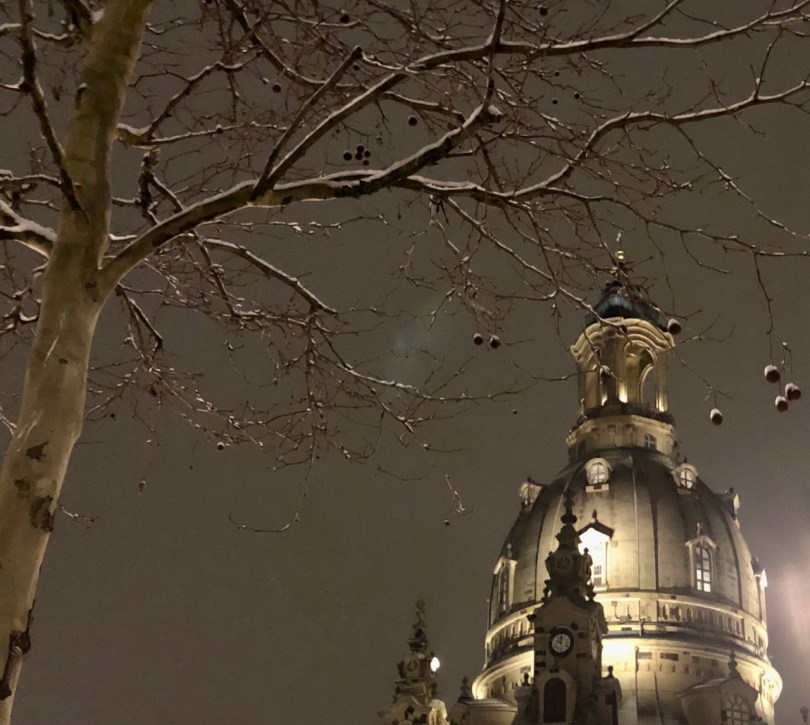
On February 13th at 9.45pm, the bells started; asymmetrical tones infusing the snow-sprinkled city. 

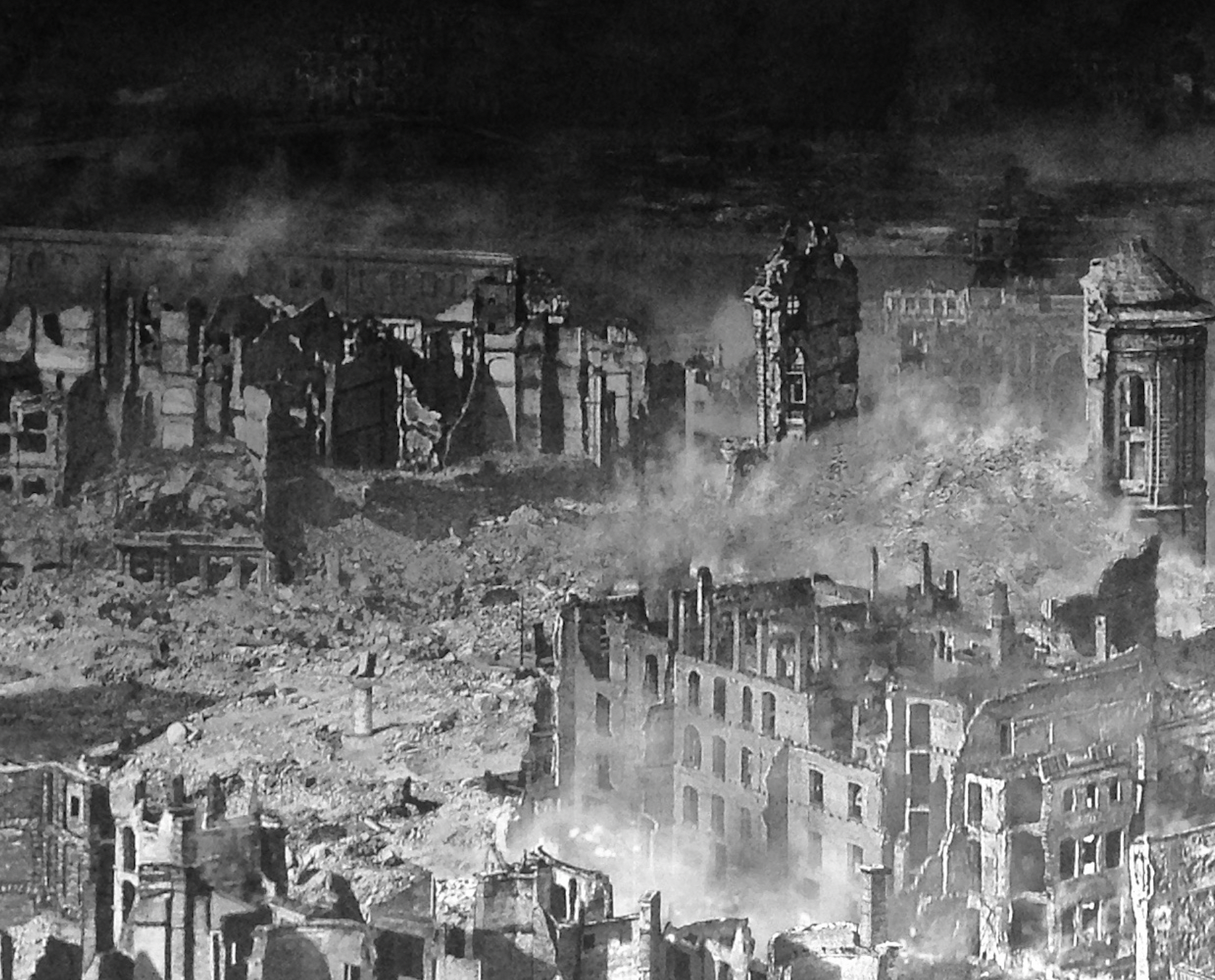
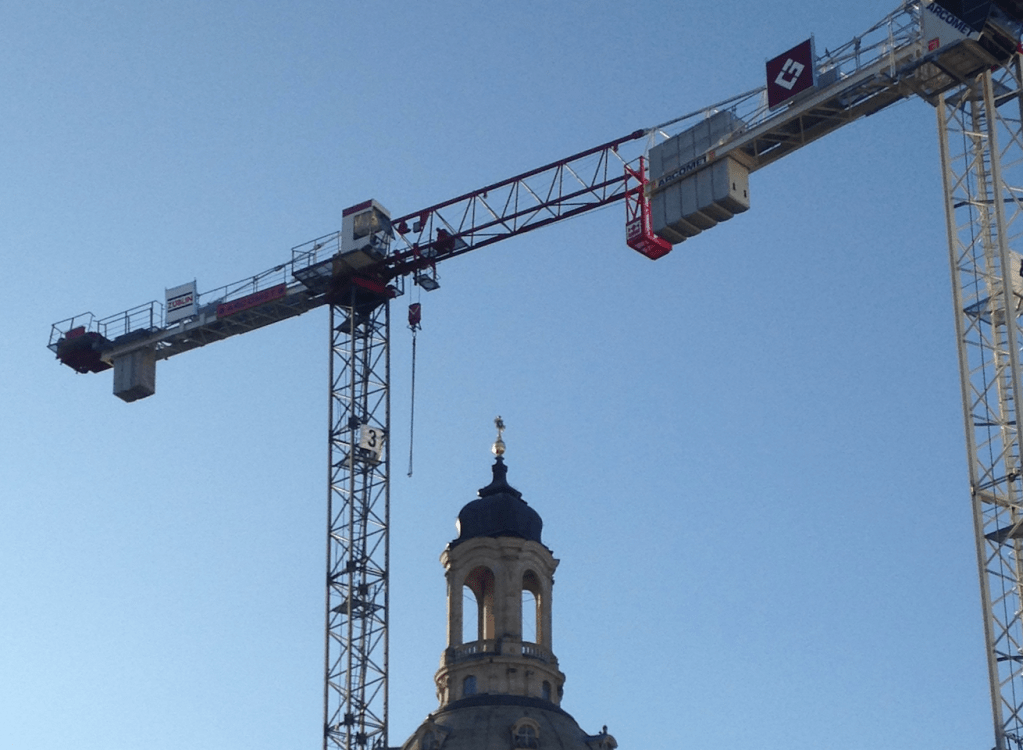
People wrapped in scarves and silence, stared at the dome of the Frauenkirche that 80 years before had been mangled by bombs into a pile of rubble that would scar the city for over fifty years.

Candles placed on the ground flickered benign flames as memories haunted the minds of those who had witnessed a firestorm that melted asphalt, roofs and neighbours alike.

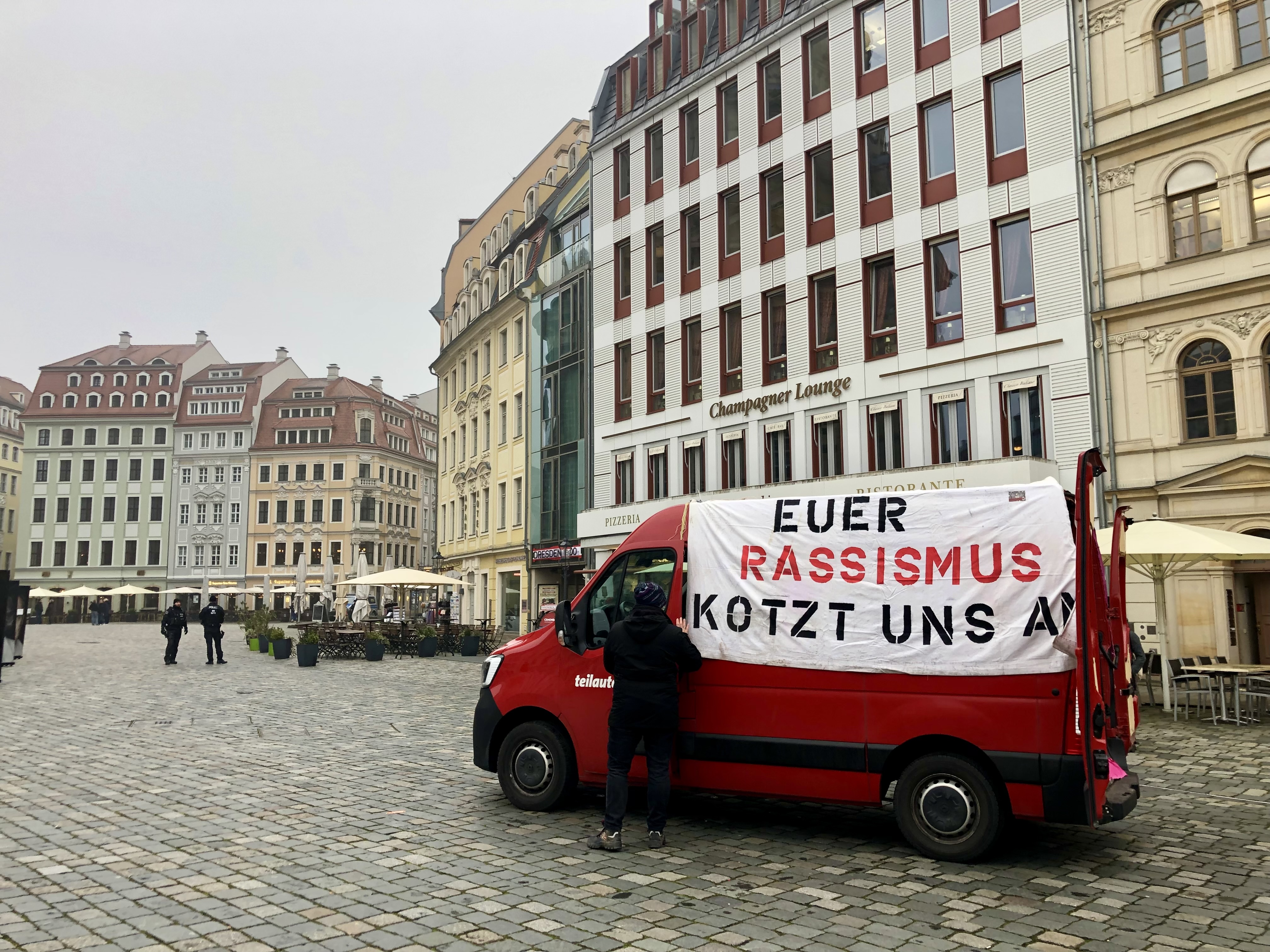
A human chain of hand-holding citizens wove through the resurrected buildings, knitted together both in remembrance and defiance of the re-emerging forces of lessons not learned.

This year’s anniversary of the British and USA bombing of Dresden was determined not simply to look back and roll out familiar but increasingly empty tropes such as ‘Never Again’. Instead, ‘Future through Remembrance’ was the theme repeated through the activities I attended as a Trustee of the British Dresden Trust. Younger generations from Germany, Ukraine, Poland, UK occupied the foreground mingling the wisdom of elders with messages that gave genuine hope for our troubling times. 

Stay awake. Be aware and curious as a child about what is happening around you. Look at history from multiple angles. Step back to see it in perspective. Take responsibility. 

Benjamin Britten’s War Requiem followed by silence in place of applause gave the horror, tragedy and futility of any war the viscerality needed to galvanise us out of complacency into using Remembrance fiercely rather than sentimentally; to unite us as human beings, each with a heart and soul that thump with a longing for peace. 

It was the move from formality to informality, from grand gestures to tiny actions we are all capable of doing everyday, that left the most lasting impression. From pomp and ceremony to conversation; from people in suits or uniforms telling us the importance of remembrance of a time that is increasingly distant, both temporally and emotionally, to a lively exchange between young and old from different nations on the values of democracy and peace.

Peace that is all too easily taken for granted. 

Further Reading and Links

The Dresden Trust

History and politics collide as Dresden mourns its destruction in WWII by Katja Hoyer

DRESDEN: A Survivor’s Story by Victor Gregg

DRESDEN: The fire and the darkness by Sinclair McKay

AIR RAID by Alexander Kluge

The Duke of Kent marks the 80th anniversary of the bombing of Dresden

Commemoration: 80th Anniversary of the destruction of Dresden

l

Remember, Remember… we all lost

‘Tis the season to remember. In our progression through the grey gloom of this autumn [just 18 minutes of sunshine since 28th October apparently!] and the celebrations of Halloween, All Souls, Samhain, Guy Fawkes and November 11th, the dead take centre stage. Leaves and forest floors redden while poppies bloom on jacket lapels, village monuments and shop counters. This Sunday in London, as on all Remembrance Sundays, red wreaths will be laid by royalties, senior politicians and Commonwealth High Commissioners before some of the last surviving WW2 veterans march or are wheeled past the Cenotaph.

We have been collectively remembering Armistice Day since 1919, the first anniversary of peace at the end of World War One. Remembrance has since been extended to both World Wars and all those who have given their lives in service to defend our freedoms. It is a hugely important day for the British, the Commonwealth and many other countries around the world, albeit not in Germany. There, since the Middle Ages, 11am on 11.11 has marked the start of the carnival season and, on a more serious note, Armistice Day is not considered to have welcomed the beginning of peace but years of intense unrest and far worse horrors to come. 

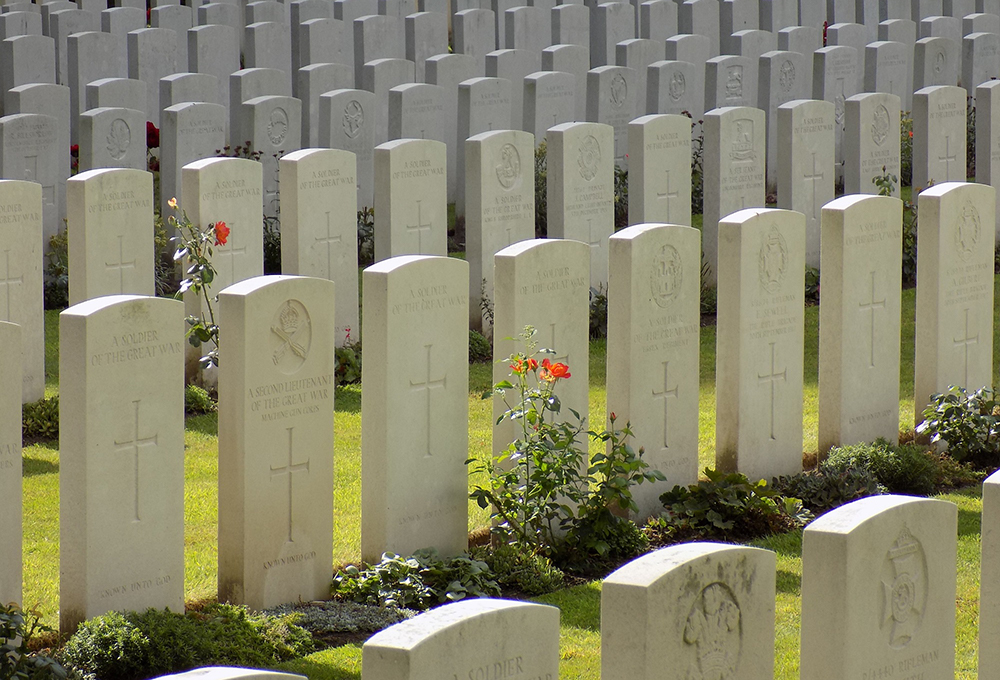
British and Commonwealth dead

I often dedicate my November blog to our traditional, deeply moving and impeccably executed rituals of remembrance, but not always without a little questioning too. Through the 15 years of research for In My Grandfather’s Shadow, I came to appreciate a far broader narrative of WW2 remembrance than that which Britain generally embraces and teaches. Granted there has been welcome progress over the decades with the inclusion of women as well as the huge contributions and sacrifices made by Gurkha, Indian, Sikh, African and Caribbean servicemen, among others. But there is still widespread ignorance of the bigger context.

Russian dead

When I give my talks, I often use statistics. They provide a solid, black and white foundation of fact to my more psychological / philosophical ponderings. So often these figures shock. For example, when I ask people to guess the total losses, including civilians, of say Russia, Germany and Britain in the Second World War they are usually so far out that they themselves are horrified. I challenge you to make a guess… I’ll put the answers at the end of the blog. One man literally went white when he realised how wrong he had been in his thinking or, by his own admission, his lack of thinking. Another woman recently wrote to tell me how my book had opened her eyes in so many ways. “First off,” she said, “the big realisation of how little I have understood of the two world wars, my ignorance of those times and the aftermath.” This despite attending remembrance services all her life. 

German dead

The quantity of deaths doesn’t mean each death was any less keenly felt. But I think she voices what is probably true of most of us. I certainly was ignorant of the broader landscape of loss and destruction, and no doubt still would be if I hadn’t had German roots that needed excavating and hadn’t made trips through Germany and Russia that exposed me to other ways of looking. The World Wars are the episode in history with which the British are often accused of being unnaturally obsessed. And yet, as a nation, we often present it as a deceptively straightforward story of good triumphing over evil. The victors write history after all. 

Every nation has its ‘chosen traumas’ and ‘chosen victories’ which serve as cornerstones to its identity and prevent true healing from the past as they continue to play out in the present. We frequently have binary views of how we should feel based on – to use the reader’s words again – “simplistic, reductionist understanding… goodies and baddies…” Rarely have we “considered what it must feel like to have a different identity…” 

I really appreciate and admire this woman’s soul-searching honesty. The humility and gentle opening to hearing the other sides’ stories gives me huge hope.   

Healing, reconciliation, peace, forgiveness… all goals we strive for within our culture of Remembrance… can best come about when we become familiar with and find some understanding for the other side’s experience. Maybe, with our greater distance from both the acute trauma and the impassioned jubilation of our forebears, that is what generations now and in the future can strive to do more of. 

Answer to my statistics question: Out of the around 60 million people killed in WW2, 26 million were Russian, approx. one third of them military and two thirds civilians. Between 7-9 million Germans died, roughly 6 million were soldiers and 3 million civilians. In the United Kingdom, just under 451,000 were killed. That’s 383,800 military, including combatants from overseas territories (Crown Colonies and the Indian Empire), and 67,200 civilians.

To apologise, or not to apologise (for slavery), that is the question.

I am already anticipating a deeply divided and critical response to the recent announcement that Charlie Gladstone and five members of his family, all descendants of the Victorian-era prime minister William Gladstone, are travelling to Guyana to apologise for the significant role one of their ancestors played in the slave trade. But I’d like to ask those who are cynical of such a trip to consider what the alternatives might be.

John Gladstone, William’s father, was one of the largest slave owners in the British West Indies. You can read all about him in the links at the end, but basically he made a fortune as a Demerara sugar planter enslaving hundreds of Africans to work in his plantations until slavery was abolished in 1833. He then became the fifth-largest beneficiary of the £20m fund (about £16 billion today) set aside by the British government in 1837 to compensate planters for loss of income. The final instalments of this compensation were paid out in 2015.

Charlie Gladstone is roughly the same age as me and, though the ‘crimes against humanity’ perpetrated by his family member were nearly 200 years ago whereas those my German grandfather was involved in were a mere eighty, the burden of shame may well weigh as heavily. As I describe in detail in my book, In My Grandfather’s Shadow, the unresolved deeds of our forefathers remain in a family blood line, in our roots. Whether you are ignorant of or choose to engage with them, there will be an impact that needs resolution of some sort. 

Apology is one of many steps that can be taken to try to repair wrongdoing, and personally I think it is good that people such as those in the group Heirs of Slavery, including David Lascelles 8th Earl of Harewood, are finally beginning to address not only the sources of their family’s wealth, but also our collective colonial history and the traumatic consequences that can still be witnessed all too clearly in racism, inequalities in health, wealth, education and opportunity. In their cases it is about apology and accountability, with some of them making financial contributions towards charitable institutions and – in the Gladstone’s case – further research into the impact of the slave trade.

Harewood House, built between 1759-71 with the profits made from plantations and slavery

Others are at it too. Back in July, the Dutch King, Willem-Alexander, apologised on behalf of his country for the Netherland’s historical involvement in slavery and asked for forgiveness. It’s of course a flawed gesture in its incompleteness, but isn’t a heartfelt apology, whether possible or not so long after the event, at least a gesture of recognition of wrongdoing that can lead to a willingness to redress the former total loss of humanity? So many victim groups would attest to the immense value of a genuine ‘I’m sorry’.

King Willem-Alexander apologising on 160th anniversary of the abolition of slavery in the Netherlands

Our prime minister doesn’t think so. Back in April, Rishi Sunak refused to apologise for UK’s role in slavery saying that ‘trying to unpick our history is not the right way forward’ and that the focus, ‘while of course understanding our history in all its parts and not running away from it, is making sure that we have a society that is inclusive and tolerant of people from all backgrounds.’

Fair point about looking forwards. But how can you truly ‘understand’ such a horrific history, underpinned by past government policy, without being moved to demonstrate some direct expression of remorse to those it continues to affect? Or is that precisely what we are scared of? That an apology equates to an admission of culpability and therefore an obligation to compensate?

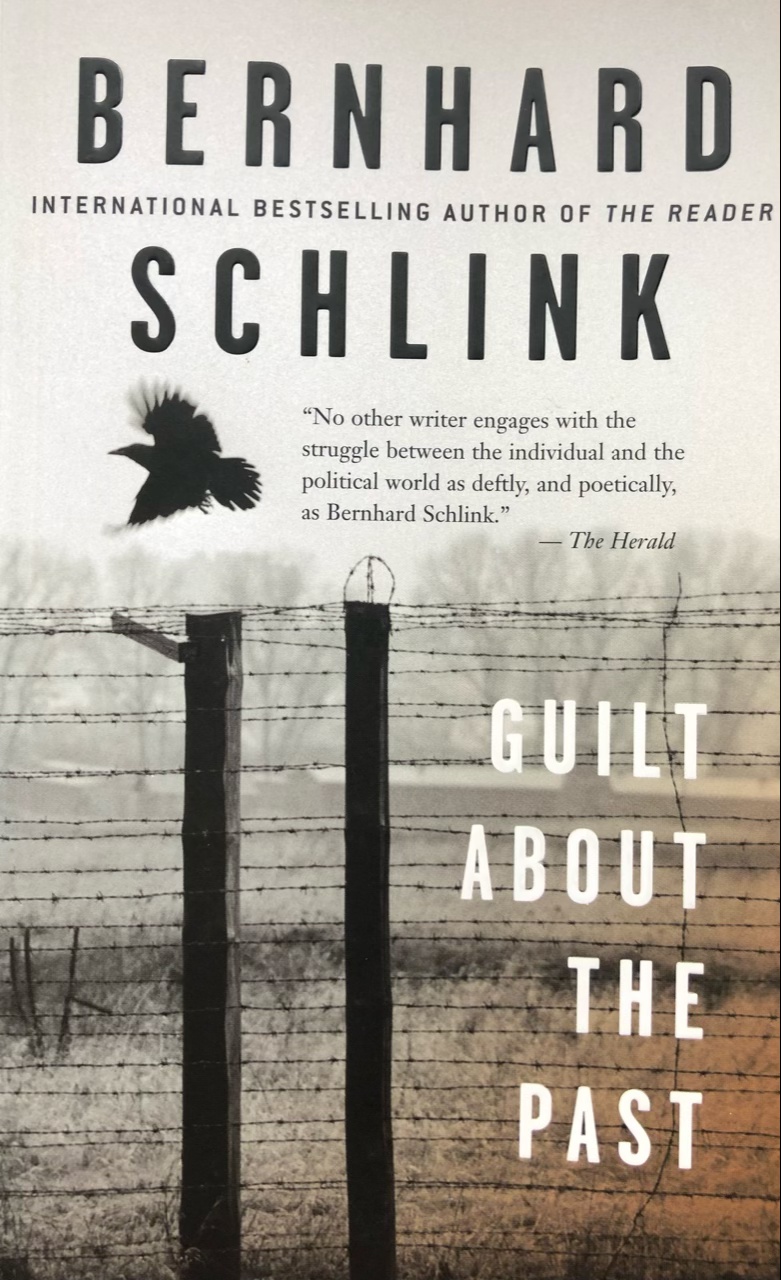
In his series of essays based on lectures delivered at Oxford University and bound into the 2009 book Guilt about the Past, Bernard Schlink, German author of the 1997 bestseller The Reader and various other literature, tackles not only German guilt about the past, but other long shadows of collective and global past guilt. (I am well aware we can’t actually be guilty of something we didn’t do, but we can still feel guilt.)

In the essay entitled ‘The Presence of the Past’, he addresses the issue of remembering or forgetting a traumatic past. “A collective past, like that of an individual, is traumatic when it is not allowed to be remembered and is just as much so if it has to be remembered… Detraumatisation is the process of becoming able to both remember and forget; it is leaving the past in the past, in a way that embraces remembrance as well as forgetting. This applies in the same way to the victims and their descendants as to the perpetrators and their descendants.” (p.36)

We need to find that balance.

One of Schlink’s claims that struck me most while exploring my own sense of guilt for my German family’s past was in the chapter on ‘Forgiveness and Reconciliation.’ He says that if someone seeks forgiveness for their own guilt it has weight, but “to ask for forgiveness for someone else’s guilt is cheap.” (p.73) 

Cheap… So where does that leave those of us living today and the question of apology for things that happened decades or even centuries ago? 

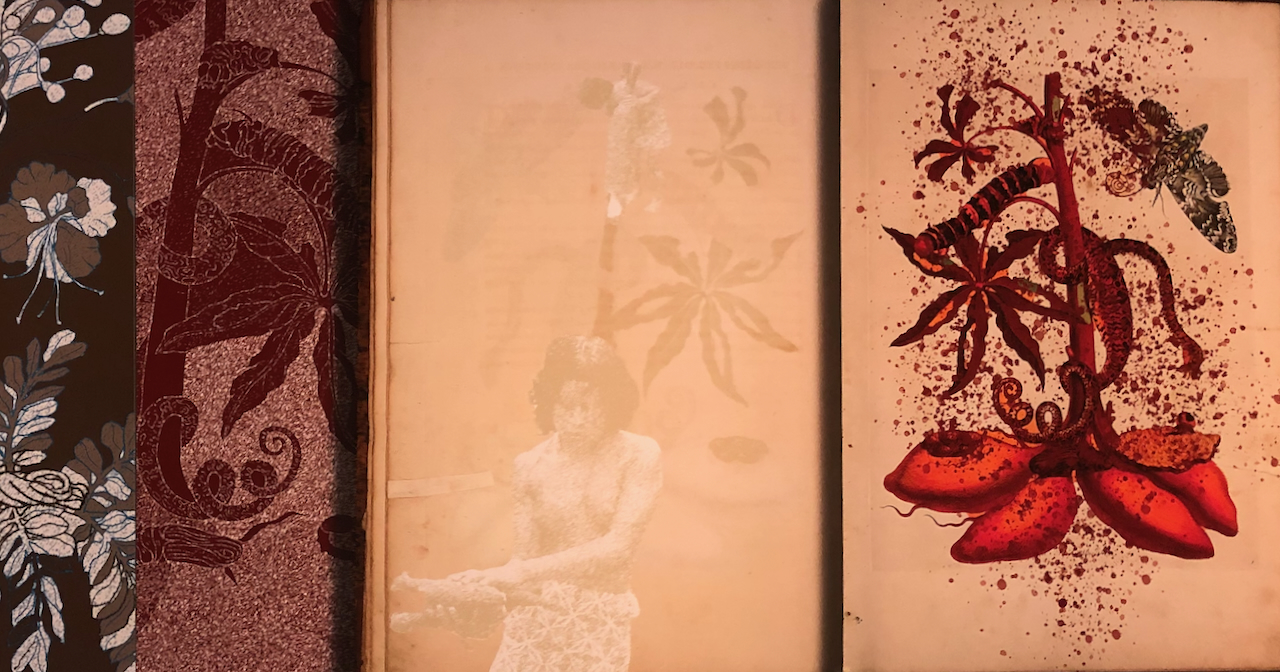
Detail from Patricia Kaersenhout’s ‘Of Palimpsests and Erasure’ (2021) (https://www.pkaersenhout.com)

Schlink and I come to a similar conclusion. It’s about understanding. He says, any kind of reconciliation requires “a truth that can be understood.” And “true understanding is more than searching for and finding causes. It includes putting yourself in someone else’s place, putting yourself in someone else’s thoughts and someone else’s feelings and seeing the world through that person’s eyes.” Doing this, he says, establishes equality. “We make [the other person] equal to us and us to them; we build up society when we understand.” (p.82)

This form of ‘understanding’ goes way beyond the slightly glib understanding the current leader of our country suggests. It requires engaging in the truth of what happened and feeling it. Feeling how appalling it was and being moved to act to heal and make good the wrongs that still poison our national veins and those of the human beings living today whose forefathers were harmed.

Further reading, as always not all links reflect my own opinions:

William Gladstone: family of former British PM to apologise for links to slavery 
William Gladstone’s family to apologise for historic links to slavery

‘I felt absolutely sick’: John Gladstone’s heir on his family’s role in slavery

Rishi Sunak rejects calls for slavery reparations from UK

When will Britain face up to its crimes against humanity?

Dutch king apologises for country’s historical involvement in slavery

Campaigners urge king to do more to acknowledge UK’s slavery role

The British aristocratic families reckoning with their slave owning past

The German translation of In My Grandfather’s Shadow will be published in Germany in September. Please contact me for details of forthcoming events relating to in Germany.

Title painting: ‘Salt of the African earth‘ by Angela Findlay, 1994

Is King Charles’s visit to Germany important, irrelevant, or are you completely indifferent? 

King Charles is in Germany for three days, his first overseas state visit as monarch after the planned trip to France was postponed. Many people in Britain will not take much notice of this news for a variety of reasons from believing the monarchy should be fundamentally abolished to thinking the whole trip is one big photo-opportunity. But media coverage of his and Camilla, the Queen Consort’s time in Berlin, Hamburg and beyond will show it is far more important in Germany than most of us here might understand. 

There are times I have felt saddened by Germany’s slightly unrequited friendship with Britain. A lot of Brits have wonderful personal or business relationships with our neighbours across the sea, but at Remembrance ceremonies, for example, I have lamented the stiff coolness of the British establishment towards their German counterparts that stands in stark contrast to the genuine warmth displayed by equivalent representatives of France or even Israel. This visit feels different. More relaxed and real. The Royals, at their best, have an uncanny ability to transcend all differences to reach parts other people, above all politicians, can’t, and with far more authentic and lasting resonance than mere symbolic gestures.
“Ah the Queen Mother… I love the Queen Mother!” Those were the unlikely words to come out of a scantily clad, barefoot, elderly Aboriginal man’s mouth on discovering I was English. It was 1986 and I had just wandered, equally scantily clad, into a spit-and-sawdust pub in the baking outback of Australia causing the intimidating head-turns and awkward silence seen in movies. Ever since this display of unreserved enthusiasm for a Royal broke the ice – most definitely the wrong idiom to use in a place where 40˚C temperatures would have melted ice within minutes – followed by the dear man’s insistence on buying me a cold beer, I have valued the role the Monarchy plays in the world. 

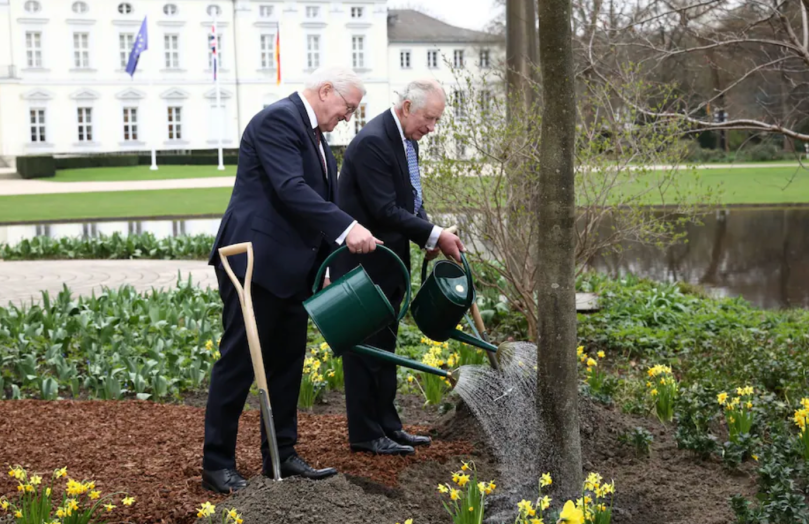
In some ways King Charles brings an even more special affinity than his revered mother because it is coupled with inspiration for Germans whose long-standing environmental awareness and action match his… apart from the rather glaring contradictions in their love of fast cars and belching factories. Like them, he has been advocating greener, more sustainable ways of working with the earth for decades, ideas for which he has been ridiculed here until mainstream politics recently and reluctantly began to acknowledge their common sense. It’s a happy sight to see our King throwing royal reserve aside to inspect potatoes at Berlin’s 150-year-old weekly farmers’ market, water a tree dedicated to the late Queen, play table football in a refugee centre or spend time at an organic farm (bizarrely owned by friends of a friend of mine) sharing their genuine passion for all that he too believes is good and right.

The intended role of our Royals, rather than the all too frequent ones that are mired in controversy, excess, wrongdoing etc. could be compared to that of the German President – currently Frank-Walter Steinmeier, who I always find carries out his brief superbly. Beyond the divisive party politics and in-fighting that brought us Brexit and what was experienced by many Europeans as a hurtful rejection, King Charles’s visit offers a heartfelt olive branch and reassurance that our countries are still indeed friends with both a shared history that extends way before the horrors of the two World Wars, and a deeply connected future.

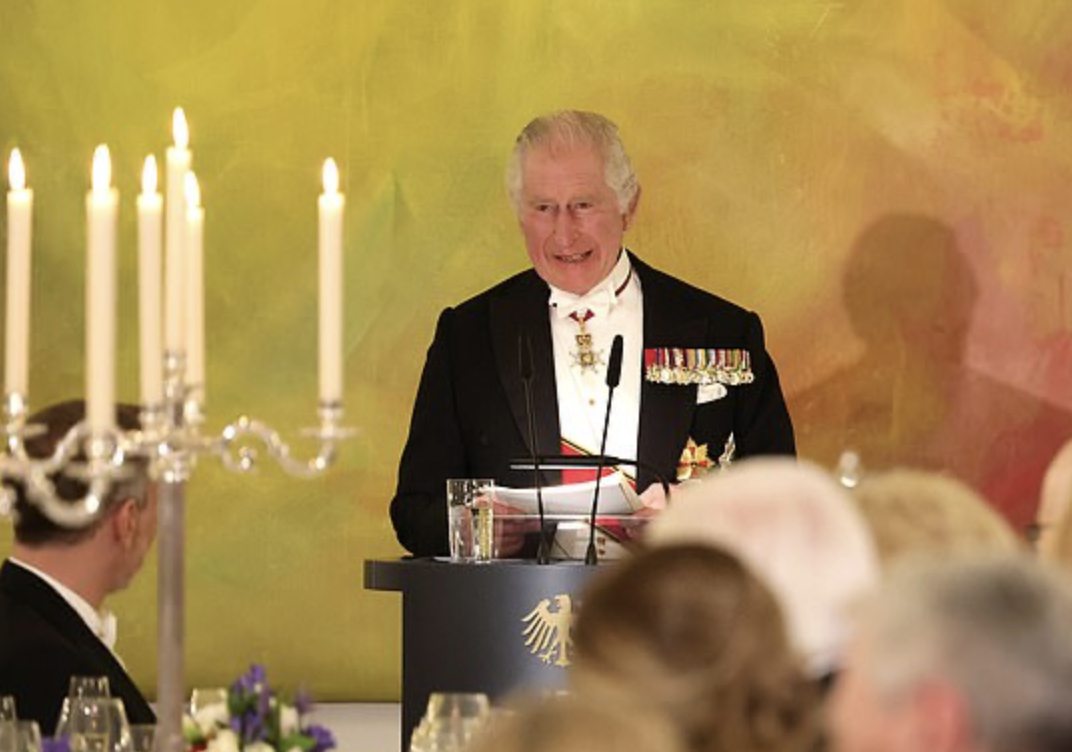
Politicians rarely feel able to give credit or compliments to the achievement of others for fear of exposing their own failings. Charles (is that being over-familiar?) on the other hand, can. With no trace of defensiveness or inadequacy of his own country’s policies, he paid tribute to Germany’s “extraordinary hospitality” in hosting over one million Ukrainian refugees. “This,” he said, “seems to me, so powerfully demonstrates the generosity of spirit of the German people.”

Imagine a politician saying that! But if we want to break the insufferable ping-pong slagging matches that fill the House of Commons, this recognition and appreciation of good policies, ideas or actions surely has to be encouraged on all sides? Batting words to and fro, patting own backs and roaring unruly ‘Ayes’ or ‘Noes’ to drown out opponents’ voices is no way to get anything done. And when you look at the decline of so many of our services, institutions and already neglected areas of British society, it is clear that, for far too long, almost nothing has been done.

I am currently reading a fascinating book lent to me by a delightful 92-year-old friend who, after reading my book, treated me to some of her own stories from the Second World War. Her family lost their home to the bombs dropped on Bristol. And yet, in 1948 on hearing of the extreme hunger of the Germans, she and her church youth group, knocked on doors in their parish to collect donations to send to the very people that most around them (understandably) still regarded as the enemy. She remembers the quarter of a pound of tea she collected.

The book she lent me, ‘Darkness Over Germany’ was written by a remarkable British woman, E. Amy Buller, who visited Germany many times in the 1930s with a mission to understand the ideas that radicalised so many people, particularly the youth, in order to learn how to work with them in peacetime and prevent such things happening again. She saw how Nazism was a false answer to a real need and how foolhardy it is to fight a war without considering how to engage with the enemy once they were defeated. 

I can’t help feeling we could learn a great deal from these enlightened elders who operate with the kindness and innate wisdom of their hearts. And it is in that respect that I completely support visits such as the one happening as I write. With clearly genuine warmth, humour and interest, King Charles is re-building bridges, offering friendship and warming the hearts of a great many German people.

Uh-oh, I feel a little ‘God Save the King!’ coming on… I’ll stop here.

Just a few of a whole load of links recording his visit:

King Charles celebrates UK-Germany ties in historic address – BBC

For Hamburg, devastated by allied bombing, King Charles’s visit is so much more than a photo-op | Helene von Bismarck | The Guardian

From Meeting Scholz To Visiting Farmers Market; A Peek Into King Charles’ Germany Visit

King Charles III arrives in Germany for first overseas visit as monarch

In Pictures – The Telegraph

King Charles to lay wreath to German victims of wartime air raids. Planned visit to St Nikolai memorial in Hamburg contrasts with approach taken by his mother by Philip Oltermann

King Charles avoids mention of Brexit in speech to German parliament

A meander from Dresden to Diplomacy…

As the days get noticeably longer and the year begins to gain momentum, I have been observing what builds up my energy and what makes it slump. It’s a good way to gain an indication of which direction to follow. What I notice again and again is that when interactions fall into binary dynamics of right and wrong, good and bad, or discussions strive for a dominant ‘winner’, my psyche becomes more combative or defensive and is quickly drained. There is rarely a satisfactory outcome. But when there is an openess for exploration, conversation, ‘compassionate enquiry or curiosity’ as the physician Gabor Maté would call it, my whole body relaxes. I come away feeling expanded, richer, slightly changed, more connected. More hopeful.

Where am I going with this? 

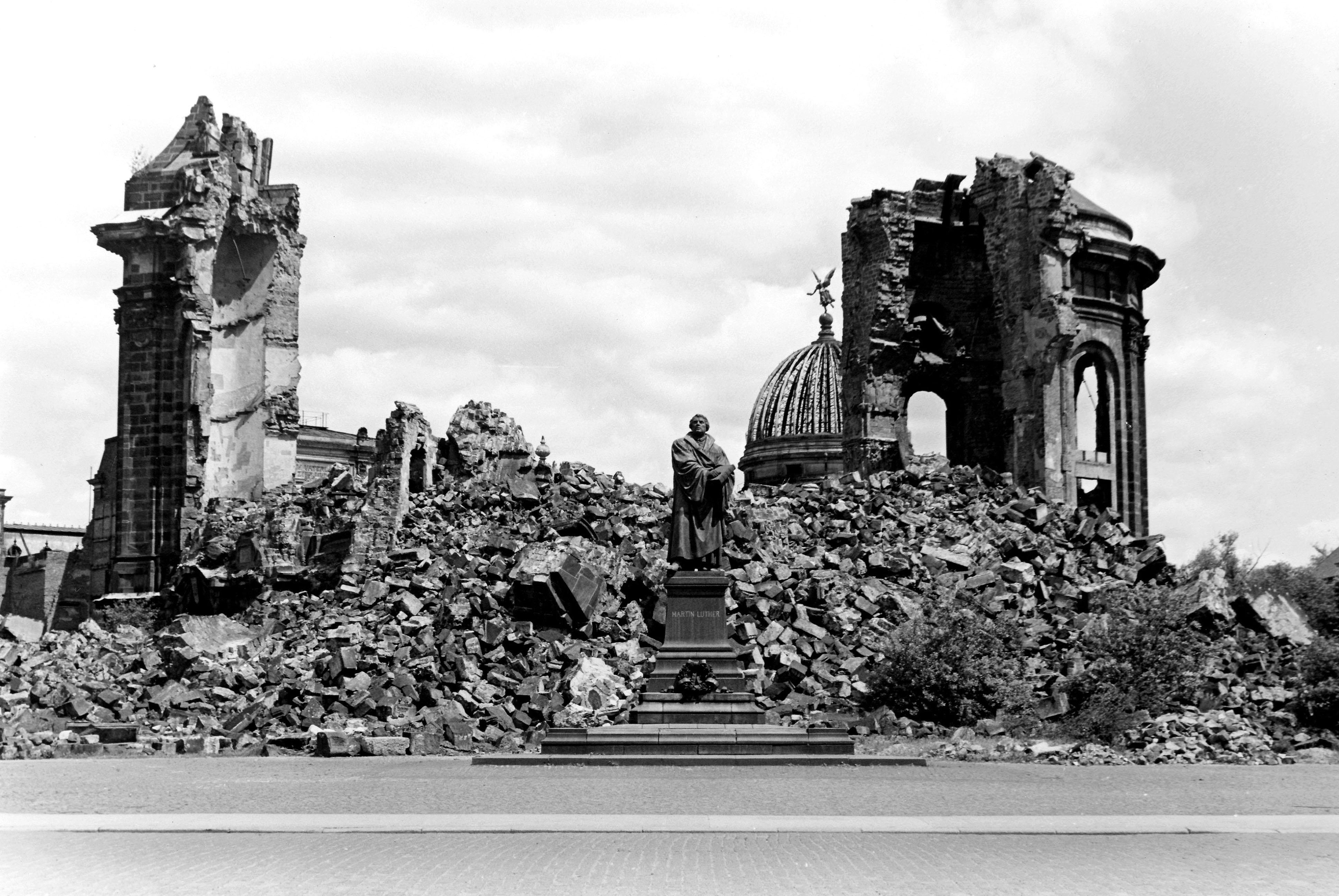
Ruin of the Frauenkirche in Dresden with the Monument to Martin Luther – Church of Our Lady.

Monday 13th February marks the 78th anniversary of the British and American bombing of Dresden. Every year, a human chain of people holding hands in an open gesture of unity wends its way through the city. This year, on Tuesday 14th, a lunchtime gathering will also take place in London with leading figures from the Anglo-German community to remember the second day of the 1945 bombing raid and celebrate the 30th Anniversary of the Dresden Trust. Founded shortly after the reunification of Germany by Dr Alan Russel in response to a ‘Call from Dresden’ to help rebuild the city, the charity is dedicated to healing the wounds of war and furthering harmonious relations between the people of Britain and Dresden.

Whether you see the bombing of Dresden as a British/US war crime, a justified military strategy or a deserved, morale-destroying mission specifically designed to create as much damage and carnage as possible, the outcome is the same: 25,000 civilians died unimaginably horrible deaths. Such extreme acts of destruction are only possible when all that people can see in their fellow human beings is difference, separation, ‘other,’ lesser, enemy… And where that occurs, peace becomes a far-off pipe dream.

In contrast, behind the reconciliatory, healing and bridge-building efforts of organisations such as the Dresden Trust, is a striving for the opposite: collaboration, communication, comprehension, compassion… and a whole load of other words starting with ‘co’ or ‘com’ that signify a certain oneness in our shared humanity. 

Two of the areas I have been most active in – rehabilitation and reconciliation – both have in common that they are repairing or making whole something that got broken. They come about post-event, after the damage has run its course, hence the ‘re-‘ prefix. So what if our collective focus shifted from the costly (on all levels) clean-up jobs those ‘re-‘ words embody, to preventative measures of ‘habilitating’ and ‘conciliation’? What if, instead of constantly having to make good again things that we have damaged – whether health, a lack of education, inequalities or injustices – we put all that time, energy and funding into seeking out and nurturing the common foundations and shared human needs we all have and that we can see so clearly in emergencies such as the devastating earthquakes in Turkey and Syria, where all the differentiating labels (national, political, ideological, gender etc.) we layer over our essential selves get stripped away? 

To do this we would need a fundamental shift from head to heart; in our education, politics, laws, economics, environmental policies, attitudes to foreigners. Thankfully, in many areas, that shift is already happening. 

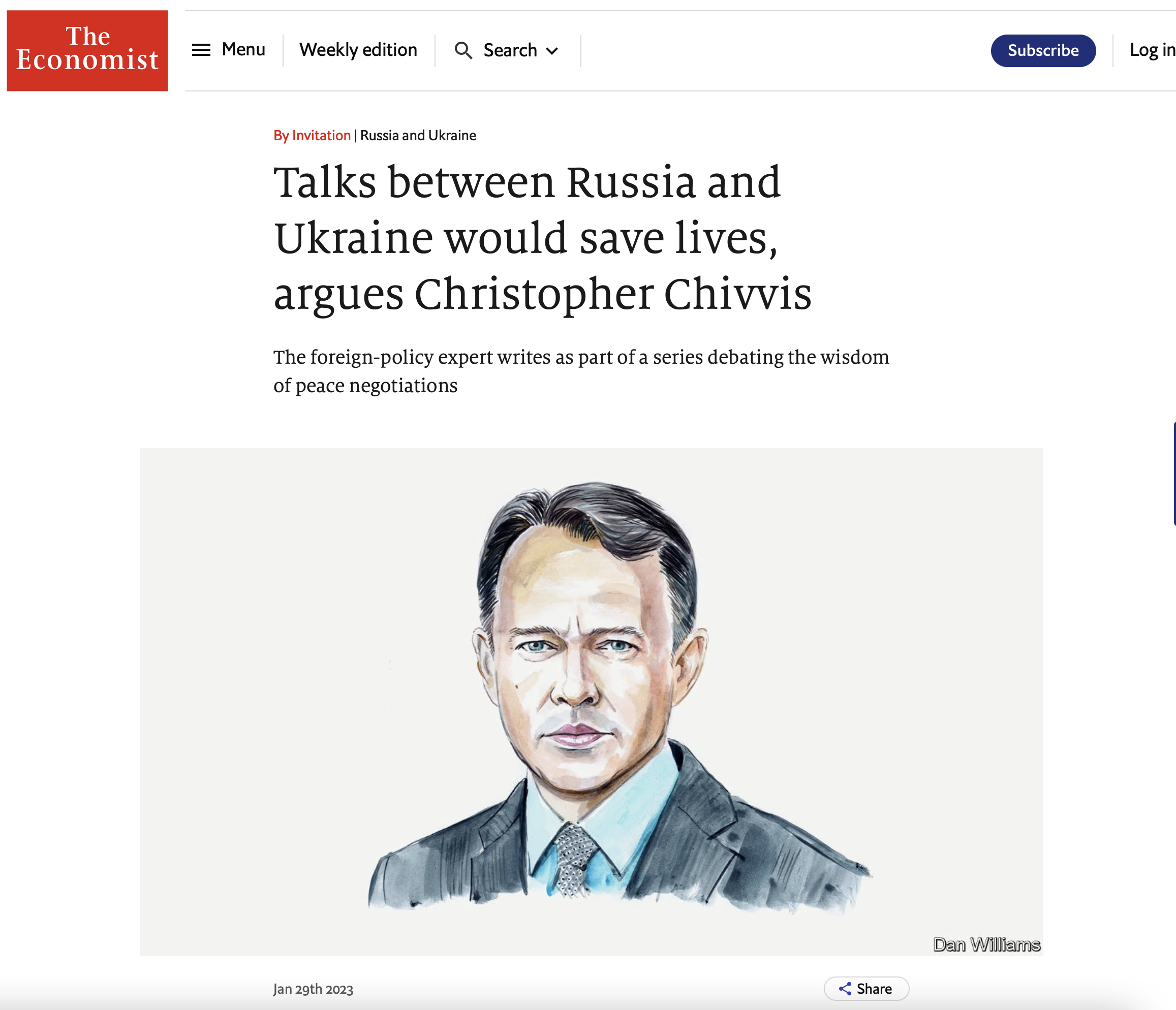
During President Zelenskyy’s recent tour of Europe, I was gladdened to hear the calm voice of Christopher Chivvis, former Sr. US Intelligence Officer in Europe, in an interview with Evan Davis on BBC Radio 4’s PM programme. He quietly called for a more robust diplomatic track in relation to the Russia / Ukraine war rather than an escalation of increasingly powerful military methods of destruction with the ensuing losses of life. And then he outlined how this could look. I found him more psychologically astute and emotionally literate than many of the louder voices we hear, but see what you think You can listen to the interview here starting 46:31 mins in.

I imagine one of the foundation stones of diplomacy is a willingness to make a concerted effort to hear all sides of the story. An attempt to do just this came in the form of the brilliant 3-part BBC2 documentary series, ‘Putin vs the West’. Produced by Norma Percy, it presents the run-up to Putin’s invasion of Ukraine through the spoken words of an impressive range of key players as well as incredible footage of Putin and co at work. It was compelling watching that I can only recommend. But… for all the different angles it presented, it remained largely the point of view of the west. As Andrew Seale said in his article: “The problem with this type of documentary… is that there is no one credible to interrogate the west’s narrative.” And it was very clear, the west didn’t always get it right.

So we need to go even further. To include an even more diverse range of voices. To hear our critics too.

If Dresden can teach us anything, it is that it is too dangerous not to. War brutalises. War traumatises. For generations to come. Maybe as former US president, Barack Obama, said in defence of his retrospectively ‘best’ but much criticised decision not to take military action against Syria after it had crossed his ‘red line’ of using chemical weapons: “The ease with which military actions gain momentum, the greater difficulty in pulling back and insuring that diplomacy is given a chance.” 

Further reading

Talks between Russia and Ukraine would save lives argues Christopher Chivvis – The Economist

Putin vs the West review – like a gripping terrifying soap opera – The Guardian

The West is wrong to assume it has global support in the war against Putin – Open Democracy

Remembering Russia’s past as a way to understanding its present

The Remembrance Sunday of 2022 will be one of thankfully few since 1945 that sees another war in Europe raging. As we remember those who lost their lives in past wars, fellow Europeans will be losing theirs in the all too real conflict fighting itself out in Ukraine.

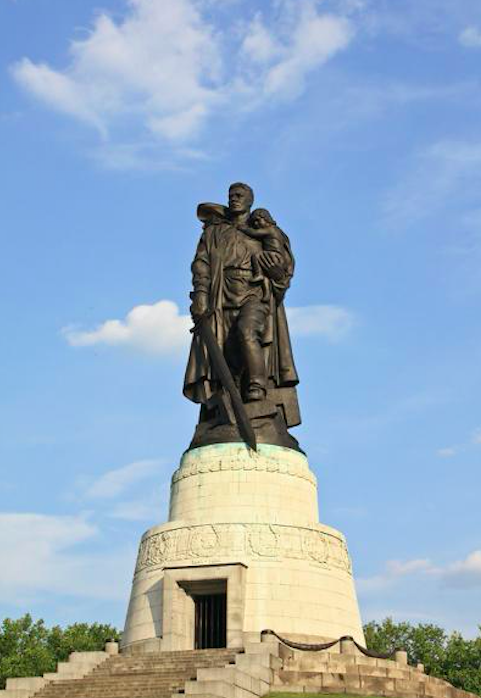
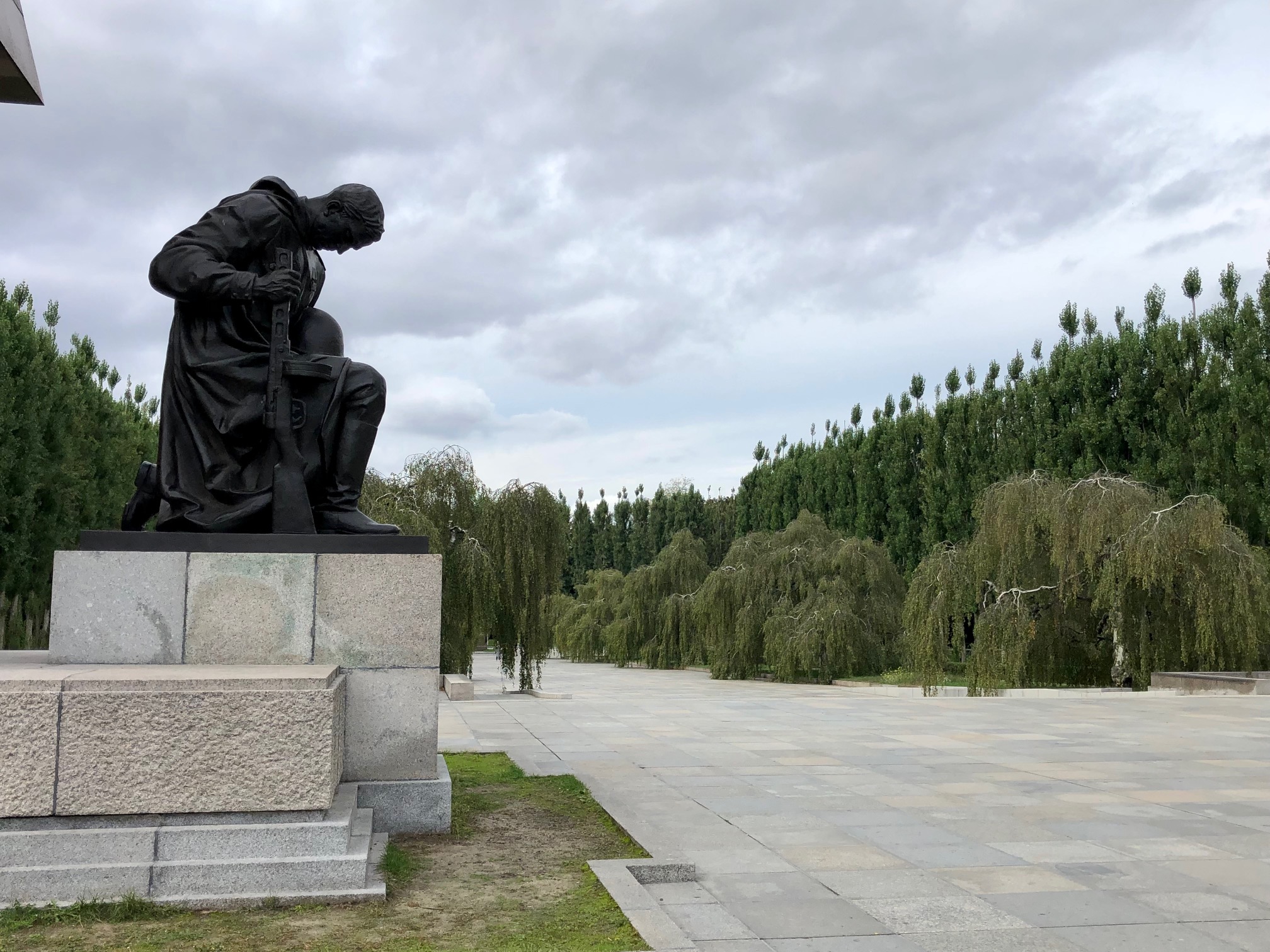
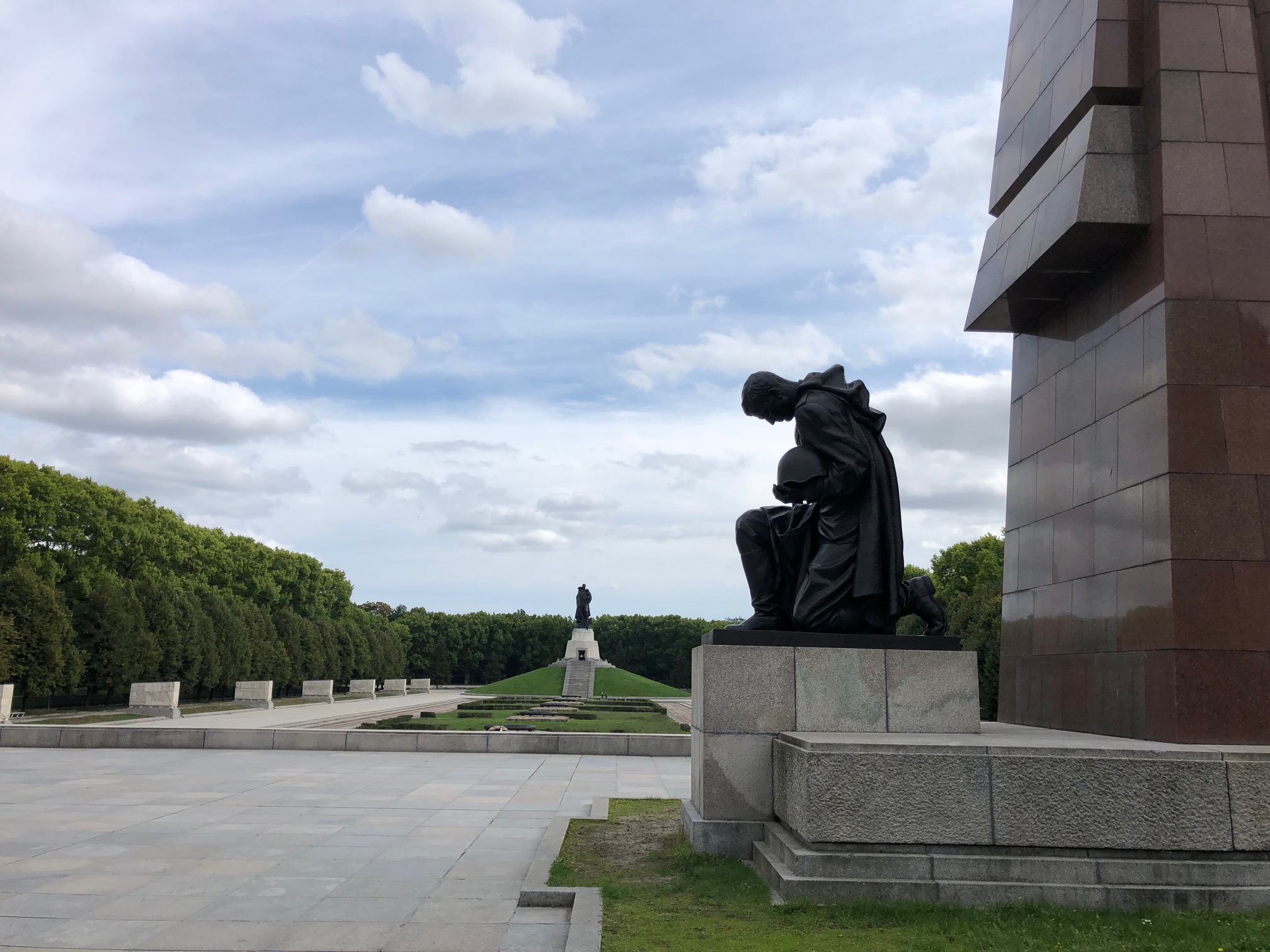
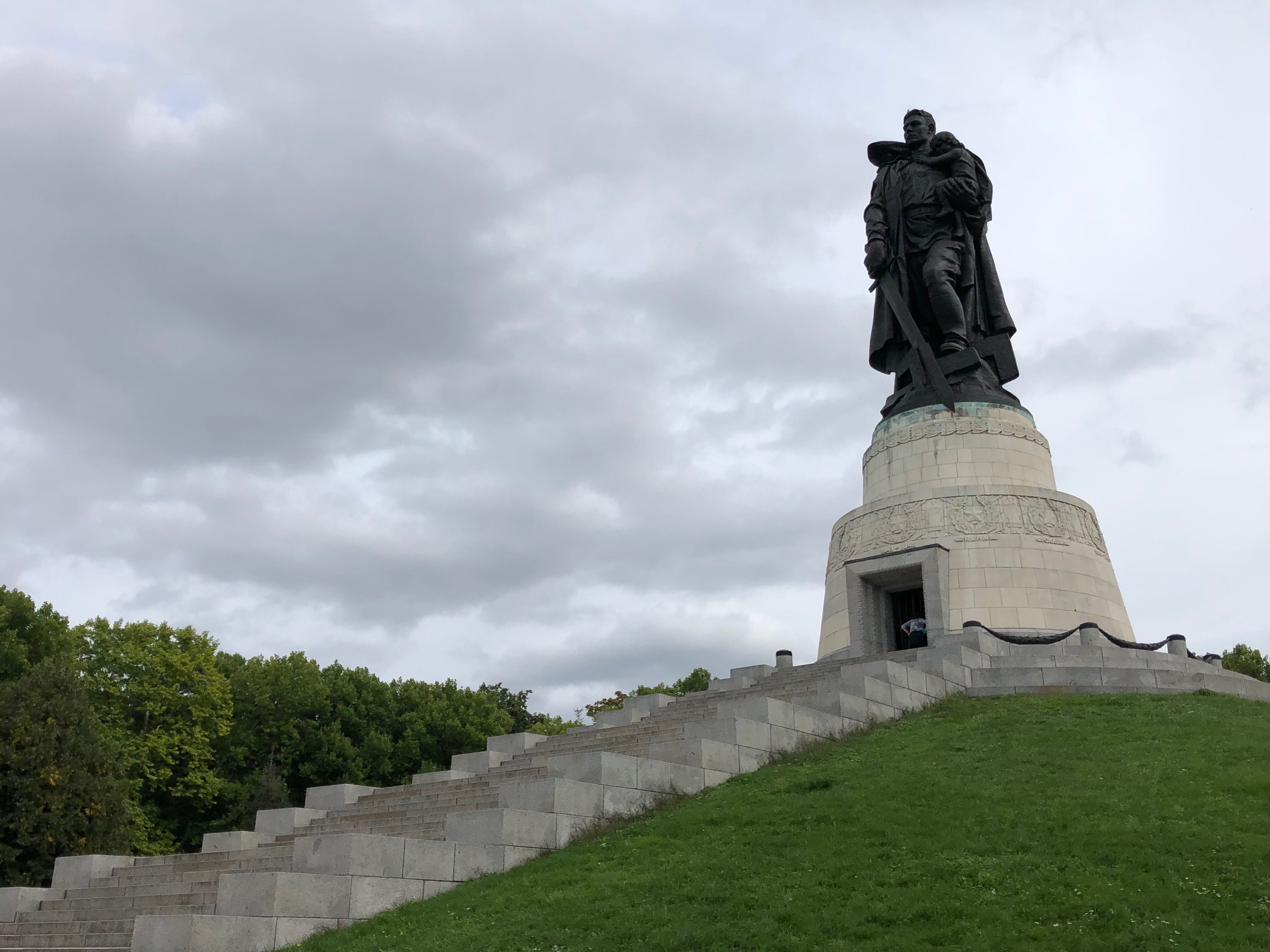
In my last blog I wrote about travelling the Berlin Wall Way, itself a form of 100+ mile-long memorial remembering both a repressive episode in history and those who lost their lives trying to escape it. Well, a little off that route in what was central East Berlin is Treptower Park, the largest Soviet military memorial outside the Soviet Union. Opened on 8th May 1949, it is a 10-hectare cemetery for 7000 of the more than 22,000 Soviet soldiers killed in the battle to take Berlin in the final months of the Second World War and contains the world-famous symbol of the role played by the Soviet Union in destroying National Socialism: the 13-meter towering statue of a Soviet soldier holding a lowered sword over a shattered swastika and cradling a rescued German child in his arm.

The Soviet Warrior Monument built by Yevgeny Vuchetich

To experience this place is to experience a sense of the enormity and profundity of the impact WW2 had on the Soviet / Russian people. For a start it is vast. And the extensive layout is designed to take you through a process of mourning and remembrance to honouring the victors as heroes and liberators. 

‘Heroes and liberators.’

We too use those words in relation to our own soldiers. But how often have we – or do we – actively honour the decisive role the Soviet soldiers played in defeating Nazi Germany? And how often do we include the mind-boggling numbers of Russians murdered or killed in the process (25 million to give a rough/round figure) in our process of remembrance? We don’t really, is the only answer I can find. And yet they were our allies in a war that we, as a nation, have made central to our national identity. Could our slightly introspective leanings and lack of acknowledgment of the Soviet sacrifices and achievement (among many other factors, not least the horrors of the Stalin era) have contributed to the attitudes of subsequent regimes and politics towards the West? Just a question… but one that walking through Treptower Park certainly made me ask.

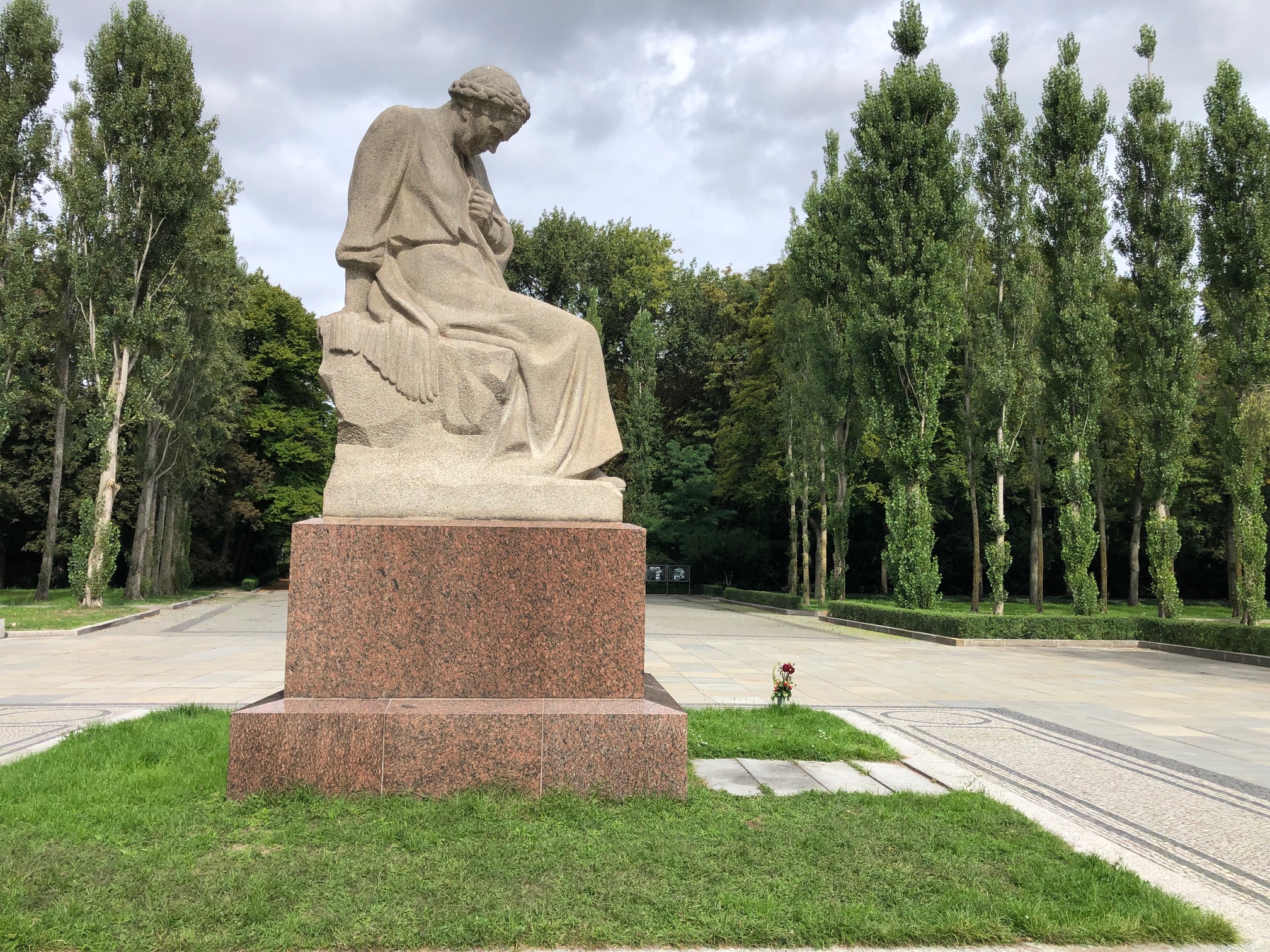
‘Mother Homeland’

Entering through one of two avenues, the (tiny) visitor is led first to the statue of a grieving “Mother Homeland.” 

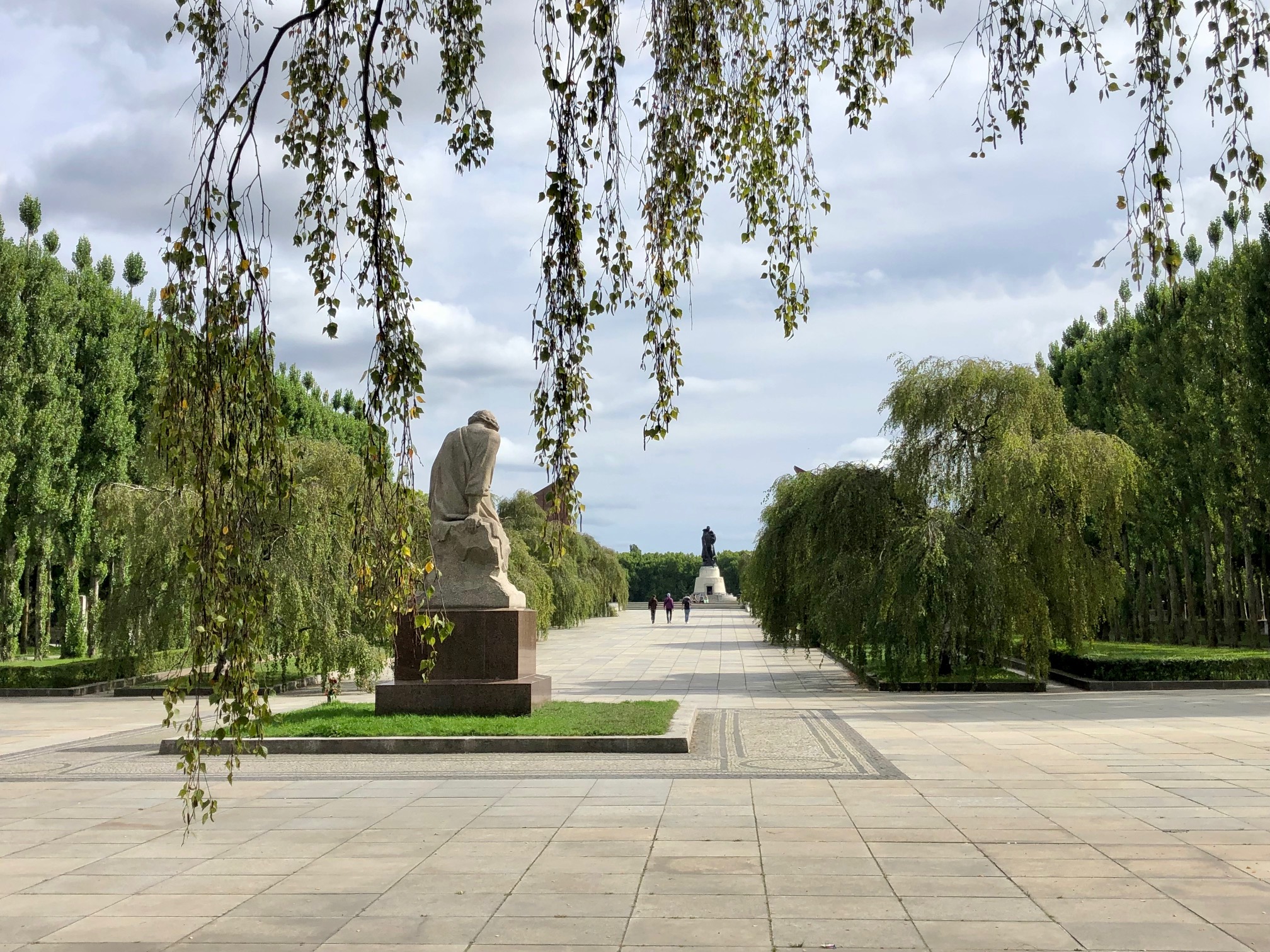
From there a promenade lined with weeping birches – incredibly moving witnessing trees seemingly crumpled in grief – you arrive at two sphynx-like kneeling soldiers that act as guardians to the cemetery section below. 

Looking back to the avenue of weeping birches
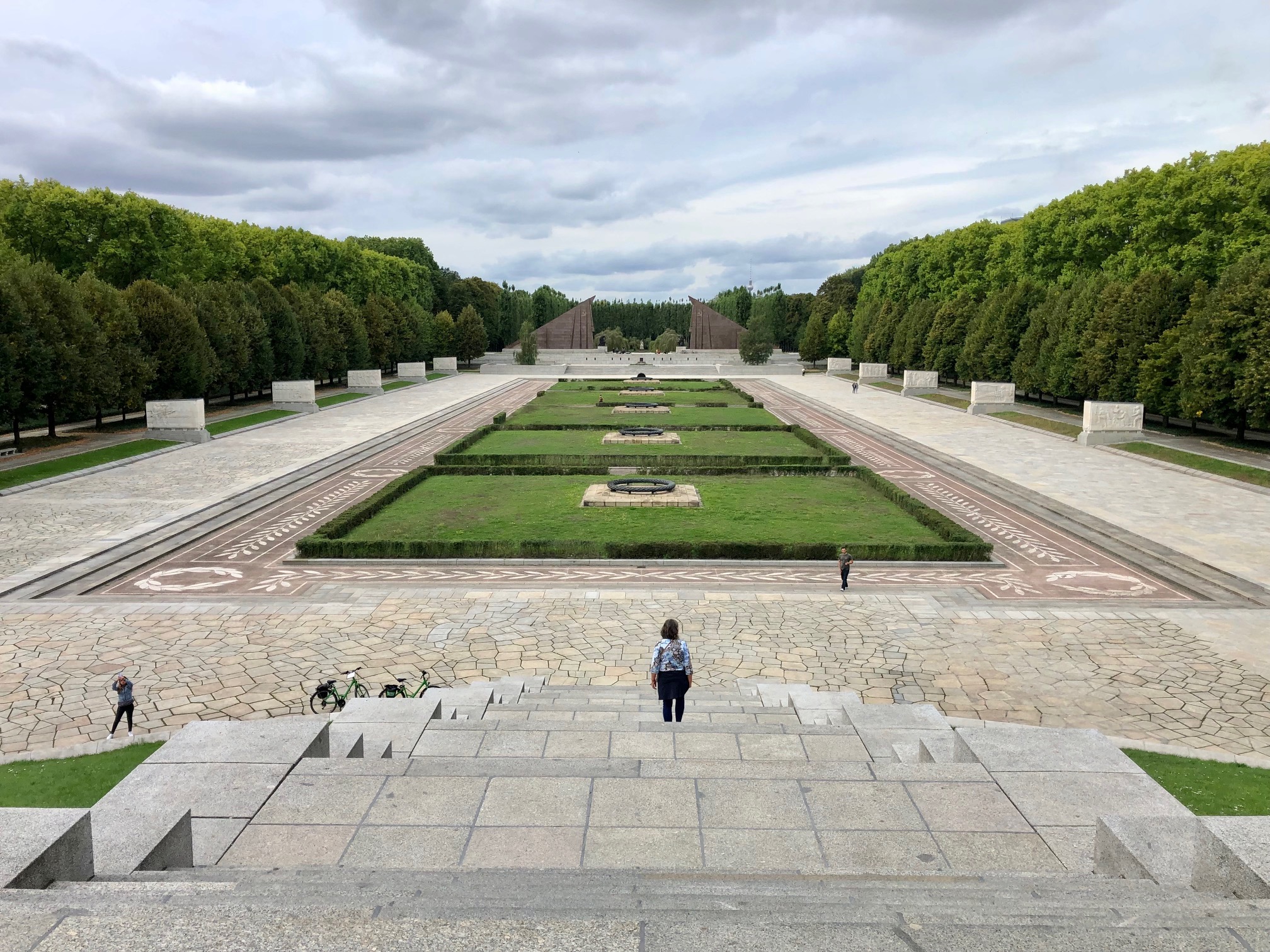
Looking ahead to the cemetery

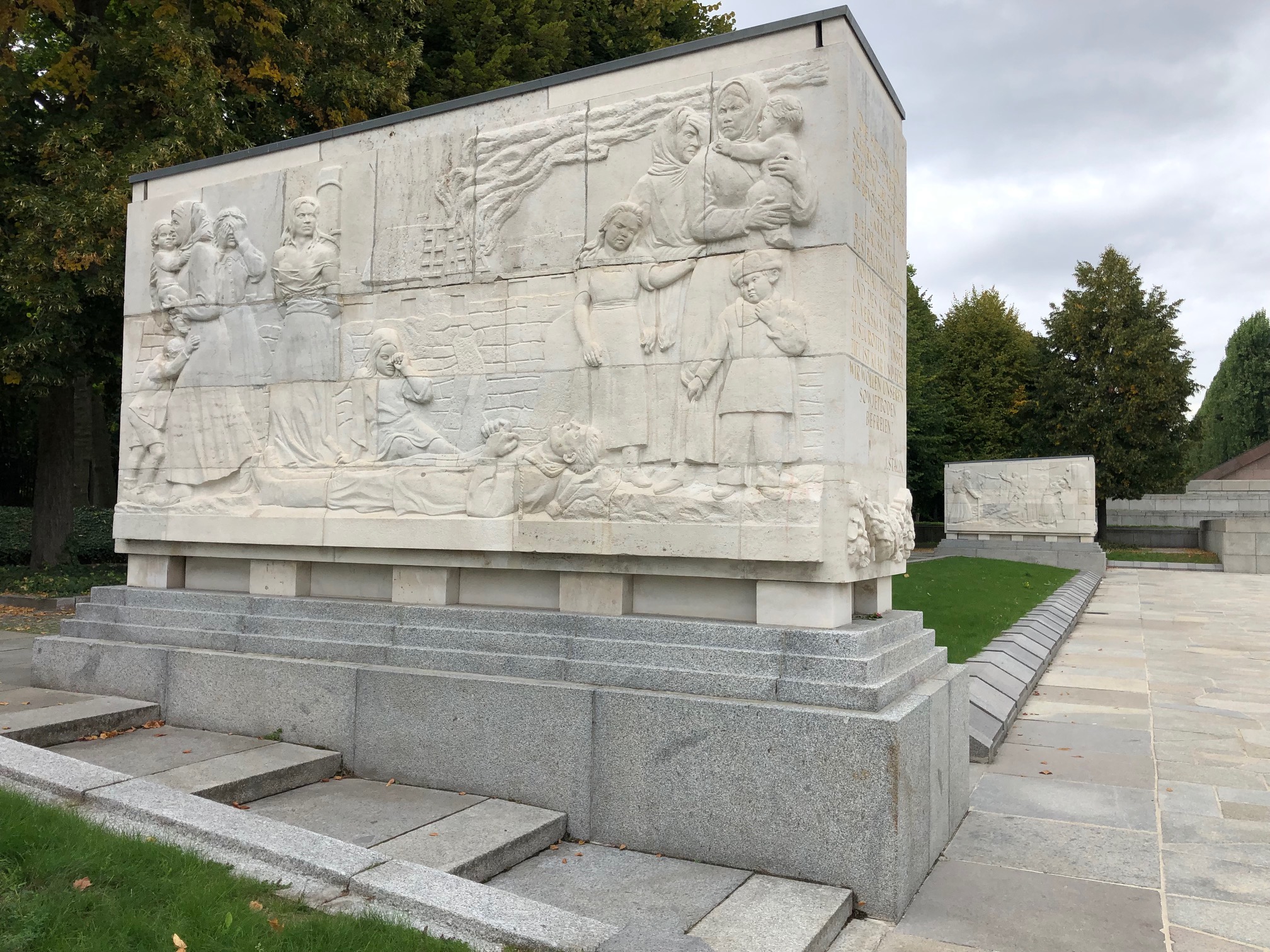
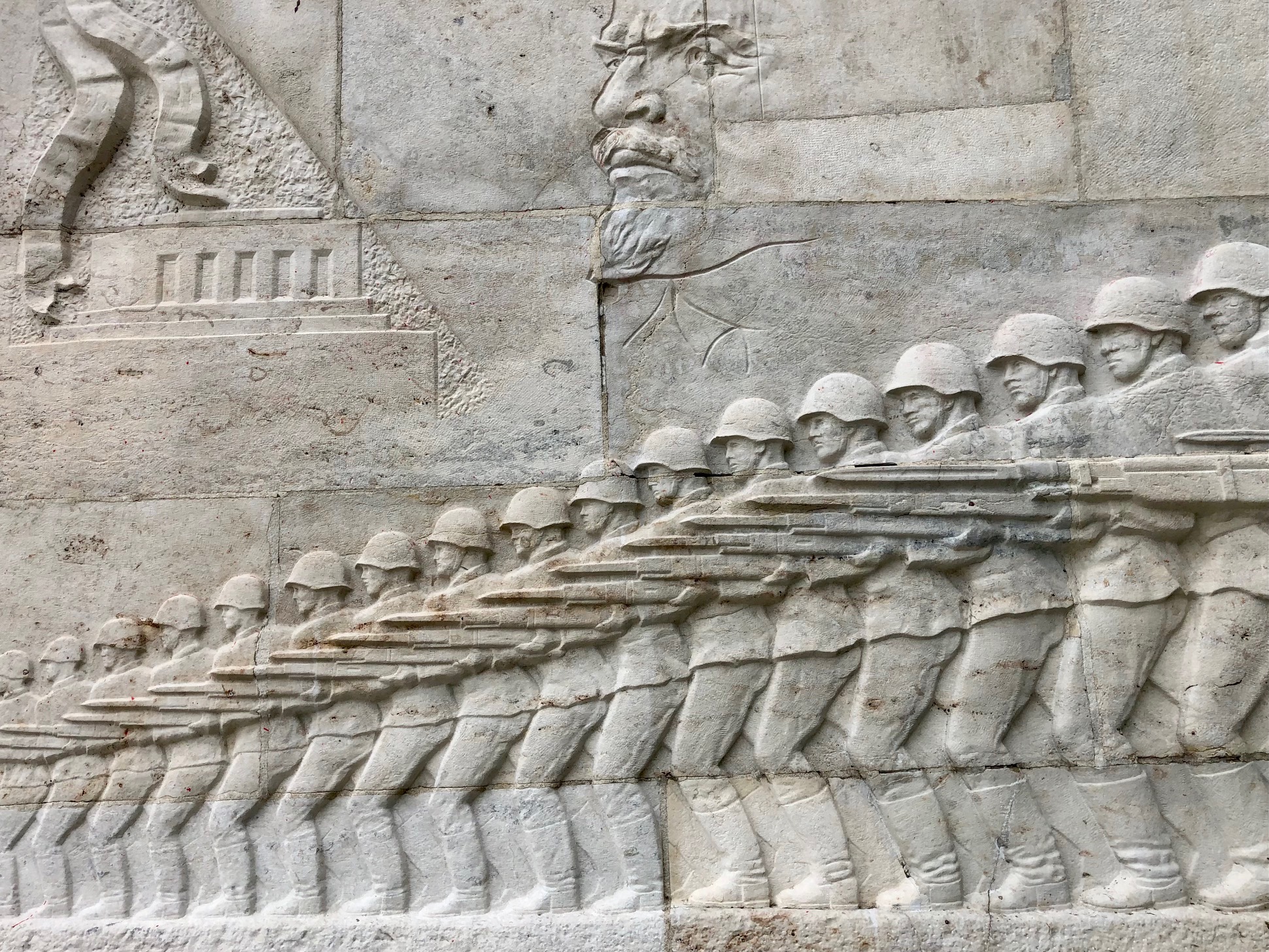
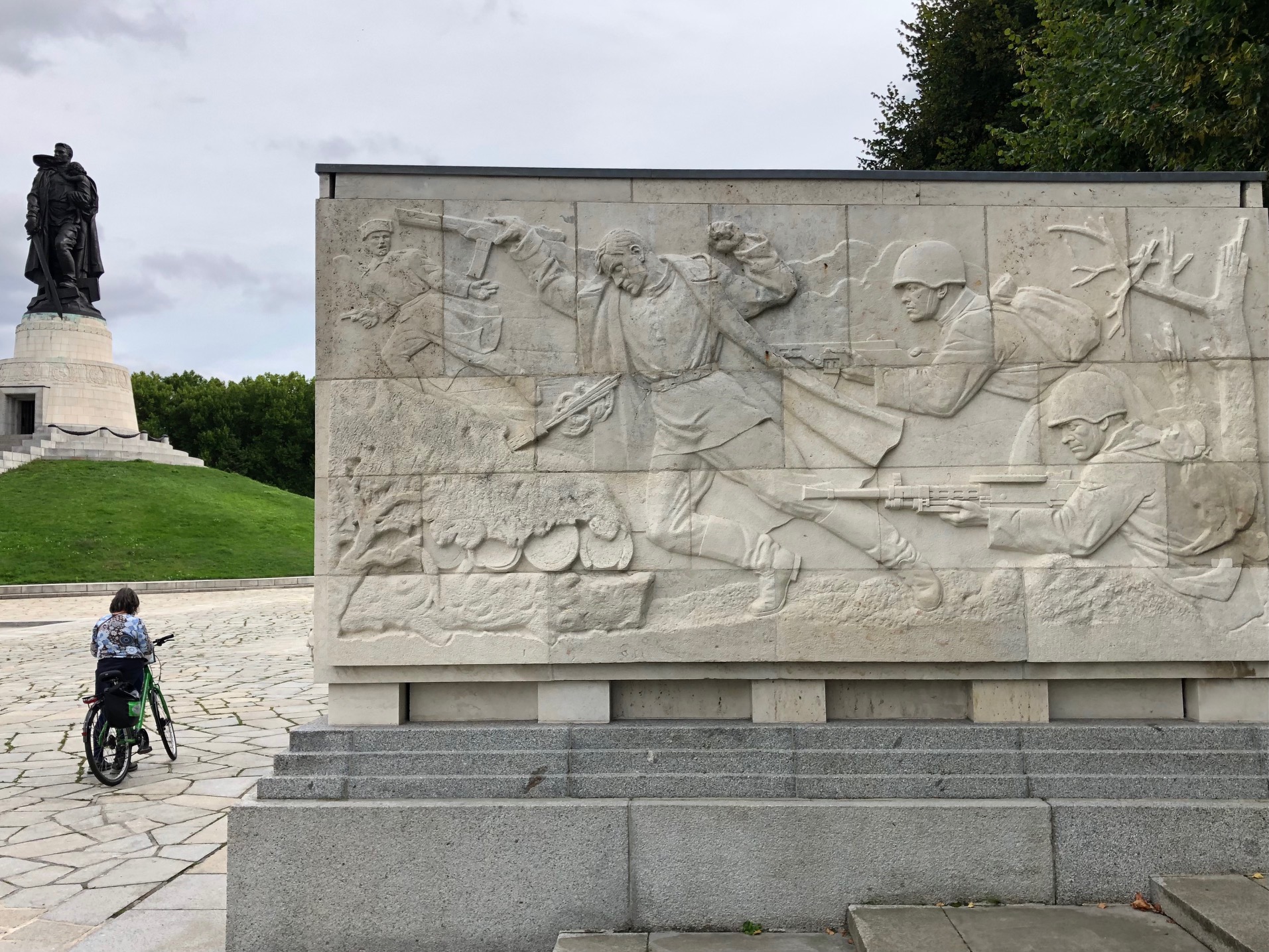
Beautifully executed stone reliefs illustrating scenes from the ‘Great Patriotic War’ decorate the sixteen marble sarcophagi flanking the graves, while gold-lettered quotes by J. Stalin, the commander in chief of the Soviet armed forces, underscore the importance of the Communist Party and the Red Army under his leadership. Though clearly outdated, these quotes survived Khrushchev’s denouncement of Stalinist rule in 1956 with the subsequent cull of Stalin-statues and effective banning of any mention of his name in public. 

The sarcophagi tell the story of the Second World War in Russia…
…through extraordinary imagery and craftsmanship.
Dedicated to the ‘heroic dying’ of the Russian people

At the very far end, you climb a stepped hill to a mausoleum supporting the aforementioned bronze statue of a Soviet soldier holding a small German girl.

Turning around to descend, you get an overview of the whole dramatic panorama that reflects the historical narratives and artistic concepts dominant in the Soviet Union under Stalin and to a degree still exist today: monumentality, hero worship, a personality cult, and a claim to exclusivity.

Treptower Park has been and continues to be a frequent venue for commemorative events. Since 1990, with the signing of the German-Soviet treaty on neighbourly relations and the German-Russian agreement on the upkeep of war graves in 1992, the Federal Republic of Germany committed itself to the care, renovation and maintenance of all Soviet military graves and war memorials in Germany. 

The evident meticulousness with which the whole site continues to be maintained (and patrolled by German police) is another of Germany’s visible expressions of understanding and reconciliation that have been extended to the Russian Federation and other countries brutally destroyed in the Third Reich’s expansionist and ideological wake. Does this reaching out in friendship make it easier to understand Angela Merkel’s unpopular (certainly in retrospect) policy relating to the Nord Stream pipeline? And the apparent weakness of Olaf Scholz’s initial reluctance to break Germany’s practice and permit the transfer of lethal weapons to areas of conflict… in this case, to Ukraine?

If the premise of my book is true and unresolved traumas of one generation can impact the lives and behaviour of subsequent generations, then the extreme collective traumas experienced by the Russian people over the past century are part of what we are seeing playing out in the attitudes, politics and actions of Russia today. Trauma responses such as emotional numbness, low self-esteem, acceptance of poverty might go some way to explain the apparent passivity and gullibility of large swathes of the population. Likewise, trauma responses such as shame might be producing the violence, megalomania and greed of those in power. Is this then, by extension of the idea, the natural destiny of all traumatised nations? After all we can see similar dysfunction and violence in Africa, South America and plenty of other nations once brutally colonised.

Psychohistory‘ – a new but exciting term to me that I appear to have already been practicing – seems to offer a way forward in thinking about these things. It combines history with psychology/psychoanalysis and social sciences/humanities to understand the emotional origin of the behavior of individuals, groups and nations, past and present. In other words, the ‘why’ of history.

I don’t have any answers, nor even the right questions yet, just an ever-growing sense of discomfort in simple, black and white narratives of good and bad, right and wrong. And an increasing belief that we are still very far from seeing, let alone comprehending the fuller picture. But we need to become more trauma-informed in all areas of life. For to neglect trauma is to leave people in a state of emotional numbness. And when you don’t feel, you become capable of overriding humanity and care for fellow living beings and life itself.

Further Reading / Viewing: 

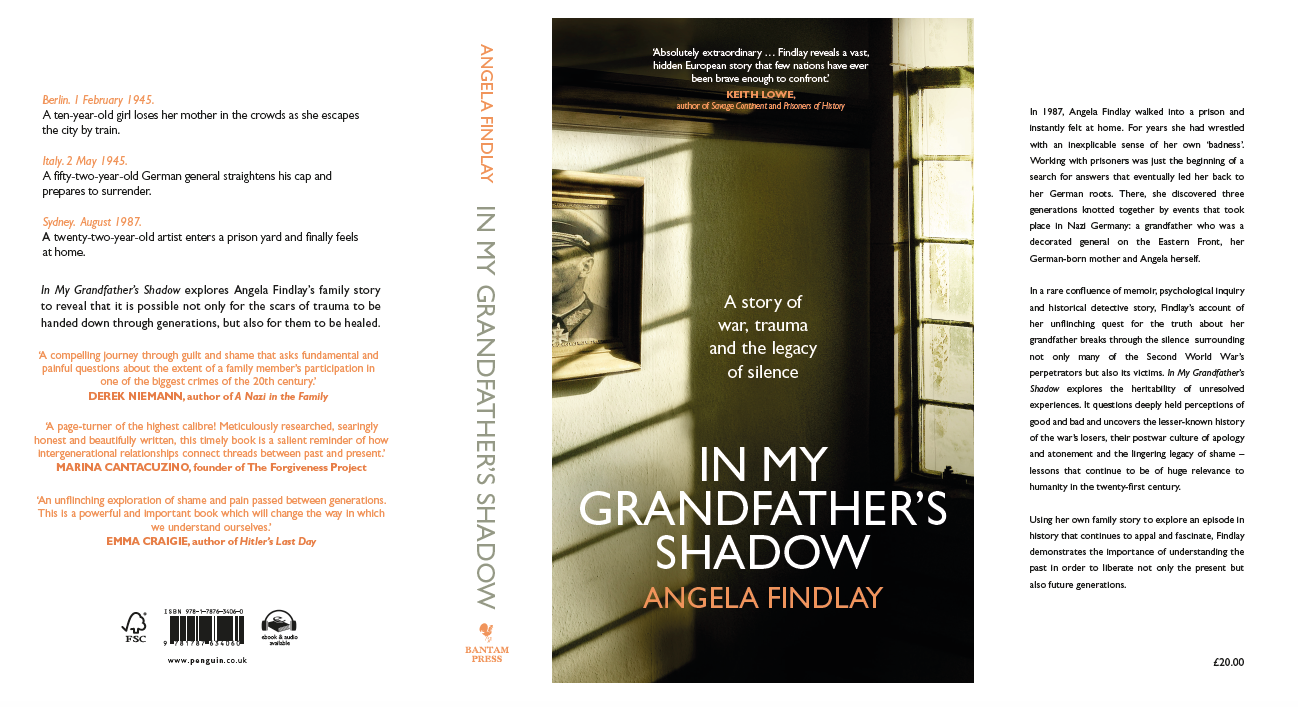
These questions are explored more deeply in my book: In My Grandfather’s Shadow. Published by Penguin Transworld and Bantam Press in July 2022 and available in most bookshops and the usual online outlets

The brilliant BBC documentary ‘Russia 1985-1999: Traumazone’ by Adam Curtis is made up of multiple film snippets taken in those years. As a fly on the wall experience and from the comfort of an armchair, it doesn’t get much ‘better’ in terms of an experience of Russia. To have lived through those years of extreme deprivation, corruption and hunger must have been little short of appalling.

Russia 1985-1999: TraumaZone review – ingenious, essential viewing from Adam Curtis

‘Generations of hurt’: Children and grandchildren of war survivors fear ripple effect of Russia’s war in Ukraine

Russia has yet to recover from the trauma of the Stalin era – The Guardian

Cycling the Berlin Wall Way… an education, a warning, an inspiration

In the faultless pageantry of Queen Elizabeth’s recent funeral, we witnessed one of the things that Britain does really well. Whether you are pro- or anti-monarchy, it was a spectacular display of planning, coordination, ritual, symbolism and attention to detail, as well as a gratitude- and love-filled farewell to the only ‘Her Majesty’ we have known. Impossible though it might sound, I missed most of it!

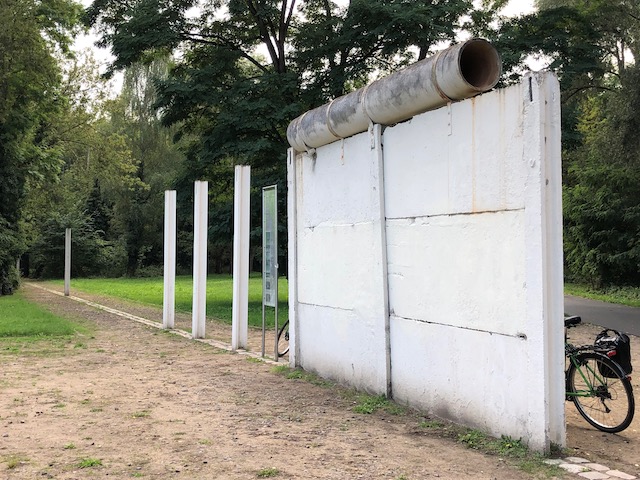
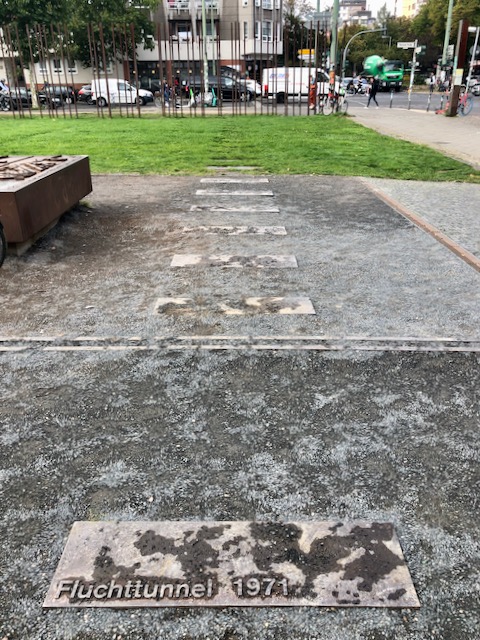
I was in Berlin experiencing what Germany does really well: remembrance and commemoration of a difficult and painful history. It was, however, not Germany’s intensive and on-going process of coming to terms with its Nazi past that I was focused on. This time, I was with my two siblings cycling the Berlin Wall Way, a continuous bicycle path that follows the former footprint of the 100-mile long Berlin Wall as closely as possible. Taking five days to complete, with added time to explore some of the many poignant locations in the centre, it was a total eye-opener, not least to the very concept of a divided city and country.

Map of West Berlin with the 160km Wall marked in red

The first initially confusing fact to digest is that, contrary to the widely held idea that the Berlin Wall was a north-to-south boundary separating West and East Berlin, in reality the wall went all the way round West Berlin thereby creating a democratic West German island within socialist East Germany. Even with a map, we found ourselves frequently asking: So, are we in the West or the East? the answer to which, I assure you, is rarely as straightforward or obvious as it sounds.

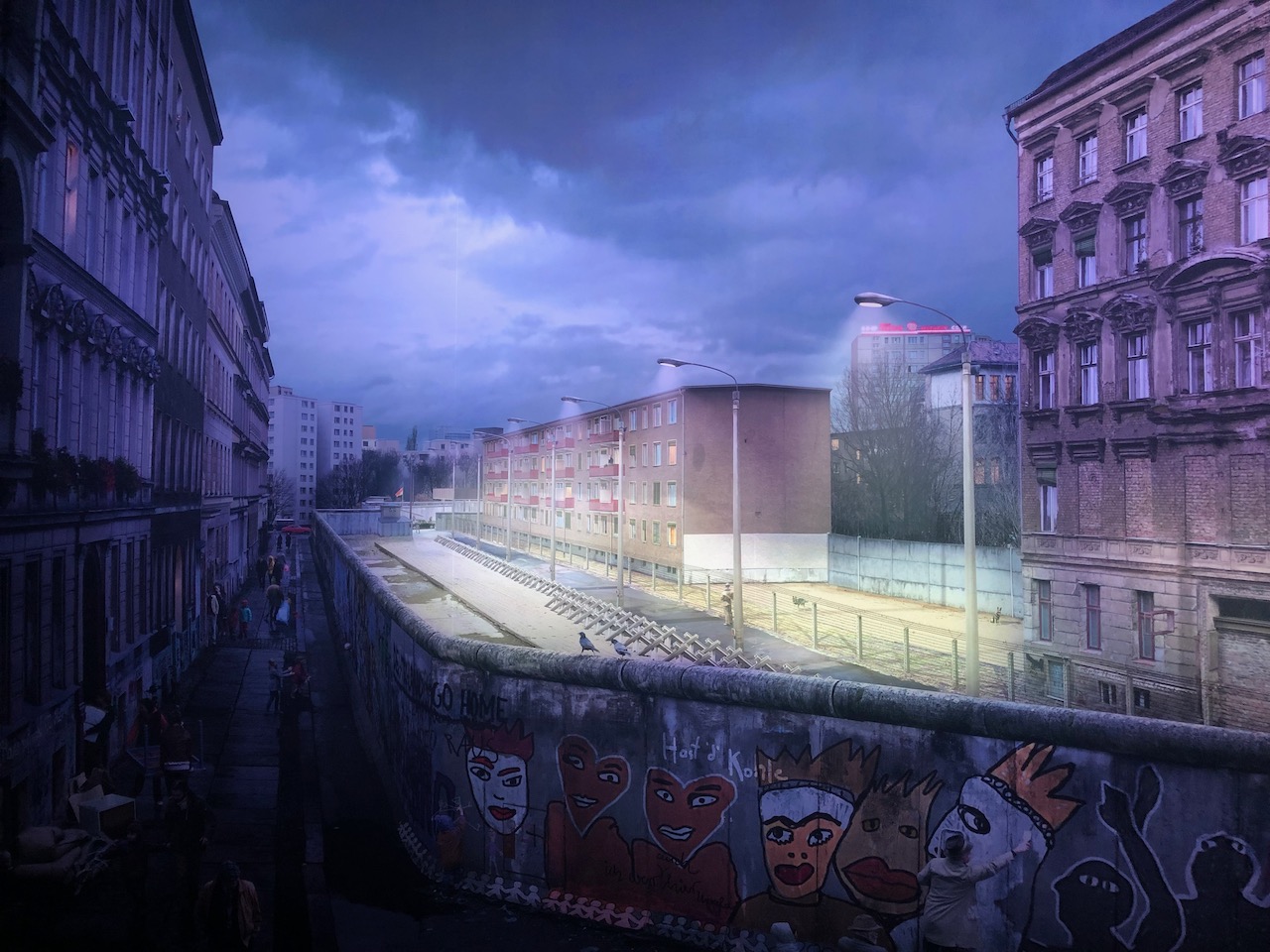
The second tangible shock felt while snaking along its course, was the utter illogic and arbitrariness of this ideological divide – through streets, houses, communities, lakes and woodlands. This randomness would have started as a line drawn on a map by the leaders of the victorious nations – USA’s President Harry S. Truman, Josef Stalin of the USSR, Britain’s prime ministers Winston Churchill and then Clement Attlee as well as other leading members of the three delegations present. That’s probably how most of the other contested border lines around the world have originated. To engage with the whole concept of division, not to mention the impact it had on families and friends separated for nearly three decades, is almost impossible. An enormous 360˚panorama entitled THE WALL by artist Jadegar Asisi gave us arguably our most immediate and visceral sense of being in West Berlin looking at and over the wall into the deadly world behind.

From the360˚ panorama THE WALL by Jadegar Asisi

The third challenge was understanding the complex evolution and structure of the wall that was built in three phases, starting overnight on 13th August 1961 as Berliners slept. What began as a barbed wire barrier and the closure of all but 13 of the 81 established crossing points between the Western and Soviet sectors, eventually developed into not one but two concrete walls separated by a corridor of no man’s land known as the ‘death strip’ with mines, raked sand to detect footprints, trip wire machine guns and armed East German guards in watch towers or patrolling on foot with dogs. By 1989, the Wall was lined with 302 watchtowers and more than 136 people had died trying to cross it.

An example of a section of the wall. What we call the Berlin Wall is on the left

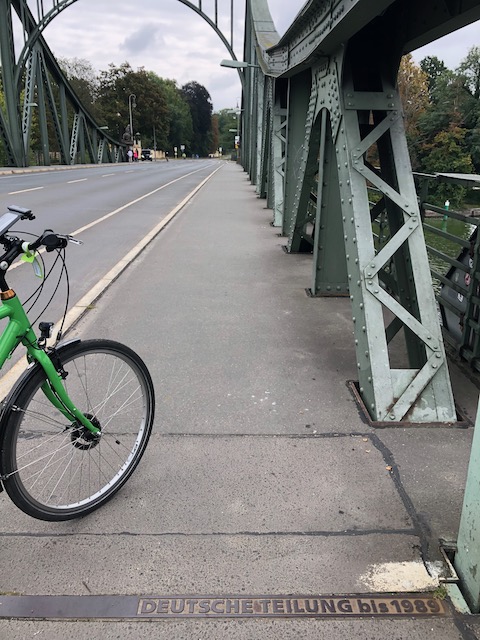
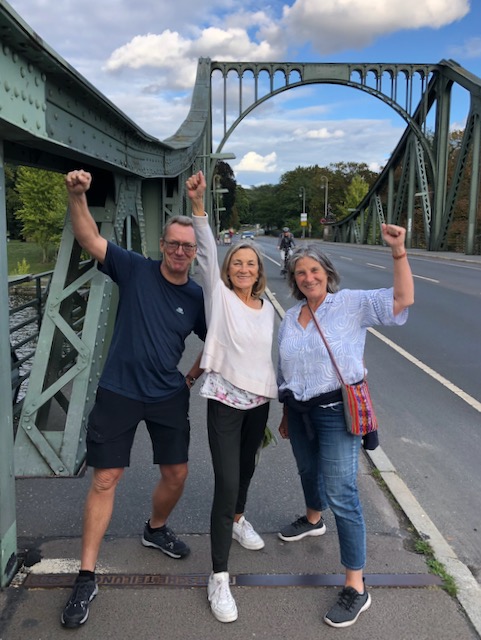
Our little trio started our circumnavigation of West Berlin on the famous Glienicker Bridge in Potsdam in the middle of which spies were on a number of occasions exchanged in the dead of night.

Glienicker Bridge

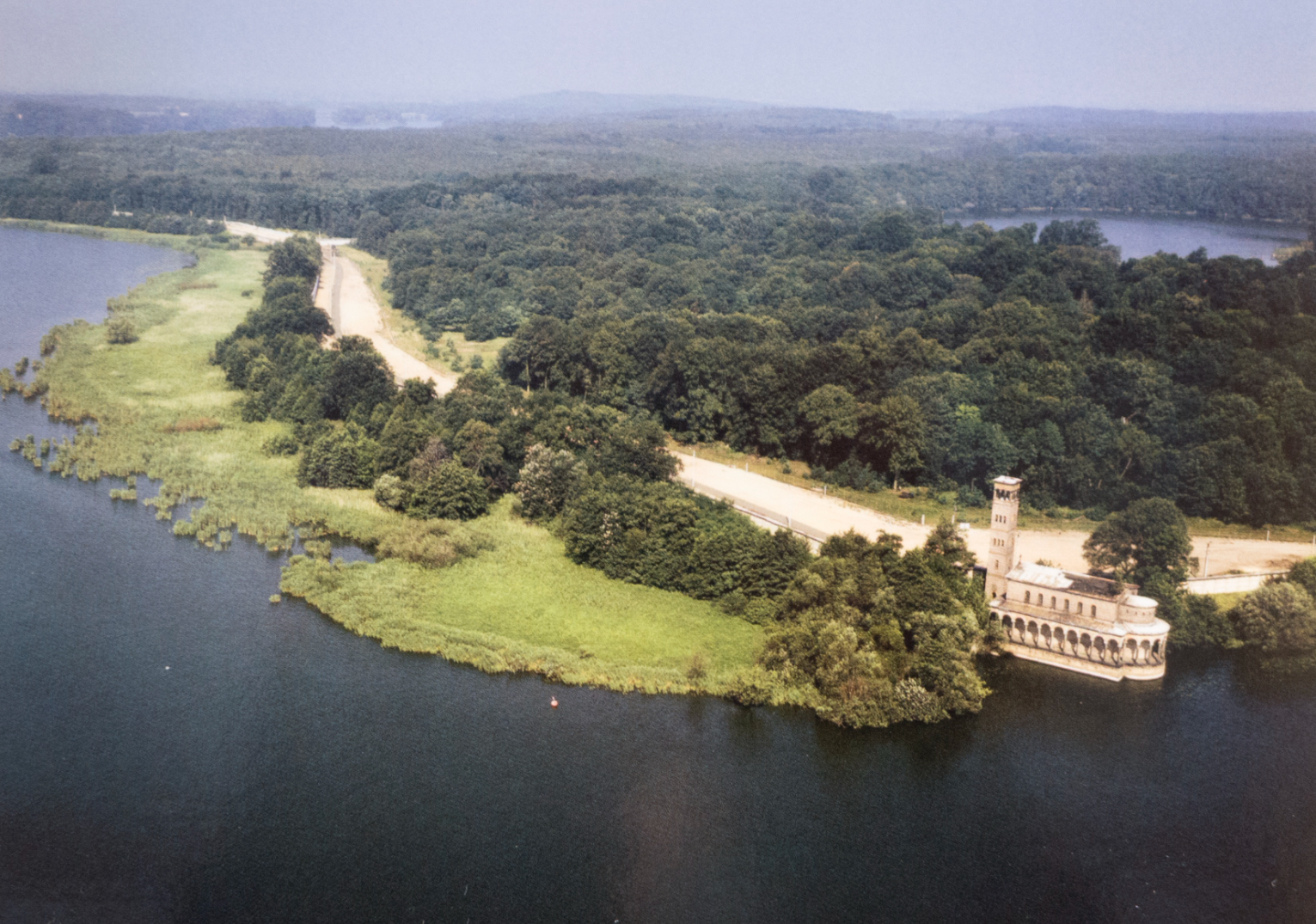
Following a reassuringly well-marked ‘Mauerweg’ route, we soon passed Schloss Cecilienhof, host to the 1945 Potsdam Conference where the division of Berlin and Germany into occupied zones was decided. From there we hugged the shoreline of beautiful lakes, passing the Sacrower Heilandskirche, the church stranded in the controlled border strip and cut off from its congregation.

Heilandskirche, Sacrow, 1961

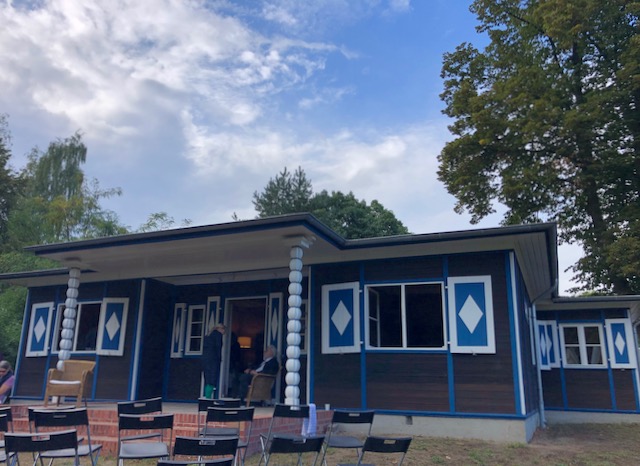
Heading north, we reached Alexander House, whose history became the subject of the acclaimed book by Thomas Harding, The House by the Lake, and is now a place of education and reconciliation.

Alexander House: The House by the Lake

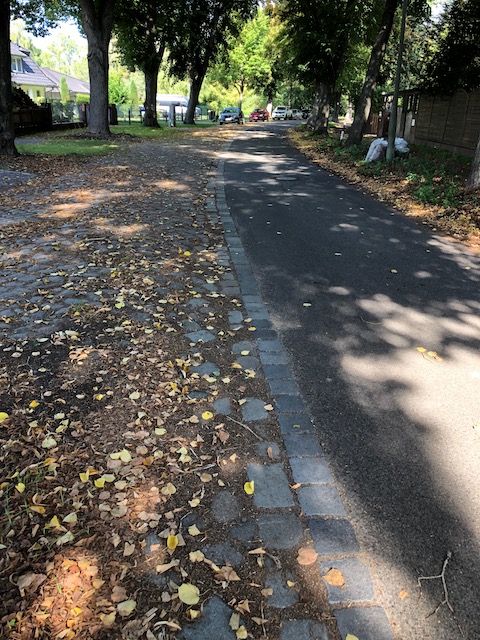
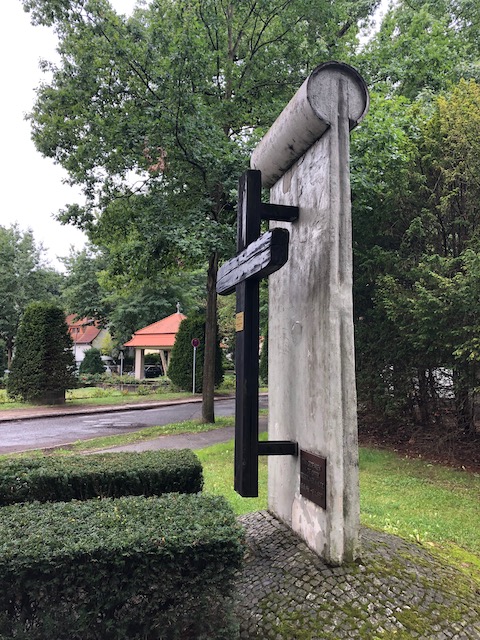
Staying in different hotels en route at intervals of roughly 30 miles enabled us to gain a sense of the scale of the wall and the extraordinary episode in history that only ended a little over 30 years ago. Sections of the concrete boundary, a double cobbled stripe embedded into the pavement or road surface, information boards with photographs and explanations all punctuated our journey.

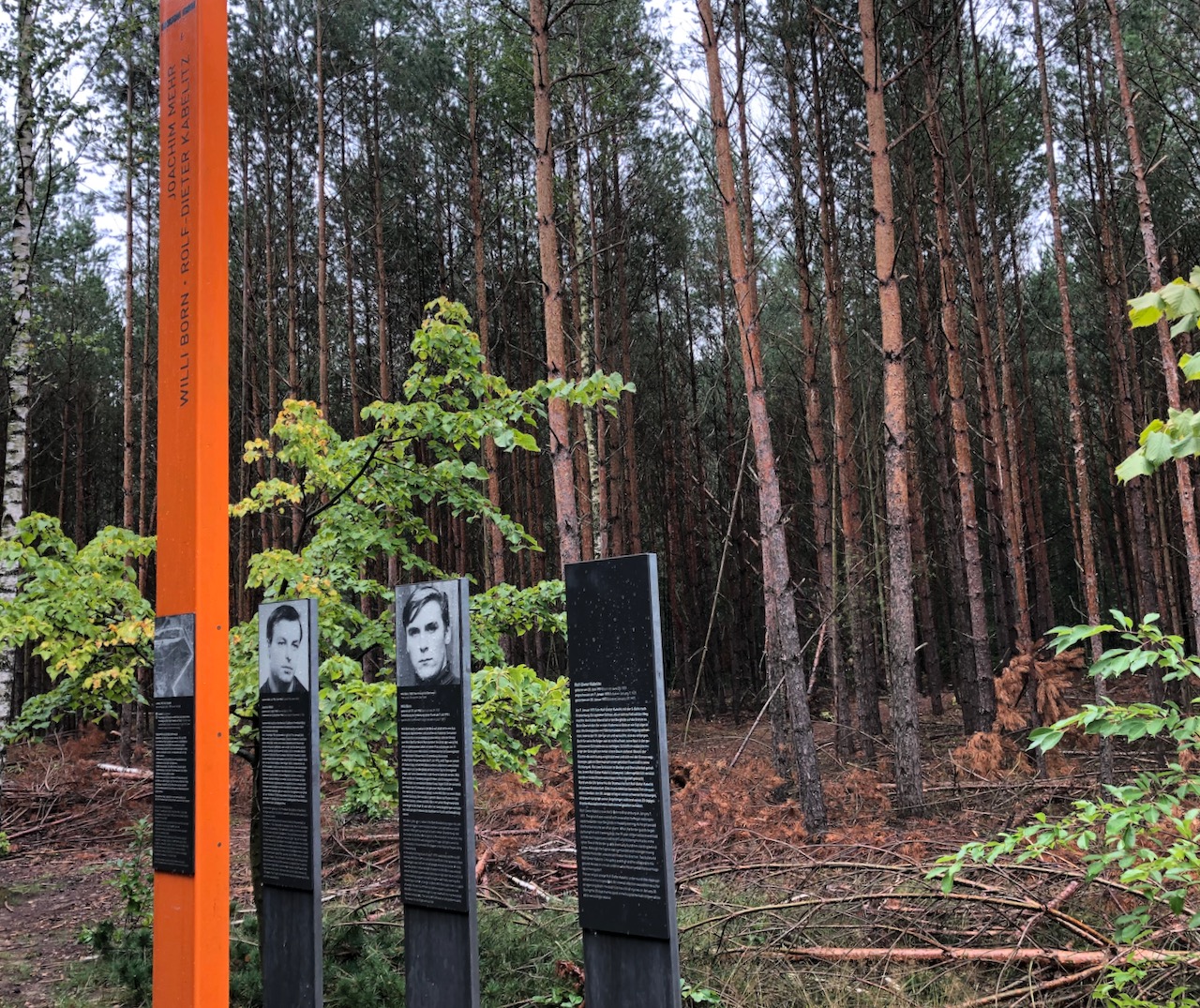
Most moving were the memorials telling heartbreaking stories of failed escapes, largely by young twenty-something-year-old men. With the same unflinching honesty for which all German WW2 or Holocaust-related museums and memorials have come to be known, these allowed us to feel the individual human cost of an ideology based on fear and a necessity to keep people in rather than keeping undesirables out, as the East’s ‘Anti-Fascist Wall’ name misleadingly proclaimed.

Continuing along canals and suburbs, we crossed the ‘Bösebrücke,’ the ‘Bad Bridge’ or Bornholm Bridge that made history on the evening of 9th November 1989 through the jubilant scenes of East Germans flooding across to be greeted by their Western “brothers and sisters” with sparkling wine, cheers and hugs while bemused Eastern border guards watched on helplessly. Unlike my former visits to Berlin while researching for my book, it was this joyous energy of liberation that primarily accompanied me on this trip and allowed me to experience the incredible resilience of Berlin’s inhabitants, past and present, and the revival of its worldwide status as a brilliantly creative, thriving city.

The Bornholm Bridge today and 1989 (pictured)

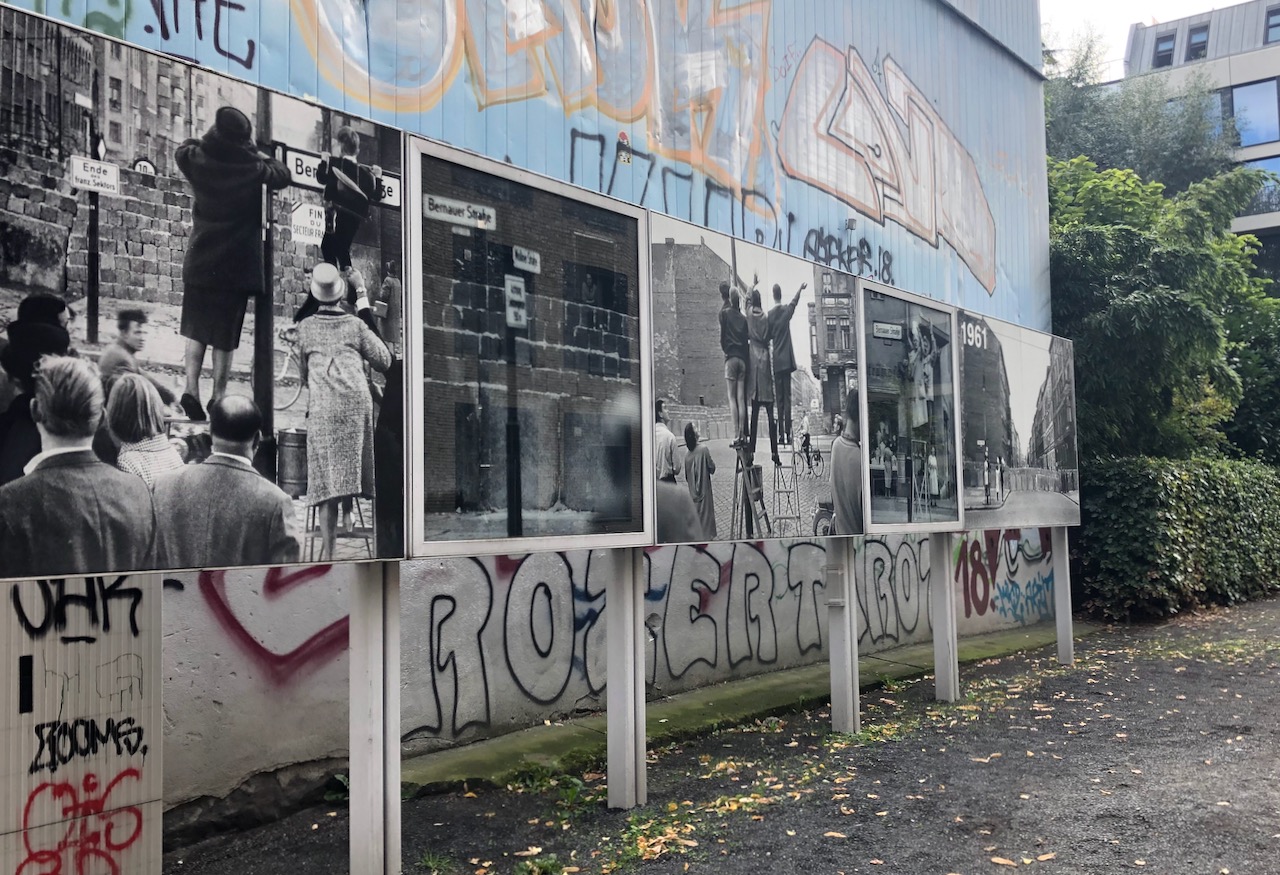
On we cycled, heading south through the beautifully curated but frequently harrowing Mauerpark (Wall Park) that leads into the Bernauer Strasse from which many of the well-known pictures of people jumping out of house windows into tautly held blankets in the West were taken. It was also the street under which various escape tunnels were dug similar to that shown in the 1962 documentary, The Tunnel and including the ‘Tunnel 29’ of the brilliant podcast and book with the same name.

An extended section of the wall and border strip have been preserved as a chilling testimony to its once terrifying presence.

Bernauer Strasse

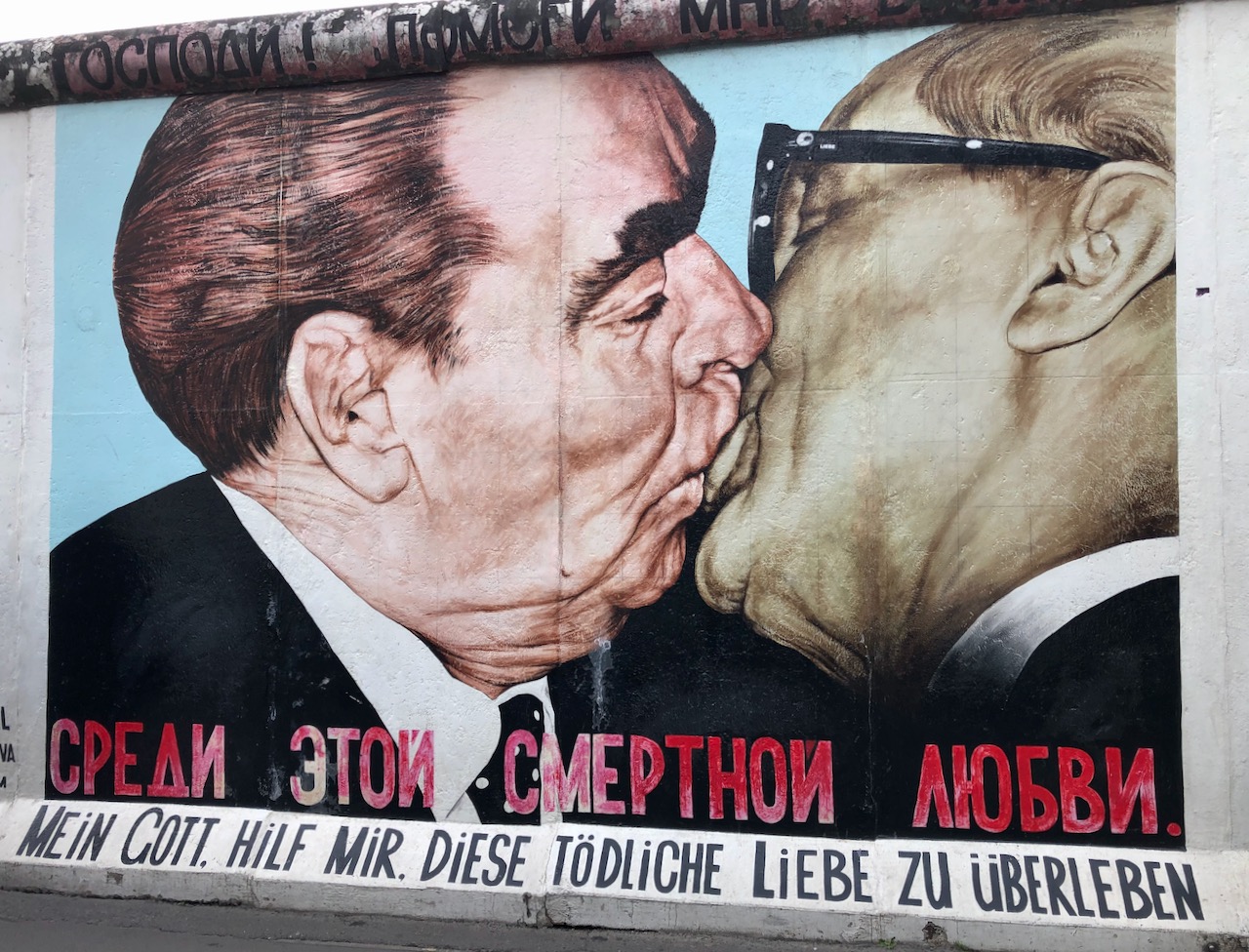
The Wall then continues through Berlin Mitte past some of Berlin’s most famous landmarks: the Reichstag, the Brandenberg Gates, Under den Linden and the Tiergarten, past Potsdamer Platz and Check Point Charlie and along the boundary of what is now one of Berlin’s most chilling museums – the Topography of Terror – but what once was the location of many of the most sinister ministries of the Nazi regime. Then through graffiti-covered Kreuzberg, over the River Spree and to the longest surviving stretch of the inner wall painted in 1991 by painters from all over the world to form the colourful East Side Gallery.

Eastside Gallery: ‘My God. Help me to survive this deadly love.” From a press photograph of Leonid Brezhnev and Erich Honecker painted by by Dmitri Vrubel.

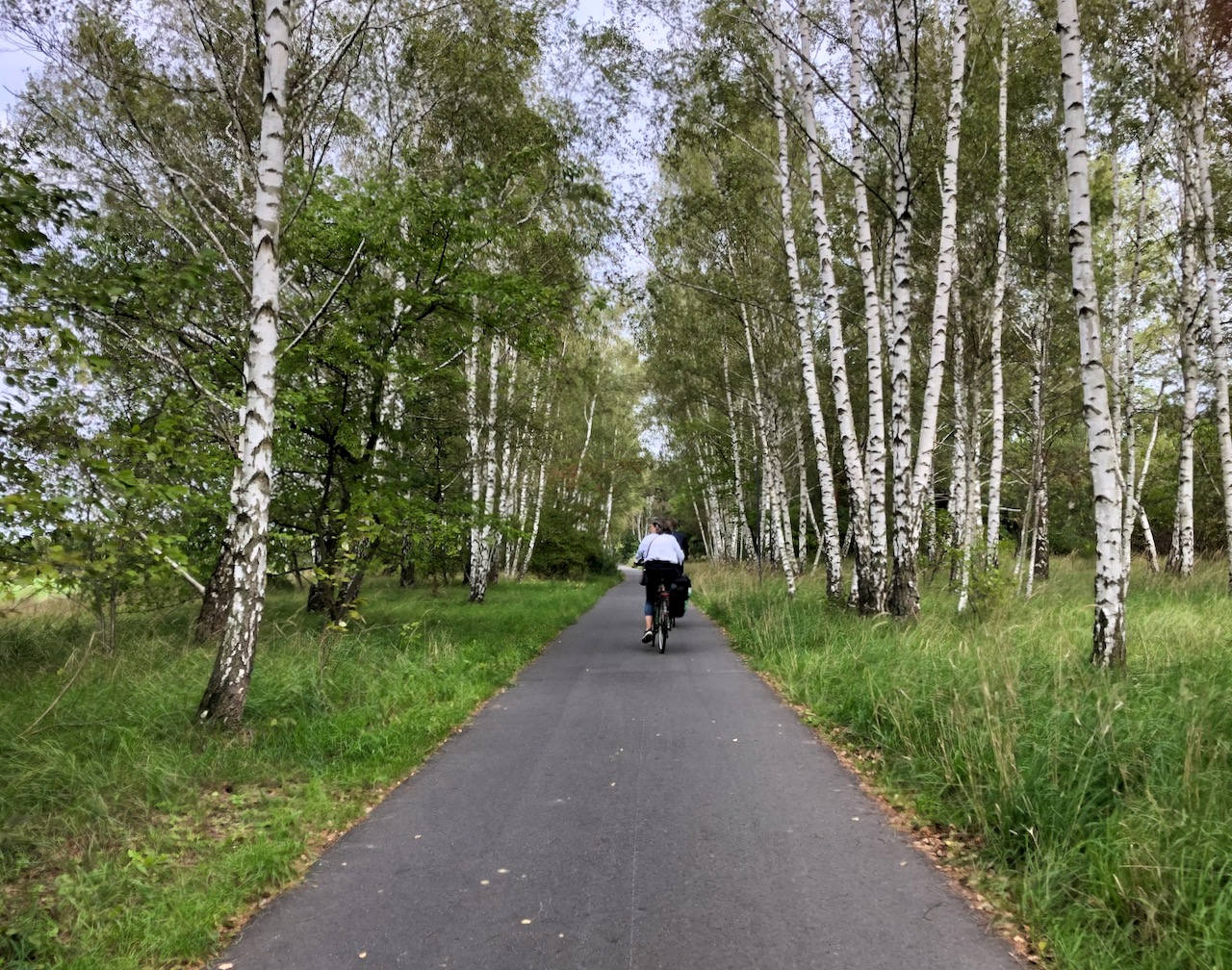
The final 40 miles or so along the southern strip of the wall’s course back to Potsdam was largely rural. A sense of peace replaces the former horror of all that the border came to represent. Long stretches of open fields, avenues of birch trees and an alley of 800 ornamental cherry trees donated by Japanese citizens and a TV station in 1995 “out of joy over the reunification of Germany.”

Finally, the three of us arrived back on the Glienicker Bridge from which we had begun our trip, each a little changed, each with a greater knowledge and understanding of German history and our German roots. Each with different emotional responses but a shared sense of the ultimate triumph of humanity and freedom over inhumane systems of repression.

Back on Glienicker Bridge

Upcoming Events relating to my book – In My Grandfather’s Shadow:

Friday 7th October, 7pm. Ebeneza Presents, Somerset: In My Grandfather’s Shadow. More information and tickets here

Sunday 9th October, 4pm. Cuckfield Book Festival: I will be in conversation with Julia Boyd, the best-selling author of Travellers in the Third Reich and A Village in the Third Reich.
More information and tickets here

Wednesday 12th October, 4pm. Mere Literary Festival: In Conversation with Jo Hall. More information and tickets here

Sunday 3rd November, 8.30pm. Stroud Book Festival: In Conversation with Alice Jolly, novelist, playwright and memoirist. More information and tickets here

Can we start recognising the different qualities of lived experience and logic… and valuing them equally?

July has provided many rich and interesting stories I could write about.

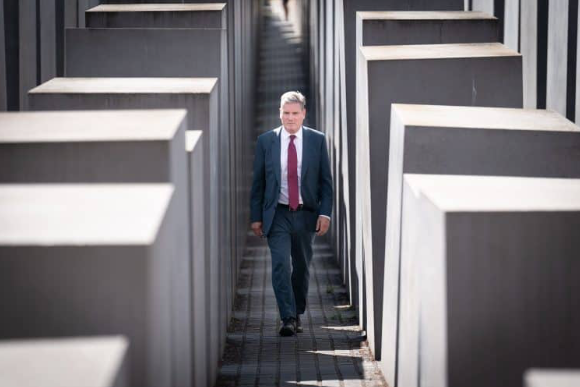
There was the Labour leader, Sir Keir Starmer’s ill-judged campaign video in which he and Shadow Foreign Secretary, David Lammy, are filmed walking thoughtfully through the grey corridors of the Holocaust Memorial in central Berlin, ‘a massive faux-pas’ in Germany where such a carefully choreographed and blatant political usage of the site would be a complete and passionate no-no. 

Sir Keir Starmer in Berlin

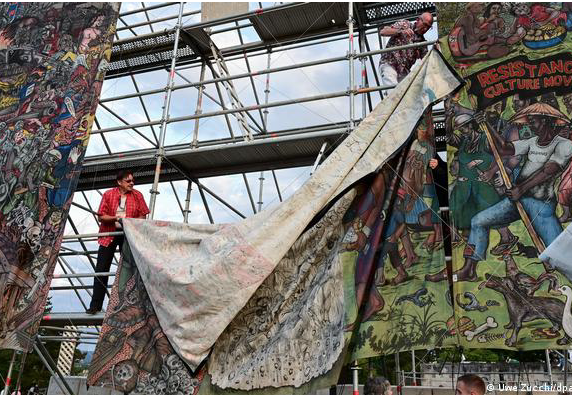
Or the contentious mural by the Indonesian art collective, Taring Padi, deemed unacceptably antisemitic and therefore quickly removed from this year’s Documenta international contemporary art fair in Kassel, the director quitting soon after.

And my personal highlight, the three wonderful book launches that celebrated my arrival at the summit of my endless mountain. July has buzzed with the tangible excitement of people starting to read In My Grandfather’s Shadow and a string of radio interviews (all available here) and future invitations to talk about the themes and questions it raises.

Book Launch at Daunt Books, Holland Park

But two other experiences left me reflecting once again on what I see as a fundamental fault line in our troubled world. One was a recent review of my book, In My Grandfather’s Shadow, in the Observer. The other, the National Theatre Live broadcast of Suzie Miller’s award-winning play, Prima Facie in which an outstanding Jodie Comer (the BBC’s Killing Eve’s notorious assassin) plays a young and brilliant barrister who, after an unexpected event, is forced ‘to confront the lines where the patriarchal power of the law, burden of proof and morals diverge.’ 

In different ways, both the article and the play illustrate the age-old dynamic of ‘feminine’ versus ‘masculine’ perspectives in which the feminine experience is ignored, interrogated until it no can longer stand up and finally overridden, often with catastrophic consequences as the play demonstrates. For example, just 1.3% of rapes end in prosecution. Why? One reason is clear: the clunky measuring tools employed by the law to establish ‘proof’ are wholly inadequate when it comes to female trauma.

On a far less serious level, the Observer review by Matthew Reisz, former editor of the Jewish Quarterly and a staff writer at Times Higher Education, created a similar tension. I am hugely chuffed to have a got a review in the Observer. And there were compliments, like ‘strange and powerful.’ And Reisz was convinced by my hypothesis that a parent’s PTSD can have an impact on a child. Science after all accepts that as real and it’s now mainstream thinking, though it wasn’t always. What Reisz clearly doesn’t give any credence to is the reality, let alone the possibility, of the very premise of the book.

‘Much less plausible,’ apparently, is my belief that I am ‘in some sense haunted by the grandfather she never knew.’ As for the techniques I develop to find an “improbable epiphany” that will help me understand what kind of man he is, well, they are clearly the same “esoteric claptrap” that I suggest my grandfather might have seen them as! 

Matthew Reisz has every right to think like he does, and many will agree with him. I am well prepared for this kind of critique. I knew the ‘woo-woo’ stuff (as one or two of my editors called the more weird occurrences) could be problematic for some readers. But I insisted on keeping it. Without it, it was neither my story nor my book. And certainly not my truth. Including a ‘feminine’ perspective on the largely masculine arena of war and traditional fact-based history was for me essential. And I use ‘feminine’ here not as in female, but as in that inner dimension within all of us. That inexplicable world of instinct, intuition, serendipity, dreams and the invisible whisperings of the dead; often the source of creativity or vision, yet also the areas of human experience so often dismissed as ‘dippy-hippy nonsense,’ not ‘real’ or valid because they are ‘unprovable,’ or apparently just ‘wrong’. For it was these things – not clever science or psychologists – that provided the clues to solving the mystery of what I was experiencing. 

The book is intensely personal. But the issues it explores – addiction, shame, trauma, inherited guilt, forgiveness, reconciliation – are not. As Prima Facie so dramatically shows, they require a different approach to the logic and plausibility of left-brain thinking. This is what I feel Reisz unfortunately misses. In his final sentence, he reveals the source of his unsettledness in the apparent contradiction of ‘a woman who has dedicated her book to “all those whose lives are affected by discrimination, oppression or war” searching so desperately for redeeming qualities in a decorated Wehrmacht general.’ Is he suggesting there couldn’t possibly be any while misunderstanding my desire to comprehend a relative as wanting to exonerate them?

It’s going to be so interesting hearing different responses to In My Grandfather’s Shadow and coming into dialogue with others about their own relationships to the darker corners of their heritages, which is what frequently comes up. Like the prisoners in my art classes, like audience members at my lectures, people begin to talk when you make it safe for them to do so. That’s what I hope telling my difficult story will encourage: conversation. Not about provable facts, but fears, feelings and experiences. Conversation. Not with a goal of judging or a need to be right. Certainly not doubting or questioning the reality of what is being said. Just from a genuine desire to understand others. That’s how we can find our shared humanity.

So just to finish with a bit of undiluted ‘woo-woo,’ I found a 4′ grass snake in my hall a week or so ago. A Stroud friend told me that when animals come into our houses, they have a message. I thought no more about the symbolic significance of a snake. But then yesterday, without me mentioning the snake, another friend reminded me of the questions asked in Goethe’s beautiful story, The Fairytale of the Green Snake and the Beautiful Lily in which the snake sacrifices itself to bridge the divide between the land of the ordinary senses and the land of the spirit or soul. It roughly translate as:

‘What is more precious/glorious than gold?’ asked the King. 

‘Light’, answered the snake.

‘What is more refreshing/quickening than light?’ asked the King.

‘Conversation’ said the snake.

Becoming aware of the invisible ties that bind us to the past…

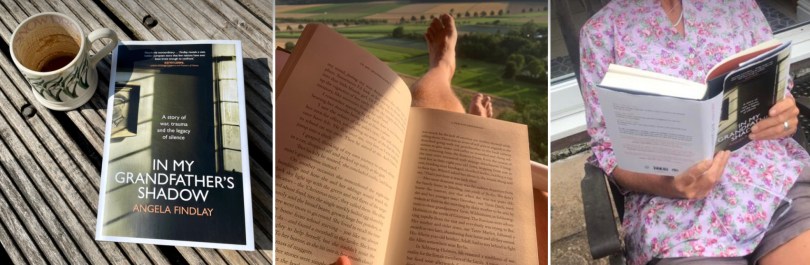
It is now just three weeks until the publication of my book, In My Grandfather’s ShadowA week in the stunning, state-of-the-art Penguin Random House studio recording the whole thing for the audio book version has left me feeling more intimately connected to it than before. Like a parent, I have spent years nurturing it into its current shape. Now it is leaving the nest and heading into the big wide world… how exciting is that! 

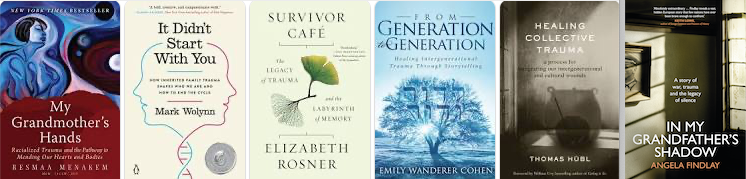
Most of you will already have an idea of the themes it is likely to address from my blogs. And – spoiler alert – it does. But possibly the main thrust of the book – as stipulated by Penguin Transworld when they took me on – was to focus on the heritability of trauma. It involved ‘a bit’ (read: ‘total mind-fry’) of a re-write. Yet ultimately they were right. Because this idea, that we can inherit psychological wounds from our forebears, is gaining more and more traction.

The process or re-structuring a book…

One of the book’s working titles was ‘Invisible Lines’, which I liked. But ‘line’ is somehow wrong. Even the letters that make up those two words are too straight, too linear. For, while there is obviously a linear logic to the structure and the content, the essence explores hidden cycles and the bits of life that meander or tie themselves in knots. Or that appear unsubstantial, unreal even, when really they are holding the tiller to our lives.  

As I have said before, trauma, guilt and shame abide in the psyches of us all to a greater or lesser degree. They are part of what it is to be human. But frequently they remain unidentified, like bottom dwellers in the sea of our emotions that stir up the mud to cloud our vision and cause havoc with how we see, not only ourselves, but others and the wider world. 

In My Grandfather’s Shadow therefore takes readers on a deep dive into largely unknown or unspoken – until recently – corners of experience. Not just of those who lived through the Second World War, but those who came after. It looks at the impact of war and violence in general, a theme that has gained an unwelcome pertinence in the light – or should I say darkness – of Russia’s war in Ukraine with its horrific reports of rapes, brutal murders, forced transportations that echoe my grandfather’s letters from the eastern front in 1941-2. War is as old as the world. But where the brutality was once confined to the battlefield and soldiers, Ukraine is a salient reminder that modern warfare invariably extends into the homes and lives of civilians. For generations.

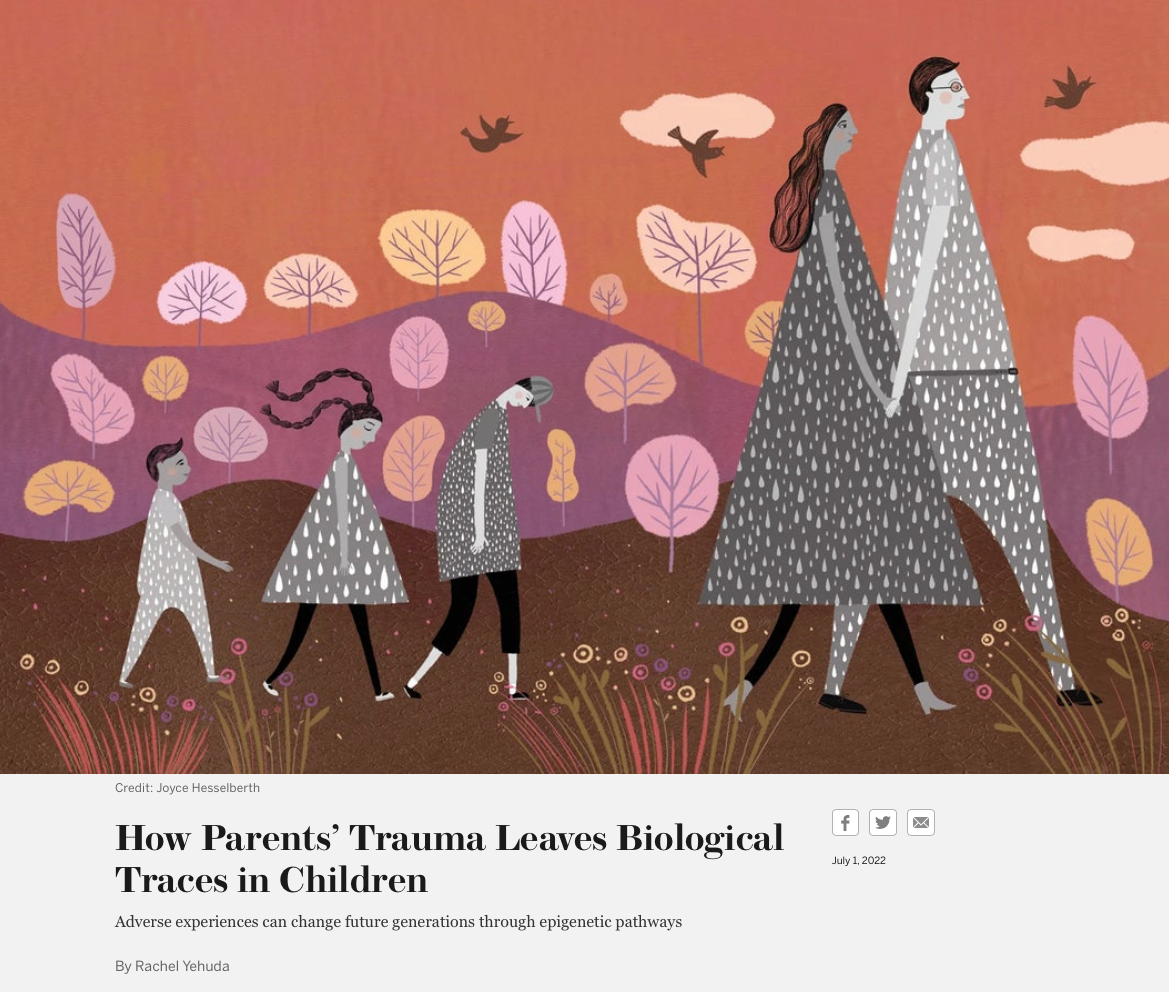
It is probably easy to imagine how the extreme traumas of the Holocaust could affect the offspring of survivors as well. Traumatic imprints have long been witnessed in second and third generations. What is less known because it could only be articulated when the non-Jewish German grandchildren of those who lived through the war came of age in their 40s, is that traumatic experiences of any nature, if left unattended or untreated, can seriously disrupt the lives of subsequent generations. The process is variably referred to as ‘transgenerational transmission’ or ‘emotional inheritance.’ Even science is embracing the possibility with its own language: ‘epigenetics.’ (See article

How Parents’ Trauma Leaves Biological Traces in Children – Scientific American

Whether biological, psychological, genetic or spiritual, the process of transmission is not new. What is new, is our growing awareness of it. And with that awareness comes responsibility. Responsibility to address the cause of the damage, to find ways to resolve or heal it, and then to prevent it. To neglect trauma, particularly in children, and to ignore how it’s effects can linger on for generations is to potentially condemn them to lives of violence, self-harm, substance misuse, depressions, low self-esteem, underachievement or a general sense of something being amiss, all of which are becoming increasingly endemic in our society. It is therefore in everybody’s interest to do this.

This is one of the reasons I took the risk of bearing my soul and writing my book. Because I really hope that parents, teachers, doctors, psychologists, politicians might open their minds to the possibility that behind someone’s problematic behaviour or attitudes, their unemployability, fears or lack of motivation there might lie an unresolved family trauma, wrongdoing or injustice that is seeking resolution through that person without them realising it. It took me five decades to unravel the ties that bound me to the experiences of my immediate forebears. Because nobody knew about it back then.

Well, we do now. Or at least you will do when you have read my book!

In the words of those who have read it:

“Can we as individuals untangle ourselves from a past that binds us to the suffering and deeds of our predecessors?”This profound question forms the basis of this remarkable memoir in which Findlay – granddaughter of Wehrmacht officer, General Karl von Graffen – wrestles the feelings of ‘badness within her’ that has plagued both her mental health and her sense of self for years. It’s a powerful investigation into the individual personal cost that results from wider history, and the ways in which inherited guilt and trauma can leave scars across the generations. A must read… Caroline Sanderson, Editor’s Choice in The Bookseller

This is a moving and powerful memoir that illuminates the extraordinary power of unprocessed trauma as it passes through generations, and how when it is faced it can be healed. Julia Samuel, author of Every Family Has a StoryGrief Works and This Too Shall Pass

An unflinching exploration of shame and pain passed between generations.  This is a powerful and important book which will change the way in which we understand ourselves. Emma Craigie, author

A page turner of the highest calibre! Meticulously researched, searingly honest and beautifully written, this timely book is a salient reminder of how intergenerational relationships connect threads between past and present... This book gives new meaning to the prescient words of psychoanalyst, Roger Woolger: ‘It is the responsibility of the living to heal the dead. Otherwise their unfinished business will continue to play out in our fears, phobias and illnesses.’ Marina Cantacuzino, author and founder of The Forgiveness Project

This is an absolutely extraordinary book. In peeling back the layers of her family history, Angela Findlay reveals a vast, hidden European story that few nations have ever been brave enough to confront. Keith Lowe, author of Savage ContinentThe Fear and the Freedom, and Prisoners of History

A compelling journey through guilt and shame that asks fundamental and painful questions about the extent of a family member’s participation in one of the biggest crimes of the 20th century. Derek Niemann, author of A Nazi in the family

From 14th July, you will be able to purchase In My Grandfather’s Shadow at a bookshop near you such as Waterstones or various online stores .