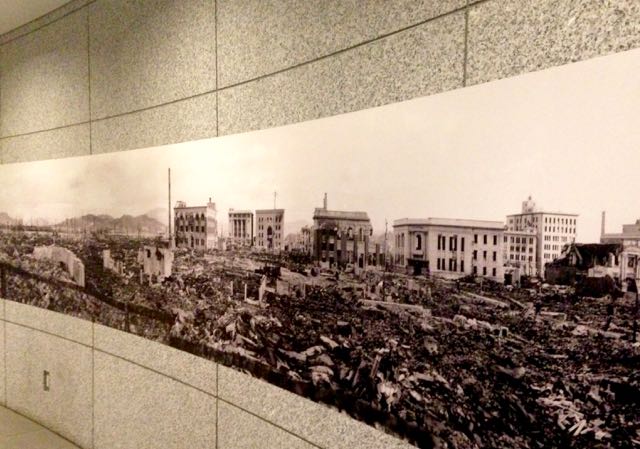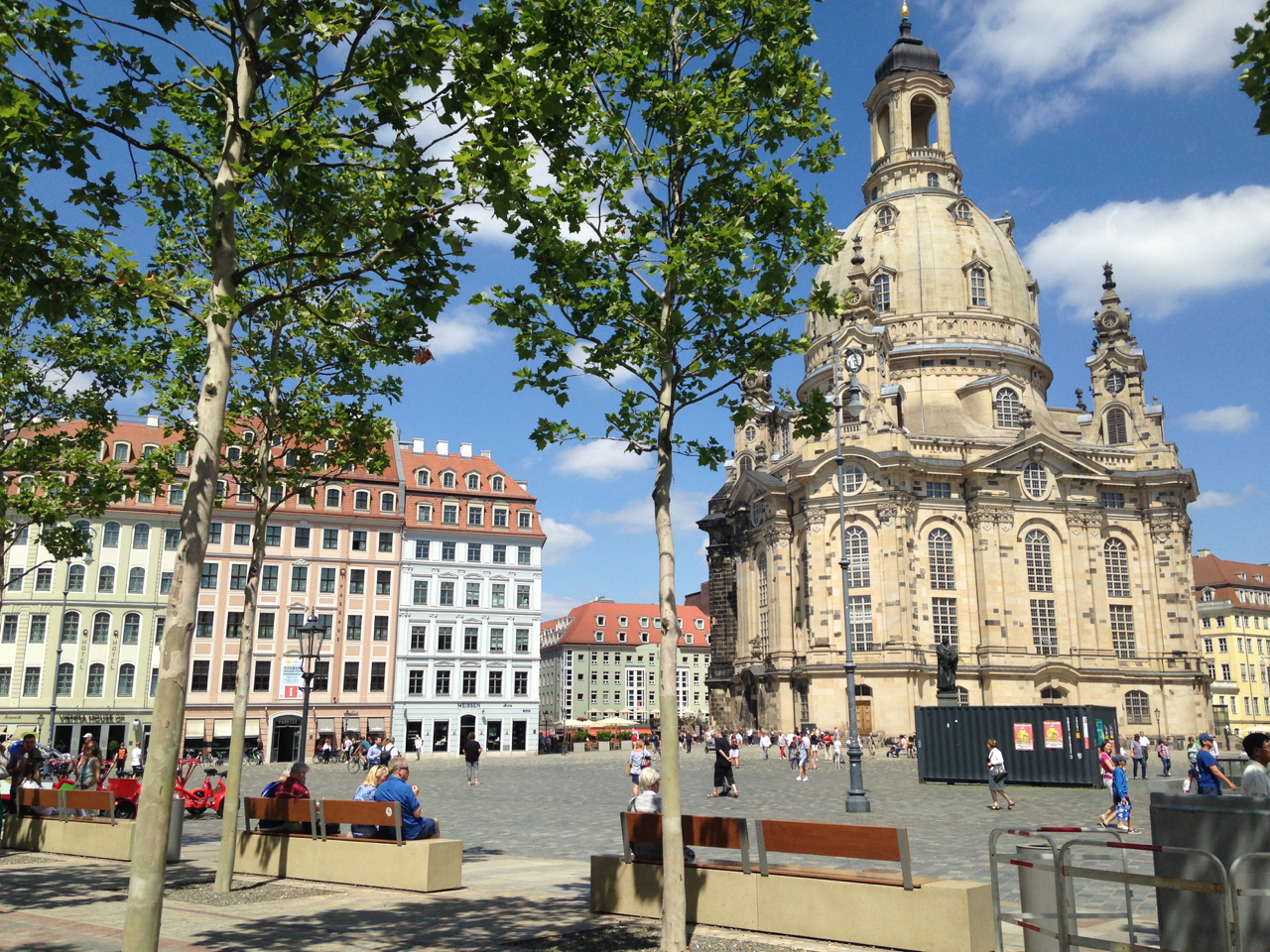
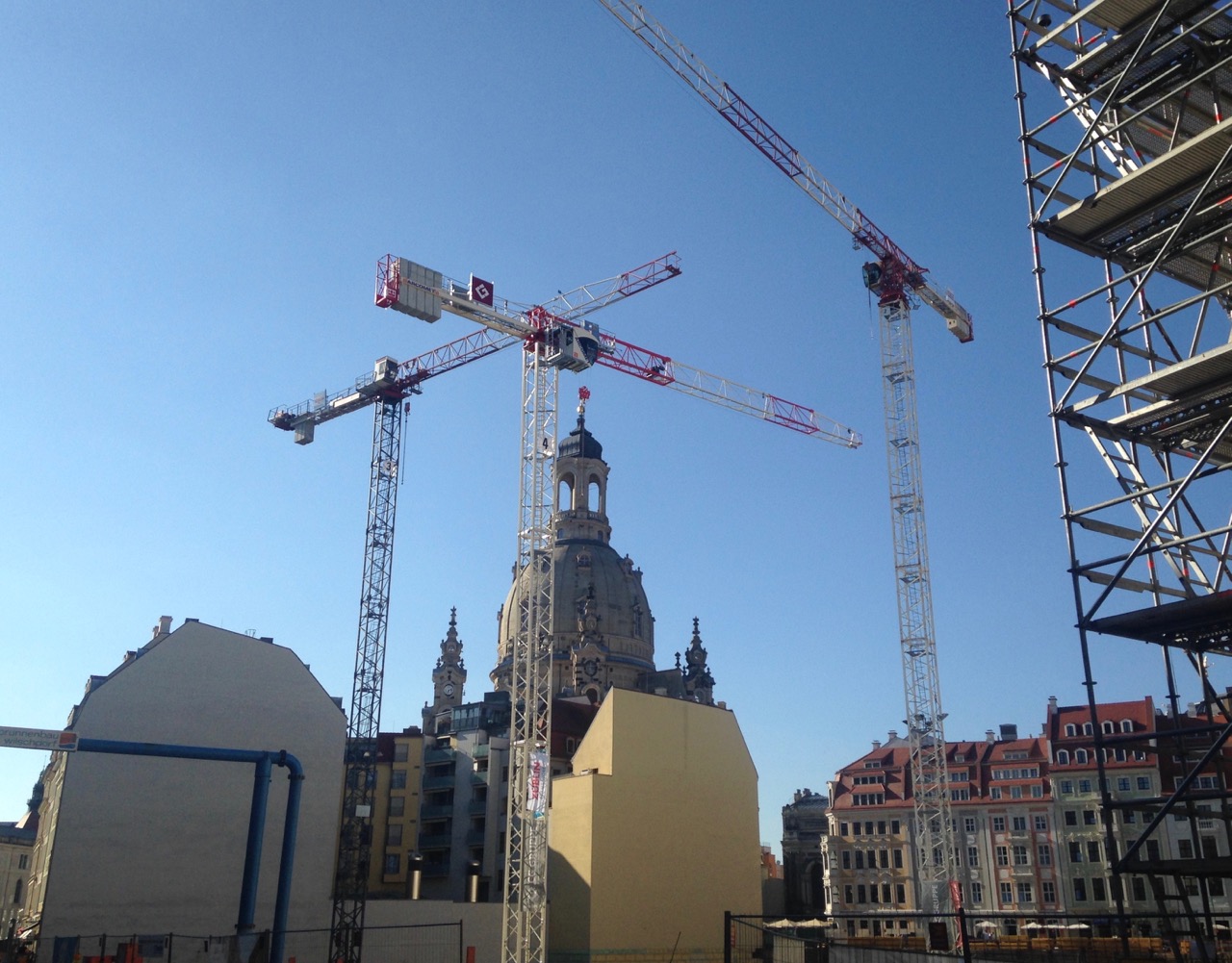
My recent trip to Dresden and Leipzig reminded me what wonderful places German cities can be. Particularly in summer when the music of high quality buskers wafts through squares lined with outdoor cafés offering chilled Grauburgunder and Pfefferling (chantarelle) dishes with white asparagus; when young people ride on rickety city bikes across the cobbles, hands dangling by their sides. It’s only the ever-present cranes punctuating the skyline of sloping roofs, or the gaping, pulled teeth-like gaps between buildings that remind you that all you are looking at was, in the not so distant past, rubble; grey, gaunt, improbably upright façades standing sentry among collapsed homes and destroyed families.
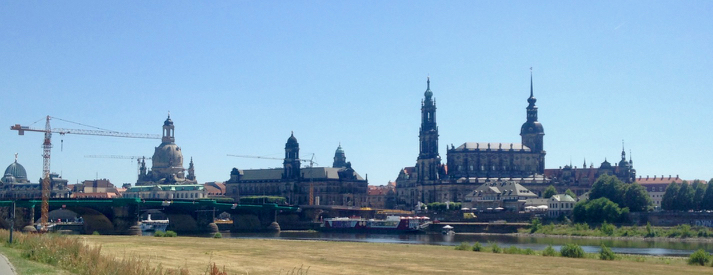
I have to admit, before I went to Dresden I had questions about travelling to a reconstructed, rather than original, Baroque city. I questioned whether destroyed buildings should be re-built and replicated or whether their ‘death’ should be seen as an opportunity for something new. Or whether a 21stcentury appearance of 18th century architecture still constitutes an historic monument. My first sighting of the city’s famous profile of domes and spires lining the river and my subsequent face-to-face meeting with the ‘Florence on the Elbe’ quickly rendered those questions superfluous. Dresden is simply beautiful.
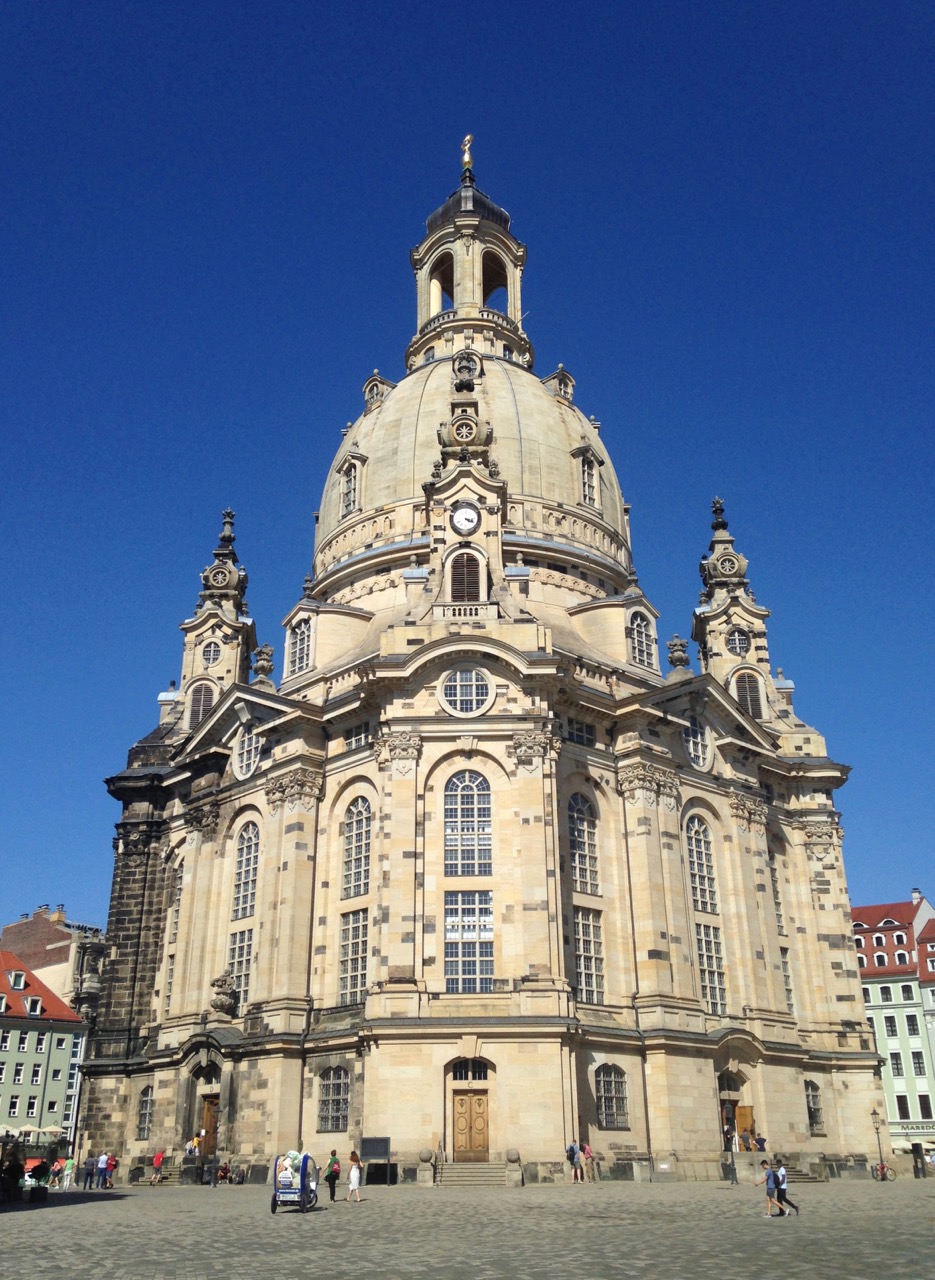
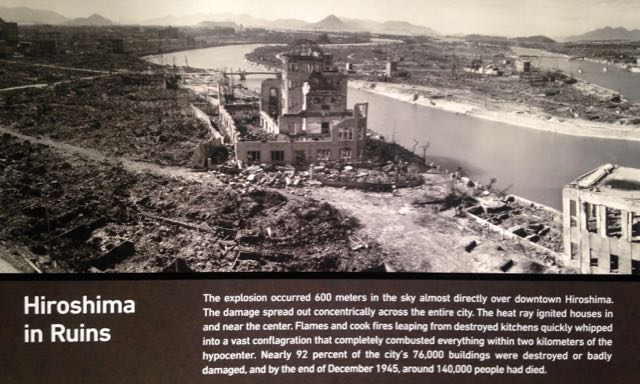
Of particular interest to me as a newly elected trustee to the London-based Dresden Trust, was the city’s most historic and well-loved landmark, the Frauenkirche. Its bombed remains had been left untouched by the communist regime of East Germany for decades, both as a symbol against war and a memorial for those 25,000 killed in the notorious 2-day aerial bombing attack by Britain’s RAF and the USA.
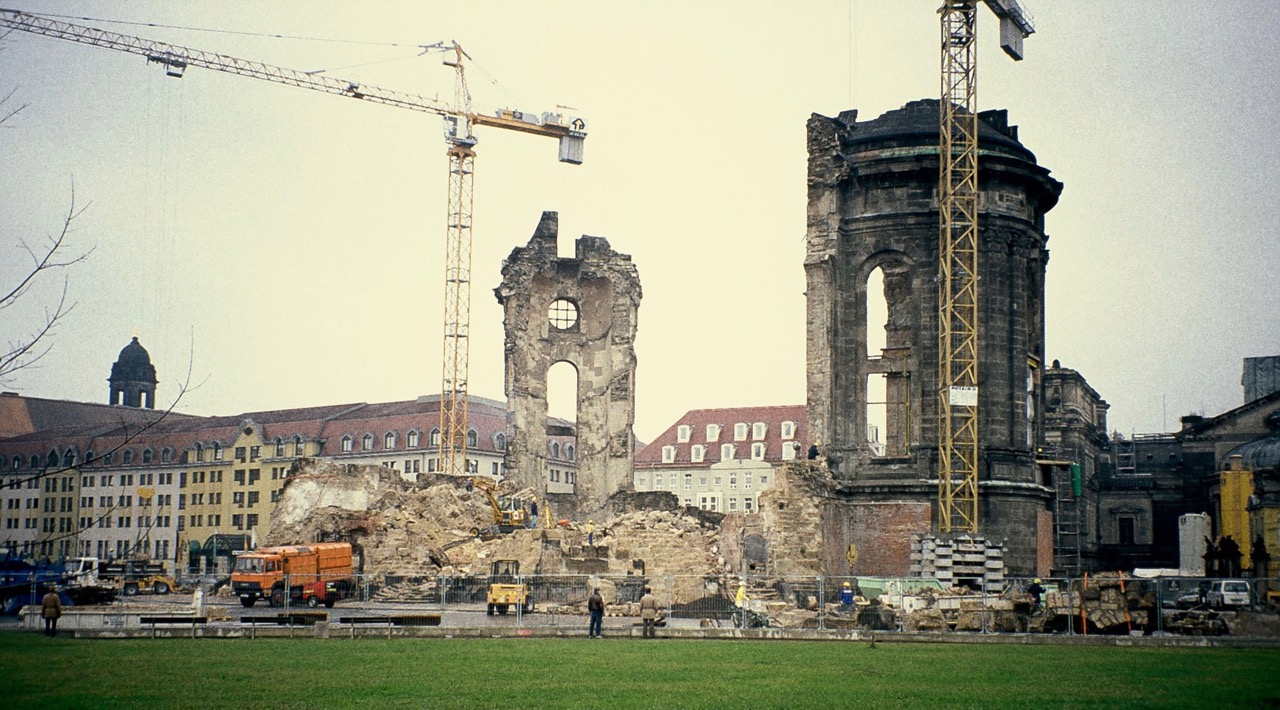
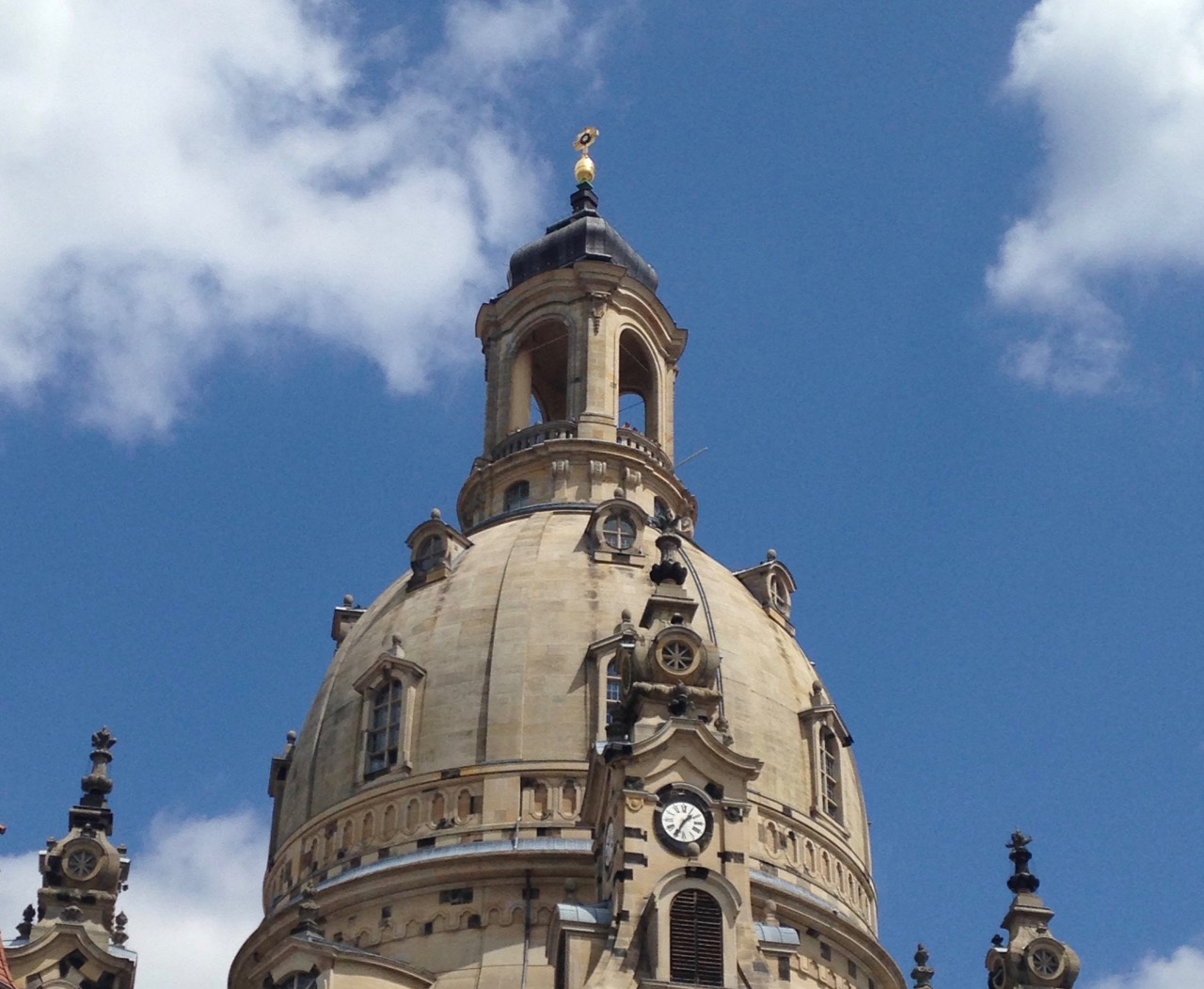
After the 1989 fall of the Berlin Wall and 1990 reunification of Germany, the future of the Frauenkirche became a focus of the widespread national debates and philosophical soul-searching still continuing to this day. 1993 then launched seventeen months of clearing, documenting and organising the 23,000 cubic meter mound of rubble with characteristic German thoroughness. 8,390 interior and exterior façade stones and ceilings were saved as well as over 90,000 back up blocks and other features. By 2005 – to cut a much longer story short – the church re-opened. Crowned by a shining golden orb – donated by the Dresden Trust as a heartfelt gesture of reconciliation from the people of Britain and created by a team of silversmiths headed by the son of a Bomber Command pilot – the church now proudly dominates the bustling Neumarkt once again, almost a literal phoenix raised from the ashes.
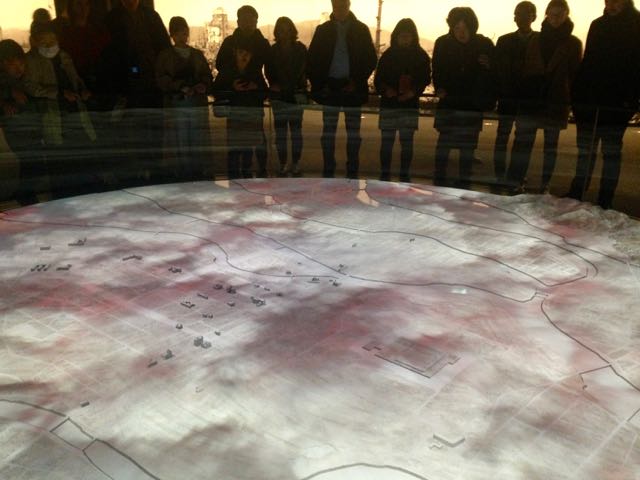
In a former industrial area a few miles away is the antithesis of the Frauenkirche’s resurrection. Housed in an empty gas container, the huge 360˚ digitally processed panorama of the bombed city by the Berlin-based artist, Yadegar Asisi, is almost as mind-blowing. Visitors enter the cylindrical space at ground level but can climb a centrally erected scaffold tower to view the city from various levels. Against a backdrop of music, lights dim or flicker to emulate night or bombs as people stand in silence staring at the abyss of destruction.
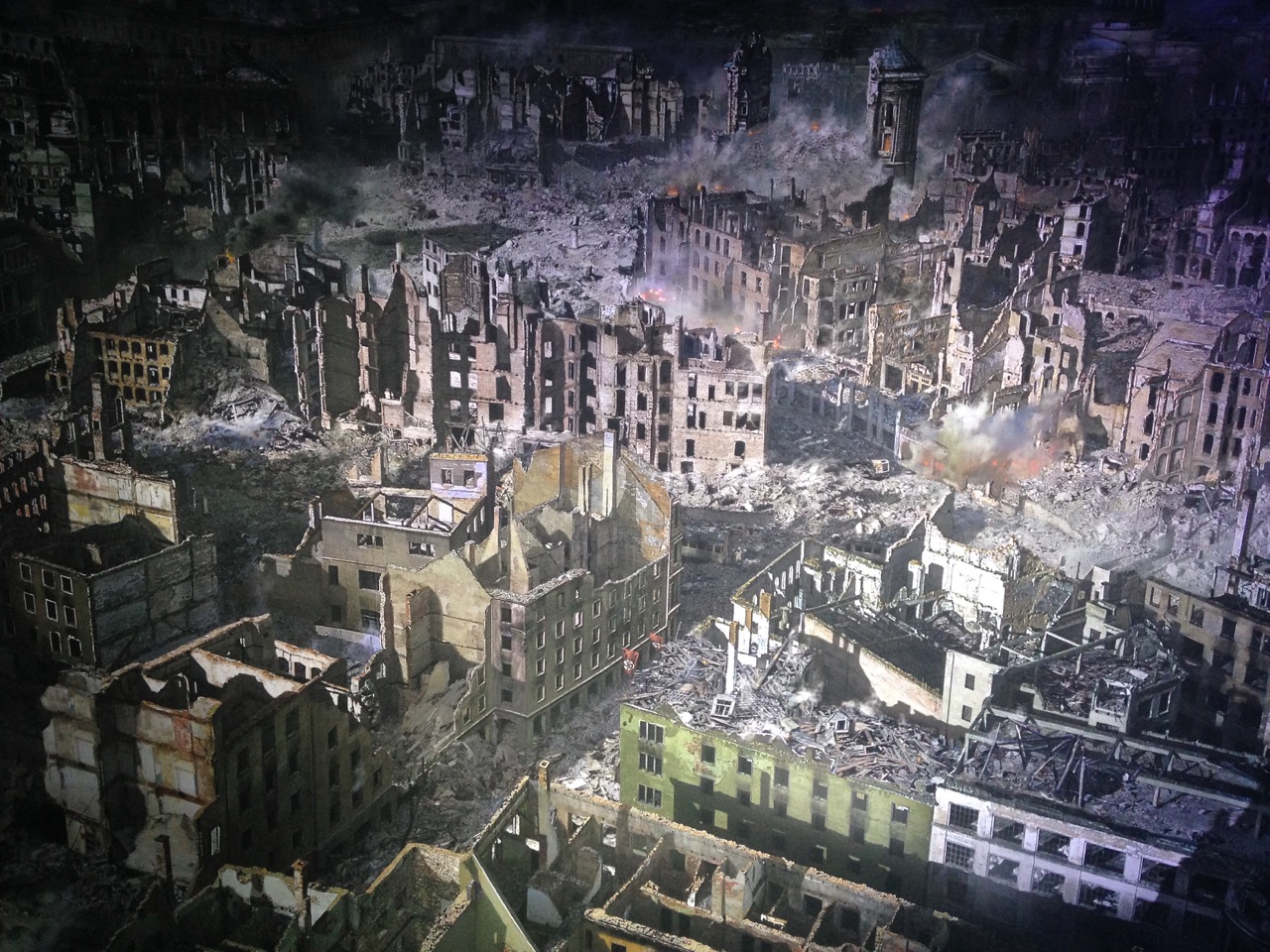
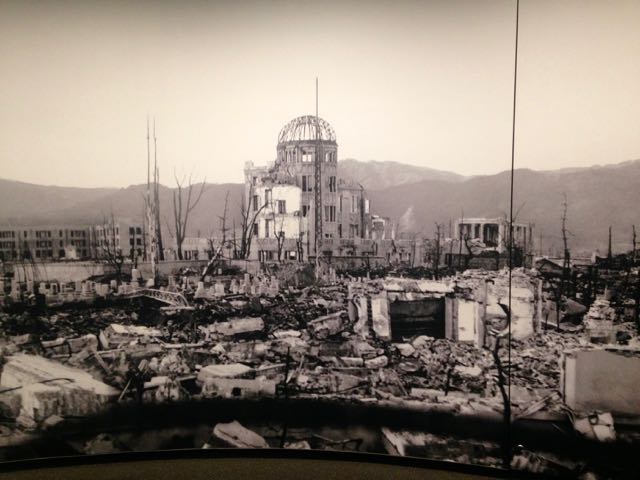
Looking at this seems to viscerally insult ones humanity, possibly all the more so because, though we have all clocked the pointlessness of war many times over, “This time, we were the pigs”. In that devastating space, the guest book entry of an American visitor resounds with rare indisputability. This was ‘us’. Whatever our justifications for bombing Dresden – and there are always apparent justifications for aggression, just talk to violent offenders, listen to politicians – we designed bombs to have the maximum impact, not just on buildings or military targets but on civilians. It was an act that rightly continues to needle our ‘heroic victors’ narratives and shake the moral high ground we want to, and often do, occupy. For that reason alone, I am grateful for Dresden.
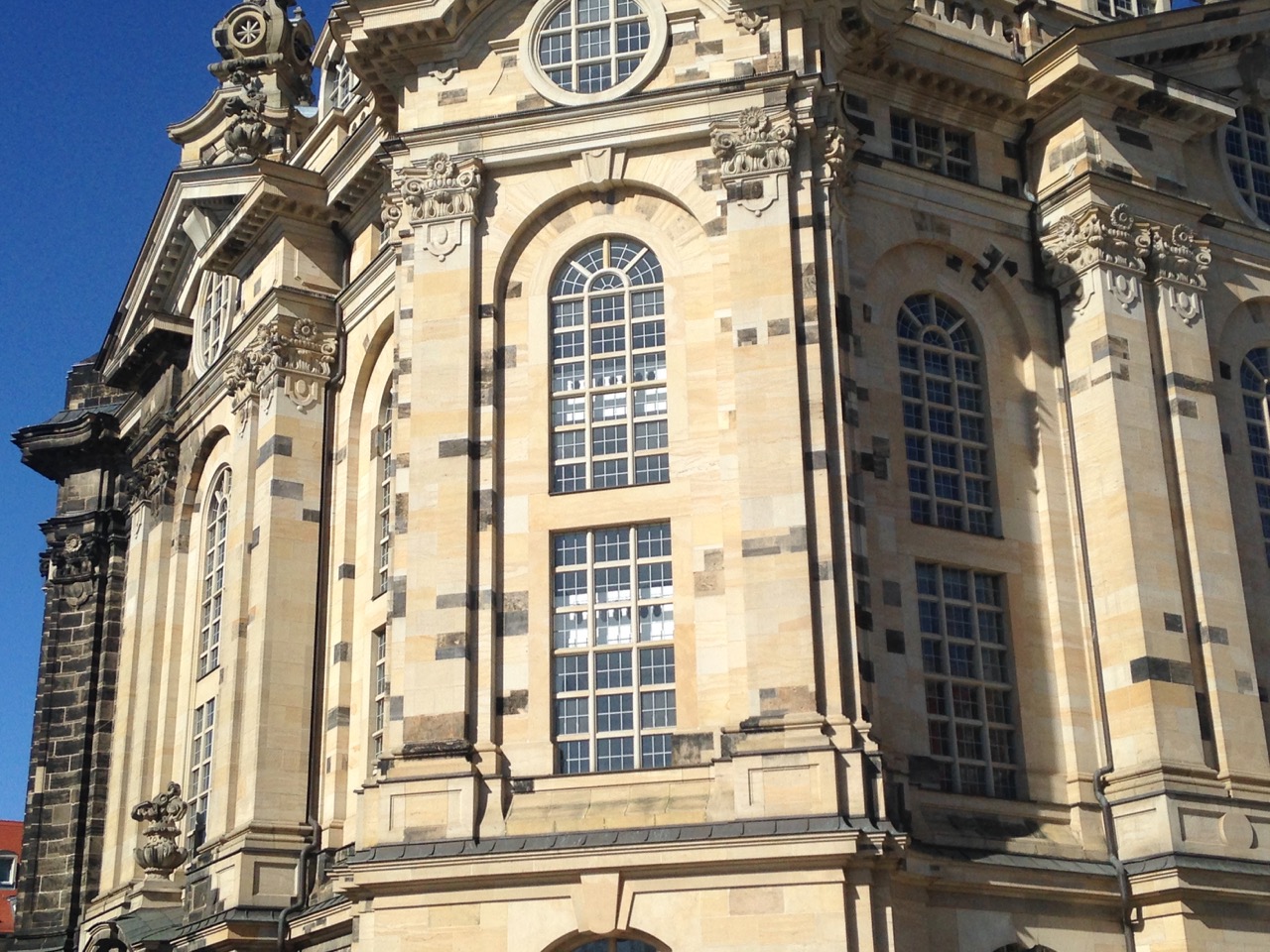
Nearly seventy-five years on, only the dark sections of the original Frauenkirche and the blackened stones that polka-dot the soft sandstone exterior like plasters bear witness to the horrors of those two fateful nights in February 1945. As normal life buzzes at its feet, the church, often filled with music, stands defiantly, a profoundly moving symbol of peace and reconciliation and a testament to the sheer bravery, optimism and determination of Dresdeners.