Remembering, while watching falling leaves…

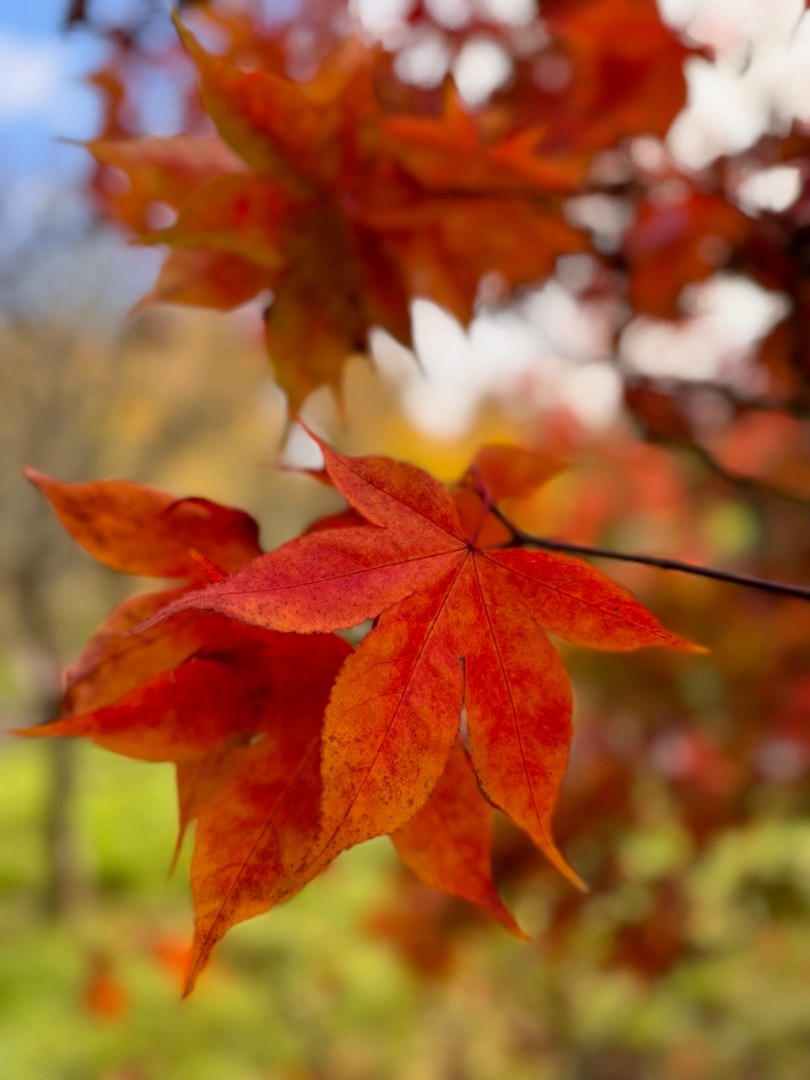
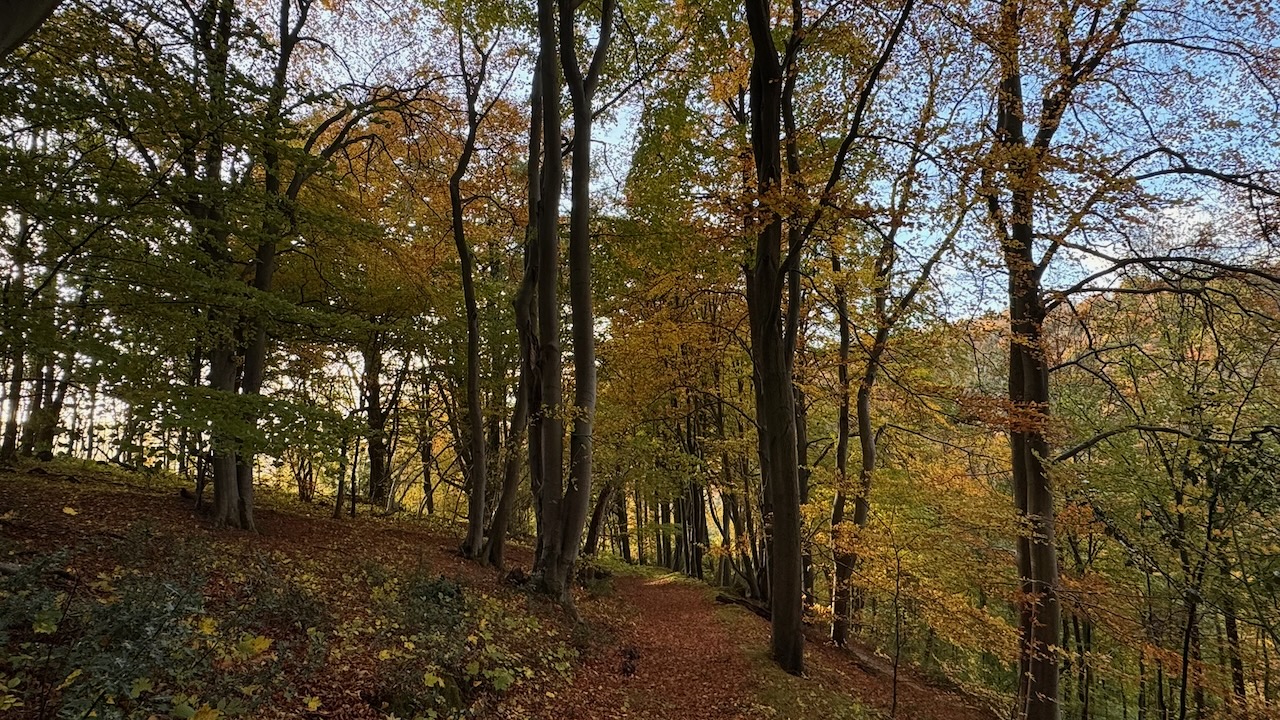
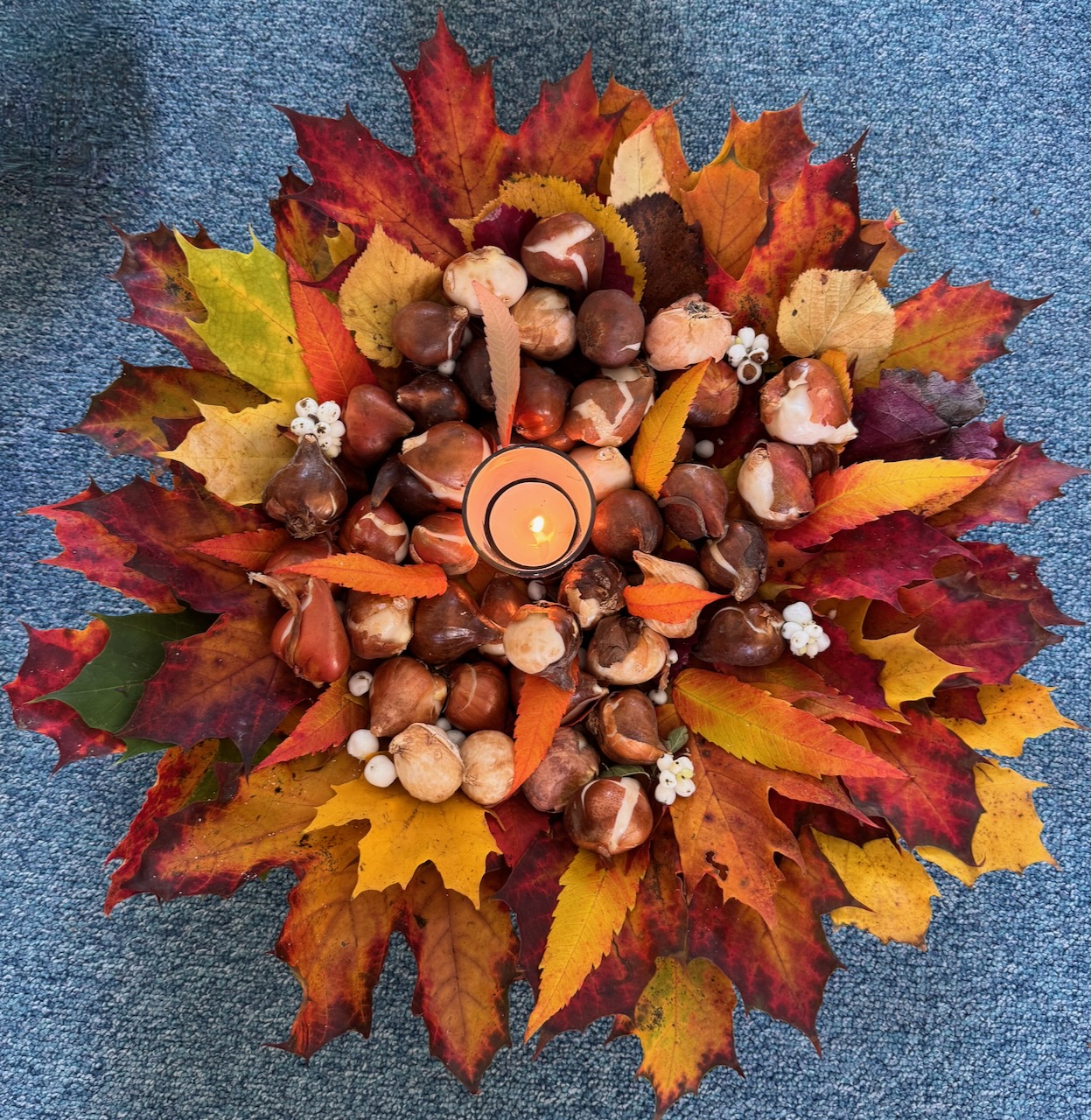
I normally plant bulbs on Remembrance Sunday. But this year I’ve been ill. Instead I went for a gentle walk in nearby woods, silent but for the breeze combing its way through the upper branches.

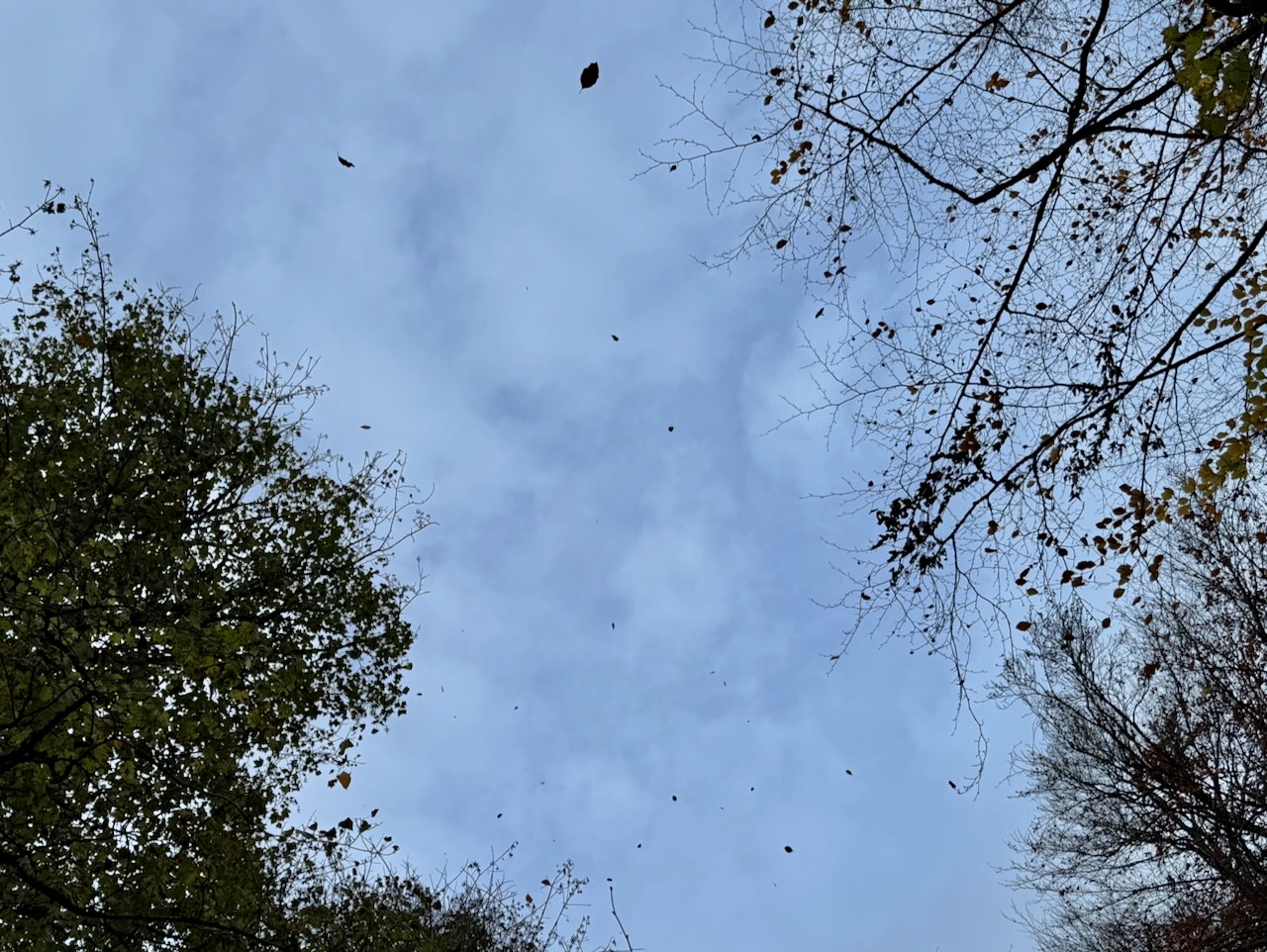
Down below, all was still. Except for individual leaves falling like snow. Each one taking its moment to break from the twig to which it had been rooted since the spring and dance in a series of pirouettes, twirls and summersaults before landing quietly among the already fallen. Unseen except by a chance walker. 

Do they pick their moment, or are they plucked from life?

A certain readiness is a prerequisite for each leaf to fall. In summer, winds can howl through the branches and yet the leaves remain bound to the tree, weathering the storm, held in place by life forces that ebb and flow in synchrony with the seasons.

Death is natural for these fallen.

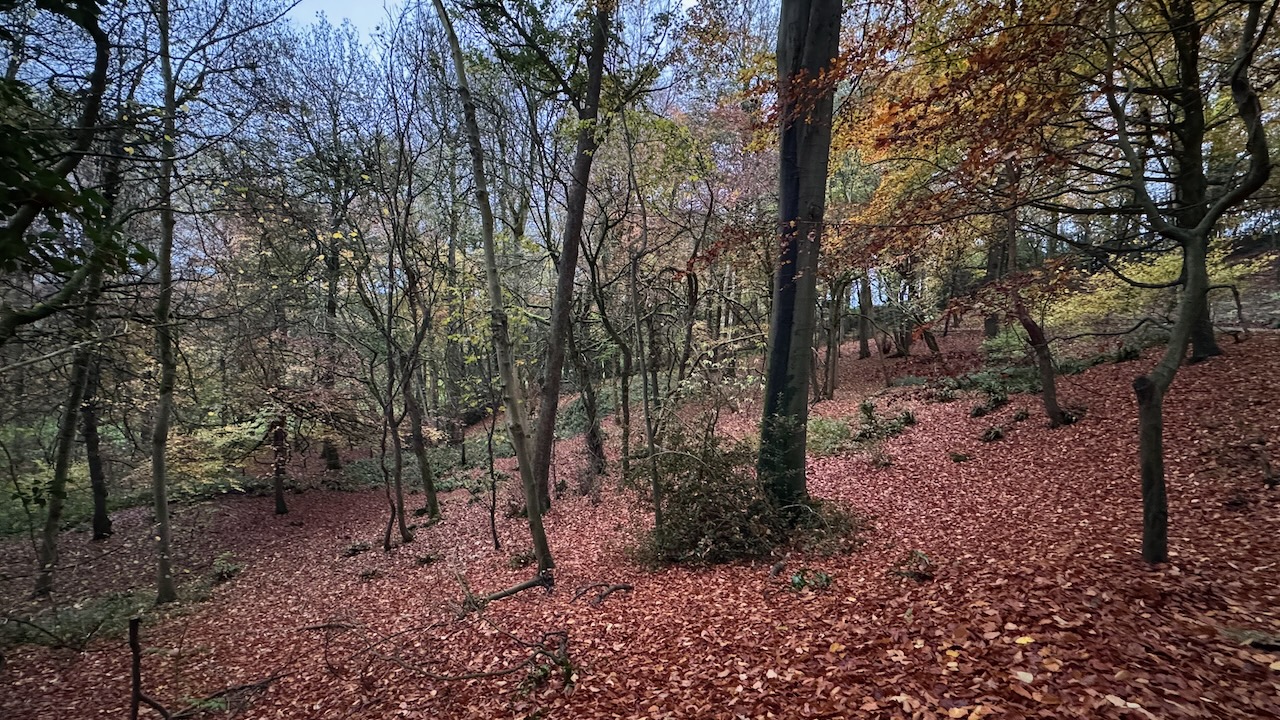
As I shuffle through the carpet of rust and gold, the rustle so reminiscent of childhood memories – kicking through the golden floors of beech forests in little rubber wellies – I can only ponder the dead. The war dead all around the world. The families they left behind. The scars of loss, grief, trauma and silence that remain in their wake, often hidden for generations, shaping the souls of those who come after.

We call them the fallen. It softens the reality of how they died. But while we remember them with warm hearts and deep gratitude, let us – with all the advantages of hindsight – not forget the utter horror, violence and futility of war.

As countries around the world build their armies and arsenal, let us refrain from falling into the trap of thinking war can ever be a solution to political, religious, geographical or economic problems.

Let us remember that the cost is always too high.

When big isn’t necessarily better

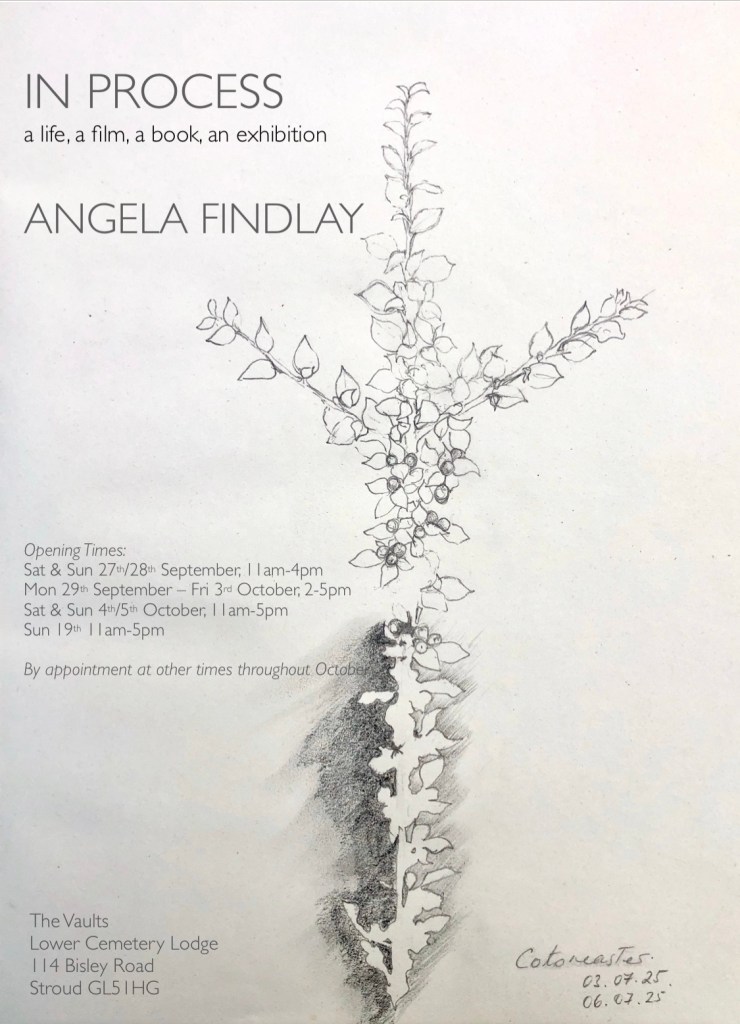
Reflections on: IN PROCESS… a life, a film, a book, an exhibition, The Vaults, Stroud. Sunday 19th October, 11am-5pm and by appointment until 1st November.


“We must, we must, we must increase the bust.

The bigger the better, the tighter the sweater, the boys depend on us.”

I remember chanting that with my boarding school roommates as a teenager, elbows flung back in a futile attempt – in my case at least – to inflate our adolescent chests. Bigger was definitely better, or so we believed.

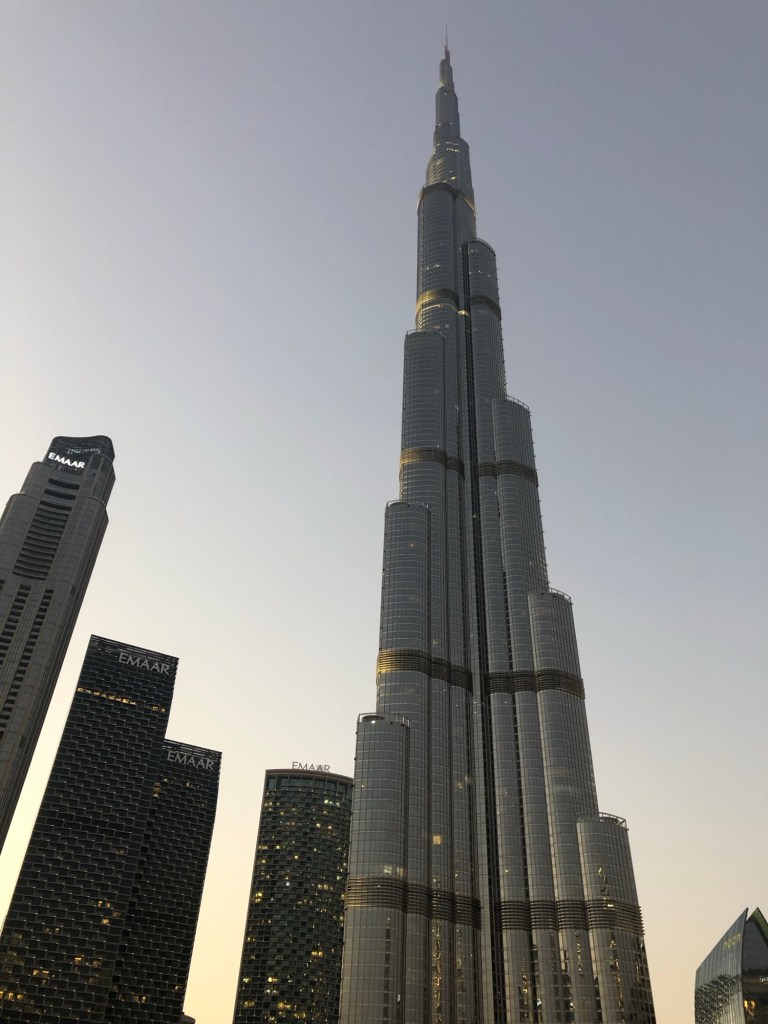
Burj Khalifa, Dubai

Skyscrapers, cars, salaries, houses… In so many areas of modern society, ‘big’ still equals ‘better.’ More followers, more likes, more headlines, more sales. The biggest countries led by the most powerful leaders and largest militaries make the most noise. And yet we know, quantity doesn’t equate to quality. Magnitude doesn’t always reflect meaning or value.

This idea – that bigger isn’t always better – is something I’ve seen reflected both in the trajectory of my great great aunt Joan’s life and in my own development as an artist. (If you are new to Joan’s story, please see my previous blogs for background.)

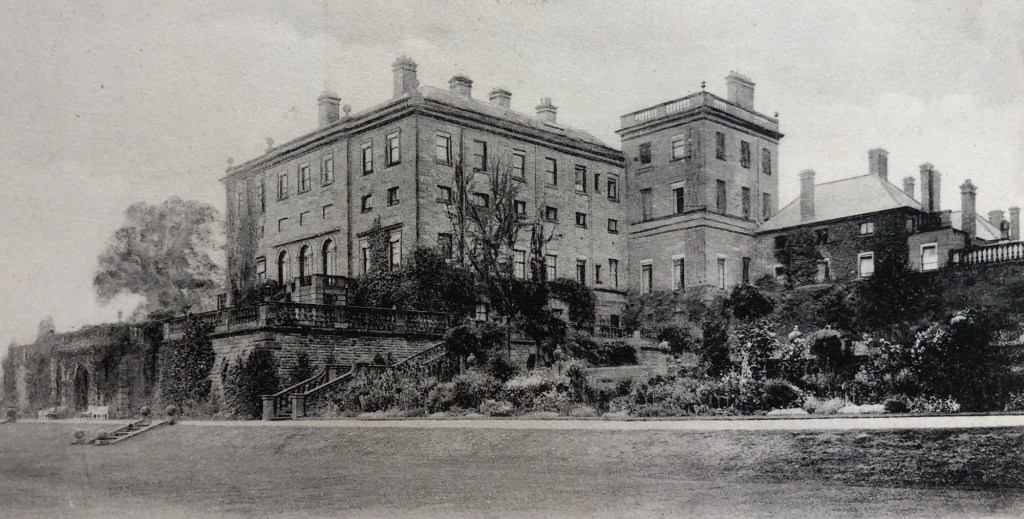
Patshull Hall, Staffordshire

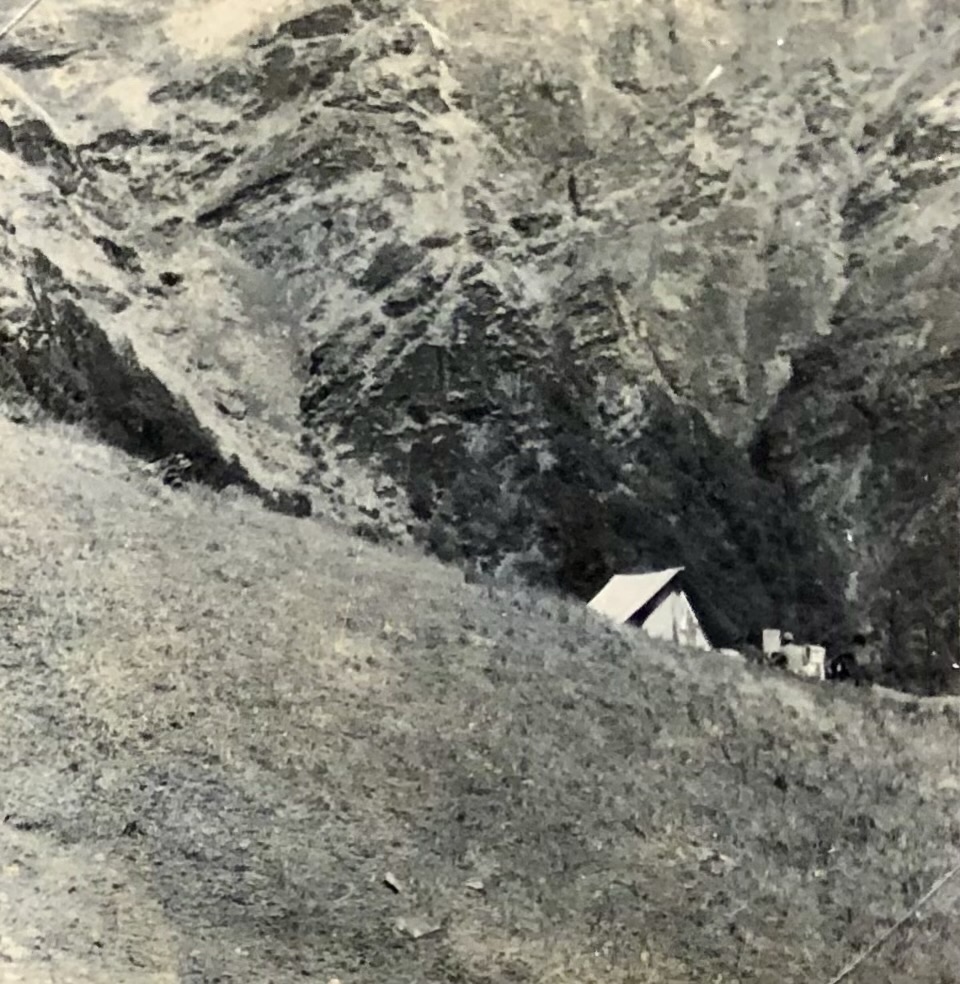
Joan’s tent

Joan grew up in a 147-room stately home in Staffordshire. Yet she spent her final weeks in a single, often soggy Meade tent pitched in a remote Himalayan Valley, surrounded not by grandeur but by shepherds, wildflowers and the sound of rain. She had traded scale for purpose. And her joy, it seems, had grown as her material load had lessened.

My own artistic journey has followed a similarly inverse curve.

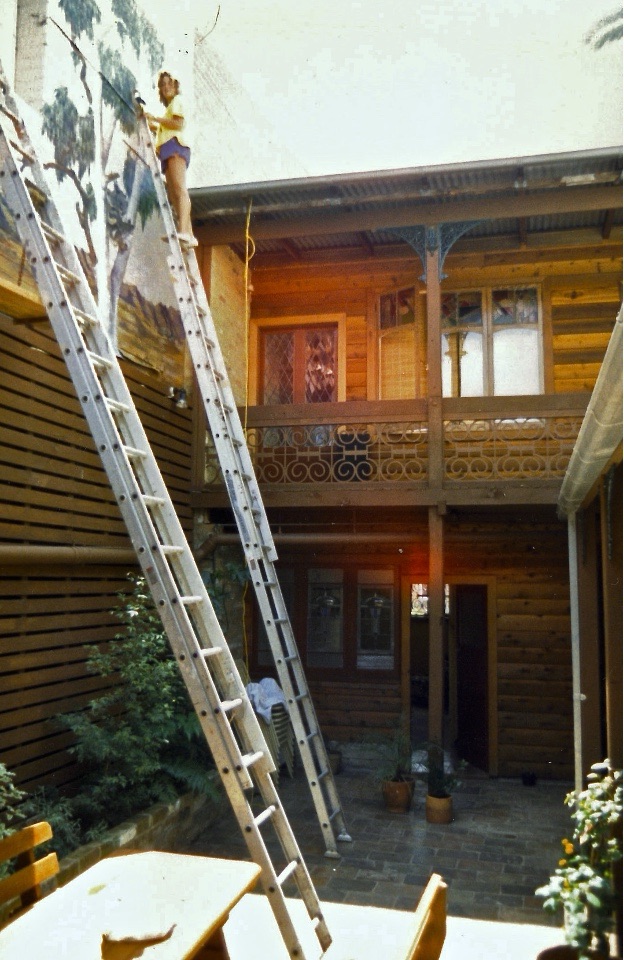
Painting a mural in Sydney, 1987

I began large, unable to contain any drawing or painting within the boundaries of paper or canvas. My work spilled onto walls, first private then public, then grew further to fill stage backdrops for theatres or touring bands. Various mishaps including a paint-splattered boss’s car and a disastrous commission to paint the backdrop for INXS KICK album tour in 1987, which promptly cracked and fell off in large chunks when rolled up, nudged me toward the more forgiving surface of prison walls. There, no amount of damage could make the environment worse than it already was.

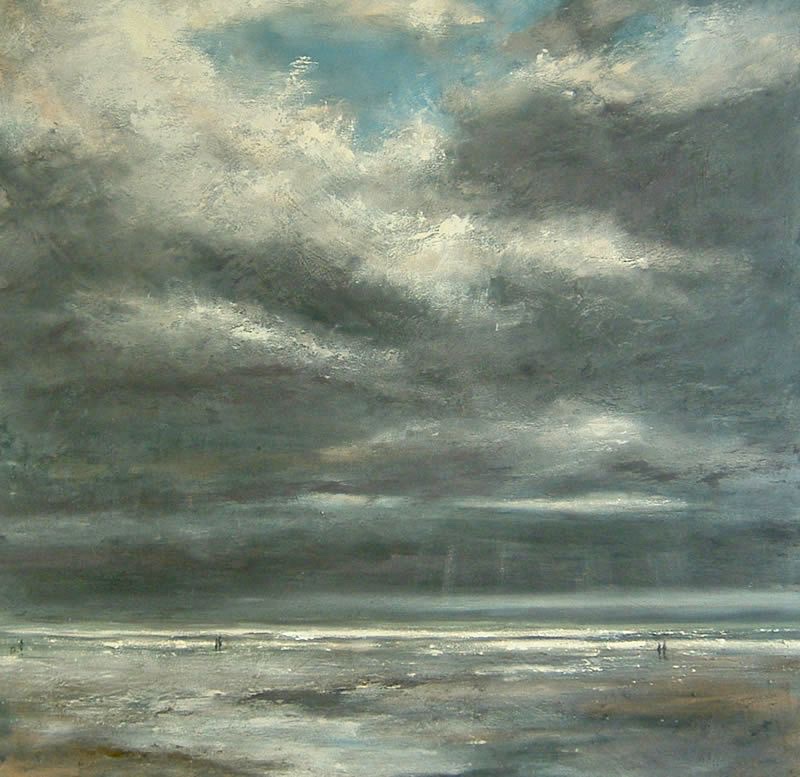
The light danced, 120x120cm

Years later, I turned my focus to canvases of my own, their size dictated by the available studio space and commercial considerations of galleries. And most recently, to works just 28x28cm – or smaller. I have replaced the vast audiences of art fairs with the quiet intimacy of just six or seven visitors at a time into the two vaults beneath my home in Stroud’s Cemetery.

The Vaults

Those vaults now house In Process… a deeply personal exhibition about Joan, her life and the resonance her death still holds for me, our family and small communities she encountered in India.

In one vault, where gravediggers once hung their tools and I now hang mine, visitors watch a short film projected into the open lid of an old trunk telling the story of Joan Margaret Legge.

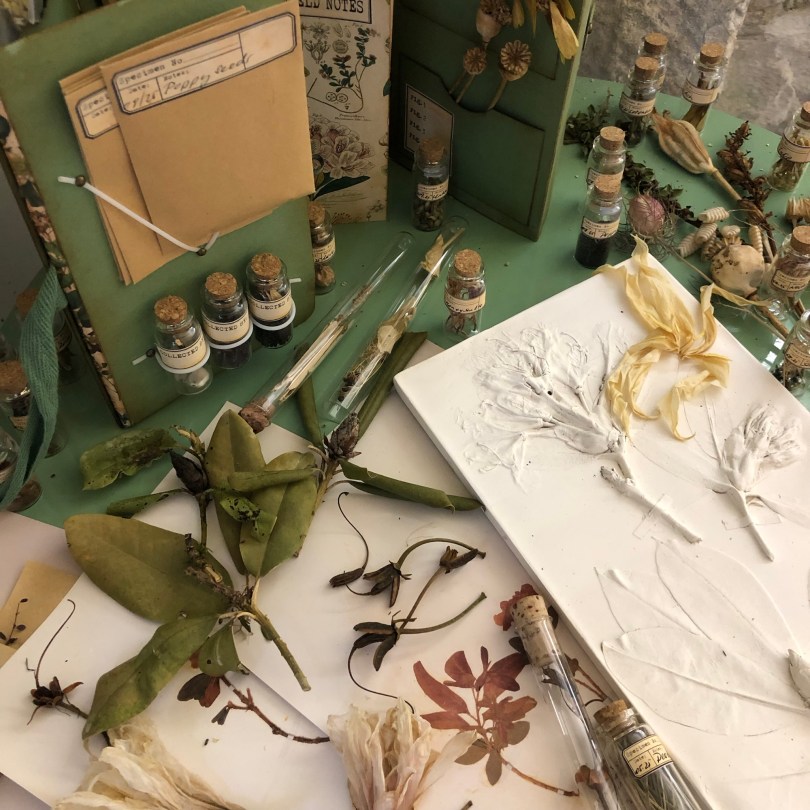
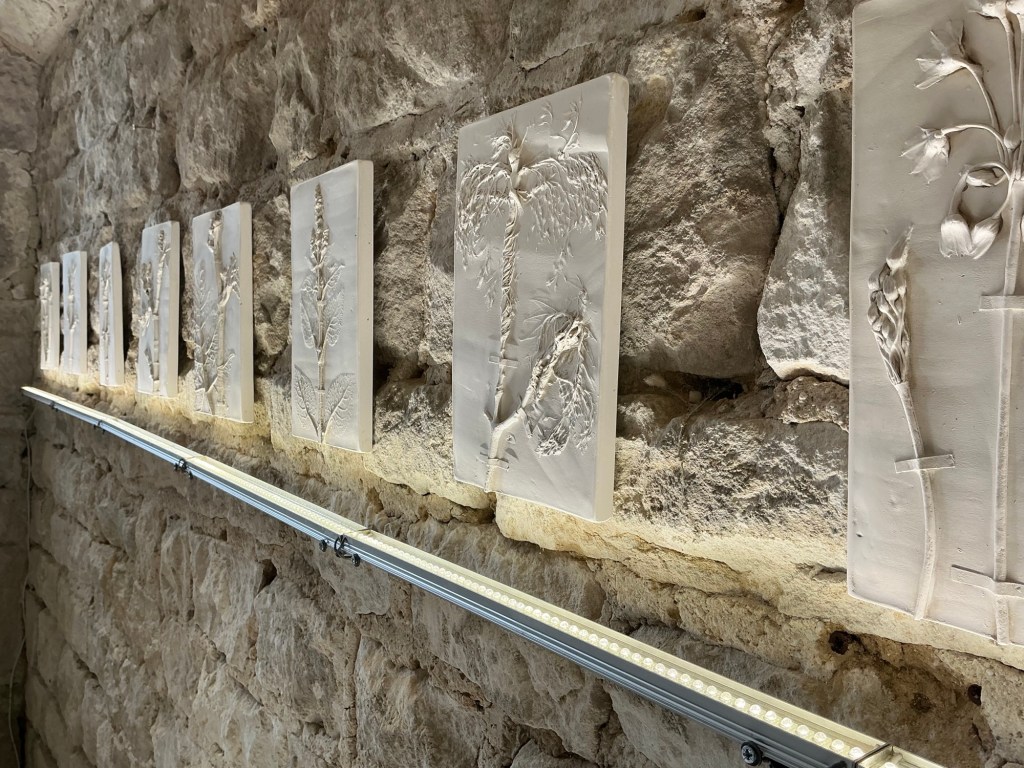
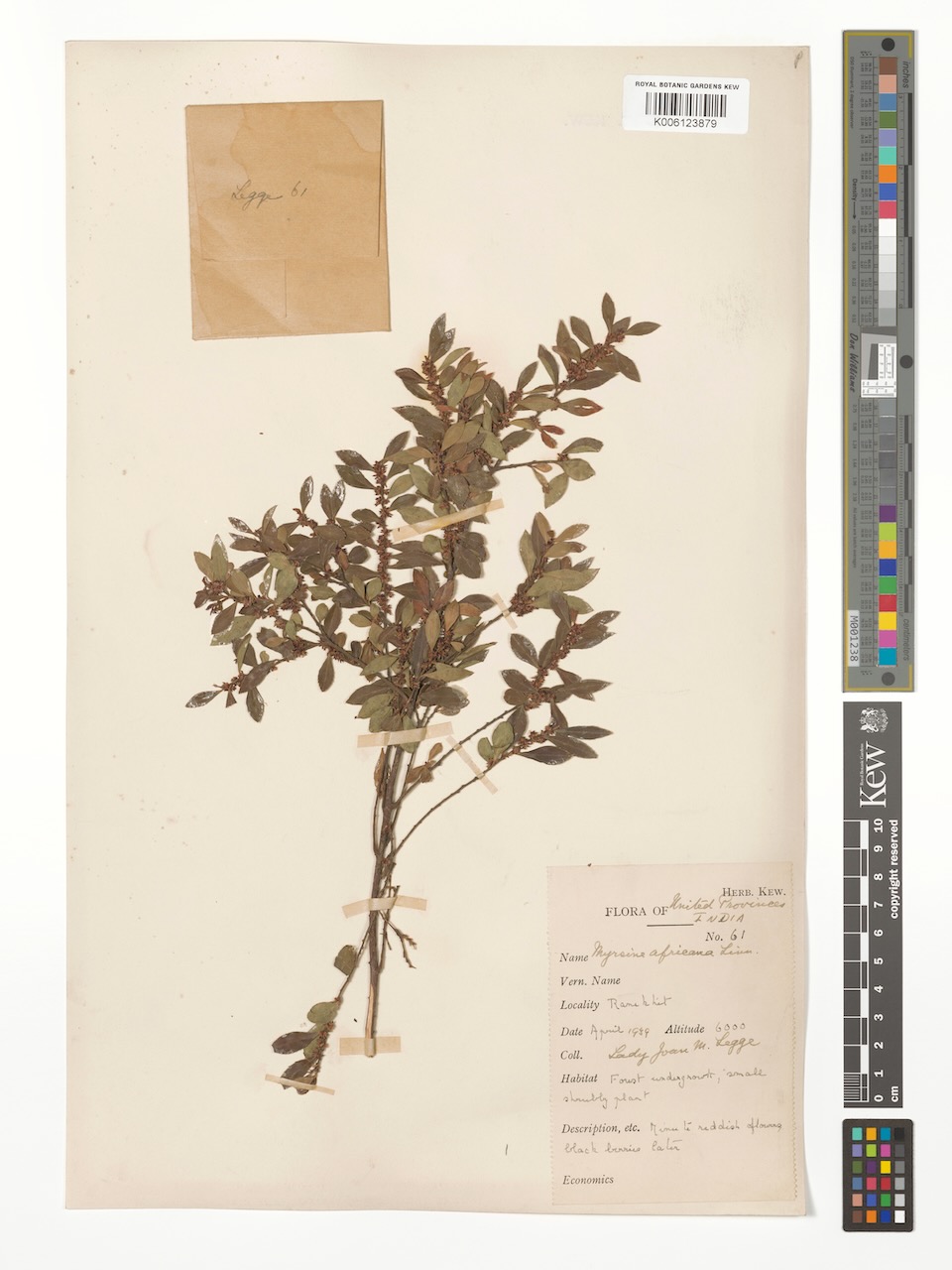
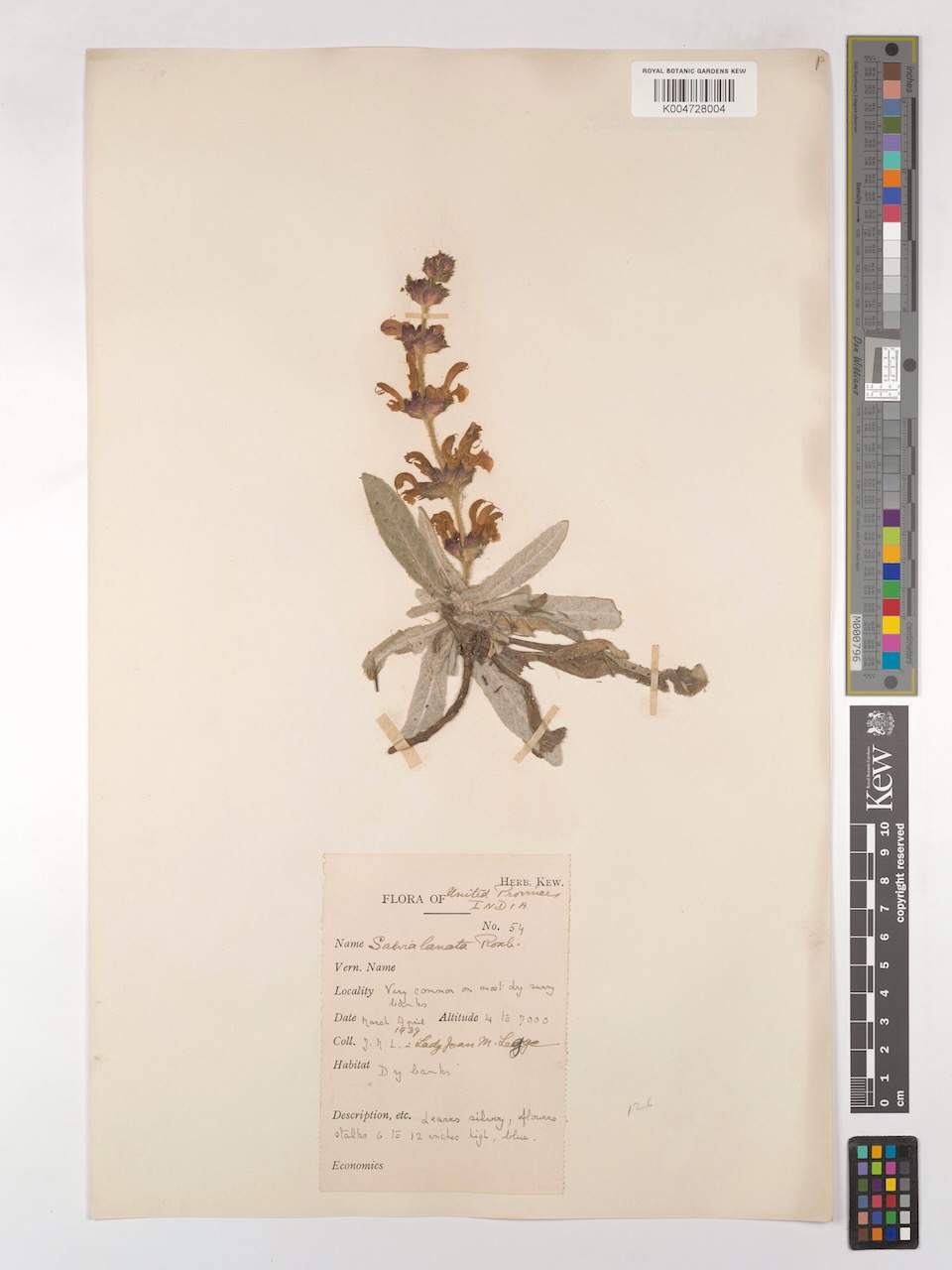
In the other, where those same workers drank tea, ghostly white plaster casts hang like three-dimensional botanical drawings reminiscent of the specimens Joan collected and sent to Kew Gardens.

‘138 days’

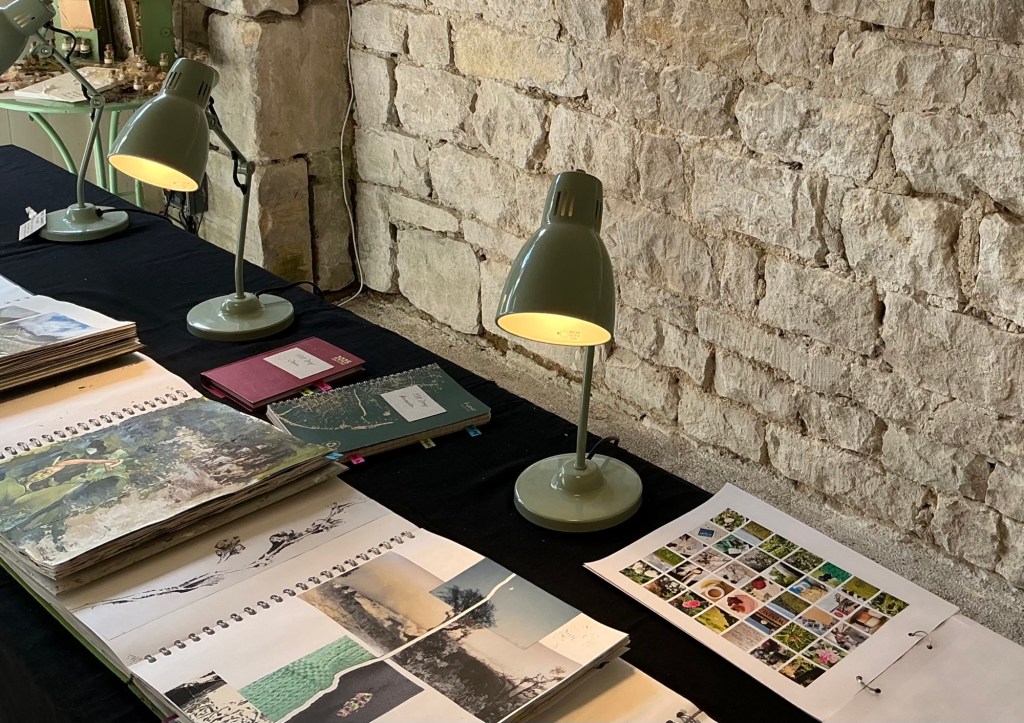
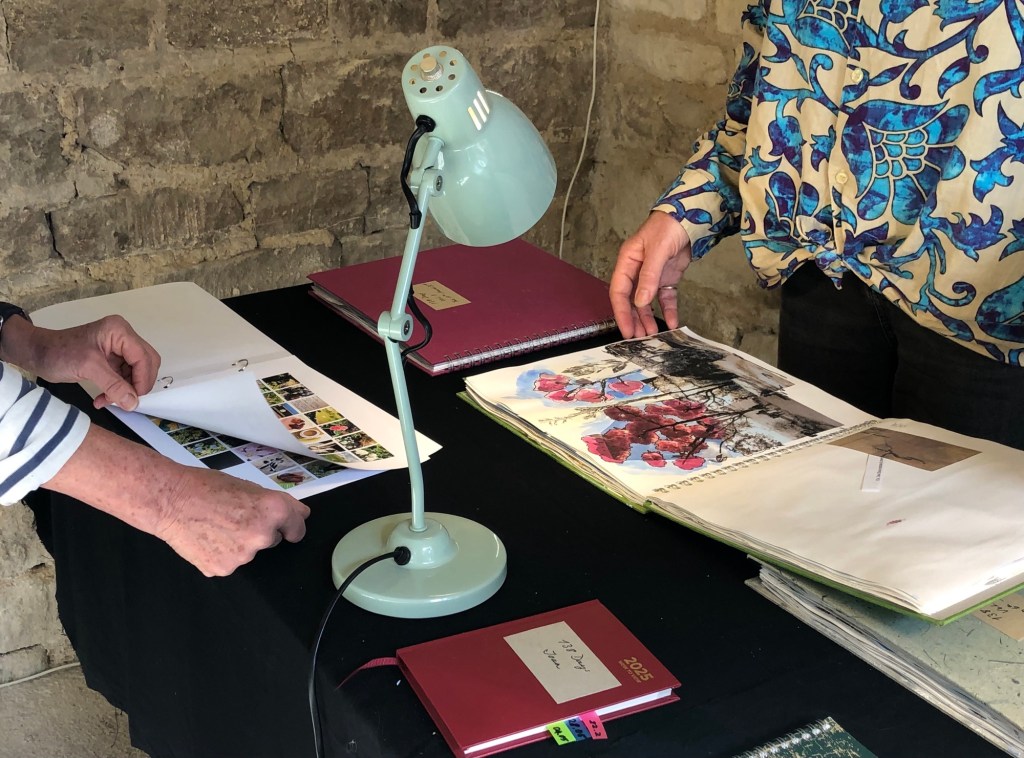
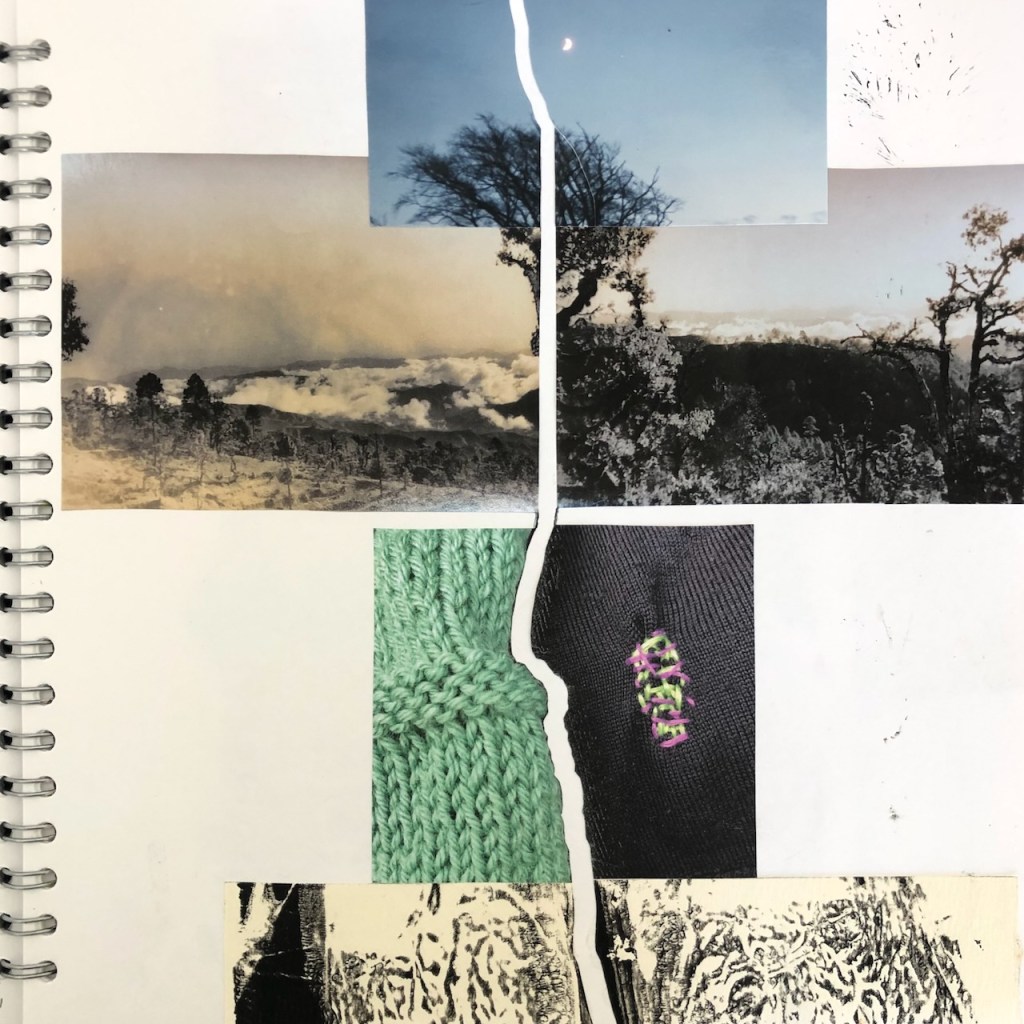
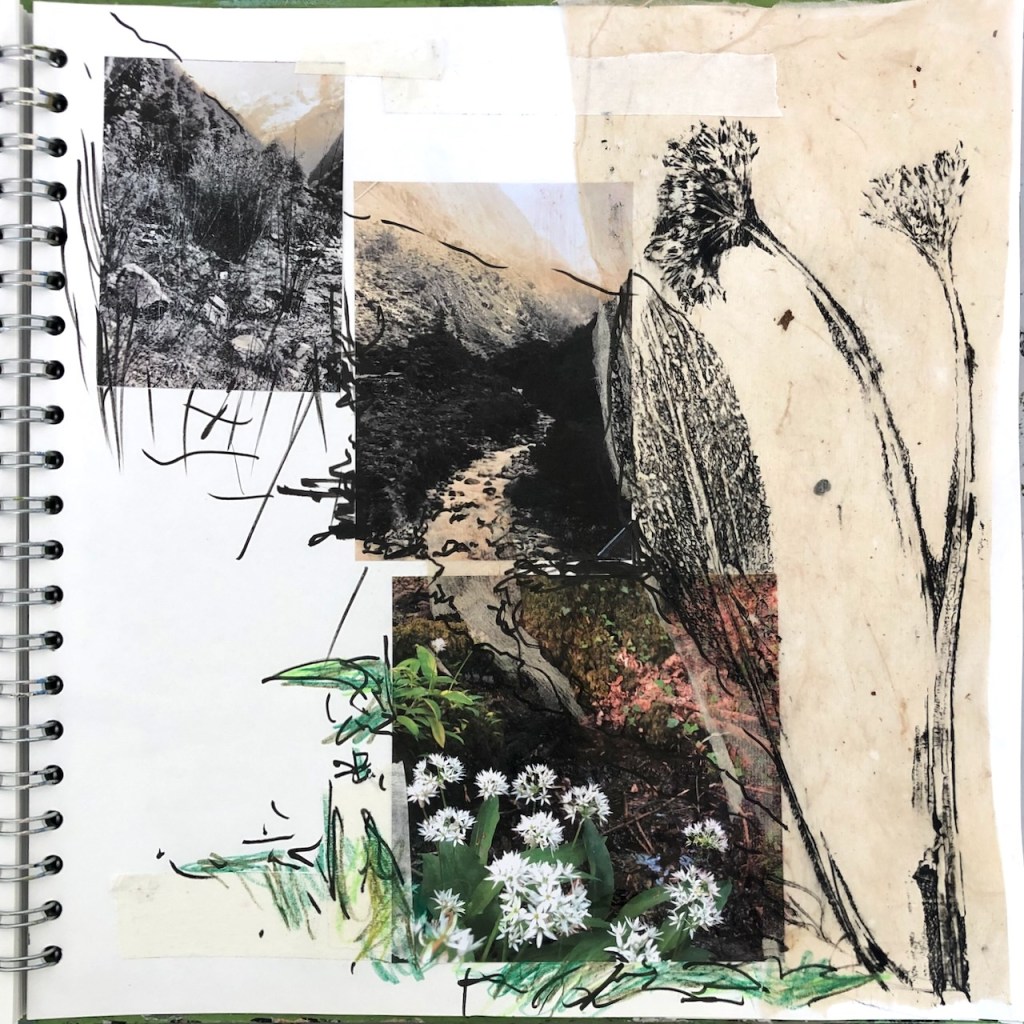
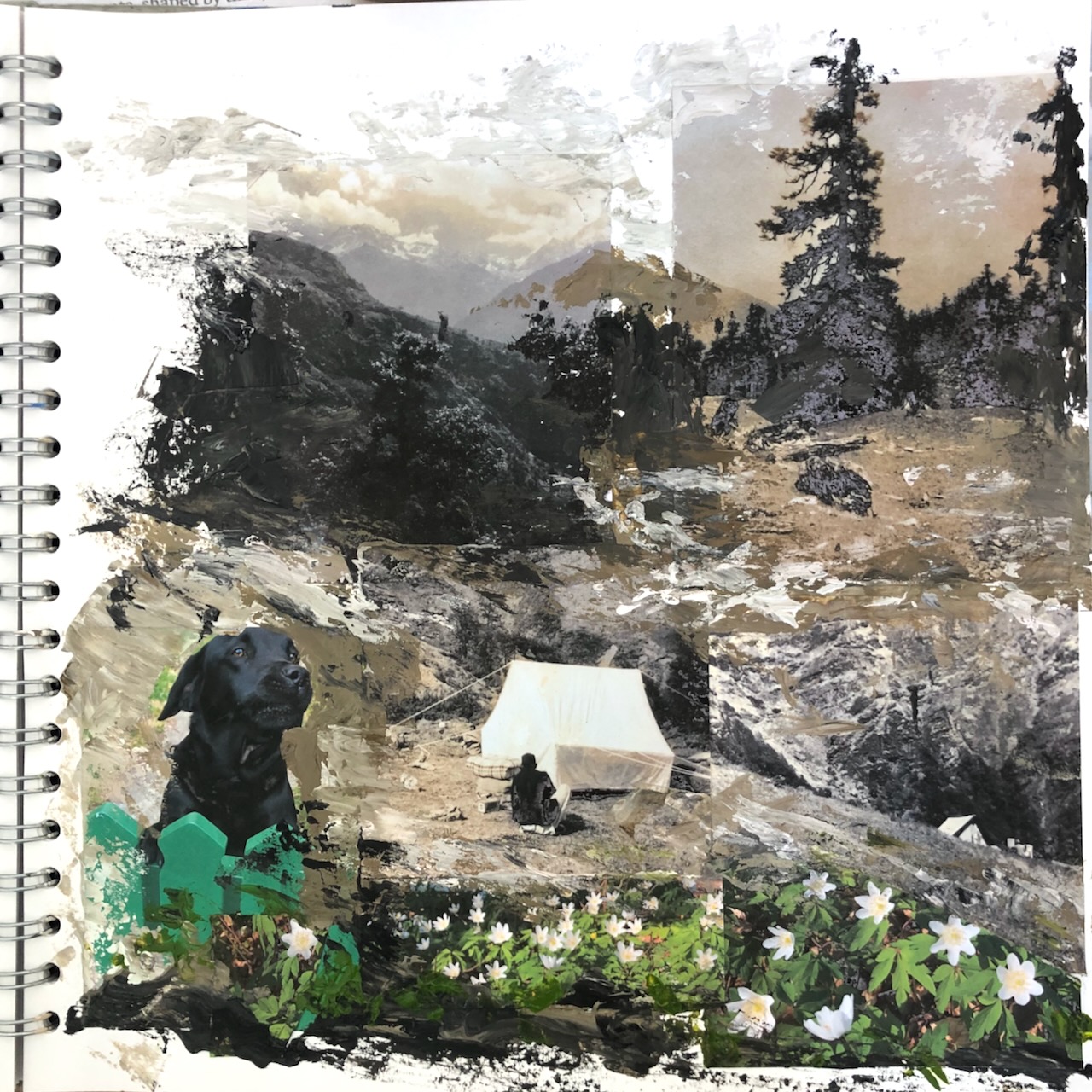
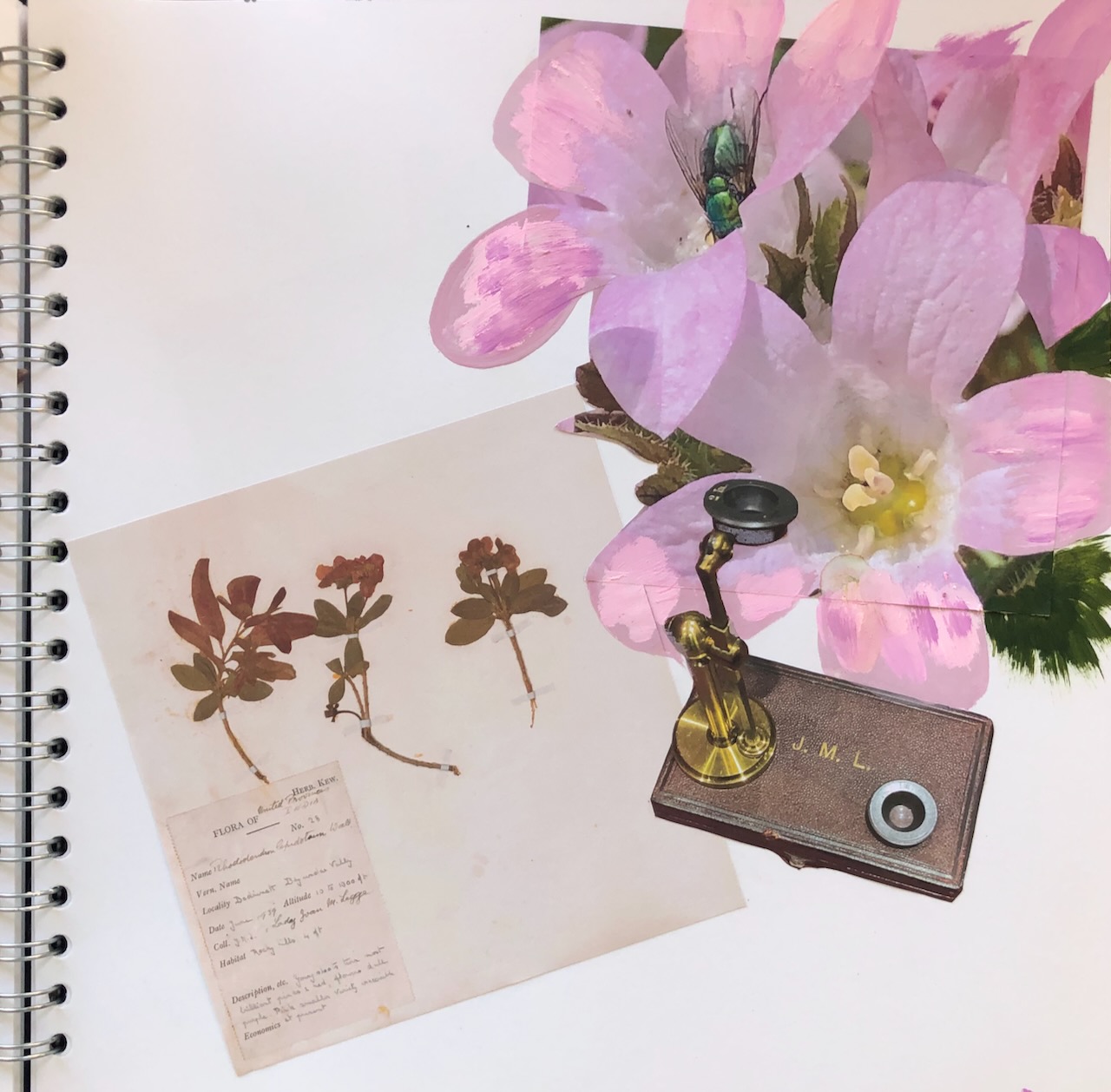
A series of square sketchbooks chart the 138 days I followed Joan’s 1939 diary entries. Starting on 17th February when I stepped into her shoes as she boarded a ship to India, I step out of them again on 4th July, the day she slipped off the edge of a Himalayan path to her death. One photograph, one sketchbook page, each day a quiet re-embodiment across time. Not a recreation of her journey, but a chance to listen more deeply to the changing tone of her voice in the final months of her life.

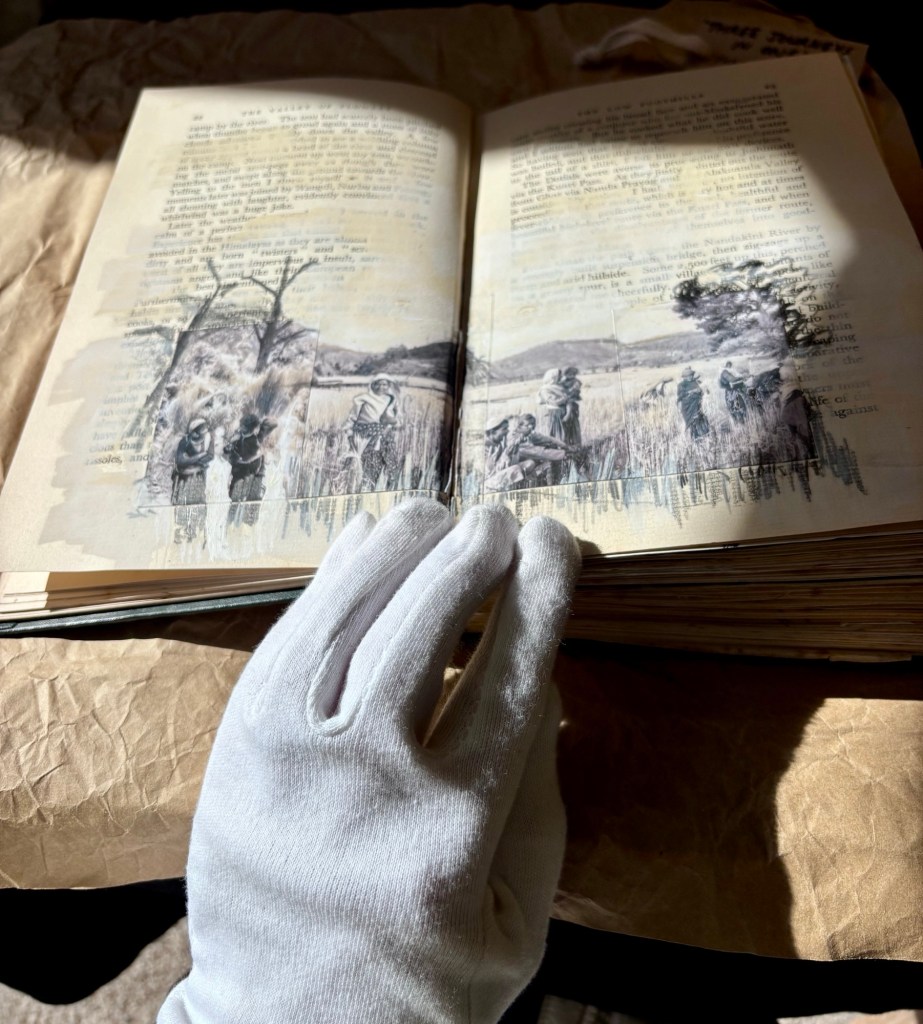
At the heart of the exhibition is its smallest piece: a re-working of a first edition of Frank Smythe’s Valley of Flowers, the very book that inspired Joan’s expedition. Through collage, drawings and pressed flowers, it now tells the stories of three visitors to the valley rather than just one: his, hers and mine. Wrapped in brown paper and tied with string like an archival package, the book invites visitors to wear white gloves to turn its delicate pages, not because it is precious in a monetary sense, but out of respect, Unlike most artworks, these ones are meant to be handled and engaged with.

‘Three journeys in one’

There is nothing for sale. No press campaign. No sponsorship. Just a quiet space, tucked away in a garden, found by invitation or chance. A strange but deliberate choice, and to me, a more authentic reflection of the humbleness of where Joan’s life ended than any traditional gallery could offer.

What Joan lost in material possessions, she gained in purpose and joy. Her life distilled into what nine porters could carry. She found a sense of completeness long before she had completed her journey.

That’s what I hope to convey in the improvised, immersive pieces shown in the warm belly of my limestone vaults. People forgive imperfection and lack of polish as they connect with Joan’s story through their hands, senses and bodies.

Just as artists learn to see not just form but negative space – the shapes between things – so Joan’s outwardly abundant life transformed into an inner world: slower, quieter, less visible, but not lesser in any way.

Maybe this is a natural outcome of ageing… the gentle decluttering of ambition and a reshuffling of values. Or maybe Joan’s story is a simple reminder that richness cannot always be seen and meaning doesn’t always require an audience.

The symmetry in our shrinking trajectories is just an observation.

But it feels strangely right.

IN PROCESS…

Sunday 19th October, 11am-5pm and by appointment until 1st November.

The Vaults, 114 Bisley Road, Stroud


Following Joan… Part Three

(If you are joining Joan’s story now, you might want to read Following Joan… Parts One and Two first.) 

‘Do you think she jumped… or did she fall?’

It’s 2020 and I am sitting opposite my uncle, a grandfather clock tick-tocking the present into the past.

That question has always lingered around the name of my Great Great Aunt Joan. She was said to have been troubled, never having recovered from the death of her beloved older brother, Gerald, killed at Gallipoli in the First World War. Ill health had dogged her. And as another war loomed on the horizon, perhaps she could not bear to witness more loss. 

I sometimes wish I could type ‘Joan Legge’ into the search box of my life’s hard drive to locate the exact moment her story began to intrigue me. Perhaps it was a conversation with my grandmother, Joan’s niece. Both she and her younger sister had believed, independently, that Joan would not return from her trip to the Himalayas in 1939. Their mother was said to have ‘the gift’ – an unfathomable intuition, a form of knowing that slips past reason. 

That fascinated me, for even as a child I sensed there were hidden channels of communication and knowledge beneath the surface of ordinary life. Perhaps their foreboding of no return planted the idea that Joan’s death had been deliberate.

Joan 1905

Or maybe it came from the anecdotes I gleaned over time from my father and uncle about this eccentric spinster who, after Gerald’s death, cast off the frills and trappings of aristocracy and privilege to forge a life of farming, service and adventure. A life that ended in solitude, in a remote valley half a world away. 

Some lives close with a sense of completeness, even peace. Death may be welcomed after a struggle with illness or the slow wear of age. Others remain unfinished, wrapped in mystery, unresolved, tugging at the conscience of descendants like a child clutching at its mother’s apron strings. 

Joan’s sudden death was of that latter kind. It sent shock waves through the generations, softening with distance into small ripples. Even now they lap at the shores of my own soul. 

Map of the Valley of Flowers, the site of Joan’s camp, death & grave marked in red
©Staffordshire History Centre

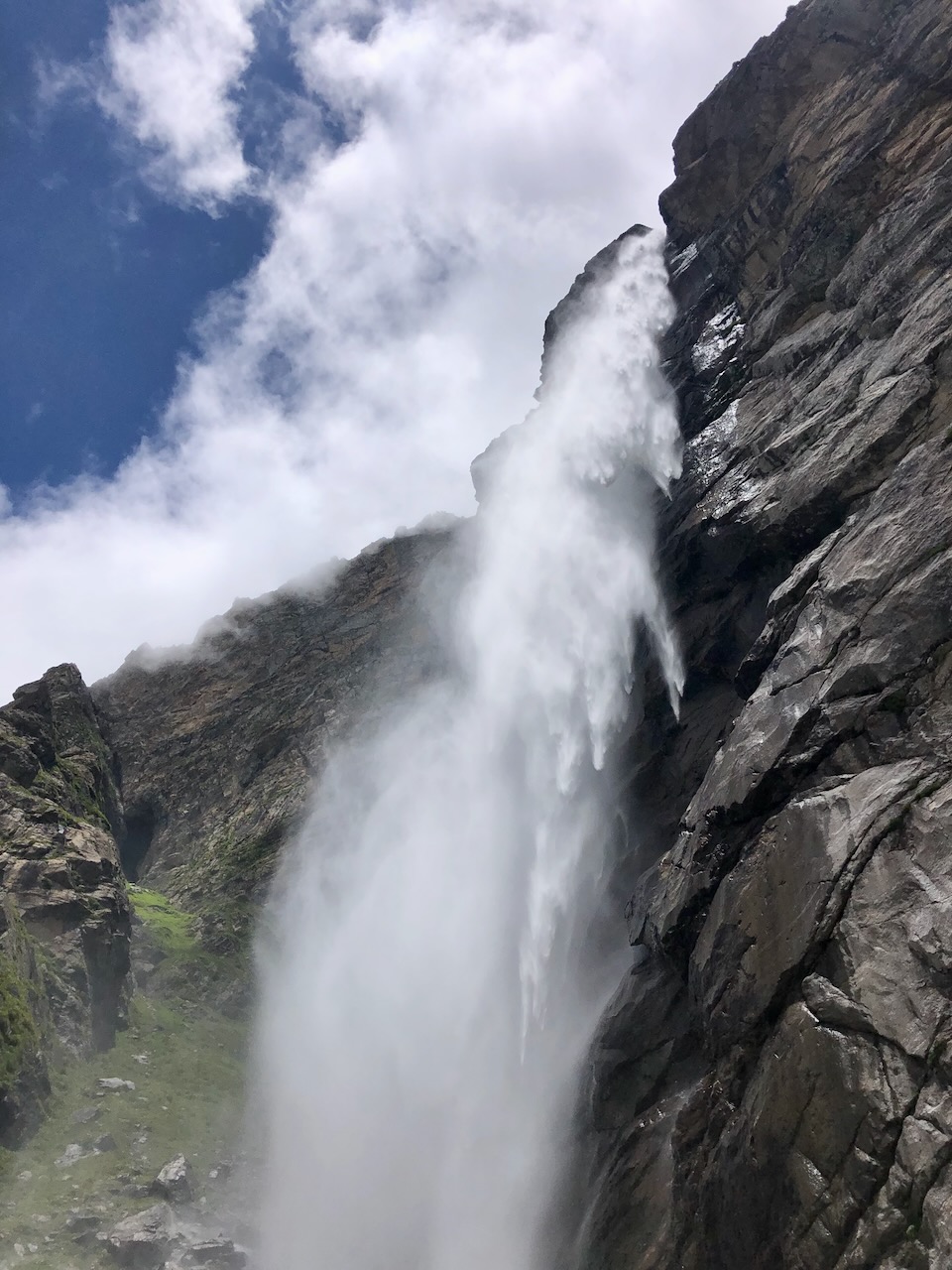
It was only last year, travelling to the Valley of Flowers with three of Joan’s descendants, that I fully grasped the scale of her courage. And the violence of her end. The monsoon rains offered us just a fleeting glimpse of the place she fell, its position traced on a map sketched in the days after her death. Yet it was enough to shatter the gentler image I had long created of her tumbling down a wooded slope. The truth was starker. Joan had fallen clean over the edge of a sheer granite cliff.
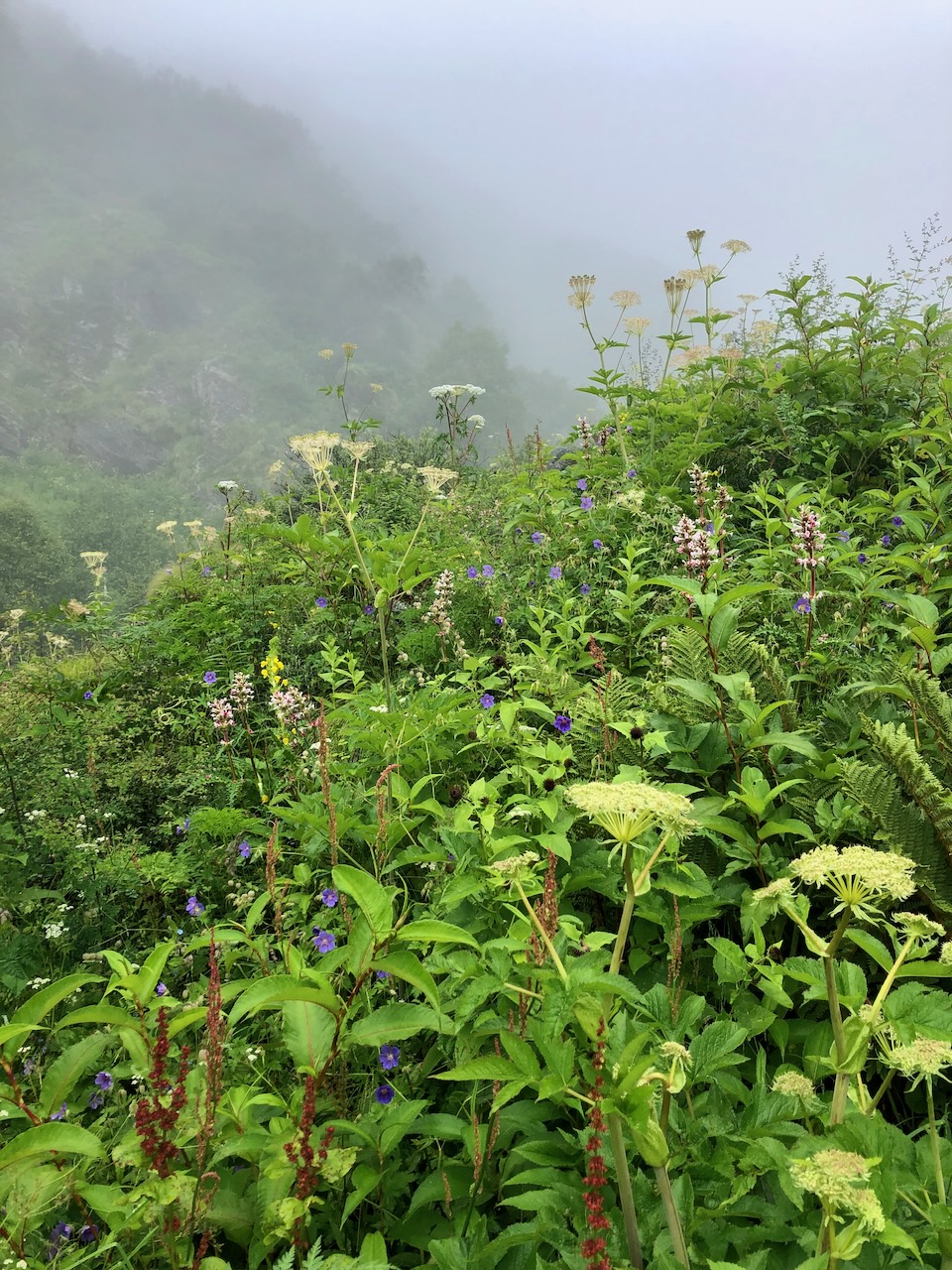
Her fall haunts me. Those unthinkable seconds of awareness, knowing you are hurtling toward your end. How different from a death that comes inch by inch, offering time to prepare, to resist, to rage, or to reconcile. In July 2024, when I left the Valley of Flowers and Joan’s remote grave, a sudden grief overwhelmed me, buckling my legs and landing me in a pile of donkey droppings. Yet Joan’s own words leave no room for doubt. Her diaries brimmed with excitement for the months ahead, with awe for the surrounding peaks, and with delight in her adventure. She did not choose death. She was very much alive.

So why does her story touch me so deeply? Why not my great grandmother, killed in a car crash?  Why not my grandfather, the ‘muck and magic man’, pioneer of organic farming? Why Joan? And why me – the only one in the family drawn, again and again, to the lives behind us rather than those unfolding ahead? Is it because I have no children to anchor my gaze forward? Or is it that I have no children precisely because the voices behind me insisted on my attention?

Gerald (far left), Joan’s father (seated left), Joan (centre) and others, 1907

Perhaps neither, or both. What I do know is that the dead have enriched my life. And in honouring them, in breaking the silence of the unspoken, in unravelling the mysteries and untangling the knots they left behind, I believe their presence has enriched the lives of others’ too. 

Through my recent studies in Family Constellations, I have increasingly come to experience life as a river, flowing on with or without us. We step into its current for longer or shorter spans, mingling in the same waters where our predecessors once moved. What matters is not the length of time, but the resonance we leave behind. Not quantity, but quality.

Birth is the one beginning we all share. But our endings are as varied as our lives. Accident, chance, destiny, choice… no one can know death’s moment or manner, only its inevitability.

So was Joan’s death a tragedy as her obituaries mourned? Or was it a brilliant ending to a life lived fully right into its final breath? 

Draft for Joan’s eulogy by her sister: ‘If in another world kindred spirits dwell together there Joan & her brother Gerald will be found, I think, among a happy throng of pioneers and explorers of all ages. Courage, endurance and an indomitable will were possessed by this devoted brother and sister and both lie buried in a mountain grave & as one of her friends wrote, ‘”already halfway to Heaven”. She started on her greatest hazardous adventure joyfully and she died as she had lived, unafraid –

Joan and Gerald, 1907

I dedicate this blog to my dear friend in Australia, Tas. Over the past six years, corticobasal syndrome (CBS) has been claiming his body, his movement, his speech. And yet his spirit, his humour, his integrity and his enduring delight in friends, family and life itself still blaze. To know him is both an inspiration and a gift I deeply treasure.  

Further details of my exhibition / event on Joan will follow in my next Blog.  

Following Joan… Part Two

(If you are joining Joan’s story now, you might like to read ‘Following Joan… Part One’ first)

Goal reached, Valley of Flowers. Fritillaries nodding their heads around me. Men off.’ 

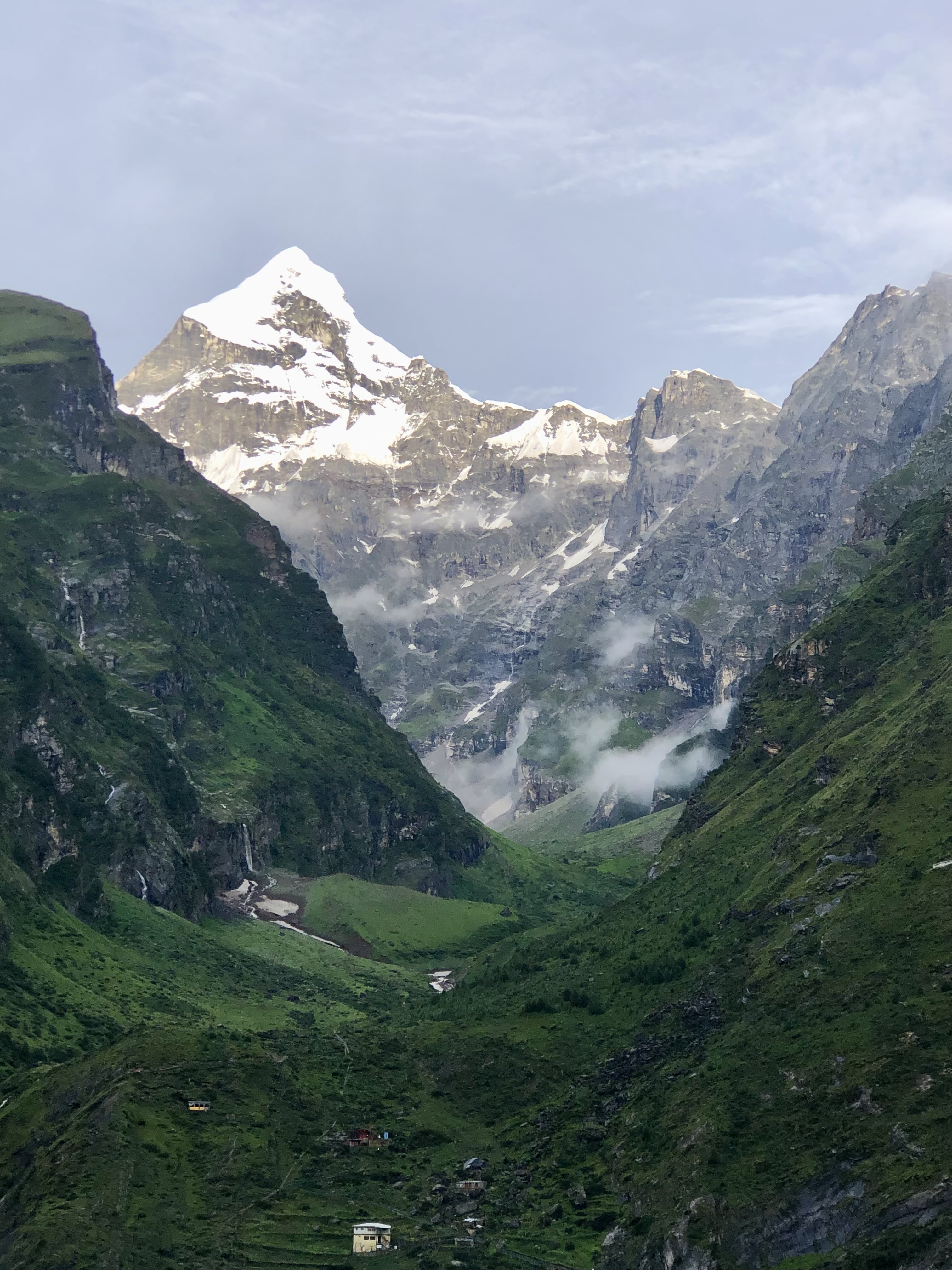
On 20th June 1939, just over four months after leaving England, 54-year-old Joan and her troop of porters reached the Valley of Flowers in the northern Indian Himalayas. 
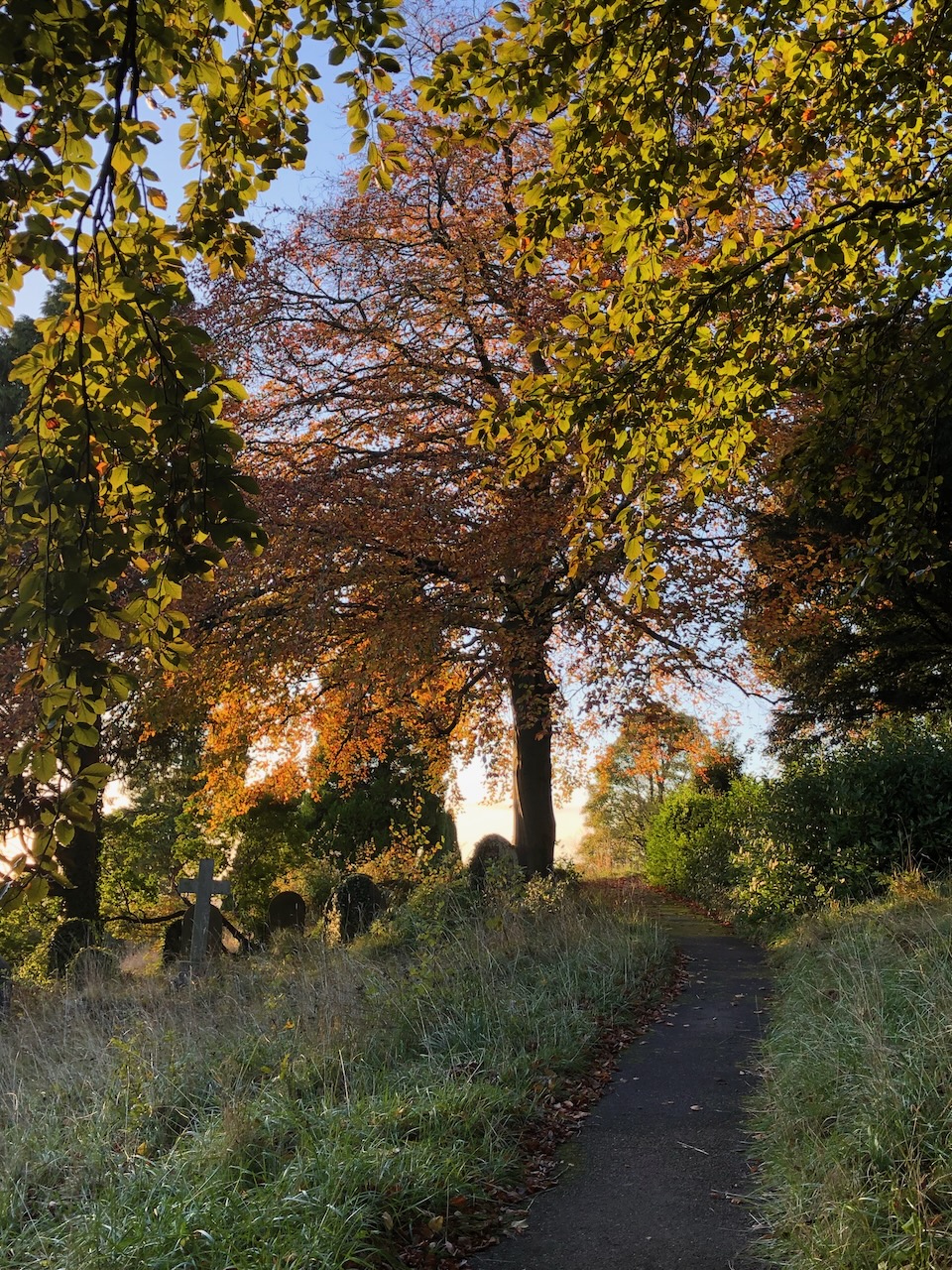
It was ‘a morning in a thousand’. Firs and jasmine scented the air, dew drops sparkled & everyone was cheerful & happy. The track wound up and down until it suddenly dropped sheer to the river. At the bottom, the worst native bridge Joan had encountered yet stretched precariously across a particularly turbulent section. ‘If I had met it in the early days I don’t think I could have faced it.’  
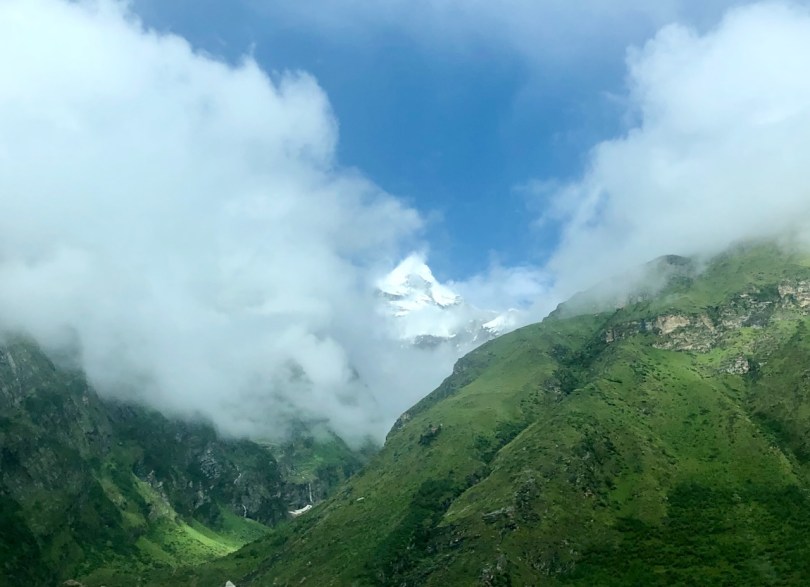
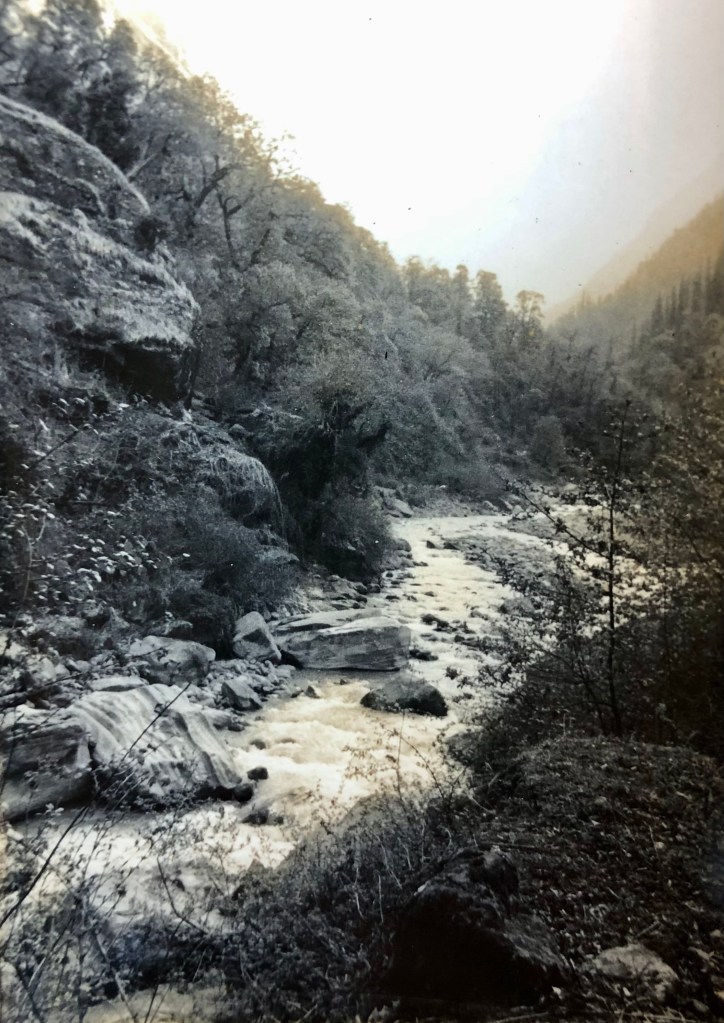
Then came a real climb, so steep she had to crawl part of the way. Even with ice axe and climbing boots, she couldn’t stay upright. The path clung to the side of a mountain which plummeted several hundred feet into the raging waters below, the ground crumbly and uncertain. But she pressed on. ‘One is so busy placing feet that one hasn’t time to think of possibilities.’ 

They slid down a precipice, hanging on to rhododendron bushes, crossed another snow field, then climbed again. Ganga Ram & Amba Dath – two of Joan’s three most loyal young guides – clearly thought she was too slow. ‘Each took a hand & ran me up paying no heed if I was on my feet or not. I had to beg for mercy twice as really they nearly finished me off,’ she wrote. And then they were there. The goal reached. The Valley of Flowers.

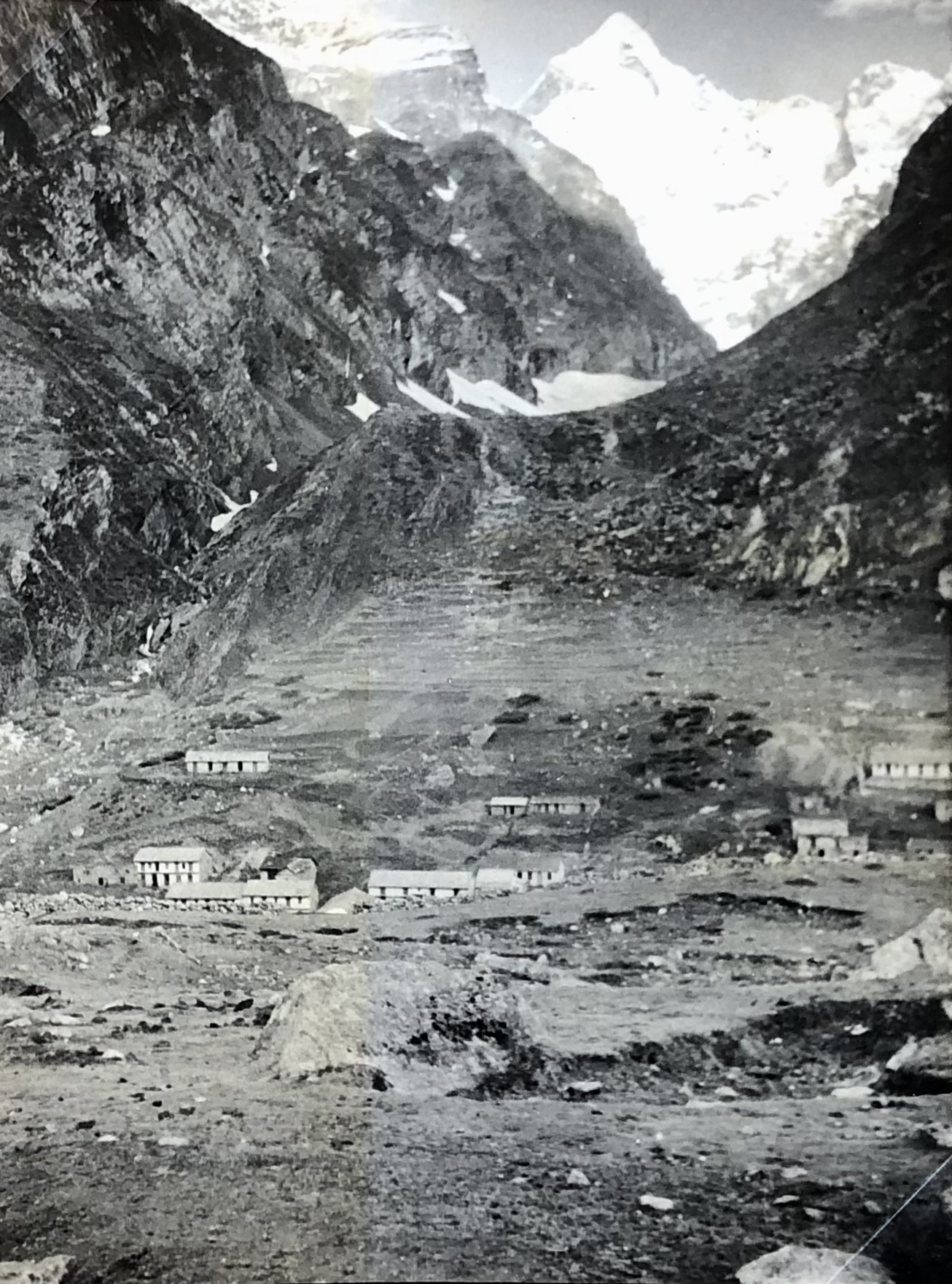
Tents were pitched exactly where mountaineer and author Frank Smythe had camped for several months in 1937. With three men managing the camp and plans to stay there until October, Joan was free to roam and explore the terrain of her new home in search of alpine flowers. The monsoon rains were gathering. Conditions would soon become unimaginably wet and the ground increasingly treacherous. But Joan was deeply happy.

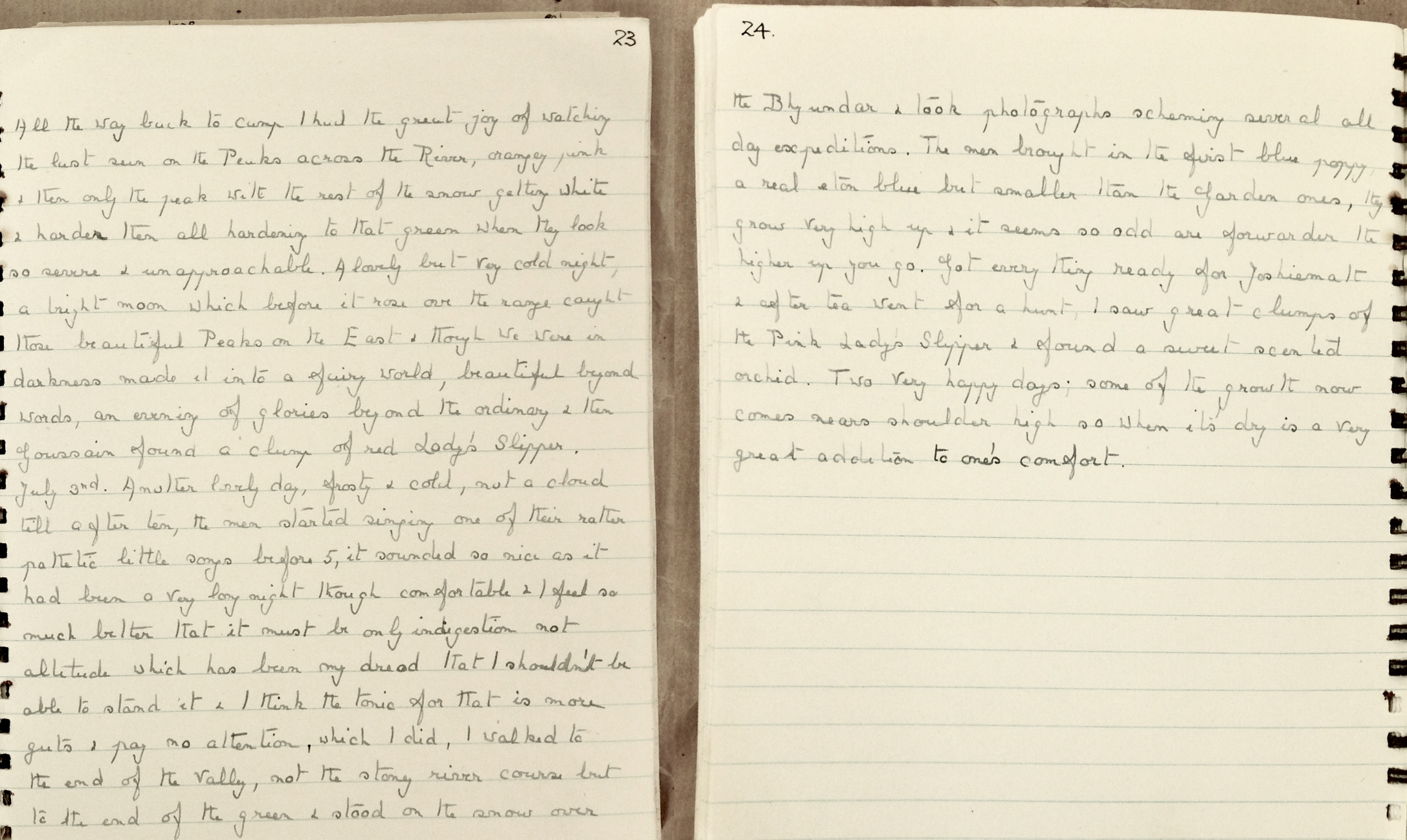
July 2nd. ‘It was the most glorious evening, every way you looked magnificent, through the gorge range upon range of perfect mountains…’ The descent from these dizzying heights, however, was less glorious. Rains had rotted much of the ground and the final stretch was so steep that she had no choice but to descend on her seat, using the ice axe as a brake. Yet Joan revelled in challenge and beauty alike, undaunted by danger, enchanted by flowers and alive to every shifting shadow. ‘All the way back to camp I had the great joy of watching the last sun on the peaks across the river, orangey pink… the rest of the snow getting white & harder, then that green when they look so severe & unapproachable.

That night was lovely but cold. A bright moon rose over the range, catching the snowy summits in the east. Though Joan’s camp lay in darkness, the moonlight made the mountains glow. ‘A fairy world,’ she wrote, ‘beautiful beyond words.’

July 3rd. ‘The men started singing before 5 o’clock this morning, it sounded so nice. The ground has all dried up & things are extremely lovely. If we get spells of two days fine, it will be a great help. Everything is growing very fast.

The following day, Joan was dead.

©Staffordshire History Centre

As abruptly as her life ended, her diary – so alive with wonder – skids to a halt.

Silence.

A telegram or letter from the sub-postmaster in Joshimath informed her family. Joan had slipped, fallen and died instantly. Due to the remote terrain, her body was carried back to camp and preserved in the snow until a magistrate could formally record the death. When her sister, Dossy, requested that Joan be buried in the valley, a small grave was made. A year later a headstone was erected, apparently delivered by Dossy herself.

Except that last bit has been deemed most unlikely by Dossy’s grandchildren who can find no record of their grandmother having made the long, arduous journey to India in the first year of the Second World War.

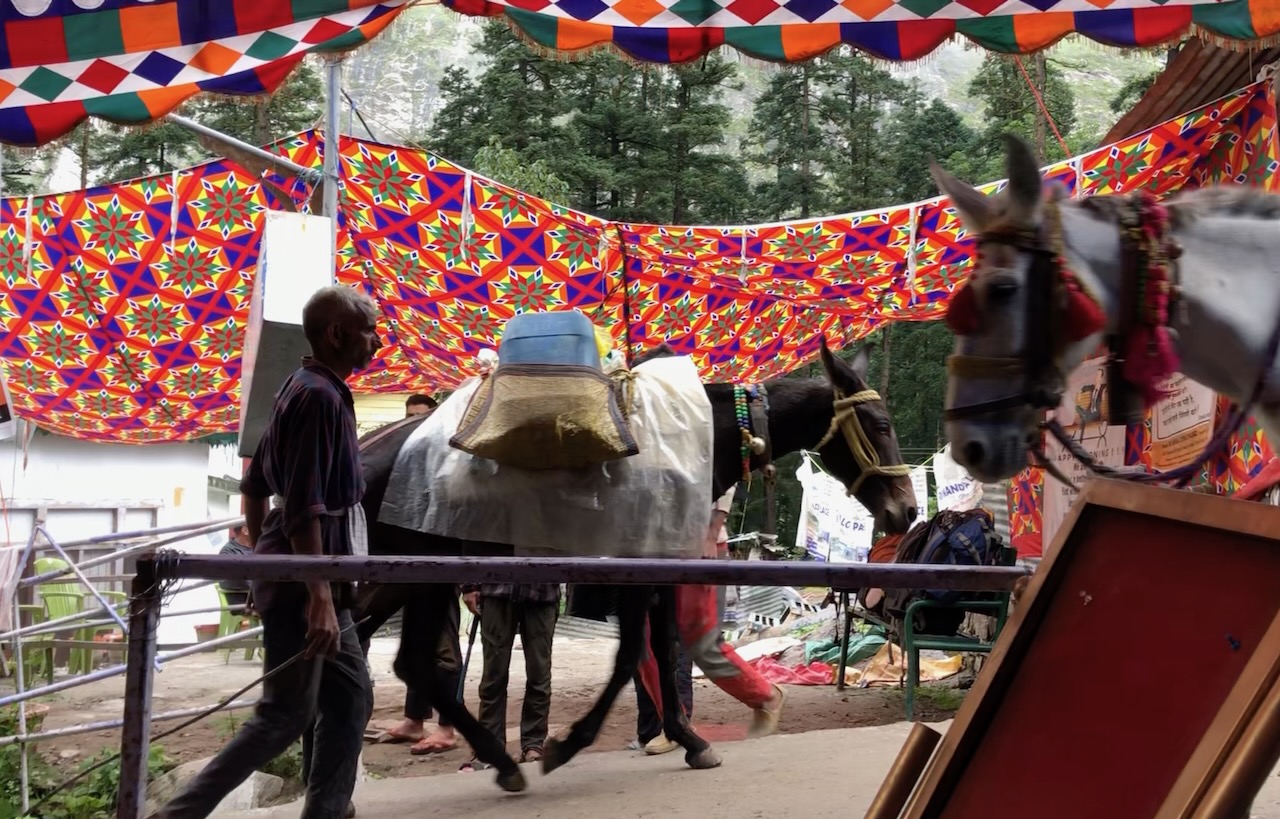
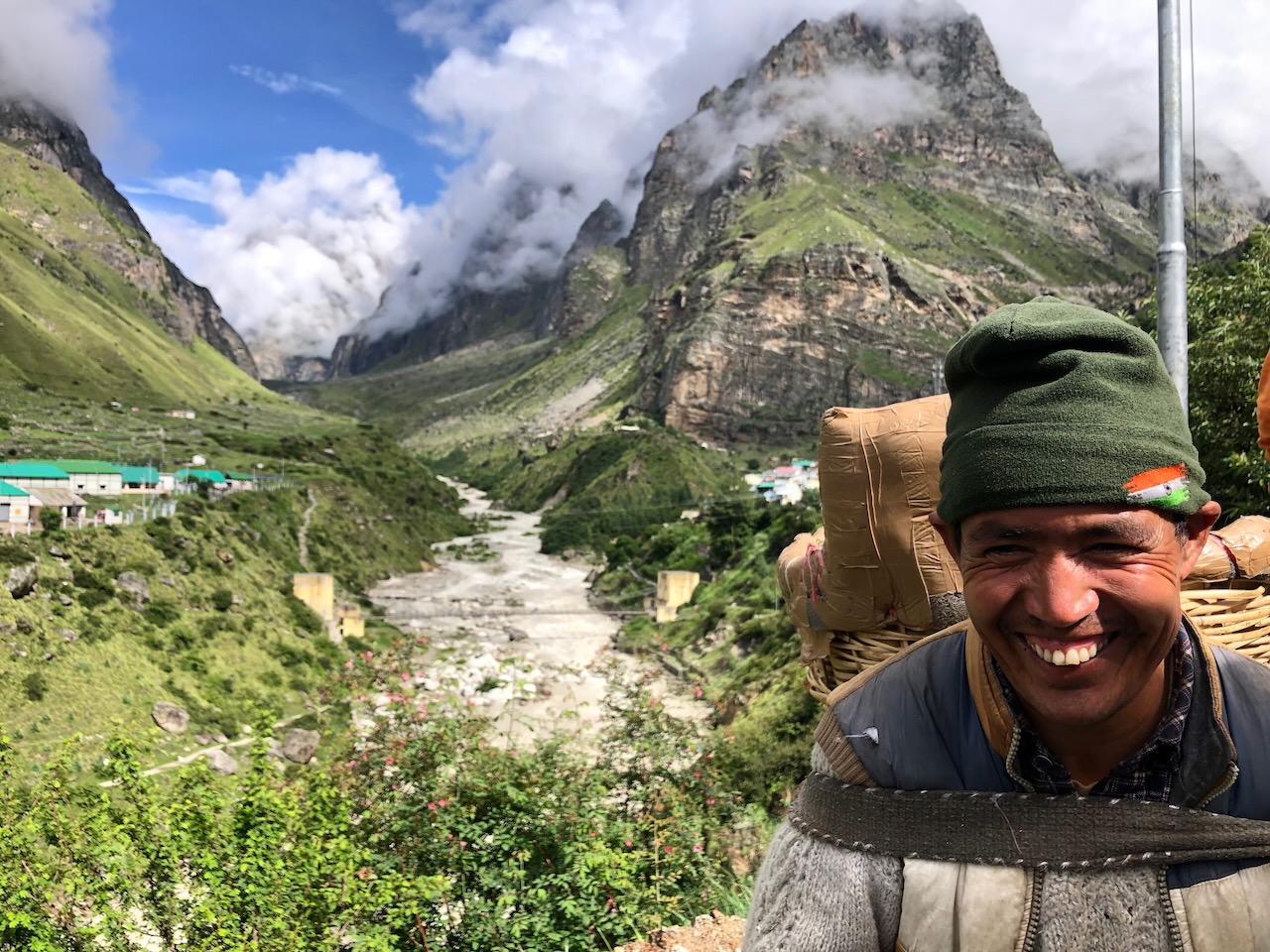
Without Joan’s detailed voice to explain what happened, conflicting accounts have taken root, a Chinese whisper of history… herstory. Was she reaching for a flower to add to her collection of specimens for Kew Gardens? Did she just slip, the edge of the cliff invisible in dense fog? For several years, I’ve tried to disentangle fact from error and in late July 2024, I and three of Joan’s descendants travelled to Ghanghariya, a colourful, bustling shanty town of damp hotels, pilgrims and donkeys, ready to make the long climb into the Valley of Flowers. The landscape might not reveal the past, but it could not lie.

Ghanghariya

We were warmly welcomed at the impressive Information Centre, honoured guests of the great-great-grandchildren of shepherds, villagers, and guides from Joan’s time each eager to share their version of what had happened to ‘Legge Ma’am’. Soon I had scribbled five different endings to Joan’s life in my little green notebook, the one that would mysteriously vanish a few days later as if to tell me: it didn’t really matter. The only truth that did, was that Joan had not been forgotten.

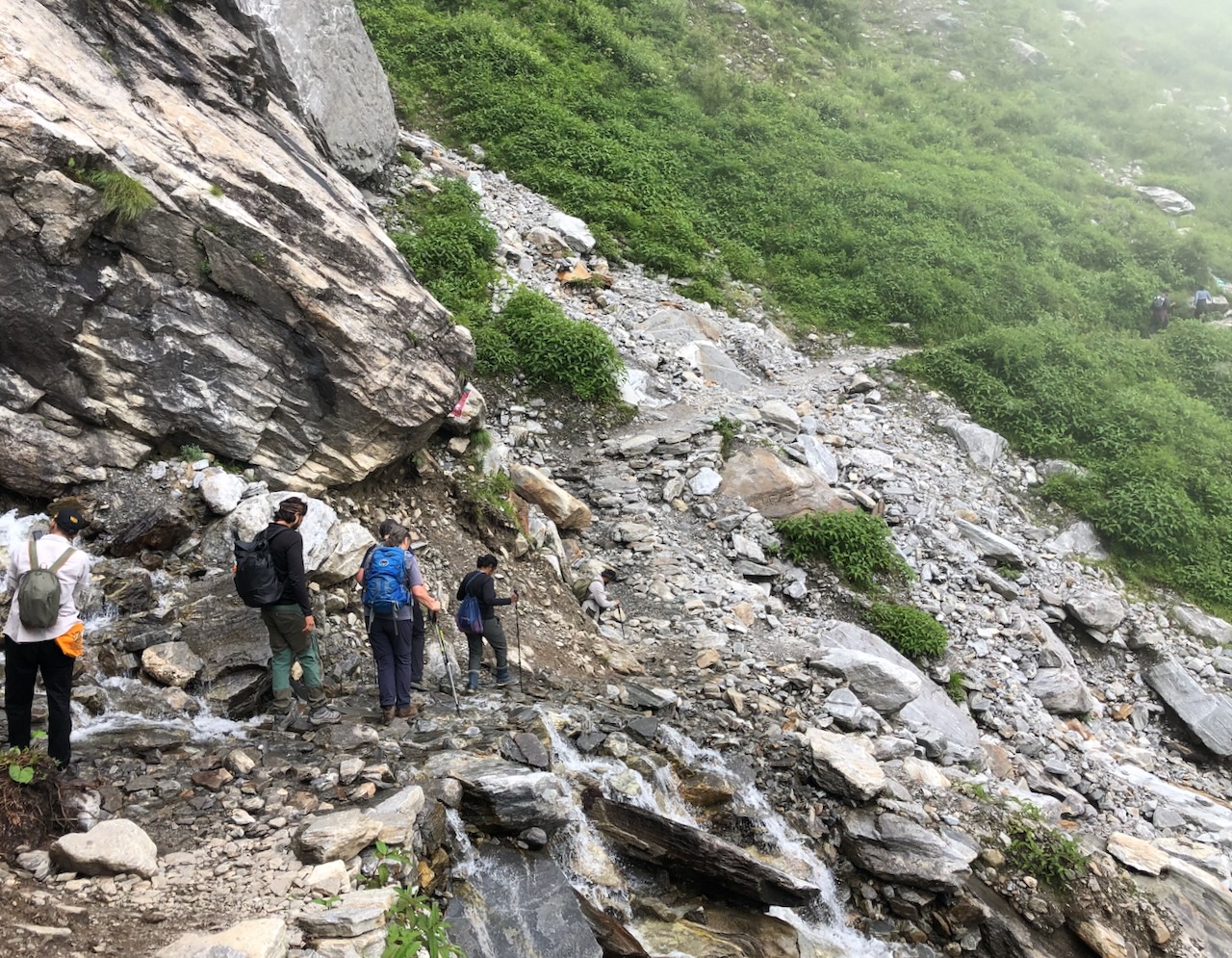
The next day we set off, once again retracing Joan’s footsteps, traversing the same raging river (via a slightly less terrifying bridge) and climbing the steep slopes into the valley.

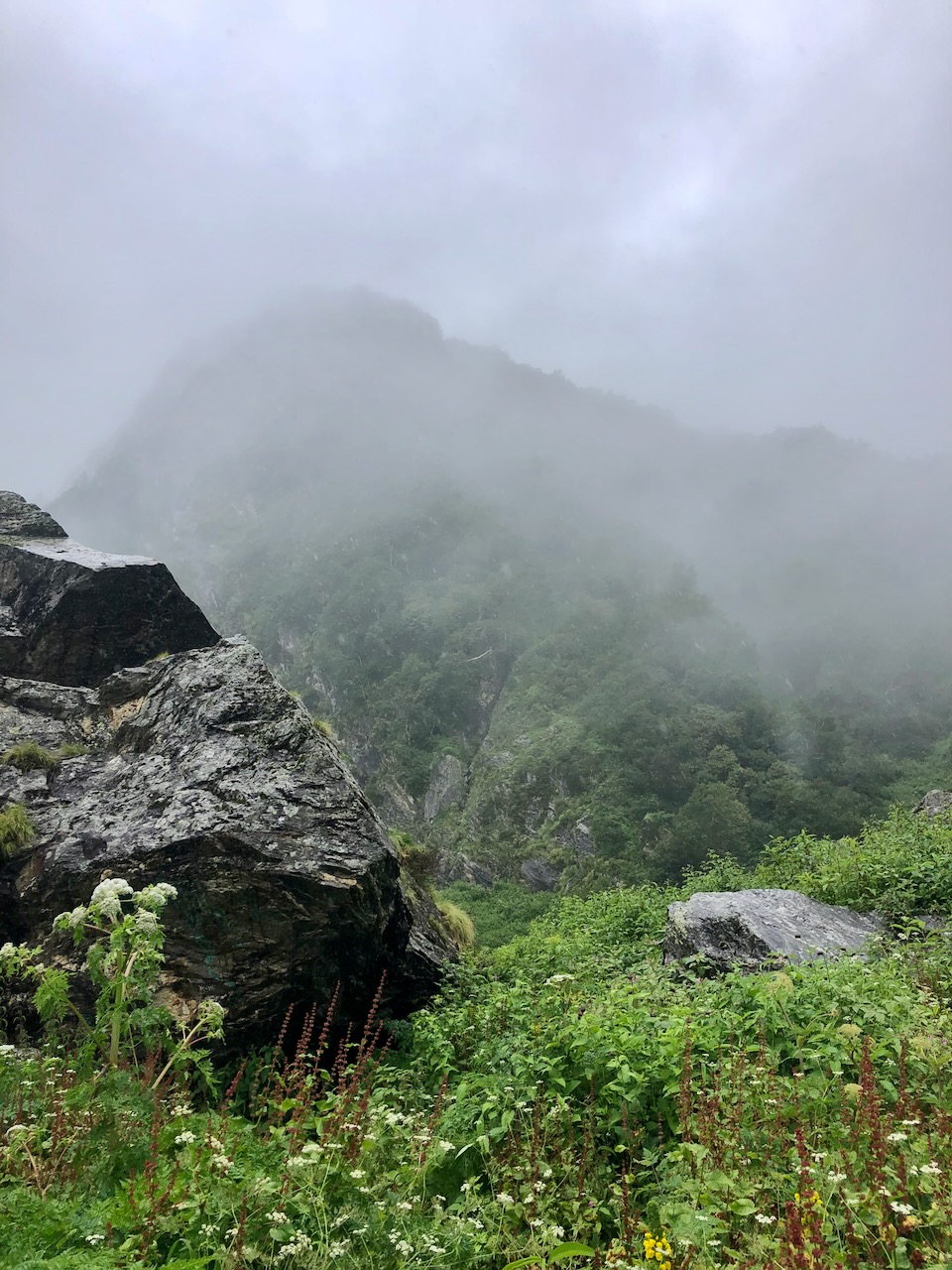
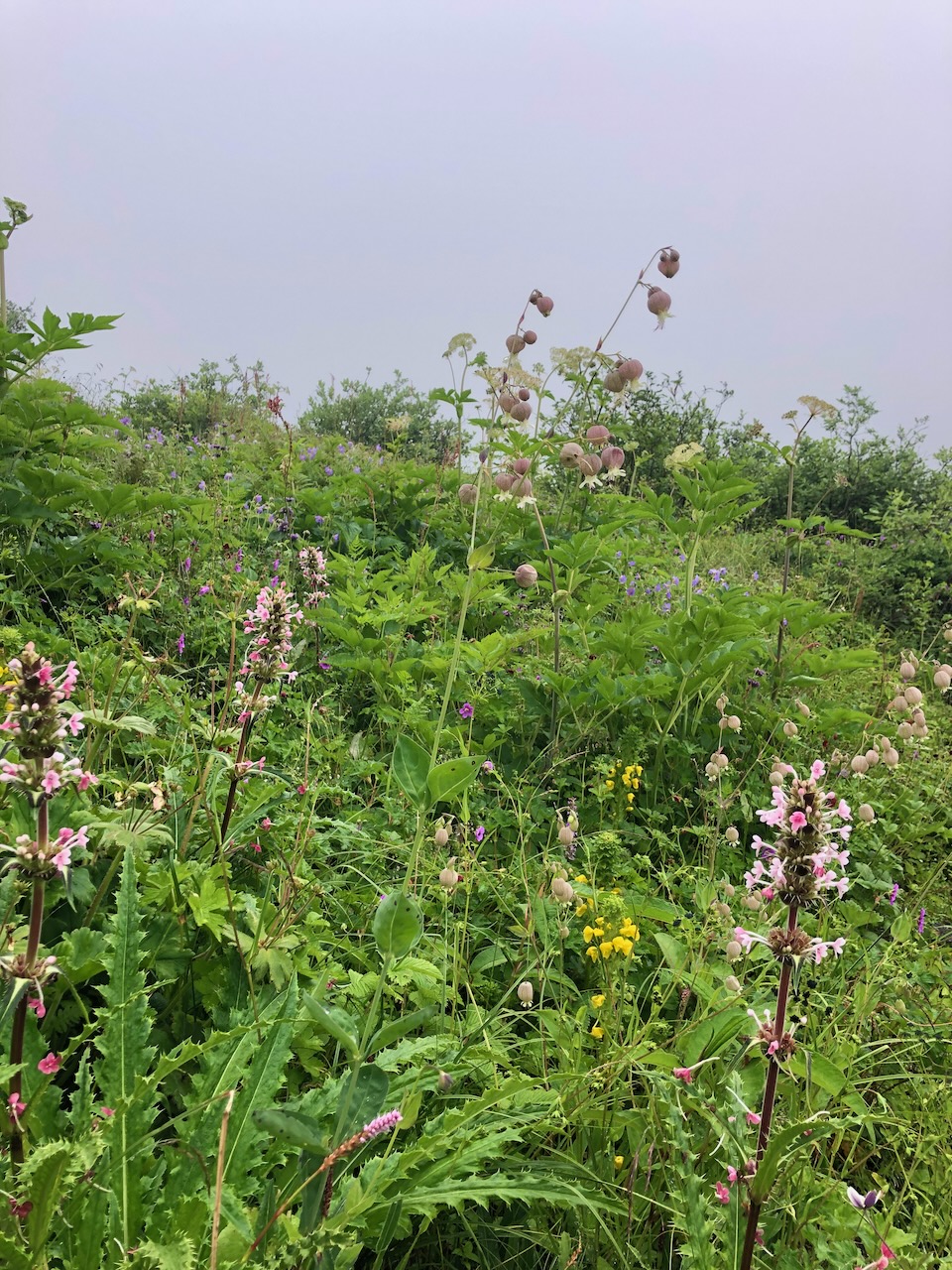
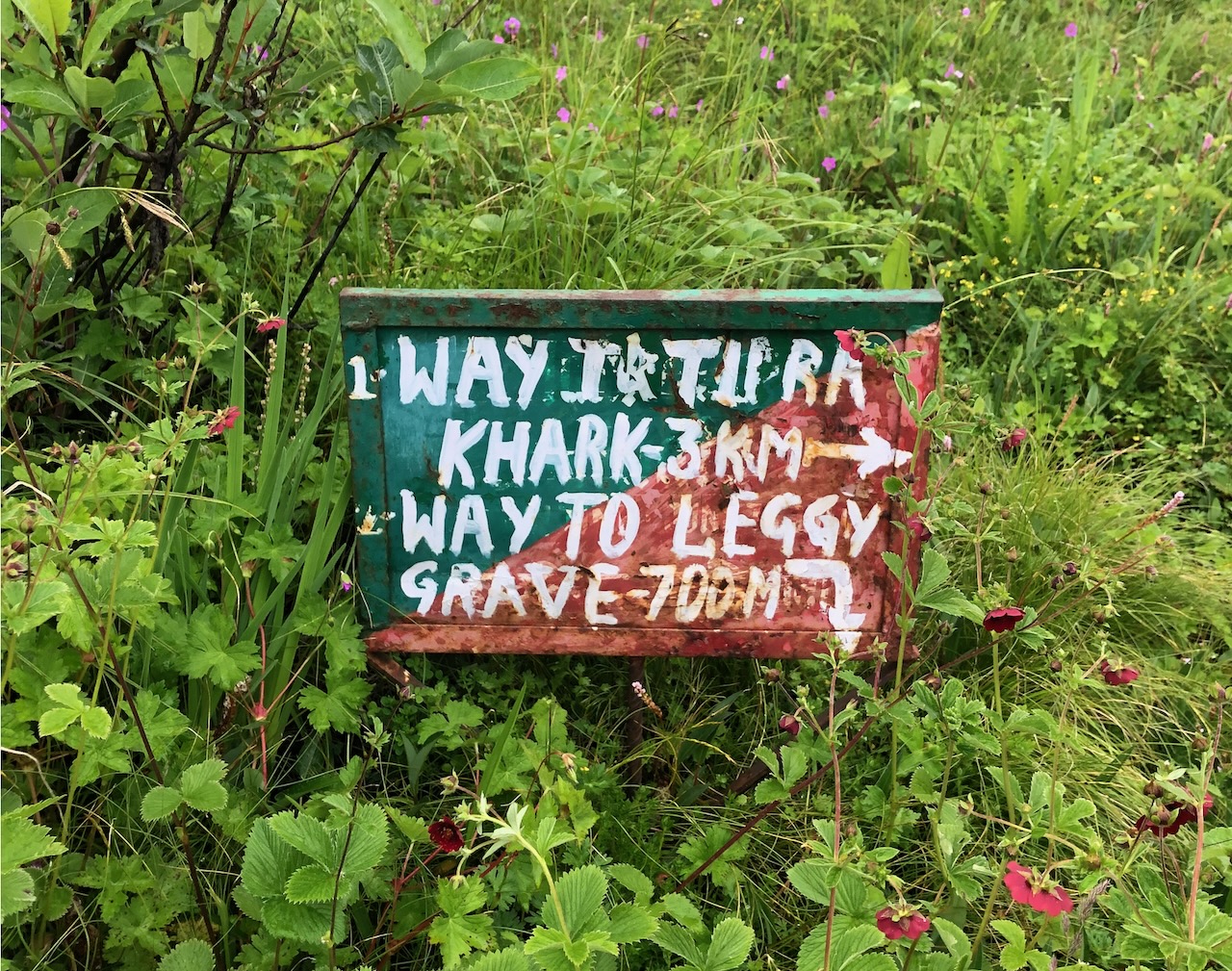
Low cloud concealed Joan’s snowy ‘majesties’ and even the valley itself. Flowers, shoulder high, lined the narrow trail until a small hand-painted sign forked it and directed us to the right.

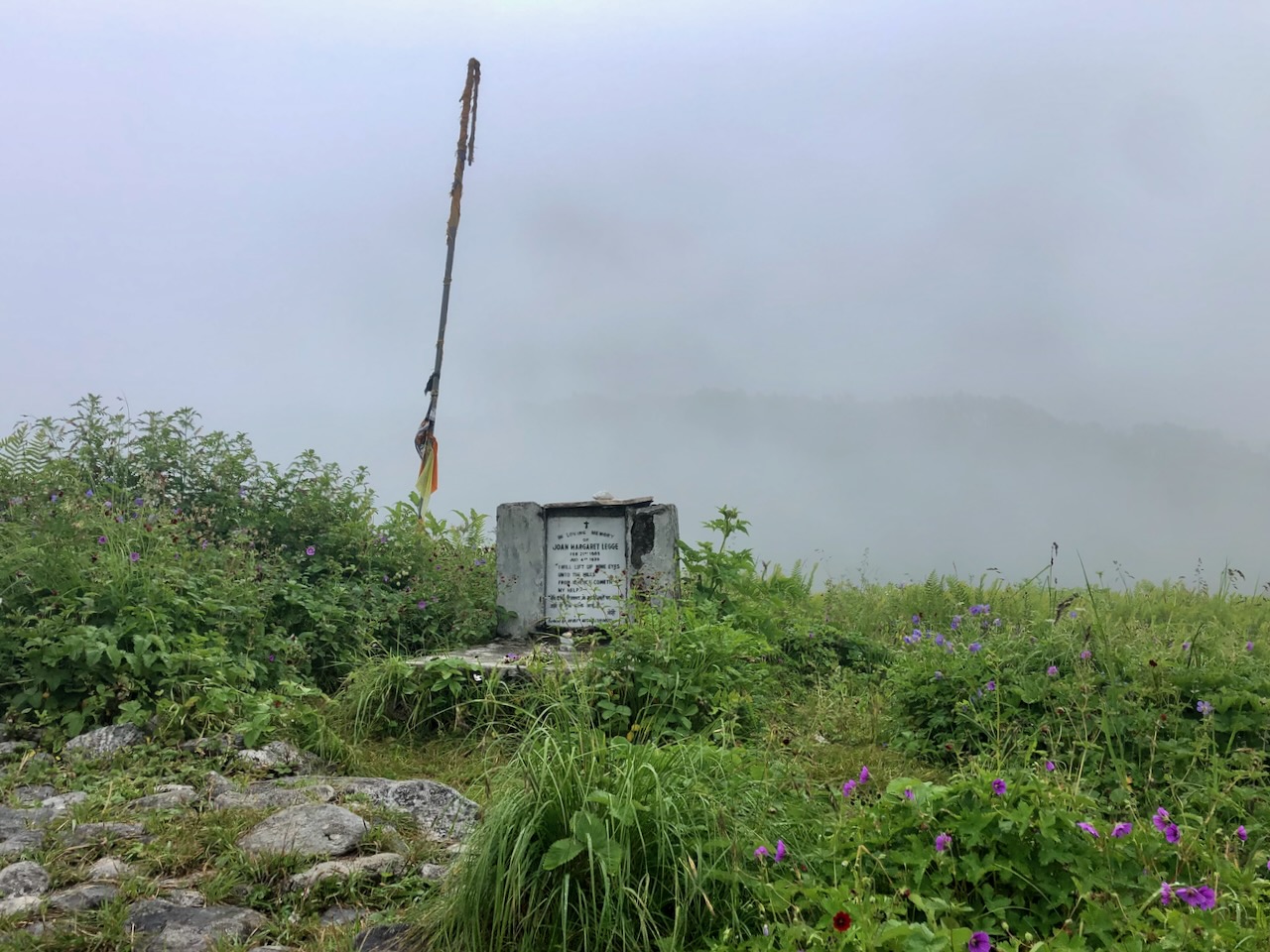
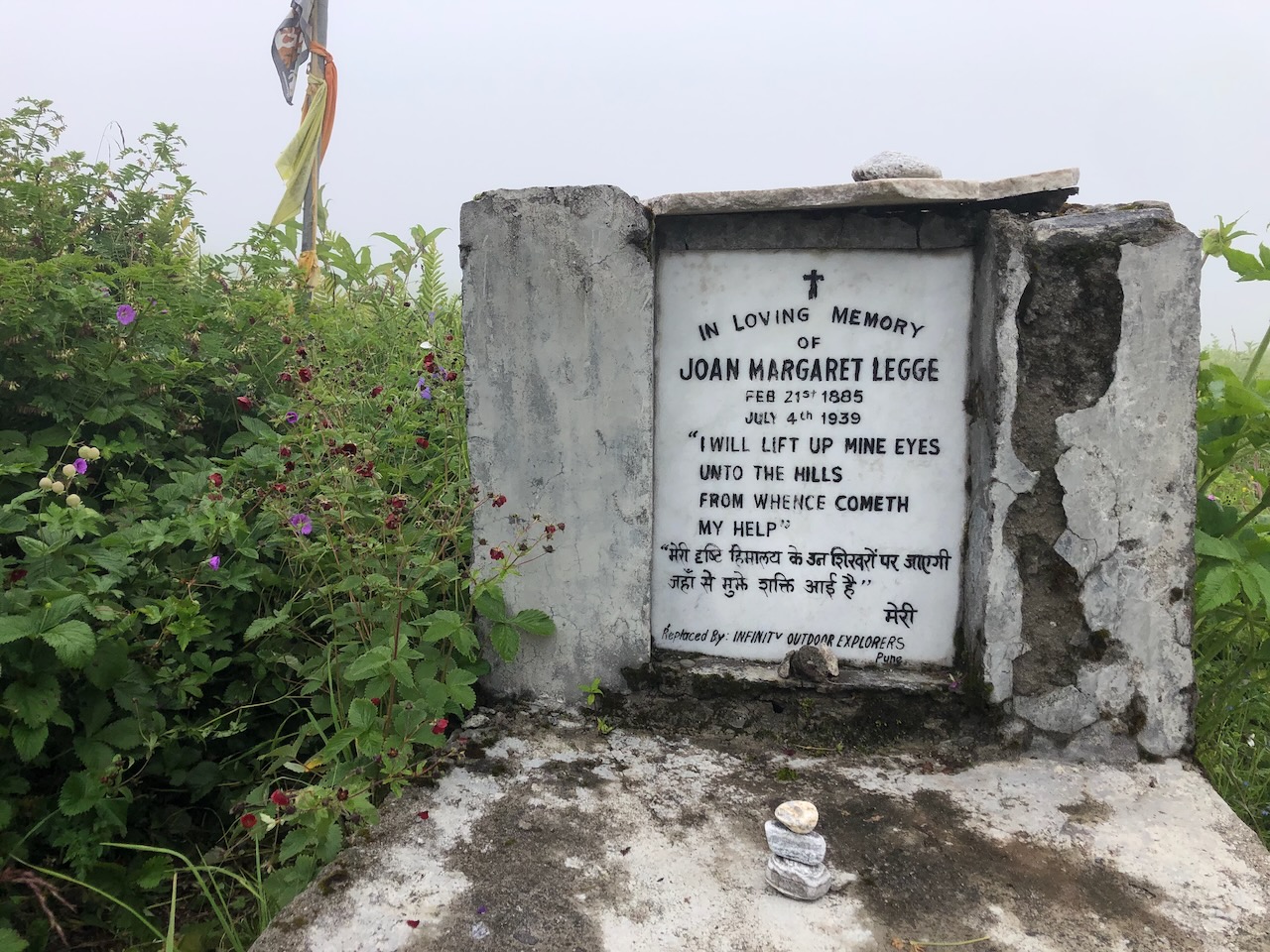
‘Leggy Grave’ could not have been more remote. With the original, broken headstone having been generously replaced by Infinity Outdoor Explorers and the area lovingly tended by villagers, Joan rested, Ophelia-like, among geraniums, potentillas and flowers whose names I don’t know. But she did.

Buried under snow for eight months of the year, this was where my intrepid great-great aunt found peace. A ‘lost daughter of the Himalayas’. And in the prophetic words of the sub-postmaster written over eight decades ago, ‘though death is inevitable, her death in a lonely forest under the tragic circumstances will always be mourned.’

While Joan lives on in the hearts and imaginations of people in northern India – many of whom have trekked miles to pay their respects – back in England, her name, her journey and her collection of flowers had all but vanished into the obscurity of family attics and forgotten archives. She entered my orbit in my twenties, a bright star that inspired independence, courage, a different way to be a woman in the world. I’ve followed her willingly, right to the edge. Imagined her fall… falling… falling… time stretching to infinity like a bungee… then snapping.

A tragic death, or an enviable end to a life well-lived? I’ll let Joan speak for herself.

‘… if we would only give up struggling after worldly things. They don’t count much when you come face to face with what the old Sardou calls the sublimity of the Himalayas whose magnificence, serenity and everlastingness grip one right to the core. You will probably think I am mad, but I don’t think so. There are things that stand and are I think increased, they are love and gratitude.’

Joan, June 1939

Forthcoming Event:

At the end of September, you are warmly invited to an exhibition/series of events showing research and art created in honour of Joan. Exact dates and details to be confirmed, but it will be in the beautiful Chapels of Rest in Stroud Cemetery.

Following Joan… Part One

On 17th February 1939, Joan Margaret Legge boarded the T.S.S. Hector at Birkenhead’s Vittoria Docks and set sail for India. Surrounded by a flurry of last-minute flowers, letters and good wishes as well as Leica cameras, rolls of Kodak film and 17 packages from Fortnum & Mason, she began a four-week sea voyage that would deposit her in Mumbai. From there she would travel north by train to the Himalayan hill town of Ranikhet. And so, aged 54, began her greatest adventure.

The year before, Joan had read mountaineer Frank Smythe’s newly published book The Valley of Flowers and was so captivated by his descriptions of the majestic Himalayas that she resolved to go there herself. With the intention of adding to the collection of flower specimens Smythe had collected, she offered her services as a keen albeit amateur botanist to Kew Gardens, who willingly accepted sending her flower presses and detailed instructions on how to collect and preserve flora from the field. 

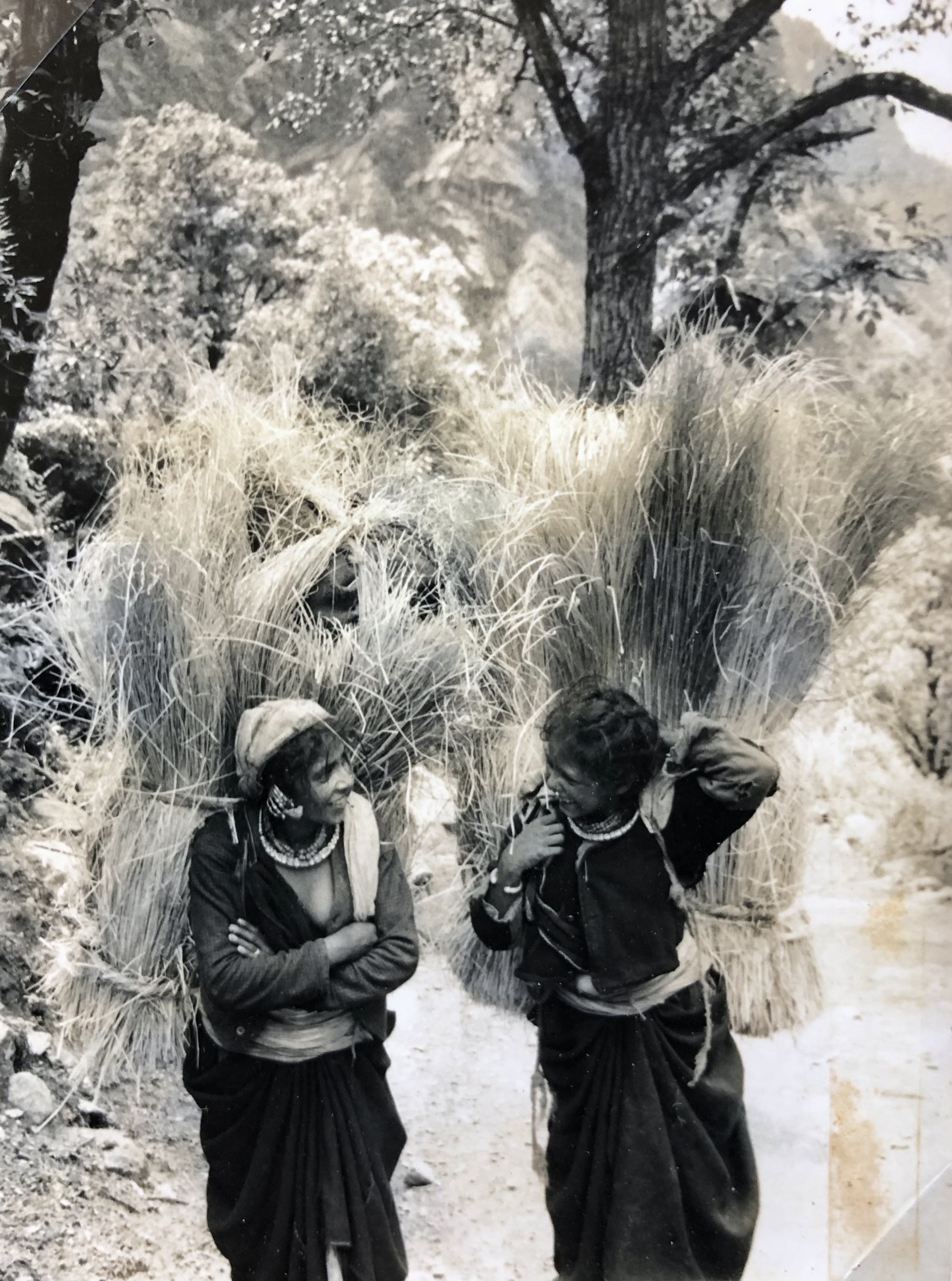
Her daily diary entries – written in tiny, meticulous script – and a remarkable collection of surviving photographs, now housed at the Stafford Archives, paint vivid scenes of rural life in northern India. As a woman navigating imperial times, Joan observed the stark poverty, the tangled legacy of British rule, and the troubling presence of Christian missionaries amid deeply rooted local faiths. Yet she did so with sensitivity and genuine curiosity, not the arrogance or entitlement so often associated with her era. She taught herself enough Hindustani to converse with those she met along the way, delighting in children, cups of tea, goats with saddle bags and botanical novelties in equal measure.

Several months of acclimatisation treks around Ranikhet gave her time to assemble a team of guides and porters and to test her equipment – tents, a canvas bath, ice axe and other supplies – in preparation for the ultimate trek to her final destination: the remote, high-altitude Bhyundar Valley, nestled just south of the Tibetan border. On May 22nd, they headed north.

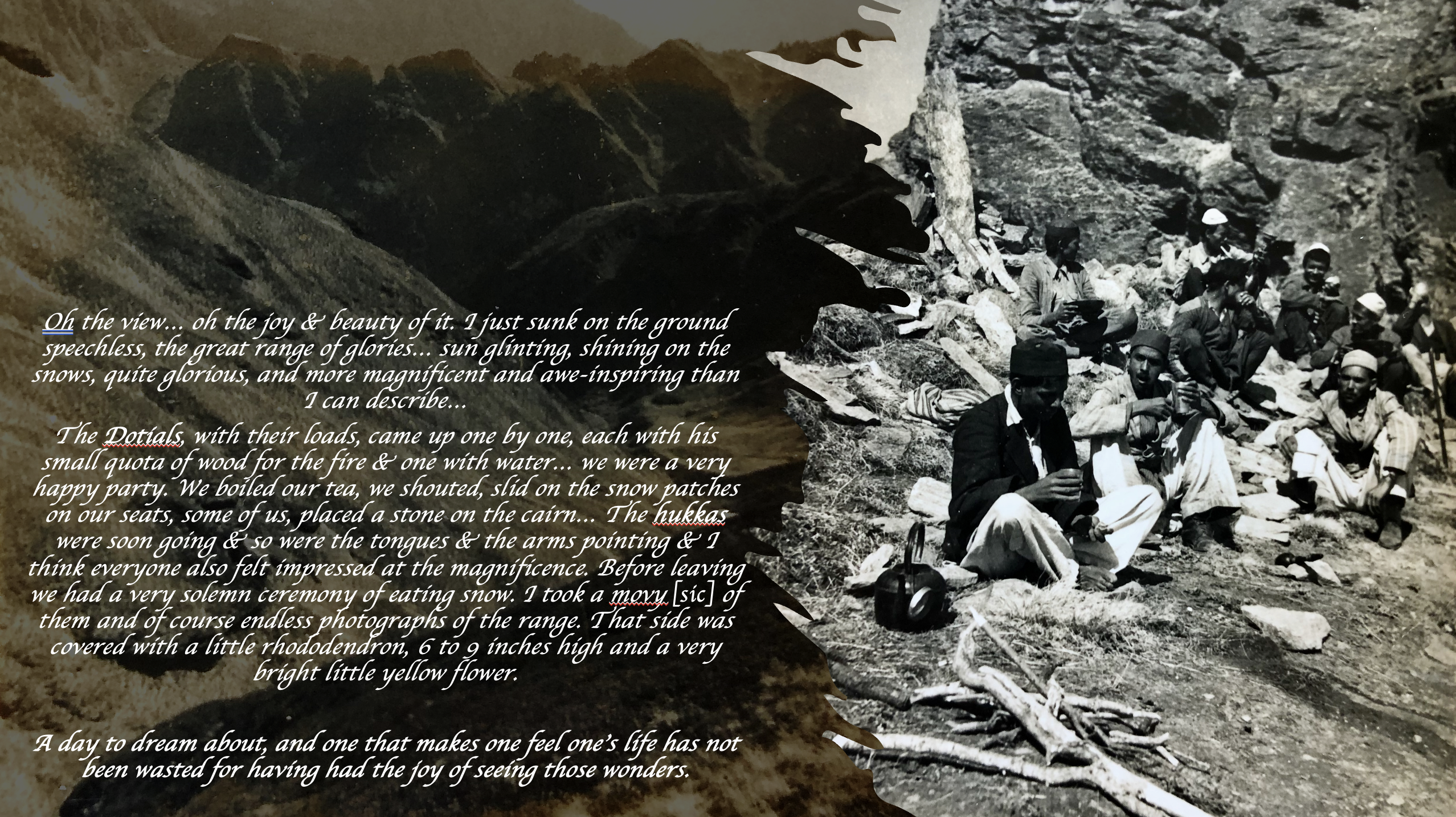
31st May, 1939. Arrival at the Kuari Pass: A very great day in one’s life

As I have mentioned in earlier blogs, Joan was my great-great aunt on my father’s side. And last July, three other descendants and I retraced her Indian footsteps. Together with local guides who were already familiar with ‘Legge Ma’am’ as they fondly and reverently called her, we made our way to some of the same hills and valleys she once walked, recognising waterfalls, temples, holy trees, bridges and landscapes she had captured in both writing and image.

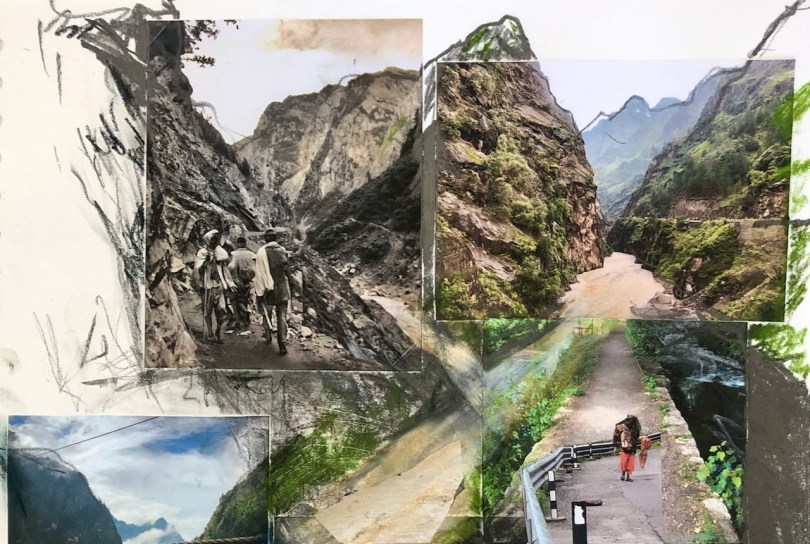
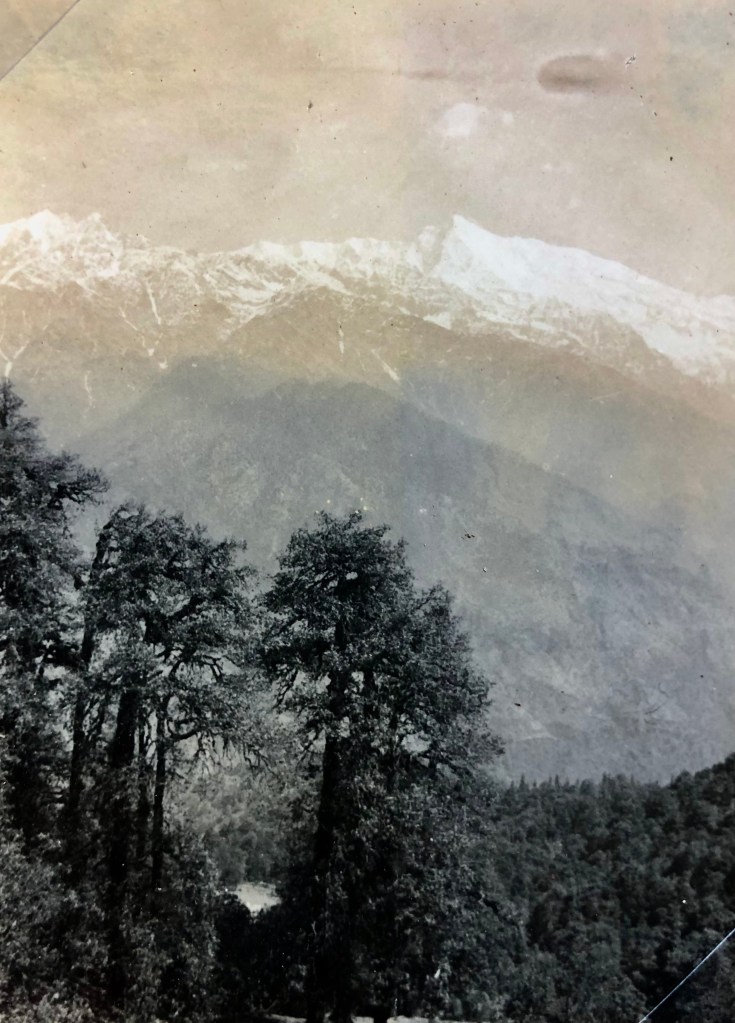
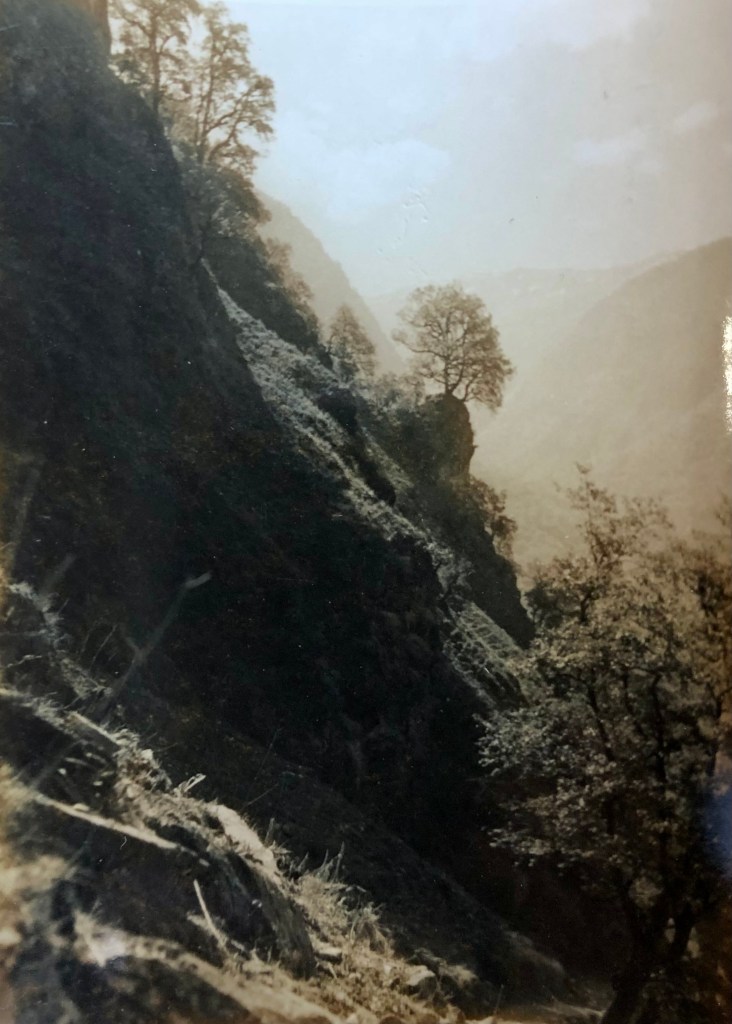
Like all pilgrimages to places of memory, her story seemed to reassemble itself in the elements around us: the humid air, the scent of pine needles crunching underfoot, the wind and monkeys dancing through the trees, the sheer drops and raging rivers, the saffron-clad pilgrims, and the fleeting glimpses of snow-covered peaks – ‘the Glories’, as Joan called them in her awe – emerging through shifting skies. As the four of us dipped our toes into the trials of that wild and beautiful land, its altitudes, its weather, its unfamiliar rhythms, her quiet courage and unflinching resilience rose steadily in our esteem.

Joan’s story is that of an intrepid 54-year-old woman who displayed the same grit and independence as her more famous contemporaries, such as Gertrude Bell or Evelyn Cobbold. But unlike them, her path was quieter, deeply personal and largely unsung. Her modesty, her self-deprecating wit, and the sense of spiritual joy and serenity captured in her letters and journals only deepen the power of her achievement. The beauty and the tragedy of what came to pass have lifted Joan’s journey into something more than biography. It is a story that asks, gently but insistently, to be remembered. Maybe I am the last in our lineage to feel her so vividly. Maybe I am the one meant to tell it.

With that in mind, on 17th February 2025, exactly 86 years after Joan set sail, I stood at Vittoria Docks in Birkenhead to symbolically wave her off. I imagined the Hector gliding down the Mersey, carrying with it not just Joan and her belongings, but the promise of new horizons and adventure. I walked beside the ghost of that ship until it reached the sea, trying to feel what she might have felt… the thrill and anxiety as she watched the landmass she called home and all that was familiar fade from view.

Daily Instagram posts: @ angela_findlay

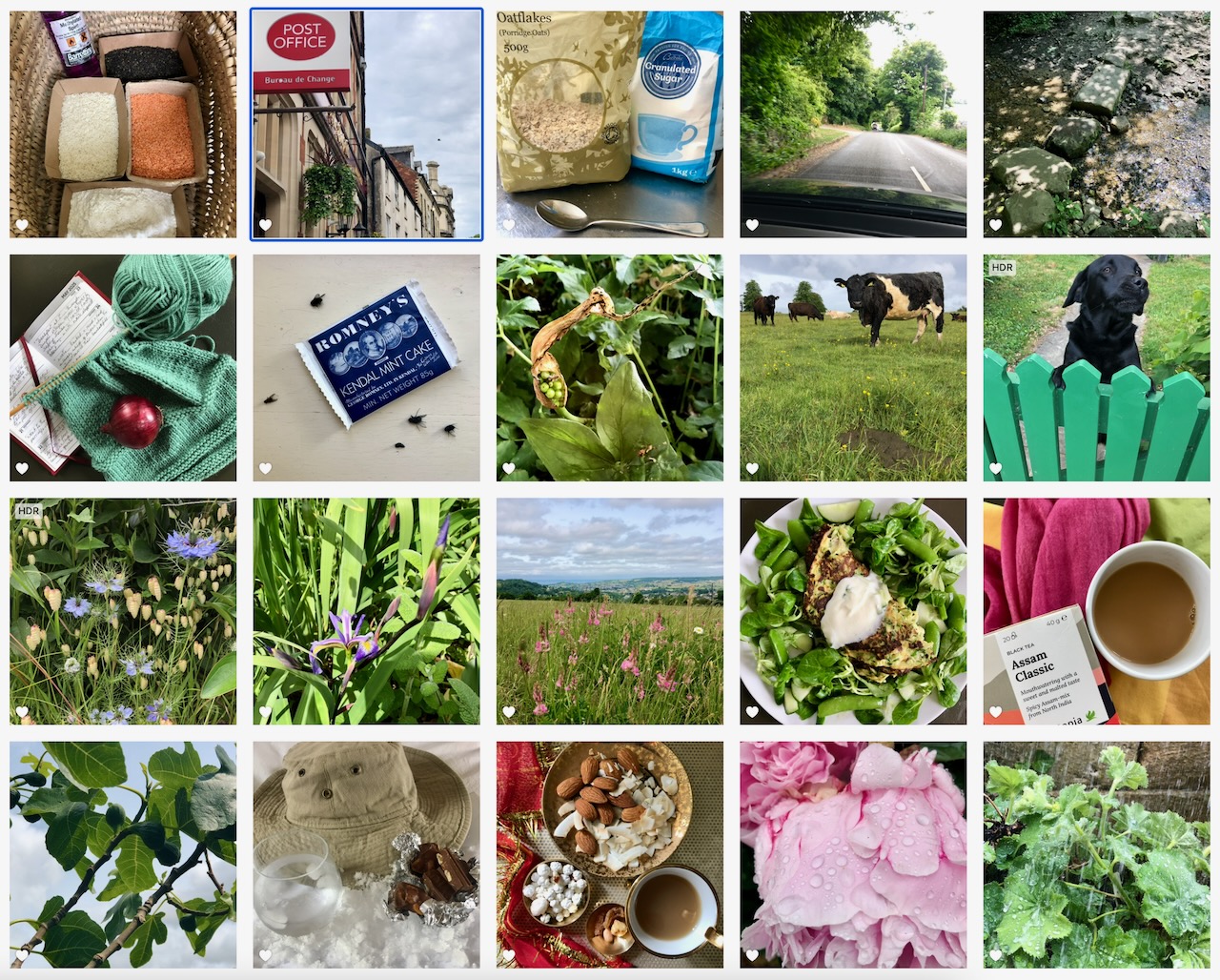
Since that day, as some of you will know, I’ve been following Joan’s diary in real time, reenacting something she saw or did each day, capturing it through a single square photograph, posting it to Instagram, and translating it into an artistic rendition on a page in one of several dedicated sketchbooks.

Just as she did, I keep a written diary threading her life into my own. These past months have served as a reintroduction to my artistic practice, long abandoned as my brain grappled for a decade with words rather than images to write the story of my German grandfather. The process has involved an exploration of techniques in visual storytelling as I reacquaint myself with paints and brushes, scissors and glue, clay and plaster. Layers of collage stitch tenuous patterns between past and present, India and England, flowers living and long dead.

As today’s world echoes the precariousness of Joan’s, my gaze drifts over flowers and leaves, tracing their delicate lines in quiet wonder, both with my eyes and the tip of my pencil. My studio has stirred to life. And the steady rhythm of commitment and focus have birthed new creative ideas and potential collaborations.

Joan died on 4th July 1939. As that date approaches once again, I’m nearing the end of our shared journey. I will miss her – a courageous companion and inspiration. A daily reminder of a world that predated the horrors of WW2, ecological destruction, plastic waste and the proliferation of smart phones. But Joan’s story didn’t end with her death. And my telling of it doesn’t end in the fourth incomplete sketchbook.   

A Pope, a Rabbi and an 80-year-old Victory 

April saw the death of the widely loved Pope Francis, the Jewish festival of Passover, and the gradual build-up to the 80th Anniversary of VE Day (Victory in Europe) in May. An unusual trio of events, yet radio coverage of all three wove threads of reflection into the tapestry of this blog. 

Compassion was central to Pope Francis’s papacy – particularly towards those who are rejected or marginalised. He often spoke about the importance of honouring and never abandoning our grandparents. “If you want to be a sign of hope, go and talk to your grandfather,” he was quoted as saying. They remind us that we share the same heritage, link us to “the beauty of being part of a much larger history… a loving plan [that] is greater than we are.” He also had the humility to say “I am a sinner,” which makes me wonder where that leaves the rest of us!

In a recent Radio 4 Thought for the Day  (at 1:47:45), Chief Rabbi Sir Ephraim Mirvis described Passover as the ‘Festival of Questions;’ a time to ask, to probe, to test assumptions, refine our understanding and uncover the truth. 

If we try to apply the guidance of both spiritual leaders to the forthcoming celebrations of VE Day on 8th May, we may find ourselves asking how the grandchildren of the ‘losers’ of WWII – many of whom had been perpetrators or complicit in Nazi atrocities – might ‘honour’ their grandfathers. How do you love – should you even try to love – someone who has acted immorally, abhorrently, even if those acts were sanctioned or ordered by a higher authority and deemed the right thing to do for Volk and country?

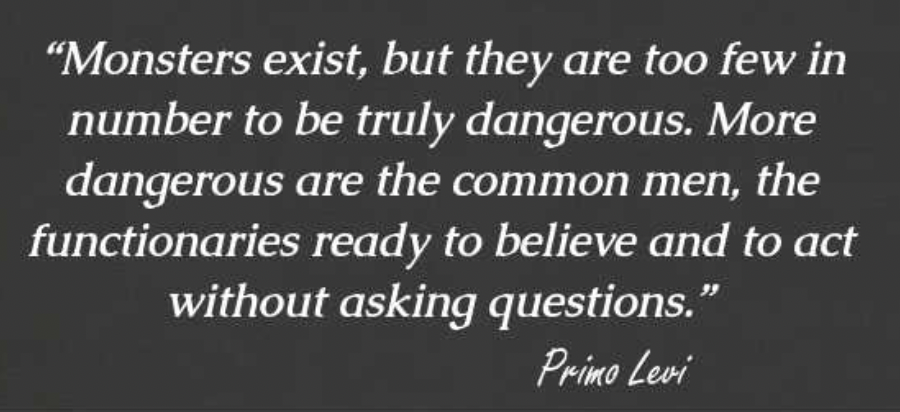
I’m all too aware how unfashionable, controversial and even provocative it is to suggest we spare a thought for the perpetrators. But in keeping with the spirit of my triangle, I am going to ask you to do just that. Many people, from all sides of the conflict, are quick to judge, blame and damn the Wehrmacht soldiers and SS as an indiscriminate mob of ‘monsters’, all morally inferior and wholly undeserving of being remembered. It’s completely understandable. But where does that leave their children and grandchildren? What happens when we continue to draw a line between the ‘good us’ and ‘bad them’, a distinction that may have served its time but no longer helps us move forward? Isn’t one of the most crucial lessons of this horrific chapter in history to recognise that most perpetrators were not monsters, but ordinary people… like you and me… who, through a slow drift of compromise, small decisions and ill judgements became capable of unimaginably heinous crimes? 

Eighty years on, with more than 88% of the German population having been born after the war’s end and a further 11% still children at the time, it’s difficult to place ‘guilt’ for the Holocaust on the Germans of today. After all, people cannot be guilty of things they themselves didn’t do. Yet, like many descendants of Holocaust victims and survivors, some non-Jewish Germans born in the decades after the war still wrestle, often unknowingly, with the unresolved trauma and guilt passed down from their parents or grandparents. They carry what Eva Hoffman aptly described as “the scars without the wound” – invisible wounds that silently shape their internal world and influence their actions in the external world. 

Without detracting anything from the horrors and suffering of the victims, can we imagine for a moment how it might be for post-war generations of Germans to live with legacies of silence, cover-ups, not-knowing, judgement, exclusion, blame or shame in relation to their roots? Mistrusting family stories. Wondering who knew and who did what. What impact does this have on individuals, families, societies, nations and ultimately, the wider world? How can one best deal with such a profound inheritance?

Primo Levi – who, as a Holocaust survivor had every right to think the opposite – declared that collective guilt does not exist. To think that it does is a relapse into Nazi ideology. Both he and Hannah Arendt made a powerful claim: “We are all to blame” for what happened. Collective responsibility is what matters. And that involves understanding how atrocities occur both in society and within the individual. How we become complicit. 

The roots of Nazism found fertile soil in the humiliation wrought by the terms of the Treaty of Versailles and the deeply resented ‘guilt clause’ that placed full blame for WW1 solely on Germany’s shoulders. Applying a similar dynamic to today, could there be a connection between this historical pattern and the rise of the AfD (Alternative für Deutschland), Germany’s nationalist far-right party — a movement fuelled in part by a desire to reassert national pride and, as encouraged by figures like Elon Musk, to move beyond what they perceive as an excessive “focus on Nazi guilt”?

The 2019 survey previously cited revealed that few Germans actually feel guilt and 70% (including 87% of AfD voters) believe their country has now sufficiently atoned for the actions of the Nazi regime. Another source revealed that 75% of young Germans (erroneously) believe they come from families of resistors, while 25% can’t name a single concentration camp or ghetto. As the number of living contemporary witnesses dwindles, disinformation, denial and delusions are spreading. With them, the sense of responsibility risks disappearing too – a deeply worrying and dangerous trend. Knowing firsthand the insidiously destructive effects of being shamed for a familial association with the Nazi era, I can understand how, eighty years on, rejecting any semblance of inherited guilt might feel like a healthy response. After all, who among us wants to feel terminally tainted by the wrongdoings of their forebears? Who wants to have to cut off their roots?

The marriage of my parents in March 1962

I feel fortunate that, while living in England with my German heritage was at times challenging, my parents and their families modelled true reconciliation throughout my life. My British father and German mother married just 17 years after the Second World War ended. Both their families had suffered and lost loved ones and/or homes under the others’ military objectives. Yet both found the courage to drop into their hearts and overcome division and enmity. And that, to me, is where the solution lies: in our hearts.

Patriotism is hollow if it is based only on pride and honour. Shame and conscience lead to a deeper bond. Seeing the world in binaries – in terms of ‘us’ and ‘them, good and bad, right and wrong – shuts down love. Reconciliation becomes impossible. As Britain celebrates its triumph over the evil forces, let us also remember we were not all good and they all bad. Among other short-comings, we too were guilty of antisemitism and of failing to help the Jews more. 

In another recent Thought for the Day, Rhidian Brook warned, “If you can’t see the other side’s humanity, you’ve lost.” 

My 80th Anniversary VE Day wish, therefore, as both a British and German citizen, is for us to follow the example set by the late Pope and Chief Rabbi: to think, to probe, to get uncomfortable, and to find compassion for individuals among the rejected and ostracised.

Eighty years on, might this be the moment to create new rituals of peacekeeping and unity? Without dampening the spirit of national joy, how can we include – and stand hand-in-hand with – our contemporary German friends in celebrations of peace, rather than reinforce historical divides?

Can we develop broader, more expansive narratives that encourage younger generations of Germans to face the difficult and painful truths of their families’ histories and to assume responsibility, not for what was done, but for what is still to be done? Can we remain vigilant against resting on any imagined moral high ground, against believing we would have undoubtedly been resistors and heroes under the Nazi regime? And can we instead recognise how thin the ice of democracy is becoming once again, and how difficult it is, even now, to change the course of history?

Events coming up:

Friday 2nd May, 12-1pm 
The Second World War 80 years on: Is Remembrance Working? 
Angela Findlay and Henry Montgomery In Conversation
National Army Museum, Royal Hospital Road, Chelsea, London SW3 4HT and ONLINE
80 years on from the German surrender to the Allies, Henry Montgomery, grandson of Field Marshal Bernard ‘Monty’ Montgomery and Angela Findlay, granddaughter of General Karl von Graffen of the German Wehrmacht will reflect on their grandfathers’ roles and actions in WW2 and discuss the differences in the histories, legacies and remembrance cultures of the victors and the losers and how Remembrance can remain meaningful and effective for younger generations. 
Info and tickets (free) here

Thursday 8th May, 18.00 – 19.30 
Im Schatten Meines Großvaters / In My Grandfather’s Shadow
Vortrag und Gespräch / Lecture and Conversation 
Marktkirche, Hanns-Lilje-Platz, 30159 Hannover, Germany

Thursday 15th May, 17.00 – 19.00 (UK time)   43. Gesprächslabor, PAKH: The Study Group on Intergenerational Consequences of the Holocaust (ONLINE)? Drawing on my own experiences outlined in my book, In My Grandfather’s Shadow, we will be discussing how such a destructive legacy can be transformed into constructive, reconciliatory approaches and positive actions. More info here: https://www.pakh.de/event/gespraechslabor-40/  

Buy or read reviews on my book, In My Grandfather’s Shadow, here

Question to self: Is speaking out still the right thing to do?

If you haven’t yet seen Jesse Eisenberg’s latest film, ‘A Real Pain,’ I can only urge you to do so. Starring himself and Kieran Culkin [youngest son in Succession!], the pair play two estranged cousins who travel to Poland to fulfil the wish of their recently deceased, concentration camp survivor grandmother for them to visit her former home. It’s essentially a road movie and extremely funny. But the context of the Holocaust and the attempts of third-generation Americans to come to terms with it, makes it also profoundly moving, thought-provoking and important. 

Millions of people world-wide are still grappling with the aftermath of those appalling years of Nazi rule. More, rather than fewer, stories of survivors and first-hand witnesses are coming to light told by descendants who have finally found ways to articulate what their forebears couldn’t. My own, In My Grandfather’s Shadow, published in 2022, is testament to the painful process of peeling back the layers of incredulity in which the extremes of both cruelty and suffering are wrapped. For many, it is justifiable to judge or blame ordinary Germans for not speaking out or revolting against the wrongness of what was happening in clear sight. Despite acknowledging their justified fears, it would have been the right thing to do.

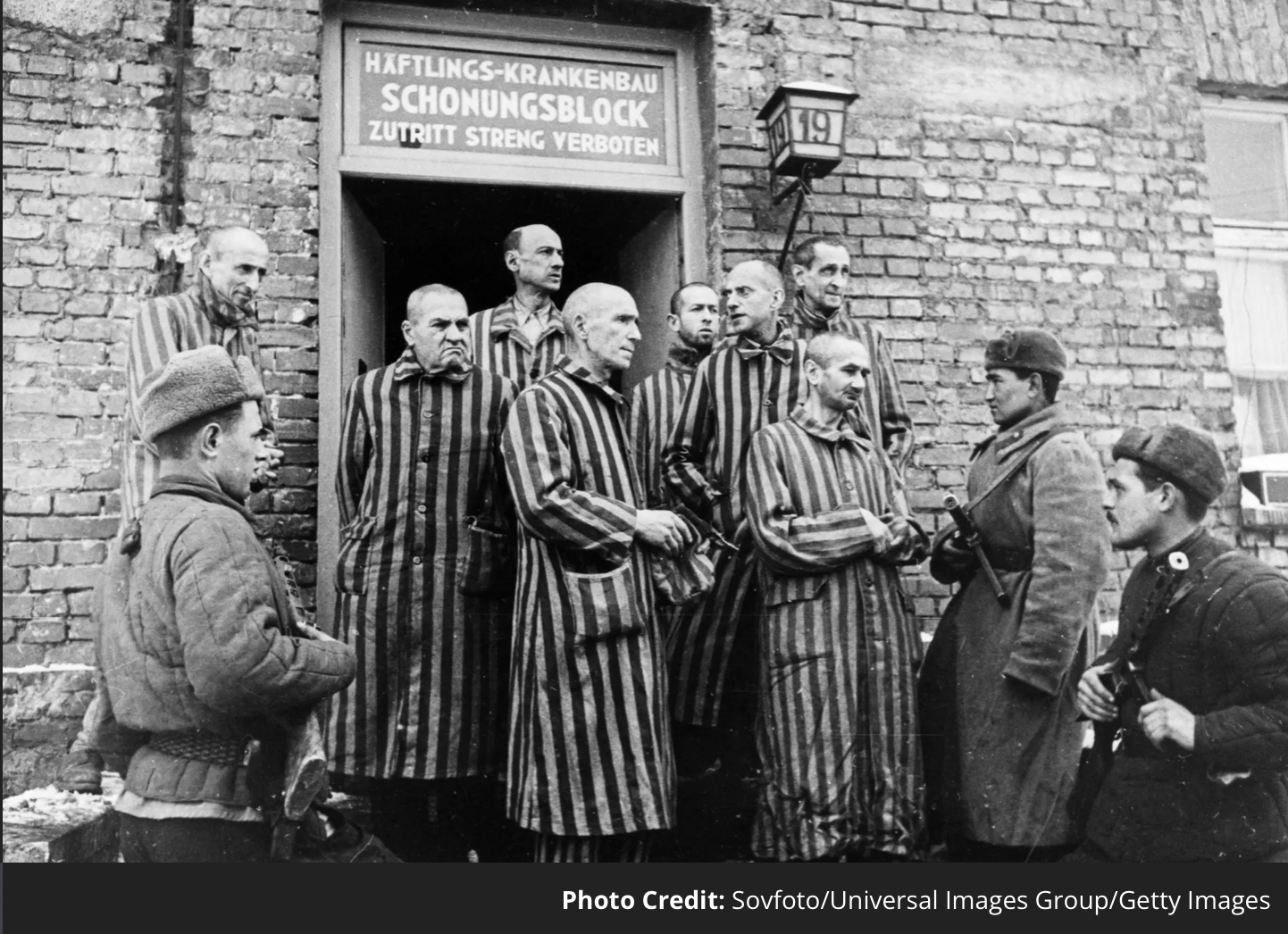
As we approach Holocaust Memorial Day marking the 80th anniversary of the liberation of Auschwitz by Soviet forces in 1945, we are asked to remember the horrific consequences of the crimes that, in part, were enabled because people did not speak out. We will once again repeat the heartfelt ‘Never Again’ that has been chanted like a mantra over the decades. But is it enough?

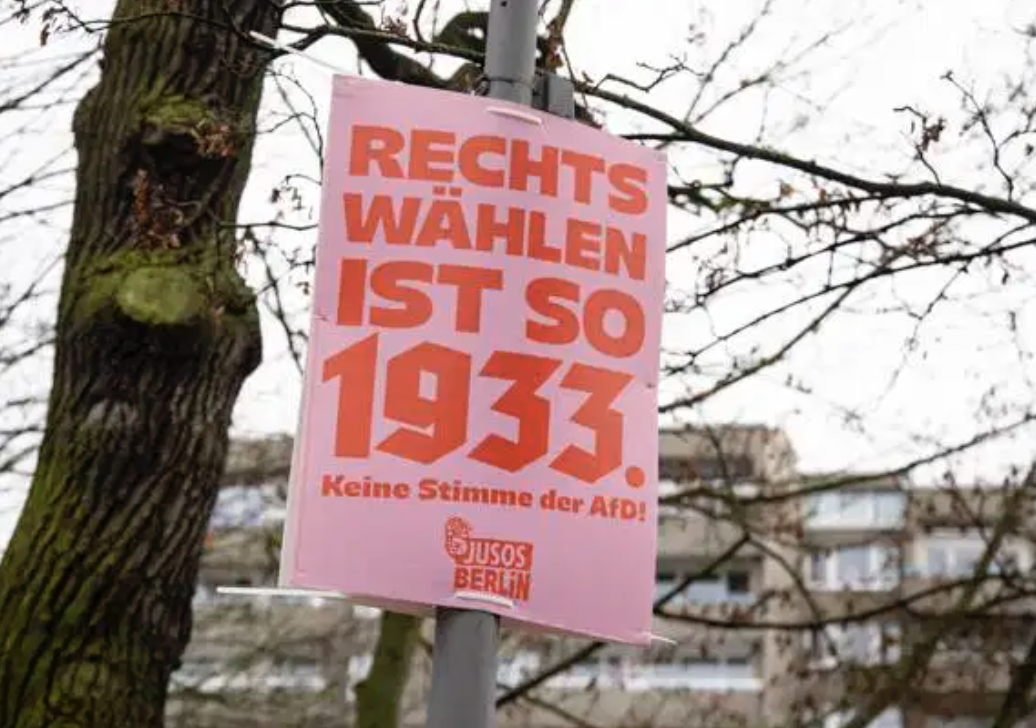
“Voting right-wing is so 1933”

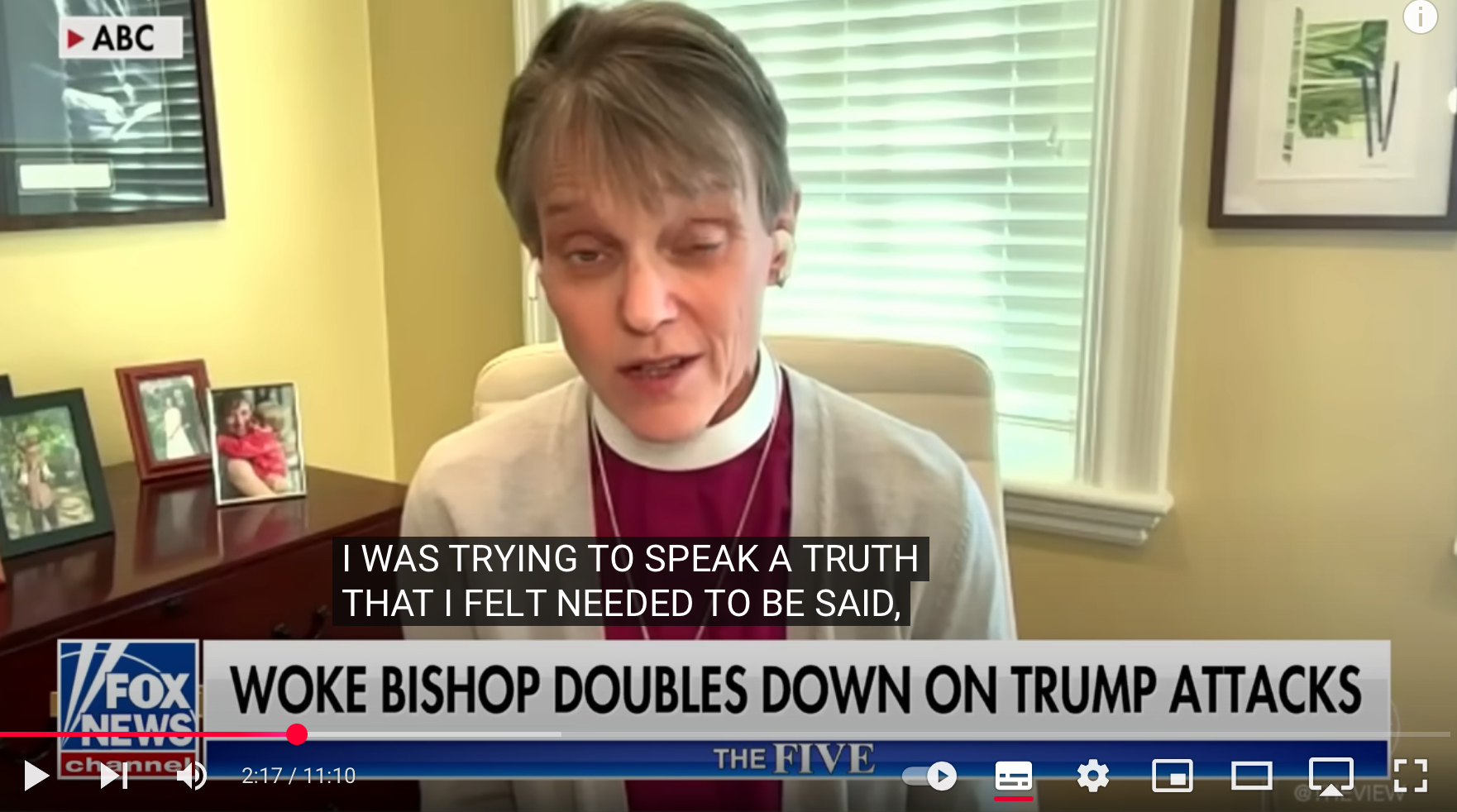
Across the globe, the roots and shoots of far-right policies are taking hold with renewed vigour. In highly vigilant Germany, ‘Voting right-wing is so 1933’ is a campaign slogan for left-wingers. But calling out discrimination and anti-immigrant policies, becoming an ‘upstander’ rather than a bystander has become increasingly perilous, even a danger to life. I wonder how Bishop Mariann Budde’s recent controversial sermon at the inaugural prayer service at Washington National Cathedral will play out. Referencing immigrants and LGBTQ+ individuals among others, she calmly but directly asked President Trump “to have mercy on the people in our country who are scared now.” Will she be cancelled, trolled, fired, discreetly removed from her post? So far she is refusing to apologise for speaking her truth. Was it brave, wise, right? Or, as he and his supporters claim, ‘nasty, woke, inappropriate’ and she a “Radical left hard line Trump hater”? Bizarre as it sounds, by seeking a path of compassion, did she inadvertently shame and dent an ego as big as the world?

As someone with (non-Jewish) German roots, I feel like it is both in my DNA and a conscious personal responsibility to speak out in the face of a perceived injustice or wrongdoing. However, I am beginning to feel an even stronger impulse. In these times of widespread latent and reactive vitriol and rage, I have started to listen into the other side’s point of view rather than – or at least before(!) – slating it. To create a tiny pause, a space between the attack and counter-attack model so many discussions rapidly descend into. It’s like stepping back from an easel when you have been immersed in some detail in order to see the whole picture. For when we speak out against something with conviction but without seeing the back story behind the other’s conviction, we are basically assuming a moral and intellectual high-ground that imparts the message that ‘they’ are wrong (inferior) and ‘we’ are right? This never goes well! Trump’s return to the White House proves that.

Decades of trying to comprehend the behaviour of ordinary Germans eighty or ninety years ago have revealed to me that many of them won’t have been so different to many of us today, i.e. more concerned with their own lives – milking cows, running businesses, keeping children warm and fed – than politics. Looking away, keeping stumm becomes a basic survival tactic. But the outrage humans feel in the face of endless discrimination, inequality, injustice, harm can rapidly turn to despondency and disaffection when we realise we can do little more than sign a petition or share a rant on social media or among friends. Eventually we might become numb, at worst immune to the wrongdoing. I know that I personally read, watch and listen to the news far less than I used to because the drip-feed of madness, badness and sadness feels toxic and induces inertia. I have no idea if this is maturity, complacency, disheartenment, a nauseating lack of humour or an equally nauseating sense of self-righteousness, but I have lost some of my more outspoken tendencies and anger at the world and replaced them with something that is hopefully more productive but still relevant to these times.

My prison work showed me that the most valuable action I could offer prisoners was to listen and to hear them. Not just their stories, excuses and justifications, but what came before. The drivers of their behaviour. With their defences down, trust, compassion and understanding could grow. Attitudes and actions quietly changed without them being shown to be wrong.

I am not sure if this is the right way to go in general life. The story of the Zen / Chinese Farmer comes to mind with its ‘We’ll see…’

It’s certainly not a quick-fix solution. But maybe it’s a tiny antidote to the constant stoking of anger? A drop towards the creation of a kinder world in which wider discourse and a greater tolerance of difference are possible. And ‘Never Again’ regains its urgency and weight. 

A few links to that don’t necessarily reflect my views, but are accessible sources to pursue your own research.

A Real Pain Review

A Real Pain Trailer

Germany’s present is not Germany’s past by Katya Hoyer

Who is Mariann Edgar Budde, the bishop who angered Trump with inaugural sermon?

I am not going to apologise’: The Bishop who confronted Trump speaks out

Remember, Remember… we all lost

‘Tis the season to remember. In our progression through the grey gloom of this autumn [just 18 minutes of sunshine since 28th October apparently!] and the celebrations of Halloween, All Souls, Samhain, Guy Fawkes and November 11th, the dead take centre stage. Leaves and forest floors redden while poppies bloom on jacket lapels, village monuments and shop counters. This Sunday in London, as on all Remembrance Sundays, red wreaths will be laid by royalties, senior politicians and Commonwealth High Commissioners before some of the last surviving WW2 veterans march or are wheeled past the Cenotaph.

We have been collectively remembering Armistice Day since 1919, the first anniversary of peace at the end of World War One. Remembrance has since been extended to both World Wars and all those who have given their lives in service to defend our freedoms. It is a hugely important day for the British, the Commonwealth and many other countries around the world, albeit not in Germany. There, since the Middle Ages, 11am on 11.11 has marked the start of the carnival season and, on a more serious note, Armistice Day is not considered to have welcomed the beginning of peace but years of intense unrest and far worse horrors to come. 

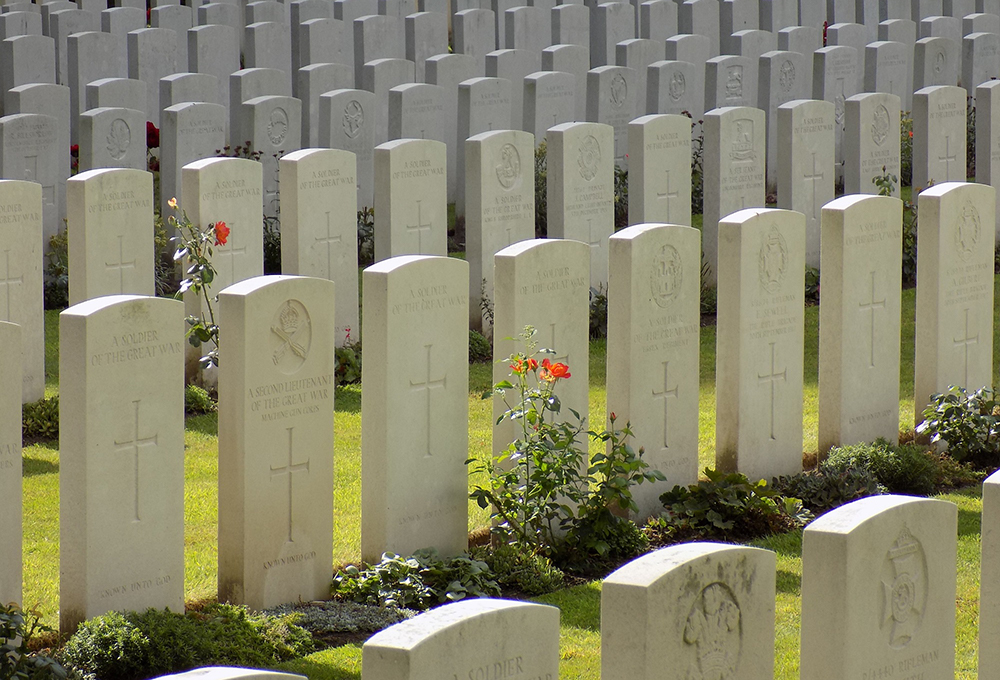
British and Commonwealth dead

I often dedicate my November blog to our traditional, deeply moving and impeccably executed rituals of remembrance, but not always without a little questioning too. Through the 15 years of research for In My Grandfather’s Shadow, I came to appreciate a far broader narrative of WW2 remembrance than that which Britain generally embraces and teaches. Granted there has been welcome progress over the decades with the inclusion of women as well as the huge contributions and sacrifices made by Gurkha, Indian, Sikh, African and Caribbean servicemen, among others. But there is still widespread ignorance of the bigger context.

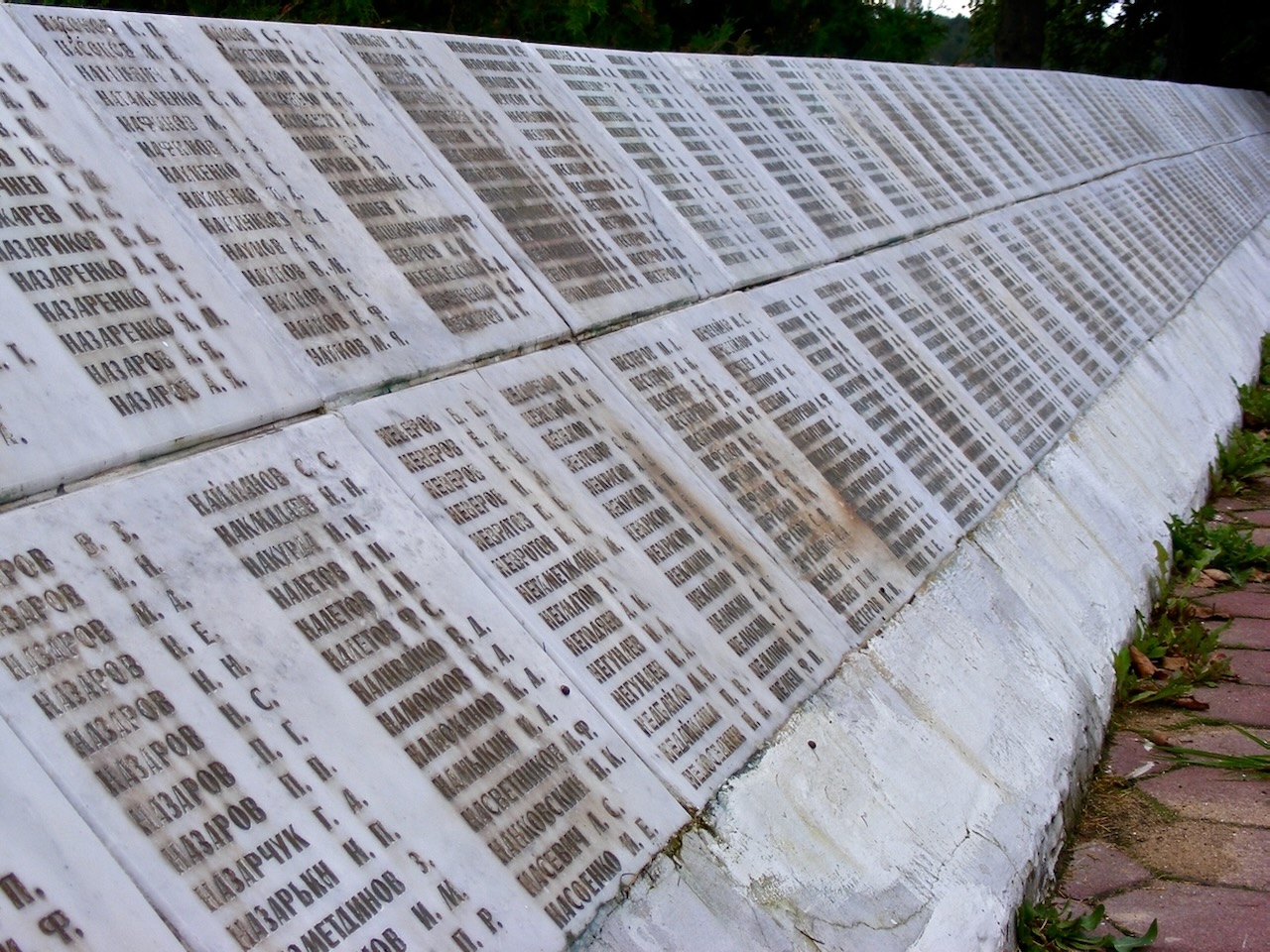
Russian dead

When I give my talks, I often use statistics. They provide a solid, black and white foundation of fact to my more psychological / philosophical ponderings. So often these figures shock. For example, when I ask people to guess the total losses, including civilians, of say Russia, Germany and Britain in the Second World War they are usually so far out that they themselves are horrified. I challenge you to make a guess… I’ll put the answers at the end of the blog. One man literally went white when he realised how wrong he had been in his thinking or, by his own admission, his lack of thinking. Another woman recently wrote to tell me how my book had opened her eyes in so many ways. “First off,” she said, “the big realisation of how little I have understood of the two world wars, my ignorance of those times and the aftermath.” This despite attending remembrance services all her life. 

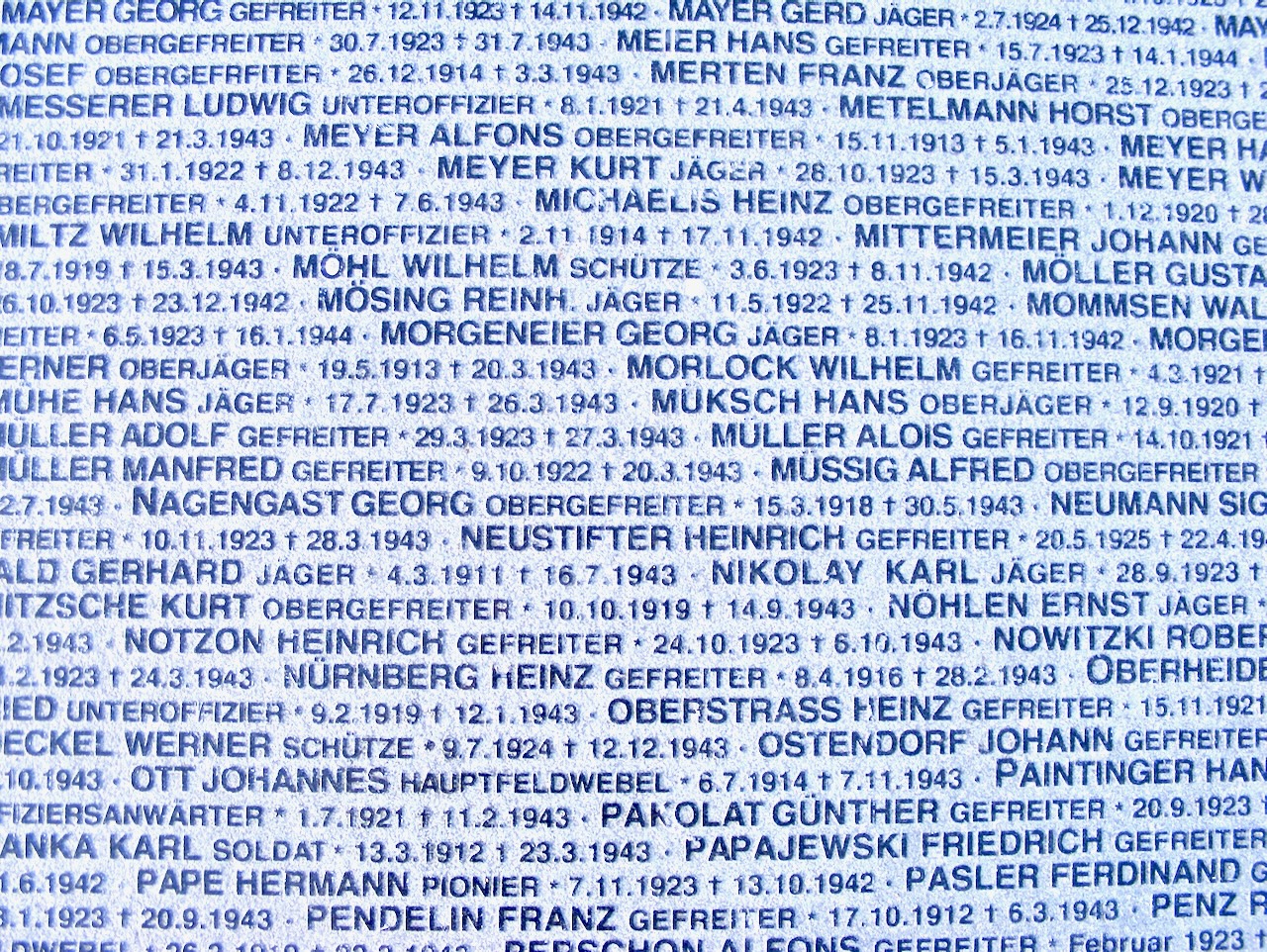
German dead

The quantity of deaths doesn’t mean each death was any less keenly felt. But I think she voices what is probably true of most of us. I certainly was ignorant of the broader landscape of loss and destruction, and no doubt still would be if I hadn’t had German roots that needed excavating and hadn’t made trips through Germany and Russia that exposed me to other ways of looking. The World Wars are the episode in history with which the British are often accused of being unnaturally obsessed. And yet, as a nation, we often present it as a deceptively straightforward story of good triumphing over evil. The victors write history after all. 

Every nation has its ‘chosen traumas’ and ‘chosen victories’ which serve as cornerstones to its identity and prevent true healing from the past as they continue to play out in the present. We frequently have binary views of how we should feel based on – to use the reader’s words again – “simplistic, reductionist understanding… goodies and baddies…” Rarely have we “considered what it must feel like to have a different identity…” 

I really appreciate and admire this woman’s soul-searching honesty. The humility and gentle opening to hearing the other sides’ stories gives me huge hope.   

Healing, reconciliation, peace, forgiveness… all goals we strive for within our culture of Remembrance… can best come about when we become familiar with and find some understanding for the other side’s experience. Maybe, with our greater distance from both the acute trauma and the impassioned jubilation of our forebears, that is what generations now and in the future can strive to do more of. 

Answer to my statistics question: Out of the around 60 million people killed in WW2, 26 million were Russian, approx. one third of them military and two thirds civilians. Between 7-9 million Germans died, roughly 6 million were soldiers and 3 million civilians. In the United Kingdom, just under 451,000 were killed. That’s 383,800 military, including combatants from overseas territories (Crown Colonies and the Indian Empire), and 67,200 civilians.

Random, chance, God… or what?

Zinc Oxide Tape. Waterproofing Wax. Leech socks.

These were the entries listed on the first page of my new notebook. And I ignored all three.

The fourth, written in slightly brighter blue ink read ‘Tanya Vad… Thank you’. I had arrived in India. Dhanyavaad was the most important word I wanted to learn.

This small 11 x 7.5cm notebook would accompany me for the next 18 days, safely tucked away like a baby joey in the blue pouch strapped to my tummy. I would dig it out regularly, flip the turquoise-green cover over the black spiral spine and scribble something, often illegibly, as I walked or rattled round a hairpin bend in our bus dodging landslides. Over the weeks it gathered names, email addresses, dates, details and ideas for my new creative project.

As anybody who has travelled with a purpose knows, the notes you take become an invaluable aide-memoire for when you return home. As you re-enter your everyday, the sharp outlines of a foreign, multicoloured present seal into a soft-focus bubble that drifts away to bob among other memory balloons in skies gone by. Experiences fade and jumble in a cacophony of impressions. Verbal re-tellings omit details as they settle into a condensed narrative designed for low attention spans. Bring out the notebook, however, and you instantly have a co-witness; a means to tangibly touch the past. 

I have boxes of such notebooks. They have helped me write or paint, jolting my memory, filling in gaps. That is why losing this little green one, felt like the end of the world.

It happened a few days before the end of the trip. I mentioned my impending adventure in my previous blog, how I was about to embark on a journey following in the 1939 footsteps of my Great Great Aunt Joan to the Valley of Flowers in Northern India. Our happy, harmonious group consisted of my sister, two female cousins, three or sometimes more local guides plus a driver. We made a dream team and I am telling you about this specific incident because I can’t yet put the bigger whole into words. And because in essence it captures the magic of the entire trip. The many small miracles we experienced and the power of stories.

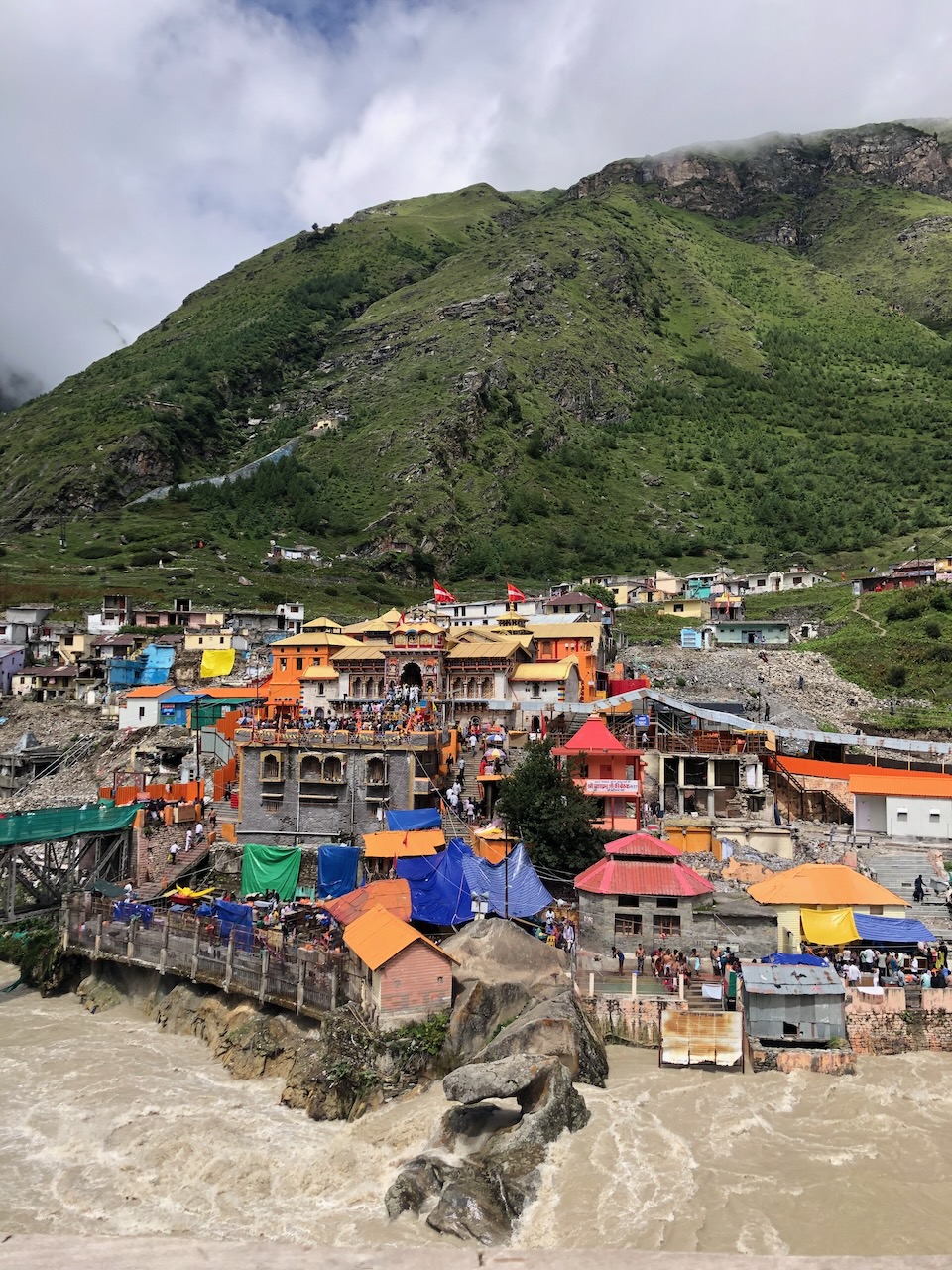
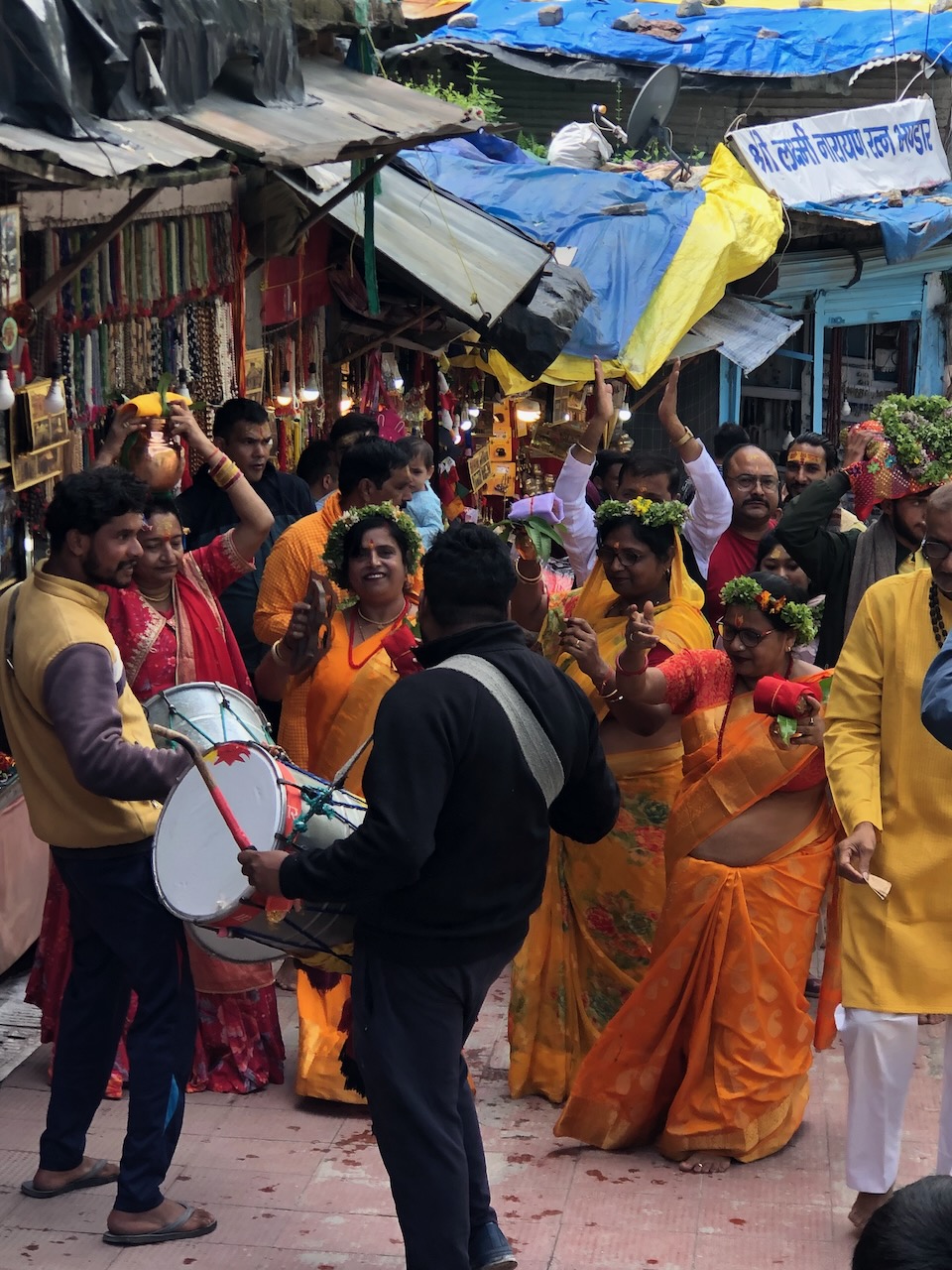
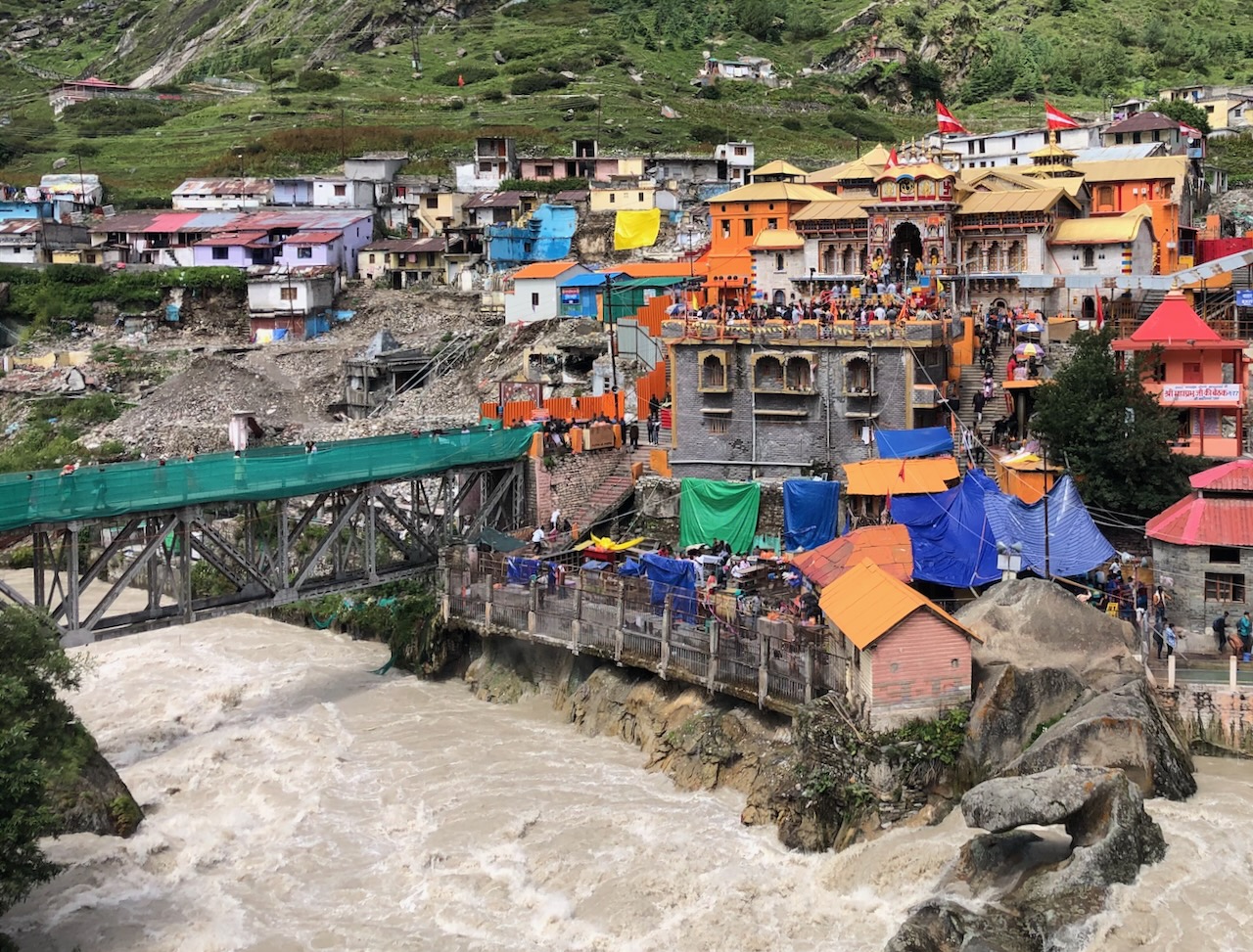
On this particular day, just as Joan had done 85 years earlier, we were visiting the temple in Badrinath. An atmosphere of noisy celebration, dancing and orange-coloured joy pervaded the streets of this small but hugely important Hindu town located at an elevation of around 3,100 meters in the Garhwal Himalayas. Inaccessible and closed for six months of the year due to extreme weather, it is one of the most visited pilgrim destinations in India attracting 5-mile queues in the summer months as people line up to pay their respects to the 2000-year-old black granite deity of Lord Badrinath housed in the main temple building. 

Being slightly off-season due to the monsoons, we were able to simply kick off our shoes and, bearing wreaths of marigolds, join the gentle flow of pilgrims, many of whom would have travelled for days to be here. Once inside we planted ourselves on some steps to watch people of all ages circling the inner temple, taking (prohibited) selfies and videos and gathering goodie-bags of holy sweets, sultanas and nuts for their families. After some time, we shuffled out again in a bubbling counter stream that spilled onto the temple forecourt, an architectural wonder that miraculously clung to the riverbank while other sections downstream had succumbed to gravity and slipped into the raging, milky-beige waters of the Alaknanda River. 

We retrieved our shoes and stood discussing where to go for lunch. That’s when I noticed it was gone. My pouch was open and empty. An all-too familiar plummeting sensation drained my face and body as a memory surfaced from the depths of 1987, my last visit to India, when my bag containing 3-months of undeveloped film, diaries, recordings not to mention passport, visa, ticket home and money were stolen on a train, never to be seen again. A small wave of panic broke out within our group, scooping strangers into its current. The men in charge of storing shoes searched their patch; sister, cousins and guides dispersed in all directions to scour corners, dustbins and donations boxes both in and outside the temple complex. Our main guide, by now friend, Kiran, took me to a small nearby room stuffed with five uniformed security guards and fifteen or so screens of surveillance footage. We fast forwarded our way through videos following my movements – me feeling both relief that I had refrained from taking a sneaky photo and slight concern that a hidden camera might have caught me ducking behind a wall to remove my leggings. The loss of ‘a little green diary’ was announced over the temple’s Tannoy system, but our efforts were to no avail. 

Thoughts raced through my head as I searched the grainy grey images both for the moment of its disappearance and any possible symbolic significance I could attach to it. Maybe I am not meant to be doing a project on Joan – or Legge Ma’am as she is known in these parts. Maybe this is a sign I should have just experienced the trip and trusted I would remember what is important rather than constantly jotting things down. [This is just how my mind works.] Will this ruin the trip for me, for everyone? How could I have dropped it? Who could have taken it… why would they? Maybe…

Then the phone call came. The little green diary had been found. I restrained myself from hugging the guards in the rush of relief and hope. But for me to fully believe it, I had to see it. 

Our other guide, also now friend, Naresh, had re-entered the complex and gone to the place where people were gathered to listen to the teachings. The door of the temple was firmly locked for the daily offerings – the prasadam – so he made his way to the middle of the crowd and started reciting the beautiful story of Legge Ma’am and why we, her four descendants had come here. He was an excellent story-teller. And that’s when “the magic happened,” he told us afterwards. “It was so strong, so strong that everybody came near to me and started listening to the story. And they were very curious… finally they get to know the importance of this notebook, for all of us and for them as well.” 

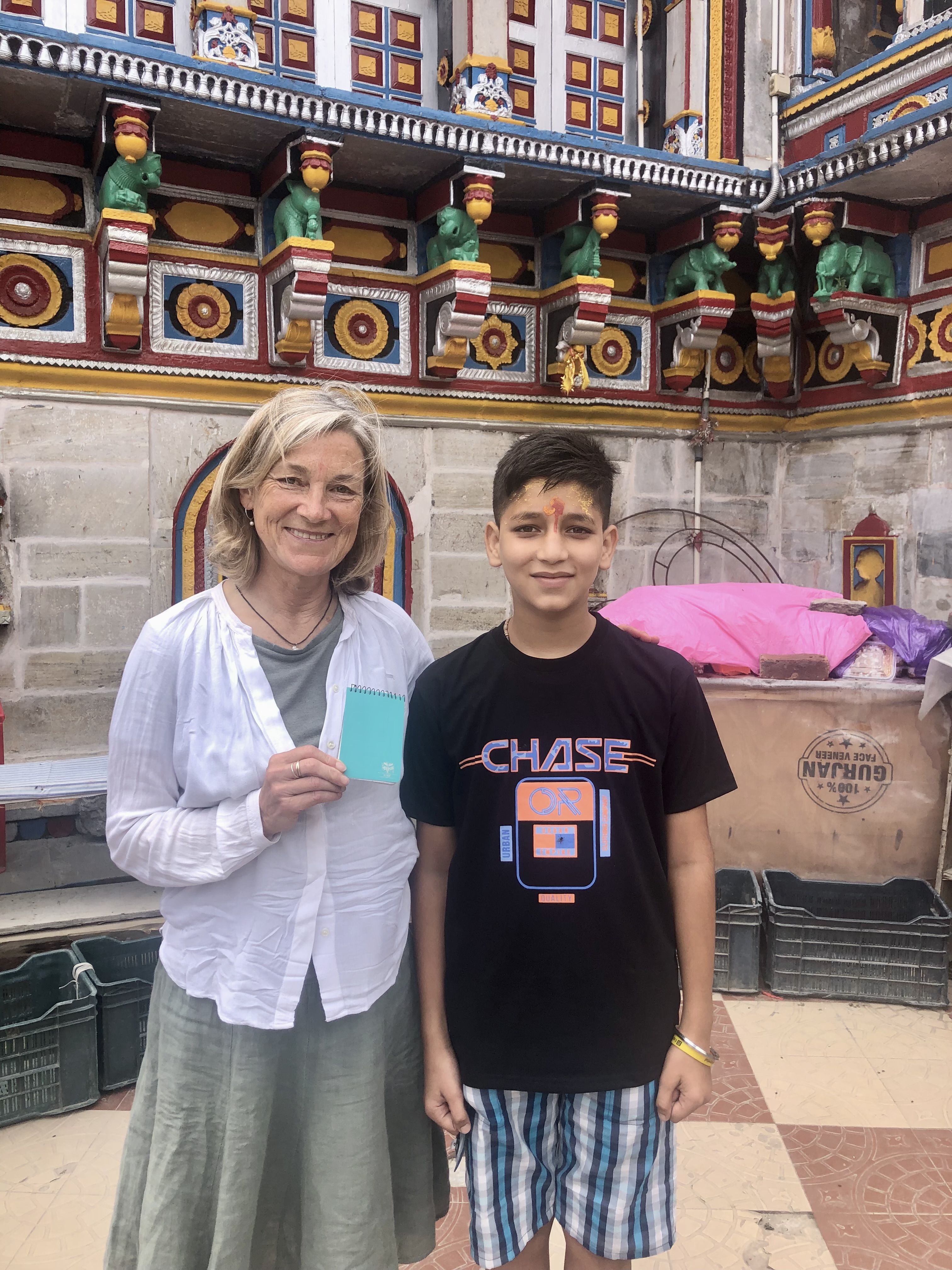
A young boy then came forward. He had found the notebook but hadn’t known what to do with it so had put it in the main donation box at the foot of Lord Badrinath in the temple…. which was closed. Naresh called us back into the complex and we waited. We gained fresh red teekas (or bindis) between our eyebrows and more handfuls of sticky white sugar balls and showered the young hero, Shriansh (which fittingly means Part of God) with all the muesli bars we could scramble together from the bottom of our bags.

By now, people were very keen to help, including the priest. When the temple finally re-opened, we were all ushered in. The bright viridian green of the notebook cover could be spotted through the glass walls of the donation box, nestling on a bed of faded rupee notes. So close and yet… Only one man had the authority to open the box. A District Officer (DO) based 200 km away. He was the sole person to hold a key. And he came to Badrinath just once a month. 

That was the point when Naresh, who hadn’t planned on praying that day, asked the deity of Lord Badrinath to help us, just as some of us had already been asking St Anthony, the Christian finder of lost objects. One, or both, stepped in. 

The priest told Naresh to look behind him. There was the DO. Not on his official monthly visit, but by some serendipitous miracle, he had come to pray that day. He willingly fished the key out of his pocket and a little while later, a policewoman handed me my precious notebook. Hugs, tears, smiles and many clasped hands and bows followed… ridiculous really, but we all knew the true value of these spiral-bound pages.

With Shriansh, the finder of the little green notebook

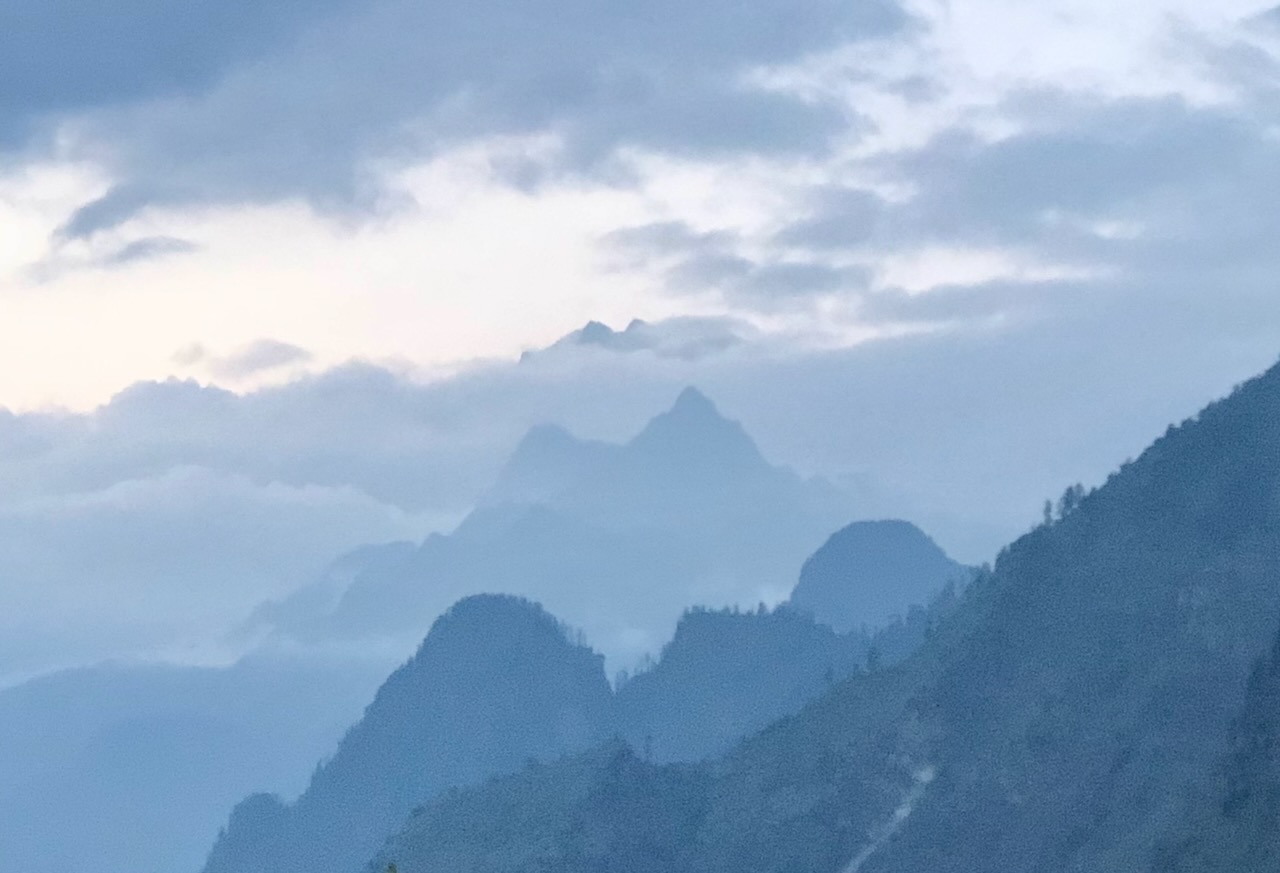
Each one of us will interpret this story differently. For some it might be a random string of events with a lucky outcome. For others it might be evidence of God, a sign that Joan was watching over us, a meant-to-be moment or proof of the power of stories that need to be told. Meaning, just like beauty and truth, is made within. For me personally, the magic of the story lies in the glimpse it gave me of a huge force for good that works behind the scenes we snap with our phones and try to capture in words. Like the evasive Himalayan peaks – or ‘Majesties’ as Joan called them – that briefly appeared in their full glory between parted clouds only to vanish again, this benign power shone through the many eyes that sought contact and connection. It was what I saw in the faces that so readily broke into smiles and laughter; in the hearts that were wide, wide open inviting us to open ours too.  

When you experience the past, present and future all occupying the same space in time…

Being away in Germany for much of June and July has got me thinking about the relationship of past, present and future. It keeps coming up as a theme, each time confirming to me that they are not separate, not relegated to positions behind or in front of us as we live that one moment we can call ‘now.’ (My TEDx talk referred to this too)

Just a couple of examples of what I mean.

At a lakeside party in Nuremberg where elegantly dressed guests sipped bubbly from slender glasses and a massive, pink rubber flamingo glided an elderly couple and their granddaughter across the water, everybody appeared unaware of, or simply used to the historical monster that lay across the water. 

Today it is the biggest preserved National Socialist monument. Ninety years ago it was the unfinished, semi-circular Congress Hall of the Nuremberg Rally Grounds, part of the 11 square kilometre grounds, mostly designed by Albert Speer, that hosted six Nazi party rallies between 1933 and 1938. 

The unfinished Congress Hall, of the Reichsparteitagsgelände, Nuremberg

I hadn’t known I would be dancing with my dear friend from Cologne just 500 meters from the Zeppelin Field where I had stood in 2016 on the very rostrum from which Hitler himself had delivered his ‘hypnotic sermons of hate… to rapt audiences in the hundreds and thousands…’ But the visceral memory of the sickening terror I had felt then returned instantly. In spite of the site now being strewn with parked lorries, ‘Never had I been able to visualise the scale of the Nazi movement in all its ugly, popular power with such devastating clarity.’ (In My Grandfather’s Shadow, pp.359-360) 

Yet here I was, one minute laughing, the next engaged in debate with people who have been deeply involved in the complexities of what to do with this hideous phantom of the Third Reich. Artist studios seems to be the current preferred proposal, bringing creativity, transformation and a more constructive future into what was one of the centres of past destruction.

A second example happened on a packed train heading to the mountains of South Tyrol. Settled happily by the window, a young woman entered the compartment with an enormous suitcase, a cloth bag and a delighted smile at having found a space for her and them. As she arranged herself, I watched the dawning of a stricken panic as she began frantically searching under the seats for something. Her rucksack, as I soon learnt, with everything in it: passport, money, phone, ticket…

As the train pulled out of the station, she pushed her way down the carriage only to return a short while later empty handed and distraught. Once again, the past became instantly present as I felt a visceral memory from 1987 when my bag was stolen on a train in India. It too had everything in it, including all my Kodak films and diaries. I remembered the sense of suddenly not existing, of life stuttering to a halt as the bureaucratic fuel needed to move our lives forward was gone. Suddenly I had nothing, and no way of getting anything or anywhere, least of all home. 

With her beautiful smile now strained, the young traveller got off at the next station in order to return to the only place she might still find her bag. I gave her 30 Euros and told her things would work out somehow. They always do. She returned the same anxious gratitude I too had offered the kind stranger who gave me some money in India. But for the next stage of my journey, that episode from my past was fully present, just as I trusted her present would swiftly pass and resume its course into the future. 

Living in the space between the launch of In My Grandfather’s Shadow last July and the impending publication of Im Schatten Meines Großvaters coming up in September, the present, devoid of a busy schedule and deadlines, has rarely felt as potent and expanded in its not-knowingness. My original 10-day trip packed with travel and planned visits both to German friends and book-related people, evolved through a series of spontaneous decisions and the generous offer of a first cousin’s apartment, first leading me to South Tyrol and then into a week of moment-to-moment unfolding. My days’ questions revolved around whether to hike up that mountain, swim in the big or smaller lake, e-bike to the nearest village, read or taste a different local Weißburgunder/Pino Bianco…

It’s typical happy holiday stuff for some. But there were times when I literally stepped out of the hot sunlight and into the cool past. Italy does that effortlessly through its barely signposted, little Romanesque churches adorned with glorious early 13th century frescoes. The continuity and shared spatiality of past, present and future tangible to those who are open to feel it.

St Jakob in Kastelaz near Tramin

Deliberately avoiding all news and social media and without a task to accomplish, I experienced a strong sense of how the past constantly accompanies and informs us – albeit often subconsciously – as we are drawn by an unknowable future through our present moment. And I have to say, right now, mine is a present that I am really enjoying.

Wishing you a very happy summer wherever you are… and whatever the weather!